



Short natural hairstyles have become more celebrated and versatile than ever, offering endless possibilities for self-expression while working beautifully with your hair’s natural texture. Whether you’re managing a fresh cut, transitioning into natural hair, or simply looking for low-maintenance styles that celebrate your curl pattern or coil structure, there’s a short natural look that’ll make you feel confident and authentically you. The beauty of short natural hair is that it requires less daily styling time while often showcasing the genuine texture and movement of your curls or coils in ways longer lengths sometimes can’t.
What makes short natural styles so transformative is that they fundamentally shift how your hair behaves and what becomes possible. Without the weight of length pulling down your curls, your coils spring back with more definition and lift at the roots. You’ll notice more volume, more bounce, and more of that coveted dimension that comes from natural texture being free to do what it naturally does. Plus, shorter styles mean less time detangling, less product needed per styling session, and faster wash days—which is genuinely life-changing for anyone managing multiple curl patterns or busy schedules.
The styles in this guide aren’t theoretical or impractical. Each one works with textured hair—whether you have loose waves, tight coils, or anything in between—and each can be customized to fit your specific curl pattern, face shape, and personal aesthetic. You’ll find wash-and-go friendly options, styles that embrace your natural shrinkage, cuts that work with minimal manipulation, and looks that let you experiment with color, dimension, or more deliberate styling when the mood strikes.
Let’s explore 20 of the most wearable, confidence-boosting short natural hairstyles that are worth trying on your own hair.
1. The Textured Pixie Cut
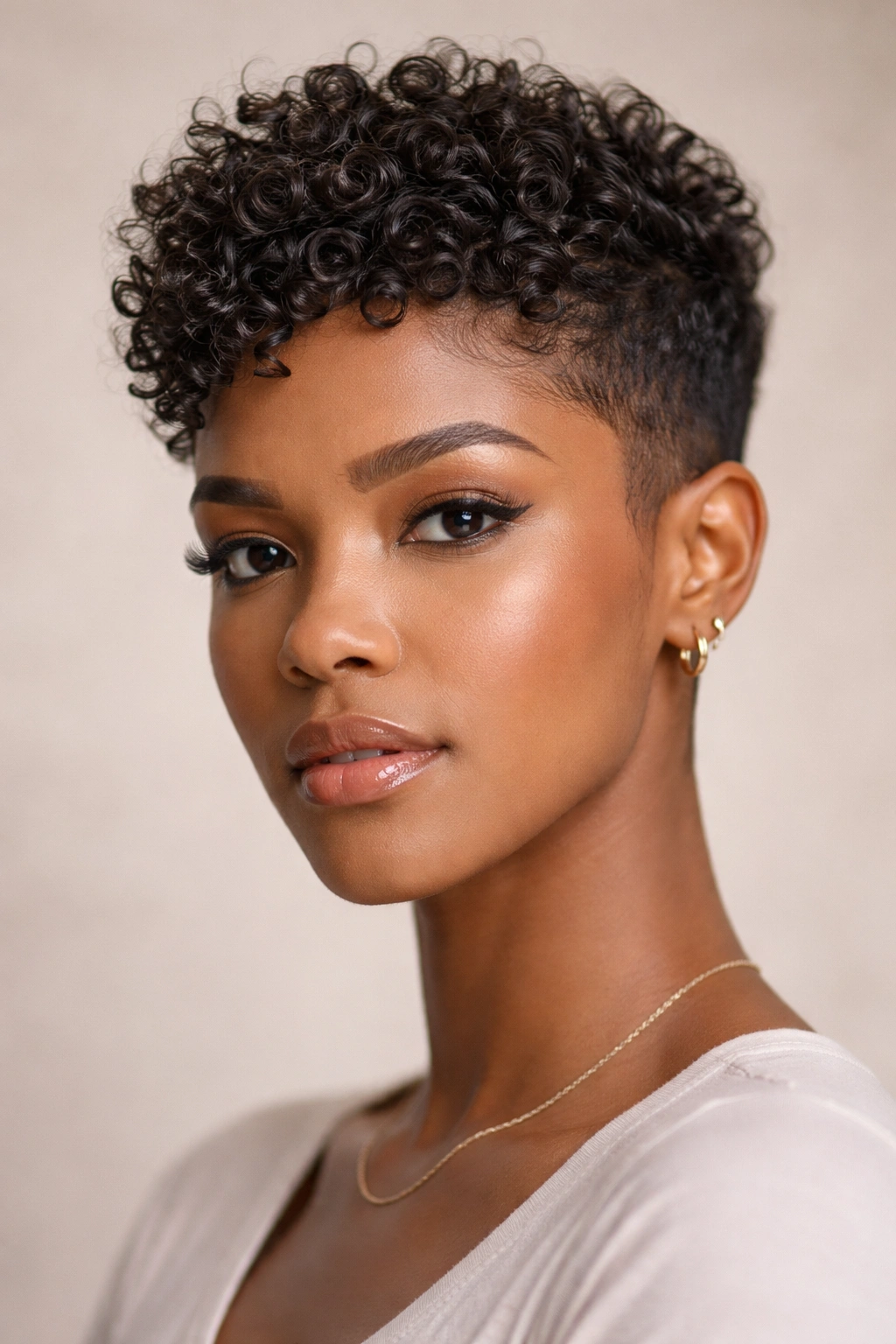
The textured pixie is a bold, liberating choice that works exceptionally well on natural hair because it celebrates curl and coil texture rather than fighting it. This cut keeps sides and back cropped close to the head—typically an inch or less—while leaving the crown longer so your natural texture can spring up and create dimension. The magic happens when your natural curl pattern is left to do its thing on top, creating that effortless, intentional look that short natural hair does better than any other hair type.
Who This Works For
This cut shines on coily and very curly hair textures because the contrast between the close sides and the textured crown is actually enhanced by tighter curl patterns. If you have looser waves, you’ll want slightly more length on top to ensure you get that dimensional pop. Face shape matters less with this cut than with others—the textured crown creates enough visual interest that it flatters most faces, though some people prefer slightly more length on the crown if they have very round faces.
How to Style and Maintain
- Wash and condition every 5-7 days depending on how oily your scalp gets
- Apply leave-in conditioner to damp hair and let it air-dry or use a diffuser on low speed
- No finger coils or manipulation needed—your natural curl pattern does the work
- Edges stay natural or can be kept clean with regular edge maintenance every 2-3 weeks
- Minimal daily styling: finger-rake through your curls in the morning or lightly mist with water
Pro tip: Ask your barber or stylist to cut your hair while it’s textured (not blown out), so they can see exactly where your curl pattern falls and cut accordingly. A dry cut ensures the finished look matches what you’ll actually get when your hair air-dries.
2. The Defined Twist-Out Crop
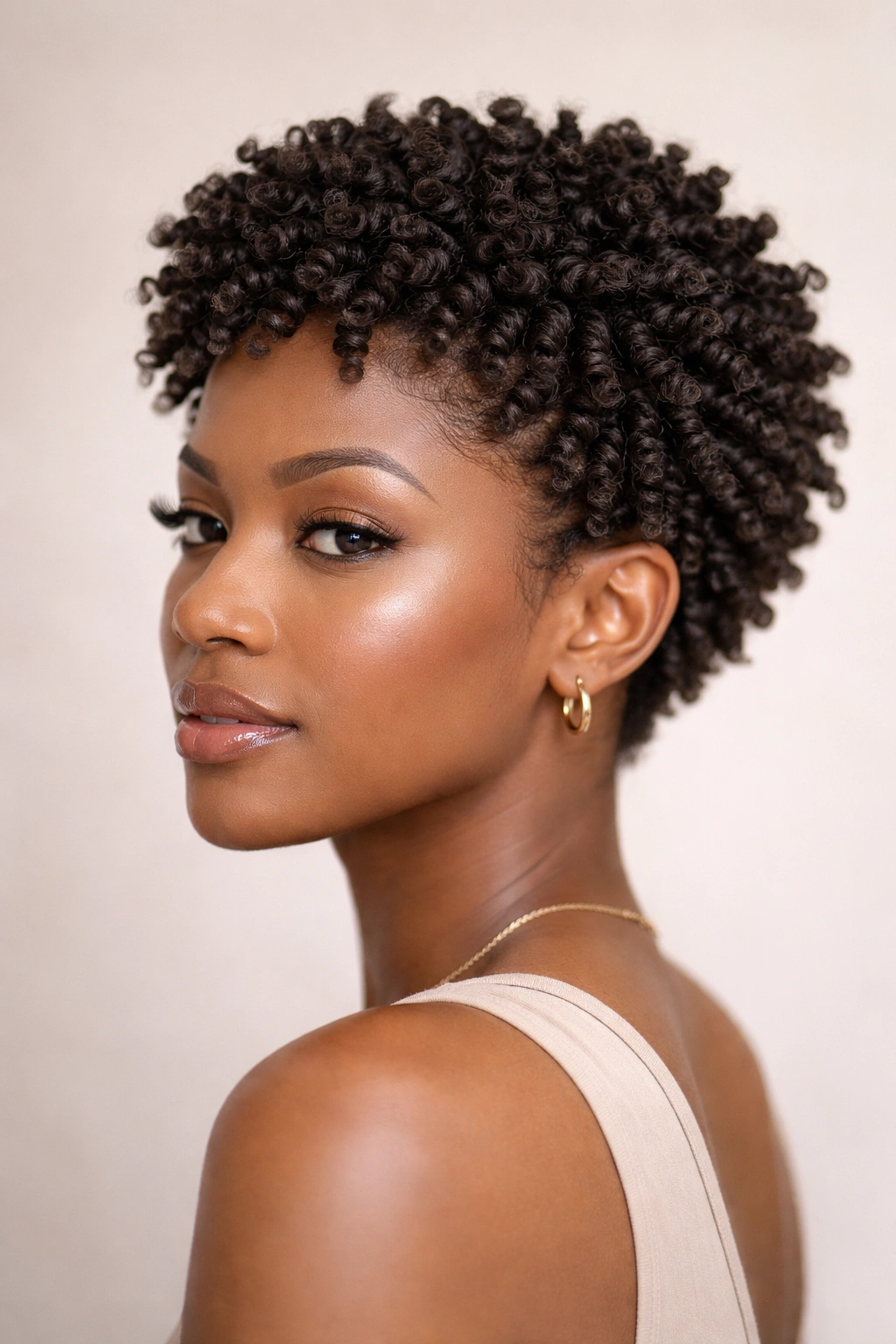
Twist-outs are a natural hair staple, and when your hair is cut short—usually 2-4 inches depending on your curl size—the twists create compact, springy coils that look intentional and sculpted. You create the style by twisting damp hair in sections (either two-strand twists or individual finger twists), leaving them in overnight or for several hours, then unraveling them for defined, separated curls.
The Twist-Out Process
Twist-outs require wet styling but reward you with styles that last 5-7 days with minimal touching. The shorter your hair, the less time you spend twisting—a full head of short twists might take 1-2 hours depending on your section size, but you only need to do this once a week. The result is curls with clear definition and intentional shape rather than a shapeless cloud of frizz.
Key Details for Success
- Shea butter, coconut oil, or twist-out cream applied to damp hair helps define each twist
- Twist at an angle rather than straight up for more organic, varied curl placement
- Sleep on a silk or satin pillowcase or bonnet to preserve the style
- Unravel twists when hair is completely dry—unraveling damp twists leads to fuzzy curls
- Refresh with a spray bottle of water mixed with a tiny bit of leave-in conditioner mid-week
Worth knowing: Twist-outs work better on medium to coarse textured hair than on very fine hair, where the weight of the twists sometimes straightens the curl pattern. If you have finer curls, try smaller twists or longer drying time.
3. The Coiled Crown with Tapered Sides
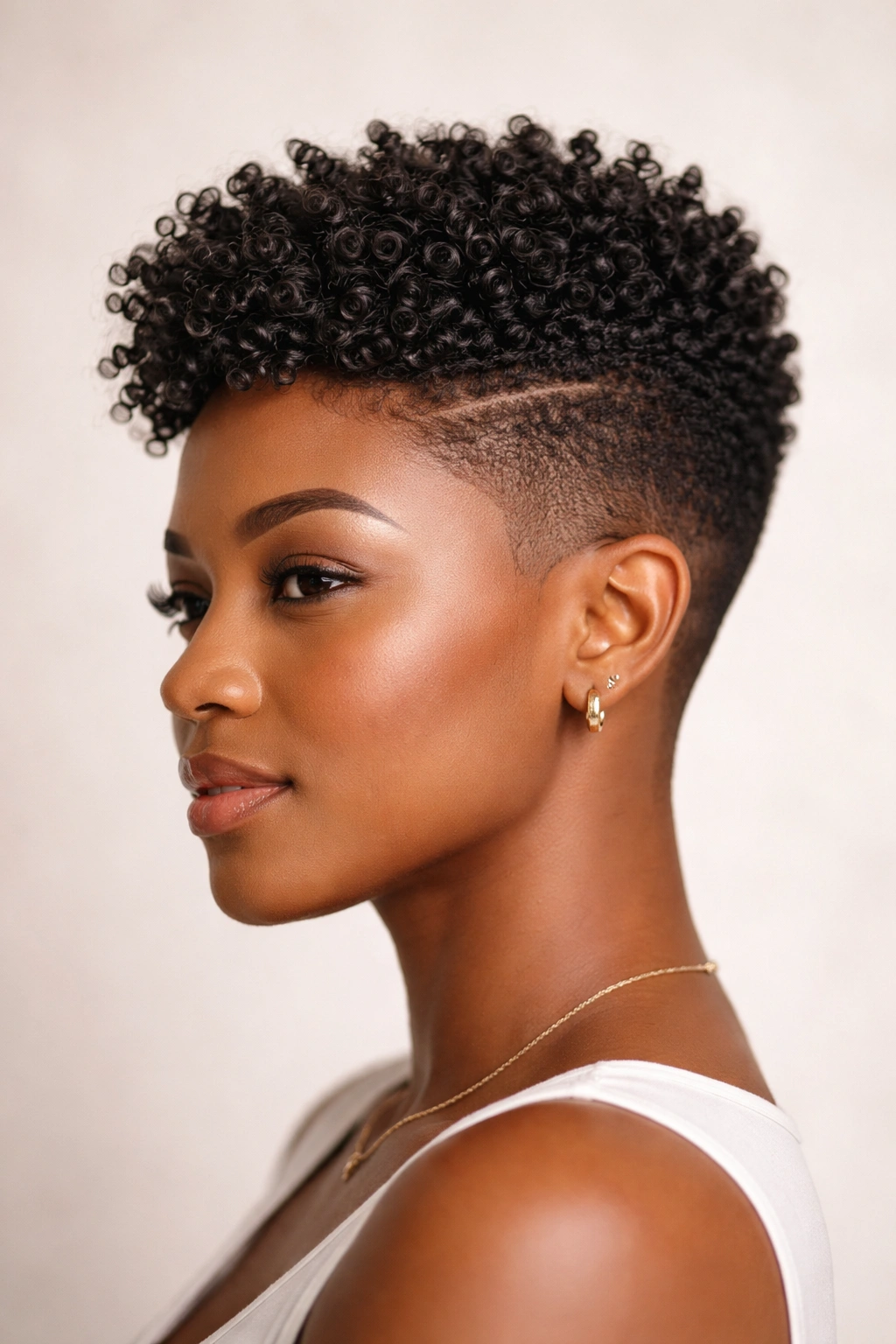
This style combines short, clean sides (faded or undercut) with longer, defined coils on the crown, creating visual contrast and dimensional interest. The crown stays long enough—usually 3-5 inches—that your natural coils have room to define and show their personality, while the tapered sides and back create a polished, intentional look.
Visual Impact and Styling
The coiled crown works on all curl patterns, though it’s especially striking on tight coils and kinks where the contrast between the clean fade and the voluminous crown is most dramatic. Styling is minimal: wash your hair, apply your leave-in conditioner, and either air-dry or diffuse. Your natural texture does almost all the work.
Maintenance Considerations
- Fade or taper the sides every 3-4 weeks to keep the line clean and the contrast sharp
- The crown grows quickly and can look fluffy if not shaped regularly—trim or shape the crown every 4-5 weeks
- No edge work required unless you prefer clean, defined edges
- Sleeping on silk or satin preserves definition and reduces frizz
Quick facts:
- Ideal for people who want minimal daily styling but enjoy the visual drama of contrasted lengths
- Works beautifully with color—dimension in the crown color-treated curls is really showcased
- The tapered sides read as more polished and intentional than a full head of the same length
4. The Puff with a Shaved Design
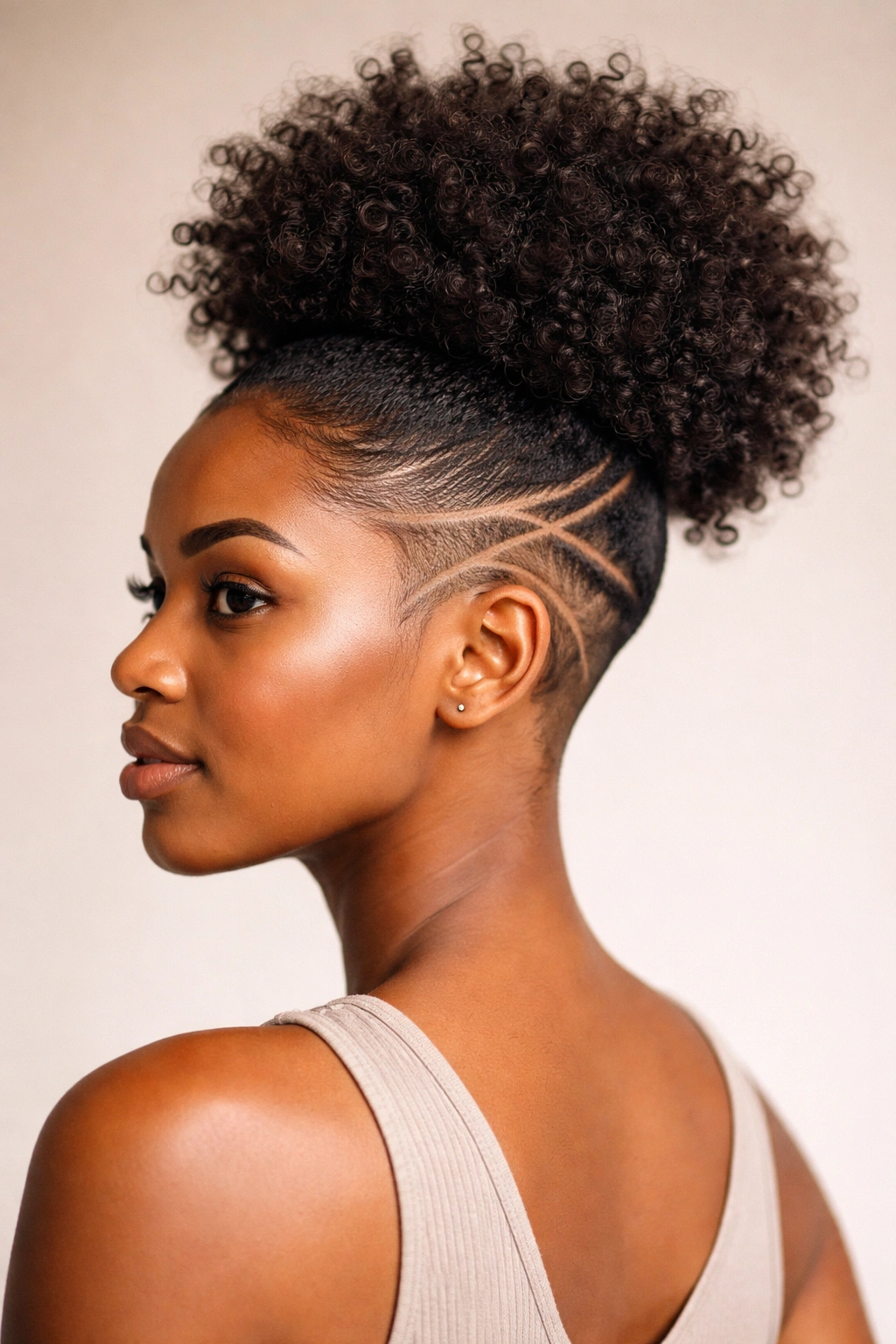
The puff is the ultimate wash-and-go: pull your hair back into a high or mid-level ponytail at the crown, secure with a hair tie, and let your curls fan out and fluff up naturally. When hair is kept short—2-4 inches depending on curl shrinkage—the puff sits at an ideal height, created entirely by your hair’s natural volume without additional styling tools.
Elevating the Basic Puff
A shaved design on one or both sides (geometric patterns, lines, or simple clean edges) transforms the basic puff from casual to intentional and personalized. The design can be a single line, a geometric pattern, initials, or simply a clean, sculpted fade that creates contrast.
Making It Work Practically
- Puffs last 5-7 days without restyling if you sleep on silk/satin and avoid excessive manipulation
- No product needed if your natural curl pattern holds well; some prefer a light cream or gel for definition
- The puff works best on medium to coily textures where shrinkage creates volume
- Very loose waves might need gel or foam to create adequate hold
Pro tip: Tie your puff at night with a loose hair tie or scrunchie, not a tight elastic, to avoid breakage and creasing. A silk or satin bonnet over the puff preserves the shape perfectly.
5. The Wash-and-Go Coils
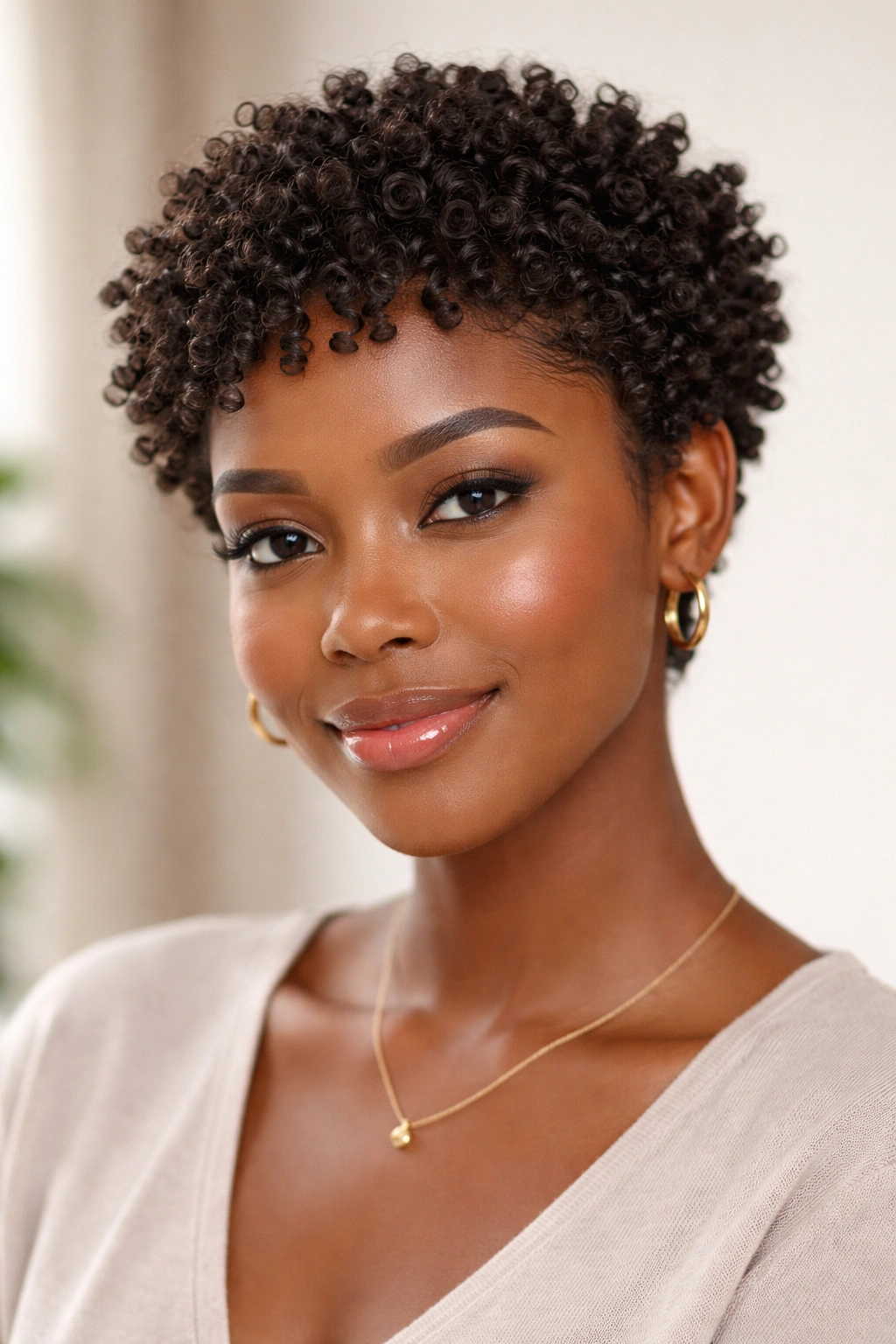
This is simplicity in its purest form: cut your hair short enough that it dries into defined coils (usually 1.5-3 inches) with zero styling required. On the right texture and with the right cut, you can literally wash your hair, apply leave-in conditioner, let it air-dry, and walk out with perfectly defined curls.
The Texture Requirements
Wash-and-goes work best on natural coily or kinky textures where each curl or coil has inherent structure and definition. Looser wave patterns typically need some product, styling, or manipulation to achieve a polished look. The key is finding the exact length where your curls dry naturally into that perfect shape—sometimes that’s 2 inches, sometimes it’s 3.5.
Maintaining Definition
- A leave-in conditioner or curl-defining cream is usually all you need
- Diffusing on low heat speeds up dry time without disturbing curl formation
- Night care is essential: sleep on silk or satin to prevent frizz and maintain definition
- Refresh daily curls by misting with water and a tiny amount of leave-in conditioner
Quick facts:
- Saves 20-30 minutes daily compared to twist-outs or other manipulation-based styles
- Requires minimal product, which saves money and reduces buildup
- Works best on people whose curl pattern is already quite defined and tight
6. The Fade with a Soft Mohawk
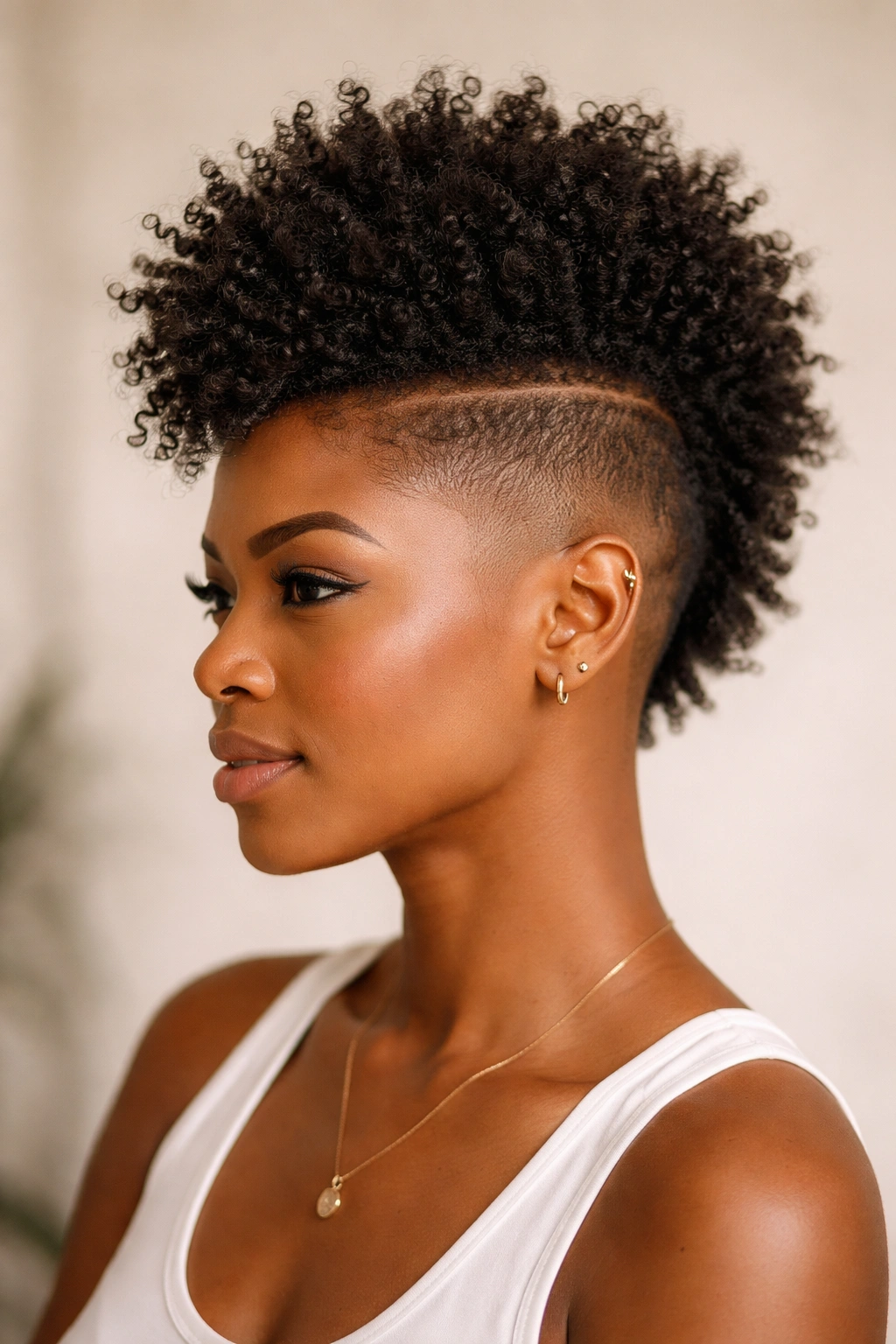
A fade cuts the sides progressively shorter (from longer to nearly shaved), while a soft mohawk keeps the crown longer—usually 4-5 inches—and slightly fuller down the center line. Unlike a punk-style mohawk, a soft version works with your natural texture to create volume and shape along the center without requiring gel or heavy product.
Styling the Soft Mohawk
You style this by either creating a subtle center part and letting the natural volume fall to create dimension, or by gently directing your curls with your fingers to enhance the center fullness. It reads polished during the week and can be more playful and voluminous on wash days.
Who Should Consider This
The soft mohawk is ideal if you want visual height and drama without daily styling. It works on all curl types but creates the most striking effect on coily or kinky hair where the natural volume is already pronounced. Looser textures can still wear this but might need slightly longer crown length or light styling product.
Worth knowing: This style can accentuate a longer face, so if you have a longer face shape, ask your stylist to keep slightly more width on the sides or crown to balance proportions.
7. The Tapered Curl Cut
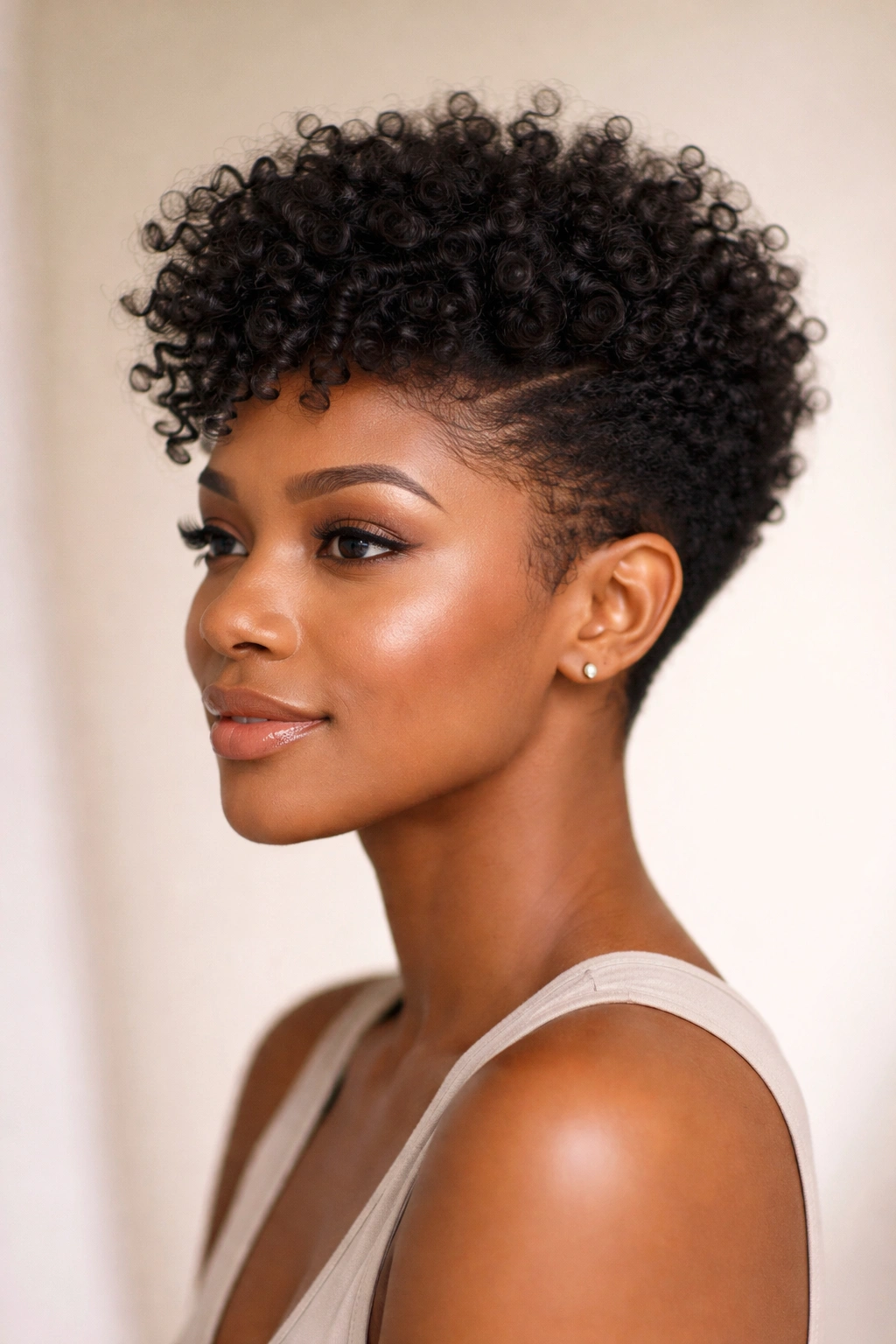
A tapered cut removes weight gradually from longer crown hair down to shorter sides, creating a sculpted shape that follows the natural contours of your head. This isn’t a fade (which uses clippers progressively)—it’s a scissor cut that creates a rounded, textured silhouette. Because the cut is tapered and shaped rather than blunt, it works beautifully with natural texture because curls can separate and define along the shape.
Why Taper Works on Natural Hair
The tapered approach is ideal for natural hair because it removes weight that flattens curls while maintaining enough length that your curl pattern has room to spring. A blunt, one-length cut often appears bulky on natural hair, while a tapered cut creates a sleek, intentional shape.
How to Ask for This Cut
Ask your stylist for a “tapered curl cut” or “textured taper” and request that they work with your natural curl pattern, not against it. Show a photo of the overall silhouette you want. Request they cut your hair while it’s textured (not blown out) so they can see how curls will sit.
Pro tip: Schedule a follow-up appointment 2 weeks after your initial cut for a shape-up. New cuts sometimes need tweaking once you’ve styled it a few times and understand exactly how your curl pattern behaves.
8. The Finger Coil Style
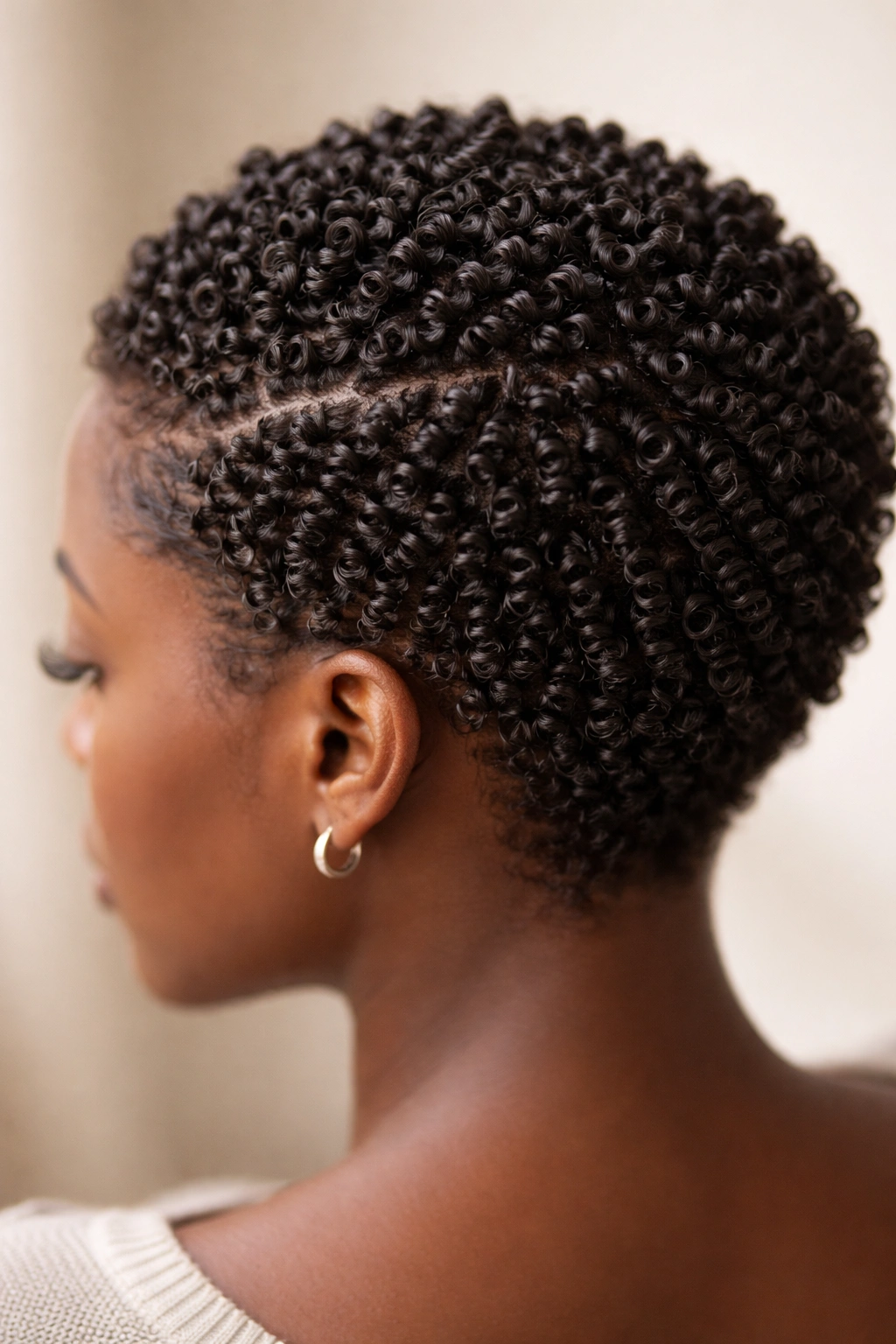
Finger coils are created by wrapping small sections of damp hair around your index finger to create tight, uniform coils. When done on short hair (1.5-3 inches), the result is incredibly polished, defined, and can last 7-10 days. This requires more upfront work than a wash-and-go but creates stunning, intentional-looking curls.
Creating Finger Coils
Work with damp (not soaking wet) hair and a leave-in conditioner or curl cream. Take small sections and wrap each around your finger, starting at the root and working to the tip. Leave your finger inside each coil until the hair is completely dry—you can sit under a hood dryer or let them air-dry. The coils hold their shape remarkably well once set.
The Time Investment
A full head of finger coils takes 3-4 hours depending on hair density and section size, but they last so long that you only need to do them once weekly or bi-weekly. If you don’t have 3-4 hours at once, you can create them over two or three sessions.
Quick facts:
- Requires no heat styling, so minimal heat damage
- Works on all curl textures and is especially striking on kinky hair
- Coils can be re-coiled individually mid-week if a few loosen up
9. The Side-Swept Undercut
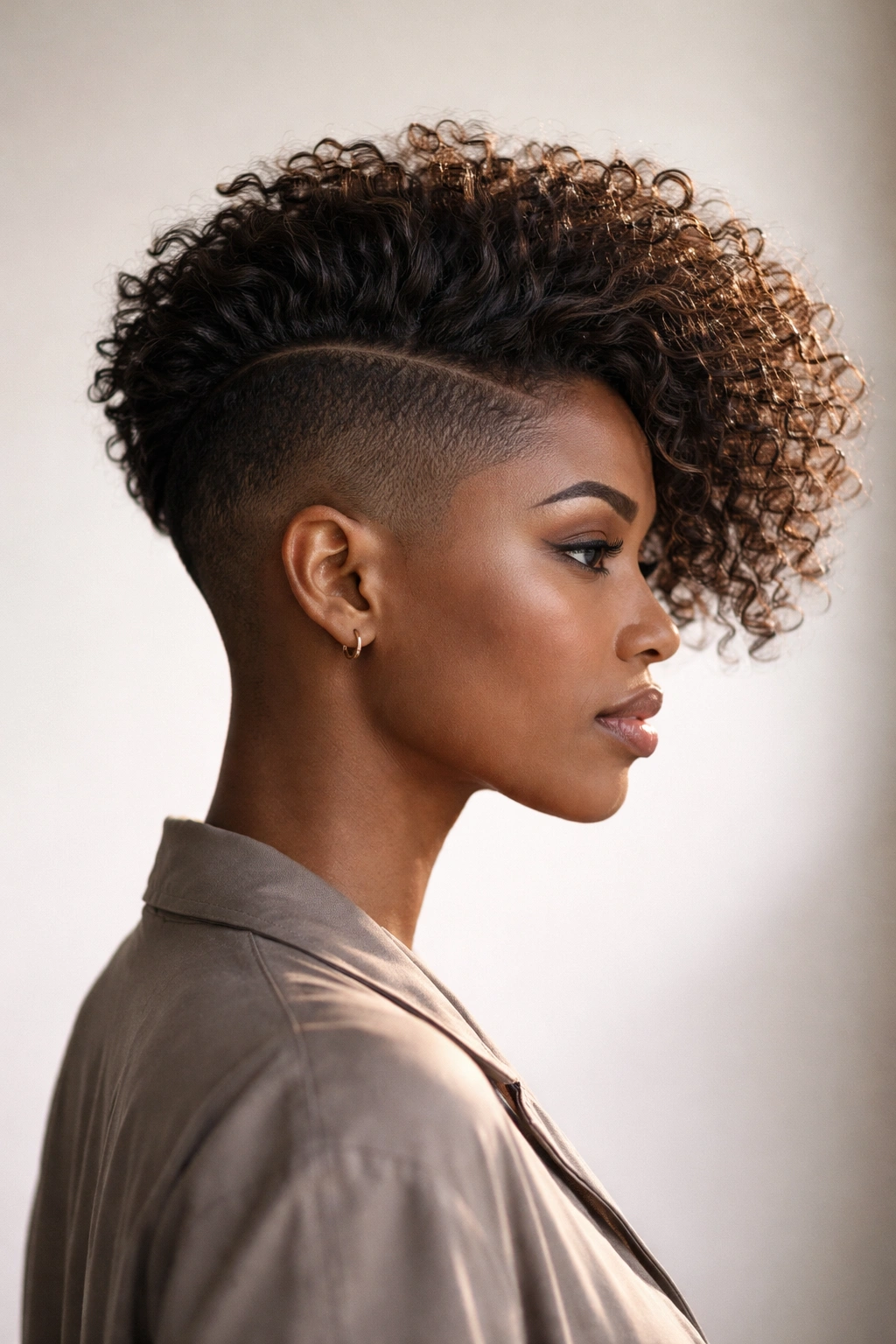
An undercut cuts the sides and back very short—sometimes nearly shaved—while keeping the crown longer, usually 3-5 inches. The side-swept variation means you style your longer crown hair to sweep dramatically to one side, creating an edgy, intentional look that’s still wearable and professional.
Styling This Look
The sweep works best if you style your damp hair with your fingers, encouraging it to move in one direction while it dries. A light styling cream or gel can help direct the hair without making it crunchy. You can change which side you sweep to for daily variation.
The Attitude Factor
This cut has personality and requires confidence to wear, but it’s striking and photographs beautifully. It works on all curl types but creates the most dramatic effect on coily hair where the contrast between the shaved sides and the voluminous crown is most pronounced.
Worth knowing: You’ll need line-ups every 2-3 weeks to maintain the clean shaved sides. Build that into your routine and budget.
10. The Rounded Cropped Cut
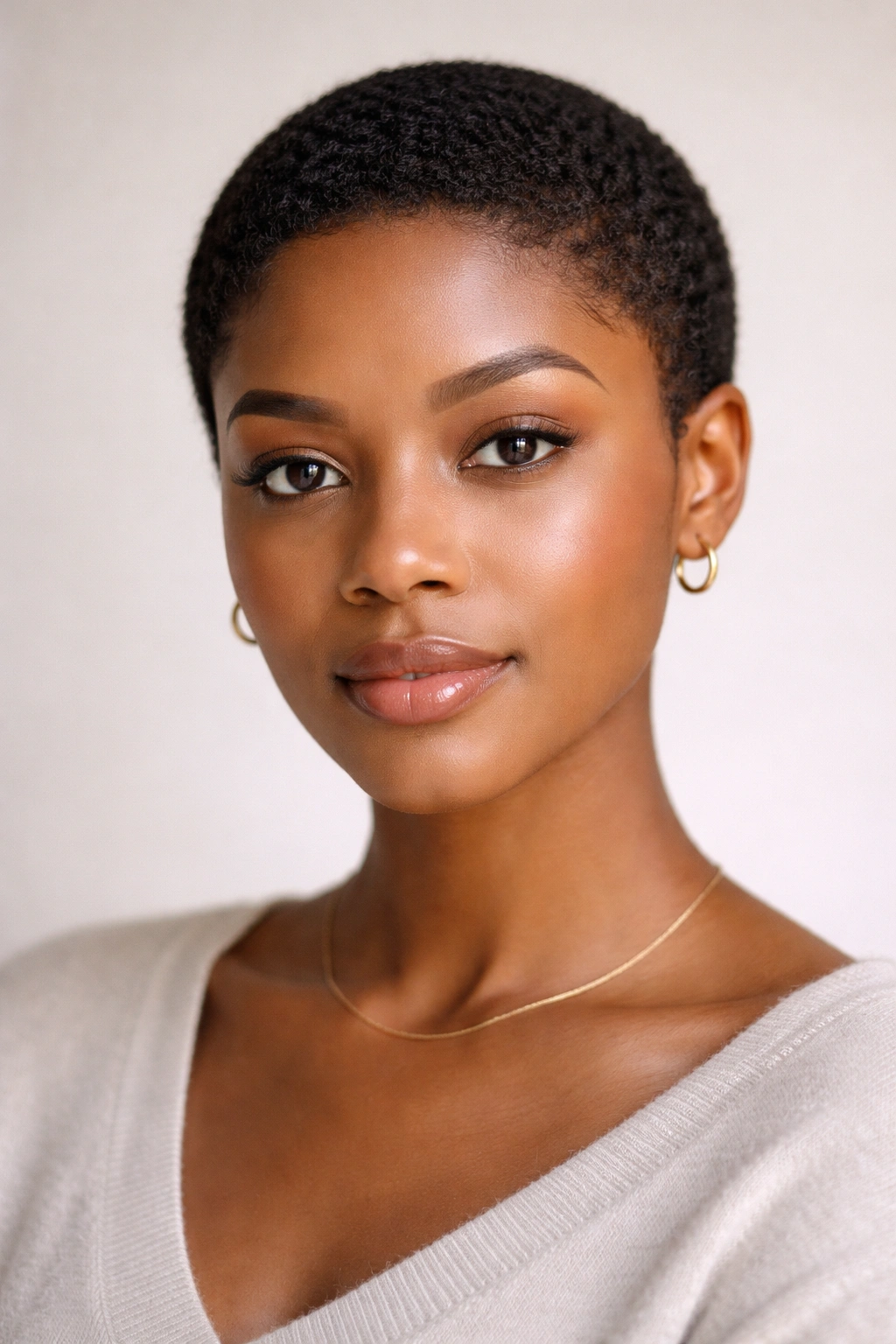
A rounded crop keeps hair short and even all over—usually 1-3 inches depending on your curl size—with a gently rounded shape that follows the natural contours of your head. It’s not a pixie (which has longer crown length) and not a buzz cut (which is uniform and clipped). Instead, it’s a scissor-cut, shaped style that frames your face beautifully.
Why Round Shapes Work
The rounded shape is universally flattering because it echoes the curve of your head and face. It doesn’t require asymmetry or extreme length variation to look intentional—the shape itself is the style.
Styling Ease
This cut is genuinely simple: wash, condition, apply leave-in conditioner, and either air-dry or diffuse. No styling tools needed. Your natural curl pattern creates all the texture and interest.
Pro tip: If you have a sensitive scalp, this length means your scalp gets moisture exposure during wash day. Use a lighter leave-in conditioner or oil to keep your scalp happy without creating buildup.
11. The Textured Blowout Crop
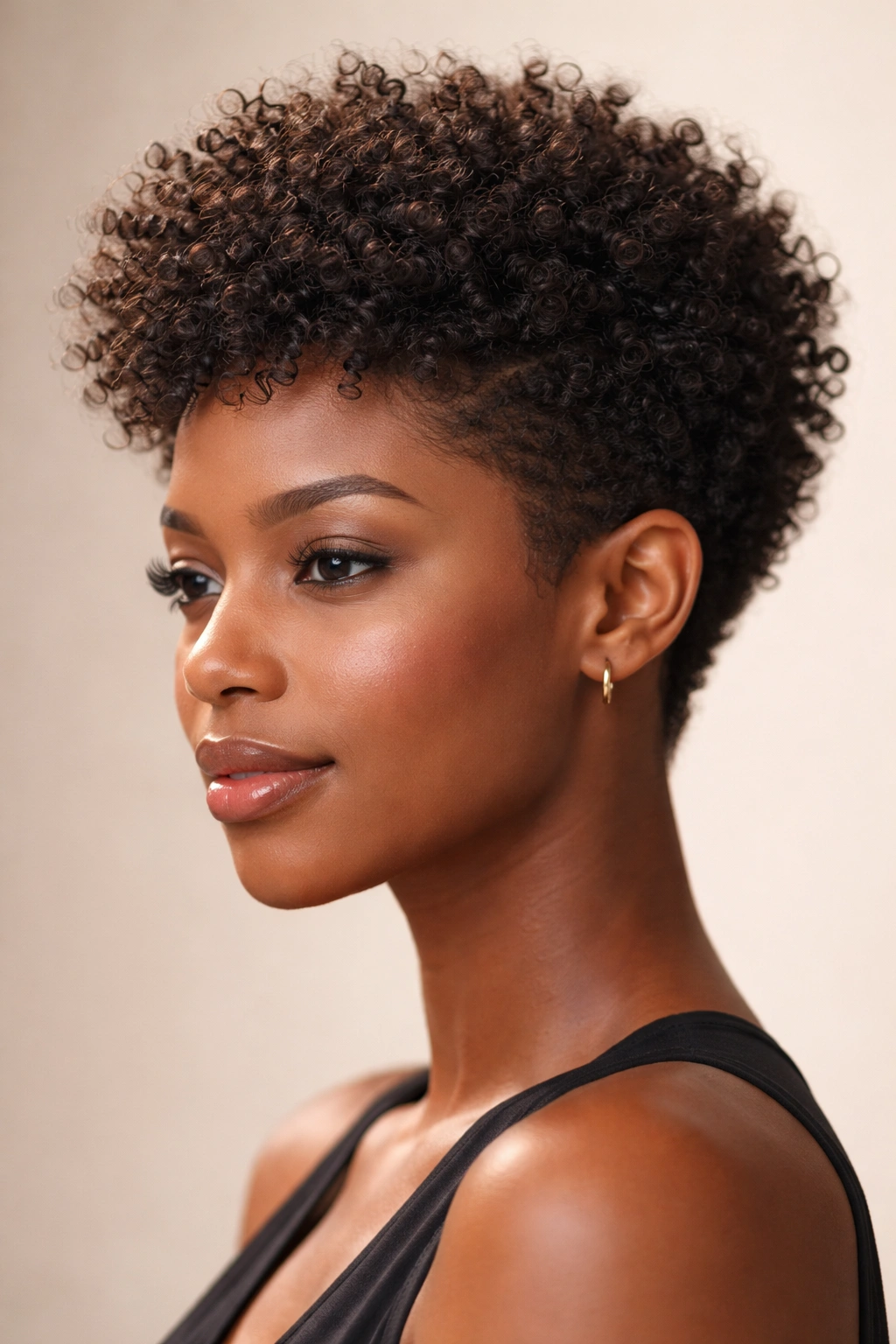
This style keeps hair cropped short (2-3 inches) and uses blow-drying with a diffuser attachment to create a fuller, more textured appearance than air-drying alone would give. You apply your favorite styling cream or foam to damp hair, then diffuse on low-medium heat, cupping sections in the diffuser and moving it around to create volume and texture.
When to Choose This Approach
Blow-drying with a diffuser is ideal if you want faster styling than air-drying but more definition than finger-styling. It’s a middle ground. The diffuser helps distribute heat evenly and creates texture rather than smoothing hair flat.
Protecting Your Hair
Keep heat on low to medium, keep the diffuser moving to avoid concentrating heat in one spot, and always apply a heat protectant spray before blow-drying. Once or twice weekly diffusing is fine; more frequent heat styling can compromise hair health.
Quick facts:
- Reduces drying time from 30-45 minutes (air-dry) to 10-15 minutes (diffuse-dried)
- Creates a more voluminous, fluffy result than air-drying for some curl types
- Works best on coily and very curly hair; very loose waves might look frizzy
12. The Colored Textured Pixie
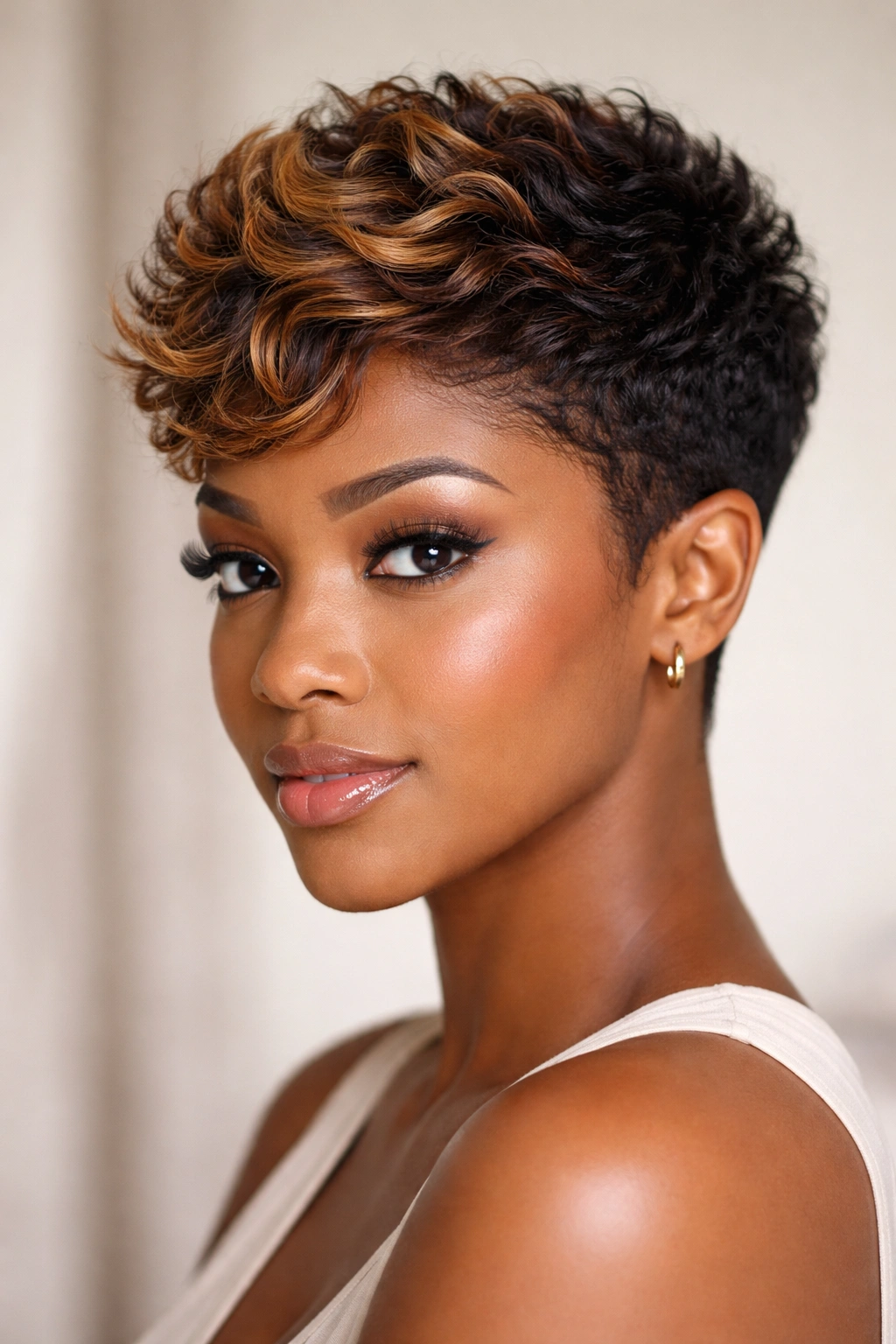
A colored textured pixie is the same cropped, curl-forward pixie cut (sides and back close, crown longer and textured) but with added color dimension. This might be a full lighter color over natural hair, rooted highlights, color on just the crown, or bold creative colors.
Making Color Work on Short Natural Hair
Short hair means less hair to color, which translates to less damage and lower cost. Your natural texture is showcased beautifully with color—the curl and coil pattern catches the light and creates dimension that color enhances. Lighter shades appear brighter against textured hair, and darker shades create stunning contrast.
Color and Curl Care
Color-treated curls need slightly richer moisture than untreated hair, so invest in a good hydrating leave-in conditioner. Protein treatments every 2-3 weeks help maintain strength. Refresh color every 6-8 weeks depending on how fast your hair grows and how much fading you notice.
Worth knowing: Lighter colors show frizz and breakage more visibly than darker shades. If you go very light, keep styling very gentle and moisture very high.
13. The Two-Strand Twist Crop
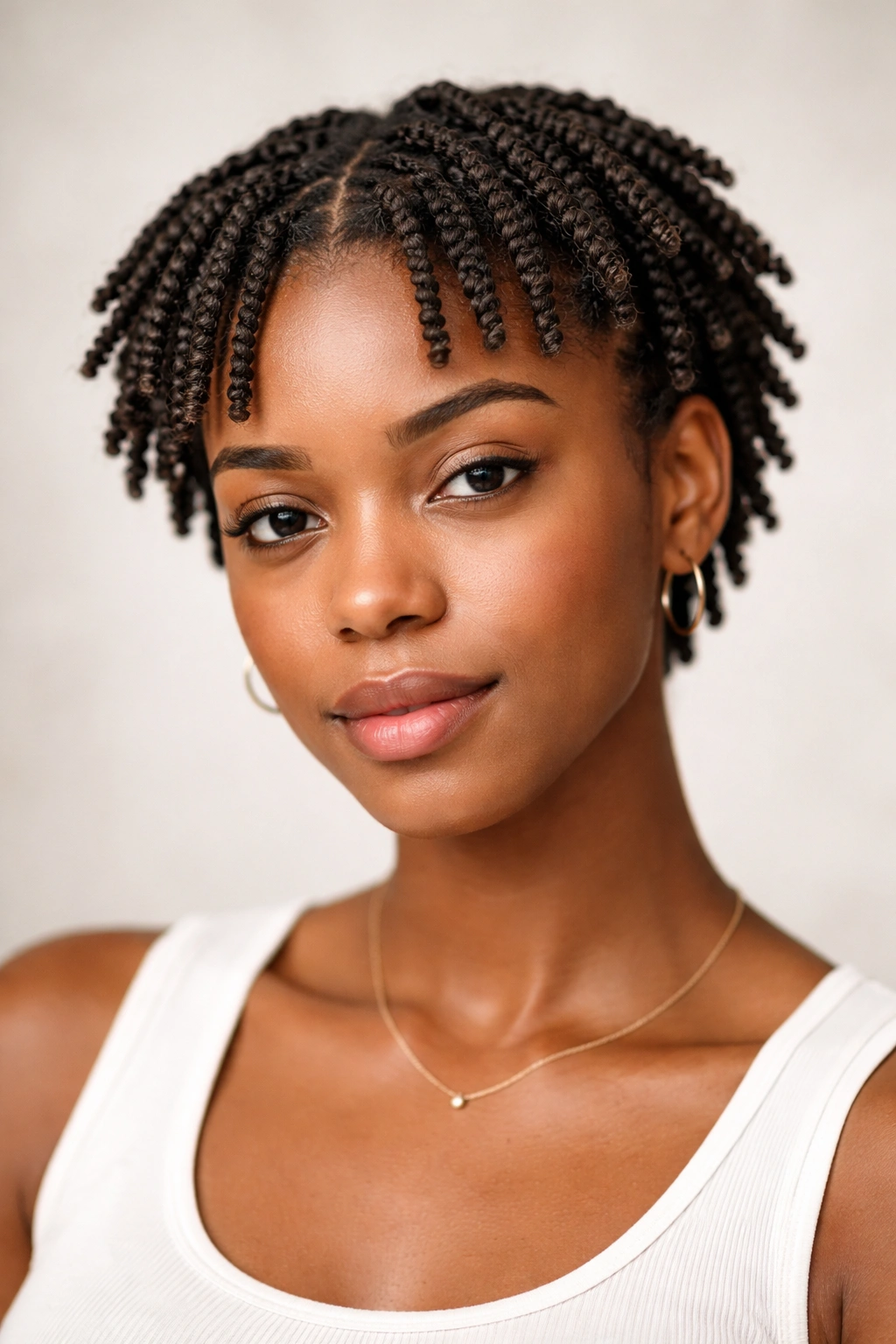
Two-strand twists—where you take two strands of hair and twist them around each other—create a rope-like texture that’s polished and intentional-looking. On short hair, two-strand twists are quick to install (30 minutes to an hour), they last 7-10 days, and they create a distinctive aesthetic that works especially well on medium to coarse textures.
Installing Two-Strand Twists
Work with damp hair, apply a leave-in conditioner, and take section. Divide each section into two strands and twist them around each other from root to tip, then either leave the ends loose or twist them around the base. Let dry completely—overnight under a bonnet or several hours under a hood dryer.
The Look and Longevity
Two-strand twists create a more uniform, controlled look than twist-outs (which unravel into individual curls). They’re lower-manipulation than twist-outs too, since you’re not unraveling anything—you’re wearing the twist itself as the style.
Pro tip: Two-strand twists on short hair are small enough that they feel delicate rather than chunky. Take smaller sections than you might for longer hair so the twists don’t look too thick or disproportionate to your head.
14. The Edgy High-Top
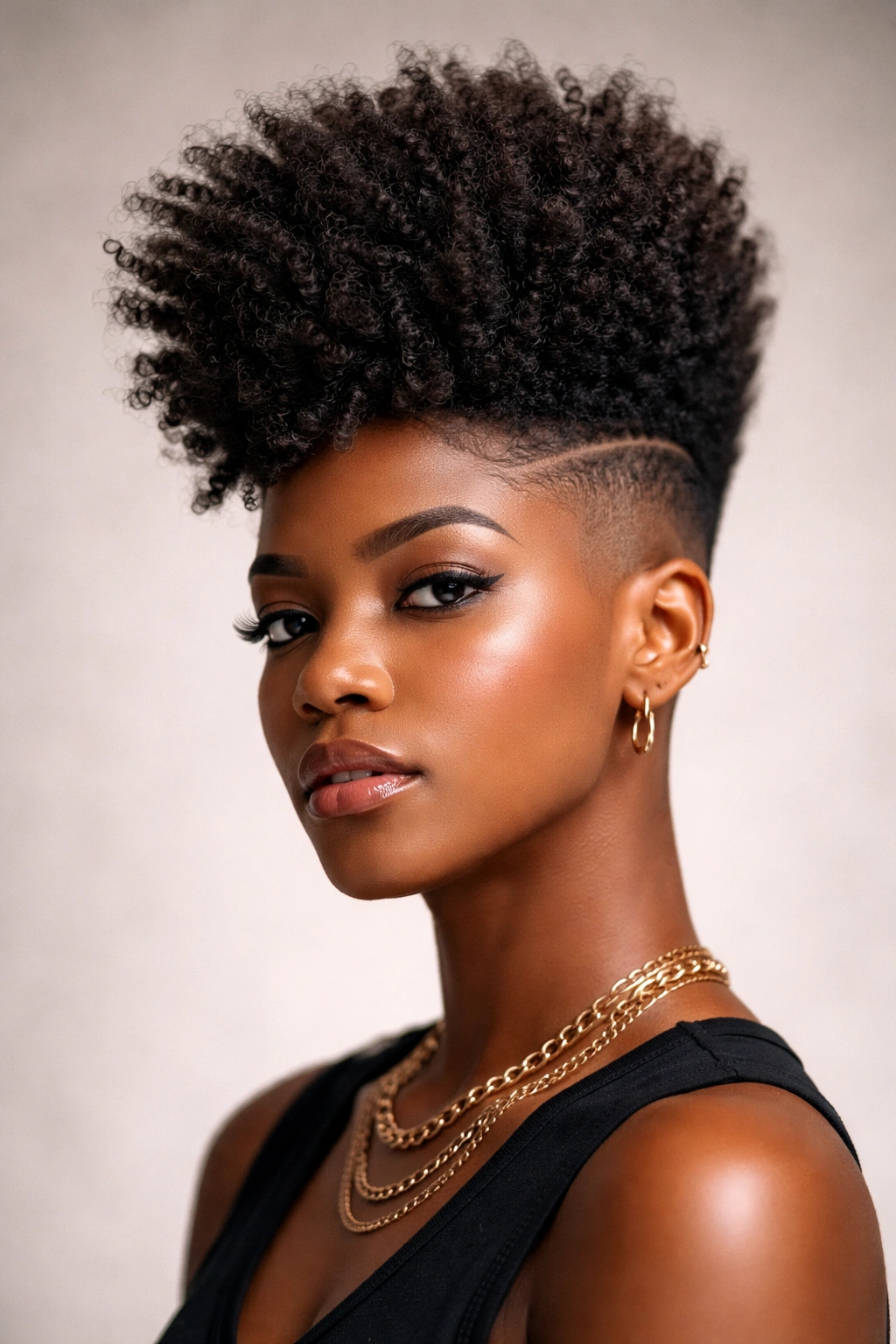
A high-top keeps the crown very full and tall—4-6 inches depending on how much height you want—while fading the sides quite short for serious contrast. This creates the illusion of height and volume and is genuinely striking on coily and kinky hair textures. You can wear it diffused for maximum volume or style the crown slightly with product for a more shaped appearance.
Styling Variations
A high-top can be worn many ways: wildly full and fluffy for maximum volume, slightly smoothed down with cream for a more polished look, or with a fresh line-up on the sides every few weeks to keep the fade crisp.
Face and Head Shape
High-tops add visual height, so they work beautifully on people with rounder or wider faces. If you have a longer face already, this might add too much length—you might prefer a medium-height crown instead.
Quick facts:
- Requires frequent maintenance on the faded sides (every 2-3 weeks)
- The crown needs shaping every 4-5 weeks as it grows
- Genuinely bold—wear this if you like a standout, confident style
15. The Bantu Knots
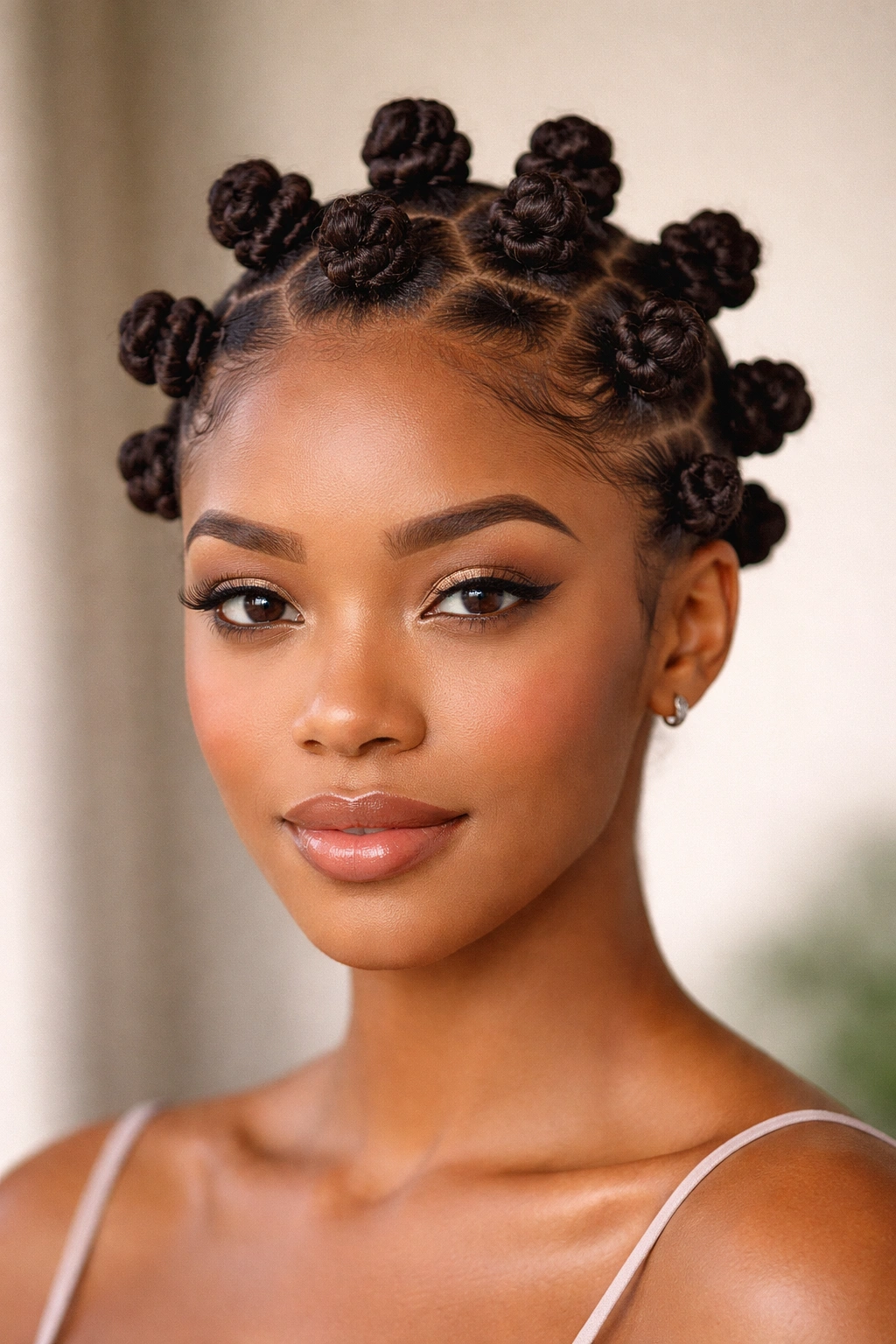
Bantu knots are small, flat coils created by twisting or coiling sections of damp hair and wrapping them around themselves to create a knot-like shape. When installed on short hair and left in overnight or for several days, they create gorgeous defined coils once removed. The style itself (before unraveling) is also very striking and sculptural.
Creating Bantu Knots
Section your damp hair, apply leave-in conditioner, then take each section and coil it around itself until it forms a tight knot pinned against your scalp. You can wear the knots as-is for a sculptural look, or unravel them after drying for soft, defined coils. The unraveled result is similar to a twist-out but with slightly different texture.
Time and Payoff
Installing a full head of bantu knots takes 1-2 hours depending on section size. You can leave them in 3-7 days, which gives flexibility in your styling schedule. The result is defined, bouncy curls that last for days.
Worth knowing: Bantu knots work on all curl types but create the most polished result on coily and kinky hair. Looser textures sometimes need slightly longer drying time or the use of setting lotion.
16. The Textured Mohawk with Designs
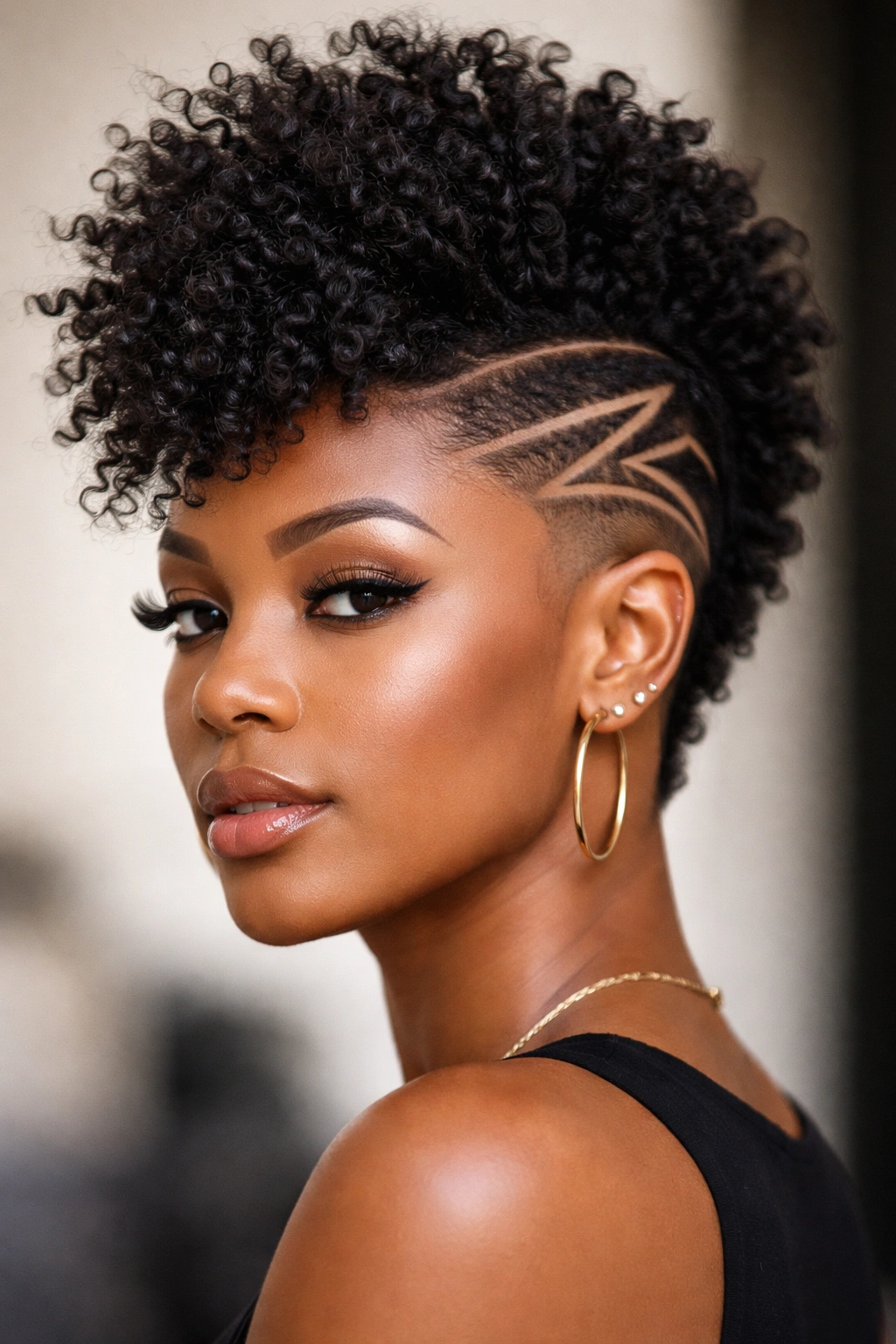
A textured mohawk with shaved designs combines the soft mohawk silhouette (longer crown, faded sides) with added artistry—geometric patterns, lines, or designs shaved into the sides. This turns a clean style into something uniquely personal and expressive.
Design Possibilities
Designs can be as simple as clean lines or geometric shapes on one side, or more complex patterns. You can add initials, symbols, or anything your barber is skilled at creating. The design doesn’t have to be permanent—some people refresh their design every 3-4 weeks when they get a fresh fade.
The Commitment
Designs on the sides require maintaining the faded lines every 2-3 weeks. If you want the design to stay crisp, line-ups need to be regular and precise.
Pro tip: Bring a clear photo or sketch of exactly what design you want. This prevents miscommunication and ensures your barber understands your vision.
17. The Soft Locs or Sisterlocks-Inspired Look
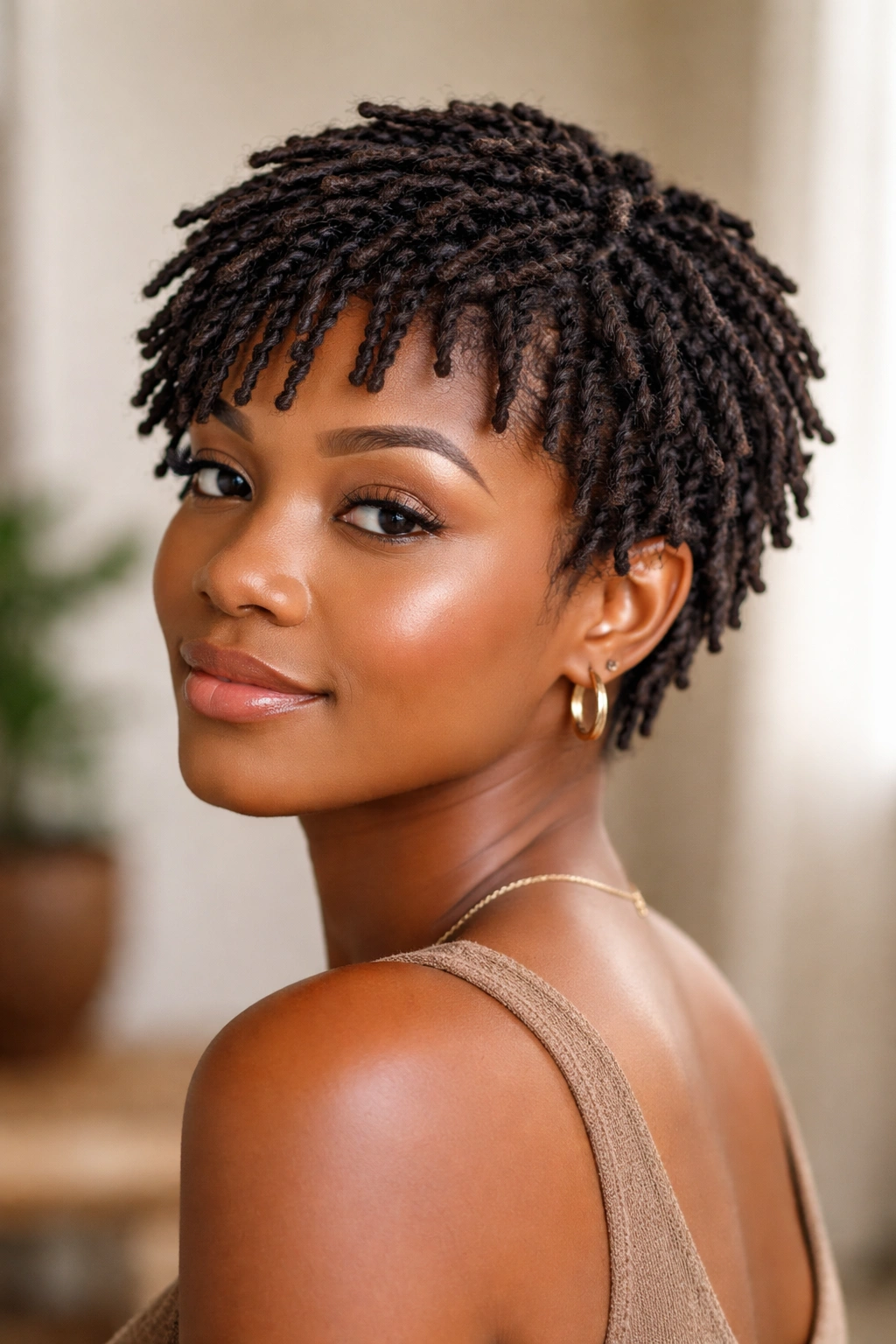
While true sisterlocks or locs require commitment and regular maintenance over months and years, a “locs-inspired” style on short natural hair can be created using smaller twist-outs, finger coils, or a cut that’s specifically shaped to resemble the aesthetic of locs without the long-term installation process. This works beautifully on very coily textures.
Creating the Aesthetic
This style is achieved through careful sectioning and twist-outs or coils that are small and uniform, creating that unified loc-like appearance. It’s not actual locs (which form over time with no manipulation) but rather a styled version that captures that aesthetic.
Maintenance
Refresh these styles weekly with misting and retwisting as needed. They last longer than traditional twist-outs because the sections are smaller and more intentionally shaped.
Quick facts:
- Requires strategic sectioning that can take 2-3 hours to install
- Works best on kinky and very coily textures
- Can be refreshed rather than completely redone, extending the life of the style
18. The Slicked-Edge Crop
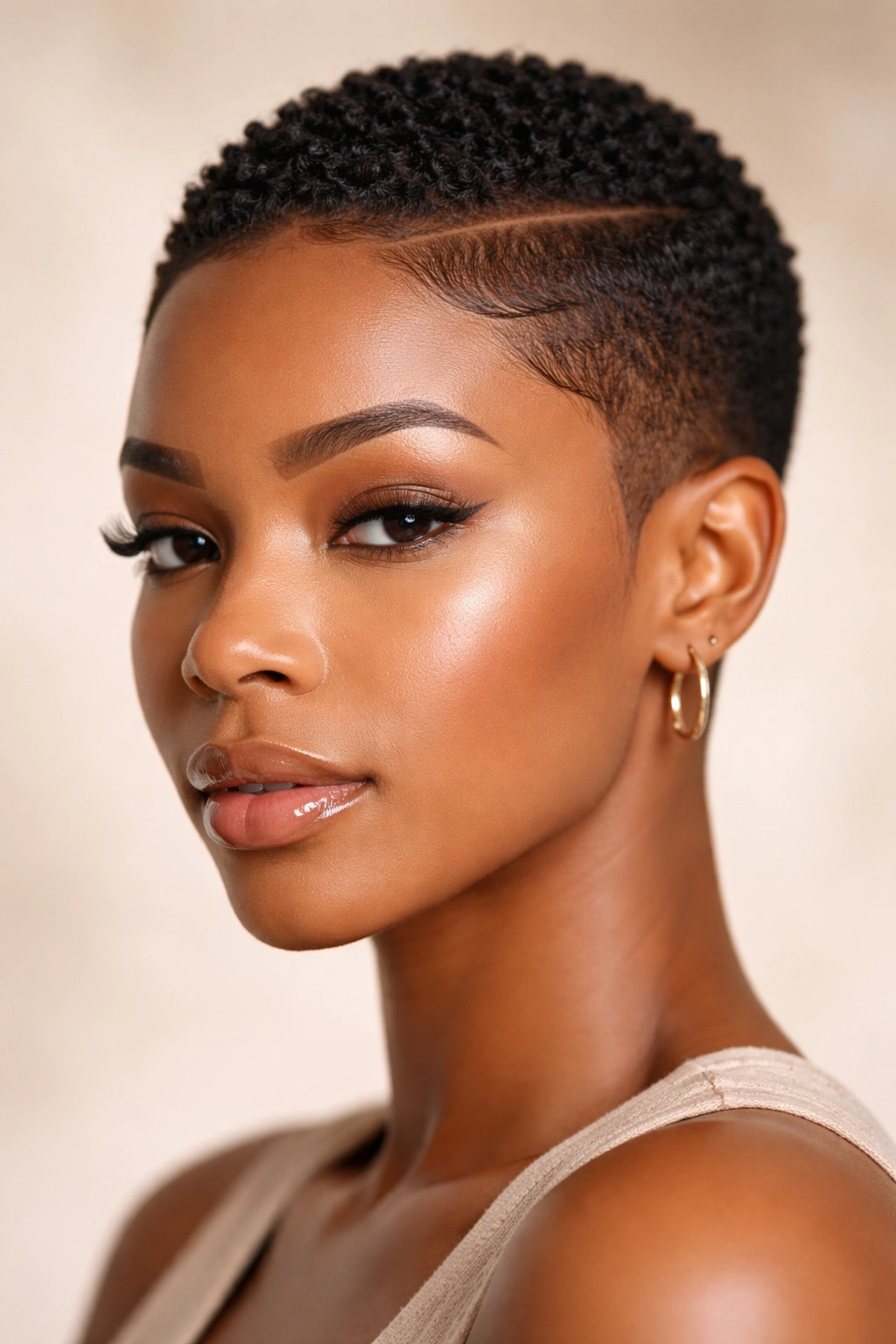
A slicked-edge crop is a short, simply cut style (usually 1.5-3 inches all over) where the emphasis is on clean, defined edges. The hair itself is cut simply, but edges are sculpted sharply with a razor or edge tool: clean hairline, precise sideburns, defined part line if you wear one. The edges are what make this style.
Edge Work
Edges are sculpted and maintained every 1-2 weeks depending on how fast your hair and edge hair grow. This requires a skilled barber or edge specialist. The result is polished and intentional-looking.
The Scalp Show
With such short hair, your scalp shows. Keep it clean and healthy—exfoliate gently, moisturize, and protect from sun exposure if needed.
Pro tip: A slicked-edge crop photographs beautifully because the sharp edges and clean lines are very defined. This is a good choice if you care about how you look on camera.
19. The Volume Fade with Texture Up Top
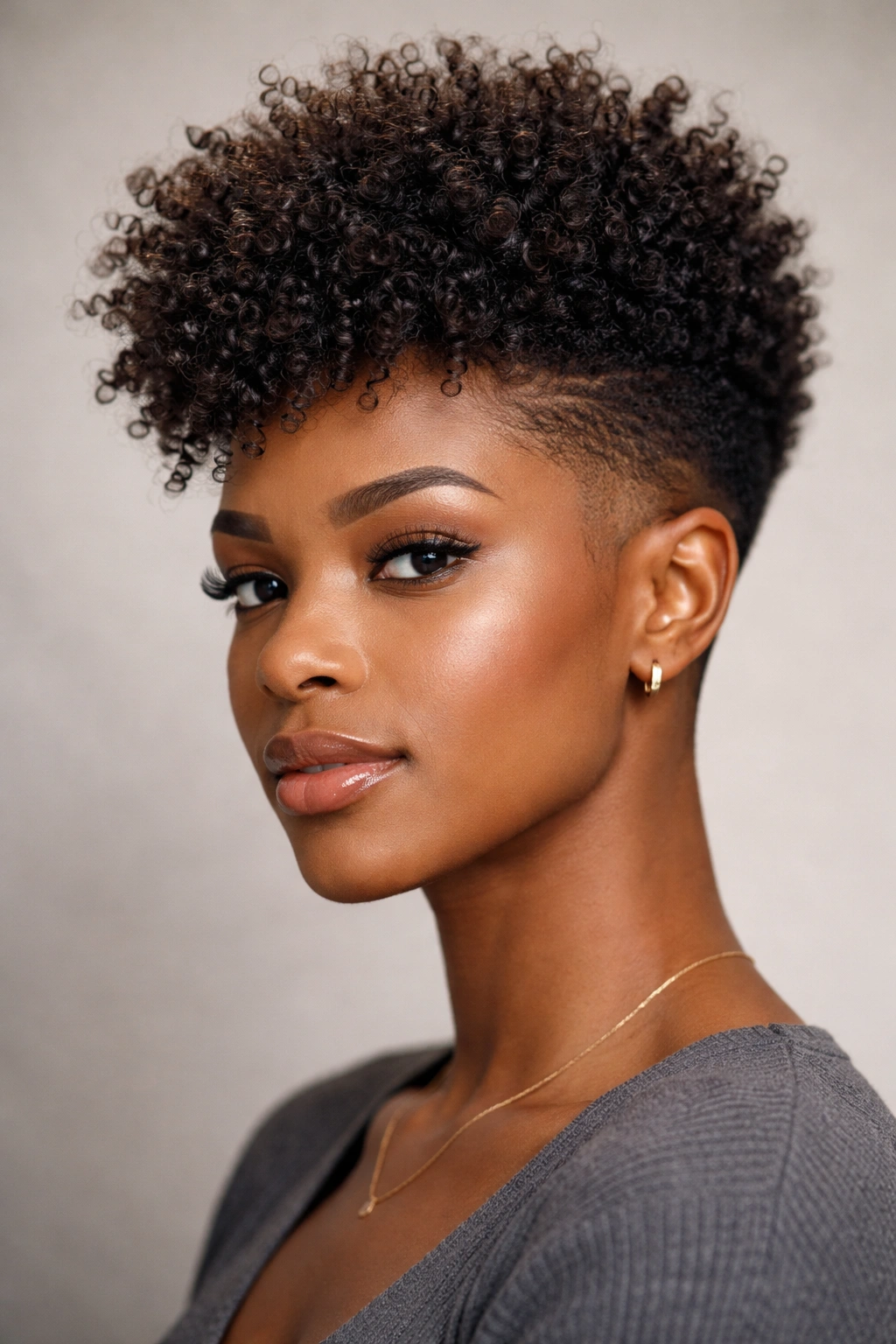
This style is similar to a coiled crown with tapered sides, but the emphasis is on maximum volume at the crown paired with a clean fade on the sides and back. The crown hair is kept longer and styled to stand up and out—using your natural curl volume—while the fade makes it look even more striking by contrast.
Creating Maximum Crown Volume
Diffuse-dry your crown on low heat to encourage volume, or air-dry with your fingers fluffing sections as they dry. A light cream or foam can enhance volume without weighing hair down. Sleep on a silk or satin bonnet to preserve volume overnight.
Maintenance
The sides and back need fading every 3-4 weeks. The crown hair grows and needs shaping every 4-5 weeks to maintain the silhouette.
Quick facts:
- Works best on coily, kinky, and very curly textures where natural volume is pronounced
- Creates an eye-catching silhouette that photographs well
- Requires commitment to regular maintenance appointments
20. The Textured Fringe or Curtain Cut
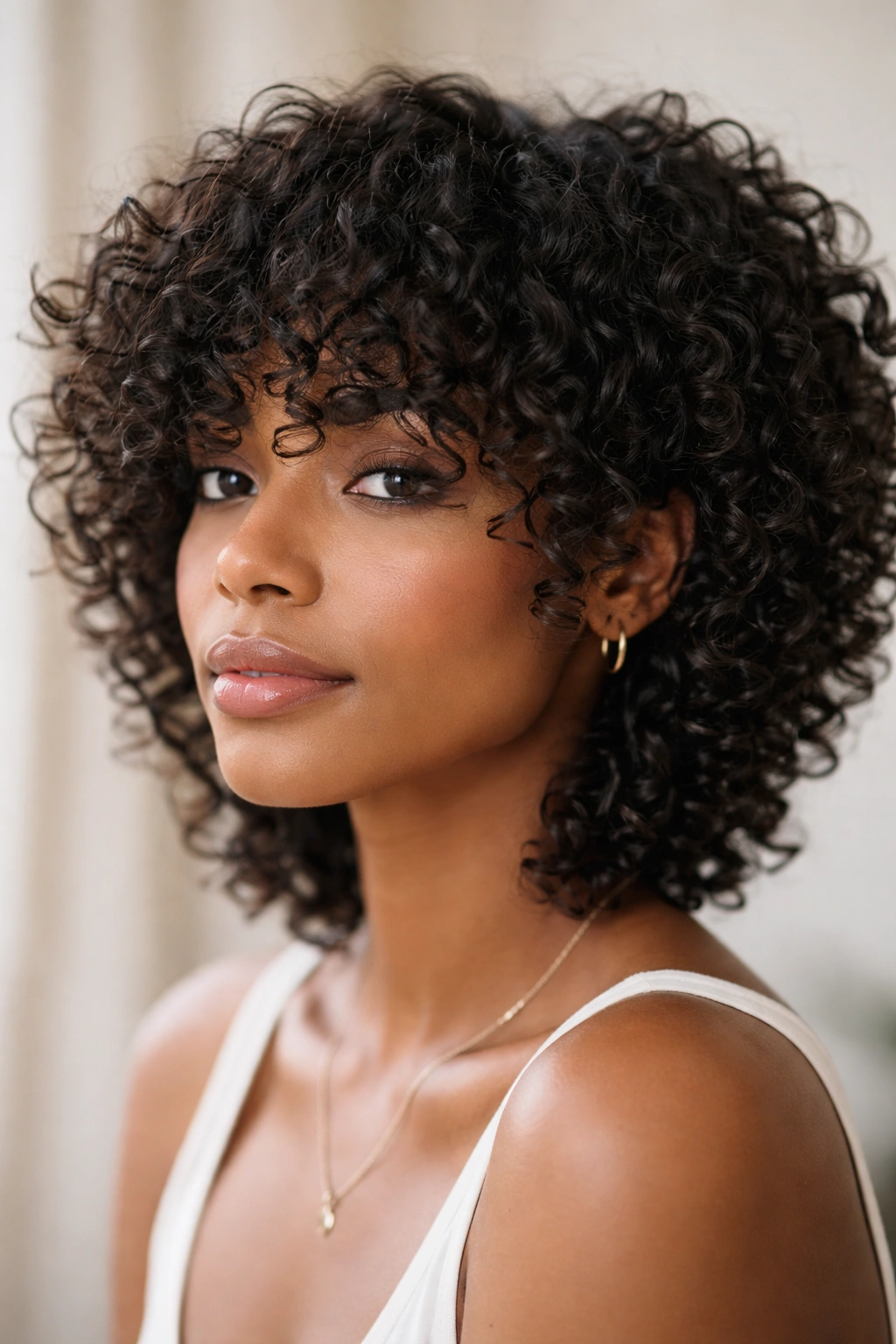
A textured fringe or curtain cut keeps the crown longer (3-5 inches) with textured, face-framing layers at the front that you can style to sweep to the sides (curtain) or fall forward (fringe). This adds dimension and movement while keeping the overall length short.
Styling the Fringe or Curtain
You can style this by encouraging your damp curls to dry in the direction you want them to go, or by gently directing them with your fingers as they dry. A light cream helps with definition and hold. The cut itself does most of the work—the layered front naturally creates the fringe or curtain effect.
Face-Framing Benefits
The layered front is genuinely flattering on most face shapes because it creates movement and draws attention to the face itself rather than a heavy, blunt line. The texture of short curls framing the face is also very youthful and modern.
Worth knowing: This cut requires a stylist who understands how to layer natural hair and work with your curl pattern. Bring a photo showing the fringe or curtain effect you want.
Final Thoughts
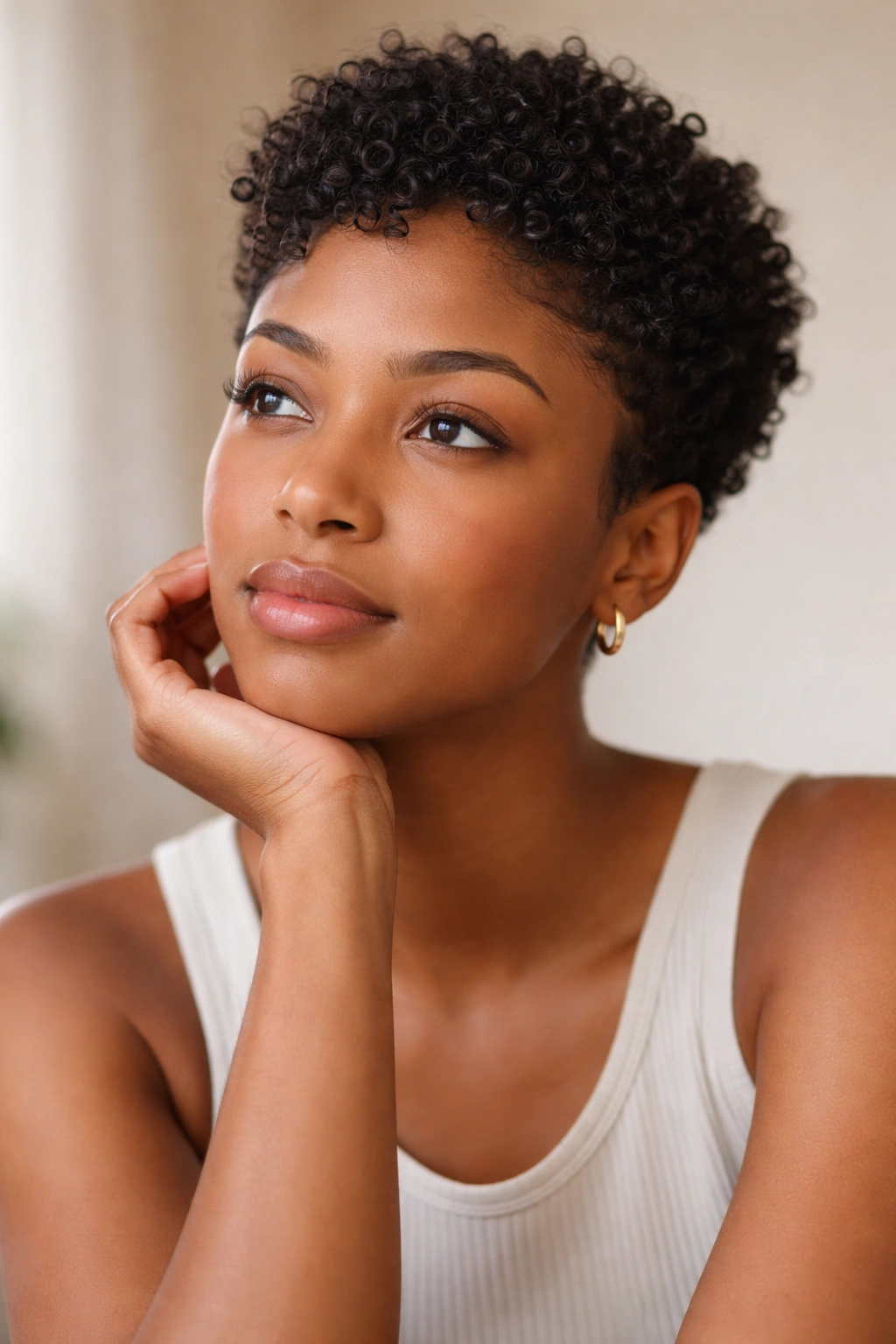
The beauty of short natural hairstyles is that they celebrate your hair exactly as it grows from your head. These cuts and styles aren’t about fighting your texture or forcing it into a mold—they work with your natural curl pattern, coil structure, and shrinkage to create styles that look intentional, require less daily manipulation, and often take less time than longer hair to maintain.
The right short style for you depends on several things: your curl pattern (loose waves versus tight coils), how much time you’re willing to spend styling (wash-and-go versus installation-based styles), how often you want to visit your barber or stylist, and what kind of aesthetic resonates with you. Some of these styles are minimal-maintenance wash-and-gos, while others require upfront time but then last days without touching. Some emphasize volume, others embrace a sleek, sculpted shape.
Start by thinking about the maintenance level you actually want, then browse photos of styles that appeal to you. Bring multiple clear photos to your appointment showing the overall silhouette, the length you want on top, and any fades or designs you’re considering. Work with a stylist who has experience cutting natural hair and understands how curl patterns behave. That foundation makes everything else possible—a good cut is the difference between a style you love and one you’re fighting every single day.
