



Short braids are having a serious moment—and for good reason. They’re protective, stunning, and incredibly versatile, whether you’re rocking them for a few weeks or swapping styles every other month. If you have natural hair and you’re looking to branch out from your everyday look, braids offer that perfect sweet spot: they’re low-maintenance once installed, they protect your edges and length from daily manipulation, and honestly, they just look good. The thing is, not all braids work the same way or serve the same purpose, and choosing the right style for your hair texture, lifestyle, and aesthetic can feel a bit overwhelming when you’re scrolling through inspiration.
What makes short braids especially appealing is that they work across hair types—from Type 3 curls to Type 4c texture—and they don’t require you to commit to keeping them in for months. Many styles can be installed and freshened up or taken down within a reasonable timeframe, giving you flexibility to switch things up without damaging your natural hair. The styles below range from bold geometric patterns to delicate detailed work, and each has its own personality. Whether you want something that turns heads or something understated and elegant, there’s a braid style here that fits your vibe.
What’s important to remember is that protective styling isn’t just about the look—it’s about giving your hair a break from daily styling, friction from pillowcases, and manipulation that can lead to breakage. Short braids do exactly that while keeping you looking intentional and put-together. Let’s explore some of the most striking, wearable braid styles that work beautifully on natural hair.
1. Box Braids
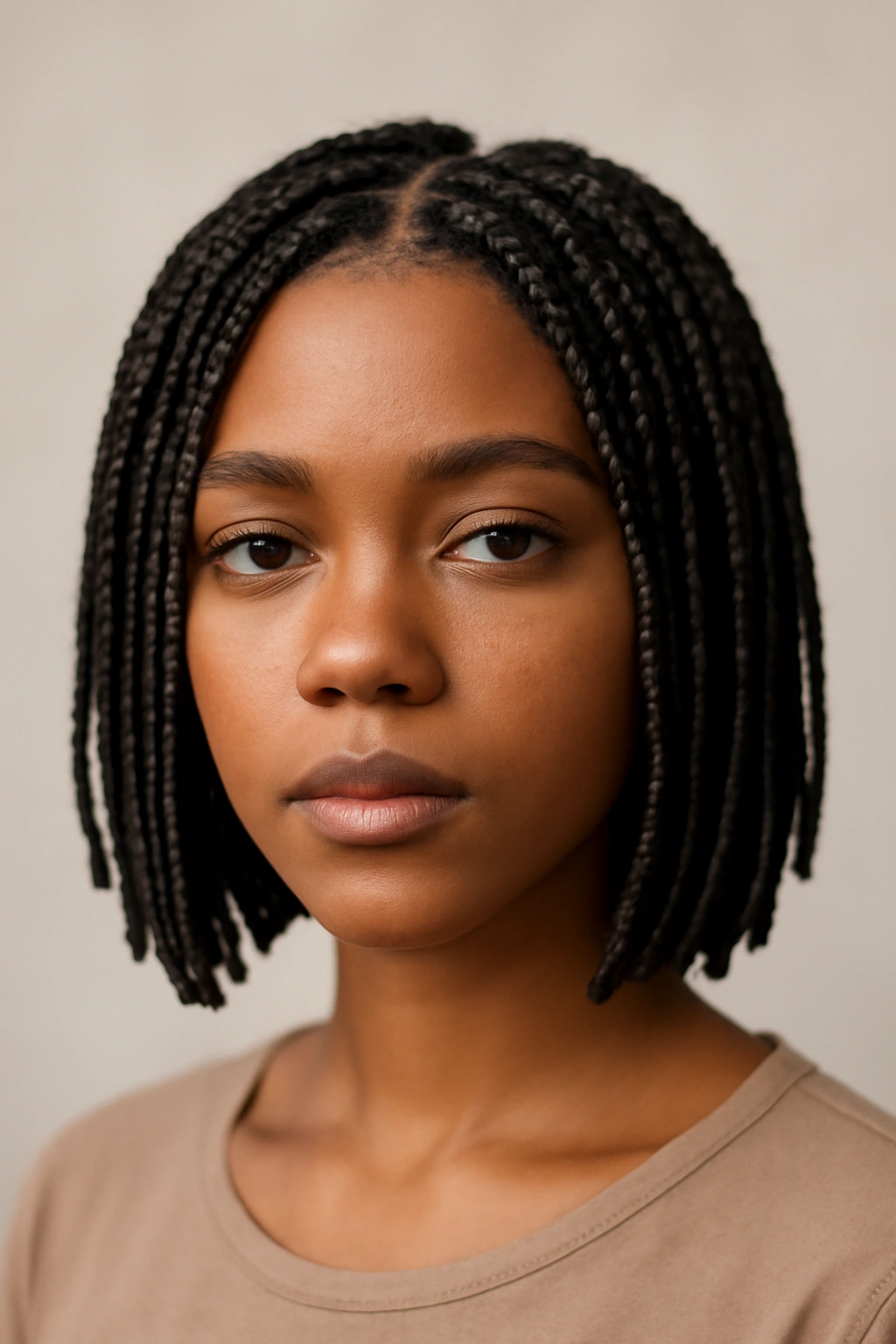
Box braids are basically the foundation of protective styling. They’re called “box braids” because each section of hair is parted into small, square-shaped boxes before braiding, creating clean, defined lines. The braids themselves are typically three-strand braids that hang independently, and they work whether you’re installing them on your natural hair alone or adding extensions for length and thickness.
Why They’re a Classic Choice
Box braids have endured as a go-to style because they’re genuinely protective—your natural hair stays tucked inside the braid, away from friction and environmental stress. Short box braids (usually shoulder-length or shorter) are particularly practical because they’re easier to maintain, quicker to install, and lighter on your scalp than longer versions. They also transition seamlessly from casual to polished, which makes them a workhorse style you can wear everywhere. The neat, orderly aesthetic of box braids also gives off an intentional, groomed vibe without requiring much daily styling—once they’re in, you’re pretty much set.
What You Need to Know
- Scalp health matters: Avoid braiding sections too tightly, especially at the roots and edges. Tension alopecia is a real concern, so prioritize comfort over visual tightness.
- Installation time: Expect 4-8 hours depending on braid size and whether you’re using extensions. Smaller braids take longer but create a finer, more delicate look.
- Braid thickness options: Thick braids (about the width of a pencil) are faster to install and look bold; thin or micro braids create more detailed, refined styling possibilities.
- Longevity: Short box braids typically last 4-8 weeks before needing maintenance or removal.
Pro tip: Sleep on a silk or satin pillowcase or wrap your braids loosely in a silk scarf at night. This reduces frizz and extends the life of your style by several weeks.
2. Cornrows
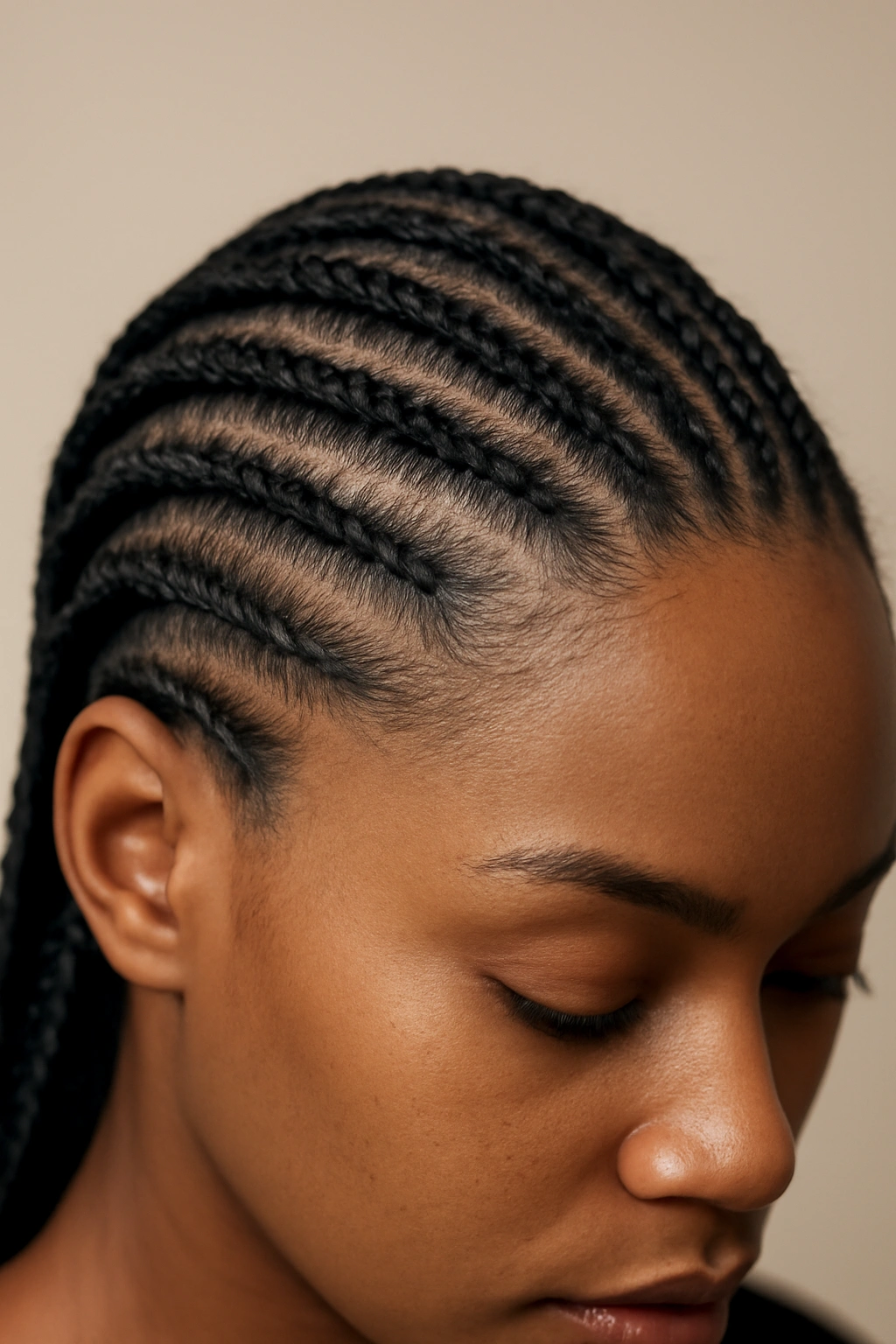
Cornrows are rows of braids that run directly against the scalp, creating clean lines that can be straight, curved, or geometric. Unlike box braids, cornrows sit flush to the head, which makes them feel sleeker and sometimes more elegant. They can be styled in single rows running straight back, multiple parallel rows, or in curved patterns that frame the face.
The Protective Advantage
Cornrows are legitimately one of the most protective styles you can wear because there’s minimal hair manipulation once they’re in place. Your natural hair is completely tucked away and moving as little as possible. Short cornrows work particularly well for people with sensitive scalps or less time for styling, since you can rock them with minimal fussing. The braids lie flat, so there’s no weight pulling on your roots, and you can easily style the ends into buns, twists, or leave them down depending on your preference.
The Technical Details
- Pattern options: Straight-back rows are timeless and work for every occasion. Curved or diagonal patterns are more artistic and sculptural-looking.
- Grip and longevity: Well-done cornrows can last 2-4 weeks comfortably, though how long they stay looking fresh depends on nighttime care and your movement patterns.
- Scalp visibility: With cornrows, your scalp shows between rows, so this style works best if you prefer a cleaner, more defined aesthetic.
- Hair length needed: You need at least 3-4 inches of natural hair to cornrow effectively. Very short natural hair may require extensions woven in at the roots.
Worth knowing: Cornrows work beautifully with accessories—wrap colorful thread around individual rows, clip small gold cuffs onto the ends, or weave beads into the pattern for a personalized, elevated look.
3. Twist Braids
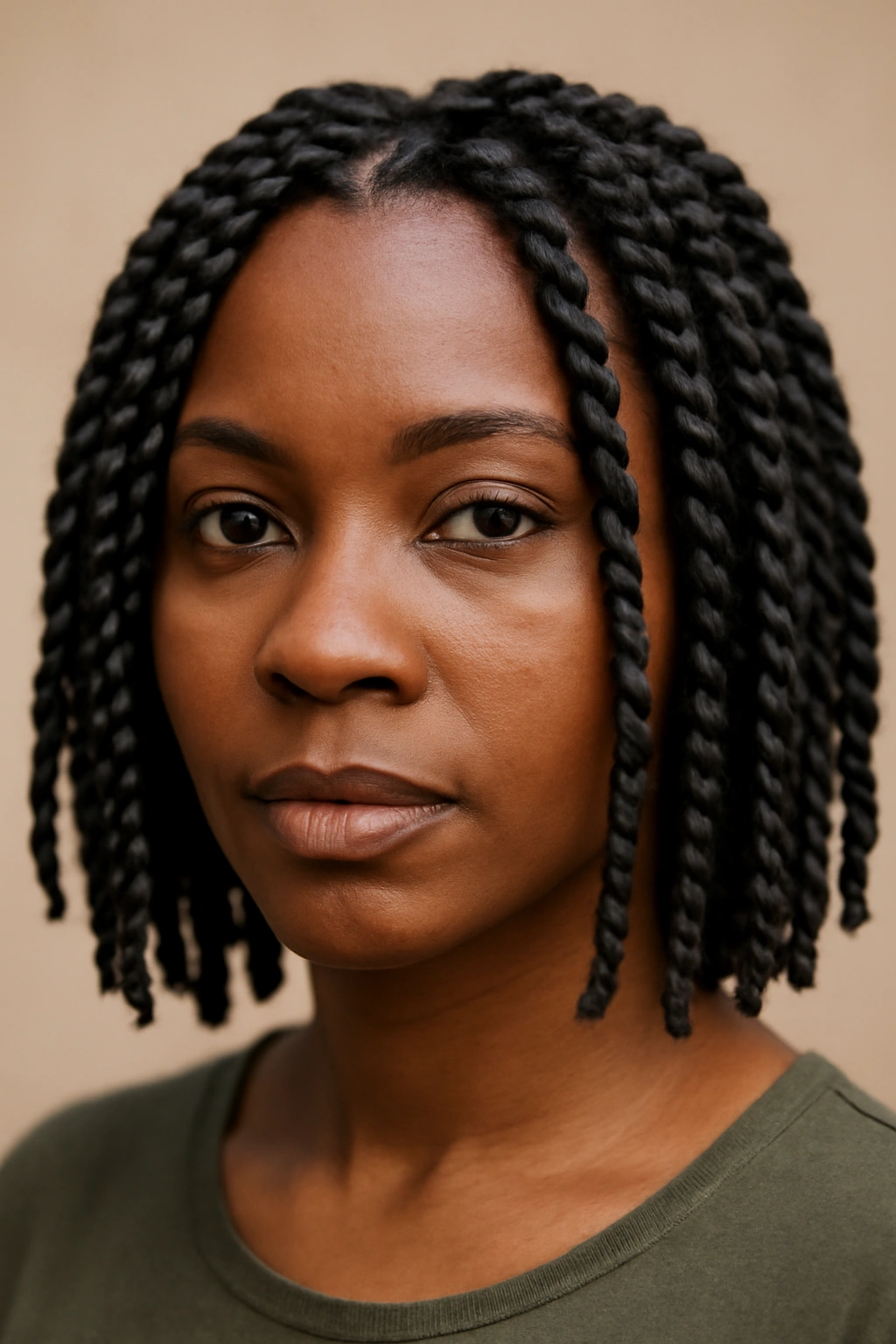
Twist braids (also called two-strand twists) use two sections of hair twisted around each other instead of the traditional three-strand braid pattern. They’re simpler to install than box braids, which makes them a solid option if you’re doing your own hair or working with a stylist who has limited time. Visually, they create a ropelike texture that’s distinct and stylish.
Why Twists Deserve Your Attention
Two-strand twists are remarkably versatile. You can wear them chunky for a bold look, thin for something delicate, or mixed sizes for an eclectic aesthetic. They’re also one of the easier protective styles to do on yourself, which is huge if you’re on a budget or prefer not sitting in a salon chair for 8+ hours. Short twists are especially easy to manage—they don’t require extensions necessarily, though you can add them for length and volume.
Installation and Maintenance
- Time investment: Two-strand twists typically take 2-4 hours for short hair, making them one of the faster protective styles to install.
- Texture play: Twists create a slightly textured surface compared to the smooth look of box braids. Some people love this rougher aesthetic; others prefer the sleekness of braids.
- Unraveling: Twists can gradually unravel as you move and sweat, especially if they’re on the looser side. Plan to re-twist loose ones or expect them to loosen over a few weeks.
- Duration: Short twists generally last 3-5 weeks before they need refreshing or removal.
Pro tip: Seal the ends of your twists by dipping them briefly in hot water or using a small amount of hair glue. This keeps them from unraveling and extends the style’s lifespan.
4. Faux Locs
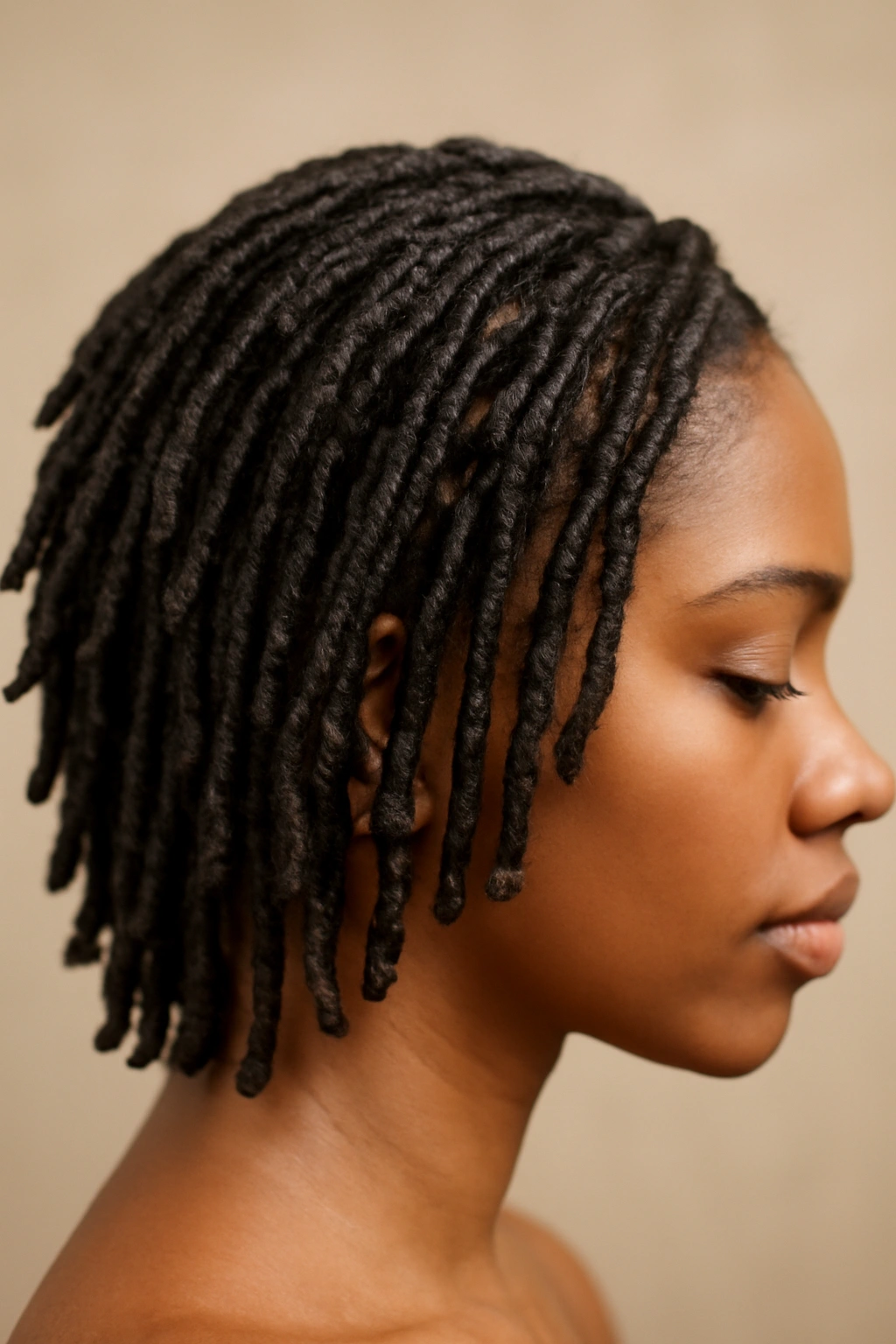
Faux locs blend the look of locs with the temporary nature of braids. They’re created by wrapping hair or extensions around a base of two-strand twists, creating a thick, textured appearance that resembles real locs without the long-term commitment. Short faux locs have a particularly striking, bold aesthetic.
The Appeal of Faux Locs
If you’ve been curious about locs but aren’t ready for the permanent commitment, faux locs let you test-drive the style risk-free. They make a visual statement—faux locs read as confident and fashion-forward—and they’re genuinely low-manipulation once they’re in. Your hair is completely protected under the wrapping, and there’s almost zero daily styling required. They also photograph beautifully and work for everything from casual to more formal settings if you style them up.
Getting Faux Locs Right
- Installation method: A stylist typically two-strand twists your hair, then wraps each twist with thread, yarn, or a combination of hair and extensions to bulk them up and create the loc appearance.
- Weight and scalp comfort: Faux locs can be heavier than other braided styles because of the wrapping. Make sure they’re not braided too tightly at the roots or your scalp will hurt.
- Flexibility in length: You can achieve short faux locs (shoulder-length or shorter) or longer versions. Short ones are lighter and more practical for everyday wear.
- Longevity: Faux locs typically last 4-8 weeks before the wrapping loosens and you need removal or refreshing.
Worth knowing: Faux locs work beautifully with gold or silver cuffs, beads, or locks woven in at the roots for an elevated, intentional look.
5. Senegalese Twists
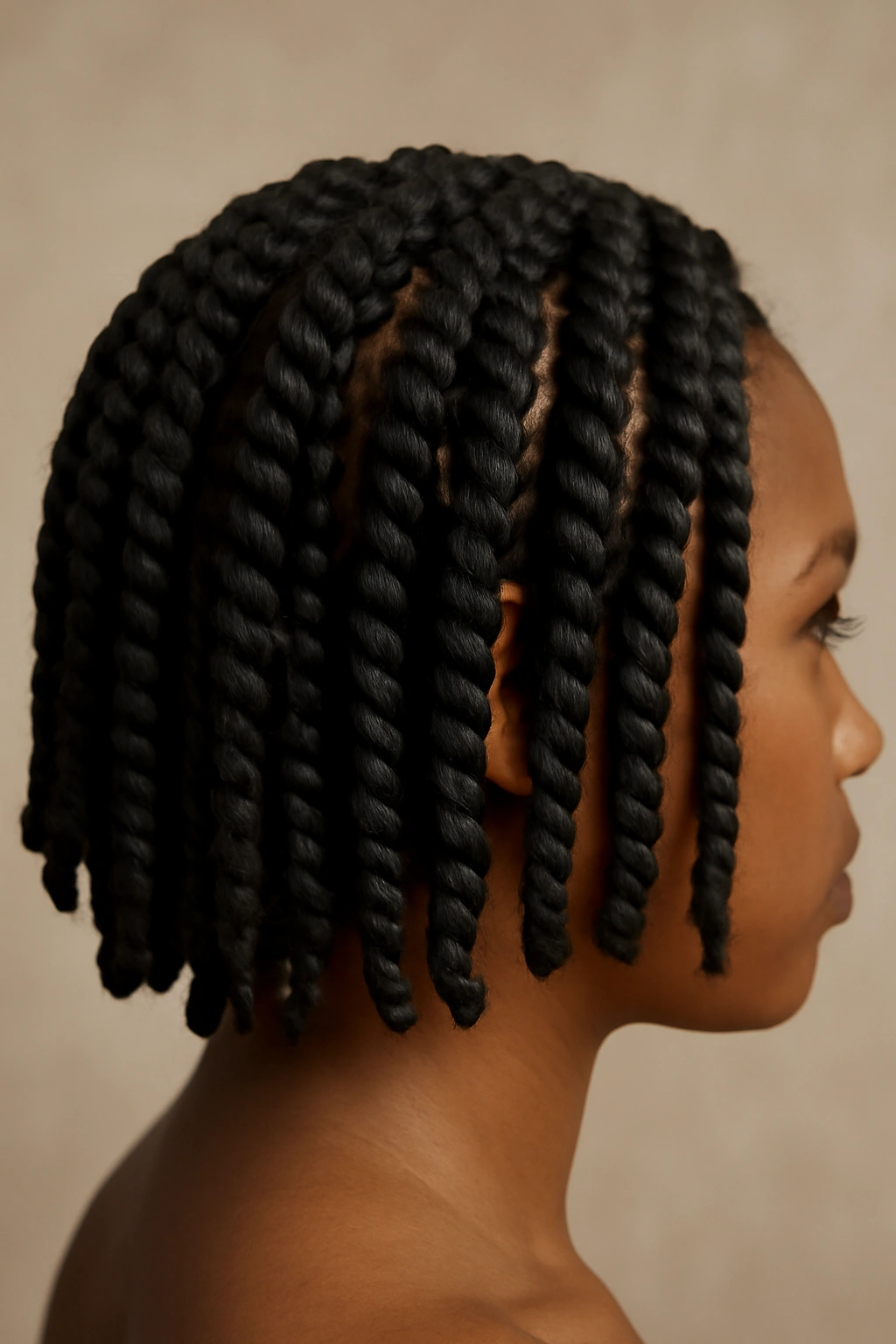
Senegalese twists are similar to regular two-strand twists but typically thicker and often installed with extensions woven in to add bulk and length. They’re named for their traditional West African origins and have a chunky, textured appearance that’s distinctly different from smaller braids. Short Senegalese twists create a bold, sculptural look.
Why Senegalese Twists Stand Out
These twists create immediate visual interest because of their thickness—even short versions make a statement. They’re quicker to install than small box braids (you’re working with fewer, thicker sections), and they look intentional and polished without feeling delicate or requiring daily maintenance. The textured surface of Senegalese twists also adds dimension and depth that sleeker braids don’t quite have.
Technical Considerations
- Hair and extension options: You can use human hair, synthetic extensions, or a blend. The texture and weight of extensions you choose will affect how the twists look and feel.
- Root grip: Well-installed Senegalese twists grip at the root and stay put for weeks without needing tightening. Poor installation leads to twists that slide down and feel loose quickly.
- Styling versatility: You can wear short Senegalese twists down, sweep them to one side, gather them into a top knot, or pin sections back with clips.
- Maintenance timeline: Plan on 4-8 weeks of wear, depending on how quickly they loosen and whether you’re refreshing the roots.
Pro tip: Add lightweight gold or silver cuffs to every few twists for instant elevation. It’s a small detail that makes the whole style feel more intentional.
6. Passion Twists
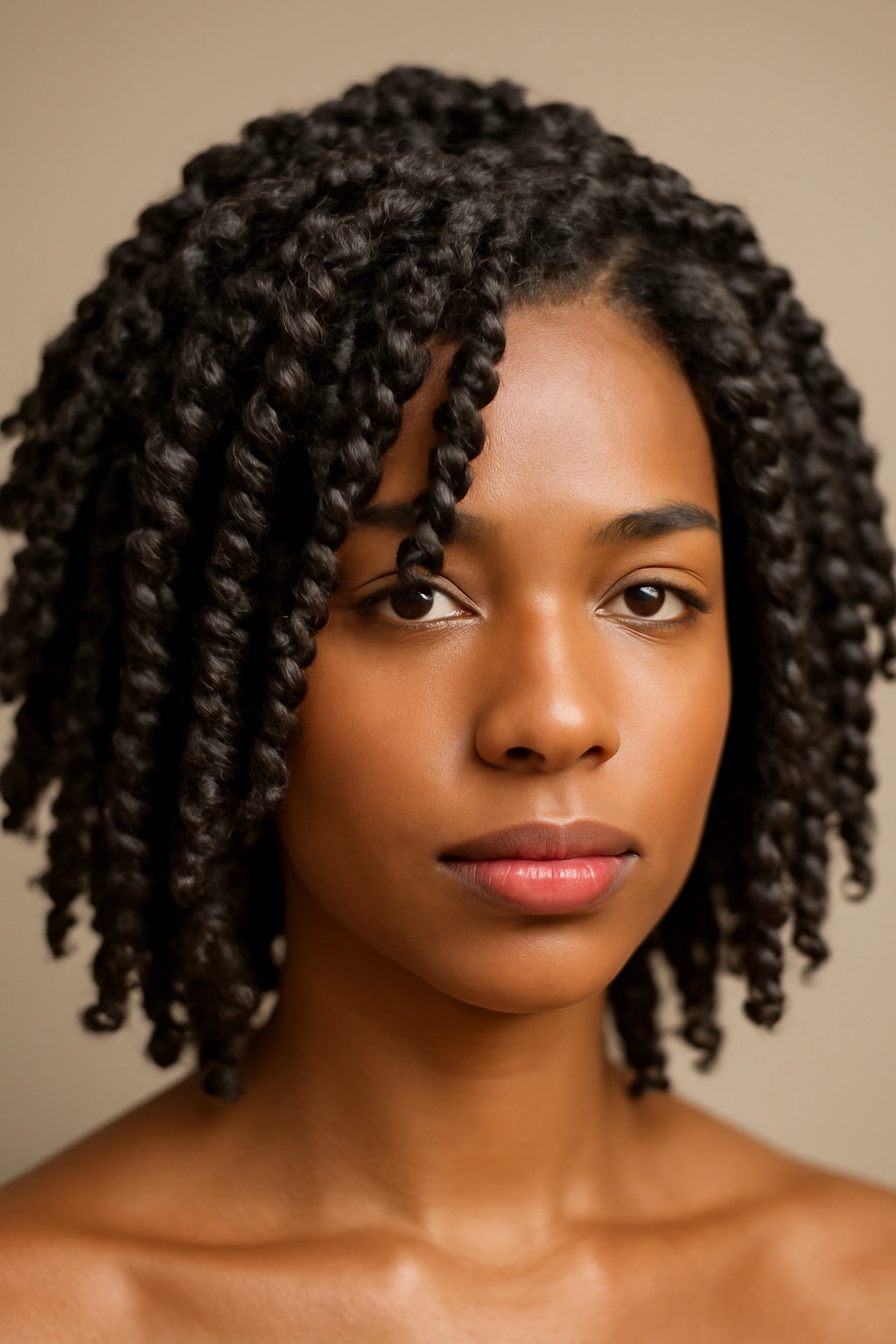
Passion twists are a softer, more delicate variation of Senegalese twists. They’re created by wrapping curly hair or extensions around a base of twisted hair, creating a bouncy, textured appearance with more dimension. The result looks almost springy compared to the sleekness of regular twists.
What Makes Passion Twists Special
Passion twists have become increasingly popular because they bridge the gap between protective styling and a more natural-looking aesthetic. They look fuller and more voluminous than regular twists, and they have a softer, bouncier quality that’s genuinely pretty. Short passion twists work beautifully on people with Type 3 and Type 4 hair textures because the curl pattern of the extensions creates visual texture and dimension.
Installation and Styling
- Extensions selection: Passion twists work best with curly hair extensions—this creates that distinctive bouncy, textured look. Straight extensions will just look like regular twists.
- Installation time: Expect 3-5 hours for short hair, similar to Senegalese twists.
- Scalp comfort: Because of the lighter extensions used, passion twists tend to feel less heavy than Senegalese twists, making them a good choice if you have a sensitive scalp.
- Duration and maintenance: They last 4-8 weeks and require minimal maintenance beyond loose twists being re-twisted or removed.
Worth knowing: Passion twists photograph beautifully and look especially stunning with loose, wavy styling through the ends instead of kept uniform.
7. Goddess Braids
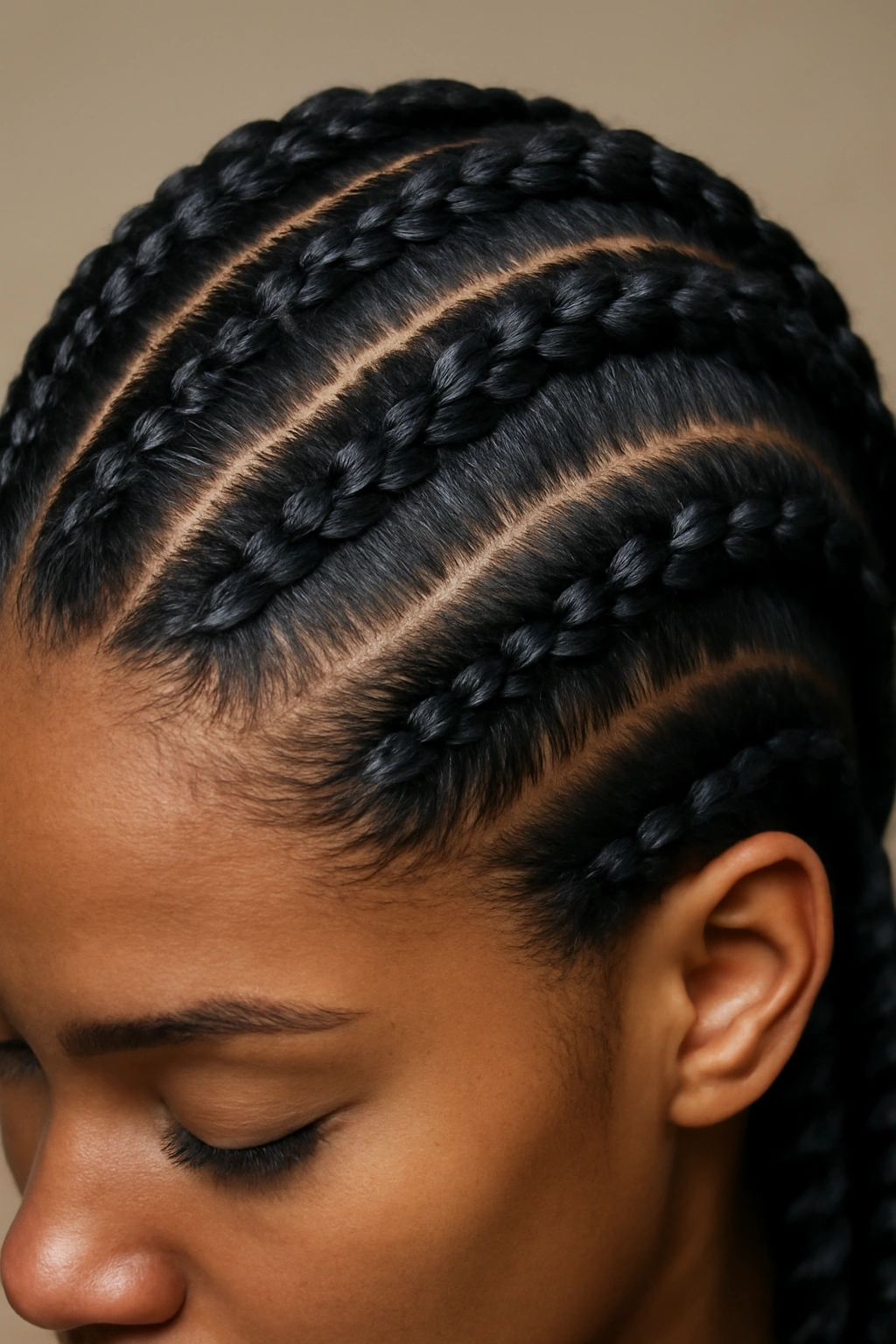
Goddess braids are essentially larger cornrows that are often thicker and sometimes styled in curved or creative patterns. They’re chunky, sculptural, and elegant—the kind of braids that look like you had your hair professionally done even if you installed them yourself. They can be worn hanging down or pinned up in various configurations.
The Elegance of Goddess Braids
Goddess braids have a more upscale, refined aesthetic compared to smaller braids or twists. They read as intentional and polished, and they work for everything from casual outings to professional settings to special events. Short goddess braids in particular are striking—you get all the visual impact without the weight or length commitment. They’re protective, low-manipulation, and genuinely beautiful.
Creating Goddess Braids
- Braid thickness: Goddess braids are typically thicker than standard cornrows, usually about the width of a marker. This thickness is part of what gives them their distinctive look.
- Pattern flexibility: You can do straight-back rows, curved patterns that frame the face, or a combination of thick braids and thinner detail work.
- Scalp health: Because they’re thicker and fewer in number, goddess braids put less overall tension on your scalp compared to many thinner braids, though proper installation is still critical.
- Longevity: Short goddess braids typically last 3-5 weeks before they start to loosen significantly.
Pro tip: Finish goddess braids with a sleek ponytail at the nape of your neck, or pin the ends up into a low bun for an extra-polished look.
8. Feed-In Braids
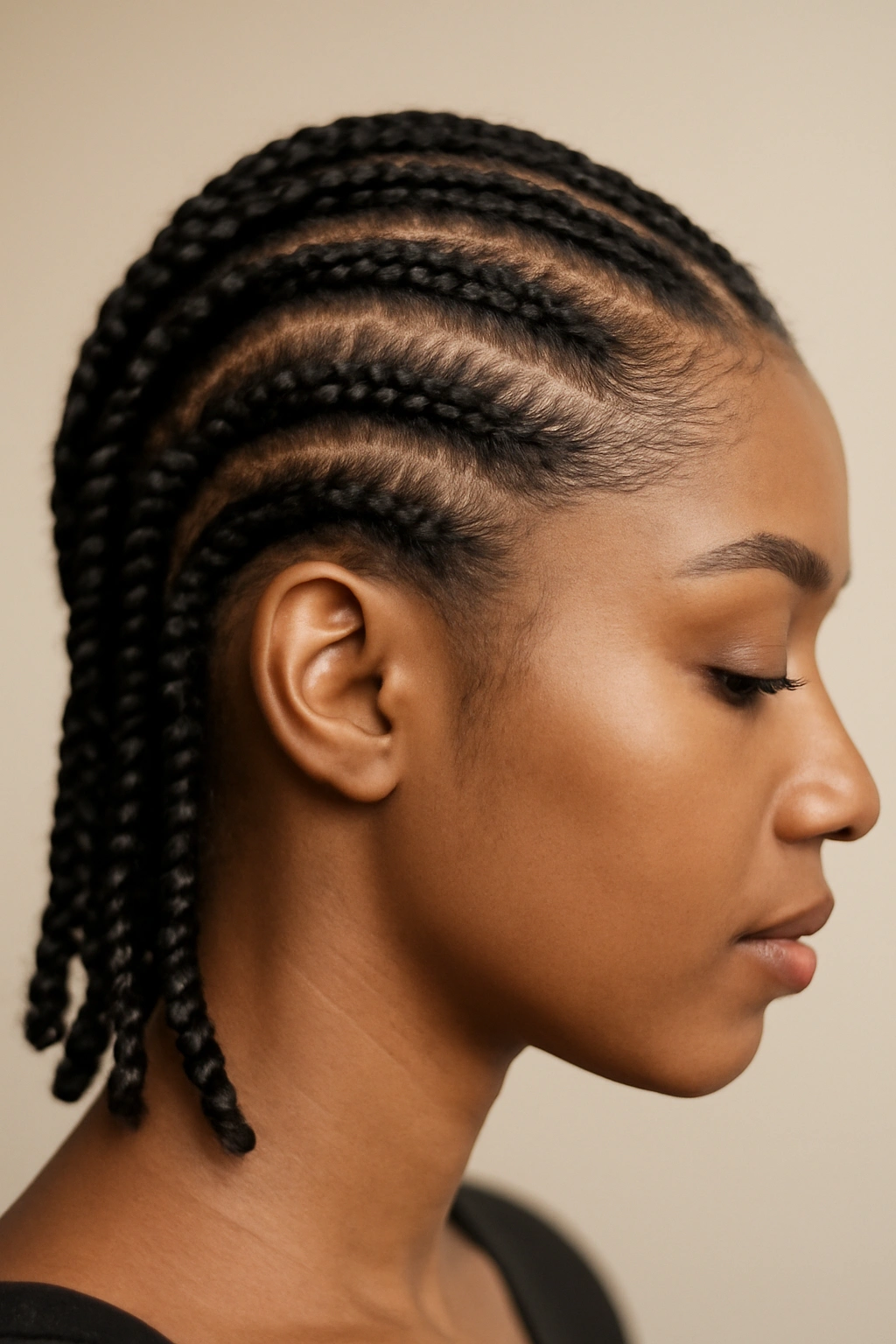
Feed-in braids are a specific braiding technique where you gradually introduce extensions into the braid as you go, rather than incorporating them all at the root. This creates a cleaner, more blended look where the extensions appear to flow naturally from your natural hair. Feed-in braids can be any size—from micro to chunky—and they’re known for being gentler on edges.
Why Feed-In Technique Matters
The feed-in method distributes tension more evenly along the braid because you’re not putting all the weight at the root. This means less stress on your edges and hairline, which is especially important if you have sensitive or previously damaged edges. Feed-in braids also look more intentional and seamless—there’s no obvious point where your natural hair ends and the extension begins. Short feed-in braids are particularly practical because they’re easier to maintain and less heavy overall.
The Feed-In Difference
- Edge protection: Because tension is distributed gradually, feed-in braids are gentler on your hairline and edges compared to full-extension braids that grip tightly at the root.
- Blended appearance: The gradual integration of extensions creates a more natural, blended aesthetic. Your natural hair transitions smoothly into the braided extension.
- Skilled installation: Feed-in braids require more technical skill and take longer to install than standard braids, so expect to pay a bit more or invest extra time if you’re doing them yourself.
- Versatility: You can do feed-in box braids, feed-in cornrows, feed-in twists, or feed-in any other braid style.
Worth knowing: Feed-in braids age more gracefully than standard braids because the gradual transition at the root means they don’t look as obviously “grown out” after a few weeks.
9. Fulani Braids
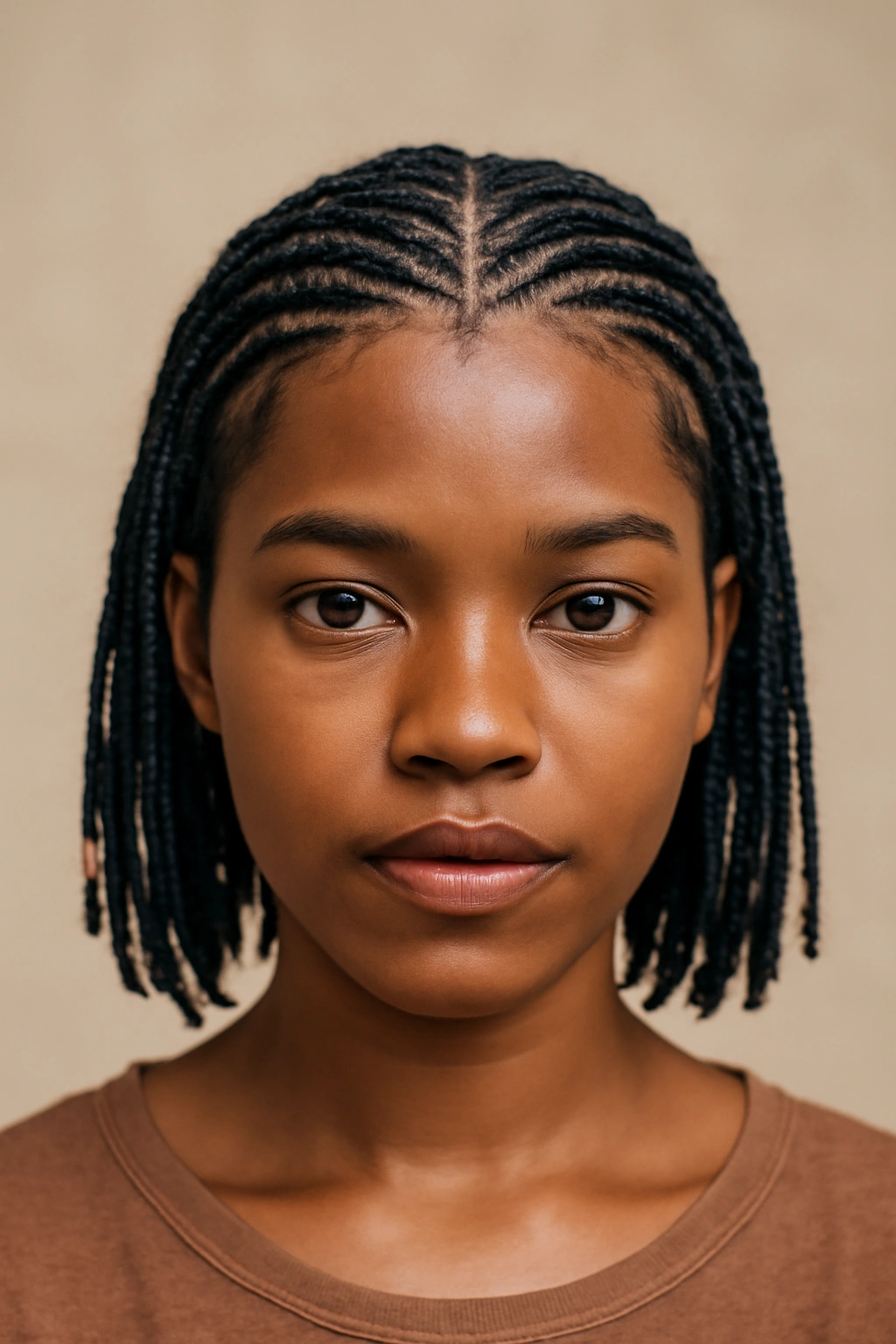
Fulani braids are a style rooted in West African tradition, typically featuring thin braids with a distinctive pattern—often centered, sometimes with beads or rings woven throughout. They’re associated with the Fulani people and have a geometric, intricate aesthetic. Short Fulani braids capture that cultural richness while being wearable for everyday life.
The Beauty of Fulani Braids
Fulani braids are visually striking and immediately recognizable. They make a statement about cultural pride, personal style, and intention. The thin, intricate pattern requires skill and patience, but the result is genuinely gorgeous. Short Fulani braids are especially practical because you get the visual impact and cultural significance without the weight and scalp commitment of longer versions.
Styling Fulani Braids
- Pattern options: Traditional center braids with side patterns are classic. You can also do offset patterns, diagonal braids, or combinations of thick and thin braids.
- Bead and adornment options: Gold cuffs, cowrie shells, colorful beads, and decorative rings all work beautifully woven into Fulani braids.
- Installation skill required: Fulani braids require a stylist who understands the traditional pattern and has the technical skill to execute it cleanly.
- Longevity: Short Fulani braids typically last 3-5 weeks, depending on how tightly they’re braided and how well you maintain them.
Pro tip: Even if you don’t add beads during installation, you can slide them on later for occasions when you want extra visual interest.
10. Crown Braids
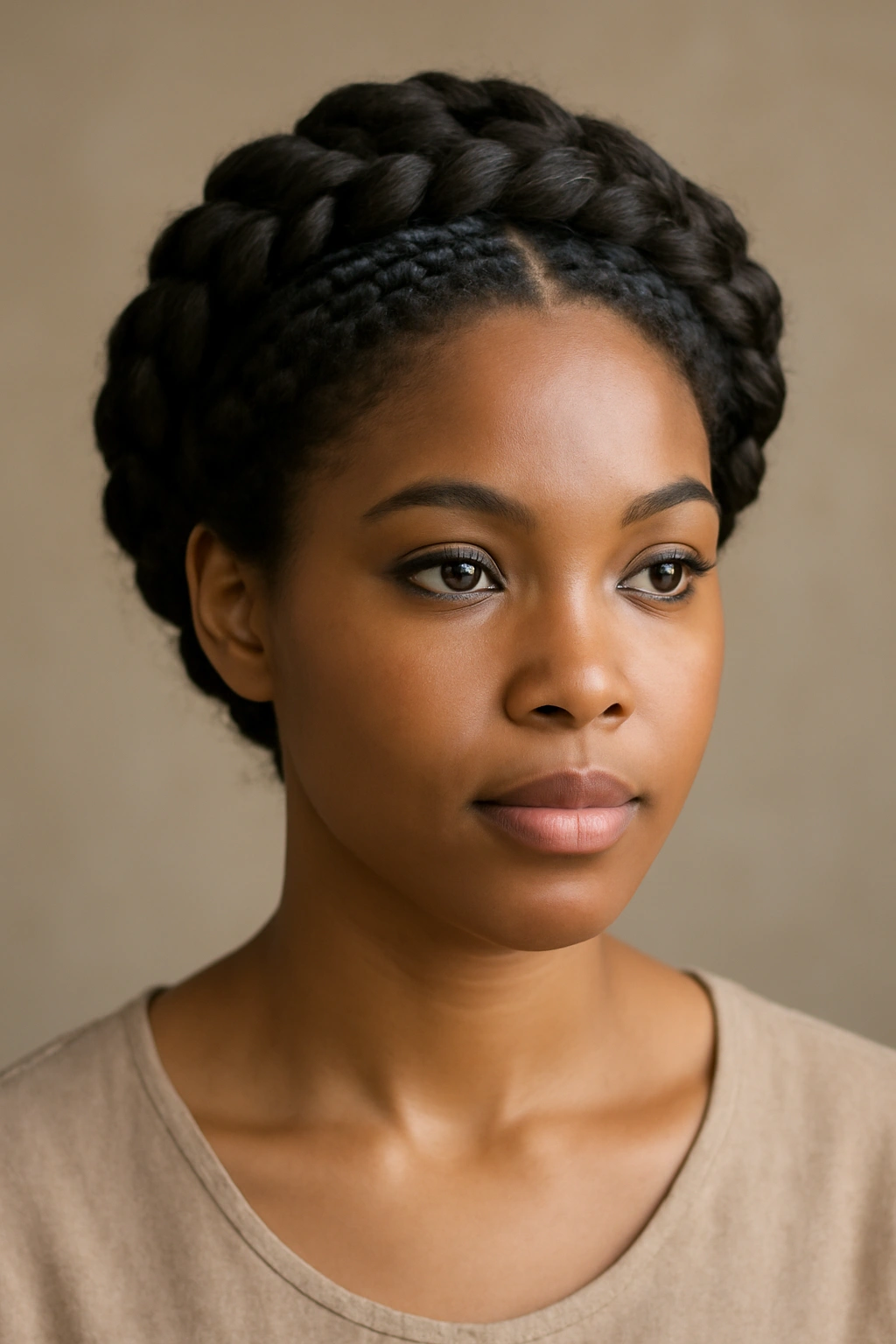
Crown braids literally wrap around your head like a crown—they’re braids that start at one ear, wrap around the back and sides of your head, and end at the opposite ear. They can be thick, thin, double, or multiple strands woven together. Short crown braids are elegant, manageable, and surprisingly easy to do.
Why Crown Braids Work
Crown braids are perfect if you want something that looks intentional and elevated without tons of time commitment. They’re protective (your ends are tucked into the braid), they’re pretty, and they work for casual and more dressed-up occasions. You can wear a crown braid as a finishing touch over hair that’s down and natural, or you can build an entire updo around a crown braid with the rest of your hair pinned up.
Executing a Crown Braid
- Braid style flexibility: You can do a regular three-strand crown braid, a Dutch braid that sits on top of your scalp, or a fishtail braid for more texture and interest.
- Hair length: You need at least 8-10 inches of length to work with, though shoulder-length or longer works best for a balanced look.
- Time required: A crown braid takes 5-15 minutes depending on your hair type and whether you’re adding texture or complications to the pattern.
- Longevity: A crown braid will last through a full day, sometimes multiple days if you’re gentle with it and do a loose braid that doesn’t depend on tension to hold.
Worth knowing: Spray a crown braid with light hairspray before bed if you want it to hold overnight. In the morning, you can sleep-braid it again for that second-day texture people love.
11. Lemonade Braids
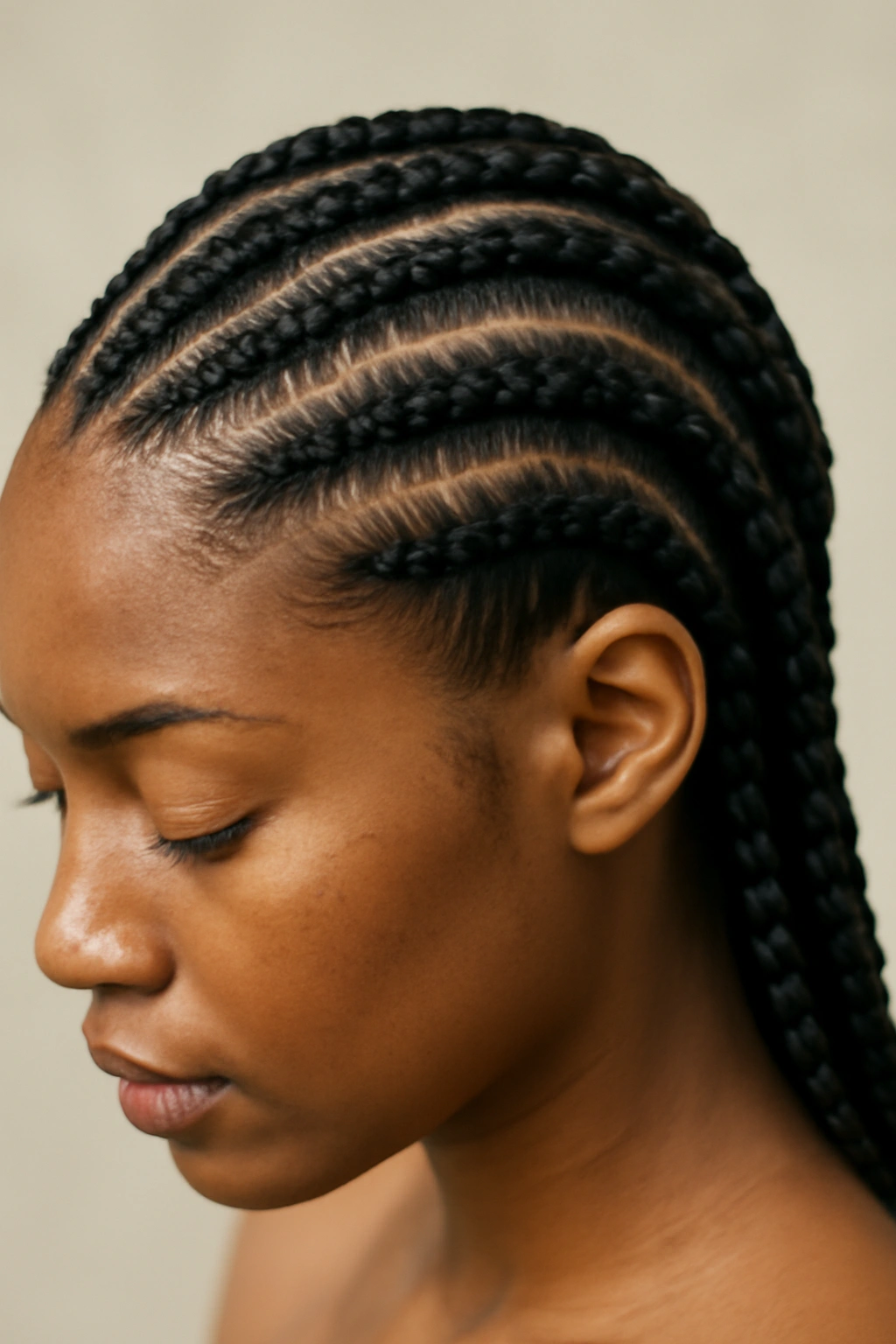
Lemonade braids are long, tight braids that typically run diagonally across the head or in curved patterns. They’re often installed with extensions, and they create a distinctive, geometric look. The name supposedly comes from the shape they create—like drops of lemonade running down. Short lemonade braids have that same striking geometric quality in a more wearable, less commitment-heavy version.
The Geometric Appeal
Lemonade braids are for people who want their style to make a visual statement. They’re bold, artistic, and have a distinctly edgy aesthetic. Short versions of lemonade braids are particularly practical because they’re easier to maintain, lighter on your scalp, and easier to style into different configurations. You can wear them down, pull them to the side, or pin sections back.
Getting Lemonade Braids
- Pattern options: Diagonal lines across the head are classic. You can also do curved patterns, asymmetrical designs, or combinations of thick and thin braids.
- Extension use: Most lemonade braids include extensions to add length and bulk, though you can do them with your natural hair alone for a thinner look.
- Installation challenge: Lemonade braids are trickier to install than straight-back cornrows because of the directional pattern. A skilled stylist makes all the difference.
- Longevity: Short lemonade braids typically last 4-6 weeks before they need refreshing or removal.
Pro tip: Lemonade braids work beautifully with colored extensions or accent braids in a contrasting shade, creating even more visual interest.
12. Knotless Braids
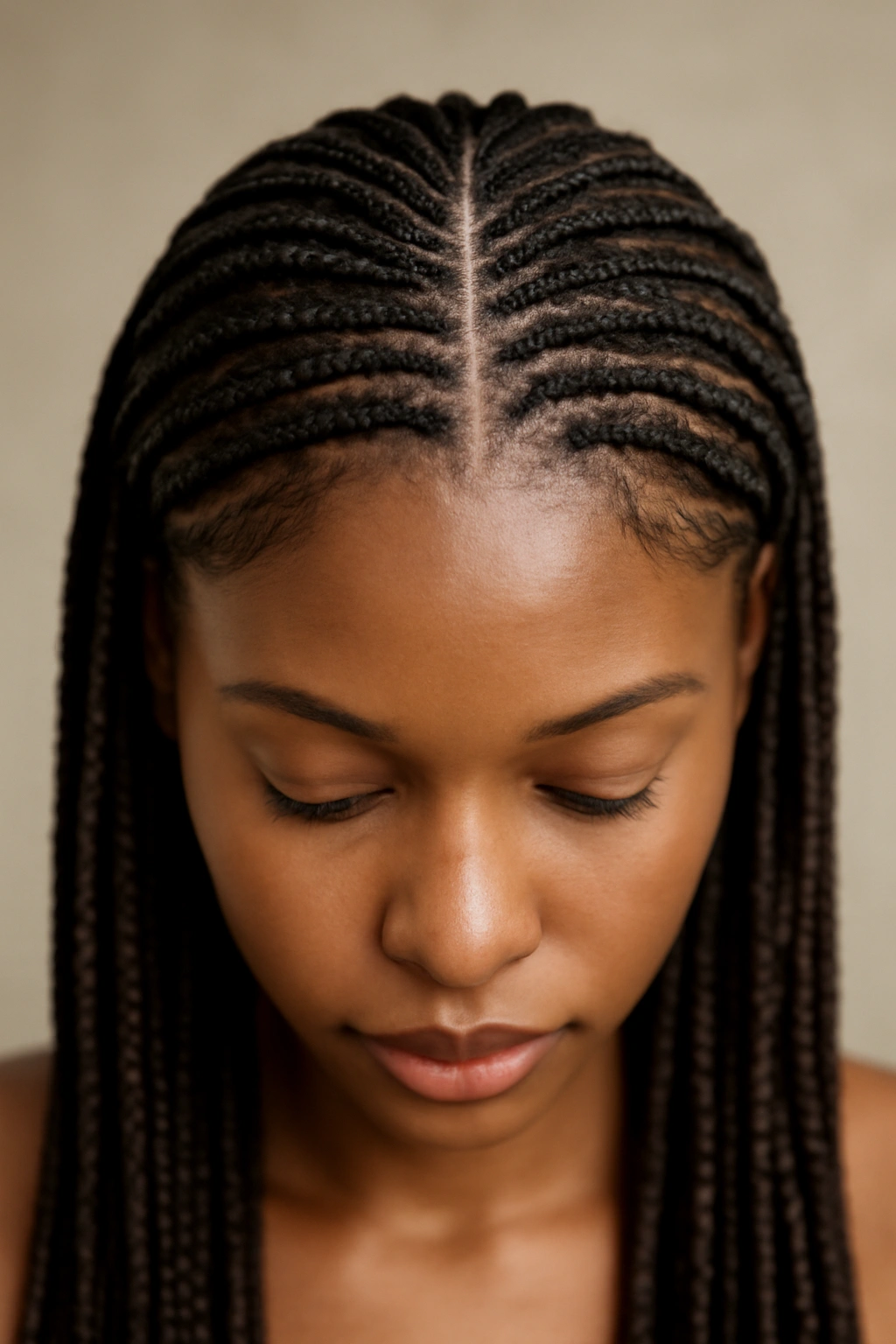
Knotless braids are a newer technique where extensions are fed into the braid gradually, rather than being tied in knots at the root like traditional box braids. The result is a cleaner, smoother appearance with less visible knots and generally less tension on the scalp and edges. Short knotless braids have become increasingly popular because they look sleek and feel more comfortable.
Why Knotless Is a Game-Changer
The main advantage of knotless braids is comfort and edge protection. There’s no thick knot sitting at the root creating constant tension, which means your hairline and edges experience significantly less stress. Knotless braids also look more finished and polished—there’s a seamless quality to the way the extensions integrate into your natural hair. If you’ve had scalp soreness from traditional braids, knotless is worth trying.
Technical Details
- Installation method: A stylist feeds extensions into the braid strand by strand rather than tying them all at the root. This takes slightly longer than traditional braids but the payoff in comfort is worth it.
- Edge-friendly: Because there’s no knot pulling at the root, knotless braids are gentler on your hairline and edges compared to traditional box braids.
- Aesthetic quality: Knotless braids read as more refined and finished. They look like intentional style, not just protective styling.
- Longevity: Short knotless braids typically last 4-8 weeks, often longer than traditional braids because the tension is distributed differently.
Worth knowing: Even though knotless braids are gentler, you still need to avoid braiding too tightly overall. Prioritize comfort over visual tightness.
13. Side-Swept Braids
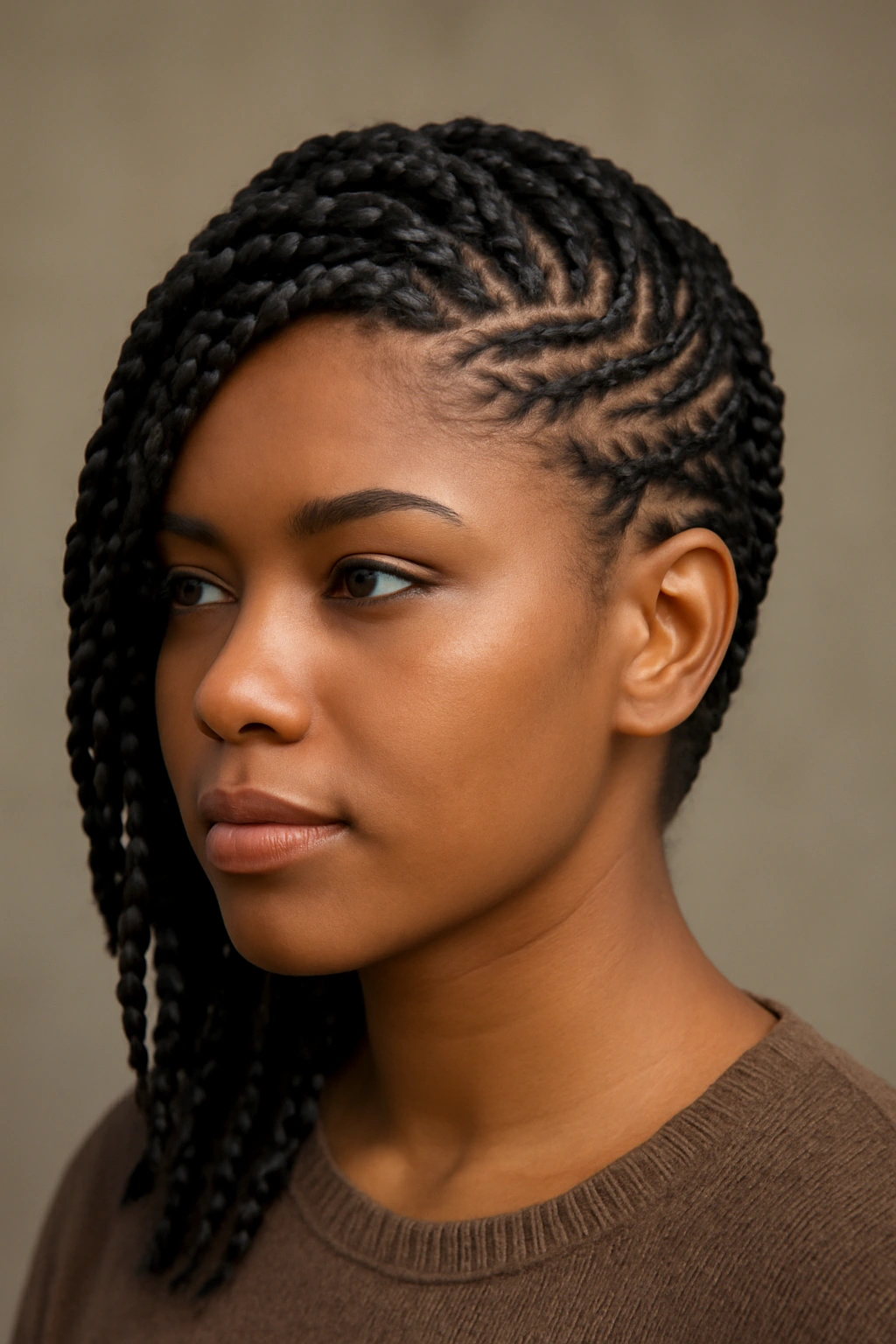
Side-swept braids run diagonally or are swept to one side of your head, creating asymmetrical visual interest. They can be thick goddess braids, thin cornrows, box braids, or any other braiding style, but the key is that they’re designed to be directional rather than centered. Short side-swept braids create a particularly chic, modern aesthetic.
The Stylishness of Asymmetry
Side-swept braids work for people who want something that feels less uniform and more artistic. They’re flattering because the diagonal line can draw attention to your face, and they photograph beautifully. Short side-swept braids are easy to style—you can tuck the other side behind your ear, pin it, or leave it down for an effortlessly cool vibe.
Creating Side-Swept Braids
- Braid style: You can do thin cornrows swept to one side, thick goddess braids diagonally across the head, or a combination of braids flowing in one direction.
- Scalp styling: Plan where you want the braids to go before installation. A stylist should understand your vision so they can execute it cleanly.
- Versatility: You can wear side-swept braids down, pin them up, or style them into a half-up configuration for variety.
- Longevity: Short side-swept braids last 3-5 weeks depending on braid style and how well you maintain them.
Pro tip: Curl or wave the ends of your side-swept braids for extra texture and visual interest. This also helps disguise when they start to unravel slightly after a few weeks.
14. Micro Braids
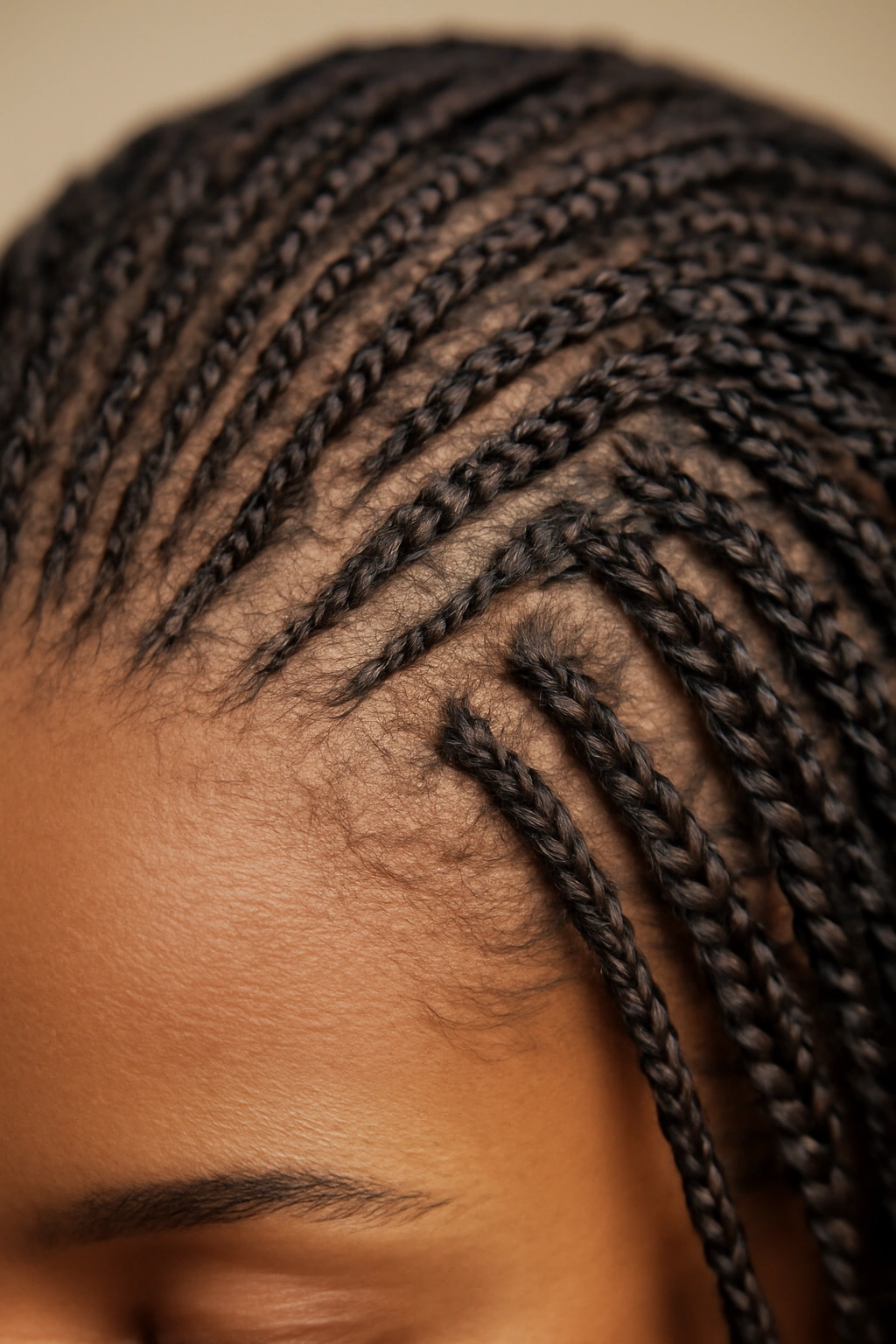
Micro braids are the smallest braiding option—thin, delicate three-strand braids that create an intricate, detailed appearance. They require patience and skill to install but they offer incredible versatility in styling. Short micro braids can be worn down, up, curled, waved, or pinned in countless configurations.
The Versatility of Micro Braids
Micro braids are genuinely impressive because they offer so much styling flexibility. You can style them smooth, curl them into waves or ringlets, pin them into updo styles, or wrap them with thread or extensions for different effects. They also work beautifully for people transitioning to natural hair or anyone wanting a lower-manipulation style that still looks intentional.
Working With Micro Braids
- Installation time: Micro braids are labor-intensive. Expect 8-12+ hours for short hair depending on density and whether you’re using extensions.
- Cost: Because of the time and skill required, micro braids are usually the most expensive braiding option.
- Maintenance and styling: You can do so much with micro braids that this is where you get maximum ROI on that long installation time.
- Longevity: Short micro braids last 6-8 weeks or even longer because the thinner braids don’t loosen as visibly as thicker ones.
Worth knowing: Micro braids are an excellent choice if you love protective styling but get bored easily. The styling options are practically endless.
15. Water Wave Braids
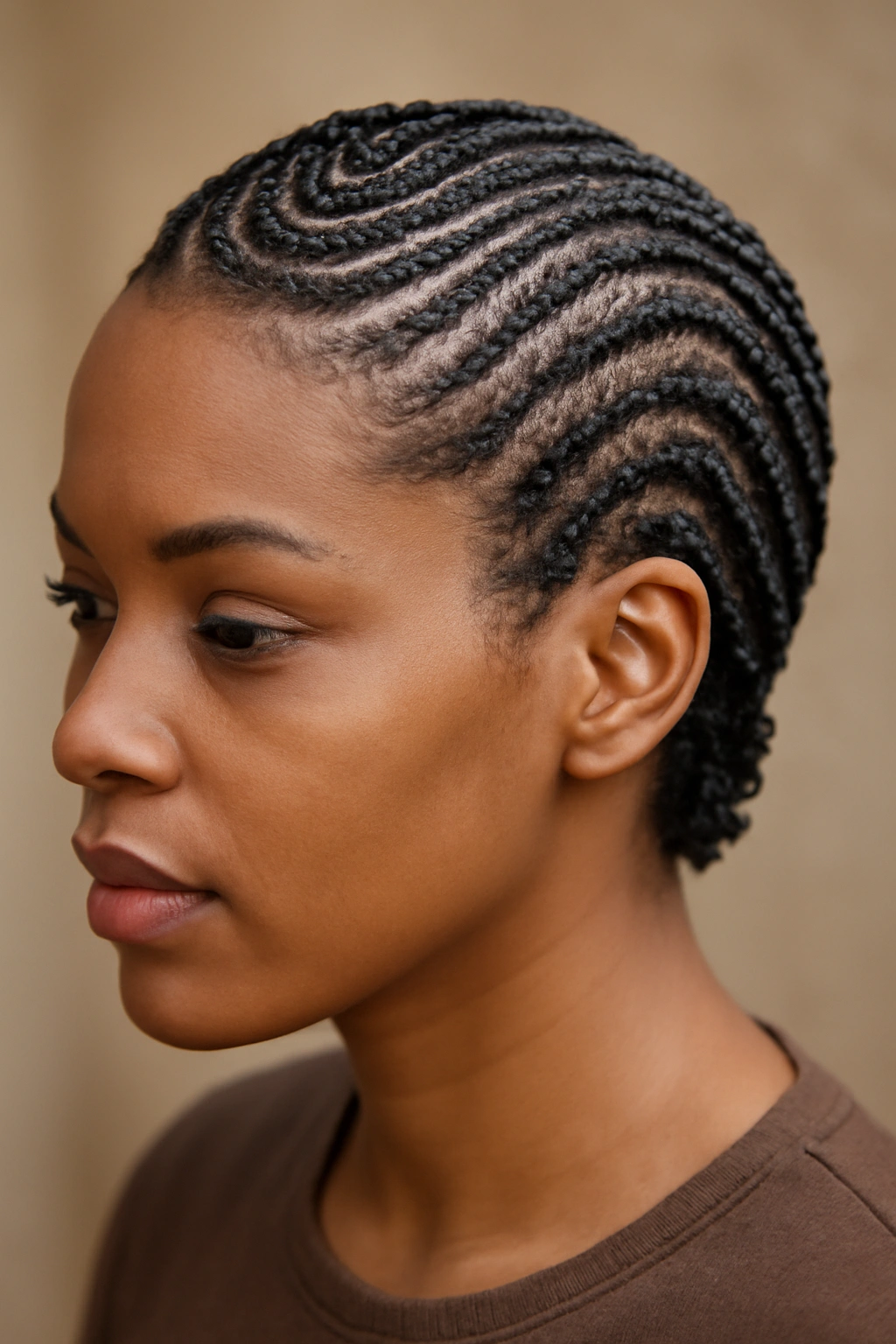
Water wave braids are an intricate style where small braids are woven or twisted together to create a rippling, wave-like pattern across the head. The braids themselves create the illusion of water waves flowing across your scalp. Short water wave braids are visually stunning and distinctly different from other braided styles.
The Artistic Quality
Water wave braids are for people who want their protective style to be genuinely artistic. They require serious technical skill and usually a talented stylist to execute properly. The visual effect is striking—it literally looks like water or waves running across your head. Short versions make the style wearable while maintaining that artistic, conversation-starting quality.
Creating Water Waves
- Braiding technique: A stylist creates multiple small braids and then weaves or patterns them together to create the wave effect. This is complex work that requires skill and understanding of pattern flow.
- Scalp coverage: Water wave braids typically cover your entire head or a significant portion of it, creating an overall textured, dimensional appearance.
- Styling options: You can wear water waves down and smooth, or you can separate the sections for more texture and volume.
- Longevity: Short water wave braids typically last 4-6 weeks before they need refreshing or removal.
Pro tip: Photograph your water wave braids from above and at different angles. These braids photograph beautifully and create stunning visual content.
Final Thoughts
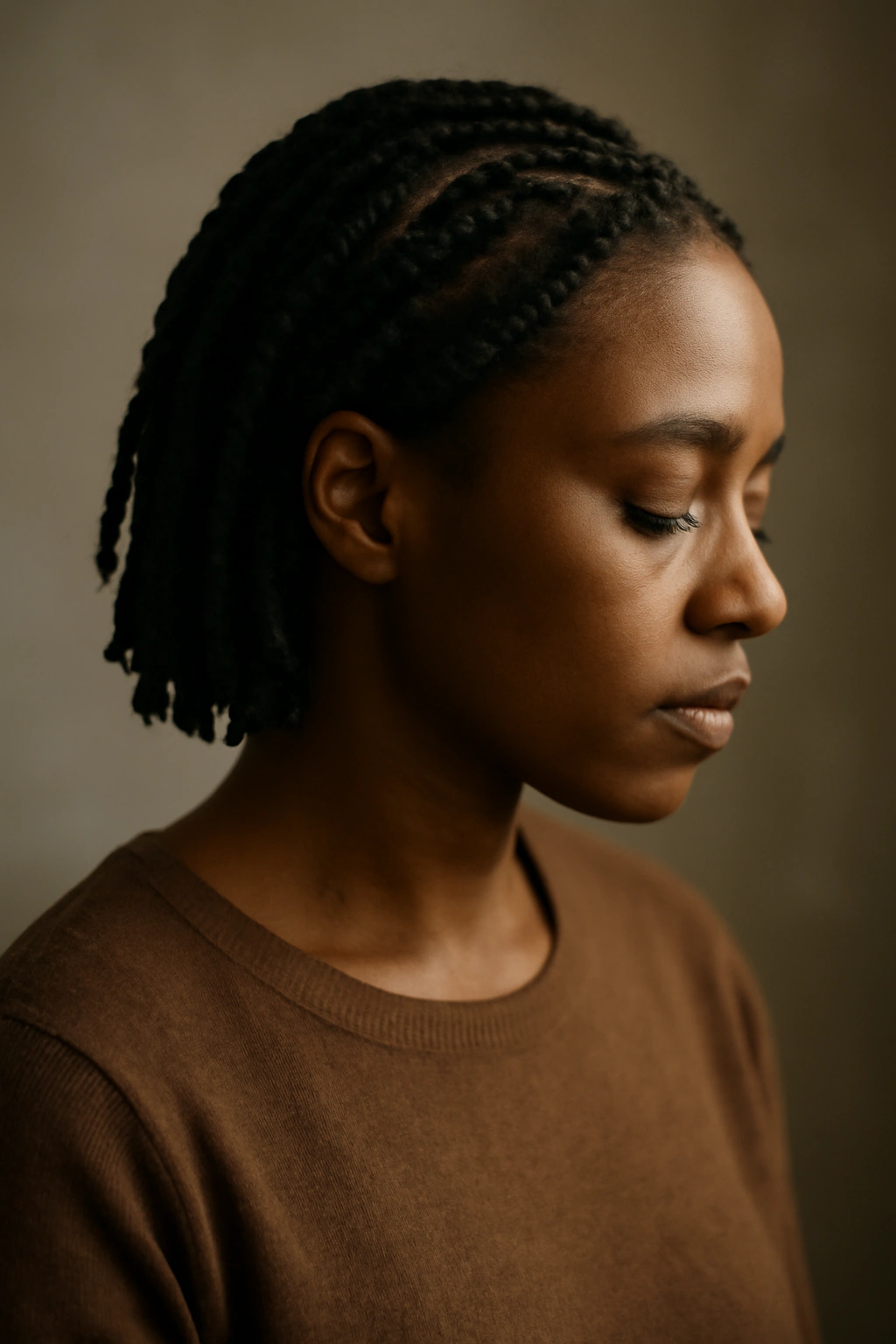
Short braids offer the perfect combination of protection, style, and wearability. Whether you’re drawn to the simplicity of box braids, the artistry of water waves, or the edge-friendly comfort of knotless braids, there’s genuinely a style that matches both your hair and your life. The key is choosing a skilled stylist who understands your hair type, listens to what you want, and prioritizes your scalp health over visual tightness.
Protective styling isn’t a trend—it’s a legitimate way to give your hair a break while looking absolutely intentional. These styles work because they actually protect your ends, reduce daily manipulation, and let your natural hair grow and strengthen without constant tension. Wear whatever braid style makes you feel confident and beautiful. Your hair will thank you, and you’ll look amazing while you’re at it.
