



Knotless braids have revolutionized protective styling, and there’s genuinely something for every hair length, texture, and aesthetic preference. If you’ve been curious about this technique but weren’t sure where to start, or if you’re already a braid enthusiast looking to expand your rotation, the range of options available might surprise you. What makes knotless braids different from traditional box braids is the installation method — instead of tying synthetic hair or natural extensions into knots at the roots, the hair is woven in gradually from the scalp, creating a seamless, tension-free foundation that’s gentler on your edges and hairline.
The appeal goes beyond just aesthetics, though knotless braids absolutely do look polished and refined. Because there’s less tension pulling on your natural hair from the moment of installation, they tend to cause significantly less breakage and scalp irritation, especially when installed by someone who understands proper technique. They’re also easier to take down — you can typically unravel them rather than cut them apart, which means your braiding hair can be reused. Whether you’re working with a short pixie bob or waist-length hair, there’s a knotless braid style that fits your vibe and your lifestyle.
What you’ll notice as you explore these styles is that the length of your natural hair, your texture, and your tolerance for installation time all play a role in which style works best for you right now. Some styles look incredible on shorter hair and would be impossible on very long hair, while others scale beautifully across the full spectrum. Let’s break down ten distinct knotless braid styles, so you can see what’s possible and figure out which direction calls to you.
1. Knotless Box Braids
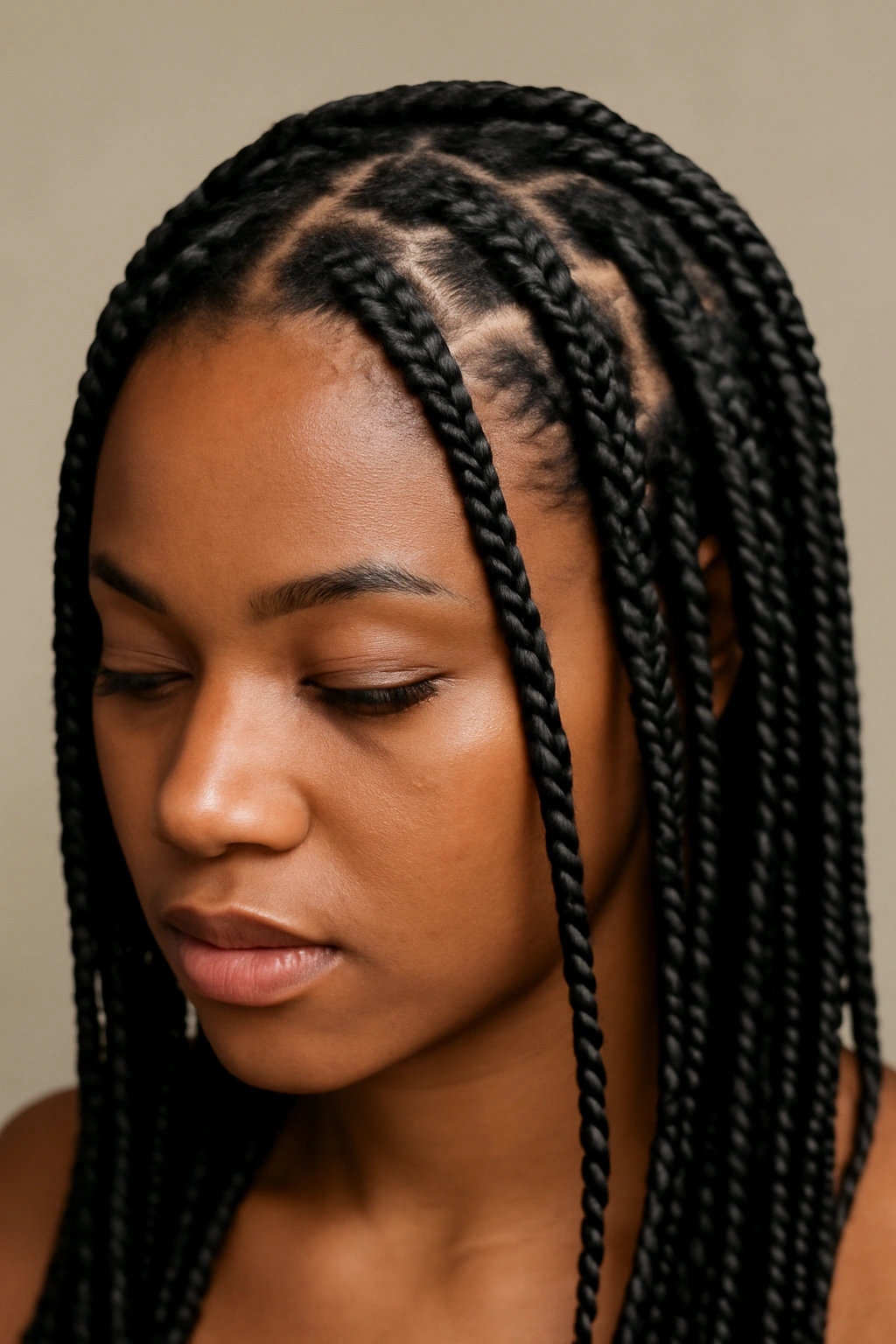
Knotless box braids are the foundation style that sparked this whole movement, and they’re as versatile as they come. Unlike their knotted cousins, these braids begin with hair woven smoothly from the scalp rather than bunched into a knot at the base, which immediately takes pressure off your hairline and edges. The individual square-shaped sections create that classic box braid silhouette, but with that crucial comfort upgrade built in from the very first row.
Why They’re the Safest Starting Point
Knotless box braids work across virtually every hair length and texture because the technique is so fundamentally sound. Your stylist controls the tension throughout the entire process, and because there’s no tying involved, they can adjust as they go. Most people tolerate them better than traditional box braids in terms of scalp soreness and edge damage — something you’ll genuinely notice by day three or four when the initial tightness wears off.
Installation and Maintenance Reality
- Installation typically takes 4–7 hours depending on braid size and your hair volume
- The no-knot foundation stays intact for 6–10 weeks with proper care
- Minimal scalp maintenance needed — you don’t need to re-knot the roots like you would with traditional braids
- Lightweight enough to sleep comfortably and wash without hesitation
- You can add small accessories, beads, or cuffs at any point without worrying about damaging the braid structure
Pro tip: Knotless box braids look especially fresh when you size the braid width to match your desired versatility — thinner braids (the size of a pencil) offer more styling options and last longer, while thicker braids (the size of a marker) install faster and create a bolder aesthetic.
2. Knotless Feed-in Braids
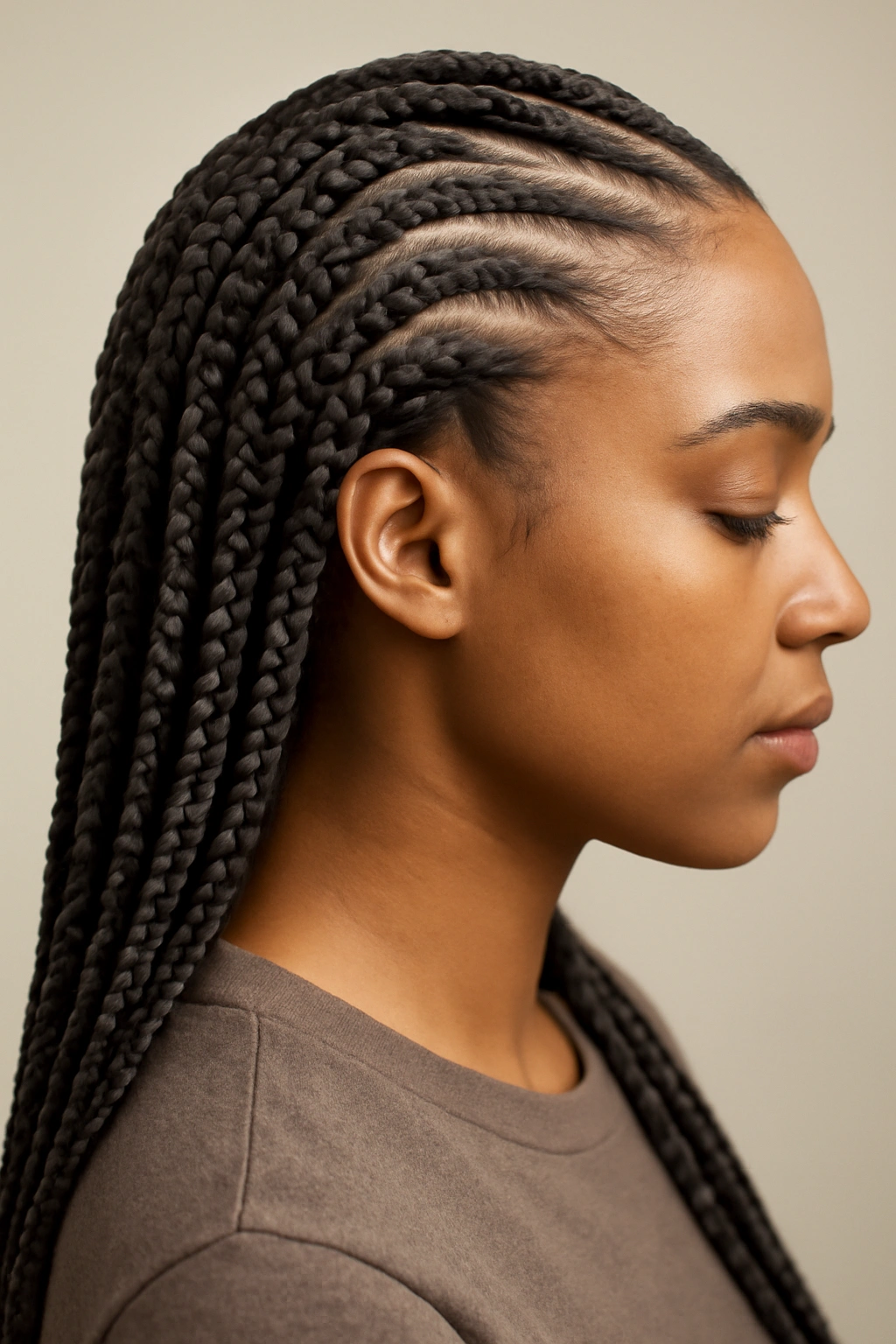
Feed-in braids are the technical evolution of box braids, and if you’re concerned about preserving your natural hair, this is the method that should be on your radar. The technique involves adding synthetic hair incrementally as you braid, rather than loading all the extension hair at the roots from the start. This distributes tension far more evenly along the length of the braid, which means your natural hair — especially the delicate hair at your roots — experiences minimal stress.
Why Tension Distribution Changes Everything
The feed-in method is genuinely different in how it protects your hairline. Because the extension hair is introduced gradually rather than all at once, the braid doesn’t pull harder at the root than it does further down the braid. This is the closest you can get to zero-tension styling without abandoning protective styling altogether. Your edges stay intact, your scalp doesn’t ache, and the braids move more naturally with your head.
What to Expect With This Style
- Takes 5–8 hours to install because the careful feed-in process requires deliberate, controlled technique
- Blends seamlessly with your natural hair growth — you’ll see a gradual transition rather than a distinct line
- Lasts 8–12 weeks when installed correctly because the distribution of weight means less breakage at any single point
- Requires a stylist who truly understands the technique — not all braiders offer genuine feed-in construction
- Releases easily without any cutting or unraveling complications
Worth knowing: Feed-in braids are the top choice for anyone with sensitive edges, previous hair loss in the frontal area, or a history of damage from protective styles.
3. Knotless Cornrows
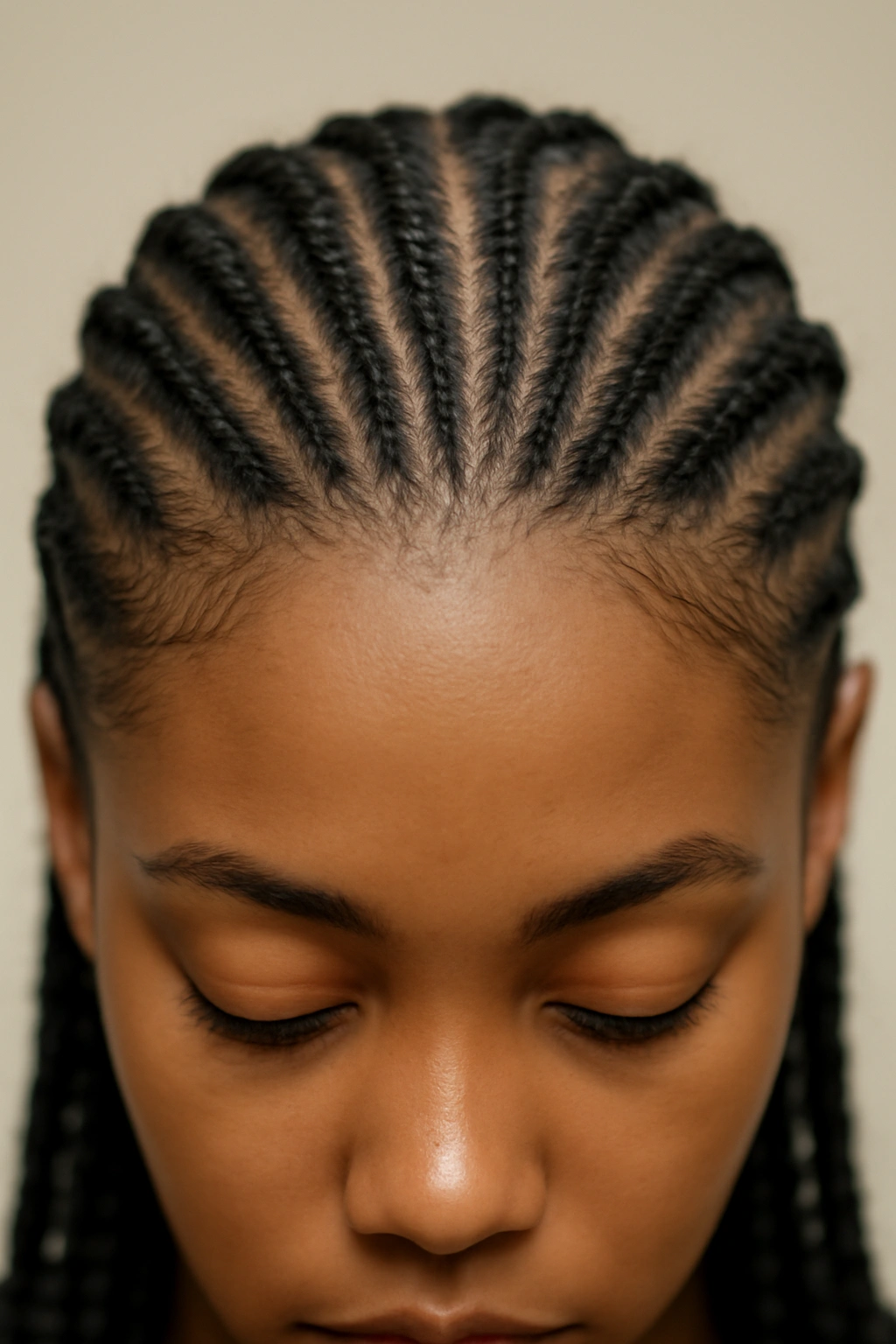
Cornrows represent something different entirely — this is braiding that stays close to the scalp in defined rows, and when done knotless, they’re sleek, precise, and surprisingly wearable as an everyday style. The braids run from your hairline toward the back of your head in your chosen pattern — straight rows, curved rows, zigzags, or any design you want. What makes them knotless is again that smooth, tension-free foundation where hair is fed in gradually rather than knotted at the roots.
The Scalp-Hugging Precision Advantage
Cornrows are a style where the knotless technique really shines because of how close they sit to your head. There’s nowhere for extra tension to hide — if a cornrow is uncomfortable, you feel it immediately. The knotless approach means your stylist can keep them snug enough to last while keeping them loose enough that you’re not wincing by hour six of wear. They’re one of the fastest protective styles to install, usually taking 1–3 hours depending on how many rows and how intricate your pattern is.
Real-World Durability and Styling
- Installation takes 1–3 hours for a full head, sometimes less if you’re doing a partial cornrow look
- Hold up beautifully for 4–8 weeks before needing root maintenance
- Can be worn down as a finished style, or styled into buns, ponytails, and other updos using your braided hair
- Perfect for very short natural hair (as short as 2–3 inches) because they use your own hair as the foundation
- Scalp stays accessible for regular cleansing and moisturizing
Insider note: Cornrows look absolutely stunning in geometric patterns or curves, but the more complex your design, the longer installation takes — budget accordingly with your stylist.
4. Knotless Micro Braids for Short Hair
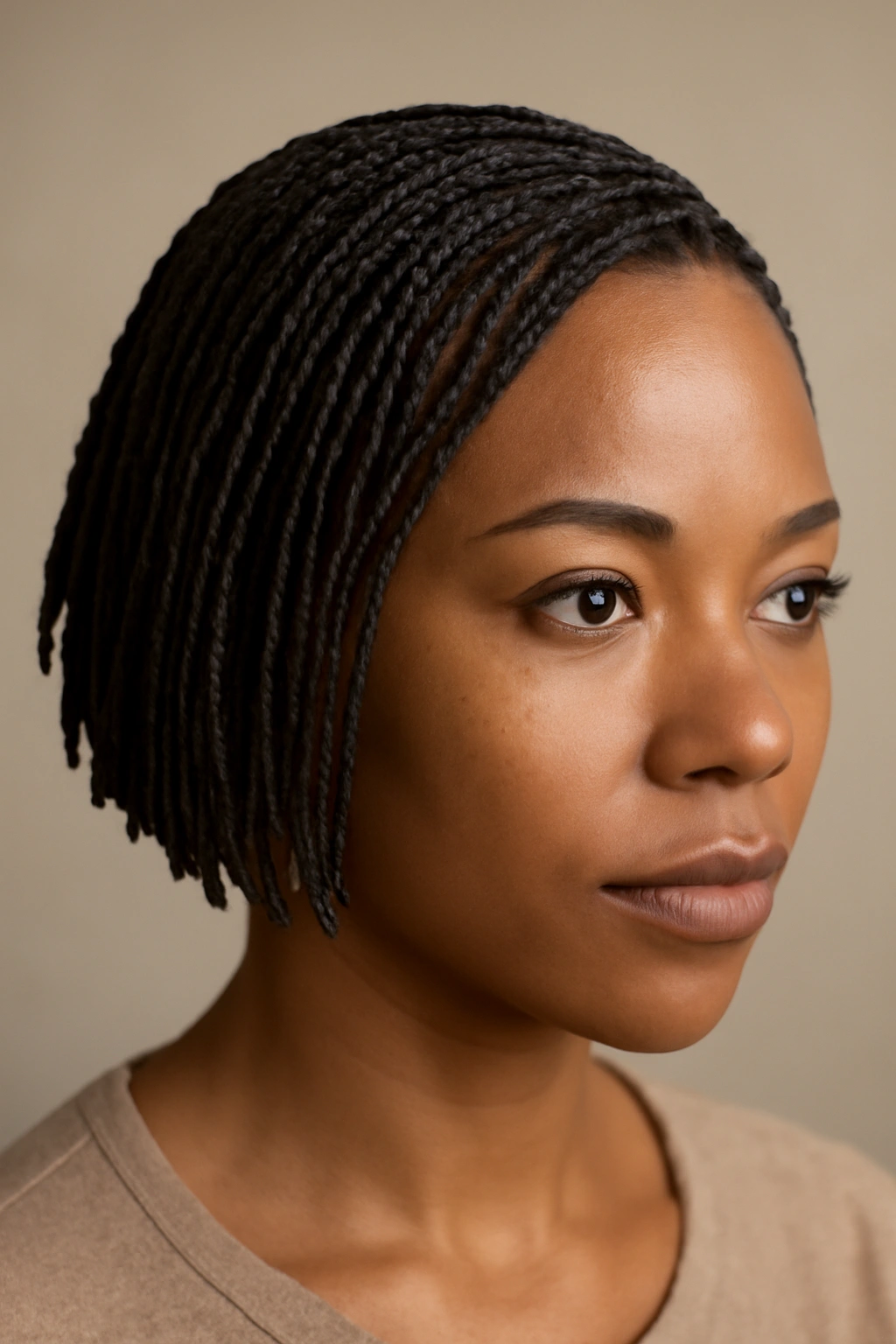
Micro braids are the narrowest braid style available, about the thickness of a toothpick, and they’re absolutely the answer if you love braids but work with very short natural hair. When done knotless, they’re even more comfortable because they require so little hair at the roots that tension becomes almost a non-issue. These are technically difficult to install because of their sheer number — you might have 200+ micro braids on your head — but the result is an extraordinarily refined, almost textured appearance that photographs beautifully and feels feather-light.
Why Micro Braids Transform Short Hair
Short natural hair often gets limited protective styling options, but micro braids open up a whole world. They look like a textured, voluminous afro from a distance but feel like a protective style to your actual hair. The tiny braid size means your natural hair doesn’t have to do much heavy lifting — you’re supporting mostly synthetic hair weight, not multiple inches of extension hanging from thin roots.
The Micro Braid Reality Check
- Installation takes 6–10 hours because there are so many individual braids to create
- The thin diameter means each braid is flexible, moves easily, and looks incredibly polished
- Last 6–8 weeks reliably, though some people get longer wear depending on how well they care for the scalp
- Require thoughtful nighttime care — sleep on a silk pillowcase or bonnet to prevent frizz
- Perfect for anyone who wants protective styling but hates that “heavy” feeling on their neck and shoulders
Pro tip: Micro braids work best with high-quality synthetic hair in a color very close to your own, because the fine detail is visible — any color mismatch or low-quality fiber shows more readily than in larger braid styles.
5. Knotless Goddess Braids
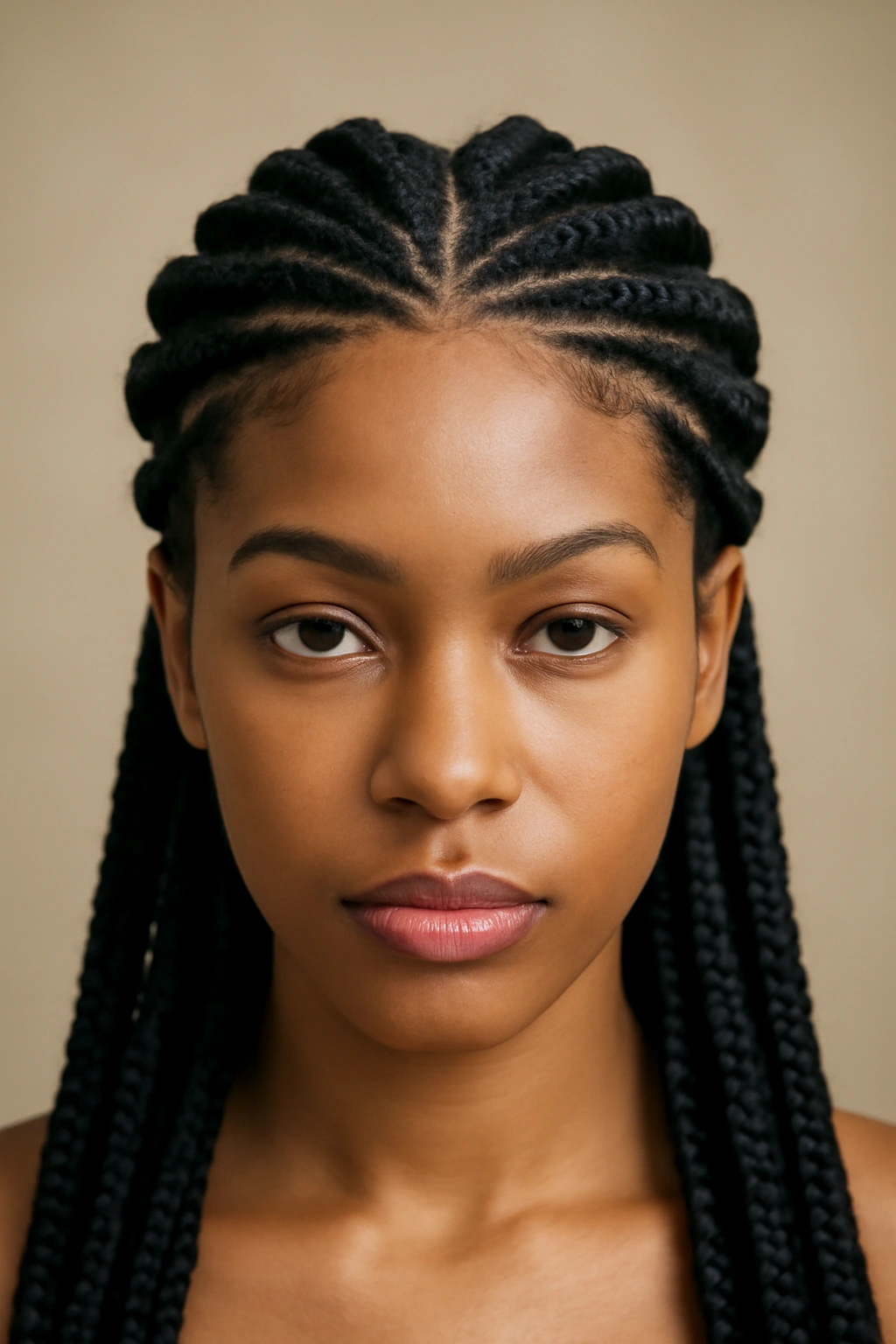
Goddess braids are a hybrid style that sits between cornrows and thicker statement braids. They’re flat braids that stay close to the scalp in thick, sculptural rows — usually 4–8 rows depending on hair thickness — and they create an elegant, almost crown-like effect. The knotless approach gives them that smooth foundation while maintaining their architectural precision. This style works beautifully on medium to long hair and creates an impression of intentional, thoughtful styling that’s more elevated than casual.
The Aesthetic and Structural Appeal
Goddess braids hit that sweet spot between functional and fashionable. They’re protective styling in the truest sense — your natural hair is covered and supported — but they also look intentional enough to wear to formal events, professional settings, or anywhere you want to look polished. The flat structure and proximity to the scalp means they’re lighter to wear than thicker individual braids, and because there’s less synthetic hair involved overall, they’re often faster to install than comparably thick box braids.
Installation, Longevity, and Versatility
- Takes 2–4 hours to install, depending on your hair volume and the number of rows
- 6–10 weeks of longevity with minimal frizz if cared for properly
- Can be adorned with beads, cuffs, or rings without compromising the braid structure
- Scalp remains easily accessible for cleansing and moisturizing throughout the entire wear period
- Photograph and look polished in nearly any setting
Worth knowing: Goddess braids can be positioned in different patterns — straight rows, curved rows following your natural hairline, or even diagonal patterns — and each positioning creates a subtly different visual effect.
6. Knotless Twisted Braids
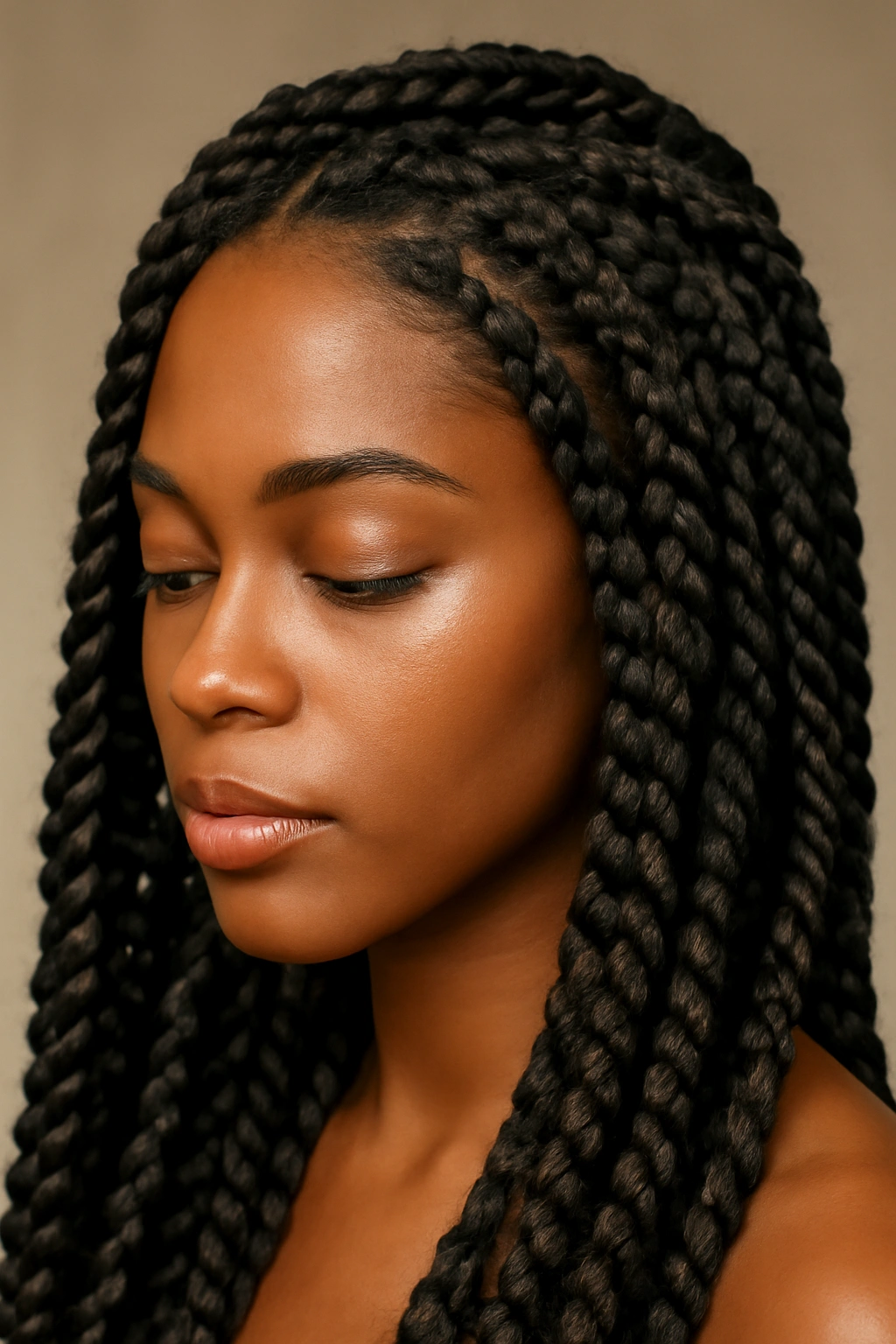
Twisted braids swap the three-strand interweaving of traditional braids for a two-strand twisted pattern that creates a totally different texture and movement. Instead of the defined individual braid pattern, twists have a ropelike, coiled appearance that’s smoother and more blended. When done knotless, they’re installed using the same tension-free feed-in method as box braids, but the final result feels lighter, more flowy, and often looks more natural-blended with your own texture.
How Twisted Construction Changes the Game
Twists use less synthetic hair overall because you’re not weaving three strands — you’re wrapping two strands around each other. This means they’re cheaper to install, lighter to wear, and often look more blended with natural hair texture. The ropelike appearance also photographs beautifully and feels elegant in a way that’s subtly different from braids. They’re an excellent choice if you want the protective benefits of braids but prefer a softer, less defined aesthetic.
Practical Details About Twisted Braids
- Installation takes 3–5 hours, faster than comparable box braids because there’s less hair involved
- Last 6–10 weeks with proper care, similar to box braids
- Require regular moisturizing because the ropelike structure can sometimes feel drier than woven braids
- Create a more natural appearance when you use braiding hair that closely matches your hair texture
- Can be styled into buns and ponytails, and the twisted texture creates interesting visual depth when styled up
Pro tip: Twisted braids look especially striking when you blend two slightly different colors of braiding hair — the twisting motion makes the color variation play beautifully across the length of each braid.
7. Knotless Waterfall Braids
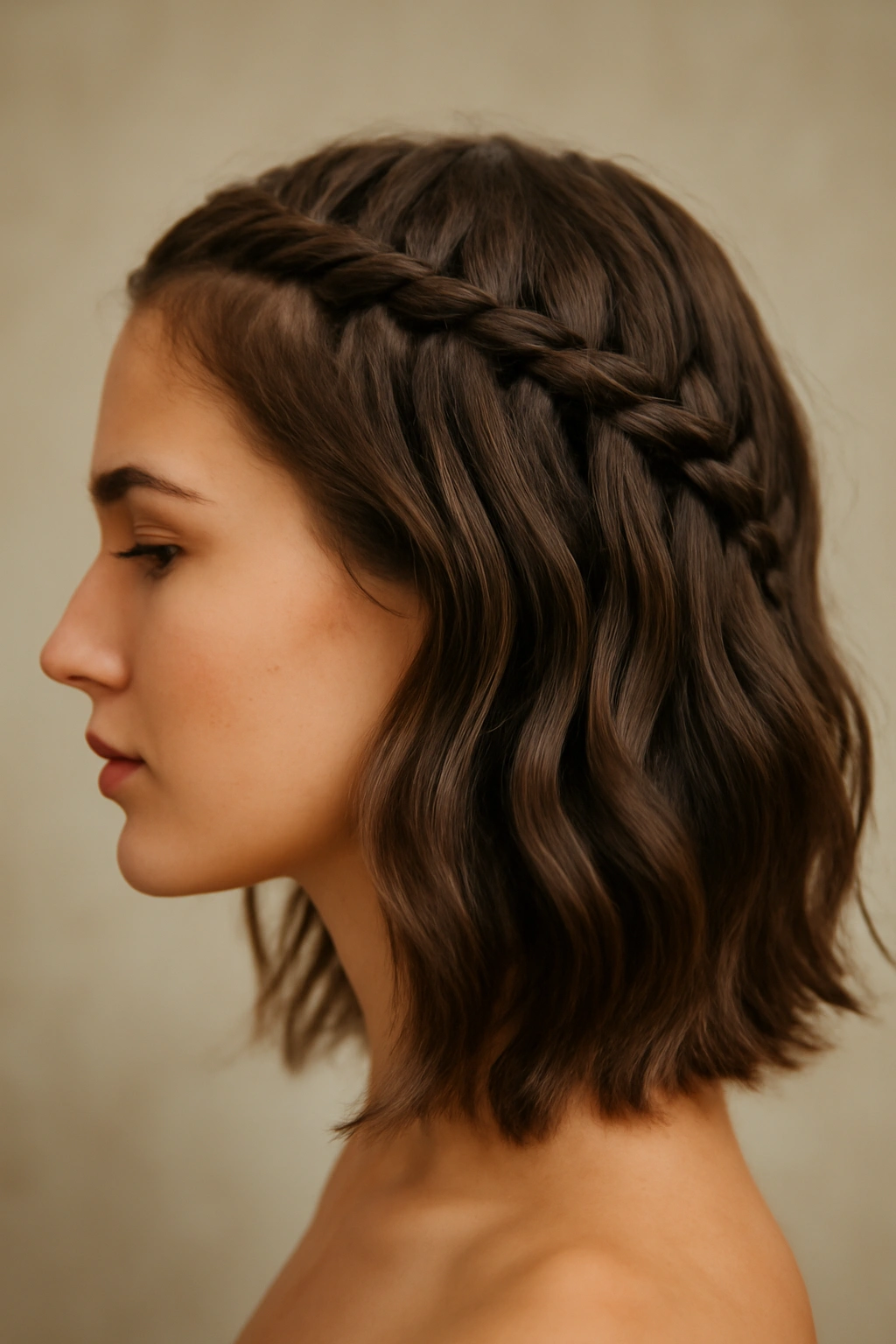
Waterfall braids are a hybrid protective style that combines the appeal of exposed natural hair with the security of braids. Sections of braid cascade down the sides or back of your head, while some of your natural hair remains loose and flowing underneath and between the braids. The knotless installation means those braid sections are anchored gently at the scalp, supporting your natural hair without excessive tension. This style works best on hair with significant length — at least shoulder length — and creates an ethereal, intentional aesthetic.
The Blend of Protection and Movement
Waterfall braids offer something unique: partial protective styling. The braided sections shield some of your hair from manipulation and environmental stress, while the flowing sections give you styling versatility and movement. The loose hair portions can be curled, straightened, or left natural, so you can change your look without touching the braided components. This makes waterfall braids especially appealing if you like the idea of protective styling but feel claustrophobic with your entire head braided.
Styling Flexibility and Maintenance
- Takes 2–4 hours to install, depending on how many waterfall sections you’re adding
- Braided sections last 6–8 weeks, but you can adjust and re-style the loose portions whenever you want
- The loose hair portions need regular moisturizing and care since they’re exposed and not protected by braids
- Creates a hairstyle that looks intentional and styled rather than purely protective
- Works beautifully for events where you want protective styling but need a softer appearance
Insider note: Waterfall braids photograph beautifully from the side profile, so if you love the Instagram aesthetic, this is genuinely worth trying.
8. Knotless Faux Locs
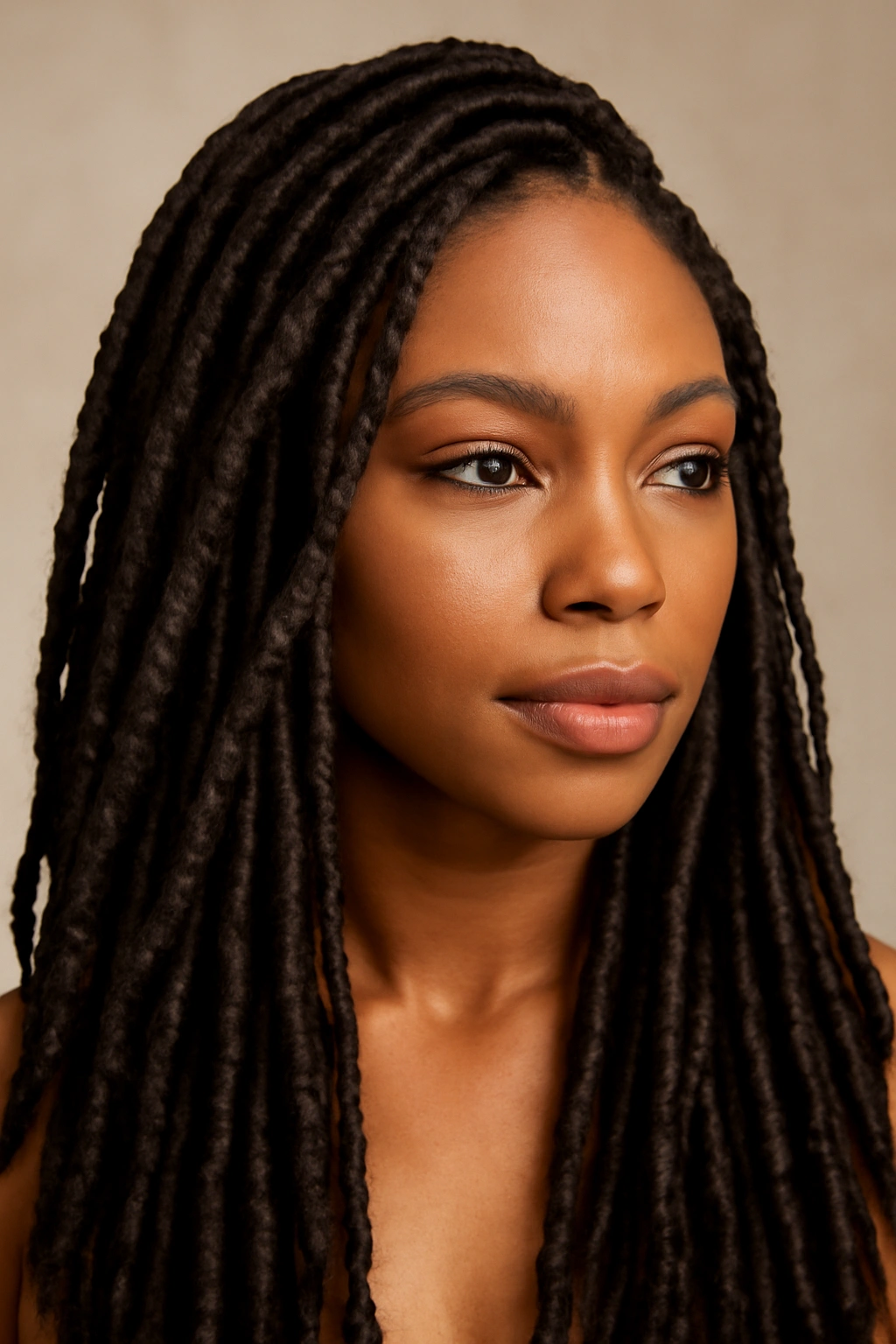
Faux locs are the protective styling option if you love the aesthetic of locs but aren’t ready to commit to the actual loc journey. They’re created by wrapping braiding hair around sections of your natural hair or around thick twisted natural hair, creating the appearance of full locs that can be removed whenever you want. When installed knotless, the foundation is gentle and tension-free, making faux locs surprisingly comfortable for longer wear periods.
Why Faux Locs Look and Feel Different
Faux locs have a different visual weight than braids — they’re thicker, more textured, and read as a more permanent statement. The wrapped construction creates a dimensional, organic appearance that mimics real locs while giving you the flexibility to change your mind. They’re heavier than braids because of the wrapping, but that weight is distributed across fewer total locs, so the per-loc tension can actually be quite manageable. Installation is time-intensive, but the impact is genuinely striking.
The Reality of Wearing Faux Locs
- Takes 5–8 hours to install depending on how many locs and how thick they are
- Last 6–10 weeks, with some people getting longer wear if they’re exceptionally diligent about care
- Require dedicated nighttime care — silk pillowcase or bonnet essential — because they’re more prone to frizz
- Heavier to wear than braids, so consider your neck strength and comfort before committing
- Look most natural when you blend your natural hair at the roots and use quality braiding hair in colors that complement your own
Worth knowing: Faux locs work across a wide range of hair lengths and textures, but they’re especially striking on longer hair where their full length can be appreciated.
9. Knotless Halo Braids
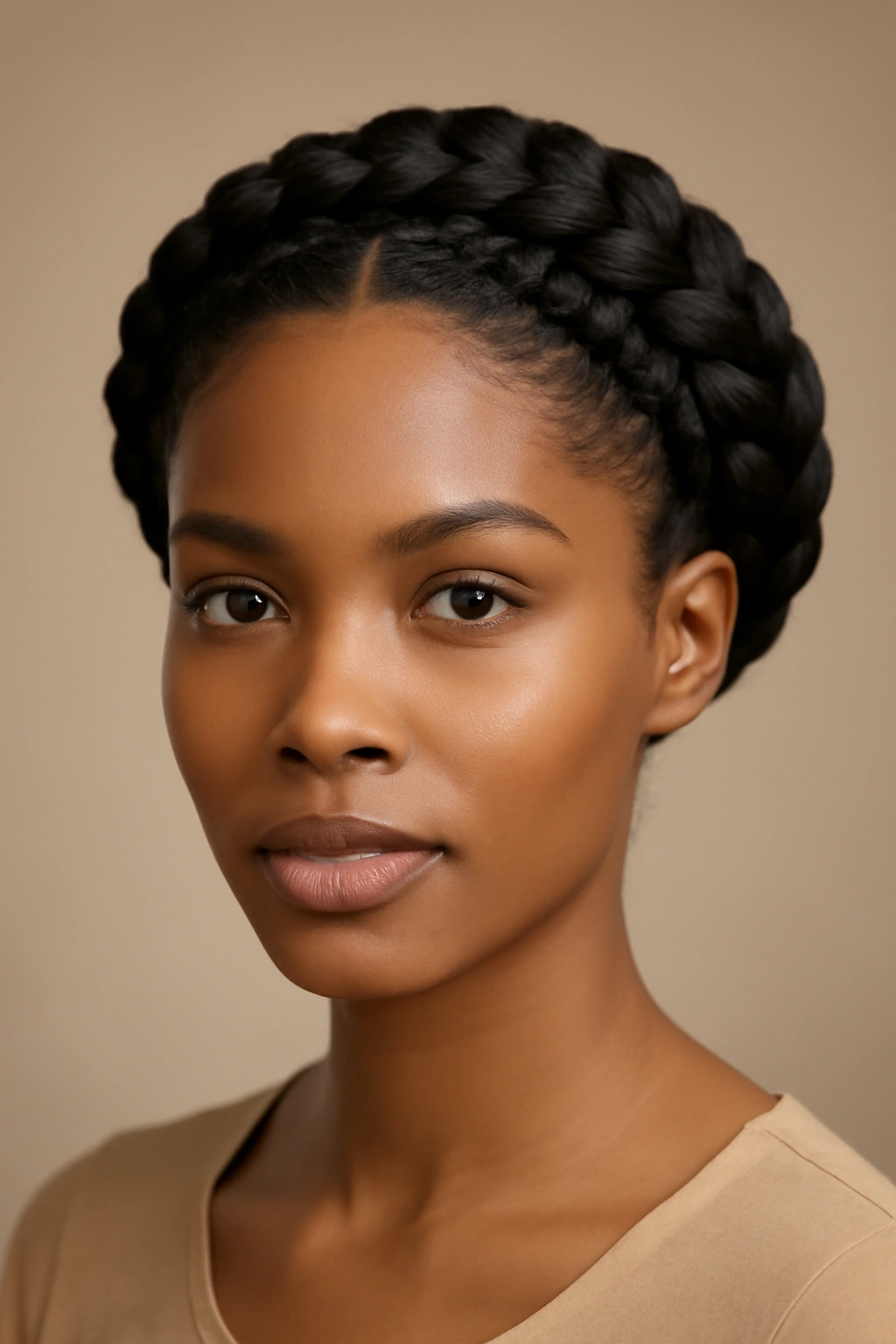
Halo braids, also called crown braids or bridal braids, are a protective style that wraps around your head like a crown. They’re usually created using thicker braiding sections that sit closer to the scalp, encircling your head in one or multiple rows. When done knotless, they create an elegant, polished look that’s appropriate for weddings, formal events, or any occasion where you want your protective styling to look intentional and special.
The Crown Effect and Elegant Simplicity
Halo braids are unique because the finished style doesn’t read as “protective braiding” to most people — it reads as an updo or a carefully styled look. This makes them perfect if you work in professional environments where you want your protective styling to blend seamlessly with a polished appearance. The braids encircle your head, allowing your natural hair at the crown to be visible or styled within the halo effect. The result feels intentional, beautiful, and genuinely refined.
Styling, Longevity, and Occasion
- Takes 2–3 hours to install, one of the faster protective styles available
- Lasts 6–8 weeks with standard care
- Can be dressed up further with jewelry, ribbons, or decorative elements woven into the braid structure
- Works well for any hair length from medium to very long
- Creates a hairstyle that feels special without looking overly casual
Pro tip: Halo braids work beautifully with slightly thicker braiding sections than you might use for other styles, which makes them faster to install and gives them a more polished, intentional appearance.
10. Knotless Triangular and Zigzag Braids
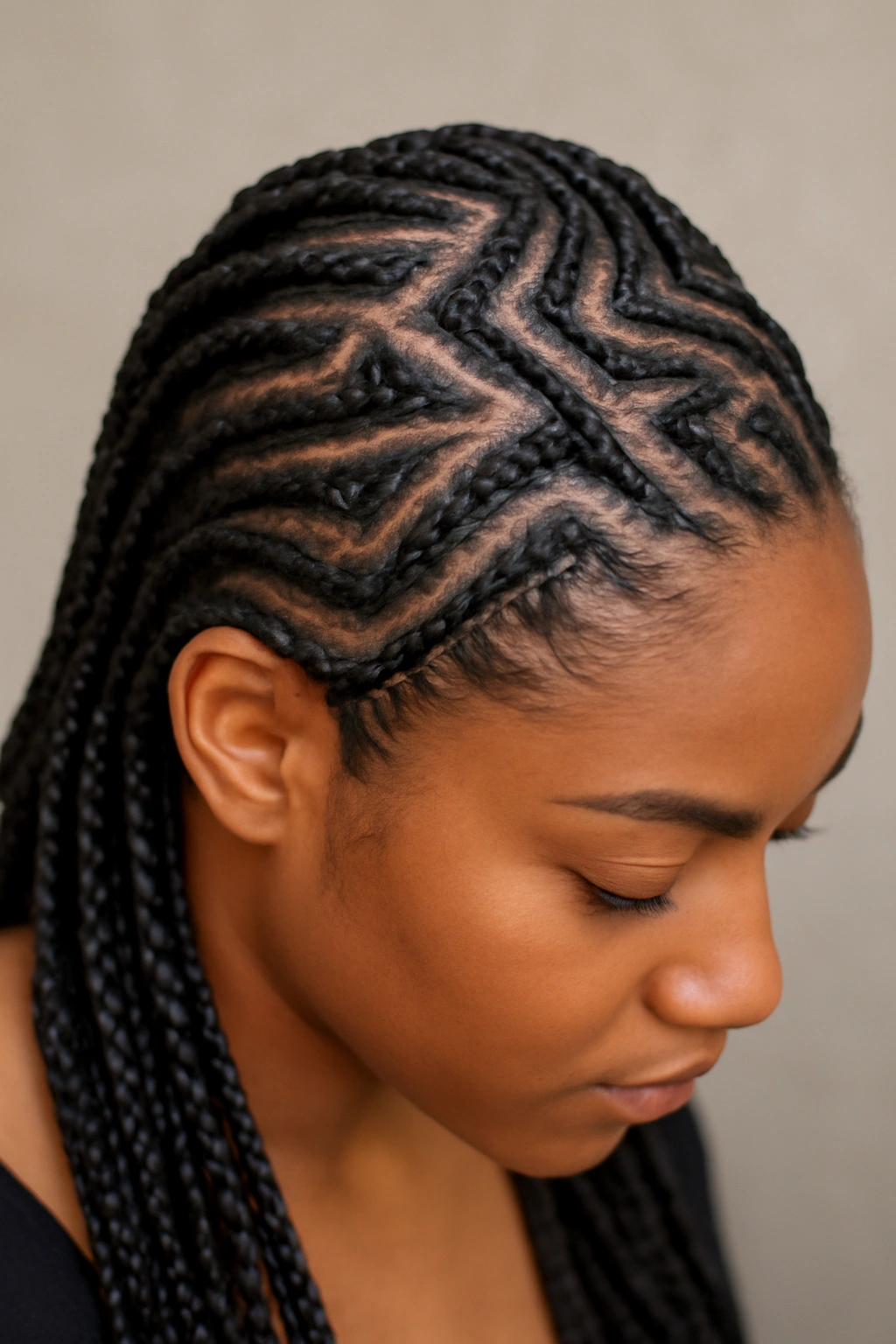
Triangular braids, also called pyramid braids or zigzag braids, are braids that deviate from the traditional square-section pattern. Instead of neat boxes, sections are shaped like triangles or installed in zigzag patterns across the scalp, creating a more dynamic, artistic visual effect. The knotless installation means these creative patterns stay gently anchored without excess tension, and the geometric effect is undeniably striking and fashion-forward.
The Artistic Appeal of Geometric Patterns
Triangular and zigzag braids exist for people who think of their protective styling as art. The pattern itself becomes the statement, creating visual interest and complexity that regular box braids simply don’t offer. Installation is more technically demanding because your stylist has to map out the pattern carefully, visualize how the triangles or zigzags will interact across your entire head, and execute the pattern precisely. The result, though, is absolutely worth it if you love distinctive, conversation-starting styles.
Installation and Real-World Wear
- Takes 5–7 hours to install because the pattern demands precision and attention to detail
- Last 6–10 weeks depending on braid size and how well you maintain them
- Require a stylist with real skill and experience — not all braiders are confident working with geometric patterns
- Look absolutely stunning in photographs because the pattern adds complexity and visual depth
- Work best when the braid size is consistent throughout so the pattern reads clearly
Worth knowing: Triangular and zigzag patterns are especially striking on longer hair where the geometry has more space to develop and be appreciated. On shorter hair, the pattern can feel crowded unless you’re working with fewer, larger sections.
Final Thoughts

The beauty of the knotless braiding technique is that it adapts to almost any aesthetic preference and hair length you’re working with. Whether you’re drawn to the classic simplicity of box braids, the sculptural elegance of goddess braids, the artistic boldness of geometric patterns, or the ethereal flow of waterfall braids, there’s a knotless style that aligns with who you are and how you want to feel in your hair. The common thread across all of these options is that gentler, tension-free installation that protects your edges and scalp while you’re protecting your natural hair texture.
The investment in quality installation matters more with knotless braiding than with any other technique. A skilled braider who understands how to feed in hair gradually, maintain appropriate tension throughout the installation, and execute the specific style you’re interested in will deliver results that look better, last longer, and feel infinitely more comfortable than rushed or poorly executed work. Take time to look at your stylist’s portfolio, read reviews from people with your hair type, and have a real conversation about what’s realistic for your hair length and texture.
Your next step is deciding which style resonates with you most — maybe start with knotless box braids or feed-in braids if you’re new to knotless styling, then branch out into the more specialized or artistic options as you develop a sense of what makes you feel confident and beautiful.
