



Knotless braids have become a staple protective style for Black women seeking elegant, versatile, and low-tension hairstyles that allow for healthy hair growth and scalp freedom. Unlike traditional box braids that start with a knot at the base, knotless braids gradually feed synthetic or natural hair into the braid from the root, creating a seamless, natural-looking finish that sits closer to the scalp. What makes this style so appealing isn’t just the aesthetic—it’s the genuine scalp relief it provides, the reduced hair breakage at the base, and the endless creative possibilities that come with variations in length, thickness, color, and embellishment.
The beauty of knotless braids lies in their adaptability. Whether you’re looking for a protective style that lasts weeks, a fashion-forward look that turns heads, or a low-maintenance option that lets your natural hair thrive underneath, there’s a knotless braid variation suited to your lifestyle and preferences. The style works beautifully on every hair type and thickness, from fine natural hair to thick, coily textures, and can be worn sleek and minimal or elaborate and ornate.
This guide explores fifteen distinct knotless braid styles, each with its own personality, maintenance requirements, and ideal wear occasions. From bohemian softness to sleek minimalism, dramatic length to practical shoulder-length cuts, you’ll find detailed information about what each style looks like, how to care for it, and what makes it special. Whether you’re a knotless braid veteran or considering your first installation, these styles offer genuine variety and creative inspiration.
1. Goddess Knotless Braids
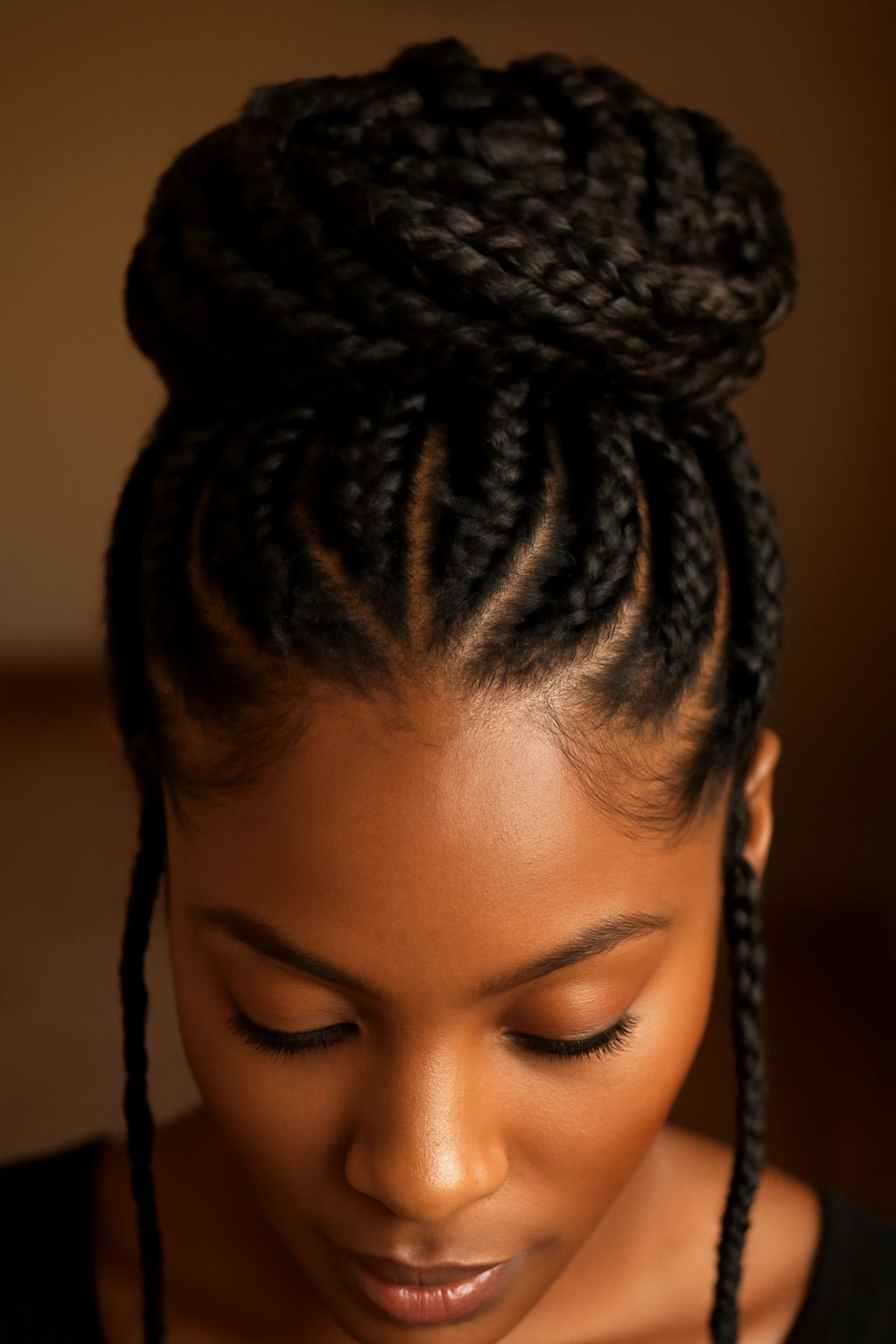
Goddess knotless braids combine the protective benefits of knotless braiding with the elegant updo styling that makes this style instantly wearable straight from the salon. The braids flow from the roots in knotless fashion, then transition into thick, voluminous strands that often curve upward at the crown or wrap around the head in a halo pattern. Many goddess braid wearers incorporate metallic thread, beads, or cuffs along the length to amplify the luxe, celebratory vibe the style naturally projects.
What Makes Goddess Braids Distinctive
The signature element of goddess braids is their intentional thickness and the way they’re styled to frame the face with softness while maintaining an undeniably polished appearance. Unlike regular knotless braids worn loose, goddess braids are designed to be worn up from the moment you leave the salon—twisted into crowns, wrapped into buns, or coiled into intricate patterns. This built-in styling means the braids look intentional and complete immediately, rather than requiring you to gather them into a style at home.
Styling and Maintenance Tips
- Thickness and size: Goddess braids are typically thicker (1-2 inches wide) than regular knotless braids, which means fewer total braids on the head and a bolder visual impact
- Duration: These styles typically last 6-8 weeks with proper care before the knotless roots begin to show visible new growth
- Daily upkeep: Wrap with a silk scarf at night, use a lightweight oil to maintain shine, and refresh the style every 3-4 days if it’s pinned or twisted
- Styling versatility: While designed to be worn up, you can loosely gather goddess braids into a high or low ponytail, weave them into a crown braid, or let them fall freely if you prefer a different look
- Scalp care: The slightly heavier weight of thicker braids makes scalp massage and oil application even more important—spend 2-3 minutes gently massaging your scalp daily
Pro tip: Goddess braids photograph beautifully, making them ideal if you have events coming up where you want polished, elegant hair that looks like you spent hours getting ready.
2. Lightweight Knotless Braids with Synthetic Hair
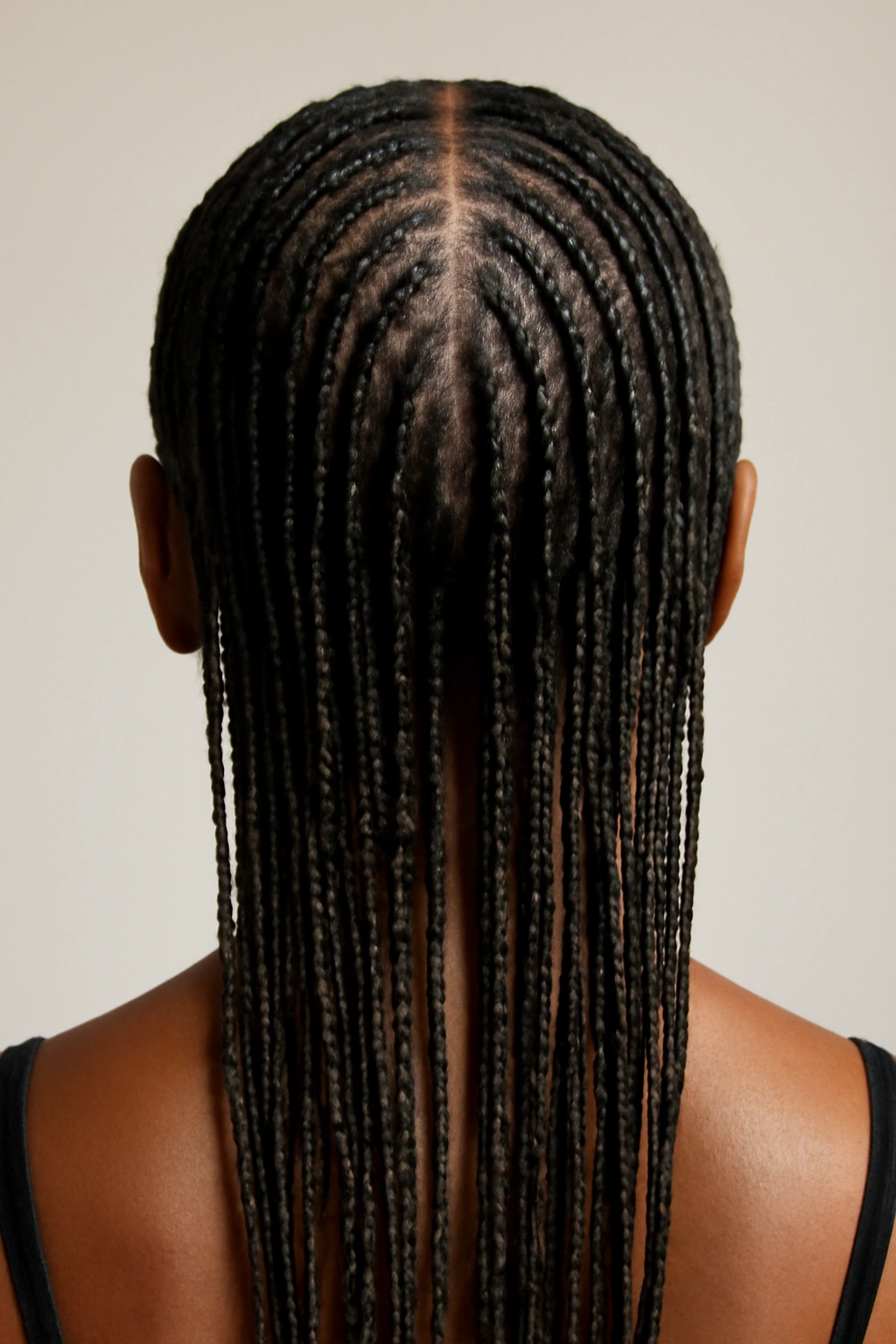
These classic knotless braids are exactly what the name suggests—thin, lightweight, and made with synthetic Kanekalon or Toyokalon hair blended with your natural hair. They’re the go-to choice for anyone seeking maximum scalp contact, minimal tension, and a style that won’t feel heavy or pull on your edges. Lightweight knotless braids sit closer to the scalp than traditional box braids, creating a cleaner line from root to tip.
Why Lightweight Knotless Braids Stand Out
The reduced tension this style provides is genuinely transformative for scalp health and long-term hair growth. Because there’s no knot pulling at the root and the synthetic hair is threaded in gradually as the braid forms, your natural hair experiences virtually no stress at the base. Over the weeks you wear the style, your natural hair actually grows and strengthens under the protection of the braids, rather than breaking or thinning from tension.
Key Characteristics and Benefits
- Scalp visibility: You can see your scalp clearly between the braids, allowing easy access for moisturizing, cleansing, and inspection
- Comfort level: These braids feel significantly lighter than traditional styles, which means less neck strain and the ability to wear them longer without discomfort
- Longevity: Lightweight knotless braids can last 8-10 weeks if properly maintained, making them cost-effective despite their initial installation time
- Hair feeding method: The synthetic hair is introduced gradually along the length of the braid rather than starting with a large knot, reducing the overall weight at the root
- Sweat and moisture: Your scalp breathes better with lightweight braids, which is especially important in warm climates or if you exercise regularly
Worth knowing: The thickness of lightweight knotless braids is forgiving if you have fine natural hair—the style won’t overwhelm your features or make your head feel uncomfortably heavy during sleep.
3. Colored Knotless Braids with Ombre Effect
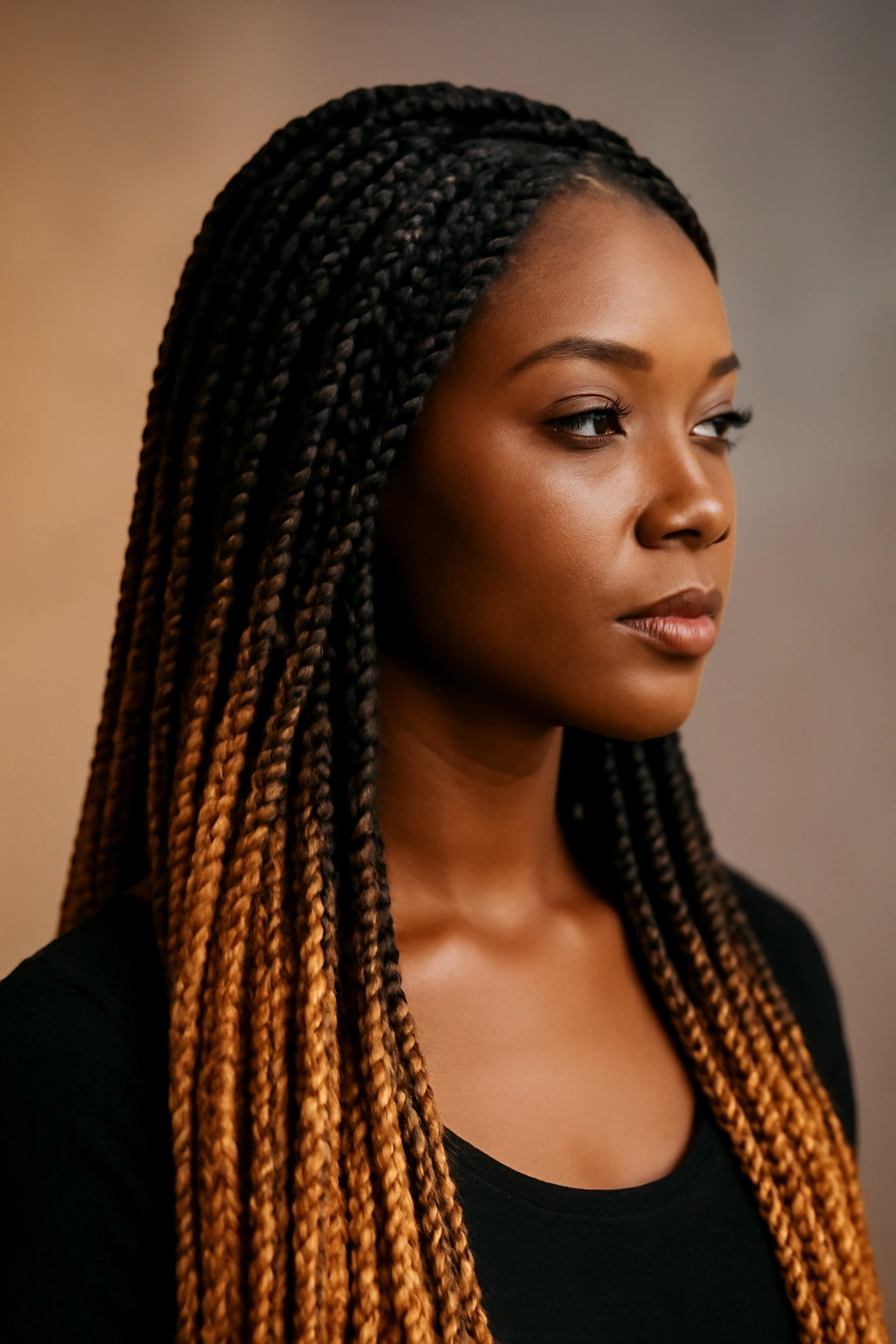
Adding color—whether through synthetic thread, extensions, or natural highlighting—transforms knotless braids into a fashion statement. Ombre-effect knotless braids start with one color at the roots and gradually transition to another shade as you move down the braid length. Popular color combinations include black-to-honey, chocolate-to-caramel, burgundy-to-blonde, or even pastel fades for the boldly adventurous.
Creating Visual Impact with Color
The ombre effect works brilliantly with knotless braids because the gradual color transition mimics natural sunlight on hair, giving the style a dimensional, multifaceted appearance. Whether you choose warm sunset tones, cool jewel tones, or neutral earth shades, the right color combination can elevate your entire presence. The beauty of synthetic hair ombre is that it won’t fade or damage your natural hair underneath—all the color experimentation happens with the protective extension material.
Color Application and Care Strategies
- Color selection process: Bring reference photos to your braiding specialist; professional color mixing ensures the ombre blends smoothly rather than creating harsh stripes
- Placement options: Some people color all braids uniformly, while others color only the outer perimeter braids for a peek-a-boo effect visible when hair is up
- Protecting the color: Colored synthetic hair doesn’t typically fade like human hair, but chlorine can alter the shade—rinse well after swimming and consider wearing a swim cap
- Complementary colors for your skin tone: Warm undertones glow with honey, caramel, copper, and rose-gold; cool undertones pop with platinum, ash, burgundy, and jewel tones
- Maintenance commitment: Colored braids require the same care as uncolored ones, but the color makes dirt and product buildup more visible, so weekly cleansing becomes important
Insider note: Ombre knotless braids photograph exceptionally well on social media and in natural sunlight—the dimensional color really shines.
4. Jumbo Knotless Braids
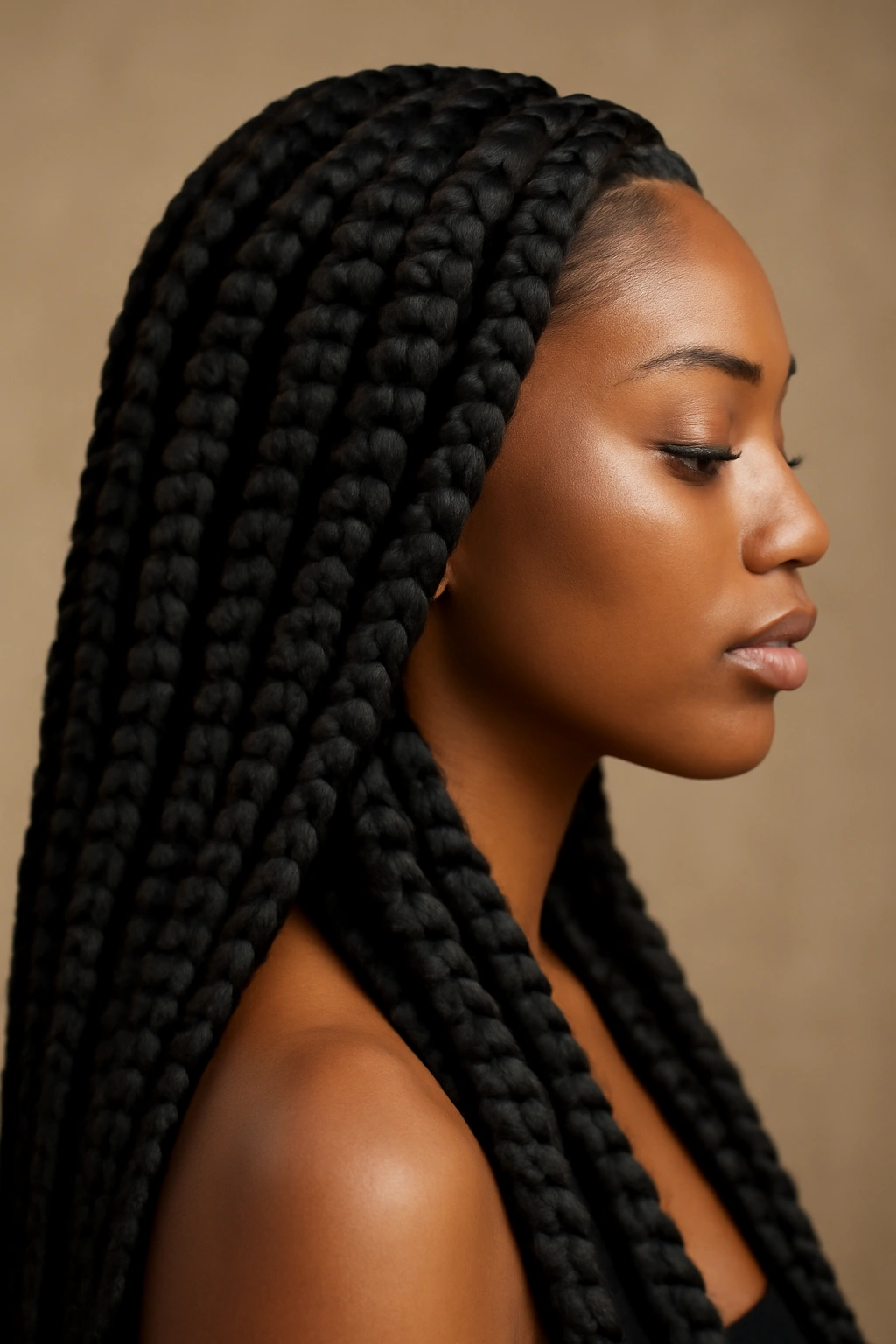
Jumbo knotless braids are the bold, statement-making version of the protective style—created with noticeably thicker sections (sometimes 2-3 inches wide) that form fewer braids overall. A typical jumbo knotless braid installation might include only 8-15 braids across the entire head, compared to 40-60 with lighter styles. This approach creates an undeniably striking look that reads as confident and intentional.
What Defines Jumbo Knotless Braids
The jumbo size fundamentally changes how the style feels and behaves. Fewer, thicker braids mean faster installation times and less overall weight on the head, which appeals to people with sensitive scalps or anyone who finds traditional braids too heavy. The braids are easier to style up into buns, and they make a clear visual statement—this is not a subtle protective style, it’s a full fashion moment.
Styling and Longevity Considerations
- Installation time: Jumbo knotless braids install significantly faster than thin braids—often completing in 4-6 hours rather than 8-10
- Comfort and head weight: The reduced volume means minimal neck strain and comfortable sleeping without pillows that can disturb thinner braids
- Lifespan: Jumbo braids typically last 6-8 weeks, as the increased thickness can put more stress on individual braids over time
- Styling versatility: These thick braids style beautifully into high buns, low knots, wrapped crowns, and half-up styles that look substantial and finished
- Hair thickness consideration: Jumbo knotless braids work best on people with naturally thick hair or those willing to add extra synthetic hair for volume
- Scalp visibility: While you can still see and access your scalp, there’s slightly less space between jumbo braids than with lightweight styles
Quick fact: If you’re installing jumbo knotless braids for the first time and unsure about the thickness, many stylists recommend starting with medium braids to find your comfort zone before going full jumbo.
5. Knotless Braids with Beads and Accessories
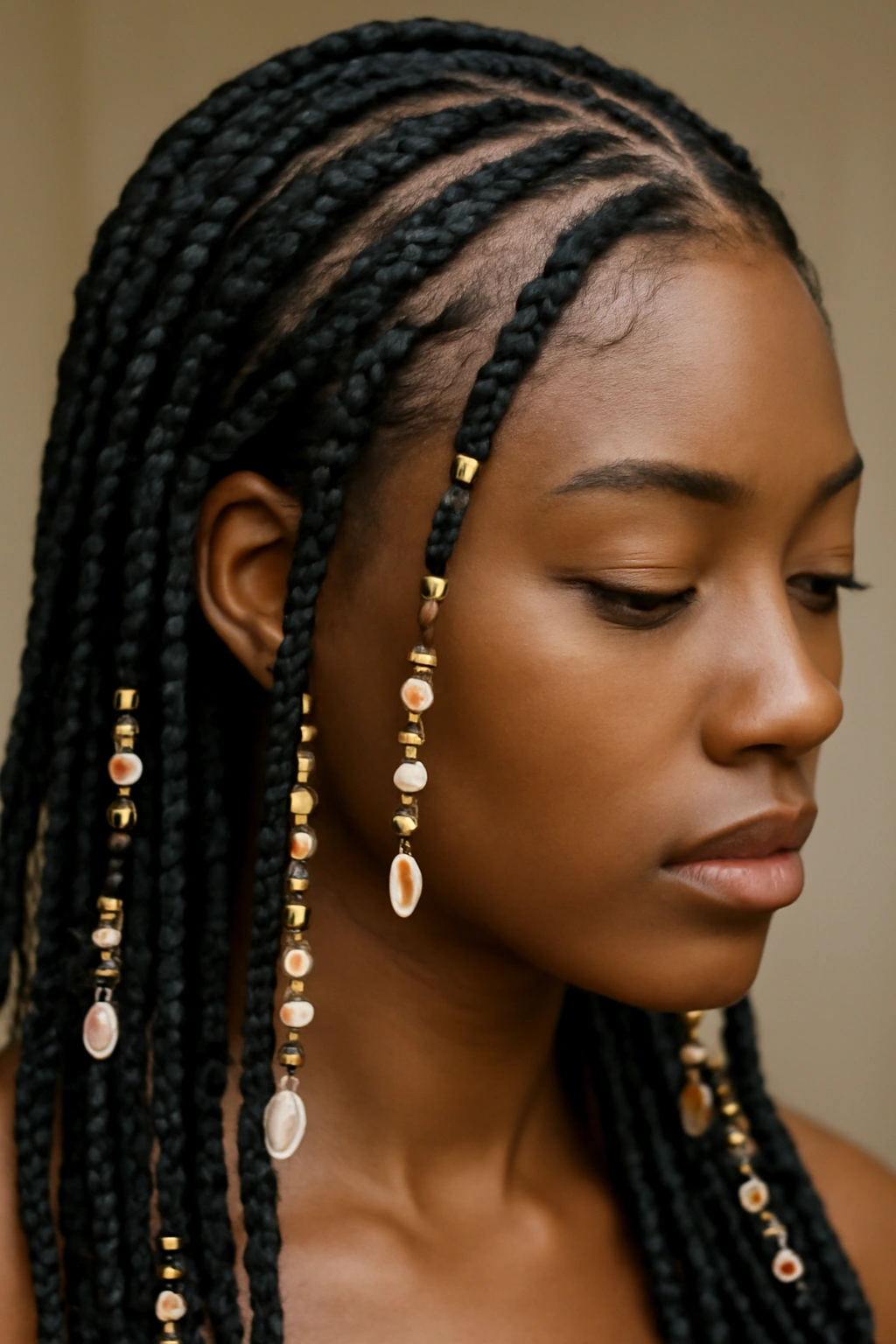
Embellishing knotless braids with beads, cuffs, shells, or gold rings transforms them into jewelry-level artistry. Some people incorporate just a few accent beads on select braids, while others bead nearly every braid in elaborate patterns. Beads can be plastic, metal, wooden, crystal, or decorative pieces that slide onto the braids during or after installation.
The Art of Strategic Bead Placement
Bead placement completely changes the visual impact of your style. Beads concentrated near the face draw attention to your features and create a frame; beads toward the ends add movement and playfulness; scattered beads throughout create subtle sparkle. The weight of the beads is also a consideration—heavy ornamental beads feel luxurious but can pull on individual braids, while lightweight plastic or wooden beads add visual interest without strain.
Bead Selection and Maintenance
- Bead types and their characteristics: Metal cuffs feel glamorous and durable; plastic beads are lightweight and come in infinite colors; natural wood beads add earthy texture; shells and cowrie shells carry cultural significance and bohemian aesthetics
- Application timing: Beads can be added during the initial braiding or threaded onto existing braids afterward—both methods work equally well
- Cleaning and care: Beads don’t require special cleaning, but you should still maintain your regular scalp care routine—oil and cleansing happen between the beads
- Bead removal: When you’re ready to take down the braids, slide beads off each braid before unraveling to avoid losing them or having them catch on hair
- Color coordination: Match bead colors to your everyday wardrobe or choose statement beads that complement your skin tone and the colors you wear most
- Weight consideration: A few select beads feel elegant and intentional; too many beads can make braids feel heavy and cause tension at the roots
Worth knowing: Gold-toned metal cuffs photograph beautifully and complement most skin tones, making them a universally flattering choice if you’re unsure about color.
6. Long Knotless Braids with Length and Drama
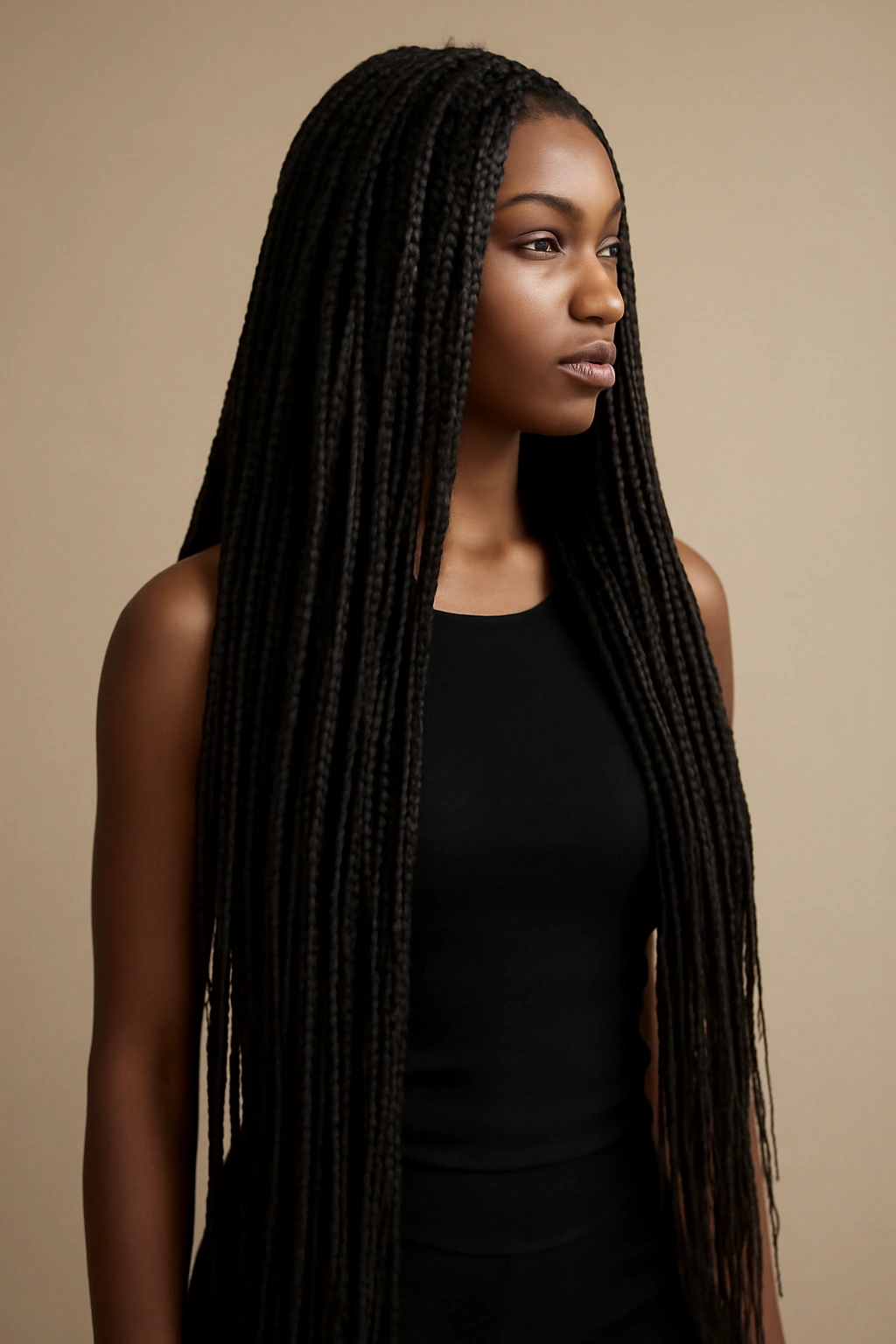
Long knotless braids that extend well past the shoulders—sometimes reaching mid-back or longer—create an undeniably dramatic, high-fashion aesthetic. These styles require more synthetic hair and longer installation times, but the result is a striking protective style that makes a powerful visual statement. Length options range from classic waist-length to exaggerated floor-grazing braids for editorial or special-occasion wear.
Why Length Changes Everything
Long braids carry different energy than shoulder-length styles. They photograph beautifully, move with fluidity and grace, and create visual impact that shorter braids simply can’t match. Long knotless braids are also practical—the extra length means you can style them in more ways, from intricate updos to dramatic half-ups, or wear them flowing freely.
Managing Extra Length Successfully
- Synthetic hair amount: Longer styles require 6-8 bundles of hair versus the typical 4-5, which increases both cost and installation time significantly
- Weight distribution: The extra length adds cumulative weight, so lightweight synthetic hair becomes more important to prevent tension headaches or scalp discomfort
- Protective styling at night: Long braids require careful tucking and wrapping when sleeping to prevent friction damage and maintain the style’s longevity
- Movement and maintenance: Long braids move more throughout the day, which increases friction—protective gear like silk bonnets and minimal-manipulation styles prevent unnecessary wear
- Styling options: Long braids enable elaborate crown braids, intricate twist updos, and flowing styles impossible with shorter lengths
- Occasions: Long knotless braids suit special events, photoshoots, and occasions where you want maximum visual impact
Pro tip: If you love long braids but worry about the weight, ask your stylist to create length with slightly lighter synthetic hair or to reduce the total number of braids slightly—both strategies minimize scalp tension.
7. Feed-In Knotless Braids (Classic Style)
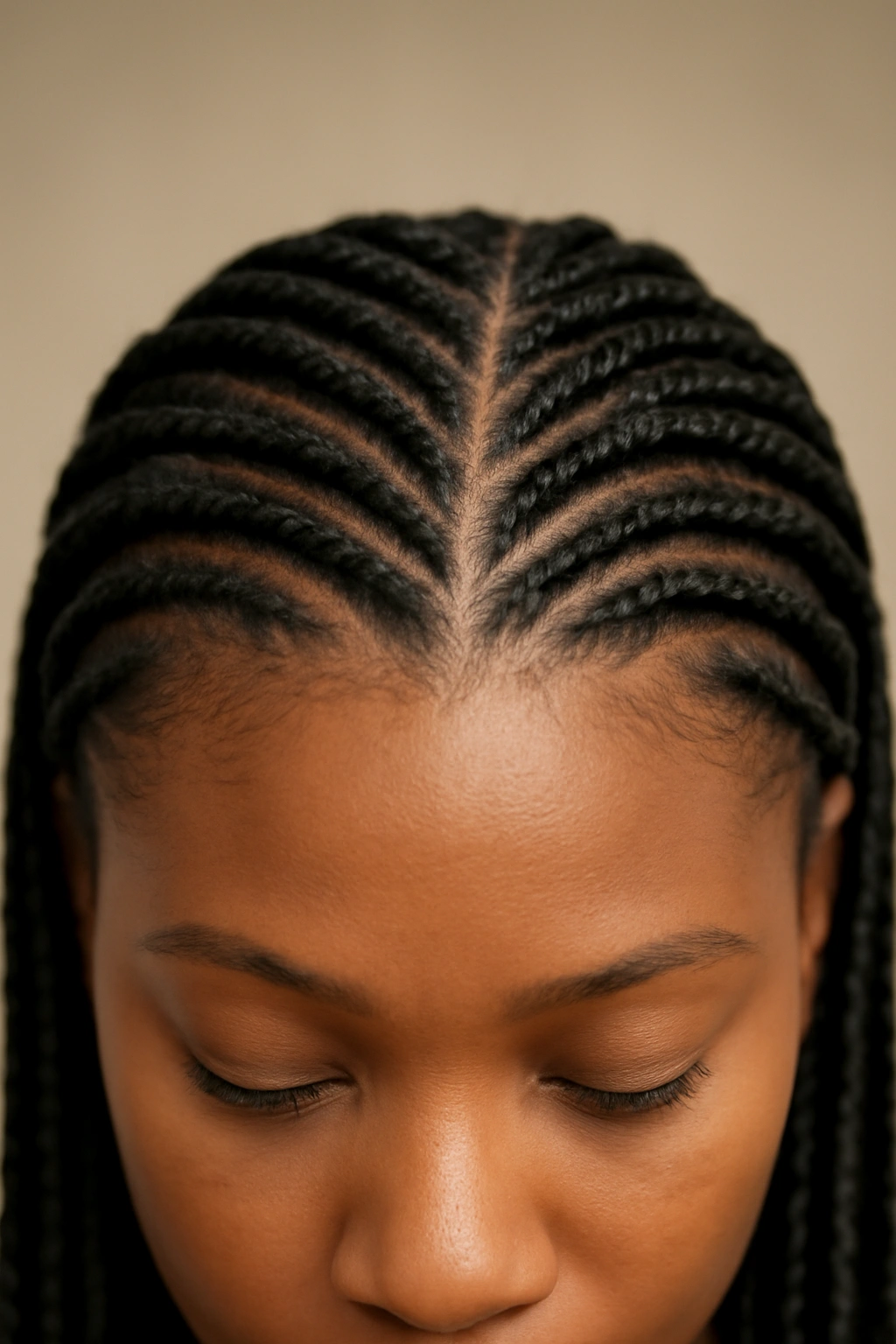
Classic feed-in knotless braids represent the foundation of the knotless braid technique—synthetic hair is gradually introduced along the length of each braid as it’s being created, with no knot at the root. This is the most common version of knotless braids and what most stylists mean when they say “knotless braids.” Classic feed-in braids can be worn loose, gathered into styles, or decorated with beads and accessories.
The Foundation of Knotless Braiding
The feed-in technique is mechanically elegant—instead of tying three sections of hair together at the base, the braider takes three small sections of your natural hair and begins braiding while simultaneously adding synthetic hair fiber into each section. As the braid develops, more synthetic hair is woven in until the braids reach full thickness, and by the time you’re a few inches down from the scalp, only synthetic hair remains. This gradual introduction means virtually zero tension at the root.
Understanding Feed-In Mechanics and Benefits
- Tension reduction: Because there’s no knot pulling at the root and synthetic hair is introduced gradually, tension is distributed across the natural hair rather than concentrated at one point
- Scalp health: The feeding-in method allows direct access to your scalp for moisturizing, cleansing, and scalp care—essential for long-term hair health
- Natural appearance: The braids blend seamlessly with your natural hair at the roots, creating a more polished, intentional look than styles with visible knots or plugs
- Installation skill requirement: Feed-in braiding requires more skill and precision than traditional box braids, so finding an experienced braider makes a significant difference in the final result
- Cost factor: Skilled feed-in braiding typically costs more than basic box braids, but the reduced tension justifies the investment if hair health is your priority
- Versatility: Classic feed-in knotless braids work as a foundation for virtually any variation—beaded, colored, twisted, wrapped, or styled up
Insider note: The quality difference between a well-executed feed-in braid and a rushed one is immediately visible—the braids sit closer to the scalp and look more polished.
8. Knotless Braids with Natural Hair Blend
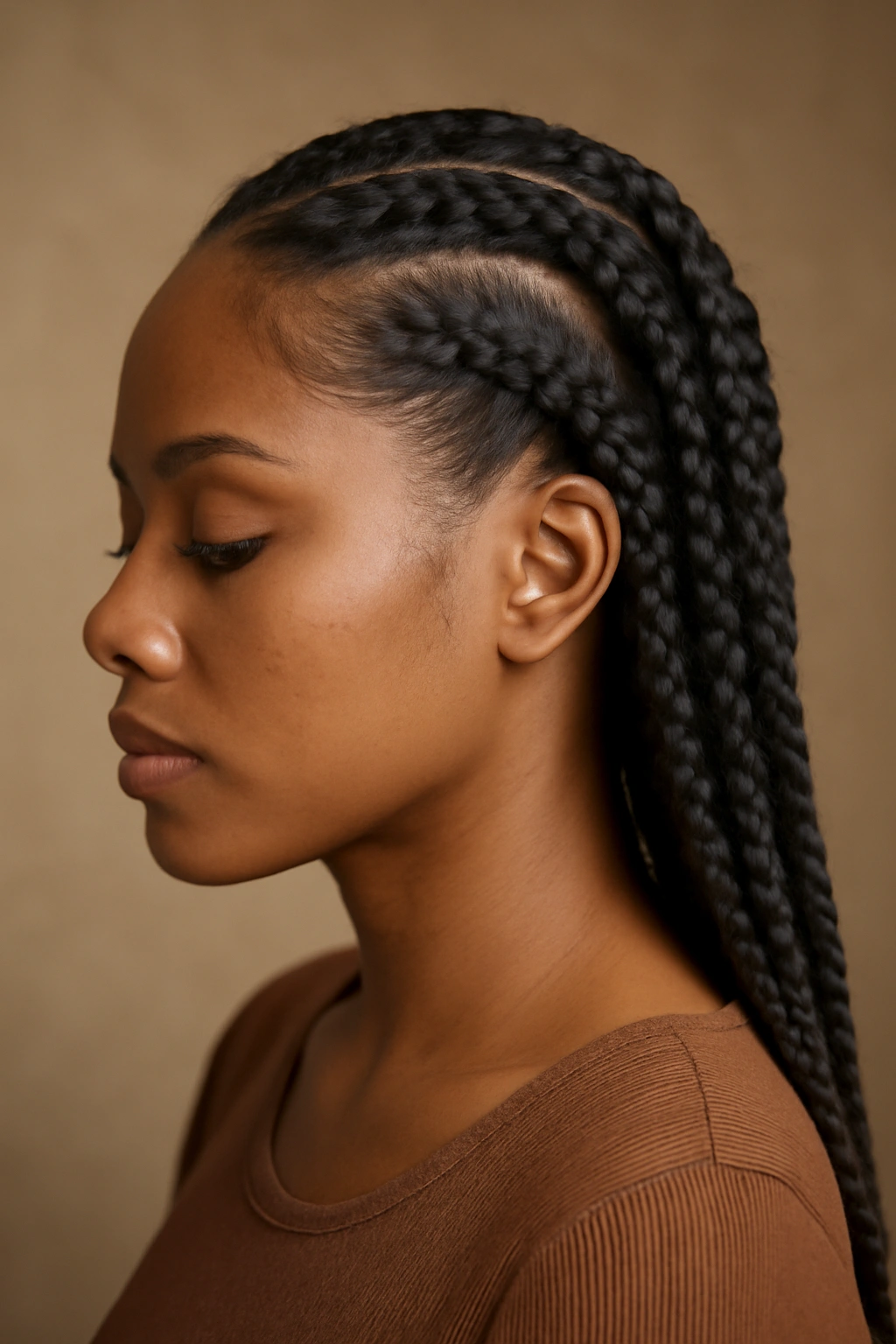
Rather than using only synthetic hair, some stylists blend your natural hair with synthetic extensions throughout the braid. This approach creates a softer, more natural appearance, maintains slightly better scalp texture at the roots, and can reduce the overall feel of “product” in your hair. Blended knotless braids work especially well for people who want the protective benefits of braids but prefer a more understated aesthetic.
Why Blending Natural and Synthetic Hair Matters
Blending creates a subtle, sophisticated look that feels less “done” and more naturally protective. Because your natural hair remains visible and tangible throughout the braid rather than being completely covered with synthetic material, the style feels lighter and more connected to your actual hair growth. The blend also means the braids move slightly differently—with more organic give and flow.
Blending Strategies and Considerations
- Ratio options: Some stylists blend 50/50 natural to synthetic; others use 60/40 or 70/30 ratios depending on the desired appearance and durability
- Natural hair visibility: A higher percentage of natural hair means the braids look more organic but may not last quite as long (7-9 weeks instead of 8-10)
- Texture blending: Blended braids honor your natural hair’s texture more than synthetic-only styles, creating a more integrated appearance
- Durability trade-off: While blended braids feel lighter and look more natural, they can experience more frizz over time because your natural hair doesn’t have the smoothing effect of synthetic fiber
- Scalp contact: Blending increases direct contact between your scalp and your actual hair, which improves moisture distribution and reduces dryness
- Cost: Blended knotless braids typically cost similar to or slightly more than fully synthetic styles because of the additional skill required
Worth knowing: Blended knotless braids work beautifully if you’re transitioning hair or growing out a protective style—they feel less like you’re wearing extensions and more like an enhanced version of your own hair.
9. Twisted Knotless Braids
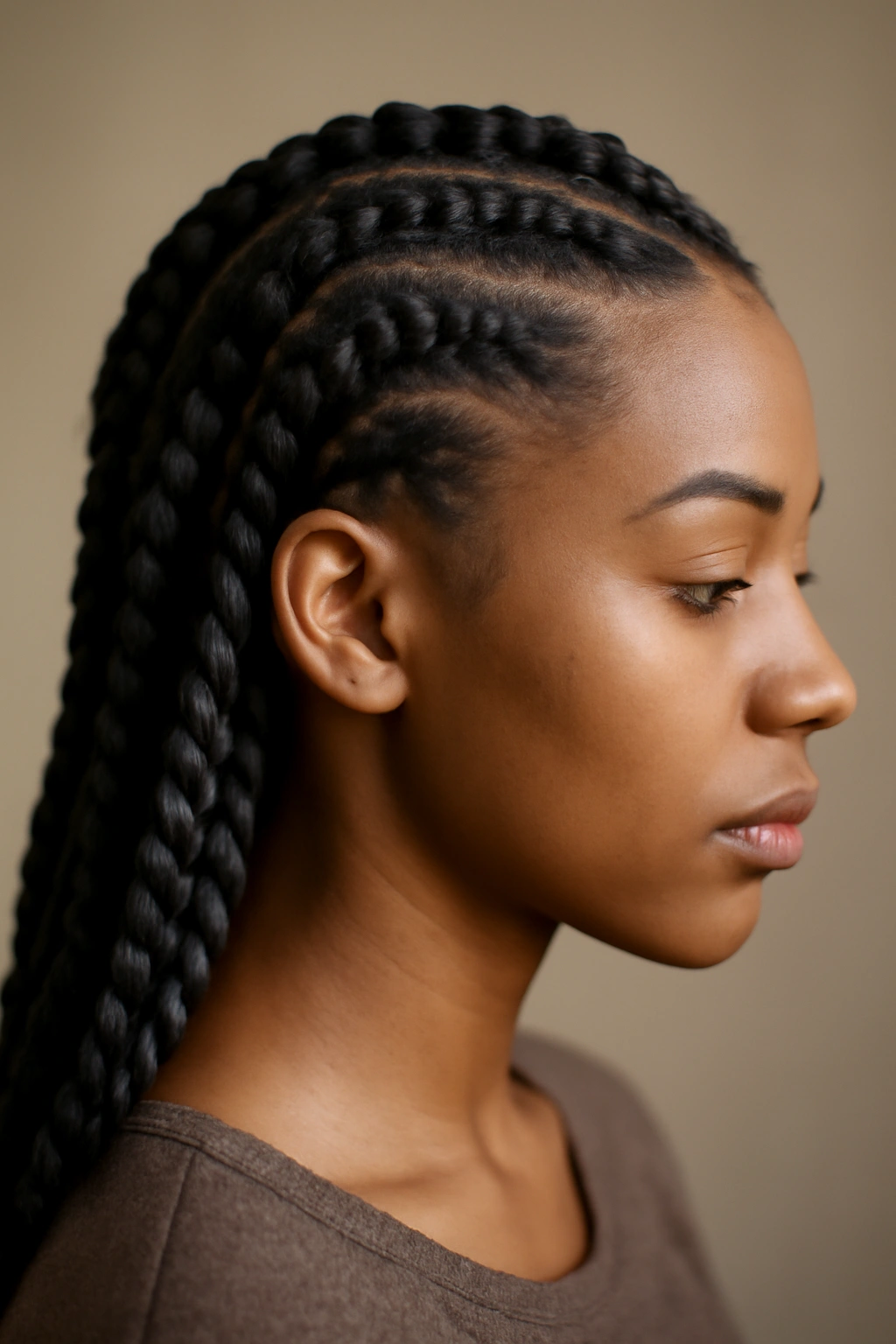
Twisted knotless braids replace the traditional three-strand braid pattern with two-strand twists, creating a rounder, less angular line from root to tip. Two-strand twisted knotless braids require the same root-feeding technique as traditional braids but create a distinctly different texture and aesthetic. The twists catch light differently, they’re slightly faster to install, and they feel different in terms of movement and flexibility.
The Distinctive Look of Twisted Braids
Two-strand twists create a rope-like appearance that reads as softer and more flowing than traditional three-strand braids. The texture of twisted knotless braids is more forgiving—small imperfections blend into the organic texture, whereas three-strand braids display every inconsistency clearly. Many people find twisted braids more comfortable to sleep on because the rounder shape doesn’t dig into the scalp the same way angular braids might.
Twists Versus Traditional Braids
- Installation speed: Two-strand twists install slightly faster than three-strand braids because the mechanism is simpler
- Visual thickness: Twists appear slightly thinner than braids of comparable weight because the rope texture is less volumized
- Flexibility and movement: Twisted knotless braids have more natural give and movement; they’re less rigid than braids
- Styling options: Twists style beautifully into buns, crowns, and wrapped styles, though some updos read as slightly less polished than braids simply due to the texture difference
- Longevity: Two-strand twisted knotless braids typically last 7-9 weeks with proper care
- Beading and accessories: Beads and cuffs work on twisted braids, though the smaller surface area of the twist means fewer beads fit per braid
- Tactile feel: Twisted knotless braids have a softer, more organic feel in hand and on the head
Quick fact: If you find traditional braids uncomfortable or struggle with them slipping, twisted knotless braids might be the more comfortable alternative you’ve been looking for.
10. Soft Boho Knotless Braids
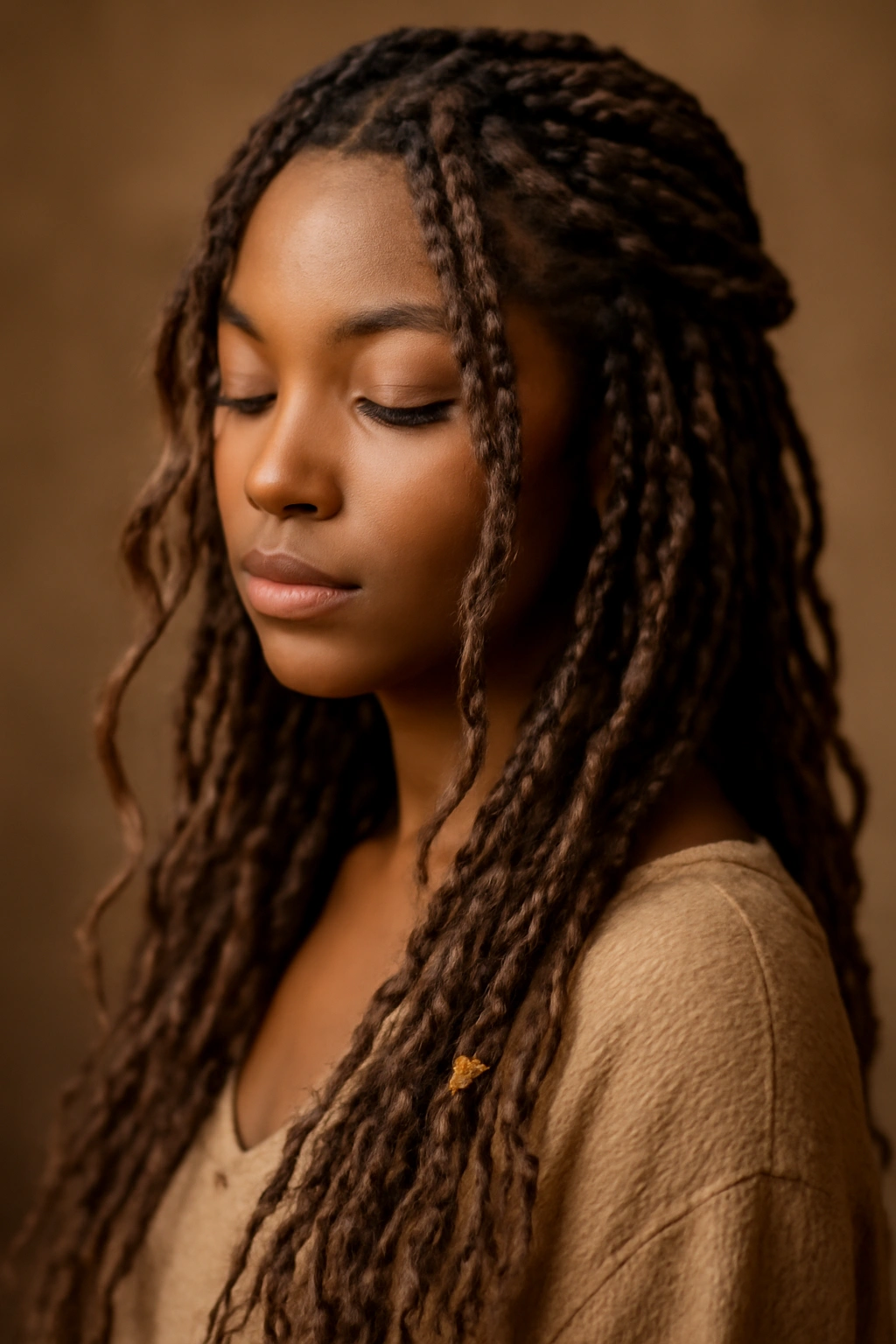
Soft boho knotless braids combine the protective benefits of knotless braiding with a deliberately undone, textured, romantic aesthetic. These styles typically include loose or wavy braids, sometimes with hair left out around the face or crown for a softer frame, and often incorporate earth-tone colors, natural-looking highlights, or organic embellishments like shells or wooden beads. Soft boho braids feel artistic and intentional rather than strictly polished.
Defining the Boho Aesthetic
Boho knotless braids prioritize softness and texture over sleekness. Rather than perfect, uniform braids, boho styles might include slightly looser sections, intentionally crimped or textured elements, baby hairs left out around the face, and a generally undone appearance. The philosophy is that the style should look effortless and free rather than meticulously constructed. Color palettes lean toward warm tones, natural blends, and colors that evoke nature and earth.
Creating Your Soft Boho Moment
- Braid texture variation: Some braids might be tighter and others slightly loose; some wavy and some straight; this inconsistency is the point, not a mistake
- Face-framing elements: Leaving out face-framing pieces creates a softer, more intentional frame that softens features and adds dimension
- Color choices: Honey, caramel, auburn, chocolate, and warm blonde tones suit the boho aesthetic; pastels and neons feel wrong for this style
- Embellishments: Shells, bone beads, wooden rings, metal wire, and natural fibers align with boho philosophy; ornate plastic beads feel out of place
- Scalp styling: Boho braids often include deliberate scalp-showing gaps and organic-looking root placements; perfectly uniform scalp coverage would undermine the boho feel
- Accessories integration: Scarves, hair wraps, and woven elements styled into boho braids enhance the overall aesthetic
Insider note: Soft boho knotless braids photograph beautifully in natural light and read as more artistic and fashion-forward than classic utility braids.
11. Sleek Knotless Braids with Curved Crown
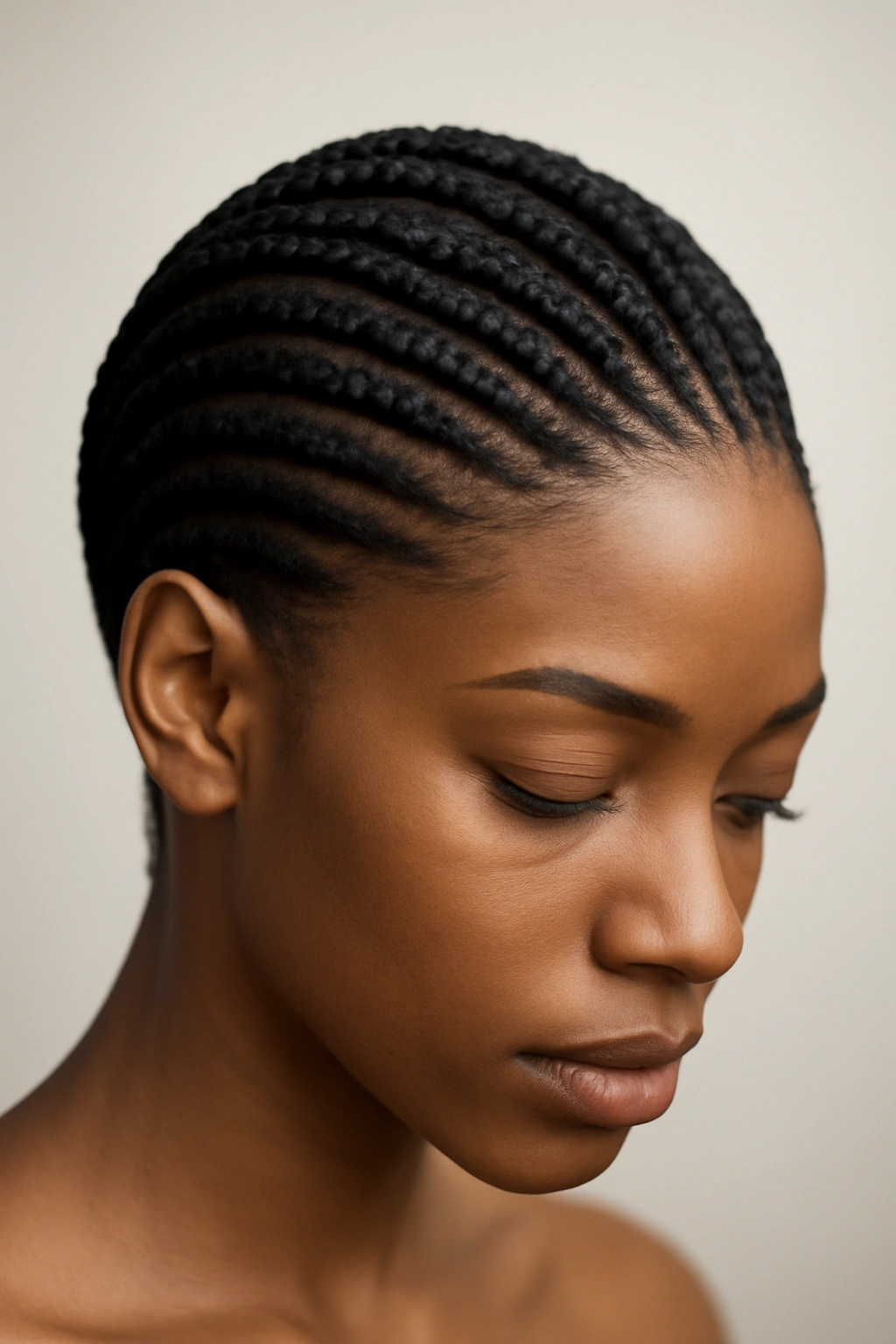
Sleek knotless braids styled with a curved or wrapped crown combine minimalist protective styling with strategic styling that frames the face and crown dramatically. The braids are kept tight and uniform, with no loose pieces or baby hairs—all the soft touch comes from how they’re arranged around the crown, twisted, or wrapped into circular patterns. This style is polished, intentional, and requires some styling skill but minimal daily upkeep once set.
Creating Drama Through Styling, Not Texture
The crown wrap works because knotless braids are naturally flexible and can be arranged into curves and spirals without slipping or coming undone. Starting at one ear, braids can be pinned and wrapped around the crown in a halo effect, or twisted into a figure-eight pattern, or spiraled into concentric circles. The result looks intricate and intentional without being ornate or heavy.
Technique and Maintenance for Crown-Wrapped Styles
- Securing method: Small bobby pins, hair clips, or elastic bands hold the styled crown in place; placement matters so pins don’t show visibly
- Daily refreshing: Crown-wrapped styles need refreshing every 2-3 days to maintain the styled appearance; you’ll need to re-pin sections that shift during sleep
- Nighttime care: Sleeping on the crown-wrapped style requires a silk bonnet or head wrap to prevent it from shifting and to protect the braids
- Braid tightness: Braids intended for crown styling should be braided slightly tighter than loose-wearing braids so they hold their shape when pinned and manipulated
- Scalp tension consideration: While crown wrapping doesn’t add tension at the roots, the weight of pinned braids sitting on the crown can create mild discomfort if the style is too heavy
- Styling versatility: You can switch up the crown pattern every few days for visual variety without taking down and reinstalling the braids
Pro tip: Ask your stylist to braid slightly tighter than usual if you’re planning to wear your braids in a crown-wrapped style, since perfectly loose braids will shift when pinned.
12. Knotless Braids with Curly Tips
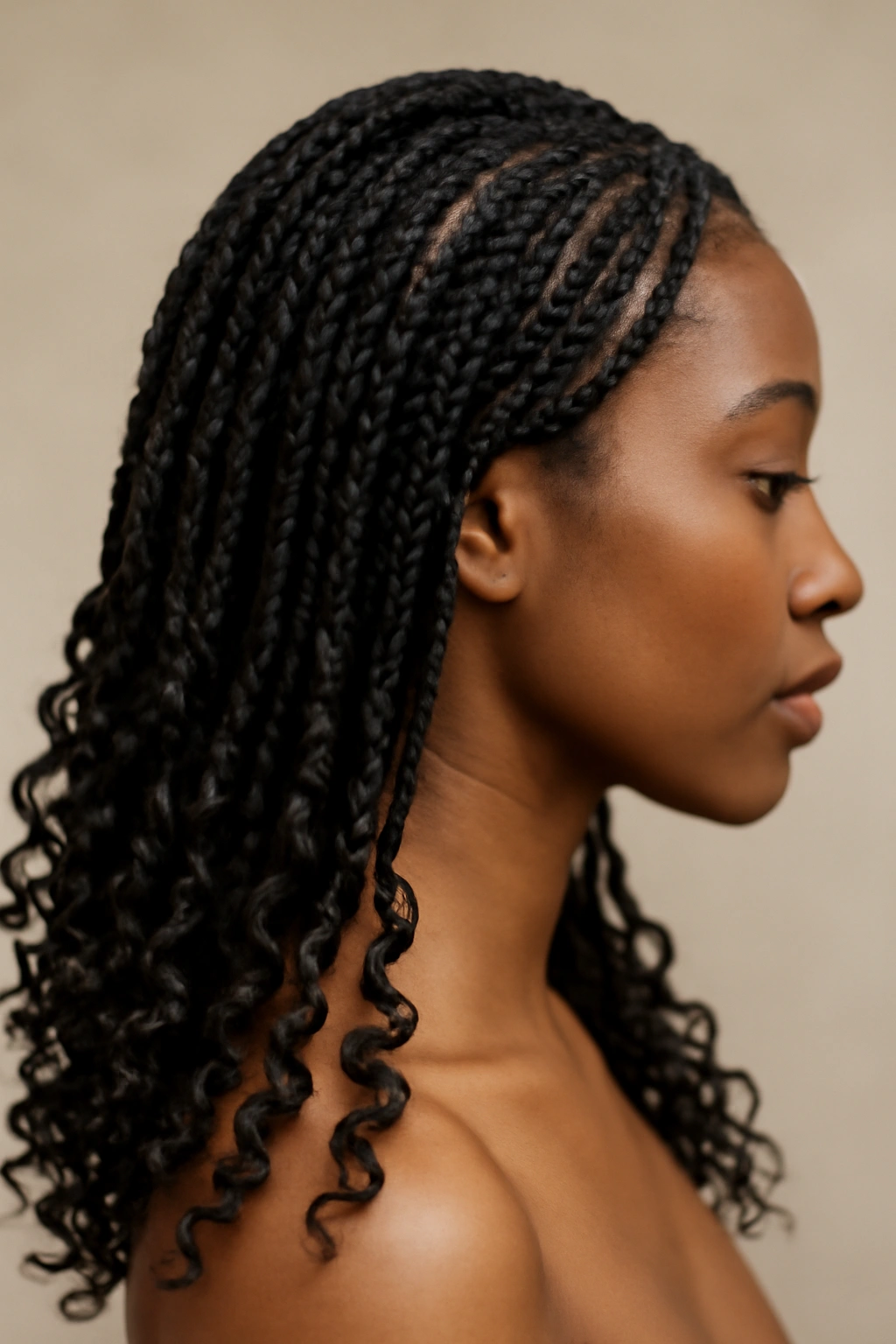
Adding curl to the ends of your knotless braids creates movement, lightness, and a finished, polished appearance. Curly-tipped knotless braids often feature loose spirals or defined waves at the ends—sometimes starting 3-4 inches from the base and sometimes only on the last 2 inches. The curls are typically created by setting the braid ends on small rollers, dipping them in hot water, or using synthetic hair that’s naturally textured, then allowing them to set and cool.
Creating and Maintaining Curl Definition
Curly tips transform the visual weight and feeling of braids instantly. Straight knotless braids can feel heavy and static; the same braids with curled tips feel bouncy and dynamic. The curls catch light differently, they move independently, and they create an impression of care and intentionality. Whether you choose tight ringlets or loose waves dramatically changes the vibe—tight curls read formal or dramatic; loose waves read relaxed or romantic.
Curl Customization and Longevity
- Curl pattern options: Tight spiral curls, loose waves, crimped waves, and coil patterns all create different aesthetics and require different techniques to achieve and maintain
- Curl placement: Curls starting partway down the braid create an ombré effect combining straight and textured; curls only on the last 2-3 inches feel more subtle
- Setting and heat: Curls created with hot water setting or heat tools last approximately 3-4 weeks before gradually relaxing—reheating or resetting curls extends their life
- Synthetic hair choices: Some synthetic fibers hold curls naturally; others require heat-setting; ask your stylist which hair type suits your preferred curl pattern
- Protective styling: Curly tips require more protective care—sleeping with a silk bonnet and avoiding friction preserves curls significantly longer than braids in sleep
- Refresh and reset: As curls relax, you can re-set them using the same technique, extending the curled-tip style for weeks beyond initial installation
Worth knowing: If you love curly tips but worry about maintenance, loose waves last longer and look good as they gradually relax, whereas tight spirals show relaxation more obviously.
13. Knotless Braids with Undercut or Shaved Sides
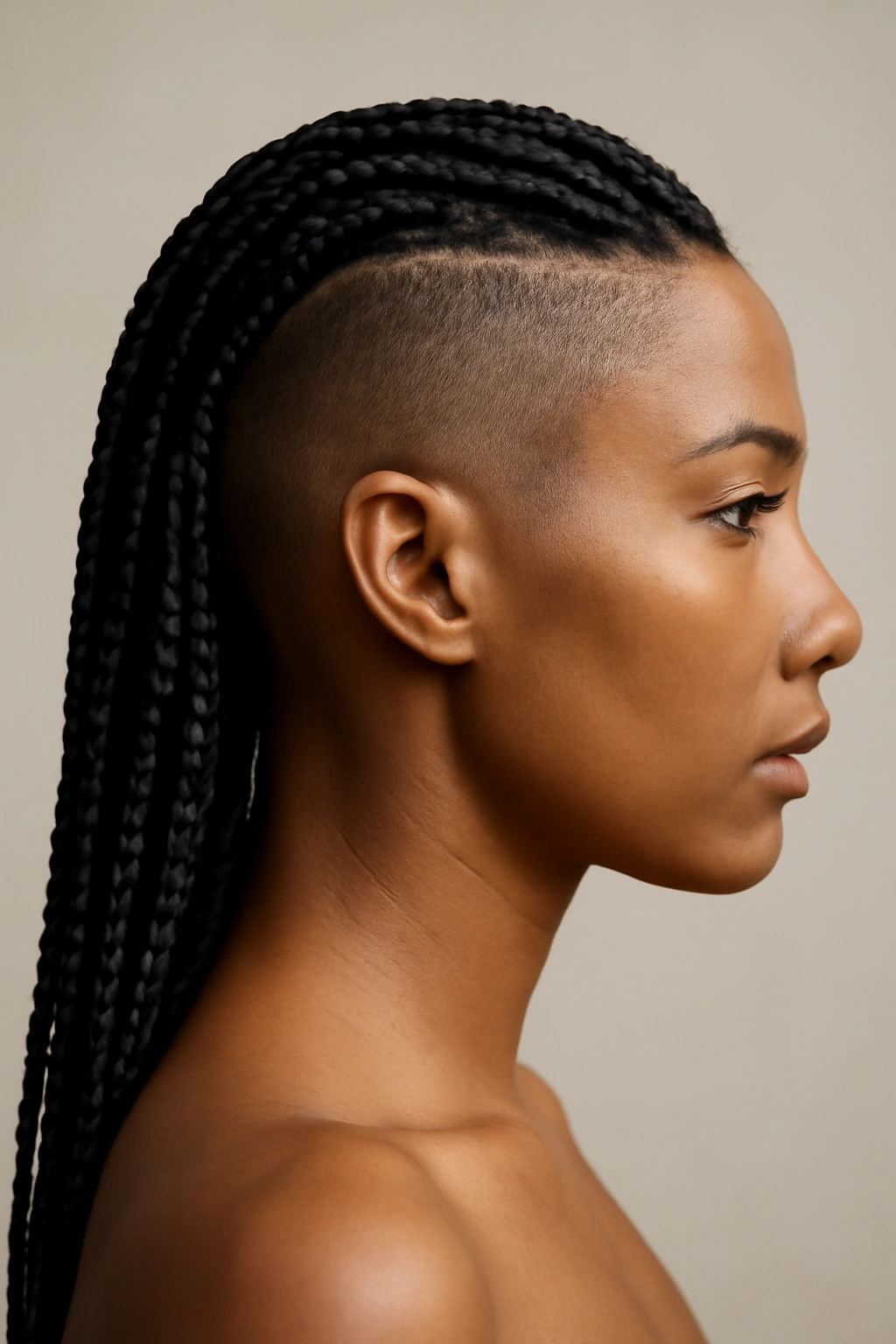
Knotless braids paired with an undercut or cleanly shaved sides create an edgy, high-fashion aesthetic that balances protective styling with boldness. The contrast between the braids on top and the exposed, shaved undercut creates dramatic visual interest and draws attention to the style as a complete artistic look. This approach requires someone with hair that allows for undercuts or someone willing to shave temporarily for the style.
The Contrast Effect of Shaved Sides
Shaved sides create a striking contrast that highlights both the braids themselves and the lines of your head and face. The exposed skin contrasts with the fullness of braided hair on top, creating an architectural, intentional appearance. This style photographs beautifully and signals confidence and fashion awareness. The undercut also means less bulk on the sides, which some people find more comfortable, especially in warm weather or while sleeping.
Undercut Styling Considerations
- Growth timeline: If you’re shaving temporarily, understand that the undercut will grow out and require either regular maintenance or braids styled to cover regrowth
- Hair health: Shaving doesn’t damage your actual hair—you’re only removing the top layer—so the hair underneath grows normally
- Styling options: Braids with undercut sides style beautifully into high buns, half-ups, and half-out styles; these arrangements showcase the contrast
- Headwear necessity: Some people feel self-conscious showing undercut sides in casual settings, so plan to wear hats or head wraps when not styling the braids decoratively
- Texture on sides: Some people opt to fade the undercut rather than shave completely bald, maintaining a textured look while still creating contrast
- Confidence factor: This style definitely reads as bold and fashion-forward—choose it because you love the aesthetic, not because you think you should
Insider note: Knotless braids with undercut sides photograph incredibly well and create strong, editorial fashion moments—this is a style choice that signals intentionality.
14. Knotless Braids with Wrap or Binding
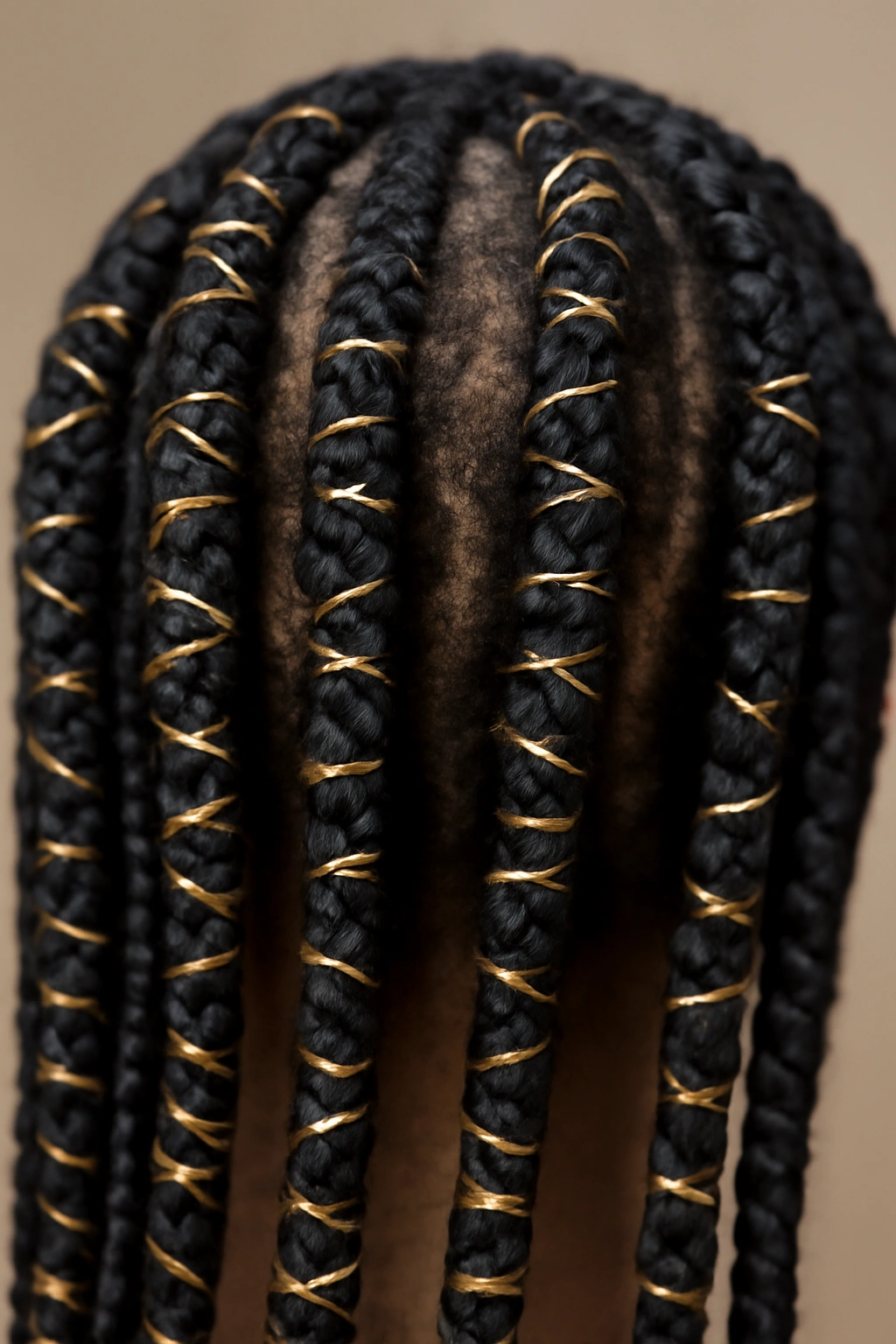
Some people enhance their knotless braids by wrapping sections with contrasting thread, yarn, leather strips, or fabric—creating visual striping and additional texture variation. The wrapping can cover the entire braid, wrap specific sections (like creating stripes), or highlight certain braids while leaving others unwrapped. Thread wrapping is applied after the braids are installed and can be removed and reapplied without affecting the braids themselves.
Customizing Through Strategic Wrapping
Wrapping transforms a simple protective style into a customized artistic expression. Gold thread wrapped around specific braids creates luxury and shine; colorful yarn creates playful visual interest; leather creates edgy sophistication. Wrapping gives you options to personalize your braids without the permanence of color or the weight of beads. You can also change your wrapping periodically, essentially updating your style without reinstalling the braids.
Wrapping Materials and Application
- Thread options: Gold, silver, copper, and jewel-toned threads are popular; fine twine, yarn, and even decorative tape work well
- Application method: Wrap is applied by spiraling it around the braid section and tying or knotting the ends; it can be added during installation or after
- Pattern choices: Wrapping every braid creates stripes; wrapping every other braid creates checkerboard; wrapping select braids creates accent patterns
- Removal and reapplication: Wrapping unties easily and can be reapplied with different colors or materials whenever you want to change the look
- Durability: Wrapping lasts as long as it’s tied tightly; it won’t damage the braids and can be removed without any effect on the braid integrity
- Layering wraps: Multiple wraps in different colors or materials can be combined on single braids for complex visual effects
- Scalp wrapping: Some people wrap the knotless roots with thread as well, adding visual interest where the braids begin
Quick fact: Wrapping with metallic or jewel-toned thread is one of the most affordable ways to completely customize the look of your existing knotless braids.
15. Medium-Length Knotless Braids for Everyday Wear
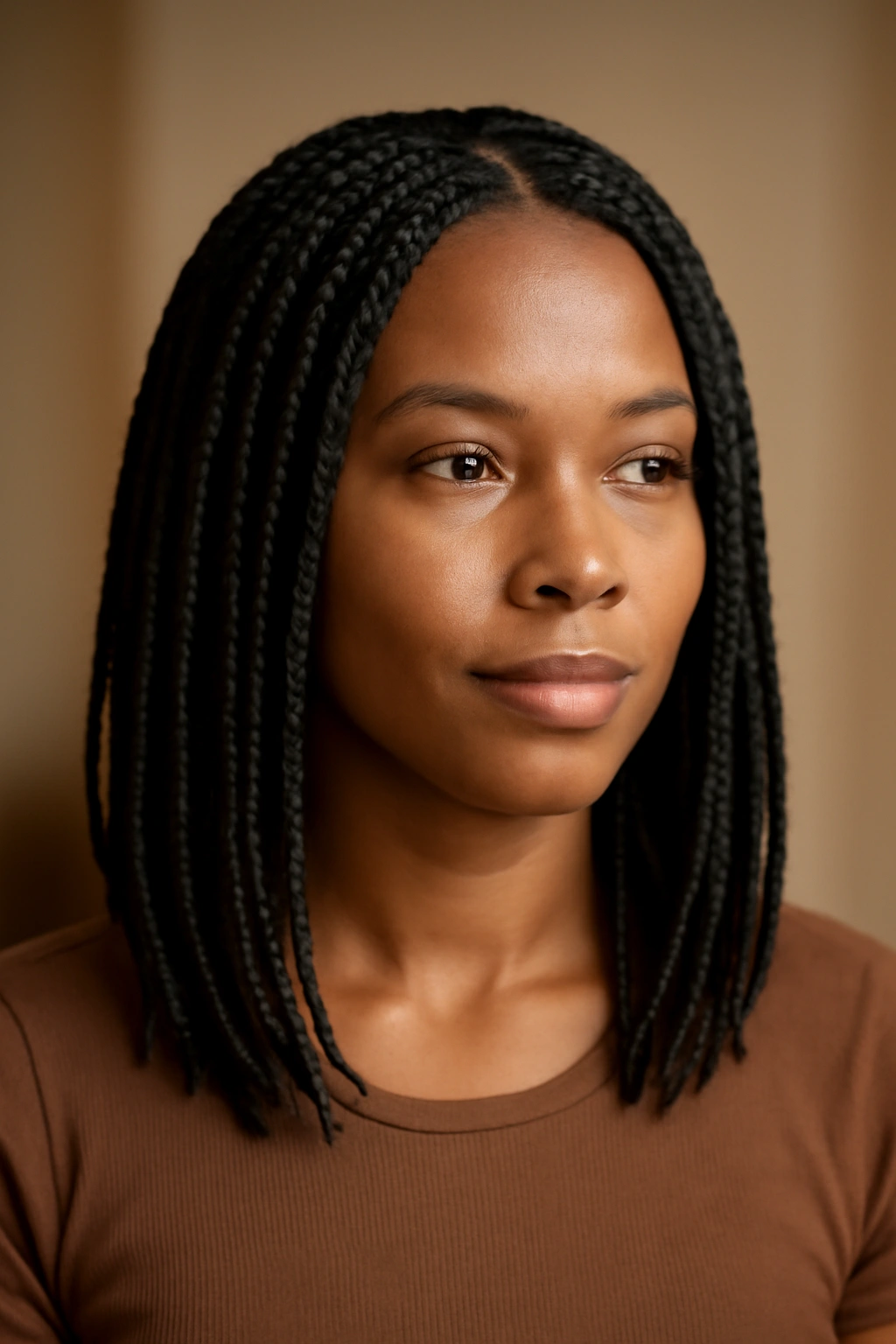
Medium-length knotless braids—typically ending between the shoulder and mid-back—offer the perfect balance between the protective benefits of braiding and the practicality of everyday wear. These braids are long enough to style creatively and feel complete, yet short enough to avoid excessive weight, movement friction, or styling complexity. Medium-length knotless braids work beautifully for people with active lifestyles, professional environments, or anyone who wants braids that feel versatile rather than committal.
Why Medium Length Is the Sweet Spot
Medium-length knotless braids hit an aesthetic and practical middle ground. They’re substantial enough to make a statement and offer real styling options, yet manageable enough for daily life. They don’t require excessive protective styling at night, they style quickly into half-ups or buns, and they feel intentional without being theatrical. This length works across all professions, activity levels, and occasions.
Practical Benefits of Mid-Length Braids
- Styling versatility: Medium braids style into countless configurations—high buns, low ponytails, half-ups with face-framing, wrapped crowns, and flowing styles
- Weight and comfort: Braids at this length balance presence with comfort; they’re not light-and-floaty or heavy-and-cumbersome
- Protective styling at night: Medium-length braids can be loosely gathered into a pineapple ponytail or wrapped in a bonnet without as much manipulation as longer braids require
- Installation time: Medium-length braids typically install in 6-8 hours, a reasonable time commitment that’s shorter than floor-length styles
- Synthetic hair requirements: Medium braids require 4-5 bundles of hair, making them cost-reasonable while still providing length
- Duration: These braids typically last 8-10 weeks, offering long-term protection and style stability
- Movement and activity: Medium-length braids work beautifully for people who exercise, work in professional settings, or want braids that won’t get in their way
Pro tip: If you’re unsure about your ideal braid length, medium is the most versatile starting point—you can always go longer next time if you want more length, or shorter if you prefer something more practical.
Final Thoughts
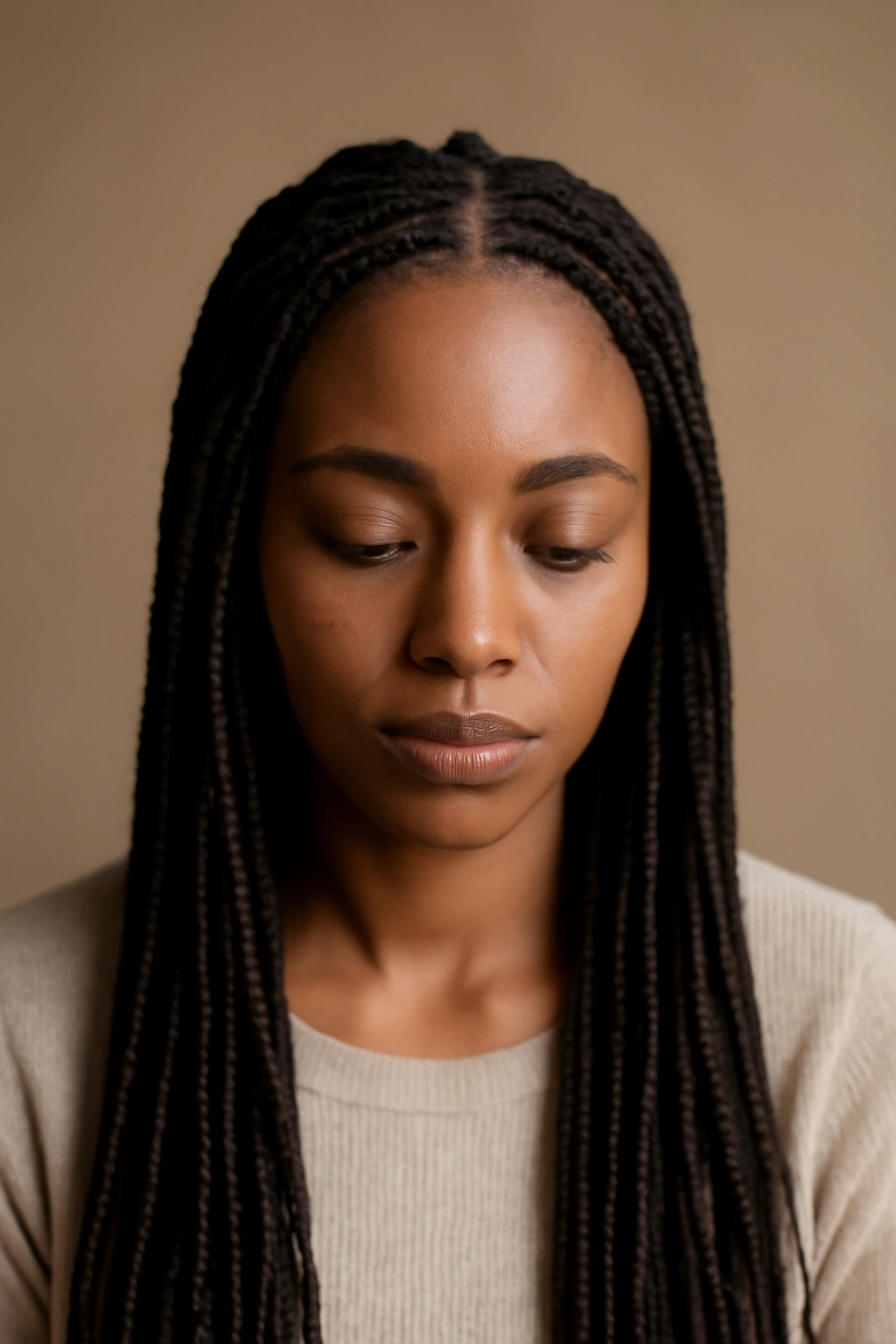
Knotless braids have revolutionized protective styling by offering genuine scalp health benefits without sacrificing aesthetics or versatility. Whether you’re drawn to the minimalist elegance of classic feed-in braids, the dramatic flair of long styles, the boho softness of textured variations, or the customized artistry of beaded and wrapped options, there’s a knotless braid style aligned with your aesthetic, lifestyle, and hair goals.
The most important factor in achieving beautiful, healthy knotless braids is finding a skilled, experienced braider who understands the specific feeding-in technique and values scalp health. Take time looking at portfolios, reading reviews, and asking questions about tension levels and scalp care. Quality installation makes an enormous difference in how long your braids last, how your natural hair thrives underneath, and how satisfied you feel with the final result.
Remember that protective styles are most protective when they’re installed with care, maintained with attention, and removed gently—not left in longer than recommended. Your natural hair is growing underneath your braids; that growth is the whole point. Treat your braids as the protective vessel they are, care for your scalp consistently, and you’ll emerge with healthier, stronger hair and the confidence that comes from intentional self-care.
