



Short hair doesn’t limit your braiding options — it actually opens doors to some of the most elegant, low-maintenance, and visually striking braid styles available. Whether your hair barely grazes your shoulders or you’re rocking a sharp pixie cut, there’s a braid technique that works with your length and lifestyle. The beauty of braiding short hair is that each style makes an immediate statement without requiring hours at the salon or extensive styling time each morning.
Braids on shorter hair create texture, dimension, and movement that longer lengths sometimes struggle to show off. A well-placed braid can redefine the shape of your face, add visual interest to an otherwise simple cut, and transform your whole aesthetic in minutes. From delicate lace braids that feel romantic and intentional to bold structured styles that command attention, short braids sit at the intersection of sophistication and practicality. They work equally well for everyday wear, special occasions, or those days when you need to pull your hair back but don’t want to look like you tried too hard.
The styles in this collection range from beginner-friendly techniques you can master with practice to advanced patterns that might warrant a professional visit. Many of these braids work best when your stylist understands the vision — bringing this guide to your appointment ensures you and your stylist speak the same language. Some styles work on all hair textures, while others shine brightest on specific hair types, which is why I’ve included texture notes with each style.
Let’s explore 25 short braid styles that deserve a permanent spot in your inspiration collection. Whether you’re looking for something to try this weekend or gathering ideas for your next salon visit, you’ll find plenty of options to experiment with and fall in love with.
1. Pixie Braid
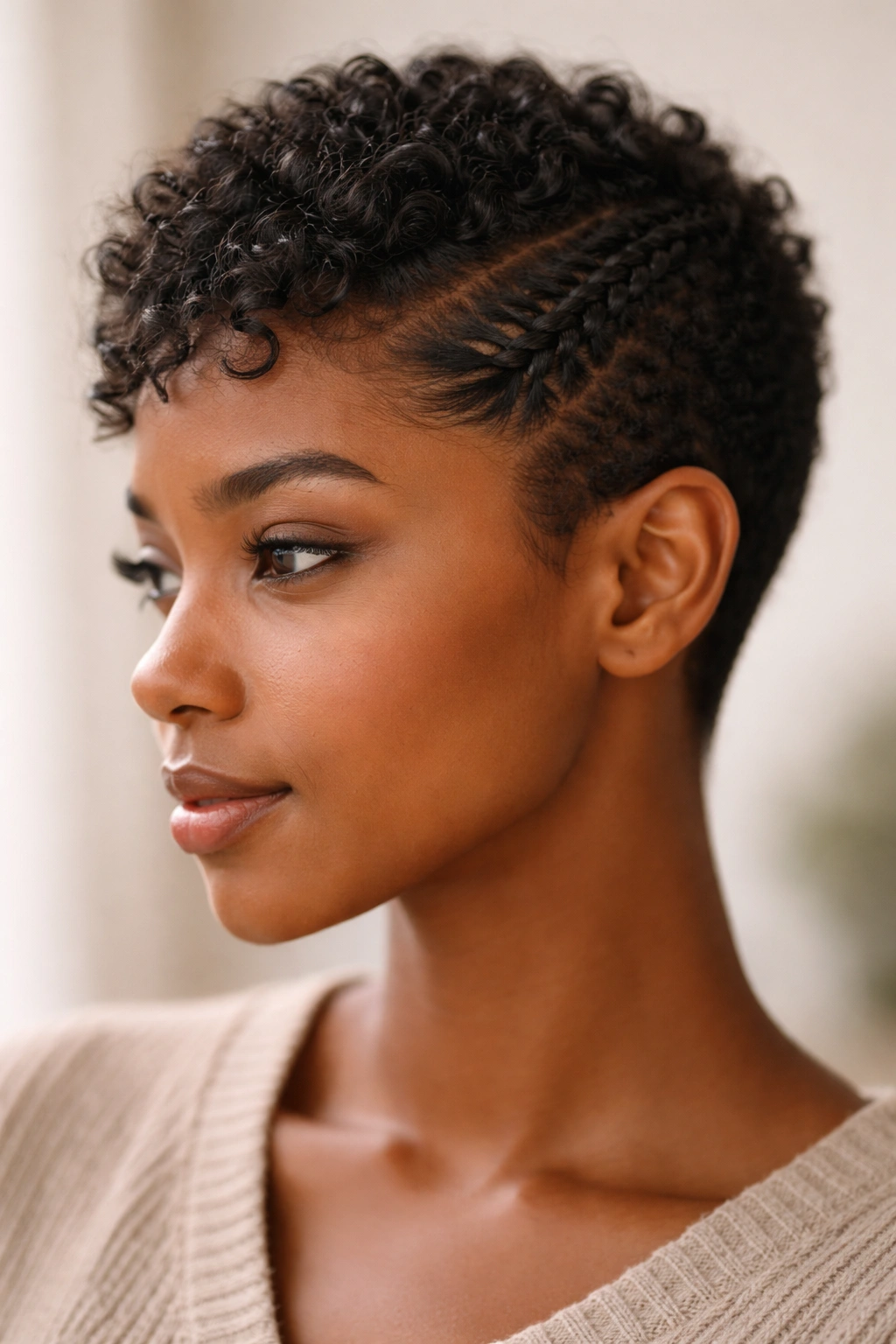
A pixie braid takes the simplicity of a standard three-strand braid and places it exactly where it needs to be on very short hair — usually starting near the temple or crown and weaving back toward the ear. This style works especially well on textured, curly, or coily hair where the braid naturally catches and defines the curl pattern. The braid’s placement becomes the focal point, so it carries real visual weight even on the shortest cuts.
Why This Style Works on Short Hair
The pixie braid respects the sculptural nature of pixie cuts while adding movement and intentional detail. Rather than fighting your short length, it enhances the clean lines of the cut itself. You get the decorative element of a braid without needing length to work with. This style looks effortlessly cool and artistic — like you grabbed just one section and wove it for no reason other than it looked good, even though it actually took intention and technique.
Best Practices and Application Tips
- Start the braid as close to your scalp as possible, using small, even sections so the pattern stays visible and precise
- Keep tension even throughout — tight enough that it holds without slipping, loose enough that you’re not pulling your hairline
- This braid pairs beautifully with texturizing products like sea salt spray or mousse, which help individual strands catch the light
- Works on all hair types, but shows the most definition on wavy, curly, or coily textures
- Secure with a small, color-matched elastic and tuck the elastic end behind the braid so it’s nearly invisible
- Pro tip: Roughing up the braid slightly by gently pulling sections outward after you’ve braided creates a softer, more lived-in aesthetic
2. Dutch Braid
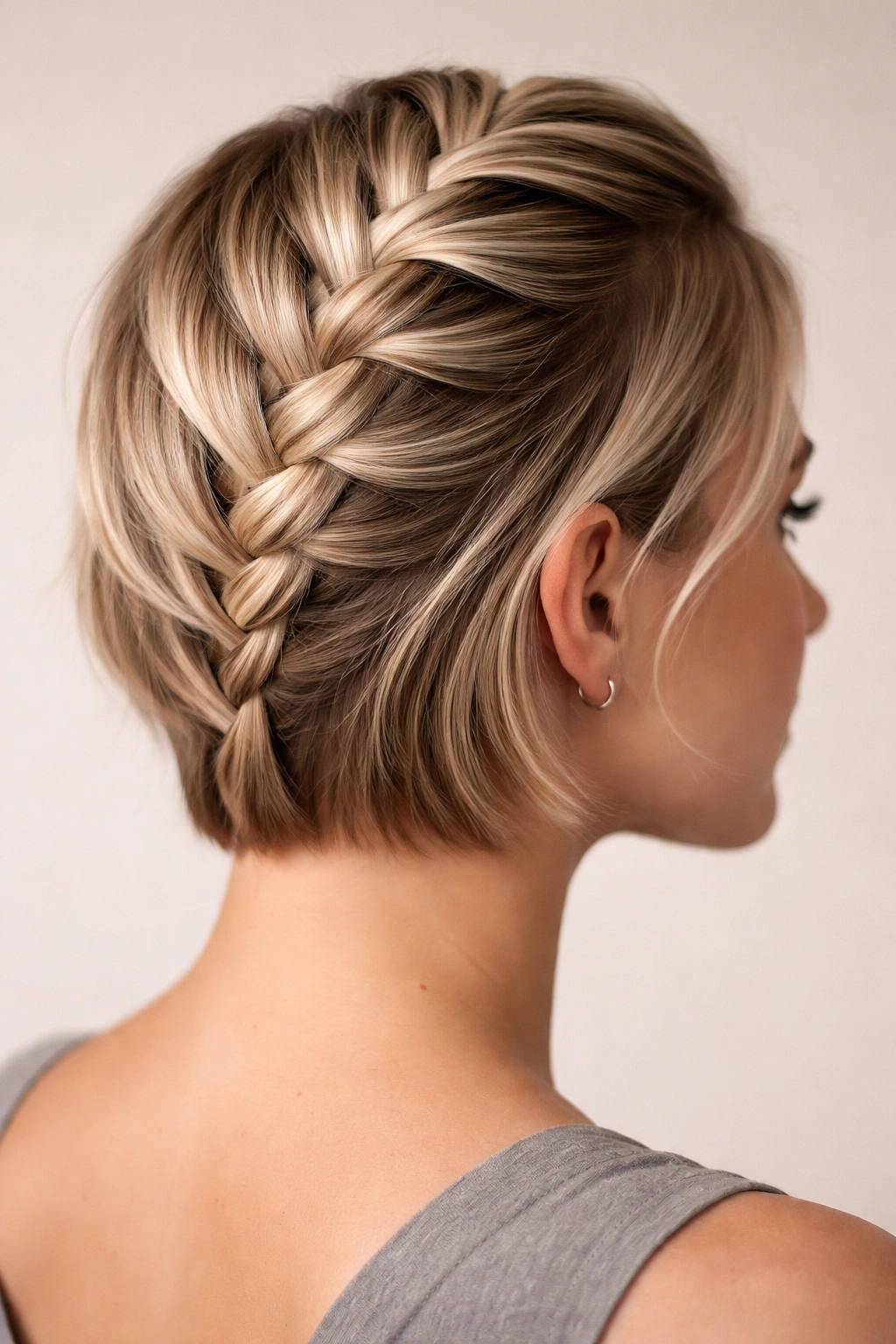
A Dutch braid is an inverted French braid where you cross sections under rather than over, creating a raised, dimensional line that sits prominently on your scalp. It’s bolder and more graphic than a regular three-strand braid, with real sculptural presence. On short hair, a single Dutch braid running from your forehead back becomes an architectural statement.
The Visual Impact of Dutch Braids
Dutch braids photograph beautifully and look intentional from every angle — the raised pattern is visible from the back, which matters if you’re wearing your hair down. The braid catches light differently than flat sections, creating shadow and depth that flatters the head shape. On very short hair, the Dutch braid becomes almost jewelry-like — a decorative element that transforms a simple cut into something special.
Styling Guidance for Short Hair
- Begin at your hairline and braid continuously toward the nape of your neck, adding hair gradually as you go
- The braid works best when you divide it into three even sections and keep your tension consistent
- Textured hair grips better, but Dutch braids also work beautifully on straight hair with the right styling products
- Finish with hairspray to set and prevent the braid from loosening throughout the day
- Double Dutch braids (one on each side) create maximum visual impact on very short cuts
- Start with slightly damp hair if your strands slip easily — damp hair grips better and lets you achieve tighter, more defined patterns
- The braid needs at least 2-3 inches of length, so this works best on short cuts that aren’t ultra-pixie length
3. French Braid
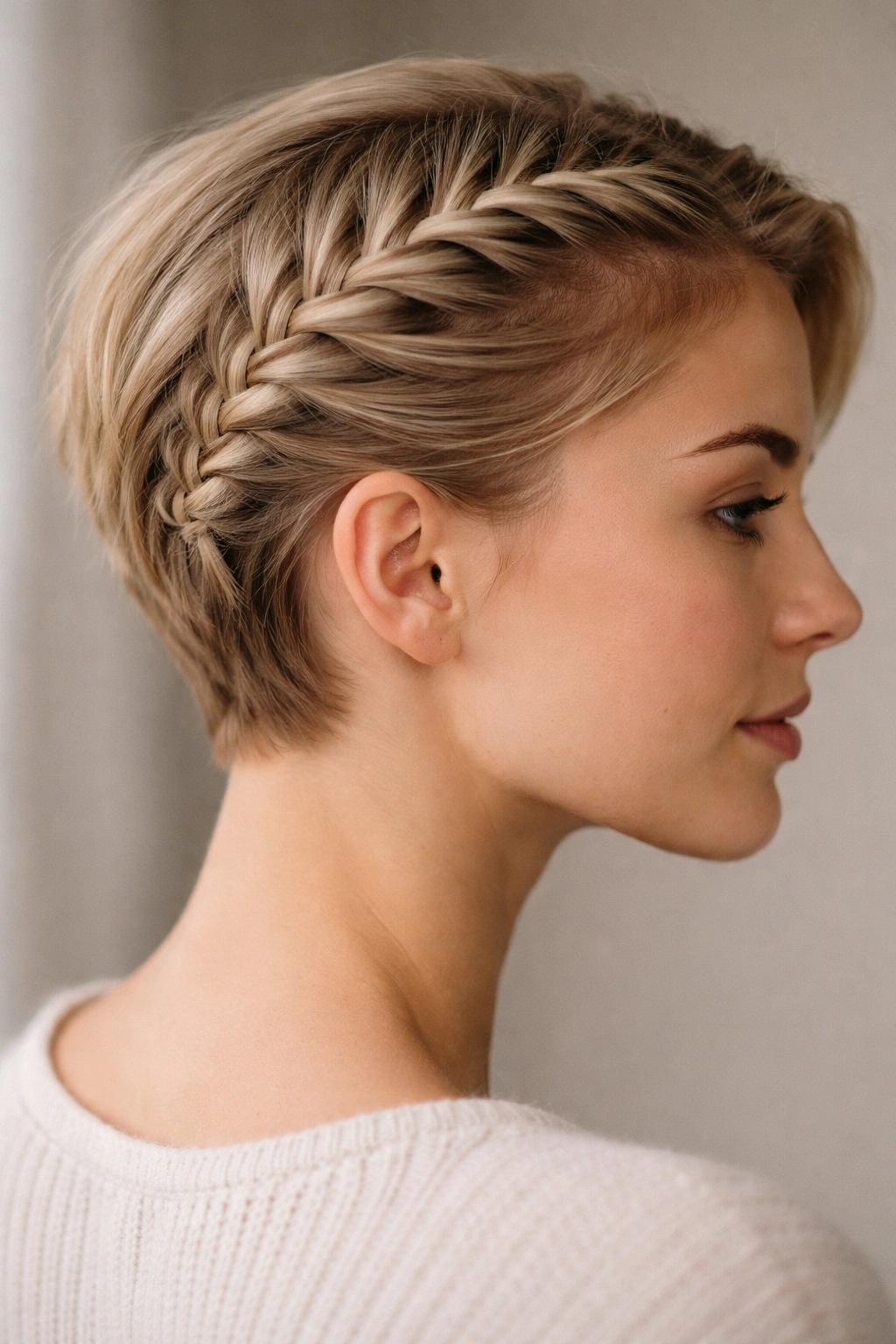
The French braid is the classic three-strand technique where you cross sections over each other while gradually incorporating hair from the top of your head as you work downward. It sits flatter against the scalp than a Dutch braid and feels more delicate, though no less elegant. On short hair, a French braid running down one side or toward the back creates a neat, controlled look that reads as put-together without looking overdone.
Why Short Hair Deserves French Braids
French braids have been the gold standard for good reason — the pattern stays secure even with minimal length, and the technique translates beautifully to shorter hair. A French braid on short hair looks less “bridal hairstyle” and more “I know a technique” which feels fresh and modern. The braid works especially well when your hair just barely grazes your shoulders or is shorter, because it creates visual structure without overwhelming your features.
Technique Tips for Success
- Start at the crown or just above your forehead, depending on the look you want
- Work with three even sections and maintain consistent tension so the braid feels smooth
- Add small, equal amounts of hair with each section as you progress down your head
- This braid works beautifully on straight, wavy, and curly hair types
- Soften the braid after you’ve finished by gently pulling sections outward — this creates a romantic, slightly undone feel
- Secure the end with a small elastic and hide it by tucking it under a section of hair or pinning it invisibly
- If your short hair is slippery, apply a light texturizing spray or mousse before braiding to improve grip
4. Micro Braid
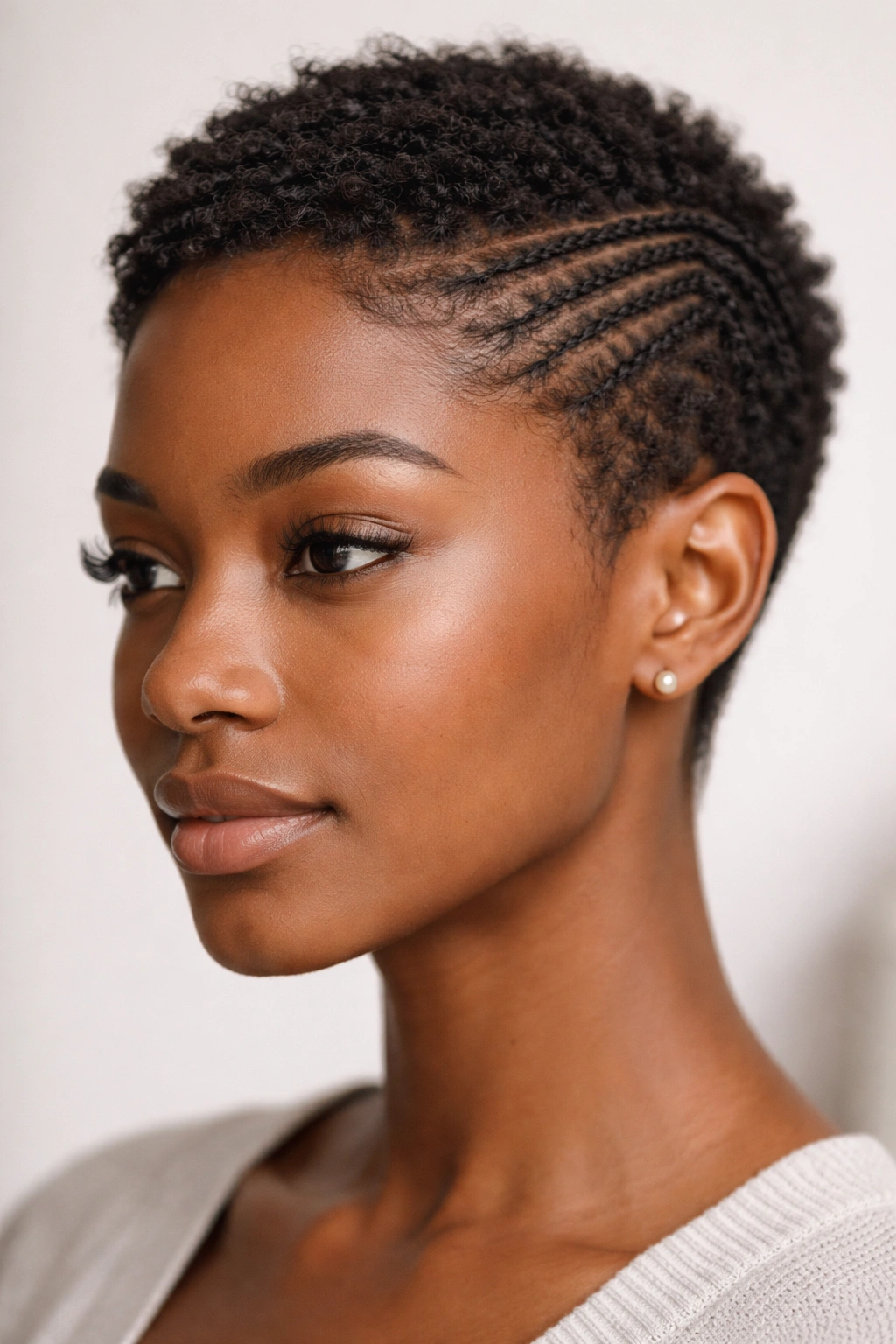
Micro braids are thin, delicate braids that use minimal hair per section — sometimes just pencil-thin strands. Multiple micro braids woven throughout create intricate patterns and visual texture without bulk. On short hair, even just two or three micro braids scattered strategically add sophistication and detail that makes your entire look feel intentional.
The Appeal of Micro Braids on Short Lengths
Micro braids feel like jewelry for your hair — they’re decorative and artistic without requiring a ton of length. They work especially beautifully on textured hair, where each thin braid naturally shows off curl or wave pattern. Even one delicate micro braid running along your hairline or temples adds visual interest that commands attention. The thinness means they blend seamlessly with your regular hair texture while still being distinctly there.
Getting Micro Braids Right
- Use thin sections — about the thickness of a pencil or smaller — to create the delicate effect
- These braids work best when you use styling products that help hair grip and hold
- On curly or coily hair, micro braids look especially beautiful because the texture enhances the pattern
- You can create micro braids throughout your hair or place them strategically — a few along your part, scattered at your temples, or clustered on one side
- Secure each braid with a tiny elastic or leave it loose if your hair is textured enough to hold the pattern
- This is where a professional stylist can create patterns and placements that feel custom to your features and face shape
- Micro braids keep best if you avoid manipulating them too much and sleep on them gently
5. Faux Hawk Braid
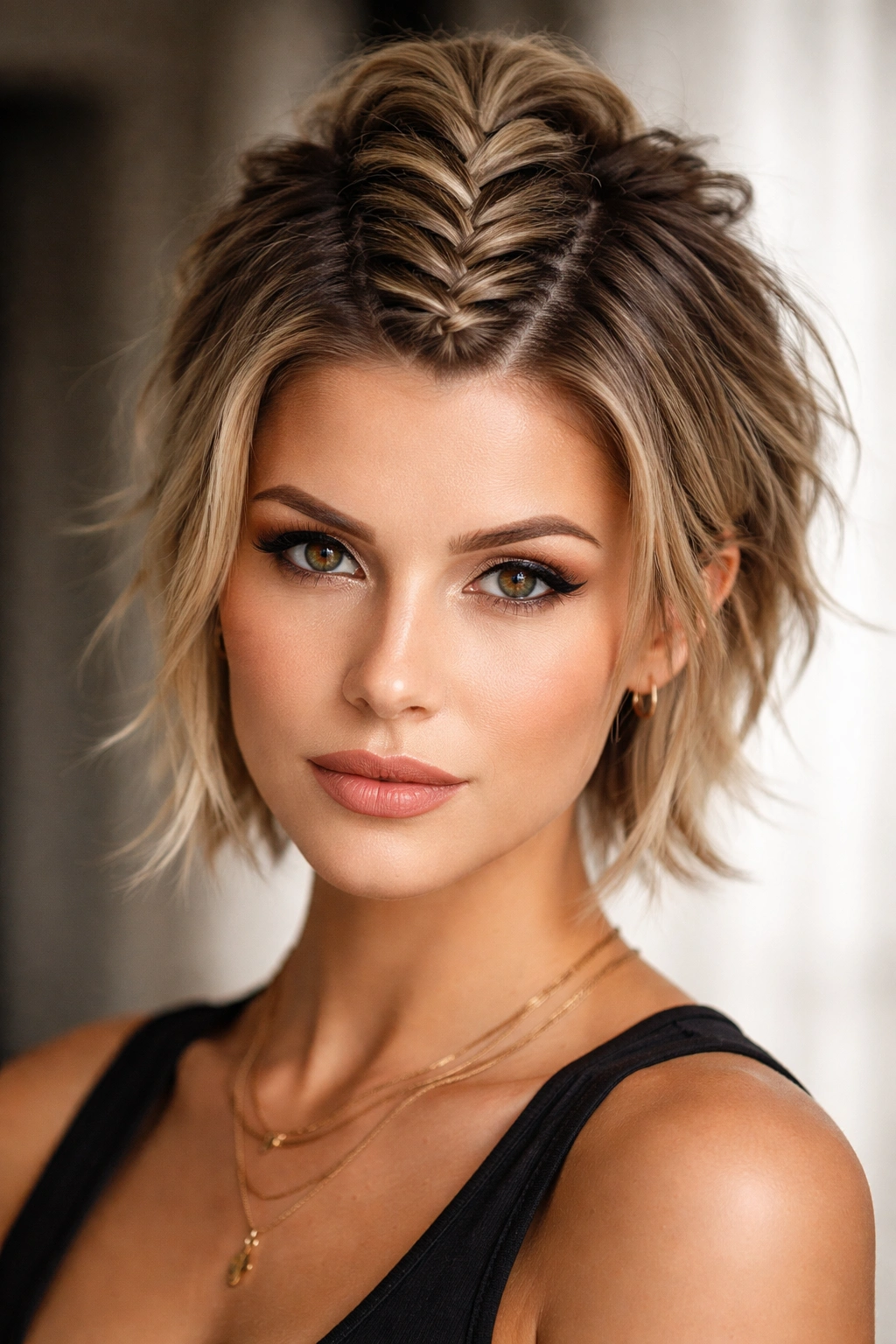
A faux hawk braid runs down the center of your head from forehead to nape, creating the appearance of a mohawk without shaving the sides. You can braid the center section (French or Dutch) while leaving the sides down and loose, or braid tightly for a more dramatic effect. This style is punk-rock meets polished, and it looks electric on short, textured hair especially.
The Attitude and Edge of This Style
The faux hawk braid says you’re not afraid to take up space and make a statement. It’s playful, it’s confident, and it works beautifully on anyone brave enough to try it. The raised center braid gives you height and draws the eye upward, which flatters most face shapes. On textured hair, it’s absolutely stunning — the natural curl or wave plays beautifully against the structured braid.
Building Your Best Faux Hawk Braid
- Decide whether you want your sides completely loose or pulled back slightly — both approaches work
- Braid the center section starting at your hairline, using a French or Dutch technique
- Keep the braid fairly tight so it stands out visually from the rest of your hair
- Textured hair naturally holds this style better, but you can create it on straight hair with styling product and pins if needed
- Add height by teasing at the crown before you braid, which makes the faux hawk even more dramatic
- This works best on cuts where the sides are shorter than the center, creating natural dimension
- Finish with firm-hold hairspray to keep everything in place throughout the day
- The faux hawk pairs beautifully with edgy makeup, leather jackets, and an attitude
6. Side-Swept Braid
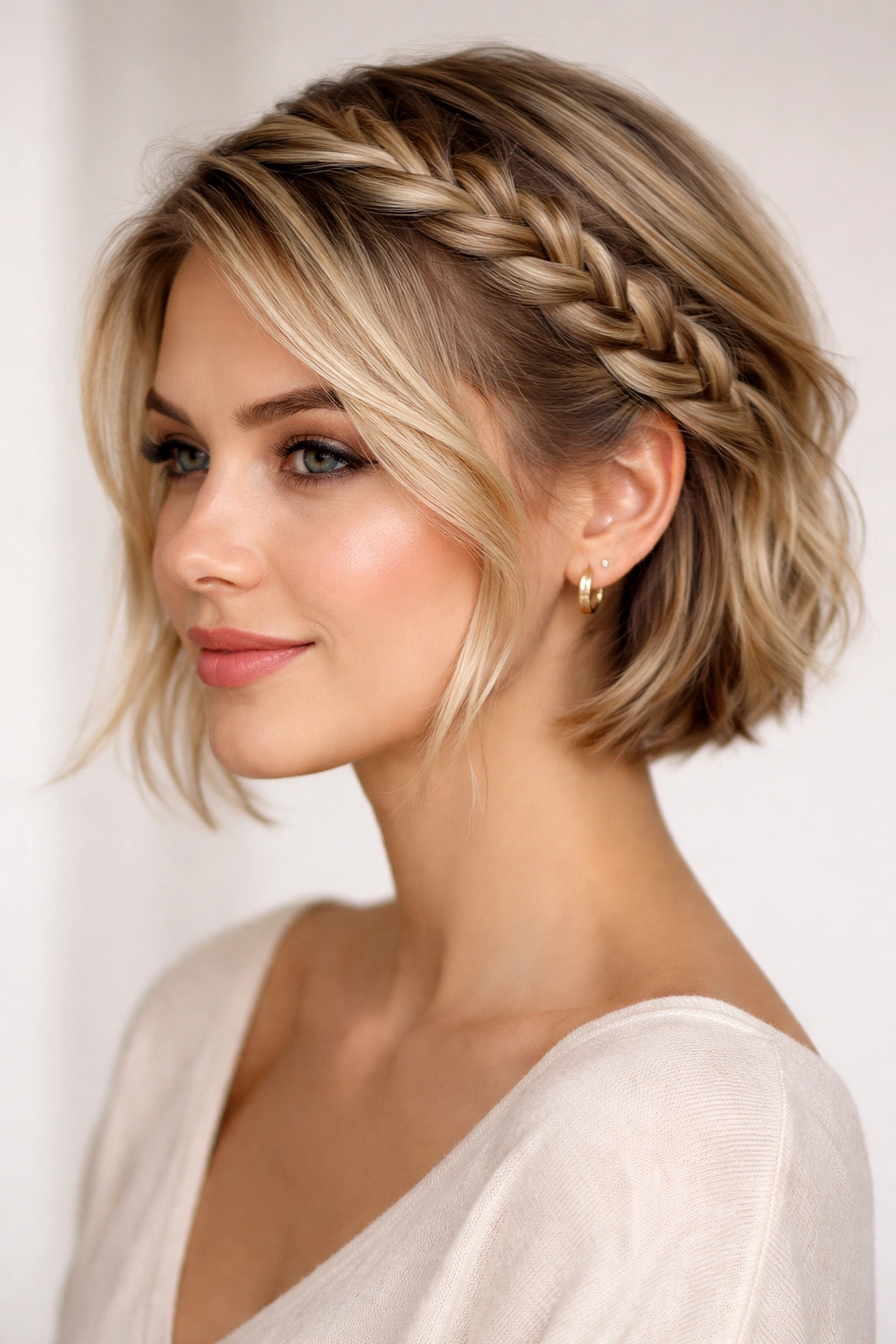
A side-swept braid begins on one side of your head and wraps around toward the opposite ear, creating an asymmetrical, romantic look. You can use a French braid, Dutch braid, or simple three-strand technique depending on your preference and length. The side-sweep placement makes even a very short braid look substantial and intentional.
Why Side-Sweeping Matters
The side-sweep placement creates balance on asymmetrical cuts and adds dimension to even the simplest short styles. It’s flattering because it softens one side of your face while the loose hair on the other side creates movement. A side-swept braid feels effortless but is actually quite polished — it’s the kind of look that works equally well for everyday wear and special occasions.
Executing the Side-Sweep
- Begin the braid on one side of your head, starting near your temple or ear
- Braid diagonally across the back of your head, moving toward the opposite side
- You can continue braiding all the way to the opposite ear, or stop at the nape and secure there
- Use a French or Dutch braid for maximum visual impact, or keep it simple with a regular three-strand braid if you prefer delicate elegance
- Secure the end with a small elastic or bobby pin hidden among your regular hair
- Soften the braid by pulling sections gently outward for a more romantic feel
- This style works beautifully on all hair types and suits anyone with a face shape you want to flatter
- The side-sweep creates the illusion of length, which is helpful on very short cuts
7. Halo Braid (Short Version)
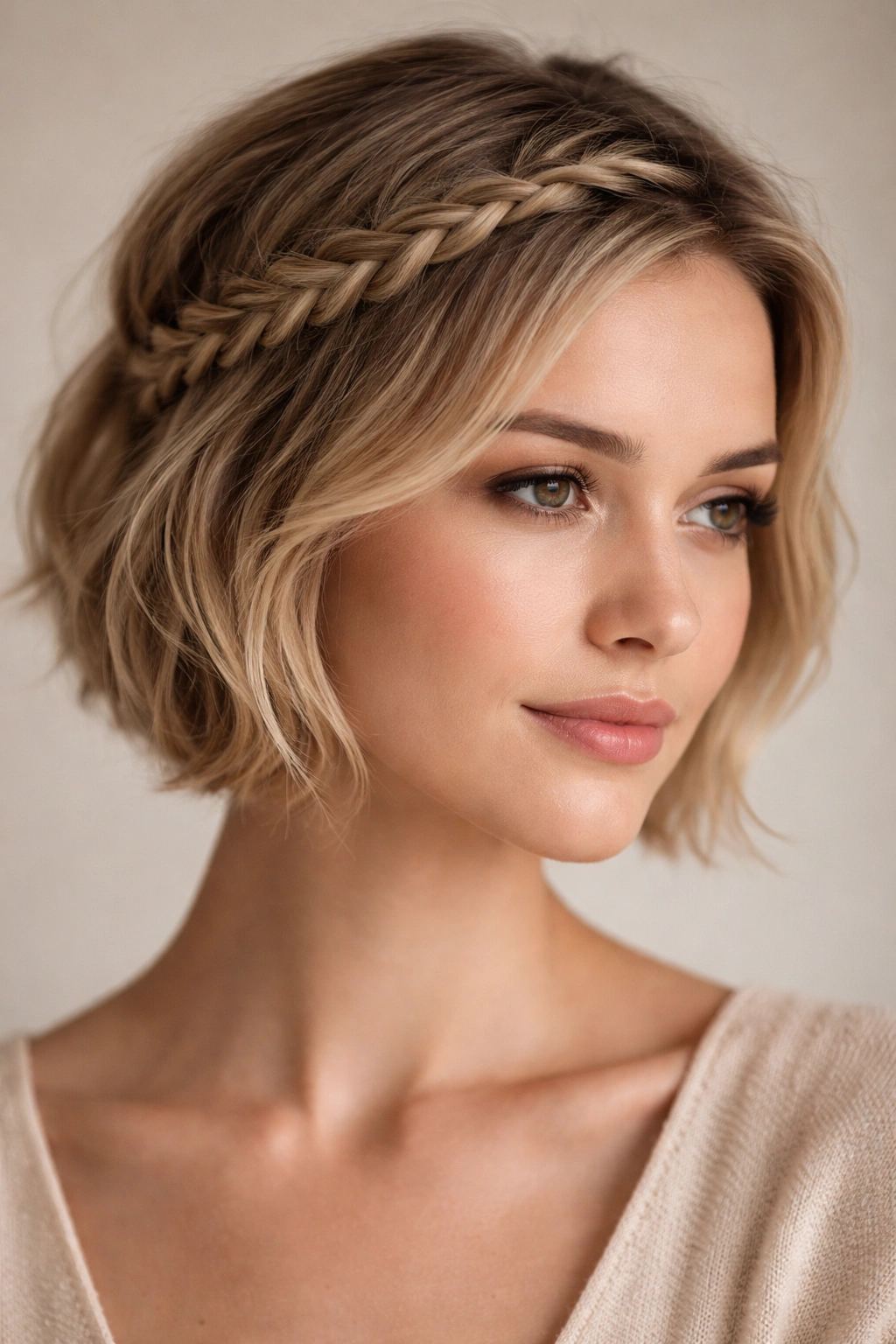
A halo braid wraps around the crown of your head in a circle, like a crown or halo. On short hair, you create a partial halo that follows your hairline rather than requiring hair long enough to wrap completely around. The braid sits delicately at the edges of your face, creating a soft, romantic frame.
The Romance of Halo Braids
Halo braids feel inherently graceful and special — they suit anyone who wants their braid to be a gorgeous frame rather than a structural statement. The way a halo braid follows your hairline and cups your face is incredibly flattering. Even on very short hair, this technique works because the braid runs along the outer perimeter of your hair rather than requiring length.
Creating a Short Halo Braid
- Start the braid at one temple, using a French or Dutch braid technique
- Work the braid around your head, following your hairline as you go
- Incorporate hair gradually as you move around your head, adding small sections with each strand
- End the braid near your opposite temple, and secure it with bobby pins hidden among your hair
- You don’t need to complete a full circle — even a partial halo from ear to ear across the back looks beautiful
- This works best on medium-textured hair or hair with some wave, which grips better
- Gentle hairspray helps keep the braid in place without making it look stiff
- Add small flowers or delicate pins along the braid for an extra special occasion look
8. Twisted Braids
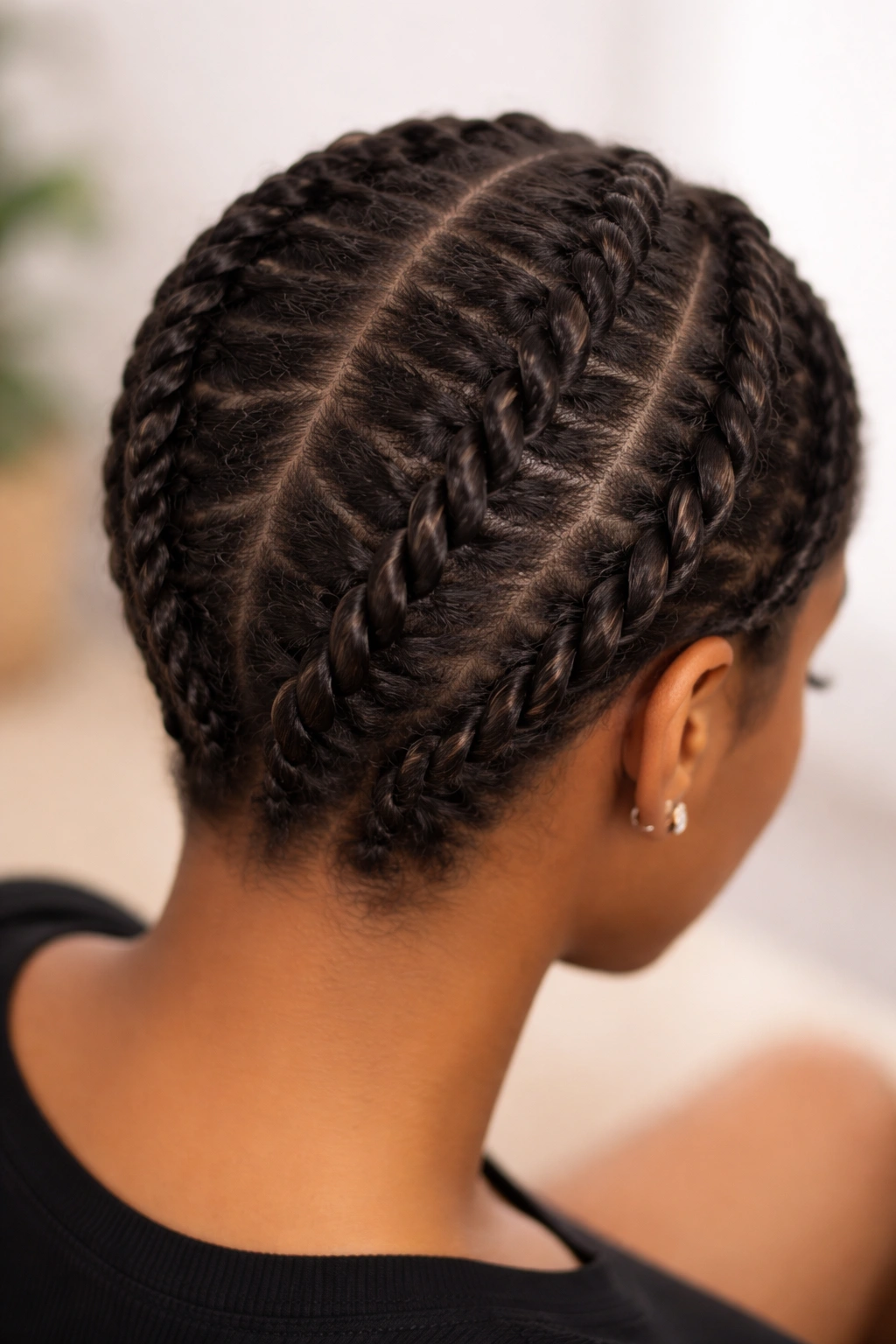
Twisted braids use two sections of hair instead of three, creating a rope-like appearance. You divide your hair into two sections and twist each section around itself and around the other, building a pattern that looks more fluid and organic than traditional three-strand braids. On short hair, twisted braids feel more artistic and less formal.
The Organic Beauty of Twists
Twisted braids feel more casual and modern than traditional braids, and they work beautifully on textured hair where the twist naturally showcases wave or curl. Even on straight hair, a twisted braid reads as intentional but effortless. The pattern is simpler to execute than intricate three-strand work, making this an excellent choice for DIY styling.
Technique for Short Twisted Braids
- Divide your hair into two equal sections at your starting point
- Twist each section toward the center, rotating in the same direction
- Cross the twisted sections over and under each other, creating the interlocking pattern
- Continue adding small amounts of hair as you progress, just like you would with a French braid
- This technique works on all hair types and lengths, but shows especially beautifully on textured hair
- Twisted braids hold better if you braid slightly damp hair or use a light styling product
- You can create a single twisted braid down the side or center, or create two twisted braids symmetrically
- The finished braid softens beautifully when you gently pull the sections outward
- Secure with bobby pins or a small elastic depending on where your braid ends
9. Crown Braid
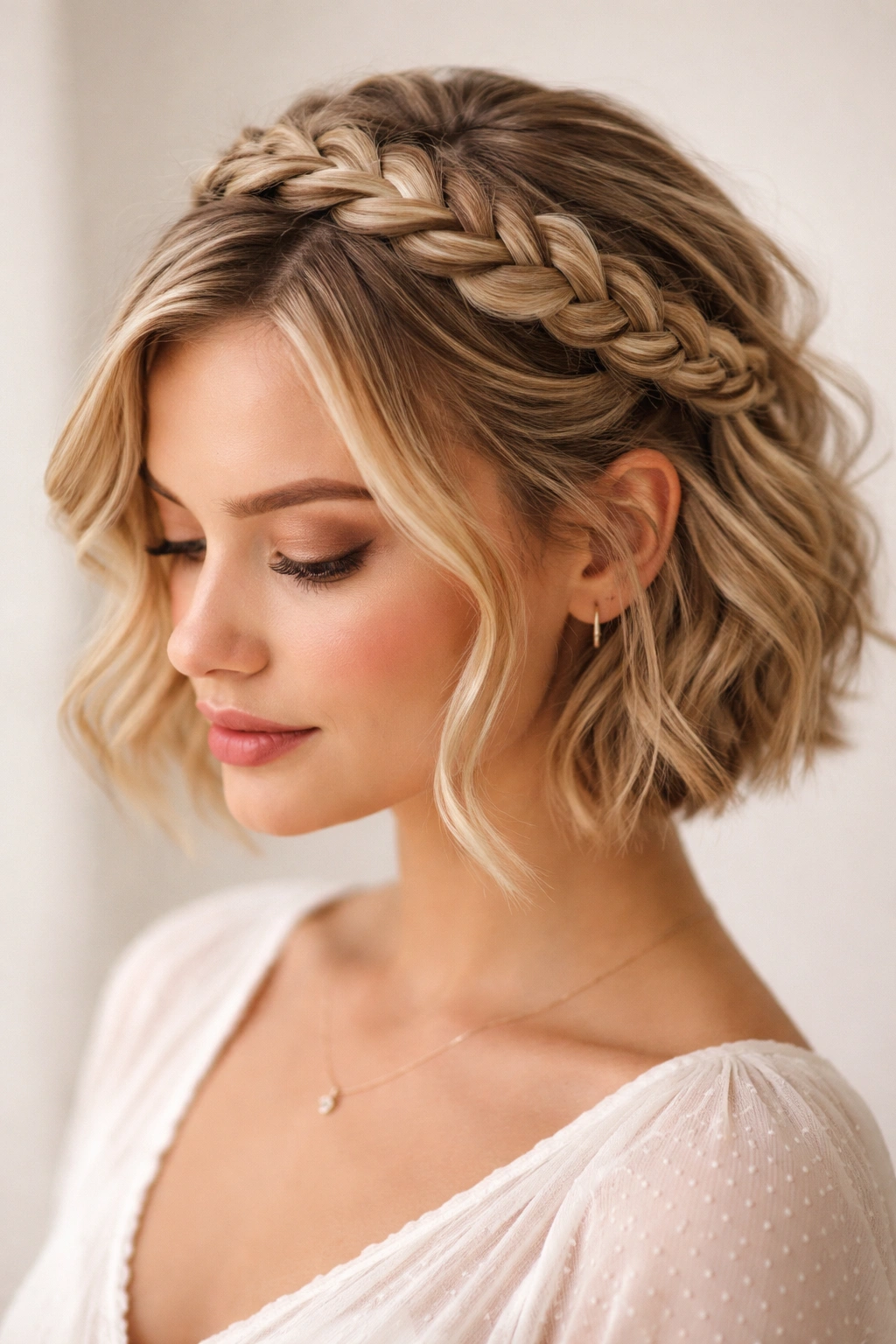
A crown braid encircles the top of your head like a tiara or coronet, creating an absolutely regal look. This style involves braiding a path around the crown area (not necessarily your entire head) and securing it with pins. On short hair, the crown braid sits delicately along the top, framing your face beautifully.
Regal Elegance on Short Hair
Crown braids are inherently special-occasion worthy, but they work beautifully for everyday wear too when done in a relaxed, slightly undone style. The placement at the crown is flattering for almost every face shape because it adds height and draws the eye upward. On short hair, a crown braid creates the impression of a more elaborate updo without requiring the length.
Building Your Crown Braid
- Start the braid on one side of your head, near your temple
- Use a French or Dutch braid technique, working horizontally around the crown of your head
- Incorporate hair gradually as you move around, adding small sections
- You don’t have to complete a full circle — even a partial crown braid from one temple to the opposite temple looks stunning
- The braid should sit toward the back crown area, leaving your face relatively framed
- Secure the braid with bobby pins hidden among the hair or tuck the end underneath another section
- Gently pull the braid outward for a softer, more romantic appearance
- This style pairs beautifully with a dress, a special event, or simply when you want to feel fancy
10. Lace Braid
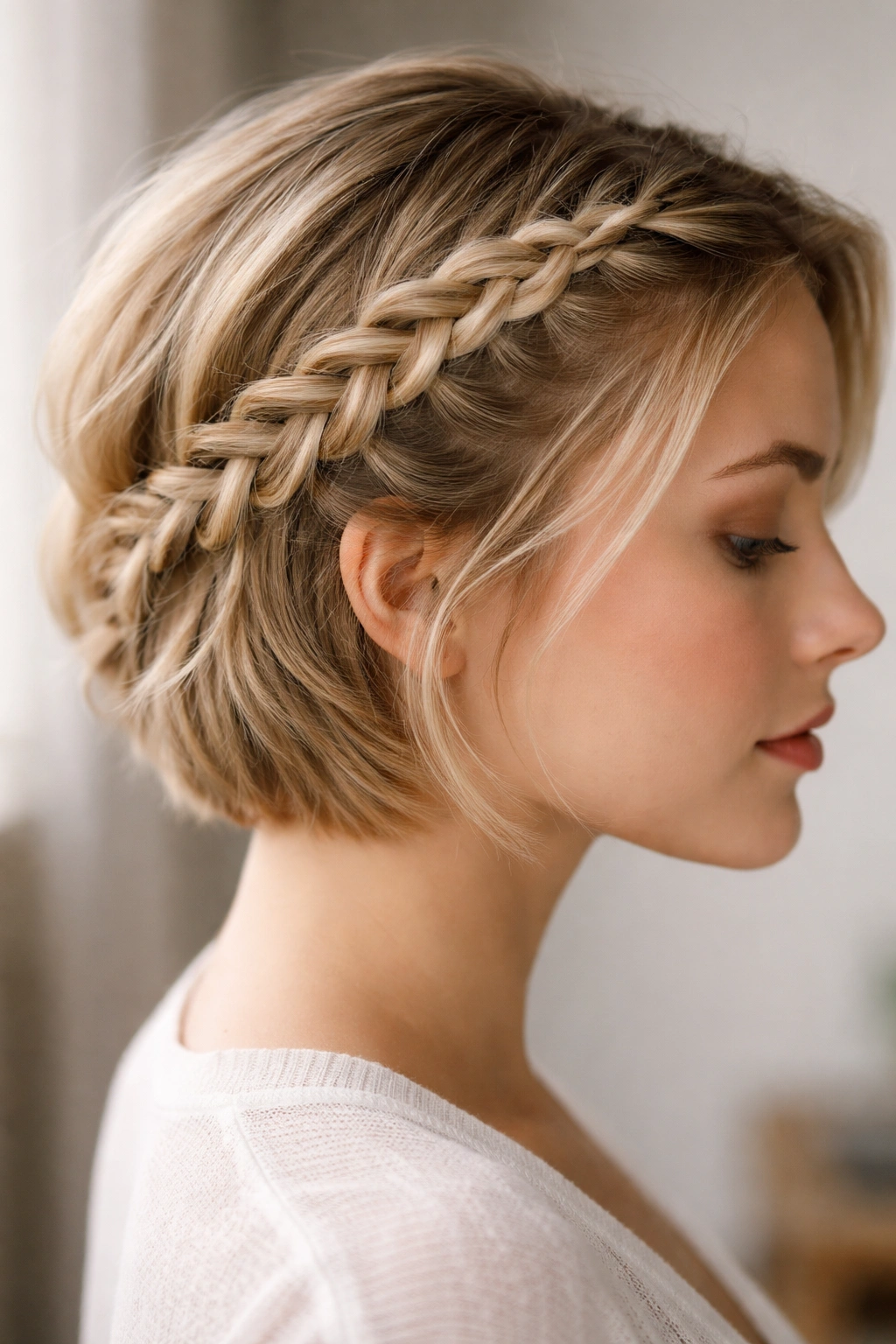
A lace braid is a French braid where you only add hair from one side as you braid, creating an open, delicate pattern that looks like lace along the outer edge of your braid. The result is ethereal, romantic, and more intricate-looking than the effort required actually is. On short hair, lace braids create incredible visual interest.
The Delicate Sophistication of Lace Braids
Lace braids feel feminine and thoughtful without being overtly romantic. The lace pattern creates texture and visual depth that makes even a simple short style feel special. They’re ideal for anyone who wants a braid that feels refined and artistic rather than sporty or casual.
Creating a Lace Braid on Short Hair
- Start at your hairline and begin a French braid, but only incorporate hair from one side as you progress
- This means you cross sections over your central section but only add new hair from the outer side
- The inner edge of your braid stays closed while the outer edge has that open, lace-like appearance
- Continue down the side or back of your head, depending on your hair length and desired style
- This technique works best on medium-length short hair — at least a few inches to work with
- Secure the braid end with a small elastic
- The lace pattern shows up most beautifully when your hair has some texture or wave
- You can create lace braids on both sides symmetrically for maximum impact
- This is a more advanced technique, so don’t hesitate to ask your stylist for guidance the first time
11. Boxer Braids
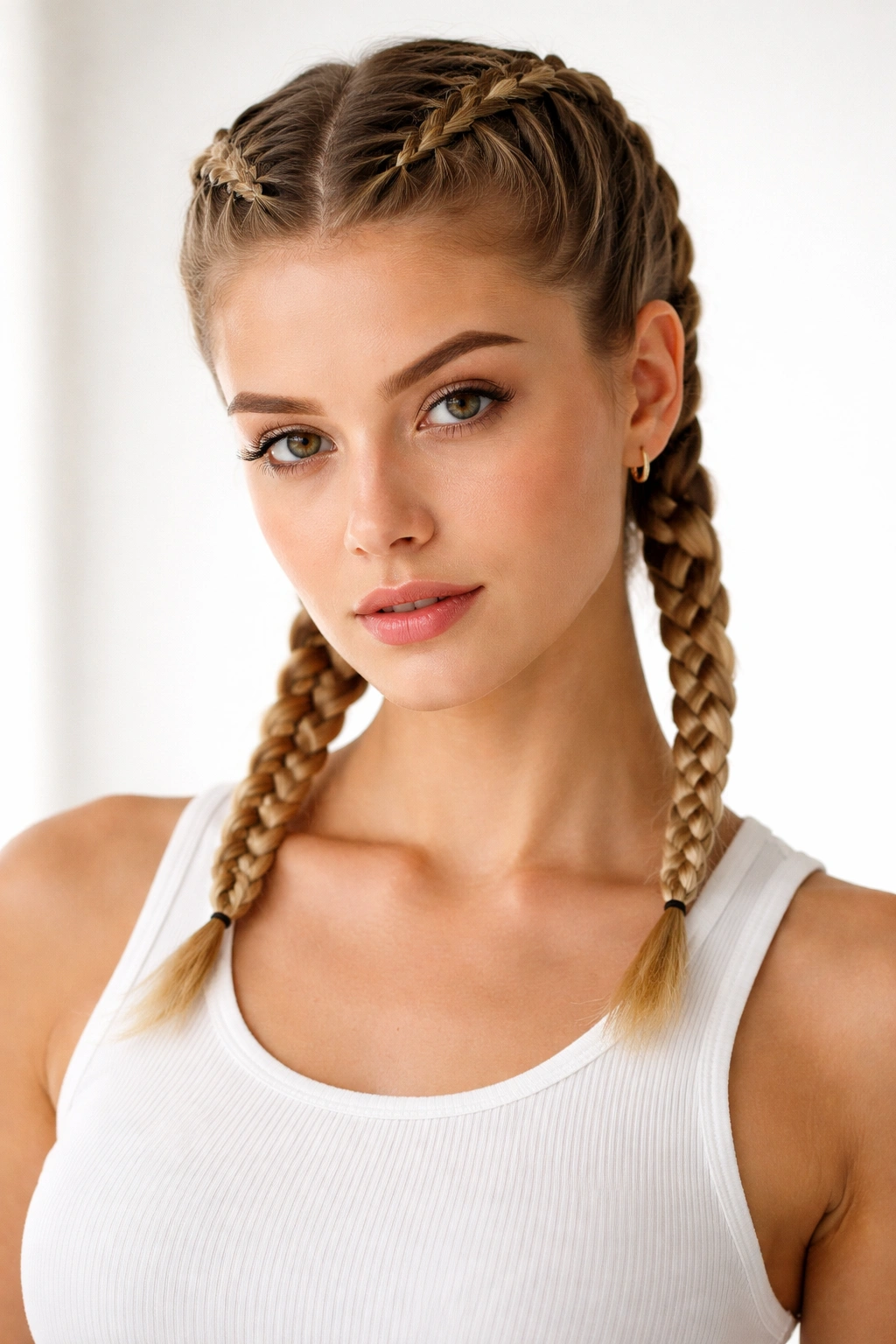
Boxer braids are two Dutch braids running down the center of your head, symmetrically from forehead to nape. This style is sporty, confident, and incredibly functional for keeping hair out of your face. On short hair, boxer braids look edgy and modern while still being practical for workouts or active days.
The Practical Edge of Boxer Braids
Boxer braids keep your hair completely secured and away from your face, making them perfect for exercise, sports, or just days when you want zero distractions from your hair. They look intentionally athletic and confident. The symmetry is visually striking, and the double Dutch braid structure creates serious visual impact.
Executing Perfect Boxer Braids
- Divide your hair down the middle from your forehead to your nape with a fine-tooth comb
- Create a Dutch braid on one side, starting at your hairline and braiding straight back
- Repeat on the other side, creating a mirror image
- Keep both braids equally tight so they look intentional and balanced
- These work beautifully on all hair types, but especially on textured hair where they hold strongly
- Secure each braid end with a small elastic
- Use firm-hold hairspray to prevent flyaways and keep everything sleek
- You can soften the braids slightly by pulling sections outward if you prefer a less sporty look
- This is an excellent choice for workouts, active days, or when you want to make a bold style statement
12. Fishtail Braid
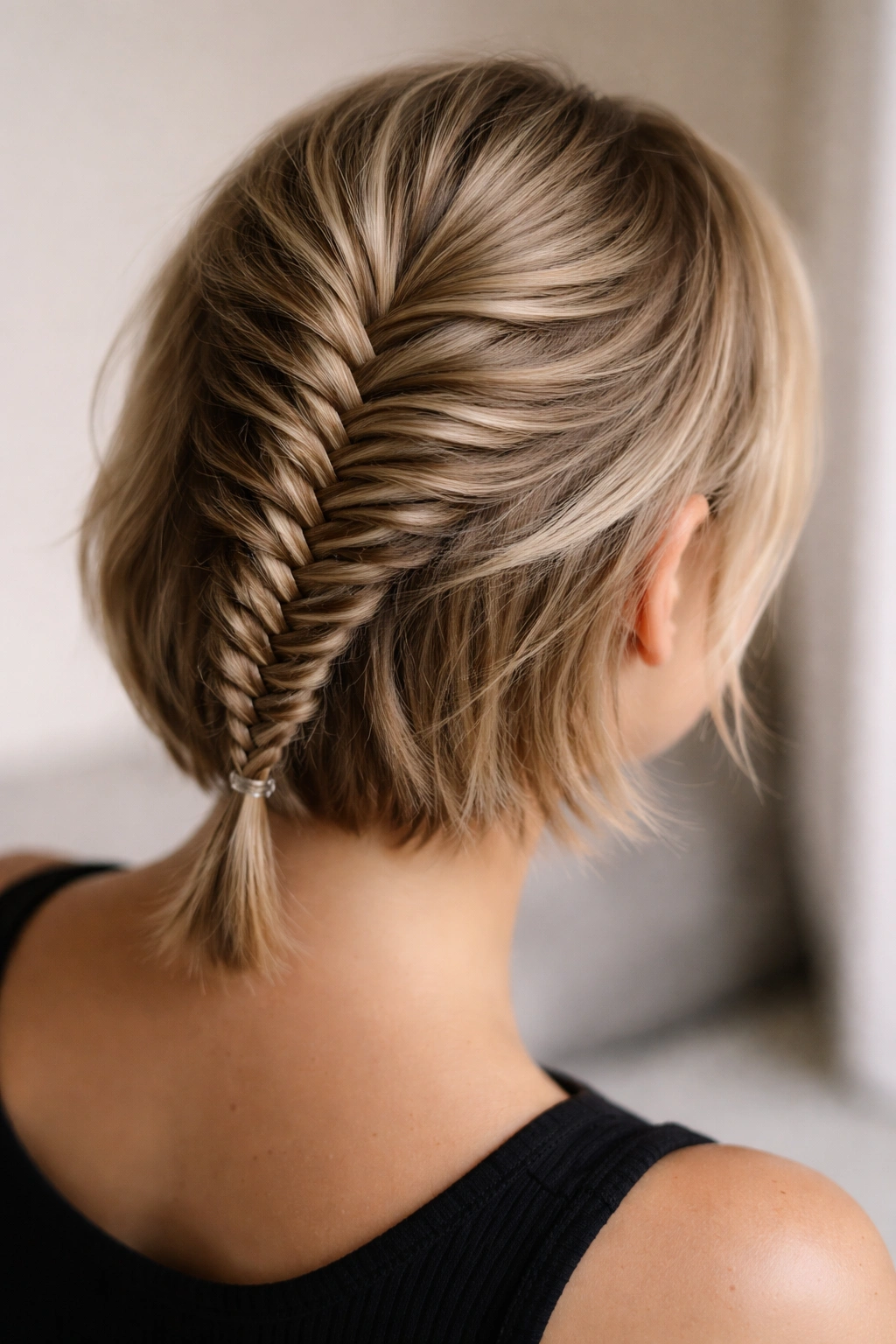
A fishtail braid uses only two sections that you weave together in a specific pattern, creating an intricate-looking braid despite the simple two-section method. You take tiny pieces from the outside of each section and cross them over to the opposite side, building a pattern that genuinely looks like a fishtail or fishbone. On short hair, fishtail braids create surprising intricacy.
The Delicate Complexity of Fishtail Braids
Fishtail braids look far more complicated than they actually are, which is part of their appeal. They create a fine, intricate pattern that feels artistic and deliberate. Even on very short hair, a fishtail braid reads as special and thoughtfully executed. The technique is simpler than three-strand braiding, which makes it excellent for DIY styling despite its sophisticated appearance.
Fishtail Braiding on Short Hair
- Divide your hair into two equal sections at your starting point
- Take a small piece from the outer edge of one section and cross it over to the opposite section
- Take a small piece from the outer edge of that section and cross it back over
- Continue alternating, always taking from the outside and crossing toward the center
- Keep your sections even and your movements deliberate so the pattern stays visible
- This works beautifully on all hair types, and wavy or textured hair makes the pattern especially visible
- Fishtail braids look especially lovely when you roughen them slightly by pulling sections outward
- You can create one fishtail braid down the side or center, or use the technique to create multiple smaller braids
- Secure with a small elastic at the end
13. Waterfall Braid
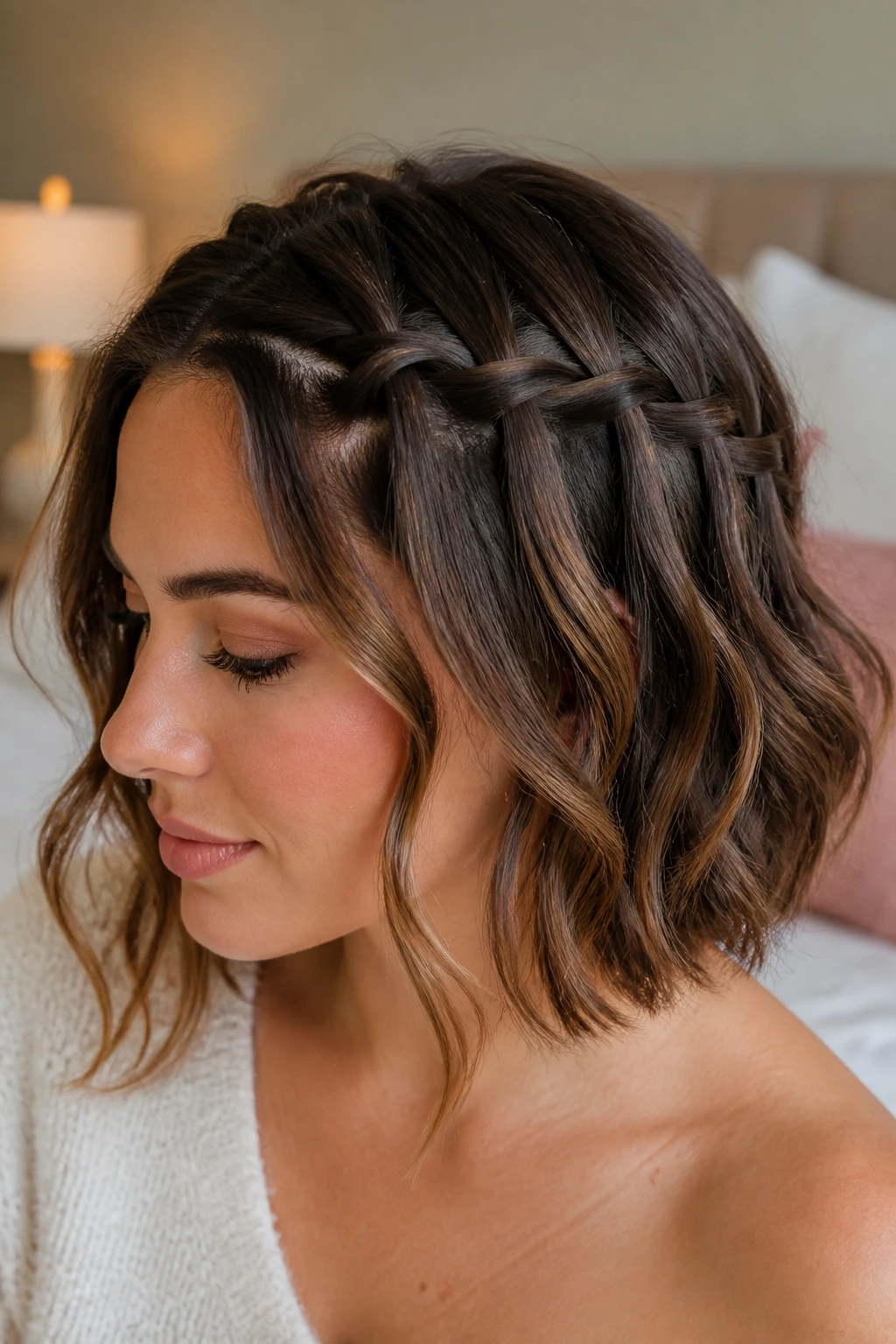
A waterfall braid is a French braid where you release some strands as you go, letting them fall loose while you continue braiding with new hair. The result looks like a cascade of braided sections interspersed with loose strands — like a waterfall. On short hair, the waterfall braid creates romantic movement and pairs beautifully with loose waves.
Romance and Movement in Waterfall Braids
Waterfall braids are inherently romantic and graceful, suited for anyone who wants their braid to enhance rather than contain their hair. The interplay between braided and loose sections creates visual interest and texture. On short hair, a waterfall braid adds dimension without requiring the length that would be ideal for longer styles.
Creating a Waterfall Braid
- Begin a French braid on one side of your head, starting near your temple
- Braid for a few sections, then release one strand to fall free
- Continue the braid with new hair, dropping another strand after a few more braids
- Repeat this release pattern all the way to the opposite ear
- The released strands create the waterfall effect, so the more you drop, the more dramatic the effect
- This looks most beautiful when worn with loose waves or curls in the falling strands
- You need at least a few inches of hair for this to work, so it suits short cuts that aren’t ultra-pixie length
- Secure the final braid end with a bobby pin hidden in your regular hair
- Soften everything by curling the loose strands and gently pulling the braid sections outward
14. Cornrows
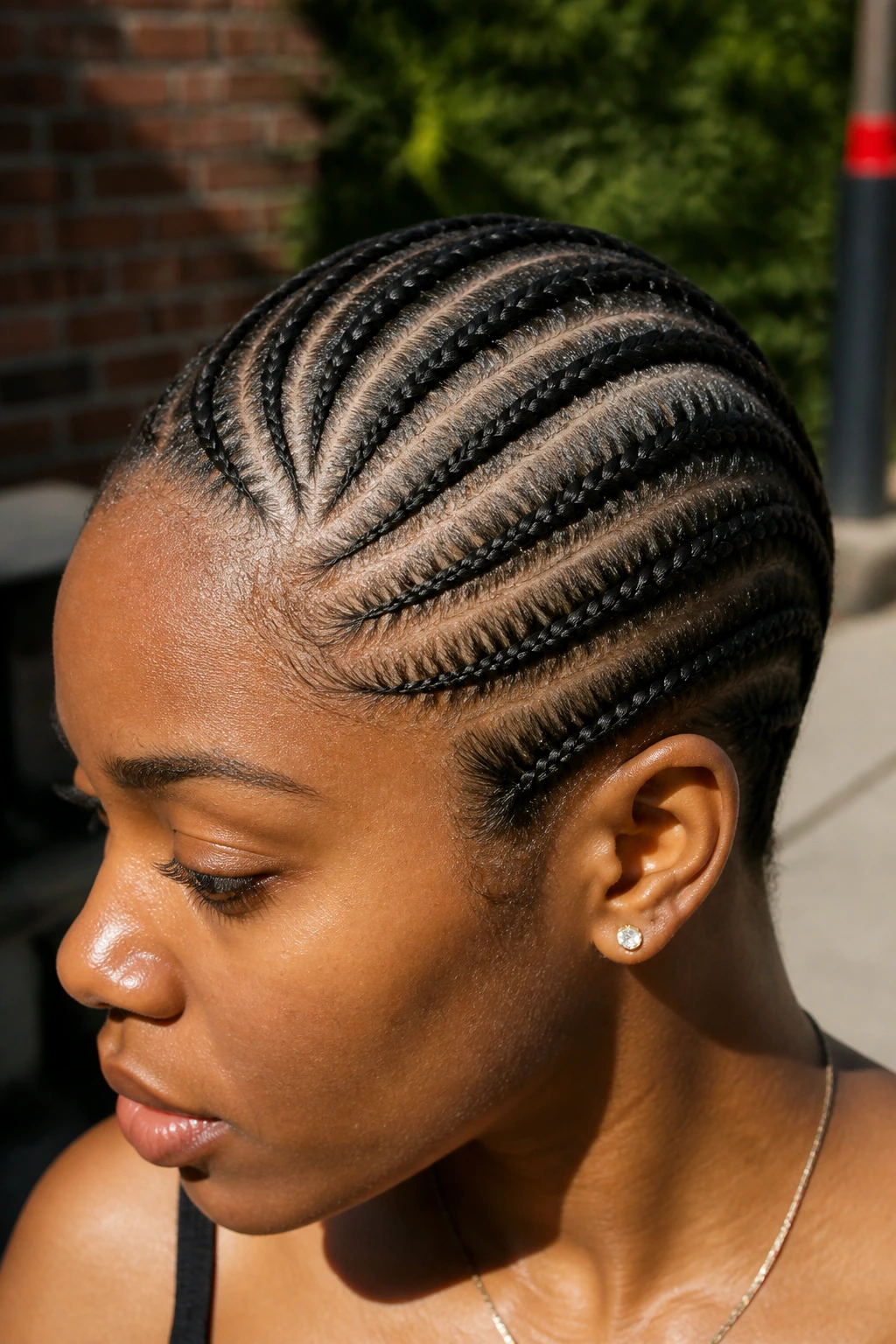
Cornrows are braids that follow the contours of your scalp, creating neat, linear patterns that can be straight, curved, or creative. On short hair, cornrows create strong geometric patterns and work beautifully for all hair types, especially textured hair. They’re functional, stylish, and deeply customizable.
The Cultural Significance and Versatility of Cornrows
Cornrows have deep historical and cultural roots and represent beautiful braiding traditions. They’re incredibly versatile — you can create simple straight lines, curved paths, zigzags, or intricate geometric patterns. On short hair, cornrows have maximum visual impact because they create clear sculptural lines on your head.
Cornrowing Your Short Hair
- Decide on your pattern — straight rows, curved paths, geometric designs, etc.
- Divide your hair into sections following your chosen pattern
- Braid each section using a tight Dutch braid technique, following your scalp closely
- Start at your hairline and work toward your nape, keeping even tension throughout
- Cornrows work beautifully on all hair types but have unmatched visual definition on textured, curly, or coily hair
- Secure the ends with small elastics or tie them off
- This is a technique that benefits from professional execution, especially if you want intricate patterns
- Cornrows last longer if you care for them properly — sleeping on a silk pillowcase and using a light oil help maintain them
- The style is functional, beautiful, and lets you express cultural appreciation and personal creativity
15. Single Strand Twist
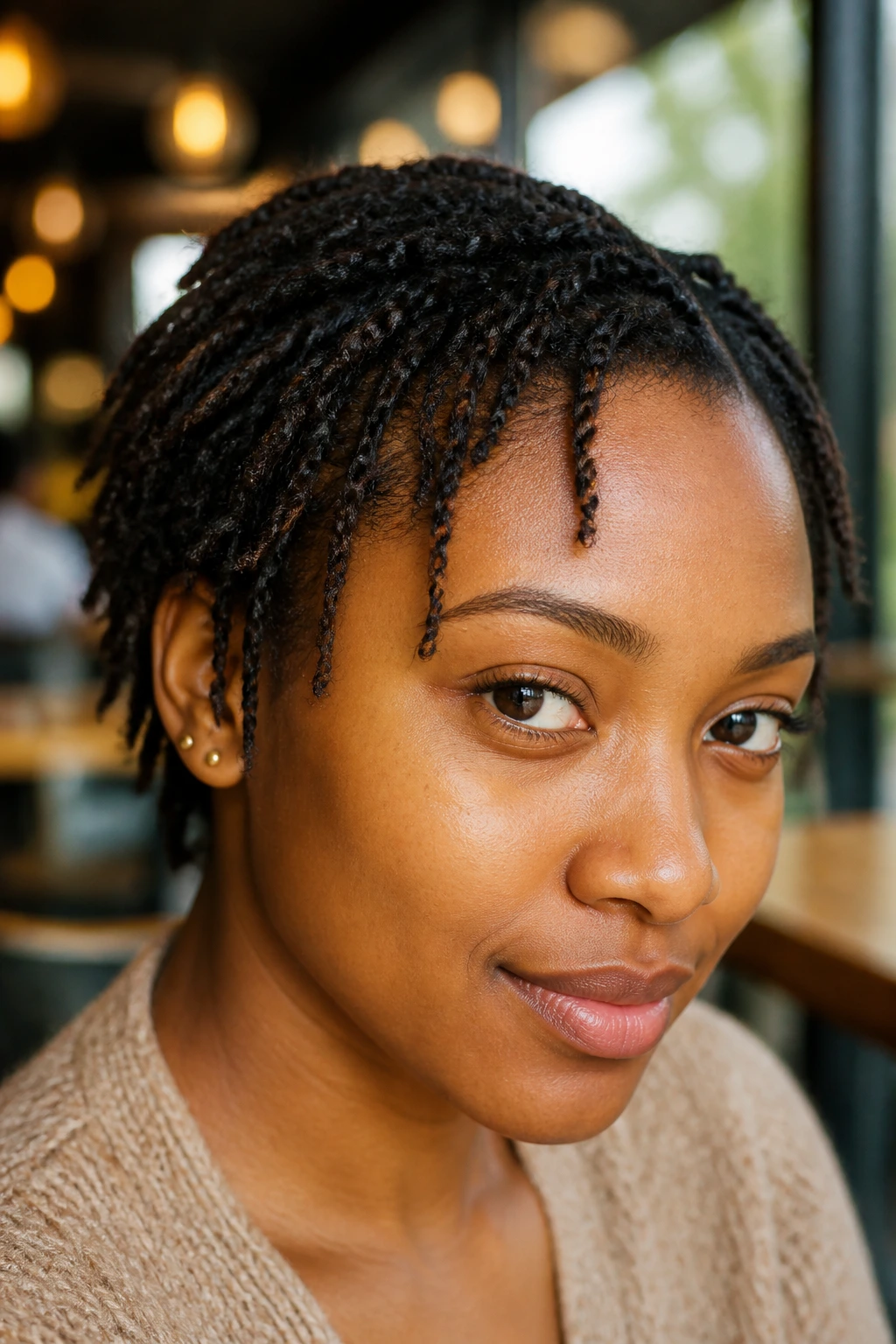
A single strand twist uses just one section of hair that you twist around itself, creating a rope-like pattern. It’s simpler than braiding but creates similar visual interest. On short hair, single strand twists can be created individually or in groups, and they work especially beautifully on textured hair.
Simple Elegance of Single Strand Twists
Single strand twists are easier to execute than braids while still creating beautiful texture and pattern. They feel modern and artistic, and they work wonderfully on all hair types but truly shine on curly, coily, or wavy hair. A few delicate single strand twists scattered throughout your short hair add visual interest instantly.
Creating Single Strand Twists
- Take a section of hair and divide it in half
- Twist each half around itself in the same direction
- Continue twisting until you reach the ends
- Secure with a small elastic or let it hold naturally if your hair is textured enough
- You can create twists of varying thickness — thin delicate twists or thicker, more substantial ones
- Single strand twists work beautifully on curly and coily hair, where the natural texture holds them in place
- You can scatter individual twists throughout your hair or create rows of them for a more structured look
- This is an excellent DIY styling option and much simpler than braiding
- Twists last longer in textured hair, where the curl pattern naturally holds them
16. Bubble Braid
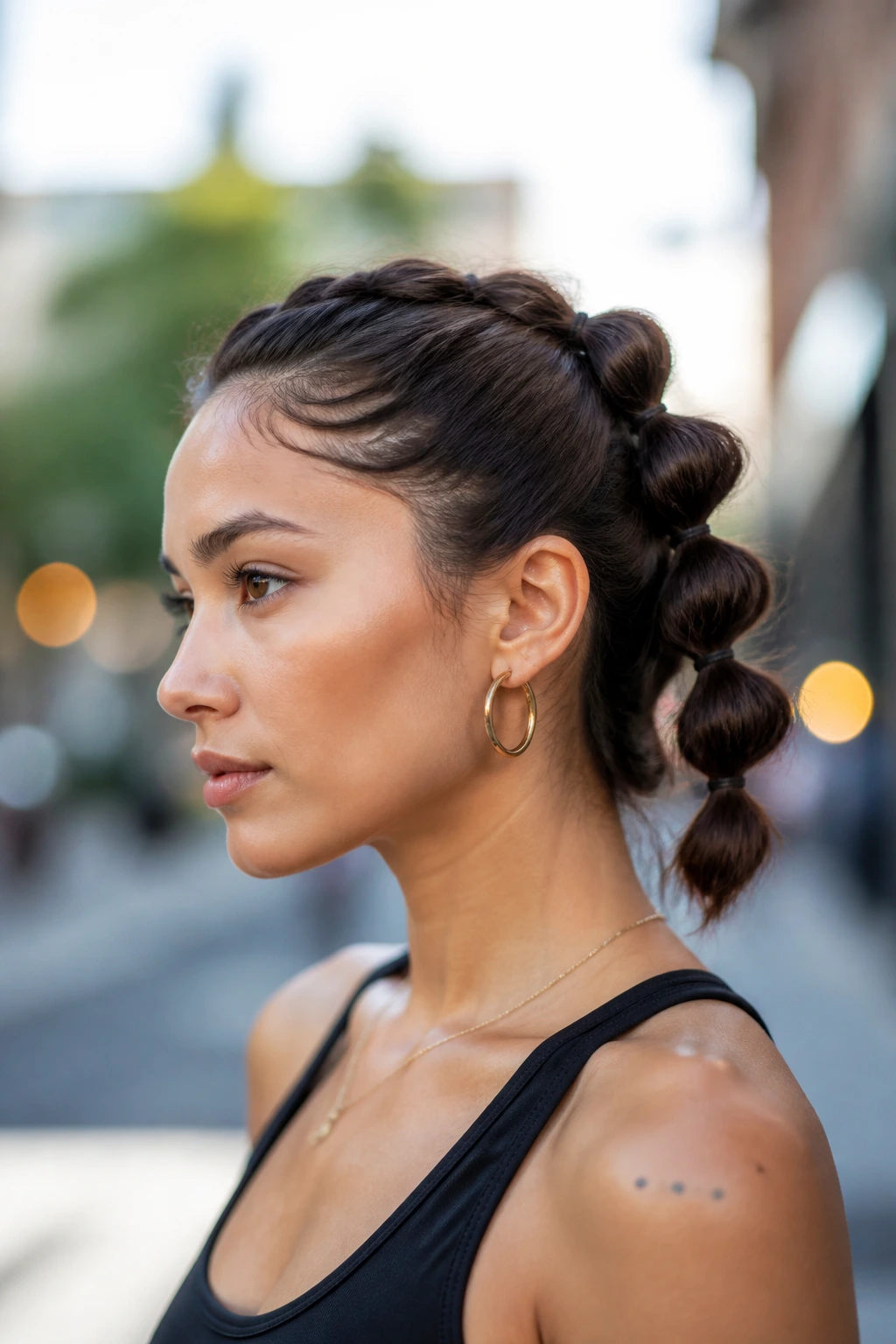
A bubble braid is a braided style where you create a braid and then pull sections outward at regular intervals, creating a bubble-like appearance. Each segment puffs out slightly, creating dimension and visual interest along the braid. On short hair, bubble braids are playful and modern.
The Playful Dimension of Bubble Braids
Bubble braids feel fun and contemporary while still being sophisticated. The dimensional puffs catch light beautifully and create texture that reads as intentionally stylish. This style works especially well on shoulder-length short hair where you have enough length for the bubbles to be obvious.
Creating Bubble Braids on Short Hair
- Start with a three-strand braid, a Dutch braid, or any braid variation you prefer
- Once you’ve completed the braid, gently pull outward on each section at regular intervals — every inch or so
- Pull evenly on both sides of each section to create symmetrical bubbles
- The more you pull, the more pronounced the puffing effect
- Secure your braid end with a small elastic
- You can create a single bubble braid or multiple bubble braids for more impact
- This works beautifully when you start with a slightly loose braid, giving you room to pull without loosening it too much
- Gentle hairspray helps keep the bubbles in place without making them stiff
- The texture and visual interest make even a simple braid feel special and intentional
17. Rope Braid
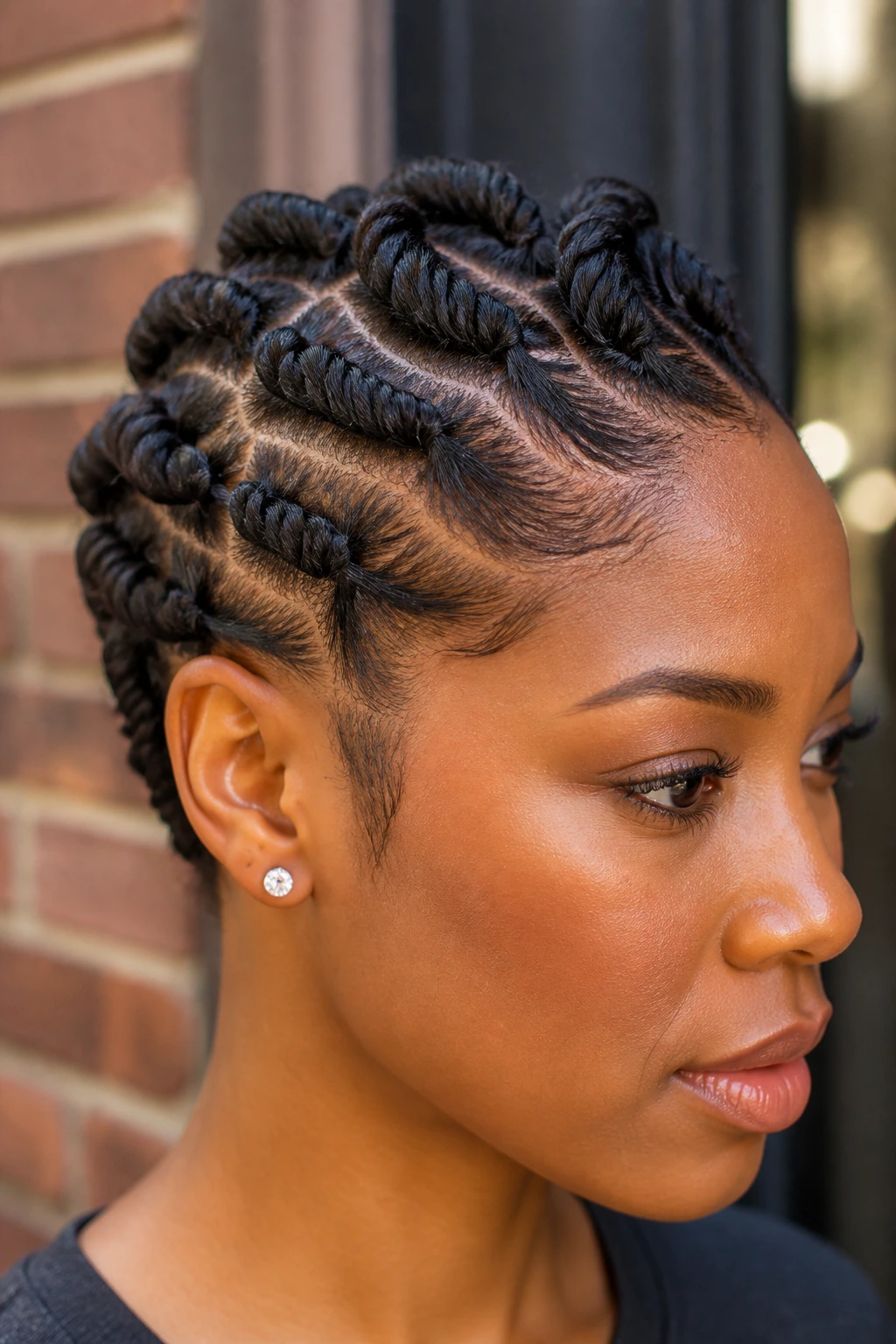
A rope braid is a two-section twist-braid hybrid where you divide hair into two sections, twist each section around its own axis, and then wrap those twisted sections around each other. The result is a chunky, textured, rope-like appearance that’s more dramatic than a regular braid. On short hair, rope braids create serious visual impact.
Bold Texture of Rope Braids
Rope braids look thicker and more substantial than three-strand braids, creating graphic visual interest on short hair. They’re simpler to execute than intricate three-strand work while still looking sophisticated and intentional. The chunky texture makes them visible from a distance, so they work beautifully for creating a statement.
Building a Rope Braid
- Divide your hair into two equal sections at your starting point
- Twist each section in the same direction (both clockwise or both counterclockwise)
- Continue twisting until both sections are tightly spiraled
- Bring the two twisted sections together and wrap them around each other, going the opposite direction from how you twisted them
- Keep tension even so the final rope stays cohesive
- You can use this technique for a single rope braid or create two symmetrical rope braids
- Rope braids hold best when you use a light styling product that helps grip without weighing down
- Secure the end with a small elastic
- This technique works beautifully on medium-textured hair and all lengths
18. Half-Up Braid
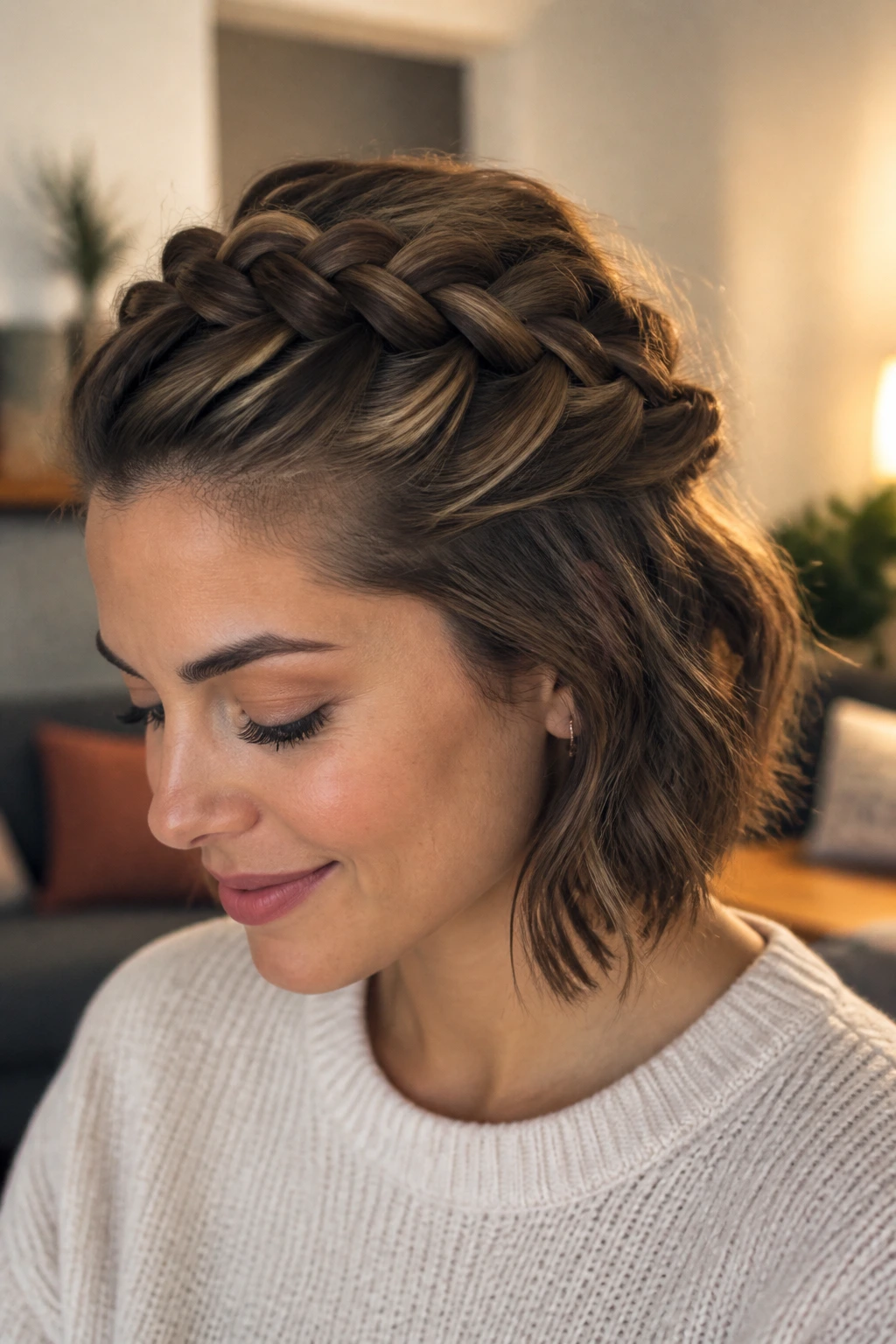
A half-up braid takes hair from the top section of your head and braids it, leaving the bottom half down and loose. You can braid the top section using any technique — French, Dutch, fishtail, rope — and leave the rest of your hair free. On short hair, a half-up braid creates a refined but relaxed look.
Balanced Elegance of Half-Up Braids
Half-up braids offer the best of both worlds — the styled, intentional look of a braid with the softness of down hair. They’re flattering for most face shapes because they frame your face while keeping hair off your crown. On short hair, this style works beautifully for work, casual occasions, or anytime you want something between completely down and fully pulled back.
Executing a Half-Up Braid
- Decide where you want your braid to sit — at the crown, off to one side, or as a small accent braid
- Take hair from the top section and create your chosen braid — French, Dutch, or simple three-strand
- Braid down to about ear level or slightly lower, depending on your hair length
- Secure the braid with a small elastic
- Leave the bottom half of your hair down and loose
- You can curl or wave the loose section for added dimension
- Style the half-up braid loose enough that it looks effortless but tight enough that it holds
- This works beautifully for all hair types and lengths
- A half-up braid is perfect for those days when you want your hair managed but not completely styled
19. Goddess Braids
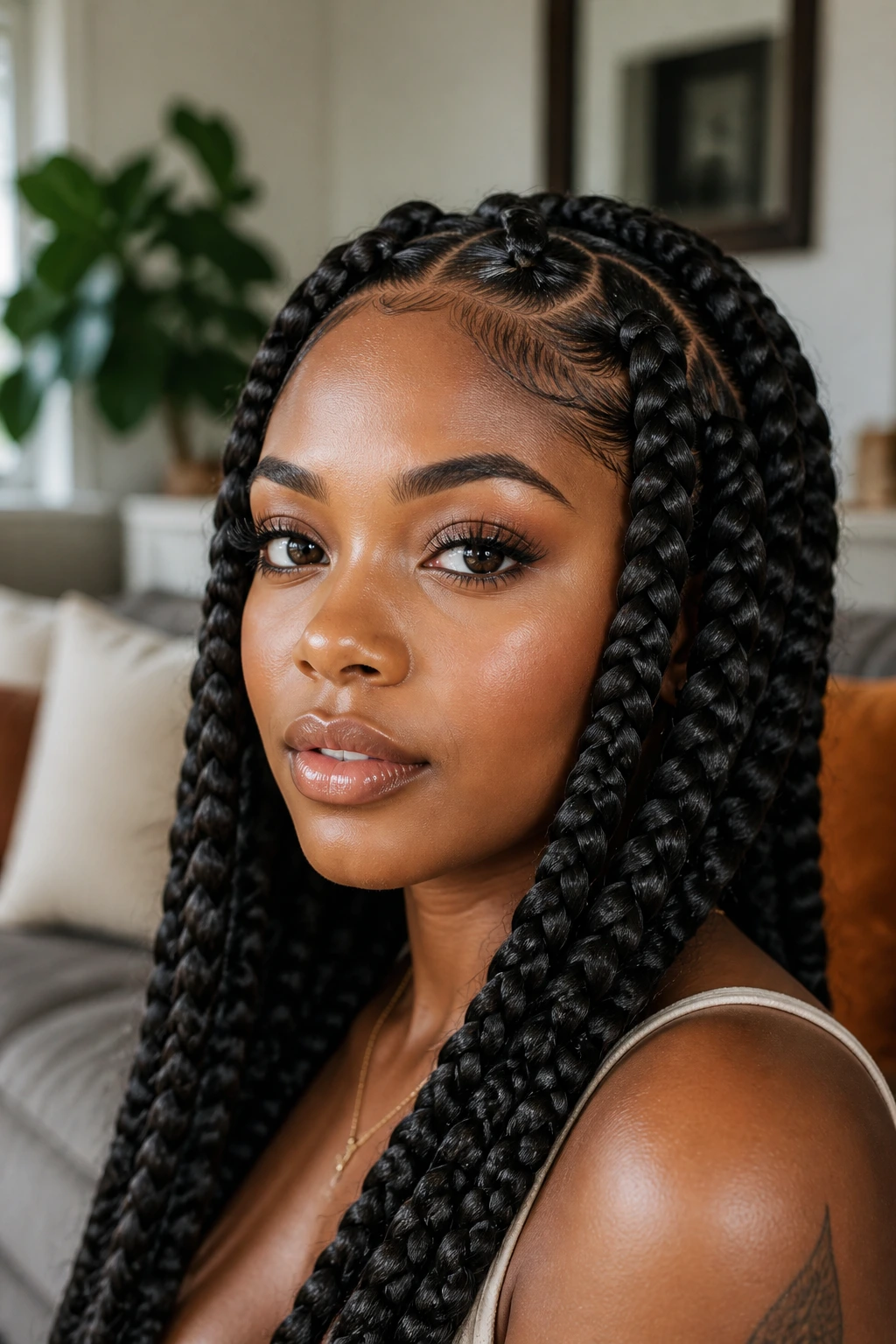
Goddess braids are thick, chunky braids that often incorporate extensions or are created using thick sections of hair to amplify size and impact. They feel powerful and protective while being utterly gorgeous. On shorter natural hair, goddess braids require skilled execution and often benefit from extensions to achieve the full effect.
Powerful Beauty of Goddess Braids
Goddess braids are meant to make you feel strong and beautiful — they’re protective, stunning, and deeply tied to cultural expression and self-care. They create visual drama and statement-making impact. For shorter hair, goddess braids might involve extensions to achieve the thickness and length the style traditionally requires.
Creating Goddess Braids on Short Hair
- Work with a professional stylist who has experience with goddess braids, especially if you’re using extensions
- Your stylist can add extensions to your own hair to create the length and thickness needed
- Goddess braids are usually created using a two-strand twist or thick Dutch braid technique
- The braids are meant to be substantial and visible, so the chunky, thick aesthetic is the whole point
- These braids can be maintained for several weeks with proper care
- Sleep on a silk pillowcase and use gentle products to keep them looking fresh
- This is a style that works beautifully on textured hair and is an important part of protective styling culture
- Goddess braids are a significant investment in time and effort, making them perfect for someone committed to the look
20. Fulani Braids
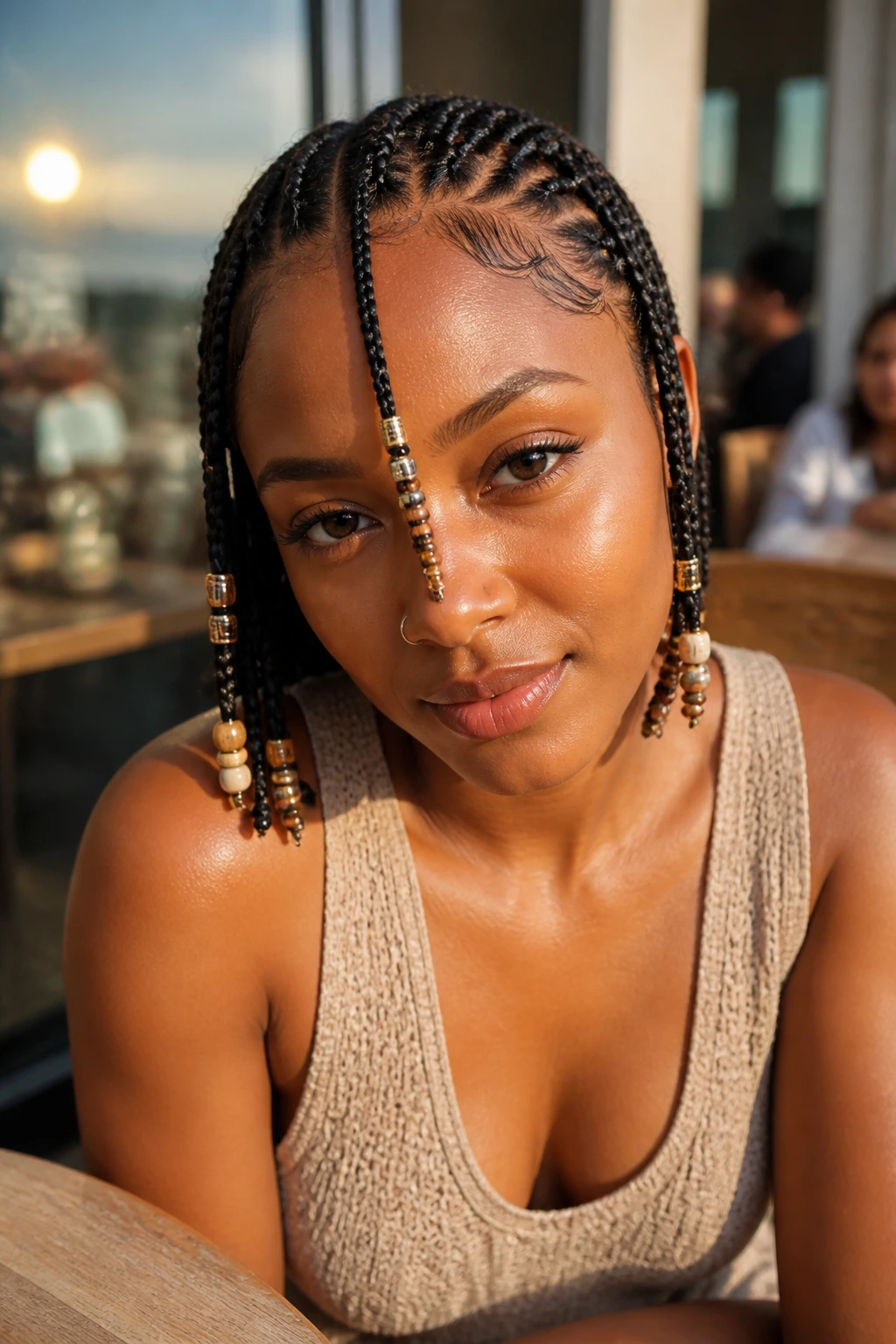
Fulani braids are thin, delicate braids that often incorporate beads, cowrie shells, or rings and are typically styled in a central braid with loose hair on the sides. They have deep cultural roots in West African traditions and represent beautiful braiding artistry and cultural expression. On short hair, Fulani braids create elegant, detailed beauty.
Cultural Expression Through Fulani Braids
Fulani braids are deeply meaningful and culturally significant, representing a particular braiding tradition with specific aesthetic and cultural importance. They typically feature thin, intricate braiding with beautiful adornments. On shorter hair, a simplified Fulani braid that captures the spirit of the style honors this tradition beautifully.
Approaching Fulani Braids Respectfully
- Work with a stylist who understands and respects Fulani braiding traditions
- Your stylist can adapt traditional Fulani braiding to work with your hair length and texture
- The style typically features a central braided section with decorative elements like beads or rings
- Thin, precise braiding is essential to the aesthetic
- This works beautifully on textured hair, where the braids naturally hold and show definition
- Proper styling and maintenance keep Fulani braids looking fresh and beautiful for weeks
- This is a style that deserves respect, cultural acknowledgment, and skilled professional execution
- Approach this style as a genuine appreciation for the tradition, not a costume or trend
21. Feed-In Braids
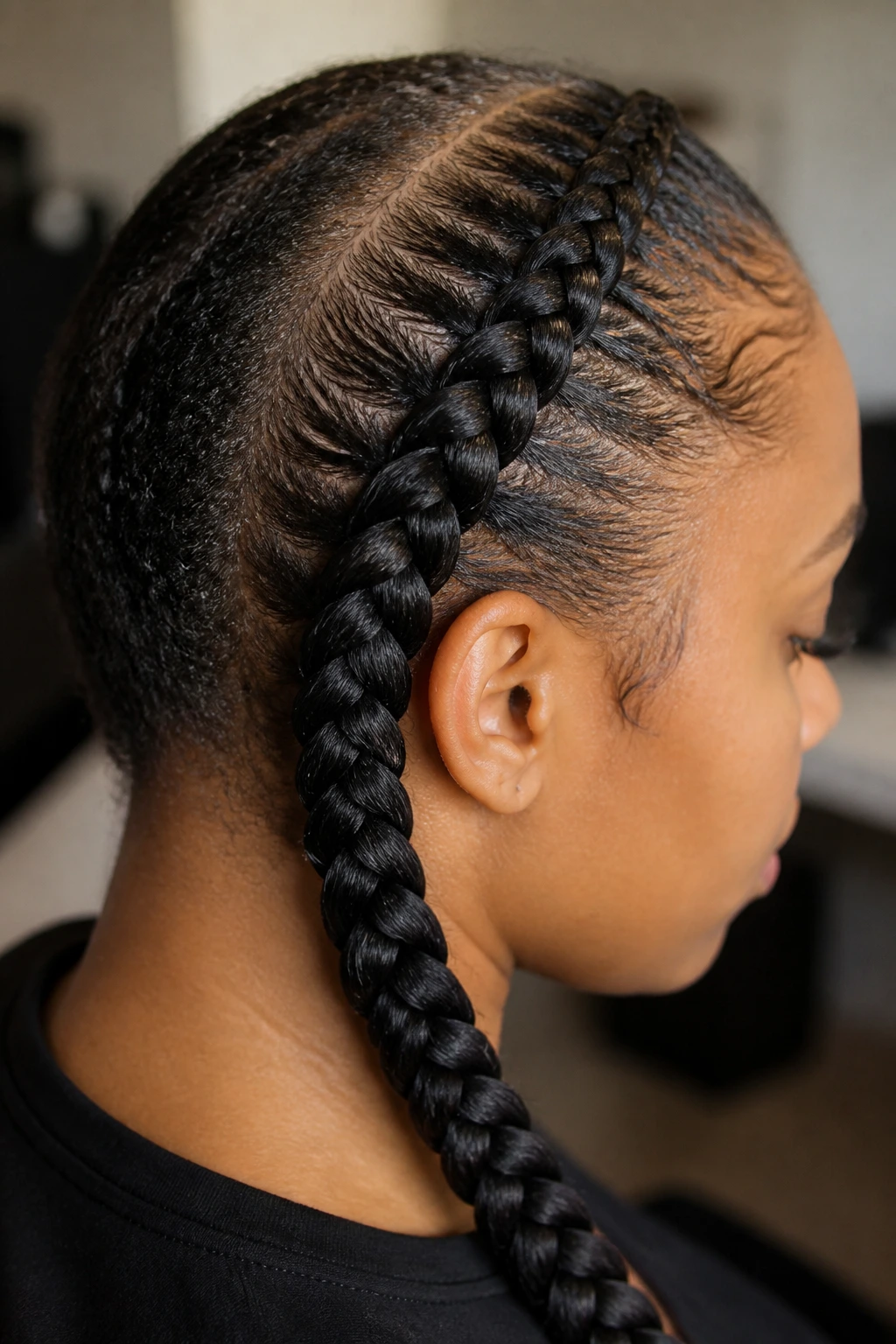
Feed-in braids are created by starting with your natural hair and gradually introducing extension hair as you braid, creating a seamless blend of your own hair and extensions. The result looks like your hair gradually grows thicker as the braid progresses. On short hair, feed-in braids extend your options and create beautiful, blended length.
Seamless Extension Integration
Feed-in braids are a sophisticated extension technique that looks natural and intentional. The gradual introduction of extension hair creates the illusion that the hair is entirely your own, thickening gradually. This technique works beautifully for anyone who wants more length or thickness without the visible extension lines.
Feed-In Braiding for Short Hair
- A professional stylist can add feed-in braids that start with your natural hair length
- The extensions are introduced gradually, creating a seamless blend
- You can create a single braid or multiple braids, depending on your desired look
- Feed-in braids work beautifully on all hair types and textures
- They typically last 6-8 weeks with proper care and maintenance
- Sleep on a silk pillowcase and use gentle products to protect your natural hair and extensions
- Regular moisturizing is essential, especially for natural hair underneath the braids
- This is definitely a professional service — the blending and technique require experience and skill
- Feed-in braids are an excellent protective style that genuinely protects your own hair while extending length
22. Braid with Undercut
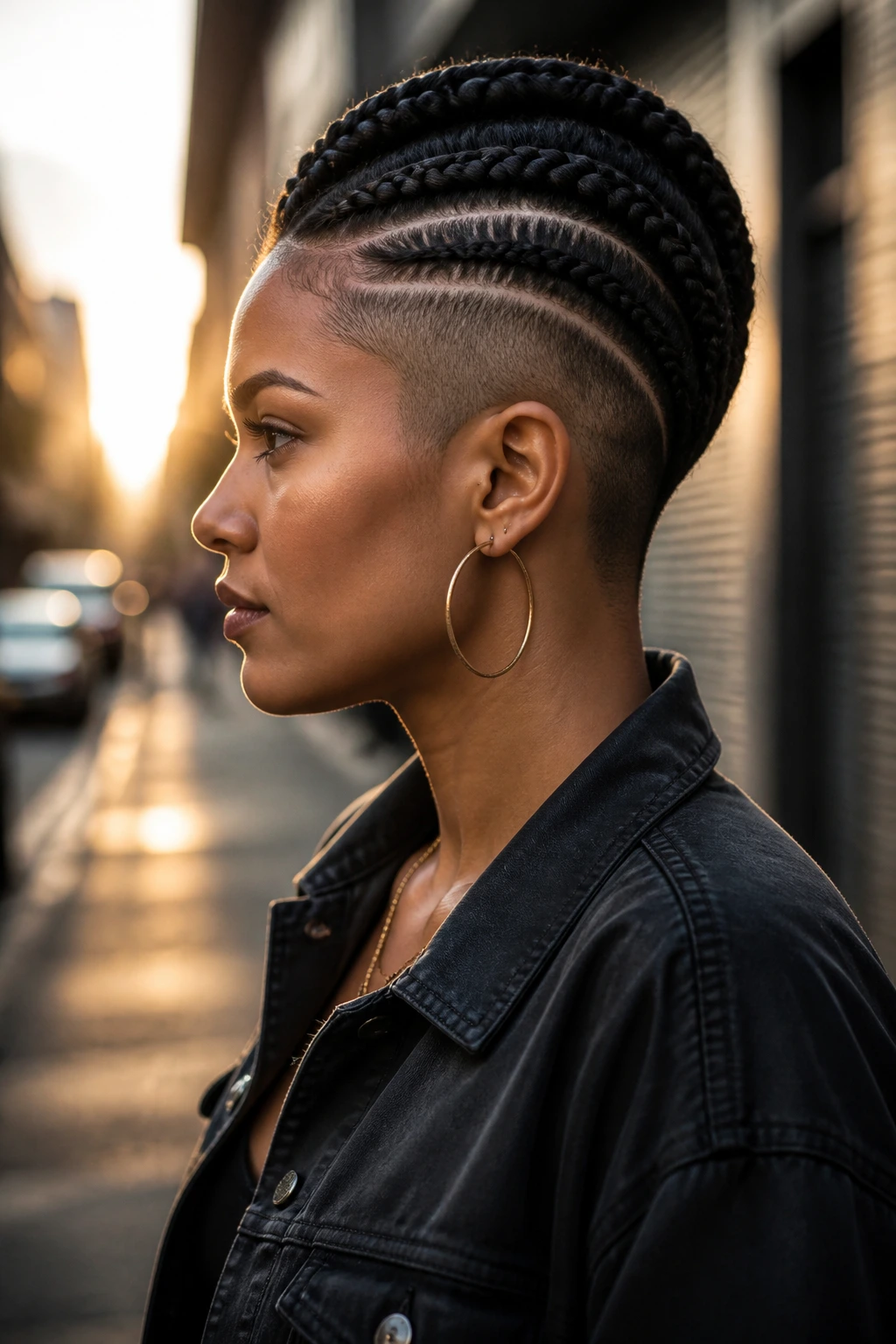
An undercut with braids combines a shaved or very closely clipped side or back section with braids on the remaining longer hair. The contrast between the braid and the clean undercut creates edgy, modern visual interest. On short hair, this combination is absolutely striking.
Bold Contrast and Modern Edge
Combining braids with an undercut creates maximum visual impact and personality. The clean geometric line of the undercut contrasts beautifully with the dimensional texture of braids. This style is for anyone who wants their hair to make a bold statement and isn’t afraid of unconventional beauty.
Creating Braids With an Undercut
- Work with a stylist who understands both undercut cutting and braid work
- Your undercut can be on the side, the back, or partially hidden underneath longer sections
- The braids sit on top, creating the focal point while the undercut adds unexpected edge
- You can create any type of braid — Dutch, French, fishtail, or simple three-strand
- The contrast is what makes this work, so the braid and the undercut should create visual interest together
- Styling products help the braid hold throughout the day
- This is a high-maintenance look that requires regular undercut maintenance and braid care
- The style photographs beautifully and makes an unmistakable statement
23. Zigzag Braid
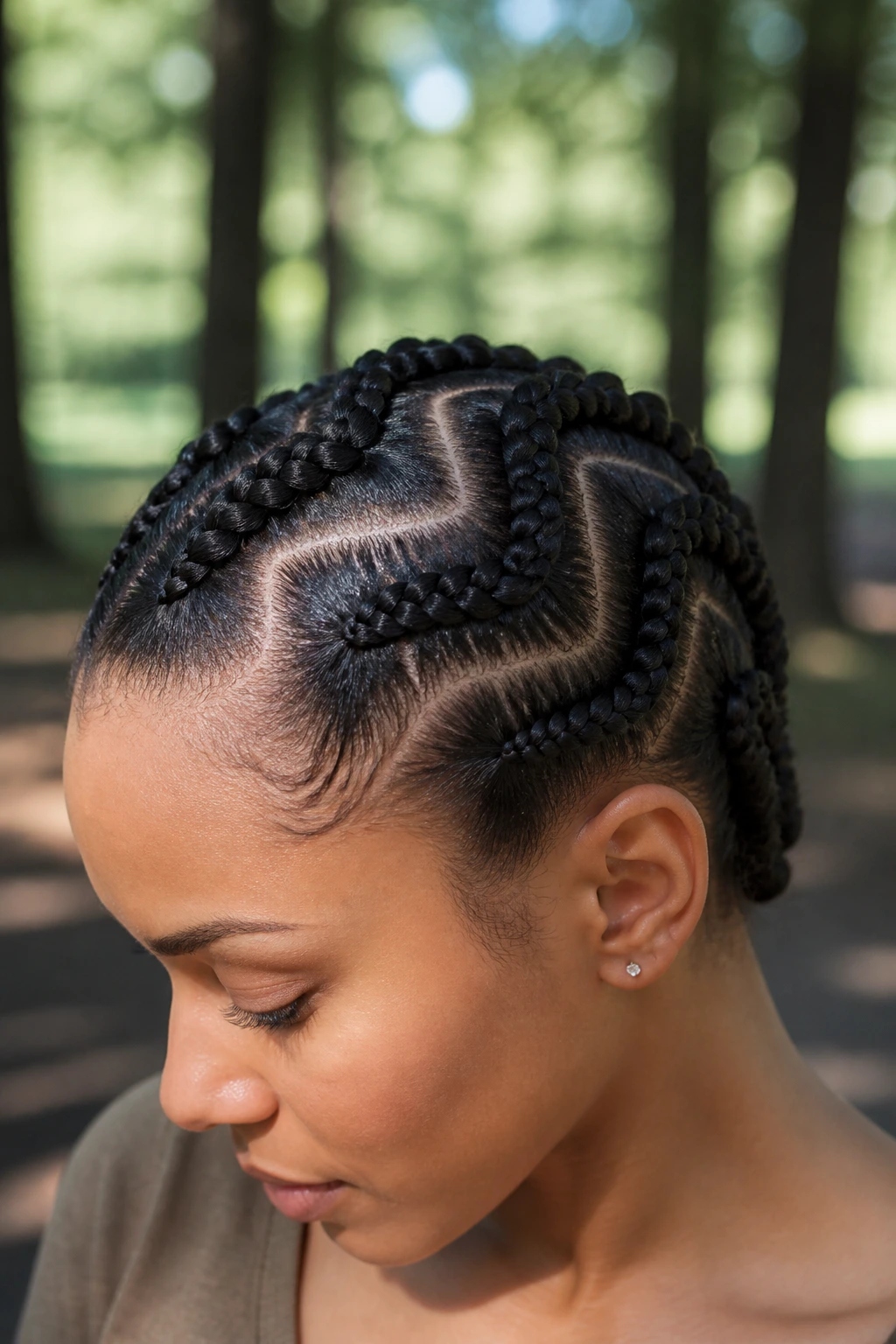
A zigzag braid follows a path that moves side to side rather than straight back, creating a zigzag pattern across your head. This can be achieved with a central Dutch or French braid that deviates from a straight path, creating geometric interest. On short hair, zigzag braids create playful, creative movement.
Creative Path and Geometric Interest
Zigzag braids feel playful and artistic, especially on shorter hair where the geometric pattern is more visible. The deviation from a straight path creates visual interest and personality. This style is for anyone who wants their braid to be conversation-starting and creative.
Creating a Zigzag Braid
- Start a Dutch or French braid at your hairline, but instead of braiding straight back, move diagonally to one side
- After a few braids, change direction and move diagonally to the other side
- Continue this zigzag pattern all the way down or across your head
- The zigzag works best on hair with some texture, which naturally holds the pattern
- You need at least a few inches of length for the zigzag to be obvious
- This requires patience and precision to execute evenly
- The technique is simpler than it might appear — you’re just changing direction as you braid
- Gentle hairspray helps maintain the pattern throughout the day
- This is an excellent choice for anyone who wants a playful, artistic, creative style
24. Reverse Braid
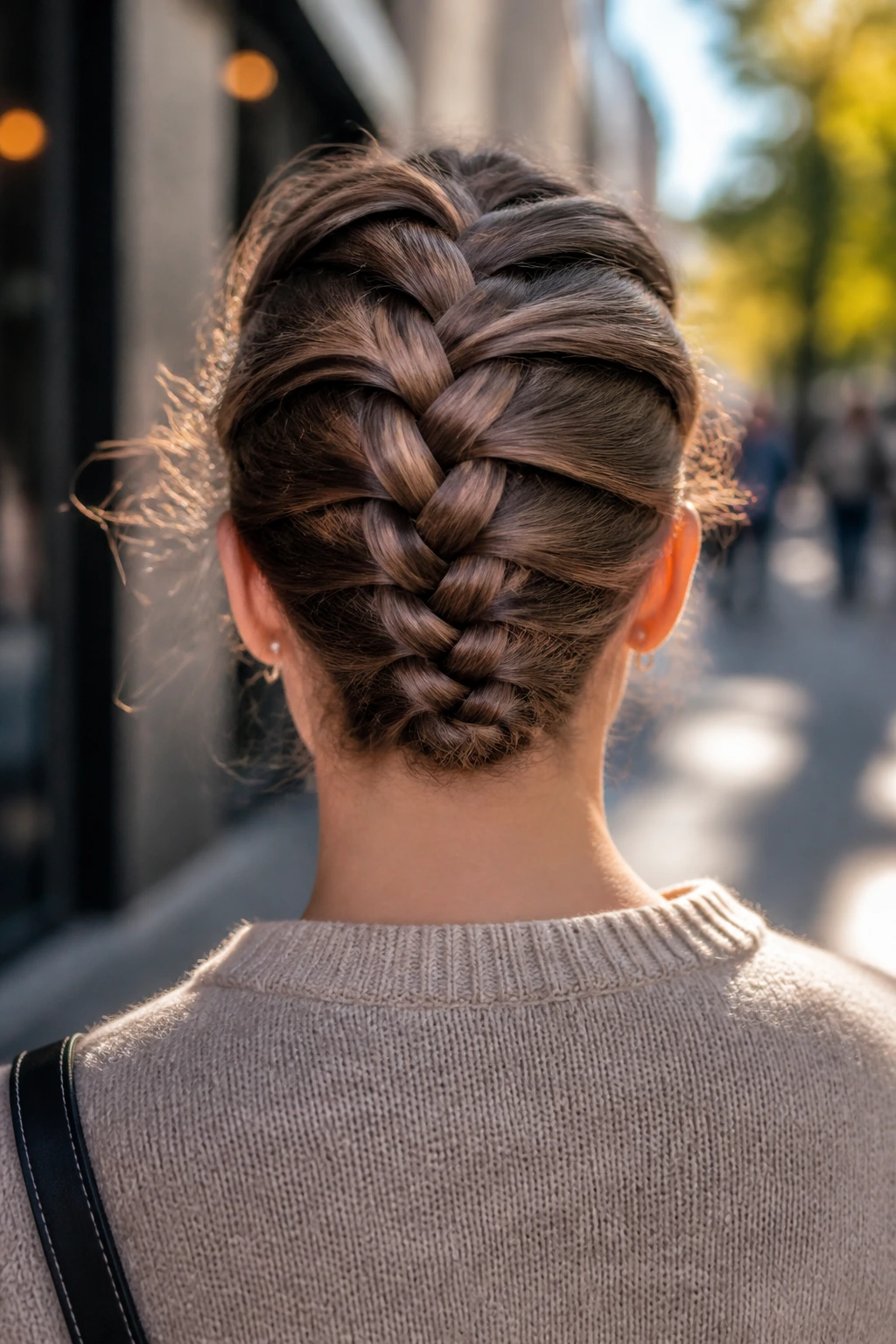
A reverse braid is essentially a Dutch braid viewed from the opposite angle — the technique might be slightly different, or you might literally flip your perspective. The result is a braid that appears inverted and has a different visual quality than you’d expect. On short hair, reverse braids create unexpected dimension.
Unexpected Visual Dimension
Reverse braids feel modern and artistic because they subvert the expected braid appearance. They create shadow and depth that flat, over-the-top braids don’t. This style suits anyone who appreciates subtle creativity and unexpected details.
Creating a Reverse Braid
- A reverse braid can mean braiding in the opposite direction from what you normally would
- Or, it can mean using a Dutch braid technique and looking at it from the back to see an inverted pattern
- The technique takes practice but creates genuinely unique visual interest
- This works beautifully on all hair types, with the most definition on textured hair
- You might want to practice this style or consult with your stylist to nail the execution
- Once you understand the technique, it becomes a tool in your styling arsenal
- Reverse braids photograph beautifully and create interest from multiple angles
- This is a style choice for creative, confident people who appreciate details
25. Braided Topknot
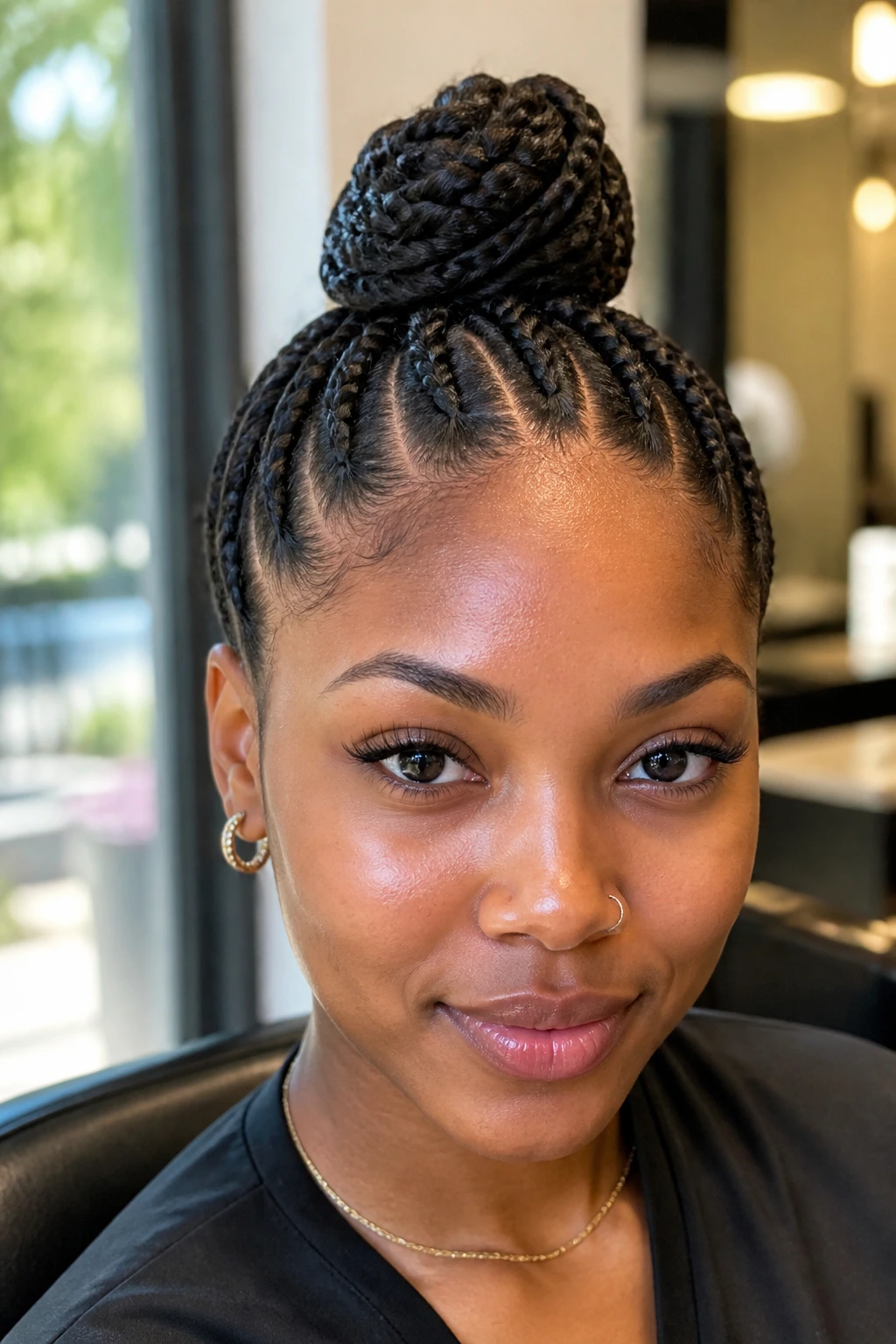
A braided topknot takes a braid and twists it into a knot shape on the crown of your head, creating a chic, compact updo-like style. On short hair, this creates the look of an updo while using the length you have. It’s neat, professional, and surprisingly easy to execute.
Compact Elegance of Braided Topknots
Braided topknots give you the polished, put-together look of an updo in a style that works with shorter hair. The braid twisted into a knot creates visual texture and looks intentionally styled. This style works beautifully for work, special occasions, or anytime you want your hair fully secured and artfully arranged.
Creating Your Braided Topknot
- Start by creating a braid — French, Dutch, fishtail, or simple three-strand, depending on your preference
- Braid as much of your hair as possible, working toward the crown or wherever you want your knot to sit
- Coil the finished braid into a knot or bun shape and secure with bobby pins
- Tuck the elastic end inside the knot so it’s invisible
- You can make the knot tight and neat or slightly loose and romantic, depending on your occasion
- This works beautifully on all hair types and hair textures
- Gentle hairspray helps keep everything secure throughout the day
- A braided topknot is perfect for workouts, busy days, professional settings, or anytime you want polished, no-fuss styling
- This is an excellent DIY style once you master the basic braiding and knotting technique
Final Thoughts
Short hair opens doors to braiding styles that longer hair sometimes can’t showcase as beautifully. These 25 braid styles prove that length isn’t a requirement for creative, stunning hair — intention, technique, and willingness to experiment are. Whether you choose a bold faux hawk braid, a delicate lace braid, a protective style like goddess braids, or something playful like bubble braids, you’re making a choice that says something about who you are.
Bringing this collection to your stylist gives you a shared vocabulary and visual reference. Even if you don’t recreate these styles exactly as shown, you’ve started a conversation about what’s possible with your specific hair type, texture, and length. Some of these styles might become your signature look — the one you return to again and again. Others might be occasion-specific, saved for dates or celebrations or creative self-expression days.
The most important thing is that you choose braids that make you feel confident, comfortable, and genuinely like yourself. The best braid style is always the one that makes you smile when you catch your reflection.
