



Locs have evolved far beyond a single aesthetic. The modern loc wearer has access to countless styling possibilities, and the mullet—that boundary-pushing cut that’s equal parts bold statement and functional artistry—has become one of the most versatile ways to wear them. The mullet loc combines the length, movement, and spiritual significance of traditional locs with the clean, deliberate tapering of modern barbering. What makes this style so compelling is the contrast: shorter, tightly coiffed locs in front and on the sides, with longer, fuller locs cascading down the back. It’s a style that commands attention without screaming for it.
Whether you’re thinking about transitioning to locs or you already have them and you’re ready for a refresh, the mullet cut offers something genuinely different. It’s practical—easier to manage than free-flowing locs in certain situations—but it’s also creative, allowing you to play with texture, color, length, and shape in ways that other loc styles don’t quite offer. The beauty of a mullet loc is that it works across countless variations. You can keep it neat and structured or lean into messiness and texture. You can add color, blend different loc textures, or combine locs with other braiding techniques. Every interpretation tells a different story.
What you’re about to discover is a collection of mullet loc styles that span the full spectrum—from sleek and professional to artistic and experimental. Each style builds on the core mullet concept but takes it in its own direction. Some emphasize clean lines and precision. Others play with volume and movement. A few blur the line between locs and other braiding styles entirely. The point isn’t to find a style you’ll copy exactly, but to find inspiration that speaks to your aesthetic and gives you permission to make locs work the way you want them to.
1. Classic Fade Mullet Locs
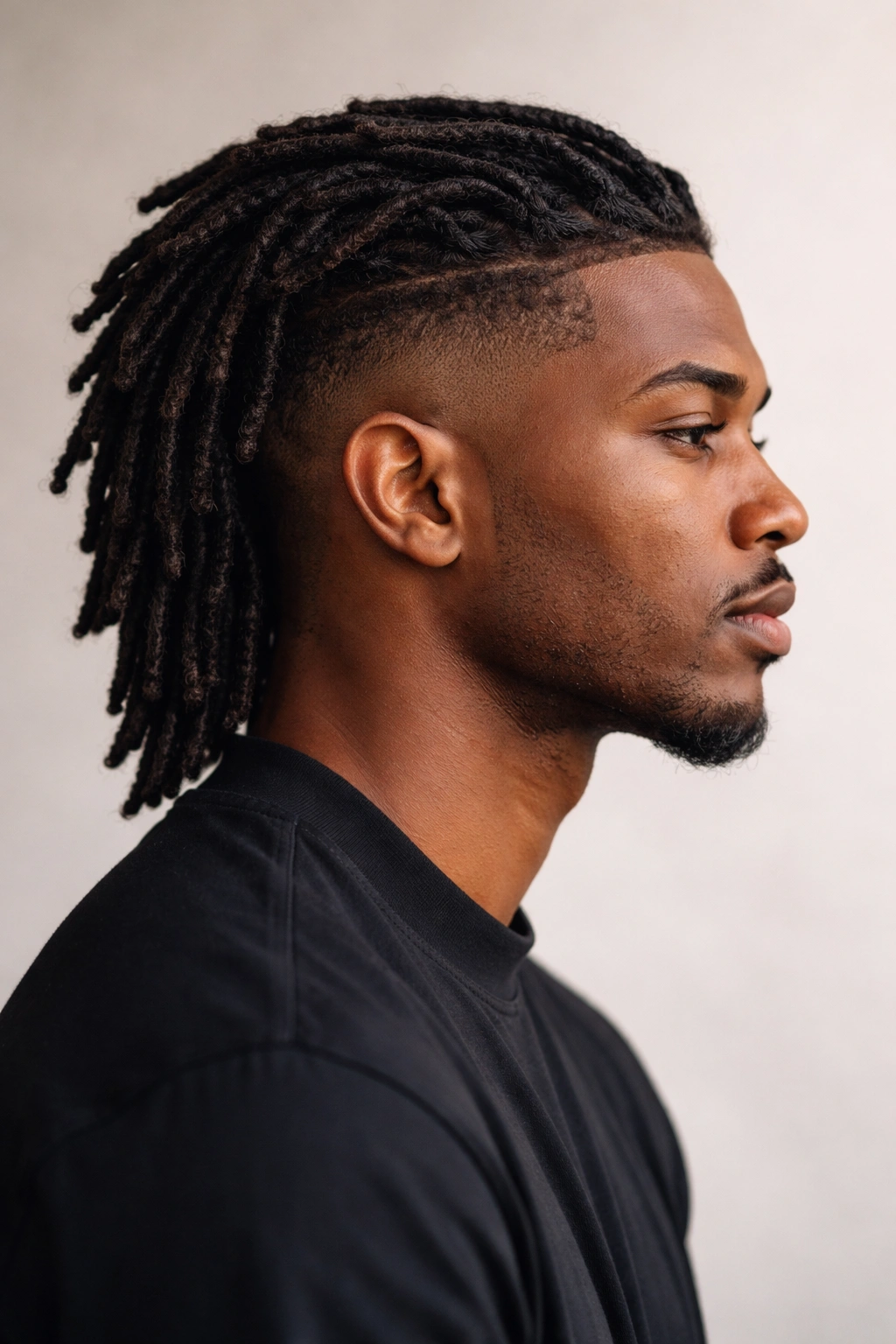
The classic fade mullet is the foundation style, and there’s a reason it remains the most requested look in loc studios everywhere. This version features tightly coiffed locs that are precisely tapered on the sides and back of the head, creating a clean, graduated fade that goes from short to progressively longer as you move toward the back. The front and crown maintain medium-length locs that sit neatly, giving you a structured, put-together appearance that works in professional settings while still honoring the spiritual roots of loc culture.
Why the Fade Works So Well
The fade creates clean lines that make the style feel intentional and controlled. The gradation draws the eye upward and backward, which is a fundamental principle of flattering haircuts. It’s also incredibly practical—the shorter sections at the sides and front are easier to maintain, quicker to wash, and less likely to get caught on clothing or catch lint. The fade eliminates that bulk at the nape of the neck that sometimes happens with untapered locs, creating a more streamlined silhouette that works for any face shape.
What Makes It Stand Out
- The fade is typically cut with clippers, requiring a barber or loctician who understands both loc maintenance and precision barbering
- Maintenance involves retwisting every 4-6 weeks to keep the fade looking sharp
- Works beautifully with natural-colored locs or single-color dyes
- The fade lines need touching up roughly every 2-3 weeks to maintain that crisp definition
- Perfect foundation style that you can build other variations from
Pro tip: When getting a fade, ask your barber to leave slightly longer locs at the very bottom of the back—this creates a subtle cushion that protects the fade line from wearing down too quickly.
2. Tapered Loc Mullet with Textured Top
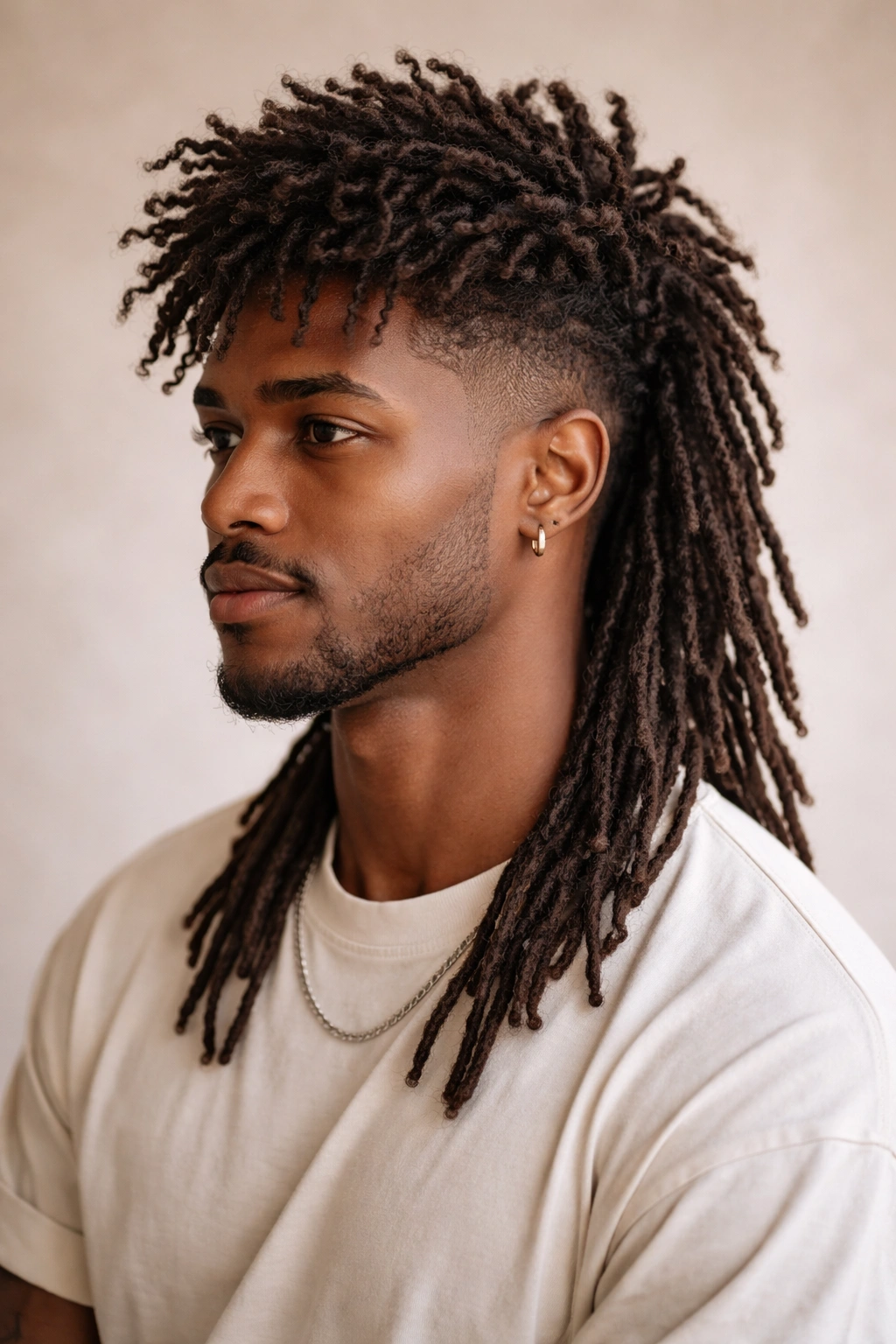
This variation maintains the mullet’s core structure but emphasizes texture and volume on top. Rather than keeping the crown and front locs neat and tidy, you deliberately encourage fuller, more textured locs at the crown that stand up and outward. The back locs remain longer and can be fuller as well, creating a silhouette with real dimension. The taper on the sides is still clean and precise, but the overall effect is less geometric and more organic.
The Texture Element
Textured mullet locs rely on the natural movement and volume of your locs themselves. This works best if your locs have some wave or natural bend to them—straight, perfectly smooth locs tend to look flattened when you try for the textured effect. If your locs are naturally straight, you can create texture through looser retwisting, by allowing some locs to remain slightly less tightly coiled, or by using styling techniques like loc foam or light oils to encourage separation and movement. The texture creates visual interest and depth that flat, uniformly tight locs simply can’t match.
Volume and Styling
- Dries slowly but holds shape better due to increased surface area
- Allows for more creative styling—you can arrange locs on top to create peaks and valleys
- The texture catches light differently, making the style feel dynamic and alive
- Requires slightly more frequent washing to prevent product buildup
- Pairs beautifully with color, especially if you want strands that pop against the textured base
Insider note: Textured mullet locs photograph exceptionally well because the irregular surface creates natural shadow and depth—this style looks more impressive in photos than even sleeker versions do.
3. Loc Bun Mullet Hybrid
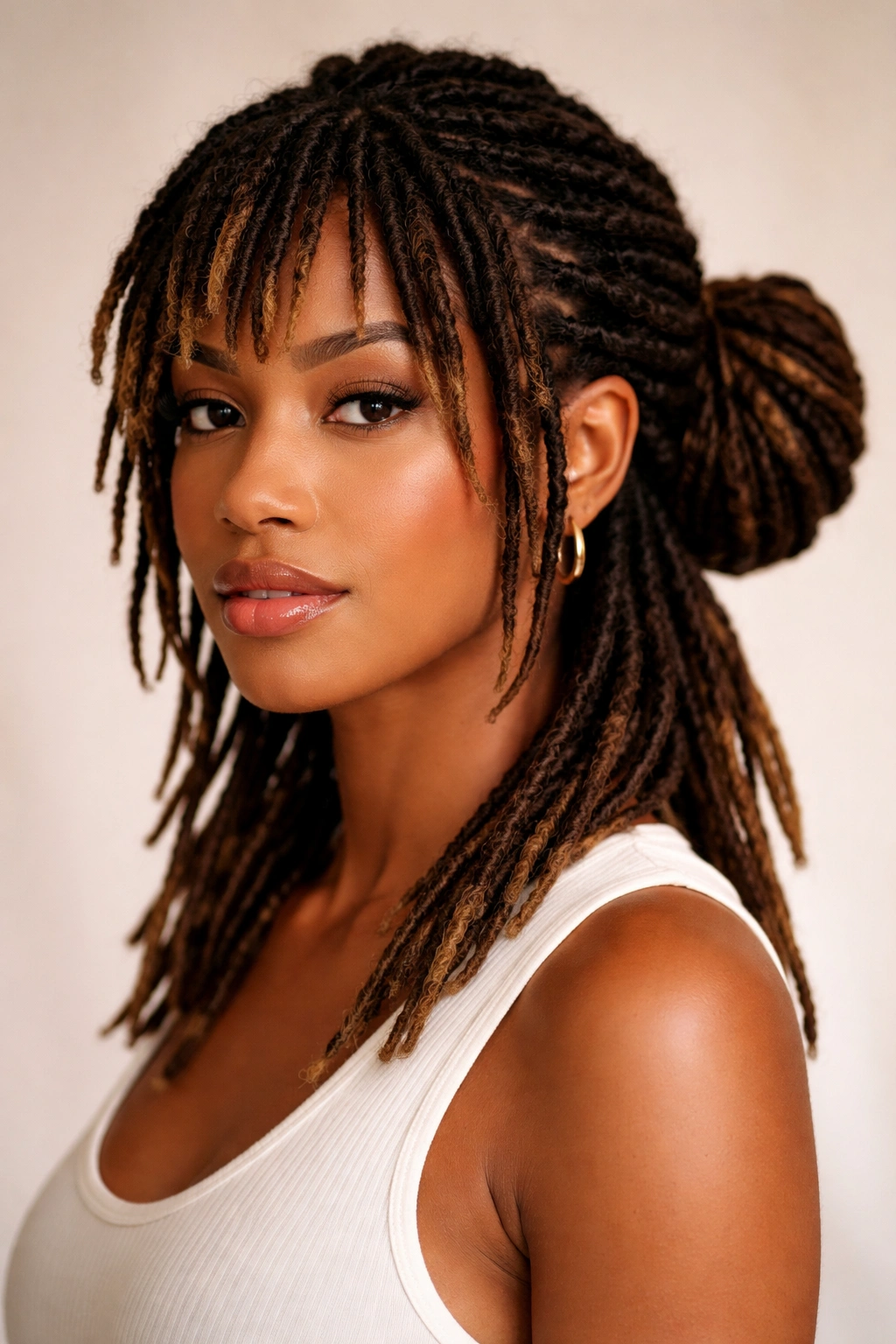
This style blurs the line between a haircut and a styling technique. The mullet cut is still there—shorter locs in front, longer ones in back—but instead of wearing those back locs long and loose, you gather them into a bun or other updo positioned at the nape of the neck. This gives you the visual punch of the mullet when your hair is down, but also offers an entirely different look when you want something more compact and refined. It’s genuinely two styles in one.
Styling the Bun
The bun part of this equation requires healthy, well-maintained locs that are strong enough to hold the updo without putting strain on your edges. A loc bun sits lower on the head than a traditional ponytail bun, anchoring at the nape where your longest back locs naturally gather. You can create a tight, formal bun using a loc wrap, or a looser, more voluminous bun that shows individual locs. The front mullet portion remains styled as you’d normally wear it—either faded cleanly or textured and full.
Why This Hybrid Works
- Solves the problem of “I want the mullet look but also need a professional updo option”
- The bun takes pressure off edges at the front and sides, reducing breakage risk
- Creates a completely different aesthetic depending on whether your back locs are up or down
- Requires locs that are mature and strong (typically 6+ months old minimum)
- The bun showcases the length of your back locs in a way that wearing them loose can’t always achieve
Worth knowing: If you’re planning to wear your locs in a bun regularly, you might want to maintain slightly longer back locs than you would otherwise—aim for at least shoulder-length in the back.
4. Two-Tone Dyed Mullet Locs
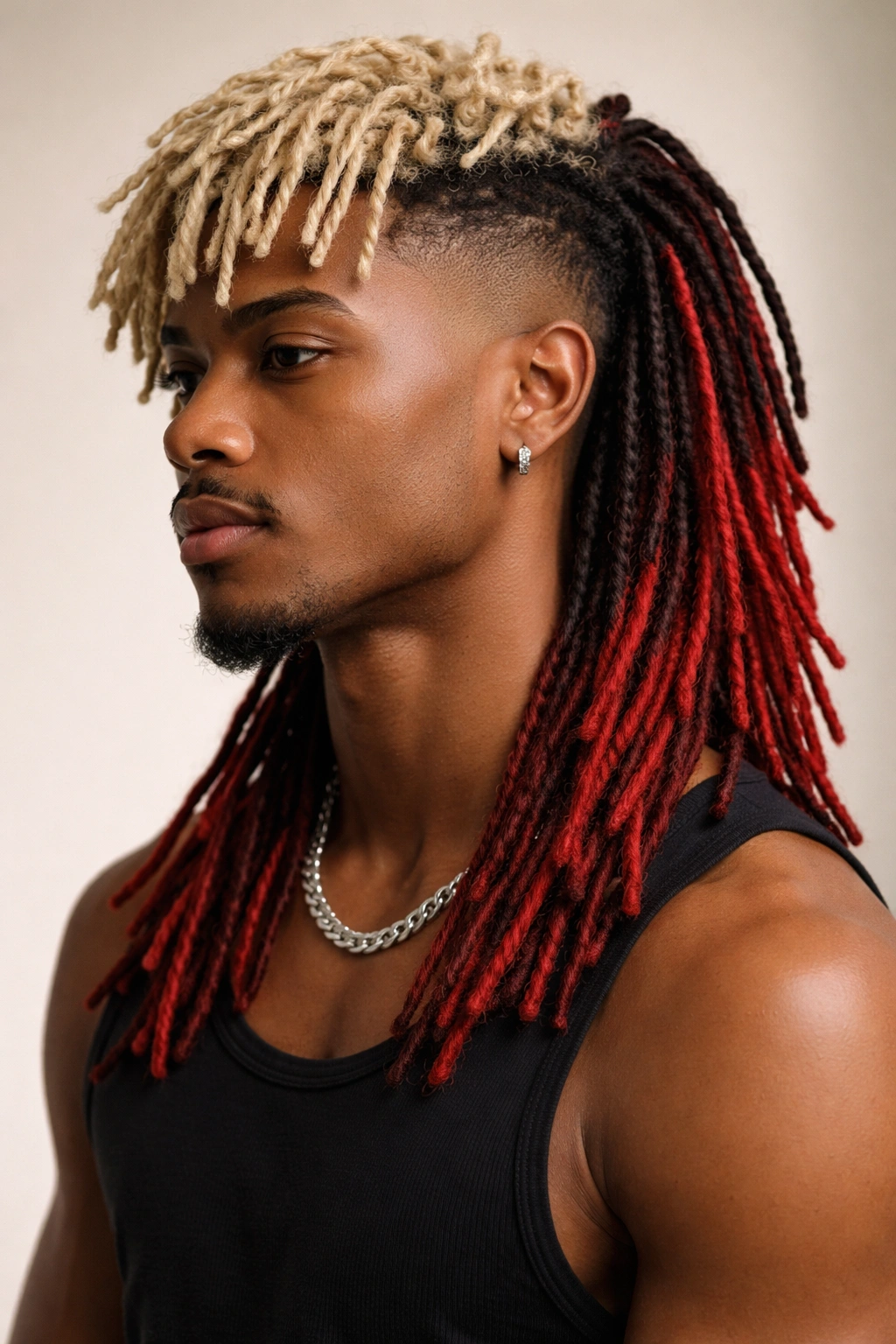
Color transforms the mullet into an entirely different aesthetic. A two-tone mullet typically features one color on the shorter front and side locs, and a different color on the longer back locs. The most dramatic versions use complementary colors—blonde and burgundy, platinum and deep purple, copper and blue. More subtle interpretations might use close shades, like natural brown fading to a lighter honey tone, or jet black fading to a deep burgundy that reads as dark unless it catches the light.
How Two-Tone Coloring Changes the Game
Color creates immediate visual separation and emphasizes the mullet’s distinct regions. When the front locs are one color and the back locs are another, the style reads even more clearly as intentional and designed. The color also adds personality—a natural-haired mullet makes a statement, but a colored mullet makes multiple statements at once. The transition between colors can be sharp and defined, or gradual and blended depending on your vision and your colorist’s skill.
Color Application Considerations
- You’ll typically want to have your locs at least 6-8 months old before coloring to ensure they’re strong and healthy
- Lighter colors require bleaching, which can be damaging—quality colorists will use bond-strengthening products during the process
- Darker colors layer on top without bleaching, making them less damaging but also more prone to fading
- Color-treated locs may need special clarifying shampoos to prevent product buildup and color muddiness
- Budget for touch-ups every 8-12 weeks depending on the colors you choose and how much your natural roots show
Pro tip: If you’re not ready to commit to permanent color, temporary color sprays and powders designed specifically for locs let you experiment with two-tone effects without the long-term commitment.
5. Loc Braids and Locs Blend Mullet
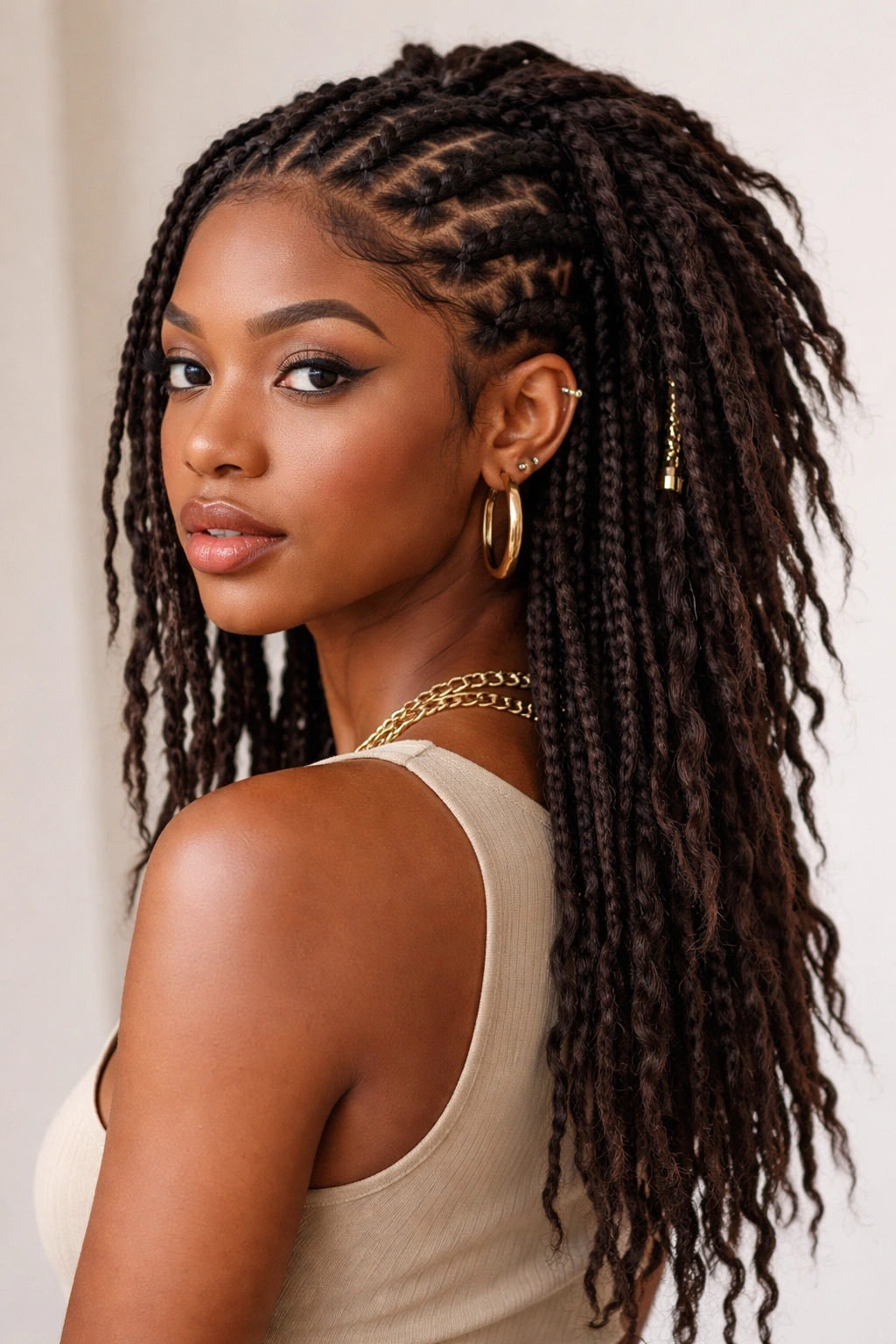
This hybrid incorporates traditional box braids or other braid styles into your mullet loc cut, creating a textured blend of locked and braided sections. Typically, you’d keep your natural locs as the main event and add braid sections in strategic areas—perhaps braids throughout the front sections for extra texture, or braids woven through the back locs for dramatic visual impact. This style works especially well if you’re transitioning your hair and some sections haven’t locked yet, or if you simply love the aesthetic variety that mixing textures provides.
The Technical Challenge
Creating this blend requires a skilled loctician or braiding specialist who understands how to integrate different texture types without causing tension or breakage. The braids and locs need to be anchored well at their bases so they don’t pull on neighboring sections. If you’re adding braids as an addition to existing locs rather than during the initial loc installation, the braids need to connect seamlessly to avoid looking obviously added-on. The most successful versions create a visual flow between the two textures.
Style Variations
- Thin braids woven throughout create a delicate, intricate look
- Thicker box braids clustered in one area make a bold statement
- Colored braids blended with natural locs amplify the visual impact
- Braids can be tighter and more formal, or looser and more organic, depending on your preference
- Mixing braids and locs extends your styling versatility beyond what either texture alone offers
The maintenance difference between locs and braids means you’ll need to be strategic about which sections are which—braids may need periodic retightening while your locs continue their natural tightening process.
6. Shaved Sides Mullet Locs
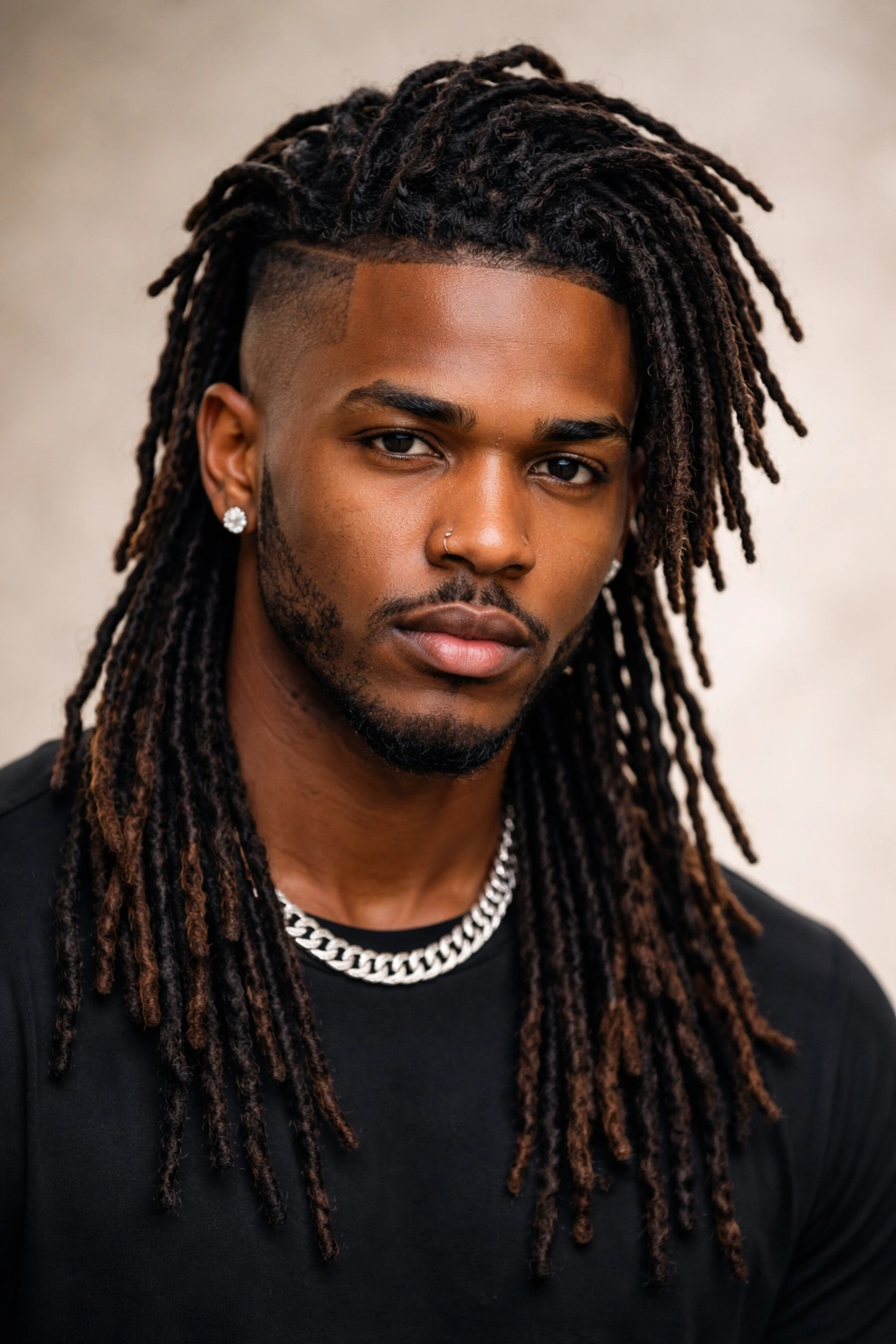
For those who want maximum contrast between the mullet regions, fully shaved sides create a striking effect. Instead of a gradual fade, the sides are taken down to skin with clippers, creating a sharp, clean line where the hair begins. This style requires real confidence because you’re essentially creating a undercut with locs. The shaved sides draw attention to the face and emphasize the volume of the locs on top and in back.
The Shaved Sides Aesthetic
This is where the mullet becomes genuinely edgy. The shaved sides create a fortress of texture above and behind, which is deeply striking but also requires strong personal style to carry off. This version isn’t trying to look professional or understated—it’s a statement. The contrast makes the shaved locs look longer and fuller by pure geometry, and it forces whoever’s looking at you to focus on your face and the locs themselves, with no visual distraction from the sides.
Maintenance and Considerations
- Shaved sides require maintenance every 1-2 weeks to keep them clean and visible
- In cold weather, exposed sides can feel genuinely cold—consider this depending on your climate
- Some workplaces or settings may not be receptive to this level of boldness
- The shaved area is prone to irritation if you’re sensitive, so quality aftercare is important
- The contrast can be softened using designs or patterns in the shaved section if you want something less stark
Real talk: This style requires confidence and a genuine alignment with bold self-expression. If you’re going for it because you think it might look cool, wait until you know it’s genuinely you. If you love it and feel powerful in it, that’s when you go for it.
7. Loc Updos Mullet Fusion
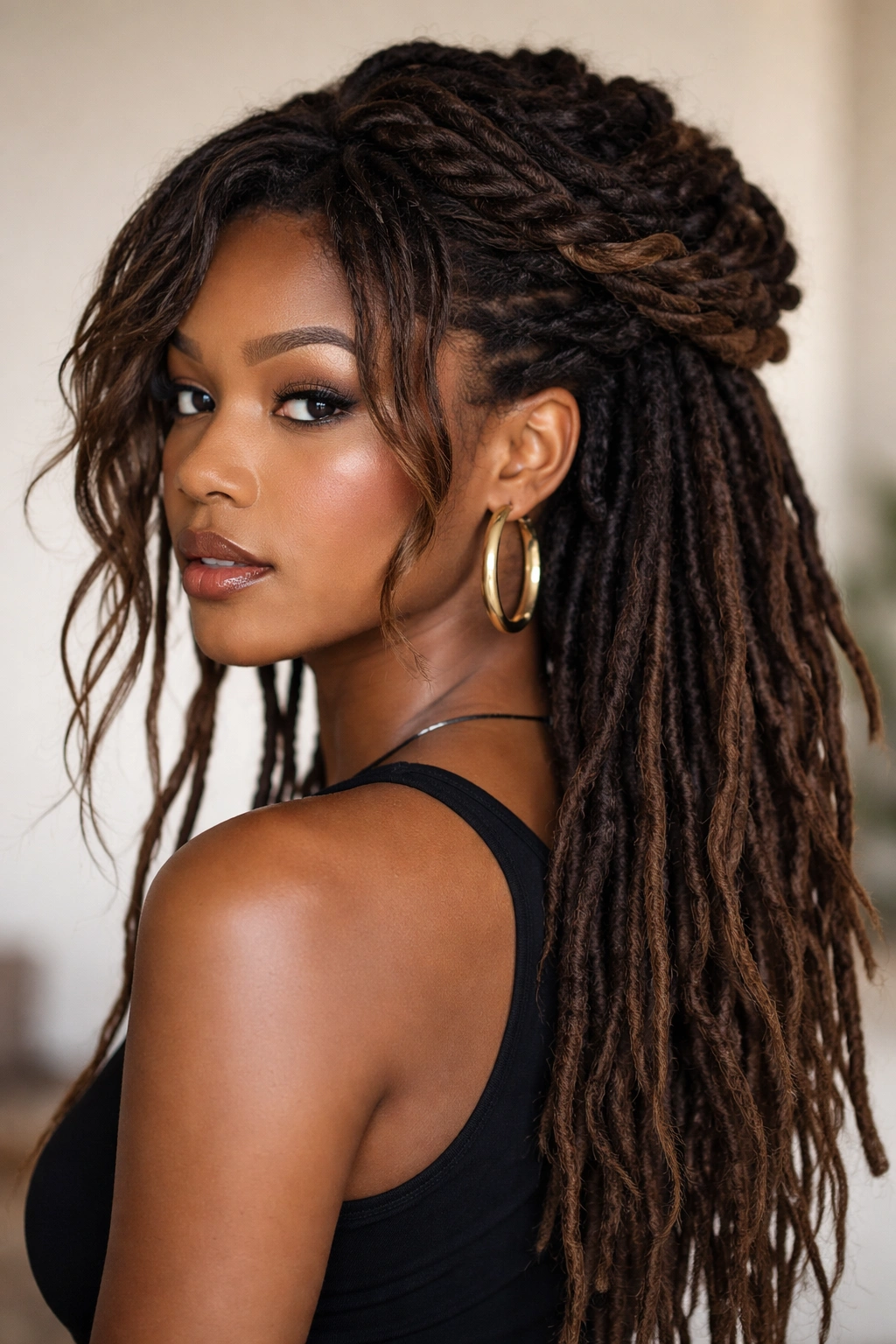
This style takes the mullet’s back locs and creates an elevated updo while keeping the front mullet elements loose and visible. Unlike the bun hybrid, which creates a single gathered bun, loc updos in a mullet context can mean intricate braided styles, twisted updos, or elaborate arrangements that showcase loc craftsmanship. You might create a loc crown braid across the back, or twist sections of the back locs into spirals that sit on top of the head, or create an asymmetrical updo that’s artistic and sculptural.
Creating Impact with Loc Updos
The key to making a mullet updo work is ensuring that the updo is elaborate enough to deserve its own look, while the loose front mullet sections remain visible and styled. This means your back locs need to be quite long—ideally at least hip-length if you want them to wrap and twist in visually interesting ways. The updo should be clearly intentional and beautifully executed, not accidental-looking. This style celebrates the length and flexibility that mature locs offer.
Styling Possibilities
- Loc braids that wrap around the head like a crown, with loose back locs emerging from the top
- Twisted sections bundled into an elaborate side knot
- Individual locs twisted or braided and looped back on themselves
- Asymmetrical designs that feature the locs on one side
- Mixed styles using both twists and braids for visual complexity
This style works exceptionally well for events, performances, or special occasions where you want something genuinely showstopping. The updo also gives your edges and front locs a break, which can be beneficial for long-term health.
8. Colored Tips Gradient Mullet Locs
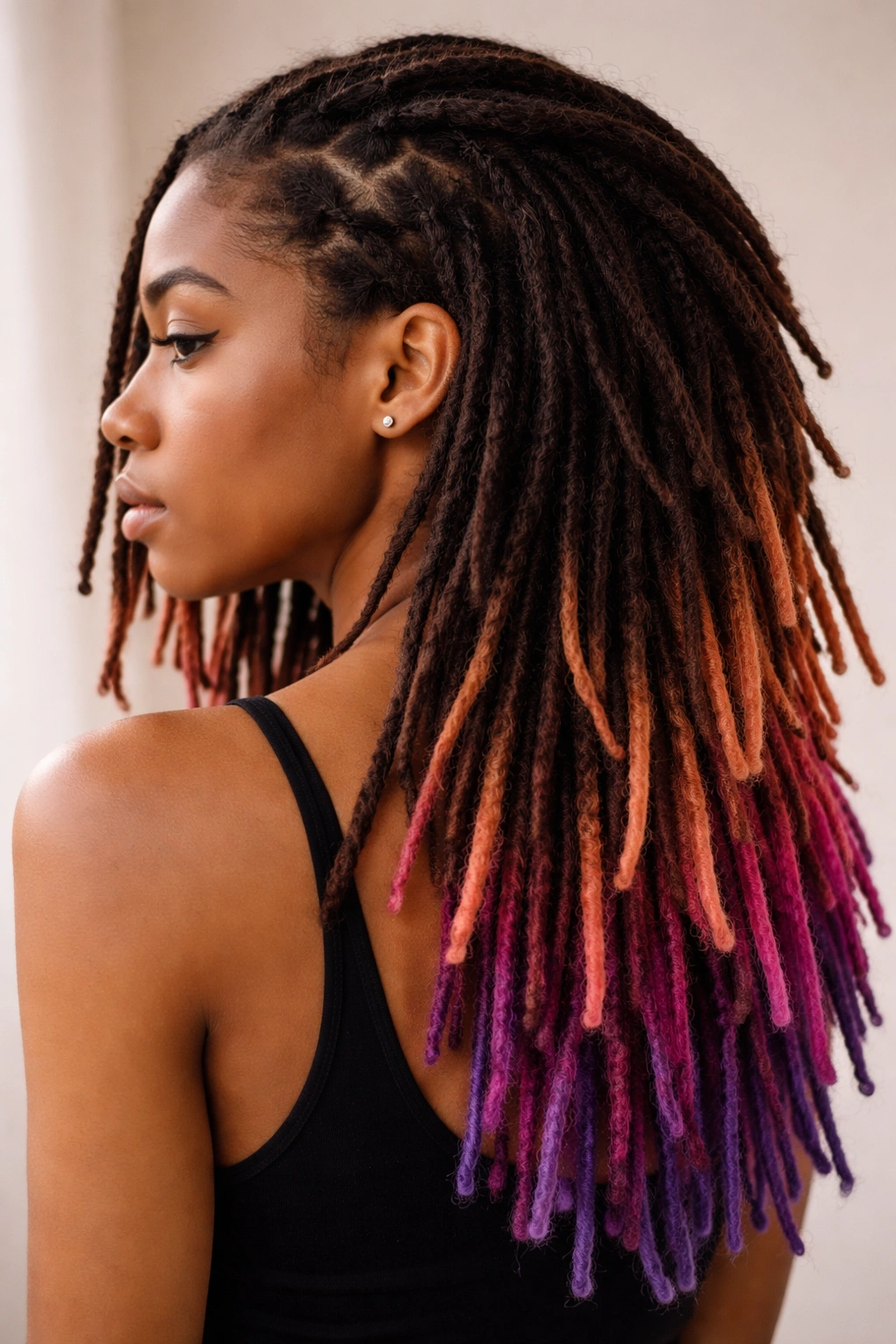
Instead of dyeing entire sections of your locs a different color, you dye just the tips of your back locs, creating a gradient effect. This might mean the last 2-3 inches of each back loc is colored while the root and middle remain natural, or the last half of each loc transitions through multiple colors. The front and side locs remain the natural color or a different solid color, creating the mullet contrast. This approach is less commitment than full-section coloring but creates serious visual impact.
The Gradient Technique
Gradient coloring requires precision from a skilled colorist who understands locs and understands color theory. The colorist needs to know how to apply color precisely to just the section you want while protecting the rest of the loc from staining or damage. Gradients work best when there’s intentional color progression—warm to cool, light to dark, or a multi-step spectrum. The result looks like the color was always part of your locs rather than added after the fact.
Why Gradients Are Effective
- Creates dramatic visual impact without full-head commitment
- The gradient shows movement and length by contrasting the colored tips against the natural-colored roots
- Less damaging than full-head coloring because you’re only treating the tips
- The natural color at the roots blends seamlessly, so grow-out doesn’t look as stark
- Pairs beautifully with any mullet cut from classic fade to textured top
Practical note: If you’re dyeing tips, plan for touch-ups approximately every 10-14 weeks depending on your color choice and how much your natural roots grow. Lighter colors fade faster, so budget accordingly.
9. Messy Textured Volume Mullet Locs
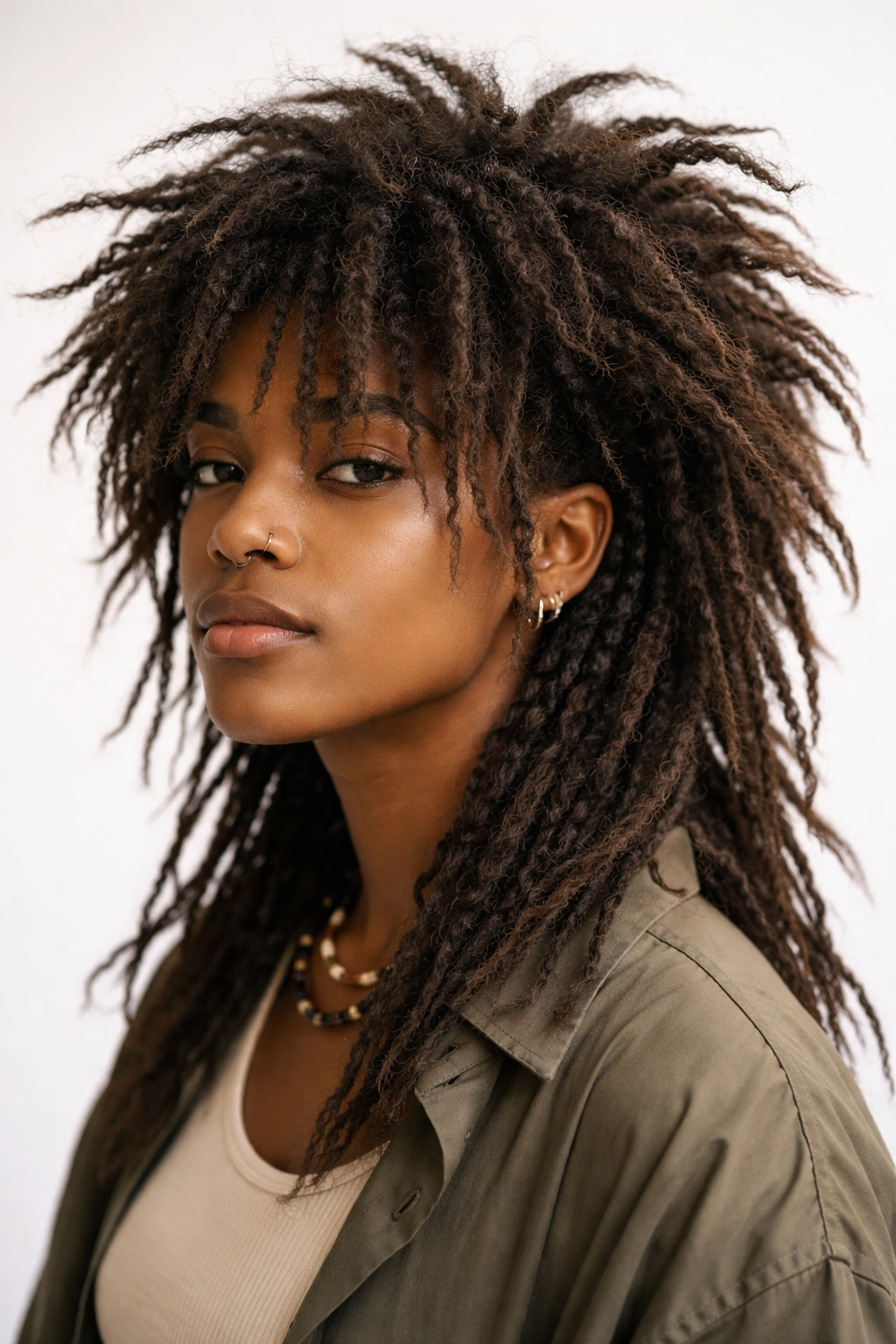
This is the anti-precision mullet. Instead of clean lines and sharp fades, this version embraces texture, volume, and a deliberately undone aesthetic. The locs throughout are allowed to stand out and away from the head, creating a cloud-like silhouette. There’s no fade—the locs are all roughly the same length in individual sections, but the natural variation in how they sit creates an organic shape. The front might have slightly shorter locs, but you’re not going for crisp definition. You’re going for personality.
Building the Messy Aesthetic
Achieving this look requires either having naturally textured locs with good movement, or deliberately creating that texture during installation or through styling techniques. You might use less retwisting, allowing some locs to loosen slightly and separate. You might separate locs from each other more, creating defined individual locks rather than locs that sit tightly together. You might blow-dry your locs slightly to encourage them to stand away from the head. The key is that every loc is visible as its own entity, contributing to the overall volume.
Why Messy Texturing Works
- Creates visual interest and movement that even perfectly neat locs can’t quite achieve
- Works beautifully with color—colored sections pop more against the textured base
- Requires less maintenance than a precise fade, since you’re not trying to keep edges sharp
- Photographs incredibly well due to the natural shadows and depth created by separation
- Feels more youthful and creative than sleeker versions
Worth knowing: This style reads as intentionally artistic, not neglected, when it’s clearly maintained. The locs still need regular care, retwisting, and washing. It’s just the aesthetic that’s relaxed, not the actual maintenance.
10. Loc Knots and Twists Mullet
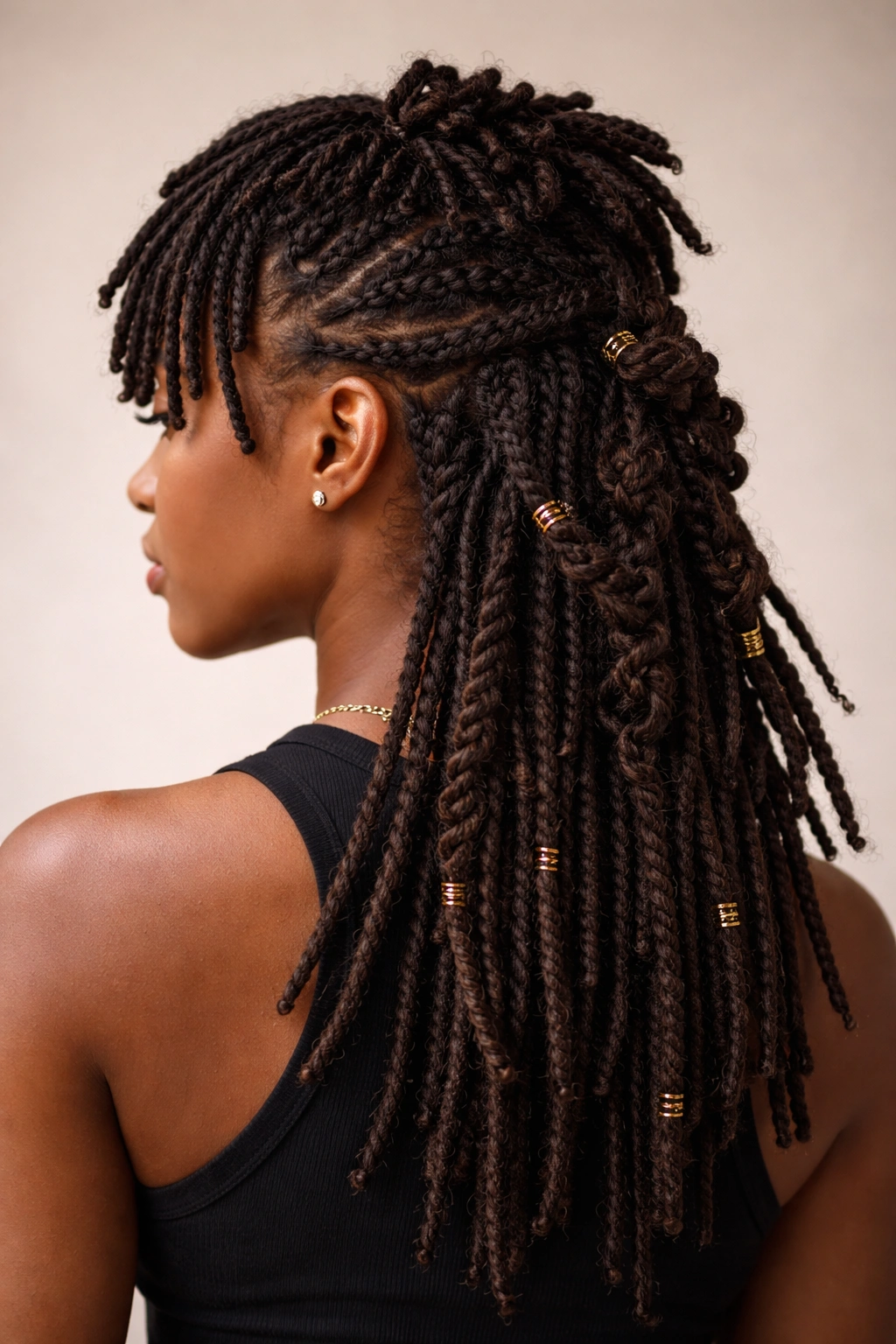
This style incorporates decorative elements—loc knots, twisted sections, or multiple locks tied together—throughout the mullet for extra texture and visual complexity. You might tie individual locs in knots, twist two locs together for a certain length before untwisting them, create small braided sections within the locs, or tie off sections with string or wire wrapping. These decorative elements are most visible on the back locs, but can be scattered throughout the entire mullet for an elaborate look.
Knots, Twists, and Texture Details
Decorative elements in locs allow you to express creativity at a granular level. A single knot in a loc creates a focal point. A series of knots down the length of individual locs creates rhythm. Twisted sections add visual texture and can be tightened or loosened depending on your preference. String wrapping or wire wrapping adds color and shine. These elements are semi-permanent—they can stay in for weeks or months, or you can add and remove them frequently depending on your mood.
Endless Variation
- Individual knots scattered throughout for a playful, organic look
- Systematic patterns of knots creating geometric order
- Twisted sections creating defined segments within locs
- Colored string wrapping that contrasts with your loc color
- Metal wire wrapping for shine and durability
- Combinations of multiple techniques for maximum visual interest
Pro tip: If you’re adding decorative elements like knots or wraps, do them when your locs are freshly washed and damp. They’ll be easier to manipulate, and as they dry and tighten, the decorative elements will secure themselves more firmly.
Final Thoughts
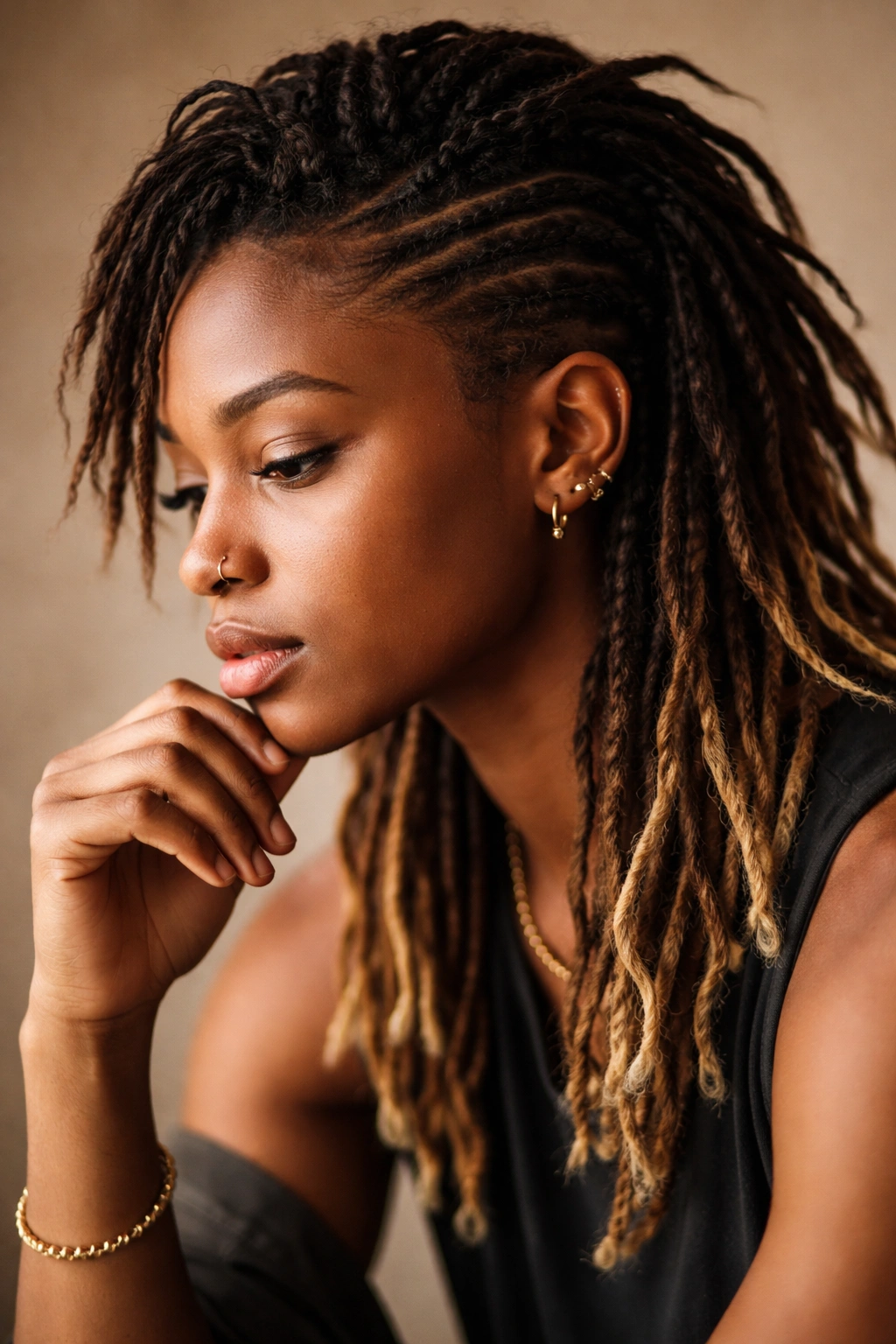
The mullet loc isn’t a single monolithic style—it’s a framework that accommodates endless variation and personal expression. Whether you’re drawn to the precision of a classic fade, the boldness of shaved sides, the artistry of colored tips, or the creative possibility of blending textures and techniques, a mullet cut can be shaped to match your vision. The beautiful thing about locs as a medium is their malleability. Once you’ve committed to the journey of growing locs, the mullet gives you permission to get creative with exactly how you want to present them to the world.
What matters most is choosing a loctician you trust who understands both the spiritual and practical sides of loc culture, and who can execute your specific vision. Come to the conversation with reference images and be clear about what you’re hoping to achieve—texture or sleekness, color or natural, bold or subtle. Your loctician can then advise you on what’s realistic given your hair type, the maturity of your locs, and the maintenance commitment each style requires.
The mullet loc is still relatively fresh in the mainstream conversation around locs, which means you’re not choosing between a thousand established versions. You’re helping to pioneer what this style becomes. The version you choose will be uniquely yours—a reflection of your personality, your aesthetic vision, and your willingness to take up space exactly as you are.
