



The combination of intricate braids paired with shaved or faded sides creates one of the most striking and versatile hairstyle statements available to women today. This bold aesthetic walks the perfect line between edgy and elegant, allowing you to express creativity through complex braid patterns while the clean undercut adds an unexpected element of confidence and attitude. Whether you’re looking to make a dramatic change or simply want to refresh your current look, braided styles with shaved sides offer the flexibility to work with nearly any hair type, texture, and lifestyle while remaining undeniably eye-catching.
The beauty of this trend lies in its adaptability and longevity. These hairstyles work for professional environments when styled sleekly, can command attention at social events, and provide the perfect canvas for experimenting with color, texture, and pattern. The shaved or faded sides actually give you more styling freedom with your braids because the contrast creates visual interest regardless of how simple or complex your braid pattern is. You’re not relying solely on the braid itself to make an impact—the architectural shaping of your cut works in perfect harmony with whatever braiding technique you choose.
What makes this category of hairstyle particularly appealing is that maintenance becomes more manageable than you might expect. The shaved sections require minimal upkeep once healed, and the braids can be styled, restyled, and refreshed without needing constant trips to the salon. You have genuine creative control over how intricate you want to go, how long you want to keep the braids in, and how often you want to switch up the pattern. The following styles demonstrate just how diverse this look can be—from romantic and flowing to sharp and architectural.
1. Side-Swept French Braid With Undercut
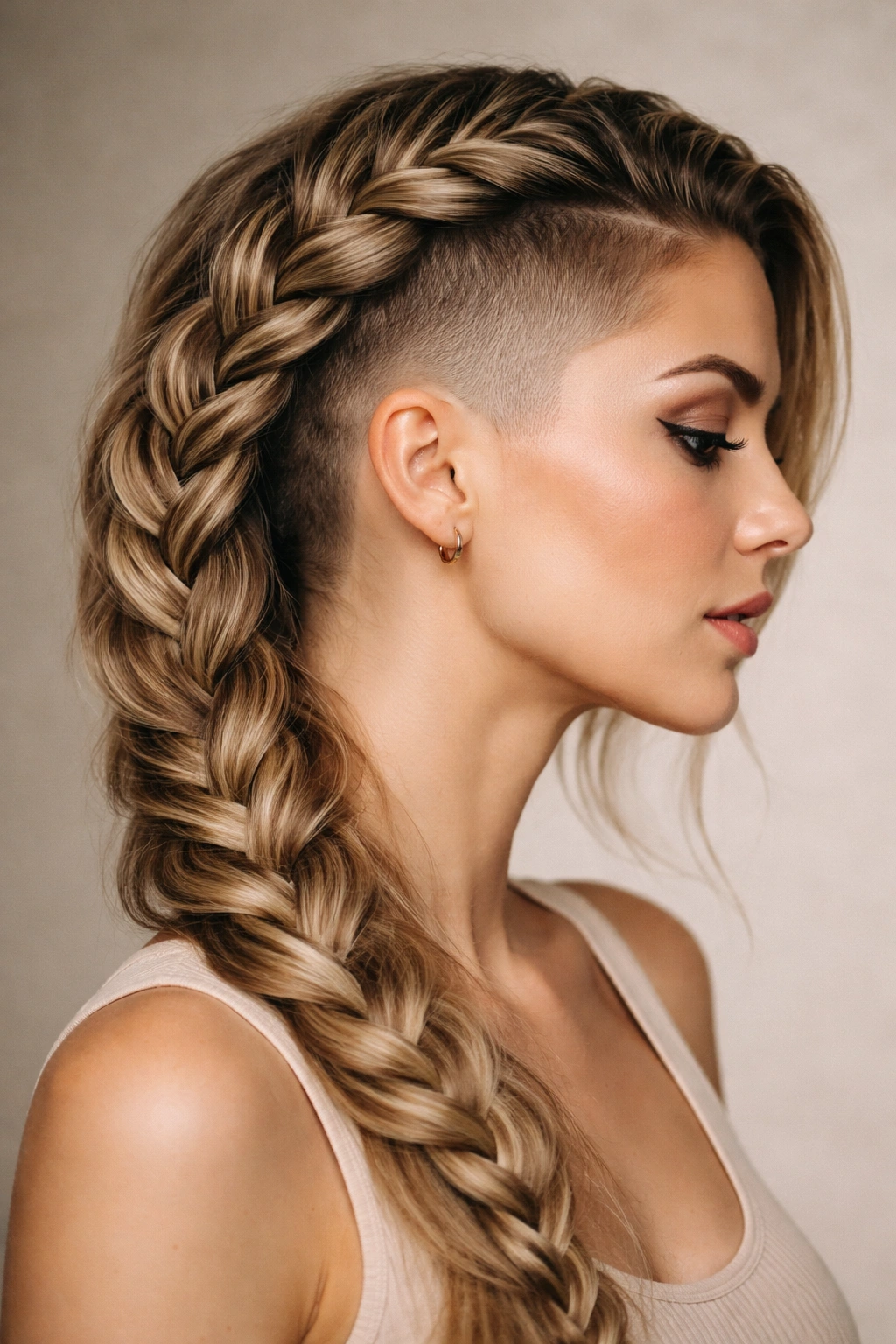
A classic side-swept French braid paired with a clean undercut is the perfect entry point into this aesthetic if you want something that still feels wearable for any occasion. Start the braid at the temple on one side, incorporating hair as you move diagonally across the back of your head, and let it flow over your opposite shoulder where you can secure it with a small elastic. The French braid follows the natural contour of your skull, creating an elegant diagonal line that’s enhanced dramatically by the faded sides.
Styling and Execution
The key to making this style work is starting your braid with intention. Begin with three small sections at your temple and cross them over each other as you add more hair from underneath, pulling slightly outward on each section to create dimension and texture. Work the braid diagonally rather than straight across—this creates a more flattering line that balances facial features while showcasing the clean geometry of your undercut. The braid should feel slightly loose and textured, never so tight that it pulls at your scalp.
Maintenance and Longevity
- Keep this style fresh for 5 to 7 days before re-braiding by gently misting with dry shampoo if your roots need texture
- Sleep on a silk pillowcase or in a loose braid to prevent unnecessary breakage and frizz
- The undercut requires touching up every 3 to 4 weeks, or every 4 to 5 weeks if you prefer a slightly grown-out fade
- Use a light leave-in conditioner on the braid itself to maintain smoothness without weighing it down
Pro tip: Weave a thin metallic ribbon or faux hair through your braid before securing it—this adds visual interest and helps define the braid’s shape without requiring you to make it uncomfortably tight.
2. Double Dutch Braids Down the Back
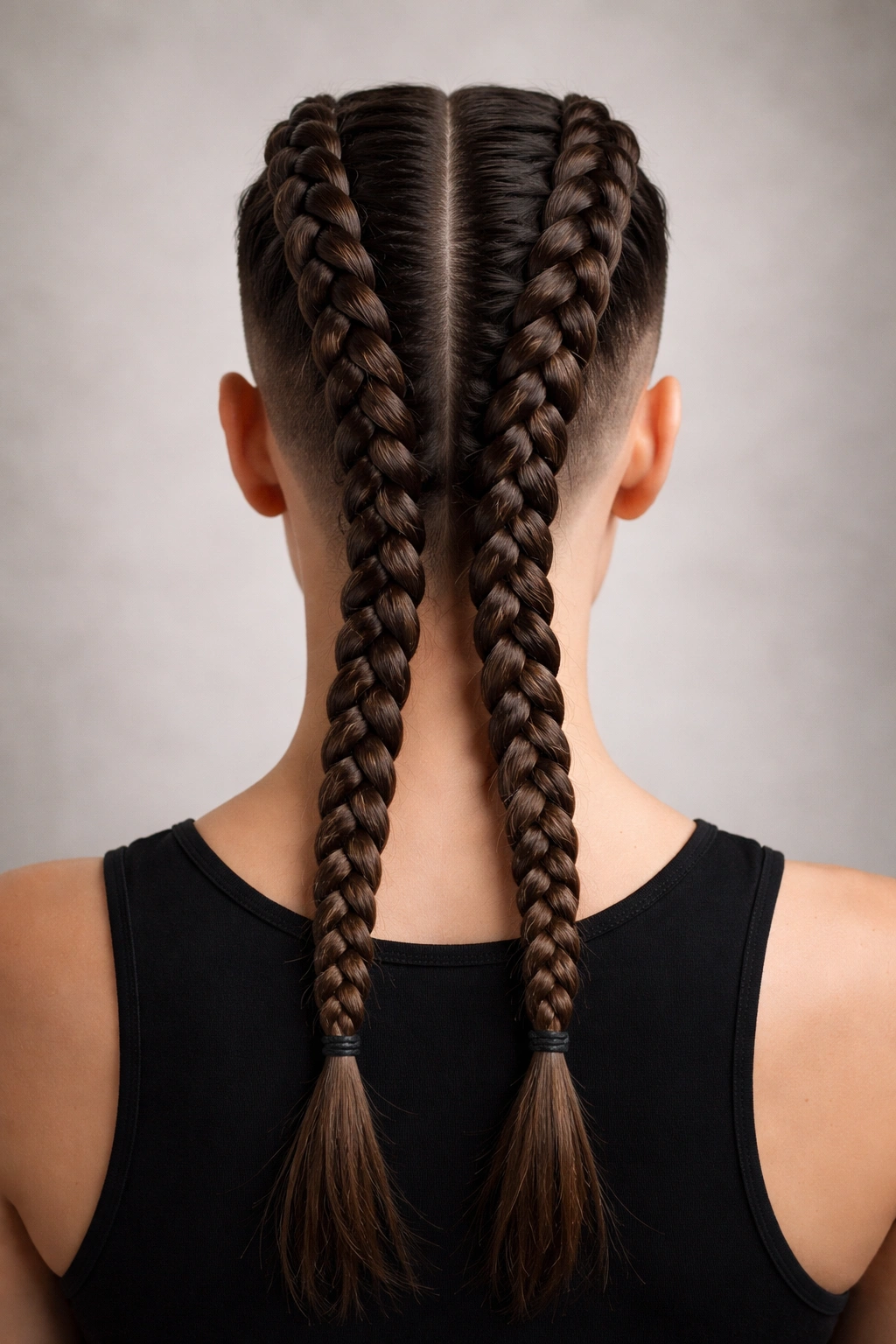
Two symmetrical Dutch braids running down the back of your head create a sporty yet sophisticated aesthetic that’s perfect for showing off both your braiding skills and the clean lines of your shaved sides. Rather than meeting in the middle, let these braids run parallel down the back, creating a striking visual corridor that draws the eye downward. This style works best when you have medium to thick hair density, as it allows both braids to have presence without pulling too much from the crown.
Creating the Perfect Parallel Lines
Begin by sectioning your hair down the middle with a clean part, starting each Dutch braid at the root and braiding downward while incorporating hair from the sides. A Dutch braid—where you cross sections under rather than over—creates that three-dimensional, rope-like appearance that photographs beautifully and feels distinctly different from a French braid. The undercut becomes a stunning frame for these parallel lines, with the shaved sections creating visual contrast that makes the braids pop.
Real-World Practicality
- This style typically holds beautifully for 5 to 8 days with minimal effort
- Secure the ends with small elastics or bobby pins tucked into the braid itself for a seamless look
- The parallel lines create the illusion of elongated neck and shoulders, making this particularly flattering for most face shapes
- Consider using texturizing spray at the roots before braiding to ensure the Dutch braids grip the hair securely
Worth knowing: If you have finer or thinner hair, you don’t need to skip this style—simply braid more loosely and gently pull sections of each braid outward after finishing to create the illusion of fullness and dimension.
3. Crown Braid With Geometric Undercut Design
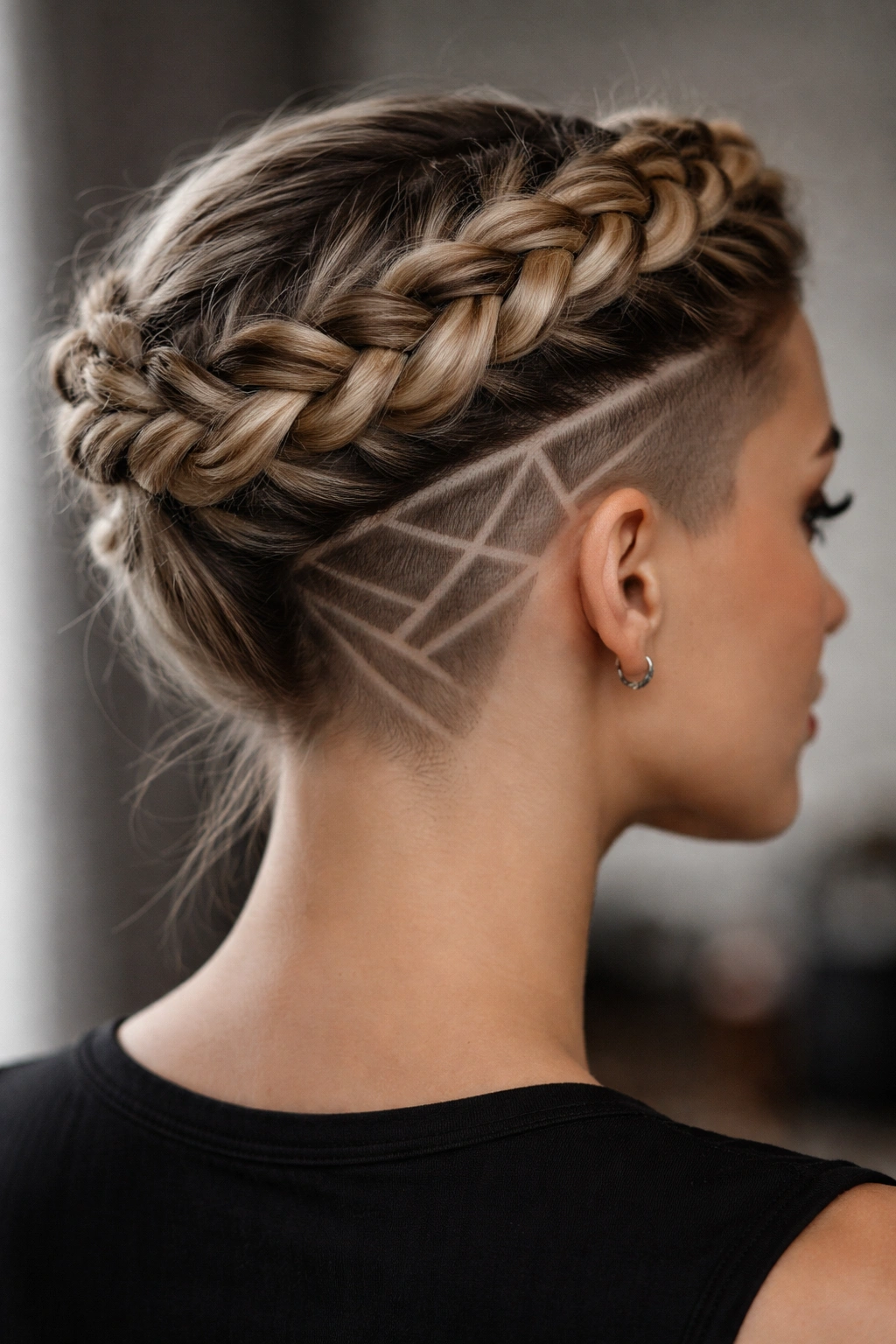
A crown braid that circles the top of your head while the undercut features a geometric design (like a faded line, angle, or pattern) creates an artistic mashup of romantic and rebellious. The crown braid begins near one ear, wraps around the back of your head, and finishes near the opposite ear, creating a halo effect that’s both feminine and unexpected when paired with an edgy shaved side design. This style demands a skilled barber or stylist for the undercut, but the payoff is a truly custom, personalized look.
Design Considerations for Maximum Impact
The crown braid works best when braided loosely with texture—gently pull the outer edges of each section to create a relaxed, romantic appearance that contrasts beautifully with the sharp precision of a designed undercut. The geometric pattern on the undercut should complement your face shape and personal style; some women opt for simple faded lines, while others choose more intricate designs like stars, waves, or angular shapes. The interplay between the soft, organic braid and the sharp, deliberate undercut design is what makes this style memorable.
Styling Tips for Longevity
- Use a light texture spray or volumizer at the roots before braiding to ensure everything holds without looking artificially stiff
- This style can stay in for 6 to 10 days depending on your hair’s natural texture and how gently you’ve braided it
- Sleep carefully to avoid loosening the braid; a loose silk scrunchie or clip can help secure it while you sleep
- If your undercut design begins to soften or fade, a simple touch-up between regular cuts can maintain the visual impact
Insider note: Photograph this style from multiple angles and save images on your phone—when you’re ready for your next haircut, show your stylist exactly what undercut design speaks to you, ensuring they understand your vision before they make the first cut.
4. Fishtail Braid With High-Fade Undercut
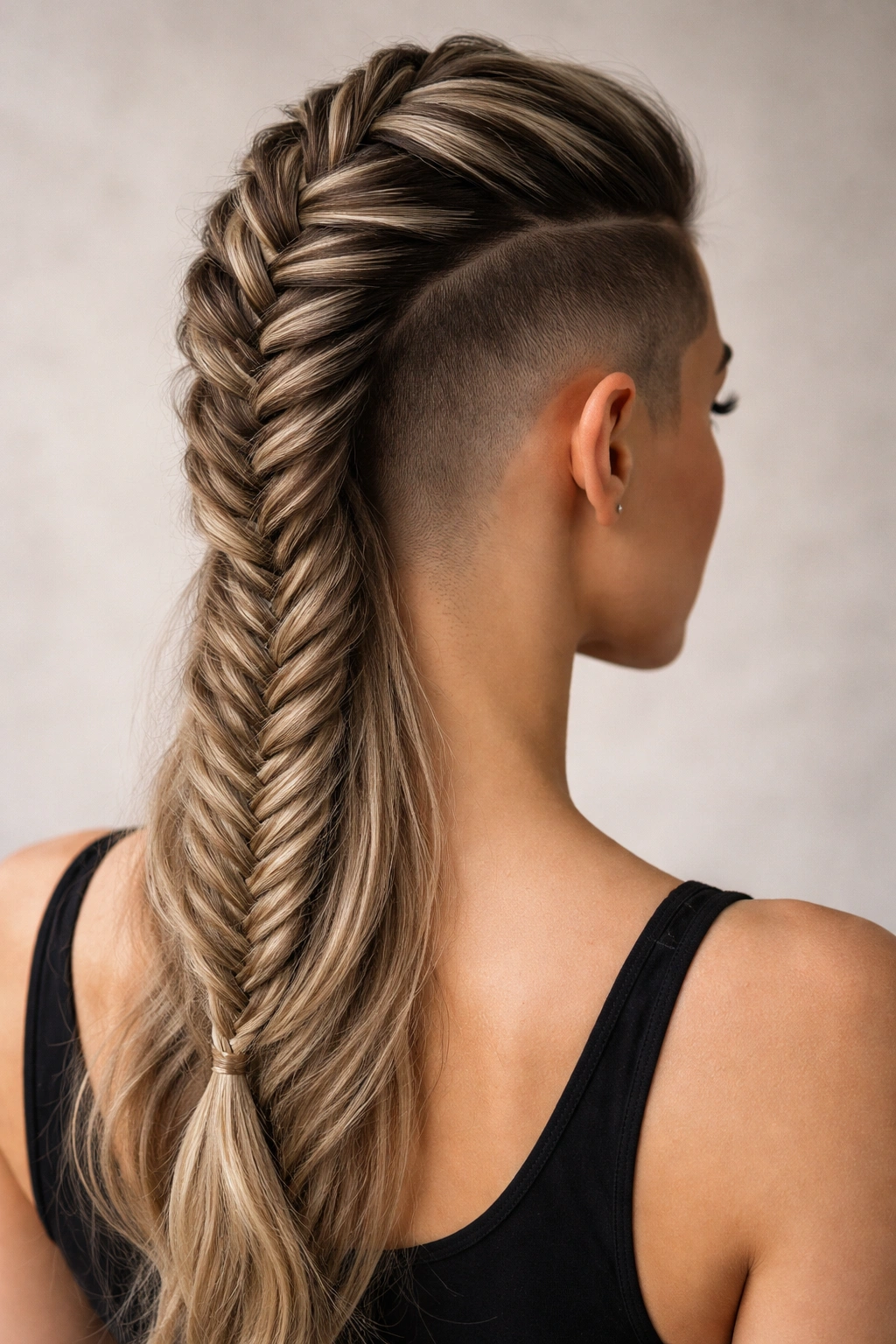
A fishtail braid offers a delicate, intricate appearance that’s technically impressive while still feeling effortless and romantic. When paired with a high fade that clears the sides dramatically, the contrast between the fine, complex texture of the fishtail and the sculptural precision of the undercut is absolutely striking. This style works beautifully whether you wear it down your back, over your shoulder, or even wrapped and pinned at the base of your skull.
Perfecting the Fishtail Technique
A fishtail braid uses only two sections of hair rather than three, which means you’re continuously pulling tiny pieces from the outside of each section and crossing them to the opposite side. This creates that intricate, woven texture that looks almost fish-scale-like. The technique takes practice to perfect, but once you get the rhythm, it becomes meditative and second nature. The key is keeping tension consistent and working with relatively small outer sections to create that fine, detailed appearance.
Styling for Maximum Definition
- Start the braid at the crown or nape depending on the look you want—crown placement is more dramatic and shows off the braid structure, while nape placement is more understated
- Use a sea salt spray or texture spray before braiding to give your hair grip and prevent it from feeling slippery
- Gently pull sections of the finished braid outward to increase volume and texture—this works particularly well with fishtail braids
- Secure with an elastic that matches your hair color, or use a decorative clip or hair stick for visual interest
Pro tip: If you have fine or straight hair, sleep on your fishtail braid loosely and undo it the next day—the resulting waves will add texture and body to your hair while giving your scalp a break from braiding tension.
5. Cornrow Braids With Fade and Design Line
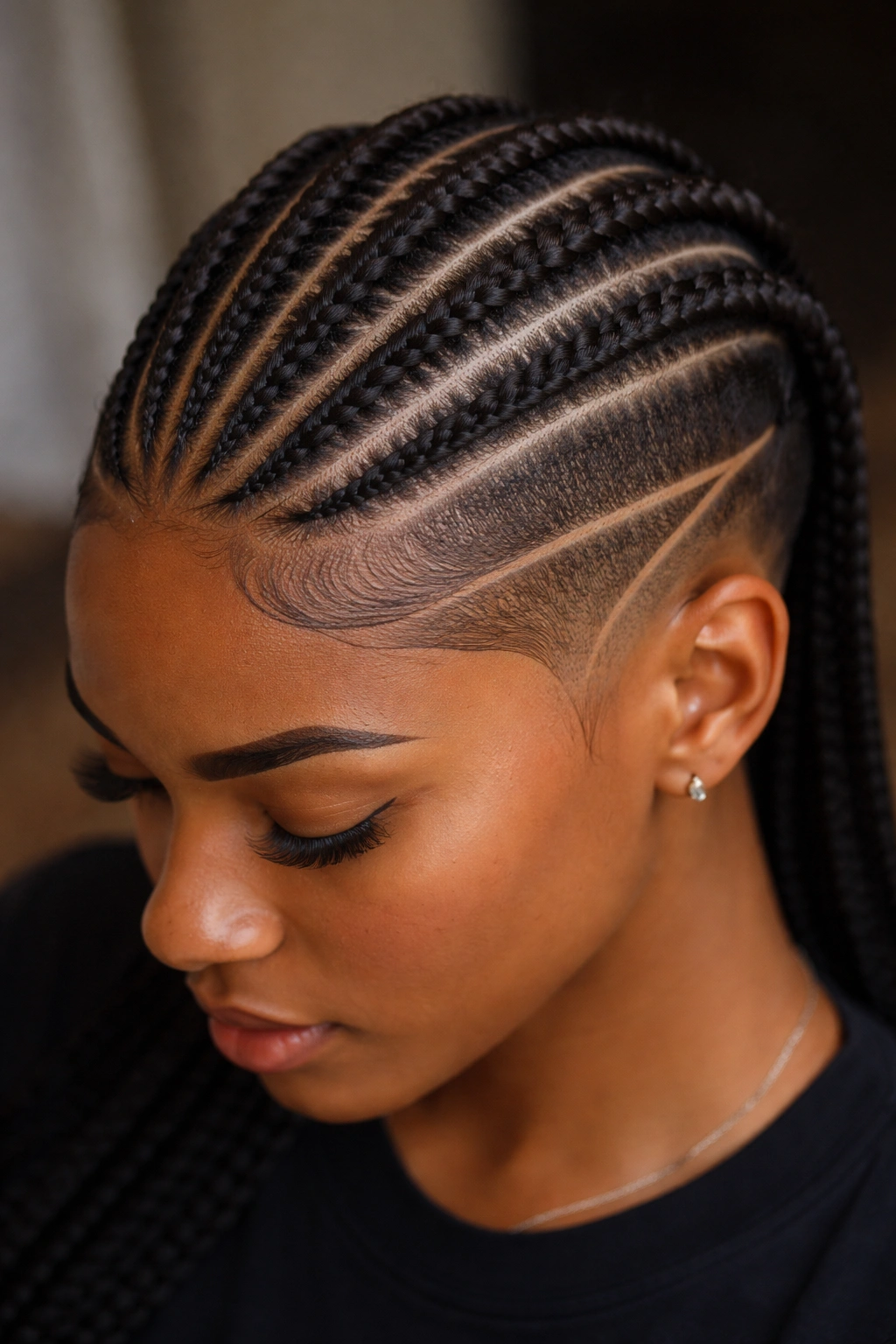
Cornrows paired with a fade and a clean design line create a look that’s both deeply rooted in cultural tradition and contemporary cool. Cornrows—tight, close-to-the-scalp braids that can follow straight lines, curves, or patterns—offer incredible versatility and can be worn sleekly, with decorative hair woven in, or even embellished with beads or jewelry. Combined with a sharp undercut, the geometry becomes even more striking, and you have the option to create alignment between your cornrow pattern and your undercut design.
Planning Your Cornrow Pattern
Cornrows work best when you have a clear vision of your pattern before your stylist begins. Common options include multiple straight lines running back to front, curved lines that flow around the head, or geometric patterns that create visual movement. Consider your hair density, scalp sensitivity, and personal style when choosing your pattern. Some women prefer numerous thin cornrows for a delicate appearance, while others choose thicker, fewer cornrows for a bolder statement. The undercut becomes a stunning neutral backdrop that lets your cornrow artistry take center stage.
Care and Maintenance Essentials
- Cornrows can safely remain in for 4 to 8 weeks depending on your hair growth and scalp health
- Wash your scalp weekly with a cleansing spray or diluted shampoo solution applied directly to the roots—avoid heavy products that build up on cornrows
- Sleep on a silk or satin pillowcase to reduce friction and extend the life of your cornrows
- The fade will require touch-ups every 3 to 4 weeks, but cornrows themselves need no maintenance once installed
Worth knowing: If this is your first time wearing cornrows, start with a pattern you can easily maintain and a braiding professional who has extensive experience—proper tension and technique prevent hair breakage and scalp discomfort.
6. Twisted Braids Framing the Face
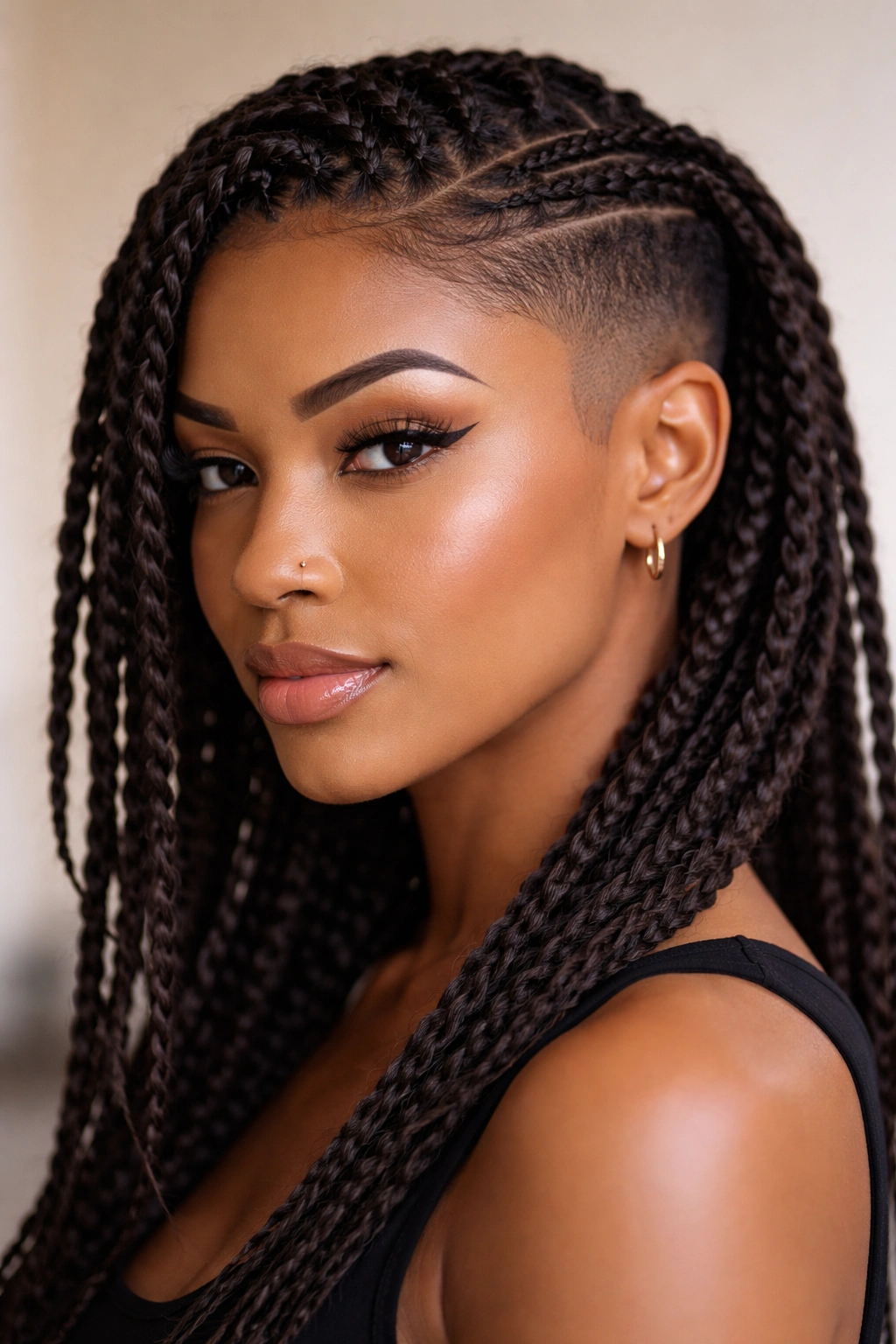
Twisted braids that begin at your temples and flow toward the back of your head create a softer, more romantic alternative to traditional braids while still offering visual interest and texture. Twists—created by wrapping two sections of hair around each other rather than crossing them—photograph beautifully and work wonderfully with colored or highlighted hair because the light plays differently across the twisted texture. The shaved sides frame this softer style perfectly, creating balance between romantic and edgy.
The Art of Two-Strand Twists
Two-strand twists are simpler than they might appear: divide a section into two parts and twist them around each other from root to tip, adding more hair as you go if you want a fuller appearance. Twists can look sleek and polished or chunky and textured depending on how thick your sections are and how tightly you twist them. For this style, begin near your temple, twist toward the back of your head, and secure with a bobby pin or small elastic. You can create one twist on each side, multiple twists, or even thicker twists that feel more like rope braids.
Styling Variations and Personalization
- Start with thicker sections for a bolder look, or use thinner sections for a more delicate, detailed appearance
- Twist loosely and gently pull the twist sections to create texture and softness
- Incorporate hair accessories like clips, cuffs, or rings positioned around the twists for added interest
- This style typically lasts 5 to 7 days before needing to be redone, making it perfect for frequent style changes
Real-world advantage: Twists feel less formal and more relaxed than many braid styles, so they work beautifully for casual wear while still looking intentional and styled. The low commitment means you can experiment with different twist placements and thicknesses without overcommitting to one style.
7. Waterfall Braid Cascading Over the Shoulder
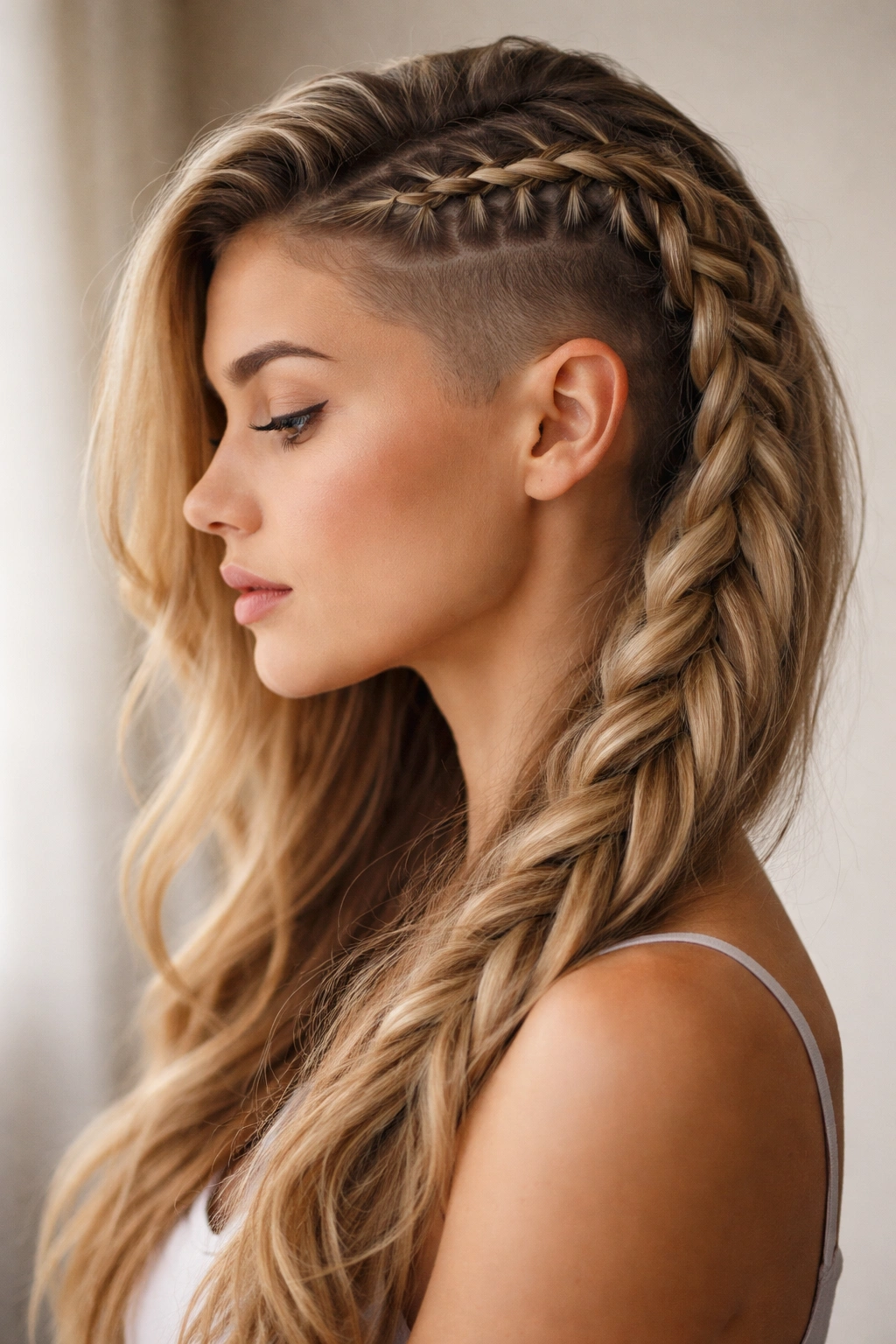
A waterfall braid creates that romantic, bohemian aesthetic where the braid appears to have strands “falling” through it at regular intervals, creating a cascading, fountain-like effect. This style begins at the temple, flows toward the back of your head in a diagonal line, and typically ends draped over your opposite shoulder. The shaved sides provide an unexpected contrast to this delicate, flowing style, creating visual interest and preventing the look from feeling too precious or overly romantic.
Creating the Waterfall Effect
A waterfall braid uses a modified French braid technique where you drop every third section after crossing it, allowing it to hang freely while picking up a new section from the side of your head. This creates the illusion of strands flowing through the braid. The technique requires some practice, but once you understand the rhythm, it becomes quite intuitive. The key is maintaining even tension throughout so the dropped sections appear intentional and the braid itself stays neat.
Versatility and Occasion Styling
- This style works beautifully for casual everyday wear and also dresses up for special occasions with the right hair accessories
- Pair with loose waves in the dropped sections for an ultra-romantic look, or keep everything sleek for a more contemporary aesthetic
- The braid can be loosely woven for an ethereal appearance or tightened for a more structured, polished look
- This style typically holds well for 4 to 7 days, and you can freshen it by gently pulling the braided sections outward
Pro tip: If your waterfall braid feels too tight or doesn’t have enough texture, undo it gently and redo it slightly looser the next day—this also gives your hair and scalp a break from tension, which is especially important if you wear braids frequently.
8. Boxer Braids With Metallic or Colored Hair Threading
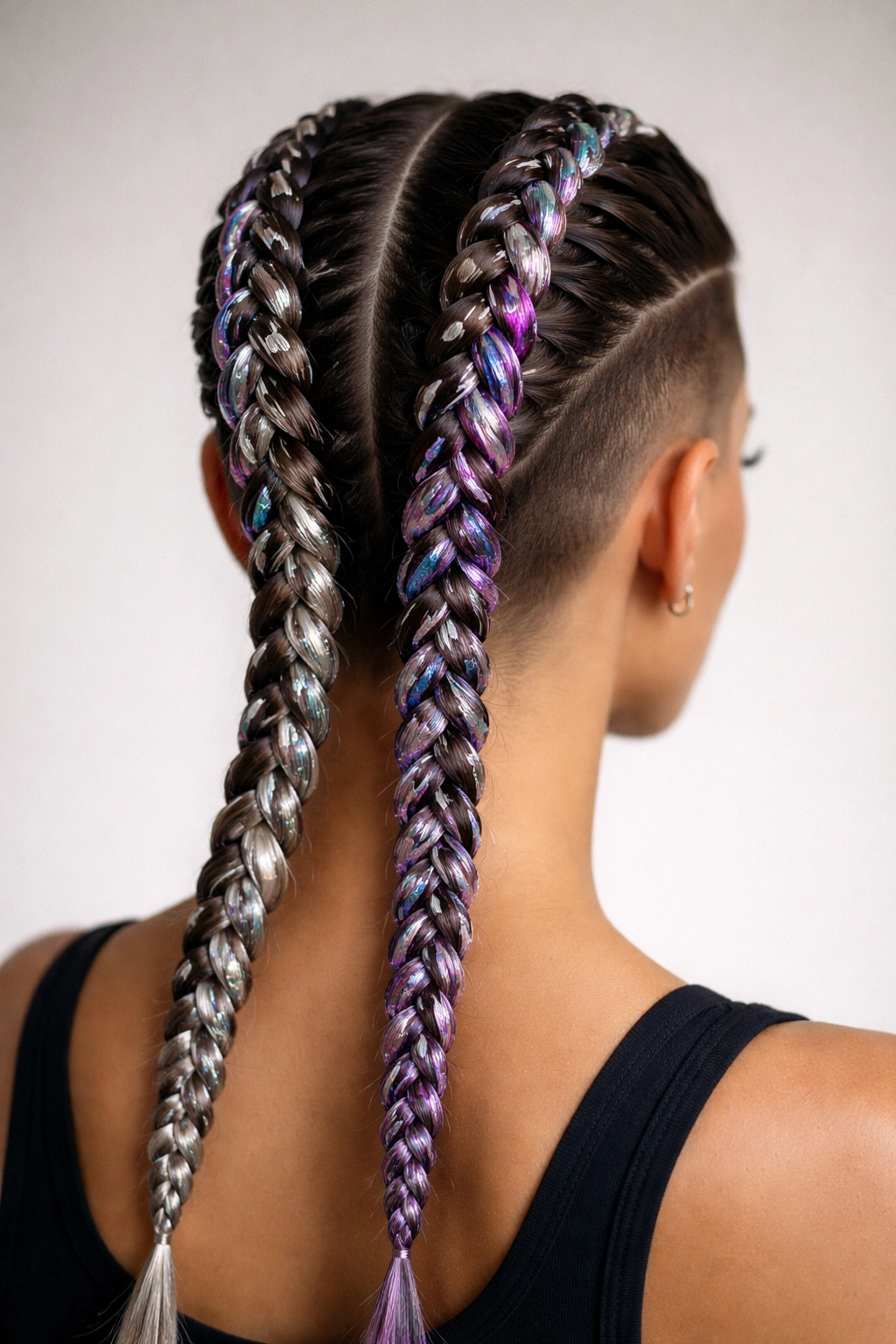
Boxer braids—two Dutch braids running closely together down the back of your head—become absolutely stunning when you weave metallic, colored, or textured synthetic hair through them. This style combines athletic practicality with high-fashion artistic flair, and the shaved sides provide a clean, modern frame for the textured braids. The synthetic hair adds dimension, color, and visual interest without committing to permanent dye, making this an excellent option for experimenting with hair color.
Threading Techniques and Material Choices
You can thread metallic yarn, colored hair extensions, thin ribbons, or even decorative string through your boxer braids before you begin the braid itself. Some stylists prefer to braid with the threading material integrated from the start, while others weave the material through after braiding is complete. The material you choose should coordinate with your skin tone and personal style—gold and rose gold are perennially popular, while jewel tones, pastels, or rainbow threading allows for more creative expression.
Installation and Comfort Considerations
- This style requires visiting a professional braider unless you have significant experience braiding your own hair
- Expect installation to take 2 to 4 hours depending on braid thickness and threading complexity
- The style typically lasts 4 to 8 weeks depending on hair growth and how gently you treat the braids
- Use minimal product on the braids themselves—focus any styling products on loose hair rather than the braided sections
Worth knowing: If you’re sensitive to scalp tension, boxer braids can feel heavy and tight, particularly when threading material is added. Start with thicker, fewer braids rather than numerous thin braids, and ask your stylist to err on the side of looser tension rather than tight.
9. Lemonade Braids With Undercut Detail
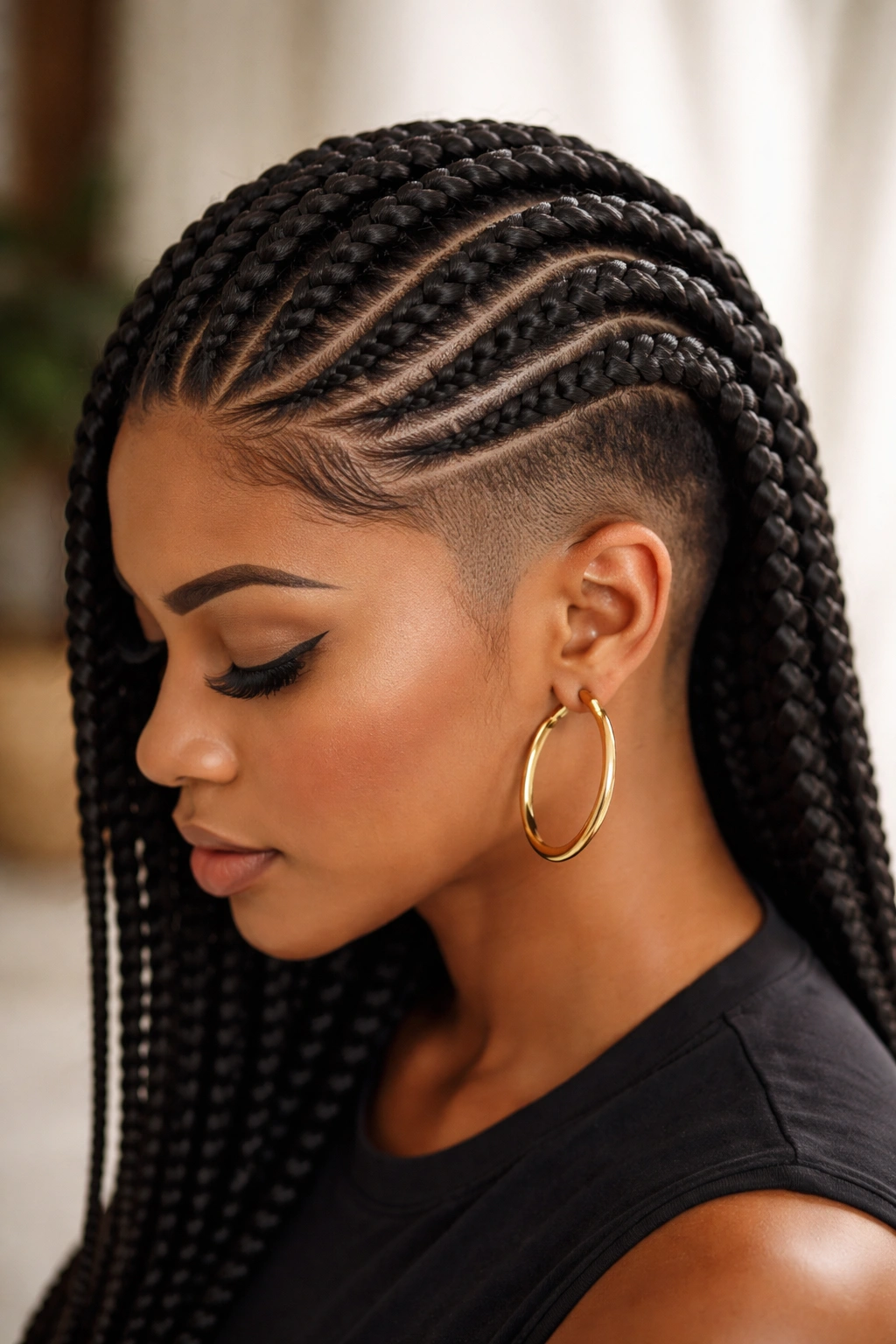
Lemonade braids—named after Beyoncé’s iconic styling—feature thick, chunky cornrows that curve and angle across the head in a pattern that’s both structured and organic. These braids typically follow curved lines rather than straight paths, creating an artistic, fluid look that’s immediately recognizable and undeniably striking. The shaved sides and undercut detail create a sharp contrast to the chunky, textured braids, making this style feel thoroughly modern and editorial.
Pattern Planning and Professional Installation
Lemonade braids require careful planning because the pattern becomes the visual foundation of your entire look. Many women choose to research reference images extensively before sitting down with their braider, ensuring they communicate exactly what pattern and scale they want. The braids can be thick (using more hair per section) or medium-thick, can curve toward the front of your head or remain more centered, and can end in a dozen different ways depending on your preference. The undercut should coordinate visually—some women keep their undercut minimalist, while others match the angle and flow of their braids with their fade design.
Commitment Level and Upkeep
- Plan to commit 4 to 12 weeks with lemonade braids, depending on your hair growth and scalp health
- These braids actually improve slightly in the first week as they settle and you can adjust them—don’t judge the final look on day one
- Wash your scalp weekly with a diluted cleanser to prevent buildup, but avoid heavy products
- The undercut will need touch-ups every 3 to 4 weeks if you want to maintain the sharpness
Insider note: If you’re hesitant about committing to lemonade braids for months, you can also get a shorter version installed just for a special event or weekend—your braider can create the style with regular braiding hair rather than threading it tightly to your scalp, which means it’s easier to remove when you’re ready to switch styles.
10. Sculptural Braided Updos With Exposed Undercut
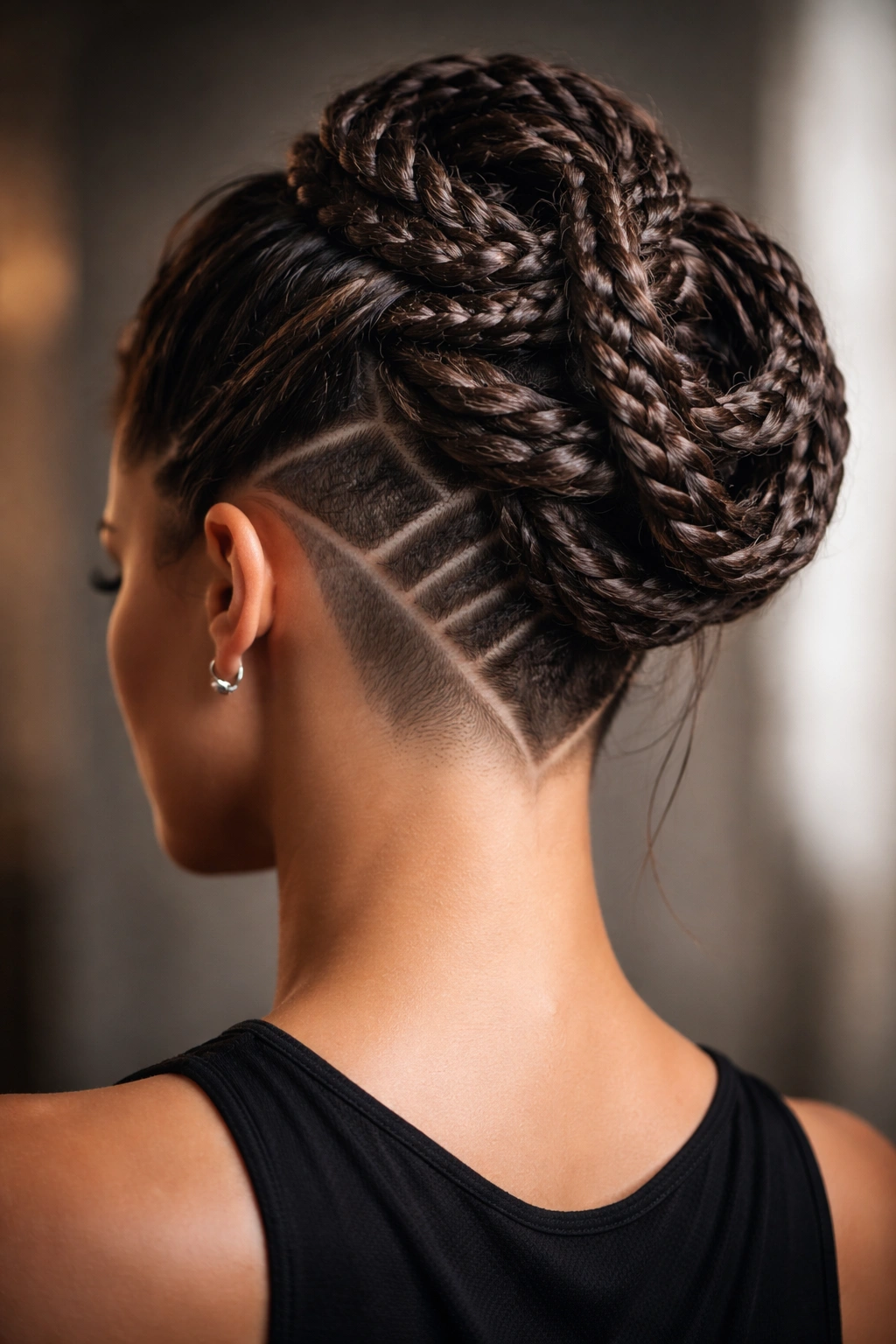
Rather than letting your braids flow down, consider styling them into a sculptural updo that deliberately exposes your shaved sides and undercut as a major design element. This could mean creating a low bun from multiple braids, pinning braids into geometric patterns at the base of your skull, or even creating architectural shapes with your braids that become abstract art pieces on the back of your head. This style is for women who want to make a truly bold statement and aren’t afraid of drawing attention.
Design Conceptualization and Styling Approach
Think of your braided updo as a sculpture rather than simply a practical hairstyle. You might create concentric circles, sharp angles, interlocking shapes, or abstract patterns. Start by sketching ideas or collecting inspiration photos so you have a clear vision before attempting the style. Some designs require you to work with a stylist for installation, while others can be created at home once you develop the skill. The shaved undercut becomes a stunning canvas that allows these intricate braid arrangements to be fully appreciated.
Occasion and Versatility
- Braided updos work beautifully for events where you want to make a fashion statement—editorial shoots, art events, club nights, fashion parties
- They also work for practical situations where you need your hair secured and out of your face—athletic activities, outdoor events, or when you simply want to showcase your undercut
- These styles typically hold for 1 to 3 days depending on braid tightness and your activity level
- Sleep carefully or use a silk pillowcase to avoid loosening the intricate structure
Pro tip: If you’re new to creating sculptural updos, start by installing loose braids and then pinning them into shapes rather than trying to create the design from scratch. This method allows you to experiment with different arrangements and find designs that work for your hair type and head shape before committing to a more complex installation.
Final Thoughts
Braided hairstyles paired with shaved or faded sides represent genuine creative freedom and self-expression. Whether you choose something romantic like a waterfall braid, bold like lemonade braids, or somewhere in between, you’re making a statement about who you are and what makes you feel confident. The beauty of this combination is that it works across hair types, textures, and personal styles—there’s genuinely a braided undercut style for everyone.
The practical reality is that these styles offer incredible longevity and low daily maintenance once they’re installed. You’re not spending twenty minutes styling your hair every morning because the braid work is already done. Instead, you can focus on skincare, makeup, or simply enjoying extra sleep. The undercut itself requires minimal attention beyond regular touch-ups, and the contrast between the braided sections and shaved sides means your styling looks intentional regardless of minor imperfections or flyaways.
What matters most is finding a skilled, experienced braider who takes time to understand your vision and your hair’s unique characteristics. Bring reference images, discuss your lifestyle and how much time you want to spend maintaining the style, and be honest about any scalp sensitivity. A great braider becomes a collaborator in creating something that’s uniquely yours—not just following a trend, but making it distinctly personal. Once you find that stylist and settle into a style that resonates with you, you’ll understand why this aesthetic has become so beloved across so many different communities and creative circles.
