



The shaved side hairstyle has evolved from an edgy underground statement into a mainstream, versatile way for women to express confidence and creativity. What started as a punk-rock rebellion has transformed into a sophisticated styling option that works across professional settings, casual environments, and everything in between. Whether you’re drawn to the bold simplicity of a clean fade or the intricate artistry of a patterned undercut, shaved sides offer an incredible canvas for self-expression while maintaining the length and femininity you might want on top.
The beauty of this cut lies in its flexibility. You can keep things minimal and nearly invisible by wearing your hair down, or you can showcase the design as a statement. Some versions are dramatic and attention-grabbing; others are subtle enough to blend into professional environments. The versatility means you’re not locked into one look—you can style the same haircut in radically different ways depending on your mood, the occasion, or what you’re trying to communicate about yourself that day. For women who’ve been wanting something beyond the typical long layers or basic bob, shaved sides offer a transformative option that feels both empowering and uniquely personal.
1. Undercut with Voluminous Textured Top
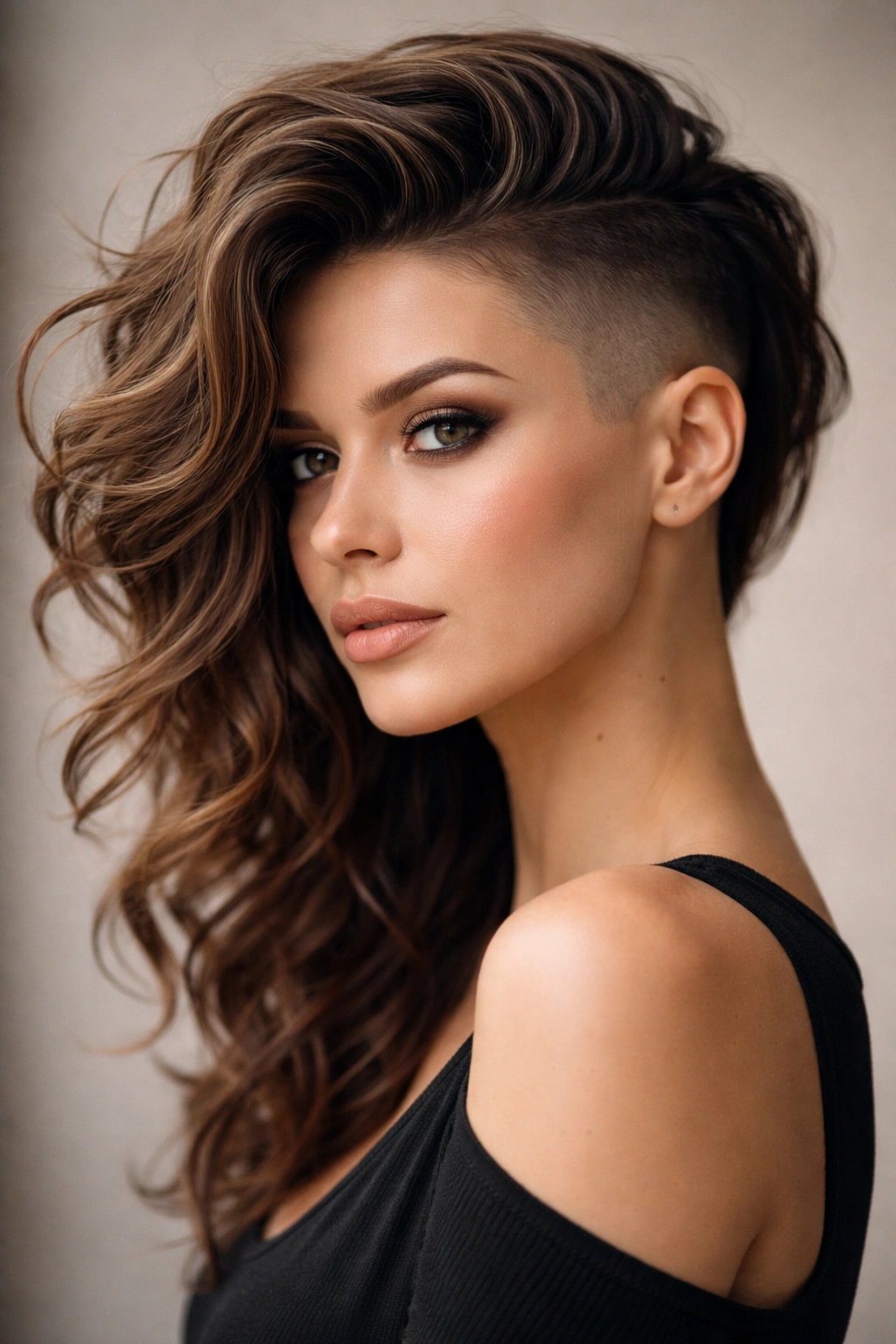
This classic combination pairs a fully shaved or closely faded section on one or both sides with thick, textured waves or curls flowing from the crown and falling across one shoulder. The contrast between the clean, minimal sides and the dramatic volume on top creates an instantly striking silhouette that photographs beautifully and works for everything from casual weekends to night-out scenarios.
Why This Style Stands Out
The undercut with voluminous top balances boldness with accessibility. You get the visual impact of the shaved section—which reads as confidence and intention—but you’re not committing to a pixie cut or losing significant length on top. The cut works on virtually every face shape because the volume on top can be styled to complement your features, and the shaved sides draw attention upward toward your eyes rather than outward toward the jaw or cheekbones. This particular combination also photographs exceptionally well, which means social media lovers gravitate toward it naturally.
How to Style and Maintain It
- Create loose waves or curls on top using a 1.25-inch curling iron, working in 2-inch sections and wrapping the barrel halfway down each section
- Apply a texturizing spray before styling to create grip and make waves hold longer throughout the day
- Keep the undercut clean by visiting your stylist every 3-4 weeks—the edges define the entire look, so maintenance is non-negotiable
- Experiment with side parts to change how the styled top drapes across the shaved section
- Blow-dry your top section upward and away from the scalp to maximize volume and create that contrast that makes the style pop
Pro tip: Ask your stylist to blend the undercut very slightly rather than creating a razor-sharp line—a soft gradient makes the style feel intentional rather than accidental.
2. Pixie Cut with Shaved Undercut
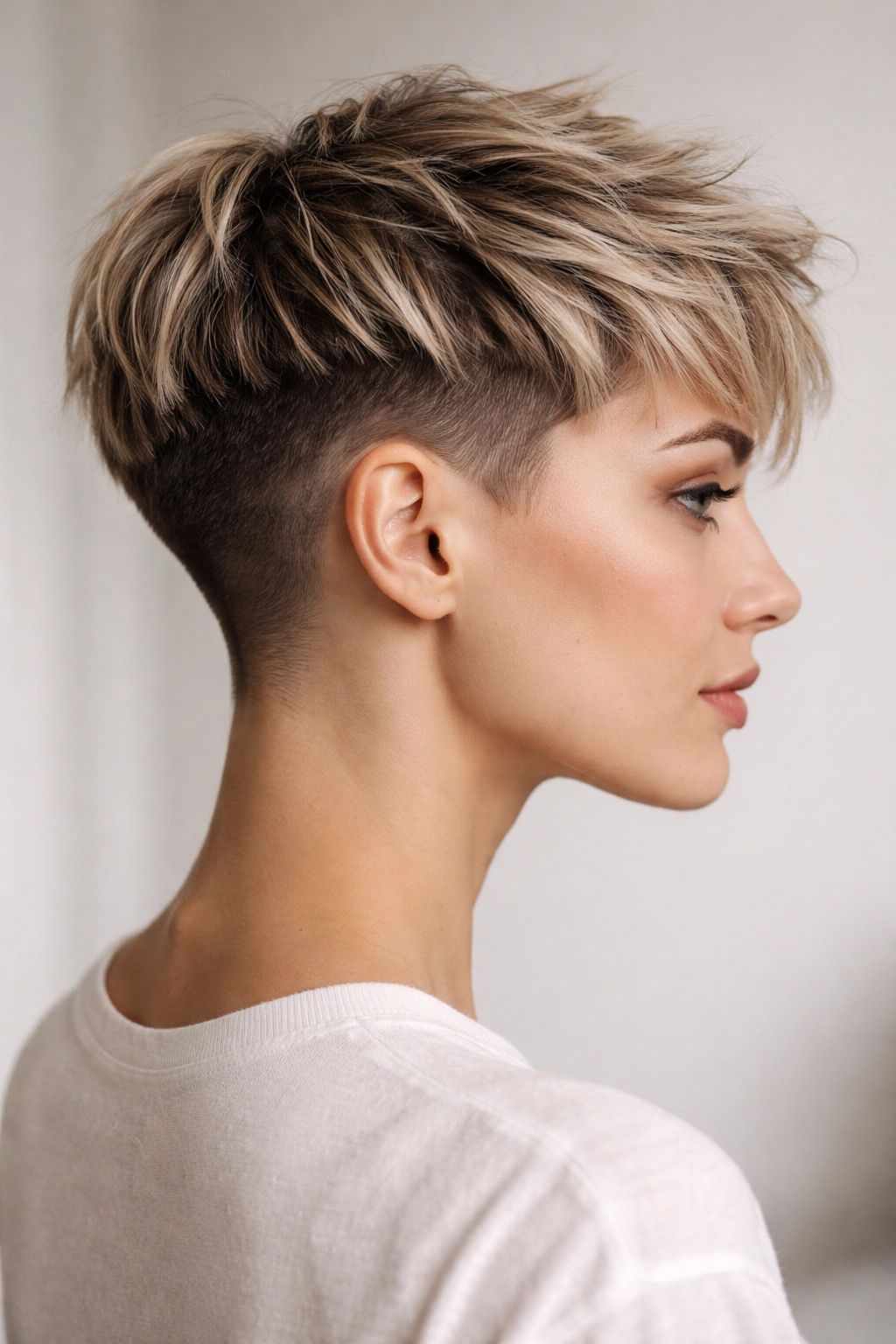
A modern pixie combines short, feathery layers on top (typically 1-3 inches at maximum length) with shaved or faded sides and a clean nape. This look embraces femininity through soft texturing while owning the bold aesthetic of the undercut, creating an androgynous, fashion-forward appearance that reads as incredibly confident.
What Makes It Different
The pixie with shaved undercut skips the middle ground entirely—it’s a full commitment to short hair with an unconventional twist. This isn’t your grandmother’s pixie; it’s contemporary and deliberately edge-forward. The beauty here is that you’re freed from daily styling requirements. Wash, apply some texturizing product or cream, finger-style your top section, and you’re done. Many women find this liberating after years of maintaining longer hair. The shaved sides prevent the look from feeling matronly or outdated; instead, they push it firmly into modern, youthful territory.
Styling Tips and Real-World Benefits
- Use a light styling cream or pomade on damp hair to separate and define the short layers on top
- Blow-dry with a diffuser attachment to create texture without disrupting the feathery layers
- Style your fringe forward, to the side, or pulled back depending on your mood and face shape
- The low-maintenance reality means you can achieve this look in under five minutes on most mornings
- Shampoo every other day to keep the texture from getting weighed down by product buildup
Worth knowing: This cut requires regular trims every 4-6 weeks to maintain the shape—longer than typical undercut maintenance because you’re also keeping the top layers shaped and feathered.
3. Faux Hawk with Shaved Sides
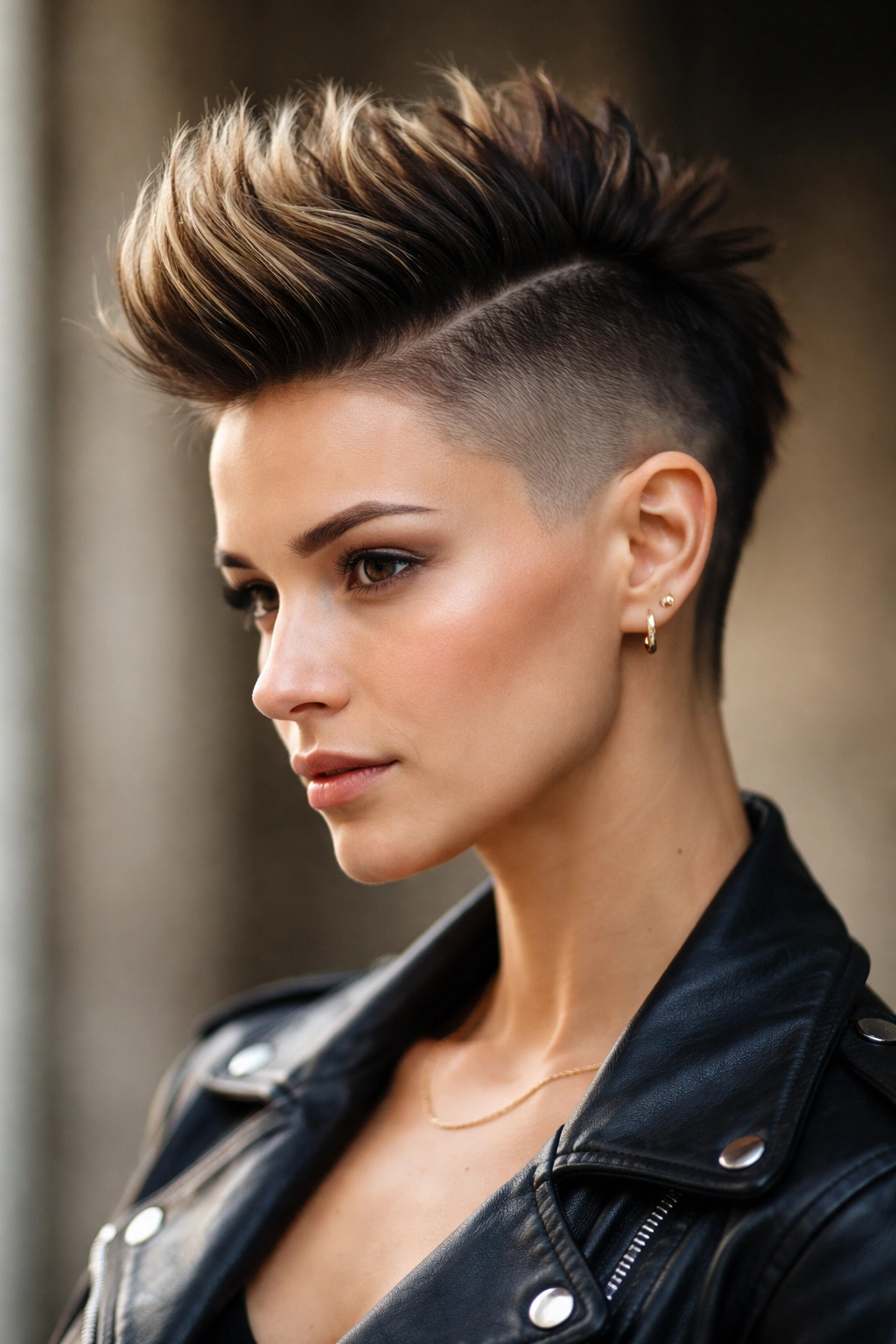
A faux hawk runs a strip of longer hair down the center of the head from the front hairline to the nape, with both sides shaved or faded down to skin. The central section is typically 2-4 inches long and can be styled upright for maximum impact or styled back and to the side for a softer variation.
Why It Works for Different Occasions
What makes the faux hawk so brilliant is its adaptability. Style the center strip straight up and you have an undeniably bold statement that commands attention—perfect for nights out, concerts, or any time you want to make a visual impact. Wet the center section and smooth it back, or side-part it and tuck it behind one ear, and suddenly you have something that works for a casual office environment or a coffee date. You’re not locked into one aesthetic; you control the intensity.
Styling and Upkeep Strategies
- Use a volumizing mousse or lightweight cream on damp hair, blow-drying the center section upward with a round brush for upright styling
- For a softer day look, apply a smoothing serum and blow-dry the center section flat and to one side
- Keep your shaved sides fresh every 2-3 weeks to maintain the clean contrast that makes this cut work
- Use a texturizing spray or sea salt spray on the center section to add grip and definition
- Experiment with French braiding, twisting, or weaving a small braid into the center strip for days when you want extra visual interest
Insider note: If you work in a conservative environment, keep the center section slightly shorter (2 inches rather than 4) so you have more flexibility to flatten and style it professionally.
4. Shaved Sides with Curly Textured Crown
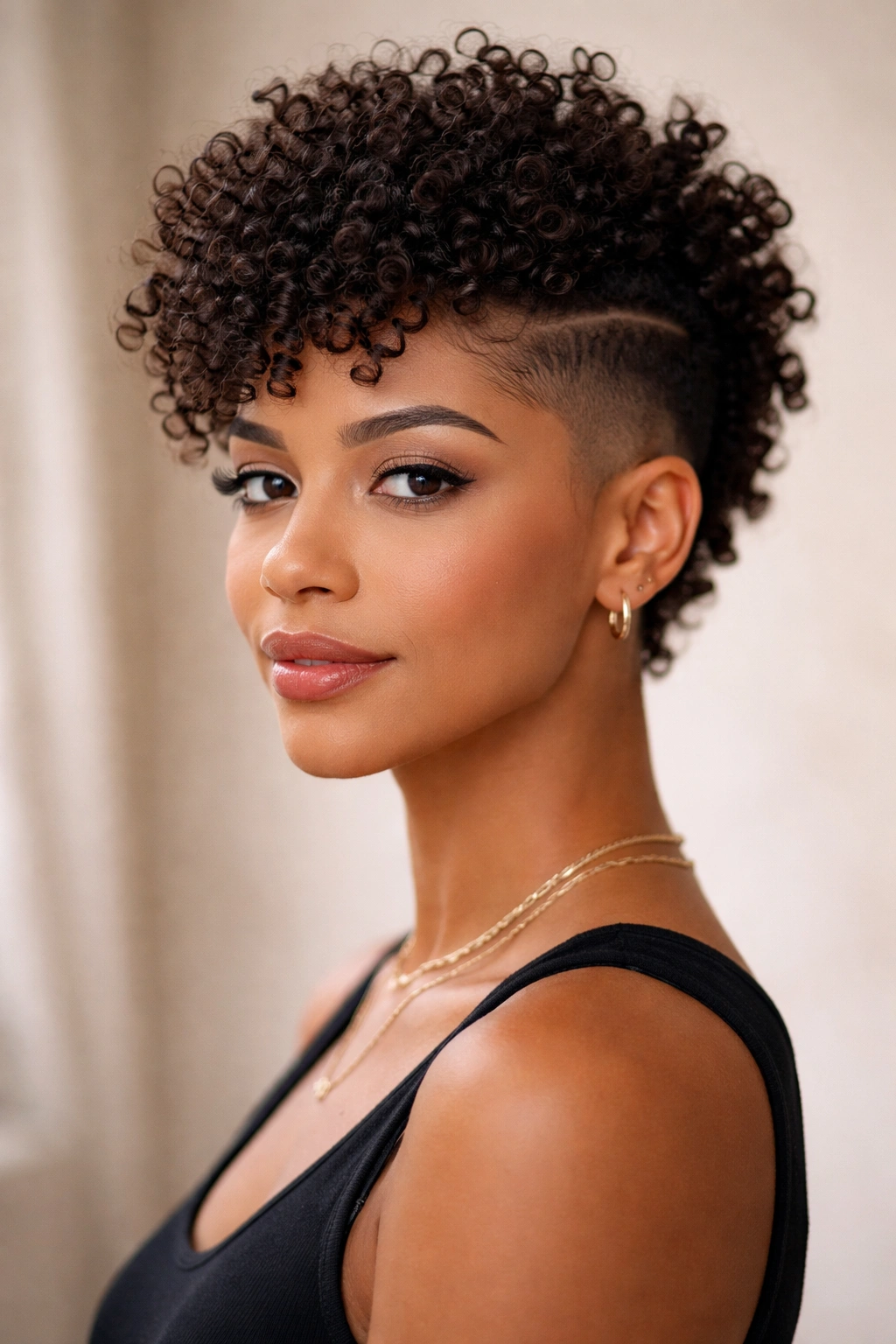
This style maintains length and natural curls or waves on top while shaving or fading the sides completely clean. The contrast between the defined, tight curls up top and the minimal sides creates a striking silhouette that celebrates natural texture in a contemporary way.
How It Celebrates Natural Hair
This particular cut has become popular specifically because it honors curly and coily hair textures while offering a modern, fashion-forward edge. Curly-haired women often feel pressure to straighten or compromise their natural texture; this style does the opposite. The shaved sides say “I’m confident and contemporary,” while the curls on top say “I’m honoring my natural hair.” The combination is empowering, and the cut works beautifully on Type 2 through Type 4+ hair textures.
Maintenance and Styling Approach
- Maintain your curl pattern on top by using a curl-defining cream or gel applied to soaking-wet hair
- Plop your curls (wrap them in a microfiber towel or cotton t-shirt) for 15-20 minutes to absorb excess water before air-drying or diffuser-drying
- Keep your shaved sides touched up every 3-4 weeks for a sharp, clean look that contrasts with your voluminous top
- Refresh your curls between wash days using a curl refresher spray and a light re-scrunching method
- Sleep on a silk pillowcase or in a silk bonnet to protect your curls and reduce frizz overnight
Pro tip: The shaved sides actually make curl maintenance easier because you’re not trying to manage undercut hair along with your curls—there’s nothing there to interfere with your curl pattern or trap product.
5. Asymmetrical Bob with Shaved Undercut
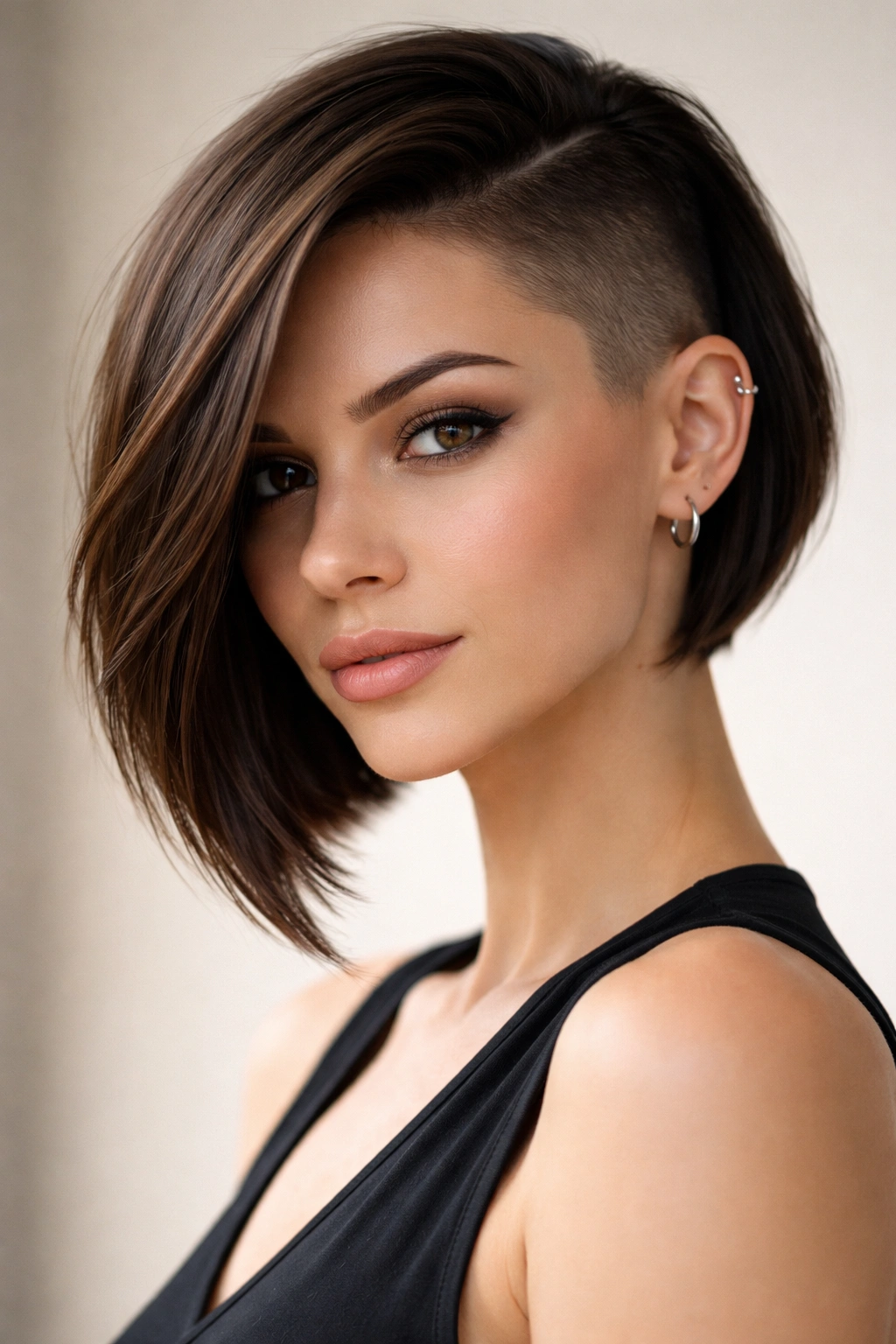
An asymmetrical bob features different lengths on each side—one side longer (typically chin-length or longer), one side significantly shorter—combined with a fully or partially shaved undercut. This cut is inherently directional and requires intention in styling but offers a high-fashion, editorial quality.
The Statement Quality of Asymmetrical Design
Asymmetrical cuts have always carried an inherent artistry because they’re not symmetrical. Your brain reads asymmetry as intentional and contemporary rather than accidental. Combined with shaved sides, this creates an unmistakably modern aesthetic that signals fashion awareness and creative confidence. This isn’t a safe, neutral choice—it’s a deliberate styling statement that works beautifully for people who want their hair to reflect their personality visibly.
How to Wear and Restyle an Asymmetrical Bob
- Style the longer side down and forward, allowing it to frame one side of your face while the shorter side or shaved section shows on the other
- Use a flat iron or curling iron to add subtle waves or texture to both sides, or leave them sleek and minimalist
- Experiment with side parts to change the visual weight and which side appears longer
- You can style the entire look forward and to one side for a night-out version that feels edgy and intentional
- During humid weather, apply an anti-frizz serum or smoothing cream to keep both lengths looking polished
Worth knowing: This cut requires precise trims every 4-6 weeks to maintain the intentional asymmetry—grow it out too long and the intention gets lost.
6. Shaved Sides with Woven Braids and Patterns
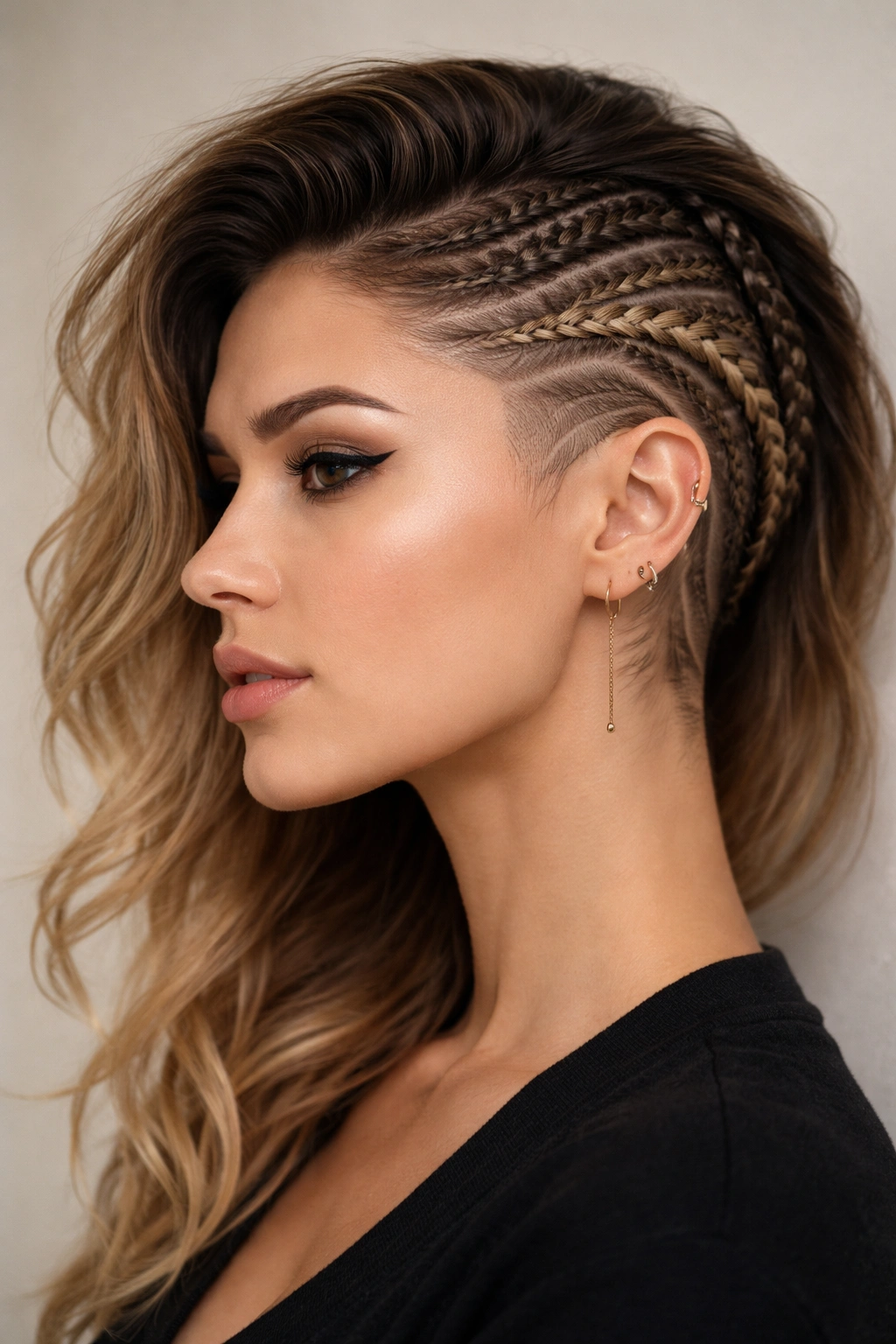
Rather than leaving the shaved sections completely bare, some styles incorporate tattooed line designs, geometric patterns, bleached sections, or even braids that weave through the shaved area before connecting back to the longer top. This transforms the undercut into a blank canvas for artistic expression.
Creative Expression Through Hair Art
This version takes the undercut from a style choice into full artistic territory. You can work with your stylist to create custom geometric patterns, flowing designs, or negative space art that becomes visible when you wear your hair up. Some women use bleaching, coloring, or shaving patterns to create temporary tattoo-like designs that can be changed seasonally or touched up as they fade. It’s the intersection of haircut and wearable art.
Planning and Executing Patterned Undercuts
- Consult with a stylist who has experience with design work—this requires artistic ability beyond basic cutting
- Sketch or photograph designs you love and bring them to your consultation so your stylist understands your vision
- Plan to visit every 3-4 weeks to keep the design sharp and maintain the pattern as new growth comes in
- If using bleach or color to create the pattern, use a purple-toned shampoo and deep conditioning treatments to keep the area healthy
- Consider removable designs or temporary bleach pens if you’re not ready to commit to permanent hair art
Pro tip: Start with a simple line design or geometric pattern before committing to complex artwork—this lets you test whether you love the maintenance schedule without overwhelming yourself.
7. High Fade with Textured, Swept-Back Top
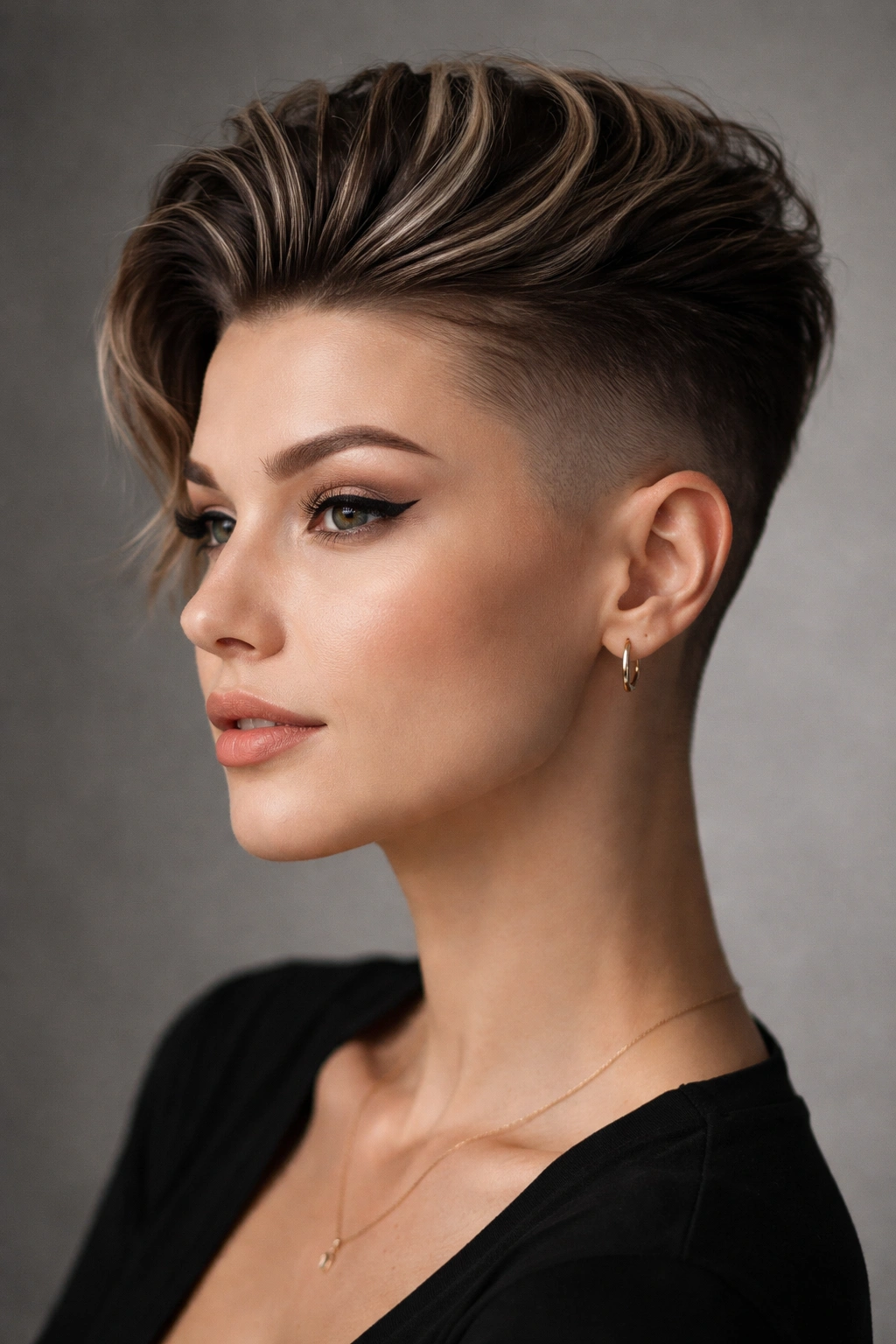
A high fade shaves the sides and back very closely (sometimes down to bare skin, sometimes to a quarter-inch of stubble) and gradually adds length as it moves up toward the crown. The top is typically 2-4 inches long and styled swept back and up or off to one side, creating a polished, dimensional look.
Why This Cut Feels Unexpectedly Feminine
High fades have traditionally been associated with masculine styling, but that assumption falls apart the moment you see it on women. The key difference is texture and styling rather than the cut itself. By keeping the top longer and adding waves, curls, or soft texture instead of a tight, clean shape, the high fade transforms into something contemporary and distinctly feminine. It reads as confidence and intentional styling rather than copying a men’s haircut.
Achieving and Maintaining the High Fade Look
- Visit a stylist experienced with fade work—the gradient from bare sides to longer top requires technical skill
- Ask for a “soft” or “blended” fade rather than sharp lines if you want something that works in professional environments
- Blow-dry your top section upward and back using a round brush to create volume and defined texture
- Apply a lightweight styling cream or pomade to damp hair before blow-drying to enhance the swept-back effect
- Maintain the fade every 3-4 weeks to keep it looking fresh and intentional as new growth comes in
Worth knowing: The maintenance schedule is consistent, but the payoff is a look that works beautifully in professional settings, date scenarios, and casual environments without requiring daily styling effort.
8. Wolf Cut with Shaved Sides
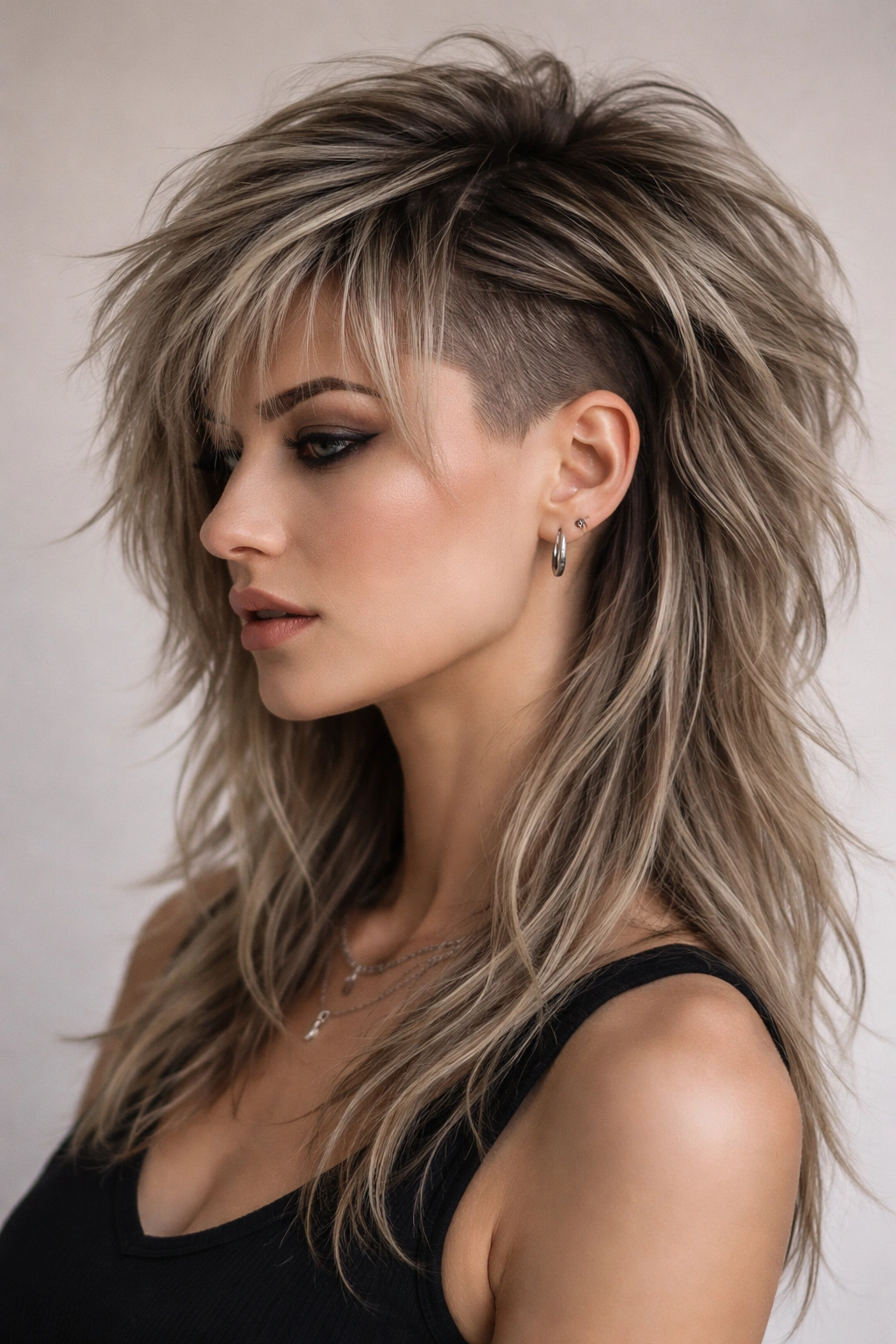
A wolf cut blends the choppy, layered texture of a shag with the length and shape of a mullet, typically featuring long layers through the crown and middle, a fuller back, and most relevant here—shaved or faded sides. It’s voluminous, textured, and deliberately unconventional.
The Appeal of Controlled Chaos
Wolf cuts embrace texture and movement rather than fighting them. Combined with shaved sides, this creates a look that’s simultaneously edgy and effortlessly chic. The multiple layers catch light differently, creating dimension that flat cuts can’t achieve. The shaved sides prevent the overall effect from feeling unkempt; instead, they frame the deliberate texture and say “this is intentional styling, not bedhead.”
Styling and Managing a Wolf Cut with Undercut
- Use a texturizing spray or sea salt spray on damp or dry hair to emphasize the choppy layers and create separation
- Blow-dry with a diffuser or your fingers for a tousled, intentional look rather than a sleek finish
- Consider using a small amount of lightweight mousse on damp roots to encourage volume through the crown
- The layers mean the cut works well on wavy or curly hair—the texture is an asset rather than something to fight
- Visit your stylist every 6-8 weeks to refresh the layers and maintain the intentional choppy shape
Pro tip: Wolf cuts work best on hair with some natural texture or wave—if you have completely straight hair, the layers will need daily styling attention to look intentional rather than shapeless.
9. Shaved Sides with Sleek Pulled-Back Ponytail
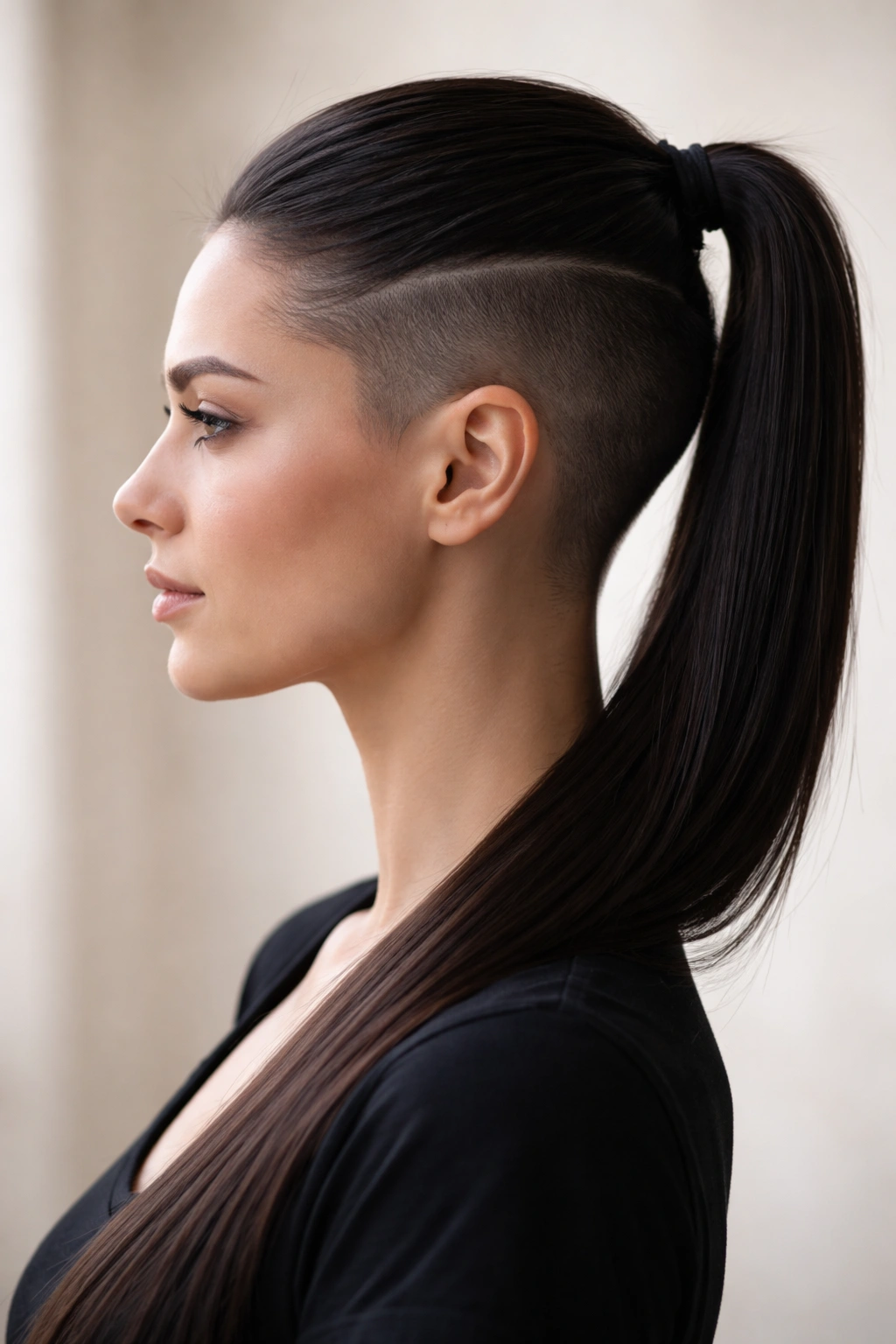
This style maintains medium to long length on top (typically 6+ inches) and shaves the sides completely clean, allowing you to showcase the undercut when you style your hair into a high or mid-level ponytail. It’s a practical style that offers two distinct looks: down with the sides hidden, or pulled back with the undercut fully visible.
The Versatility of Hidden-Then-Revealed Design
This particular combination offers real lifestyle versatility. For work or conservative settings, wear your hair down, and the shaved sides are completely invisible—no one would know they were there. For weekends, nights out, or casual days, pull everything back into a sleek ponytail and suddenly you’re showcasing an entirely different aesthetic. You’re essentially getting two hairstyles in one cut, which is practical for people whose lives involve varied contexts and dress codes.
Styling Strategies for Both Looks
- When wearing down, style in waves or curls to add texture and visual interest to the longer length
- For the ponytail version, use a smoothing serum and blow-dry your hair straight for maximum polish
- Use a fine-tooth comb to smooth any flyaways when pulling hair back, and apply a lightweight hairspray to keep everything in place
- Try different ponytail heights—high ponytails create a longer silhouette, while mid-level ponytails feel more relaxed
- Consider leaving a few face-framing pieces loose when pulling back for a softer, more feminine version
Worth knowing: This cut requires regular trims every 6-8 weeks on the top section and touch-ups every 4-6 weeks on the shaved sides to maintain the contrast.
10. Undercut with Contrasting Color and Design
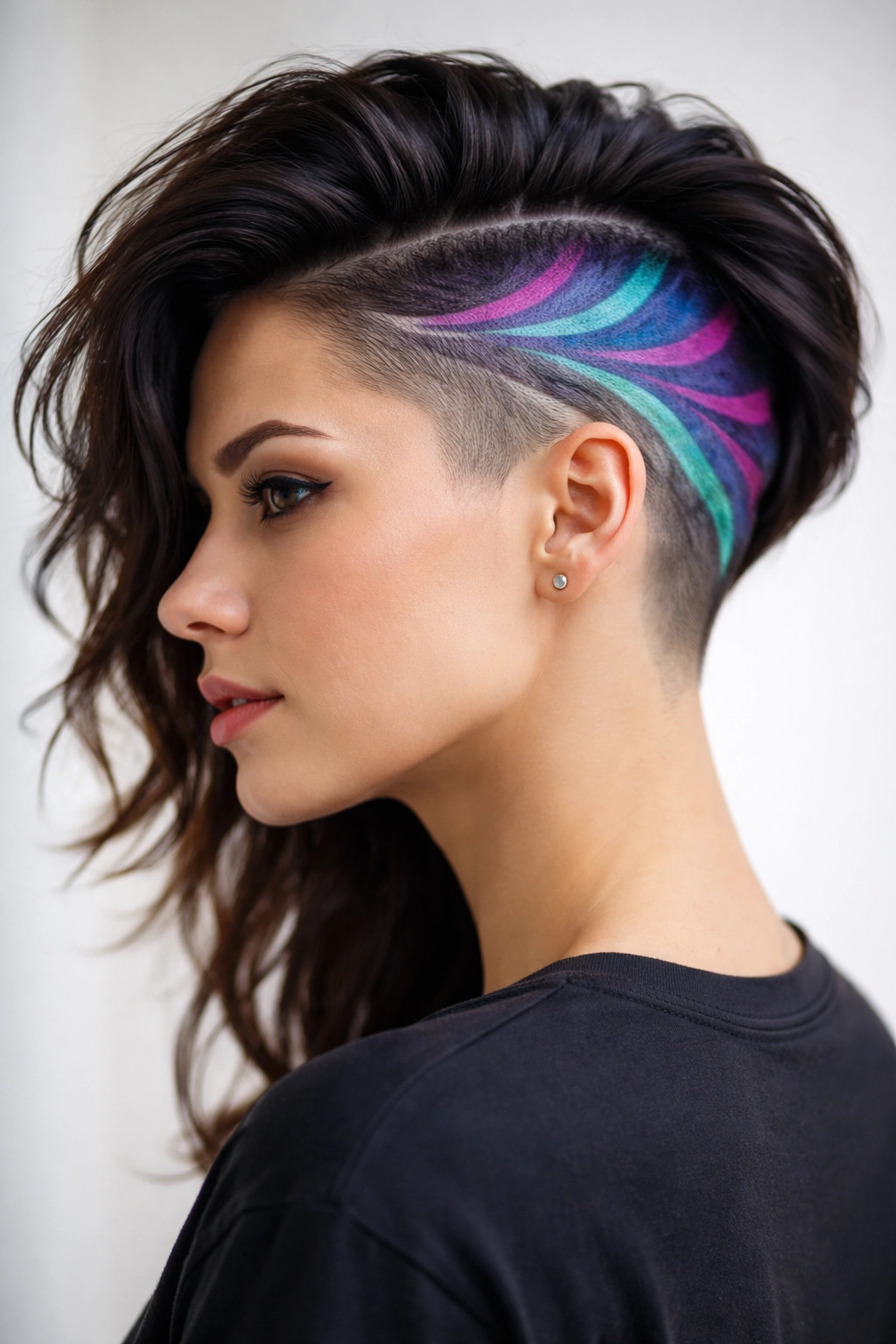
This style combines shaved or faded sides with a design element created using contrasting color. The longer top section might be brunette while the sides feature bleached sections, or you might have natural-colored top hair with pastel or vibrant color applied to the undercut area. Some versions include both shaved patterns and color for maximum artistic impact.
Using Color as Part of the Style Story
Color transforms the undercut from a cut into a complete styling statement. A pop of unexpected color hidden until you move your hair creates a delightful surprise—people see it only when you move your head, or when you deliberately showcase it. This feels playful and artistic rather than just bold. For people who work in conservative environments but want to express creativity, this offers a perfect compromise: professional when hair is down, expressive when you choose to show your undercut.
Maintaining Color and Design in Shaved Areas
- Use a color-safe shampoo and conditioner to prevent color from fading too quickly, especially if using vibrant shades
- Apply a purple-toned shampoo weekly if you’ve bleached sections to keep them from turning yellow or brassy
- Plan touch-ups every 4-6 weeks if you’ve used permanent color, or every 2-3 weeks for semi-permanent pastel shades
- Consider using temporary color (like Manic Panic or similar brands) if you want to change colors seasonally without committing to permanent dye
- Deep condition shaved and bleached areas regularly to maintain hair health—bleaching and constant color application can be drying
Pro tip: If this is your first time bleaching hair, have your stylist do the initial work—attempting bleach on your own, especially in a detailed pattern, often leads to uneven color or damage.
Final Thoughts
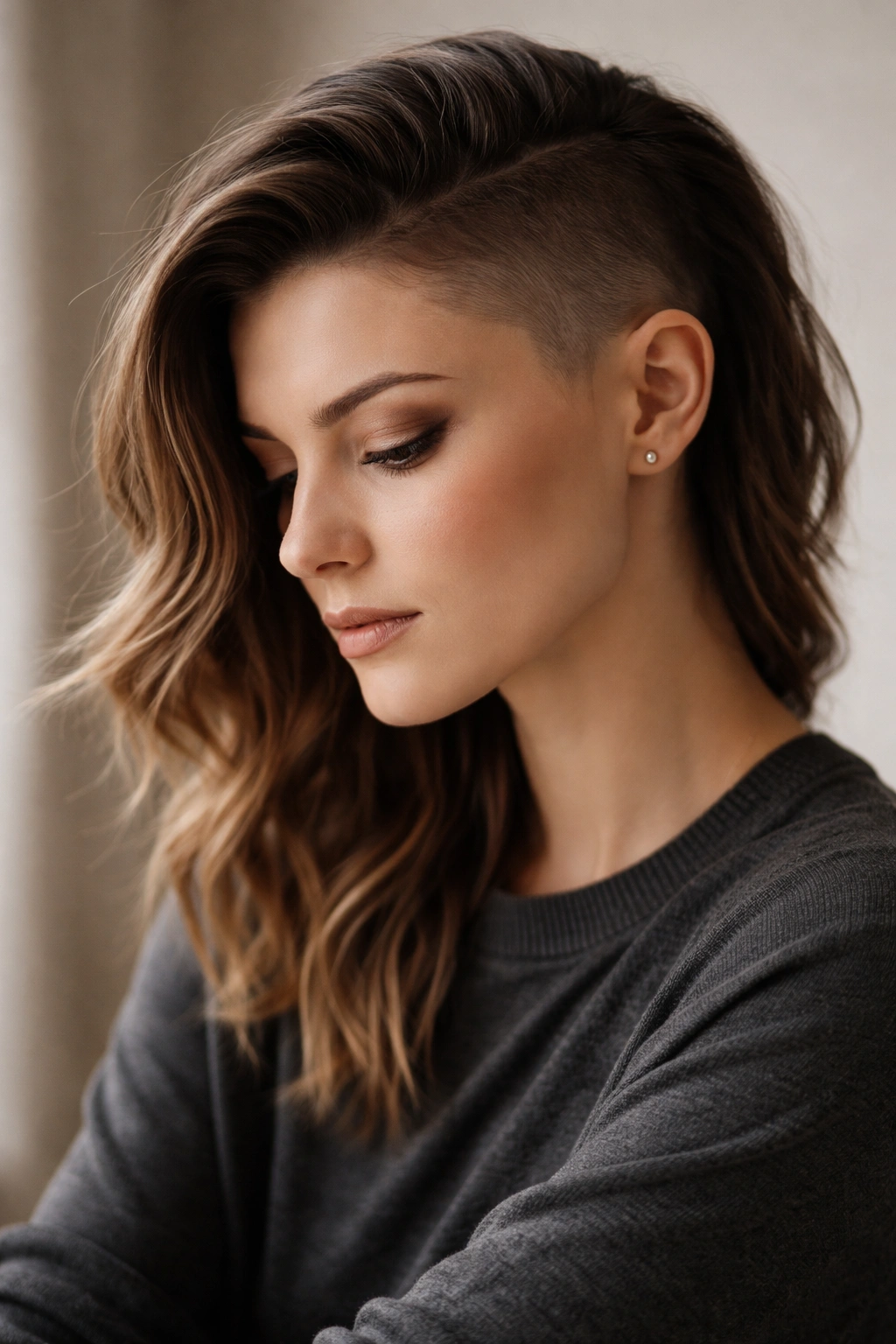
Shaved side hairstyles represent far more than just a trendy cut—they’re a way to claim space, express individuality, and take control of how you present yourself to the world. Whether you’re drawn to the subtle sophistication of an undercut you can hide or the bold artistic statement of a patterned design, there’s a version of this cut that aligns with your lifestyle, comfort level, and creative vision.
The commitment is real: you’ll need to maintain these styles with regular salon visits, typically every 3-6 weeks depending on which variation you choose. But for people who make that commitment, the payoff is substantial. You get a cut that works harder than typical hairstyles, offering versatility in how you style and present it. You signal intentionality and confidence visually. You join a community of people across industries, age groups, and backgrounds who’ve chosen this cut as their form of self-expression.
Start by consulting with a stylist who has experience with undercuts and shaved designs. Bring images of the exact version you’re drawn to, discuss maintenance honestly, and make sure you’re comfortable with the commitment before you commit. Once you take the leap, you’ll likely find that this cut becomes one of your favorite decisions—a hairstyle that doesn’t just frame your face, but frames who you are.
