



There’s something undeniably powerful about pairing a sharp, cropped cut with vibrant red hair. Short haircuts demand confidence, and red—whether it’s a deep burgundy, a bright cherry, or a subtle copper—amplifies that boldness tenfold. The combination stops conversations, photographs beautifully, and signals someone who’s made a deliberate choice about their appearance rather than defaulting to what’s expected.
But here’s what matters most: not every short haircut works the same way on every face shape, hair texture, or skin tone. A pixie that looks editorial on one person might feel too stark on another. A textured crop that moves beautifully on thick hair might disappear on fine strands. The real art isn’t just finding a short red haircut—it’s finding the right short red haircut for you. That’s where specificity comes in. These twelve styles each bring something distinct to the table, whether you’re working with naturally curly texture, ruler-straight hair, or something in between.
Red hair requires a different maintenance commitment than many other colors. Reds fade faster, oxidize in sunlight, and need intentional care to keep their depth and richness. Short hair, meanwhile, shows every root, every day of product buildup, and every imperfect trim. Combine them, and you’ve got a look that demands regular salon visits and a solid at-home routine. But if you’re willing to commit, the payoff is a head-turning style that photographs like nothing else.
1. The Classic Pixie Cut with Textured Layers
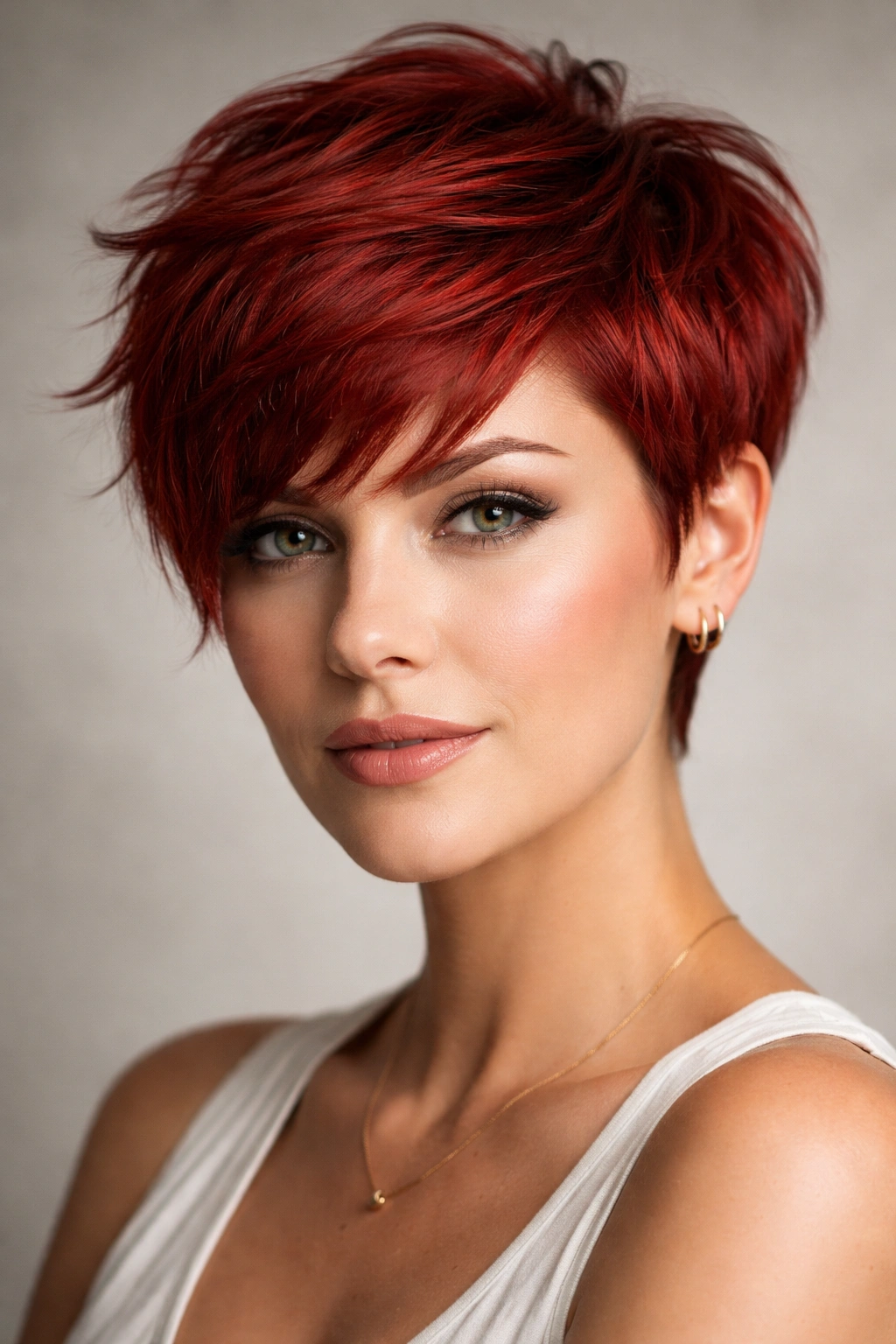
A pixie cut is the ultimate statement—it’s daring, low-maintenance (relatively speaking), and absolutely stunning in red. The magic happens in how the layers fall and the way the cut plays with your face shape. With red hair, even a simple pixie becomes something memorable.
Why This Works So Well
The pixie’s short length shows off vibrant color without harsh fading from the sun hitting mid-length hair. The texture created by layered cutting gives movement and dimension, which keeps a bright red from feeling flat or one-dimensional. A skilled stylist can angle the layers to complement your facial features—longer pieces around the face for softness, shorter at the crown for lift, or a more uniform length for sleek sophistication.
How to Make It Your Own
Ask your stylist for longer pieces around the face if you prefer a softer look, or request a more uniform length for a bolder statement. The length of the top, the taper on the sides, and how much texture you want are all variables worth discussing. If you have naturally curly or wavy hair, the pixie takes on incredible dimension—your natural texture becomes the feature itself.
Worth knowing: Pixies work best on oval, heart, and square face shapes because the short sides don’t overwhelm proportions. If you have a rounder face, ask for height at the crown and softer layers around the perimeter.
2. The Textured Crop with Length on Top
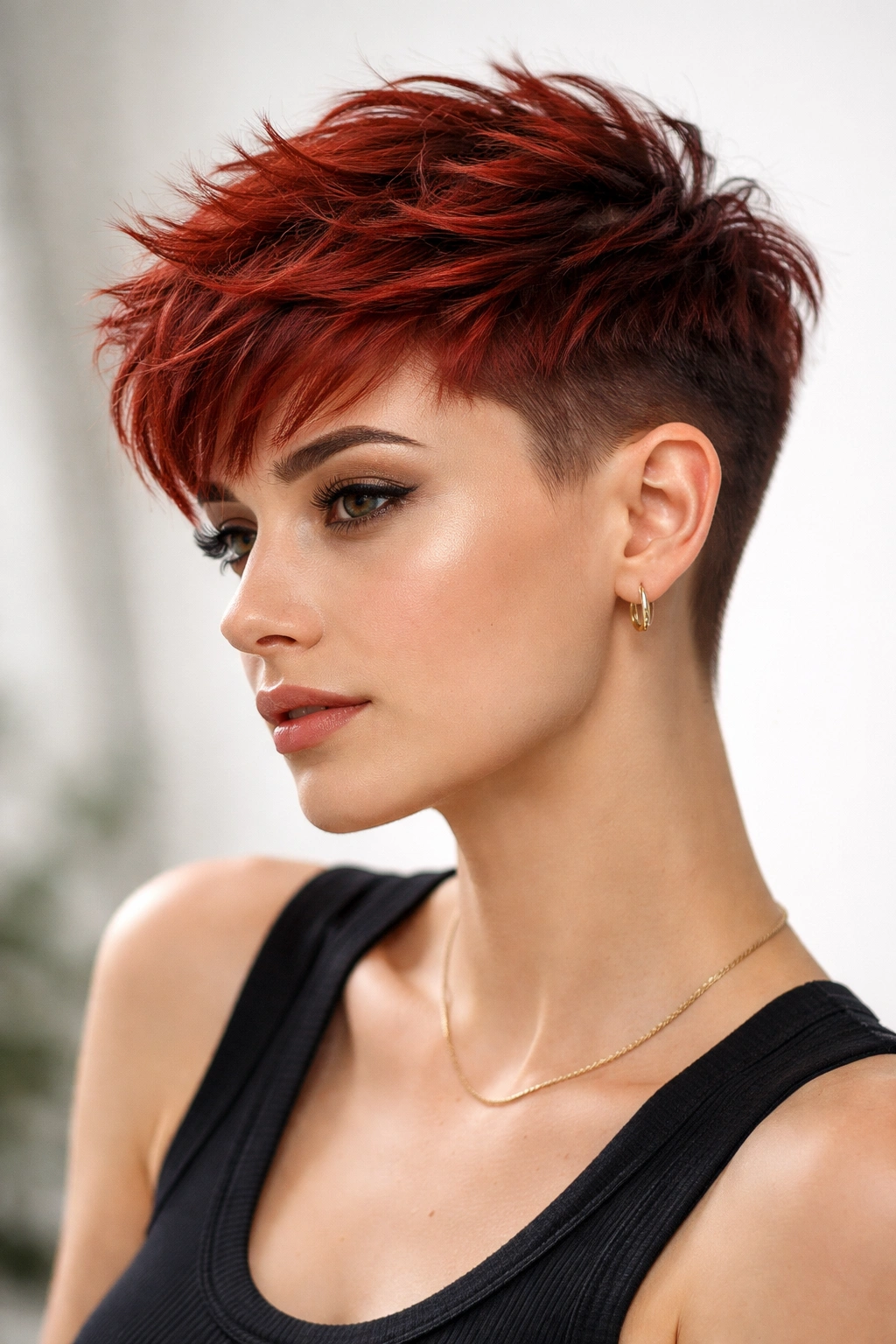
This cut walks the line between pixie and full crop, keeping more length at the crown while tapering significantly on the sides and back. It’s modern, versatile, and gives you texture to work with in the mornings.
What Makes It Different
The crop gives you actual styling options—you can mess it up for texture, slick it down for polish, or create movement with a styling product. Red hair amplifies this versatility instantly. The cut shows off color variation beautifully if you’re going for a dimensional red (copper highlights, auburn lowlights, or a gradient effect).
Styling and Maintenance
This cut pairs beautifully with matte styling products for texture or pomade for a sleeker finished look. You’ll need trims every 4-6 weeks to maintain the shape, but that also means regular opportunities to refresh your red color. The texture sits between edgy and wearable for most workplaces and occasions.
Pro tip: If your natural hair has wave or curl, the crop becomes even more dimensional—your texture interacts with the cut’s layers for organic-looking movement.
3. The Sleek Pixie Fade
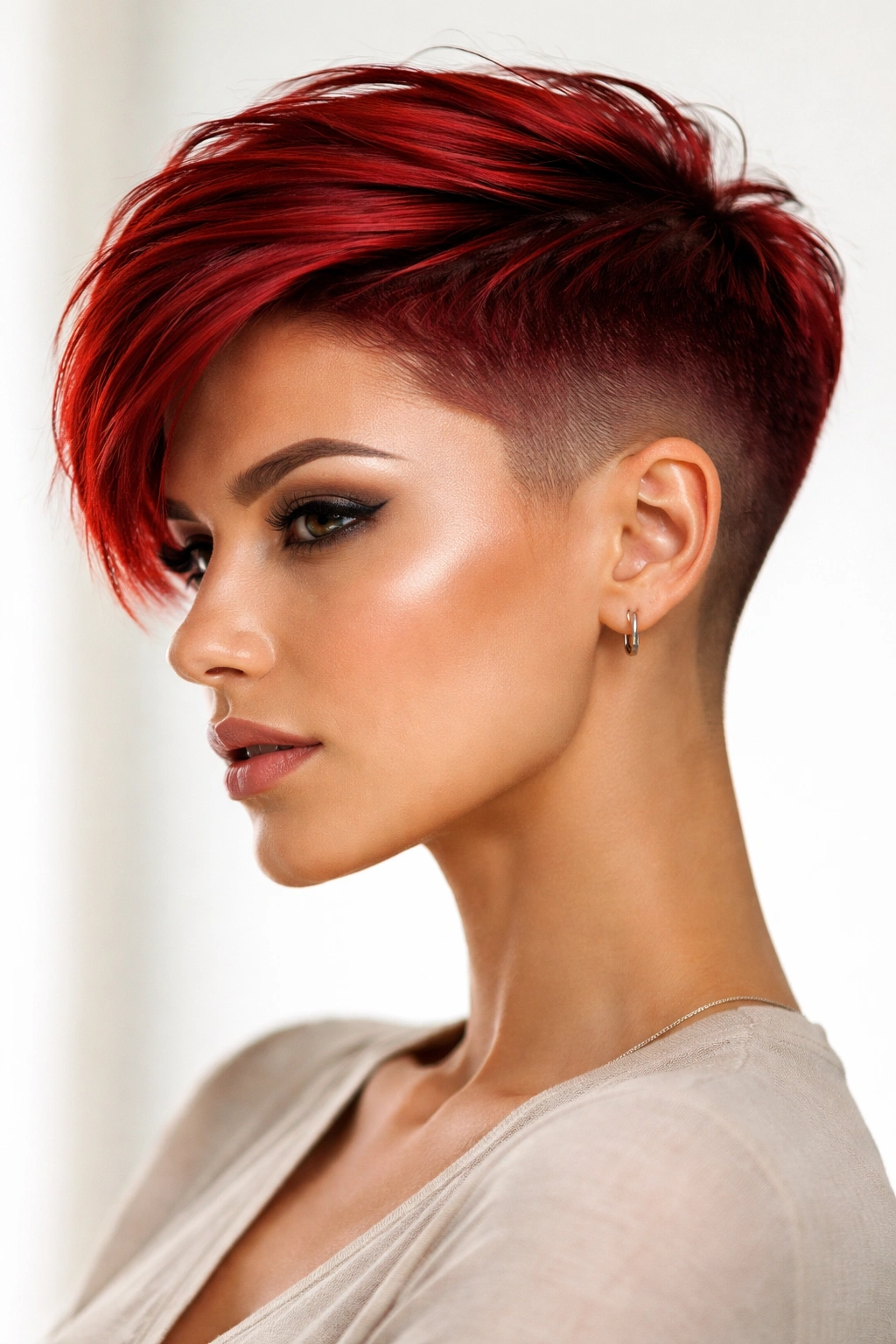
For those who want pure, minimalist polish, the sleek pixie fade delivers. The sides and back fade to almost nothing while the top maintains length and can be styled multiple ways.
The Precision Factor
This cut requires serious technical skill from your stylist and serious commitment from you. The fade shows every hair growth, every imperfection in your scalp, and every root. But in red hair, it’s absolutely striking. The contrast between the short fade and the slightly longer red on top creates instant visual interest.
Styling Possibilities
You can wear the top slicked back and refined, textured and messy, or anywhere in between. Red amplifies each version—a slicked version feels almost avant-garde, while a tousled version feels effortlessly cool.
Real talk: This cut is higher maintenance than it looks. You’ll need salon visits every 3-4 weeks to maintain the fade shape, plus root maintenance for your red color.
4. The Textured Bob That Hits Chin-Length
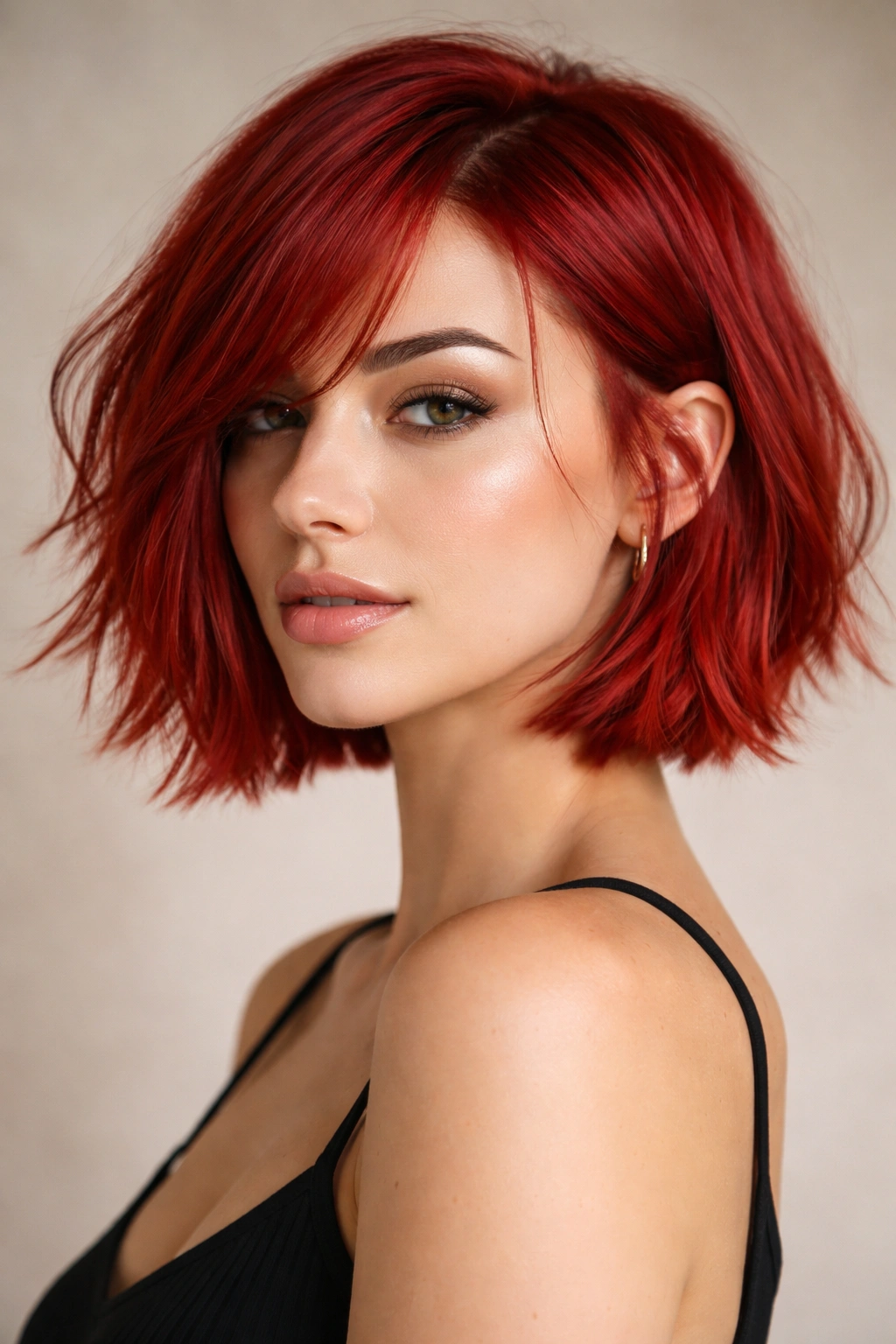
A bob that lands right at or just below the chin offers more versatility than many people realize. In red hair with intentional texture, it becomes something that bridges the gap between “short” and “medium.”
Texture Is the Star Here
Ask your stylist for choppy, piecey texture—not a blunt, one-length edge. The texture creates movement, catches light differently across the cut, and plays beautifully with red’s vibrancy. Each strand reads independently rather than blending into a solid mass.
Face Shape Considerations
This length works on most face shapes when cut well. If you have a round face, ask for longer pieces in front and slightly shorter at the back for elongation. For an oval face, you can keep it more uniform. For a square face, textured layers around the face soften the jawline while keeping the bob structure.
Worth knowing: A textured bob requires styling—blow-drying with a round brush or flat iron, plus texturizing cream or light pomade. But the payoff is movement and dimension that photographs beautifully.
5. The Shaggy Crop with Lots of Texture
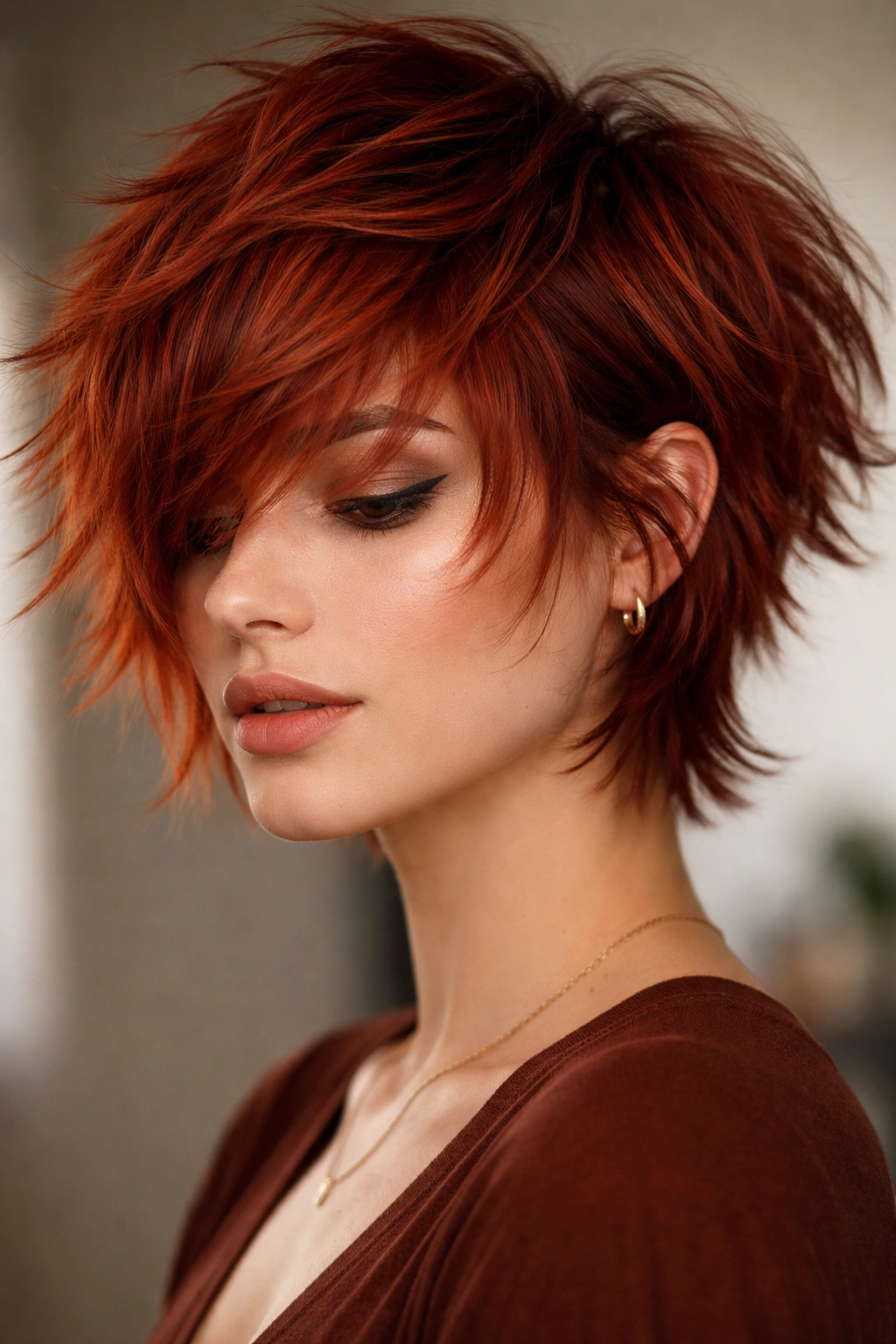
Shag haircuts experienced a major resurgence, and for good reason. A shag combines multiple lengths of texture throughout the cut, creating movement and visual depth that’s perfect for showing off red color.
Why Red Makes Shags Even Better
The varied lengths in a shag catch light differently and show color variation more dramatically. A single-process red becomes more interesting with shag texture. A dimensional red (with multiple tones) becomes absolutely luminous.
Styling for Best Results
Shags look best with a bit of texture product and some styling intentionality—you want the layers to feel deliberate, not accidental. A texturizing spray, light mousse, or dry shampoo helps emphasize the multiple lengths and creates that coveted “just came from the beach” movement.
Pro tip: If you have naturally wavy or curly hair, the shag is your friend. Your natural texture makes the layered cut look effortless and editorial.
6. The Structured A-Line Pixie
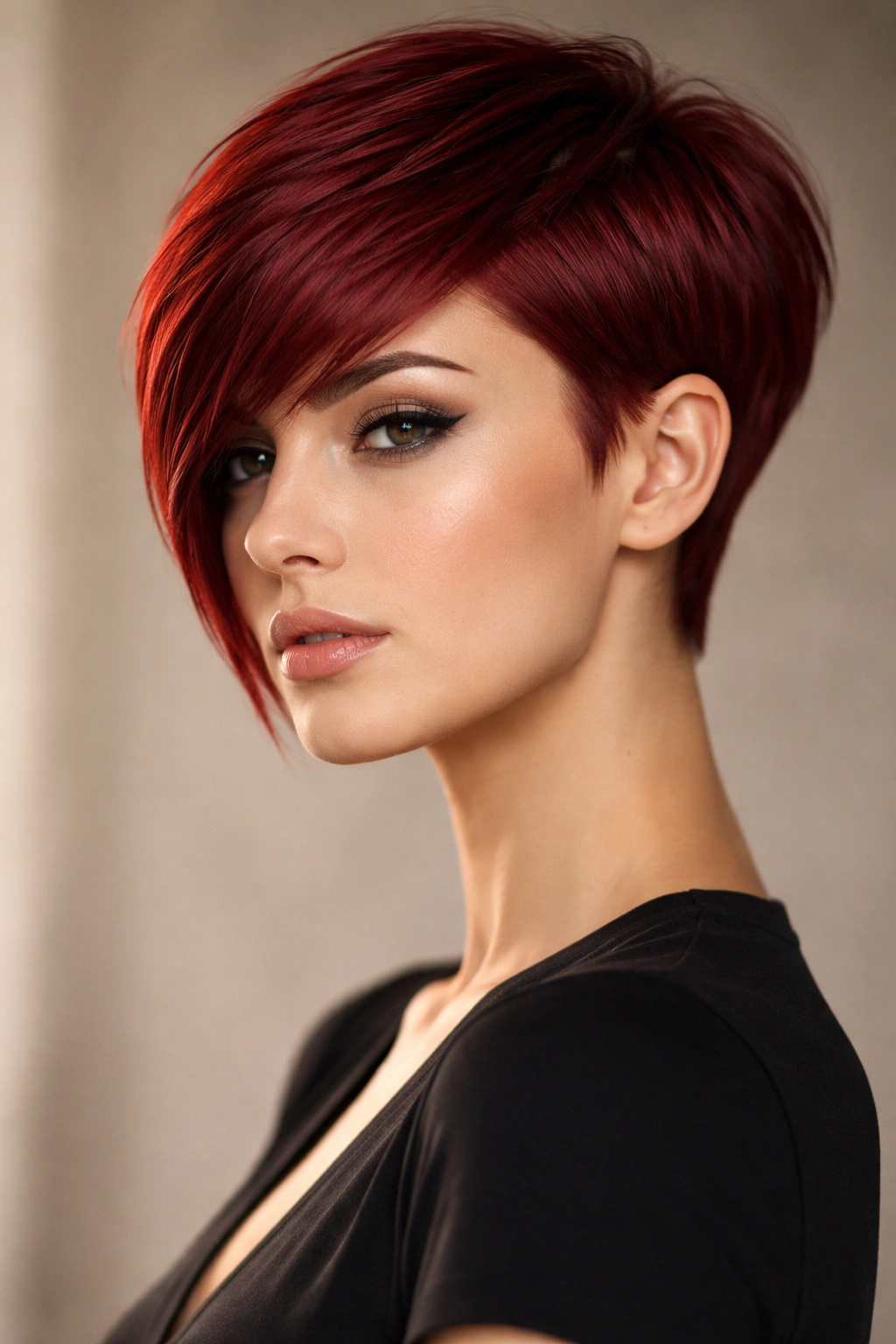
An A-line pixie maintains short length overall but angles longer slightly longer toward the front, creating a subtle structured shape.
The Geometric Appeal
This cut has a modern, architectural quality. The angle draws attention to your face and cheekbones while maintaining the low-maintenance benefits of a short cut. In red hair, the clean lines feel sophisticated and intentional.
Face Shape Advantages
The subtle angle of an A-line pixie flatters most face shapes better than a uniform pixie. The slightly longer front pieces frame the face softly without sacrificing the boldness of a pixie cut. It’s a great middle-ground option if you love the idea of a pixie but worry about it being too harsh.
Insider note: This cut can work beautifully on people with finer hair who worry a uniform pixie will make their head look too small. The structured angle adds visual weight and dimension.
7. The Disconnected Undercut
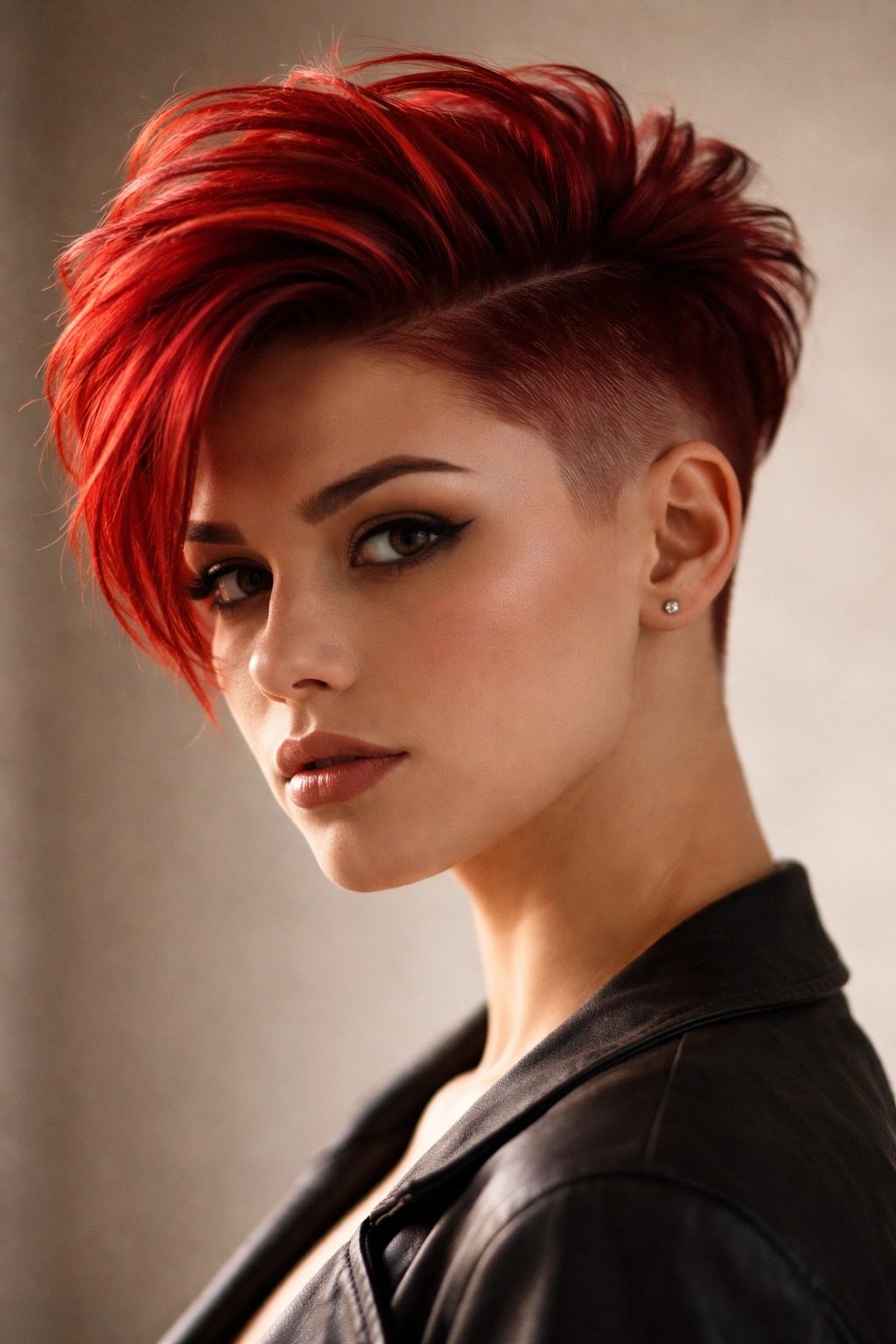
An undercut keeps length on top while the sides are cut significantly shorter—creating a clear disconnect between the two lengths. It’s bold, artistic, and turns heads instantly.
Visual Drama
The contrast between the longer red on top and the very short (or shaved) sides is visually striking. You can show off an undercut by styling your top hair back and to the side, or conceal it by letting your top hair fall over it. This versatility is one of the undercut’s biggest appeals.
Styling Flexibility
The longer top gives you room to style—you can create texture, waves, slickness, or upstyles. The short undercut can be totally clean and precise or slightly grown out and softer, depending on your preference and maintenance schedule.
Worth knowing: If you’re thinking about an undercut but unsure about the boldness, you can grow it out and transition into a different cut. It’s not permanent, and many people find it less intimidating once they see it.
8. The Blunt Micro Pixie
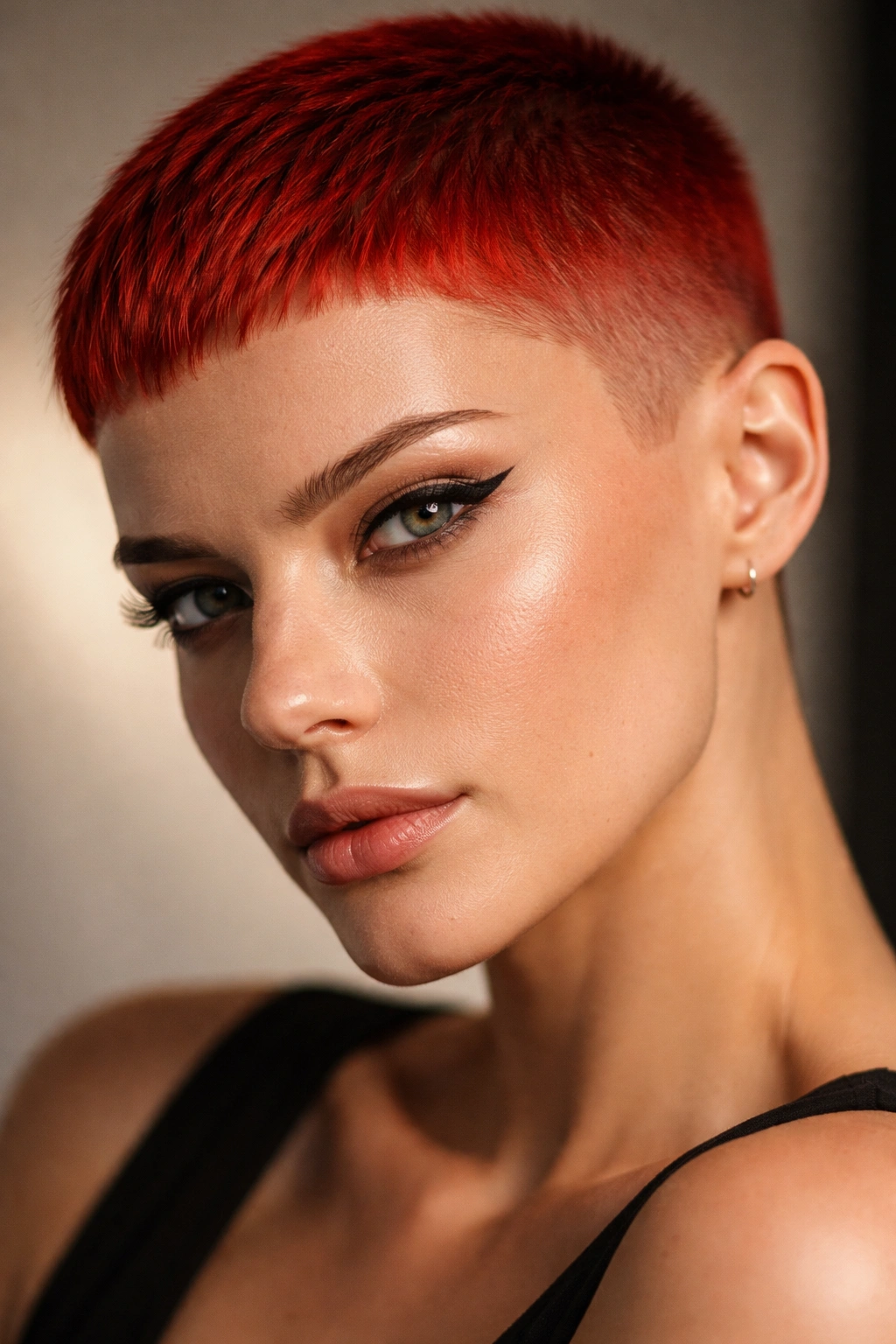
Sometimes shorter is bolder. A micro pixie (or ultra-short pixie) is cut very close to the head overall, with minimal length at the crown.
For the Confident
This cut requires real confidence because there’s nowhere to hide. Skin texture, head shape, facial features—everything shows. But in red hair, it’s absolutely powerful. You’re not just making a style statement; you’re making a life statement.
What It Shows Off
A micro pixie shows off your scalp, your bone structure, your face shape. Red hair amplifies the effect—it becomes all about your features and your presence, not about hiding behind hair length.
Real talk: This cut works best on people with confidence and good scalp health. If you have scalp sensitivity or psoriasis, consult with a dermatologist before going this short.
9. The Swept-Back Undercut Crop
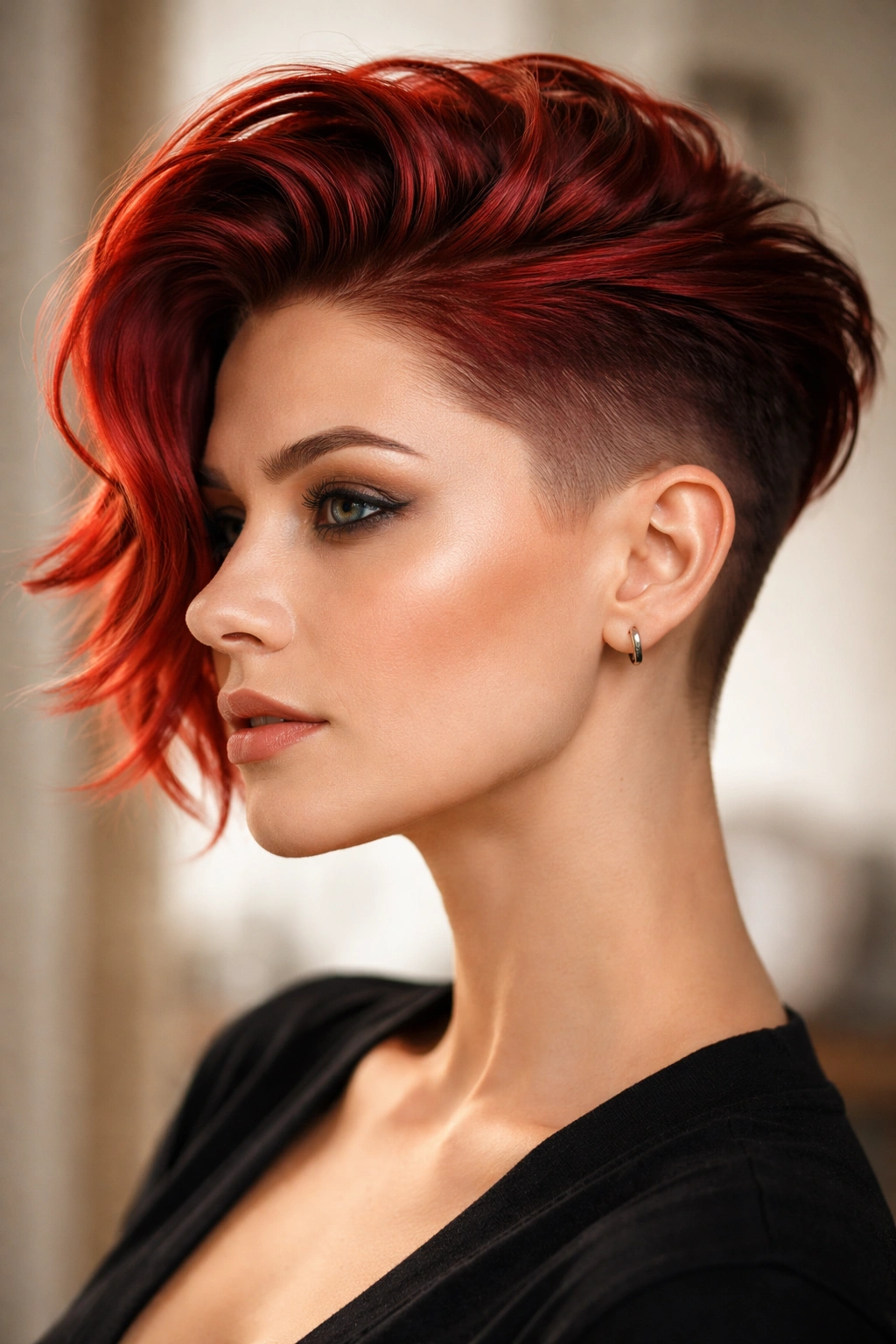
This variation on the undercut keeps more texture and length on top (8-12 weeks of growth) while maintaining very short sides. The length on top sweeps back or to the side, creating an intentional, styled look.
Movement and Dimension
The swept-back styling creates visual movement without bulk. In red hair, it shows color beautifully—the way light hits the longer strands at different angles amplifies depth and vibrancy. You get the boldness of an undercut with more wearable versatility.
Styling Options
You can sweep it back with pomade for polish, use a texturizing spray for a tousled look, or let it fall naturally for a more relaxed vibe. The undercut itself requires minimal maintenance (just touchups every 4-6 weeks), and the top section works with most hair types.
Pro tip: If you have thick hair, ask your stylist to layer the top section so it doesn’t feel too heavy. This creates better movement and makes styling easier.
10. The Feathered Pixie with Face-Framing
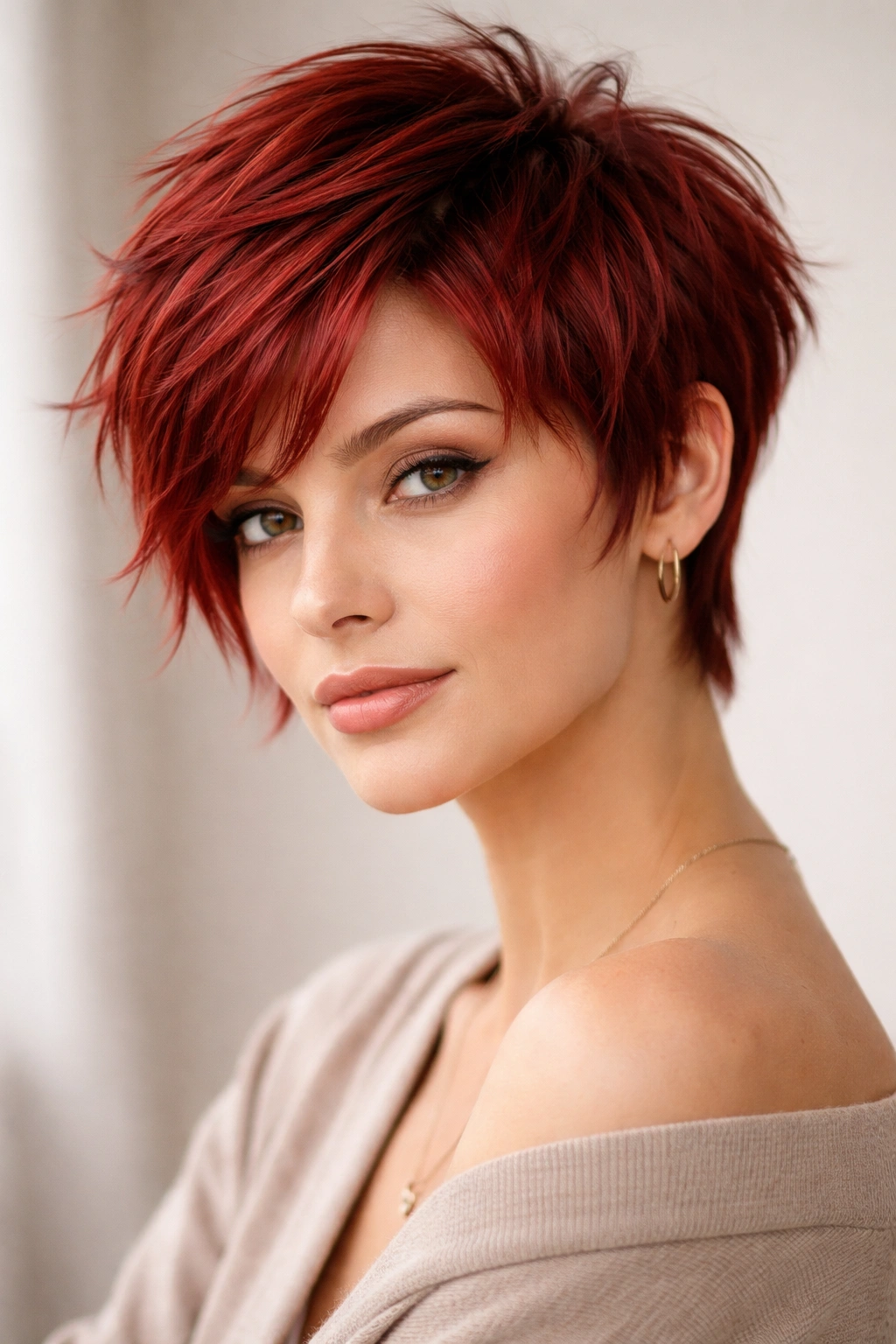
A feathered pixie maintains short length overall but includes longer, textured pieces around the face that soften the look and add dimension.
Softness Meets Edge
This cut balances the boldness of a pixie with softer framing around the face. It’s particularly flattering for people who love the short aesthetic but worry that a pure pixie will be too harsh. The face-framing pieces create a gateway-drug version of short hair that feels sophisticated.
For Different Hair Types
On straight hair, the feathering creates texture and movement through cutting technique alone. On wavy or curly hair, your natural texture enhances the feathering beautifully. The longer pieces around the face catch light differently and can show color variation more dramatically.
Worth knowing: This cut requires a stylist with solid texture-cutting skills. The feathering needs to look intentional and well-executed, not choppy or accidental.
11. The Grown-Out Pixie (The “Pixie Bob” Transition)
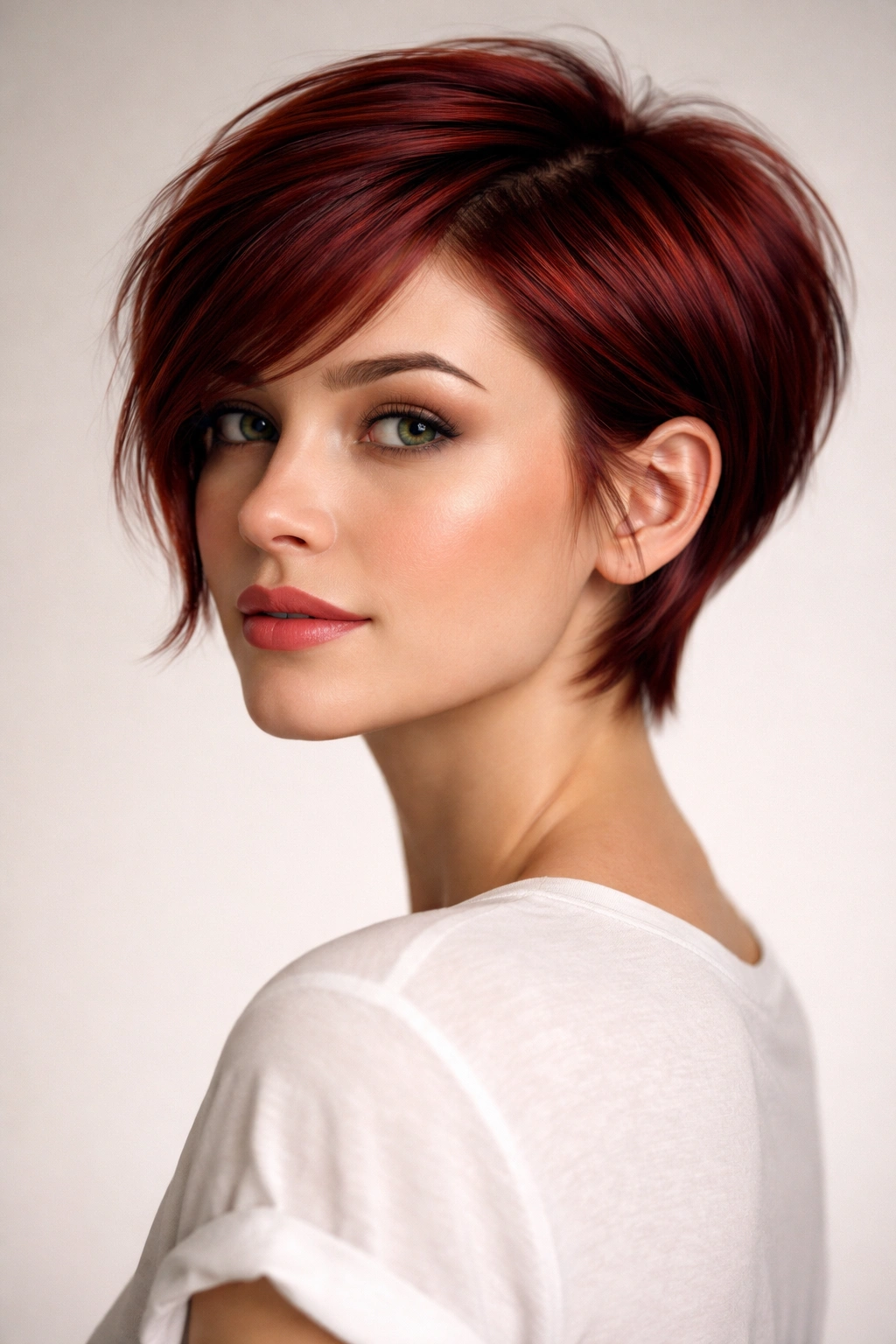
This is that in-between length—longer than a pixie but still decisively short. It’s a bridge cut that works beautifully as either a destination style or a way to transition from pixie to slightly longer length.
Maximum Versatility
At this length, you have serious styling options. Slick it down for polish, use texturizing products for dimension, or style it into a tiny half-up situation if you want that momentarily. Red hair at this length feels modern and editorial without requiring the precision that ultra-short cuts demand.
Maintenance Sweet Spot
Trims every 6-8 weeks keep this length looking intentional rather than overgrown. This makes it a good middle-ground option for people who love short hair but don’t want to live in the salon chair.
Insider note: This length shows off dimensional color beautifully. If you’re considering adding highlights or lowlights to your red, this length is perfect for showcasing them.
12. The Side-Swept Textured Pixie
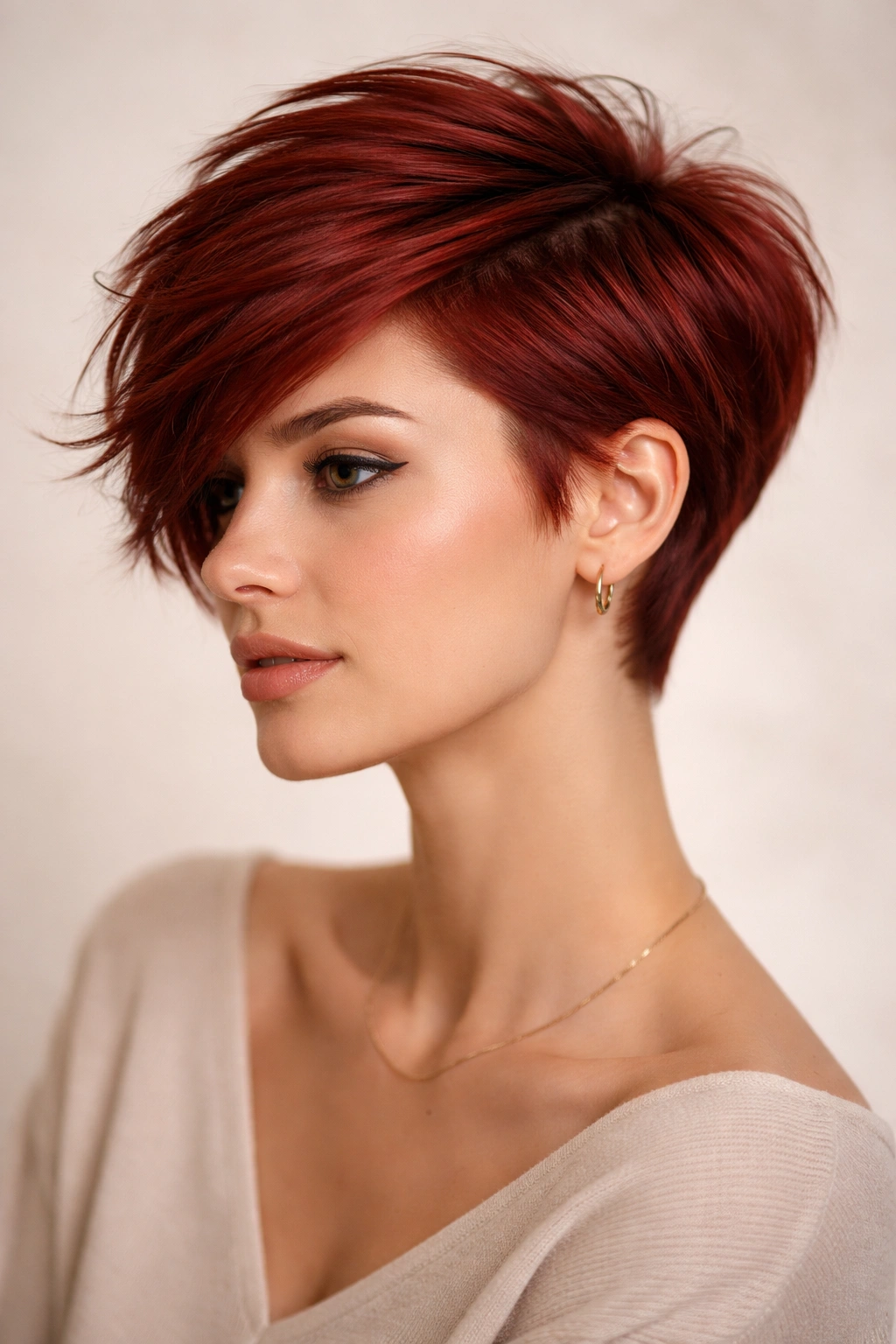
A pixie cut where slightly longer textured pieces sweep dramatically to one side creates movement and visual interest while maintaining short-hair practicality.
Asymmetrical Appeal
The side-swept angle creates visual dynamics—it’s more interesting than a centered part and more wearable than a full undercut. In red hair, the sweep creates movement that photographs beautifully and feels intentional rather than accidental.
Flattering on Most Face Shapes
The off-center placement of longer pieces can be angled to flatter your specific face shape. Ask your stylist to position the sweep to elongate, frame, or highlight your best features. One side can be tapered very short while the other keeps more length.
Pro tip: You can switch which way you sweep it on different days depending on your mood, outfit, or what you want to emphasize. It’s a versatile cut that doesn’t look the same twice.
Final Thoughts
Committing to short red hair is committing to maintenance, intention, and visibility. You can’t blend into the background with this combination—and really, why would you want to? Each of these cuts brings something different to the table, whether you’re drawn to the boldness of an undercut, the versatility of a textured crop, or the softness of a feathered pixie.
The right choice depends on your face shape, hair texture, lifestyle, and how much salon time you’re willing to invest. Work with a stylist who has genuine experience cutting short hair and coloring red—not every hairdresser specializes in short cuts, and many red shades require specific coloring expertise to look rich rather than brassy.
Red fades faster than most colors and goes brassy without proper maintenance, so commit to purple shampoo, regular glossing treatments, and sun protection if you want your color to stay true. Short hair needs trims every 4-8 weeks depending on the cut and how fast your hair grows. These aren’t obstacles—they’re just part of the commitment.
But here’s the real payoff: short red hair is a choice, not a default. Every person who wears it is making a statement about themselves. The cut you choose becomes part of your identity, not just your appearance. Whether you go ultra-short and bold, textured and modern, or softly framed and sophisticated, you’re choosing to take up space confidently. And that’s what makes short red hair turn heads.
