



The mullet is officially back—and it’s nothing like the hair-in-the-front, party-in-the-back caricature your parents might remember. Today’s women’s mullets are sophisticated, wearable, and genuinely flattering across different face shapes and hair types. From subtle, barely-there variations to bold, statement-making cuts, the modern mullet has evolved into dozens of distinct styles that work for actual humans who want to make a style statement without looking costume-y.
What’s driving this resurgence? Part of it is pure rebellion—the mullet’s campy history makes it feel daring and anti-establishment. But the real appeal is architectural: the mullet’s short, textured front paired with flowing length in back creates genuine dimension and movement. It works because it solves real hair problems—you can style the front sleek and polished for work or play, while the back movement softens your overall silhouette and adds visual interest.
The key difference between a mullet that works and one that doesn’t? Execution. A great women’s mullet has intentional graduation, skilled layering, and a clear understanding of how length and texture interact. The front isn’t a harsh, choppy pixie—it’s thoughtfully shaped. The back isn’t one boring length—it’s layered for movement or blunt for drama, depending on the specific cut. The transition between front and back shouldn’t feel accidental; it should feel like the foundation of the entire style.
If you’ve dismissed mullets as a relic or a trend you could never pull off, these 25 cuts might change your mind. Each one represents a distinct personality, aesthetic, and approach to what a modern mullet can be. Whether you’re looking for something subtle to ease into the trend or a full-on transformation, there’s likely a mullet here that speaks to exactly who you are.
1. The Textured Shag Mullet

This version leans heavily into 1970s-inspired texture and effortless movement. The front is cut into choppy, deliberately undone layers that sit around chin length, while the back cascades past the shoulders in soft, feathered waves. The magic is in the layering—every section has slightly different lengths, creating that tousled, piecy texture even when you blow it out smooth.
Why It’s So Wearable
The textured shag mullet reads as intentional but not fussy. You can wake up, shake your head, and it looks great. The choppy layers throughout mean you’re not fighting against the cut—you’re working with movement that’s built into the structure.
How to Style It
Apply texturizing spray to damp roots, then blow-dry with a diffuser attachment for natural waves. Scrunch as you dry. Finish with a light pomade through the piecy sections for definition without crunch. The effortless vibe is actually the whole point.
2. The Blunt Bob Mullet

For someone who wants a cleaner, more graphic look, the blunt bob mullet delivers architectural precision. The front is a sharp, chin-length blunt bob with zero layers—perfectly straight across. The back gradually lengthens into a sleek, blunt tail that grazes the mid-back. The contrast between the graphic front and the elegant back length creates sophisticated edge.
Who This Suits Best
This cut shines on people with straight or slightly wavy hair and the confidence to rock a very defined silhouette. It’s especially striking with strong jawlines and high cheekbones, as the blunt front emphasizes facial structure.
The Maintenance Reality
Blunt cuts require trims every 4-6 weeks to keep the lines crisp. The payoff is a style that looks intentional and expensive—like you walked out of a high-end salon and straight to somewhere glamorous.
3. The Disconnected Undercut Mullet

This bold take features an undercut on the back—typically close-shaved or faded on the lower half, creating a stark disconnect between the short sides and the longer crown. The front is textured and shorter, usually falling between a pixie and a short bob. The effect is edgy, modern, and undeniably striking.
The Gender-Bending Appeal
This version pulls from masculine haircut language but makes it distinctly feminine through strategic layering and texture in the crown and front. It’s the mullet for people who love androgynous style and want their hair to make a statement.
Styling the Shaved Parts
If you’re considering this, know that the undercut grows out visibly fast—you’ll need a touch-up every 2-3 weeks to keep the contrast clean. Some people embrace the grow-out phase; others find it requires too much maintenance. Be honest with yourself about that level of commitment.
4. The Tousled Pixie Mullet

This is the entry-level mullet for the nervous about going too short. The front is a tousled, textured pixie—not quite as short as a classic pixie, with enough length to piece out and style. The back is shoulder-length and wavy, with subtle layers. Together, they create an androgynous, cool-girl vibe without committing to a full short-hair transformation.
Perfect for Fine or Thin Hair
Because the back has length and movement, it visually adds fullness and dimension to thinner hair types. The short, layered front also removes weight from the scalp, which can make thin hair appear fuller overall.
Easy Styling
Apply a texturizing cream or light pomade to damp hair and scrunch for texture. Blow-dry on low heat. You can have this looking polished in under ten minutes, even with minimal styling effort.
5. The Curly Mullet

Natural curly hair is absolutely made for mullets—the curl pattern provides instant texture and definition. The front is cut short enough to curl up and frame the face, while the back is longer, allowing curls to cascade down the back. Layers throughout prevent bulk and encourage the natural curl pattern to define itself.
Why Curls Look Amazing in a Mullet
Curly hair in a mullet reads as intentional and editorial. The volume and texture of natural curls work perfectly with the graphic structure of a mullet. You’re not fighting your hair texture—you’re highlighting it.
Curl-Specific Care
Use a curl-defining cream or gel on soaking-wet hair, then plop or diffuse to dry. Skip heat styling when possible to preserve curl pattern. The cut should be designed to work with your natural curl pattern, not against it.
6. The Sleek Wetlook Mullet

This version prioritizes smoothness and shine. The front is a short, sleek bob—think minimalist and polished. The back is longer and smooth, usually blown out straight or with subtle waves. The overall effect is very now, very chic, and very clean. This is the mullet for people who love minimalist style.
Styling for That Glossy Finish
Blow-dry with a paddle brush for maximum smoothness. Finish with a lightweight shine serum or glossing spray for that almost-wet-looking sheen. This cut photographs beautifully and photographs are probably part of why you’re interested anyway.
Best Hair Type for This
This works best on straight to slightly wavy hair. Curly or coily textures would fight against the sleek aesthetic, though you could embrace a different texture story entirely if that’s your natural hair.
7. The Faux Hawk Mullet

A faux hawk meets a mullet in this daring hybrid. The sides are shorter and tapered, while a textured stripe of longer hair runs down the center from front to back. The back is distinctly longer and shaggier than the center stripe, creating layers of dimension. It’s theatrical, graphic, and definitely not understated.
For Bold Personalities
This cut is for people who genuinely enjoy standing out and who have the confidence to wear something this graphic. It’s the mullet equivalent of a statement piece—not a supporting player in your look, but the main event.
Styling Options
You can slick the center stripe back for a sleeker vibe, scrunch it for texture, or blow-dry it up for volume. The sides can be gelled down smooth or texturized with a pomade. The versatility is actually one of the cut’s best features.
8. The Modern Shullet (Short-Longer Hybrid)

The “shullet” is the term for a hybrid between a shag and a mullet—it’s softer than a true mullet but still maintains the basic principle of shorter front, longer back. The front is a short, choppy shag around the ears, and the back flows into longer, layered lengths. It’s approachable, wearable, and still distinctly mullet without being extreme.
The Gateway Mullet
If you love the idea of a mullet but aren’t ready to commit to a sharp divide between front and back, the shullet is your cut. It has enough of the mullet vibe to feel current, but it’s gentle enough for people who prefer subtlety.
Maintenance Sweet Spot
You need trims every 6-8 weeks to maintain the specific layering, but the growth-out phase is much more forgiving than a blunt-bob mullet. You won’t look like you’re in between styles.
9. The Platinum Mullet

This is a mullet paired with platinum-blonde color—the cut itself can be any of these styles, but the platinum makes everything about it more striking. The shortness in front seems edgier with platinum blonde; the length in back seems more dramatic. Combined, platinum hair and a mullet read as intentional, modern, and fashionable.
Color as a Style Statement
If you’re not naturally blonde, going platinum is a commitment (fading, toning, maintenance). But it instantly elevates the cut. Even a shullet looks significantly cooler in platinum than in your natural brown hair.
Maintenance Reality
Platinum hair needs specialized shampoo, deep conditioning weekly, and toning every 2-4 weeks depending on water quality and sun exposure. Pair that with mullet upkeep and you’re looking at a styling commitment, not just a cut.
10. The Colorblock Mullet

Instead of one solid color, this mullet features contrasting colors in different sections—maybe darker roots with a blonde front section and darker back, or a vibrant jewel tone in the shorter front with a natural color in the back. The mullet’s built-in sections make it perfect for playing with color blocking.
Strategic Color Placement
Color works best when it follows the cut’s natural sections. A bright color in the short, choppy front section can be covered if you wear it down and straight-back, but it shows when you have texture or movement. That’s the point—you’re controlling when the color reads and when it’s subtle.
Blend or Contrast
Some people prefer a subtle blend from one color to another. Others love a stark, graphic contrast. Both approaches work; it’s a matter of personality and how much visual drama you want.
11. The Wavy Long-Back Mullet

The front is textured and choppy, sitting between ear length and chin length. The back is noticeably longer—think mid-back or even longer—with soft waves throughout. Lots of layers keep the back from feeling heavy. This version emphasizes the length in back while the front stays short and dynamic.
For People Who Love Long Hair But Want Change
If you’ve worn long hair straight forever and want dimension without cutting off all your length, this delivers. The short front changes your entire silhouette and face-framing while the back length remains.
Waves as Texture
Waves soften the potential hardness of the front-to-back division. They also mean you can style this with minimal effort—damp hair, texturizing spray, air-dry or diffuse. You don’t need to achieve a perfect wave with heat tools.
12. The Tapered Side-Fade Mullet

The sides taper down into a subtle fade (not shaved, just gradually shorter), while the front is textured and slightly longer. The back is significantly longer and layered. The fade creates clean lines and a very contemporary feel without being as extreme as an undercut.
Modern and Intentional
The fade is a hallmark of contemporary men’s haircuts that’s slowly making its way into women’s styling. It reads as very now and very deliberate—you’re not accidentally growing out a pixie; you planned this.
Styling the Sides
The fade works best if you blow-dry your hair away from your face, showing off those clean lines. Slicking it back also highlights the work of the cut.
13. The Romantic Mullet

This version prioritizes softness and femininity. The front is a textured bob with longer, sweeping layers that frame the face. The back is long and wavy, almost romantic in its flow. Instead of feeling edgy or graphic, this mullet feels gentle and a bit vintage-inspired—like you’re honoring the mullet concept while staying true to a softer aesthetic.
Bridging Two Styles
This is the mullet for someone who loves both graphic modernity and soft femininity. You don’t have to choose; this cut honors both sensibilities.
Styling for Softness
Use a curling iron or wand to create loose waves throughout. Add a shine serum for luminosity. The goal is movement and flow, not texture or edge.
14. The Choppy Pixie Mullet

This takes the pixie-mullet concept and amps up the choppiness. The front is a very short, heavily textured pixie with lots of movement. The back is equally textured and layered but longer—think shoulder-length or slightly beyond with lots of choppy layers. When styled, the overall effect is rocker-cool and very rock-and-roll.
For People Who Like Movement
If you hate flat hair and love texture in every direction, this is your cut. Everything is layered; everything moves. Styling takes effort, but the payoff is a very distinctive, high-impact look.
Styling the Texture
Apply texturizing mousse or spray to damp hair and rough-dry with your fingers and a blow dryer. Use a pomade or wax sparingly through the pieces for definition. You want movement and separation, not a slicked-down look.
15. The Asymmetrical Mullet

One side of the front is shorter than the other—dramatically so. The longer side might hit the chin while the shorter side barely grazes the ear. The back has more balanced length but might be slightly longer on the side that matches the shorter front side. This asymmetry creates visual interest and movement.
Asymmetry as Design
An asymmetrical cut is either a choice or an accident—make sure it’s clearly a choice by having it cut intentionally. The asymmetry should be dramatic enough to read as intentional, not like you missed a spot during styling.
Styling Considerations
You’ll need to blow-dry or style this to show off the asymmetry. If you just towel-dry and go, the cut might not read the way it was designed to.
16. The Bleached Ends Mullet

The front and back both gradually fade from your natural color into bleached, pale blonde ends. It’s like a reverse ombre but more editorial. The mullet’s natural sections make this color strategy especially effective—the color transition happens across the front and back separately, creating movement through color as well as cut.
Blending Color and Cut
This works especially well if your natural color is dark—the contrast between dark roots and pale ends is striking. Lighter natural colors can still do this but with less graphic impact.
Maintenance Reality
Bleached ends will be drier and more fragile than your natural hair. Deep conditioning is essential, and you might need to trim the ends more frequently to keep them looking fresh rather than frazzled.
17. The Slicked-Back Front Mullet

The front is cut short enough to slick straight back against your head, creating a very clean, graphic look. The back is longer and can be textured or smooth. When the front is slicked back, your face is completely exposed—this is a cut for people confident in their facial features because nothing is hidden.
Bold Face Framing
Slicked-back styling requires symmetrical, strong features or the confidence to pull off a look even without perfect symmetry. It’s very editorial, very fashion-forward, and absolutely not for everyone.
Everyday Styling
You could also style the slicked-back front with texture and a slight pompadour volume, depending on length and your hair type. This gives you multiple styling options from one cut.
18. The Braided Mullet


The structure is a standard mullet, but the styling incorporates braids. You might braid a section of the front, or braid the longer back length, or do both. The braids add pattern and texture to the cut’s existing structure. This is especially striking with longer back lengths.
Braids as Styling Tool
Braids aren’t just a styling choice; they actually influence how the cut sits and moves. A braided mullet might be worn with braids daily, or you might just add them occasionally for a different vibe.
Best for Certain Hair Types
Braids hold better in straight or slightly wavy hair. Very curly or coily hair can look beautiful in braids, but the braid structure might not be as defined as in straighter hair types.
19. The Vintage Glam Mullet

Think 1980s glamour channeled through a mullet. The front is voluminous and textured, teased for height at the crown. The back is longer and wavy, equally voluminous. The overall vibe is sophisticated, a bit dramatic, and unapologetically retro-inspired. Pair it with the right makeup and attitude, and this cut feels iconic.
Glam as Intentional Aesthetic
This isn’t accidental 80s hair—it’s a deliberate nod to that era’s approach to volume and drama. It works if you embrace the full aesthetic.
Styling for Volume
You’ll need a blow dryer, a round brush, and a light touch with volumizing products. Tease gently at the crown for height. Use a light hairspray to set it without crunching it.
20. The Bixie Mullet

A bixie is a hybrid between a bob and a pixie. In mullet form, you get a bixie-length front (around ear-length, textured, with some layering) and a significantly longer back. It’s more dramatic than a shullet but less extreme than a true short-to-long mullet.
The Goldilocks Mullet
Not too short in front, not too long in back—this feels like the right proportion for people with moderate sensibilities. It’s a mullet that reads as edgy without being shocking.
Versatile Styling
The front is long enough to tuck behind your ears or style in different directions. The back is long enough to wear up in a ponytail or bun if you want a break from the mullet aesthetic.
21. The Denim-Blue Mullet

Your natural color on top fading into a denim-blue shade in the back creates a modern, editorial color story. The blue shows most dramatically when you move, but it’s always part of your silhouette. This works best with darker natural hair as a base.
Color as Dimension
The blue adds visual dimension to the cut without feeling costume-y if you choose the right shade. A true denim blue reads as sophisticated and intentional.
Maintenance and Fading
Blue fades faster than warmer colors like reds or oranges. Expect to refresh the color every 4-6 weeks. Use color-safe shampoo and minimize heat styling to slow the fade.
22. The Disconnected Layers Mullet
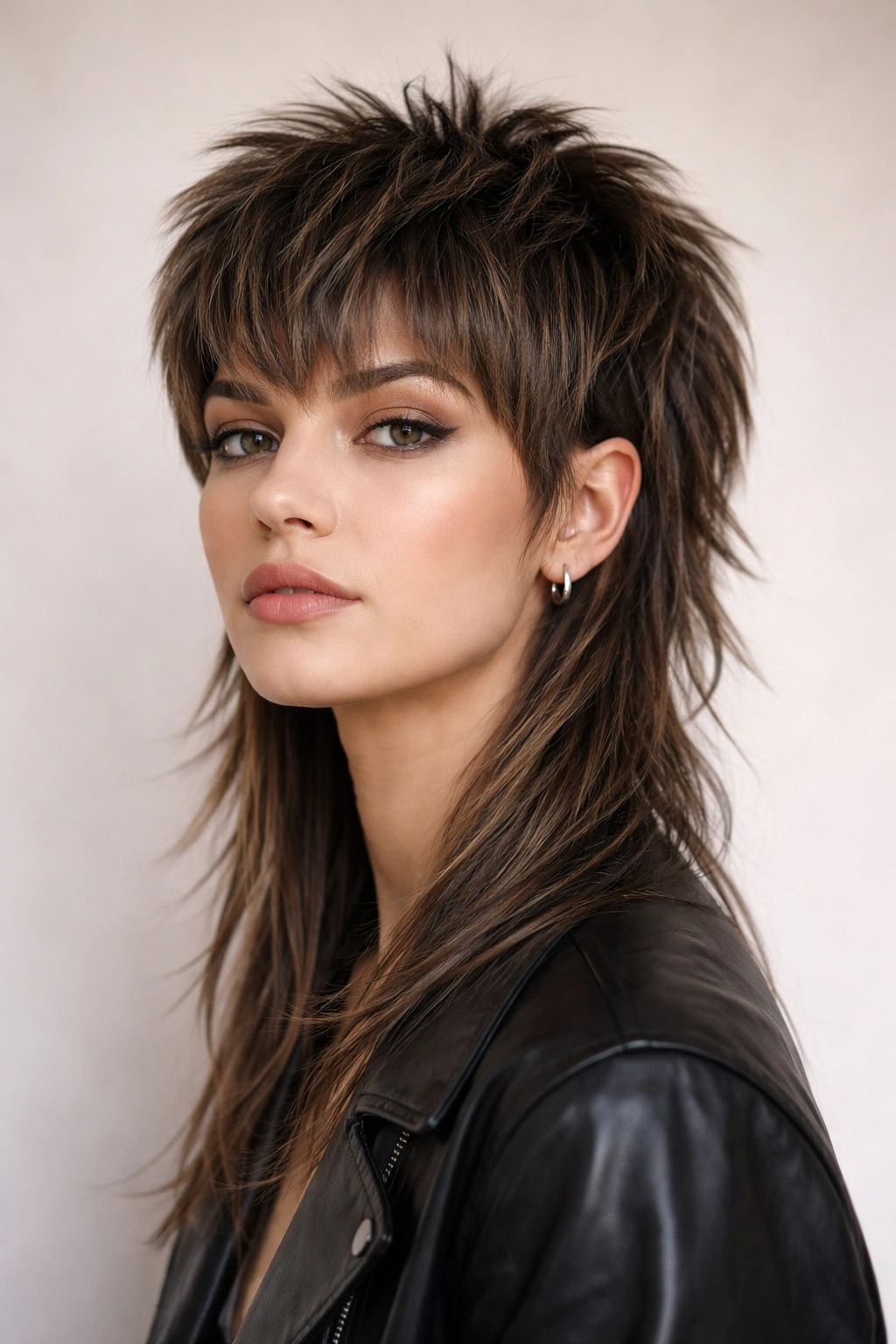
This version features distinctly separate “layers” of length. The front might be ear-length with one set of layers, then there’s a slightly longer transition zone with different layering, and then the back is significantly longer with its own layer pattern. The sections don’t blend smoothly; they’re distinctly stacked. It’s graphic and very architectural.
Statement Through Structure
The disconnected layers make a statement about structure and intention. This isn’t accidental hair; it’s clearly designed with thought.
Styling Complexity
Styling this cut requires understanding how to work with multiple layer lengths. You’ll likely need professional styling guidance to make it look intentional rather than awkward.
23. The Copper Mullet
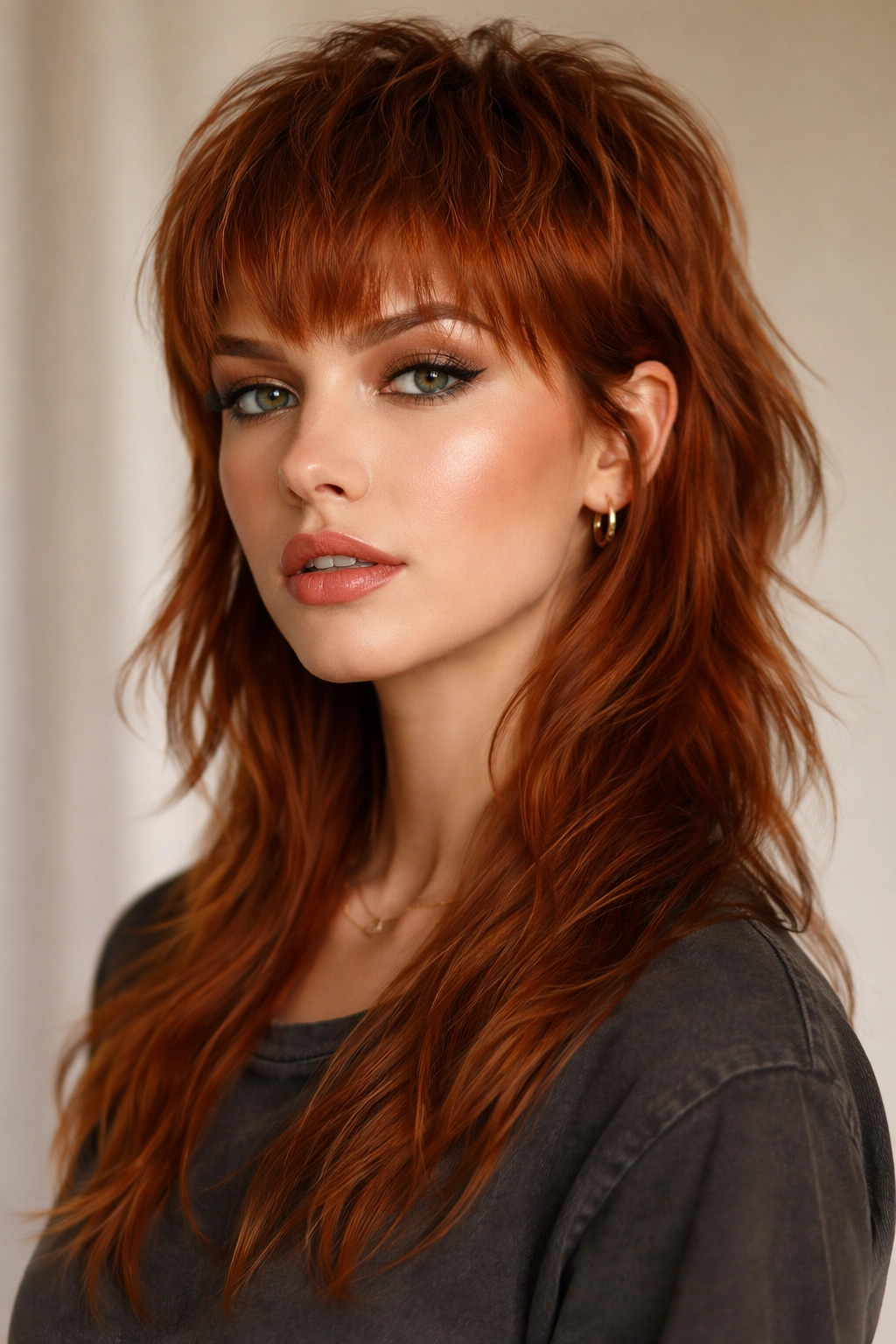
A warm, rich copper tone throughout the mullet makes both the short and long sections visually pop. Against most skin tones, copper reads as warm, luxurious, and rich. It’s a color choice that elevates any mullet cut.
Color Universality
Copper has a wider range of shades than platinum or cool tones, so there’s likely a copper shade that complements your skin tone beautifully. From reddish-copper to golden-copper, the range is forgiving.
Color Hold Strategy
Copper fades with sun exposure and washing. Minimize heat styling, use color-safe products, and consider a weekly glossing treatment to maintain the richness and vibrancy.
24. The Spiky Mullet
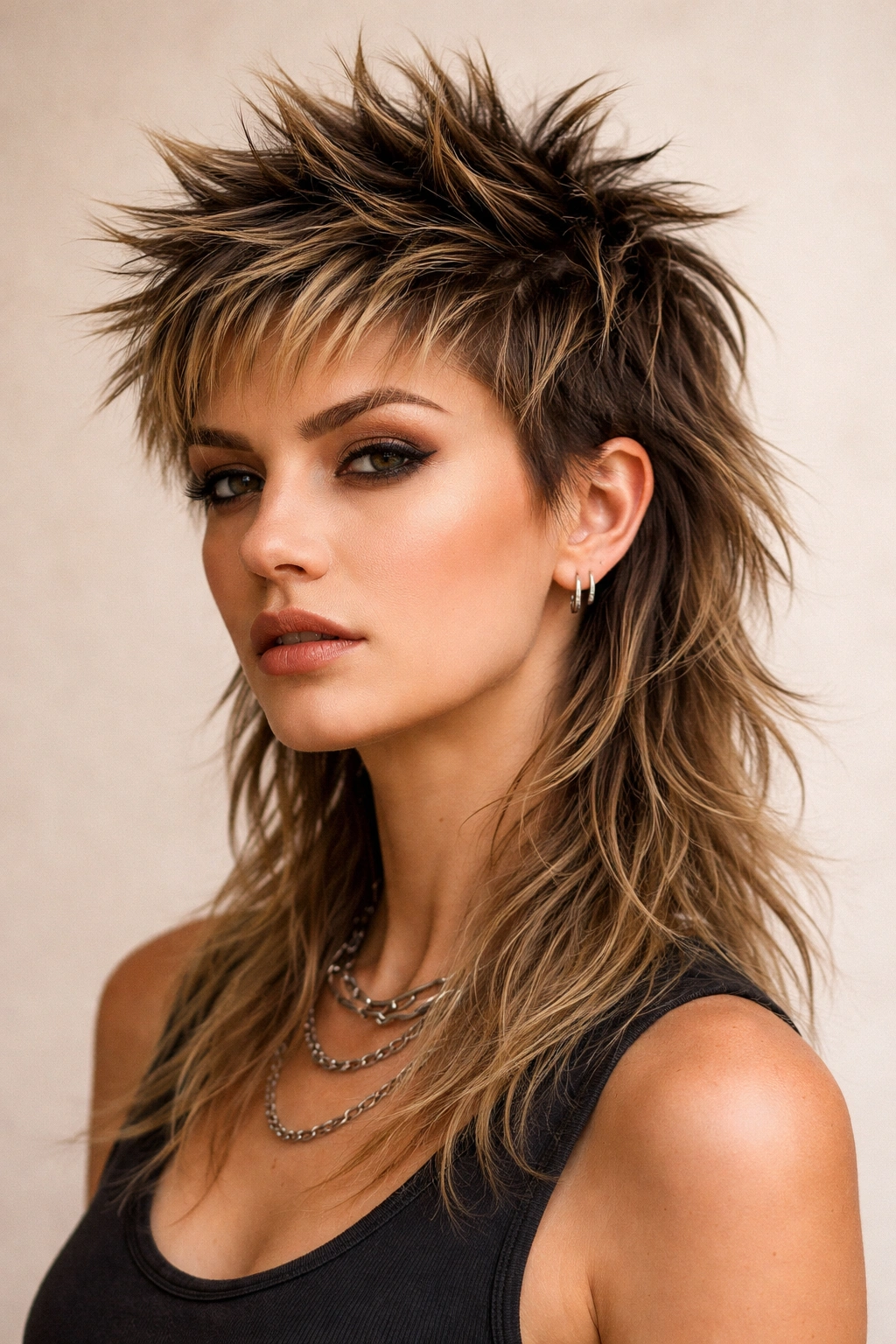
The front is cut into short, choppy layers designed to stick up and spike out. The back is longer but also textured with layers. When styled with pomade or gel, the front becomes very spiky and three-dimensional. The back flows behind the spiky drama in front.
Attitude and Edge
This cut says you have opinions and aren’t afraid to show them. It’s for people who want their hair to reflect a bold, confident personality.
Styling as Part of the Aesthetic
This cut requires daily styling to look its best. The structure is there, but you need to activate it with product and blow-drying technique. If you’re not willing to style it most days, this isn’t the cut for you.
25. The Gradient Mullet
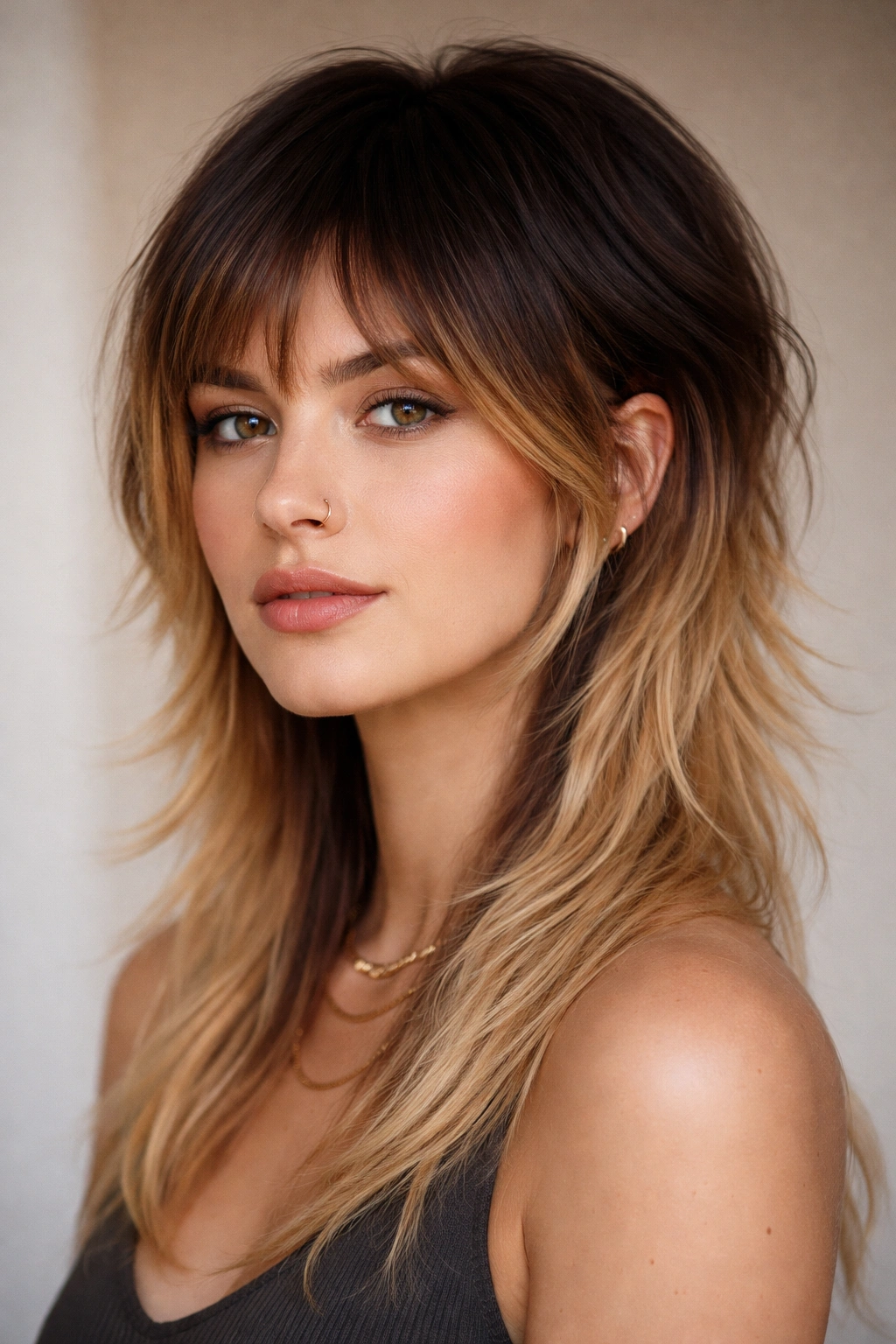
The color gradually shifts from dark at the roots to progressively lighter toward the ends, with the front and back following the same gradient pattern. It’s like a grown-out root-shadow color strategy, but intentional and designed. The result is dimensional, modern, and sophisticated.
Dimensional Without Being Stark
A gradient feels more natural than a sharp line between two colors, but it’s clearly intentional. It’s current without being trendy in an obvious way.
Maintaining the Gradient
As your hair grows and your roots come in, the gradient will shift. Some people love embracing the growth and updating the color; others maintain the gradient line more precisely. Either approach can work.
Final Thoughts
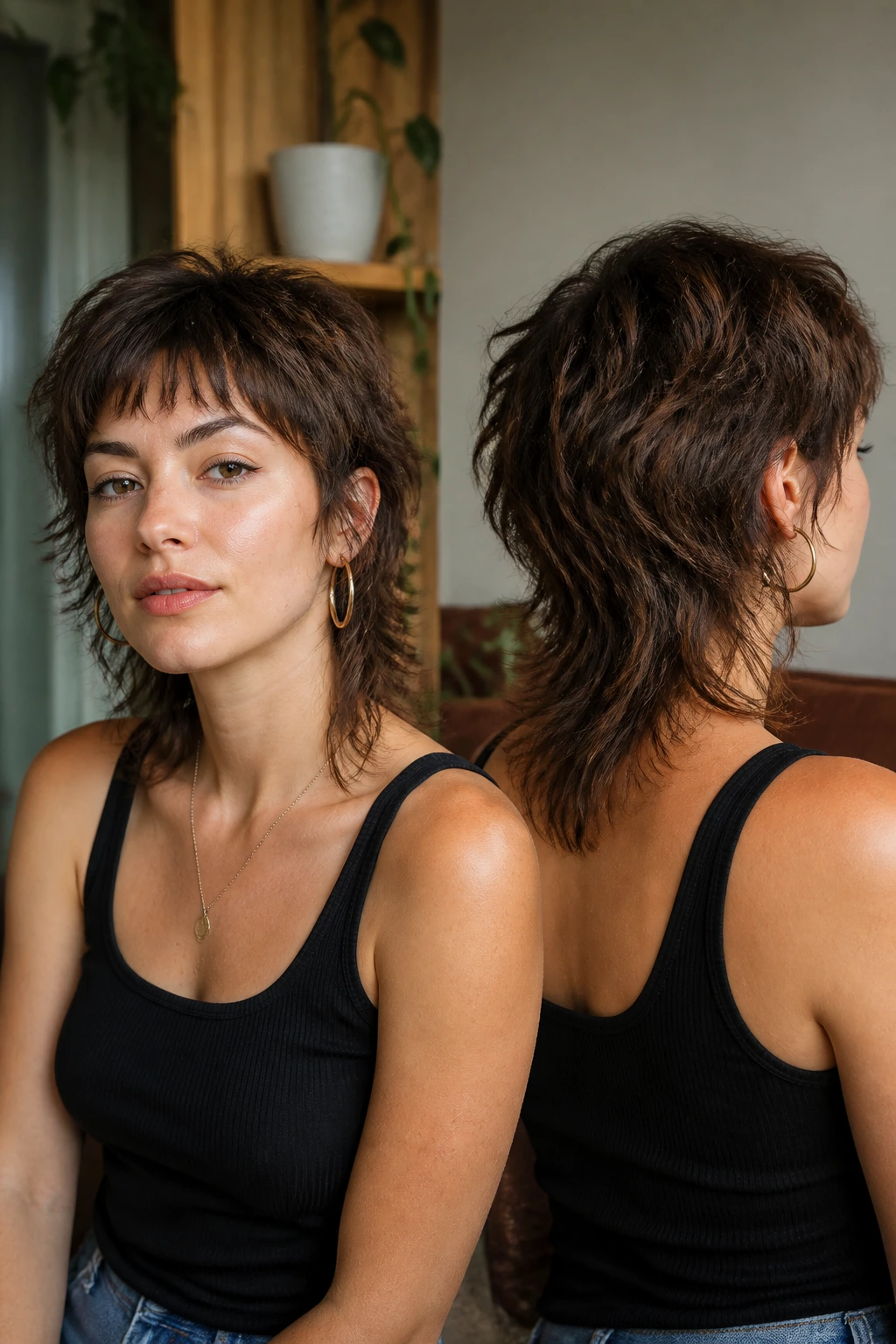
The mullet deserves its comeback moment. What started as a punchline has evolved into a genuinely sophisticated, wearable cut that works across different face shapes, hair types, and personal styles. Whether you’re drawn to the edgy minimalism of a short front with an undercut, the soft romance of layered waves, or the bold statement of a colorblock design, there’s a version of the mullet that speaks to exactly who you are.
The key to pulling off any mullet is confidence. This cut invites opinions because it’s designed to make a statement. But that statement doesn’t have to be loud or extreme—it can be subtle, romantic, editorial, or daring. What matters is that you choose a version that aligns with your personality and styling habits. A cut that requires daily styling work is only going to make you happy if you genuinely enjoy that styling ritual.
Start with your barber or stylist—bring photos, be specific about proportions, and ask questions about how the cut will sit when your hair air-dries. The best mullet is one that works with your hair texture and fits into your actual lifestyle, not one that looks amazing in a photo but requires forty-five minutes of styling every morning.
