



Short haircuts have a transformative power that longer styles simply can’t match. A well-chosen cut can change how your entire face reads, enhance your cheekbones, add dimension to your features, and free you from the daily styling obligations that come with length. The catch? Not every short style works for every person — but the right cut absolutely does exist for you, regardless of your face shape, hair texture, or personal style.
The beauty of short hair is that it works across age groups, hair types, and lifestyle demands in ways that medium and long styles struggle to manage. A cropped cut looks equally at home on a 25-year-old creative director as it does on a 65-year-old professional. Short hair tends to add volume naturally, requires less maintenance once you find your cut, and often looks intentional and polished without even trying.
Finding your perfect short haircut comes down to three core factors: understanding your face shape and which angles complement it, knowing your hair’s natural texture and how the cut will work with it (not against it), and choosing a cut that genuinely matches your lifestyle and styling commitment. A high-maintenance, precision pixie might look stunning on you, but if you don’t have 10 minutes for a blowout three times a week, you’ll be frustrated every morning.
Here are thirty short haircuts that genuinely work across different face shapes, hair textures, and styling needs — each one explained with exactly what makes it work, who it flatters most, and how to make it your own.
1. The Classic Pixie Cut
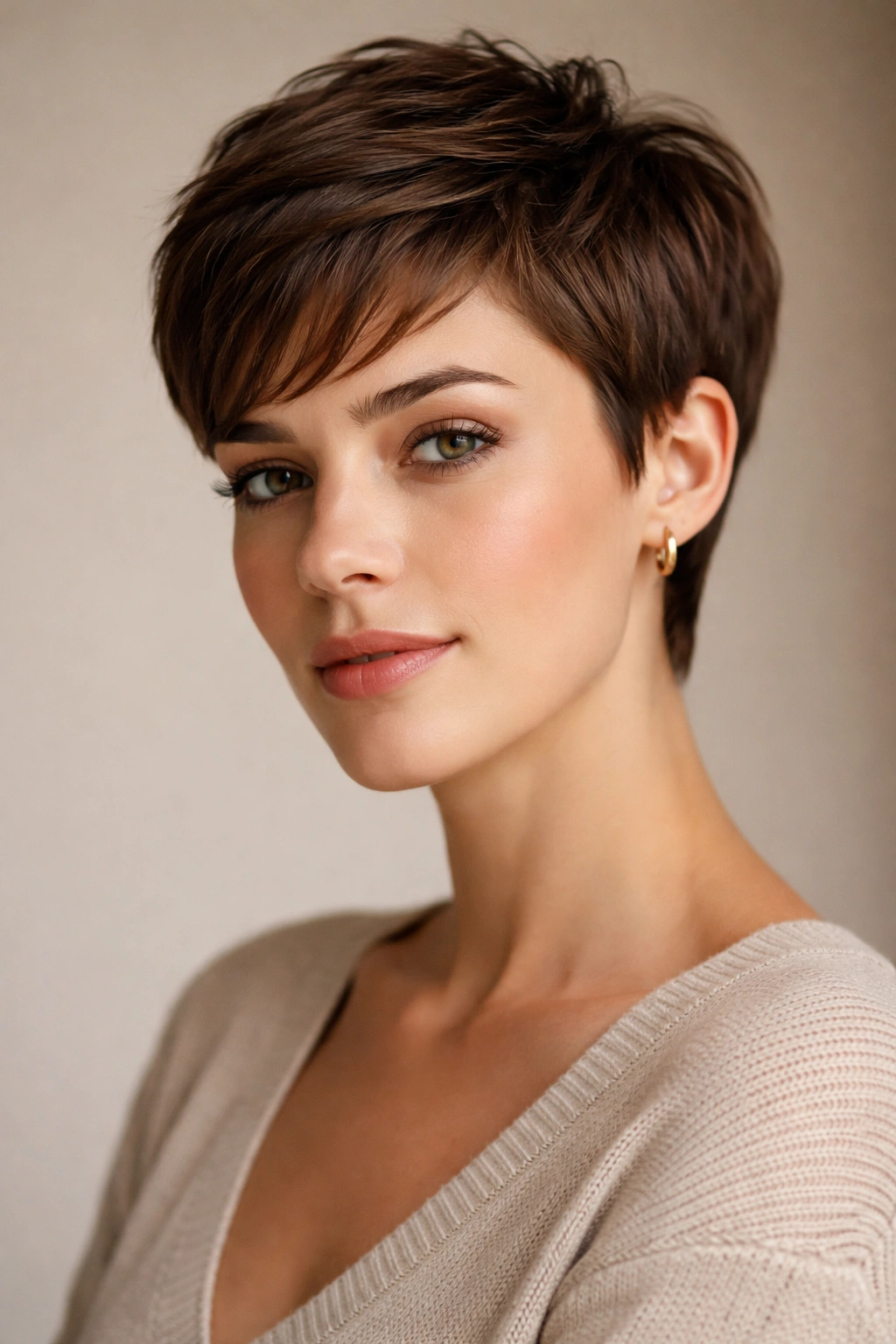
The pixie cut is the gold standard of short hair for a reason. This style crops the hair close to the scalp on the sides and back while leaving slightly more length on top — typically somewhere between half an inch and two inches depending on your preference and face shape. The signature move is how the top layers can be styled forward, back, or to the side to frame your face and add dimension.
What Makes the Pixie Universally Flattering
The pixie works across face shapes because the styling options are so flexible. Pair it with longer bangs that graze your eyebrows if you have a round or square face — the vertical lines elongate your features. If you have a longer, rectangular face, wear the bangs swept to the side with texture on top to add width. The close crop on the sides actually makes broader faces appear slimmer by creating definition at the jaw and temples.
Key Facts About Pixie Maintenance
- Requires a cut every 3-4 weeks to maintain the shape, as short layers grow out noticeably fast
- Works best on wavy or straight hair; curly hair needs extra daily styling unless you’re going for a tousled, textured look intentionally
- Takes 5-10 minutes to style with a blowdryer and small round brush, or 2 minutes with dry texturizing spray if you’re going undone
- Can be customized endlessly — ask your stylist for side-swept bangs, a longer top, undercut sides, or subtle layers depending on your face shape
Pro tip: The pixie is the perfect excuse to find a great stylist you trust, since you’ll be seeing them every month. Build that relationship and tell them exactly how you like to style your hair — some people blow dry sleekly, others prefer textured and tousled.
2. The Blunt Bob
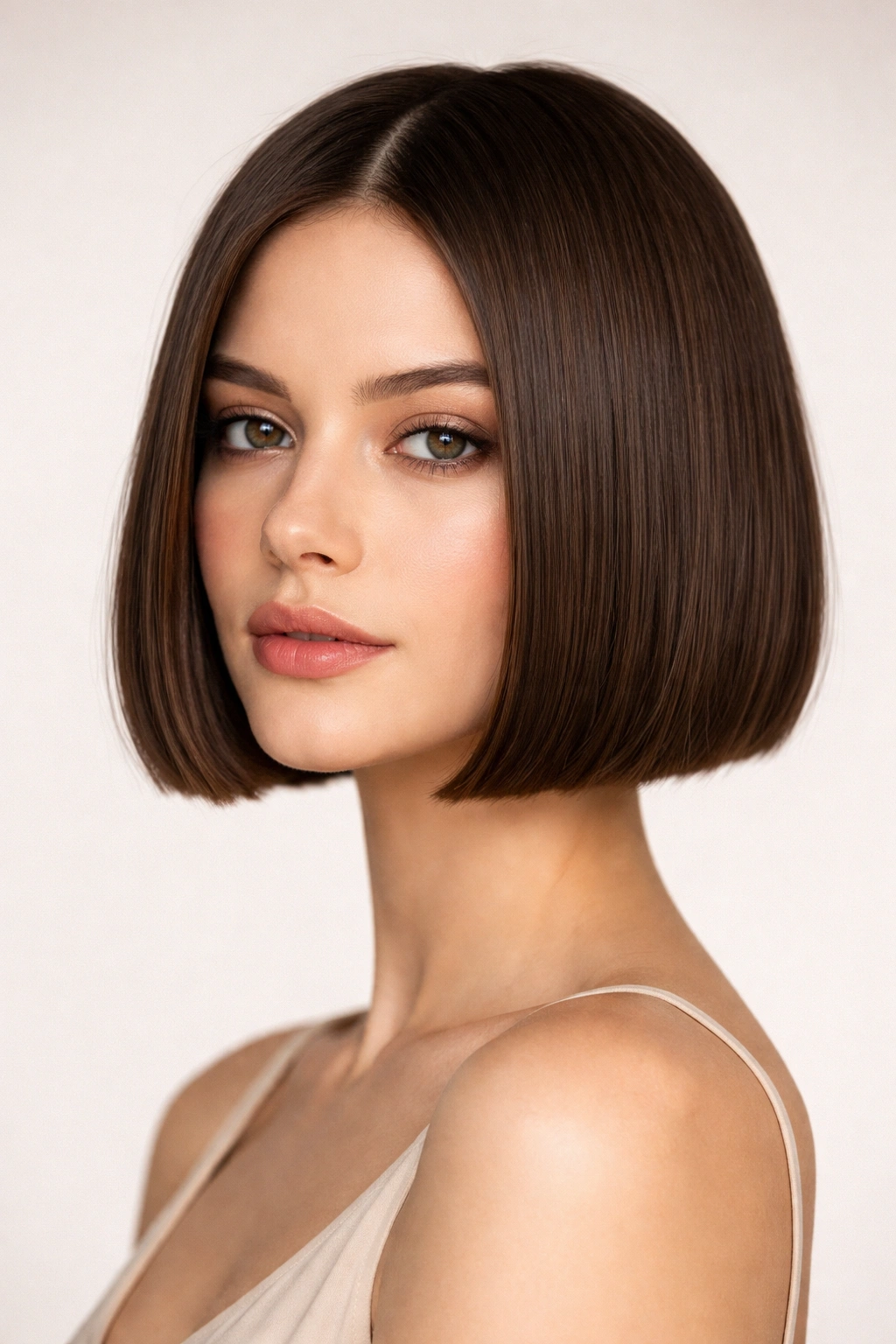
A blunt bob is cut straight across with zero layers, creating one clean, horizontal line that typically hits right at your chin or jawline. The power of this cut lies in its simplicity and the precision required to execute it. Every millimeter of uneven cutting is visible, which is why a blunt bob demands a skilled stylist and committed maintenance.
Why the Blunt Bob Commands Attention
The blunt bob creates a bold visual statement by definition. The hard line at the bottom frames your face decisively, and the weight of the hair creates a polished, intentional look that reads as confident and modern. This cut flatters angular face shapes beautifully because the straight line echoes and enhances cheekbones and jawlines. Round-faced people can make it work by asking the stylist to angle the front pieces slightly longer than the back, softening the roundness.
What You Need to Know
- The cut requires absolute hair health — any split ends or breakage are visible at the hard line, so regular trims every 4-6 weeks are non-negotiable
- Works best on straight to wavy hair; curly hair tends to push up and away from the blunt line unless you’re blow-drying daily
- Requires a blowout 2-3 times per week to maintain the polished line; leaving it to air dry usually looks fuzzy rather than intentional
- Can be paired with bangs (from wispy to blunt) to completely change the vibe
Worth knowing: If your hair naturally has texture or wave, discuss with your stylist whether a slightly textured version (with the finest, most subtle layers just to soften the bottom) might work better for your lifestyle.
3. The Modern Shag
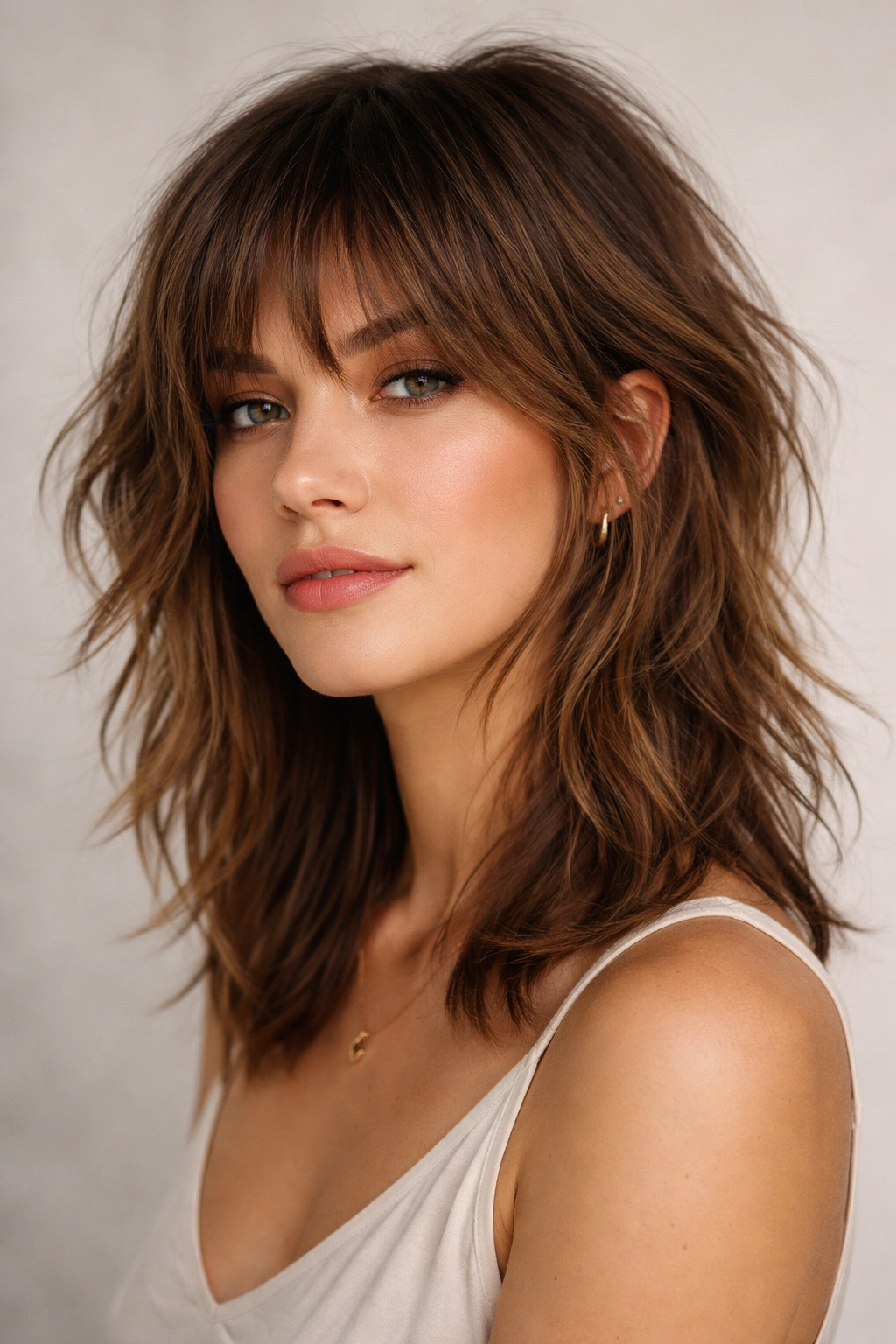
The shag is making its comeback — but not the 1970s version your mom had. Today’s shag is cleverly layered throughout, with choppy texture and movement, typically hitting somewhere between your chin and shoulders. The layers are cut at strategic angles to create a piece-y, undone texture that looks effortlessly cool.
What Makes the Shag Work for Today
The modern shag is incredibly forgiving because the layers and texture hide imperfect styling and minor growth-out phases. If you skip a blowout, it still looks intentional. The cut works across face shapes because the varied lengths mean you can customize where the layers fall around your face. The shag also suits a wider range of hair textures than many styles — it looks equally good on straight, wavy, and curly hair because the texture is literally built into the cut.
Key Benefits and Styling Notes
- Requires cuts every 5-6 weeks to maintain the layered shape as the bottom grows out
- Works beautifully with waves and texture, so it’s ideal if you embrace your hair’s natural movement rather than blow-drying straight
- Can be styled sleek and polished for professional settings, or tousled and piece-y for casual days
- Pairs well with bangs (side-swept, face-framing, or fuller) to customize the look for your face shape
- Needs texturizing spray or salt spray on day-two or day-three hair to really show off the layers
Insider tip: Ask your stylist to cut shorter, choppier layers on top for volume and longer, smoother layers underneath for flow. This two-tier approach gives you movement without looking scraggly.
4. The Asymmetrical Bob
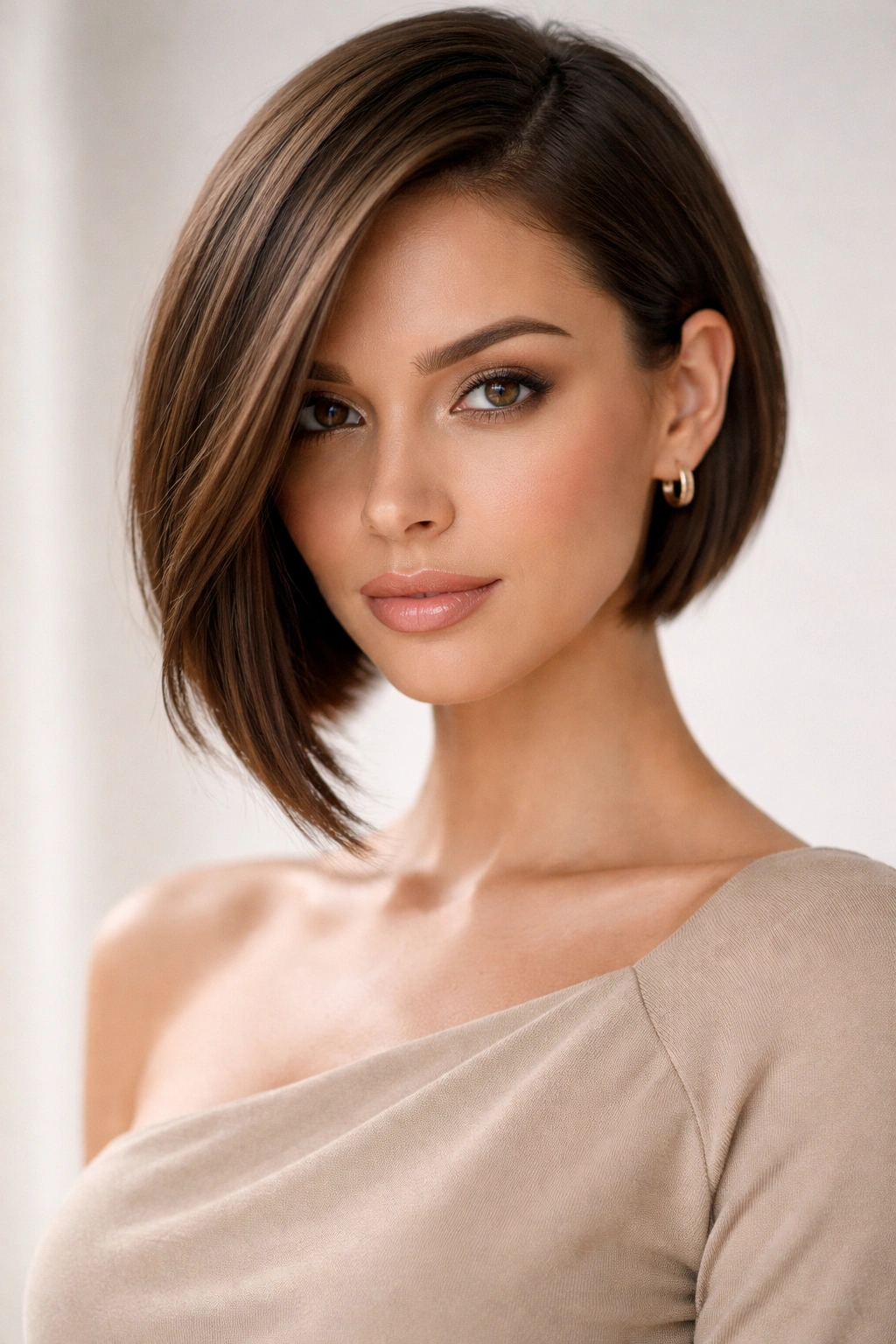
An asymmetrical bob features different lengths on each side — one side might hit at the earlobe while the other grazes the chin, or one side is cropped close while the other is longer. This cut is for anyone who wants to break the mold and create a genuinely unique look that makes a statement.
Who This Cut Flatters Best
The asymmetrical bob is particularly stunning on people with angular face shapes and strong bone structure — it amplifies those features. If one side of your face is slightly wider or you want to draw attention away from one side, you can customize the cut length accordingly. Paired with an undercut or shaved side, an asymmetrical bob becomes a genuine statement piece.
Important Considerations
- Requires significant styling commitment; one side will naturally want to fall a different way than the other, so you’ll need to blow-dry to maintain the intentional look
- Works best on straight to wavy hair; curly hair shrinks and settles in ways that can make the asymmetry less obvious unless you’re styling it regularly
- Needs trims every 4-5 weeks because uneven lengths show growth immediately
- Takes confidence to wear well — this cut doesn’t fade into the background, so commit to the statement
Pro tip: Wear the longer side sleekly styled one day and swap which side you style longer the next day by flipping your part. It’s a way to keep the look fresh without committing to one direction permanently.
5. The Crop Cut
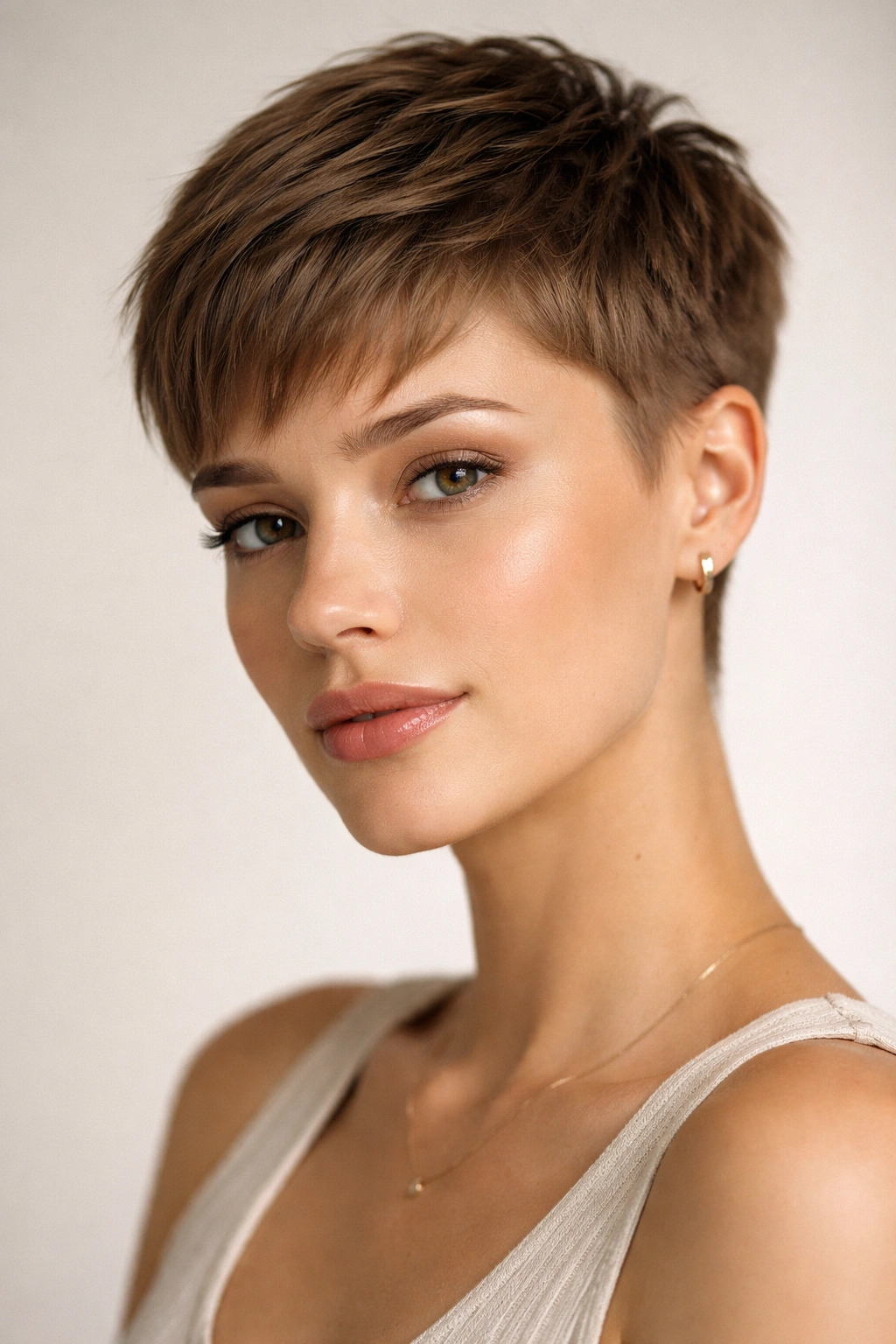
A crop cut is shorter overall — typically 1-3 inches on top with slightly tapered sides, sitting somewhere between a pixie and a full shag. It’s got personality without being as extreme as a pixie, and it’s genuinely low-maintenance if you’re willing to embrace a very short style.
Why the Crop Deserves Consideration
The crop cut is one of the easiest short styles to maintain because length means less frequent cuts. It works across all hair textures and face shapes because the overall shortness and simplified shape are so forgiving. People often worry a crop will look too masculine, but strategic styling — longer bangs, softer layers, side-sweeping — can feminize it immediately.
Styling and Maintenance Facts
- Requires cuts every 5-6 weeks; the simplicity means even small growth is noticeable
- Dries quickly and can be styled in under 5 minutes with a small blowdryer, or left completely unstyled for a tousled, undone look
- Works beautifully with color, highlights, or patterns because short hair shows off dimensional color so clearly
- Can accommodate sideburns that frame the face, longer bangs, or a completely uniform length depending on your preference
Worth knowing: This cut works especially well if you have a beautifully shaped head and don’t mind your ears showing. If you’re self-conscious about ear shape, ask your stylist for slightly longer sides that cover them.
6. The Asymmetrical Layered Bob
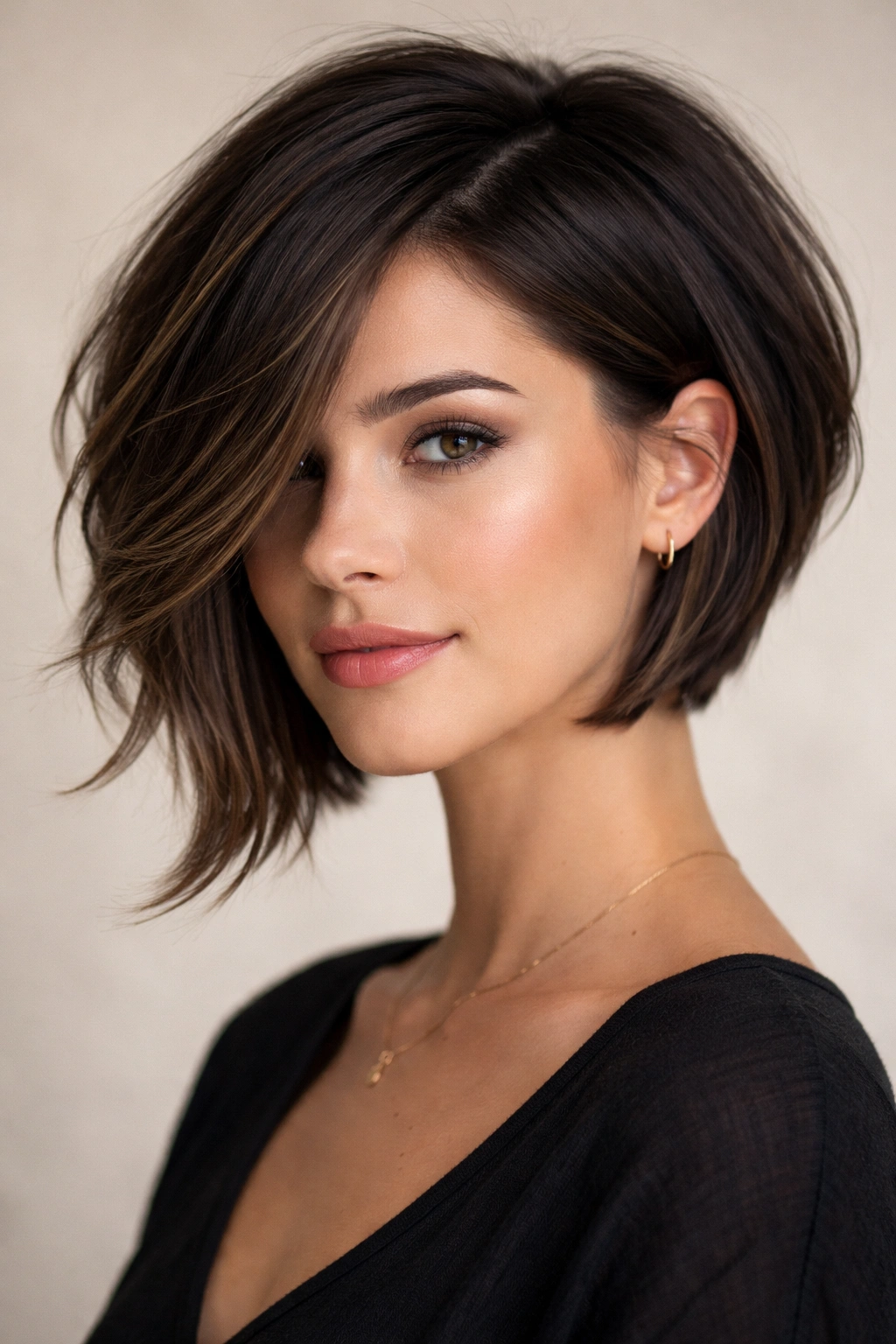
This is a bob with layers throughout (not blunt) and different lengths on each side. It combines the modern texture of layers with the edgy statement of asymmetry. The result is a cut that’s effortlessly chic without looking like you spent three hours styling it.
What Makes This Cut Work
The layered asymmetry softens the hard edges of a purely blunt asymmetrical cut while keeping the edgy, interesting vibe. Layers add texture and movement, which means the cut looks good even when you don’t blow-dry it. The different lengths create visual interest and actually help camouflage any face shape concerns — you’re not creating one hard line, you’re creating multiple softer lines.
Customization and Care
- Needs cuts every 5-6 weeks as layers are visible when they grow out unevenly
- Suits wavy and curly hair especially well because the layers work with your hair’s natural texture
- Can be styled sleek and polished, or scrunched and textured — same cut, completely different vibe
- Pairs beautifully with balayage or highlights that fall through the different-length layers
Pro tip: When you’re getting cut, ask your stylist to point out which side you should style longer on days when you’re not blow-drying. This way you have a style plan for non-blowout days.
7. The Textured Pixie
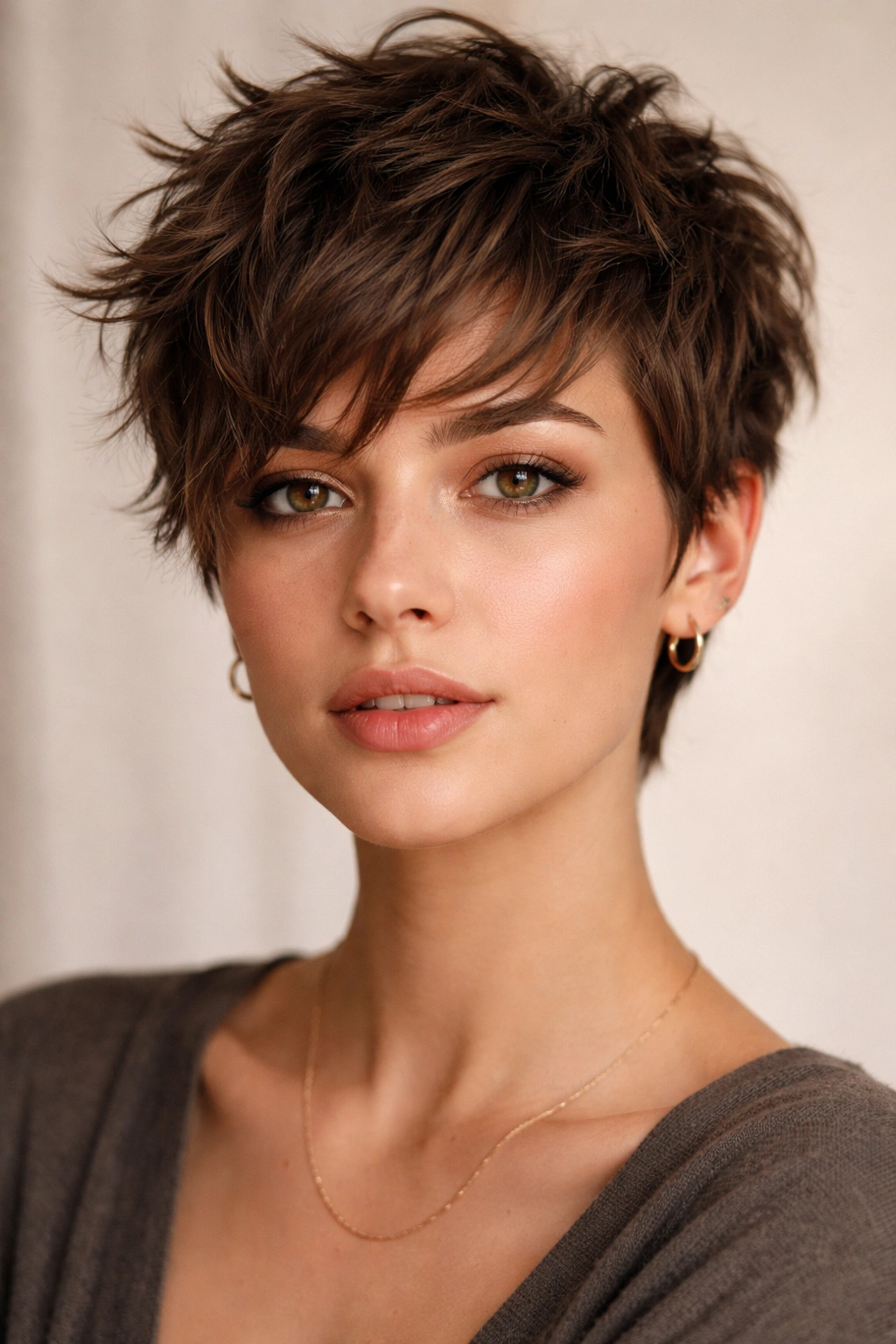
A textured pixie takes the classic pixie framework and adds choppy, piece-y layers throughout to create movement and visual texture. It’s shorter and more dramatic than a standard pixie, and it requires more active styling — but it looks intentionally cool in a way smooth pixies sometimes don’t.
The Appeal of Textured Pixies
This cut is perfect for people with naturally wavy or curly hair who want a short style that works with their texture rather than against it. The choppy layers enhance natural movement and actually require less blow-drying if you embrace your hair’s natural pattern. It’s also fantastic for anyone who wants an edgy, fashion-forward look that reads as confident and creative.
Maintenance and Styling Reality
- Requires cuts every 3-4 weeks because choppy layers grow out faster than smooth ones
- Works best on wavy, curly, or textured hair; straight hair can look sparse or wispy with very choppy layers
- Styling takes 5-10 minutes with texturizing spray and finger-tousling, or 10-15 minutes if you blow-dry
- Looks intentionally undone, which actually works in your favor on days when you don’t have time to style
Worth knowing: The choppy texture means individual hairs stick out, which can look amazing or a bit messy depending on your hair’s personality and how you feel about that aesthetic.
8. The French Crop
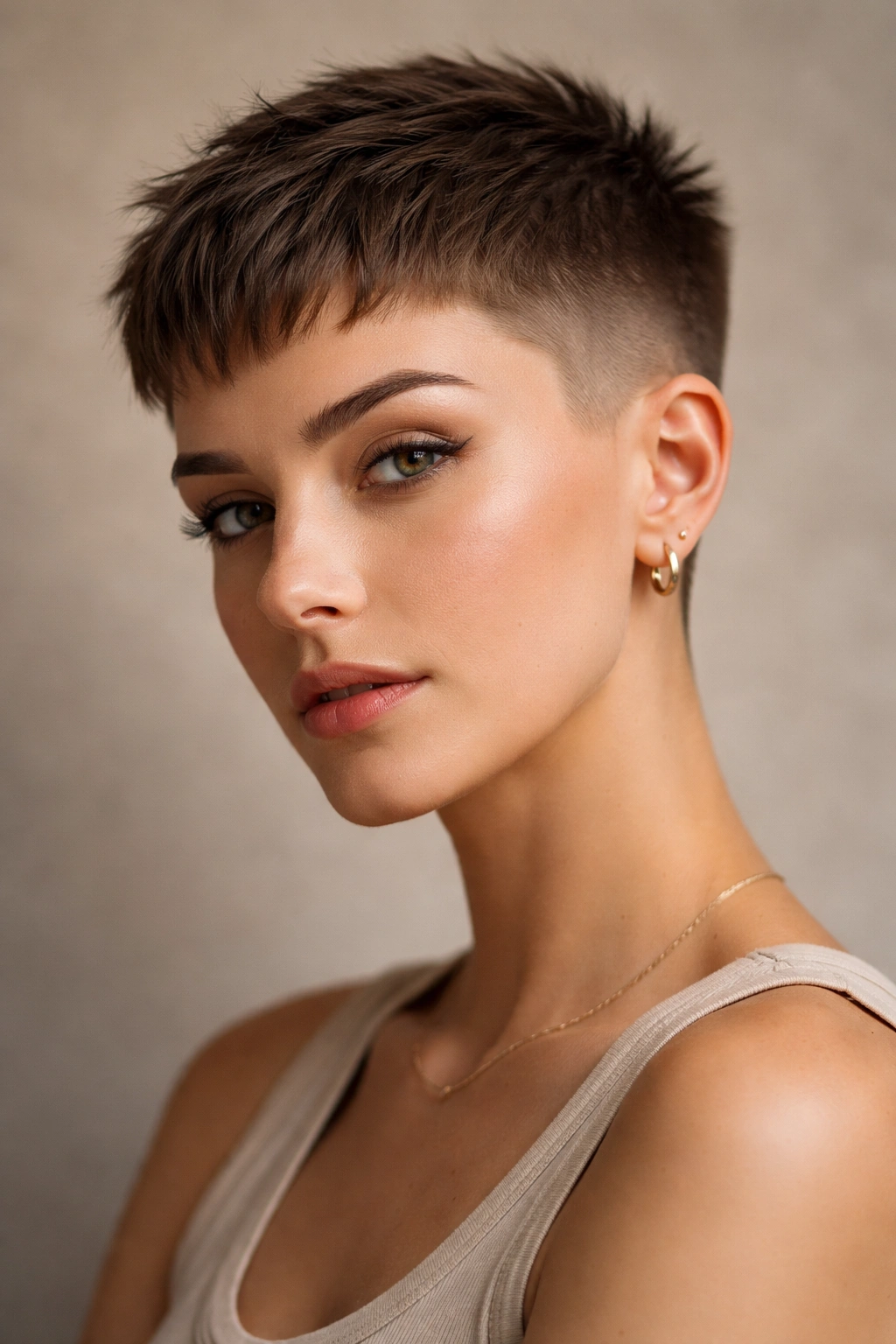
The French crop (also called a French cut or crop fade) is a men’s style that’s crossing over beautifully for women. It’s similar to a crop cut but with more carefully blended, faded sides and a slightly longer, textured top that can be styled forward or back. It’s undeniably short, but incredibly chic.
Why Women Are Adopting the French Crop
This cut is low-maintenance, incredibly flattering on people with strong features and good bone structure, and genuinely interesting-looking without being experimental. It reads as modern, confident, and intentional. The fade on the sides is a bit more technical than a basic crop, which means it’s especially important to find a stylist experienced with men’s cuts or cropped women’s styles.
The Practical Side
- Requires cuts every 3-4 weeks to maintain the precise fade and shape
- The longer top means you can style it with texturizing products for a piece-y look, or smooth it with pomade for something more polished
- Works best on straight to wavy hair; very curly hair needs constant styling to achieve the intentional top that makes this cut work
- Flatters angular faces and strong bone structure beautifully; rounder faces need longer bangs or a less extreme version
Pro tip: Find a barber or stylist who specializes in men’s fades if you want this cut done really well. Women’s stylists don’t always have the same training with fade techniques.
9. The Buzz Cut
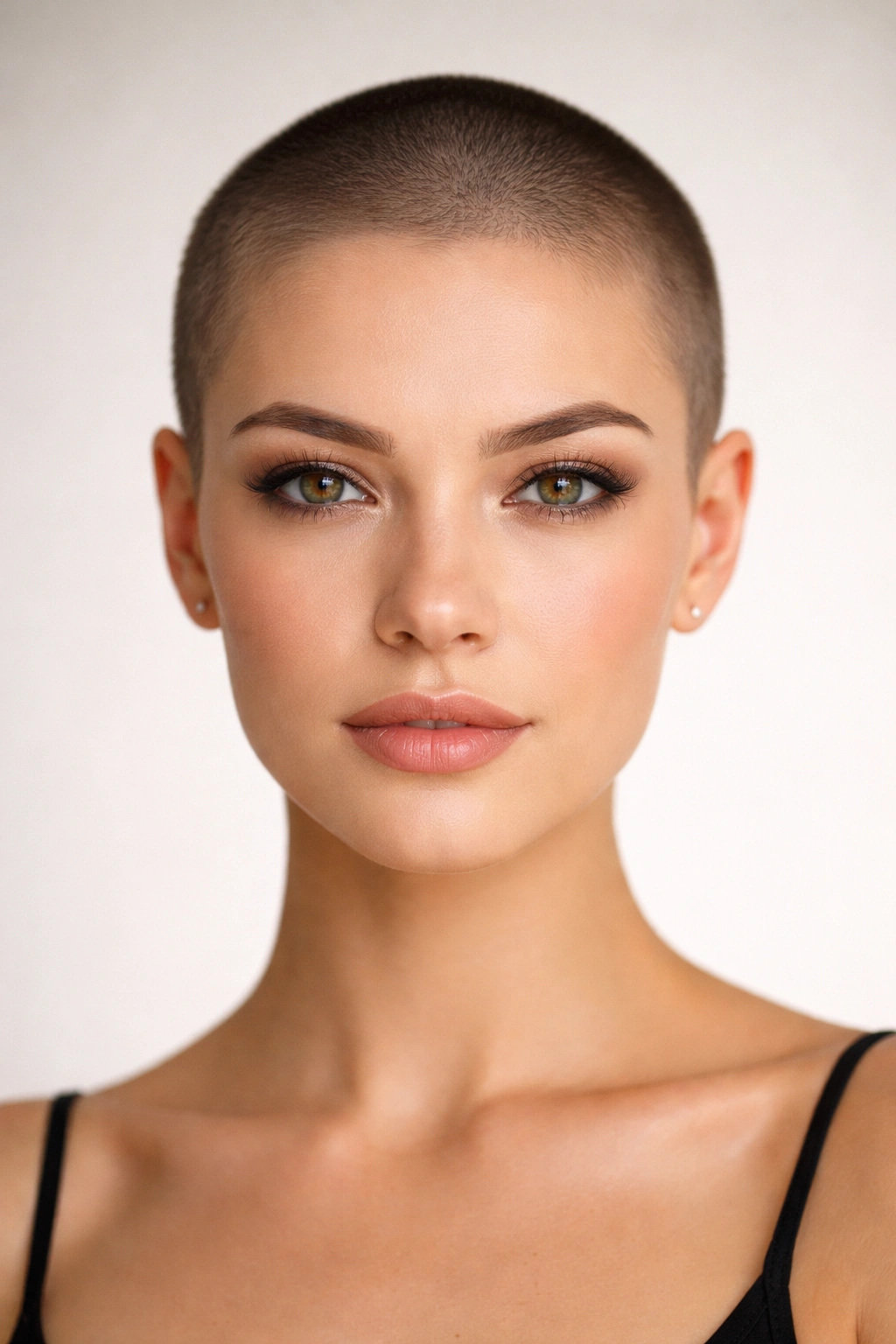
The buzz cut is the ultimate short style — essentially zero length all over, either completely uniform or with a slight gradient. It’s the most low-maintenance haircut that exists, and it’s undeniably a statement. This is for anyone who’s genuinely ready to commit to very short hair and embraces it as a fashion choice.
The Real Talk About Buzz Cuts
Buzz cuts expose everything — your face shape, your head shape, any skin texture on your scalp, your features, your ears, everything. If you’re going to do this, commit to the boldness. It’s liberating for some people, and it can be genuinely empowering. The cut also reads differently depending on your overall presentation — paired with bold lipstick and earrings, it’s chic and intentional; with minimal styling, it can feel clinical.
What You Should Know
- Requires cuts every 2-3 weeks to maintain the precise short length
- Incredibly fast to style — literally no styling required, though many people add moisturizer or shine spray to the scalp
- Works on all hair textures, face shapes, and head shapes, but you need to feel confident about your features being visible
- Allows full focus on makeup, jewelry, and personal style — your face becomes the main event
- Can be customized with designs, fades on the sides, or a slightly longer top
Insider fact: Many people who do their first buzz cut report feeling shocked by how liberating it is — no hair maintenance, complete styling freedom, and a genuine sense of owning their look rather than hiding behind it.
10. The Lob (Long Bob)
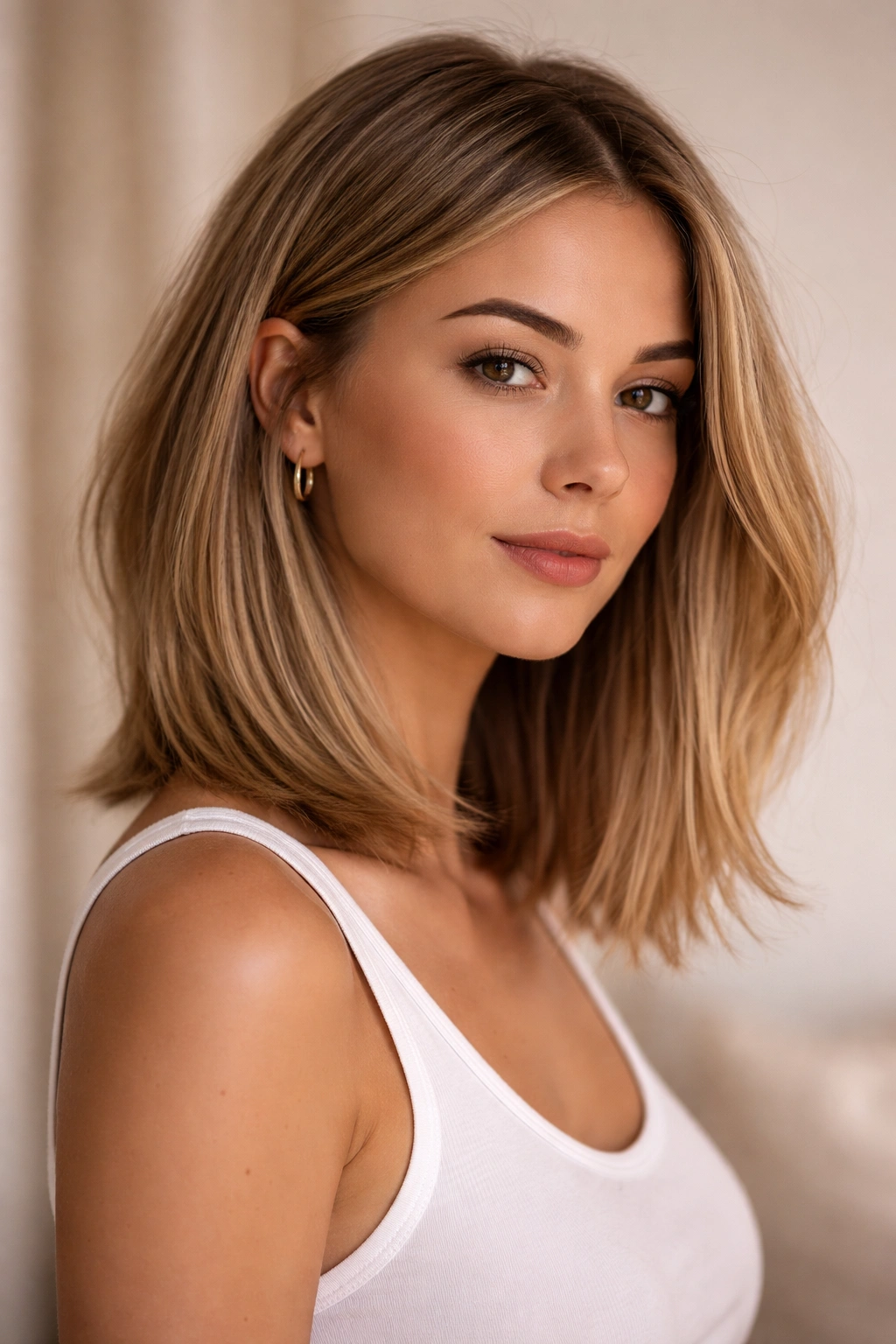
A lob sits right at the collarbone or slightly shorter, splitting the difference between a short bob and shoulder-length hair. It’s technically still considered a short style, and it’s incredibly popular because it feels like a commitment to shorter hair without committing to truly short hair.
Why the Lob Is So Versatile
The lob is forgiving because it’s long enough to tie back if you want, yet short enough to feel intentionally styled. It works across all face shapes because the length provides options — you can add layers for texture, keep it blunt for polish, add bangs, or wear it completely unstyled. It’s also the easiest short style to grow out into, because the length means in-between phases look intentional rather than awkward.
Key Facts About Lobs
- Requires cuts every 6-8 weeks to maintain the shape and prevent split ends
- Works beautifully with or without layers; blunt lobs are polished and modern, layered lobs are effortlessly undone
- Can be worn down, half-up, or fully pulled back, giving you multiple styling options from one cut
- Suits all hair textures — straight, wavy, and curly all work in lob format
- Flatters most face shapes, especially when the stylist customizes the length around your face
Pro tip: Ask your stylist for long-face-framing pieces if you have a round face, or a blunt-across bottom if you have a longer, rectangular face. Small customizations make a huge difference in how well the lob works for you.
11. The Blunt Pixie With Bangs
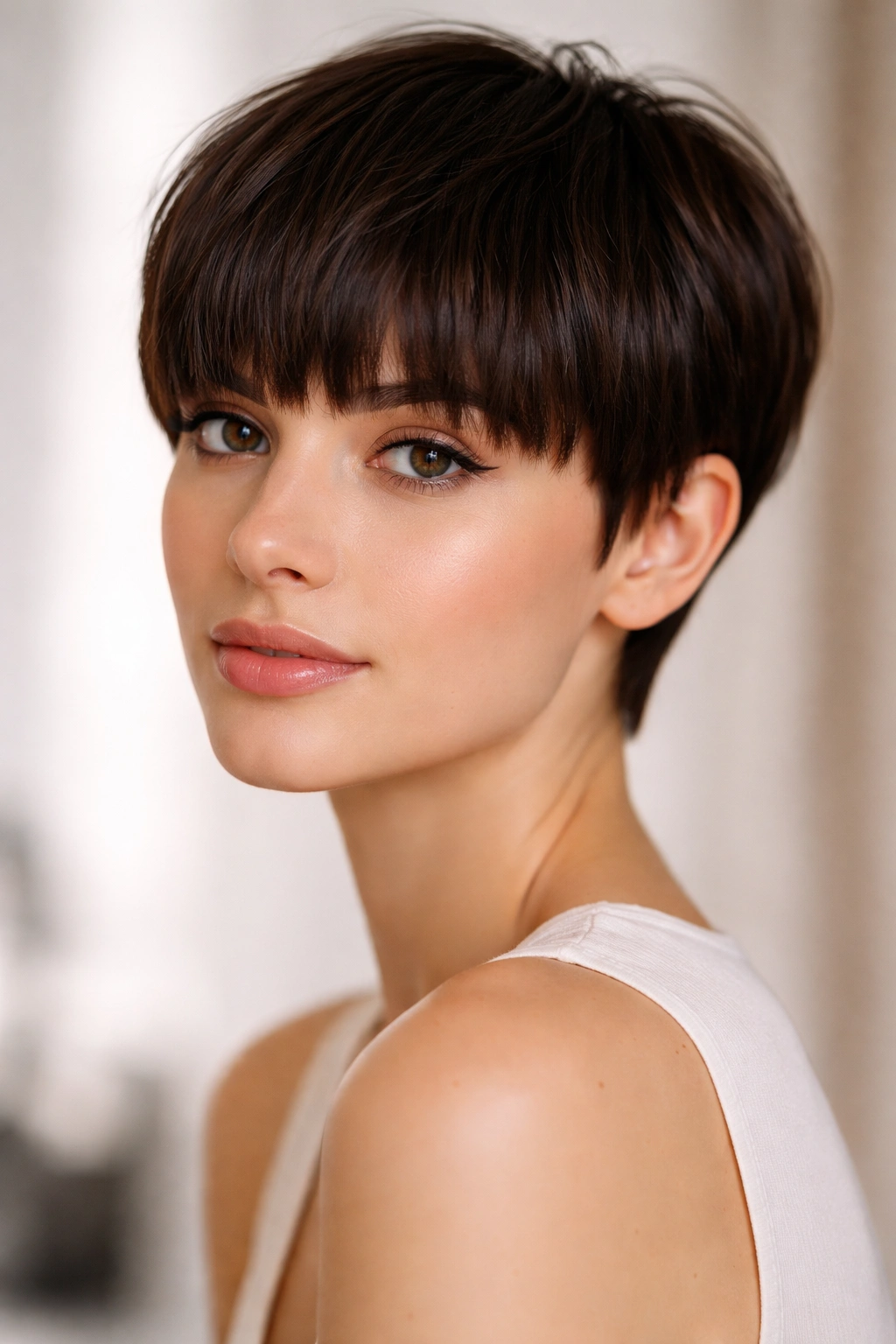
A blunt pixie with full bangs (typically hitting right at the eyebrow or slightly below) is a more feminine take on the pixie. The bangs completely change the energy of the cut, softening the severity of a simple pixie and adding an extra styling dimension.
The Power of Bangs on a Pixie
Bangs on a pixie instantly make the cut look less severe and add a playful, youthful quality. They also give you a way to customize the look for your face shape — if you have a long face, heavier bangs shorten the overall proportion; if you have a round face, side-swept bangs create angles. The bangs also give you a styling focus, so if you don’t have time to style the sides and back, you can focus effort on the bangs.
What to Expect With Maintenance
- Requires cuts every 2-3 weeks for the bangs specifically; they need fresh cuts frequently to sit properly and not fall in your eyes
- The rest of the pixie still needs cuts every 3-4 weeks, so you’re potentially at the salon every 2-3 weeks total
- Styling takes 5-10 minutes, mostly spent on the bangs to get them to sit the way you want
- Bangs can be textured and choppy, side-swept, or completely blunt — choose the style that works for your face shape
Worth knowing: Bangs on a pixie are high-maintenance in a way a pixie without bangs isn’t. Make sure you’re genuinely willing to get frequent trims and spend a couple minutes styling them most days.
12. The Layered Pixie Bob Hybrid
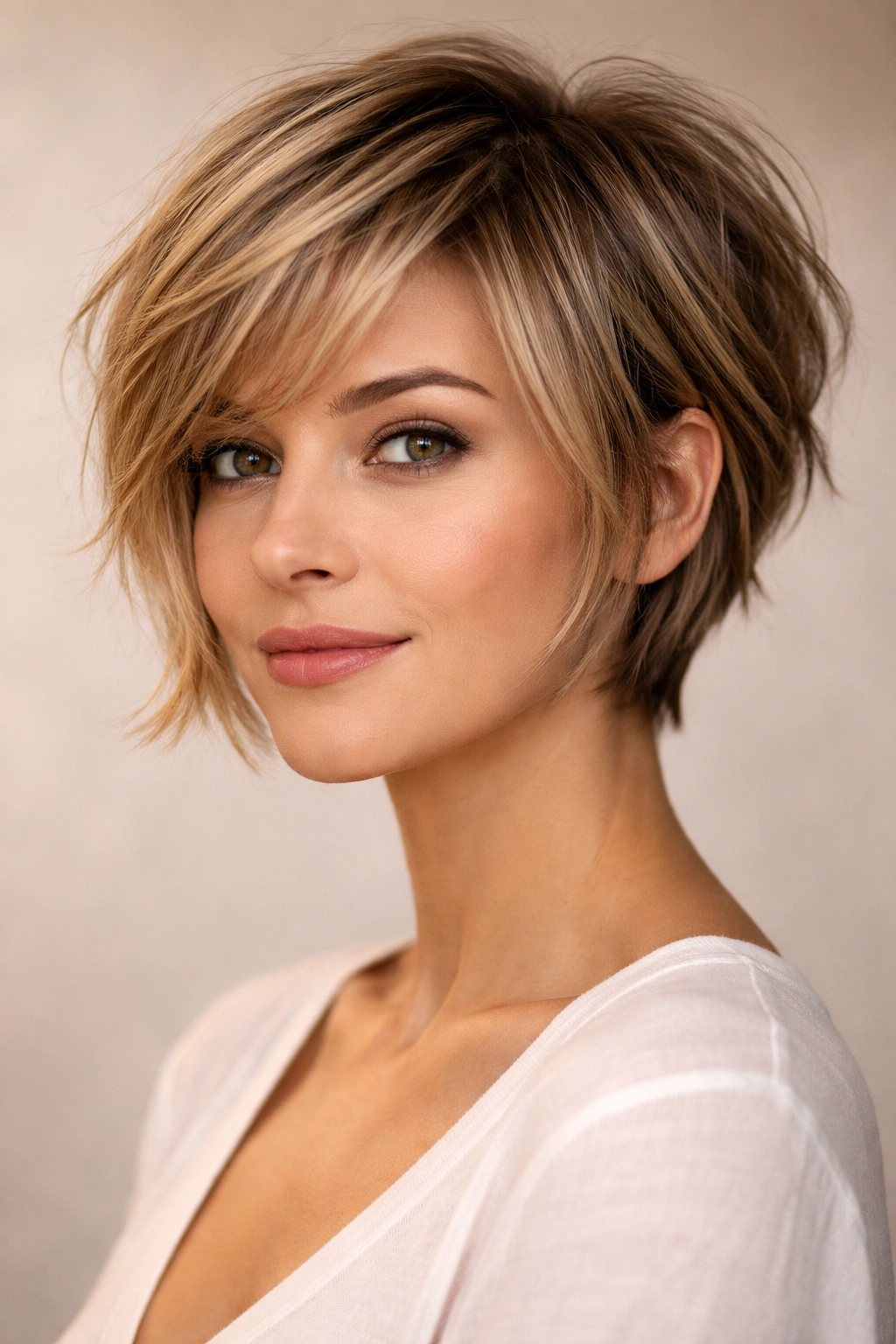
This cut combines elements of both — it’s longer than a traditional pixie (hitting around the ear) but shorter than a bob, with choppy, textured layers throughout. It’s a pixie’s sassiness meets a bob’s wearability, and it’s genuinely flattering on a wide range of people.
Why This Hybrid Works
The layered length gives you more styling options than a pixie but more attitude than a standard bob. The layers add texture and movement, which means the cut looks intentional even when you don’t blow-dry. It works across face shapes because the varied lengths mean you can customize how the layers fall around your face. It also looks good as it grows out — there’s no awkward middle phase like there is with some cuts.
Styling and Customization
- Requires cuts every 4-5 weeks to maintain the layered shape
- Works best on straight to wavy hair; curly hair can work if you’re styling it regularly
- Styling takes 5-10 minutes with a blowdryer, or 5 minutes with texturizing spray if you’re going undone
- Can be worn forward, back, side-swept, or tousled depending on the day and your mood
Pro tip: When getting this cut, ask your stylist to cut layers that move away from your face rather than toward it. This creates a flattering frame that opens up your features rather than making the hair cave in toward your face.
13. The Side-Swept Bob
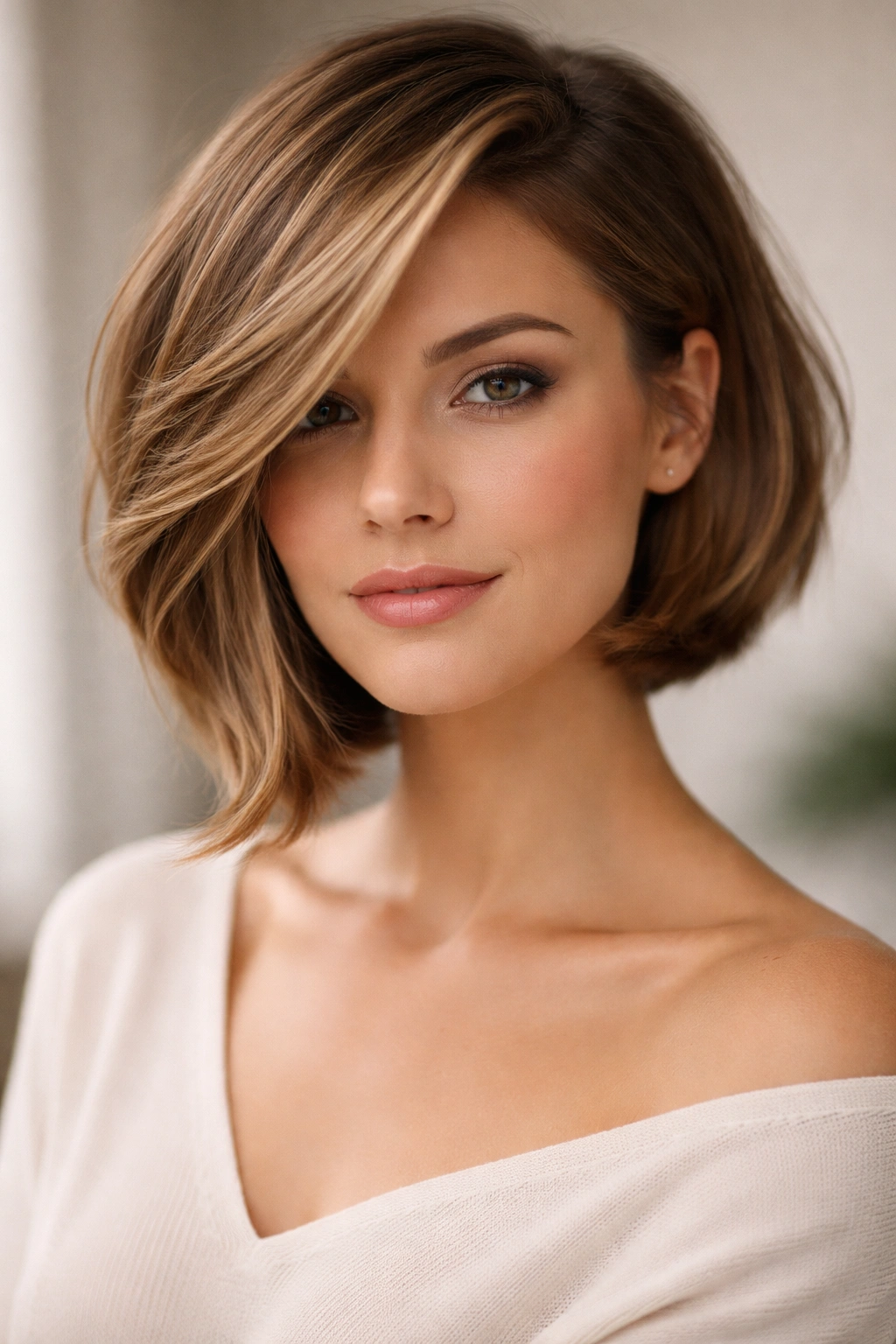
A side-swept bob is exactly what it sounds like — one side is significantly longer than the other, with the longer side sweeping across. It’s a subtle version of the asymmetrical bob, less dramatic but still interesting. It’s also incredibly easy to personalize based on your face shape.
Making a Side-Swept Bob Work
The side-sweep naturally draws attention to one side of your face, so you can use that strategically. If one side of your face is a feature you want to highlight, sweep the longer side that way. If you want to minimize a particular area, sweep the longer side away from it. The swept-across movement is flattering on almost everyone because it adds dimension and is inherently asymmetrical (flattering) without being extreme.
Care and Styling Reality
- Requires cuts every 5-6 weeks; the graduated lengths show growth quickly
- Needs a part to sit properly, so you’ll be blow-drying or at least dampening and styling 3-4 times per week
- Works best on straight to wavy hair; curly hair needs active styling to maintain the swept direction
- Very flattering paired with long-face-framing layers around the front
Worth knowing: The side-sweep can fall into your eyes sometimes, which some people love and others find annoying. Ask your stylist how long the longest side will be and whether it’ll hit right at your eyes or sweep past them.
14. The Tapered Cut
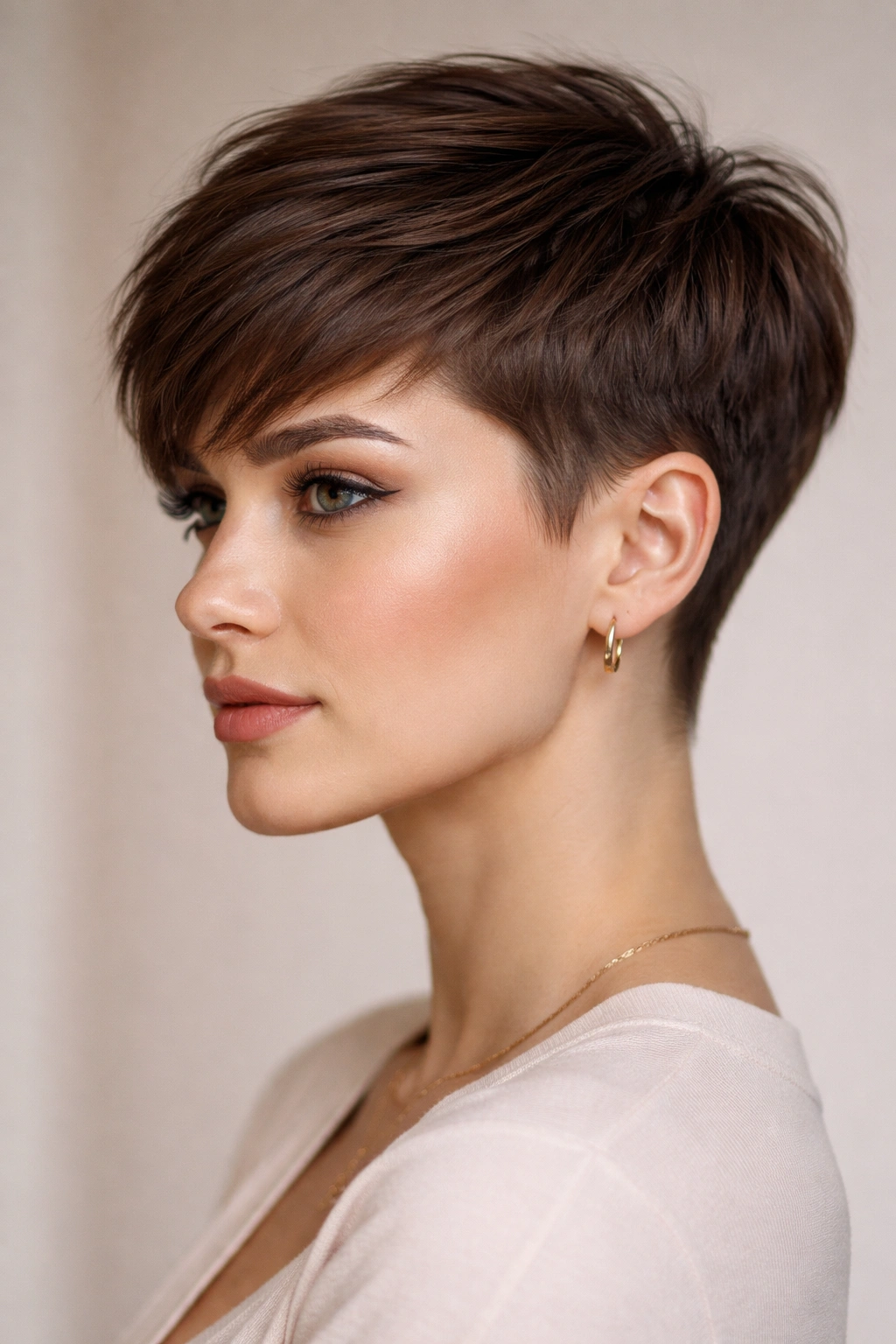
A tapered cut is characterized by longer length on top that gradually gets shorter as you move toward the neck and sides. It’s essentially a very refined fade without the super-short sides of a true crop fade. It’s sophisticated, modern, and surprisingly versatile.
The Elegance of a Tapered Silhouette
The taper creates a beautiful silhouette that flatters a wide range of face shapes because the shorter sides and longer top add proportion and balance. The cut reads as intentional and modern without being extreme. It also suits a range of styling options — you can wear the top sleek, textured, or tousled, and completely change the vibe of the same cut.
Maintenance and Styling
- Requires cuts every 3-4 weeks to maintain the tapered gradient
- Works across all hair textures; the styling options just change based on your hair type
- Can be styled multiple ways with the same cut — sleek and polished for work, textured and piece-y for casual
- Particularly flattering if you have a longer face or prominent features; the proportion is excellent
Pro tip: Ask your stylist for a taper that’s slightly longer in the front (so it comes down past your ears a bit) and shorter in the back/nape. This creates a flattering frame around your face.
15. The Choppy Layered Cut
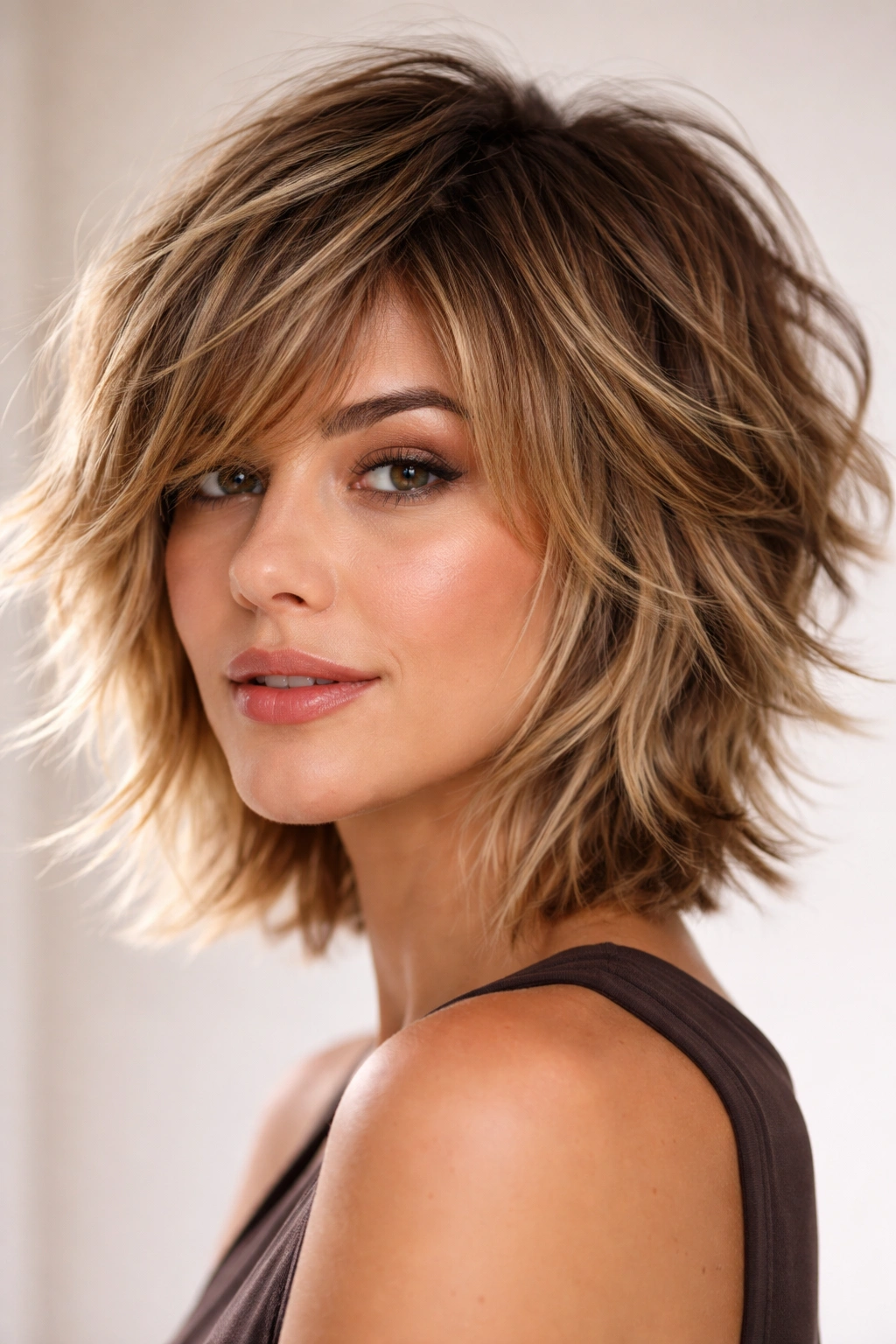
Choppy layers throughout the entire head, cut at varied angles to create intentional texture and movement. This is a very textured, piece-y look that feels undone but is actually quite precisely cut. It works especially well if you have naturally wavy or curly hair.
Why Choppy Layers Are Worth Considering
Choppy layers inherently add movement and texture, which means the cut looks interesting even when you don’t style it much. It’s a great choice if you want to embrace your hair’s natural texture rather than fighting it. The varied lengths also mean the cut flatters a range of face shapes because there’s no one hard line anywhere — just multiple softer, textured lines.
The Reality of Choppy Layers
- Requires cuts every 4-5 weeks because layers grow out unevenly and look thin if you let them go too long
- Works best on wavy or curly hair; straight hair can look thin or sparse with very choppy layers
- Styling takes 5-10 minutes with texturizing products, or you can let it air dry for a completely undone look
- The choppy texture means individual hairs stick out, which is intentional and part of the appeal
- Pairs beautifully with face-framing layers that are slightly longer to soften features
Worth knowing: Some hair types get “wispier” with very choppy layers, meaning the individual hairs look thin or feathery. This is sometimes the goal, but discuss with your stylist whether it’ll suit your hair.
16. The Rounded Bob
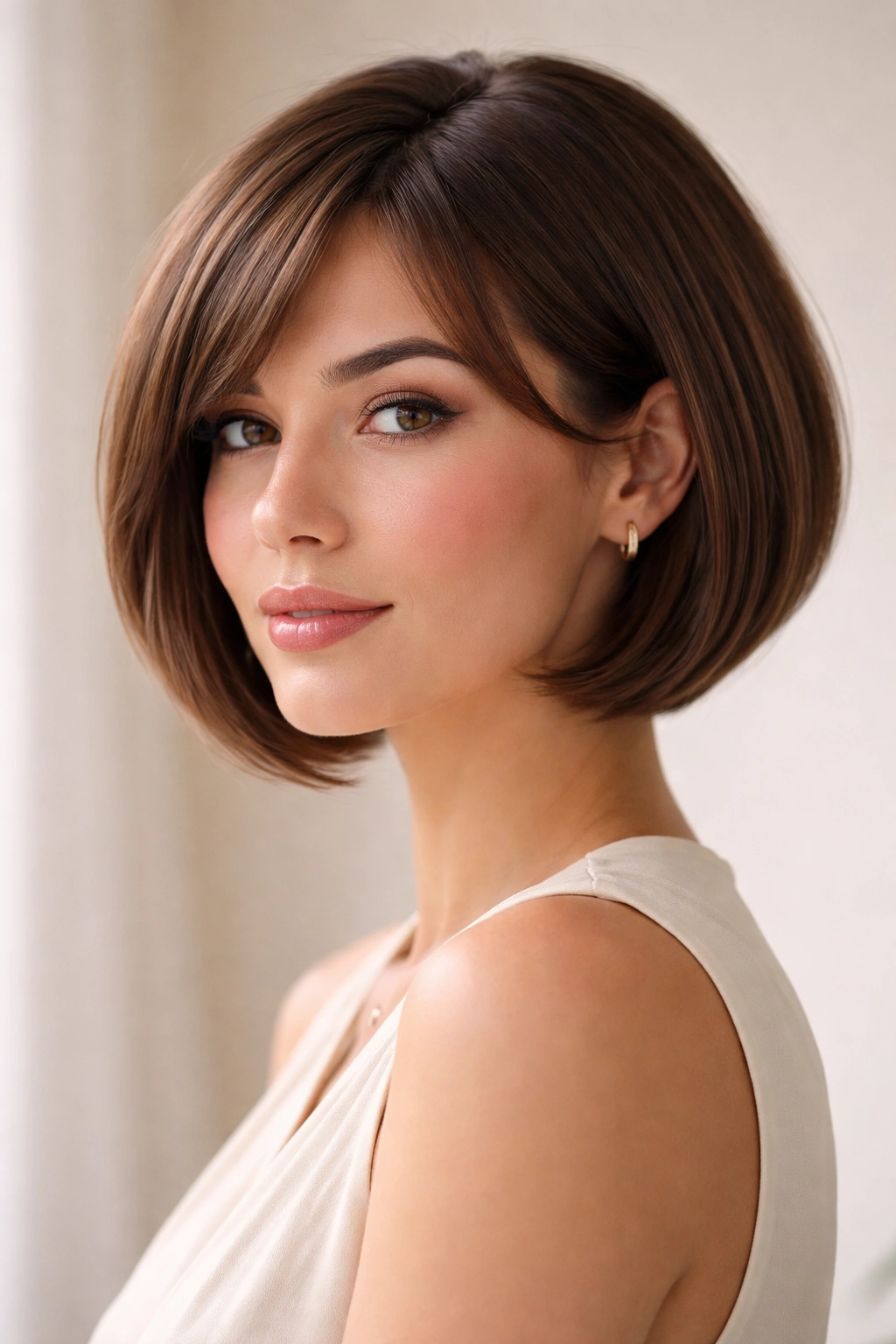
A rounded bob is cut to follow the natural curve of your head, with slightly longer pieces in front that gradually taper to shorter in the back. It creates a soft, rounded silhouette rather than a blunt or sharp line. It’s an elegant, sophisticated choice.
The Softness of Rounded Shapes
The rounded shape is inherently flattering because curves are universally softening. This cut is especially good for people with angular or sharp face shapes because the rounded silhouette adds softness. It also works beautifully for rounder face shapes because the longer front pieces can frame the face in a flattering way. The overall effect is polished and intentional without being severe.
Styling and Maintenance
- Requires cuts every 6-8 weeks to maintain the rounded shape
- Works best on straight to wavy hair; curly hair can work if you’re blow-drying regularly
- Styling requires a blowdryer to achieve the rounded shape; air drying usually makes it look flatter than intended
- Very flattering with highlights or color that falls through the different lengths
- Can be customized with bangs (side-swept or blunt) to change the overall energy
Pro tip: Ask your stylist to cut the longer front pieces longer than you think you want them — they’ll feel like they’re hitting too far down your neck when wet, but they’ll shorten up as they dry and curl slightly.
17. The Sleek Pixie
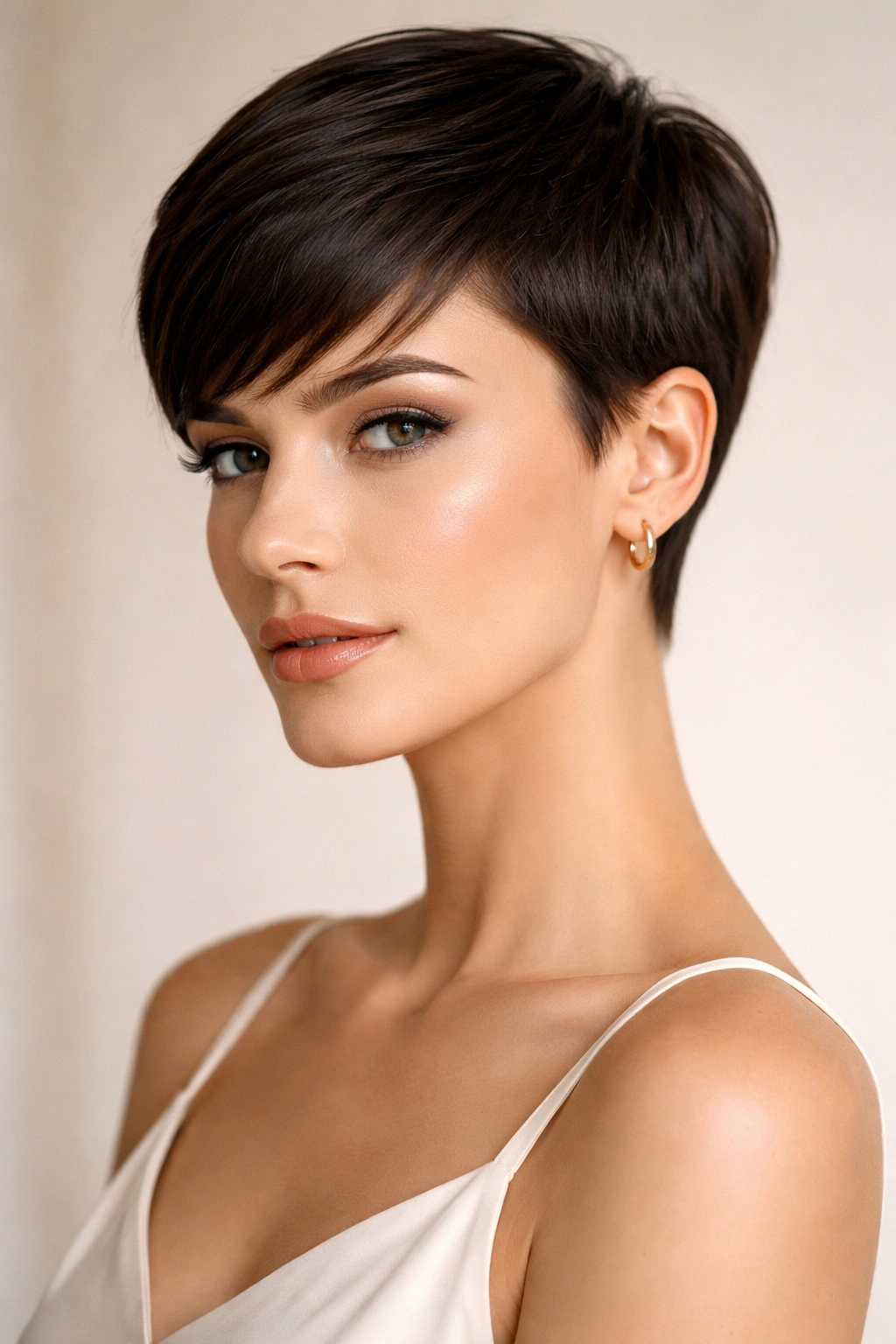
A sleek pixie is smooth, precise, and polished — as opposed to textured or choppy. Every line is clean, and the overall effect is sophisticated and intentional. This is a pixie for people who want to appear as polished as possible.
The Refined Energy of Sleek Hair
A sleek pixie reads as incredibly sophisticated and intentional. It’s flattering on people with strong bone structure and clear skin because there’s nowhere to hide — but that’s also the appeal. The sleekness emphasizes cheekbones and jawlines beautifully. This cut also pairs beautifully with bold accessories because your face and features are the main event.
Styling Reality
- Requires cuts every 3-4 weeks to maintain the precise, smooth lines
- Styling takes 10-15 minutes with a blowdryer and smoothing products to achieve the sleek effect
- Requires either naturally straight hair or willingness to blow-dry regularly; it doesn’t work unstyled
- Works best on straight hair; wavy or curly hair needs active blow-drying and products to achieve the sleek effect
- Pairs beautifully with bold lipstick, statement jewelry, or minimal makeup
Worth knowing: This cut requires more styling commitment than a textured pixie. You need to blow-dry most days to make it look intentional rather than just flatted-down.
18. The Curly Pixie
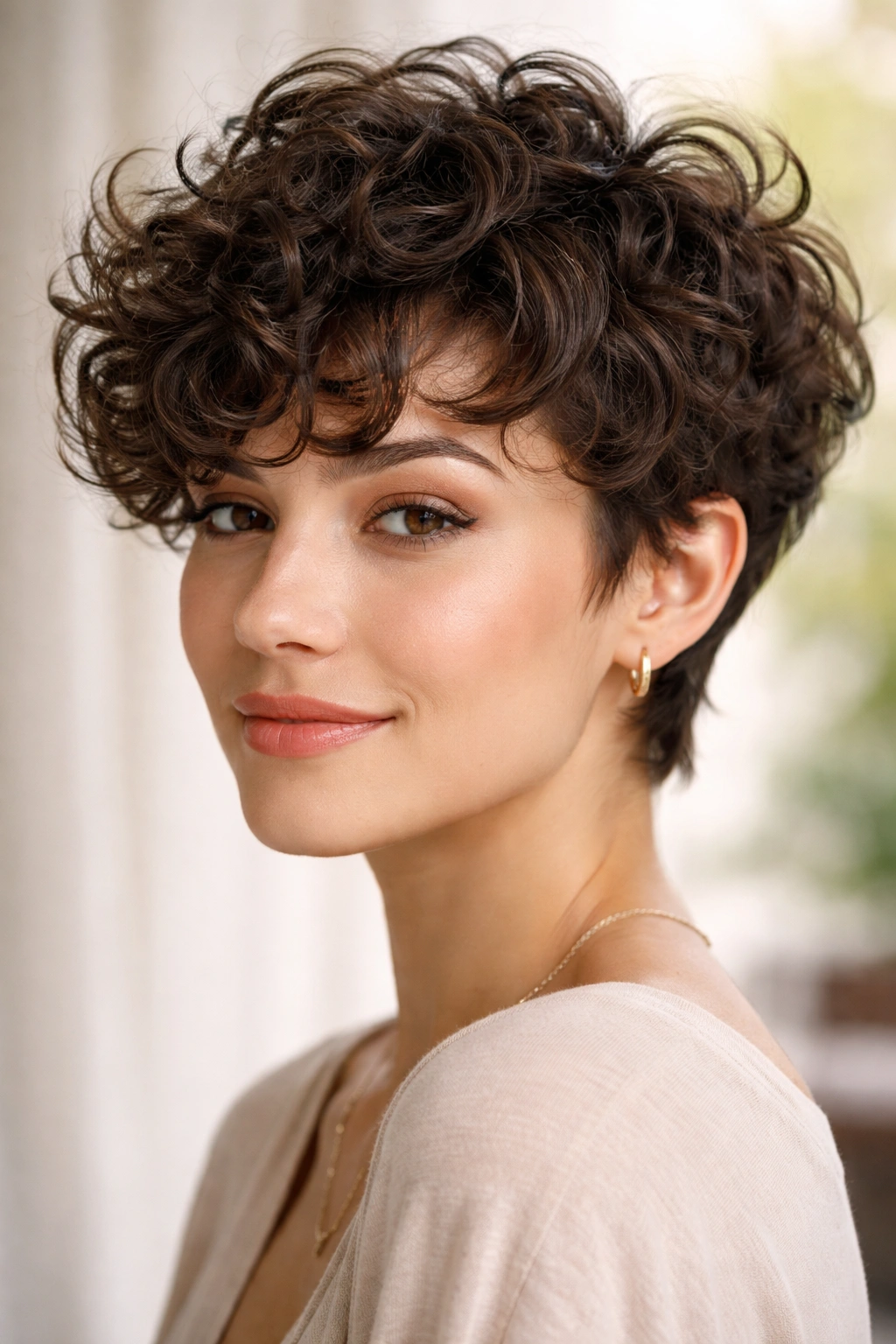
A curly pixie is cut to work with naturally curly or coily hair, with strategic layers that enhance curl pattern and create shape. It’s shorter than a tapered cut but still long enough to show off curl definition. It’s perfect for anyone who wants to fully embrace their curls.
Curls and Short Hair Are Actually Compatible
A curly pixie can be absolutely stunning because curls naturally create volume and texture, which means the cut looks full and dimensional. The layers are cut strategically so that your curls fall in flattering directions around your face. This cut celebrates your curl pattern rather than fighting it — which is liberating if you’re tired of blow-drying straight or using heavy products to manipulate your hair.
What to Know Before Committing
- Requires cuts every 4-5 weeks; curl patterns grow down and out, so the shape changes as it grows
- Styling takes 5-10 minutes — apply leave-in conditioner or curl cream to damp hair, scrunch, and let it air dry or diffuse with a blow dryer
- Works specifically on curly or coily hair; straight or wavy hair doesn’t have the same texture to support this cut
- Incredibly low-maintenance compared to straightening curly hair — you’re working with your hair, not against it
- Flattering on almost all face shapes because curls naturally add movement and softness
Pro tip: Find a stylist who specializes in curly hair cuts. They’ll cut your curls when they’re completely dry to see your actual curl pattern, which is completely different from cutting wet curls.
19. The Shoulder-Length Bob
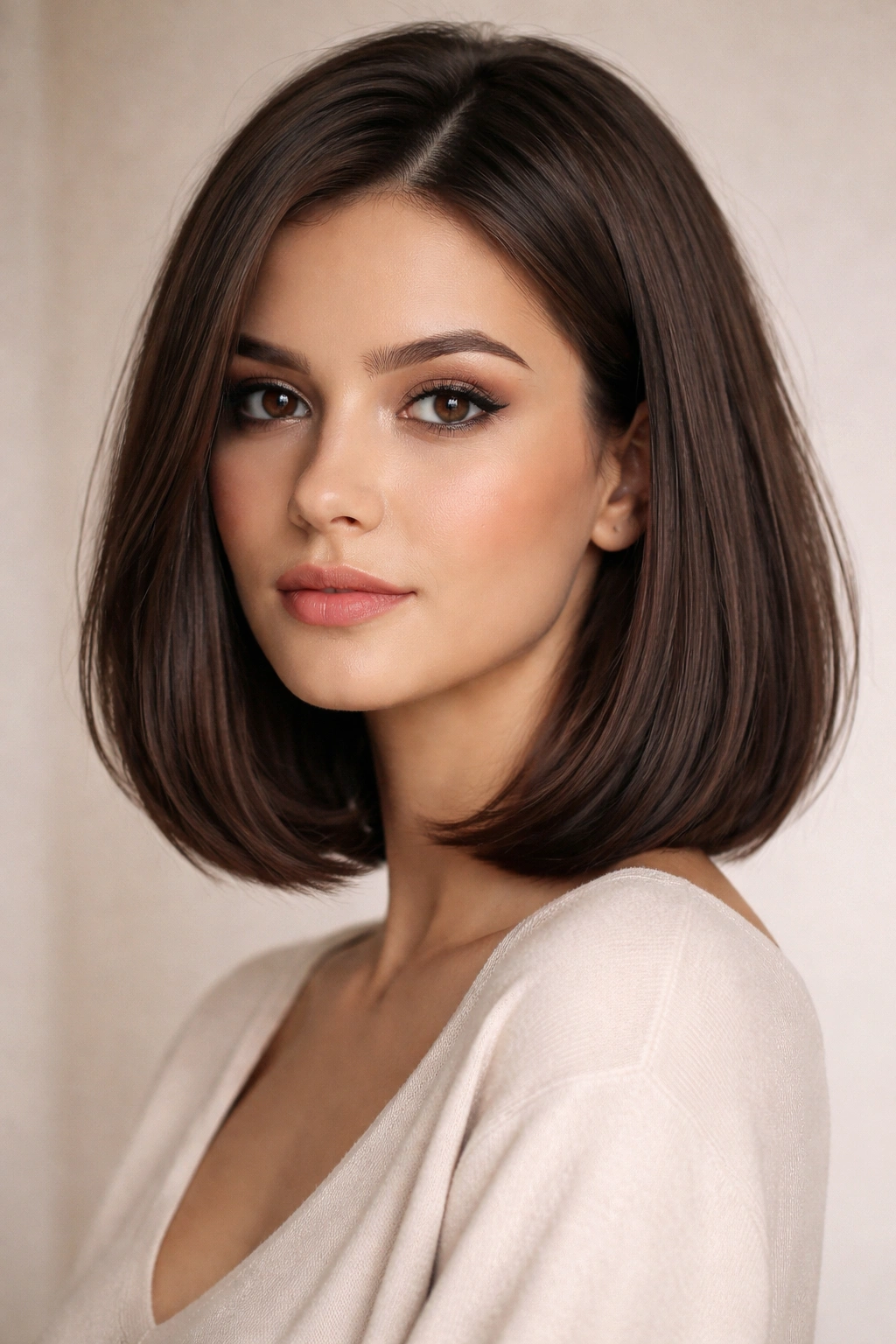
A shoulder-length bob (around 14-16 inches) is the longest we’re including in this list, but it’s still considered a short-to-medium style. It’s long enough to tie back but short enough to feel intentionally styled. It’s a fantastic middle-ground for anyone hesitant about going very short.
The Versatility of Shoulder Length
This length is the Goldilocks zone — not so short that you feel exposed, but short enough to feel like a real change. You can wear it down and feel styled, pull it up and feel sporty, or throw it in a quick bun and feel casual. It suits almost every face shape because the length means you have options for how to frame your face. It’s also less of a visual shock than a very short cut.
Styling Flexibility
- Requires cuts every 7-8 weeks; the length means you can go longer between cuts
- Works with all hair textures and all styling preferences
- Can be worn down, half-up, pulled back, or in a bun — multiple styling options from one cut
- Requires less frequent blow-drying than very short cuts; you can air dry and still look intentional
- Flatters almost every face shape when the stylist customizes the length around your face
Worth knowing: This length can sometimes feel like an awkward middle ground if you’re not intentional about styling. Pair it with a good texturizing product and you’ll avoid the “just didn’t cut my hair” look.
20. The Modern Undercut Shag
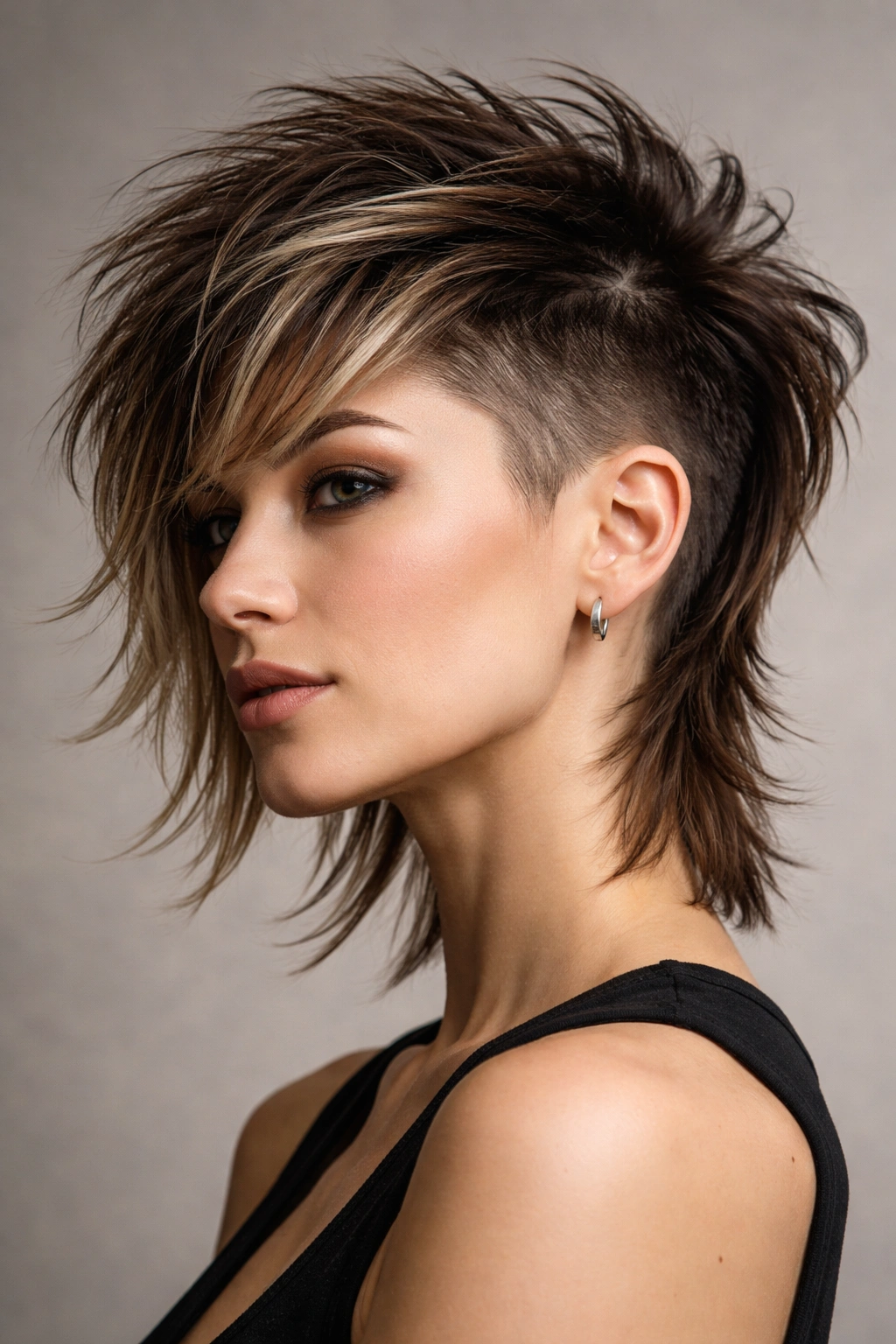
An undercut shag combines the choppy, layered texture of a shag with an undercut — very short, faded sides underneath with longer layers on top and around the face. It’s edgy, modern, and genuinely interesting-looking.
The Edge and Movement Combo
This cut offers the best of both worlds — the softness and movement of a shag with the edge and attitude of an undercut. The undercut means your hair can air dry into the shag layers without looking shapeless; the shorter underneath provides structure. It’s flattering on people with strong features and bone structure, especially if you want a look that reads as fashion-forward and intentional.
Customization and Maintenance
- Requires cuts every 4-5 weeks to maintain the undercut fade and the shag layers
- Works best on straight to wavy hair; curly hair can work if you’re embracing more of a tousled, textured vibe
- Styling takes 5-10 minutes with texturizing spray, or 10-15 minutes if you blow-dry
- The undercut can be hidden or shown off depending on how you style your hair and whether you wear your hair up
- Looks particularly cool with color or highlights that contrast between the undercut and the longer layers
Pro tip: Make sure your stylist is experienced with undercuts. The fade needs to be blended properly, which is a specific technical skill.
21. The Textured Taper Fade
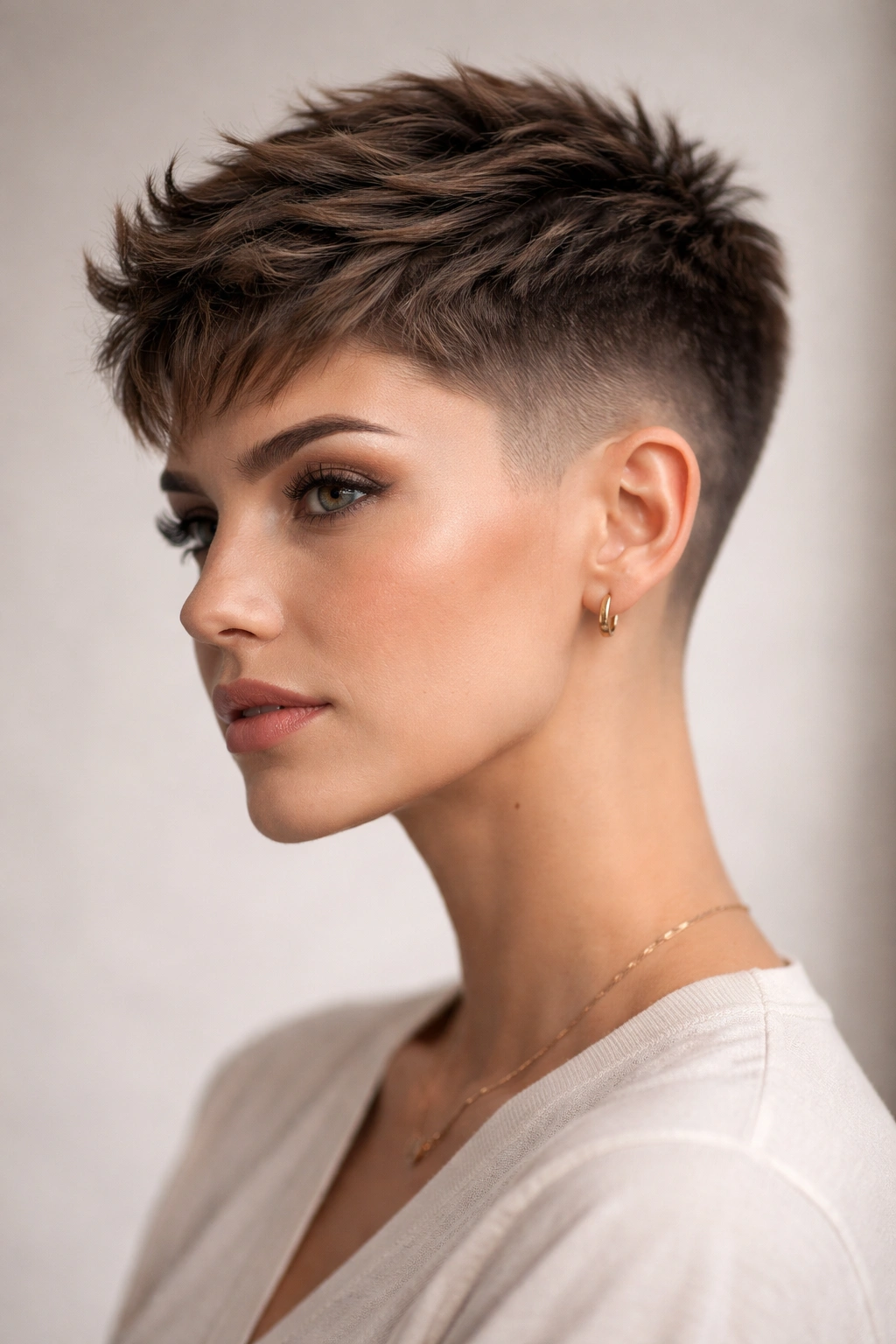
A textured taper fade features a textured, piece-y top (similar to a textured pixie or crop) with carefully faded, shorter sides. It’s more interesting than a basic crop because the top has dimension and movement, but it’s more structured than a shag because the sides are clean and faded.
Texture Plus Structure
This cut appeals to people who want the attitude of short, textured hair but with a more refined structure. The fade sides give it a finished, intentional look, while the textured top adds personality. It works across face shapes because the overall balance is good — the longer texture on top adds proportion and the faded sides don’t overshadow your features.
What This Requires
- Needs cuts every 3-4 weeks to maintain the precise fade and the textured top
- Works best on straight to wavy hair; curly hair can work if you’re styling with products regularly
- Styling takes 5-10 minutes with texturizing spray or pomade to style the top
- The fade needs to be done well, so find a barber or stylist experienced with men’s fades or cropped women’s styles
- Looks particularly good with color or highlights through the textured top
Worth knowing: The quality of the fade makes or breaks this cut. A poorly blended fade looks unfinished; a well-blended fade looks intentional and polished.
22. The Piece-y Bob
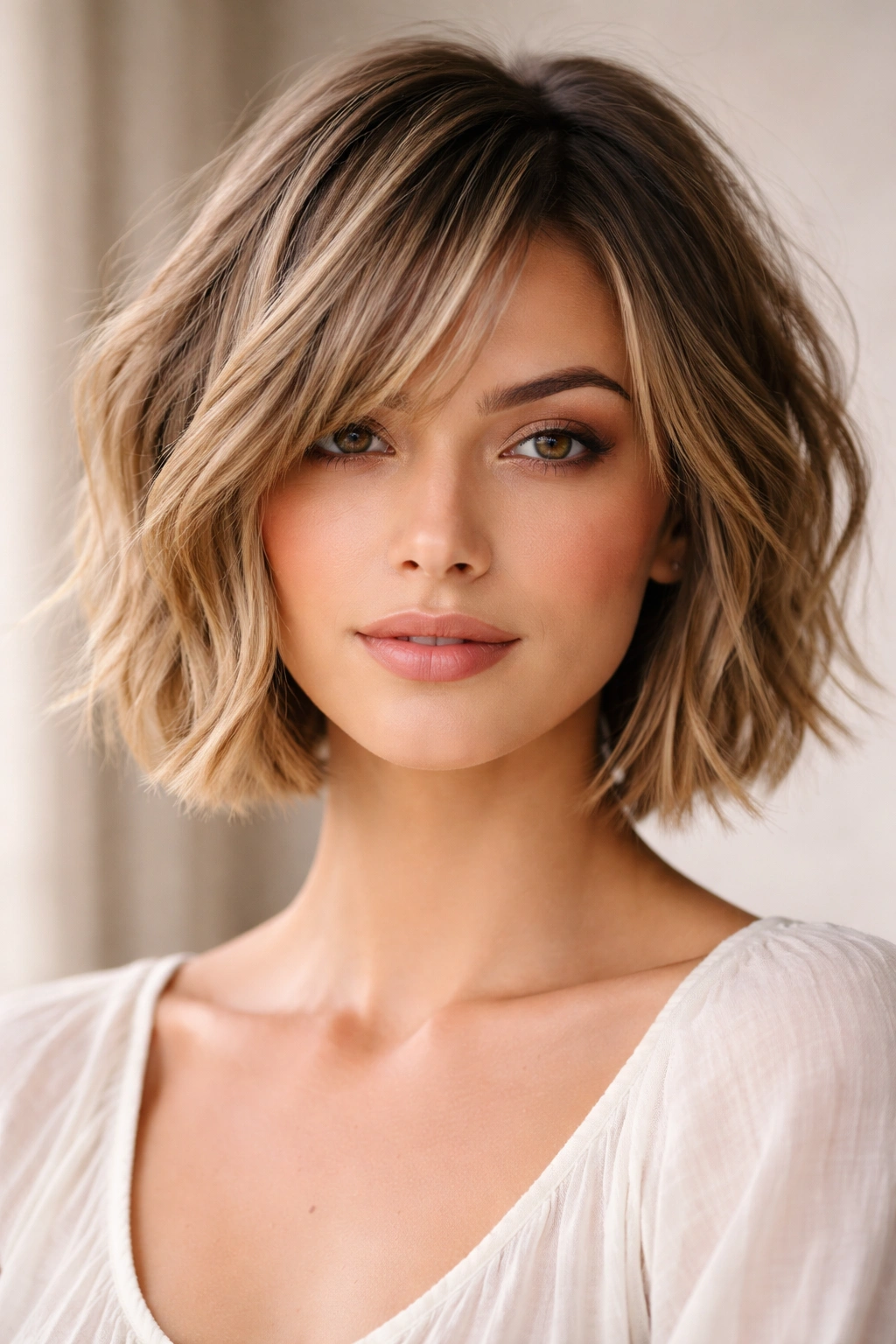
A piece-y bob is a textured, choppy bob with distinct, separated pieces throughout rather than a smooth, blunt line. Think intentional texture and movement, but still maintaining the general bob silhouette. It’s casual, modern, and effortlessly cool.
The Casual Sophistication of Pieces
Piece-y bobs are flattering because the texture and movement soften any harshness, and the distinct pieces add personality. This cut is especially good for people who want a bob but don’t want to commit to daily blow-drying. It looks great undone with texturizing spray, which means you can have the vibe of a styled bob without the effort.
Maintenance and Styling
- Requires cuts every 5-6 weeks; the pieces need refreshing regularly to maintain the distinct, separated look
- Works best on wavy or curly hair, but can work on straight hair if you’re willing to style with products and texture
- Styling takes 2-5 minutes with texturizing spray and finger-tousling; you can skip the blow dryer entirely
- Can be worn forward, back, or side-swept depending on how you style the pieces
- Pairs beautifully with balayage or highlights that fall through the texture
Pro tip: Ask your stylist to cut the pieces in a way that naturally separates when you’re using texturizing products — not every stylist thinks this way, so be specific.
23. The Angular Bob
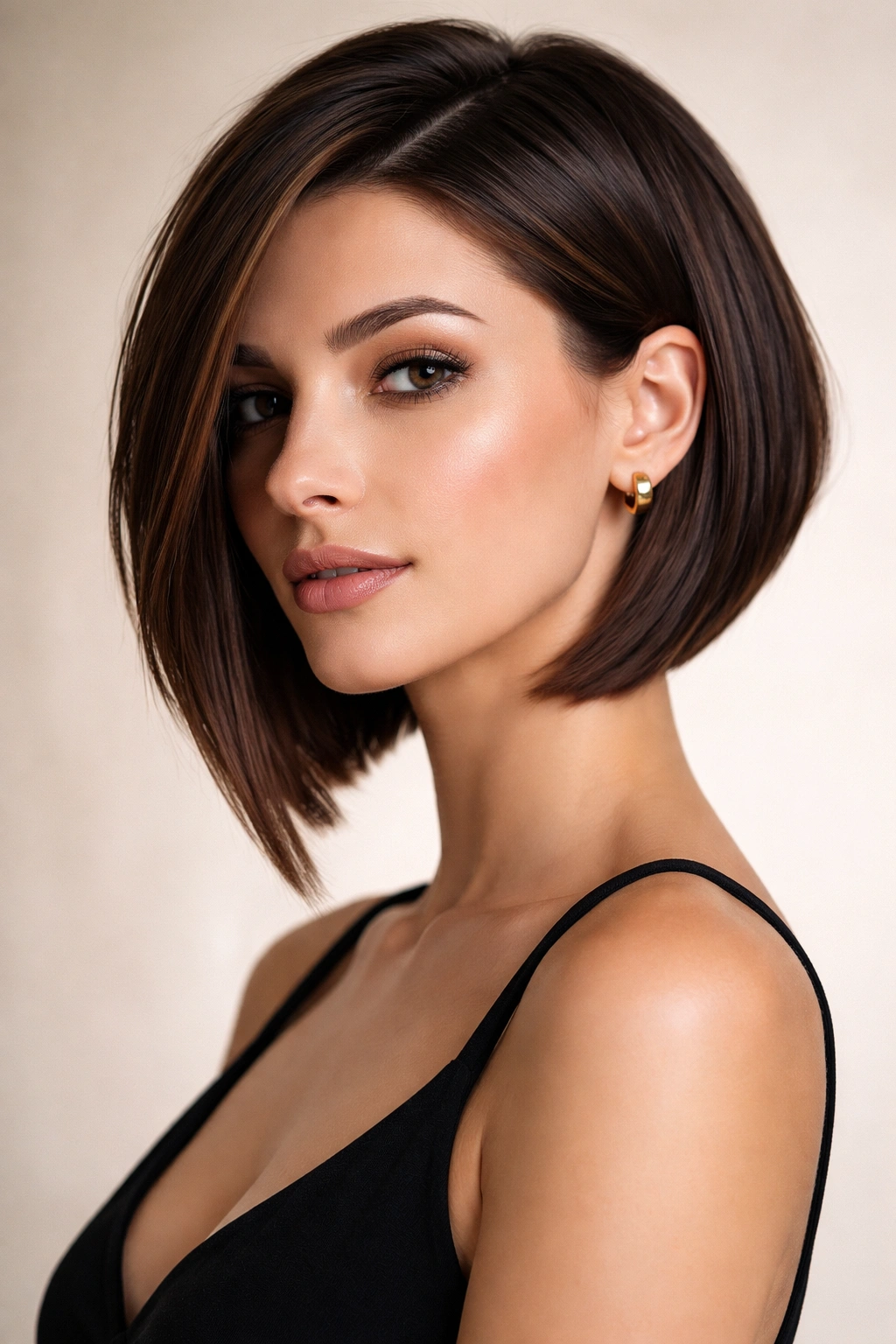
An angular bob features strategic, intentional angles throughout — longer in front, shorter in back, with angled layers that create a sharp, modern silhouette. It’s architectural, sophisticated, and very intentional-looking.
Angles Create Visual Interest
Angular bobs work because angles are flattering to human faces — they create line and definition. This cut especially flatters people with round or soft face shapes because the angles add definition. It also reads as modern and fashion-forward. The angled layers mean the cut has dimension and movement without being choppy or undone.
Styling Requirements
- Requires cuts every 5-6 weeks to maintain the precise angles
- Needs blow-drying 3-4 times per week to sit properly; air drying usually makes the angles collapse
- Works best on straight to wavy hair; curly hair needs blow-drying to show off the angles
- Very flattering with a deep side part that emphasizes the angle
- Looks particularly good with one-length color or with highlights that follow the angles
Worth knowing: The angles mean this cut is unforgiving if you don’t blow-dry. If you hate blow-drying, this might frustrate you every morning.
24. The Feathered Cut
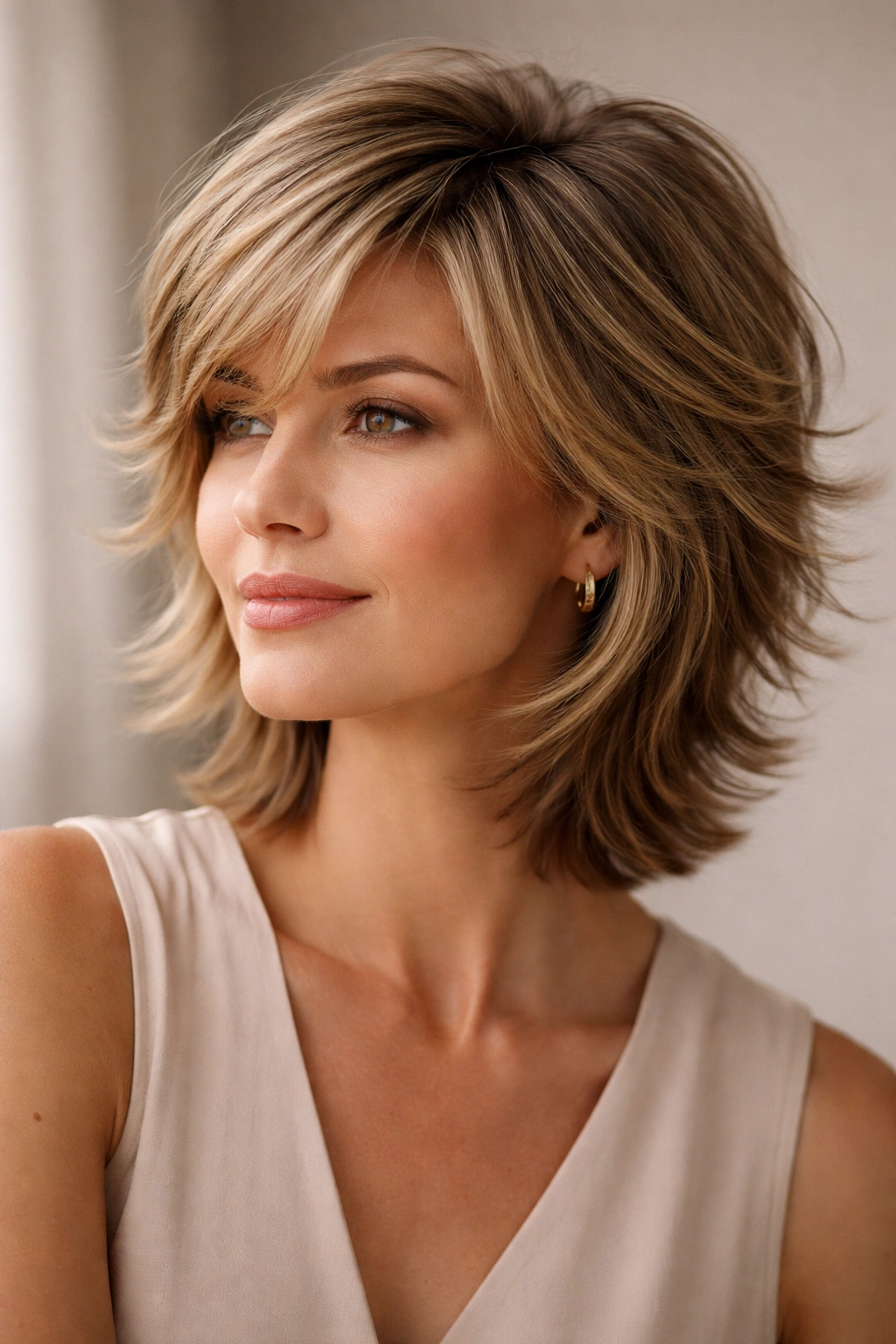
A feathered cut features layers that look like feathers overlapping each other — longer underneath with shorter layers on top that gradually get shorter toward the crown. It’s a classic technique that creates beautiful movement and flow. It sounds delicate, but it’s actually very structured.
The Movement and Flow
Feathered cuts create beautiful movement because the layering naturally encourages hair to flip and flow outward. This cut is especially flattering on people with fine or thin hair because the layers create the illusion of more volume. It also works beautifully on wavy or curly hair because the layers enhance natural texture.
What to Expect
- Requires cuts every 5-6 weeks; feathered layers need to be refreshed regularly to maintain the definition
- Works best on straight to wavy hair; curly hair can work if you’re blow-drying
- Styling takes 5-10 minutes with a blow dryer and round brush to create the flow and flip
- Very flattering on longer face shapes because the horizontal feathering adds width
- Pairs beautifully with bangs (feathered or straight) for a complete, cohesive look
Pro tip: Ask your stylist to feather slightly away from your face rather than toward it, so the cut opens up your features rather than framing them inward.
25. The Short Wedge
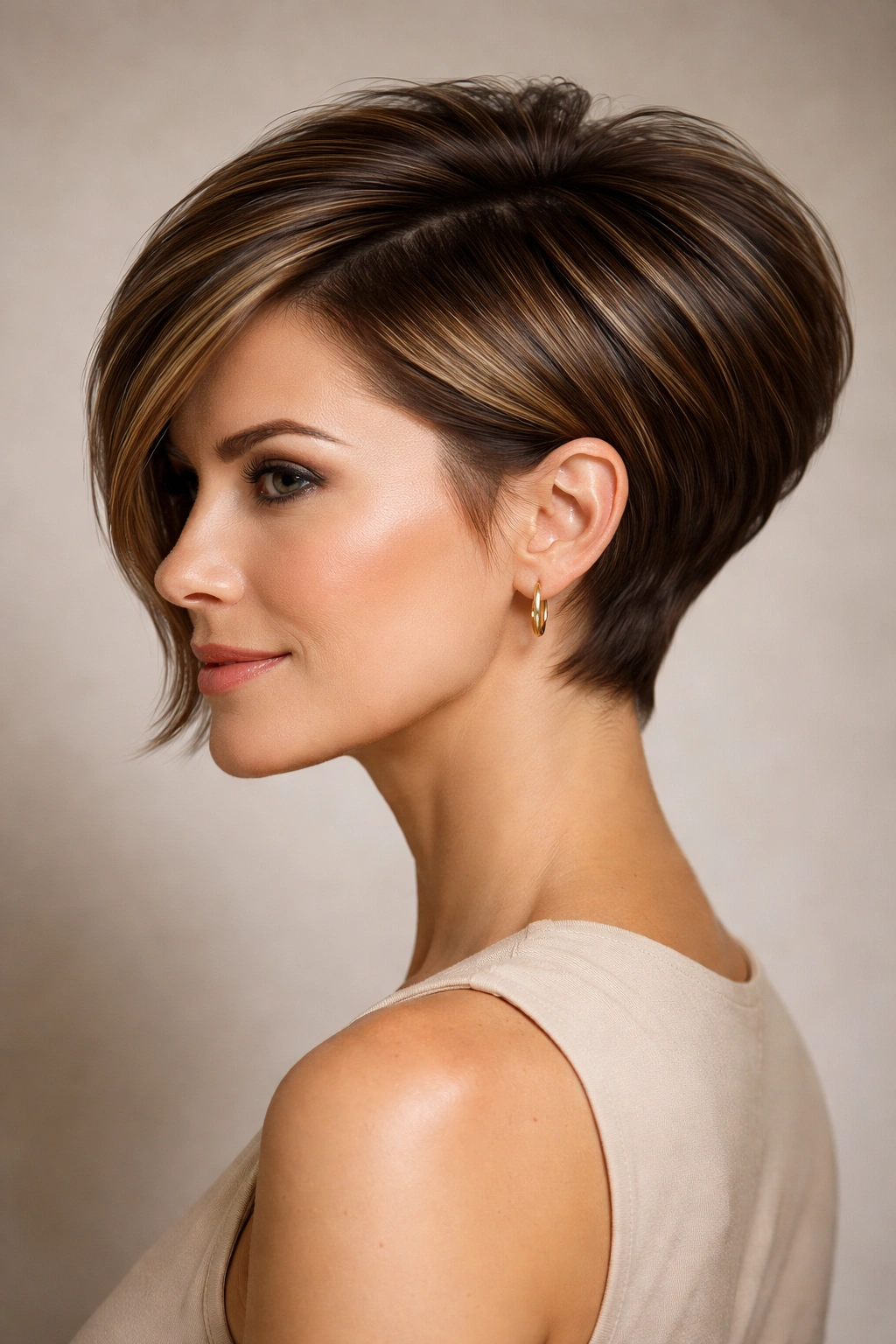
A wedge cut is characterized by shorter hair in the back (a thick, stacked wedge) and longer hair in the front, creating a dramatic silhouette. It’s bold, intentional, and absolutely makes a statement. It’s for anyone who wants to be genuinely noticed.
The Drama of the Wedge
A wedge is undeniably a conversation starter. The silhouette is flattering on people with longer face shapes because the stacked back adds width at the nape. It also works well on people with strong bone structure and angular features that benefit from the architectural nature of the cut. The wedge reads as confident and intentional.
Maintenance Reality
- Requires cuts every 3-4 weeks; the stacked back grows out quickly and loses the shape
- Needs blow-drying to sit properly; the stack needs to be styled up and out
- Works best on straight to wavy hair; curly hair can work but needs active styling
- Can be customized with bangs or longer face-framing pieces depending on your face shape
- Looks particularly good with a bold color or highlights that play up the architectural nature
Worth knowing: The wedge is a genuine fashion statement. Commit to the boldness and style it intentionally — don’t let it just grow out because it’ll look unkempt rather than interesting.
26. The Tousled Pixie
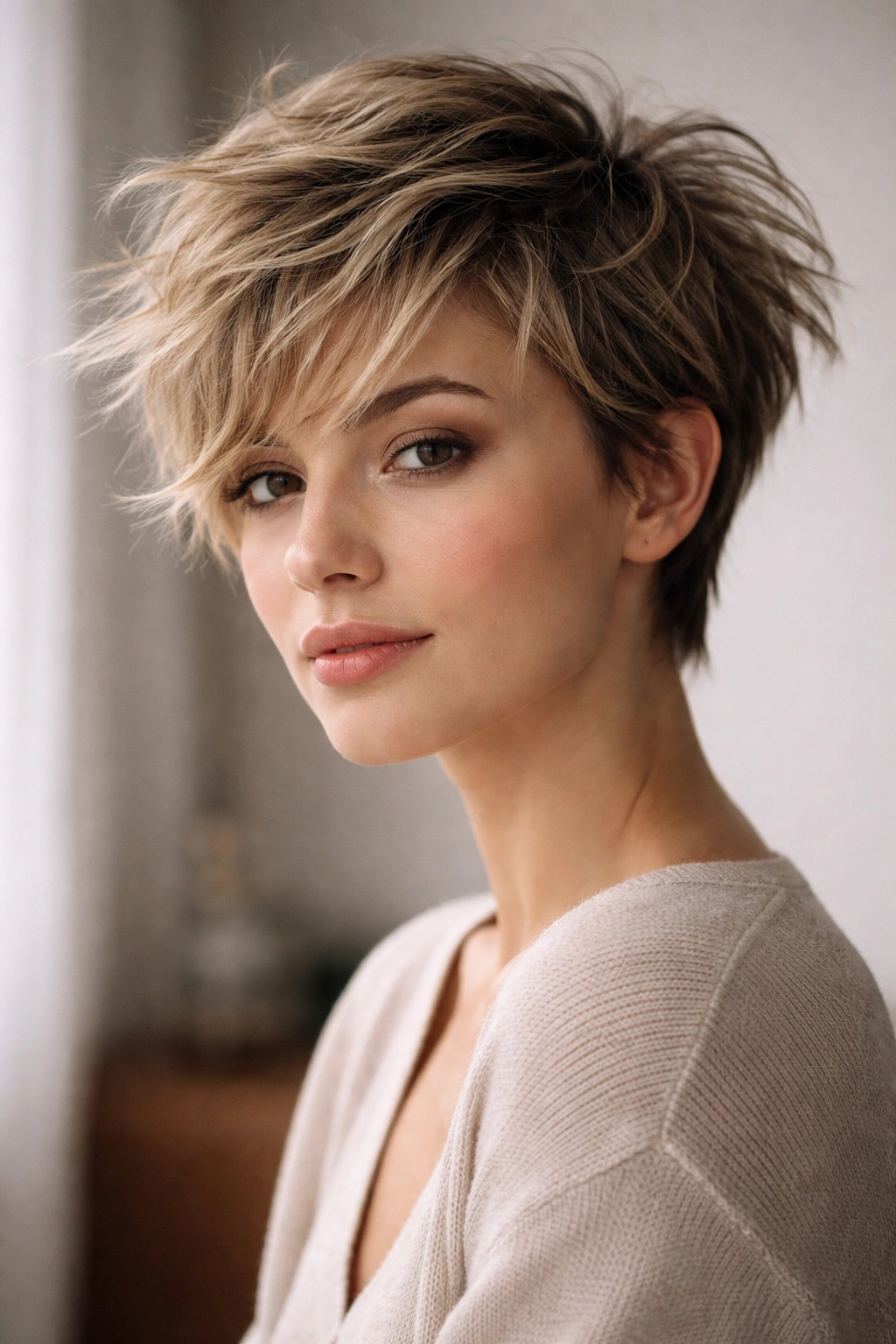
A tousled pixie is cut with texture and slight length, then styled with texturizing products to create a deliberately undone, bed-head appearance. It’s effortlessly cool without looking like you didn’t try — there’s intention behind the tousle.
The Effortless Appeal
Tousled pixies are perfect for people who want the chic factor of very short hair but don’t want to spend time styling. The cut is designed to work with your hair’s natural texture, and the styling is literally finger-tousling with product. It reads as cool and confident, not careless. The undone quality is part of the aesthetic, which means if you skip a blow dryer, it still looks intentional.
Styling and Upkeep
- Requires cuts every 3-4 weeks to maintain the texture
- Styling takes literally 2-3 minutes: damp hair + texturizing spray + finger-tousle
- Works best on naturally wavy or textured hair; straight hair needs product and technique to achieve the tousled look
- Very flattering because the texture and movement soften features
- Low-maintenance in terms of daily styling, but high-maintenance in terms of cut frequency
Pro tip: Invest in a really good texturizing spray. It’s the difference between looking intentionally tousled and looking like you just didn’t shower.
27. The Gradient Bob
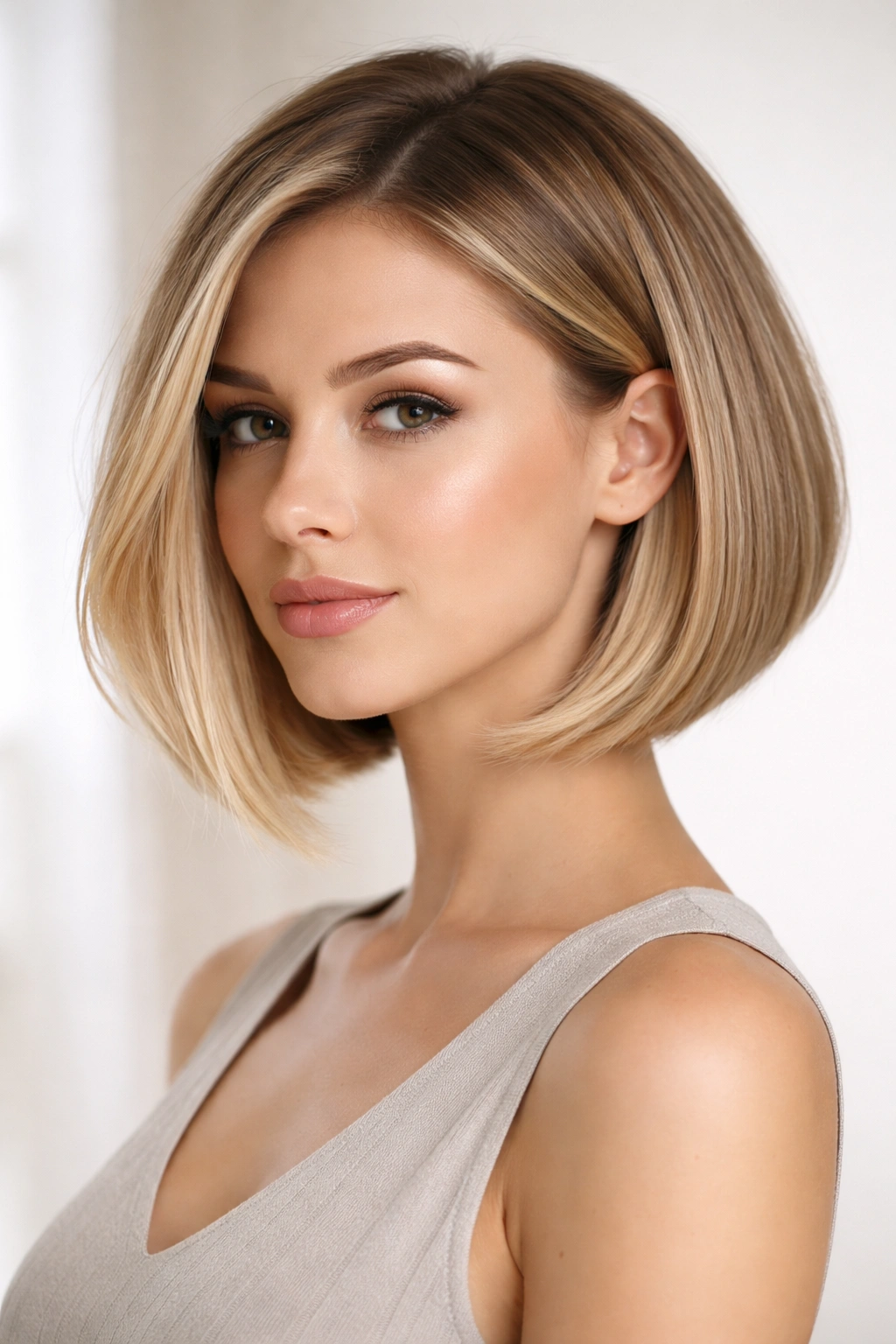
A gradient bob is a blunt or semi-blunt bob that gradually gets longer from back to front, creating a soft gradient effect. It’s less extreme than an asymmetrical bob but more interesting than a standard blunt bob. The subtle angle is flattering without being dramatic.
The Subtlety of the Gradient
The gradient creates visual interest without being as bold as a full asymmetry. It’s flattering on almost all face shapes because the longer front pieces frame the face gently, and the shorter back adds volume and shape. The subtle angle is modern and intentional-looking without being edgy.
Maintenance and Styling
- Requires cuts every 6-8 weeks to maintain the gradient shape
- Works best on straight to wavy hair; curly hair needs blow-drying to show off the subtle angle
- Styling takes 5-10 minutes with a blow dryer to shape the gradient; you can air dry for a more undone look
- Very flattering with long face-framing pieces in front
- Pairs beautifully with bangs (side-swept or blunt) for a complete look
Worth knowing: The gradient is subtle, so make sure your stylist understands exactly how much longer the front should be than the back. Even an inch makes a visual difference.
28. The Textured Bob
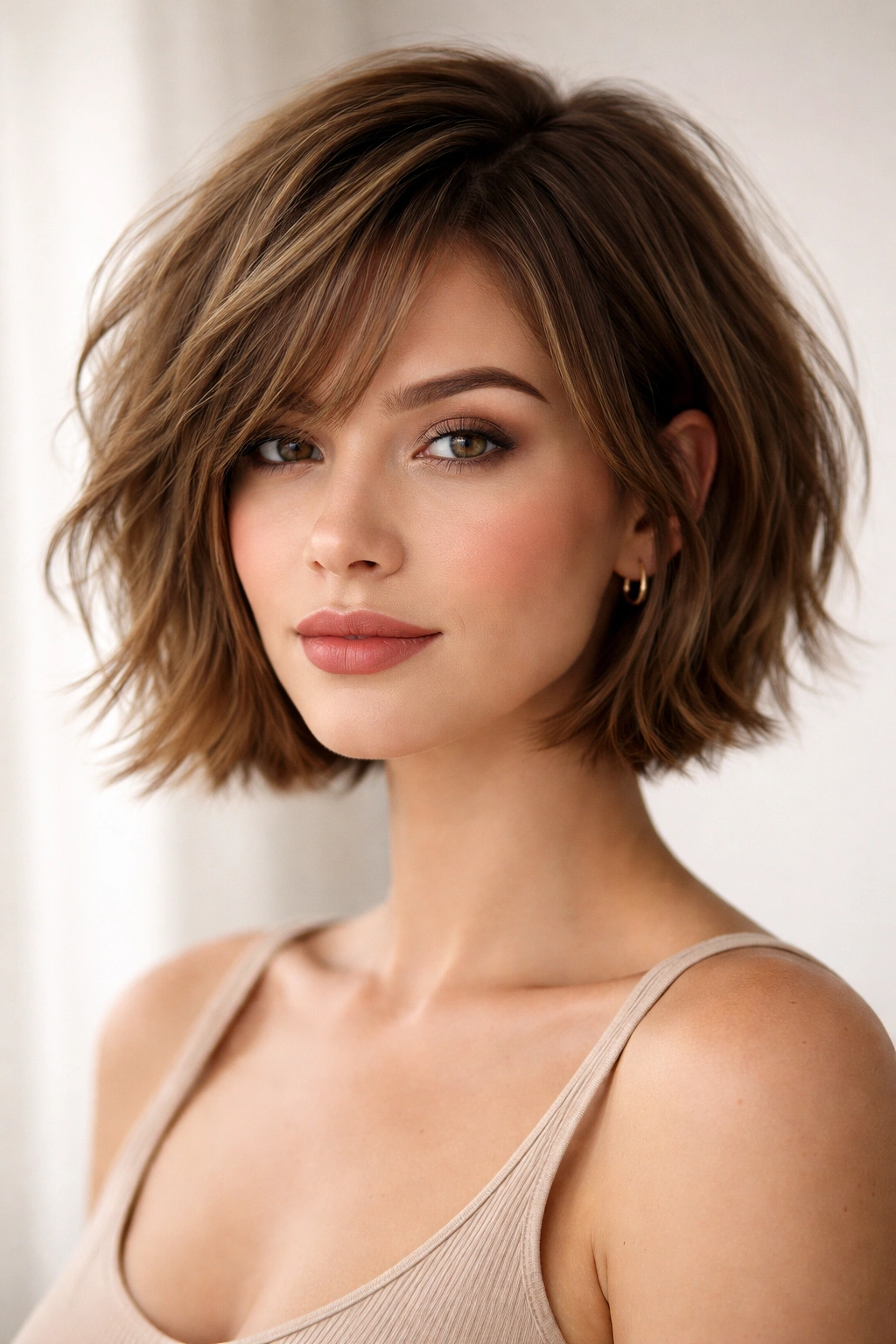
A textured bob combines the length and general silhouette of a bob (hitting around chin or jawline) with choppy, textured layers throughout. It’s the middle ground between a blunt bob and a piece-y bob — more structured than piece-y but more interesting than blunt.
Texture Adds Dimension
Textured bobs are flattering because the layers add visual interest and movement, which softens your face. The texture also means the cut looks intentional and modern. This is a fantastic choice if you like the silhouette of a bob but want more personality and movement.
What to Expect
- Requires cuts every 5-6 weeks; textured layers need refreshing regularly
- Works best on wavy to curly hair; straight hair needs blow-drying to show off the texture
- Styling takes 5-10 minutes with texturizing products and a blow dryer, or you can go undone
- Can be worn forward, back, or side-swept depending on how the layers fall
- Looks particularly good with color or highlights that fall through the layers
Pro tip: When you’re getting this cut, show your stylist exactly how textured you want it. “Textured” can mean lots of different things, so be specific about whether you want choppy pieces, subtle movement, or something in between.
29. The Short Layered Cut
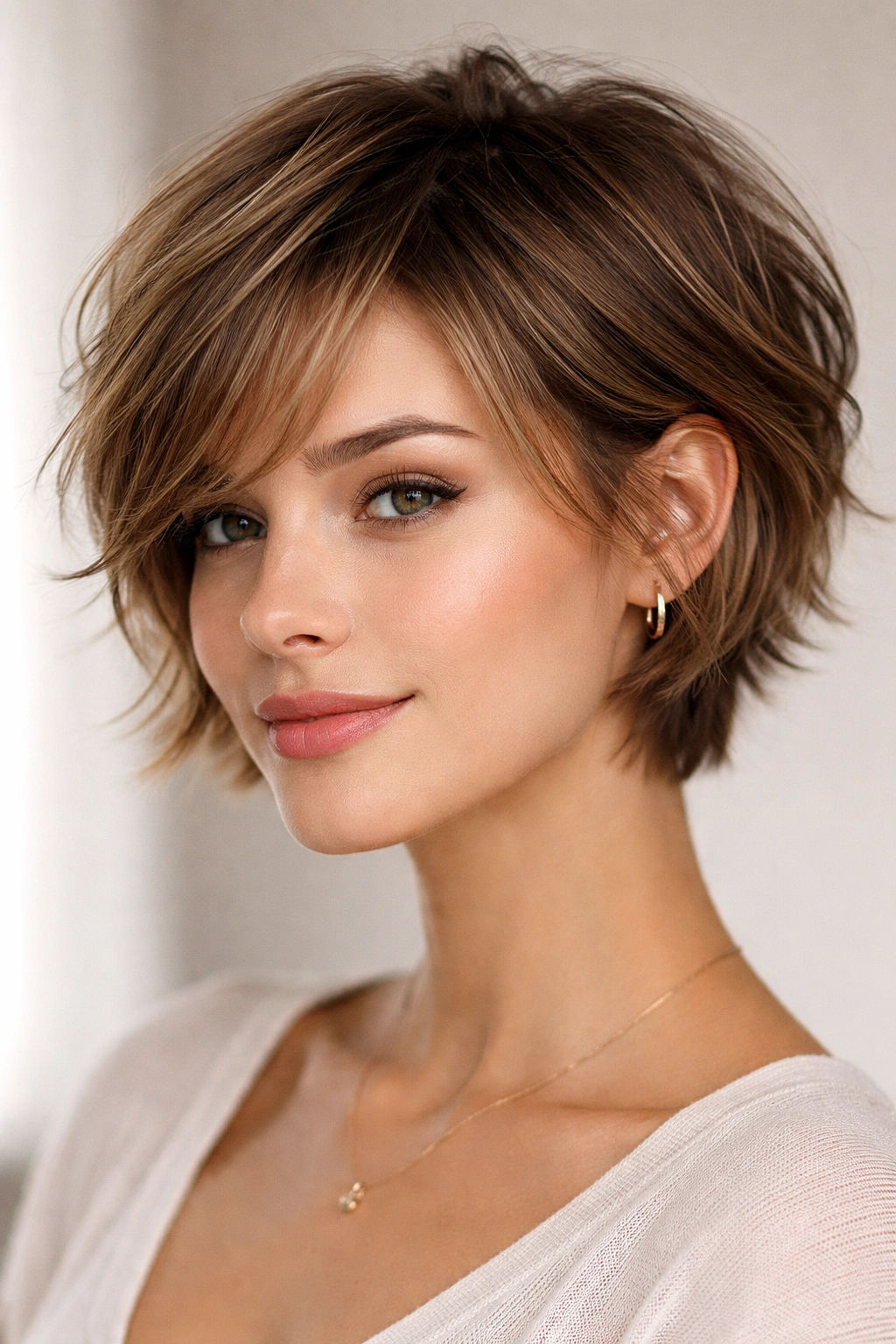
A short layered cut is shorter overall than most bobs (hitting around ear length or shorter) but longer than a pixie, with strategic layers throughout that create movement and shape. It’s an easy, flattering length that’s not as extreme as very short styles but shorter than medium.
The Goldilocks of Texture
This length is a sweet spot for people who want short hair but aren’t ready for pixie-level short. The layers add movement and personality, making it look intentional and styled without being extreme. It works across face shapes and hair textures, and it’s forgiving in terms of growth and styling.
Customization and Maintenance
- Requires cuts every 4-5 weeks to maintain the layered shape
- Works on all hair textures; the styling approach just changes based on your hair
- Can be styled sleek and polished, or tousled and textured — the versatility is part of the appeal
- Very flattering with longer layers around the face for soft framing
- Works well with bangs (side-swept, longer, or blunt) for customization
Worth knowing: This length can sometimes feel like a middle ground if you’re not intentional about styling. Pair it with good products and you’ll have a cut that feels intentionally styled rather than just short hair.
30. The Disconnected Cut
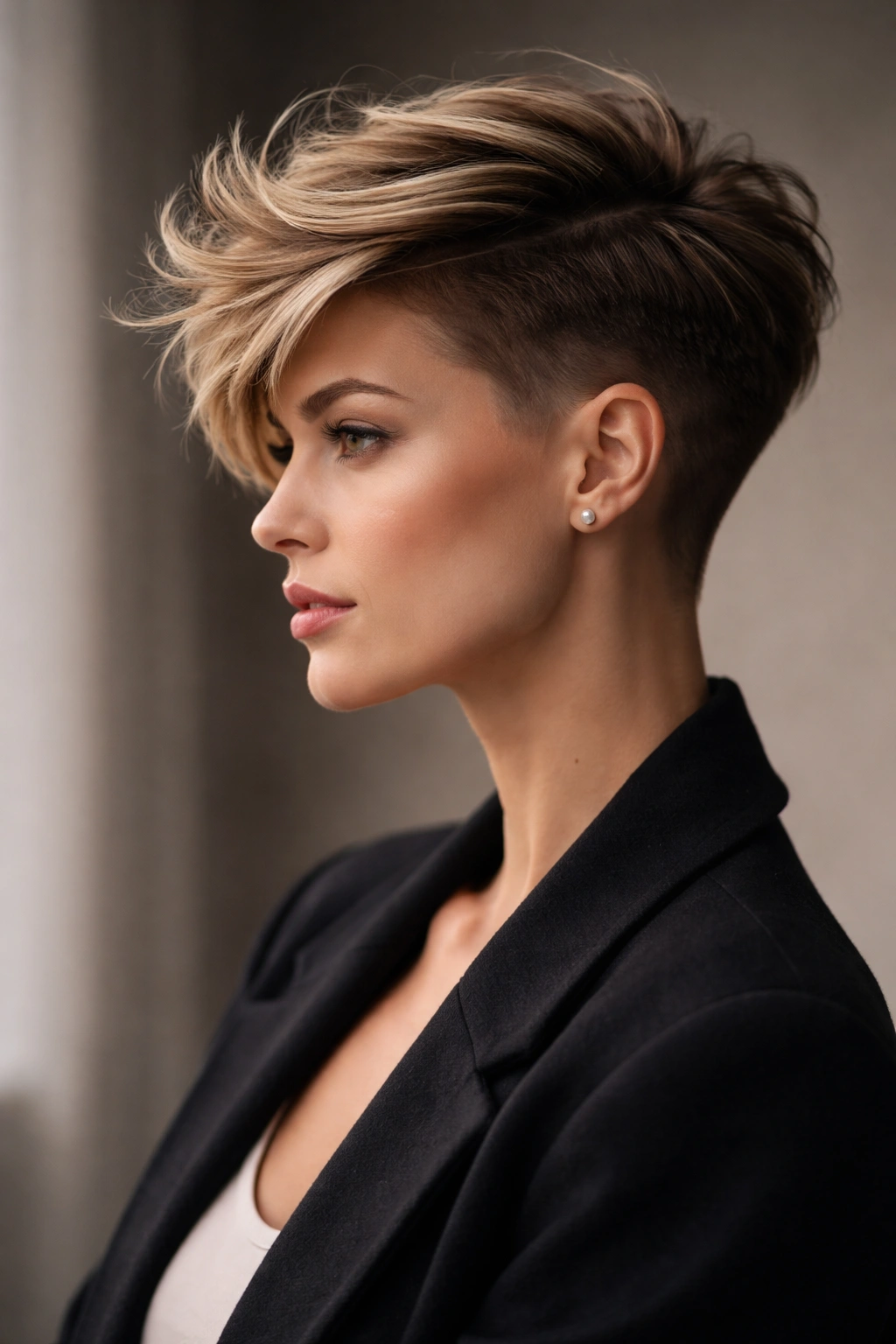
A disconnected cut (also called a disconnected undercut) features clearly separated lengths — typically a textured, longer top that’s literally disconnected from the much shorter sides and back. It’s edgy, architectural, and absolutely a statement. The disconnect is visible and intentional rather than blended.
The Architecture of Disconnection
The disconnection creates visual drama and clear definition between two different length zones. This cut works on people with strong bone structure and features because the architectural nature suits confidence and definition. The disconnection is a design element, not a flaw, so it’s meant to be obvious and intentional.
Styling Reality
- Requires cuts every 3-4 weeks; both the longer top and the shorter sides/back need maintenance
- Works best on straight to wavy hair; the contrast between lengths shows most clearly on straighter hair
- Styling takes 10-15 minutes to blow-dry and style the longer top; the short sides need minimal effort
- The longer top can be worn multiple ways — textured, sleek, side-swept, back — for different vibes
- Looks particularly striking with color or highlights that play up the contrast between the two lengths
Insider tip: Make sure your stylist understands that you want a visible disconnect, not a gradual fade. The intentionality is part of the appeal.
Final Thoughts
Finding your perfect short haircut is about three things: understanding how your face shape and features work with different lines and lengths, knowing your hair’s texture and how a cut will work with or against it, and being honest about your styling time and effort. A pixie might be stunning on you, but if you’re not willing to get cuts every 3-4 weeks and blow-dry regularly, it’ll frustrate you every single day.
The beauty of short hair is that once you find your cut, styling becomes simpler, not harder. You’re not taming length or managing thick ends — you’re working with a shape that’s cut specifically for your face. Short hair also lets you experiment in ways longer hair doesn’t. You can try different parts, different styling products, different directions, and completely change the vibe of your cut with minimal effort.
Bring reference photos to your consultation — multiple photos from different angles showing the exact cut you’re considering. Talk to your stylist about your face shape, your hair texture, and honestly about how much time you’re willing to spend styling. A great stylist will help you find the short cut that works for your specific face, hair, and lifestyle, not just whatever’s trendy. Your perfect short haircut is out there.
