



Frizzy hair has a way of making even the most carefully planned style feel impossible. You wake up, the humidity shifts, and suddenly your hair has a mind of its own—puffing out, rebelling, refusing to cooperate. The frustrating truth most people discover way too late? The length of your hair might actually be working against you. Longer hair simply has more surface area for moisture to cling to, more weight pulling on strands that are already prone to frizz, and more time for environmental humidity to wreak havoc as it moves down the shaft.
Here’s the counterintuitive part: short haircuts don’t just look better on frizzy hair—they genuinely behave better. When you cut away length, you’re removing damaged ends that absorb moisture like a sponge, reducing the overall mass that frizz can grip, and making your natural texture actually work for you instead of against you. A well-chosen short style can transform frizzy hair from a constant battle into something you can actually style with confidence. The key is picking the right cut for your specific hair type and the way your hair naturally wants to fall.
The challenge isn’t that short haircuts tame frizz—it’s finding the specific cut that matches your hair’s texture, your face shape, and your daily styling willingness. A pixie that would look sharp and controlled on straight hair might turn into a triangle of chaos on curly, frizzy hair. A choppy shag works beautifully for some textures and disaster for others. This guide walks through ten short haircut styles that genuinely deliver on frizz control—each explained with the specific texture science behind why it works, what makes it different from similar cuts, and exactly how to ask your stylist for it without confusion.
1. The Pixie Cut
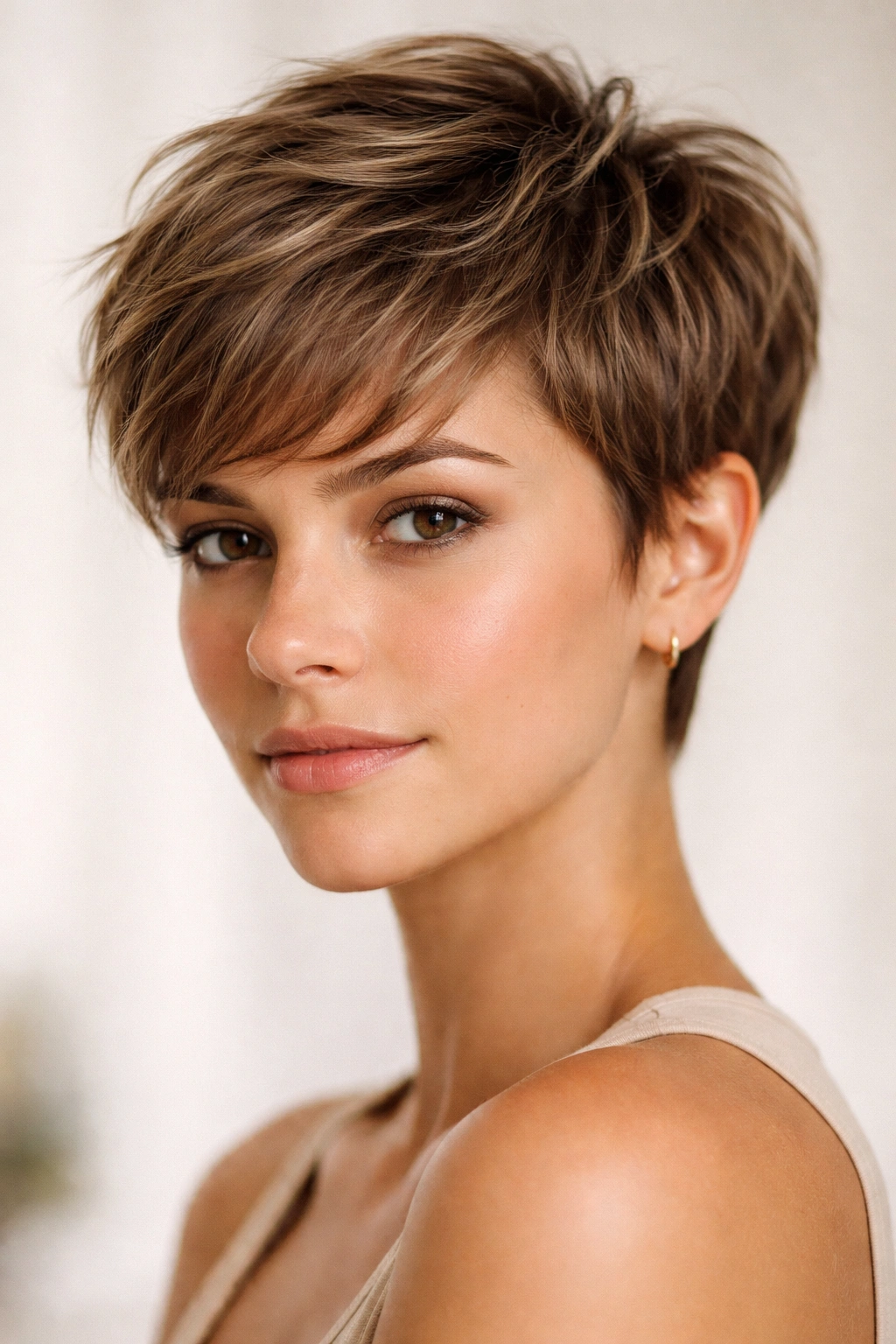
The classic pixie is hands-down one of the most effective short styles for eliminating frizz, and the science is simple: dramatically shorter hair means dramatically less surface area for humidity to affect. A well-cut pixie typically runs 1 to 2 inches on top and tapered down on the sides—short enough that frizz literally can’t get a foothold, but long enough to actually style and texture rather than just slicking it down.
Why It Works for Frizzy Hair
The pixie’s magic lies in removing the bulk of your hair’s length and often a significant amount of weight. Frizz happens when moisture penetrates the hair cuticle and the hair swells; shorter hair simply has less opportunity for this to become visually apparent. Additionally, because pixies are typically cut with texture and layers built right into the style, you’re actually embracing short, choppy movement rather than fighting against it. The cut is designed around texture, not against it. A pixie also dries incredibly fast—if you have curly or wavy frizzy hair, you might find you don’t even need to blow-dry it fully, which eliminates a major source of frizz damage.
How to Ask Your Stylist for It
Be specific about the length you want—show reference photos of pixies you actually like, because “pixie” can mean wildly different things. Clarify whether you want blunt, shaped lines or softer, more textured edges. Tell your stylist about your frizz concerns specifically; a good stylist will cut in texture and shorter layers throughout rather than trying to slick everything flat. Ask about how much styling you’ll need to do daily and whether the top will be long enough to style multiple ways, or whether this is a very low-maintenance, wash-and-go situation.
Pro tip: Pixies require touch-ups every 3 to 4 weeks to maintain their shape, so factor this into your commitment level. The investment is real, but the frizz-free payoff is worth it for many people.
2. The Bob with Textured Layers
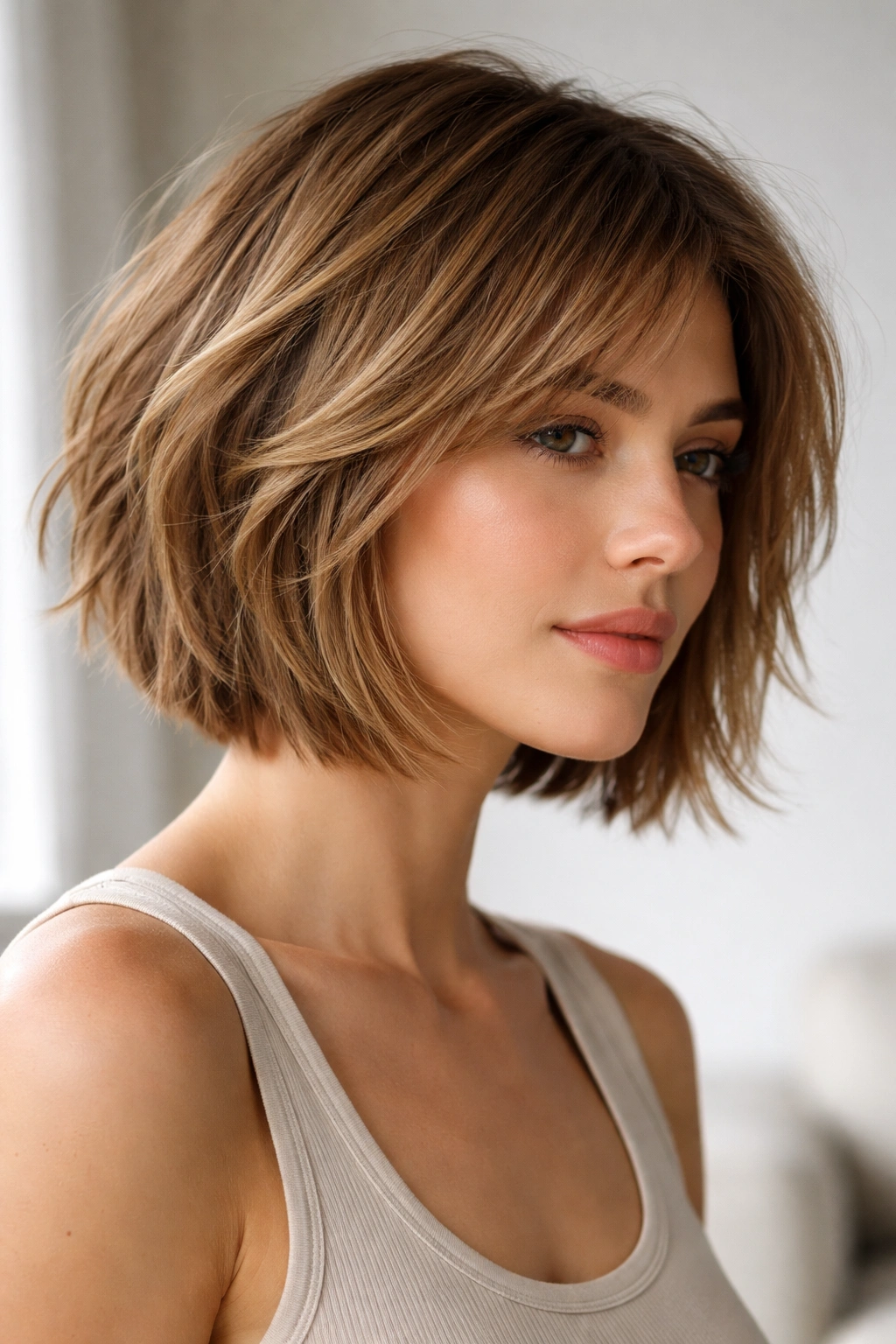
A textured, layered bob sits right at the jaw or chin—longer than a pixie but still dramatically shorter than shoulder-length. The layers are the crucial part here; instead of blunt, dense layers that trap frizz, textured layers create movement and allow air circulation throughout your hair, which is the real enemy of frizz control. This cut works especially well for people who want some length to style with but won’t accept the frizz chaos of longer hair.
Why Layers Make the Difference
Blunt, heavy bobs can actually amplify frizz because all that dense hair creates internal friction and traps moisture. Textured layers break up that density and create space between strands. Each layer ends at a slightly different point, which means the overall shape is less reliant on every single strand lying perfectly flat and smooth. Frizzy strands have room to move slightly without making the whole style look undone. The layers also dry faster since hair isn’t compressed against other strands, which again reduces the frizz-causing moisture buildup.
Key Details to Discuss with Your Stylist
Ask for choppy, textured layers throughout rather than subtle layers—you want visible movement and dimension, not just a blunt cut with tiny modifications. Specify that you have frizzy hair and want the cut designed to work with texture rather than fighting it. Ask about the angle of the cut; many textured bobs are cut with a slight angle (shorter in back, slightly longer in front), which can help manage frizz by creating built-in movement.
Worth knowing: Textured bobs need regular trims every 6 to 8 weeks to maintain the layered shape, and they often need some styling product to enhance the texture and keep pieces separated. This isn’t a wash-and-go style for most people, but it’s much easier than managing longer frizzy hair.
3. The Shag
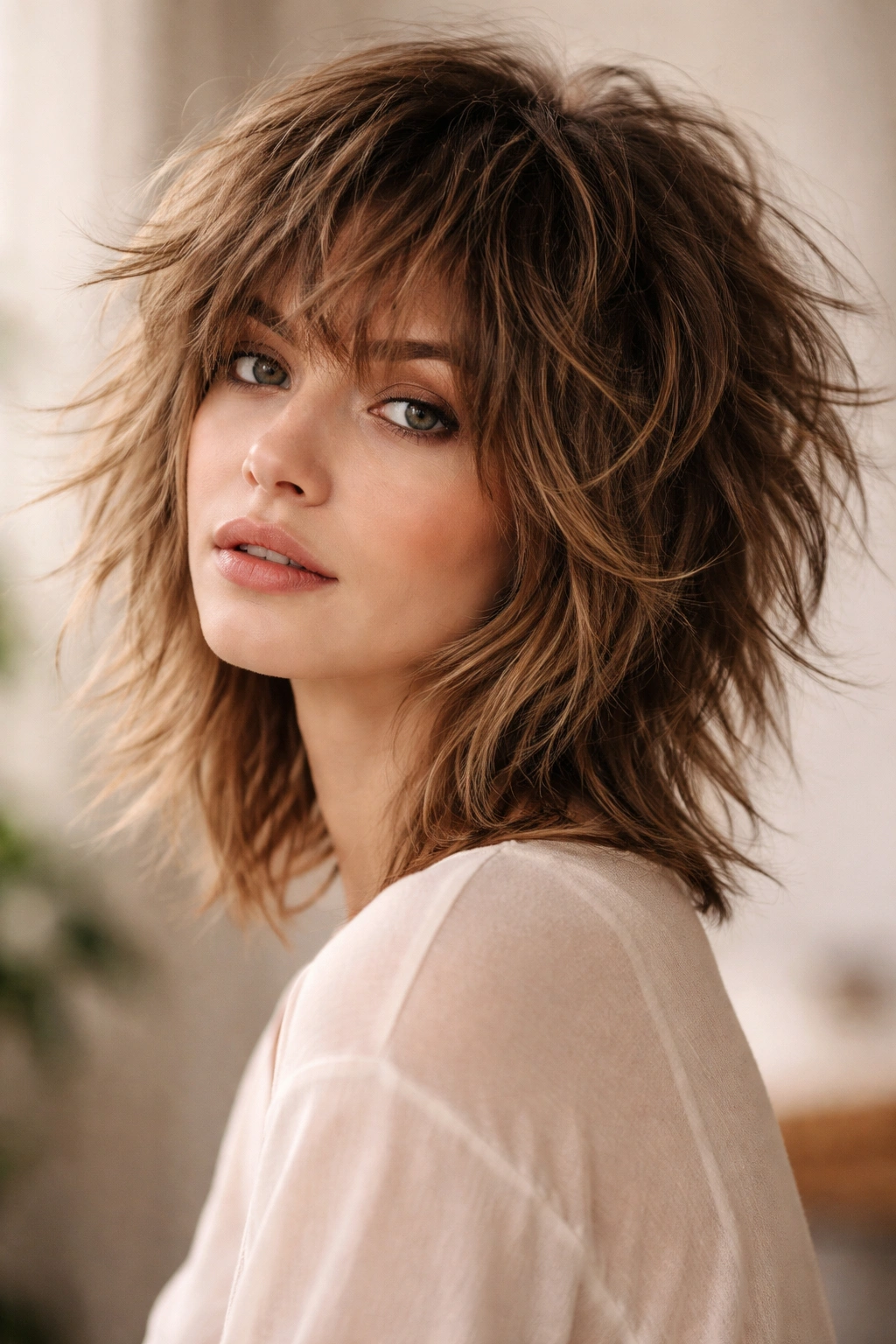
The shag is having a major moment, and for good reason—it’s basically the ultimate frizz-taming short cut because it’s designed to look textured and choppy. A modern shag has short, choppy layers throughout, usually a bit shorter on top with slightly longer pieces in front. It’s intentionally undone and movement-based, which means your frizz isn’t working against the style—it’s part of the aesthetic.
The Science Behind the Shag’s Frizz Control
Shags work because they embrace texture rather than fighting it. Every strand is different lengths, so individual frizzy hairs read as part of the intentional style rather than mistakes. The cut has a built-in, tousled vibe that makes even very frizzy hair look intentional. Additionally, the short layers throughout mean hair dries faster and internal moisture buildup is minimized. There’s no dense block of hair trapping humidity—instead, you’ve got choppy pieces that air can move through easily.
What to Communicate to Your Stylist
Bring photos of shags you like, because the style can range from subtle, barely-choppy layers to very dramatic, heavily textured cuts. Tell your stylist you have frizzy hair and want the cut to embrace that rather than fight it. Ask for short, choppy layers throughout—not just at the ends, but built into the cut all the way up. Discuss how short you want the back and sides; a true shag can be quite short on the sides with more length in front, or relatively even all around with just the textural chopping.
Insider note: Shags look best when styled with some texture product—a texturizing spray, sea salt spray, or light styling cream that enhances the choppiness. The style can look a bit flat if you air-dry without product, so factor in a quick styling step to your daily routine.
4. The Undercut
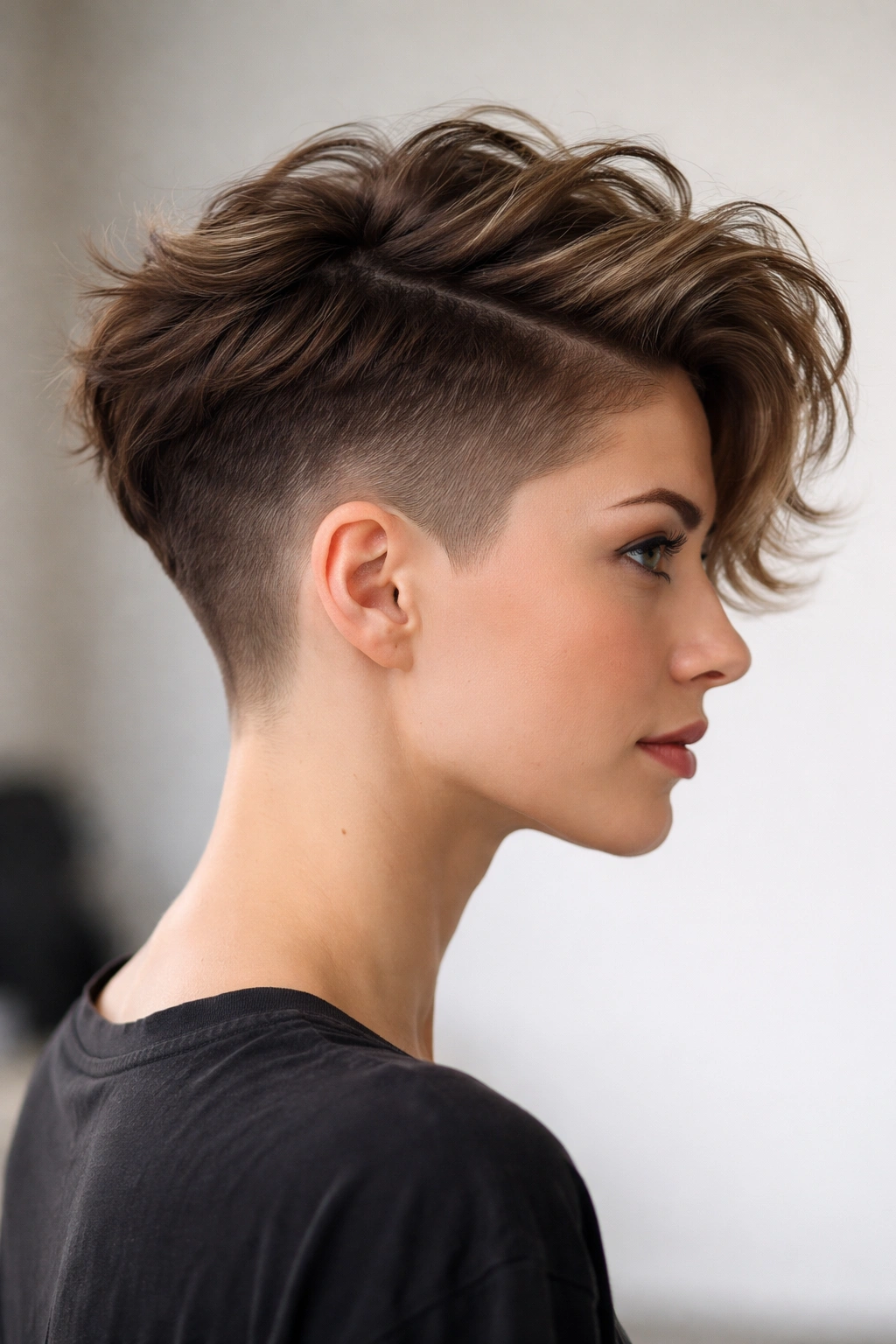
An undercut is a bolder move—you keep slightly longer hair on top (2 to 4 inches) while the sides and back are cut extremely short, often with clippers at 1 inch or less. This creates dramatic contrast and is extraordinarily effective for frizz because you’re removing all the weight and bulk from the majority of your head, while keeping length where you can actually style.
Why Undercuts Excel at Frizz Control
The genius of the undercut is radical simplicity: short hair can’t frizz. By cutting the sides and back very short, you’ve eliminated frizz in the areas where it typically causes the most problems—the sides of your face and around your ears. The slightly longer hair on top can still frizz, but because it’s not weighed down by all that shorter, denser hair underneath, it sits better. The contrast also makes whatever texture you do have read as intentional and edgy rather than uncontrolled.
How to Ask for It Confidently
Specify exactly how short you want the sides and back—show reference photos. Do you want a subtle undercut (maybe ¼ inch with some length blending into the top) or a dramatic one (nearly shaved with distinct contrast)? Discuss how the top should be shaped; some undercuts have texture throughout the top section, while others are sleeker. Ask your stylist whether the undercut needs to be maintained with regular clipper trims or if it’ll grow out gradually and look intentional at different lengths.
Pro tip: Undercuts require clipper maintenance every 2 to 3 weeks to maintain the sharp line. If you love the look, this is built-in upkeep. If you’re not committed to regular trims, the magic fades as soon as the sides start growing out.
5. The Cropped Wavy
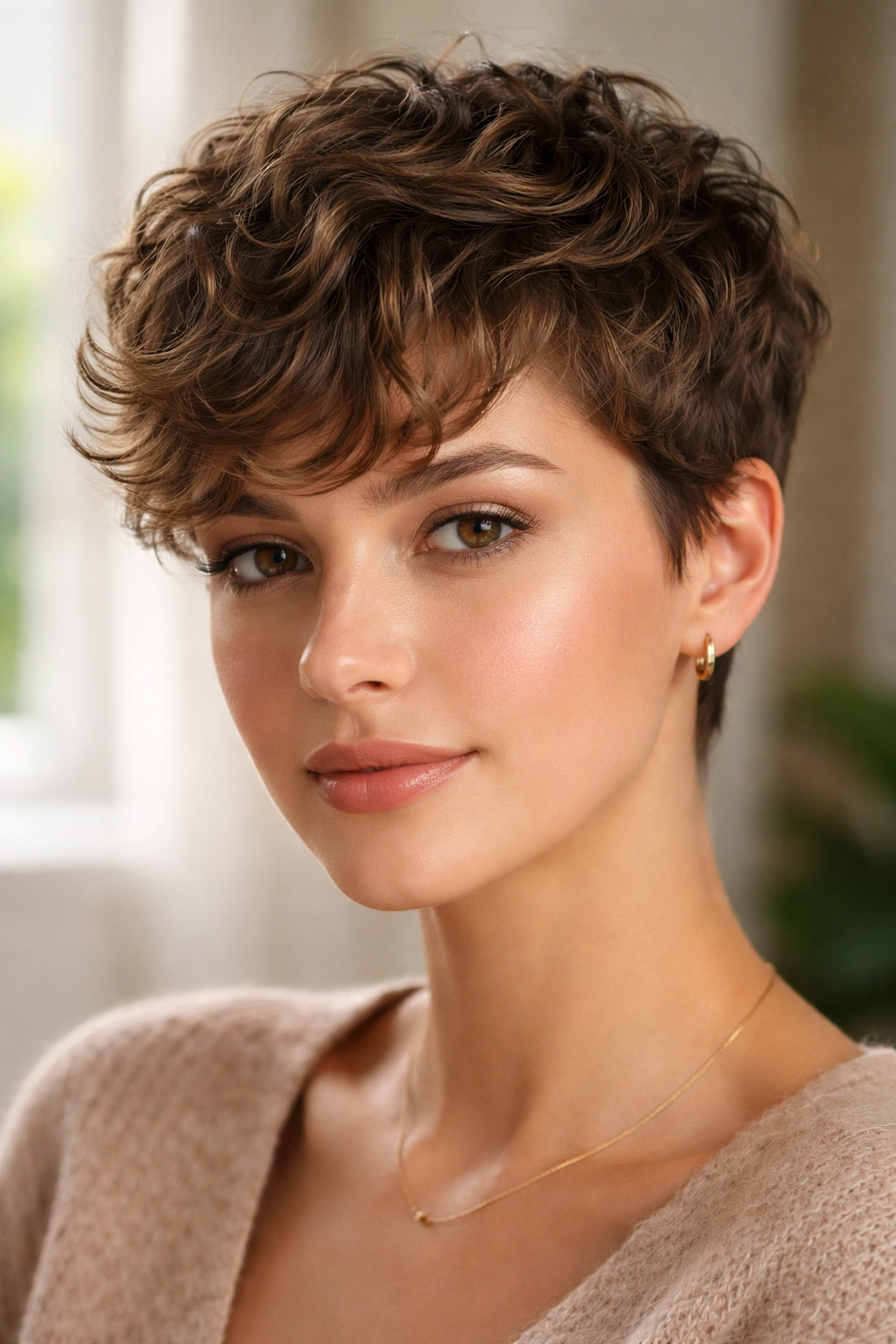
This style sits somewhere between a pixie and a longer short cut—usually 2 to 4 inches of slightly longer hair on top, shorter on the sides, with the whole cut designed to enhance natural waves or texture. Instead of fighting your hair’s natural curl or wave pattern, the cropped wavy cut actually celebrates it and uses it to eliminate the appearance of frizz.
Why Wave-Friendly Cuts Change Everything
Here’s the crucial distinction: frizz is often just texture that’s fighting the direction you want it to go. When your cut is designed around your natural waves, every strand falls more naturally, and what might look chaotic in a blunt cut looks intentional and textured in a wavy cut. Shorter length means waves are tighter and more defined, which also helps—the waves catch light differently than frizz, creating shine rather than a dull, fuzzy appearance. You’re also removing length that would weigh down your waves and turn them into frizz.
Communicating with Your Stylist About Wave Patterns
Bring your hair to the appointment with your natural texture showing—no flat iron, no smoothing products. Have your stylist cut your hair dry or damp so they can see exactly how your waves fall naturally. Ask them to cut the style around your natural texture, not against it. Discuss how much texture/wave you want to enhance versus control; some people want every wave visible and emphasized, while others want the waves there but more defined and controlled.
Worth knowing: Wavy cropped cuts usually need some styling product to bring out the waves and keep frizz at bay. A texturizing spray, curl cream, or light styling gel applied to damp hair helps the waves form more deliberately and keeps individual frizzy hairs from escaping.
6. The Asymmetrical Cut
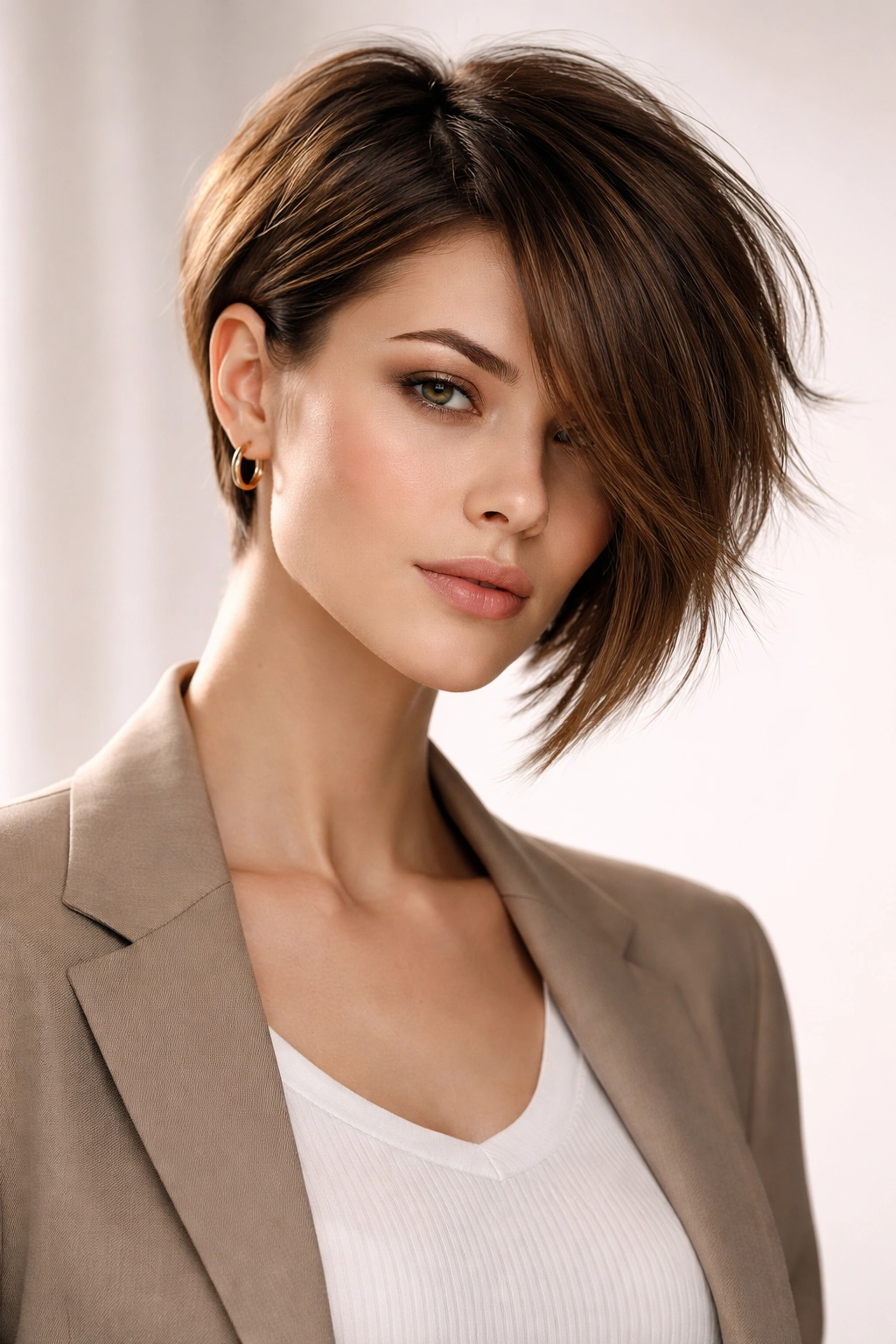
An asymmetrical short cut has different lengths on each side—maybe one side is 2 inches and the other is 3 to 4 inches, or one side is nearly undercut while the other side has more length. The unbalanced design sounds chaotic, but it’s actually brilliant for frizz management because the variation in length prevents frizz from reading as uniform chaos.
The Frizz-Fighting Power of Visual Distraction
Asymmetrical cuts work on a psychological and practical level. Visually, the uneven lengths distract the eye from any individual frizzy hairs; the style reads as intentionally edgy rather than chaotic. Practically, the variation in length means that not all your hair is the same thickness or weight, so air circulation is better and frizz doesn’t layer uniformly. An asymmetrical cut also plays beautifully with angles and light, which makes texture read as intentional shine rather than uncontrolled frizz.
How to Request an Asymmetrical Short Cut
Be very clear about how dramatic the asymmetry should be. Show reference photos where the exact length difference is clear. Ask whether the difference should be subtle (a half-inch variation) or dramatic (one side significantly shorter). Discuss how the longer side should look—tapered gradually or cut bluntly at a different length? Explain that you have frizzy hair and want the asymmetry to work with your texture rather than against it.
Pro tip: Asymmetrical cuts look sharpest with some styling—blow-drying with a round brush to create volume on the longer side, or using texture products to enhance the movement. It’s not a completely hands-off style, but the styling time is minimal.
7. The Blunt Bangs with Short Sides
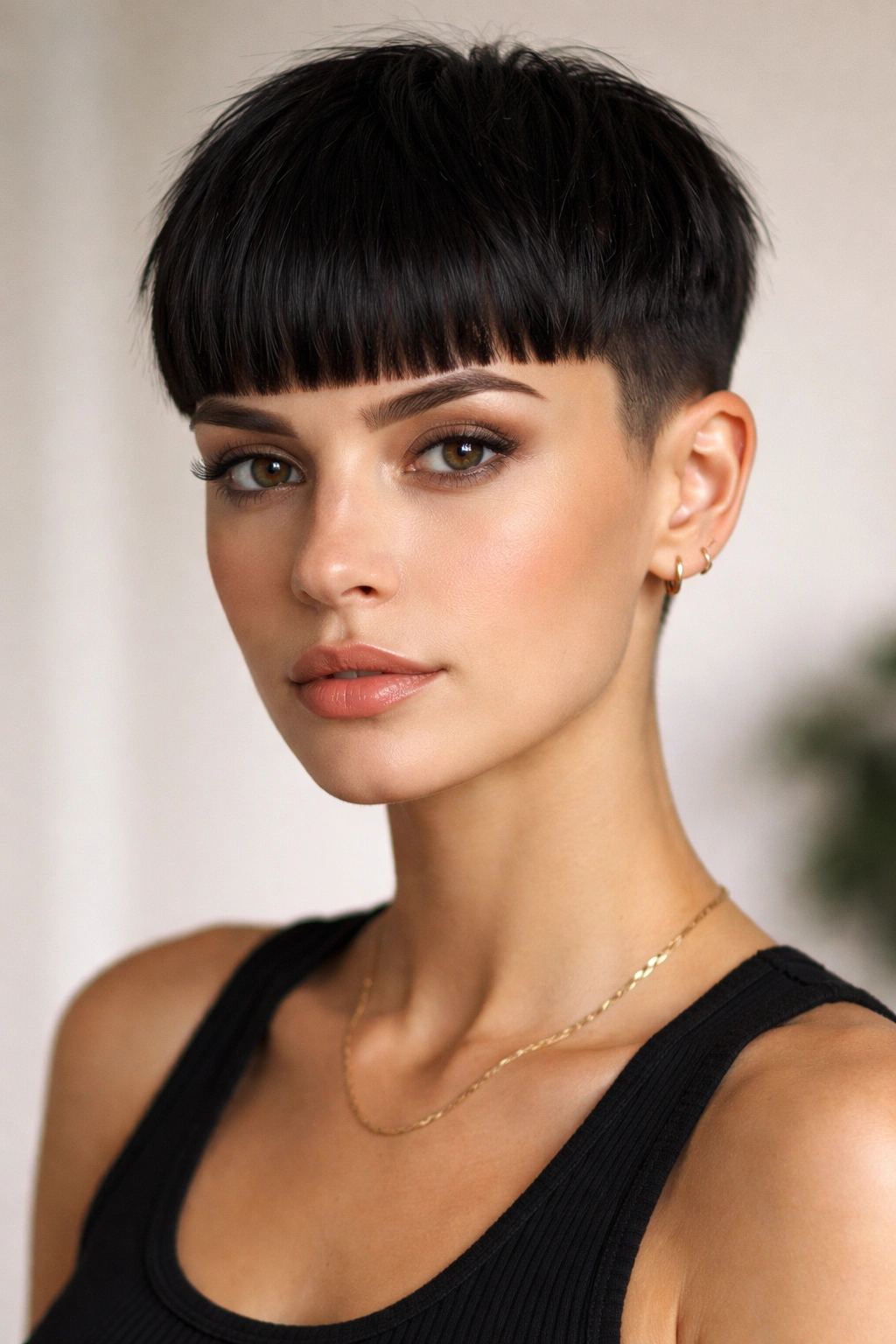
This style features short, thick blunt bangs in front (usually to the eyebrows or slightly longer) paired with very short, tapered sides and back—often clippered or nearly shaved. It’s bold and effective, and the blunt bangs frame the face while the short sides eliminate frizz in the most visible areas.
Why This Combination Works So Well
Blunt bangs draw attention to your eyes and face, which means any frizz on your sides and back becomes visually secondary. By cutting the sides short, you’re eliminating the frizz that frames your face and tends to be the most noticeable. The bangs also serve a practical function: they’re short enough to style quickly and don’t generate that wispy frizz that longer bangs often do. The overall effect is a sharp, pulled-together look even if the rest of your hair is textured.
Getting the Details Right with Your Stylist
Show very specific reference photos of bangs you like—blunt bangs can be cut at slightly different angles and weights. Clarify exactly how short you want the sides and back. Discuss whether the bangs should be perfectly blunt or have slightly texture/layers in them. Ask whether the bangs will require regular trims (they will—every 2 to 3 weeks) and how often the sides need maintenance.
Worth knowing: Blunt bangs aren’t forgiving if they’re too short or cut at the wrong angle for your face shape. Take time finding a stylist who specializes in this style rather than asking someone who doesn’t frequently cut bangs. The first cut is crucial for getting the proportion right.
8. The Choppy Layers
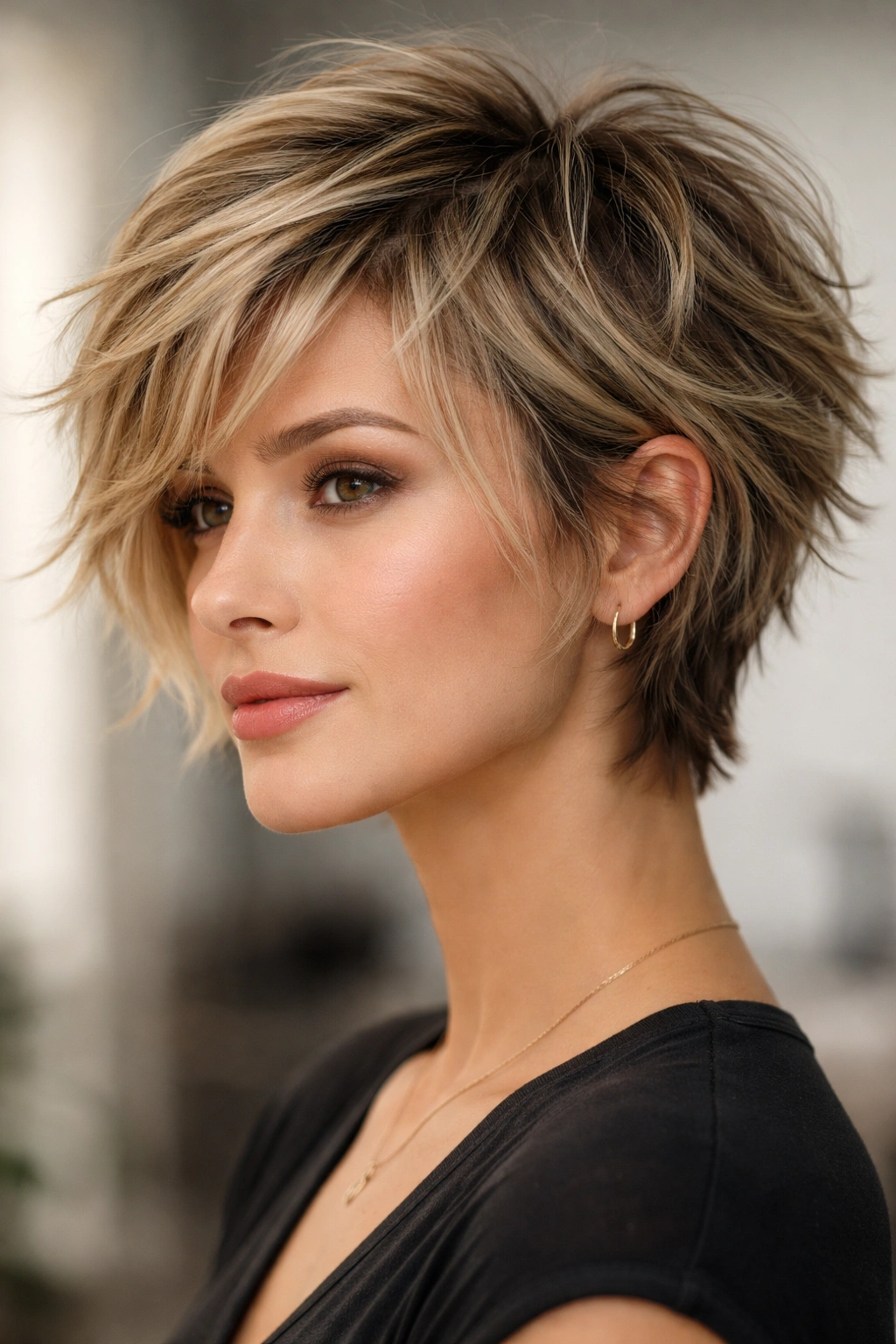
A choppy layered cut is short throughout (usually 2 to 5 inches depending on how dramatic you want it) with intentionally choppy, uneven layers that create movement and texture everywhere. Unlike the smoother, blended layers of some bobs, choppy layers are deliberately disconnected and visually textured.
The Texture-Embracing Science Behind Choppy Layers
Choppy layers work because they’re designed to look textured and movement-based. Each layer is a different length and ends at a distinct point, which creates an inherent visual choppiness that makes actual frizz read as part of the style. The shorter lengths overall mean less hair to frizz, and the multiple different lengths mean air circulation is excellent—no dense blocks of hair trapping moisture. Choppy layers also photograph beautifully because they catch light in lots of different directions, creating dimension and shine rather than the flat fuzz of compressed frizz.
Asking Your Stylist for Choppy (Not Just Layered) Layers
The distinction matters: you want choppy layers, meaning each layer is visibly distinct and disconnected, not smooth, blended layers that create subtlety. Show reference photos where the choppiness is obvious. Describe the texture you want—do you want very dramatic, shaggy choppiness or more controlled, defined layers? Ask how short the overall length will be and how much styling you’ll need to maintain the look.
Pro tip: Choppy layers look best when styled with some movement—either air-dried with texture product or blow-dried with fingers for volume. A bit of texturizing spray or sea salt spray enhances the intentional choppy vibe.
9. The Curly Crop
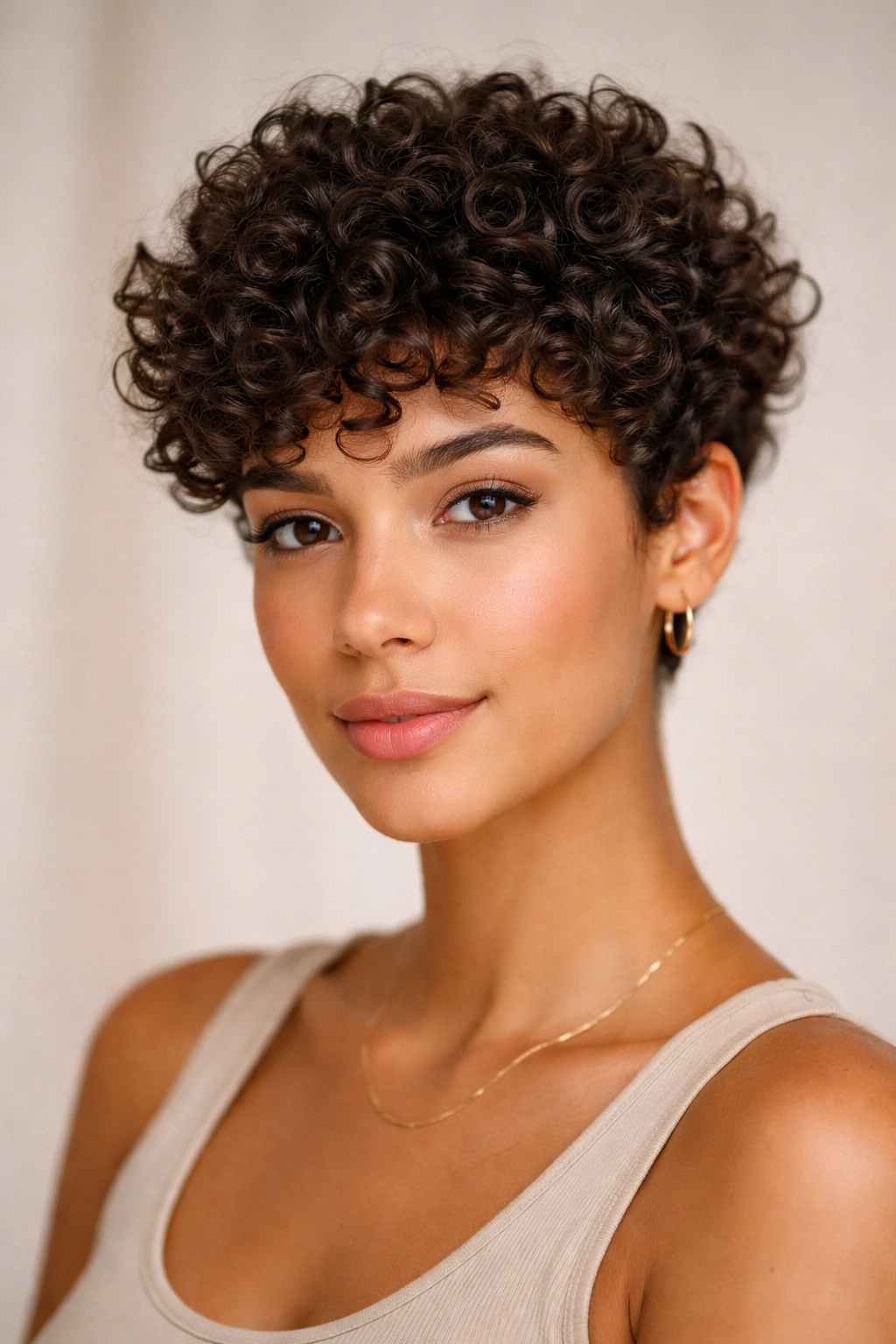
If you have naturally curly or highly textured frizzy hair, a curly crop specifically designed around curl patterns is revolutionary. This cut is typically very short (1 to 3 inches throughout) and cut specifically to enhance and define your natural curls rather than fighting them. It’s often cut with clippers or scissors in a way that removes weight while maintaining texture definition.
How Curl-Specific Cuts Transform Frizz into Texture
The key difference between a regular short cut and a curl-specific crop is that a curl crop is cut with your curls’ natural pattern in mind. The stylist cuts into the hair in a way that defines and separates each curl rather than blending them together. Shorter length means curls are tighter and more defined, which reads as shiny and controlled rather than frizzy and chaotic. Because each curl is defined rather than bunched together, individual frizzy hairs are less visible—they’re part of the defined curl pattern rather than standing out as mistakes.
Finding a Stylist Who Understands Curly Hair
This is non-negotiable: you need a stylist trained in cutting curly hair, not someone who cuts curly hair the same way they’d cut straight hair. Bring your hair with your natural curl pattern visible—no blow-drying straight, no smoothing. During the consultation, discuss your curl pattern (tight coils, loose waves, springy ringlets, whatever your natural texture is), and ask the stylist whether they have experience cutting that specific pattern. Ask them to cut your curls dry so they can see exactly how each curl naturally falls.
Worth knowing: Curly crops require regular hydration and often benefit from leave-in conditioner or curl cream to keep curls defined and separate. The cut itself is low-maintenance, but the styling routine is specific to keeping curls looking intentional rather than frizzy.
10. The French Girl Short
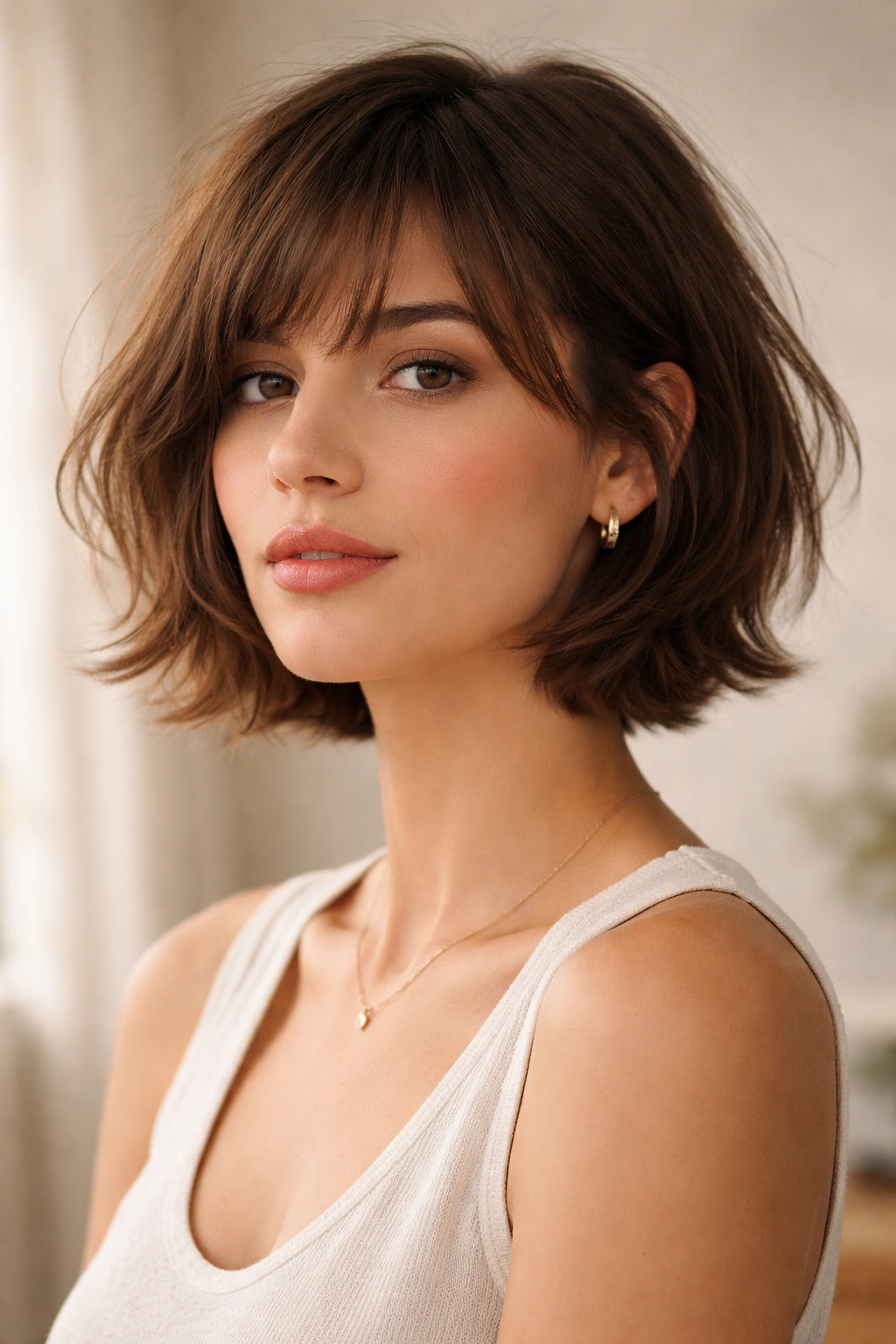
The French Girl short is a more polished, controlled aesthetic—usually 2 to 4 inches with subtle layers and an overall tousled-but-intentional vibe. It’s less choppy than a shag, less dramatic than an undercut, but still designed to embrace texture while looking refined. This is the style for people who want frizz control with a slightly more sophisticated, less edgy aesthetic.
Why Subtle Sophistication Still Manages Frizz Effectively
The French Girl short works because it’s short enough that frizz is minimized, but the styling and cut are refined enough that the result looks intentional and chic rather than chaotic. Subtle layers create movement without being visually aggressive about it. The overall vibe is “I woke up like this and somehow look effortlessly polished”—which is actually achievable with the right cut, because the cut does most of the heavy lifting. Any remaining texture reads as sophistication rather than damage.
Achieving the Look Your Stylist Understands
Bring reference photos of French Girl shorts you love—this style has a specific aesthetic, and there’s real variation in how “french” versus “boyish” versus “feminine” each version feels. Discuss with your stylist whether you want the cut styled with product or whether it should look good air-dried. Ask about the specific layers and angles they’ll cut. Clarify that you want the style to work with your frizzy hair, not against it, so they should cut in texture rather than trying to create a blunt, control-focused shape.
Pro tip: This style looks best when styled with a light texturizing product and a quick tousle with your fingers. A sea salt spray or texturizing mousse applied to damp hair creates the effortless, lived-in texture that makes this cut sing.
Final Thoughts
Frizzy hair doesn’t have to be a lifelong battle. The right short haircut doesn’t just look better on frizzy hair—it fundamentally changes how your hair behaves because you’ve removed the length that amplifies frizz, reduced the weight that traps moisture, and (in most cases) worked with your natural texture rather than against it. Whether you choose the radical simplicity of a pixie, the textured sophistication of a French Girl short, the intentional chop of a shag, or anything in between, the key is finding a cut designed for frizzy hair, not in spite of it.
The most important part of this process is communicating clearly with your stylist. Bring reference photos, describe your frizz concerns specifically, and make sure your stylist understands that you’re not trying to fight your hair’s natural texture—you’re trying to work with it. A stylist who gets that difference will cut you a style that actually delivers on the promise of frizz control rather than just shorter chaos.
Give yourself permission to experiment. Your first short haircut might not be the one, and that’s okay—hair grows, and there are ten completely different short styles here, each with a different aesthetic and a different approach to managing frizz. Once you find the right cut for your specific hair type and lifestyle, the daily styling becomes easier, your hair looks and feels healthier, and you might actually start looking forward to dealing with your hair instead of dreading it. That’s the real transformation that happens when frizzy hair finally gets the cut it deserves.
