



There’s a reason short hair becomes increasingly popular after 40 — it’s not just a trend, it’s a liberation. A well-chosen short haircut can shave years off your appearance, require minimal styling time, and make you feel confident and polished every single day. Yet finding the right short cut at this stage of life is different than picking one in your 20s or 30s. You need a style that works with your hair texture, flatters your face shape, suits your lifestyle, and keeps its shape between salon visits without demanding complicated maintenance or styling techniques.
The challenge many women face is that not every short haircut works the same way for every person. A pixie that looks stunning on someone with thick, wavy hair might require daily styling on fine, straight hair. A choppy shag that’s effortlessly cool on someone with a square jawline might overwhelm someone with a rounder face shape. This is where understanding the specific qualities of different short cuts — the angles, the layers, the texture, the styling demands — becomes genuinely valuable.
What you’ll discover in this guide is that age 40 and beyond isn’t about being locked into one type of style. Instead, it’s about finding cuts with enough sophistication, movement, and adaptability to work with your individual features, hair type, and daily routine. Some of these cuts are high-maintenance; others are practically wash-and-go. Some are edgy and modern; others are timeless and elegant. The key is matching the cut to your specific situation, not just picking the one that looks best on an Instagram model.
1. Textured Pixie with Layered Angles
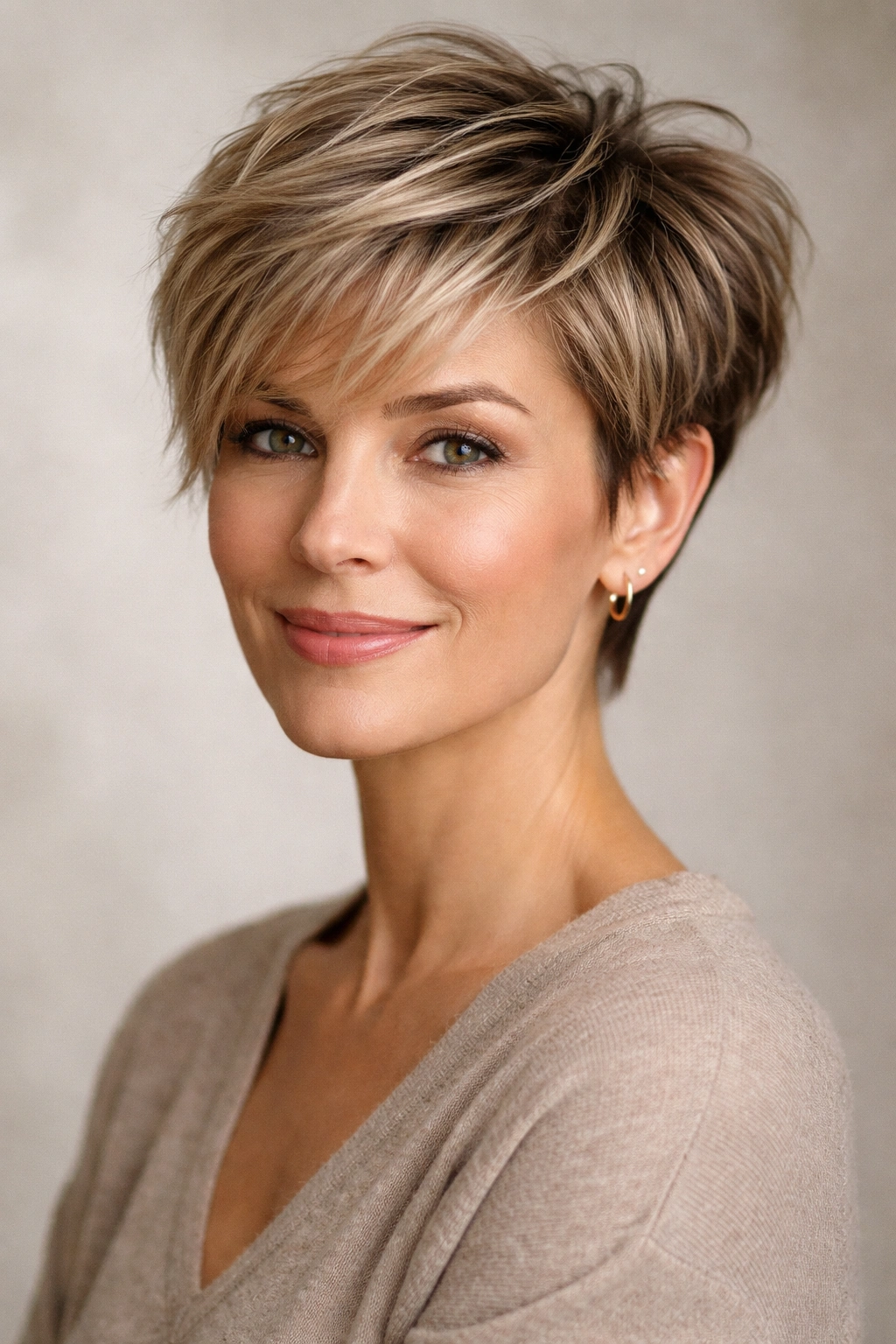
A pixie cut might seem like a bold move, but when done with strategic layering and texture, it becomes one of the most flattering short options for women over 40. The texture prevents it from looking too severe or childish — it adds dimension and movement that keeps the style youthful without requiring it to look trendy or cutesy.
Why This Cut Works for Mature Skin
The textured pixie draws attention upward and outward from the face, which means any slight softness around the jawline or neck is naturally de-emphasized. The short length also eliminates the weight that sometimes makes longer hair look thinner or flatter as we age, creating an illusion of fuller volume even if your hair has naturally thinned over the years.
How to Style and Maintain It
- Use a texture spray or sea salt spray on damp hair before blow-drying for effortless movement
- Blow-dry with your fingers for a tousled, undone look rather than smooth perfection
- A styling cream or light pomade on the tips adds separation without looking greasy
- Requires trims every 4-6 weeks to maintain the shape and prevent that overgrown feeling
- Works best on naturally textured or wavy hair; straight hair requires more daily styling effort
Pro tip: Ask your stylist for slightly longer pieces on top (about 2-3 inches) and shorter, tapered sides. This gives you proportional balance and the flexibility to style the top pieces forward, backward, or swept to the side on different days.
2. Sophisticated Bob with Side-Swept Bangs
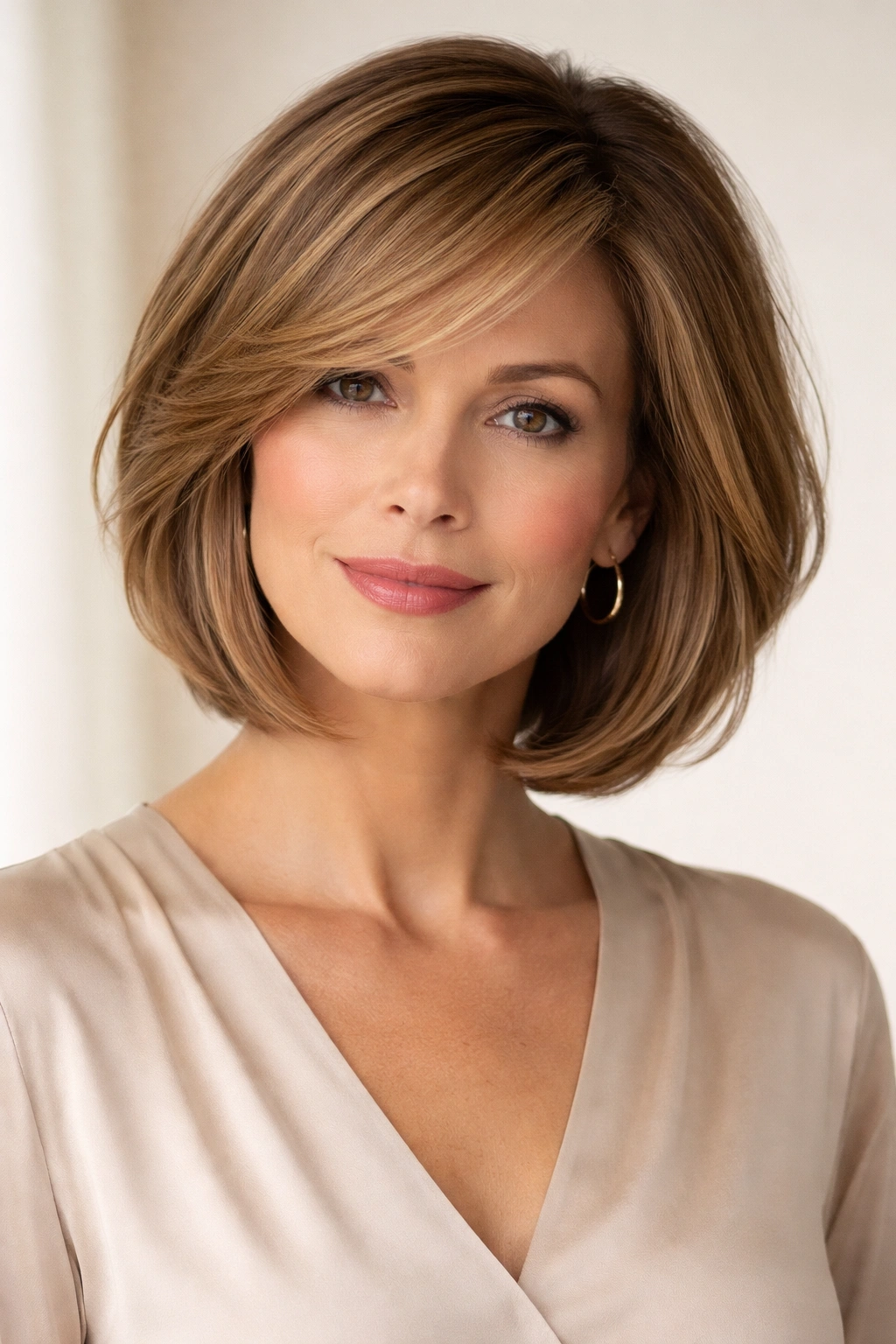
The bob isn’t new, but a modern, shoulder-length bob with side-swept bangs that blend seamlessly into the longer sides is a completely different beast from the blunt bobs of years past. This version has movement, dimension, and enough length that it never feels harsh or overly short — it reads as chic rather than severe.
The Angle and Length That Matter
A proper side-swept bob for this age group typically hits at the chin or just below, with the back slightly shorter than the front. The bangs aren’t a harsh fringe; instead, they’re longer and textured, so they blend into the overall length as they grow out. This eliminates that awkward in-between phase where bangs become annoying but aren’t long enough to tuck.
Styling for Different Hair Types
- Thick, straight hair: Use a blow dryer and round brush to create soft waves; this prevents the bob from looking too blunt
- Fine or thin hair: Blow-dry smooth with a flat iron, then use texturizing spray to add grip and movement; the smoothness makes thin hair look fuller
- Curly or wavy hair: Embrace your texture with a curl-defining cream; the natural movement is your asset
- All hair types benefit from subtle highlights or lowlights that add dimension within the cut
This cut requires a trim every 6-8 weeks to maintain the angle and prevent the bobs from becoming unruly, but styling time is minimal — usually just 5-10 minutes with a blow dryer.
3. Choppy Shag with Modern Movement
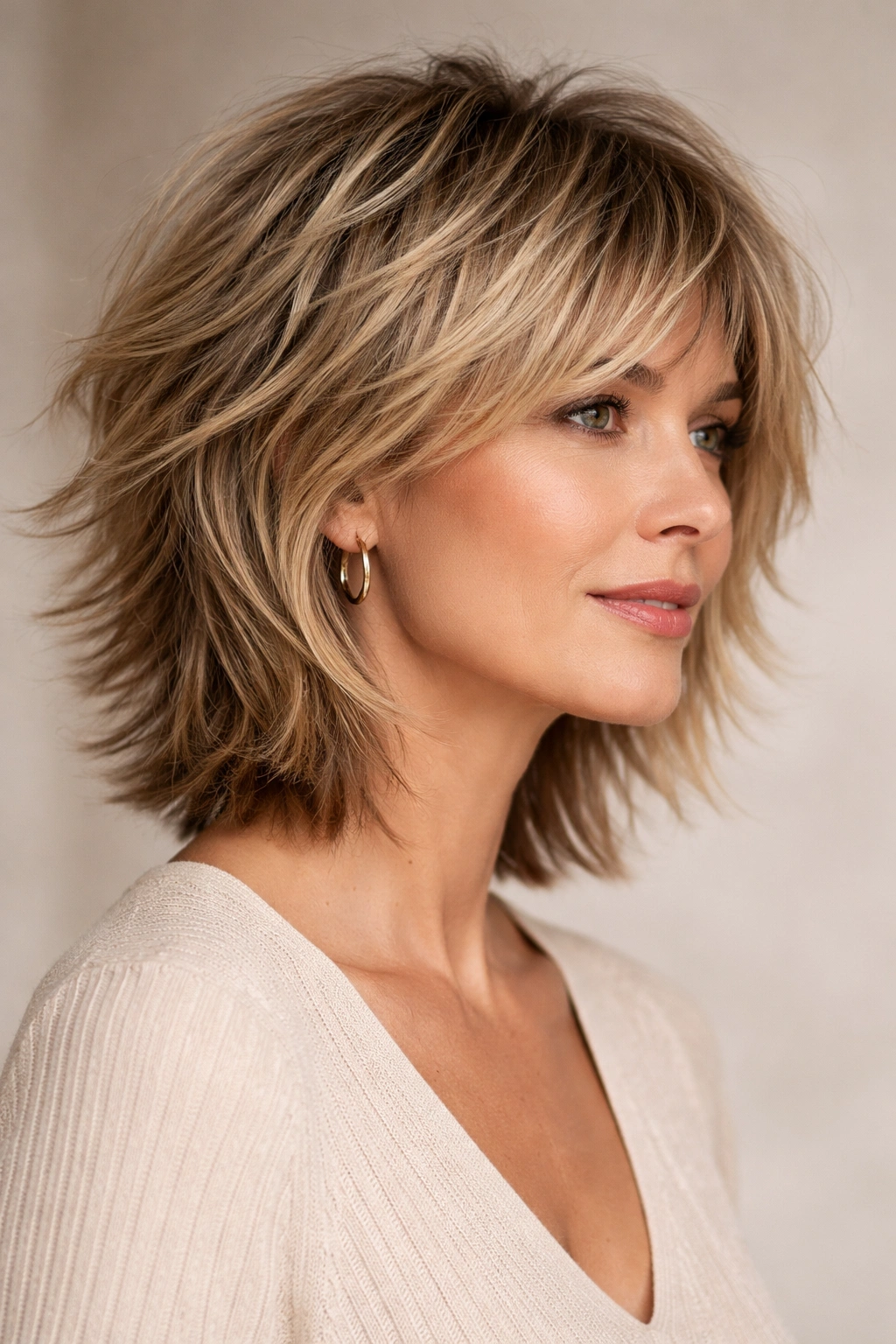
A shag isn’t the feathered, 70s cliché anymore. A modern choppy shag for women over 40 is textured, layered, and intentionally undone in the best way — it has an ease that makes it feel effortlessly pulled-together. The multiple layers create instant movement and volume, even in fine hair.
Why Layers Are Your Secret Weapon
Layers don’t just add movement; they remove weight. If your hair has become flatter or less voluminous as you’ve aged, layers literally lift and separate the strands, creating optical fullness that makes your hair look thicker. The choppy texture also means shorter pieces throughout, which actually require less heat styling to look polished than longer, blunt hair does.
The Best Styling Approach
- Blow-dry with a diffuser if you have any natural texture or waves; this enhances movement and reduces frizz
- Use a texture spray on damp roots for grip and hold throughout the day
- A lightweight styling cream or sea salt spray gives definition without crunchiness
- Requires a trim every 6-8 weeks to keep the choppy texture from looking grown-out or shaggy (there’s a fine line between intentional shag and “I need a haircut”)
Worth knowing: This cut works beautifully with highlights or balayage that add depth through the layers. Lighter pieces on top and darker roots create dimension that makes the whole cut look fresher and more modern.
4. Sleek Angled Bob
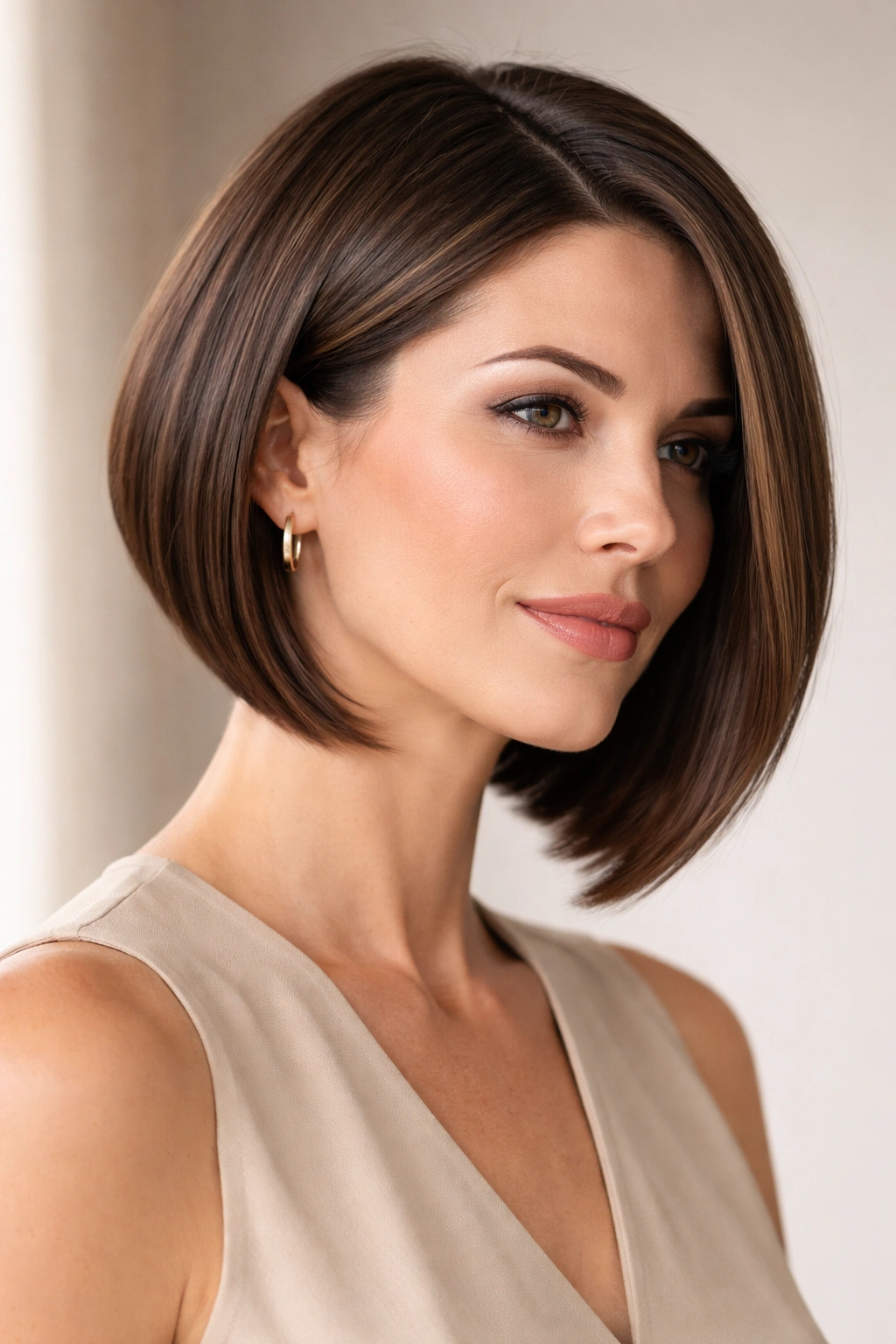
If you prefer polished and refined over textured and undone, a sleek angled bob is your answer. This is a sharp, geometric cut where the front is notably longer than the back, creating a dramatic diagonal line. It requires some blow-drying skill and the right hair type, but when executed well, it’s incredibly sophisticated.
Who This Cut Suits Best
The angled bob looks best on thick, straight, or slightly wavy hair. It reads as most chic when you have the time and inclination to blow-dry smoothly at least a few days a week. If your lifestyle is more low-maintenance or your hair is very curly, this particular cut will frustrate you because the angle depends on smooth texture to look intentional rather than messy.
The Technical Details
- The angle means the front pieces can be worn behind the ear or falling forward across the collarbone
- Back length typically sits above the ear or at the nape of the neck, creating that clean, graduated line
- Minimal layers; mostly a shape cut rather than a layer cut
- Side-swept bangs are optional but common, and they should blend smoothly into the longer front sections
This cut requires a trim every 6-8 weeks to maintain the crisp angle. Between trims, you’ll want a blow dryer and ideally a flat iron on hand to keep the front sections smooth. The payoff is that it photographs beautifully and reads as intentionally polished.
5. Layered Crop for Maximum Texture
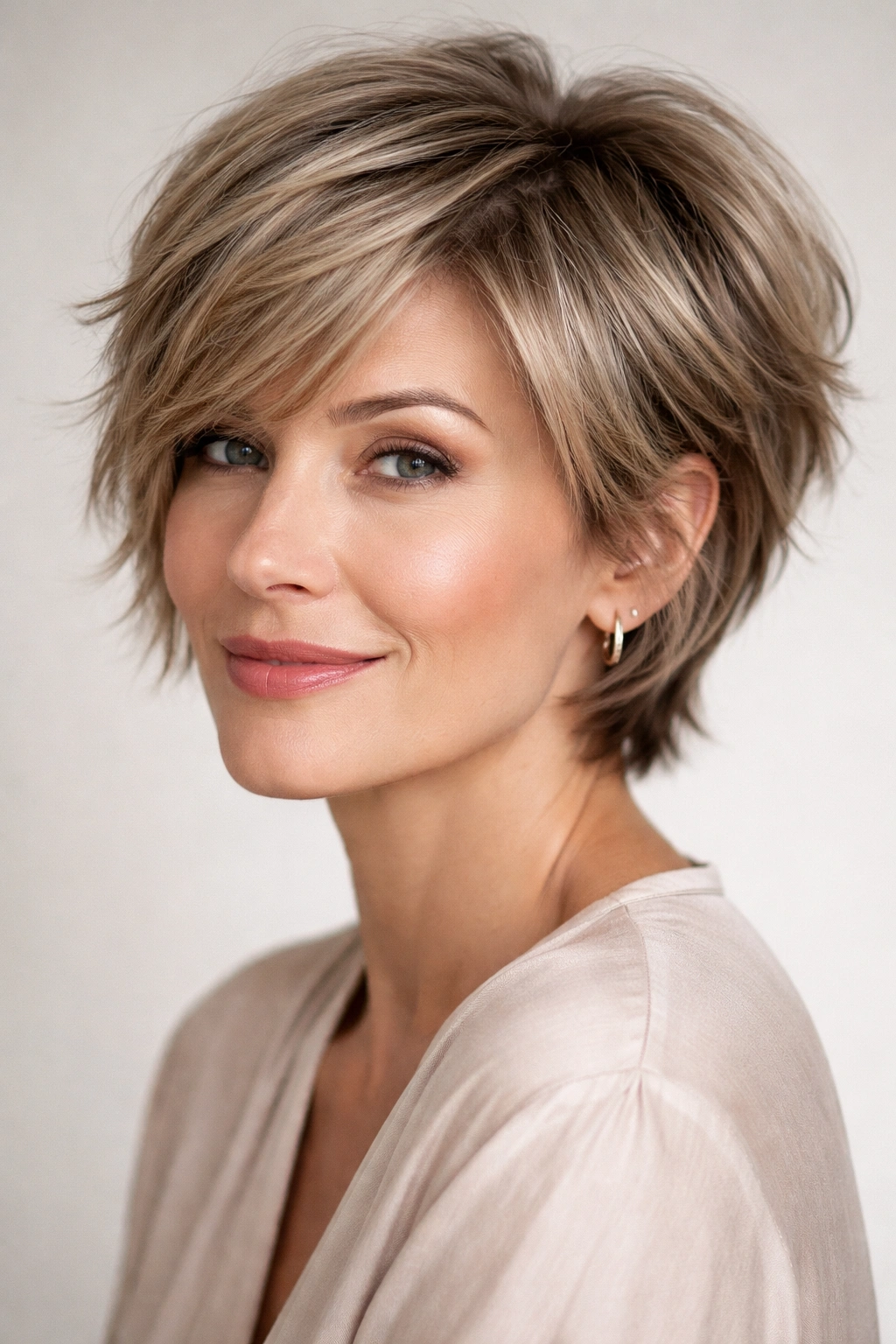
A cropped cut with layers throughout creates maximum movement and minimal styling time — basically, it’s a short cut that works beautifully with natural texture. Every layer catches light differently, creating the illusion of volume and dimension even if your hair is fine or has thinned over time.
The Science Behind Why This Works
Layers interrupt the length of individual strands, which means your hair doesn’t hang straight down and appear flat. Instead, each layer sits at a different angle, creating separation and lift. This is especially powerful on hair that’s lost some of its natural thickness or elasticity with age.
Maintenance and Styling Reality
- Works with air-drying or quick blow-dry sessions — you don’t need tools or products for it to look intentional
- Texture spray or mousse applied to damp roots before air-drying creates holdable movement
- A sea salt spray gives beachy texture if you want to enhance the layers further
- Requires a trim every 5-6 weeks because layers grow out faster than solid lengths and can start to look wispy or uneven
This cut is particularly forgiving on different hair types. Straight hair gets movement from the layers. Wavy or curly hair is enhanced by them. Fine hair looks fuller. Thick hair is less heavy.
6. Elegant Short Curtain Cut
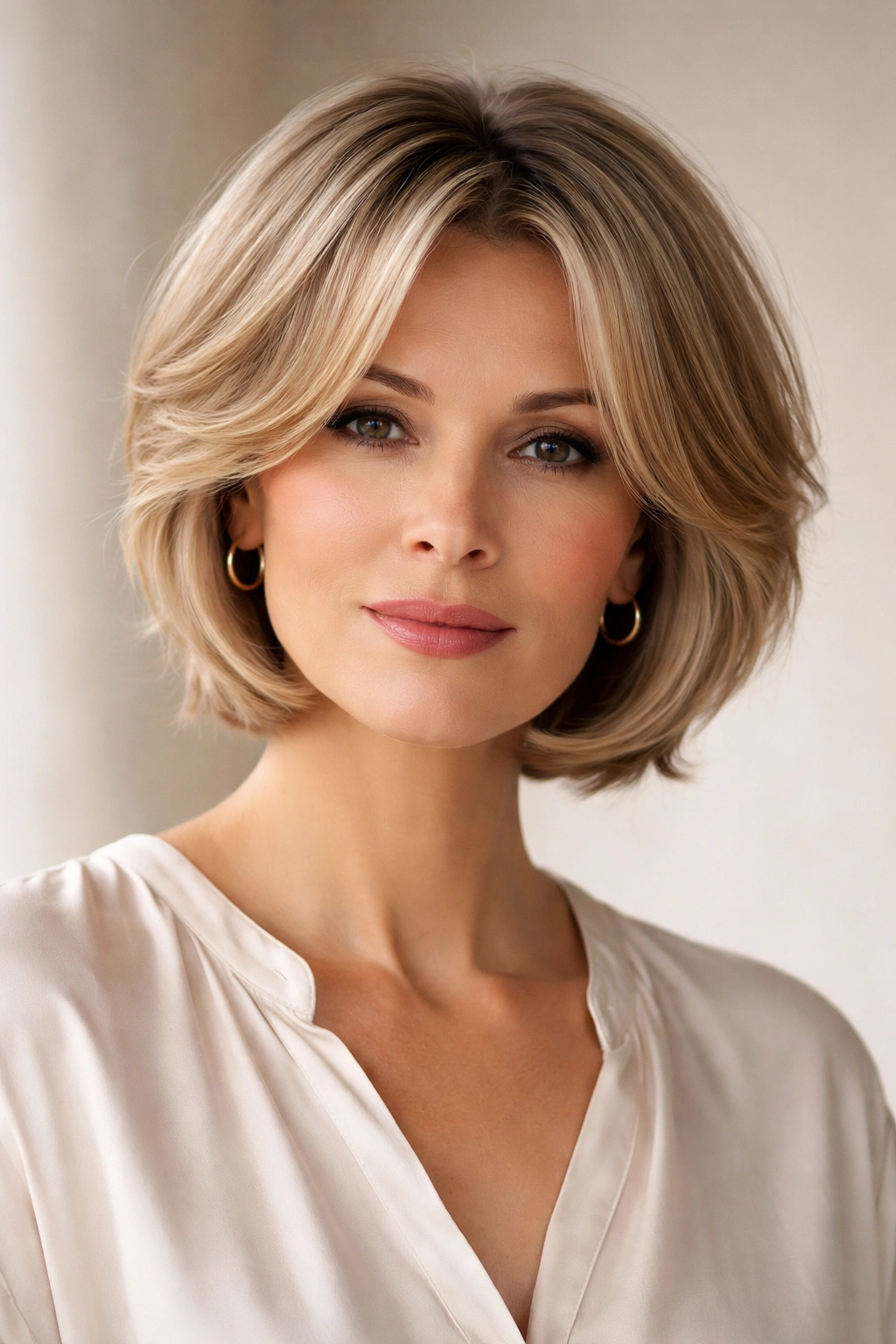
A curtain cut — hair that’s longer in the center and shorter on the sides, parting down the middle — has made a major comeback, and it’s actually remarkably flattering for women over 40. The center length frames the face while the shorter sides keep things modern and low-maintenance.
The Face-Framing Magic
The beauty of a curtain cut is that the longer pieces in the center draw the eye to your eyes and lips, not to your jawline or neck. This is genuinely flattering if you have concerns about aging skin in those areas. The side pieces are short enough that you’re never dealing with long hair that requires constant styling, but the center pieces give you the softness and frame that makes shorter hair feel intentional.
How to Wear It
- Can be styled with a center part, an off-center part, or even tucked behind one ear for variety
- Works beautifully with wavy or curly texture; straight hair needs some blow-drying or styling to show off the cut properly
- The longer center pieces can be slightly longer and textured, creating a softer frame than blunt bangs
- Requires a trim every 6-8 weeks to maintain the length difference between center and sides
This is an underrated cut because it’s not trendy enough to be everywhere, but it’s actually one of the smartest choices for this age group. It gives you versatility, doesn’t require aggressive styling, and photographs beautifully.
7. Tapered Undercut with Length on Top
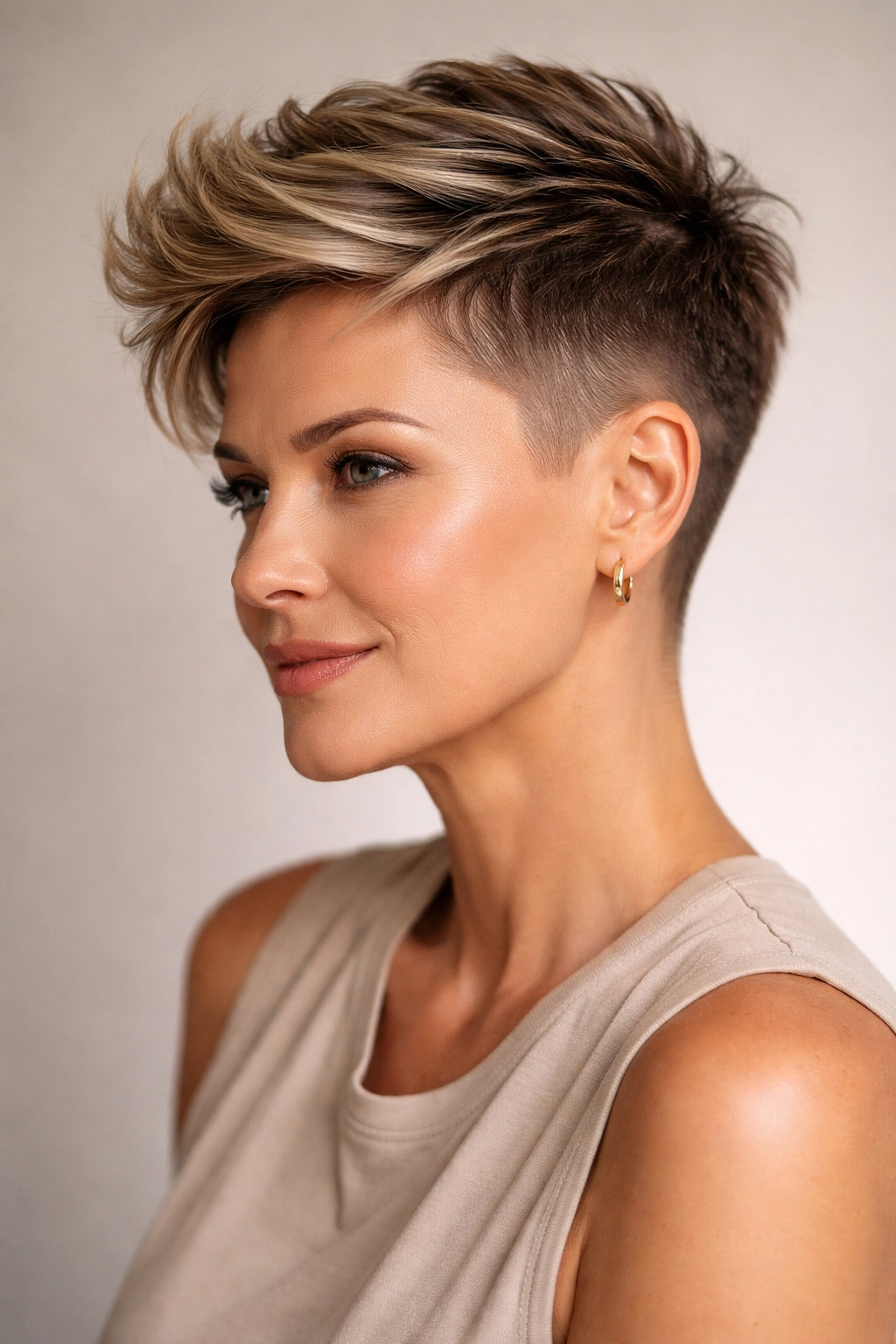
This is a more modern, fashion-forward option: very short, tapered sides and back with intentionally longer length on top (typically 2-3 inches). It’s bold and requires confidence, but it’s also incredibly flattering if you have a round or oval face shape.
The Modern Edge Factor
An undercut reads as intentional and deliberate rather than practical, so it suits someone who embraces individual style. It’s a cut that says “I chose this” rather than “this is what works with my routine.” The short sides reduce weight and show off your face shape, ear shape, and neck — all pluses if you have features you want to highlight.
Styling and Maintenance Specifics
- The top needs blow-drying with some height and movement to look intentional; flat-topped styling reads as less polished
- The sides require trims every 3-4 weeks to maintain the tapered, clean look
- Works best with straight or slightly wavy hair on top; very curly hair on short sides can look less controlled
- Consider your comfort level with touching up the sides at home between salon visits, as they grow noticeably
Pro tip: If you love the concept but aren’t ready for completely shaved sides, ask for a very short taper (maybe 1-2 inches on the sides) rather than an undercut. It gives you the same silhouette with slightly more length and a slower fade as it grows out.
8. Rounded Bob with Feathered Layers
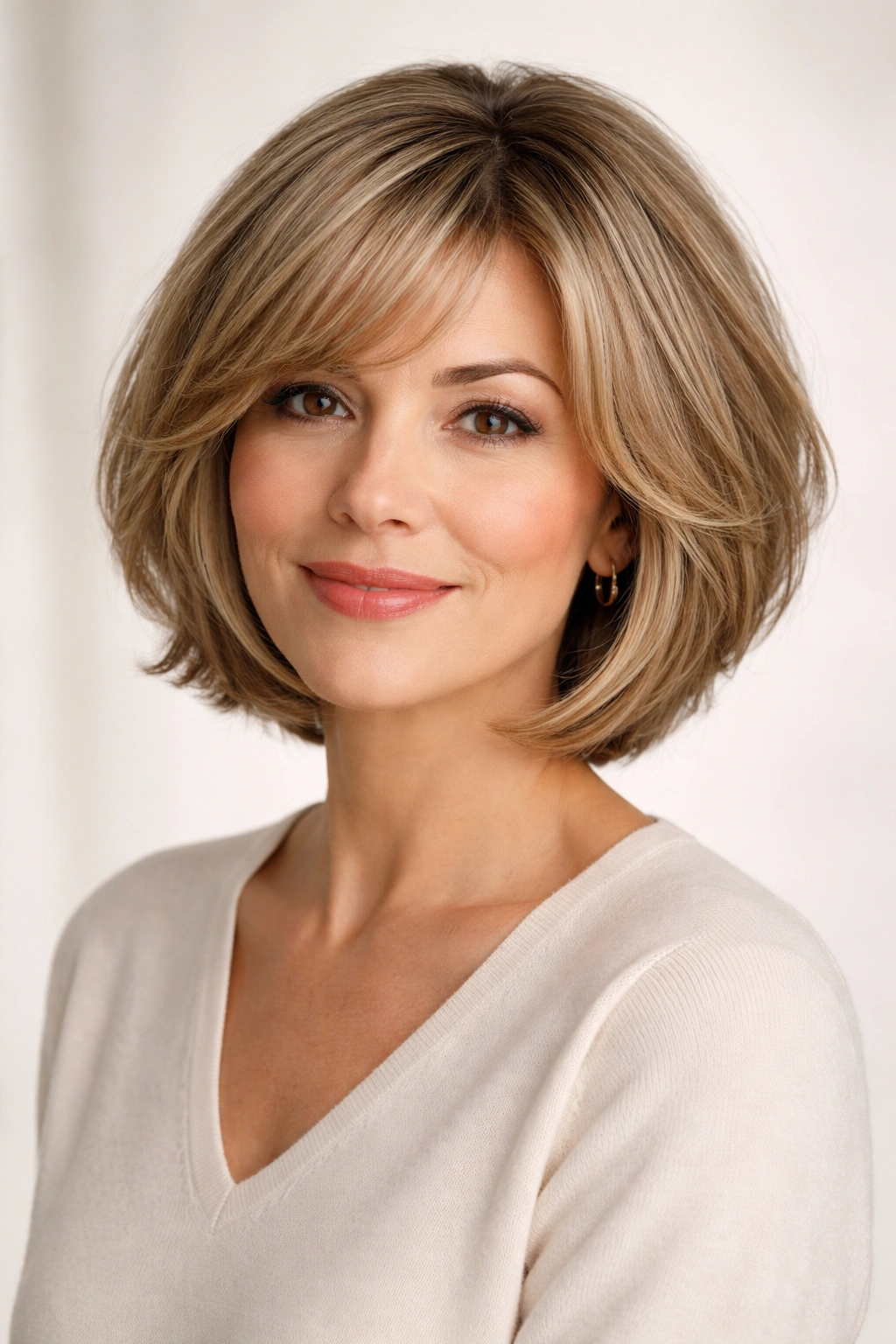
This is the softest, most romantic take on a short cut: a chin-length or slightly longer bob that’s rounded rather than angular, with layers that are feathered and textured rather than choppy. It’s the opposite of aggressive and works beautifully for someone who wants short hair but doesn’t want to look severe.
Who This Cut Flatters
The rounded shape is incredibly forgiving on all face shapes, but it’s particularly flattering if you have a square jawline, as the rounded layers soften those angles. Feathered layers add movement and prevent the bob from looking heavy or blunt, which is especially valuable if your hair is thick or you prefer softer styling.
The Styling Sweet Spot
- Blow-dry with a round brush for soft waves, or use a curling iron to add gentle movement
- Works beautifully on straight, wavy, or slightly curly hair
- A light styling cream or mousse adds texture without crunchiness
- The feathered layers actually work well with minimal styling on wavy hair; the natural texture is your friend here
This cut requires a trim every 6-8 weeks, but the slightly longer length means you can go a bit longer between appointments if needed without the cut reading as overgrown. The rounded shape and feathered layers make it timeless rather than trendy, so it won’t feel dated.
9. Modern Disconnected Pixie
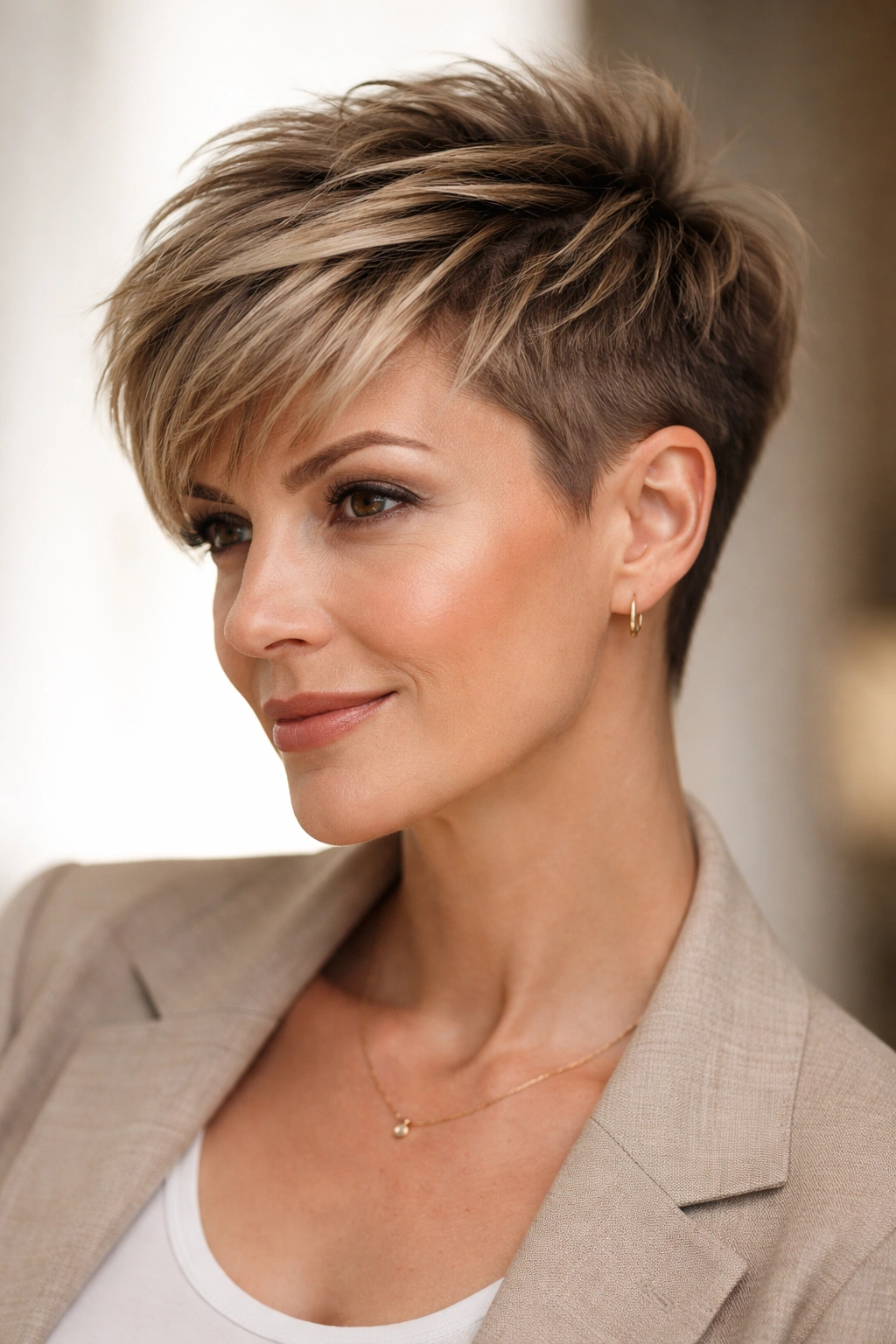
A disconnected pixie is textured on top with intentional layers and separation, while the sides are shorter and tapered — but not so short that it reads as a severe undercut. It’s the middle ground between a standard textured pixie and an undercut, with more edge than traditional but more wearability than fashion-forward.
The Balance Between Edge and Maturity
The “disconnected” element means the longer top layers don’t blend seamlessly into the short sides; instead, there’s a visible line of separation. This looks intentional and modern. The texture on top prevents it from reading as harsh, while the short sides keep it from feeling like just another bob that happens to be short.
Styling Requirements and Reality
- Requires blow-drying with some product to look intentional; it’s not a wash-and-go cut
- Best on straight or slightly wavy hair that can be styled smooth
- A styling cream or light pomade defines the texture and separation
- Trims needed every 4-6 weeks to maintain the disconnected line and prevent overgrowth
This cut works for someone who enjoys styling and isn’t looking for a completely minimal-maintenance option, but loves having an edge and appreciates that the style gets compliments.
10. Soft Waves Short Cut
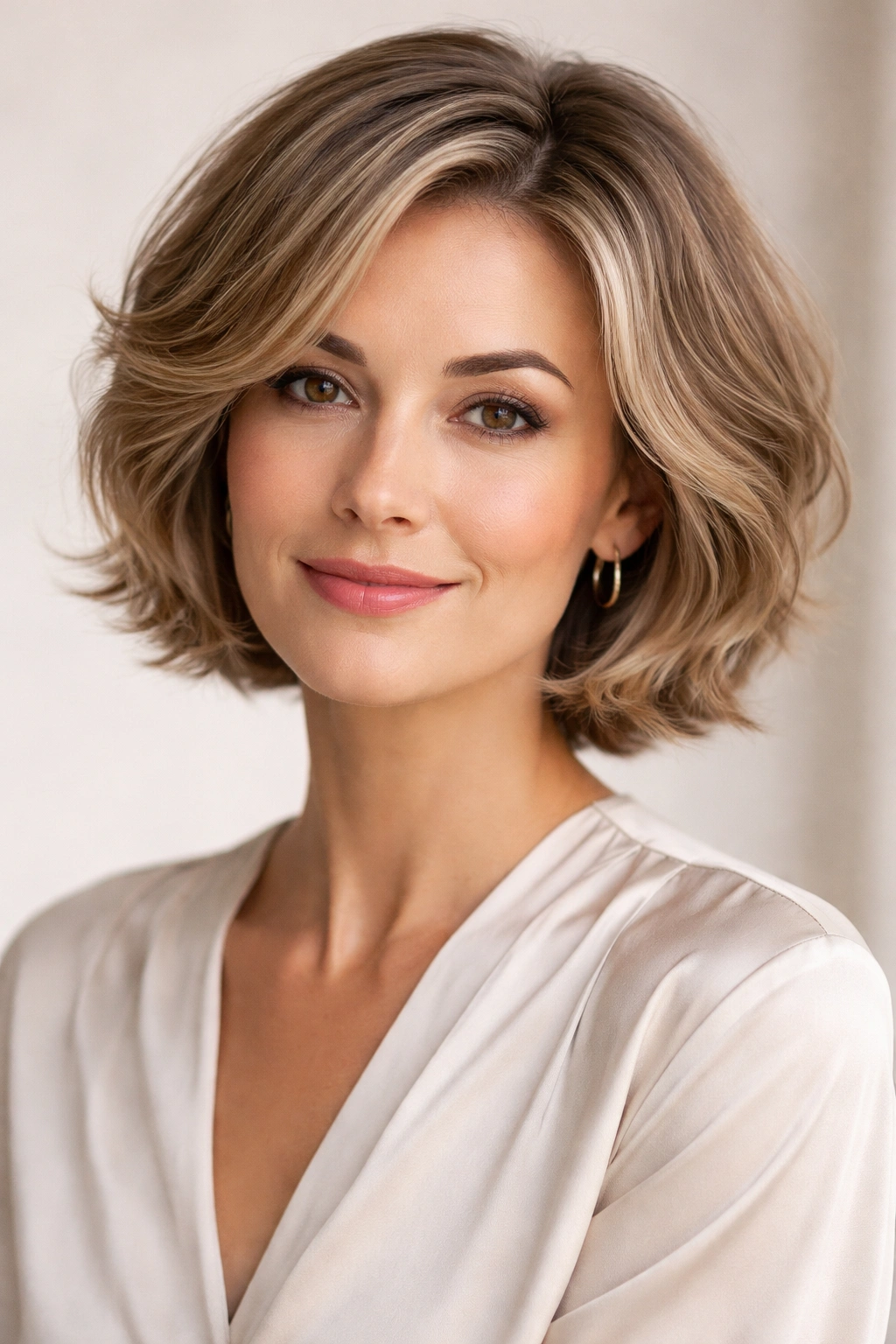
Not every short cut needs to be layered or textured. A slightly longer short cut (hitting at the chin or just below) with smooth layers and an emphasis on soft waves is incredibly feminine and works beautifully for someone who wants short hair but without any edge or severity.
Creating Waves That Last
Waves are the secret to making this cut look polished and intentional rather than just “short hair.” You can create them with a 1-1.5 inch curling iron, a round brush and blow dryer, or even hot rollers for vintage-inspired waves. The key is that the waves give the cut shape and movement that make it read as deliberately styled, not just grown-out or lazy.
Hair Type Considerations
- Best on straight to slightly wavy hair that can hold a wave with product
- Fine hair benefits from volumizing mousse at the roots before blow-drying
- Thick hair needs a lighter product so waves don’t look heavy or stuck
- All hair types benefit from a lightweight hairspray to hold waves without crunchiness
This cut requires a trim every 6-8 weeks to maintain the length and layer placement, but between trims, you can adjust how you style it — waves one day, smoother the next — without it looking wrong. The adaptability is valuable.
11. Graduated Bob with Subtle Angle
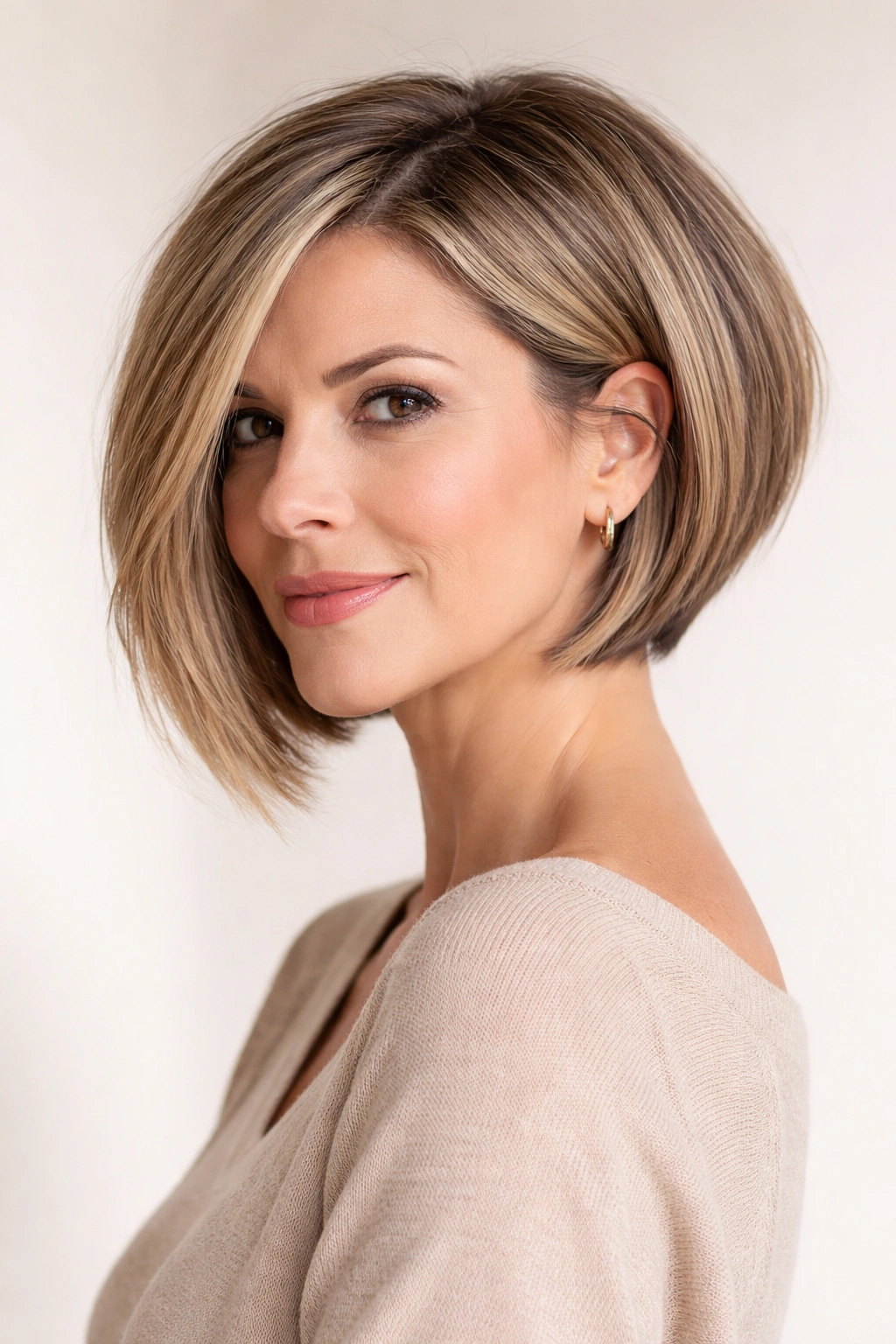
This is the sophisticated middle ground: a bob that’s slightly longer in front than back (graduated, not dramatically angled), with some textured layers for movement. It reads as polished and intentional without being as high-maintenance as a sharp angled bob.
The Geometry of This Cut
The front pieces typically hit just below the chin, while the back is an inch or two shorter. The angle isn’t dramatic, so slight imperfections don’t read as mistakes. The textured layers mean it doesn’t require a blow dryer and flat iron every single day — some texture adds to the intentional look rather than detracting from it.
Real-World Wearability
- Looks good with minimal styling; you can air-dry and add texture spray for movement
- Works on all hair types, though straight hair benefits from some wave or texture to show off the layers
- The subtle angle doesn’t require frequent trims to maintain; every 7-8 weeks is fine for most people
- Styled smooth with waves, air-dried with texture, or even slightly tousled — all versions read as intentional
This is one of the most forgiving short cuts because it’s not so specific that one styling method is the “right” way. You have flexibility in how you approach it, which is valuable in real life.
12. Textured Crop for Fine Hair
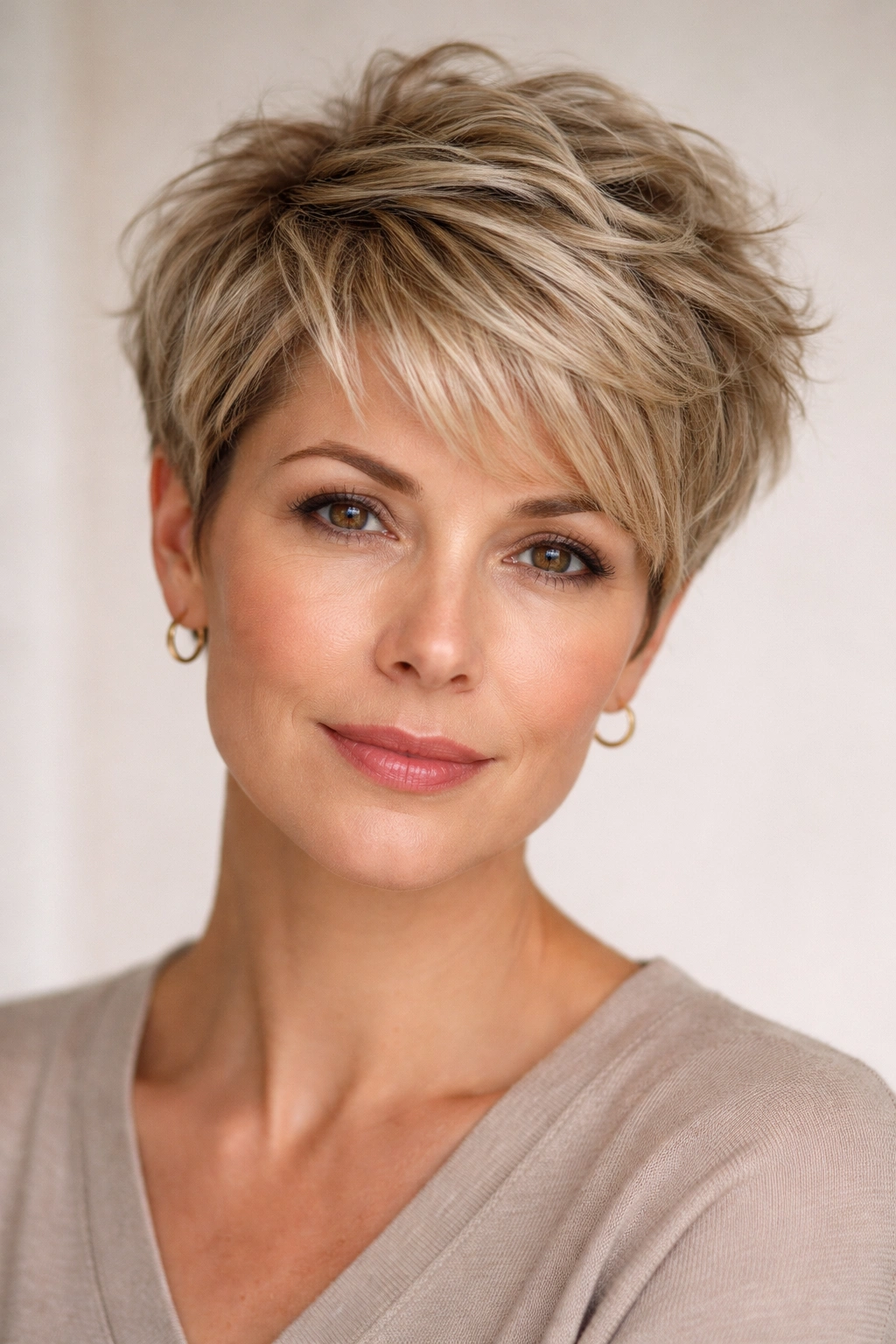
If your hair has become finer or thinner as you’ve aged, a textured crop is specifically designed to work with that reality rather than against it. Short length means no weight pulling strands down. Texture and layers mean each strand looks thicker and fuller than it actually is. The result is hair that looks thicker than it would at any longer length.
Why Texture Matters More Than Length for Fine Hair
The problem with fine hair isn’t the amount of strands you have — it’s the weight those strands have. Longer fine hair hangs flat and thin, especially when brushed smooth. Short, textured hair stands away from the scalp, creating the optical illusion of density. This is why many women with fine hair feel like they finally have fuller-looking hair once they go short for the first time.
Products and Styling for Fine Hair
- A volumizing mousse applied to damp roots before blow-drying creates lift from the root
- Blow-dry upward and outward, not smoothly; the texture is your goal, not smoothness
- A texture spray or dry shampoo adds grip and holds the style throughout the day
- Lightweight products are essential; heavy creams or pomades will weigh down fine hair
- Requires trims every 5-6 weeks because texture crops grow out noticeably
The beautiful thing about this cut is that the results are usually dramatic — people who’ve struggled with thin-looking hair for years finally see thickness they didn’t know was possible.
13. Swept-Back Pixie with Texture and Length
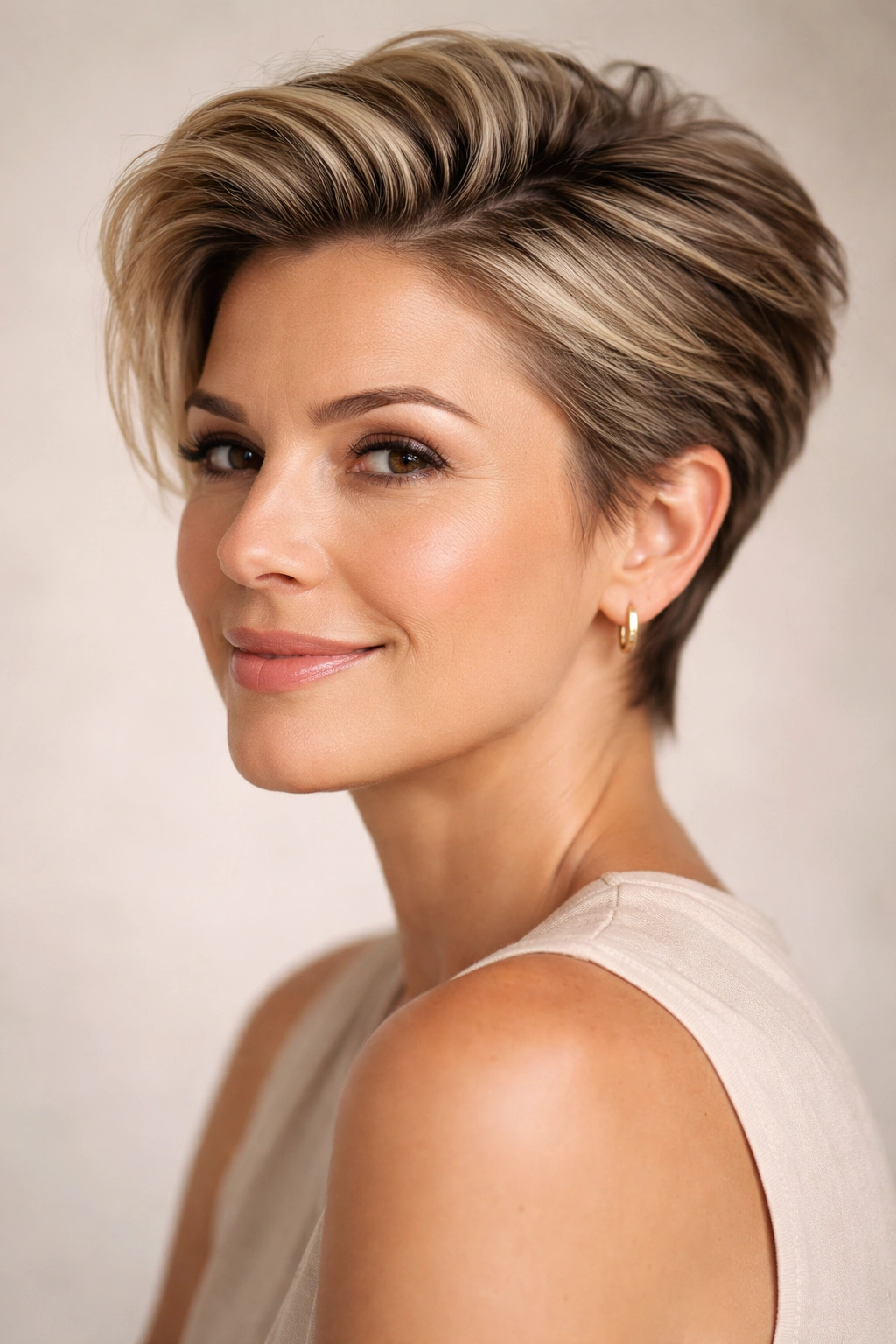
A pixie where the top is longer and can be swept back or to the side is more versatile than a traditional pixie. You get the low-maintenance benefits of short hair with the option to style the longer pieces forward for softness or back for edge, depending on your mood or occasion.
The Versatility Factor
A standard pixie has one look. This version can be styled multiple ways. Longer pieces (2-3 inches on top) swept back read as modern and edgy. The same pieces styled forward or to the side read as softer and more romantic. This flexibility is valuable if you like having options without actually changing your cut.
How to Style Different Looks
- Swept back: Blow-dry with your fingers pointing back and use a light pomade or styling cream for control
- Swept to the side: Blow-dry with a side part and use a texture spray for definition
- Forward and softer: Blow-dry with just your fingers, no product, for a more undone look
- Textured throughout: Use sea salt spray on damp hair before air-drying for effortless movement
This cut requires trims every 4-6 weeks to maintain the shape, and you’ll want some styling product on hand, but the versatility means you’re getting multiple looks from one cut.
14. Blunt Short Bob with Asymmetrical Bangs
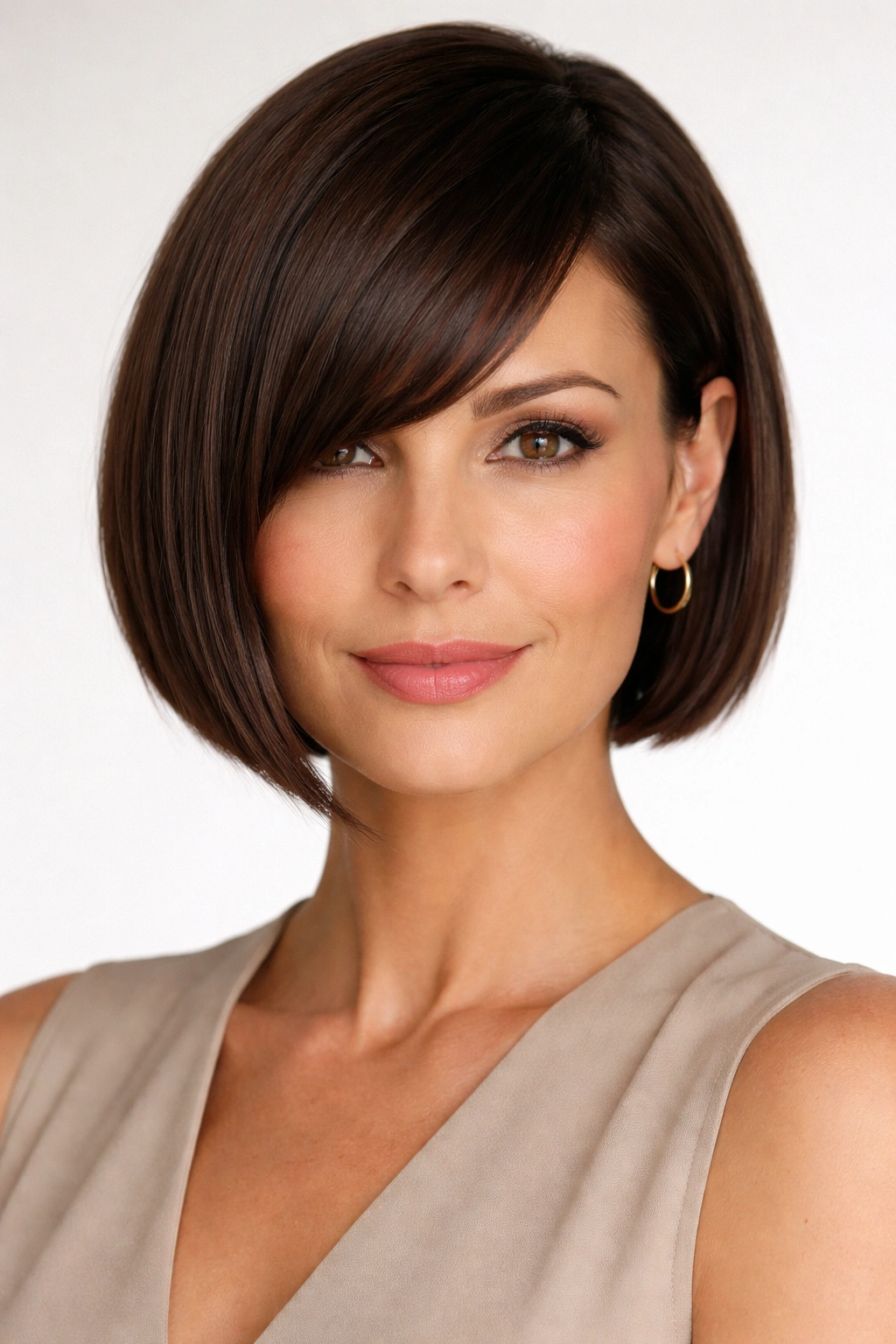
This is a bold, architectural cut: a straight-across blunt bob (no layers, no graduation, just a clean line) paired with asymmetrical bangs that are longer on one side and shorter on the other. It’s modern, intentional, and requires confidence, but it’s also incredibly striking.
The Graphic Quality of Blunt Hair
Blunt lines read as intentional and deliberate. There’s no apology in a truly blunt bob — it’s either right or it’s not. When it’s right, it reads as sophisticated and fashion-forward. The asymmetrical bangs add personality and prevent the cut from reading as too severe or strict.
Styling and Maintenance Reality
- Requires blow-drying straight with a flat iron or round brush; texture undermines the graphic quality
- Best on straight or slightly wavy hair that can be styled smooth
- The blunt line shows every bit of texture, so straight hair is really the ideal
- Trims needed every 5-6 weeks to maintain the blunt line; any growth will soften the edges
- This is a higher-maintenance cut in terms of styling time, but incredibly rewarding for someone who loves the look
This cut is for someone who genuinely loves it, not someone choosing it by default. If the blunt line and asymmetrical bangs appeal to you, it’s one of the most stunning short cuts available.
15. Tousled Choppy Layers for Movement and Ease
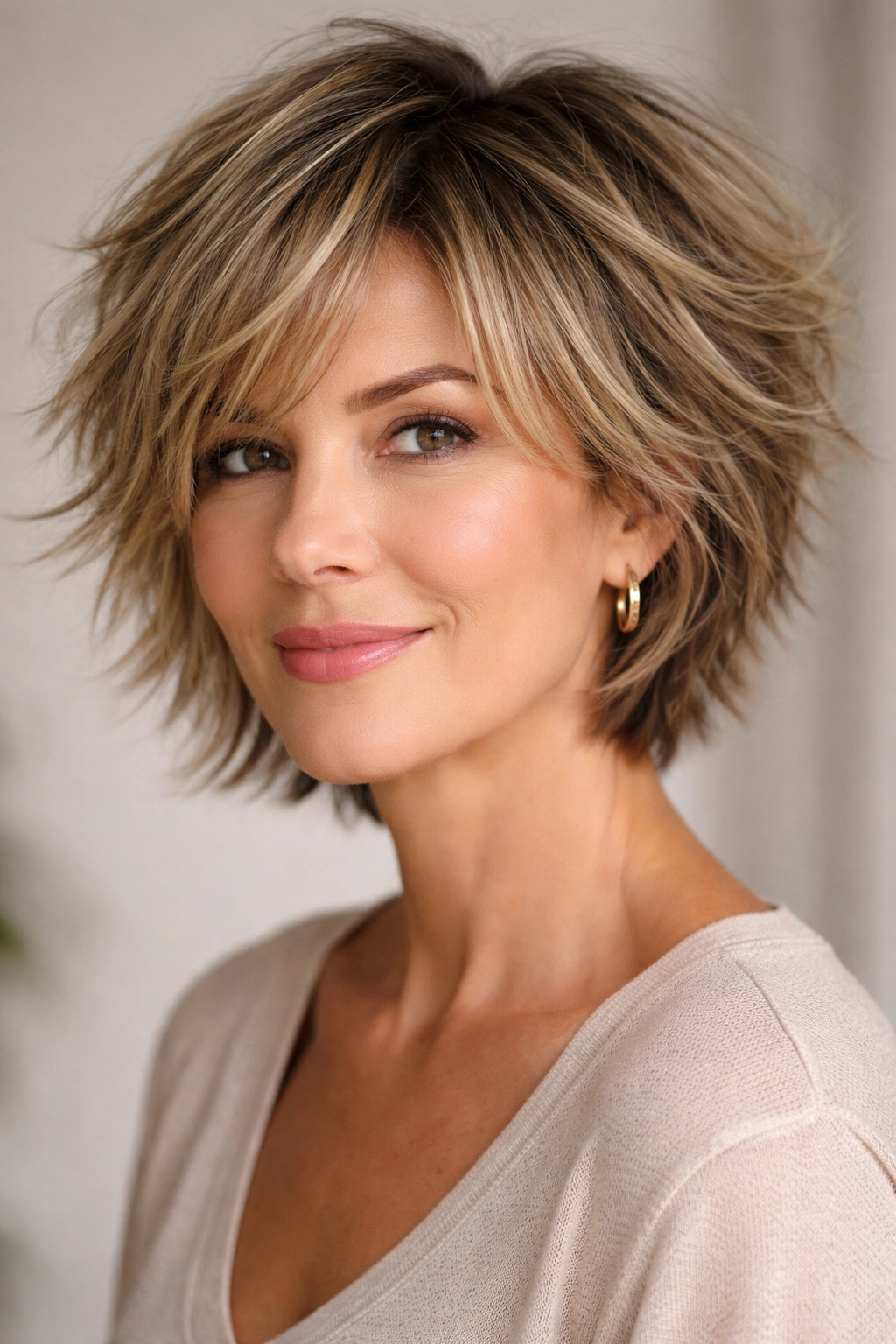
The final cut is one of the easiest to maintain: choppy layers throughout that create movement and texture without requiring any particular styling method to look intentional. This is the cut you can air-dry, blow-dry, or even just run your fingers through and have it look good.
Why Choppy Works for Almost Everyone
Choppy layers work on straight hair (they add movement), wavy hair (they enhance texture), curly hair (they prevent bulk and add definition), fine hair (they add the illusion of thickness), and thick hair (they remove weight). Basically, this cut works beautifully on almost every hair type because it’s designed to work with your natural texture rather than against it.
The Effortless Styling Approach
- Air-dry with a texture spray or mousse for effortless movement and hold
- Blow-dry with your fingers (no tools) for slightly more control and polish
- A sea salt spray enhances choppy layers beautifully, especially on wavy or curly hair
- Even if you want to blow-dry smooth, the choppy texture doesn’t show imperfections the way blunt hair does
- Requires a trim every 6-8 weeks to refresh the choppy texture and prevent looking shaggy or overgrown
This is one of the most forgiving short cuts because you have flexibility in how you style it, and the cut itself is designed to look good with minimal effort. It’s the opposite of high-maintenance, which makes it perfect for someone looking for a practical short cut that still looks intentional and polished.
Key Takeaways
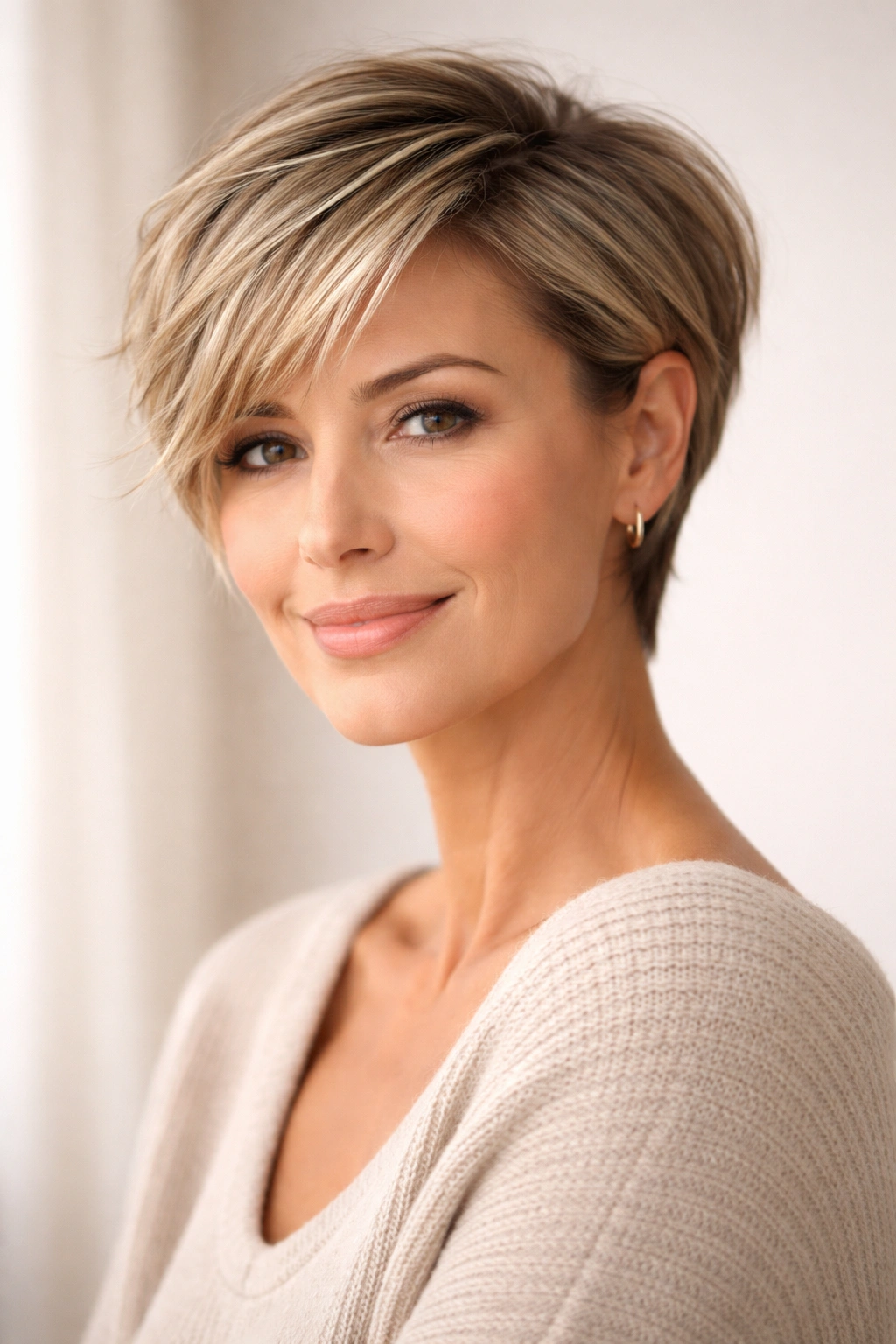
The right short cut for your 40s and 50s isn’t about picking the most popular style — it’s about understanding which cut matches your hair type, face shape, lifestyle, and styling preferences. A textured pixie is nothing like a blunt bob; a layered crop is completely different from a sleek angled cut. Each cut has different maintenance requirements, styling demands, and visual effects.
The best approach is to bring photos of cuts you love to your stylist and have a specific conversation about your hair type, how much styling time you want to spend, and what “low-maintenance” actually means to you. Some people think low-maintenance means air-drying; others are happy to blow-dry if the cut requires trims less frequently. Your ideal cut should feel like it was designed specifically for your situation, not like you’re forcing your hair into someone else’s vision.
Short hair at this stage of life can be genuinely freeing — less heat damage, less time styling, more confidence. The key is finding the exact cut that delivers on those benefits for your specific hair and lifestyle, not just the one that looks best on Instagram.
