



There’s something genuinely liberating about cutting your hair short—especially when you choose a style that looks intentional whether you’ve spent thirty minutes styling it or zero minutes letting it air dry. The best short haircuts have a built-in texture, movement, or geometric structure that works for you rather than against you on mornings when you’re running late or simply don’t feel like fussing with tools.
The real magic happens when you stop fighting your hair’s natural texture and instead choose a cut that embraces it. A well-chosen short haircut can look effortlessly polished first thing in the morning, sophisticated after a long day of work, and cool when you’ve just rolled out of bed. You’re not sacrificing style for convenience—you’re actually gaining both at once. The cuts that work best unstyled share a common trait: they’re designed with texture, choppy layers, or strategic angles that make imperfection look intentional.
Whether your hair is naturally straight, wavy, or curly, there’s a short haircut in this list that will work beautifully without daily styling. These aren’t cuts that require blow-drying, flat-ironing, or products just to look decent. Instead, they’re cuts that benefit from that natural, undone aesthetic—and honestly, they often look better that way than when you’ve tried too hard.
1. Pixie Cut
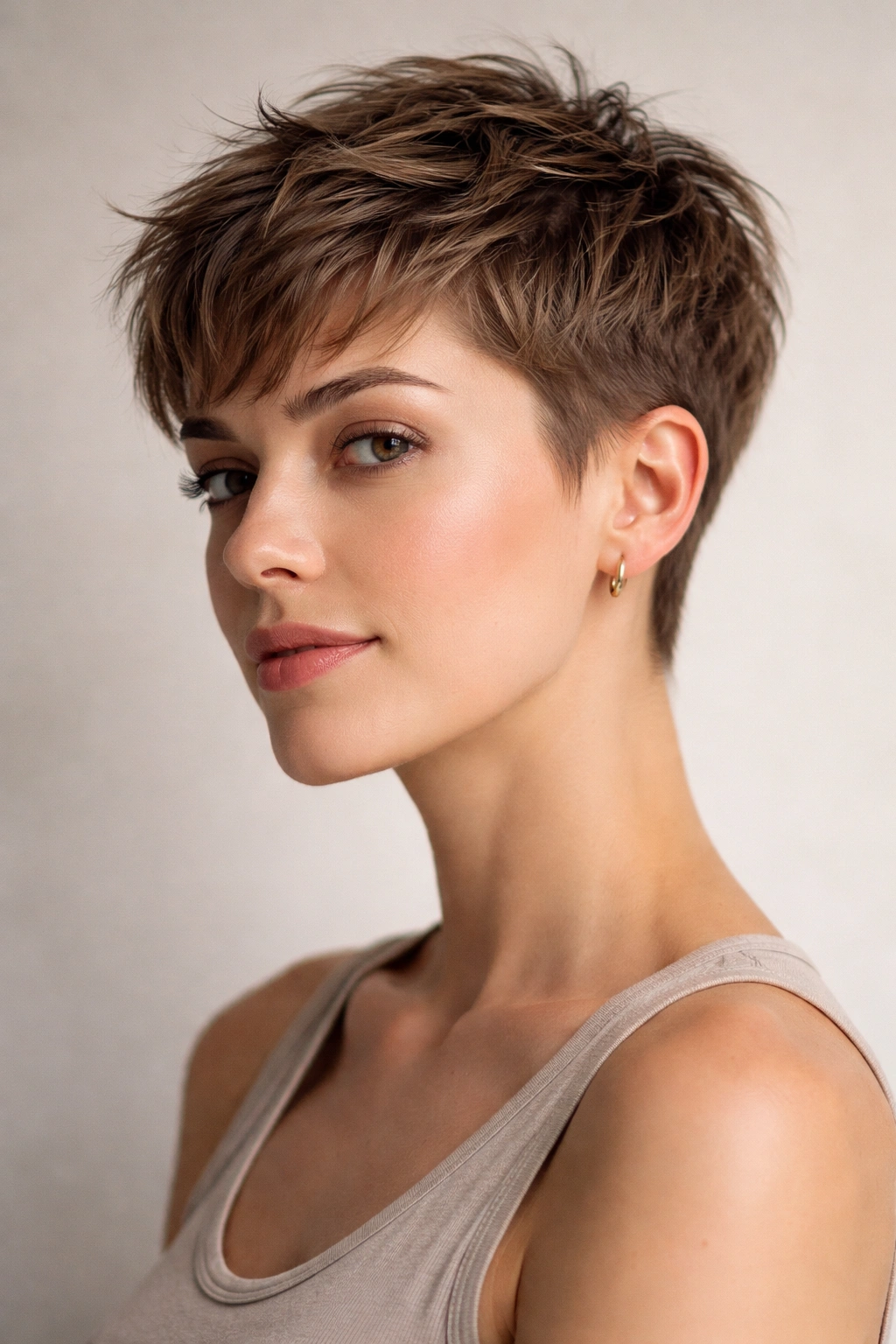
The pixie cut is the ultimate low-maintenance short style, and the best part is that it looks exactly as good messy as it does neatly groomed. This ultra-short cut sits close to the scalp on the sides and back, with slightly more length on top for texture and dimension. Because the overall length is so minimal, your hair’s natural growth pattern and texture become the primary styling tool—you’re not fighting against the cut, you’re working with it.
Why It Works Unstyled
The beauty of a pixie is that the shorter your hair, the less likely it is to look bedhead-ish rather than intentionally tousled. If your pixie has any texture cut into it—choppy layers, point-cutting, or disconnected lengths—it automatically looks styled even when you haven’t touched it. Many people find that running their fingers through a pixie cut and letting it air dry produces exactly the look they want. The cut’s structure does the heavy lifting for you, and minimal effort actually enhances the effortless aesthetic.
Getting It Right and Keeping It Fresh
- Ask your stylist for texture throughout the top rather than a blunt, helmet-like finish
- Request choppy, disconnected layers that create movement and visual interest even when unstyled
- Plan on a trim every 4-6 weeks since short hair grows noticeably and loses shape quickly
- Mention that you want a cut that looks good unstyled—this changes how your stylist approaches texture and length distribution
- Consider your natural hair growth pattern and ask your stylist to work with it, not against it
The Texture Game Changer
The difference between a pixie that requires constant styling and one that looks good unstyled comes down to how your stylist handles texture. A blunt pixie cut can look sparse and require daily blow-drying to look full. But a pixie with point-cut layers, choppy texture, and varied lengths throughout the top automatically catches light and creates dimension without any effort. This is the version that looks just as good freshly woken as it does after a shower.
2. Textured Crop
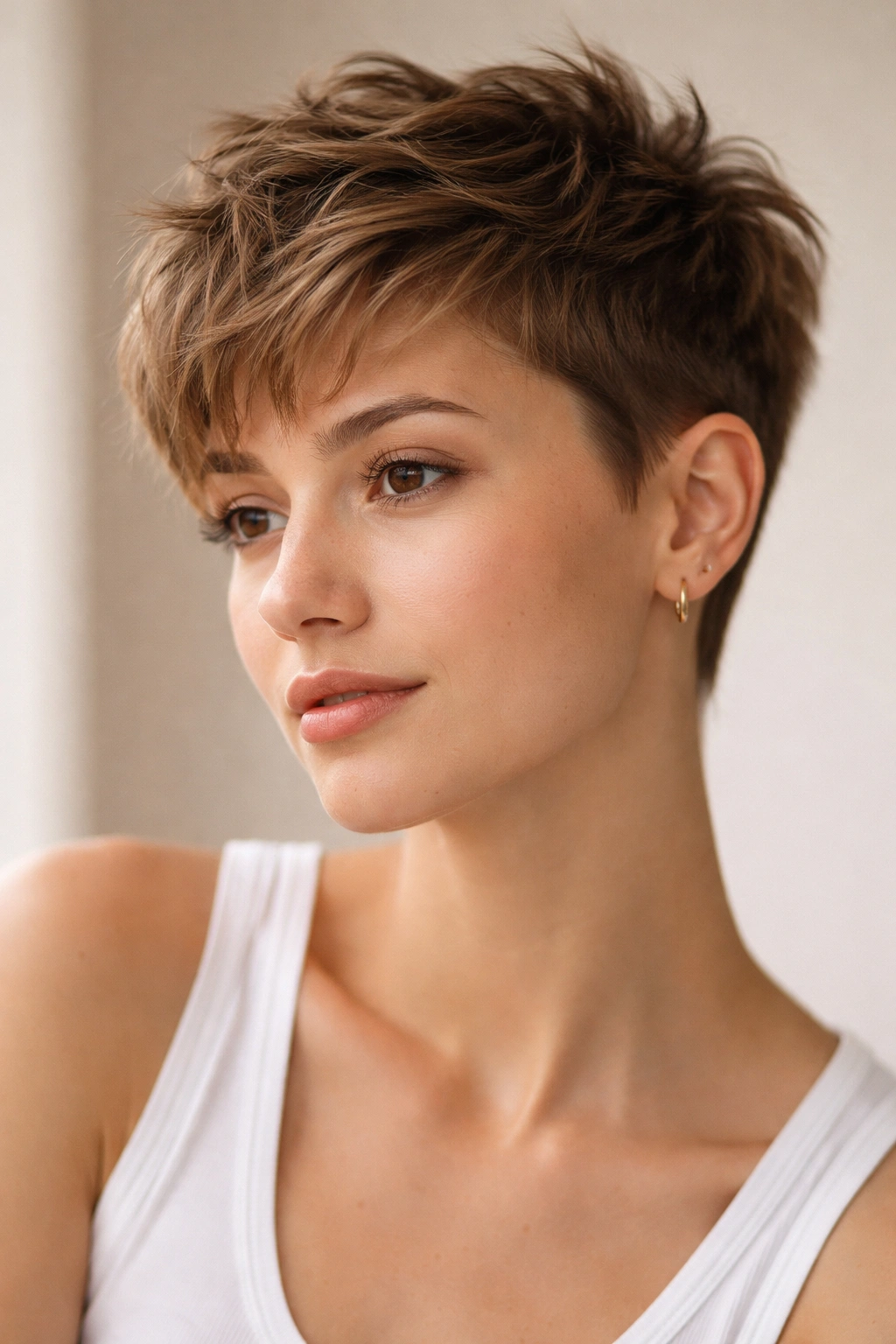
A textured crop is somewhere between a pixie and a full crop—it has more volume on top than a true pixie but maintains short, clean sides. What makes this cut exceptional for the unstyle-friendly crowd is the emphasis on intentional texture throughout. Rather than smoothness, you’re going for visible layers, movement, and that deliberately undone feel that’s been shaped by a skilled hand.
Why This Cut Embraces Texture
A textured crop works beautifully unstyled because the texture is literally built into the cut itself. Your stylist is creating multiple lengths and angles that naturally catch light and create dimension. When you wash and air dry it, these layers move in different directions, creating that perfectly imperfect look without any styling effort. The beauty is that it looks polished even when it’s literally just been washed and left alone to dry.
Styling and Maintenance Essentials
- Wash your hair and let it air dry—this is genuinely the best approach for a textured crop
- Use a lightweight texture spray or sea salt spray if you want to enhance the natural texture, but it’s optional
- Finger-comb while it’s still slightly damp to encourage the layers to separate and sit the way your cut was designed
- Schedule trims every 4-6 weeks to maintain the layered texture and prevent it from growing out shapeless
- Consider asking your stylist about texturizing products—lightweight options that add grip without weight
The Volume Sweet Spot
What separates a textured crop that looks good unstyled from one that requires styling is how your stylist handles the volume on top. A well-cut textured crop has enough length and layering on the crown to create height and fullness, while the sides stay short and neat. This proportion means that when you wash your hair, it naturally settles into a shape that looks intentional and polished, not flat or limp.
3. French Bob

The French bob is a short, blunt-edged bob that typically grazes the ears or sits just slightly longer, with a straight, geometric edge and minimal layering. What makes it work unstyled is its clean, structured line—it’s a cut so geometric that it looks intentional regardless of how you’ve styled it (or haven’t). The French bob embraces a certain nonchalance; it’s supposed to look a bit undone, almost like you just got a fresh cut and haven’t touched it yet.
The Geometry of Effortlessness
The French bob’s unstyled appeal comes from its blunt line and minimal layers. Because the cut has such a strong geometric shape, it looks polished even when your hair air dries slightly unevenly. The straight edge and clean lines read as intentional, not lazy. This is a cut where washing and letting it dry naturally often produces the exact look your stylist was going for. The shape is so defined that texture and movement aren’t necessary—the cut itself is the statement.
Making It Work for Your Hair Type
- A French bob works best on straight or wavy hair—if you have curly hair, the blunt line can look less intentional
- Ask your stylist for a subtle undercut at the back if you have thicker hair; this prevents bulk while maintaining the clean lines
- The cut should hit somewhere between your ears and your jawline for maximum impact
- If you have very fine or thin hair, ask for the tiniest amount of layering inside the cut for movement without sacrificing the blunt front line
- Regular trims every 4-6 weeks are essential because the blunt edge grows out and loses its graphic quality quickly
Styling When You Want To
When you do want to style a French bob, a quick pass with a round brush and blow dryer adds subtle wave and polish. But the real magic is that it looks absolutely fine without it—the geometric line carries the entire look.
4. Choppy Layers
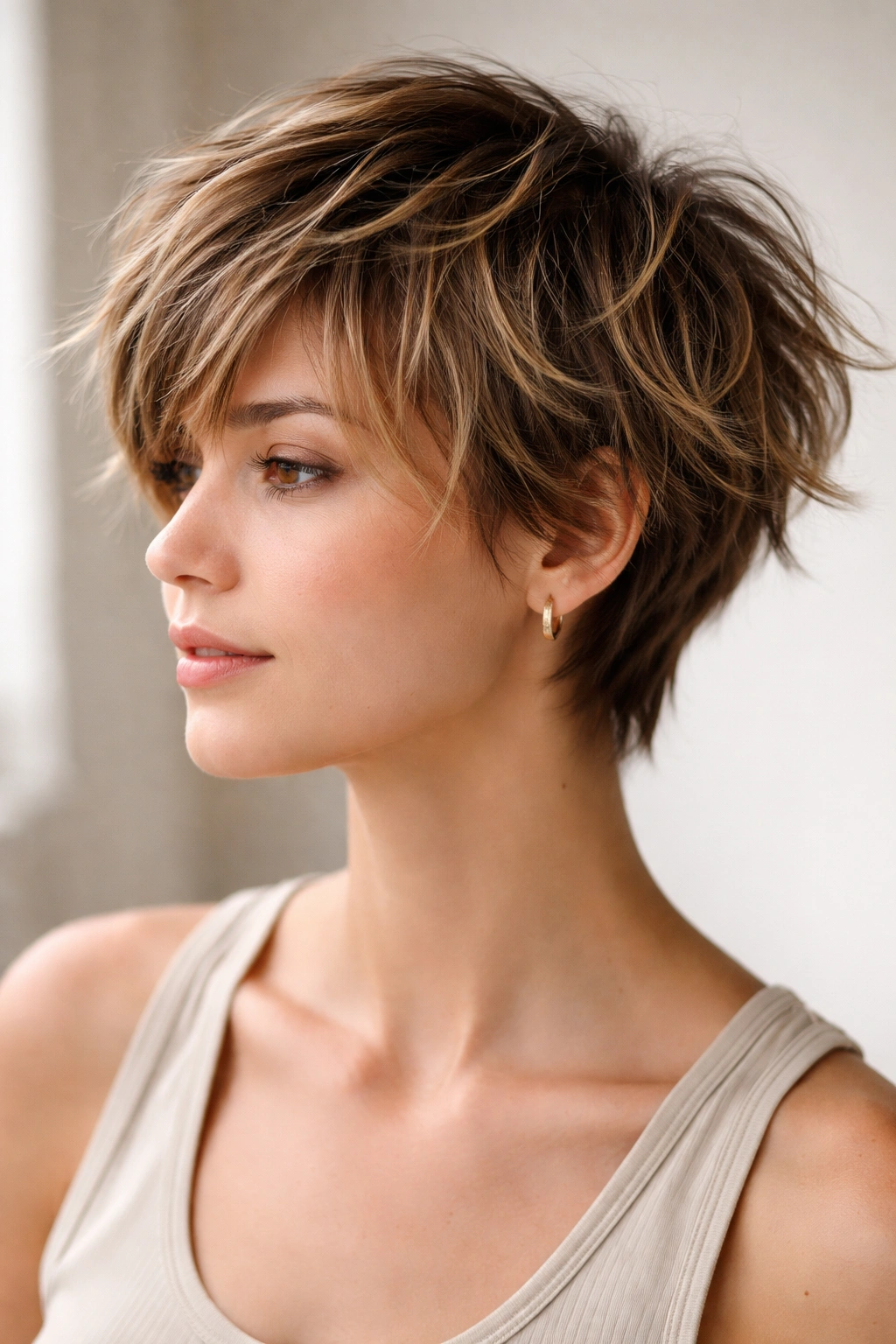
A short cut with choppy, disconnected layers is basically the opposite of a sleek, polished style—and that’s precisely why it looks so good unstyled. These layers are cut short throughout, with intentional variation in length that creates tons of movement and texture. Because the layers are already built into the shape, your hair’s natural texture gets amplified rather than hidden. Air drying this cut almost always looks better than trying to smooth it out.
Why Disconnected Layers Are Unstyled Gold
Choppy layers work beautifully unstyled because imperfection is the entire point. If one section sits differently than another, or if your hair dries with volume in unexpected places, it actually adds to the charm. The cut is designed to have movement and texture, so natural air drying is literally the styling method the cut was designed around. You’re not fighting the cut’s nature—you’re embracing it.
Building in the Right Texture
- Ask your stylist for choppy, point-cut layers rather than regular blunt layers—this creates more texture and movement
- Request layers throughout the entire head, not just the bottom, so you get dimension and movement all over
- Mention that you want a cut that looks good unstyled; this helps your stylist avoid creating a cut that requires blow-drying
- Consider your natural wave or curl pattern and ask your stylist to work with it rather than against it
- If you have thick hair, choppy layers are your best friend—they remove weight while creating tons of movement
The Air-Dry Advantage
With choppy layers, air drying is often genuinely the best styling method. Your natural texture gets amplified, and the varied lengths move differently, creating an effortlessly tousled look. If you want a bit more texture, a sea salt spray applied to damp hair before it dries can enhance the natural movement even more.
5. Undercut Bob
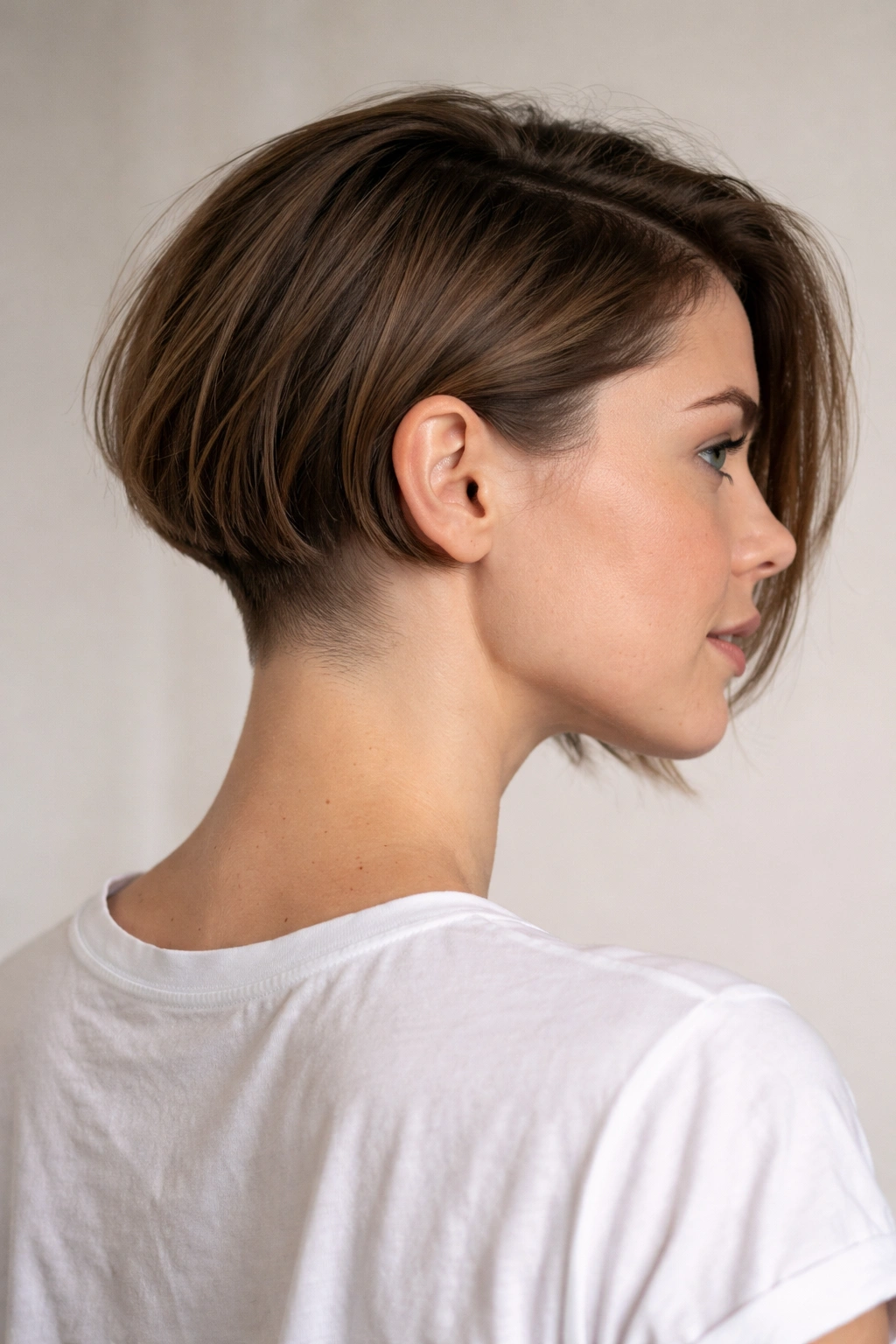
An undercut bob pairs a standard short bob on top with much shorter, or completely shaved, underneath sections. This cut works beautifully unstyled because the top of the bob can air dry however it wants—the undercut means there’s no bulk or weight underneath to fight against. The contrast between the longer top and the undercut sides and back is what makes this cut visually striking, and that contrast looks just as dramatic unstyled as it does when carefully groomed.
The Power of Contrast Without Effort
The undercut creates visual interest and structure without requiring styling effort. The neat, short sides and back can be maintained with regular trims, while the top section can air dry naturally. This cut works particularly well if you have textured or curly hair on top—the undercut means there’s no weight pulling it down, so your natural texture gets to shine. The overall look reads as intentional and cool, even when you’ve done absolutely nothing to style it.
Maintenance and Styling Considerations
- Schedule trims every 3-4 weeks to keep the undercut clean and sharp—this is where the cut’s visual impact lives
- The top section needs a trim every 6-8 weeks, but can be less frequent than the undercut maintenance
- Air drying the top is ideal; it maintains the texture and volume that makes the contrast work
- If you want to style it, a quick tousle with your fingers while the top is still damp adds intentional texture
- Consider using a texture spray or mousse on the top section if your hair is very fine, as the lack of weight from the undercut means you might want added grip
Who This Works For
The undercut bob is particularly striking on people with straight or wavy hair, and it’s a fantastic option if you’re comfortable with visible undercuts (which means people will definitely notice your hair). It’s a bolder choice than a traditional bob, but that boldness is precisely why it looks good unstyled—the visual statement is already made by the cut’s structure.
6. Shaggy Crop
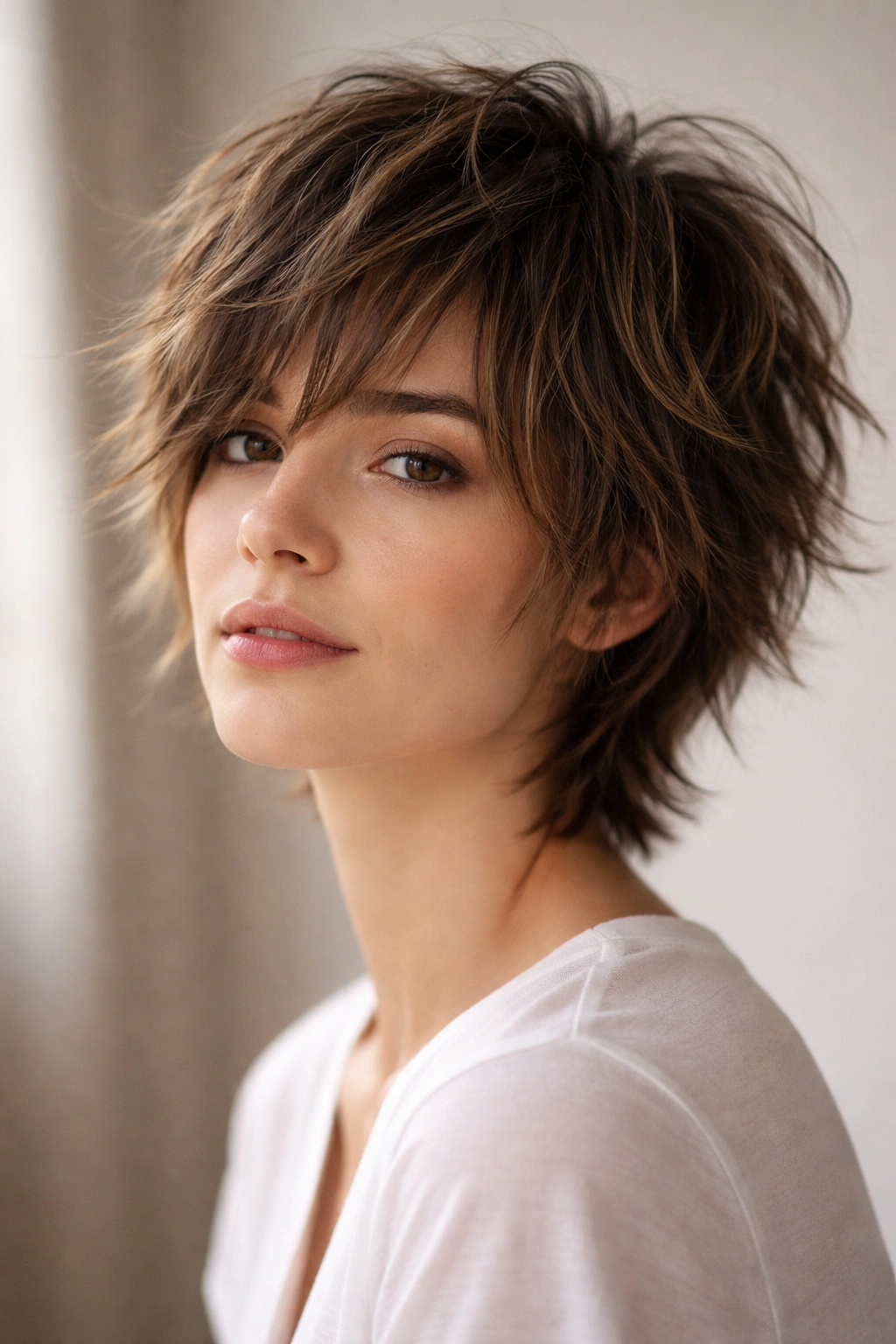
A shaggy crop combines the shortness of a crop with the layered, feathered texture of a shag cut. This style has multiple lengths throughout, creating lots of movement and that deliberately undone, lived-in aesthetic. The shag elements give it a cool-girl edge, while the overall short length keeps it easy to manage. This is a cut that looks best slightly tousled and unstyled—trying too hard to smooth or slick it actually works against the vibe.
The Shag’s Unstyled Advantage
Shaggy crops are designed to look good unstyled because their entire aesthetic is built around texture and movement. The feathered layers move differently depending on how your hair dries, and that variation is actually the goal. Air drying a shaggy crop often produces the exact tousled, effortless look the cut was designed for. This is one of those rare cuts where “I literally didn’t style this” is actually the best styling choice.
Getting the Cut Right
- Find a stylist experienced with shag cuts—this style’s success depends on how the layers are positioned and blended
- Ask for layers throughout the entire head, with more texture in the back if you want extra movement
- Mention that you want a cut that works unstyled; this helps your stylist approach the layering strategically
- Request feathered, choppy layers rather than super-blended ones—the visible texture is what makes it work unstyled
- Consider your natural hair texture and ask how it will interact with the layered cut
Enhancing Without Styling
- Air dry whenever possible to let the natural layers create movement
- Use a light texture spray on damp hair if you want extra grip and definition
- Run your fingers through while it’s drying to encourage the layers to separate
- Avoid blow-drying with a brush, which tends to blend and smooth out the beneficial texture
- Regular trims every 6-8 weeks help maintain the shag’s shape and prevent it from looking grown-out and scraggly
7. Asymmetrical Pixie
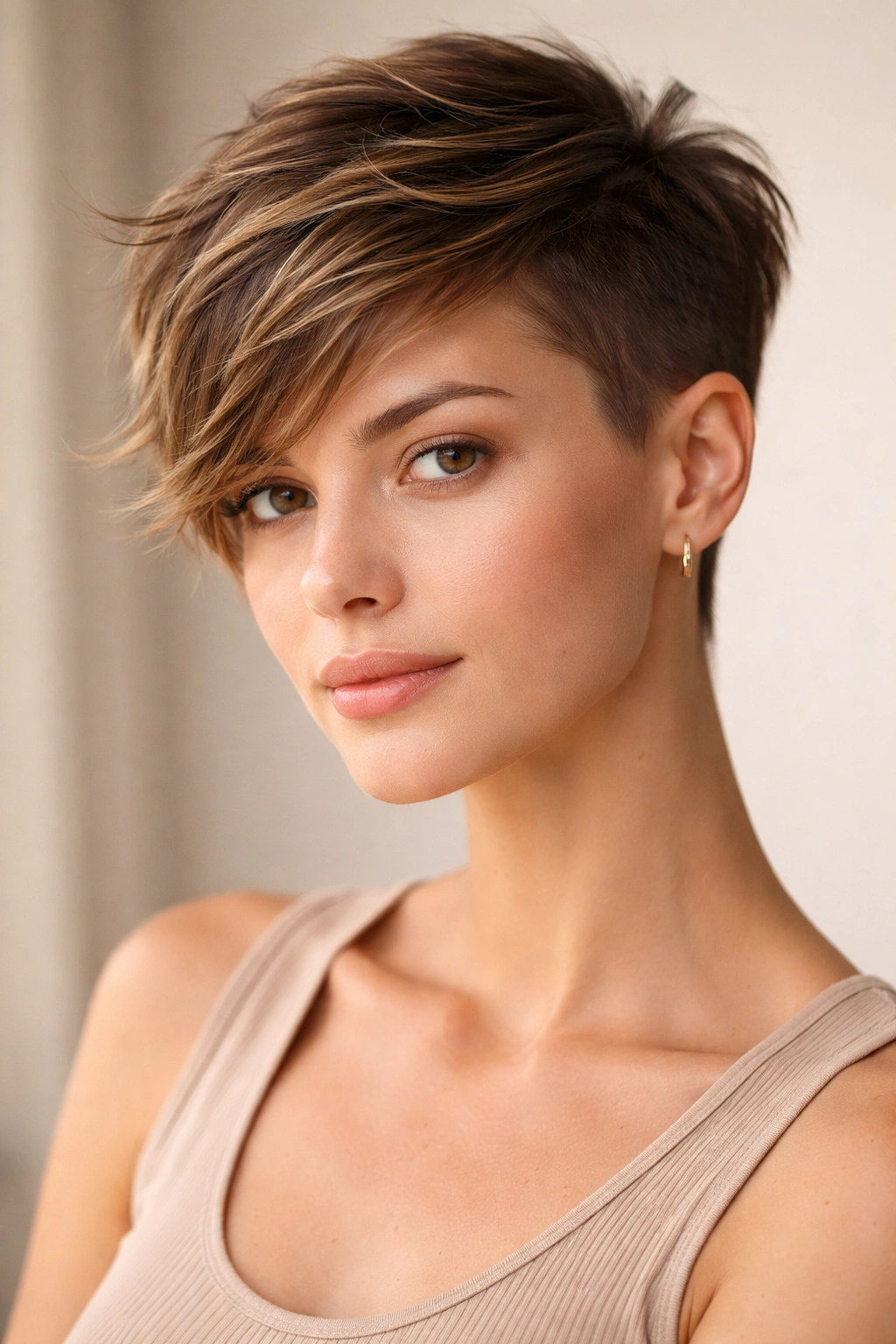
An asymmetrical pixie takes the classic pixie cut and varies the length on different sides, creating a striking, directional look. One side might be shorter and closer to the scalp, while the other has a bit more length and texture on top. This cut is inherently interesting from every angle, which means it looks intentionally cool even when you haven’t styled it at all. The asymmetry is the statement—it carries the entire look without needing extra effort.
Why Asymmetry Works Unstyled
An asymmetrical pixie looks dramatic and deliberate by design, which means unstyled hair reads as artistic choice rather than neglect. The cut’s directional nature means it looks sharp and intentional regardless of how it settles naturally. This is a cut that actually benefits from a slightly undone, unstyled appearance—trying to style it too much can actually work against the cool-girl aesthetic that makes it work.
Making the Asymmetry Work
- Discuss the degree of asymmetry with your stylist—do you want a subtle difference or something more dramatic?
- Ask about which side should be longer or shorter based on your face shape and which side you prefer to show
- Request texture and choppy layers rather than a blunt, smooth asymmetrical cut—this adds movement and keeps the look interesting
- The asymmetry itself creates interest, but texture on top prevents it from looking stark or too harsh
- Trims every 4-6 weeks keep the asymmetrical shape sharp and prevent it from growing out unevenly
Styling Flexibility
An asymmetrical pixie works beautifully unstyled, but when you do want to style it, you have options. Sweeping your longer side across your forehead, tucking your shorter side behind your ear, or creating a tousled texture all work depending on your mood and what you’re doing that day.
8. Buzz Cut or Fade
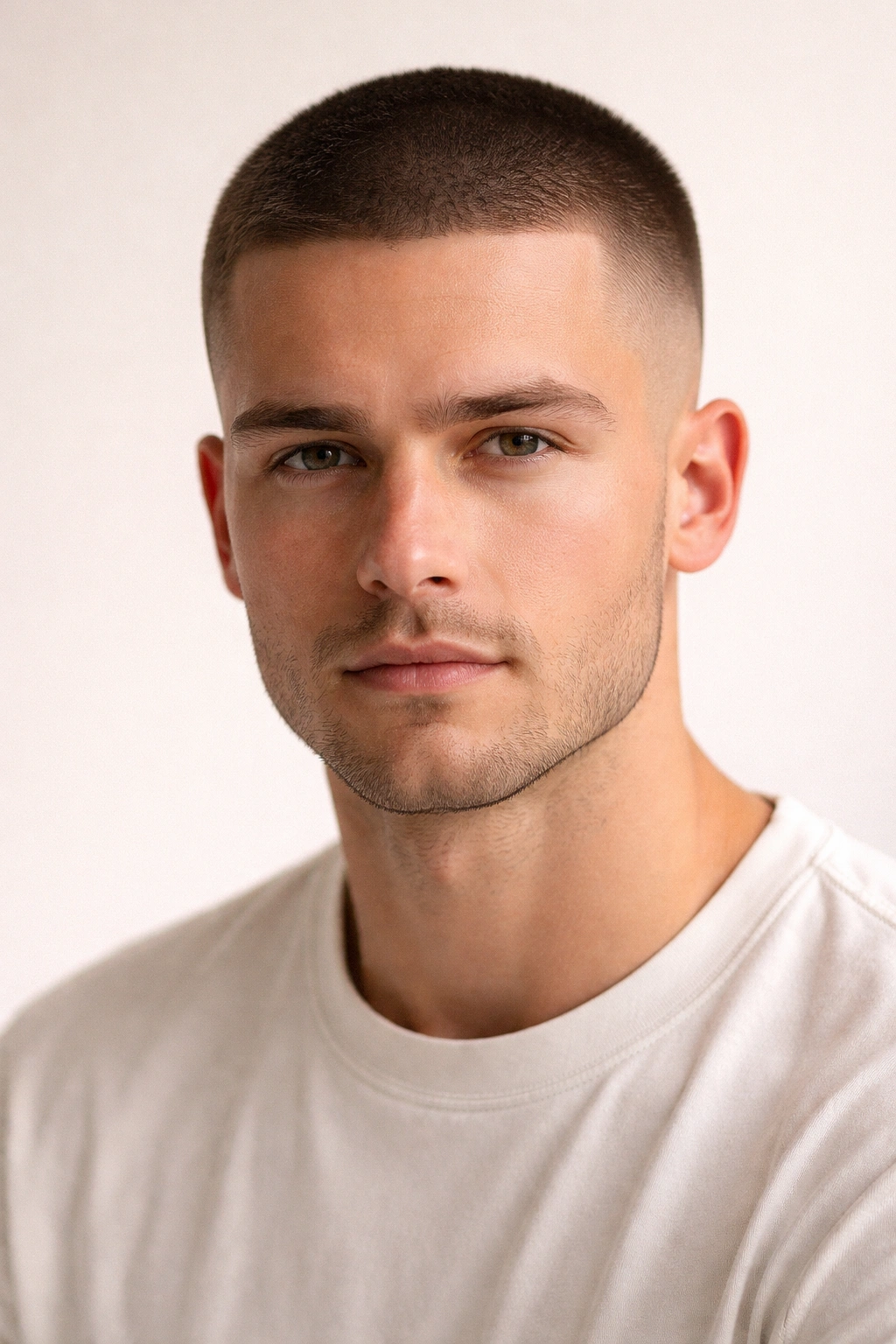
A buzz cut or fade is the ultimate unstyled haircut because there’s literally nothing to style. Your entire head is cut to the same very short length (a buzz cut) or has a gradual fade from longer on top to shorter on the sides. Because there’s minimal length anywhere, your hair’s natural texture becomes irrelevant—the cut itself is the entire style. You wash it, shake it dry, and you’re done.
Why Nothing to Style Means Everything Works
A buzz cut or fade is the definition of no-styling-required hair. You don’t blow dry it, you don’t add products, you don’t run a brush through it. You wash your hair and you’re finished. This cut works equally well whether your hair is straight, wavy, or curly because the length is so short that texture doesn’t matter. It looks the same first thing in the morning as it does after a full day of activity. For people who genuinely dislike styling and grooming, this is the ultimate short cut solution.
Maintenance is Minimal But Regular
- Buzz cuts and fades require trims every 2-3 weeks to maintain the shape and prevent that in-between scruffy stage
- The frequency of trims means this cut is more maintenance in terms of scheduling, but each trim takes 10-15 minutes
- You can wash it daily without any styling impact—it always looks the same
- No products required unless you want to add a tiny bit of definition on top
- This is the most pocket-friendly cut long-term because styling tools and products are completely optional
Who Chooses This Style
A buzz cut or fade requires confidence and comfort with short, visible hair. It’s a statement cut that says you don’t care about conventional styling—and that confidence is precisely what makes it work. This cut also looks particularly sharp on people with well-shaped heads and clear skin, since there’s nothing to hide behind.
9. Tousled Short Bob
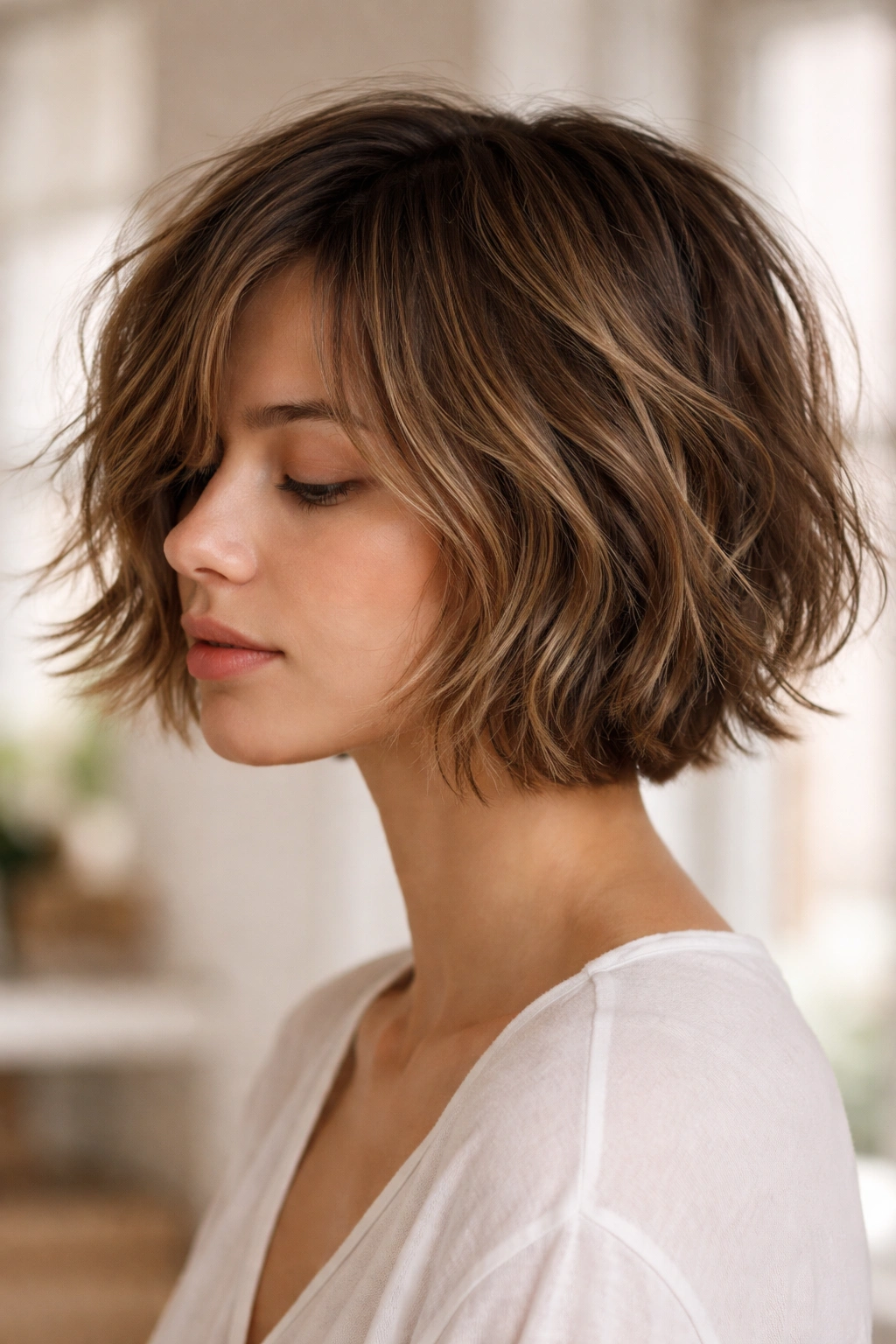
A tousled short bob is a short bob—hitting around chin length or slightly shorter—cut with enough texture, layers, and movement that it looks intentionally undone. This is different from a sleek, polished bob; it’s designed to have soft texture and movement throughout. Air drying this cut produces that effortlessly disheveled look that takes most people thirty minutes and three styling products to achieve—but with this cut, it happens naturally.
The Texture That Makes It Work
A tousled short bob works unstyled because the texture is literally built in. Your stylist cuts in layers and uses point-cutting or texturizing techniques to create movement throughout the entire cut. When you wash and air dry it, those layers move naturally, creating that perfectly imperfect, lived-in aesthetic. The cut is designed around this unstyled texture, so your natural hair drying pattern actually produces the exact look the cut was created for.
Achieving the Tousled Effect
- Ask your stylist for choppy, textured layers throughout—not subtle blending, but visible texture you can see and feel
- Request point-cutting rather than blunt layers; this creates more movement and a softer, more tousled feel
- Mention that you want a cut that looks good air-dried; this changes how your stylist approaches the overall texture strategy
- Consider a slightly shorter length overall (chin-length or just above) because shorter hair moves more naturally without weight
- If you have fine or thin hair, layers and texture prevent the bob from looking limp or flat when air-dried
Easy Maintenance and Occasional Styling
- Air dry whenever possible and let the natural texture do the work
- Use a light sea salt spray or texturizing spray on damp hair to enhance natural texture if you want extra definition
- Trims every 6-8 weeks keep the layers sharp and prevent the bob from growing out shapeless
- If you blow dry with a round brush, you’ll add polish and smoothness—but the real magic happens when you skip this step
- This cut looks equally good tousled and unstyled as it does with a bit more intentional styling
10. Blunt Fringe with Short Back
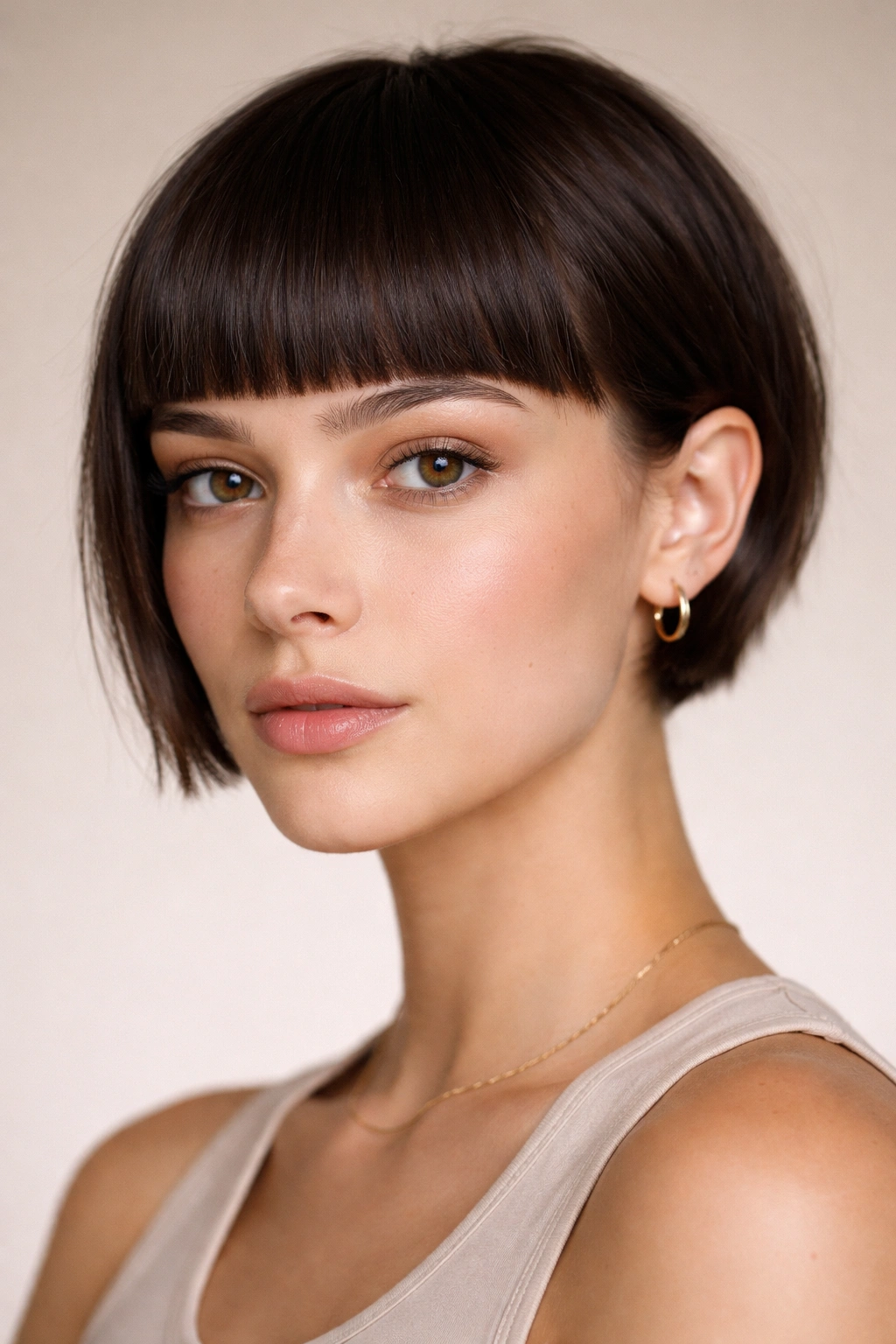
A short cut with a blunt, straight-across fringe and a slightly shorter back creates an edgy, modern look that’s defined by geometric contrast. The blunt fringe is the statement piece—it reads as bold and intentional immediately. The combination of the sharp front fringe and the textured or cropped back creates visual interest without requiring any styling to look deliberate and cool.
The Fringe as Your Styling Shortcut
A blunt fringe does a huge amount of visual heavy lifting, which means the rest of your hair doesn’t need to be perfectly styled for the overall look to work. The fringe itself is the style statement, so even if the back is slightly bedhead-ish or unstyled, it reads as intentional. The geometric contrast between the blunt front and whatever’s happening on top and in back actually looks more interesting when there’s some texture and movement happening.
Getting the Fringe Right
- A blunt fringe needs to be precise—ask your stylist for a clean, straight line that hits just above your eyebrows or at your lash line
- The fringe works best if the rest of the cut has some texture or layers; this contrast is what makes the overall style interesting
- Regular trims every 3-4 weeks are essential for the fringe because it grows out quickly and loses its sharp edge
- Discuss your natural hair texture and how it will interact with the blunt fringe—bangs can be tricky if you have very wavy or curly hair
- Consider your forehead shape and face proportions; a blunt fringe works best if you’re comfortable with your forehead being visible
Styling a Blunt Fringe
A blunt fringe can air dry, but if you have any wave or texture in your hair, the fringe might not stay perfectly straight without a quick blow dry. The fringe is the one element that might need five minutes with a brush and blow dryer to maintain that sharp edge. The rest of your hair, though—the back and sides—looks great unstyled.
Final Thoughts
The best unstyled short haircuts share one critical quality: they’re designed around your hair’s natural behavior rather than fighting against it. They embrace texture, movement, and that deliberately undone aesthetic instead of requiring sleekness and precision to look good.
When you’re choosing a short cut, the most important conversation you can have with your stylist is about your real, daily life. Tell them you want a cut that looks good on mornings when you shower and leave it to air dry. Ask them specifically about texture, layers, and how the cut will interact with your natural hair growth pattern and texture. A stylist who specializes in low-maintenance cuts will approach the cut completely differently than one focused on precision and polish.
Remember that the cut itself is only half the battle—the other half is finding a stylist who understands your hair and returns consistently to maintain the shape. A great short haircut becomes shabby and shapeless if it goes too long between trims. Schedule them every 4-6 weeks depending on how quickly your hair grows and how much texture is built into your specific cut. That regular maintenance is what keeps a good unstyled cut looking intentional rather than neglected.
