



If you’re thinking about going shorter or want a fresh take on medium-length hair, straight cuts are having a major moment. There’s something undeniably clean and intentional about a well-executed straight haircut—no matter where you land on the length spectrum. The beauty of straight cuts is that they don’t rely on waves, curls, or texture to look polished; instead, they showcase precision, line work, and the actual shape of your hair. This means your stylist’s skill matters enormously, but when it’s done right, these cuts feel effortlessly chic and require minimal styling effort to look put-together.
The trend toward straight cuts speaks to a broader shift in how people approach hair. Rather than fighting your natural texture or spending 20 minutes with a flat iron every morning, a good straight cut works with your hair’s natural tendencies (or against them strategically, depending on your hair type). Whether you have naturally straight hair, waves that can be smoothed, or thick texture that needs refining, there’s a straight cut that can work. The key is finding the one that matches your face shape, lifestyle, maintenance tolerance, and the kind of energy you want to project.
What makes these cuts particularly versatile is that they bridge the gap between needing a full style and looking deliberately polished. You can wear many of them down and sleek, partially pinned back, or tucked behind one ear for an instant mood shift. Some work beautifully with minimal effort; others benefit from regular trims to maintain their crisp edges. All of them, though, share that quality of intentionality that comes from a strong cut and a clean line. Let’s walk through 12 specific straight cuts that genuinely deliver that polished look.
1. Blunt Bob
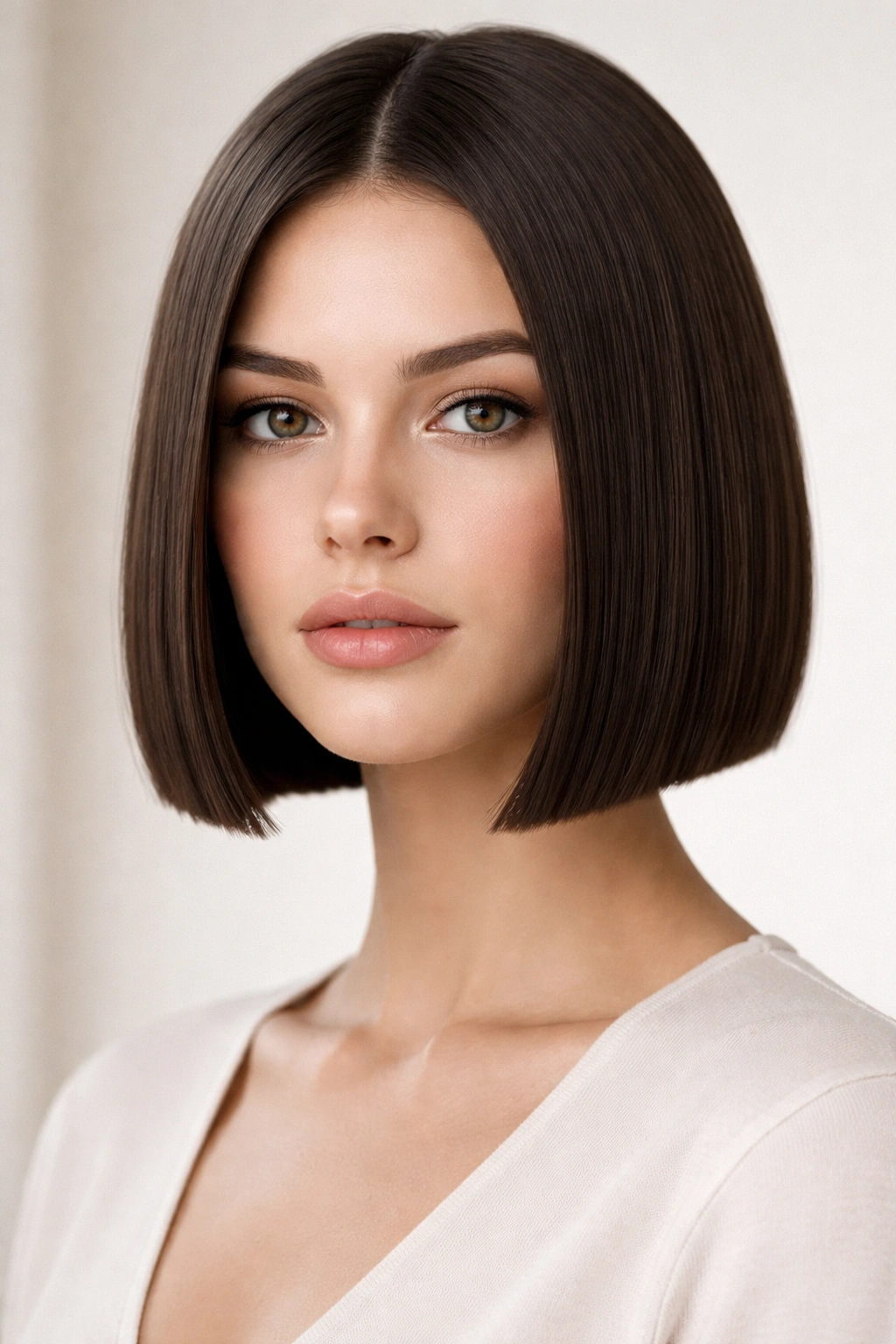
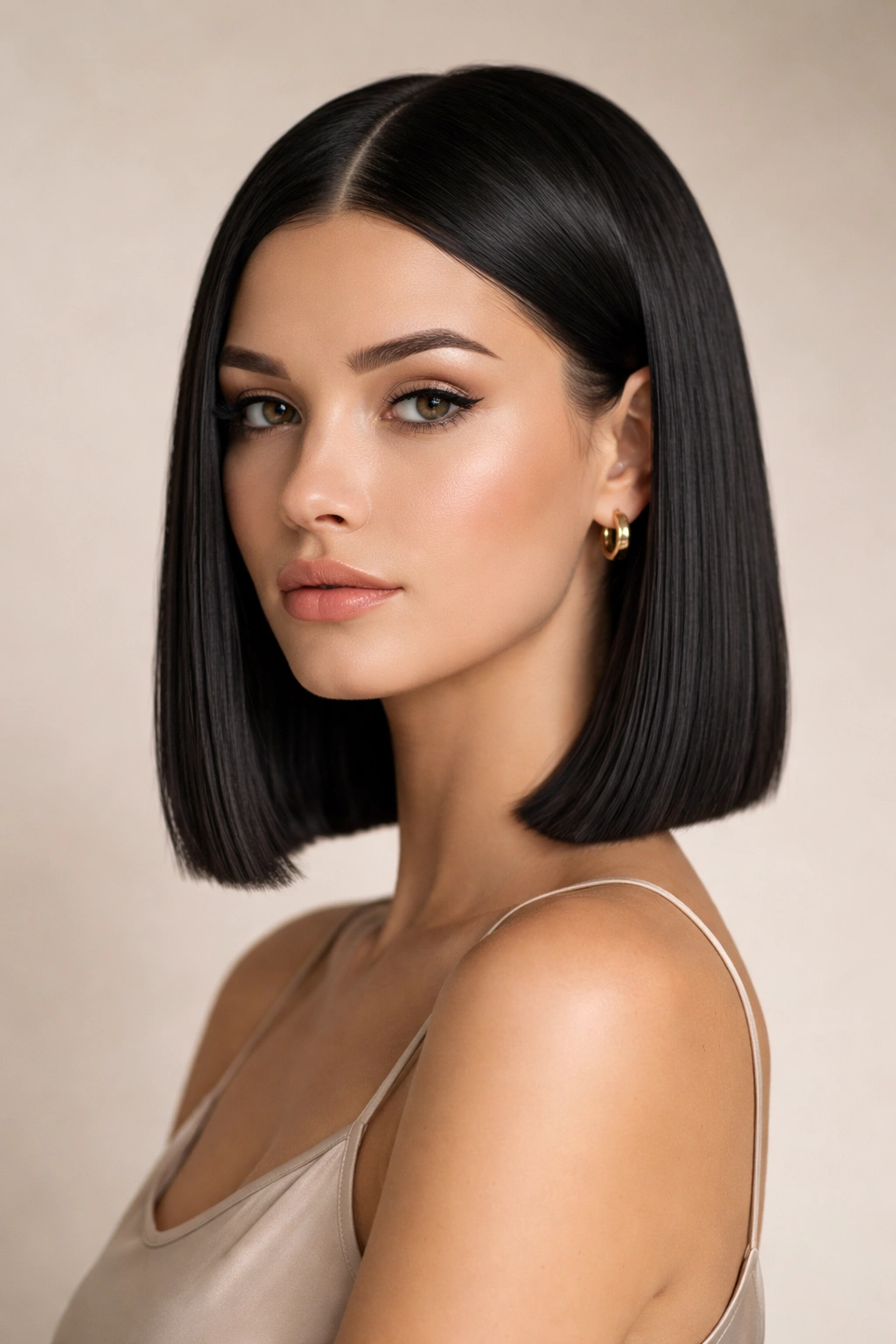
A blunt bob is the foundational straight cut that never really goes out of style—and for good reason. This cut sits at the jaw or chin, features a completely straight hemline with no layers, and relies entirely on precision and blunt-edge work. When executed well, it’s architectural and modern; when it’s not, it can feel slightly severe or dated. The magic is in the execution: a true blunt bob should hit all one length, have a clean 90-degree angle at the bottom, and feel intentional rather than accidentally cut-off-looking.
Why Blunt Bobs Command Attention
The blunt bob works because it doesn’t hide anything—not hair quality, not your face shape, not your styling commitment. This forces the cut to be genuinely excellent. The straight line creates a frame around your face that’s both softening and sophisticated, depending on the proportions. Blunt bobs feel especially striking on people with naturally straight hair or those willing to blow-dry smooth regularly.
Essential Details to Discuss With Your Stylist
- The exact placement of the hem (jaw-length, chin-length, or slightly below for a longer effect)
- Whether you want the front and back perfectly even or slightly staggered (some people prefer a micro-longer front for a subtle contemporary feel)
- How often you’re willing to come in for trims to keep that edge sharp—typically every 4-6 weeks for a blunt cut to maintain its crisp look
- Whether you want a heavy, blunt fringe or soft, layered bangs to soften the overall line
Pro tip: Blunt bobs require your hairline to be truly dry before the cut is finished, since even slight dampness changes where the line sits. Ask your stylist to dry-cut the final edge for maximum accuracy.
2. Textured Bob With Subtle Layers
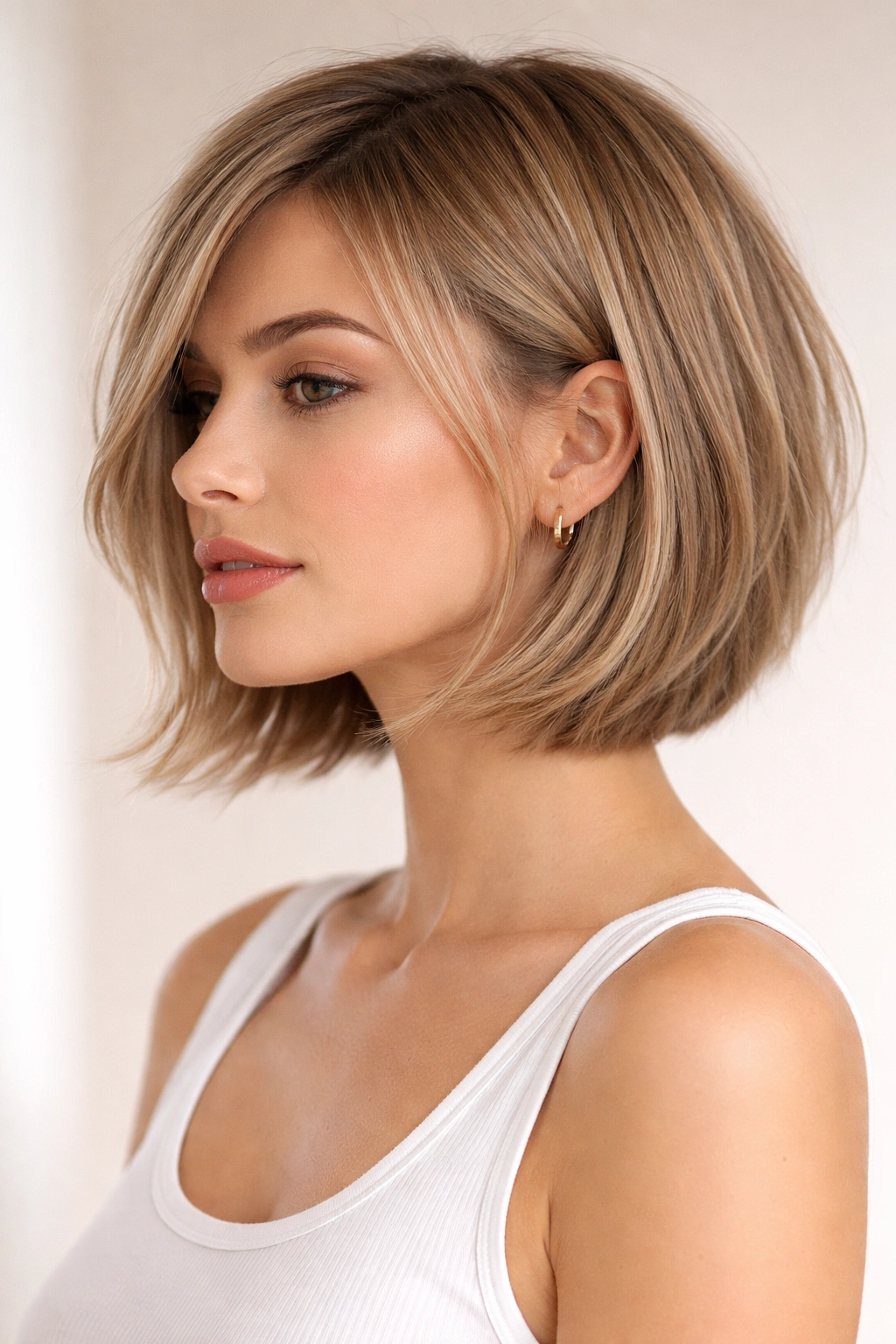
This is a blunt bob’s slightly friendlier cousin—it maintains the clean aesthetic of a bob while incorporating minimal, strategic layers that break up the weight and create texture and movement. Unlike a heavily layered cut, this version keeps the overall silhouette intact but removes bulk and adds dimension. It’s the sweet spot between “I want a straight cut” and “I want it to feel less blunt-force trauma and more intentional texture.”
How Texture Works in a Straight Cut
Layers in a straight cut work differently than they do in longer hair. Rather than creating flow or bounce, subtle layers in a bob create visual interest, allow the cut to move slightly rather than lying perfectly flat, and often make the cut easier to style and maintain. The layers are typically razored (rather than bluntly cut) to create feathered, soft edges that feel modern and considered. The overall line remains straight when the hair is styled, but the texture prevents it from feeling heavy or helmet-like.
What to Expect When Getting This Cut
- Layers that are noticeable when the hair is moved or played with but subtle when the hair is lying down
- A cut that’s easier to air-dry than a perfectly blunt bob, since the texture absorbs movement
- Slightly less frequent trims needed compared to a truly blunt cut (you can typically go 6-8 weeks)
- A final result that photographs well because it has dimension, not just a single line
- More texture visible if you have any natural wave or curl pattern
Pro tip: Ask your stylist to razor the layers rather than point-cut them—razored layers create softer, more feathered edges that feel contemporary and move more naturally than blunt-cut layers.
3. Long Bob (Lob) With Straight Edges
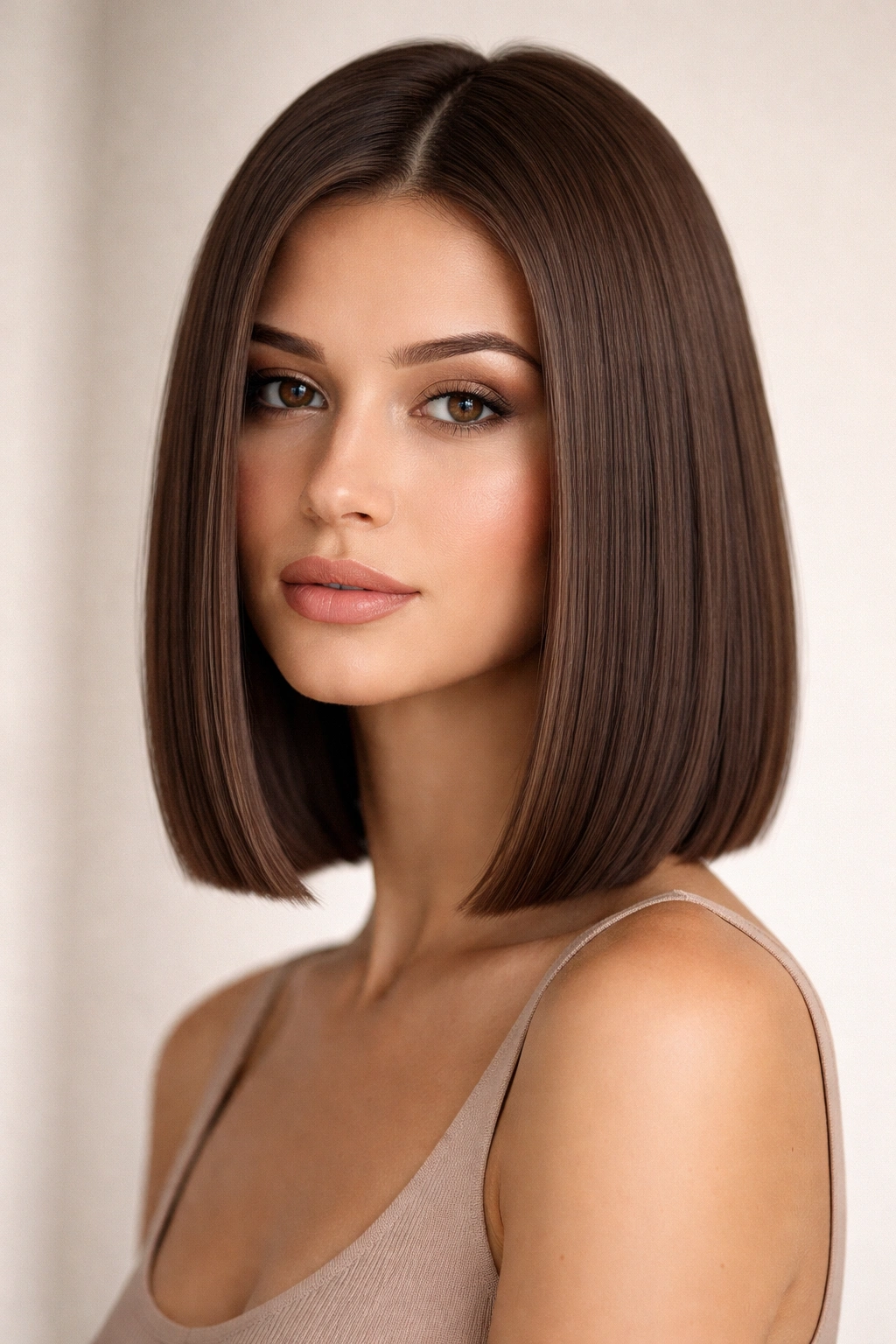
A lob sits somewhere between a bob and a longer cut—typically hitting mid-neck or shoulder-length—and when it’s done with straight edges and minimal layers, it’s a perfect gateway between short and longer hair. The lob offers more styling versatility than a chin-length bob (you can tuck it behind your ears, half-pin it, or wear it down and tucked to one side) while still maintaining that clean, intentional straight-cut aesthetic. It’s also slightly more forgiving for people who aren’t quite ready to commit to a full-on short cut.
Why Lobs Work as Straight Cuts
The extra length in a lob allows for more styling options without sacrificing the clean-line aesthetic. You can achieve that polished look in multiple ways: sleek and straight, partially pinned, twisted to one side, or even in a high ponytail. The longer length also means the cut works across more face shapes because you have more room to position where the hair lands on your face. Lobs feel especially flattering on oval, heart-shaped, and rectangular face shapes.
Key Considerations for a Lob
- Length: Where exactly it lands on your body (collarbone, mid-shoulder, or longer) dramatically changes the energy of the cut
- Density: If you have finer hair, you may want minimal or no layers to keep the lob feeling full; thick hair often benefits from subtle layers to reduce weight
- Styling capability: Can you commit to styling this regularly, or do you need something that looks good air-dried? That affects whether you want textured layers or a blunter, heavier line
- Maintenance: A straight-edged lob typically needs a trim every 6-8 weeks to keep that clean line intact
- Styling versatility: A lob allows for half-up styles, side-swept looks, and secure ponytails—options a shorter bob might not give you
4. Sleek Shoulder-Length Straight Cut
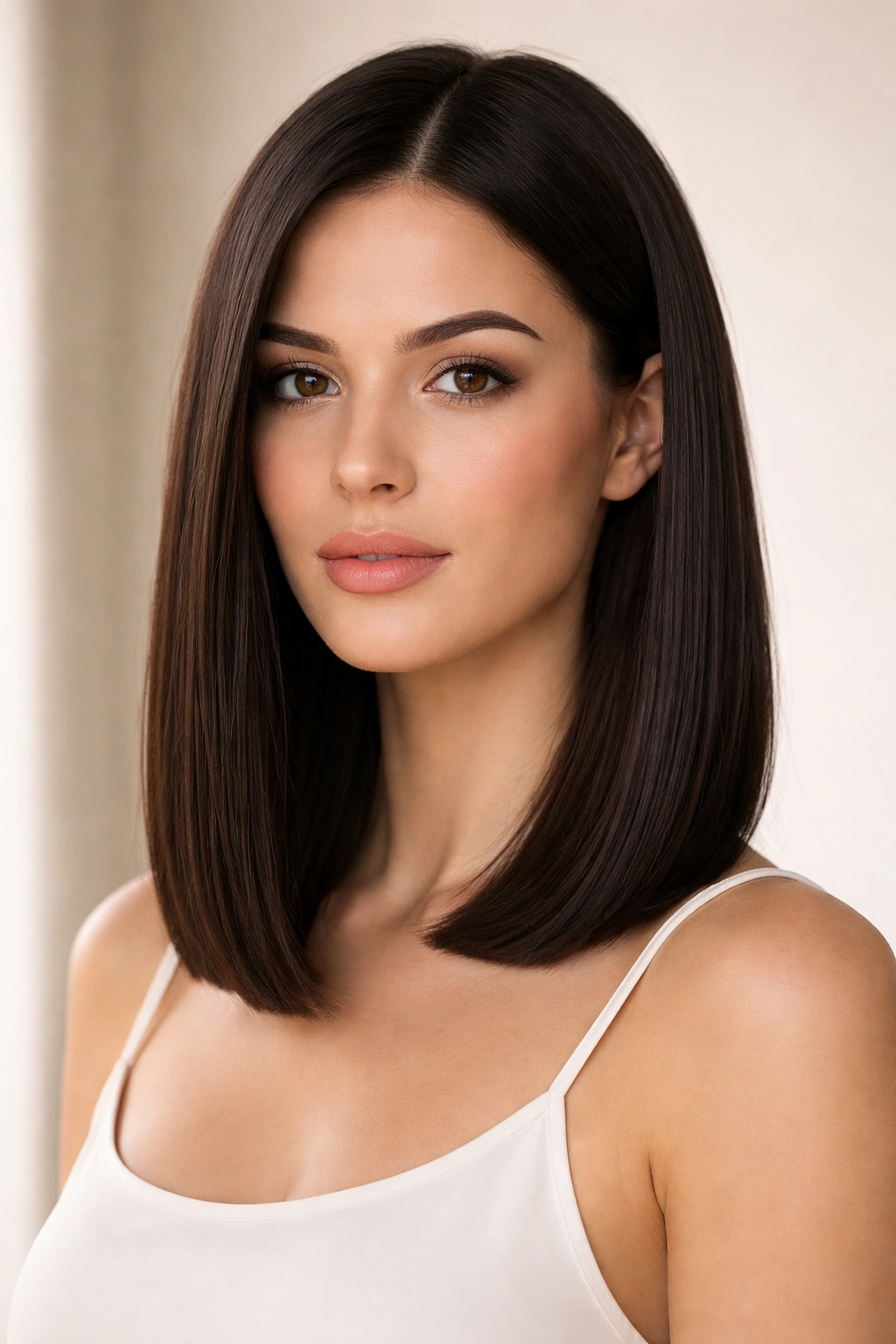
This is a sophisticated, grown-up cut that lands right at the shoulders with a completely straight line and minimal to no layering. It’s longer than a lob but shorter than typical shoulder-length hair feels, and the precision of the straight edges makes it feel intentional and polished rather than like you’re “between lengths.” This cut works beautifully with or without bangs, air-dried or blow-dried, and transitions seamlessly from casual to professional settings.
The Appeal of Shoulder-Length Straight Hair
Shoulder-length straight cuts occupy a powerful middle ground. They’re long enough to wear up in a secured style (bun, ponytail, clips) but short enough that they don’t feel like you’re maintaining constant length. The straight line keeps the cut feeling contemporary and decisive rather than wispy or uncertain. This cut also tends to flatter a wide range of face shapes because the length provides balance without overwhelming your features.
Styling and Maintenance Facts
- This length air-dries reasonably well if your hair naturally leans straight or has minimal wave
- Blow-drying smooth takes moderate effort—you’re not dealing with the extreme length of long hair, but you do have enough hair that it requires attention
- Trims every 8-10 weeks keep the straight line looking crisp
- This length is versatile enough for secure updos (ponytails, buns, clips stay put) but still feels loose and down-the-back when worn open
- The cut works well with or without bangs—try it with gentle face-framing layers if you want a tiny bit of movement, or keep it completely straight for maximum intentionality
Pro tip: If you have fine or thin hair, ask your stylist to avoid layering this cut; the weight of the straight line actually makes thinner hair look fuller. If you have thick hair, a few subtle layers through the ends can help it feel less heavy.
5. Curtain Bangs With Straight Layers
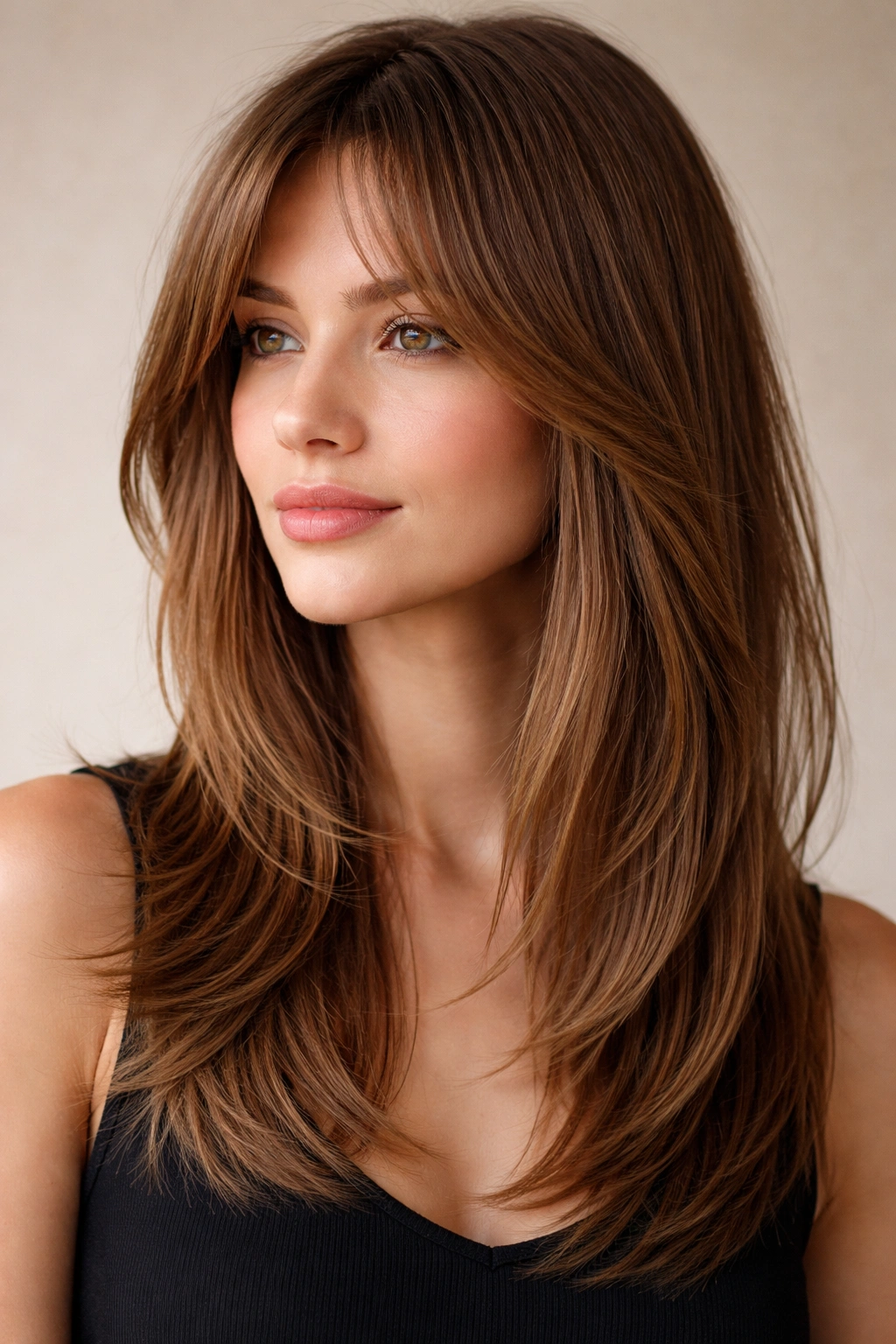
This cut pairs face-framing curtain bangs (which part softly down the middle and sweep toward either side) with a straight cut and subtle, strategic layers throughout the rest of the hair. It’s a way to add personality and movement to a straight cut without sacrificing that clean aesthetic. The bangs soften the overall look, the layers add dimension, but the fundamental straight line remains the anchor of the cut.
Why Curtain Bangs Change the Energy
Curtain bangs are incredibly flattering because they frame the face without requiring you to commit to a blunt fringe. They move naturally, they work with hair texture rather than against it, and they feel effortlessly cool without looking accidental. Paired with a straight cut, curtain bangs create a cut that’s polished but not severe—intentional but not rigid. This combination works beautifully on people who want their cut to feel a bit more relaxed while still maintaining that straight-cut integrity.
How to Wear and Maintain This Cut
- Curtain bangs dry naturally if you have straight hair or gentle waves; blow-drying them accentuates the movement
- Layers in the rest of the hair sit nicely when the bangs are the focal point—they add texture without competing for attention
- This cut typically hits somewhere between chin-length and shoulder-length, depending on your preference
- Trims every 6-8 weeks keep the bangs shaped and the layers looking intentional
- You can style the bangs multiple ways: swept to one side, parted down the middle, or tucked behind your ears entirely for a different look
6. Choppy Layered Straight Cut
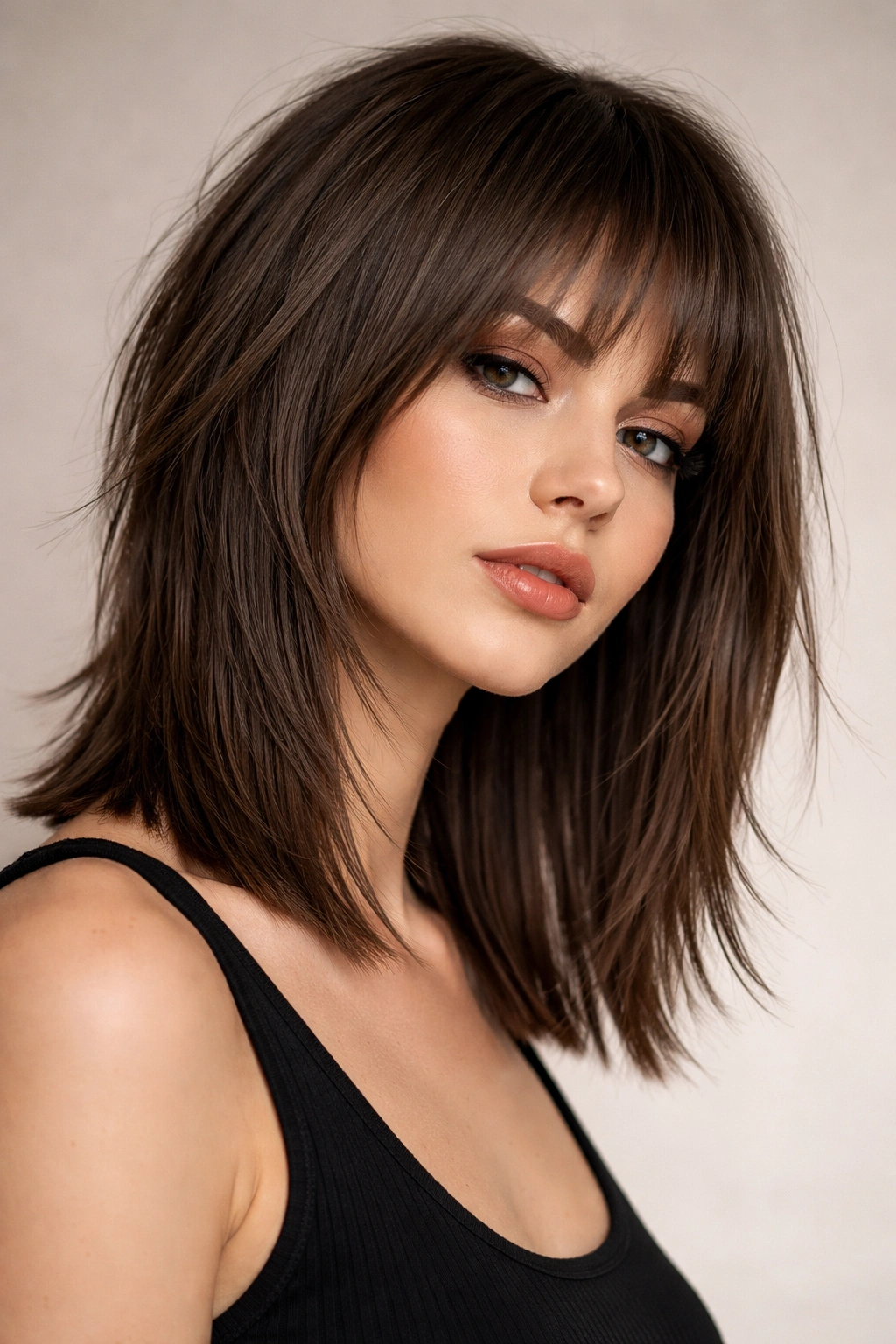
This cut takes the concept of straight edges but introduces more intentional choppy texture throughout—layers that are specifically cut to create a piece-y, slightly undone aesthetic while still maintaining a straight hemline and a structured shape. It’s for people who want the clean-cut feeling of a straight cut but don’t want the severity that comes with minimal layers. The choppiness is deliberate, not accidental, and creates visual interest and movement without sacrificing the straightness of the overall line.
The Difference Between Choppy and Textured
Choppy layers are noticeably cut; you can see individual sections, the hair doesn’t blend seamlessly, and there’s visual drama created by the variation in length. Textured layers are more subtle and feathered. A choppy straight cut leans into that drama—it’s modern, a bit edgy, and definitely not for people who want their hair to look smooth and uniform. The layers are typically razored for that piece-y effect, and the overall silhouette remains straight when styled.
Making a Choppy Cut Work for You
- This cut requires regular styling to look intentional rather than messy; if you air-dry and go, it might feel tousled rather than chic
- Best on people with naturally straight hair or those willing to blow-dry and straighten
- Works well on finer hair, since the choppy layers prevent it from looking flat
- Thicker hair needs careful layer placement to avoid looking overly volumized or frizzy
- Trims every 6 weeks keep the choppiness looking intentional and not just grown-out
- Pairs beautifully with minimal makeup and simple styling—let the cut do the talking
Pro tip: Ask your stylist to focus the choppiest layers around the face and crown for maximum dimension where it matters most; keep the layers subtler lower down so the cut still feels somewhat grounded and straight.
7. Straight Shag
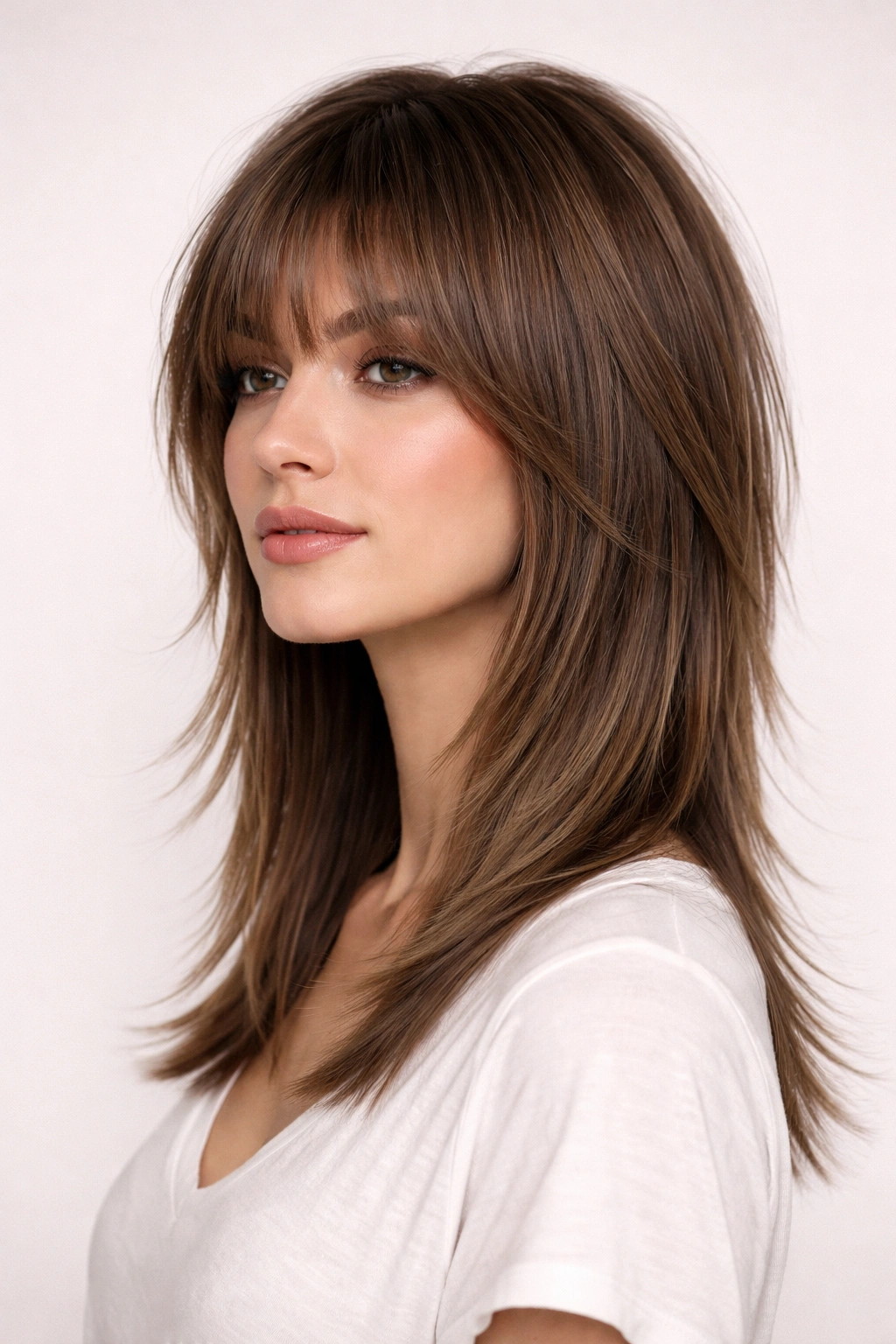
A shag is typically associated with texture and volume, but a straight shag is a specific cut that maintains a straight hemline while incorporating layering that creates movement and an almost feathered effect. It’s undeniably edgy and modern, popular especially among people who want the cool factor of a shag without committing to waves or curls. The straight shag bridges the gap between “I want a straight cut” and “I want something with personality and movement.”
What Makes a Straight Shag Different
A traditional shag is typically worn with waves and texture. A straight shag keeps that same playful, piece-y energy but relies on the cut itself rather than curling or styling to create the effect. The layers are more dramatically varied in length, creating that characteristic shag movement even when the hair is straight. It’s edgier and more intentionally playful than other straight cuts on this list—definitely a choice that makes a statement.
How to Commit to a Straight Shag
- Requires regular styling to look intentional; air-drying typically results in a flatter, less impressive version of the cut
- Best on people with naturally straight hair or those comfortable with routine blow-drying
- This cut tends to look best on people with either fine hair (where layers prevent flatness) or thick, healthy hair that can carry dramatic layers
- Layer placement is crucial; a good straight shag should have shorter pieces at the crown for volume and longer pieces lower down for flow
- Trims every 6-8 weeks keep the layer variation looking intentional and fresh
- Works beautifully with pointed bangs or without bangs—try it both ways to see what feels right
8. Minimalist Pixie-Bob Hybrid
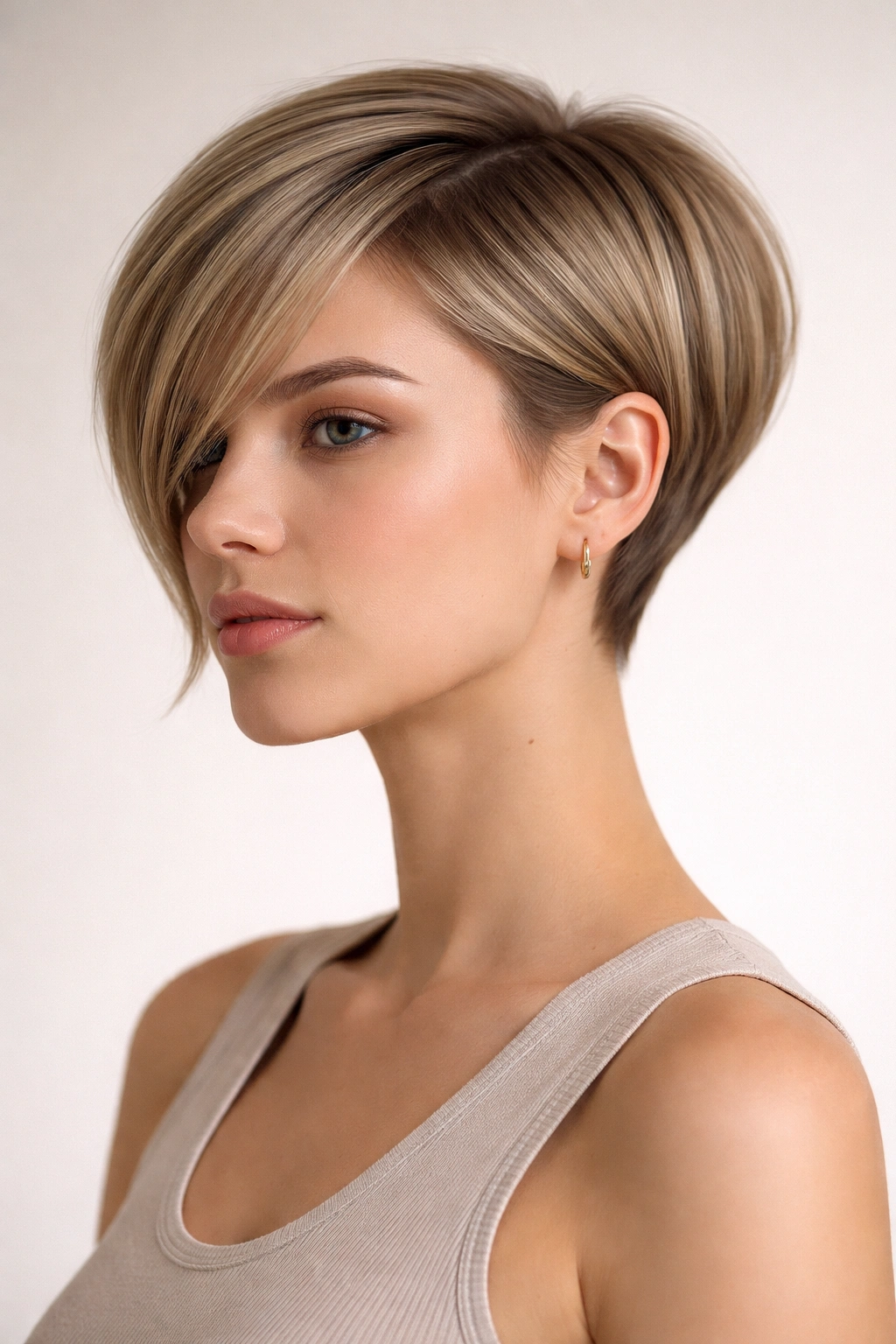
This cut is shorter on top with tapered sides and a bit more length in the front and through the crown—it’s halfway between a pixie cut and a very short bob. It’s sleek and minimal, works for nearly every face shape, and creates an incredibly clean, intentional look. The “pixie-bob” is gaining traction because it offers the ease and boldness of a pixie cut with slightly more styling versatility from the longer front pieces.
Why Hybrid Cuts Are Having a Moment
Hybrid cuts like the pixie-bob take the best elements of multiple cuts and combine them. In this case, you get the ease and sharp geometry of a pixie with the option to wear slightly longer pieces that can be tucked or styled. It’s particularly appealing for people who want something very short and low-maintenance but aren’t quite ready to fully commit to a pixie’s shortness everywhere.
What to Expect With This Cut
- Incredibly low maintenance in terms of styling; most mornings it just needs a quick finger-comb
- Requires trims every 4-5 weeks because short hair grows out quickly and obviously
- Best on people with some confidence about showing their face and ears
- Works beautifully with ear-framing jewelry, glasses, or bold makeup since there’s nothing to hide behind
- The longer front pieces (typically hitting the cheekbone or slightly below) allow some styling play—you can swoop them to one side or tuck them behind your ear
- Creates an incredibly polished look that reads as intentional and current
Pro tip: This cut requires a stylist who truly understands precision and line work. Finding the right person is more important with hybrid cuts than with any other style, since the whole effect depends on perfect proportions.
9. Bixie Cut (Bob and Pixie Mashup)
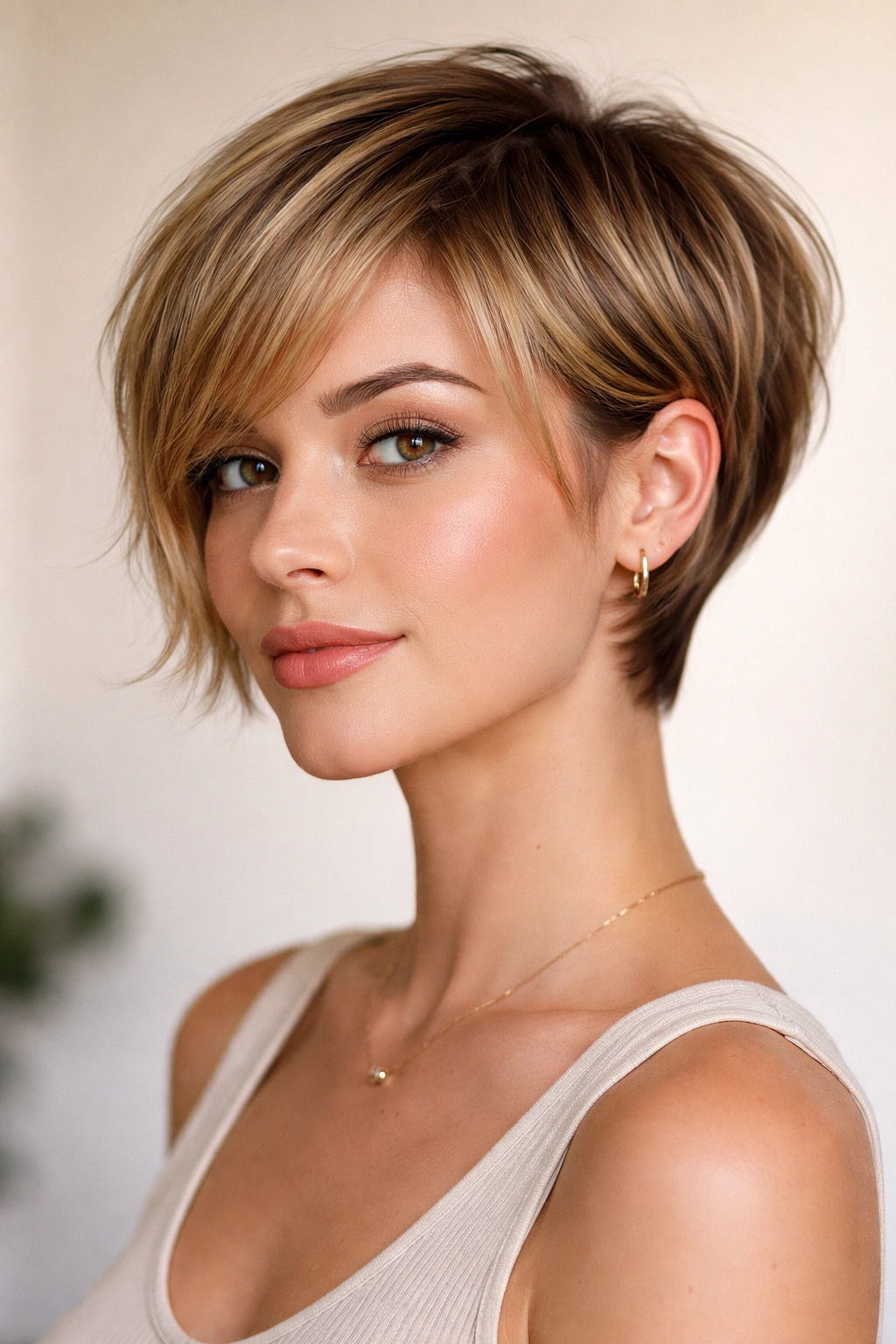
Similar to the pixie-bob but slightly longer overall, the bixie features a longer front that can reach the chin or collarbone, layered and textured, with shorter, more tapered sides and back. It’s playful, modern, and surprisingly versatile considering how short it is. The bixie works beautifully on people who want something decidedly short but with enough variation that it doesn’t feel like a uniform bowl cut.
The Geometry of a Good Bixie
A well-executed bixie has clear dimension: the front is noticeably longer, the sides are tapered and clean, the back is short and shaped, and layers throughout create movement and texture. The front pieces should be long enough to frame the face but not so long that they feel disconnected from the shorter back. It’s architectural and requires precision, but when it’s right, it’s absolutely striking.
Styling, Maintenance, and Real-Life Application
- Can be styled multiple ways: sleek and smooth, textured with product, or with the front pieces swept back off the face
- Works across a wide range of face shapes when cut properly—the tapered sides and longer front can be adjusted to flatter your specific proportions
- Requires trims every 4-6 weeks to maintain the shape and taper
- Best on people with straight or nearly-straight hair; very curly hair can make the geometry harder to see
- Minimal daily styling required, though it looks best when intentional product or smoothing is applied
- Incredibly chic with minimal makeup and simple jewelry—the cut itself is the statement
10. Geometric Asymmetrical Cut
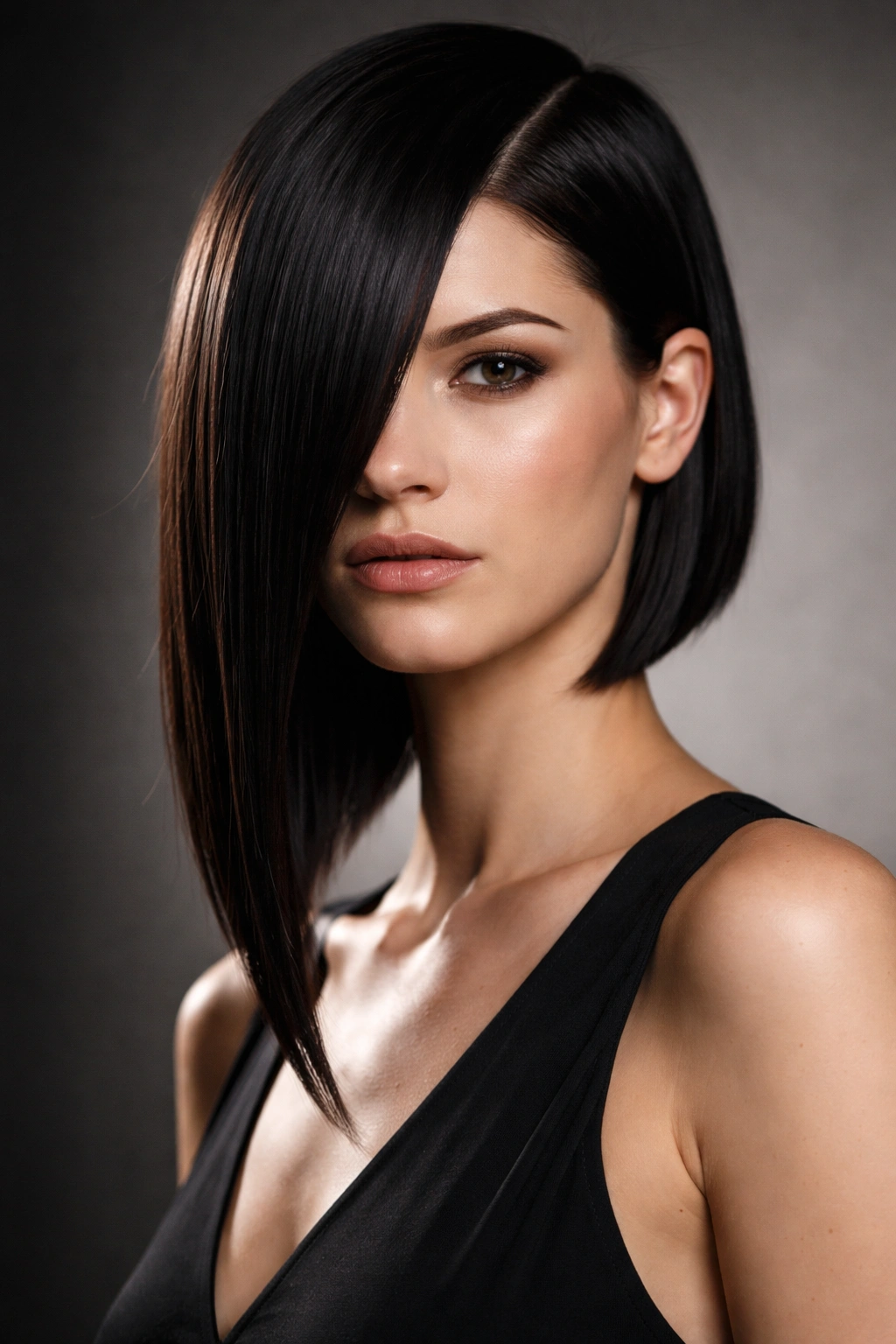
An asymmetrical cut features intentionally different lengths on either side: one side might be shorter and tapered while the other is longer and straighter, or one side might be layered while the other is blunt. When done with straight lines and precision, it’s bold, modern, and unapologetically artistic. This isn’t a cut for people who want to blend in; it’s for people who want their hair to make a clear statement.
When Asymmetrical Works Beautifully
Asymmetrical cuts work best on people with strong facial features, confidence about being seen, and the styling commitment to make the cut shine. The asymmetry draws attention, so you want people looking at your cut with intention, not confusion. This style also tends to flatter angular face shapes beautifully and works especially well on people who want to draw attention to one side of their face over the other (perhaps highlighting a great cheekbone or deemphasizing a feature you prefer not to emphasize).
Making an Asymmetrical Cut Work Daily
- This cut is definitely a styling cut; it won’t look the same if you just air-dry it
- Typically requires blow-drying with a brush to create the intended shape and direction
- Works beautifully with product—wax, paste, or pomade to emphasize the shape
- The shorter side often works best when styled away from the face, while the longer side can be swept forward or tucked behind an ear
- Trims every 6-8 weeks maintain the intentional asymmetry; let it grow out and it just looks uneven
- This cut is particularly striking paired with a strong hair color, graphic makeup, or bold styling choices
11. Straight Bangs With Long Layers
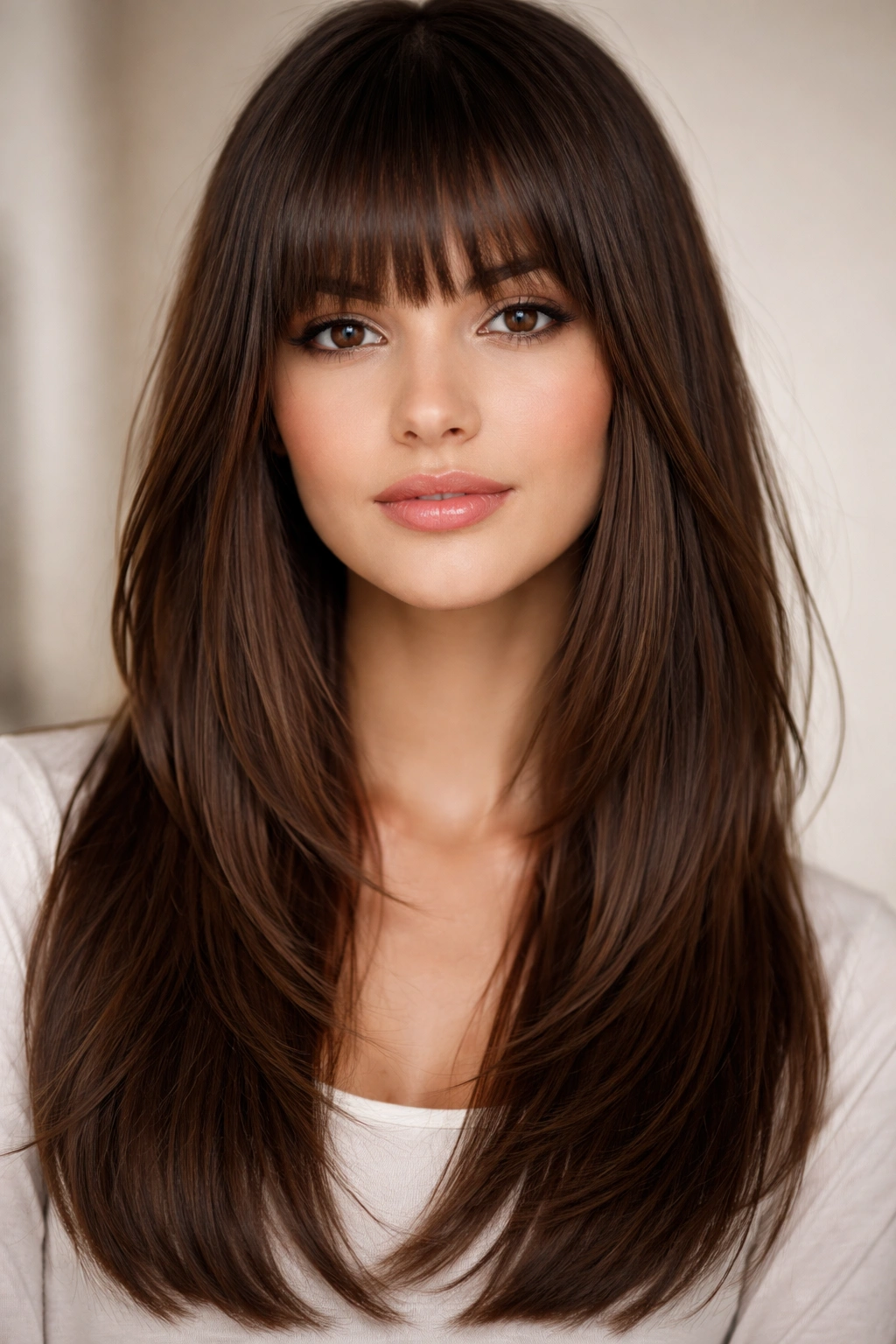
This cut pairs a blunt, straight-across fringe with a longer straight cut that incorporates subtle to moderate layering throughout. The bangs are the focal point and anchor the entire look, while the layers below create movement and dimension without compromising the straight-cut aesthetic. It’s romantic but sharp, soft but intentional—a cut that works beautifully for people who want face-framing without losing that polished straight-cut energy.
How Bangs Change Everything
Straight, blunt bangs are incredibly powerful. They instantly draw attention to your eyes and forehead, frame your face differently than you might be used to, and make a very clear statement about intentionality. Paired with a straight layered cut, they create a cohesive look that feels very deliberate and considered. The bangs serve as the headline; the layers below support that story.
Practical Considerations for This Style
- Straight bangs require regular trims—typically every 3-4 weeks as they grow longer and start to drift
- The hair under the bangs needs to be long enough that the bangs don’t feel like a disconnected short piece; typically, the bangs should be just slightly shorter than the hair underneath
- This cut works best on people with relatively straight hair; if you have waves, the bangs will curve upward and lose their blunt effect
- Styling-wise, straight bangs and straight hair are a match—blow-drying smooth creates the cohesive effect this cut aims for
- The layers should be subtle enough that the bangs remain the focal point
- Air-drying can work if your hair naturally dries mostly straight, but blow-drying creates a more polished look
Pro tip: Invest in a good home trim for your bangs or plan to visit your stylist frequently. Bangs grown out are a bit of a look you’ll want to avoid—they either need to be maintained bluntly or grown out completely.
12. Blunt French Bob
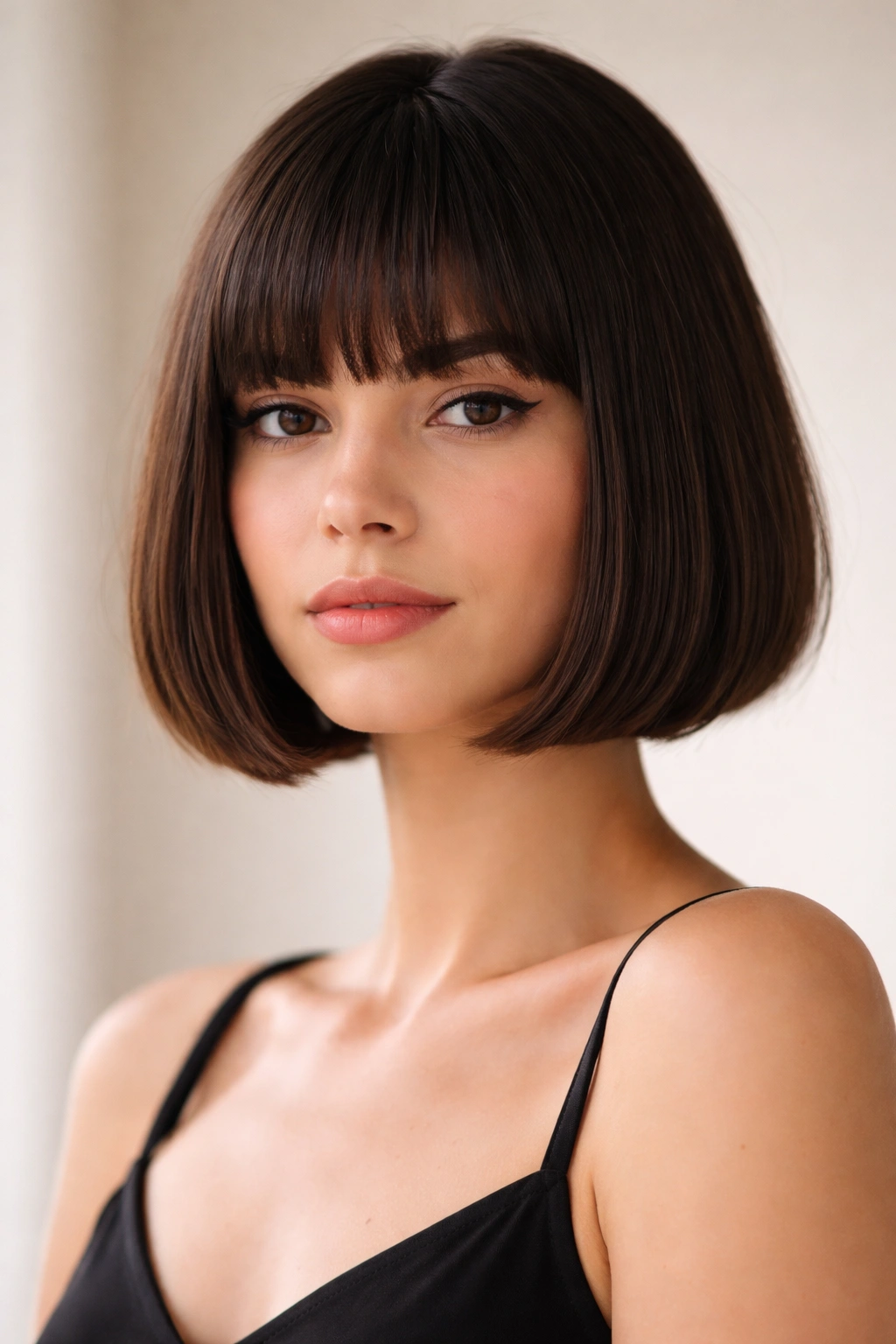
The French bob is a specific take on the classic bob: it’s typically shorter than a traditional blunt bob (often hitting right at the chin or slightly above), features that same blunt, straight hemline, and often includes a subtle face-framing element—either a very slight longer piece in front or a barely-there texture. It’s effortlessly chic and has that “I rolled out of bed like this but also I’m incredibly polished” energy that French hair is known for.
Why the French Bob Feels Effortless and Chic
The French bob works because it’s short enough to feel bold and decisive but with just enough softness (or “undone-ness,” depending on your styling) that it doesn’t feel severe. It’s geometric and clean, but there’s a sense of ease rather than rigidity. This cut works beautifully on people with straight, fine, or wavy hair and is especially flattering on people with petite features or oval-shaped faces.
Getting and Maintaining the French Bob
- This cut hits right at the chin or slightly above—exact placement matters because a fraction of an inch makes a real difference in the overall proportion
- The blunt edge is key; this isn’t a layered cut, so precision matters enormously
- Styling can range from completely unstyled (if you have naturally straight, well-behaved hair) to blow-dried smooth for maximum polish
- Trims every 4-6 weeks keep that blunt line intact and the cut looking intentional
- Works beautifully with or without bangs—some French bobs include a subtle fringe, others are completely open in the front
- Pairs beautifully with minimal makeup and simple styling; the cut itself is the statement
- This cut flatters most face shapes when cut by someone who understands proper proportions
Pro tip: The French bob looks best when the back of the cut is clean and shaped precisely. Ask your stylist to take time with the back; many stylists focus on the front, but the back proportion is what makes or breaks whether this cut actually lands as effortlessly chic or just looks accidentally short.
Final Thoughts
The through-line connecting all these cuts is precision. A straight cut lives or dies by the quality of the line work—there’s nowhere for imprecision to hide when you’re relying on geometry and angles rather than texture or movement to create interest. This means finding a stylist who truly understands line and proportion matters more with straight cuts than with nearly any other haircut type.
Beyond the technical requirement for a good stylist, these cuts share an energy of intentionality. There’s no such thing as an accidental straight cut that happens to look polished. You’re making a choice—about length, about your styling commitment, about how much drama or softness you want in your overall look. That clarity of choice is part of what makes straight cuts so appealing. They’re honest in a way that longer, more textured cuts sometimes aren’t.
If you’ve been circling the idea of a shorter or different cut, straight cuts offer a way to feel decisively changed without sacrificing that professional, polished quality. Whether you go for the architectural boldness of a blunt bob, the playful geometry of a bixie, or the effortless sophistication of a French bob, you’re making a choice that says something clear about how you want to move through the world. And that’s what a truly great haircut should do.
