



A long face shape is a gift that deserves the right frame. While you might think your face just “is what it is,” the truth is that the right hairstyle can create beautiful balance and proportion—softening angular features, adding width where you need it, and creating visual interest that draws the eye exactly where you want it. The key isn’t fighting your face shape; it’s working with it strategically through cut, texture, and styling choices.
Long face shapes are characterized by a longer distance from forehead to chin, often with a narrow appearance through the cheeks and jawline. What makes this face shape so interesting is that you have a lot of flexibility in how you play with proportion. The most flattering hairstyles for long faces tend to add width through the sides, break up vertical lines with horizontal elements like bangs or layers, and create texture and movement that interrupt the length. You don’t need a dramatic transformation—just thoughtful adjustments that shift how light and shadow fall across your features.
The beauty of hairstyling for long faces is that you’re not limited to one look. Whether you prefer short, medium, or long hair, there’s a cut and styling approach that will make your face shape feel beautifully proportioned. The styles below are chosen specifically because they address the proportions that matter most—creating width, breaking up length, and framing your features in the most flattering way possible. Each one works slightly differently, so you can choose based on your hair texture, lifestyle, and personal style preferences.
1. Blunt Bob with Longer Layers
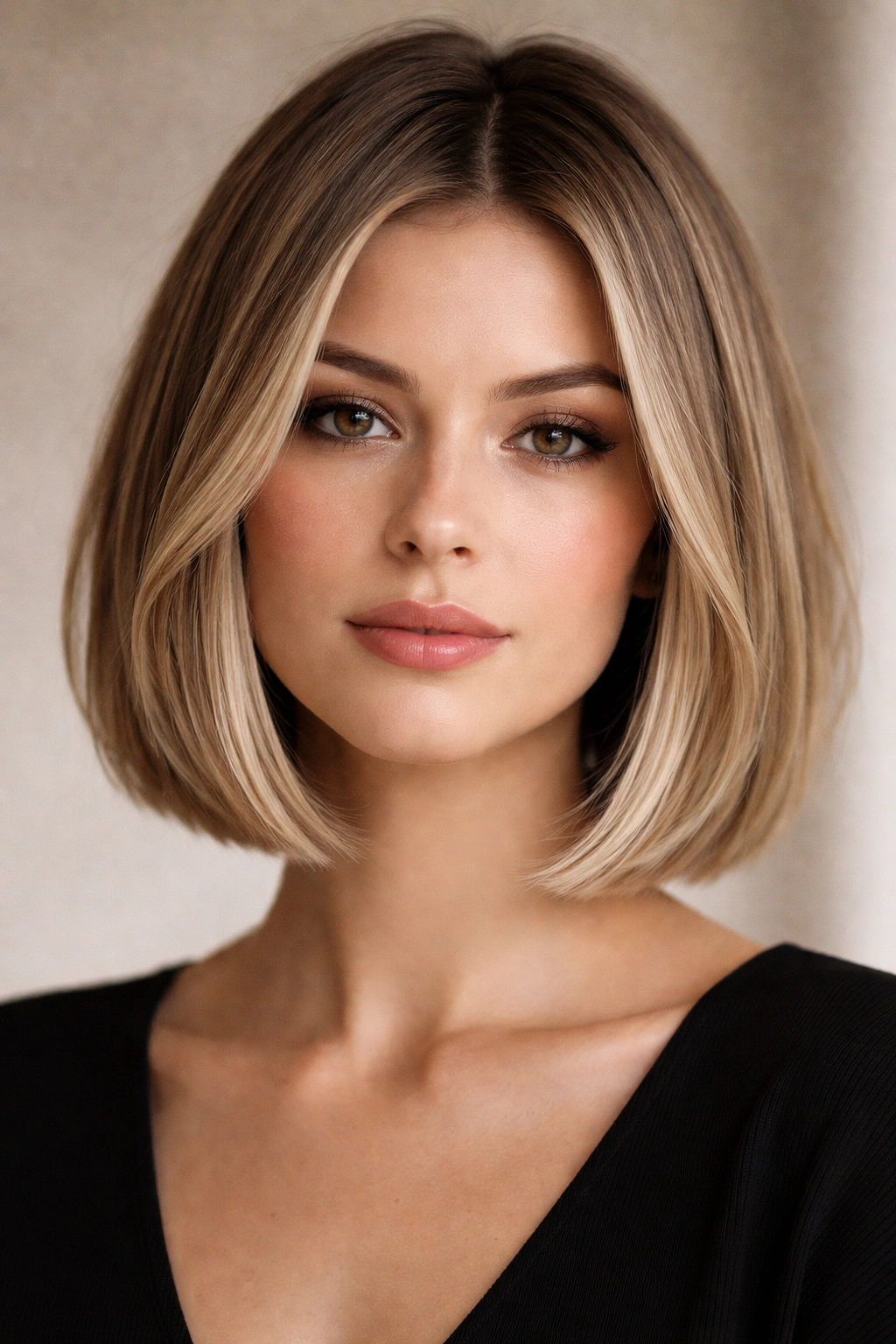
A blunt bob sits right at the chin and creates an immediate visual break in the vertical line of a long face. The key is the bluntness—a sharp, defined line at the bottom creates weight and width that visually shortens the face. When cut properly, this bob sits exactly where it creates maximum impact: at the widest part of your jawline.
Why It Works for Long Faces
A chin-length blunt bob creates a strong horizontal line that interrupts the vertical length of your face. The density of hair at the chin creates volume and presence exactly where a long face needs visual balance. Longer layers added throughout prevent the blunt line from feeling too severe while maintaining the width-creating cut line at the chin.
How to Style It for Maximum Impact
- Blow-dry with a round brush to add volume at the roots and create a subtle inward curve at the ends
- Use a flat iron to create a perfectly smooth, sleek finish that emphasizes the blunt line
- Add texture with a curling iron to create soft waves that add dimension without losing the structural cut
- Part it down the middle or slightly to the side depending on your preference—both work beautifully with this cut
Worth knowing: This cut requires regular trims every 4-6 weeks to maintain that crisp blunt line. As it grows out, you lose the width-creating effect that makes this style so flattering for long faces.
2. Long Waves with Face-Framing Layers
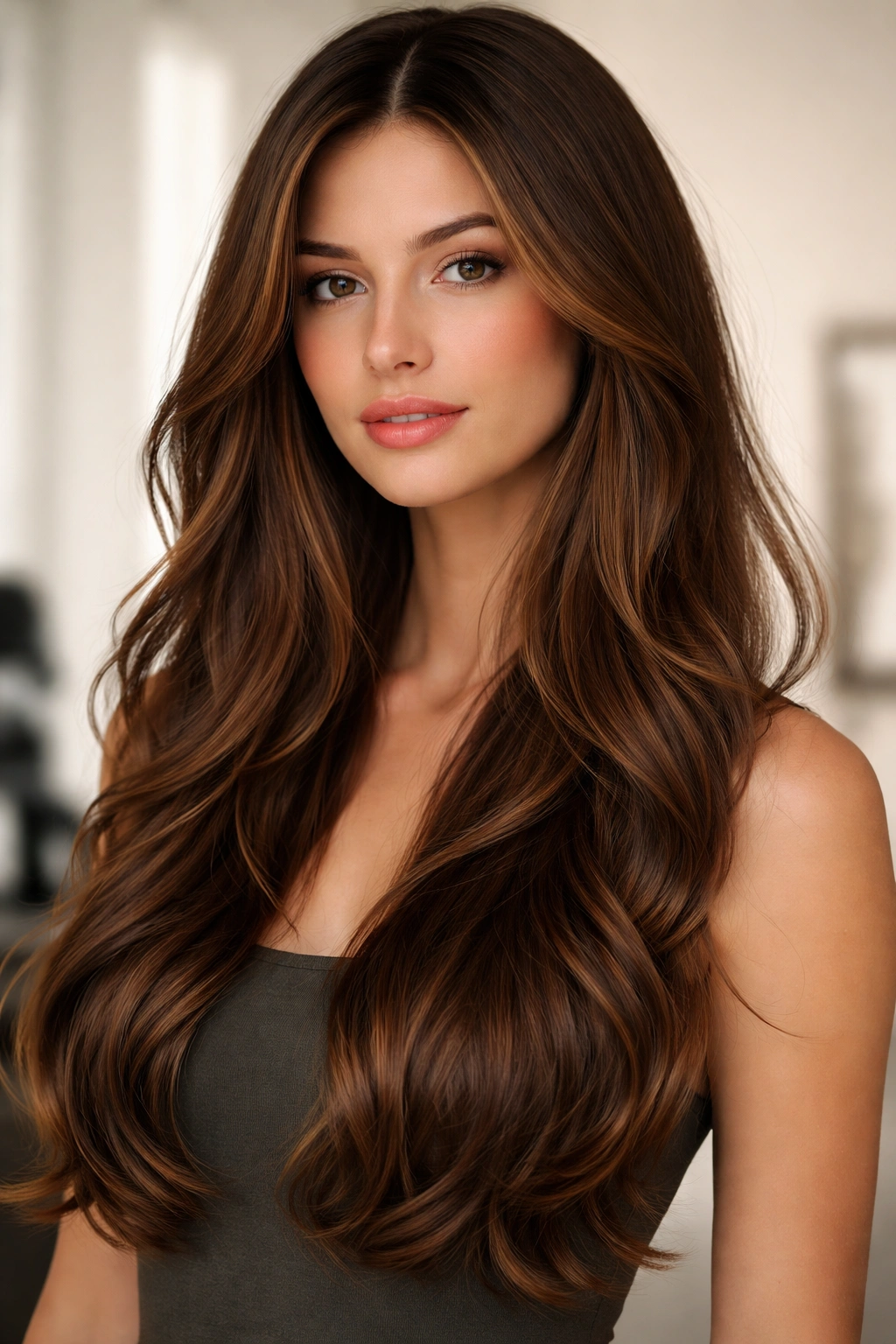
Long hair doesn’t have to make a long face look longer—not if you break it up strategically. This cut keeps your length while adding shorter layers around your face that create dimension and movement. The waves are essential here; they add texture that interrupts the straight vertical line that can emphasize length.
Why This Style Flatters Your Proportions
Face-framing layers positioned around your cheekbones and jawline draw attention horizontally rather than vertically. When you add waves throughout the length, the undulating texture creates visual interest that prevents your eye from traveling straight down. The layers also create shadows and highlights that add depth and make your face feel wider.
Styling Techniques That Make a Difference
- Use a large-barrel curling iron to create loose, relaxed waves rather than tight curls
- Curl away from your face on the front layers for a flattering frame
- Apply sea salt spray before styling to enhance texture and grip
- Dry brush through the waves gently to create that undone, dimensional look
Pro tip: Sleep on a silk pillowcase to preserve your waves overnight. This reduces friction and keeps your styling looking fresh for multiple days without needing to restyle.
3. Side-Swept Bangs with Shoulder-Length Cut
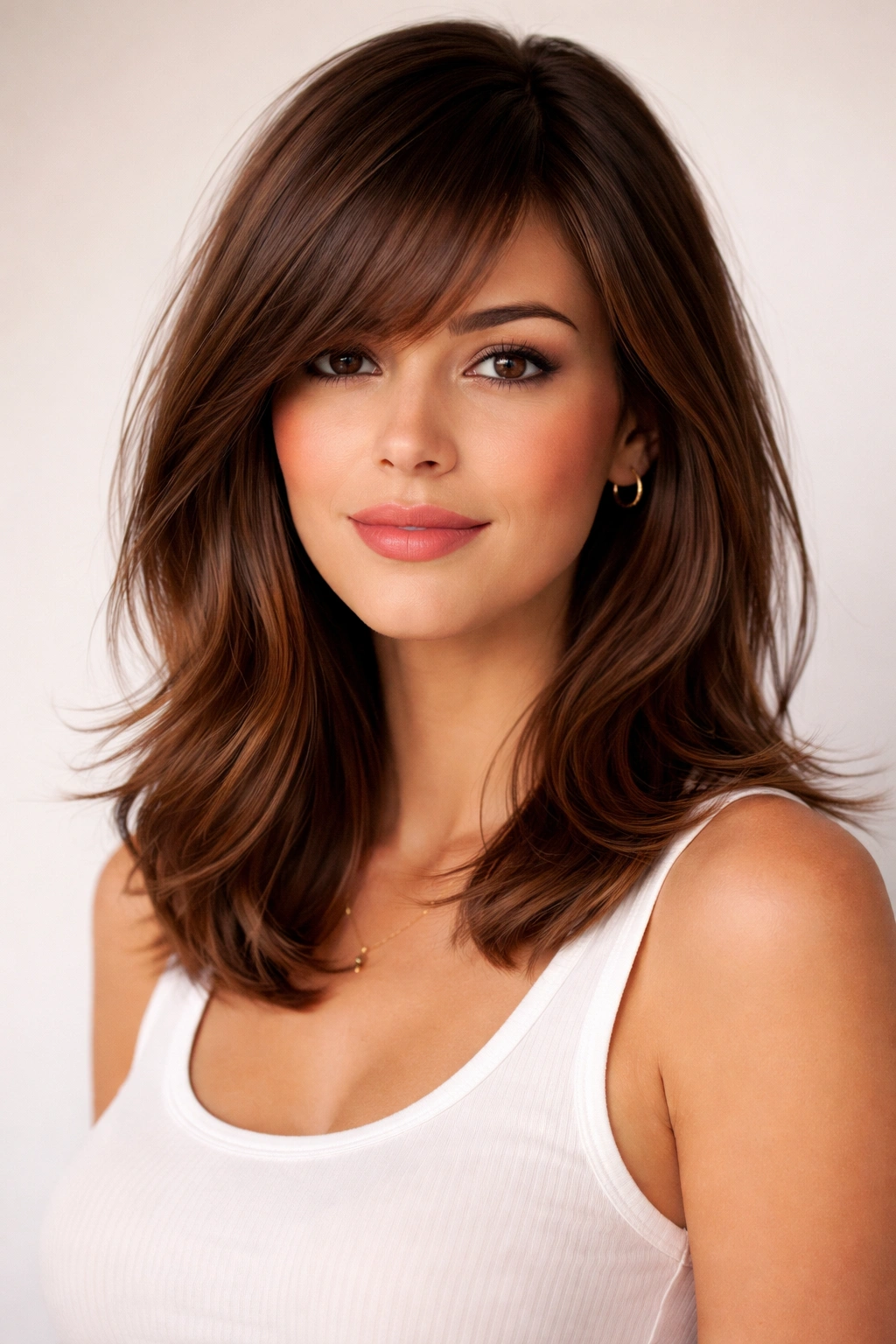
Side-swept bangs are a game-changer for long faces because they create an instant diagonal line that breaks up facial length. Paired with a shoulder-length cut, this style adds width right where you need it—through the shoulders and upper back—while the bangs visually shorten your face.
The Science of Side-Swept Bangs
A side-swept bang covers part of your forehead and extends diagonally across your face, creating a line that’s the opposite of vertical. This interruption of the long vertical plane is exactly what balances long face proportions. The angle should hit somewhere between your cheekbone and the corner of your eye for maximum flattering effect.
Cut and Styling Details
- Side-swept bangs should be longer on one side (hitting around your cheekbone) and angled shorter toward the other side
- Keep your shoulder-length layers longer and more subtle to maintain flow and movement
- Blow-dry your bangs with a round brush to create a smooth, sleek curve
- Use a texturizing spray on your lengths to add grip and prevent them from looking flat
Insider note: Side-swept bangs require regular maintenance—trim every 3-4 weeks as they grow out. The style only works when the angle is precise and the bangs aren’t too heavy.
4. Textured Pixie with Grown-Out Layers
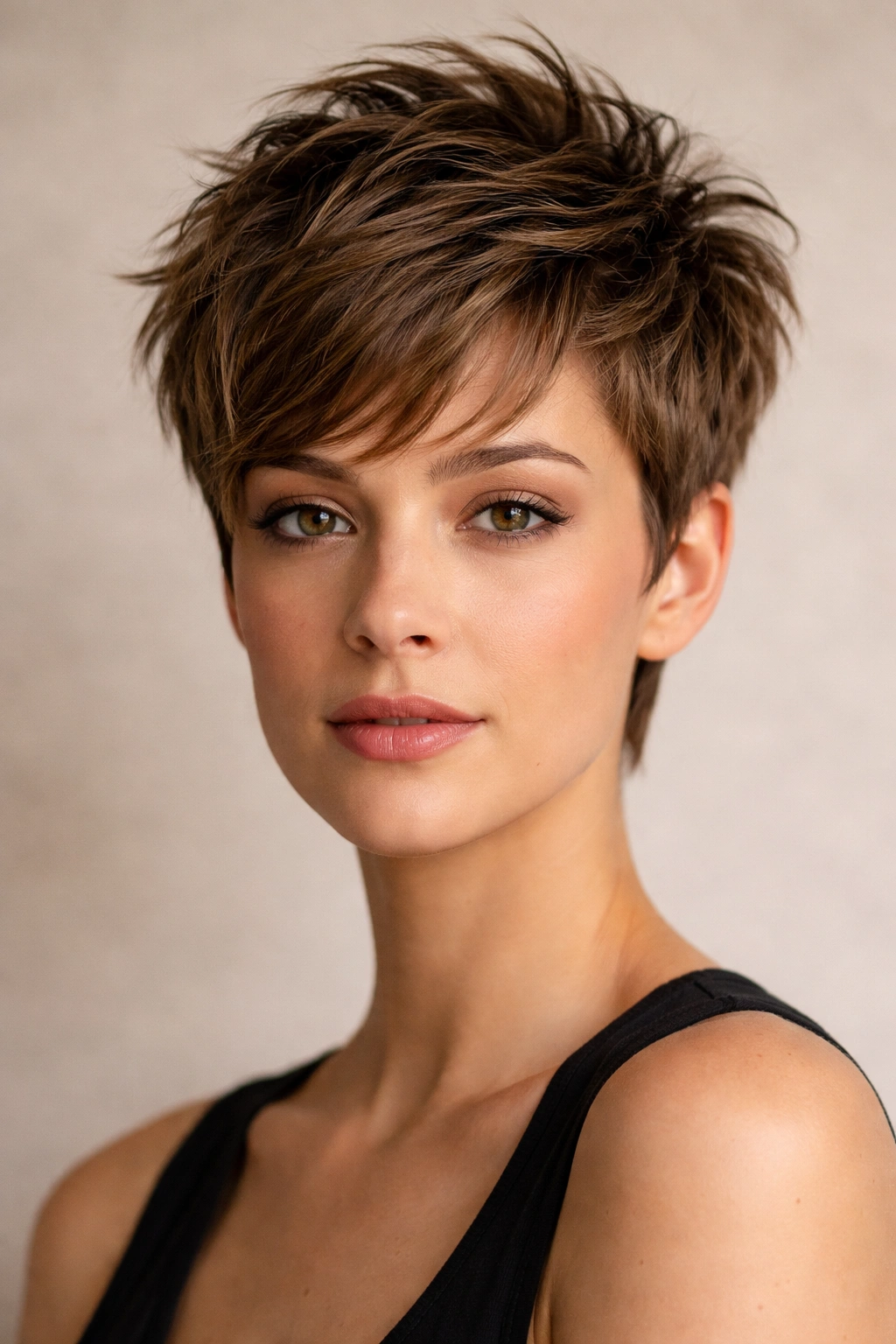
Don’t assume short hair makes a long face look longer. A textured pixie with intentional length variation on top actually creates width and visual interest that balances long proportions. The key is avoiding a slicked-back look; instead, embrace texture and movement on top.
Why Short Can Work for Long Faces
A pixie cut with grown-out, textured layers on top creates height and volume at your crown, which visually widens your face. The short sides and back don’t add vertical length, while the textured top adds dimension and prevents the severe, elongating look of a sleek short cut. This style works because it plays with proportions rather than following them.
Styling Your Textured Pixie
- Use a styling cream or texture paste on damp hair and rough-dry with your fingers for maximum texture
- Blow-dry upward and outward to create volume on top
- Avoid slicking it back flat—the whole point is dimension and movement
- Tousle with your fingers throughout the day to refresh the textured look
What to know: This cut requires visits every 4-6 weeks to maintain the shape and keep the layers looking intentional rather than just grown-out. The styling is quick but intentional—you’re creating texture, not smoothness.
5. Voluminous Curls at the Roots
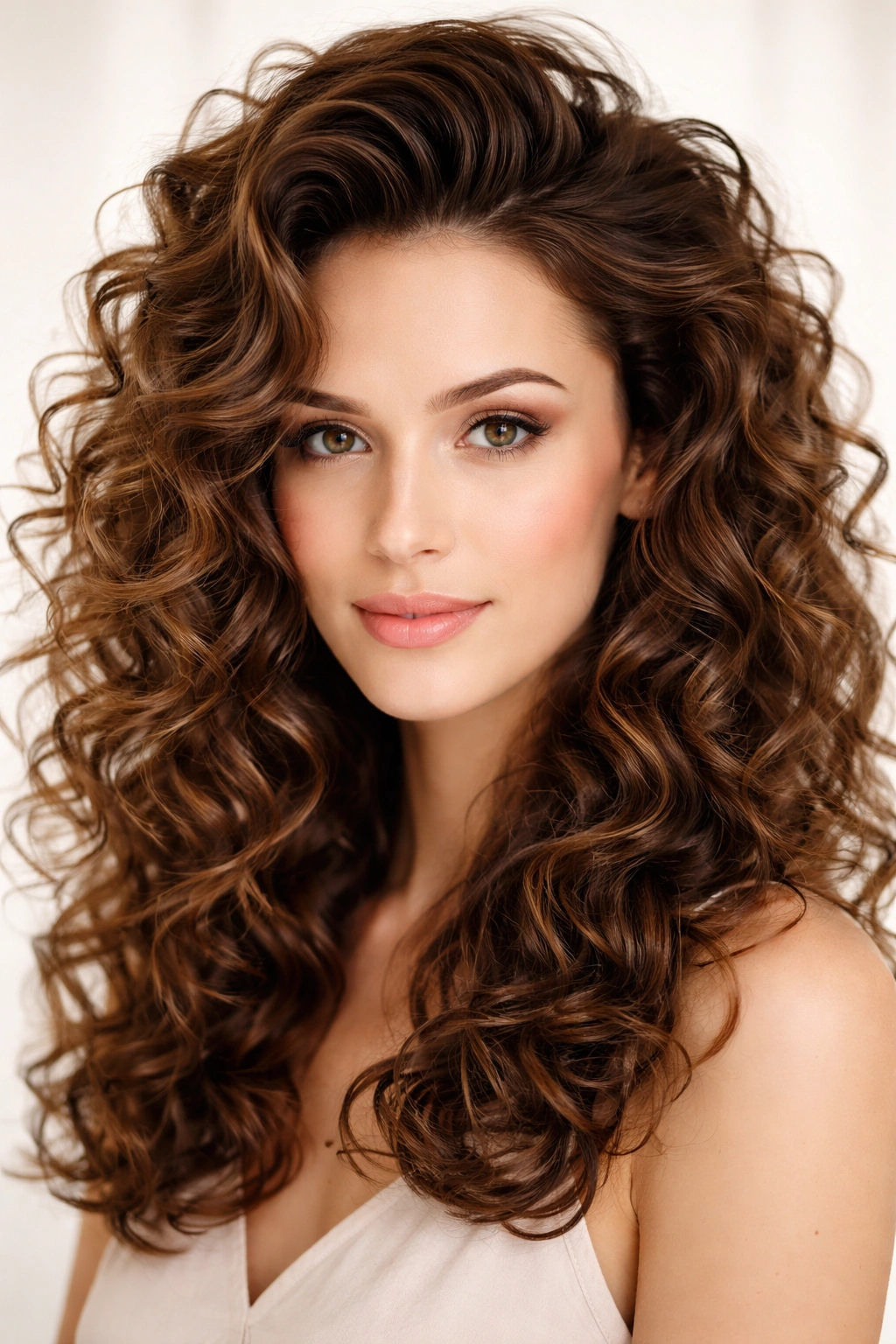
Here’s something most people miss: you don’t need to add width through the sides if you create volume at the crown. Voluminous curls concentrated at your roots create height that visually shortens a long face. The curls also break up vertical lines with their undulating texture.
How Root Volume Changes Your Face Shape
When curl and volume sit right at your scalp, they expand the visual space at the top of your head. This expansion creates better proportion with the length below it. The effect is subtle but noticeable—your face feels less elongated because the focal point has shifted upward. This works with any length of hair.
Creating and Maintaining Root Volume
- Use a volumizing mousse on damp roots before blow-drying for long-lasting lift
- Blow-dry your roots with your head tilted forward to maximize volume
- Use a round brush underneath your hair at the roots to create lift and direction
- Refresh roots between washes with dry shampoo applied at the scalp
- Set volume with a light hairspray so it lasts through the day
Worth knowing: Root volume is easier to create and maintain on second or third-day hair, when natural oils give your hair more grip. Fresh-from-the-shower hair is slippery and harder to style with lasting volume.
6. Side Part with Asymmetrical Length
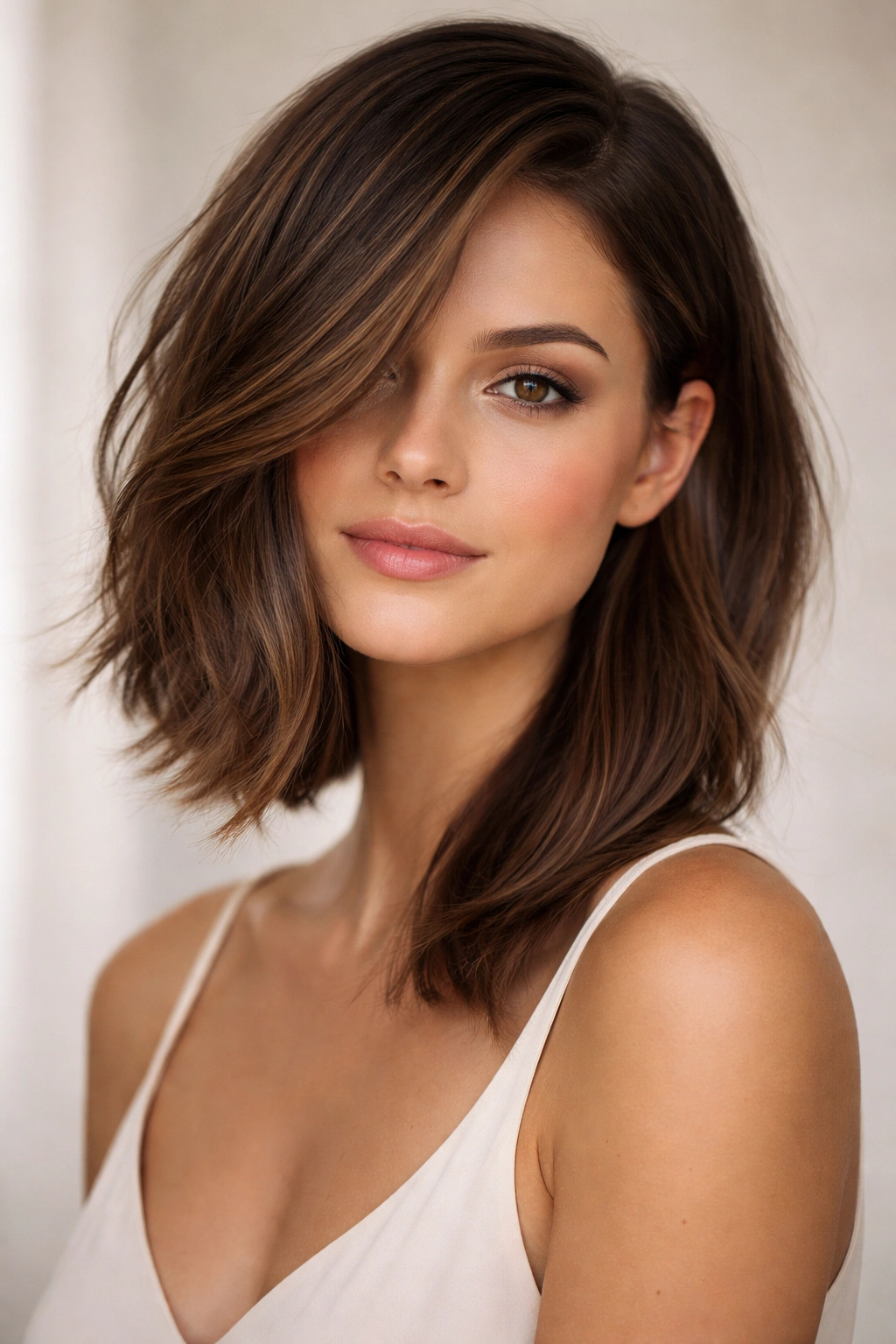
An asymmetrical cut with one side noticeably longer than the other creates a diagonal line across your face and breaks up the vertical proportion. Pair this with a side part that emphasizes the asymmetry, and you’ve got instant balance for a long face shape.
Why Asymmetry Works
Asymmetrical length prevents your face from appearing symmetrically long. When one side is shorter (hitting around the chin) and the other is longer (hitting past the shoulder), the uneven line draws the eye across rather than down. A deep side part emphasizes this horizontal movement and creates additional visual width on the longer side.
Cutting and Styling for Best Results
- The shorter side should hit around your chin or jawline for maximum face-framing effect
- The longer side extends past your shoulder, creating that distinctive asymmetrical silhouette
- Part deeply on one side (usually the side of your shorter length) to emphasize the asymmetry
- Style with movement and texture rather than sleekness so the cut remains the focal point
- Blow-dry each side separately, curving the shorter side slightly inward and the longer side with a wave
Pro tip: This cut works best when it’s intentionally edgy and modern. Avoid making it look like a grow-out error—the asymmetry should be obvious and purposeful.
7. Wispy Bangs with Straight Hair
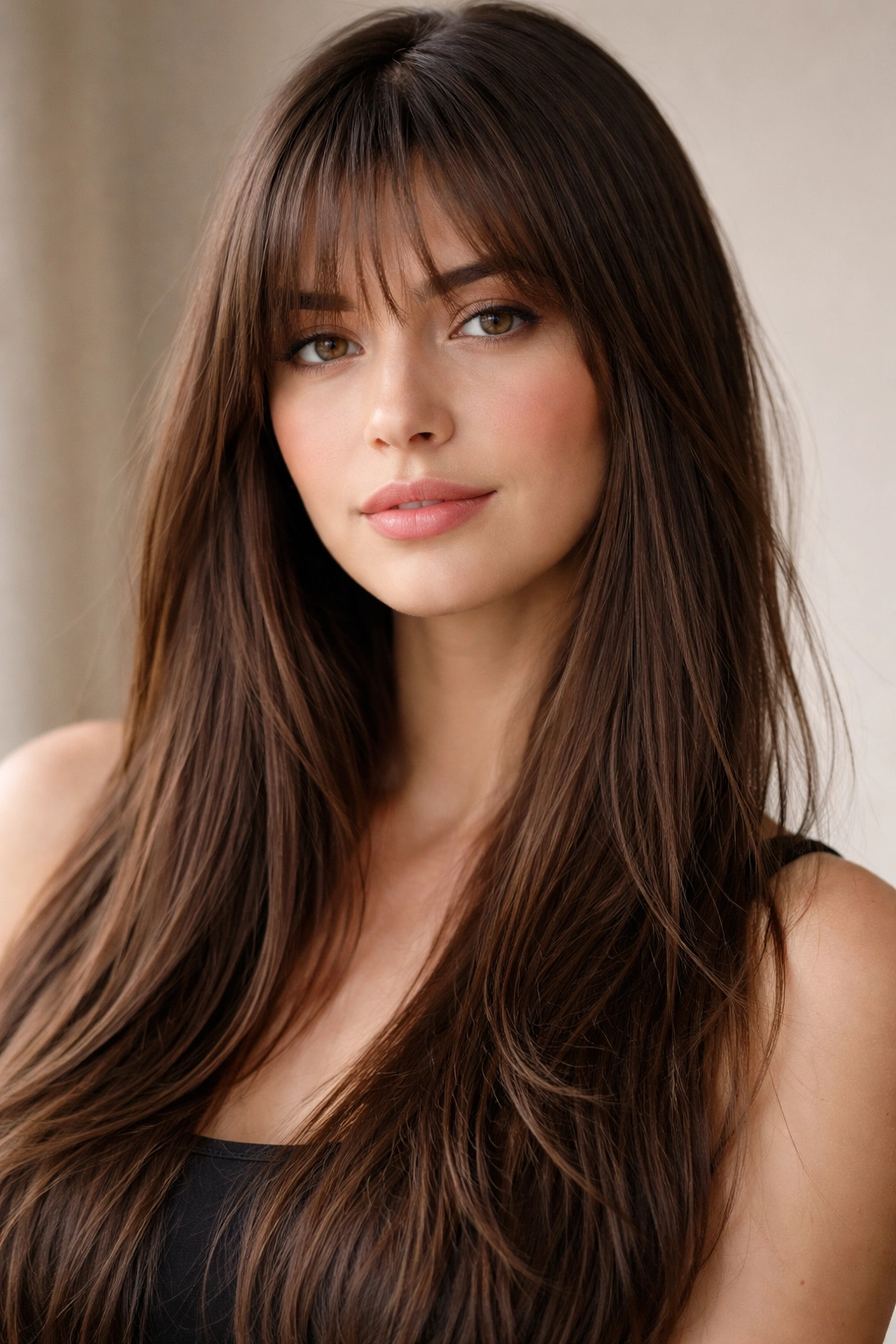
Wispy bangs are lighter and less dense than blunt bangs, which means they create the illusion of shortening your face without the heaviness. Paired with long, straight hair, they create a delicate, flattering frame that many find more comfortable than heavier fringe styles.
The Subtle Power of Wispy Bangs
Wispy bangs work by creating visual interruption without visual weight. They sit across your forehead and upper face, breaking the vertical line, but because they’re fine and feathered, they don’t feel heavy or severe. This makes them a great option if you’ve never worn bangs before or if you prefer a softer aesthetic.
Styling Wispy Bangs Effectively
- Blow-dry bangs to the side slightly, creating a feathered, separated look rather than a blunt line
- Use a fine-tooth comb to separate individual sections while drying for that wispy texture
- Apply a texturizing spray to bangs while damp to enhance the feathered effect
- Trim every 3-4 weeks to maintain the wispy, feathered shape—they lose their effect quickly as they grow out
- Keep the rest of your hair straight and smooth so the bangs remain the textural focus
What to watch for: Wispy bangs can look stringy or thin if they’re cut too fine. Your stylist should create enough substance that the bangs look intentional rather than sparse.
8. Half-Up, Half-Down Hairstyle
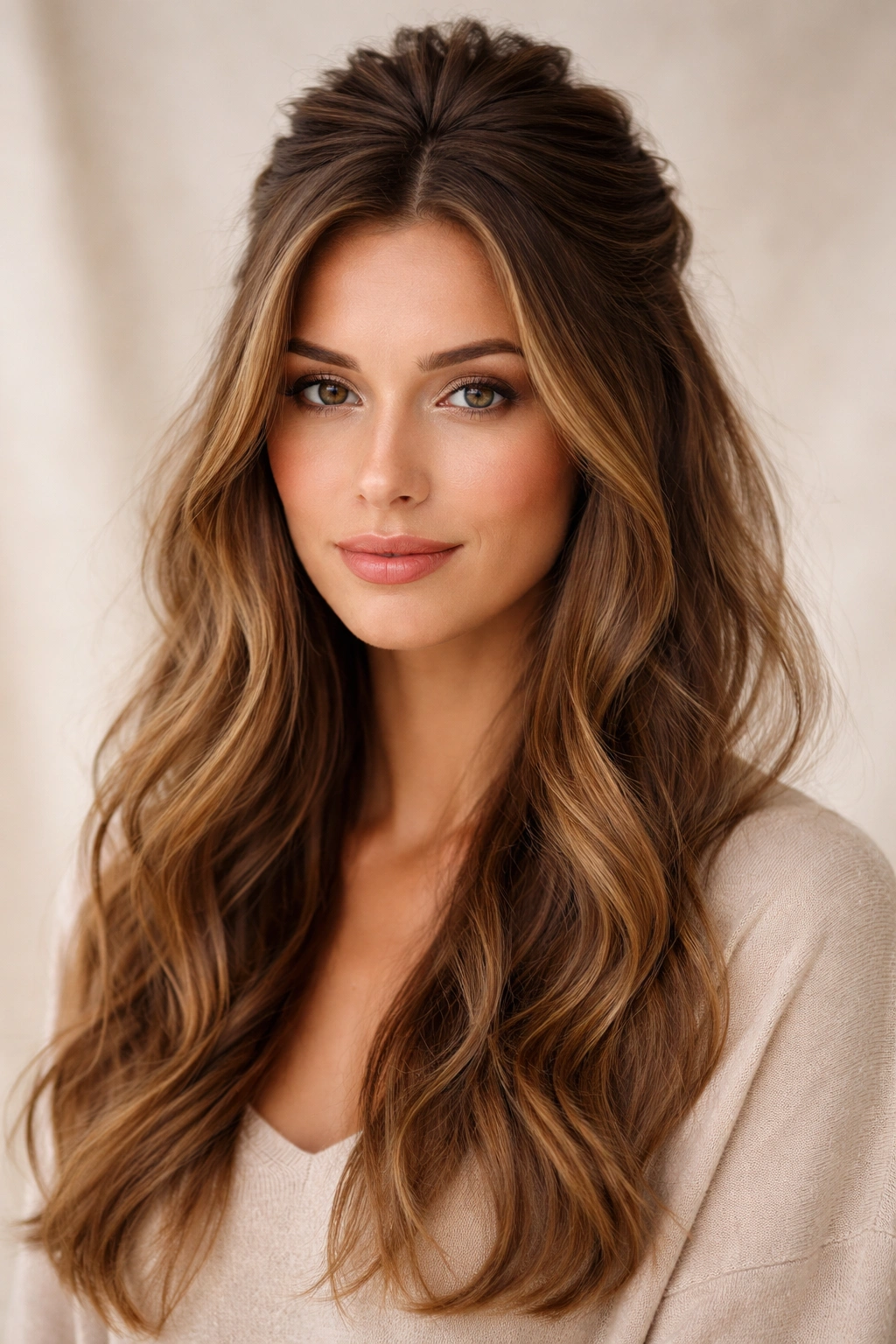
The half-up, half-down style is genius for long faces because it combines the best of both worlds—it adds height at the crown while framing your face with loose strands. This hairstyle visually shortens your face by creating a horizontal line at the back of your head where the hair is gathered.
Why This Style Balances Your Features
A half-up style pulls hair away from your face, emphasizing your features clearly, while the gathering point creates a visual line that interrupts facial length. The loose hair below adds volume and movement without the elongating effect of all-down hair. You get the proportioning benefits of an updo with the softness of down hair.
Creating the Perfect Half-Up Style
- Start with hair that has texture or waves—sleek straight hair can look too flat in this style
- Gather the upper portion at the crown, slightly off-center for a more interesting look
- Use a clear elastic or bobby pins to secure—bobby pins are easier to hide in textured hair
- Leave face-framing pieces loose around your cheeks and jawline
- Gently pull and tousle the gathered section to create fullness and dimension
Insider note: This style works best when you don’t gather hair too tightly. Loose, relaxed gathering looks more modern and flattering than a precise, pulled-back version.
9. Shaggy Layers Throughout
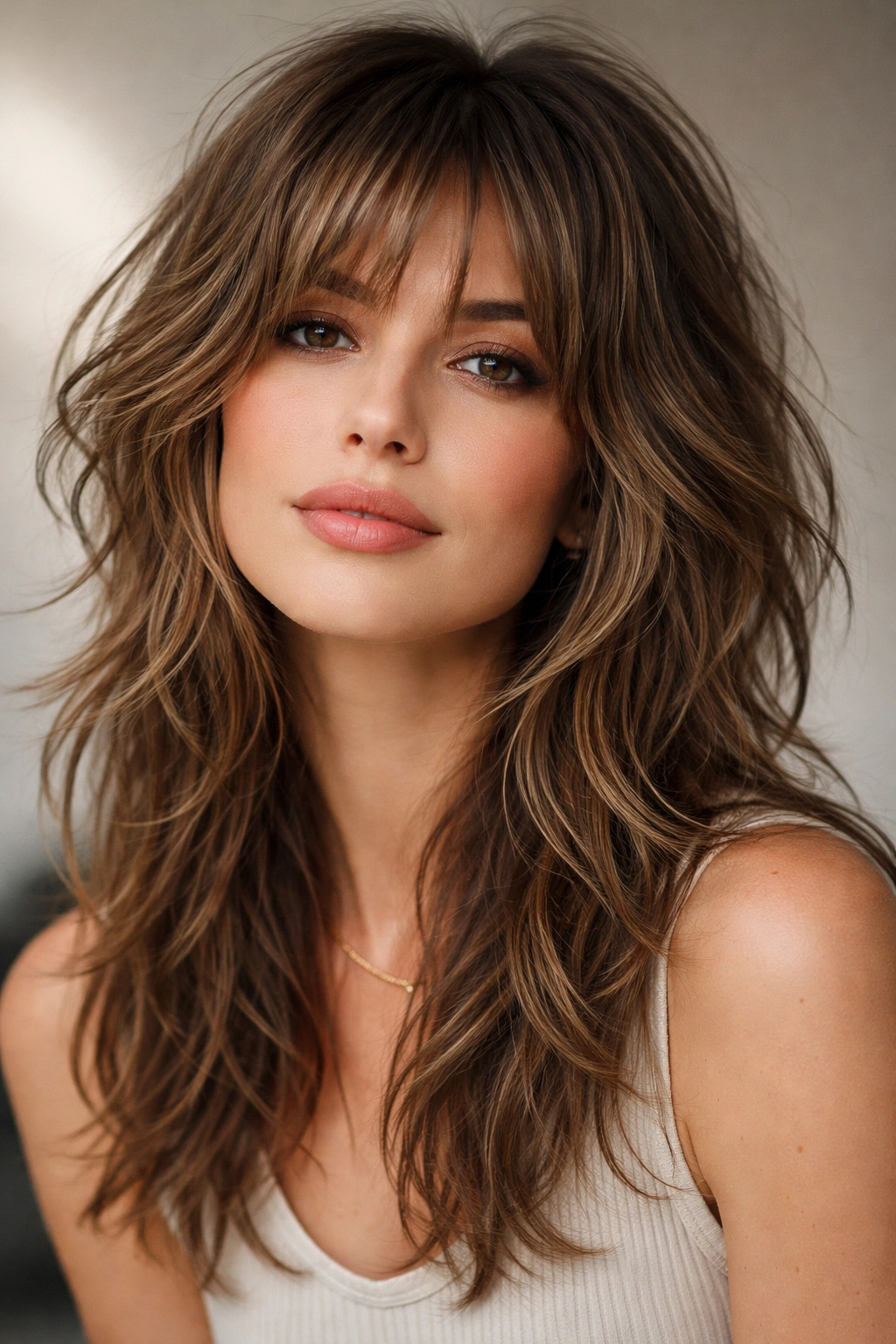
Shaggy layers create movement and texture throughout your entire length, which interrupts vertical lines and adds visual interest. Unlike a blunt cut, shaggy layers prevent your hair from looking too long because the varying lengths constantly shift where the eye focuses.
How Shaggy Layers Create Balance
Layers at different lengths create visual texture that prevents your eye from traveling straight down your hair. Each layer catches light differently, creating shadows and highlights that add dimension. This dimension is what prevents length from feeling overwhelming. A shaggy cut also tends to be fuller and bouncier, which adds width through movement.
Styling Shaggy Layers Effectively
- Use a texturizing spray or sea salt spray on damp hair to enhance the shaggy texture
- Rough-dry with your fingers or a diffuser to encourage natural texture and movement
- Avoid blow-drying smooth—the whole point is texture and layers, not sleekness
- Curl the ends slightly with a curling iron to emphasize the layers and add bounce
- Embrace some movement rather than trying to control every strand
Worth knowing: Shaggy layers require more frequent trims (every 6-8 weeks) to maintain their shape and prevent them from looking like a grown-out mess. This style is higher maintenance than a blunt cut.
10. Deep Side Part with Layers
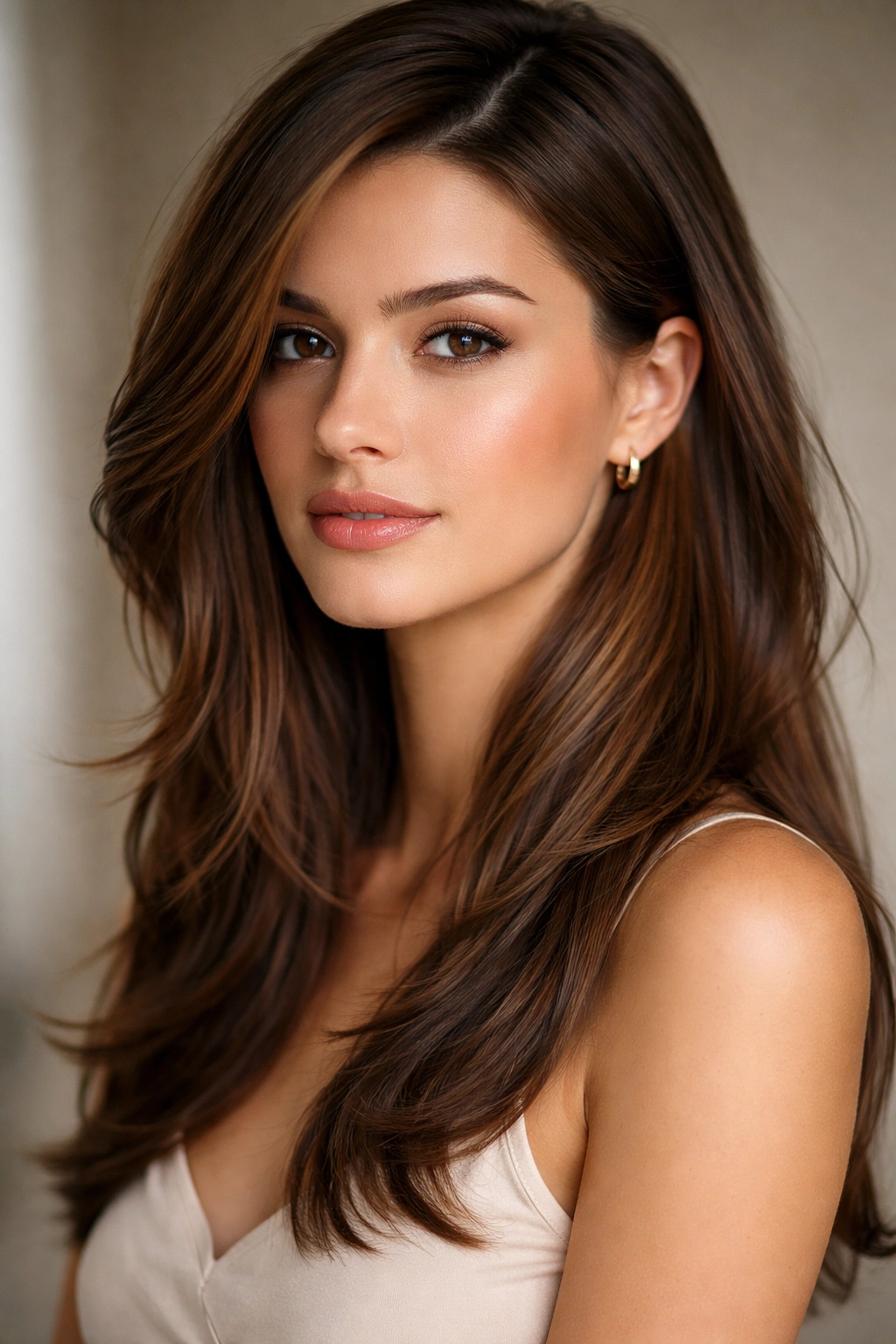
A deep side part that’s dramatically off-center creates a diagonal line across your face that visually shortens it. When combined with layers that frame your face, this styling approach becomes incredibly flattering for long face shapes.
The Flattering Geometry of a Deep Side Part
A side part positioned far to one side creates a strong diagonal line from your scalp down across your forehead and face. This diagonal is the opposite of vertical, which means it counteracts the vertical elongation of a long face. The deeper the part, the more pronounced this effect becomes.
Creating Volume and Movement with a Side Part
- Part your hair at least 2-3 inches from the center for a truly “deep” side part
- Blow-dry the smaller side smoothly and the larger side with volume at the roots
- Tease gently at the roots on the larger side to create additional volume and height
- Use clips to create volume at your crown while your hair is still damp, then remove before styling
- Add layers that fall across your face from the deeper side, framing your cheekbones and jawline
Pro tip: A deep side part looks more modern and intentional when paired with undone waves or texture rather than with perfectly smooth, sleek hair.
11. Textured Shoulder-Length Bob
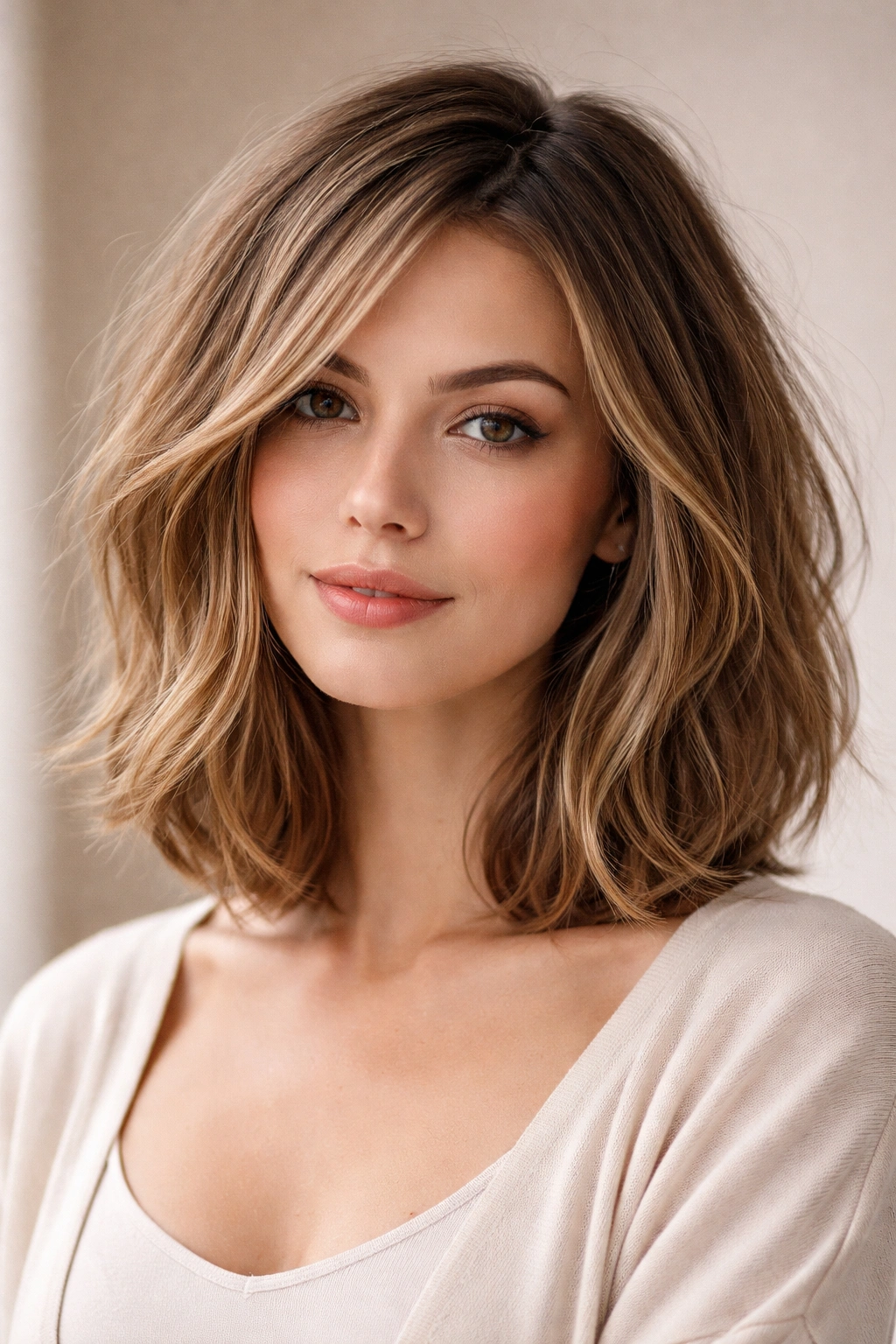
A shoulder-length bob with plenty of texture hits right at the widest part of your shoulders, creating volume and width exactly where you need it. The texture prevents it from looking heavy or blunt, keeping the style feeling modern and flattering.
Why Shoulder-Length Adds Width
Hair that falls at shoulder-width creates an optical illusion where the volume of your hair at that point appears to widen your face. Unlike a chin-length bob that focuses width at your jaw, a shoulder-length bob spreads that visual width across your upper torso, which makes your face feel smaller and better proportioned in comparison.
Achieving the Perfect Textured Look
- Layers throughout create texture without removing length
- Avoid a blunt line at the ends—layers should be subtle and create a softer finish
- Blow-dry with a round brush to create volume and movement rather than sleekness
- Use a texturizing spray while damp to enhance the texture throughout
- Tousle with your fingers while drying to encourage separation and movement
What to know: This cut sits in a sweet spot between a short bob and long hair—it’s versatile enough to style multiple ways but structured enough that it looks intentional and flattering even on a lazy hair day.
12. Face-Framing Highlights with Subtle Waves
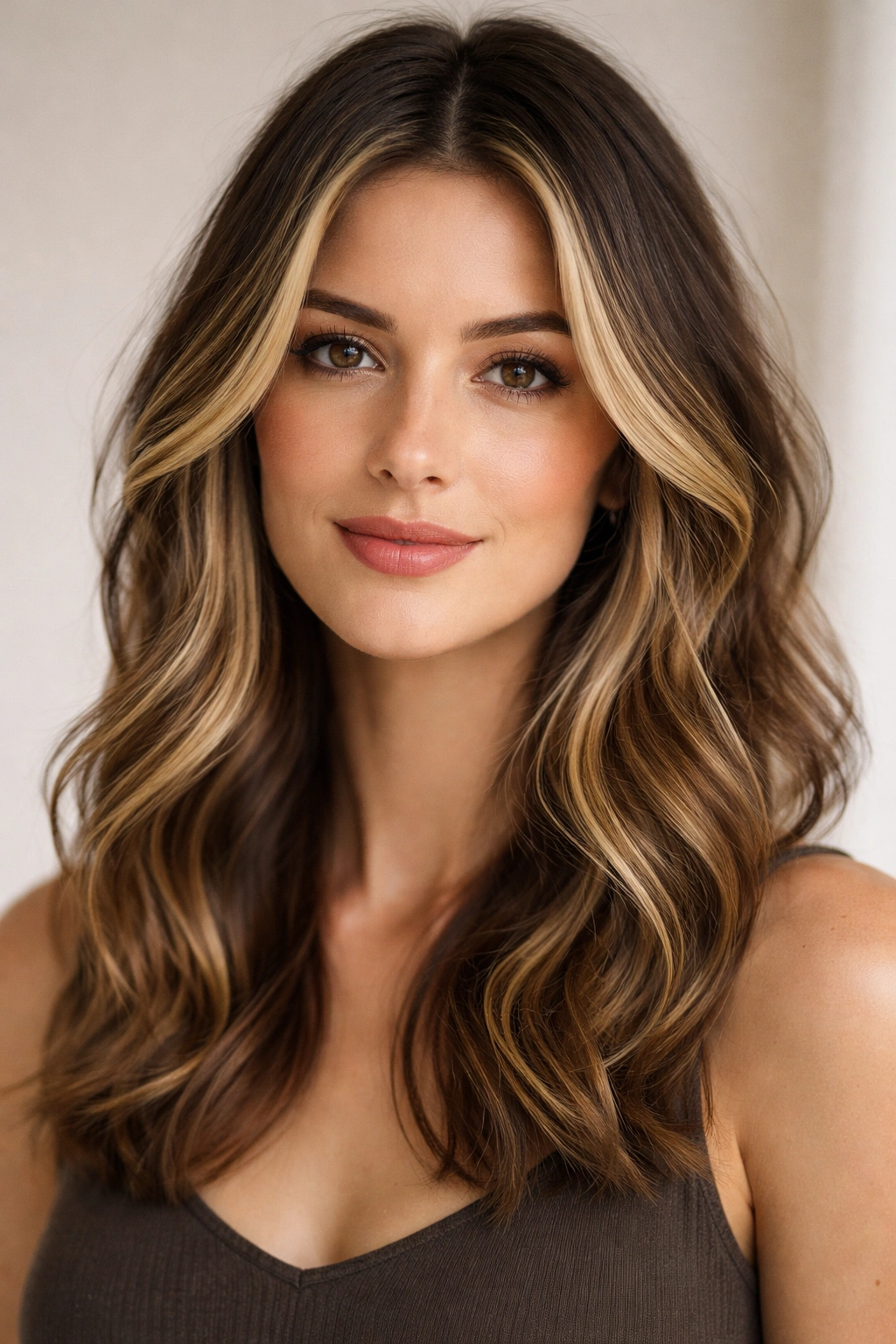
Sometimes the answer isn’t just the cut—it’s what you do with color and dimension. Strategic face-framing highlights paired with subtle waves create visual interest that breaks up facial length and draws attention to your cheekbones and jawline rather than the length of your face.
How Highlights Create Dimension and Balance
Lighter, brighter highlights positioned around your face draw light and attention to your features horizontally. When these highlights are paired with subtle waves, they create movement and texture that interrupts vertical lines. This combination of color, light, and movement makes your face feel more balanced even if your cut hasn’t changed dramatically.
Styling to Maximize This Effect
- Ask your colorist for face-framing highlights that start around your cheekbones and extend down
- Use a subtle wave pattern rather than tight curls—the effect should be soft and undone
- Blow-dry with a large-barrel curling iron to create loose waves that catch the light
- Use a shine spray or luminizing product to enhance the glow of your highlights
- Tousle waves with your fingers to create an effortless, lived-in look
Insider note: This approach works beautifully whether your hair is long or medium-length. The color and movement do the heavy lifting in terms of visual balance, so you have flexibility in how much you cut.
Final Thoughts
The right hairstyle for a long face isn’t about conforming to rigid rules—it’s about understanding how proportions work and making strategic choices that create visual balance. Whether you choose a blunt bob, long waves with layers, textured movement, or strategic color, the goal is the same: create width where you need it, break up vertical lines, and frame your features in a way that makes you feel confident and beautiful.
Your face shape is just information. It’s not a limitation. Every style above works because it addresses proportion thoughtfully, but that doesn’t mean you can’t experiment and find what resonates with your personal style. The best hairstyle is the one that makes you feel like yourself—flattering, yes, but also genuinely you. Talk to your stylist about your face shape and these approaches, bring reference photos of styles that appeal to you, and trust the process of finding what works best for your unique features and lifestyle.
