



Gray hair isn’t something to work around or against—it’s an opportunity to completely transform your look with confidence. If you’re considering going shorter, you’re already thinking smart. Short haircuts don’t just flatter gray and silver tones; they actually celebrate them, creating striking contrast and dimension that longer hair simply can’t achieve. A well-chosen short style can take you from invisible to unforgettable, and the maintenance becomes easier, not harder.
The real advantage of pairing short hair with gray? The texture and movement of a great cut become your defining feature instead of being obscured by length. Gray hair tends to have a different texture than pigmented hair—often slightly coarser and with more personality—which means short styles that play into that natural texture look absolutely stunning. You’re not just getting a haircut; you’re making a bold statement about accepting exactly who you are right now.
What makes finding the right short style tricky is that not every cut works equally well for every face shape, hair texture, or lifestyle. Some women need softness around their jawline, while others rock geometric precision. Some prefer wash-and-go ease, while others love styling options. That’s why I’ve pulled together ten specific short haircuts designed to work beautifully with gray hair—each one chosen because it actually complements silver tones and plays to the strengths of shorter styles. Whether you’ve been gray for years or you’re just beginning to embrace the transition, one of these will be your perfect match.
1. The Silver Pixie
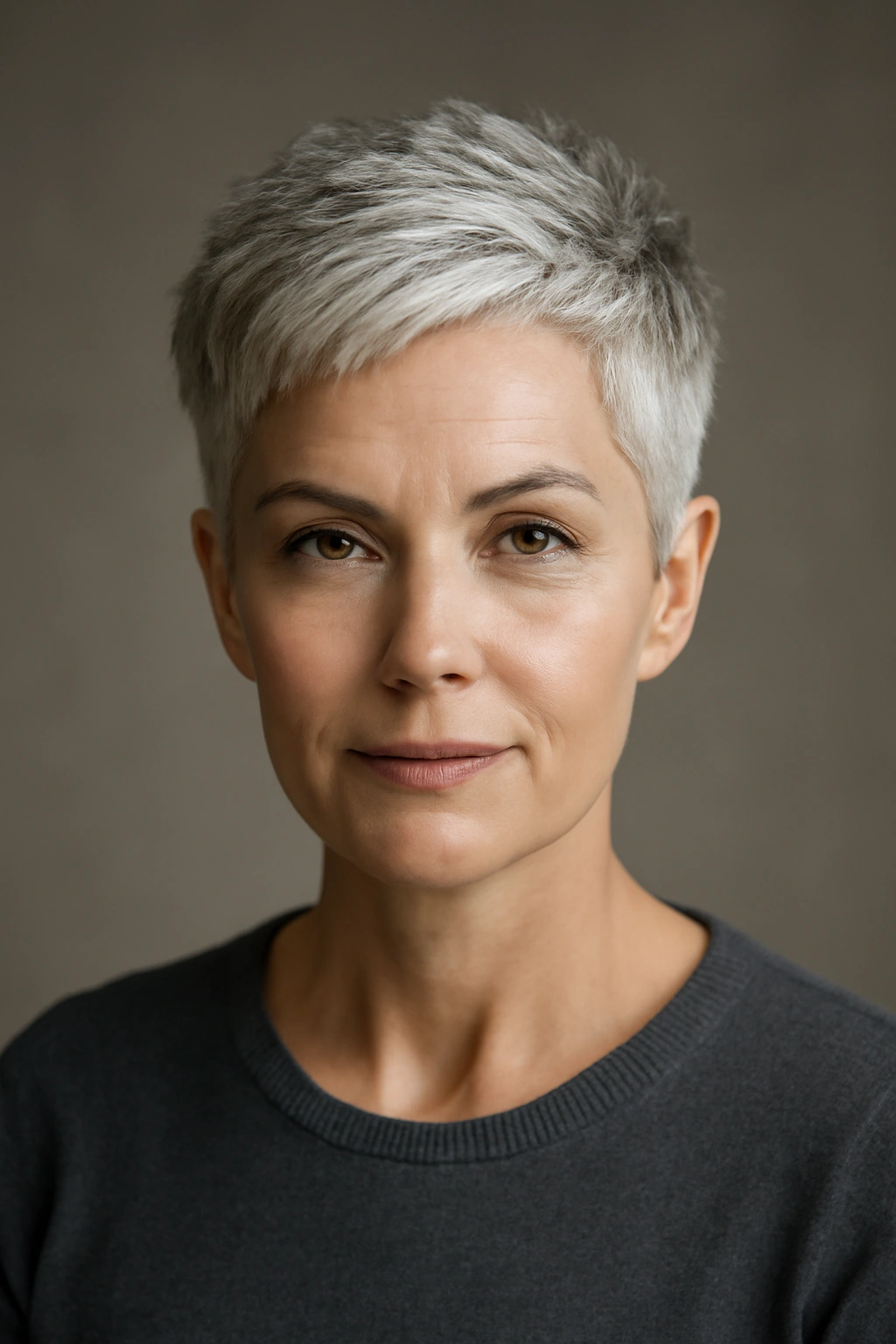
A pixie cut is short, cropped close to the head on the sides and back, with slightly more length on top that can be styled with movement or kept sleek. Think 1-2 inches on the sides and 2-3 inches at the crown, allowing just enough length to texturize or add a side sweep. This is the haircut that makes a statement—there’s no hiding behind length, which is exactly why it works so beautifully with gray hair.
Why This Works with Gray Hair
The pixie is the ultimate gray-hair haircut because the short length means your silver tones have nowhere to hide and nothing competing for attention. The light reflection off shorter hair actually intensifies the luminosity of gray, making it appear more radiant than it would at longer lengths. You’re not fighting with outgrowth, shadow roots, or the visual weight that longer hair can create. Gray hair at pixie length reads as intentional, sophisticated, and modern—not transitional. Plus, the lack of length means any coarse texture or wave in your gray hair becomes an asset, not a liability.
Styling and Maintenance Essentials
- This cut requires trims every 3-4 weeks to maintain clean lines, especially if you’re keeping the sides very short
- Styling is genuinely minimal—most mornings you’ll apply a light texture cream and run your fingers through while your hair dries naturally
- Ask your stylist for slightly longer layers throughout rather than a completely uniform length; this creates movement and prevents a helmet-like appearance
- A side-swept pixie adds femininity while still keeping you in the short-hair category; you can style the longer piece forward for a softer look or back for more edge
2. The Textured Bob
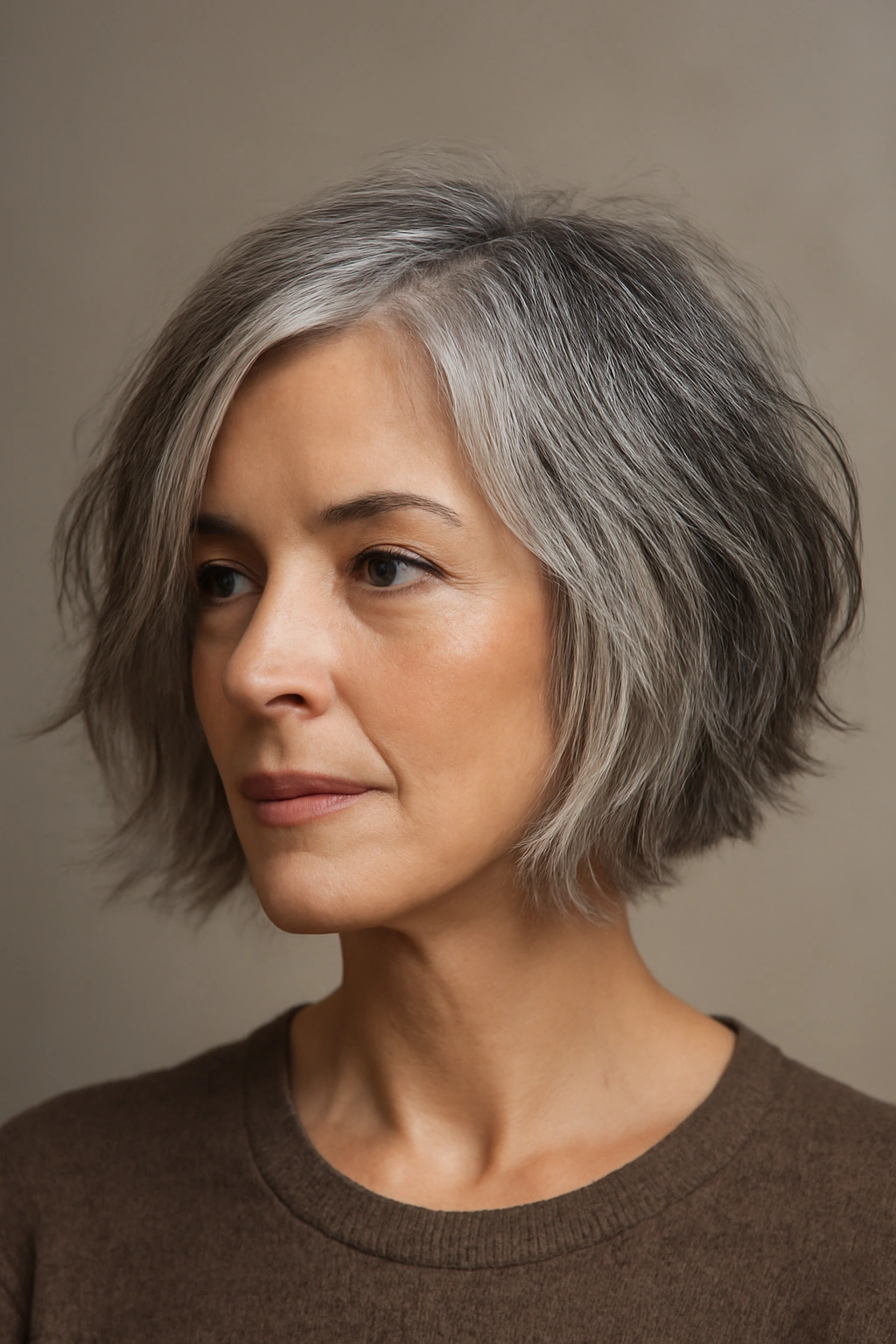
A textured bob sits right at your jawline or slightly shorter, created with choppy, piecy layers throughout that disrupt any bluntness and add immediate dimension. Instead of one uniform length, you’re getting strategic breakage created by choppy cutting or point-cutting that makes the hair move and overlap. This style typically measures 2-4 inches long, giving you a bit more versatility than a pixie while maintaining that sharp, modern feeling.
Why Texture Changes Everything with Gray Hair
Gray hair actually holds texture beautifully—maybe even better than pigmented hair because the slightly coarser texture takes to choppy cutting and creates visual interest naturally. A blunt bob can sometimes look flat or severe on gray hair, but the moment you add layers and texture, it becomes dynamic and youthful. The choppy pieces catch light differently, creating visual movement that prevents the cut from feeling heavy or aging. You’re essentially building in highlights and dimension through the cut itself rather than relying on color dimension.
How to Get the Look and Keep It Fresh
- This cut works on most face shapes, but it’s especially flattering if your stylist angles the layers slightly forward at the jawline; this creates a subtle frame that’s never harsh
- Styling takes maybe 5 minutes: blow-dry with a round brush for volume at the roots, scrunch the pieces while damp to encourage texture, and finish with a texture paste or salt spray
- The textured bob looks great grown out a little bit because the choppy layers mean you don’t get an awkward mullet phase; you can go 6-8 weeks between cuts if you’re flexible
- Ask your stylist to point-cut or razor-cut the ends rather than using blunt scissors; this creates the lived-in texture that makes gray hair look intentional rather than unkempt
3. The Modern Shag
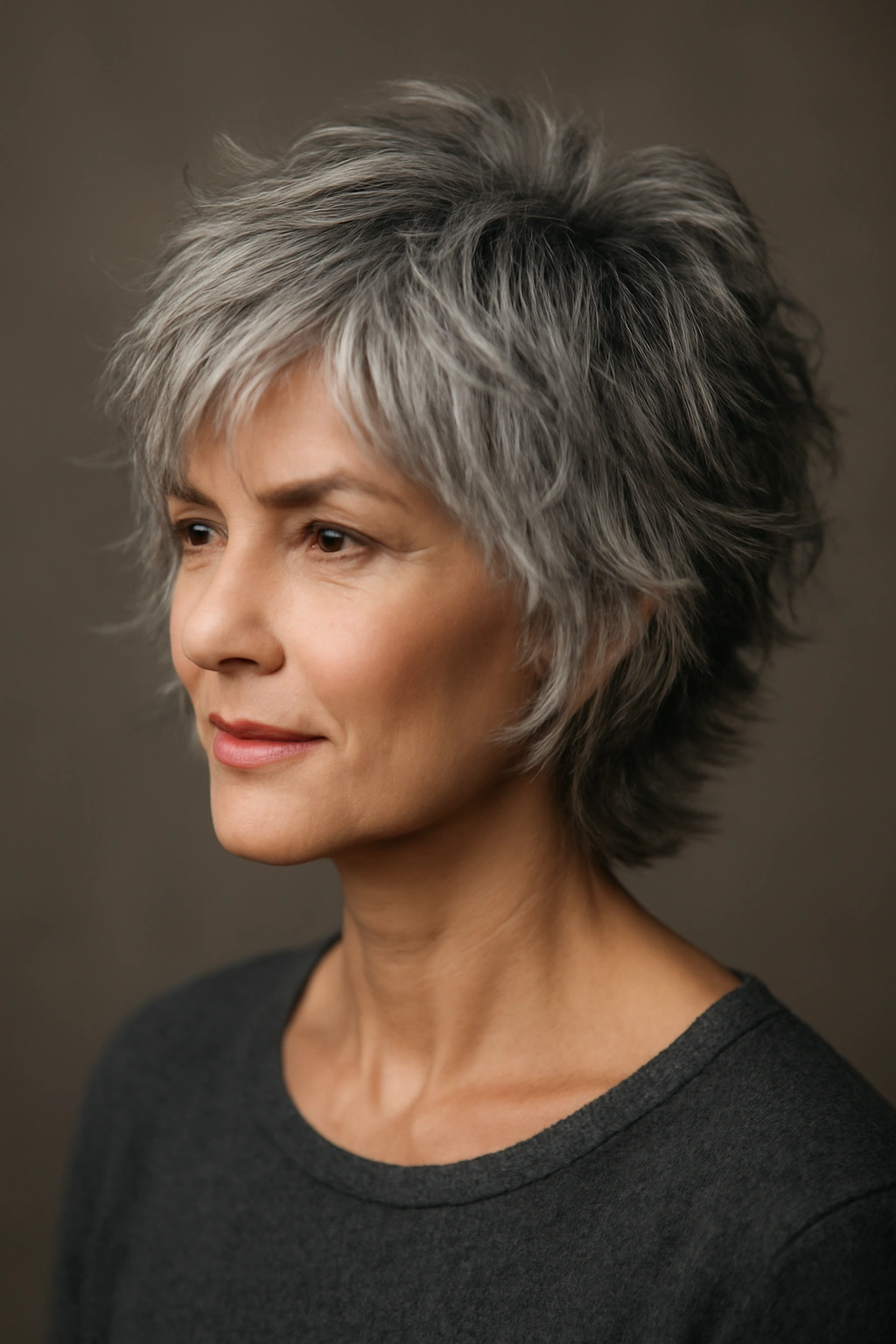
A shag is layers stacked throughout the entire head, with shorter, choppy pieces on top creating height and volume, and longer pieces underneath—usually 2-3 inches at the crown and 4-5 inches at the bottom. It’s textured chaos that somehow becomes incredibly chic, and when executed well, it’s one of the most flattering cuts for medium-short hair with gray tones.
The Shag and Silver: A Perfect Pairing
The beauty of a shag with gray hair is that it practically demands texture and movement, which gray hair often provides naturally. Those longer pieces underneath catch light, showing off your silver tones, while the shorter choppy layers on top create a sense of dimensionality that reads as sophisticated rather than simply “undone.” A shag also balances the density that gray hair sometimes carries—the choppy layers break up density at the crown and allow fine gray hair to look fuller through the movement created by shorter pieces.
Styling and Face-Shape Considerations
- Shags look particularly flattering on round or square faces because the longer pieces at the jawline provide softness while the choppy layers on top add height, offsetting width
- This cut needs texture to work; if your gray hair is naturally straight, you’ll want to blow-dry with a round brush or even use a curling iron to create wave
- A medium to coarse texture is ideal for shags—if you have very fine gray hair, ask your stylist about creating shorter choppy layers throughout rather than keeping longer underneath pieces
- Styling takes about 10 minutes: blow-dry with movement, use a texture cream or salt spray, and scrunch while damp to encourage pieciness; the messier-looking, the better
4. The Asymmetrical Cut
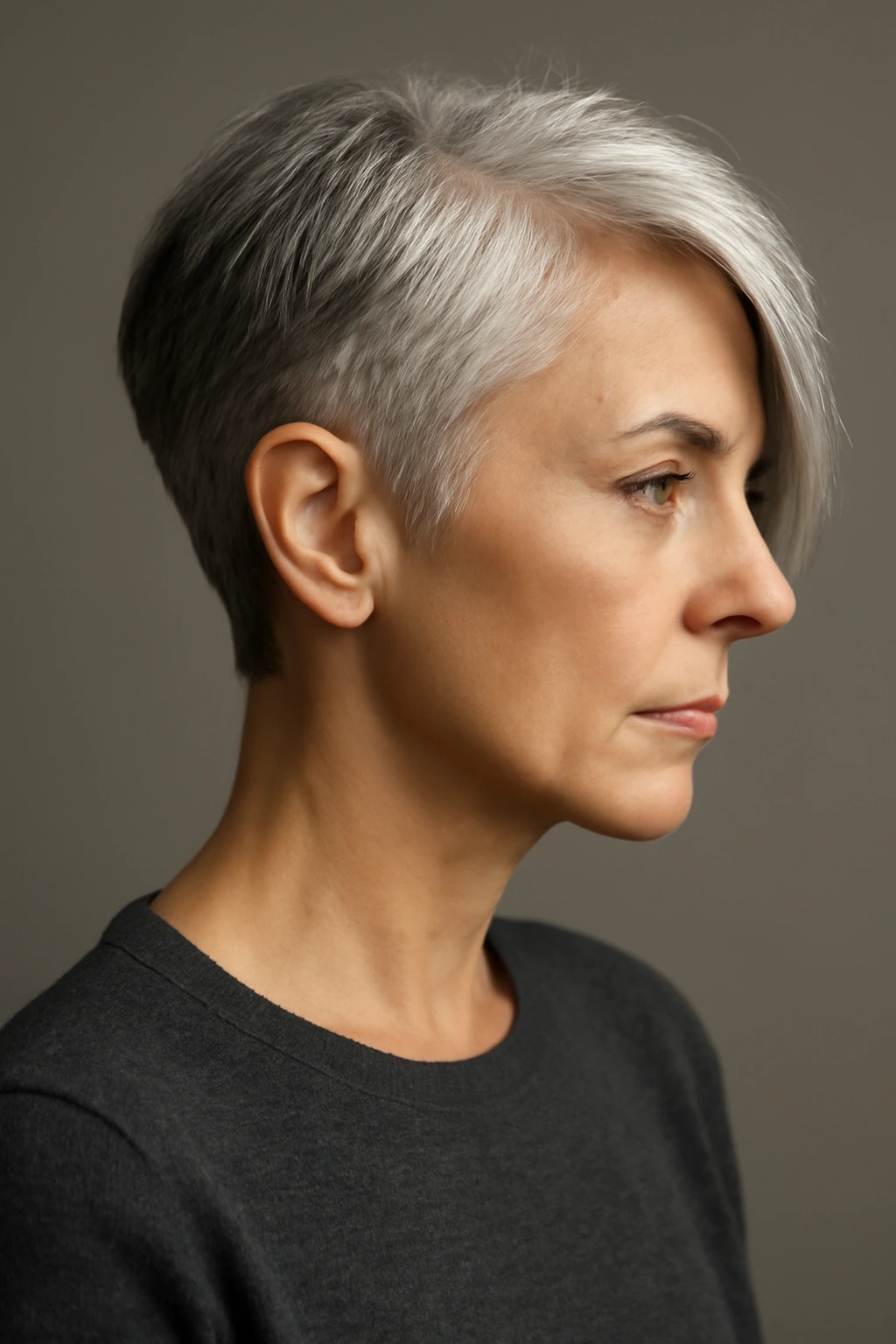
An asymmetrical cut means deliberately uneven length—one side noticeably shorter than the other, or one side longer while the other is cropped close. The short side might be 1-2 inches, while the longer side could be 3-4 inches or even sweep toward the jaw. This is the cut for women who want to make a bold statement and aren’t interested in blending in.
Why Asymmetry Suits Gray Hair Perfectly
An asymmetrical cut inherently draws the eye, which is exactly what you want when you’re embracing gray hair rather than hiding it. The contrast created by uneven lengths becomes more visually interesting with gray than with darker tones—the movement and the color work together to create a striking overall impression. Asymmetrical cuts are also practical because you can style the longer side to frame your face while the shorter side requires minimal effort, giving you flexibility in how polished you want to look on any given day.
Making It Work for Your Face and Lifestyle
- Asymmetrical cuts are especially flattering on oval and heart-shaped faces; if you have a round face, keep the longer side toward the front to create a subtle lengthening effect
- The key is confidence—this cut reads as intentional, which means you need to own it; wear it with ease and it’s instantly modern, question it and it looks uncertain
- Blow-dry the longer piece under the barrel of a round brush to create volume and shape; you can also flatten it slightly for a more severe look depending on your mood
- This cut requires more frequent trims (every 3-4 weeks) to maintain the asymmetrical integrity, so only commit if you’re willing to stay on a regular schedule
5. The Blunt Crop
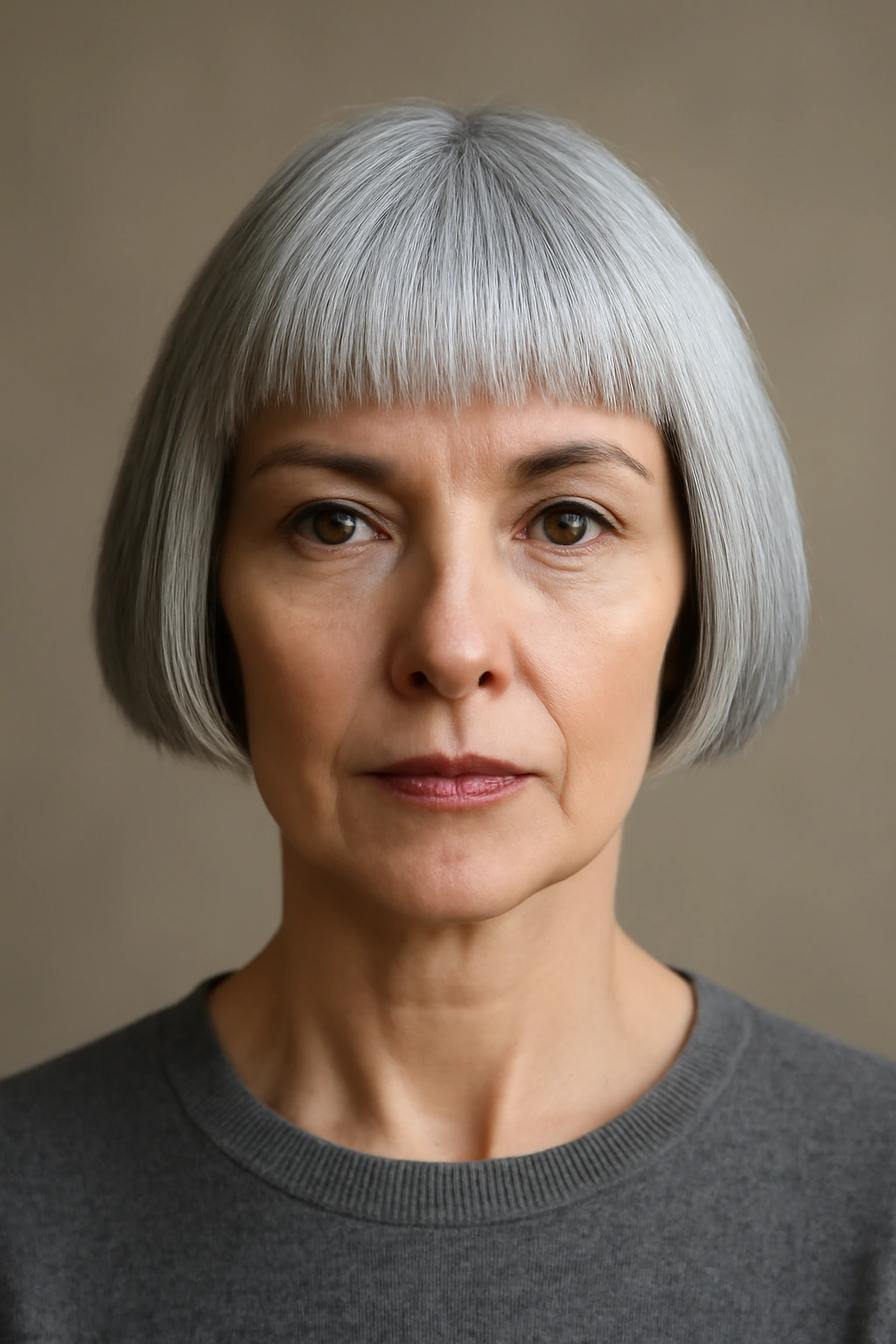
A blunt crop is short and severe—typically 1-2 inches all around with minimal layering, creating clean, geometric lines around the entire head. This isn’t a pixie; it’s even shorter and more uniform. Think of how a men’s military crop translates to a feminine style—all precision and edge.
The Graphic Beauty of Blunt and Gray
A blunt crop with gray hair is architectural and striking. The uniform length means the cut itself becomes the entire statement—there’s no texture to hide behind, no layers to soften the look. This is perfect for gray hair because you’re not trying to create visual interest through dimension; you’re creating it through the geometric precision of the cut itself combined with the luminosity of silver tones. The blunt line around your head becomes a visual frame for your face, and gray hair against that clean-cut silhouette looks modern and intentional.
Who This Suits and How to Style It
- A blunt crop is most flattering on women with oval or slightly oblong face shapes; if you have a very round face, this cut may emphasize width rather than diminish it
- Your stylist should consider slightly angling the back slightly shorter than the front to avoid a helmet effect, or keeping the front slightly longer if you want to frame your face
- Styling is minimal: a very light texture cream and finger-styling is usually all you need; some women blow-dry for sleekness, while others air-dry for a slightly tousled effect
- This cut shows every bit of texture in your gray hair, so if you have natural wave or curl, lean into it; if your hair is very fine, this cut may expose your scalp, so discuss this with your stylist beforehand
6. The Feathered Layers
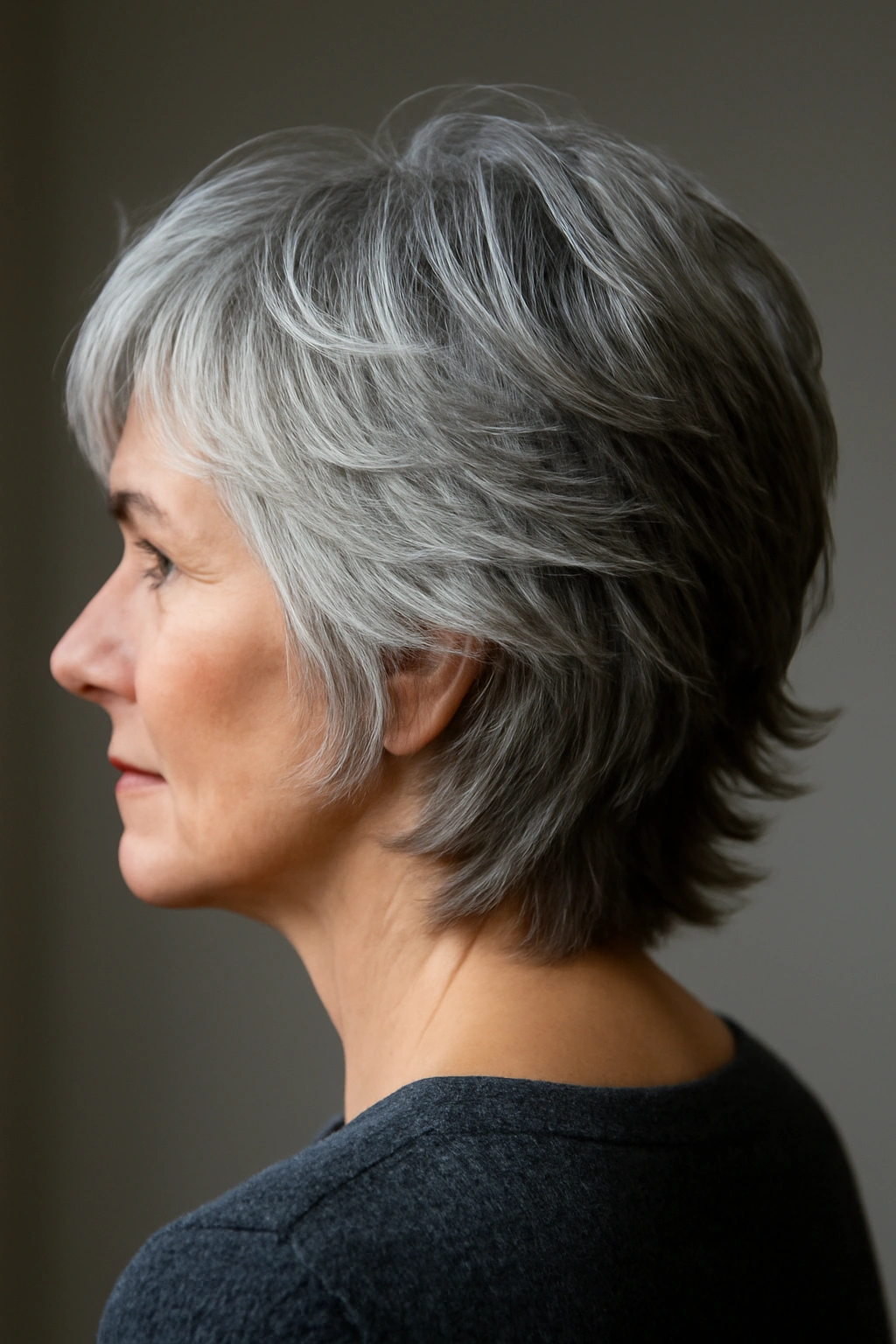
Feathered layers are choppy, textured, and soft—each layer is cut at an angle that causes the ends to flip outward slightly, creating a subtle “feather” effect throughout the head. This style is typically 2-3 inches at the crown and gradually longer to about 3-4 inches at the back and sides, with consistent layering throughout.
Why Feathering Transforms Gray Hair
Feathered layers create movement without requiring you to blow-dry your hair into specific shapes. The cut itself does the work of making your hair look textured and full, which is huge for gray hair that often has different density in certain areas. Feathering also creates multiple surfaces for light to hit, which means your gray hair looks more dimensional and catches light beautifully. This style reads as effortless-chic rather than trying-too-hard, which is often what women with gray hair are actually going for.
Styling and Daily Wear
- Feathered layers work on almost every face shape, but they’re particularly flattering on oval, oblong, and heart-shaped faces
- You can blow-dry this cut for more control and definition, or air-dry it for a softer, more natural feel; both approaches work
- A light texture spray or styling cream works wonders on feathered layers; it enhances the natural movement created by the cut
- This style grows out more gracefully than blunt cuts because the layers mean you don’t get a harsh line; you can stretch cuts to 6-8 weeks if you’re flexible about maintaining some texture
7. The Undercut with Soft Layers
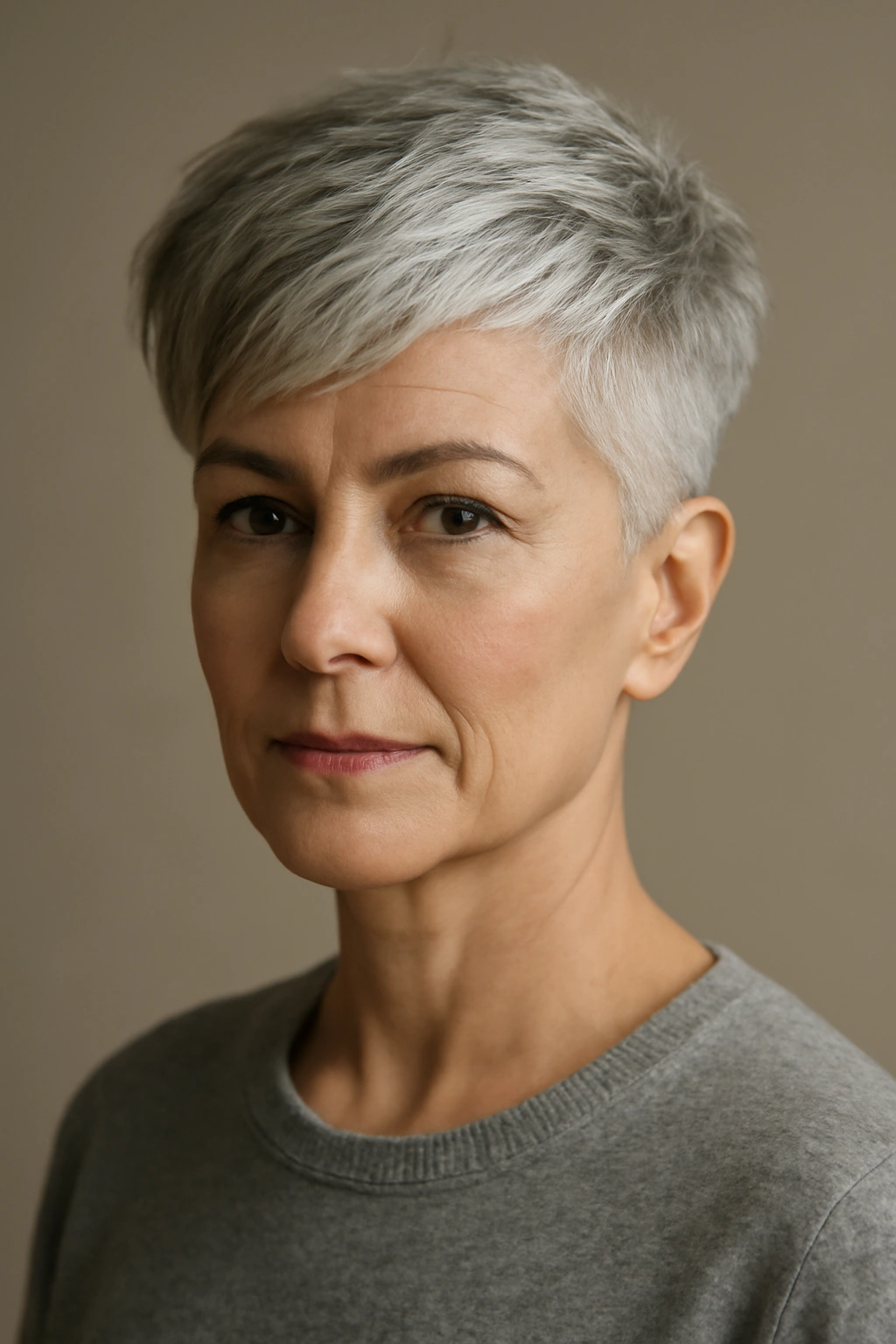
An undercut features short, closely cropped sides and back—maybe 0.5 to 1.5 inches—while the top is left noticeably longer, typically 2-3 inches, with soft layers throughout that blend the longer top into the short sides. The contrast between the cropped underside and the layered top creates volume and edge without feeling severe.
The Visual Drama of Undercuts with Silver
An undercut with gray hair is exceptionally striking because the contrast between the cropped sides and the longer textured top creates visual interest that reads as intentional and fashion-forward. Gray hair on top looks fuller and more textured against the clean, short sides, and the undercut naturally draws attention upward toward your face and eyes. This style also feels modern without being trendy—it’s been a classic choice for women who want edge and movement together.
Styling and Maintenance Specifics
- The undercut requires trims every 3-4 weeks to keep the sides sharp; this is non-negotiable if you want to maintain the style
- You can style the top in multiple ways: sleek and smooth, textured and tousled, slicked back to show off the undercut, or swept to one side for a softer effect
- A texture cream or light pomade is your friend with this cut; it helps define the layers on top and can emphasize the contrast between your gray hair and the undercut
- This style is flattering on most face shapes, but it’s especially effective on oval and oblong faces; if you have a very round face, ask your stylist to keep slightly more length on top for better proportion
8. The Sleek Short Fade
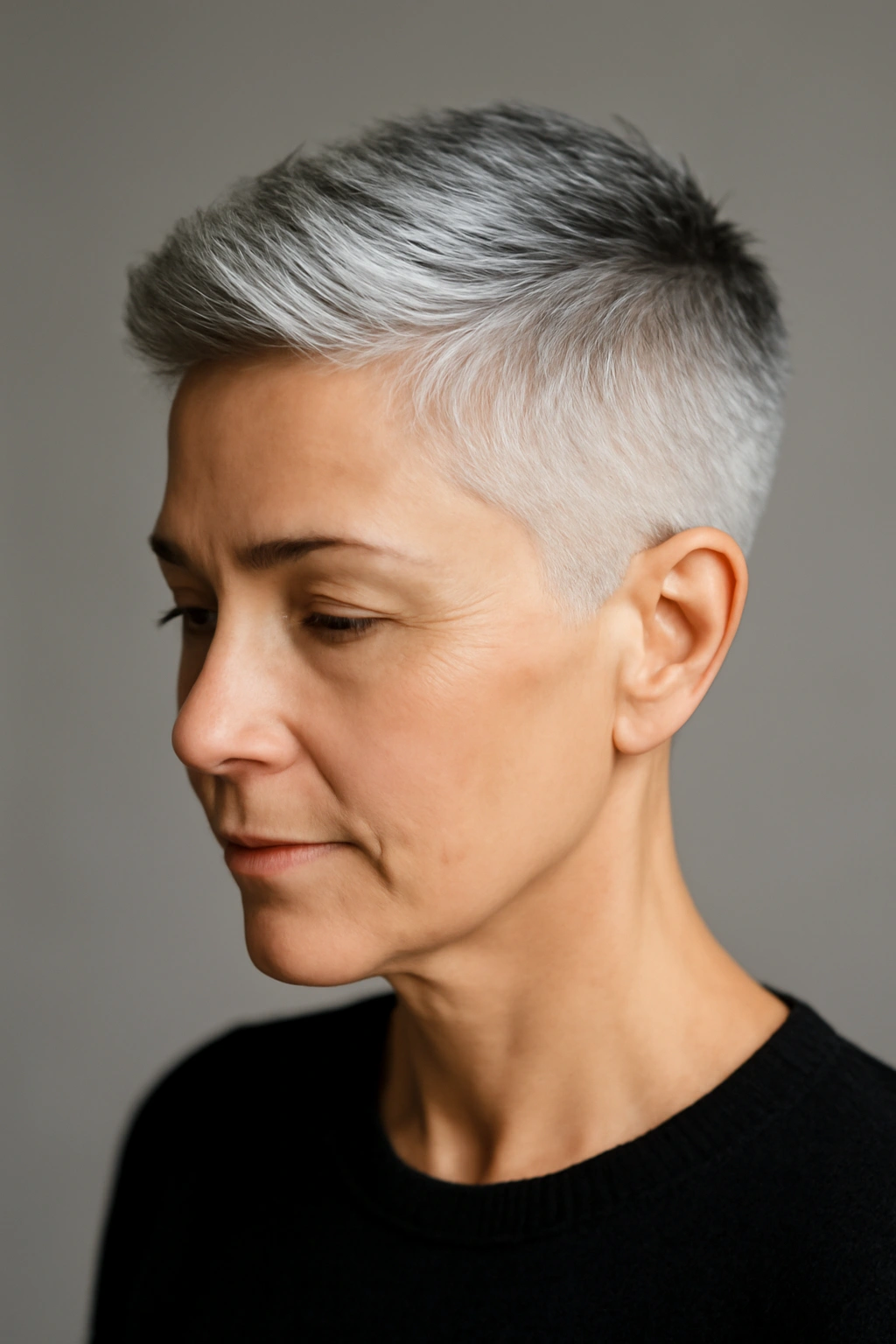
A fade means the hair gradually becomes shorter from top to bottom—not all at once like an undercut, but a gradual transition from longer length at the crown to very short at the sides and nape. This is typically 2-3 inches at the top, fading to maybe 0.5-1 inch at the sides. The fade can be aggressive or subtle depending on how fast the transition happens.
Why Fades Suit Gray Hair So Well
A fade is extremely flattering with gray hair because the longer length on top shows off your color while the shorter sides keep things clean and modern. You get volume and texture where you need it (on top, framing your face) without the bulk of long hair throughout. Fades also work beautifully with natural texture in gray hair—if you have some wave or curl, the longer piece on top will showcase it while the faded sides keep the overall silhouette sleek.
Getting the Right Fade and Maintaining It
- A barber who specializes in fades may give you better results than a traditional hairstylist, especially if you want a very clean, precise fade
- The fade looks best with some texture on top, so ask your stylist about choppy layers or point-cutting rather than a completely blunt top
- You’ll need trims every 3-4 weeks to maintain the fade line and keep the transition looking intentional
- Styling is flexible: you can blow-dry for a polished look, use a texture cream for casual movement, or slick everything back for a completely different vibe
9. The Tousled Crop
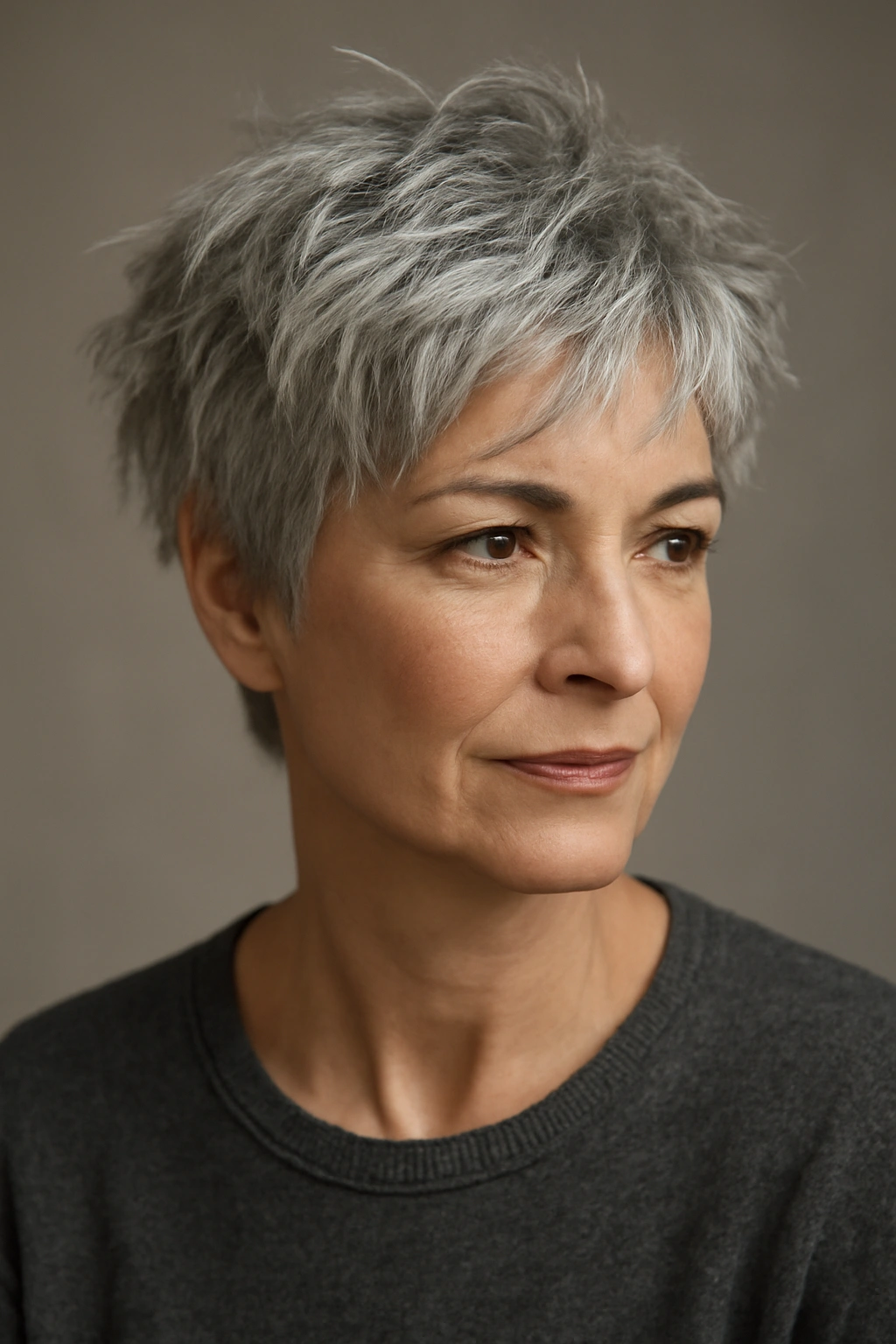
A tousled crop is short and choppy—typically 1.5-2.5 inches throughout with multiple layers that create pieciness and texture. Unlike a blunt crop, this has lots of movement built in through layering. The effect is “just rolled out of bed” but actually requires a specific cut to achieve that look.
The Effortless Appeal of Tousled Gray Hair
A tousled crop with gray hair looks modern without effort, which is exactly why so many women with gray hair gravitate toward this style. The natural texture of gray hair actually makes a tousled crop look intentional rather than sloppy—the pieces separate naturally and the light reflection off shorter strands creates dimension. This cut celebrates the texture of your gray hair rather than fighting against it, which makes styling genuinely easier than it is with longer styles.
Getting the Texture and Keeping It Fresh
- A stylist who understands how to cut for natural texture is important here; ask them to create choppy, separated layers rather than blended ones
- Styling is minimal: texture spray on damp hair, rough-dry with a blow dryer using your fingers instead of a brush, and you’re done
- This cut grows out well because the layers mean you avoid that awkward stage; you can go 5-6 weeks between cuts
- This style works on most face shapes, but if you have a very angular or square face, ask your stylist to add slightly longer pieces around the jawline for softness
10. The Choppy Lob
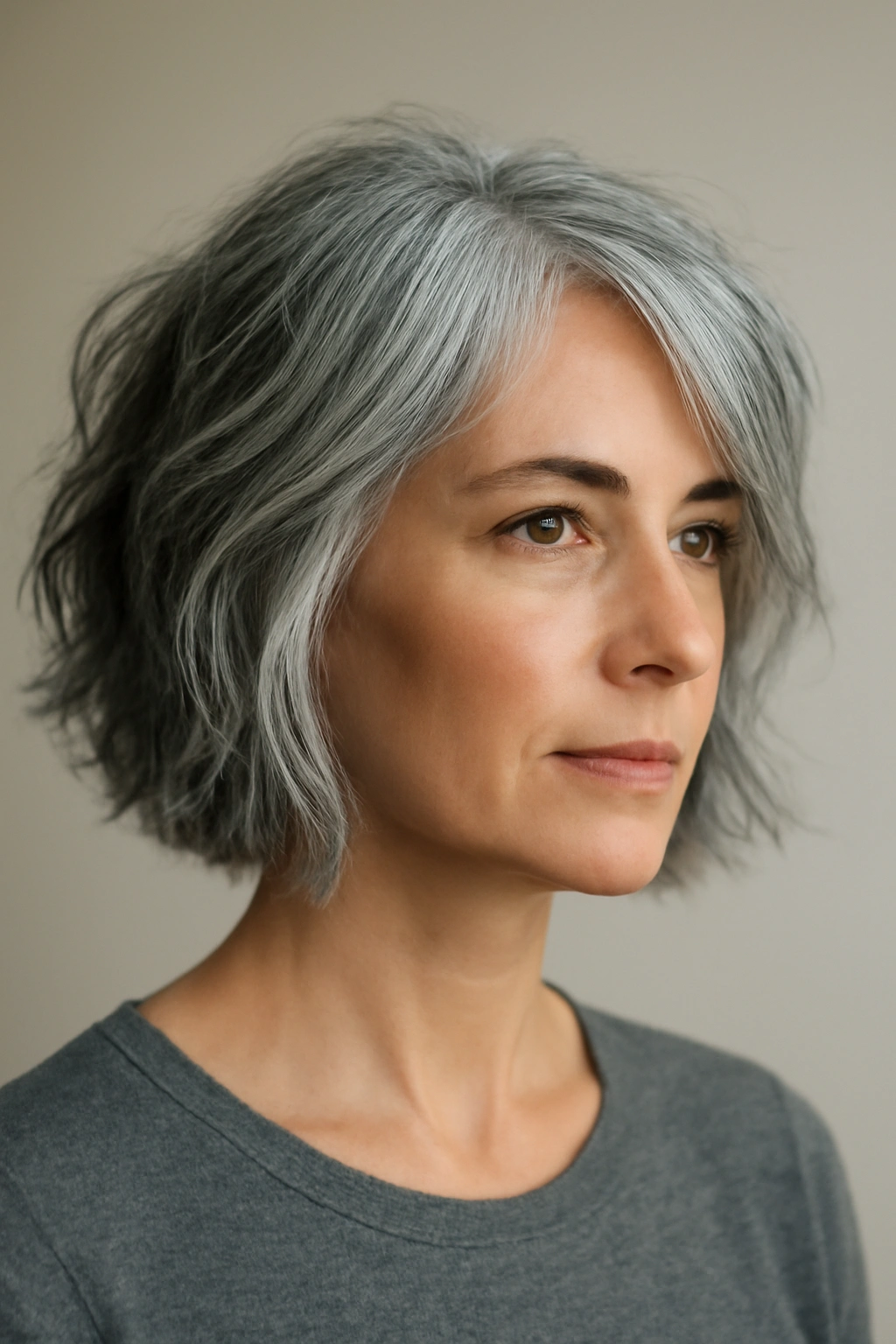
A lob (long bob) that’s cut with choppy, textured layers is the longest option on this list—typically 3-4 inches in the back and slightly shorter in front, with layers throughout creating movement and texture. It’s technically still short hair, but it gives you more versatility in styling and enough length to experiment with different looks.
Why Choppy Texture Elevates a Lob with Gray Hair
A blunt lob can sometimes look severe or heavy with gray hair, but layers and choppy texture change everything. The cut creates visual breaks that make the style read as more interesting and less like a simple “short hair” silhouette. With gray hair, those layers catch light at different angles, creating subtle dimension throughout. A choppy lob also gives you styling flexibility—you can scrunch texture into it for a casual look, blow-dry it smooth for something more polished, or even curl it for totally different vibes.
Styling Options and Maintenance
- A choppy lob requires trims every 6-8 weeks to maintain texture and prevent bluntness
- This cut works beautifully with natural wave or curl in gray hair; if your hair is very straight, you might want to blow-dry it or use styling tools to encourage movement
- You can wear it sleek and smooth, tousled and textured, tucked behind your ears, or with pieces framing your face—the length gives you options
- This is an excellent choice if you’re transitioning to short hair but want something that doesn’t feel drastically different; the extra length provides a gentler change in silhouette
Final Thoughts
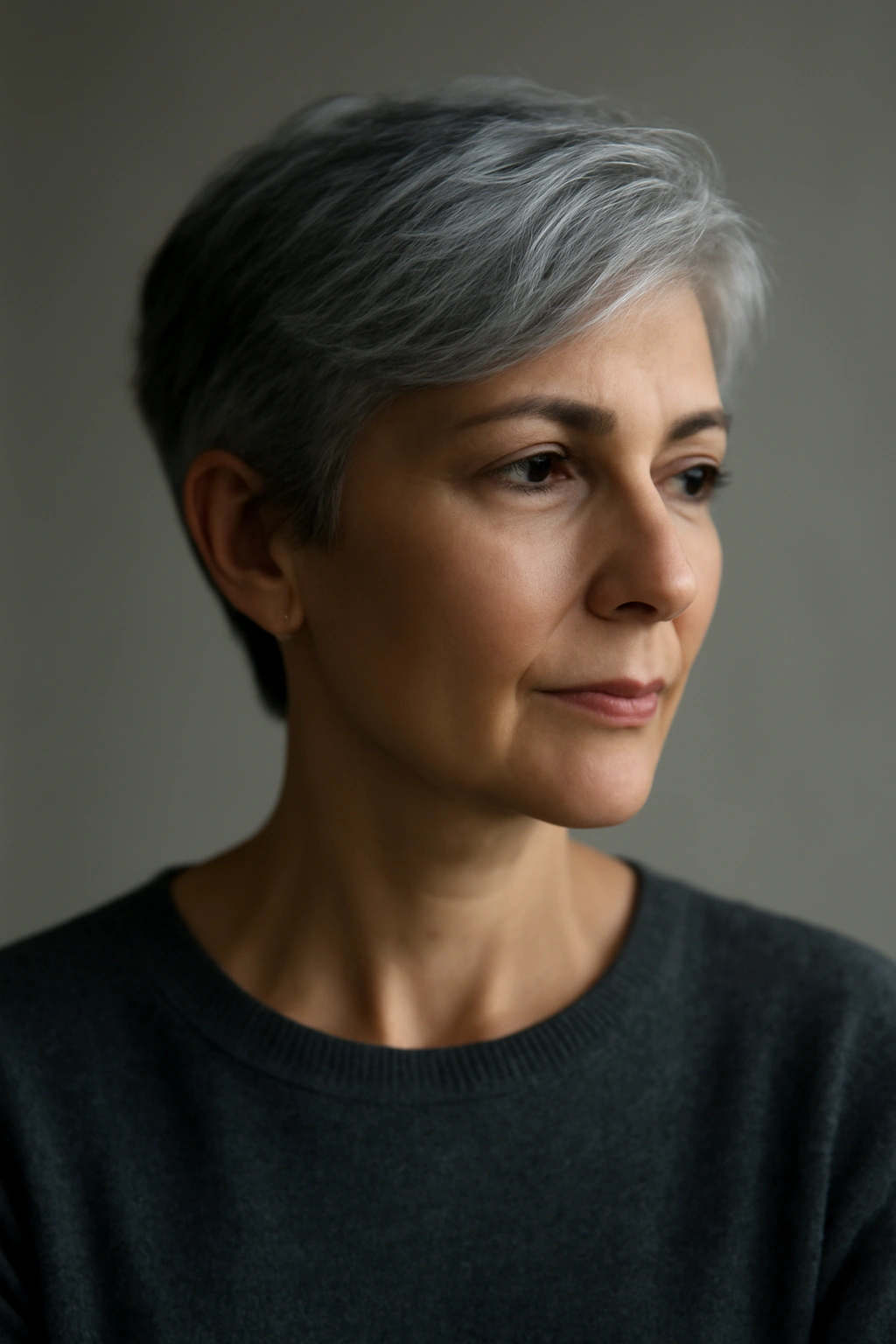
Choosing a short haircut while embracing gray hair isn’t about trying to look younger or hiding anything—it’s about showing up as yourself with intention and confidence. The right cut doesn’t fight your gray; it celebrates it. Short hair reflects light differently than long hair, which means your silver and gray tones become luminous rather than dull. Texture and movement matter more than length when you’re working with gray, which is why every style here includes some element of layers, choppy cutting, or strategic texture.
Your face shape, daily lifestyle, and personal style preference should drive which cut you choose, but don’t overlook the texture element. The difference between a gray-hair haircut that falls flat and one that absolutely glows is often just about whether your stylist understands how to work with your gray texture instead of against it. When you find a stylist who gets this—who understands that gray hair has its own rules and beauty—you’ve found someone worth keeping around.
One final note: commit to the regular maintenance schedule your cut requires. A short style does require trims more frequently than longer hair, but that’s actually a gift. Every 3-6 weeks, you get to check in with your stylist, make small adjustments, and keep your cut looking intentional rather than grown-out. That regular upkeep is what keeps a short haircut looking chic instead of neglected. Your gray hair deserves a cut that’s worth maintaining.
