



A pixie cut used to mean one thing: a short, neat, androgynous style that required frequent trips to the salon and absolute commitment. That era is long gone. Today’s edgy pixie cuts are bold, personal, and endlessly adaptable—they’re not about conforming to a specific shape, but rather about claiming your confidence and wearing exactly what makes you feel powerful. The difference between a conventional pixie and an edgy one comes down to texture, asymmetry, undercuts, color, and attitude. An edgy pixie plays with proportions, adds movement and dimension, or strips away convention in ways that catch light and attention.
The beauty of an edgy pixie is that it’s unforgiving, which means it’s honest. You can’t hide behind length or layers—your cut has to be intentional, your styling has to have purpose, and your confidence has to show. That’s precisely why so many women are drawn to it. Whether you’re ready to fully commit to short hair or you’re thinking about trying something unexpected, there’s an edgy pixie variation that fits your personality, face shape, and lifestyle. Some are low-maintenance once established; others require styling intention but deliver impact that longer hair simply can’t match. The key is finding the version that aligns with who you are and who you want to be.
1. Textured and Choppy Pixie
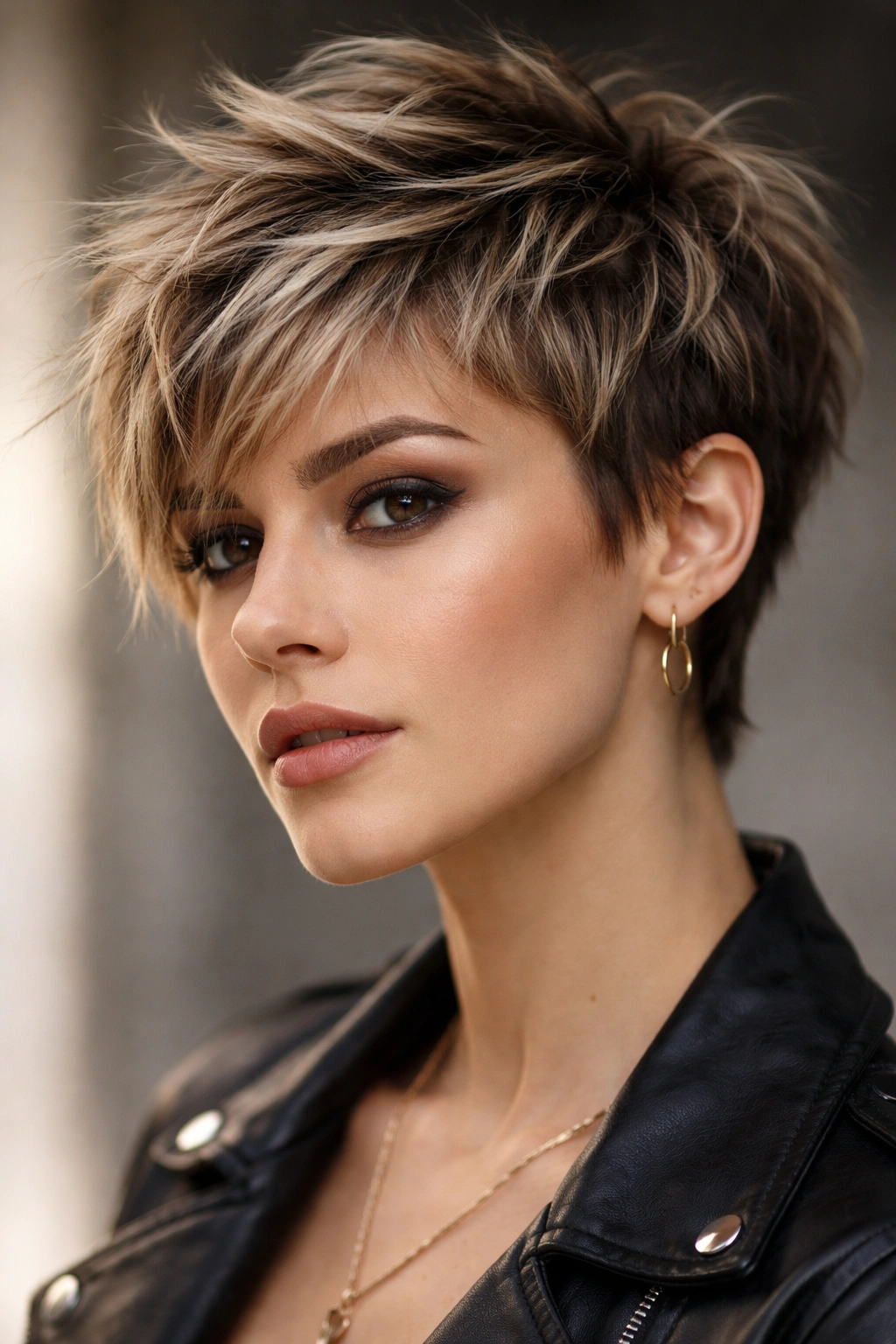
A textured, choppy pixie is where modern pixie cuts truly shine—it’s the anti-sleek version that prioritizes movement and dimension over a clean line. Instead of blending all the layers seamlessly, your stylist deliberately cuts shorter and longer pieces at varying angles, leaving visible texture that catches light and air. The result is a shaggy, almost lived-in look that feels deliberately undone in the best possible way.
Why It Stands Out
The magic of a choppy pixie is that it works with your hair’s natural texture rather than against it. If you have fine hair, the varied lengths create the illusion of density. If you have thick or wavy hair, the choppy cutting actually enhances and celebrates that texture instead of flattening it. The cut moves and shifts when you move, which gives it a sense of vitality that a blunt pixie simply doesn’t have. You can style it sleek and minimal or tousle it into something wilder—it works both ways.
How to Rock It Best
- Styling flexibility: This cut looks great both polished and intentionally messy, depending on your day and mood.
- Face-framing capability: Longer pieces around the face can be textured and layered to soften features or highlight your best angles.
- Low-commitment styling: You don’t need to blow-dry this to perfection; in fact, the cut often looks better when it’s a little undone.
- Color absorption: The varied lengths and texture absorb color differently, so if you add dimensional color, it creates incredible depth.
Pro tip: Ask your stylist for longer pieces at the back crown to create height and shape, even though the overall cut is short. This is what prevents a choppy pixie from looking flat.
2. Undercut Pixie with Design or Fade
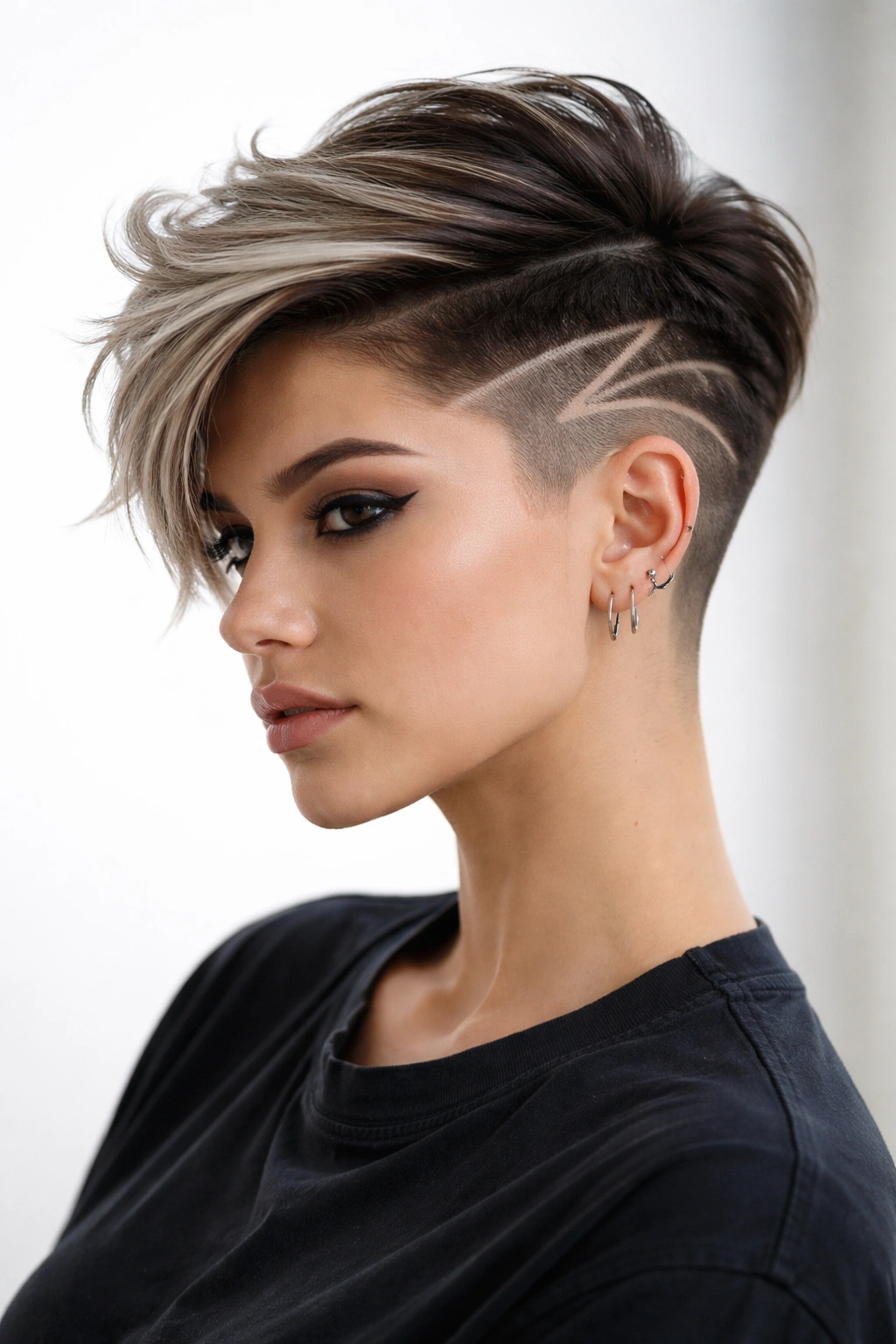
An undercut pixie takes the boldness to another level by shaving or fading the sides and sometimes the back, leaving longer hair on top. This creates genuine contrast, visual impact, and an undeniable statement. Some undercut pixies include designs—geometric patterns, lines, or art—shaved into the faded sections, which adds a punk or artistic edge that’s unmistakably confident.
What Makes It Different
An undercut is not subtle. The shaved or faded sections expose the shape of your head and the nape of your neck, which is either liberating or transformative depending on your perspective—most women who try it experience both. The contrast between the longer top and the sharp fade creates a sculptural quality that photographs beautifully and turns heads in motion. If you add a design or pattern to the undercut, you’re making an art statement, not just a hair statement.
Key Styling Considerations
- Maintenance schedule: Fades and undercuts need touch-ups every 2-4 weeks to stay sharp. If you love the look but can’t commit to frequent visits, the design fades and softens—which some women prefer anyway.
- Summer cooling effect: This is genuinely practical; the exposed nape and sides stay cooler and are much easier to keep clean and dry.
- Styling options when growing out: As the undercut grows, you have the option to blend it back into an undercut shape, fade it wider, or let it transition into something else entirely.
- Personal expression: Adding a design transforms this from an edgy cut to a personal art project. Geometric patterns, waves, or symbolic designs can be subtle or bold.
Worth knowing: The sides of your head show in way you probably don’t realize until you cut them short. If you have a sensitive scalp, fades feel amazing on hot days but can feel vulnerable in air-conditioning.
3. Asymmetrical Pixie Cut
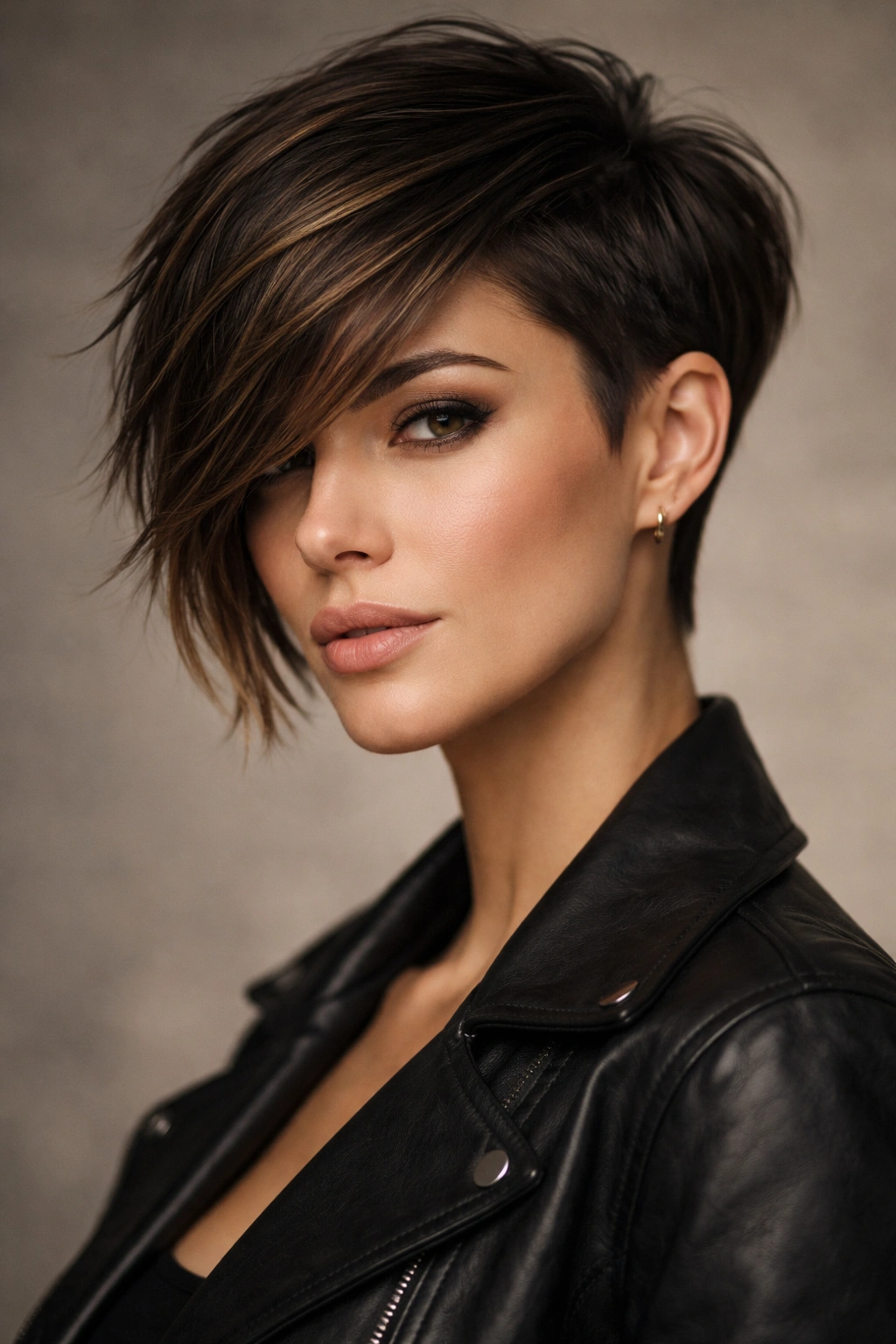
An asymmetrical pixie features one side noticeably shorter or longer than the other, or different lengths at the front versus the back. This isn’t accidental—it’s a deliberate break from symmetry that creates visual interest and an unconventional approach to a classic cut. The asymmetry can be subtle or dramatic, depending on how much contrast you want.
Why It’s Distinctly Modern
Asymmetry challenges how we typically think about proportion and balance. Instead of assuming that two equal sides equals harmony, an asymmetrical pixie uses intentional imbalance to create visual movement. One longer side that angles across the face can create a face-framing effect without actual framing layers. A shorter back with longer sides creates height and shape in unexpected places. This is the cut that makes people stop mid-conversation because something about it registers as intentionally artistic.
How to Style It Successfully
- Direction matters: You can part your longer side over the shorter one for a swoopy, editorial look, or flip it and let the longer side fall back for a more experimental vibe.
- Styling by face shape: If you have a rounder face, asymmetry that’s longer on one side and shorter on the other can create the appearance of length and definition.
- Growing it out strategically: Asymmetrical pixies can transition beautifully into bobs or longer cuts if you decide to grow out one side while trimming the other into shape.
- Accessory opportunities: An asymmetrical cut opens up really interesting styling options with clips, pins, or scarves that would look overdone on a symmetrical cut.
Insider note: Ask your stylist to cut the asymmetry deliberately into the shape rather than just trimming one side shorter—this ensures it looks intentional and styled, not like a mistake.
4. Bleached-Blonde Edgy Pixie
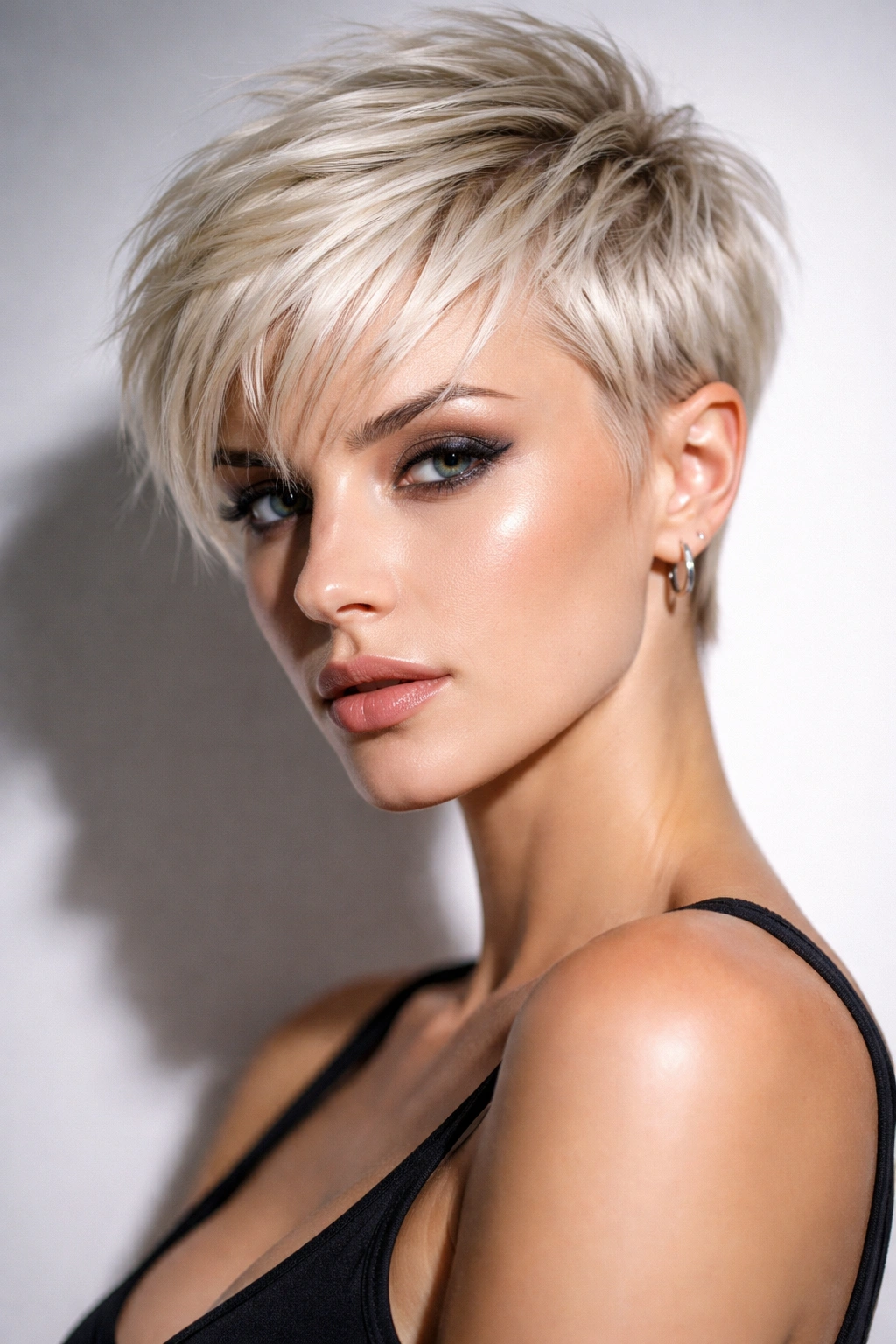
When you crop your hair into a pixie, a striking blonde shade becomes almost unavoidable in its impact. A bleached or platinum pixie is bold, luminous, and reads as pure confidence. The short length means your hair is constantly in light, constantly visible, and the pale blonde amplifies that visibility. It’s not a subtle choice, and that’s exactly the point.
The Power of Light and Contrast
Blonde against darker skin tones creates incredible visual contrast that makes the cut itself more apparent. Blonde hair also reflects light in ways that longer hair doesn’t, which means the texture and movement of your cut is constantly visible. A choppy or textured blonde pixie practically glows. The color makes your face the focal point and, because there’s no hair to hide behind, your features and facial bone structure become the primary visual interest.
Maintaining Bleached-Blonde Health
- Regular toning: Bleached hair needs purple, ash, or platinum toner every 3-4 weeks to prevent brassiness and maintain that cool tone most edgy pixies demand.
- Hydration is critical: Short hair grows out faster, which means bleached damage is more noticeable. Deep conditioning treatments and protein masks are non-negotiable.
- Root touch-ups: As your hair grows, darker roots show up quickly on light blonde, which means you’re either committing to every 4-6 week root touch-ups or embracing a grown-out aesthetic.
- Protection from heat and sun: Bleached hair is more fragile. UV rays can shift tone and cause additional damage, so a heat-protectant spray and sun protection for your hair aren’t optional.
Pro tip: If you love the blonde pixie aesthetic but aren’t ready to bleach, ask your stylist about dimensional blonde tones, honey balayage, or rooted blonde that’s darker at the roots and lighter through the lengths. You get high impact with less maintenance.
5. Shaggy Pixie with Lots of Layers
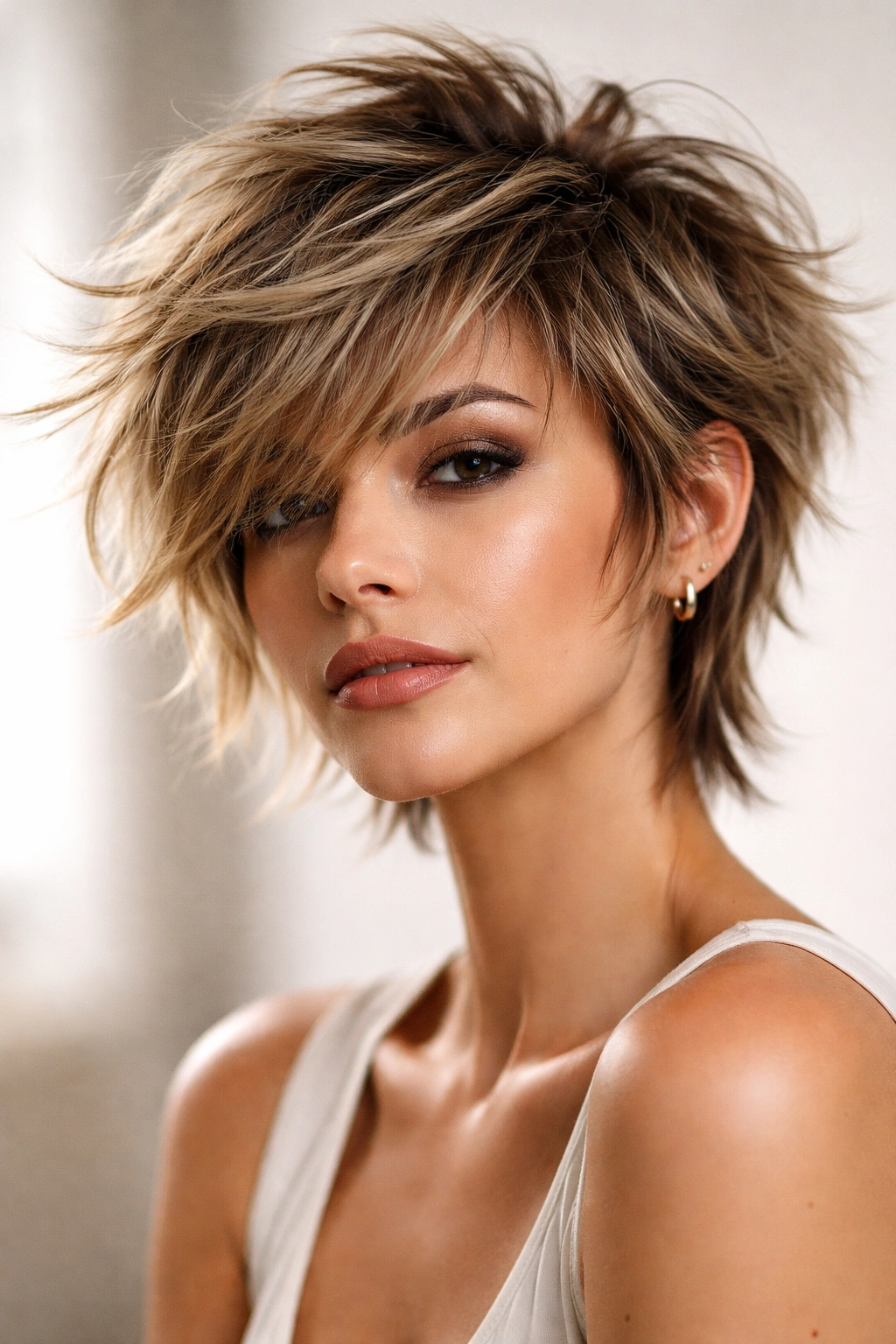
A shaggy pixie amplifies the choppy texture we talked about earlier, but it goes further—it’s multiple layers cut at dramatic angles, creating genuine movement and a distinctly 1970s-inspired rock-and-roll vibe. Think less “neat and tidy” and more “just rolled out of a tour bus looking effortlessly cool.” It’s the edgy pixie for women who want texture and personality without the severity of a clean cut.
Why Shag Works on Short Hair
When you have longer hair, shag layers can look wispy or disconnected. On a pixie, those same layers create genuine volume and shape that transforms how the cut sits on your head. The face-framing layers flip and move with your head, and every time you move, the cut looks slightly different. It’s dynamic and alive in a way that smooth, blunt pixies aren’t. A shaggy pixie also photographs beautifully from multiple angles because the texture reads differently depending on how light hits it.
Styling and Maintenance Reality
- Tousled is the goal: This cut looks best when it’s a little tousled and undone. You can use a texture spray, sea salt spray, or even just tousle it with your hands after a shower.
- Blow-drying with direction: If you want to style this intentionally, a blow-dryer with a diffuser attachment brings out the shag layers and creates maximum volume.
- Frequent trims needed: The layers need to be refreshed every 4-6 weeks to maintain the shape and prevent the cut from looking shaggy in an unintentional way.
- Works with natural texture: If you have wavy or curly hair, a shaggy pixie is often more forgiving than a shorter, blunter cut because the natural wave reads as intentional.
Worth knowing: A shaggy pixie requires slightly more styling intention than a basic textured pixie, but if you love movement and rock-and-roll energy, the maintenance is worth it.
6. Mohawk-Inspired Pixie
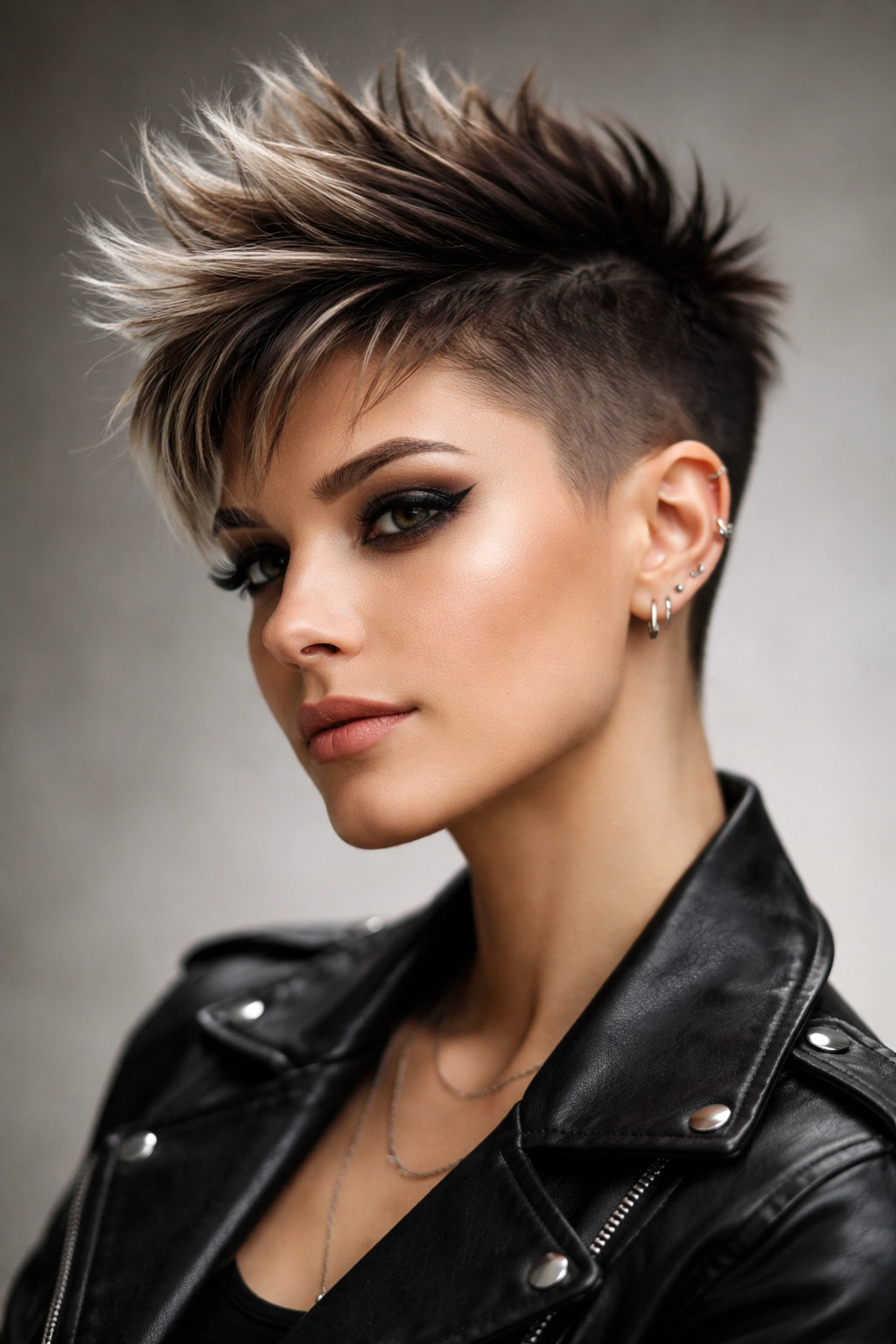
A mohawk pixie strips away the sides completely, keeping length only on the top center of your head—creating a ridge of hair down the middle that can be styled up dramatically or left to fall forward for a softer, less aggressive look. It’s a genuine statement cut that sits right at the intersection of punk rock and fashion-forward confidence.
The Spectrum of Mohawk Intensity
A mohawk doesn’t have to mean a literal 6-inch spike. A subtle mohawk-inspired pixie might just have the sides faded shorter with the crown and top left 2-3 inches longer. A dramatic mohawk keeps only a narrow strip of significant length down the center, creating genuine height and shape. You can style it slicked back with gel for full punk effect, or let it fall forward loosely for something more wearable in everyday settings. The intensity is absolutely customizable.
Making It Work in a Professional Setting
- Styling is your secret weapon: If you work somewhere conservative, you can tousle the top and blend it without gelling it upright, creating an edgy but less obviously mohawk appearance.
- How you wear it matters: A mohawk styled up and gelled reads very different from the same cut worn soft and tousled. You control the intensity.
- Confidence is the actual requirement: A mohawk pixie is unapologetically bold. It works for women who are genuinely unbothered by standing out, regardless of setting.
- Growing it out transition: If you decide this is too intense, you have the option to grow the sides and blend it into an undercut pixie, or grow it all out together.
Pro tip: Consider the width of the strip before you cut. A wider mohawk (2-3 inches) feels more wearable in everyday life than a narrow 1-inch strip.
7. Color-Blocked or Multi-Toned Pixie
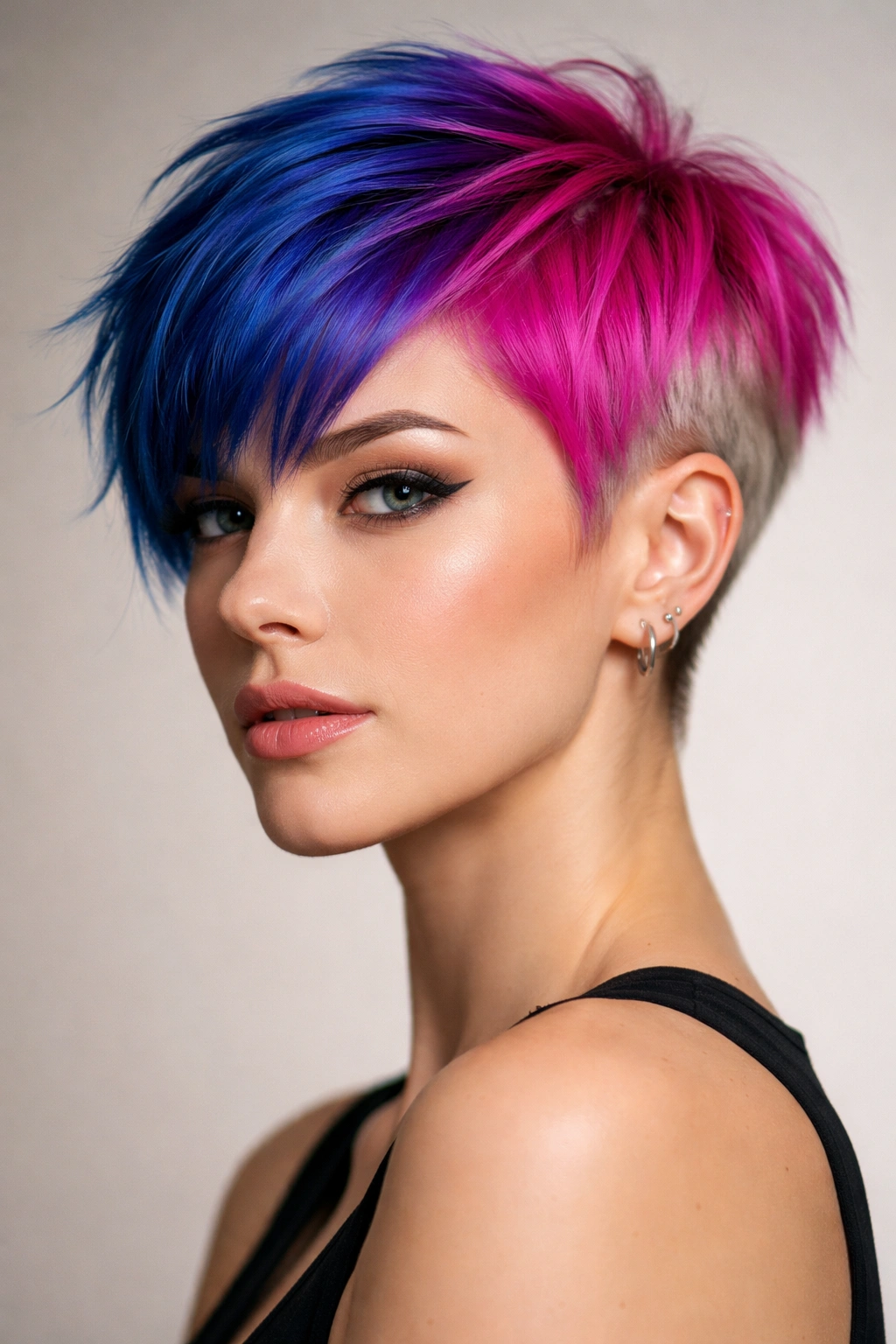
A pixie cut with intentional color blocking—different bold colors in different sections, or a color that shifts from one shade to another—turns your hair into wearable art. This might mean a bright jewel tone on one side and a neutral on the other, a gradient that shifts from black to silver, or even sections of different colors (red, purple, blue) that create a rainbow effect. The short length means colors are always visible and always impactful.
Why Short Hair Maximizes Color Impact
With longer hair, color can get hidden in layers and shadows. A pixie puts every inch of hair on display, which means color choices read bold and intentional. A bright blue undercut becomes an art statement. A rose-gold or peachy tone catches light constantly. Dimension in color work (like a darker root with a lighter tip) reads with incredible clarity on short hair. You can experiment with color in a pixie in ways that would be overwhelming on longer hair.
Color Commitment and Maintenance
- Fading happens visibly: Bold fashion colors fade quickly, sometimes within 2-3 weeks, especially on bleached hair. Frequent color touch-ups are the reality.
- Toner adjustments: Colors can shift or fade unevenly. Your stylist will need to adjust toner or refresh color regularly to keep it looking intentional.
- Roots and regrowth: If you’ve bleached your hair and added a fashion color, regrowth happens fast and shows immediately. You’re either committed to frequent salon visits or okay with a grown-out aesthetic.
- Color chemistry matters: Not all skin tones work equally well with all colors. A shade that looks stunning on your friend might not have the same impact on you—work with your stylist to find what actually complements your complexion.
Insider note: If you want color impact without the constant maintenance of fashion colors, consider a subtle dimensional tone like ash, pearl, or champagne blonde with one accent color (like a jewel-toned undercut that you can refresh less frequently).
8. Sleek and Sharp Geometric Pixie
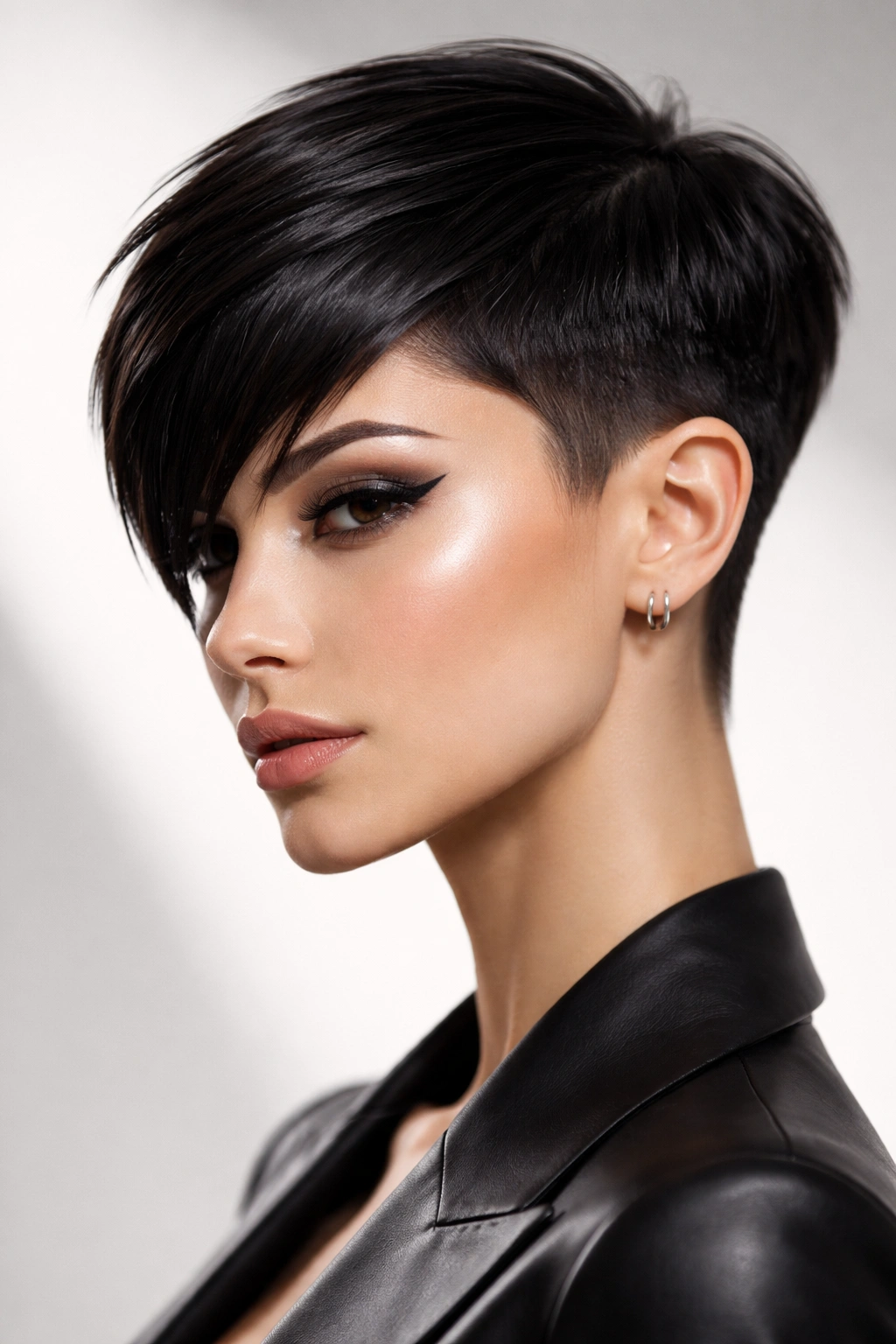
On the opposite end of the texture spectrum is the sleek, geometric pixie—a precisely cut, polished version where every line is intentional and sharp. This cut prioritizes clean angles, geometric shapes, and a highly styled appearance. It’s not messy or undone; it’s editorial, structured, and unapologetically refined. Think of it as architectural approach to a pixie cut.
The Precision Requirement
A geometric pixie demands technical skill from your stylist. The lines have to be sharp, the angles have to be deliberate, and the shape has to be consistent. This is not a cut that improves with bed head or that looks okay when undone. It’s designed to be seen and appreciated precisely as it’s been cut. The payoff is a cut that feels incredibly polished, photographs beautifully, and reads as confident and intentional.
Styling and Maintenance
- Daily styling is part of the commitment: You can’t just shower and go. This cut usually requires blow-drying and intentional styling to maintain its geometric precision.
- Frequent trims for crisp lines: The lines need to stay sharp, which means salon visits every 4-6 weeks minimum.
- Product matters: A light wax, pomade, or gel helps define the geometric lines and keeps everything in place throughout your day.
- Grows out very noticeably: As your hair grows, the geometric precision softens. Some women love this transition; others schedule trim appointments before that happens.
Worth knowing: A geometric pixie shows every imperfection in your cut and every day of growth. If precision and polish are important to you, this is your cut. If you prefer a more forgiving, undone aesthetic, choose a textured or choppy option instead.
9. Grown-Out Pixie or Pixie-to-Bob Transition
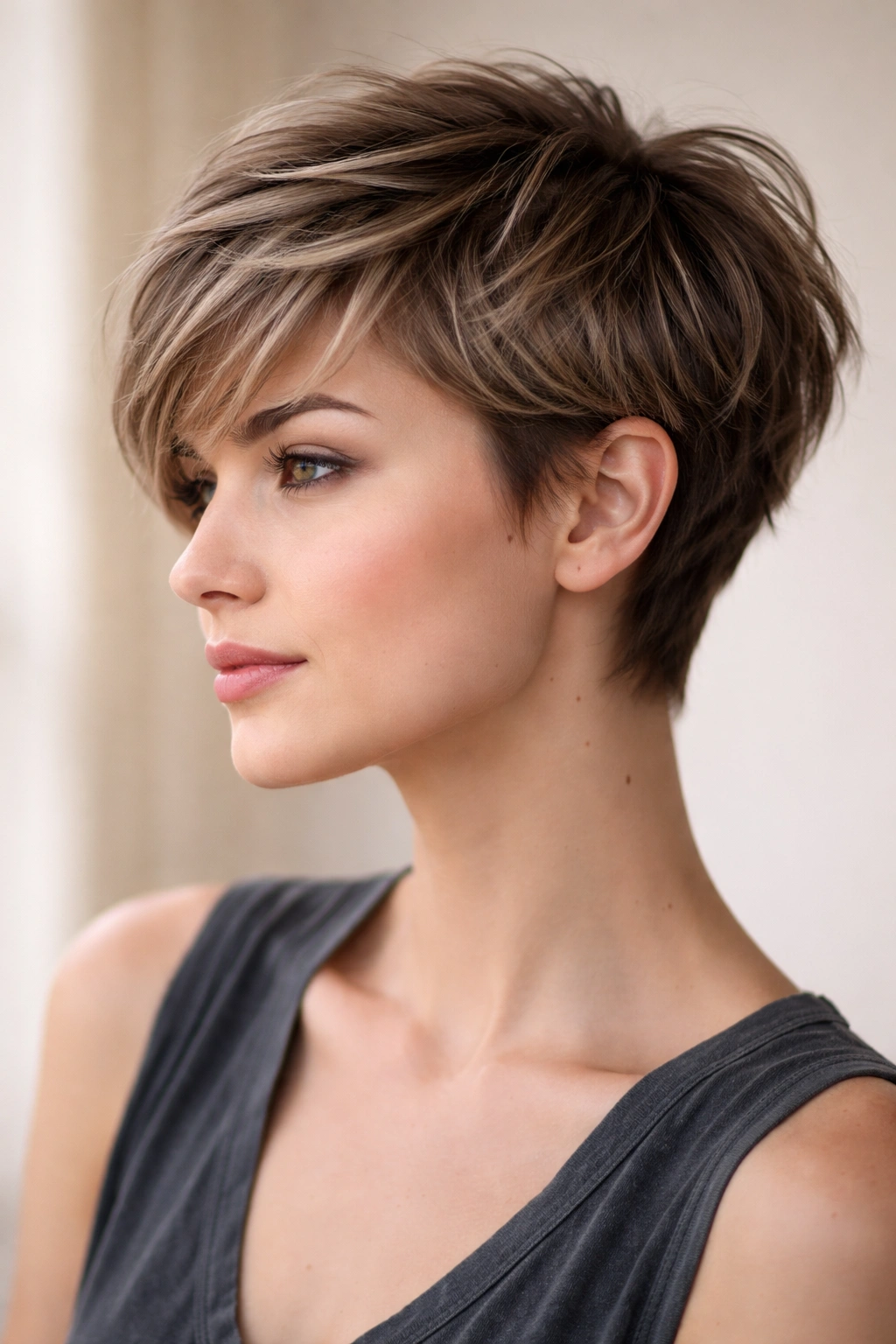
Sometimes the edgiest choice is the one in between—letting a pixie grow out intentionally, creating a hybrid style that has the short, sharp sensibility of a pixie with slightly more length for styling options. This might mean a pixie that’s grown to 2-3 inches on top with fade sides, or a style that’s technically still a pixie but styled and shaped in ways that are transitioning toward a longer cut. It’s the cut for women who want the edgy aesthetics but need a bit more versatility.
The Practical Appeal of In-Between
A grown-out pixie gives you options that a super-short pixie doesn’t. You can style it sleek and minimal some days, tousled and shaggy on others, or even pin longer pieces back into a pseudo-updo. The slightly longer length means you can experiment with texture, wave, or even gentle curls if your hair texture allows. You’re getting the edgy impact of short hair with just enough length for multiple styling directions.
Timeline and Styling Strategy
- The awkward phase is real: Growing out a pixie takes patience. Around 6-10 weeks, you hit a phase where it’s too long for the original cut’s shape but too short for a recognizable longer style. Have a styling plan for this phase.
- Strategic trims help: Your stylist can shape your growing pixie in ways that make the transition smoother and more intentional rather than just letting it grow randomly.
- Texture helps during transition: A choppy or shaggy pixie transitions more gracefully into a longer cut than a geometric or blunt pixie does.
- Headbands and clips become your friends: During the in-between phase, a headband or some strategic clips can help you style your hair in new ways.
Pro tip: If you think you might want to grow your pixie out eventually, ask your stylist to cut it with that possibility in mind—longer pieces in certain spots can transition more smoothly into a bob or layered cut.
10. Tapered Pixie with Fade Detail
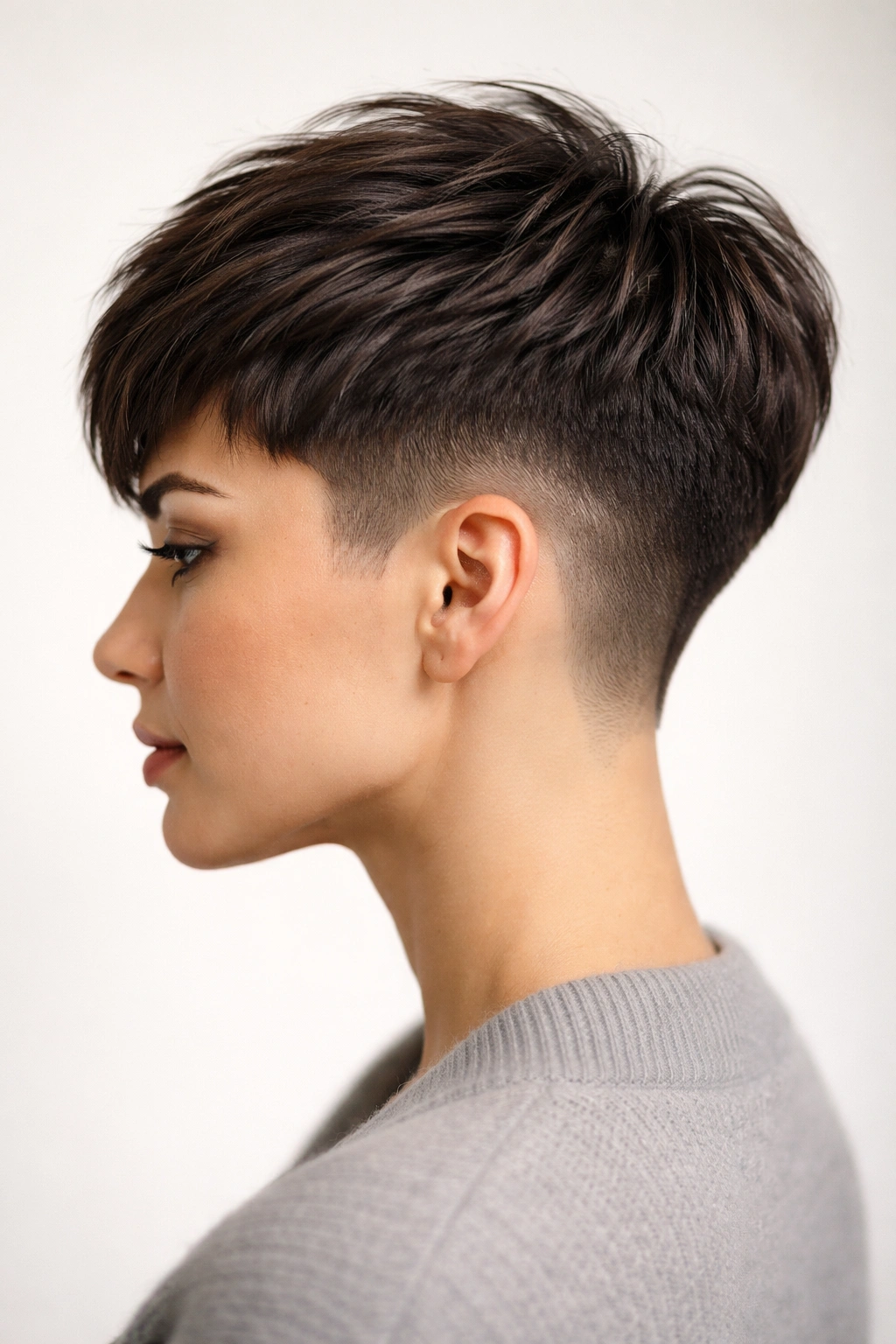
A tapered pixie features very short hair at the nape and sides (often an actual fade) that gradually gets longer toward the crown and front, creating a distinct taper. It’s tidier than a choppy pixie but more textured than a geometric one—a sweet spot between precision and wearability. The fade detail creates dimension and edge while remaining relatively low-maintenance and incredibly functional.
Why Taper Is Underrated
A tapered pixie looks sharp, photographs well, and is significantly easier to maintain than many other edgy pixie options. The fade at the sides and back keeps everything feeling fresh and defined even as your hair grows in. You can style it multiple ways—smooth and sleek, or tousled and textured. The taper also flatters most face shapes because it creates height and shape at the crown without relying on length around the face.
Long-Term Wearability
- Grows out gracefully: As your hair grows, a tapered pixie maintains its shape better than some other options. The fade softens gradually rather than dramatically.
- Touch-up schedule is forgiving: You can go 5-6 weeks between cuts and still maintain the basic shape, though the fade will soften.
- Styling flexibility: This cut works great slicked back, tousled, or even with a slight wave if your hair has natural texture.
- Works with or without color: A tapered pixie looks clean and sharp with your natural color, but also takes color beautifully if you want to add that dimension.
- Genuinely low-maintenance: Of all the edgy pixie options, a tapered pixie is probably the lowest maintenance while still feeling intentional and fashionable.
Insider note: Ask your stylist to taper gradually rather than cutting a sharp line between fade and longer hair. A gradual taper looks more polished and expensive than a blunt transition.
Final Thoughts
Choosing an edgy pixie isn’t really about picking the shortest option—it’s about finding the specific cut that matches your personality, your lifestyle, and the kind of confidence you want to project. Some of these cuts require frequent salon visits and intentional styling; others are genuinely low-maintenance once established. Some make a statement from across the room; others reveal their edge only when you really look close.
The commitment to an edgy pixie is real, and it’s worth being honest about what that means for you. How much time do you actually want to spend styling? How often can you realistically get salon trims? How important is it to you that your cut works with or without styling? Are you using your hair to make a statement, or are you primarily seeking a cut that’s practical and happens to look great?
The women who truly thrive with edgy pixie cuts are the ones who chose deliberately—not because they felt they had to be bold, but because this particular cut, this specific version, genuinely expresses who they are. That’s what makes the difference between a haircut that you tolerate and a cut that becomes part of how the world sees you and, more importantly, how you see yourself.
