



Ponytails have long been the go-to hairstyle for anyone needing a quick, polished look—but they’re far more versatile than most people realize. Whether you’re heading to the office, attending a formal event, or simply wanting your hair off your face without sacrificing elegance, there’s a ponytail style that works perfectly for your occasion and hair type. The difference between a casual “just pulled it back” ponytail and a genuinely polished one lies in the execution—the right technique, a few strategic styling tricks, and understanding which variation flatters your face shape and complements your outfit.
What makes a ponytail feel polished rather than lazy comes down to intentional details. A smooth base without flyaways, the placement of the tail, how you secure it, and the overall finish all signal that you’ve put care into your appearance. The styles covered here range from timeless classics that work in any setting to more creative variations that let you experiment with texture and dimension. Many of these can be styled in under five minutes once you’ve practiced them a time or two, making them ideal for mornings when you want to look refined without spending an hour getting ready.
The beauty of mastering multiple ponytail styles is that they adapt to different hair textures, lengths, and thicknesses. Whether you have fine, straight hair that requires strategic backcombing for fullness, thick curly hair that has natural texture to work with, or anything in between, you’ll find approaches that work specifically for your needs. Let’s explore the ponytail styles that deliver polish, sophistication, and genuine wearability.
1. Classic High Ponytail
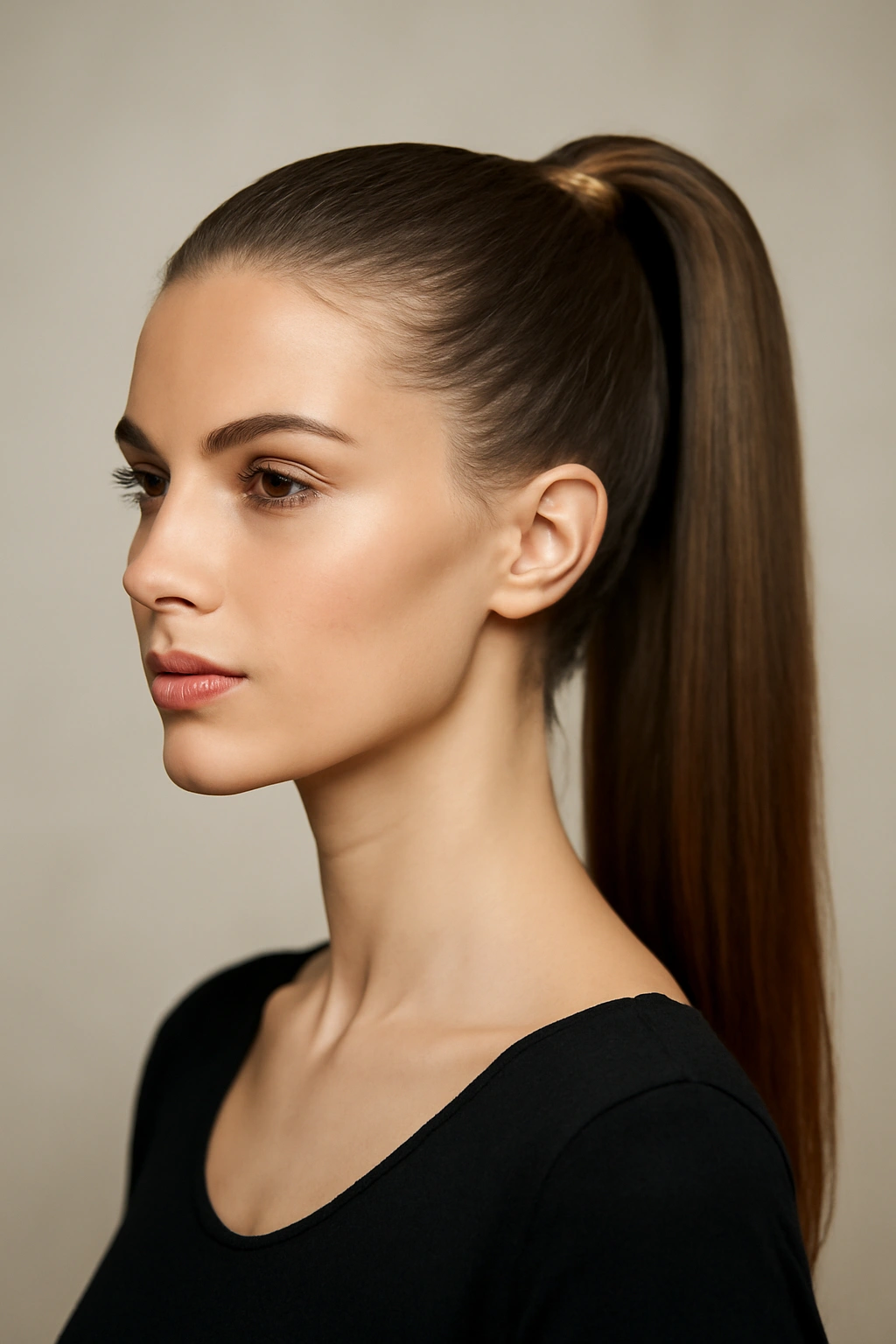
The high ponytail is the foundation of polished ponytail styling—it’s what immediately elevates your appearance and works across virtually every setting. Positioned at the crown of your head, this style creates an instant lift to your face and elongates your neck, which is why it’s favored by everyone from office professionals to red carpet attendees. The key to making it feel refined rather than severe lies in how you prepare your hair and secure it.
Why It Works for Every Occasion
A high ponytail creates an open face, which is universally flattering and allows your features to be the focal point rather than competing with your hair. The height and positioning also create a sense of polish and intentionality—this is a hairstyle that clearly took thought, even when it genuinely takes just minutes. The higher you position the elastic, the more youthful and energetic the style reads, while pulling hair back firmly and smoothly signals professionalism and polish.
How to Style It Perfectly
Start with hair that’s either freshly washed or texturized with a light texturizing spray—completely smooth, slick hair can look too severe, while some subtle grip helps the ponytail stay in place all day. Use a fine-tooth comb to brush hair back from your face and ears, directing everything toward the crown. Position your elastic about 2-3 inches below the very top of your head—this creates the perception of height without pulling uncomfortably tight. The moment you’ve secured the elastic, take a 1-inch section of hair from the ponytail and wrap it around the base, securing it underneath with a bobby pin. This covered elastic is the detail that separates a finished ponytail from a casual one.
Pro tip: For a high ponytail that holds all day without tension headaches, use a fabric-covered elastic or silk scrunchie rather than a traditional rubber band. The softer material is kinder to your hair and less likely to slip throughout the day.
2. Sleek Low Ponytail
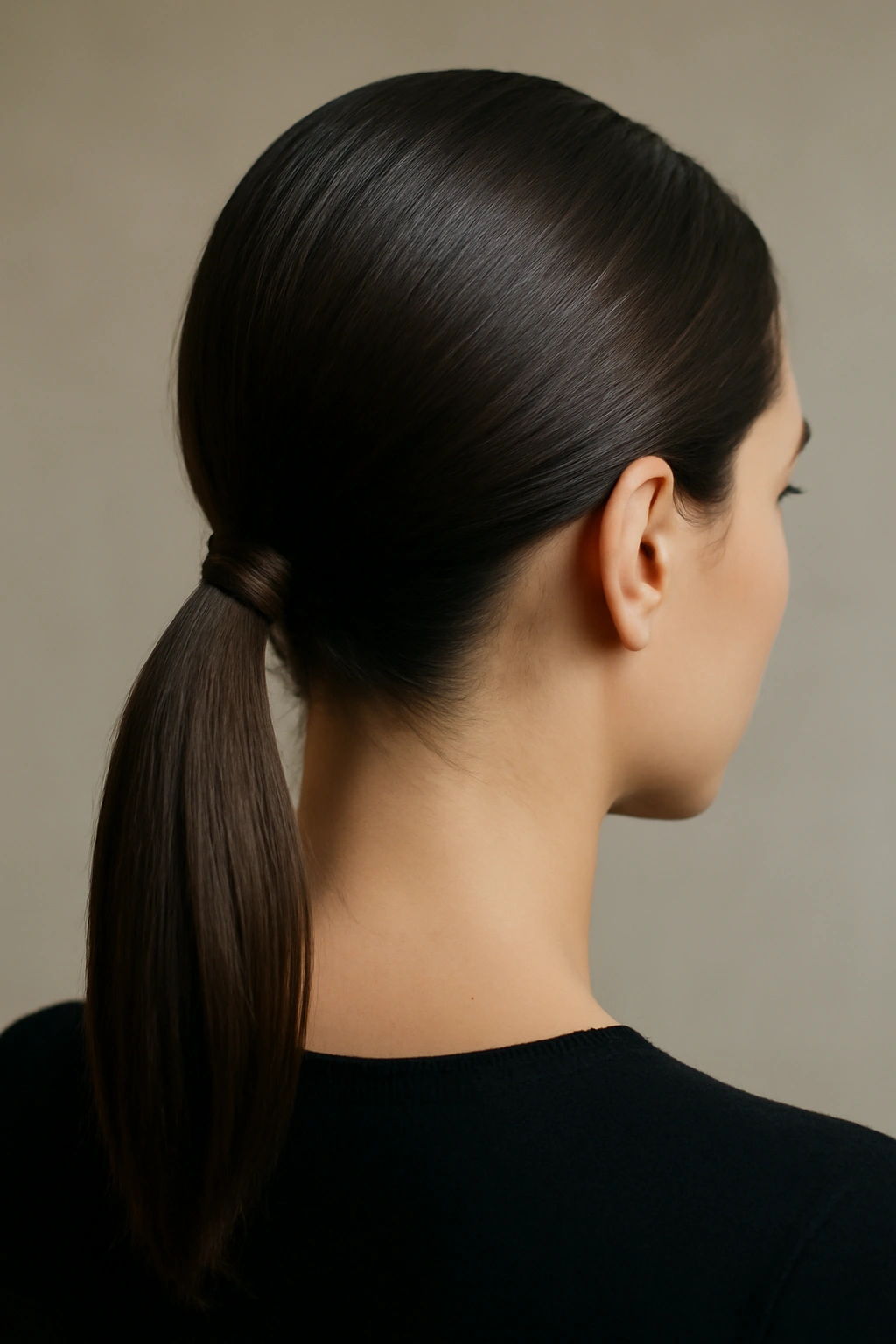
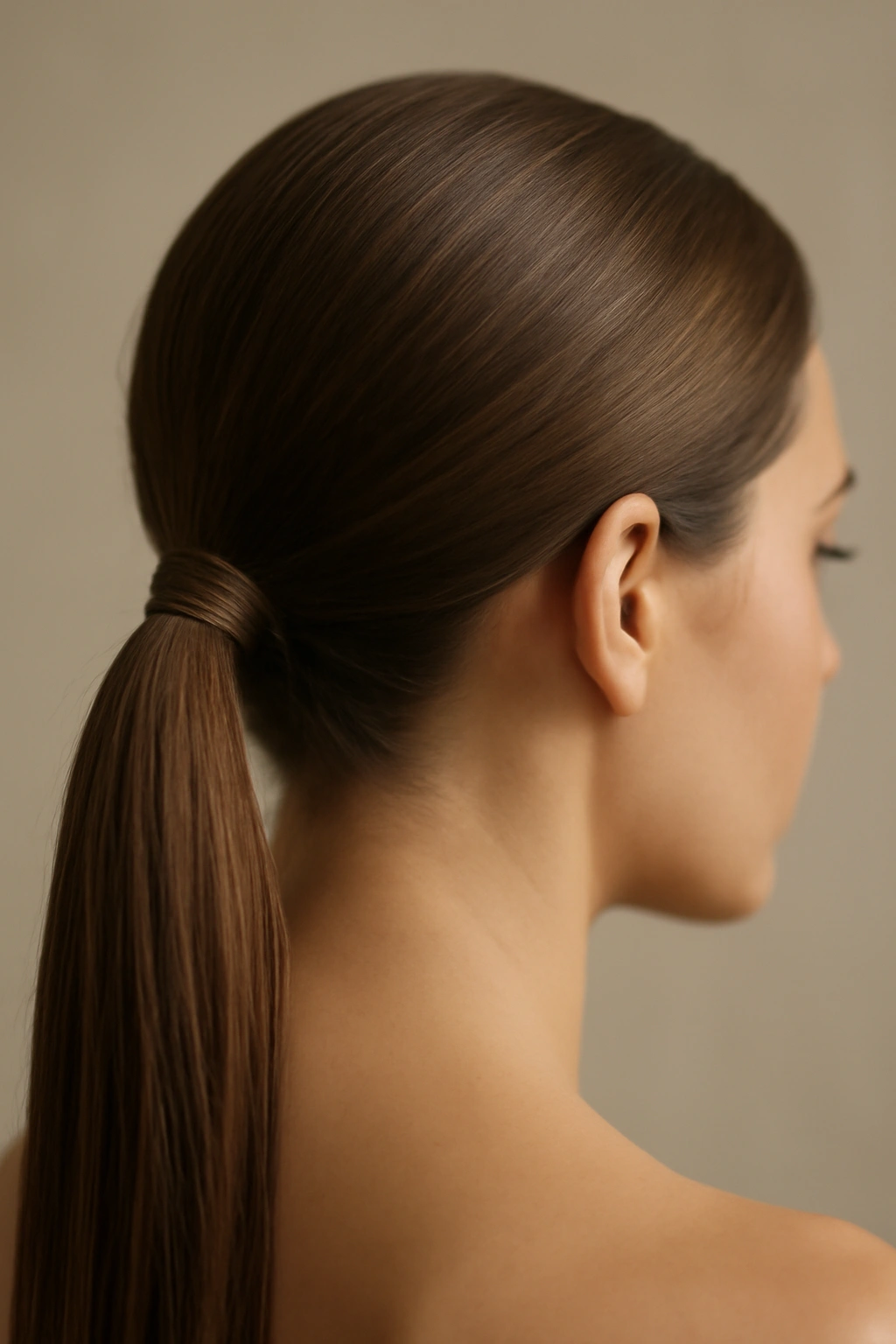
A low ponytail positioned at the nape of your neck creates an entirely different energy than a high ponytail—it reads as sophisticated, refined, and mature. This is the hairstyle of choice for formal events, job interviews, and any occasion where you want to communicate polish and professionalism without trying too hard. The lower placement is also more flattering for many face shapes, particularly if you prefer not to expose too much of your hairline.
The Elegance of Understatement
What makes a low ponytail genuinely polished is its understated quality. Rather than demanding attention, it creates a clean, streamlined silhouette that lets your outfit and accessories shine. The style works beautifully with formal attire, business wear, and elegant evening looks. Unlike a high ponytail’s playful energy, a low one conveys intention and composure.
Achieving the Perfect Low Placement
The positioning is crucial for this style to feel intentional rather than accidental. Gather your hair at the nape of your neck, roughly where your hairline meets the back of your neck—this is approximately 2-3 inches above the bottom edge of your neck. Use a boar bristle brush to smooth every hair back, ensuring no bumps or irregularities along the back of your head. Once secured with a clear or tonal elastic, wrap a small section from the ponytail around the base to conceal the elastic. For a low ponytail destined for a formal event, consider using bobby pins to smooth down any flyaways around your hairline, creating an almost architectural precision to the style.
Worth knowing: A low ponytail looks most polished when your hair has been blow-dried straight or smoothed—this style doesn’t have the textural forgiveness that higher ponytails do, so every strand’s placement becomes visible.
3. Bubble Ponytail
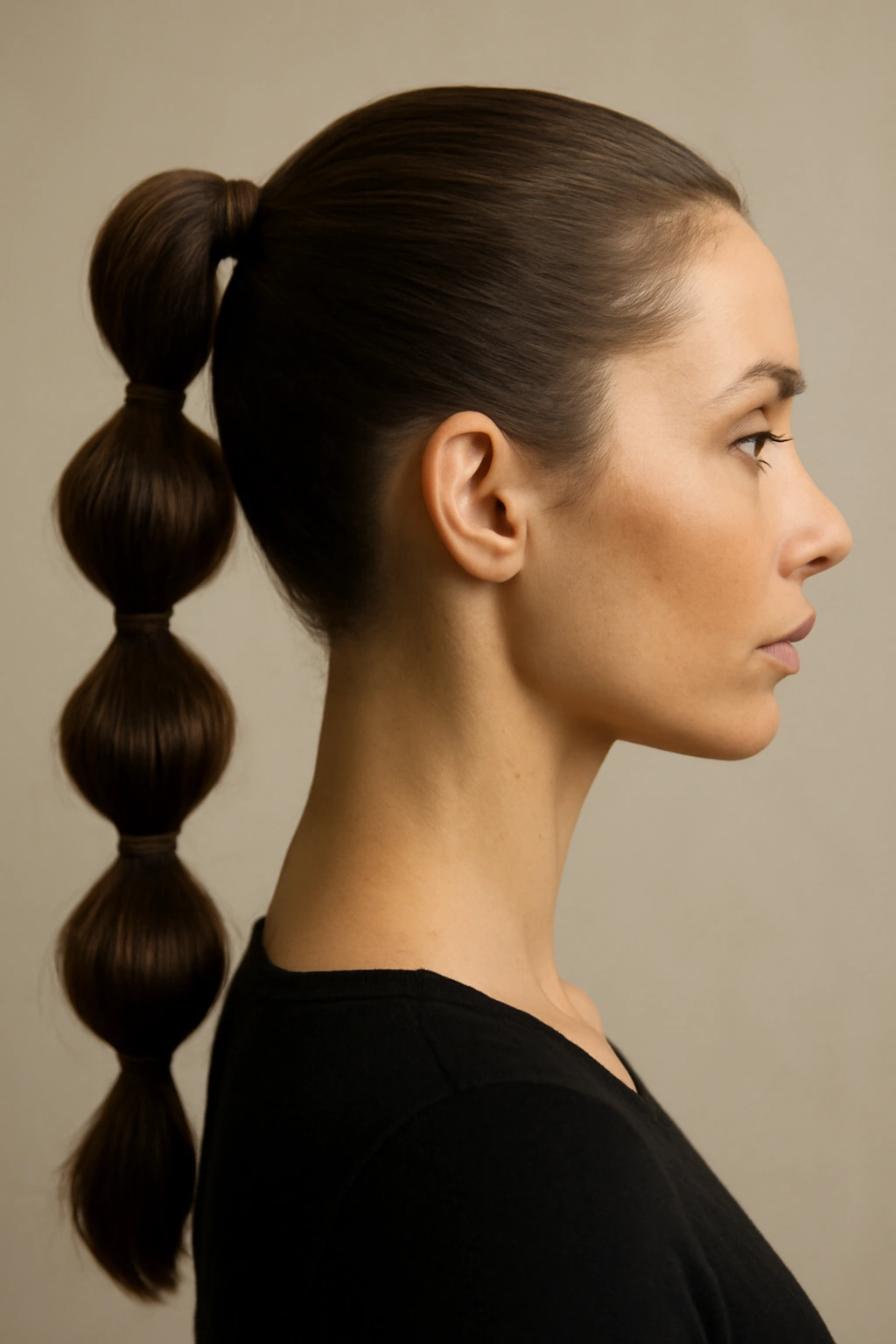
The bubble ponytail takes the basic ponytail concept and transforms it into something with dimension and visual interest while remaining thoroughly polished and modern. Instead of one continuous tail, the hair is divided into 3-5 segments using small elastics positioned along the length, creating a tiered, bubble-like effect. This style works beautifully for special occasions and photographs, as it photographs exceptionally well and reads as intentional and creative.
Why This Style Looks So Polished
The bubble ponytail combines the clean, controlled appearance of a basic ponytail with added texture and dimension. Each “bubble” of hair puffs slightly, creating visual fullness and movement that a standard ponytail lacks. The effect is sophisticated rather than whimsical—it looks like you’ve done something genuinely thoughtful with your hair without appearing costume-like or overly trendy. This is an excellent choice for events where you want your hairstyle to be noticed and complimented.
Creating Bubble Sections That Look Intentional
Start with a high or mid-height ponytail secured with an elastic at your desired height. Then, position a second elastic approximately 2 inches down the ponytail tail. Gently pull and fluff the hair between the first and second elastic to create the first bubble, spreading the puffed section so it looks full and shaped. Continue this process down the length of the ponytail, spacing each elastic roughly 2-2.5 inches apart. The key is making each bubble look deliberately voluminous—don’t leave them flat. You can customize the effect by making some bubbles fuller than others, creating an asymmetrical look that feels more organic than perfectly even sections.
Insider note: Use clear elastics for a more seamless look, or match your elastic color to your hair for maximum polish. Some people use small claw clips instead of elastics for a slightly different aesthetic.
4. Half-Up Ponytail
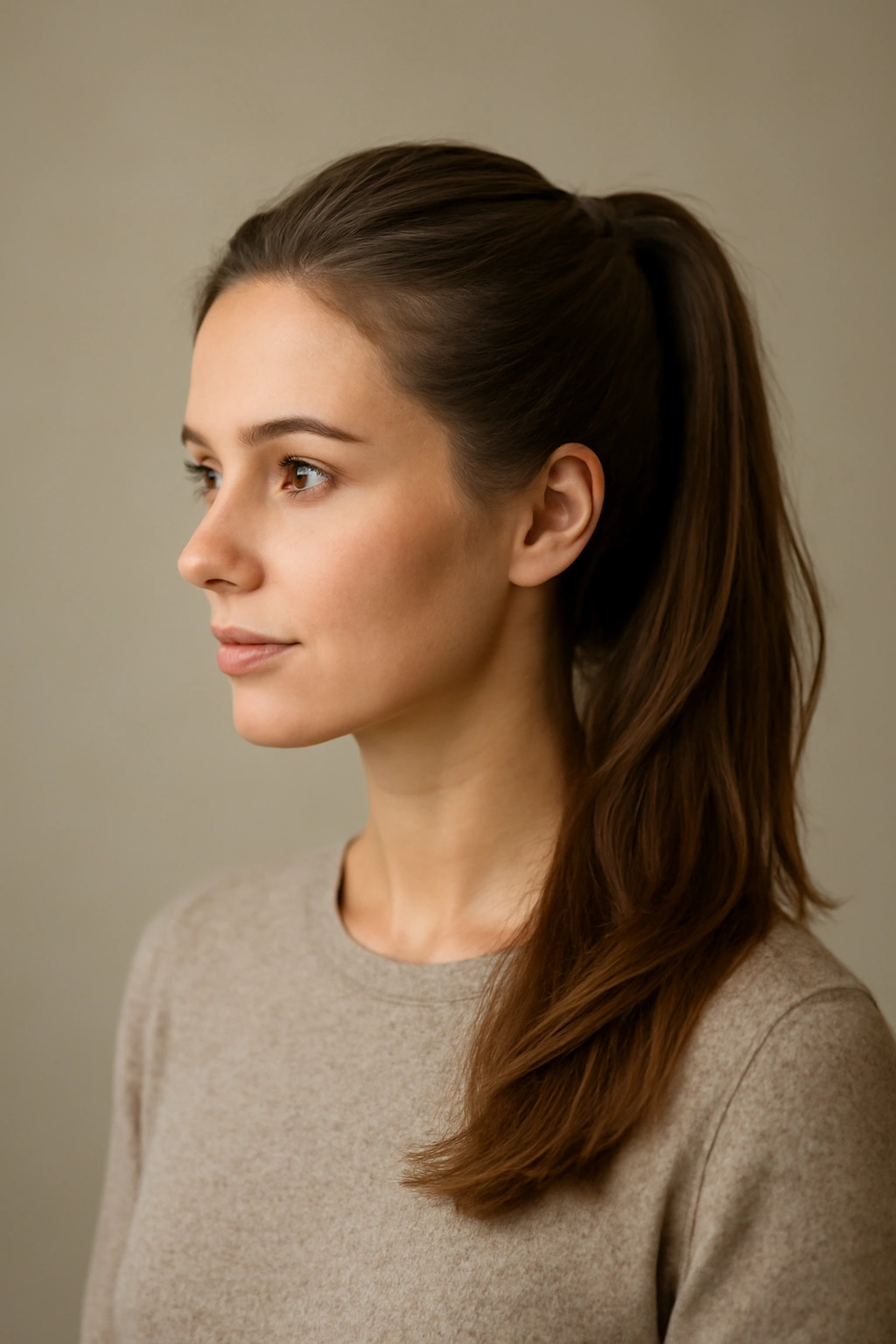
The half-up ponytail walks the beautiful line between “up” and “down” hairstyles, offering the polish of a pulled-back style while letting the length and flow of longer hair remain visible. This style is forgiving of imperfect hair texture while still appearing intentional and refined. It’s particularly flattering for people with longer, thicker hair or anyone who wants to keep hair away from their face without fully committing to a full ponytail.
The Practical Elegance Factor
A half-up style offers genuine practicality wrapped in elegant presentation. You get the benefit of hair being off your face and neck, reducing heat and creating visual lightness, while maintaining the polished presentation that comes from having hair up. This works equally well in professional settings, casual social gatherings, or everyday wear. The style is also exceptionally forgiving—slight texture or imperfections in the lower section blend into the length rather than being on display.
Styling the Half-Up Section
Section off hair from ear to ear across the crown of your head—this should be roughly one-quarter to one-third of your total hair volume. Brush this section back toward the crown and secure it with an elastic positioned slightly above and behind the crown point. The placement is slightly different from a full ponytail because you’re leaving so much hair down—position it just far back enough that the lower hair flows naturally from underneath. For a polished finish, wrap a small section from the ponytail around the elastic to conceal it, or use a decorative clip as both fastener and finished detail.
Pro tip: For a more textured, romantic half-up style, curl or wave the half-up section before securing it, creating more dimension and movement while maintaining the polished feel.
5. Braided Ponytail
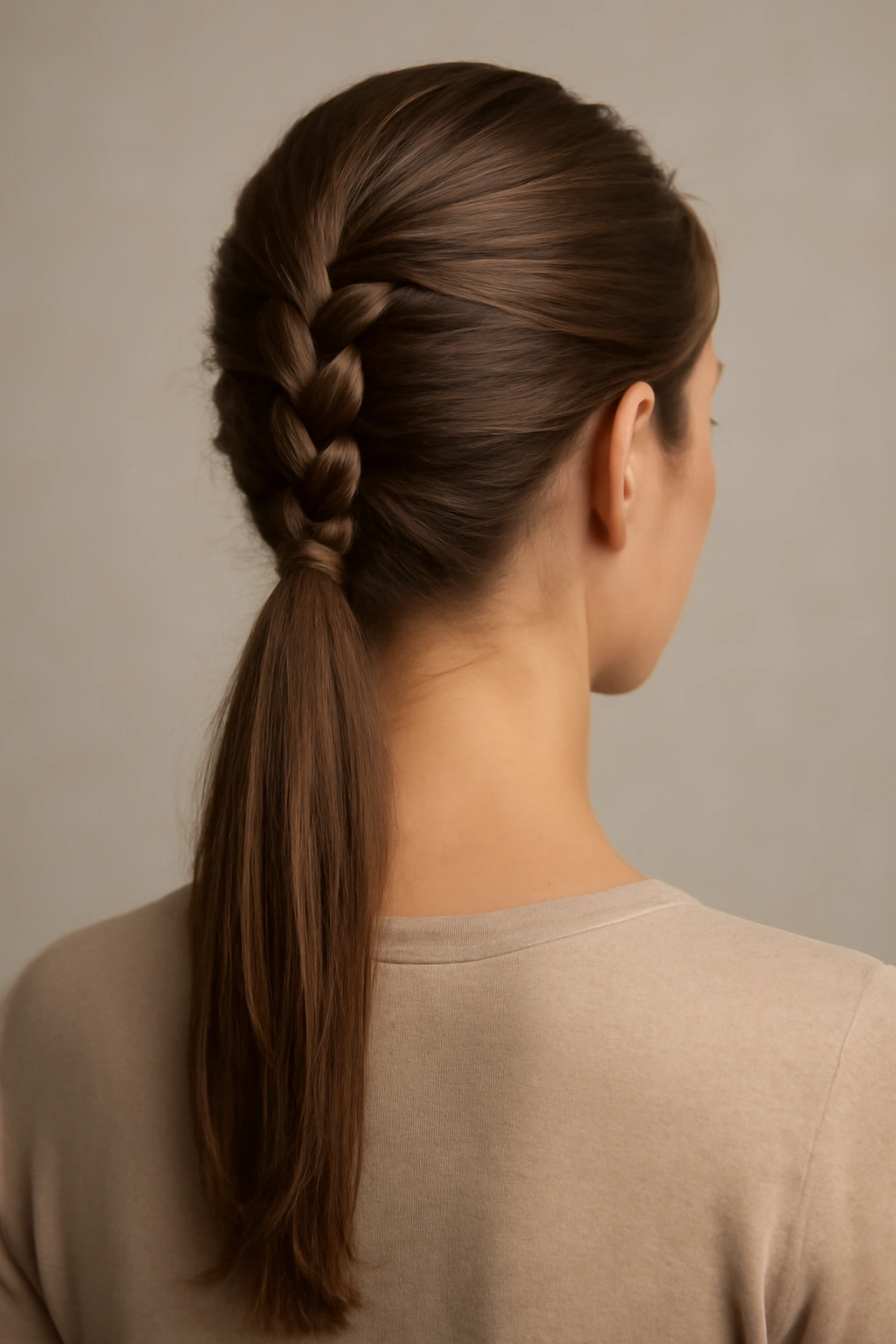
A braid woven into or through a ponytail immediately elevates the style from simple to sophisticated. This works whether you’re braiding the ponytail itself, integrating a braid through the tail section, or creating a braid at the scalp that transitions into a ponytail. The braided element adds visual interest, suggests you’ve taken extra care, and creates a style that reads as more deliberate and polished than a basic ponytail.
Different Braiding Approaches
The most straightforward version involves creating a standard ponytail, then dividing the tail into three sections and braiding it down to the ends. This works beautifully in formal settings and photographs exceptionally well. For a more integrated approach, create a Dutch or French braid starting at the hairline and continuing partway down the head, then transitioning into a ponytail. This hybrid style combines the elegance of a braid with the polish of a ponytail, creating visual complexity that feels refined.
Executing a Polished Braided Ponytail
Start by determining where your ponytail will sit (high, mid, or low). Gather the hair into a basic ponytail and secure it. Then divide the tail into three equal sections and begin braiding. Keep the braid relatively tight for a polished feel—loose, undone braids read more casual, while a structured braid appears more intentional and finished. If you’re creating a braid-to-ponytail hybrid, start the braid from your hairline, pulling sections from your hair as you would in a Dutch braid, then transition the braided sections into the gathered ponytail point. The transition should feel natural rather than abrupt.
Worth knowing: The tension in your braid matters for the finished look. A braid that’s too tight can create discomfort and damage to your hair, while one that’s too loose looks unfinished. Aim for gentle, consistent tension that feels secure but not painful.
6. High Voluminous Ponytail
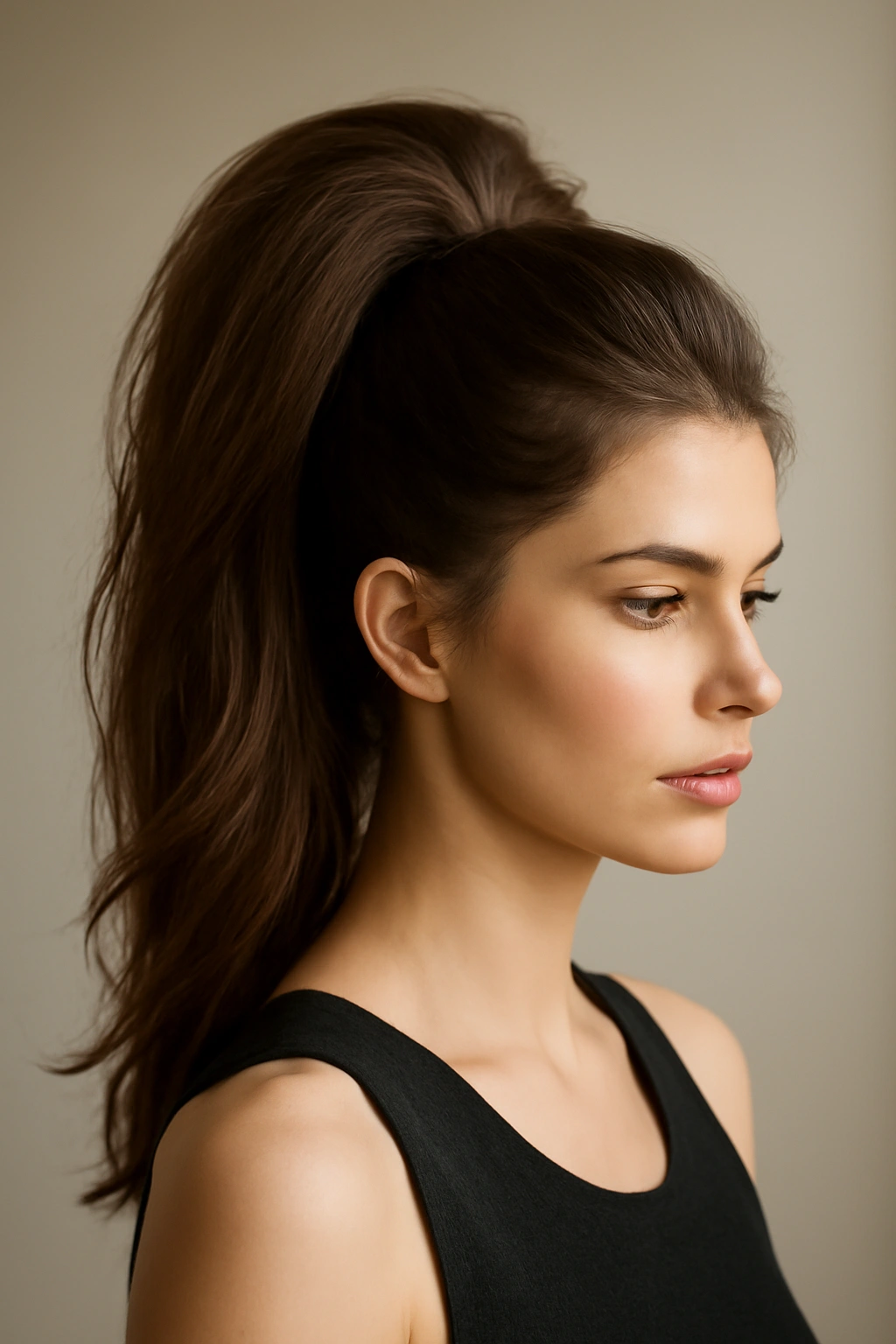
When you want maximum fullness and visual impact, a high voluminous ponytail delivers polish while showcasing impressive hair volume. This style works particularly well for special occasions, events where you’ll be photographed, or any time you want your hairstyle to make a statement. The height combined with purposeful fullness creates a look that’s both contemporary and head-turning.
Building Volume From the Foundation
Volume in a ponytail starts at the base, not at the tail itself. Prep your hair with a volumizing mousse or texture spray applied to damp roots, then blow-dry using a round brush to lift hair away from the scalp. If your hair is naturally flat, consider a light teasing at the crown—use a fine-tooth comb to gently backcomb a small section at the very top of your head, creating a foundation for height. The point is to create genuine lift, not a flat section of smooth hair that happens to be positioned high.
Securing and Finishing a Voluminous Ponytail
Gather the voluminous hair at the crown, being careful not to brush out the backcombing or teasing. Use a strong-hold elastic—you want something that won’t slip as the weight of voluminous hair pulls downward throughout the day. After securing, take a section from the ponytail and wrap it around the base elastic. For maximum polish, smooth this wrapped section with a fine-tooth comb to ensure it looks intentional. Consider finishing with a light hairspray to secure flyaways around the wrapped section and throughout the style.
Pro tip: For even more impact, curl or wave your hair before creating the voluminous ponytail. This adds texture on top of volume, creating a truly dimensional, impressive style.
7. Sleek Side Ponytail
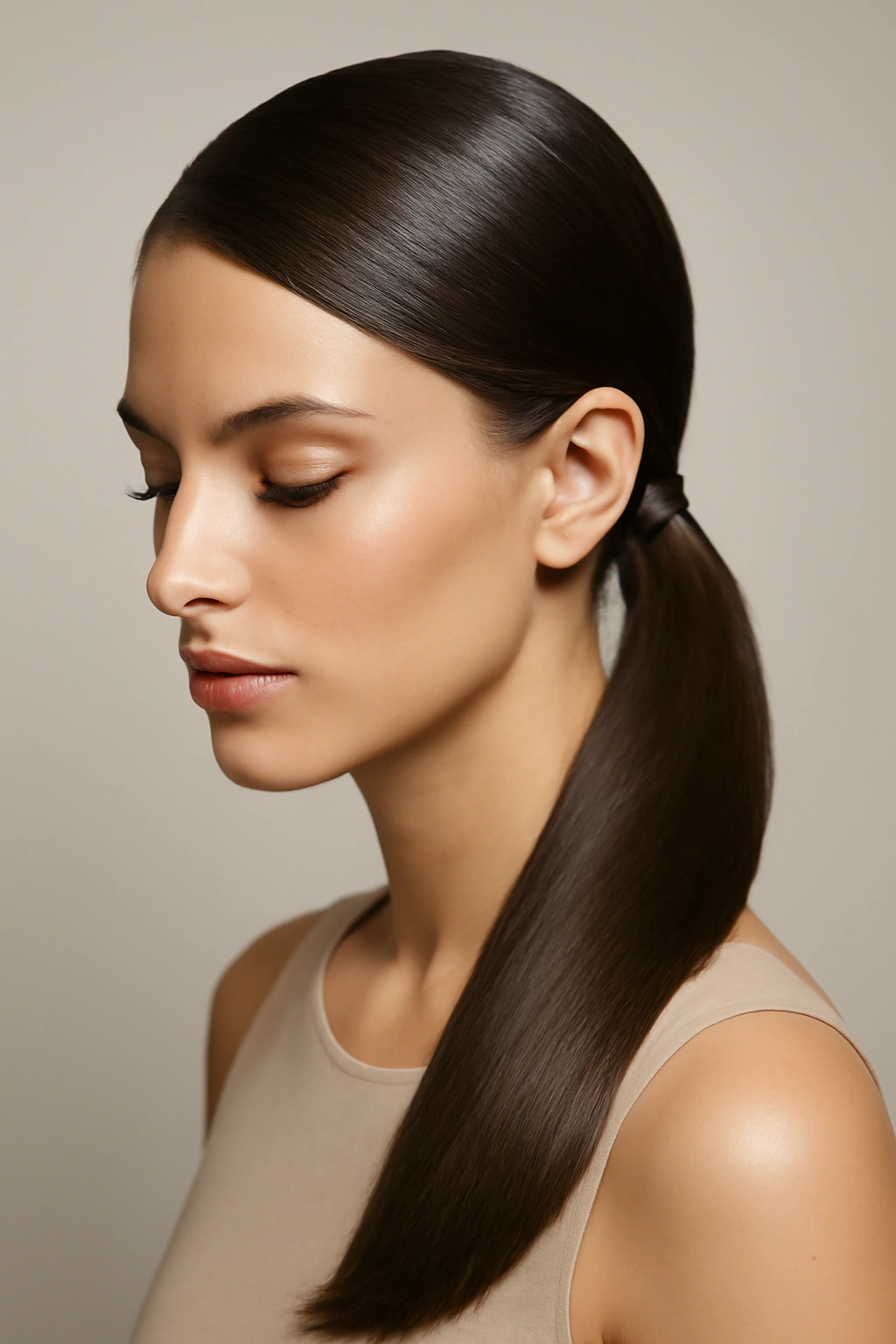
A side ponytail positioned off to one side of your head creates an unexpected, asymmetrical line that feels modern and polished. Rather than the centered approach of other ponytail styles, the side version requires more intentional styling and creates a distinct visual impact. This works beautifully for events, creative settings, or any time you want a hairstyle that’s clearly intentional rather than the default center ponytail.
The Modern Appeal of Asymmetry
Side ponytails read as more editorial and fashion-forward than centered versions. The off-to-one-side placement creates an elongated diagonal line down the body, which is flattering and visually interesting. This style particularly suits people with heart-shaped or round face shapes, as the side placement can help balance facial proportions. The asymmetry also allows you to showcase one side of your face and neck more fully, which is perfect if you want to feature earrings or necklaces.
Creating a Polished Side Ponytail
Brush all your hair to one side—typically either slightly behind your ear or dramatically over one shoulder, depending on how pronounced you want the side placement to be. The further over you pull it, the more dramatic the style becomes. Secure the ponytail with an elastic positioned at the side of your head, roughly where a side part would be or slightly toward the back. To conceal the elastic and create a finished look, wrap a small section of hair around it. Using a fine-tooth comb, smooth the hair leading into the ponytail to eliminate bumps—this is especially important with a side style since the line is so visible.
Insider note: A side ponytail looks most polished when paired with soft waves or curls in the ponytail section itself. The texture creates movement and visual interest that makes the asymmetrical placement feel intentional.
8. Textured Low Ponytail
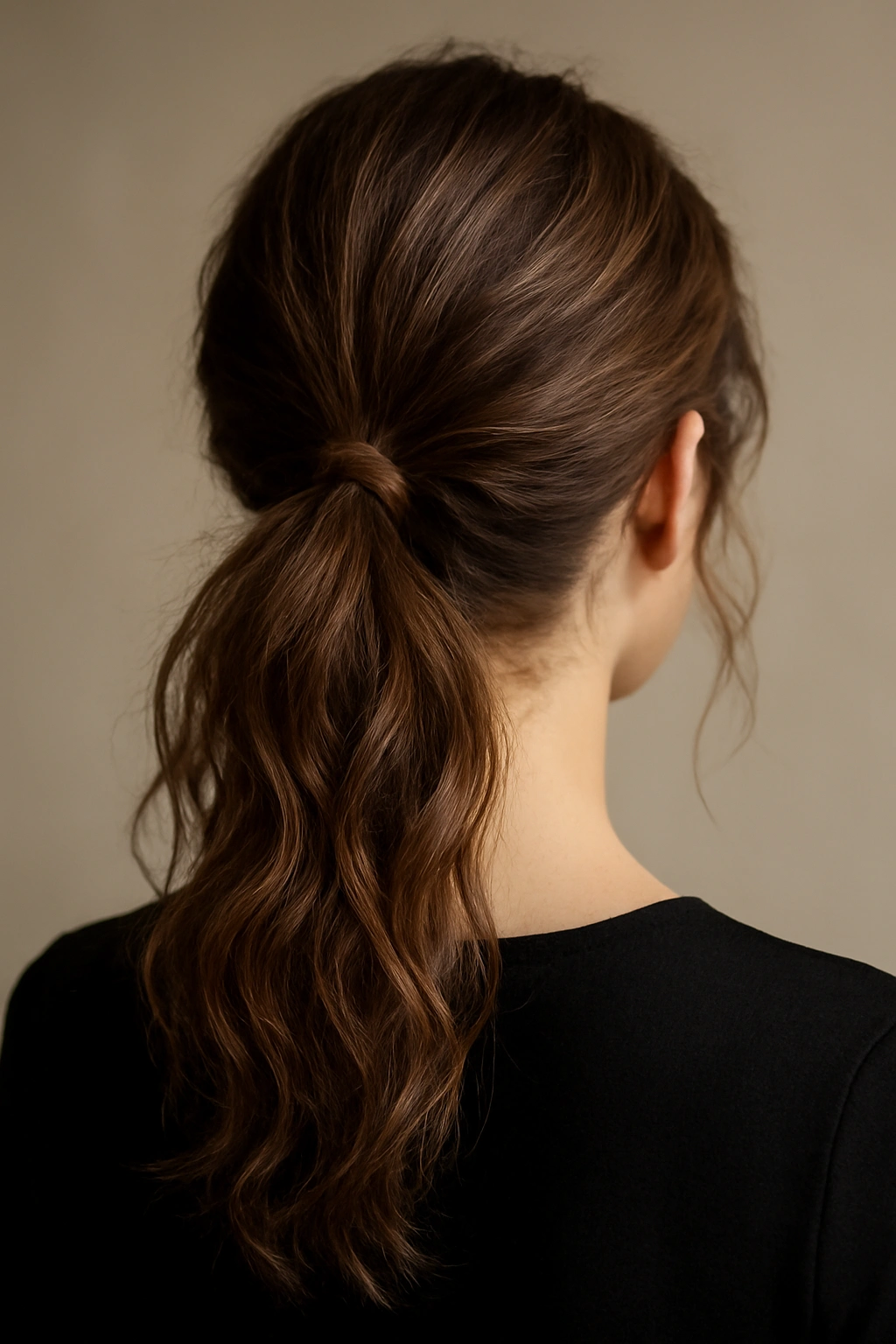
This style combines the sophistication of a low ponytail with added texture and dimension that makes it feel effortlessly polished rather than severe. By incorporating waves, curls, or deliberately roughed-up texture into both the gathered section and the tail, you create a style that reads as refined and intentional without appearing overly formal or stiff. This is an excellent choice for anyone who wants a ponytail that feels modern and has visual interest.
Building Texture Into the Style
Start by creating wave or curl texture throughout your hair using a curling iron, waving iron, or blow-dry method. Work in sections, creating loose waves rather than tight curls—the goal is texture that adds dimension and movement, not ringlets. Once your hair has cooled and set, gather it into a low ponytail at the nape of your neck. Don’t smooth it completely; instead, let the texture and waves remain visible in both the gathered back section and throughout the tail itself. The texture should look intentional rather than accidental.
Finishing Textured Details
After securing your low ponytail with an elastic, take a small section from the tail and wrap it around the base to conceal the elastic. With a textured style, you can let some small waves or texture show around this wrapped section without appearing unfinished. Use your fingers rather than a fine-tooth comb to arrange the texture—this creates a softer, more intentional look than the precision of combing. A light texturizing spray applied after the ponytail is secured can enhance the texture and provide hold throughout the day.
Worth knowing: A textured low ponytail is far more forgiving of imperfect hair texture than a sleek version, making it an excellent choice for humid weather or days when you haven’t had time for a full blow-out.
9. Wrapped Ponytail
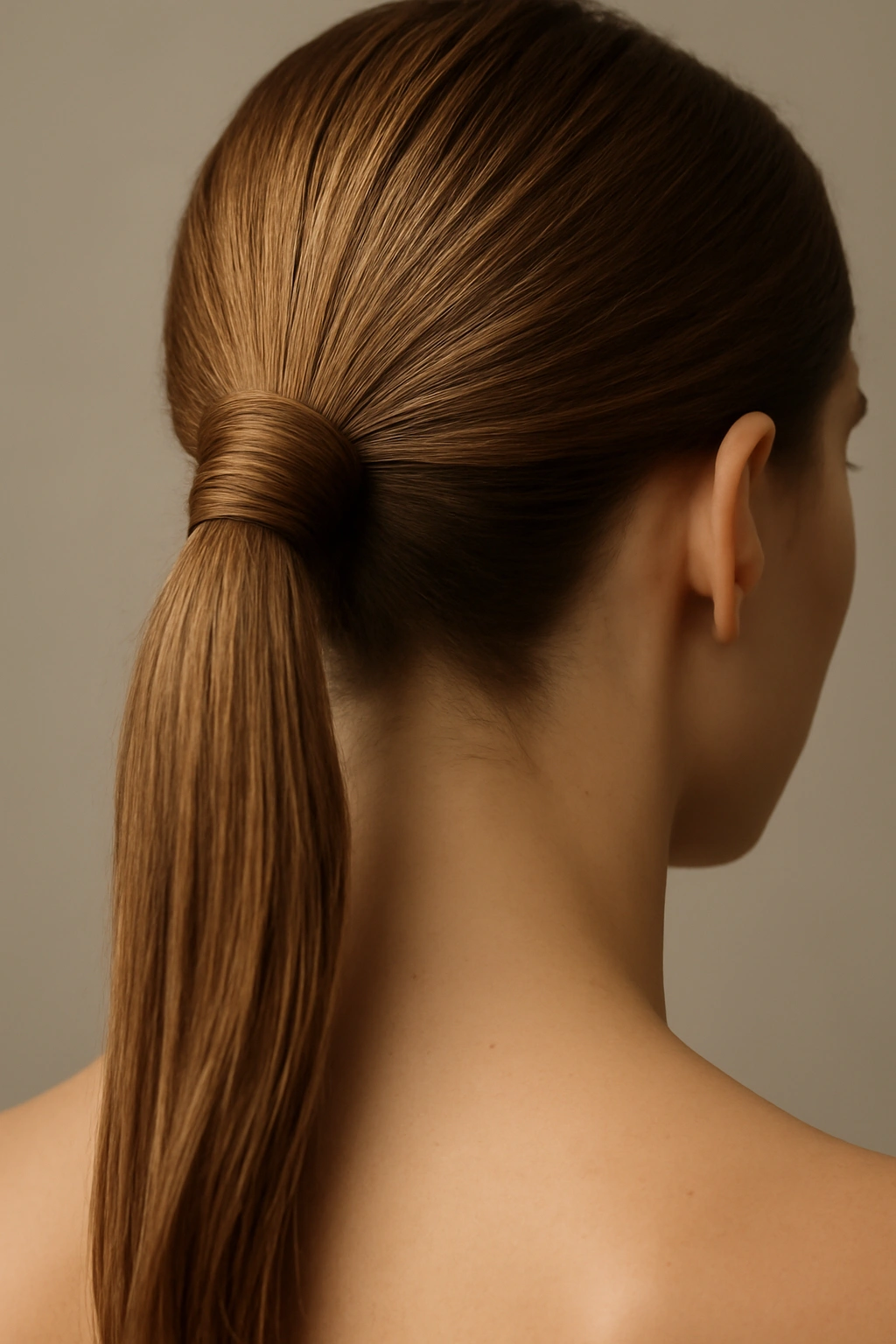
The wrapped ponytail technique involves wrapping your hair or a separate element around the base elastic, creating a finished, polished appearance. This goes beyond the basic “wrap a section and pin it” approach, extending to using decorative wrapping elements, leather strips, or multiple layers of wrapping to create visual interest. The wrapped ponytail reads as intentional, creative, and thoroughly finished.
Basic Wrapping Technique
After securing your ponytail with an elastic, take a 1-2 inch section of hair from the tail and twist it loosely. Wrap this twisted section around the elastic at the base of the ponytail, overlapping it as you go so the elastic disappears completely behind the wrap. Secure the wrapped section at the back of the wrap with bobby pins matched to your hair color. This hidden-pin finish is far more polished than visible pins—the entire look should appear seamless.
Elevating the Wrapped Effect
For a more elaborate wrapped ponytail, you can extend the wrapping concept by wrapping multiple twisted sections, creating layers of texture around the base. Alternatively, use a decorative element like a thin leather strip, metallic cord, or ribbon wrapped around the elastic and secured with a small knot or bow. These decorative wrappings transform a basic ponytail into something that feels intentional and fashion-forward. The key is ensuring that whatever you wrap around the elastic is secured well enough that it won’t slip or unravel as the day progresses.
Pro tip: Match your wrapping element to your outfit or accessories for a cohesive, polished appearance. A metallic wrap works beautifully with formal wear, while a leather wrap creates an edgier, more casual vibe.
10. Twisted Ponytail
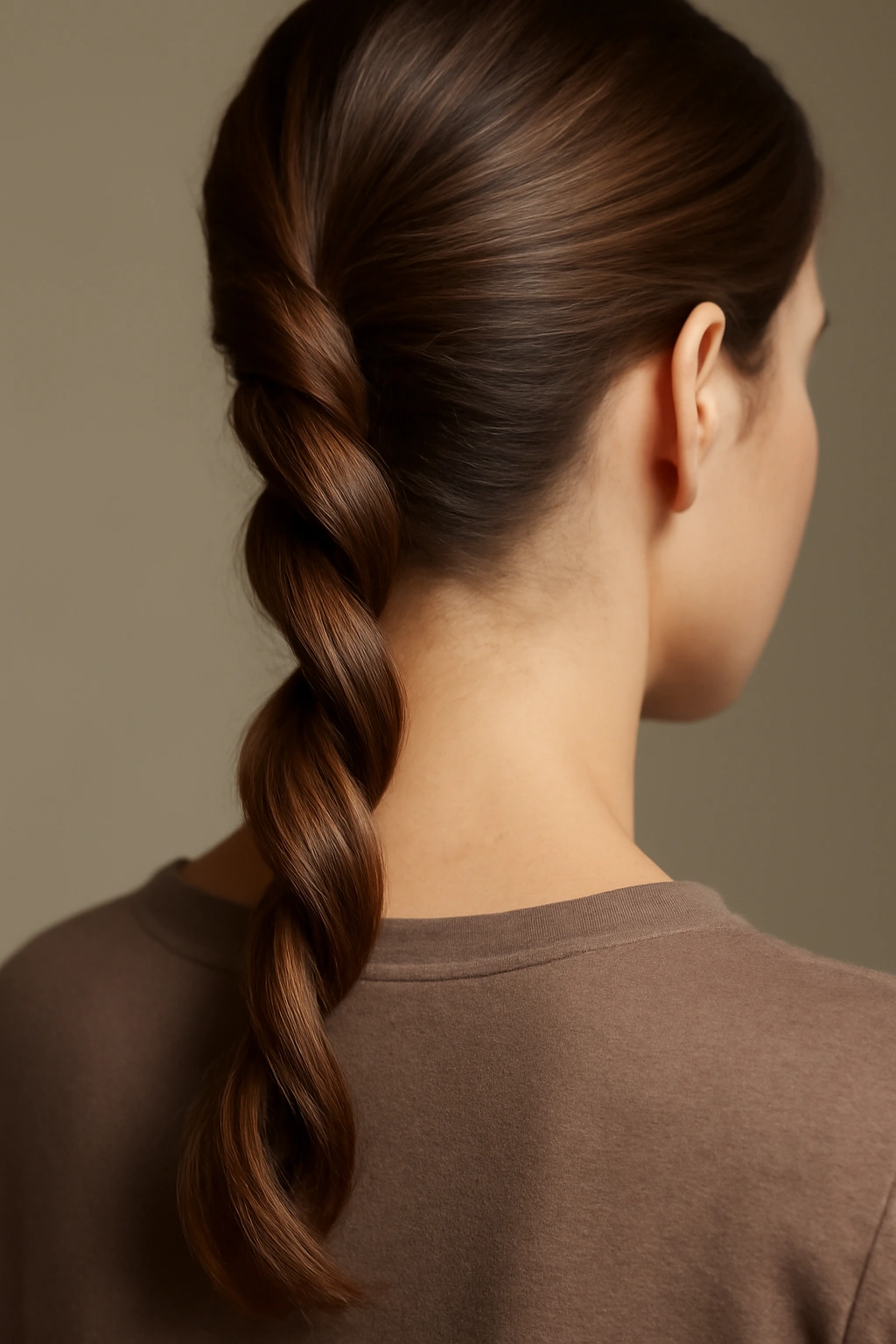
A twisted ponytail incorporates twists of hair into or around the basic ponytail structure, creating visual complexity and texture. Rather than braiding, the twist approach creates an elegant, slightly different aesthetic that feels modern and polished. This style works beautifully in professional settings, at events, or any time you want a hairstyle that suggests thoughtful execution.
The Twisted Alternative to Braiding
While a braid involves weaving three sections together, a twist is created by taking two sections and wrapping them around each other. This creates a slightly different visual line and is often easier to execute than a multi-strand braid. You can twist the entire ponytail tail, create two twists that spiral around the tail, or integrate twists into a style that also includes straight sections. The twisted element catches light differently than braided hair, creating visual interest and depth.
Creating a Polished Twisted Ponytail
Secure your basic ponytail first, then divide the tail into two equal sections. Twist each section individually in one direction, then wrap these two twisted sections around each other in the opposite direction, creating a rope-like effect. The key is maintaining consistent tension—too loose and it looks unfinished, too tight and it becomes uncomfortable. If you prefer a subtler approach, create two twists from sections of hair pulled from the original ponytail, then wrap these twists around the ponytail base before securing with pins. This creates the twisted detail without twisting the entire tail.
Worth knowing: Twisted styles hold best in hair that has some texture or grip. If you have extremely slippery, fine hair, apply a light texturizing spray before creating twists to improve grip and longevity.
11. Curved or Shaped Ponytail
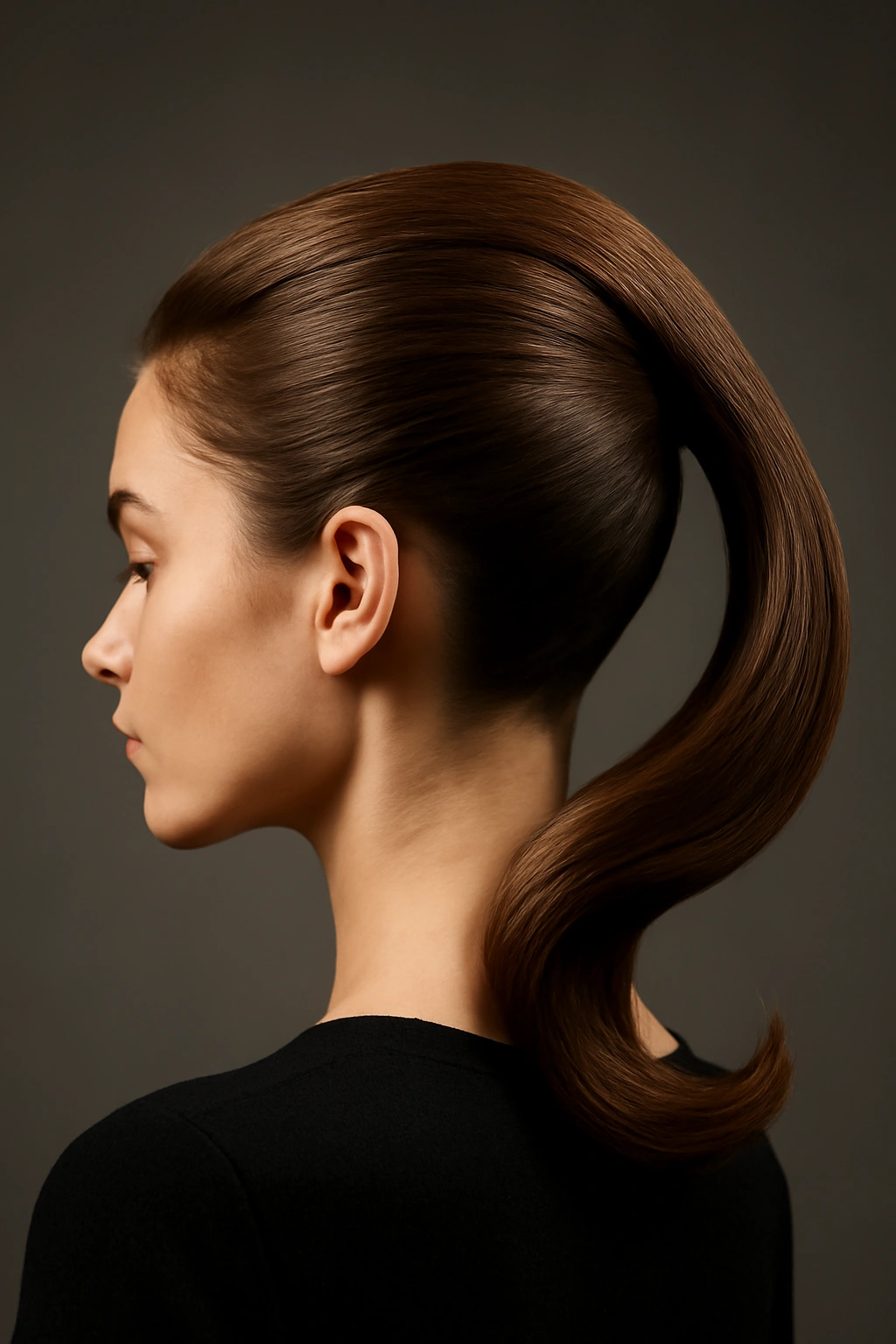
This advanced technique involves shaping the entire ponytail into a curved or sculptural form, creating the impression of intentional design. Rather than hanging straight down, the ponytail curves dramatically to one side, curves up into a loop, or curves back toward your head. This style is particularly striking in photographs and at events where your hairstyle will be noticed and appreciated.
The Artistry of Shaping
Creating a shaped ponytail requires thinking of your hair as a sculptural element rather than simply something to be held back. Decide whether you want a gentle curve to one side, a more dramatic curve that loops back, or an upward curve that brings the tail back toward your head. The shape should feel organic to your face and overall look rather than appearing contrived. This is a style that benefits from professional expertise if you’ve never attempted it—a stylist can help you achieve the right curve and secure it properly.
Securing a Shaped Ponytail
A shaped ponytail requires more strategic pinning than a basic version. After securing your initial ponytail, you’ll use bobby pins positioned throughout the curve to hold the tail in the desired shape. These pins should be hidden beneath the ponytail itself, not visible on top. You may also use a soft hair net or lightweight clip to support the shape throughout the day. For maximum polish, make sure no pins are visible—the entire effect should appear to be the natural fall of your hair, shaped intentionally.
Insider note: This style works beautifully with sleek, smooth hair that shows off the curve. Adding texture or waves competes with the sculptural line and diminishes the impact.
12. Sophisticated Slicked Ponytail
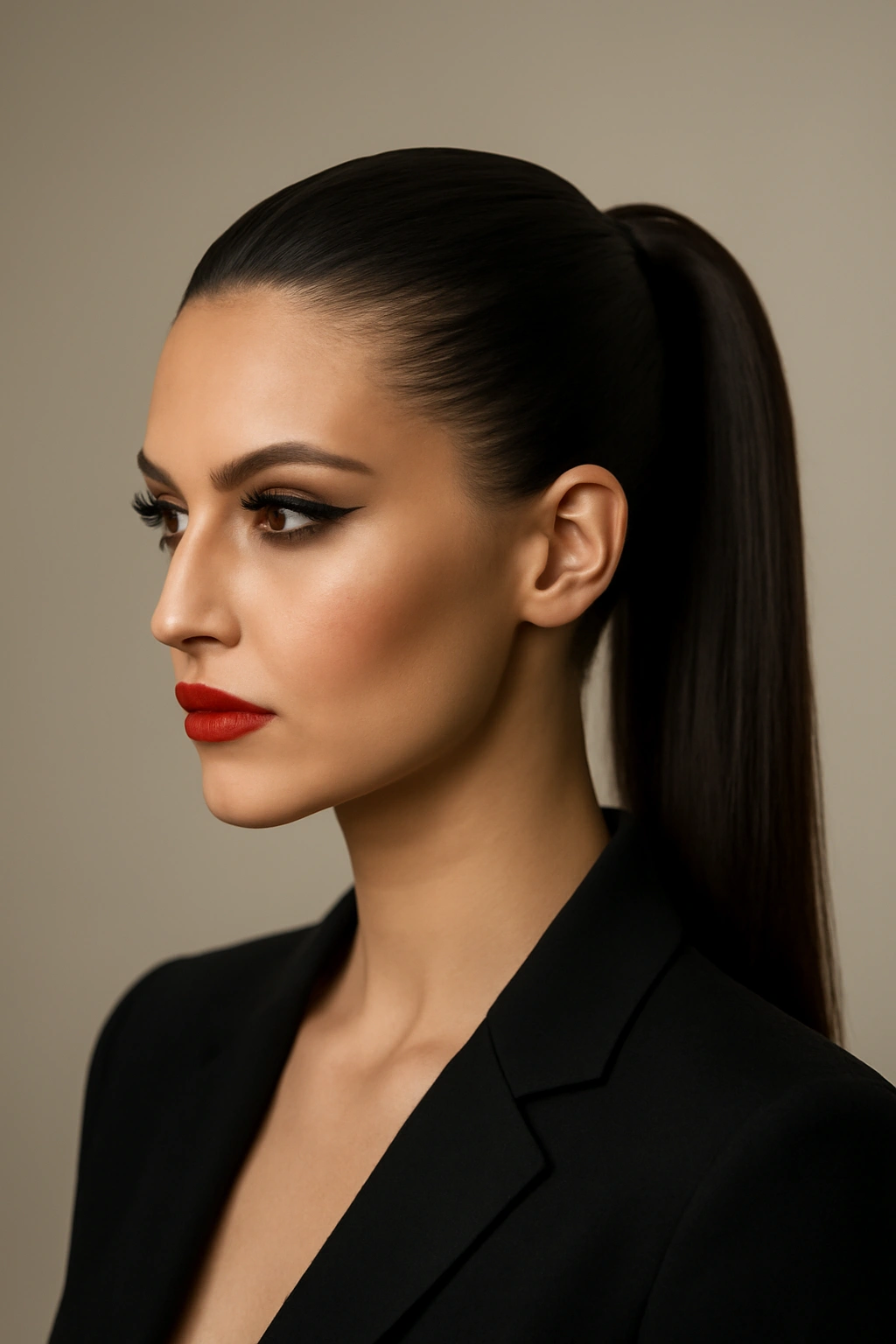
The slicked ponytail takes “sleek” to the extreme, creating an architectural, high-fashion appearance that reads as polished and intentional. Every hair is smoothed tightly back with no flyaways, bumps, or irregularities. This style is particularly striking paired with formal wear or bold makeup, as the clean lines of the hairstyle become a design element in your overall appearance.
The Confidence of Perfect Slickness
A slicked ponytail requires perfect execution and reads as high-confidence and thoroughly polished. There’s nowhere to hide imperfections—every hair’s placement is intentional and visible. This style works beautifully for formal events, job interviews where you want to convey professionalism, or any occasion where you want your appearance to be impeccable. The style particularly suits people with strong facial features and good bone structure, as nothing distracts from your face.
Achieving Flawless Slickness
Start with hair that’s either freshly washed or refresh-sprayed to remove any previous styling. Apply a smoothing serum or anti-frizz product to damp hair, then blow-dry using a brush to create complete smoothness. Once dry, apply a lightweight gel or edge control product to smooth any flyaways around your hairline and to create the sleekest possible base. Brush your hair back firmly into your desired ponytail position using a fine-tooth brush, directing hair smoothly toward your gathering point. Use a firm-hold elastic and secure tightly—any looseness in a slicked ponytail becomes immediately visible. Wrap the base with a smooth section of hair and pin securely. Finish with a light hairspray to keep everything locked in place all day.
Pro tip: For the absolute sleekest finish, apply edge control with a tiny boar bristle brush around your hairline after securing the ponytail. This creates clean lines and eliminates even small flyaways that would otherwise soften the look.
Final Thoughts
The difference between an ordinary ponytail and a polished one comes down to intentional technique and strategic finishing details. Whether you’re drawn to the refined simplicity of a sleek low ponytail, the modern interest of a bubble or twisted version, or the sophisticated volume of a high voluminous style, each of these variations offers genuine polish and wearability. The most important factor isn’t which style you choose, but rather that you execute it with attention to detail—smooth bases, secure elastics, and finished touches like wrapped sections that conceal your fasteners.
The beauty of mastering multiple ponytail styles is that you have options for every occasion, hair texture, and desired impact. Once you’ve practiced a few of these styles, you’ll find that you can execute them quickly without sacrificing that polished appearance. Your hair preparation—whether that’s creating volume through blow-drying, adding texture through waves or curls, or perfecting smoothness through anti-frizz products—matters more than any styling trick. Start with the styles that appeal most strongly to you, practice them until they feel natural, and gradually expand your repertoire.
Every one of these ponytail styles signals intention and care, whether you’re heading to a formal event, the office, or anywhere else where you want your appearance to reflect the effort you’ve put in. The next time you pull your hair back, take an extra minute to execute one of these finished approaches rather than defaulting to a basic ponytail. That minute of intentionality will be noticed and appreciated.
