



There’s something almost magical about a truly polished hairstyle. It signals intention, refinement, and care—not necessarily because you’ve spent hours getting it done, but because it looks intentional. A polished hairstyle is the kind of look that makes people assume you have your life together, even if you were scrambling to find your car keys five minutes before stepping out the door.
The beauty of truly polished hairstyles is that they’re not about complicated techniques or rare products. They’re about choosing styles that read as deliberate, well-maintained, and effortlessly elegant. Whether you prefer wearing your hair up or down, there are options that communicate sophistication and put-together polish regardless of your hair type, texture, or length.
This collection focuses on hairstyles that work across different occasions—from the office to evening events to everyday wear—and that have a staying power that transcends temporary trends. These are the styles you can return to again and again because they simply work. Each one creates a visual impression of polish without requiring you to be glued to a salon chair or obsessing over every strand. The goal with every style here is the same: look like you’ve got it all figured out, even when you’re working with exactly 20 minutes and an imperfect hair day.
1. The Classic Sleek Bob
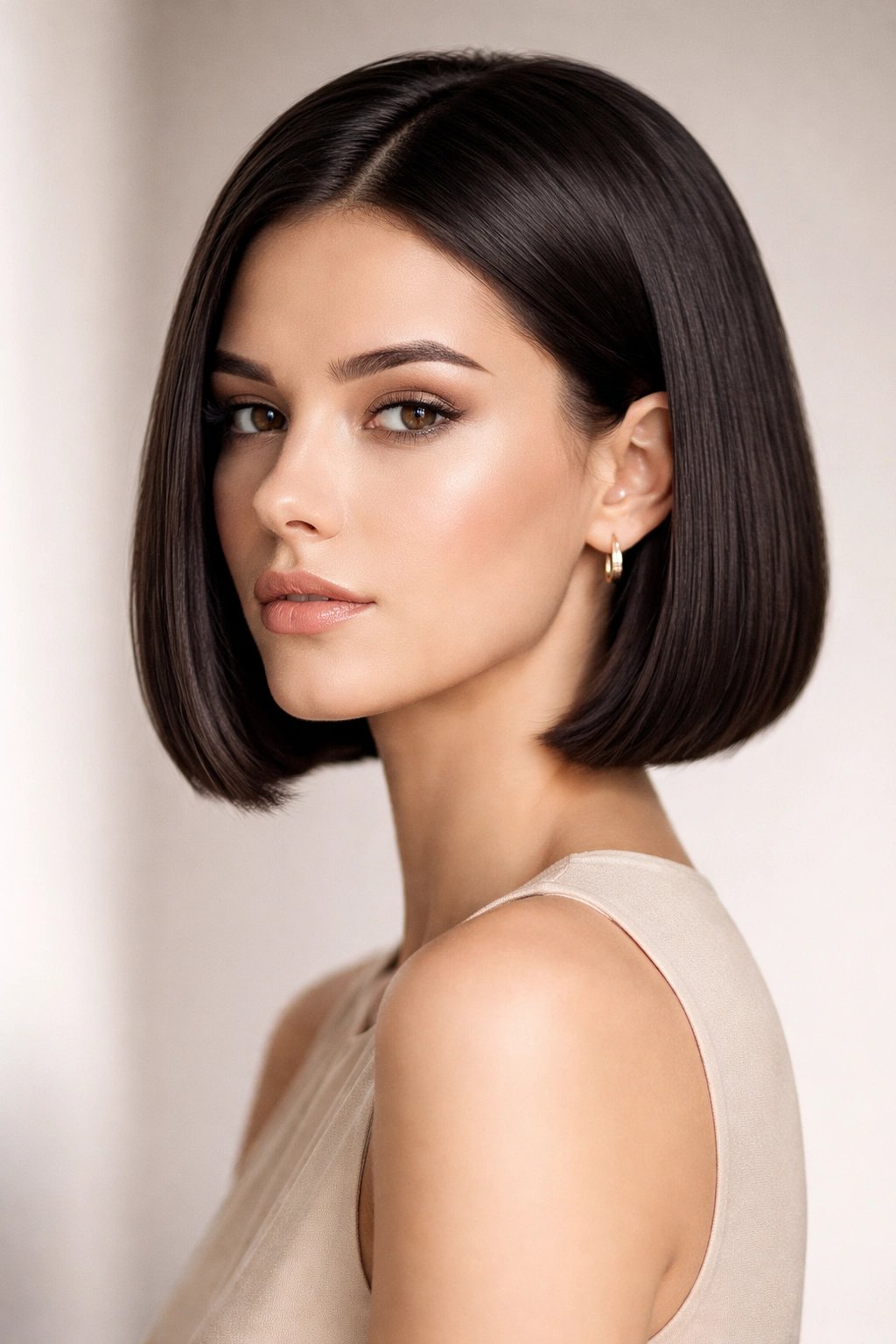
A perfectly blunt bob that grazes the jawline or sits just below is the uniform of refined elegance. This isn’t a trendy, textured shag bob—it’s the kind with clean, precise lines and a smooth finish that seems to say you take grooming seriously. The magic of this style lies in its simplicity; there’s nowhere for imperfection to hide, which is exactly why it reads as so polished.
Why It Commands Respect
A sleek bob works because it frames the face with intention and creates an immediate impression of polish. The sharp lines don’t read as casual or effortless; they read as deliberate. When the bob is cut to the right length for your face shape and jaw, it becomes almost like framing artwork—your features are the canvas, and the hair acts as the elegant border. The style instantly elevates an outfit and works across settings because it’s fundamentally classic.
How to Achieve and Maintain It
- Schedule trims every 4-6 weeks to keep those lines sharp and prevent the ends from getting wispy or uneven
- Use a smoothing serum or light styling cream while your hair is about 70% dry, then blow-dry with a paddle brush for a sleek finish
- A flat iron gives you the option to create a subtle inward curve at the ends if you want dimension without sacrificing the polished look
- Protect your investment in this cut with a quality silk or satin pillowcase, which reduces friction and keeps the style looking sharp longer
Pro tip: The key to this style’s longevity is keeping the ends in perfect condition. Regular deep conditioning treatments and occasional trims of just the very bottom inch—not a full restyle—keep this cut looking intentional rather than overgrown.
2. The Low Chignon Bun
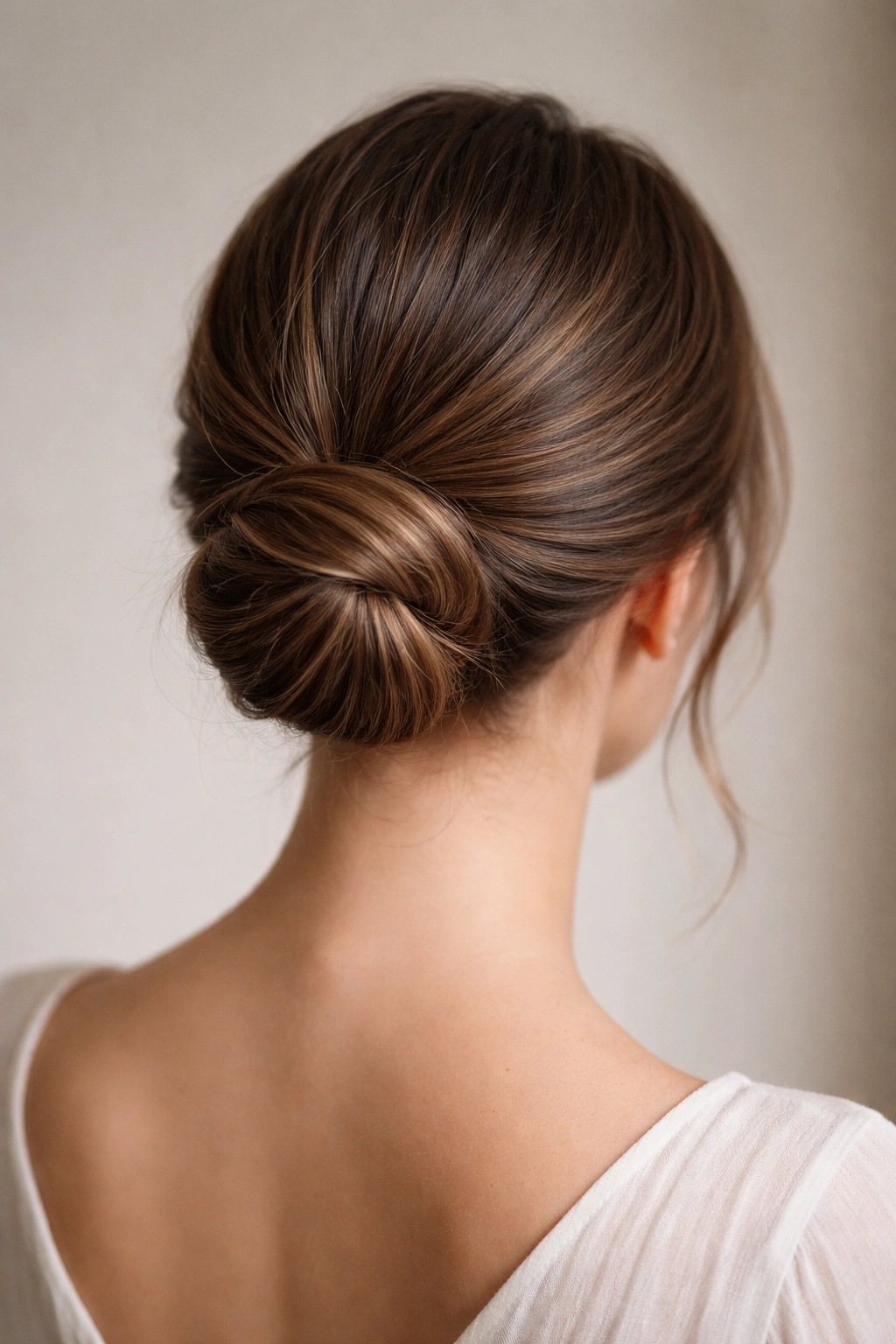
This is the hairstyle that whispers sophistication while you’re sitting in a conference room, at a gallery opening, or anywhere you want to look like you’ve mastered the art of elegance. A low chignon is hair twisted or braided loosely, then coiled into a soft knot at the nape of the neck. The result is undeniably polished—it’s formal without being costume-y, and refined without feeling stiff or overly done.
What Makes It the Ultimate Refined Choice
The low chignon works because it tames hair completely while maintaining softness. Unlike a severely pulled-back bun, a chignon has texture and dimension built into the construction itself. Your face is fully visible and framed nicely, the back of your neck and shoulders are left open (which is inherently flattering), and the style reads as intentional without looking like you were trying too hard. It’s the hairstyle equivalent of a well-tailored blazer—you notice the polish before you notice the hair.
Steps to Building the Perfect Chignon
- Start with hair that’s been blow-dried or has enough texture to grip—completely straight hair can slip out of a chignon
- Create a low ponytail at the nape of your neck using a thin elastic, leaving the ponytail loosely gathered rather than ultra-tight
- Twist the ponytail loosely around the base of the elastic, wrapping it into a coil shape as you go
- Secure with bobby pins tucked inside the coil so they’re not visible from the front or back
- Smooth the front sections with a small amount of gel or finishing serum for polish, but leave the chignon itself with texture
Insider note: The messier and more textured your chignon looks, the more polished it becomes. A perfectly smooth, tight bun reads as severe. A soft, slightly undone chignon reads as sophisticated.
3. The Deep Side Part
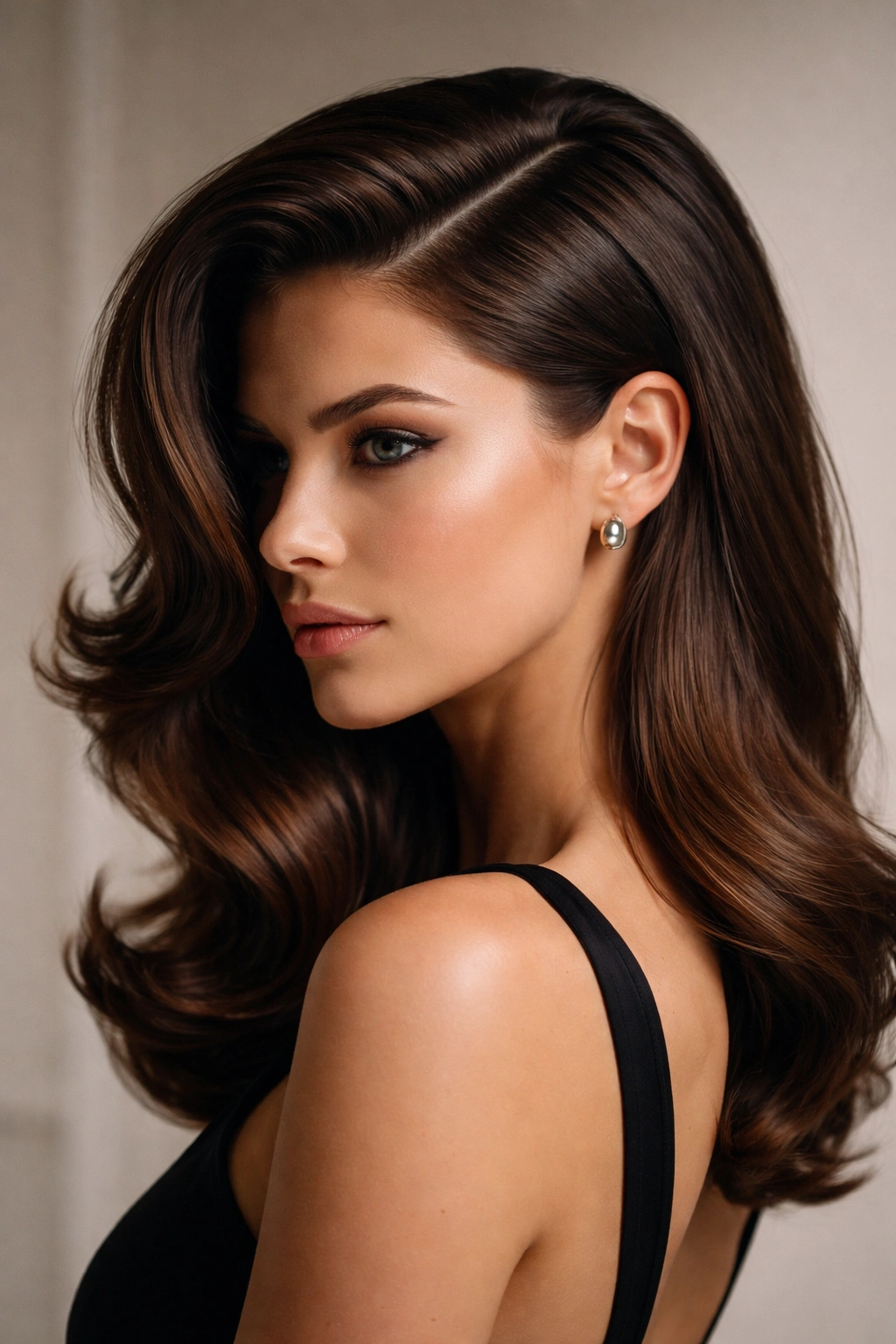
There’s an elegance to a deep side part that most centered or lightly-offset parts simply don’t have. By sweeping your hair dramatically to one side—we’re talking a part that sits an inch or more from the center of your head—you create volume on one side and a sleek, sculpted look on the other. This simple adjustment transforms an ordinary hairstyle into something noticeably more refined.
Why One Simple Change Makes Such an Impact
The deep side part works as a polishing technique for nearly any length or texture because it creates asymmetry, and asymmetry reads as intentional and editorial. The deeper the part, the more dramatic the effect—and the more obviously deliberate your styling becomes. This is the opposite of a casual, just-rolled-out-of-bed vibe. A deep side part says you thought about your appearance and made a choice. It also creates the illusion of volume and adds dimension to the face by emphasizing one cheekbone more than the other.
How to Master This Technique
- Blow-dry your hair with a round brush, directing the hair toward the side where you want the volume
- Part with a pointed tail comb or rattail comb, starting at one temple and drawing a line to the back of your ear, then extending it back
- The deeper the part, the more dramatic the effect—don’t be timid with placement
- Use a light hairspray or volumizing mousse on the side with more hair to enhance the sculpted shape
- Smooth the side with less hair close to your head using a smoothing serum or flat iron for contrast
Worth knowing: A deep side part works on every hair type and length, from short pixies to long waves. It’s one of the easiest ways to instantly make any hairstyle look more intentional and polished.
4. The Sleek High Ponytail
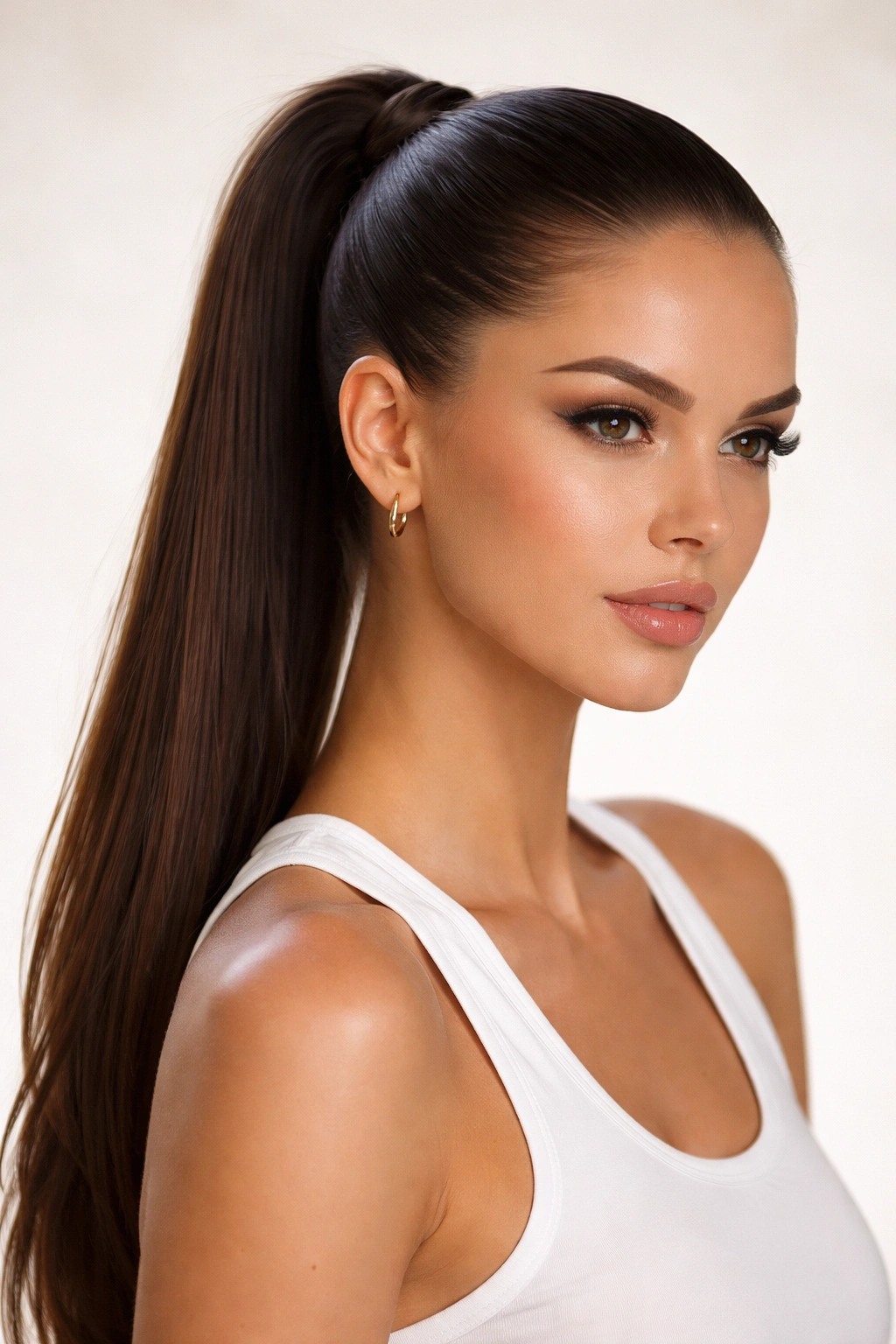
A high ponytail that’s been blown out smooth and gathered tightly at the crown is the hairstyle of someone who means business. There’s something about a sleek high pony that immediately reads as athletic, put-together, and ready for anything. It’s simple, clean, and so effective at making an impression that it’s worn by everyone from executives to performers to people who simply want to look polished while keeping their hair completely off their face.
The Science Behind Why This Works
A sleek high ponytail works because it creates lift, draws attention to your face and bone structure, and eliminates any question about whether you “did your hair” or not. The answer is obviously yes. The ponytail is typically positioned directly at the crown or slightly forward, which creates height and an immediate sense of polish. The sleekness—achieved by smoothing every strand and using enough product to eliminate flyaways—is what separates this from a casual, relaxed ponytail.
The Exact Method for Maximum Polish
- Blow-dry your hair with a paddle brush, directing the roots upward for natural lift
- If you have texture or waves, use a flat iron to smooth your hair completely before gathering it
- Use a fine-tooth comb to gather your hair at the crown, combing backwards smoothly to eliminate bumps or stray pieces
- Secure tightly with a strong elastic, then use bobby pins to anchor any wispy layers along your hairline
- Apply smoothing serum or gel to any flyaways, combing them smoothly into the ponytail
- Wrap a thin section of hair around the base of the elastic and pin it underneath to hide the elastic completely
Pro tip: The wrapped base (where you take a thin strand from the ponytail, wrap it around the elastic, and pin it) is what elevates this from “I put my hair in a ponytail” to “I have a polished high ponytail.” It’s a 30-second addition that changes everything.
5. The Half-Up Style with Definition
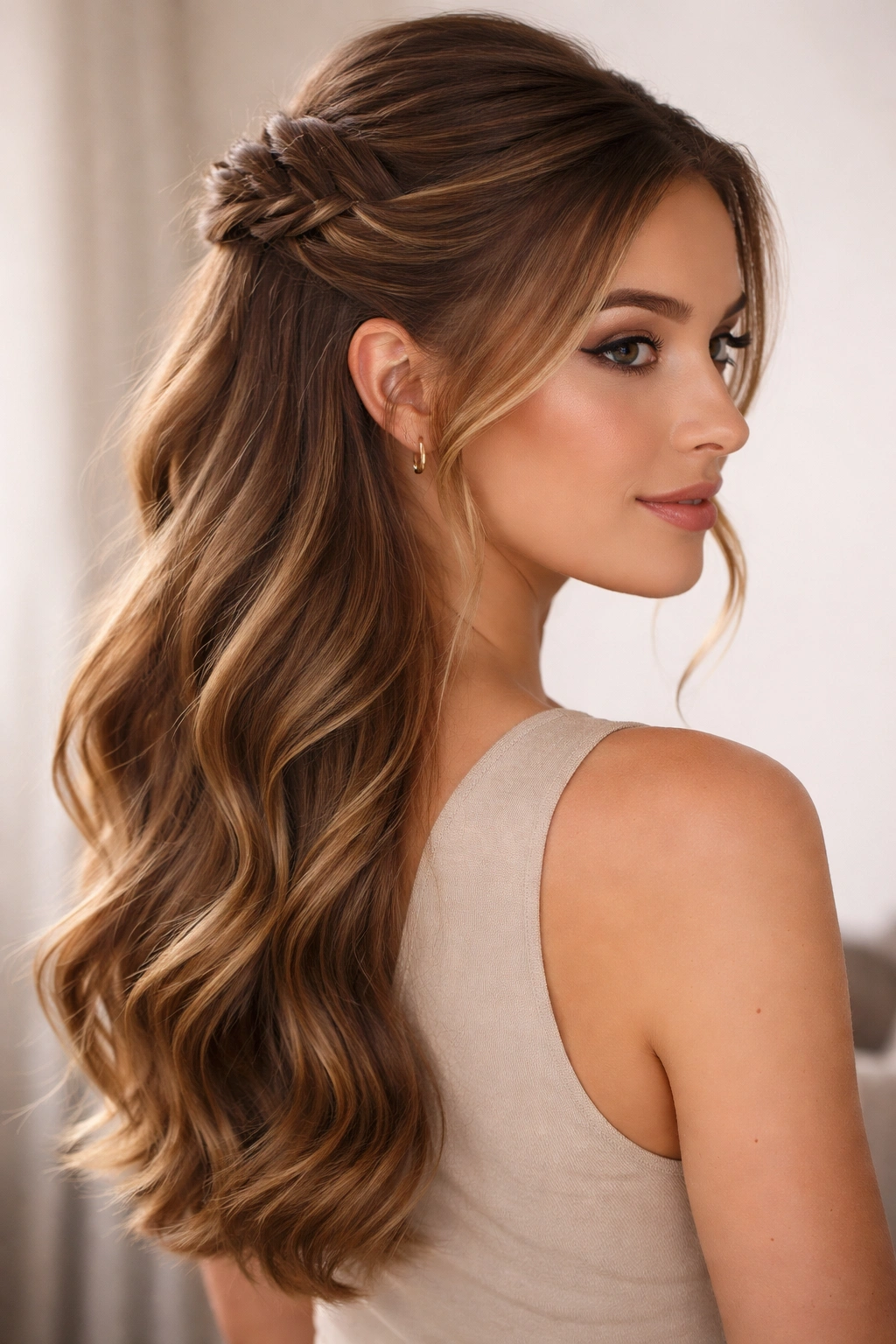
The half-up hairstyle occupies a sweet spot between down and fully pulled back, making it endlessly versatile and remarkably polished when executed with intention. By gathering approximately the top third or half of your hair and securing it with a clip, elastic, or braid, you create the impression of styled hair without fully committing to an updo. The key to making this look polished rather than haphazard is creating defined texture and ensuring the gathered section is smooth and secure.
What Transforms Half-Up From Casual to Refined
The difference between a casually thrown-together half-up and a deliberately polished one is all about definition and intentionality. A polished half-up has visible texture or a braid in the gathered section, clean lines where the hair is secured, and the bottom layers styled—not just left to fall naturally. It’s the hairstyle that says you care enough to put effort in, but you’re confident enough not to need everything perfectly controlled.
Building the Polished Half-Up
- Start with textured or wave-enhanced hair—use a curling iron, sea salt spray, or braid-out to add dimension
- Section the top half of your hair, gathering it away from your face with your fingers rather than a comb for a softer look
- Either braid this top section (a three-strand braid, Dutch braid, or twisted rope section all work beautifully), or leave it smooth and twist it before securing
- Secure with a clip, bobby pins, or elastic, ensuring the gathering point is smooth and tight
- Leave the bottom layers down and textured, allowing them to frame your face
- Add a light hairspray to set everything in place
Insider note: The most polished half-ups have a braid or twist in the gathered section. A smooth half-up can read as lazy, but one with intentional texture immediately reads as deliberately styled.
6. The Blowout with Waves and Volume
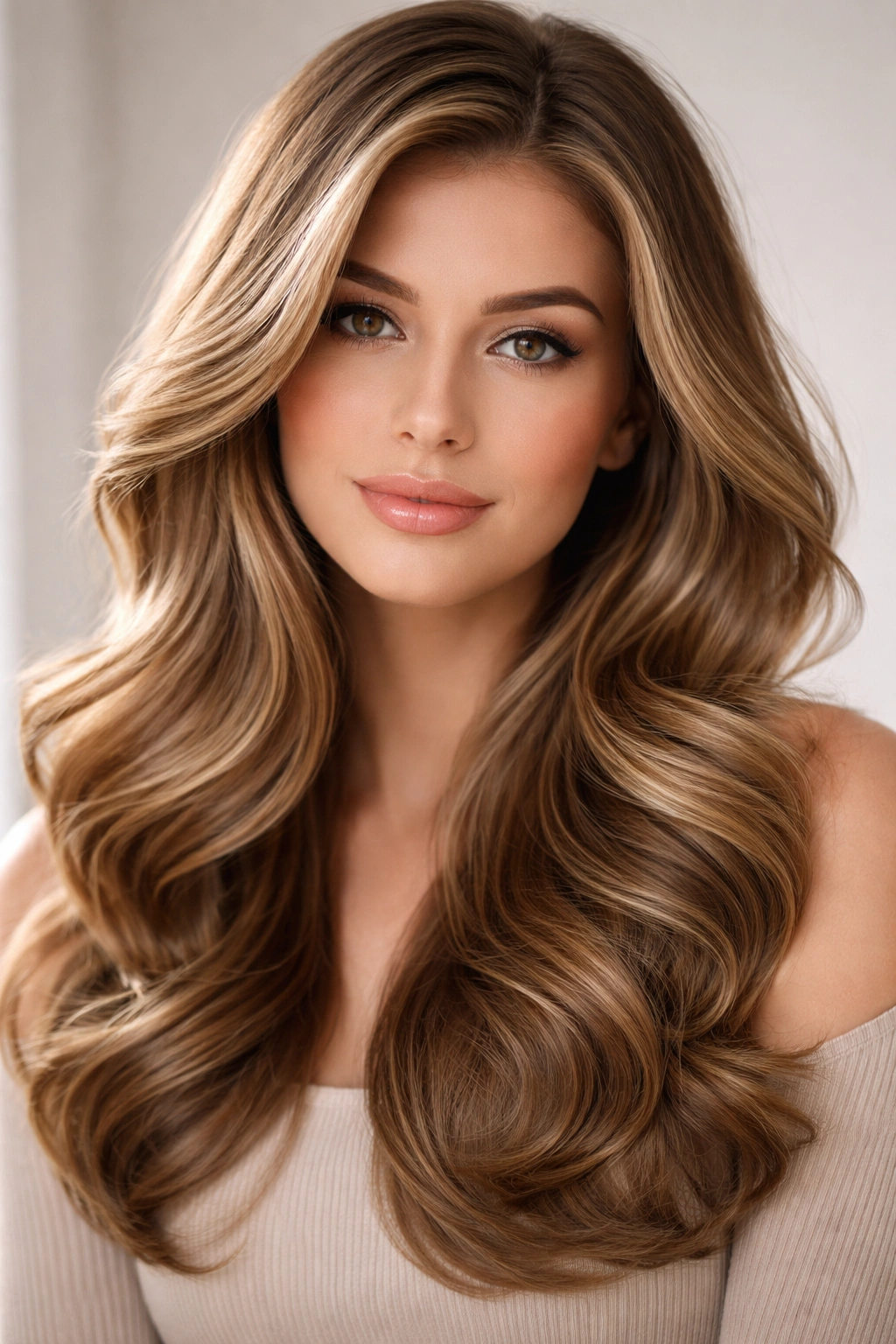
A professional-quality blowout—where every section of your hair has been blow-dried with a round brush to create smooth, voluminous waves—is the equivalent of a tailored suit for your head. This isn’t about tight curls or defined waves; it’s about the kind of soft, bouncy, voluminous style that looks like you either just left a salon or have serious technical skill with a blow dryer. The polish comes from the obvious care and technique involved.
Why This Is The Ultimate Polished-Hair Shortcut
A quality blowout works because it creates immediate dimension, movement, and shine. Your hair looks thicker, healthier, and more intentionally styled than it probably does on a regular day. The waves catch light, the volume creates flattering shape around your face, and the overall effect reads as someone who invests in their appearance. It’s one of the most universally flattering hairstyles because the technique enhances rather than fights your natural hair texture.
How to Recreate a Salon-Quality Blowout
- Start with damp hair and a volumizing mousse applied to your roots
- Blow-dry your roots first with your head upside down or tilted back, using your fingers to create lift rather than smoothing everything down
- Section your hair into quadrants and dry each section with a round brush, wrapping the brush under each section and rolling it smoothly
- As you dry each section, direct the hair away from your face and slightly back for maximum volume and flattery
- Once completely dry, use a large barrel curling iron or waver to add soft waves throughout
- Finish with a light hairspray that provides hold without crunchiness
Pro tip: The secret to a blowout that lasts longer than one day is using a volumizing mousse or texture spray at the roots before you start blow-drying. This gives you grip and lasting volume without relying solely on your styling technique.
7. The Smooth, Straight Silhouette
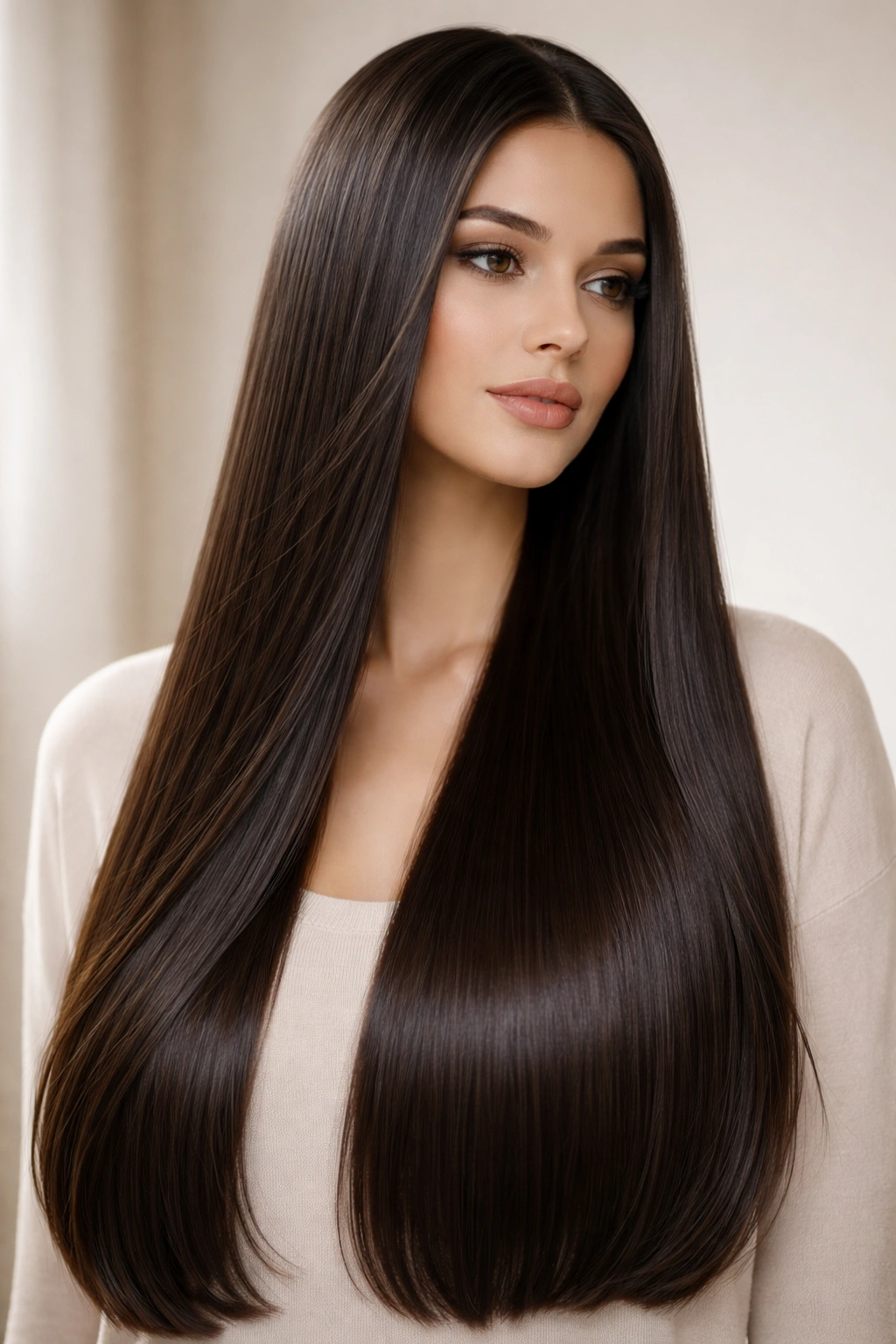
Sometimes the most polished choice is simply smooth, glossy, pin-straight hair. Not kinky-straight or unnaturally flat, but genuinely smooth hair that shines and moves with fluidity. This style works because there’s nowhere to hide—smooth hair requires good products, good technique, and healthy hair. It reads as intentional and refined, and it’s surprisingly versatile.
The Appeal of This Understated Elegance
Smooth, straight hair works because it’s the opposite of trying too hard. There’s a quiet confidence in this style; you’re not using waves or texture to create interest or distraction, you’re letting your hair’s natural shine and length do the talking. It reads as polished because smoothness inherently reads as cared-for and intentional. Combined with a good cut, smooth hair becomes an elegant foundation for any outfit or occasion.
Achieving and Maintaining Silky Smoothness
- Wash with a smoothing shampoo and conditioner designed to enhance shine and reduce frizz
- Apply a smoothing or anti-frizz serum to damp hair, focusing on the mid-lengths and ends
- Blow-dry with a concentrator nozzle on your blow dryer, working section by section with a paddle brush
- Use a flat iron set to a moderate temperature to seal the cuticle and add final smoothness, gliding smoothly from roots to ends
- Finish with a shine-enhancing serum or lightweight oil, applied to the ends only
- Sleep on a silk or satin pillowcase to maintain smoothness overnight
Worth knowing: The shine in smooth hair is essential to the polished look. Dull, smooth hair reads as lifeless. Invest in a shine-enhancing product and you’ll immediately elevate the entire style.
8. The Polished Pixie Cut
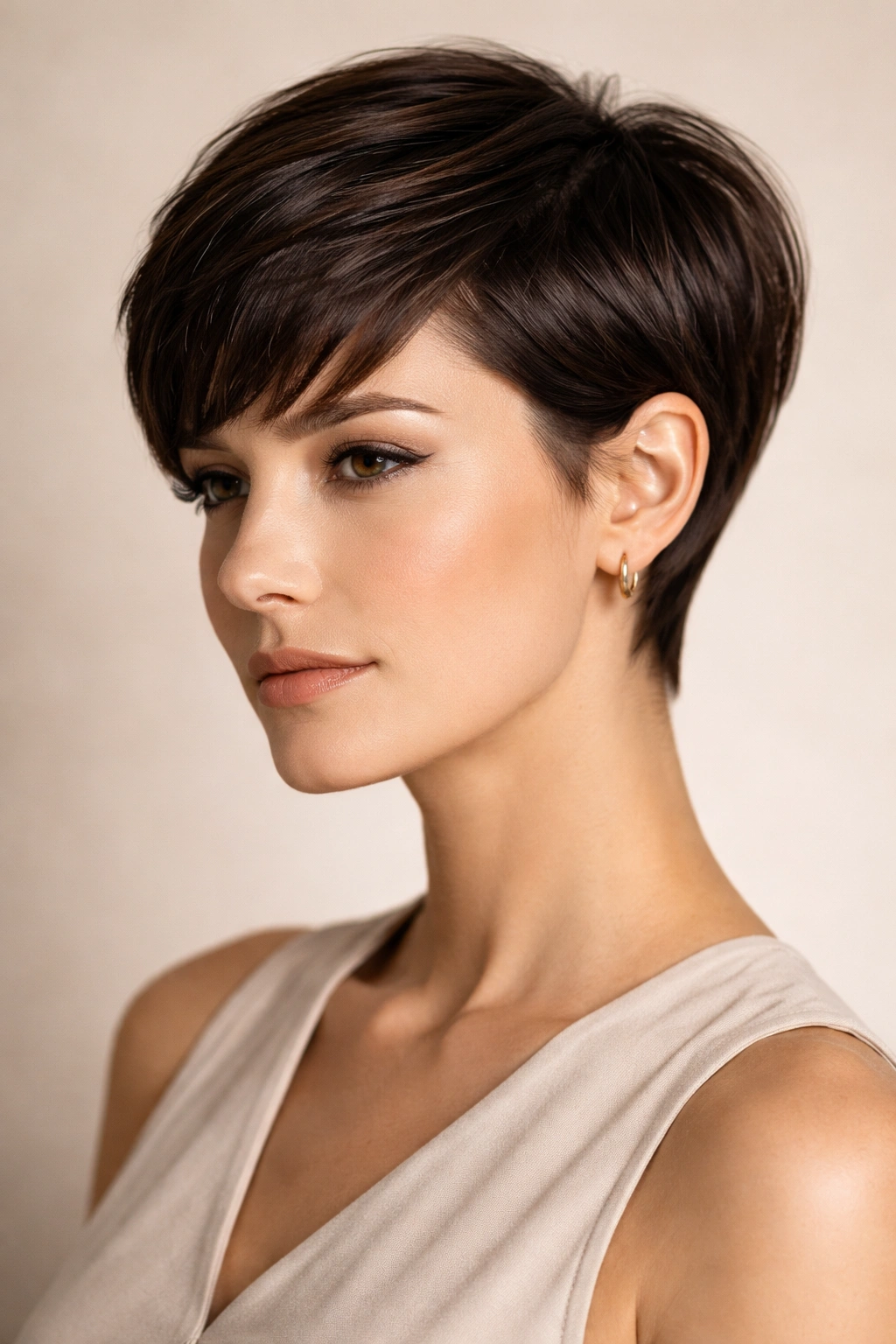
A well-executed pixie cut is perhaps one of the most confidently polished hairstyles possible. When cut to frame your face beautifully and styled with intention, a pixie eliminates any question about whether your hair is intentional. It’s the ultimate commitment to looking put-together, and it reads as refined and modern. The key is finding a stylist who understands how to cut a pixie that flatters your specific face shape.
Why a Pixie Reads as Undeniably Polished
A pixie works because it’s impossible to look casual or undone in a pixie. Every single piece is visible and intentional. Your face, bone structure, and facial features become the focus, which means this style only works if you embrace it fully. When you do, you look like someone who is completely confident in their appearance and making bold, deliberate choices. There’s an effortless elegance to a well-cut pixie that longer styles sometimes struggle to achieve.
Styling and Maintaining Your Pixie
- Get trims every 3-4 weeks to maintain the intended shape and prevent it from growing out into an awkward in-between length
- Blow-dry with your fingers or a round brush while damp, directing the hair where you want it to go
- Use a light styling product or matte clay to add texture and prevent the pixie from looking too slick or wet
- Consider having longer layers on top with shorter sides for more styling versatility
- A small amount of pomade or wax can help define the cut and add shine if desired
- The simplicity of a pixie means the health of your hair and skin becomes more visible—prioritize good skincare and hair conditioning
Insider note: The most polished pixies have some texture or piece-y definition, not a uniformly smooth finish. Texture makes a pixie look intentional and modern.
9. The Twisted Crown Braid
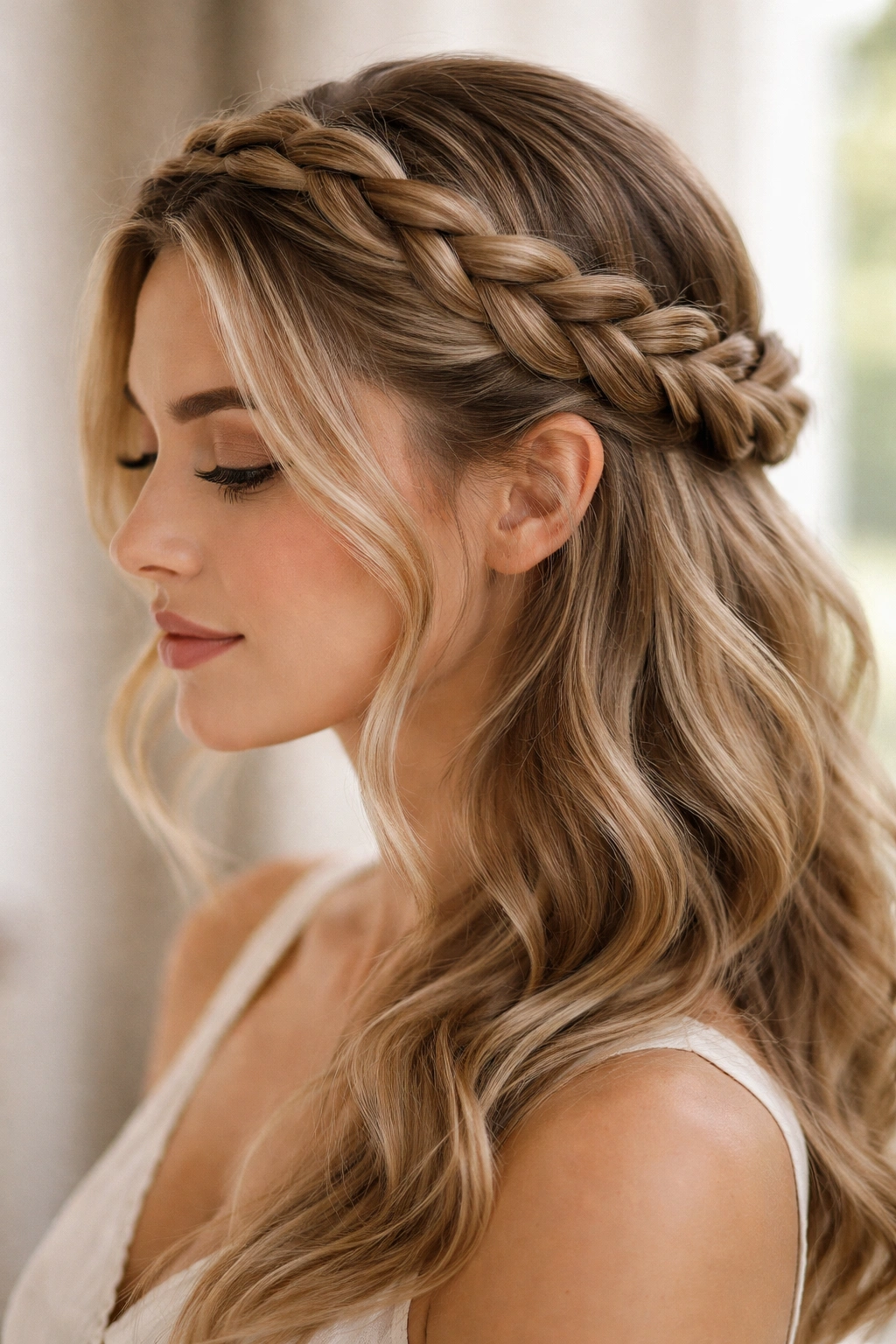
A braid that crowns your head—either as a single braid or two braids that meet at the back—is an inherently polished hairstyle. The braid creates a decorative element while still taming your hair, and it reads as considerably more intentional than a simple ponytail or bun. A twisted crown braid is similar but uses twisted sections instead of three-strand braids, creating a slightly softer, more romantic version of the same concept.
What Makes This Style Timelessly Refined
The crown braid (or twisted crown) works because it combines utility with obvious artistry. You’re not just managing your hair, you’re creating something. The braid or twist frames your face beautifully, creates a focal point at the top of your head, and draws attention upward. It reads as feminine and refined without being overly formal, which makes it perfect for everything from casual brunches to semi-formal events.
How to Build a Flawless Crown Braid
- Start with damp hair that has texture—use a curling iron, heat-free waves, or sea salt spray to add grip
- Create a deep side part and begin your braid or twist on one side, starting near your temple
- Braid loosely, working your way across the back of your head toward the opposite ear
- As you braid, pull slightly on the edges of each braid section to create a fuller, more romantic look
- Secure at the opposite temple with bobby pins tucked inside the braid so they’re invisible
- Leave face-framing pieces loose and wavy for softness
- Use a light hairspray to set the style without making it look stiff or overdone
Pro tip: Braids look more polished when they’re slightly undone and voluminous rather than tight and precise. Pull gently on the edges to create a fuller appearance, and don’t worry about getting every strand perfectly in place.
10. The Polished Low Ponytail with Face-Framing Pieces
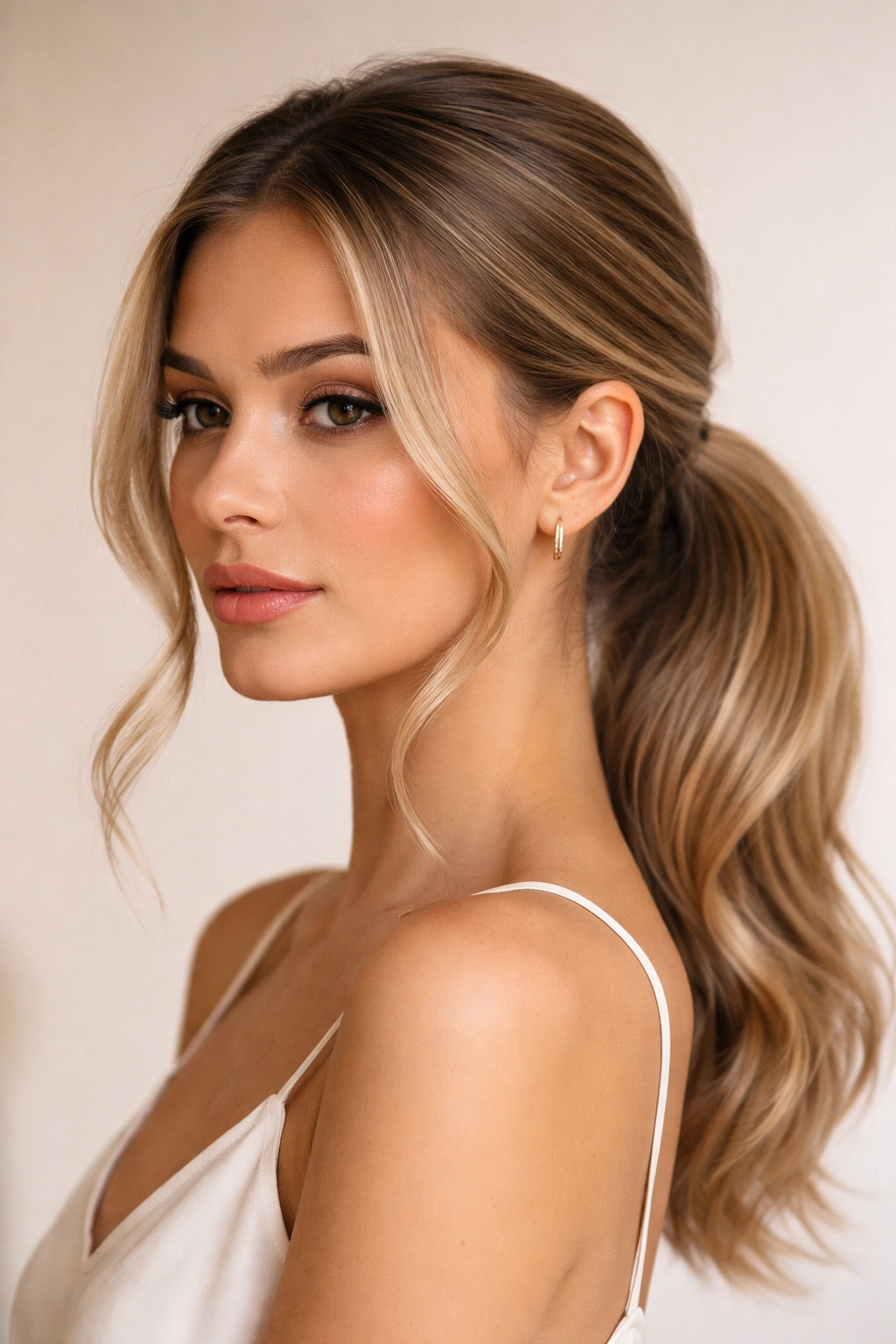
A low ponytail positioned at the base of your neck, gathered smoothly and secured elegantly, becomes polished when you frame your face with intentional pieces. These face-framing layers or sections should be styled with waves or curls, creating softness and dimension around your face while the ponytail stays smooth and controlled. This combination of polish and softness is inherently sophisticated.
The Balance That Makes This Work
What makes this style undeniably polished is the intentional contrast—the gathered-together feeling of the ponytail paired with the deliberate softness of the face-framing pieces. It’s not a casually half-done style; it’s a deliberately two-part composition. The face-framing pieces are smooth and styled, not just left to fall naturally. This attention to detail is what reads as polish rather than trying-too-hard.
Creating Your Polished Low Pony
- Blow-dry your hair for volume and texture throughout
- Pull out two to three thin sections of hair on each side of your face, near your temples, and set them aside
- Create a low ponytail at the base of your neck with the remaining hair, gathering it smoothly with a fine-tooth comb
- Secure the ponytail tightly with an elastic, then wrap a thin section of hair around the base to hide the elastic
- Curl or wave the face-framing pieces with a curling iron, creating soft waves that frame your features
- Use a light smoothing serum on the face-framing pieces to make them look intentional and shiny
- Secure any flyaways with a light hairspray
Worth knowing: This style works beautifully with different ponytail textures—a sleek, smooth ponytail with wavy face-framers, or a textured, braided ponytail with curled framers. The key is the intentional contrast.
11. The Sleek Center Part with Defined Edges
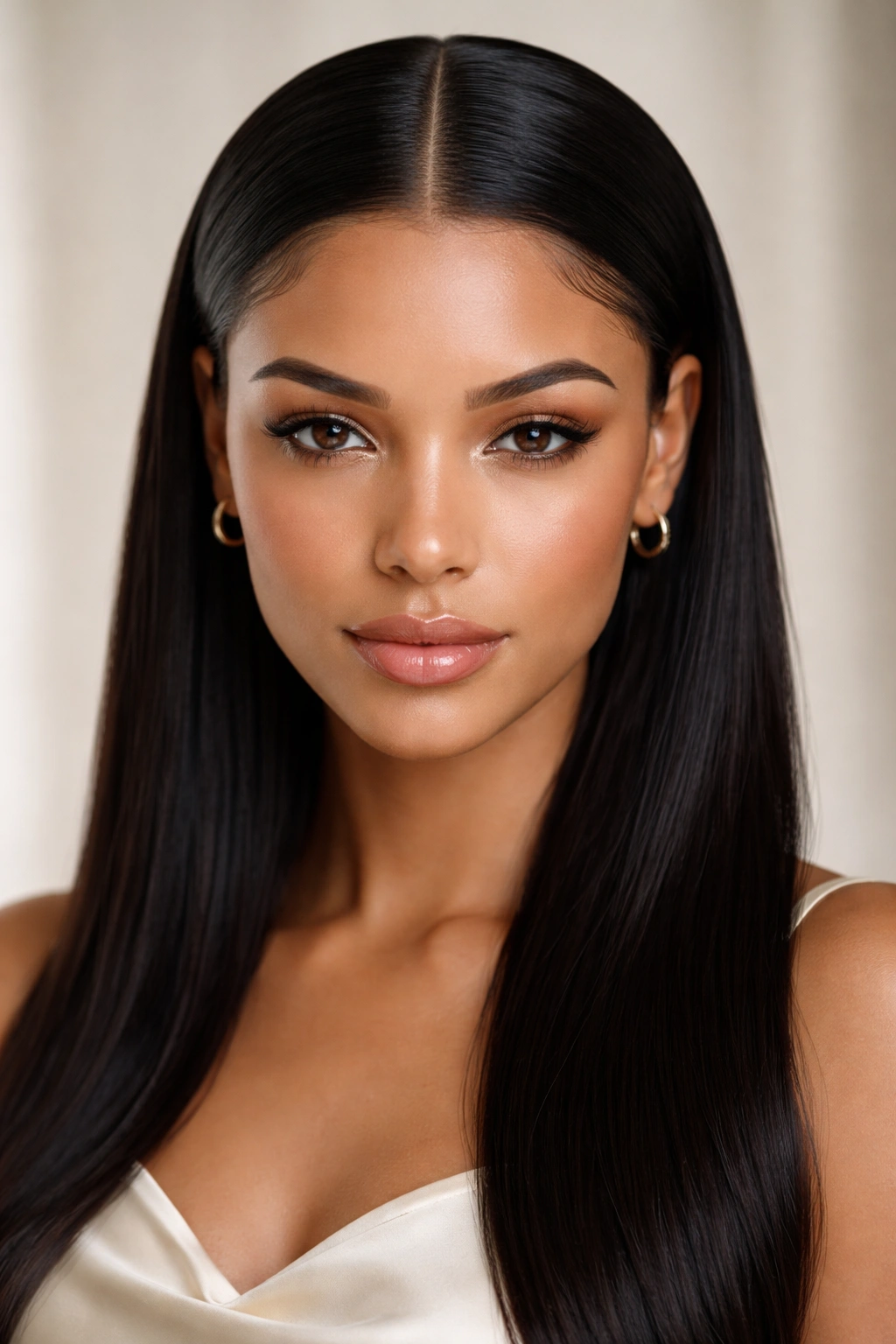
A perfectly centered part, smoothed sleek, with clearly defined edges, reads as decisively polished. This isn’t a casual middle part; it’s a deliberate, symmetric choice that frames your face directly and creates an impression of pristine styling. The sleekness is paramount—what makes this different from a regular part is the obvious smoothing and refinement applied to every section.
Why This Symmetry Reads as So Refined
A sleek center part works because symmetry reads as intentional and carefully considered. Unlike a side part, which creates asymmetry and drama, a center part is inherently calming and balanced. When executed with obvious smoothing and attention to detail, it reads as formal and refined. This is the part of choice for anyone wanting to look deliberately put-together without adopting a more dramatic style.
How to Perfect Your Center Part
- Blow-dry your hair with a paddle brush, creating smooth texture without volume
- Use a pointed-tail comb to create a perfectly straight center part from your forehead to the nape of your neck
- Smooth both sides of your part sleekly backward or toward the sides of your face using a smoothing serum and a flat brush
- Use a flat iron to ensure absolute smoothness and shine on both sides of the part line
- Apply a light hairspray to set the part and prevent any flyaways from disrupting the clean line
- The hair at your part line should be visibly smooth and defined, not fuzzy or bumpy
Pro tip: The key to a polished center part is the absolute smoothness of the hair on both sides of the part line. Any texture, frizz, or unevenness reads as sloppy. Invest in a good smoothing serum and flat iron.
12. The Slicked-Back Bun with Precision
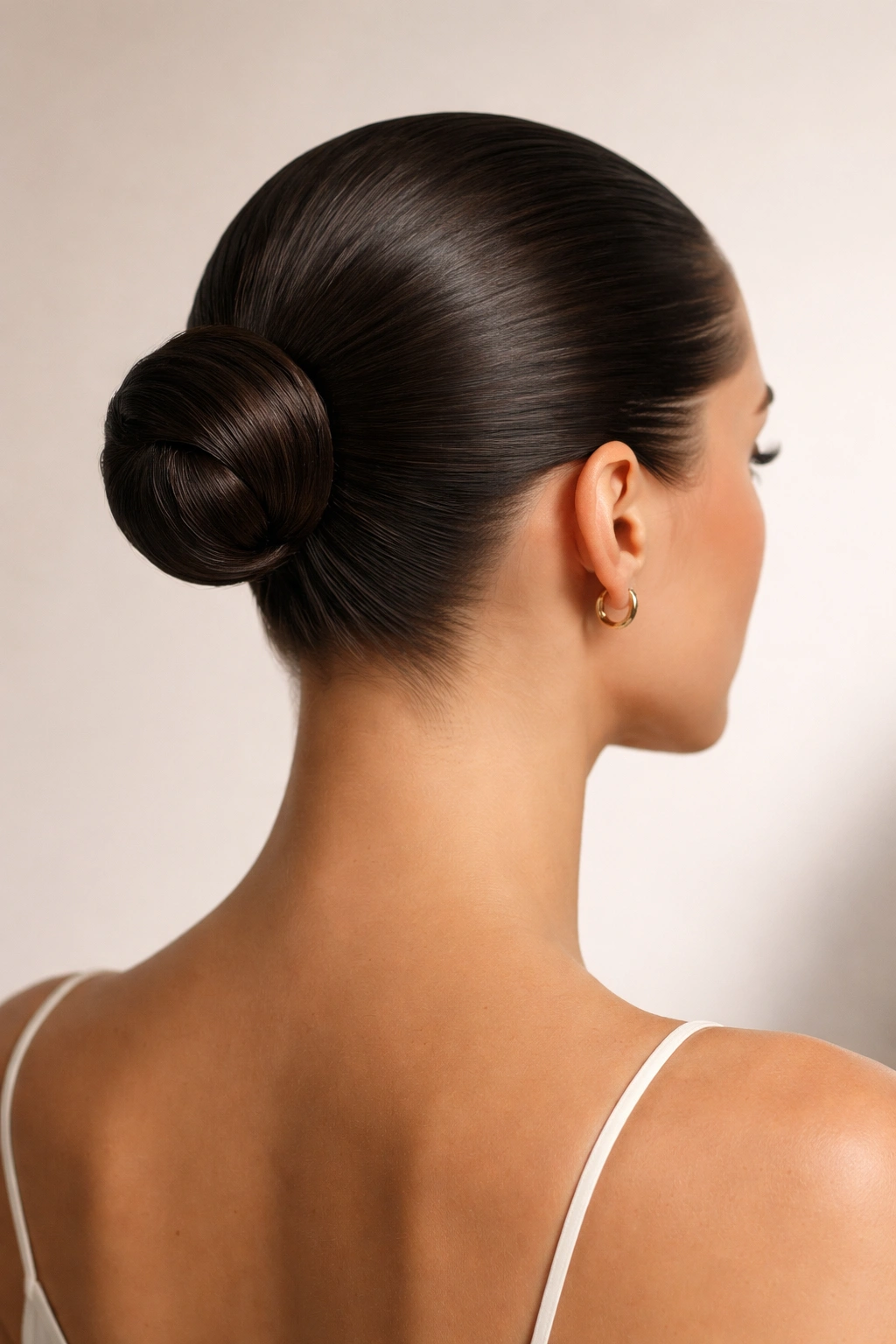
A bun that’s been combed back so smoothly and sleekly that you can see the exact shape of your head is the ultimate power statement in polished hair. This is the hairstyle of athletes, dancers, and people who want to project absolute confidence and control. There’s no softness or romance here—there’s precision, intention, and unquestionable polish.
The Raw Power of Absolute Control
A slicked-back bun works because it’s impossible to look casual or undone in one. The smoothness requires technique and product, and the result reads as someone who knows exactly what they’re doing. It’s a style that says you’re not interested in softening yourself or being approachable; you’re interested in being refined and in control. Combined with the right outfit and attitude, a slicked-back bun is one of the most powerfully polished hairstyles available.
The Exact Technique for Precision
- Start with damp hair and apply a smoothing or gel product designed to provide control without flaking
- Use a fine-tooth comb to comb your hair back smoothly from your forehead toward the crown and then toward the nape
- Every hair should be combed in the same direction—no bumps, no texture, no pieces out of place
- Gather your hair at the crown or lower, depending on where you want your bun, using the comb to smooth everything into the gathering point
- Secure with a strong elastic and bobby pins, ensuring absolutely no flyaways
- If you want maximum sleekness, apply a gel or finishing product over any tiny flyaways and comb them smooth
- A bun positioned at the very base of your neck reads as more polished than a higher bun
Insider note: The smoother and more severe this style, the more polished it becomes. Don’t shy away from using enough product to achieve absolute control—this style demands it.
13. The Blowout with Defined Waves
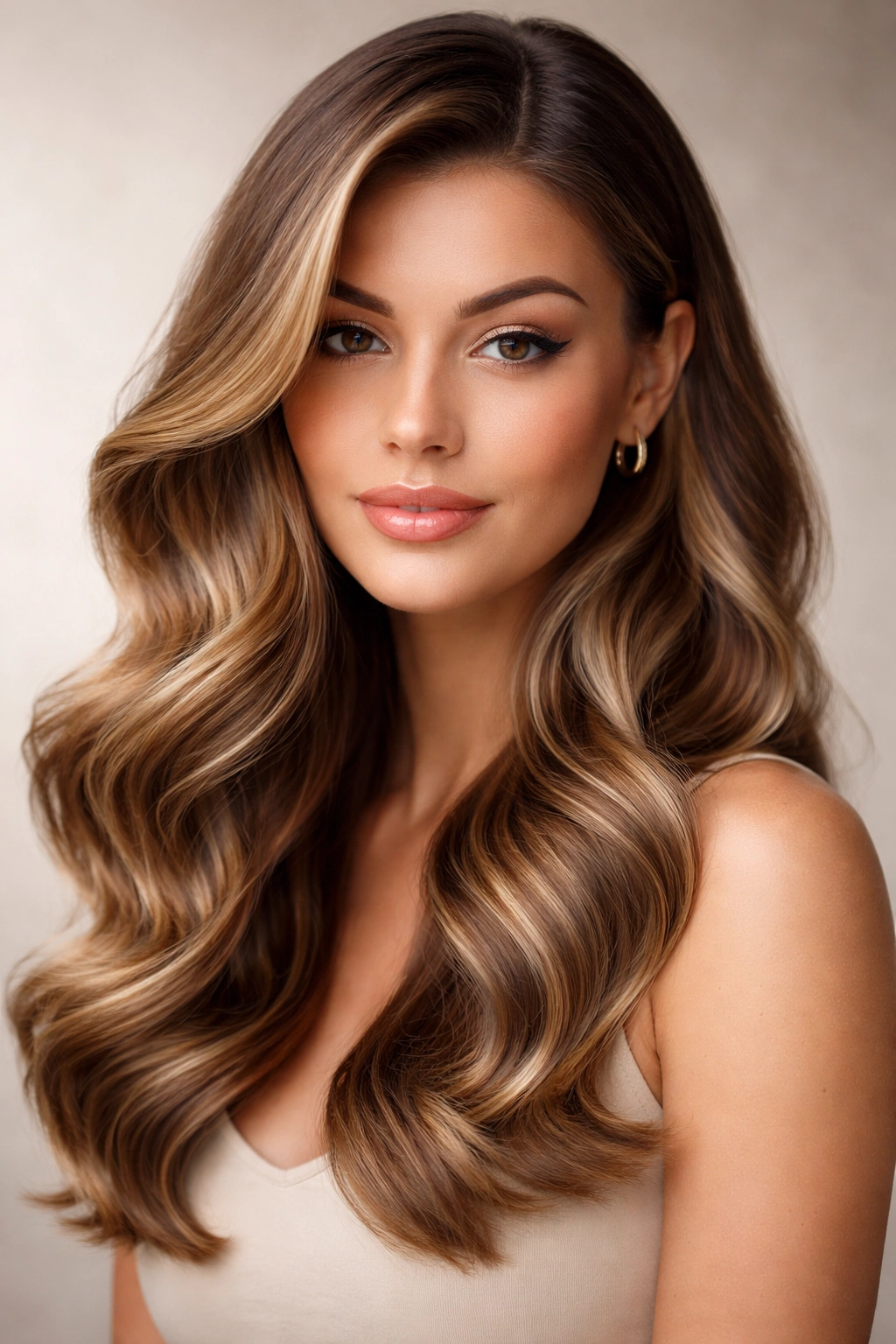
This is distinct from a general blowout in that the waves are intentional, defined, and set with precision, rather than soft and tousled. Using a large barrel curling iron or a wave-setting product, you create deliberate, smooth waves throughout your hair that catch light and create obvious dimension. The effect is both voluminous and refined, reading as someone who puts genuine thought and technique into their appearance.
Why Defined Waves Read as Both Modern and Polished
Defined waves work because they combine visual interest with obvious intention. These aren’t undone waves or casual texture; they’re deliberately created waves that show you’ve spent time on your hair. The definition makes them read as editorial and modern, while the overall effect still feels wearable and not costume-y. This is one of the most universally flattering hairstyles because it works with nearly every face shape and occasion.
Achieving and Setting Defined Waves
- Start with a smooth blowout as your base, blow-drying your hair with a round brush until completely smooth
- Section your hair and use a large-barrel curling iron (1.5 to 2 inches) to create waves, wrapping each section around the barrel and holding for a few seconds
- Create waves in the same direction for consistency, or alternate directions for a more textured look
- Once all waves are created, let them cool completely before touching them—cooling sets the wave
- Use a light hairspray to hold the waves in place without weighing them down or making them stiff
- Gently comb through your waves with your fingers to soften them slightly while maintaining the wave pattern
Pro tip: The longer you hold each section on the curling iron, the more defined your waves will be. For maximum polish, aim for waves that are clearly visible and don’t blur together.
14. The Tucked-Back Waves with Texture
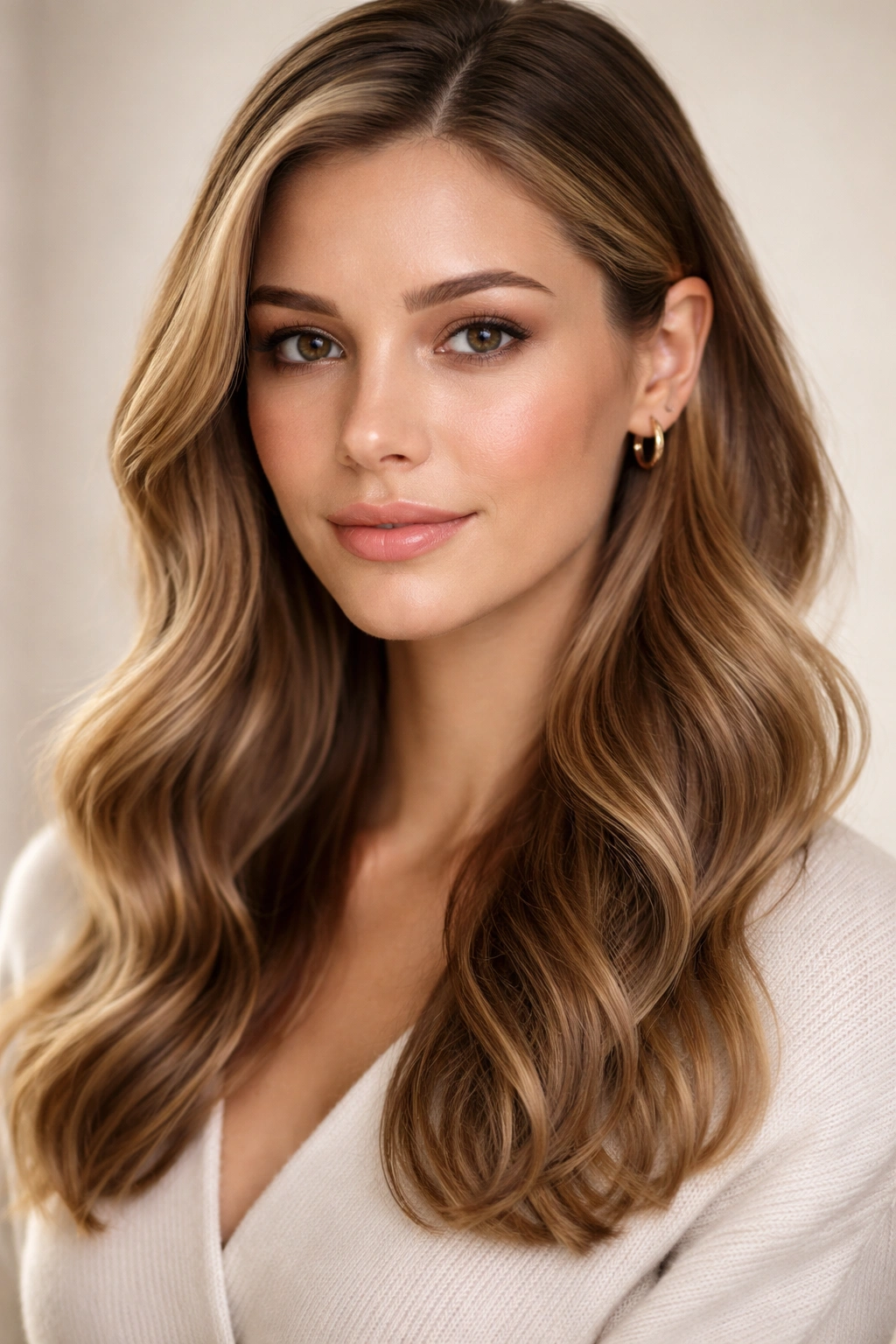
This style involves wearing your hair down with soft waves or texture, then deliberately tucking small sections behind your ears or smoothing back your temples to create definition and polish. It’s the hairstyle equivalent of pushing your hair back when you’re concentrating—intentional and refined, but still allowing your hair to flow. The key is that the tucking is deliberate and the sections are pinned in place, not just casually held.
Why Tucked-Back Hair Reads as Deliberately Refined
Tucked-back waves work because they balance softness with intention. You’re wearing your hair down, which is relaxed and approachable, but you’re also clearly managing it and styling it deliberately. The tucked sections frame your face, show your features, and create an impression of polish without requiring your hair to be fully controlled. This is the style of someone who is confident and put-together without needing to show it through severity.
How to Create and Secure Your Tucked-Back Waves
- Style your hair with soft waves or texture using a curling iron, heat-free method, or styling product
- Use a fine-tooth comb or your fingers to smooth small sections at your temples and sides
- Tuck these sections behind your ears and secure them with small bobby pins or clips that match your hair color
- Make sure the pins are positioned so they’re not visible from the front—they should be completely hidden
- Lightly smooth the tucked sections with a finishing serum for polish
- Allow the rest of your hair to flow naturally, with the waves visible and creating dimension
- Use a light hairspray to set the tucked sections in place
Worth knowing: This style works on nearly every hair length and texture. Even if your hair is naturally straight, tucking back small sections with visible bobby pins creates polish.
15. The Refined Updo
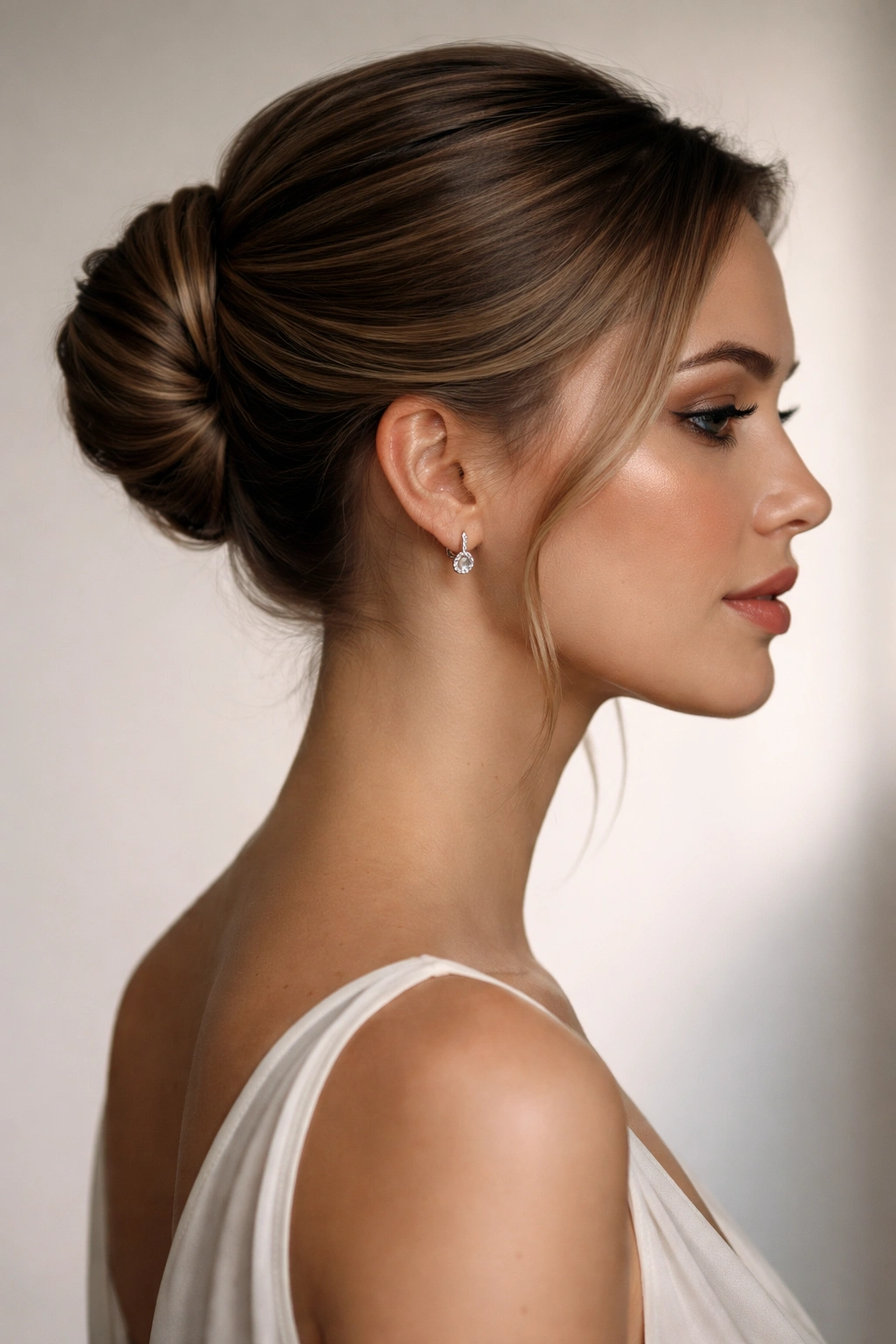
A true updo—where all or most of your hair is gathered up and styled into a cohesive shape, whether it’s a bun, twist, or more complex arrangement—is the ultimate polished hairstyle. When executed properly, an updo communicates that you’re dressed up for something, that you’ve invested effort into your appearance, and that you take your presentation seriously. The key is that every part of the updo should read as intentional and controlled.
The Absolute Authority of a Polished Updo
An updo works because it’s impossible to look casual in one. There’s nowhere for imperfection to hide, and the style inherently reads as formal and deliberately put-together. A polished updo creates a clean line from your neck up the back of your head, frames your face beautifully, and often becomes the focal point of your entire appearance. It’s the hairstyle you choose when you want to make a clear statement about taking your appearance seriously.
Creating Your Polished Updo
- Start with textured or wave-enhanced hair, which provides grip and visual interest
- Section your hair and create braids, twists, or smooth sections as decorative elements
- Gather your hair at the crown or lower depending on your preference and face shape
- Coil or arrange the sections into a cohesive shape, pinning securely so nothing moves
- Leave any face-framing pieces loose and styled with waves if desired, or pin them smoothly for maximum polish
- Use bobby pins and strong hairspray to secure everything completely
- Ensure no flyaways disrupt the overall shape and that the updo looks intentionally designed, not accidentally assembled
Pro tip: The most polished updos have a combination of smooth sections (for polish) and textured sections (for visual interest and dimension). A completely smooth updo can read as austere, while one with intentional texture reads as refined.
Final Thoughts
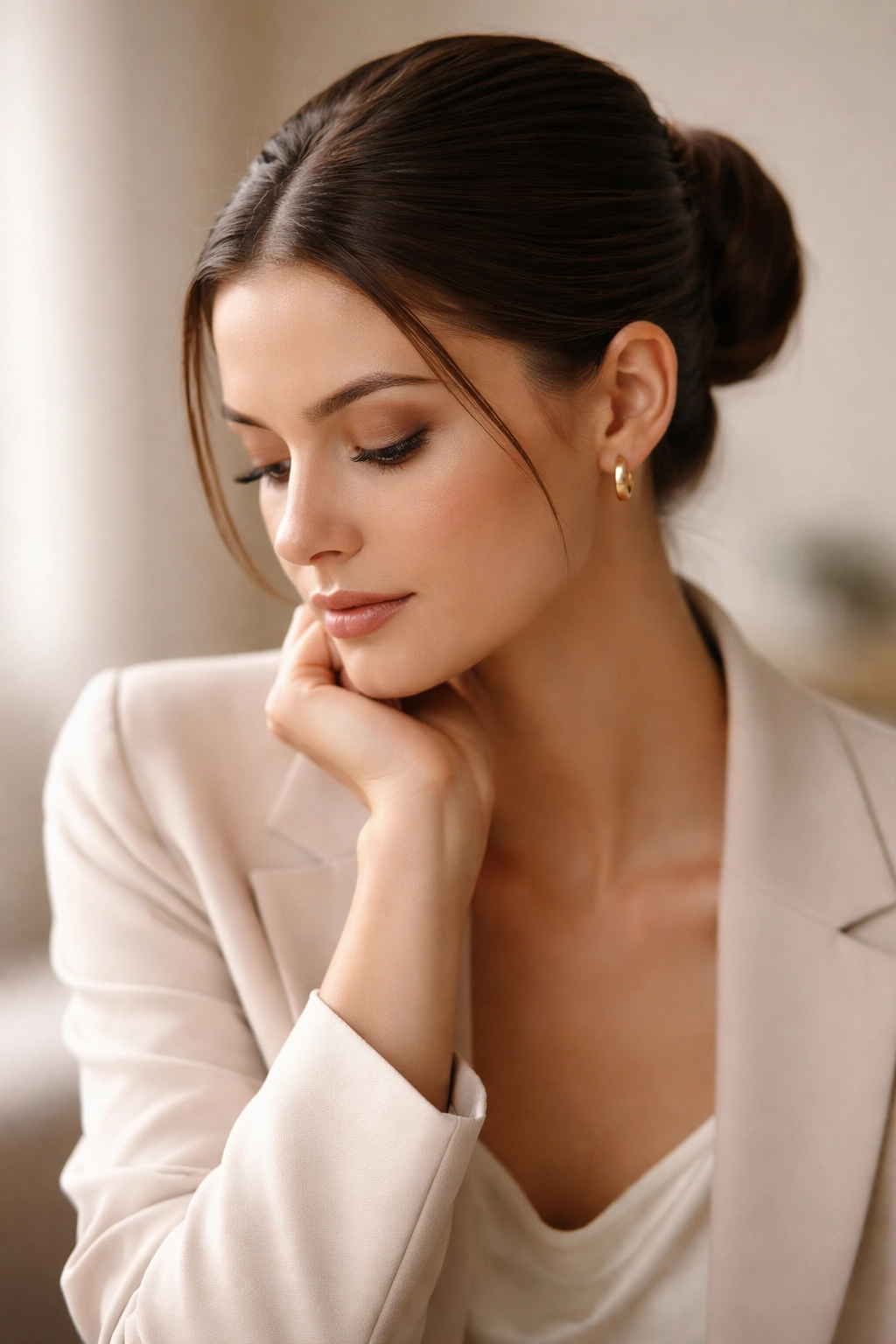
Truly polished hair comes down to a few consistent elements: intentional styling choices, attention to detail, and the obvious care you’ve invested in your hair’s health. None of these styles requires professional salon skills or expensive products, though both can certainly help. What they all share is a quality of deliberateness—each one reads as a choice you’ve made, not something that happened by accident.
The most important part of achieving a polished look is consistency. It’s not about finding the perfect hairstyle and wearing it forever; it’s about understanding the principles that make a hairstyle read as polished (smoothness, intentionality, defined edges, visible effort), and then applying those principles to whatever style you’re wearing. A polished hairstyle is really about respect for your appearance and, by extension, respect for the people you’re spending time with.
The flexibility here is important. You don’t need to master all 15 of these styles. Pick two or three that align with your hair type, your face shape, and your lifestyle, then master those completely. The polish comes from knowing your styles inside and out—from understanding exactly how to execute them perfectly, and from having the confidence that comes with that knowledge. When you’re truly comfortable with a hairstyle, that comfort shows, and that’s what reads as polish more than anything else.
