



Choppy layers have made a serious comeback, and for good reason — they’re the secret to giving even the shortest hair serious movement, dimension, and that effortlessly intentional vibe that looks polished without trying too hard. Whether you’re drawn to rock-and-roll edge, modern minimalism, or something in between, a well-executed choppy short cut can completely reshape your face, flatter your hair texture, and give you a style that feels distinctly you.
The key to rocking a choppy short cut is understanding that texture isn’t an accident here — it’s the entire design. Those intentional, uneven lengths aren’t a styling mistake; they’re what creates lift at the roots, movement at the ends, and visual interest from every angle. The right choppy cut works with your hair’s natural texture rather than against it, which means less time fighting with a blow dryer and more time actually enjoying your style.
What makes choppy cuts work so well for short hair is that they add dimension that longer hair achieves through length alone. Short hair needs movement built into the cut itself. Choppy layers do exactly that — they catch light differently at different angles, create shadows and highlights even without color, and give your head shape real character. Plus, choppy texture tends to photograph beautifully and holds up well between salon visits, since regrowth actually blends into the layered texture rather than creating harsh lines.
1. Textured Pixie Cut with Choppy Layers
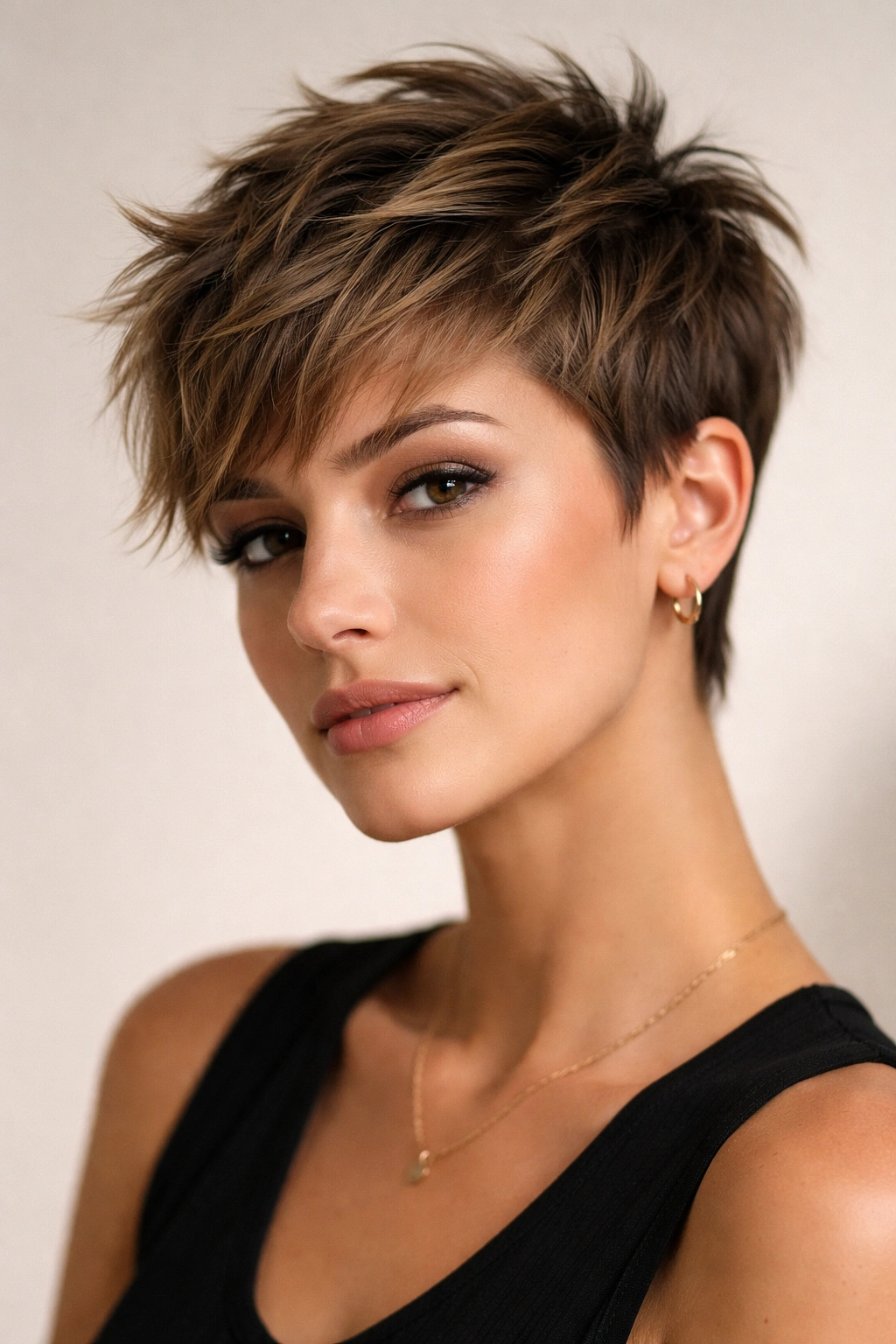
A textured pixie isn’t your grandmother’s neat, structured cut — it’s a modern take where choppy layers replace the typical blunt precision. The shorter layers on top are cut at varying lengths that purposely don’t align, creating multiple points where light hits and movement catches. Sides are kept short and tapered, but the top has enough length for real styling versatility.
Why This Works for Short Hair
The choppy texture on a pixie creates lift and volume without needing thick, dense hair. Even fine or thin hair looks fuller because the uneven layers don’t lay flat against your scalp. The cut also works beautifully with natural wave or curl — your hair’s texture is actually an asset here rather than something to work around. You get maximum style impact with minimal daily effort, and the cut feels fashion-forward without looking like you’re trying too hard.
How to Wear and Maintain It
- Style it tousled and undone for that lived-in feel, using a light texturizing spray or salt spray to enhance the choppy layers
- Blow dry with your fingers for that piecy, separated look that really shows off the cut’s dimension
- Use pomade or clay for a slightly more defined, intentional appearance — perfect for professional settings
- Get trims every 4-5 weeks to keep the layers sharp and prevent the cut from growing into a blob
- Works beautifully with undercut designs shaved into the side for extra edge
Pro tip: Ask your stylist to leave slightly longer pieces around your face — it frames your features and gives you versatility if you want to slick the cut back or part it differently on different days.
2. Choppy Lob with Textured Layers
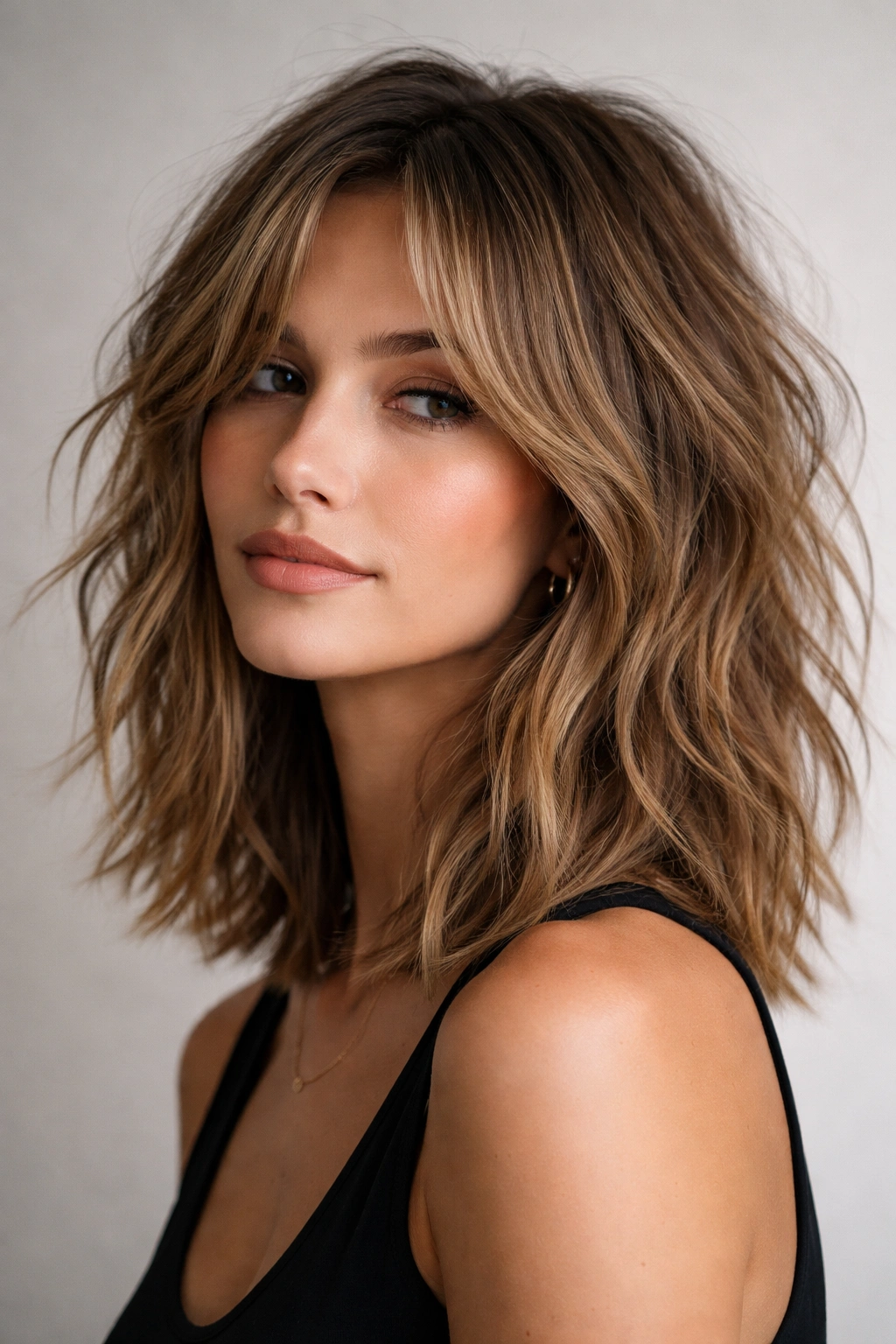
A choppy lob sits that perfect in-between space — long enough to feel like a real style shift, short enough to feel modern and low-maintenance. The cut is built on irregular, choppy layers throughout, creating a shaggy, undone silhouette that feels effortlessly cool. Texture is unevenly distributed, with some sections blunter than others, creating visual movement even when your hair is still.
The Dimension and Movement Factor
What sets a choppy lob apart from a standard layered cut is the intentional choppiness — these aren’t smooth, blended layers that create one cohesive shape. Instead, you get distinct sections of varying lengths that create peaks and valleys, catching light and creating shadow. This is especially powerful for medium to thick hair, where you need textural variation to prevent the cut from feeling heavy.
Styling Options and Texture Enhancement
- Tousle dry with a texture spray for that just-rolled-out-of-bed vibe that actually takes 10 minutes to create
- Blow dry straight for a more polished appearance — the choppy layers still create movement even when sleek
- Work in a light sea salt spray before blow drying to enhance your hair’s natural texture and make the choppiness more visible
- Create intentional waves with a curling iron, wrapping sections around the barrel in different directions to maximize dimension
- The cut works beautifully with balayage or lived-in color techniques that enhance the textural depth
Worth knowing: Choppy lobs photograph incredibly well because the layers catch light at different angles, creating dimension that translates beautifully in photos. You’ll look effortlessly put-together even on days you’ve just air-dried your hair.
3. Short Shag with Choppy Texture
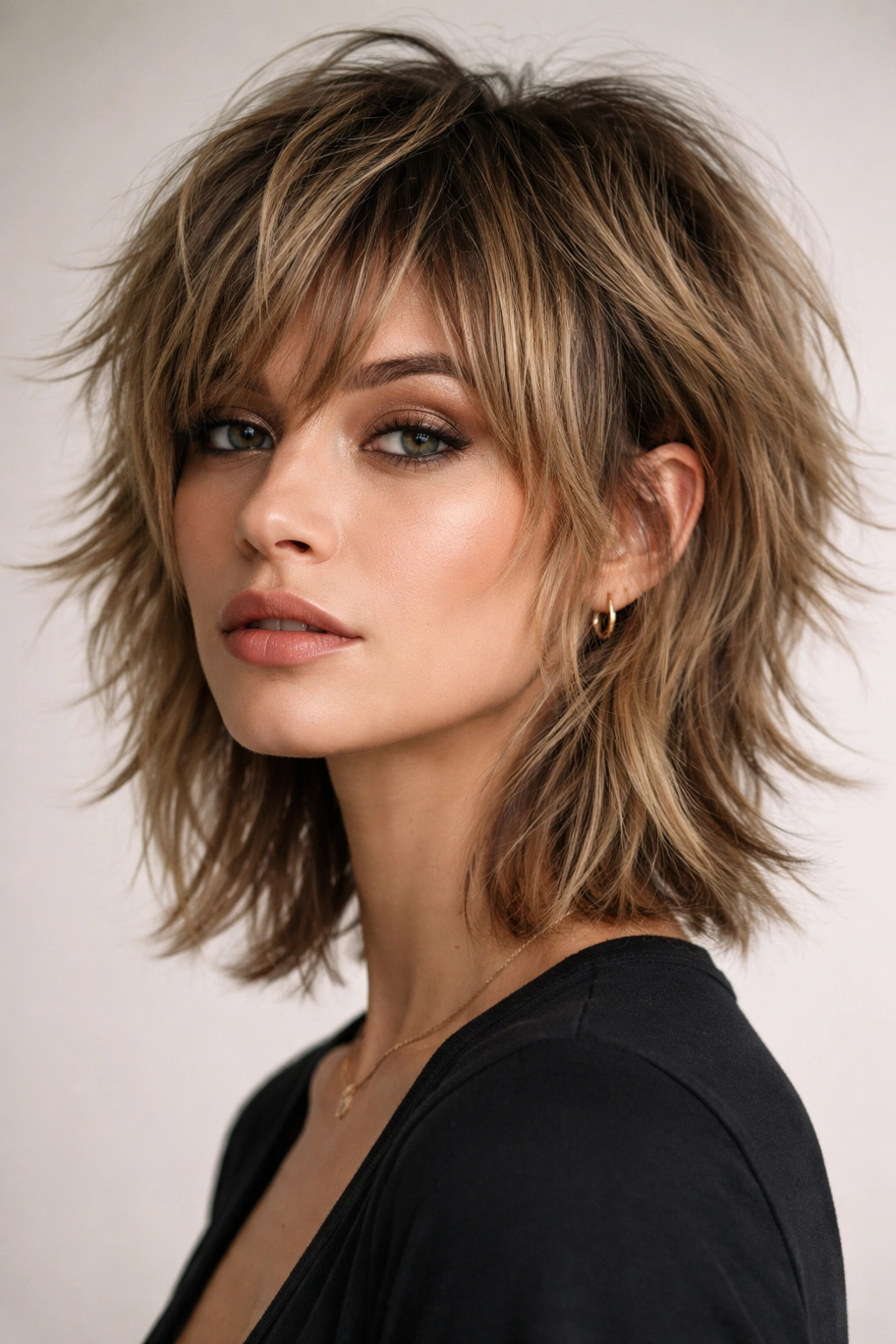
A modern short shag is basically choppy layers taken to the ultimate conclusion — it’s a cut that prioritizes movement and texture above all else. Layers are cut at dramatic length variations, creating that signature shag silhouette where the shortest pieces frame your face and slightly longer layers throughout the rest of your hair create movement and flow. It’s rock-and-roll energy meets contemporary sophistication.
Why Shags Work Now More Than Ever
Shags have evolved from the 1970s feathered look into something far more wearable and flattering. The modern version is precisely cut choppy layers that work with your face shape rather than just being a generic feathery mass. The cut is especially flattering on oval and heart-shaped faces, and the textural variation creates the illusion of fuller hair even on thinner textures.
Getting and Maintaining Shag Texture
- Find a stylist experienced with shag cuts specifically — it’s different from standard layered cuts and requires a particular technique
- Your hair’s natural texture matters here; shags work best on hair with at least some natural wave or curl
- Style by blow drying with a round brush, lifting the roots for maximum volume, then tousling the ends
- Embrace texture sprays, sea salt sprays, and light pomades that enhance the piecy, separated look
- Monthly trims keep the shag from collapsing into a shapeless mass as it grows out
- Pairs beautifully with color techniques like face-framing highlights that enhance the cut’s dimension
Pro tip: If your hair is naturally straight, ask your stylist for choppy layers that are cut shorter overall — this prevents the cut from looking limp and gives you more styling options.
4. Choppy Pixie Bob Hybrid
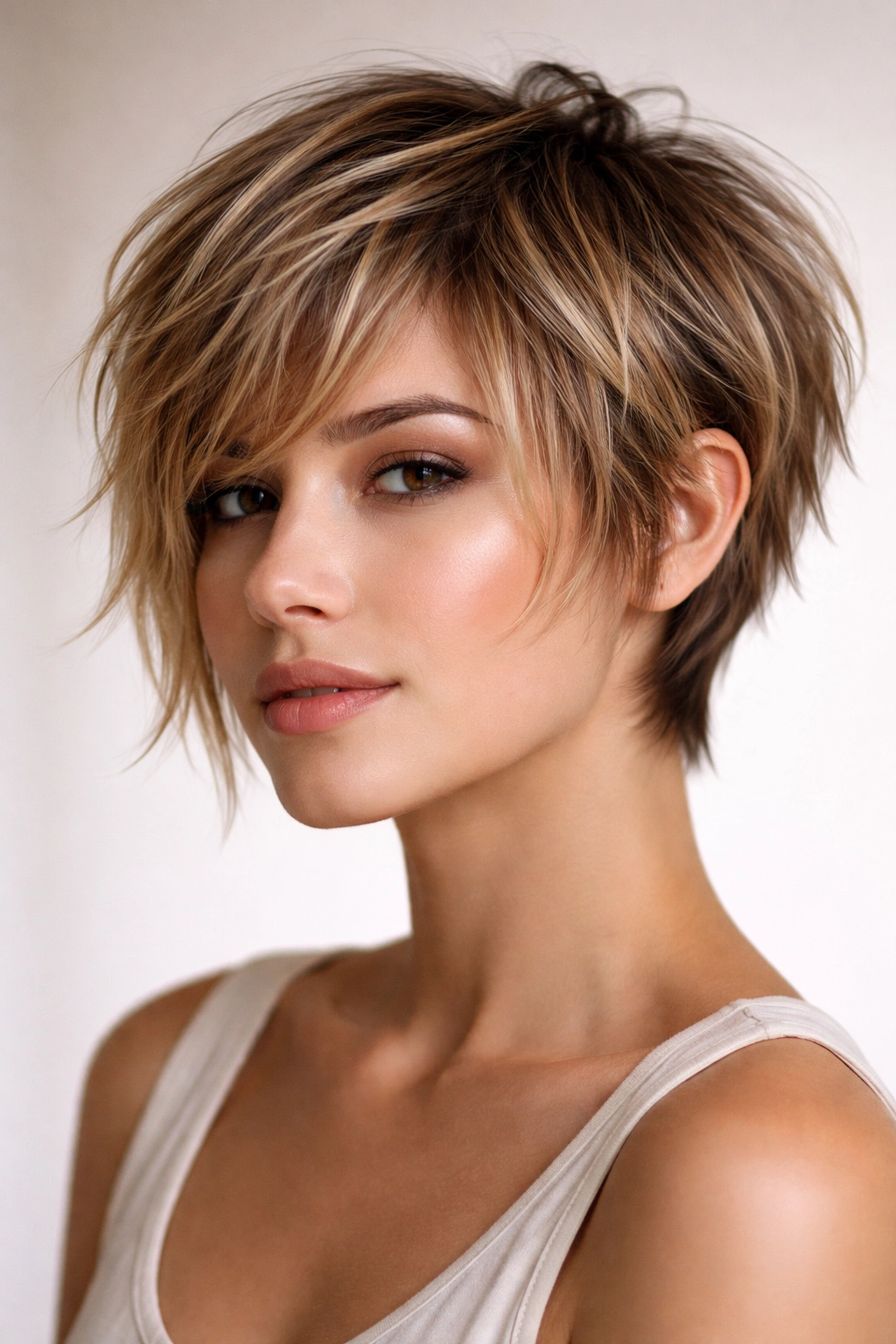
This cut splits the difference between a pixie’s edge and a bob’s wearability. The back and sides are cut short like a pixie, but the front is left longer, creating face-framing pieces that give you something to work with. Everything is cut with choppy, textured layers that create movement and prevent the cut from feeling structured or stiff.
The Best of Both Worlds
A choppy pixie bob gives you maximum versatility. On days you want edge, you style it tousled and textured. On days you want polish, you can smooth it out and create sharper lines. The longer front pieces frame your face beautifully and prevent the cut from looking too severe, which is especially important if you have an angular face shape.
Versatile Styling for Every Occasion
- Style it sleek and smooth for professional settings, using a flat iron on low heat to enhance the choppy texture without creating frizz
- Go textured and undone on weekends with spray and finger-tousling for that cool, casual vibe
- Experiment with how you part it — a deep side part completely changes the cut’s energy
- The longer front pieces can be tucked behind your ears for a different silhouette, or left down to frame your face
- Works beautifully with undercut designs or shaved patterns on the sides for extra edge
Worth knowing: This cut is forgiving with regrowth because the choppy texture naturally blends the new growth into the overall design. You can go 6-8 weeks between cuts without it looking noticeably grown out.
5. Choppy Bangs with Short Layers
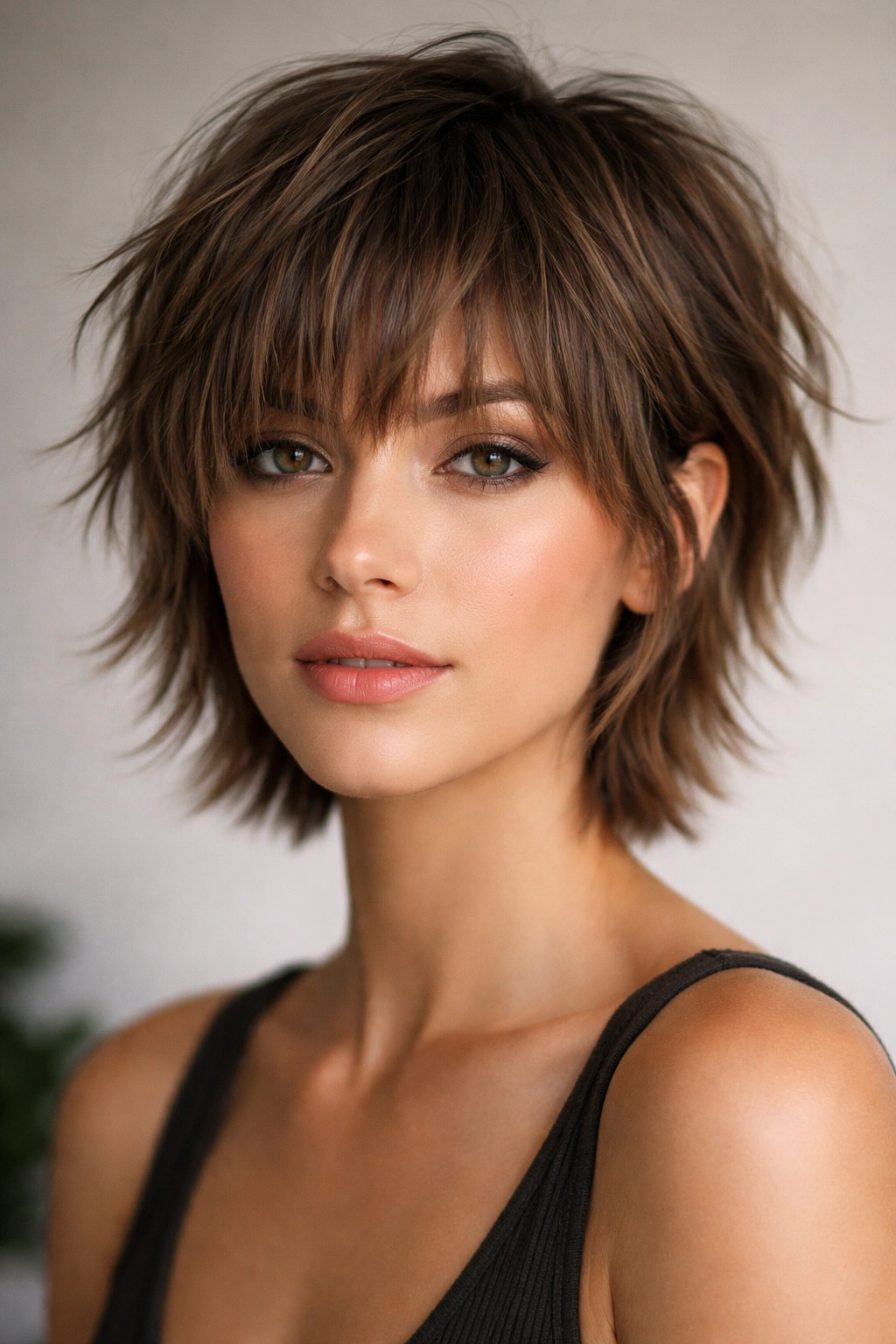
Instead of a full short cut, some people prefer adding choppy, textured bangs to medium-length hair, creating the visual effect of a shorter cut without committing to the full chop. These aren’t blunt, heavy bangs — they’re choppy, wispy, and layered so they blend seamlessly with the rest of your hair while still creating that framing effect.
Creating Visual Impact with Bangs Alone
Choppy bangs instantly make you look like you’ve had a style upgrade, even if the rest of your hair length stays the same. The texture prevents them from feeling heavy or severe, and the choppiness means they work with curly, wavy, or straight hair without requiring constant styling. They’re especially effective for creating a younger, more playful vibe.
Styling and Maintenance Considerations
- Choppy bangs require trims every 3-4 weeks to keep them from getting too long and losing their intended shape
- Blow dry them forward and slightly to the side for that perfectly tousled look that frames your eyes
- Use a lightweight mousse or texture spray to enhance their natural movement
- Style them off your face with a small braid or pin for an entirely different look
- They work beautifully with soft, lived-in color that enhances the textural dimension
- Pair with longer choppy layers throughout to create a cohesive textured look
Pro tip: If you’re nervous about committing to bangs, start with choppy, side-swept bangs that can easily be styled away from your face on days you’re not feeling it.
6. Textured Asymmetrical Short Bob
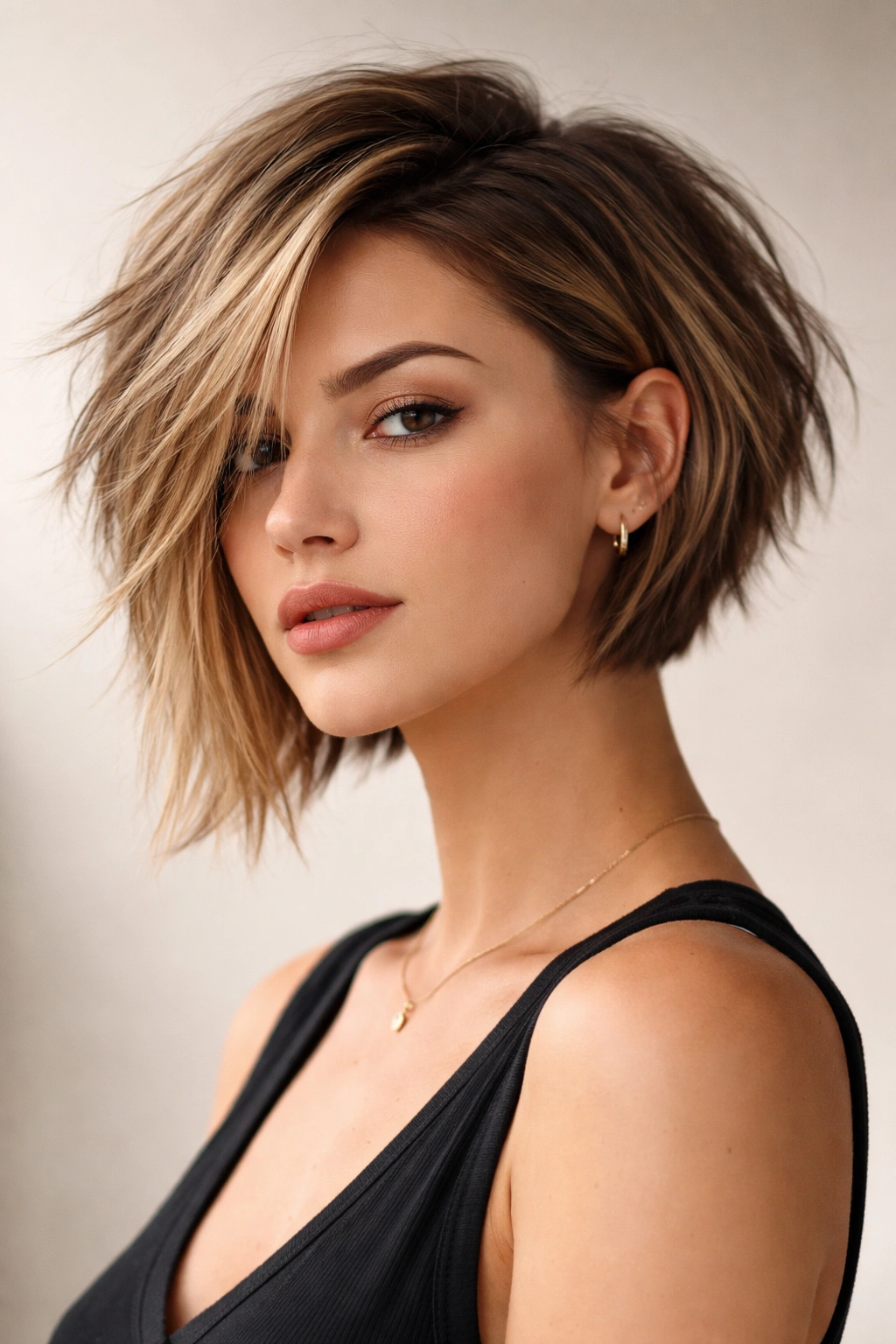
An asymmetrical cut takes choppy texture and adds geometric interest — one side is cut shorter than the other, creating visual movement and a bold, modern silhouette. Choppy layers throughout prevent the cut from feeling too structured; instead, it has that intentional-but-undone vibe that reads as both polished and rebellious.
The Bold Appeal of Asymmetry
An asymmetrical cut immediately signals that you’re willing to take risks with your style. It’s flattering on most face shapes because the longer side can be angled to balance your features, while the shorter side creates visual lightness and movement. The choppiness softens what could otherwise be a too-geometric cut.
Wearing Asymmetrical Cuts Confidently
- Style the longer side tucked behind your ear for a completely different look than wearing it down
- Use texture spray to enhance the choppy layers and make the asymmetry more visually apparent
- Blow dry with the longer side swept back for a polished appearance, or tousled forward for casual cool
- The cut works beautifully with color blocking or asymmetrical color techniques that emphasize the cut’s geometry
- Pairs perfectly with sleek minimalist styling or maximalist, bold accessories depending on your vibe
- Works on all hair textures, from straight to curly, though the choppiness reads differently on each
Worth knowing: Asymmetrical cuts can feel more high-maintenance than symmetrical ones because the way you part and style it really affects how the cut photographs and reads. Experiment with different styling approaches to find what feels most natural to you.
7. Choppy Crop Cut with Textured Crown
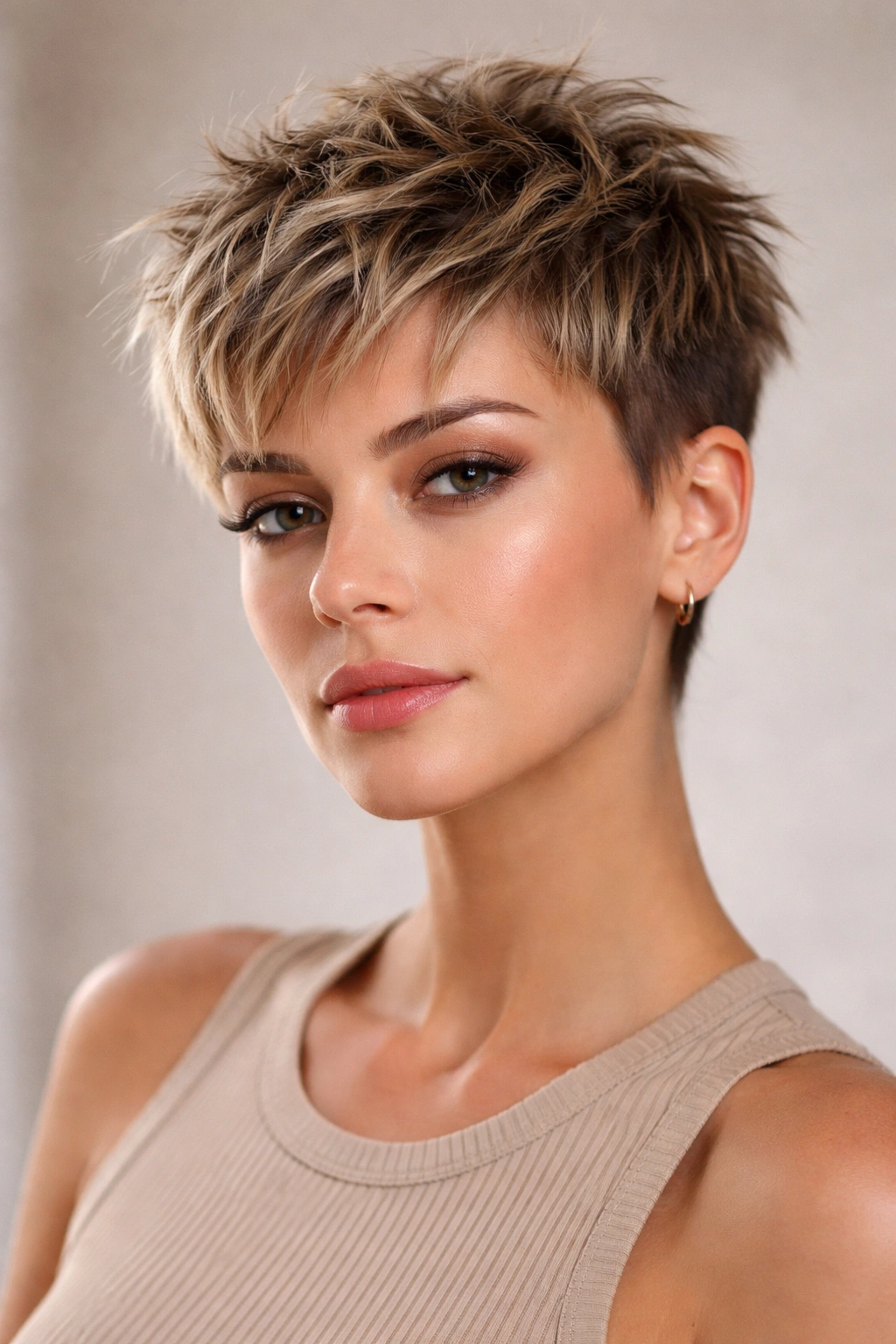
A textured crop keeps the overall length very short — think 1-2 inches maximum on the sides — but adds length and choppiness on top to create a sculpted, intentional silhouette. The crown gets the textured treatment with choppy, uneven layers that create volume and movement right where you need it for face-framing.
Maximum Impact, Minimal Maintenance
A textured crop is the ultimate low-maintenance cut once you get past the initial styling learning curve. The very short sides require no styling beyond shampooing, while the textured top needs just a quick rough dry or finger-tousle to look intentional. It’s a cut that works beautifully on people with confidence and those willing to embrace an androgynous, fashion-forward aesthetic.
Styling the Textured Crown
- Use a light texturizing spray or pomade on damp hair, then rough dry with your fingers or a blow dryer
- For a more defined look, apply a matte clay or cream product to the textured top sections
- Slick the whole thing back with a strong-hold gel for a completely different aesthetic when you want more polish
- The cut pairs beautifully with color, especially dimensional blondes or fashion colors like pastels or jewel tones
- Works on all face shapes, though a longer, textured top balances a rounder face better than a very short crop
Pro tip: Get comfortable using a blow dryer on low heat with your fingers to create the textured, separated look that really shows off the cut’s design. This takes maybe three minutes and completely changes the cut’s energy.
8. Face-Framing Choppy Layers
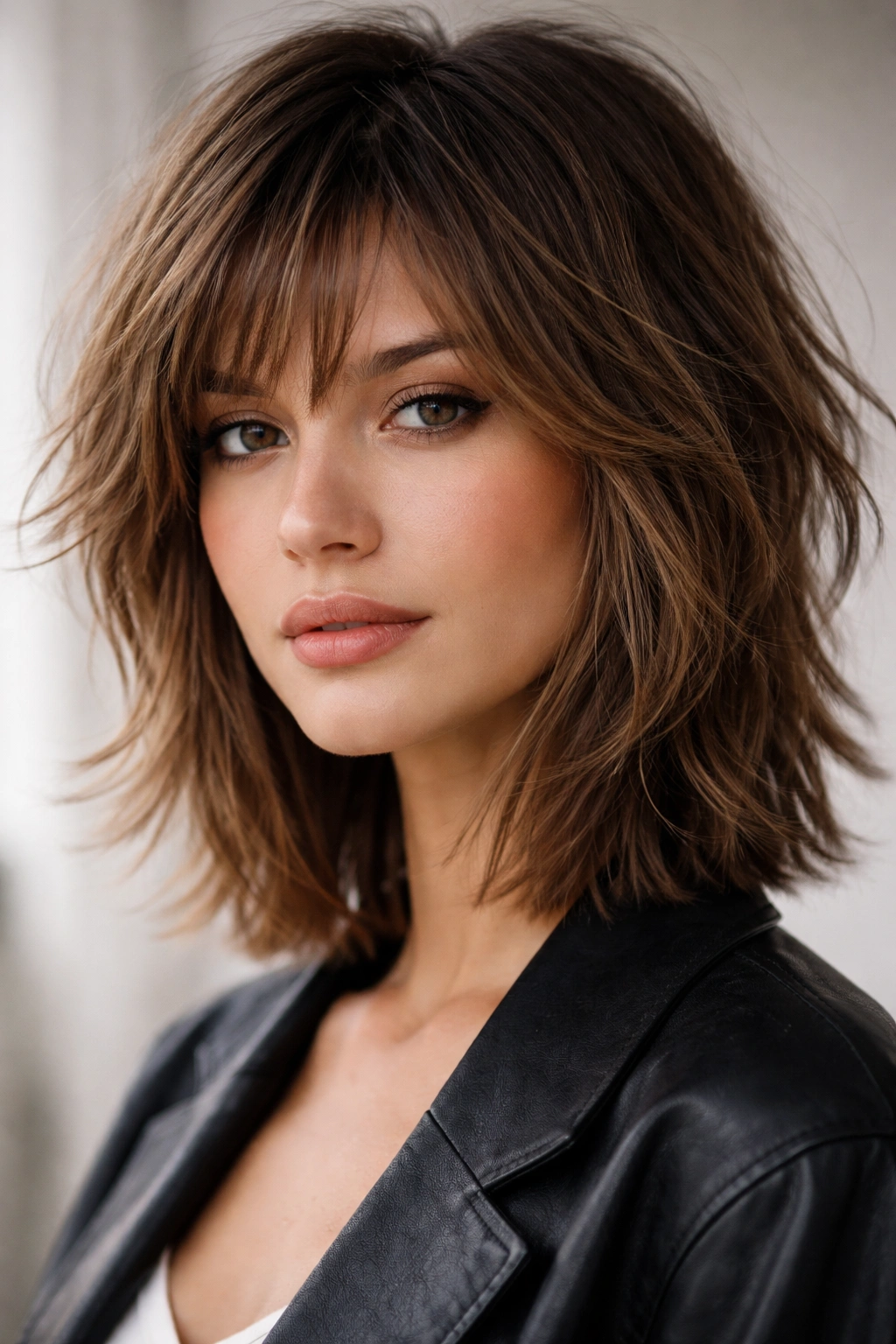
Some people prefer keeping overall length while adding strategic choppy layers specifically around the face. These pieces are cut shorter and with more texture than the rest of the hair, creating a flattering frame that draws attention to your eyes and cheekbones without requiring a full short cut.
Strategic Shortness for Maximum Flattery
Face-framing choppy layers work with almost every face shape because you can customize the placement and length of the framing pieces. If you have a wide face, longer framing pieces can narrow your perception. If you have a long face, shorter, fuller framing pieces add width. The choppiness prevents them from feeling heavy or severe.
Creating the Perfect Frame
- Ask your stylist to cut the framing pieces at least 2-3 inches shorter than your desired overall length so they actually create a distinct frame
- Make sure the choppy framing layers blend smoothly with the rest of your hair rather than looking like a separate, disconnected style
- Blow dry the framing pieces forward and slightly away from your face to maximize their flattering effect
- Use a small curling iron on just the face-framing pieces to create soft waves that enhance the layered texture
- Pair with face-framing highlights or lowlights in a contrasting shade to make the layers even more visible
- Works beautifully with bobs, lobs, and longer styles — you’re not limited to super-short hair
Worth knowing: Face-framing layers are the gateway drug to shorter cuts. If you’re hesitant about going fully short but want the movement and texture benefit, start here.
9. Textured Undercut Pixie with Choppy Top
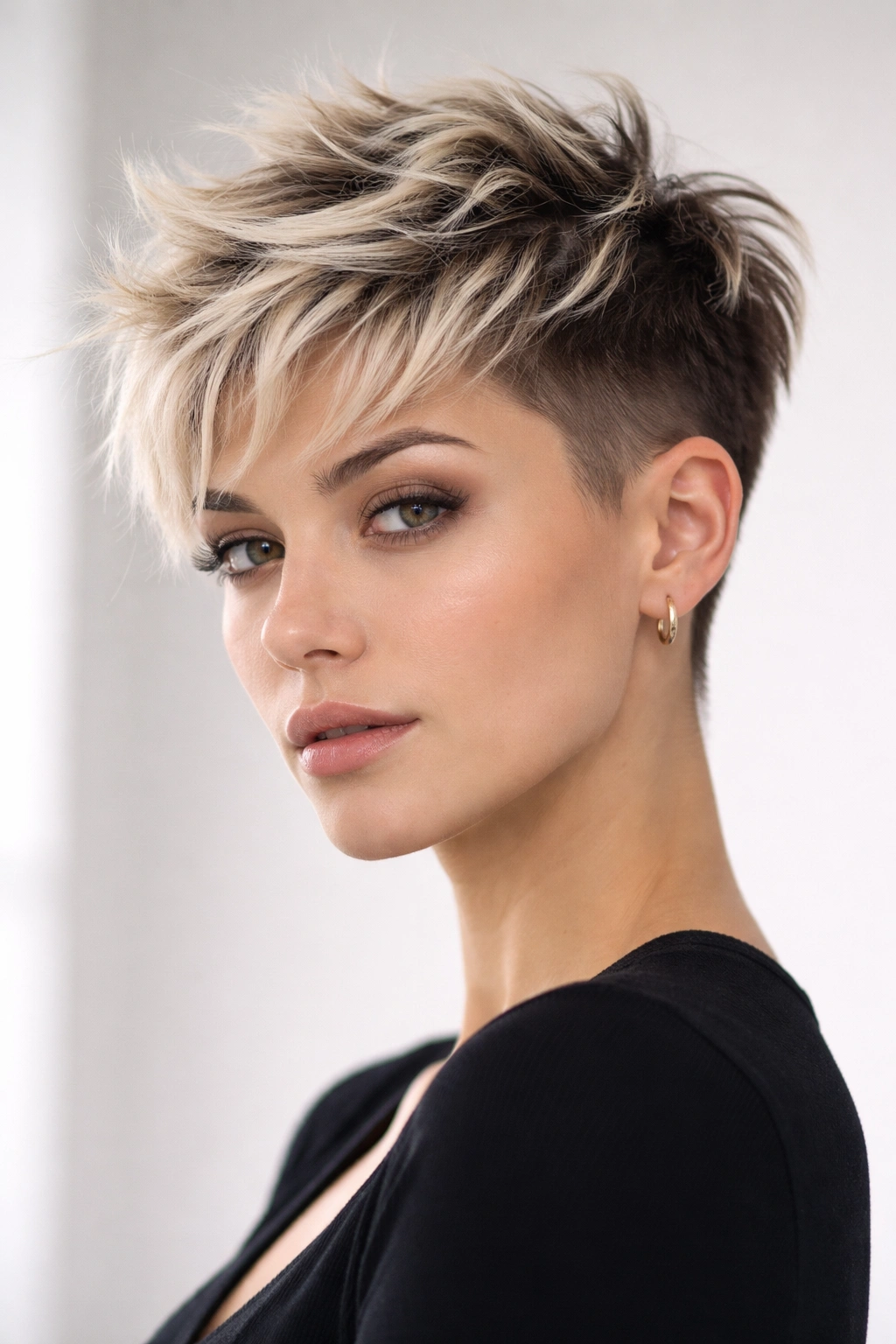
An undercut combines the edginess of shaved or very short sides with choppy, textured length on top. The contrast between the sleek undercut and the textured, piecy top creates a bold, contemporary look that photographs beautifully and works on all hair types.
The Edge-Meets-Texture Combination
An undercut pixie gives you the textural movement of choppy layers on top with the clean, architectural lines of the undercut beneath. It’s visually striking without feeling costume-y, and it’s a cut that reads as intentional and fashion-forward. The undercut can be as subtle as a very short taper or as bold as a completely shaved side pattern.
Styling and Design Options
- Opt for a simple, clean undercut if you want something that feels modern and minimalist
- Choose shaved designs or patterns in the undercut for maximum edge and visual interest
- Style the textured top tousled and undone for maximum contrast with the sleek undercut
- Use pomade or a light styling cream to enhance the piecy texture on top
- The longer textured top gives you styling versatility — you can slick it back to show off the undercut, or wear it down for a softer look
- Works beautifully with bold color on top and a natural or contrasting shade in the undercut area
- Pairs perfectly with jewelry, bold makeup, and confident attitude
Pro tip: The undercut grows out visibly, so you’ll need touch-ups every 4-6 weeks to maintain the design. Many people consider this a feature rather than a bug because the cut evolves beautifully as it grows.
10. Choppy Mullet with Modern Texture
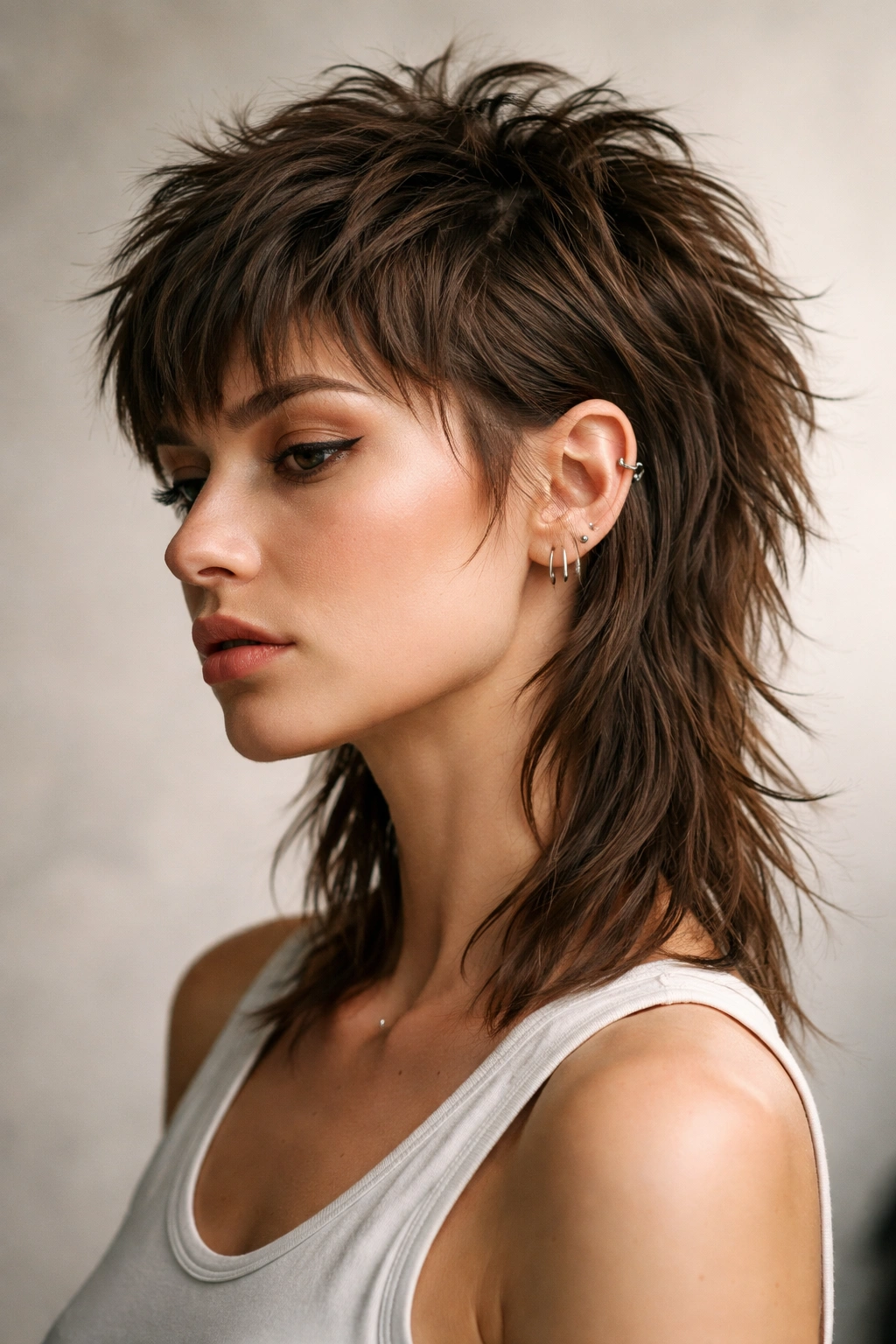
The modern mullet is nothing like the 1980s version — it’s a cut with short, choppy texture on top and sides, and graduated length toward the back that’s still relatively short and textured rather than long and full. It’s bold, it’s edgy, and it’s surprisingly wearable when done with the right proportion and choppy texture throughout.
The New Mullet Energy
Today’s mullet is an ironic fashion statement that’s become genuinely cool. The key to making it work is keeping everything textured and choppy so it never reads as retro or costume-y. The proportion matters too — the back should be longer than the top, but not dramatically so. You’re aiming for interesting rather than extreme.
Wearing a Modern Textured Mullet
- Keep everything choppy and layered so the cut feels intentional and contemporary rather than like you’re referencing the 1980s
- Style the top textured and slightly tousled, and let the back have some movement and wave
- Use texturizing spray throughout to enhance the choppy layers and prevent the cut from looking flat
- Blow dry with movement rather than smoothness — this cut is all about texture and dimension
- Pairs beautifully with bold color, undercut designs, or asymmetrical styling choices
- Works on people with confidence and those willing to embrace a fashion-forward, slightly provocative aesthetic
Worth knowing: A modern mullet requires styling intention. This isn’t a cut you can air-dry and have look polished — you need to actively style it with products and a blow dryer for it to look intentional rather than accidental.
11. Lived-In Choppy Short Cut
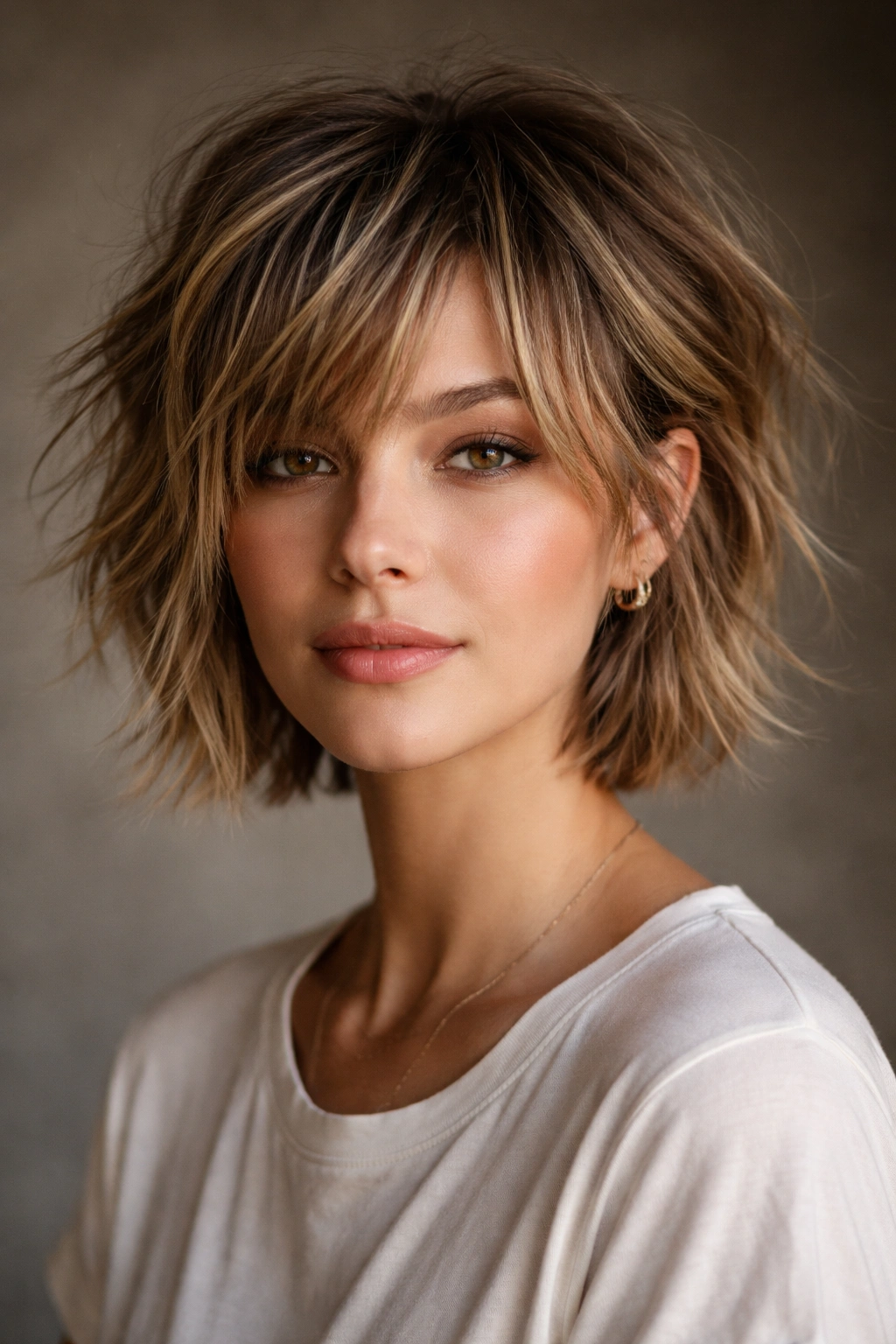
A lived-in choppy cut is deliberately undone and tousled-looking, with choppy layers cut at varied lengths throughout that suggest you just rolled out of bed looking fabulous. The difference between this and an actually messy cut is precision — each choppy layer is intentionally placed and cut, but styled to look like it happened accidentally.
The Effortless Appeal
A lived-in choppy cut is the style equivalent of “no makeup makeup” — it requires actual effort to create that effortless appearance, but once you nail the styling, it looks like zero work. This cut appeals to people who want high style with low stress, and who understand that effortless-looking styles often require some intentional effort.
Achieving That Lived-In Look
- Use a texturizing spray or salt spray as your primary styling tool — this is what creates the tousled, separated appearance
- Blow dry with your fingers rather than a round brush for that undone, non-styled effect
- Scrunch texture spray into damp hair and let it air dry for the most effortless approach
- Don’t over-blow-dry; you’re aiming for slightly damp, tousled texture rather than polished smoothness
- Works beautifully with dimensional color or balayage that enhances the textural depth
- Requires trims every 4-5 weeks to keep the choppy layers from growing into a one-length mess
Pro tip: Keep a small bottle of texturizing spray in your bag and refresh the look throughout the day with a few spritzes and some finger-tousling. This cut actually looks better as the day goes on.
12. Short Textured Shag with Choppy Sides
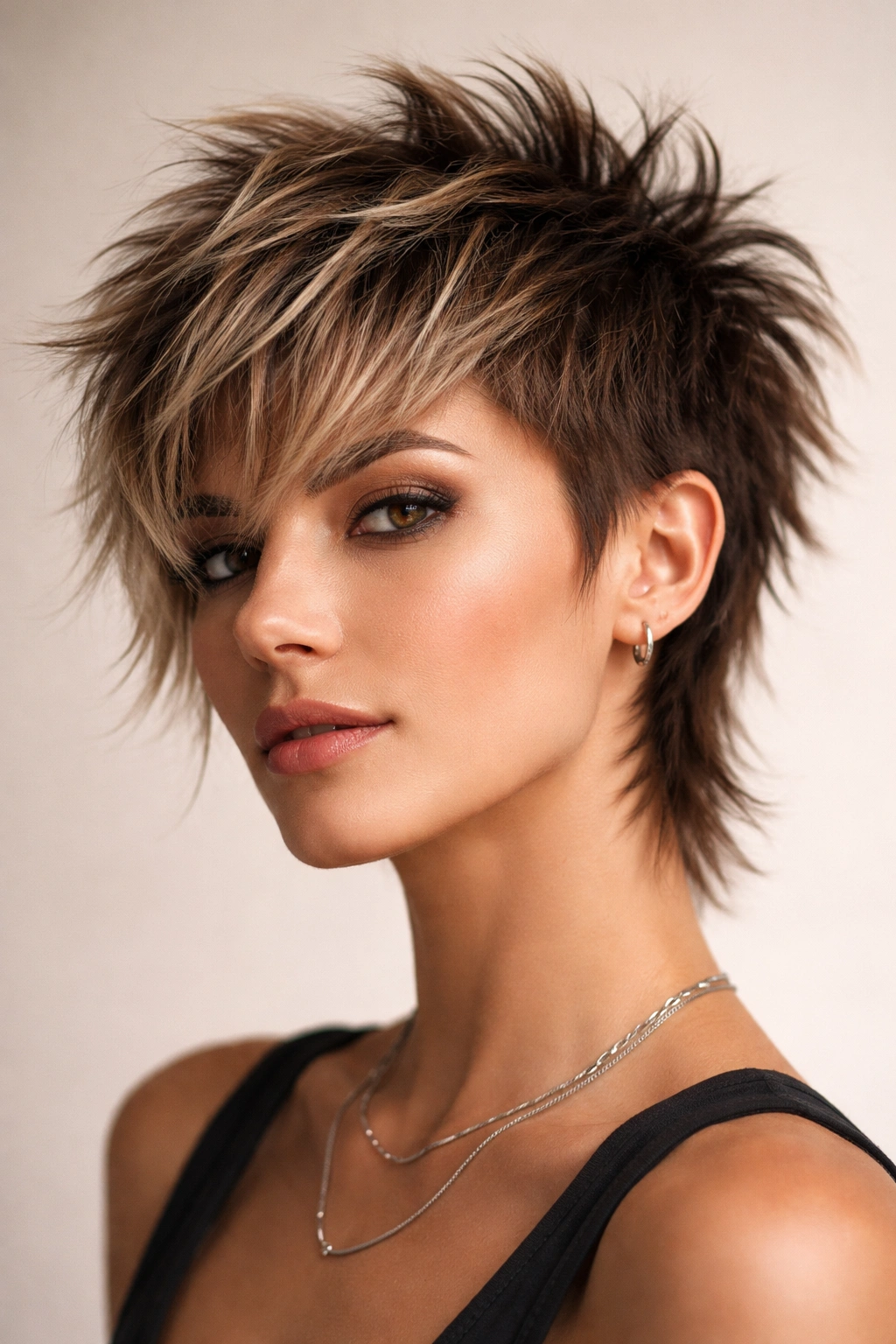
This variation combines the face-framing effect of a shag with extra-short, textured sides that create an almost mohawk-like silhouette when styled up. The longer textured top and shorter choppy sides create visual interest from every angle, making it an especially flattering cut for people with round or wide face shapes.
Flattering Proportions and Movement
By shortening the sides relative to the top, this cut creates the illusion of more length and narrower proportions. The choppy texture throughout prevents it from feeling severe or too geometric. It’s modern and edgy without requiring extreme commitment or daily styling effort.
Styling Options for Maximum Impact
- Blow dry the top layers upward and slightly back for maximum volume and to emphasize the shorter sides
- Use a texturizing spray or pomade to enhance the choppy, separated look throughout
- Tousle and let air dry for that completely undone weekend vibe
- Slick everything back to show off the shaved or very short sides for a completely different look
- The cut pairs beautifully with color, especially with different shades on top versus sides
- Works on all hair textures, though curlier textures need more intentional styling to show off the cut’s structure
Worth knowing: This cut shows regrowth more obviously than symmetrical cuts because the contrast between the sides and top becomes less dramatic. Plan for trims every 5-6 weeks.
13. Choppy Spiky Short Cut
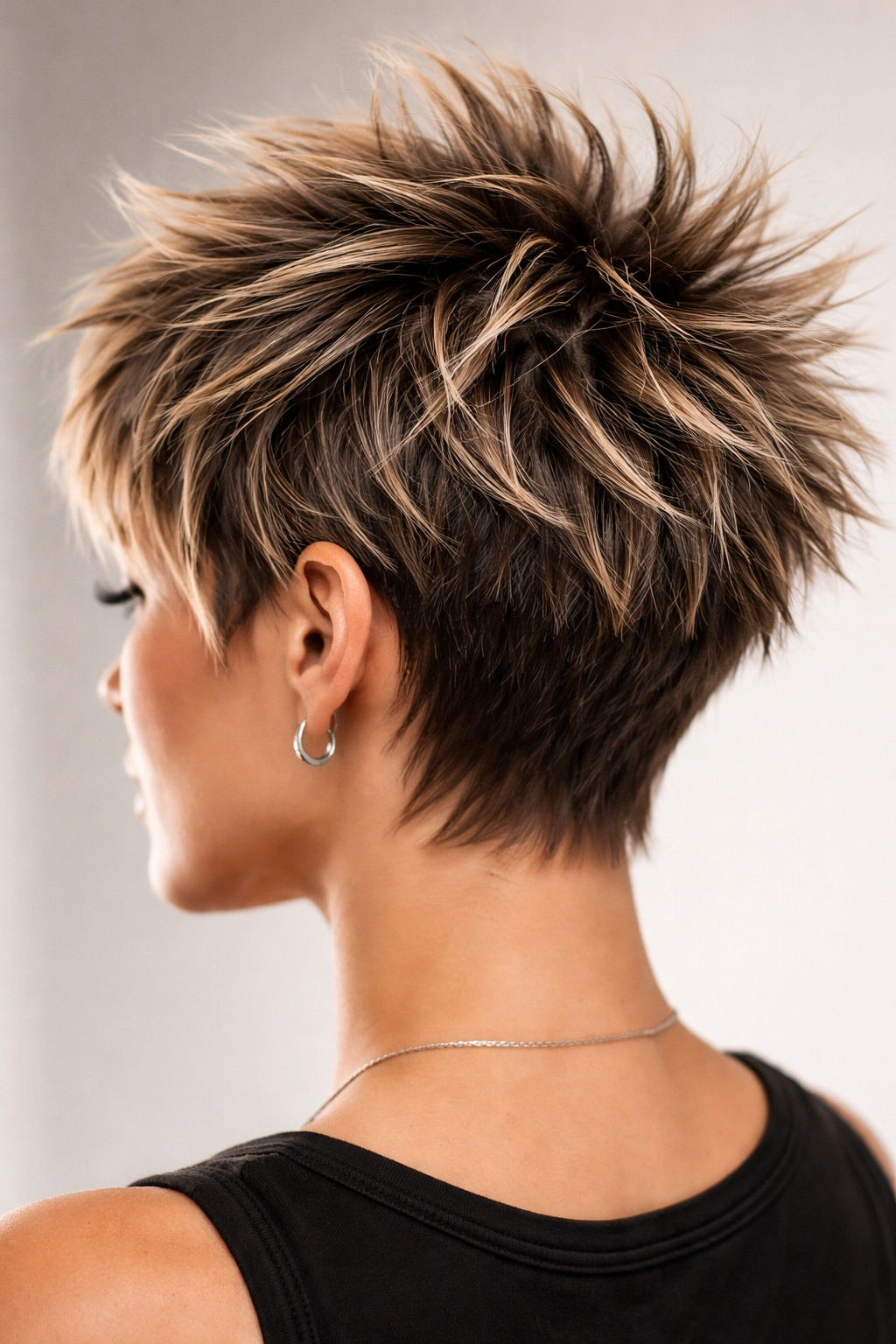
A choppy spiky cut takes texture to the maximum — every layer is cut short and at a steep enough angle that it naturally wants to stand away from the scalp, creating spiky, piecy texture with serious movement and dimension. It’s bold, it’s architectural, and it’s a cut that demands styling intention.
Maximum Textural Drama
This cut is for people who want their hair to make a statement and who are willing to style it every day to achieve that statement. The choppy spiky cut works best on people with finer hair (because thicker hair can look too bulky with this much texture) and those who enjoy using styling products as a regular part of their routine.
Creating and Maintaining the Spiky Texture
- Use a strong-hold styling cream, pomade, or clay — this cut doesn’t work without product
- Blow dry your hair in the opposite direction of how you want it to lay, then apply product and blow dry it into place
- Work the product through with your fingers while blow drying to create separated, spiky sections
- The cut requires regular trims every 4-5 weeks to keep the spiky points sharp and intentional
- Pairs beautifully with fashion colors or bold highlights that emphasize each individual choppy layer
- Works especially well on people with angular faces or those who want to emphasize cheekbones and jaw structure
Pro tip: Invest in a good styling product that works with your hair type. The success of this cut entirely depends on having the right product to create and hold the spiky texture.
14. Textured Wolf Cut (Short Version)
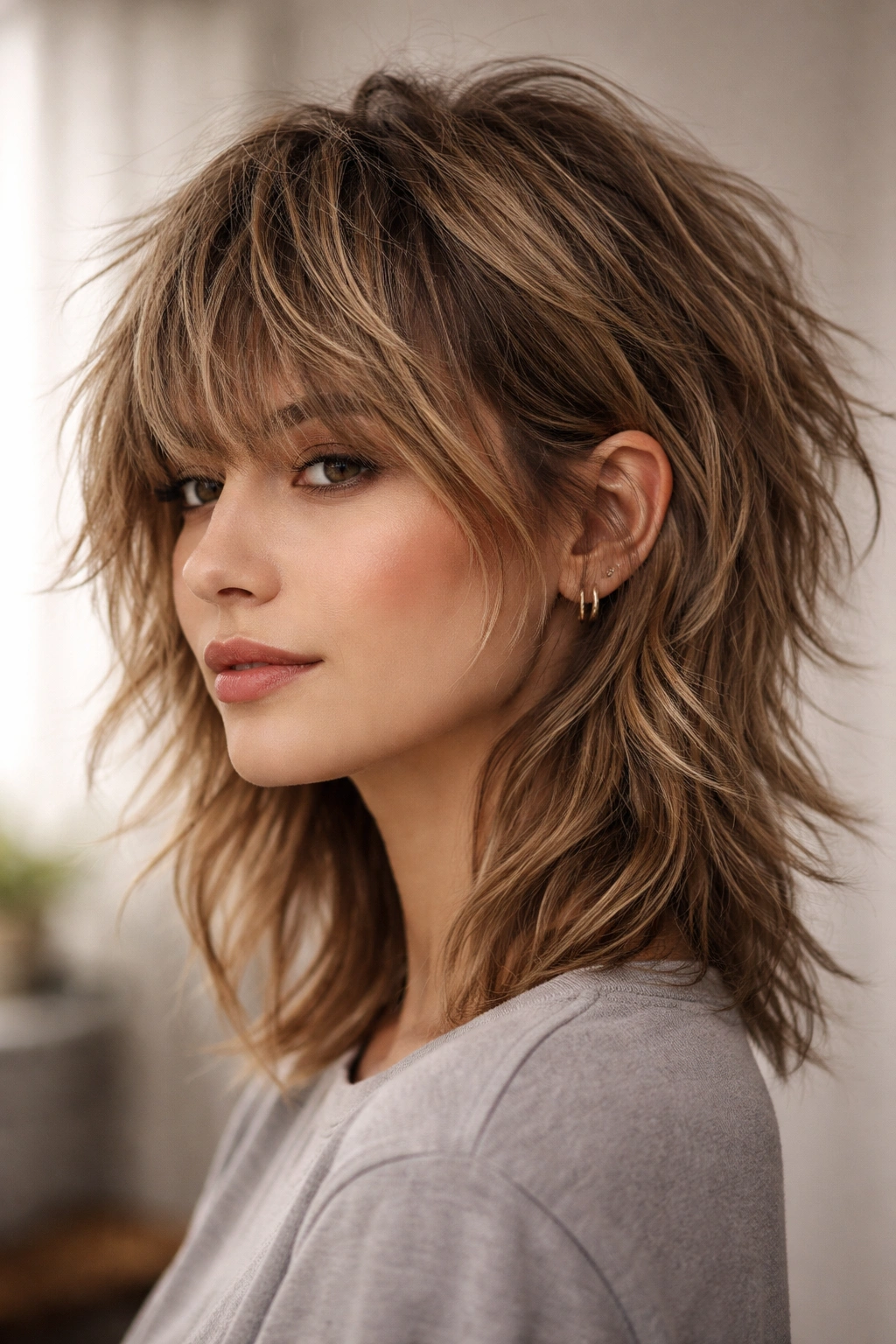
A wolf cut combines the shorter, textured crown of a pixie or crop with longer, shaggy layers throughout, creating a silhouette that’s shorter overall than a traditional shag but with more length and movement than a simple crop. The “textured wolf” version emphasizes choppy, piecy layers throughout rather than smooth, blended ones.
The Modern Wolf Silhouette
A wolf cut became popular because it offers maximum versatility — you get the short, textured crown for an edgy vibe, but the longer shaggy layers give you something to work with for styling and create serious movement and dimension. The textured variation makes it feel contemporary and intentional rather than like a dated shag.
Wearing and Styling a Wolf Cut
- Blow dry with texture spray for that separated, piecy look that really shows off the cut’s layers
- Create soft waves by blow drying while tousling your hair for a romantic, undone vibe
- Slick everything back for a completely different aesthetic that emphasizes the textured crown
- Use a texturizing mousse or sea salt spray for enhanced movement and dimension
- Works beautifully with grown-out, lived-in color or dimensional highlights that catch light at different layers
- Requires styling intention — this cut looks better when you spend a few minutes blow drying it than when you air dry
Worth knowing: A wolf cut grows out beautifully because the choppy texture naturally blends regrowth into the overall design. You can often go 8 weeks between cuts without it looking noticeably grown out.
15. Choppy Curtain Bangs Short Cut
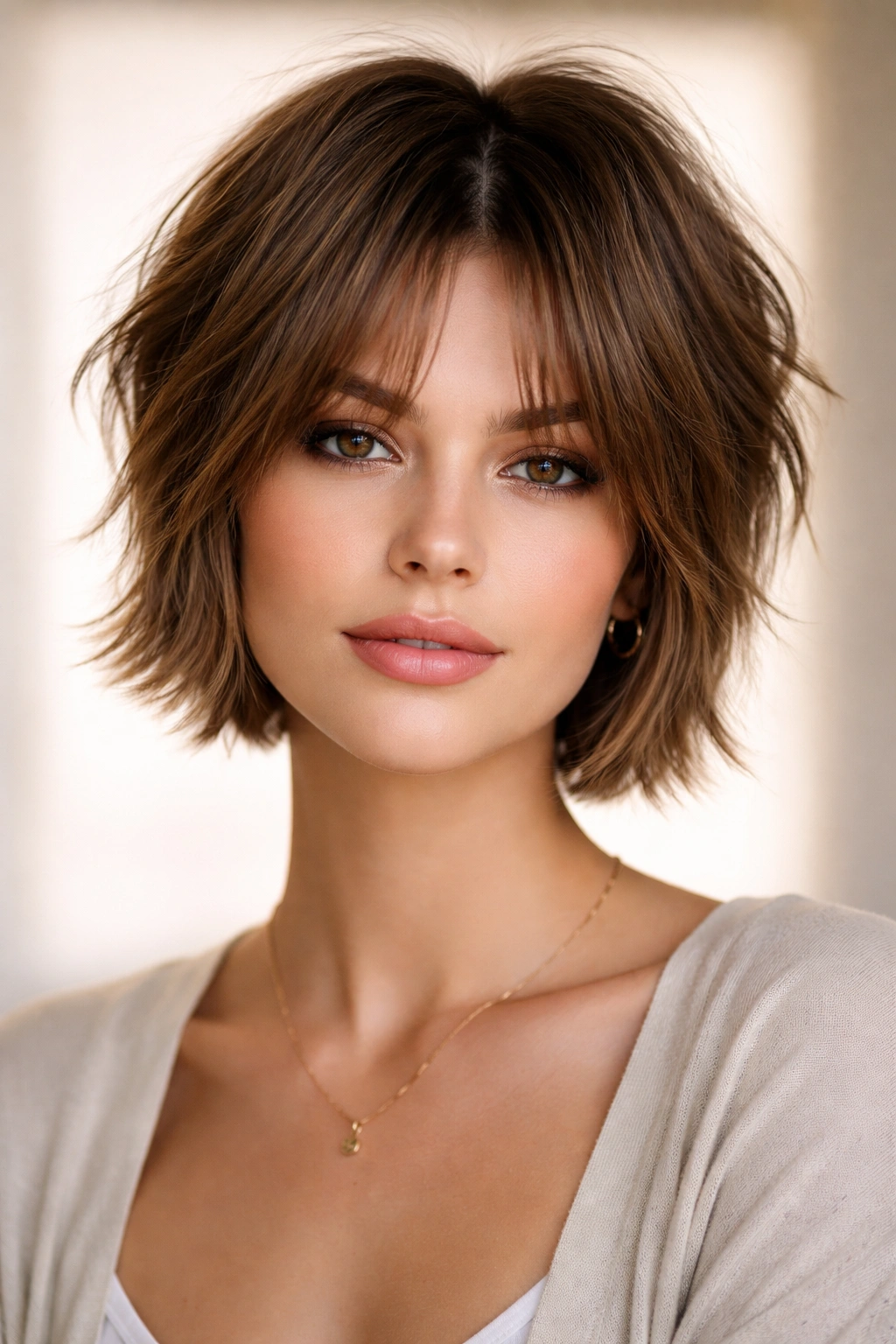
The final style pairs choppy, textured curtain bangs with an overall short cut, creating face-framing movement combined with short, textured length on top and sides. Curtain bangs are cut to part in the middle and fall away from the face, creating a softening effect that’s especially flattering on angular or long face shapes.
The Softening Power of Choppy Curtains
Choppy curtain bangs are less severe than blunt bangs but create more definition than simple face-framing layers. The texture prevents them from feeling heavy, and the center part gives you instant visual interest. This style works on almost all face shapes and hair textures, making it one of the most universally flattering textured cuts available.
Styling Curtain Bangs with Short Hair
- Blow dry the curtain bangs forward and downward, letting them fall naturally into their center part
- Use a small round brush to create slight waves in the bangs that enhance their movement
- Apply texturizing spray to enhance the choppy texture and prevent the bangs from looking too polished or controlled
- You can also style the bangs away from your face by tucking them behind your ears for a completely different look
- The cut works beautifully with all hair colors and textures
- Requires trims every 3-4 weeks to keep the bangs at the proper length as they grow out
Pro tip: Choppy curtain bangs actually look better slightly undone and textured than perfectly smooth. Embrace the texture and avoid over-straightening them — that’s where their charm lies.
Final Thoughts
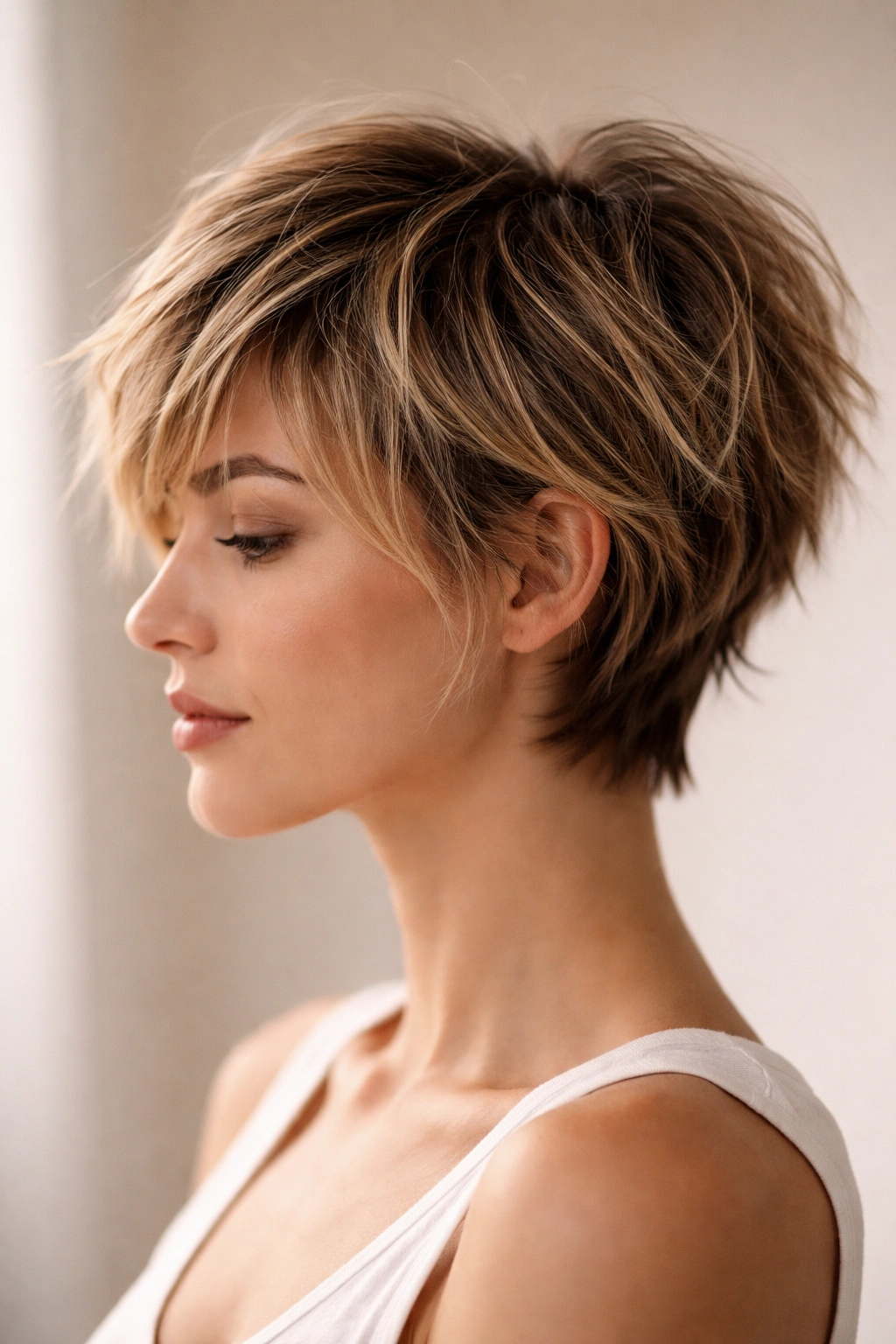
Choppy, textured short cuts offer something that smooth, blended layers simply can’t deliver — they create dimension, movement, and that intentional-but-effortless vibe that reads as both polished and rebellious. Whether you choose a bold asymmetrical cut, a soft shag, a spiky crop, or curtain bangs, texture is what transforms a short cut from simple to seriously stylish.
The key to loving a choppy short cut is finding a stylist who understands that these cuts are designed with texture in mind. Not every short cut is meant to be blended smoothly; sometimes, those choppy, uneven layers are exactly the point. Once you have the right cut, styling becomes the fun part — texturizing spray, a blow dryer, and a few minutes of tousling can completely transform your look from day to day.
Short, choppy cuts also have a practical side that longer styles can’t match. They’re faster to wash, easier to style, and they grow out beautifully because the texture naturally blends regrowth into the overall design. You’re not fighting against your hair; you’re working with it. That’s the real magic of textured, choppy short cuts — they’re high-impact, low-stress, and endlessly adaptable to your mood, your lifestyle, and the version of yourself you want to present to the world.
