



Short haircuts paired with the right color can completely transform your look and personality. When you commit to cutting your hair shorter, choosing a complementary shade takes the impact from good to absolutely stunning. The combination of a fresh cut and a thoughtful color creates a synergy that neither element could achieve alone — your new length showcases the color dimension beautifully, and the color depth makes the cut’s texture and movement pop. Whether you’re after something bold and statement-making or subtle and sophisticated, there’s a short haircut and color combination that will feel authentically you.
The magic happens at the intersection of cut and color. A pixie cut, for example, transforms entirely depending on whether you pair it with honeyed blonde or steely silver-grey. That same principle applies across every short style — the cut becomes the canvas and the color becomes the art. Rather than thinking about them as separate decisions, the most impactful looks come from planning the color alongside the cut itself. Your stylist can recommend tones that complement your skin, eye color, and the specific texture of your cut, creating something that feels custom-built rather than generic.
1. Textured Pixie with Honey Blonde
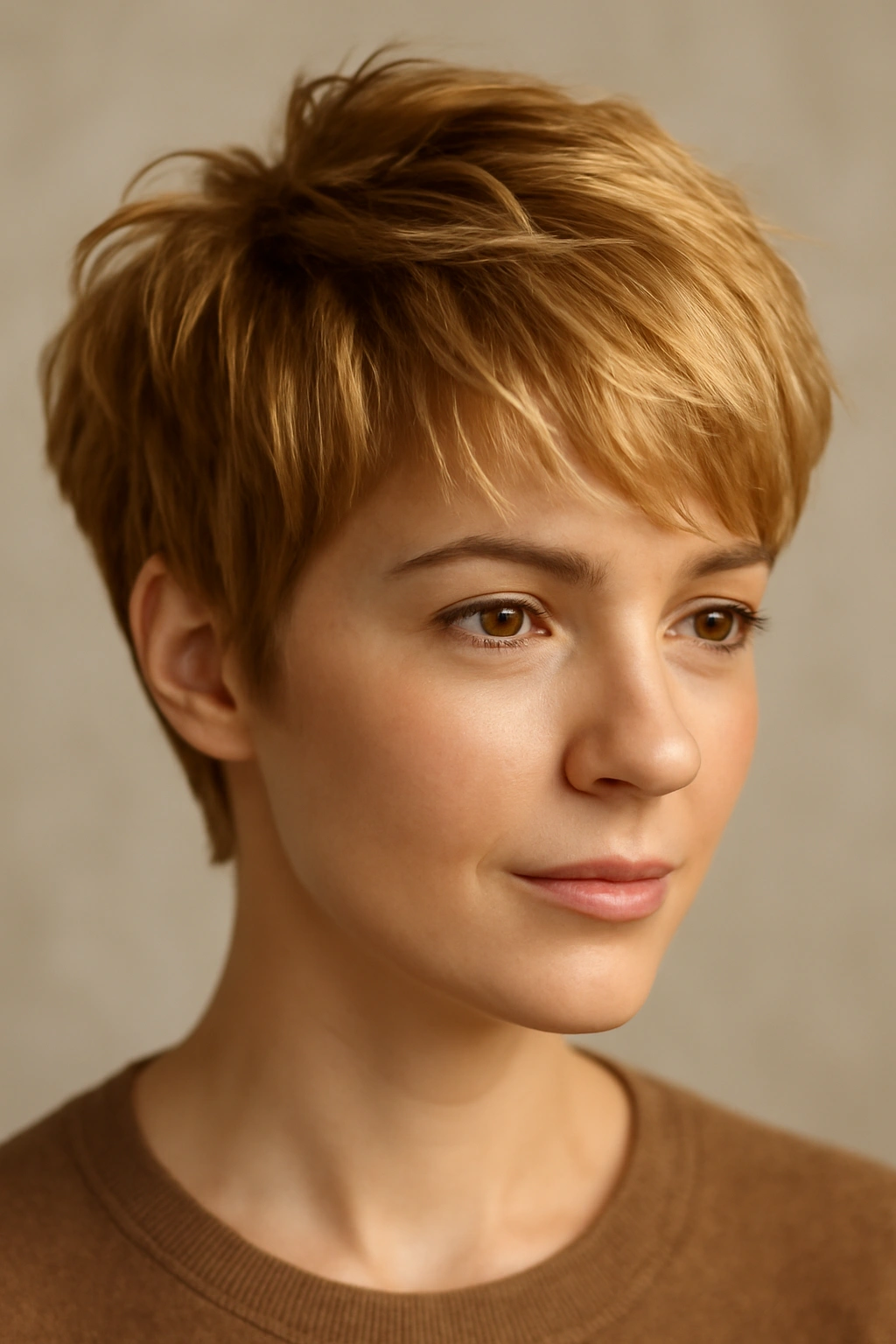
A textured pixie cut with soft honey blonde is one of the most flattering combinations for warm complexions. This pairing works because the movement and dimension in both the cut and color prevent the look from feeling flat or severe. Your stylist will use point-cutting or texturizing shears to create piecey, intentional texture throughout the crown and sides, building in volume and visual interest that a blunt pixie wouldn’t deliver.
Why This Combination Works So Well
The honey blonde shade has enough warmth to complement peachy or golden undertones in your skin, while the textured cut ensures you’re not locked into a rigid style. You’ll have the option to style it messy and undone, or sleek and polished depending on your mood. The color catches light in multiple ways because of the varied hair lengths created by the texturizing technique, making it look dimensional and expensive even if you’re not doing complex balayage work.
Maintenance and Styling Tips
- Plan for a trim every 4-6 weeks to keep the textured shape crisp and intentional
- Use a texturizing spray or sea salt spray to enhance the piecey quality without heat styling
- Honey blonde typically requires touch-ups every 6-8 weeks if you’re going from a darker base, but the lived-in quality means regrowth blends nicely
- A light styling cream or pomade applied to damp hair and finger-combed through will define individual strands without looking greasy
Real talk: This combo requires commitment to regular trims. Unlike longer styles where you can go 8-12 weeks between cuts, a textured pixie needs maintenance to keep looking intentional rather than overgrown. If you’re someone who hates frequent salon visits, this might not be your pairing.
2. Sleek Bob with Dimensional Brunette
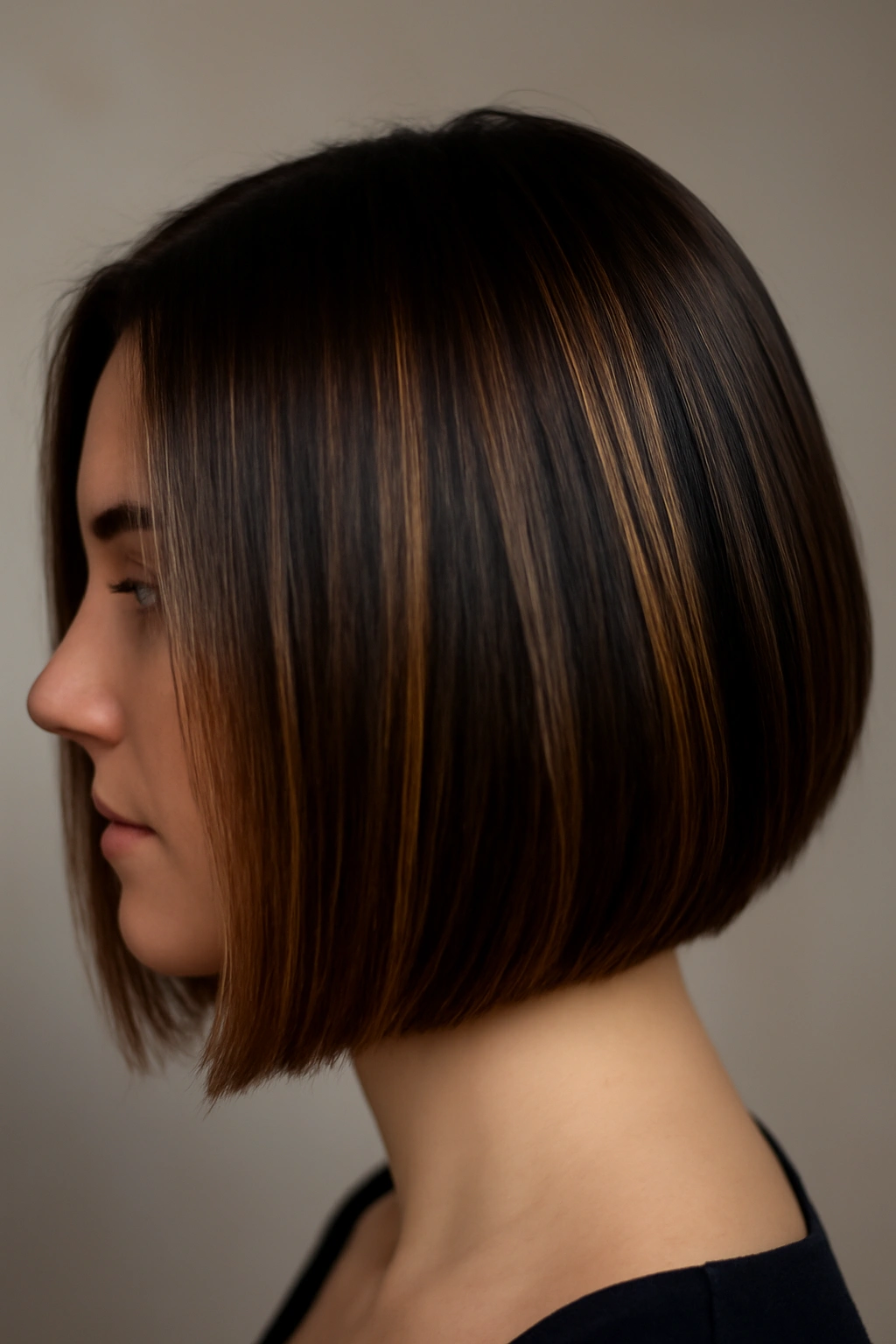
The classic bob never goes out of style, but a dimensional brunette elevates it from basic to editorial. Instead of a flat single-process brown, dimensional brunette uses multiple shades — deep chocolate at the root with lighter caramel or honey notes throughout the mid-lengths and ends. The sleek bob, usually cut blunt and chin-length, creates the perfect foundation for this color strategy because the straight lines showcase the color variation without the distraction of choppy texture.
The Color Strategy Behind Dimensional Brunette
Dimensional brunette works on both warm and cool undertones depending on which shades your stylist chooses. Warm dimensional brunettes use caramel, honey, and golden tones. Cool dimensional brunettes lean into ash, grey, and cooler chocolate notes. The key is that the variation creates depth without the commitment of full highlights — it’s more subtle and easier to maintain than blonde highlights, but infinitely more interesting than a solid brown. Your stylist will use techniques like balayage or shadow-rooting to place the lighter shades naturally where the sun would hit your hair.
Why Sleek Works With This Color
The blunt lines of a sleek bob make the color changes visible and intentional without looking chaotic. When you have texture, color variation can feel scattered. With a sharp, clean bob, those color transitions become a design element rather than an accident. The straight lines also make the color appear more glossy and refined — dimension on a sleek surface always reads as more polished.
Long-Term Maintenance
- Root touch-ups every 6-8 weeks if you’re doing significant root color work
- Balayage-style dimensional coloring can stretch to 8-12 weeks before it starts looking faded
- Trims every 6-8 weeks keep the blunt line crisp and prevent the style from looking shaggy
- Purple-toned shampoo once weekly prevents warm dimensional brunette from turning brassy
3. Choppy Layers with Silver-Grey
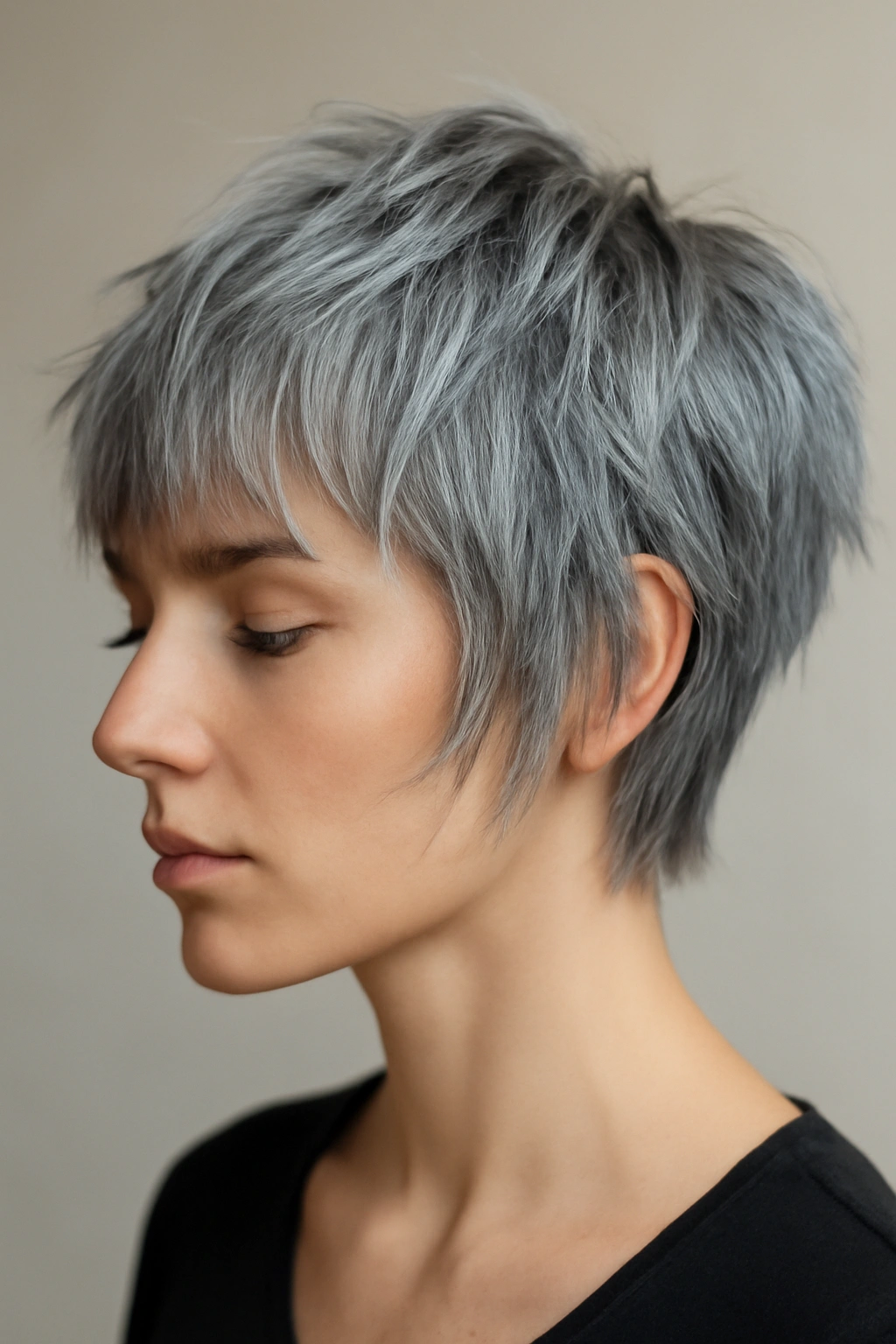
Silver-grey is having a major moment, and pairing it with a choppy, layered cut creates movement and visual interest that a longer style with the same color might not achieve. Choppy layers — uneven lengths that create intentional jaggedness throughout the cut — work beautifully with silver-grey because the color’s neutral, cool tone complements the cut’s edgy, modern vibe. This combination reads as confident and fashion-forward without requiring constant styling.
What Makes Silver-Grey Work on Short Hair
Silver-grey or ash-grey contains no warm tones, so it requires a cool undertone to look flattering. If you have warm, peachy, or golden undertones in your skin, you might find pure silver-grey looks washed out. But if you naturally have rosy, olive, or neutral undertones, silver-grey will make your skin glow. On short hair, the color gets maximum visibility, so choosing a shade that complements your complexion is crucial. Choppy layers amplify this effect because the varied lengths catch light differently, making the grey look rich rather than flat.
The Cut Details That Matter
Choppy layers aren’t just random shorter pieces — they’re strategically placed by your stylist to hit at specific angles and lengths. Typically, you’ll have longer pieces underneath and progressively shorter layers on top, creating movement when you move. Some stylists will add a choppy fringe or side-swept bangs to emphasize the edgy energy of the cut.
Styling and Color Maintenance
- Silver-grey requires a toner treatment every 2-3 weeks to maintain that cool tone, especially if your water is hard or chlorinated
- Use a purple or violet-based shampoo weekly to neutralize any brassiness that develops
- The cut needs trimming every 4-6 weeks to maintain the intentional choppy shape
- Styling is flexible — you can air-dry for a tousled, lived-in look or blow-dry straight for a sleeker finish
Worth knowing: Silver-grey looks different depending on your lighting. In natural daylight it might look cool and platinum, while under warm indoor lighting it might shift slightly. This isn’t a flaw — it’s actually part of the beauty of this color. But it’s something to test before committing fully.
4. Blunt Bangs with Warm Caramel
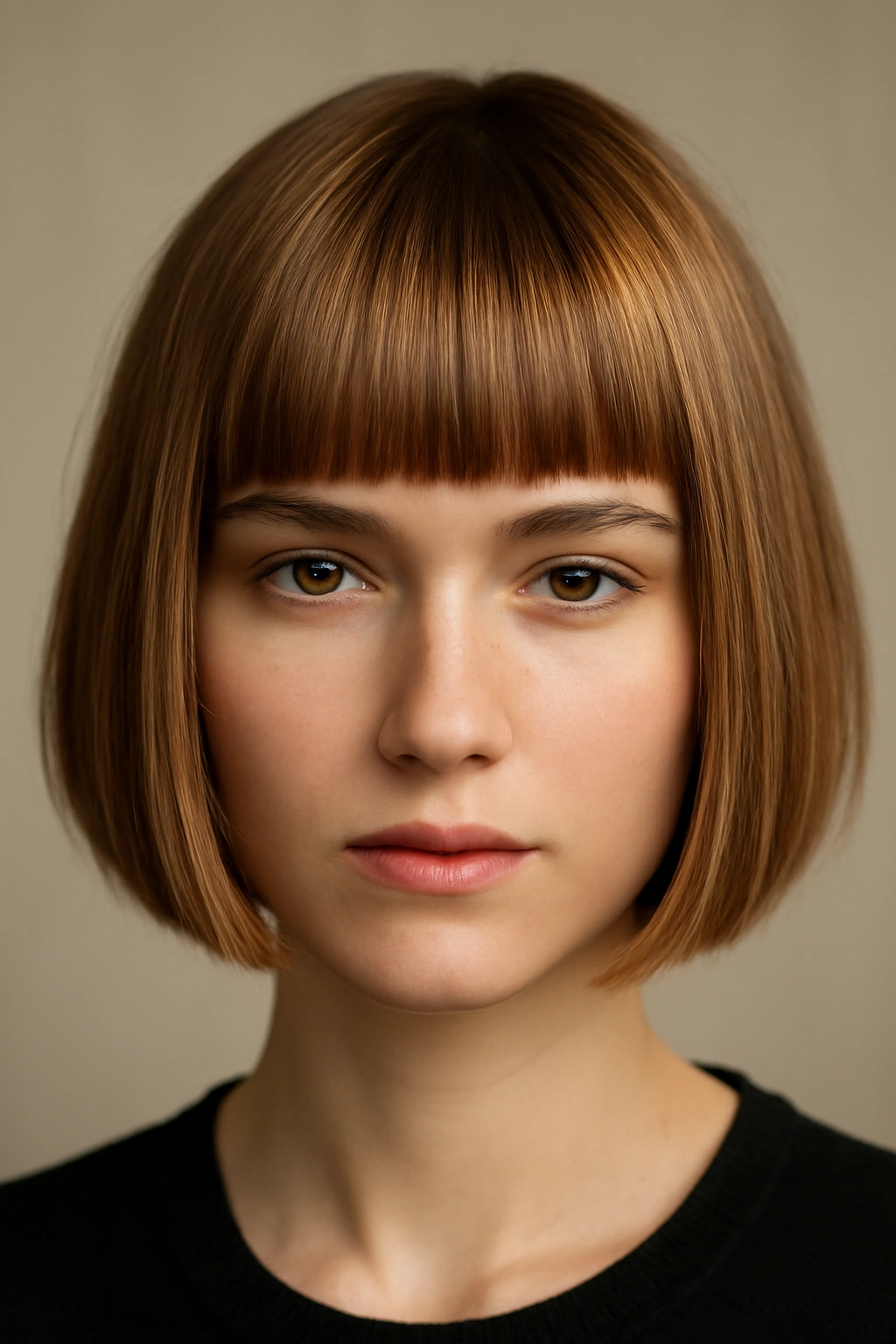
Blunt bangs paired with a warm caramel shade create an instantly chic, somewhat French-girl aesthetic. The bangs are cut perfectly straight across the forehead at eyebrow level or slightly higher, creating a bold graphic line. Warm caramel — a honey-toned brown that’s lighter than your natural brunette but not quite blonde — complements the bluntness of the bangs and softens the severity of the line with its warmth. This combination works on nearly every skin tone because caramel is inherently flattering.
Why Blunt Bangs Demand Color Consideration
Blunt bangs are a statement. They’re not subtle. That straight line frames your face and draws attention to your eyes and forehead. Adding a warm, dimensional color transforms the bangs from severe to intentional and sophisticated. The caramel tone prevents the look from feeling too harsh or architectural — it softens the graphic quality while keeping the modern edge.
The Complete Style Picture
Blunt bangs work with almost any short cut underneath. You could pair them with a pixie body, a short bob, choppy layers, or even a textured crop. The bangs become the focal point, so what’s happening with the rest of your hair is secondary. Some people go for a longer pixie body with pronounced blunt bangs. Others do a short, cropped back with the bangs as the only length on top. The variation is part of what makes this combo so versatile.
Styling, Maintenance, and the Reality of Bangs
- Blunt bangs require trims every 3-4 weeks because they grow down into your eyes quickly and lose their graphic quality if they’re even slightly overgrown
- Warm caramel color typically needs root touch-ups every 6-8 weeks, depending on how much contrast there is between your natural color and the caramel shade
- Bangs can be styled with a slight bend for a softer look, or kept perfectly straight for maximum impact — your styling preference determines the vibe
- Some people find bangs annoying in summer heat or humidity because they stick to your forehead. It’s a real consideration, not a small one.
Pro tip: If you’re prone to breakouts on your forehead, bangs might trap heat and oil against your skin. Consider how your skin reacts before committing to this cut.
5. Undercut with Bold Black
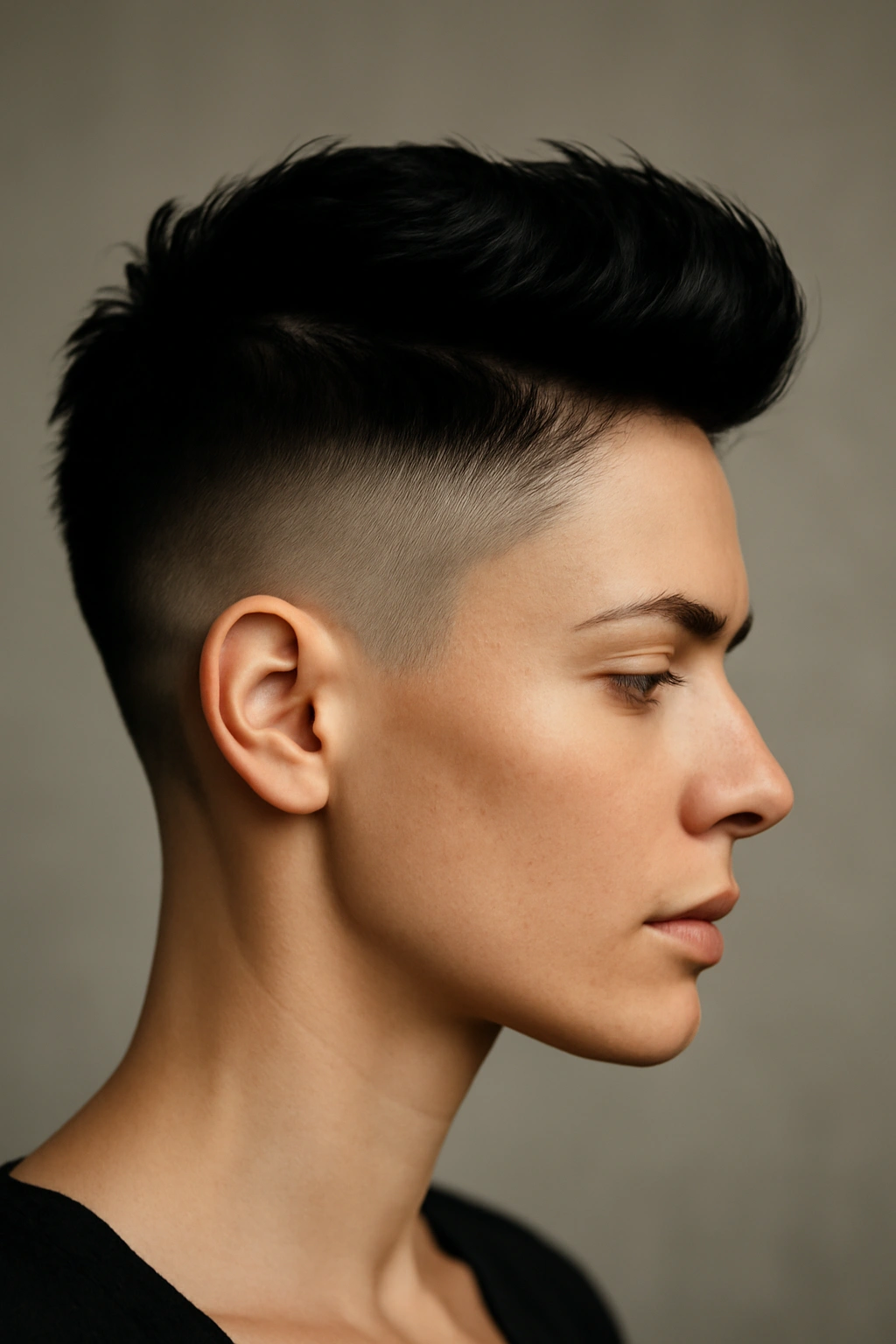
An undercut paired with bold, jet black creates instant visual drama and a distinctly modern aesthetic. An undercut means the sides and back of your head are cut very short — often faded down to the skin — while the top is left significantly longer, creating contrast between the short and long sections. Jet black is true, deep black with no brown undertones. This combination reads as edgy, intentional, and undeniably fashion-forward.
The Visual Impact of Undercut and Black
The undercut’s appeal is partly structural and partly chromatic. The short sides and back expose the shape of your head and neck, which is a bold move. Adding jet black on top amplifies this boldness because the color creates definition and makes the length on top look even more intentional. The contrast between the skin-tight sides and the longer top is visual drama — you’re not trying to hide this cut, you’re celebrating it.
Cut Variations That Matter
Undercuts come with options. You can have a fade that gradually gets shorter from top to bottom, or a sharp line where the length suddenly stops. You can have undercut sides with a longer crop on top, or sides with a longer pixie body on top. Some people add additional visual interest by shaving designs into the undercut — lines, patterns, or geometric shapes. The black color shows all of these details clearly, making every element of the cut visible and intentional.
The Styling Reality
- An undercut needs a trim every 2-3 weeks if you want the fade to look fresh and intentional
- The longer top can be styled in multiple ways — swept back, to the side, tousled, or slicked down
- Jet black fades over time, especially with regular washing and sun exposure, so plan for touch-ups every 4-6 weeks
- Styling products matter here. Pomade, wax, or clay will help you shape the longer top into whatever style you’re going for
Honest note: Undercuts are higher-maintenance than most short cuts because you need regular fade maintenance. If you’re okay with that commitment, the style payoff is significant. If frequent salon visits aren’t in your budget or lifestyle, this might not be your combo.
6. Tousled Shag with Copper Red
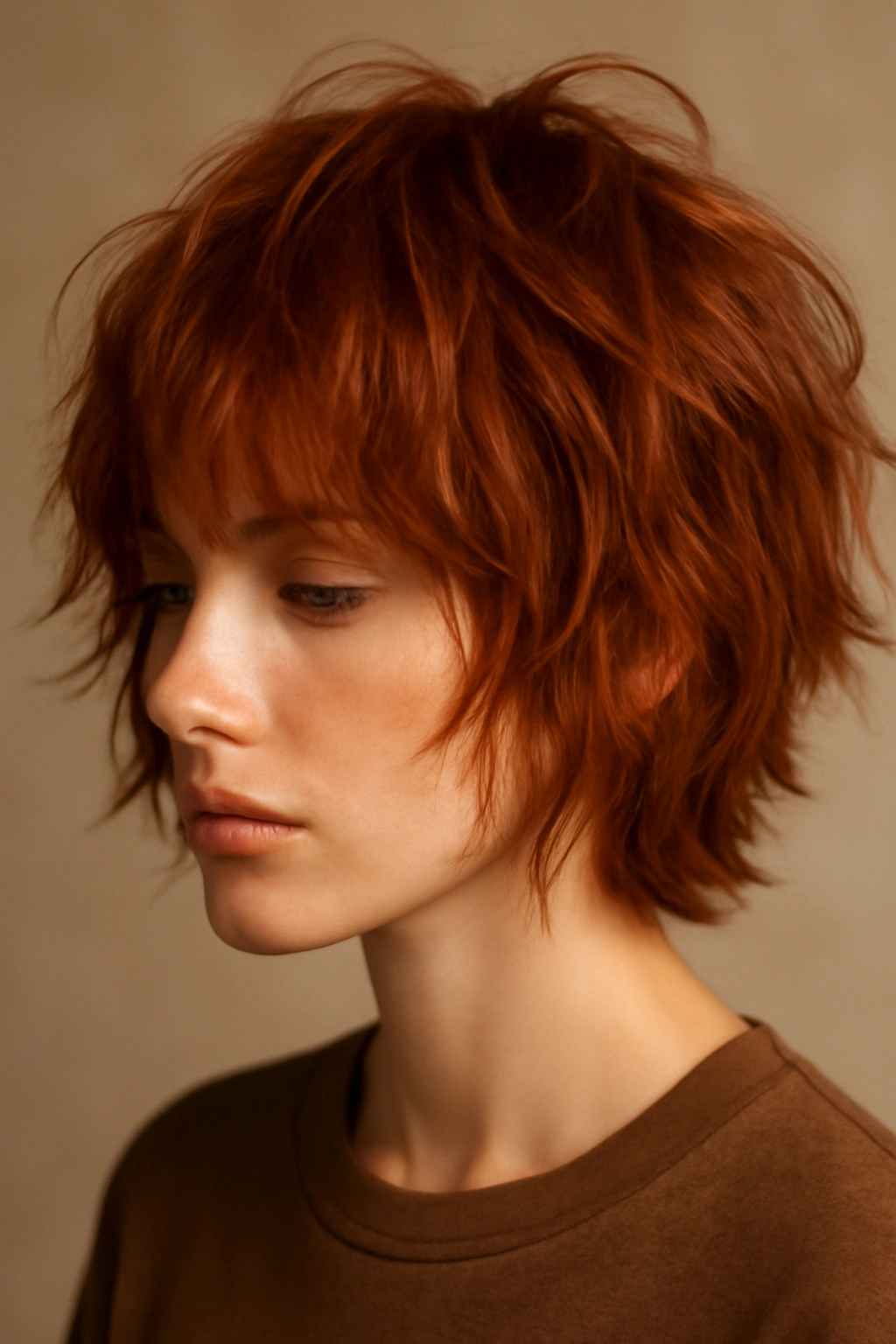
A tousled shag cut with copper red is peak lived-in cool-girl energy. A shag has that intentionally messy, layered, 1970s-inspired vibe with lots of texture and movement. Copper red is warm, vibrant, and eye-catching — it reads as fire and energy. Together, they create a look that says you don’t take yourself too seriously but you absolutely know what you’re doing style-wise.
Why This Pairing Creates Movement
The shag’s choppy layers are designed to move and shift as you move. Each layer has a different length, creating air and space throughout the cut. Copper red amplifies this effect because the warm tone reads differently depending on how the light hits each layer. When you move, the color seems to shift and flow with the movement. It’s dynamic in a way that sleeker cuts with solid colors just can’t achieve.
The Copper Red Spectrum
Copper red isn’t one color — it’s a spectrum. You can go with a warmer, more orange-toned copper red that reads almost burnt-orange. Or you can choose a deeper, more burgundy-leaning copper red. Some stylists will add depth with darker roots to make the copper pop even more. The key is choosing a shade of copper that complements your skin’s undertone. Fair skin typically looks stunning with bright copper. Deeper skin tones might opt for a richer, darker copper-burgundy.
The Shag Cut Specifics
Modern shags are different from vintage shags — they’re refined while still maintaining that textured, effortless quality. Your stylist will create shorter layers throughout the crown for volume, longer layers underneath for movement, and typically incorporate some face-framing pieces. The cut requires texturizing to enhance the shaggy quality without it looking matted or flat.
Realistic Maintenance and Styling
- Tousled shag looks best with some texture, so expect to style it with product most days — a texture spray, sea salt spray, or even just damp hands working in a texturizing cream
- Copper red is a fashion color that requires maintenance. Plan for touch-ups every 4-6 weeks to keep the copper vibrant
- Trims every 6-8 weeks keep the shag shape defined rather than overgrown
- This cut and color combo works best if you’re willing to embrace the slightly undone aesthetic rather than fighting it with products that create perfection
7. Tapered Fade with Platinum Blonde
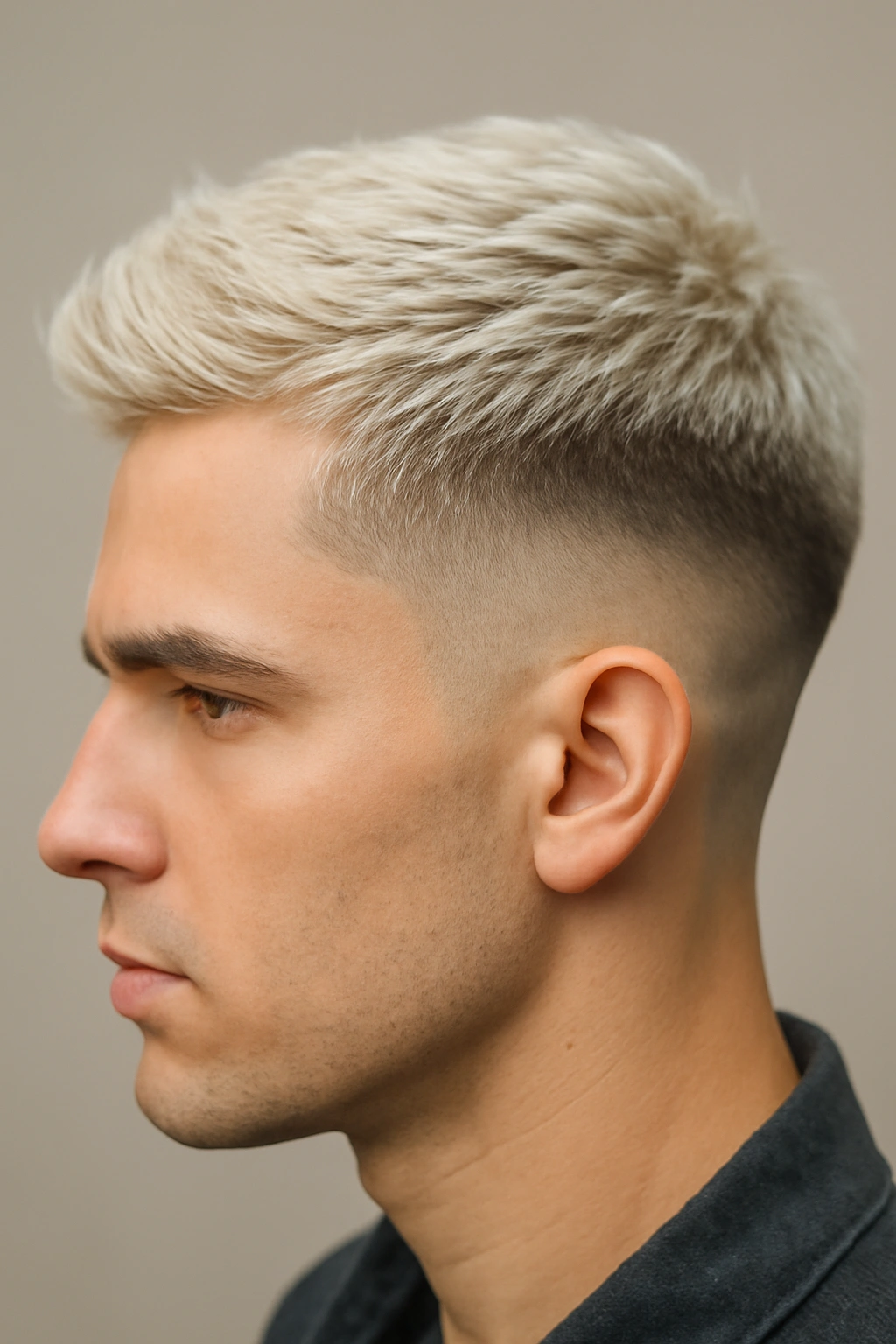
A tapered fade with platinum blonde is sophisticated, modern, and surprisingly versatile. A tapered fade means the sides and back gradually shorten — unlike an undercut where there’s a dramatic line, a fade is subtle and blended. Platinum blonde is bright, cool-toned, and luminous. This combination reads as polished and intentional, walking the line between edgy and elegant.
The Fade Explained Simply
A fade is all about the gradation. Your stylist uses different clipper lengths to create a smooth transition from longer to shorter. Typically, you might have an inch or more of length on top that gradually fades to quarter-inch or shorter on the sides and back. The fade can be tight and sharp, or loose and blended depending on your preference. It’s less dramatic than an undercut but creates visual interest and texture through the gradation.
Platinum Blonde as a Color Choice
Platinum blonde requires commitment. It’s a bleached blonde — typically 10-11 level on the color scale, meaning very pale. To achieve it, your stylist will likely need to bleach your hair multiple times if you’re starting from a darker base, which can cause damage if not done carefully. Once you have platinum blonde hair, maintaining it requires purple or violet-based shampoo and toning treatments every 2-3 weeks to prevent brassiness.
Why This Combo Works Across Skin Tones
Platinum blonde looks cool, so it naturally complements cool undertones. But interestingly, it can also look striking on warm undertones if you have the right hair texture and the color is the right intensity. The fade prevents the platinum from looking too severe or icy — the varied lengths and textures soften the coolness of the color.
The Maintenance Reality
- Platinum blonde requires a toning appointment every 2-3 weeks without fail
- The fade needs a trim every 2-3 weeks to maintain the shape and gradation
- Bleached hair requires protein-rich treatments and deep conditioning regularly to maintain health
- This combo is genuinely high-maintenance, so commit only if you’re willing to visit your stylist regularly
8. Messy Crop with Ash Brown
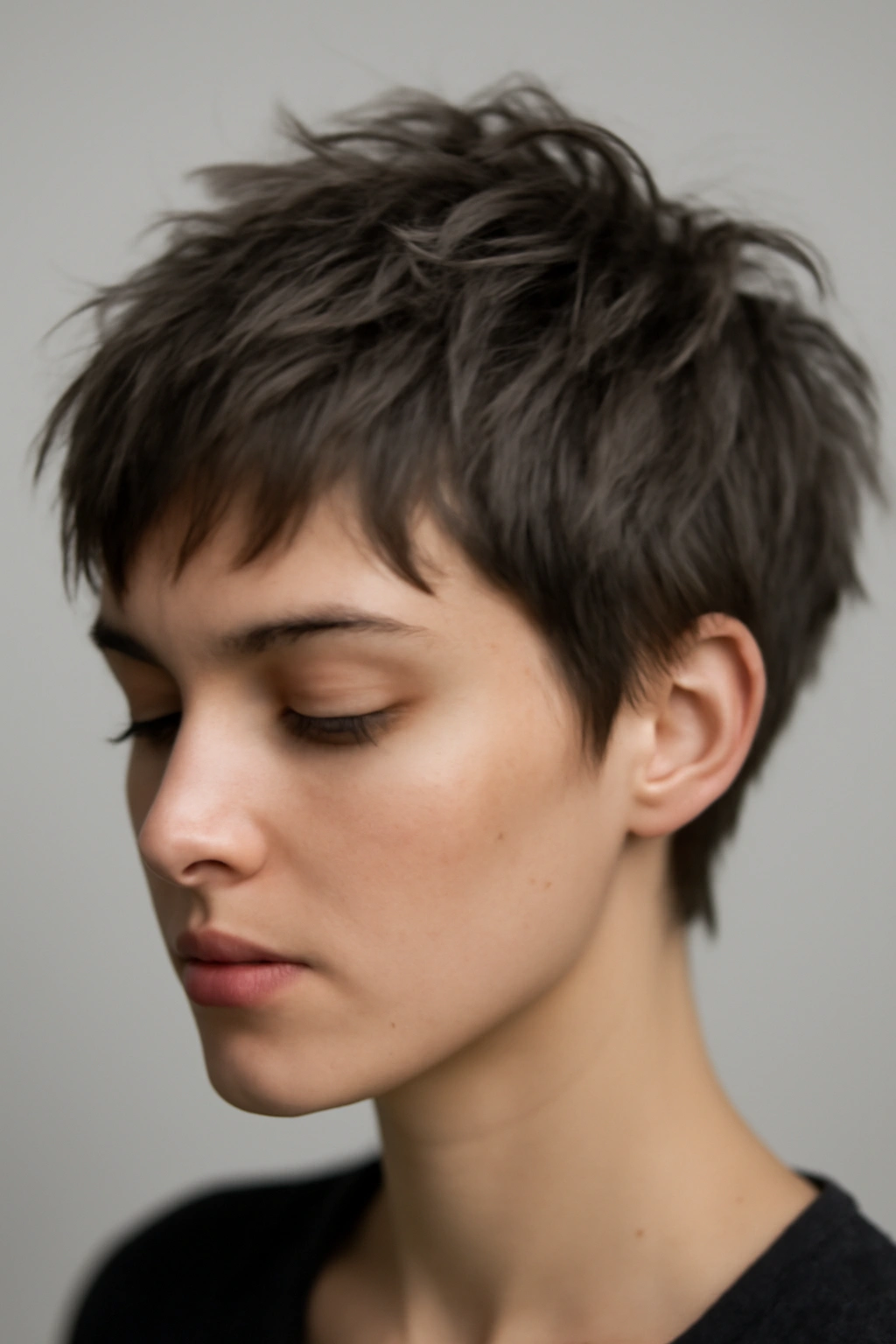
A messy crop with ash brown is understated sophistication. A crop is short all over — typically an inch or two in length throughout, with slightly more length on top for texture. Messy implies intentional tousling and styling. Ash brown is cool-toned, neutral, and flattering on most complexions. This combination reads as effortless and modern without shouting for attention.
The Appeal of Seeming Effortless
The beauty of this pairing is that it looks like you just woke up and ran your fingers through your hair, even though there’s usually some styling involved. The messy crop’s short length means you can achieve that tousled texture relatively easily with your fingers and a texture spray. The ash brown’s neutral tone means the style doesn’t rely on color to make an impact — the impact comes from the cut’s shape and texture.
Ash Brown Across Different Skin Tones
Ash brown has cool undertones, so it complements cool undertones best. However, it can also look beautiful on warm undertones if the shade is rich enough. The difference is subtle but real — a warmer skin tone might choose a slightly warmer ash brown with just a hint of caramel, while a cooler skin tone could go with a true, cool ash brown.
The Crop Cut Details
A messy crop isn’t just short hair everywhere. Your stylist will likely add texture through point-cutting or texturizing shears. There might be slightly more length on top and at the front to frame your face. Some stylists will add a very subtle undercut to the sides for definition. The key is creating texture that allows for that intentionally messy styling without the cut looking unintentional or poorly done.
Styling and Maintenance
- A messy crop can be air-dried and still look intentional, making it genuinely low-maintenance on styling
- Trims every 4-6 weeks keep the shape defined and the texture intentional
- Ash brown typically requires touch-ups every 6-8 weeks, but the cool tone means regrowth usually blends relatively well
- A light texture spray or sea salt spray helps enhance the messy quality when you want extra texture
9. Geometric Cut with Rose Gold
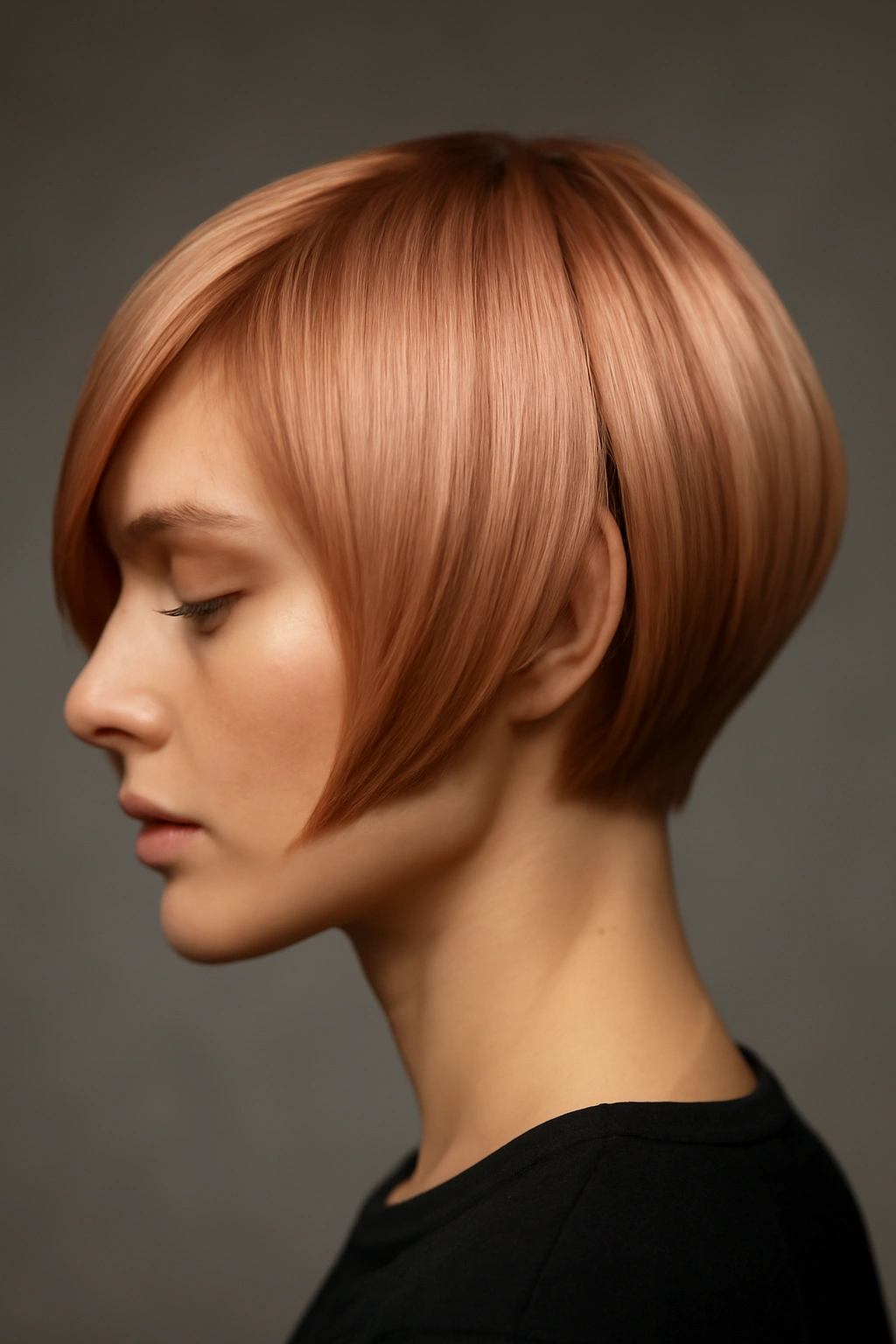
A geometric cut with rose gold is artistic and undeniably eye-catching. A geometric cut means precise, angular lines — sharp edges, often with asymmetry (shorter on one side, longer on the other, or angled in a specific way). Rose gold is warm-toned, peachy, and luminous — it’s the color equivalent of luxury and soft femininity. This pairing is bold and modern without reading as harsh.
The Art of a Geometric Cut
Geometric cuts are more architectural than other short cuts. Your stylist is literally creating angles and lines rather than working with organic texture and movement. This requires real skill and precision — even a quarter-inch off throws off the whole line. Geometric cuts might include elements like one side being significantly shorter, one side being longer and sweeping, sharp angles at the cheekbones, or precise lines at the back. They’re statement pieces.
Rose Gold as a Bridge Between Blonde and Red
Rose gold sits in an interesting space — it’s warm like red or copper, but it has blonde undertones that make it feel lighter and more wearable than pure red. It catches light beautifully, creating dimension and luminosity. Rose gold reads as romantic and fashionable without being quite as bold as true red or copper. On a geometric cut, rose gold adds visual softness to the cut’s angularity.
Why This Combination Demands Skill
Both geometric cuts and rose gold color require a skilled stylist. A geometric cut needs precision and architectural understanding. Rose gold requires understanding color theory and your individual skin tone. You’re not going to get this combo right at a budget salon — you need someone who specializes in this type of work and takes time with consultations.
Maintenance That Requires Commitment
- Geometric cuts need trims every 3-4 weeks because even slight growth changes the angles and the lines start looking sloppy
- Rose gold fades relatively quickly, especially on lightened hair, so plan for touch-ups every 4-6 weeks
- This is a high-maintenance combo in terms of both cut and color
10. Wet-Look Waves with Jet Black
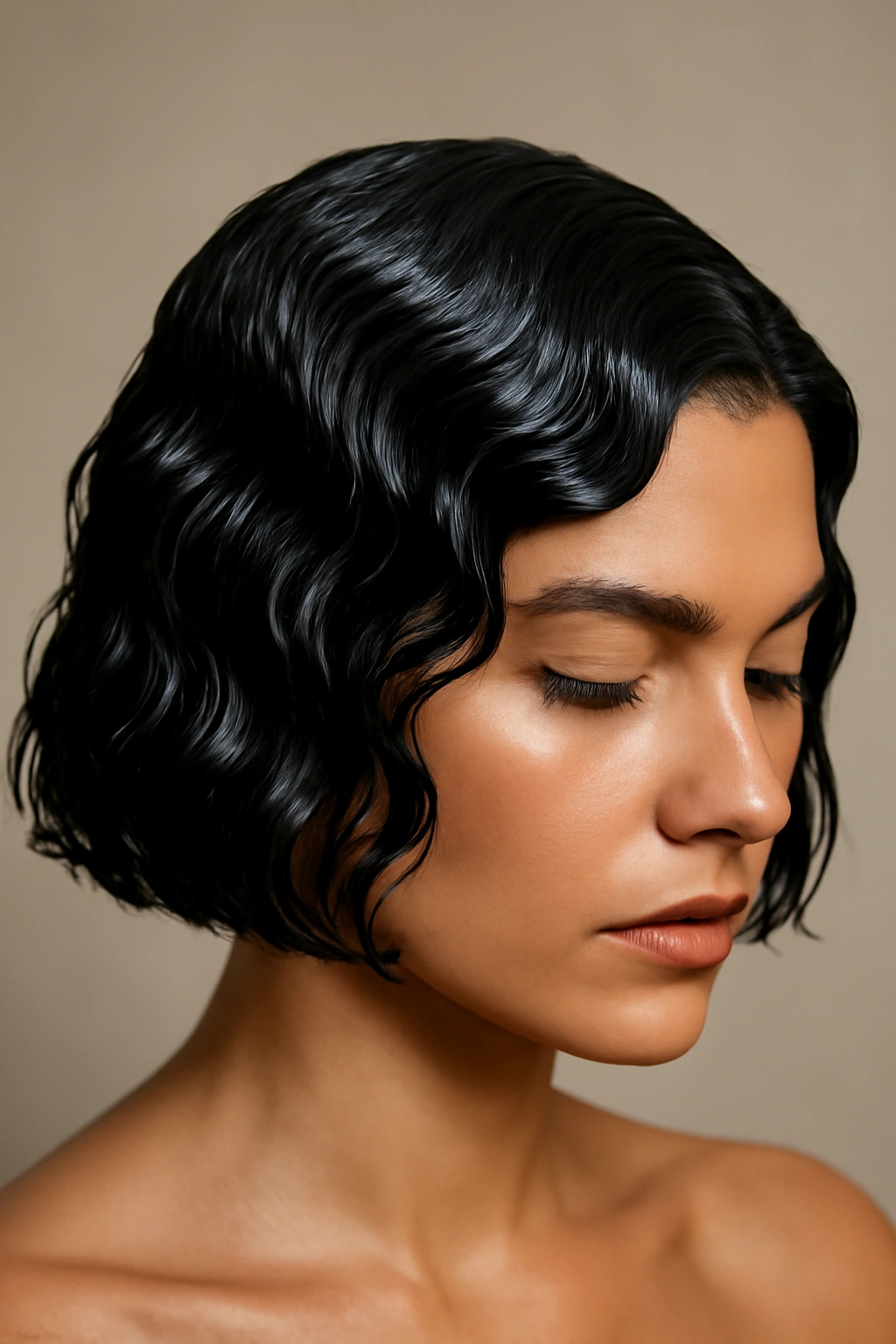
Wet-look waves with jet black is sultry and dramatic. Wet-look is a styling technique that creates the appearance of slicked-back or wet hair, often with deliberate wave patterns throughout. Jet black is true black with no brown undertones. Together, they create a look that’s bold, glamorous, and undeniably striking.
The Wet-Look Technique
Wet-look isn’t actually wet — it’s created with pomade, gel, or slicked styling products that create shine and hold wave patterns in place. The technique works beautifully on short hair because you need structure to hold a wave pattern, and short hair can be styled tightly enough to maintain the look. Some stylists create actual waves through braiding or setting while wet. Others style waves using product and blow-drying techniques.
Why Jet Black Amplifies Wet-Look
Jet black is shiny and reflective, so when you add a wet-look styling technique with product that adds shine, the effect is amplified. You get maximum glamour and visual drama from the combination of the reflective color and the shiny styling products. This combo reads as high-fashion and intentionally bold.
The Cut Requirements
Wet-look waves work on multiple short cuts. You could have a pixie, a crop, a bob, or even a textured shag. The cut itself isn’t the focal point — the styling is. But you need enough length and structure to hold the wave pattern. A full pixie with just a little texture on top might not hold waves as well as a longer pixie or a short bob.
Realistic Styling Demands
- Wet-look requires product every single time you style, so this isn’t a wash-and-go situation
- You need to blow-dry and manipulate the hair into wave patterns, which takes time
- Product buildup happens quickly with this technique, so clarifying shampoos once weekly are essential
- Jet black fades slowly but does fade over time, so touch-ups every 6-8 weeks maintain the true black
- This combo suits someone who enjoys styling and considers it part of their routine, not a chore
11. Disconnected Undercut with Icy Blonde
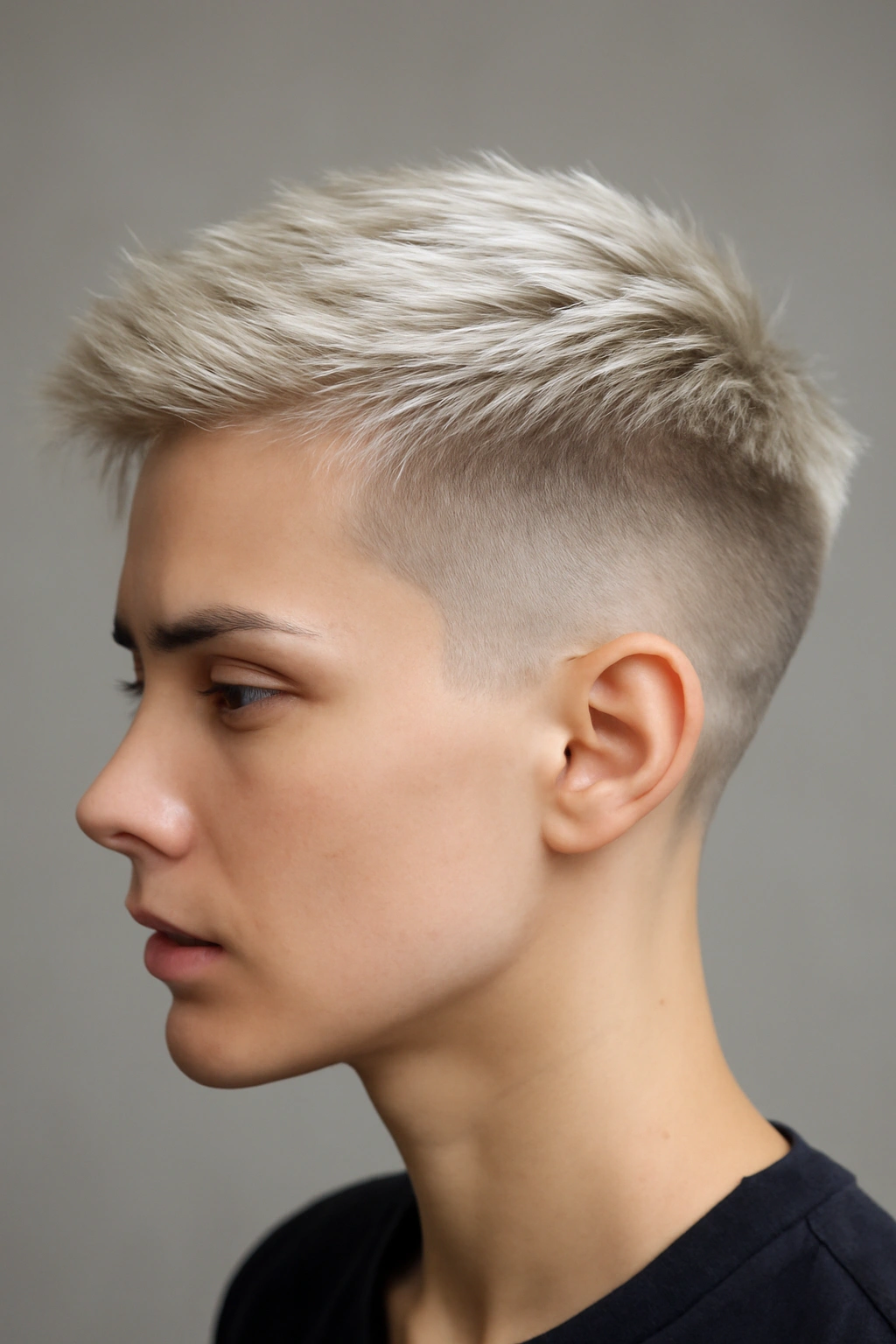
A disconnected undercut with icy blonde is futuristic and avant-garde. Disconnected means there’s a very clear, sharp line between the short sides and the longer top — they’re not faded together, they’re separate. Icy blonde is a pale, cool-toned blonde with almost white or silver undertones. This combination is for someone who wants to make a statement and isn’t concerned with fitting in.
Understanding “Disconnected”
A disconnected undercut creates a visual split between two different lengths. You might have a quarter-inch fade on the sides and back, then an immediate jump to two inches or longer on top. That sharp line is the disconnect. It’s more dramatic than a tapered fade because there’s no blending — just a clear boundary. Some people have a partial disconnect on just one side, or a disconnect at the back with faded sides.
Icy Blonde as an Extreme Choice
Icy blonde is even cooler and paler than platinum blonde. It’s the blonde equivalent of silver or white, with barely any yellow or warmth. Achieving icy blonde typically requires multiple bleaching sessions if you’re starting from a dark base, and it demands incredible toning maintenance. Icy blonde looks stunning on cool undertones and can look striking on contrast (if you have warm skin). On cool undertones, it’s practically ethereal.
The Visual Impact
This combo is unapologetically modern and artistic. You’re not trying to look natural or traditional. You’re creating a visual statement. The disconnected undercut’s sharp line combined with icy blonde’s pale coolness creates an image that reads as intentional, artistic, and undeniably fashion-forward. It’s a look that will get compliments and questions.
The Genuine Maintenance Burden
- Icy blonde requires toning every 1-2 weeks to maintain that pale coolness
- The disconnected undercut needs precise trims every 2 weeks to maintain the sharp line
- Bleached hair requires rigorous care and moisture treatments
- This is genuinely high-maintenance and not for someone who prefers low-effort styling
Real talk: This combo is beautiful but demanding. If you have a busy lifestyle, travel frequently, or prefer low-maintenance hair, this probably isn’t for you. But if you live for bold style choices and are willing to put in the work, this is absolutely stunning.
12. Textured Fringe with Mahogany
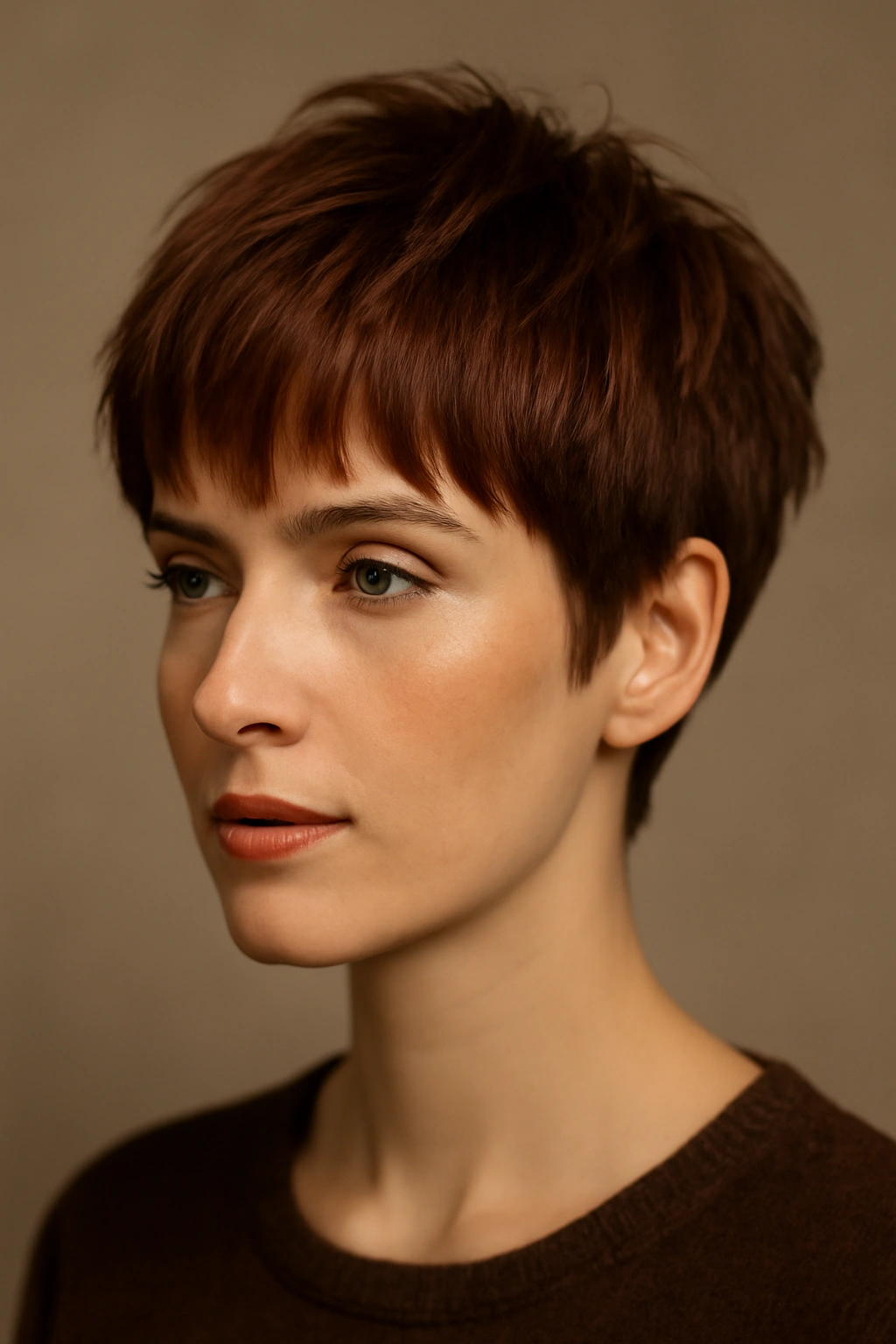
A textured fringe with mahogany is warm, rich, and romantic. A textured fringe means bangs that aren’t blunt, but rather choppy, layered, and piece-y — soft rather than graphic. Mahogany is a deep, warm, reddish-brown that’s rich and dimensional without being bright red. This combination feels sophisticated and intentional without reading as edgy or severe.
The Fringe Versus Bang Distinction
Fringes and bangs are sometimes used interchangeably, but there’s a distinction. Bangs are typically blunt and graphic. Fringes are softer, more textured, and more blended into the rest of your hair. A textured fringe sits somewhere between traditional bangs and face-framing layers. It frames your face softly without creating a harsh line.
Mahogany as a Warm Power Color
Mahogany is arguably one of the most flattering colors available because it’s warm, dimensional, and works across most skin tones. It’s deeper than copper red but warmer than pure brown. Mahogany typically contains brown, red, and gold undertones in different proportions depending on the specific shade your stylist chooses. On short hair, mahogany creates richness and depth without being as high-maintenance as true red.
How the Fringe Changes Your Face
A textured fringe draws attention to your eyes and brings focus to your face without the severity of blunt bangs. The choppy texture softens the line and makes it less graphic. This works beautifully with mahogany because the color’s warmth and dimension enhance the softness of the fringe’s texture.
Practical Styling and Maintenance
- A textured fringe needs trims every 5-6 weeks to maintain the texture and prevent it from growing into your eyes
- Mahogany color typically requires touch-ups every 6-8 weeks to maintain vibrancy
- The fringe can be styled multiple ways — swept to the side, down and tousled, or more defined and piece-y
- This combo is relatively low-maintenance compared to some of the others on this list
13. Cropped Curls with Caramel Highlights
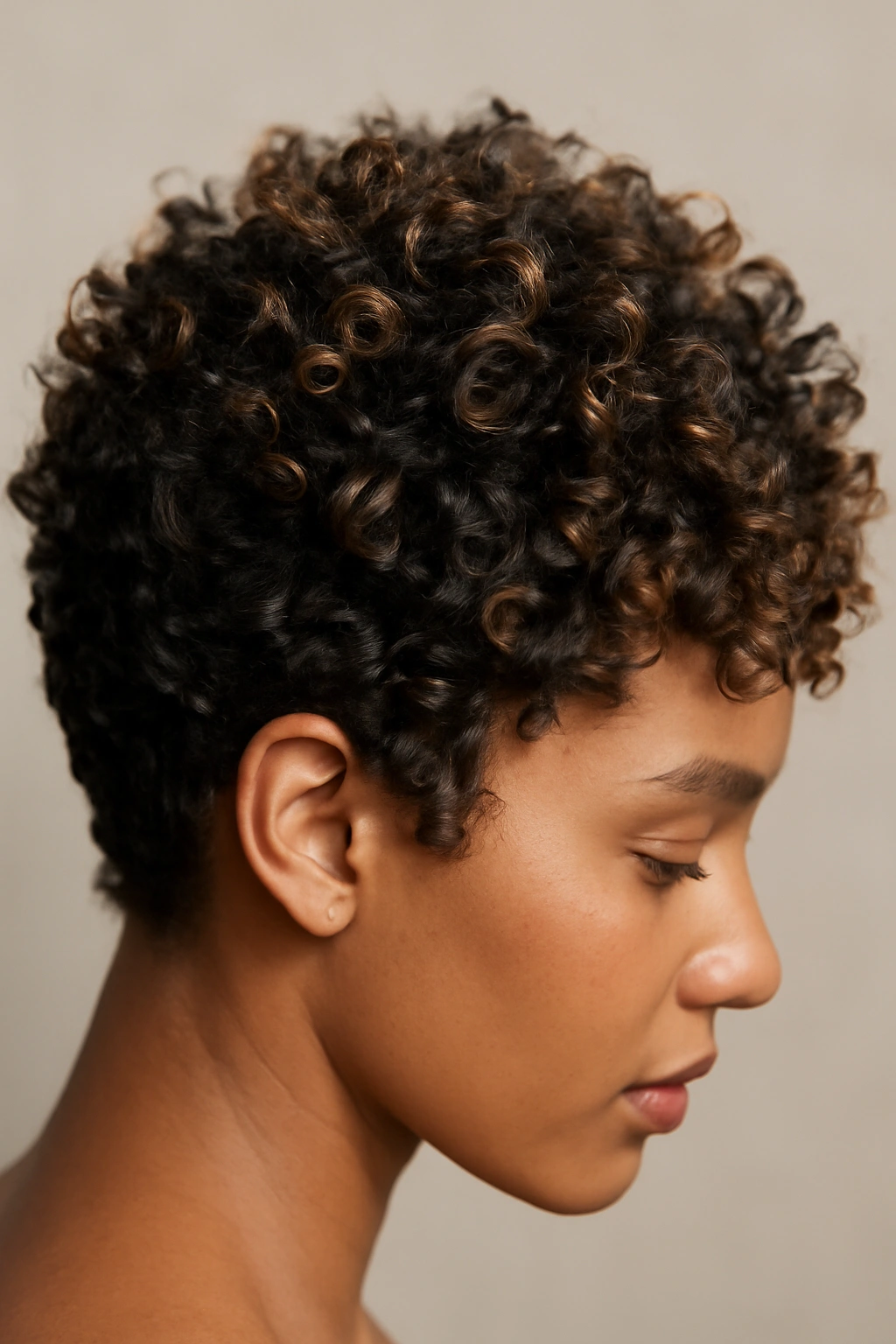
Cropped curls with caramel highlights celebrates natural texture and creates effortless dimension. Cropped curls means your natural curl pattern is kept short and close to your head, typically one to three inches throughout. Caramel highlights are lighter pieces strategically placed throughout your hair to add dimension and warmth. This combination is all about embracing texture and making it beautiful.
Why This Works for Curly Hair
Short curly hair has inherent volume and movement. A crop amplifies this because there’s less weight pulling the curls down. The curls spring up and create shape and texture naturally. Caramel highlights add visual dimension to curls because the lighter pieces catch light differently than the base color, creating a multi-tonal effect that reads as intentional and expensive.
Caramel Highlights on Curly Hair
Caramel typically means honey, golden, or light brown tones placed throughout the hair. On curly hair, highlights create pockets of brightness that make the curl pattern more visible and dimensional. Unlike straight hair where highlights create a flat stripe of color, curly hair wraps around the color, creating more three-dimensional effect.
The Cropped Curls Cut
A cropped curls cut needs to be specifically tailored to your curl pattern. Your stylist should cut your hair dry while it’s in its natural curl pattern, not wet, so they can see exactly how it falls. Some curl patterns need blunt cuts to prevent crunchiness, while others benefit from texturizing. The goal is a cut that allows your curls to spring up and maintain volume and shape.
The Maintenance and Styling Reality
- Cropped curls need regular trims every 4-6 weeks because curls grow out and can start looking shapeless
- Caramel highlights need touch-ups every 6-8 weeks to maintain brightness as they fade
- Curly hair requires a specific care routine — clarifying shampoos, deep conditioning, and curl-defining products
- This combo is lower-maintenance on styling than many short styles because you’re working with your natural texture rather than fighting it
- The beauty is that this cut and color combo looks good even when you’re not actively styling it
14. Side-Swept Pixie with Rooted Blonde
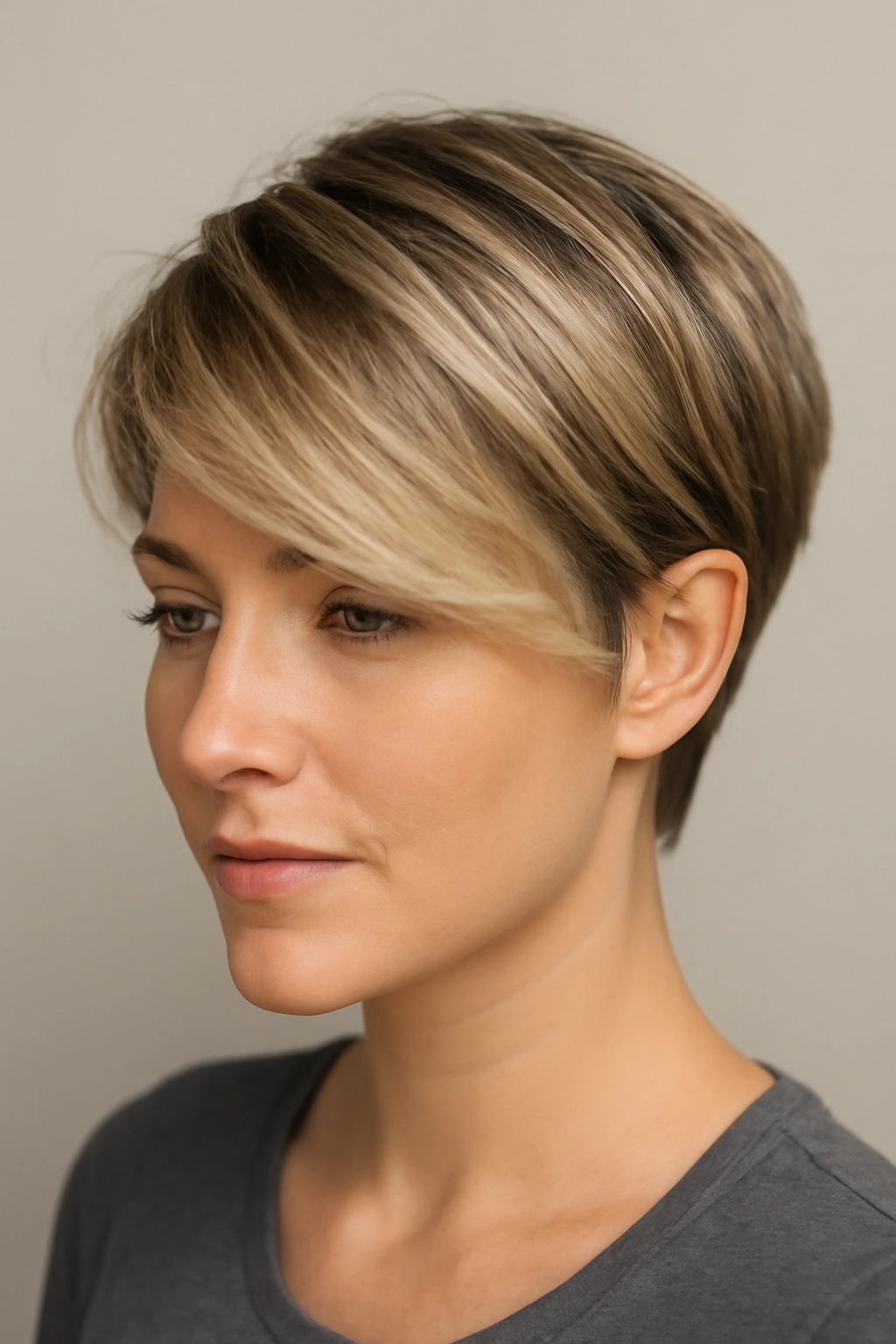
A side-swept pixie with rooted blonde is playful, romantic, and undeniably trendy. Side-swept means one side is longer and sweeps across, while the other side is cropped short. A pixie body keeps things short everywhere else. Rooted blonde means darker roots (usually your natural color or a shade close to it) that blend into lighter blonde throughout the lengths. This combination feels youthful and current without reading as severe or architectural.
The Side-Swept Pixie Aesthetic
A side-swept pixie is less severe than a straight pixie because the longer side softens the overall silhouette. The longer side often sweeps across to hide or partially cover the shorter side, creating an asymmetrical, modern look. This works beautifully for people who want short hair but aren’t ready to commit to uniform short length all over.
Rooted Blonde as a Low-Maintenance Color Strategy
Rooted blonde (also called grown-out blonde or dimensional blonde with dark roots) is genius because it requires less frequent touch-ups than full blonde. Your natural darker roots show and actually become part of the design. As your roots grow, they blend naturally with the lighter blonde lengths. You can typically go 8-10 weeks between color appointments instead of the 4-6 weeks full blonde requires. The darker roots also protect the blonde lengths from looking brassy or damaged.
Why This Combo Reads as Current
Fashion and trend cycles mean that what reads as trendy shifts. Right now, the combination of side-swept cuts and rooted blonde reads as current and intentional. The pairing suggests you’re engaged with fashion but not overly serious about it.
Styling Needs and Maintenance
- The longer side of a side-swept pixie can be styled in multiple ways — swept straight across, tousled, or even pinned back
- Trim every 4-6 weeks to maintain the side-sweep shape and prevent the longer side from looking overgrown
- Rooted blonde touch-ups every 8-10 weeks are more manageable than full blonde maintenance
- This combo allows for relatively casual daily styling — you can air-dry or style depending on your mood
15. Modern Mullet with Two-Tone Color
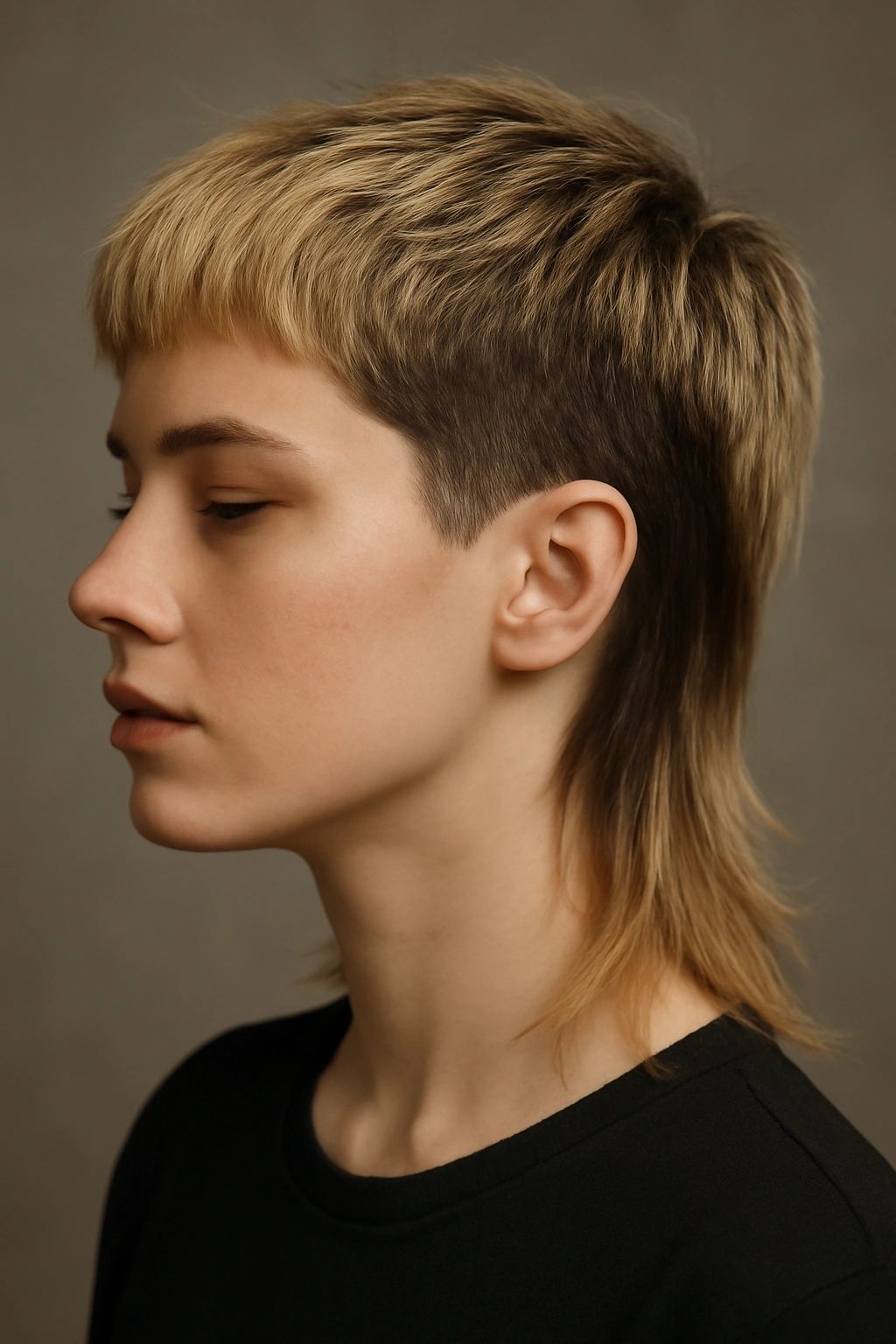
A modern mullet with two-tone color is bold, fashion-forward, and distinctly contemporary. A modern mullet (nothing like the 1980s version) means business in the front with a longer, playful back. Two-tone color typically means contrasting colors in different sections — perhaps dark underneath and light on top, or completely different colors on different sides. This combination is for someone who’s confident, stylish, and wants their hair to be a statement.
The Modern Mullet Explained
A modern mullet has short, tapered sides and back (or a cropped front section), with significantly longer length in the back. Some versions have a shorter front and longer back. Others have cropped sides with length on top and in back. The key is that there’s clear distinction between the different sections. It’s architectural and intentional. The modern mullet is dramatically different from the 1980s mullet — it’s refined, precise, and fashion-forward rather than novelty.
Two-Tone Color Strategies
Two-tone can mean different things. You might have dark roots with a lighter, contrasting blonde or silver on top. You might have one color on the sides and a completely different color in back. You might have one side a different color from the other. Two-tone is bold because the contrast makes it impossible to ignore. The color choice becomes as much a statement as the cut.
Why This Combo Demands Confidence
This look is not subtle. You’re making a deliberate statement with both the cut and the color. The modern mullet says you have your own style sensibility. Two-tone color amplifies that statement. This combination reads as artistic, fashionable, and intentional — but only if you’re genuinely confident in the choice. If you’re wavering or unsure, this combo will magnify your uncertainty.
The Commitment Required
- A modern mullet needs precise trims every 3-4 weeks to maintain the distinction between different sections
- Two-tone color requires touch-ups every 4-6 weeks depending on the colors chosen
- If you’re using contrasting colors, the color maintenance is high because both colors show wear
- This is a genuinely high-maintenance combo in terms of both cut and color
Worth knowing: This look will generate strong reactions. Some people will love it. Some won’t understand it. If you’re doing this, make sure you’re doing it for yourself, not to get reactions from others.
Final Thoughts
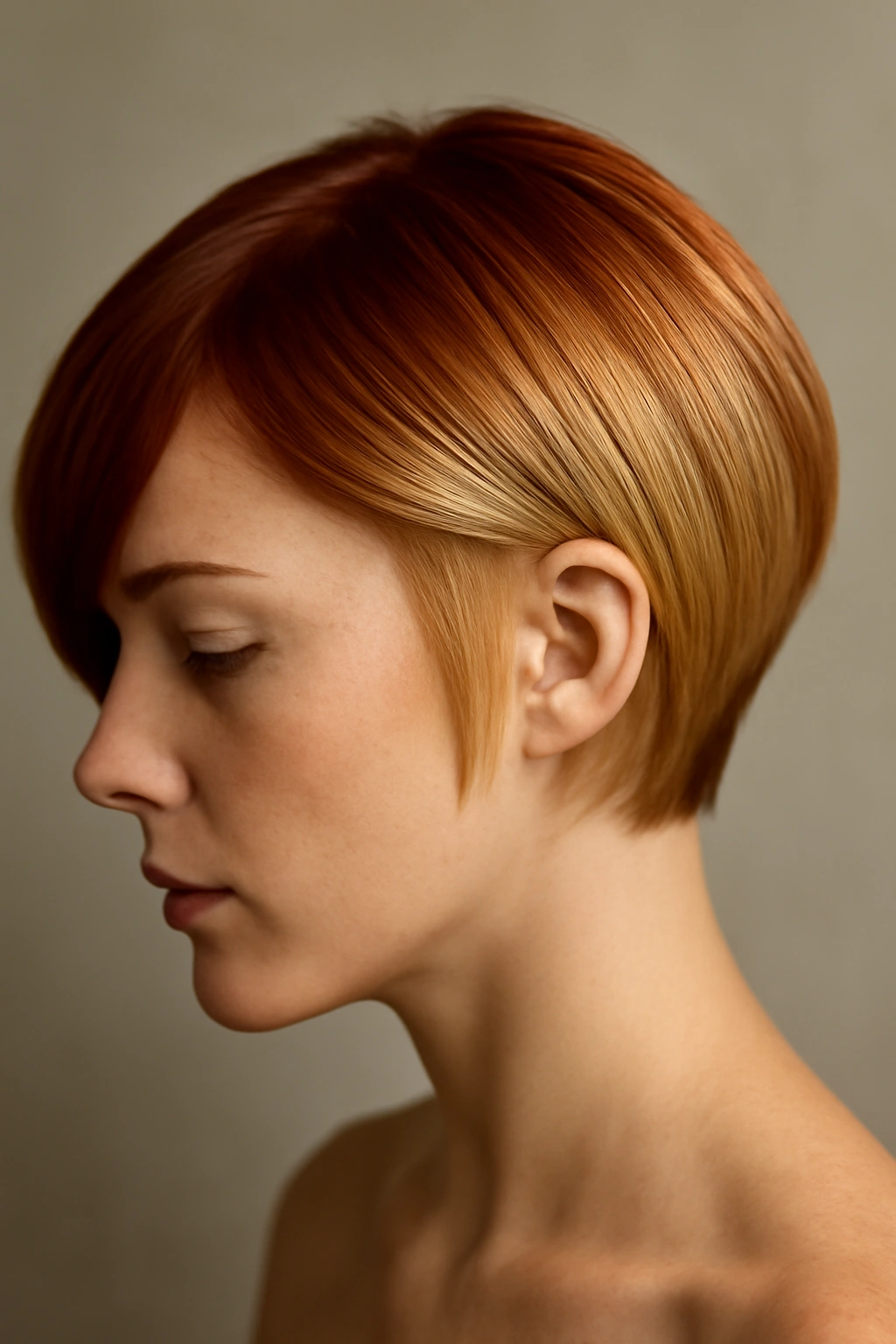
The most impactful short hair looks come from thoughtful combinations of cut and color that work together rather than against each other. When you’re considering a short haircut, take time to think about the color simultaneously — they’re not separate decisions, they’re partners. Your complexion, your lifestyle, your styling commitment, and your personal aesthetic all matter when choosing which combo resonates with you.
The beauty of short hair is that you can be more experimental because if you’re unhappy with a color, it grows out faster. If you don’t love a cut, it grows into something different relatively quickly. Use that to your advantage. If you’ve been curious about one of these combinations, talk to your stylist about it. Bring photos. Discuss your maintenance tolerance honestly. And then commit fully to whatever you choose — there’s nothing more beautiful than someone who owns their style completely, whatever it is.
