



Finding the right short haircut when you’re navigating fine hair can feel like solving a puzzle. You want something that makes you look polished and intentional, not wispy or sparse. You need a cut that actually works with your hair texture instead of fighting against it. And frankly, you probably want something you can manage without spending an hour styling every morning.
The challenge with fine hair isn’t that it can’t pull off short styles—it absolutely can. The trick is choosing cuts that create the illusion of density and fullness while working within the reality of thinner strands. A cut that looks gorgeous on thick hair might overwhelm delicate features or reveal too much scalp. But when you get it right, a short haircut can be a total confidence boost. It can make your face look fresher, draw attention to your eyes, and eliminate the weight that sometimes drags down fine hair.
Here’s what makes a short haircut truly work for fine hair: strategic layering that builds texture without creating gaps, the right length and density distribution, and a style you can actually recreate between salon visits. The ten cuts below have been chosen specifically for how they work with fine hair. Each one offers something different, whether you want softness, structure, a modern edge, or effortless elegance. Whichever speaks to you, bring these ideas to your stylist and be specific about your hair texture—that conversation is everything.
1. The Textured Pixie with Longer Top
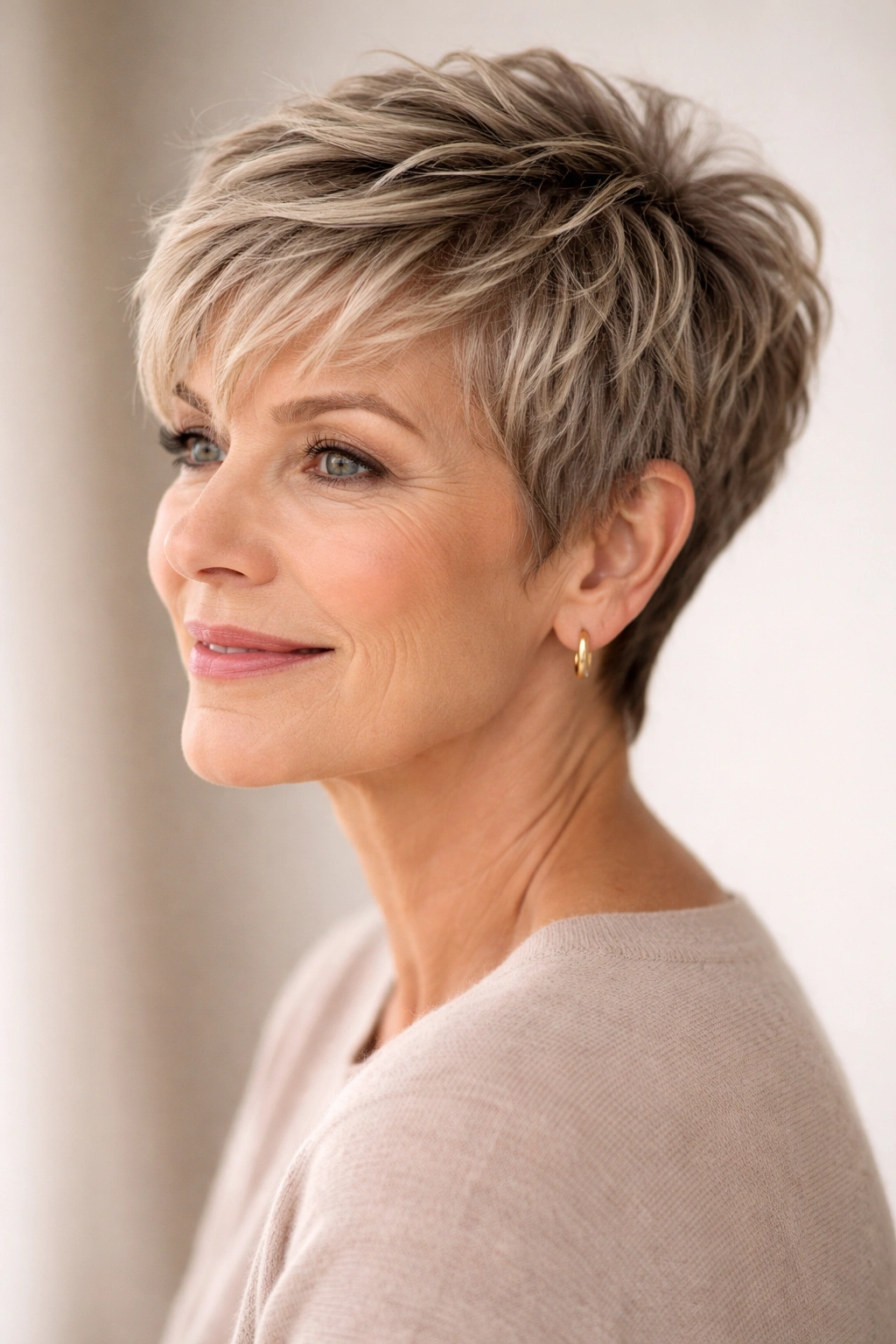
A textured pixie gives fine hair the structure it needs while the layering creates the appearance of fullness. This isn’t a severe, super-short pixie that exposes the scalp—instead, the top stays longer (about 2-3 inches) while the sides and back are tapered close. The longer pieces on top allow you to style the hair forward, sweep it back, or even create a textured mess-look that hides any thinness.
Why This Works for Fine Hair
The key to making a textured pixie work with fine strands is that the layers are cut to work with your natural wave or curl pattern, not against it. When your stylist creates layers at slightly different angles, each layer catches light differently, which creates dimension and the visual impression of more hair. The tapered sides and back mean less bulk at the sides of your face, which actually looks fresher and more proportionate on older faces. You’re not fighting gravity pulling thin hair down either—the shorter length means the hair has more natural lift.
What to Ask Your Stylist
- Textured, choppy layers throughout the top section (not blunt)
- Tapered fade on the sides and back (fades gradually, not a hard line)
- Keep the top section between 2 to 3 inches for manageability
- Ask them to cut in texture at angles, not straight across (this is crucial for fine hair)
- Request a longer piece in the front if you like having something to style forward
Pro tip: Style this cut with a texturizing spray or matte clay product—the grit gives fine hair something to grip, making even sparse sections look intentionally styled rather than thin.
2. The Soft, Chin-Length Bob

A chin-length bob is a classic for a reason, and it’s particularly flattering on older women with fine hair because it frames the face while staying short enough that weight doesn’t pull the hair flat. This isn’t a blunt, severe bob—think soft layers and subtle texture that create movement and the impression of more volume. The length sits right around the jawline, which is one of the most flattering lengths for mature faces.
Why This Works for Fine Hair
A chin-length bob stays short enough that your hair can maintain natural volume at the roots. It’s long enough to show your hair has substance, but not so long that gravity turns fine strands into a limp, flat situation. The frame created by a bob around your face is incredibly flattering for reducing the appearance of lines and bringing focus to your eyes. Because the cut is relatively close to the scalp, even if your hair is sparse, it reads as intentional rather than thin.
Key Styling and Maintenance Details
- Requires a trim every 4-6 weeks to maintain the shape (fine hair shows grow-out quickly)
- Works beautifully with subtle waves or curls—texture is your friend
- Use a lightweight volumizing mousse applied at the roots while hair is still damp
- A round brush blow-dry creates lift and movement
- Avoid heavy serums or oils that weigh fine hair down
Worth knowing: A soft bob with long layers works better for fine hair than a blunt, solid bob. Ask your stylist to include subtle choppy layers that create texture and movement, especially around the face.
3. The Layered Shag
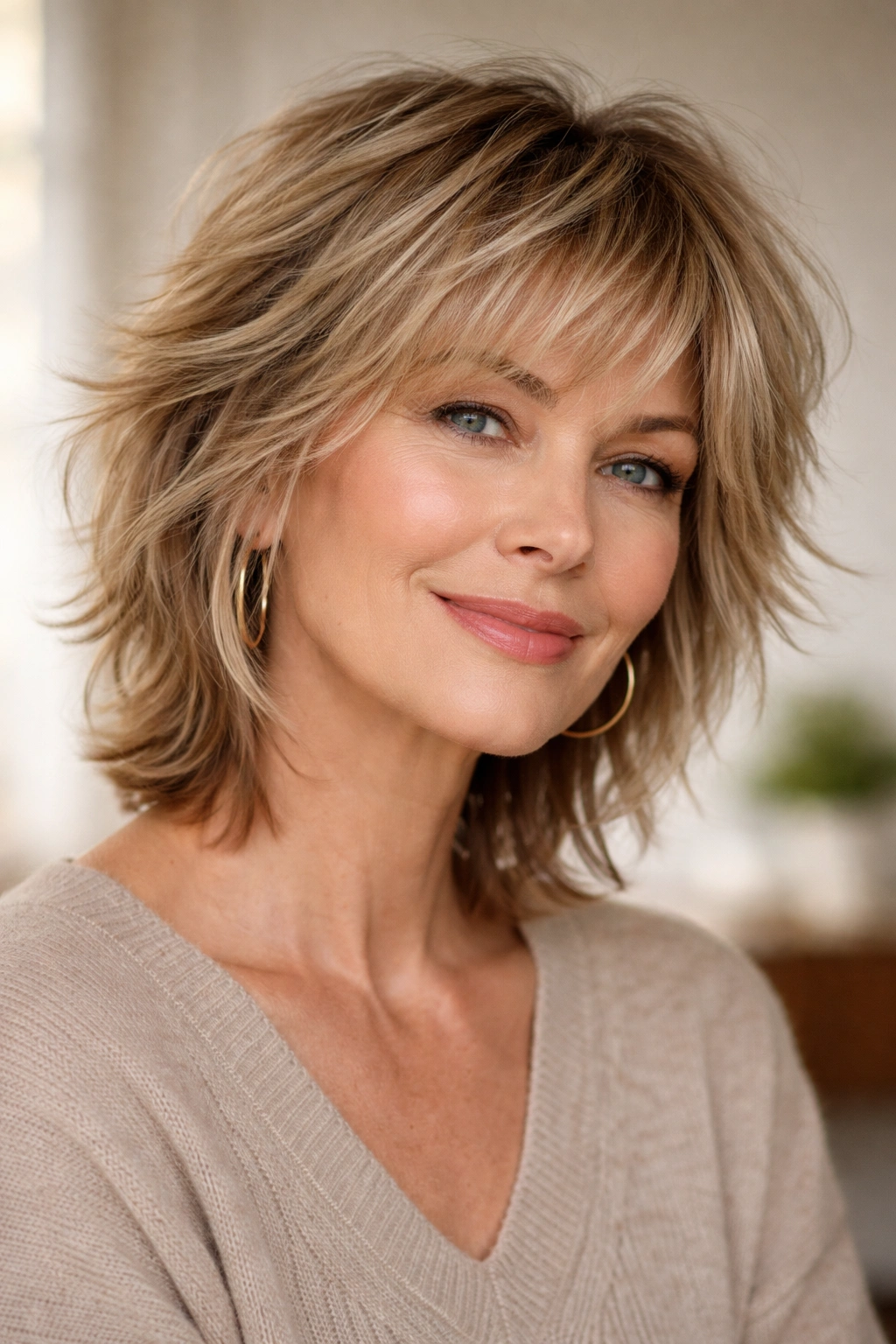
Don’t let anyone convince you that shags are just for young people—a modern, well-executed shag is absolutely stunning on older women with fine hair. Unlike the heavily textured shags of the past, today’s version is more refined and intentional. The layers are strategic and work together to create a cohesive shape while still giving you that effortlessly tousled, slightly undone vibe that reads as very current.
Why This Works for Fine Hair
A shag is essentially built on layers, and when fine hair is layered correctly, it gains visual density and texture. Each layer is cut at a slightly different angle, which means each piece of hair is supported by the layers around it. This reduces the flatness problem that comes with fine hair. The choppy, textured nature of a shag also means that thinner areas are visually less noticeable—the overall look is supposed to be textured and irregular, so fine-hair challenges actually become part of the style’s aesthetic.
How to Style and Maintain a Shag
- Blow-dry with a round brush, flipping your head for root lift
- Use a texturizing spray while hair is damp to encourage movement
- Finger-comb rather than brush, which helps maintain texture and prevents breakage
- Works beautifully with some natural wave or curl
- Needs a trim every 5-6 weeks to keep the layers looking intentional
- A light sea-salt spray gives texture and grip
Pro tip: Ask your stylist to cut the layers so they’re shorter at the crown and longer toward the sides—this builds lift at the top where you need it most with fine hair.
4. The Side-Parted, Face-Framing Crop
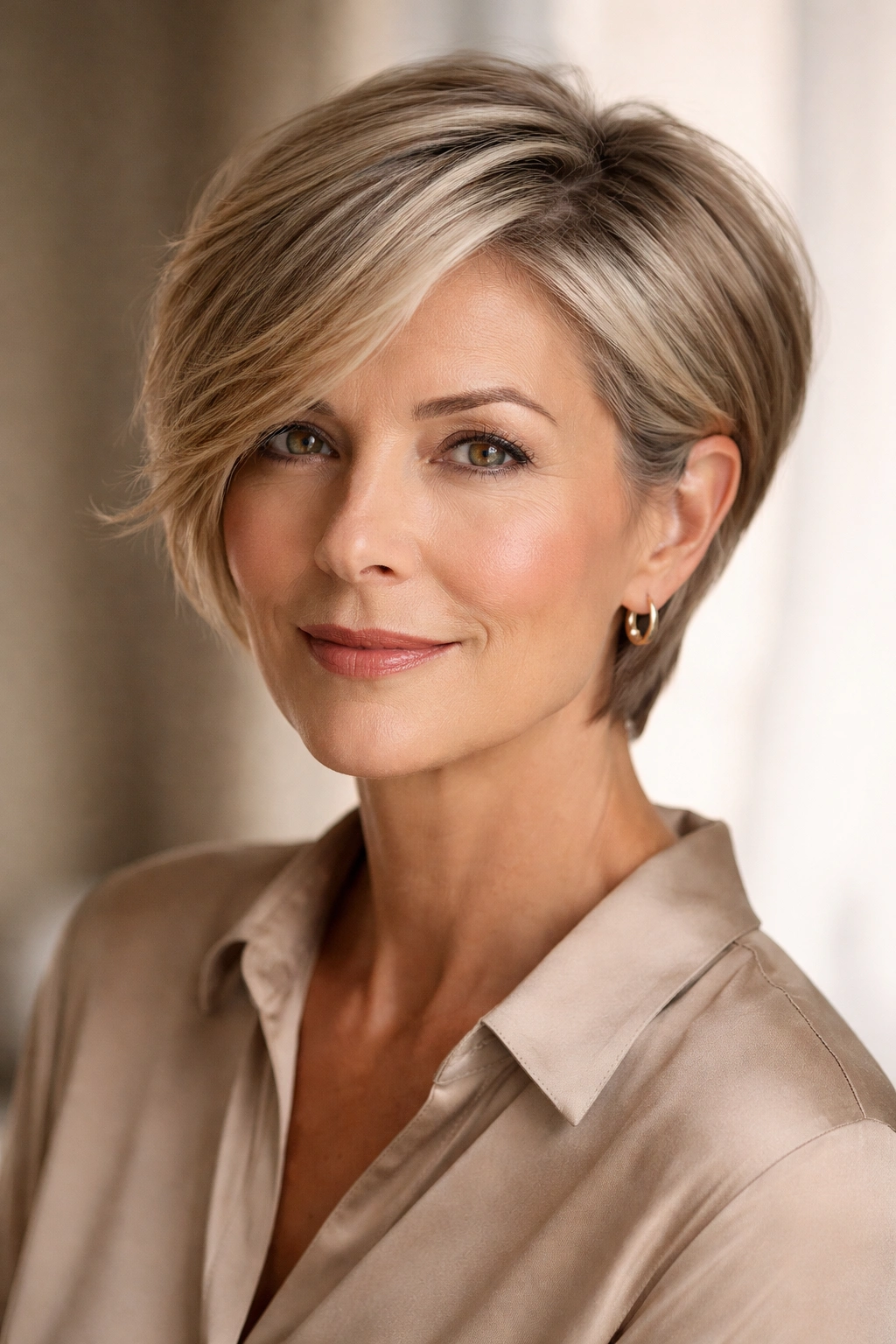
This is a short crop that’s longer and softer than a traditional pixie, usually around 2-4 inches on top with tapered sides. What makes this cut special is the side part and the longer pieces in the front that frame the face. It’s sophisticated and modern, giving you clean lines without looking too severe or masculine. The side part creates visual interest and direction, which helps fine hair look more intentional.
Why This Works for Fine Hair
The length gives you enough hair to style and direct, but it’s still short enough that fine strands don’t become weighed down. The side part is a game-changer for fine hair because it gives you an asymmetrical silhouette, which actually makes thinness less noticeable. When your hair is distributed unevenly (more on one side than the other), it reads as a style choice rather than a hair issue. The tapered sides keep things clean and modern without creating bulk where you don’t want it.
Styling Tips for This Look
- Blow-dry while directing hair toward your stronger side of the part
- Use a volumizing mousse applied at the roots for lift
- A light styling cream or pomade on the longer pieces creates definition
- The side part can be maintained with a bit of dry shampoo for texture
- Works especially well if you have some natural wave to work with
- Needs a trim every 4-5 weeks to maintain the shape
Worth knowing: The longer pieces in front are what make this cut work. They soften the overall look and frame your face, so ask your stylist to preserve at least 1-2 inches in the front for styling options.
5. The Choppy, Textured Asymmetrical Cut
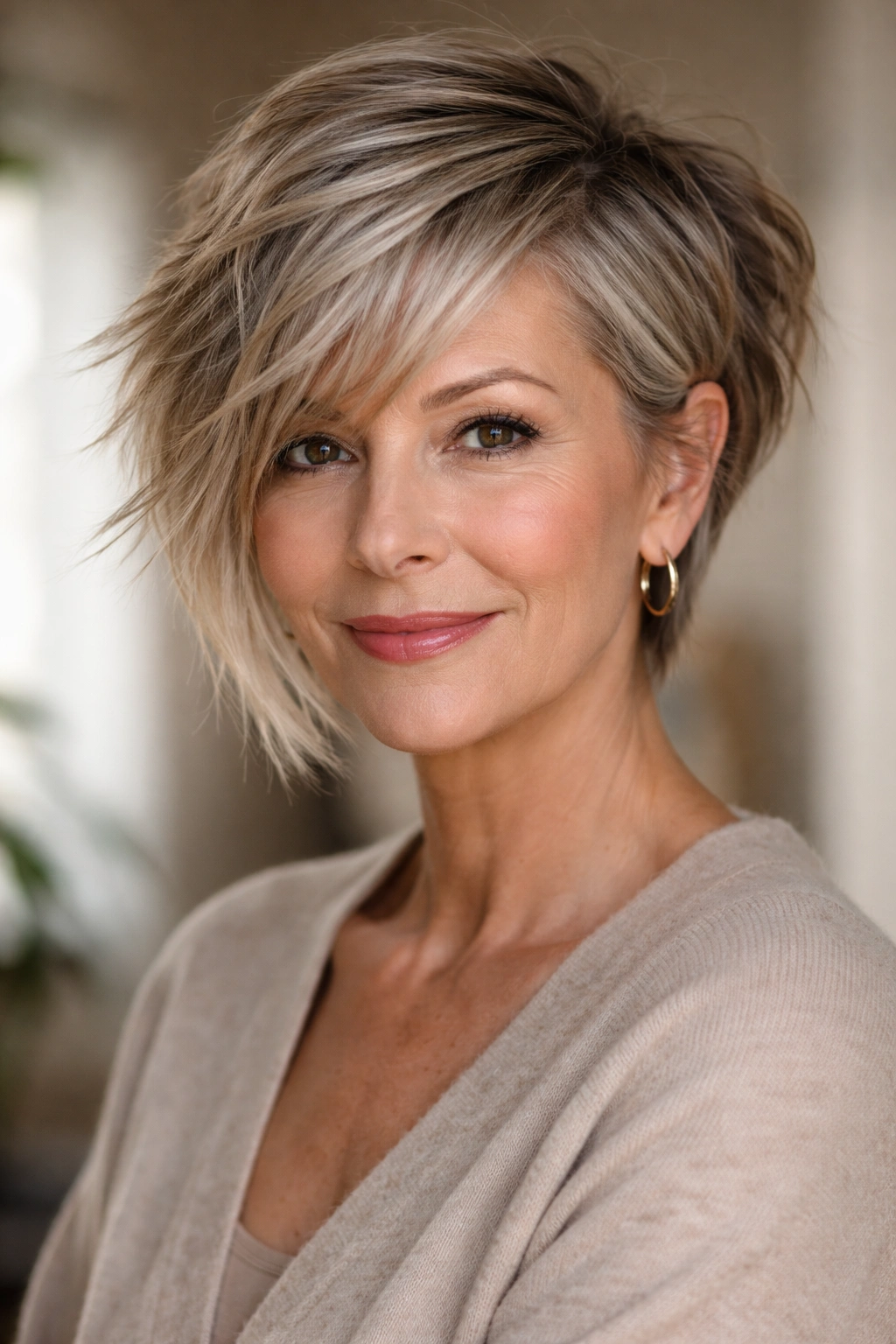
An asymmetrical cut—longer on one side and shorter on the other—is a bold choice that actually works beautifully with fine hair. The uneven length means that fine, thin areas are automatically integrated into the design. This isn’t a gimmicky haircut; it’s a genuine style that looks intentional, modern, and sophisticated. The choppy layers throughout add movement and texture that makes fine hair look fuller.
Why This Works for Fine Hair
The genius of an asymmetrical cut for fine hair is that it makes thinness invisible by design. If one side is shorter and one is longer, those differences in density aren’t a problem—they’re the point. The choppy layers mean that every piece of hair contributes to the overall silhouette, even the shorter, finer pieces. This cut celebrates texture rather than demanding density. It also creates natural movement and prevents the flat, plastered look that fine hair can get with blunt, even cuts.
How to Wear and Maintain an Asymmetrical Cut
- Blow-dry with texture and a bit of separating product
- The longer side can be swept behind your ear or left to fall
- Shorter side can be tucked behind or styled up
- A texturizing spray or dry shampoo adds grip and dimension
- Needs a trim every 5-6 weeks because the asymmetry shows growth unevenly
- Works best with some natural wave or texture that you can enhance
Pro tip: The more intentional and choppy you can make the layers, the better this cut disguises fine hair. Ask your stylist to cut in texture rather than create blunt lines.
6. The Sleek, Blunt Short Bob
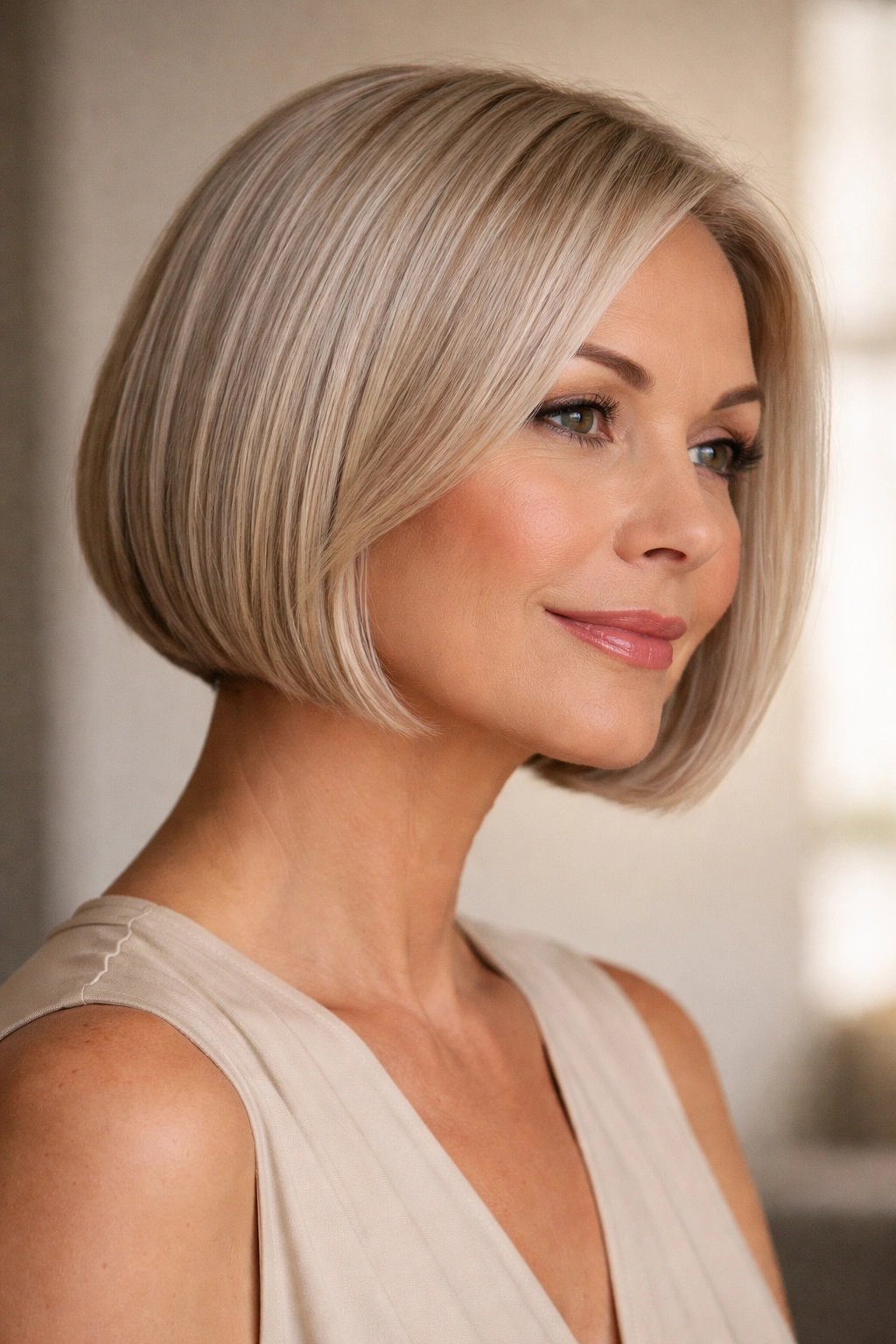
If you prefer clean lines and a more polished aesthetic, a sleek, blunt short bob might be your cut. This is shorter than a traditional chin-length bob—think 1-2 inches above the jaw. The edges are relatively clean and blunt (though not completely), and the overall look is streamlined and chic. It’s a cut that looks best with some styling effort, but the payoff is a very sophisticated, intentional appearance.
Why This Works for Fine Hair
A shorter bob means less weight pulling the hair down, so fine hair naturally has more volume and lift. The blunt edges create a clean, defined shape that looks polished even on thinner hair. The shorter length also means you’re not trying to create density over a long distance—the hair only needs to look full for a shorter span. This cut works particularly well if you have a good face shape to frame and cheekbones to show off. It’s modern, flattering, and timelessly elegant.
Styling and Maintenance Requirements
- Requires regular blow-drying (usually with a round brush for lift)
- A volumizing mousse or spray at the roots is essential
- This style shows damage more than longer hair, so keep ends healthy
- Needs a trim every 3-4 weeks to maintain the blunt shape
- A smoothing serum or lightweight styling cream defines edges
- Works beautifully with straight hair or hair you can blow-dry straight
Worth knowing: This cut requires the most maintenance of the short cuts listed here, but it’s also the most polished-looking. Only choose it if you’re willing to blow-dry regularly.
7. The Tousled, Piece-y Crop
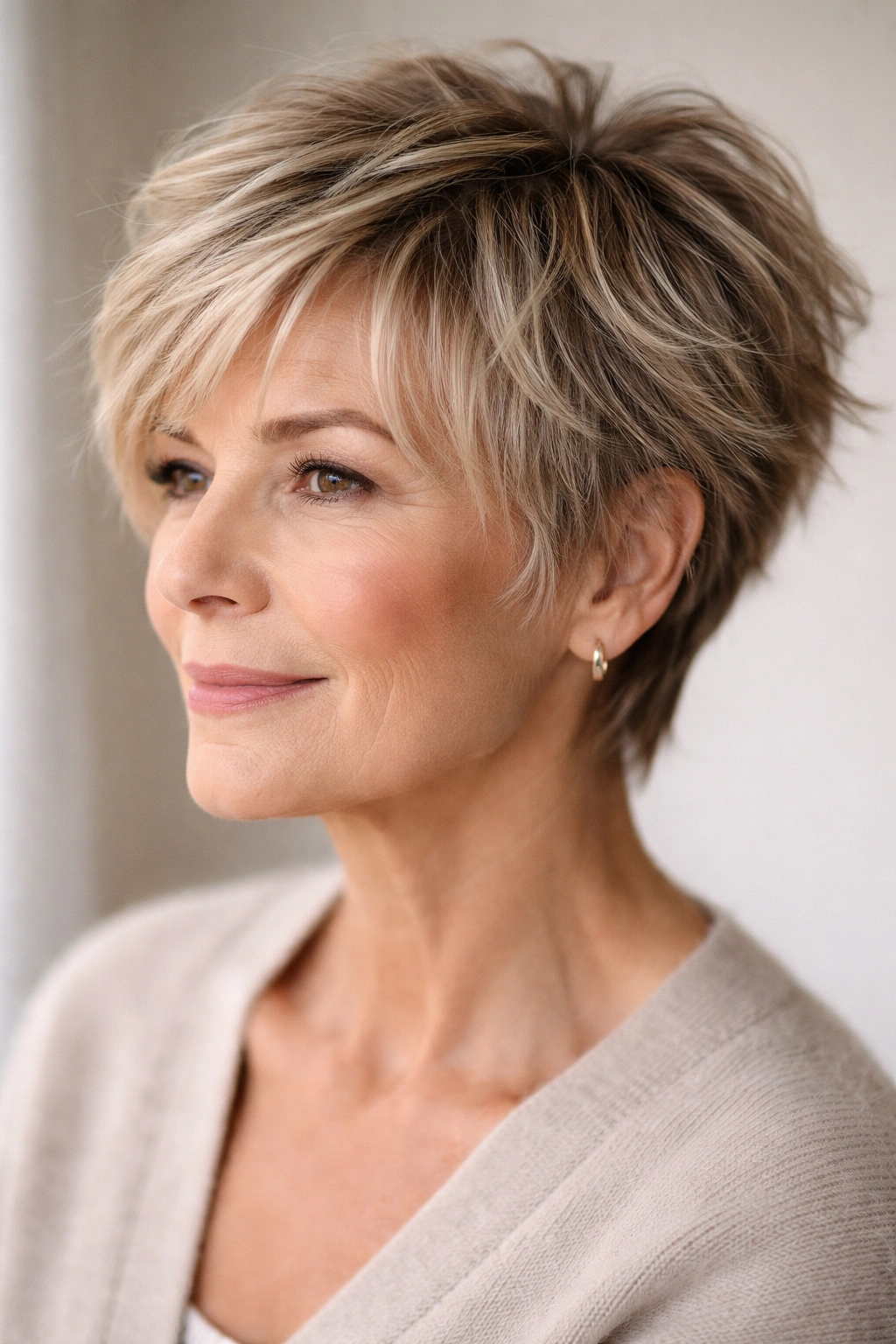
A piece-y crop is a short cut where the hair is cut into disconnected, textured pieces that move independently. It’s shorter overall (usually 1-3 inches) but looks sophisticated rather than severe because of the intentional texture and separation. The pieces are cut at varying angles so that each one has its own direction and movement. This cut celebrates a tousled, undone aesthetic while looking entirely intentional.
Why This Works for Fine Hair
This cut works magic on fine hair because the texture and movement are built directly into the cut itself. You’re not trying to create volume—you’re creating movement and visual interest through the pieces and layers. Each individual hair has a job, and collectively, they create a fuller-looking silhouette. The short length means no weight pulling things down, and the pieces are cut so that even sparse areas contribute to the overall tousled look. This is a cut where fine hair actually becomes an advantage because the texture reads as intentional and fashionable.
How to Style This Cut
- Minimal styling required—air dry or rough-dry with a blow dryer
- Use a texturizing spray or sea-salt spray to encourage separation and grip
- Finger-comb or scrunch rather than brush
- A light matte product adds definition to the pieces
- Works beautifully with some natural wave or curl
- Needs a trim every 5-6 weeks to keep the pieces sharp
- This is truly a “wash and go” or “wash, spray, and go” cut
Pro tip: When you get this cut, ask your stylist to cut the pieces so they’re shorter at the crown (for lift) and slightly longer around the sides. This builds natural height where fine hair needs it.
8. The Modern, Wispy Pixie
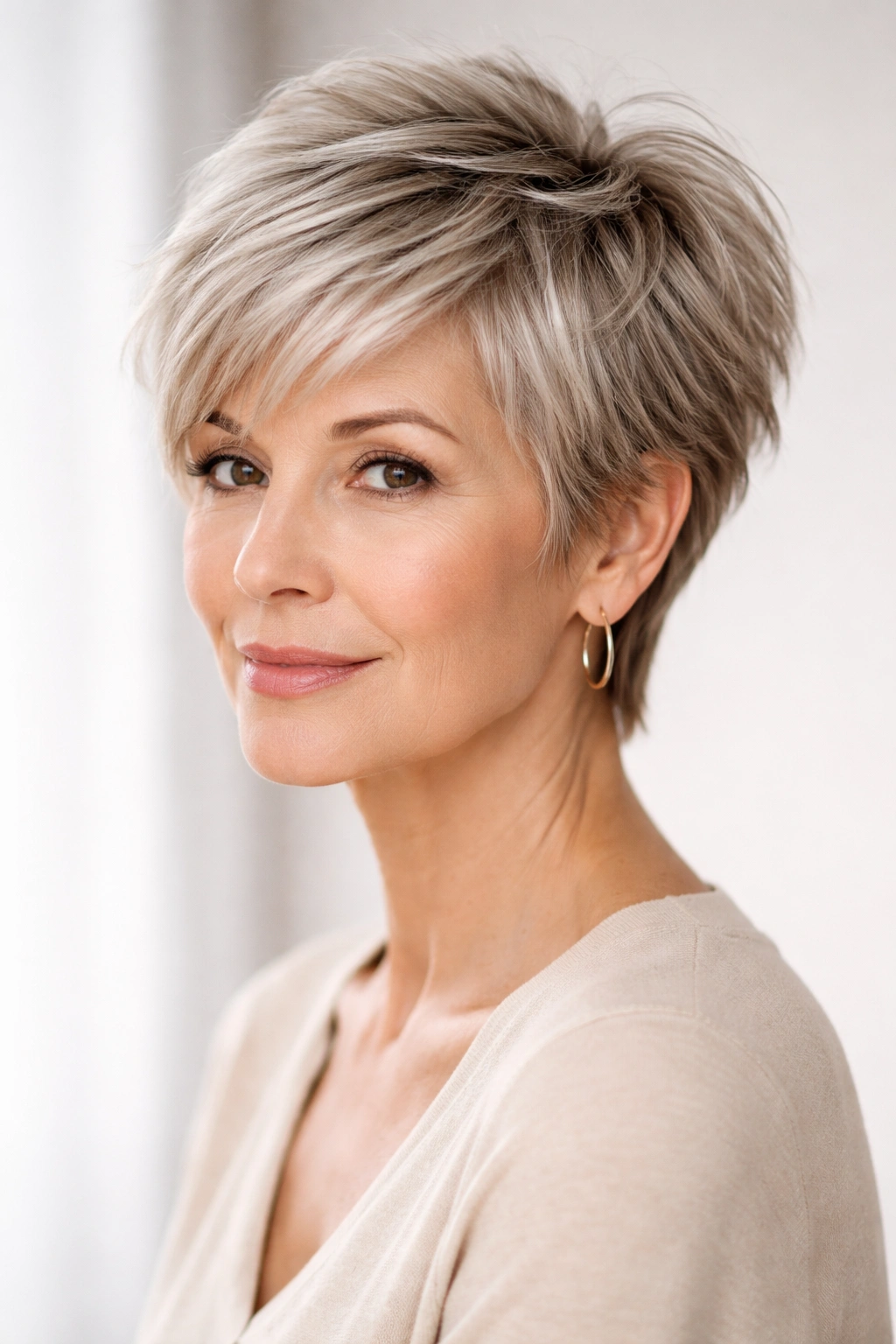
A wispy pixie is longer and softer than a traditional pixie—think 2-3 inches on top with very tapered sides. What makes it “wispy” is that the layers are soft and feathered rather than blunt. The overall effect is delicate and feminine while still being a very short, easy-to-manage cut. This style has become increasingly popular because it offers the easiness of a pixie with more styling versatility.
Why This Works for Fine Hair
A wispy pixie is probably the most forgiving short cut for fine hair because the softness and texture are actually working for you, not against you. The feathered layers mean that fine hair doesn’t look sparse—it looks intentionally soft and wispy. The tapered sides keep things clean and modern without bulk, and the slightly longer top gives you enough hair to style and direct. This cut hits that sweet spot between “I barely have to do anything” and “I still have styling options.”
Styling and Care for a Wispy Pixie
- Can be air-dried or lightly blow-dried with fingers for texture
- A texturizing spray enhances the wispy, feathered look
- Minimal products needed—light and natural is the goal
- Needs a trim every 5-6 weeks, especially the tapered sides
- Works beautifully with some natural wave or curl
- A light styling cream can define and separate pieces if desired
- This cut is genuinely low-maintenance
Worth knowing: Ask your stylist to feather the layers rather than cut them blunt. The feathering is what creates that soft, wispy, fuller-looking effect.
9. The Sleek, Styled-Back Crop
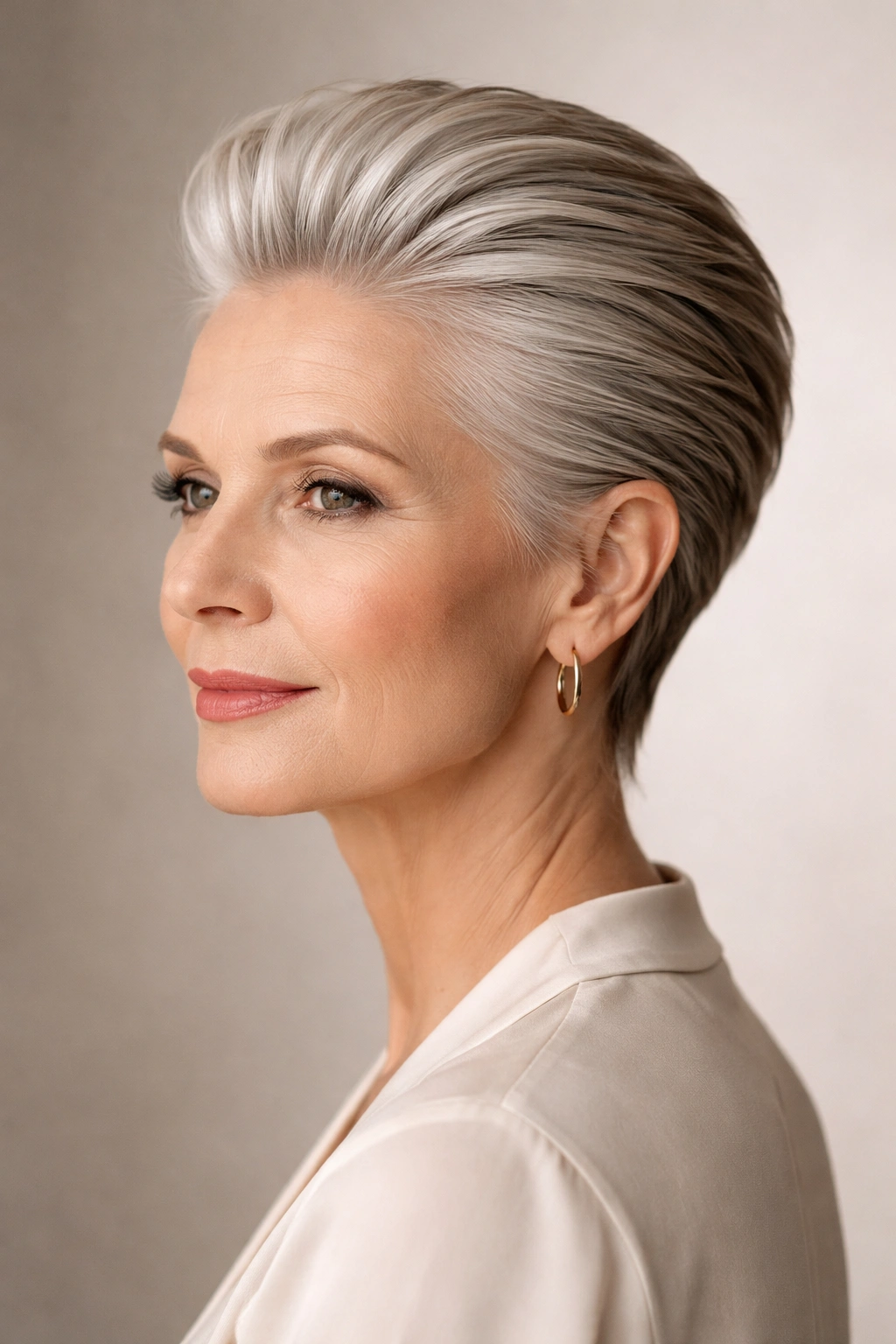
Some women prefer a crop that’s slicked back or combed straight back, creating a clean, geometric silhouette. This cut is very short (1-2 inches all over or slightly longer on top) and works best when styled back rather than tousled. It’s modern, androgynous, and chic. It requires intentional styling but creates a sharp, confident look that’s absolutely stunning on the right person.
Why This Works for Fine Hair
When fine hair is styled back and away from the face, it creates the illusion of a fuller head of hair because you’re not relying on face-framing volume to show dimension. The clean lines of this cut make it look intentional and powerful, rather than thin. The short length and the fact that the hair is directed back means no limp, flat look. This is a cut that exudes confidence and modern sensibility.
How to Achieve and Maintain This Look
- Requires blow-drying (usually blow-dry straight back and then use pomade to keep it in place)
- Use a strong-hold gel or pomade to keep hair slicked back
- A round brush blow-dry creates a smooth finish
- Needs a trim every 3-4 weeks to maintain the crisp shape
- Works best with straight or straightened hair
- Emphasizes facial features, so this is a look for someone confident in their appearance
- A lightweight pomade works better than heavy gel for fine hair
Pro tip: Use a very light hand with product—a little goes a long way on fine hair. You’re looking for enough hold to keep the style, not a wet, heavy look.
10. The Layered, Tousled Crop with Texture
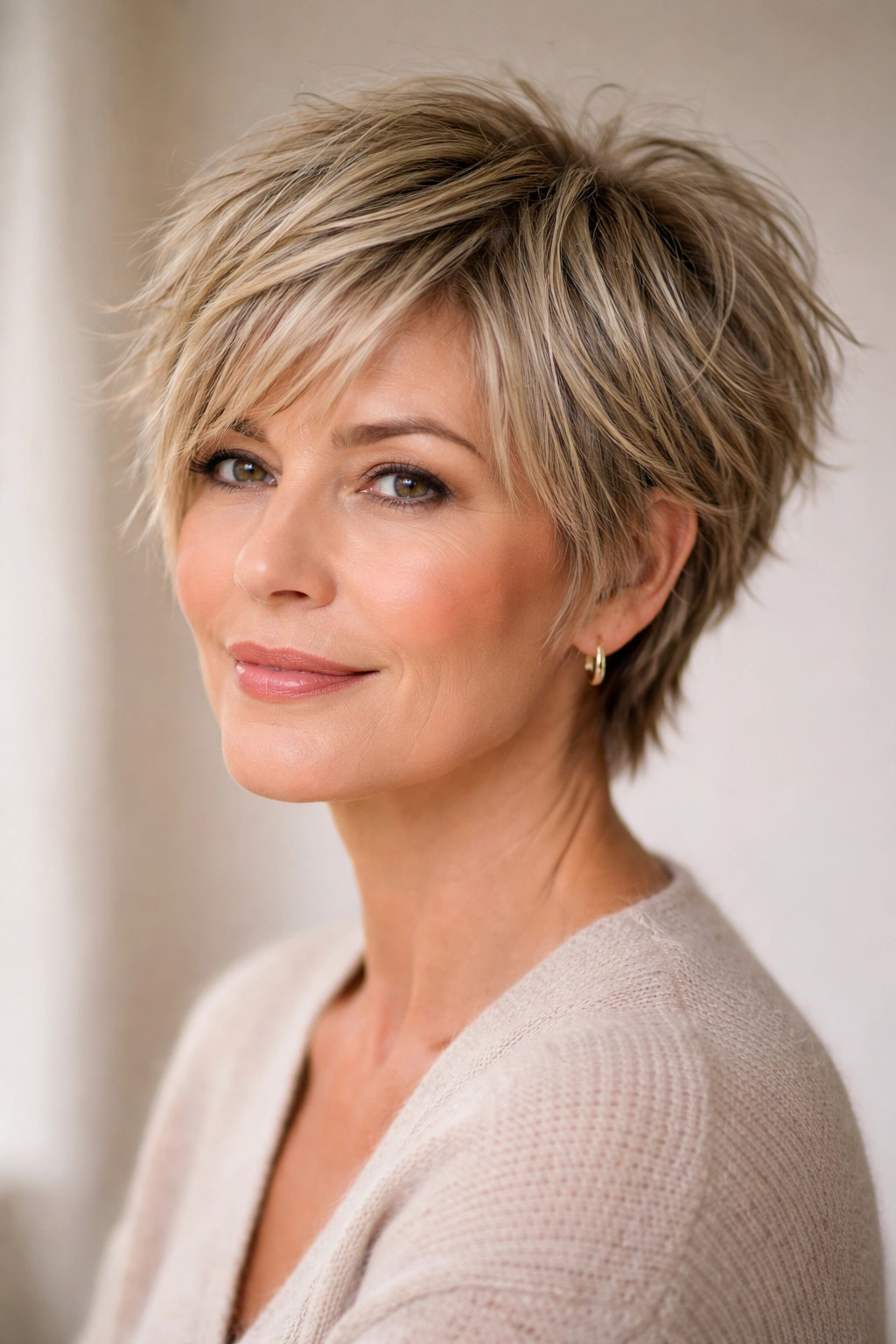
This final cut combines short length with deliberate layers and texture for a look that’s both easy-wearing and stylish. It’s usually 1-3 inches overall with longer pieces in the front for face-framing and choppy layers throughout. The texture is cut in deliberately (not created through styling), so even minimal styling effort results in a polished look. This is one of the most flattering cuts because it works with multiple styling options.
Why This Works for Fine Hair
This cut is similar to the piece-y crop but slightly longer and a bit more refined. The built-in texture means that fine hair automatically looks intentional and styled. The layering creates movement and the illusion of density. The longer pieces in front frame the face beautifully, and because the overall cut is textured, you don’t need perfect density for it to look good. You can style it tousled and casual, or blow-dry it smooth for something more polished.
Versatility and Styling Options
- Works with multiple styling approaches (air dry, blow dry, tousled, or polished)
- Use texturizing spray for a casual, undone look
- Blow-dry smooth with a round brush for something more refined
- A light styling cream adds definition to pieces
- Needs a trim every 5-6 weeks
- Works beautifully with natural wave or curl
- This cut gives you the most versatility—you’re not locked into one way of wearing it
Worth knowing: When you get this cut, ask your stylist to show you different styling options. It’s one of the most versatile cuts, so understanding how to style it in multiple ways means you get maximum value from your investment.
Final Thoughts
The right short haircut for fine hair isn’t about fighting your texture—it’s about working with it strategically. Every cut on this list has been chosen because it either creates visual fullness through layering and texture, or because it’s designed to work beautifully with fine, thinner hair rather than against it. The most important step is a conversation with your stylist about your hair type and what you actually want to achieve—whether that’s ease of styling, a polished look, a modern edge, or maximum versatility.
Once you’ve found your cut, maintaining it properly matters just as much as the cut itself. Fine hair shows grow-out quickly and needs regular trims (usually every 4-6 weeks depending on the cut) to maintain shape and health. Using lightweight products, avoiding heavy oils and thick serums, and choosing styling methods that don’t weigh your hair down all make an enormous difference in how good your cut actually looks day-to-day.
Finally, don’t underestimate what the right haircut can do for your confidence and how you feel about your appearance. A cut that actually works for your hair type and your lifestyle isn’t a luxury—it’s genuinely transformative. Take a picture of a cut you love to your stylist appointment, have a real conversation about your hair and your styling habits, and then commit to the regular maintenance these cuts require. You deserve a haircut that makes you feel like the best version of yourself.
