



Soft, feminine haircuts are having a genuine moment — and unlike trends that fade in a season, these styles have serious longevity because they genuinely flatter most face shapes and hair types. The beauty of a soft feminine cut isn’t just about looking polished; it’s about creating a frame for your face that feels intentional, effortless, and distinctly you. Whether you’re drawn to romantic waves, delicate layers, or a strategically textured bob, the right soft haircut can completely shift how you feel when you catch your reflection.
What makes these cuts work is their flexibility. They don’t demand precision-perfect styling every single morning — they’re designed to move naturally, hold texture without looking rigid, and adapt to your styling mood. You can wear them sleek one day and tousled the next, and either way, they look intentional rather than messy. This is why soft, feminine styles have become the go-to for people who want something more interesting than a blunt cut but less high-maintenance than intricate layers that require constant upkeep.
The cuts in this collection are built on some core principles: they work with your natural hair texture instead of against it, they use dimension and movement to flatter rather than relying on one-length density, and they’re designed to be styled multiple ways. Whether you have fine hair that needs optical fullness or thick waves that benefit from shaping, there’s something here that will resonate with what you’re actually working with.
1. Soft Shag With Textured Layers

A modern shag is nothing like the choppy 1970s versions you might be picturing — this is a refined, intentional take on layered texture that creates movement and dimension without looking disheveled. The cut works by strategically removing weight from longer lengths while keeping enough substance to avoid that “thin and wispy” feeling. Layers frame the face with pieces that graze your cheekbones and shoulders, creating natural movement that starts at the roots rather than just at the ends.
Why This Style Feels Effortless
A textured shag works beautifully because it embraces movement as part of its design rather than fighting for a polished look. The layers encourage your hair to fall in a way that looks intentional, even when you’re not actively styling it. This cut pairs perfectly with natural texture — whether that’s waves, slight curls, or straight hair with a natural bend — because the layers give movement room to actually exist.
What You Need to Know Before Going Shag
- The cut requires commitment to regular trims every 4-5 weeks to maintain the intentional layer structure
- Works especially well on shoulder-length hair or longer, where the layers have room to breathe
- Styling with a texturizing spray or salt spray enhances the movement — this isn’t a cut that needs formal blow-drying
- Best suited for people with at least some natural texture or willingness to add texture with styling products
- Creates the illusion of fullness even on finer hair types, because layers throughout the crown add optical volume
Pro tip: Ask your stylist to focus heavier layers at the crown and lighter, more subtle layering toward the ends — this creates flattering movement without looking scraggly at the ends.
2. Long Curtain Bangs With Soft Waves

Curtain bangs are the face-framing piece that makes almost any long hairstyle feel more intentional and modern. Unlike blunt bangs that demand daily styling precision, curtain bangs part gently down the middle and fall on either side of your face, creating a soft frame that draws focus upward. The beauty here is that they work with your natural hair’s desire to move, rather than forcing your hair into a structured shape.
What Makes Curtain Bangs So Flattering
Curtain bangs work across nearly every face shape because they don’t create a hard line across your forehead — instead, they create soft angles that complement bone structure. Combined with soft waves, they create movement that feels romantic and deliberately styled without requiring intense heat-tool work every morning. The side-swept angle naturally draws the eye, which is why they’re so effective at making a face feel more defined.
How to Maintain and Style Them
- Curtain bangs need to be trimmed every 3-4 weeks since they frame the face and any unevenness becomes immediately obvious
- A round brush and blow dryer on medium heat creates a soft wave, but even air-drying often produces a flattering, lived-in look
- Styling with a light texture spray gives them grip and prevents them from looking too flat or stringy
- Best results come from keeping waves loose and soft rather than trying to create tight curls
- Work especially well on longer hair (shoulder length or beyond) where the proportion feels balanced
Worth knowing: Curtain bangs require more frequent trims than you might expect, so factor this into your maintenance commitment before getting them cut.
3. Choppy Pixie With Soft Texture

A choppy pixie is short, but it’s short with intention — not blunt and severe, but deliberately textured with pieces that catch light and create movement around the face. This cut is for people ready to go shorter but unwilling to sacrifice femininity or dimension. The choppy texture keeps it from feeling like a traditional masculine crop, and the layering creates volume even on hair that tends to lie flat.
Why This Cut Turns Heads
A textured pixie reads as bold and modern while remaining undeniably soft and feminine. The choppy layers create shadow and light play that makes the cut interesting from every angle. Even short, this style manages to frame the face beautifully because the layering directs attention to your eyes and cheekbones rather than creating a generic short-hair silhouette.
Things to Understand About Short Cuts
- Requires professional trims every 3-4 weeks — this isn’t a style where you can stretch between appointments
- Morning styling typically takes 5 minutes with a texture product and fingers — minimal effort once you understand the piece direction
- Works best on people with straight to wavy hair; tightly curly hair needs a different short-cut approach
- Excellent option if you’re dealing with fine or thinning hair, since short length removes weight and shows off texture
- Creates an immediate presence — this is a style that says you’re making a deliberate choice about your appearance
Insider note: Bring a photo reference that shows exactly the level of chop you want; pixies can range from almost-medium length to ultra-short, and the difference in maintenance and styling is significant.
4. Butterfly Layers for Mid-Length Hair

Butterfly layers are layers that are cut shorter in the crown and gradually get longer as you move toward the perimeter — creating a shape that looks fuller at the top and tapers slightly as it reaches the ends. The name comes from how the shorter crown layers create wings of texture when viewed from above. This cut is genius for adding volume and movement to hair that naturally lacks dimension, and it works beautifully on most hair types.
Why Butterfly Layers Flatter Nearly Everyone
Butterfly layers create optical fullness at the crown, which makes faces look more lifted and younger. The graduated lengths mean you’re not fighting against your hair’s natural weight and density — instead, you’re working with it by removing strategic portions. The result is a cut that looks effortlessly voluminous without requiring complex styling to achieve the illusion.
The Maintenance Reality of Layered Cuts
- Trims every 6-8 weeks keep the shape defined; letting them grow beyond this makes the layers disappear into length
- Works beautifully with both straight and wavy hair — waves emphasize the layer texture
- Styling options range from sleek and straight to textured and tousled, giving you flexibility
- Especially flattering on fine hair that needs optical fullness, or thick hair that benefits from weight removal
- Creates movement and dimension without requiring you to commit to daily elaborate styling
Real talk: Butterfly layers are one of the few cuts that actually need regular trims to maintain the intentional shape — once they get too long, you’ve essentially just got lots of hair.
5. Soft Lob With Face-Framing Pieces

A lob (long bob) sits somewhere between chin-length and shoulder length, and when it’s done well, it hits that sweet spot of being long enough to style multiple ways but short enough to feel intentional and modern. Add subtle face-framing layers and you’ve got a cut that works across decades and hair types. The key is keeping the ends soft — not blunt — so the movement feels organic rather than styled.
What Makes a Lob Feel Sophisticated
A lob works because it’s substantial enough to hold a shape without requiring constant styling, but short enough that it doesn’t feel like you’re just growing out a regular long haircut. Face-framing pieces soften the overall silhouette and draw attention to the face rather than creating a flat rectangle of hair. This cut reads as intentional without being high-maintenance, which is why it’s such a reliable choice.
How to Keep a Lob Looking Fresh
- Trims every 5-6 weeks maintain the shape and keep ends from looking wispy
- Works beautifully with or without bangs — curtain bangs add softness, no bangs keeps it sleek
- Straight, wavy, or curly — this cut adapts to your natural texture
- Styling can range from sleek and polished to textured and undone
- Creates the illusion of fullness even on finer hair, since the length stops before it gets too weighted down
Worth knowing: A lob only looks intentional if you’re committed to regular trims; otherwise, it eventually reads as just-growing-out-a-bob hair.
6. Soft Waves With Integrated Bangs

This style combines gentle waves throughout the hair with integrated bangs that blend seamlessly into the rest of the cut rather than reading as a separate piece. Instead of a dramatic bang line, the bangs are cut at a similar length to the face-framing layers, creating a unified soft frame around your entire face. It’s romantic, modern, and works beautifully on people who want structure without severity.
Why Integrated Bangs Feel Modern
Integrated bangs work because they soften the overall silhouette and create movement without the commitment of blunt bangs or the separation of traditional curtain bangs. They blend with face-framing layers to create a unified frame rather than a deliberate statement piece. The result is a cohesive, intentional look that feels professionally styled even when you’re just running your fingers through it.
The Styling Commitment for This Look
- Requires regular trims (every 4-5 weeks) since the integrated bang area frames your face and needs to be precise
- Works best with at least some natural wave or texture — this cut is designed to move, not sit flat
- A texture spray and loose waves with a round brush creates the intended look
- Alternatively, you can embrace your natural texture and let the cut work with what you have
- Especially flattering on rectangular or long face shapes, since the integrated bangs and layers add width and softness
Pro tip: Before committing to integrated bangs, ask your stylist to show you exactly how they’ll blend with your face-framing layers — the integration is what makes this work.
7. Layered Shag With Side-Swept Styling

This is a more dramatic take on the shag — think intentional choppy layers throughout with a slight side-swept direction that gives it movement and edge alongside the softness. The cut is shorter in the crown and gradually extends toward the perimeter, creating a shaggy shape that’s modern rather than retro. It works best with some natural texture or a strong willingness to add texture with styling products.
Why This Shag Feels Current
A layered shag with side-swept direction reads as intentional and fashion-forward rather than throwback. The choppy texture creates visual interest from every angle, and the side-swept direction gives it movement that a blunt-ended shag wouldn’t have. This is a cut for people who want something interesting and distinctive, not just trying to blend in.
The Reality of Maintaining a Choppy Shag
- Requires trims every 4-5 weeks to maintain the intentional choppy texture and prevent it from looking scraggly
- Styling typically involves texturizing spray and finger-tousling rather than formal blow-drying
- Best suited for people with natural wave or willingness to add waves with heat tools
- Creates the illusion of significant volume, even on finer hair types
- Reads as more fashion-forward and bold than classic soft layers
Insider note: A side-swept shag requires some styling commitment to look intentional — this isn’t a cut you can just shower and go with.
8. Blunt Bob With Soft Interior Layers

A blunt bob is cut to a precise length all around, but instead of being choppy throughout, the interior is subtly layered while the perimeter stays blunt. This creates a modern silhouette that looks clean and intentional on the outside while having enough internal movement to prevent a flat, heavy feeling. It’s the best of both worlds — the graphic impact of a blunt line with the movement of layers.
What Makes a Blunt Bob with Layers Work
The blunt perimeter creates a strong, modern silhouette, while the internal layers keep the cut from feeling dense or static. The layers also add dimension without compromising the graphic quality of the blunt line, making this cut interesting from every angle. It reads as intentional and fashion-forward without requiring significant styling expertise to look good.
How to Style and Maintain This Cut
- Trims every 5-6 weeks keep the blunt perimeter precise and the layers defined
- Works beautifully on straight hair where the blunt line can truly shine, but also works on wavy hair for a textured look
- Styling ranges from sleek and polished to textured and modern depending on your mood
- Internal layers create movement without the cut looking wispy at the ends
- Especially flattering on people with strong facial features, since the graphic blunt line doesn’t compete
Worth knowing: A blunt bob requires precision trims to maintain its shape — any imprecision in the blunt line becomes immediately obvious.
9. Wispy Shoulder-Length Cut With Choppy Ends

This is a shoulder-length cut with intention — not just hair that happens to reach your shoulders, but cut at that length with choppy, wispy ends that create movement and texture. The choppiness at the ends prevents it from feeling heavy or blunt, and the shoulder-length positioning hits that flattering sweet spot for most people. It works beautifully with natural texture and is also gorgeous when styled with soft waves.
Why This Length Is So Universally Flattering
Shoulder length works for almost everyone because it’s long enough to style multiple ways but short enough to feel intentional. Adding choppy texture to the ends keeps it from looking like a generic long haircut — instead, it reads as a deliberate style choice. The wispy ends create movement that makes the cut feel lighter and more sophisticated than blunt ends would.
Styling and Upkeep for Shoulder-Length
- Trims every 6-8 weeks maintain the choppy texture at the ends and prevent split ends from traveling upward
- Works beautifully with both straight and wavy hair — texture emphasizes the choppy ends
- Can be worn sleek with a flat iron or textured with waves or your natural texture
- Choppy ends create the illusion of movement even when hair is worn straight
- One of the few lengths that works equally well whether you style it formally or casually
Real talk: Choppy ends require more frequent trims than blunt ends, since the choppy texture makes split ends more visible and they travel up the hair shaft faster.
10. Modern Mullet With Feminine Softness

A modern mullet is shorter in the front and slightly longer in the back, but it’s done with a soft, intentional approach rather than the harsh contrast of traditional mullets. The front is typically around ear length with soft layers, while the back gradually extends to create subtle length. It’s bold and contemporary while still feeling undeniably feminine and wearable.
Why Modern Mullets Are More Than a Meme
A well-executed modern mullet is fashion-forward and interesting without being costume-like or retro. The softness in the front layers and the gradual length transition keep it from reading as novelty. This cut is for people confident enough to wear something distinctive and willing to style it with intention.
The Maintenance and Styling Reality
- Requires precise trims every 4-5 weeks to maintain the intentional length difference between front and back
- Best suited for people with straight to wavy hair — tight curls can make the front/back distinction less clear
- Styling the front pieces with texture or waves creates softness and prevents a harsh line
- Back length typically gets styled into waves or left natural depending on your hair type
- Creates a strong personal style statement — this isn’t a cut for people seeking to blend in
Insider note: A modern mullet needs to be styled with intention to read as fashion-forward rather than dated — this is an active styling choice, not a wash-and-go cut.
11. Feathered Layers With Soft Volume

Feathered layers are cut to flip outward at the ends, creating a shape that’s full at the crown and becomes softer and more feathered as you move toward the ends. This cut was beloved in past decades for good reason — it’s incredibly flattering and creates volume that actually stays in the hair rather than being an optical illusion. Modern versions of feathered layers feel contemporary because they’re softer and less structured than 80s versions, but the flattering volume remains.
Why Feathered Layers Create Real Dimension
Feathered layers work because each layer flips outward slightly, creating movement and texture that catches light beautifully. This cut creates actual volume, not just the illusion of volume, because the feathering removes weight while keeping fullness at the crown. It’s especially flattering for people with fine hair who struggle with density.
Making Feathered Layers Feel Modern
- Trims every 6-8 weeks maintain the feather shape and prevent the cut from looking overgrown
- Works best on straight to wavy hair where the feathering can actually flip and turn
- Styling with a round brush and blow dryer enhances the feathered texture
- Can be worn sleek for a softer feathered effect or textured for maximum movement
- Incredibly flattering on people with fine or thin hair, since the feathering creates actual volume
Worth knowing: Feathered layers need regular trims to maintain the flip and texture — if you let them grow too long, the feathering flattens out and becomes just regular layers.
12. Textured Pixie Bob Hybrid
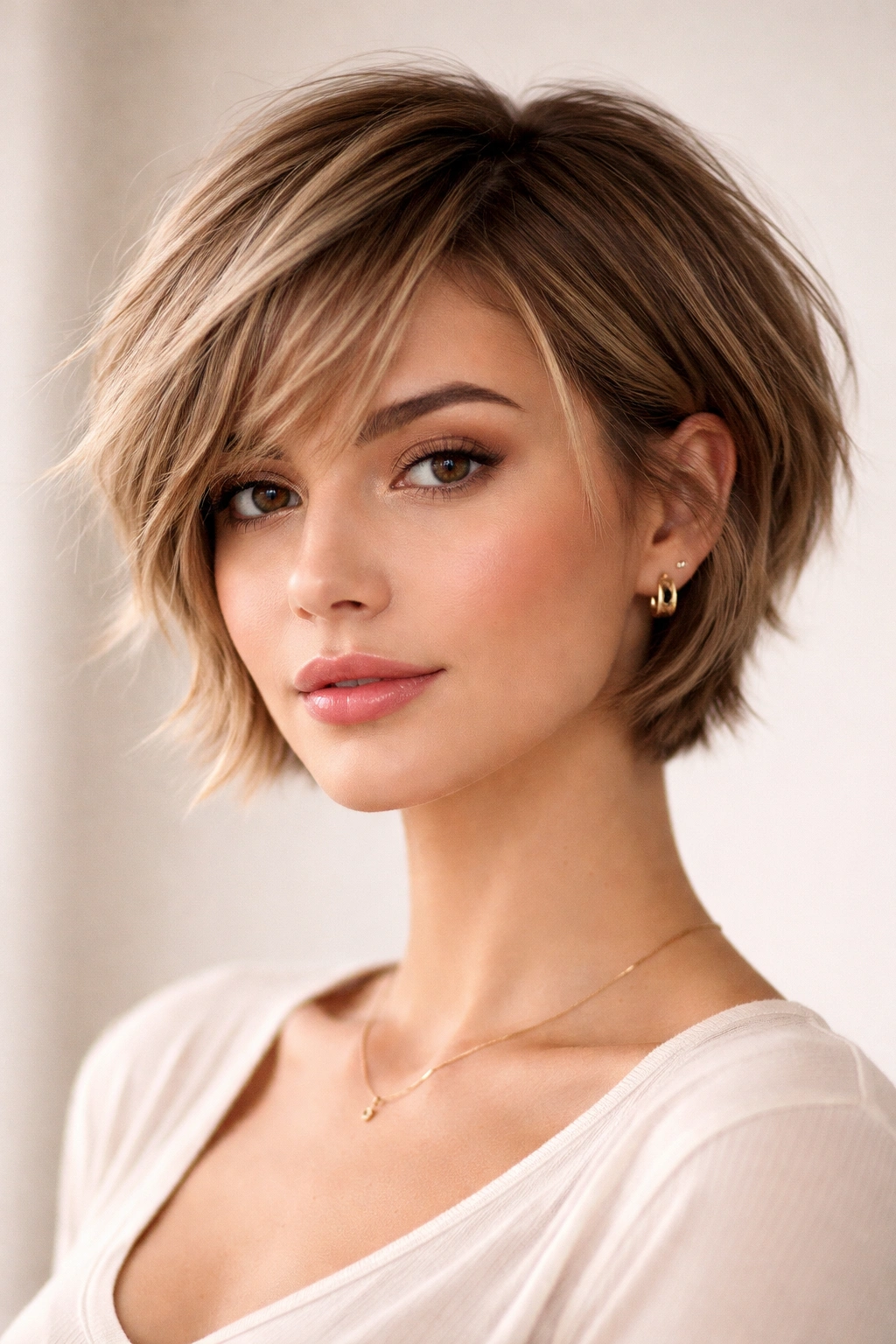
A pixie bob is exactly what it sounds like — taking the softness and femininity of a bob and shortening it to pixie length with enough length and texture that it still reads as intentionally styled rather than simply short. This cut works beautifully for people who want to go shorter but need the sophistication and dimension of longer hair. The length typically falls around the jawline or slightly shorter, with textured layers throughout.
Why This Length Hits a Sweet Spot
A pixie bob is short enough to feel fresh and modern, but long enough to have styling versatility. The texture and layers prevent it from reading as a basic short haircut — instead, it’s clearly a deliberate style choice with dimension and interest. This cut works across face shapes and appeals to people who want something bolder than a standard cut but aren’t ready for a full pixie.
The Commitment Level for Short Textured Cuts
- Requires trims every 3-4 weeks to maintain the textured shape and prevent it from looking overgrown
- Morning styling typically takes 5-10 minutes with a texture product and fingers
- Works best on straight to wavy hair; curly hair needs a different approach
- Can be worn tousled and textured or smoothed down for a sleeker look
- Creates an immediate presence — this is a style that makes a statement
Pro tip: A pixie bob works best when you find a stylist who specializes in short cuts and understands how to create texture and movement at that length.
How to Talk to Your Stylist About Soft Feminine Cuts

The difference between a haircut that looks amazing and one that misses the mark often comes down to communication. Most stylists want to create exactly what you’re envisioning, but they need you to be specific about what “soft and feminine” actually means to you. Bring multiple reference photos — at least 3-5 — that show the exact level of texture, the specific type of layers, and how the cut moves when it’s styled. Don’t just describe; show.
Talk about your daily styling reality, not the version of yourself that exists on a Friday night when you have time for elaborate hair routines. If you’re realistically going to air-dry your hair most days, that’s crucial information your stylist needs. If you’re willing to use a round brush and heat tools, say so. If you love texture sprays and products, mention that. A stylist can design a cut that works with your actual lifestyle rather than some imaginary version of you.
Ask about the maintenance commitment upfront. Get specific numbers: “This cut needs trims every X weeks to stay looking intentional.” Understand whether the cut relies on your hair’s natural texture or whether it needs styling products and heat tools to look how it should. Ask what products your stylist recommends and what their approach would be to styling the cut at home. A good stylist will walk you through the styling process right there in the salon before you leave.
Building the Right Styling Routine for Your New Cut

Once you’ve got your cut, the styling routine that makes it actually work deserves just as much attention as the cut itself. The most beautifully designed soft, feminine haircut will fall flat if you’re not supporting it with the right products and technique. Start with a clarifying shampoo — this removes product buildup and lets you see what your hair actually does without styling interference.
Find a texture spray or sea salt spray that works with your hair type. Fine hair needs something lightweight that doesn’t weigh it down; thicker hair can handle richer products. Apply texture spray to damp hair before blow-drying to give your hair grip and help it hold the shape the stylist cut into it. A round brush and blow dryer on medium heat creates soft waves and volume without frying your hair. Work section by section, curling the brush away from your face for a flattering direction.
Consider investing in a quality flat iron if your cut relies on straight, sleek styling for some of its looks. Not the cheapest option, but a tool that distributes heat evenly prevents damage and gives you more styling control. A diffuser attachment on your blow dryer enhances natural waves if you’re working with texture. The key is understanding what your specific cut needs to look intentional, then building a routine that delivers that consistently.
Maintenance: The Difference Between a Great Cut and a Growing-Out Mess

Here’s the truth nobody wants to hear: soft, feminine cuts — especially layered ones — require regular maintenance to actually stay looking good. A cut that looks amazing for two weeks and then starts looking shaggy for the next two weeks isn’t a sustainable style if you’re not prepared for that maintenance cycle. Go into your haircut conversation clear-eyed about the trim schedule your specific cut requires.
Most of the cuts in this collection need trims every 4-8 weeks, depending on how much texture is built into the cut and how important precision is to maintaining the shape. Longer trims don’t save money; they actually cost more because your stylist has more overgrown hair to work with and the cut eventually becomes harder to salvage. Regular trims keep your hair healthier because they remove damage and split ends before they travel up the hair shaft.
Schedule your next appointment before you leave the salon. Make it a standing appointment if possible, so you’re not constantly playing catch-up with your cut. Send photos to your stylist between appointments showing how you’re styling the cut — if there are specific things you’re struggling with, your stylist can address those at your next trim appointment. Consistency in your trim schedule is what keeps a soft, feminine cut looking like an intentional choice rather than just hair that needs a cut.
The Right Cut for Your Hair Type and Texture

Not every soft feminine cut works equally well for every hair type, and that’s crucial information to bring into your consultation. If you have fine hair, you need cuts that remove weight strategically rather than adding layers that make your hair look thinner overall. Shorter layers at the crown create optical fullness; longer, one-length cuts can look limp and thin. Textured styles often work better on fine hair because texture creates the illusion of density.
Thick or coarse hair benefits from cuts that remove weight and create movement rather than adding bulk. Strategic layers throughout remove density without making the cut look choppy or sparse. Blunt ends can look heavy on thick hair; choppy ends prevent that heavy feeling. Wavy or curly hair needs cuts designed specifically for texture — a cut that looks amazing straight but falls apart when your hair is naturally curly isn’t actually designed for you.
Straight hair shows off clean lines beautifully, which is why blunt bobs and precise cuts work so well. It also shows frizz more immediately, so styling products become more important. Wavy hair has natural movement that enhances layering and texture, but sometimes you need products to hold that texture intentionally. Curly hair needs cuts that work with the curl pattern rather than fighting against it — most of the cuts in this collection work best on straight to wavy hair; curly hair requires a different approach.
Have this conversation with your stylist before the cutting begins. Show them your hair both styled and unstyled, both wet and dry. Let them feel your hair texture and density. Tell them what you actually do with your hair day to day. This information helps your stylist select a cut from this collection that’s actually going to work for your specific hair, not just look good in a picture.
Understanding Hair Density and Face Shape

Beyond hair type and texture, your hair density and face shape matter significantly for how a soft feminine cut will actually look on you. Dense hair can handle longer layers without looking sparse; finer hair needs layers that don’t remove so much weight that you end up with wispy ends. Your stylist should assess density and discuss how that affects which cuts from this collection are actually ideal for you.
Face shape matters too. Round faces often benefit from cuts with height at the crown and length that creates vertical lines — a lob with face-framing pieces works beautifully; a textured pixie bob also creates the right visual lines. Oval faces are lucky — most cuts work beautifully. Square faces often benefit from soft layers that break up the jawline rather than blunt lines that emphasize it. Long faces benefit from width and softness rather than length that emphasizes vertical lines.
Length placement matters. A cut that hits exactly at your widest point often emphasizes width; hitting just before or just after that point can be more flattering. Face-framing pieces work by drawing focus to your eyes and cheekbones rather than the overall width or length of your face. A good stylist understands these principles and will adapt the cuts in this collection to work specifically with your face shape rather than applying a one-size-fits-all approach.
Bring this up in your consultation. Your stylist might suggest subtle tweaks to the cuts you’re interested in — maybe a different length, slightly different layering placement, or specific piece placement that works better with your face shape. These adjustments often make the difference between a good cut and a cut that looks like it was specifically designed for you.
Final Thoughts
The right soft, feminine haircut can shift how you feel about your appearance in subtle but meaningful ways. It’s not about transformation or becoming a different person; it’s about finding a cut that works with your actual hair, your face shape, and your lifestyle, and then styling it consistently enough that it looks intentional. The cuts in this collection all share a core philosophy: softness and movement, flattery rather than severity, and the ability to work with multiple styling approaches.
Before you book that appointment, spend time with reference photos and be brutally honest about your maintenance commitment. Can you get to the salon every 4-5 weeks consistently? Are you willing to spend 10 minutes on styling most mornings? Do you want a cut that looks good even unstyled, or are you comfortable with a style that requires intentional effort? The best cut isn’t the one that looks most beautiful in pictures — it’s the one that fits into your actual life and makes you happy when you see yourself in the mirror.
Find a stylist who listens, asks good questions, and brings expertise to the conversation. Show them the specific cuts you’re considering, talk through what appeals to you about each one, and let them recommend which version of these soft, feminine styles would work best for your hair, face, and lifestyle. Then commit to the maintenance schedule that keeps the cut looking intentional. Your future self will thank you for taking the time to get this right.
