



Short sew-in hairstyles have become a game-changer for Black women who want to experiment with length, texture, and style without the long-term commitment. Whether you’re looking for a fresh look that takes less time to install and maintain, or you simply want to explore a completely different vibe, short sew-ins offer versatility that longer protective styles sometimes can’t match. The beauty of this option is that you get the protective benefits of sew-in hair — minimal manipulation of your natural hair, reduced breakage, and the freedom to wear your hair styled 24/7 — while enjoying the ease, boldness, and edge that comes with a cropped silhouette.
What makes short sew-ins particularly appealing is how they work with virtually every face shape, hair texture preference, and personal style aesthetic. You can go sleek and polished, textured and natural-looking, playful and trendy, or sophisticated and timeless. Installation takes significantly less time than longer sew-ins, which means fewer hours in the chair and lower costs. Maintenance is simpler too — less hair to wash, condition, and style means your daily routine becomes faster without sacrificing that salon-quality finish.
The creativity you can bring to short sew-ins is often underestimated. These aren’t just “shorter versions” of standard protective styles — they’re a distinct category with their own aesthetic possibilities, from precision cuts and geometric shapes to textured layers and modern fades. Whether you’re seeking something bold to make a statement, elegant for professional settings, or just a low-key refresh, there’s a short sew-in style waiting for you.
1. The Textured Pixie Cut
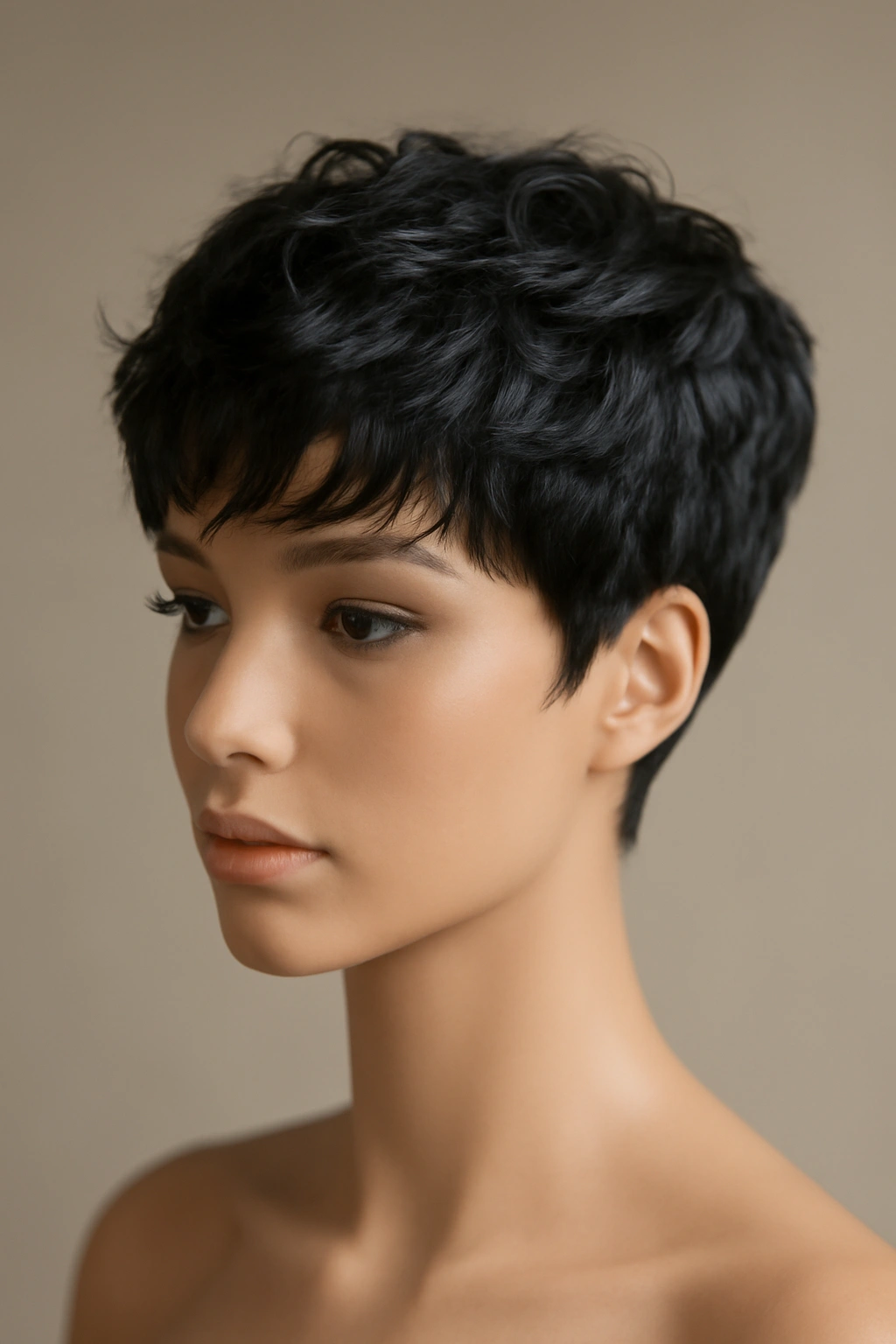
A textured pixie cut sew-in brings the edge and confidence of a classic short style while keeping your natural hair completely protected underneath. This look features strategically layered, wavy, or coily hair installed close to the scalp with varying lengths that create dimension and movement throughout. The beauty of the textured pixie is how it works with different face shapes — the layers can be customized to frame your features perfectly, whether you want a rounder, more balanced look or sharp angles that emphasize your cheekbones.
Why This Style Stands Out
The textured pixie cut is perfect if you want low-maintenance styling that still looks intentional and polished. The layered texture means you can wake up with bed head and it still looks deliberate rather than messy. Unlike sleek pixies that require daily styling, the textured version actually benefits from a slightly undone appearance. You get that coveted “I woke up like this” vibe without any actual effort. This style is particularly flattering because the movement around the face creates a softness that balances the short length.
What to Know Before Booking
- Installation time ranges from 2-4 hours depending on how many layers and how much texture you want throughout
- Best hair texture for this style: Wavy, curly, or coily hair that mimics natural texture patterns — ask your stylist for hair that matches your curl pattern
- Daily styling: A light touch-up with a texturizing spray or light mousse keeps the style fresh between visits
- Longevity: Lasts 4-6 weeks with proper care; touching up the edges every 2 weeks keeps it looking sharp
Real talk: This style looks best when you’re willing to lean into the texture rather than trying to smooth it down. If you love a perfectly sleek aesthetic, consider one of the smoother options instead.
2. The Blunt Bob with Textured Ends
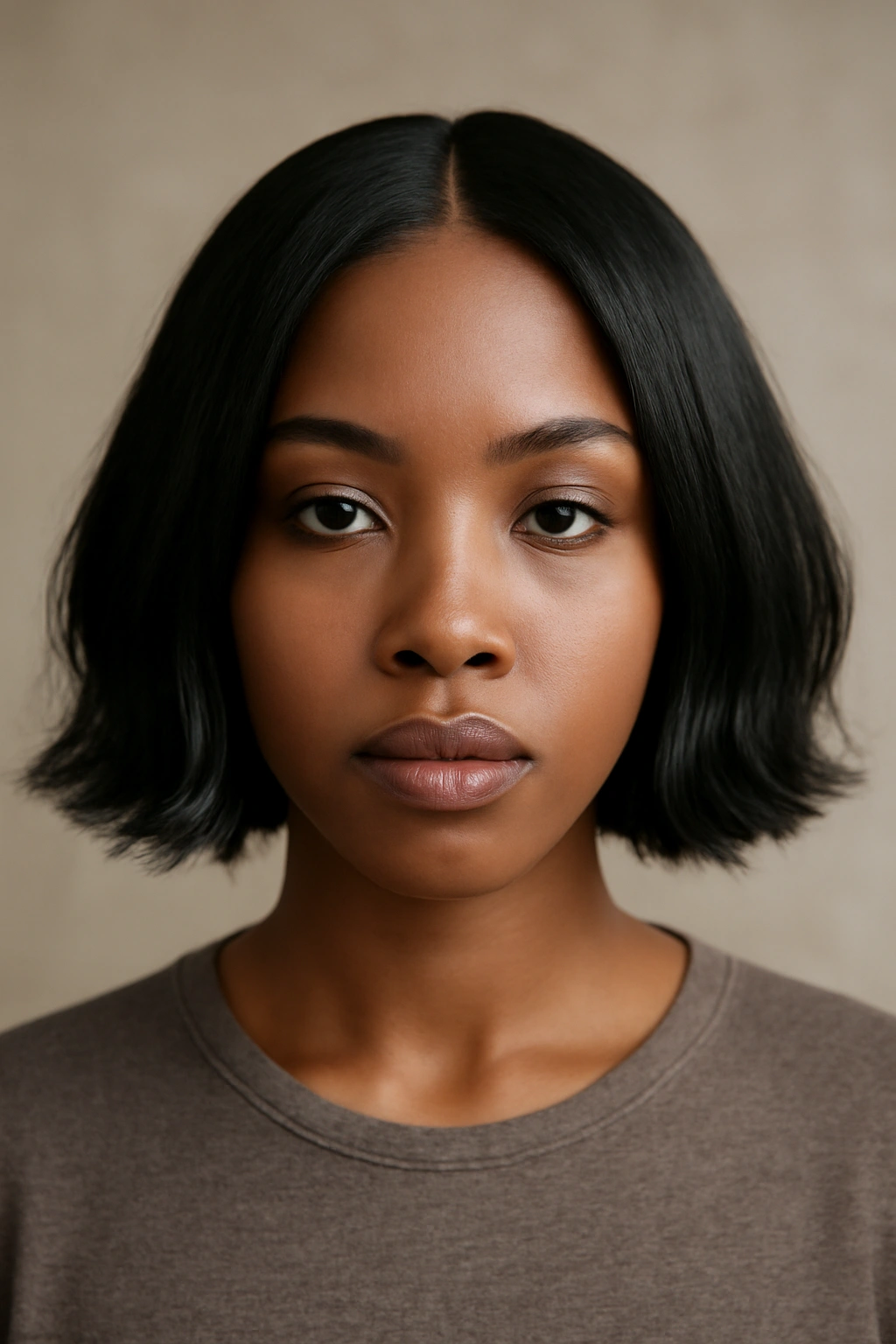
A short blunt bob sew-in combines the sophistication of a classic bob with modern texture at the ends, creating a chic hybrid that feels both polished and current. The hair is installed in a precise, straight line just below the ear, with the ends deliberately textured, curled, or kept wavy rather than completely blunt. This contrast between the clean, structured cut and the organic texture at the bottom creates visual interest and prevents the style from feeling too rigid or old-fashioned.
Why This Look Works
The blunt bob with textured ends strikes that perfect balance between professional polish and effortless cool. It reads as intentional — you clearly chose this specific shape — while the textured ends keep it from feeling too severe or corporate. This style photographs beautifully because the clean lines photograph sharply while the texture catches light in a way that creates dimension. The shape is deeply flattering because it frames the face with structure while the texture softens the overall effect. You get elegance without rigidity.
Installation and Maintenance Details
- Precision is key: Your stylist needs to measure carefully so both sides are exactly even — this cut has no place to hide imperfect lines
- Hair type recommendation: Straight or lightly wavy hair for the body, with textured hair only at the very ends for maximum impact
- Styling requirements: A daily touch-up with a curling iron or flat iron on the textured ends keeps the contrast crisp
- Maintenance appointments: Every 2-3 weeks to reshape and refresh the textured ends, which tend to lose definition faster than the rest of the style
Pro tip: Ask your stylist to cut the blunt line at a very slightly forward angle (just barely noticeable) rather than perfectly horizontal — this creates a subtle, flattering frame that feels intentional rather than stark.
3. The Cropped Fade with Curly Top
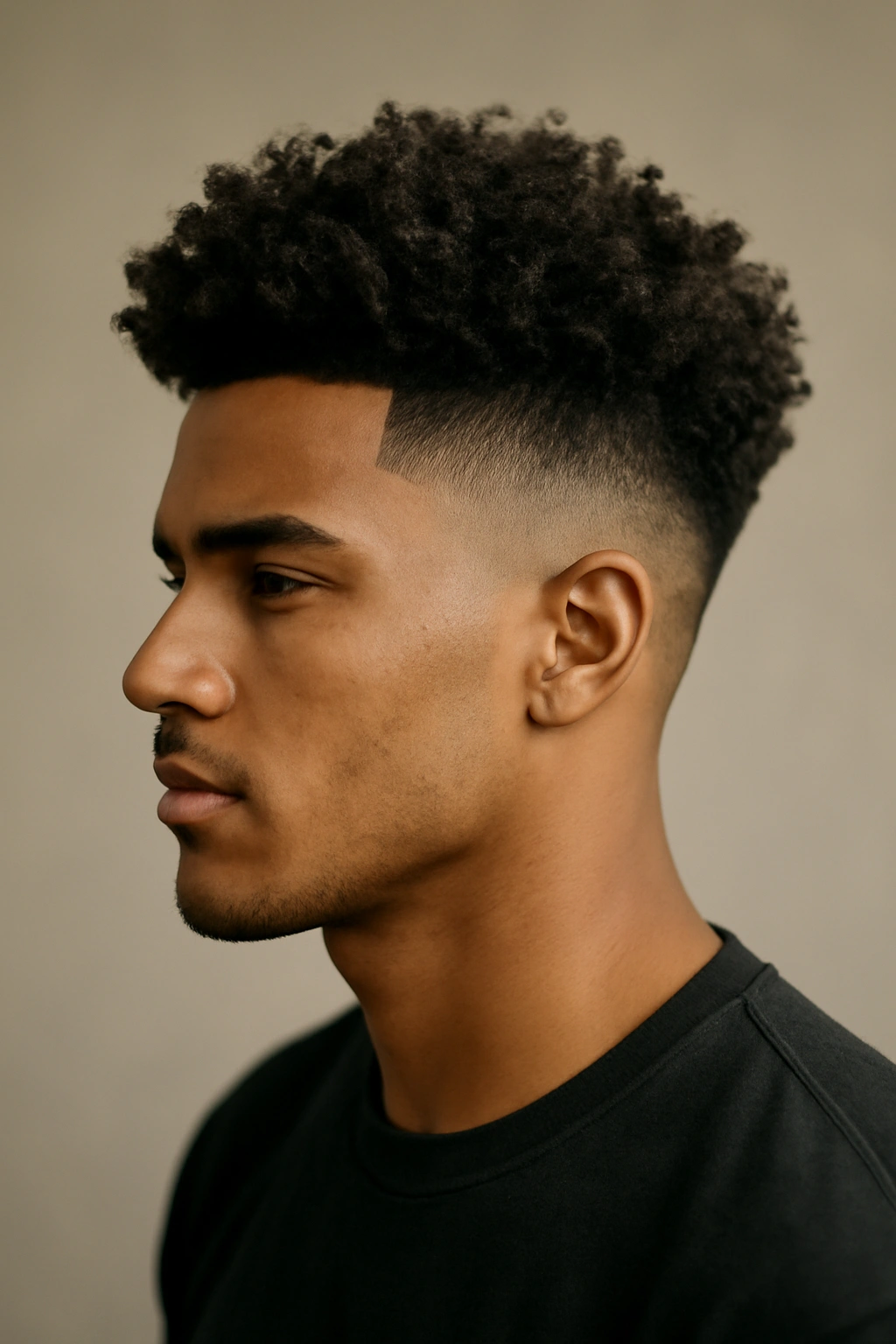
This style blends a sharp fade on the sides and back — similar to traditionally masculine fade haircuts — with a full, curly crown on top. The contrast between the clean faded sides and the voluminous curls creates a powerful, fashion-forward aesthetic that’s become increasingly popular. The fade can be as sharp as you want (skin-tight) or slightly softer, depending on whether you’re going for maximum edge or something a bit more subtle. The curly top is typically kept between 2-4 inches depending on your preference for drama and volume.
Why This Style Commands Attention
The cropped fade with curly top is undeniably bold — it makes a statement without you saying a word. The style draws attention upward to your face and is incredibly flattering for highlighting facial features, bone structure, and makeup. The clean, sharp lines of the fade are deeply satisfying from an aesthetic perspective, creating an intentional, groomed look that feels modern and artistic. This is the style for people who aren’t afraid to stand out. It’s empowering, creative, and unapologetically stylish.
Technical Details and Care
- Installation complexity: This is intermediate to advanced — your stylist needs serious precision with the fade work
- Hair requirements for the fade: The fade typically uses straight or very lightly textured hair to show clean lines; the curly top can be any curly texture you prefer
- Weekly maintenance: The fade needs light reshaping every week or 10 days to maintain those clean, sharp lines — this is non-negotiable for this style
- Styling the curly top: Light fingering or a pick through the curls in the morning, then occasional touch-ups with a curling iron to refresh the curl pattern
Worth knowing: This style requires a stylist who truly understands fade work. If your fade lines aren’t perfectly precise, the whole style falls apart. Don’t hesitate to ask your stylist about their fade experience before booking.
4. The Sleek Lob (Lightly Layered)
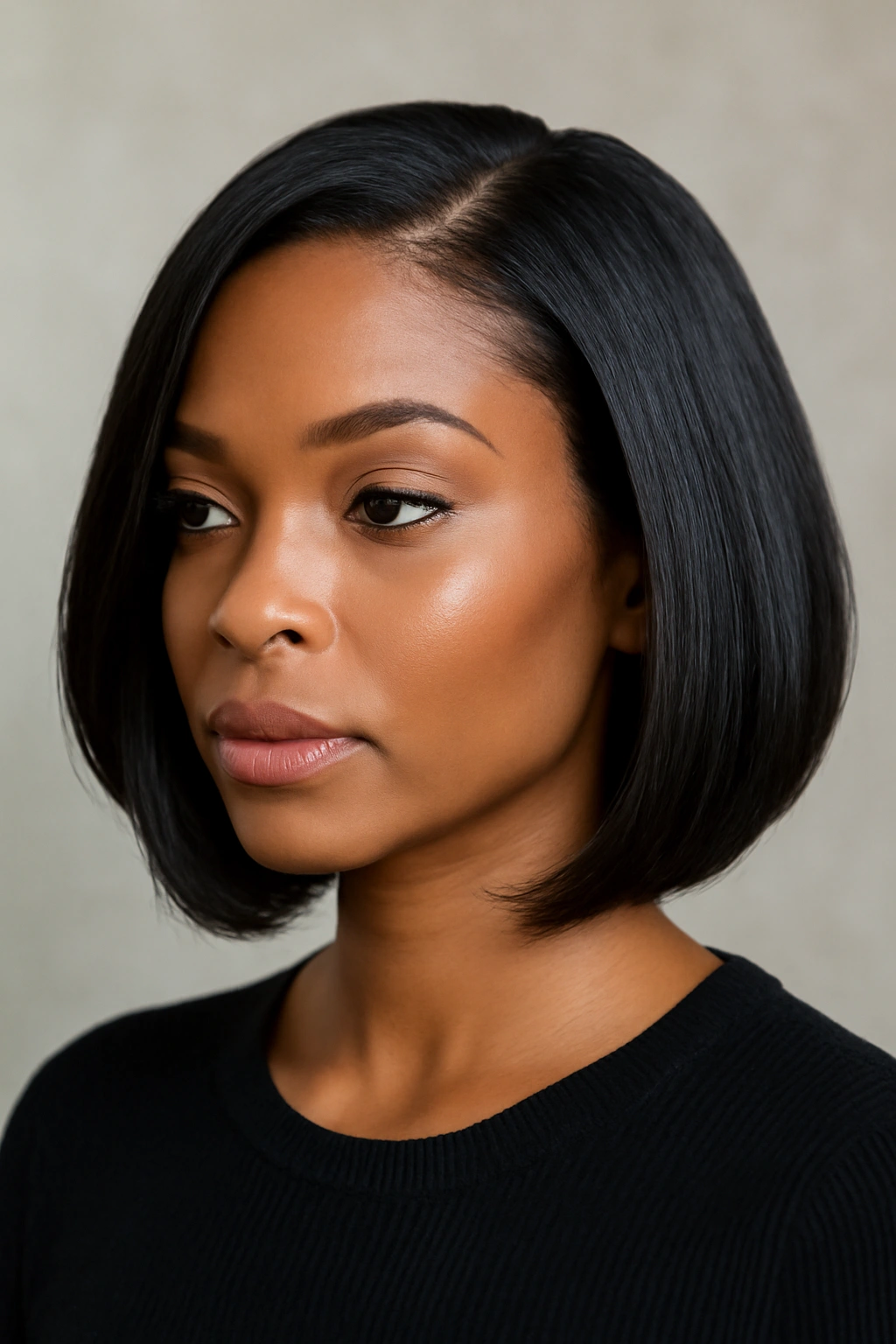
A sleek lob sew-in is a short style that sits roughly chin-length or just above, with minimal layering to maintain clean lines and a polished aesthetic. The hair is installed tightly against the scalp and typically styled with a deep side part or middle part, emphasizing the smooth, sophisticated finish. Subtle layers are added just at the ends to create movement without destroying the sleek vibe, and the style often features a slight flip or bend at the ends rather than being completely blunt.
What Makes This Style Eternally Chic
The sleek lob is the grown-up, sophisticated choice if you want a short style that works in professional settings, social events, and casual settings equally well. There’s something inherently elegant about a well-executed sleek lob — it communicates polish, intention, and confidence. This style is incredibly flattering because the chin-length cut naturally frames the face, and the side part creates an elongating effect. The minimal layering keeps the style looking intentional rather than choppy, and the sleek installation means your hair looks salon-fresh every single day without styling.
How to Keep It Looking Perfect
- Blow-drying is essential: This style requires at least a quick blow-dry with a flat iron to maintain the sleek texture — 10-15 minutes in the morning keeps it polished
- Hair texture needed: Straight or very lightly wavy hair; anything too curly will compromise the sleek effect
- Scalp care: Because this installs tightly, spend 2 minutes every other day gently massaging your scalp with your fingertips to stimulate circulation and prevent itching
- Refresh appointments: Every 3-4 weeks to re-tighten the roots and reshape any areas that have loosened
Real tip: Ask your stylist for a protective leave-in conditioner spray when you install this style — even though it’s sleek, your natural hair underneath still needs moisture.
5. The Textured Undercut
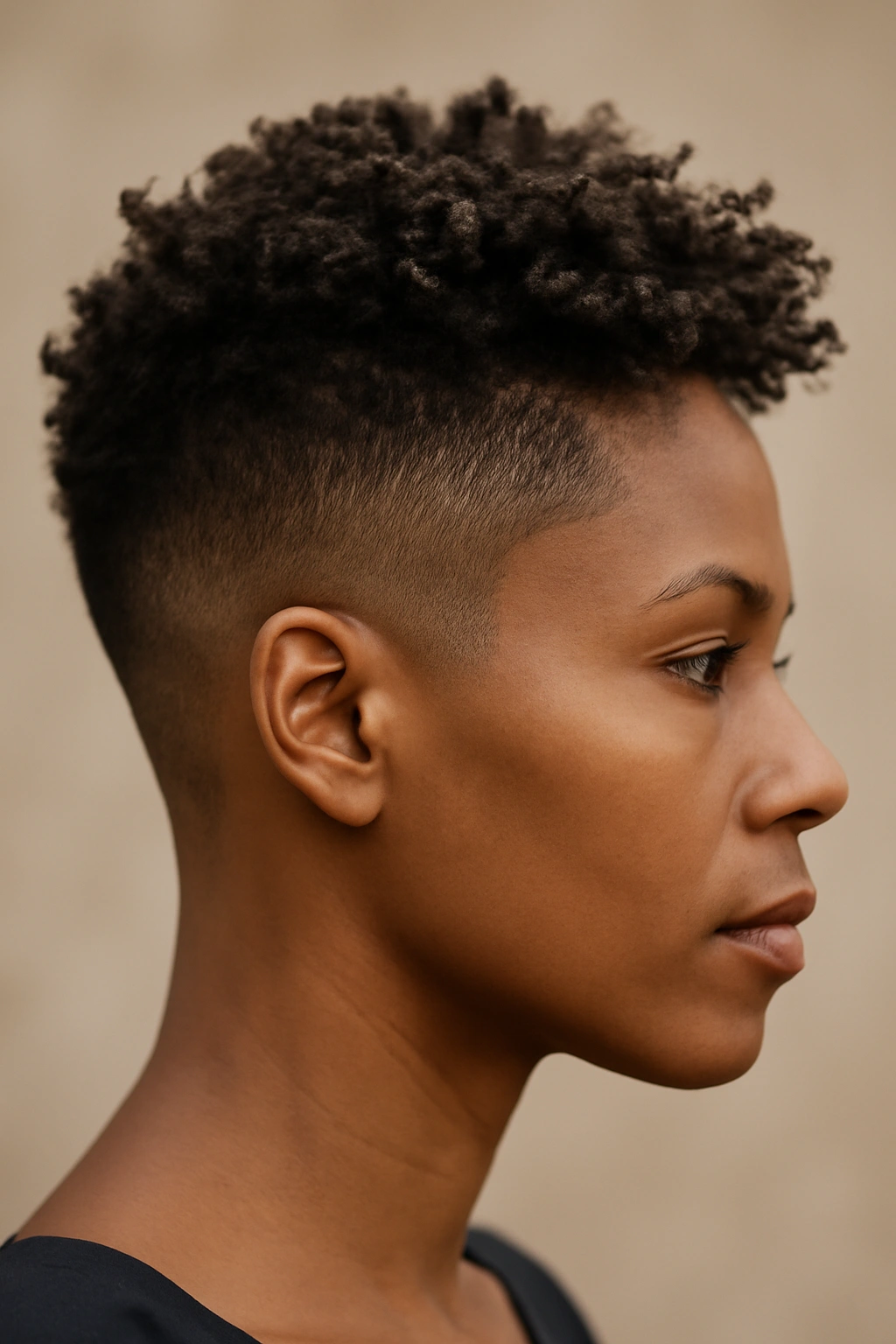
An undercut sew-in features longer, textured hair on top (typically 2-4 inches) with significantly shorter, tapered sides and back. The contrast is what makes the style — the voluminous top sits dramatically above the nearly shaved sides, creating an undeniable visual punch. Unlike a fade, which gradually gets shorter, an undercut has a more defined line where the longer hair meets the shorter sides. The top can be coily, wavy, or loosely curled, and it’s often styled with texture and movement rather than sleekness.
Why This Aesthetic Works
The textured undercut is for people who want their hairstyle to be the first thing you notice about them. It’s fashion-forward, artistic, and unquestionably contemporary. The extreme contrast between the top and sides creates an incredibly flattering frame for the face — the volume on top draws eyes upward, and the clean sides make facial features feel more defined. This style works beautifully for creative professionals, performers, or anyone who uses their appearance as part of their self-expression. The undercut has a rebellious, confident energy that’s genuinely empowering to wear.
What You Need to Commit To
- Maintenance is real: The sides need touching up every 7-10 days to maintain that sharp contrast — this isn’t a low-maintenance style
- Styling the top: You’ll want to spend time daily creating texture and definition in the top portion — it should look intentionally textured, not just “there”
- Hair requirements: Textured hair for the top (curly or wavy), and your stylist can use straight or lightly textured hair for the sides to show clean lines
- This style isn’t for everyone: If you’re not willing to commit to regular maintenance or if you prefer a more subtle aesthetic, skip this one
Honest note: This is genuinely high-maintenance in terms of styling and upkeep. It looks absolutely incredible when executed with precision, but it requires dedication. Make sure you’re ready for that commitment before booking.
6. The Structured Waves with Clean Fade
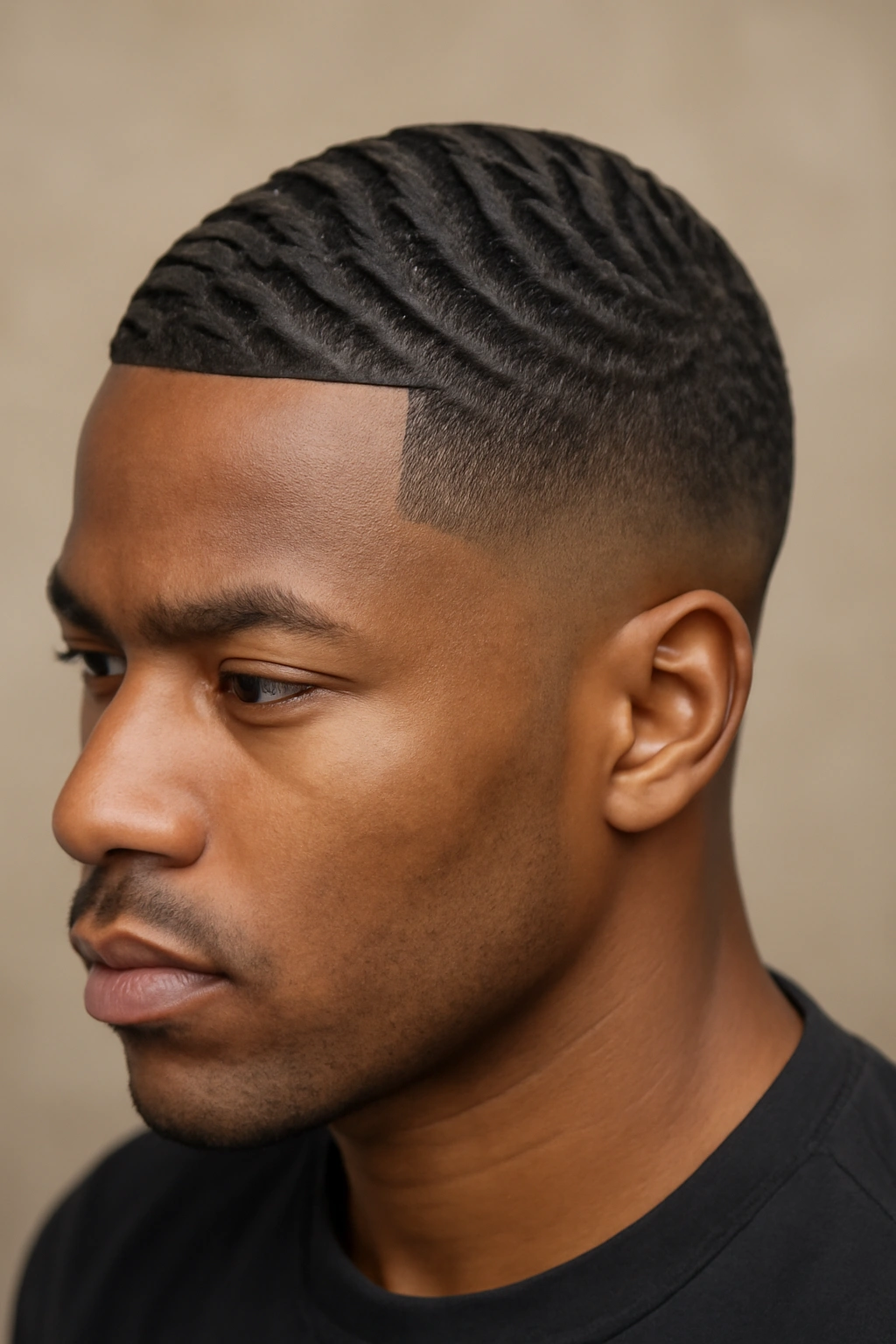
This style combines a sharp fade on the sides and back with structured wave patterns across the crown and top of the head. The waves are created using specific installation techniques that work the hair into diagonal or curved patterns, creating a hypnotic, visually interesting texture across the top. The fade underneath provides clean contrast, and the overall effect is incredibly polished and intentional-looking. The waves can be tight and geometric or slightly more organic and flowing, depending on your preference.
Why This Style Makes an Impact
Structured waves represent a real blend of artistry and precision — your stylist is literally creating a wearable art piece on your head. The wave patterns catch light beautifully and create shadows and highlights that change depending on how you move and tilt your head. This style is universally flattering because the patterns draw the eye and create visual interest regardless of face shape. The combination of the fade plus the waves reads as extremely groomed and intentional, making this perfect for anyone who loves high-impact styling. It’s bold without being as edgy as some other short styles.
Installation and Maintenance Reality
- Installation time: 3-5 hours depending on the complexity of the wave patterns you want
- Skill required: This requires a stylist with specific expertise in wave installation — not every sew-in specialist offers this
- Styling: The waves should be brushed out daily with a specific brush (usually a soft-bristled wave brush) to maintain the pattern clarity
- Fade maintenance: Every 7-10 days to keep the contrast between the waves and fade sharp
- Longevity: 4-6 weeks before the waves start loosening and need refreshing
Pro tip: Ask your stylist to photograph the wave patterns from multiple angles right after installation so you know exactly how they should look when you’re styling them at home.
7. The Curly Mohawk
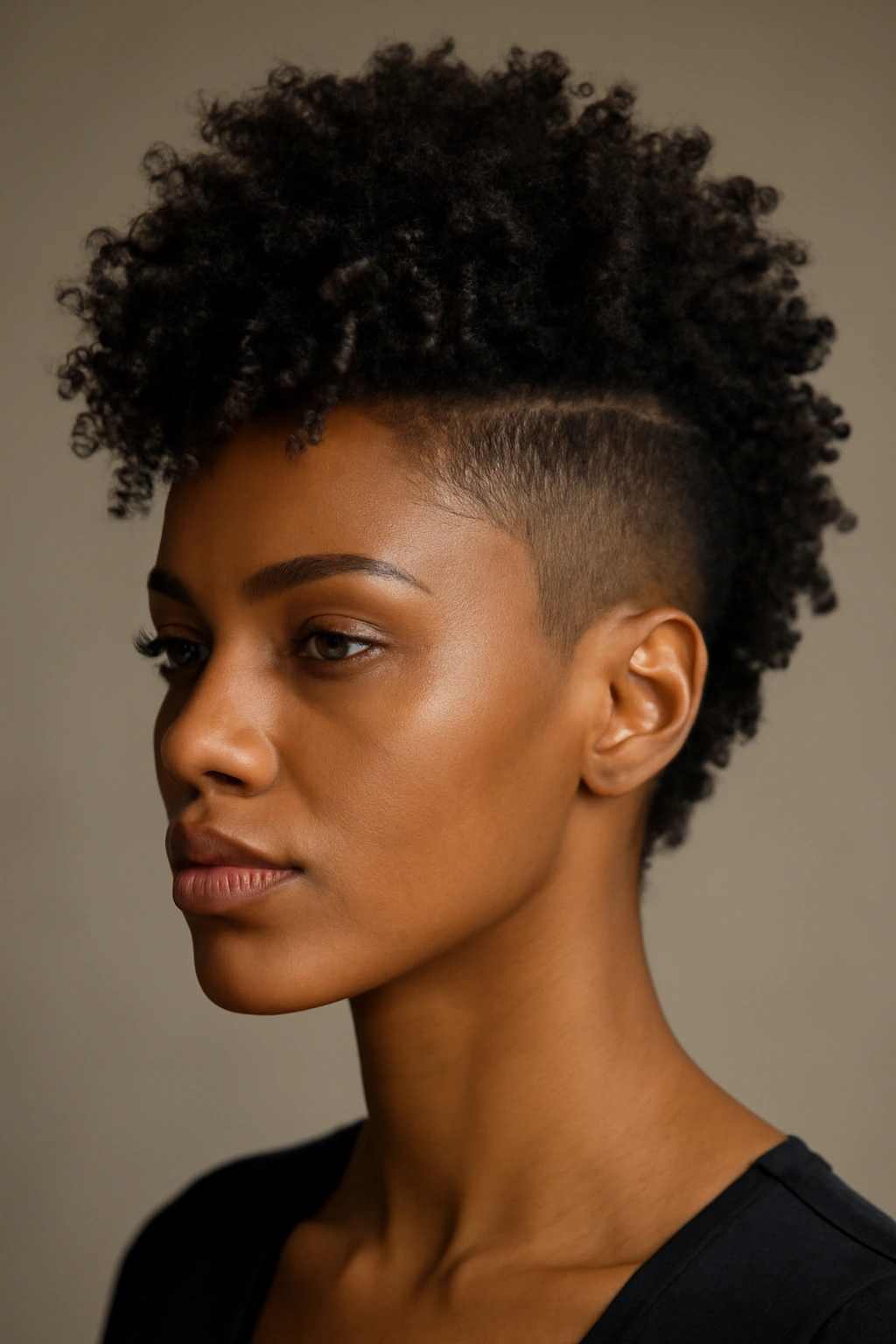
A curly mohawk sew-in features voluminous, full curls running down the center of the head from forehead to nape, with the sides either faded close to the scalp or completely clear. The mohawk shape is created through the installation pattern, and the curls on top are full and bouncy, typically 2-3 inches of height and texture. This is one of the most expressive short sew-in styles — it’s inherently creative and impossible to wear timidly. The curls can be defined ringlets or loose, flowing waves; it’s about having that concentrated volume running down the center.
The Energy This Style Projects
The curly mohawk is for people who understand that their hair is an art form. It projects creativity, confidence, and a willingness to be visibly yourself without apology. This style is incredibly fun and works beautifully as a temporary exploration if you’ve never gone for something this bold — sew-in hair means you can experiment without committing to the chop. The mohawk shape is naturally flattering because it elongates the face and draws attention upward. From a pure styling perspective, it’s one of the most satisfying shapes to see catch the light and move when you turn your head.
Making This Work Practically
- Installation: 2-3 hours for a clean, well-executed mohawk
- Styling requirements: The curls need daily definition work — either with your fingers, a pick, or a curling iron to refresh the curl pattern
- Sleeping: You’ll want to pineapple the center curls (tie them up loosely on top of your head) to prevent matting overnight
- Versatility note: If you want to wear this style more casually sometimes, ask your stylist to position the hair so you can smooth the top down into a more subtle style for days when you want something lower-key
- Confidence factor: This requires genuine comfort with being noticed — if that’s not your vibe, consider a subtler style
Real talk: This style isn’t for blending in, and that’s the point. Wear it if and only if you genuinely love the aesthetic.
8. The Sleek Pixie with Edge Details
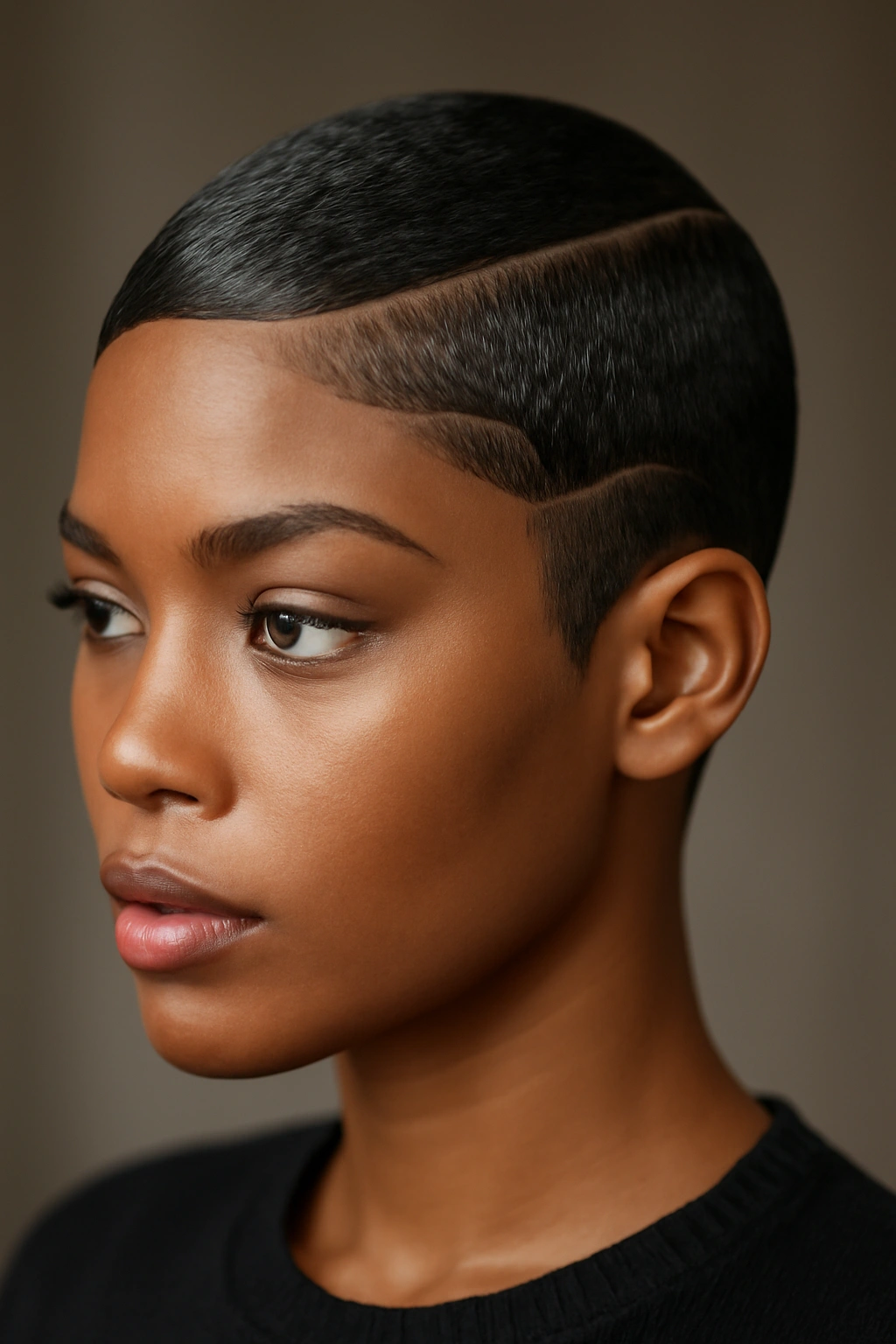
This style combines the sophisticated simplicity of a sleek pixie cut — hair installed tightly and styled smooth against the scalp — with intentional edge details like shaved or faded lines carved into the sides, back, or around the temples. The overall length stays short (typically 1-2 inches), but the edge designs add an element of artistry and personal expression. The designs can be geometric patterns, your initials, lines that follow your natural hairline, or any custom design you want. The contrast between the sleek main hair and the cleared design areas is what creates the visual impact.
Why This Approach Works
The sleek pixie with edge details offers maximum polish combined with creative expression. You get the undeniable elegance and low-maintenance appeal of a sleek pixie, but with a personalized artistic element that makes it uniquely yours. The edge designs don’t require additional styling — they’re part of the installed look. This is perfect if you want something sophisticated enough for professional settings but with enough personality to feel authentically you. The designs can be temporary (your stylist can grow them out and re-cut them as they heal) or more permanent depending on how you want to approach it. It’s a great way to test whether you like bold edge work before committing to something like an undercut.
Technical and Practical Considerations
- Design mapping: Your stylist should sketch or map any designs before cutting — there’s no going back once the line is cut
- Placement options: Sides, behind the ears, around the temples, or along the lower nape
- Healing: Carved designs will heal over a few weeks; during healing, be gentle with that area and keep it clean
- Regrowth: As your hair grows back, you’ll have the option to re-carve the design or let it grow out completely
- Professional settings: Edge designs can read as artistic and creative in some workplaces or potentially too bold in others — consider your specific environment
Worth considering: Designs add real personality, but they also add visual weight to the style. Make sure the design you choose feels authentically like you, not just trendy.
9. The Layered Wolf Cut
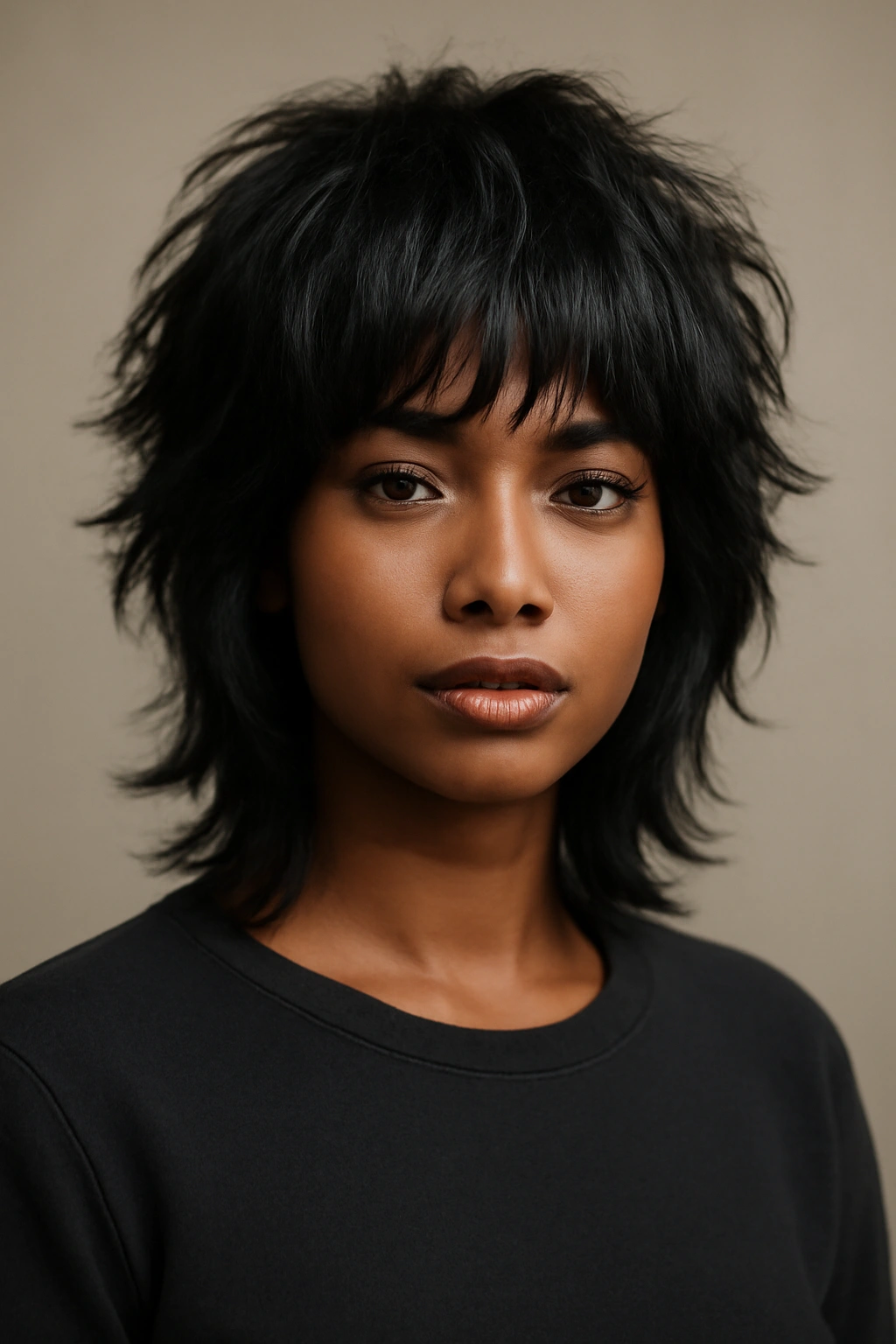
A wolf cut sew-in is a modern, playful style that combines short, choppy layers throughout with voluminous texture and movement. It’s less dramatic than some of the undercut or mohawk styles but more artistically layered than a traditional bob or pixie. The layers are cut at various lengths to create a multidimensional, slightly “messy” aesthetic that actually requires intention and skill to execute well. The overall effect is textured, youthful, and visibly contemporary — this style says you’re aware of what’s happening in fashion without being costume-y about it.
The Appeal of Layered Texture
The layered wolf cut works beautifully because it flatters virtually every face shape. The varying lengths create a softness that frames the face, while the texture throughout adds visual interest and movement. This style bridges the gap between classic and trendy — it’s fashionable without feeling like a costume or trend piece you’ll get tired of quickly. The layering means the style has personality and dimension that reads as intentional rather than just “a short haircut.” It’s also incredibly photogenic because the layers catch light in compelling ways. Unlike some high-maintenance styles, the wolf cut actually looks better with a slightly undone texture, which makes daily styling significantly easier.
Making This Layered Look Work
- Installation: 2-3 hours; your stylist needs to be skilled at creating intentional layers rather than just choppy mess
- Hair texture: Works beautifully with wavy, curly, or coily hair; you want texture that naturally enhances the layered cut
- Styling: A texturizing spray or mousse in the morning, then finger-styling or a light touch-up with a curling iron keeps the layers defined
- Length variation: Layers can range from very subtle (just an inch of variation) to dramatic (significant length differences throughout)
- Refresh timeline: Every 3-4 weeks to maintain layer definition and keep the cut from getting too grown-out and shapeless
Pro tip: Show your stylist multiple reference photos of wolf cuts you love. The difference between a wolf cut that slaps and one that looks like an accidental hack job is really about intentional placement of the layers.
10. The Geometric Fade
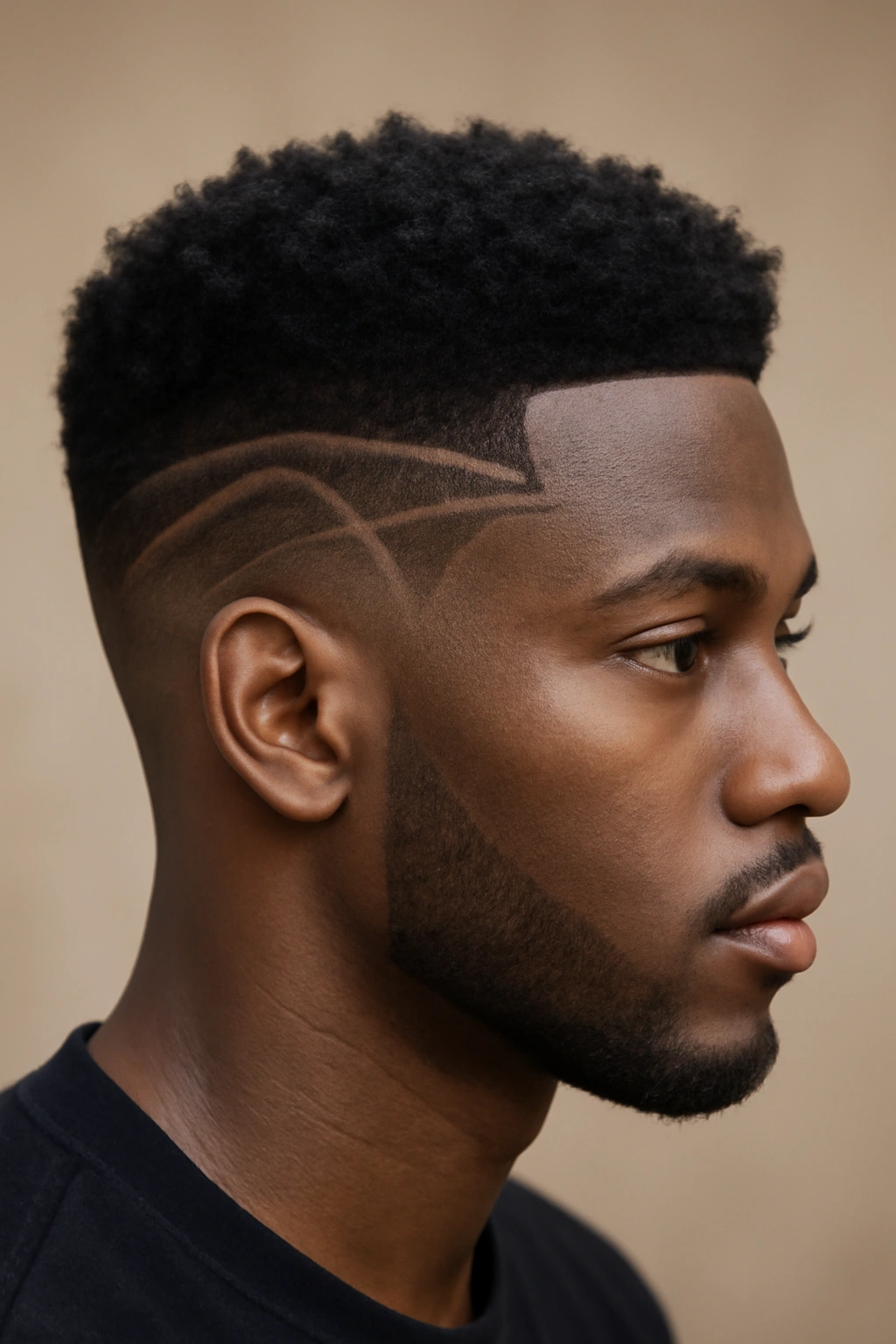
A geometric fade sew-in features sharp, precise fade work that creates distinct geometric shapes or patterns on the sides and back — think clean lines, angles, and possibly even architectural patterns built into the fade itself. The top is typically left longer (2-4 inches) with texture or waves, creating stark contrast between the geometric fade work and the fuller crown. This style is almost sculptural — your head becomes a canvas for precise barber artistry. Common geometric fades include sharp diagonal lines, triangular sections, or repeating patterns that create visual movement around the head.
The Artistry Behind This Style
A geometric fade is genuinely wearable art. This style requires a barber or stylist with serious technical precision and a real understanding of spatial relationships and design. The result is undeniably striking — geometric fades command attention and communicate that you understand fashion and aesthetics at a sophisticated level. The contrast between the geometric precision of the fade and the softer texture on top creates perfect visual balance. This style works beautifully for creative professionals, performers, or anyone who uses their appearance as a form of self-expression. It’s bold without being chaotic, and intentional without being conservative.
What This Requires From You
- Finding the right artist: Not all fade specialists offer geometric work — look for someone who specifically showcases this style in their portfolio
- Precision is everything: A geometric fade done well is stunning; a geometric fade done poorly is just confusing. Only book with someone whose work you’ve personally seen
- Maintenance is frequent: The geometric lines need touching up every 7-10 days to maintain sharpness as the hair grows back
- Styling the top: Depending on what you have on top, plan for 10-20 minutes of daily styling to complement the detailed fade work
- Commitment level: This is high-maintenance, high-impact styling that requires someone who genuinely loves putting time into their appearance
Real thing to know: This style is an investment in both money and daily commitment. Before booking, make sure you’re genuinely ready to maintain this level of detail.
Key Takeaways
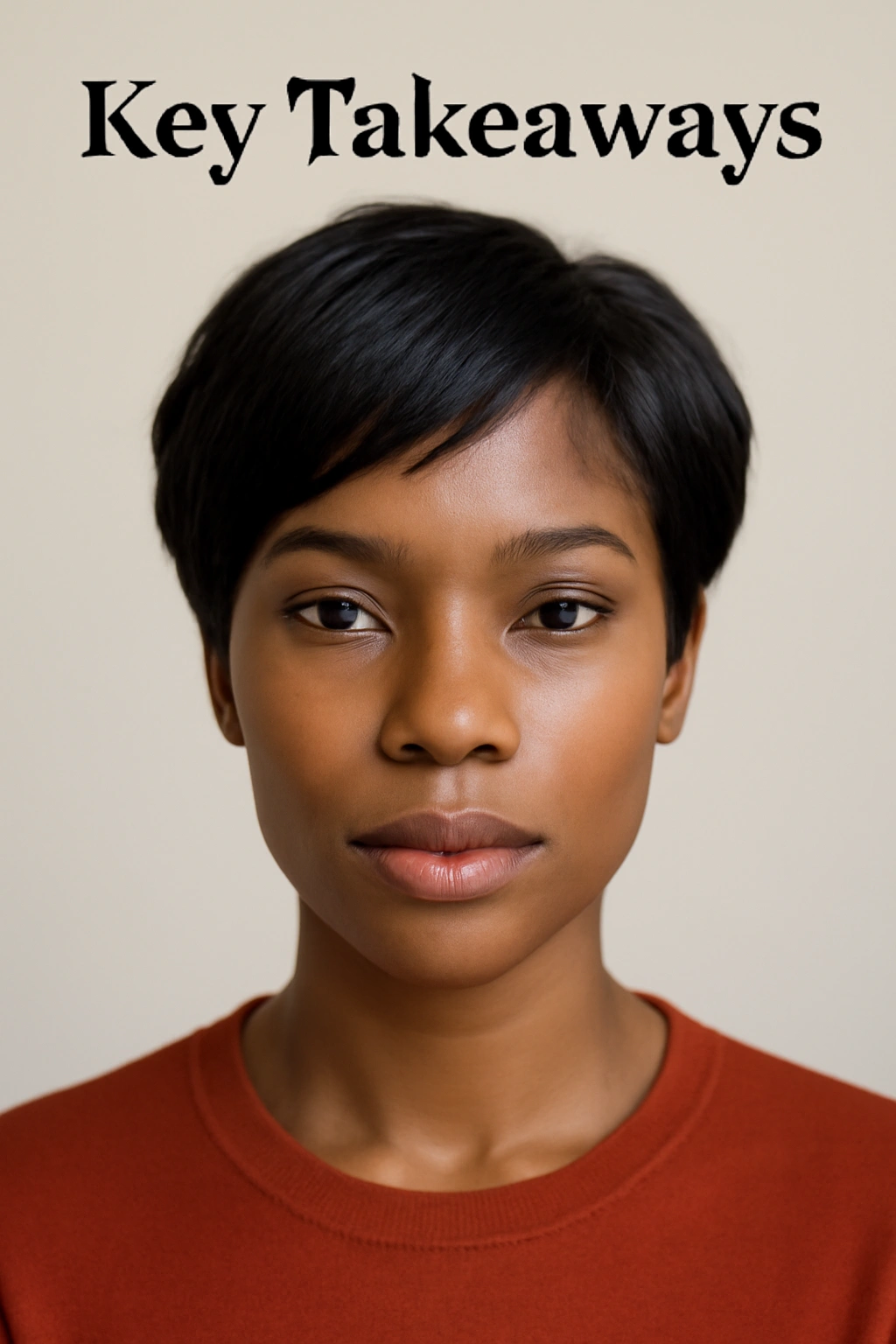
The variety available in short sew-in styles means you can find something that matches exactly who you are — whether you’re drawn to sleek sophistication, textured creativity, or bold edge work. Each of these 10 styles offers something different, from low-maintenance polish to high-impact artistry. The beauty of short sew-ins is that they’re temporary enough to experiment with, protective enough to keep your natural hair healthy, and versatile enough to express your personal style completely.
Short sew-in installation and maintenance do require commitment, but that commitment is totally manageable. You’re looking at installation times ranging from 2-5 hours and maintenance appointments every 2-4 weeks depending on the style. The daily styling requirements vary significantly — some styles (like the sleek lob or sleek pixie) need just 10-15 minutes of touch-ups, while others (like the geometric fade or structured waves) require more intentional styling. Factor in what your realistic daily routine looks like before choosing your style.
The most important thing is picking a stylist who specializes in the specific style you want and who has a strong portfolio of their work. These short sew-in styles depend entirely on precision, clean lines, and understanding hair texture and installation techniques. When you find a stylist you trust, have a detailed consultation about exactly what you want, bring reference photos from multiple angles, and ask specific questions about maintenance and daily styling requirements. You’re not just getting a haircut — you’re investing in a specific aesthetic vision, and the stylist is your partner in bringing that to life.
