



Faux locs have become one of the most versatile and transformative protective styles available to textured hair. Whether you’re drawn to them for their aesthetic appeal, the protective benefits they offer your natural hair, or the creative freedom they provide, there’s truly a faux loc style for every mood, face shape, and lifestyle. The beauty of faux locs lies in their flexibility — you can wear them short and sleek, long and flowing, thin and delicate, or thick and statement-making. Color variations, texture combinations, and styling techniques mean that no two faux loc installations look exactly the same, giving you endless possibilities to express your personal style.
What makes faux locs especially appealing right now is how they’ve evolved beyond the traditional straight locs many people picture. Modern faux loc styles incorporate everything from wavy patterns to curly textures, colored extensions to metallic accents, and creative accessories that transform them into genuine art. This isn’t just a hairstyle — it’s a canvas for self-expression that can be as understated or as bold as you want it to be. Whether you’re considering faux locs for the first time or you’re a returning enthusiast looking to try something new, the options have never been more exciting or wearable for different occasions and preferences.
1. Classic Straight Faux Locs
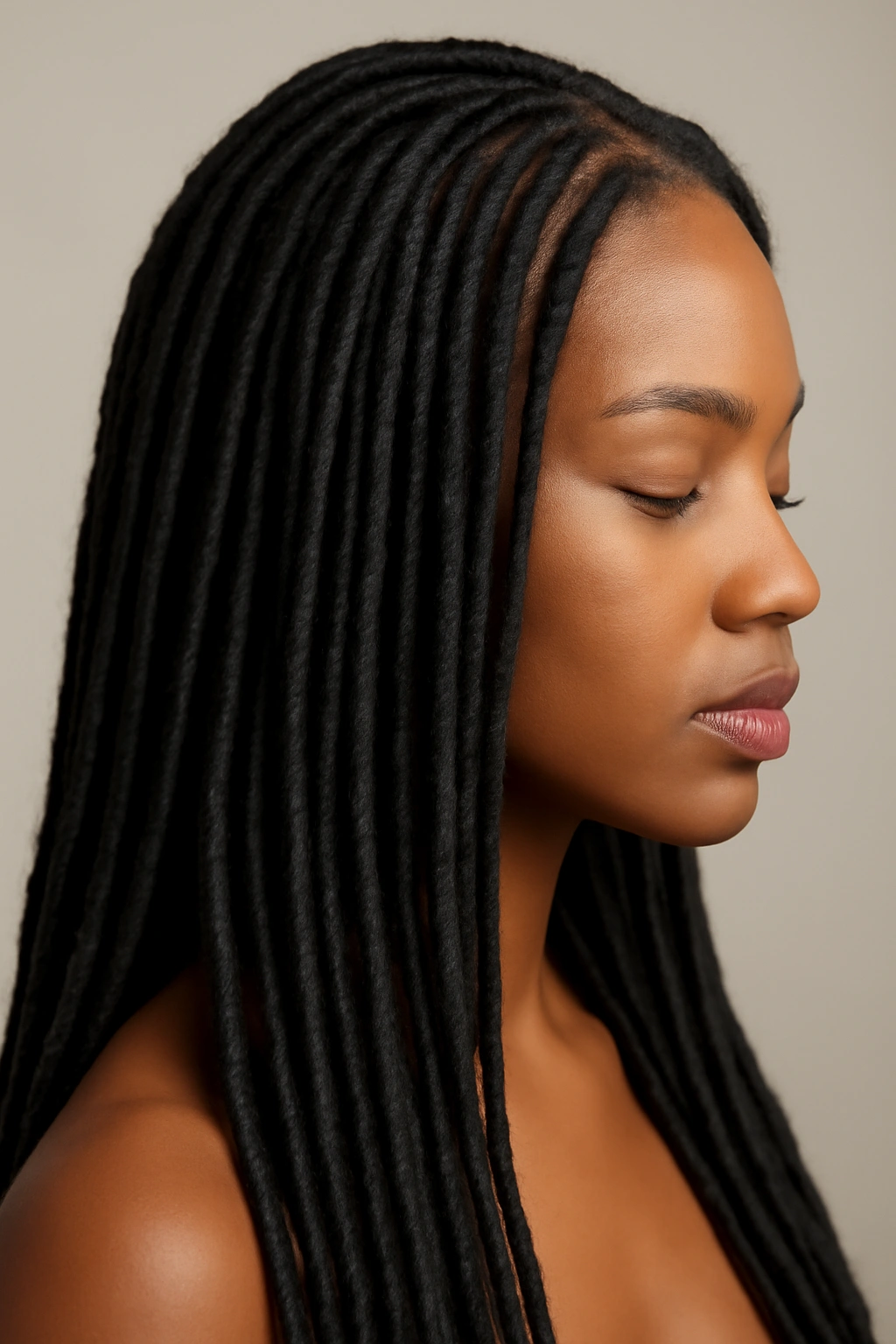
The classic straight faux loc is the foundation that everything else builds from — and there’s a reason it remains the most iconic and timeless version. This style features clean, uniform locs that hang straight down from root to tip, creating a neat, intentional appearance that works in virtually every setting. The simplicity of the straight design actually showcases the quality of the installation and the texture of the extensions used, making this the perfect choice if you’re drawn to understated elegance.
Why This Style Works for Everyone
Classic straight faux locs have a polished appeal that transitions seamlessly from professional environments to casual outings. The uniformity creates visual balance and elongates the face, which is why so many people find this foundational style flattering. Unlike more ornate faux loc variations, the straight version lets your natural face features take center stage while the locs frame your face and neck beautifully. This style also tends to feel lighter and less cumbersome than thicker, longer variations, making it an excellent choice if you’re new to wearing faux locs.
Installation and Maintenance Tips
- Braiding base: Your natural hair is sectioned and braided tightly from scalp to where the locs will begin, providing the anchoring point for extensions
- Wrapping technique: The faux loc extensions are wrapped around the braid base with precision, creating the smooth, seamless finished look
- Scalp care during wear: Keeping your scalp moisturized and clean throughout the 4-6 week wear period prevents buildup and flaking
- Nighttime protection: Wrapping locs gently with a silk or satin scarf reduces frizz and extends the life of the style between touch-ups
Pro tip: The longevity of straight faux locs depends heavily on how tightly and precisely they’re wrapped. A skilled stylist will wrap in a way that looks polished without being so tight that it creates tension on your natural hair.
2. Wavy Faux Locs with Textured Patterns
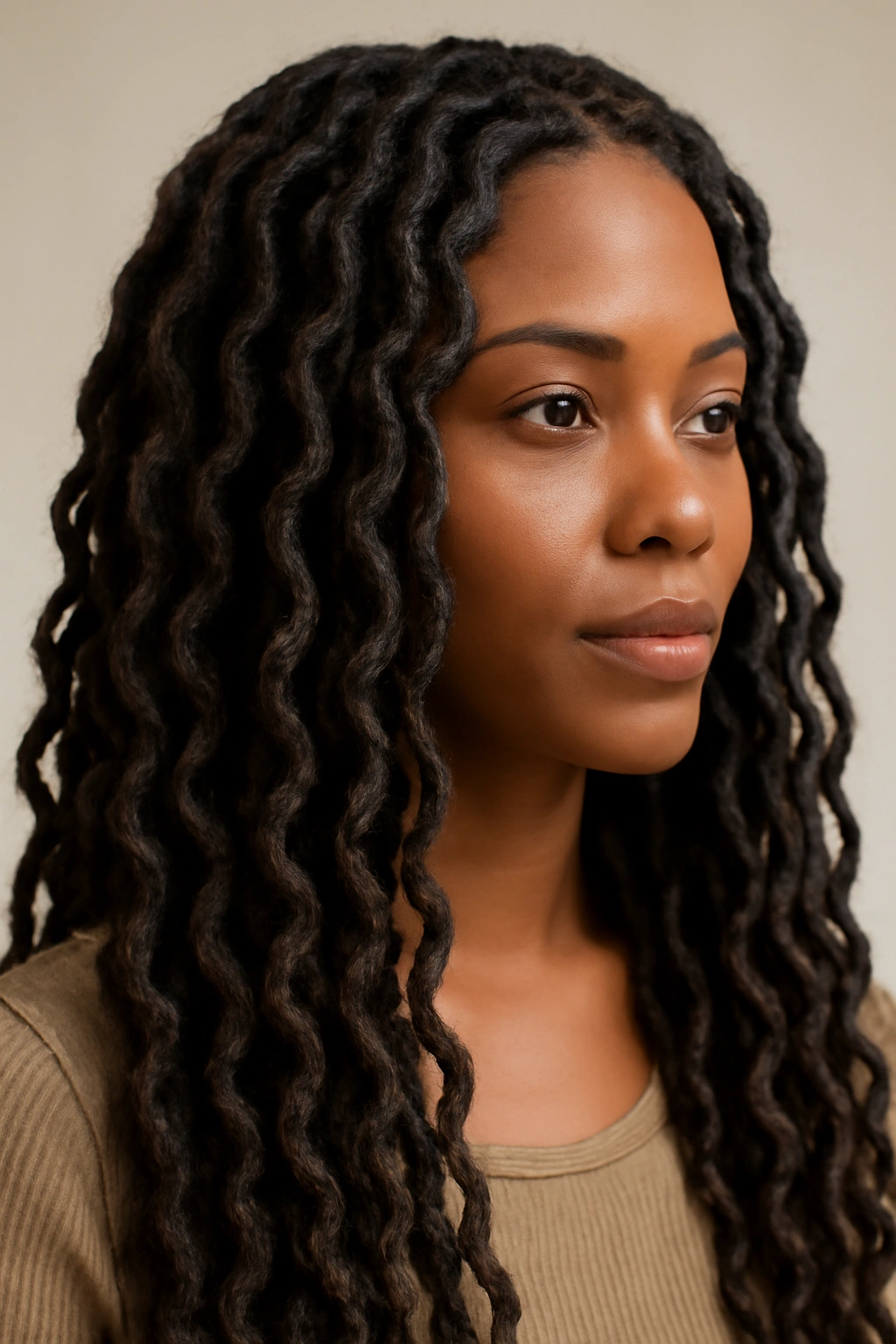
Wavy faux locs bring movement and dimension to the protective style landscape. Instead of hanging completely straight, these locs feature deliberately created wave patterns that run throughout their length, catching light differently as you move. This variation adds softness and a more organic, less severe appearance while maintaining all the protective benefits of traditional faux locs.
The Appeal of Movement and Dimension
Wavy faux locs create visual interest without requiring constant styling or manipulation. The wave pattern is typically set into the locs during installation, often using boiling water to help the pattern set permanently, so you wake up with dimension already built in. This style feels more relaxed and casual than the structured straight version, making it ideal if you prefer a softer aesthetic. The texture also helps disguise any minor imperfections in the installation and makes the locs appear thicker and fuller than their straight counterparts.
Creating and Maintaining Waves
- Wave-setting methods: Hot water, steam, or specific styling techniques set the wave pattern during installation so it lasts throughout the wear period
- Refreshing waves: Lightly dampening the locs and re-wrapping them around flexirods or in braids overnight can rejuvenate the wave pattern halfway through the wear cycle
- Texture preservation: Sleeping on a silk pillowcase and avoiding excessive manipulation helps the wave pattern stay crisp and defined
- Reactivating after washing: A quick pass with a flat iron on low heat or a gentle warm water rinse can bring back wave definition after the style is cleansed
Worth knowing: Wave patterns look best when the locs are left down rather than pulled up into updos — if you frequently style your locs up, you might lose some of the wave definition over time.
3. Curly Faux Locs with Spiraling Texture
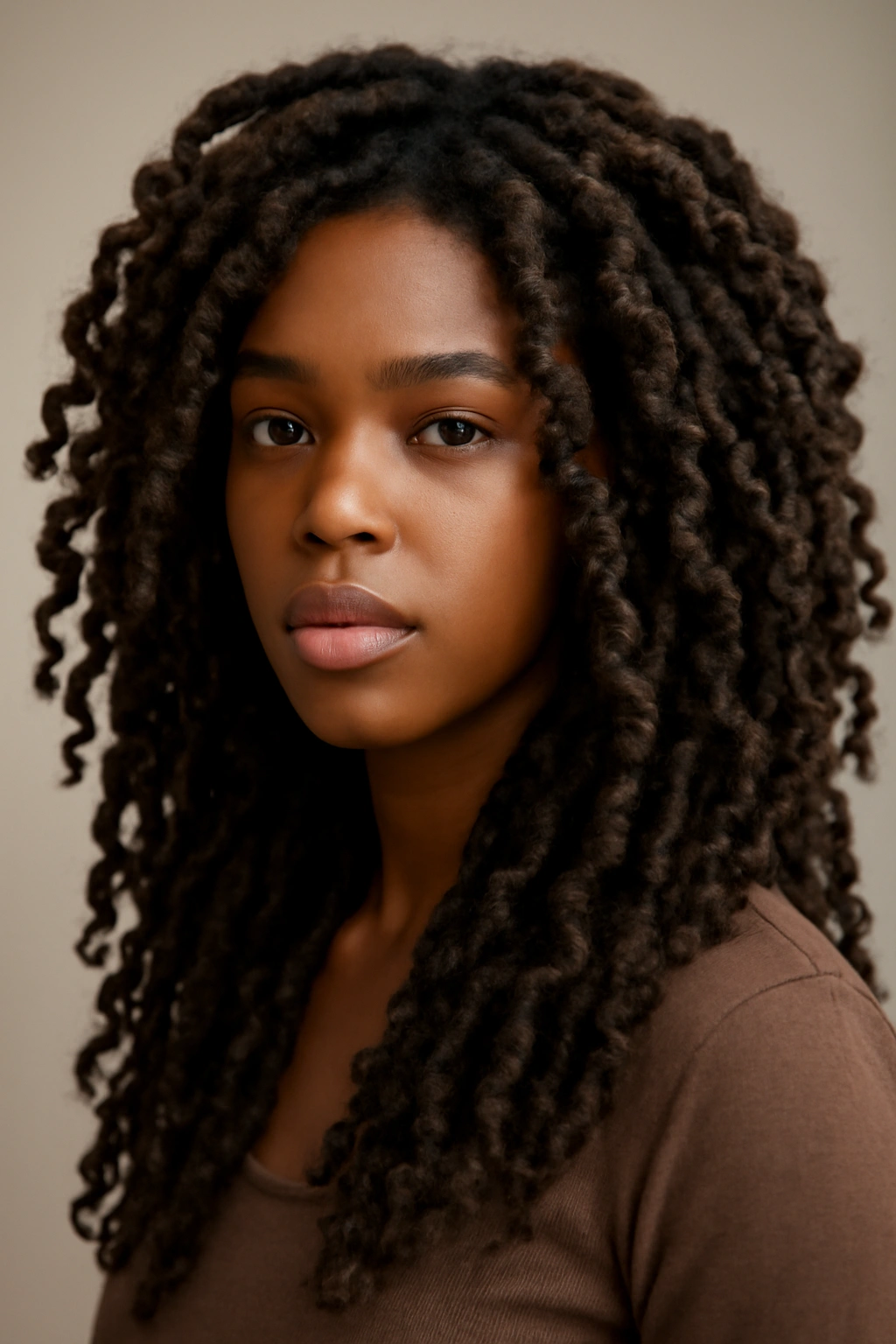
Curly faux locs take texture to the next level with tight spirals or loose curls throughout the entire length of each loc. This variation combines the protective benefits of locs with the playful bounce and volume of curled hair, creating a style that feels both put-together and effortlessly textured. The curls catch light beautifully and add significant visual dimension, making this a standout choice if you want your hairstyle to be a genuine statement.
Why Curls Add Visual Impact
Spiraling curls throughout faux locs create the illusion of much fuller, thicker hair than straight or wavy variations. The texture breaks up the line of the locs and adds personality and movement that responds to your own motion as you go through your day. This style photographs exceptionally well because the curls reflect light and create depth, and it feels naturally playful while still being protective and manageable. Curly faux locs also tend to hide the base braids and connection points better than smoother patterns, which is a bonus if you’re concerned about showing your actual hair.
Installation Techniques for Curls
- Pre-curled extensions: Some stylists use pre-curled Marley hair or faux loc extensions that already have the curl pattern installed, speeding up the installation process
- Heating and setting methods: Wrapping damp faux loc hair around flexi-rods and using heat or leaving them overnight to cool sets the curl pattern
- Curl placement strategy: Curls can start at the base, begin midway down the loc, or be concentrated at the ends depending on the desired effect
- Moisture maintenance: Curly faux locs require regular light misting with water or curl refresher to keep the pattern bouncy and defined throughout the wear period
Pro tip: Curly faux locs show the most stunning definition and bounce immediately after they’re installed, then settle into a more relaxed version of the curl pattern. Plan your special events or photo shoots for the first couple of weeks of wear if you want maximum curl definition.
4. Two-Tone Faux Locs with Color Blocking
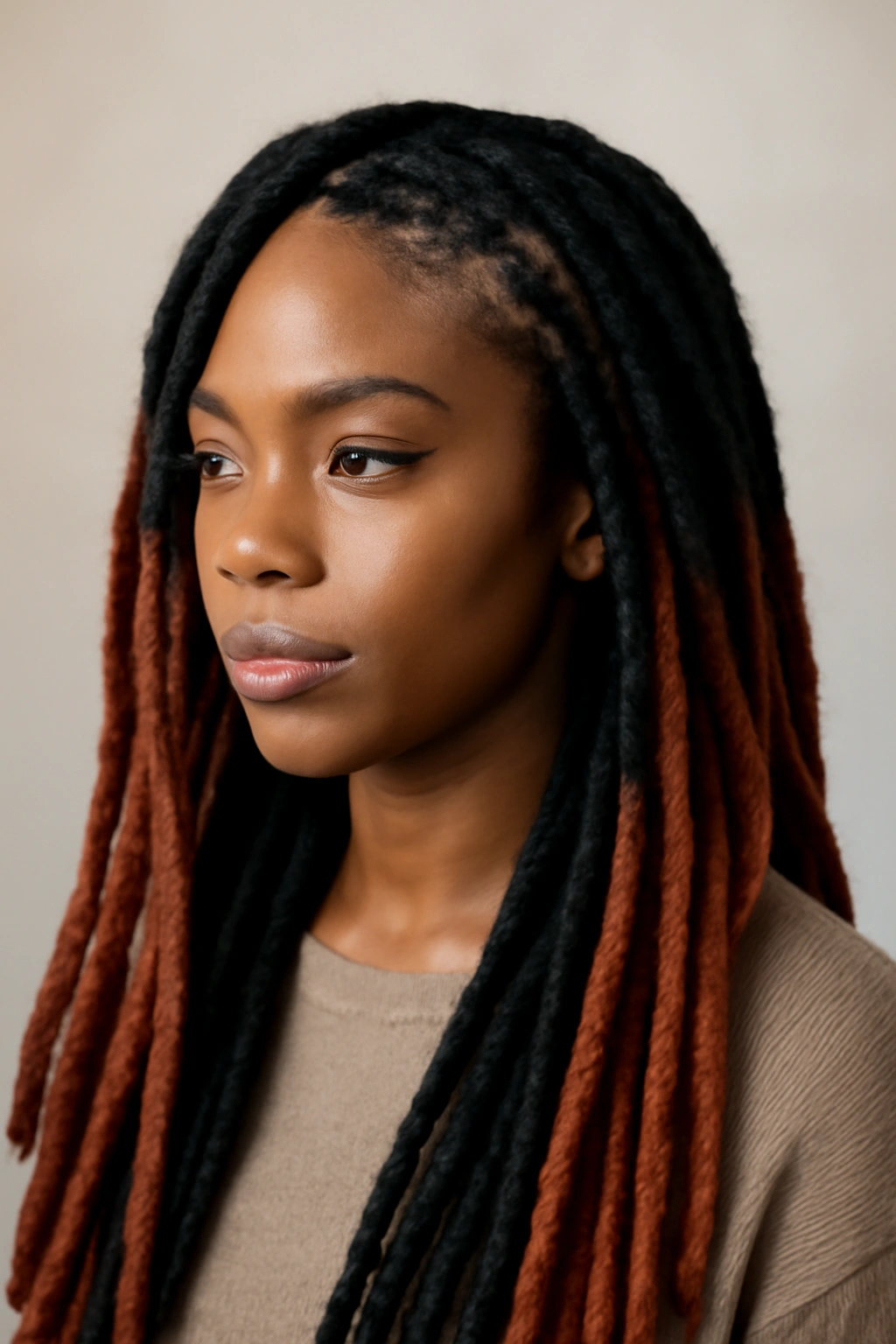
Two-tone faux locs layer two distinct hair colors throughout the style, creating striking visual contrast that makes an instant impression. This could mean alternating colors throughout the entire head, focusing the second color on the bottom half, or creating a color gradient from root to tip. The color-blocking approach transforms faux locs from a protective style into genuine self-expression and allows for creative combinations that wouldn’t look natural on loose hair.
Color Combinations That Create Impact
Popular two-tone combinations include jet black with deep burgundy, chocolate brown with honey blonde, or black with vibrant colors like rose gold or copper. The contrast is key — colors that are too close in value blend together and lose the striking effect you’re aiming for. Warm tones tend to be most flattering against most skin tones, though cool-toned platinum blonde creates beautiful contrast against deeper skin tones as well. The placement of colors matters too; reversing which color is on top and bottom from the right side to the left side creates movement and visual interest.
Selection and Installation Considerations
- Extension quality: Higher-quality extensions hold color better and resist tangling, which becomes more important with multi-colored styles
- Color placement planning: Discuss with your stylist exactly where the color transition happens and whether you want a gradual blend or sharp delineation
- Maintenance of color: Colored extensions fade with time and exposure to sunlight, water, and manipulation — be prepared to refresh or touch up as needed
- Scalp visibility: Two-tone locs can sometimes make visible scalp more apparent, so careful sectioning and installation minimize this
Insider note: Many talented locs stylists actually braid the two colors together or alternate them section by section rather than truly separating them into “top half” and “bottom half,” which creates even more visual dimension and makes the style feel more intentional.
5. Ombré Faux Locs with Gradient Color Transition
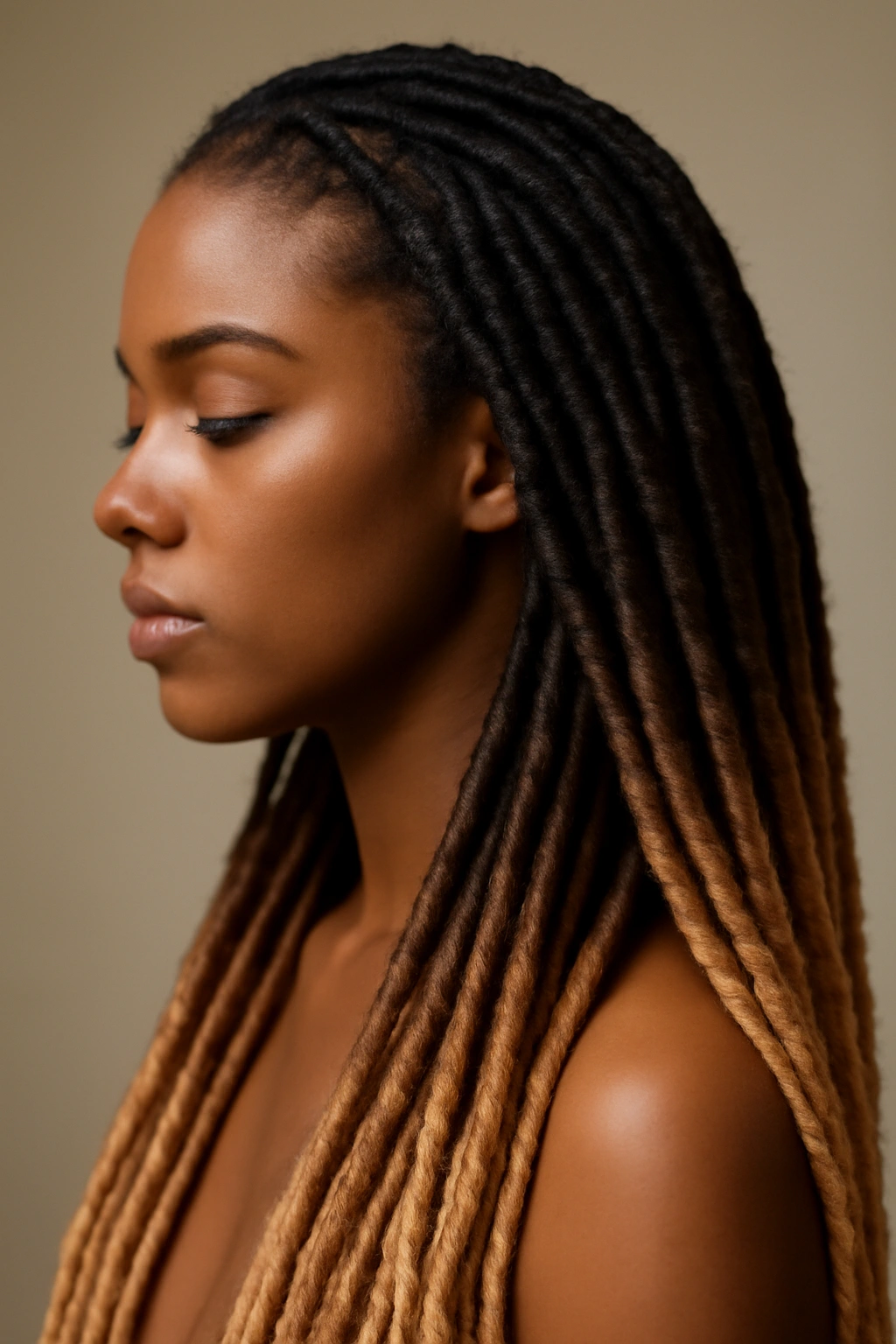
Ombré faux locs create a color gradient that transitions smoothly from a darker shade at the roots to a lighter hue at the tips — or vice versa. This style feels more sophisticated and blended than stark two-tone color blocking, offering a gradient effect that creates depth and dimension even when the locs are still. The ombré effect works beautifully in sunlight and creates a natural-looking color progression that feels intentional rather than like the style is just fading out.
Creating Seamless Color Transitions
Achieving a smooth ombré effect requires careful color selection and strategically blending the transition point between shades. Rather than an abrupt color change, the best ombré effects use 3-4 shades that transition from darker to lighter, creating a seamless gradient. This can be achieved by mixing colors within individual locs or by sectioning the head so colors gradually shift from top to bottom. Ombré locs feel especially striking when the darker base contrasts with warm blonde or copper at the tips, or when deep burgundy gradually lightens to rose gold.
Ombré Installation and Upkeep
- Color blocking by section: Different sections of hair get wrapped with increasingly lighter shades, creating the ombré effect as locs hang down
- Mixed wrapping approach: Blending colors within individual locs by alternating the wrapping pattern throughout creates a softer, more blended transition
- Lighting impact on perception: Ombré effects look most dramatic outdoors in natural sunlight where the color gradation is most visible
- Fading management: The lighter tips fade faster than the darker roots; many people re-touch just the tips halfway through the wear cycle rather than reinstalling entire locs
Worth knowing: True ombré locs require either pre-colored extensions in multiple shades or the willingness to have your stylist hand-color extensions before wrapping them, which can extend installation time and cost compared to solid-color locs.
6. Thin, Delicate Faux Locs
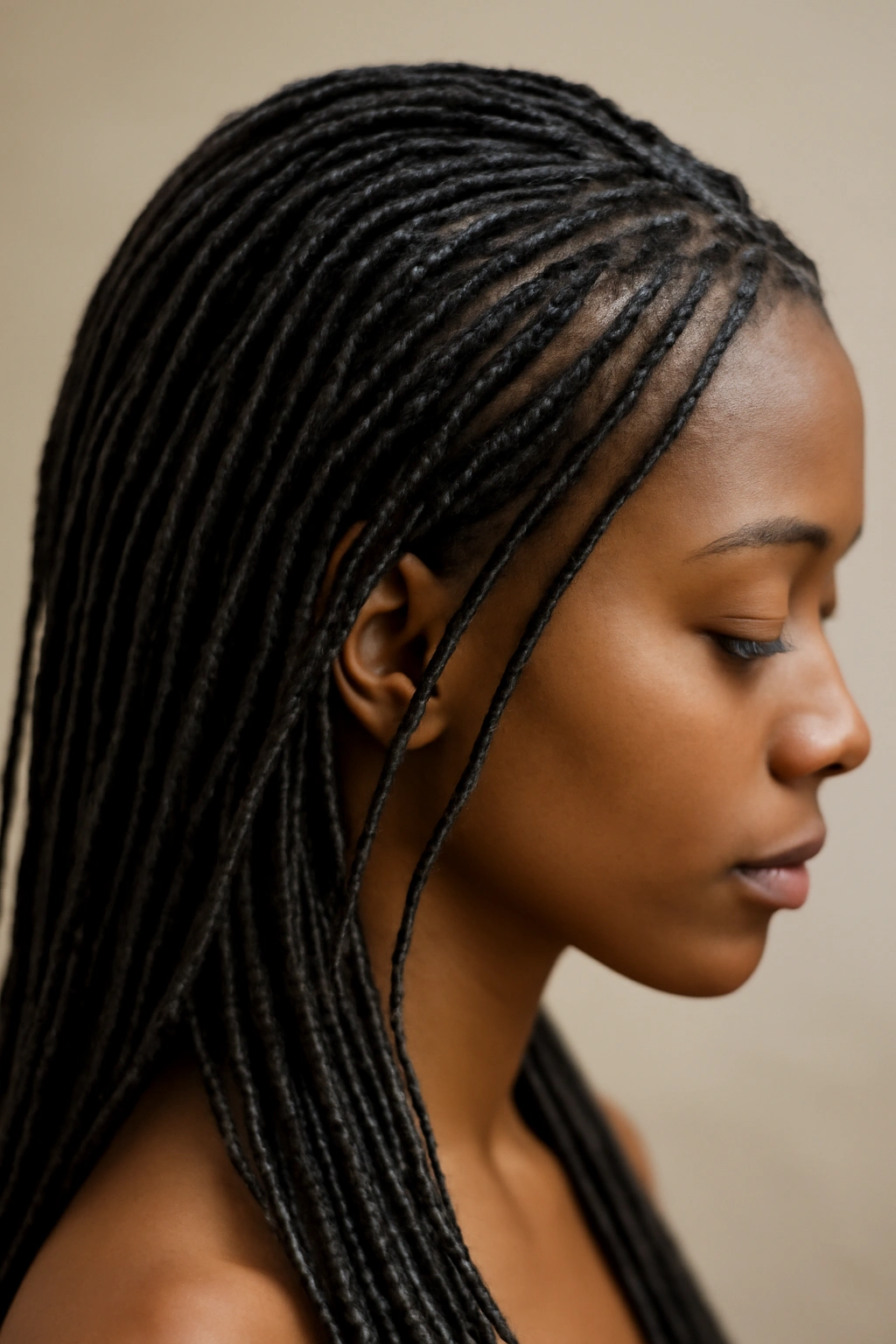
Thin, delicate faux locs create a refined, elegant appearance that feels less visually heavy than traditional thicker locs. This style works beautifully if you want the protective benefits of faux locs but prefer a more subtle, understated aesthetic. Thinner locs also allow for more creative styling options since the reduced weight means you can wear them up in intricate updos or side-swept styles without as much volume and heaviness.
The Refined Appeal of Thinner Locs
Delicate faux locs offer a sophisticated silhouette that photographs beautifully and suits professional environments perfectly. The thinner profile creates a longer, leaner line from head to hip, which is flattering for most face shapes and body types. This style also feels lighter on the head and neck, reducing strain and making the wear period more comfortable, especially in warm weather. Because thinner locs are less visually dominant, they shift focus to your face, jewelry, and overall outfit rather than to the hairstyle itself.
Installation Specifics for Thin Locs
- Smaller section sizes: Hair is sectioned into smaller, more numerous portions than with traditional locs, creating more but thinner finished locs
- Fine extension choices: Using finer-weight Marley hair or other extensions creates a more delicate final appearance
- Precise wrapping technique: Each thin loc requires careful, consistent wrapping to ensure they’re proportional and look intentional rather than scraggly
- Styling versatility: Thinner locs can be worn sleek and straight, curled at the ends, or styled into braids and updos with more flexibility than thick locs
Pro tip: If you’re planning to wear thinner faux locs in an updo, discuss with your stylist how many locs you want and where they’re positioned, since thinner locs distributed across the head might not have enough volume for a dramatic top knot or bun.
7. Thick Statement Faux Locs
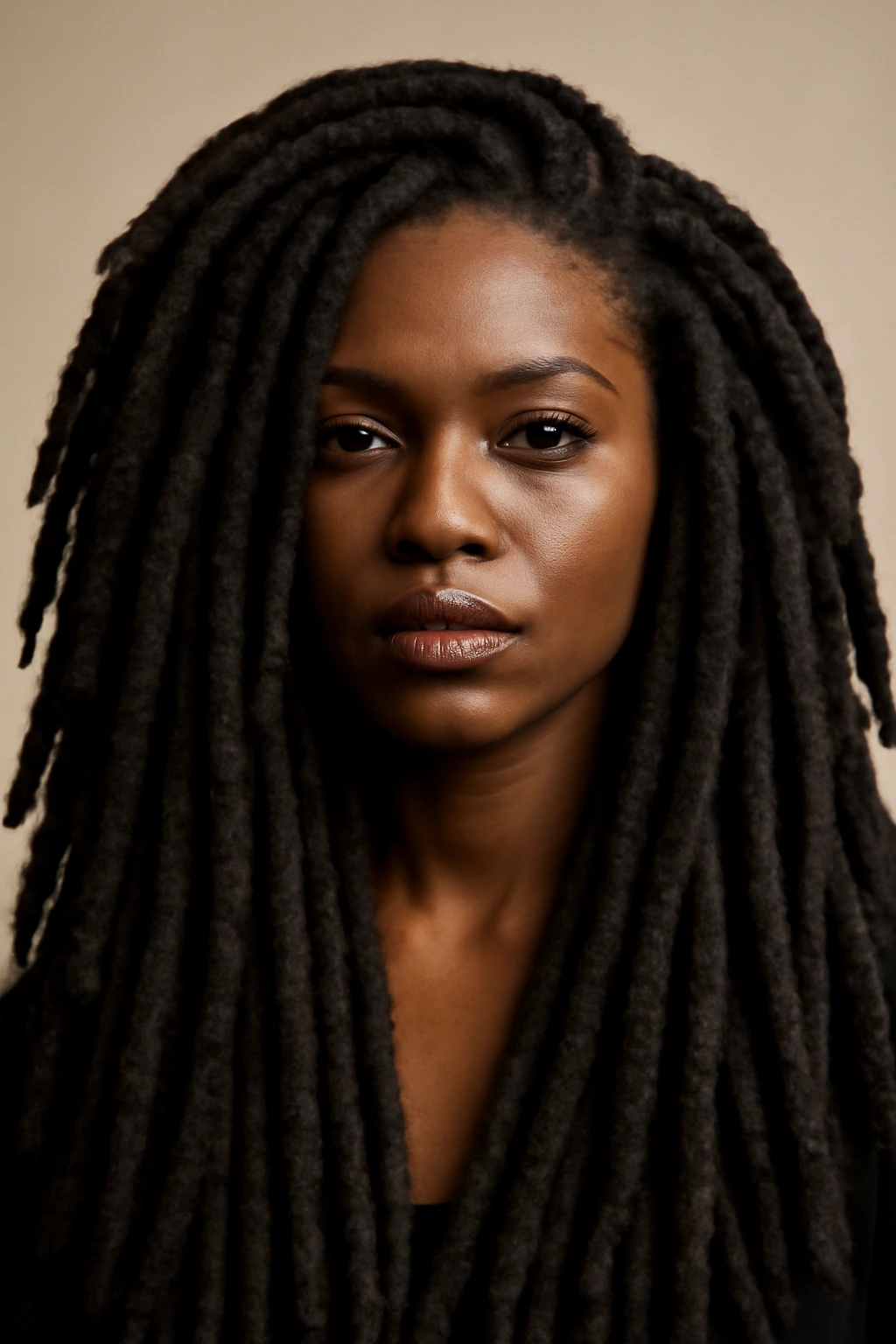
Thick, bold faux locs make an unmistakable statement with their commanding presence and impressive volume. This style is for anyone who wants their hairstyle to be the focal point of their appearance, who loves the feeling of substantial weight and fullness, or who wants maximum protection for natural hair. Thick faux locs photograph dramatically, feel luxurious to wear, and create an undeniably powerful aesthetic.
The Confidence of Bold, Thick Locs
Thick faux locs demand attention and confidence — they’re not a subtle style choice. The volume and weight create an imposing silhouette that works beautifully for someone with a larger frame or for anyone who simply loves the feeling of a lot of hair. This style also offers maximum protection for your natural hair because more extension hair cushions each section of your natural hair. The bold aesthetic works especially well with rich, warm skin tones where the depth of the locs contrasts beautifully, and the style photographs with stunning drama.
Creating and Managing Thick Locs
- Larger section sizes: Hair is sectioned into larger portions, creating fewer but noticeably thicker finished locs that make a visual impact
- Heavy-weight extension options: Using thicker Marley hair, or blending multiple strands of finer hair together, creates the substantial look
- Scalp stress consideration: Thicker locs weigh more, so installation should prioritize even distribution to avoid tension on any one area
- Styling limitations: Wearing very thick locs in tight updos can create tension headaches, so looser styles are preferable for frequent updo styling
- Cleansing time and effort: Thick locs take longer to shampoo, dry, and maintain since each loc contains more hair
Worth knowing: The thickness of your locs also depends on how many total locs you have on your head. Fewer locs across your entire head creates thicker individual locs, while more locs distributed across the head creates a finer overall appearance.
8. Faux Locs with Beads and Metallic Accents
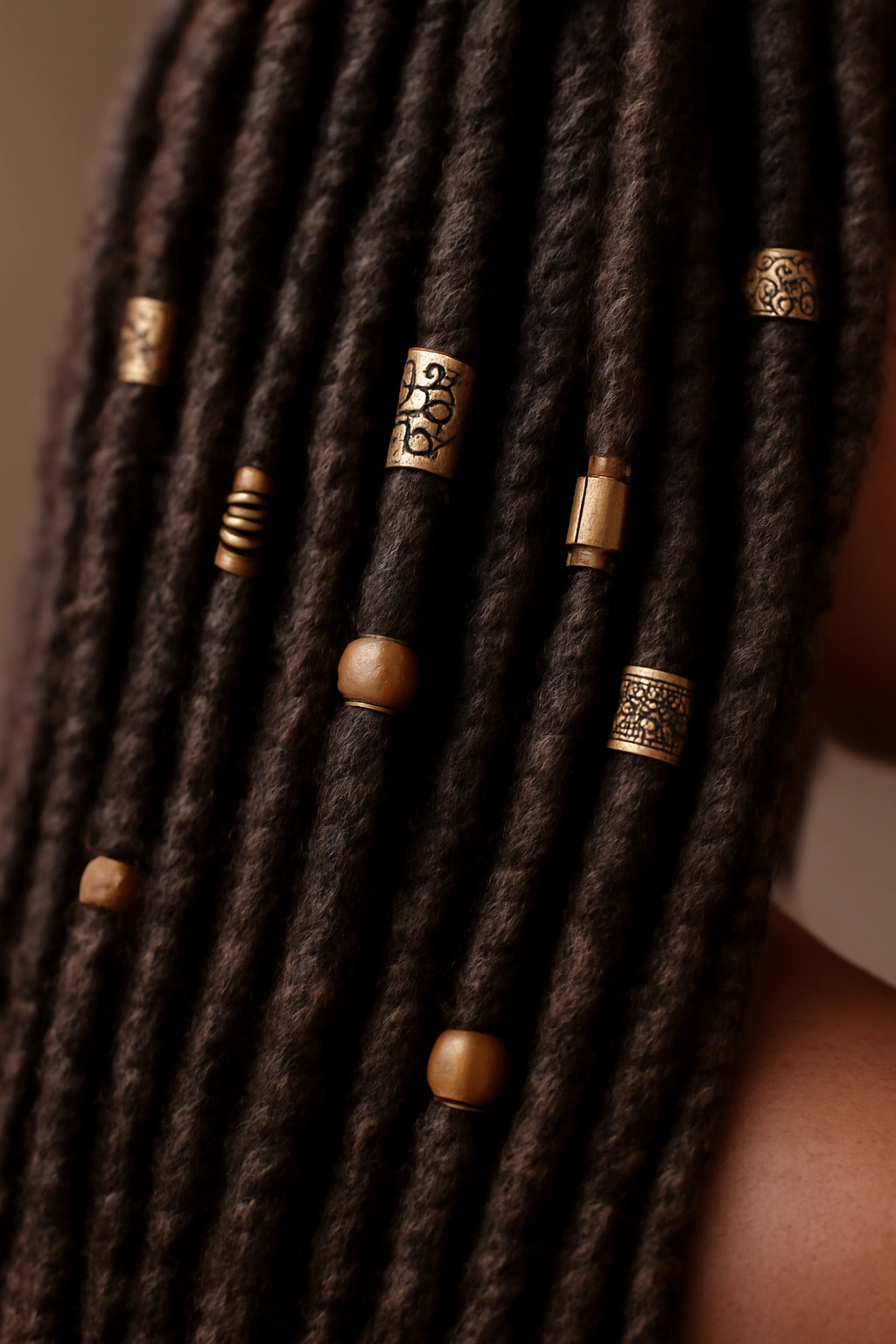
Faux locs adorned with beads, metallic cuffs, rings, and shiny accents transform the style into genuine jewelry for your hair. Adding embellishments allows for endless customization and lets you shift the vibe of your locs dramatically with just a few additions. Whether you choose natural bone or wooden beads, shimmering metallic rings, colorful acrylic beads, or luxury-feeling pearl accents, these additions elevate faux locs from protective style to artistic expression.
Endless Embellishment Possibilities
The beauty of adding beads and accents is that you don’t need to reinstall your entire style to change the look — you can add or remove embellishments as frequently as your mood changes. This means a minimal, sophisticated look one day and a bold, festival-ready style the next. Beads can be placed at the base, distributed throughout the locs, or concentrated at the ends depending on the aesthetic you’re going for. Metallic cuffs and rings add glamour and shine, while natural materials like bone or wood create an earthy, bohemian vibe.
Bead Selection and Application
- Bead weight and size: Heavier beads require secure placement and might not be ideal for locs that will be worn up frequently; lighter beads distribute the weight better
- Application methods: Beads can be threaded onto locs (you create a small loop with the loc hair and pull it through the bead), glued on with hair-safe adhesive, or woven in with additional string
- Placement strategy: Threading beads at regular intervals (every 1-2 inches) creates a jewelry-like effect, while clustered placement adds dramatic focus points
- Removal and reapplication: Threaded beads come off easily for washing or changing up your look; glued beads require more careful removal and shouldn’t be left on for more than a week or two
Pro tip: If you’re planning to thread beads onto your locs yourself, use a needle and thread to create a small loop at the base of each loc, then pull it through your bead — this is much easier than trying to thread the loc itself directly through a small bead opening.
9. Colored Faux Locs with Jewel Tones
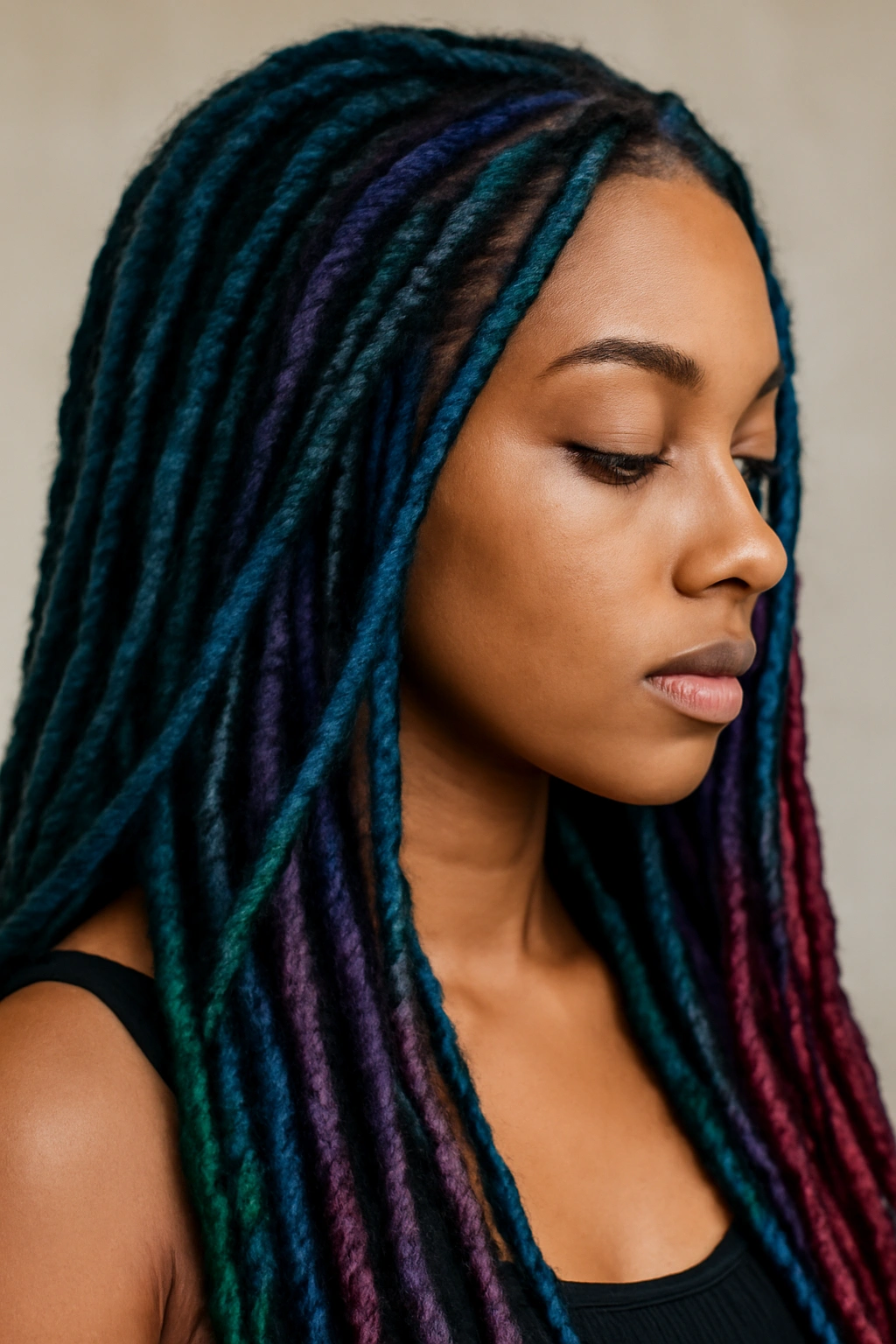
Jewel-tone faux locs feature deep, rich colors like emerald, sapphire, amethyst, and ruby that create a luxurious, almost regal appearance. These colors work beautifully against most skin tones and create stunning visual contrast, especially when worn against neutral clothing that lets the hair be the focal point. Jewel tones feel more sophisticated and intentional than neon or pastel colors, offering boldness with an air of elegance.
Why Jewel Tones Feel So Striking
Deep jewel tones have an inherent richness that looks expensive and luxurious, even in synthetic or more affordable extension hair. These colors photograph beautifully in both daylight and artificial light, creating dimension and depth. Jewel tones feel particularly striking against deeper skin tones where the color contrast is most visible, but they work wonderfully on lighter skin tones too, especially when paired with cool-toned complexions. The richness of these colors means they hide some of the shine or plasticity of synthetic extensions, making them feel more natural-looking than lighter or pastel shades.
Jewel Tone Installation and Longevity
- Color source: Pre-colored extensions in jewel tones are available from many suppliers, or you can have extensions dyed by your stylist
- Quality extension choice: Jewel tones show the quality of the extensions more clearly than neutral colors, so investing in good-quality hair pays off
- Sunlight sensitivity: Jewel tones fade more noticeably in strong sunlight and chlorine than they do indoors; plan your activities accordingly
- Outfit coordination: These deep, saturated colors can look striking with jewel-tone clothing and makeup or with contrasting neutrals and metallics
- Longevity of wear: Jewel tones typically last the full 4-6 weeks before fading noticeably, though the color deepens and matures as time goes on
Insider note: Emerald and sapphire jewel tones tend to have the best longevity and most stable color, while reds and purples fade more quickly. If you’re committed to keeping color vibrancy throughout your wear period, emerald or sapphire might be more reliable choices.
10. Faux Locs with Chunky Highlights and Contrasting Streaks
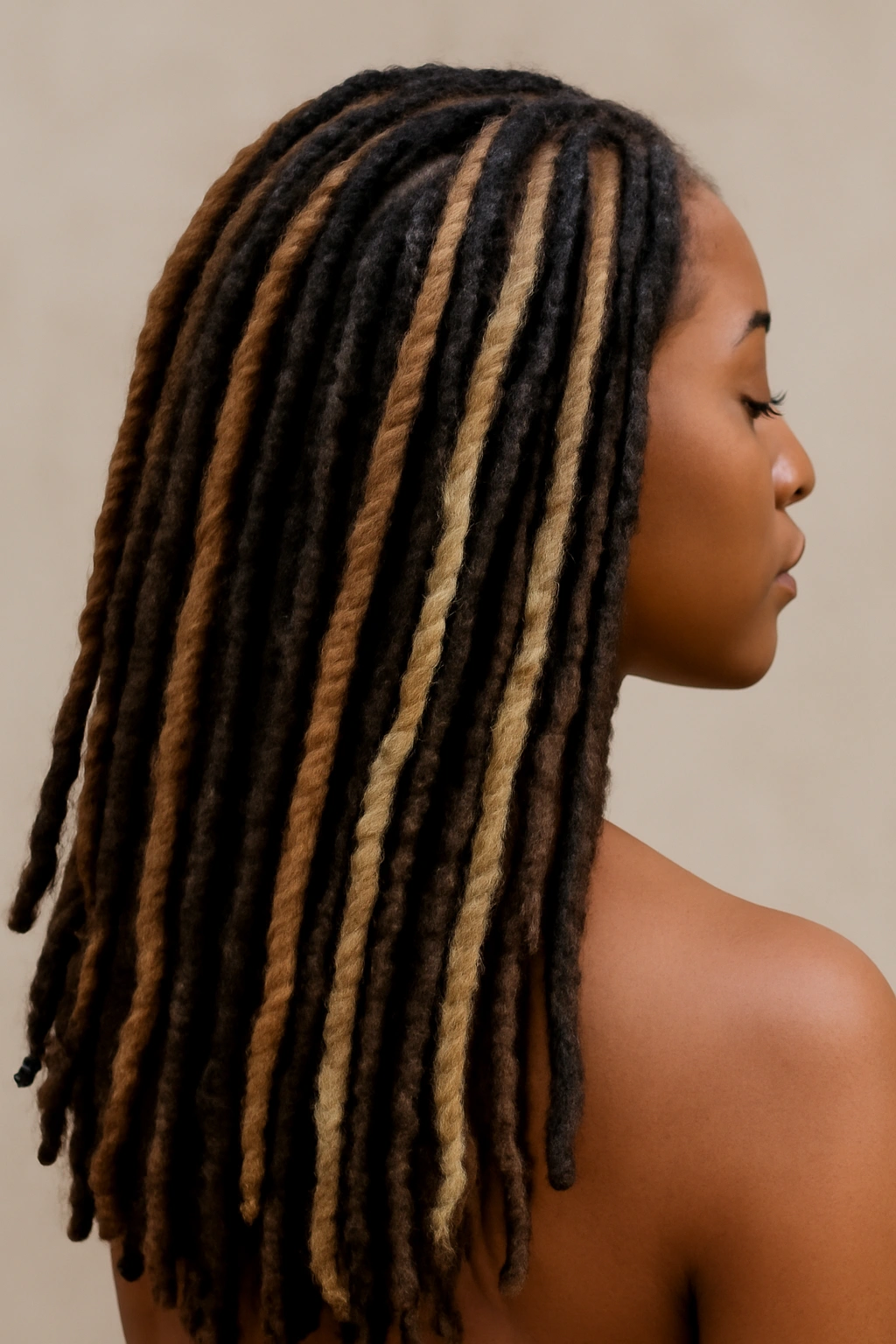
Faux locs with thick, chunky highlights or contrasting color streaks scattered throughout create visual movement and personality without committing to an entirely two-tone or ombré design. Rather than a systematic color placement, this style randomly distributes lighter or brighter colors throughout darker locs, creating an eclectic, creative look that celebrates individuality. This approach works beautifully if you love color but want something more interesting and less structured than traditional color blocking.
The Creative Freedom of Random Highlights
Chunky highlights allow for truly personal, unique combinations — you could have sporadic blonde streaks throughout black locs, bright pink mixed with burgundy, or copper and bronze randomly distributed for a warm, autumnal feel. The randomness actually looks more intentional and artistic than perfectly placed colors, and it means no two people will interpret the same color combination the same way. This style feels particularly modern and forward-thinking, perfect if you want a look that reflects your creative, unpredictable personality.
Placement and Styling Strategy
- Strategic distribution: Highlights should be distributed around the entire head rather than clustered on one side for balanced visual impact
- Size variation: Using both thick and thinner highlight streaks creates more visual interest than uniform-width highlights
- Contrast level: The more contrast between the base color and highlights, the more dramatic the effect; subtle highlights create a softer, more refined look
- Maintenance approach: Highlights fade at different rates depending on their color, which means your style naturally shifts and matures as time goes on
- Updo considerations: Highlighting throughout the entire head means your style looks interesting even when worn up, since the color peeks through
Pro tip: If you’re getting chunky highlights, ask your stylist to place a few highlight locs closer to your face to frame your features, rather than clustering them all in the back where they’re less visible.
11. Faux Locs with Twisted or Braided Sections
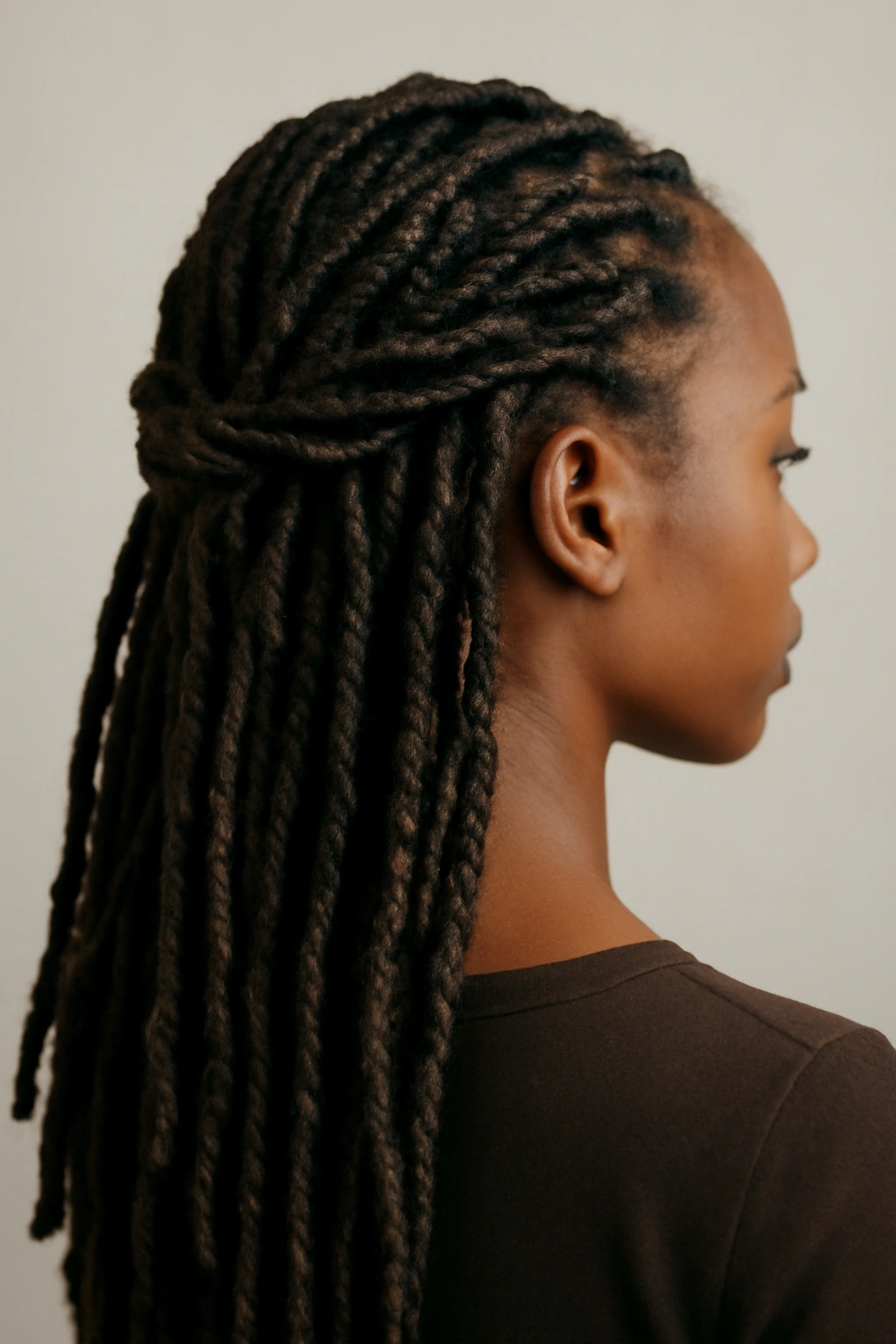
Faux locs with twisted, braided, or interlocked sections throughout add textural variety and visual interest without requiring a completely different style. Some locs remain smooth and straight or wavy, while others are twisted into cords or braided into rope-like sections, creating an eclectic, artistic appearance. This variation appeals to anyone who loves texture, wants a more customized style, or enjoys the creative possibility of mixing multiple techniques in one installation.
Creating Textural Contrast Within One Style
Adding twisted or braided sections to faux locs breaks up the visual monotony of uniform straightness and creates depth and dimension. The braided or twisted sections can be subtle accent points or bold focal areas depending on how many you incorporate and where you place them. This style works beautifully if you like the idea of faux locs but want something that feels more creative and less standard than a classic install. The textural variation also helps disguise some of the wear and tear that happens over the 4-6 week wear period since the texture naturally shifts and relaxes as time goes on.
Incorporating Texture During Installation
- Selective wrapping technique: Some locs are wrapped smoothly while others are twisted or braided as they’re being installed, creating intentional variation
- Placement strategy: Braided or twisted sections can frame the face, accent a side part, or be distributed throughout the head
- Texture longevity: Twisted and braided sections tend to relax and loosen over time more than smooth wrapping, so they’ll look different week one versus week four
- Styling options: Smooth locs and textured sections interact differently with updos and side-swept styles, creating unique looks
- Maintenance: Textured sections may require more frequent touch-ups or tidying than smooth sections as they relax
Worth knowing: This style requires a very skilled stylist who can create intentional, balanced texture rather than locs that just look inconsistently installed. Ask to see photos of previous texture-mixed installations before committing.
12. Faux Locs with Side Shave or Undercut Design
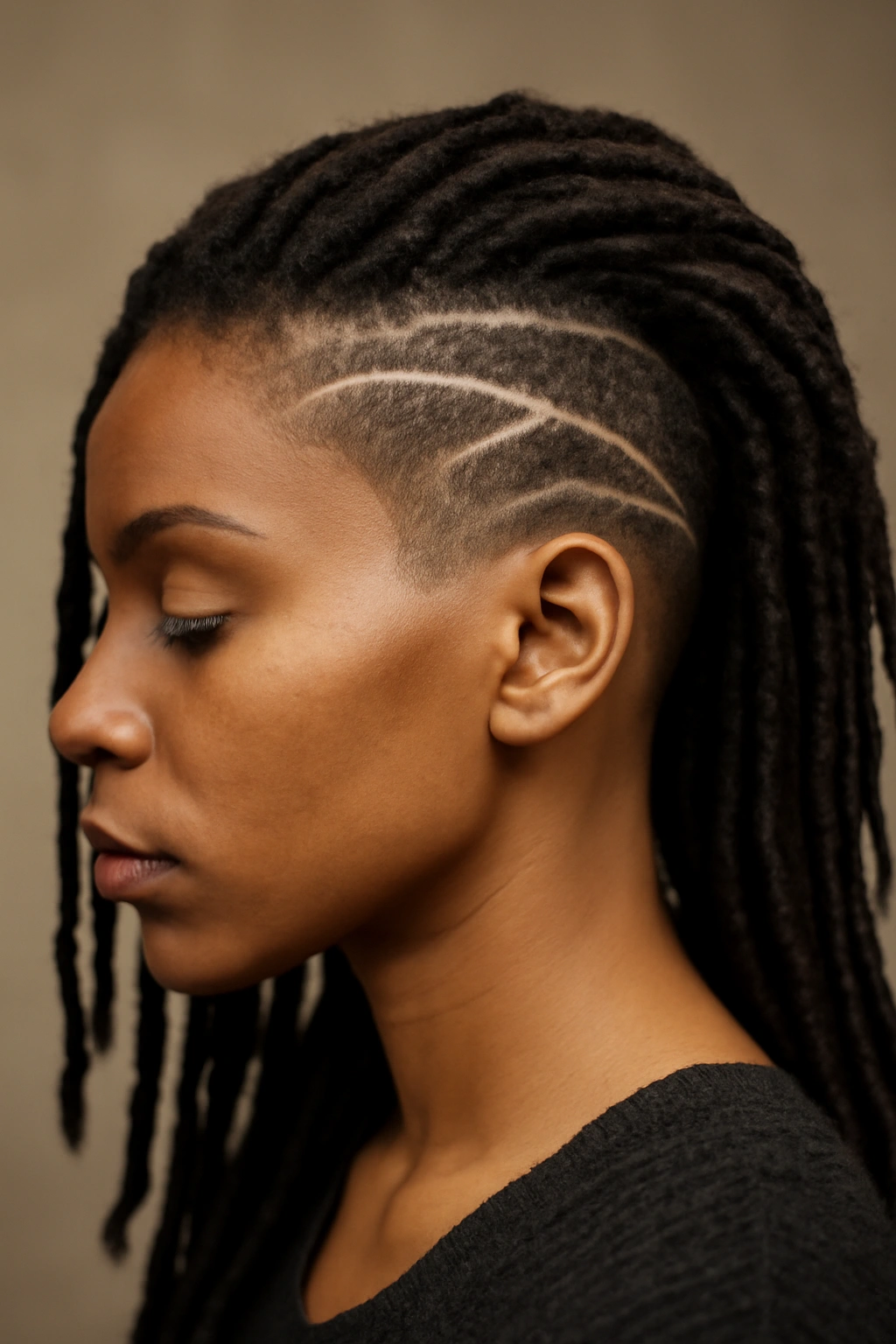
Faux locs paired with a shaved or undercut design on the sides creates an edgy, modern look that’s equal parts protective style and fashion statement. The contrast between the voluminous locs and the clean, bare scalp creates striking visual impact and allows for pattern work, designs, or temporary tattoos on the shaved sections. This style is for anyone who loves bold, fashion-forward aesthetics and wants their hairstyle to reflect an adventurous, creative personality.
The Impact of Shaved Contrast
A side shave or undercut immediately elevates faux locs from traditional to trendy, creating a look that feels current and intentional. The clean lines of the shaved section draw attention to the texture and color of the locs, making them feel more prominent and artistic. This style works beautifully if you have a smaller face shape (since shaved sides draw the eye to facial features rather than hiding them) and if you’re comfortable drawing significant attention to your hair. The combination of soft, flowing locs and hard, geometric lines creates visual interest and modernity.
Considerations for Shaved Designs
- Growth timeline: Hair grows quickly, so the clean lines will soften within 2-3 weeks; you can shave again midway through your locs wear if you want to maintain the design
- Pattern options: Simple clean lines on the sides are classic, but you can also add geometric patterns, lines, or designs using clippers
- Styling transitions: When you eventually move away from this style, you’ll either need to cut the longer locs or wait for your natural hair to grow out evenly
- Weather considerations: Shaved sections are more exposed to sun and cold, so protecting your scalp becomes more important
- Professional environments: This style makes a bold statement and might not be appropriate for conservative workplaces; consider your daily environment before committing
Pro tip: If you’re nervous about fully shaving the sides, start with a high fade on the sides and back that’s less dramatic than an undercut but still creates visual contrast and a modern edge.
Final Thoughts
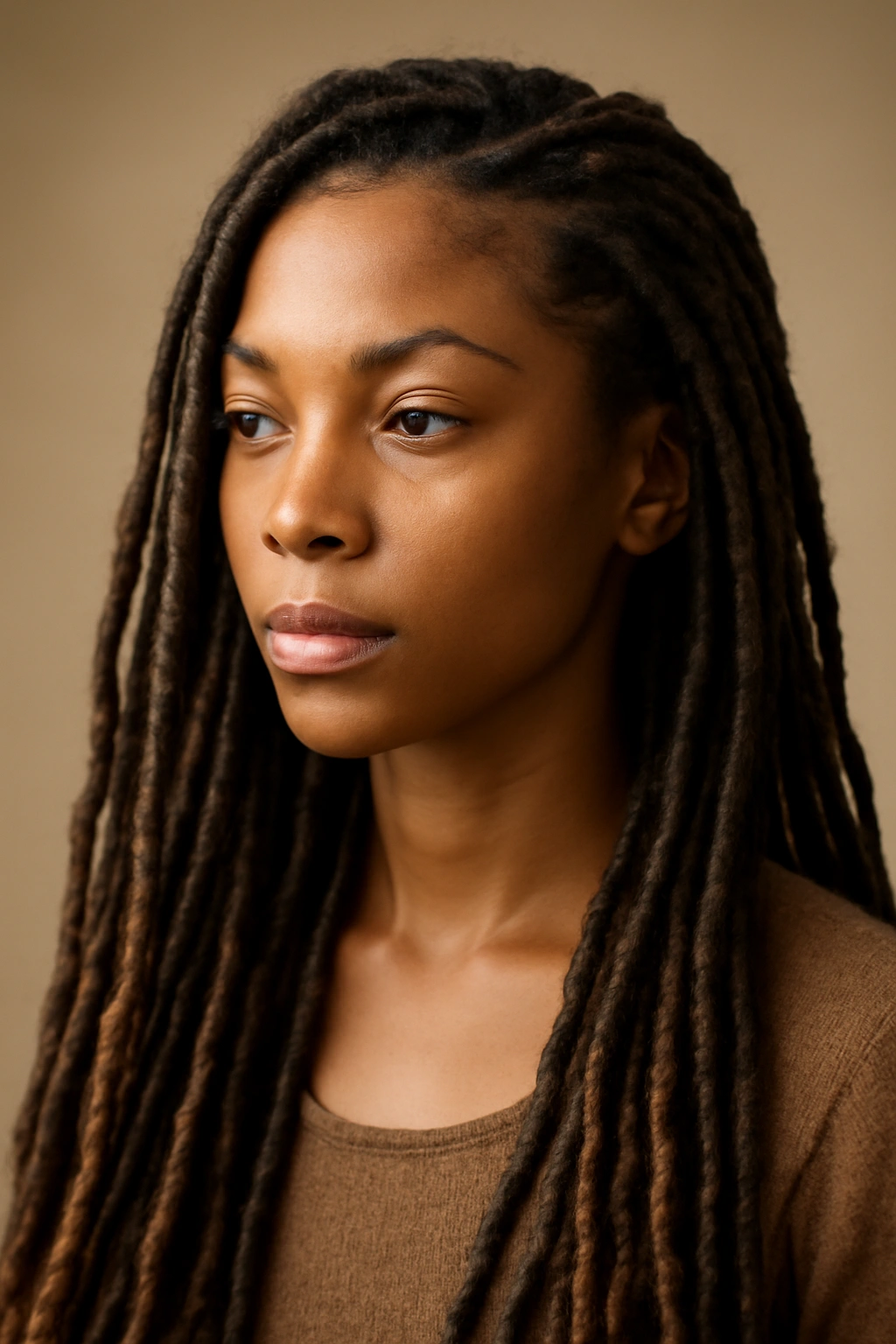
The world of faux locs extends far beyond the traditional straight style most people picture. Whether you’re drawn to the elegance of thin, delicate locs, the boldness of thick statement hair, the creativity of colorful variations, or the edginess of textured and design-enhanced styles, there’s a faux loc aesthetic that perfectly matches your personality and lifestyle. The key to choosing a style you’ll love is thinking honestly about how you want to feel while wearing it and what level of maintenance and care you’re willing to commit to throughout the wear period.
Remember that faux locs are a temporary style that will be taken down and reimagined, which means you have complete freedom to experiment. If you’ve been hesitant about trying a bold color, textured variation, or dramatic design, faux locs are the perfect opportunity to explore without permanent commitment. Work with an experienced stylist who understands your vision, takes time to discuss installation details and customization, and can show you photos of styles they’ve created. When installation is done right and you’re committed to proper maintenance and care, faux locs become more than just a protective style — they become a genuine expression of creativity and confidence that looks better and better the more you wear them.
