



An undercut isn’t just a haircut—it’s a statement. This bold, architectural style shaves or fades the lower layers of hair while keeping length on top, creating instant dimension, attitude, and undeniable edge. What makes undercuts so compelling for women is the flexibility they offer: you can hide the shaved sections under your longer hair for a conservative day at work, then tuck it back for a night out and reveal the bold graphic underneath. It’s like having two completely different looks built into one cut.
The beauty of an undercut is that it transcends age, hair texture, and personal style. Whether you’re drawn to severe, razor-sharp geometric designs or softer, more subtle fades, there’s a version of this cut that’ll speak to you. The style works equally well on fine, straight hair as it does on thick, curly textures—the key is finding the right variation and working with a stylist who understands how to shape it specifically for your hair type and face shape.
What’s striking about undercuts right now is how they’ve evolved beyond the rebellious, punk-rock aesthetic they started with. Modern undercut styles are sophisticated, sculptural, and surprisingly wearable for anyone with the confidence to pull them off. Some women lean into the drama with high-contrast fades and intricate shaved patterns, while others choose subtle versions that feel more like a secret you keep. The real magic is that an undercut genuinely changes how you feel wearing it—there’s something about that moment when you flip your hair back and reveal the cut that shifts your whole energy.
1. Sharp Shaved Undercut with Long Top
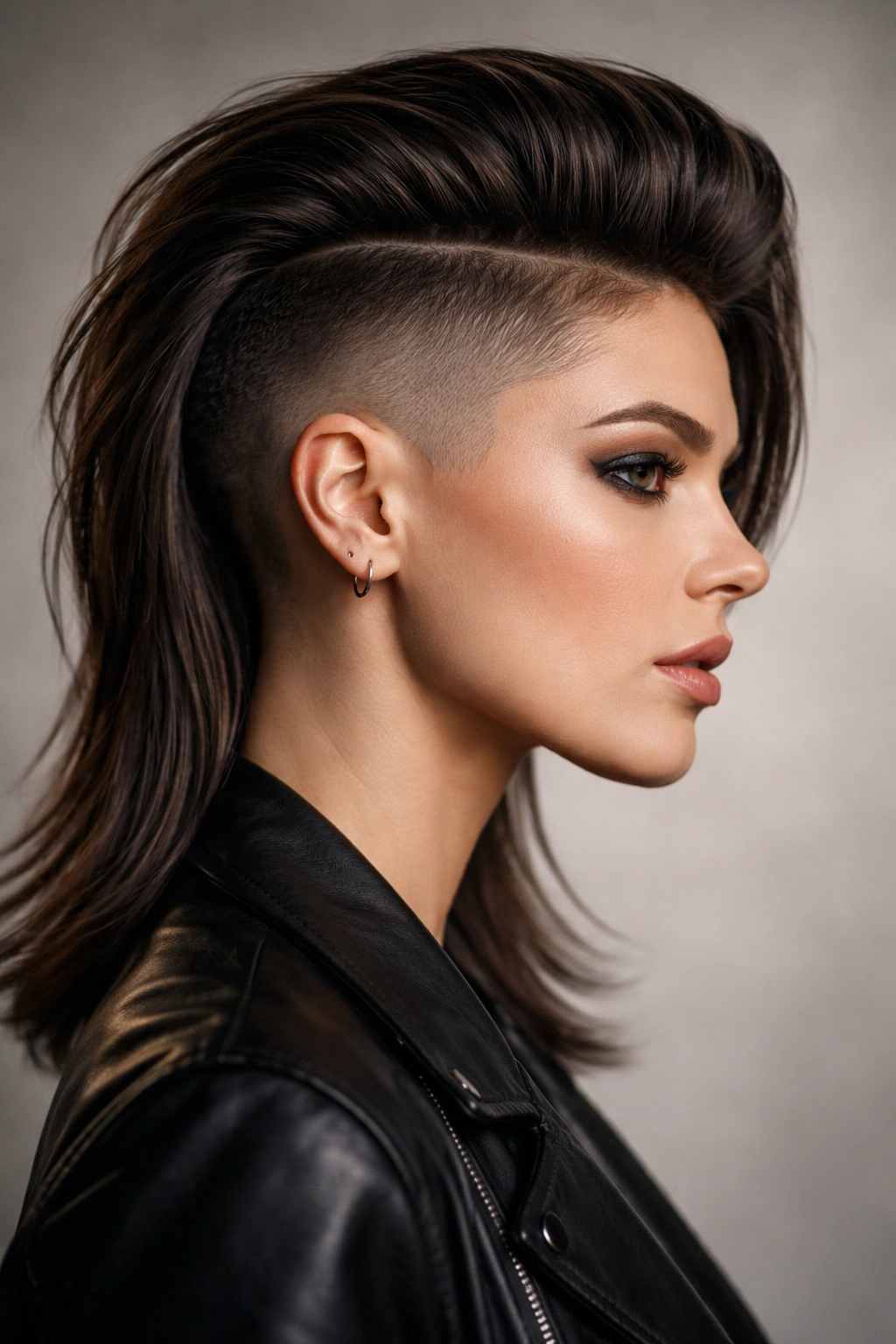
This is the classic undercut in its most dramatic form: the sides and back are shaved completely bare, while the top stays long enough to sweep or slick back dramatically. The contrast is the whole point here. You’re creating a clean, architectural line where the length ends and the shaved section begins—usually around ear level or slightly lower depending on your preference.
Why This Cut Commands Attention
The sharp shaved undercut works because of pure geometry. When you remove all the hair from the sides and back, the longer hair on top becomes the focal point. It draws attention upward toward your face and creates an elongating effect that’s surprisingly flattering for most face shapes. The shaved sections also create a visual frame for your features, which means your eyes and cheekbones suddenly have more prominence.
Key Details to Discuss With Your Stylist
- Fade line placement: Ask your stylist where they’ll transition from hair to bare skin. A line that’s too high can feel severe; too low might not create the impact you want. Most people find the sweet spot around the temple area, following the natural curve of the head.
- Top length and texture: The longer hair can be textured, blunt, or layered. Textured length tends to look more modern and gives you easier styling options.
- Maintenance frequency: Shaved undercuts need touch-ups every 2-3 weeks to maintain that crisp contrast. If you’re not ready for that commitment, a fade version (see below) requires less frequent upkeep.
- Styling when you want to cover it: With your hair down, the undercut disappears completely, giving you the option to look conventional whenever you need to.
Pro tip: If you have curly or wavy hair, the contrast between the shaved sides and the length on top becomes even more visually striking—the texture reads as fuller and more voluminous on top, which amplifies the edgy aesthetic you’re going for.
2. Textured Fade Undercut
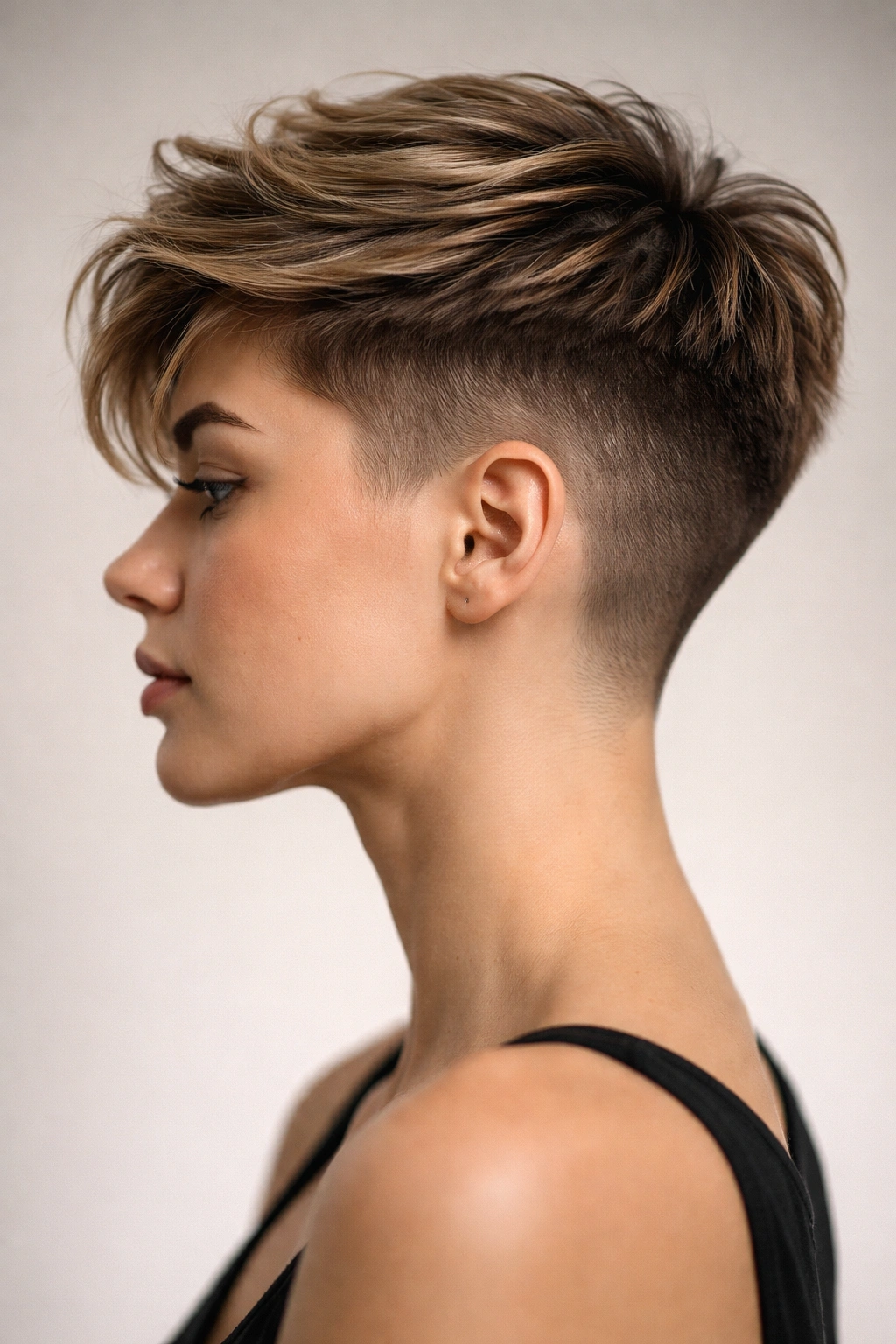
Instead of shaving the sides completely bare, this version uses a gradual fade from short to longer hair. The clipper blade starts very short at the nape and sides, then gradually gets longer as it moves upward, blending seamlessly into the longer sections on top. The result feels less severe than a sharp undercut but still delivers serious edge.
What Makes This Version More Wearable
The textured fade undercut is genuinely easier to live with day-to-day. You don’t get the razor-sharp contrast that demands to be acknowledged—instead, the fade creates a subtle graduation that looks intentional and modern without screaming for attention. It also blends better with your longer hair on top, so the overall silhouette feels more unified rather than boldly divided.
The Fade Variations You Should Know About
- Low fade: Starts fading around your natural hairline and temples, keeping more length through the sides
- Mid fade: Transitions roughly from your ears upward, creating more visible short sections
- High fade: Shaved or very short through the sides and up toward the crown, with significant contrast
- Temp fade: Focused fade around the temples only, leaving the back longer—a gentler option if you’re hesitant
- Burst fade: Fades around the back of the head in a curved, almost rounded pattern rather than straight lines
Worth knowing: Textured fades look especially good if you have wavy or curly hair, because the texture adds dimension that a completely shaved undercut can’t achieve. The curl pattern naturally creates visual interest in the fade without requiring additional styling work.
3. Geometric Undercut Design
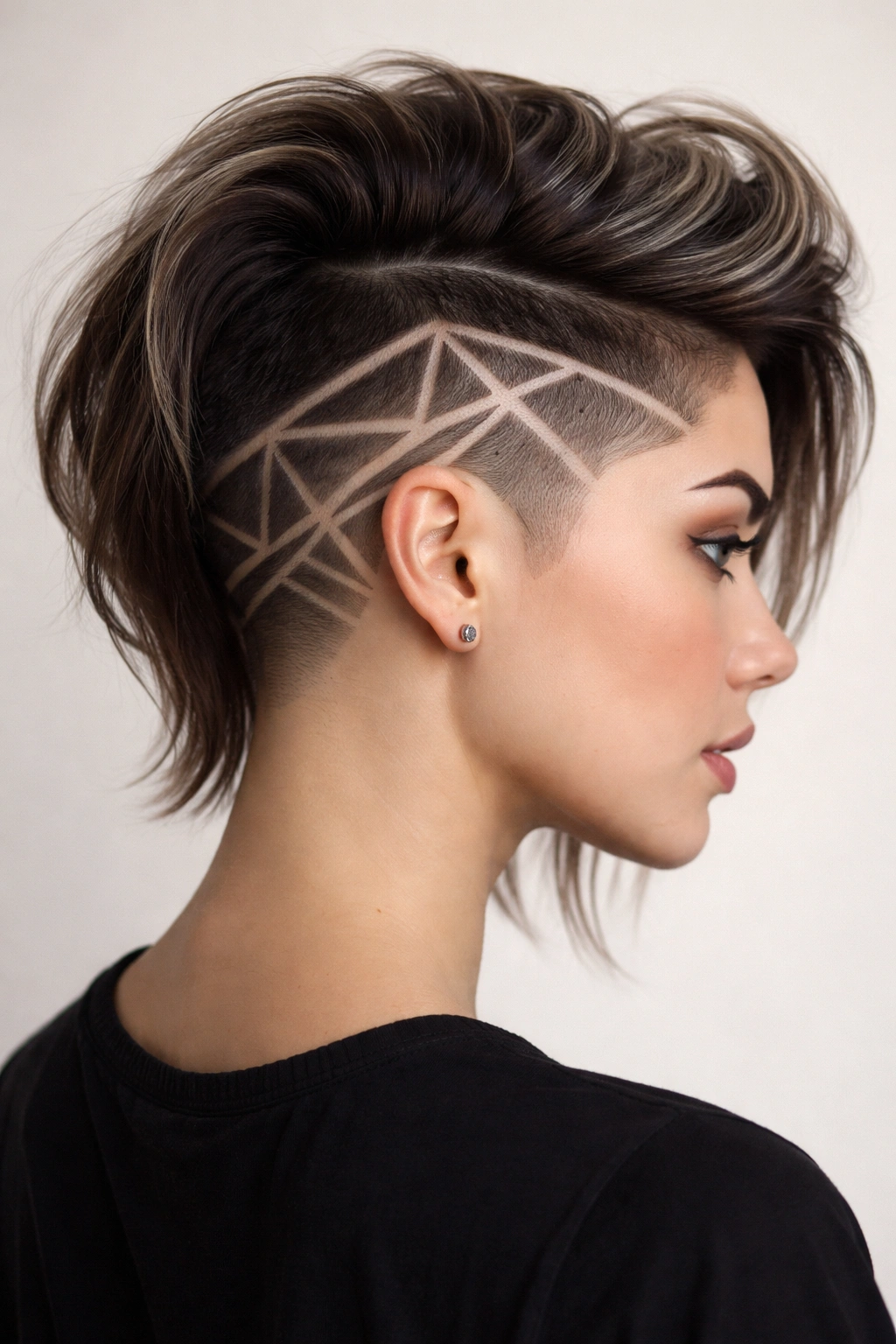
This takes the undercut concept and transforms it into wearable art. Instead of a simple fade, the shaved sections feature deliberate patterns—straight lines, triangular designs, checkerboard patterns, or even more intricate shapes cut into the undercut area. Some women incorporate negative space designs or asymmetrical patterns.
The Artist Approach to Hair Design
A geometric undercut design requires a stylist who thinks like a sculptor or graphic designer. This isn’t just shaving the sides; it’s creating intentional visual patterns that follow the contours of your head and work with your natural hairline. The best designs account for how your hair grows, how you typically move, and what angles show the pattern when your hair is styled different ways.
Design Ideas That Actually Work
- Linear patterns: Simple straight lines creating sections or stripes through the undercut area
- Negative space designs: Shaving specific shapes (stars, waves, geometric shapes) into longer hair areas
- Asymmetrical patterns: Different designs on the left and right sides
- Delicate line work: Thin, intricate lines that create detail without being overwhelming
- Organic patterns: Flowing, curved designs that feel more natural than structured geometry
Pro tip: Photograph designs you love before your appointment. A visual reference helps your stylist understand exactly what you’re imagining. Also ask whether the design will show prominently when your hair is down versus only visible when it’s up—some designs disappear unless you’re specifically styling to display them.
4. Soft Undercut with Blonde Contrast
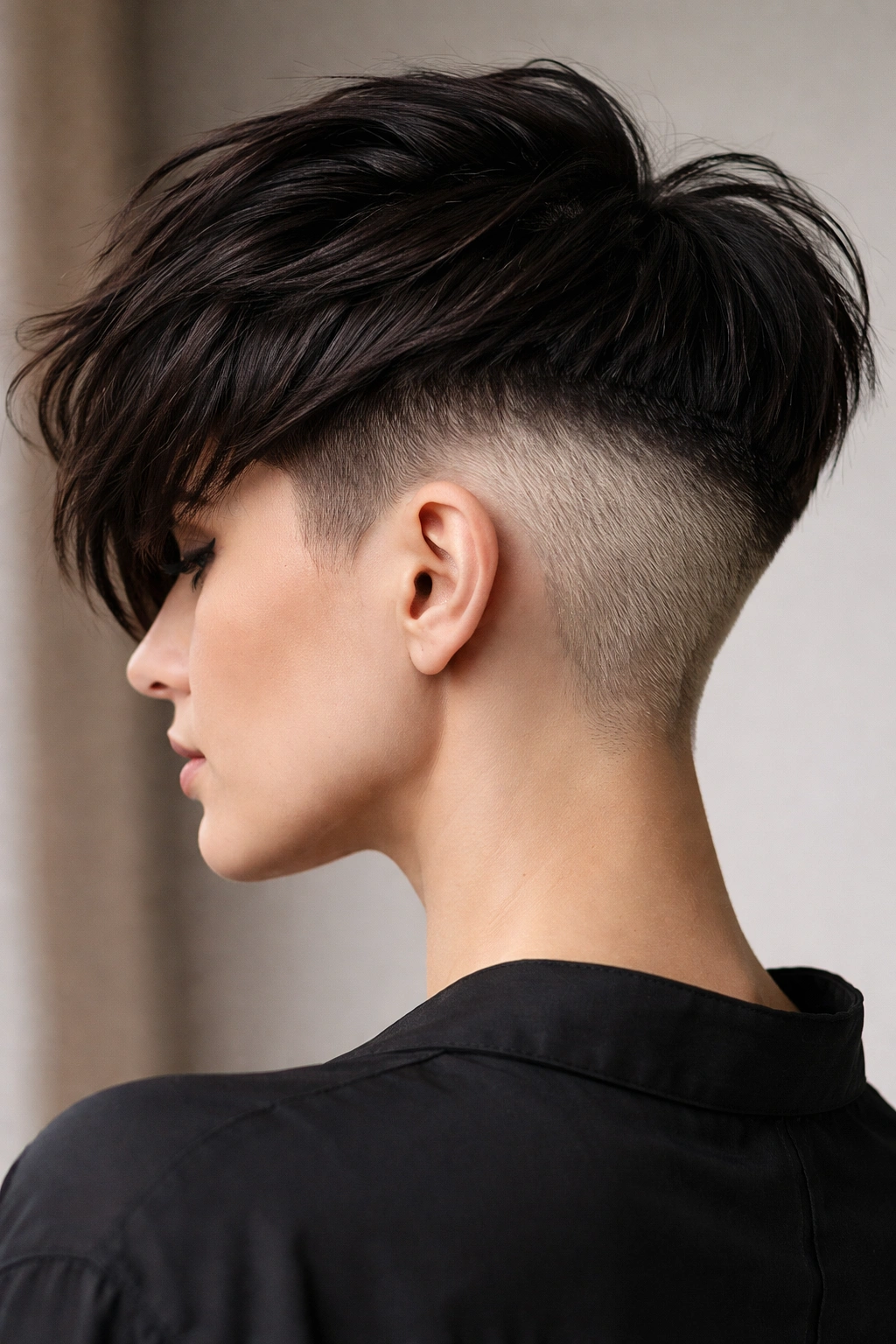
This version pairs a subtle undercut with a significant color contrast between the top and bottom sections. You might keep your natural darker shade on top with the undercut section bleached blonde, or reverse it. The color contrast does what a fade sometimes can’t quite achieve on its own—it makes the undercut structure instantly visible even when hair lengths are less dramatically different.
Why Color Changes Everything About the Undercut
Color contrast is genius because it functions like visual punctuation. Even if the length difference between the top and undercut sections is relatively subtle, a dramatic color shift makes the architectural structure jump out. It also allows for softer length transitions because the color is doing the heavy lifting of showing where the undercut actually is.
Color Combinations That Hit Hard
- Dark roots with platinum blonde undercut: Creates a striking two-tone effect that looks intentional and modern
- Warm tones on top, cool platinum underneath: The temperature shift adds depth and visual interest
- Subtle shade variation: Slightly lighter or darker undercut that creates dimension without total contrast
- Pastel or fashion color undercut: Soft pink, lavender, or blue underneath natural hair—visible when you want it to be
- Reverse coloring: Lighter shade on top with darker or deeper shade in the undercut
Worth knowing: If you’re doing a temporary color in the undercut, semi-permanent dyes work better than permanent color because the undercut area grows out quickly and you might want to change the color before regrowth becomes obvious. Alternatively, permanent color in the undercut means you’ll need bleach maintenance every 6-8 weeks.
5. Faux Undercut (The Non-Commitment Version)
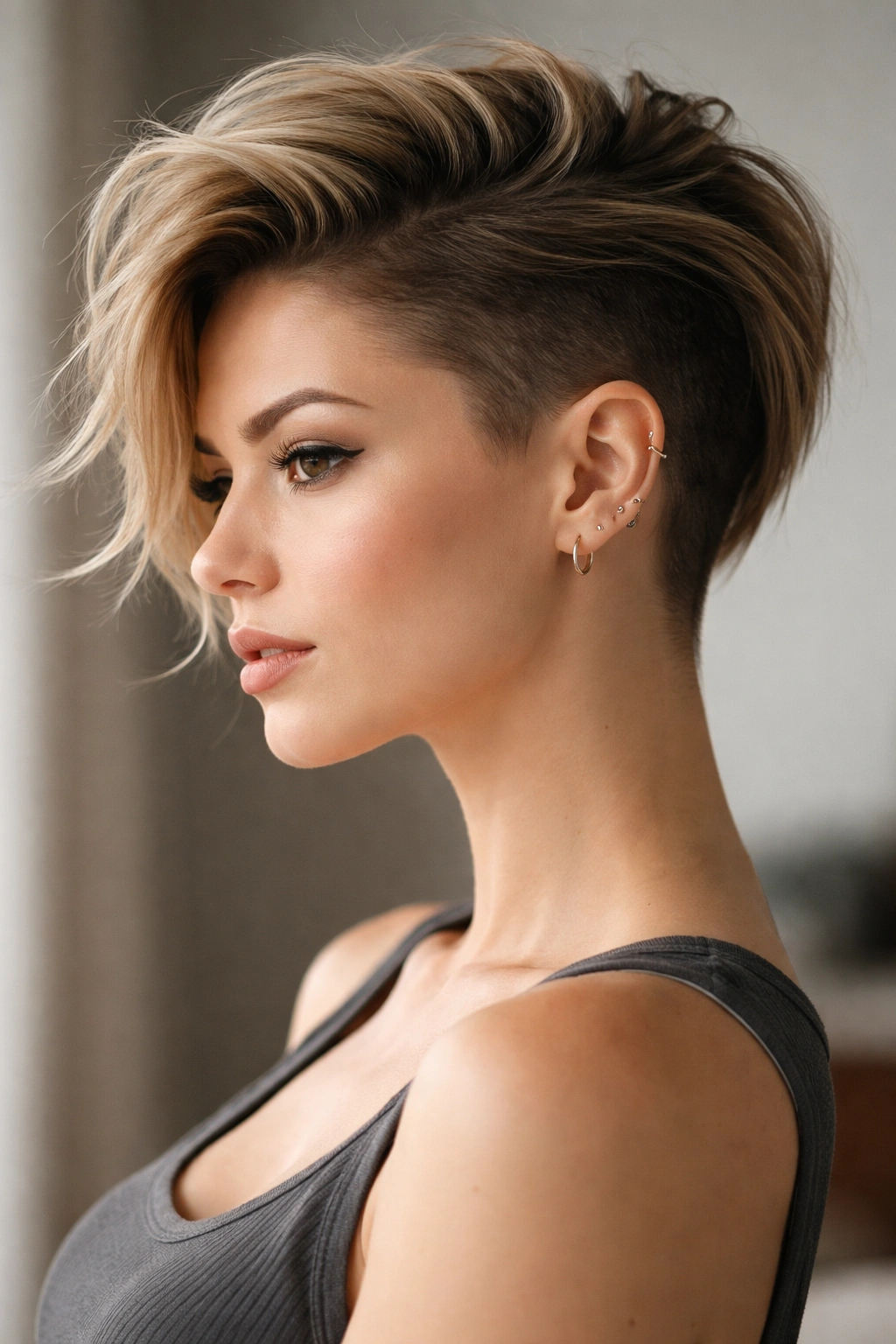
Not ready for actual hair removal but craving the undercut aesthetic? A faux undercut uses clever cutting and styling to create the appearance of an undercut without actually shaving or fading your sides. The hair is cut very short underneath but left slightly longer than a true undercut, and strategic styling makes it read as a bold cut without being as permanent.
How to Create an Undercut Illusion
The faux undercut works through layering and texture. Your stylist cuts extremely short (but not shaved) layers underneath while keeping substantial length on top, then adds texture to the shorter sections to create visual separation. When you style your longer hair over it or slick it back, it genuinely looks like you have an undercut. When you wear your hair down and messy, it looks like a textured, choppy bob.
The Practical Advantages
- No razor commitment: You’re not shaving actual sections of your scalp, so if you change your mind, it grows out as regular hair without creating awkward stubble phases
- Flexibility with styling: You can wear it as an undercut on days you want edge, or style it down as a layered cut on conservative days
- Lower maintenance: You don’t need to schedule fade touch-ups every few weeks; regular trims every 6-8 weeks keep it looking intentional
- Works with most hair types: Even fine or thin hair can pull off a faux undercut because you’re not relying on contrast from a shaved head
Pro tip: A faux undercut works especially well if you have straight or slightly wavy hair that holds a style. Curlier textures can make it harder to create that clean undercut illusion because the curls fill in the space in a way that doesn’t read as an intentional cut.
6. Disconnected Undercut Mullet
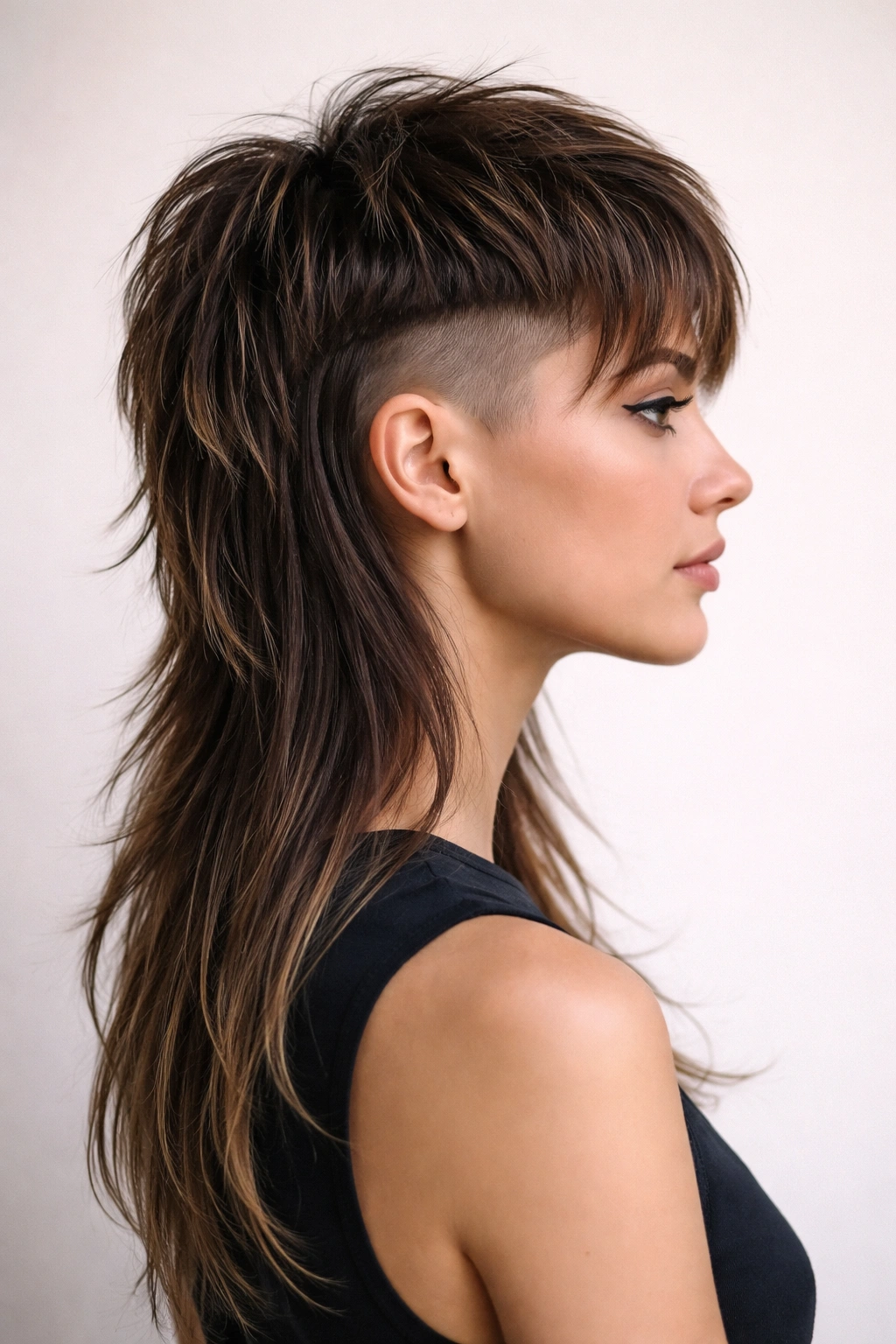
This is the modern, edgy take on the classic mullet—short and textured on top with an undercut on the sides and back, then intentionally longer length in the back that flows past shoulder length. The “disconnect” means there’s a clear, visible separation between the shorter crown area and the long back section rather than a gradual blend.
Why the Modern Mullet Actually Works Now
The disconnected mullet aesthetic has evolved from its 80s reputation into something genuinely cool. The undercut on the sides creates immediate visual separation, and the long back section feels less costume-like and more intentional. The cut says you have confidence, a sense of humor about fashion, and enough edge to pull off something unexpected. It’s bold without being as severe as some other undercut styles.
Styling This Cut for Impact
- Texture on top: Use a texturizing spray or mousse to create separation and movement in the shorter crown section
- Slicked back look: Gel or cream through the top sections to show the undercut sides clearly
- Waves in the back: Curling or waving the long back section adds elegance and keeps the overall look from feeling costume-y
- Half-up styling: Pulling the back section up partially shows both the length and the undercut structure
Worth knowing: A disconnected undercut mullet requires regular trims to maintain the intentional line between the short crown and long back. That said, the back section can grow longer between trims without looking scraggly—the disconnected structure means slight growth just adds more length rather than creating an awkward in-between stage.
7. Undercut with Shaved Pattern or Design
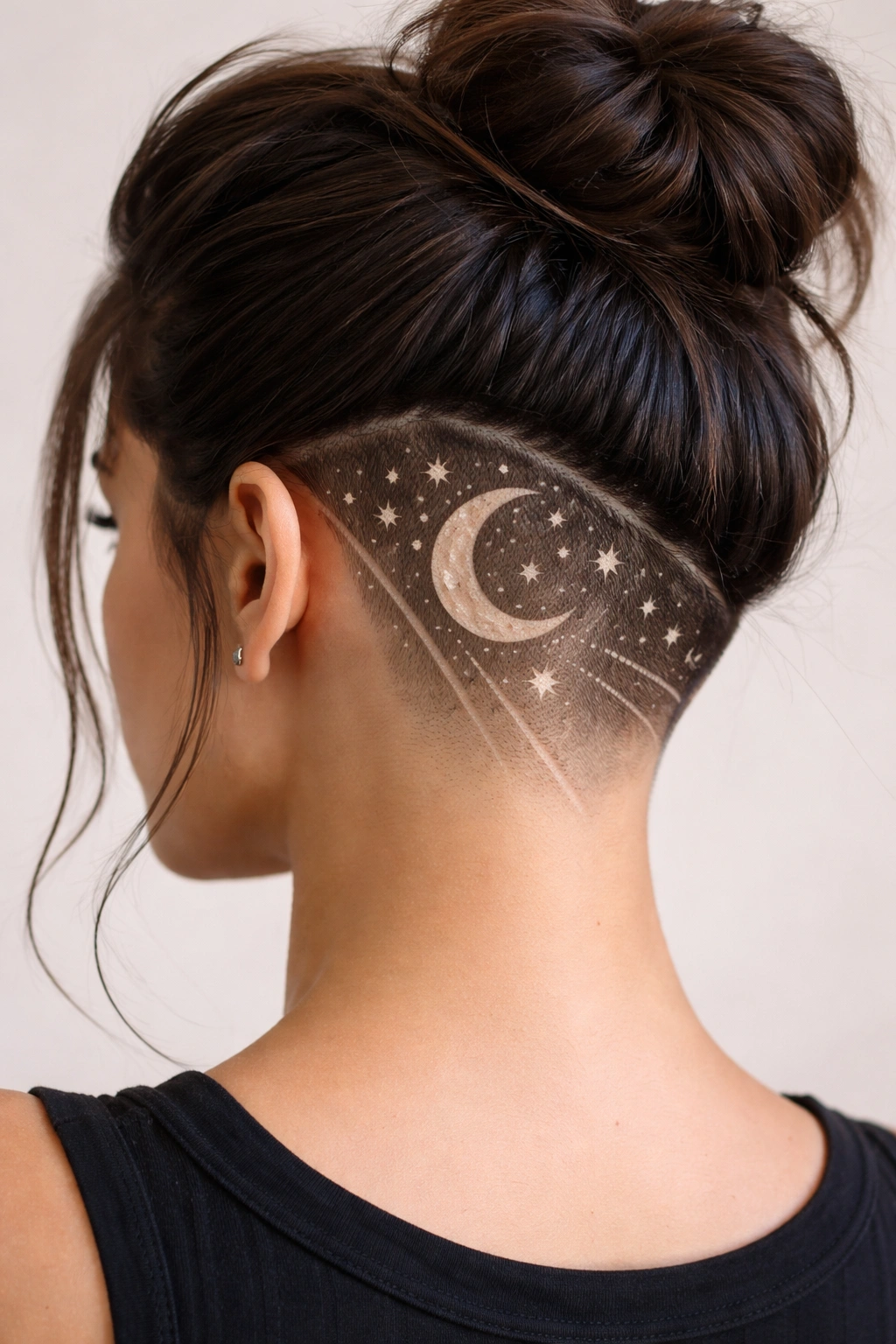
Beyond geometric shapes, some women choose to incorporate very specific imagery or patterns into their undercut shave. This might be a portrait, a detailed illustration, an animal, a celestial design, or text. It’s the most artistic, expressive version of the undercut style.
When a Pattern Becomes Personal Art
An undercut with shaved imagery works best when it genuinely means something to you—it’s not a trend decision, it’s a creative statement. The best patterns are ones that hold up under scrutiny; they’re recognizable from multiple angles and look intentional even if someone’s not specifically searching for the hidden detail.
Pattern Ideas That Translate Well to Shaved Hair
- Celestial designs: Stars, moons, constellations, and planets read clearly when shaved into hair
- Fine line artwork: Delicate, intricate line work (think botanical illustrations or minimalist designs)
- Symbolic imagery: A meaningful animal, figure, or symbol that represents something personal
- Abstract patterns: Organic flowing lines or irregular shapes that create visual interest
- Typography: Words, initials, or quotes shaved into the undercut section
- Illustrative designs: Small detailed scenes or images (like a landscape or cityscape)
Pro tip: If you’re committing to a detailed shaved design, find a stylist who specializes in this work or has a strong portfolio of pattern work. The difference between a design that looks intentional and one that looks accidental comes down to precision and understanding negative space. Check reviews and ask to see examples before booking.
8. Low Fade Undercut
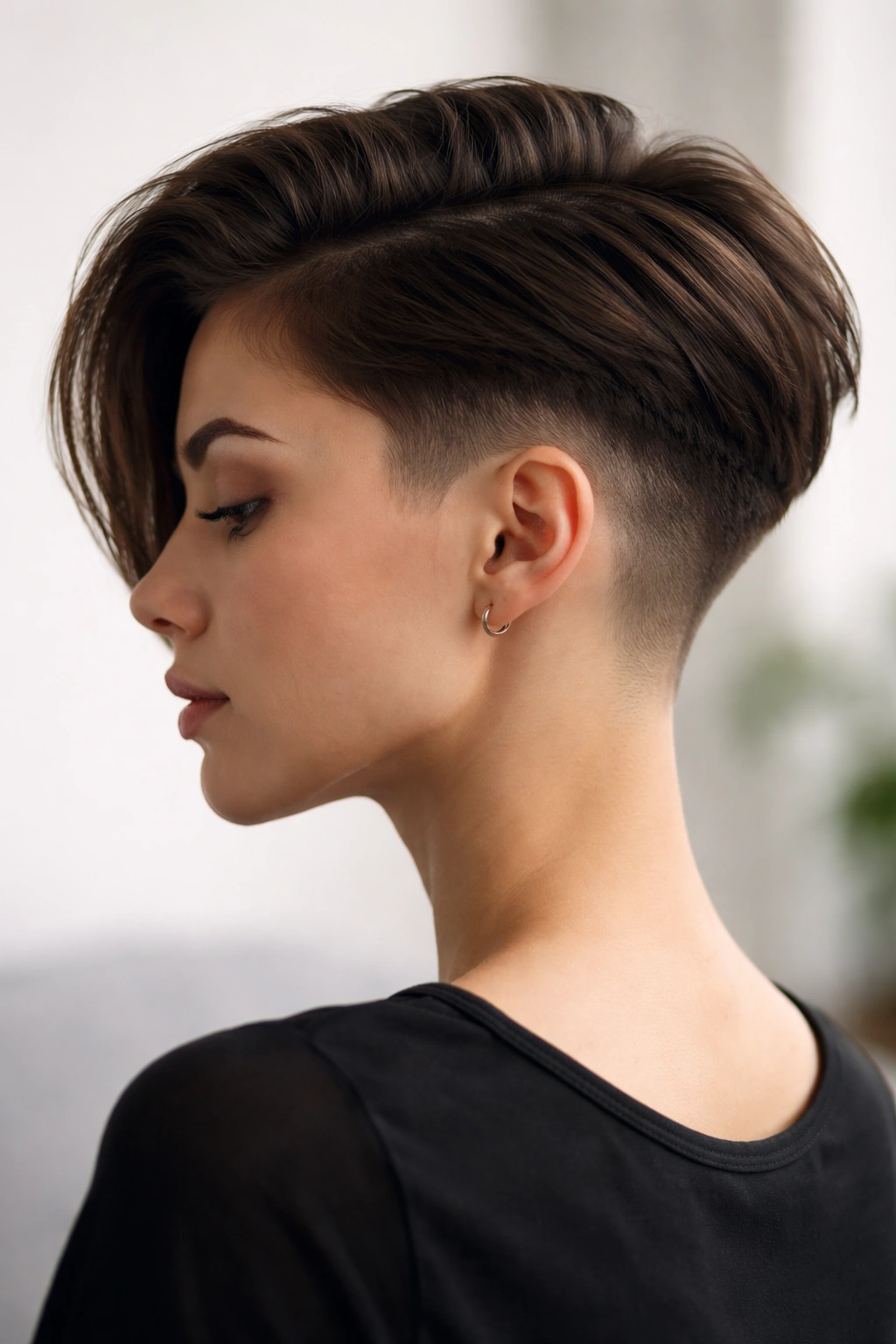
This variation keeps more length through the sides than a typical undercut by starting the fade lower—usually right around where your ear meets your neck. The sides and back gradually fade from short to longer, blending smoothly into the longer hair on top without the stark contrast of a traditional undercut.
Why Lower Can Be Better
A low fade undercut gives you the visual structure and edge of an undercut without committing to shaved sides. This version appeals to people who want the artistic cut detail but prefer a softer overall look, or who work in environments where a dramatic undercut might read as too bold. The fade still creates movement and shows you have intentional styling, just less aggressively.
The Subtlety Factor
The lower you place the fade, the more wearable and professional the cut becomes. Some women barely notice their undercut because the fade is so subtle it only shows at the nape. Others position the fade slightly higher so it’s visible when hair is pulled back but hidden when worn down. Talk to your stylist about where you want that fade line to sit based on your lifestyle and comfort level.
Worth knowing: A low fade works exceptionally well as a transition style if you’re thinking about eventually going for a more dramatic undercut. You get to experience how you feel wearing the cut, how easy it is to maintain, and how it works with your daily styling routine—all while keeping your options open to go shorter next time.
9. Colored Undercut with Natural Top
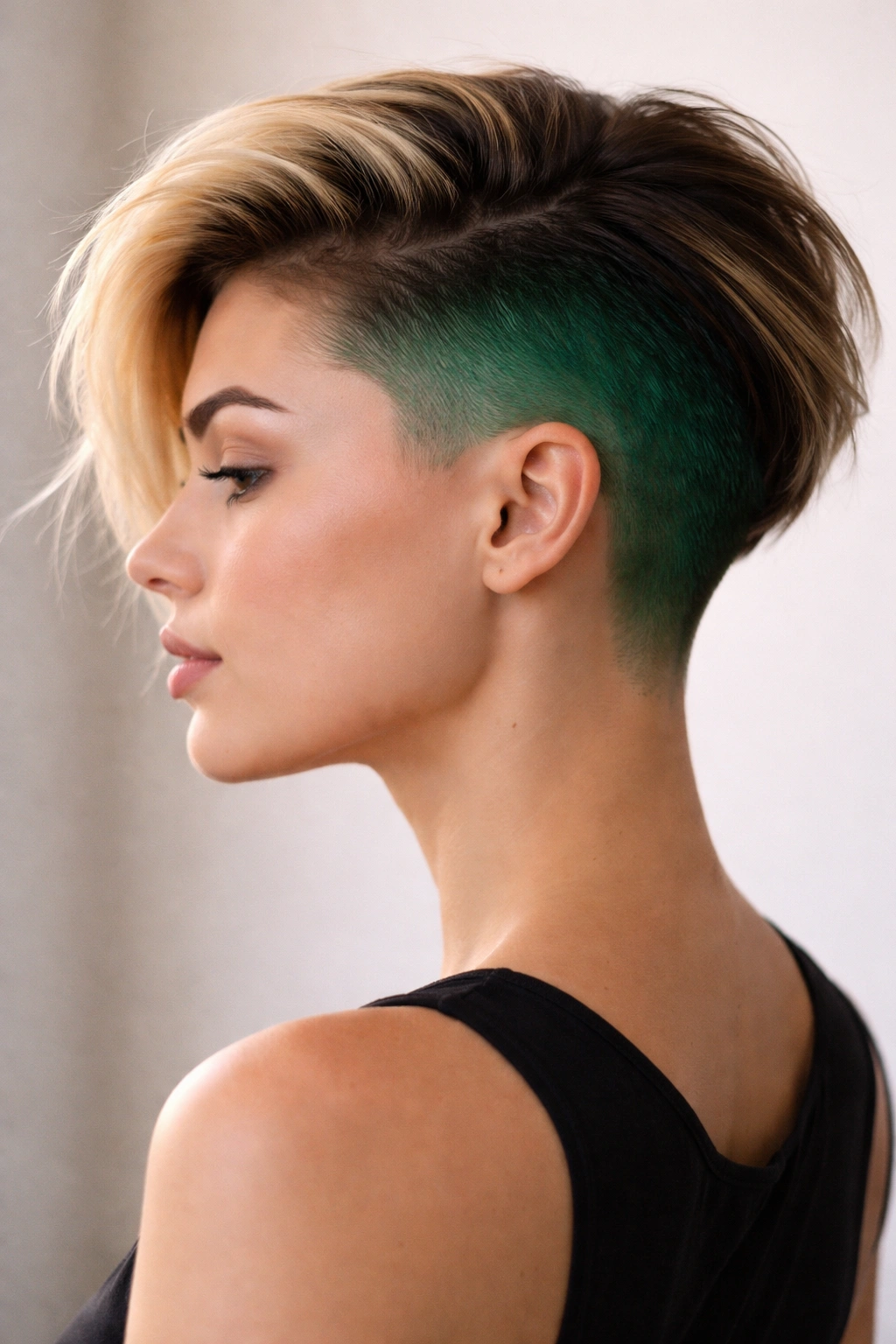
Here, the undercut section features a bold fashion color—think jewel tones like emerald or sapphire, vibrant reds, electric purples, or pastels—while the top stays your natural shade or a subtle variation. The color is the statement; the longer top hair frames your face in a more conventional way while the undercut is your secret edge.
The Psychology of Hidden Edge
There’s something genuinely empowering about having a bold colored undercut. You can keep your hair down and look completely conventional, then flip it back or tuck it behind your ear to reveal this whole other version of yourself. It’s the definition of controlled edge—you decide when to show it. This works especially well for people in professional fields who want personal expression without the visual impact of a dramatic cut.
Color Choices That Actually Last
- Jewel tones: Deep blues, emeralds, and purples tend to show up richly and fade to interesting secondary tones
- Metallics: Rose gold, copper, and bronze tones age well and look intentional as they fade
- Pastels: Lavender, baby pink, and pale blue feel romantic and less aggressive than neon brights
- Deep reds: These require regular touch-ups but create a fierce, sophisticated look that reads as intentional
- Fashion colors: Bright oranges, hot pinks, and electric yellows make a statement for people confident enough to own them
Pro tip: If you choose a fashion color in your undercut, book a consultation with your colorist before bleaching. Some undercuts are easier to color evenly than others depending on texture and hair type. Also ask about tone correction—some colors shift unexpectedly as they fade, and your stylist might recommend starting with a slightly different shade to account for that fade pattern.
10. Undercut Pixie or Short Hybrid
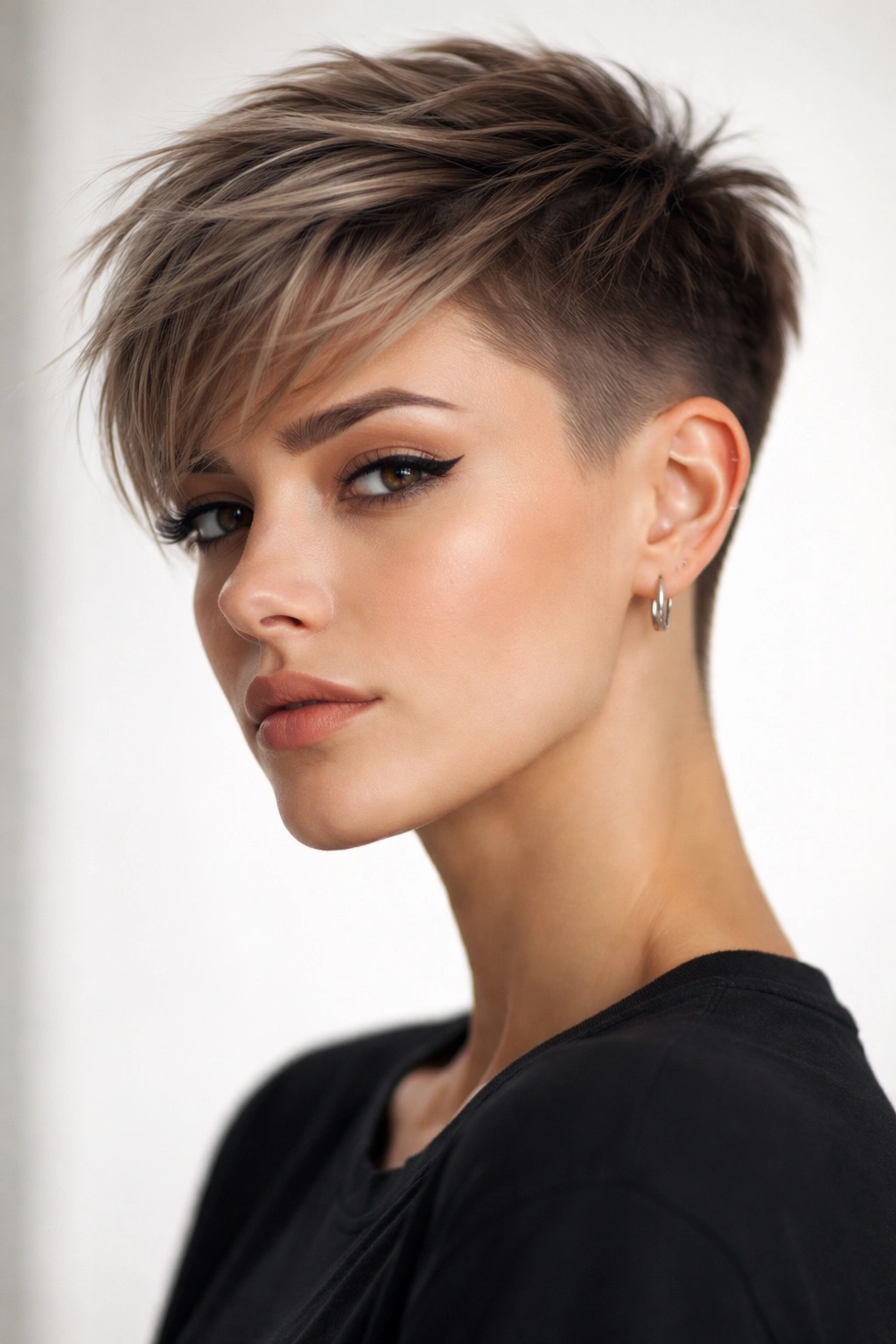
This version takes undercut styling and applies it to a much shorter overall length. Instead of having substantial length on top with an undercut underneath, this style is short all over—think pixie or very short crop—with an undercut fade on the sides and back creating definition and structure.
Short Hair, Maximum Impact
An undercut pixie or short hybrid creates visual interest through layering and the fade structure rather than through length contrast. The sides and back can be faded extremely short while the crown stays longer (maybe 2-3 inches), creating dimension and the opportunity for texture styling. It’s bold, requires confidence, and reads as extremely intentional.
Why Short Undercuts Work
Short undercut styles are surprisingly sophisticated. They work beautifully for people with strong features, interesting face shapes, or the confidence to own short hair. The cut draws attention to your face, bone structure, and eyes. It also reads as artistic and intentional rather than casual or grown-out. Many women find that going short with an undercut actually makes them feel more powerful than longer styles.
Worth knowing: If you’re nervous about going this short, a stylist can take it incrementally—shorten the top gradually over a few haircuts while establishing the undercut structure, so you’re not making a dramatic change all at once. You can always go shorter; it’s harder to add length back.
11. Half-Head Undercut
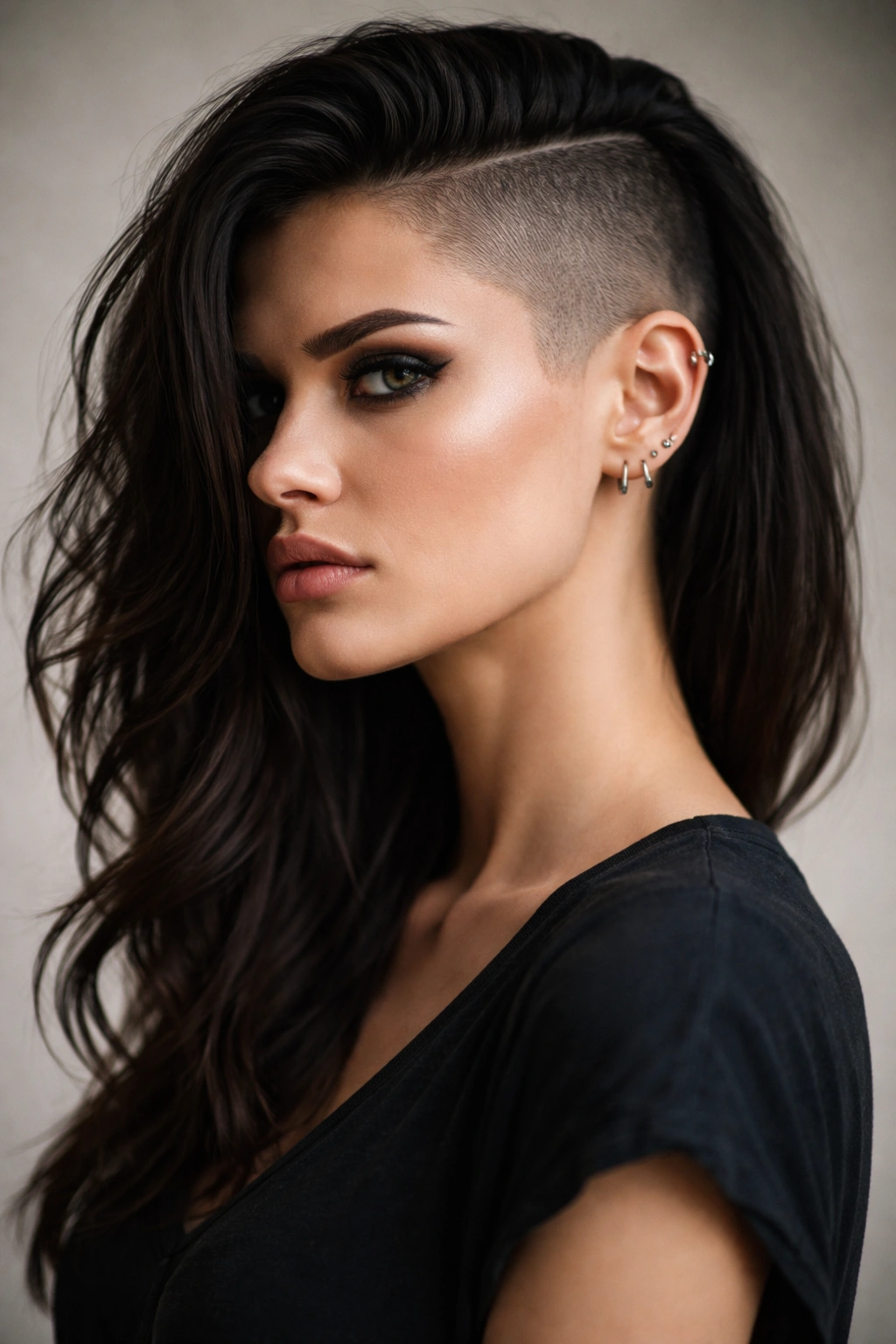
This style shaves or fades only one side of the head, leaving the other side with fuller, longer hair. It’s asymmetrical by design, creating a dramatic, fashion-forward silhouette. The shaved or short side can be worn completely exposed or hidden depending on how you style and part your hair.
Asymmetry as a Design Statement
A half-head undercut is genuinely artistic. It creates a visual line that divides your head into two distinct sections, and that asymmetry reads as intentional and fashion-forward. This style works best on people confident enough to wear something visibly unbalanced and artistic rather than conventionally symmetrical. It’s not a cut everyone will choose, but for the right person, it’s unforgettable.
Styling a Half-Head Undercut
- Deep side part: Sweep the longer side across to create volume and angles
- Tucked behind ear: Tuck the longer side behind your ear to fully expose the shaved side
- Slicked back look: Gel everything back to show the asymmetry clearly
- Tousled and messy: Texture styling adds dimension and keeps the asymmetry from reading as too severe
Pro tip: If you choose a half-head undercut, commit to styling it intentionally. Letting it just hang will make the cut look unfinished rather than artistic. The styling is part of what makes this cut work, so you’ll need to spend time on your hair daily to maximize the effect.
12. Undercut with Underlay Color
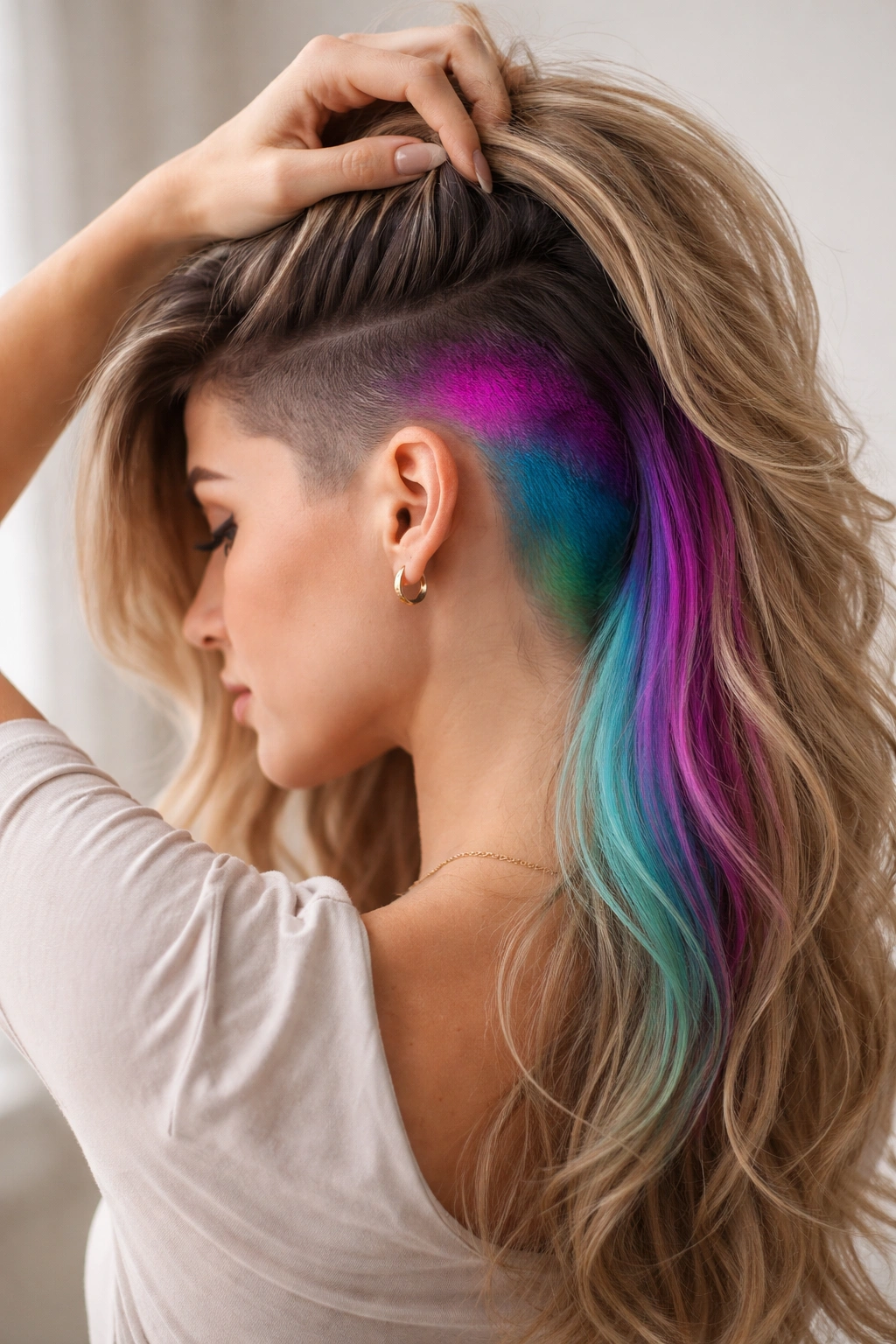
This final style separates the top and undercut sections not just by length, but by having a distinct color hidden underneath. The top section is your natural color or a conventional shade, but when you move or style your hair back, a completely different color peeks through from the undercut layers. It’s like having a secret fashion color that only shows when you want it to.
The Reveal Factor
What makes an underlay color so compelling is the element of surprise and control. You walk into a board meeting looking completely conventional, then you tilt your head and someone catches a glimpse of a flash of color underneath. It’s the ultimate way to have edge and professionalism coexisting. The longer top section completely hides the color when worn down, but the moment you pin it back or slick it into a ponytail, the whole color story changes.
Color Combinations That Create Drama
- Natural blonde top with bright underlay: The contrast makes the underlay pop when revealed
- Brunette with rose gold or copper underlay: Warm tones complement each other and age beautifully
- Black or very dark top with jewel-tone underlay: Creates maximum contrast and impact
- Subtle natural variation: A slightly different shade in the underlay that reads as dimension rather than a bold color block
- Ombré effect: The underlay and top shade blend slightly where they meet, creating a gradient effect
Worth knowing: An underlay color requires slightly more frequent root touch-ups than a full head of color because you’re maintaining two separate color zones. However, the benefit is that you can touch up just the top section (your natural roots) and let the underlay color fade without it looking obviously unintentional. Many women actually prefer the slightly faded look in the underlay because it reads as more artistic.
Final Thoughts
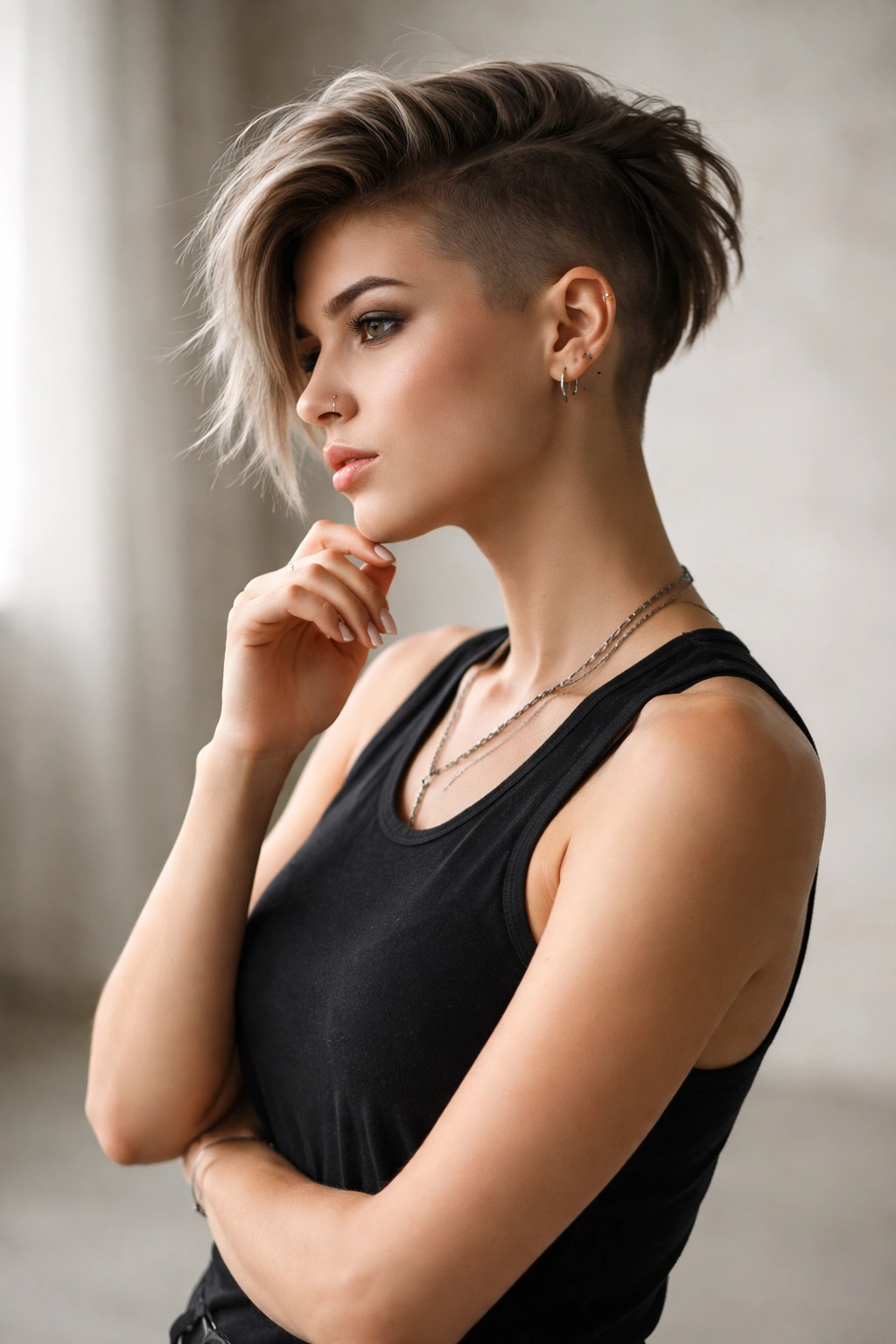
An undercut is a commitment to your own boldness. Whether you choose a razor-sharp shaved design, a subtle soft fade, or a high-fashion colored version, you’re making a statement about confidence, intentionality, and personal style. The beauty of undercut variations is that there’s a version for every comfort level—from barely-noticeable faux undercuts to full geometric artwork on your scalp. The real magic happens when you find the version that feels authentically you, not the version you think you’re supposed to choose.
The best time to try an undercut is when you’re genuinely excited about it, not when you’re trying to prove something or follow a trend. That excitement is what carries you through the maintenance phase and keeps you styling it intentionally rather than letting it grow out in frustration. Go to a stylist who understands the geometric and artistic side of undercutting, bring visual references of exactly what you want, and be specific about placement, length, and maintenance frequency. An undercut done right becomes less of a haircut and more of an extension of your personality.
