



Finding the right hairstyle when you have a longer face shape can feel like a puzzle—but it doesn’t have to be. A longer or oblong face tends to have more vertical length than horizontal width, which means the goal is strategic: you want styles that add dimension on the sides, break up the length with texture or layers, and create the visual illusion of a shorter, more balanced face. The good news? There are dozens of beautiful, versatile cuts and styles designed specifically to flatter this face shape. The trick is choosing styles that work with your face’s natural proportions rather than against them.
The most flattering hairstyles for longer faces share a common principle: they add width and visual interest horizontally. Styles with volume at the crown, side-swept elements, waves, curls, or strategic layering all accomplish this beautifully. You’ll also want to avoid styles that emphasize length, like super-straight center-parted hair that runs straight down, as these can make your face appear even longer. Instead, look for cuts that feature movement, texture, and carefully placed frames around your cheekbones and jawline.
What makes a hairstyle work for a longer face isn’t just the cut itself—it’s how you style and accessorize it. The same layered cut can look completely different when styled smooth versus with waves, or when you add a side part instead of a center part. That’s why this guide includes not just the hairstyle itself, but specific styling tips, the best ways to wear it, and exactly how to ask your stylist for it. You’ll discover cuts that range from short and textured to long and flowing, from classic to contemporary. Whether you’re drawn to bold, dramatic styles or prefer something subtle and everyday-wearable, there’s something here for you.
1. Side-Swept Bangs with Long Layers
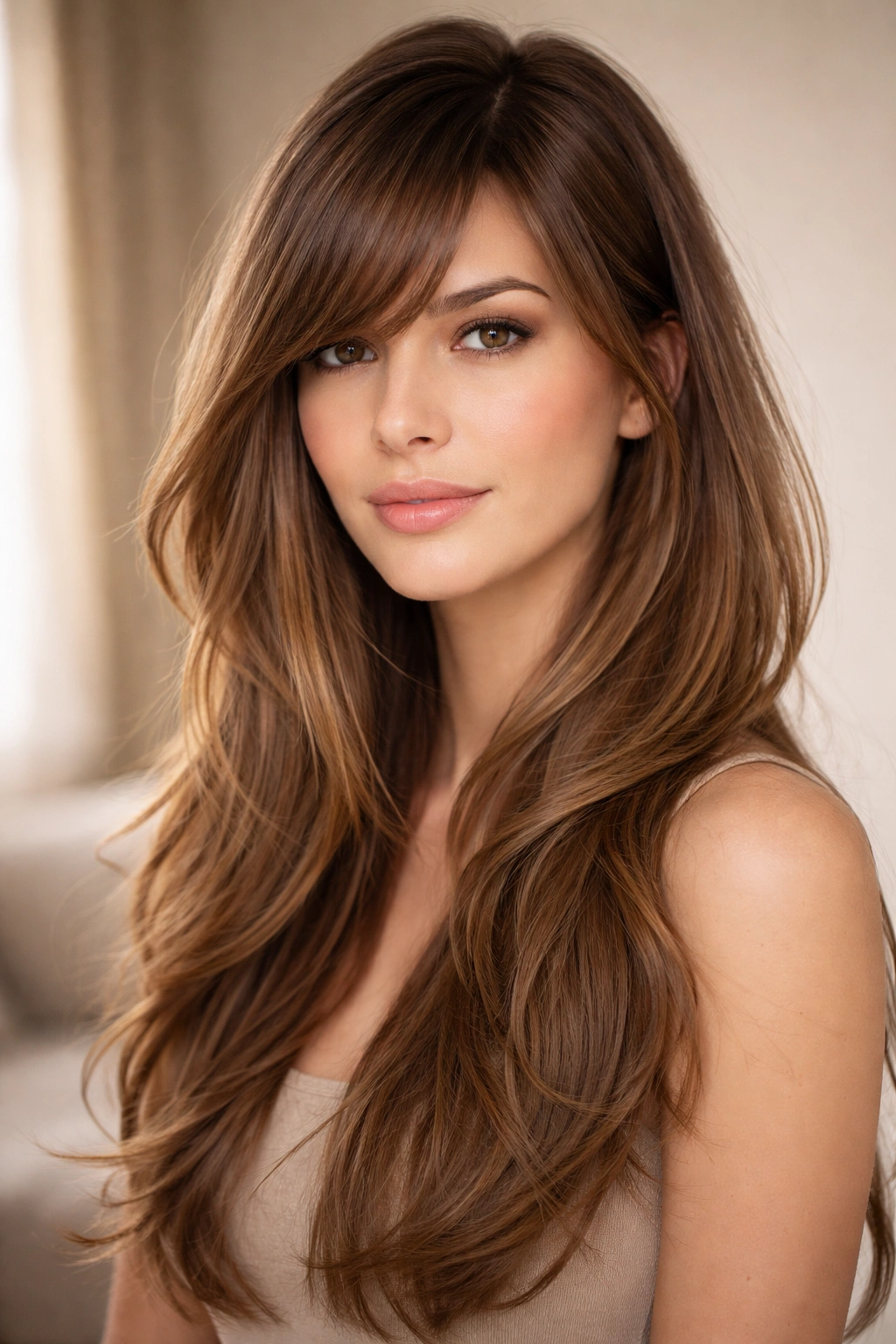
Side-swept bangs are a game-changer for longer faces because they instantly break up vertical length and draw attention horizontally. When paired with long layers throughout the rest of your hair, this combination creates movement and dimension that make your face appear wider and more balanced. The bangs should start from roughly the middle of your head and sweep diagonally across to one side, reaching approximately your cheekbone or slightly past it.
Why This Works for Your Face Shape
The side-swept angle creates an optical illusion that shortens the appearance of your face. Instead of your face being framed vertically, the diagonal line of the bangs redirects the eye horizontally, which is exactly what a longer face needs. The long layers underneath add texture and prevent your hair from sitting flat against your face, which would emphasize length.
How to Style It Perfectly
- Blow-dry the bangs diagonally across using a round brush to set the direction
- Apply light texture spray or sea salt spray to the bangs to keep them piece-y and dimensional
- Curl the rest of your hair in loose waves to enhance movement and add width
- Use a flat iron to curl away from your face rather than toward it
Pro tip: Ask your stylist to cut the layers at different lengths—some shorter layers around your face (hitting around chin-length) and longer layers in the back creates more dimension than uniform layers.
2. Textured Pixie with Longer Sides
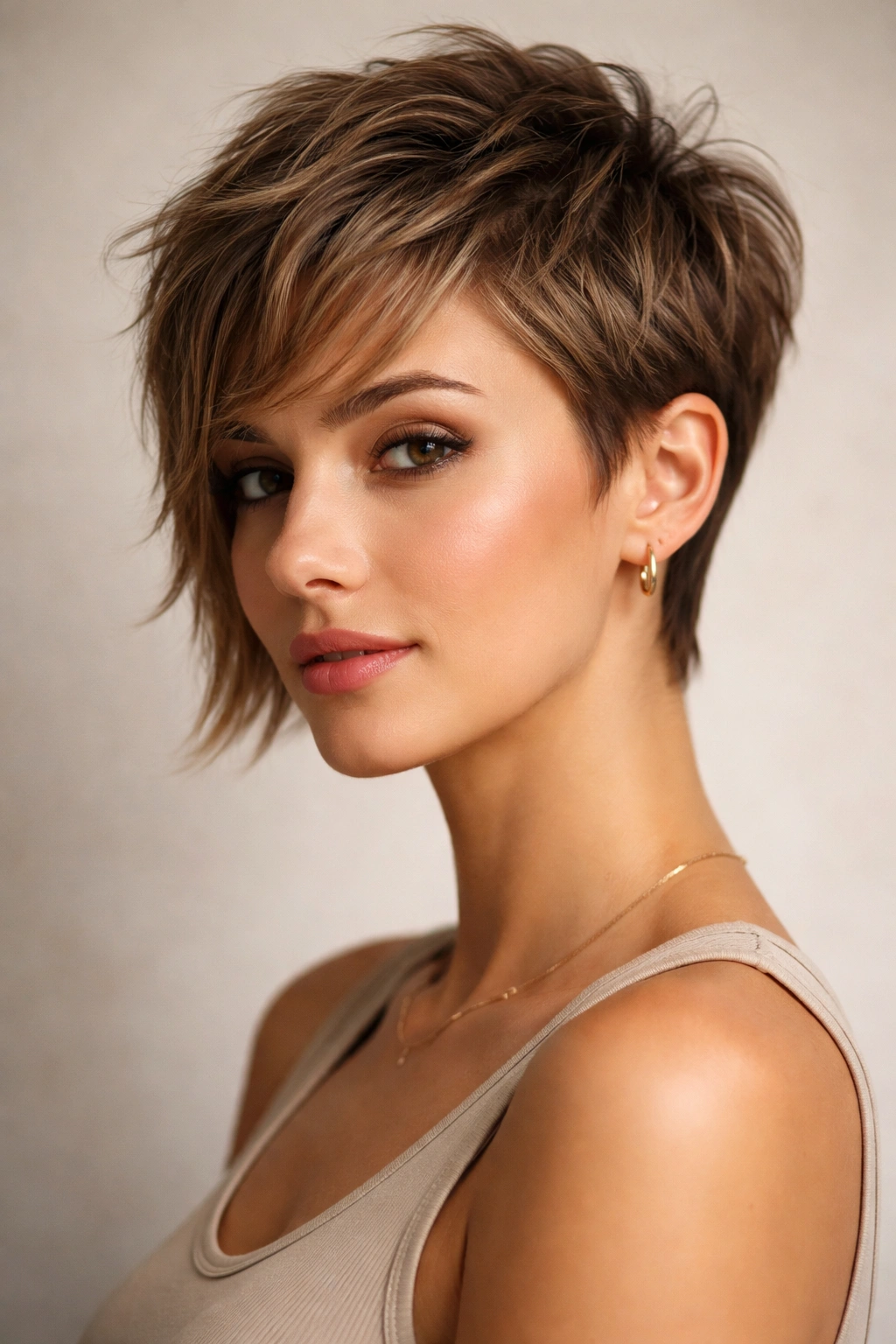
A pixie cut can absolutely work for a longer face—the key is choosing a textured, shorter-on-top version that has noticeably longer sides. This creates width exactly where you need it: at the cheekbones. The sides should graze your cheekbones or jaw, creating a frame that visually widens your face, while the crown is short and textured to avoid adding unnecessary height.
What Makes This Flattering
The longer sides act like a horizontal frame that interrupts the length of your face, while the short, textured top keeps things from looking too elongated. This style is particularly effective because it automatically adds width at the crucial middle section of your face—your cheekbones—which is exactly what balances a longer face shape.
Styling and Maintenance Tips
- Use a texturizing paste or pomade through damp hair to maximize the piece-y, separated texture
- Blow-dry in multiple directions rather than straight back to add volume and dimension
- Visit your stylist every 4-6 weeks to maintain the shape and length precision
- Grow the sides out slightly between cuts for a slightly softer, less severe look if you prefer
Worth knowing: This cut works beautifully with natural texture, but can also be styled sleek if you have straight hair and use a smoothing cream.
3. Shoulder-Length Bob with Blunt Ends
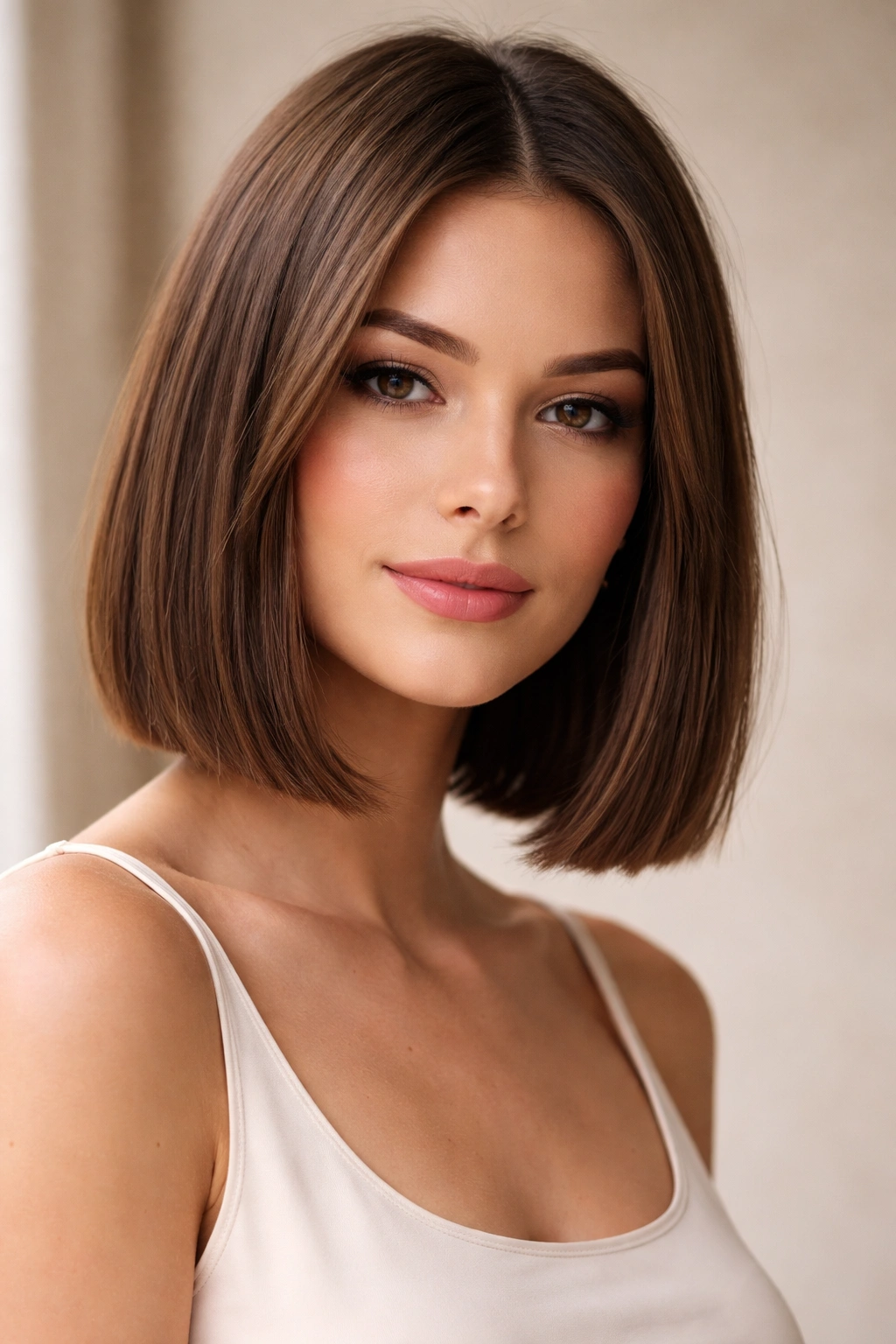
A blunt-ended bob that lands right at your shoulders is deceptively flattering for longer faces. The horizontal line created by the blunt ends at shoulder-width cuts across your face at exactly the point where you want to add visual width. This style is timeless, professional, and incredibly versatile—you can wear it straight, wavy, or textured depending on the occasion and your mood.
Why the Blunt Ends Matter
Blunt, uniform ends create a strong horizontal line that visually interrupts the vertical length of your face. Unlike layers that taper and minimize, blunt ends maintain thickness and create a visual “stop” right at a width-widening position. The key is making sure the bob hits right at your shoulders, not shorter—shorter bobs can actually emphasize face length.
Styling Variations That Work
- Straight and sleek with a side part for a polished, modern look
- Softly waved with movement for a more relaxed vibe
- Textured with dry shampoo for dimension and grip
- Styled with a deep side part to add asymmetry
Real talk: If you have fine or thin hair, ask your stylist to add subtle internal layers (invisible when your hair is down, but adding volume and movement) to make the bob feel fuller without losing the flattering blunt-end line.
4. Half-Up, Half-Down Waves
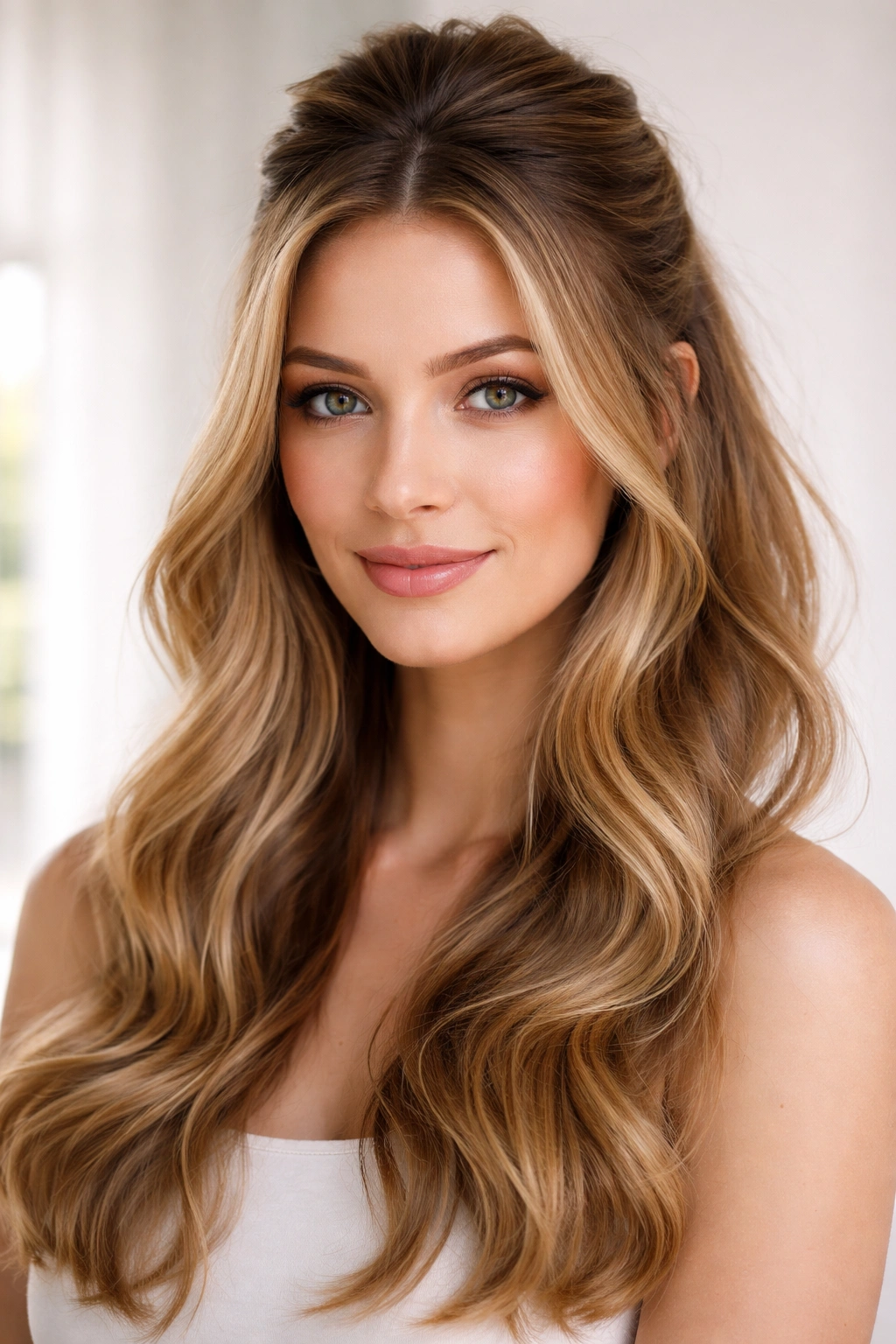
This style works by using the best of both worlds: the half-up portion pulls hair back from your face and minimizes how much length is framing it, while the waves in the down portion add horizontal movement and texture. The result is a face that appears wider and shorter, thanks to the strategic placement of volume and the visual break created by pinning up the top section.
How This Style Flatters Longer Faces
By pulling the top half back, you reduce the amount of hair framing your face vertically. The waves in the bottom half add width and draw the eye horizontally. Together, they create a balanced appearance that complements rather than emphasizes your face’s natural proportions. This style is especially effective if you add volume at the crown when you pin the top section back.
How to Create It
- Curl your entire head in loose waves using a curling iron or wand, curling away from your face
- Take a section from ear to ear across the top of your head and gently pull it back
- Secure with a bobby pin or clip at the back of your head, leaving some face-framing pieces loose
- Gently tousle the pinned section to add height and prevent it from looking too severe
- Arrange the waves in the lower half to fall forward and frame your face
5. Layered Shag with Tousled Texture
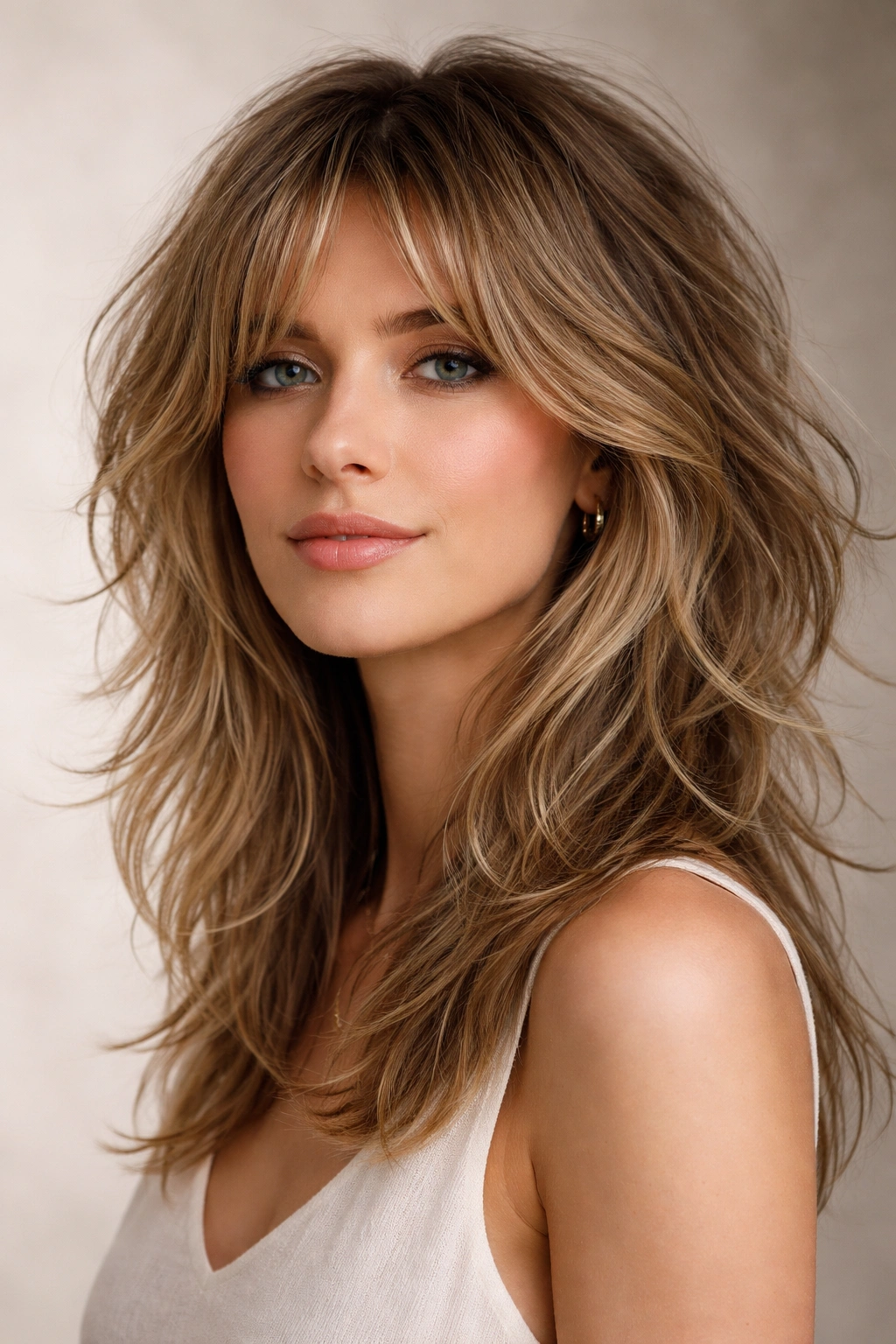
A modern shag cut is designed specifically to create the kind of movement, texture, and side-to-side dimension that balances a longer face. Unlike the shags of past decades, modern versions feature thoughtfully placed layers at different lengths, texturized ends, and an intentional slightly-messy styling that adds volume and prevents your hair from lying flat and emphasizing length.
Why Shags Work Here
The multiple layers and choppy texture create visual width and movement. Shags naturally encourage your hair to move away from your face rather than frame it in a long, straight line. The varied lengths also prevent monotonous vertical lines. When styled with tousle and texture (rather than smooth and sleek), a shag cuts a longer face down to size optically.
Styling Your Shag
- Apply sea salt spray to damp hair to encourage texture and prevent smoothness
- Blow-dry with your fingers, ruffling the hair and encouraging movement
- Use a diffuser attachment if you have wavy or curly hair to enhance natural texture
- Avoid blow-drying with a paddle brush, which will smooth and elongate
- Scrunch in a texturizing cream or wax to the mid-lengths and ends
Insider note: The way you part a shag matters. A deep side part adds more width than a center part. If you love your shag, change your part placement depending on the occasion.
6. Rounded Bob with Curved Layers
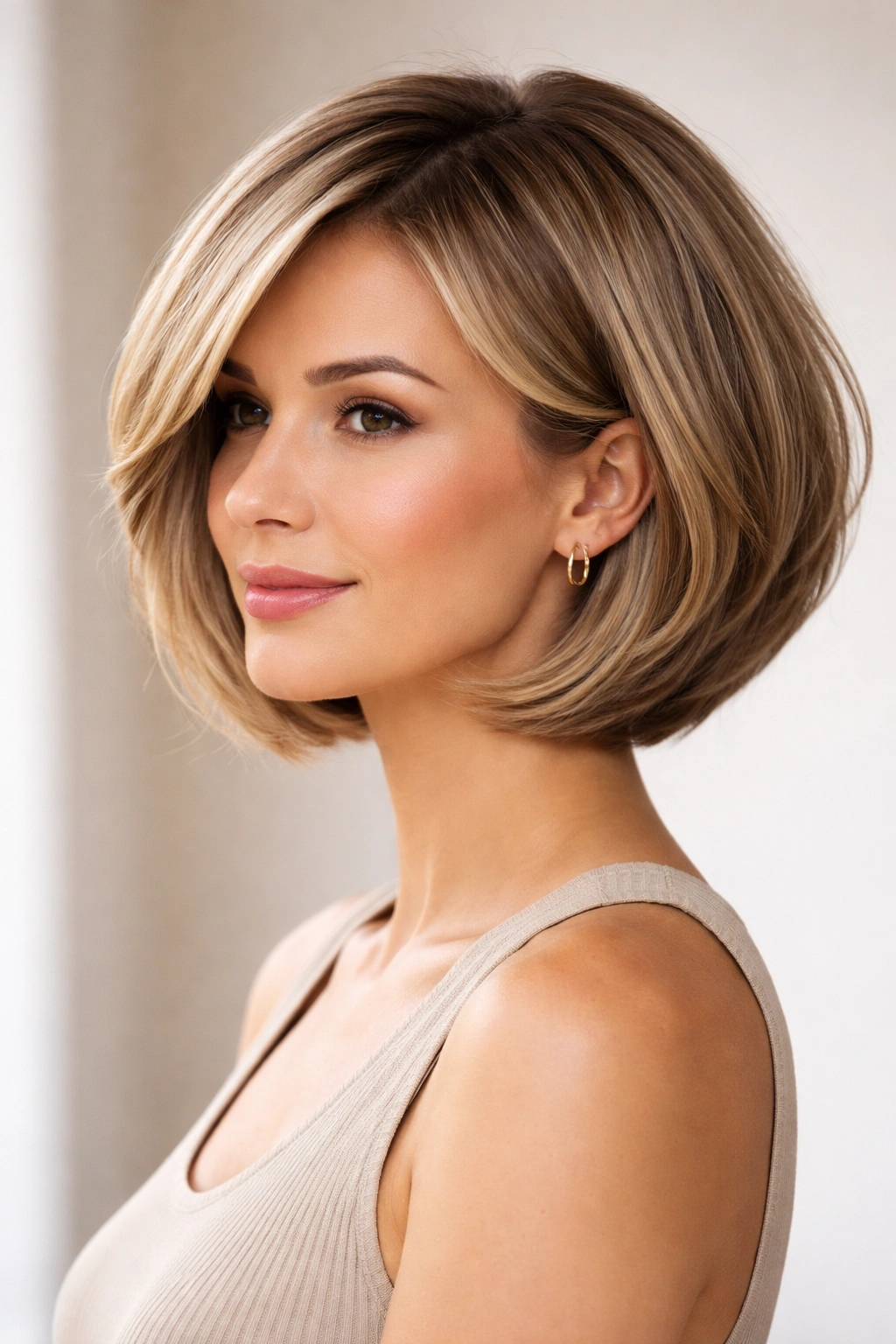
A rounded bob—one where the back is slightly longer than the front and curves around your face—creates the illusion of width through its shape. Combined with curved internal layers that add movement and prevent flatness, this style literally rounds out the sharp angles of a longer face. The curved layers mean the style works beautifully whether you wear it straight or textured.
The Geometry That Works
The rounded shape mirrors the idea of making a rectangle appear more square by adding volume to the sides. The curved layers throughout mean the style automatically sits away from your face rather than clinging to it, which creates that crucial width-adding effect. This is why this style flatters longer faces so well—it’s geometrically designed to do so.
Styling This Cut
- Blow-dry using a round brush to enhance the curve and create shape
- Curl inward (toward your face) at the ends for a polished, finished look
- Add soft waves throughout for movement that prevents any elongation
- Use a volumizing mousse at the roots to add height without length
- Style with a side or off-center part rather than center
7. Straight Lob with Blunt Layers
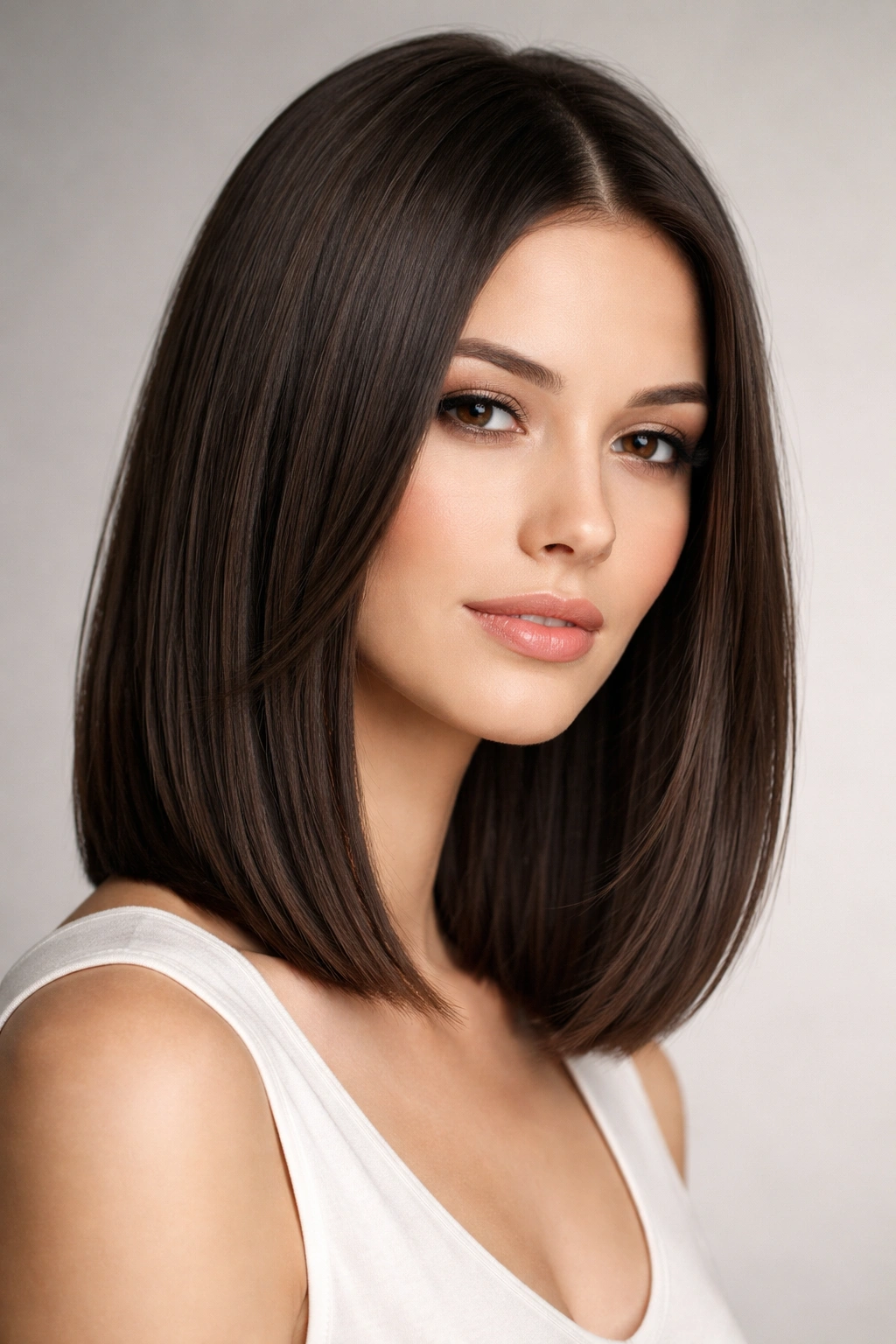
A lob (long bob) that lands between your chin and shoulders, with blunt-cut layers, combines the length some people prefer with the flattering proportions that help a longer face. The blunt layers create horizontal lines at flattering points, while the straight style is modern and easy to maintain. The key is ensuring the layers are blunt-cut rather than tapered to maintain those horizontal visual lines.
Why Blunt Layers Create Balance
Blunt layers create multiple horizontal “stops” as your eye travels down the hair, rather than the continuous vertical line created by tapered layers. These stops interrupt the length of your face and make it appear shorter. The lob length keeps the style contemporary and easier to manage than super-long hair, while still giving you the length you might prefer.
Wearing It Confidently
- Straighten for a sleek, modern look that emphasizes the horizontal line of the blunt layers
- Add soft waves for movement while keeping the blunt-layer flattery intact
- Part to the side to add asymmetry and width
- Style with a deep side part and tuck one side behind your ear for an exposed cheekbone and jawline
8. Textured Crop with Wispy Bangs
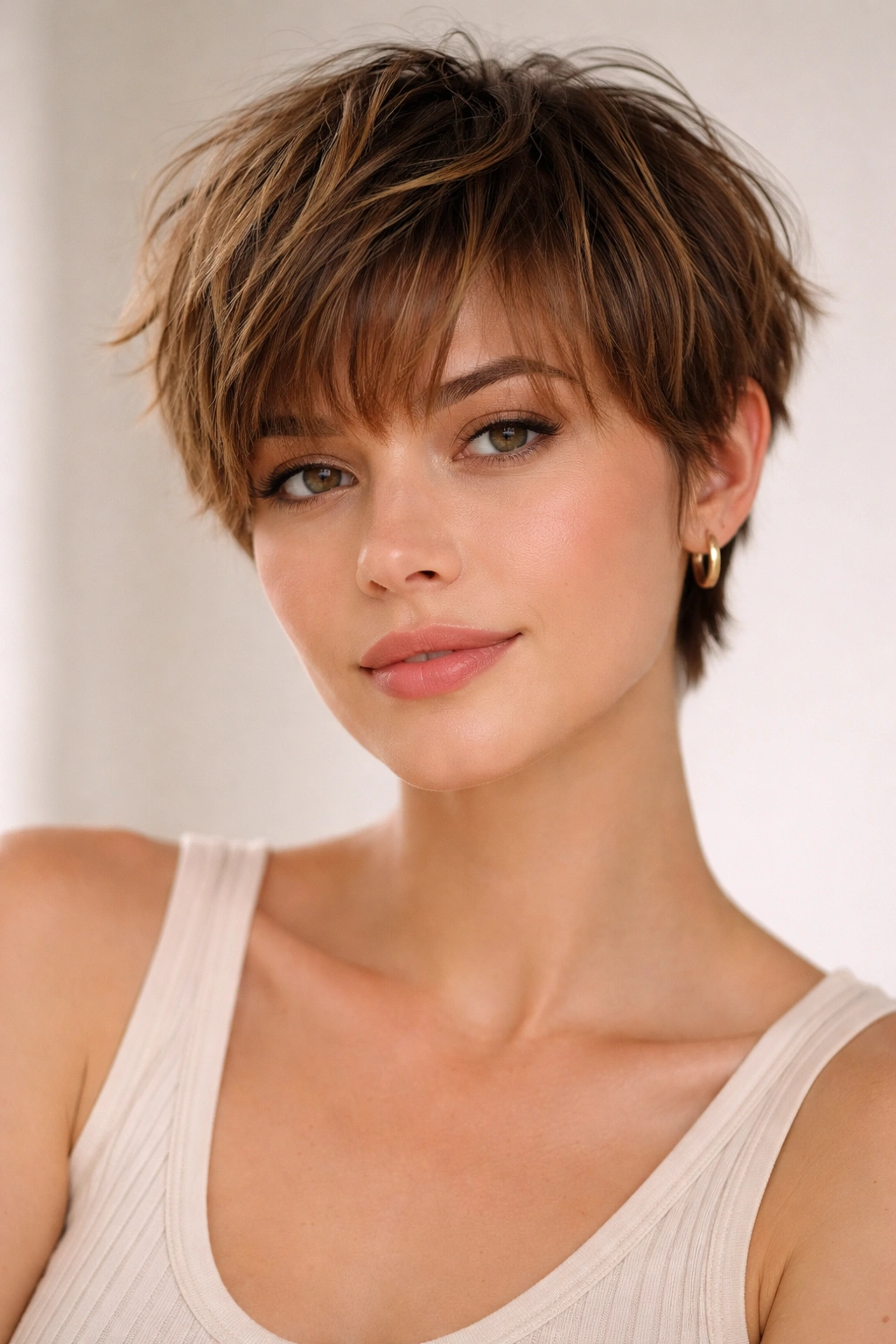
A short, textured crop paired with wispy, face-framing bangs is an excellent choice for longer faces because it combines the width-adding effect of shorter hair on the sides with the face-shortening effect of bangs. The wispy bangs should skim your eyebrows and be cut with texture and movement rather than being blunt or severe. This is a statement style that works especially well if you have naturally wavy or curly hair.
How This Cut Works
The short, textured sides add width right at your face. The wispy bangs break up the vertical space of your forehead and upper face. Together, they create a look that’s undeniably flattering to longer face shapes. The texture throughout is key—smooth, severe styles can sometimes feel too sharp for this combination, while textured versions feel balanced and modern.
Styling Tips for This Look
- Use a curl-enhancing cream or mousse if you have wavy or curly hair to emphasize texture
- Blow-dry with a diffuser to encourage volume and separation
- Keep the bangs slightly piece-y and separated using a light texturizing spray
- Visit your stylist every 5-6 weeks to maintain the precise shape
9. Long Hair with Face-Framing Layers and Waves
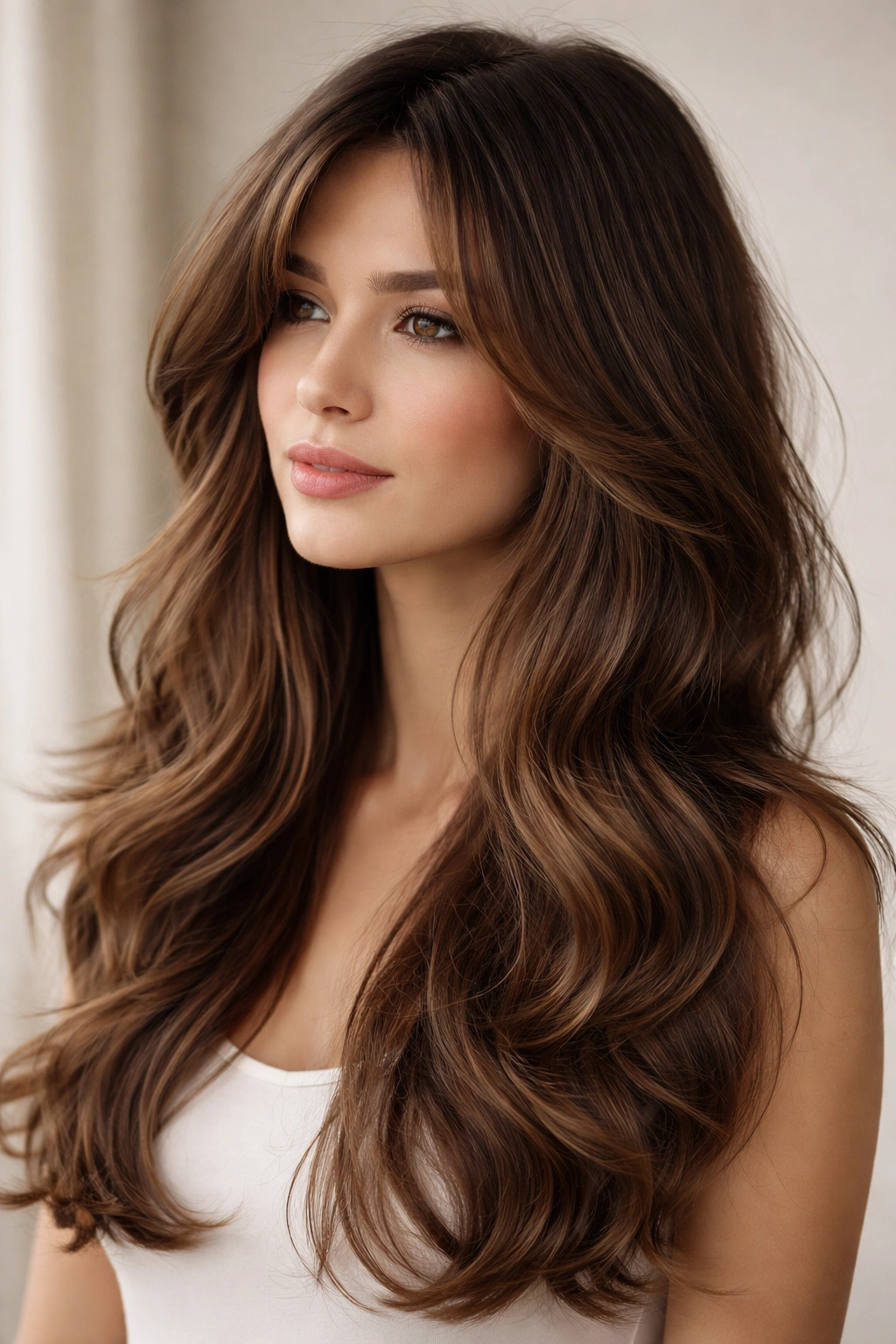
If you love long hair and aren’t ready to commit to a shorter style, long hair absolutely can work for a longer face—with the right technique. The secret is abundant, long layers starting from around ear-level, and styling the hair in waves or curls rather than wearing it straight. The layers and curves add width and prevent the style from creating a long, severe frame.
Making Length Work for Your Face
Long straight hair running down both sides of your face can emphasize length, but long hair with layers and waves does the opposite. The layers create texture and movement, while the waves add horizontal curves. Combined, they create visual width and break up the vertical plane of your face. This style only works if you commit to styling it with waves or curls regularly.
How to Style It
- Curl your entire head in large waves using a 1.5-inch curling iron, curling away from your face
- Start the curls from about mid-length rather than the roots to avoid too much height
- Use a light hairspray or sea salt spray to encourage the waves to hold and separate
- Part to the side rather than center to add asymmetry and width
- Consider adding subtle highlights or balayage to add dimension
Worth knowing: This style requires daily or every-other-day styling to maintain the wave and prevent it from looking thin and stringy. If you prefer wash-and-wear styles, this might not be your best choice.
10. Inverted Bob (Shorter Back, Longer Front)
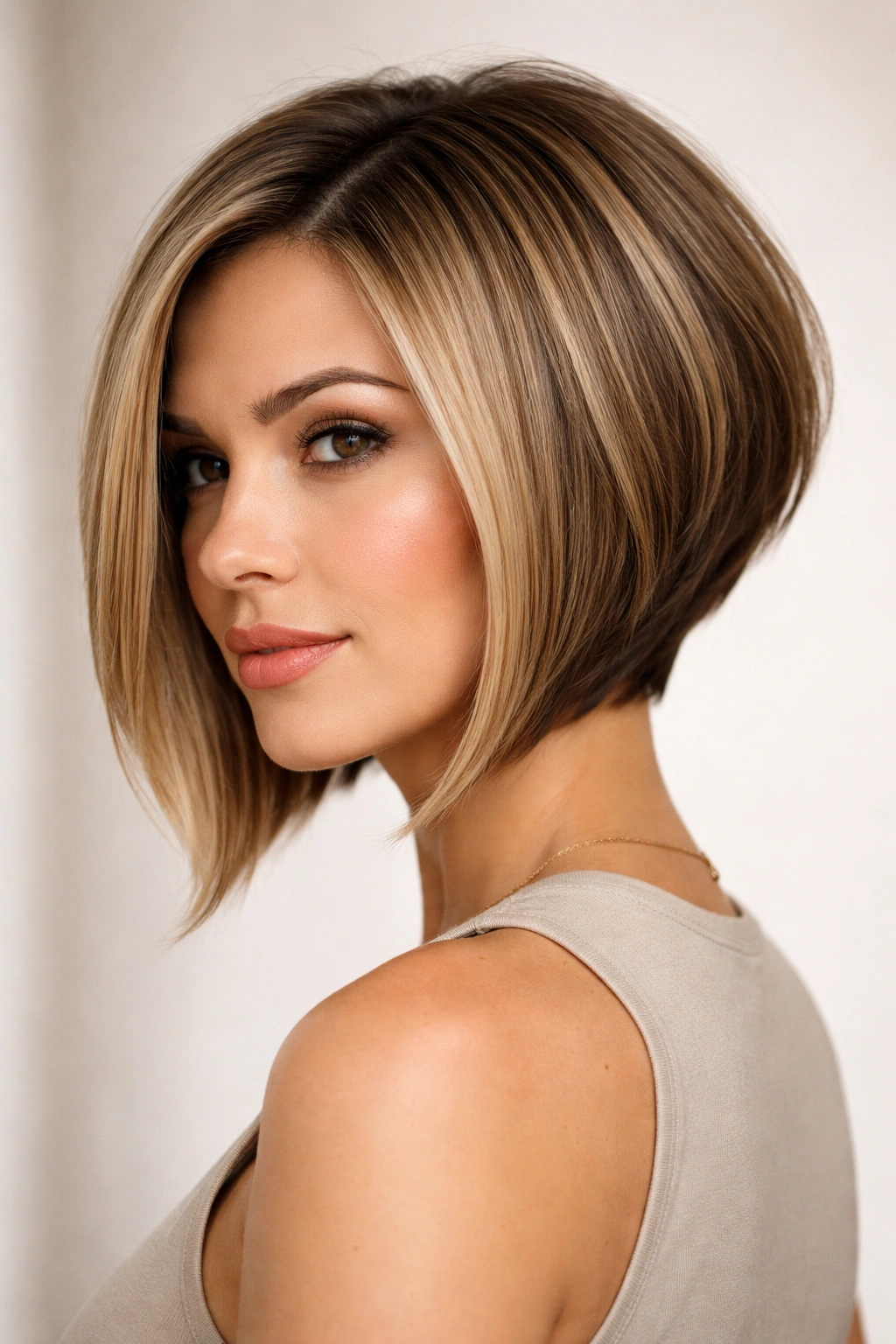
An inverted bob is precisely angled to create width exactly where it counts: at the front near your cheekbones and jawline. The shorter back prevents any added length at the crown, while the longer front pieces frame your face at flattering points. This cut is geometric and modern while being surprisingly versatile in how you can style it.
The Flattering Angle
Because the front is longer than the back, the longest points of the style fall right at your cheekbones—the widest part of most longer faces. This instantly creates the illusion of better proportions. The shorter back also prevents excessive volume at the crown, which can sometimes emphasize a longer face. This is a style designed by geometry to flatter your face shape.
Styling Options
- Sleek and polished with a flat iron for a modern, sharp look
- Tousled and textured for movement and dimension
- With the front pieces curled under for a soft, finished edge
- With a side part to create asymmetry and additional flattery
11. Curtain Bangs with Shoulder-Length Waves
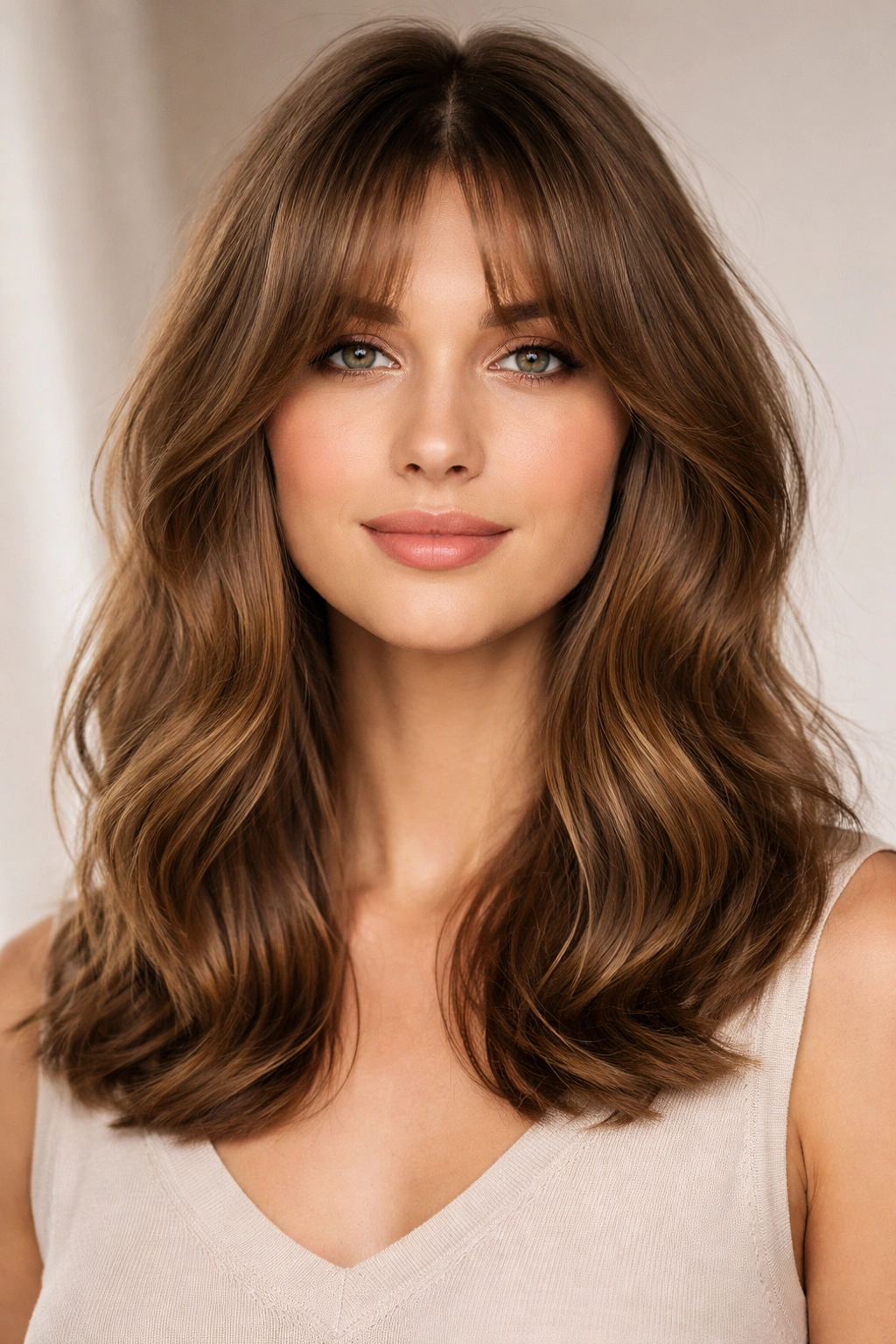
Curtain bangs—longer, wispy bangs that part in the center and frame both sides of your face—work beautifully for longer faces when paired with shoulder-length waves. The parting creates width at the center of your face, while the waves add horizontal movement. This combination of elements creates visual balance that flatters your natural face shape.
Why the Center Part Works Here
While center parts aren’t ideal for all longer faces, when you pair them with curtain bangs (which themselves create width through the parting) and shoulder-length waves, the overall effect is flattering. The center part directs the eye horizontally outward, while the bangs and waves add the width you need. The shoulder-length cut ensures you’re not adding unnecessary length.
Achieving the Look
- Ask your stylist to cut longer, wispy bangs that reach approximately your cheekbones
- Get shoulder-length layers throughout to encourage movement
- Blow-dry with a round brush to create soft waves and bounce
- Use a curling iron or wand to enhance waves throughout the length
- Apply a light smoothing serum to the bangs to keep them separated and piece-y
12. Textured Lob with Choppy Layers
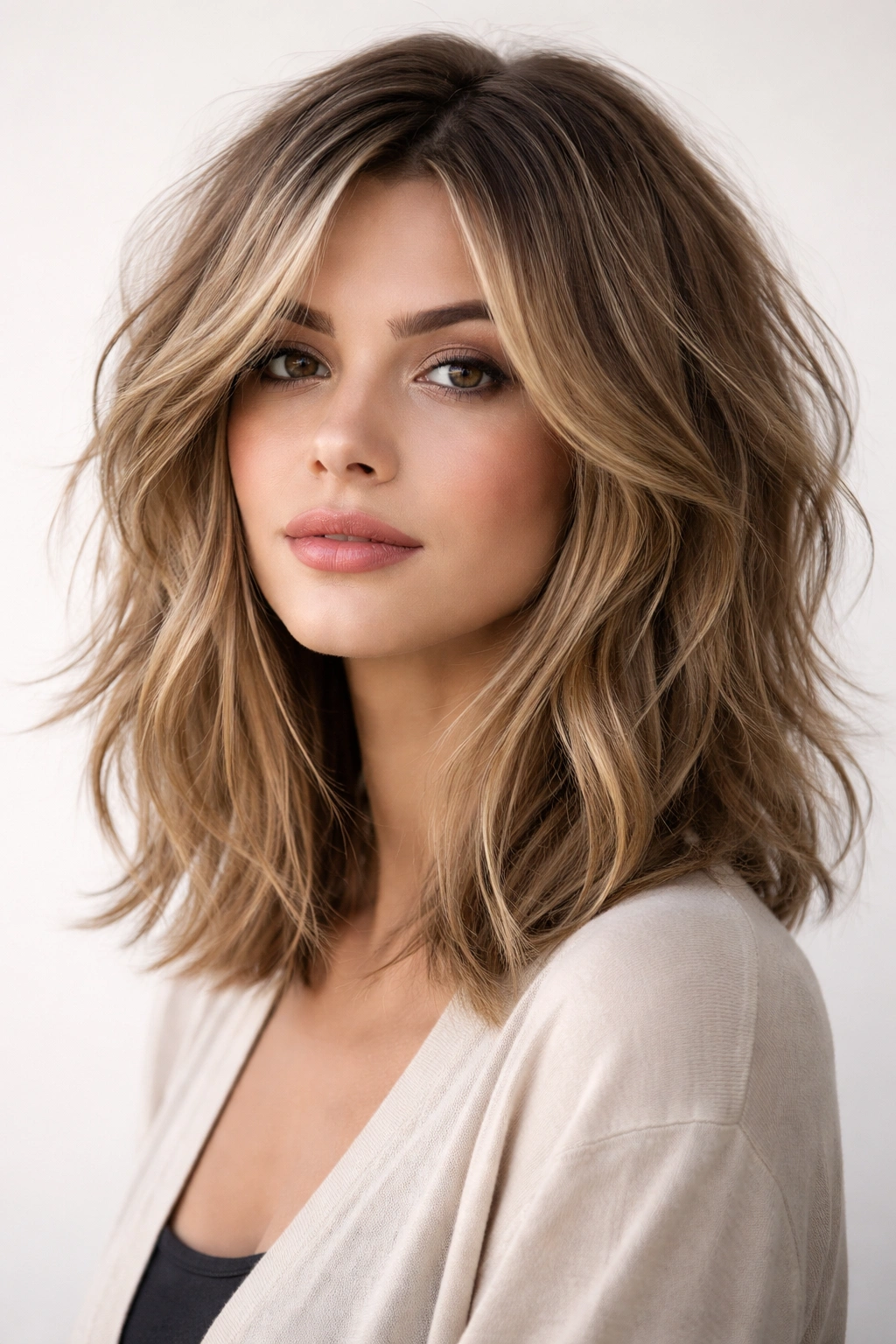
A lob with abundant, choppy layers throughout creates the texture and movement that breaks up the length of a longer face. Unlike subtle layering, choppy layers are visibly separated and textured, which means they automatically prevent your hair from lying flat and creating vertical lines. This style is particularly effective because it works well in multiple textures—straight, wavy, curly, or naturally textured hair all benefit from this cut.
How Choppy Layers Transform Length
Choppy layers create visual chaos in the best way possible—they prevent any long, monotonous vertical lines. Each layer catches light differently and moves independently, creating width and dimension. For longer faces, this is precisely what you want: a style that’s too textured and interesting to emphasize length. This style also tends to feel more modern and fashion-forward than uniform, subtle layering.
Styling to Maximize the Effect
- Apply a texturizing spray or salt spray to enhance the separation between layers
- Use a razor or texturizing technique when styling—don’t smooth everything down
- Blow-dry in multiple directions to encourage movement and prevent any sleek styling
- Scrunch a cream or pomade through the lengths for definition and hold
- Embrace the slightly piece-y, undone quality—it’s the whole point of this style
13. Sleek High Ponytail with Smooth Sides
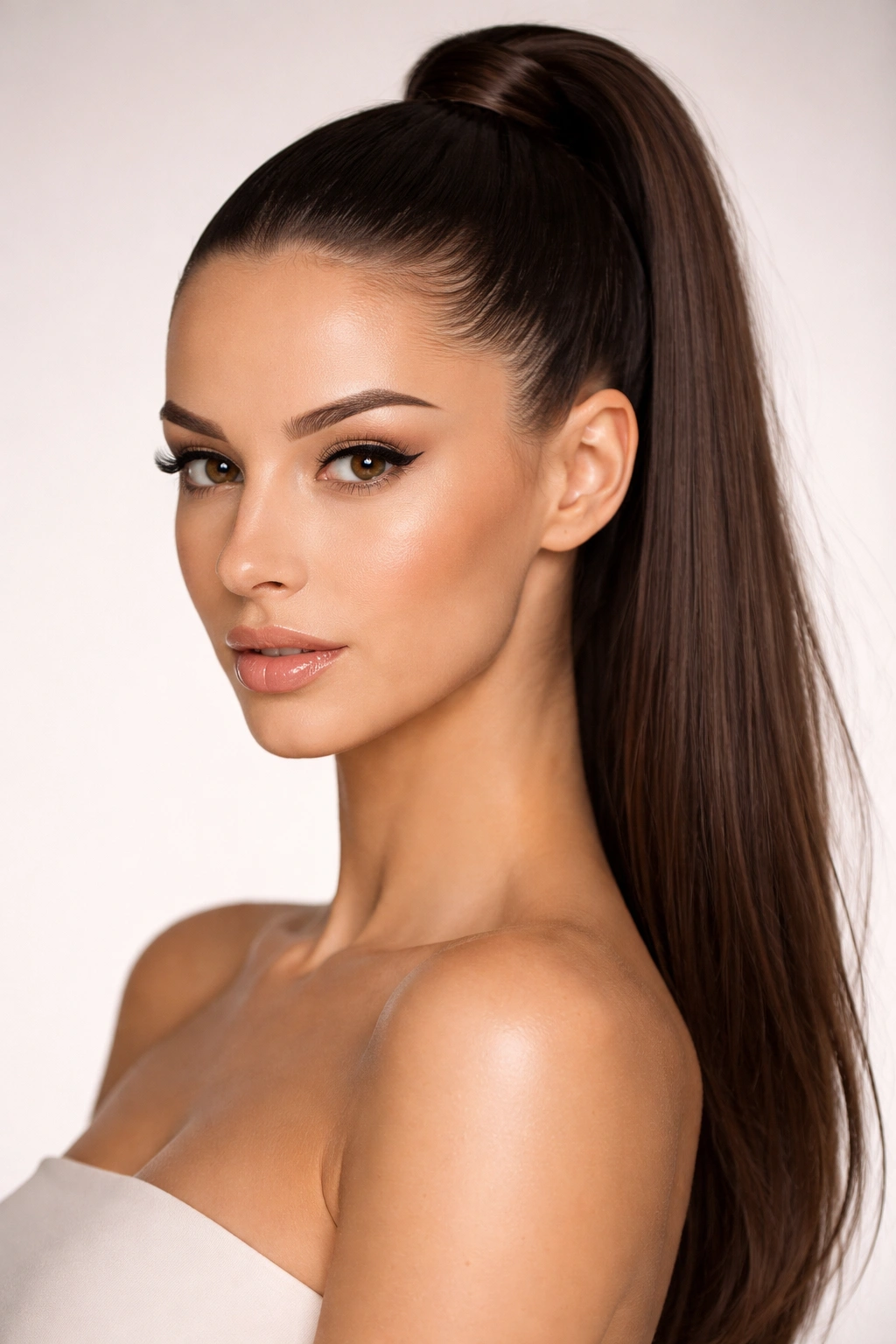
While a ponytail might seem like it would emphasize face length, a sleek high ponytail with smooth, pulled-back sides actually has the opposite effect. By pulling all your hair back and away from your face, you expose your cheekbones and jawline while eliminating the framing effect that can emphasize length. The key is keeping the sides smooth and sleek rather than leaving face-framing pieces out.
The Strategic Difference
Most face-framing hairstyles work by adding width—this one works by removing length from around your face entirely. With no hair hanging around your face to create vertical lines, your face is free to be seen in its actual proportions. A high ponytail also creates height at the crown without adding width there, which actually benefits longer faces. Finish with a smooth, sleek style rather than a tousled, textured one for maximum face-flattening effect.
Creating the Perfect High Ponytail
- Apply a smoothing serum or gel to the sides of your hair before pulling back
- Use a fine-tooth comb to smooth any flyaways and create a sleek finish
- Pull the ponytail high (right at the crown) to add height where you need it
- Secure with a clear elastic or one that matches your hair color
- Wrap a small section of hair around the elastic to hide it
14. Textured Pixie-Bob Hybrid
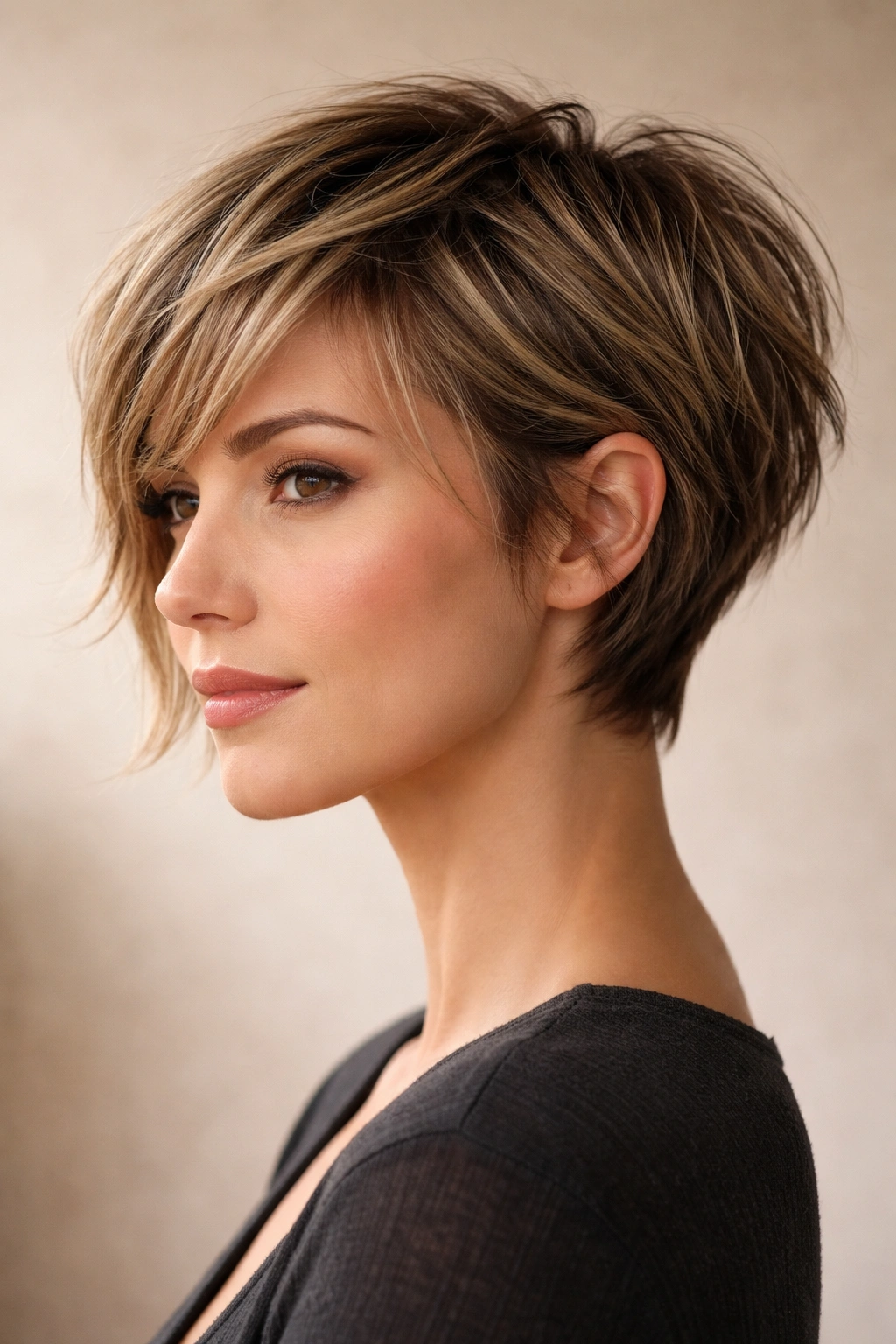
This modern cut combines the length of a bob with the textured, shorter sides of a pixie, creating something distinctly flattering for longer faces. The sides are short and textured (hitting approximately the middle of your ear), while the top and back are left longer, typically chin-length or slightly shorter. The layers throughout are choppy and textured, preventing any smooth, elongating effect.
Why the Hybrid Works
You get the face-widening effect of short, textured sides (like a pixie) combined with the contemporary, wearable length of a bob. The choppy layers throughout ensure nothing ever lies flat against your face. This style is particularly effective for longer faces because it’s so inherently textured and movement-oriented that length-emphasizing flatness simply isn’t possible.
Styling and Maintenance
- Use a texturizing cream or mousse to enhance the choppy separation
- Blow-dry with your fingers or a diffuser to encourage texture and volume
- Avoid paddle brushes that would smooth and elongate
- Get regular trims every 6 weeks to maintain the precise shape and texture
- This cut looks good slightly undone, so don’t worry about perfection
Pro tip: This cut is especially flattering if you style it with a slight tousle and dimension. The more “done” or smooth you style it, the less flattering it becomes.
15. Asymmetrical Bob with Long Swept Layers
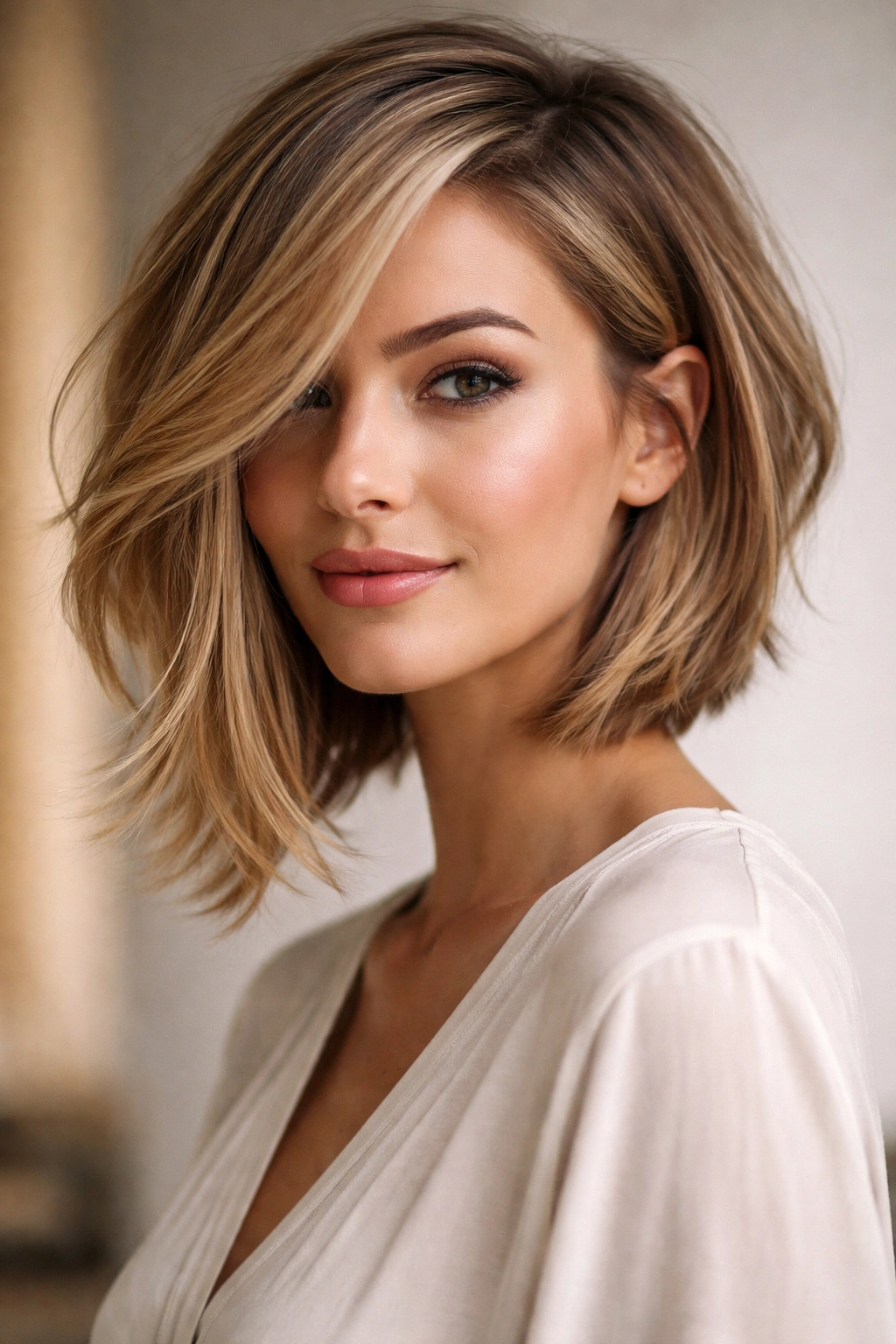
An asymmetrical bob—where one side is visibly longer than the other—creates dynamic width and movement that flatters longer faces beautifully. When cut with long swept layers, this style has both length and movement, breaking up any vertical emphasis. The asymmetry adds visual interest and prevents the style from looking too severe or emphasizing any lack of width.
How Asymmetry Adds Flattery
An asymmetrical cut naturally directs the eye to the wider, longer side, creating width perception. The swept layers add movement and prevent flatness. The overall effect is a style that’s too interesting and textured to emphasize face length. This works even for longer faces that prefer more length in their cut, because the asymmetry and movement do so much visual work.
Wearing Your Asymmetrical Bob
- Style with waves or curls to enhance movement and prevent smoothness
- Part on the side where your hair is longer for maximum asymmetrical effect
- Use a round brush when blow-drying to add curves and shape
- Tuck the shorter side behind your ear occasionally to change up the look
- Let the longer side fall forward and frame your face for a softer appearance
Worth noting: An asymmetrical cut requires a skilled stylist who understands geometry and proportion. This isn’t a cut to have a beginner attempt.
Final Thoughts
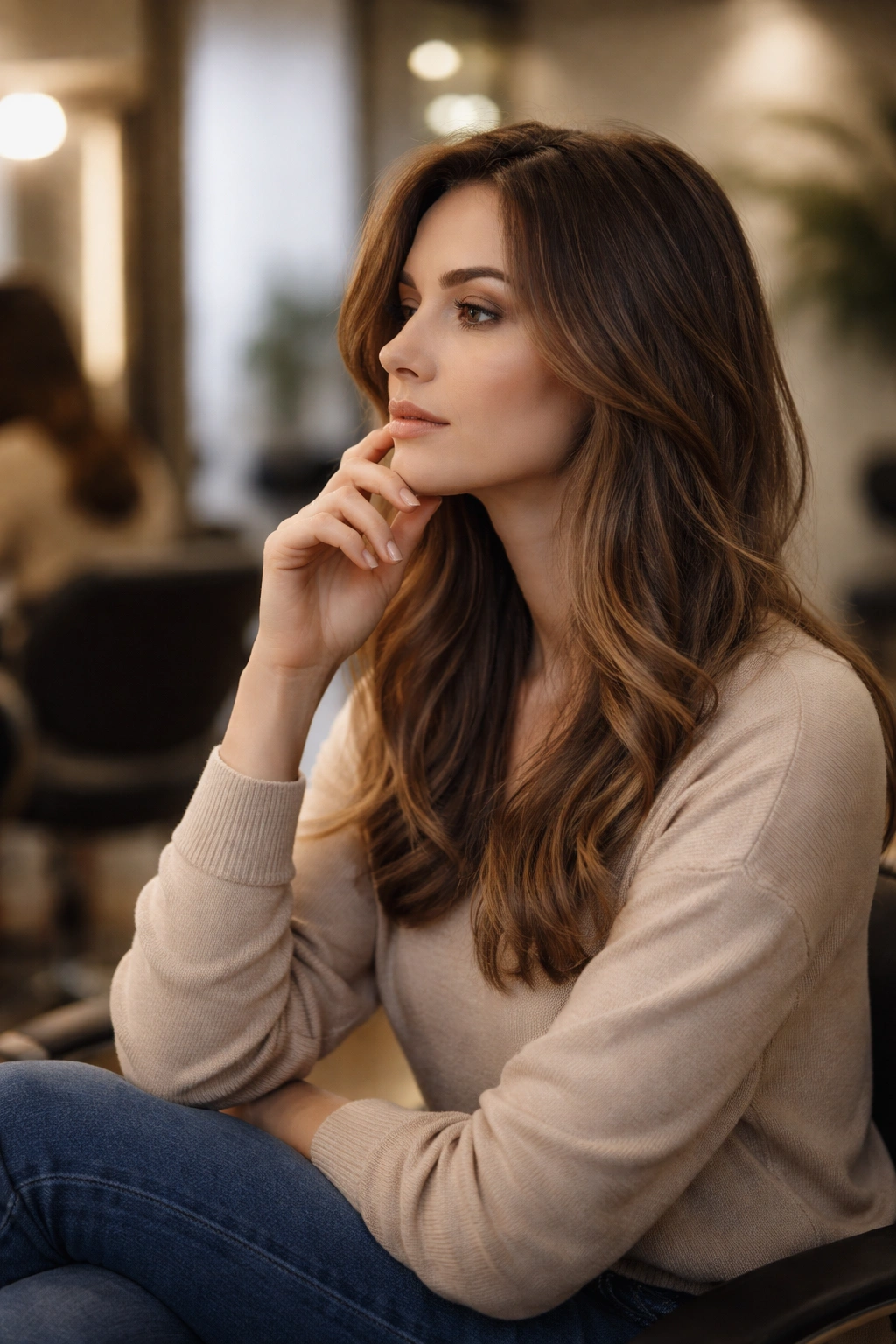
The most important thing to remember is that flattering a longer face shape isn’t about adhering to rigid rules—it’s about understanding the principles that work and then choosing a style that aligns with both those principles and your personal preferences. Every style in this guide accomplishes the same basic goals: adding width, creating movement, introducing texture, and breaking up vertical lines. Some do it through length and waves, others through shorter layers and texture, and still others through strategic bangs or asymmetry.
Before you book your appointment, spend time thinking about your daily styling routine and how much time you’re willing to invest. A textured pixie requires regular styling with products and heat, while a blunt bob might look better styled straight but can be worn wavy. A long layered cut with waves looks great but requires consistent curl maintenance. The most flattering style in the world won’t make you happy if it requires 20 minutes of styling every morning when you prefer a wash-and-go routine.
When you sit down with your stylist, bring pictures of styles you love, but also articulate what draws you to them. Is it the texture? The length? The bangs? The way it moves? By communicating what you’re looking for visually, you help your stylist understand your goals beyond just picking a style number from a photo. A good stylist will also ask about your hair texture, your daily styling habits, how often you’re willing to get trims, and what your natural hair does when it’s wet. All of these factors matter enormously when choosing a style that will genuinely flatter your longer face shape.
