



The asymmetrical bob has evolved far beyond a trendy shortcut. This is the hairstyle that works for nearly every face shape, hair texture, and style personality—you just need to find the right angle. The beauty of the asymmetrical bob lies in its flexibility: it can be whisper-soft and barely noticeable, or it can make such a bold statement that it becomes your signature look. Whether you’re drawn to subtle movement or eye-catching drama, there’s an asymmetrical bob designed specifically for how you want to present yourself.
What makes asymmetry work so well for bobs is that it adds dimension and movement where a standard cut might feel flat or predictable. One side slightly longer than the other isn’t just a trend—it’s a strategic styling choice that creates visual interest, flatters the face, and gives even fine hair the illusion of texture and volume. The key is understanding which type of asymmetry will complement your features, your hair texture, and your daily styling commitment.
The cuts below progress from barely-there asymmetry that blends seamlessly into your everyday look, all the way to bold, fashion-forward statements that command attention. Read through each one not just for inspiration, but for the specific details that make each cut unique—the angle, the texture, the ideal face shapes, and the styling tips that bring out the best in each version. Your perfect asymmetrical bob is waiting somewhere on this spectrum.
1. Soft Side-Swept Bob

This is the gateway asymmetrical bob—the cut that makes skeptics understand why asymmetry matters. One side sweeps gently across the face while the other sits just slightly shorter at the jaw, creating a look of effortless movement without screaming “I’m trying.” The asymmetry here is so subtle that it might take a second glance to notice the difference in length, but that’s precisely why it works for professionals and anyone who wants something interesting without being obvious.
The Perfect Face-Frame Effect
The side-swept bob creates an elongating line that draws the eye down and across your face, which is especially flattering for round or square face shapes. The longer side acts as a visual frame, and if you have a fuller face, that gentle sweep provides camouflage while still showing off your cheekbones. The shorter side keeps things from feeling too heavy and maintains that modern, lived-in aesthetic that makes a bob feel current rather than dated.
How to Style and Maintain It
- This cut thrives on movement, so a blow-dry with a round brush is your best friend—aim the heat from roots to ends to encourage that natural sweep
- Use a texturizing spray or dry shampoo on day two for grip that helps the longer side fall into place without looking stiff
- Ask your stylist for subtle layers throughout rather than a blunt line, which helps the piece feel soft and flowing
- Trim every 4-5 weeks to maintain the exact proportions, since the longer side will grow out noticeably faster
Worth knowing: This cut looks especially stunning with a glossy finish or rich color—the simplicity of the asymmetry means every shine and hue detail shows.
2. Barely-There Asymmetry Bob

If a soft side-sweep feels too committed, this is your cut. The barely-there asymmetrical bob is so minimal in its difference that some people don’t realize it’s asymmetrical at all at first glance. We’re talking a quarter-inch to half-inch difference between the two sides—just enough to add visual interest and prevent that mathematical, blunt-line feeling of a perfectly symmetrical bob. It’s the hairstyle equivalent of a whisper.
Why Micro-Asymmetry Changes Everything
Even a tiny difference in length shifts how light hits your hair and creates subtle movement and dimension that a symmetrical cut simply can’t achieve. This extreme subtlety also means the cut photographs beautifully—there’s no distortion or exaggeration, just a sophisticated, modern bob that reads as intentional, not accidental. It’s the perfect choice if you want the benefits of asymmetry without committing to an obvious statement.
Styling Tips for Maximum Impact
- Precision blow-drying matters here—you need that slight directional flow to showcase the difference, or it’ll look like a regular bob
- This cut pairs beautifully with heavy-textured layers that catch light and emphasize the movement
- A side part becomes essential to show off the asymmetry; center-parting will hide what you’ve paid for
- Use a straightening iron on a low setting to polish the longer side while keeping the shorter side slightly piece-y
Pro tip: Ask for internal layers rather than surface ones, so the cut has movement without looking thin or choppy.
3. Textured Choppy Asymmetrical Cut

This is where asymmetrical bobs start getting personality. The textured choppy version pairs an obviously asymmetrical length with deliberately choppy, piece-y layers throughout that create a tousled, just-rolled-out-of-bed vibe. One side might be two inches shorter than the other, and instead of a polished finish, the entire cut is broken up with choppy pieces that move independently. This is the asymmetrical bob for people who want movement, texture, and that cool-girl edge.
Creating Movement Through Layering
The choppy layers are what make this cut work so well for fine or thin hair—they prevent the style from looking limp or flat. Each layer is cut at a slightly different angle, so when you style it, the pieces move in different directions and create the illusion of thickness and volume. The asymmetry adds another layer of visual interest on top of that texture, making even shorter hair feel dimensional and intentional.
Styling This Cut for Maximum Texture
- This is a cut that actually benefits from texture spray or sea salt spray applied to damp hair before styling, which enhances the choppy effect
- Blow-dry with a diffuser attachment or your fingers to encourage the pieces to dry in different directions
- A cream-based styling product or light wax applied to tips will separate the layers and emphasize the choppy effect
- This cut genuinely looks better a day or two after washing when your natural oils add grip and shine
Worth knowing: This cut requires a skilled stylist who understands how to cut asymmetrical layers so they fall in flattering ways rather than poking out awkwardly.
4. One-Length Angled Bob

This cut is the definition of architectural. Instead of layers throughout, the one-length angled bob maintains a single line around your head, but that line is dramatically angled—typically shorter in the back and longer in the front, with the sides following that consistent diagonal. It’s asymmetrical not through varied lengths on either side, but through the overall directional angle. This cut demands precision and looks stunning when executed with sharp, intentional lines.
The Geometry of the Angled Bob
The angled line is naturally flattering because it mimics the direction of your jawline and creates visual movement without being choppy. The geometry also means that when you move or turn your head, the cut looks slightly different from every angle—there’s a 3D quality that photographs beautifully. For people with strong, angular features, this cut is a match made in heaven because it complements rather than fights your natural bone structure.
How to Cut and Style an Angled Bob
- This cut is all about precision—ask your stylist to use a sharp razor and cut at a specific angle (usually 45 degrees) rather than blunt-cutting
- Blow-dry by following the direction of the cut; aim your round brush to enhance the angle rather than fight against it
- A gloss or shine treatment is essential because the blunt line shows every bit of texture and damage
- Regular trims every 3-4 weeks are non-negotiable—this cut loses its integrity quickly as it grows out unevenly
Pro tip: This cut pairs beautifully with a sleek, polished finish—think straight blowout with a flat iron, not tousled waves.
5. Pixie-to-Bob Gradient Bob

This is one of the most dramatic asymmetrical cuts available—one side tapers down into an almost-pixie length (two inches or shorter) while the other side extends to chin-length or longer. It’s a gradient of length that moves from very short to longer in a single cut, creating a bold, architectural look that’s equal parts edgy and elegant. This is absolutely a statement cut, but it’s also surprisingly wearable because the longer side provides feminine balance to the super-short side.
Balancing Short and Long for Face-Flattering Results
The pixie-to-bob works best for people who want to show off their face and features without apology. The short side requires a face shape that you’re comfortable showcasing—angular jawlines, prominent cheekbones, and interesting ear shapes all become part of your look. The longer side balances that exposure and provides softness, so the overall effect is edgy but not severe. This cut works particularly well if you have beautiful bone structure or distinctive features you want to highlight.
Styling the Pixie-to-Bob Dynamic
- The short side needs precision blow-drying and can be styled sleek or piece-y depending on your mood and hair texture
- The longer side often needs texturizing products to prevent it from looking limp next to the cropped side
- This is a cut that changes character significantly based on how you style it—you can go rock-and-roll or sophisticated depending on product choice and direction
- Consider getting the short side trimmed every 2-3 weeks while the longer side gets a full trim every 6 weeks
Worth knowing: This cut requires confidence, but it’s one of the most compliment-generating looks out there because it’s so distinctive.
6. Shaggy Asymmetrical Lob

If you’re not ready to commit to a true short bob but want that asymmetrical movement and edge, the shaggy asymmetrical lob is your answer. This is a longer version—typically collarbone-length or slightly past—with choppy, shaggy layers throughout that move and flow. The asymmetry comes from having one side noticeably longer than the other, paired with that tousled, undone texture that makes everything feel effortless. It’s got ’70s inspiration but reads completely modern.
Why Shag Layers Elevate the Asymmetrical Lob
The shag layers are what transform a simple longer bob into something with personality and movement. Each layer is intentionally choppy and creates different planes around your face and head, so the cut has dimension from every angle. Pair that with asymmetrical length, and you’ve got a cut that moves, flows, and constantly catches light differently. This works beautifully for people with wavy or curly hair because the layers emphasize natural texture rather than fight against it.
Styling a Shaggy Asymmetrical Lob
- This cut actually looks better the less perfect it is—embrace the undone vibe with texture spray and loose waves rather than sleek styling
- Dry your hair naturally or with a diffuser to encourage the layers to dry in their own directions
- Use a curl-defining cream or sea salt spray to enhance the shaggy, lived-in texture
- Trim the layers every 8-10 weeks to maintain the choppy effect, since layers grow out and lose their texture quickly
- The longer side can be worn tucked behind your ear or swept forward depending on your mood
Pro tip: This cut genuinely shines with some texture or wave to your hair—if you have very straight hair, consider getting a perm or committing to waves for this style.
7. Blunt Diagonal Bob

Here’s where boldness meets precision. The blunt diagonal bob features a completely straight, blunt line—no layers, no choppy pieces—but that line angles dramatically from one side to the other. You might have a blunt line at chin-length on one side that extends to shoulder-length or longer on the other. It’s graphic, it’s architectural, and it makes a statement without being chaotic. The bluntness emphasizes the asymmetry rather than softening it.
The Power of a Blunt Diagonal Line
A completely blunt line is inherently more dramatic and fashion-forward than a layered or choppy version. The straight edge forces the eye to follow that diagonal, which creates a visual movement and direction that’s almost hypnotic. This cut works particularly well for people with strong style opinions and the confidence to wear something genuinely unconventional. The bluntness also means that your color and shine become even more important—a blunt line shows every imperfection, but it also shows off a gorgeous gloss beautifully.
Executing a Blunt Diagonal Bob
- This cut requires a sharp razor and a stylist who understands geometry and proportion
- Ask for a razor-sharp blunt line—never a slightly softened edge, which defeats the purpose
- Styling is simple: blow-dry straight, use a flat iron for extra polish, and that’s it
- Color and gloss become essential—a blunt line demands perfection, so invest in professional color maintenance
- Trim every 3-4 weeks without fail—a blunt line grows out unevenly and loses impact quickly
Worth knowing: This is the cut to choose if you want people to notice your hair. It’s not subtle, and that’s exactly the point.
8. Curly Asymmetrical Bob
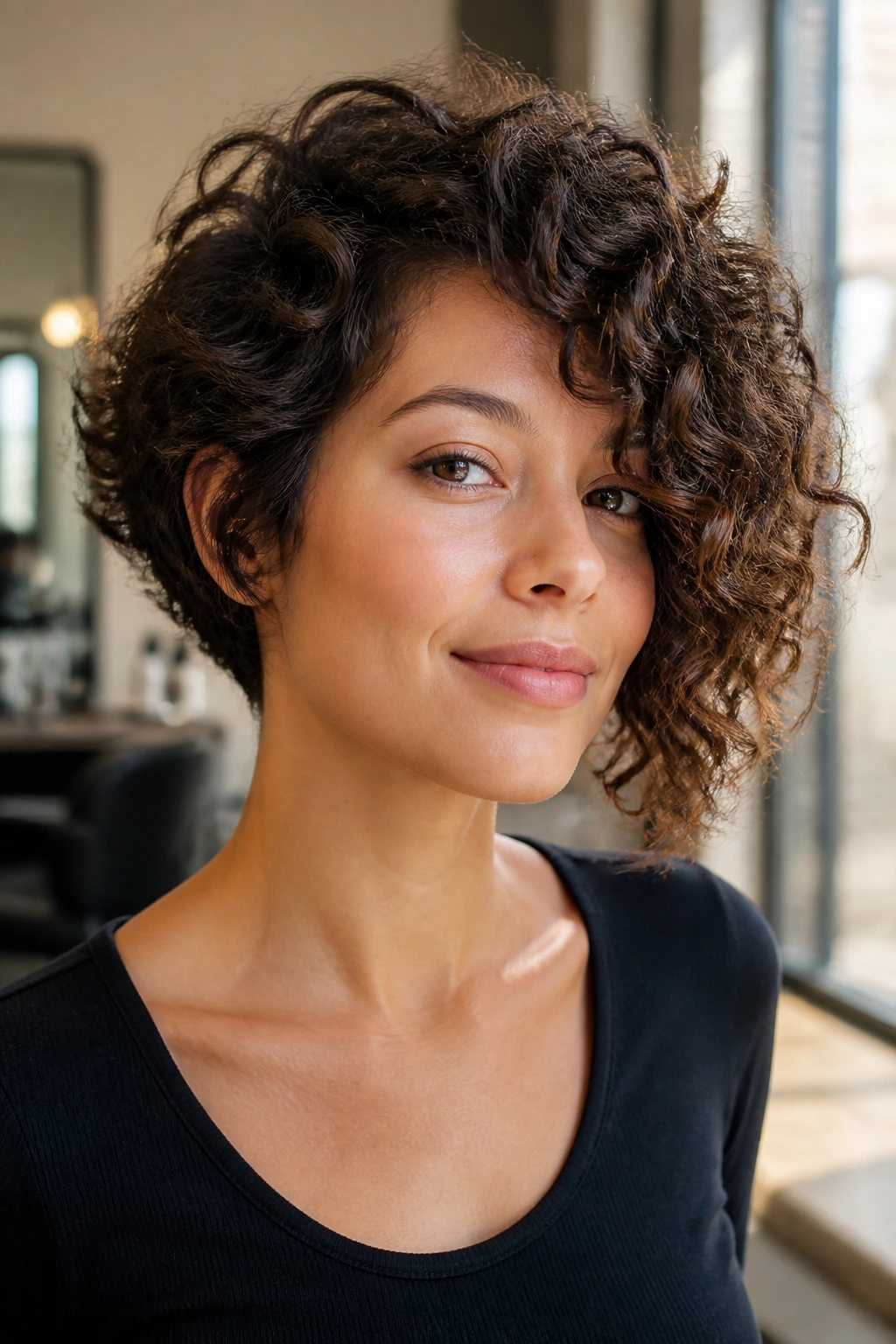
If you have natural curls or waves, an asymmetrical bob designed specifically for curl patterns is a game-changer. This cut acknowledges that curly hair shrinks as it dries, so the stylist cuts it longer than it will ultimately appear. The asymmetry is built in, with one side noticeably longer than the other, but the layers are strategically placed to enhance curl pattern and create shape. When you wear it curly and natural, the asymmetry becomes this gorgeous, organic-looking movement.
Cutting for Curl Pattern Rather Than Straight Hair
The secret to a great curly asymmetrical bob is finding a stylist who actually understands how curls work. They should cut your hair wet and curly, not dry and straight, because curly hair behaves completely differently. The layers need to be shaped to work with your curl pattern rather than against it—this means point-cutting or texturizing rather than blunt-cutting. The asymmetry helps prevent the style from looking too round or poofy, creating instead a shape that’s flattering and intentional.
Styling Curls With Asymmetry
- Wash and condition with curl-friendly products that add moisture and definition
- Apply a styling cream, gel, or mousse to soaking-wet hair and scrunch upward to encourage curl formation
- Diffuse-dry or air-dry depending on your curl pattern and time
- The asymmetry will show itself more as your curls settle and dry
- Get trims every 8-12 weeks, and ask your stylist to cut while your hair is curly
Pro tip: Asymmetrical bobs look absolutely stunning on curly hair because the natural texture makes the different lengths feel organic and intentional rather than severe.
9. Disconnected Asymmetrical Crop

This is a truly avant-garde asymmetrical bob. The disconnected crop features dramatically different lengths—we’re talking one side that’s almost shaved or pixie-short, and another side that’s noticeably longer—with a clear, undisguised disconnect between the two. Rather than blending the asymmetry gradually, the cut celebrates the contrast. This is for people who want to make a serious statement about their style and confidence.
The Boldness of Intentional Contrast
The disconnected look works because the contrast is so obvious that it reads as intentional and artistic rather than like a styling mistake. This cut doesn’t apologize for its asymmetry—it celebrates it. The clear separation between the short and long sides creates visual drama and showcases your face, your ears, and your neck on the short side while providing softness and length on the other. It’s equal parts edgy and elegant.
Making the Disconnected Look Work
- This cut requires a skilled stylist who can create clean, intentional lines between the two very different lengths
- The short side needs frequent trims—every 2-3 weeks—to maintain that crisp, deliberate look
- The longer side can be styled various ways: sleek, wavy, textured, twisted, pinned back
- This is a cut that changes character depending on how you style the longer side, so you can shift from rock-and-roll to polished depending on the occasion
- Bold color or undercut tattoos on the short side can enhance the intentional, artistic vibe
Worth knowing: This cut genuinely requires confidence, but it generates more compliments and comments than almost any other hairstyle out there.
10. Micro Fringe Asymmetrical Bob

This is asymmetry combined with a fashion statement. The micro fringe asymmetrical bob features an ultra-short, blunt fringe on one side paired with an asymmetrical bob length on the rest of your head. The fringe might cover one eye while the opposite side has no fringe at all, or it might be positioned asymmetrically across your forehead. Pair that with asymmetrical length throughout, and you’ve got a cut that’s absolutely unforgettable.
Fringe as an Asymmetrical Element
The fringe becomes another tool for creating asymmetry and visual interest. A blunt, short fringe naturally draws attention to your eyes and face, and when it’s positioned asymmetrically, it creates this artistic, editorial quality that screams confidence. The fringe works with the asymmetrical lengths to create multiple points of visual interest rather than just one. This is the cut for people who want their hair to be a genuine fashion statement.
Maintaining a Micro Fringe Bob
- The fringe requires trimming every 2-3 weeks—more frequently than the rest of your hair—to maintain that crisp, blunt edge
- Styling matters: blow-dry the fringe in the direction you want it to sit while it’s still damp
- Use a straightening iron on the fringe if you have any wave or curl, since a blunt fringe shows every deviation from straight
- The rest of your bob can be textured, layered, or smooth depending on your preference
- This is a cut that benefits from a bold lip color or makeup because it draws so much attention to your face
Pro tip: Micro fringe looks best on people with fairly small foreheads and who don’t mind having their face completely exposed.
11. Elongated One-Side-Long Bob

This asymmetrical bob takes the asymmetry principle to a more dramatic extreme: one side extends significantly longer—potentially to mid-chest or beyond—while the other side sits at ear-length or shorter. The length difference is so noticeable that it creates an almost sculptural quality. This is the cut that blurs the line between a bob and longer hair, giving you the feel of both in a single style.
Creating Visual Balance With Dramatic Length Difference
The key to making this cut work is understanding proportion and how to create visual balance when you have such different lengths on either side. The shorter side shouldn’t feel abruptly cropped; instead, it should be shaped with subtle layers so it has movement and doesn’t just stick out flat. The longer side should have enough weight and texture so it feels intentional rather than like one side just wasn’t trimmed. Together, they create an asymmetrical look that’s graceful rather than accidental.
Styling Two Different Lengths
- The shorter side benefits from texturizing products and a blow-dry that encourages movement
- The longer side can be worn straight, wavy, or textured depending on your mood
- You can pin or tuck the longer side up for a completely different look, giving you versatility
- Layers throughout help both sides feel intentional and connected rather than like two completely different haircuts
- This is a cut that works beautifully with color blocking or dimensional color that emphasizes the different lengths
Worth knowing: This cut requires excellent proportioning from your stylist—the longer side shouldn’t feel so long that it overwhelms the shorter side, and vice versa.
12. Extreme Asymmetrical Statement Cut

This is the pinnacle of asymmetrical bobs: the cut designed to turn heads. The extreme asymmetrical statement bob features such a dramatic length difference that it’s undeniable and unforgettable. We’re talking one side that’s nearly shoulder-length or longer, paired with another side that might be ear-length or even shorter. Often combined with texturing, layers, color work, or even disconnected sections, this cut doesn’t just suggest asymmetry—it announces it loudly.
Why Extreme Asymmetry Works as a Statement
When you commit to extreme asymmetry, the boldness itself becomes elegant and artistic. People don’t question whether it’s intentional—the drama makes the intention obvious. This cut works for people with strong personal style, confidence in their appearance, and a willingness to be memorable. It’s often favored by creatives, performers, and anyone who uses fashion and appearance as self-expression. The cut becomes a conversation starter and a reflection of personality.
Pulling Off the Extreme Asymmetrical Look
- This cut absolutely demands technical skill—find a stylist who specializes in asymmetrical and avant-garde cuts
- Styling options are endless: you can go sleek and polished, textured and undone, curly, wavy, or incorporate waves on one side and texture on the other
- Color work can enhance the asymmetry—consider a darker shade on one side or a bold color on just the short side
- Maintenance is important: trim the short side every 2-3 weeks and the longer side every 6-8 weeks
- This is a cut where your personal style and confidence matter more than any specific face shape or hair type
Pro tip: If you’re nervous about committing to an extreme asymmetrical cut, ask your stylist to start slightly less dramatic and build into it over a few trims. You can always go bolder, but you can’t go back once the hair is cut.
Key Takeaways

The asymmetrical bob exists on a spectrum, and the perfect cut for you depends on how much drama you want your hair to create and how much time you’re willing to invest in styling and maintenance. The subtle asymmetries work beautifully if you want the flattery and movement of an asymmetrical cut without the boldness of a statement piece. The extreme asymmetrical cuts demand confidence and commitment, but they deliver a look that’s absolutely unforgettable.
Finding the right asymmetrical bob also means being honest about your hair texture, your daily styling routine, and your willingness to get regular trims. A perfectly executed asymmetrical cut loses its magic quickly if it’s not maintained, so choose a length and style that fits your life, not just a look that photographs well on Pinterest. The best asymmetrical bob is the one you’ll actually commit to wearing.
