



Medium length hair occupies a sweet spot—long enough to style in multiple ways, but short enough to manage without a major time commitment. The challenge isn’t finding a medium cut; it’s finding one that actually suits your specific hair texture. A shag that looks effortless on someone with naturally wavy hair might fall flat on fine, straight strands. A blunt bob looks sharp on thick hair but can look wispy and thin on delicate textures. The good news is that medium length offers flexibility for nearly every hair type, from tight curls to poker-straight locks.
Hair texture affects how a cut falls, how much movement you get, and what styling demands are realistic for your daily routine. Straight hair tends to show precision and line in a cut, making geometric shapes read clearly. Wavy hair has natural dimension that can make shaggy layers look intentional and lived-in. Curly hair needs cuts designed to work with curl patterns rather than against them, with intentional layering that removes bulk without creating frizz. Understanding your texture isn’t about fighting it—it’s about choosing a cut that lets your hair do what it naturally does, just better.
What follows are twenty medium length haircuts, each paired with specific guidance on which hair textures wear them best and why. Some cuts work beautifully across multiple textures with minor adjustments; others are specifically designed for certain curl patterns or density levels. The point of this guide is to help you recognize what might actually work for your hair, not just what looks good in the photo. Real styling success comes from choosing a cut that’s designed for your texture, styled according to your hair’s natural tendencies, and maintained realistically within your daily routine.
1. Shoulder-Length Straight Bob with Blunt Ends
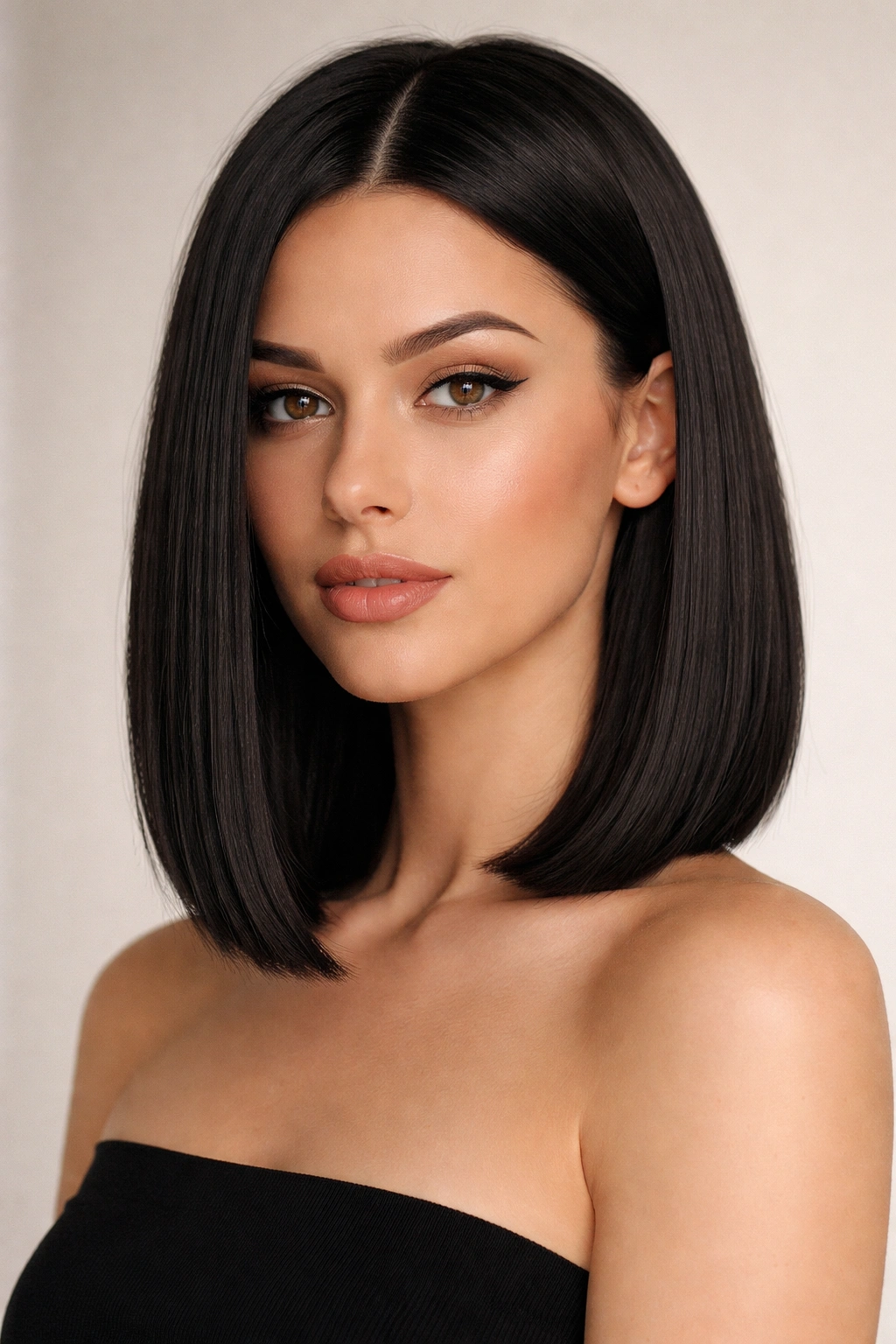
This is the classic, no-fuss cut—hair that hits right at the shoulders with clean, straight lines and zero layers. Blunt ends create a decisive, polished look that photographs beautifully. The cut works because the edges are crisp and defined, which reads as intentional rather than grown-out. Style it with a side part for asymmetry, or center it for balance.
Why It Works for Thick, Straight Hair
This is genuinely the best-case scenario for a blunt bob. Thick hair has enough density that the ends don’t look wispy or thin. Straight texture means the line stays precisely where it’s cut, day after day. You get maximum visual impact with minimum styling.
Best For and How to Maintain It
- Thick, straight hair that’s willing to stay on top of trims every 6-8 weeks (blunt lines grow out and lose definition quickly)
- People who prefer a sleek, no-texture aesthetic over a deliberately messy look
- Anyone who dries their hair straight anyway and doesn’t mind adding that step to their routine
- Works with straight or nearly-straight hair; wavy texture will soften the blunt line, which some people love and others find defeats the purpose
Pro tip: Blow-dry with a paddle brush and a downward motion to reinforce the blunt line. Even slight wave will soften the precision that makes this cut special.
2. Choppy Layers for Medium Curly Hair
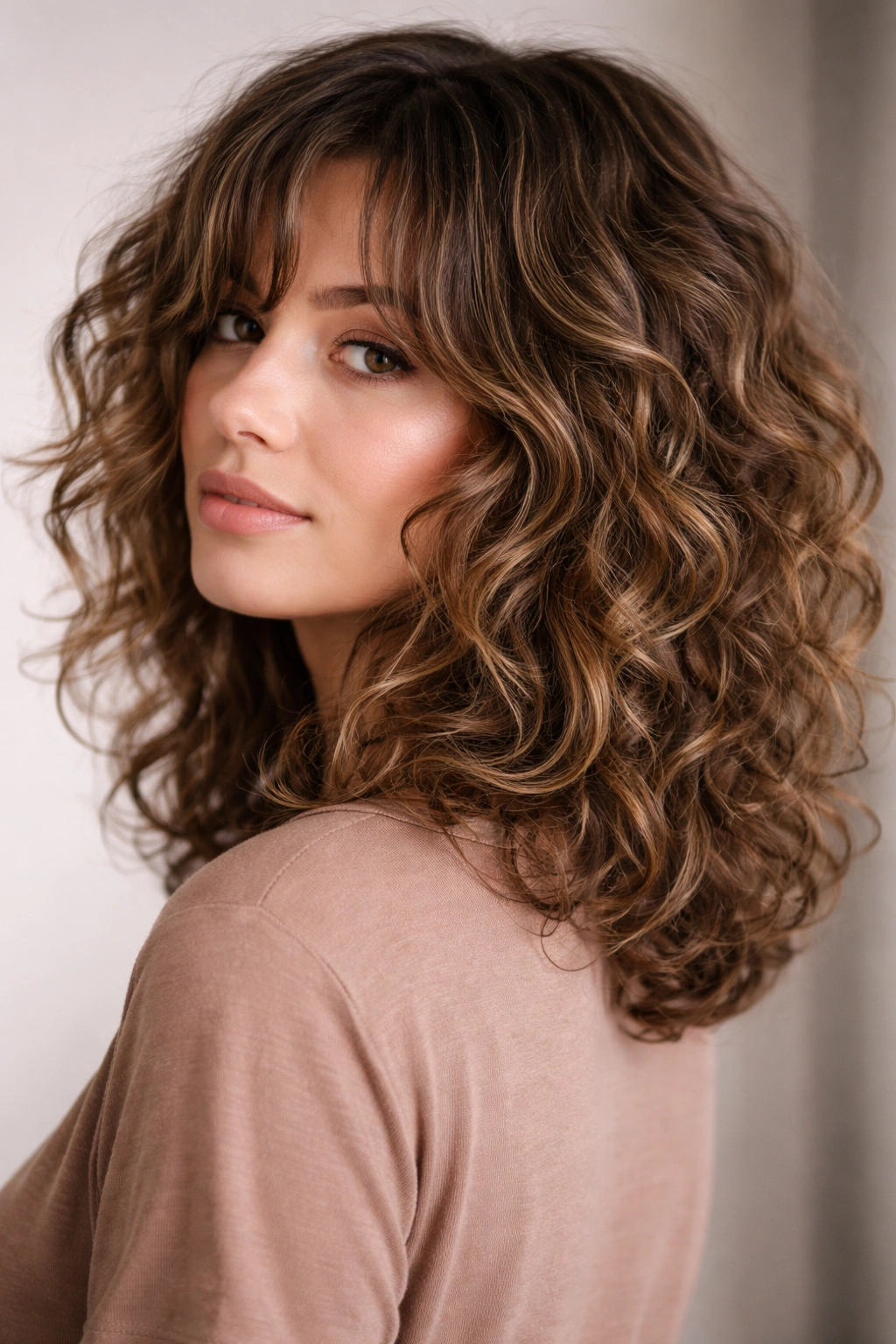
Choppy layers are to curly hair what precision is to straight hair—they’re the cut that lets curls do their best work. Rather than one uniform length that creates bulk and frizz at the ends, choppy layers remove interior weight while keeping length on top. The cut creates movement, definition, and shape that curly hair naturally wants to have. Curls stack beautifully when layered intentionally.
What Makes It Different for Curly Hair
Curly hair is thickest at the base and thinnest at the ends. A blunt cut at one length creates a heavy triangle shape—the opposite of what curly hair needs. Choppy layers respect the curl pattern by reducing weight unevenly, creating height at the crown and bounce throughout.
Styling Essentials for Curly Texture
- Requires a stylist who understands curly-specific cutting techniques; regular layering often leaves curls stringy and separated
- Works best with a consistent curl routine (plopping, scrunching product in while hair is wet, air-drying or diffusing)
- Layers expose more of the curl shaft, so frizz management becomes more important—anti-frizz serum or gel is usually necessary
- Curls need regular trims every 8-10 weeks because layers show split ends more visibly than blunt cuts
Worth knowing: This cut looks drastically different depending on whether it’s wet, drying, or fully dry. Expect curl diameter to change as your hair dries—that’s not a problem with the cut, it’s the nature of curls.
3. Textured Shag with Movement
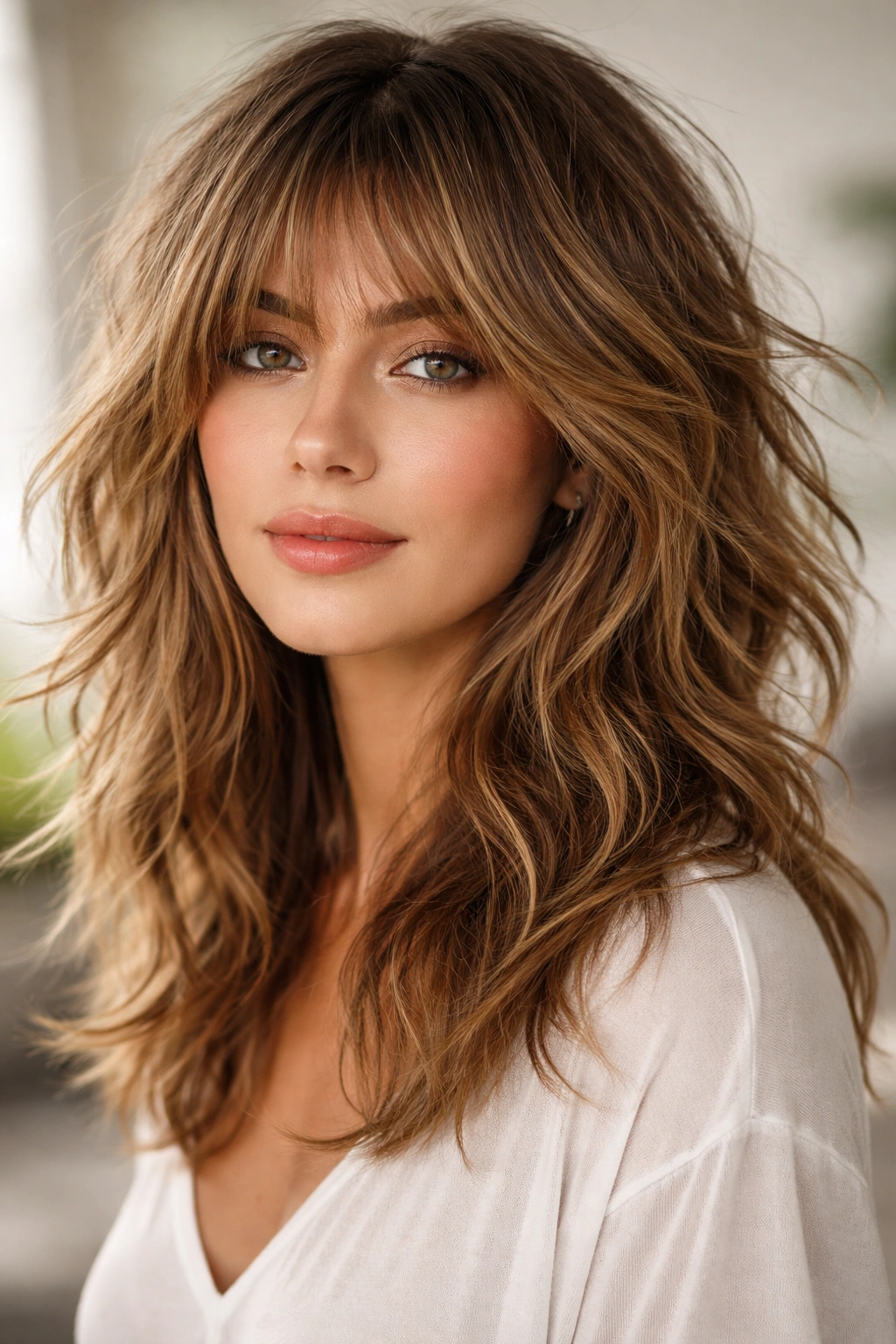
A shag is a medium cut with choppy layers throughout, shorter on top and longer underneath, designed to look intentionally undone. Modern shags lean into that texture and movement rather than the 70s precision-layered aesthetic. The cut creates natural separation and bounce, and it’s forgiving with styling. Even on your lazy-hair days, a shag still looks intentional.
Why Shags Work on Wavy and Textured Hair
Wavy hair makes shags look effortless. The layers emphasize the wave, and the built-in movement means you don’t need to blow-dry it smooth. A shag celebrates the texture that straight hair would fight against. On naturally wavy hair, this cut often requires less styling than anything else you could choose.
How to Wear and Style a Modern Shag
- Best on hair that has natural wave, bend, or curl; straight hair can wear a shag but needs to be styled to achieve the movement the cut implies
- Looks better when slightly tousled than when perfectly smooth; this works in your favor if you’re not a dedicated styler
- Works at multiple lengths from chin-length to mid-back, though medium (shoulder to collarbone) is the sweet spot for versatility
- Pair with texturizing product (salt spray, texture spray, or mousse) rather than sleek styling products
Insider note: The mullet association is real, but modern shags lean into the sexy, undone vibe rather than business-in-front energy. The key is proportional layering—not a dramatic short-to-long jump, but gradual texture throughout.
4. Side-Swept Layers with a Rounded Shape
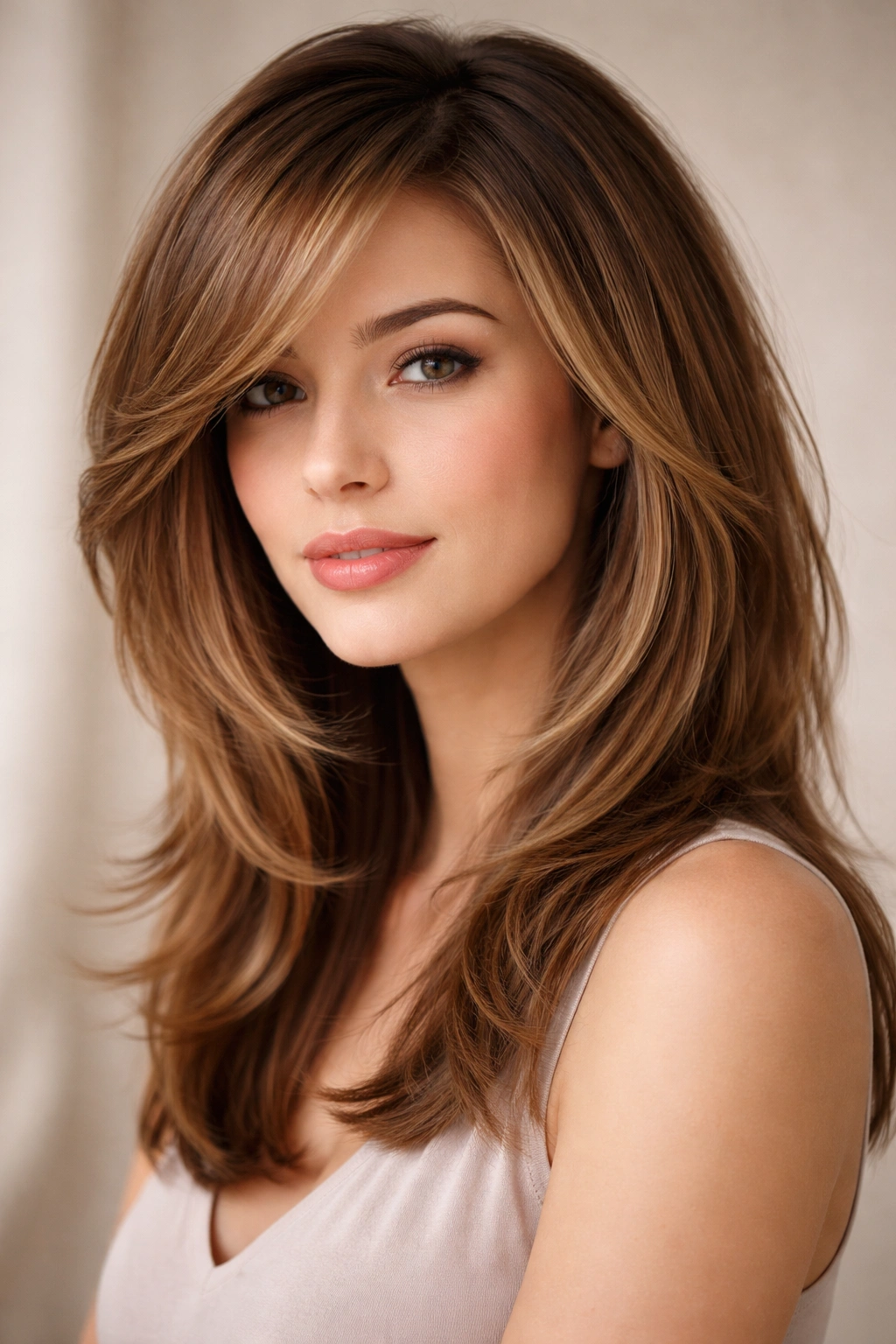
This cut features medium length on one side that’s dramatically longer than the other, with a rounded back that creates subtle volume. The side-swept element gives movement and visual interest without requiring the hair to be choppy. It’s feminine without being fussy, and it works on multiple textures when styled appropriately.
Best For Different Textures
- On straight hair: creates visual movement through line and shape rather than actual movement, so you get a sleek, directional look
- On wavy hair: the longer side hangs with natural grace, and the rounded back creates gentle volume at the crown
- On curly hair: works if the curl is loose enough that the side-sweep doesn’t fight against the natural pattern (tight curls won’t cooperate with the directional styling)
Styling and Customization Options
- Requires blow-drying to achieve the intended side-swept shape; air-drying will lose the directional element
- The longer side needs styling around your face to actually sit swept rather than just hanging there
- Works beautifully with face-framing pieces—consider adding some wispy layers around the face for softness
- Best on people who are willing to style their hair most days; it’s a polished look rather than a wash-and-go
5. Wolf Cut for Thick, Wavy Hair
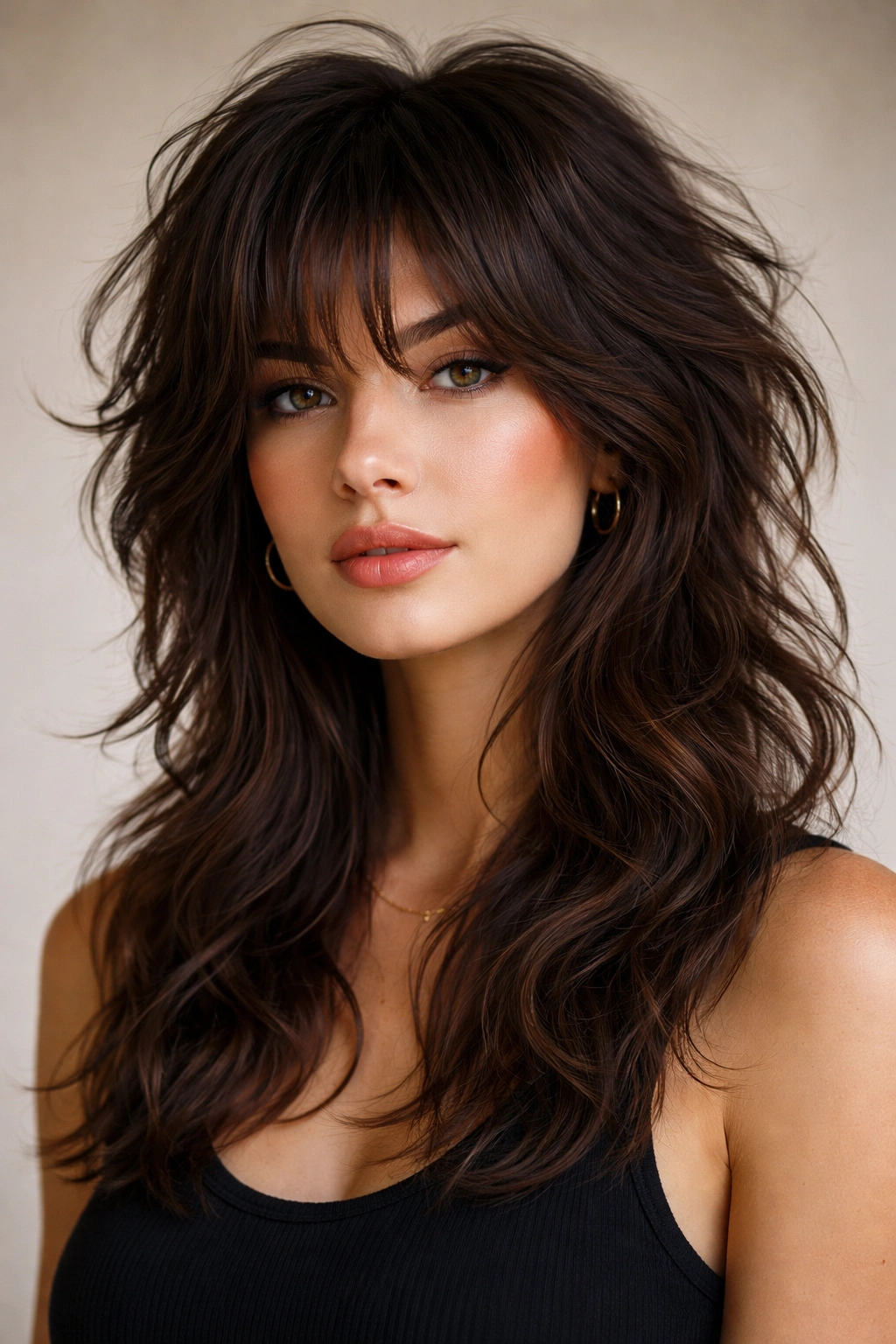
A wolf cut is a hybrid between a shag and a mullet—short, choppy layers on top that create volume, and longer length underneath for movement and flow. It’s playful, modern, and surprisingly flattering on the right hair type. The cut creates shape and dimension without looking constrained or overthought.
Why Wolf Cuts Thrive on Thick, Wavy Texture
Thick hair has enough density that the choppy, short layers on top read as intentional volume rather than thinned-out. Wavy texture means the top layers curl and bend in visually interesting ways. The contrast between the shorter top and longer bottom feels deliberate and cool rather than accidental.
Maintenance and Styling Reality
- Looks best when styled with intention—salt spray and texture products let the layers shine
- Can be styled smooth and polished or deliberately messy; the cut works both ways
- Top layers will be shorter and show growth faster than bottom layers, affecting how often you need trims
- Not ideal for people who want a low-maintenance, wash-and-go cut; this needs some daily attention
Real talk: This is a fun, fashion-forward cut. If you’re someone who likes to play with style and doesn’t mind spending time on hair, it’s genuinely great. If you prefer low-commitment hair, it might frustrate you.
6. Straight-Across Bangs with Length Below the Shoulders
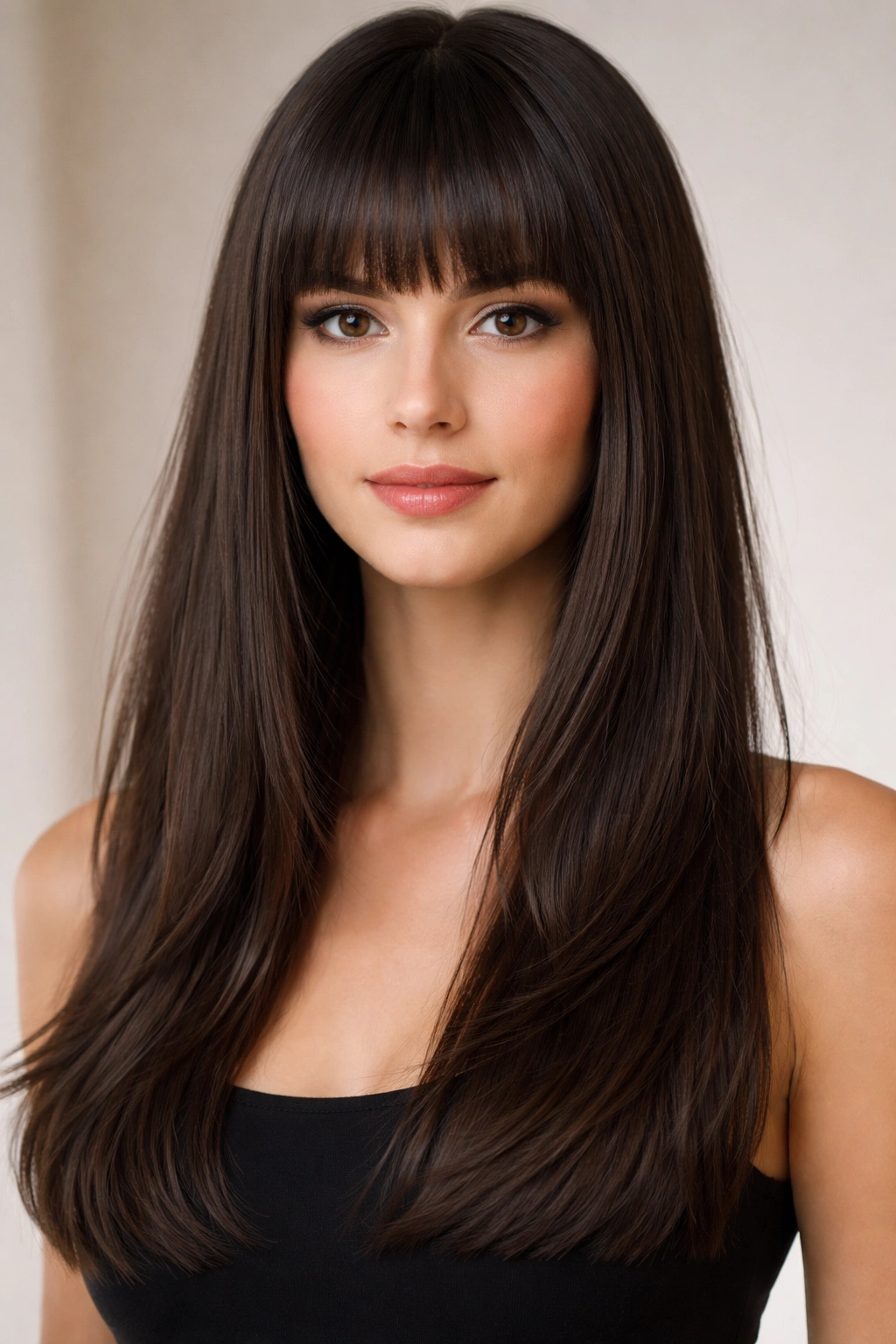
This cut pairs medium-to-long hair with blunt bangs that hit right above the eyebrows. The bangs are the statement; the length underneath is relatively simple. This is a vintage-inspired look that reads sophisticated and intentional. It requires commitment to bangs maintenance, but the payoff is a complete style transformation.
How Bangs Work on Different Textures
- On straight hair: bangs read sharp and defined; the blunt line is part of the aesthetic
- On wavy hair: bangs soften slightly as they dry, which some people love and others find ruins the precision they wanted
- On curly hair: blunt bangs rarely stay blunt; they tend to curl upward and shorten, requiring very skilled cutting to avoid a poodle-like effect
- Fine hair: thin bangs can look sparse, so you might need to ask for slightly fuller, thicker bangs to avoid a wispy effect
Realistic Styling and Upkeep
- Bangs need trims every 3-4 weeks to maintain the intended length; this is non-negotiable
- They need to be blow-dried to sit properly unless your hair naturally falls that way
- Bangs change your entire face frame, so this is a look commitment, not just a haircut
- Humidity and moisture make straight bangs puff up unless you’re actively styling them
7. Razored Layers Throughout for Fine Hair
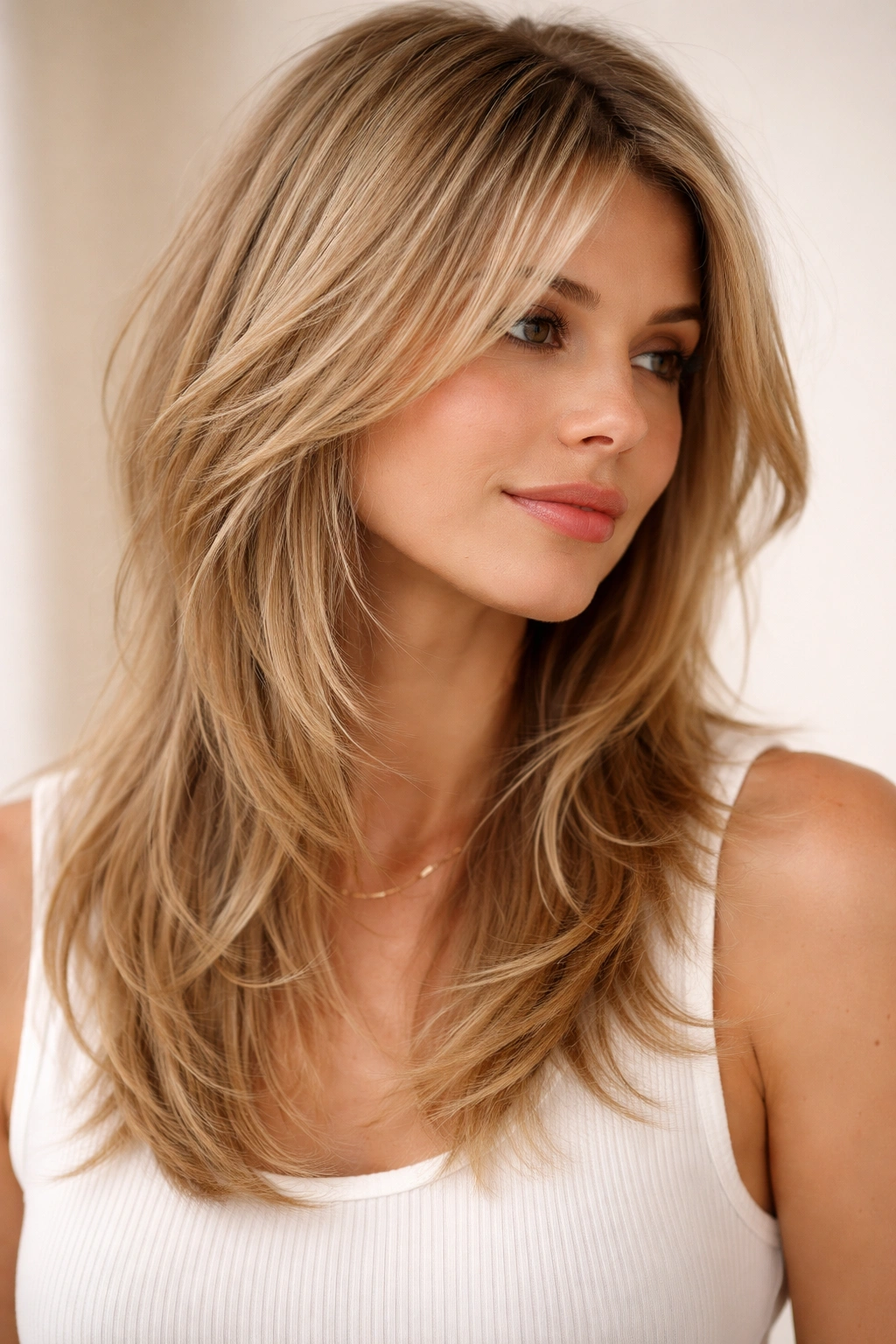
Razoring—cutting hair with a razor blade rather than scissors—creates texture, movement, and the impression of thickness on fine hair. A razor-cut medium length with layers throughout gives fine hair the visual boost it needs. The layers aren’t choppy; they’re subtle, creating gradation rather than obvious separation. This cut is specifically designed so fine hair doesn’t look thin and wispy.
Why Razoring Helps Fine Hair Especially
Fine hair tends to look flat because each individual strand is smaller in diameter. Layers create volume by reducing weight at the ends and allowing hair to bend and move more freely. Razored edges feather smoothly rather than creating harsh transitions, which looks better on delicate texture.
Styling Approach for Fine Hair
- Works beautifully on straight, wavy, and loosely curly fine hair
- Layers in fine hair need more frequent trims (every 5-6 weeks) because the taper makes new growth more visible
- Blow-drying with a round brush helps layers sit properly and adds visual fullness
- Products matter—volumizing mousse or lightweight texture spray help fine hair hold shape
- Heavy oils and serums will weigh down fine hair; choose lightweight products designed for thin hair
Worth knowing: You want a stylist experienced with fine hair specifically. Regular layers cut into thick hair look terrible on fine hair; the proportions are completely different.
8. Shoulder-Length with Face-Framing Pieces
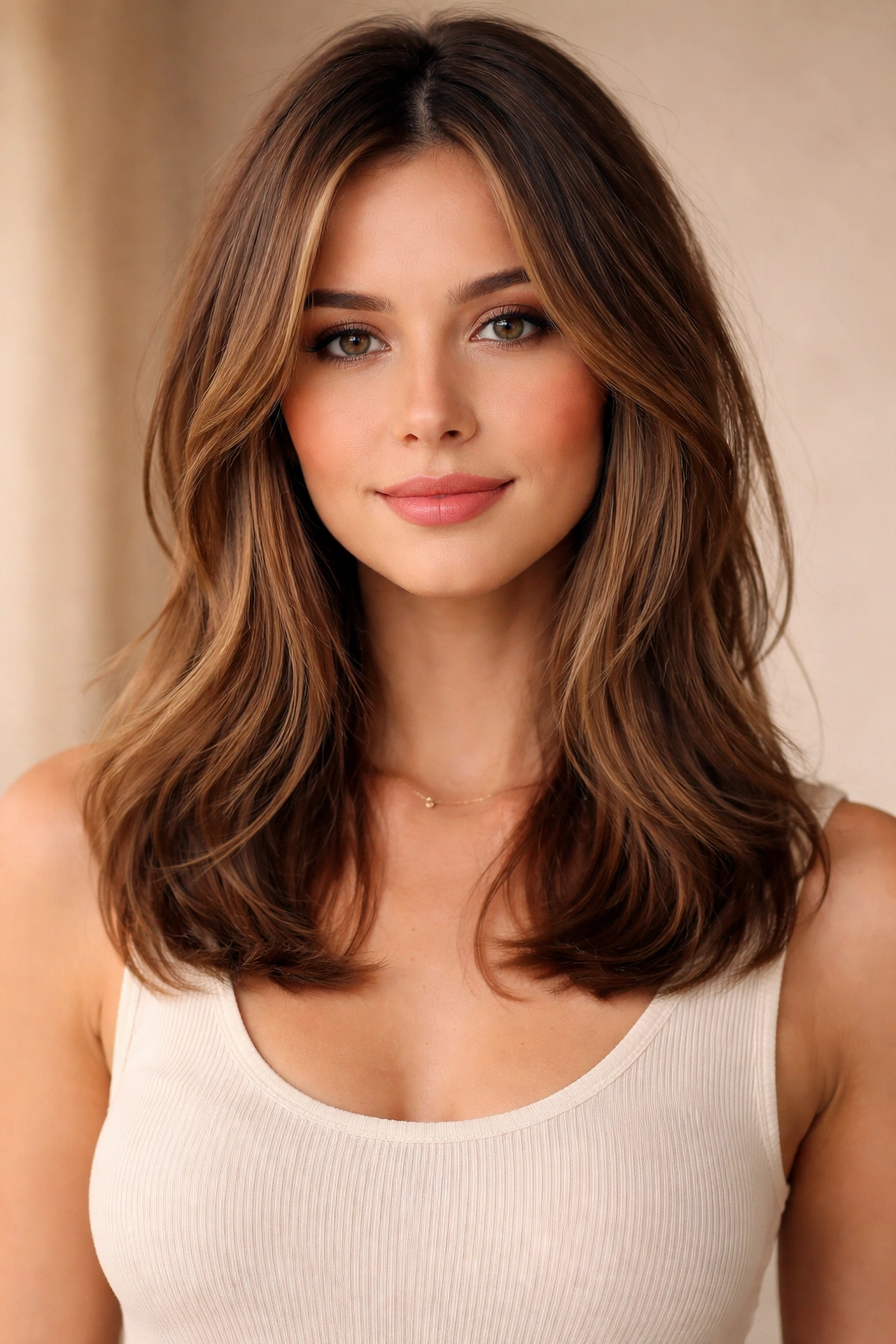
This is a relatively simple cut—hair at shoulder length with longer, wispy pieces around the face. The face-framing softens and opens up the face, while the shoulder-length base keeps the style manageable. It’s approachable and flattering on most face shapes. This cut doesn’t require strict styling parameters, so it works across multiple textures.
Versatility Across Hair Types
- On straight hair: the face-framing pieces create soft movement around the face; the rest hangs smoothly
- On wavy hair: the pieces and the base layer both gain natural bend and movement
- On curly hair: the face-framing can either be separately defined curls or blended into the overall curl pattern depending on how it’s layered
- On fine hair: face-framing pieces make the face feel less exposed; they’re an asset rather than a weight liability
Easy Styling Options
- Can be blow-dried smooth and sleek or air-dried for natural texture
- Face-framing pieces need to be long enough that they don’t stick straight out from your head (usually longer than chin-length for the pieces themselves)
- Works with many different styling approaches, from straight to wavy to deliberately messy
- Lower maintenance than cuts that depend on specific styling to look intentional
9. Micro Bangs with a Blunt Lob
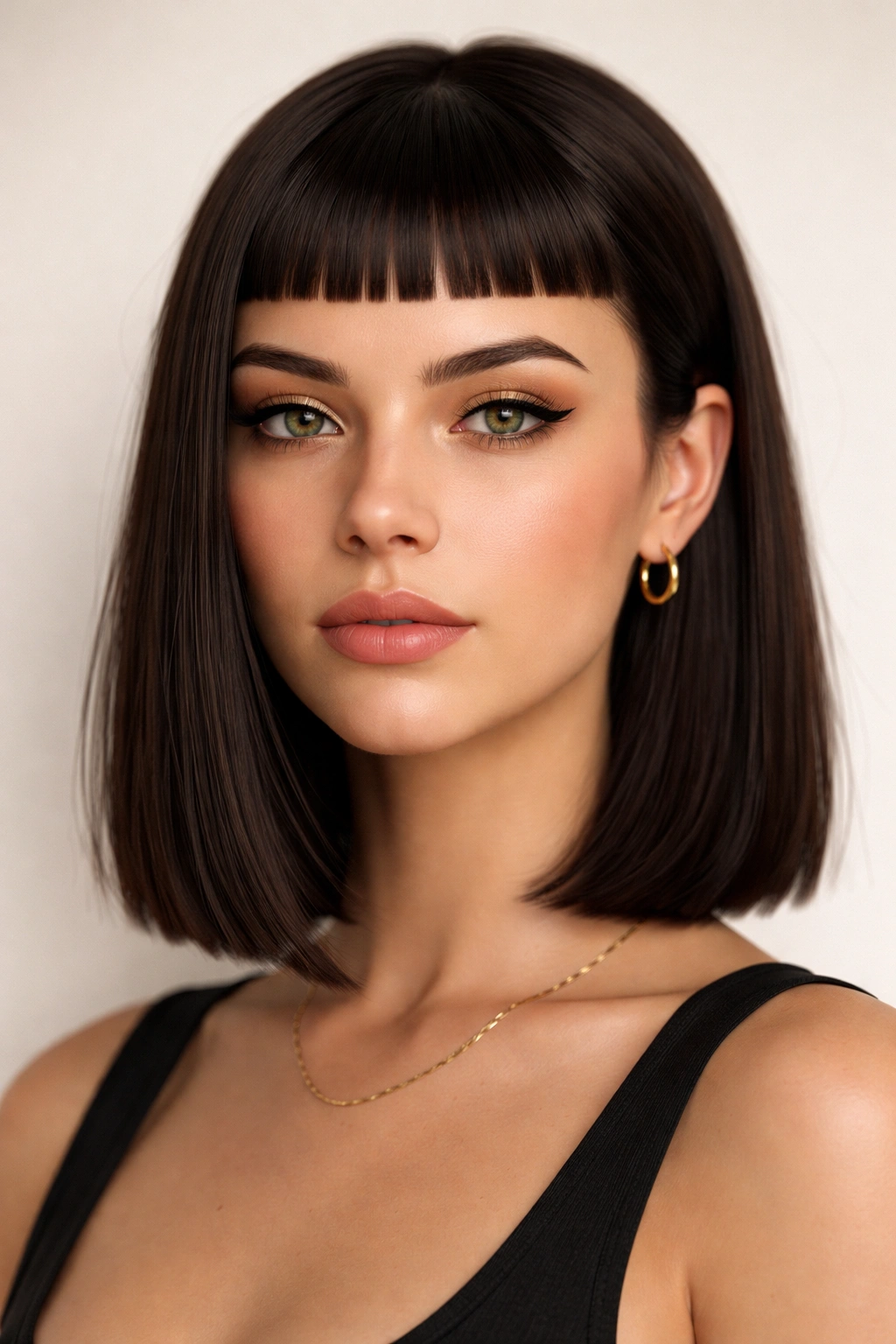
A lob (long bob) typically hits between the chin and shoulders. Pair that with micro bangs—short bangs that sit higher up on the forehead—and you have a bold, fashion-forward look that reads sophisticated and cool. This is a statement cut, not a default choice, which means it works best on people who want their haircut to mean something.
Hair Texture Considerations for Micro Bangs
- Works best on straight to slightly wavy hair where the micro bangs maintain their positioning
- Very curly hair and micro bangs are generally not friends; the bangs will curl up and shorten dramatically
- Fine hair can wear micro bangs but they need to be cut with enough fullness that they don’t look sparse
- Thick hair wears this well because there’s enough density that micro bangs don’t look wispy
The Maintenance Commitment
- Micro bangs need trims every 2-3 weeks; they’re the first thing to look overgrown and sloppy
- They require blow-drying to sit properly; they won’t fall into place on their own
- Humidity and moisture are enemies of micro bangs; they’ll puff up and lose the intended shape
- This is a high-maintenance cut for people who enjoy hair styling
Real talk: Micro bangs are a commitment. If you’re not genuinely excited about maintaining them, don’t get them. They don’t look good when they’re grown out.
10. Curtain Bangs with Layers
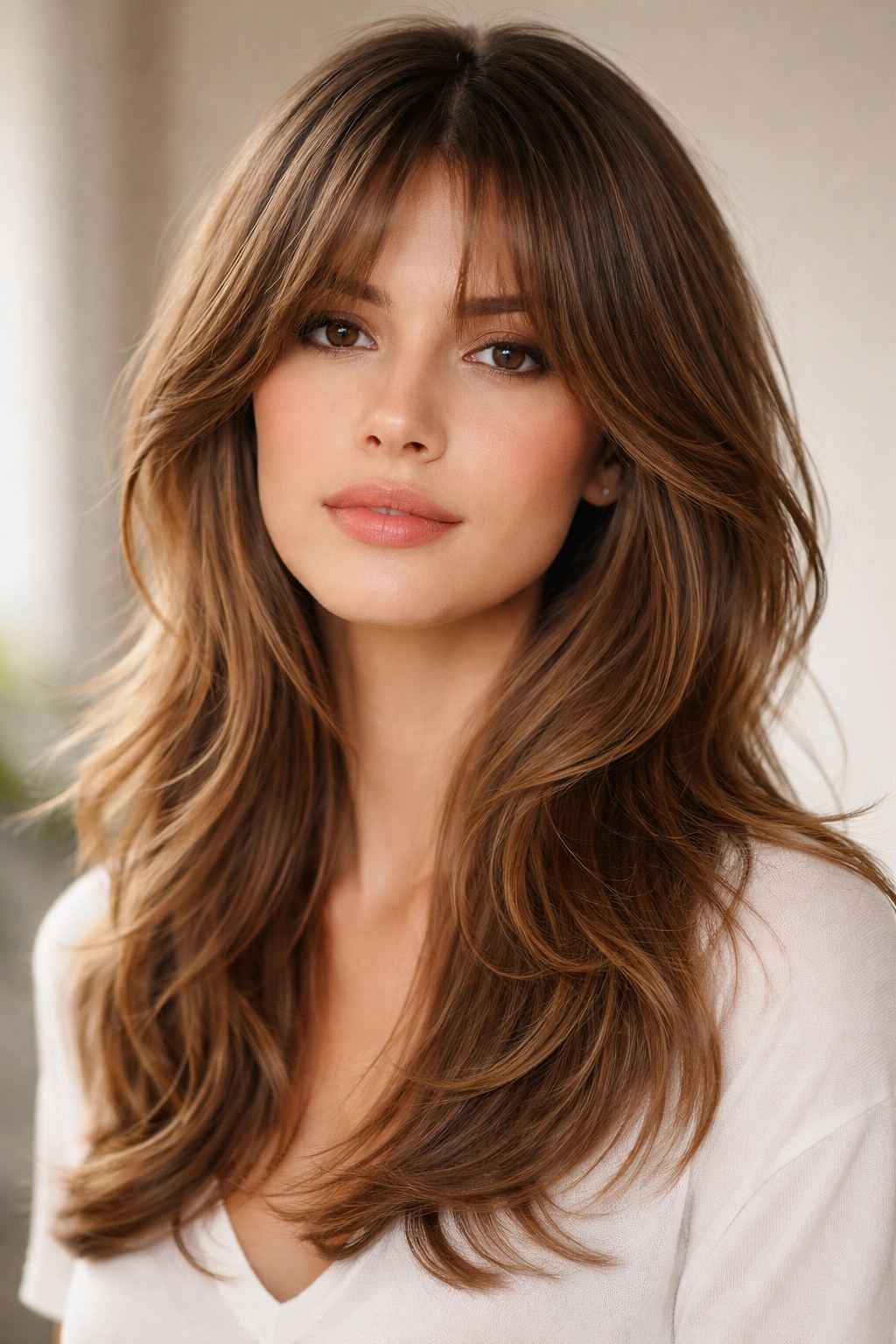
Curtain bangs (also called butterfly bangs) are longer face-framing pieces that part in the middle and curve around the face. Combined with layers throughout the rest of the hair, they create a soft, romantic look with movement. This is arguably the most forgiving bang style because they blend into the hair if you don’t style them perfectly, yet they still create the look you’re going for.
Why Curtain Bangs Work on Most Textures
- Straight hair: the bangs have clean, defined movement; the parted center is obvious and intentional
- Wavy hair: the bangs curl naturally into the face-framing role; they look effortlessly beautiful
- Curly hair: the bangs blend with the overall curl pattern; they’re less of a separate statement and more integrated
- Fine hair: because the bangs are longer and lighter, they’re less likely to look sparse than shorter bang styles
Styling for Curtain Bangs
- Can be air-dried and still look intentional (unlike micro bangs)
- Blow-drying with a round brush pushed away from the center creates that curved shape
- Can be styled sleek or with texture depending on your preference and hair type
- The center part is intrinsic to curtain bangs; a side part defeats the whole purpose
Insider note: Curtain bangs came back strong because they’re genuinely flattering and low-pressure. You can get 80% of the way there without blow-drying, which isn’t true of most bang styles.
11. Textured Lob for Wavy Hair
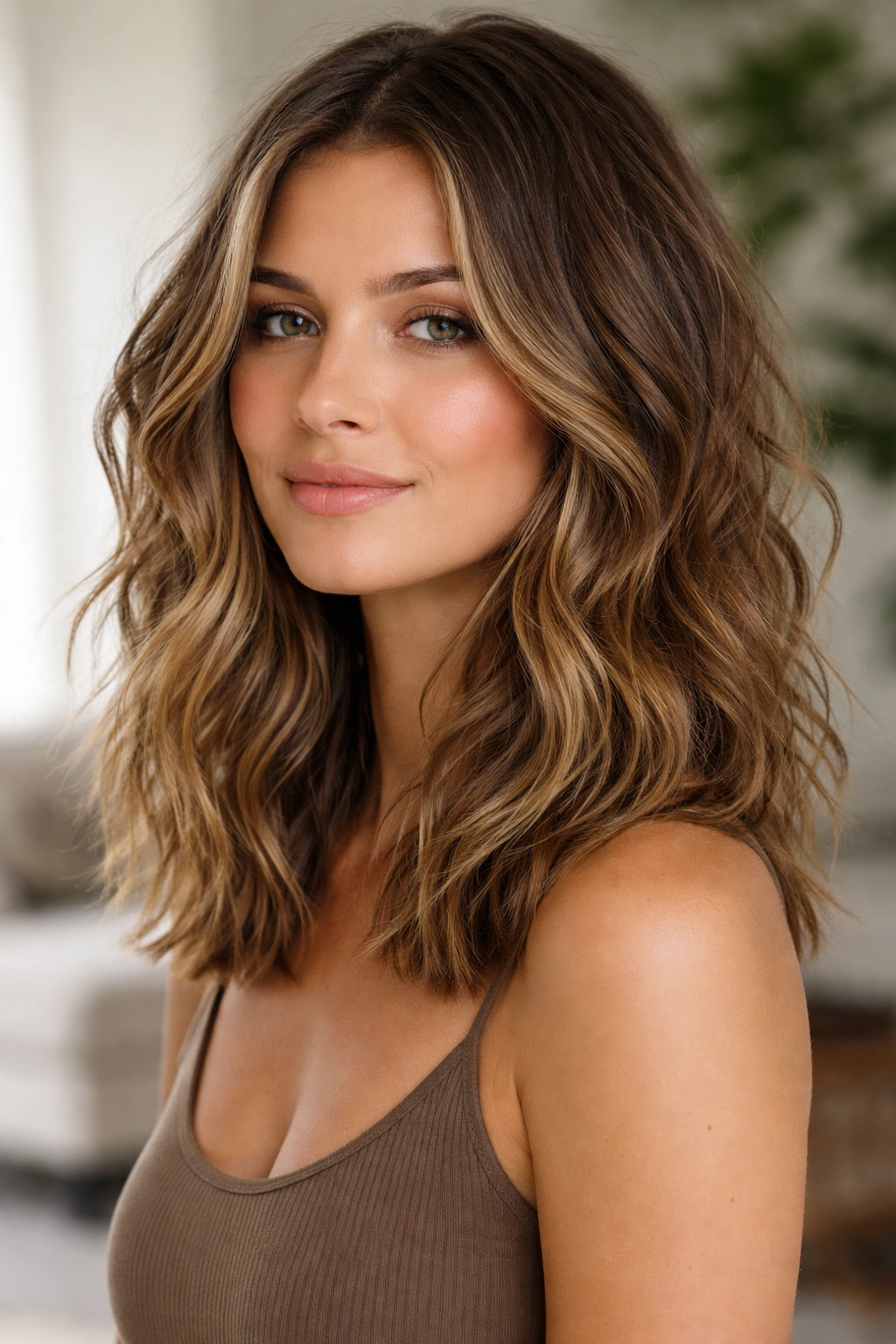
A lob sits between the chin and shoulders—longer than a bob but shorter than long hair. When cut with texture and layers specifically for wavy hair, it becomes a style that looks effortless and beachy. The layers allow waves to move and breathe rather than lying flat. This cut is the definition of “wash and go” for people with natural wave.
How Layers Enhance Wave in Medium Hair
- Layers reduce bulk at the ends, which helps waves show themselves rather than getting weighed down and disappearing
- Longer length (lob length) allows waves to have room to develop and move downward rather than curling tightly at shorter lengths
- The texture comes from the layers, which means you can mostly air-dry and still look intentional
- Works on both loose waves and more pronounced wavy texture
Styling and Product Approach
- Start with a wave-enhancing product (mousse, cream, or gel) applied to soaking-wet hair
- Scrunch the product in while wet, then either air-dry or diffuse-dry to set the wave
- Minimal tools needed—this is genuinely a low-effort, high-reward cut for wavy hair
- Straight hair won’t get waves from this cut; you’d just have a choppy, textured lob without the wave element
- Fine wavy hair works beautifully here; thick wavy hair works too, though drying time increases
12. Blunt Lob with Minimal Layers
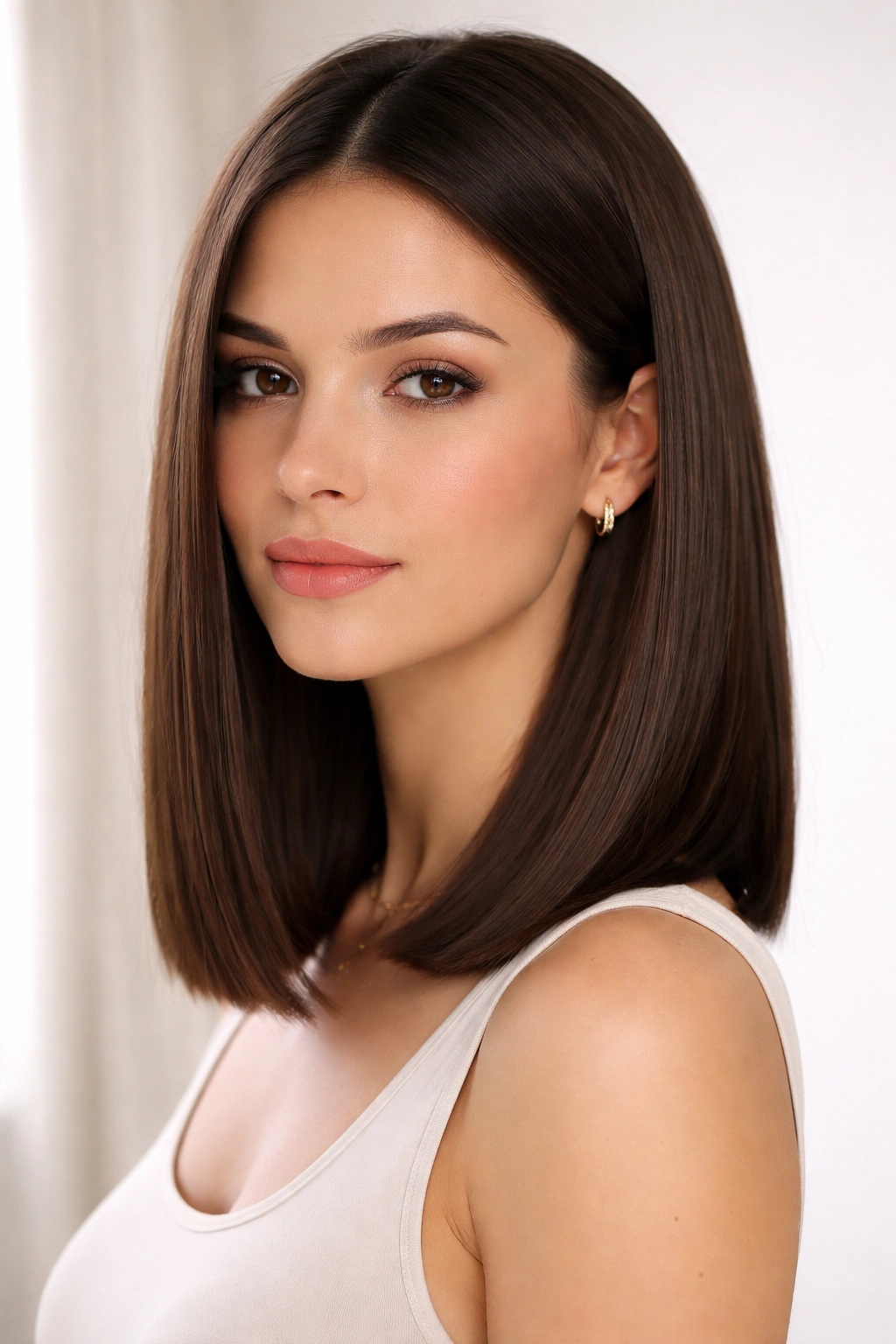
A blunt lob cut as one relatively uniform length with minimal internal layering creates a clean, polished look. The cut is less forgiving than a heavily layered style because every angle shows, but on the right hair type it reads sophisticated and intentional. This works best on straight or nearly-straight hair where the blunt line is part of the aesthetic.
Best Hair Types for Blunt Minimalism
- Straight hair: the blunt line reads as precise and intentional; no layers mean maximum visual impact from the cut line
- Thick hair: enough density that the blunt ends don’t look thin or wispy
- Fine straight hair: can wear a blunt lob if you’re okay with the requirement to maintain trims frequently to keep the line sharp
- Not ideal for very curly or textured hair; the blunt line will be softened by texture, and you’ll lose the precision that’s the whole point
Maintenance Requirements
- Needs trims every 6-8 weeks to keep the blunt line defined
- Blow-drying is helpful to reinforce the line, though straight hair can often air-dry acceptably
- If you’re not willing to commit to regular trims, this cut will frustrate you as it grows out and loses definition
- Best on people who prefer sleek, minimalist styling over deliberately textured or messy looks
13. Choppy Lob for Thick, Curly Hair
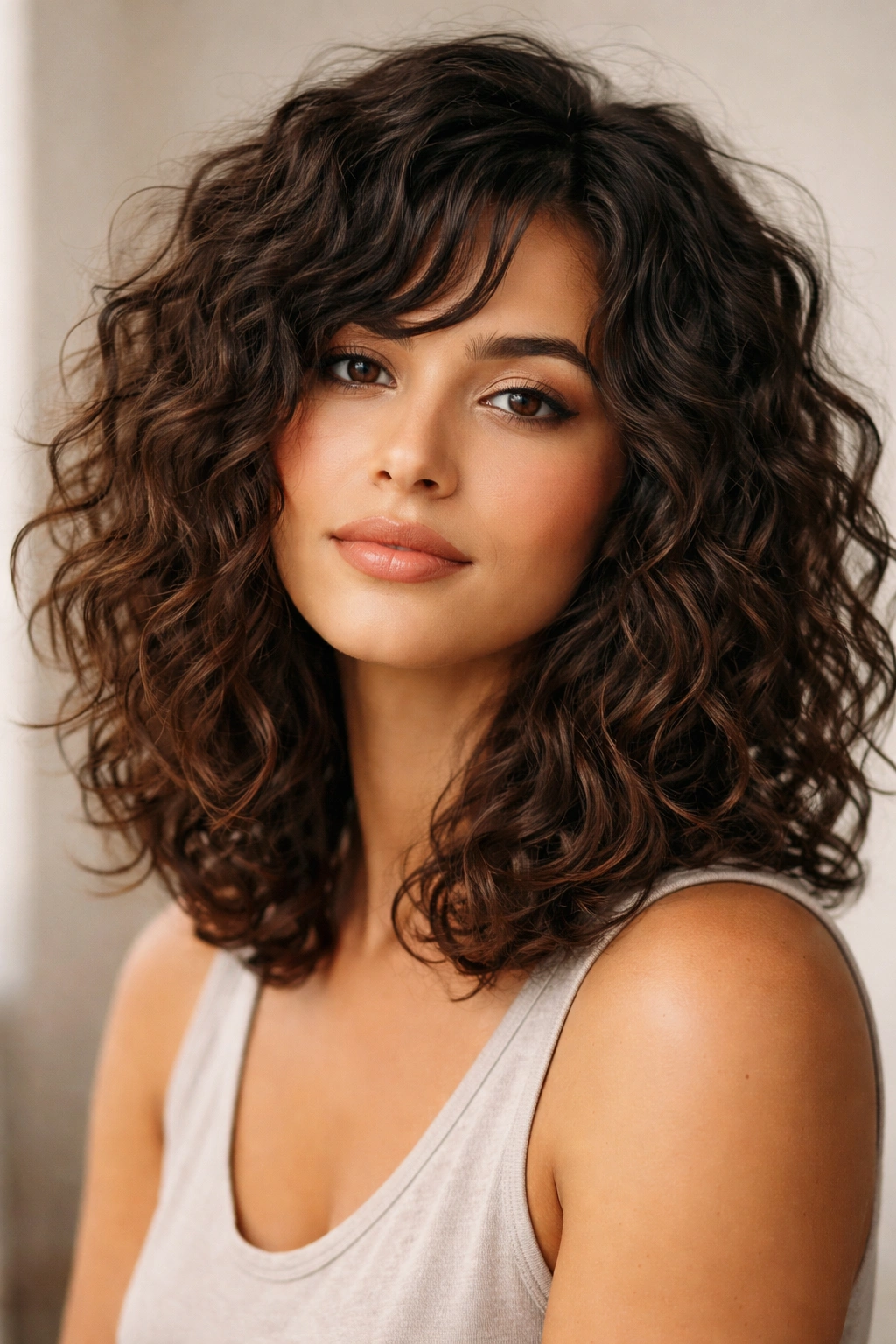
For thick, curly hair, a lob with choppy layers is pure genius. The length is manageable (not too short, not too long), and the layers remove the bulk that makes curly hair hard to style at shoulder length. The choppy, uneven layers let each curl show itself rather than creating a heavy mass. This cut takes advantage of what thick, curly hair is naturally good at—texture and movement.
Why Choppy Layers Matter for Curly Hair
- Thick curly hair is heaviest when it’s one uniform length; layers remove interior weight without sacrificing overall length
- Choppy, uneven layers create visual interest and definition that curly hair needs
- Shorter layers on top provide volume at the crown; longer pieces underneath provide shape and movement
- This is specifically a curly-hair cut; a stylist needs to understand curly cutting technique
Curly Hair Specifics
- Requires a stylist trained in curly hair; dry-cutting or normal layering techniques often fail on curls
- Most curly stylists cut while hair is wet and sometimes use the curly-cutting prayer hands method to preserve curl pattern
- Layers expose more curl, so you need good frizz management routine (gel, cream, serum depending on your needs)
- Curls need trims every 8-10 weeks because layers show split ends more than blunt cuts
- Air-drying is possible if you have a good curl routine; you don’t need to blow-dry this cut
Worth knowing: Finding a stylist who understands curly hair is 80% of the battle. Once you find one, this cut will look great.
14. Modern Shag with Longer Layers in Back
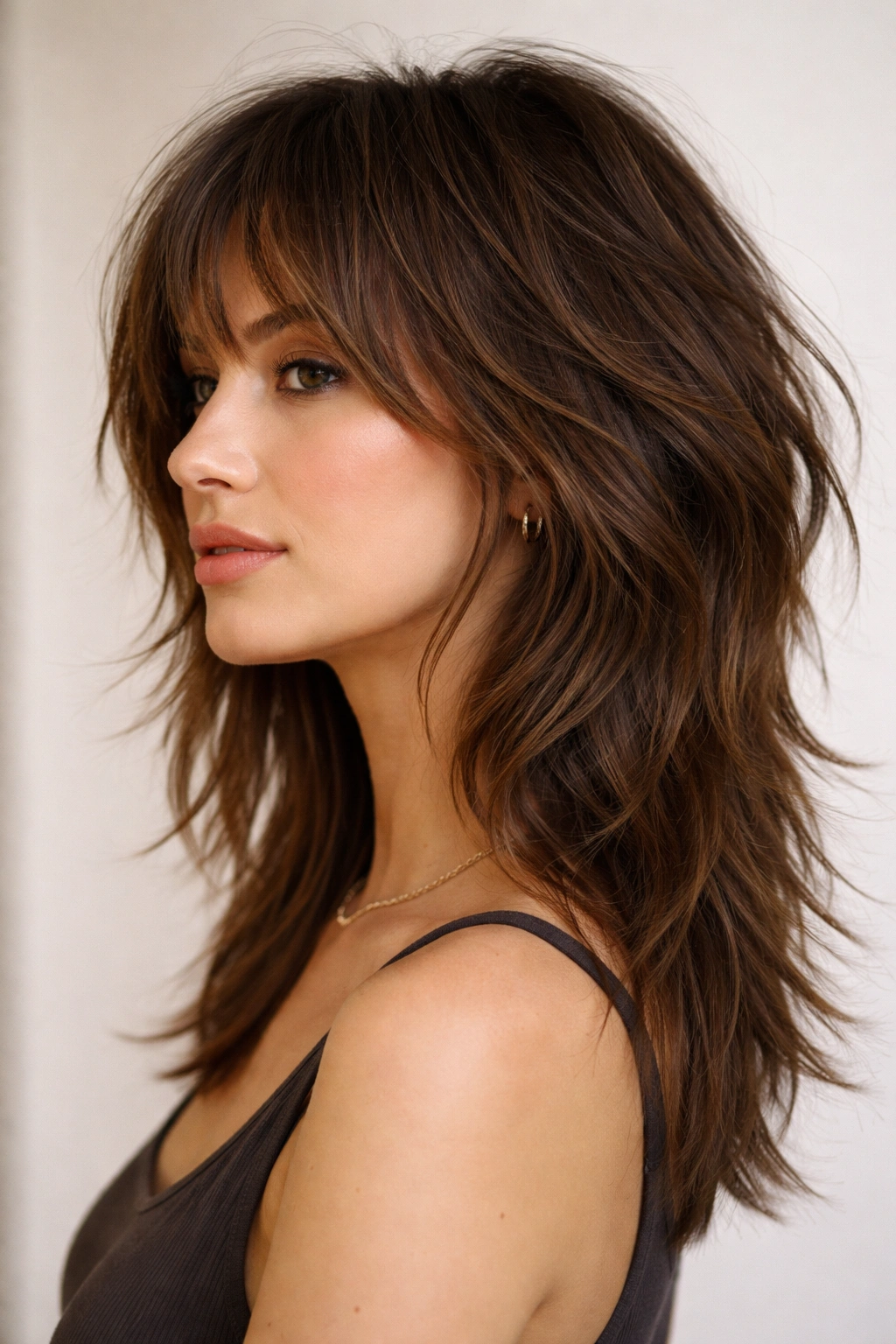
A modern shag with intentionally longer layering in the back creates movement and shape. The front is shorter and choppy; the back has more length. This creates a flattering silhouette that frames the face while maintaining length for styling versatility. It’s more structured than some shags while still feeling relaxed and intentional.
Texture Considerations
- Wavy hair makes this cut look effortless; the layers and natural wave work together beautifully
- Straight hair needs styling to achieve the movement implied by the cut
- Curly hair can wear this if the curl is loose enough that the layers read as intentional rather than accident
- Fine hair works; the layers create the impression of volume without actually thinning the hair out
Styling the Modern Shag
- Texture products (salt spray, mousse, texture spray) enhance the intentional undone vibe
- Can be air-dried for texture or blow-dried with product for more control
- Works with braids, buns, and other updos because the layers allow pieces to fall softly
- Shorter front layers mean face-framing happens naturally with this cut
15. A-Line Bob with Angled Layers
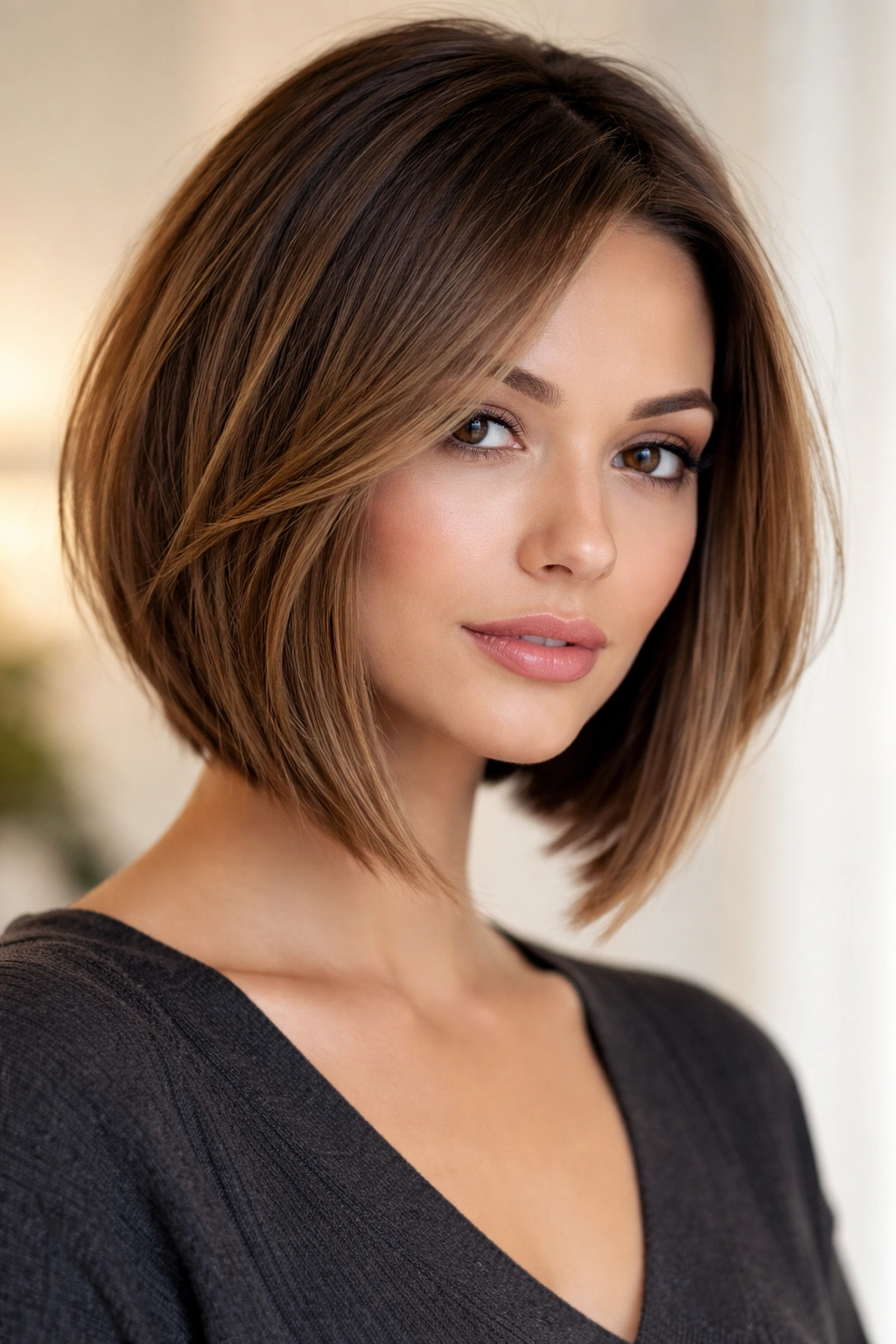
An A-line bob is shorter in back and gradually longer toward the front, creating a triangular silhouette. Add angled layers and you have movement and dimension. The cut is flattering on many face shapes and reads both modern and intentional. The angle naturally creates face-framing that softens the face.
How This Shape Works on Different Textures
- Straight hair: the angled line is precise and geometric; the layers create subtle dimension
- Wavy hair: the angle and layers allow wave to show throughout; the forward angle is flattering
- Curly hair: the longer front and shorter back work well with curly texture; curls show the layering beautifully
- Fine hair: the A-line shape helps manage weight distribution so fine hair doesn’t look overly thin
Styling Versatility
- Can be styled smooth and polished or with texture and movement
- The forward angle and layers mean the cut falls into place reasonably well without perfect blow-drying
- Looks good with a side part or centered depending on your preference
- Works at different lengths—true chin-length to shoulder-length versions all read similarly
16. Honey-Blonde Textured Lob with Layers
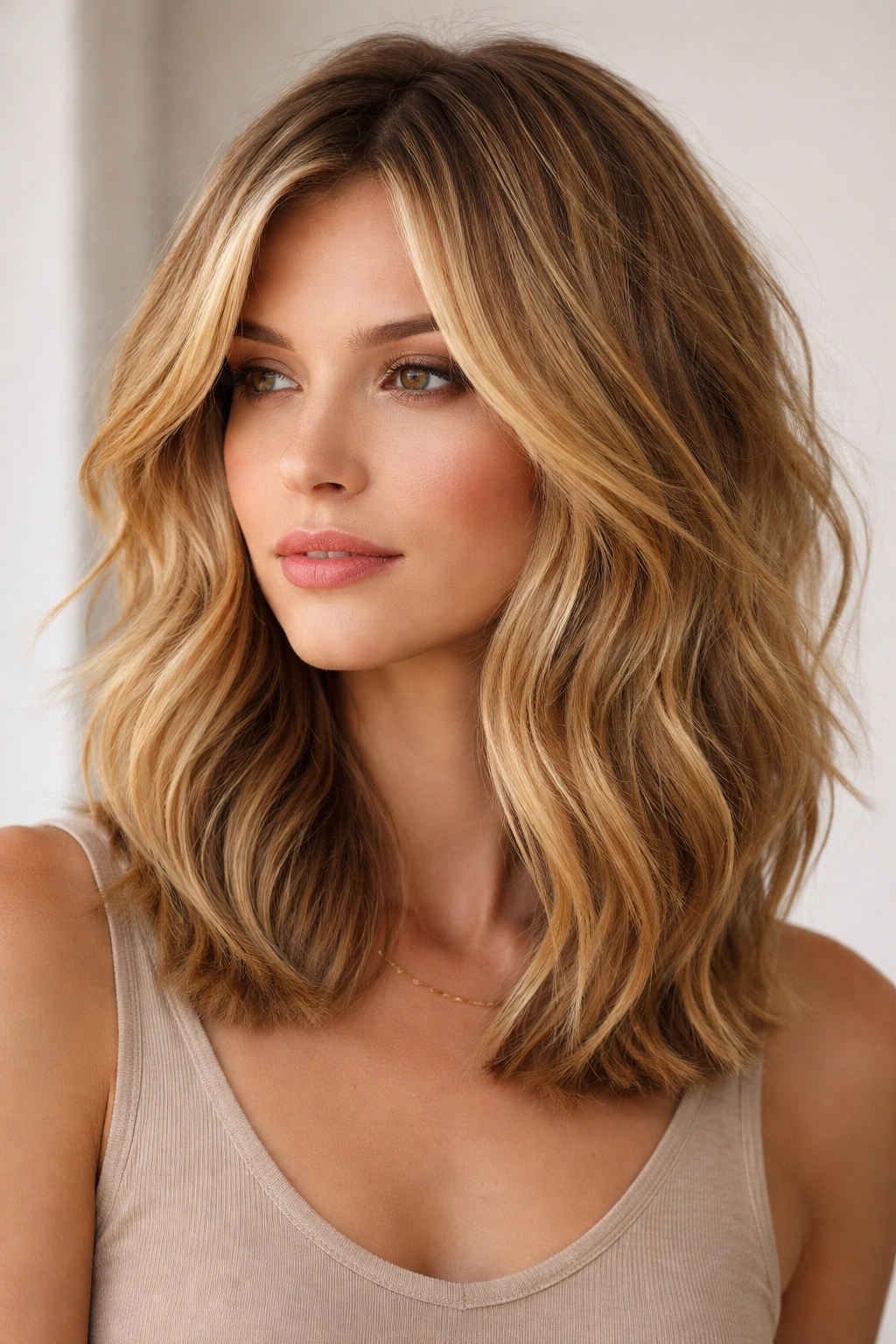
While color isn’t technically a haircut, the interplay between cut and color matters for visual impact. A textured lob with layers reads completely different with blonde tones because the color variation creates additional dimension. The layers allow the color to show through at different angles, and blonde tones (especially multi-tonal blonde) enhance the texture-and-movement aesthetic.
Why Texture Matters with Color
- Layers cut in darker hair are visible because of cut precision; in blonde hair, the color adds additional visual interest
- Textured blonde shows movement even when standing still; the eye reads dimension and flow from the color variation
- Layers in blonde hair photograph beautifully because light and shadow interact with both the cut and the color
Hair Type Compatibility
- Works on straight to curly hair; the textured cut suits most textures
- Fine blonde hair needs darker tones or rooting to not look washed out; the color dimension helps with that
- Thick hair carries blonde beautifully at this length and with this much texture
- Maintenance is higher because you’re maintaining both the cut (trims every 6-8 weeks) and the color (roots every 4-6 weeks depending on the blend)
Real talk: Textured, multi-tonal blonde is beautiful but requires commitment to color maintenance. If that doesn’t appeal to you, skip the color element and just get a great textured lob.
17. Side-Parted, Straight Lob with Minimal Styling
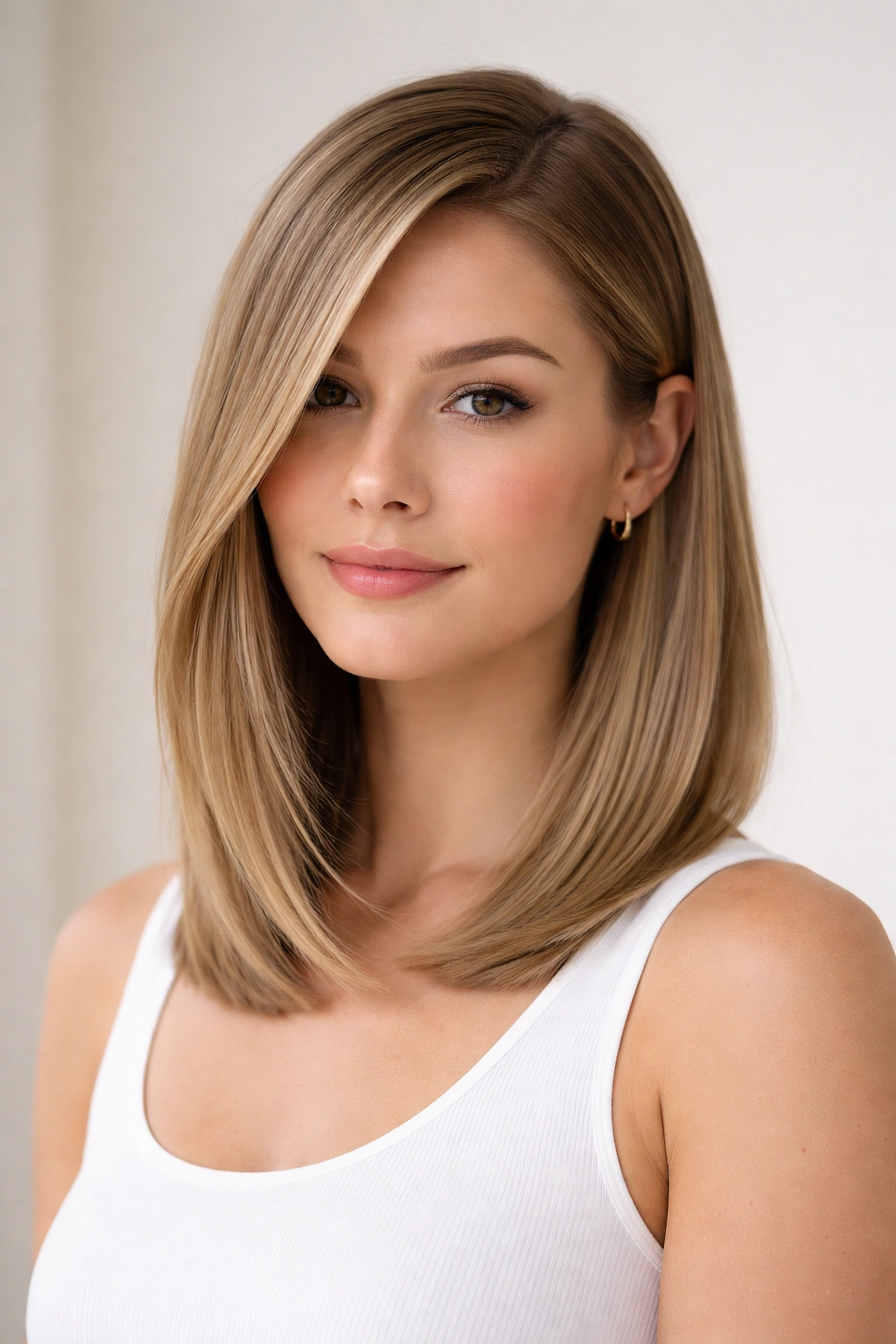
This is intentional simplicity—a lob cut as relatively one length, parted on the side, designed to be blow-dried straight and left alone. It’s not trendy or dramatic; it’s polished and wearable. This cut works on straight to slightly wavy hair where straightening is natural rather than requiring significant effort.
Best For and Why
- Straight or nearly-straight hair that you’re already blow-drying anyway
- Thick hair that has enough weight that a simple one-length cut doesn’t look thin
- People who want a professional, low-drama cut that’s flattering without being trendy
- Works for most face shapes when you can adjust the parting to create balance
Practical Styling Reality
- Requires blow-drying with a paddle brush to sit properly; this is non-negotiable
- Minimal tools needed; the cut does most of the work
- Professional and polished looking without requiring a ton of styling skill
- Regular trims every 6-8 weeks keep the line looking intentional
18. Feathered Layers for Medium-Fine Wavy Hair
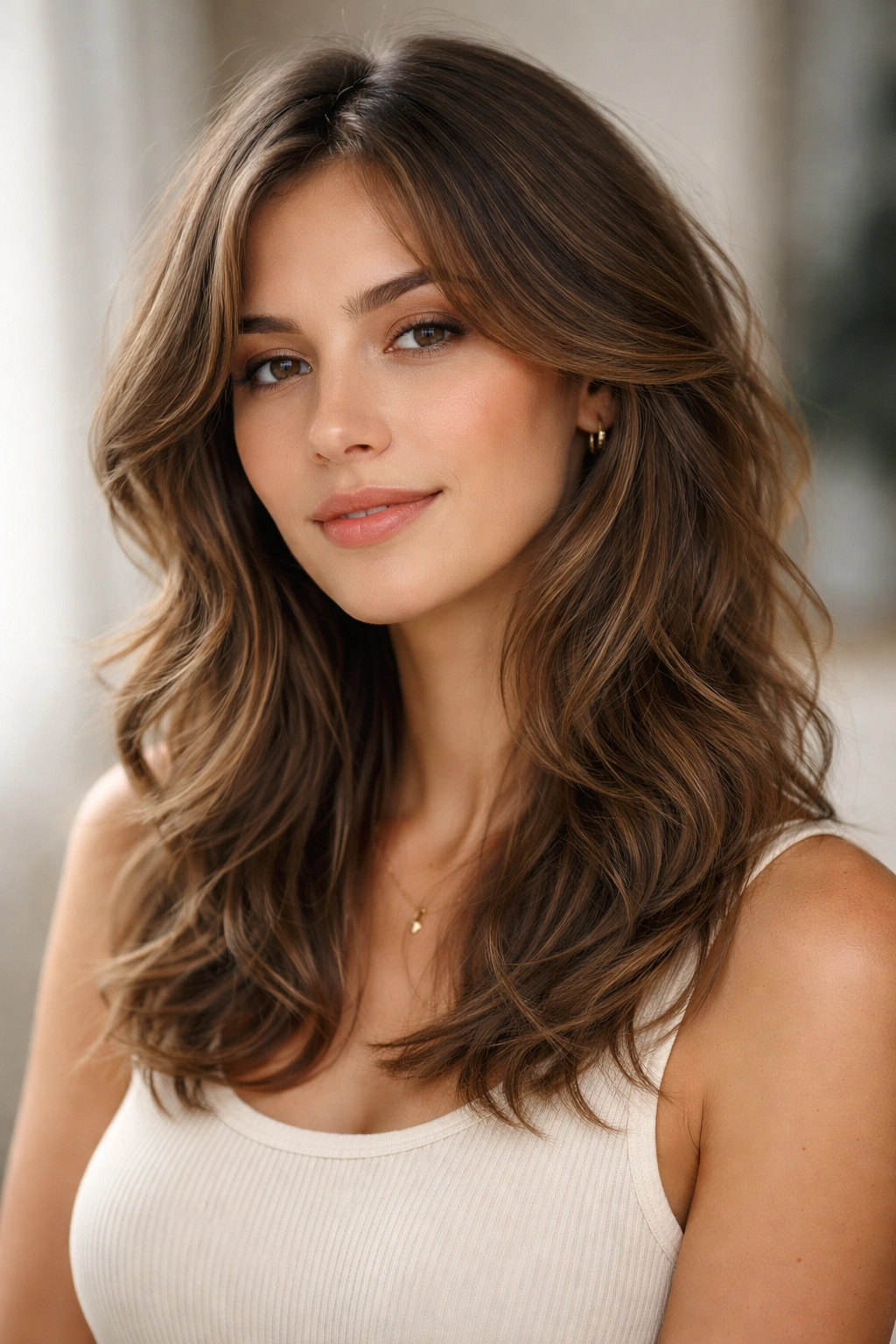
Feathered layers are subtle, tapered layers that create movement without bulk. This technique works beautifully on medium-fine wavy hair that needs texture and dimension but doesn’t want to be choppy or heavily worked. The layers are built into the cut so cleanly that they seem to appear when the hair moves, rather than being an obvious design element.
Why Feathering Works on Medium-Fine Hair
- Removes weight gradually rather than creating obvious textural shifts
- Fine hair looks fuller because layers reduce density without leaving wispy pieces
- Wavy hair gains natural movement; the feathering channels the wave pattern rather than fighting it
- The cut is less dramatic than choppy layers, working well for people who want subtlety
Styling and Maintenance
- Air-drying works beautifully; the layers support natural wave
- Can also be blow-dried straight for a different aesthetic
- Feathered layers show growth fairly quickly because the tapered ends grow out unevenly
- Trims every 6 weeks help maintain the feathered effect
19. Sleek, Straight Collarbone-Length Cut with Subtle Layers
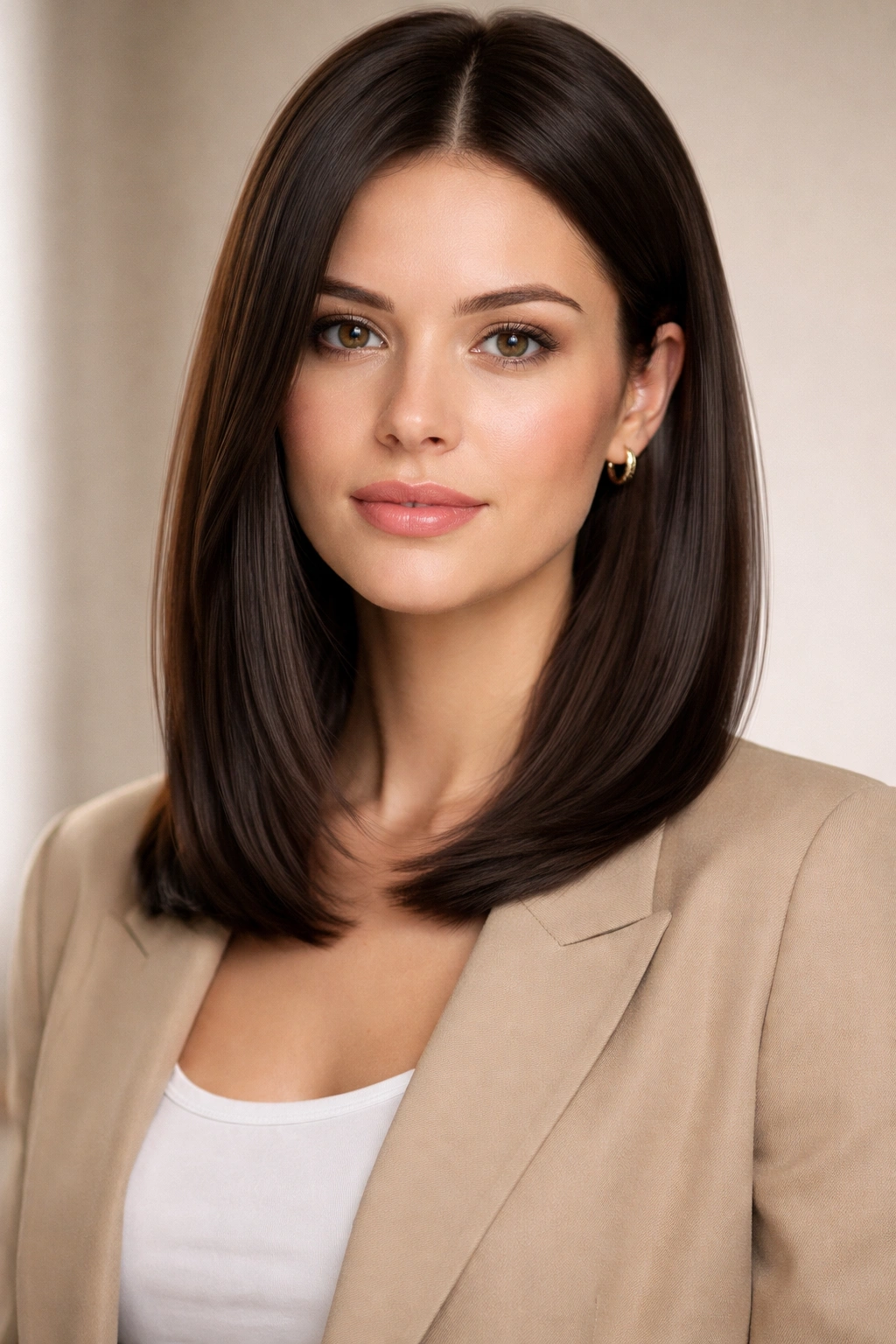
This is elevated simplicity—hair cut to collarbone length (slightly longer than shoulder) with layers so subtle you barely notice them unless the light hits right. The cut reads sleek and intentional. It’s neither blunt nor heavily textured; it’s somewhere in the sophisticated middle. This works on straight to gently wavy hair where you want movement without texture.
Who Should Choose This
- Straight to gently wavy hair that cooperates with blow-drying
- Professional settings where you want a polished, intentional look without drama
- People who want their cut to feel like “them” rather than trendy or statement-making
- Works on all hair densities; the subtlety translates regardless
Styling Approach
- Blow-drying with a round brush provides polish; air-drying works in a pinch but shows the layers less
- Minimal products needed; you’re not creating texture, just supporting smoothness
- Very low-maintenance compared to texture-heavy or layered cuts
- Works with multiple styling options—sleek side part, centered, tucked behind ears
20. Wolf Cut for Fine, Wavy Hair
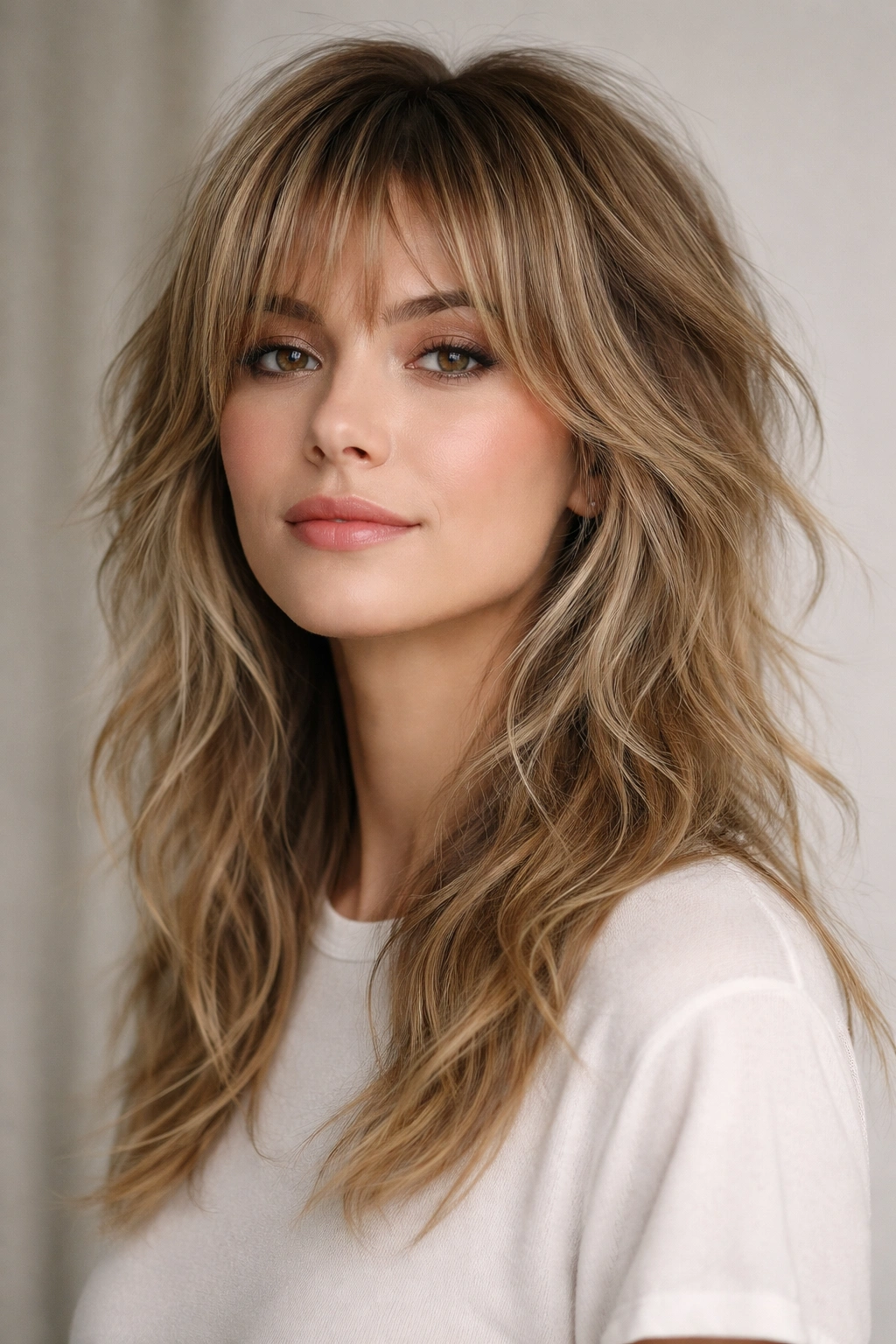
A wolf cut on fine, wavy hair is choppy, playful, and surprisingly flattering. The short, choppy top creates the impression of volume without actual bulk (which matters on fine hair), and the longer underneath maintains length. The movement from the waves makes the texture intentional rather than accident. This is a fun, modern cut that works when fine, wavy hair is styled with intention.
Why This Works on Fine, Wavy Hair
- Fine hair needs the visual boost that short, choppy layers provide
- Wavy texture means the choppy layers read as intentionally cool rather than messy or thin-looking
- The longer bottom pieces prevent the cut from reading too short (which can look stringy on fine hair)
- Waves add dimension that makes the fine hair read fuller visually
Styling for This Cut
- Texture products are your friend—mousse, gel, or texture spray applied to wet hair creates the intentional undone vibe
- Blow-drying is optional; air-drying with product works beautifully on wavy hair
- The cut looks better slightly messy than perfectly smooth; lean into that
- Regular trims every 6-8 weeks keep layers visible and intentional
Worth knowing: This cut requires a stylist who understands fine hair and wavy hair. If they usually cut thick, straight hair, they might not nail the proportions.
Final Thoughts
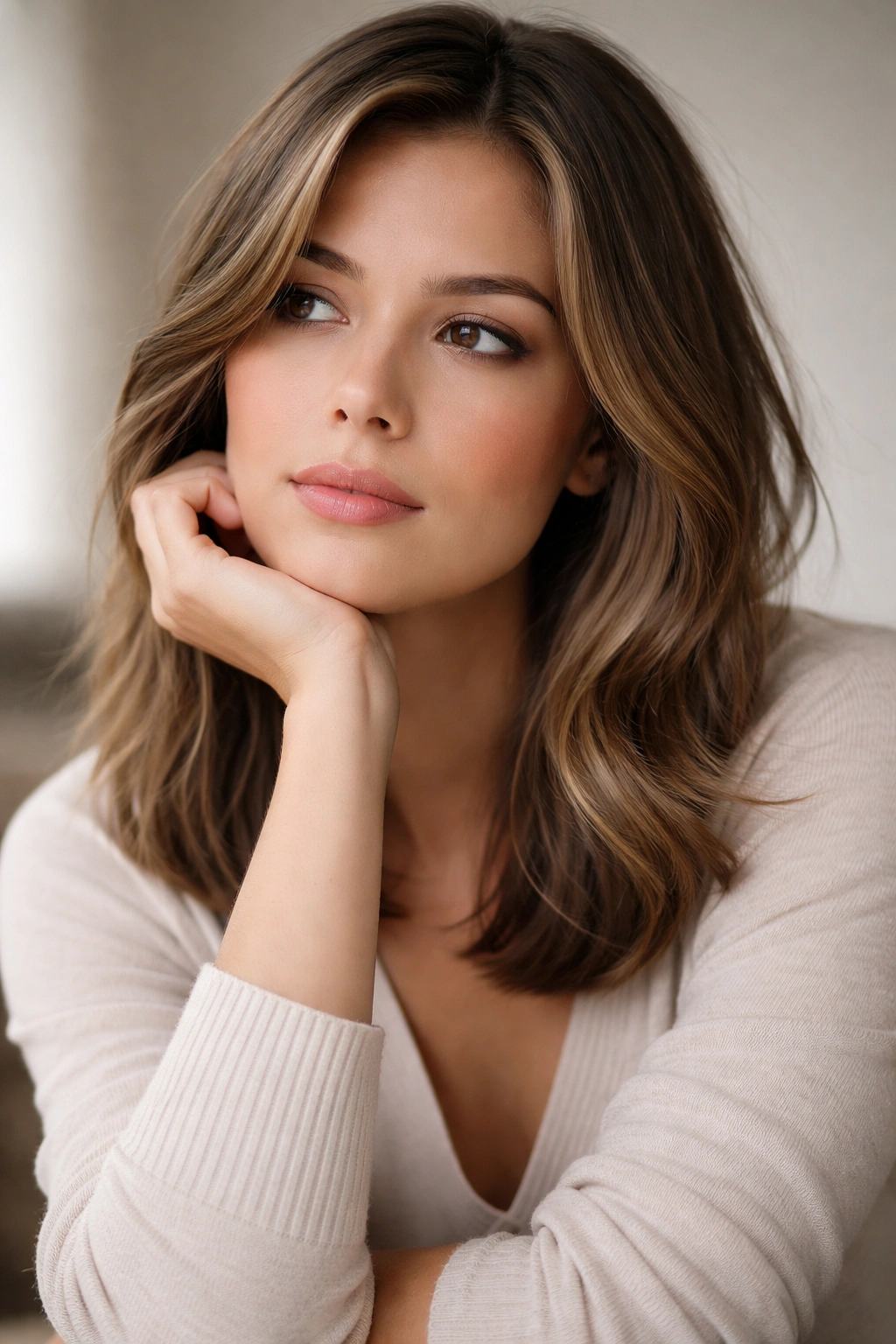
The medium length sweet spot exists for every hair texture, but finding your specific cut requires understanding what your hair naturally does. Thick, straight hair excels with precision cuts where the blunt line is the statement. Wavy hair shines with layers and texture, creating natural movement without effort. Curly hair needs intentional layering that works with the curl pattern, removing bulk while maintaining shape. Fine hair thrives when layers create visual fullness without removing so much hair that it looks thin and wispy.
The best medium haircut isn’t the one that photographs best or the one that’s trending right now—it’s the one that works with your natural texture and fits into your actual styling routine. If you’re choosing a high-maintenance cut, make sure you genuinely enjoy the styling process, not just the finished look. If you prefer low-effort hair, choose a cut designed for that, not one that looks great in photos but requires extensive daily work. A good stylist will listen to how you style your hair and choose a cut that plays to those strengths, not against them. When the cut and the texture align, you’ve found something you’ll love returning to again and again.
