



Short hair doesn’t have to whisper—it can command attention with a quiet confidence that feels effortlessly put-together. The best short cuts aren’t about looking polished or perfect; they’re about texture, movement, and a deliberate sense of ease that says you know exactly who you are. Whether you’re considering your first real cut or ready to shed length you’ve been holding onto, finding a style that actually matches your personality and your daily lifestyle makes all the difference.
The cool girl aesthetic has evolved beyond a single look into a philosophy: intention without overthinking, structure without stiffness, and edge without trying too hard. It’s the difference between a haircut that requires two hours of styling every morning and one that looks better the messier you make it. The short cuts that really land are the ones that work with your hair texture, not against it—whether you’ve got naturally wavy strands, thick coils, or fine straight hair that falls flat no matter what you do.
What makes a short cut feel effortlessly edgy rather than severe or corporate? It’s usually a combination of texture (layers, choppy ends, razored pieces), a bit of movement, and the freedom to style it multiple ways depending on your mood. Some of the most iconic short cuts can be worn sleek and polished one day and tousled and undone the next. The real beauty is that short hair actually gives you permission to be low-maintenance—you’re spending less time blow-drying, fewer hours maintaining length, and honestly, shorter hair often looks better when it’s slightly imperfect.
Here are twelve short haircuts that deliver that effortless edge and actually work in real life.
1. Modern Pixie Cut
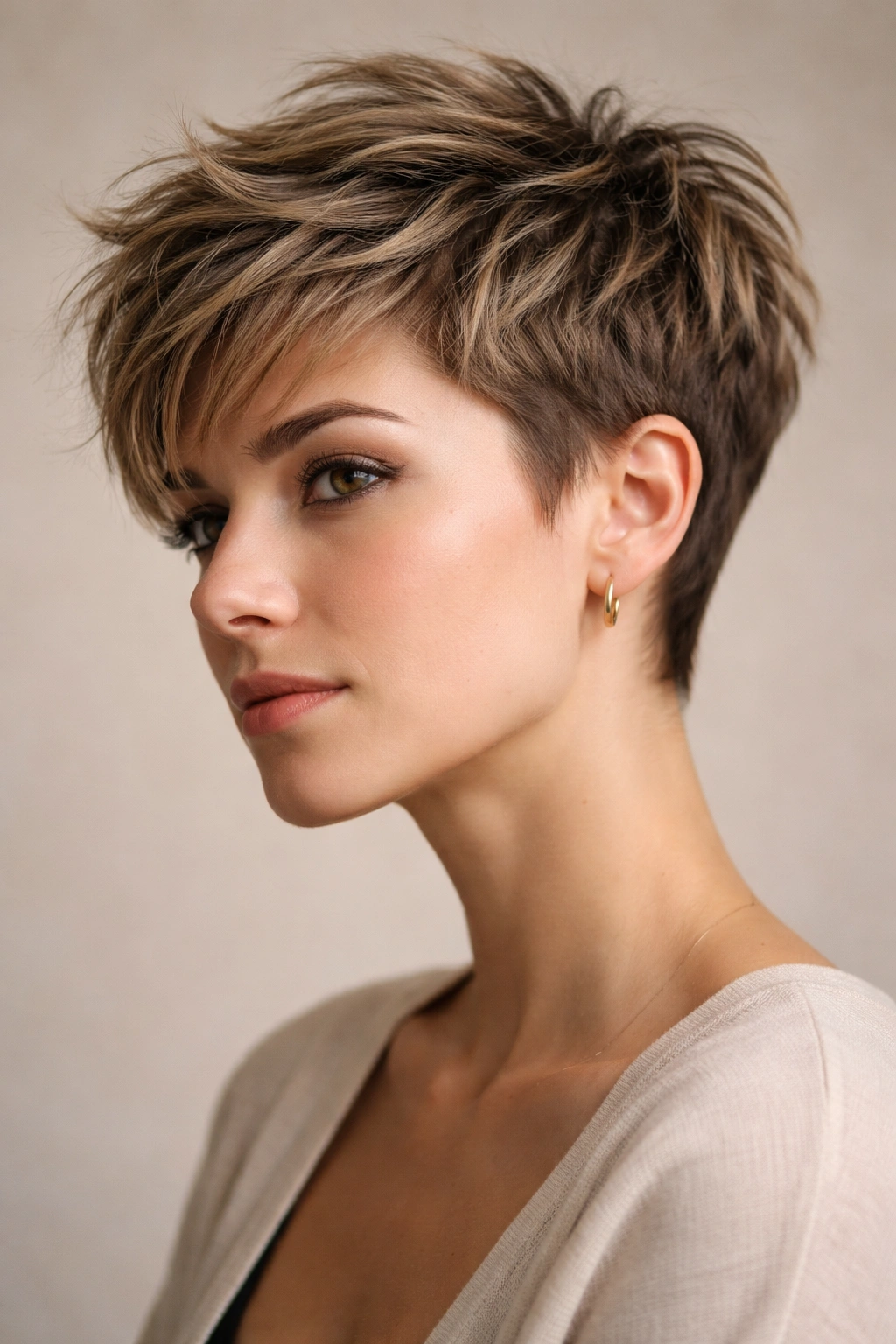
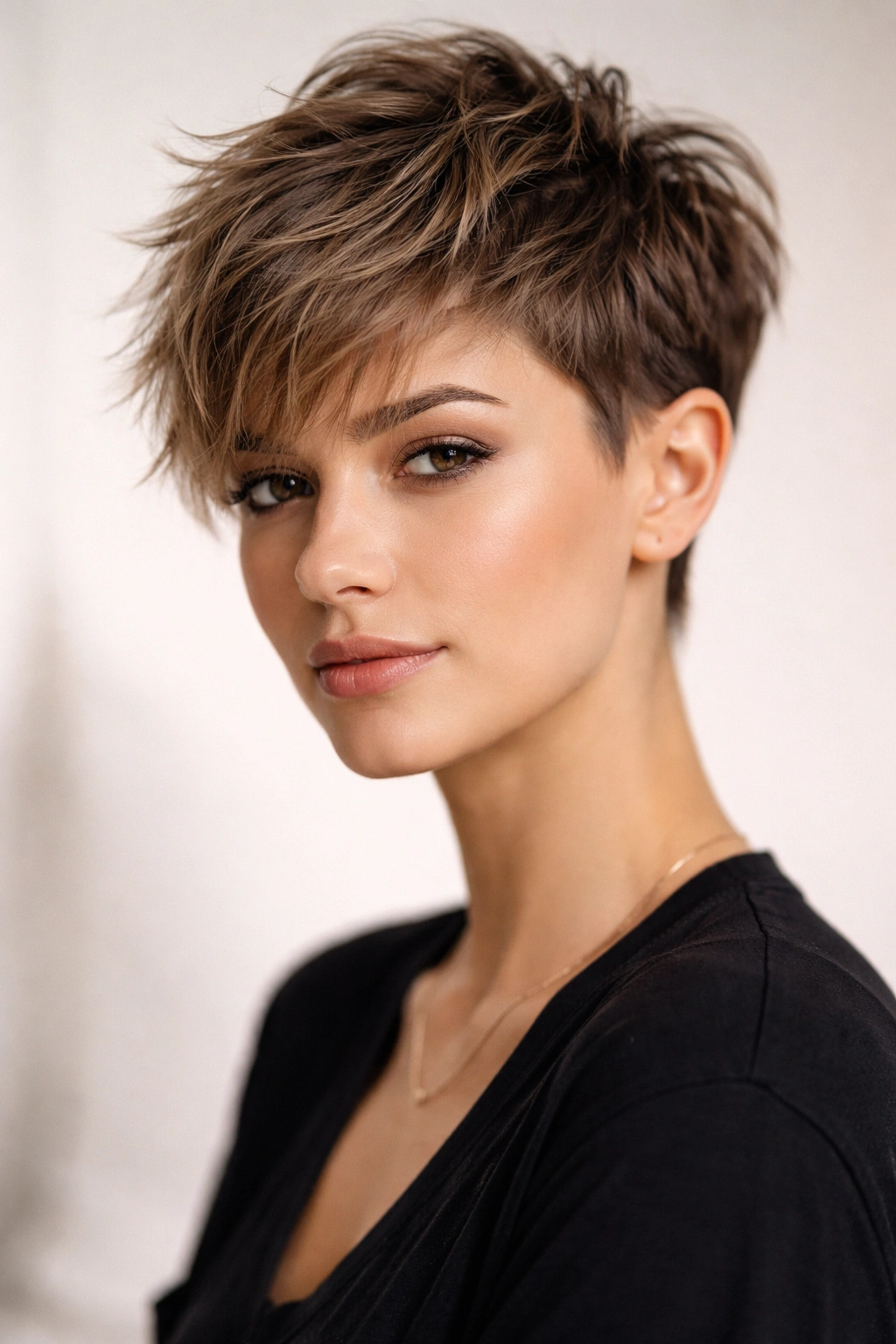
The pixie cut is having a serious moment because it works on nearly every face shape and every texture when cut with intention. The modern version isn’t the sleek, sculpted pixie from decades past—it’s got texture, dimension, and usually some length on top that you can actually do something with. The sides stay short and tapered, but the crown has enough substance to piece out or style back, giving you options instead of one rigid silhouette.
Why This Cut Commands Attention
The pixie is the ultimate confidence move because it says you’re comfortable with your face, your features, and minimal fuss. It emphasizes cheekbones, draws attention to your eyes, and creates an instant statement of “I’m intentional about my choices.” The cut exposes your neck and shoulders, which creates elegant vertical lines that are genuinely flattering. Beyond the styling, there’s something about owning a pixie that makes people sit up and pay attention—it’s a choice, not a default.
What You Need to Know Before Going Pixie
- Requires a cut every 3-4 weeks to maintain shape; the short sides grow in fast
- Works beautifully with undercuts or fades for extra edge
- Needs good product (texture spray, matte clay, light styling cream) to avoid looking matted or flat
- Can be styled multiple ways: swept back, piece-y and tousled, slicked to one side, or even parted down the middle
- Best for people who enjoy a bit of daily styling; true wash-and-go isn’t really possible
Pro tip: Ask your stylist to add longer pieces at the front and through the crown that you can grow out slightly—this gives you a pixie that transforms into a short bob if you want a change without starting over.
2. Textured Shag
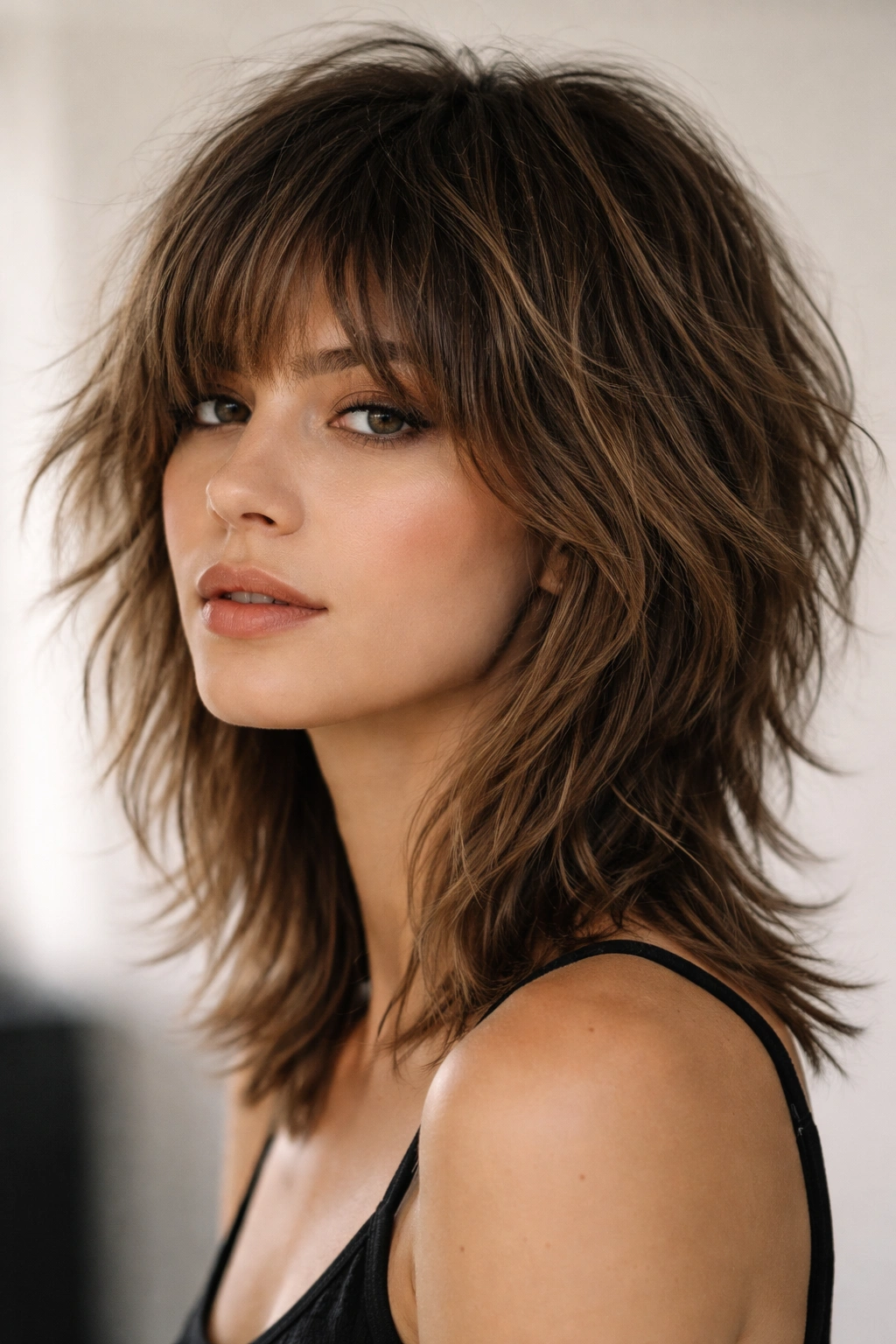
The shag is back, and it’s the furthest thing from the disco version your parents had. Today’s shag is actually a masterclass in modern layering—it’s got length, movement, and that intentionally undone quality that makes it feel young and low-pressure. The layers start higher up on the crown and graduate longer throughout, creating a piece-y, multi-directional texture that looks good whether you’ve just rolled out of bed or spent time styling it.
Why Shags Work When You Want Effortless Cool
A good shag actually requires texture to look its best, which means if your hair is naturally wavy, curly, or has any bend to it, you’re already winning. The layers create the illusion of movement and volume even if your natural hair is on the finer side. The beauty of the shag is that it’s forgiving—a slightly grown-out shag still looks intentional. You’re not fighting against your hair’s natural personality; you’re leaning into it.
The Shag Styling Breakdown
- Needs a texturizing product (sea salt spray, dry shampoo, mousse) to activate the layers
- Works well with a light round brush or just finger-drying with product for maximum movement
- Can be worn with a deep side part, a middle part, or swept entirely to one side
- Looks better the second or third day when natural texture has time to develop
- Plays especially well with face-framing pieces that fall slightly longer
Worth knowing: A shag cut should feel choppy and intentional, not overly blended. Ask for visible layers and choppy ends rather than a smooth, graduated cut.
3. Bixie (Bob-Pixie Hybrid)
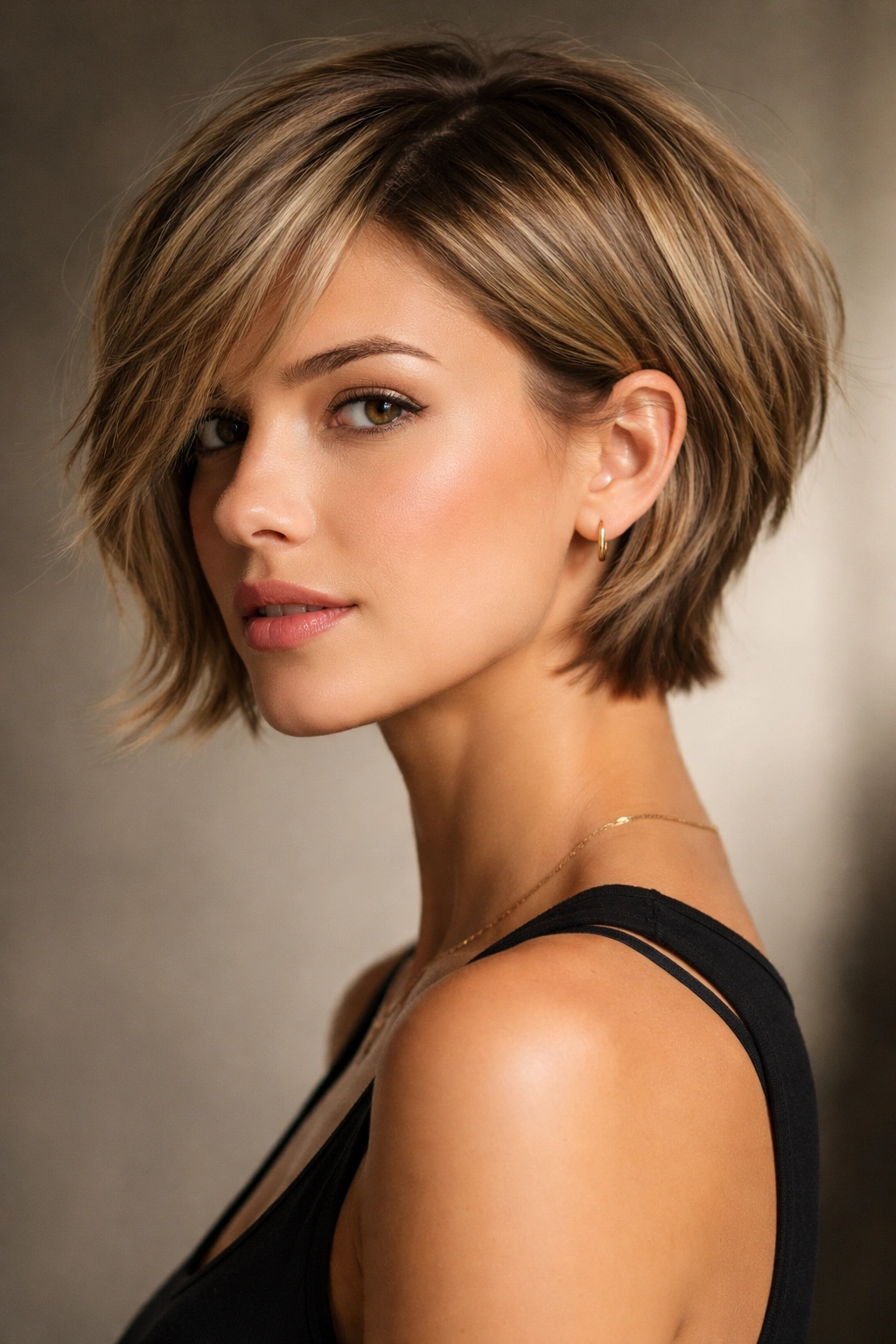
The bixie is exactly what it sounds like—the androgynous lovechild of a classic bob and a pixie cut. You get the clean, structured shape of a bob but with the tapered sides, short back, and ease of maintenance of a pixie. It’s the cut for people who can’t decide between the two because, honestly, why choose? The front is longer (usually chin-length or just below), while the back is clipped short and textured, creating a modern silhouette that’s distinctly cool without being extreme.
Why This Cut Splits the Difference So Well
The bixie gives you the best of both worlds: the option to style hair forward and have something to work with, plus the low-maintenance reality of having the bulk of your hair short and manageable. It’s architectural but still has personality. The contrast between the longer front pieces and the short back creates visual interest without requiring you to overthink it. You can tuck the longer sides behind your ears, sweep them forward, or let them fall naturally depending on your mood and how much styling effort you’re putting in that day.
Bixie Reality Check
- Needs a cut every 4-6 weeks to maintain the shape and keep the back from getting shaggy
- Requires some styling to really shine—you’ll want texture spray and the ability to piece out the longer pieces
- Works best with straight to wavy hair; very curly hair tends to make the longer pieces poof out
- Can be worn sleek and polished or deliberately tousled and undone
- Pairs beautifully with an undercut or a subtle fade on the sides for extra edge
Insider note: The bixie is especially flattering if you have a round or wide face because the longer front pieces create vertical lines that narrow your features.
4. Choppy Layers
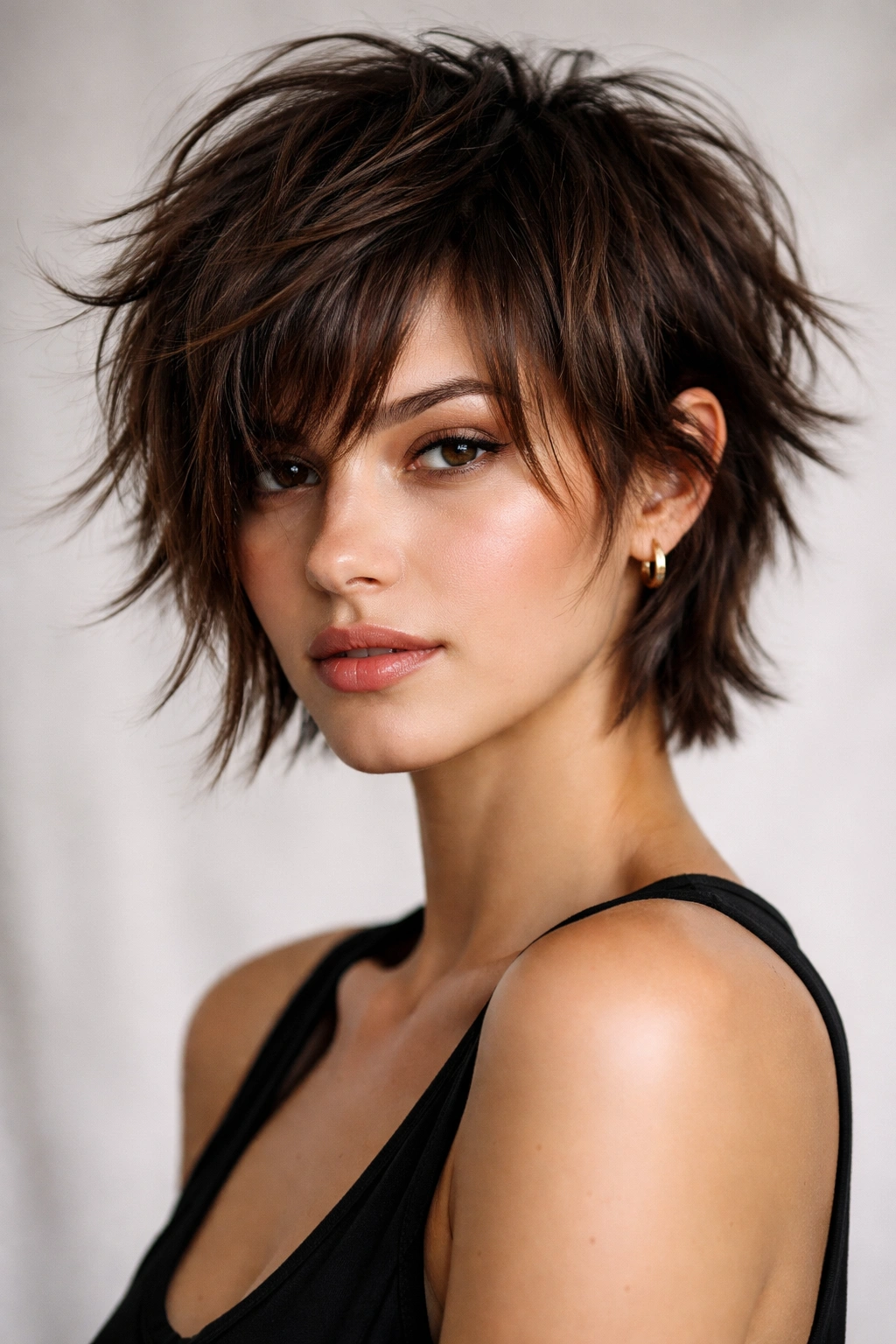
Sometimes the best short cut is simply one where everything is intentionally choppy and piece-y, with no attempt at smoothness or uniformity. Choppy layers are the texture-first approach—the cut is all about varying lengths, disconnected pieces, and an almost shaggy vibe that reads as deliberate and editorial. The layers are usually shorter at the crown and gradually lengthen, but with visible choppy ends throughout rather than smooth transitions.
Why Choppy Layers Feel Endlessly Styleable
When your hair is cut with choppy layers, you have built-in texture from the cut itself, which means you can style it a dozen different ways depending on what you’re feeling. Wet, it falls one way. Blow-dried smooth, it reads differently. Textured with product, you get more movement and dimension. The choppy approach doesn’t demand perfection—in fact, the slightly messy, piece-y quality is the point. It’s the opposite of a cut that requires everything to be sleek and precise.
Choppy Layer Technical Details
- Best cut on straight to wavy hair; very curly hair can look frizzy with too much choppy texture
- Requires a stylist who understands how to cut layers for movement, not just short and disconnected
- Works with everything from a two-inch length at the crown to something shoulder-grazing
- Styling options include: slicked back with gel, blown out for maximum volume, dried naturally for organic texture, or even styled wet-look sleek
- Pairs beautifully with color depth or interesting tones because the layers create natural highlights from dimension
Pro tip: Ask your stylist to keep some weight at the crown and side sections so you’re not left with something too wispy or overly thinned out.
5. French Crop
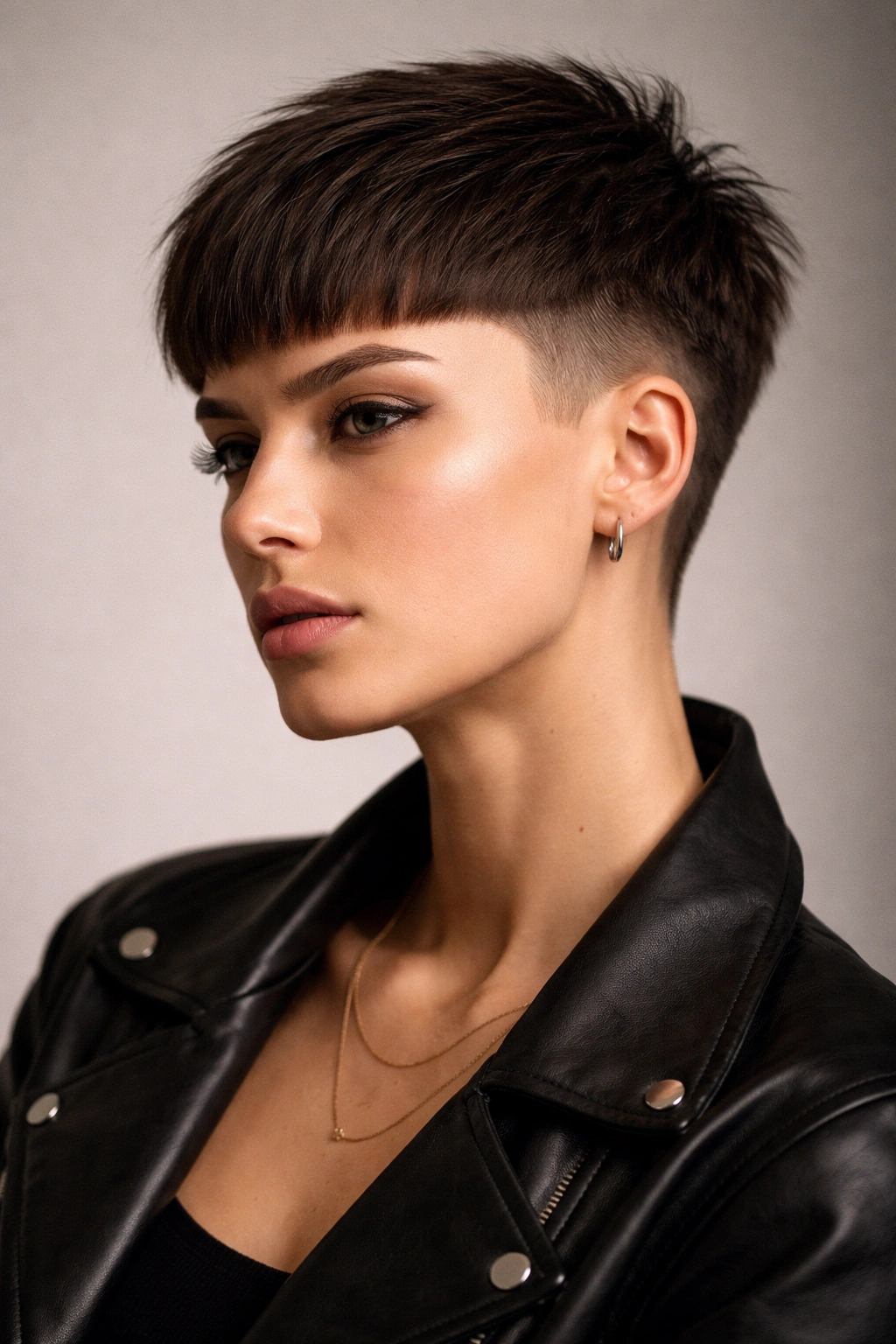
The French crop is essentially a textured pixie’s more sophisticated cousin—short and tapered on the sides and back, but with a deliberately longer, thicker section on top that creates actual styling potential. The top is usually cut blunt across the front, creating an almost boyish silhouette, but with enough weight and length that you can piece it out, tousle it, or even style it back. It’s French-girl cool distilled into a haircut.
Why the French Crop Hits Different
There’s something about the proportion of this cut that just works—the defined separation between the short back and sides and the fuller crown creates visual balance and interest without feeling fussy. It’s practical (the sides don’t require constant maintenance if you’re okay with slightly grown-in texture), but it still reads as intentional and editorial. You can wear it with a part, push it forward, sweep it back, or do the whole undone, textured vibe depending on your mood and styling energy that day.
French Crop Essentials
- Usually requires a cut every 4-5 weeks to keep the sides tidy, though a slightly grown-in French crop still looks intentional
- Best on straight to wavy hair; works on curly hair if the stylist understands how curl patterns affect length
- The top section should have enough length to piece—usually at least two to three inches depending on your face shape
- Styling: sea salt spray for texture, matte clay for definition, or even just running your fingers through for that undone effect
- Looks especially cool with an undercut or a subtle fade for extra edge
Worth knowing: The angle of the cut on top really matters—it should be blunt across the front with slightly longer pieces toward the back crown, not rounded like a typical pixie.
6. Blunt Bob with Bangs
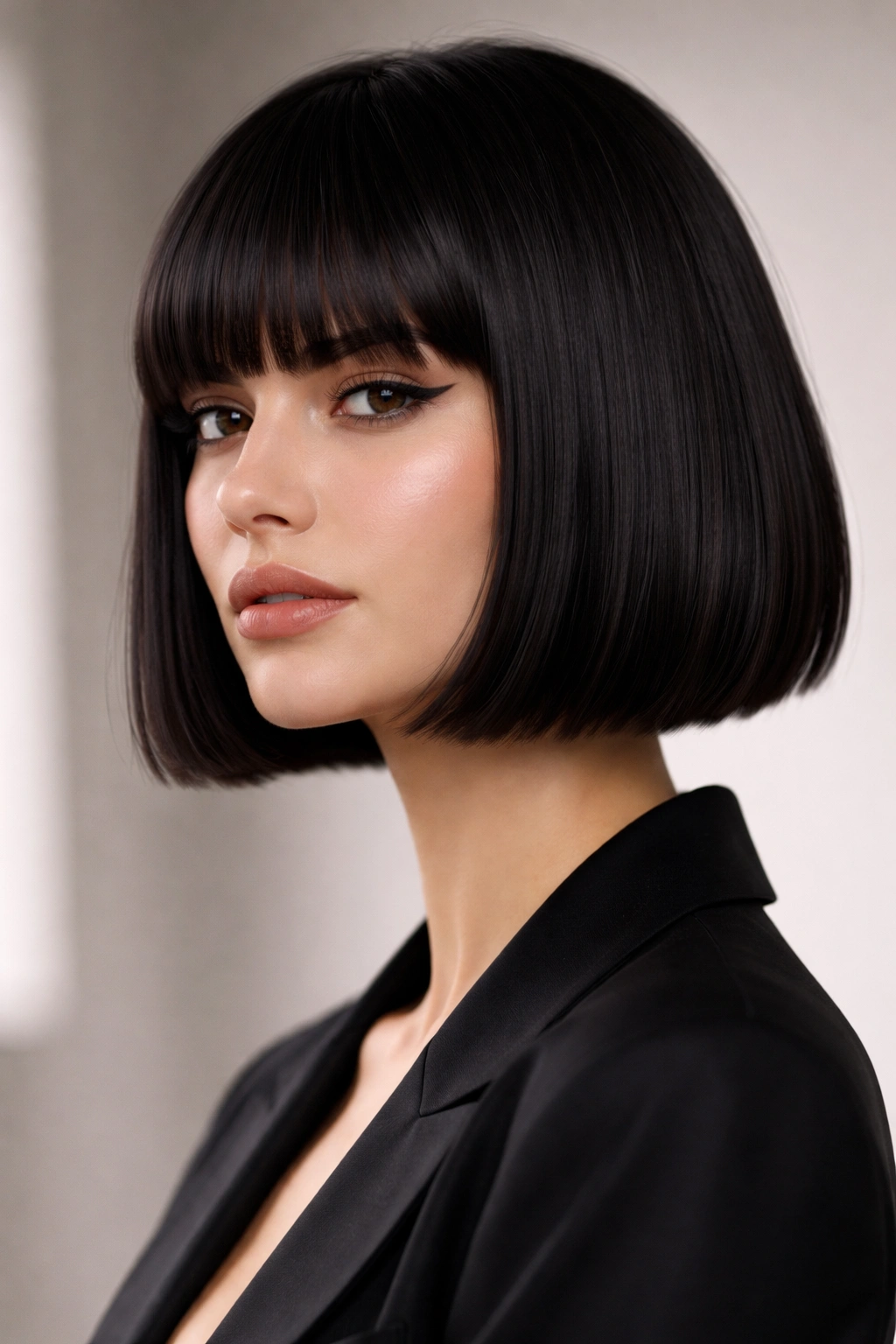
Sometimes the move is to go short but keep structure—a blunt-cut bob that hits right at the chin or just below, paired with full bangs that frame the face. It’s architectural, it’s bold, and it requires a stylist who understands how to cut a truly blunt line (not just “blunt-ish”). The bangs are full but not heavy, creating a modern edge that feels more interesting than a basic chin-length cut. This is the short cut for people who want presence without texture-forward styling.
Why Blunt Bob with Bangs Commands Space
There’s no ambiguity in this cut—it’s decisive and clean, which automatically reads as intentional. The blunt line creates a polished, editorial quality, and the bangs add an element of playfulness that keeps it from feeling severe. It’s especially striking on people with strong bone structure because the clean lines actually enhance your features rather than softening them. This cut says you’re confident enough to own a bold silhouette.
Blunt Bob Logistics
- Requires a cut every 4-6 weeks to maintain the blunt line; bangs especially need regular trims
- Looks best on straight or wavy hair; very curly hair struggles with maintaining a blunt edge
- Styling is relatively low-pressure—a blow dryer and a brush, or even air-dry if your hair cooperates
- Can be worn with a deep part for softness or a center part for maximum symmetry
- Pairs well with bold makeup or statement jewelry because the hair doesn’t compete for attention
Pro tip: Ask your stylist to cut the bangs just slightly longer and lighter than you think you want—they’ll look perfect once they’ve settled, and if they’re too short initially, you’re stuck waiting months for them to grow.
7. Tousled Mullet
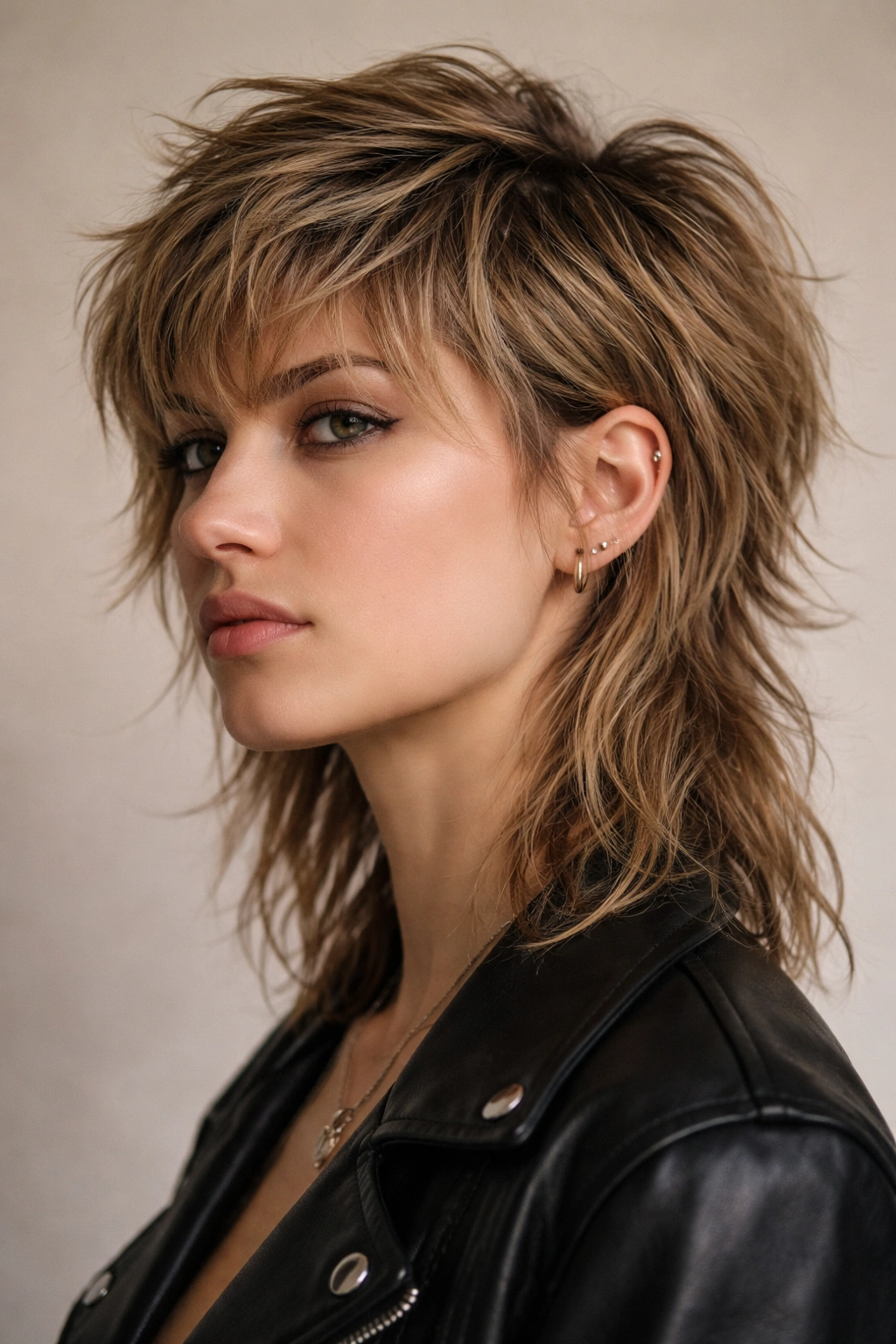
The mullet is back, and it’s nothing like the 1980s version your uncle had. Today’s mullet is short on top and at the sides, but with enough length in the back to create actual movement and style potential—think of it as a modern, textured take on a classic silhouette. The front is usually pixie-length or a short shag texture, while the back (which can be anywhere from shoulder-grazing to several inches longer) gives you somewhere to play. It’s androgynous, it’s cool, and it’s undeniably a statement.
Why the Modern Mullet Actually Works
The mullet reads as intentionally ironic and confident, which is exactly the energy of an effortless edge. It’s unexpected, which automatically makes it interesting. The practicality is real too—you get the low-maintenance ease of short hair on top with the styling options of having some length to work with in the back. A tousled, textured mullet feels deliberately undone rather than sloppy, which is the whole vibe here.
Mullet Styling Reality
- Requires a cut every 4-6 weeks to keep the front clean; the back can grow longer if you prefer
- Best on straight to wavy hair for that textured, piece-y quality
- The back should be textured (razored or choppy-cut, not blunt) so it doesn’t look like you’re growing it out
- Styling options: the front can be slicked back, tousled up, or piece-y; the back can be worn down, braided, half-up, or texturized with product
- Pairs beautifully with an undercut or a taper fade for extra definition
Insider note: The mullet works best when there’s a real contrast between the front and back—don’t let the back just grow out naturally as a blend. Ask for distinct, choppy layers in the back section so it reads as intentional.
8. Cropped Fade
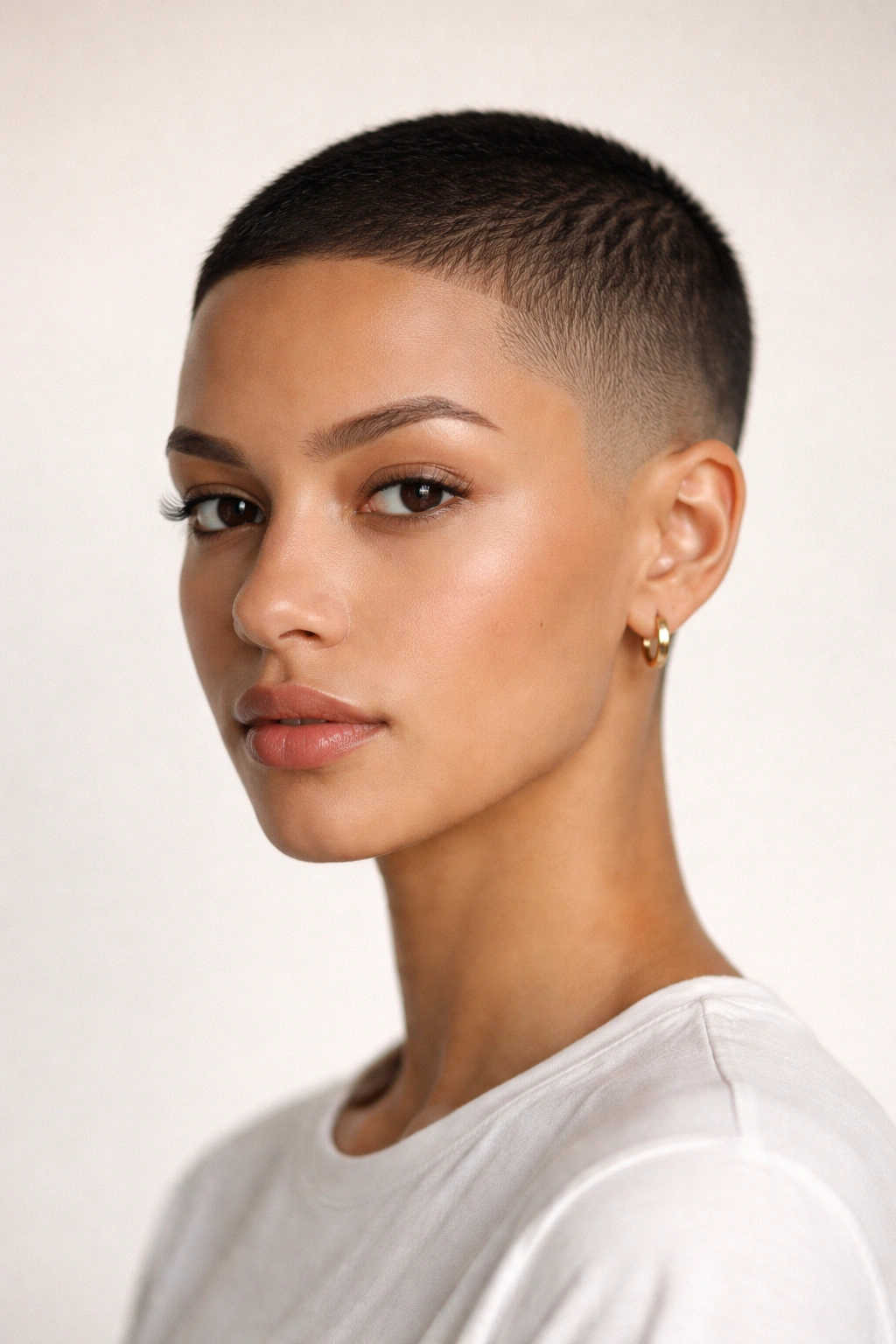
The cropped fade is the most minimalist entry on this list—very short all over (usually a quarter-inch to half-inch), with a precise fade that’s tighter at the sides and back and slightly longer on top. It’s almost military in its precision, but when cut right, it’s undeniably cool. The beauty is that there’s nowhere to hide—this cut works because of clean lines and proper proportions, not because the texture is doing the heavy lifting.
Why a Cropped Fade Reads as Effortlessly Confident
There’s something incredibly powerful about owning a super-short cut. It emphasizes your face, your bone structure, your whole presence—there’s no hair to hide behind. A well-executed fade shows intention and precision, which automatically reads as cool. It’s the opposite of fussy, which is exactly the vibe of effortless edge. You can style it with a light texture spray for dimension, or wear it completely clean with zero product—either way, it works.
Cropped Fade Practicalities
- Requires a cut every 2-3 weeks to maintain the fade; the top grows noticeably fast
- Works beautifully on all hair types, though it’s especially striking on people with texture (waves, curls, coils)
- Styling is minimal—you can wear it completely product-free or add a matte clay for slight texture and dimension
- Can be styled forward, back, or even slightly to the side depending on your preference
- Looks incredibly cool with natural hair texture, especially if you have waves or curls
Worth knowing: A good fade is an art—find a barber or stylist who really understands proportions and gradation. A bad fade just looks unfinished.
9. Disconnected Undercut
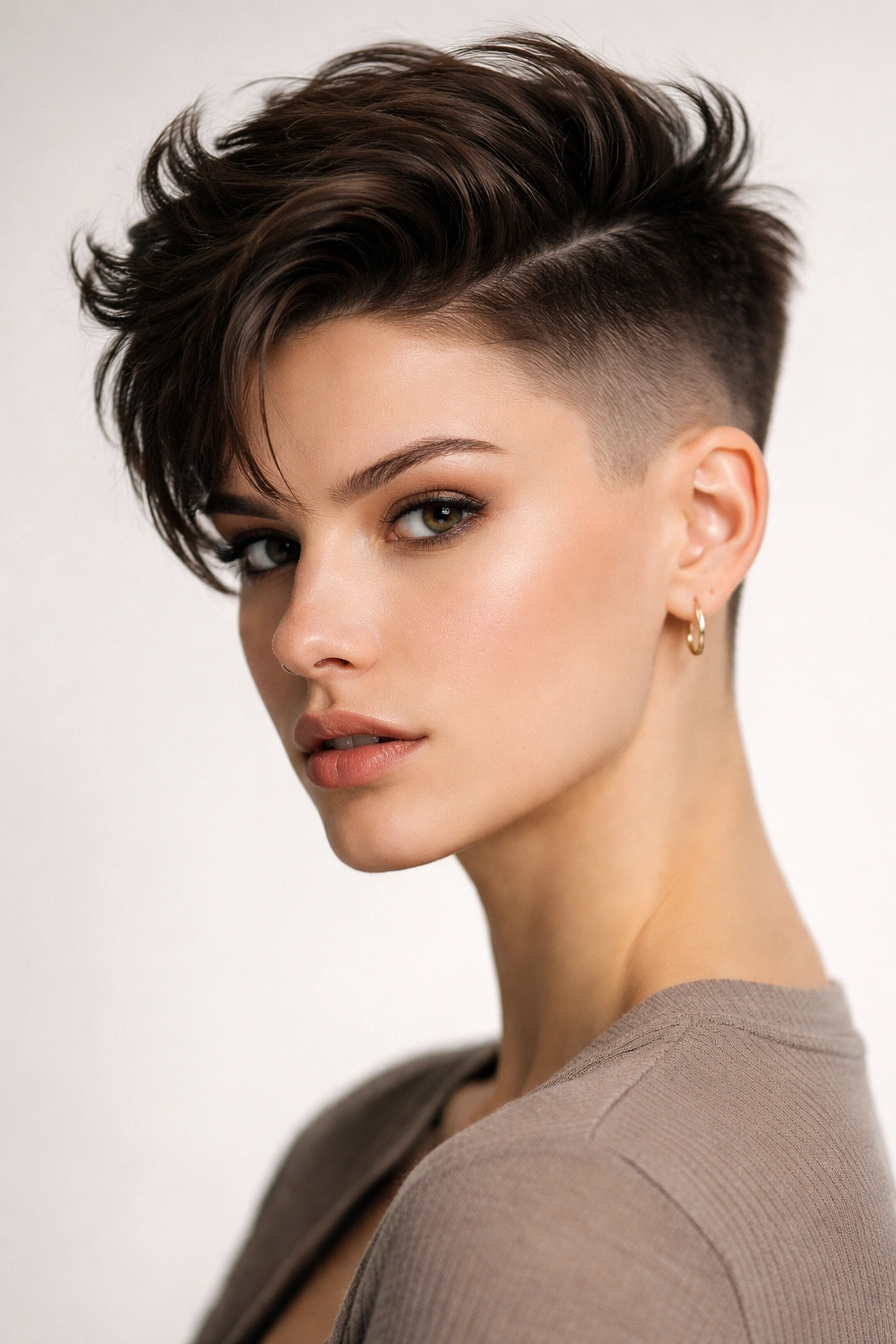
An undercut takes the concept of a pixie or crop and pushes it further—the sides and back are cut extremely short (sometimes down to skin), while the top is left considerably longer and separate, creating a stark visual contrast. It’s bold, it’s graphic, and it’s definitely not for everyone, but when you want maximum edge, this is it. The “disconnected” part means there’s no gradual fade—it’s a clear, defined line between the short and the longer sections.
Why Undercuts Feel Maximally Cool
The contrast is what makes this cut feel editorial and intentional. It’s not trying to blend or compromise—it’s a statement. You can style the longer top however you want: swept back, to the side, tousled, slicked, parted—and the undercut will look good because it creates a frame. The cut says you’re confident enough to take up space and make a visual statement.
Undercut Technical Reality
- Requires a cut every 2-3 weeks to maintain the short sides and back
- Works best with straight to wavy hair on top; very curly hair on top can look unusual with such a stark undercut
- The longer top section should be long enough to actually style—at least two to three inches depending on your face shape
- Styling options are endless: matte clay for texture, gel for slickness, dry shampoo for grip, or just fingers and movement
- Pairs incredibly well with color (highlights, roots, all-over tone) because the contrast highlights dimension
Pro tip: The success of an undercut really depends on the skill of your stylist. The line between the short and long should be clean and intentional, not rough or jagged.
10. Slicked-Back Short Cut
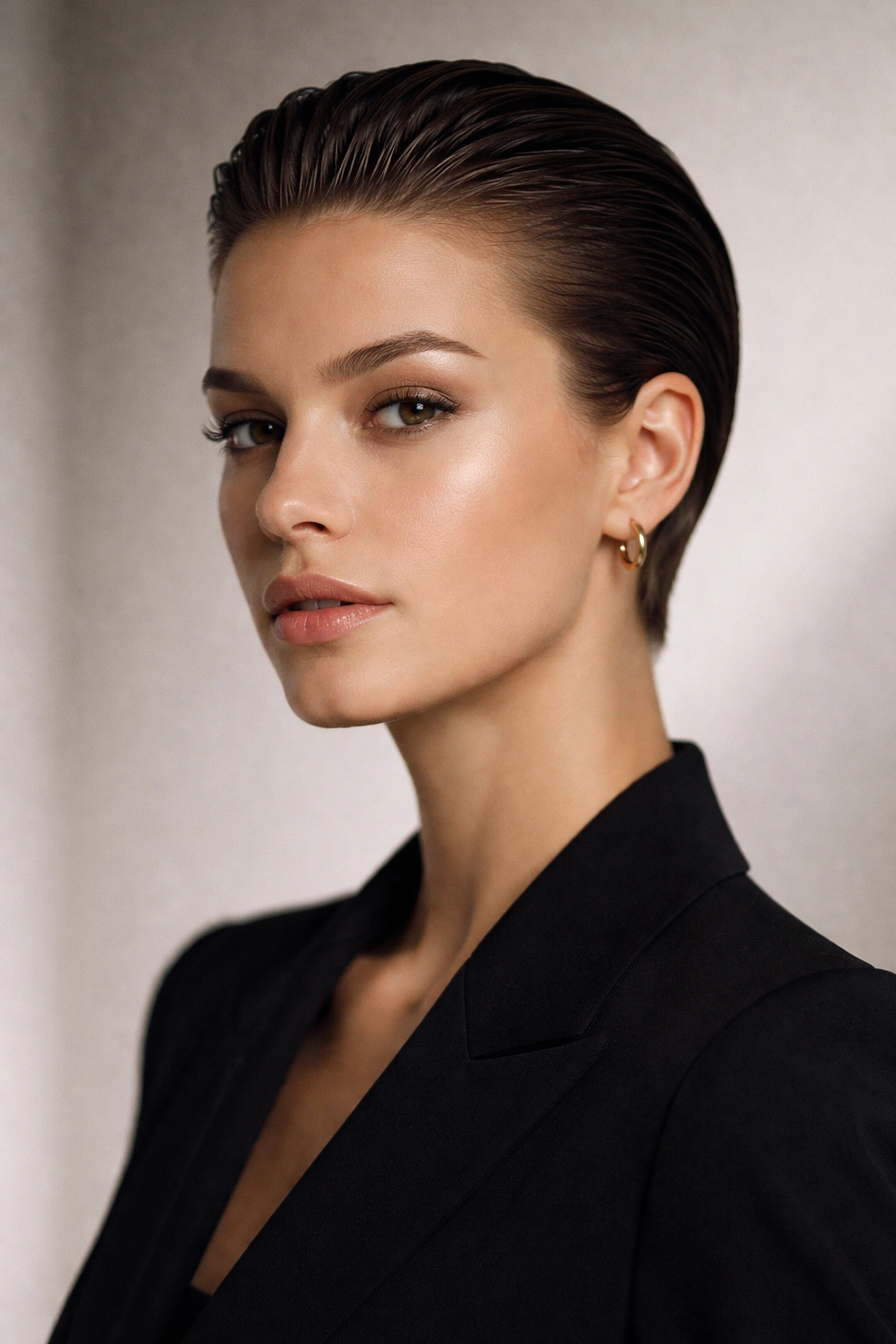
This is the epitome of “effortless cool”—an all-over short cut (usually pixie to crop length) worn completely slicked back with gel, mousse, or a light pomade. There’s no texture, no layers, no hiding—just clean, architectural lines slicked back to show your face completely. It’s a look that requires actual confidence because you’re committing to the visual statement, but when it works, it’s stunning.
Why the Slicked-Back Look Feels Intentional
Slicking your hair back in such a deliberate way reads as confident and editorial. You’re saying “I own this,” and the commitment to the look is what makes it feel cool rather than severe. It works because it’s honest—no softening, no blending, just clean geometry and presence. This is the cut for people who are comfortable being seen.
Slicked-Back Style Details
- The cut itself can be a precise pixie, a crop, or even a very short shag (which becomes entirely different when slicked back)
- Requires a good styling product: gel works, but a lighter mousse or pliable pomade often looks more modern and less shiny
- Best on straight to wavy hair; very curly hair is tough to slick back cleanly
- The look works when your face shape can handle fullness and exposure—it’s especially stunning on people with strong cheekbones or interesting bone structure
- Can be worn sleek and wet-look, or slightly softer and more textured depending on the product and technique
Insider note: Slicked-back hair actually looks better when it’s a day or two unwashed—there’s more grip and texture, so the product holds better and the look feels less rigid.
11. Feathered Wolf Cut
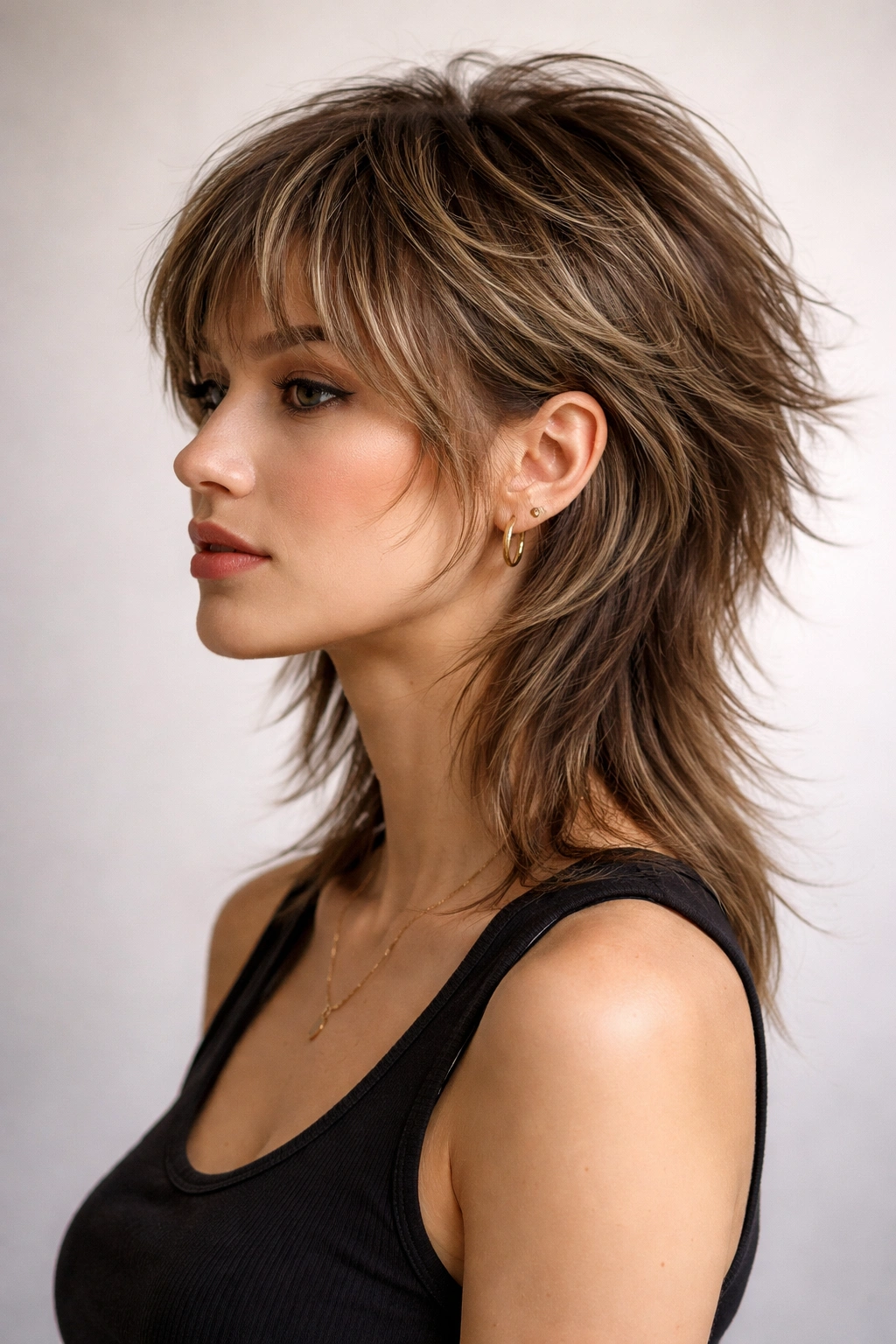
The wolf cut is a combination of a shag and a mullet—short and choppy on top with longer, textured pieces in the back. It’s “feathered” when those shorter pieces have that classic 70s-ish soft, curved texture rather than being bluntly choppy. The effect is gentle but undeniably textured, with lots of movement and visual interest. It’s softer than a full shag or mullet but still reads as intentionally cool.
Why Feathered Wolf Cuts Work for Multiple Hair Types
The feathering creates softness without requiring your hair to be perfectly smooth or straight. If you have naturally wavy hair, the feathered texture actually enhances your waves. If you have curly hair, the shorter top and layered structure create definition without overwhelming volume. The feathered quality reads as romantic without being girly, cool without being severe.
Wolf Cut Practical Info
- Works on straight, wavy, and curly hair, though curly hair needs a stylist who understands how to cut for curl pattern
- Requires a cut every 6-8 weeks to maintain the feathered texture; the back can grow longer if you prefer
- Styling: texture spray, diffuser-drying if you have waves or curls, or a round brush for softness
- Can be parted anywhere—center part, deep side part, or even worn tousled without a defined part
- The feathered pieces actually look better slightly grown in; there’s more natural movement and texture
Worth knowing: A feathered wolf cut should feel soft and movement-forward, not choppy and disconnected. Ask your stylist for feathering rather than choppy layers if you want that gentler, more romantic edge.
12. Asymmetrical Bob
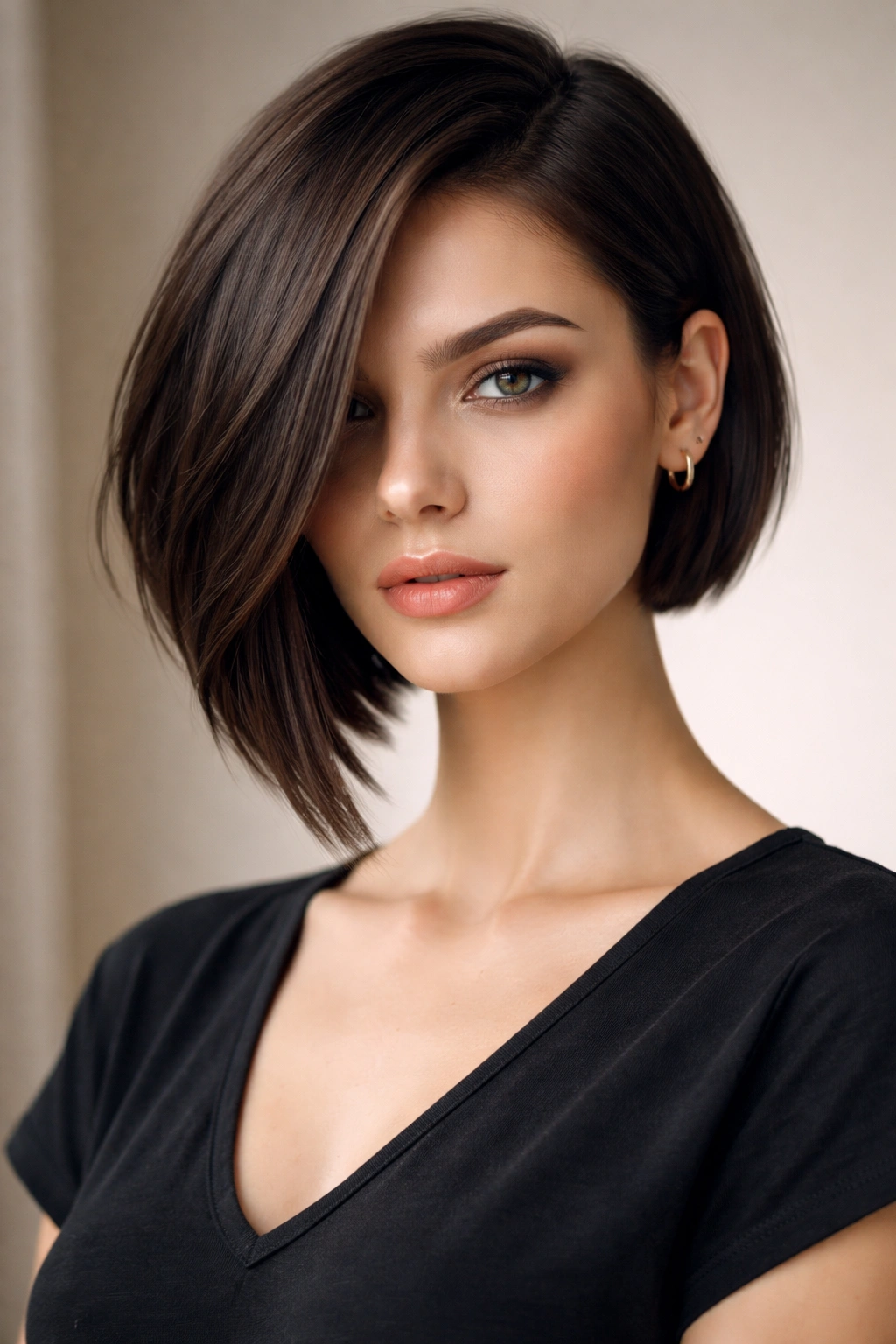
The asymmetrical bob—sometimes called a diagonal bob or one-length-longer bob—is short on one side and longer on the other, creating a graphic, intentional silhouette that’s impossible to ignore. One side might be ear-length while the other grazes the chin or shoulder, depending on how dramatic you want to go. It’s a cut that says you’re confident enough to own an unbalanced silhouette, which automatically reads as cool.
Why Asymmetry Reads as Effortlessly Bold
An asymmetrical cut is inherently interesting because it breaks the rules of conventional symmetry. It’s artistic, it’s unexpected, and it’s definitely a statement. The uneven proportions actually draw attention in a flattering way—the longer side frames your face while the shorter side creates graphic interest. It’s a cut that works equally well whether you’re aiming for polished or undone.
Asymmetrical Bob Reality
- Can be as subtle (a half-inch difference) or as dramatic (several inches difference) as you want
- Works on straight to wavy hair; very curly hair can make the asymmetry less visually obvious
- Requires a cut every 4-6 weeks to maintain the intentional lines; it looks awkward if it just grows out unevenly
- Styling options: can be worn sleek and blunt, or with choppy texture and movement depending on your preference
- Looks especially cool when paired with color—highlights or a root shadow on the longer side, for example
Pro tip: The success of an asymmetrical bob really depends on your face shape and bone structure. Ask your stylist to create an asymmetry that flatters your features—usually the longer side on the opposite side of your face from where you want to draw attention.
Final Thoughts
The magic of an effortlessly edgy short cut isn’t about any single style—it’s about choosing a cut that actually works with your hair texture, your face shape, and your lifestyle. The best short haircuts are the ones you can wear messily and still look intentional, the ones that don’t require an hour of styling to feel put together, and the ones that make you feel like yourself only more confident.
Finding the right short cut also means finding a stylist who actually understands your hair and what you’re trying to achieve. Show reference photos, talk about how much time you want to spend styling, be honest about your hair texture and what it actually does, and listen when your stylist offers perspective. The cut that looks stunning on your friend might not land the same way on you, and that’s completely okay.
Short hair is also forgiving in the way that long hair isn’t—it grows out in ways you can work with, you can change your mind relatively quickly, and there’s real freedom in not having to commit to length you’re not feeling. Go for it, find your people for the maintenance, and own whatever cut you choose. That’s what effortless edge is really about.
