



There’s something undeniably liberating about going short. A fresh haircut has the power to completely transform how you feel about yourself—it’s a statement of confidence, practicality, and style all at once. Short hairstyles aren’t just easier to maintain than their longer counterparts; they’re often more versatile, more flattering, and honestly more forgiving when you’re experimenting with color or texture. Whether you’re looking to make a bold change or finally embrace what you’ve been thinking about for months, a short style can work with virtually any face shape, hair texture, and personal aesthetic.
The beauty of short hair is that it doesn’t mean sacrificing personality or variety. From sleek bobs that feel effortlessly chic to textured crops that add movement and dimension, from timeless pixie cuts to modern shags, the range of short hairstyles available today is genuinely impressive. Each style offers its own vibe, maintenance level, and best-suited face shape—meaning there’s absolutely a short cut that will feel authentic to you. The key is understanding what each style requires, what it does for your facial features, and how it aligns with your lifestyle.
What makes a short hairstyle truly “upgrade your look” material is how it interacts with your face shape, hair texture, and the overall impression you want to give. A choppy pixie works magic on angular faces, while a rounded bob softens sharper features. Textured crops bring movement that camera-ready precision cuts can’t match, and undercut styles add an edge that commands attention. The right short style doesn’t just cut away length—it reframes your entire face and immediately signals that you’re intentional about how you present yourself.
1. Classic Blunt Bob
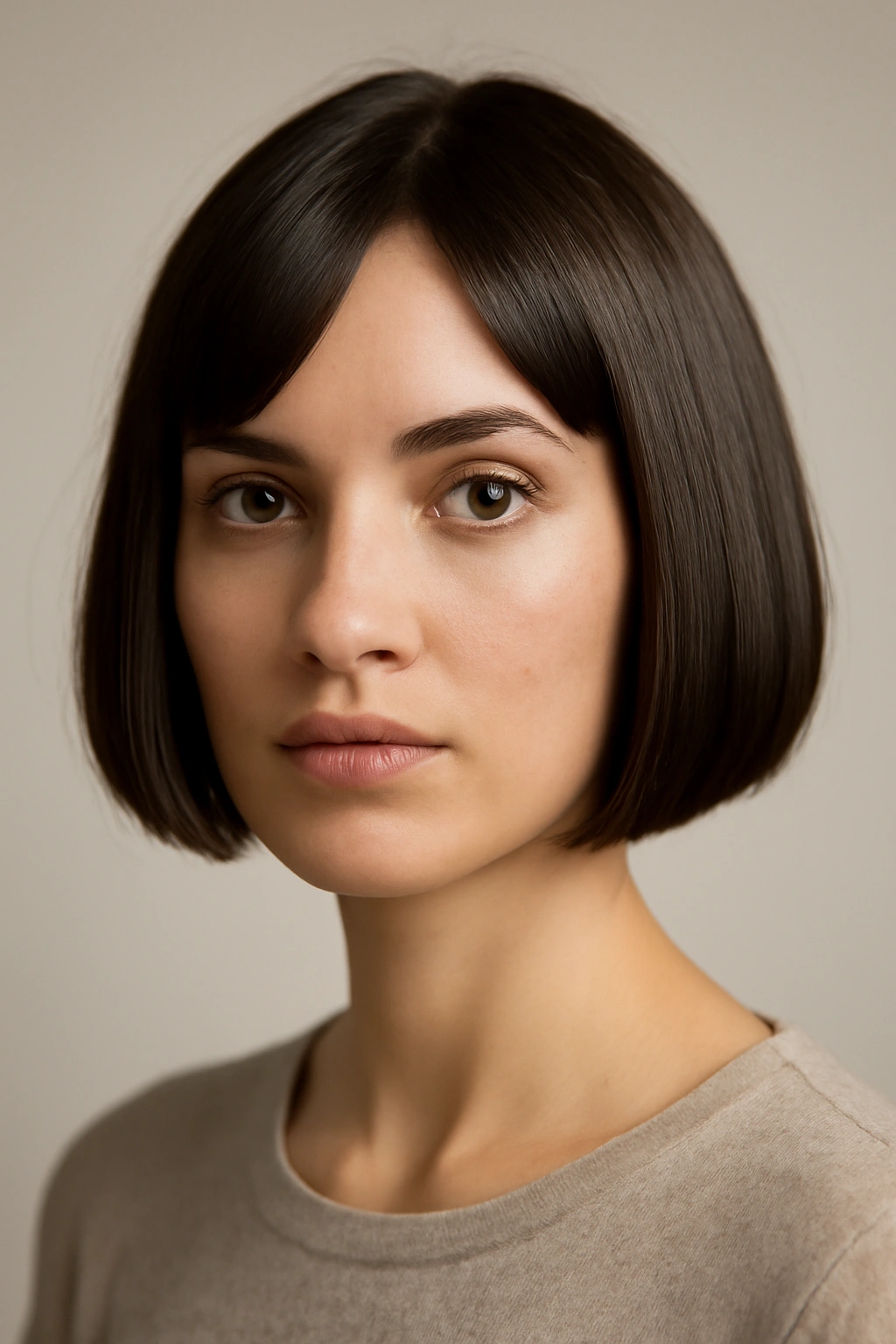
A blunt bob is the definition of timeless elegance, featuring a geometric precision where every strand lands at exactly the same length, typically just below the chin. This style works because of its clean lines and sophisticated simplicity—there’s nowhere for the cut to hide, which is why it demands an excellent stylist and well-maintained hair. The blunt bob flatters nearly every face shape when customized properly, particularly when the length and angle of the cut take your features into account.
Why This Cut Commands Attention
The blunt bob’s power lies in its geometric perfection and the way it frames your face with intentional lines. This style instantly communicates polish and control, making it a favorite among people who want their hair to feel purposeful rather than casual. The sharp line at the bottom of the cut creates a frame that draws attention upward to your eyes and cheekbones, enhancing your best features. Because there’s no texture or layers to hide behind, this cut works best with healthy, well-conditioned hair—which many people find motivating.
What Makes It Stand Out
- Requires trimming every 4-6 weeks to maintain the precise blunt edge, making it a commitment-level cut
- Pairs beautifully with both straight and naturally wavy hair textures, though styling needs differ significantly
- Works exceptionally well with statement earrings, bold lip colors, and accessories that would compete with layered hair
- Projects sophistication and intention, making it ideal for professional settings and formal occasions
Pro tip: A blunt bob feels more modern when paired with subtle side-swept bangs or a slight A-line angle that’s just barely shorter in front than in back—this prevents it from feeling overly severe or severe.
2. Layered Pixie Cut
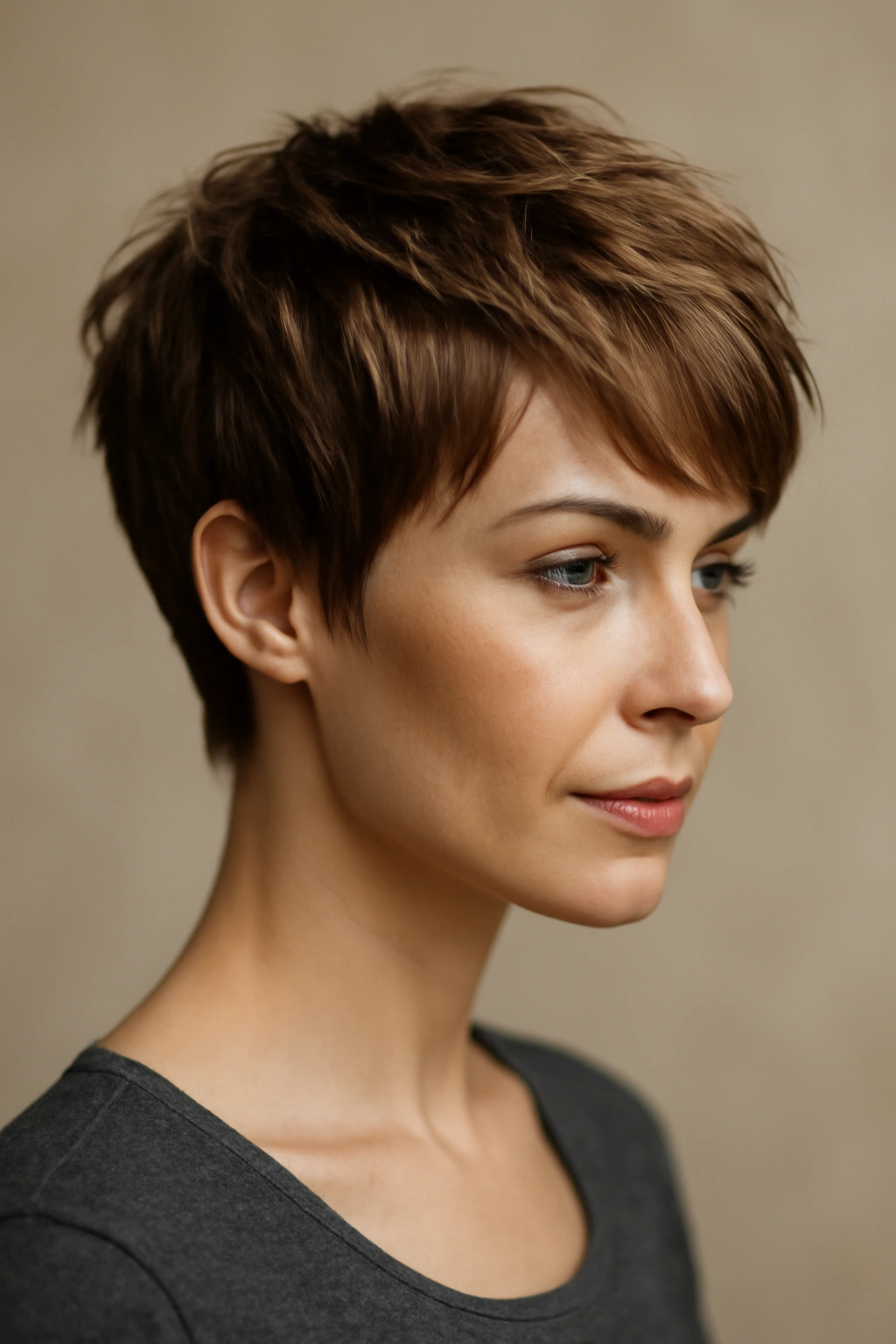
A pixie cut is short hair at its most confident, typically sitting anywhere from half an inch to two inches long on top with tapered sides. The layered variation adds movement and dimension, preventing the style from feeling flat or one-dimensional. Layers in a pixie cut create texture that works with your natural hair growth patterns, making it easier to style and more forgiving between salon visits than a blunt pixie.
The Versatility Factor
Layered pixies work because they adapt to multiple styling directions—you can slick them back for a polished appearance, style them forward with texture and volume on top, or let them sit naturally for an effortless vibe. The layers create pockets where light can play across your hair, adding visual interest that makes the short length feel intentional rather than default. This cut particularly flatters people with strong facial features, angular faces, and those willing to show off their bone structure without hair as a cushion.
Key Benefits You’ll Notice
- Styling options range from a quick finger-comb to full texture with product, depending on your mood or occasion
- The natural texture that layers provide means you’re not fighting against your hair’s growth patterns
- Requires touch-ups every 3-4 weeks to maintain definition, but the actual time commitment between visits is minimal
- Suits almost every hair texture, from fine and straight to thick and curly, though each texture requires different styling techniques
Worth knowing: A layered pixie becomes significantly easier to style if your stylist texturizes the ends through point-cutting or razoring, which creates natural separation rather than blunt density.
3. Textured Crop with Fade
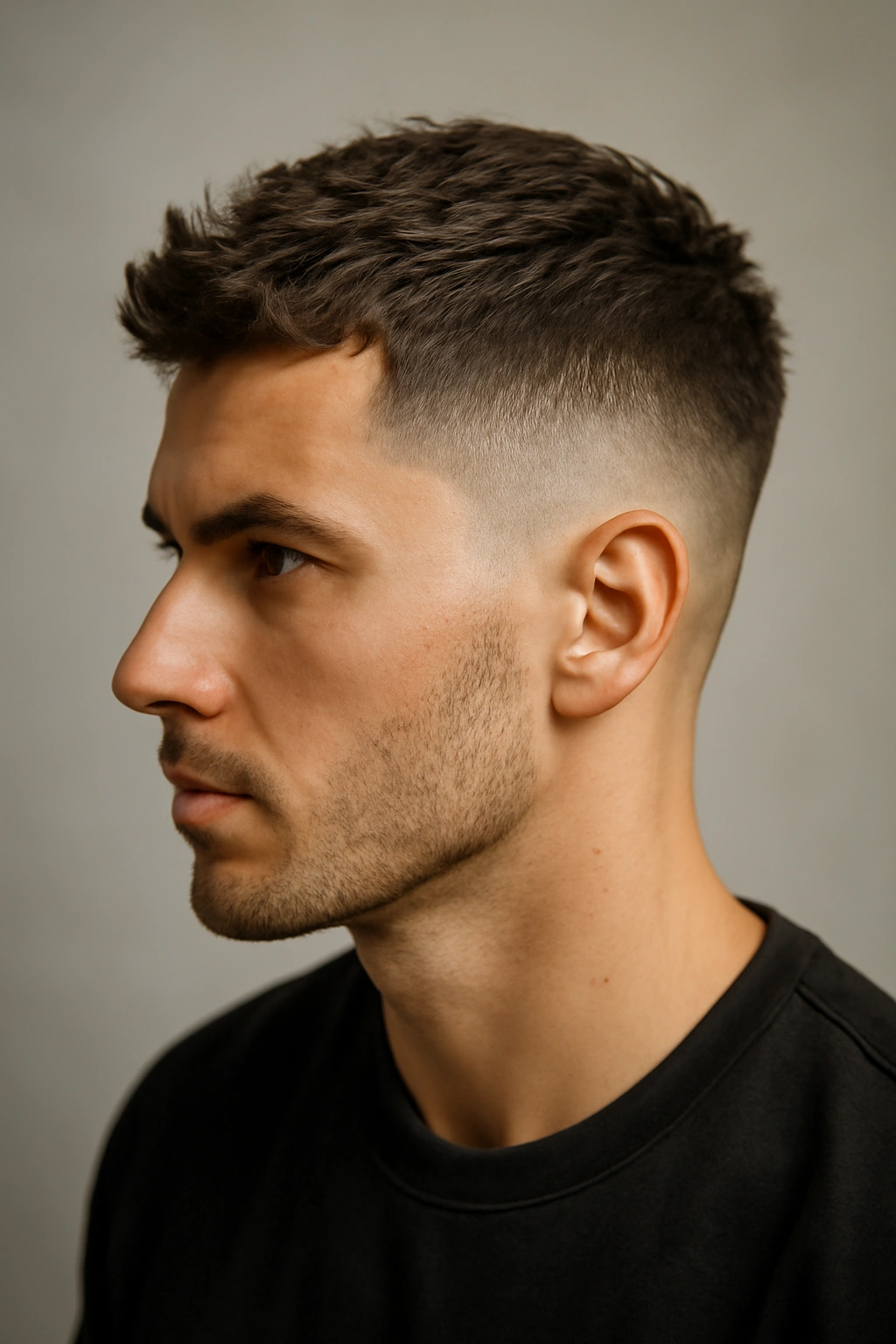
A crop cut combines slightly longer hair on top (usually 1-3 inches) with very short sides that fade gradually into skin, creating clean lines and intentional contrast. The texture on top comes from either natural waves and curls or deliberate layering and texturizing techniques that add movement and dimension. This style feels modern, groomed, and edgy without requiring a dramatic commitment or completely unconventional hair length.
Why Guys and Increasingly People of All Genders Love This
The textured crop is endlessly styleable because the texture on top gives you something to work with, while the faded sides keep everything looking intentional rather than grown-out. You can push the texture back for a slick appearance, let it sit naturally for an effortless vibe, or style it forward for maximum movement and dimension. The contrast between the textured top and faded sides creates visual interest that reads as current and intentional, not like you’ve just cut your hair short because you ran out of time for styling.
What to Expect
- The fade requires maintenance every 2-3 weeks to keep the contrast clean and defined
- Texture on top needs texturizing product (a matte clay, paste, or cream) to look intentional and separated
- Works beautifully with natural waves, curls, or straight hair that you’re willing to style deliberately
- The style is forgiving enough that slight growth between cuts doesn’t make it look neglected, unlike a blunt crop
Pro tip: Ask your stylist to texturize the top through point-cutting or razor-cutting, which creates natural separation without requiring heavy product—this means your hair looks good even on days when you don’t style it.
4. Side-Swept Pixie Bob
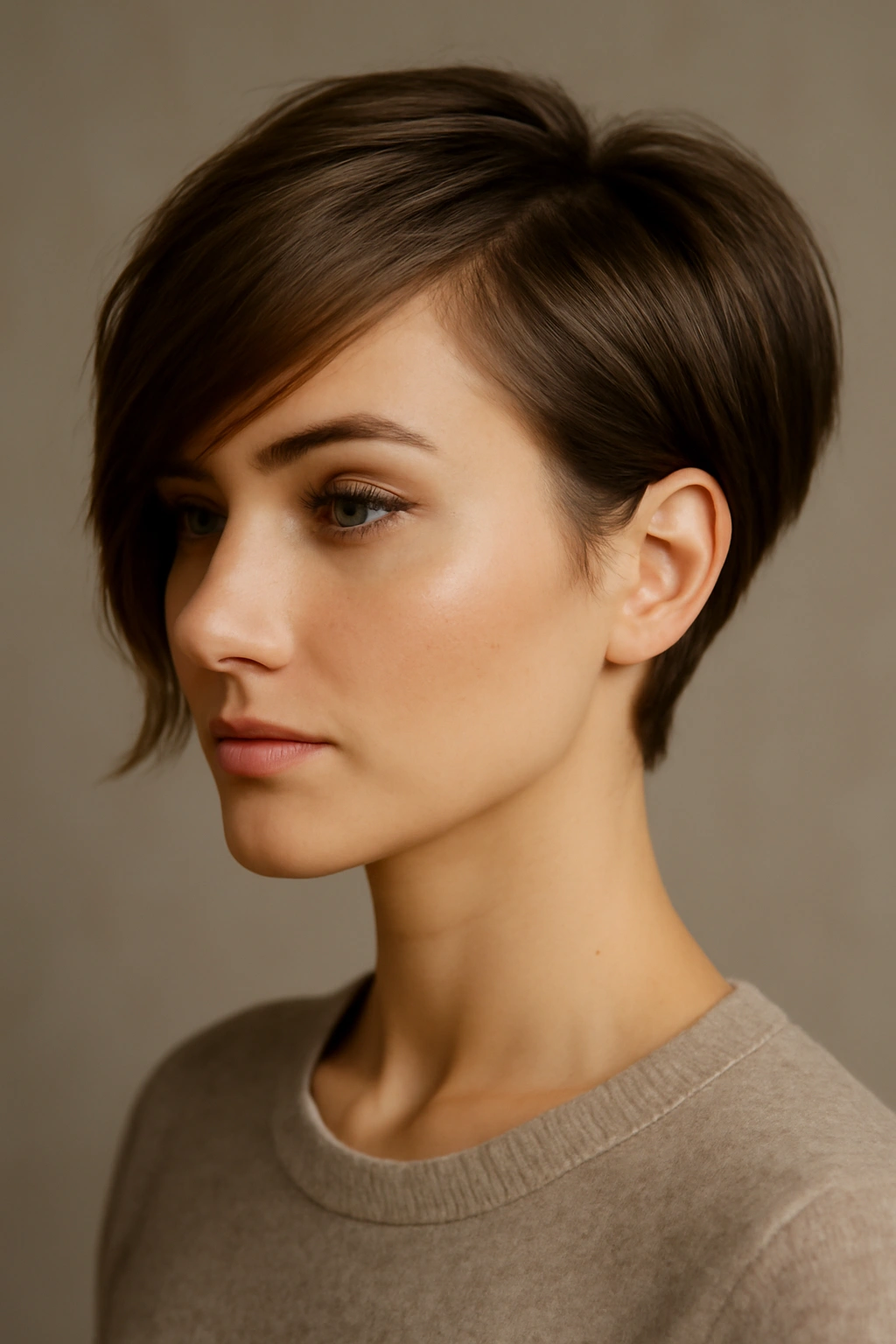
This hybrid style bridges the gap between a pixie cut and a bob, featuring longer hair on one side that sweeps across while the other side is cut shorter in pixie-like length. The side-swept element adds femininity and movement that a straight pixie doesn’t offer, while maintaining the overall short, manageable length. This style particularly flatters people who want a short cut but aren’t ready to fully commit to the severity of an even-length pixie.
The Flattery Factor
A side-swept pixie bob is one of the most flattering short cuts for people with rounder faces or softer features, because the longer side creates a visual line that lengthens and streamlines your face. The swept styling direction adds movement that prevents the style from feeling static or severe, even though technically the hair is quite short. The asymmetry itself is visually interesting and communicates style sophistication, showing that you’ve made intentional choices about how you present yourself rather than simply cutting your hair short.
Why People Keep Coming Back
- The asymmetrical length means you can style it different ways depending on your mood or occasion
- One longer side means you’re not sacrificing length entirely if you’re nervous about going short
- Works beautifully with side-parted styling or tucked behind one ear, offering versatility a blunt pixie doesn’t
- Suits people who want the ease of short hair but still want some styling options and femininity
Worth knowing: This cut requires a specific understanding of how to taper and blend the shorter side into the longer side—ask your stylist about their experience with asymmetrical cuts before booking.
5. French Girl Bob
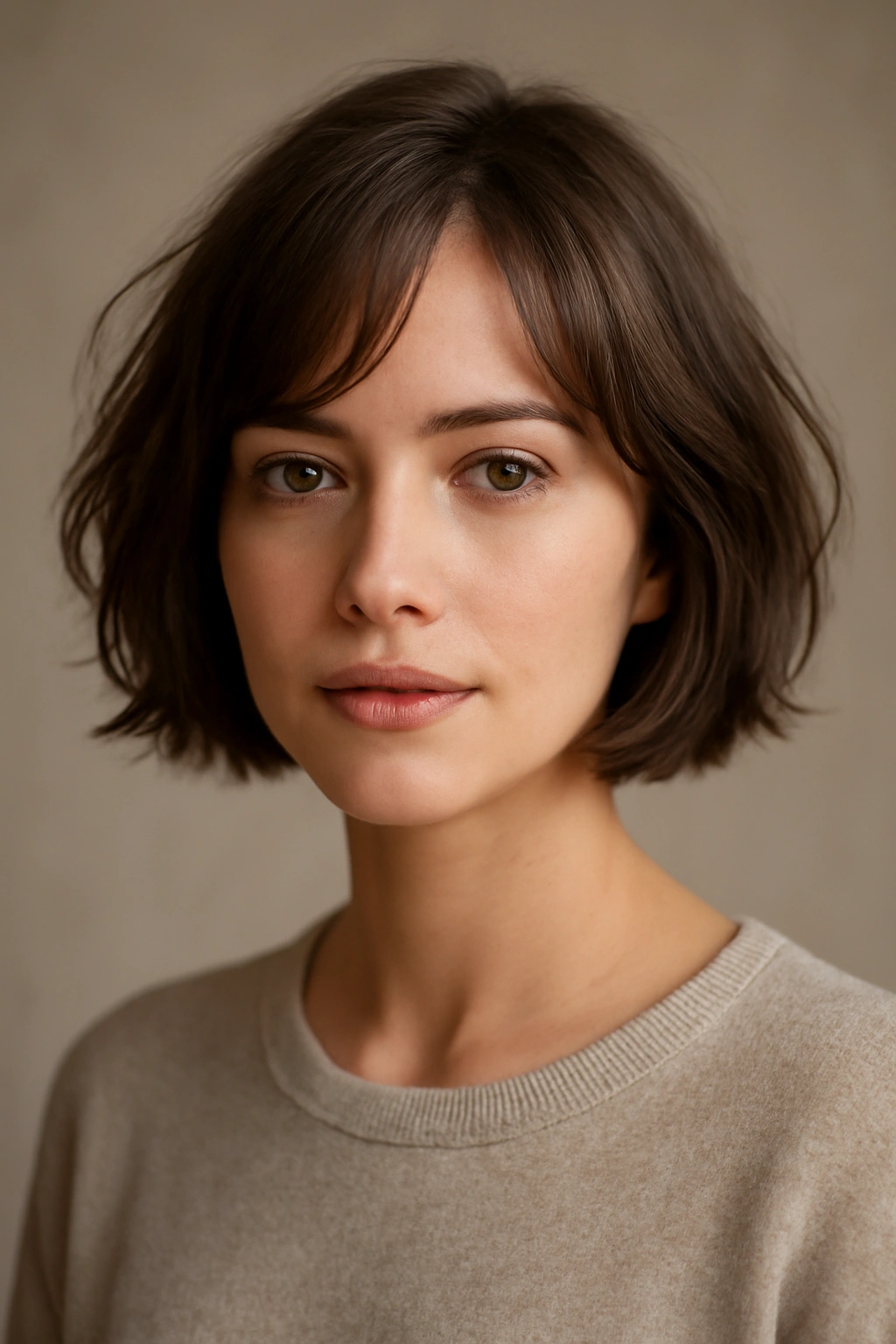
Often called a “Parisian bob,” this style is a chin-length cut with subtle layers and an intentionally undone, effortlessly chic aesthetic that somehow requires precise technique to achieve. The layers are integrated throughout rather than creating obvious separation, giving the hair a piece-y quality without looking choppy. The French girl bob is all about looking like you didn’t try too hard while clearly having invested in a great cut and maintenance.
The Effortless Elegance Appeal
The French girl bob works because it projects confidence and taste without announcing itself loudly—it’s sophisticated without feeling formal, and polished without feeling overdone. The subtle layers mean your hair moves and bounces naturally rather than falling flat or feeling heavy, which creates an illusion of thicker, fuller hair even if your hair is naturally fine. This style flatters most face shapes because the movement breaks up any heaviness while the length keeps it balanced and proportionate.
What to Understand Before Cutting
- Requires regular trims every 4-6 weeks to maintain the subtle layered structure and prevent looking shaggy
- Styling with a round brush and some texture product transforms the look from limp to luminous
- Works best with naturally straight or wavy hair; very curly hair requires a different approach to achieve the same vibe
- The “undone” appearance is actually quite deliberate and requires understanding how to style it properly
Pro tip: Using a lightweight styling cream or spray-on texture product is the secret to achieving that piece-y, effortless look—the hair should feel touchable rather than stiff with product.
6. Choppy Pixie with Texture
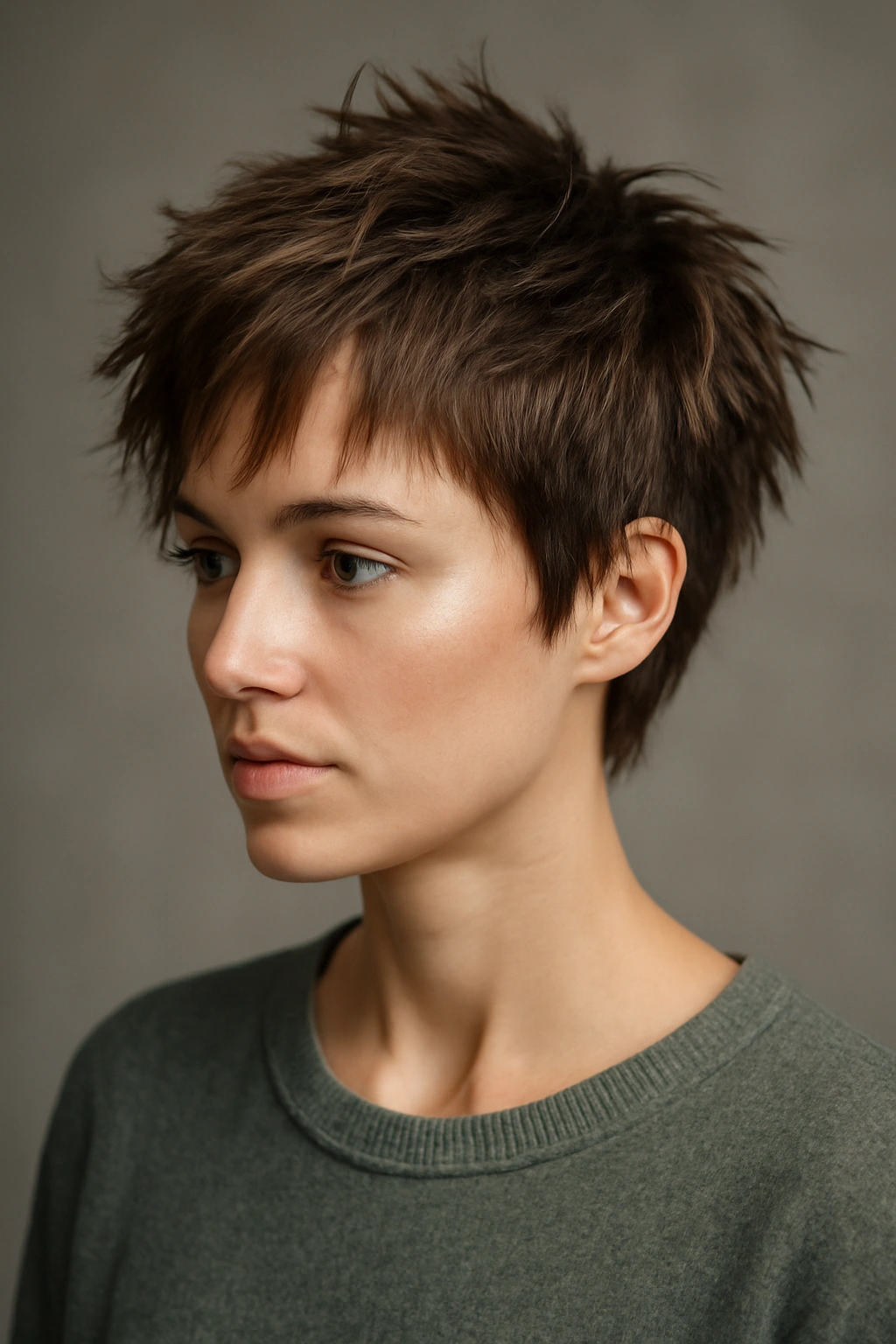
This evolution of the pixie cut features intentional layers and choppy texture throughout rather than the clean tapers of a traditional pixie, creating a style that looks modern, edgy, and deliberately undone. The choppiness isn’t about the cut being imprecise—it’s a technique where the stylist creates intentional variation in length through strategic layering. This style works beautifully with curly or wavy hair that naturally fragments and moves, or with straight hair that you’re willing to style with texture and movement.
Why This Cut Feels so Contemporary
A choppy pixie signals that you’re confident enough to embrace imperfection and texture rather than chasing sleek precision, making it feel inherently modern and somewhat rebellious. The varied lengths throughout the cut catch light differently, creating dimension that makes even fine hair look fuller and more textured than it is. Because no two sections are exactly the same length, the style actually forgives slight growth and styling imprecision better than a blunt pixie, which means it looks intentional longer between cuts.
The Practical Reality
- Requires styling with matte product to achieve the choppy, textured appearance—this isn’t a wash-and-go style
- The varied lengths mean hair falls in different directions, which some people find liberating and others find chaotic
- Works exceptionally well with naturally curly or wavy hair, but straight hair needs styling commitment to shine
- The choppiness creates movement that frames your face and can actually soften angular features despite the edgy aesthetic
Worth knowing: If you have straight hair, ask your stylist about texturizing products specifically and styling techniques that will help you achieve the look—otherwise you might feel disappointed on days when you don’t style it.
7. Sleek Low Bun (Short Hair Version)
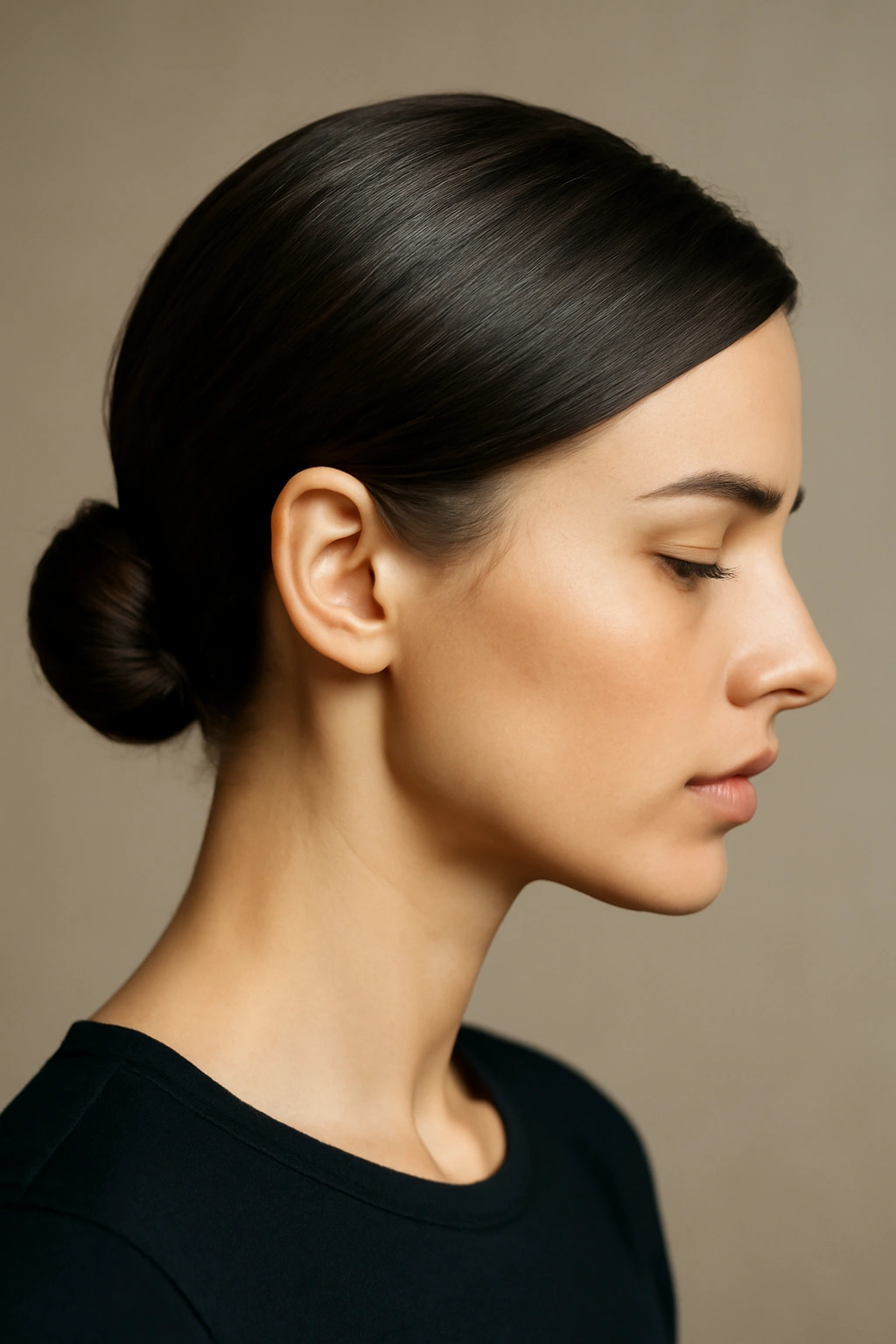
While buns are typically associated with longer hair, a sleek low bun on short hair is entirely possible when your hair is roughly chin-length or slightly shorter, creating a polished, elegant style that’s perfect for formal occasions or when you want to change up the look without cutting more. The “short hair bun” works by using creative styling and sometimes a small hair donut to create the illusion of more volume and texture.
The Transformation Potential
What’s brilliant about a short-hair bun is that it completely transforms your appearance from your usual style while maintaining the practicality of short hair—you’re getting variety without needing multiple cuts. The low, sleek styling creates a frame around your face that emphasizes cheekbones and eyes, making it especially flattering for special occasions or professional events. Because you’re pulling hair back, it creates an elongated line that can balance rounder face shapes and creates an inherently sophisticated appearance.
Making It Work
- Requires styling products (pomade or strong-hold gel) to achieve the sleek smoothness without flyaways
- Works best on second or third-day hair when texture helps hold the style rather than freshly washed hair
- A small elastic or decorative bobby pins keep everything in place, and a hair net underneath adds invisible support
- Creates an entirely different look from your usual style while still giving you the ease of short hair when you take it down
Pro tip: A low ponytail is often easier to achieve with shorter hair than a full bun—and it offers the same sophisticated, polished appearance for formal occasions while being easier to create.
8. Textured Shag Cut
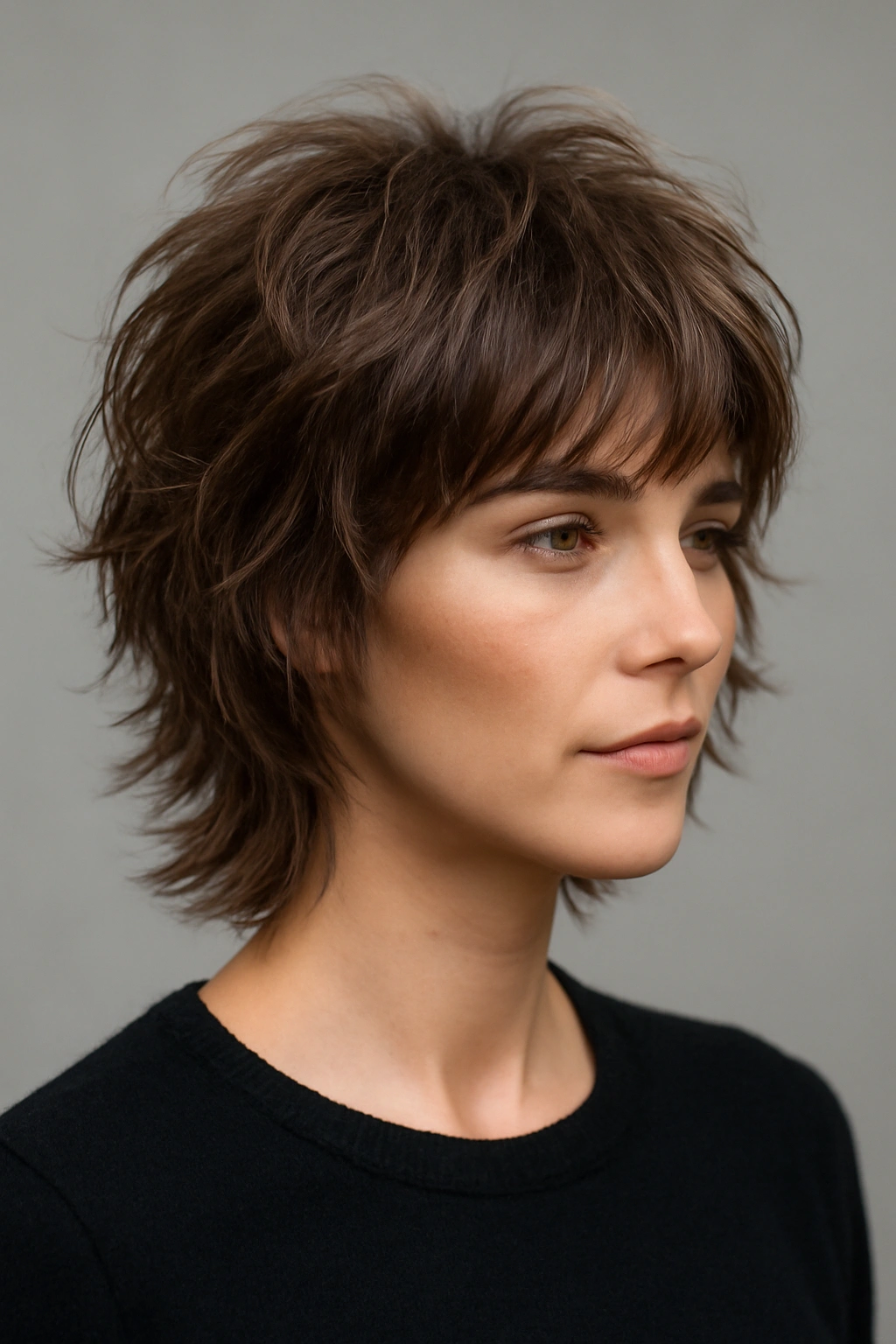
A shag cut is a layered, textured style that combines shorter length in front with slightly longer layers throughout, creating movement and dimension that reads as both effortless and intentional. The shag has experienced a significant resurgence because it works beautifully with modern styling techniques and flatters various face shapes through its strategic layering. Unlike the 1970s shags of the past, contemporary shag cuts feature more refined proportions and are texturized throughout rather than creating heavy, obvious layers.
The Movement Factor
A shag cut is defined by its texture and movement—every layer is texturized through point-cutting or razor techniques, creating separation and bounce that feels dynamic and alive. The layering structure means your hair moves independently rather than as one solid mass, which creates an illusion of volume and movement even on fine or thin hair. This style is particularly flattering for people who want personality and texture in their hair without committing to a pixie, and it works across multiple hair textures from straight to curly.
Understanding the Commitment
- Requires regular texture-building product (matte clay, paste, or styling cream) to achieve the intentional, separated look
- Works best on hair that’s been specifically cut and texturized by a stylist who understands modern shag techniques
- Needs trimming every 6-8 weeks to maintain the textured appearance and prevent looking shaggy in a unkempt way
- The styling is part of the style—this isn’t a wash-and-go cut unless you have naturally textured or curly hair
Worth knowing: A shag cut with natural curls or waves is dramatically easier to style than a shag cut with straight hair, because the texture and movement happen naturally rather than requiring product styling daily.
9. Blunt Fringe with Short Hair
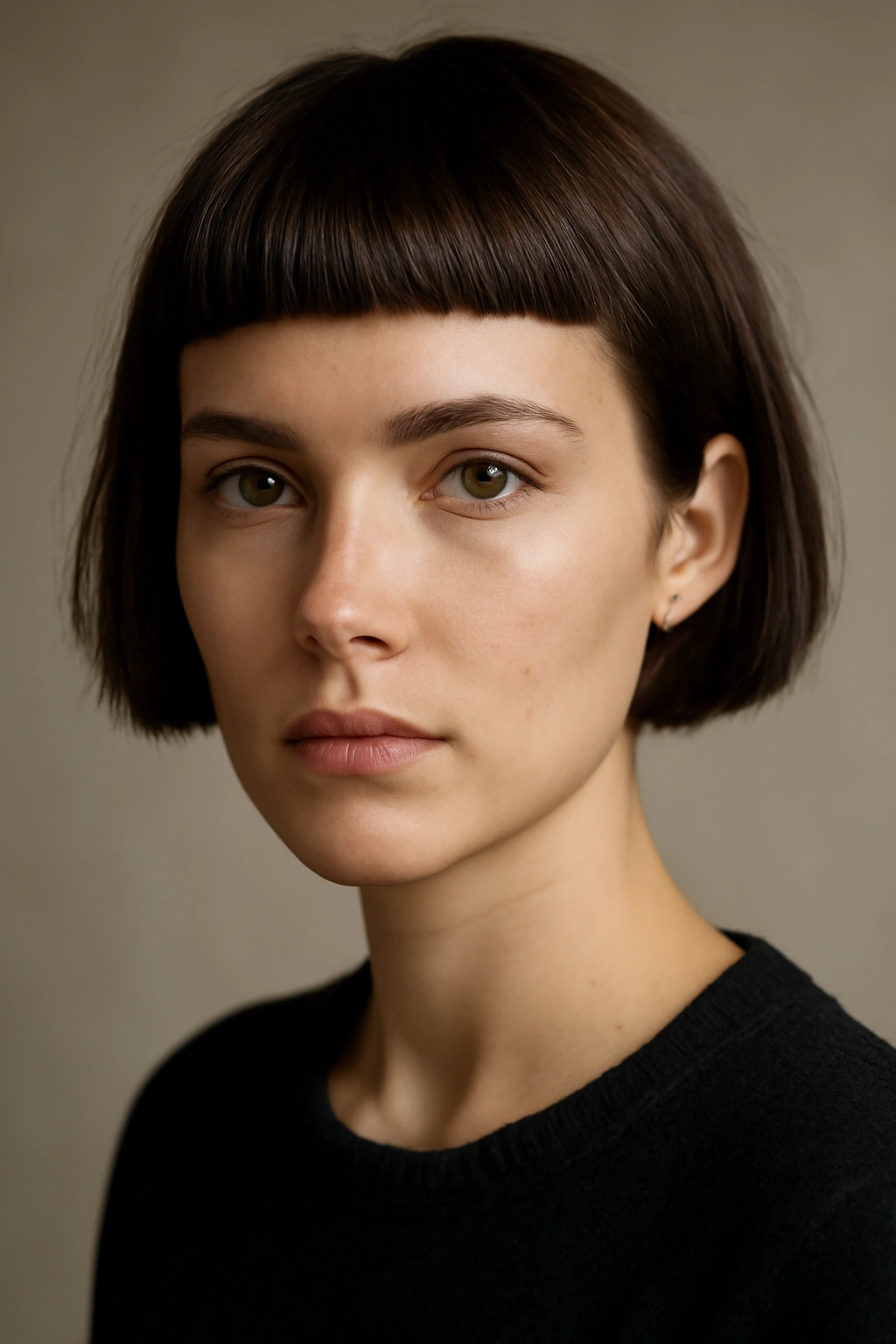
A blunt fringe (full bangs that sit just above the eyebrows with a precise, blunt edge) paired with short hair creates a graphic, intentional look that’s deeply flattering and incredibly stylish. The blunt fringe frames your eyes and face in a way that draws attention upward, making your eyes feel bigger and your features feel more defined. Paired with short hair, this style reads as confident, deliberate, and contemporary.
The Face-Framing Magic
A blunt fringe works because it creates a horizontal line that divides your face, emphasizing the upper portion and drawing attention to your eyes, brows, and upper cheekbones. This framing effect is particularly flattering for people with longer face shapes, as it breaks up vertical lines and creates balance. The blunt precision of the fringe contrasts beautifully with textured or layered short hair, creating visual interest and intentionality that feels modern and put-together.
What You Should Know
- Requires professional cutting and regular trims every 2-3 weeks to maintain the blunt edge—grow-out is visible and blunt quickly looks shaggy
- Works best with hair that’s either naturally straight or that you’re willing to blow-dry smooth daily
- Pairs beautifully with bobs, pixies, crops, and other short styles, though requires coordination between fringe and rest of cut
- The blunt fringe is dramatic enough that it changes your overall appearance significantly, so consider whether you’re ready for that statement
Pro tip: A slightly heavier blunt fringe (one that’s thicker rather than wispy) is more forgiving when you’re between salon visits, as it maintains the graphic appearance slightly longer than a thin, delicate fringe.
10. Rounded Bob with Texture
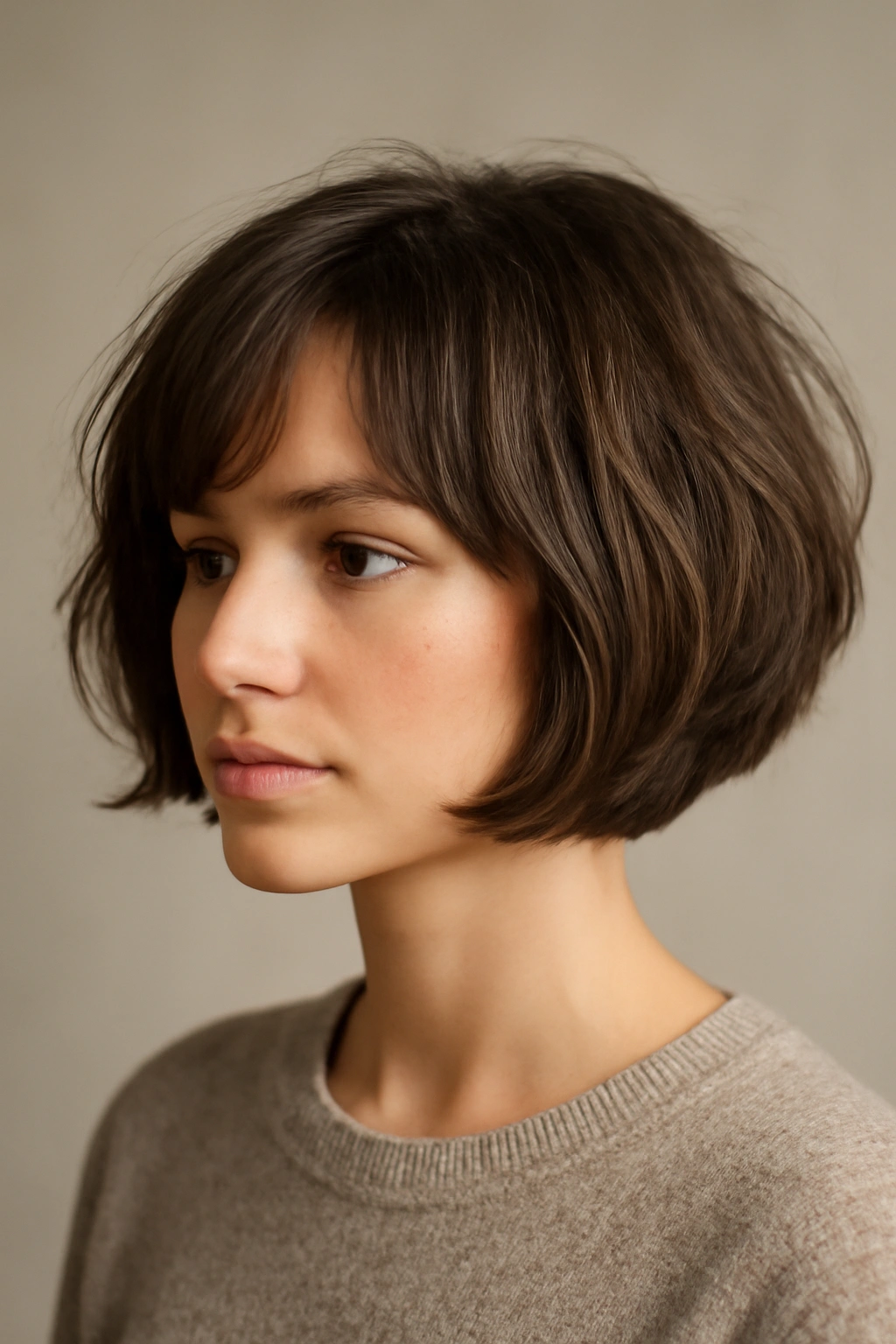
A rounded bob (also called a “cloud bob” or “bulbous bob”) features length roughly at the chin with rounded, soft proportions created through layering and texturizing rather than blunt precision. The layers create movement and softness that prevents the bob from feeling heavy or severe, while the rounded shape itself is inherently flattering because it mirrors the natural curves of the face. This style works across face shapes and hair textures, adapting itself to whatever you’re working with.
The Universal Flattery Appeal
A rounded bob works because it combines the sophistication of a structured cut with the softness and movement of layered texture, creating something that feels both polished and approachable. The rounded proportions are psychologically flattering because curves are associated with youth and softness, which unconsciously influences how people perceive the overall look. The layers mean your hair moves and bounces rather than staying static, which creates an illusion of volume and vitality.
Making It Your Own
- Requires texturizing product to achieve the intentional separated look, though can look soft and natural with lighter product application
- Works beautifully with wavy or curly hair that naturally has movement, or with straight hair that you’re willing to style with product
- The rounded shape suits most face shapes when customized by a skilled stylist to work with your proportions
- Requires trimming every 4-6 weeks to maintain the rounded shape and prevent looking shaggy
Worth knowing: Ask your stylist about the angle of the layers—a stylist who understands how to cut rounded bobs will layer in a way that creates soft movement rather than choppy separation.
11. Undercut Pixie (Short Sides, Longer Top)
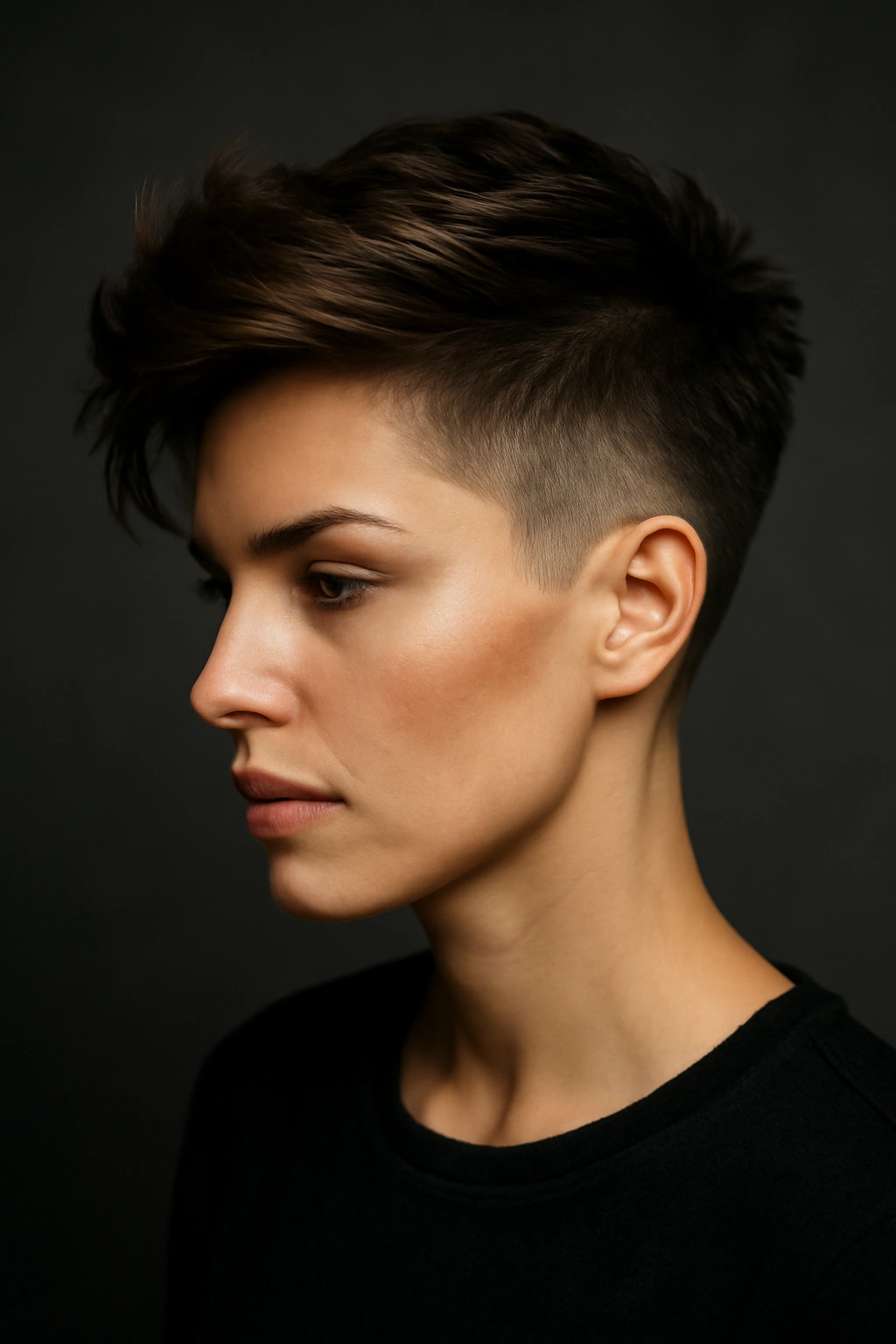
An undercut pixie combines very short, closely shaved or buzzed sides (often a 1 or 2 on the clipper scale) with longer hair on top that can range from an inch to several inches. The dramatic contrast between the shaved sides and longer top creates a bold, edgy aesthetic that reads as intentional and confident. This style is particularly striking and allows for styling versatility—you can slick the top back, style it forward, or create volume and texture depending on your mood.
The Bold Statement Factor
An undercut pixie is not a subtle style—it announces that you’re confident in your appearance and willing to make a visual statement. The shaved sides expose your ear, the shape of your head, and your neck, which creates an inherently confident and somewhat rebellious appearance. This style works exceptionally well for people with strong facial features, angular faces, or those who simply want to project confidence and style through their hair.
What’s Involved
- Requires maintenance every 2-3 weeks to keep the sides closely shaved or buzzed and prevent looking grown-out
- The longer top needs regular trims to maintain the length and shape you prefer, typically every 4-6 weeks
- Styling product is often necessary to achieve the intentional look you want on the longer top section
- Works beautifully with natural texture or waves on top, which creates contrast with the sleek shaved sides
Pro tip: The length of hair you keep on top should be proportionate to your face shape—generally, longer on top (2-3 inches) works better on larger or rounder faces, while shorter on top (1-2 inches) can work on all faces but particularly complements angular or smaller faces.
12. Curly Pixie (Natural Curls)
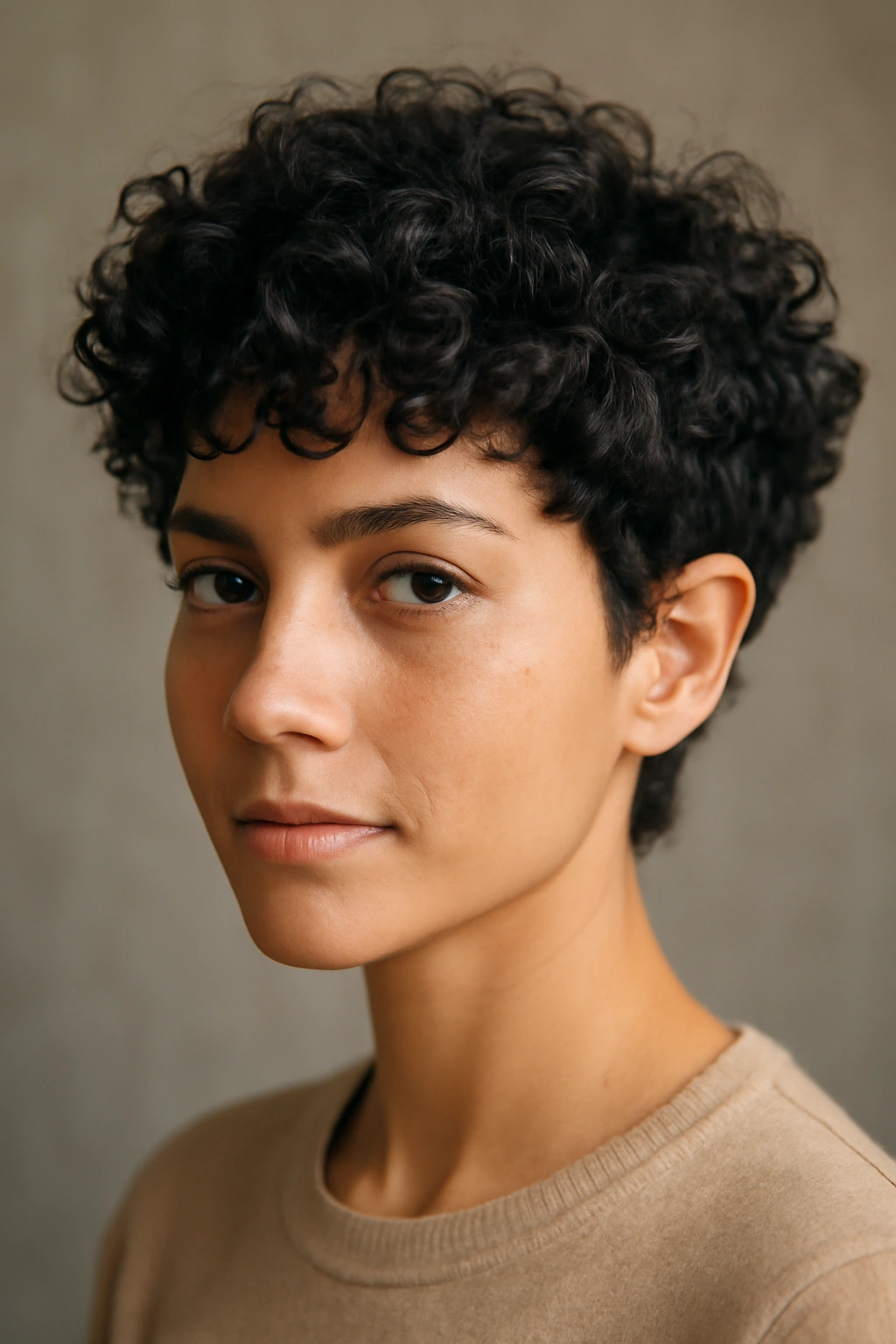
For people with naturally curly or coily hair, a pixie cut showcases your natural texture beautifully while eliminating length that can weigh curls down and make them look less defined. A curly pixie cut is typically cut on dry hair to account for shrinkage, with layers that enhance natural curl definition and movement rather than fighting against your texture. This style celebrates your natural hair rather than requiring you to blow it straight or apply heat styling.
Embracing Your Natural Texture
A curly pixie is profoundly liberating because it requires far less styling time and heat damage than longer curly hair—you can literally wake up and your hair is styled. The layers create separation and definition that makes curls appear springier and more dimensional, and the short length means curls have natural lift and movement. This style reads as confident and self-assured, celebrating rather than concealing your natural texture.
The Practical Benefits
- Requires significantly less time for styling compared to longer curly hair, often just finger-combing and applying curl product
- Heat styling is essentially eliminated, which means healthier hair and faster morning routines
- Layers should be cut dry on curly hair to account for shrinkage, so work with a stylist who specializes in curly cuts
- Regular trims every 4-6 weeks maintain the definition and prevent curls from looking shapeless or overgrown
Worth knowing: A curly pixie might look quite different from how it appears in inspiration photos or straight-haired versions—this is actually fantastic because your curls will be their most beautiful, defined selves.
13. Sleek and Straight Bob (Blowout Style)
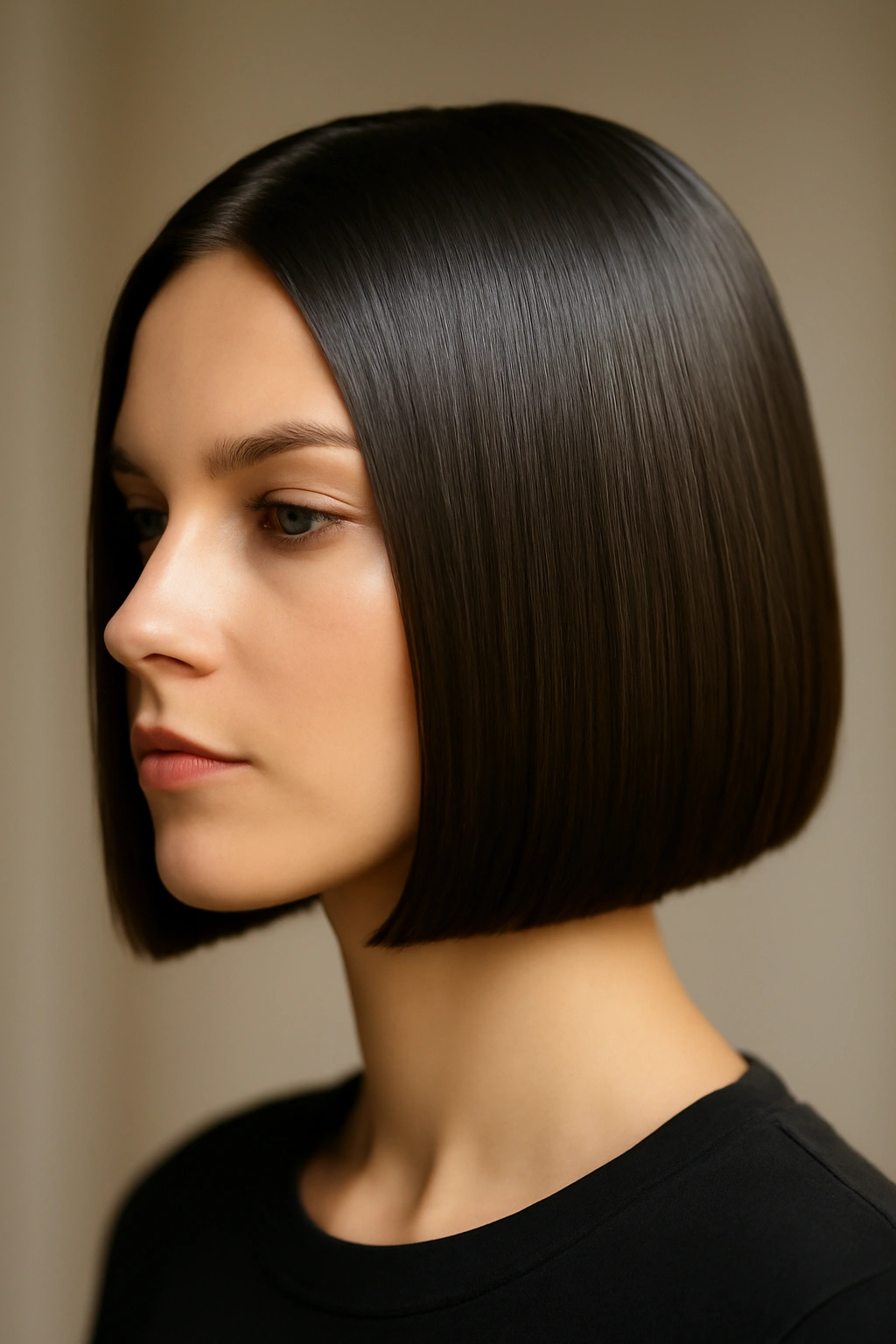
A sleek, straight bob is a polished, sophisticated style where the hair is cut to a precise length (typically chin-length) and styled completely straight through blow-drying and straightening iron work. This style creates clean lines and a streamlined appearance that reads as expensive, intentional, and high-maintenance in the best way. The sleekness of the styling emphasizes cheekbones and jawline while creating an inherently sophisticated aesthetic.
The Power of Precision Styling
A sleek straight bob is a style where the cut and the styling are equally important—without regular blow-drying and straightening, the same cut looks entirely different. The sleekness creates an almost architectural quality, with clean lines that frame your face and emphasize your features. This style is particularly flattering for people who want a polished, high-fashion appearance and are willing to invest time in styling.
Understanding the Commitment
- Requires blow-drying and typically flat-iron work to achieve the sleek appearance several times per week minimum
- Heat styling is a key part of maintaining the style, which means you need quality heat-protectant products and professional-grade tools
- Regular trims every 4-6 weeks maintain the precise cut and blunt edges
- Works best with hair that can tolerate regular heat styling without becoming damaged or dry
Pro tip: A professional blowout service once weekly combined with your own styling at home is often easier than trying to perfect the style yourself—the investment in professional help often makes the whole process feel less overwhelming.
14. Tapered Fade with Textured Curls on Top
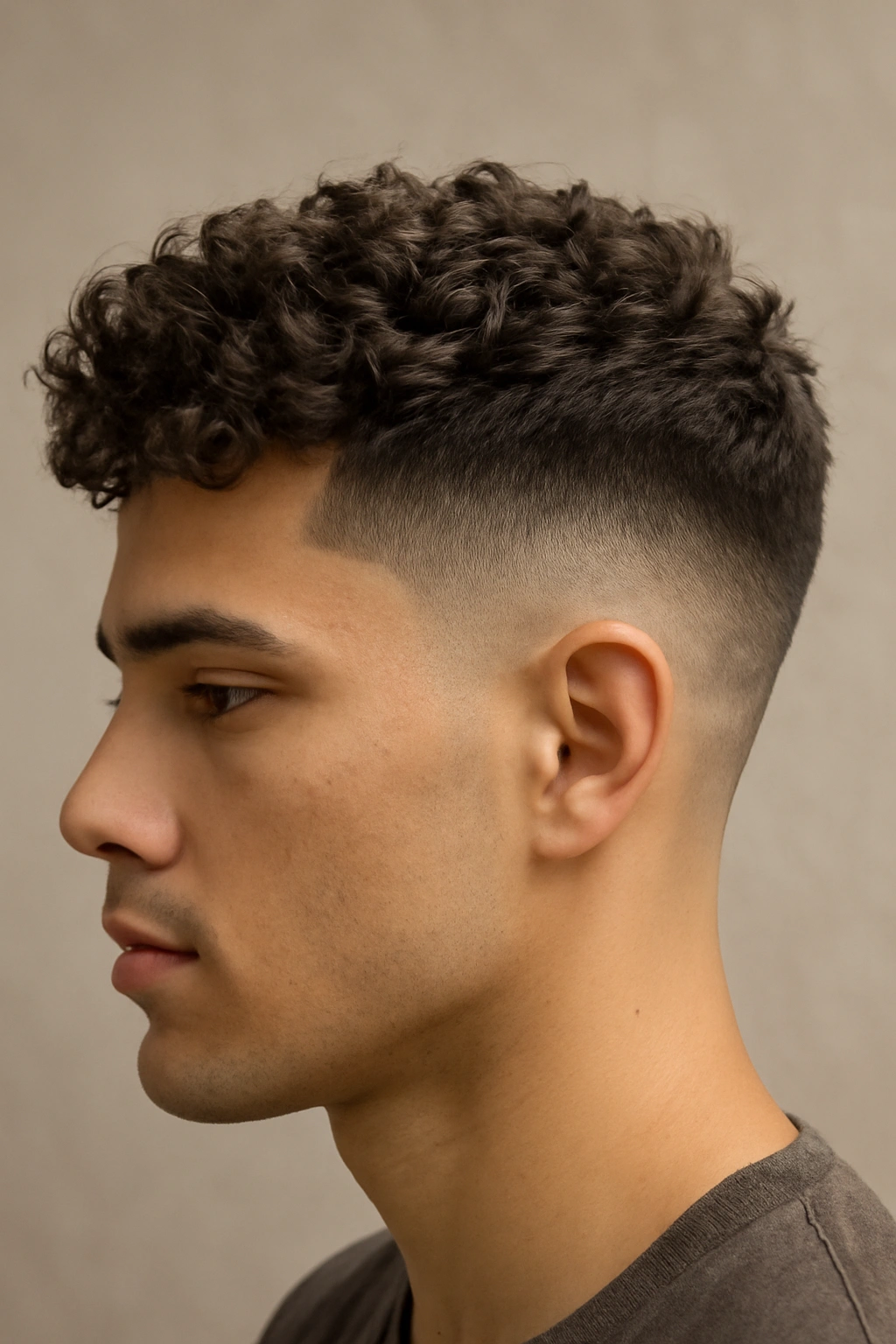
This style combines very short, faded sides that graduate from near-buzzed length up into slightly longer hair on top that’s curly or textured, creating visual contrast and intentionality. The fade creates a clean, groomed appearance while the curly top adds personality and movement. This is a modern, versatile style that works across genders and reads as contemporary, confident, and intentional.
The Contrast Appeal
The beauty of a fade with curly textured top is the inherent contrast—the clean, sculptural sides paired with textured, personality-filled curls on top create visual balance and interest. The fade is essentially a professional grooming element that keeps the style from looking overgrown, while the curls provide the personality and texture. This combination reads as both put-together and effortlessly cool.
Styling and Maintenance
- The fade requires touch-ups every 2-3 weeks to maintain the clean contrast as hair grows
- The curly top needs regular conditioning and moisture to maintain definition, particularly if you’re using products to enhance or define curls
- Styling the curly top typically involves applying curl product while hair is damp, then allowing it to air-dry or diffusing with a blow dryer
- This style works beautifully with natural curls of any tightness, from loose waves to tight coils
Worth knowing: If you have very tight coils or curls, work with a barber or stylist who specializes in cutting curly and coily hair—the cutting technique needs to account for texture and shrinkage.
15. Side-Parted Asymmetrical Bob
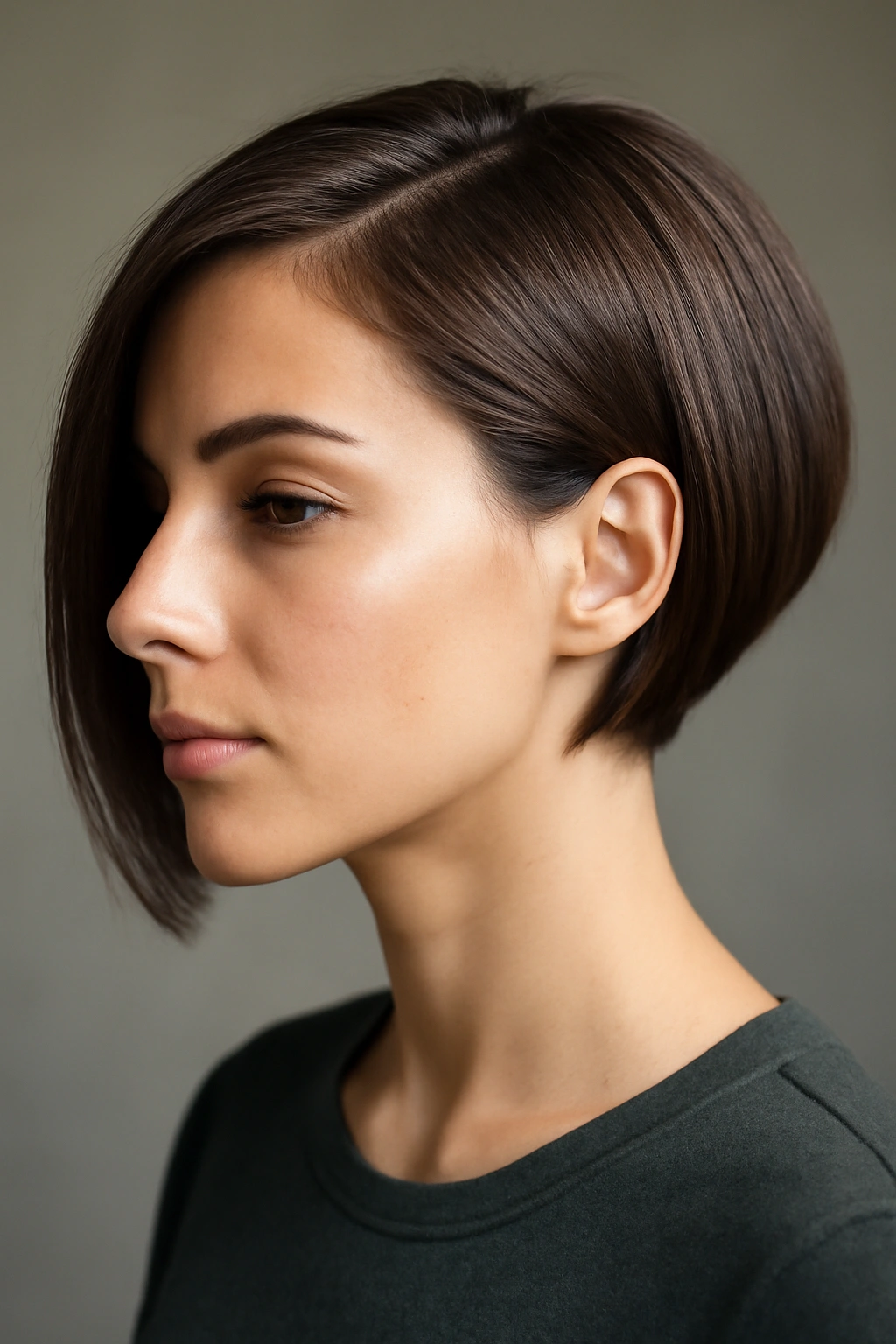
An asymmetrical bob features one side noticeably longer than the other (sometimes significantly longer), creating a dramatic diagonal line across the head that’s both visually interesting and flattering. The longer side typically frames the face while the shorter side exposes your ear and neck, creating a confident, intentional look. The side-parted styling emphasizes the asymmetry and creates an elegant, somewhat editorial aesthetic.
The Face-Flattering Geometry
An asymmetrical bob works because the diagonal line is inherently flattering—it lengthens the face and creates visual interest that draws attention to your cheekbones and jawline. The longer side can be styled forward to frame your face, while the shorter side can be tucked behind your ear or styled back, offering styling versatility that a blunt bob doesn’t provide. The asymmetry itself communicates style and intention, showing that you’ve made deliberate choices about your appearance.
What to Consider
- Requires a skilled stylist who understands how to cut asymmetrical angles in a way that actually flatters your face and proportions
- Styling the longer side forward and shorter side back is the most flattering direction for most face shapes, though you can experiment
- Regular trims every 4-6 weeks maintain the asymmetrical angle and prevent one side from growing out of proportion
- The cut works best on straight or wavy hair where the asymmetry is clearly visible; very curly hair might obscure the intentional angle
Pro tip: An asymmetrical bob often pairs beautifully with a darker shade on the shorter side and lighter or colored pieces on the longer side, creating additional dimension and interest.
16. Short Mullet (Modern Interpretation)
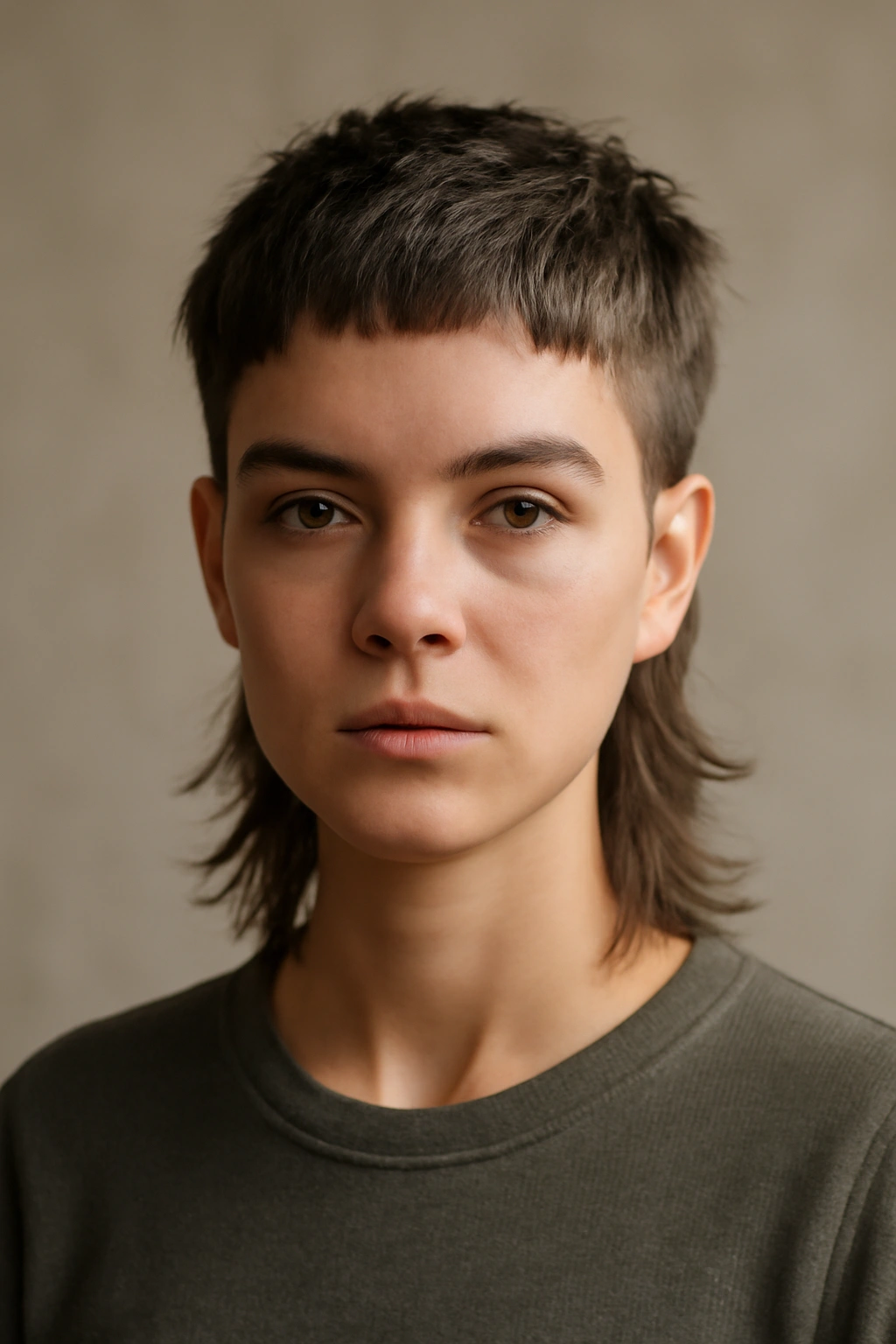
A modern mullet is a style featuring shorter, textured hair on the sides and top with longer layers in the back that extend below the shorter sections—but with contemporary proportions that feel intentional rather than retro. The modern mullet isn’t trying to be a 1980s mullet; instead, it’s a deliberately edgy, fashion-forward style that plays with proportion and layers. This style suits people confident in making a statement and willing to embrace something unconventional.
The Contemporary Edge
A modern mullet works because the proportion is refined and the texturing is intentional—it reads as fashion-forward and edgy rather than dated or nostalgic. The contrast between the shorter sides and longer back creates visual interest, and the layering throughout prevents the style from looking heavy in the back. This is a style that requires the right attitude and confidence, but it absolutely commands attention and reads as fashion-aware.
Making It Work
- Requires a stylist experienced in modern mullet proportions who can create intentional contrast without looking dated
- The longer back sections need regular trims to maintain the intentional length and prevent looking overgrown
- Texturizing throughout the cut is essential to prevent the style from looking heavy or costume-like
- This is a statement style, so consider whether you’re ready for the attention and conversation it will inevitably generate
Worth knowing: A modern mullet works best as a style choice you’re making because you genuinely love it, not because you’re trying it ironically—the confidence and intention are what make it work.
17. Rounded Pixie with Side-Swept Styling
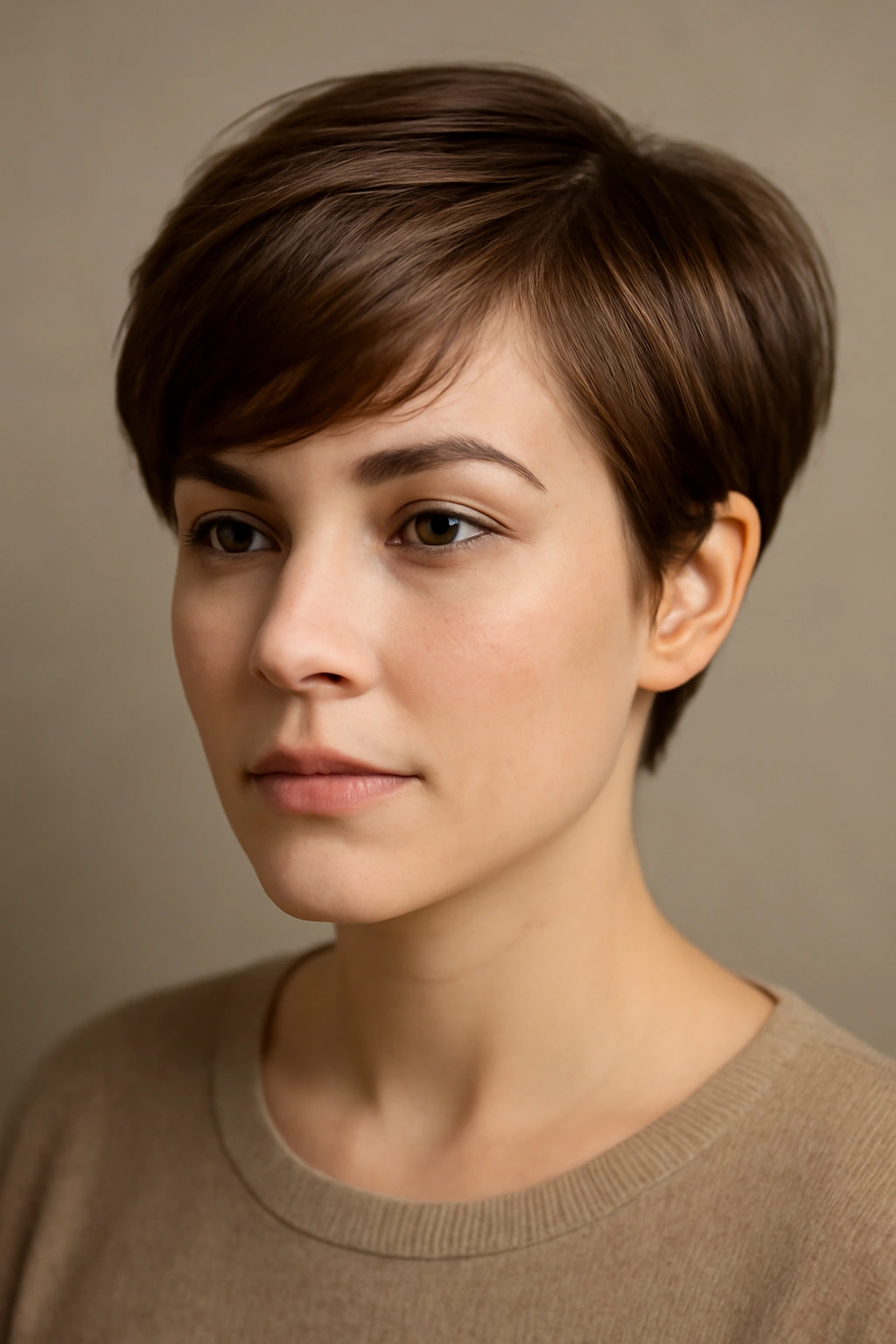
This variation of the pixie cut features overall short length with rounded, soft proportions created through strategic layering, paired with styling that sweeps hair to one side rather than standing straight up. The side-swept styling adds femininity and softness that a traditional pixie can sometimes feel too stark to project. This style works beautifully for people who want the practicality of a pixie cut but prefer a softer, less severe aesthetic.
The Softness Factor
A rounded pixie with side-swept styling reads as more approachable and feminine than a blunt or choppy pixie, while maintaining all the practical benefits of short hair. The rounded proportions created through careful layering prevent the style from feeling too angular or severe, while the side-swept styling direction adds movement and grace. The combination is sophisticated without being severe, confident without being aggressive.
Styling and Maintenance
- Requires regular styling with product to achieve the intentional side-swept appearance, though can look softer and more natural with lighter product
- Works beautifully with naturally wavy or curly hair, or straight hair that you’re willing to style deliberately
- The rounded shape suits most face shapes and features softer proportions than a traditional blunt pixie
- Requires trims every 4-6 weeks to maintain the rounded shape and prevent looking shaggy
Pro tip: A side-swept pixie benefits from slightly longer hair on the side you’re sweeping it toward, which gives the styling direction more material to work with and creates a more polished, intentional appearance.
18. Buzzed Sides with Styled Top (Modern Quiff)
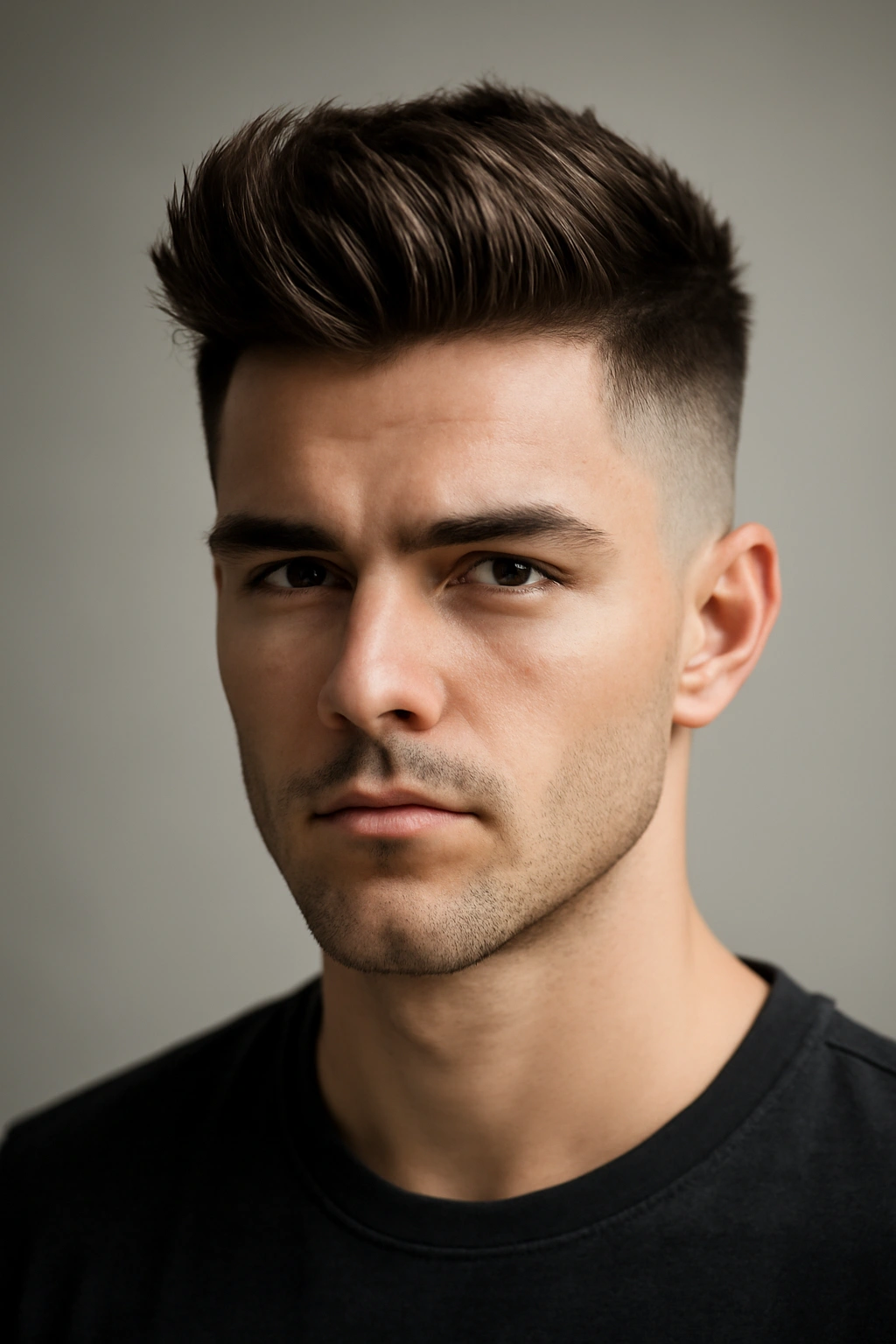
This style features buzzed or very closely shaved sides combined with slightly longer hair on top that’s styled into a quiff—essentially an undercut paired with deliberate styling that creates lift and volume on top. The quiff styling includes blow-drying the top back and up while the sides remain smooth and defined, creating a polished, groomed appearance. This style reads as contemporary and intentional, requiring both a good cut and regular styling commitment.
The Groomed Aesthetic
A modern quiff works because the contrast between the closely groomed sides and voluminous top creates visual impact and sophistication. The lift in the quiff makes your face appear longer and more angular, while the overall clean, groomed appearance reads as intentional and high-maintenance (in the good way). This style suits people who want to look polished and deliberate while maintaining the practicality of short sides.
What’s Required
- The top needs regular blow-drying and typically pomade or styling cream to maintain the quiff styling
- The buzzed sides require maintenance every 2-3 weeks to keep the contrast clean and defined
- This is a style where you must be willing to style it regularly—it won’t look intentional without daily styling commitment
- Works best on straight or wavy hair that can hold styling with product and blow-drying
Worth knowing: A quality pomade or styling cream is essential for this look—drugstore products often feel sticky or heavy, while professional-grade products offer better hold with a more natural finish.
19. Feathered Layers Throughout (Short Version)
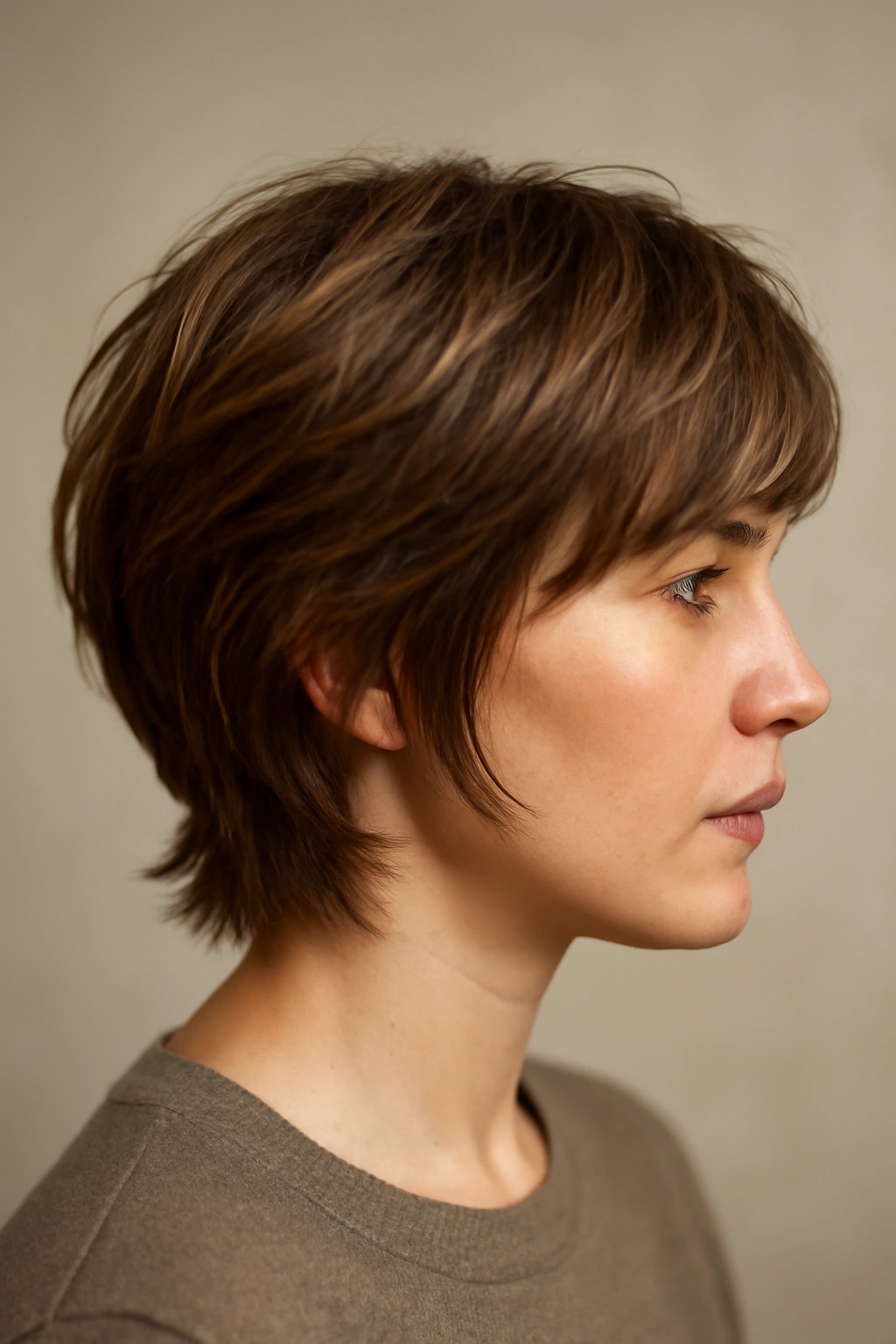
Feathered layers are achieved by cutting strategically shorter layers throughout the hair that create movement and texture without creating obvious choppy separation—instead, the layers blend together to create a soft, piece-y, feathered appearance. On short hair, feathered layers prevent the style from feeling blunt or heavy while adding tons of movement and dimension. This style reads as soft, approachable, and inherently flattering across multiple face shapes.
The Movement and Dimension
Feathered layers work because they create texture and movement that makes even fine hair appear fuller and more voluminous. The layers blend together rather than creating obvious separation, which prevents the style from looking choppy—instead, it looks intentionally textured and piece-y. The softness of feathered layers makes the overall appearance more approachable and accessible while still being intentional and well-cut.
Understanding the Cut
- Requires a stylist who understands feathering technique—this is different from choppy or blunt layering and creates a softer effect
- Works beautifully across hair textures, from straight to curly, though the styling and appearance differ
- Layers throughout create natural texture that can look good with minimal styling or can be enhanced with product for more intentionality
- Requires regular trims every 4-6 weeks to maintain the feathered appearance and prevent looking shaggy
Pro tip: Feathered layers combined with a text-building product like matte clay or mousse creates an effortlessly textured look that’s easier to achieve than with shorter, choppier layers.
20. Textured Lob (Longer Short Hair)
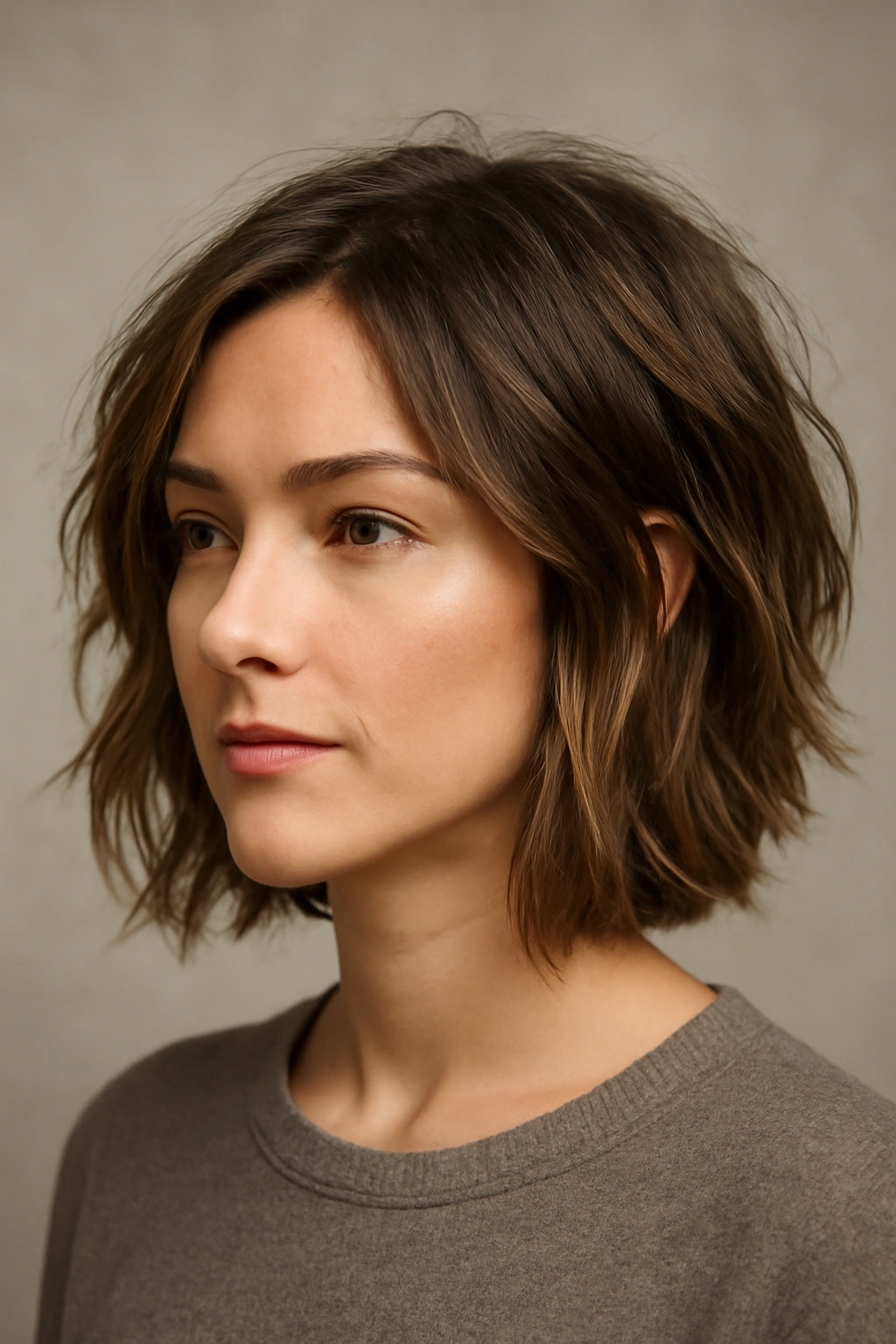
A textured lob sits at that in-between length—typically chin-length to just below the chin with layers that create texture and movement throughout. A textured lob gives you some of the styling options of longer hair while maintaining the ease and practicality of short hair. This style is perfect for people who are nervous about going too short or want a transitional length while maintaining a fashion-forward appearance.
The Best of Both Worlds
A textured lob works because it’s long enough to offer styling variety (you can clip it back, curl it, straighten it) while short enough to be practical and lower-maintenance than longer hair. The layering creates movement and dimension that prevents it from feeling heavy or dated, while the length allows you to show off some styling skill or personality. The textured lob is incredibly flattering because the movement and layers work across most face shapes.
Styling Flexibility
- Offers more styling options than a true short cut—you can blow-dry it straight, curl it, or create texture with product
- Requires regular trims every 4-6 weeks to maintain the layered, textured appearance and prevent looking overgrown
- Works beautifully with naturally wavy or curly hair, or straight hair that you’re willing to style deliberately
- The in-between length makes it perfect for people nervous about fully committing to short hair
Worth knowing: A textured lob looks significantly better with intentional styling or styling product than a blunt lob—the texture is what prevents it from feeling heavy or dated.
21. Sleek Taper with Sculpted Top
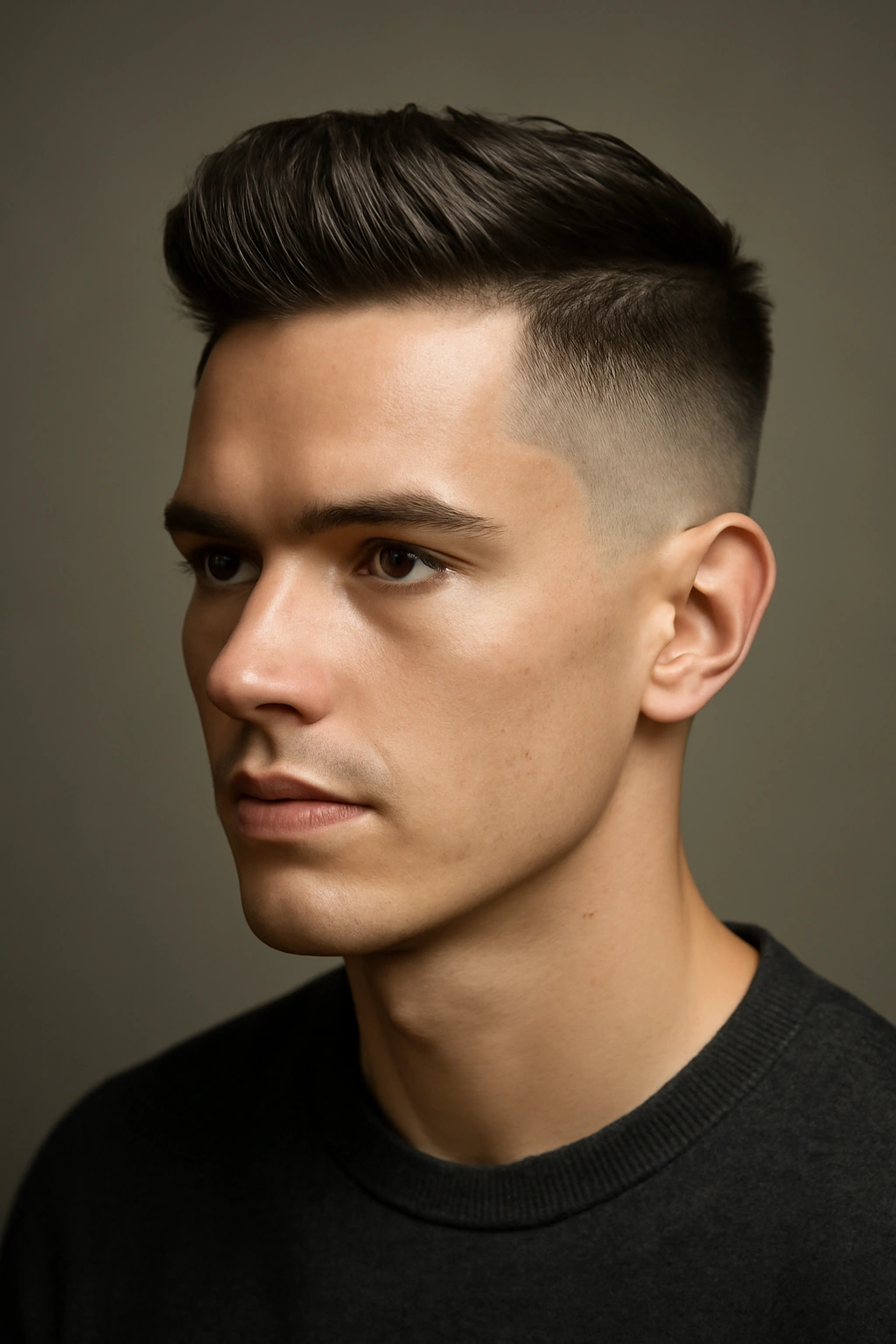
This style features very short, precisely tapered sides that graduate into a sculpted, structured top section where the hair stands up or back with intention. The “sculpted” part means the top is cut to enhance volume and lift, often with point-cutting or texturizing techniques that create definition. The overall effect is polished, groomed, and fashion-forward while maintaining the practical short length throughout.
The Precision Appeal
A sleek taper with sculpted top works because the precision of the taper combined with the intentional structure of the top creates a high-fashion, intentional aesthetic. The tapered sides keep the style feeling fresh and contemporary rather than overgrown, while the sculpted top shows off texture, dimension, and styling skill. This style reads as well-groomed and intentional, requiring regular maintenance but worth the effort.
Maintenance and Styling
- The tapered sides require touch-ups every 2-3 weeks to maintain the clean, defined appearance
- The sculpted top benefits from texturizing product and often requires blow-drying to achieve the intended lift and structure
- Works beautifully with naturally textured hair, or straight hair that you’re willing to style deliberately with product
- The overall look requires regular styling commitment to look intentional rather than messy or overgrown
Pro tip: A professional barber who specializes in men’s or unisex cuts often understands tapered sides and sculpted tops better than a traditional hair salon—consider booking with a barber if this is the style you want.
22. Wavy Shag with Movement
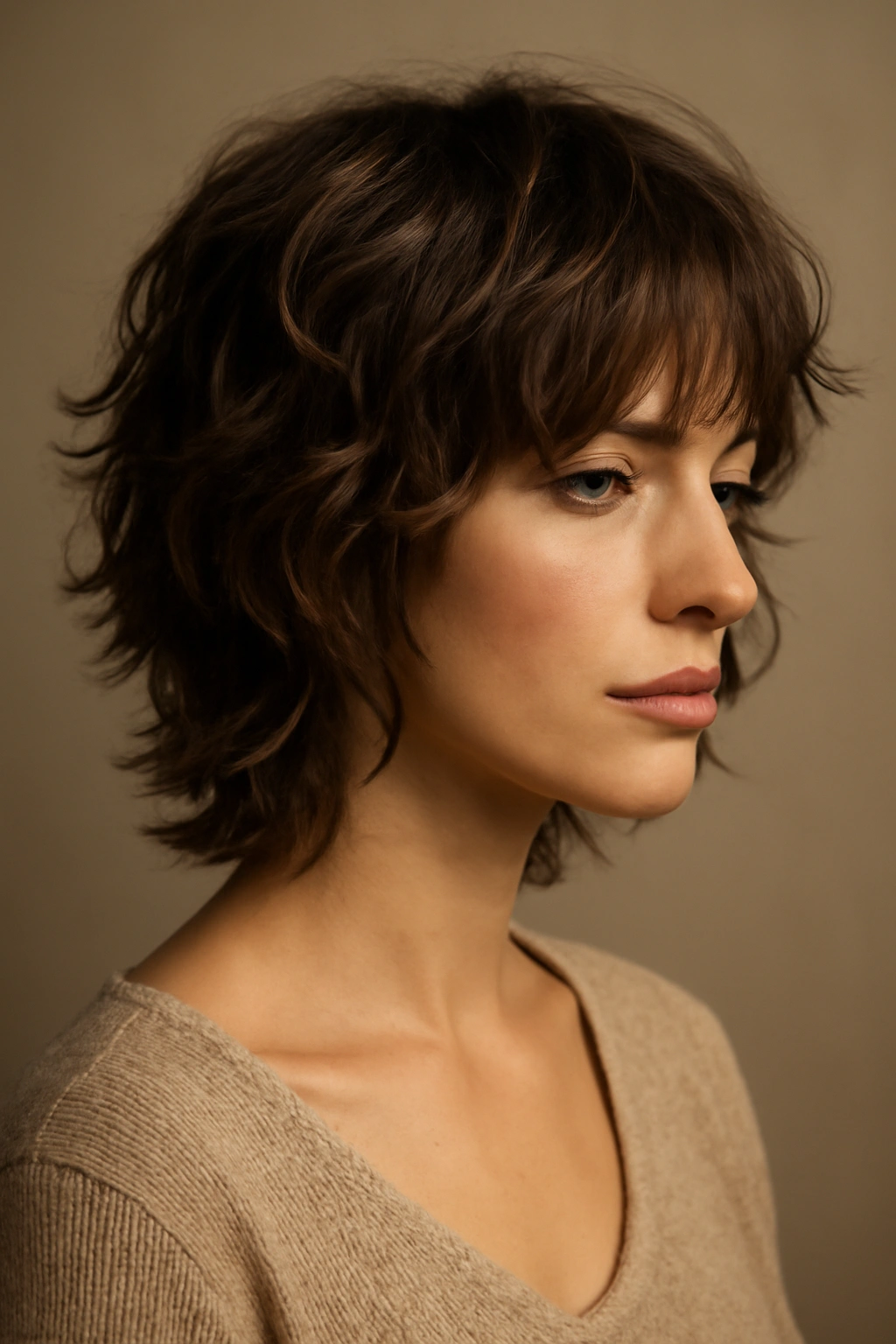
A wavy shag combines layered, textured cutting with deliberate styling that creates soft waves and movement throughout the hair, resulting in a bohemian yet contemporary aesthetic. The waves don’t have to be natural—they’re often created through styling—but the cut should be designed to support waves and movement rather than fight against it. This style reads as relaxed, confident, and effortlessly cool.
The Effortless Vibe
A wavy shag works because the layers and movement create an inherently relaxed, bohemian aesthetic while the contemporary cut proportions keep it feeling current rather than retro. The waves add softness and femininity while the overall short length maintains practicality. This style suits people who want to project a relaxed, confident aesthetic while actually putting thought and care into their appearance.
Creating the Waves
- Waves can be created through blow-drying with a round brush, using a curling iron or wand, or air-drying with curl product if you have naturally wavy hair
- The cut should be specifically texturized to support waves and movement, not cut blunt or in a way that fights against texture
- Requires styling product to maintain the wavy appearance throughout the day—this isn’t a wash-and-go style
- Works beautifully with naturally wavy or curly hair, or straight hair that you’re willing to style regularly
Worth knowing: A shag cut designed for waves works best if you’re willing to style it deliberately—the cut will only look its best with intentional wave-creating styling.
23. Precise Geometric Bob (Sharp Angles)
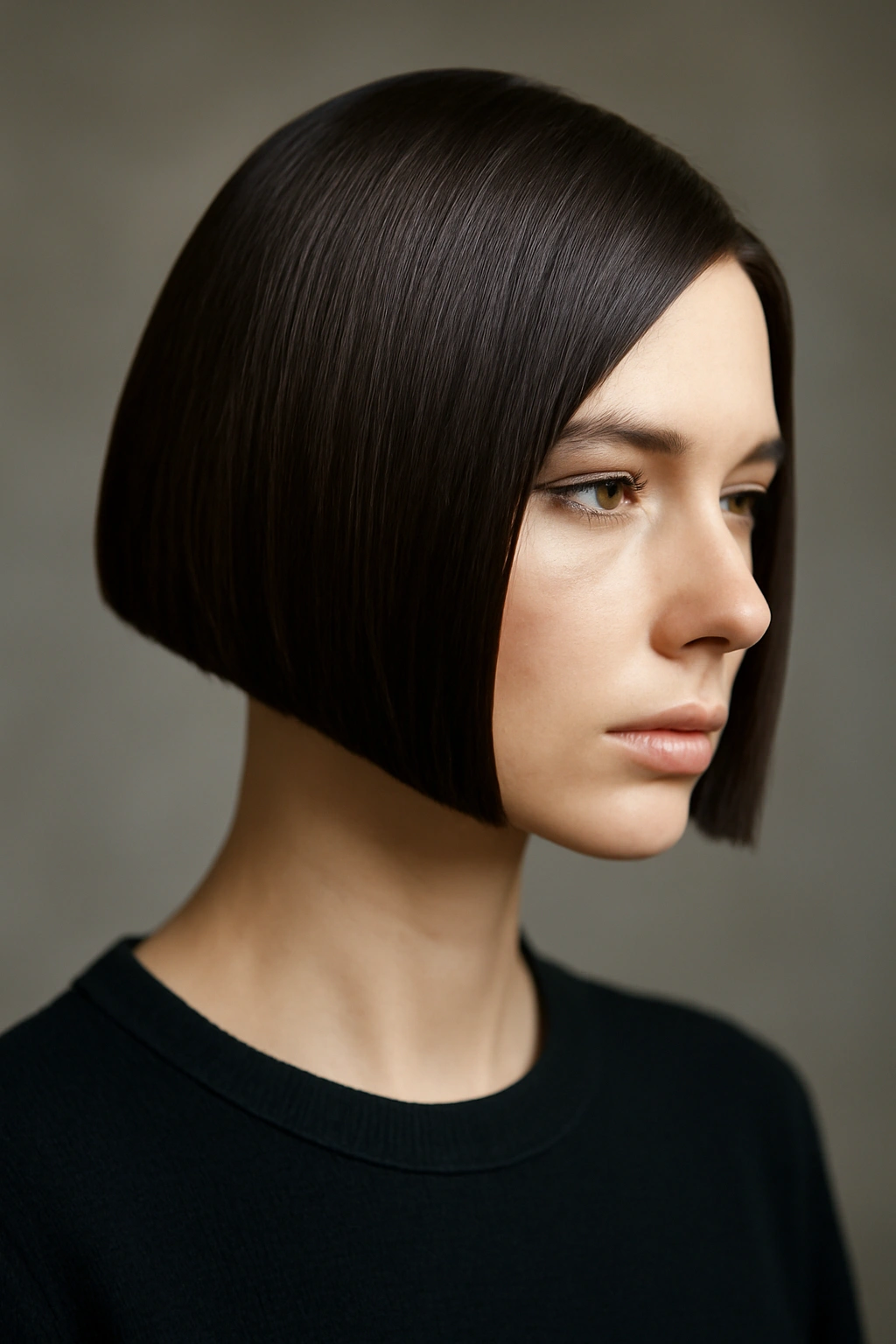
A precise geometric bob features extremely clean lines and sharp angles created through blunt cutting techniques, with the shape emphasizing geometric precision rather than softness or movement. This cut typically features an A-line angle (longer in front, shorter in back) or is completely blunt, with precise geometric proportions that feel almost architectural. This style reads as high-fashion, editorial, and intentional.
The Fashion Statement
A precise geometric bob works because the sharp angles and clean lines create visual impact and sophistication that reads as editorial and high-fashion. The precision communicates intention and luxury, while the geometric proportions create instant flattery through their inherent structure. This is a style that commands attention and reads as confident and fashion-aware.
The Precision Requirement
- Requires extremely skilled cutting to achieve the precise angles and clean lines
- Needs regular trims every 3-4 weeks to maintain the sharp angles and prevent them from becoming rounded or grown-out
- Styling is secondary to the cut quality—this style relies on precision geometry rather than styling tricks
- Works best on straight or manageable hair where the precise angles are clearly visible
Pro tip: A geometric bob is only as good as the cut, so invest in a skilled stylist experienced in geometric cutting—this isn’t the place to save money on a less experienced cutter.
24. Textured Mohawk (Subtle Modern Version)
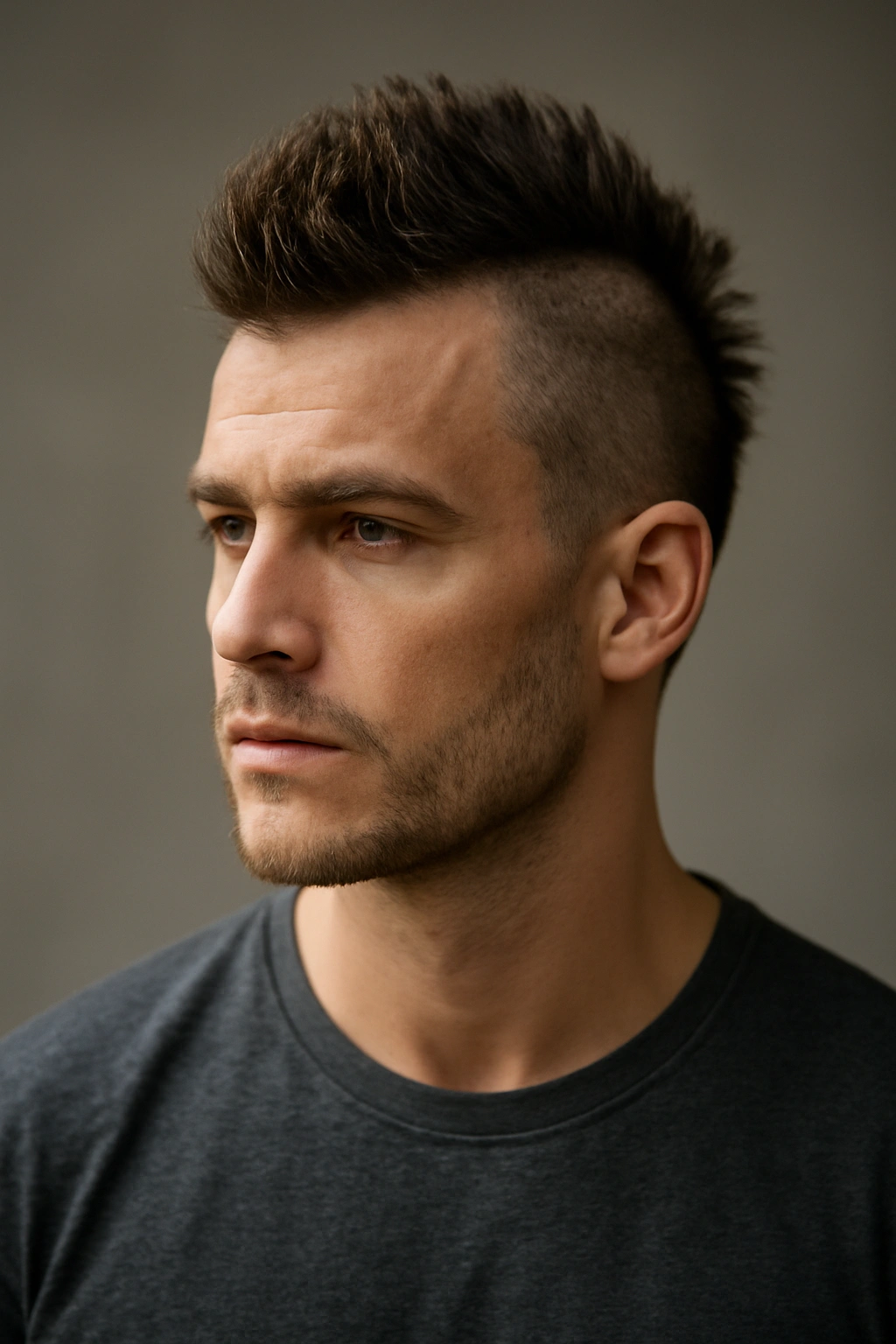
A subtle modern mohawk features longer hair down the center of the head with gradually shorter hair on the sides, creating a defined center line without committing to a fully shaved or buzzed mohawk. The longer central section can be styled up or back to emphasize the mohawk effect, or worn down for a less dramatic appearance. This style reads as edgy and unconventional while still being wearable for most settings.
The Intentional Edge
A subtle modern mohawk works because it allows you to create an edgy, unconventional aesthetic while maintaining enough hair length to style it different ways depending on the situation. The defined center line creates visual structure and height that can be flattering and interesting. This is a style for people confident in their edge and willing to make a statement while still having some versatility.
Styling and Maintenance
- Can be styled down to look less dramatic or styled up and back to emphasize the mohawk structure
- The longer center section can be created with product and styling, or with deliberate cutting that creates intentional height
- The sides require regular trims to maintain the defined contrast
- Works across hair textures, though the effect differs depending on your natural hair type
Worth knowing: The degree of subtlety can vary—work with your stylist to create a version that feels authentic to you, whether that’s barely-there or fully shaved sides.
25. Soft Waves with Strategic Layers (Romantic Short Hair)
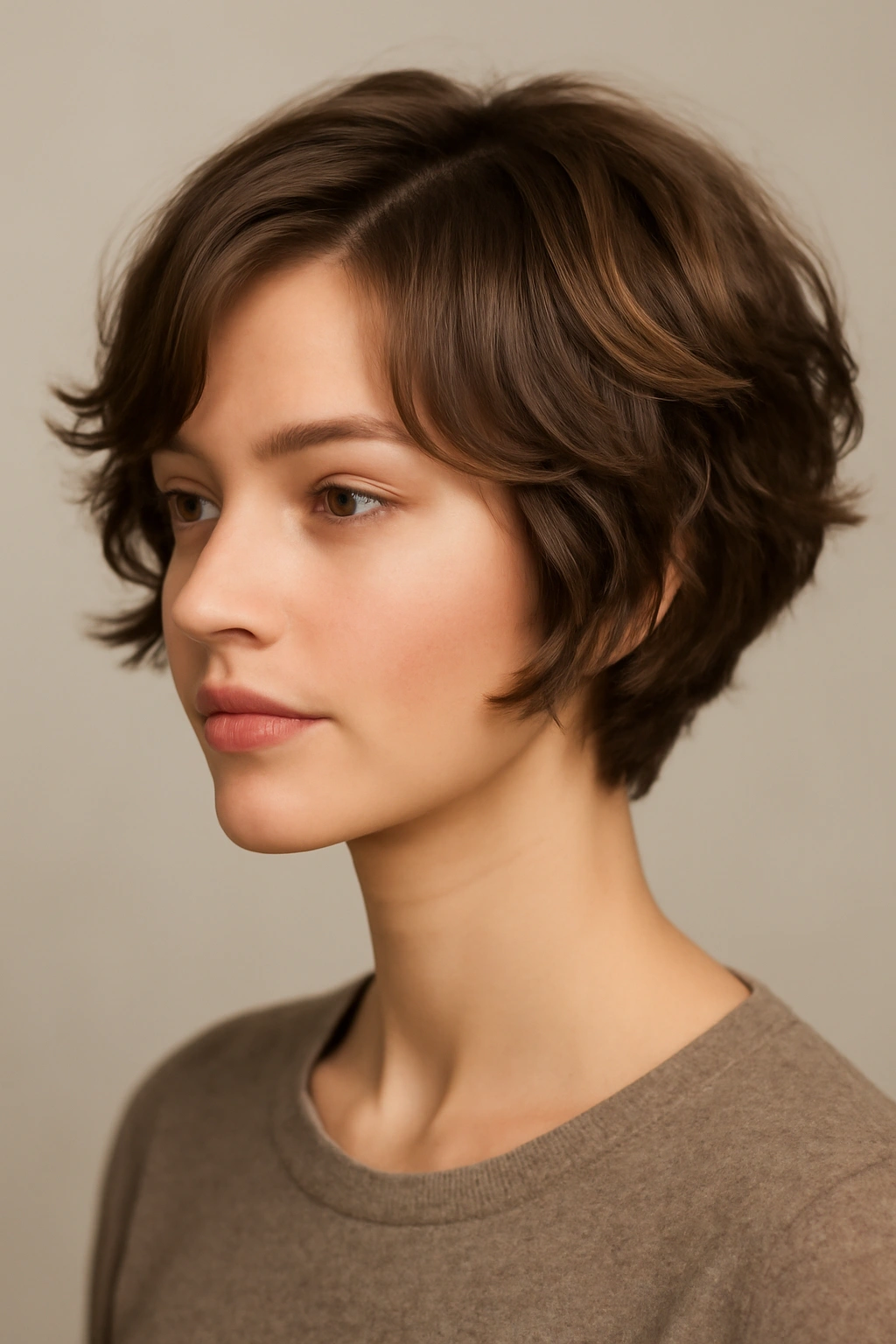
This final style features short length paired with strategic layering that’s designed to create soft, romantic waves throughout without the hair looking choppy or textured. The layers are subtle enough that they don’t create obvious separation, but intentional enough that they support waves and movement. This style reads as romantic, feminine, and soft while maintaining the practicality of short hair.
The Romantic Appeal
This style works because it combines the practicality and ease of short hair with the softness and romance of waves and layering, creating a best-of-both-worlds aesthetic. The soft layers support waves without creating an edgy or choppy appearance, while the overall short length maintains ease of styling and maintenance. This style suits people who want femininity and romance without sacrificing practicality.
Achieving the Look
- Requires regular blow-drying or curling iron work to create and maintain the soft waves—this isn’t a completely wash-and-go style
- The layers should be subtle and blended rather than obvious separation, requiring a stylist who understands soft layering techniques
- Works beautifully with naturally wavy or curly hair, or straight hair that you’re willing to style with waves regularly
- Pairs beautifully with soft styling products like cream or mousse rather than heavy pomades or gel
Worth knowing: This style benefits from a good styling technique—learning how to blow-dry with a round brush or use a curling iron effectively will make the difference between the style feeling intentional or accidental.
Final Thoughts
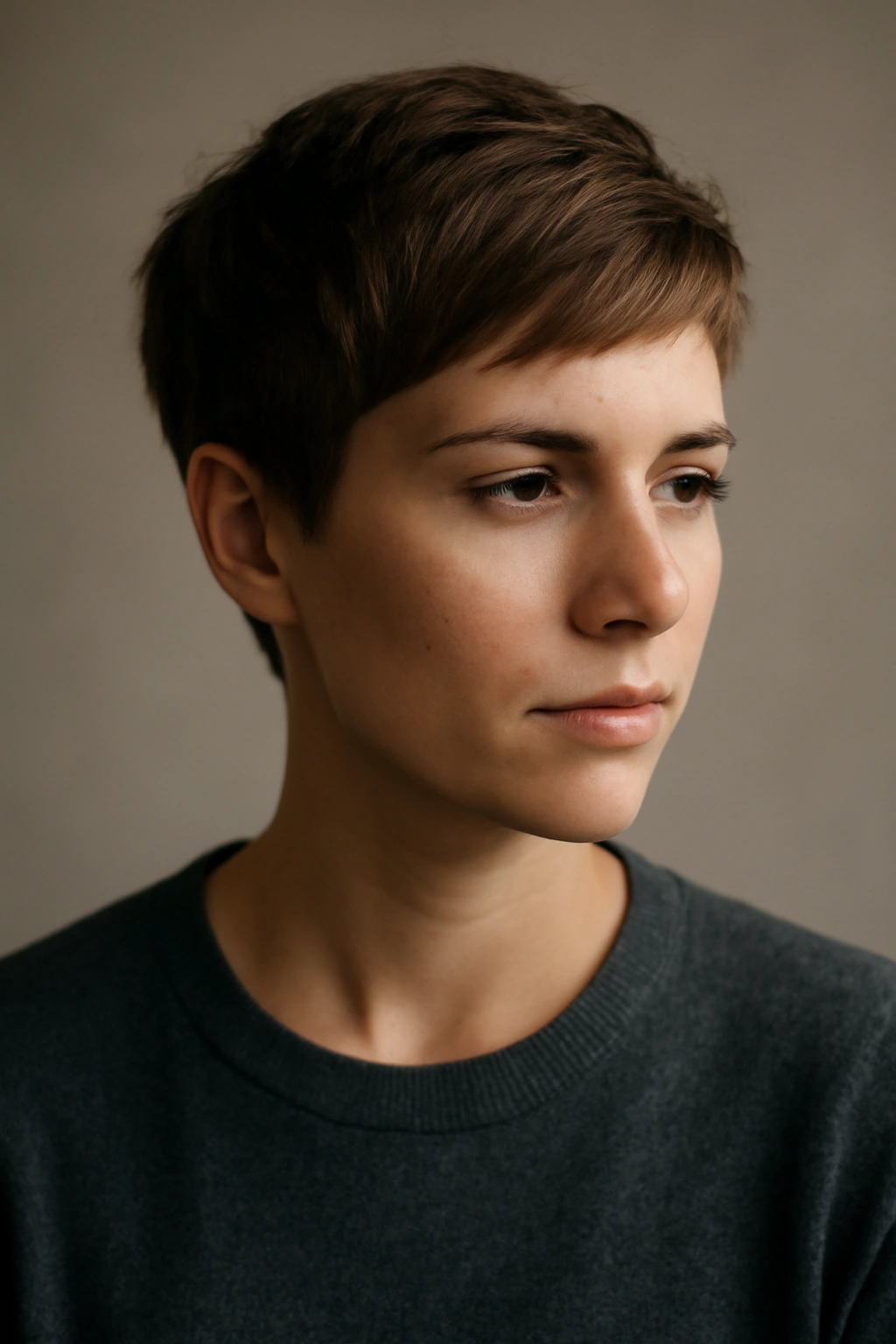
Choosing a short hairstyle is genuinely one of the most transformative decisions you can make for your appearance—it’s affordable (compared to extensions or coloring projects), reversible (hair grows), and immediately impacts how you feel about yourself. The right short cut isn’t just about what looks good; it’s about finding a style that aligns with your lifestyle, hair texture, confidence level, and willingness to maintain it.
The beauty of the contemporary short hair landscape is that there’s legitimately something for everyone—whether you’re looking for extreme confidence-building edge or soft, romantic femininity; whether you have straight hair or natural curls; whether you’re willing to style daily or you need something more wash-and-go. The most important thing is being honest about what you’re willing to commit to in terms of styling and maintenance, and then finding a skilled stylist who understands not just the technical cutting but also how to customize that style to your specific features.
Start by looking at inspiration photos that genuinely excite you—notice the patterns in what you’re drawn to, whether that’s precise geometry or textured movement, whether you’re gravitating toward bold statements or soft femininity. Have a detailed conversation with your stylist about your hair texture, face shape, and lifestyle, and then trust their expertise in adapting the style to work specifically for you. The moment you find your perfect short style is the moment you realize why so many people never go back to longer hair.
