



Coily hair has a mind of its own—in the best possible way. But that independence comes with a real challenge: finding a cut that actually holds its shape instead of disappearing into a shapeless cloud by day three. The right haircut doesn’t just look incredible when you leave the salon; it keeps looking incredible because the cut works with your curl pattern, not against it. That’s the fundamental difference between a good cut and a transformative one.
The secret isn’t finding a cut that magically defies the laws of curl behavior. It’s finding one that’s been specifically designed to let your coils do what they naturally do best—define themselves, hold their formation, and maintain visible texture and shape throughout the week. This means understanding which techniques and angles actually work with coily hair’s unique properties, and which salon tactics leave you flat and disappointed.
What makes these 12 cuts special is that each one takes the science of coil structure seriously. The best cuts for coily hair use layers, angles, and tapering techniques that give your curls room to move and breathe while still maintaining clear definition and structure. Whether you’re working with tight coils, loose waves, or somewhere beautifully in between, there’s a cut here designed to showcase your texture while keeping everything intentional and sculpted—not relying on daily manipulation or heavy products to hold its shape.
1. Textured Tapered Cut
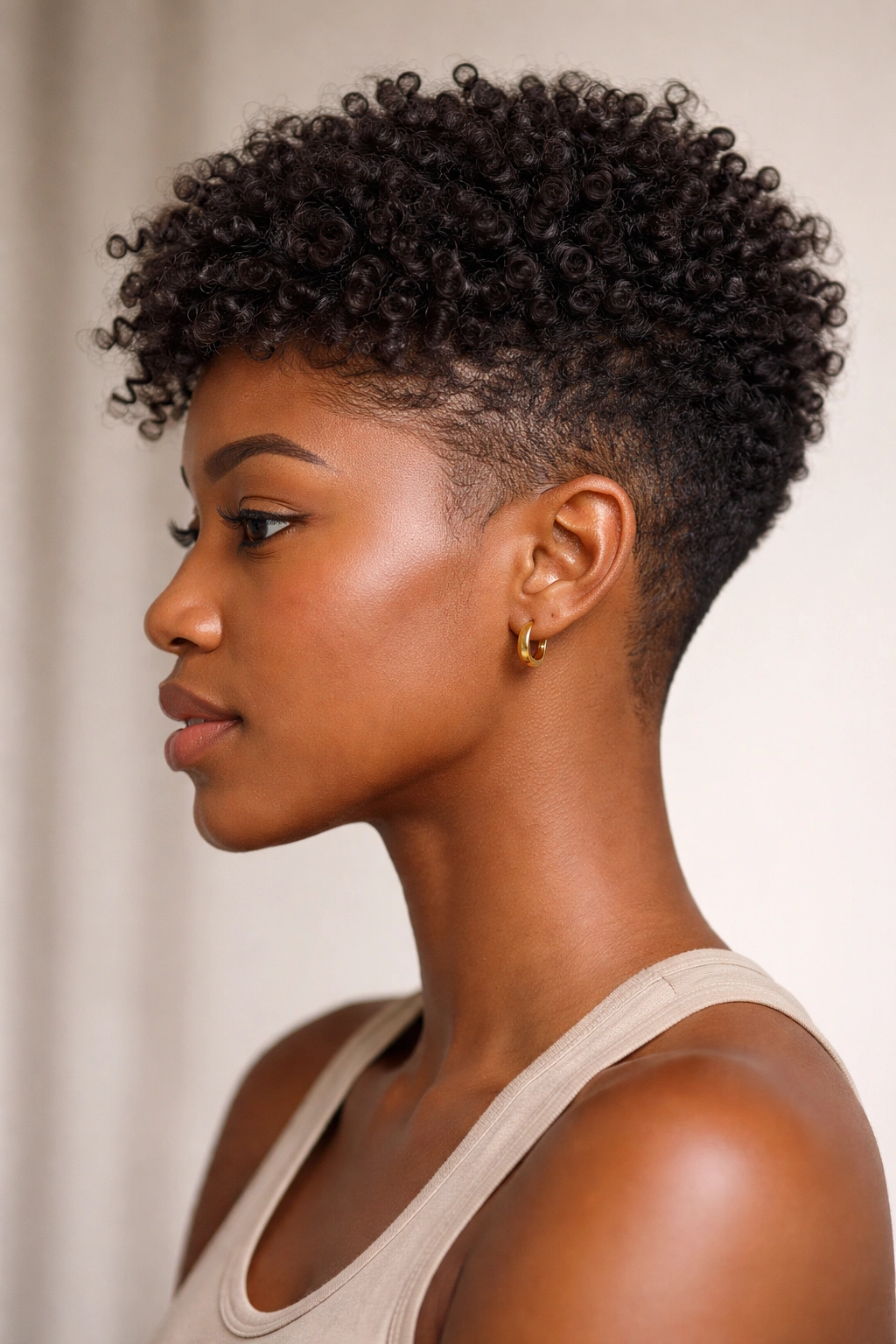
This is the foundation cut for anyone who wants maximum shape with minimal daily effort. A textured tapered cut keeps hair short on the sides and back while maintaining length on top, but here’s what makes it work for coily hair: the taper is cut while your hair is dry and in its natural curl state, not stretched straight. This means the stylist can see exactly how your coils sit and shape the cut to enhance that natural pattern rather than fighting against it.
Why This Shape Holds Beautifully
The tapered sides create clean definition at the nape and ears, while the textured top has enough length to let your coils stack and form naturally without collapsing under their own weight. Because each curl is cut individually while in its coiled state, the cut grows out evenly—your curls maintain their integrity as they grow instead of morphing into an undefined blob. The shape stays pronounced for 4-6 weeks because the internal structure of the coils supports the outline you’ve created.
How to Keep the Definition Sharp
- Moisturize your coils every 2-3 days with a lightweight leave-in conditioner to keep them supple and springy
- Refresh your wash days with a gentle co-wash (conditioner wash) between full shampoos to maintain shape without stripping your curls
- Use a microfiber towel or t-shirt to dry your hair gently—rough toweling flattens the formation your cut created
- Sleep on a silk or satin pillowcase to prevent friction that causes frizz and disrupts your curl pattern
- Avoid heavy oils and creams that weigh coils down; opt instead for gel-based or mousse-based styling products
Pro tip: Ask your stylist to cut the top section while your hair is soaking wet and fully shrunk—this prevents the dreaded “cut too short after shrinkage” surprise when your coils spring up after washing.
2. The Twist-Out Taper
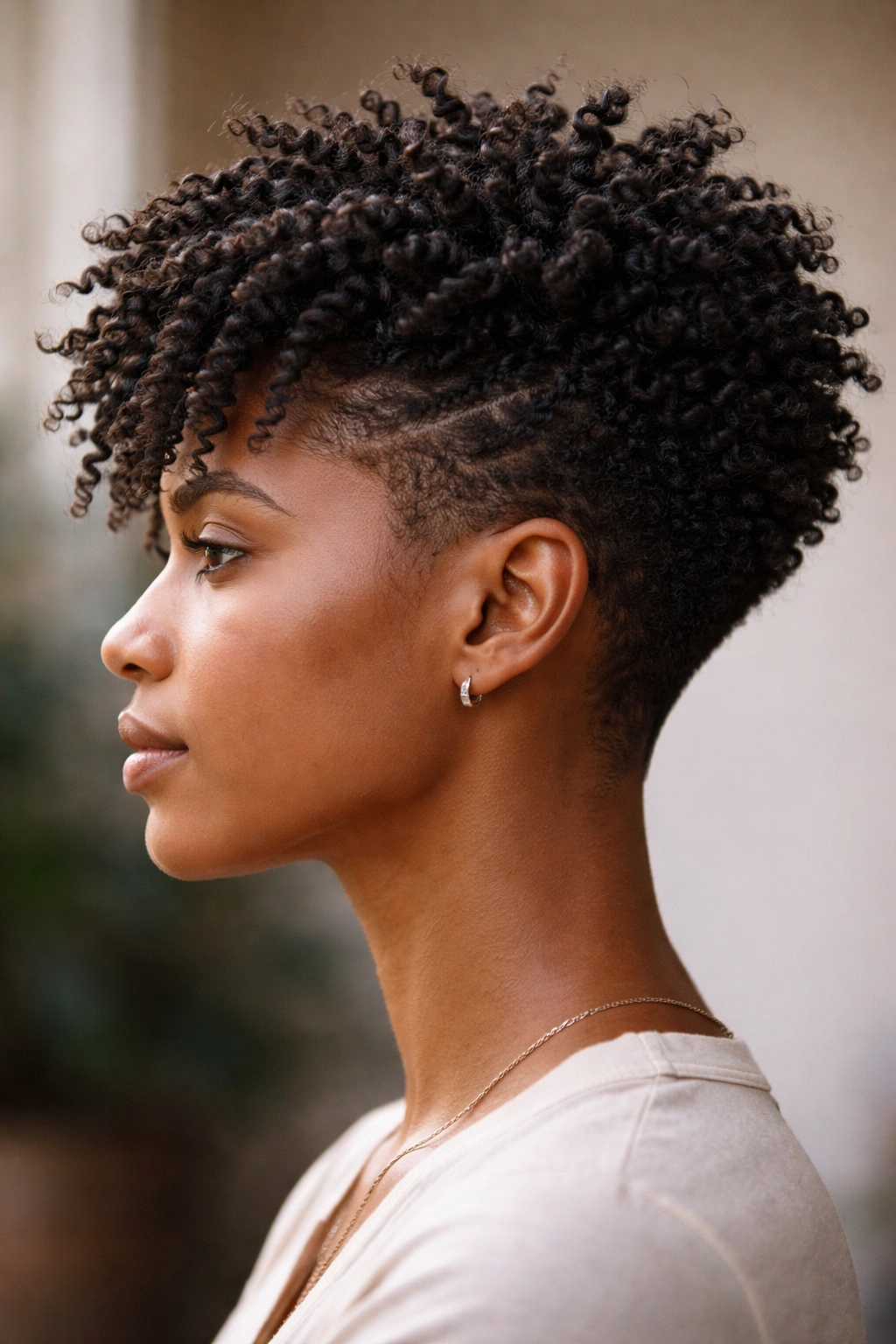
A twist-out taper is specifically designed for coily hair that performs well when twisted and then unraveled for maximum definition. This cut uses strategic layering on the crown and sides to create a frame that showcases the elongated curl pattern you get from two-strand twists. The magic happens because the cut respects the twisted formation—your stylist essentially cuts the shape you’ll wear when you unravel those twists.
What Makes It Different From a Standard Taper
A twist-out taper isn’t just shorter sides and longer top—it’s cut with an understanding of how twists elongate and compress your natural coil pattern. The layers are placed to encourage your twists to cascade downward and outward when released, creating a voluminous but controlled silhouette. The sides graduate smoothly so that when you twist them, they lie flat and neat without looking stuffy or overly tight.
Best Styling Approach for Maximum Impact
- Twist damp hair in sections (2-strand or 3-strand twists work equally well) using a lightweight styling cream or gel
- Leave twists in for 6-8 hours minimum, or sleep with them in for overnight results—longer twist time means more defined curl pattern when released
- Unravel twists gently by working from the end upward, letting each section fall naturally without separating the coils too aggressively
- Fluff the roots lightly at the crown for volume, but leave the length alone to preserve the twist-set definition
- Sleep on twists that remain in place, or switch to a pineapple (loose high ponytail) to maintain definition through the night
Worth knowing: This cut works best if you’re already comfortable with the two-strand twist styling method—if you’ve never done twists before, your stylist can teach you the technique during your appointment.
3. Elongated Coil Cut
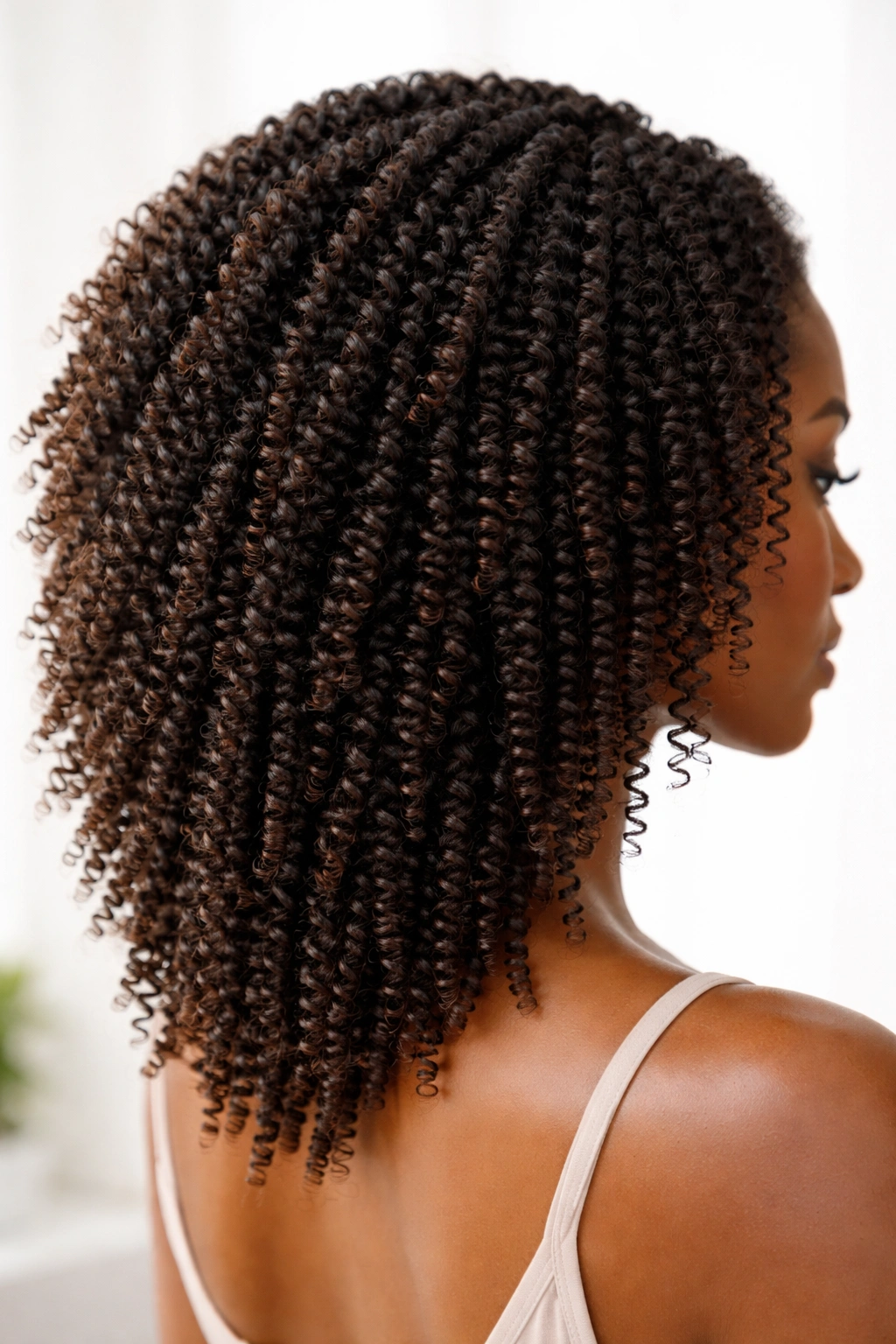
If your coils are naturally tight and you want them to read as longer and more defined, an elongated coil cut is engineered specifically for that goal. This technique involves cutting each individual curl while it’s stretched slightly, then allowing it to shrink back to its natural length. The result is a cut where every coil maintains clear definition from root to tip, with length built into the architecture so your curls don’t disappear into a poof the moment they shrink.
How the Cut Creates Lasting Shape
The stylist carefully sections your hair and cuts each coil individually while gently stretching it downward—not harshly, just enough to see the full length. This creates a graduated internal structure within each curl. When your coils shrink back, they don’t all shrink to the same length; instead, they’re staggered in a way that creates movement and definition without looking chaotic. The result lasts 6-8 weeks because the shape is built into the individual curl structure, not just the overall silhouette.
Why This Works Better Than Blunt Coil Cuts
- Blunt cuts on coily hair can look blocky and heavy because all coils are the same length and compress together
- Elongated cuts stagger the lengths so coils nest together at different depths, creating visible texture and dimension
- Light and shadow play across staggered coils, making your hair look fuller and more intentionally styled
- Individual coil definition stays visible even as your hair grows because the shape is built into each curl
Insider note: This cut requires a stylist who truly understands coily hair mechanics—it’s not a cut every stylist can execute well, so seek out someone who specializes in textured hair and can show you a portfolio of elongated coil work.
4. Layered Coil Crop
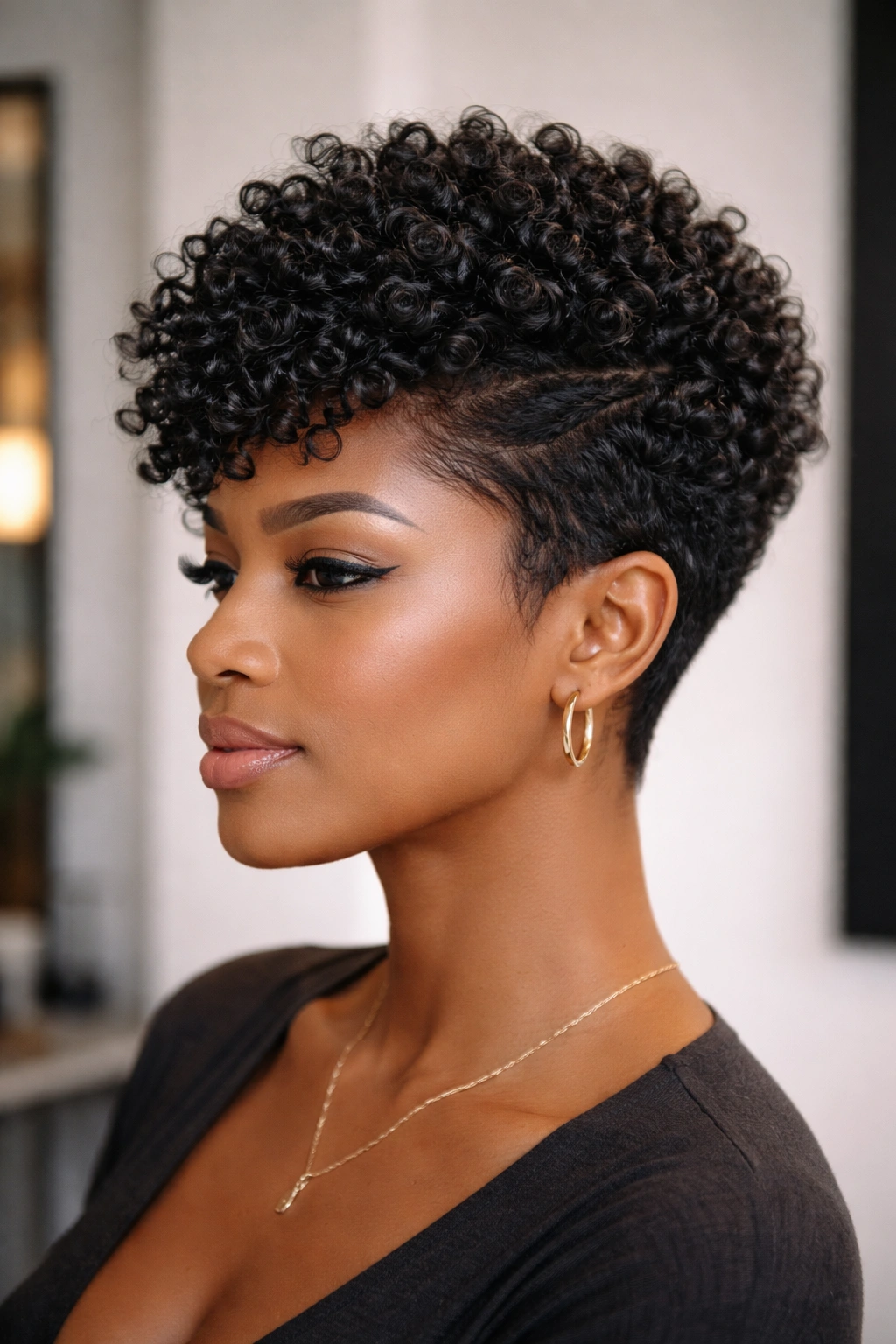
A layered coil crop is a bold, short cut that creates serious volume and presence because of how strategically placed layers interact with your coil pattern. This isn’t a standard pixie or crop that gets flat and dull on coily hair—it’s specifically designed with layers that sit at different heights, allowing your coils to spring up and outward from the scalp without matting down. The cut keeps everything crisp and intentional while making a major style statement.
Why Layers Are Essential for Coily Crops
Without layers, a short cut on coily hair tends to sit flat against the scalp because all the coils are the same length and compress together under their own weight. Layers break that density by removing weight in strategic spots, giving coils space to expand upward and outward. Your stylist creates layers by cutting sections at different angles—shorter in some areas, slightly longer in others—so that when your coils spring back, they create a sculpted shape with visible separation rather than a compressed mass.
Maintenance for a Layered Crop
- Wash and condition every 4-5 days to keep coils hydrated and bouncy—dry coils look dull and compressed
- Use a gel or mousse on damp hair and finger-coil or rake it through for definition
- Sleep on a bonnet or silk pillowcase to prevent flattening that requires restyling each morning
- Refresh between washes with water and leave-in conditioner, then re-gel if needed
- Visit your stylist every 6-8 weeks because this cut requires regular maintenance to keep layers sharp and intentional
Pro tip: A layered coil crop looks best when your edges are crisp—consider fading the sides or keeping a clean line around your hairline for a polished, intentional appearance.
5. Shape-Defining Fade
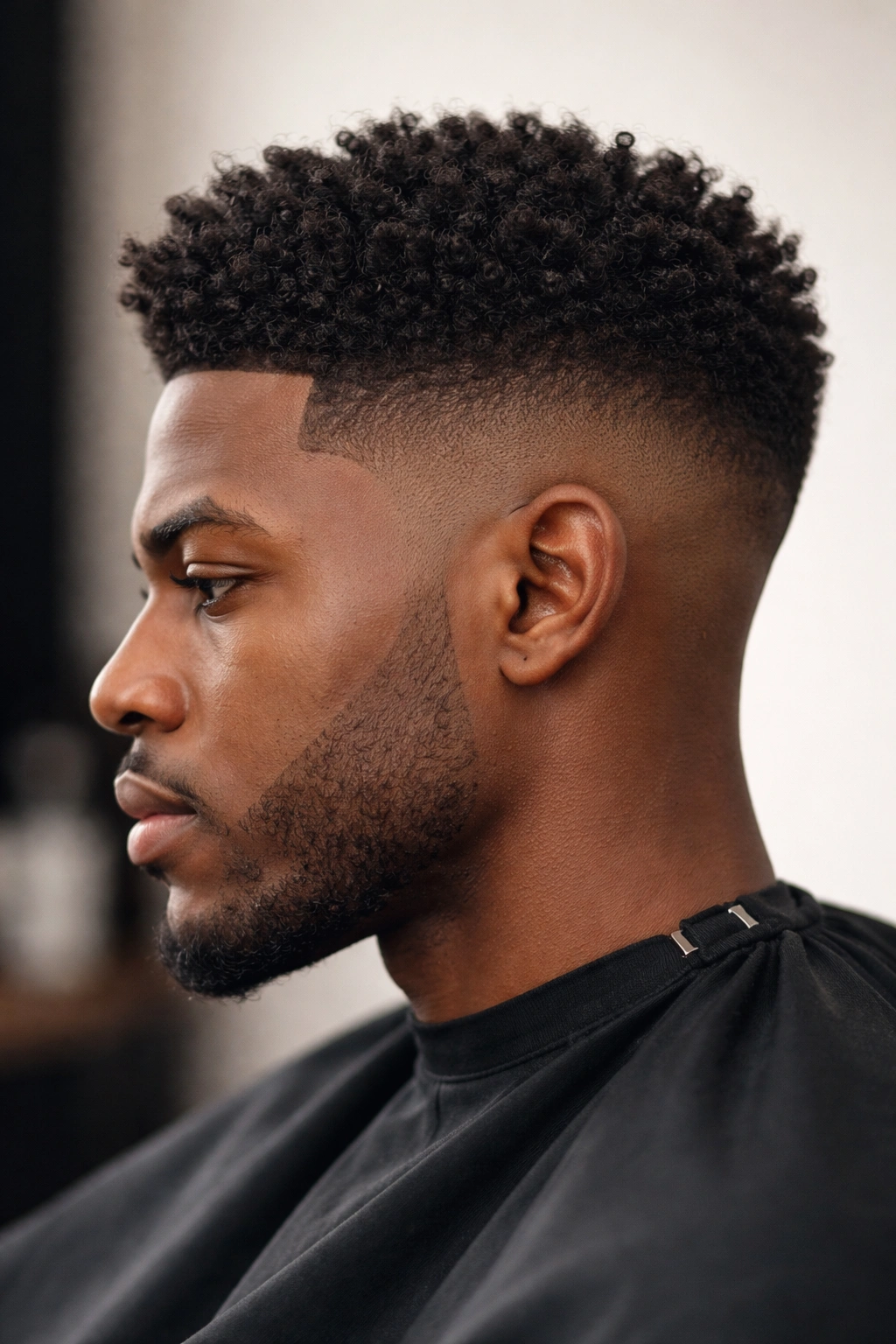
A fade is a gradual transition from longer hair on top to very short hair on the sides and back, and when done thoughtfully on coily hair, it’s an incredibly powerful cut. The fade creates clean, graphic lines that make the shaped section on top look even more intentional and voluminous. This cut reads as confident and modern because the contrast between the faded sides and the textured top is visually striking.
How a Fade Accentuates Coil Shape
The shorter sides pull focus upward to your crown and the top length, making whatever shape you’ve created on top appear larger and more defined. A fade also removes bulk from the sides, which means the coils on top have room to expand without looking squashed or overwhelming your face. The clean lines created by the fade give structure to your overall look, making it feel intentional rather than like you just woke up and let your hair do whatever it wants.
Fade Styles That Work Best on Coily Hair
- Low fade: starts just above the ears and stays subtle, good for those who want definition without drama
- Mid fade: transitions from longer length mid-ear level, creates more contrast and visual impact
- High fade: fades nearly to skin very high on the sides, maximum drama and requires more maintenance
- Bald fade: goes to skin for maximum contrast—requires clipper skill and frequent maintenance every 2-3 weeks
- Textured fade: the shortest sections have texture (slight length) rather than being completely clipped, making it lower maintenance
Worth knowing: Fades on coily hair require a skilled clipper operator who understands textured hair and can create clean lines without cutting too aggressively into the curl pattern.
6. Long Layered Coils
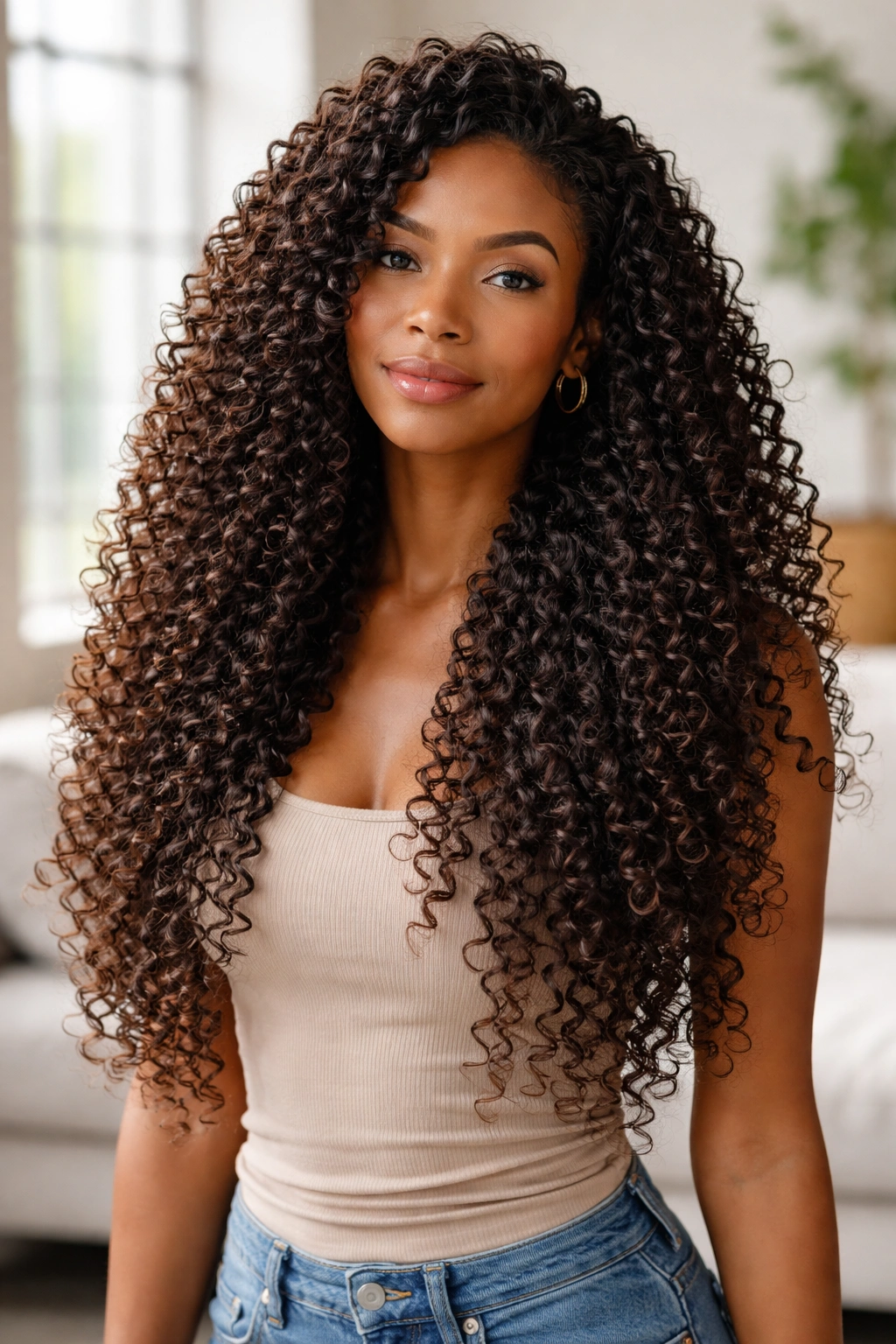
For those who love length but want more shape and movement than a one-length cut provides, long layered coils are transformative. This cut uses strategic layering throughout the entire length of your hair, creating a cascading effect where coils at different lengths nest together, creating visible waves and movement from crown to ends. You keep the length you love while gaining the definition and shape you need.
Why Layers Create Movement in Long Hair
A one-length cut on long coily hair can look heavy and compressed, especially at the roots where multiple coils sit stacked together. Layers remove strategic bulk at different heights—some layers sit mid-length, others closer to the ends—so coils have space to move and separate. When you wash your hair, coils can bounce and spring rather than stacking flatly. The result is long hair that reads as intentionally styled, not just grown out.
Styling Long Layered Coils for Maximum Definition
- Shampoo and deep condition every 5-7 days to keep all those coils hydrated from roots to ends
- Apply leave-in conditioner to damp hair in sections, focusing on mid-length and ends where coils tend to dry out
- Use a gel, cream, or mousse on soaking wet hair and rake through with your fingers to distribute product evenly
- Apply product from roots to ends—your longer coils need moisture and hold at every level
- Plop (wrap hair in a microfiber towel) for 15-20 minutes to remove excess water without disrupting curl pattern
- Air dry or use a diffuser on low heat to gently dry while coils set into their natural shape
Pro tip: Longer layered coils require a stylist who can cut while your hair is fully wet and shrunk—this prevents cutting too much length, which is a common mistake that leaves you with shorter hair than expected.
7. High-Volume Textured Cut
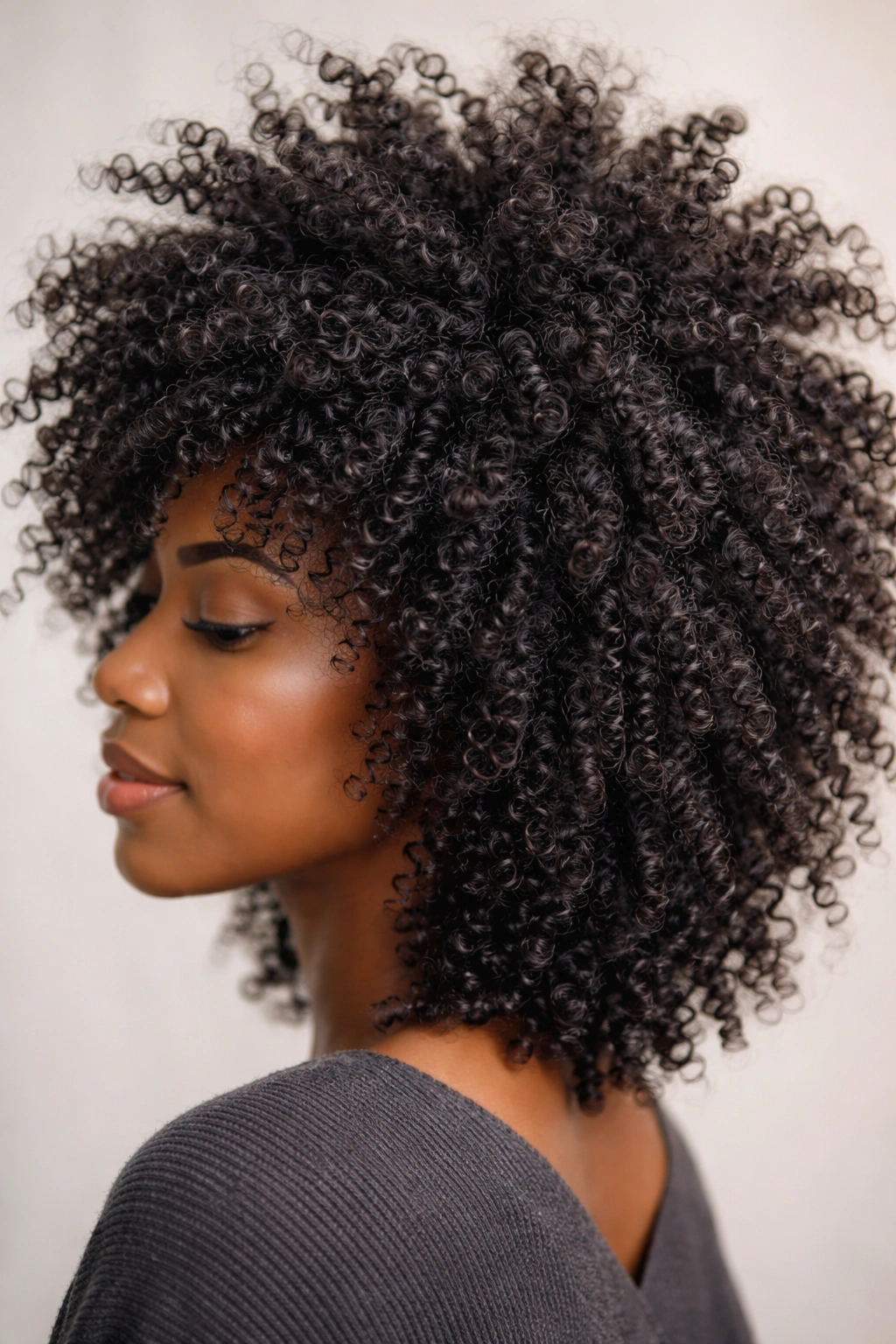
A high-volume textured cut is engineered for coily hair that shrinks significantly when it dries. This cut prioritizes creating volume at the crown and throughout the mid-lengths while maintaining definition and shape. The technique involves layering and texturizing (cutting at angles rather than straight across) to break up density and let coils spring upward rather than outward, creating a commanding presence.
How Texturizing Technique Creates Volume
Texturizing means cutting at angles into the hair rather than blunt, straight-across cuts. For coily hair, this means individual coils can separate and spring upward from the scalp without compressing together. A texturized cut has visible movement and dimension because each coil has room to express itself. The cut also removes enough weight that gravity doesn’t pull coils down as heavily, so volume actually lasts through your day instead of deflating by afternoon.
Products and Styling for Sustained Volume
- Use a lightweight leave-in conditioner—heavy creams compress coils and flatten volume
- Apply gel or mousse to soaking wet hair and use your fingers to encourage coils upward at the root
- Diffuse dry on medium heat with your head tilted forward to encourage upward growth
- Once dry, flip your head upright and use your fingers to gently separate coils at the root for even more volume
- Refresh volume on day 2 with a spray bottle of water plus a small amount of gel, then finger-coil damp sections
Worth knowing: High-volume cuts look best when you have a good routine for refreshing and moisturizing—without that maintenance, the cut can start to look undefined or matted.
8. Defined Wave Pattern Cut
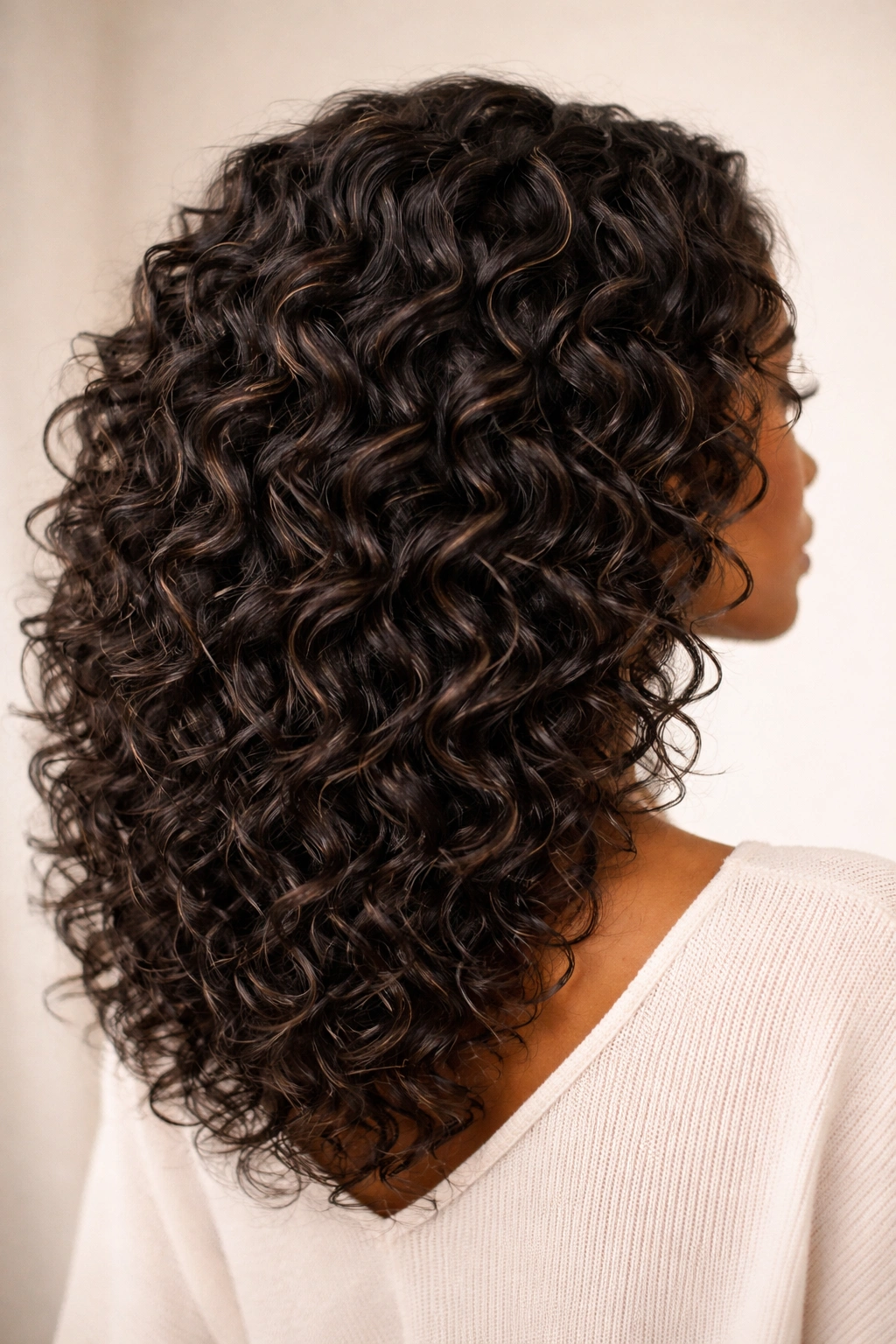
If your coily hair has a distinct wave pattern—perhaps more S-waves than tight coils, or a mix of wave patterns—a defined wave pattern cut is specifically designed to showcase that texture. This cut uses angle and layering to emphasize and elongate your natural wave pattern, making waves more visible and pronounced. The result is hair that looks intentionally wavy rather than vaguely curly and undefined.
Understanding Your Natural Wave Pattern First
Before getting this cut, study your hair to identify where your natural waves form, how they connect, and what pattern they follow. Are your waves tighter at the roots and looser at the ends? Do you have 2-3 distinct wave cycles or many smaller ones? Does your wave pattern change depending on hydration level? Your stylist needs to understand your specific pattern in order to cut in a way that enhances it. Ask your stylist to cut your hair when it’s soaking wet so they can see your true pattern without any shrinkage confusion.
How the Cut Enhances Wave Visibility
- Layers are cut at the exact angle of your waves, so when coils dry and wave patterns form, they have clear definition
- Weight is removed from areas where your waves compress together, giving them room to express
- Length is maintained in sections where your waves need it to fully form
- The cut prevents the all-too-common “my waves disappeared” problem because the shape works with, not against, your natural pattern
Insider note: Wave pattern cuts are especially powerful if you enjoy styling techniques like banding (wrapping damp hair in elastic bands) or braiding, which enhance wave patterns even further.
9. Coil Definition Bob
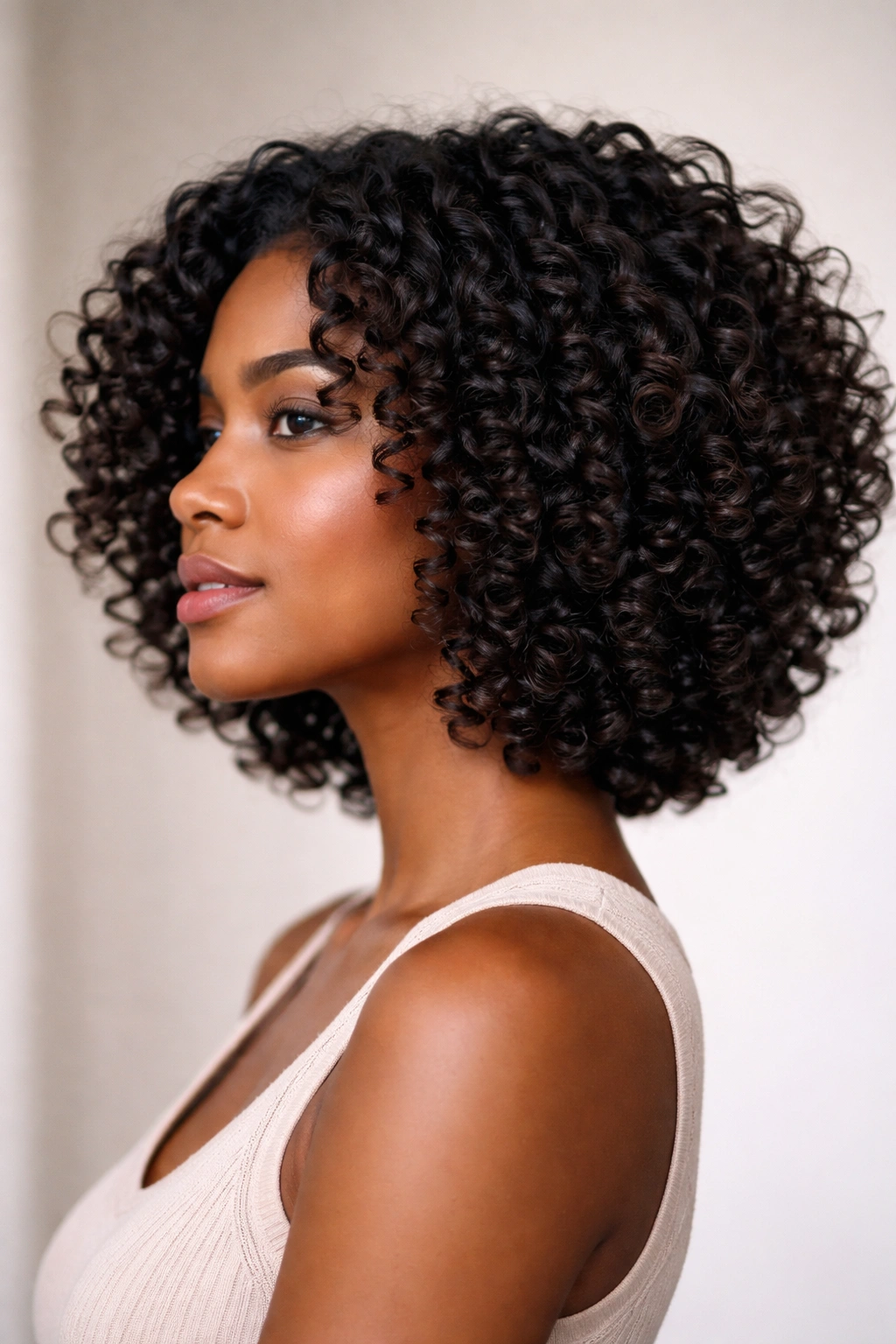
A textured coil bob keeps you somewhere between chin and shoulder length while using layering and texturizing to create serious definition and movement. Unlike blunt bobs that sit heavy and shapeless on coily hair, a coil definition bob has strategic layers that let individual coils show themselves. The result is a sophisticated, intentional look that feels modern and fashion-forward.
Why Bob Length Works Well for Coily Hair
Bob length sits at that sweet spot where your coils have enough length to form completely without being so long that they compress under their own weight. The layers in a coil bob are crucial—they remove bulk at different points, creating a silhouette that looks shaped and intentional rather than like you just chopped off random length. A bob also makes styling simpler because the shorter length is more manageable and dries faster than longer hair.
Styling and Maintaining a Coil Definition Bob
- Wash and condition every 4-5 days to keep coils bouncy and defined
- Apply leave-in conditioner and gel to soaking wet hair, working product through each section
- Plop for 15-20 minutes to remove excess water, then air dry or diffuse gently
- On refresh days (day 2-3), use water and leave-in conditioner to re-wet lightly, then apply fresh gel to refresh definition
- Trim every 8-10 weeks to keep layers sharp and prevent blunt ends that make coils look heavy
- Consider styling with a side part to show off the shape and movement created by the cut
Pro tip: A textured coil bob photographs beautifully and actually photographs better than it looks in person because the layers create visual interest and dimension that cameras capture perfectly.
10. Structured Fringe Cut
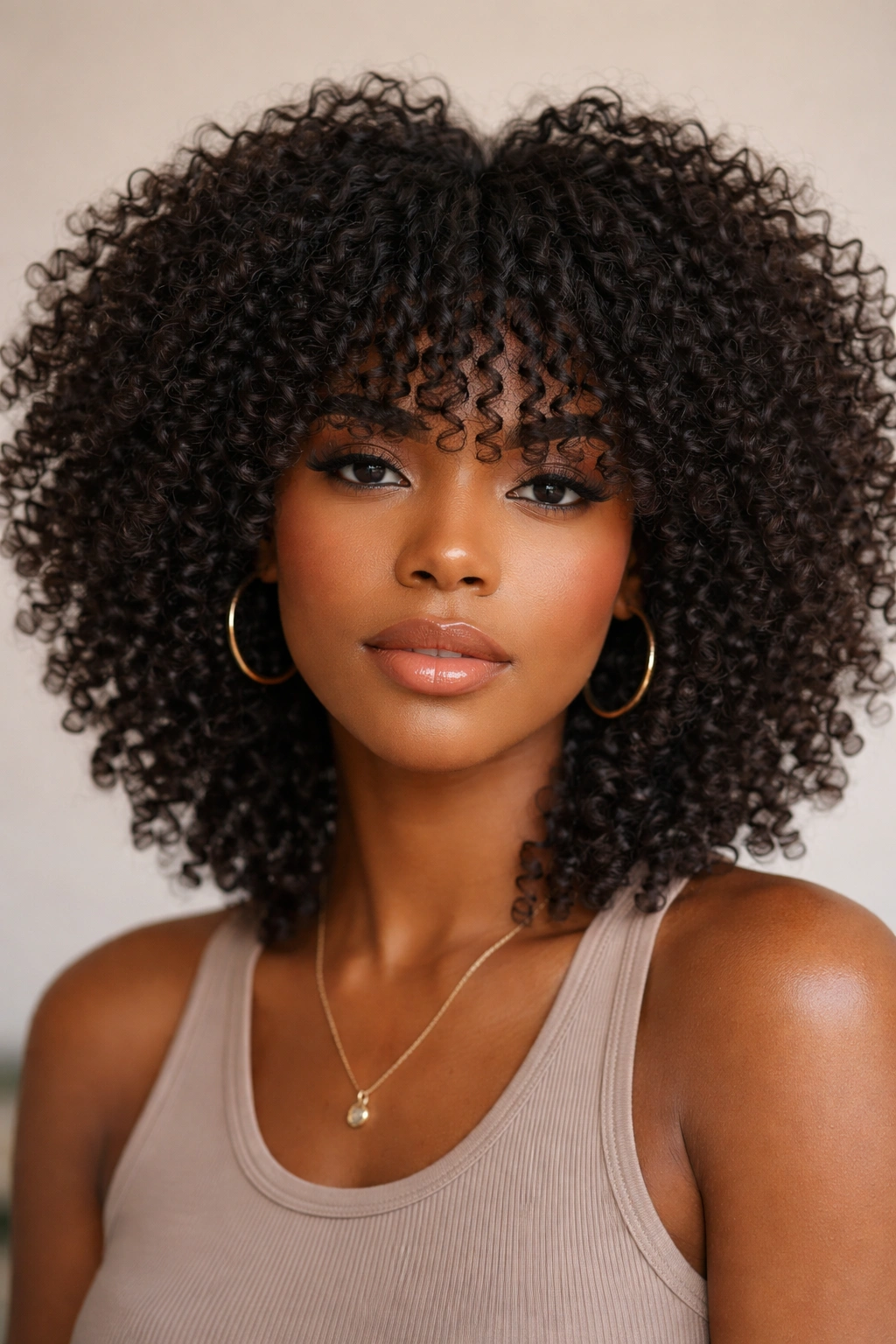
A structured fringe cut brings a bold, fashion-forward element to coily hair while maintaining the shape you’ve built in the rest of your cut. This works by creating a defined bang section that complements your face shape while the rest of your hair has appropriate layers and texture. The fringe can be blunt, tapered, or textured depending on your preference, but it must work with your coil pattern, not fight it.
How to Make Fringe Work on Coily Hair
A fringe on coily hair requires understanding how your curls shrink and form. Your stylist should cut the fringe while your hair is wet and fully shrunk—longer than you think you want it, because it’ll spring up when dry. The fringe works best if it’s textured (cut at angles) rather than blunt, so individual coils can separate and create softness. A structured fringe also needs to frame your face appropriately, which means considering your face shape, forehead size, and how your coils naturally sit around your hairline.
Maintaining a Coil Fringe for Consistent Impact
- Refresh your fringe on wash days with water, leave-in conditioner, and gel to encourage coils to fall in the right direction
- Some people sleep with their fringe pinned up or tied back to prevent it from shifting overnight
- Plan fringe trims every 4-6 weeks because this section grows out more noticeably than the rest of your hair
- Keep a leave-in conditioner and gel in your bag for on-the-go fringe touch-ups if it gets displaced during the day
- Avoid touching your fringe throughout the day, as it can disrupt the set and cause frizz
Worth knowing: Not all coily hair looks good with a fringe—it depends on your face shape, how much hair you have at your hairline, and your willingness to maintain it regularly.
11. Sculpted Coil Blend
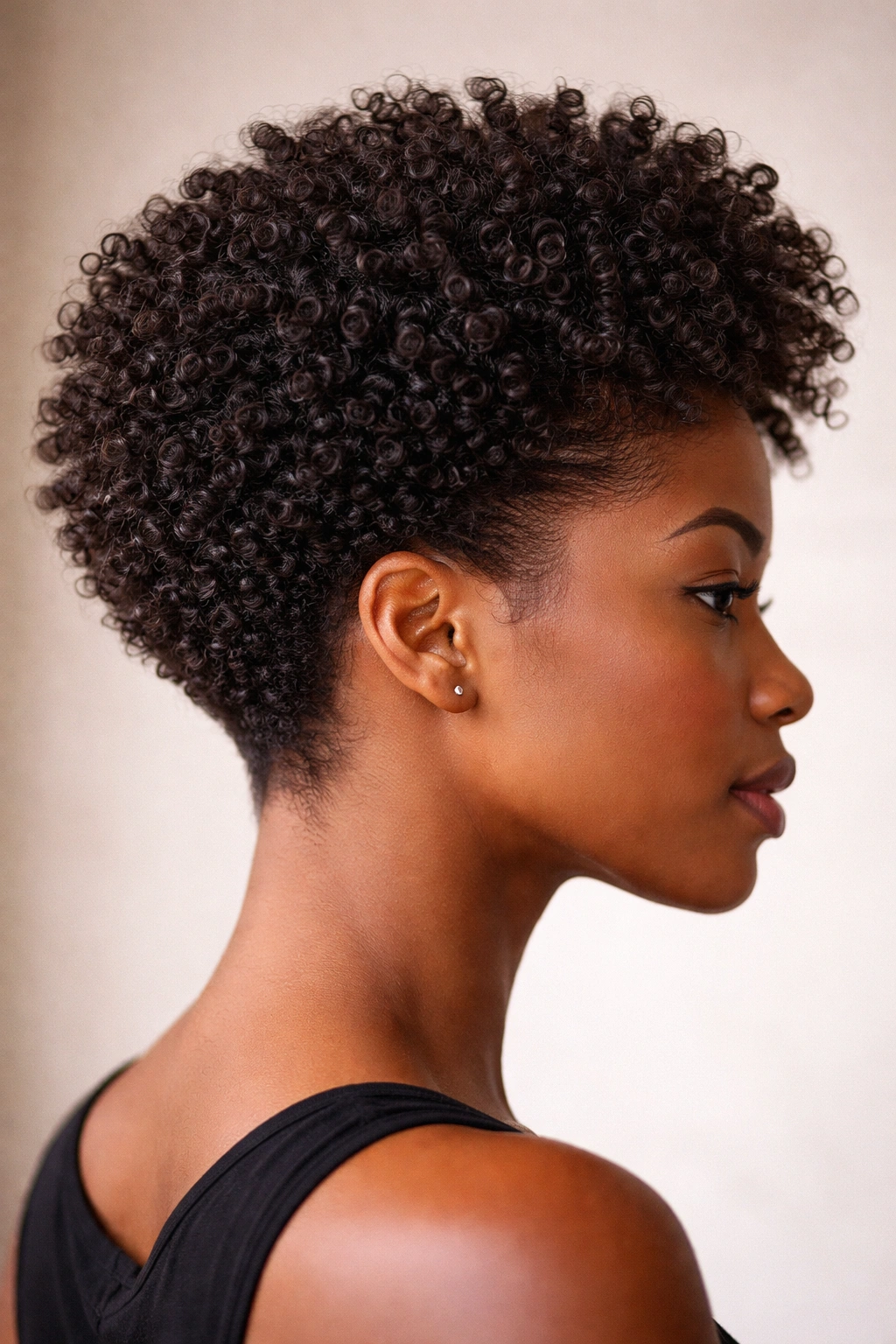
A sculpted coil blend uses careful layering at the nape, sides, and crown to create a harmonious shape where shorter and longer sections blend together seamlessly. This cut is excellent for transitioning between different length goals or for creating a super-intentional, polished silhouette. The “blend” is key—nothing looks choppy or disconnected; instead, every section flows into the next naturally.
The Technique Behind Seamless Blending
Blending coils requires cutting each section while considering how it connects to the sections around it. Your stylist uses careful angle work to ensure that where a tapered side section meets the longer crown, the transition is gradual, not abrupt. For coily hair, this means texturizing the blending area so coils can sit at angles that make the transition invisible. The result is a cut that looks like one cohesive shape, not separate sections that happen to exist on the same head.
Why Blended Cuts Maintain Shape Better
- Seamless blending prevents the “grown out and weird” phase that happens with disconnected sections
- As your hair grows, a blended cut grows out evenly—the shape transitions gradually rather than suddenly looking shapeless
- Blended sections support each other visually, so the overall silhouette stays defined for longer between cuts
- Asymmetrical blending (longer on one side, shorter on the other) creates movement and visual interest that maintains sophistication even as growth happens
Pro tip: Ask your stylist to show you their work from multiple angles—a really excellent blend looks smooth from every view, not just from the front.
12. Precision Angle Cut
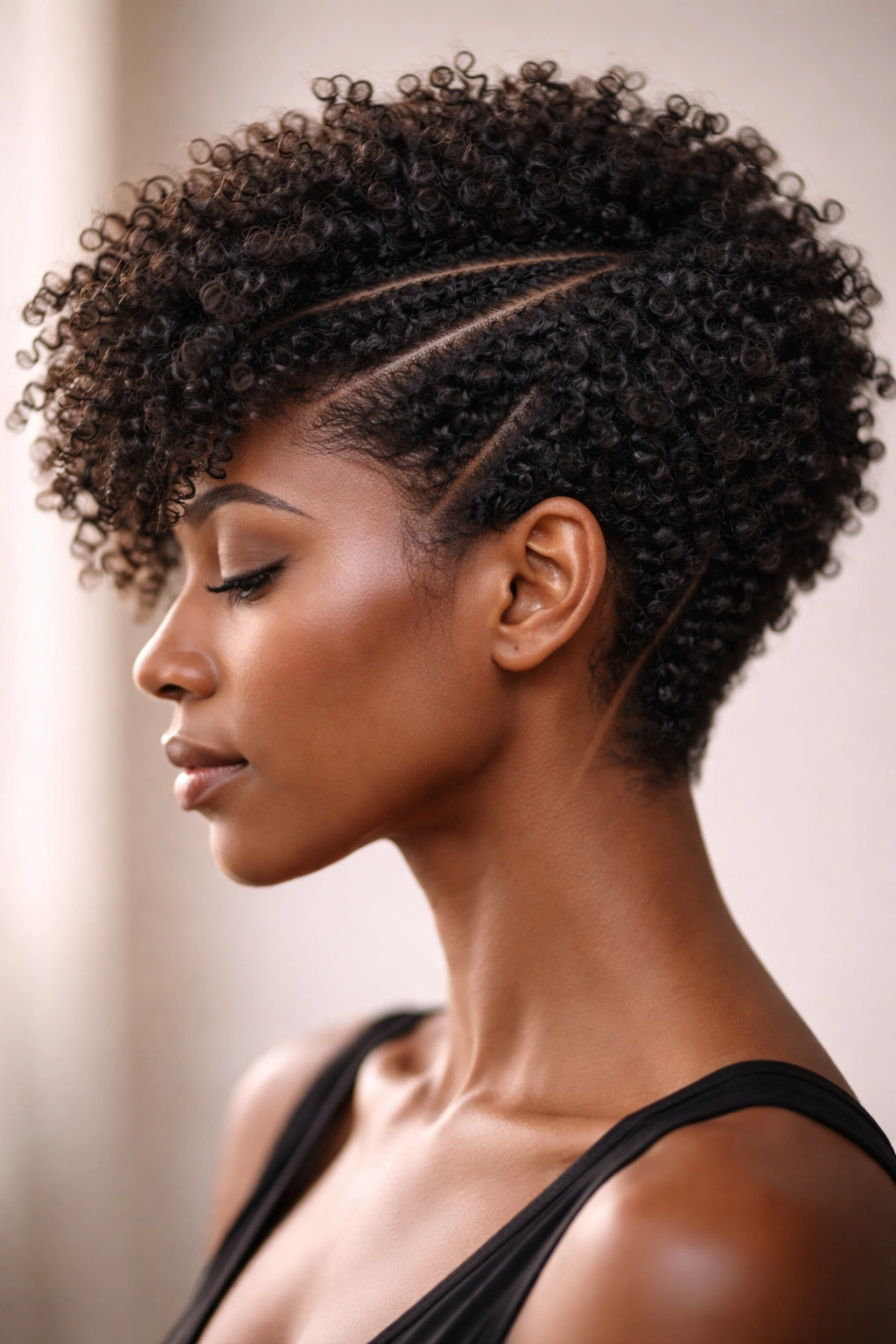
A precision angle cut uses geometry and intentional angles to create structure and shape that lasts through multiple wash cycles. This technique involves cutting each section of hair at a specific angle that complements your head shape, face shape, and desired silhouette. For coily hair, precision angles are transformative because they create a cut that maintains its shape even as your coils shift and move.
How Angles Create Lasting Shape
Instead of cutting straight across (which creates a blunt, heavy line that doesn’t work on coily hair), a precision angle cut uses graduated angles throughout. The front sections might be cut at a forward angle, the crown at one angle, the sides at another—each angle serves a purpose in the overall shape. When your coils shrink and move, they move along these angles rather than fighting against them, so the shape holds together instead of collapsing.
Identifying the Right Angles for Your Hair
- Forward-facing angles create movement and bounce in the front, good if you want volume or movement there
- Back-sloping angles create a shape that hugs your head and points downward, good for sleek or close-fitting silhouettes
- Asymmetrical angles (one side longer or shorter than the other) create movement and draw attention in specific directions
- Textured angles (cut at angles within each curl) work better than straight angles for coily hair, giving coils more flexibility
Worth knowing: Precision angle cuts require a stylist who understands three-dimensional cutting and how coily hair responds to angles. It’s a more advanced technique than basic layering, so seek out specialists.
Final Thoughts

The best cut for your coily hair isn’t just about following a trendy style or copying a picture you found online. It’s about finding a cut that’s designed specifically for your coil pattern, works with your natural texture instead of against it, and can maintain its shape through real life—multiple wash cycles, sleep, and daily wear. Each of these 12 cuts approaches the challenge differently, but they all share one essential quality: they’re built on the understanding that coily hair has unique needs and unique strengths.
Equally important is finding a stylist who truly understands textured hair and isn’t just trying to apply techniques designed for straight or wavy hair to your coils. Ask your stylist about their experience with coily hair, look at their portfolio, and don’t hesitate to ask questions about how they’ll approach your specific curl pattern. The right stylist-client relationship is what transforms a good cut into one that actually changes how you feel about your hair.
The shape you invest in now isn’t just about looking great the day you leave the salon. It’s about building a foundation that works with your hair’s natural behavior, that lets your coils do what they’re designed to do, and that makes styling and maintenance genuinely easier rather than more complicated. That’s the real magic of a cut that actually holds its shape.
