



The pixie cut is one of those transformative hairstyles that seems deceptively simple until you realize how dramatically different it can look depending on the cut, texture, length, and styling. What started as a bold, liberating choice for actresses like Jean Seberg in the 1960s has evolved into a versatile canvas for self-expression—ranging from the polished, timeless elegance of a classic pixie all the way to edgy, avant-garde cuts that challenge what short hair can really do. The beauty of the pixie is that it’s not a one-size-fits-all cut; it bends and shifts to match your personality, face shape, hair texture, and lifestyle.
Whether you’re drawn to the understated sophistication of a traditional pixie, the rebellious energy of an undercut, or the boundary-pushing creativity of an asymmetrical or neon-colored take, there’s a pixie style that feels authentically you. The cut rewards confidence—there’s nowhere to hide with short hair, which is precisely why it feels so liberating once you commit to it. Your hair texture, bone structure, and personal style all play starring roles in determining which pixie variation will make you feel most like yourself.
The styles below aren’t ranked by how “edgy” or “classic” they are in any strict sense. Instead, they represent the full spectrum of possibilities—cuts you can ask your stylist for with confidence, knowing exactly what to expect and how to maintain them. Read through them, notice which ones make you pause, and think about what speaks to your lifestyle and aesthetic.
1. The Classic Pixie
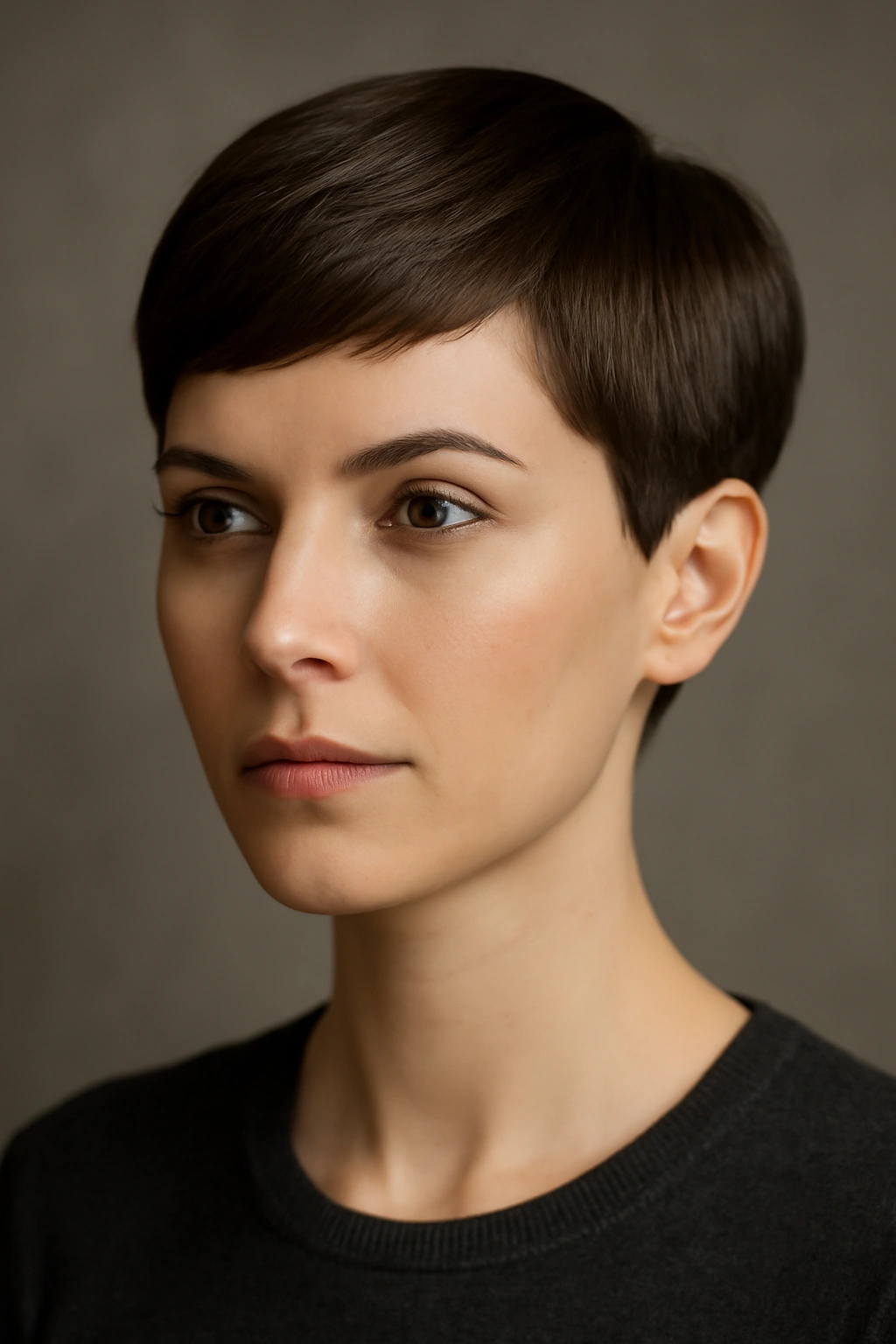
This is the foundation—the cut that defined the pixie style and remains as relevant today as it was decades ago. The classic pixie features short, neatly tapered sides and back, with slightly more length on top (usually 2 to 3 inches) that can be styled either smooth and polished or with subtle texture. The sides typically taper cleanly to the skin, creating a sleek silhouette that flatters most face shapes, and there’s usually a gentle, feminine curve around the ears.
Why This Cut Endures
The classic pixie works because it’s proportional and intentional without being fussy. It requires regular trims (every 4 to 6 weeks) to maintain that clean, defined look, but the styling is straightforward—a bit of product, some finger-combing, and you’re done. It looks polished at a job interview and cool at a concert. The versatility comes from how you style the top: swept back for sophistication, mussed forward for casualness, or styled with a slight quiff for a bit more attitude.
What to Know Before You Commit
- Maintenance is non-negotiable; let this grow out and it loses its shape quickly
- Works beautifully on fine to medium hair; thick hair might need more frequent trims to keep the layers clean
- Pairs well with multiple styling approaches, from gel-slicked to tousled
- Requires a stylist who understands proportion and can create clean, even lines
- Complements angular and rounded faces equally well, though the styling can be adjusted to balance features
Pro tip: Ask your stylist to create a subtle undercut (shorter underneath) even in a classic pixie—it adds dimension without looking intentionally edgy, and it helps the top sit better with less product.
2. The Textured Pixie
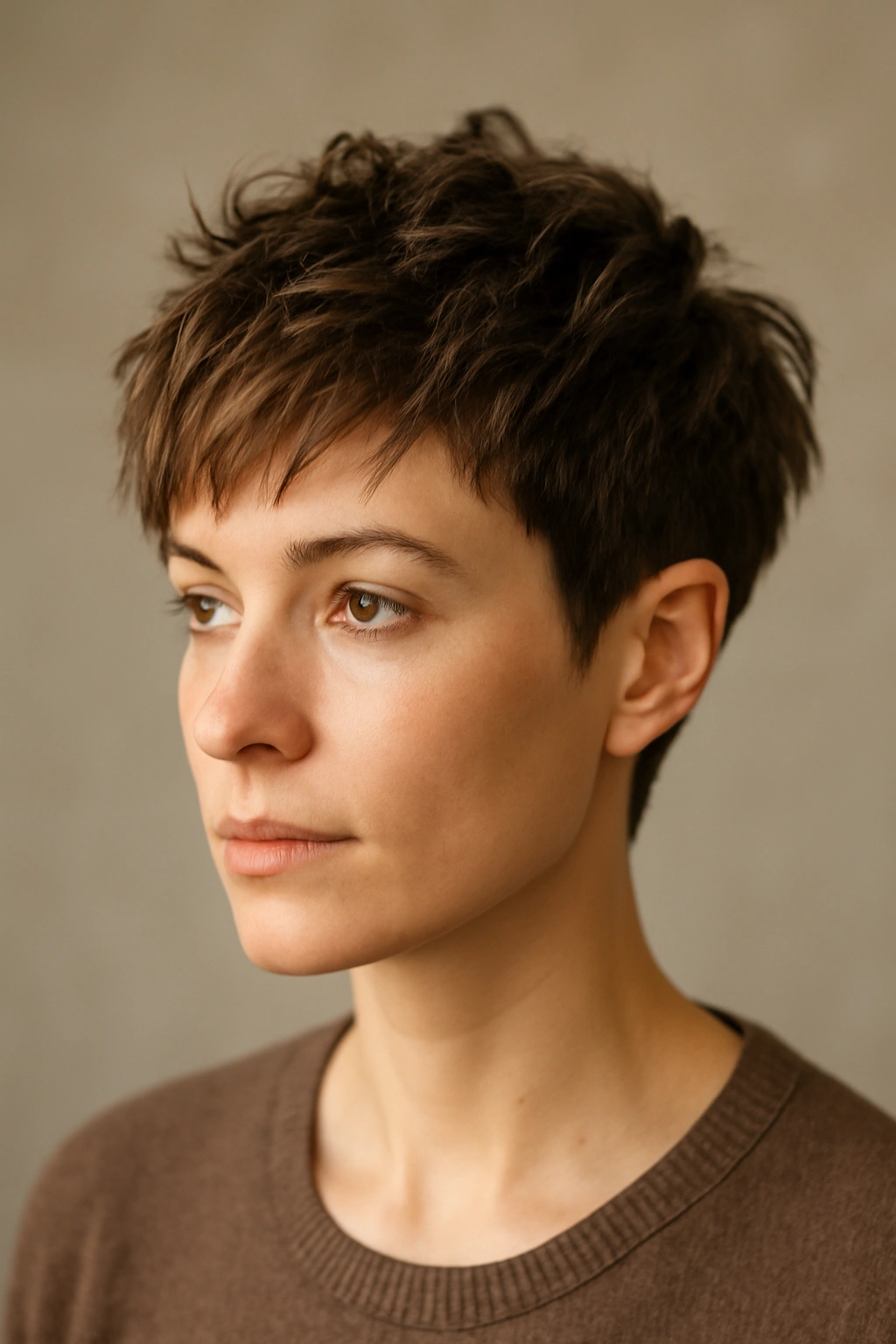
This is the pixie cut for people who love movement and dimension. Instead of blunt, geometric lines, the textured pixie incorporates choppy layers throughout—especially on top—creating a piece-y, fragmented effect. The sides remain short and tapered, but they’re often cut with texture rather than a clean fade. The top is layered aggressively, with varying lengths that create height and allow the hair to separate naturally into individual strands.
The Art of Controlled Chaos
Textured pixies are harder to execute than they look—it’s not random cutting, but rather strategic layering that creates the illusion of effortless dishevelment. The texture actually makes styling easier on most days, because the cut is designed to sit with movement rather than requiring heavy product. Wavy or naturally textured hair thrives with this style; fine, straight hair needs more product and styling attention to maintain the defined, choppy effect.
Styling and Daily Reality
- Works beautifully with a texturizing cream or wax applied to damp hair
- The layering creates natural volume and movement, even without heat styling
- Thicker hair looks less bulky with all the texture work
- Touch-ups are still needed every 4 to 6 weeks, but the style looks great in the grow-out phase because texture masks uneven length
- Pairs well with both minimalist and maximalist personal styles
Worth knowing: If you have straight hair and love the textured look, using a sea salt spray or texturizing product is not optional—it’s essential to making this style look intentional rather than just undone.
3. The Undercut Pixie
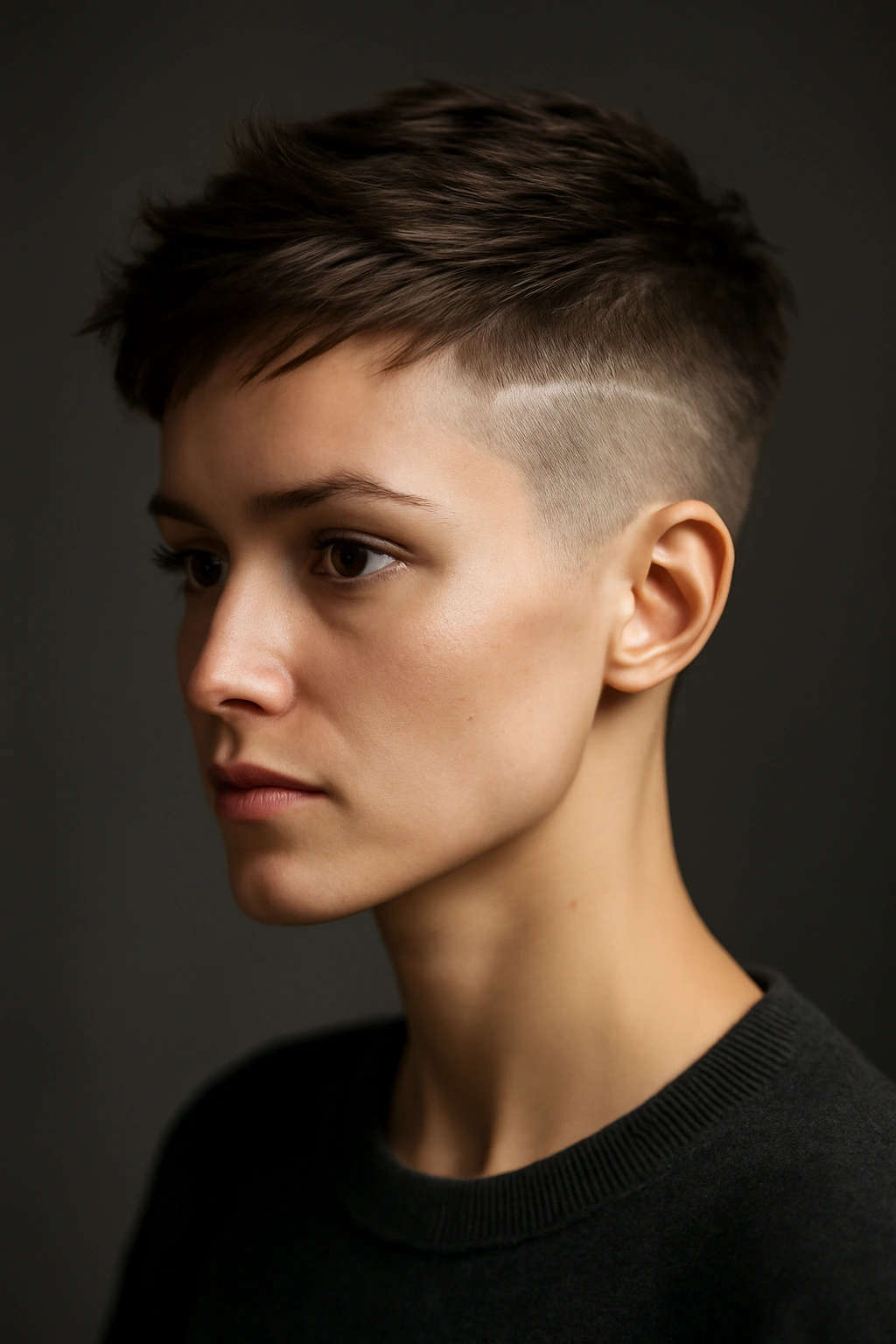
The undercut pixie takes the classic pixie and adds a bold contrast: the sides and sometimes the back are cut extremely short (nearly to the skin or with a visible line of demarcation), while the top remains significantly longer. This creates a striking visual contrast and adds an edge that feels modern and intentional. The top can be short and smooth or textured and layered, but the real statement comes from that shaved or very closely trimmed underneath.
The Visual Impact
An undercut draws attention to your face, bone structure, and the shape of your head—which makes it feel powerful and unapologetic. It’s a style that reads as deliberate, creative, and confident. The contrast between long-on-top and short-underneath is what makes it feel edgy without requiring the top to be aggressively styled or colored. You can dress it in many ways: slicked back for a sleek look, swept to one side, or mussed forward.
Maintenance and Commitment Level
- The undercut itself needs trimming every 3 to 4 weeks to maintain crispness and prevent stubble
- The longer top can stretch to 6 weeks or longer between trims, depending on how fast your hair grows
- Requires a stylist experienced with fades and clipper work
- The contrast is the whole point, so you need to commit to regular undercut maintenance
- Can look incredibly polished or beautifully grungy, depending on your styling approach
Real talk: An undercut pixie is a statement. It reads as intentional and confident. If you’re someone who changes their mind frequently, this might feel like too much commitment to the aesthetic.
4. The Shaggy Pixie
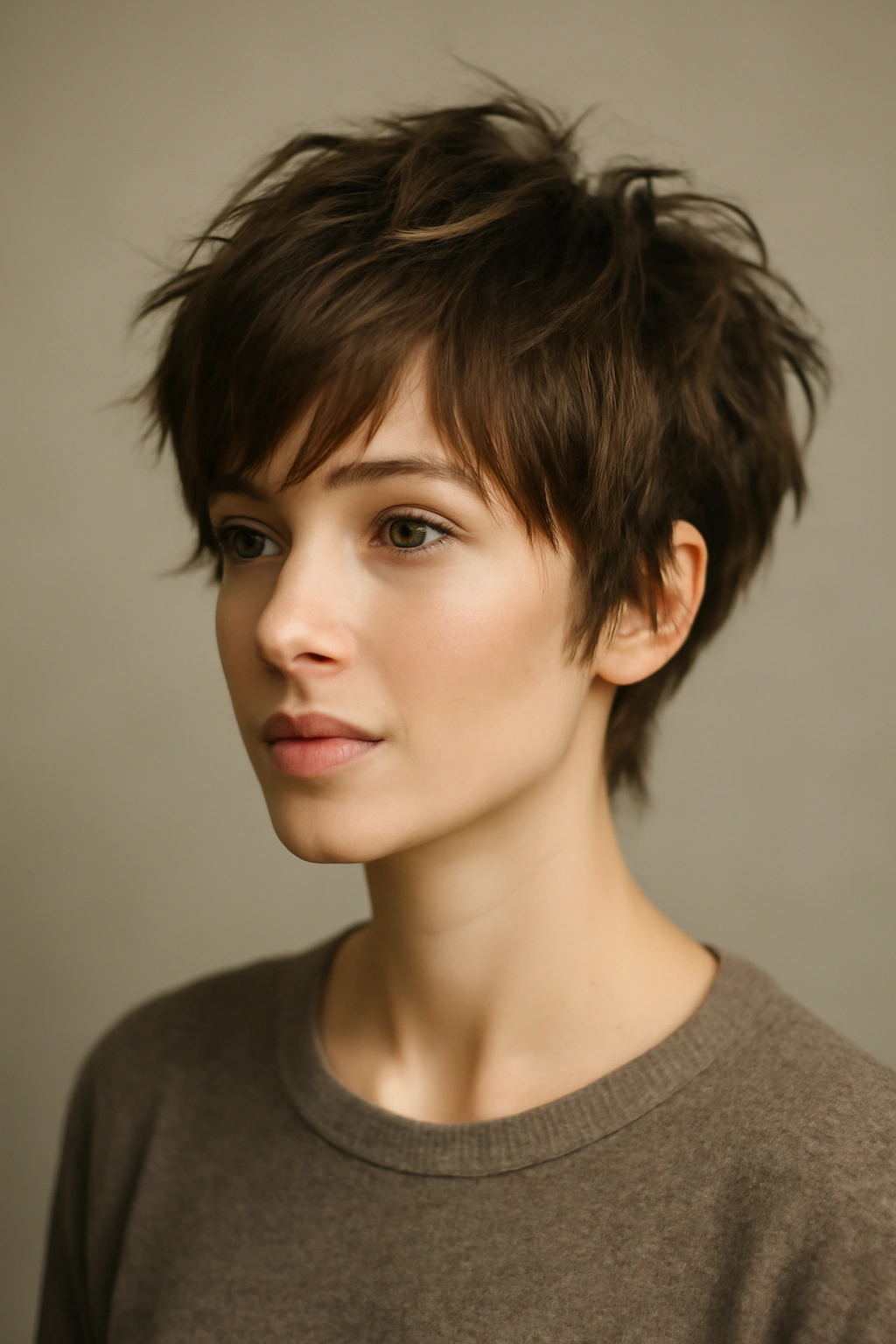
This style brings the rebellious, lived-in energy of 1970s shag cuts into the short-hair realm. The shaggy pixie has longer, choppy, face-framing layers that create movement and a tousled, undone vibe. The sides and back are still short, but they’re not as closely cropped as a classic pixie, and the whole cut is designed to look intentionally messy rather than precise. It’s textured throughout but with more length overall, which gives you more styling flexibility.
The Effortless Appeal
Shaggy pixies are incredibly forgiving. The cut is designed to sit with movement and texture, so a missed styling day or slightly grown-out roots don’t derail the look. The layering creates natural volume, especially for those with fine hair, and the cut works with your hair’s natural texture rather than fighting against it. It’s a style that looks intentional whether you’ve spent time styling it or not—which is part of its appeal.
Making It Work
- Best for those comfortable with a textured, piece-y aesthetic
- Wavy and curly hair naturally play up the shag effect beautifully
- Fine hair benefits from the layering, which creates apparent volume
- Thicker hair needs more aggressive layering to avoid looking heavy
- Pairs well with a lived-in, creative personal style
Worth knowing: A shaggy pixie requires a stylist who truly understands modern shag cutting—it’s not just random choppy layers, but strategically placed cuts that create movement in specific directions.
5. The Blunt Pixie Crop
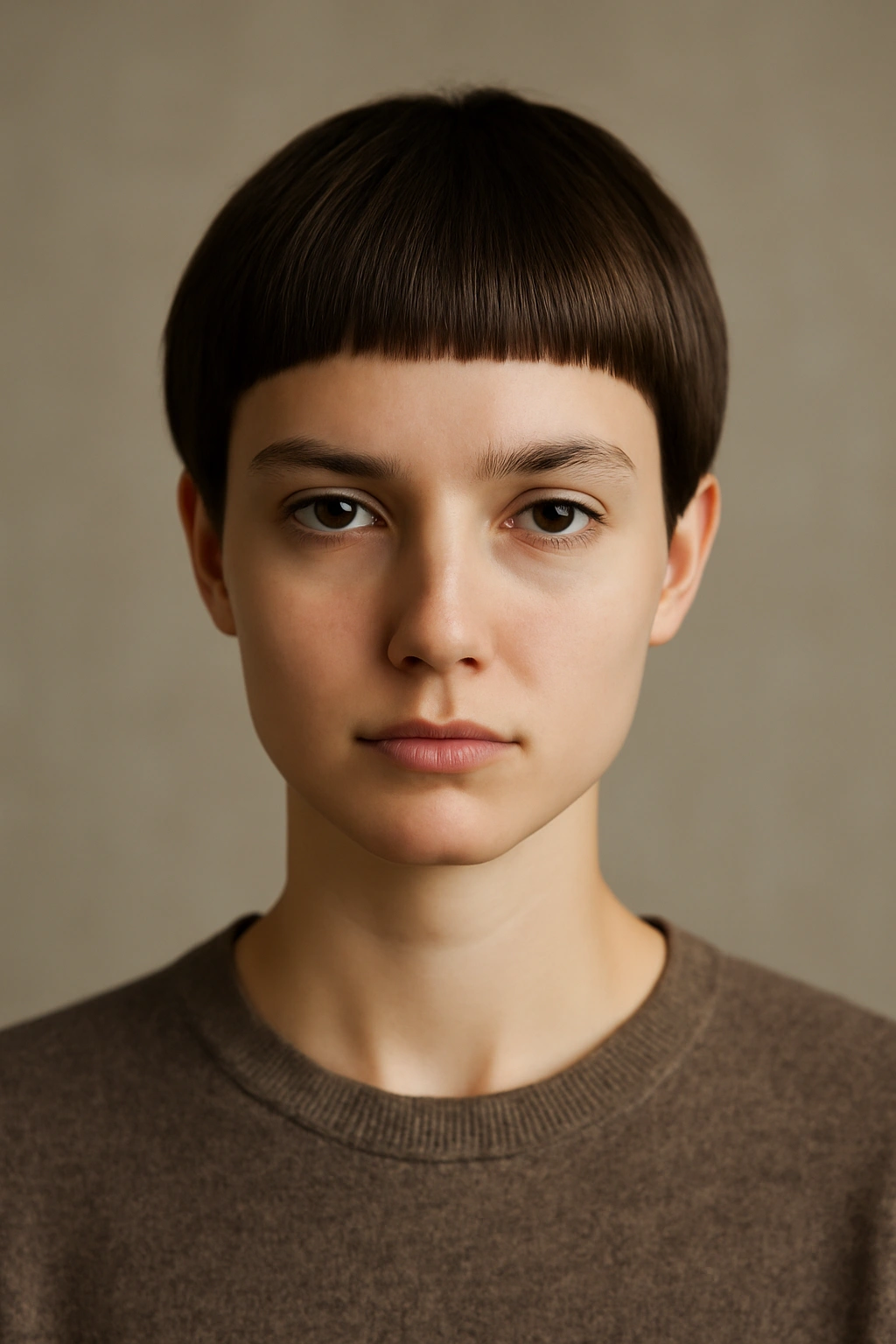
This is the pixie for minimalists and those who love geometric precision. The blunt pixie crop is cut to one clean length (or very close to it) with minimal layering, creating a helmet-like shape that’s almost architectural in its simplicity. The sides are blunt and short, the back is blunt and short, and the top is blunt and slightly longer—creating a streamlined silhouette. There’s no texture work, no choppy layers; just clean, even lines.
The Power of Simplicity
A blunt pixie is incredibly striking because it removes all distraction and puts your face, features, and bone structure front and center. It’s a style that demands presence and confidence—there’s nowhere to hide with a cut this stark. The simplicity is actually what makes it bold; the cut is so clean and intentional that it reads as a deliberate artistic choice. It works beautifully on those with strong facial features, angular bone structure, or who simply love the streamlined aesthetic.
Styling Approach
- Minimal product required; the cut does the work
- Works beautifully with no styling at all—slicked back naturally
- Creates a slightly sculptural or androgynous effect
- Perfect as a canvas for scalp tattoos, shaved designs, or color work if you choose
- Requires precise trims every 4 to 5 weeks to maintain the clean lines
Pro tip: A blunt pixie crop looks stunning with a slight shine—try a matte pomade or gel to enhance the clean lines without adding heavy product.
6. The Tapered Pixie
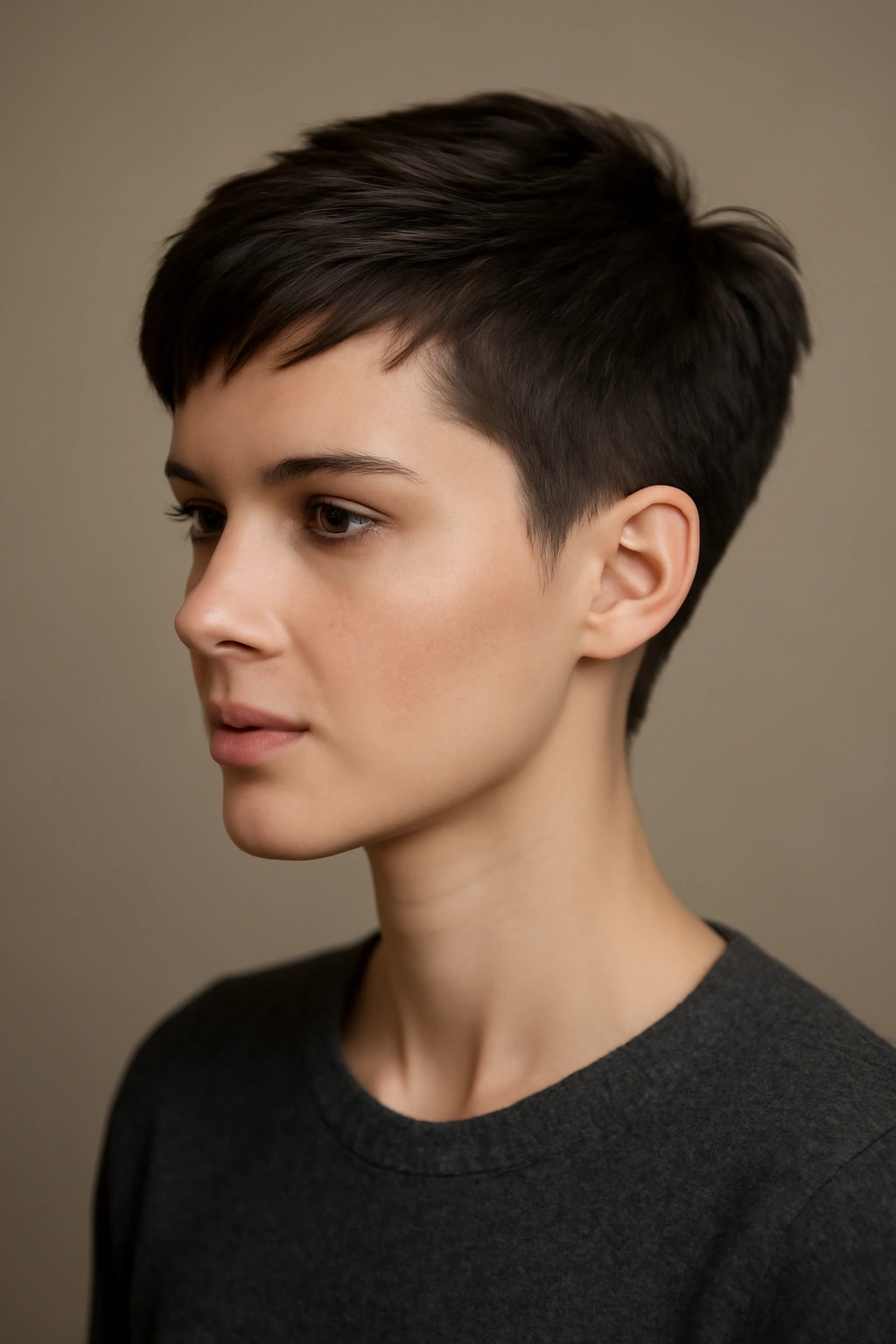
The tapered pixie is the bridge between classic and edgy. It has short sides and back that gradually get longer as they move toward the top, creating a smooth visual progression rather than distinct contrast (like an undercut). The taper is clean and intentional, but not as dramatic as an undercut. The top is longer and can be textured, layered, or smooth, depending on your preference. It’s a versatile cut that looks sharp and modern without being avant-garde.
The Balanced Approach
A tapered pixie offers the visual interest of an undercut with more styling flexibility and easier maintenance. The gradual length creates flattering proportions and works well on most face shapes. You get definition and structure without the bold statement of an undercut. The taper also means the style looks intentional as it grows out, because the longer top fills in gradually rather than looking unkempt.
Daily Reality
- Requires trims every 5 to 6 weeks to maintain the clean taper
- Works beautifully with minimal styling
- The gradual length transition is more forgiving than a blunt line
- Pairs well with both professional and creative personal styles
- Fine and thick hair both respond well to a tapered pixie
Worth knowing: Ask your stylist to show you how to style the taper—a bit of product can emphasize the clean lines, or you can style it for a softer, more textured look depending on your mood.
7. The Curly Pixie
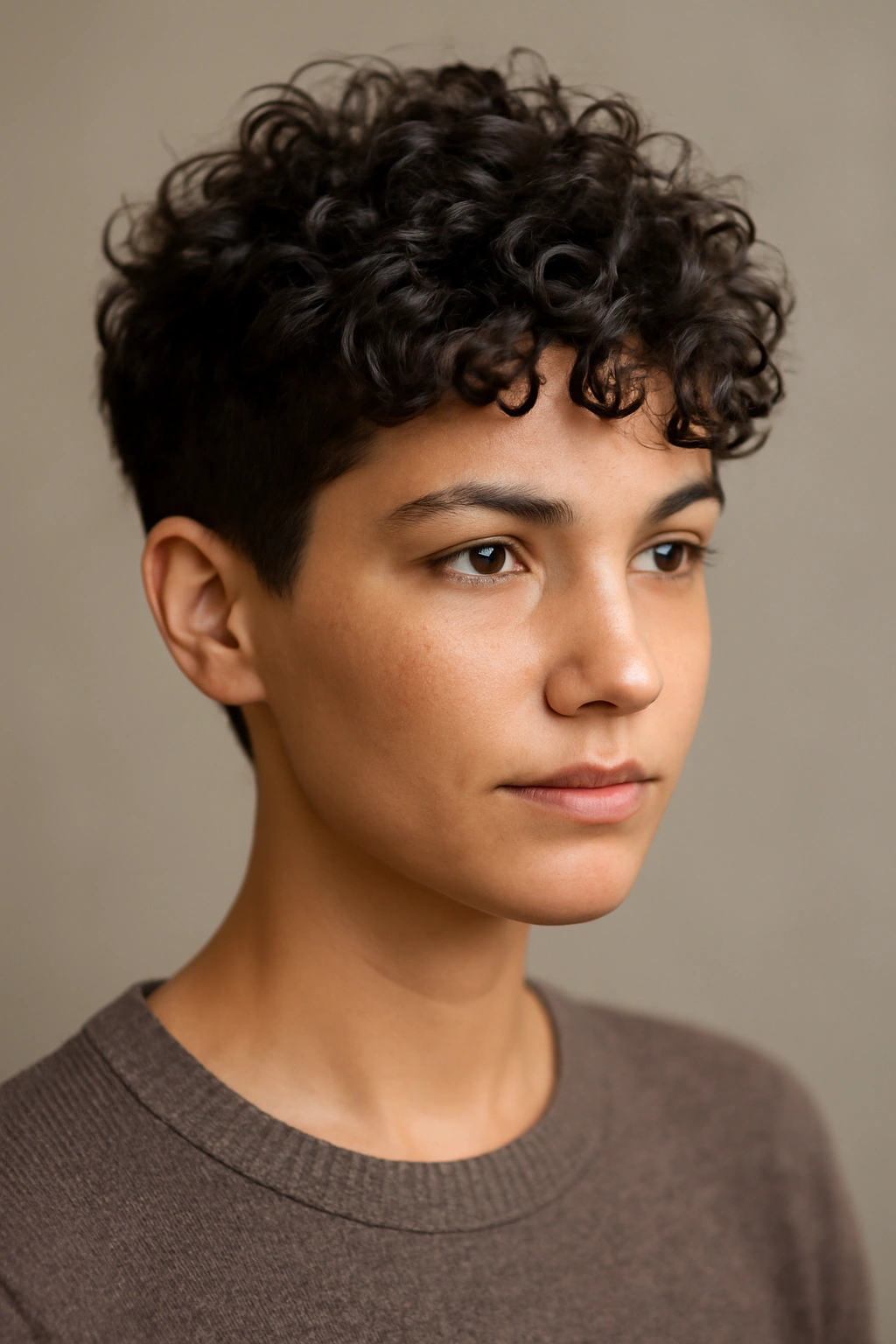
This style celebrates natural curl and texture from the start. A curly pixie is cut shorter than it might appear when dry—usually 1 to 2 inches on top and even shorter on the sides—but the natural curl and coil pattern make it appear fuller and longer. The cut is designed with the curl pattern in mind, with layers that work with the texture rather than against it. When your curls shrink up, the cut remains intentional and controlled.
Working With Your Texture
A curly pixie is incredibly freeing for those with natural texture who are tired of fighting their hair’s natural state. The shorter length removes bulk while actually appearing fuller due to the curl pattern. You lose the weight that pulls curls down, and the result is springy, voluminous, and effortlessly textured. The cut should emphasize your curl pattern rather than trying to minimize it.
Curl Care Meets Styling
- Works best on those with natural curl or coil patterns
- Requires a stylist experienced with cutting textured hair (wet or dry cutting methods vary)
- Styling is minimal: use leave-in conditioner and your preferred cream or gel, then either air dry or use a diffuser
- The shorter length means you need to trim more frequently (every 4 to 6 weeks) to maintain definition as curls grow
- Absolutely transformative for those with thick, curly hair who’ve been hiding their texture
Real talk: A curly pixie only works if your stylist truly understands curl-cutting techniques. A straight-hair-trained stylist won’t understand how to account for shrinkage and how to cut the curl pattern itself.
8. The Feminine Pixie Bob
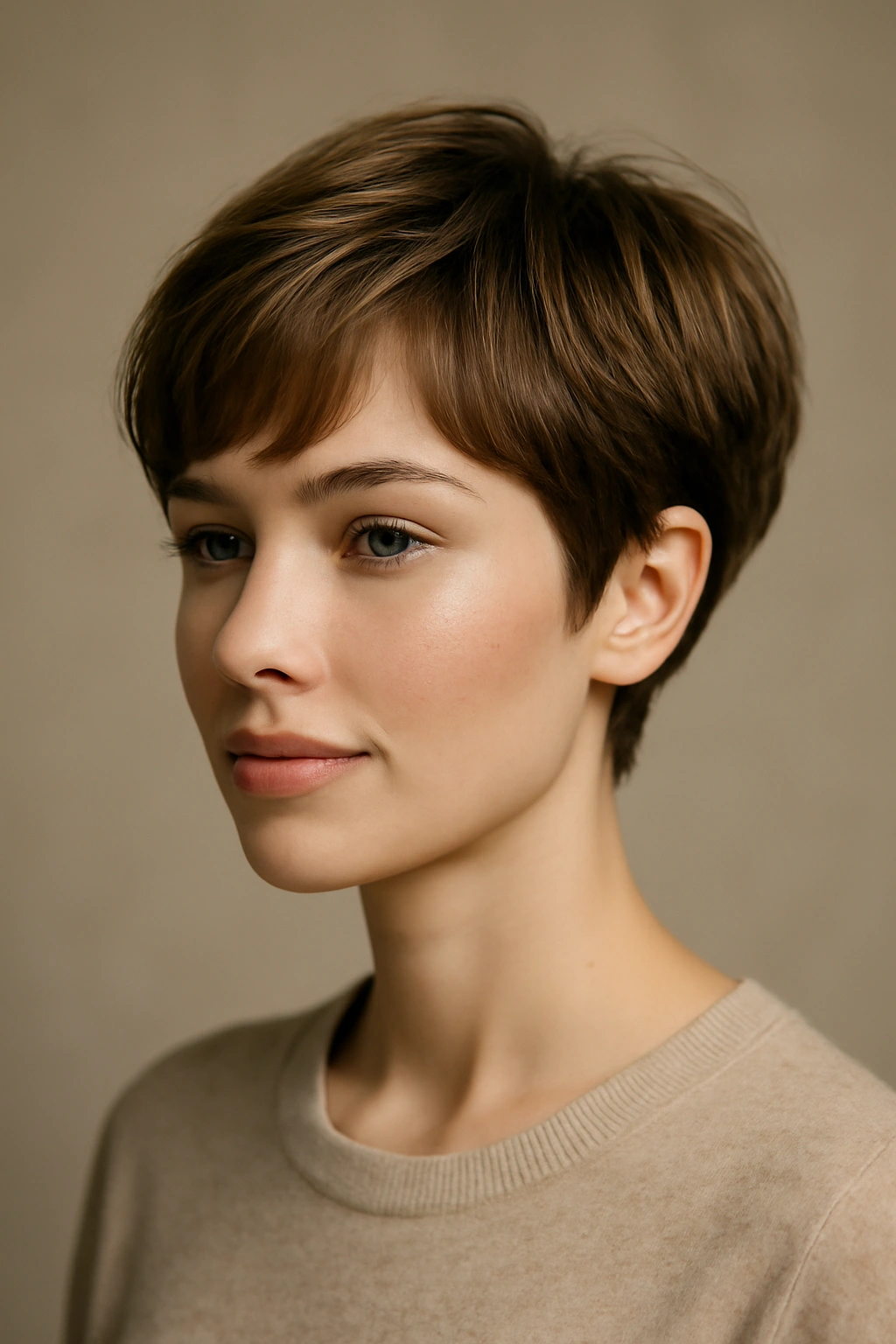
This hybrid style is exactly what it sounds like: the length and some of the softness of a bob, but cut with pixie proportions and structure. It’s slightly longer than a traditional pixie, usually 2 to 4 inches on top, with tapered or short sides that maintain that clean, sharp silhouette. The longer top allows for more styling versatility than a traditional pixie, and the soft, rounded shape feels more traditionally feminine while still maintaining the modern edge of a pixie.
The Best of Both
A feminine pixie bob appeals to those who love the structure and sharpness of a pixie but want a bit more length and styling options. You can style the top down for a softer, more romantic look, or wear it swept back and textured for an edgier vibe. It’s the style that works for someone transitioning to short hair but not ready to fully commit to a tight pixie, or someone who loves pixies but wants variety in how they style it.
Versatility and Styling
- Allows for multiple styling approaches with the same cut
- Works beautifully with soft waves or texture on top
- The longer length gives face-framing possibilities
- Requires trims every 5 to 6 weeks, though the grow-out phase is forgiving
- Pairs well with both girly and edgy personal styles depending on how you style it
Worth knowing: This cut shines when you have texture or can create waves—it softens the pixie structure while keeping the modern edge.
9. The Faux Hawk Pixie
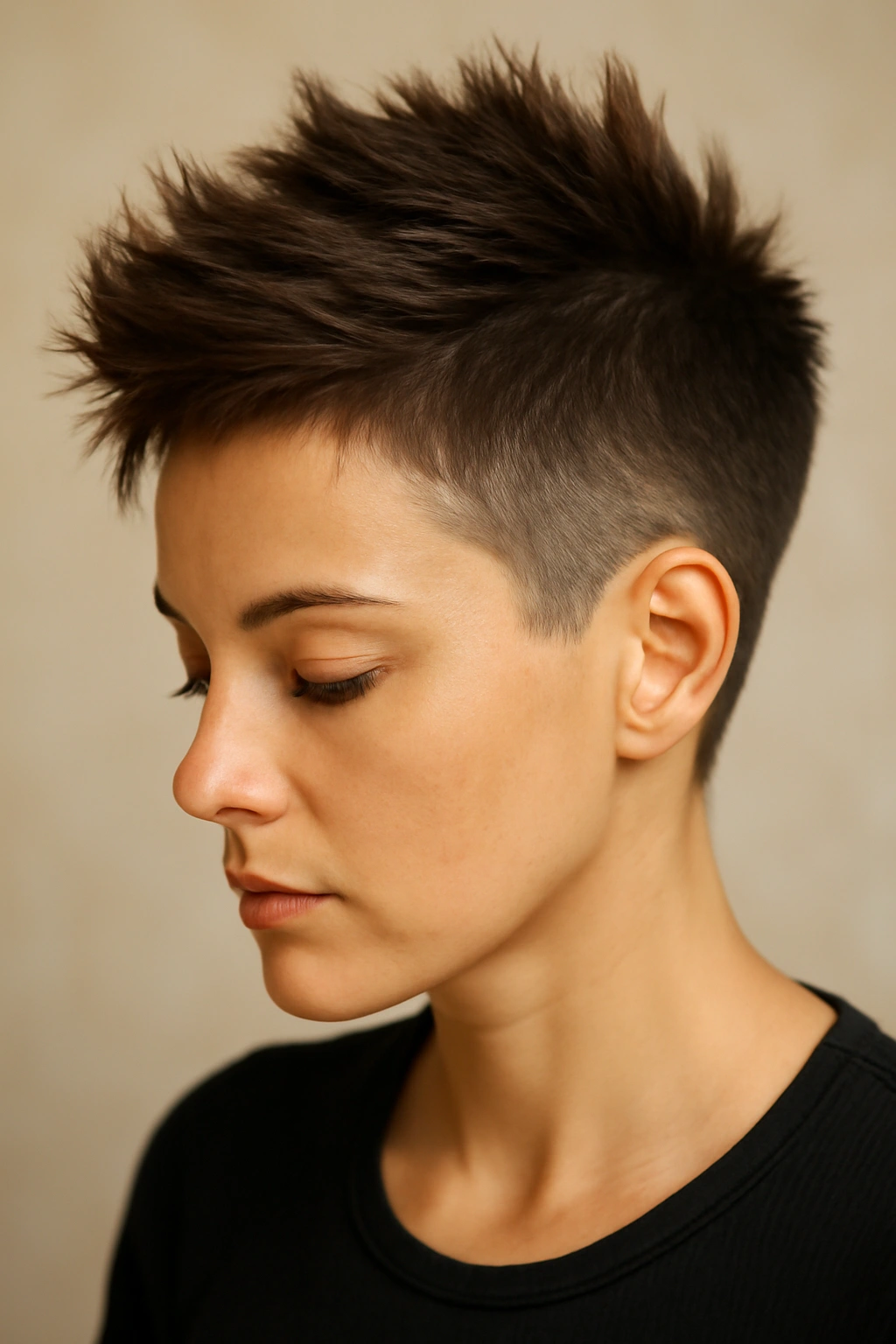
This is the pixie for those who want an edgy statement without shaving their head. The faux hawk pixie has very short sides and back, with a significantly longer stripe of hair down the center of the head (from forehead to nape). The center section is longer and can be textured, layered, or smooth, creating a visible “hawk” effect when styled up, but blending into a regular pixie when styled down or slicked back. It offers two looks in one cut.
Statement and Versatility
A faux hawk pixie reads as bold and creative—it’s clearly an intentional choice—but it’s actually more versatile than it first appears. You can style it as a true faux hawk with the center section standing tall and the sides visible, or you can style it as a regular pixie with texture and movement. Depending on how you style it, it can read as punk, creative, casual, or edgy. It’s the cut for someone who wants to be noticed but also wants flexibility.
Styling Reality
- Requires a stylist comfortable with dramatic contrast and proportion
- Styling options range from product-free and soft to heavily pomaded and graphic
- Works best on those with thicker hair (finer hair might not hold the contrast as boldly)
- The sides need touching up every 4 weeks; the center can go longer
- Absolutely works for both men and women, though it reads differently depending on styling and personal presentation
Pro tip: A faux hawk pixie is a style that benefits from playing with product—try different texturizing creams, pomades, and gels to find the look that feels most like you.
10. The Layered Pixie
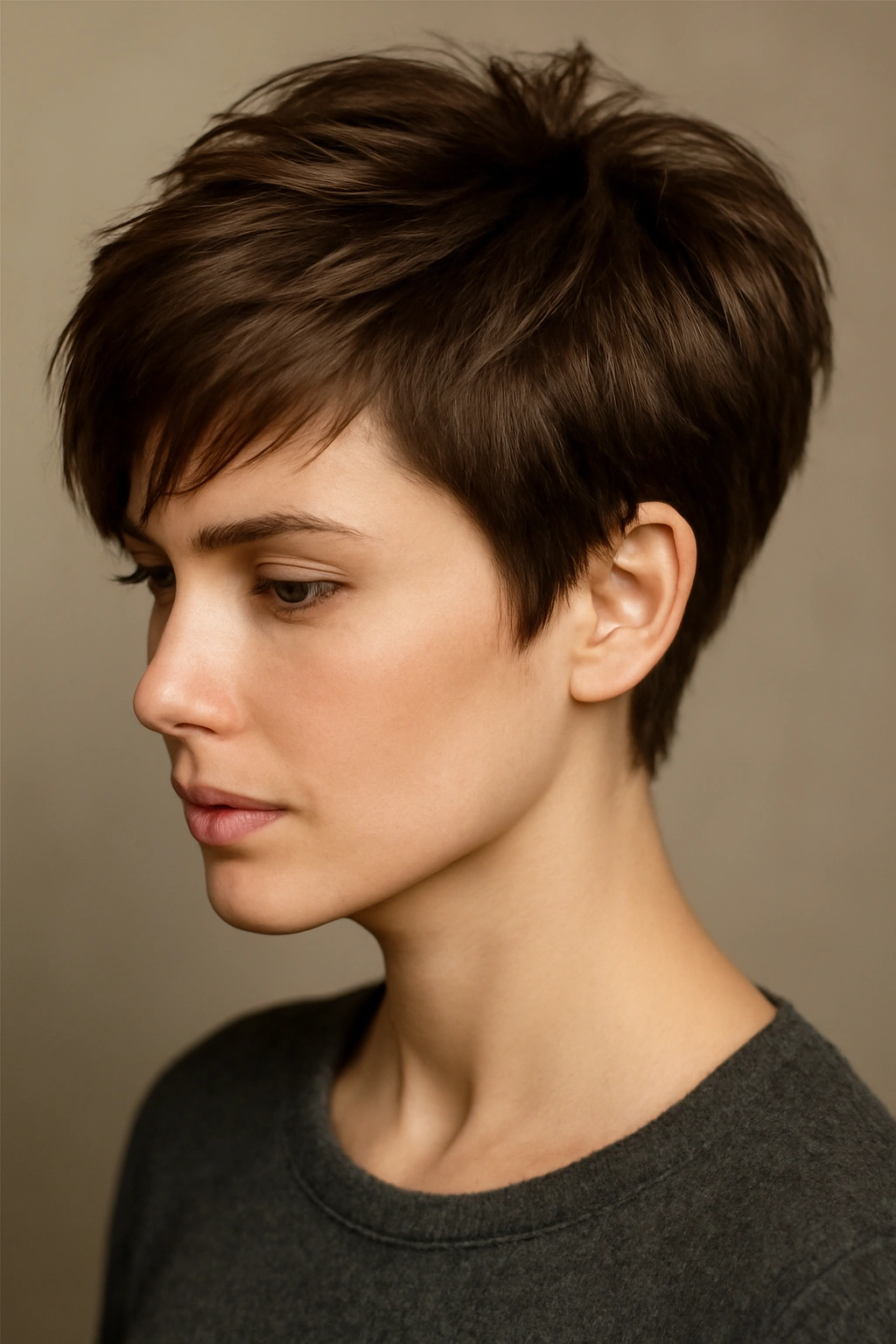
The layered pixie is all about movement and dimension created through careful, strategic layering throughout the entire cut. Unlike a shag (which is specifically inspired by ’70s aesthetics) or a textured pixie (which is more choppy), the layered pixie creates flowing, stacked layers that create height and volume without looking aggressively piece-y. The sides are still short, but the top is built with layers at different lengths that work together to create shape and movement.
Creating Dimension
Layering is the answer for those who want short hair but don’t want it to feel flat. The layers create the appearance of more volume, add movement, and give you styling flexibility. You can smooth the layers for a more polished look or tousle them for something more undone. The cut is designed to sit well without heavy product, but can absolutely take styling if you want to emphasize the dimension.
Who Benefits Most
- Fine hair that needs visual volume (the layers create the illusion of thickness)
- Those with straight hair who want movement without permanent waves
- Anyone who likes the idea of a pixie but wants more visual interest than a blunt cut
- Wavy hair looks beautiful with layering; the natural texture plays up the movement
- Works on most face shapes; the layers can be placed strategically to frame or balance features
Worth knowing: A well-executed layered pixie requires a skilled stylist who understands how layers work together to create a cohesive shape. This isn’t a cut for someone who’s learning; you want someone experienced.
11. The Side-Swept Pixie
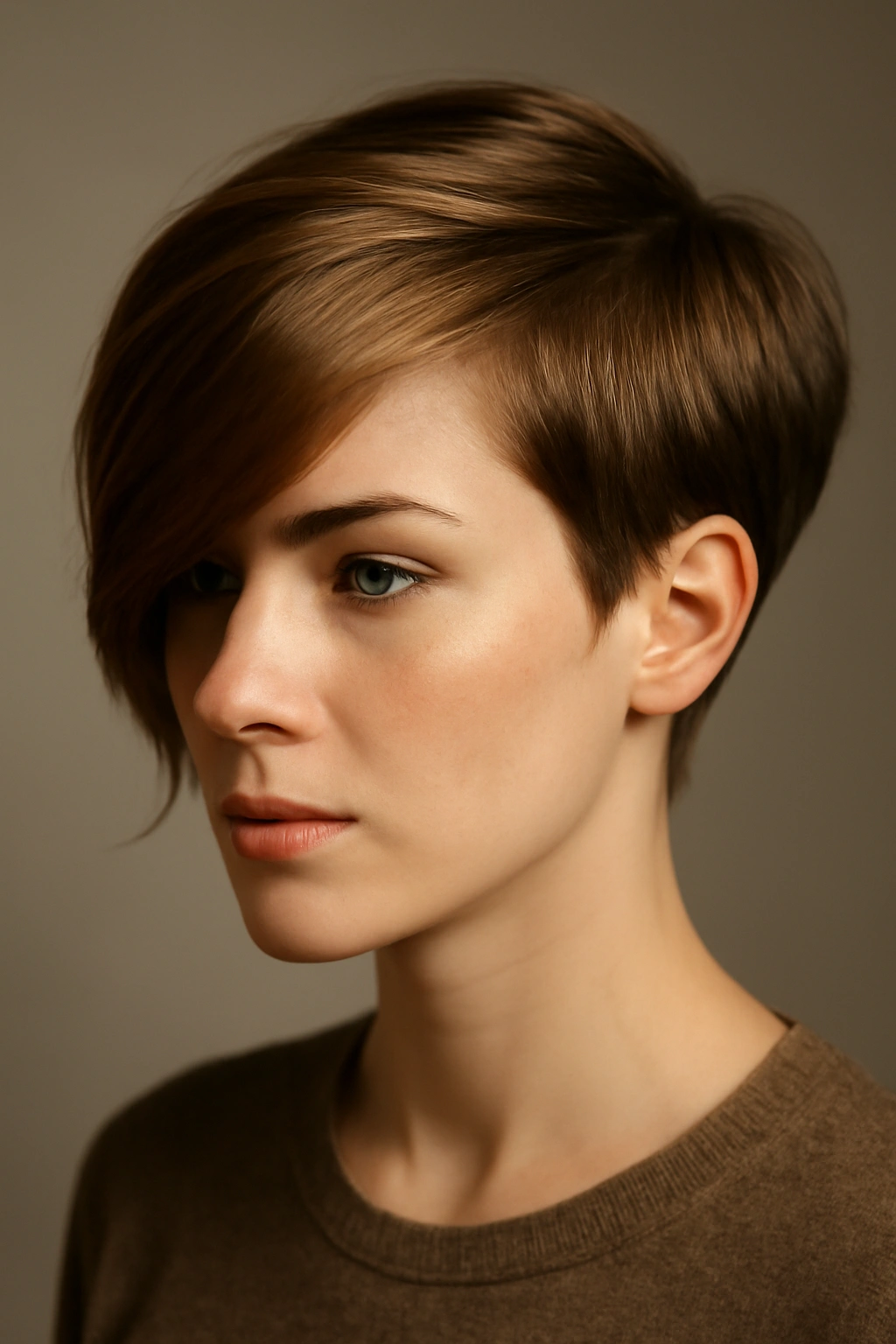
This style emphasizes asymmetry and flow. The side-swept pixie has longer hair on one side that sweeps across and covers part of the face, while the other side is clipped shorter and tapered. The dramatic length difference creates movement and draws the eye across the face. It’s a style that’s simultaneously edgy and romantic, depending on styling. You get visual drama from the asymmetry without requiring an undercut or shaved head.
The Play With Asymmetry
A side-swept pixie is flattering and interesting. The longer side can frame the face, and the shorter side exposes the opposite side of your face and neck. It’s a cut that encourages you to think about how you part and style your hair. Some days, you can wear it heavily swept and dramatic; other days, you can blend it into a more balanced pixie. It’s the cut for someone who loves movement and isn’t afraid of a little drama.
Styling and Maintenance
- Requires some attention to how you part and style—the cut is designed to be worn a specific way
- The longer side grows noticeably and becomes obvious after 5 to 6 weeks
- Pairs beautifully with hair color, especially asymmetrical color that emphasizes the cut’s geometry
- Works best on those with straight or slightly wavy hair; very curly hair can be harder to style into the intended sweep
- The asymmetry is what makes it special, so commitment to the styling is part of the package
Real talk: A side-swept pixie reads as intentional and creative. It’s the choice for someone who’s thought about their style and made a deliberate aesthetic decision.
12. The Disconnected Pixie
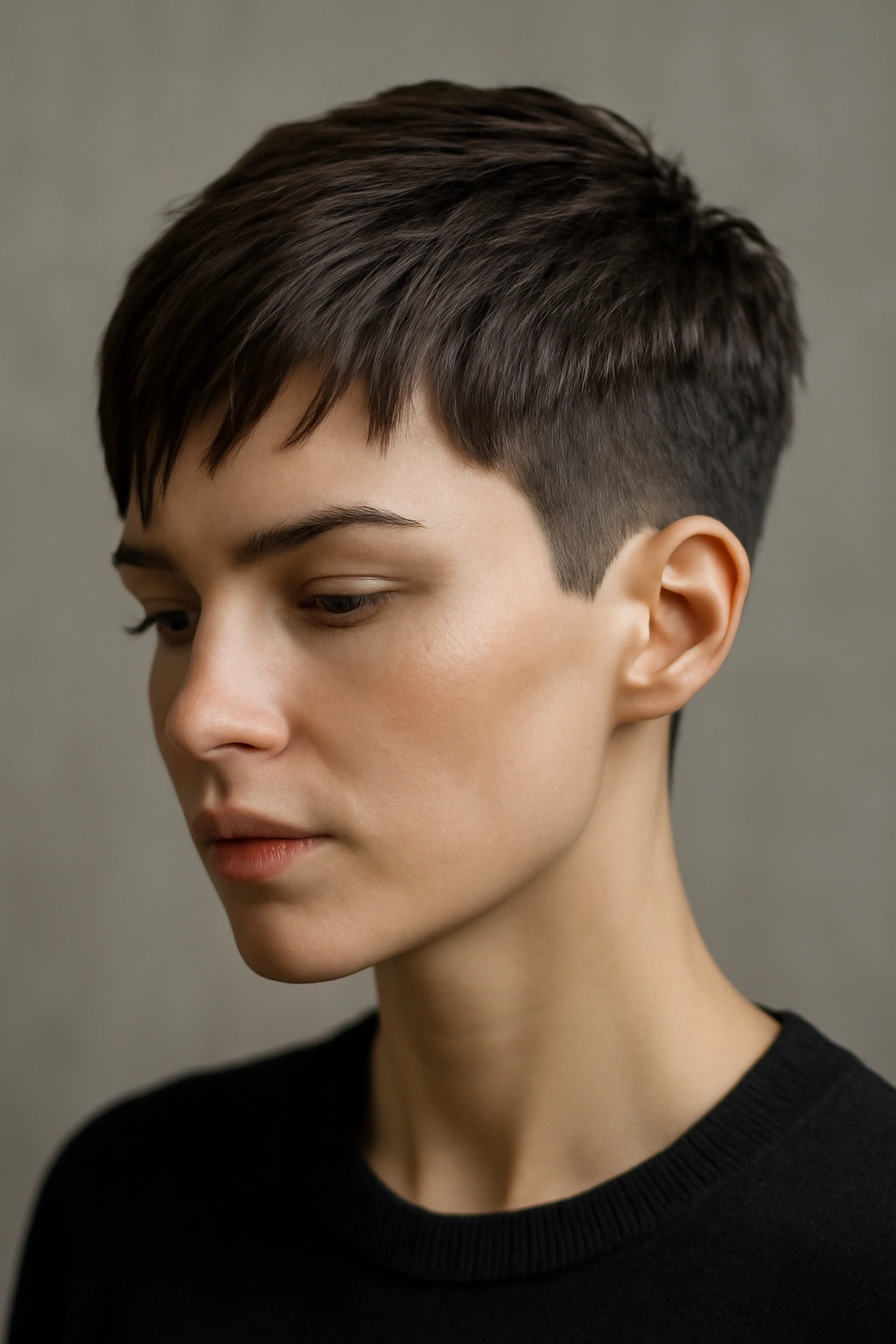
The disconnected pixie takes contrast to an artistic level. Rather than a smooth taper or gradual fade, the cut features distinct, separated sections—the sides are one length, the back is another, and the top is a third—with visible lines of demarcation between each section. It’s architectural and intentional, reading as sculptural rather than soft. The contrast creates clear visual division and a modern, graphic quality.
Geometric Beauty
A disconnected pixie is for those who love the idea of a pixie but want something more visually complex and artistic. The cut creates distinct planes and angles, which can be emphasized through color work or styling. It reads as intentionally avant-garde without requiring extreme shortness or shaving. The geometric quality is what makes it striking—it’s clearly not a grown-out regular pixie, but something thoughtfully designed.
Styling Approach
- The clean lines are usually emphasized through sleek styling or matte product
- Works beautifully as a canvas for color blocking or multi-color work
- Requires a stylist with artistic vision and strong technical skills
- The distinct lines need to be re-established every 4 to 6 weeks
- Pairs well with bold personal style and a willingness to be visually interesting
Worth knowing: This is the cut for someone who loves having a strong visual statement and doesn’t mind that the cut is obviously intentional and deliberate.
13. The Androgynous Pixie
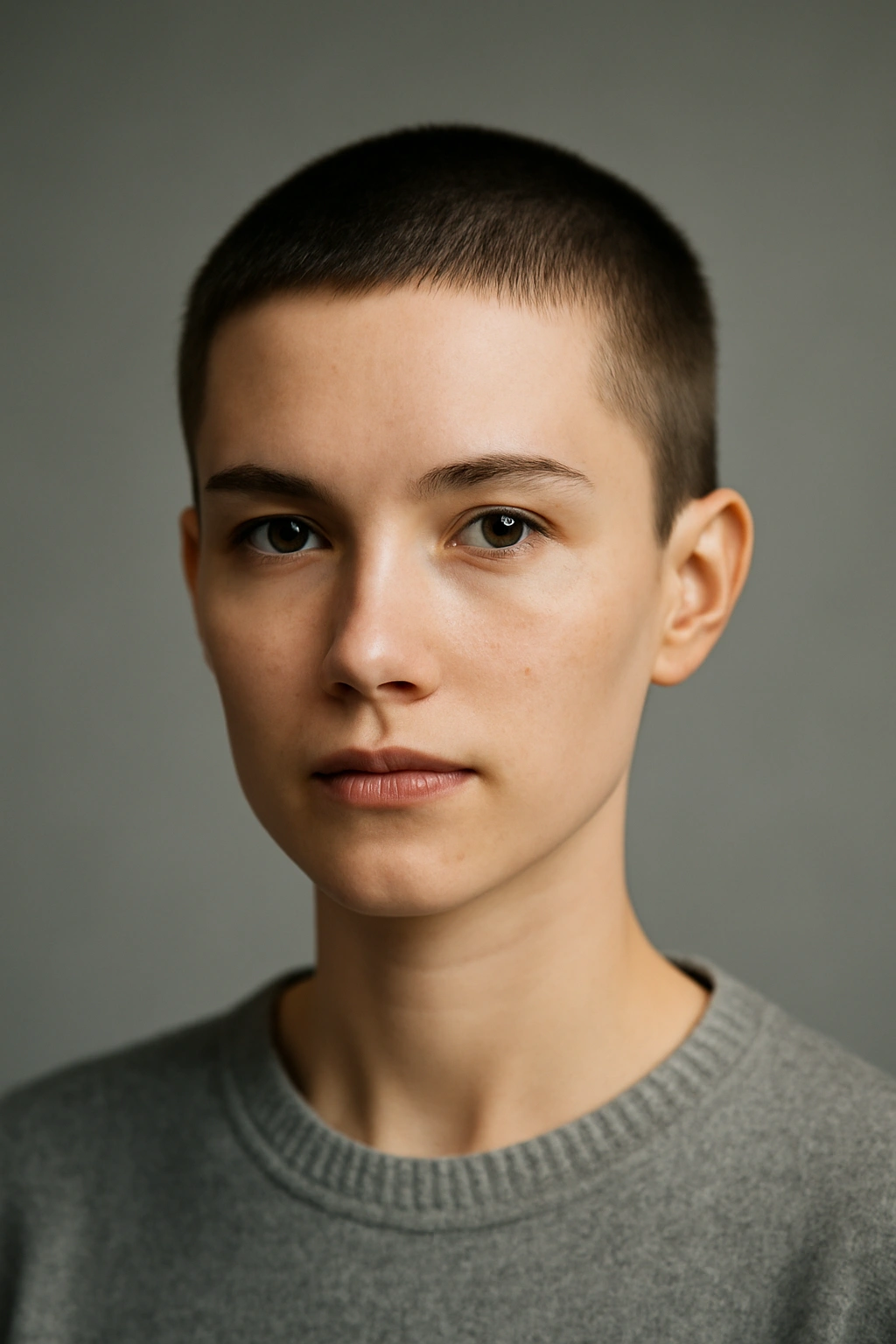
This pixie embraces a completely neutral aesthetic—it’s neither masculine nor feminine, but rather transcends gender presentation altogether. The cut is typically very short throughout with minimal difference between lengths, clean lines, and a streamlined silhouette. It’s similar to a blunt pixie crop but with more attention to creating a completely neutral visual statement. The styling is intentionally minimal and geometric.
Beyond Binaries
An androgynous pixie is powerful because it removes gendered markers and creates space for personal presentation without expectation. It’s a style that works beautifully on anyone regardless of gender or presentation, and it reads as confident and intentional. The simplicity is the statement—the cut is so clean and stripped-down that it becomes about the person wearing it, not about the hairstyle itself.
The Styling Philosophy
- Minimal to no product, clean lines emphasized through precision cutting
- Works as a canvas for any personal style from androgynous to maximalist
- The short length is freeing—no gender-coded styling expectations
- Requires regular trims (every 4 to 5 weeks) to maintain the clean lines
- Absolutely works on all hair types, face shapes, and personal presentations
Pro tip: An androgynous pixie can be styled with minimal product for ultimate simplicity, or it can take sculptural elements like geometric designs or shaved patterns if you want to add visual interest.
14. The Grown-Out Pixie
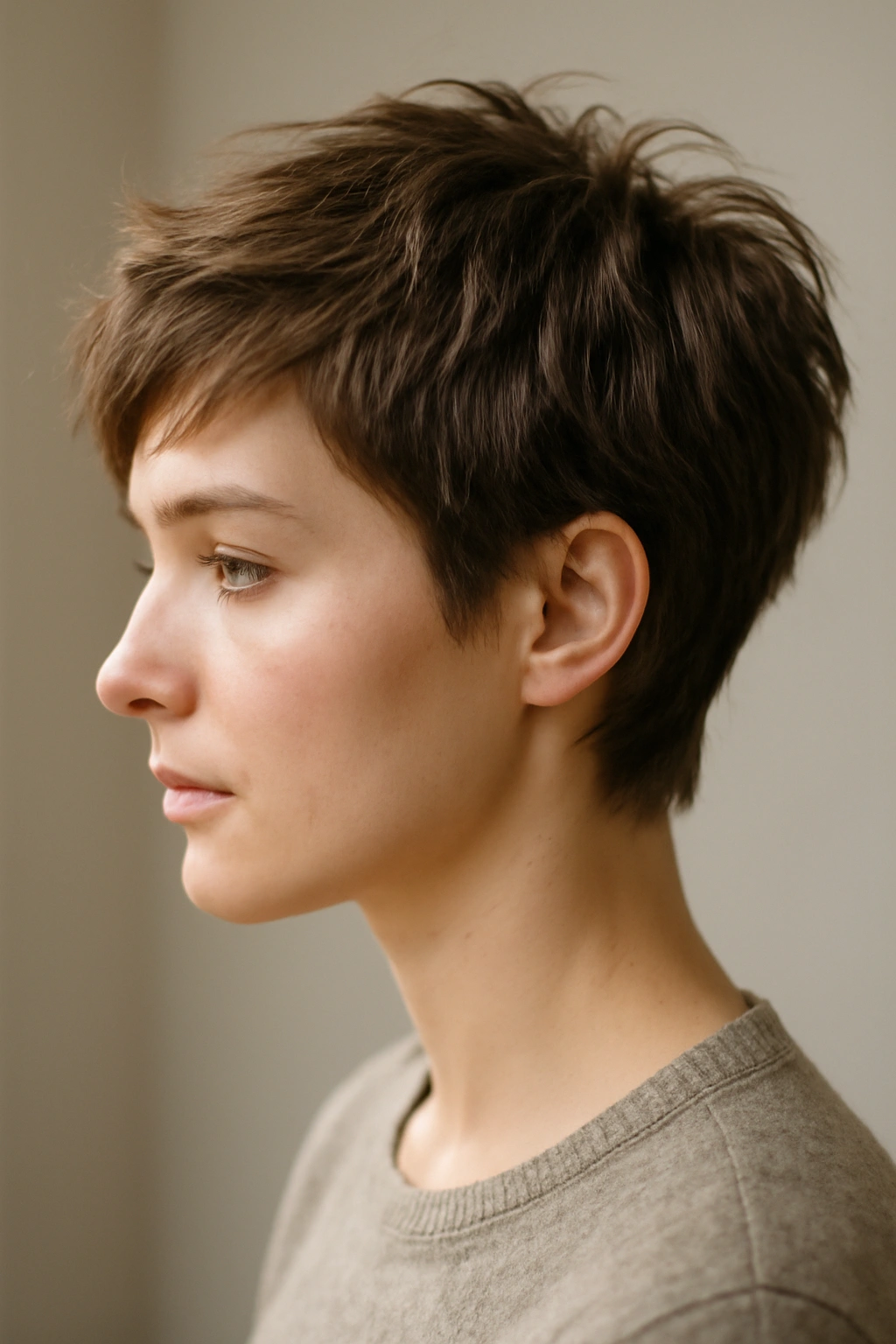
This is technically a styling approach as much as it is a cut, but it’s distinctive enough to warrant its own category. The grown-out pixie is the 4 to 8-week-mark version of a pixie where the top has grown slightly longer, creating a transitional length that’s longer than a pixie but shorter than a bob. It has texture and volume from the growth phase, and it reads as intentionally undone and casual. It’s the style that emerges naturally if you don’t maintain your pixie with tight trims.
The Lived-In Aesthetic
A grown-out pixie is beautiful because it’s real and authentic. There’s no performance of perfection; it’s a style that happens organically. The slightly longer top creates movement and texture, and the longer grow-out phase means you need less frequent trims. It’s less labor-intensive than a maintained pixie, and it reads as relaxed and approachable rather than sharp and intentional.
Embracing the In-Between
- The grown-out phase is actually part of the style, not a failure to maintain it
- Requires a styled-down, textured approach rather than precise grooming
- Works beautifully with wax, texturizing cream, or salt spray for that intentionally undone effect
- The less frequent trimming (every 6 to 8 weeks) is less demanding on your time and budget
- Pairs well with a relaxed, casual personal aesthetic
Worth knowing: If you love the idea of a pixie but don’t want to commit to tight maintenance, embracing the grown-out phase and styling it intentionally might be your sweet spot.
15. The Two-Tone Pixie
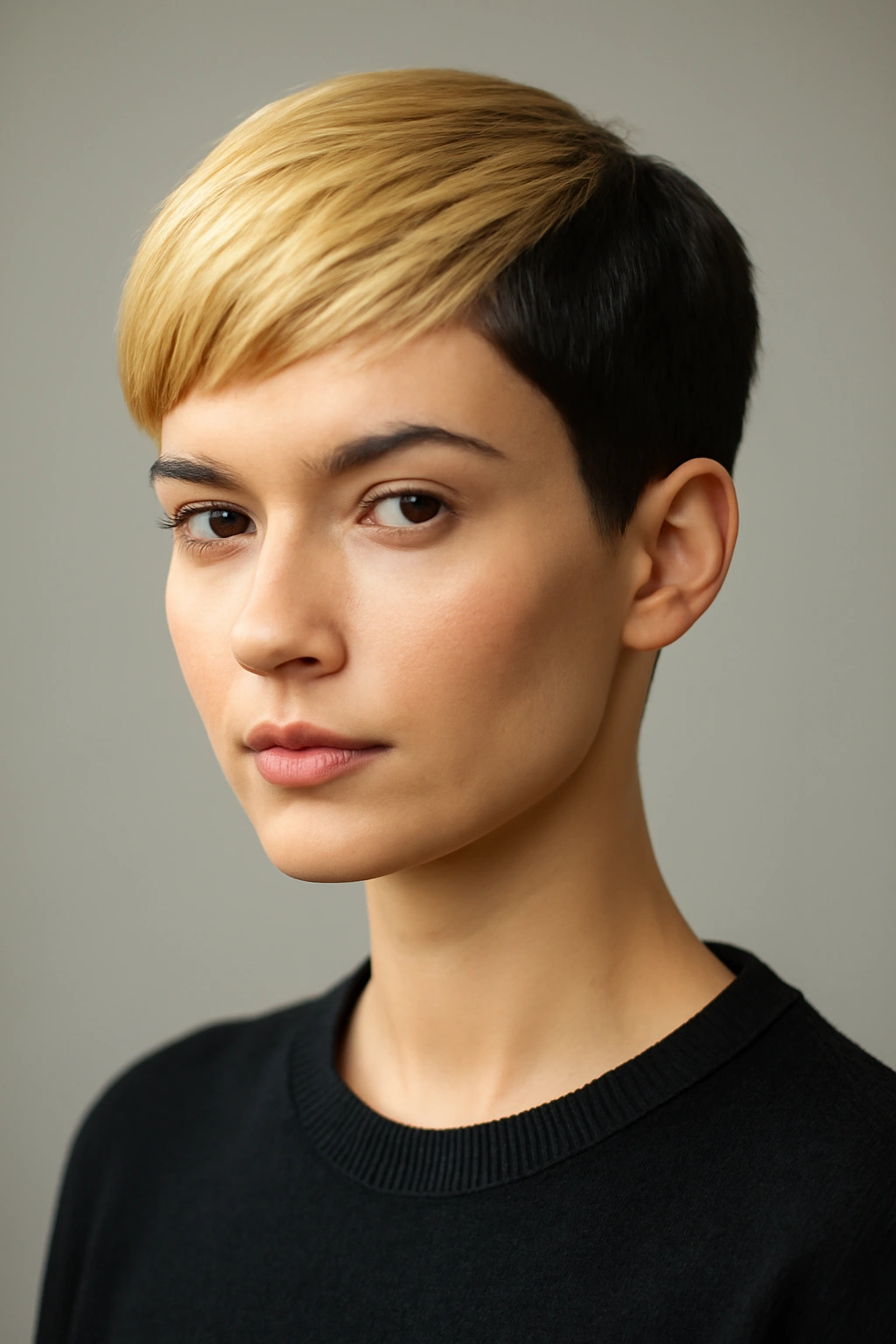
This style uses color as a major design element. A two-tone pixie features distinct color separation—often with one color on the sides/back and a contrasting color on the top, or a color fade from one shade to another. The cut itself might be a classic pixie, undercut, or layered pixie, but the color work is what makes it truly distinctive. The two tones are usually high-contrast (blonde and brunette, pastel and jewel tone, dark and neon), creating a graphic visual statement.
Color as Cut
Two-tone pixies are striking because the color amplifies the geometry of the cut. If you have an undercut, the color separation makes it even more dramatic. If you have layers, the color creates visual depth and movement. The color work requires commitment—maintaining two distinct tones means frequent color appointments and touch-ups. But the visual payoff is substantial; you’re creating a one-of-a-kind personalized design.
The Commitment Level
- Requires a skilled colorist who understands how color interacts with hair texture and cut geometry
- Color maintenance is the main commitment; touching up might be needed every 4 to 6 weeks depending on the colors
- Works best on those with darker hair as a base (pastels and brights show up better on lighter or pre-lightened hair)
- The cut and color work together—a well-designed two-tone pixie considers both simultaneously
- Pairs with bold personal style and a willingness to be visually striking
Real talk: A two-tone pixie is unquestionably a statement. It announces that you’ve made an intentional, artistic choice with your appearance. If you love this idea, commit to it fully.
16. The Slicked-Back Pixie
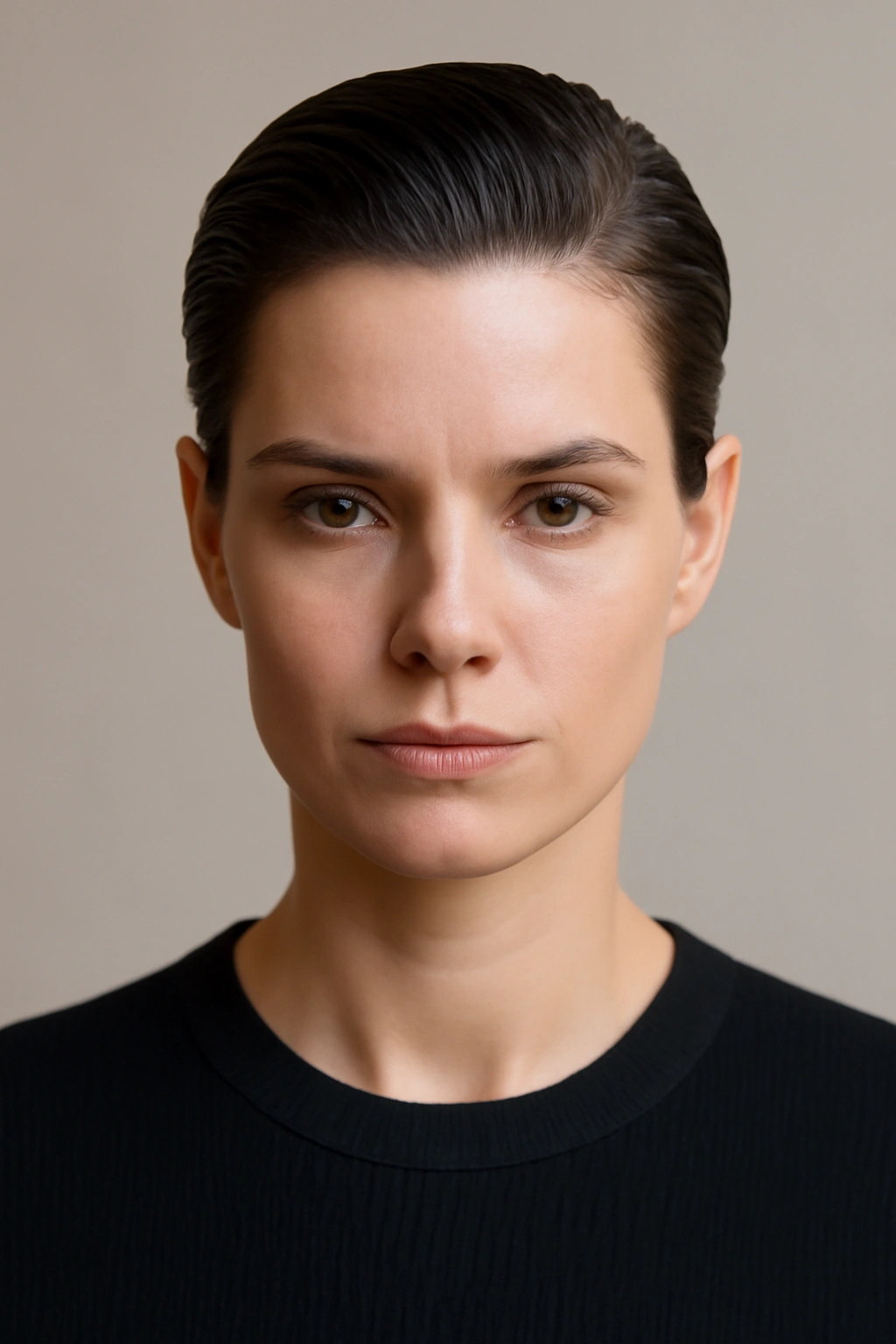
This style emphasizes clean lines and shows off your face, head shape, and neck. The slicked-back pixie is a pixie cut styled with product—pomade, gel, or wax—applied when the hair is damp and combed back and away from the face. It creates a graphic, polished, almost sculpture-like quality. The style reads as intentional, confident, and modern. You’re essentially removing all distraction and putting yourself front and center.
The Power of Exposure
A slicked-back pixie is intimidating in the best way. There’s nowhere to hide—no bangs, no soft layers to frame the face, no tousled texture to soften the lines. You’re committing to showing your face, features, and skull shape to the world. It’s an incredibly powerful look that reads as confident and unapologetic. The polish of the slicked-back styling adds sophistication; it’s not a messy, undone look, but a deliberately groomed one.
Daily Styling Reality
- Requires product daily—pomade, gel, or strong-hold wax applied to damp hair
- The styling tool is a comb or your fingers to slick the hair back smoothly
- Heat styling is optional, but a blow dryer can help set the product
- The cut itself can be classic, tapered, or undercut; the styling is what makes it “slicked-back”
- Works beautifully with scalp designs, shaved patterns, or exposed neck tattoos if you have them
Pro tip: Invest in a high-quality pomade or gel that holds without feeling stiff or heavy—your daily styling experience depends on finding a product you love.
17. The Messy Pixie
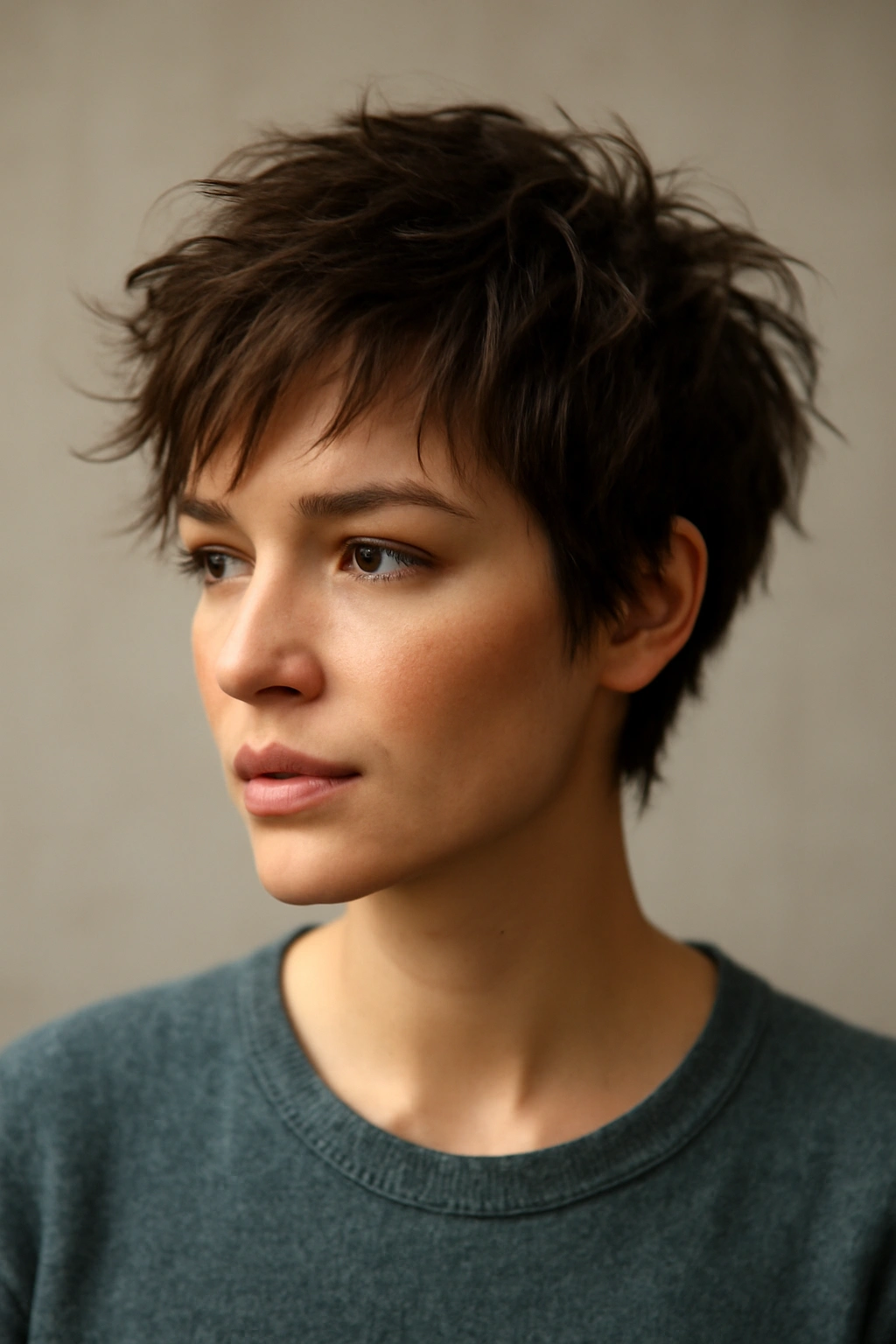
This is the antidote to the slicked-back pixie. The messy pixie is intentionally undone, tousled, and textured. It uses texturizing product—texturizing cream, matte wax, salt spray, or dry shampoo—to create piece-y, fragmented texture that looks effortlessly cool. The cut is usually layered or shaggy underneath, and the styling emphasizes that tousled, lived-in quality. It reads as cool, casual, and approachable.
Intentional Dishevelment
A messy pixie is actually incredibly deliberate—it’s not just leaving your hair unstyled, but rather styling it to look like you didn’t style it. The texture and movement are the whole point. This style celebrates imperfection and movement over polish and precision. It pairs well with a relaxed personal aesthetic and reads as creative and cool without trying too hard.
Styling Approach
- Apply texturizing product to damp or dry hair and tousle with your fingers
- Sea salt spray, texturizing cream, or wax all work depending on your desired texture
- The cut should have layers or texture built in for the product to work with
- This style is forgiving—imperfection is part of the aesthetic
- Pairs beautifully with minimal makeup and a casual personal style
Worth knowing: A messy pixie actually requires intentional styling; it’s not just skipping hair care. The messiness is curated, which is what makes it work.
18. The Geometric Pixie
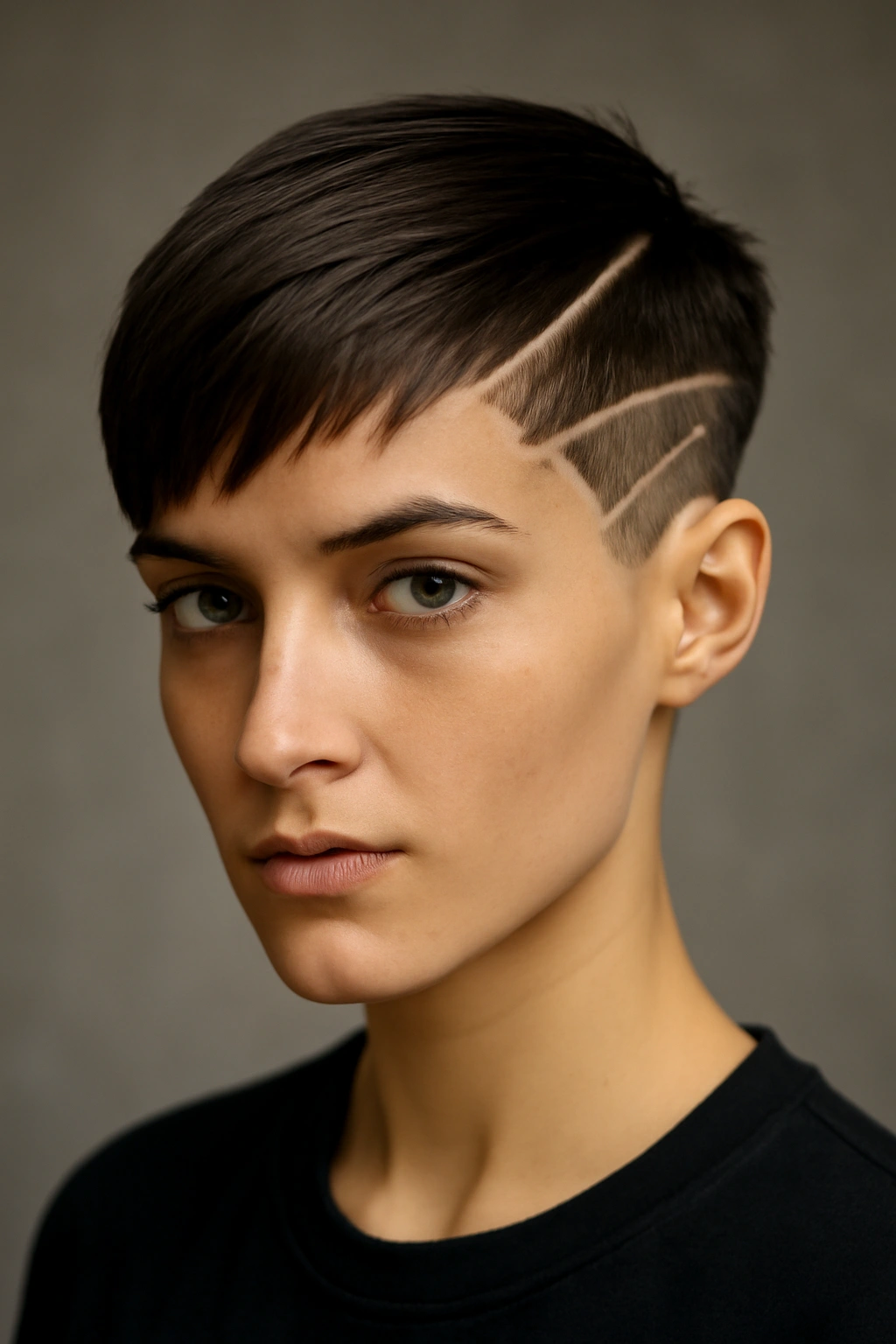
This is an artistic, architectural approach to a pixie. A geometric pixie features precise, geometric shapes and lines—sharp angles, clean planes, and mathematical proportions. The cut might incorporate blocks of different lengths, asymmetrical sections, or shaved geometric patterns. It reads as conceptual art more than conventional hairstyle. This is the pixie for someone who views their hair as a canvas for creative expression.
Art on the Head
A geometric pixie is uncompromisingly artistic. It’s not trying to blend in or look conventional; it’s making a statement about creativity and intentionality. The geometric elements might be created through cutting, shaving, color, or a combination. It requires a stylist who’s comfortable thinking about the head as a three-dimensional art project and who has the technical skills to execute precise geometric lines.
Design and Execution
- Requires a highly skilled stylist with artistic vision and technical precision
- Works as a statement piece that changes how people perceive you
- The geometry can be emphasized through color work, shaving, or product styling
- Maintenance depends on the specific design, but precision lines usually need touching up every 4 to 6 weeks
- Pairs with bold, creative personal style and comfort with being visually interesting
Real talk: A geometric pixie is unquestionably intentional and artistic. It’s the choice for someone who’s fully committed to creative self-expression through their appearance.
19. The Funky Neon Pixie
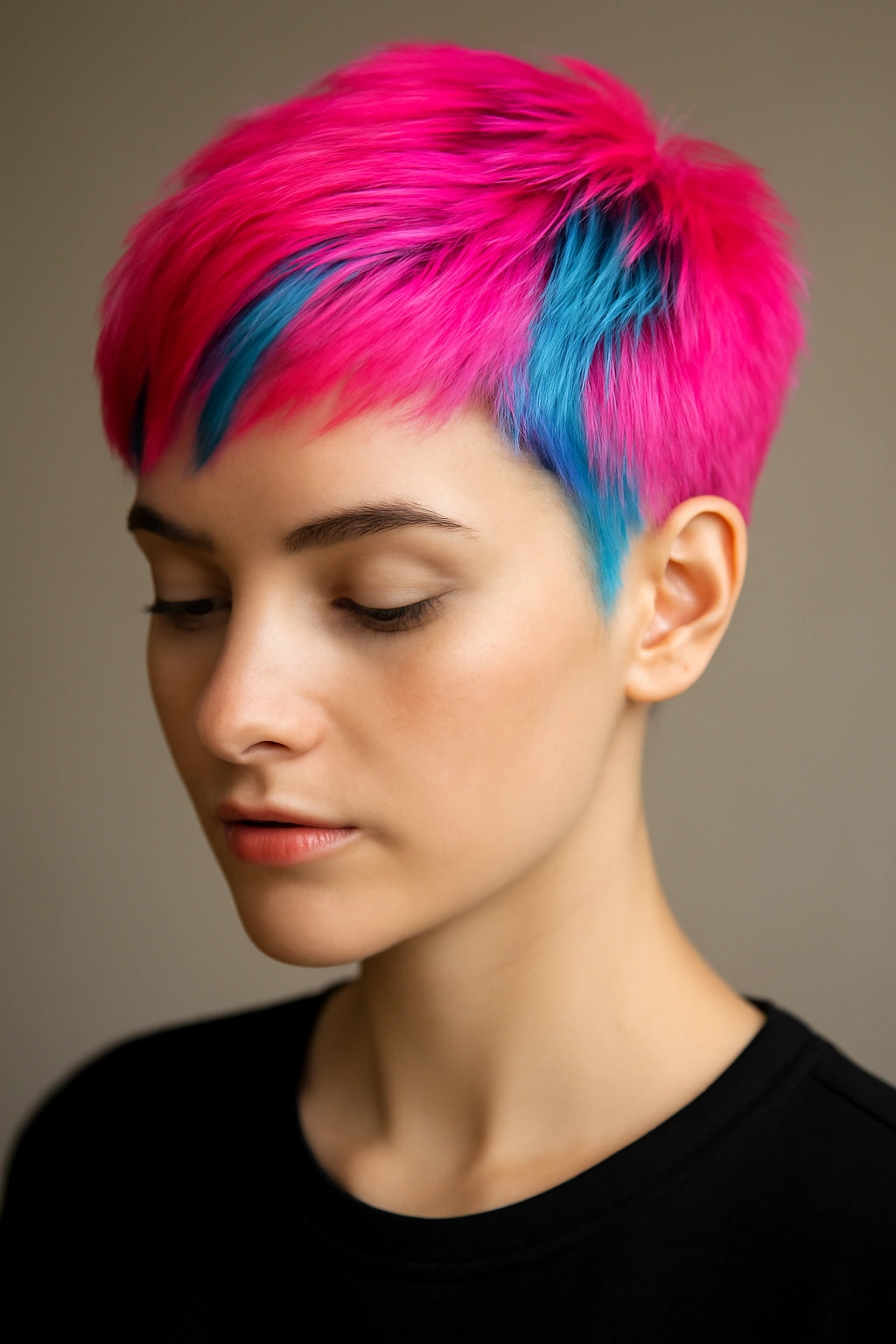
This is the pixie for ultimate creative expression: short hair in a vivid, unconventional color. A funky neon pixie combines a short pixie cut (the style can be classic, textured, undercut, or any variation) with a bold color—neon pink, electric blue, vibrant purple, or any color that makes a statement. The color is the main event, though the cut is carefully chosen to showcase that color beautifully.
Color as Identity
A funky neon pixie announces that you’re not bound by convention. The color requires commitment—both in terms of frequent touch-ups and in terms of comfort with being visually striking. Neon and bright colors fade quickly, especially with washing and sun exposure, so you’ll need color maintenance every 3 to 4 weeks. But the payoff is a completely unique, totally personalized look that’s unmistakably yours.
The Practical Side
- Requires pre-lightening hair to a very light blonde for most neon colors to show
- Neon colors fade significantly and require frequent touch-ups
- Use color-safe shampoo and conditioner to extend the color life
- Protect neon-colored hair from chlorine and excessive sun exposure
- Pairs with bold personal style and absolute comfort with being noticed
Worth knowing: Neon colors are high-maintenance. If you’re committed to the look, budget for professional color maintenance. Box dyes often don’t deliver the same vibrancy as salon color work.
20. The Soft Pixie Crop
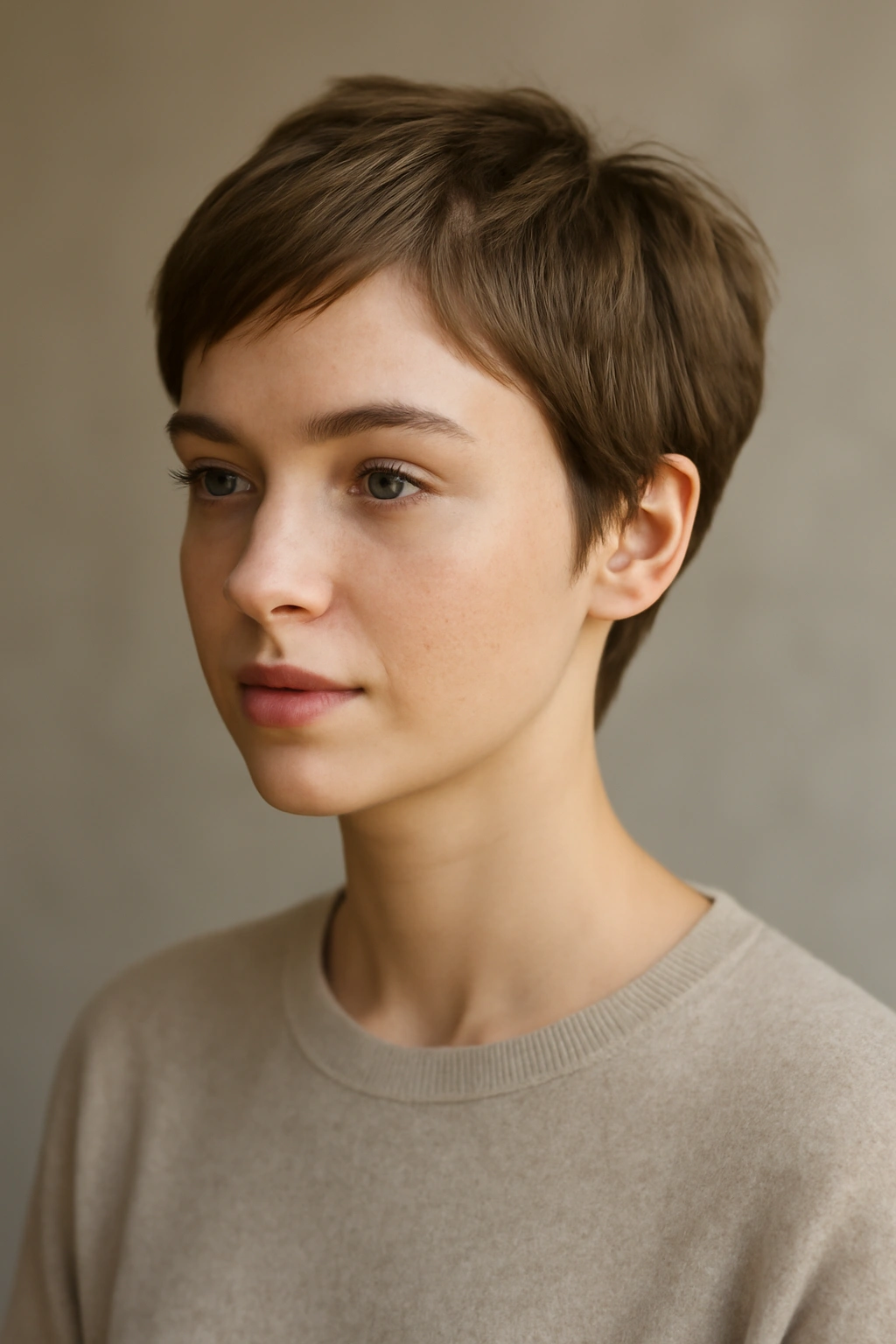
This is the pixie for those who want the modern edge and short length without aggressive styling or a sharp aesthetic. The soft pixie crop is a short pixie (similar to a blunt crop) but with slightly softer edges and a more natural, less severe appearance. The cut is still short all over, but the lines are less graphic and the overall effect is gentler. It works beautifully with minimal styling and a relaxed approach.
Softness Without Compromise
A soft pixie crop is approachable and modern without being edgy or dramatic. It’s the choice for someone who loves short hair and a simplified beauty routine but doesn’t want to commit to the bold statements of other pixie variations. The softness makes it feel less severe than a blunt crop, and it works beautifully on those who might find very short hair intimidating.
Styling and Maintenance
- Works beautifully with minimal to no product
- The softer lines are less demanding than geometric cuts
- Requires regular trims (every 4 to 6 weeks) to maintain shape, but less precision than a blunt crop
- Pairs well with natural beauty and a simplified grooming routine
- Works on most face shapes and hair types; the softness is universally flattering
Pro tip: A soft pixie crop looks beautiful with just a bit of shine—a light pomade or hair oil applied to finished hair adds polish without heaviness.
Final Thoughts

The pixie cut isn’t just one thing—it’s a spectrum of possibilities that ranges from timeless classic to boundary-pushing artistic statement. Whether you’re drawn to the ease of a soft pixie crop, the sophistication of a slicked-back pixie, the boldness of an undercut or geometric design, or the creative freedom of color and texture work, there’s a pixie variation that matches your personality and lifestyle.
The most important thing to remember is that short hair requires a stylist who truly understands what you’re trying to achieve. Bring reference photos, be specific about maintenance expectations, and choose a stylist who excels at the particular style you’re interested in. The cut is only the beginning—how you style it, maintain it, and present yourself in it becomes your daily experience of the style.
A pixie cut is a commitment to simplicity and to knowing yourself. Once you find your pixie, whether it’s your first time cutting short or you’re experimenting with a new variation, you’ll understand why so many people find it transformative. Short hair is liberating, low-maintenance, and endlessly customizable. It’s a canvas for creativity, confidence, and self-expression. Your pixie is waiting.
