



A short bob after 40 isn’t about chasing youth — it’s about owning confidence through a cut that actually works with your hair, your face, and your life. The best bobs for this age aren’t one-dimensional; they’re sophisticated, low-maintenance, and flattering in ways that longer styles often can’t match. Whether your hair has taken on texture, your face shape has evolved, or you’re simply ready for something that doesn’t demand an hour at the styling mirror every morning, there’s a bob that fits perfectly.
What makes a bob truly shine after 40 is intentionality. The right cut understands mature hair’s unique needs — it works with natural texture instead of fighting it, it creates dimension without looking thin, and it moves beautifully without requiring constant upkeep. A great stylist who understands how to cut for this age won’t give you something trendy and fleeting; they’ll give you a foundation that looks polished from day one and improves with a simple wash and air-dry.
This isn’t about age-appropriate as a limiting concept. It’s about the cuts, colors, and styling approaches that look effortless on women over 40 because they respect the reality of mature hair while celebrating everything that’s sophisticated about this stage of life. The bobs in this guide range from barely-there pixie-adjacent lengths to chin-grazing classics, from sleek and architectural to textured and tousled. Each one has been chosen because it genuinely suits the hair, skin, and energy that tends to be most prevalent after 40.
1. The Choppy Textured Bob

A choppy bob introduces movement and dimension through layered, irregular lengths that land anywhere from ear-level to chin. The magic here is that choppy texture doesn’t require perfect hair — in fact, it celebrates natural waves, texture, and the slightly undone look that many women over 40 prefer. This cut works exceptionally well if your hair has developed more natural wave or if you’ve noticed it’s gotten a bit finer; the shorter layers create the illusion of fullness without bulk.
Why This Works for Mature Hair
Choppy layers catch light throughout the cut, which automatically adds visual interest and sophistication. Because the layers are intentionally uneven, a choppy bob disguises any regrowth of darker roots beautifully — you can stretch the time between color appointments significantly. The texture also means you’re not fighting to keep edges perfectly sharp; a slightly tousled finish looks intentional and polished rather than unkempt.
How to Style and Maintain
- Use a texturizing spray or sea salt spray on damp roots to enhance natural wave and movement
- A lightweight mousse through mid-lengths keeps texture defined without looking crunchy or overdone
- Air-dry with your head tipped forward for extra movement, or blow-dry with a diffuser for enhanced waves
- This cut actually looks better when it’s slightly grown out — you get 6 to 8 weeks before it needs a refresh
- A light pomade on the ends (not the roots) adds polish without flattening texture
2. The Sleek Chin-Length Bob

This is the classic, modernized bob that hits right at the jawline with blunt, precise edges and zero layers. Think graphic simplicity — the cut is so clean that it relies entirely on excellent technique and healthy hair ends. It suits women with straighter hair textures beautifully, and it makes a bold, architectural statement that reads as intentional and polished rather than tentative.
The Precision That Defines It
The sleek chin-length bob only works when the cut is truly precise. This isn’t a forgiving length — every quarter-inch matters. The blunt edge creates an automatic frame for the face, which actually has a subtle lifting effect. Because there are no layers to hide behind, this cut demands confidence, but once you have it, the payoff is a hairstyle that looks expensive, effortless, and distinctly sophisticated.
Styling Essentials for Longevity
- Invest in a good blow-dryer and round brush — the finished look depends on proper blow-dry technique
- A smoothing serum applied to damp hair before blow-drying creates that glossy, polished finish
- Get trims every 4 to 5 weeks to maintain the blunt edge’s sharpness
- This cut photograph beautifully and photographs frequently; you’ll get tons of compliments from pictures
- Straightening or flat-ironing is optional — many women with this cut let their natural waves show through
3. The Textured Pixie-Bob Hybrid

A pixie-bob merges the shortness and ease of a pixie with the grown-out softness of a bob — typically cropped very short at the back and sides while longer layers fall forward around the face. This cut is revolutionary for women over 40 who want something genuinely low-maintenance without looking too severe. It’s especially flattering if you have a strong jawline or beautiful bone structure you want to show off.
Why Women Over 40 Love This Cut
The pixie-bob removes the need for daily styling while still providing enough length to frame the face softly. Because it’s short, gray hair grows in blended and unnoticeable — you can go significantly longer between colorings if you’re transitioning to gray. The cut also works beautifully with natural texture; waves and curl are actually an asset rather than something to fight against.
Daily Styling and Upkeep
- Wash and go is genuinely possible with this cut — most mornings require no styling at all
- A light texturizing product or pomade brings out natural waves if your hair has them
- The back and sides might need a trim every 4 to 6 weeks to maintain the shape, but it’s a quick visit
- This cut suits both very fine hair and thick hair equally well — the texture creates fullness either way
- Consider a tousled, undone finish rather than sleek — it’s more flattering and more forgiving
4. The Side-Parted Bob with Hidden Layers

This bob sits at or just below the chin with a deep side part and subtle layers hidden throughout that you can’t see in the finished style. The layers provide movement and internal texture without creating obvious “layers” that can sometimes read as matronly. The side part creates an elongating effect that’s particularly flattering for round face shapes.
The Hidden Architecture
The genius of hidden layers is that they create movement and reduce bulk without announcing “I have layers.” The cut looks like a solid, structured bob at first glance, but when you move or style it, the internal texture becomes apparent. This approach works brilliantly for women with thicker hair who want a sleek appearance without heaviness, and for finer hair it creates an illusion of density.
Styling for Impact
- Part deeply on one side and tuck a small section of hair behind the opposite ear for an elongating effect
- Blow-dry straight or with a wave — both look equally polished with this cut
- A deep side part automatically adds sophistication; avoid centering your part
- This cut looks great with subtle face-framing pieces, but they’re optional
- The hidden layers mean you can go 6 to 8 weeks between cuts without obvious growing-out phases
5. The Honey-Highlighted Textured Bob

A textured bob in a natural-looking honey or caramel blonde shade (even if you’re starting with darker hair) creates warmth around the face that’s incredibly flattering after 40. The color combines with texture to create movement and dimension that makes even fine hair look fuller. This pairing works across all skin tones when the shade is chosen correctly for your undertone.
Color and Cut Working Together
Honey tones naturally warm the complexion and can soften the appearance of fine lines — the styling advantage of a color-and-cut strategy. The texture in the cut means the color landing unevenly (as it naturally does with regrowth) actually looks intentional and lived-in rather than obvious. Combining a subtle color shift with a textured cut means you need less frequent salon visits than either approach alone.
Maintenance and Longevity
- Ask your colorist for a balayage or shadow-root application so regrowth blends seamlessly
- Color touch-ups can typically stretch to 8 to 12 weeks with this approach
- The textured cut itself needs trimming every 6 to 8 weeks to maintain shape and movement
- Deeper roots with lighter ends actually flatters mature skin more than a uniform color would
- A color-safe shampoo and conditioner extend the vibrancy of your honey tones significantly
6. The Disconnected Bob

A disconnected bob features shorter, cropped sections (usually at the back and sides) that are noticeably shorter than the longer pieces falling forward around the face. There’s clear separation between the lengths, creating an edgy, modern silhouette that reads as intentional and fashion-forward without being trendy or age-inappropriate.
The Edge Factor
This cut works because it’s inherently modern — there’s no way to mistake it for dated. The disconnected sections create an architectural frame that’s incredibly flattering to the face, especially if you want to draw attention to your eyes and cheekbones. Because the back and sides are closely cropped, this cut is genuinely low-maintenance in a way that sleek bobs sometimes aren’t.
Styling for the Disconnected Look
- The contrast between short and long sections is the style; don’t try to blend them into a uniform length
- A light texturizing product on the longer pieces enhances the intentional separation
- The shorter back and sides can be worn slicked back or tousled — both looks work beautifully
- This cut photographs exceptionally well and tends to get compliments frequently
- Trims every 5 to 6 weeks maintain the clean disconnection as everything grows out
7. The Soft Waves Bob

A soft waves bob is chin-length or slightly longer, featuring gentle waves throughout that are either cut in (with subtle layers) or created through styling. The waves should be soft, not tight spiral curls — more like what you’d create with a curling iron or heatless overnight waves. This approach is flattering because waves naturally soften facial features and add movement.
Creating and Maintaining Soft Waves
Soft waves work beautifully on straight hair, slightly wavy hair, and naturally curly hair that’s been smoothed out. The waves create an impression of fullness without bulk, and they’re forgiving of slightly imperfect styling. Unlike tight curls, soft waves read as effortless and modern rather than trying too hard.
Styling and Product Strategy
- Blow-dry with a round brush to create smooth waves, or use a 1-inch curling iron for more defined wave pattern
- A light sea salt spray enhances natural wave pattern and creates a lived-in texture
- Sleep waves: braid damp hair before bed, unwind in the morning, and tousle with your fingers
- This cut looks equally good tousled or more neatly styled, giving you versatility in how put-together you want to appear
- Waves hide fine or thinning hair beautifully because the movement creates visual density
8. The Gray-Blended Bob with Darker Roots

This cut is designed to work harmoniously with your natural graying process or with intentional gray blending — where your natural gray at the roots is left visible and blended into a cooler or lighter shade through the mid-lengths and ends. This approach eliminates the constant upkeep of root touch-ups while looking intentional and sophisticated rather than like you’ve simply stopped coloring.
The Strategic Gray Integration
Gray blending requires a talented colorist, but the payoff is transformative. Instead of fighting your graying hair with constant root touch-ups, you’re incorporating it as part of your color strategy. The cut itself needs to be expertly shaped to complement the color transition. Cooler tones in the shorter layers catch light and add dimension, while darker roots add depth and anchor the face.
Making Gray Blending Work
- Ask your colorist for a slightly shorter cut that showcases the color transition rather than hiding it
- Cooler or ashier tones in the lighter sections complement gray beautifully
- A gloss or toner appointment every 6 to 8 weeks keeps the lighter sections looking fresh without full recolor
- This approach requires less frequent salon visits than single-process color, saving time and money
- The blended effect is flattering because gray naturally complements mature skin tones beautifully
9. The Stacked Bob

A stacked bob has shorter, denser layers at the back of the head that gradually lengthen toward the front, creating a rounded, voluminous silhouette. The back appears fuller and rounder, while the front pieces are longer and frame the face. This cut is exceptional for fine or thinning hair because it creates the optical illusion of fullness and density.
Why Stacking Creates Fullness
The stacked structure automatically creates volume because each layer is shorter than the one beneath it, trapping air and creating lift. This is especially valuable if you’ve noticed your hair getting finer after 40. The rounded shape is flattering to most face shapes, and it works beautifully with natural texture or with waves created through styling.
Styling a Stacked Bob
- Blow-dry the back section with a round brush and work upward to maximize the stacked lift
- A volumizing mousse or root-lifting spray applied to damp roots before blow-drying makes a dramatic difference
- The cut looks great tousled; perfect sleekness actually diminishes the fullness effect
- This cut works beautifully with a slight wave through the longer front pieces
- Layers need trimming every 5 to 6 weeks to maintain the stacked shape and volume
10. The Face-Framing Bob

This bob is slightly longer (chin-length or just past) with specially cut face-framing pieces that angle forward and longer than the rest of the cut. These longer pieces frame the cheekbones and jawline, drawing attention upward toward the eyes and face rather than downward. It’s incredibly flattering for women concerned about jawline definition or who want to soften their features.
Strategic Framing for Mature Faces
Face-framing pieces have a subtle lifting effect because they draw the eye upward. They’re also forgiving of any texture variation in your hair because longer pieces can have slight waves that add softness. The framing pieces require a skilled cut to ensure they fall correctly and frame the face rather than hiding it.
Maintaining Face-Framing Pieces
- These pieces grow faster than the rest of the bob, so budget for trims every 4 to 5 weeks
- Style the framing pieces slightly wavy or curved inward toward the face for maximum flattering effect
- A lighter shade of color on the framing pieces adds dimension and draws attention to the face beautifully
- These pieces should be cut to brush past your jawline, not stop directly at it
- If you’re going gray, keeping the framing pieces in a complementary color while blending gray elsewhere creates a focal point
11. The Cropped Back, Longer Front Bob

Similar to a disconnected bob but with a smoother transition, this cut has noticeably cropped sides and back with longer pieces in the front that can hit anywhere from ear-length to past the chin. The transition is smoother than a disconnected cut, creating a more blended look while still maintaining clear length variation. This cut is modern, low-maintenance, and incredibly flattering.
The Modern Asymmetry
This cut works because it provides the ease of a short cut (easier styling, less washing needed, less upkeep) while maintaining the option to style longer pieces around your face. It’s particularly flattering if you want to show off your ears, neck, and jawline while keeping the style from feeling too severe or masculine.
Styling Approaches
- The cropped back and sides can be sleek or tousled depending on your preference and lifestyle
- The longer front pieces give you styling options — wear them tucked behind your ears for a sleeker look, or pull them forward to frame your face
- This cut photographs beautifully from the side or back, showcasing the architectural shape
- Texturizing product on the shorter sections enhances the intentional texture
- This is one of the lowest-maintenance bobs available while still providing style and personality
12. The Bouncy Curly Bob

For women with naturally curly or coily hair, a bouncy curly bob that’s cut specifically to work with curl pattern (not against it) is transformative. The cut needs to be done on dry, curly hair so the stylist can see how the curls fall and cut accordingly. The result is a cut that looks beautiful when your curls are hydrated and well-defined, with zero frizz management needed.
Cutting for Your Curl Pattern
A curly bob cut by a stylist who understands curly hair is entirely different from a curly bob cut by someone who cuts primarily straight hair. The cut needs to work with your specific curl pattern — how tightly your curls coil, where they start, and how they interact with each other. A great curly cut looks amazing with minimal styling because it’s cut to enhance your natural curl pattern.
Styling and Product Approach
- Curl-specific shampoo and conditioner are essential; regular products weigh curls down
- A leave-in conditioner applied to soaking-wet hair helps define curls and reduce frizz dramatically
- Plopping (wrapping wet hair in a cotton t-shirt or microfiber towel) locks in moisture and definition
- Avoid touching curls while they dry; let them air-dry or use a diffuser on low speed
- A curl cream or gel applied to soaking-wet hair before drying defines curl pattern without crunch
- This cut typically needs less frequent trims because curls provide built-in texture and don’t look “grown out” as quickly
13. The Silver Platinum Bob
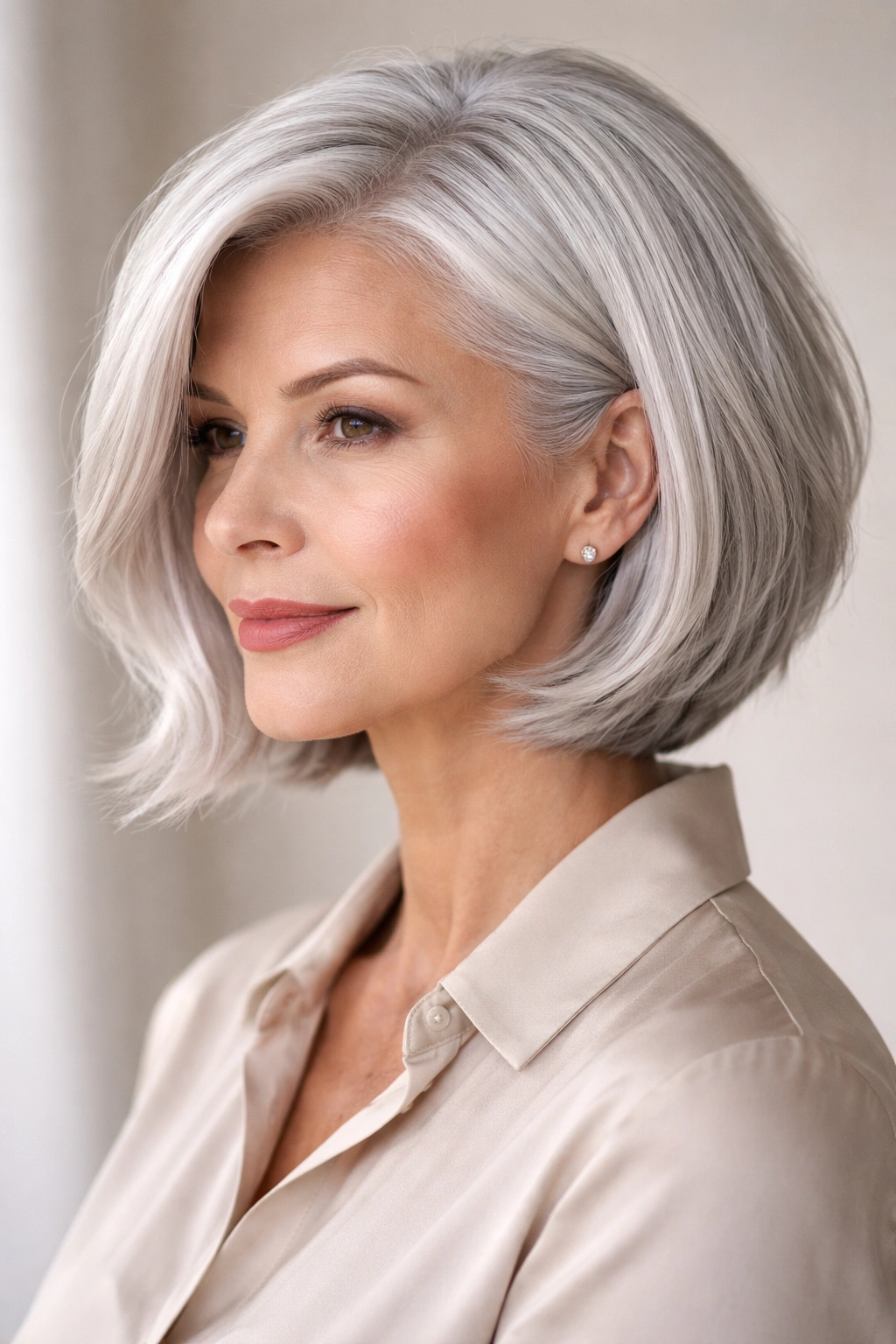
A platinum or silver bob, whether you’re transitioning to full gray or choosing this shade intentionally, is striking and modern. The cool tones of platinum silver are incredibly flattering on mature skin, and the color automatically gives a bob sophistication and polish. This shade requires some maintenance but the payoff in how powerful and intentional you look is worth it.
Color Strategy for Platinum
Platinum works on all skin tones when the specific shade of platinum is chosen correctly — warmer silvers for warm undertones, cooler silvers for cool undertones. The color is naturally aging-friendly because it complements the skin tone of women over 40 beautifully. Platinum bobs also photograph exceptionally well, creating a contemporary, polished impression.
Maintenance Reality and Tips
- Plan for touch-ups every 4 to 6 weeks to keep platinum looking fresh rather than brassy
- A purple or blue toning shampoo prevents brassy undertones between colorings
- This color shows every product residue and hard water buildup, so filtered shower water helps significantly
- Platinum pairs beautifully with textured bobs or soft waves, which add dimension and interest
- Consider glossing appointments (less intense than full color) to extend the time between full colorings
14. The Asymmetrical Bob
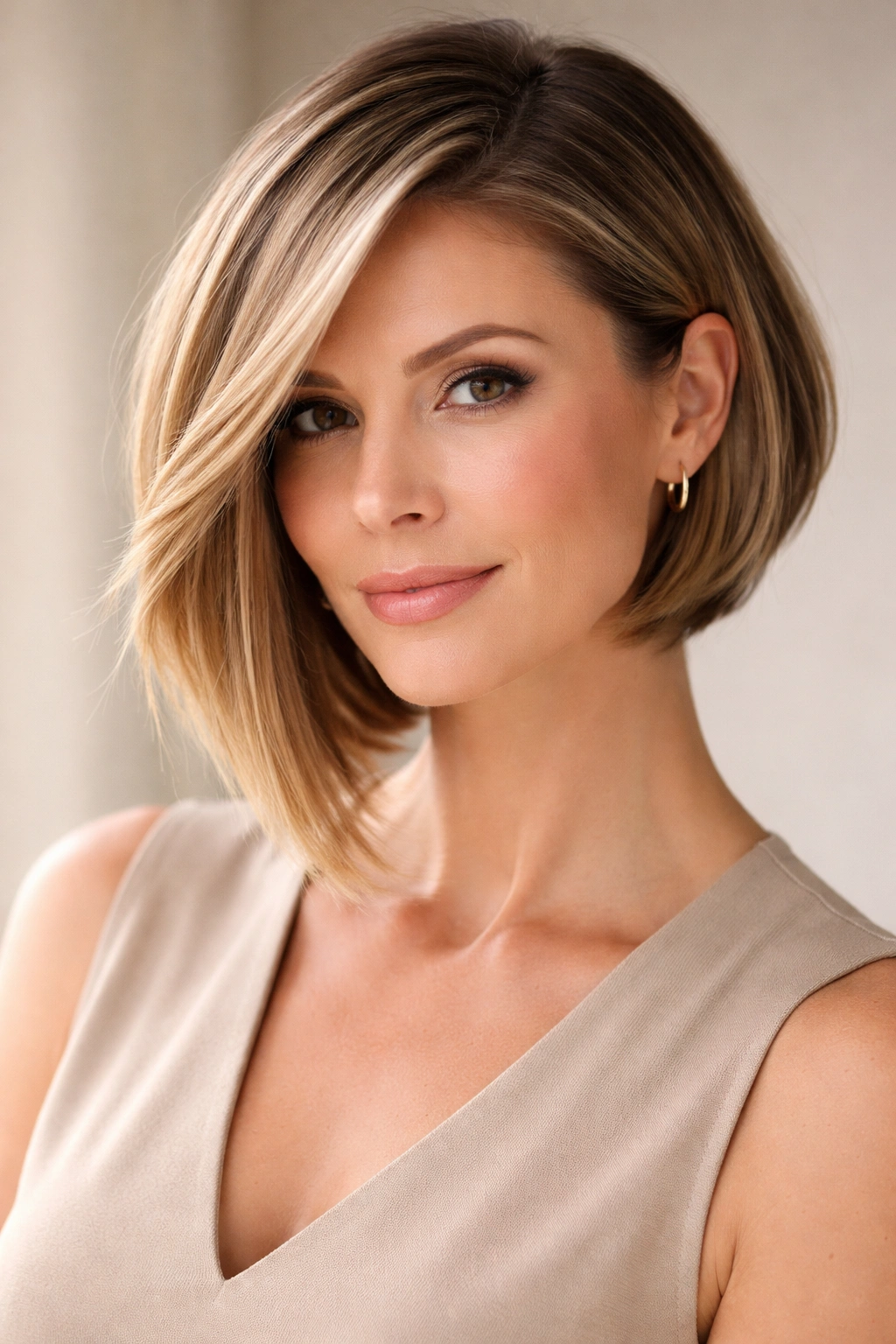
An asymmetrical bob has noticeably different lengths on each side — one side might hit ear-length while the other reaches past the chin, or the variation could be more subtle (one side slightly longer than the other by an inch or two). This cut is fashion-forward, creates interesting visual movement, and flatters a variety of face shapes depending on which side is longer.
Why Asymmetry Works
An asymmetrical bob is inherently modern and confident. The unequal lengths create visual interest and movement that a blunt cut can’t match. Depending on which side is longer, you can elongate or shorten the perceived face shape. This cut works beautifully with a side part, where the longer side sweeps across and the shorter side tucks behind the ear.
Styling and Direction
- This cut works best with a strong side part — center parts diminish the asymmetrical effect
- You can style the longer side wavy or straight; the longer pieces give you flexibility
- The shorter side often looks better slightly tousled or textured rather than perfectly slicked back
- Asymmetrical cuts photograph beautifully, especially from the side where the length variation is most apparent
- Trims every 5 to 6 weeks maintain the intentional length difference as everything grows out
15. The Blunt Bangs Bob
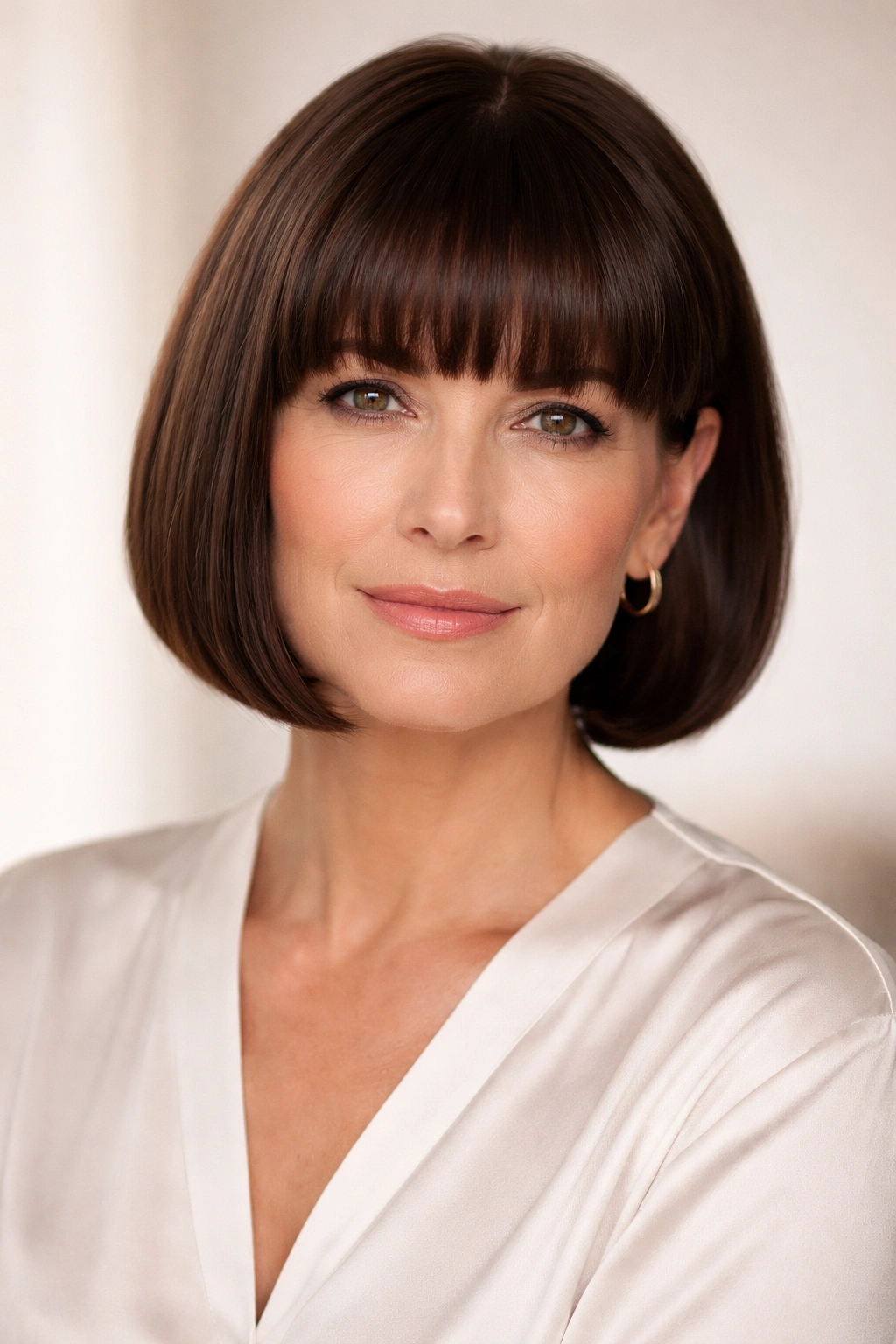
A short bob paired with blunt, straight-across bangs creates a bold, graphic look that’s surprisingly flattering for mature faces when done well. The bangs draw attention to the eyes and provide a youthful touch without looking trying-too-hard. This cut works best on straight hair or hair you’re willing to blow-dry straight regularly, and it requires precise cutting to maintain.
The Impact of Bangs
Blunt bangs automatically add a fashion-forward element and draw attention upward to your eyes rather than downward toward fine lines. The bangs need to be cut precisely and trimmed more frequently than the rest of the bob (every 2 to 3 weeks) to maintain their sharp edge. Worn correctly, blunt bangs read as intentional and stylish rather than retro or costume-like.
Maintaining Blunt Bangs
- Blow-dry bangs straight; even slight waves make them look unkempt
- Trim bangs yourself every 2 to 3 weeks with quality scissors — this is easy to do and saves salon time
- Bangs should hit just above the eyebrows, never covering them
- This look requires styling every day; it’s not a wash-and-go option
- The impact is worth the maintenance — blunt bangs create a powerful, intentional, modern appearance
16. The Tousled Shag Bob
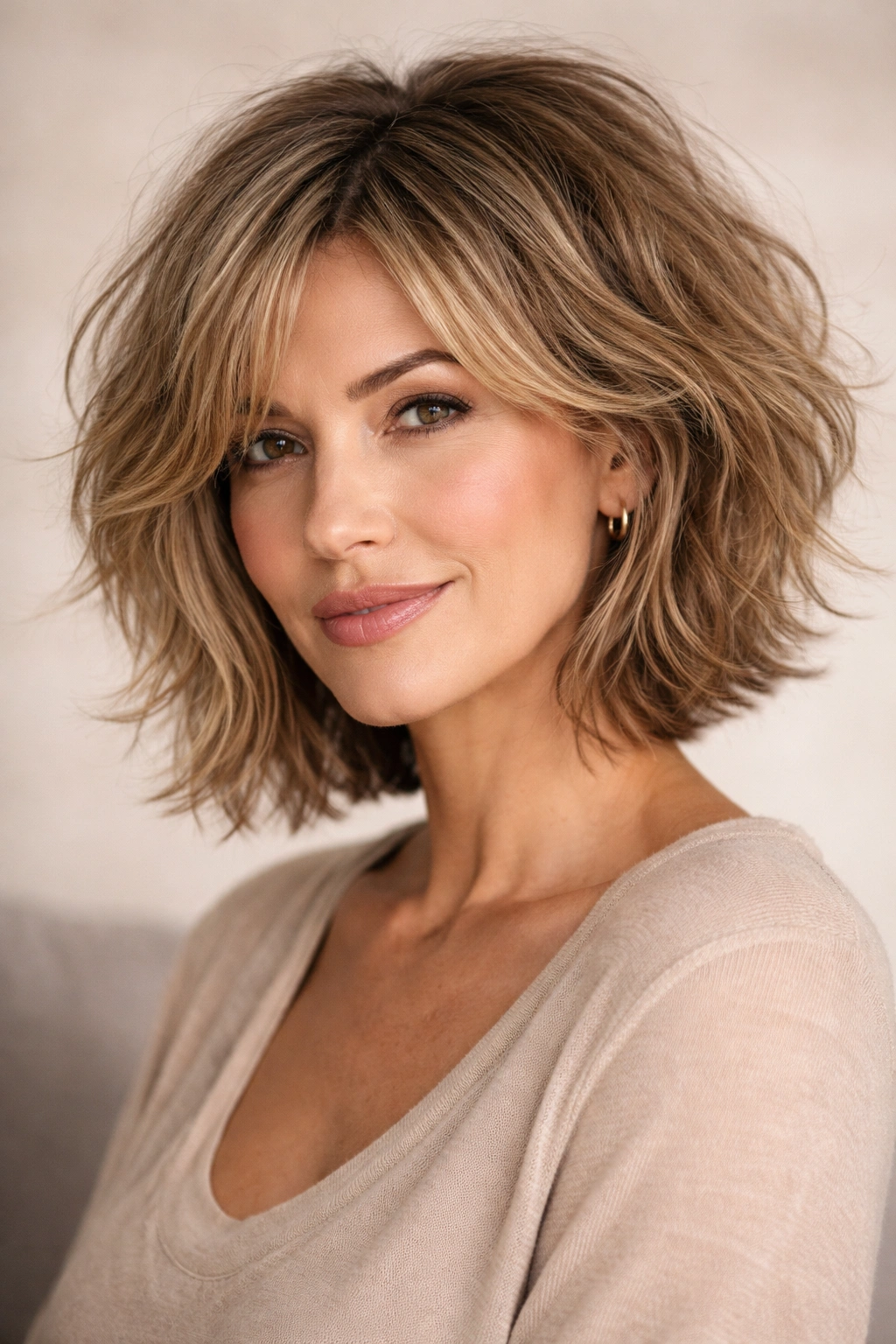
A shag bob layers in texture throughout, creating a deliberately undone, tousled appearance that celebrates movement and texture rather than sleekness. The layers are choppy and uneven, the ends are slightly wispy, and the overall effect is lived-in and modern. This cut is a game-changer for women who want something that looks good without requiring precise styling.
Why Shag Works After 40
A shag bob is inherently forgiving — it’s supposed to look slightly undone, which means your real hair (with all its texture and personality) is actually the goal. This cut works beautifully with natural waves, texture, or even slight frizz, which become features rather than flaws. The layering creates movement and the illusion of fullness without the density of a blunt cut.
Easy Styling for Maximum Impact
- Wash and air-dry with your head tilted forward for automatic texture and movement
- A light texturizing spray or sea salt spray enhances the undone texture
- Scrunching damp hair with a microfiber towel creates more defined waves and texture
- This cut looks better slightly tousled than perfectly styled, which is the beauty of the shag
- Layers need trimming every 6 to 8 weeks to maintain the textured shape, but the cut is forgiving if you’re a week or two overdue
17. The Sleek Undercut Bob
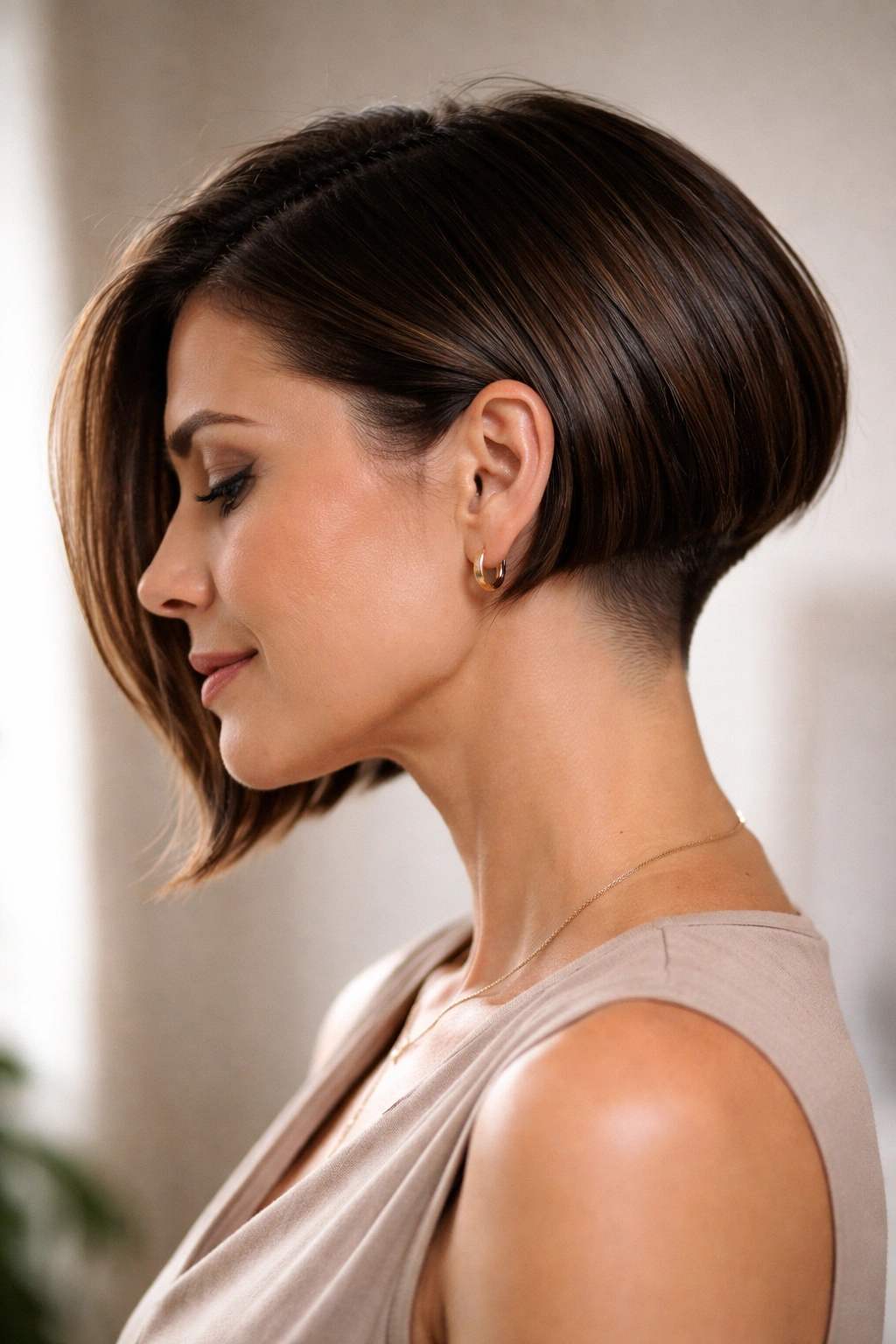
An undercut bob has longer pieces on top with closely cropped or shaved sections underneath (usually at the back and sides). The undercut is hidden when hair is down, but visible and striking when you put your hair up or tuck it behind your ears. This cut combines low-maintenance ease with an edgy, modern vibe.
The Hidden Edge Factor
The undercut provides all the styling flexibility of a longer bob with the low-maintenance reality of having very short hair underneath. You can wear the longer pieces down for a classic bob look, or pull them up to reveal the undercut for a bolder appearance. This works beautifully if you want versatility — different looks depending on your mood or the occasion.
Styling and Upkeep
- The undercut needs trims every 3 to 4 weeks to maintain the closely cropped appearance
- Styling the top section is exactly like styling a longer bob; you have complete flexibility
- Tuck the longer pieces behind your ears to showcase the undercut, or wear them forward for a more traditional look
- This cut is especially striking with a textured or tousled finish on top
- The undercut is a conversation starter and reads as intentional and fashion-forward rather than trying too hard
18. The Expensive-Looking Glossy Bob
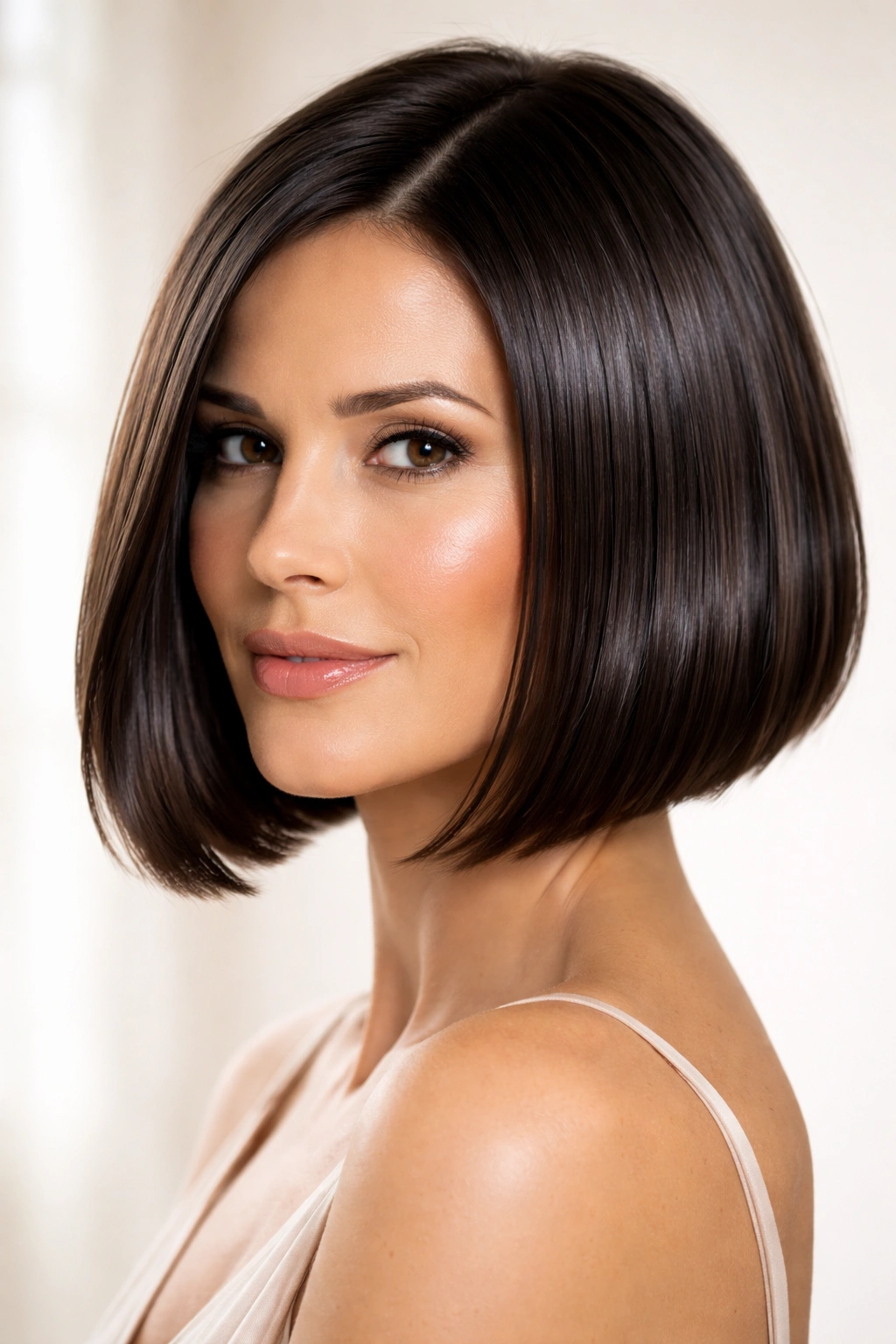
This bob prioritizes shine, health, and gloss above all else. It’s typically a sleek, chin-length cut with a blunt edge, perfect ends, and hair so glossy it practically glows. The “expensive” factor comes from excellent haircut technique, regular trims, professional glossing treatments, and genuine hair health. This is the bob that screams “I invest in myself.”
The Investment in Shine
A glossy bob requires professional care — regular glossing treatments (every 4 to 6 weeks), quality products, and precise trims every 4 weeks to maintain perfect ends. The cut itself needs to be excellent because there’s nowhere to hide with a sleek, glossy style. But the payoff is that people consistently perceive you as polished, well-maintained, and put-together.
Creating and Maintaining Gloss
- Professional glossing appointments (not full color, just a toning treatment) keep the shine luminous
- A lightweight hair oil applied to the ends (never the roots) creates shine without greasiness
- Blow-drying with a concentrator nozzle on your dryer creates smooth, shiny results
- Regular trims every 4 weeks maintain perfect ends without any split or wispy texture
- A glossing shampoo and conditioner specifically designed to enhance shine extend the results of glossing treatments
19. The Textured Gray Bob
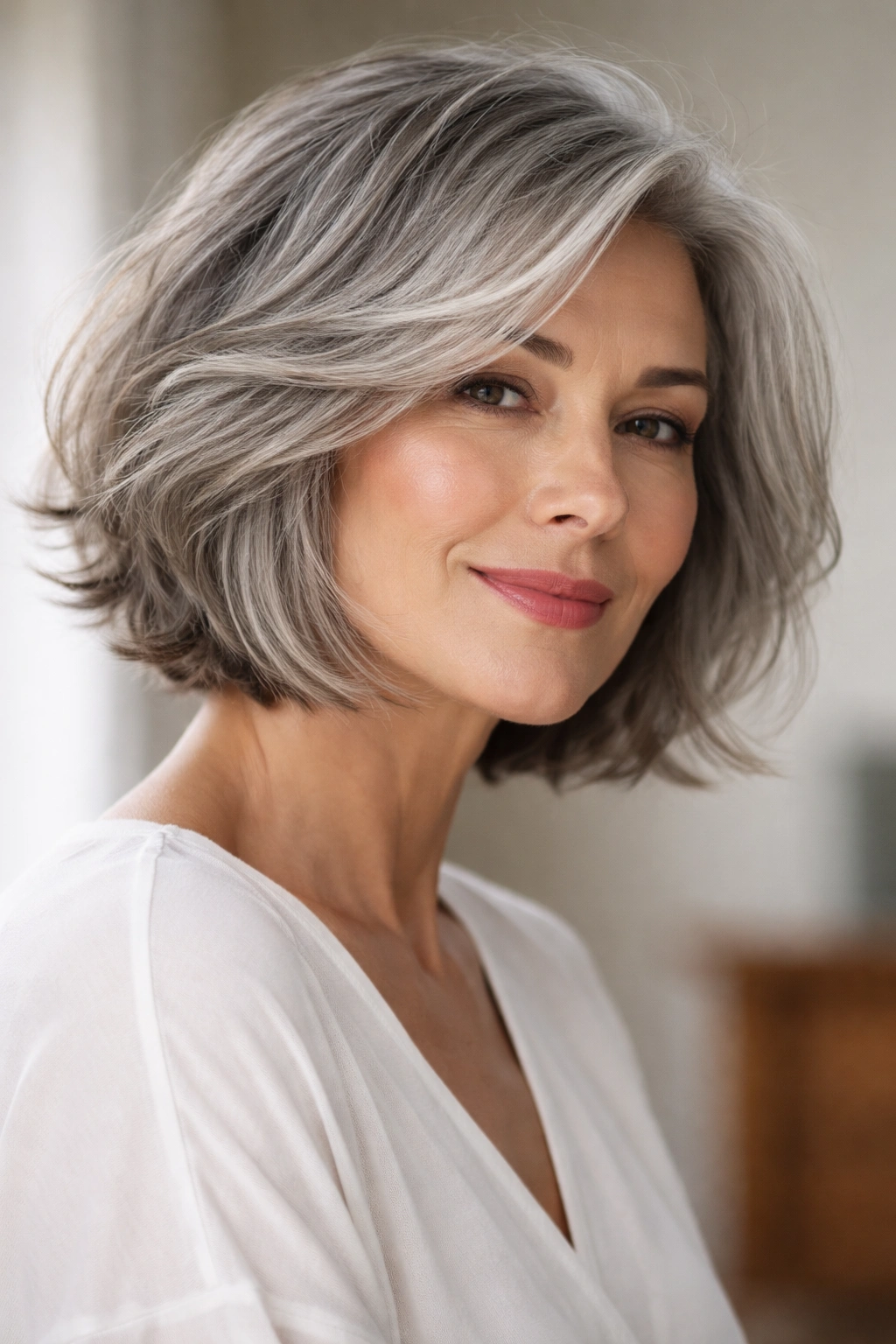
Embracing your natural gray without trying to hide it, this bob combines texture and gray hair beautifully. The texture prevents the gray from looking harsh or severe, and the gray prevents the texture from looking unkempt or aging. Together, they create a sophisticated, effortless appearance that reads as intentional rather than like you’ve given up on your appearance.
Textured Gray Beauty
A textured gray bob is the opposite of the manicured look — it’s relaxed, natural, and confident. The texture adds movement and dimension that a sleek gray bob might lack, and the gray prevents too much texture from looking wild or uncontrolled. This is an excellent option if you’re transitioning to full gray or if you’ve already made that shift.
Styling a Textured Gray Bob
- Embrace your natural wave or curl pattern rather than fighting it with straightening
- A light texturizing product or sea salt spray enhances natural texture
- Gray hair sometimes has a different texture than your previous hair color — work with it rather than against it
- This cut looks beautiful tousled and undone; don’t aim for sleekness
- Clarifying shampoo once or twice monthly prevents product buildup that can make gray look dull
- Occasional glossing (every 8 to 12 weeks) with a product designed for gray keeps it bright and shiny
20. The Graduated Bob
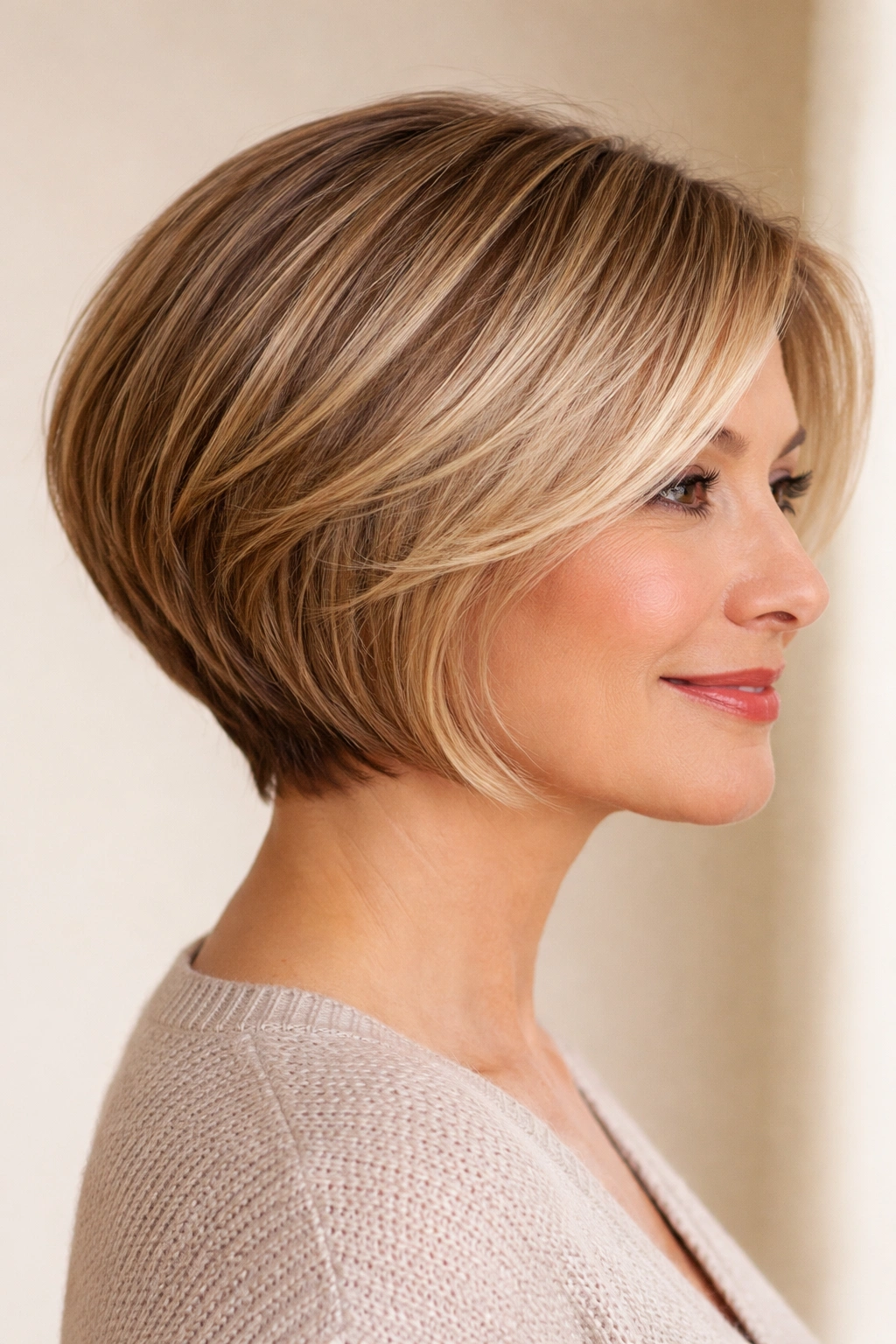
A graduated bob (also called a round or stacked bob) has the shortest layers at the top back and gradually longer lengths moving forward and down, creating a rounded, full silhouette. Unlike a traditional stacked bob with very pronounced layers, a graduated bob has a smoother transition between lengths. This cut creates fullness while maintaining a more unified, classic shape.
Why Graduated Works
The graduated structure creates volume and fullness naturally, making it ideal for fine or thinning hair. The rounded shape flatters most face shapes and works beautifully with either straight or wavy hair. Because the graduation is subtle rather than obvious stacking, this bob reads as timeless and classic rather than trendy or severe.
Styling for Maximum Dimension
- Blow-dry with a round brush to enhance the rounded shape and create lift
- A volumizing mousse applied to damp roots before blow-drying adds noticeable fullness
- Avoid flattening the shape by blow-drying downward; work upward and backward to enhance the graduation
- This cut looks equally good with straight hair or with waves; both work beautifully
- The shape naturally looks fresh for 6 to 8 weeks, then gradually needs a trim to restore the rounded silhouette
Final Thoughts
The right short bob after 40 transforms how you feel about your hair and, honestly, how you feel about yourself. These twenty styles prove that short hair isn’t a compromise or a concession — it’s an intentional choice that can look more polished, more sophisticated, and more flattering than longer lengths ever could. The best bob for you depends on your hair texture, your face shape, how much styling you’re willing to do daily, and what kind of vibe you want to project.
Finding the right stylist matters more with a short cut than with any other hairstyle. A cut that’s slightly off-angle, that doesn’t account for your hair’s natural growth pattern, or that isn’t trimmed precisely every few weeks will look sloppy instead of intentional. Take time to research stylists in your area who specialize in bobs and who have experience working with mature hair. Look at their before-and-afters, read reviews specifically about their work with shorter cuts, and book a consultation before committing.
The versatility of a great bob — whether it’s textured or sleek, with or without layers, blended with gray or in a bold color — means you’re not locked into one look. You can style it differently depending on your mood, the occasion, or simply what your hair feels like doing that day. That flexibility, combined with the genuine ease and low-maintenance reality of a well-cut short bob, is why women over 40 who take the leap rarely go back. Your hair can be beautiful, manageable, and entirely yours.
