



If you’ve been scrolling through hair inspiration and keep landing on shoulder-length cuts, you’re onto something real. There’s a reason these lengths dominate right now — they hit that sweet spot where hair has enough length to flow with movement but enough layers to create actual texture and dimension instead of just hanging flat. A shoulder-length layered cut isn’t just a default length; it’s a canvas for personality, and the right layers make all the difference between “meh” hair and “how did you get that?” hair.
The magic of movement in a layered cut comes down to how those layers are actually cut and placed. It’s not just about choppy edges for the sake of it — real movement happens when the layers are strategically positioned to catch light, frame your face in the right spots, and work with your natural hair texture instead of against it. Whether your hair is naturally straight, wavy, or curly, a well-executed layered shoulder-length cut can give you that effortless, lived-in texture that makes you want to actually style your hair instead of just putting it in a bun.
The best part? Shoulder-length layered cuts adapt to almost every lifestyle and hair type. They’re professional enough for the office, fun enough for casual outings, and they genuinely work whether you blow-dry them smooth, let them air-dry wavy, or style them with texture. Each cut in this guide offers a different take on the layered-movement formula, so you can find the one that actually matches your hair personality and daily routine.
1. Classic Choppy Layers with Textured Ends
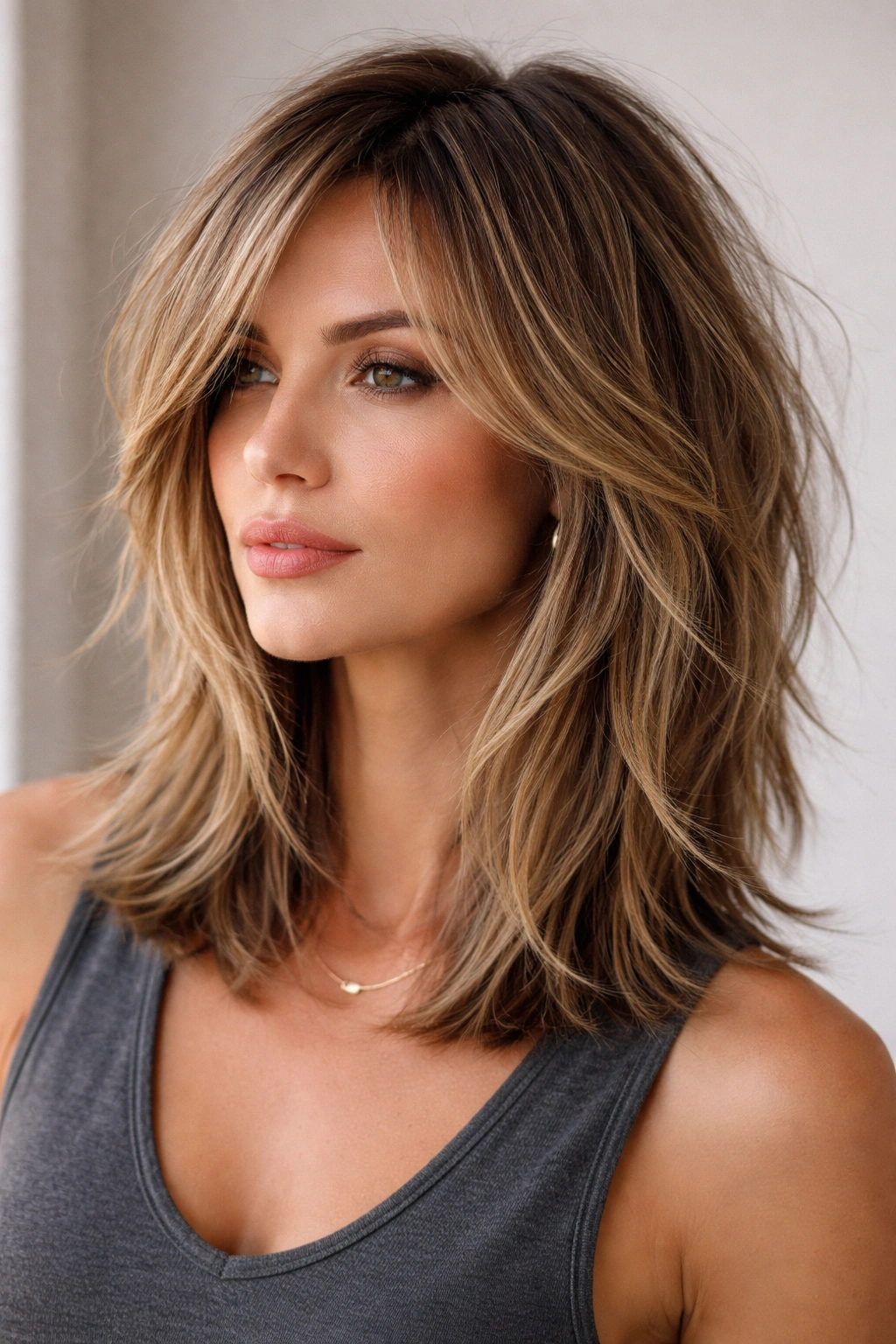
This is the cut that started the whole “movement” conversation. Choppy layers feature shorter, deliberately blunt-edged pieces throughout the hair, creating a rock-and-roll vibe that was cool in the 90s and has never actually left. The layers are stacked and intentionally varied in length, so when you move, the pieces don’t all shift together — they move independently, creating genuine texture and dimension.
Why This Cut Creates Maximum Movement
Choppy layers work because of contrast. Short layers sit on top of longer ones, and because the ends are blunt rather than point-cut, they catch light differently and create visual separation. The movement isn’t subtle — this cut is designed to bounce, shift, and show off texture with every head turn. It’s particularly striking if you have naturally wavy or curly hair, because the chop embraces the texture instead of trying to fight it. Even on straight hair, you get instant volume and that tousled, just-left-the-salon look.
How to Style and Maintain It
- Requires regular trims every 4-6 weeks to keep those blunt ends sharp and the choppy texture defined
- Works best with texturizing spray, sea salt spray, or a light styling cream to emphasize the movement and prevent a flat finish
- Blow-dry with a diffuser if you want extra texture, or let it air-dry for a more relaxed, undone look
- If your hair is fine, this cut can sometimes feel wispy — ask your stylist to concentrate weight in the mid-lengths to avoid that effect
- Pair with a deep side part for maximum movement on one side, or wear it tousled for a more playful vibe
Pro tip: This cut photographs beautifully in natural light because those choppy ends catch and reflect light, making it look like you have more texture and dimension than you actually do.
2. Feathered Layers with Soft Movement
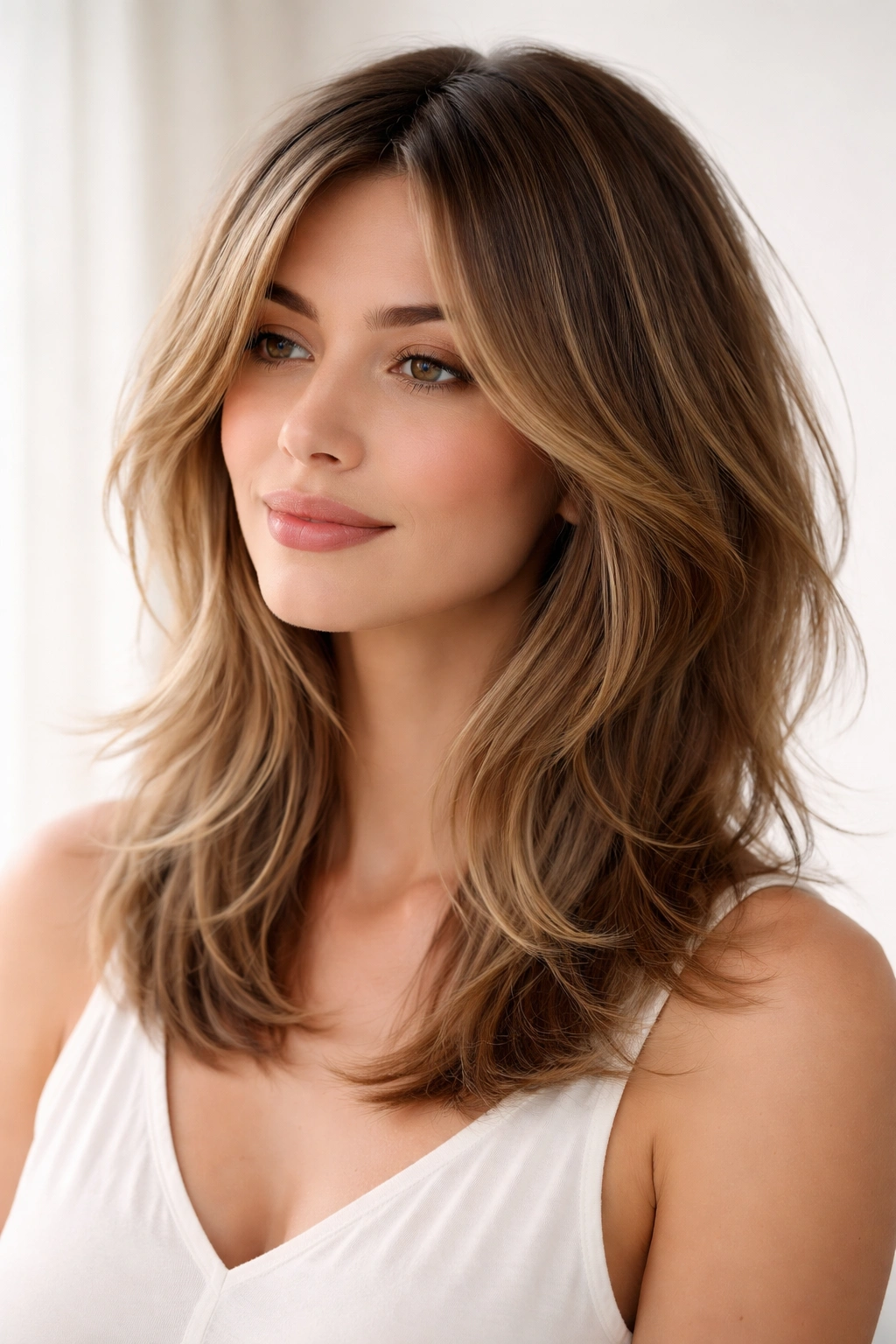
Feathered layers are the gentle cousin of choppy layers — they create movement through softness rather than attitude. Instead of blunt-edged chops, feathered layers are point-cut, creating wispy, delicate pieces that blend seamlessly into each other. The result is a cut that looks lived-in and touchable without feeling rough or dramatic.
What Makes Feathered Layers Different
Feathering relies on precision point-cutting, where the stylist angles the scissors upward and creates tapered, fine points on the ends of each layer. This approach gives you shape and movement without the stark contrast of choppy layers. The layers follow the natural contour of your head, so they frame your face without feeling choppy or aggressive. You get genuine movement because the lighter, tapered ends move more freely, but it feels more romantic and less edgy than a choppy cut.
Styling Tips for Maximum Feathered Movement
- Blow-dry away from the face for a polished, feature-forward look that shows off those soft layers framing your eyes
- Use a round brush to curl the layers slightly under for added movement and shape
- A light volumizing mousse applied to damp roots gives feathered layers more bounce without weighing them down
- This cut works beautifully with highlights or balayage, because the layers create natural color dimension
- Feathered layers need a trim every 6-8 weeks to keep that soft, tapered texture intact
Pro tip: If you have a round face, feathering around the cheekbones creates the illusion of length and slims your face without you having to do anything except let the cut do its job.
3. Textured Shag with Modern Proportions
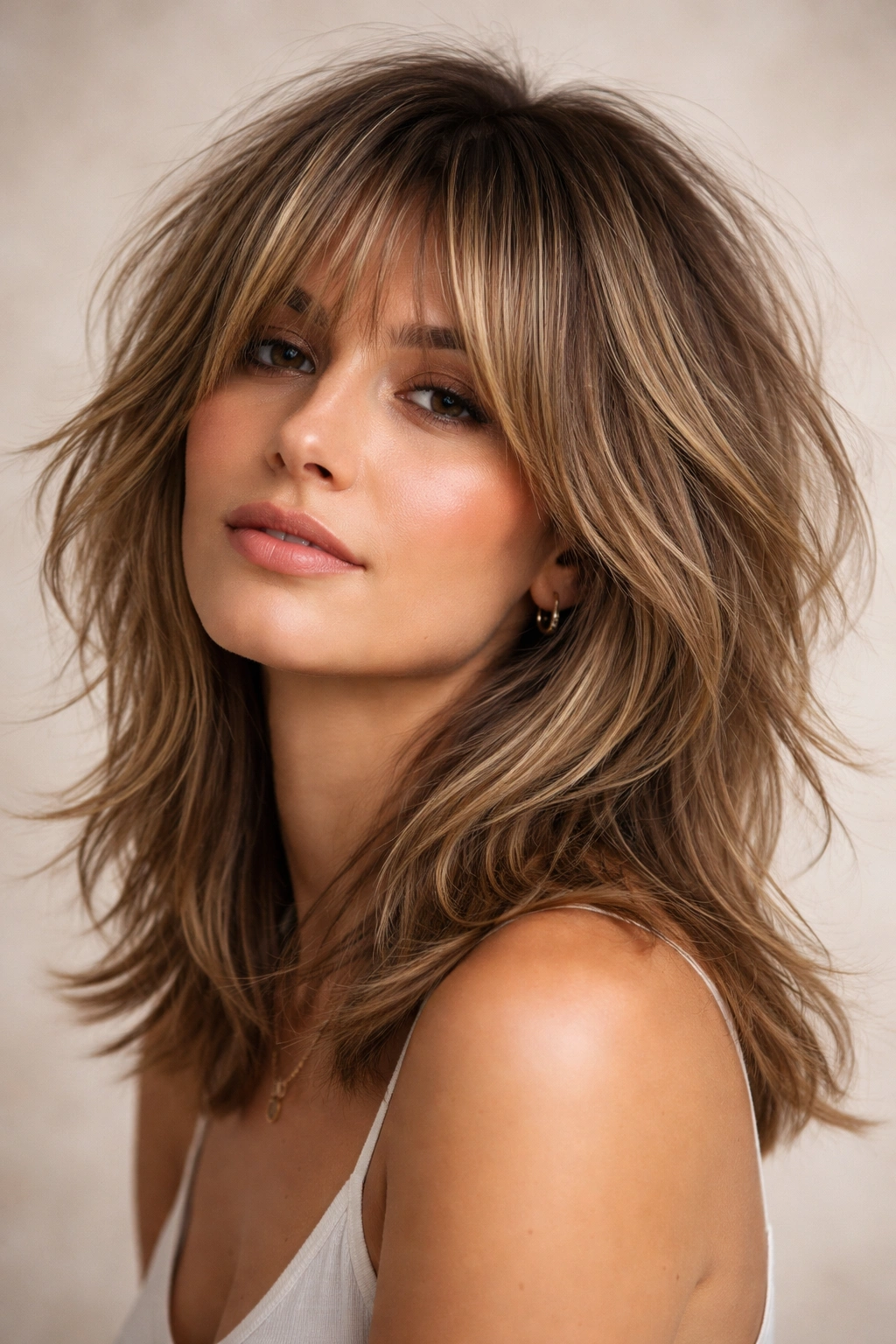
The shag is back — but this isn’t your 1970s disco shag. A modern textured shag at shoulder length combines short, wispy layers on top with longer length underneath, creating that spiky, piecey texture that looks cool without looking costumey. The key difference from a classic shag is that the proportions are more subtle and the overall length is more wearable for everyday life.
How Modern Shag Layers Create Movement
A textured shag works because of the dramatic difference between the shorter crown layers and the longer underneath sections. When you move, the short pieces move independently from the longer ones, creating a multi-directional texture that photographs like you just rolled out of bed looking effortlessly cool. The texture comes from point-cutting and sometimes a light texturizing razor, which creates rough edges that grab light and create dimension. This cut embraces movement as its entire purpose — it literally doesn’t work if it sits flat.
Making Your Shag Feel Effortless
- Apply texturizing spray or sea salt spray before blow-drying for maximum piece separation
- Use your fingers or a texturizing cream while blow-drying to create that intentionally tousled look
- A diffuser on your blow dryer brings out natural texture without flattening the layers
- The shag looks better slightly undone — don’t aim for perfection with this cut
- Trim every 4-6 weeks to keep the texture looking intentional rather than grown-out and scraggly
Pro tip: If you’re nervous about committing to a full shag, ask your stylist for a “soft shag” that’s less dramatic but still gives you that textured, moveable vibe without the statement-making intensity.
4. Face-Framing Layers with Longer Underneath
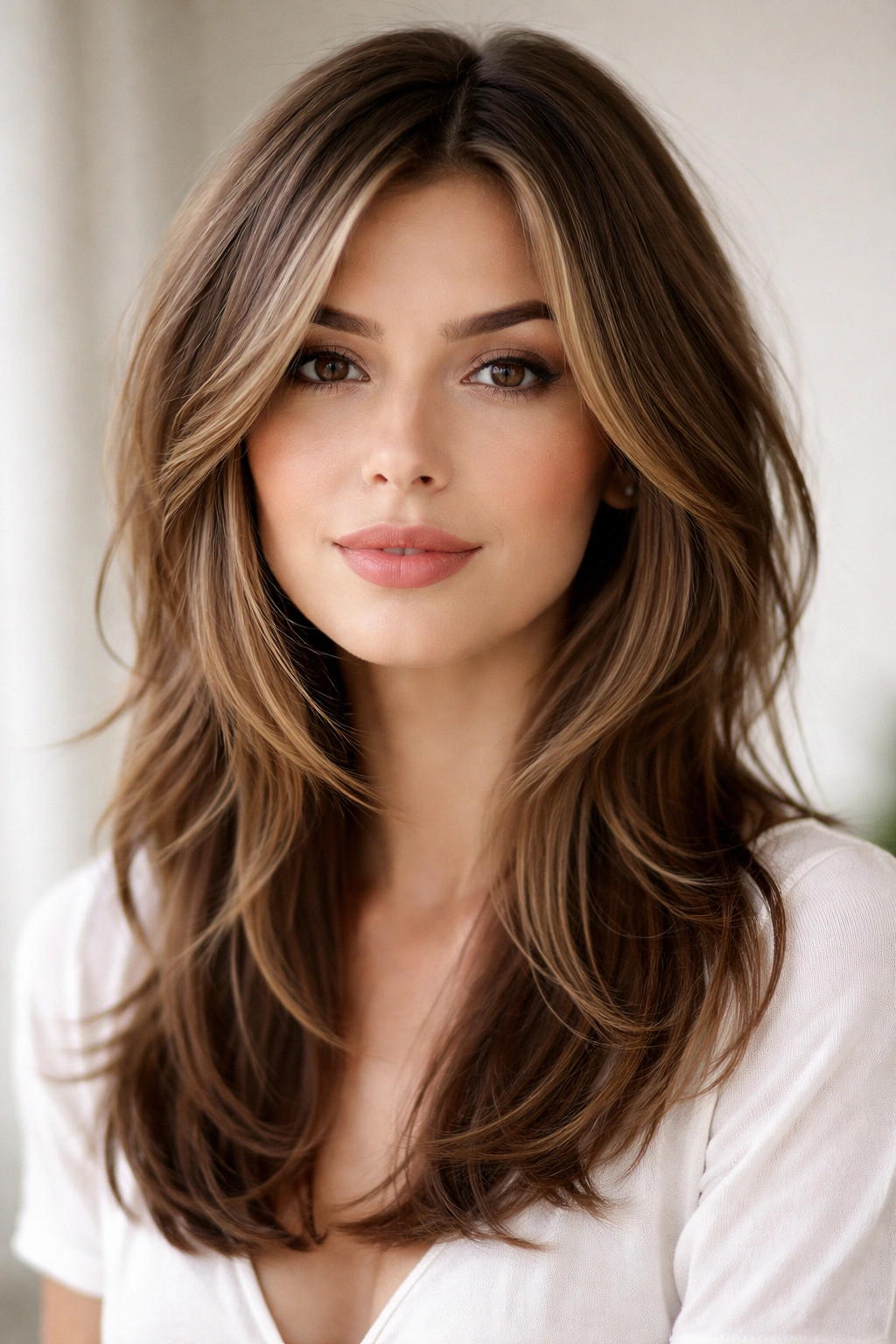
This cut prioritizes face-framing, creating shorter layers specifically positioned around your cheekbones and jawline while keeping longer length underneath. The movement comes from the contrast between those shorter, movement-friendly pieces and the longer underneath length. It’s sophisticated enough for professional settings while still delivering genuine texture and shape.
Why Face-Framing Layers Work for Every Face Shape
Face-framing layers are essentially custom-contoured to your face. The stylist cuts shorter pieces exactly where they’ll hit your cheekbones, jawline, or wherever you want softness and definition. Because these layers are positioned strategically rather than throughout the entire head, they create a focal point that draws attention to your best features. The movement in these pieces is noticeable because they’re shorter and lighter, so they move more freely than the longer underneath sections.
How to Optimize Face-Framing Layers
- Blow-dry the face-framing pieces away from your face to show off the cut and avoid that flat, heavy appearance
- Use a small round brush to curl the shorter pieces slightly away from your face for added dimension
- Face-framing layers look stunning with side-swept bangs or a deep side part that emphasizes one side
- Texturizing cream applied just to the shorter layers adds definition without weighing down the longer underneath pieces
- Ask your stylist to connect the face-framing layers smoothly to the underneath length so it feels integrated rather than choppy
Pro tip: If you have a long face, horizontal face-framing layers at cheekbone height create the illusion of width, while longer, straighter underneath layers maintain overall length without adding extra vertical emphasis.
5. Blunt Layered Cut with Subtle Texture
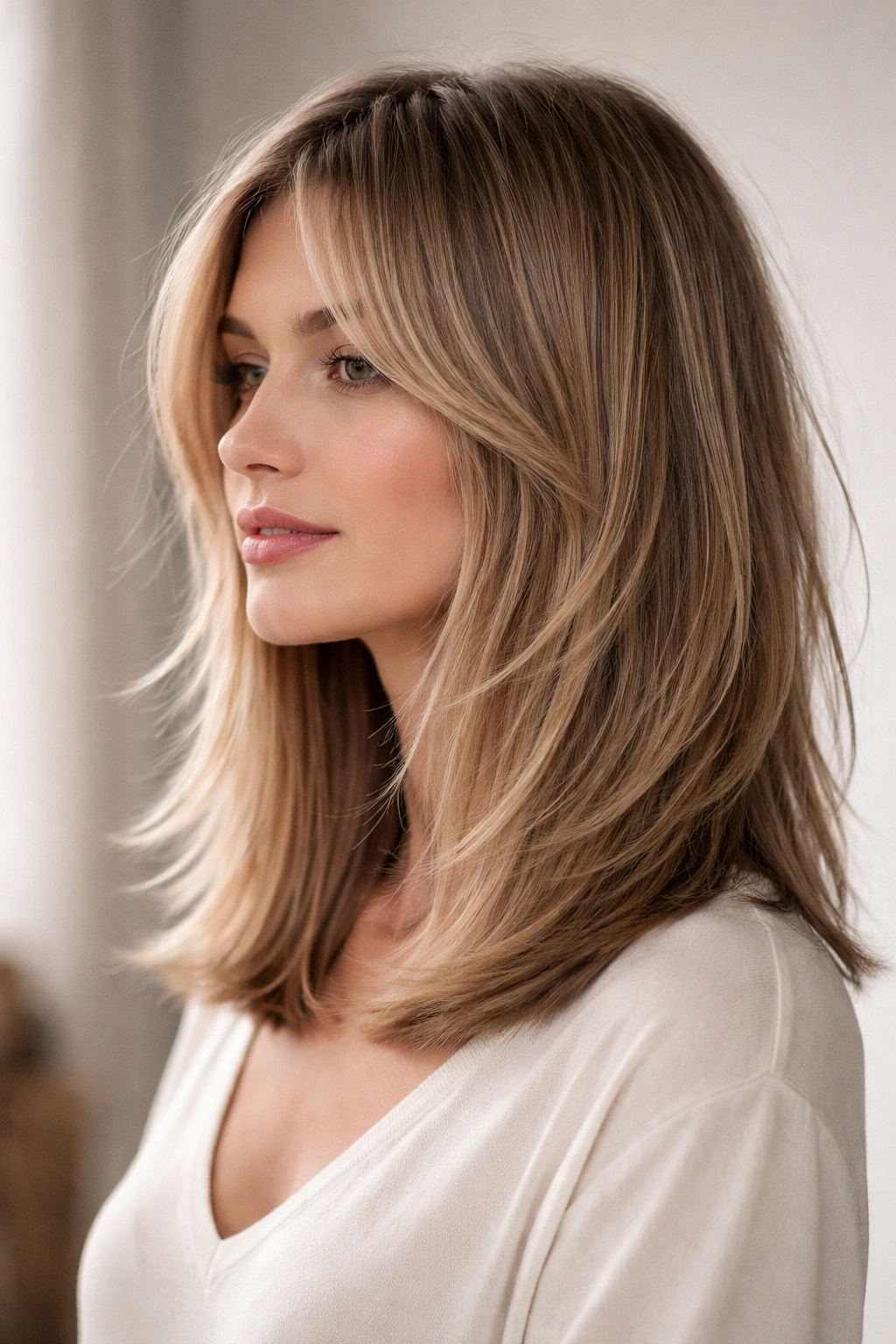
A blunt layered cut sits between a full blunt bob and a heavily layered shag — it has defined layers, but they’re more subtle and structured rather than wild and textured. The movement comes from the blunt edges catching light and the layers creating shape at key points, particularly around the crown and the ends.
The Precision Behind Subtle Blunt Layers
Blunt layering is an exercise in precision. Rather than point-cutting everything or creating choppy texture, the stylist cuts each layer with intention, using blunt cuts but strategically placed so they create shape without chaos. The layers usually follow a specific shape — often longer in front, gradually shorter toward the back — which creates a directional movement rather than all-over texture. The blunt edges mean the cut maintains its shape between trims and looks intentional and polished.
Styling Your Blunt Layered Cut
- Blow-dry with a paddle brush for a smooth, controlled finish that shows off the cut’s structure
- Use a round brush if you want to add subtle waves or curls without losing the cut’s definition
- This cut looks great with a center or side part — experiment with both to see which shows off the layers best
- Light hairspray keeps the blunt edges sharp and prevents flyaways from ruining the cut’s clean lines
- Monthly trims help maintain the blunt edges and keep the cut looking sharp rather than grown-out
Pro tip: Blunt layered cuts photograph beautifully in professional settings because the clean lines and subtle movement create sophistication without looking overdone or trying too hard.
6. Long Layers with Minimal Choppy Texture
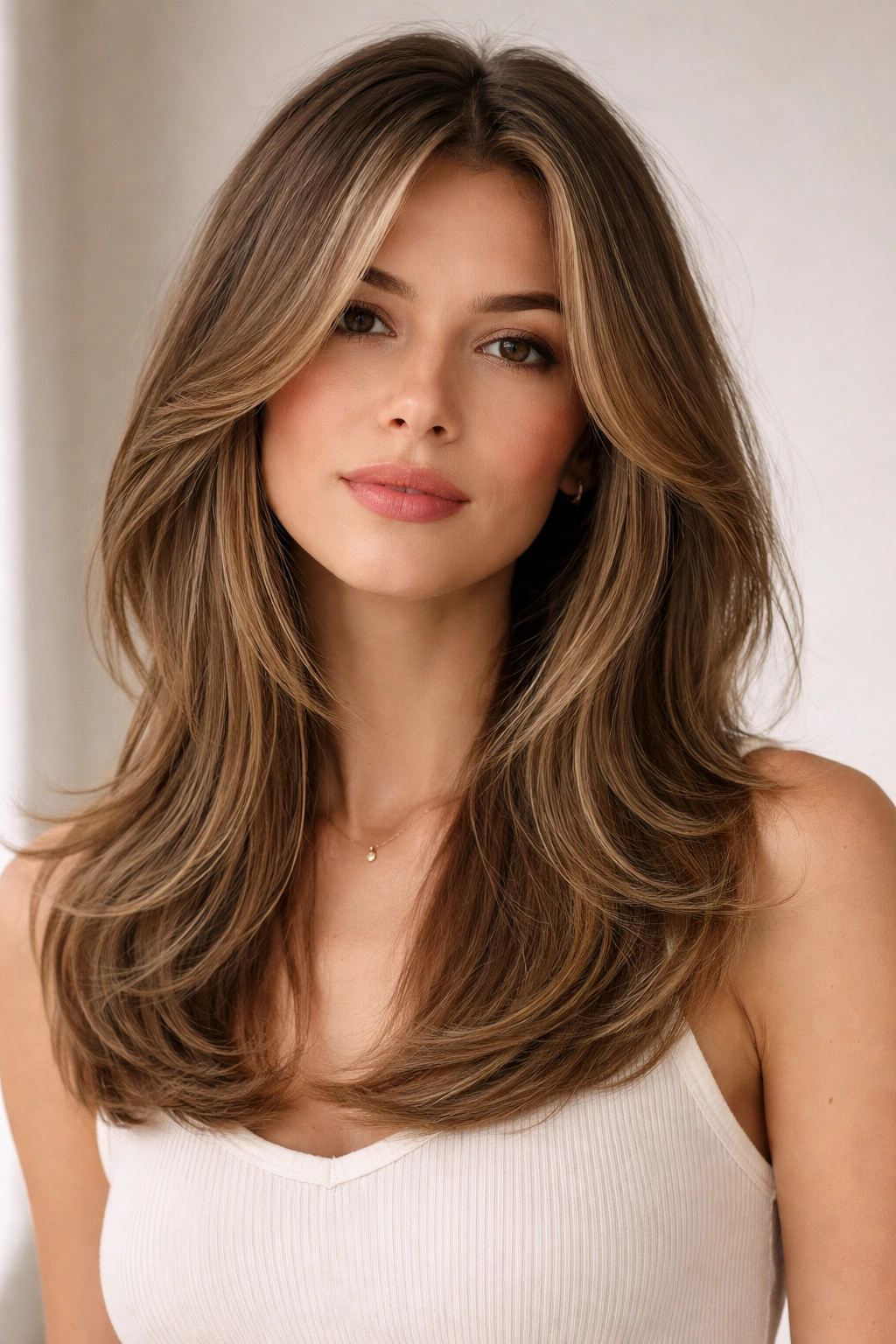
If you love the idea of layers but worry that too much texture will make your hair look thin or messy, long layers with minimal chop might be your answer. This cut features gradual, subtle layers throughout the hair rather than dramatic, stacked sections. The movement comes from the overall length and the gentle graduation rather than from choppy edges.
How Gradual Layering Creates Subtle Movement
Gradual layers work by creating a gentle progression from shorter pieces at the crown to longer pieces at the ends. Rather than obvious jumps in length, the layers flow into each other, creating shape and movement that feels organic. Because the chop is minimal, the cut feels softer and less aggressive, and works beautifully for people who want movement without feeling like they have a deliberately textured, choppy hairstyle. The movement is there — it’s just more understated and elegant.
Maintaining Long, Subtle Layers
- Trim every 8-10 weeks to keep the layers from growing out and looking shapeless
- Blow-dry with a round brush to enhance the movement created by the layers
- Use a light smoothing serum on damp hair before blow-drying to prevent frizz and keep the layers sleek
- This cut works beautifully with straight or wavy hair — the subtle layers enhance natural texture without fighting it
- Avoid heavy products that will weigh down the layers and flatten the movement you’re trying to create
Pro tip: If you have fine or thin hair, this approach to layering gives you the benefit of shape and movement without the risk of looking wispy or sparse in certain spots.
7. Textured Wolf Cut Style
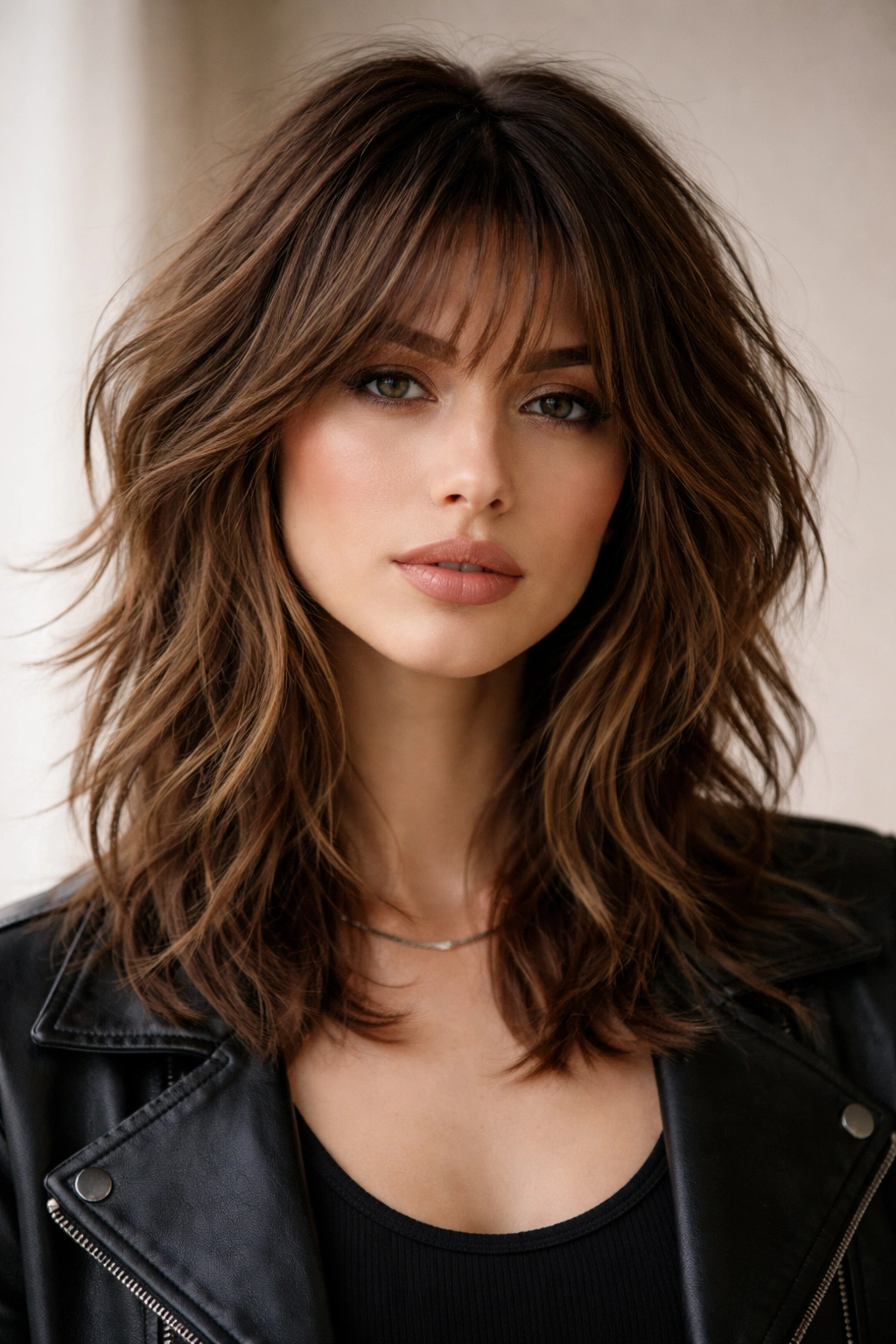
The wolf cut is essentially a shag and a mullet’s artistic love child — it has a fluffy, textured crown with longer, sleeker length underneath. At shoulder length, a wolf cut with movement creates that editorial, high-fashion vibe that looks absolutely stunning on people who want their hair to make a statement while still being wearable.
What Makes a Wolf Cut Actually Work
A wolf cut’s movement comes from the dramatic contrast between the textured, voluminous crown and the smoother, longer underneath sections. The top is heavily layered and texturized, sometimes almost choppy, while the underneath is left longer and smoother. When you move, you get multiple directions of movement — the textured top pieces bounce independently from the longer underneath pieces, creating a dynamic, multidimensional look. It’s a cut that demands styling but rewards effort with genuinely cool results.
Styling a Wolf Cut for Maximum Impact
- The crown needs texture, so apply texturizing spray or sea salt spray before blow-drying
- Use a diffuser on low heat to enhance the texture on top without disturbing the longer underneath pieces
- The underneath can be blow-dried smooth, or textured for an overall piecey, modern look
- This cut looks incredible with color — whether that’s balayage, highlights, or a solid color, the textured layers show off color dimension beautifully
- Commit to a stylist who understands modern wolf cuts, because the balance between the textured top and longer underneath is everything
Pro tip: A wolf cut looks most intentional when you lean into the editorial, slightly undone styling — this isn’t a cut that works as a slicked-back, pristine style. It wants movement, texture, and a bit of attitude.
8. Razored Layers for Choppy Edge Appeal
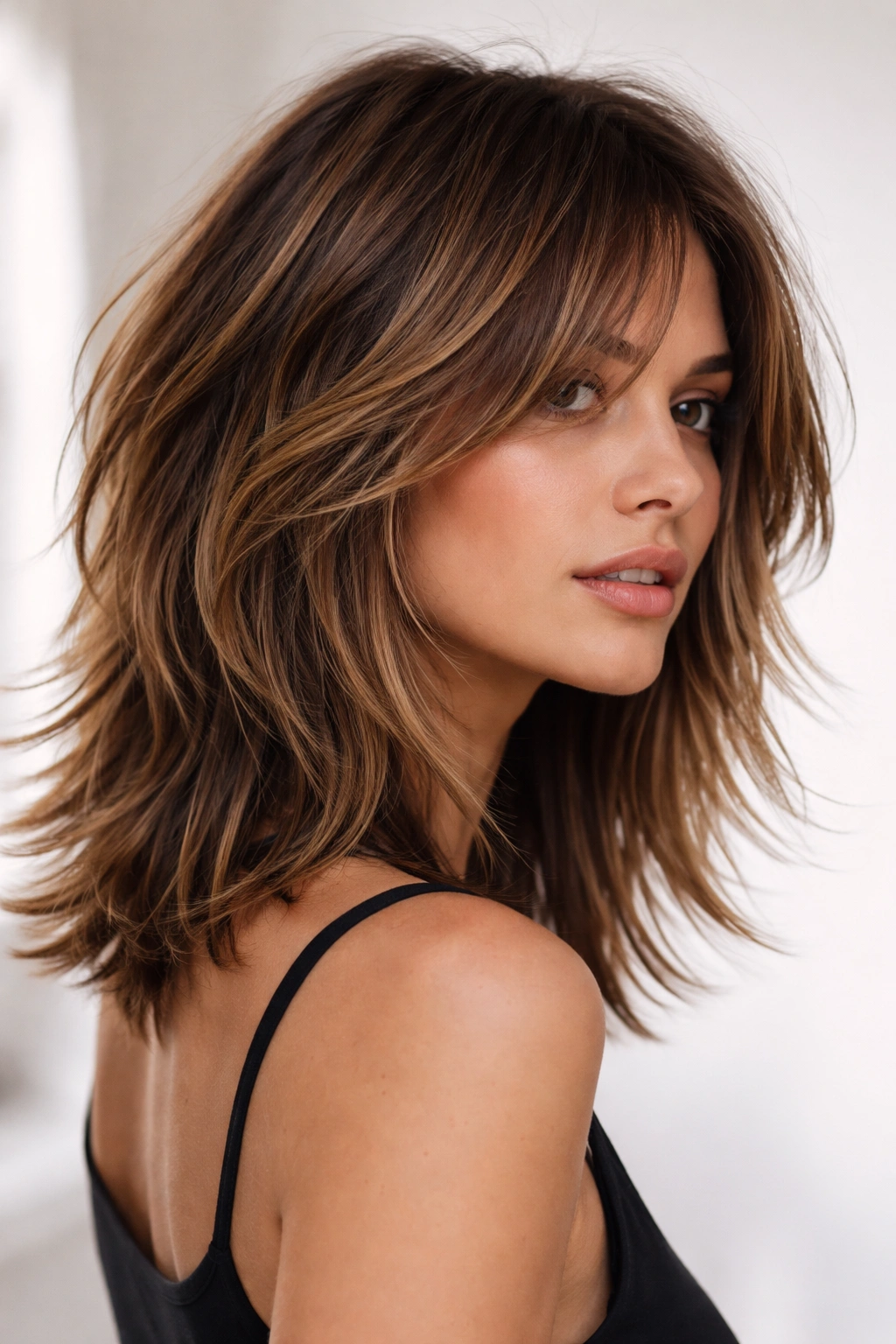
Razoring is a cutting technique that uses a razor instead of scissors to create texture and movement in hair. Razored layers create sharp, choppy edges that are slightly more refined than a standard choppy cut — they’re intentionally rough without feeling sloppy. This technique is particularly striking on hair that has natural wave or curl, because the razored edges accentuate texture.
How Razoring Creates Different Movement
Razoring creates movement by removing bulk and creating tapered edges that are lighter and move more freely than blunt-cut ends. Because the razor removes hair at an angle rather than straight across, it creates a more feathered, less severe chop than scissors would. The result is a cut with genuine edge and attitude but without looking aggressive. Razored layers work beautifully for people who want texture and movement but worry that a full choppy cut might feel too dramatic.
Working with Razored Layers
- Razored cuts need regular trims — aim for every 4-6 weeks to keep the edges crisp and intentional
- Texturizing products emphasize the razored texture beautifully
- This technique works best on hair with some natural texture — straight hair can sometimes look stringy with too much razoring
- Blow-dry with movement to show off those razored edges rather than attempting to smooth them down
- If you’re using heat styling, a texturizing cream or salt spray applied beforehand will enhance the natural movement created by the razor cuts
Pro tip: Razored layers combined with blonde or lighter color tones create the most dramatic, eye-catching effect because the light reflects off those choppy edges and creates tons of visual texture.
9. Curtain Layers with a Modern Twist
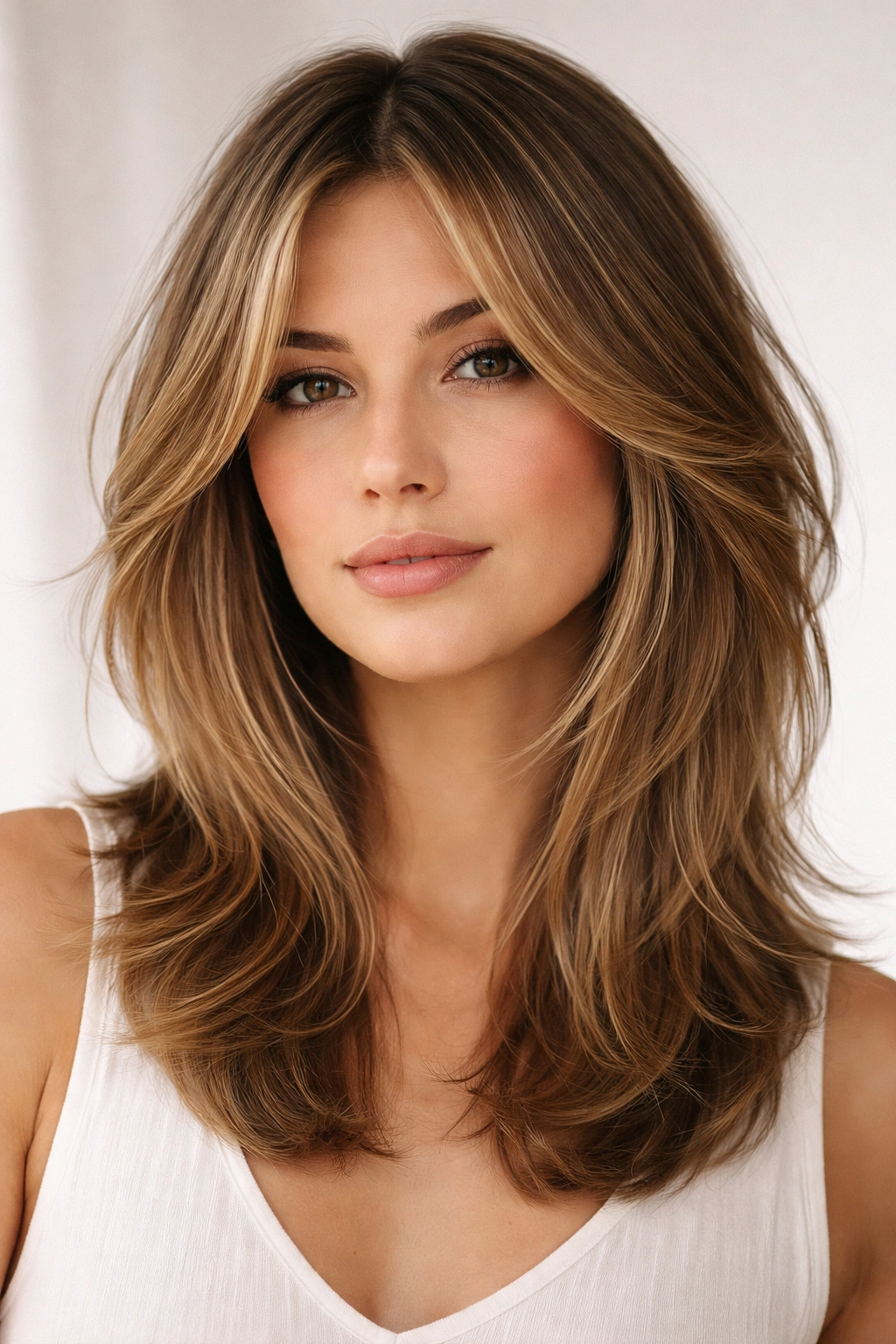
Curtain layers (also called a curtain cut) feature longer pieces on either side of the face that frame it symmetrically, like curtains framing a window. A modern version of this classic cut adds contemporary layering and texture throughout rather than just relying on the face-framing pieces. The movement comes from both the face-framing pieces and the texture layered throughout.
Why Curtain Layers Feel Effortlessly Cool
Curtain layers work because they create natural, flattering face-framing without requiring intense styling or a specific hair type. The longer pieces frame your face and move with your head, creating constant, gentle movement. Because the cut is symmetrical and balanced, it feels sophisticated and put-together even when you’re not trying. Adding modern layering and texture throughout prevents the cut from feeling dated or too severe — you get the elegance of a curtain cut with the contemporary edge of textured movement.
Styling Your Curtain Layered Cut
- A deep center part shows off the curtain framing beautifully and emphasizes the symmetry of the cut
- Blow-dry the curtain pieces away from your face to show off the cut and create movement
- Texturizing spray applied before blow-drying adds dimension to the layered sections without weighing down the curtain pieces
- This cut works beautifully with side-swept styling if you want a more asymmetrical, modern look
- Minimal styling is often enough with this cut — just blow-dry and go for effortless movement
Pro tip: Curtain layers look absolutely stunning on people with longer faces because the horizontal face-framing creates the illusion of width and balance without requiring additional styling tricks.
10. Messy Textured Layers with Intentional Piece Separation
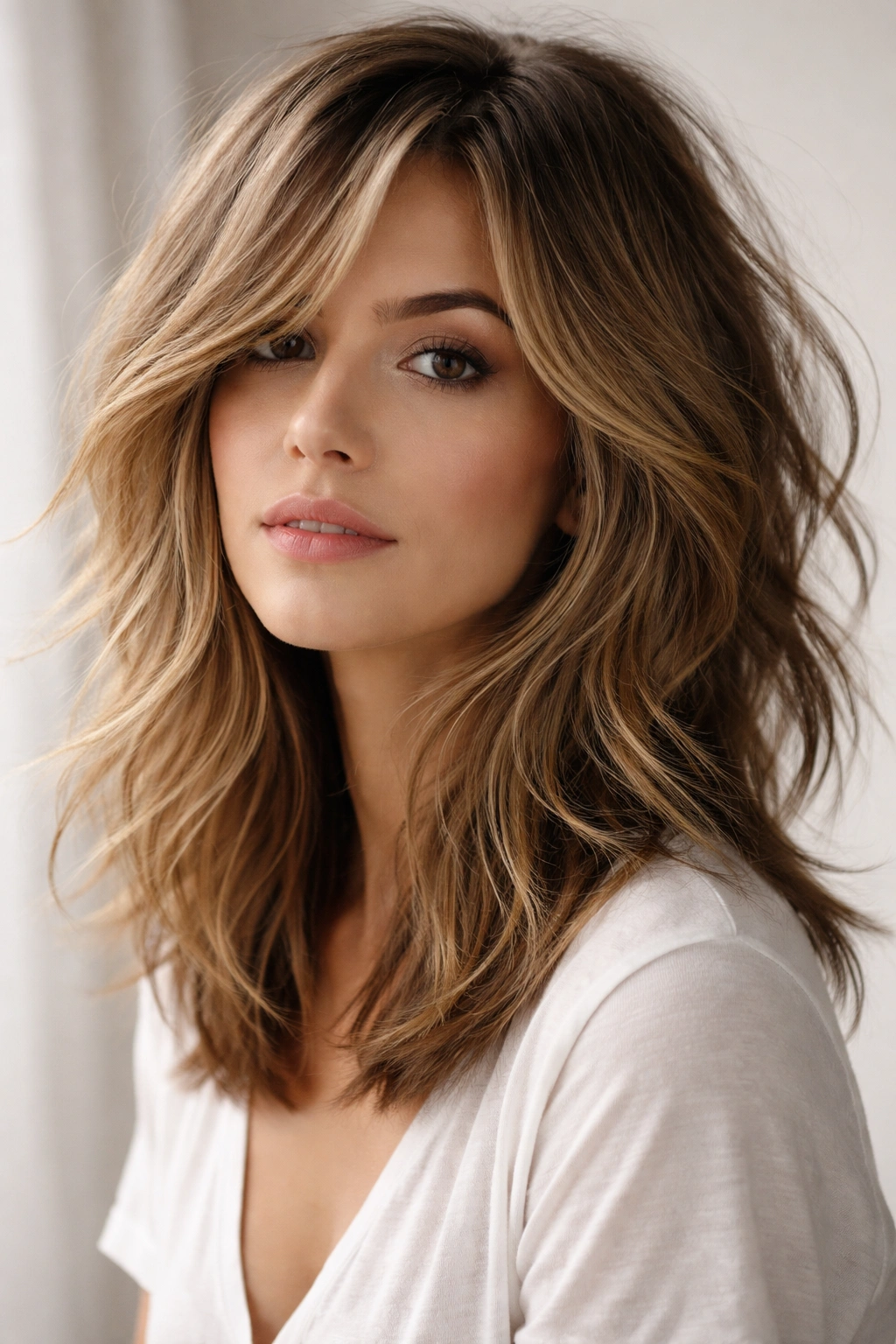
This cut embraces the “undone” aesthetic completely — it features layers that are deliberately cut to separate into distinct pieces rather than blend together. The movement is obvious and energetic, with individual strands moving independently rather than cohesively. This is the cut for people who love texture and don’t want to hide it.
The Art of Intentional Piece Separation
Creating distinct piece separation requires strategic layering and specific cutting techniques. The stylist cuts shorter layers at angles designed to lift and separate from the longer underneath, creating definition and movement in multiple directions. Because the layers are deliberately separated rather than blended, you get obvious texture and a tousled, lived-in look even when the cut is freshly done. The movement is constant and visible — it’s impossible to wear this cut flat or perfectly sleek.
Styling for Intentional Texture
- Texturizing spray or sea salt spray is essential — apply it to damp hair before blow-drying for maximum texture
- Blow-dry with your fingers or a diffuser rather than a brush to enhance piece separation without smoothing it out
- Texturizing cream or pomade applied to dry hair adds extra definition to individual pieces
- This cut looks better slightly undone, so don’t aim for perfect smoothness or precision
- Embrace the movement and texture — that’s literally the entire point of this cut
Pro tip: This cut looks incredible on people with naturally curly or wavy hair because the natural texture enhances the intentional piece separation and creates tons of movement without requiring heat styling.
11. Wispy Bangs with Layered Length
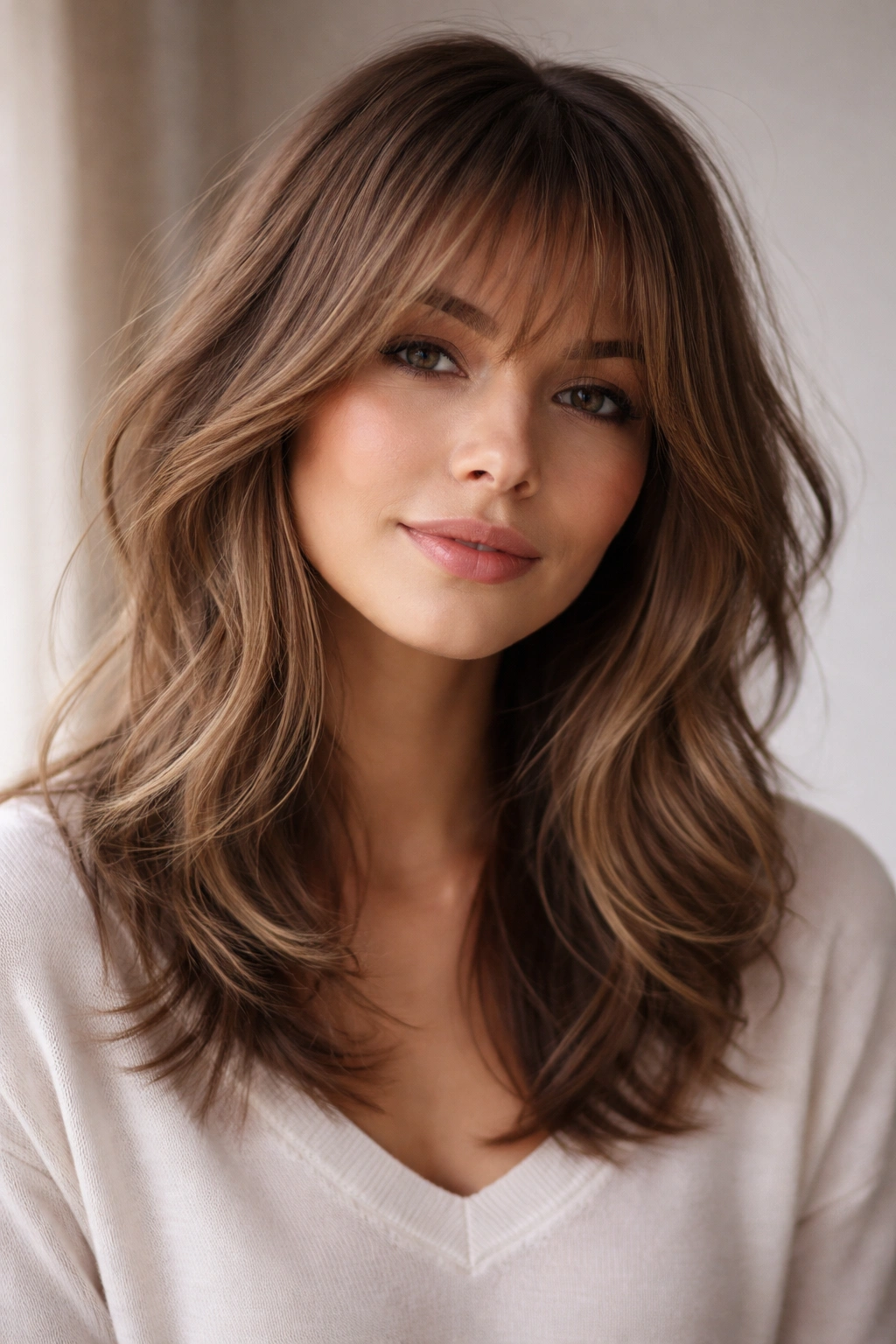
This approach combines a wispy bang with overall layers throughout the length, creating face-framing movement both from the bangs and from the layered underneath. The bangs provide immediate face-flattering movement, while the layered length adds texture and shape. The combination creates a cohesive look where every piece moves with intention.
How Wispy Bangs Enhance Layered Movement
Wispy bangs (delicate, feathered bangs that blend with the rest of the hair) work beautifully with layered shoulder-length cuts because they create an additional, closer layer of face-framing movement. Combined with layered length, you get movement happening at multiple distances from your face — the wispy bangs create soft movement right at eye level, while the shoulder-length layers create additional movement and shape throughout. The result is a cohesive, textured look where every element contributes to overall movement and dimension.
Wearing Wispy Bangs with Layered Length
- Blow-dry the wispy bangs slightly to the side for a soft, modern look that doesn’t feel overly groomed
- The bangs should move with the rest of your hair rather than sitting separately — ask your stylist to connect them smoothly to your face-framing layers
- Texturizing products applied throughout help unify the bangs and layers as one cohesive style
- Trim the bangs every 4-6 weeks to keep them wispy and intentional rather than grown-out and flat
- This combination works beautifully for people who want face-framing movement without committing to a full blunt bang
Pro tip: Wispy bangs with layered length is a forgiving cut that works on multiple face shapes and hair types — the key is making sure the bangs and layers feel connected rather than like separate elements competing for attention.
12. Precision Layered Bob with Graduated Texture
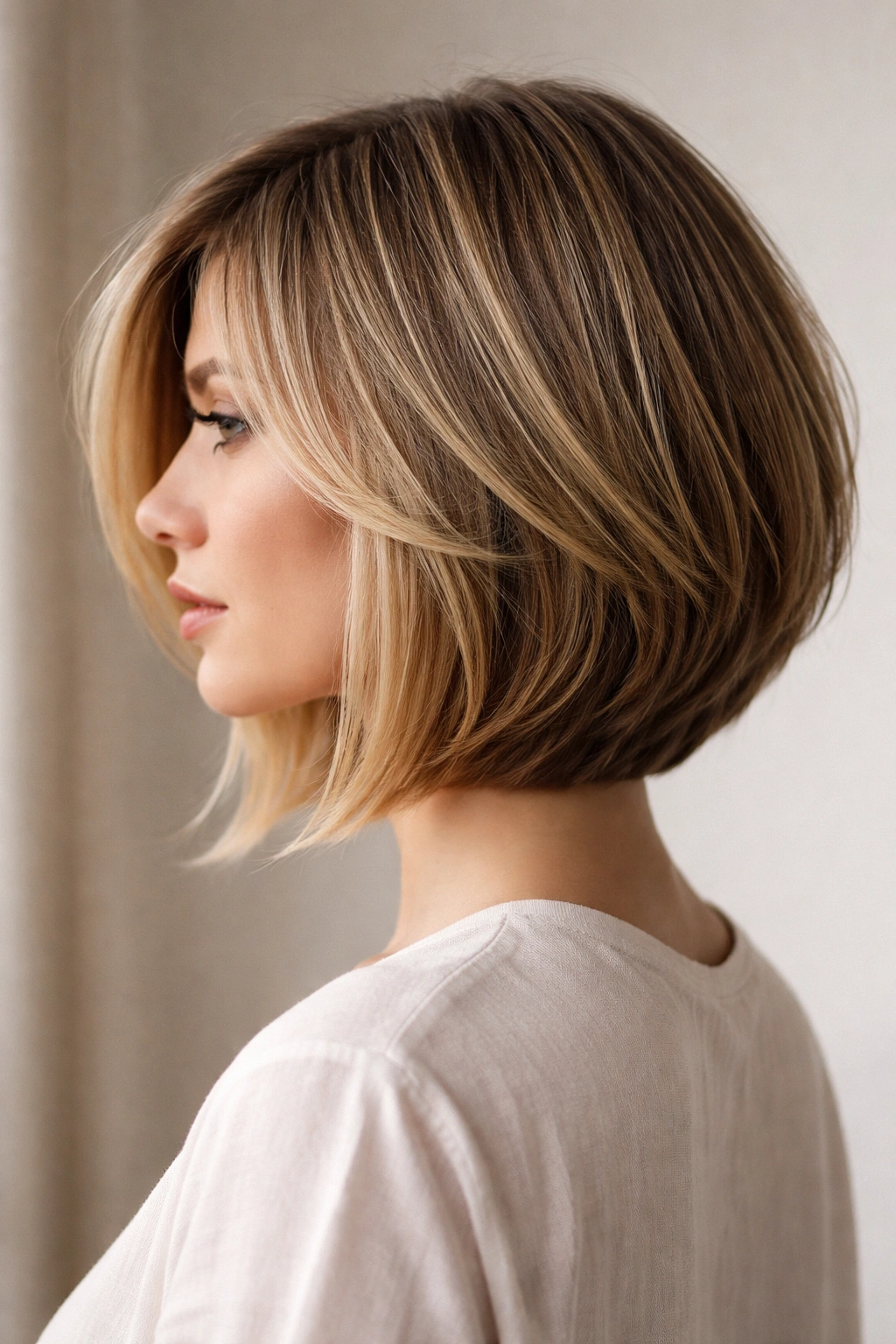
This is a slightly shorter take on the shoulder-length layered cut — a precision layered bob that sits right at the shoulder with graduated layers that are shorter in the back and longer in the front. The movement comes from the graduated shape and the subtle layering throughout, creating a cut that’s polished and structured while still delivering genuine texture and movement.
Why Graduated Layering Creates Dynamic Movement
A graduated layered bob works because the length variation creates natural movement — the shorter back pieces are lighter and move more freely, while the longer front pieces frame your face and create soft movement around your features. The graduation is subtle enough to feel sophisticated and intentional rather than choppy or overdone. The movement is graceful and directional rather than chaotic, making this cut work beautifully for professional settings while still delivering the textured, lived-in vibe you want.
Styling Your Graduated Layered Bob
- Blow-dry with a round brush to enhance the shape and direct the movement of the layers
- A side or center part shows off the layers and creates different movement depending on which direction you part
- Light styling cream applied to damp roots adds subtle volume without weighing down the graduated layers
- This cut maintains its shape beautifully — you can get away with slightly longer intervals between trims than with heavily choppy cuts
- Pair with subtle waves or curls for added movement, or blow-dry straight for a sleeker, more structured look
Pro tip: A graduated layered bob looks incredible in professional settings because the precision and structure feel polished and intentional, while the layers and texture prevent it from feeling boring or overly corporate.
Final Thoughts
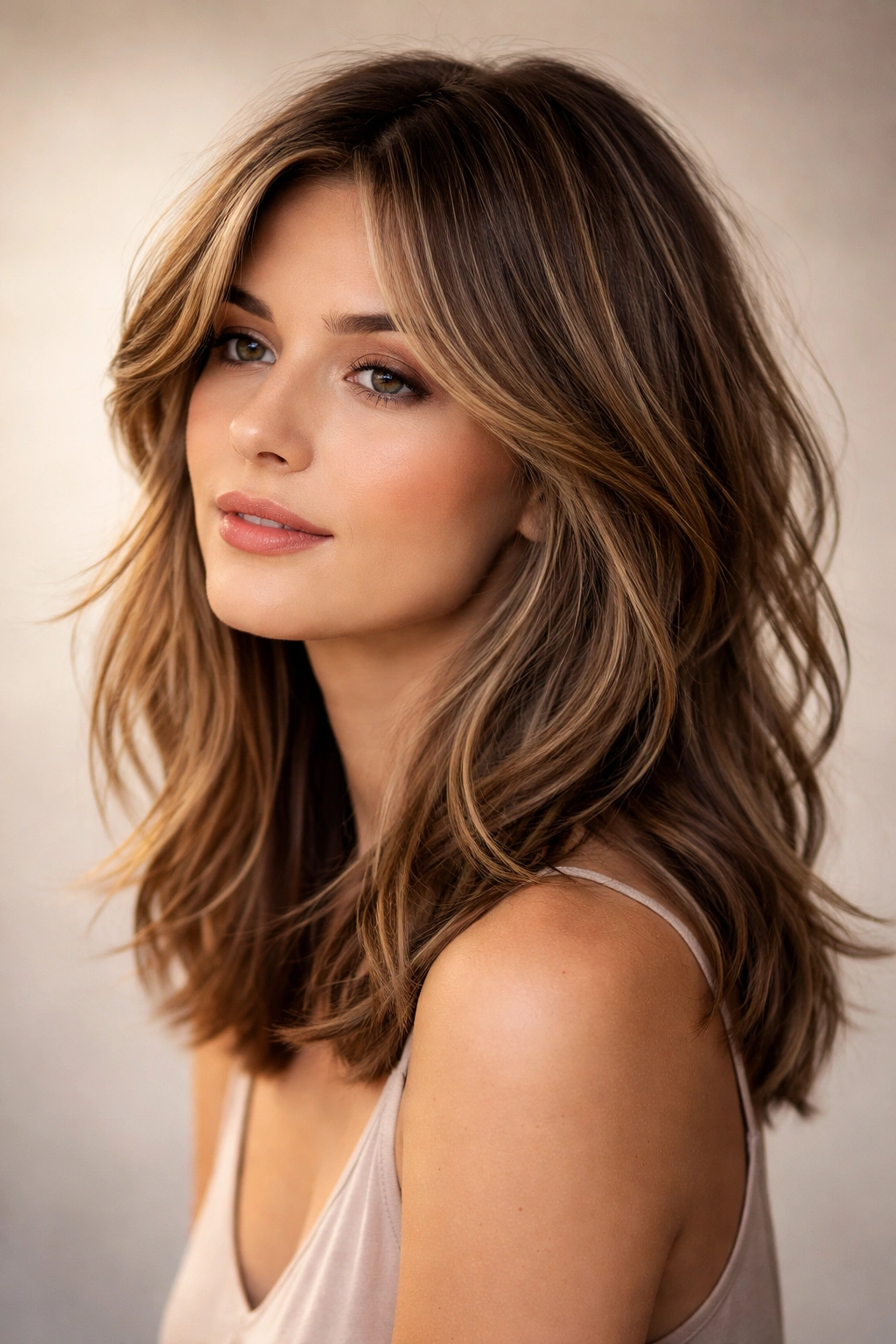
The beauty of shoulder-length layered cuts with movement is that they bridge the gap between practical, wearable length and genuinely stylish, textured hair. Whether you go full-on choppy shag energy or subtle graduated layers, the key to movement is strategic layering that works with your hair’s natural texture rather than against it. A good layered cut should make you feel like your hair has more personality and dimension than you actually have to do anything to achieve — and that’s the real magic of getting the layers right.
Your stylist matters enormously with these cuts. Show them pictures of cuts with the specific kind of movement you want, talk about your styling commitment (because yes, some of these cuts need more daily effort than others), and be honest about your hair type and what you’re willing to do to maintain it. The right layered cut will look better and require less effort than the wrong one, and the difference comes down to precision and understanding your hair.
Once you find your layered cut, commit to trims every 4-8 weeks depending on which style you choose. The layers lose their impact as they grow out — what looks intentional and textured fresh from the salon can start to feel shapeless and stringy after a couple months. Regular maintenance keeps your layers crisp, your movement visible, and your cut looking like you actually put thought into your hair instead of just letting it happen to you.
