



The hime cut has experienced a remarkable resurgence, and it’s not hard to see why. This Japanese-inspired hairstyle—characterized by long side locks called tentacles framing the face with a center parting and typically shorter hair on top—creates a striking silhouette that photographs beautifully and carries an unmistakable aesthetic sophistication. What makes the hime cut particularly appealing right now is how flawlessly it adapts to sleek, straight hair. Unlike wavy or textured styles where the cut can disappear into the texture, straight hair showcases every defined line and layer of the hime cut, making each variation feel intentional and polished.
The magic of the hime cut lies in its architectural quality. The long side sections catch light differently than the interior layers, creating depth and dimension even without color or texture. When you’re working with naturally straight hair or hair that’s been straightened regularly, you get to experience the full emotional impact of the style—the clean lines, the face-framing precision, the way those side locks move independently from the rest of your hair. It’s a style that demands attention to cut quality and styling technique, but delivers results that feel both romantic and modern.
Whether you’re considering your first hime cut or looking to reimagine the style you already have, the variations available are far more extensive than most people realize. From dramatic floor-length locks to more wearable shoulder-length versions, from minimalist interpretations to ultra-feminine renderings, the hime cut transforms depending on how you play with proportions, layering, and the length ratio between the top and sides. Each variation offers a distinct energy and suits different face shapes, lifestyles, and aesthetic goals.
1. Classic Long Hime Cut With Extended Side Locks
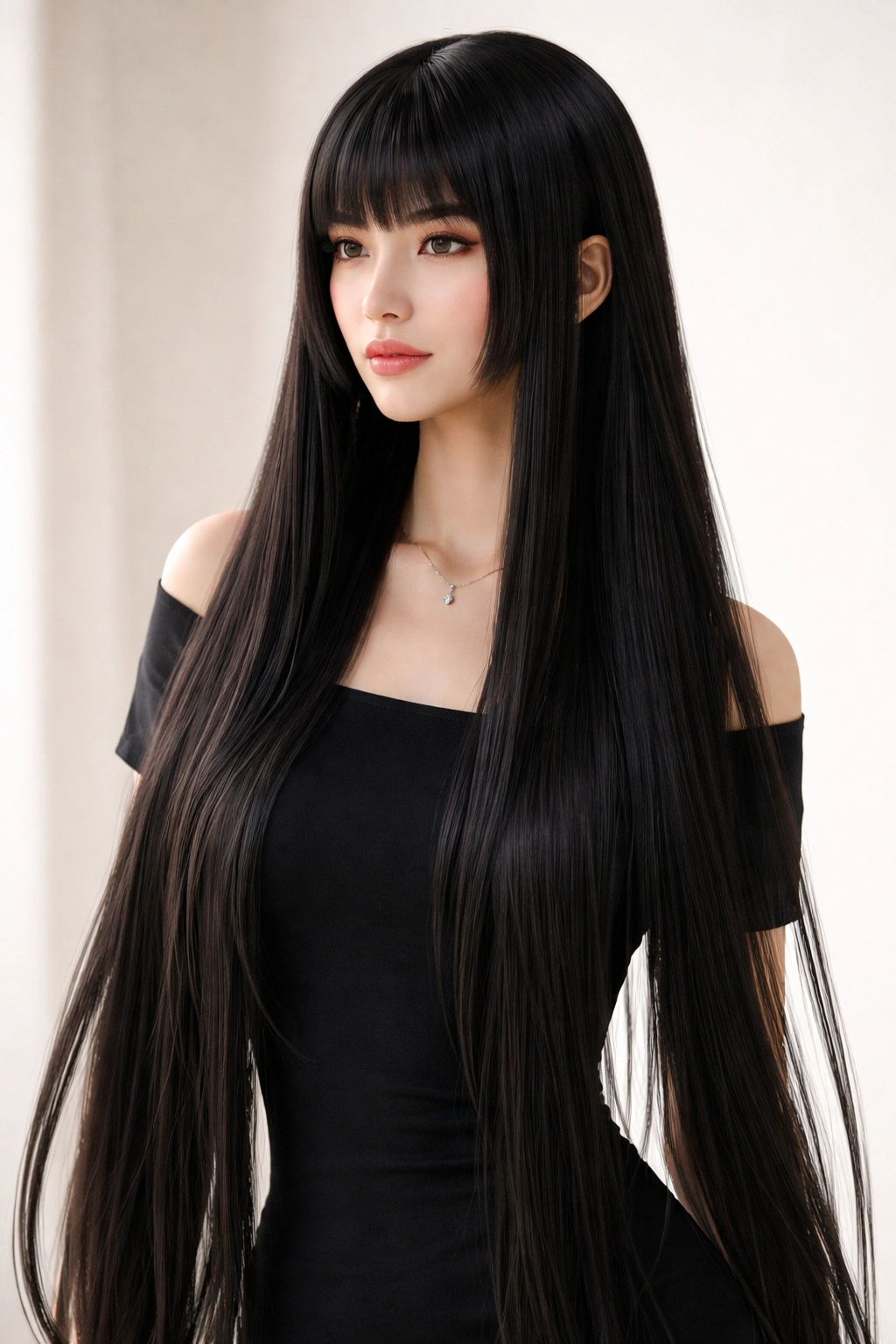
The quintessential hime cut is instantly recognizable—long, flowing side locks that extend well past the shoulders, sometimes reaching hip-length or beyond, paired with shoulder-length or slightly shorter hair on top. This is the version that makes the most dramatic visual statement, and on straight hair, it’s absolutely showstopping. The extended side locks create the characteristic silhouette that reads as distinctly hime, and the length differential between the sides and the interior layers means you get pronounced movement and flow.
Why This Works Best With Straight Hair
The classic long hime cut truly shines when your hair is straight because the side locks maintain their shape and movement independently from the rest of your hair. There’s no volume disrupting the clean lines, no texture making the sides blend into the overall style. On straight hair, those long side pieces become sculptural elements that frame your face beautifully. The cut demands precision because there’s nowhere for mistakes to hide—every millimeter of length is visible, and every layer speaks to the skill of your stylist.
Key Details to Discuss With Your Stylist
- Request that the side locks remain thicker and denser than the interior layers, so they maintain their distinct visual weight
- Ask for subtle layers within the side locks themselves to prevent them from looking flat or one-dimensional (typically 1-2 internal layers per side is ideal)
- The top should have enough texture and movement to avoid looking completely separated from the sides—subtle, piece-y layers work better than blunt lines
- You’ll need maintenance every 6-8 weeks to keep the side locks looking intentional rather than just overgrown
Pro tip: This version requires daily or every-other-day straightening to maintain the aesthetic impact, so commit to heat styling as part of your routine, or consider a keratin treatment for easier maintenance.
2. Shoulder-Length Hime Cut for Everyday Wearability
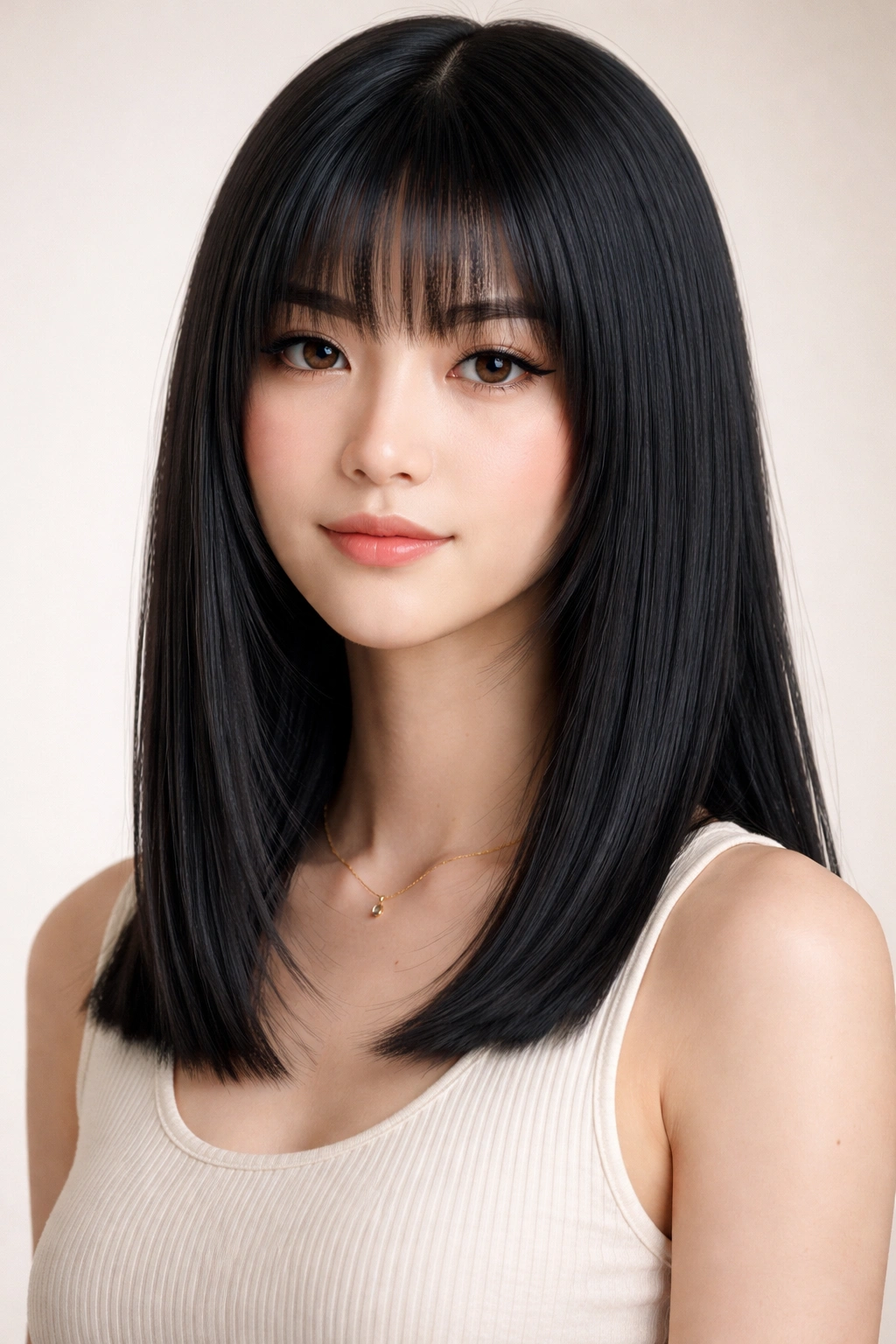
If the classic long version feels impractical for your lifestyle, the shoulder-length adaptation offers a perfect middle ground. In this variation, the side locks extend just to the shoulders or slightly below, while the top remains around chin-length. You still get the unmistakable hime silhouette and all the face-framing benefits, but with significantly easier daily management and far less commitment to heat styling.
The Practical Appeal
This length is genuinely wearable for people with busier lives, active jobs, or who travel frequently. You can still achieve the full aesthetic impact, but your styling time shrinks substantially. A quick straightening of the ends and side locks takes 10-15 minutes rather than the 30-45 minutes needed for floor-length versions. The shorter length also feels more contemporary and less overtly costume-like, making it easier to wear to professional environments or casual settings without feeling out of place.
Styling Approach for Maximum Impact
- Apply heat protectant to damp hair before straightening to prevent damage from daily heat styling
- Use a ceramic or tourmaline flat iron to get silky-smooth results without frizz
- Curl the very ends of the side locks slightly inward (just a gentle curve, barely perceptible) to add softness and prevent a blunt, severe appearance
- Consider adding a center part so precise and clean that it becomes a design feature, not just a hair direction
Worth knowing: At this length, you can usually go 8-10 weeks between cuts and still maintain the style’s integrity, since the proportions don’t shift as dramatically as they do with ultra-long versions.
3. Layered Hime Cut With Textured Top
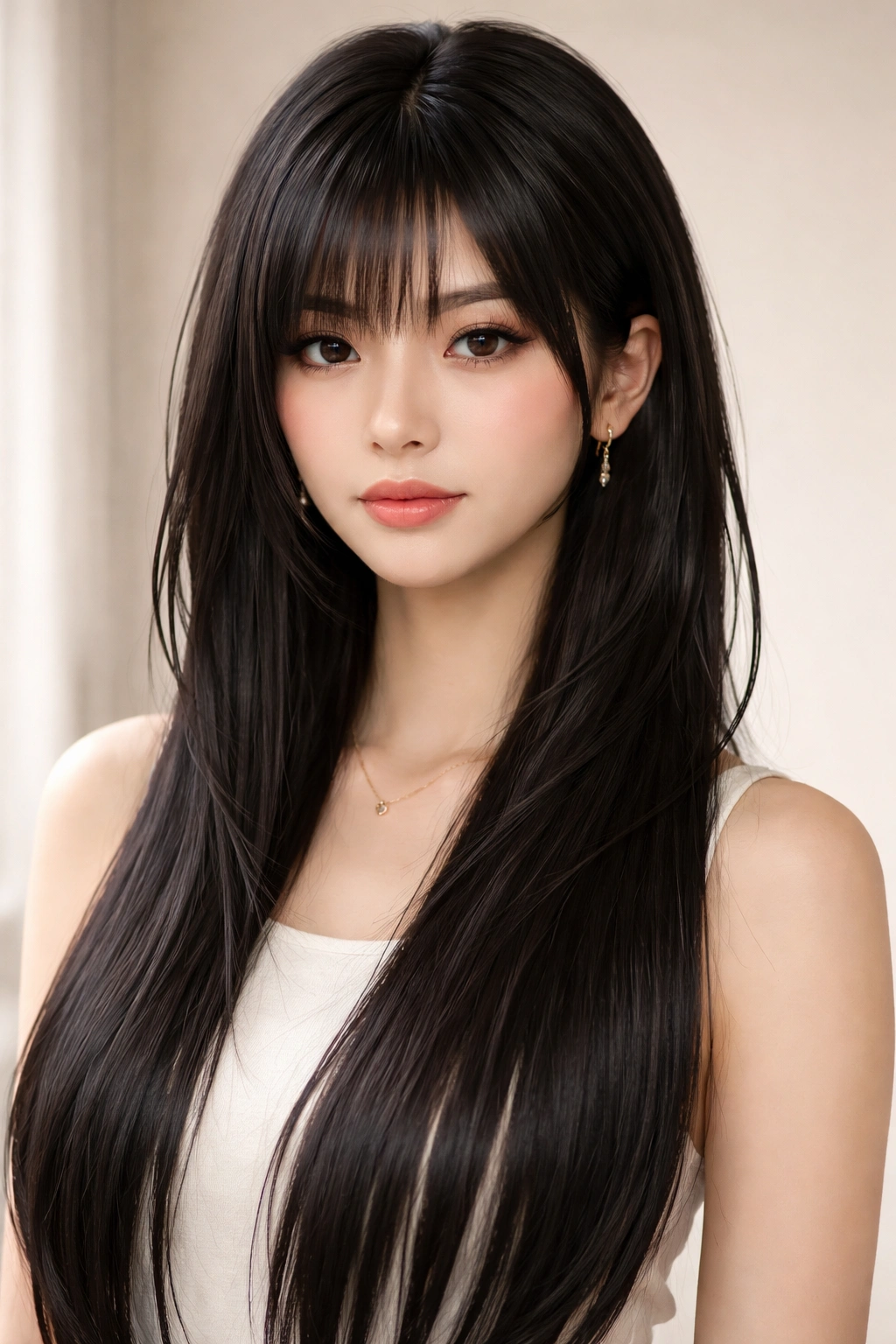
While the classic hime maintains a fairly unified crown, this variation features more deliberate layering throughout the top section, creating movement and texture while the side locks remain long and relatively uniform. The contrast between the piece-y, textured interior and the smooth, structured side locks creates visual interest and makes the style feel more dynamic.
Creating Dimension Without Losing Definition
The key to this version is layering the top sections without creating a shaggy or unfocused silhouette. Your stylist should cut deeper, more pronounced layers that create actual movement when straightened, rather than subtle feathering that disappears. When straightened, you want to see distinct lines where each layer catches light differently, creating a stacked, multi-dimensional effect.
How Straight Hair Makes This Work
On straight hair, layered textures are more visible and pronounced than on wavy or curly hair. Each layer reads clearly, creating clear visual separation between sections. The side locks act as anchors, grounding the movement of the textured top and preventing it from looking chaotic or unfocused.
- Ask your stylist to create 4-5 distinct layer lines within the top sections
- The layers should graduate in length, shorter near the face and longer toward the back
- Leave the back section slightly longer than the front layers for added flow
- The side locks should begin where the layered crown ends, creating a distinct transition point
4. Side-Swept Hime Cut With Asymmetrical Lines
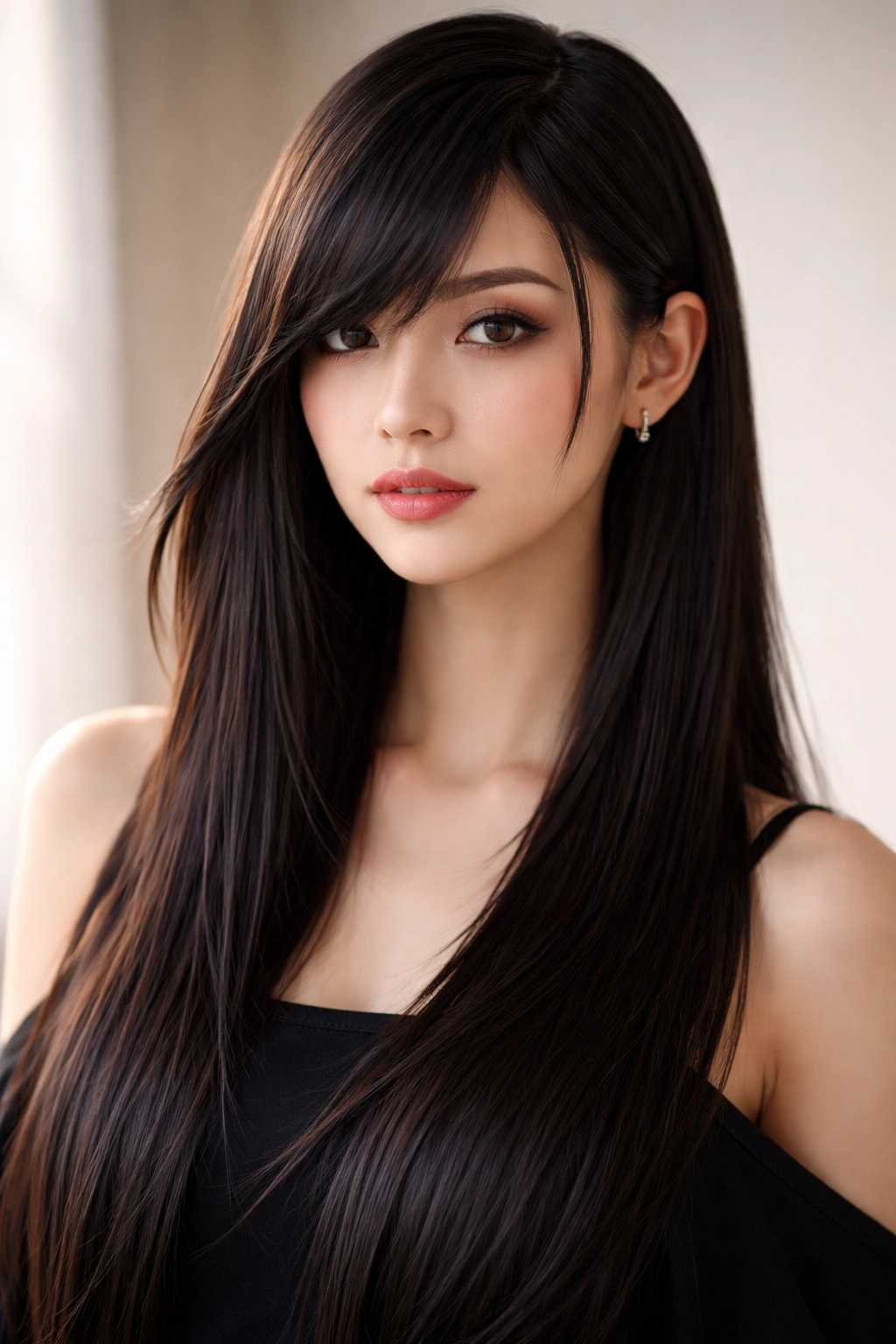
This modern interpretation softens the symmetry of the classic hime by introducing an asymmetrical element. One side lock may be slightly shorter or longer than the other, or the center part might be intentionally off-center, creating a more relaxed, contemporary feel while maintaining the essential hime structure. The side-swept version feels less formal and more fashion-forward than the perfectly symmetrical original.
The Asymmetry That Works
The key is that this asymmetry should feel intentional and balanced, not accidental. If you do an off-center part, it should be clearly off-center, not ambiguously slightly-to-one-side. Similarly, if the side locks differ in length, the difference should be noticeable (at least 2-3 inches) so it reads as a design choice rather than uneven cutting.
Styling for the Asymmetrical Effect
- An off-center part works beautifully with a slight side-sweep, where you brush the longer top section toward the side with the deeper part
- Straighten with intention, using your flat iron to create subtle directional curves that emphasize the asymmetry
- The longer side lock can be styled with a gentle outward curve, while the shorter side lock can curve inward, creating optical balance
- This variation photographs exceptionally well and creates a more editorial, fashion-focused appearance
Insider note: This version is excellent if you have any hair concerns on one side (thinning, texture issues, previous damage) because the asymmetry lets you work with your hair’s reality rather than against it.
5. Blunt-Bangs Hime Cut With Sharp Lines
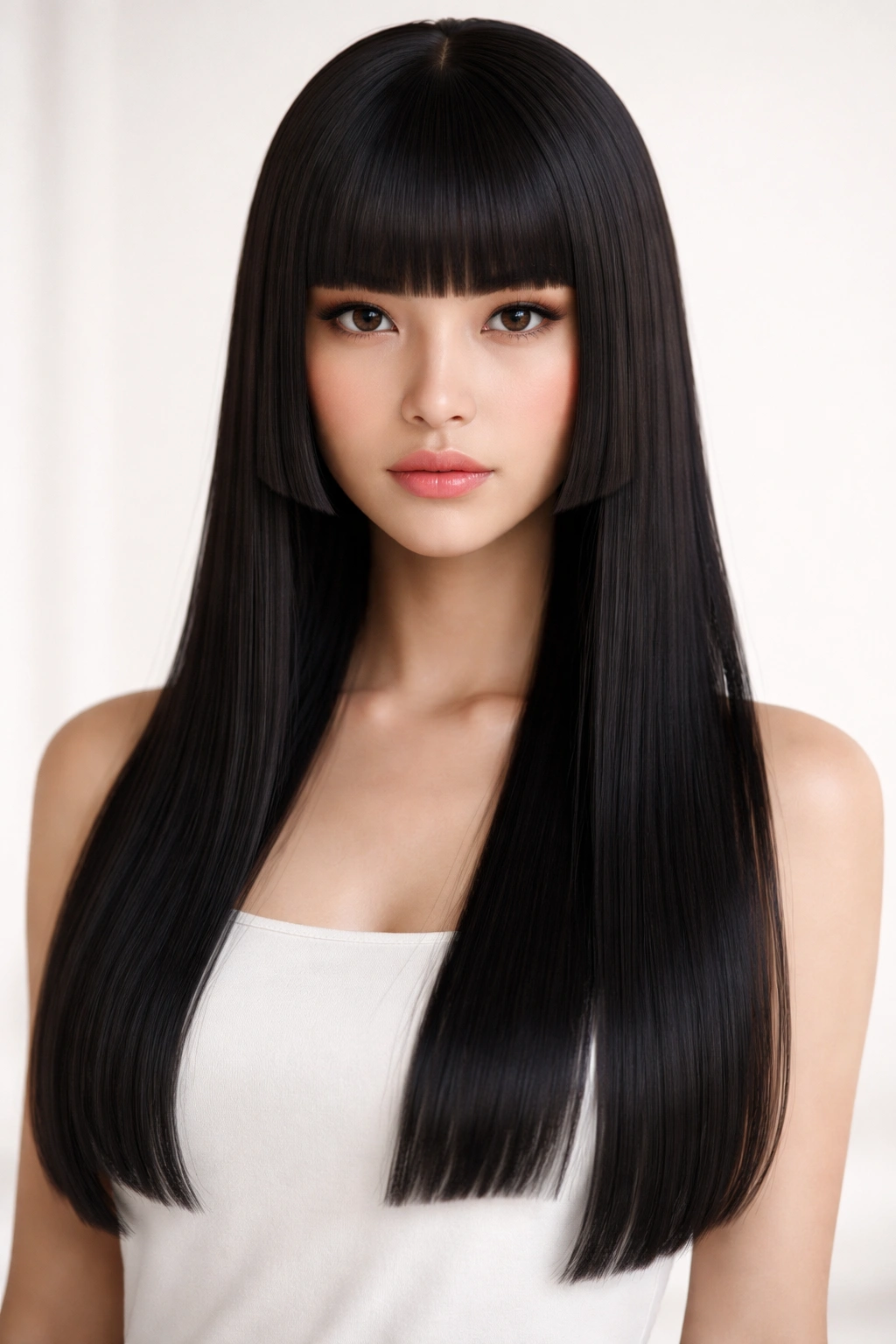
Combine a true hime cut with blunt, chin-length bangs for a bold, striking look that emphasizes geometric precision. The bangs sit across your forehead, creating a strong horizontal line, while the long side locks frame your face and the back section maintains length. This version is unmistakably dramatic and works best for people drawn to sharp, defined aesthetics.
Why Blunt Bangs Demand Precision
Blunt bangs require perfect straightness and a pristine, even hem line. On straight hair, this is achievable; on wavy or curly hair, the bangs would need restyling every single day to maintain their bluntness. The hime cut already demands that you straighten regularly, so adding blunt bangs is a natural extension rather than an additional burden.
Cutting and Maintaining Blunt Bangs
- Bangs should hit at or just above the chin for proportion with the long side locks
- They should be cut completely blunt with no layers or texture
- The sides of the bangs should curve slightly inward to follow the face contour and avoid a severe, unflattering appearance
- Plan for a bang trim every 2-3 weeks, since even slight growth makes blunt bangs look unkempt
Critical styling note: You must straighten the bangs first before styling the rest of your hair. Bangs are the most visible part of your style, so their appearance sets the tone for the entire look.
6. Wispy-Ends Hime Cut for Romantic Movement
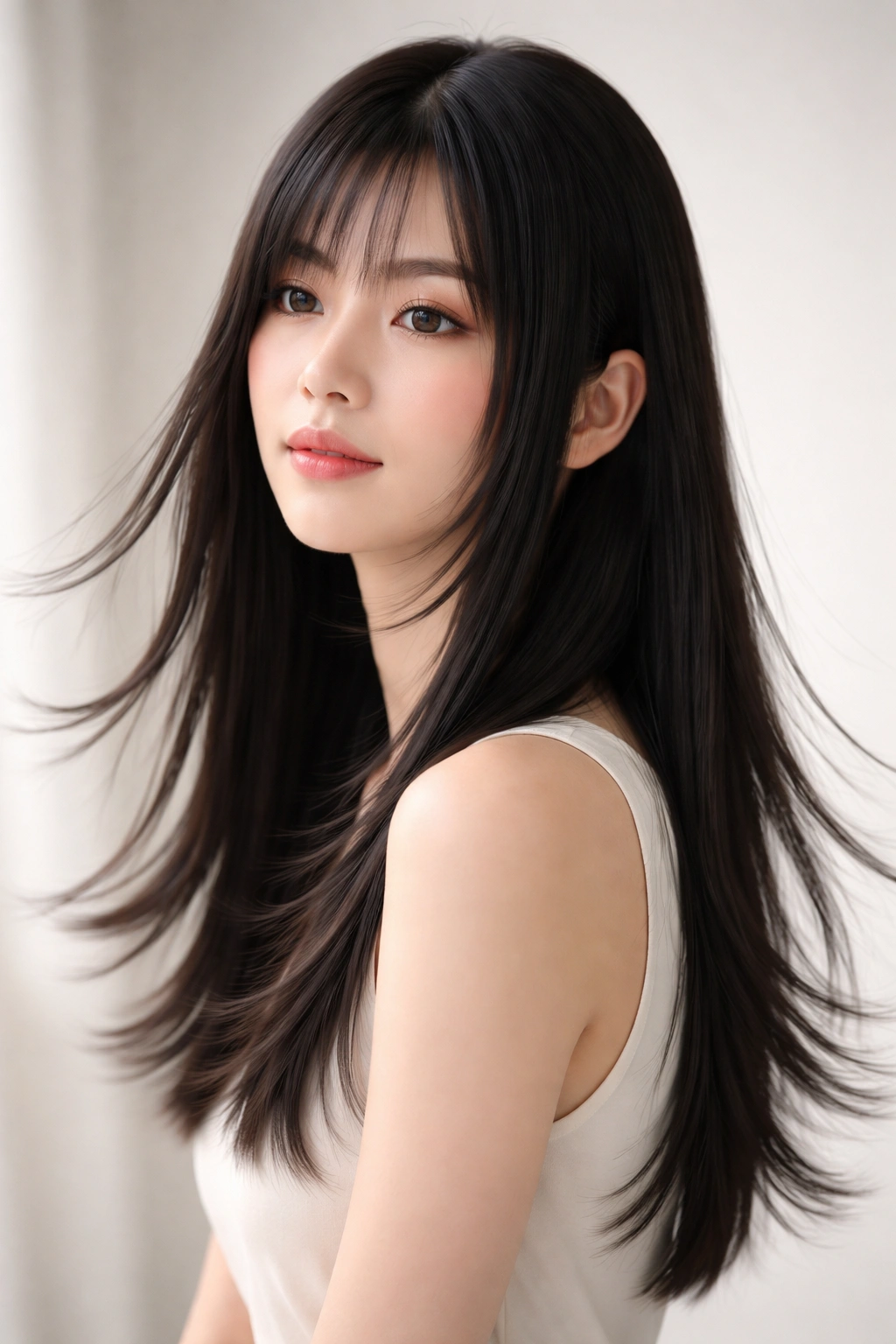
Rather than maintaining blunt, uniform ends throughout, this variation intentionally thins out and layers the very ends of the side locks and back section, creating wispy, feathered tips that suggest movement and flow. The wispy edges soften the potential severity of a straight-haired hime cut while maintaining the structure that makes the style distinctive.
Creating Wispy Texture on Straight Hair
Wispy layers are best created with point-cutting or razor techniques rather than blunt-edge scissors. Your stylist should point-cut or razor through the ends at varying angles, removing weight gradually rather than in obvious chunks. When straightened, these wispy layers create delicate movement at the perimeter while the interior remains clean and structured.
The Styling Approach
- Apply a lightweight smoothing serum to the ends before straightening to enhance the wispy effect
- Use your flat iron to straighten the majority of each section, then slightly curve or flip the very ends
- The curled ends don’t need to be perfect spirals—just a gentle suggestion of direction
- This version looks particularly beautiful in layers, where each layer’s wispy ends catch light independently
Styling tip: The wispy ends do require more frequent trims (every 5-6 weeks) to maintain that feathered appearance, since point-cut ends fray slightly faster than blunt cuts.
7. Colored Hime Cut With Contrasting Tones
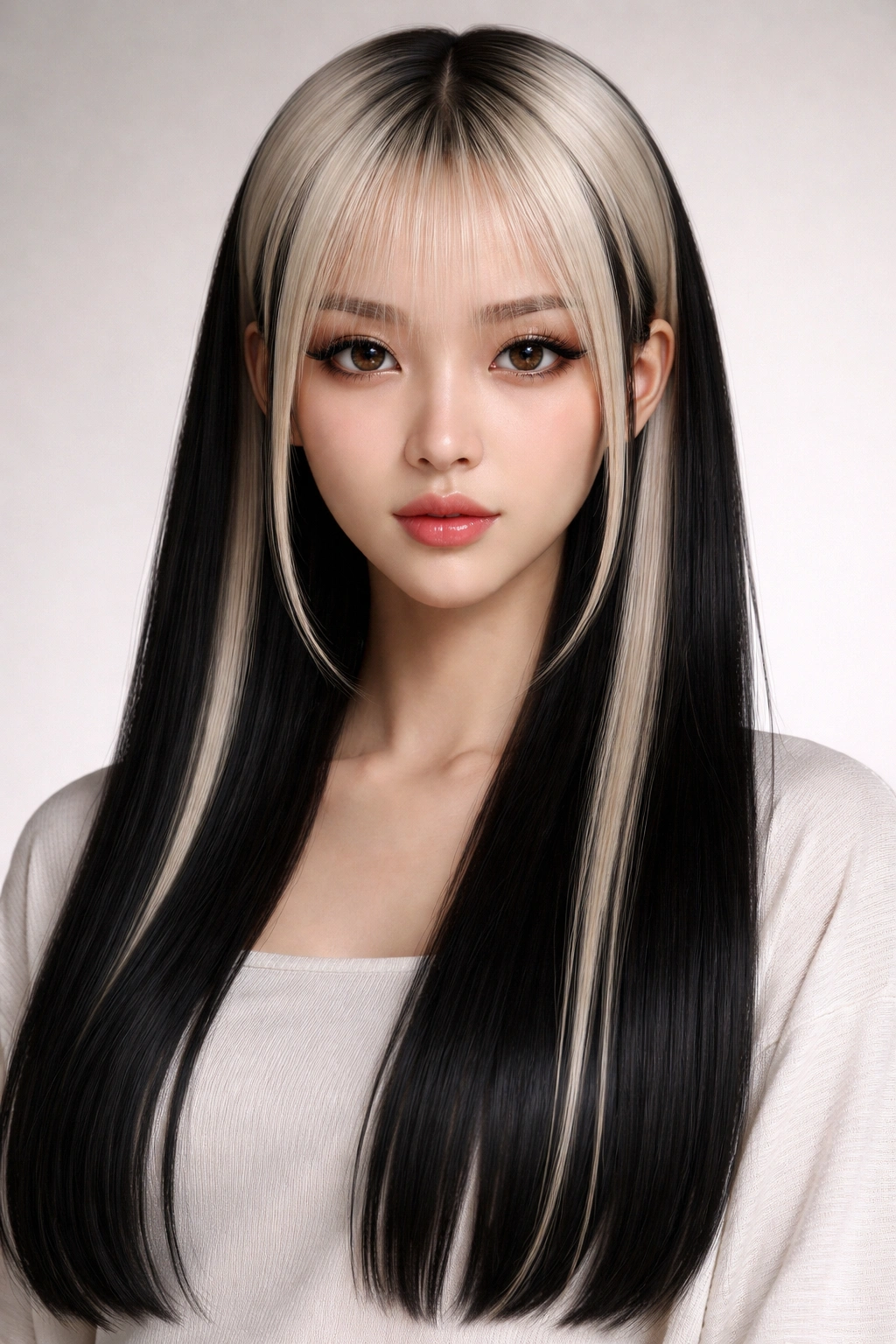
While not strictly a cut variation, color dramatically transforms how a hime cut reads and feels. A two-tone hime cut—for example, with darker side locks and lighter interior layers, or vice versa—creates depth and visual separation between the structural elements. On straight hair, these color contrasts are crisp and undeniable, making them the ideal canvas for this approach.
Color Combinations That Enhance the Cut Structure
- Dark side locks with lighter crown: creates the illusion of the top floating above the sides
- Lighter ends with darker roots: emphasizes the length and movement of the side locks
- Contrasting tones between each layer: transforms the layering from subtle to obvious, making the cut texture unmissable
- A bold accent color (silver, purple, or jewel-toned) in just the side locks while keeping the rest a neutral tone
Styling Considerations for Colored Hair
- Color-treated straight hair requires a sulfate-free shampoo and more frequent deep conditioning to maintain shine and prevent dryness
- Heat styling should always include heat protectant products to prevent color fading and hair damage
- The sleekness of straight hair shows split ends more obviously, so prioritize regular trims even between major color services
- Glossing treatments or toning shampoos help maintain color vibrancy between full color services
Worth noting: Straight hair without texture means that color and cut are doing all the heavy lifting for visual interest, so commit to maintaining both.
8. Micro-Bangs Hime Cut for Bold Statement
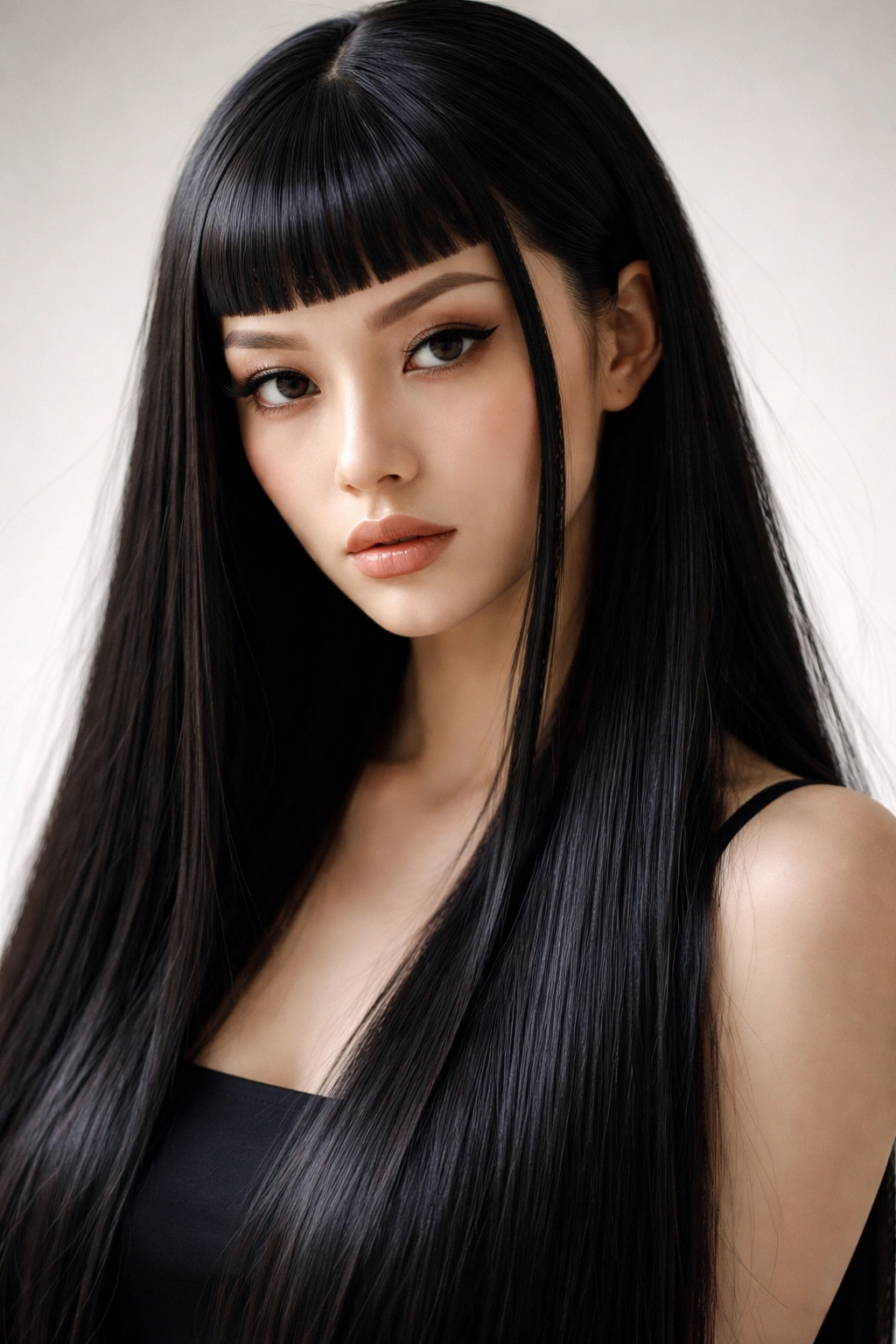
Take the blunt-bangs concept even further with micro-bangs—very short, hitting mid-forehead or above—combined with the full hime structure. This creates an intentionally dramatic, fashion-forward aesthetic that reads as far more editorial than traditional hime cuts. Micro-bangs with long side locks create stark contrast and maximum visual impact.
The Confidence Factor
Micro-bangs demand confidence because they’re undeniably noticeable. You’re not blending in or creating subtle dimension; you’re making a clear aesthetic statement. This version suits people who feel comfortable with bold personal style choices and who understand that their appearance is a form of expression, not a camouflage.
Practical Styling
- Micro-bangs must be styled every single day—there’s no such thing as “casual” styling when your bangs are this short
- A lightweight texturizing spray on the bangs can add grip and help them hold a subtle side-swept shape
- They should be trimmed every 2 weeks without exception; even slight growth drastically changes their impact
- This version photographs incredibly well and creates a very distinctive personal brand
Reality check: If you have an active, outdoors-focused lifestyle or live in a humid climate, micro-bangs become challenging because they’re the first thing to be affected by sweat, wind, or humidity.
9. Double-Layered Hime Cut With Visible Internal Structure
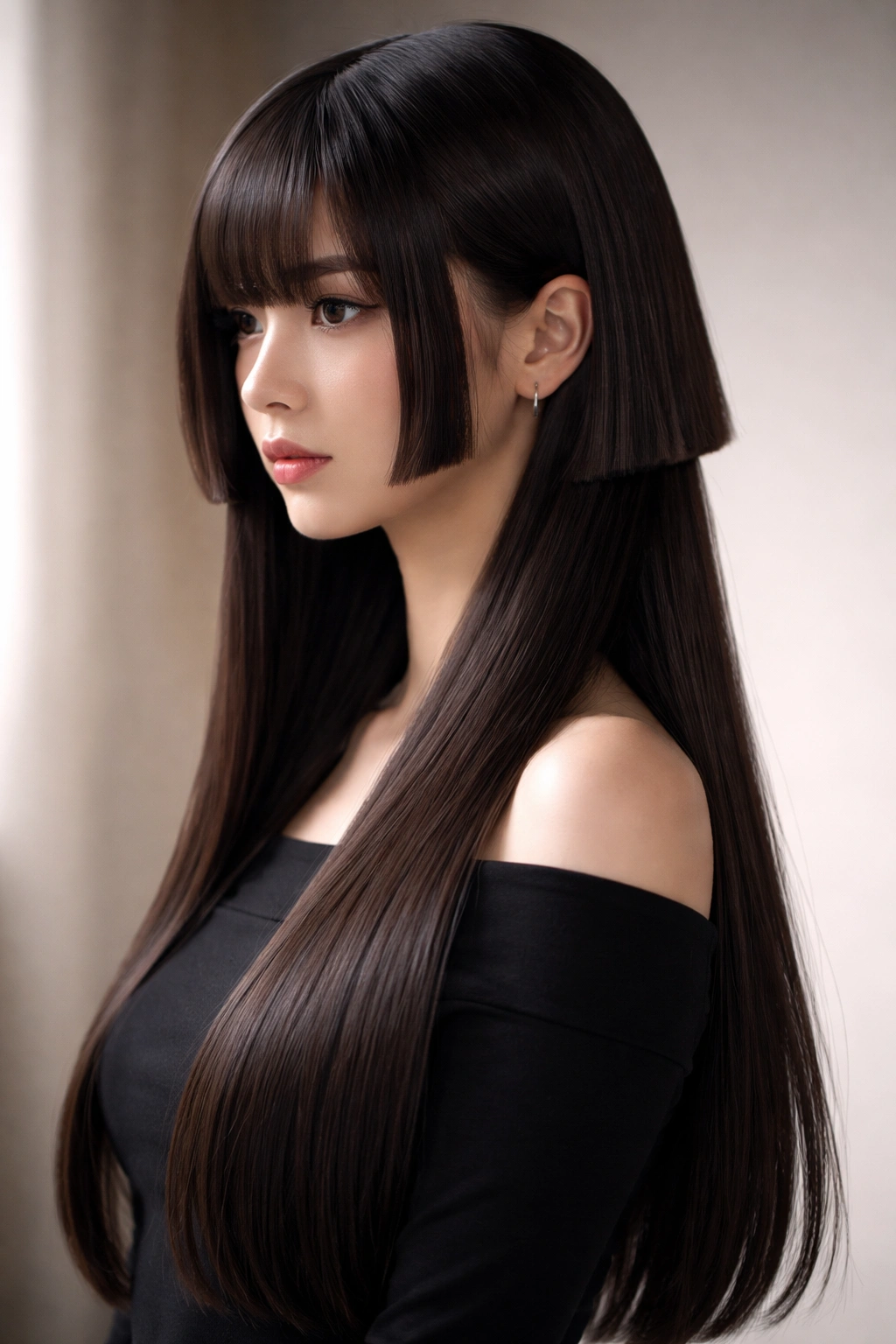
Instead of a uniform layer throughout the interior, this version intentionally creates two distinct tiers of layers. The top crown might have medium layers, and then there’s a more visible transition to a longer second layer before the even-longer side locks begin. This creates an almost three-dimensional sculptural effect, with clear visual separation between each section.
Why Layering Matters for Straight Hair
On straight hair, each layer is a distinct architectural element. Where wavy or curly hair might blend layers together, straight hair lets each one read clearly. Double layering creates the optical illusion of more volume and density while maintaining the sleek aesthetic of straightness.
The Cutting Strategy
- The top crown layer should hit around chin-length with deeper, more dramatic layering
- The middle layer should be 2-3 inches longer, creating visible separation
- The side locks begin below the middle layer and extend significantly longer
- This creates a subtle step-down effect that’s visible from the side view
Styling consideration: Each layer needs independent straightening attention. You can’t just straighten from top to bottom; you need to work section by section to ensure every layer has that sleek, polished appearance.
10. Minimalist Hime Cut With Subtle Proportions
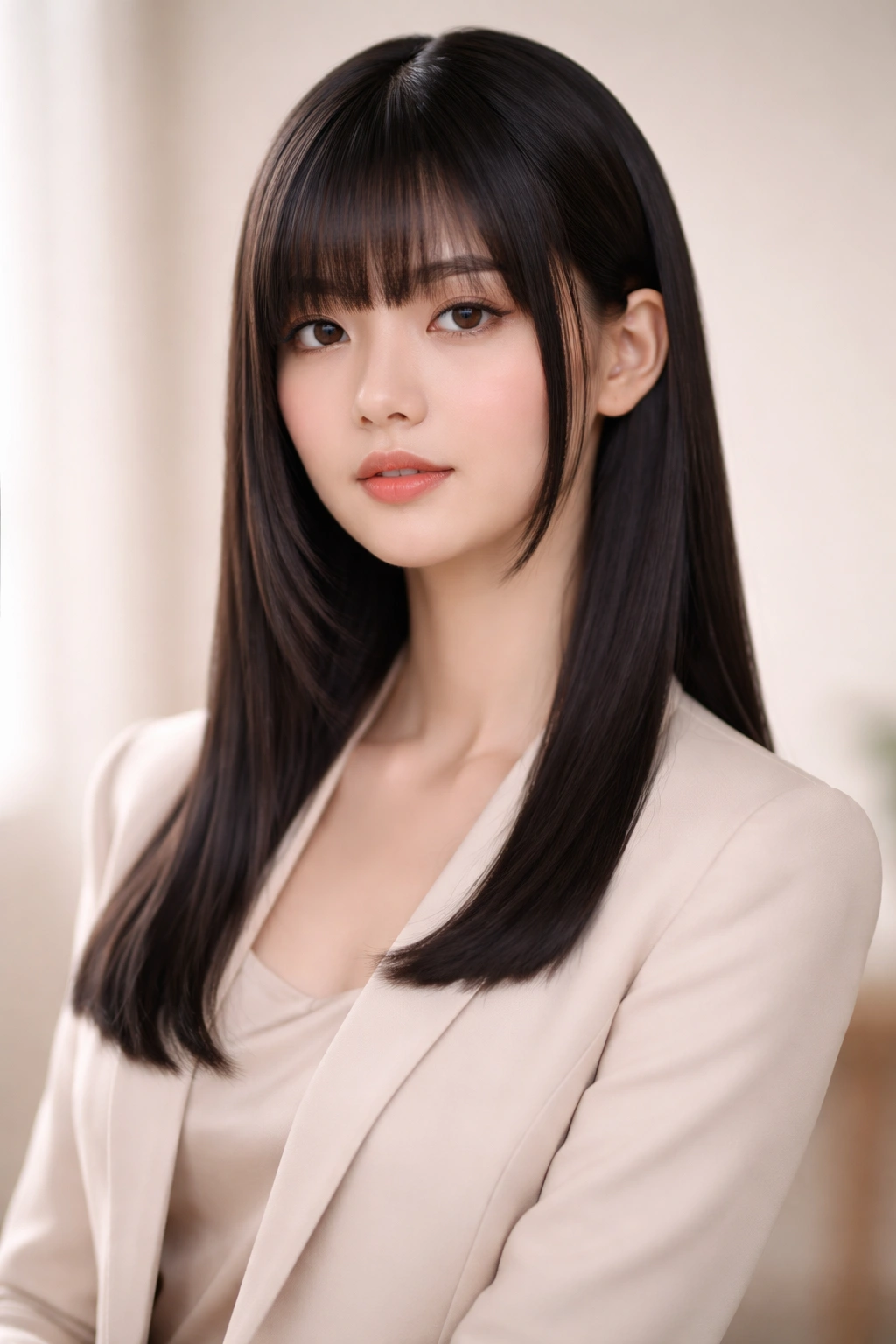
For those drawn to the hime aesthetic but wanting a more understated version, the minimalist hime reduces the proportional difference between the top and sides. The side locks might extend only slightly longer than the top section, and the overall silhouette is less dramatic. This works beautifully for professional environments or people who want the style’s sophistication without its boldness.
The Subtle Approach
Rather than creating an obvious visual shock between different lengths, the minimalist hime creates a gentle graduated effect. You still get the face-framing side locks and the structured silhouette, but it reads as “elegant long bob with dimension” rather than “statement-making hime cut.”
Who Chooses This Version
This variation suits people with jobs where appearance norms matter (finance, law, traditional corporate environments), people new to experimental styles who want to test the waters, and those with face shapes that don’t call for dramatic framing or proportions.
- Keep the top and middle sections relatively close in length—2-4 inches of difference rather than 8-10
- The side locks extend longer, but not excessively—shoulder-length to mid-back rather than floor-length
- Maintain a center part that’s clean but not obsessively precise
- Style with subtle movement rather than stark geometric lines
11. Curtain-Parted Hime Cut With Flowing Side Sections
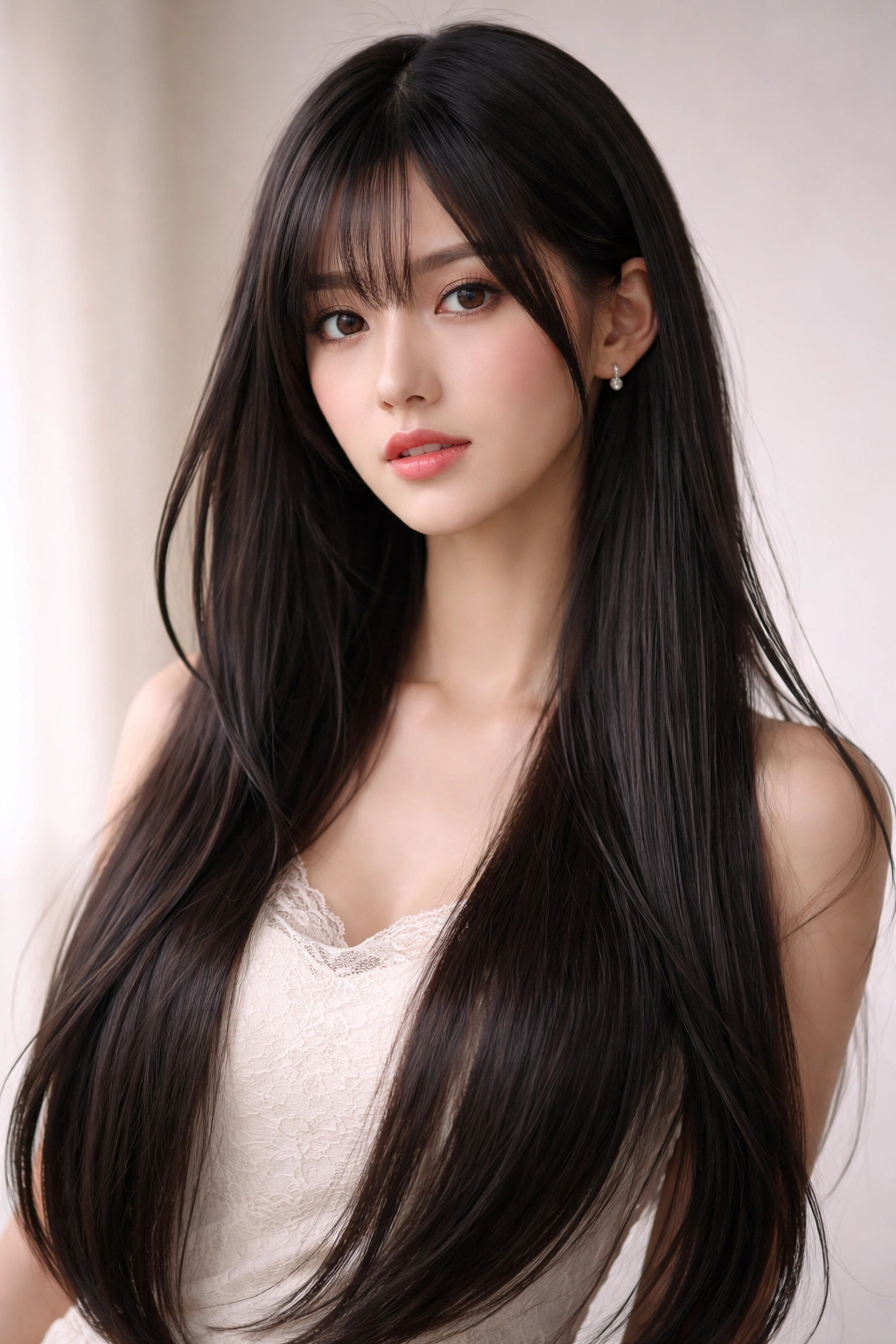
Instead of a precise center part, this version uses a soft curtain part that allows the top section to fall loosely on either side of your face. The side locks still provide the hime structure, but the top feels more relaxed and less geometrically controlled. This creates a blend of hime’s architectural structure with a more romantic, flowing aesthetic.
The Paradox of Structure and Flow
This version represents a fascinating tension: you maintain the hime’s distinctive side locks and silhouette, but approach the styling with a softer mentality. The top section has enough texture and layer to create natural movement, and the part intentionally avoids harsh lines.
Styling for Soft Structure
- Use your flat iron to straighten but intentionally create gentle waves or curves in the top section
- Apply a dry texturizing spray or sea salt spray to the crown after straightening for grip and movement
- The center part can be slightly soft or feathered rather than razor-sharp
- The side locks still need clean straightening for definition, but the overall vibe is less formal
- This version benefits from lighter, more touchable styling products rather than heavy creams or serums
Best for: People who want hime’s distinctive silhouette but who prefer a more casual, lived-in aesthetic; those with naturally wavy or textured hair who want the style but can’t commit to daily full-head straightening.
12. Gradient-Length Hime Cut With Smooth Transitions
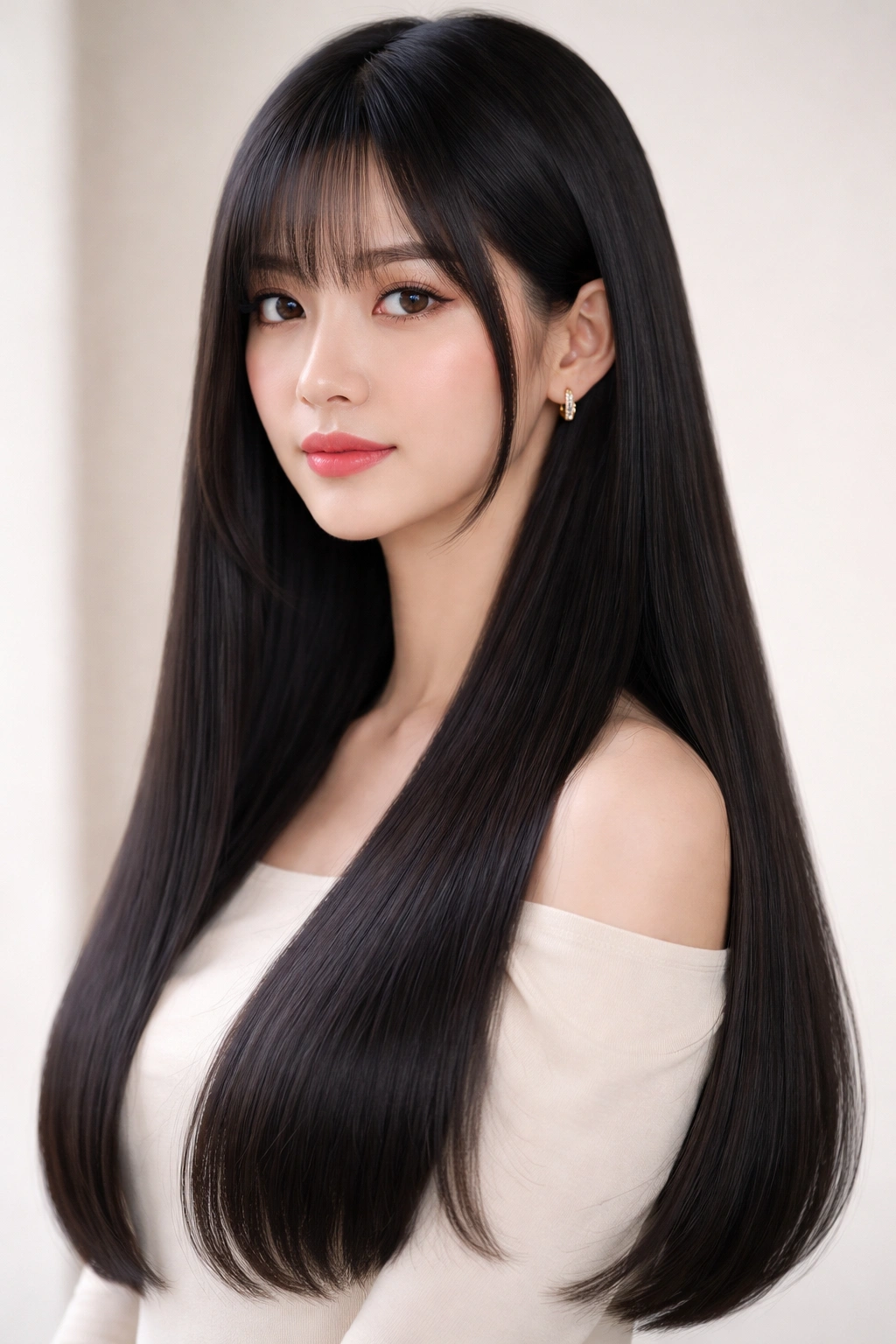
Rather than distinct layers or obvious length differences, this final variation uses a subtle gradient—hair that gradually lengthens from the crown all the way down through the side locks, creating a smooth, almost wave-like progression without obvious stopping points. Each section flows into the next, creating an effect that’s cohesive rather than compartmentalized.
The Seamless Aesthetic
Where other hime cuts use layers to create definition between sections, the gradient-length version relies on smooth transitions. The side locks don’t feel separate from the interior; they feel like a natural continuation of the hair’s length progression. On straight hair, this creates an almost mathematical beauty, with each section flowing logically into the next.
Cutting and Styling Precision
- Your stylist needs to use invisible, blended layering techniques rather than visible, chiseled layers
- The progression should be gradual—no section should feel obviously shorter or longer than the one adjacent to it
- This requires exceptional technical skill and a stylist who understands how to build length and shape without obvious layering
- When straightened, the result should look almost seamless, like the hair simply lengthens as it falls
Styling approach: Straighten the entire head as one cohesive unit rather than section by section. The goal is a smooth, flowing line that guides the eye downward through one continuous form.
- This version requires less frequent trims because the lack of obvious layers means imperfections are less obvious
- It photographs beautifully from all angles because there are no harsh lines to betray the cut’s geometry
- The straightening process takes slightly less time because you’re not managing distinct layers with different directional needs
Final Thoughts

The hime cut’s resurgence in popularity reflects a broader shift toward hairstyles that make bold aesthetic statements. Unlike trends that blend into everyday appearance, the hime cut announces itself—it’s deliberately artistic, distinctly recognizable, and impossible to ignore. Straight hair serves as the perfect canvas for these variations because every line, layer, and proportion remains visible and precise.
Choosing a hime cut variation means committing to a style that requires attention and intention. Daily or regular straightening isn’t optional; it’s foundational to how the style reads and feels. If you’re drawn to the aesthetic but hesitant about the maintenance, start with one of the more wearable versions—the shoulder-length, the minimalist, or the curtain-parted—which offer the hime’s distinctive structure with less demanding daily styling requirements.
The 12 variations covered here represent different aesthetic philosophies and practical approaches, but they all share the hime’s core appeal: a style that transforms how you present yourself, that photographs beautifully, and that carries genuine artistic intent. Whether you’re drawn to the dramatic floor-length side locks, the bold statement of micro-bangs, or the subtle sophistication of a gradient-length version, the hime cut adapts to your specific goals, lifestyle, and aesthetic vision. Find your stylist thoughtfully, communicate with precision about what appeals to you, and commit to the regular maintenance that keeps straight-haired hime cuts looking intentional and polished. The result is a hairstyle that feels distinctly yours and unmistakably striking.
