



Short curly hair doesn’t have to mean sacrificing personality or movement. In fact, curls thrive when you give them room to breathe, and strategically layered short cuts do exactly that—they work with your natural texture instead of fighting it. The secret to the most flattering curly short styles is understanding that layers aren’t just about length variation; they’re about creating strategic points where volume builds naturally and curls can bounce and spring without weighing each other down. When a stylist cuts curly hair, every layer becomes a chance to enhance dimension, texture, and that coveted springy bounce that makes curly cuts so striking.
The right short, layered cut transforms daily styling from a struggle into a celebration of what your curls can do. Whether you’re working with tight coils, loose waves, or anything in between, these ten styles prove that short hair and serious curl presence go beautifully together. Each of these cuts pairs layering technique with strategic length placement to maximize movement while keeping maintenance realistic. The best part? These cuts work across different curl patterns, face shapes, and lifestyle demands—you just need to find the right variation for your hair and have a stylist who truly understands how to cut curls (not how to cut straight hair on a curly-headed person).
1. The Textured Pixie Bob
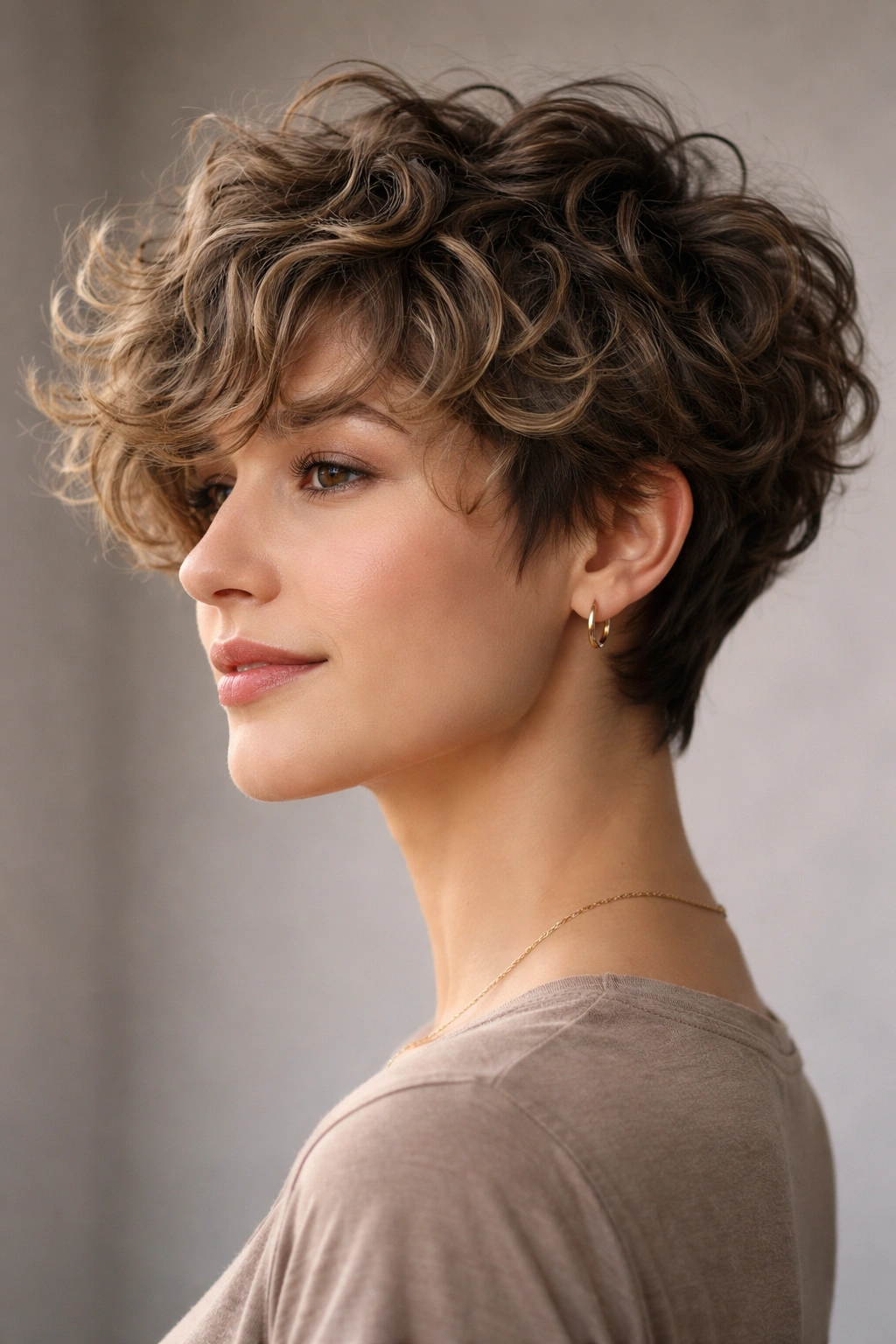
A textured pixie bob blends the low-maintenance appeal of a pixie with enough layering to let curls show their best texture. This cut sits somewhere between a traditional pixie and a boy cut, typically hitting just below the ear while keeping the crown and sides close enough to frame the face beautifully. The magic happens in the texturizing—a skilled stylist uses point-cutting or razor techniques to create choppy, tapered layers throughout that encourage individual curls to separate and spring outward.
How to Style and Maintain It
This cut requires minimal styling time, which makes it perfect if you’re drawn to short hair but nervous about daily upkeep. Most days, you’ll simply apply your curl cream or mousse to damp hair, scrunch gently, and let it air dry or use a diffuser on low heat. The layers do the heavy lifting—they naturally encourage your curls to bounce without needing you to manipulate them into place. A weekly trim of just the texture (every 4-6 weeks for most people) keeps the layers crisp and prevents the cut from getting shaggy.
Best For and Considerations
- Works beautifully on tight curls and coils that have strong bounce
- Flatters oval, heart-shaped, and square face shapes exceptionally well
- Requires a stylist experienced with curly cuts; straight-hair stylists often cut this too blunt
- Shorter sides mean you’ll need regular trims to maintain shape
- Lighter curl patterns might need slightly more styling product to keep definition
Pro tip: If you’re nervous about going this short, ask your stylist to leave slightly more length on the first appointment. You can always cut shorter once you see how the cut falls with your specific curl pattern.
2. The Shaggy Layered Crop
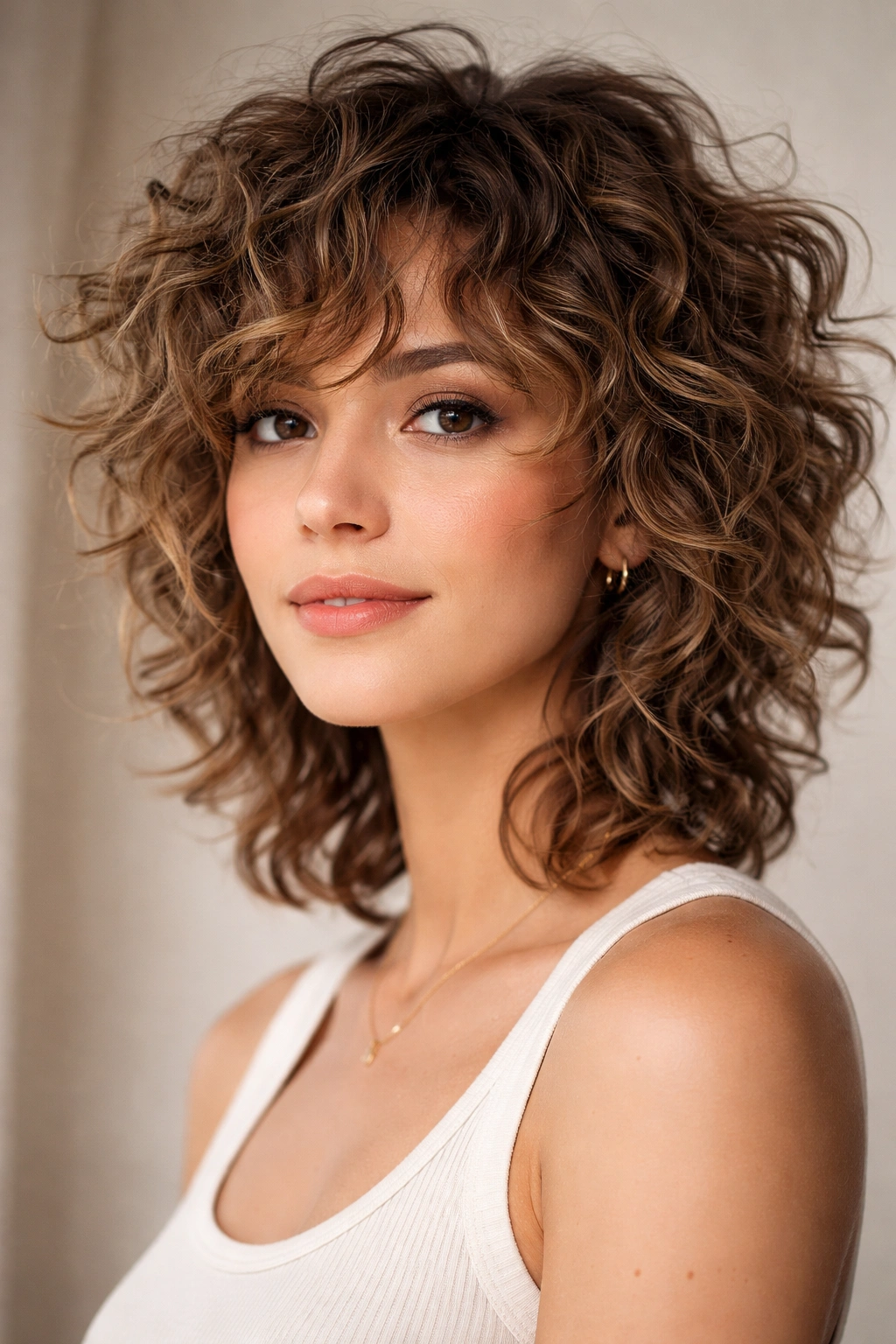
The shaggy layered crop brings back the playful, textured energy of 90s-inspired cuts with a completely modern attitude. This style keeps overall length between the ear and chin while incorporating longer layers on top that create movement and dimension. The “shaggy” element comes from intentionally choppy, uneven layering that celebrates individual curl separation rather than fighting for a blended look—each curl gets its own personality.
The Layering Technique That Creates Movement
Shaggy cuts rely on deep, deliberate layers where the longest pieces on top might be several inches longer than the shorter undercut around the sides and back. This variation in length is what creates the tousled, effortlessly textured appearance that defines the style. A texturizing razor or point-cutting technique ensures layers feather and blend naturally rather than creating harsh, disconnected sections. The result is volume at the crown that gradually tapers shorter toward the nape and sides.
Styling and Upkeep
- Apply leave-in conditioner or curl cream to damp hair section by section
- Use a diffuser to enhance texture and encourage curl formation
- Refresh waves on non-wash days with a light mist of water and curl cream
- Requires a trim every 6-8 weeks to maintain layer definition
- Perfect for embracing texture and movement—this cut looks better the more “undone” it is
Worth knowing: This cut actually looks better when you don’t try too hard with it. The shaggy vibe lives in the natural, slightly chaotic texture, so fighting your curls into submission defeats the whole purpose.
3. The Curly Lob with Choppy Layers
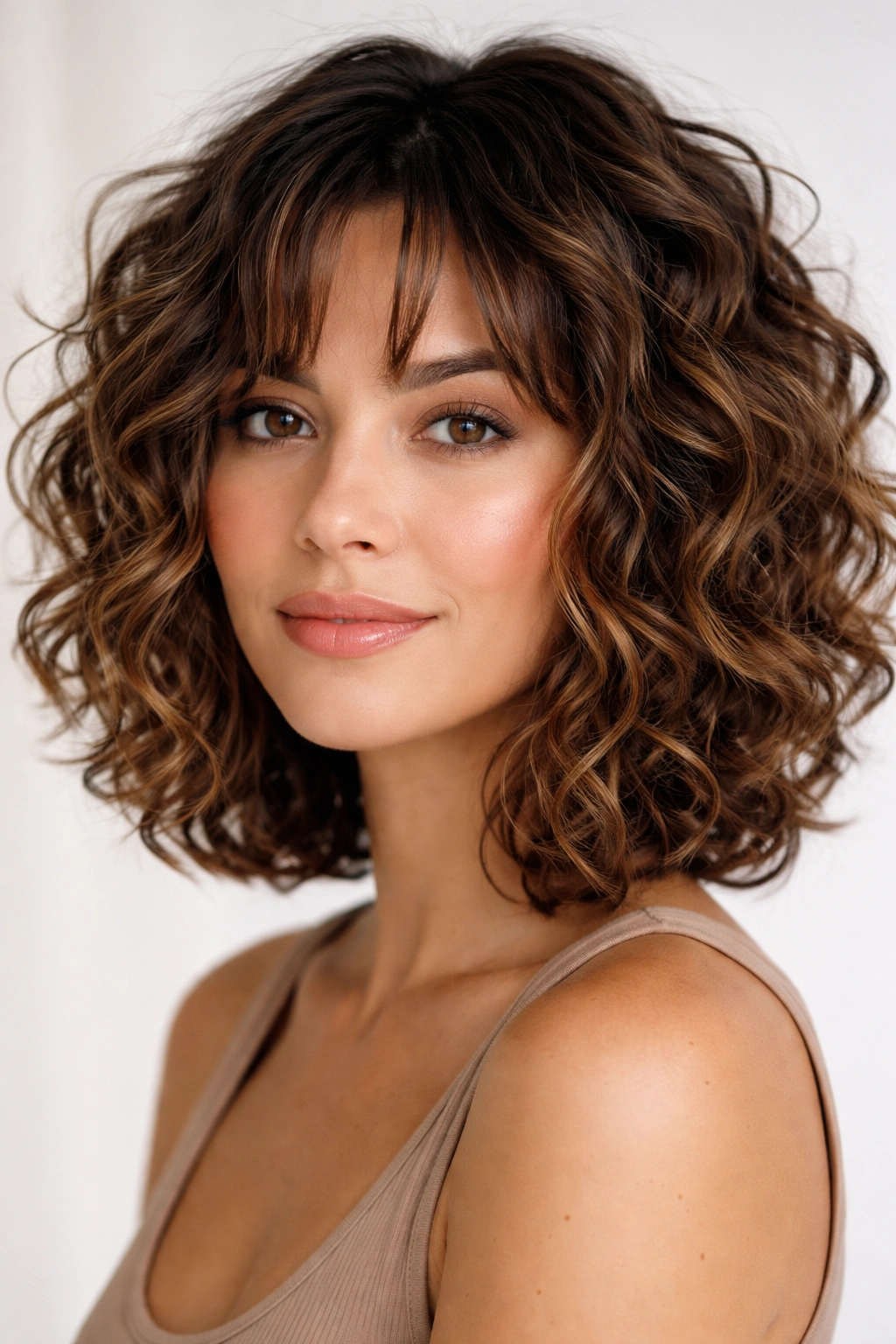
Don’t let anyone tell you that a lob (long bob) can’t work with curls—it absolutely can when you layer it strategically. A curly lob typically hits somewhere between chin-length and collarbone, just long enough to add weight to curls without becoming too heavy. The choppy layering prevents this extra length from forming a bulky, undefined mass; instead, it creates graduated steps that encourage curls to fall in distinct sections with real definition and bounce.
Strategic Layering for Length and Lift
The key to a successful curly lob is understanding that the longer the hair, the more critical proper layering becomes. Layers should get progressively shorter moving from the bottom to the top, with especially choppy layers around the crown and temples to create lift at the roots. This prevents the common problem where longer curly hair sits heavy at the bottom and flattens everything underneath. A talented curly-hair specialist will evaluate your specific curl pattern’s density and structure to determine exactly where layers need to go.
Styling Needs and Face Shape Compatibility
- Requires deliberate layering every 8-10 weeks to maintain shape
- Works across all curl types but especially flatters people with finer curl patterns that need visible movement
- Longer length means you can experiment with styling—try updos, tucking one side back, or creating asymmetrical dimensions
- Takes 10-15 minutes to style with product and a diffuser, which is reasonable for the length
- Flatters most face shapes; just ask your stylist to adjust layer placement around your jawline
4. The Face-Framing Tapered Cut
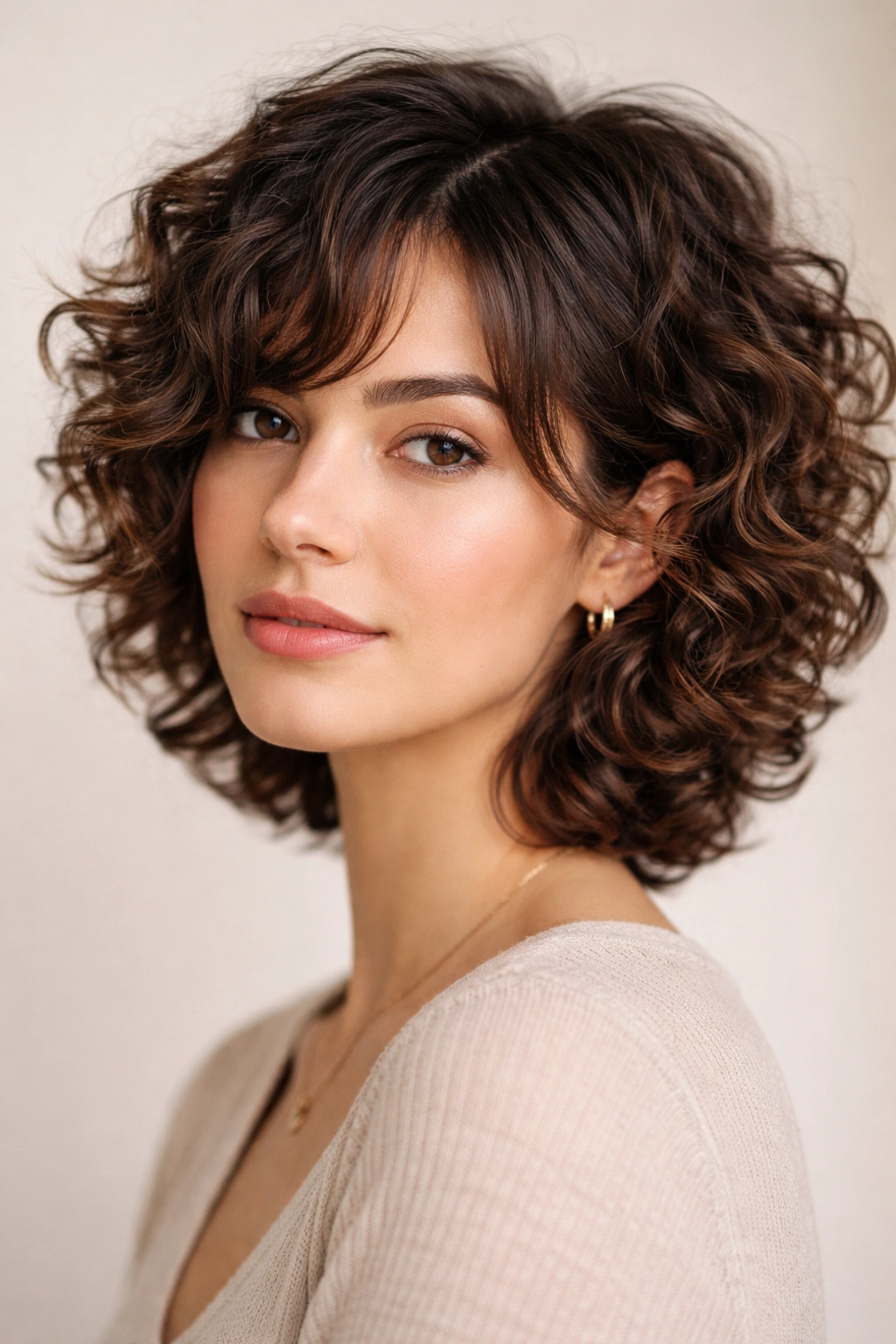
A face-framing tapered cut uses precisely placed layers that specifically angle inward around the face while keeping length elsewhere. This isn’t a pixie or crop in the traditional sense—it’s more of a versatile short cut where the front pieces taper down slightly shorter than the back, creating natural face-framing pieces that catch light and add dimension. The tapered sections make the face appear more defined while the layering elsewhere prevents the style from feeling too severe or masculine.
Why Tapering Creates Such Flattering Lines
When layers taper inward toward the face, they follow your natural bone structure and guide the eye toward your best features. A skilled stylist angles these tapered sections to work specifically with your face shape—if you have a rounder face, the angled layers create the illusion of length and definition; if you have a longer face, they can soften angular lines. The taper also creates movement and swing around the face, which curly hair does beautifully when it’s not constrained by one blunt length.
Customization for Different Features
- Works exceptionally well for people wanting to highlight cheekbones or jawline definition
- Tapered front sections create softness around a square or angular face
- Longer back sections provide weight and anchor the cut, preventing it from feeling too choppy
- Requires 4-6 weeks between trims to maintain tapered precision
- Styling involves directing longer front pieces to frame the face intentionally
Insider note: Ask your stylist to cut slightly longer front pieces than they think you need. Curls shrink and compress as they dry, so pieces that seem too long wet will be perfect once dry.
5. The Modern Mullet Curl
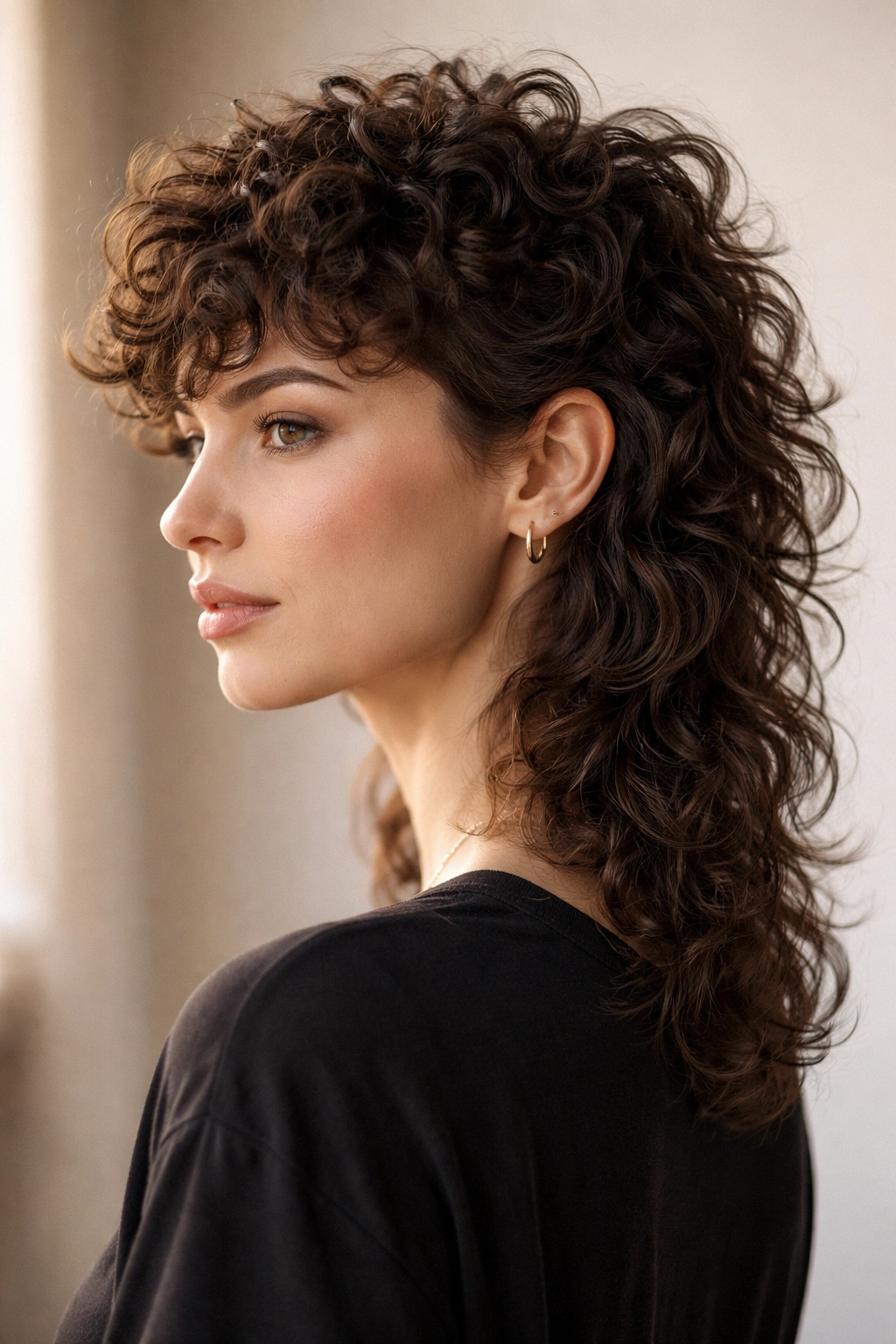
Yes, the mullet is back—and on curly hair, it’s actually stunning. A modern curly mullet keeps things short and textured on top and sides while leaving noticeably longer pieces in the back that create drama and movement. This isn’t the extreme 80s version; the modern take is much more blended and intentional, creating a sophisticated style that plays with proportion and breaks expectations in the best way.
The Cut Structure That Makes It Work
A successful curly mullet relies on extreme undercut contrast—the sides and crown stay quite short and close to the head, while the back layers flow several inches longer. The transition isn’t harsh though; well-executed layering creates a graduated progression from short to long that feels intentional rather than unfinished. The shorter top section gets textured and choppy to encourage curl separation, while the longer back pieces have slightly wider layers that create movement without becoming overwhelming.
Styling and Confidence Factor
- The back pieces require some styling attention—use curl cream and a diffuser to encourage them to hold their own shape
- Works best on people with medium to thick curl density that can handle the visual weight in back
- Absolutely a statement cut; it’s bold, modern, and unapologetically different
- Requires trims every 6 weeks to maintain the contrast between short and long sections
- Pairs beautifully with color—highlights or tonal depth in the longer back pieces add incredible dimension
Real talk: This cut is for people who want to stand out and aren’t afraid of having strong opinions about their hair. If that’s you, it’s absolutely worth trying.
6. The Tousled Mop Top
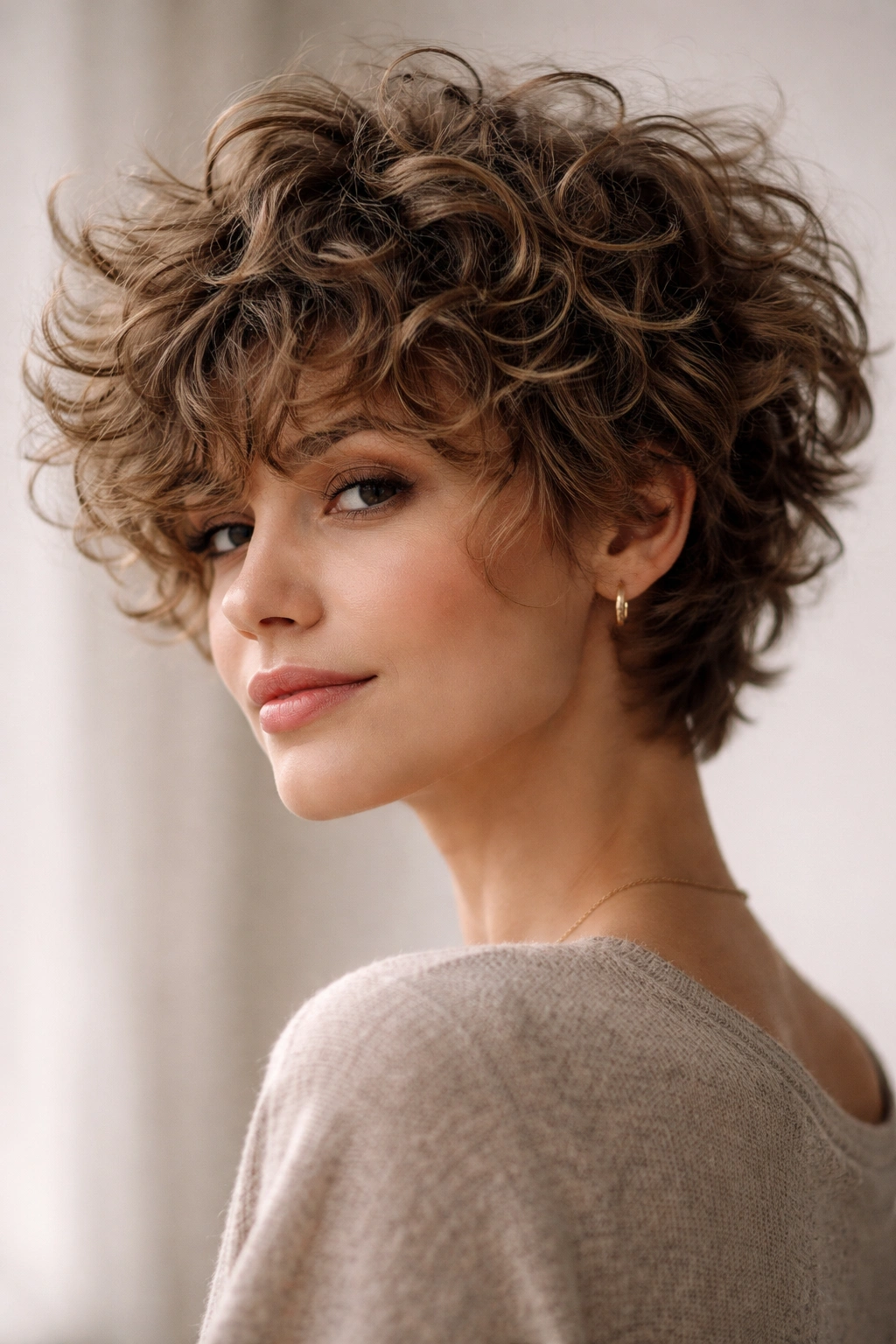
The tousled mop top is all about embracing messy, textured curls in a rounded, voluminous shape. This cut is shorter overall—typically sitting just above the ears and hitting around mid-ear on the longest layers—with layers throughout that create that coveted “I just rolled out of bed looking perfect” vibe. The rounded silhouette and extensive layering make this style work beautifully with almost any curl type, from loose waves to tight coils.
Building Volume Through Intentional Layering
Every part of this cut gets layers—the goal is to create as many separate curl sections as possible so that movement happens in multiple directions at once. Rather than trying to create a clean shape, the mop top celebrates texture and encourages curls to fall where they naturally want to go. The layers are shorter and closer together than many other cuts, which means more of your actual curl pattern shows and contributes to the overall shape.
Daily Styling and Maintenance
- This is a “touch and go” styling situation—apply your curl product to damp hair and let air dry or diffuse
- The cut is forgiving because some frizz and imperfection actually enhances the tousled aesthetic
- Works across all hair types and curl patterns beautifully
- Trim every 6-8 weeks to maintain the layered texture; the shape collapses quickly if layers get too long
- Perfect for anyone who wants short hair but feels overwhelmed by styling demands
7. The Angled Asymmetrical Bob
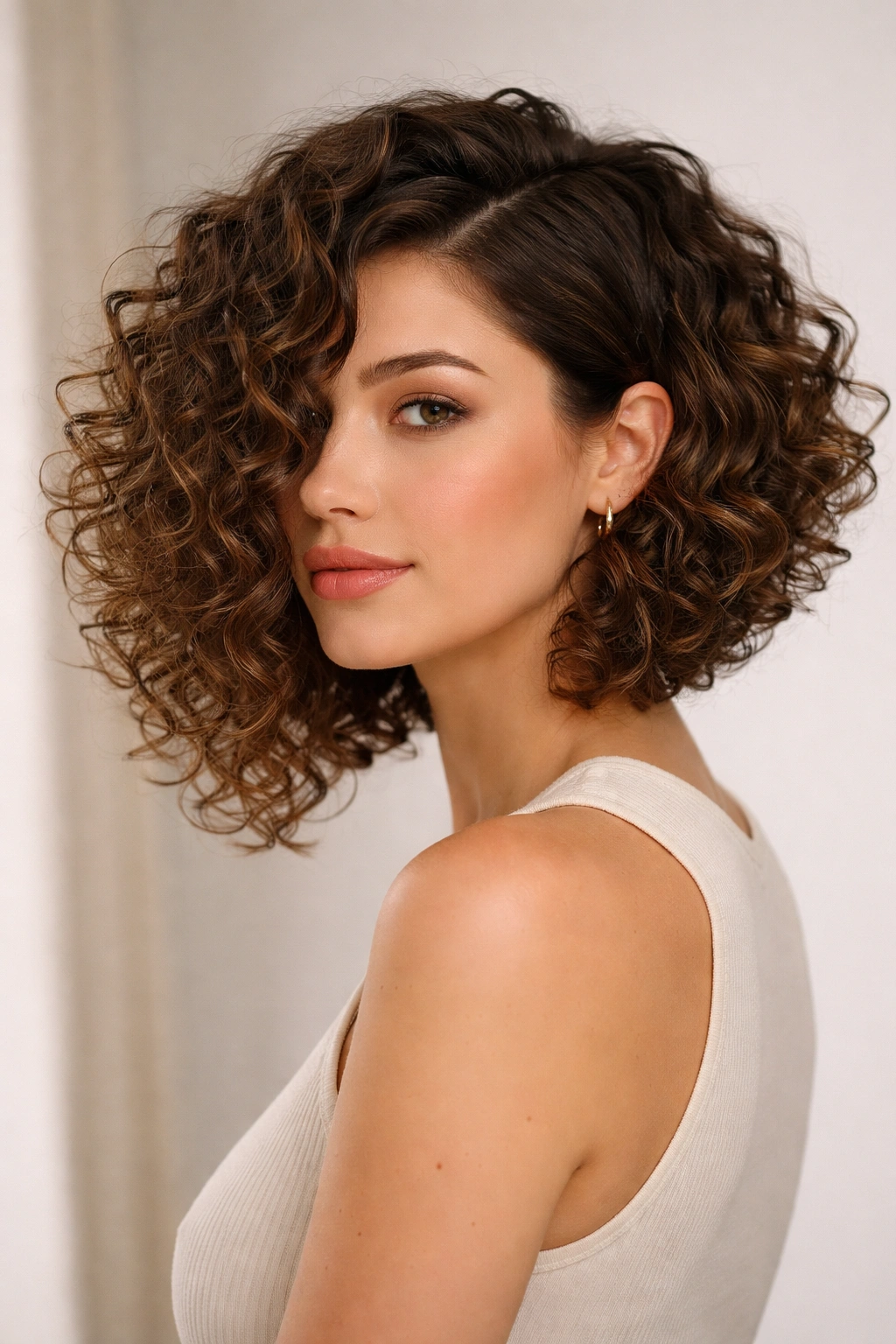
An asymmetrical bob takes the classic bob shape and angles it dramatically—typically longer on one side than the other, with layers placed to enhance the diagonal line. This cut flatters curly hair because the angle creates instant movement and visual interest, while the layering prevents the longer side from becoming a dense, undefined mass. It’s a bold, fashion-forward choice that works surprisingly well for both bold personalities and people who want their hair to do the statement-making for them.
Angle, Length, and Layer Placement
The angle in an asymmetrical bob can be subtle (just an inch of difference) or dramatic (several inches of variation). For curly hair, a moderate angle—roughly 2-3 inches of length difference from short to long side—tends to be the most flattering and manageable. Layers should be placed strategically to enhance the angle without creating choppy disconnect sections. The shorter side still gets layers to encourage curl separation, while the longer side has graduated layers that maintain enough weight to hang properly.
Face Shape Compatibility and Styling
- The short side can be styled tucked behind the ear or swept across the face depending on your mood
- Longer side can be pinned back or let to fall forward—versatility is part of the appeal
- Works best on people confident enough to carry an intentionally bold asymmetrical shape
- Requires every 5-7 weeks to maintain the angle (curls change the proportions of the cut quickly)
- Pairs beautifully with color—the angle makes uneven tones feel intentional rather than poorly blended
Pro tip: When booking, bring a photo that clearly shows the angle you want. Small differences in how much angle you have can completely change how the cut sits on your face.
8. The Cropped Curl with Volume at Crown
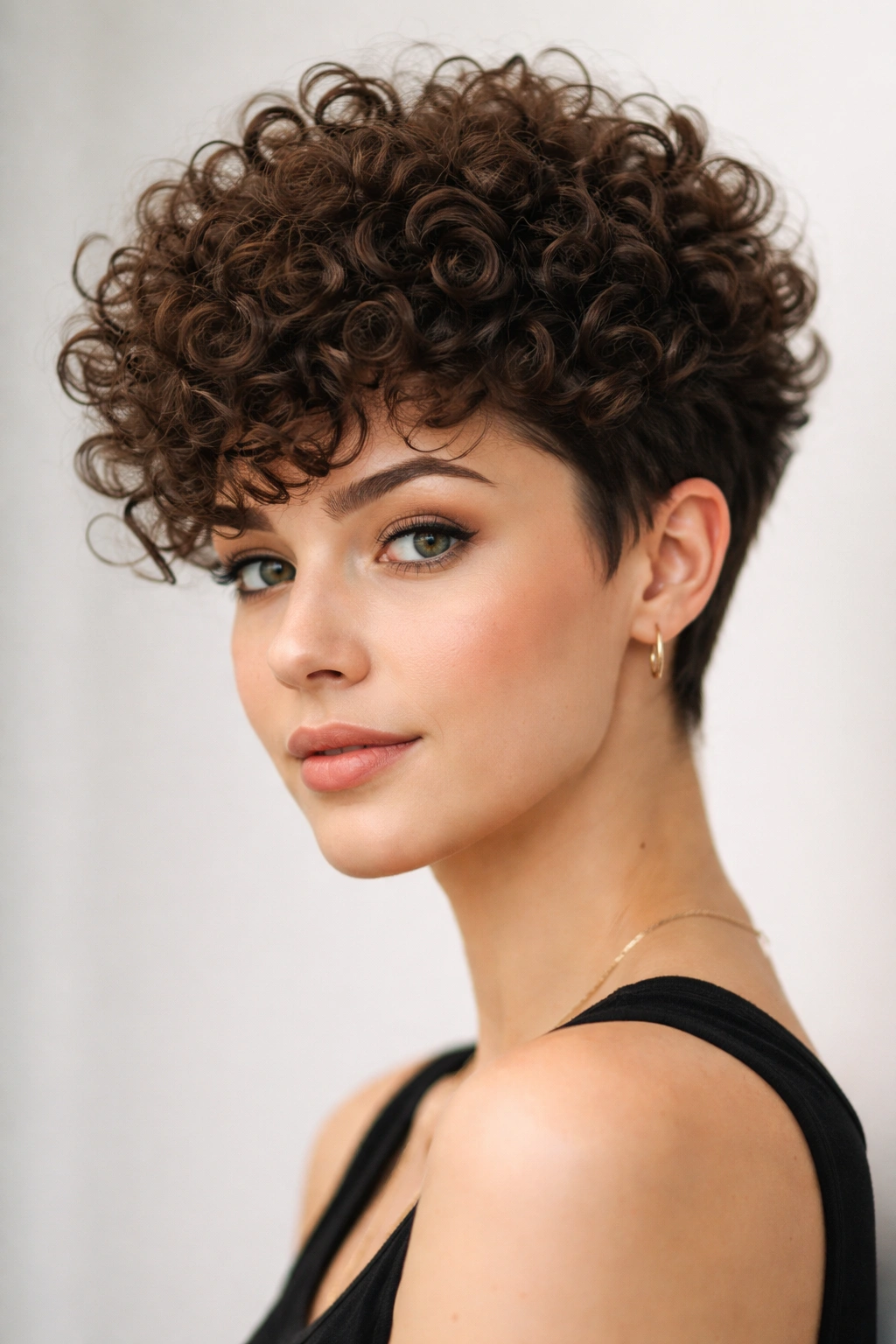
This style prioritizes maximum crown height while keeping the overall length cropped and close. The technique involves texturizing and layering extensively through the crown area to build vertical volume, while keeping the sides and lower back quite short and tapered. The result is a cut that looks extra voluminous and gives the illusion of lift throughout the entire head, which is particularly flattering if you have finer curls or curls that tend to fall flat.
Creating Strategic Height and Proportion
The secret to this cut is understanding that volume at the crown changes your entire silhouette. Layers in the crown should be stacked (shorter on top, gradually getting longer as you move down) to create maximum separation and encourage curls to spring upward rather than outward. The sides taper close—sometimes with an actual undercut behind the ear—which emphasizes the height at the top and creates an elegant proportion that feels both modern and flattering.
Styling Techniques for Maximum Impact
- Use a root-lifting product or volumizing mousse at the crown specifically
- Blow-dry with a diffuser, directing curls upward at the roots to encourage height
- Once dry, flip your head over and scrunch the crown area to reactivate curls
- Trim every 4-6 weeks; this cut loses its proportions quickly as the crown grows
- Works beautifully with side-swept styling where longer pieces can be directed across the forehead
9. The Graduated Layered Pixie
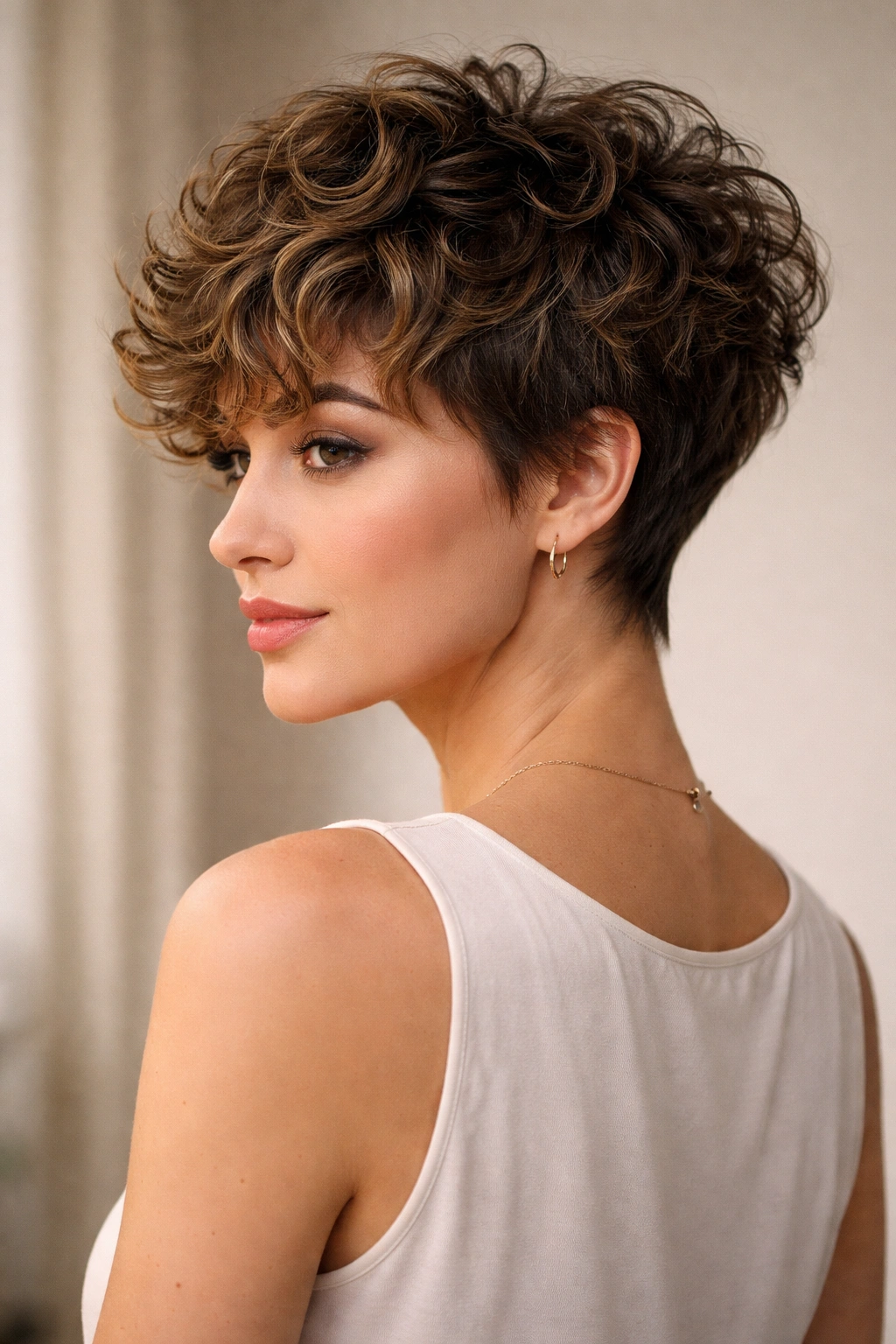
A graduated layered pixie uses progressive layering where each layer is slightly longer than the one underneath, creating a smooth gradient from shortest at the nape to longest at the crown. Unlike choppy, textured pixies, this cut has a more refined structure while still incorporating enough layers to let curls show their movement. The graduation gives it an elegant quality while the layers ensure it doesn’t read as a severe, flat-topped pixie.
The Precision Required in Graduation
Graduated layering requires a stylist with serious skill and understanding of how curls behave. Each layer needs to be calculated so that when your curls dry and compress, they still follow the graduated shape rather than puffing out into a round ball. The angle of each layer is crucial—slightly deeper angles create more movement and texture, while shallower angles create a sleeker graduated line.
Styling and the Sophisticated Appeal
- Requires only a quick scrunch with curl cream and air dry or a brief diffuse
- The refined structure makes this feel dressier and more polished than other short curly cuts
- Works beautifully on people with tighter curls that hold shape well
- Trim every 5-6 weeks to maintain the graduated silhouette
- One of the most flattering options for people with delicate face features
Worth knowing: This cut can feel too structured for some curl patterns. If your curls are very loose or your hair is very fine, graduated layering might not hold its shape the way it’s designed to.
10. The Piece-y Shag with Movement
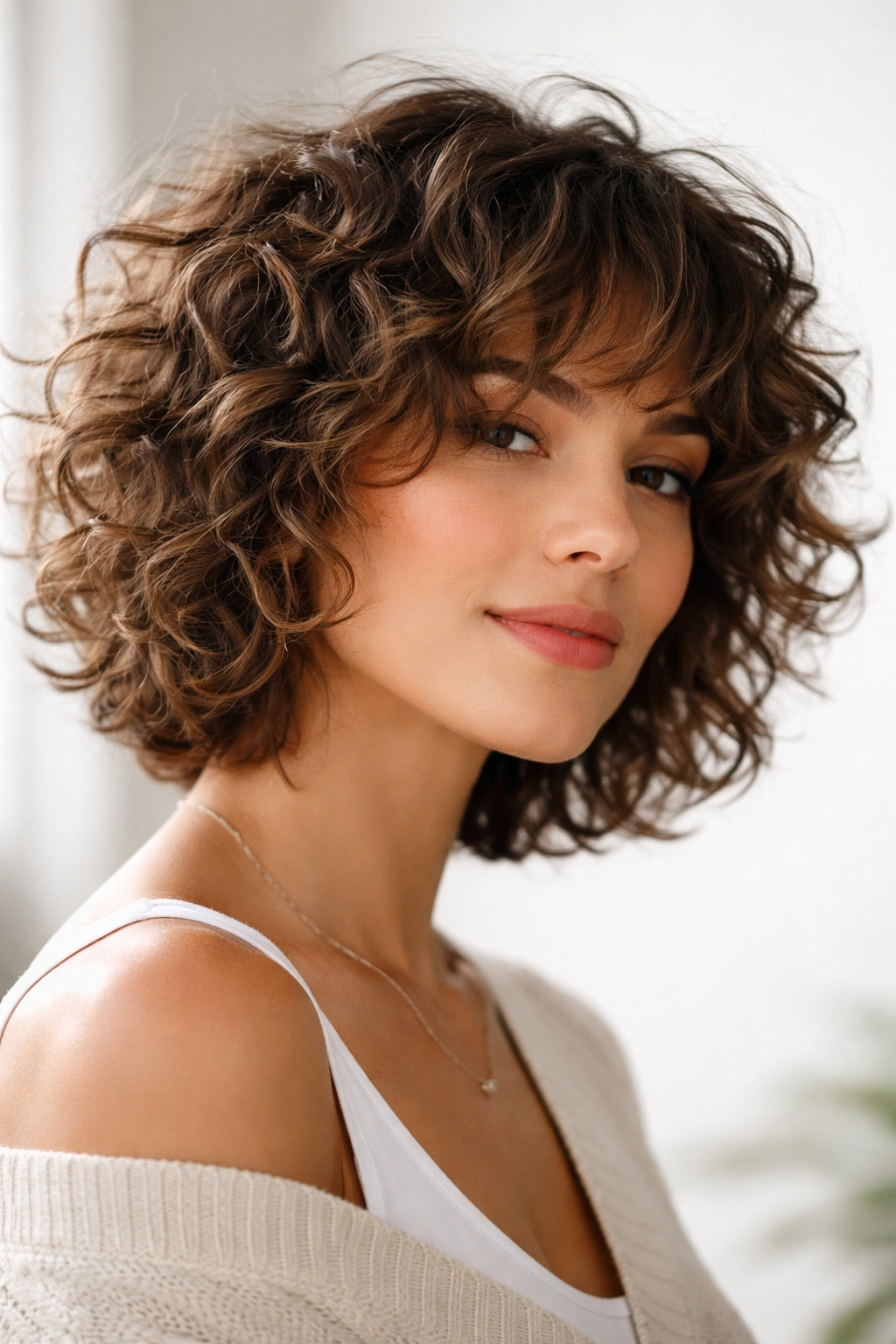
The piece-y shag combines shag’s effortless, textured roots with modern piece-y layers that emphasize separation and movement. This cut has significantly more dimension than a traditional shag—individual curls are distinct and visible, rather than blending into one unified shape. It typically falls between the ear and chin, with longer layers on top creating movement and texture that cascade over shorter, tapered sides.
Layering Technique and Curl Separation
The piece-y quality comes from point-cutting or razor-cutting individual sections rather than blunt-cutting entire layers at once. This creates pieces of different lengths stacked closely together, which means multiple curl patterns and directions contribute to the overall shape. The result looks intentionally textured and undone, which is exactly what makes it work. A truly excellent piece-y shag almost looks like it might be a bit messy—that’s actually the goal.
Daily Styling and Real-World Practicality
- Apply curl cream or gel to soaking-wet hair, work through section by section
- Let air dry or diffuse on low speed—this cut doesn’t require precision styling
- Looks better as the day goes on and curls settle into their natural fall
- Requires trims every 6-8 weeks as shorter pieces grow out and lose definition
- Perfect for people who want texture, movement, and low styling demands all at once
Real talk: The piece-y shag is a forgiving, friendly cut. It’s flattering across multiple face shapes and curl patterns, and it actually looks better when you’re not overthinking the styling.
Final Thoughts
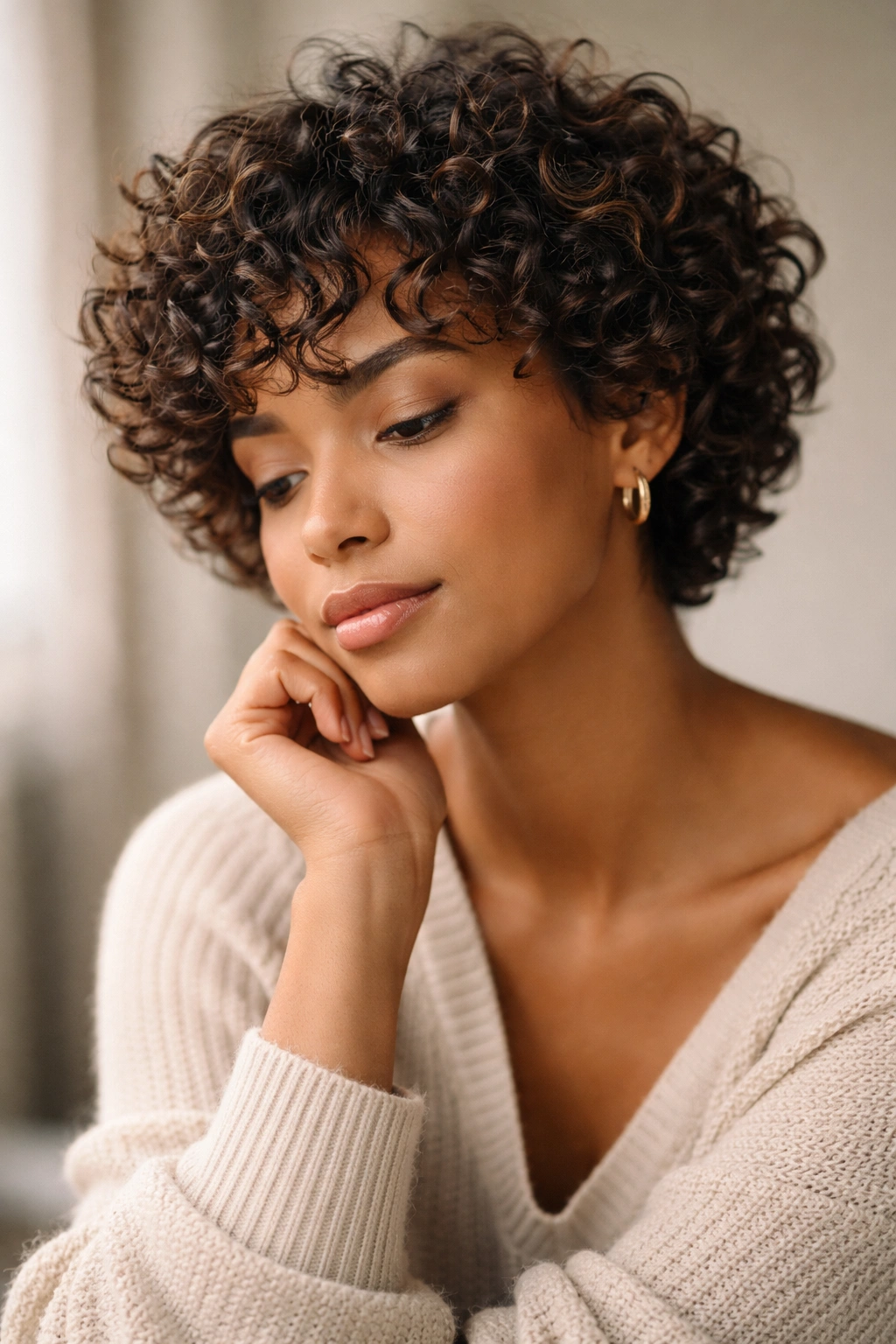
Choosing the right layered short curly cut comes down to understanding three things: your specific curl pattern, your face shape, and how much styling time you’re willing to invest daily. The cut that looks incredible on your friend might not hit the same way on your hair, and that’s not a failure—it’s just texture diversity. What matters most is finding a stylist who truly understands curly hair, not someone who cuts curly hair the way they’d cut straight hair. That distinction makes absolutely everything.
The beautiful truth about short curly cuts is that layers aren’t a workaround for curls—they’re a celebration of them. Every one of these styles works with your natural texture instead of trying to smooth it or control it. Your curls are an asset in a short cut, not something to manage around. Whether you go for a cropped pixie, a statement mullet, or a tousled mop top, you’re making a choice that says you’re ready to work with what you have rather than against it. That confidence reads in how you carry yourself, and that’s something no stylist can cut into your hair—only you can bring that.
