



15 Wash and Wear Haircuts by Hair Texture
Finding a haircut that actually works with your natural hair texture instead of fighting against it is one of those rare beauty wins that changes everything. The right wash-and-wear cut means you can roll out of bed, shake out your hair, maybe run your fingers through it, and look intentionally styled without spending 30 minutes with a blow dryer and styling products. But here’s what most people get wrong: they choose a haircut based on what looks good in photos or what their favorite celebrity is wearing, without considering whether that cut will actually cooperate with their specific hair texture.
Your hair texture—whether it’s straight, wavy, curly, coily, thick, fine, or somewhere in between—fundamentally shapes how a haircut sits, how it moves, and how much work you’ll need to put in to make it look the way it did at the salon. A textured crop that looks effortlessly cool on someone with naturally curly hair might look limp and shapeless on straight hair. A blunt bob that photographs beautifully on someone with fine, straight texture could become a frizzy, unruly mess on wavy or curly hair without the right structure.
The secret to a genuinely wash-and-wear haircut is matching the cut’s internal structure, layering strategy, and length to how your hair naturally grows, moves, and falls. When you do this right, your hair’s texture becomes an asset instead of a problem to solve. The cut works with your natural texture rather than requiring constant styling to fight it. You’re also dramatically reducing the amount of maintenance you need—no more weekly trims to keep layers from looking scraggly, no more frizz-fighting serum, no more wash-day anxiety.
1. Textured Crop for Curly Hair
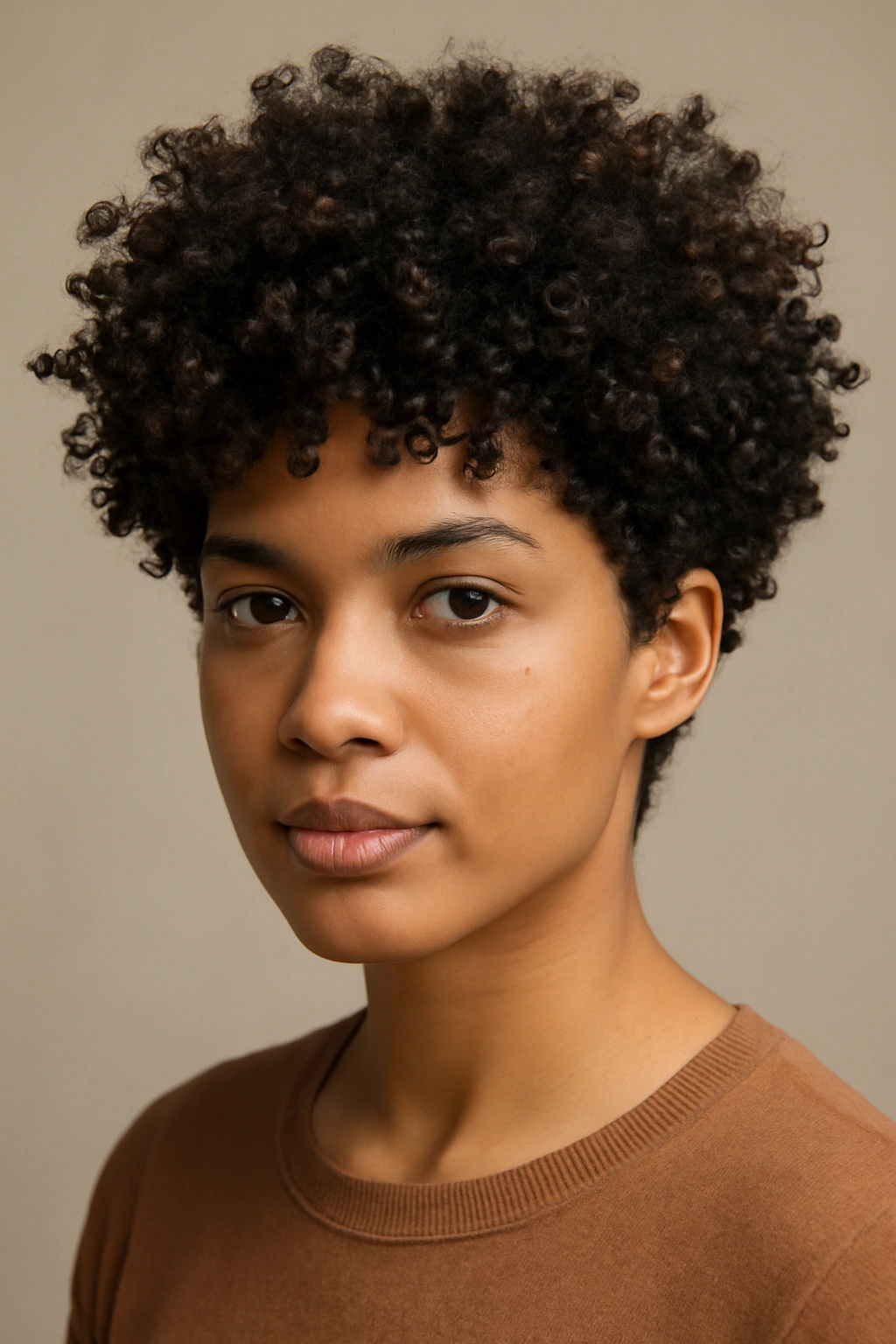
A textured crop is a short, voluminous cut that sits about 1 to 2 inches from the scalp all over the head, with slightly longer pieces on top that can stand up or flip forward. This cut is specifically designed to work with naturally curly hair, where the curl pattern itself creates shape and texture. The beauty of a textured crop is that your curl pattern does most of the work for you—you don’t need layers that are too pronounced because your curls provide their own dimension.
Why Curly Hair Loves This Cut
A crop cut sits perfectly with curly texture because curls shrink up when they dry, meaning a cut that looks just slightly longer when wet will sit at the right length once your curls contract. The relatively short length means curls don’t have much weight pulling them down, which gives you maximum volume and bounce. There’s no fighting gravity or frizz—your natural curl pattern is the whole point of the style. With this cut, you can apply a leave-in conditioner and curl cream to damp hair, scrunch it gently, and let it air dry into a defined, textured style.
Key Benefits for Your Routine
- Requires only curl cream and a leave-in conditioner—no blow-drying necessary
- Curl pattern creates built-in texture and shape, eliminating the need for heavy styling
- Short length means faster wash days and shorter drying time
- Works beautifully with both loose waves and tight coils
- Looks intentionally styled the moment your curls dry
- Can be shaped with a few fingers of styling cream while damp
Pro tip: Ask your stylist to cut your curls while they’re dry so they can see exactly where your curls sit at their natural length, rather than guessing based on wet hair.
2. Shag Cut for Wavy Hair
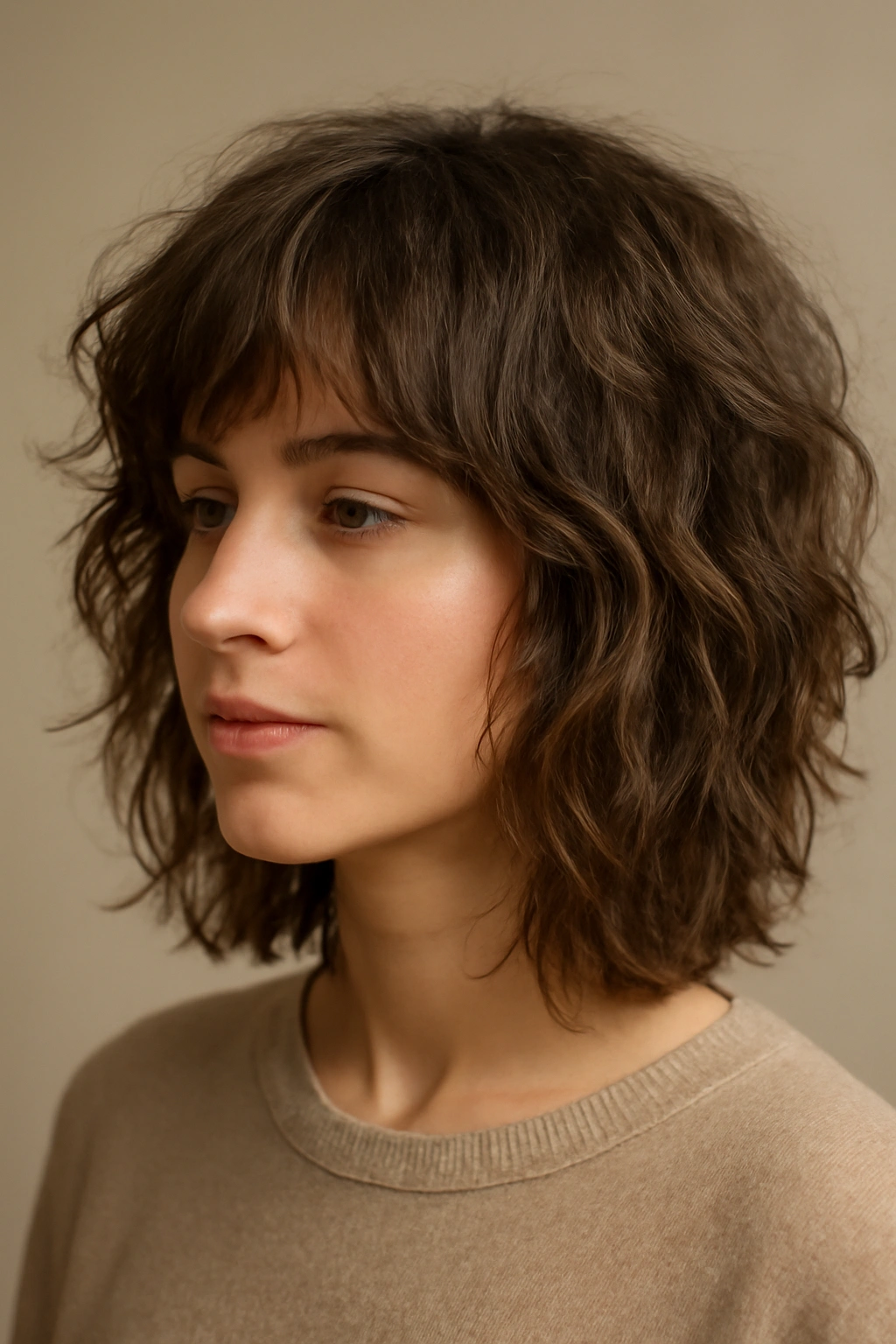
The shag is back—and for good reason. This is a medium-length cut with choppy, textured layers throughout that create movement and volume without requiring blow-drying. A shag typically sits somewhere between your chin and shoulders, with shorter, choppy pieces at the crown creating height and longer pieces underneath for movement. What makes a shag perfect for wavy hair is that the layering is cut in a way that enhances your natural waves instead of fighting them.
How Layers Work With Wave Patterns
Wavy hair sits in that in-between zone where it’s not tight enough to be considered curly, but it’s too textured to be straight. Layers help because they remove weight that would otherwise flatten your waves and create frizz. Each layer in a shag cut is shortened in a way that follows the natural direction your waves want to move. When you have the right layering, your waves form more defined, intentional-looking shapes instead of looking confused or poofy.
What Makes This Low-Maintenance
- Layers create natural texture, so you don’t need to style individual waves
- You can apply a wave-enhancing cream and let air dry for an effortless look
- The choppy pieces mean an imperfect, bedhead vibe is exactly the point
- Waves show movement and dimension even when unstyled
- Works for both loose waves and more pronounced wave patterns
- Shorter pieces around the face frame it beautifully
Worth knowing: A shag works best when cut slightly shorter than you think you want it, since wavy hair can look longer once it dries and relaxes into its natural pattern.
3. Pixie Cut for Fine, Straight Hair
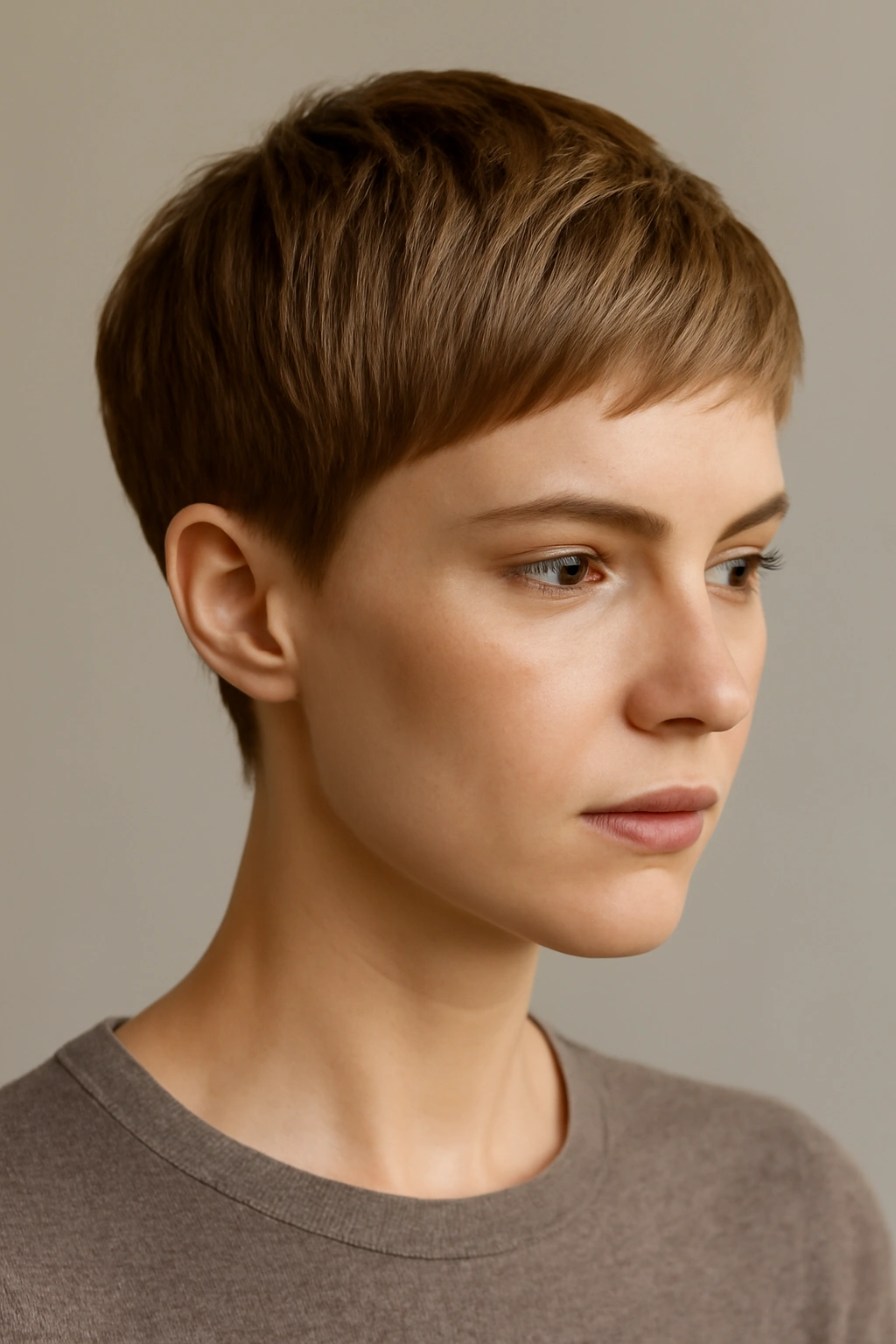
A pixie cut—short all over, usually 1 to 3 inches in length—works beautifully for fine, straight hair because fine hair actually benefits from being shorter. When fine hair is long, it gets weighed down and looks limp and flat. A pixie cut removes all that weight, making your fine hair look fuller and more voluminous than it actually is. With fine straight hair, you get the bonus that your hair sits exactly where the cut ends, with no curl pattern or texture to disrupt the clean lines.
Why Short Works for Fine Texture
Fine hair strands are naturally thinner in diameter, which means they don’t have the internal density to hold complex styles or heavy layers. But a pixie cut doesn’t require density—it requires precision. With straight fine hair, every strand shows exactly where it sits, so a well-cut pixie looks sharp and intentional. Your hair’s smoothness and straight nature actually become advantages; the cut’s lines stay clean and defined.
Your Wash-and-Wear Options
- Style with just a light texturizing cream for a softer, piecey look
- Blow-dry with your fingers for a slightly fuller finish if desired
- Hair air-dries into the shape the cut creates—minimal intervention needed
- Straight texture means no frizz or waviness to manage
- Lightweight hair dries quickly, so wash day is genuinely fast
- Works for any face shape because the cut can be customized at the sides and back
Quick tip: With a pixie and fine hair, regular trims every 4-6 weeks keep it looking sharp, since shorter styles show growth more noticeably.
4. Curly Bob for Coily or Textured Curls
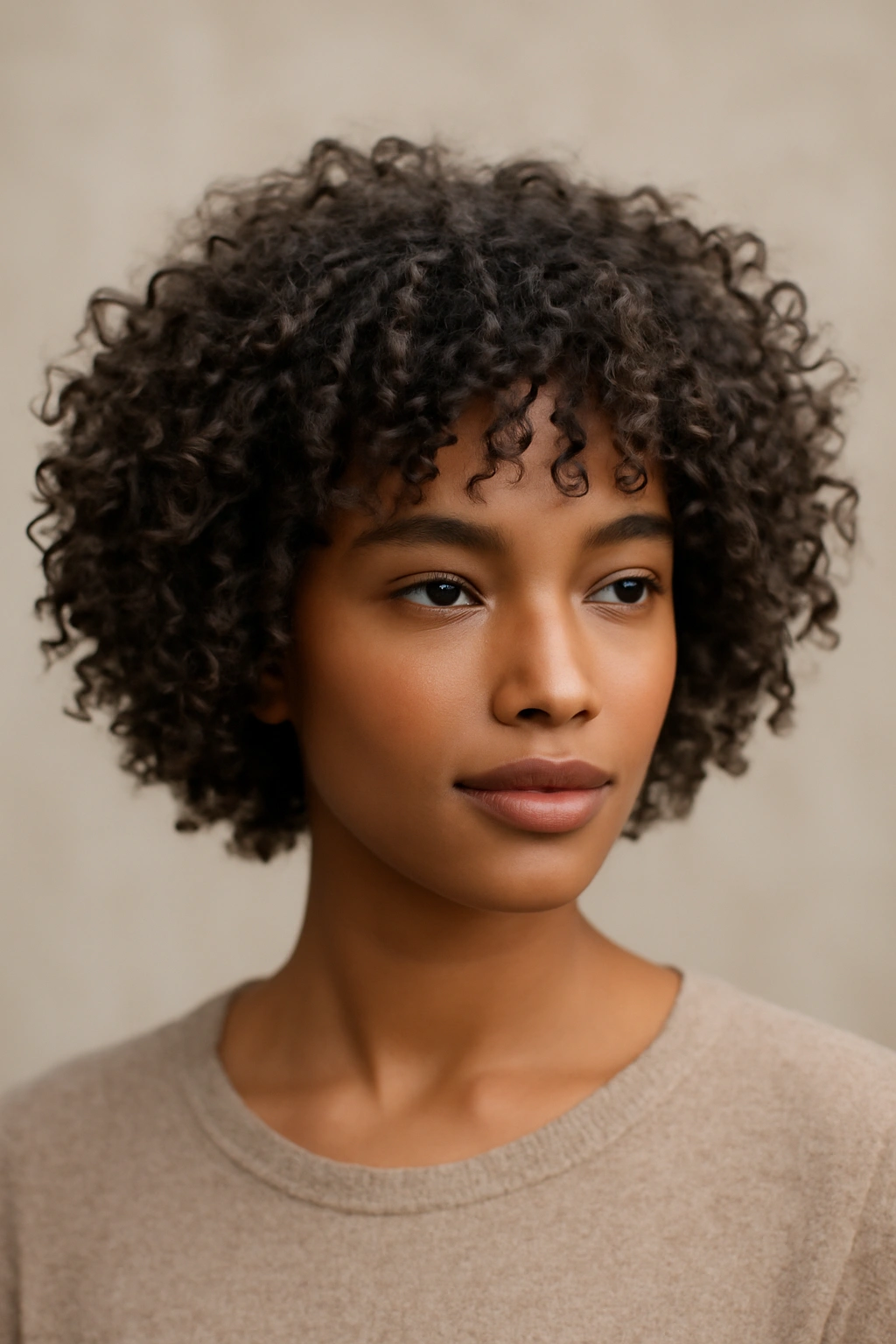
A curly bob is a chin-length or slightly shorter cut with layering specifically designed for curly or coily hair. Unlike a blunt, straight bob (which needs consistent straightening), a curly bob embraces the curl pattern by building layers that work with your curls rather than against them. The cut is shorter in length but textured throughout with choppy layers that give your curls space to move and define.
The Curl-Specific Layering Approach
With curly or coily hair, blunt lines and heavy weights flatten curls and create frizz. A textured bob avoids this by using choppy, choppy layers that remove weight where it matters. Your stylist cuts in a way that shortens layers gradually, following the natural direction your curls grow, rather than cutting straight across. This means each curl has room to spring up and define itself without being dragged down by the weight of longer hair.
Daily Maintenance Reality
- Apply curl cream and scrunch while damp—that’s genuinely your whole routine
- Curls define themselves as they dry without needing diffuser styling
- Shorter length means less frizz and easier refresh days
- Volume sits at the crown without looking top-heavy
- Layers prevent the “helmet head” feeling that can happen with blunt bobs on curly hair
- Works for curl patterns ranging from loose waves to tight coils
Real talk: Have your curly bob cut on dry curls, and ask your stylist to show you how to style it at home before you leave the salon.
5. Textured Lob for Loose Waves
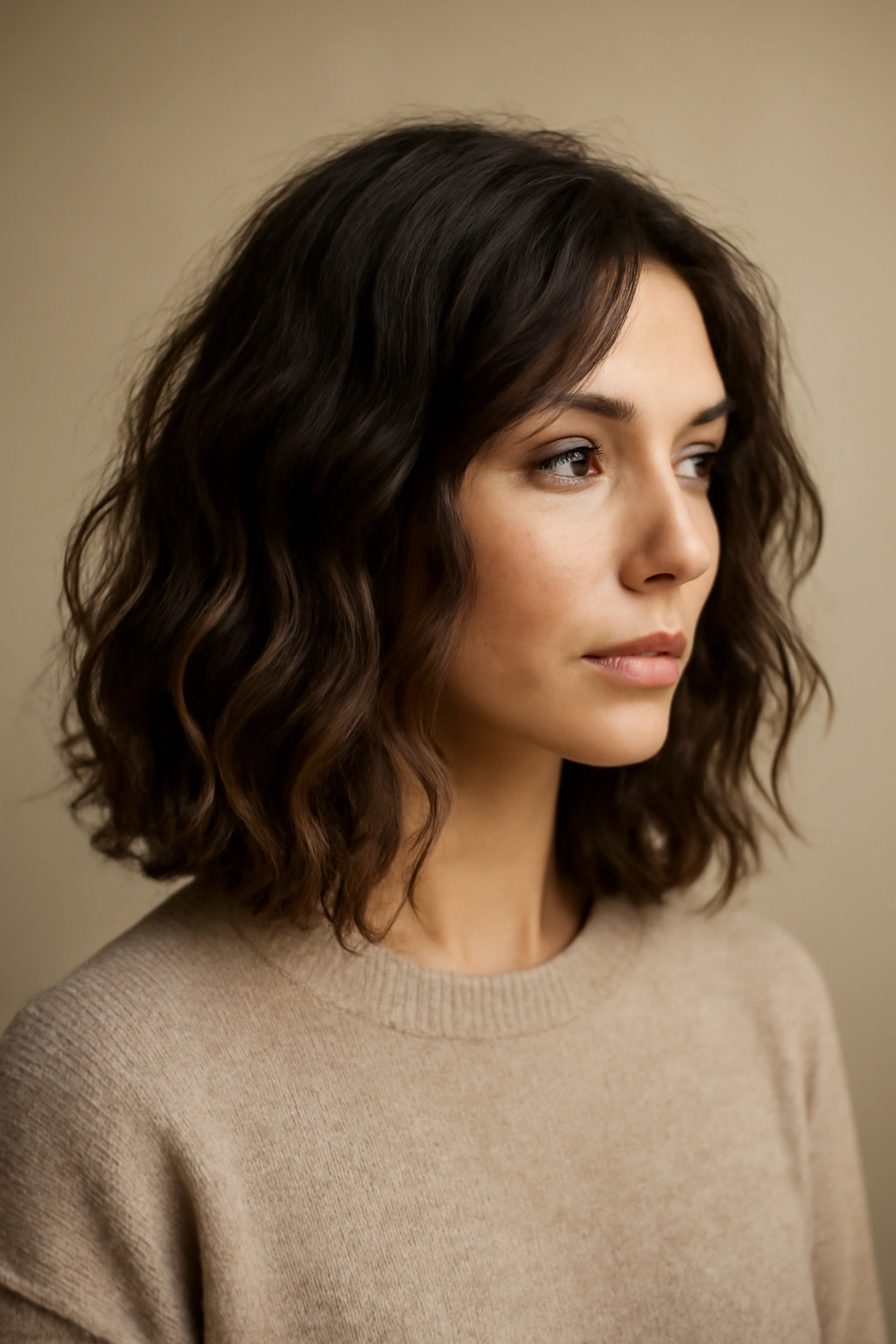
A lob (long bob) that hits somewhere between your shoulders and mid-chest is an ideal length for loose waves. Where a textured lob differs from a straight lob is the internal layering—instead of a blunt or minimally layered cut, a textured lob has layers that are shaped specifically to enhance wave patterns and create movement. This isn’t a shaggy, choppy cut; it’s more subtle, with layers that work beneath the surface to add dimension and reduce weight.
Why Waves Thrive With This Length and Layering
Loose waves need just enough length to show their movement, but not so much length that weight flattens them. A textured lob is precisely that sweet spot. The layers remove weight from underneath without creating the “choppy” look—instead, you get a cut where the waves sit in defined, beautiful S-shapes or curves. Your hair naturally moves and creates texture, so you’re not relying on styling to create it.
The Low-Maintenance Routine
- Damp hair + wave cream or sea salt spray = done styling
- Air-dry or use a diffuser on low heat for 10-15 minutes
- Waves create their own texture, so no crimping or curling iron needed
- Layers prevent the blunt, heavy feeling at the ends
- Shoulder-length waves frame your face naturally
- Good for people with wavy hair who want more length than a shag but less weight
Something to note: This cut looks great a few days into your hair-wash cycle, so you might find you stretch your wash days longer than you used to.
6. Fade With Texture on Top for Thick, Coarse Hair
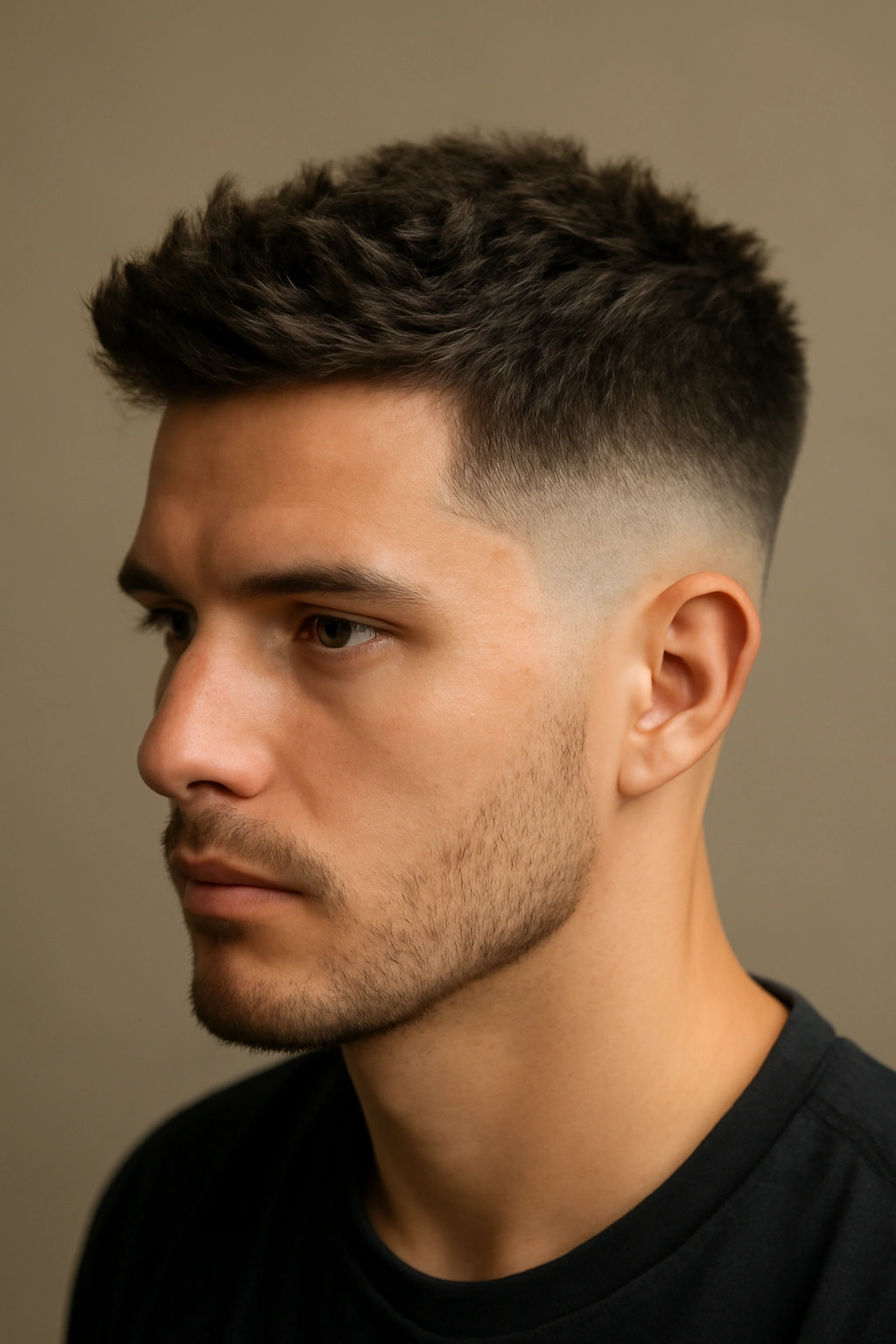
A fade haircut—where the sides and back are cut progressively shorter toward the neck, eventually blending into a sharp line at the bottom—pairs perfectly with leaving longer, textured pieces on top. For thick, coarse hair, this combination is a game-changer. The fade removes the weight from the sides and back (where thick hair can look bulky), while the textured top creates a modern, intentional look that works with, not against, your hair’s natural density.
How Fades Handle Thick Hair
Thick hair has density that can make standard haircuts look heavy or blunt. A fade uses that density strategically—you keep it where it creates a statement (the textured top) and remove it where it would just make your head look unnecessarily wide (the sides and back). The faded sides also mean your thick hair’s coarseness shows as cool, deliberate texture rather than an unmanageable frizz or bulk.
Styling and Maintenance
- Textured top responds well to light cream or matte paste—no need for heavy gel
- Fade requires regular trims (every 3-4 weeks) to maintain the blended line
- Coarse hair’s natural texture creates definition on its own
- Air-dry or blow-dry for slightly more volume and control
- The contrast between faded sides and textured top looks sharp and intentional
- Works for any type of textured top: curly, wavy, or spiky
Good to know: Coarse hair actually looks better with regular trims than fine hair does, because trims remove split ends that would otherwise make the texture look rough rather than intentional.
7. Blunt Bob for Straight, Fine Hair
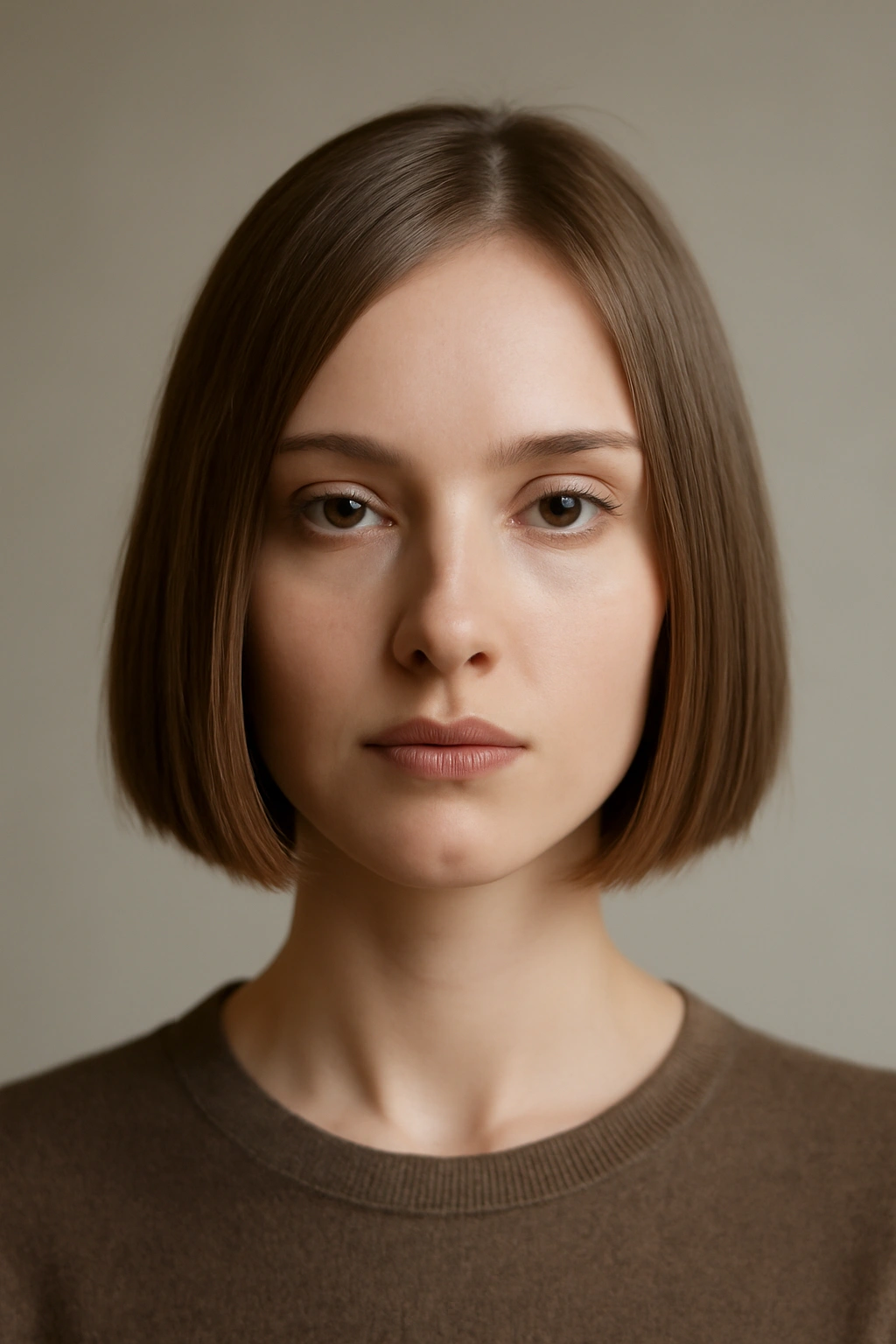
A blunt bob—chin-length, straight-across hem, minimal to no layers—is the classic wash-and-wear cut for straight fine hair. Here’s why it works so well: fine hair actually looks fuller when you keep weight in the hair (as opposed to removing it with layers), and a blunt hem with a solid perimeter creates the illusion of density. Straight hair’s natural texture means the blunt line stays clean and defined without looking harsh.
The Power of Weight and Precision
Fine hair needs every strand working together to create the appearance of fullness. A blunt bob does this because the solid perimeter of hair creates a boundary that looks complete and intentional. Straight fine hair doesn’t fight blunt lines; it embraces them. The cut sits exactly as intended, with no unexpected waviness or texture to disrupt the clean edges.
Wash-and-Wear Reality
- Blow-dry with a round brush for a polished finish (takes 10-15 minutes)
- Air-dry for a slightly softer, more relaxed look
- Fine hair dries relatively quickly, so styling time is genuinely minimal
- Straight texture means no frizz to battle
- Blunt line looks intentional even with a tiny bit of texture
- Requires trims every 6-8 weeks to keep the hem looking fresh
Pro tip: A blunt bob looks best when it’s cut precisely at your jawline or chin—slightly shorter or longer can change the whole effect.
8. Messy Layers for Thick, Coarse Hair
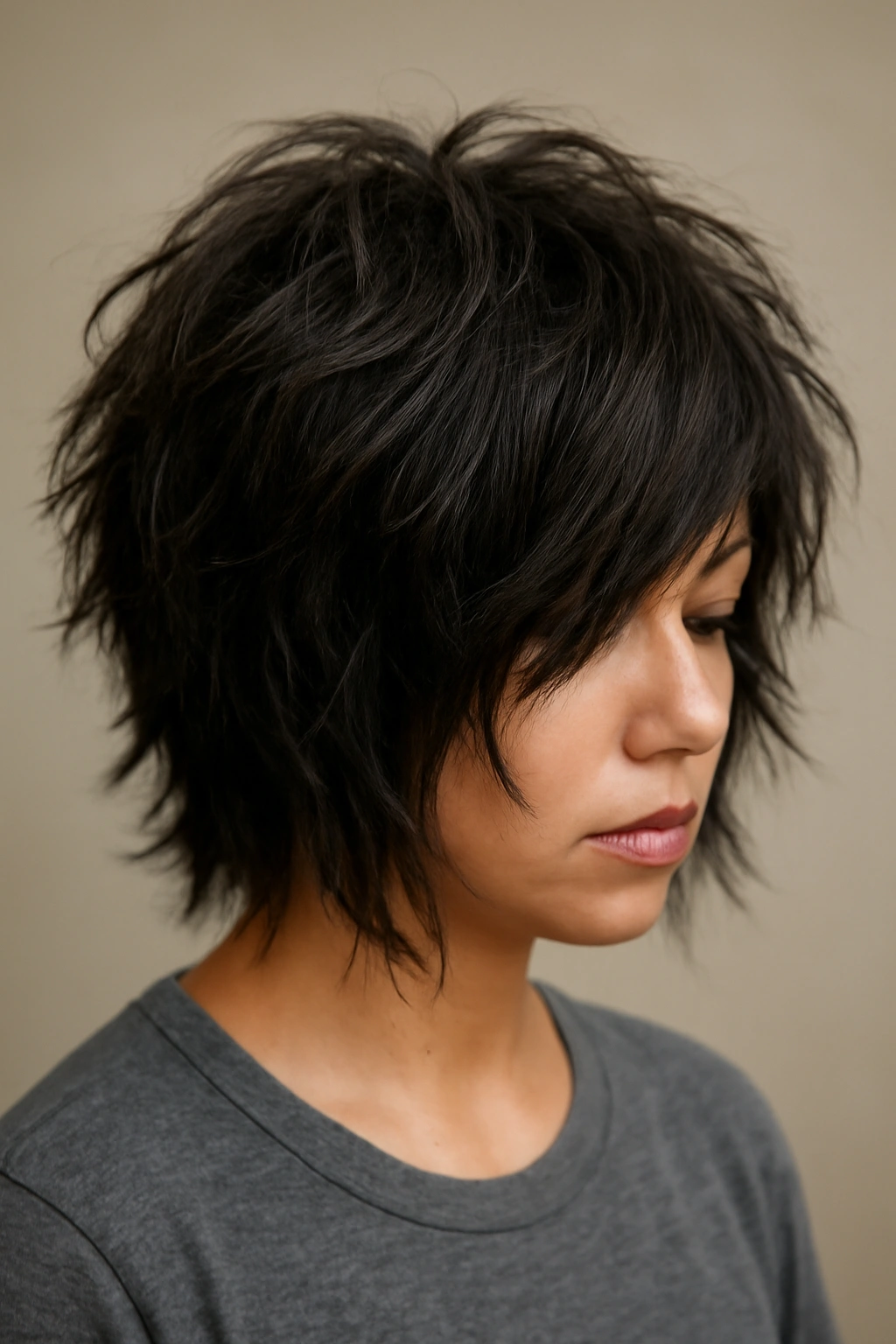
Messy layers are intentionally choppy, piece-y layers cut throughout the hair to create texture and movement. For thick, coarse hair, this is a liberating cut because it takes what could be heavy, dense hair and turns it into textured, dimensional style. Messy layers reduce bulk while creating the impression of effortless movement. Your coarse hair’s natural texture becomes an asset, showing off deliberate choppiness rather than unwanted volume.
How Choppy Layers Transform Thick Hair
Thick hair can look heavy with solid, blunt cuts because there’s so much density. Choppy layers break that up dramatically. Each layer is cut at a different length and angle, creating tons of surface area where light catches the hair and creates visual texture. This means your thick hair looks intentional and styled even when it’s unstyled. The choppiness also prevents the “helmet head” feeling that thick hair can develop.
Maintenance and Styling
- Air-dry or blow-dry with a texture spray for maximum piece-y texture
- Coarse hair holds texture naturally, so styling is genuinely simple
- Thick strands support choppy layers without looking wispy
- Layers create movement even when your hair is down
- Works for shoulder-length or longer styles
- Layers prevent the bulk at the ends that straight-across thick hair can develop
What works: Run your fingers through damp hair with a light cream or mousse, and let it air-dry for the most effortless messy-layer look.
9. Wolf Cut for Wavy or Curly Hair
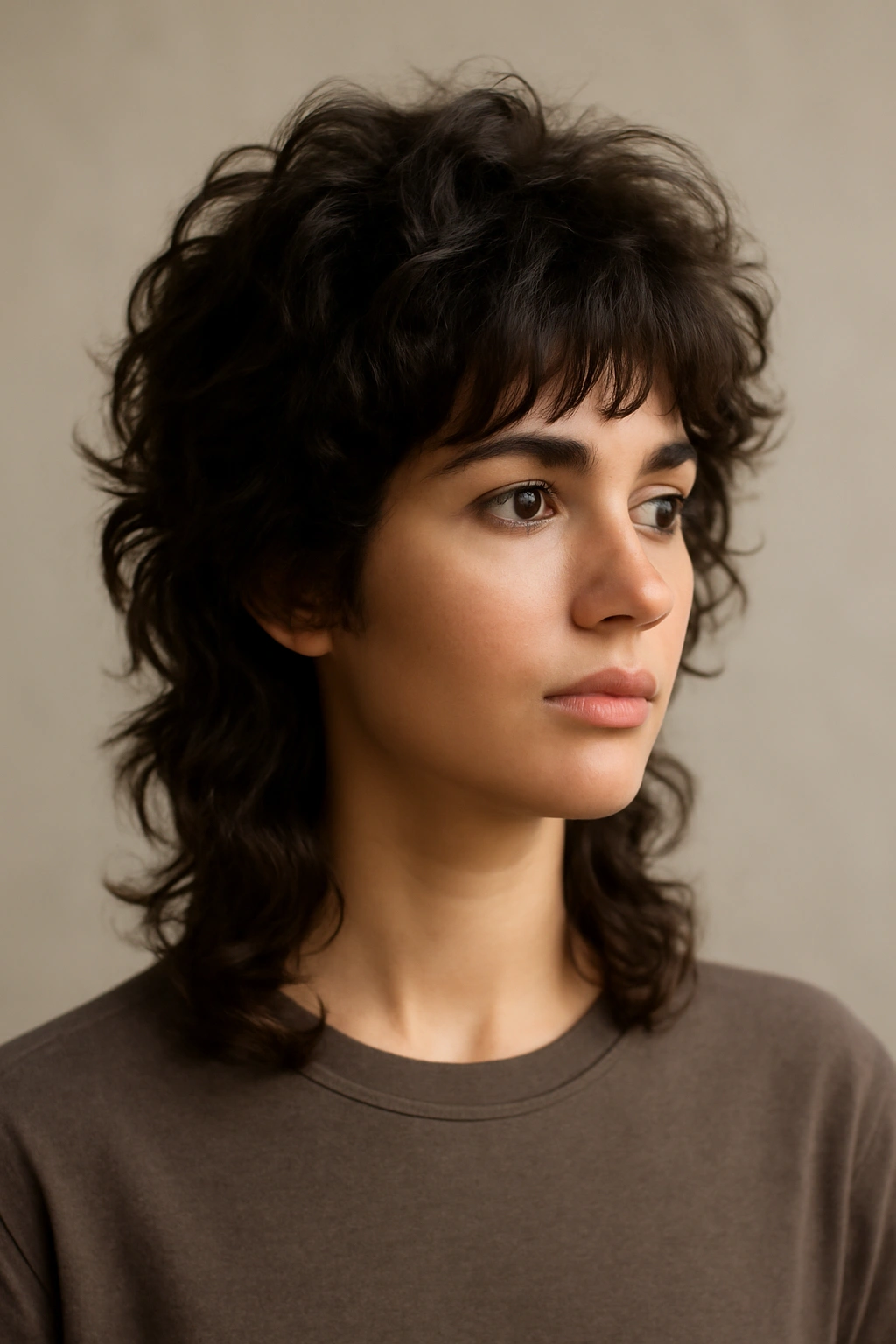
A wolf cut is a hybrid between a shag and a mullet—shorter, voluminous pieces at the crown and longer pieces in the back, with textured layers throughout. For wavy or curly hair, a wolf cut is a modern, flattering option that creates dimension and movement. The shorter crown gives height and bounce, while the longer back pieces create the movement and length that a lot of people want. The choppy layers throughout work with your wave or curl pattern rather than against it.
Crown Height Plus Back Length
Wave and curl patterns benefit from this kind of contrast. The shorter top pieces create height without relying on styling products (your natural texture does that work), while the longer back allows your waves or curls to show their full movement and shape. The combination is visually interesting and requires zero hot-tool styling.
Daily Wear and Styling
- Apply curl or wave cream to damp hair and scrunch or finger-comb
- Air-dry or diffuse on low heat for texture definition
- Shorter crown creates natural volume at the top
- Longer back pieces show wave or curl pattern beautifully
- Choppy layers throughout mean the intentional texture is the point
- Works for both tight curls and loose waves
Real experience: A wolf cut requires finding a stylist who understands how to cut for your specific wave or curl pattern, so this might be worth seeking out someone with specific textured-hair expertise.
10. Micro Bangs With Layered Sides for Fine, Straight Hair
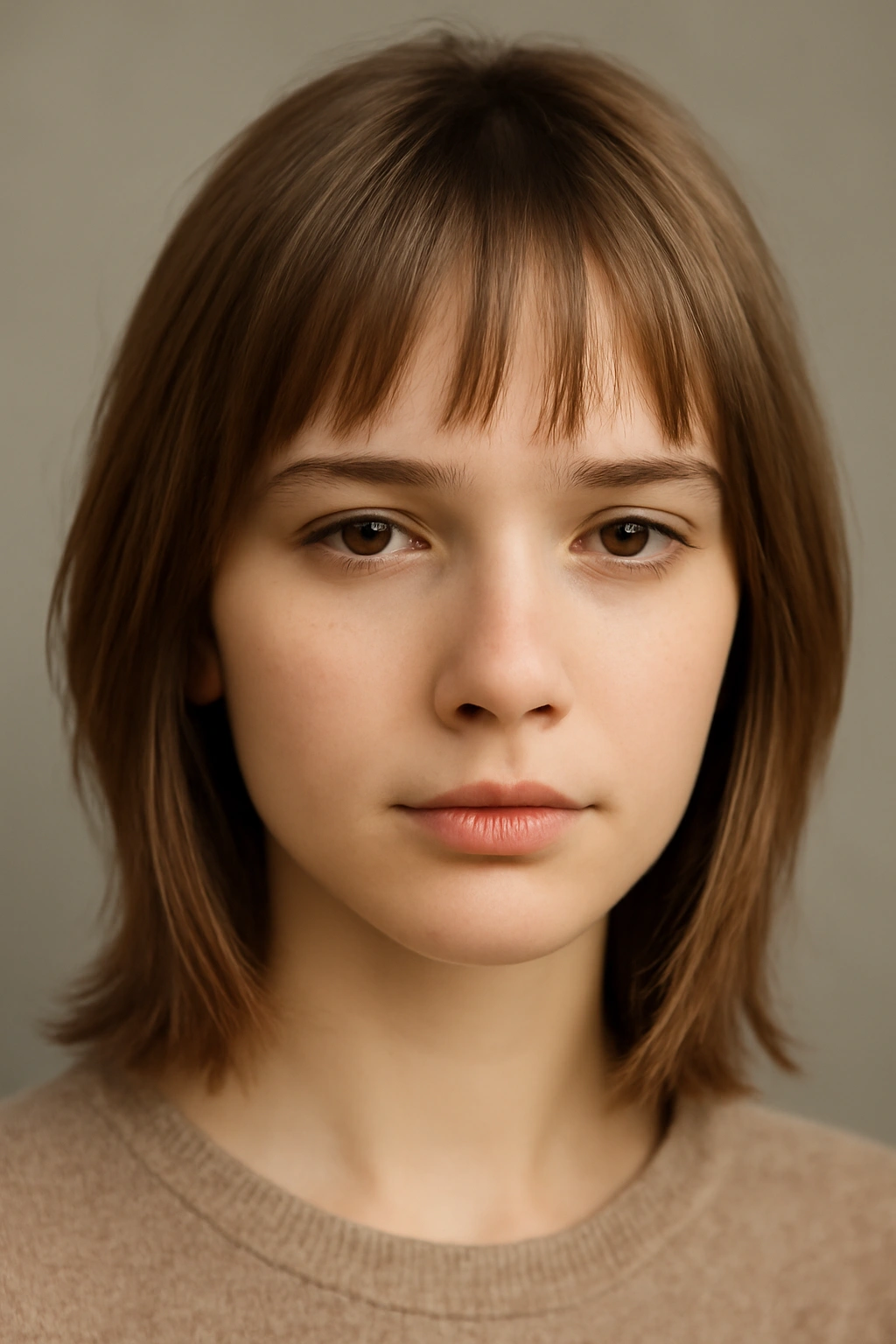
Micro bangs are short, delicate bangs cut just above the eyebrows, paired with layered sides that create movement without sacrificing the density fine hair needs. This cut works specifically for fine, straight hair because the bangs create a bold focal point, drawing attention to your face without requiring the hair overall to have density it doesn’t naturally possess. The layered sides frame without flattening.
The Fine-Hair Approach to Bangs and Layers
Fine hair often looks best with less layering overall because layers remove density. But micro bangs paired with subtle layers at the sides create visual interest and frame your face without going too choppy. The bangs are the statement piece, while the layered sides add just enough dimension to prevent the look from feeling flat or heavy-handed.
Styling Your Micro Bang Cut
- Blow-dry bangs straight and slightly under for a polished look, or tousle them for a softer feel
- Side-swept or straight bangs both work depending on your preference
- Fine hair means bangs dry relatively quickly
- Layers at the sides can be air-dried or blow-dried depending on the effect you want
- Requires trims every 3-4 weeks to keep bangs at the right length
- Works beautifully with or without styling products
Heads-up: Micro bangs require a stylist who specializes in them, since the length is precise and can look awkward if cut even slightly too long or short.
11. Textured Undercut for Thick Hair
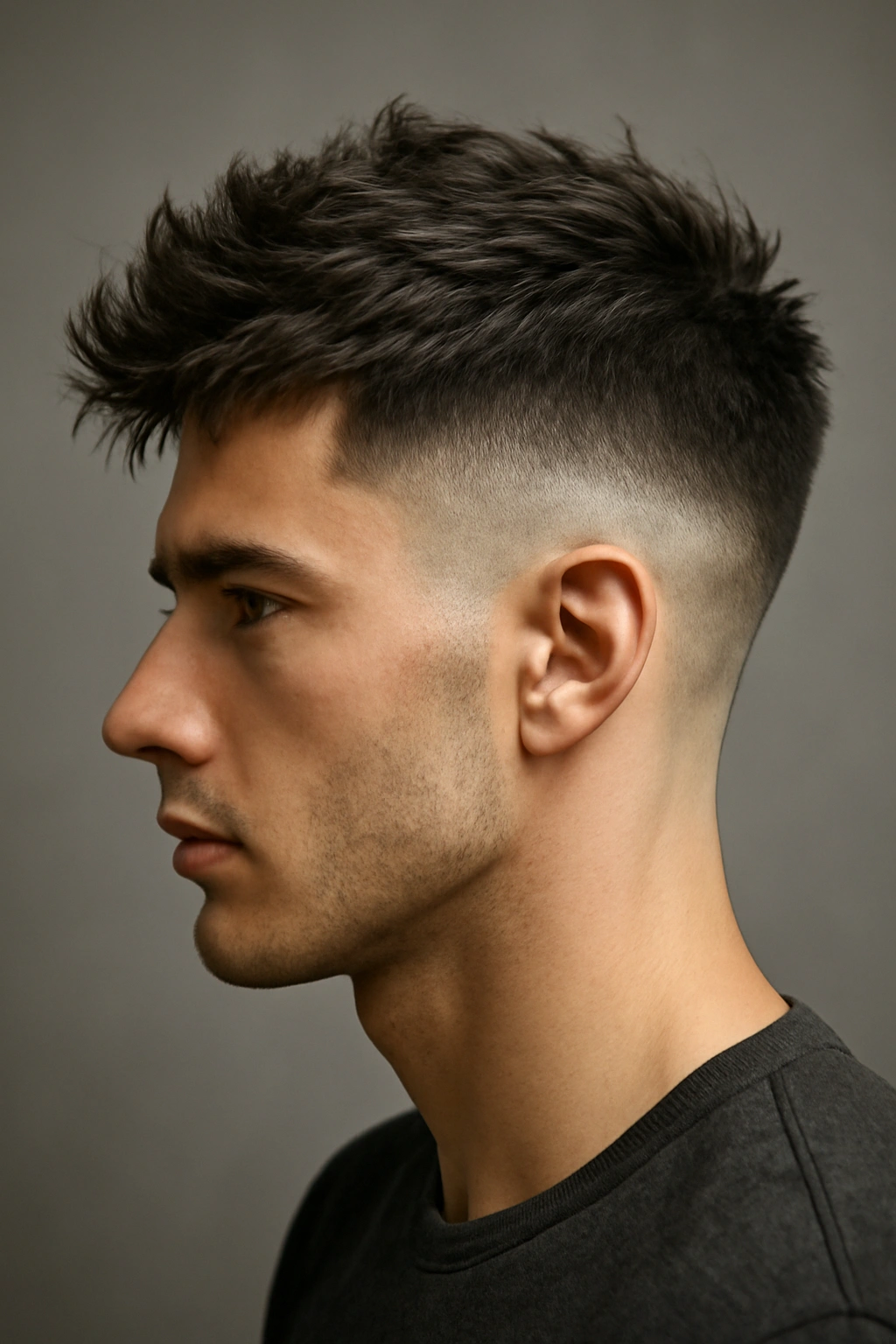
An undercut—where the back and sides are cut very short (often with clippers) while the top is left significantly longer—works beautifully for thick hair because it removes weight from where it would create bulk while keeping length and texture on top. For thick hair specifically, this dramatic contrast means your top pieces have room to move and show texture, while the undercut prevents the heavy, dense feeling at the nape and sides.
Strategic Weight Removal for Thick Hair
Thick hair’s density is an advantage on top of your head but a problem at the nape and sides where it can feel heavy or look bulky. An undercut solves this elegantly. You get to keep the length and texture you want while removing the weight that would otherwise make your head look disproportionately heavy. The texture on top shows beautifully because it’s not weighed down.
Styling and Upkeep
- Top pieces can be styled with cream, paste, or pomade depending on the look you want
- Undercut requires a clipper trim every 2-3 weeks to maintain the contrast
- Thick hair holds texture and style well, even with minimal product
- Air-dry for a tousled look or blow-dry for more control
- Works with any texture on top: curly, wavy, or straight
- The contrast looks intentional and modern
Good practice: Ask your barber or stylist to show you how to style the top before you leave, since different styling approaches create very different looks.
12. Curly Shag for Tight Coils or Textured Curls
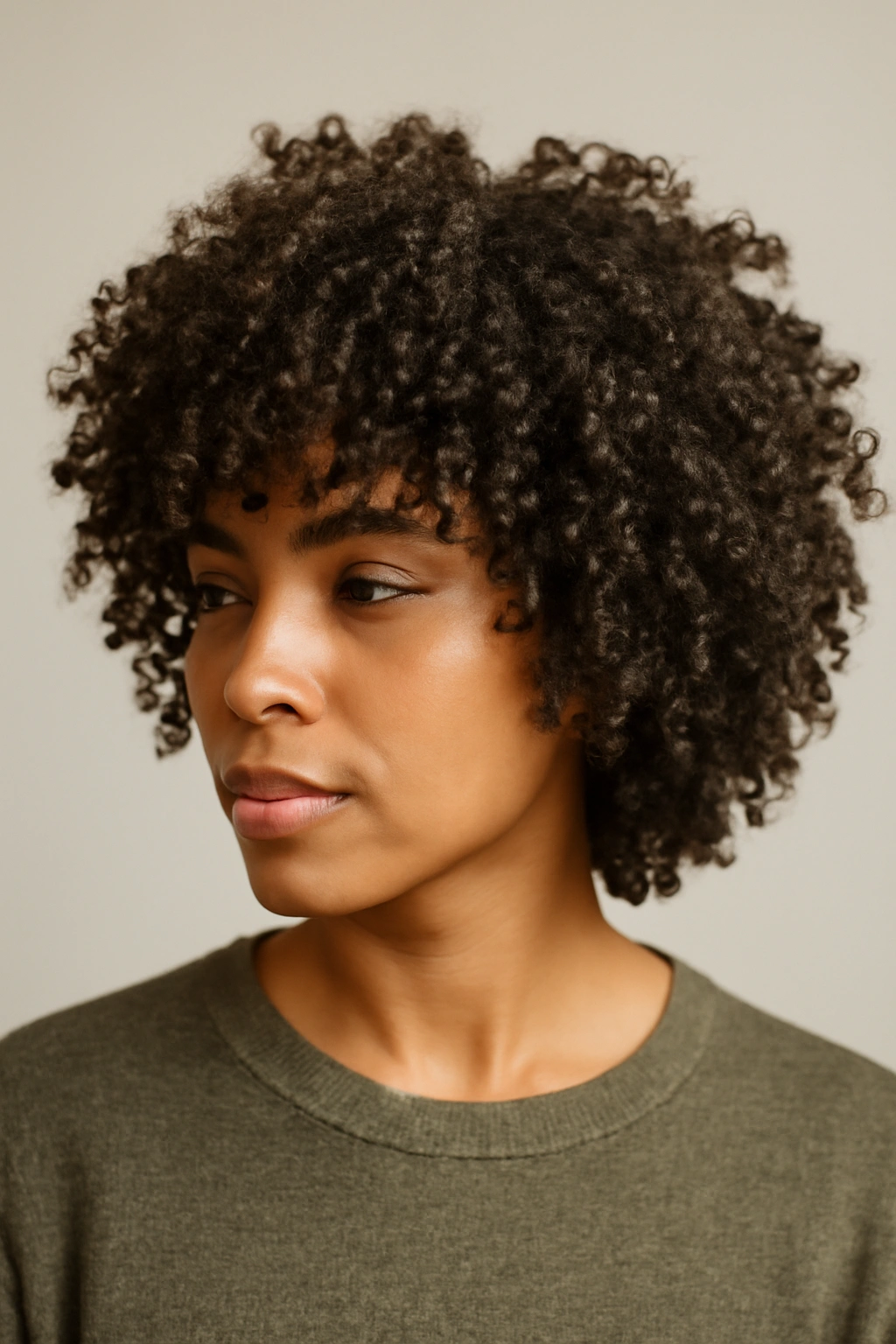
A curly shag is a shag cut specifically designed for tight coils or highly textured curls. Instead of the softer choppiness you might see in a shag cut for wavy hair, a curly shag features more defined layers that account for shrinkage and the way coily hair sits. The cut is shorter overall (often chin-length or above), with shorter layers throughout that create volume and definition without looking stringy or unbalanced.
Layers for Coily Texture and Shrinkage
Coily and tightly textured curls shrink significantly when they dry, which means a coily shag is cut more strategically than a regular shag. Your stylist accounts for exactly how much your specific curl pattern shrinks and cuts accordingly. The layers are designed so that when your curls dry and coil up, they sit at the right length and density. This prevents the problem where layers look too short or uneven once your hair dries.
Easy Maintenance and Styling
- Apply curl cream or gel to soaking-wet hair and scrunch upward
- Plop in a microfiber towel to remove excess water, then air-dry or diffuse
- Coils define themselves—no curl-shaping tools needed
- Shorter length means faster drying time
- Layers create bounce and dimension automatically
- Looks intentionally textured and voluminous even with minimal product
Important note: Get your curly shag cut on fully dry curls so your stylist can see your exact curl pattern and how your hair naturally settles.
13. Straight-Across Bang Cut for Fine, Straight Hair
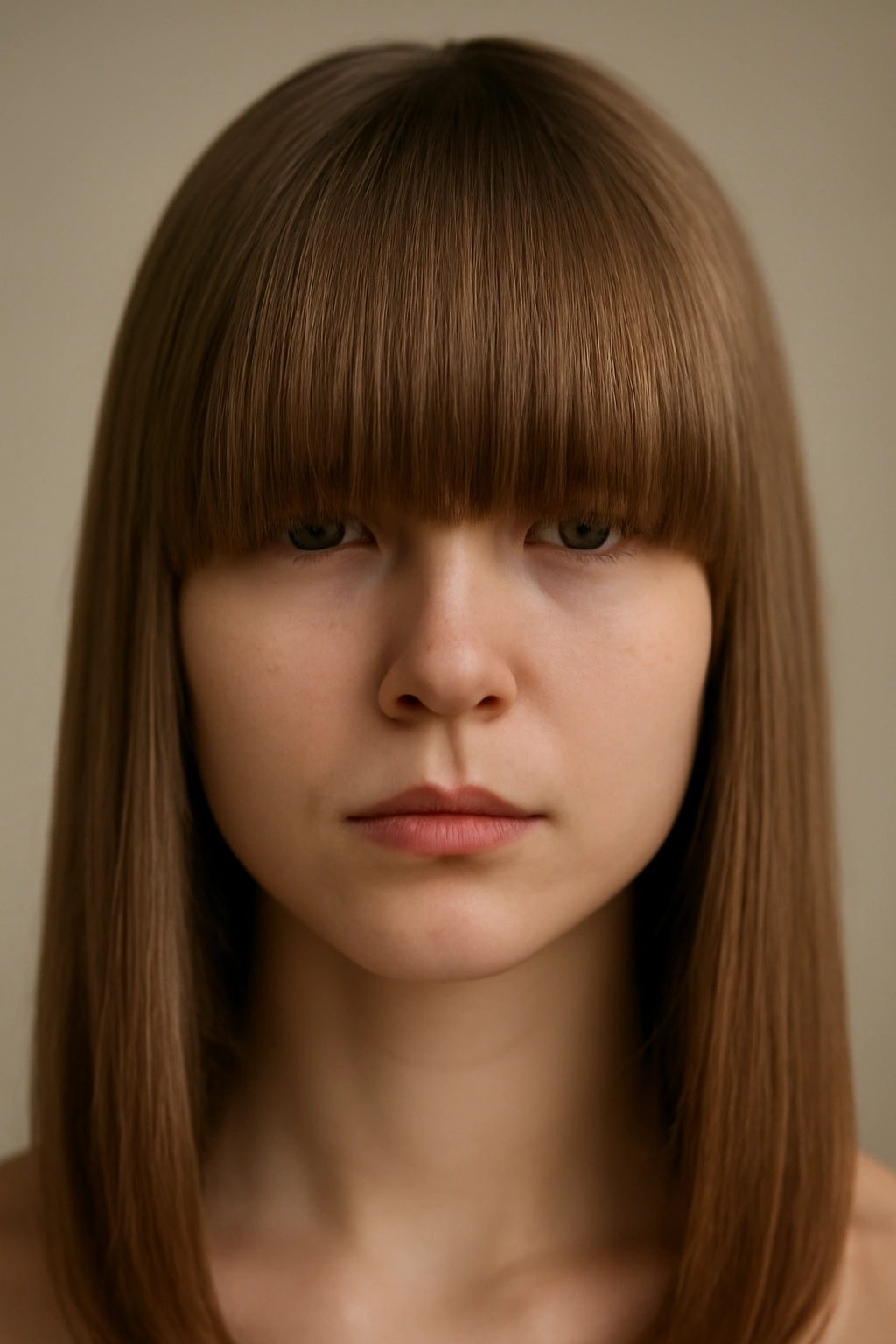
Straight-across bangs (also called blunt or full bangs) paired with a streamlined cut is another excellent option for fine, straight hair. Unlike micro bangs, straight-across bangs sit at or just below your eyebrows, creating a bolder, more classic statement. For fine, straight hair, the appeal is that blunt bangs and a clean overall silhouette create the visual impression of density and fullness without requiring any choppy layers that would actually reduce volume.
Straight Hair’s Perfect Canvas
Fine, straight hair is the ideal texture for blunt bangs because your hair won’t wave or curl up at the ends, so a straight-across line stays precisely as cut. There’s no frizz, no unexpected texture, just a clean line that looks intentional. The rest of the cut—often a simple bob or shoulder-length style—creates a streamlined silhouette that makes fine hair look fuller because there’s clear definition rather than wispy layers.
Everyday Wear
- Blow-dry bangs and face-framing pieces for a polished look
- Air-dry for a softer, more relaxed feel (still clean, just less styled)
- Fine hair dries quickly, so styling is genuinely minimal
- Straight texture means no frizz at the bang line
- Blunt bangs require trims every 3-4 weeks to maintain the line
- Pairs well with minimal styling—your cut does the heavy lifting
Practical tip: Straight-across bangs look best when they’re cut at precisely the right length for your face and proportions, so find a stylist experienced with them.
14. Choppy Layers for Wavy Hair
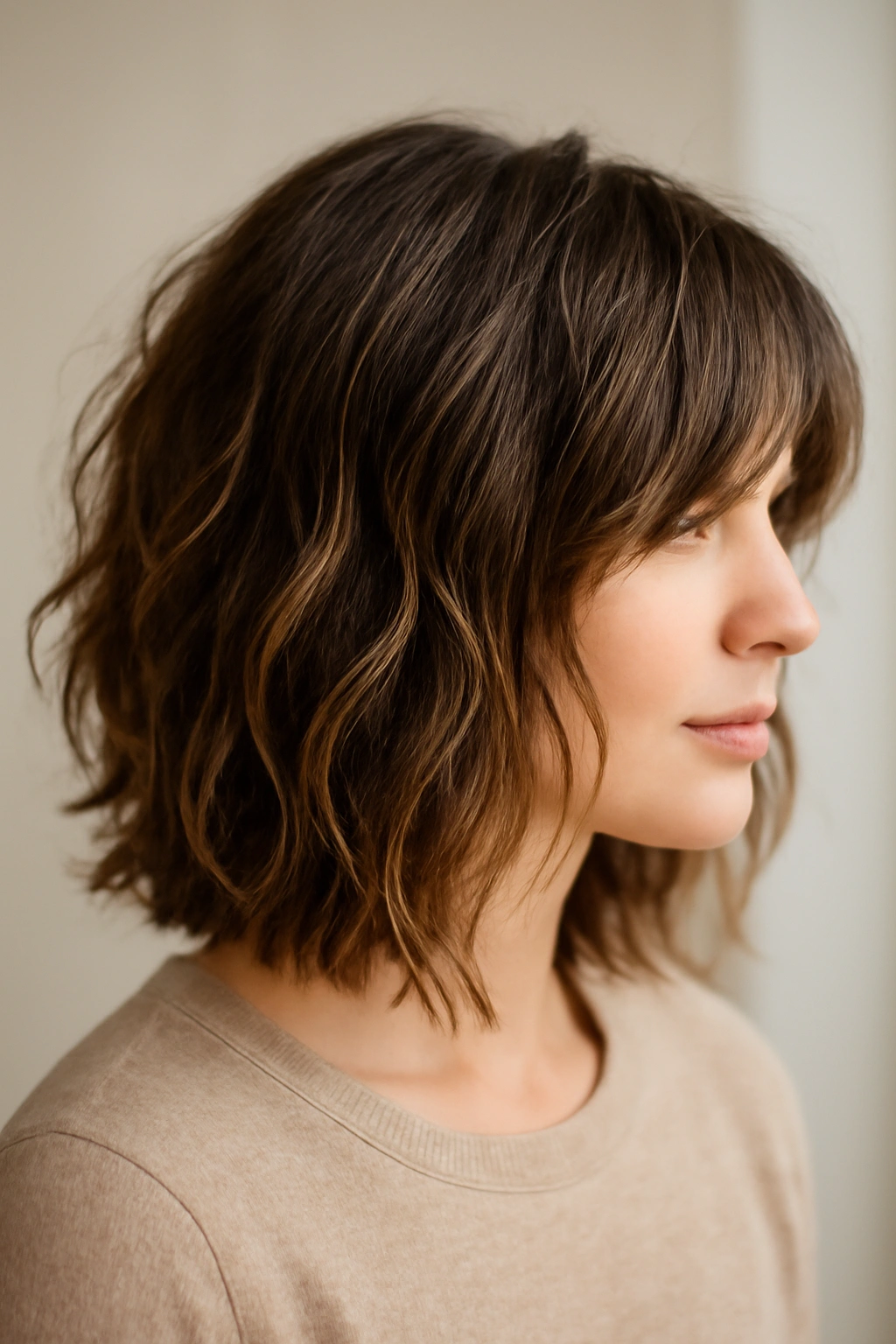
Choppy layers are shorter, textured layers cut throughout the hair at varying lengths to create dimension and movement. For wavy hair, choppy layers are the perfect match because they complement your natural wave pattern, creating definition and texture without requiring you to fight your hair’s natural direction. Unlike subtle layers that enhance waves quietly, choppy layers lean into texture and make it the point of the style.
Why Wavy Hair Thrives on Choppiness
Wavy hair sits in a zone where it has enough texture to show definition but not enough tightness for curls to define themselves completely. Choppy layers solve this by removing weight and creating surface area where light catches your waves and creates visual texture. The choppiness also prevents the problem where wavy hair looks undefined or frizzy—instead, the layers create intentional, deliberate movement.
Styling Reality
- Apply a texturizing spray or light cream to damp hair
- Air-dry or diffuse for wave definition without heat damage
- Layers create movement on their own—no curling tools needed
- Choppiness means an imperfect, effortless look is exactly right
- Works for loose waves through more pronounced wave patterns
- Looks good multiple days into a wash cycle as waves relax
What to know: Choppy layers look best when they’re cut to follow your natural wave pattern, so have them cut on damp (not soaking) hair so your stylist can see how your waves naturally sit.
15. French Girl Bob for All Hair Textures
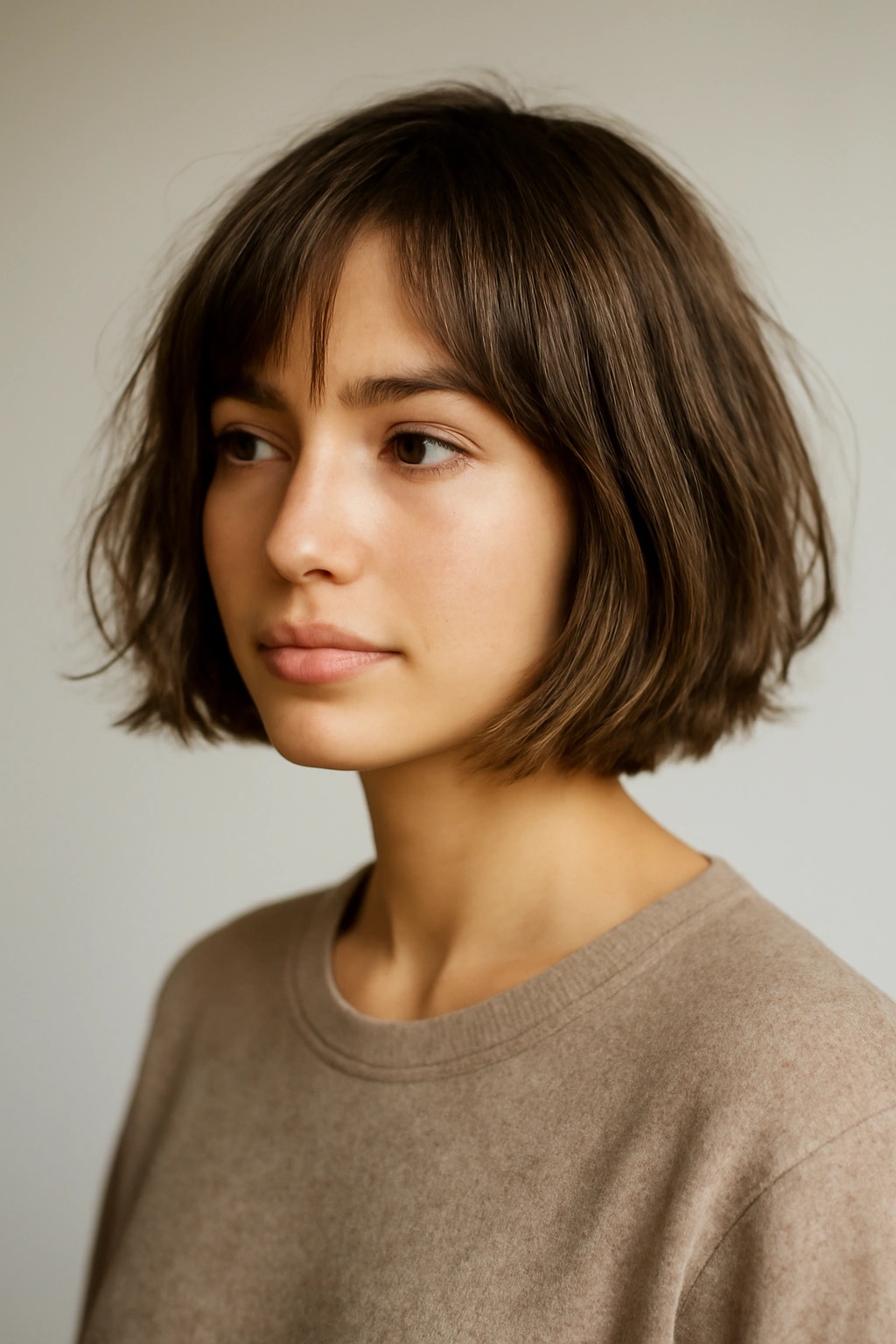
The French girl bob—also called a “Parisian bob”—is a chin-length or slightly shorter cut with a blunt or nearly blunt hem, subtle internal layers, and an effortless, undone quality. What makes this cut special is that it actually works across multiple hair textures by relying on clever cutting and styling rather than requiring one specific texture. The appeal is the attitude of the cut—it looks intentionally undone, which masks imperfections and requires minimal daily maintenance.
Universal Appeal and Adaptability
A French girl bob works for straight hair because the blunt line is clean and chic. It works for wavy hair because subtle internal layers prevent weight while the overall shape stays sleek. It works for fine hair because the chin-length hits at a flattering point where weight creates the illusion of density. The “just-right” effortlessness of the style means your hair doesn’t need to be perfectly styled—a little texture, a slightly imperfect part, tousled pieces are all exactly what this cut is supposed to look like.
Minimal Styling, Maximum Impact
- Blow-dry with your fingers for a tousled, effortless texture
- Air-dry on its own for a softer, more relaxed vibe (still chic, just less polished)
- Apply a light styling cream or texturizing spray if desired, but it’s optional
- The “undone” quality means your hair doesn’t need to be perfect
- Works with or without bangs, depending on your preference
- Requires trims every 6-8 weeks to maintain the intentional shape
The secret: The French girl bob’s whole point is that it looks casually styled but is actually quite precisely cut. Your stylist does the work so you don’t have to.
Final Thoughts
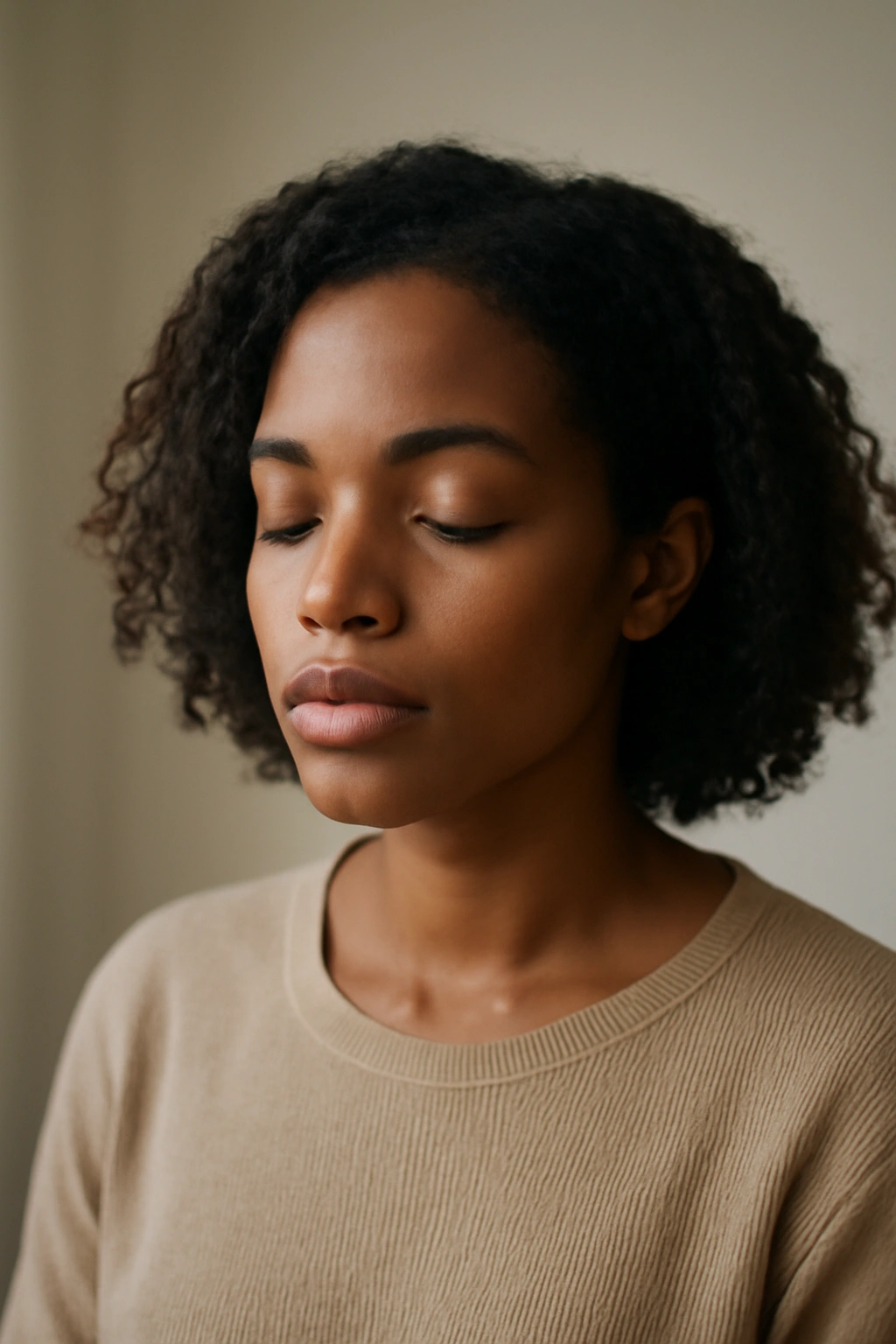
The right wash-and-wear haircut transforms how you feel about your hair and how much time you spend managing it. But there’s no universal “best” cut—the right cut is the one that works with your specific hair texture instead of demanding you fight it. Whether you have straight, wavy, curly, fine, or thick hair, there’s a cut designed to enhance your texture and minimize your daily styling routine.
The key is being honest with your stylist about your specific hair texture, your daily routine, and what “low-maintenance” actually means to you. Some people consider a 5-minute blow-dry low-maintenance; others truly want air-dry texture. Once you’re aligned on expectations, your stylist can recommend a cut that genuinely delivers on that promise. You might find that the haircut you’ve been wanting to try actually works beautifully with your texture—or you might discover that a different cut you’d never considered is actually perfect for you.
The bonus of choosing a cut designed for your hair texture is that you’re not constantly battling your hair or feeling frustrated with how it looks. Instead, you’re working with your hair’s natural strengths, which feels genuinely sustainable over time. That’s what separates a cute haircut from a haircut that actually becomes part of your life.
