



If you’ve ever stood in front of a mirror staring at your curls thinking “I have no idea what to ask for,” you’re not alone. The difference between a stunning haircut and a frizzy disaster often comes down to one thing: choosing a style specifically designed for your curl pattern. A cut that looks gorgeous on tight coils can fall flat on loose waves, and what works beautifully for 2C curls might look shapeless on 4A texture. The secret that most stylists won’t tell you is that the best curly haircut isn’t about following trends—it’s about understanding your curl type first, then choosing a cut that works with your natural texture instead of against it.
Curly hair exists on a spectrum. Some people have loose, beachy waves that barely curl. Others have tight spirals that shrink dramatically when dry. Many fall somewhere in between with a mix of curl patterns on the same head. The cut that enhances and defines one type of curl might create frizz, heaviness, or undefined clumps in another. That’s why knowing your specific curl type isn’t vanity—it’s the foundation of getting a haircut that actually makes you feel confident and requires less daily styling struggle.
Here’s what makes this guide different: instead of just listing 20 cute curly haircuts and hoping one matches your hair, we’re breaking down the best cuts for each major curl type. You’ll see how the same style can be adapted for different textures, why certain techniques matter more for some curls than others, and exactly what to ask your stylist for when you book your next appointment. Whether you’re working with waves, curls, coils, or a combination, you’ll find cuts here that were specifically designed to enhance exactly what you’ve got.
1. The Shoulder-Length Shag for Loose Waves
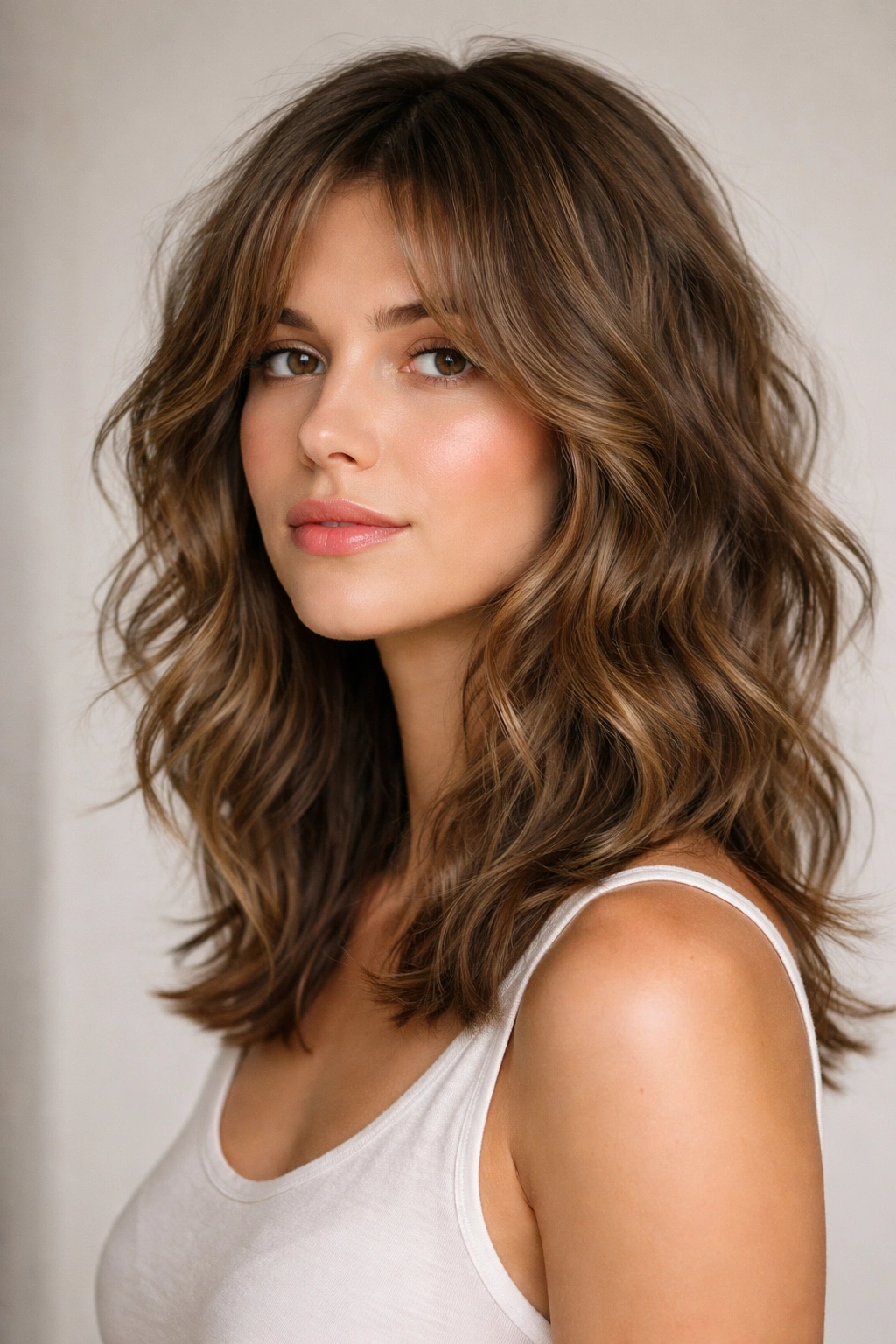
The shag is having a moment, and for a reason—it’s one of the few styles that actually celebrates loose, wavy hair rather than trying to tame it into submission. This cut works by creating intentional layers throughout the length, typically starting around chin level and graduated shorter toward the crown. For loose waves (2A-2C range), the shag gives you movement without requiring you to create it yourself through styling.
Why This Works for Wavy Hair
The multiple layers in a shag cut allow loose waves to move independently instead of clumping together or falling flat. Your natural wave pattern becomes the star of the show, and the layers catch light differently at different angles, which makes even subtle waves look dimensional. The shorter pieces around the face frame your features without getting tangled in your curls, and the overall shape stays balanced even as waves relax and tighten throughout the day.
What Makes It Effective
- Layers are cut at strategic angles so waves fall naturally instead of stacking
- The shorter layers on top add volume at the crown without weight
- Side-swept bangs (optional) blend seamlessly with your wave pattern instead of lying flat
- Ends are textured rather than blunt, so loose waves look intentional and polished
- Works equally well worn down or pulled back into a half-up style
Pro tip: Ask your stylist for “choppy layers” rather than “blunt layers”—the technique matters. Choppy texturizes the ends so your waves don’t look scraggly as they grow out.
2. The Shoulder-Length Bob with Internal Layers for 2C-3A Curls
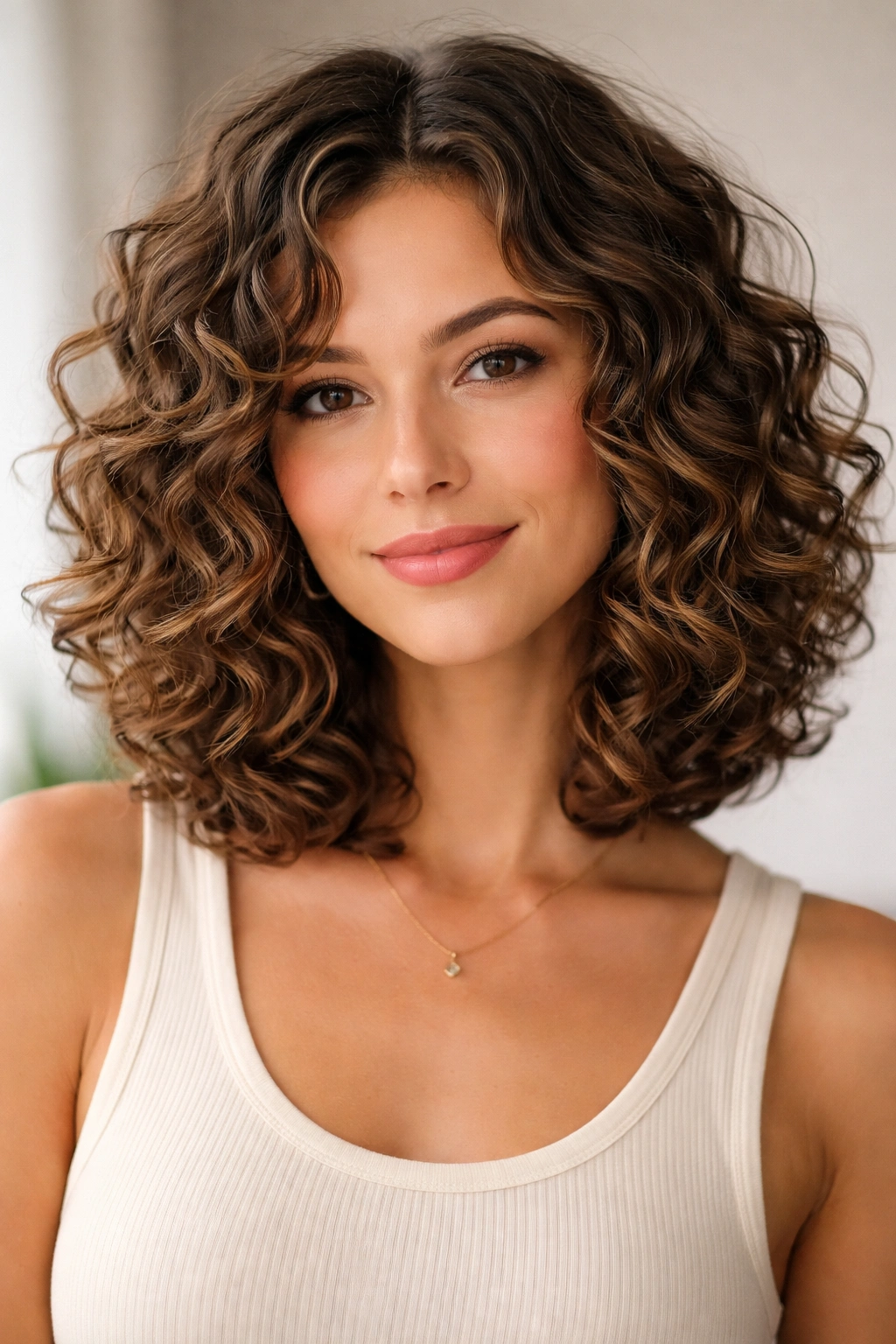
This isn’t your grandmother’s blunt bob. The modern curly bob is shorter and shaped, sitting right at your shoulders with strategic layers carved into the interior rather than chopped into the perimeter. For the sweet spot between waves and true curls (2C to 3A), this cut maximizes curl definition while keeping the silhouette modern and manageable.
The Science Behind the Structure
The internal layers allow each curl to move and separate without the weight of a blunt perimeter flattening them down. By cutting texture into the curl pattern rather than removing bulk from the outside, a stylist maintains shape while encouraging individual curl definition. The result is a style that looks intentionally bouncy and sculpted, not shapeless or overgrown.
What to Expect
- Length sits at or just below the shoulder when curls are dry
- Layers are denser near the face for framing, lighter at the back
- Texture is built into the cut through point-cutting or razor techniques
- The perimeter may look slightly shorter than you expect when curls are stretched
- Styling typically requires just moisture and a diffuser, not excessive manipulation
Worth knowing: This cut requires a stylist who actually understands curly hair. A straight-hair stylist will make this too short or too heavy.
3. The Textured Pixie for 3A-3C Curls
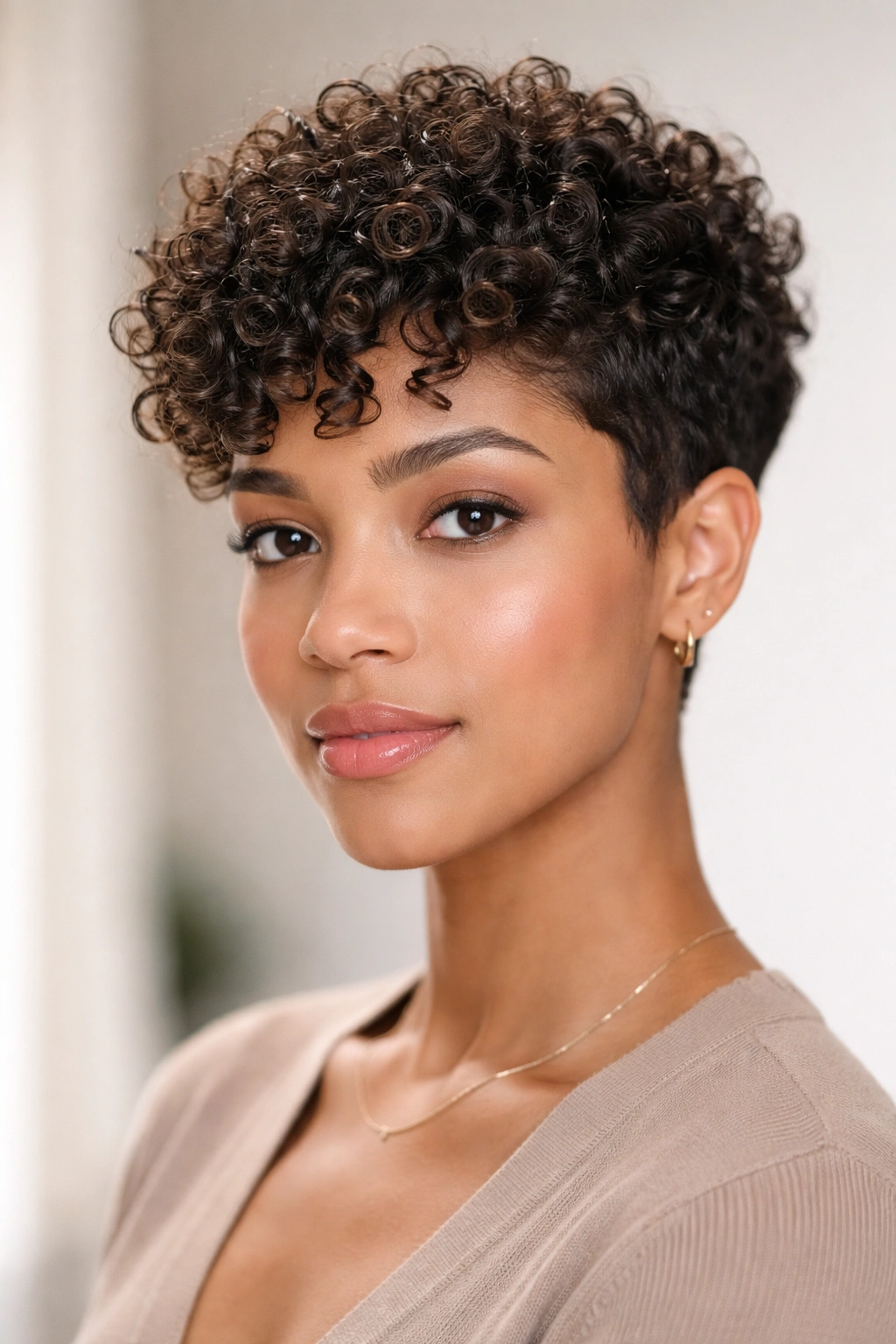
The pixie gets a reputation as a bold move, but for medium-textured curls, it’s one of the most freeing cuts you can get. A textured pixie keeps length on top where your curls can show their personality while fading shorter on the sides and back. For 3A-3C curl types, the short length actually makes styling easier because there’s less weight pulling down on your curls.
Why Short Works for Medium-Textured Curls
When curls sit shorter on your head, gravity has less time to stretch them out. You get more curl definition, more bounce, and more texture visible throughout the day. The short length means less frizz potential because there’s less hair to tangle, and your curl pattern is on full display rather than hidden under longer lengths. Plus, styling takes genuinely five minutes instead of forty.
Real-World Details
- Length on top varies from 1-3 inches depending on your preference
- Sides and back fade to ½ to 1 inch for clean definition
- Texture is cut into the top layers through a combination of tapering and texturizing
- The shape follows your head’s natural contours for a flattering frame
- Requires a stylist comfortable with clipper work and curl patterns
Insider note: This cut is not a “low-maintenance” cut despite being short. You still need to moisture your curls regularly and style with intention—it just takes less time.
4. The Chin-Length Wolf Cut for Mixed Curl Types
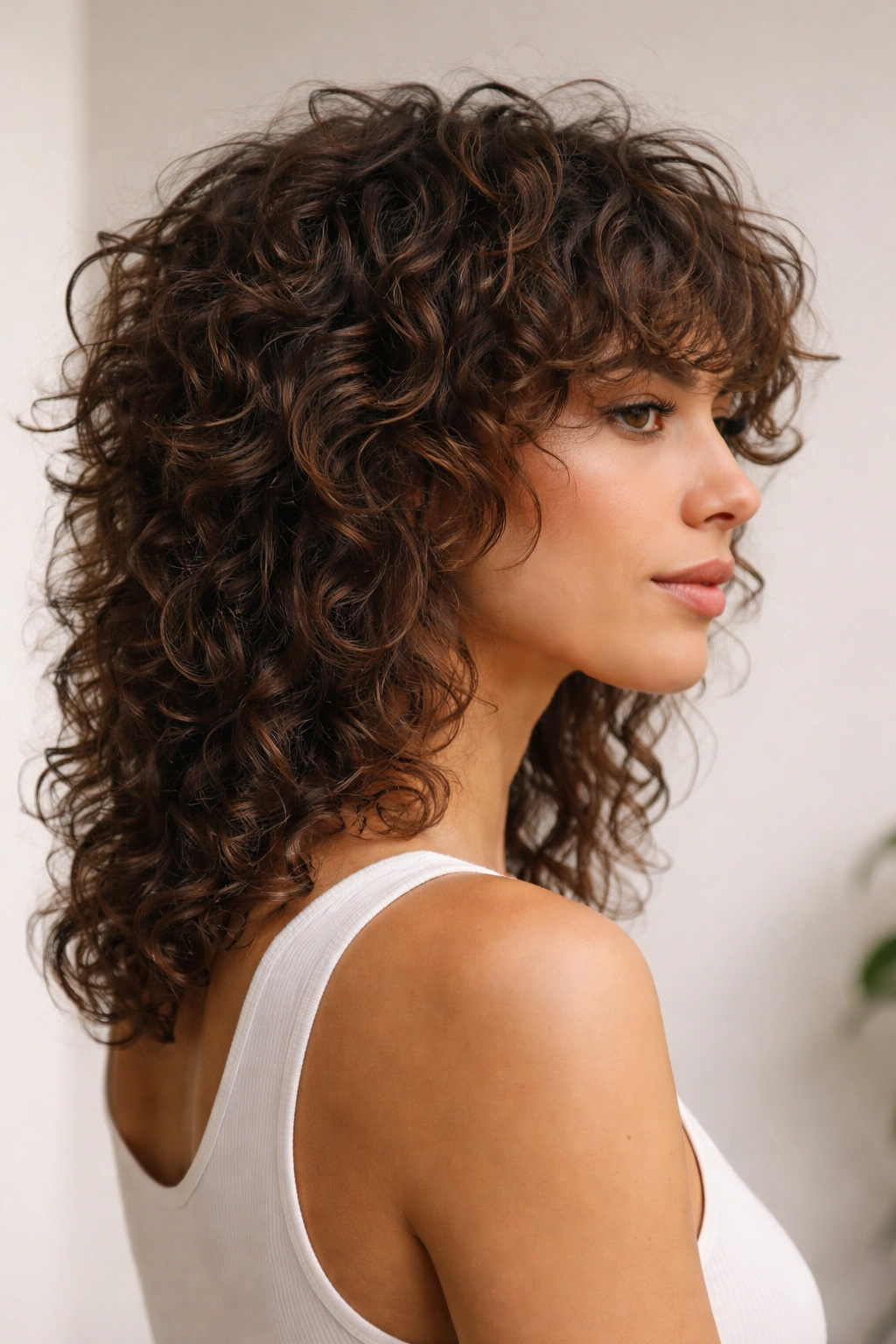
The wolf cut (think mullet meets shag) has moved beyond emo nostalgia into genuine territory for curly hair. The wolf cut strategy is to keep substantial length in the back while creating a choppy, layered texture throughout, with a shorter crown. For people with mixed curl types—looser waves on top, tighter curls underneath—this cut actually works with your hair’s natural variation instead of fighting it.
How Mixed Texture Curls Benefit from This Shape
A wolf cut embraces the idea that your top layers might move differently than your underneath. Instead of trying to make all your curls uniform, this cut celebrates the contrast. The longer back pieces maintain your length and show off more relaxed curls, while the chopped top and sides add texture and dimension. You get volume at the crown, movement through the middle, and flow at the ends—all from one strategic cut.
The Practical Application
- Crown is tapered shorter to add volume and reduce weight
- Underneath is left longer for length and flow
- Layers throughout create separation and texture
- Face-framing pieces are strategically cut to blend with the overall choppy vibe
- Styling allows for both defined curls and more relaxed texture depending on how you dry it
Pro tip: This cut looks especially cool with a slightly undone aesthetic. Leaning into the textured, choppy feeling rather than trying to perfect it actually makes it look intentional.
5. The Curly Shullet for 3B-3C Curls
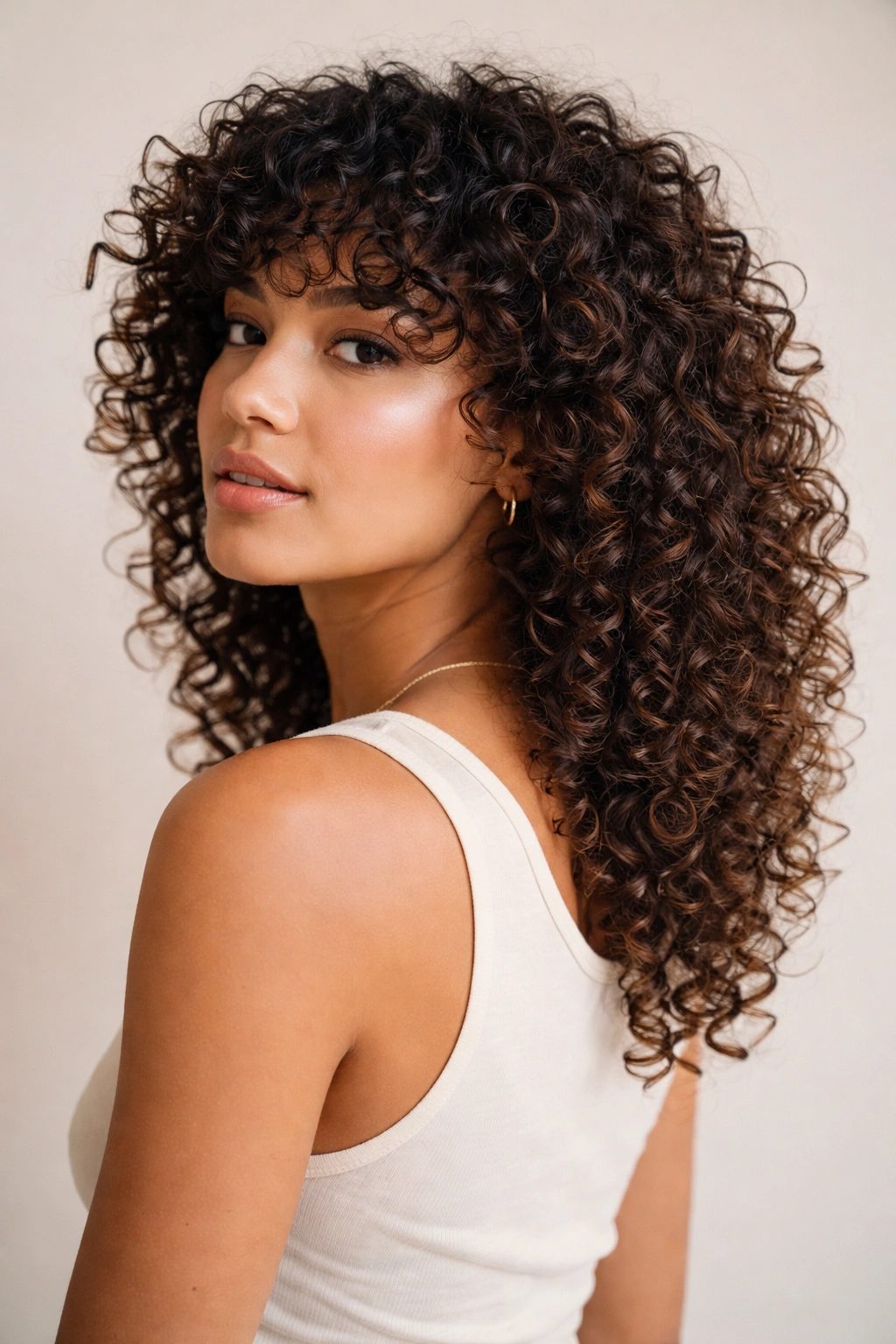
A “shullet” is exactly what it sounds like—a hybrid between a shag and a mullet. For tight, springy curls (3B-3C range), this cut keeps density where you want it and creates movement where you don’t. The sides and front are shorter and textured, while the back maintains enough length to show off those beautiful coils without the weight dragging them down.
Why This Works for Tighter Curl Patterns
3B and 3C curls naturally want to coil tightly and spring upward. The weight of long, thick hair often flattens them out by mid-day. A shullet distributes weight strategically—shorter, lighter pieces on top and front to maximize lift and definition, longer pieces in back to maintain length. The layering throughout prevents the density that makes curls feel heavy and gives you that coveted “curl pop.”
What This Looks Like in Practice
- Front and sides reach approximately chin length when curls are fully set
- Back extends to shoulder length or longer depending on preference
- Lots of texture cut throughout to prevent clumping
- Crown is often textured shorter to add height without bulk
- Each curl is designed to sit independently rather than stick together
Worth knowing: This cut requires monthly trims to maintain the shape, especially on the shorter sections in front.
6. The Defined Spiral Cuts for 3C-4A Coils
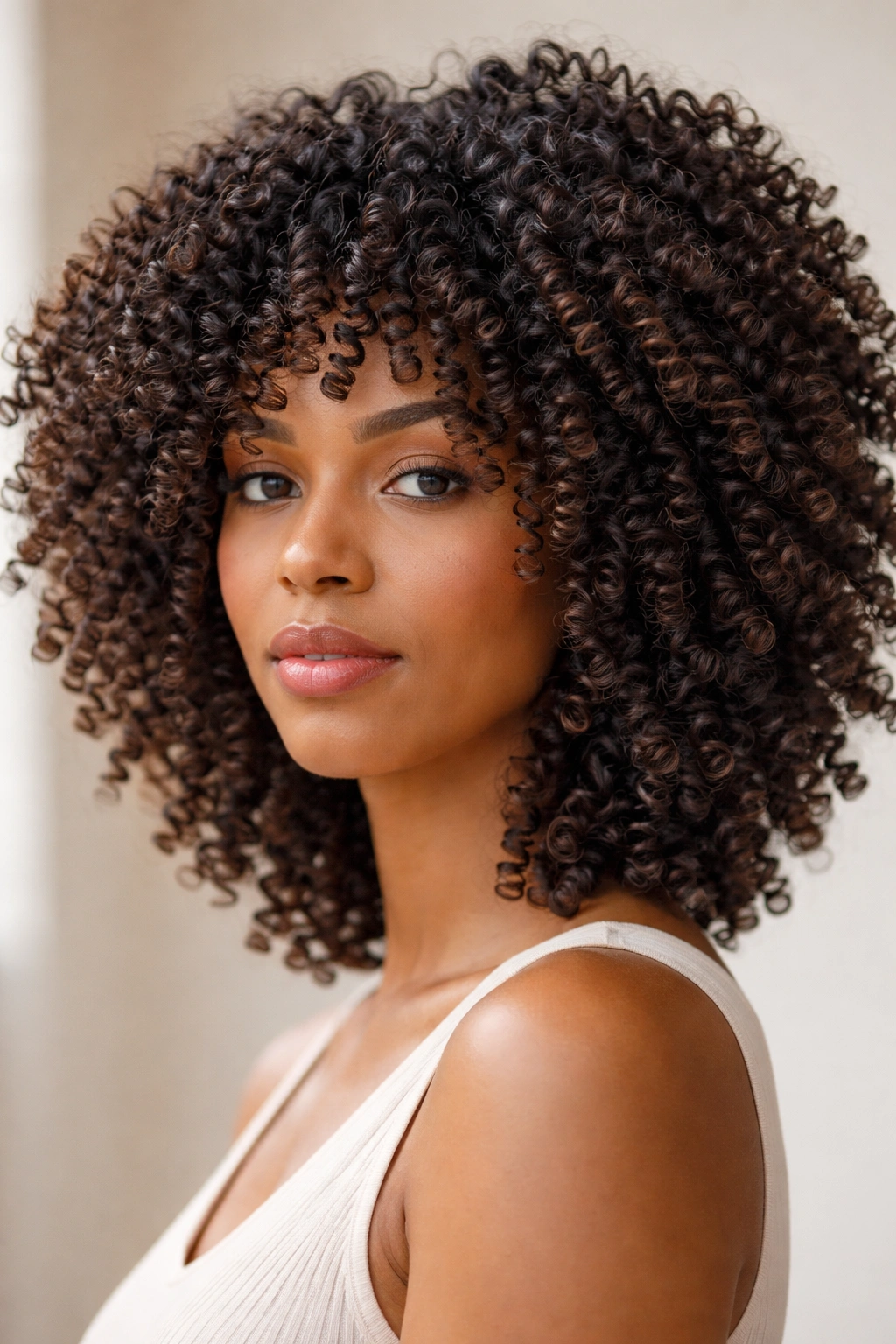
For tightly coiled hair (3C-4A), a “spiral cut” is a specific technique where your stylist cuts each coil or small curl pattern individually. This isn’t about length so much as about cutting in a way that lets each coil expand and spring rather than weighing down your overall texture. The result is hair that looks incredibly volumized and defined without you having to do much styling work.
The Technical Approach to Coil Cutting
A stylist using the spiral technique takes down each curl or small curl cluster and cuts it individually, considering how it will move and sit when dry. This is dramatically different from cutting curly hair while it’s stretched straight—that approach inevitably creates uneven lengths and frizz when the curl bounces back. Spiral cutting respects how your hair actually exists in its natural state.
The Visible Difference
- Your hair looks more voluminous even at the same length
- Each coil or curl cluster has room to expand without clumping
- The cut eliminates the “stringy” feeling you get from blunt cutting
- Shorter lengths (typically 2-6 inches for coily hair) look full and bouncy
- You get definition without needing intense styling products or technique
Insider note: True spiral cutting takes serious skill and time. It’s expensive because it’s labor-intensive. But the results last three months or longer, making it worth the investment for coily hair.
7. The Tapered Cut with Textured Top for 4A-4B Hair
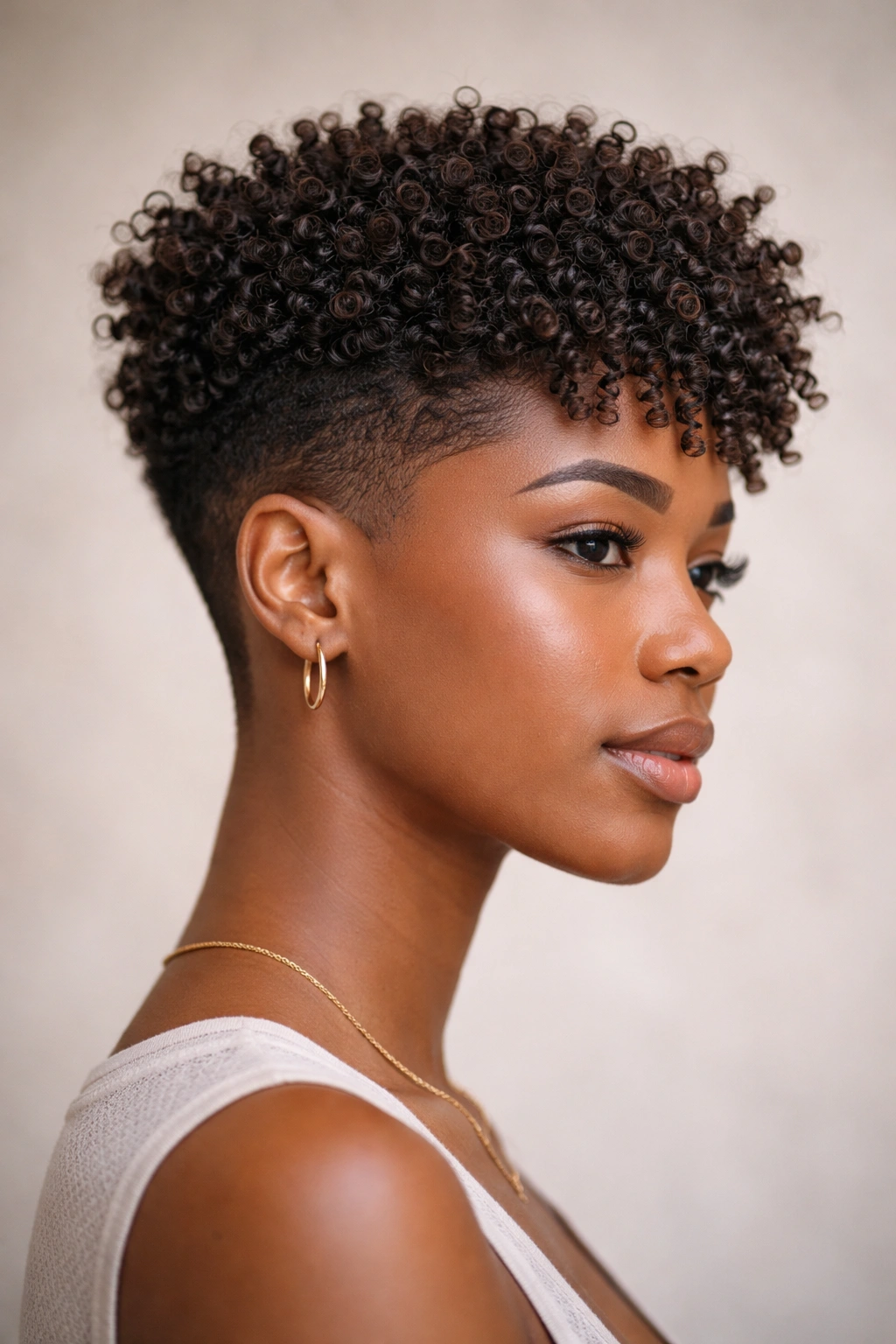
For very tight, dense curls (4A-4B texture), a tapered cut is a strategic approach where the back and sides are cut shorter while the top is left longer and heavily textured. The taper removes bulk where density would drag you down, while the textured top maximizes volume and allows each curl cluster to define itself. This cut also works beautifully for kinks and coils that would otherwise clump together under the weight of all one length.
Why Taper Matters for Ultra-Tight Texture
4A and 4B hair has so much natural texture that gravity alone can compress curls dramatically. A tapered cut strategically removes weight from the lower half, letting the top section fully express its natural coil pattern. The shorter sides and back also allow air circulation, which helps curls dry faster and maintain definition throughout the day.
The Structure of This Cut
- Back and sides are faded to 1-3 inches depending on style preference
- Top is left longer, typically 4-8 inches, and heavily textured
- Texture is created through a combination of clipper-over-comb, razor, and point-cutting techniques
- The transition from short sides to longer top creates dimension and intentional shape
- Often pairs beautifully with edges that are defined and styled
Pro tip: Ask your stylist to blend the taper thoughtfully. A rough, choppy transition looks unintentional; a smooth gradient looks like the cut itself is an art form.
8. The Lob with Choppy Layers for 2C-3A Waves and Curls
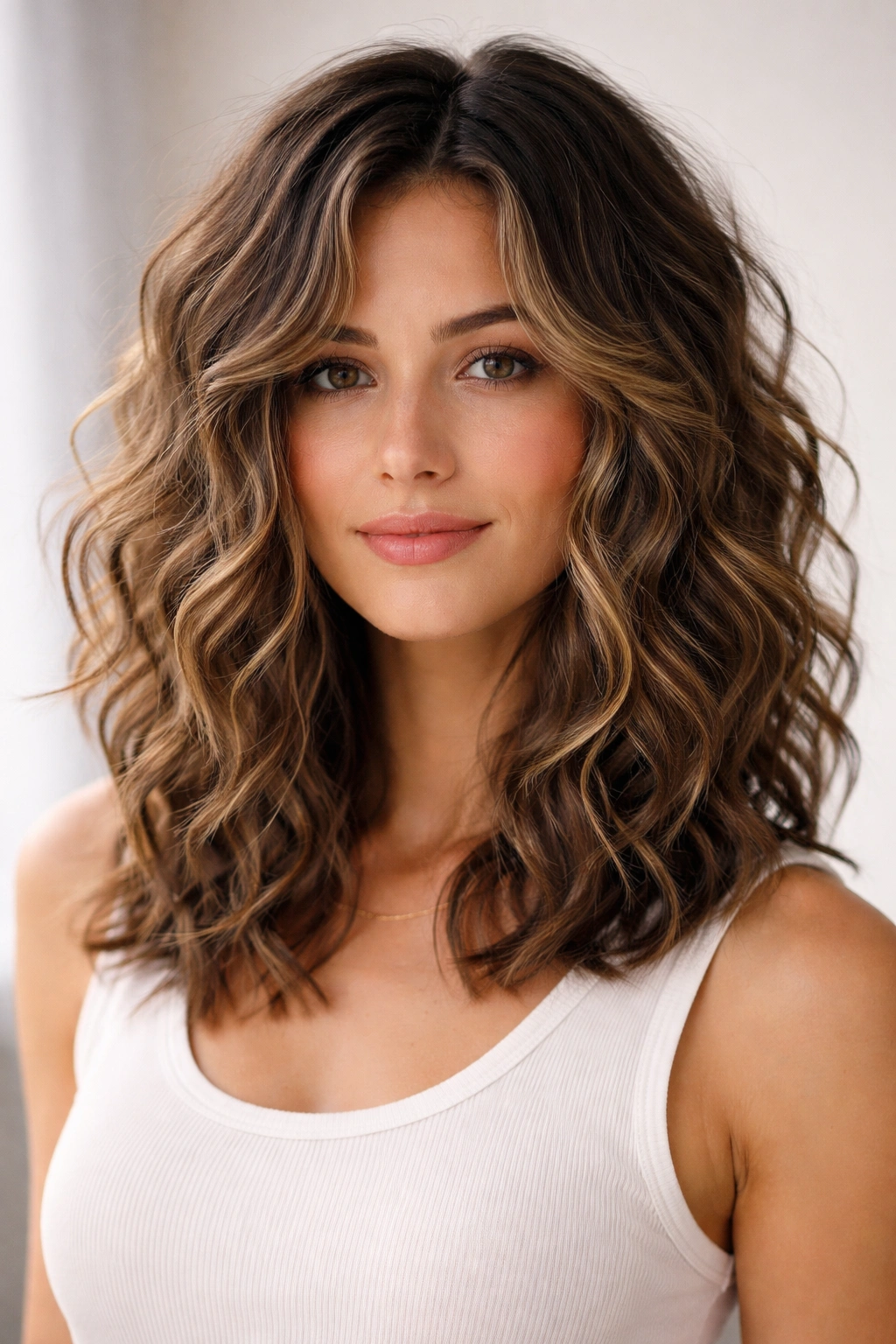
A lob (long bob) sitting somewhere between shoulder and collarbone seems simple until you realize how much the layering strategy matters for wavy and curly hair. Instead of a blunt, heavy lob that weighs down your texture, a chopped, heavily layered version removes strategic bulk while maintaining length. For the 2C-3A range, this gives you the best of both worlds—substantial length with movement and definition.
Layering Strategy for Longer Curly Hair
The secret to a great curly lob is that it’s actively layered, not just one blunt length. A stylist cuts progressive layers—shorter at the crown to add volume, gradually lengthening as you move down—so your curls have room to breathe and move. The choppiness prevents the dreaded “thin, stringy curl” look that happens when longer curls are cut without enough texture.
Practical Styling Reality
- Length reaches collarbone or slightly below when curls are dry
- Layers are denser near the face for framing and defined shorter pieces at the crown
- Ends are textured through point-cutting so they look intentional, not damaged
- Holds beautiful shape throughout the week with proper moisture and styling
- Works equally well with tight curls or loose waves in the 2C-3A range
Worth knowing: This cut works best if you’re willing to style with a diffuser at least a few times a week. Air-drying alone often leaves it looking undefined.
9. The Blunt Collarbone Bob for 2A-2B Loose Waves
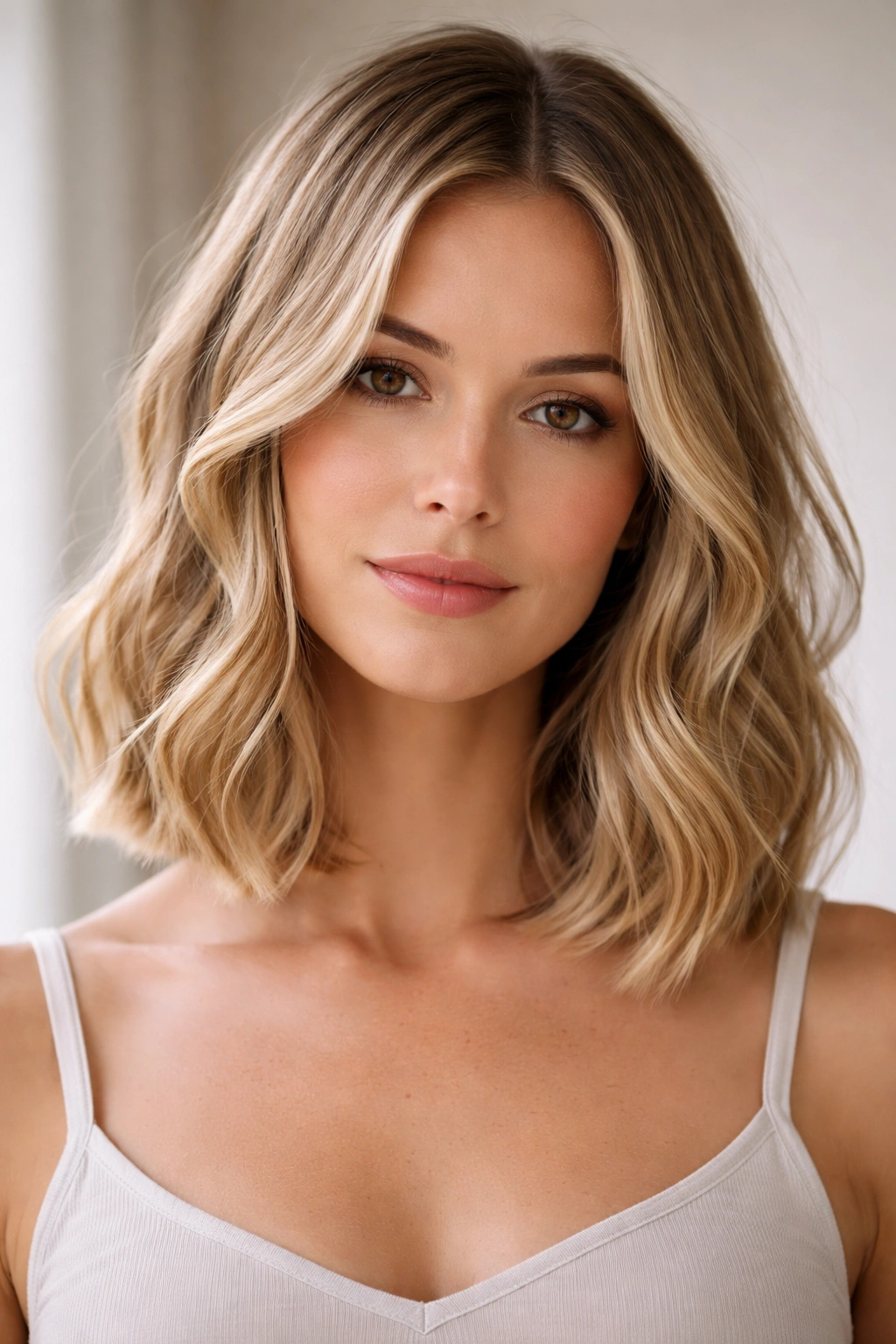
Sometimes loose waves don’t need layers—they need shape. A blunt, geometric bob sitting right at the collarbone works for 2A-2B hair because the weight of the blunt perimeter actually helps your loose waves hold their shape longer. This cut is about precision and clean lines rather than choppy texture, which is why it’s such a refreshing option for people whose curls are subtle but real.
Why Blunt Works Here (When It Doesn’t Work Elsewhere)
For subtle wave patterns, a blunt cut creates visible movement that loose waves alone might not display. The weight helps the wave bend in that S-curve shape, and the clean perimeter looks intentional and polished. This is one of the rare scenarios where curly hair actually wants a blunt edge because the lack of layers prevents your waves from looking thin or separated.
The Cut Requirements
- Must be blunt through the perimeter—no texturizing or choppy ends
- Usually sits exactly at the collarbone or possibly slightly shorter
- May include minimal internal layers to prevent the top from getting too heavy
- Works best with hair that’s healthy and well-moisturized
- Often styled straight or with very loose waves for maximum impact
Insider note: This cut is actually harder to pull off than a layered one because there’s nowhere to hide. It requires very precise technique from your stylist.
10. The Textured Undercut for 3C-4B Curls with Attitude
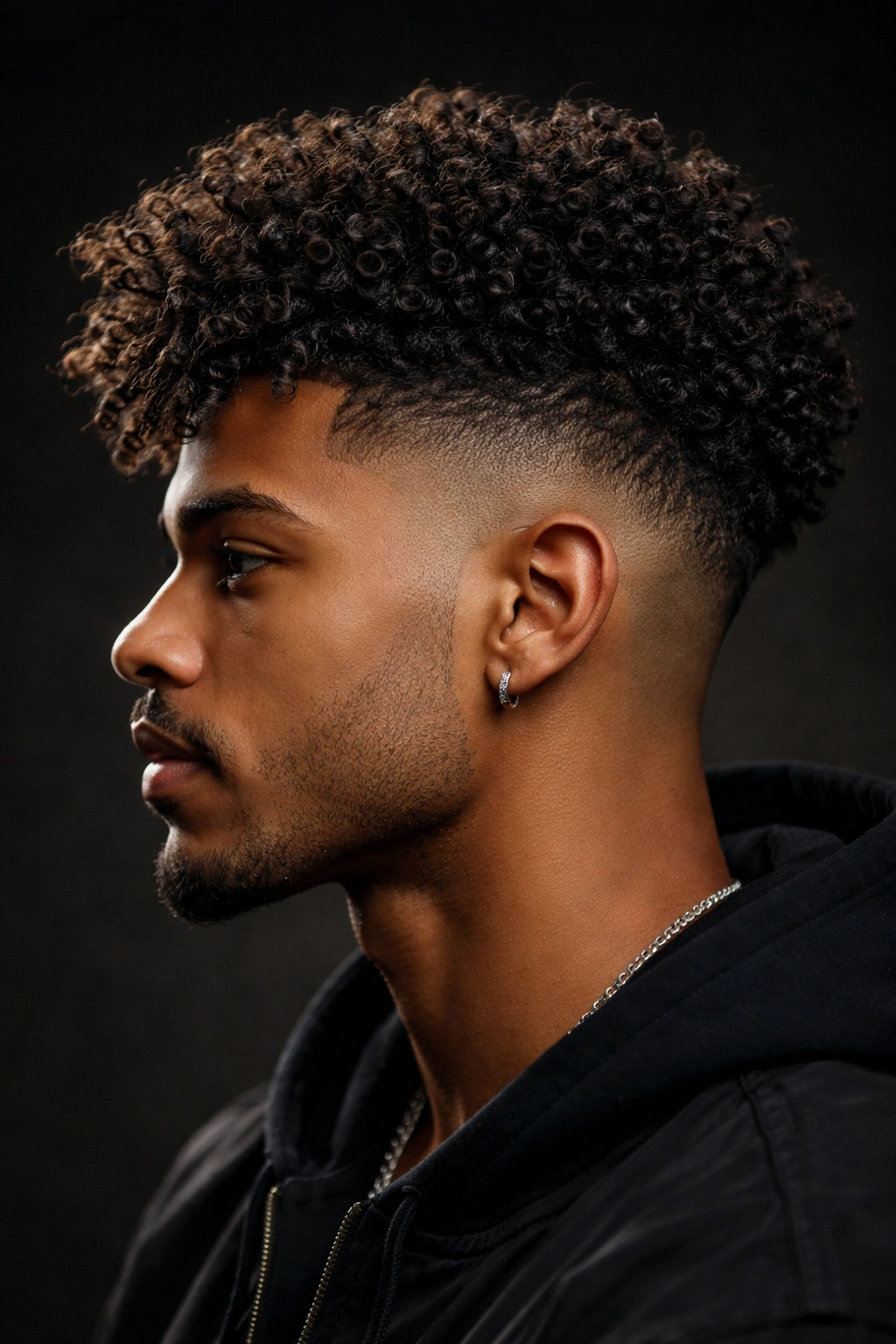
An undercut (or fade into an undercut) is a bold statement, but for people with tight, textured curls who want a low-maintenance cut with serious style, it’s transformative. The back and sides are faded significantly shorter—sometimes buzzed—while the top is left thick, textured, and full. This creates maximum contrast, removes all bulk from where it would weigh you down, and lets your coils sit proudly.
The Bold Appeal for Tight Textures
When your curl pattern is as beautiful as 3C-4B texture, sometimes the best style is to show it off unapologetically. An undercut does exactly that by removing everything that would compete with or diminish your curl definition. The contrast between the faded sides and the full, textured top emphasizes just how coily and gorgeous your hair is.
Styling and Maintenance
- Back and sides fade to skin (0 guard) or approximately ¼ inch
- Top is left significantly longer, typically 3-6 inches, depending on preference
- The texture on top is cut to support individual coil definition
- Requires touchups on the fade side every 4-6 weeks to maintain sharpness
- Works best with confidence and willingness to be seen
Pro tip: Pair this with defined edges and bold styling for maximum impact. Let this cut be the statement piece it’s designed to be.
11. The Curly Bang Shag for 3A-3B Curls
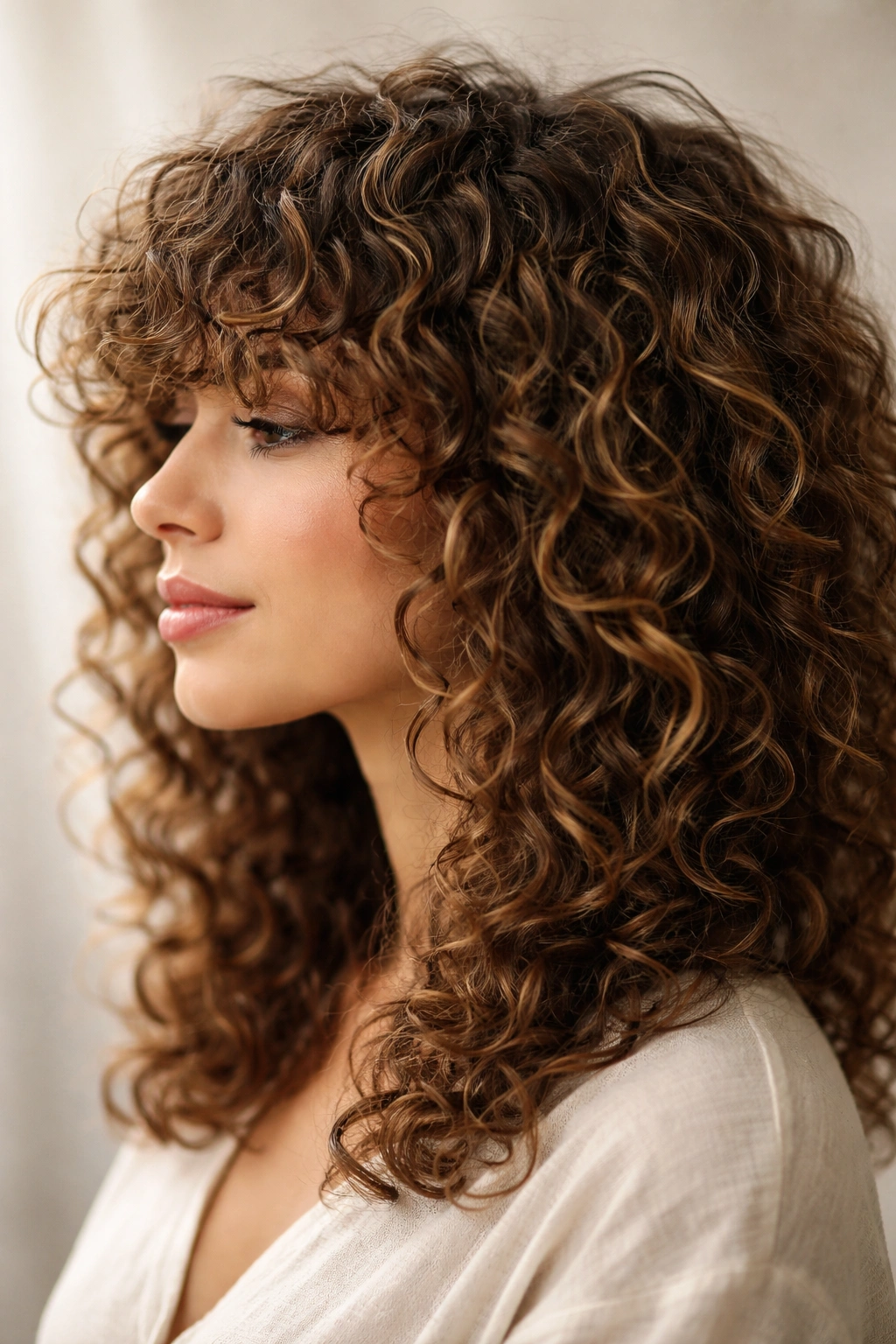
Bangs and curly hair have a complicated relationship, but curly bangs on a shag cut can work beautifully if done right. For 3A-3B curls, full curly bangs (cut through your curl pattern, not straight across) combined with a heavily layered shag creates a retro-modern vibe that actually enhances your natural texture. This cut is for people who want something noticeably different from the standard long-layers-everywhere approach.
Why These Bangs Work (Unlike Straight Bangs on Curly Hair)
Straight-cut bangs on curly hair inevitably shrink, curl, and look nothing like what you saw when you left the salon. Curly bangs—where the stylist cuts through your actual curl pattern and creates texture rather than bluntness—blend seamlessly with your overall hair and actually define themselves better as your curls relax and tighten. They become part of your overall texture instead of fighting against it.
The Shag Structure
- Bangs are cut through your natural curl pattern to frame the face
- Multiple layers throughout create a textured, voluminous appearance
- Length varies from shoulder to longer depending on preference
- Lots of movement and dimension in how the layers sit
- Styling embraces texture rather than trying to smooth everything down
Worth knowing: This is a look that requires you to embrace a bit of texture and movement. Trying to make it perfect and smooth defeats the entire purpose.
12. The Tapered Taper with Shape for 4A Coils
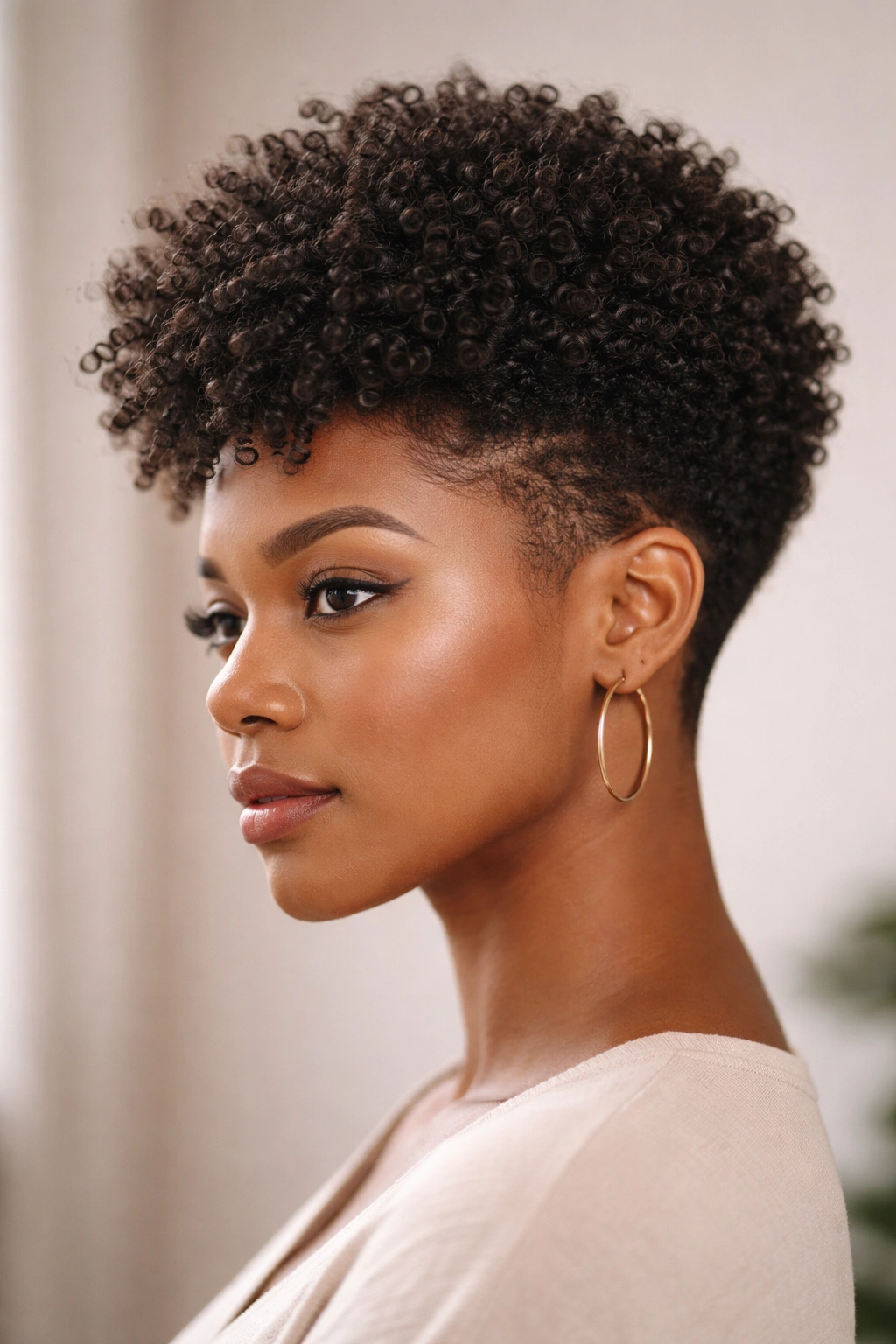
For very dense, tightly coiled hair (4A), a tapered cut focuses on creating shape and definition rather than trying to remove bulk entirely. The taper removes unnecessary density from the back and sides, but the cut strategy is primarily about texture—cutting each coil or curl cluster so it sits with intention and definition rather than clumping. This is the opposite of a blunt taper; it’s considered and carefully textured.
Texture Cutting for Coily Definition
Rather than just fading the sides and hoping the top looks good, this approach involves cutting texture throughout the hair to encourage definition and separation. A stylist might use point-cutting, clipper-over-comb, or razor techniques to create visual texture and dimension. The overall silhouette might be tapered, but the detail work is what makes it actually gorgeous.
What This Delivers
- Coils sit with visible individual definition rather than sticking together
- Short sides (usually 1-2 inches) balance the fuller top
- Top is textured and shaped, typically 4-8 inches depending on preference
- The cut encourages natural shrinkage and curl pattern expression
- Looks intentional and precisely shaped, not just “short and textured”
Pro tip: This cut works best on hair that’s moisturized and healthy. Dry, damaged coils don’t express themselves the way they should.
13. The Shoulder-Length Layers with Face-Framing for Mixed Curl Types
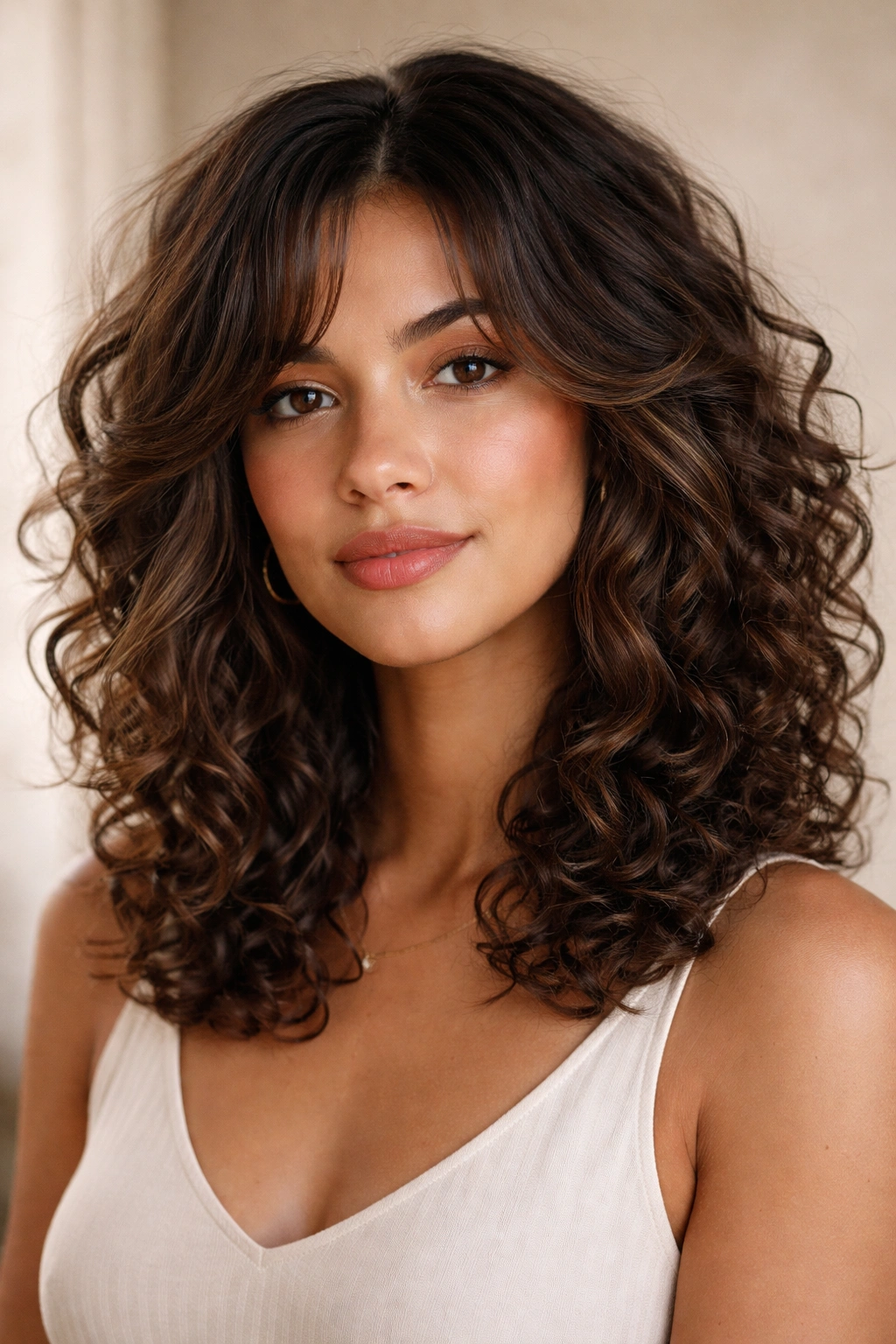
For people whose curl patterns vary across their head—looser waves on top, tighter curls underneath, or a mix of everything—a medium-length, heavily layered cut with strategic face-framing allows each texture to be itself. The shoulder-length base provides substantial length while the layers prevent any one section from dominating or flattening out. This is a cut that embraces variation rather than trying to homogenize it.
Working With Variation Instead of Against It
Trying to make mixed curl types uniform usually ends in disappointment. A stylist cutting this style acknowledges that your looser waves and tighter curls will sit differently and move differently. The face-framing layers blend disparate textures together while still allowing each to express itself. It’s a sophisticated approach to mixed hair.
The Practical Design
- Shoulder-length base provides length without overwhelming weight
- Layers are progressive, denser near the face for framing
- Crown is textured to add volume regardless of your curl pattern there
- Side-face framing allows looser pieces to frame without looking stringy
- Overall shape is balanced even though individual curl patterns vary
Insider note: This is an excellent option if you’re not sure whether you like shorter hair yet but want more shape and movement than one length provides.
14. The Micro Bangs with Curls for 3B-3C Texture
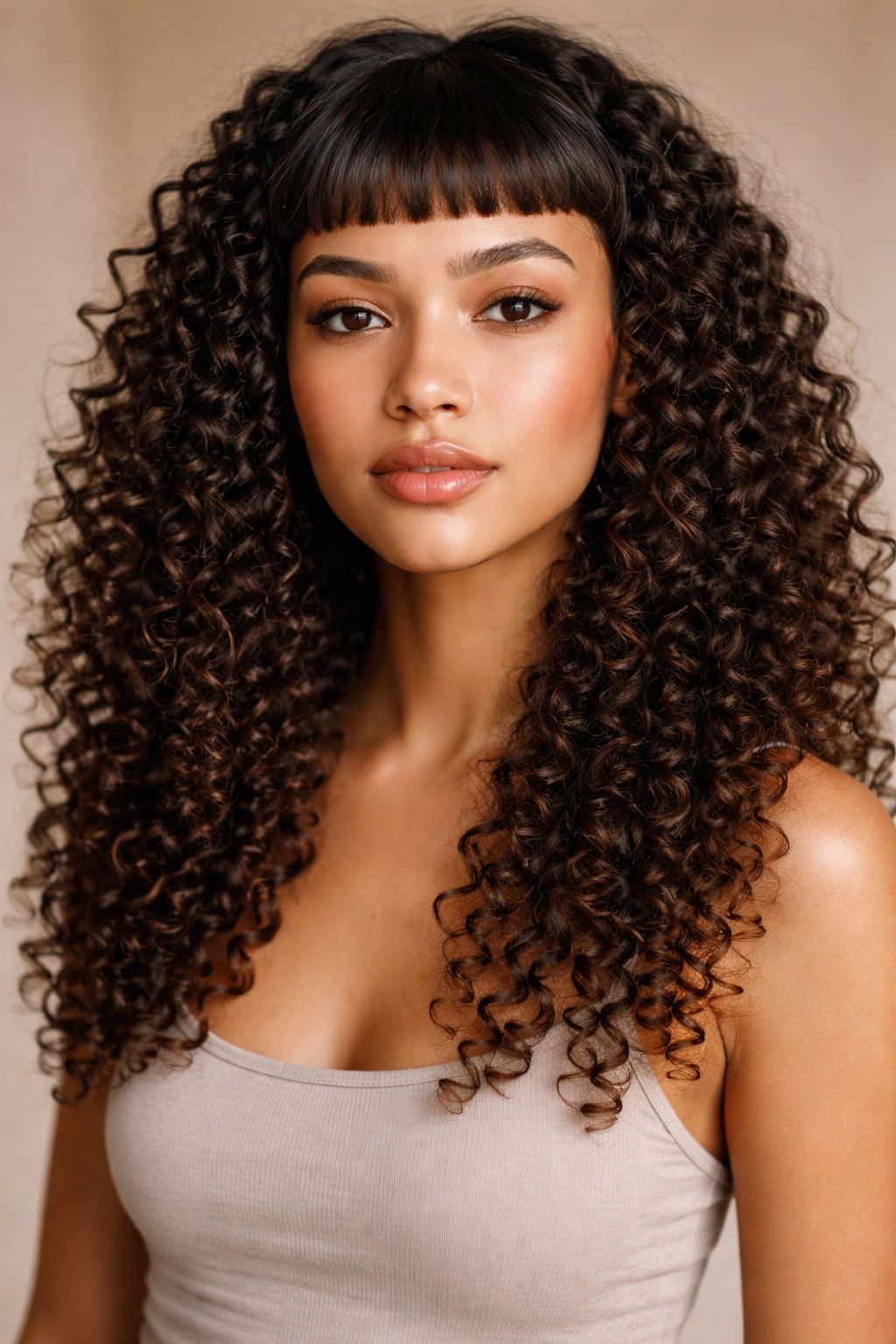
Micro bangs (very short, blunt, cropped bangs) paired with shoulder-length or longer curls create a striking contrast that actually works with curly hair because the bangs sit above where your curl pattern really kicks in. For 3B-3C texture, the micro bangs draw attention to your face and eyes while the longer curls show off your coils. It’s a bold, fashion-forward look that’s having a real moment.
Why Micro Bangs Don’t Have the Curly Hair Problem
Most bangs don’t work on curly hair because the curl pattern changes how they sit. Micro bangs work because they’re cut so short that they sit above your hairline and forehead rather than in your curl pattern. As they grow out, they gradually blend with your hair rather than looking like a mistake. The shortness actually plays to the benefit of curly texture.
The Cut Components
- Micro bangs reach approximately eyebrow level or slightly above, cut blunt through the hairline
- Rest of the hair is left longer, typically shoulder-length or below
- Layers through the longer hair add movement and prevent weight
- The overall effect is bold and intentional, with lots of contrast
- Works best with very defined curls, not fuzzy or undefined texture
Worth knowing: This is not a “safe” haircut. It’s a statement. If you’re committed to bold styling and have curl definition to showcase, it’s stunning.
15. The Curly Crop for 4A-4B Coils with Edge Definition
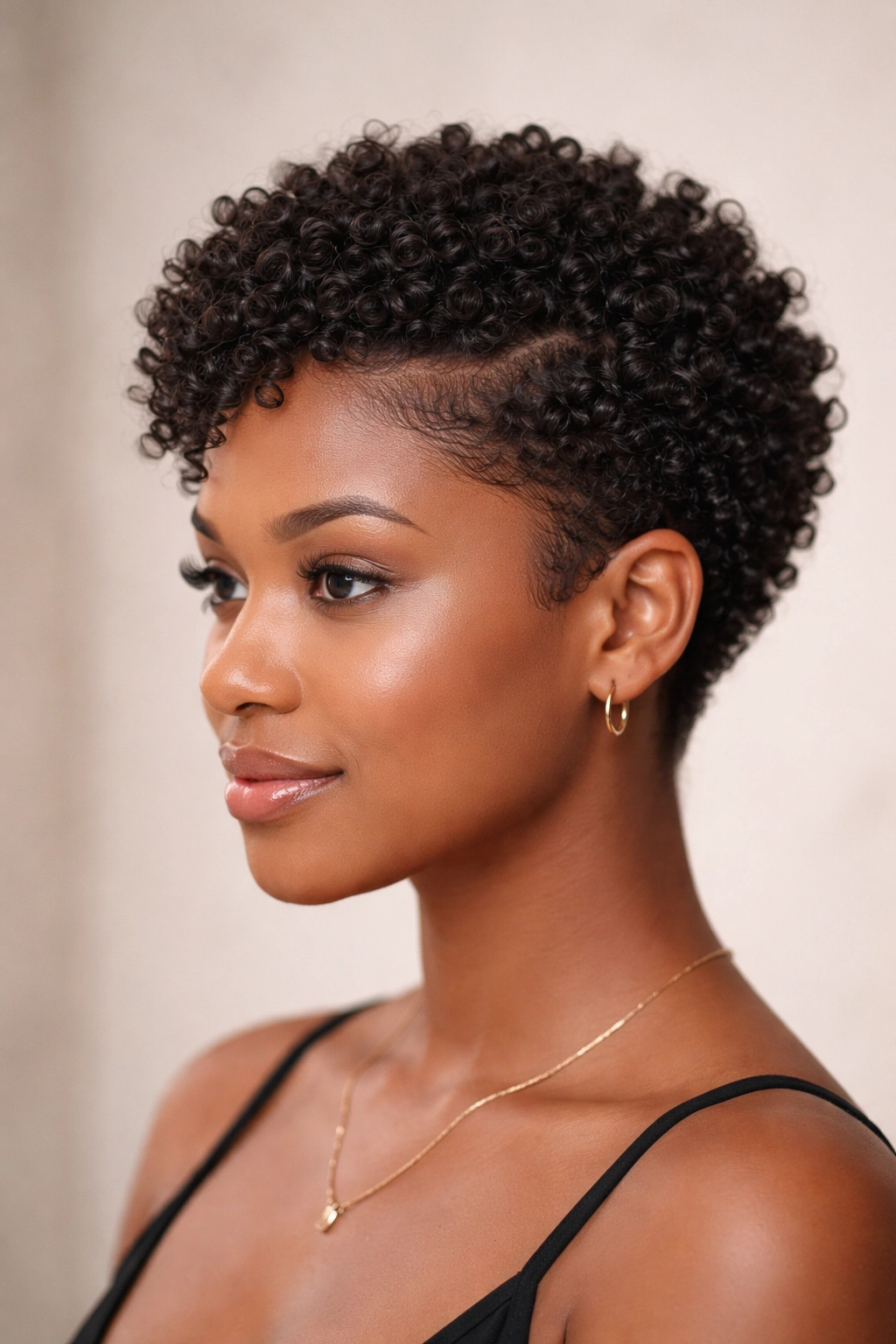
A curly crop is short all over—typically 1-2 inches on top—but cut with intention so your coils or very tight curls sit with definition rather than sticking together in clumps. Unlike a generic short haircut, a good curly crop uses texturizing techniques to ensure each curl cluster has space to be itself. The payoff is stunning curl definition, minimal styling time, and a silhouette that’s both minimalist and impactful.
Technique Matters Everything for Crops
A stylist cutting a curly crop for 4A-4B hair isn’t just trimming everything short. They’re using clipper-over-comb, point-cutting, and texturizing to create visual separation between curl clusters. The result is that your coils pop with definition even at very short length. This is the opposite of trying to “control” your curls—it’s about celebrating them.
Style Reality
- Length is typically 1-2 inches throughout, sometimes with slightly more texture on top
- Each coil or curl cluster has room to expand and sit independently
- The silhouette follows your head shape for a flattering frame
- Often styled with a moisturizing gel or cream to enhance definition
- Requires a stylist who has experience with coily hair texture, not just “short hair”
Pro tip: Own this cut with edge work—defined, styled edges take this from simple to sophisticated.
16. The Graduated Collarbone Cut for 2B-2C Wavy Hair
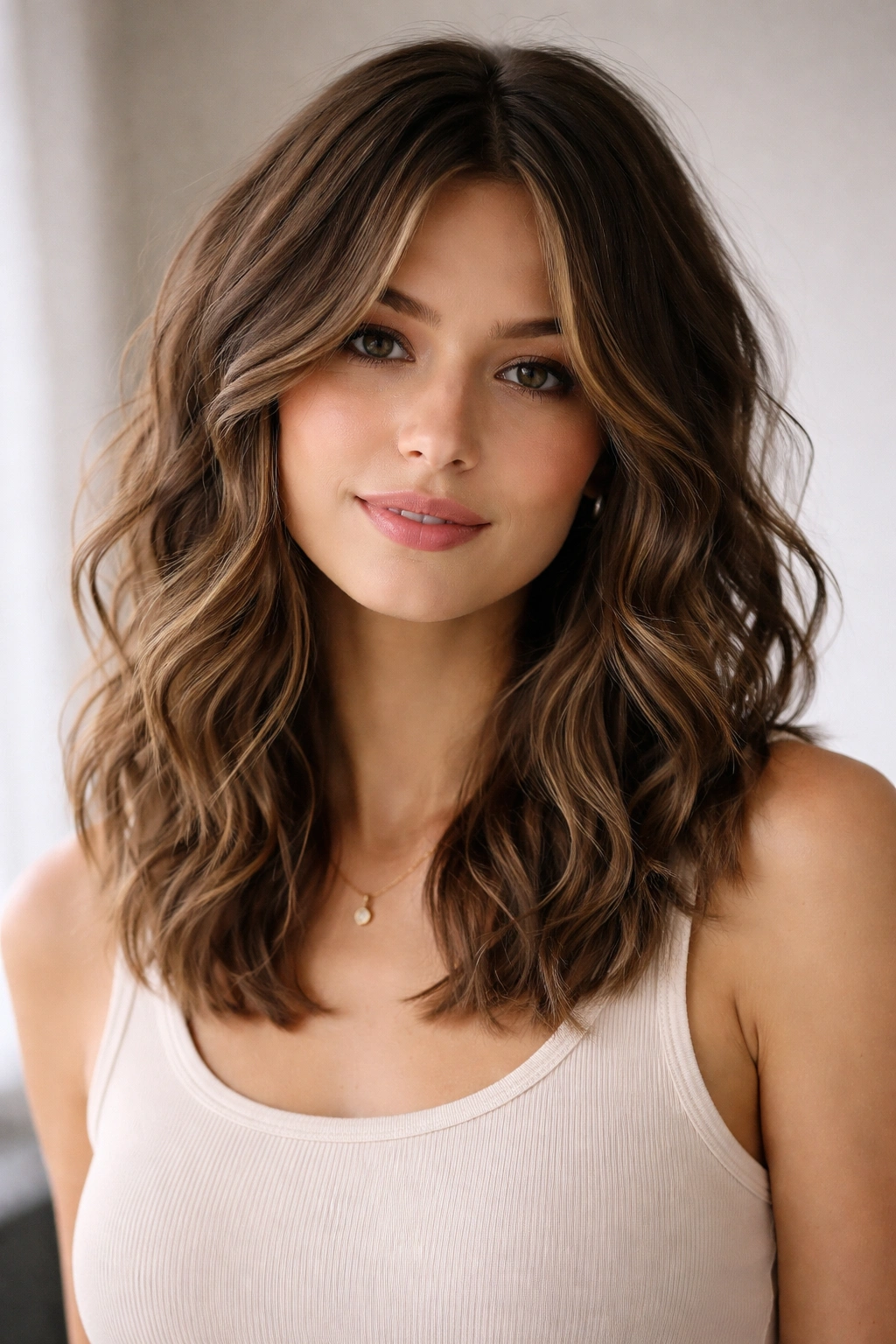
A graduated cut (where the back is progressively longer than the front) works beautifully for 2B-2C wavy hair because it creates shape without requiring intense layering. The front pieces are shorter, typically hitting around chin length, while the back extends past the shoulders. This creates movement and dimension while maintaining enough weight to give your waves structure.
Why Graduation Works for Subtle Waves
Subtle waves can disappear completely in a blunt, one-length cut. A graduated shape adds dimension that makes even gentle waves visible and beautiful. The shorter front pieces frame your face and show off your wave pattern, while the longer back provides length. The result is a style that looks intentionally shaped rather than “just long.”
Cut Specifications
- Front layers reach approximately chin length when curls are fully formed
- Back extends to shoulder length or slightly beyond
- The transition between front and back is gradual, not choppy
- Layers are minimal, focusing the shape through the overall graduation
- Works best with waves that are consistent throughout, not mixed textures
Worth knowing: This cut looks especially good when you style the front pieces away from your face—half-up styles, tucking behind ears, or sweeping to one side all enhance the shape.
17. The Textured Crop with Longer Top for 3C-4A Variety Seekers
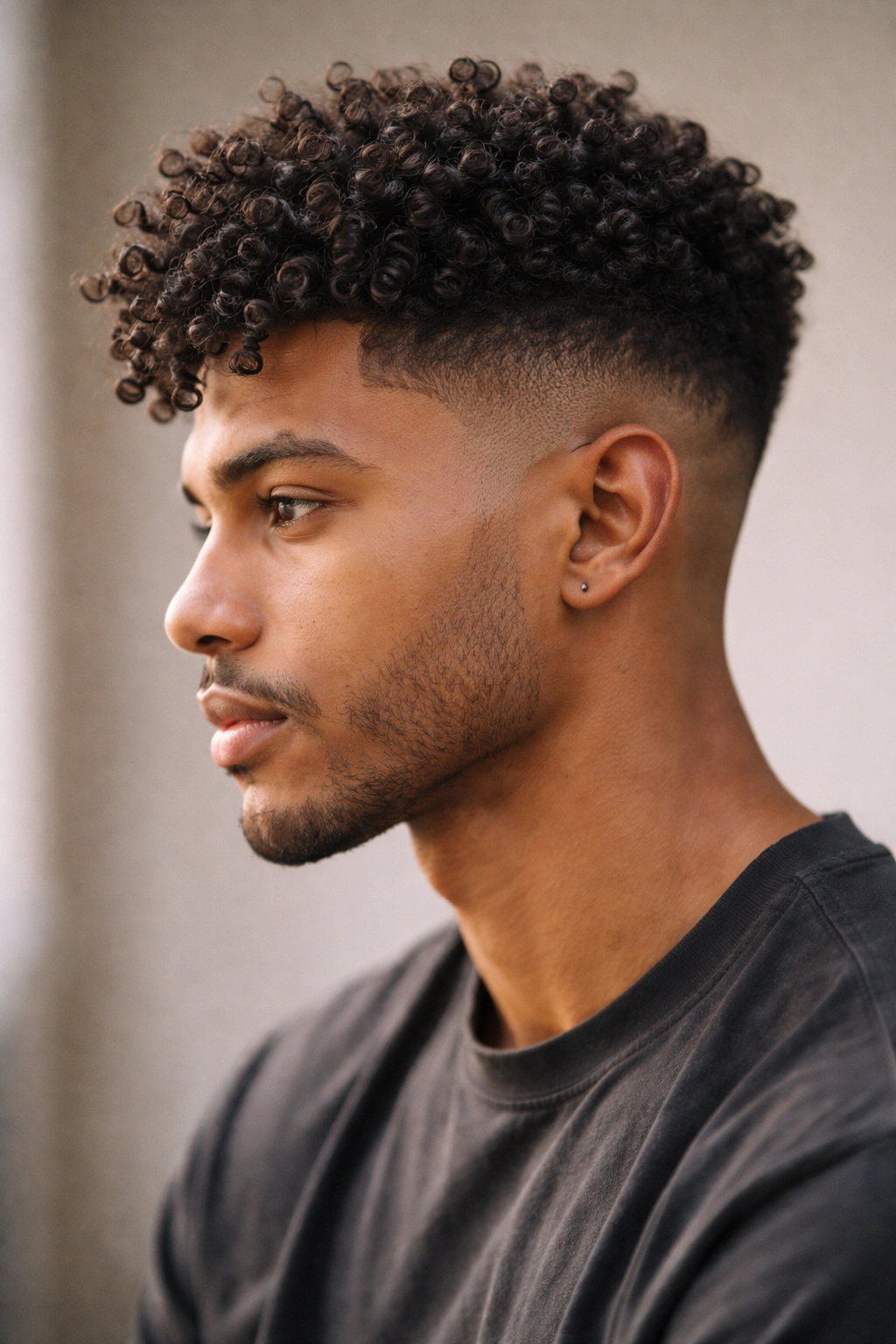
This is a more sculpted version of an undercut, where the back and sides are cut very short (typically ½ to 1 inch) while the top is left substantially longer (3-5 inches) and heavily textured. For people with 3C-4A curls who want a balance between bold, low-maintenance styling and maximum curl definition, this gives you the best of both worlds. The difference from a standard undercut is the amount of texturizing in the longer top section.
Strategic Texture Work on the Longer Section
The longer top isn’t just left to grow—it’s cut with intention. A stylist uses point-cutting, clipper-over-comb, and other texturizing techniques to ensure your curl clusters have separation and definition. This prevents that sometimes-dense feeling you get when you leave coily hair one length on top.
Visual and Practical Benefits
- Short sides/back (½-1 inch) remove weight where it would pull you down
- Longer top (3-5 inches) shows off your curl pattern in full glory
- Texturizing throughout the top prevents clumping
- The cut itself makes styling easier—products and diffuser heat reach all your curls
- Requires fade maintenance every 4-6 weeks, but top can grow longer between cuts
Insider note: This works best if you’re willing to moisturize regularly and potentially style with intention a few times a week.
18. The Textured Medium Bob for 3A-3C Curls in Transition
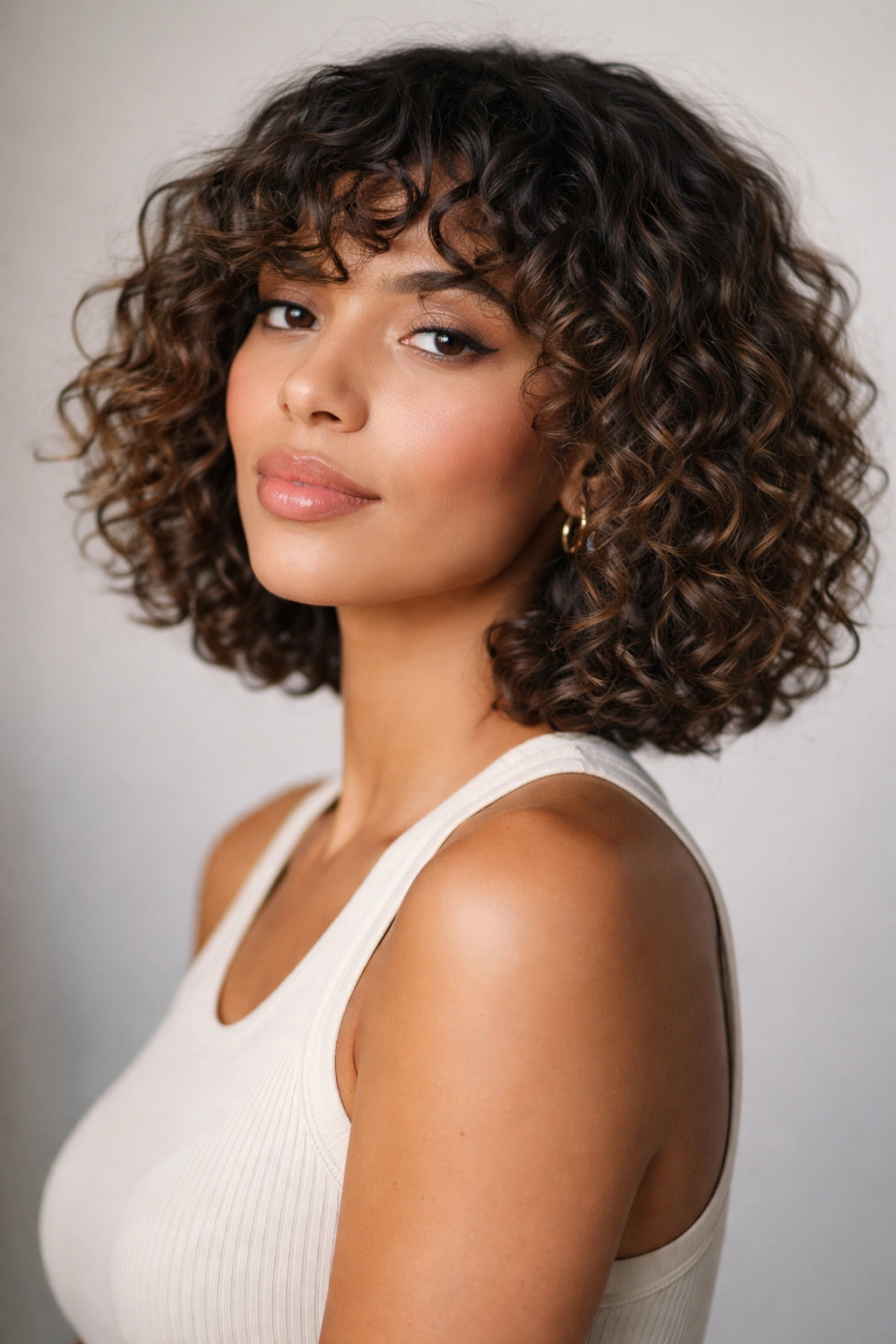
If you’re transitioning between longer hair and something shorter, or if you’re not quite sure what cut suits you best, a textured medium bob (chin-length to slightly past) for 3A-3C curls is the perfect middle ground. It’s short enough to look intentional and feel lighter on your head, but long enough to maintain some length and styling versatility. The internal texturing is what makes it interesting rather than just a shorter version of longer hair.
The Transition Appeal
This length is genuinely adaptable. You can wear it curly, you can air-dry it wavy, you can even blow-dry it for a different look. The texture cut into the interior means you have movement and dimension without needing perfect-spiral curls. For someone trying a shorter length or still figuring out their curl-care routine, this is forgiving and flattering.
What Makes It Work
- Length sits at chin to approximately one inch below depending on preference
- Layers are dense near the crown for volume, lighter toward the perimeter
- Face-framing pieces blend with your overall curl pattern
- The cut is designed so you can style wet, damp, or dry
- Works beautifully air-dried or diffused
Pro tip: This length is exceptionally flattering because it hits right at a balanced point on your face. The frame it creates is naturally flattering for most face shapes.
19. The Spiral Crimp Texture Cut for 4A-4B Drama
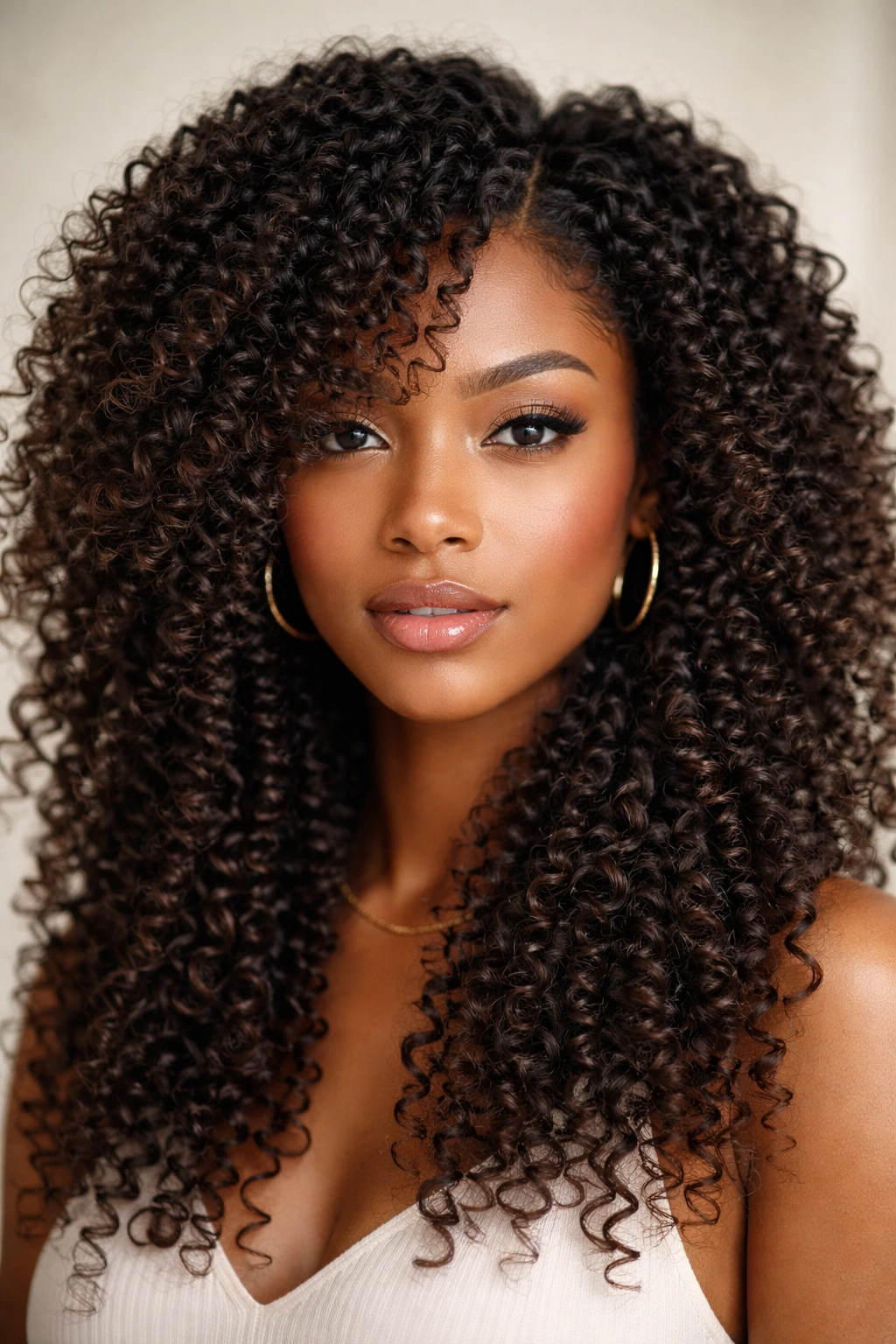
For people with 4A-4B hair who want maximum texture and visual interest, a cut that plays with crimp-texture or enhanced coil patterns creates genuine visual drama. A stylist might cut in a way that encourages your natural coil pattern to crimp or zigzag, or they might use cutting techniques that create texture that mimics crimped hair. This is sophisticated, fashion-forward, and absolutely requires healthy, well-moisturized hair to pull off.
Creating Intentional Texture Drama
This isn’t about a perm or chemical treatment—it’s about cutting and styling in a way that maximizes your hair’s natural ability to create zigzag texture. A stylist might use multiple cutting angles, specific product application, or special drying techniques to encourage your coils to express maximum visual interest. The result is hair that looks three-dimensional and intentionally textured rather than just “curly.”
What to Expect
- The cut creates visual texture and dimension through multiple angles and layers
- Your coil pattern is encouraged to express maximum character
- Styling might include specific techniques or products that enhance the texture effect
- The overall appearance is bold, intentional, and dramatically textured
- Requires commitment to hair health and hydration to maintain
Worth knowing: This is not a “natural” look—it’s a styled, intentional aesthetic. Own that.
20. The Shaggy Mullet for 3B-3C Curls with Personality
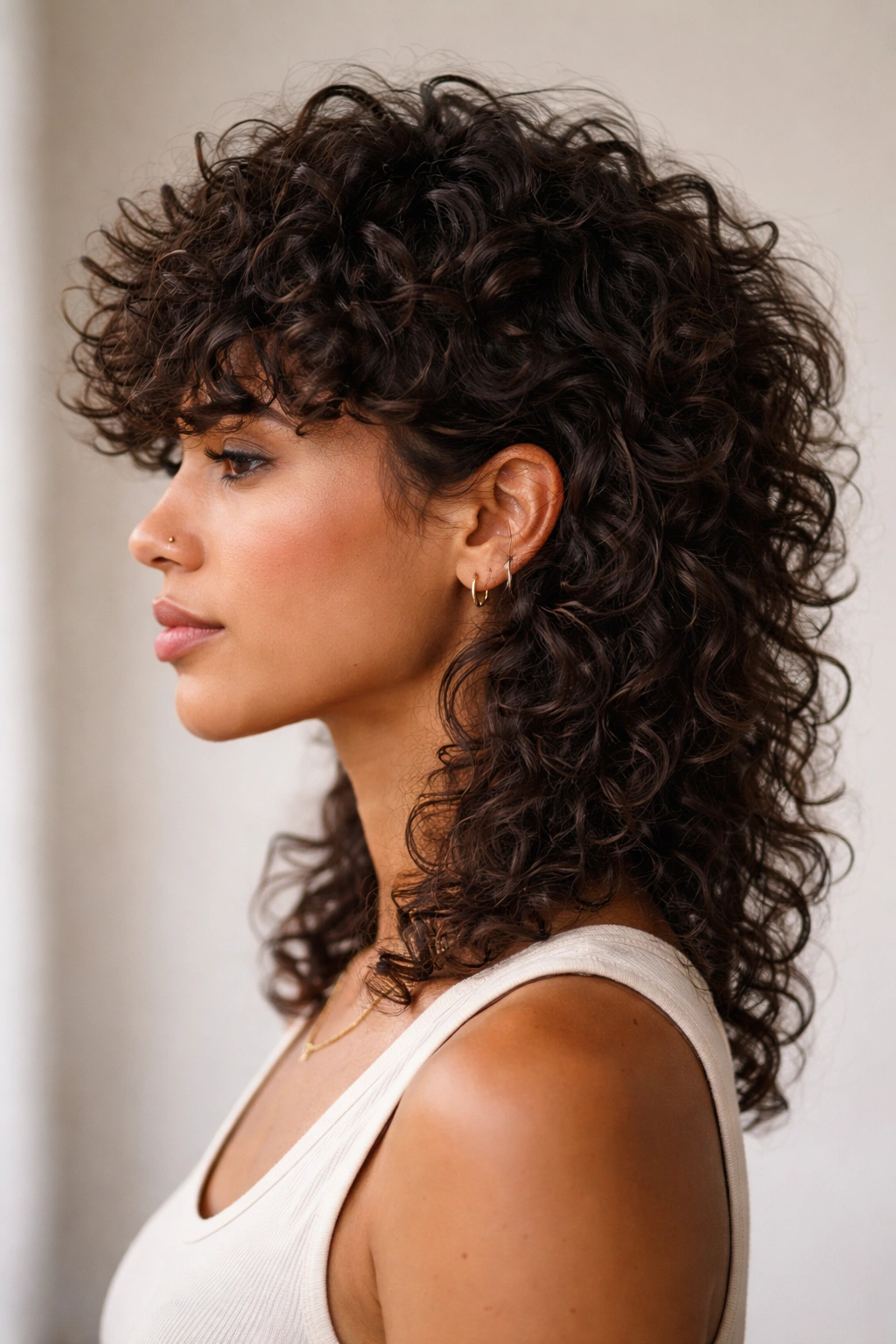
The mullet is back, and for 3B-3C curls, it’s a legitimate style choice that works with your natural texture. A shaggy mullet keeps substantial length in the back while shorter, choppy layers on top and around the sides create movement, volume, and an undeniably cool factor. For people with medium-to-tight curls who want something different from the standard “shoulder-length layers” every curly girl gets, this is a genuinely striking option.
Why This Mullet Works (Unlike 80s Versions)
A shaggy, modern mullet is all about texture and movement rather than harsh lines. The shorter sections are heavily layered and choppy rather than blunt, creating a seamless blend with the longer back. For 3B-3C curls, the shorter top reduces weight while maintaining length in the back where you want it. It’s bold, but it’s intentionally bold.
The Design Details
- Back extends to shoulder length or longer, left longer and fuller
- Top is tapered progressively shorter, usually 2-4 inches at the crown
- Sides are choppy and textured, blending from shorter to longer
- Lots of movement and layer interplay creates dynamic styling
- Works best with confident styling and embrace of texture
Insider note: This cut is more “scene” than “soccer mom,” but that’s the whole point. Wear it with intention and confidence.
Final Thoughts
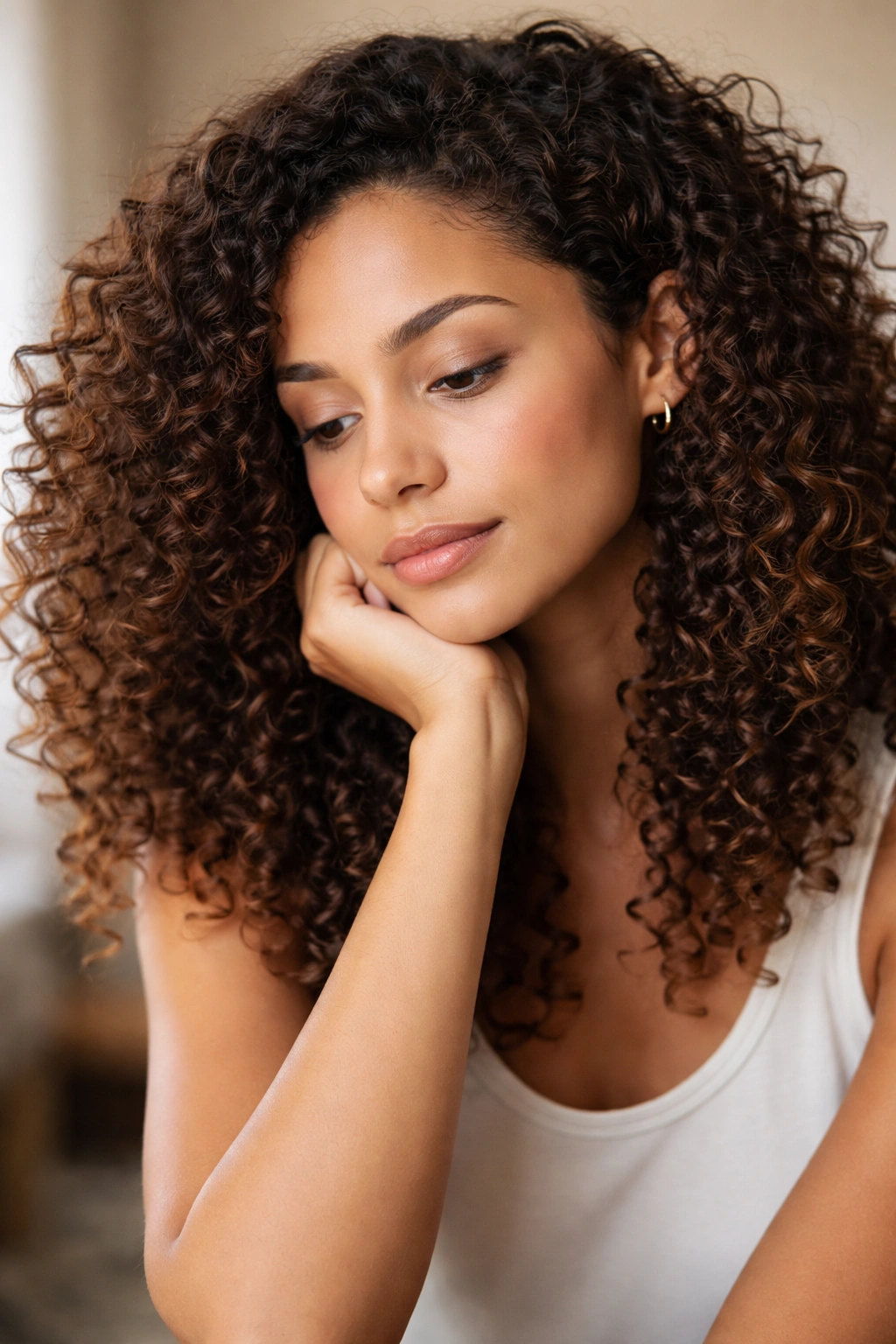
The best curly haircut isn’t the most popular one you’ve seen on Instagram—it’s the one designed for your specific curl type, texture pattern, and lifestyle. Whether you have loose waves that barely curl, tight coils that shrink several inches, or something beautifully mixed in between, there’s a cut here that can work with your hair instead of against it.
The conversation with your stylist matters as much as the cut itself. Come prepared with photos of styles you love, be honest about how much styling time you’re actually willing to do, and most importantly, tell them your curl type. A stylist who specializes in curly hair will understand how a 3B curl pattern behaves differently than 2C, and they’ll cut accordingly. You’re not paying just for scissors—you’re paying for their expertise in understanding how your specific curls will move and sit.
One final thought: the best thing you can do after any curly haircut is commit to a proper curl-care routine. Even the most perfectly cut style looks flat and undefined on under-moisturized hair. Invest in good leave-in conditioner, a microfiber towel or t-shirt for drying, and learn how to use a diffuser if you’re not already. A great cut is the foundation, but your curl routine is what makes it actually shine. You’ve got this—now go show off those curls.
