



The mullet is back, and it’s nothing like the ’80s version your parents remember. Today’s mullet is a canvas for self-expression, and when you add bold color to the mix, you get a haircut that announces exactly who you are before you even say a word. The beauty of a dyed mullet is that it combines the structure and attitude of this classic cut with the creativity and edge of vibrant hair color — giving you endless ways to make the style entirely your own.
Whether you’re drawn to pastels, jewel tones, or full-spectrum rainbow moments, a dyed mullet lets you experiment without committing to a single color everywhere. The contrast between the business-up-front sides and the party-in-the-back creates a natural stage for color play. You can go subtle with an accent dye job that only shows when your hair moves, or go full statement with contrasting hues that demand attention. The versatility is what makes this look so magnetic — it works whether you’re expressing a playful side or making a bold artistic statement.
The best part? A dyed mullet adapts to your personality, your style, your mood, and your lifestyle. Short or shaggy, sleek or textured, monochromatic or multi-colored — there’s a version of this cut waiting to become your signature look.
1. Soft Pink and Platinum Blonde Split
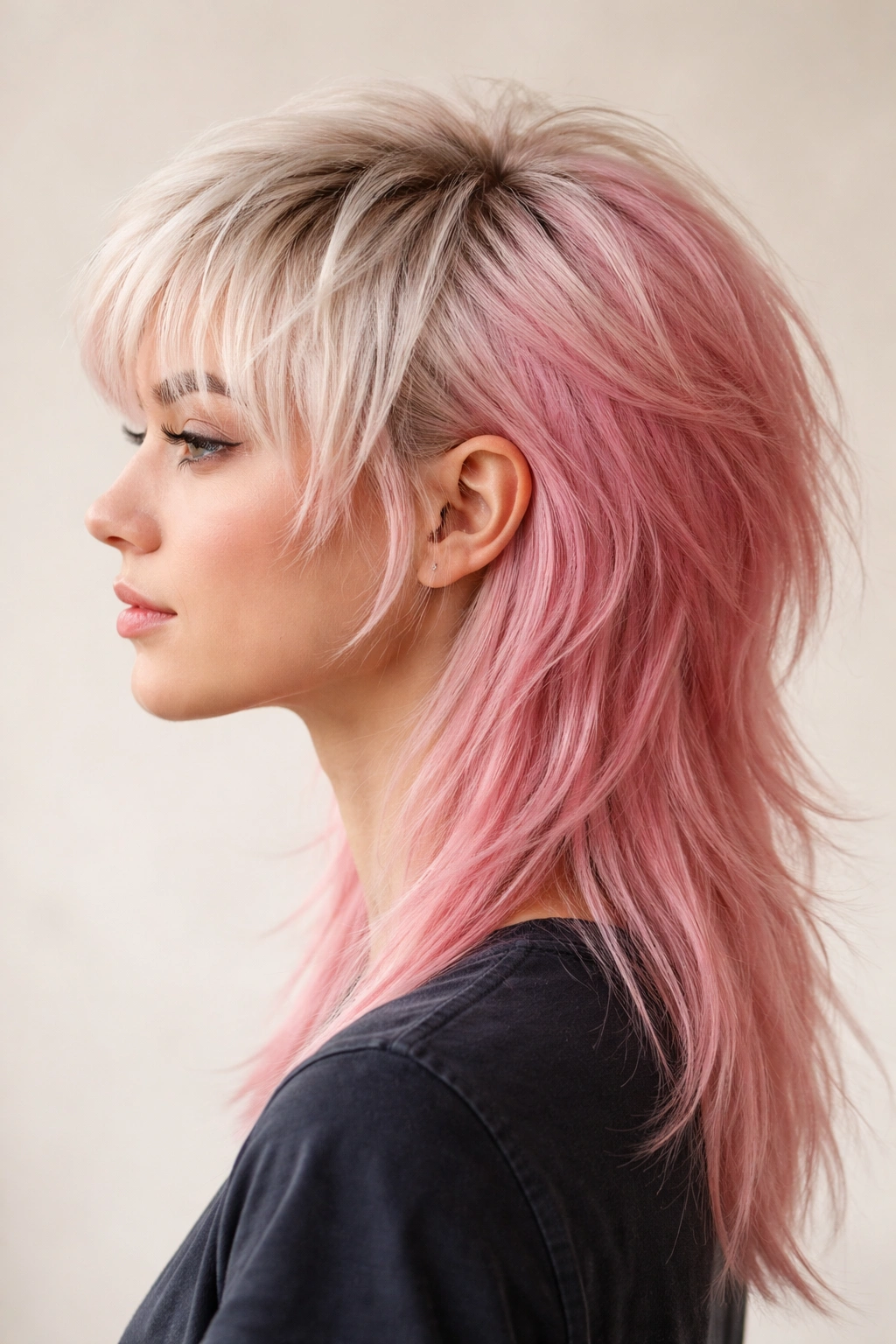
A soft pink and platinum blonde mullet walks the line between sweet and edgy with absolute confidence. The front sections are cut short and styled in a textured, almost wolf-cut feel in bright platinum blonde, while the back grows longer and flows in a gentle, rosy pink. This combination feels romantic without being delicate — it’s the kind of look that catches light beautifully and photographs like a dream.
Why This Works for Softer Personalities
This color pairing speaks to people who want to express softness without sacrificing edge. The platinum creates sharpness and definition while the pink adds warmth and approachability. It’s a look that works across multiple settings — you can style it up for an evening out or keep it casual and still feel intentional. The contrast between the two colors makes the mullet structure itself feel more pronounced, which adds sophistication to what could otherwise feel childish.
How to Style It
- Keep the blonde sections textured and tousled for a deliberately undone vibe, or blow-dry sleek for contrast against the longer pink back
- Braid or twist the pink sections at the nape for romantic styling without losing the edgy silhouette
- Layer the back in varying lengths so the pink catches light differently depending on how you move
- Use color-depositing conditioners to keep both shades vibrant between salon visits — platinum needs as much maintenance as the pink
Pro tip: This color combo photographs exceptionally well in both natural sunlight and artificial light, so if you’re documenting your style, you’ll love how it shows up.
2. Neon Yellow Back with Deep Burgundy Fade
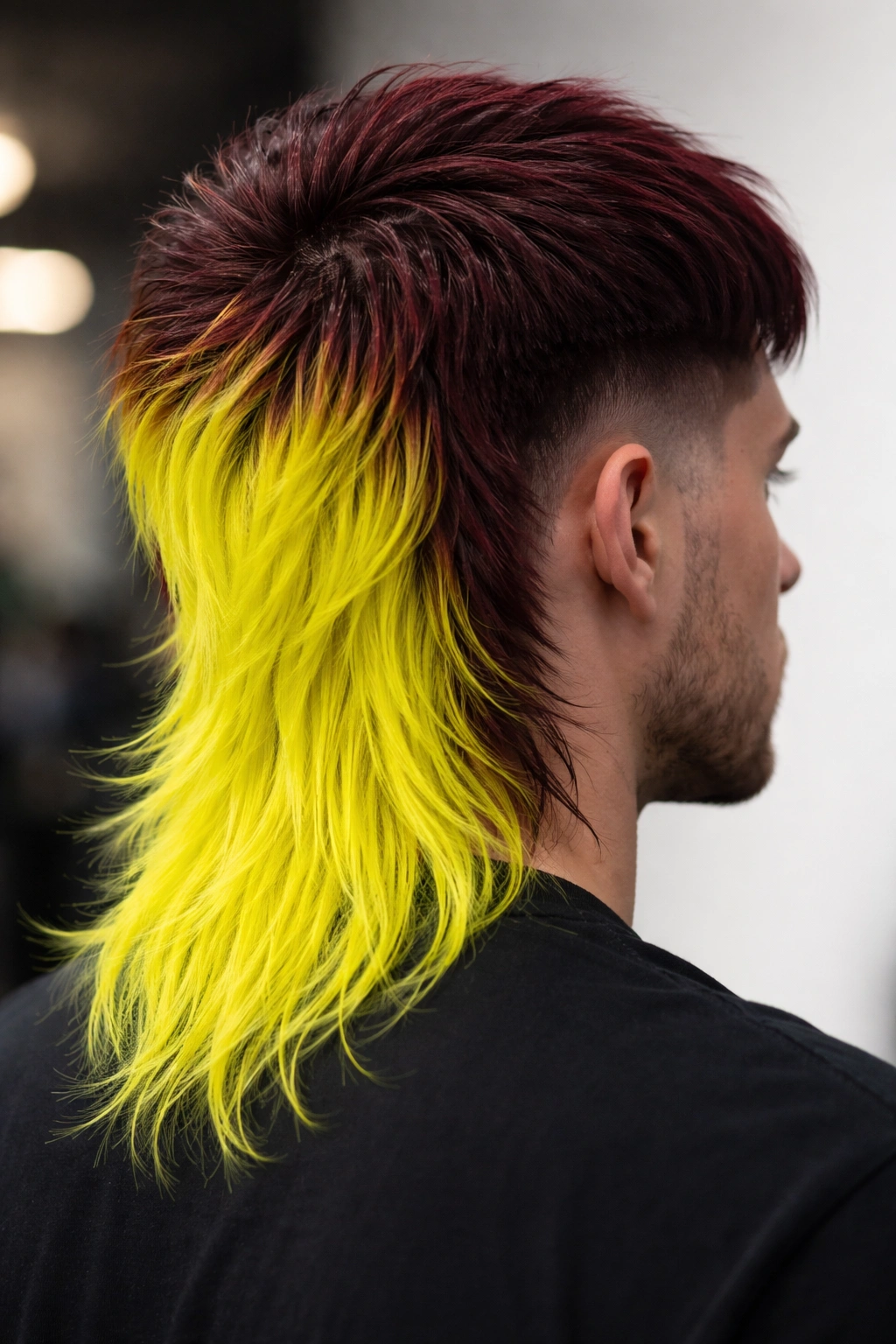
This is the mullet for people who want maximum impact and aren’t interested in blending in. The sides and front fade from a deep burgundy wine color into the natural scalp, while the back is a shocking neon yellow that practically glows. It’s a bold statement that says you’re confident, creative, and willing to take risks with your appearance.
The Psychology Behind This Palette
Neon yellow and deep burgundy are complementary opposites on the color wheel, which is exactly why they create such visual tension and interest. When someone sees you from the side or front, they get the mature sophistication of the burgundy. When you turn around or flip your hair, the yellow creates a moment of surprise. It’s a haircut with narrative built into its structure — there’s a reveal, a twist, a plot development.
Maintenance Reality Check
- Neon yellow requires bleached hair underneath, so you’re looking at significant upfront damage prevention and regular conditioning
- Burgundy fades faster than most colors, so plan for root touch-ups every 3-4 weeks or accept the fade as part of your aesthetic
- Both colors can look muddy if you wash in hard water — invest in a shower filter if you’re serious about keeping this vibrant
- Use sulfate-free shampoo and cool water whenever possible to extend color vibrancy
Worth knowing: This is one of the higher-maintenance dyed mullets, but the payoff in terms of personality expression and visual interest is significant.
3. Lavender Ombre Fade
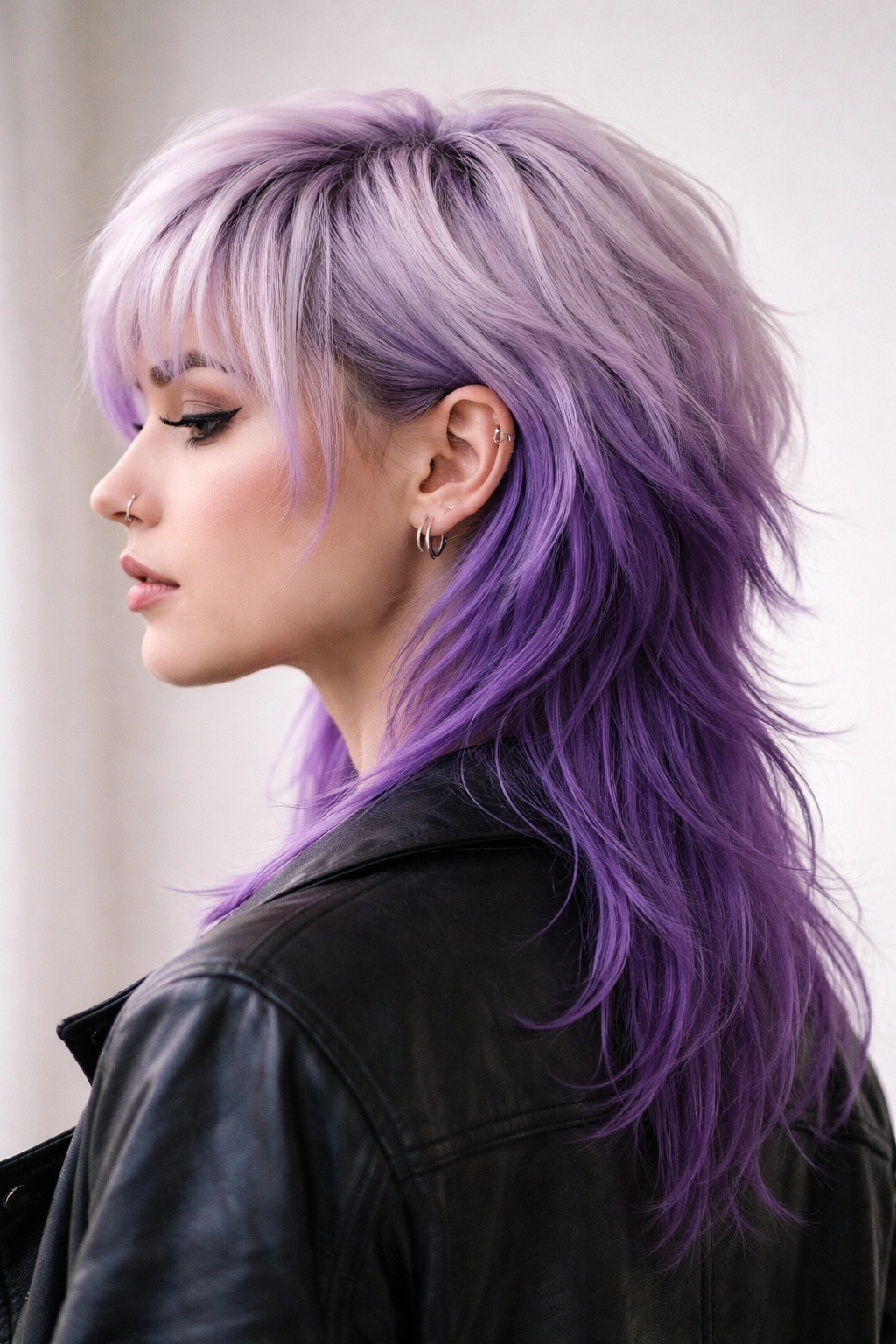
A soft-to-saturated lavender that starts pale at the roots and deepens toward the ends creates an ombre effect that’s grown-out chic. The mullet structure means the front can stay shorter and lighter while the back darkens more dramatically, giving you an ombre that feels intentional rather than accidental. This is a sophisticated take on color that skews more editorial than rebellious.
Why Lavender Works on Mullets
Lavender is one of those colors that looks different depending on your natural hair color, skin tone, and lighting conditions. On a mullet, that variability becomes an asset. The color reads differently from the front than from the back, which means you’re getting multiple looks from one color investment. It also sits in a cool-toned middle ground that suits most skin tones, making it less risky than bolder jewel tones.
Creating and Maintaining the Ombre
- Start with a solid lavender base, then use a lighter purple or violet toner on the front sections to create the fade
- The longer hair in the back naturally holds darker dye better and for longer, so your ombre will deepen and refresh itself over time
- Tone with a purple shampoo weekly to prevent brassiness and keep the lavender from shifting too yellow
- Condition aggressively — purple tones and pastel shades require smoother cuticles to show true color depth
4. Deep Forest Green Back with Black Fade
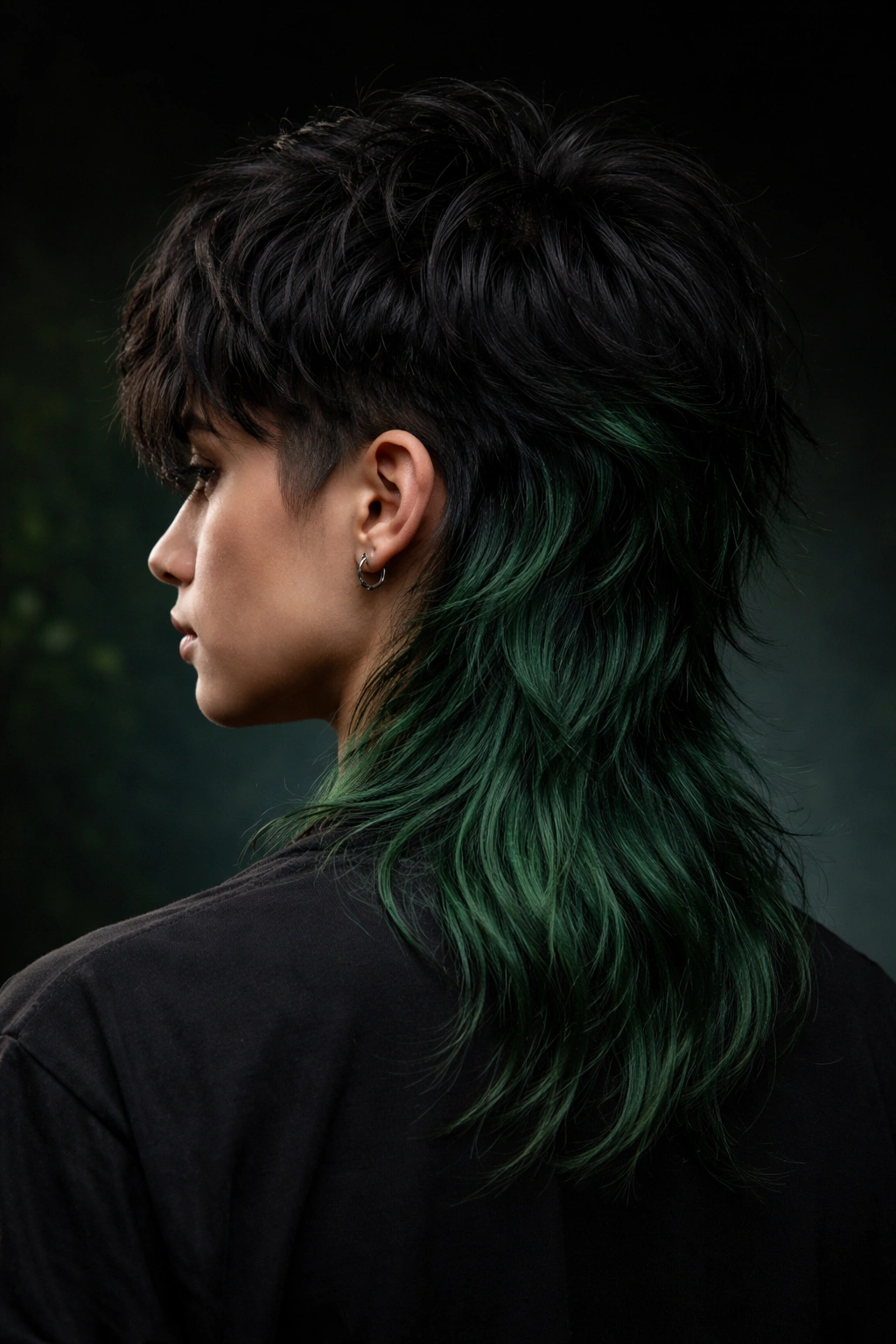
This is sophisticated, moody, and surprisingly versatile despite its darkness. The front and sides fade into a natural-looking black or dark brown, while the back blooms into a jewel-box forest green that’s visible when your hair moves or when you’re backlit. It feels like you’re hiding a secret in your back pocket.
The Understated Power of This Look
A dyed mullet doesn’t have to be loud to be bold. This color combination appeals to people with strong style sensibilities who don’t feel the need to announce themselves immediately. The green is rich and artistic without being outrageous. It reads as intentional and thoughtful rather than attention-seeking. This is the mullet for artists, creatives, and people who dress more for themselves than for approval.
Technical Execution
- The black or dark base can be achieved with a semi-permanent dye if you’re not fully committed, making this a lower-commitment entry into dyed mullets
- Forest green holds beautifully on dark hair and doesn’t require the same bleach damage as lighter colors
- This combination actually improves with time — as the green starts to fade, it often shifts into a softer teal that’s equally lovely
- The contrast between dark front and colored back is easiest to maintain if you’re comfortable with regular trims keeping the structure sharp
5. Sunset Gradient (Orange, Pink, Yellow Back)
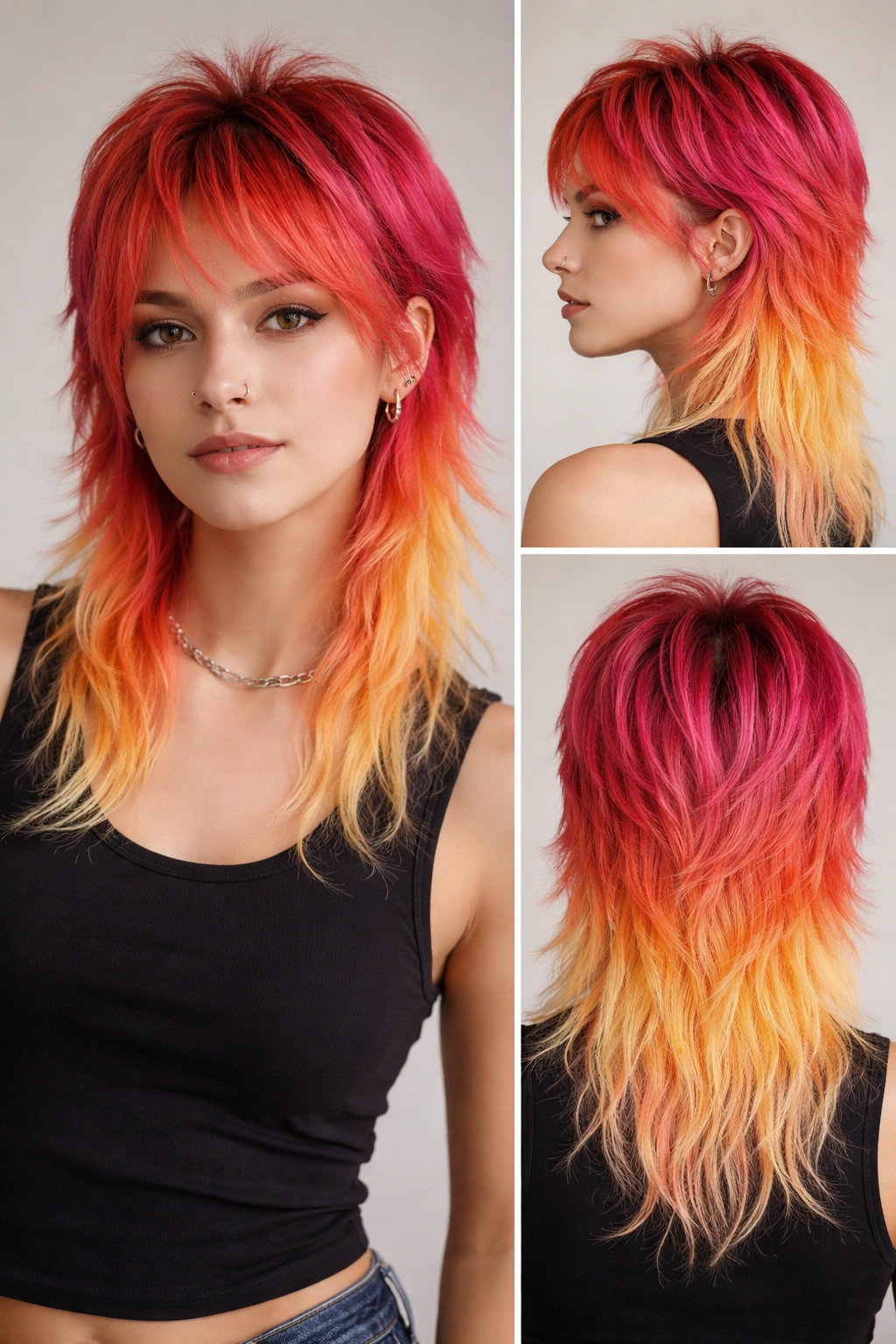
Imagine watching a sunset every time you move — that’s what a full gradient mullet can deliver. The back transitions through warm orange into hot pink into golden yellow, creating a color story that feels alive and dynamic. It’s artistic without being chaotic, because the colors are specifically chosen to flow together.
Planning a Multi-Color Mullet
Creating a true gradient requires more precision than a simple two-tone dye job. You’re essentially painting sections of the hair different colors while ensuring they blend and complement rather than clash. This is not a DIY project if you want it to look polished. A skilled colorist will section the hair strategically and use techniques like balayage or hand-painting to create the effect.
The Artist’s Mullet
- A gradient mullet is visually complex enough to keep your own interest even after months of wearing it
- This style pairs perfectly with layered cuts that allow each section of the gradient to show clearly when the hair moves
- Photograph this from multiple angles and in different lighting — you’ll discover new color combinations depending on the light source
- The maintenance falls into the high category because you’re essentially maintaining three or more separate color jobs simultaneously
Real talk: If you choose this route, budget for professional color maintenance every 4-6 weeks and embrace that this is a style investment.
6. Ice Blue Short Sides with Darker Teal Back
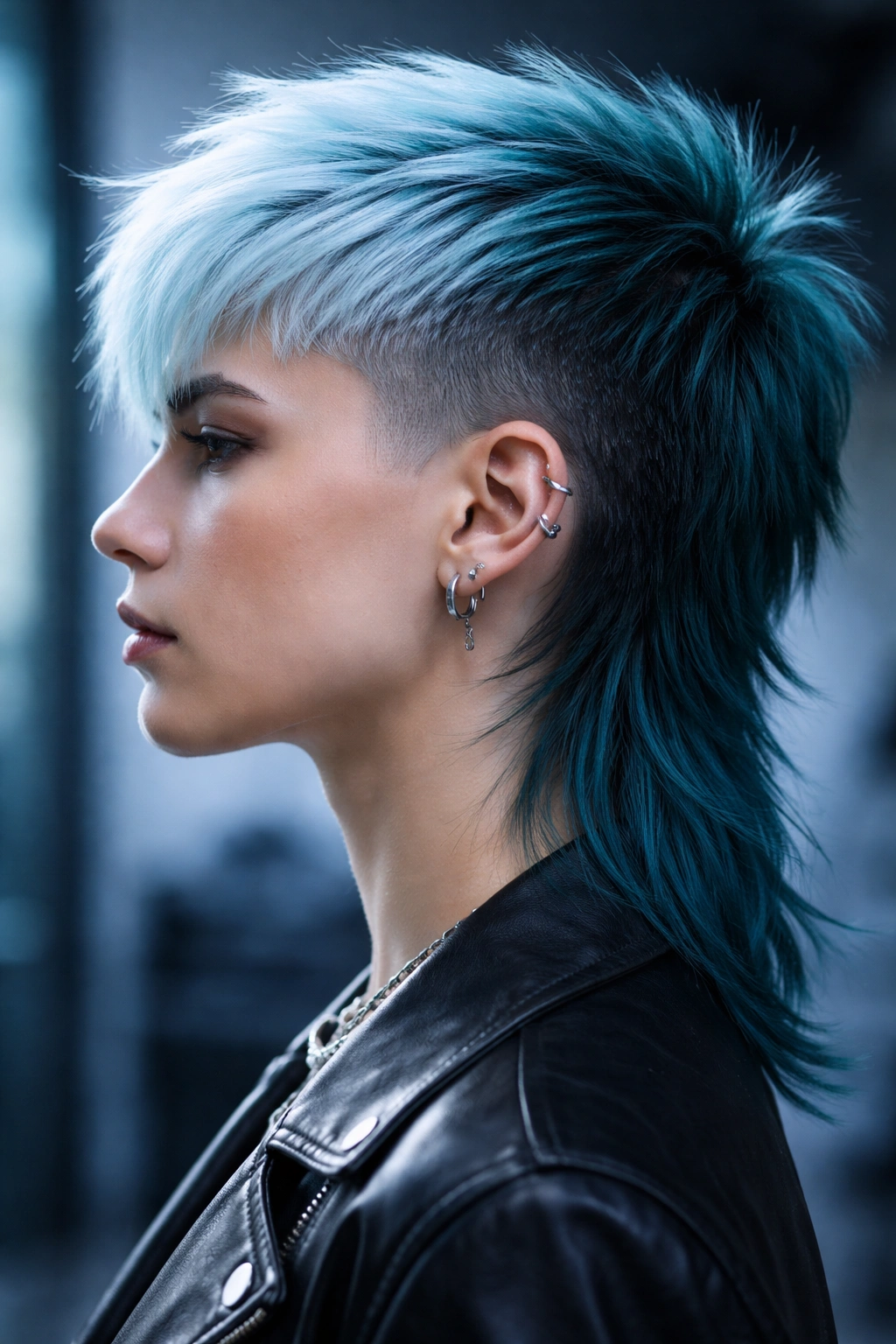
This color story reads technical and intentional, like you’ve thought carefully about exactly the look you wanted to achieve. The front is a bright, almost icy blue that keeps things fresh and modern, while the back deepens into a more saturated teal-blue that reads almost like a necessary shadow. It’s cool-toned, polished, and distinctly contemporary.
Why Blue Mullets Hit Different
Blue is experiencing a genuine renaissance in fashion and hair, partly because the dyes have gotten better and partly because the color photographs beautifully across all skin tones (with the right undertone). On a mullet, blue creates a futuristic feeling — it’s not a color that exists in nature, so it immediately signals intentionality and style awareness. The shorter front in bright blue gives you a modern, sharp silhouette, while the darker back adds depth and prevents the look from feeling flat.
Blue Dye Realities
- Blue is a commitment that requires dedication to upkeep — it fades relatively quickly and shifts toward green if you’re not careful with your shampoo
- Invest in a color-safe shampoo specifically formulated for blue, and consider a blue-depositing conditioner for weekly toning
- The difference between a beautiful rich blue and a washed-out, greenish blue comes down to regular maintenance every 3-4 weeks
- Hair needs to be pretty light to achieve the icy blue effect — expect significant pre-lightening if your natural color is dark
7. Black and White Two-Tone Statement
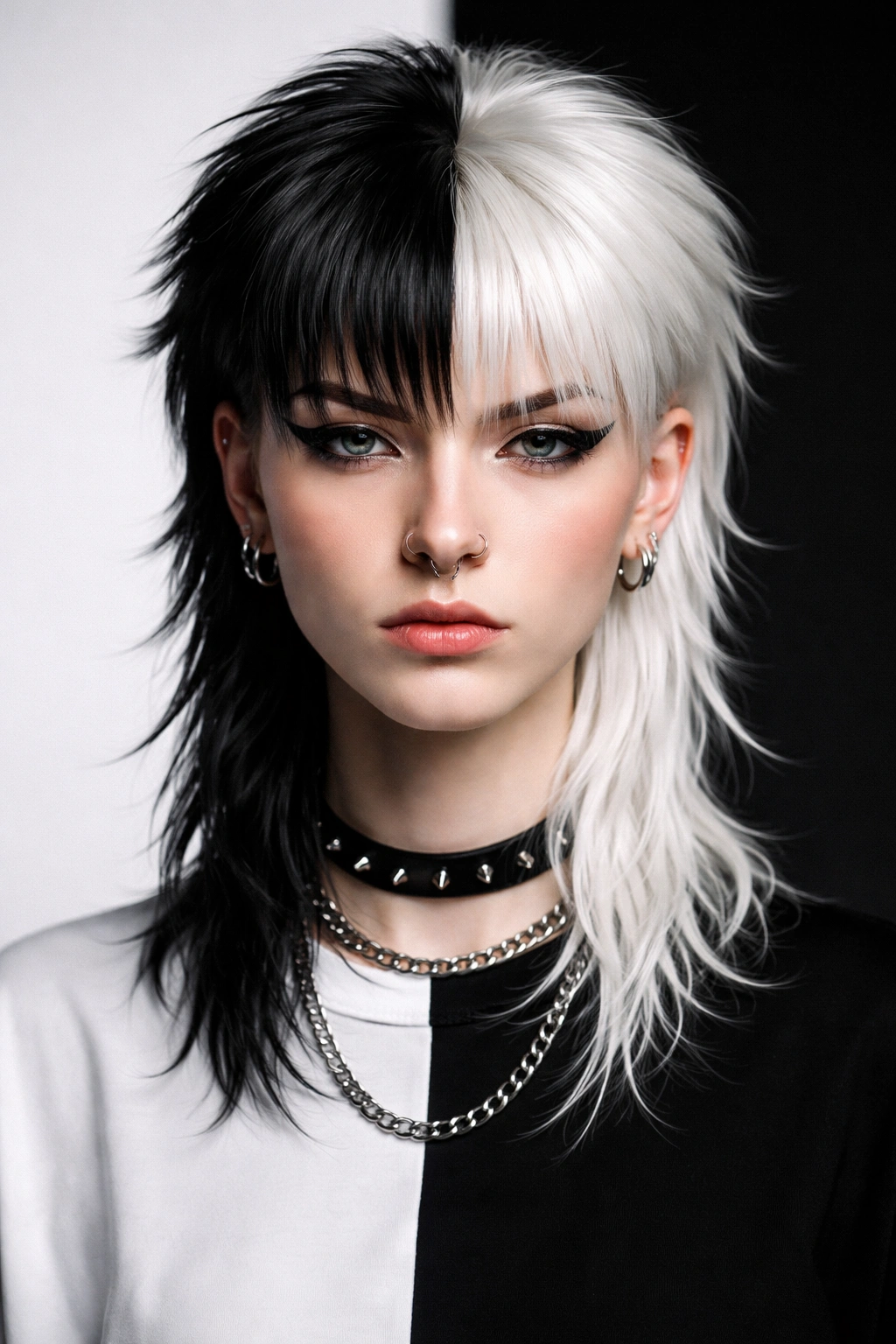
A true black and white split — with one side or the back in solid black and the front or other side in stark white — creates a look with serious graphic design energy. There’s no ambiguity here, no subtle blending. It’s a bold statement that says you appreciate contrast, symmetry, and visual impact. This is the mullet for people who live in certainty.
The Power of High Contrast
Black and white are the most extreme contrast possible in color theory, which is why this look is so visually arresting. It works because of that extreme difference — it wouldn’t have nearly the same impact if you softened it with intermediate tones. The mullet structure becomes a blank canvas for this color conversation, and the contrast actually makes the cut itself more defined and interesting.
Executing This Bold Vision
- Both colors need dedication: white requires consistent toning to prevent yellowing, and black can fade to gray or brown
- The styling challenge is real — you’ll want to ensure the two-tone structure is clear and intentional, not just accidental color placement
- This look pairs best with either a very clean, geometric cut or a deliberately shaggy, textured cut — middle-ground styling can feel confused
- Consider your personal color undertone before committing — black and white can look striking or stark depending on your skin tone, and the undertone matters
8. Copper Penny Front with Deep Plum Back
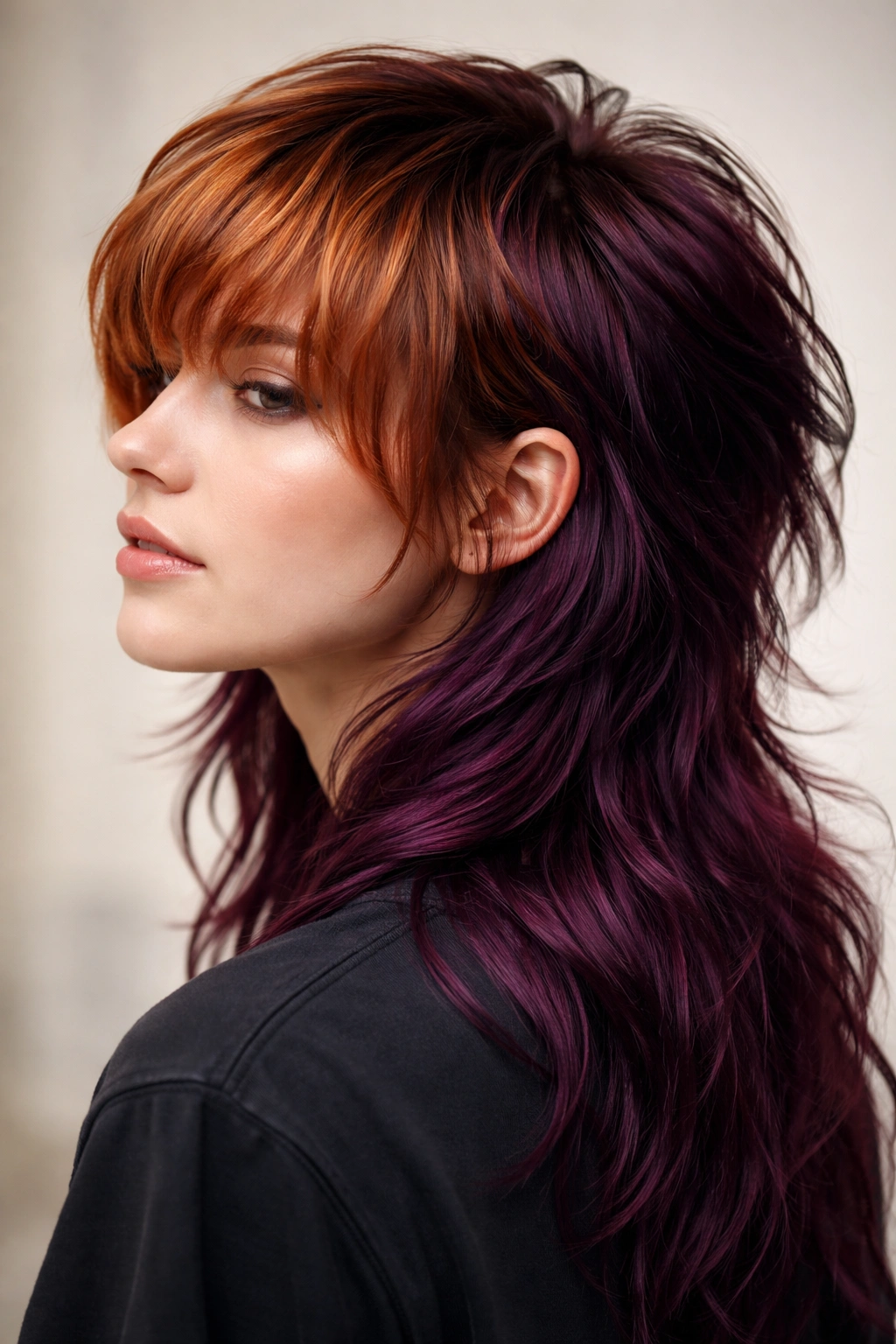
This is a warm-meets-cool color story that feels luxurious and a bit moody. The front catches light in rich copper and penny tones, warm and almost metallic, while the back deepens into a jewel-tone plum that’s cooler and more mysterious. It’s the kind of color combo that suggests you have artistic taste and probably a well-curated playlist.
The Luxury Color Palette
Copper and plum together create a feeling of richness and depth. These aren’t neon colors — they’re tones that appear in nature and in high-end fashion. The copper front is warm and approachable while the plum back suggests something deeper and more private. This combination works well on people with warm, cool, or neutral undertones because the colors are rich enough to complement rather than clash.
Achieving the Copper-to-Plum Dream
- Copper requires either natural warm tones or pre-lightening, and it shifts toward orange if the underlying level isn’t right
- Plum fades relatively quickly, so commit to maintenance every 3-4 weeks if you want to keep the depth
- These colors look their best on hair with some shine and health — dull or damaged hair will make them look muddy
- The transition between copper and plum can be hard or soft depending on your preference — ask your colorist if you want a clear demarcation or a blended zone
Pro tip: These jewel tones look stunning when photographed with warm-toned lighting, so if you’re documenting this look, golden hour is your friend.
9. Pastel Rainbow Cascade Back
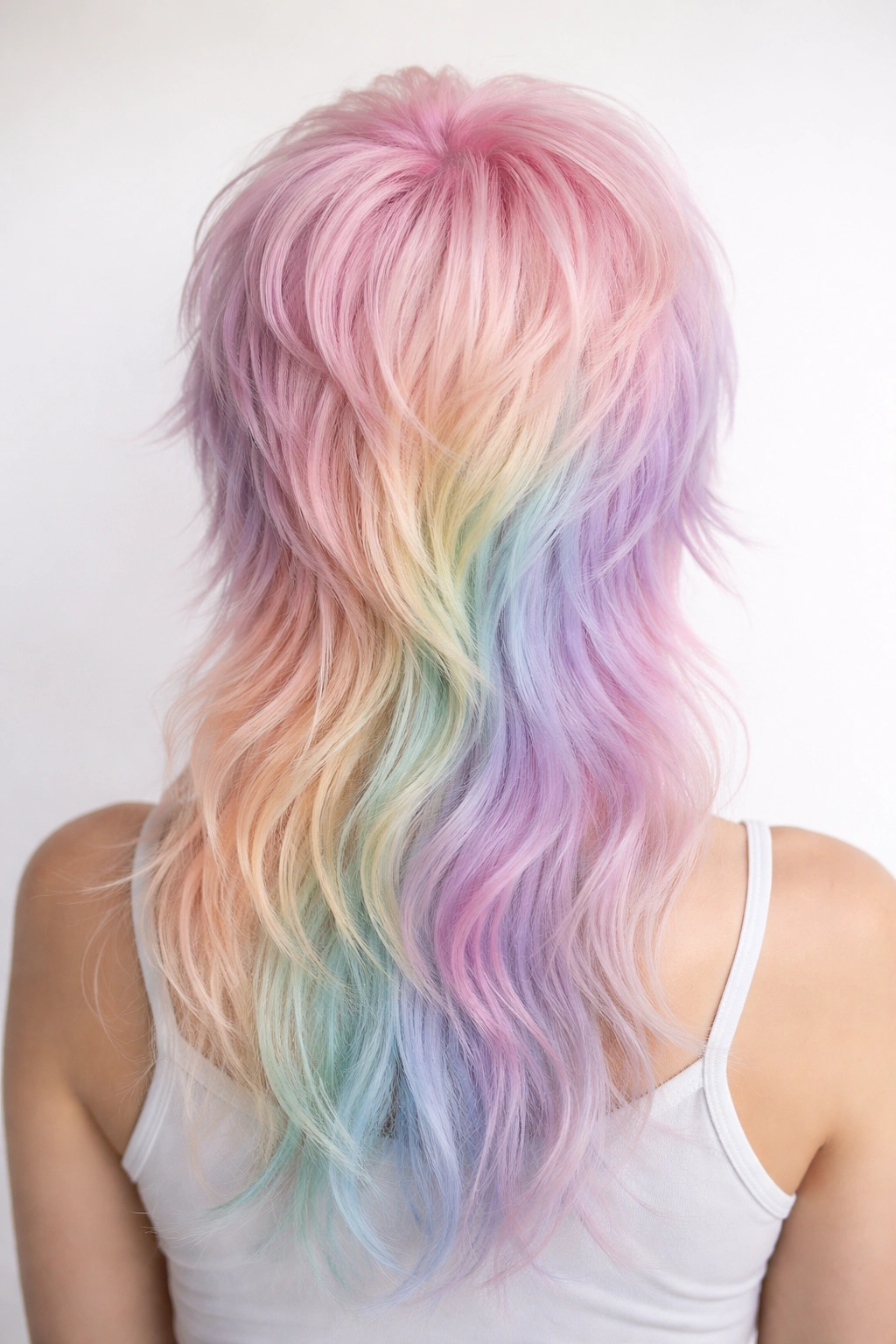
When the back of your mullet flows through soft pastel versions of multiple colors — think baby pink, lilac, peach, mint, and pale yellow — all blending and shifting as your hair moves, you get a whimsical, artistic vibe that reads as genuinely creative. It’s not chaotic because pastels don’t compete for attention the way saturated colors do. Instead, they create a soft, painterly effect.
The Aesthetics of Pastel
Pastels work on mullets because they’re inherently less aggressive than neons or jewel tones. A rainbow in saturated colors might read as costume-y, but a pastel rainbow reads as artistic and fashion-forward. The soft tones suggest thoughtfulness and intentionality rather than just throwing everything at the wall. This is the color choice for people who love color and creativity but want to express it in a refined rather than bombastic way.
Technical Challenges of Pastels
- Pastels require very light, clean hair to achieve their soft, dusty appearance — you’ll likely need to lift your hair very blonde first
- Pastels fade faster than darker or more saturated tones, so maintenance is frequent (every 2-3 weeks)
- Stain management is real — pastels can transfer to skin, clothes, and pillows, especially when wet
- Using color-safe products and minimizing washing are non-negotiable for keeping pastels fresh
Worth knowing: Pastel mullets photograph exceptionally well and tend to generate positive attention, which might matter depending on your personality and situation.
10. Crimson Red Undercut with Dark Brunette Fade
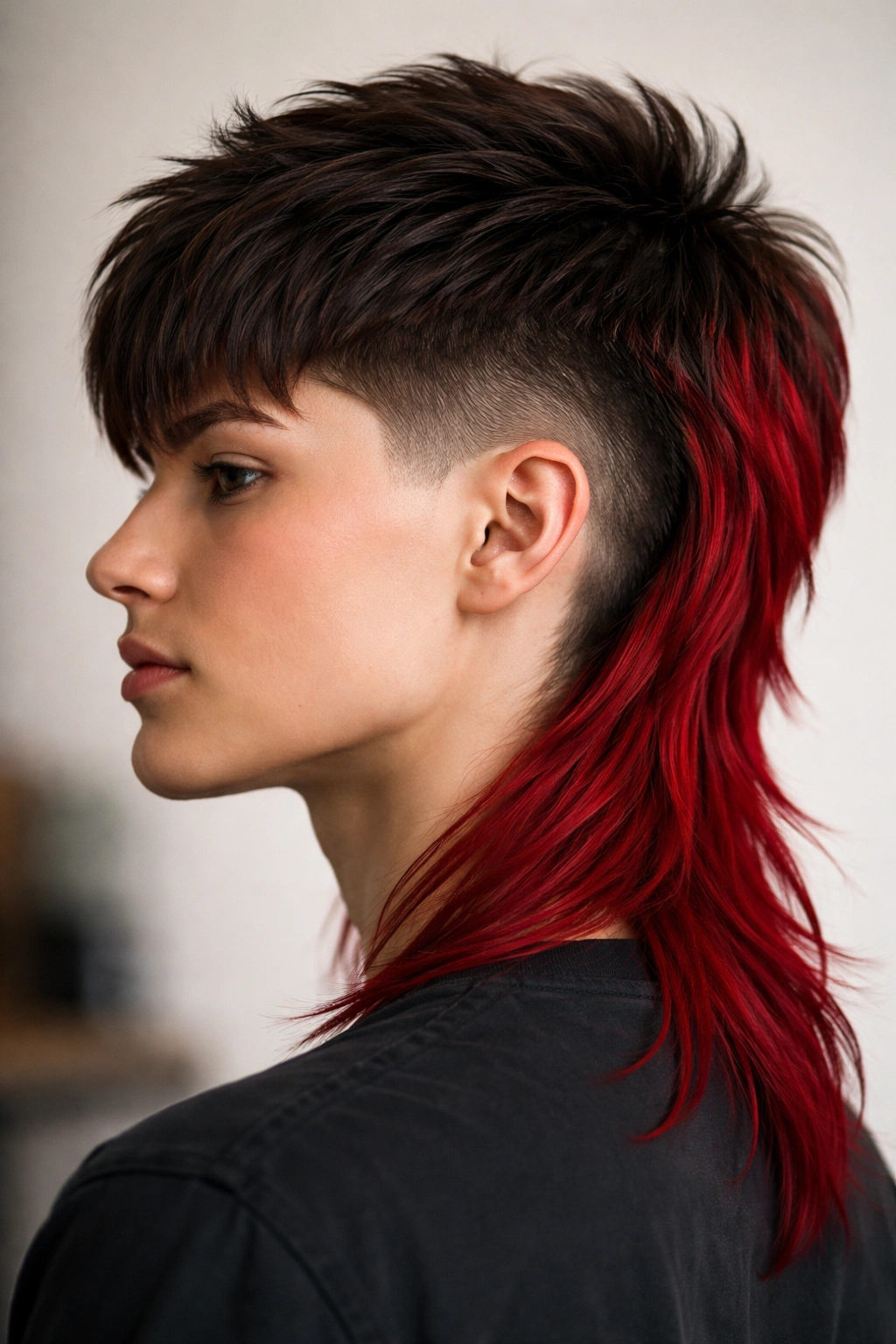
A sharp, clean undercut with crimson red on the sides and back creates immediate visual interest while the fade toward darker brunette on top keeps things somewhat grounded. It’s dramatic without being over-the-top, bold without being reckless. The undercut structure actually enhances the color story — the stark lines of the undercut make the crimson feel intentional and carefully considered.
The Undercut Advantage
An undercut is the perfect structural match for a dyed mullet because it creates natural contrast between the shaved or very short sections and the longer hair. That contrast is what sells a dyed mullet — if you don’t have that structural variety, the color story is weaker. A crimson red undercut catches light and attention in a completely different way than a gradual fade would.
Executing the Undercut-Mullet
- Ask your barber or stylist to keep undercut lines very clean and precise — they’re what define this look
- Crimson red is vibrant enough to show beautifully against skin tone and against the darker hair above
- The fade toward brunette should be gradual enough to look intentional but distinct enough to create a color story
- Maintenance involves both regular trims to keep the undercut sharp (every 2-3 weeks) and color touch-ups on the red (every 4-5 weeks)
11. Holographic Silver with Iridescent Tints
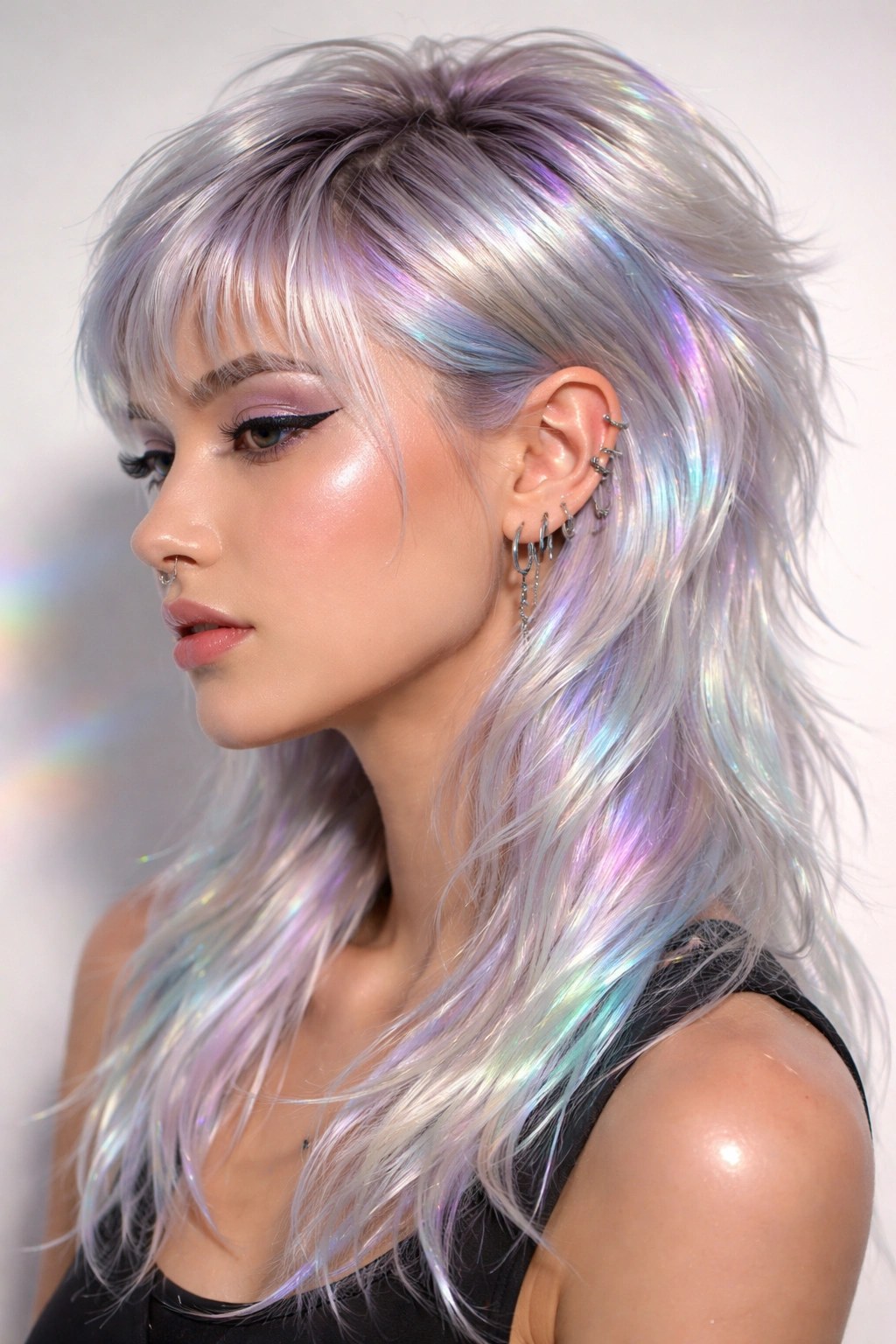
Holographic dyes are a relatively new technology in at-home and professional coloring, creating a color that shifts and shimmers depending on how light hits it. On a mullet, holographic silver catches light in unexpected ways — sometimes appearing more platinum, sometimes showing faint rainbow tints. It’s futuristic, sophisticated, and genuinely unique because the color appears different in every photo and every lighting condition.
The Technology Behind Holographic Hair
Holographic dyes contain special pigments that refract light differently than traditional hair color. The effect is subtle when you’re standing still and under normal lighting, but becomes obvious when you move, when light conditions change, or when you’re photographed with flash. It’s the kind of color choice that rewards close attention — people have to really look to fully appreciate what you’ve done.
Making Holographic Work
- Holographic colors are relatively new, so seek out a colorist with specific experience in this technique
- Hair needs to be very light and very clean for holographic pigments to show their full effect — expect extensive pre-lightening
- These colors fade similarly to pastels and silvers, so maintenance is regular but also manageable
- The subtle shifting effect means this look will appeal to people who appreciate detail and novelty
- Holographic colors tend to photograph differently depending on your camera and lighting setup, which makes them interesting for style documentation
12. Deep Purple Back Blending into Violet Sides
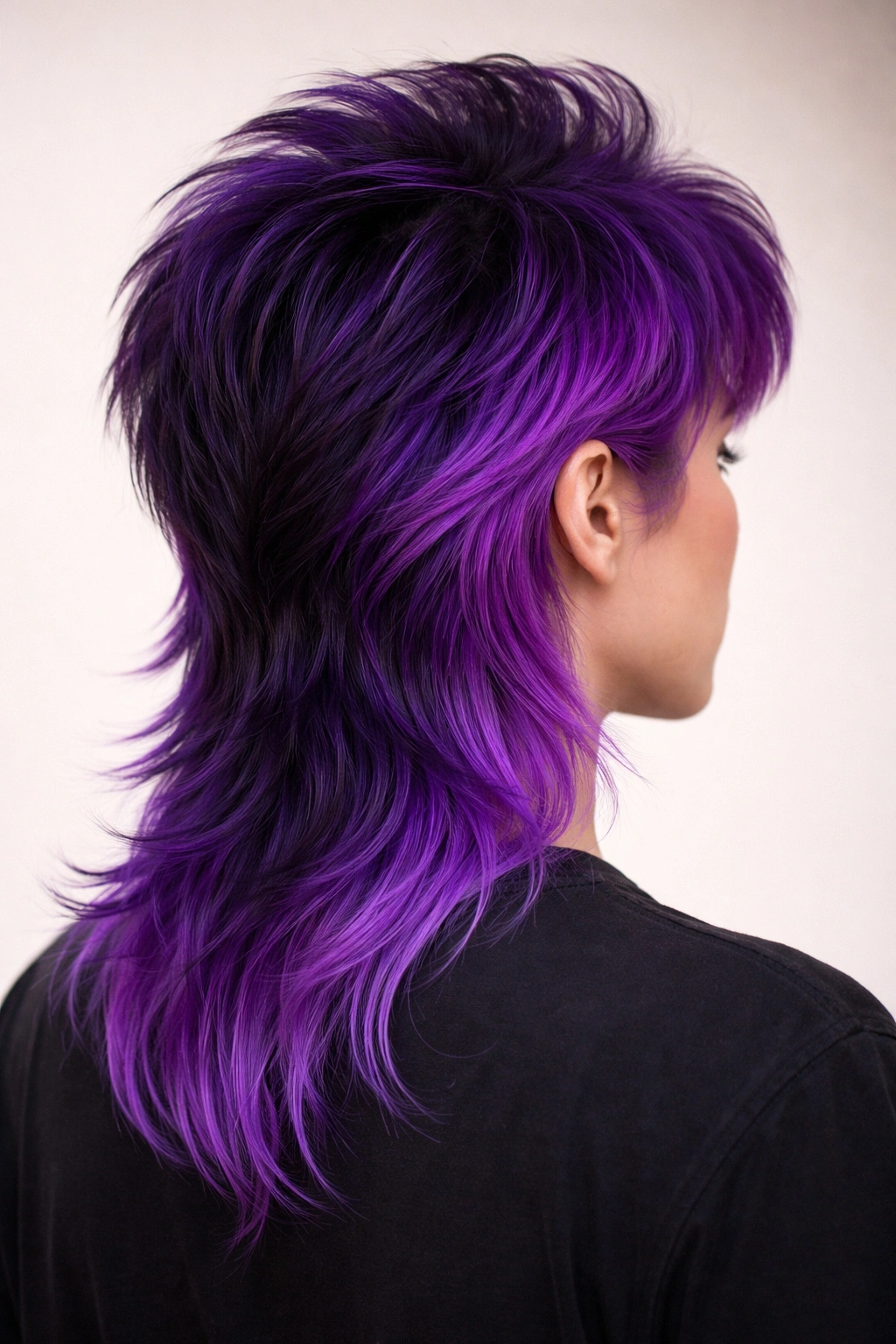
A rich, deep purple that dominates the back sections blends into a slightly lighter, more blue-toned violet on the sides creates a cohesive color story that reads as intentional and artistic. This is monochromatic (in the sense of staying within the purple family) but not boring, because the depth variation creates visual interest and makes the color seem to shift as you move.
The Purple Family Spectrum
Purple is a color with range. By using two different tones within the purple family, you get something more interesting than a flat single color while avoiding the visual chaos of completely different colors. The deeper purple suggests sophistication and depth, while the violet suggests a more modern, artistic sensibility. Together, they create a look that’s both accessible and distinctly personal.
Perfecting Deep Purple Tones
- Deep purples require good underlying tone — if your hair is still somewhat warm, the purple will shift toward brown or gray
- Pre-lightening to at least a level 8 or 9 blonde gives you the best canvas for rich, true purple
- Purple fades relatively quickly compared to reds or blues, so commit to maintenance every 3-4 weeks
- Clarifying shampoo is your enemy with purple hair — use only color-safe, sulfate-free shampoo to protect your investment
- The slight variation between deep purple and violet should be intentional, so consult closely with your colorist about the specific depths you want
Insider note: If you love this look but want lower maintenance, consider doing just the back in deep purple and leaving the sides your natural color or a complementary tone.
Final Thoughts
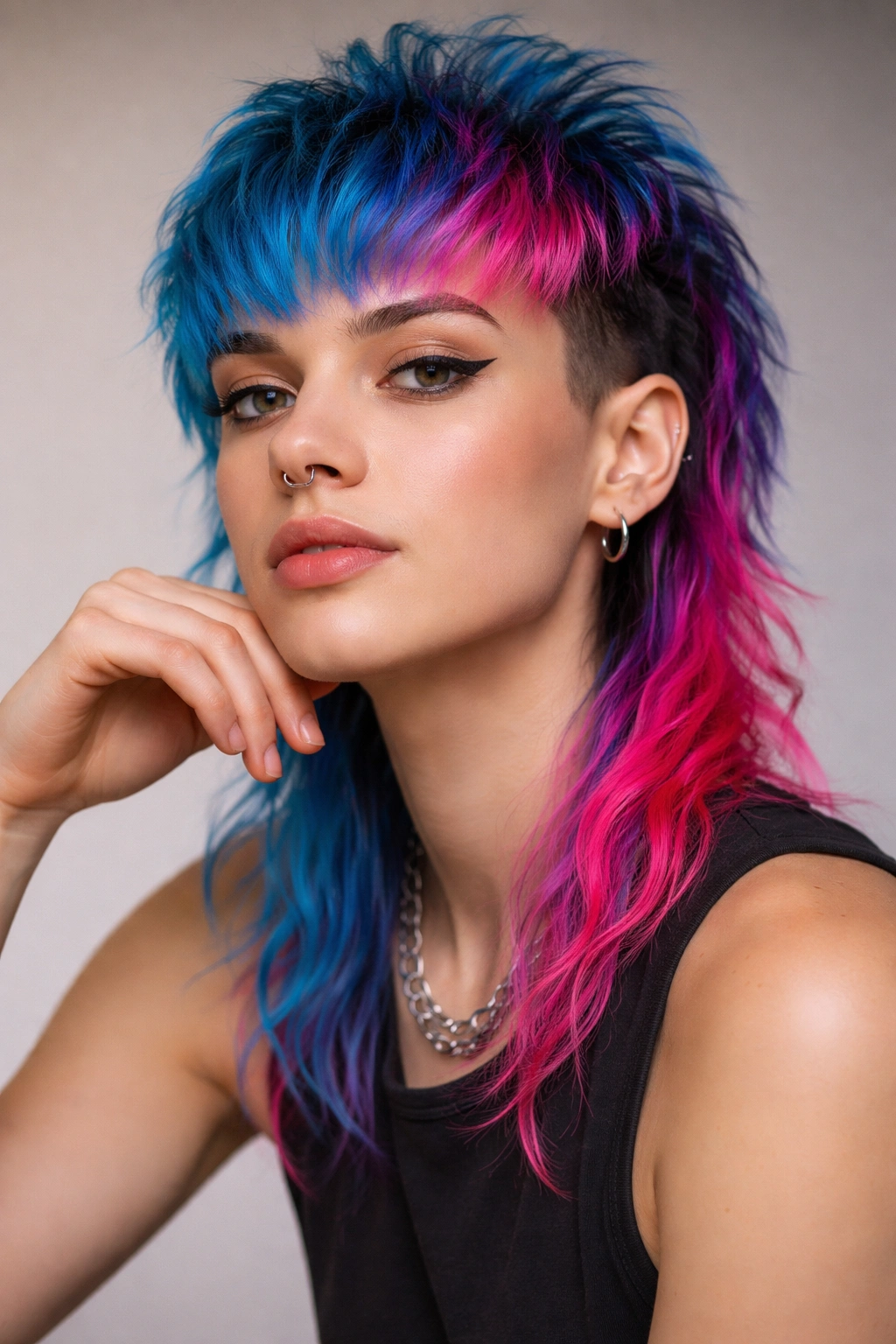
A dyed mullet is one of the most effective ways to communicate your personality through your appearance. The combination of structure, length variation, and bold color creates something that’s immediately recognizable as intentional and creative. Whether you go soft and romantic with pastels, make a graphic statement with high contrast, or express yourself through rich jewel tones, your mullet becomes a daily expression of who you are and who you want to be.
The reality of maintaining a dyed mullet is that it requires commitment — regular color maintenance, quality products, and an openness to being noticed. But if you’re the kind of person who’s reading about dyed mullets in the first place, you probably don’t mind attention. You probably crave the daily moment when you catch your reflection and remember that you chose something bold and creative. You probably appreciate that the back of your head tells a story while your face remains your own.
The best dyed mullet for you isn’t necessarily the trendiest one — it’s the color and style combination that makes you feel most like yourself. The one that, when you look in the mirror, makes you smile because it looks like the outside world finally matches what was already happening on the inside.
