



Short ombre haircuts have become one of the most versatile and flattering styles available, especially when the color transition and fade are executed with precision. The beauty of a well-blended fade lies in how it creates dimension and movement without requiring extensive length or complicated daily styling. Whether you’re drawn to bold color contrasts or subtle tonal shifts, a short ombre with a flawless fade offers endless possibilities for expressing your personal style.
What makes these cuts so appealing is their adaptability to different hair textures, face shapes, and lifestyle needs. The fade—that smooth gradation from longer hair at the top to shorter length at the sides and back—works in perfect harmony with ombre coloring to create a polished, intentional look that’s actually easier to maintain than it might appear. The color blending prevents harsh lines and makes the cut itself look more refined, while the fade structure ensures the style holds its shape even as your hair grows out.
We’ve curated twelve of the most impressive short ombre haircuts with perfectly blended fades, each offering a distinct aesthetic and approach to the trend. From textured crops to sleek undercuts, these styles prove that short hair paired with ombre coloring can be genuinely striking. Whether you’re ready for a complete transformation or just exploring what’s possible, one of these cuts is likely to be the exact inspiration you’ve been looking for.
1. Textured Crop with Subtle Blonde Ombre
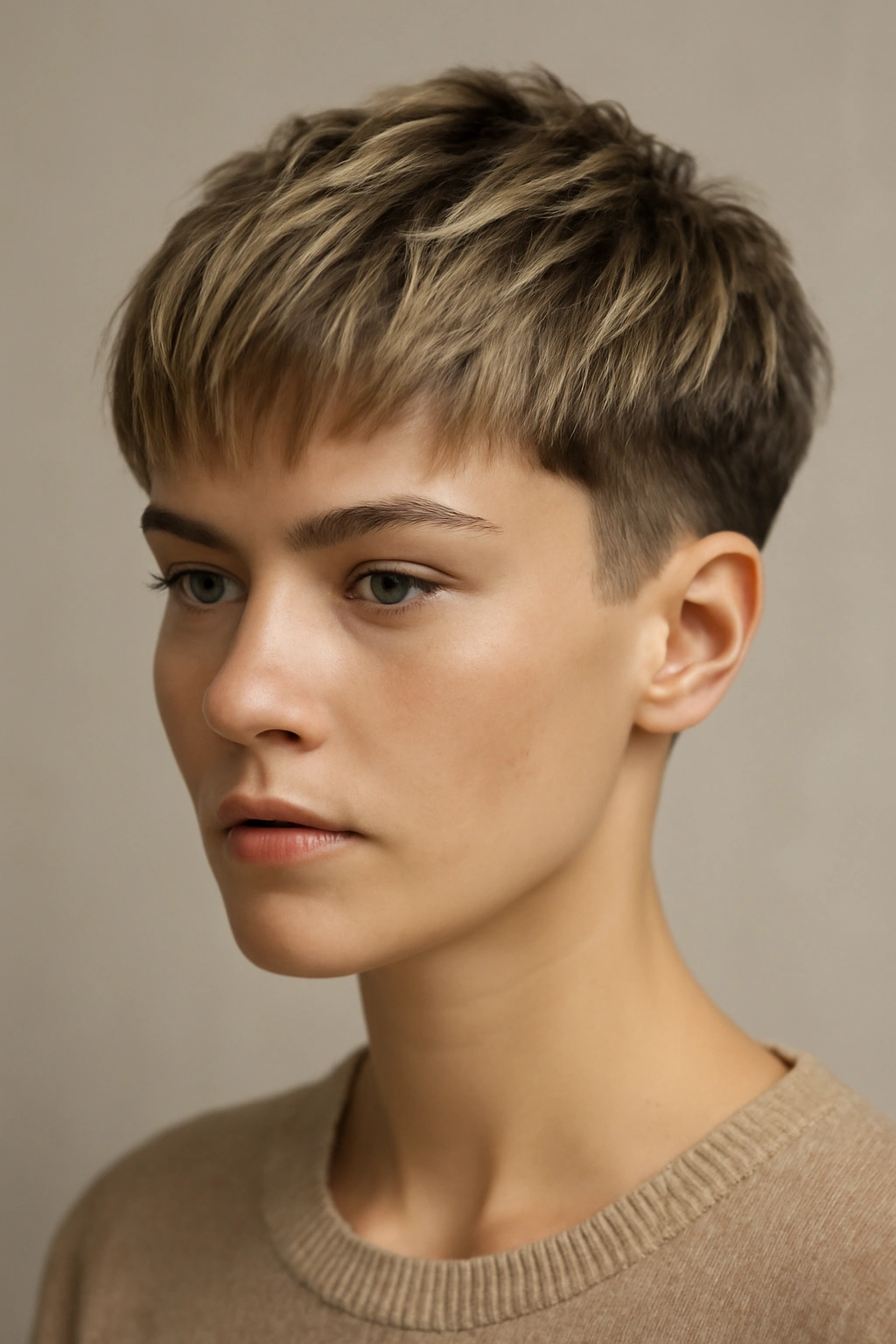
The textured crop is a timeless foundation that pairs beautifully with a soft ombre that transitions from a darker root shadow into lighter blonde tones at the tips. This style works exceptionally well with fine to medium hair because the texture creates the illusion of density, while the color blending adds visual dimension without appearing harsh or dramatic.
Why This Look Works So Well
The genius of this combination is how the cut and color complement rather than compete with each other. The cropped length keeps everything manageable—typically 1 to 1.5 inches at the crown with a subtle fade on the sides—while the ombre adds sophistication without demanding a bold color commitment. The textured finish breaks up the uniformity of the fade and makes the color transition feel more organic and intentional.
What Makes It Work Best
- Requires regular trims every 3 to 4 weeks to maintain the cropped shape and prevent shapelessness
- The subtle blonde ombre works across most skin tones when the base shadow matches natural hair color
- Styling takes about 60 seconds with a light texturizing cream or dry shampoo
- The fade on sides should be blended into the top texture, not cut separately
- Works beautifully whether you keep it neat and polished or deliberately tousled
Styling tip: Apply a small amount of matte texturizing clay to damp hair, work it through with your fingers, and let it air dry for a deliberately undone vibe.
2. Sleek Undercut with Sharp Two-Tone Fade
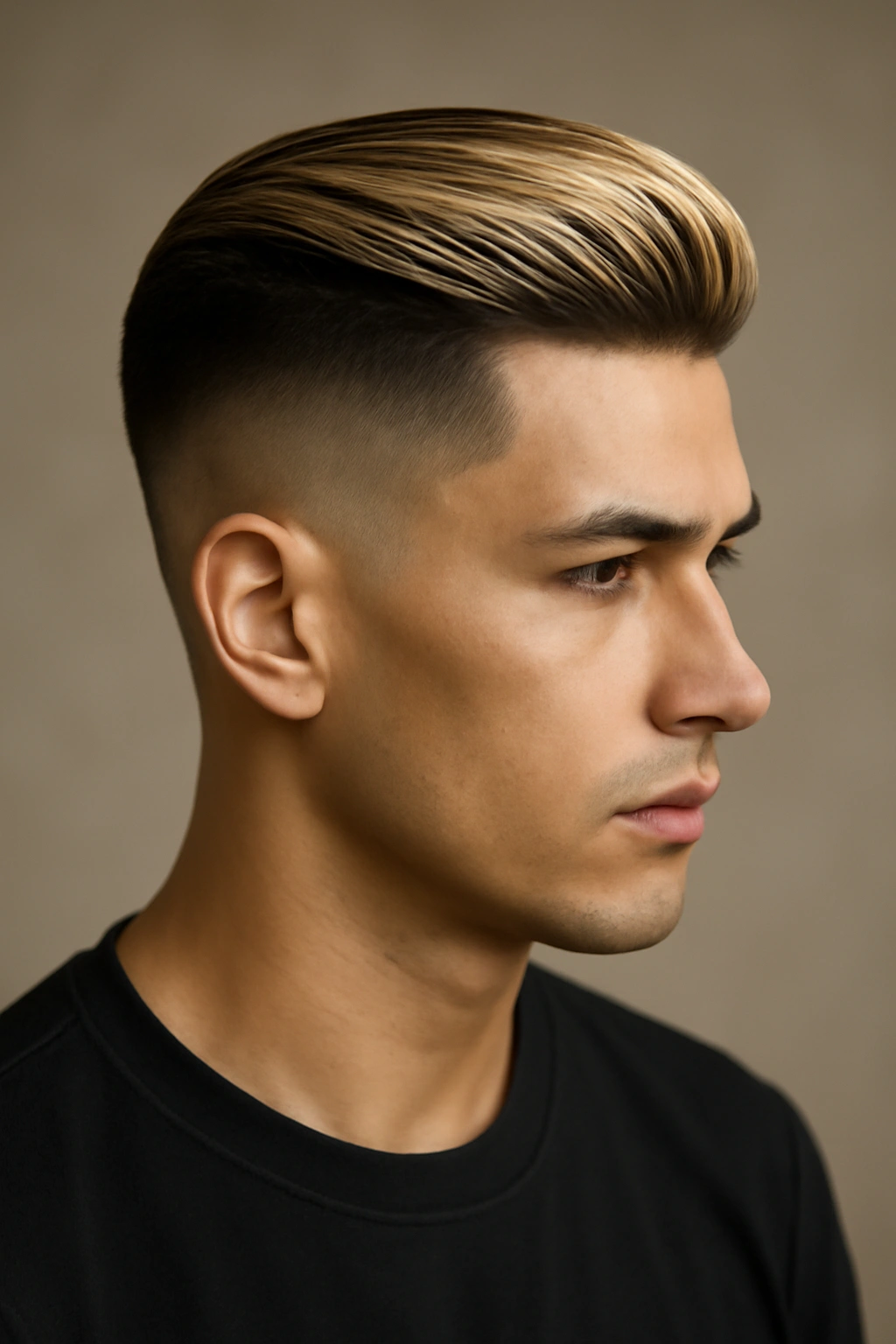
The undercut represents a bolder departure from traditional cuts, featuring distinctly separated longer hair on top (usually 2 to 3 inches) with closely faded sides and back (often faded down to skin). When combined with a two-tone ombre—perhaps black fading into silver or dark brown into platinum—the contrast becomes genuinely dramatic and architectural.
Why This Look Works So Well
This style creates maximum contrast between the structured undercut and the color transition, resulting in a cut that commands attention. The separation allows the ombre to display itself prominently since the longer top isn’t fighting with surrounding hair for visual attention. The sharp fade also makes the color blending appear more intentional and polished.
What Makes It Work Best
- Requires commitment to styling—tousled texture or slicked-back finishes both work beautifully
- The two-tone ombre needs touching up every 4 to 6 weeks to prevent a muddy transition zone
- Side fades must be refreshed every 2 to 3 weeks to maintain that sharp, defined look
- Works best on straight or wavy hair since tight curls can obscure the architectural nature of the cut
- The longer top can be parted, swept back, or styled into spikes depending on your preference
Pro insight: The deeper the undercut (the more closely the sides are faded), the more dramatic the ombre appears—even if the color contrast is relatively subtle.
3. Faded Pixie with Rooted Caramel Ombre
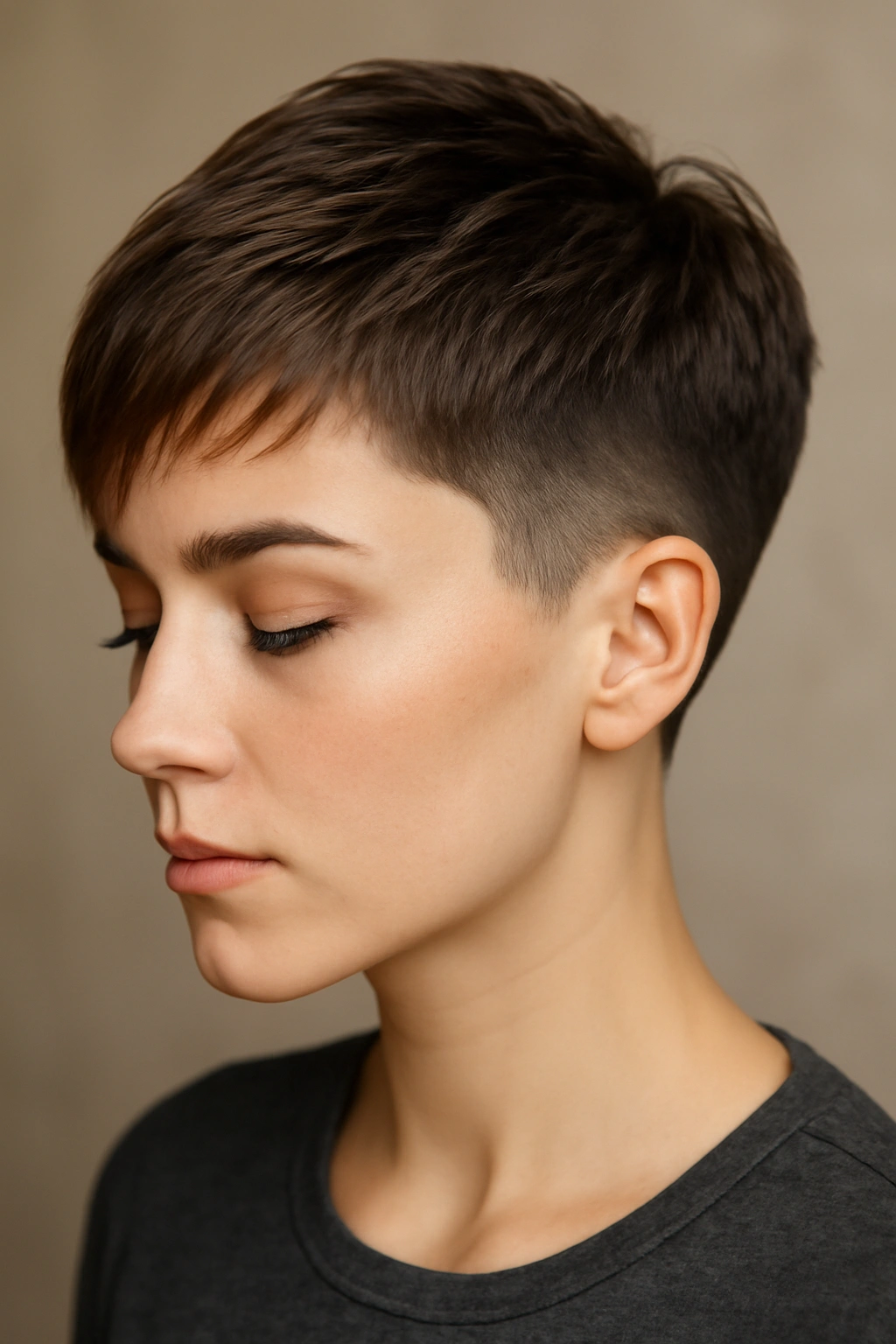
The pixie cut has experienced a real renaissance, and a short, precisely faded pixie with a rooted caramel ombre is one of the most flattering modern interpretations. This style features barely-there length on top (roughly 0.75 to 1.5 inches) with expertly blended fades on the sides and back, paired with a warm ombre that roots darker and gradually warms into caramel tones.
Why This Look Works So Well
A rooted pixie feels infinitely less harsh than a fully uniform color because the darker root mimics your natural growth pattern and creates an intentional, effortless quality. The color blending softens the architectural precision of the cut without sacrificing its clean, edgy aesthetic. This combination is particularly flattering on angular faces because the light caramel highlights draw attention to the eyes while the fade frames the face.
What Makes It Work Best
- The rooted effect means you can go slightly longer between root touch-ups without the style appearing undone
- Works across most skin tones when the caramel tone is chosen to complement your undertone
- Styling is genuinely minimal—a tiny dab of pomade and you’re done
- The fade must be meticulously blended to prevent visible lines or steps
- Regular trims every 3 to 4 weeks keep the cut from losing its precision
Worth knowing: This style reads incredibly chic and intentional precisely because the rooted ombre breaks up the severity that a pixie can sometimes feel like.
4. Curly Fade with Dimensional Copper Ombre
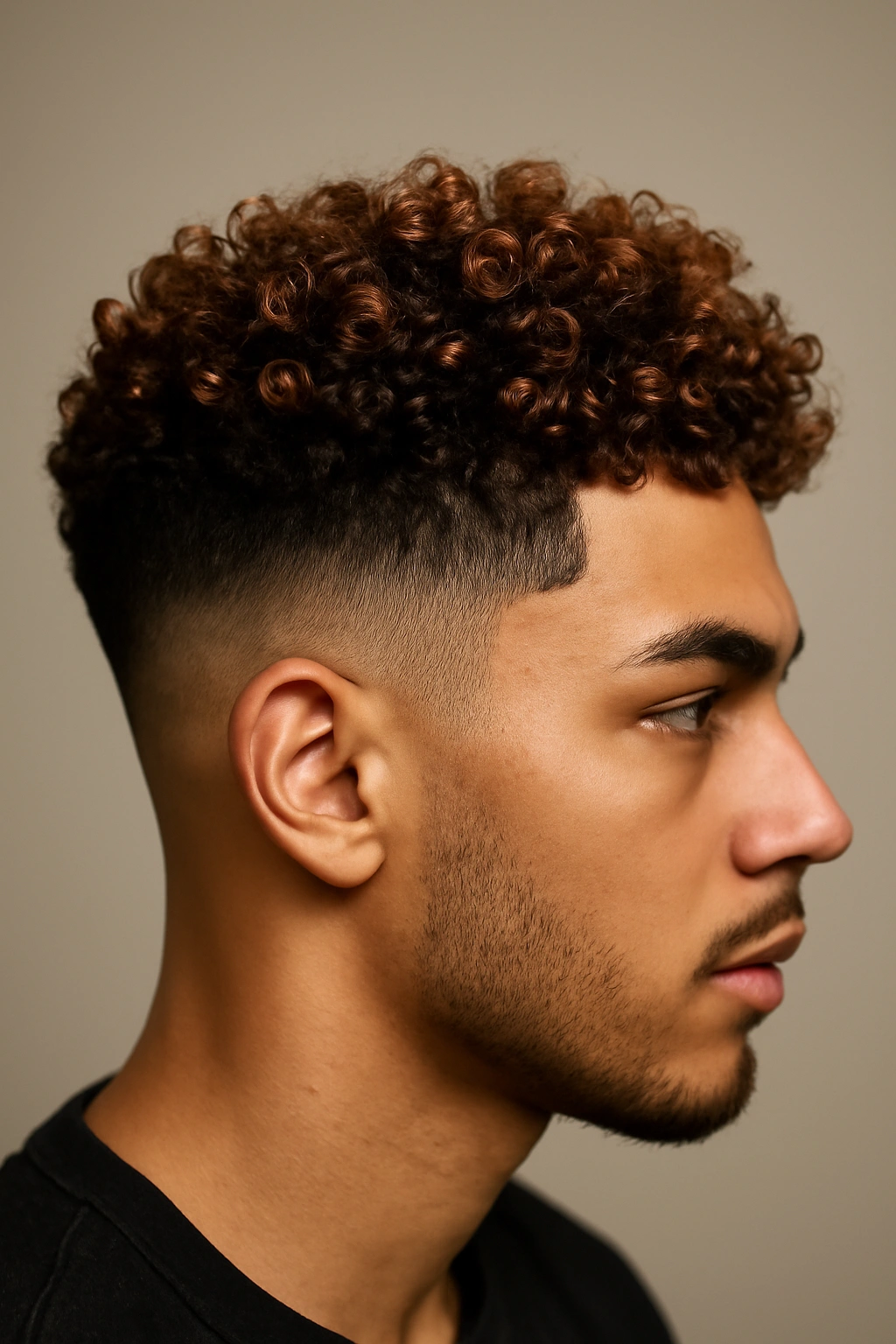
If you have naturally curly hair, a short curly fade with a dimensional copper ombre celebrates your texture while the blended fade and warm color work in harmony to create movement and light. This style keeps curl length short enough to manage (typically 1.5 to 2.5 inches when curls are set) while the fade on the sides allows curl texture to shine without overwhelming the silhouette.
Why This Look Works So Well
Curly hair with a fade automatically creates dimension because each curl casts its own shadow, and adding a dimensional ombre amplifies that effect. The copper tones add warmth that flatters deeper skin tones and creates a genuinely striking effect, especially when the color is applied to enhance individual curl patterns rather than creating harsh lines.
What Makes It Work Best
- Requires a stylist experienced with curly hair to cut and fade properly—the fade must account for curl shrinkage
- The copper ombre needs touch-ups every 6 to 8 weeks, depending on how quickly your hair grows
- Styling involves applying curl cream to damp hair and allowing curls to dry naturally or using a diffuser
- The fade on sides can be closer or more gradual depending on how much texture you want to maintain
- This style actually looks better the longer it gets slightly between cuts—curls add shape naturally
Insider note: Dimensional copper ombre on curls appears to have far more depth than the same color on straight hair because light penetrates differently through textured strands.
5. High-Fade Crop with Icy Blonde Rooted Ombre
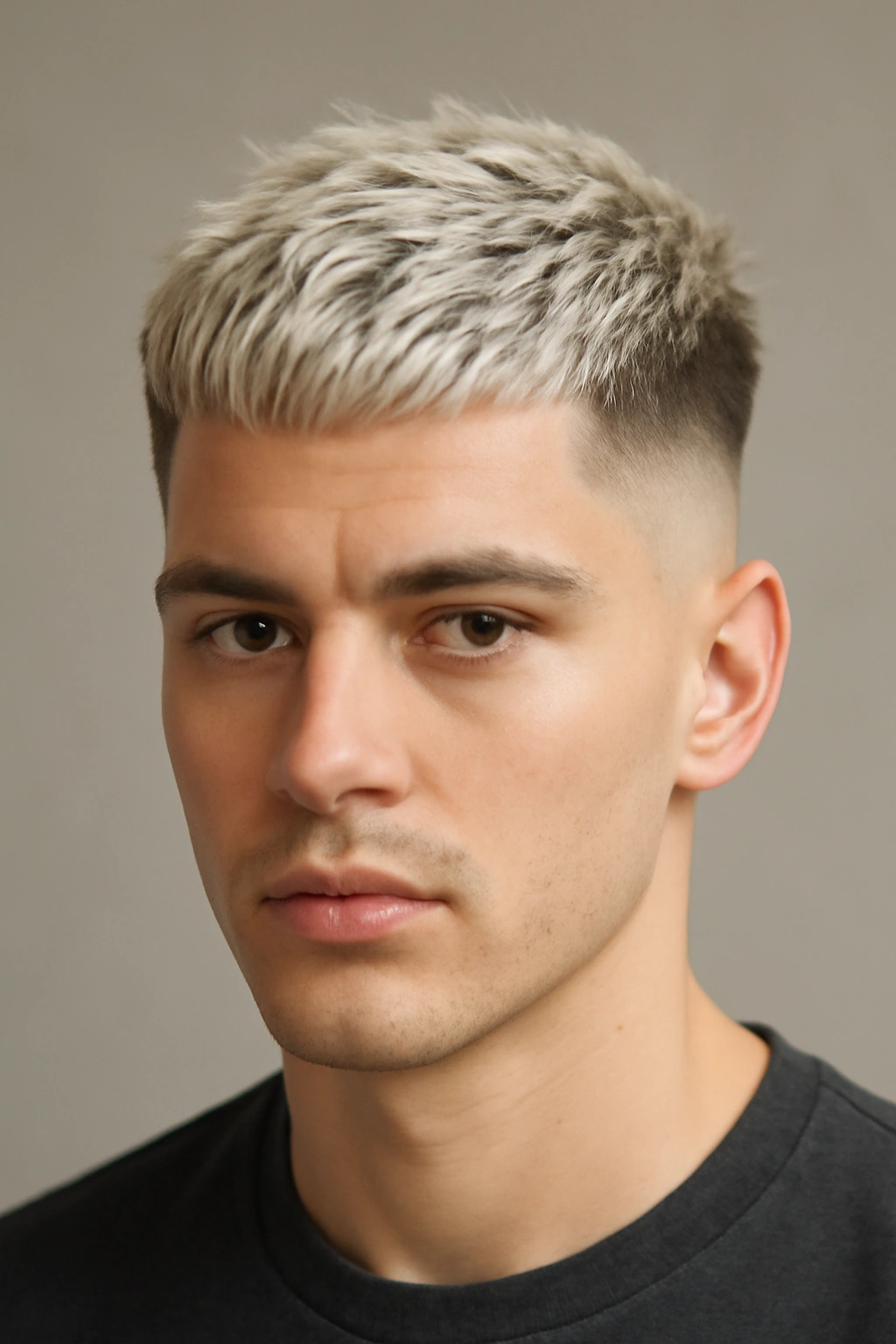
The high-fade crop takes the textured crop concept and intensifies it with closely faded sides that create a dramatically different length ratio between top and sides. Pair this with an icy blonde ombre that roots into darker ash tones and you get a style that’s simultaneously futuristic and wearable. The high fade sits roughly 2 inches above the ear, creating clean definition without being quite as extreme as an undercut.
Why This Look Works So Well
The icy blonde ombre prevents this cut from feeling too severe because the cooler tones create a contemporary, fashion-forward aesthetic rather than an aggressive one. The rooted effect means the style appears intentional and lived-in rather than clinical. The high fade creates a beautiful frame around the face while the textured top adds softness.
What Makes It Work Best
- The icy blonde requires toning every 6 to 8 weeks to prevent brassiness
- Styling works best with a texturizing product that adds movement and separation
- The fade needs refreshing every 3 to 4 weeks to maintain that sharp, high line
- Works beautifully across most skin tones, though it’s particularly striking on cool undertones
- The textured top can accommodate a slight longer length if you prefer more styling versatility
Pro tip: Icy blonde ombre requires bleached hair and commitment to conditioning, but the fashion-forward payoff is substantial.
6. Temple Fade with Warm Brunette-to-Blonde Ombre
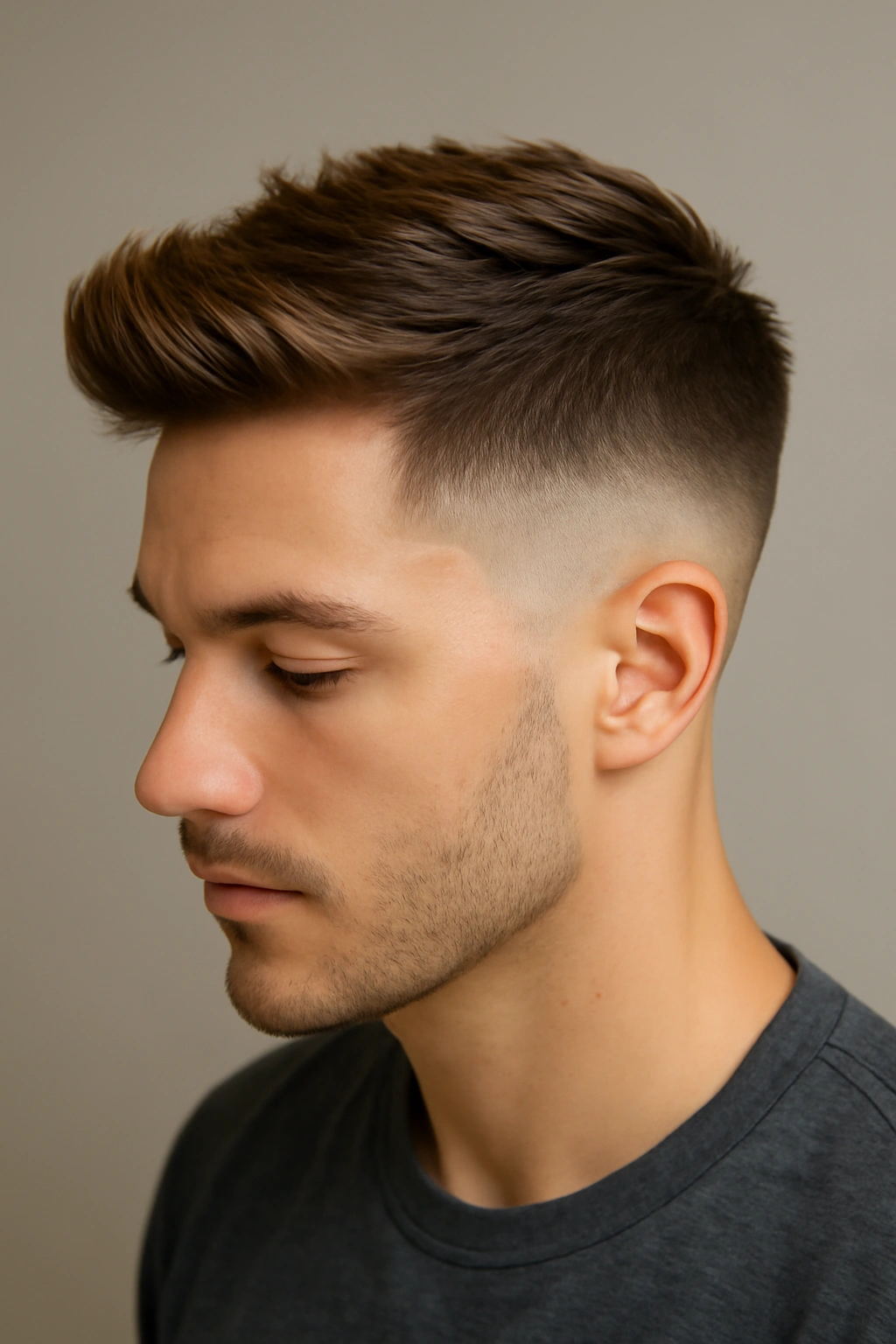
The temple fade is subtler than a high fade or undercut, focusing the fade specifically around the temples and back while maintaining slightly more length throughout the sides. This approach feels less dramatic while still creating clean definition, and it pairs exceptionally well with a warm brunette-to-blonde ombre that brings richness and dimension.
Why This Look Works So Well
The temple fade works beautifully for people who want the precision and polish of a faded style without the commitment to very short sides. The warm ombre creates dimension that makes the subtler fade feel intentional and planned rather than simply short. This particular color combination works across most skin tones and doesn’t require the same bleaching intensity as platinum ombre.
What Makes It Work Best
- The warm brunette-to-blonde ombre requires less maintenance than cooler tones because it doesn’t show brassiness as quickly
- Touch-ups are needed every 6 to 8 weeks depending on your natural hair color
- The temple fade keeps sides longer, typically 0.5 to 1 inch, reducing refresh frequency to every 4 weeks
- Styling options include textured, slicked-back, or naturally tousled finishes
- This style works beautifully on straight, wavy, and slightly curly hair
Worth knowing: Warm ombres feel more effortless and blend more naturally with root growth than cool-toned blondes, making them a practical choice for people who can’t commit to frequent salon visits.
7. Hard-Part Undercut with Black-to-Silver Ombre
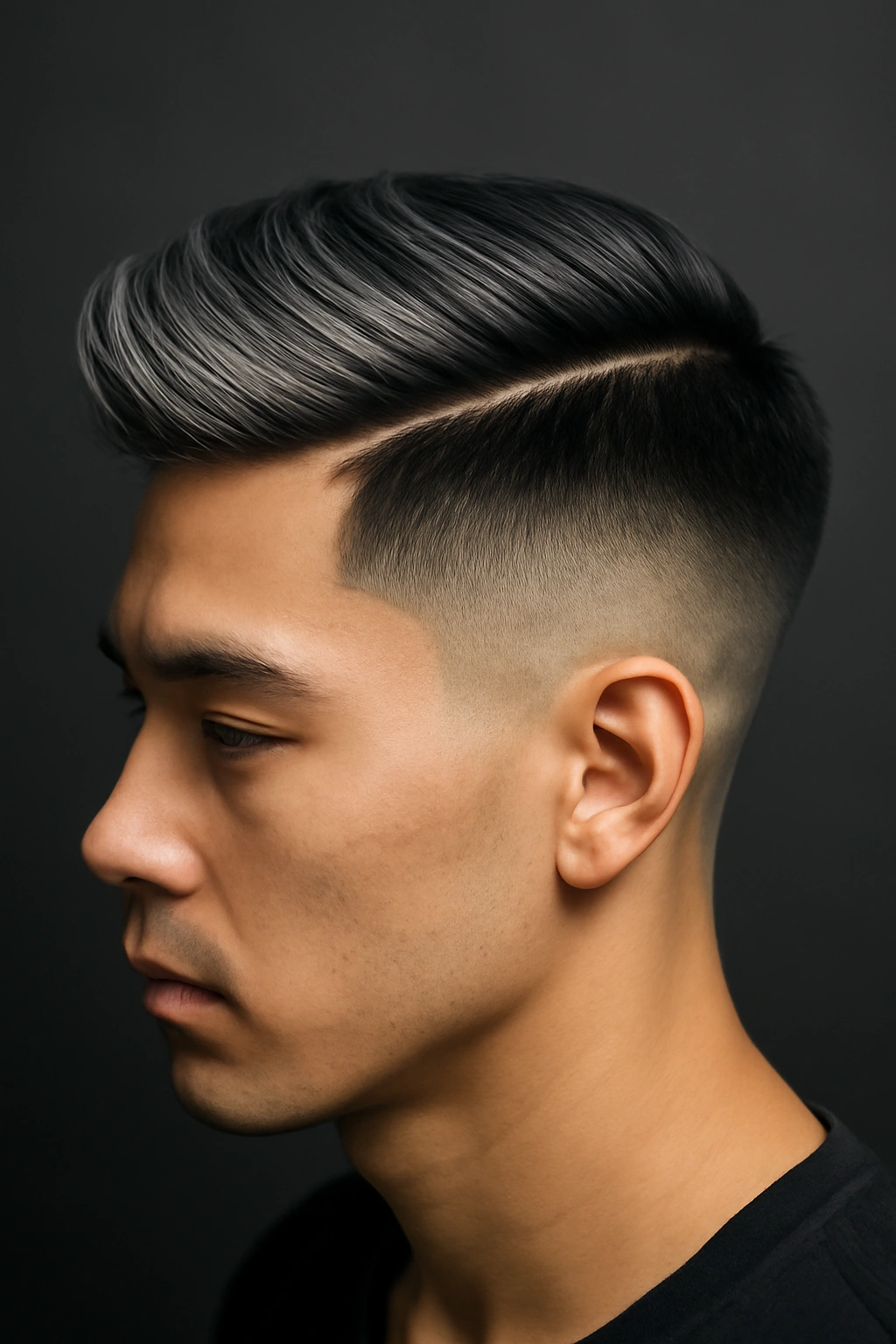
The hard-part undercut introduces a deliberate, razor-sharp line (or “part”) that separates the longer top from the faded sides, typically cut down to skin. Combined with a dramatic black-to-silver ombre, this creates one of the most bold and graphic short styles available. The hard part becomes a defining design element, and the ombre provides the color drama that makes the whole package unforgettable.
Why This Look Works So Well
The hard part adds architectural complexity to the undercut, creating a style that’s genuinely artwork-like. The black-to-silver ombre is maximally dramatic and makes the hard part appear even sharper and more intentional. Together, these elements create a style that’s impossible to ignore and signals serious style commitment.
What Makes It Work Best
- Requires styling every single day—this isn’t a wash-and-go style
- The hard part must be recut every 2 to 3 weeks to maintain crispness
- The black-to-silver transition needs touch-ups every 4 to 6 weeks
- Styling typically involves pomade, gel, or wax to define the part and control the top
- Works best on straight hair where the hard part can be cut cleanly and maintained precisely
Real talk: This style demands confidence and regular maintenance, but it’s genuinely striking and makes a powerful personal statement.
8. Messy Textured Fade with Honey Ombre
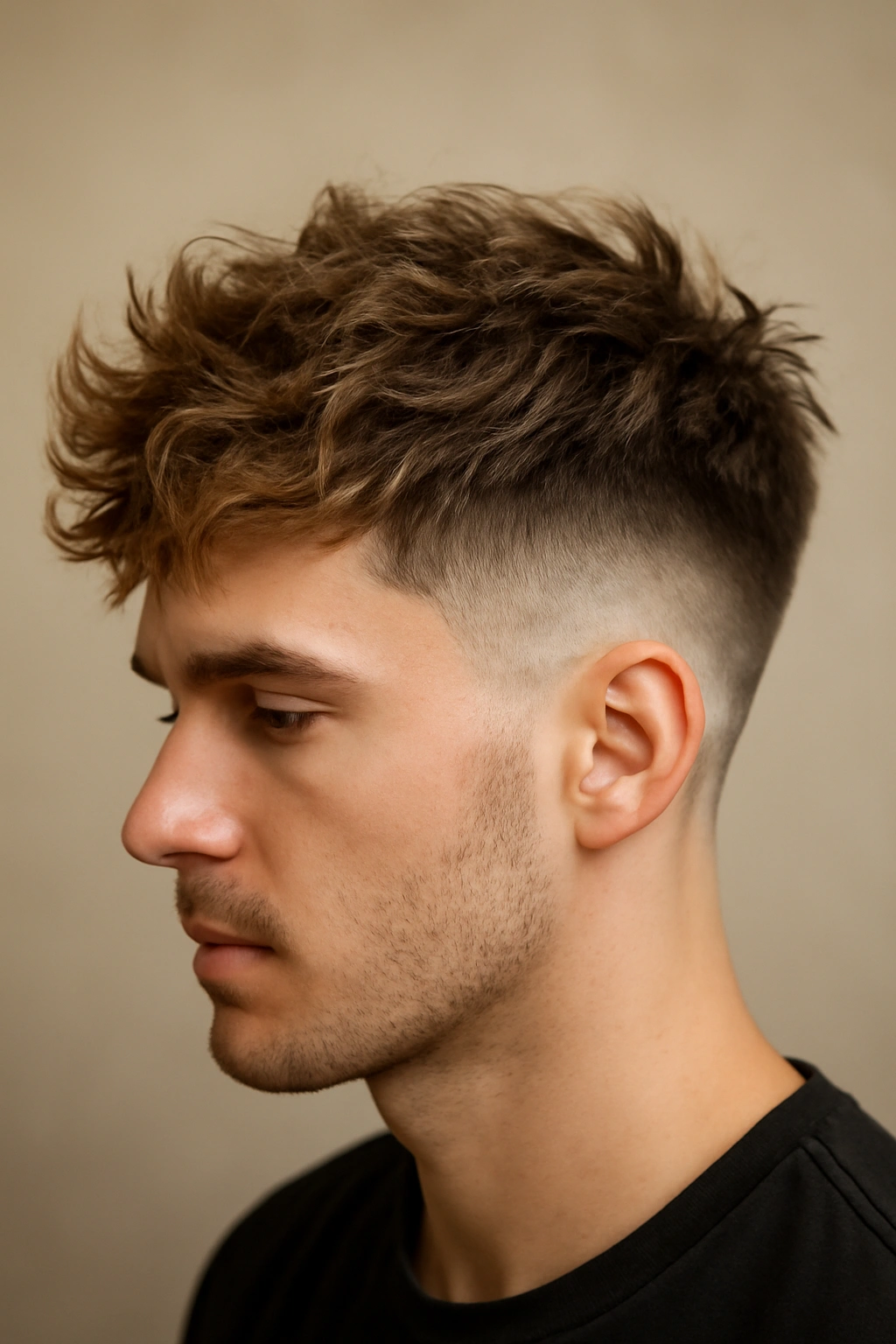
The messy textured fade combines a deliberately undone, tousled appearance with a perfectly blended fade, creating an interesting contrast between structure and casual energy. Adding a honey ombre—warm golden tones that transition through lighter blonde—softens the edges and creates a style that looks intentional without appearing overly polished.
Why This Look Works So Well
The beauty of this combination is the tension between the meticulously faded sides and the deliberately undone texture on top. It creates the impression of effortless style rather than calculated styling. The honey ombre adds warmth and dimension that makes the textured chaos look intentional rather than unkempt.
What Makes It Work Best
- Styling actually takes minimal effort—texturizing cream or dry shampoo creates the look almost automatically
- The honey ombre works beautifully across most skin tones and doesn’t require intensive bleaching
- Touch-ups are needed every 7 to 9 weeks since honey tones are forgiving with root growth
- The fade should be refreshed every 3 to 4 weeks to maintain that sharp-to-messy contrast
- Works on straight, wavy, and curly hair with equal effectiveness
Styling secret: This look actually photographs better when your hair has been styled with product the day before—a slightly lived-in texture adds to the intentional messiness.
9. Disconnected Fade with Peachy-Blonde Ombre
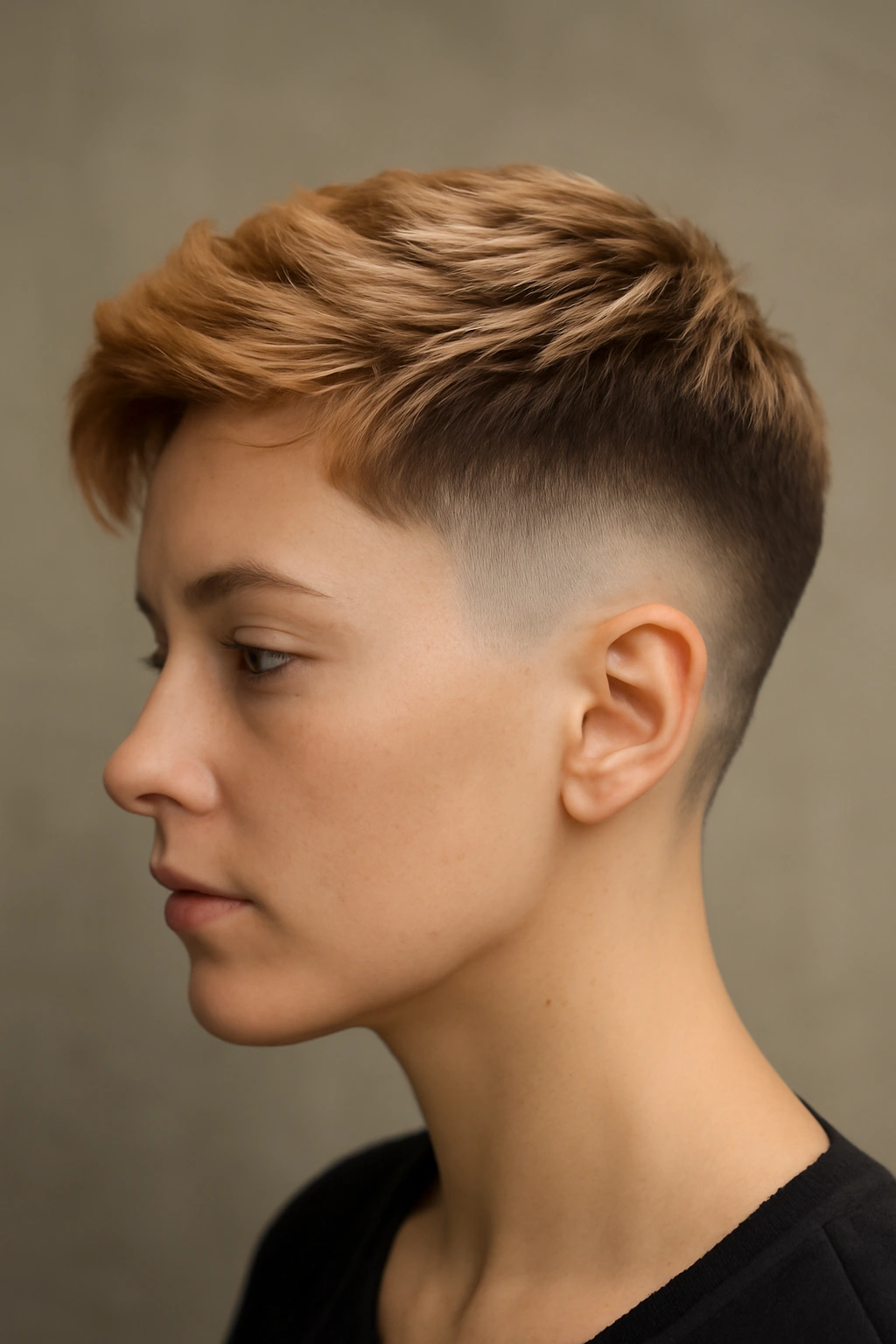
The disconnected fade is a styling choice where the longer hair on top isn’t actually blended into the shorter sides—instead, there’s a subtle but visible “disconnect” that creates deliberate separation. This architectural approach pairs beautifully with a peachy-blonde ombre that adds warmth and dimension. The separation allows both the cut and the color to be fully appreciated.
Why This Look Works So Well
The slight disconnect makes both the length of the top hair and the shortness of the fade more visible and dramatic, creating visual interest. The peachy-blonde ombre sits beautifully in that space, adding warmth without overwhelming the geometric design of the cut. This combination creates a style that’s simultaneously modern and surprisingly wearable.
What Makes It Work Best
- The disconnect requires precision cutting—a stylist familiar with this specific approach is essential
- Peachy blonde ombre requires regular tone maintenance every 5 to 7 weeks
- Styling works with texture, slicked finishes, or natural waves depending on your preference
- The fade refresh schedule remains every 3 to 4 weeks
- Works across various skin tones, though it’s particularly flattering on warmer undertones
Pro insight: The slight disconnect prevents the style from feeling too blended or “done”—it creates that intentional, modern aesthetic that’s harder to achieve with a fully blended transition.
10. Burst Fade with Strawberry Blonde Ombre
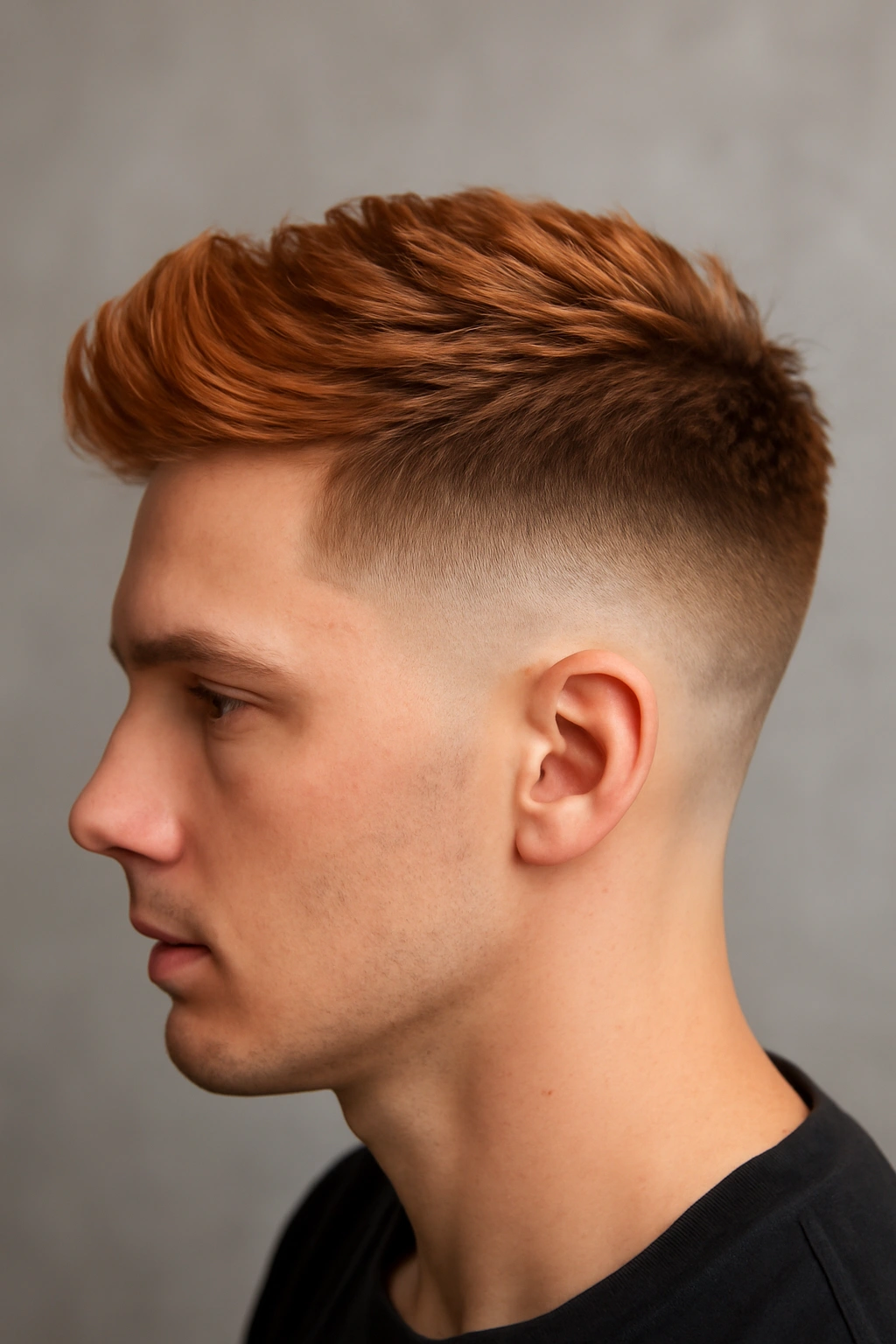
The burst fade is a specific fade variation where the fade is tighter (shorter) in the back and temples but gradually becomes longer as it moves up the sides toward the crown, creating a curved, circular pattern when viewed from above. Paired with a strawberry blonde ombre, this creates a genuinely unique aesthetic that’s become increasingly popular among people seeking something distinctive.
Why This Look Works So Well
The burst fade’s curved, organic quality makes it feel less severe than a traditional high-fade or undercut. The strawberry blonde ombre adds complexity—it’s not quite a warm peachy tone but not quite a cool platinum either, making it genuinely interesting. The combination creates a style that’s undeniably trendy while remaining wearable and flattering.
What Makes It Work Best
- The burst fade requires a highly skilled stylist—the curved transition isn’t easy to execute well
- Strawberry blonde ombre requires touch-ups every 5 to 7 weeks depending on your natural color
- The burst fade refresh schedule is every 4 weeks to maintain the curved definition
- Styling options are versatile—works with texture, sleekness, or natural waves
- This style flatters most face shapes because the curved fade creates softness
Worth knowing: The strawberry blonde ombre actually photographs beautifully in various lighting conditions because the color has inherent complexity rather than reading as one-dimensional.
11. Mohawk-Fade Hybrid with Blue-to-Silver Ombre
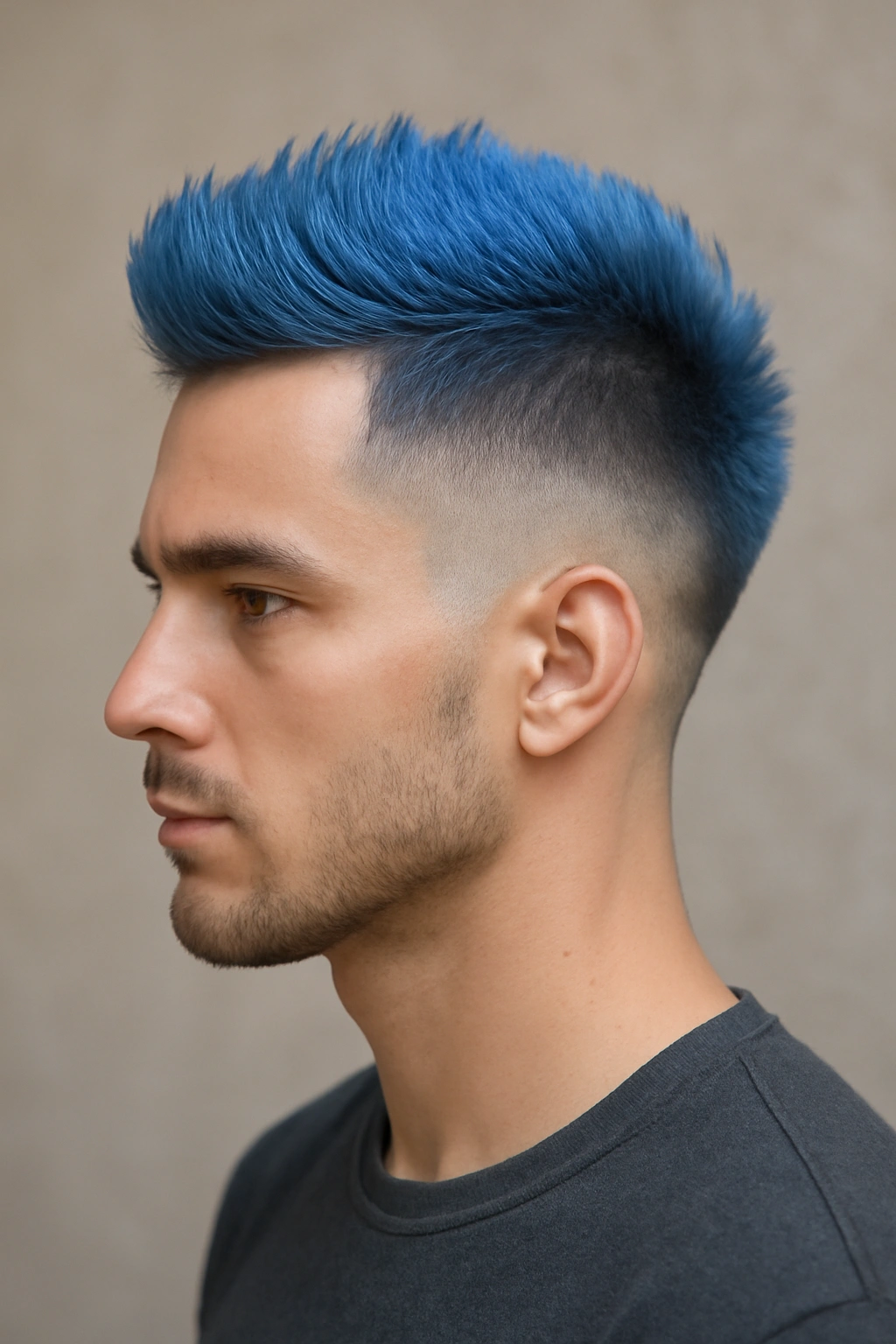
For people seeking genuine boldness, the mohawk-fade hybrid keeps slightly longer length down the center of the head while fading shorter on the sides, creating the impression of a mohawk without being quite as dramatic. The blue-to-silver ombre is utterly eye-catching, especially when applied to follow the directional flow of the longer center hair.
Why This Look Works So Well
The mohawk-fade hybrid balances edge and wearability—it’s definitely a statement style, but the slightly longer sides prevent it from being quite as punk-rock as a full mohawk. The blue-to-silver ombre makes the longer center stripe the focal point while the faded sides maintain some softness. Together, these elements create a style that’s bold without being inaccessible.
What Makes It Work Best
- The directional styling of the longer center section is essential—it should be styled to stand up slightly and create height
- The blue-to-silver ombre requires touch-ups every 4 to 6 weeks and demands toning to maintain the color intensity
- The fade needs refreshing every 3 weeks to maintain definition between the longer center and the sides
- This style absolutely requires the right attitude—it reads as a commitment to distinctive personal style
- Works on straight or wavy hair where the center section can hold styling
Real talk: This isn’t a subtle style, but for people who love blue hair and want to wear it in a slightly less extreme way, this hybrid approach delivers.
12. Drop Fade with Neutral Bronde Ombre
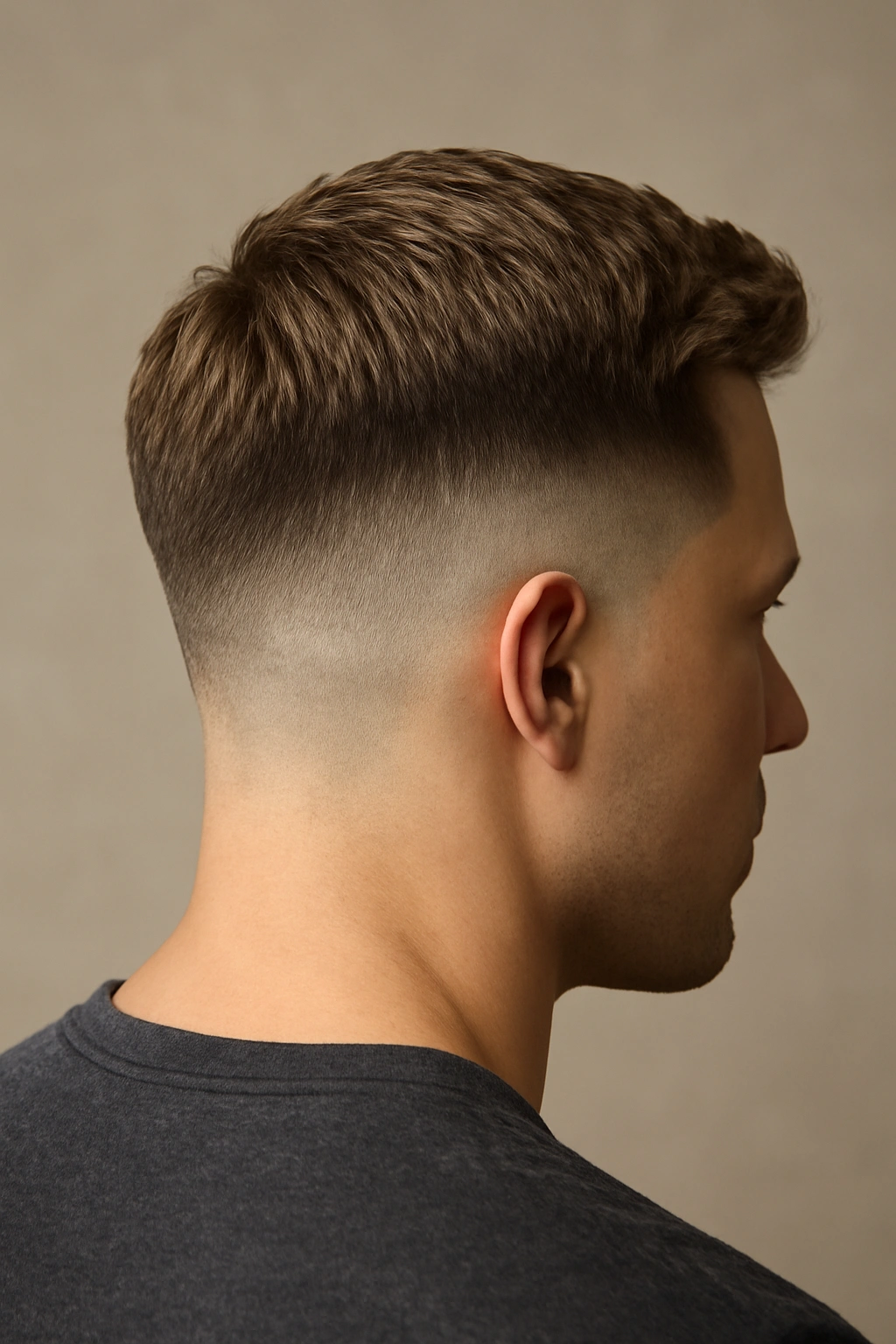
The drop fade curves down at the back, following the natural contour of the head in a way that can feel slightly softer than other fade variations. A neutral bronde ombre—that perfect blend of brown and blonde that’s extremely flattering but not showy—creates a style that’s sophisticated and genuinely timeless. This particular combination is exceptionally wearable while still looking intentional and well-executed.
Why This Look Works So Well
The drop fade’s curved nature creates a more organic frame around the face than sharper fade variations, and the neutral bronde ombre enhances that softness. Bronde is the ultimate “it just looks like that” color—it has depth and dimension without appearing high-maintenance. This is a style that works whether you’re dressing casually or formally.
What Makes It Work Best
- The neutral bronde ombre blends beautifully with natural roots, requiring touch-ups only every 7 to 9 weeks
- The drop fade’s curved transition looks beautiful slightly grown out, so refreshing every 4 to 5 weeks keeps it polished without demanding frequent visits
- Styling is flexible—works with texture, movement, or sleekness
- Flatters virtually all skin tones because bronde is inherently balanced
- This style works across all hair types and textures
Pro insight: The neutral bronde is genuinely sophisticated because it doesn’t announce itself—people notice the cut and the overall polish before focusing on the specific color, which creates an impression of effortless style.
Final Thoughts
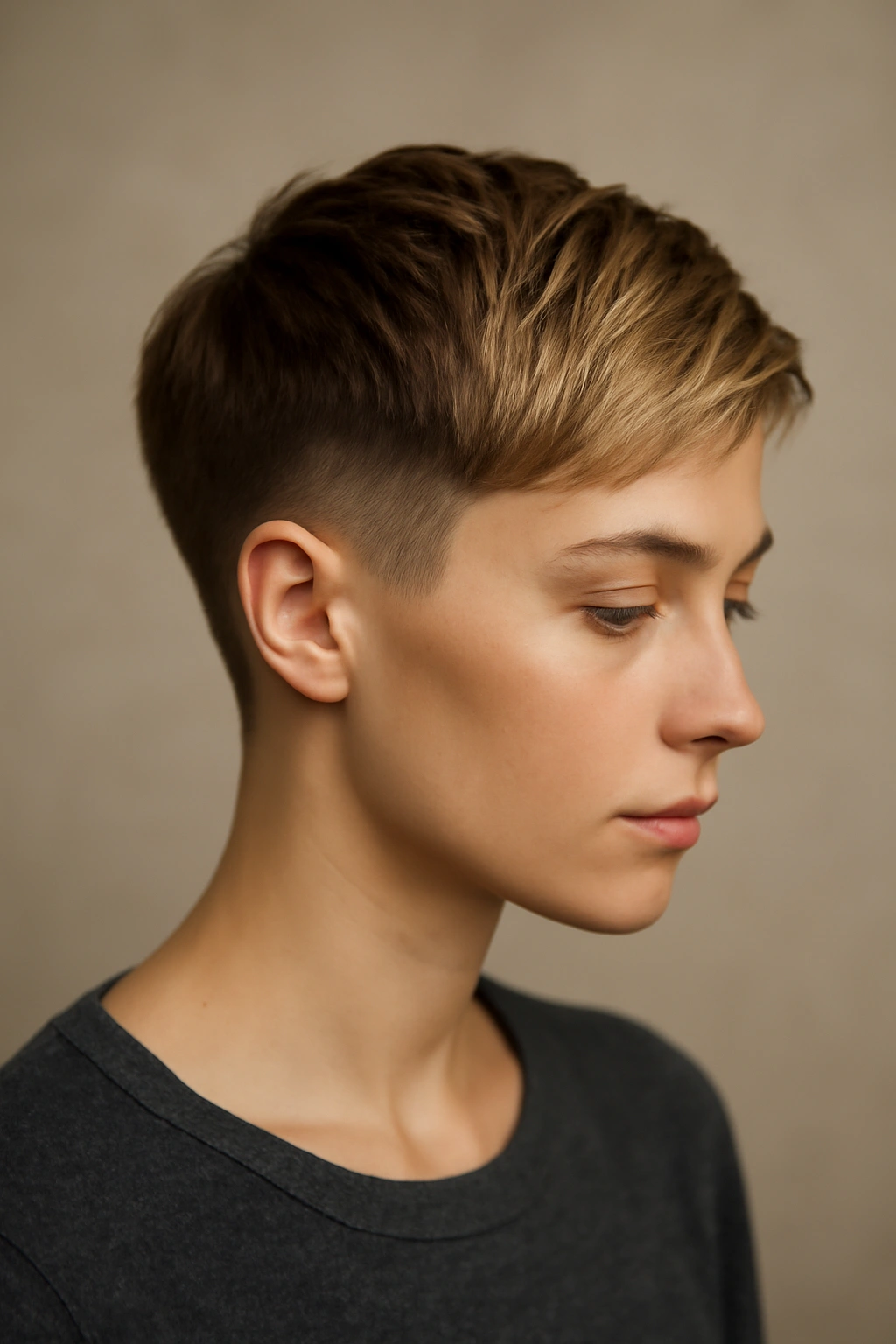
The intersection of a perfectly blended fade and expertly executed ombre coloring creates something that transcends typical hair styling. These combinations work because they respect the structure of the cut while using color to add dimension, softness, or drama depending on what you’re seeking. Whether you’re drawn to the subtle sophistication of a rooted bronde or the full commitment of blue-to-silver, one of these approaches will translate your vision into reality.
The common thread across all these styles is precision—both the cut and the color require skill, commitment, and regular maintenance. Finding a stylist who understands how color and cut work together, rather than as separate elements, makes an enormous difference in how these styles ultimately look and wear. When both elements are executed thoughtfully, you get a haircut that’s genuinely worth the time and investment it requires.
Start with honest conversations about your lifestyle and styling commitment. Bold colors and precise fades both demand regular attention, so choosing a style that matches your actual habits—rather than your aspirational self—ensures you’ll love your hair for months to come.
