



The shag haircut is back—and it’s better than ever. Unlike the choppy, disconnected versions of decades past, today’s shags are thoughtfully layered with intentional texture that looks effortlessly undone. The beauty of the lived-in shag lies in its apparent casualness; what actually takes skill is creating that perfectly imperfect feel where every piece seems to fall exactly where it belongs without trying too hard.
If you’re drawn to texture, movement, and a style that works with your natural hair instead of against it, short shags deliver exactly that. These cuts work across all hair types—from fine and straight to thick and wavy—and they’re remarkably forgiving on styling days when you’re working with what you’ve got. The key is finding the specific version that matches your face shape, lifestyle, and how much styling time you’re willing to invest.
The real genius of these modern shags is their adaptability. You can wear them sleek and deliberate, tousled and messy, or anywhere in between. They photograph beautifully, look intentional whether you’ve spent ten minutes or thirty on styling, and the layers are expertly placed to create movement exactly where you need it. Let’s explore fifteen distinct approaches to the short shag—each one proving there’s a textured, lived-in version perfectly suited to you.
1. The Feathered Pixie Shag
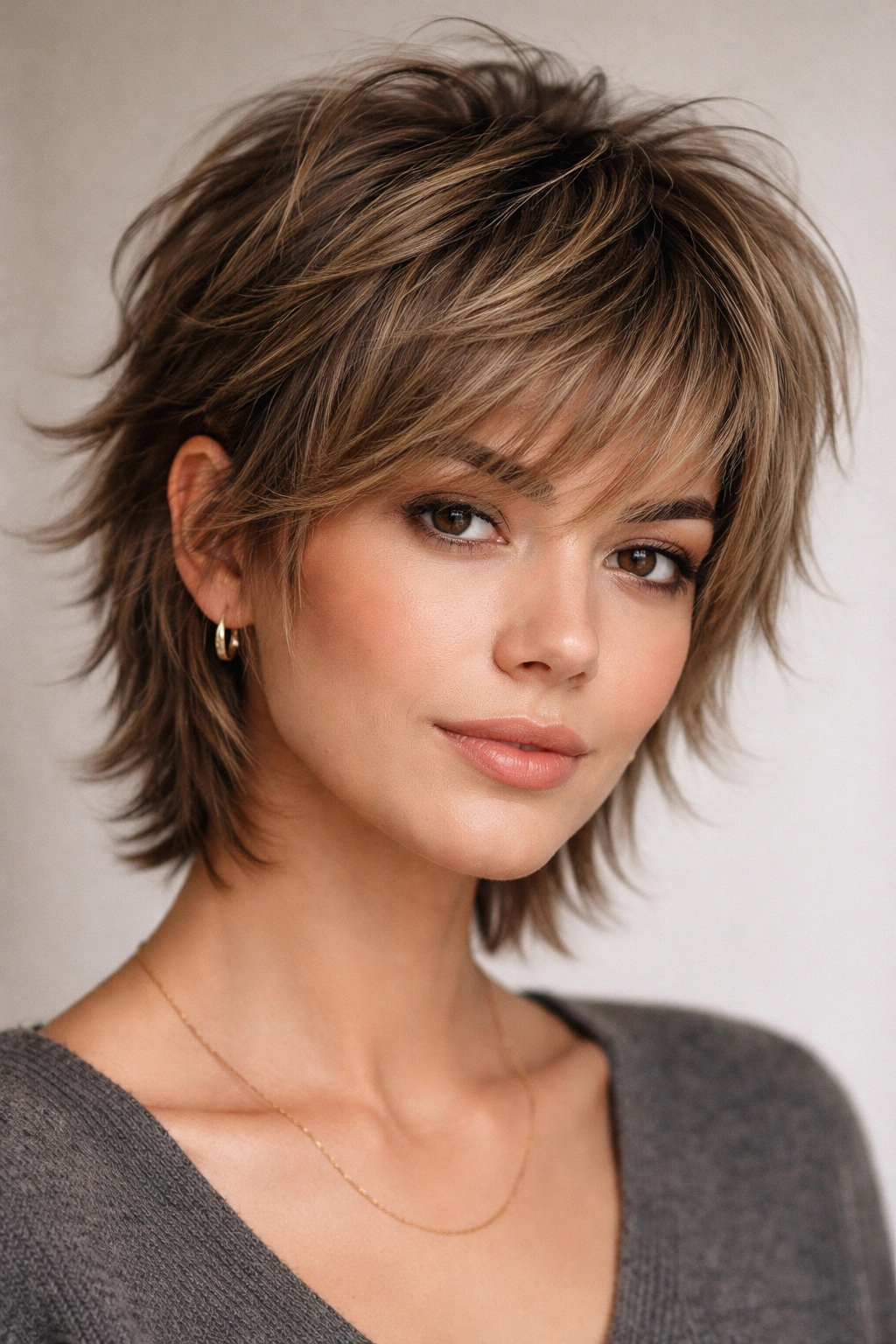
This style merges the structure of a pixie with the movement of a shag, creating something that’s undeniably chic yet low-maintenance. The crown is cut shorter with plenty of layers, while the sides are longer than a traditional pixie but still considerably shorter than the back. The result is a cut that frames the face beautifully while maintaining that characteristic shag movement throughout.
Why It Works for Most Face Shapes
The feathered pixie shag is particularly flattering because the layers create volume exactly where you want it—lifting away from the face while drawing attention to your cheekbones and eyes. The shorter crown prevents the cut from becoming too heavy, and the longer sides prevent it from reading as too severe or masculine, even though it has real edge to it.
Styling and Maintenance Tips
- Use a lightweight texturizing spray or dry shampoo to enhance the natural texture and add grip for styling
- A blow dryer with a concentrator nozzle helps direct the feathered layers where you want them
- Tousle by running your fingers through while the hair is still damp, then let it air dry for the most effortless finish
- Trims every four to six weeks keep the shape sharp and the layers defined
Pro tip: This cut absolutely sings with a touch of product—try a matte finish styling cream that separates layers without making them look slicked down.
2. The Shaggy Bob with Textured Layers
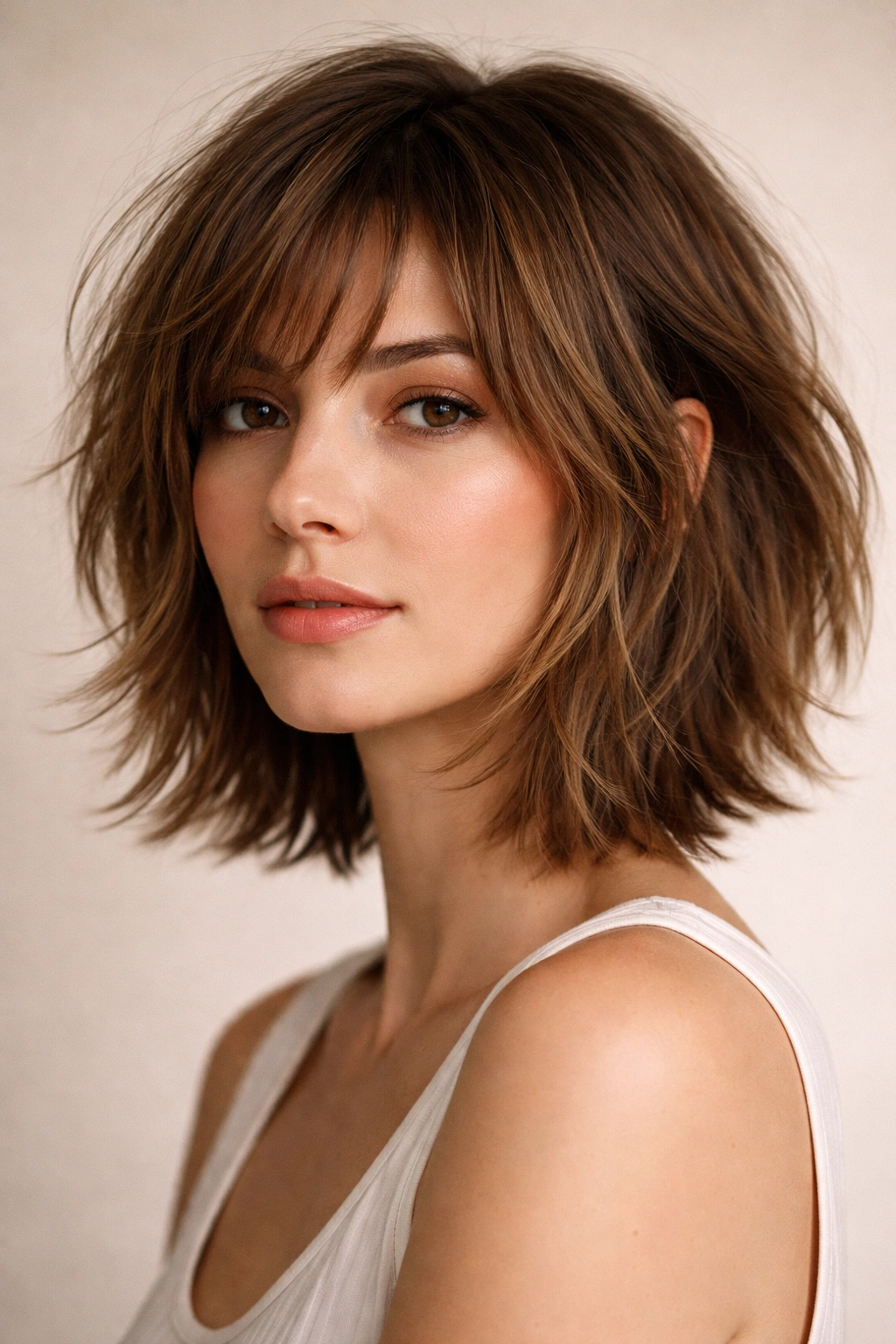
This interpretation keeps the length closer to the chin while incorporating strategic layers throughout that create movement and prevent the style from feeling blunt or heavy. It’s longer than a pixie shag but shorter than a traditional bob, hitting that sweet spot where texture really shines. The layers are cut into both the front and back, so there’s no single “growth phase” where the cut looks awkward.
The Front-to-Back Movement
What distinguishes this style is how the layers at the front are cut shorter than the back layers, creating a subtle longer length in the back while the face-framing pieces move freely. This gives you the best of both worlds—visibility and a polished shape, without sacrificing movement or the slightly undone aesthetic.
How to Wear It
- Styled sleek with a smoothing serum for a more polished, office-appropriate look
- Tousled and piece-y with a sea salt spray for a weekend, lived-in vibe
- Blow dried for volume at the crown, or air dried for softer movement
- Works equally well on straight, wavy, and curly hair with appropriate product choices
Worth knowing: This length is ideal if you’re transitioning from longer hair because it doesn’t require a dramatic change, yet it feels completely fresh and modern.
3. The Choppy, Face-Framing Shag
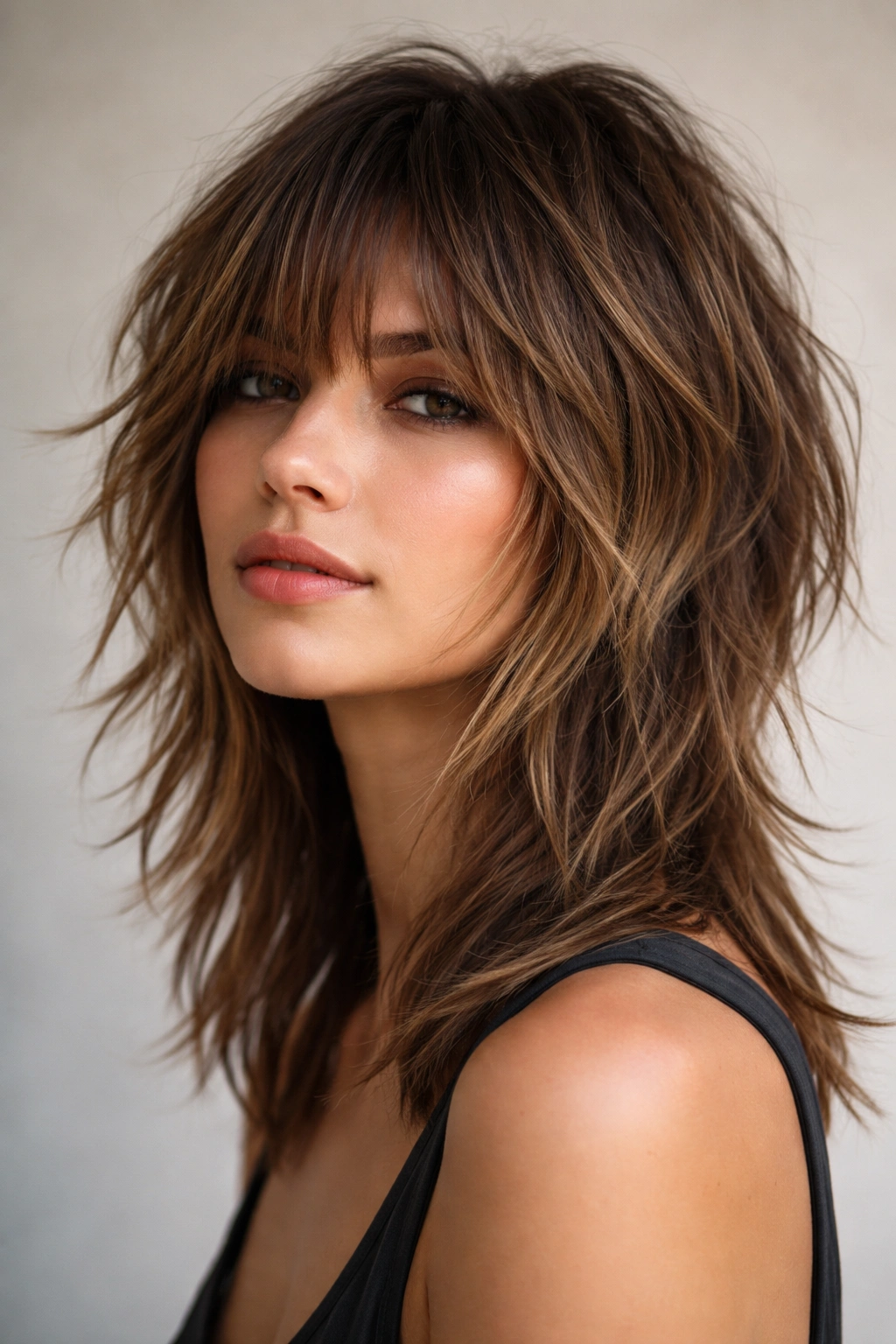
For those who want real movement and don’t mind the slightly edgier aesthetic, the choppy face-framing shag delivers impact. The layers are more pronounced and disconnected than seamless, with shorter pieces around the face and longer sections throughout the back and sides. This is the shag for people who want their haircut to announce itself.
Creating Dimension Without Harsh Lines
The trick here is that even though the layers are choppy, they’re still carefully placed to work together as a cohesive whole. A skilled stylist ensures that the shorter, choppy pieces don’t create a haphazard or unkempt appearance, but rather controlled texture that frames the face intentionally. The randomness is actually strategic.
Product and Styling Approach
- Texturizing sprays are essential for enhancing the natural separation between layers
- A light hold spray helps keep the shape throughout the day without stiffening the texture
- Fingers are your best styling tool—run them through the layers to encourage the choppy movement
- This style benefits from slightly longer wear between washes; a bit of oil in the hair helps the texture look intentional rather than greasy
Insider note: Ask your stylist for choppy layers that are slightly longer in the front and shorter toward the back of the crown for the most flattering frame.
4. The Tousled Mullet Shag
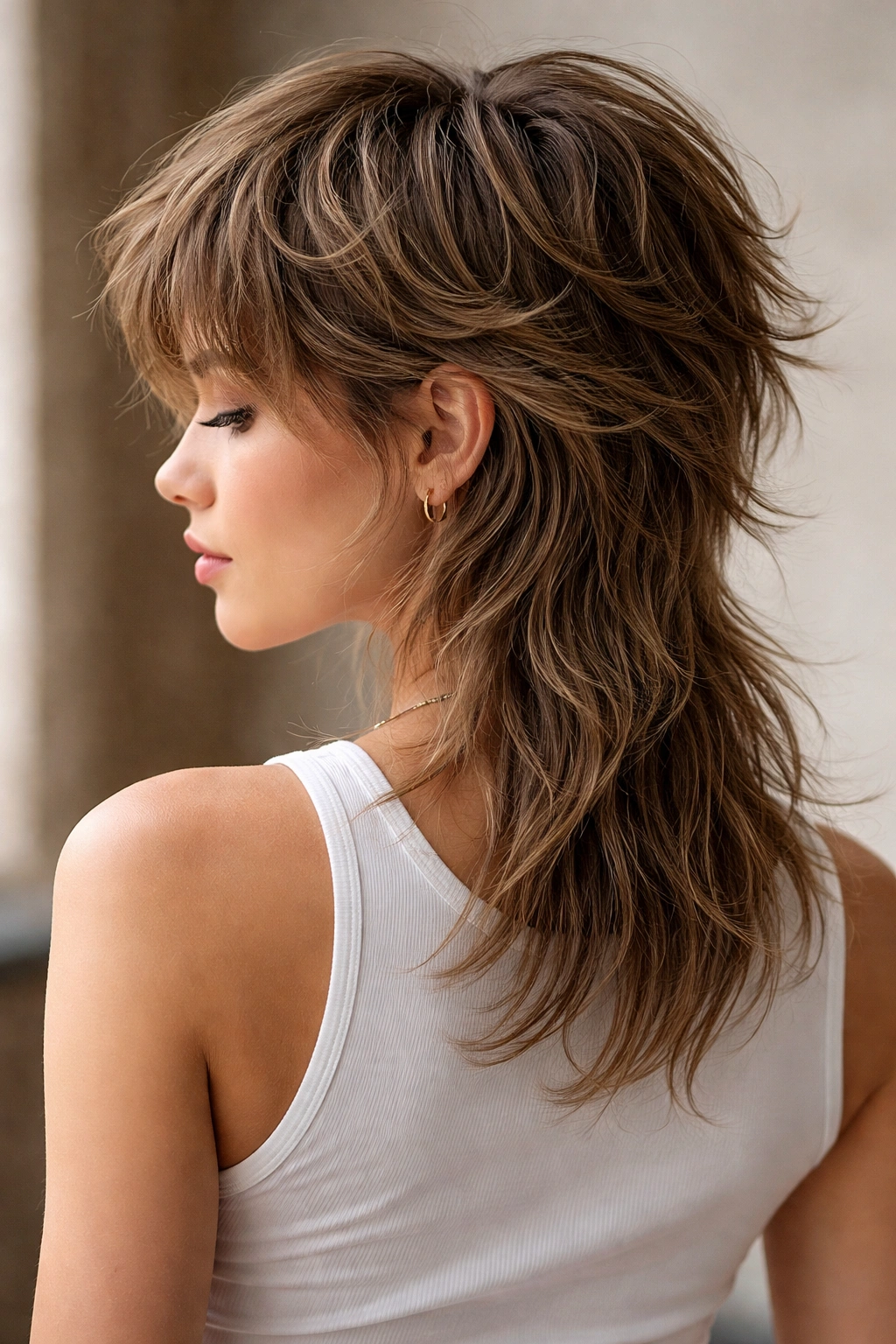
This modern interpretation of a shag embraces the mullet’s longer back, but with layers and texture that prevent it from reading as costume-y or ironic. The sides and top are cut shorter with significant layering, while the back is distinctly longer, creating genuine volume and movement. It’s fashion-forward without trying too hard.
Who Should Consider This Cut
The tousled mullet shag works best on people with naturally wavy or textured hair, or those willing to style with heat tools and product to encourage texture. The back length means you’re committing to growing it out somewhat, but the layers throughout ensure it never looks stringy or one-note. It’s a statement piece—wear it confidently.
Styling for Maximum Impact
- Apply a texturizing product to damp hair, then blow dry while tousling with your fingers
- Use a sea salt spray for beachy waves, or a dry shampoo if your hair is naturally straight and you want to encourage texture
- The back layers can be scrunched for more wave definition or left to dry naturally depending on your hair type
- This cut benefits from slightly choppy bangs or shorter face-framing pieces
Pro tip: This style photographs beautifully in natural light, where you can really see how the light plays through the layers.
5. The Seamless, Blended Shag
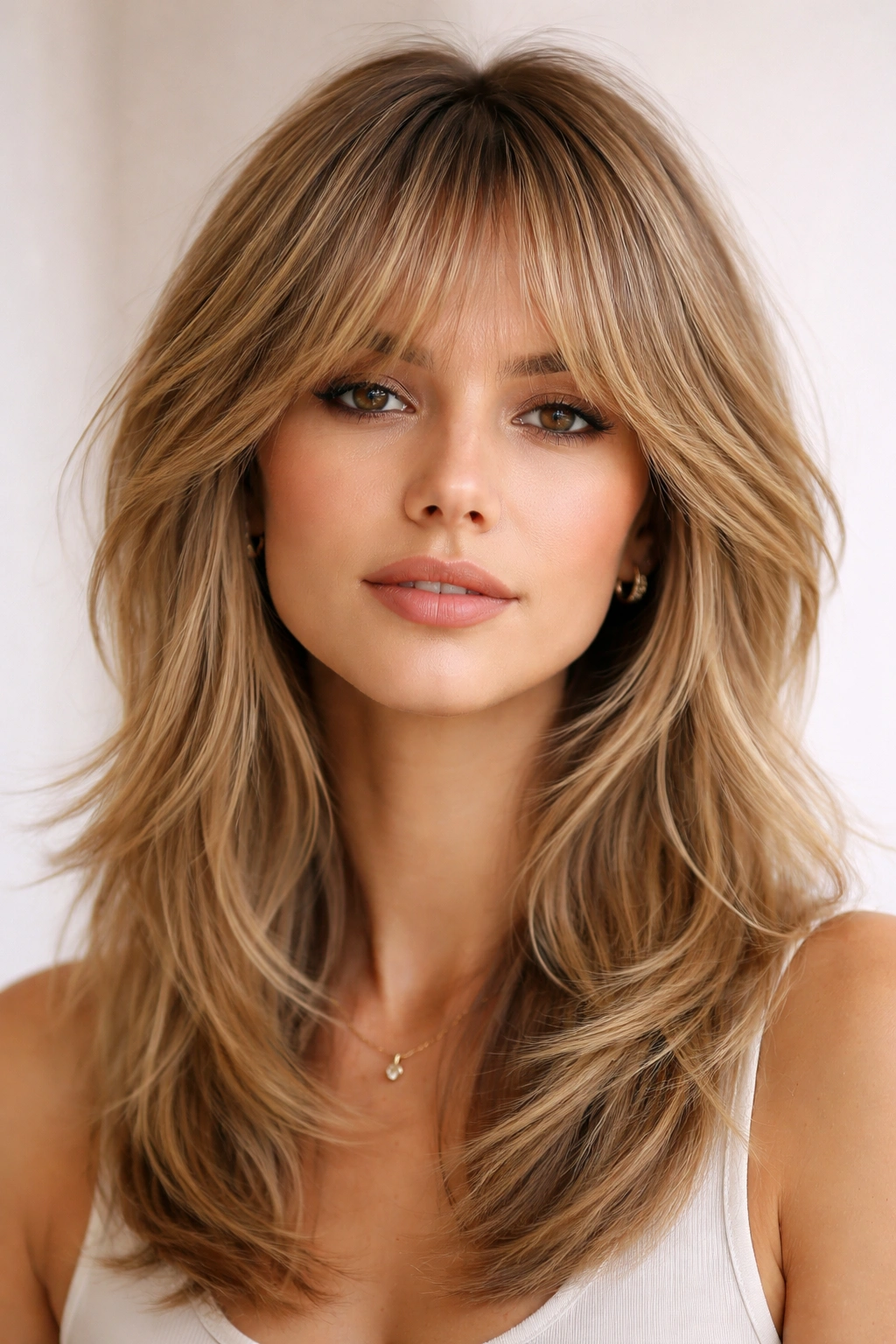
For those who want texture and movement but prefer a more polished, finished appearance, the seamless blended shag delivers. The layers are there—you can see the texture and movement—but they’re cut and blended so skillfully that the overall effect is sleek rather than choppy. It reads as a sophisticated, intentional style rather than undone.
The Technique Behind the Smoothness
This style requires precision layering with proper blending between each section. Rather than cutting dramatic lengths of difference, each layer slightly overlaps the next, creating a smooth transition while still maintaining the movement that makes shags so appealing. It’s the difference between texture and chaos.
Maintenance and Styling
- Works beautifully on all hair types, though wavy and curly hair really shows off the seamless blending
- Blow drying creates a polished finish; air drying creates something softer but still controlled
- A light styling cream or smoothing serum keeps the layers from separating too dramatically
- Trims every six to eight weeks maintain the blended quality—once the layers start to grow out, the seamlessness diminishes
Worth knowing: If you’re new to shags and worried they might look too undone, this version is your entry point. It gives you all the modern movement without the potential for looking messy.
6. The Textured Crop Shag
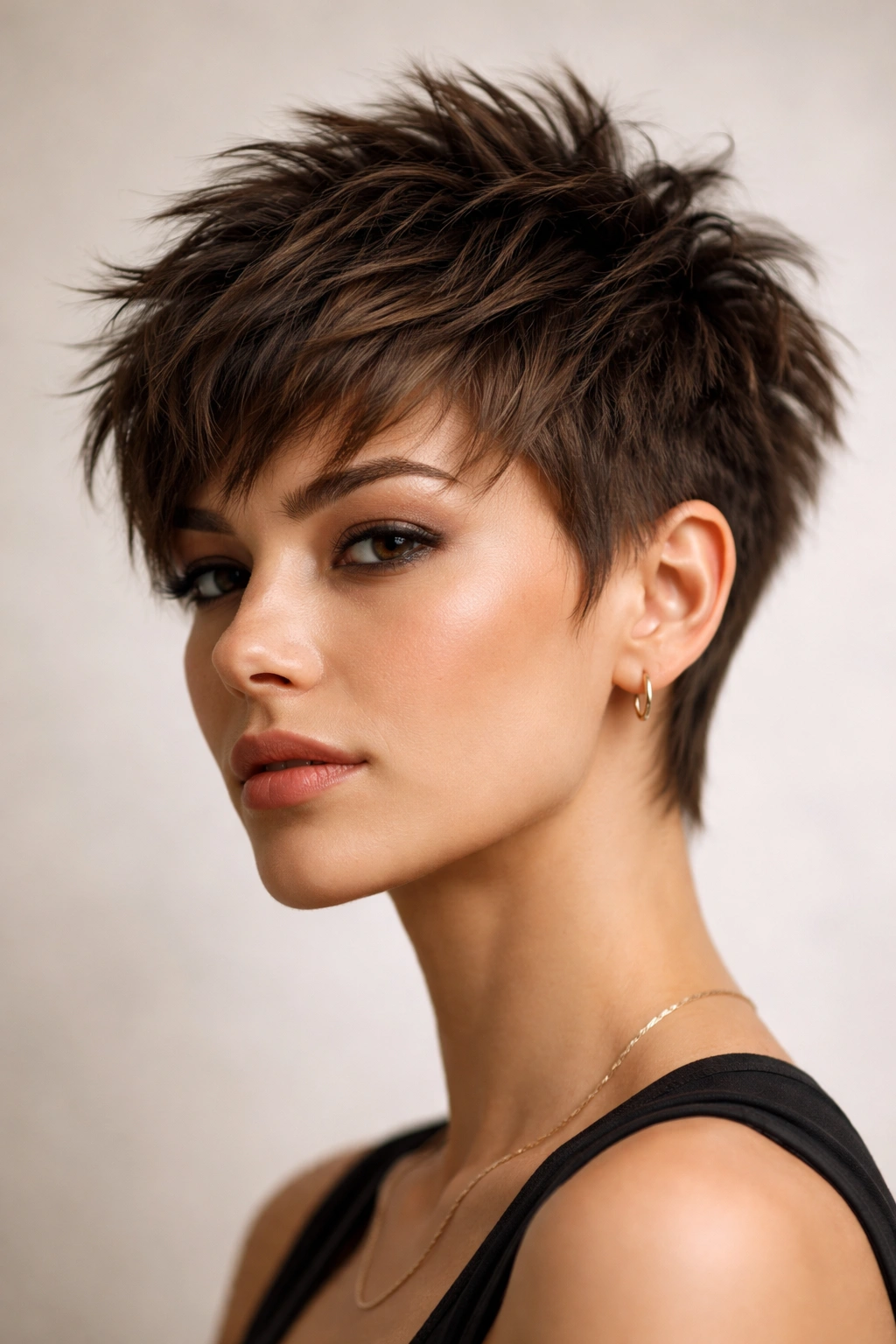
This ultra-short version stacks the layers at the crown for serious volume, with texture cropped close to the head on the sides. It’s androgynous, bold, and perfect for people with naturally textured hair or those willing to use styling products and heat tools to create defined texture. The lived-in aesthetic is practically automatic.
Best Face Shapes for the Crop Shag
The textured crop shag is incredibly flattering on oval, square, and heart-shaped faces. The volume at the crown elongates the face, while the close sides emphasize cheekbones and jawline definition. If you have a round face, ask your stylist for slightly longer length on top to avoid emphasizing width.
Styling Requirements
- A good texturizing product is non-negotiable—this cut needs definition to look intentional
- A blow dryer creates the best results; air drying can look shapeless on straighter hair types
- Fingers as a styling tool are essential; use a light texturizing spray and tousle while drying
- This is a high-maintenance cut in terms of frequent trims, since the short length means grow-out is noticeable within 4-5 weeks
Insider note: This cut is ideal if you love the low-maintenance promise of short hair but want modern style rather than a simple buzzed look.
7. The Shaggy Waves Shag
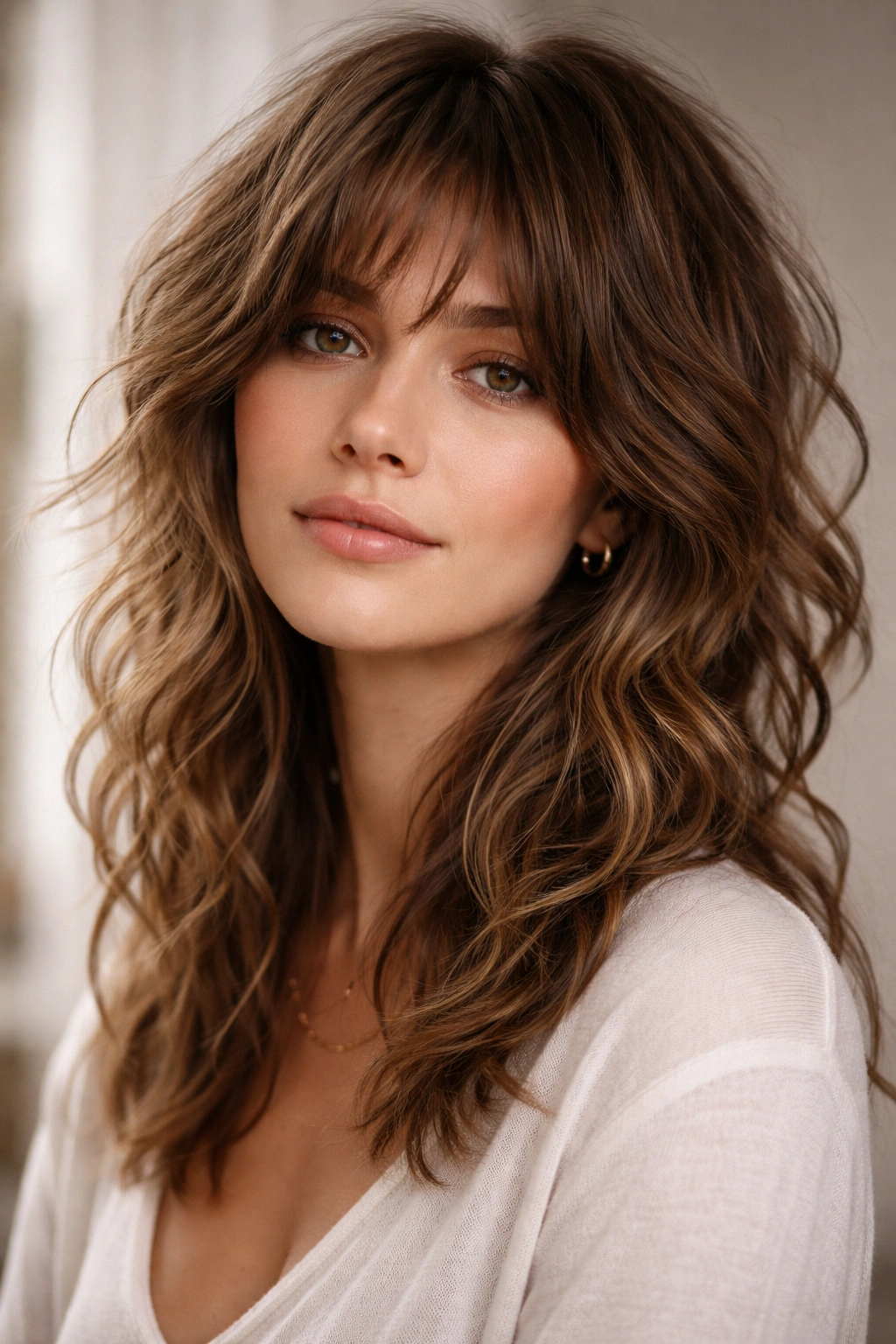
This version embraces natural wave or curl pattern rather than fighting it, with layers cut specifically to enhance and define the texture you already have. The cut works with your hair’s natural movement instead of imposing a different aesthetic. It’s perfect for people with naturally wavy or curly hair who want to lean into their texture rather than straighten it out.
Layering for Wave Definition
The key to this style is that the layers are cut into the hair while it’s in its natural textured state, not while it’s been blown out or straightened. This ensures that when you style it naturally, the layers sit exactly where the stylist intended. The length is typically between chin and shoulder, with the longest pieces in the back and shorter, more face-framing pieces in front.
Product and Styling Approach
- A good curl-defining cream or mousse applied to soaking wet hair is essential
- Diffuse drying or plopping helps encourage wave definition throughout the layers
- A light hold spray keeps the texture intact throughout the day
- This style actually improves with time between washes, as natural oils help define the waves
Pro tip: Finding a stylist experienced with cutting textured hair is crucial—they’ll understand how your hair moves when it’s dry, not just when it’s wet.
8. The Androgynous Shag
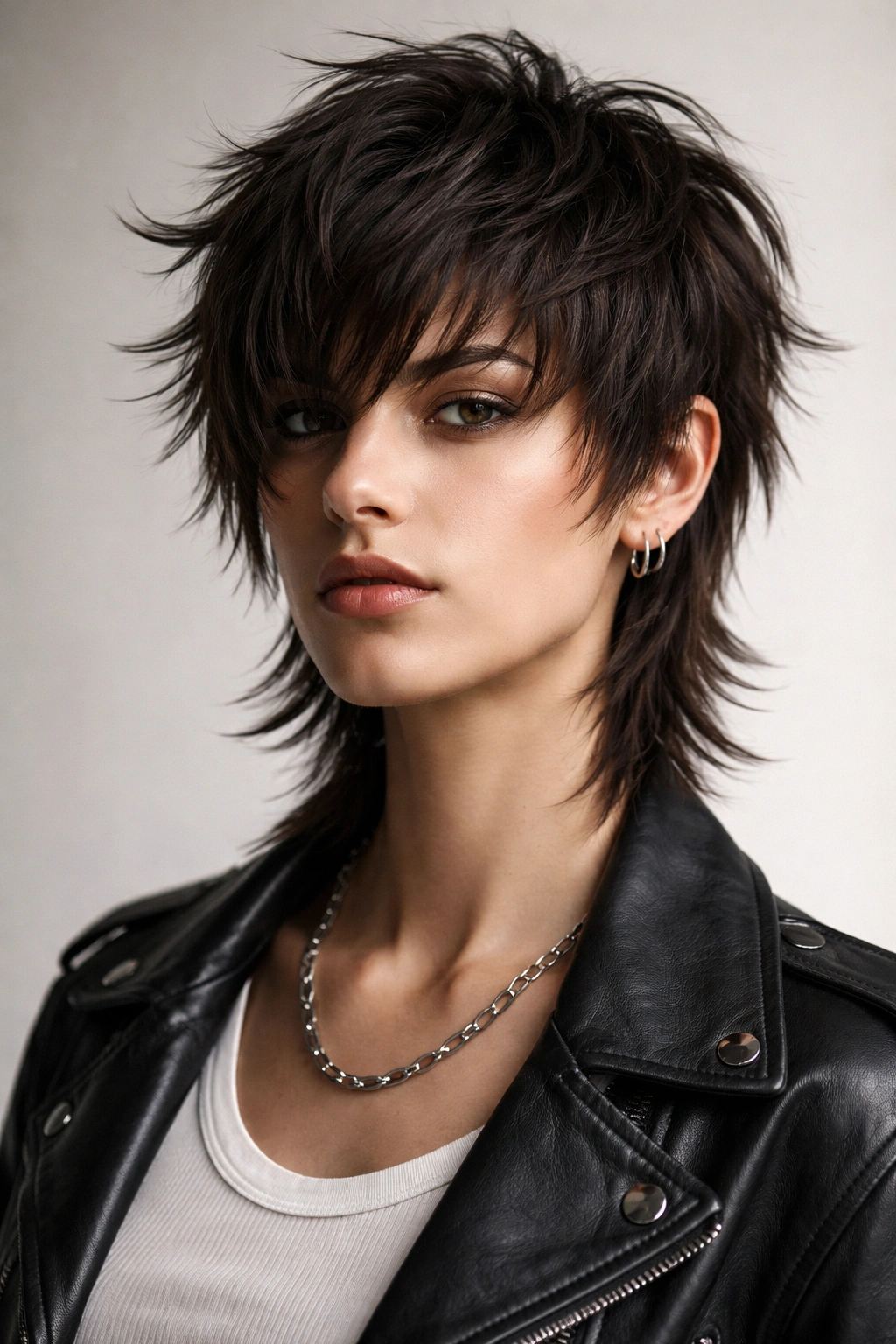
This cut prioritizes clean lines and sharp angles while maintaining the texture and layering that define a shag. The sides are often quite short or tapered, the back slightly longer, and the overall effect is fashion-forward and bold. It’s for people who want a distinctive haircut that makes a statement.
The Psychology of This Cut
The androgynous shag is inherently confident—it doesn’t apologize for being different or unconventional. It works best when worn with intention and confidence, whether that’s styled sleek and polished or tousled and undone. The cut itself is neutral enough to work across all genders.
Styling Options
- Can be worn super clean and sharp with a smoothing serum and precision styling
- Can be worn completely tousled with texturizing spray and piece-y separation
- Responds beautifully to geometric, bold clothing and minimal jewelry
- The short sides mean this cut requires frequent trims—every 3-4 weeks—to maintain the sharp lines
Worth knowing: This cut often looks most striking on people with clear skin and strong facial features, as the cut puts your face front and center.
9. The Textured Lob Shag
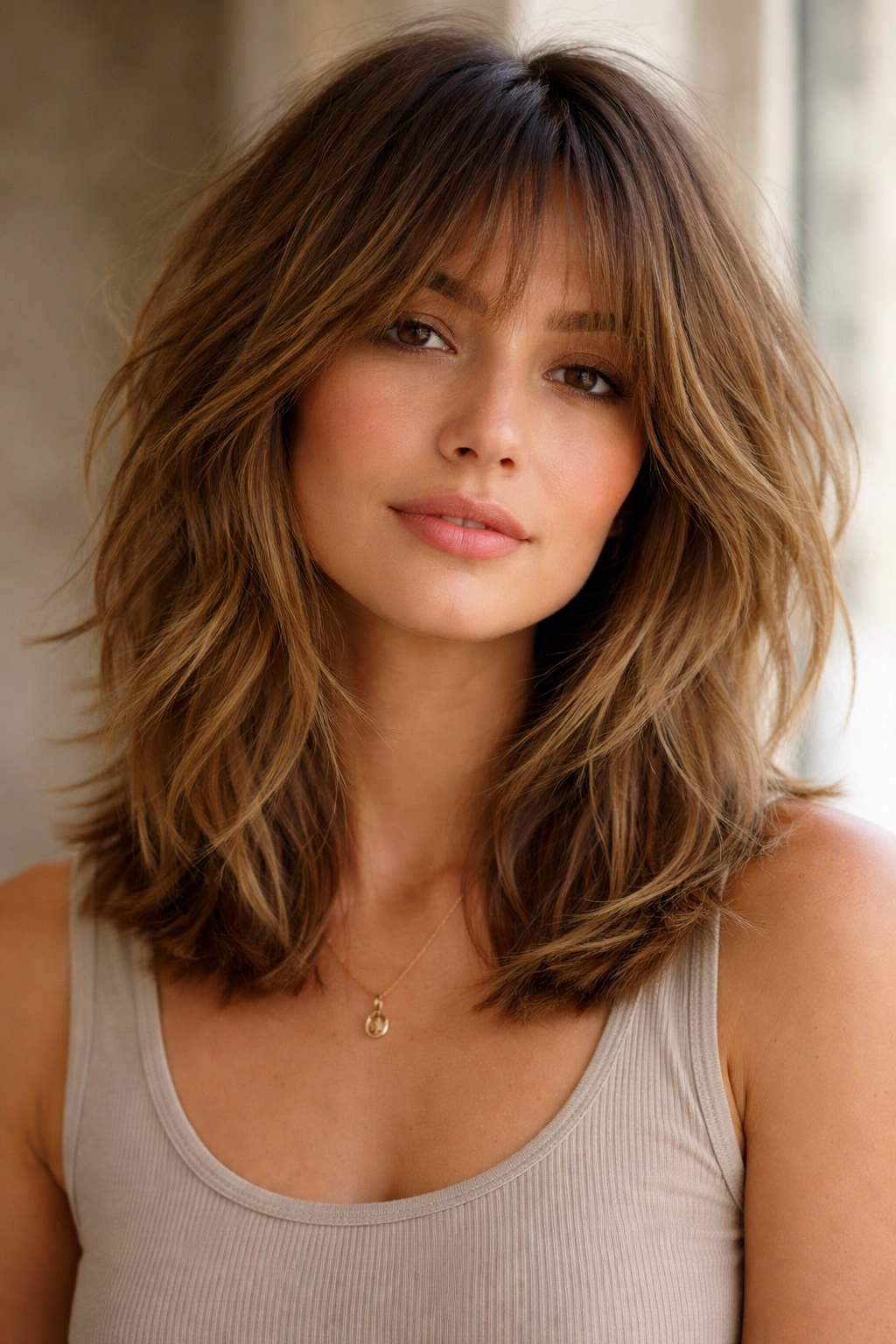
For those who prefer more length but still want that shaggy texture and movement, the textured lob (long bob) shag works beautifully. It’s typically shoulder length or slightly shorter, with layers throughout that create movement. The length provides more styling versatility—you can wear it up in a quick bun, half-up, or down and textured.
The Versatility Factor
This length is genuinely practical for people with active lifestyles. You can tie it back when you need to, but you still get the modern, textured aesthetic you’re after. It’s the perfect middle ground between committing to a very short cut and staying with longer hair. The layers prevent it from looking like a basic longer cut.
Styling Flexibility
- Works down with waves, texture spray, and tousled layers for a casual, lived-in look
- Can be blow-dried smooth with a round brush for a more polished aesthetic
- Half-up styling makes use of the length while keeping hair off your face
- A messy bun keeps the textured pieces in front down and visible while securing the bulk of the hair
Pro tip: Ask your stylist to cut the layers so that the face-framing pieces fall just under the chin—this creates the most flattering frame while maintaining the longer length in back.
10. The Sharp, Intentional Shag
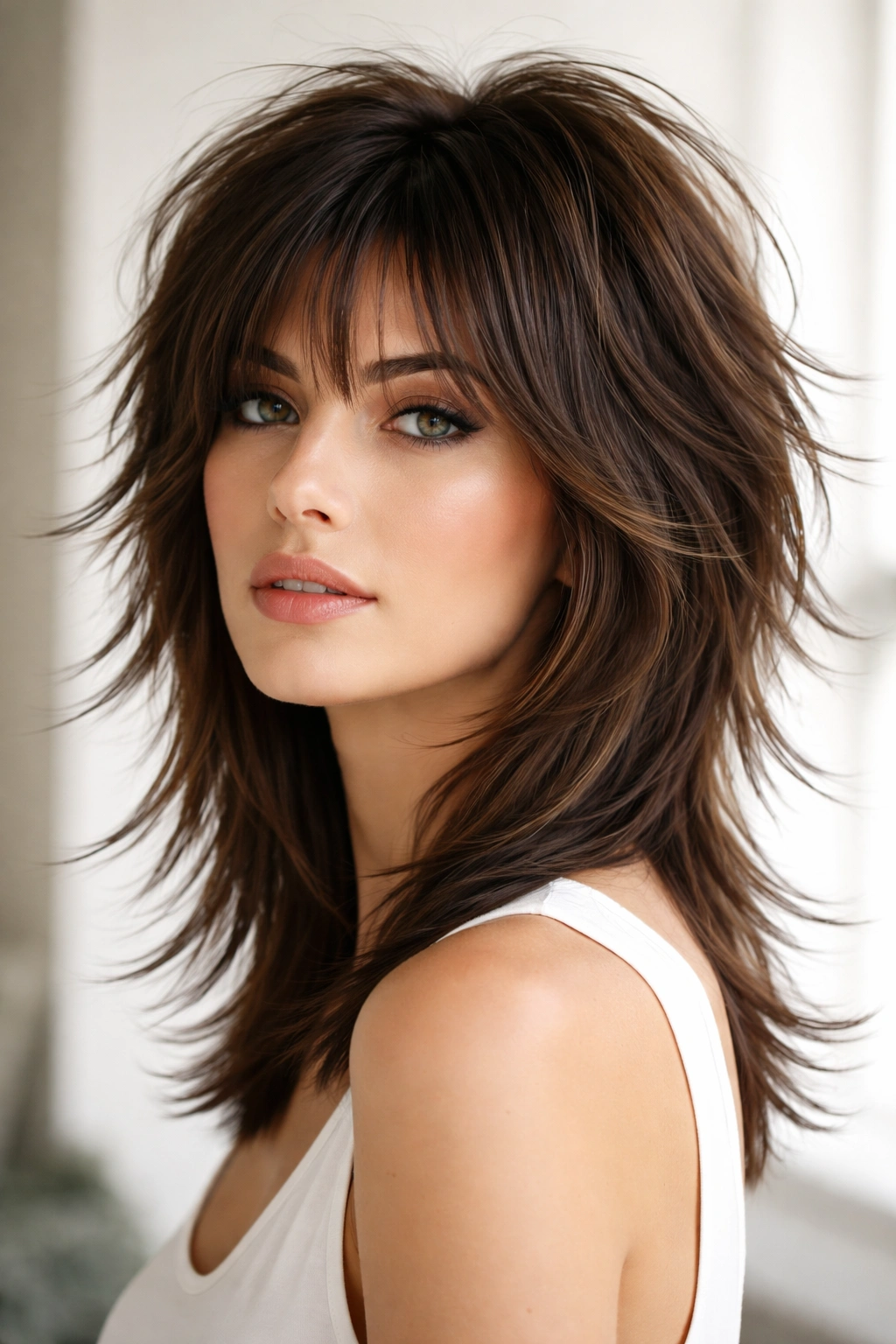
This version goes for clean, defined layers with intention and geometry rather than a soft, blended approach. Each layer has a clear purpose: some frame the face, some create volume at the crown, some encourage movement in the back. It’s not undone—it’s carefully constructed to look intentional.
Understanding the Architecture
The sharp, intentional shag is meticulously planned by the stylist. They’re not cutting randomly; they’re identifying exactly where you need lift, where you need to frame your face, and where you need movement. The result is a cut that accomplishes specific goals rather than simply being textured for texture’s sake.
Maintaining the Sharpness
- This cut requires regular maintenance—ideally every 4-5 weeks—to keep the defined layers from becoming blunt
- Styling products help emphasize the intentional layers; a light texturizing spray separates each section
- Blow drying is recommended to see the cut’s architecture; air drying can soften it too much
- The sharpness can read as slightly more formal or polished than other shag variations
Worth knowing: If you have a consultation with your stylist, bring reference photos of cuts that have the level of definition and sharpness you’re after.
11. The Soft, Feathered Shag
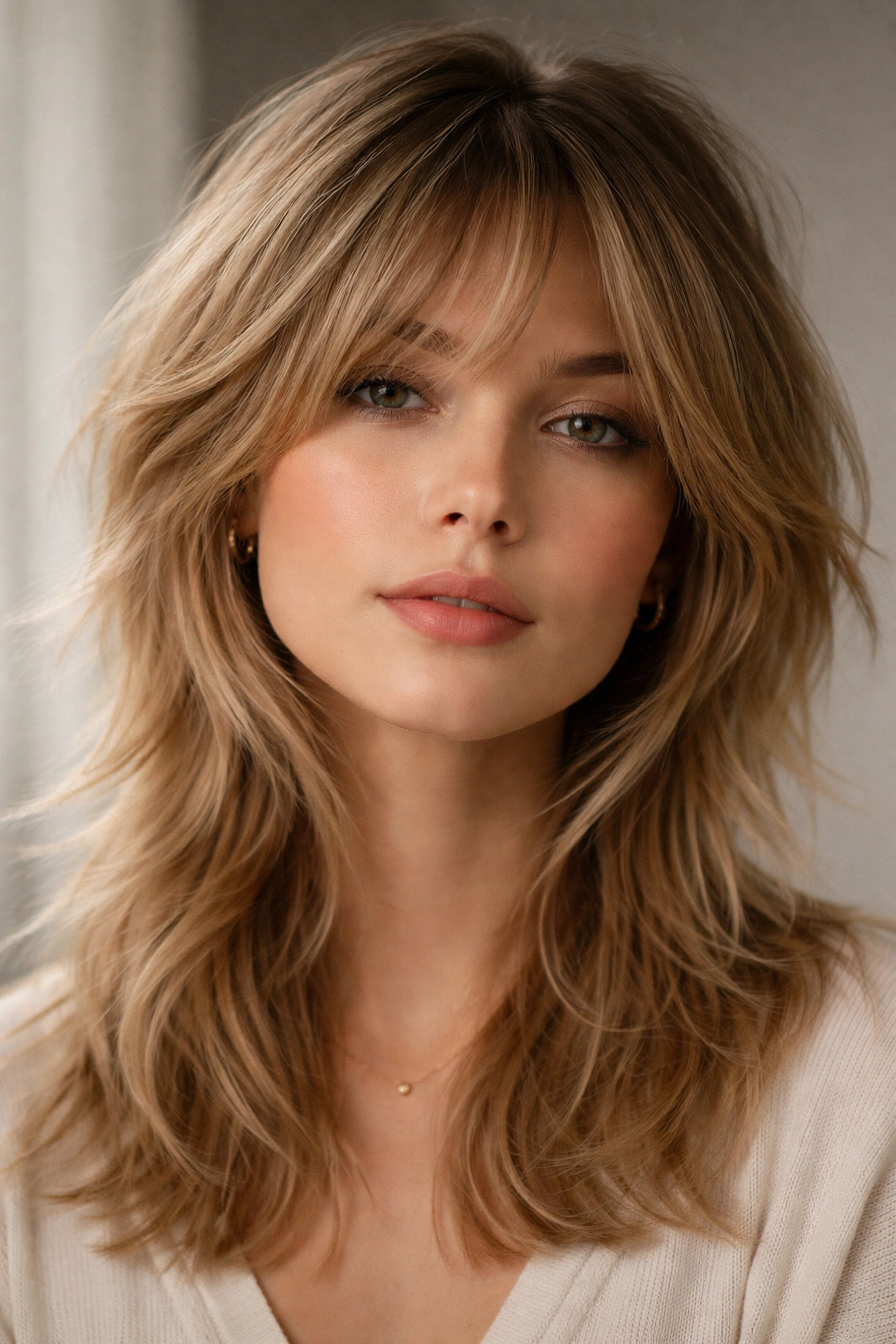
This gentler interpretation features feathered, graduated layers that flow from longer in the back to shorter around the face. The movement is soft rather than choppy, and the overall effect is effortlessly pretty. It’s excellent for people who want a modern cut without anything too bold or statement-making.
The Fluttering Movement
Feathered layers naturally flutter when you move, walk, or turn your head. The shorter pieces around the face move the most, creating a flattering frame that’s constantly in motion. Unlike choppy layers that sit in distinct sections, feathered layers seem to dissolve and flow into each other.
Styling for Softness
- A curl iron or wave tool enhances the feathering beautifully
- A light texturizing spray adds definition without stiffness
- Fingers are the best styling tool; avoid heavy product that would weigh down the feathering
- This cut works beautifully air-dried on wavy or curly hair, or blow-dried smooth on straighter hair types
Insider note: This version is ideal if you want modern texture without looking like you’re trying too hard or being too fashion-forward.
12. The Disconnected Shag with Bangs
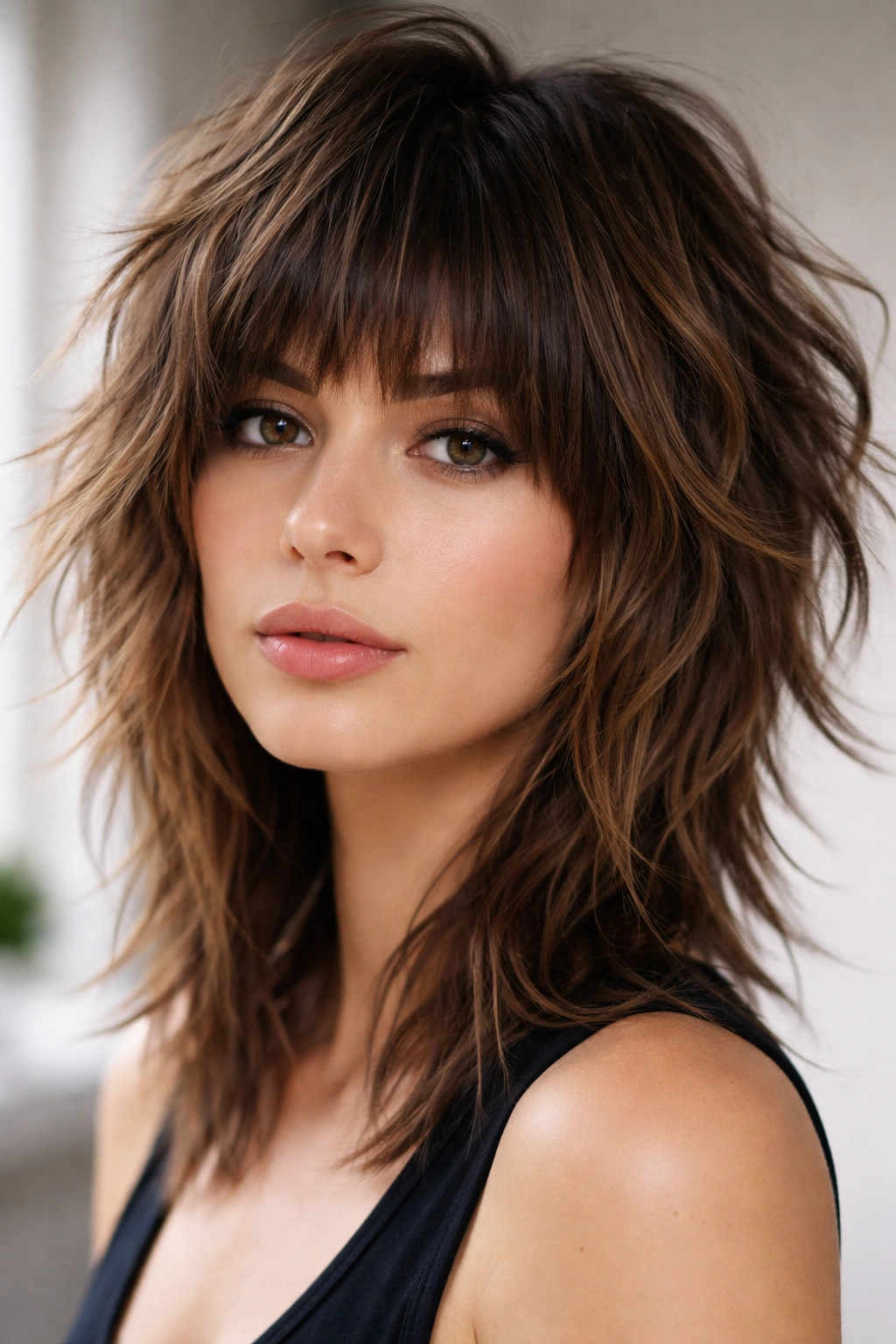
This bold interpretation features sharply disconnected layers that create real distinction between sections, paired with shorter bangs that frame the face independently. The bangs can be straight, textured, or wispy—depending on the look you’re going for. The overall effect is fashion-forward and deliberately unconventional.
Bangs as a Design Element
The bangs in this cut aren’t an afterthought; they’re integral to the overall design. They might be blunt and severe, or soft and feathered, but they serve a distinct purpose. The disconnection between the bangs and the rest of the cut is intentional, creating visual interest and preventing the style from reading as one uniform shape.
Managing the Disconnection
- This cut absolutely requires styling product—the disconnection looks sloppy without definition
- A texturizing spray helps separate the bangs from the rest of the hair so each section reads clearly
- Styling varies based on your bang choice: blunt bangs might be blow-dried smooth, while wispy bangs might be tousled
- Bangs require frequent trims, so factor in more frequent salon visits than you might with a standard shag
Pro tip: If you’re not sure about permanent bangs, ask your stylist to show you what the cut would look like if you style the front pieces back. This helps you visualize the cut without the bangs before committing.
13. The Curly-Girl-Method Shag
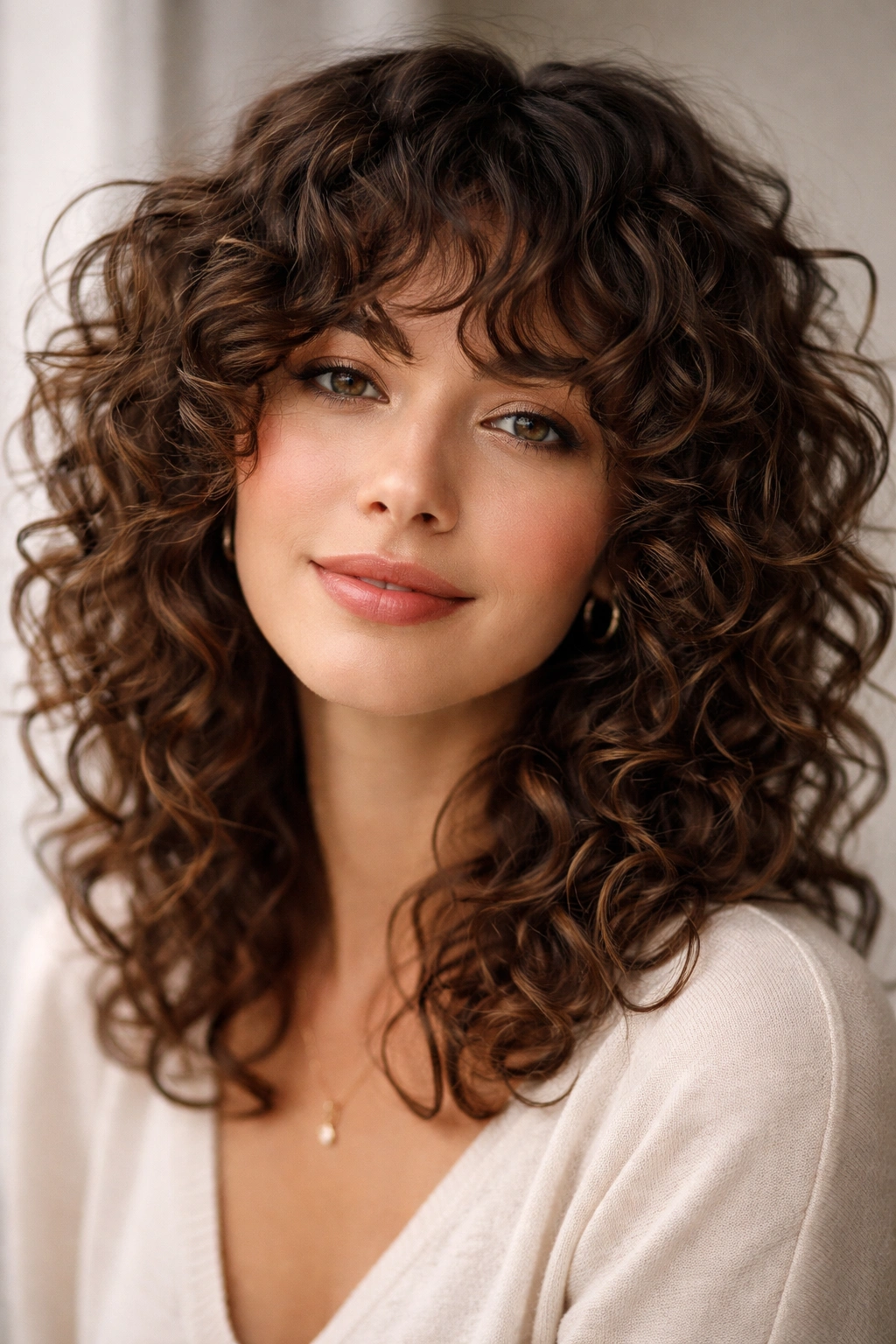
Designed specifically for people following a curly-girl method or caring for natural curls and coils, this shag features layers cut into the hair while it’s in its natural state, without manipulation. The cut works with your curl pattern rather than against it, and the layers enhance curl definition without creating frizz.
Cutting for Curl Integrity
A stylist who’s experienced with curly hair understands that cutting wet, stretched curls and cutting them dry can result in very different outcomes. For this style, the layers are cut dry or with the hair in its natural curl state so they fall exactly where intended when you style naturally.
Honoring Your Texture
- Use creams, gels, and butters specifically formulated for curls rather than serums meant for straight hair
- Plopping, diffuse drying, or air drying all preserve curl definition better than rough towel drying
- This style is best maintained by someone experienced with cutting textured and curly hair
- The layers improve curl definition while preventing shrinkage from making the cut look unkempt
Worth knowing: Your curl pattern might be different from the stylist’s; communication is essential. Bring photos of curly shags you love, and be prepared to explain how you typically style your hair.
14. The Rocker Shag
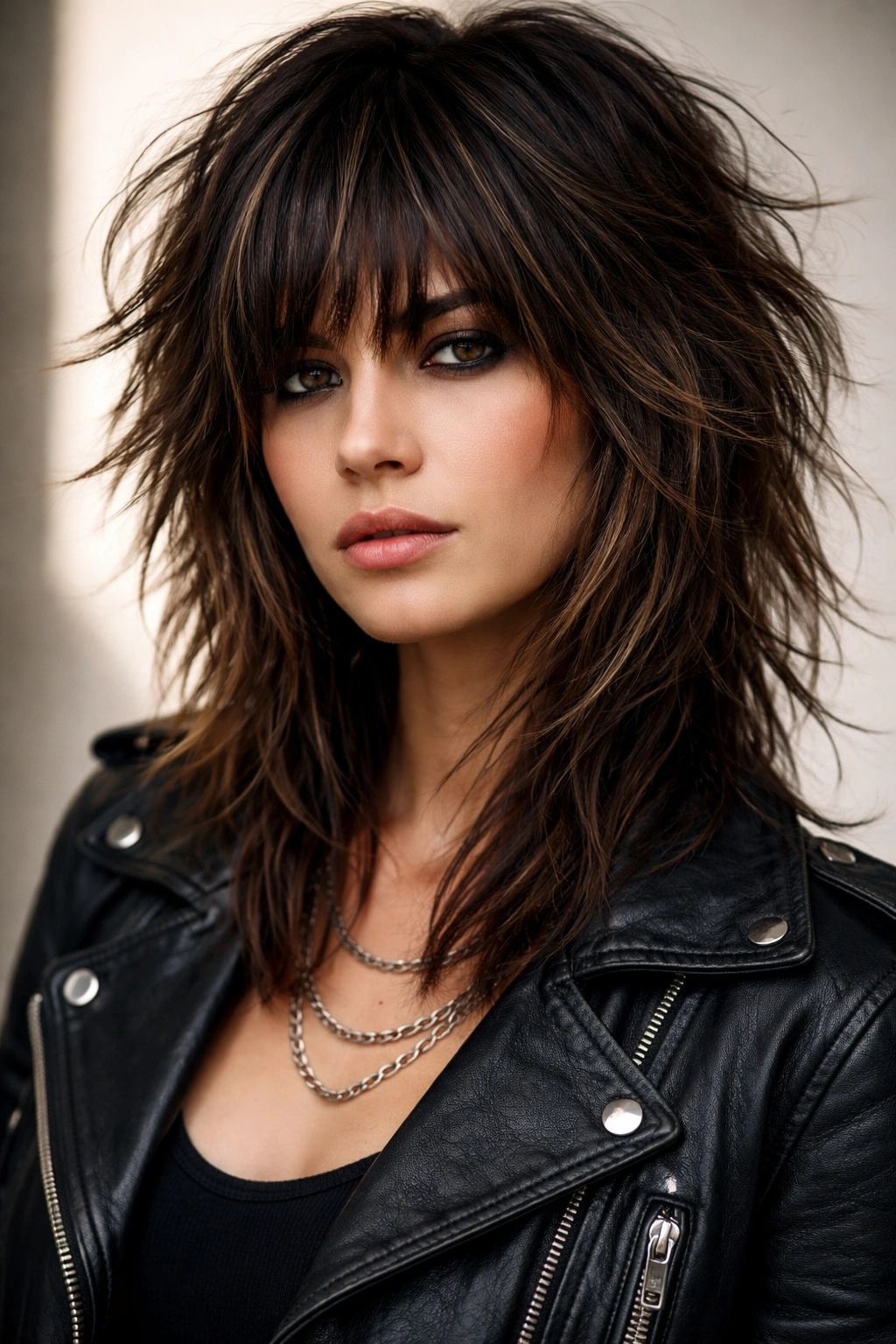
This version embraces the rock-and-roll heritage of the shag, with choppy, edgy layers and a slightly tousled, “just rolled out of bed” vibe—though it’s actually carefully cut to achieve that look. The movement is more pronounced and less refined than some other versions. It’s for people who want their hair to have attitude.
The Rocker Aesthetic
The rocker shag works beautifully with bold fashion, strong jewelry, and a confident attitude. The cut itself is slightly irreverent; it doesn’t fit traditional notions of “polished” or “neat.” It’s meant to look like you don’t care if it’s perfectly arranged—while actually requiring enough skill and intention that it totally works.
Styling with Edge
- A sea salt spray is practically mandatory for achieving that tousled, rock-and-roll vibe
- Styling with fingers rather than brushes encourages the piece-y, disconnected look
- This style benefits from a slightly lived-in appearance; waiting a day or two between washes actually enhances the look
- The cut works across all hair types, though it’s most dramatic on thicker hair where the chopped layers create real definition
Insider note: This cut is less about polished perfection and more about personality. Rock it with confidence and lean into the attitude.
15. The Modern Androgynous-Feminine Hybrid
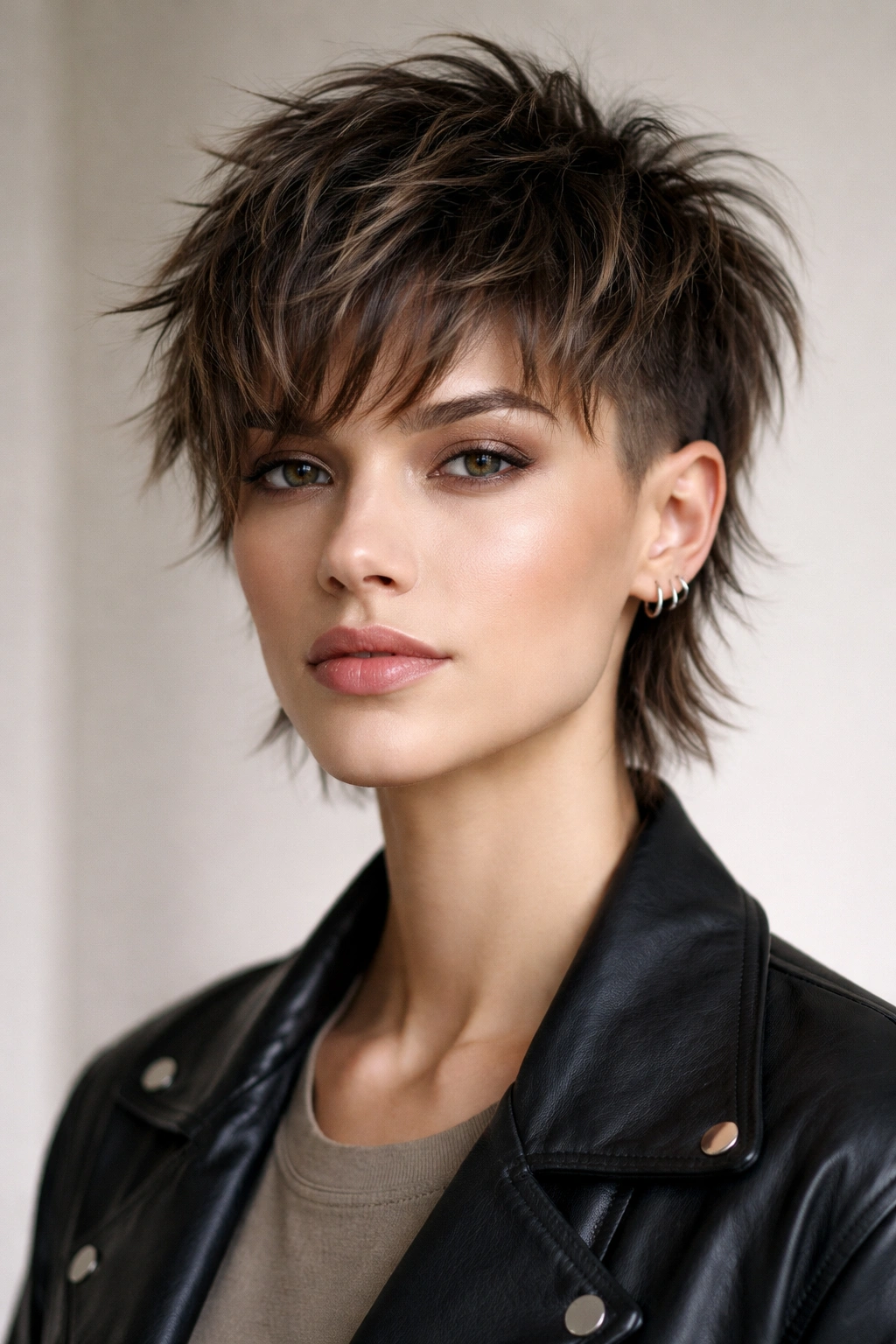
This final iteration balances sharp, angular lines with soft, feminine movement—combining the best of both worlds. The sides might be tapered or close, while the top features longer, textured layers that can be styled either way: sleek and sharp, or soft and tousled. It’s for people who want options and don’t want to choose between edgy and pretty.
The Balance Factor
The genius of this cut is that it doesn’t ask you to commit to a single aesthetic. You can wear it sharp and androgynous one day, and soft and feminine the next. The longer layers on top provide the versatility, while the short sides maintain the edge. It reads as modern, thoughtful, and intentional.
Styling Flexibility Across Aesthetics
- Blow dried smooth with a round brush and straightening spray for a sharp, polished look
- Tousled with texturizing spray and fingers for a softer, more romantic vibe
- Half-up styling bridges both aesthetics, keeping hair off your face while showing off the texture
- This cut works beautifully in both casual and more formal settings, depending on how you style it
Pro tip: Ask your stylist to cut the sides with enough length that as they grow out, you have the option of styling them back if you’re not feeling the super-short aesthetic. The best haircut gives you choice.
Final Thoughts
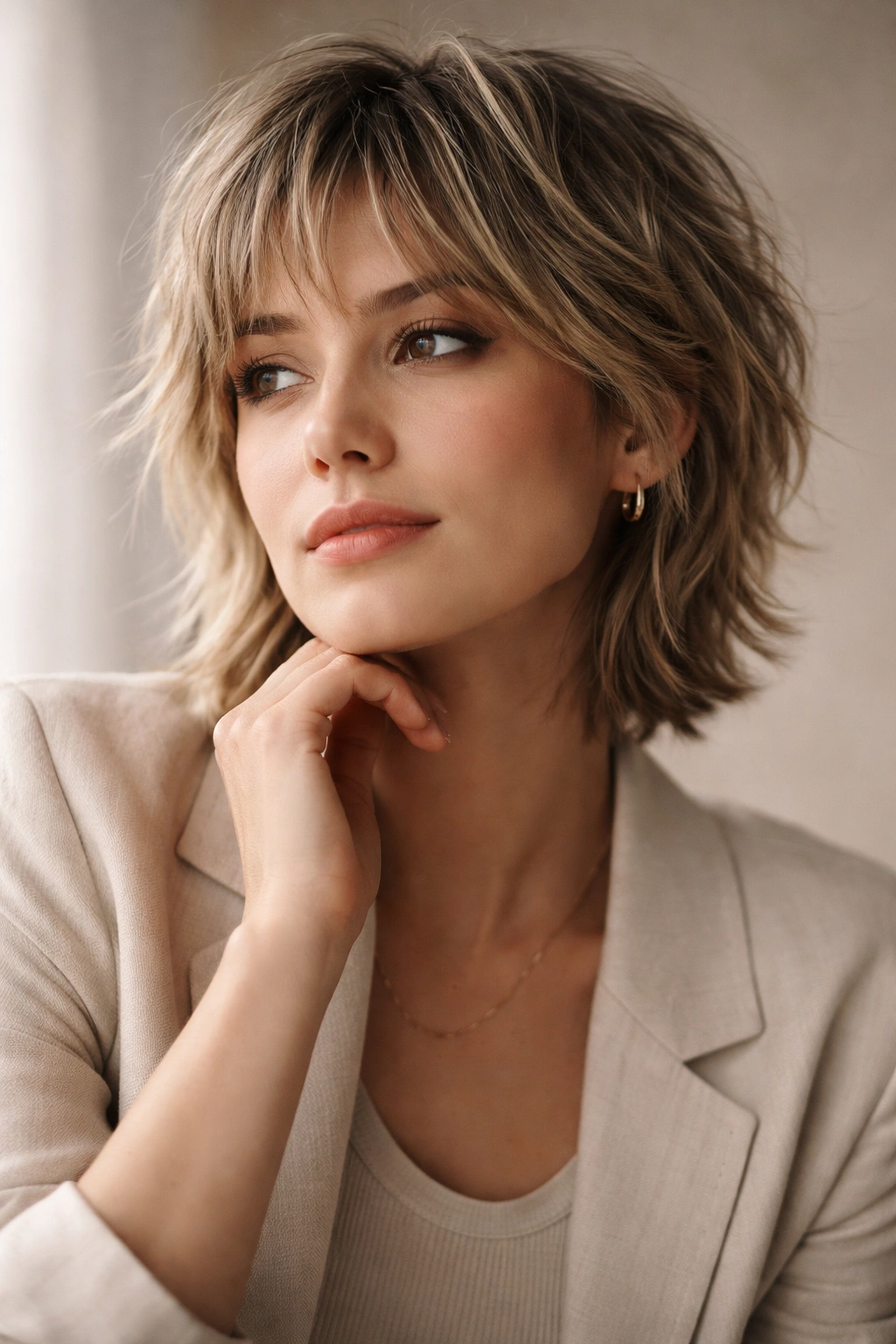
The modern short shag with lived-in texture isn’t a trend that’s here today and gone tomorrow—it’s a fundamental shift in how we approach layered, textured haircuts. What makes these styles so compelling is that they acknowledge reality: your hair isn’t always going to be perfectly styled, and that’s not just acceptable, it’s actually the whole point.
The magic lives in choosing the specific version that resonates with your personality, lifestyle, and willingness to engage in styling. Some of these cuts are genuinely low-maintenance once you get past the initial styling learning curve. Others are higher-maintenance but reward that effort with a distinctive, fashion-forward aesthetic. Neither approach is wrong—it’s about honest assessment of what you actually want to spend time on.
A crucial element is finding a stylist who genuinely understands shag cutting and can articulate their vision for how they’ll create your specific version. Bring reference photos, describe your lifestyle, mention whether you prefer a more polished or undone aesthetic, and trust the process. A good shag cut grows out beautifully, continues looking intentional for several weeks, and actually improves with a little bit of texture and movement as it develops.
Whether you’re drawn to the ultra-short crop shag, the longer textured lob version, or something in between, there’s a lived-in shag designed specifically for you. The texture, movement, and contemporary ease of these cuts make them worth exploring—and once you experience how a well-executed shag can make you feel more like yourself, you’ll understand why this style has made such a powerful comeback.
