



Short layered cuts have become the go-to solution for anyone seeking to add dimension, movement, and visual fullness to their hair. Unlike blunt bobs or single-length cuts that can look flat against the scalp, strategic layering creates texture and lift from the roots, making even fine or thin hair appear noticeably fuller. The beauty of a well-executed layered cut lies in its versatility—it works with nearly every hair type, face shape, and lifestyle, and the layers themselves do most of the styling work for you. Whether you prefer a polished, structured look or something more relaxed and tousled, layered cuts give you the foundation to achieve it.
The reason layering works so effectively for volume is simple physics. When hair is cut at different lengths, each layer can move independently. Shorter pieces on top don’t weigh down longer pieces underneath, so everything has room to breathe and lift away from the scalp. This is especially crucial if you have fine or limp hair—layers distribute weight more evenly and prevent that flat, plastered-to-the-head feeling. Beyond volume, layers add intentional shape. They can frame your face, enhance your cheekbones, draw attention to your eyes, or create a soft, flattering silhouette around your jawline. The key is choosing a cut that complements your hair texture, face shape, and how much styling commitment you’re willing to make.
If you’ve been considering a short layered cut but aren’t sure which style would suit you best, the options below cover everything from choppy and modern to smooth and elegant. Each one demonstrates how layers can transform the way your hair looks and feels.
1. The Textured Pixie Bob
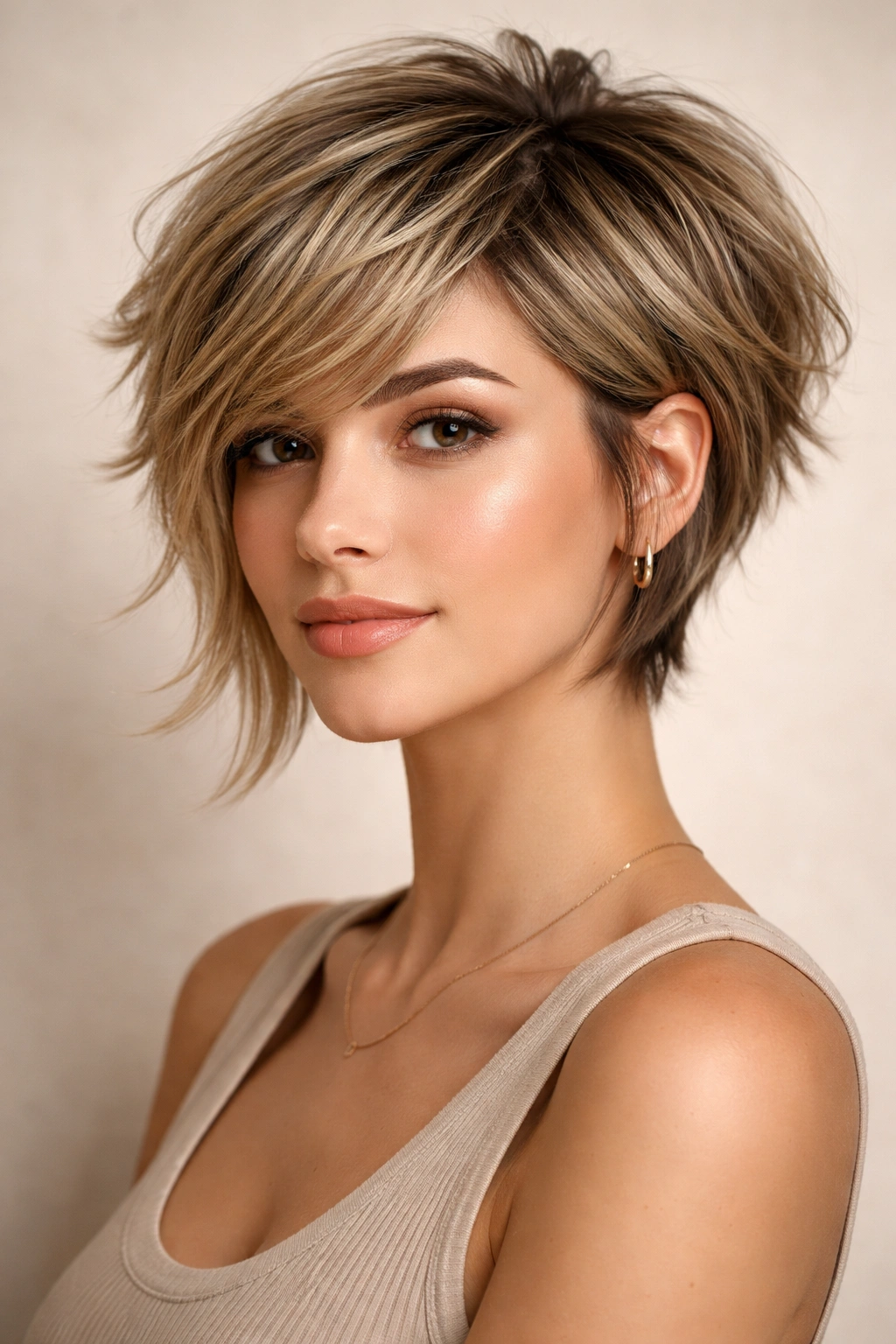
The textured pixie bob walks the line between a pixie cut and a bob, giving you short length with enough texture to avoid looking severe. This cut features longer pieces around the face—usually falling just below the jawline—combined with significantly shorter, choppy layers throughout the crown and sides. The result is a cut that’s easy to style but never looks flat or one-dimensional.
Why It Creates Volume and Movement
The shorter pieces throughout the crown create immediate lift, while longer face-framing pieces add softness without sacrificing the compact, neat silhouette of a short cut. The textured, choppy nature of the layers means your stylist isn’t creating blunt, hard lines—instead, they’re point-cutting or using razor techniques to create wispy, feathered ends. These feathered pieces catch light differently and overlap in a way that makes hair appear thicker and more voluminous than it actually is.
Best For and How to Style It
This cut works beautifully on people with straight to wavy hair and suits heart-shaped or oval faces particularly well. The longer pieces frame cheekbones and soften the jawline. To style, apply a texturizing spray or lightweight cream to damp hair, use your fingers or a round brush to direct pieces upward and outward, and finish with a quick blast from a blow dryer on medium heat. The cut is intentionally undone-looking, so you’re aiming for piece-y texture, not polished perfection.
Maintenance and Variations
Plan for trims every four to five weeks to maintain the choppy texture and prevent split ends from making the cut look shabby rather than textured. If your hair is thick, ask your stylist to point-cut or razor-cut rather than use blunt scissors, which can make thick hair look bulky. For wavy hair, consider asking for slightly longer layers on top so your natural wave pattern has more room to create movement.
Pro tip: This cut is ideal if you want the ease of a pixie with a bit more femininity and styling flexibility.
2. The Shaggy Crop
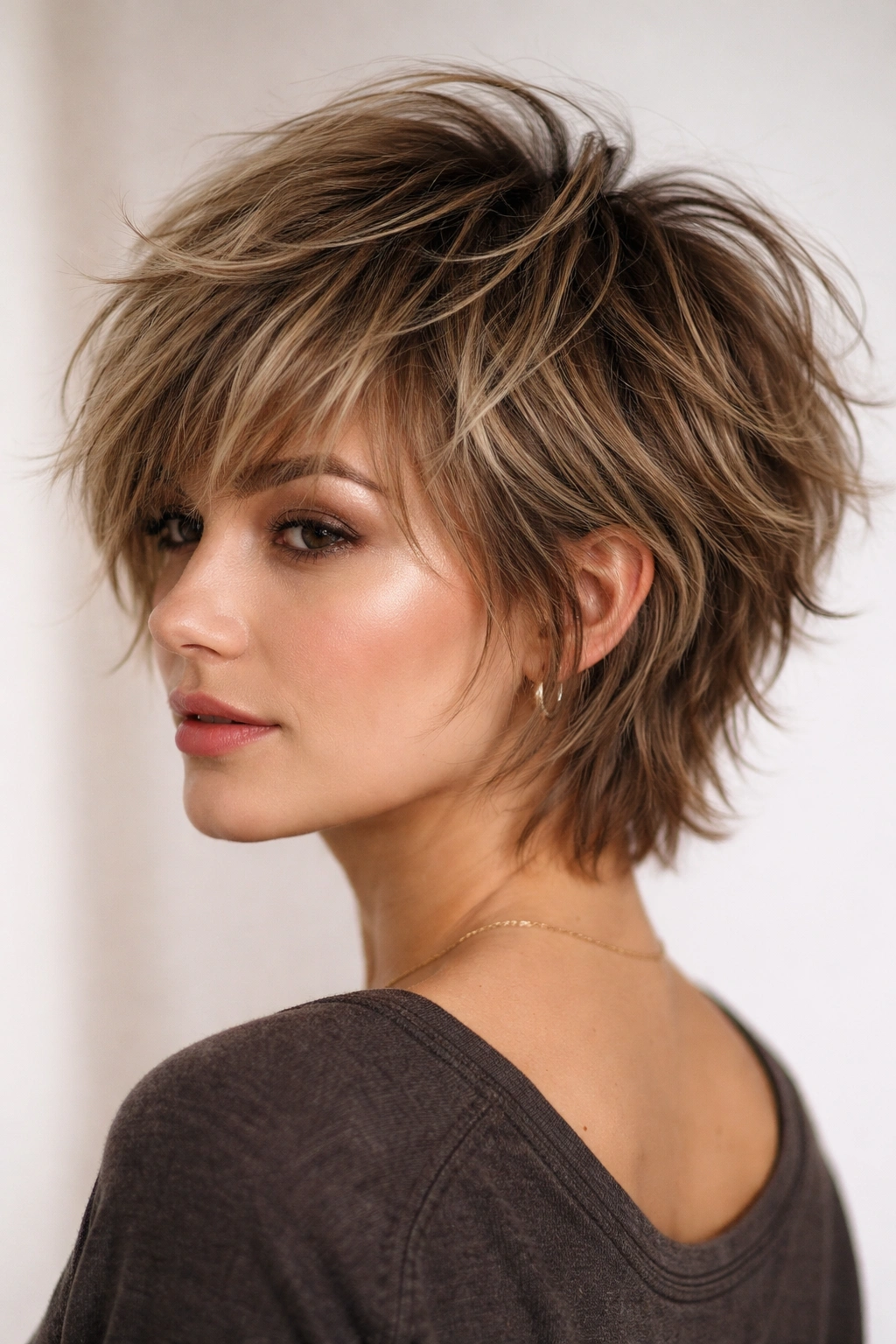
A shaggy crop brings ’70s-inspired movement and edge to short hair. It’s all about choppy, uneven layers throughout, with the top pieces shorter and the underneath pieces slightly longer. The crown is deliberately tousled and piece-y, creating that effortless, “I just woke up like this” vibe that actually takes some intentional styling to achieve.
Why It Creates Volume and Movement
The uneven layering is what makes this cut so visually dynamic. Because pieces are cut at dramatically different lengths, they have room to move in every direction. Shorter pieces on top create height and texture, while longer pieces underneath provide weight and shape. The very nature of the shag is movement—it’s a cut designed for hair to shift and flow, never lying flat against the head. This makes it exceptionally flattering for people with limp or fine hair who want the illusion of thickness.
Best For and How to Style It
The shaggy crop suits people with naturally wavy or curly hair beautifully because the texture enhances the piece-y nature of the cut. However, it also works on straight hair if you’re willing to style it. Use a salt spray or texturizing product on damp hair, work it through with your fingers to encourage movement, and blow dry with your head tipped upside down for maximum lift. You can also use a curling iron to add waves if you have straight hair and want more texture.
Maintenance and Variations
Shag cuts require trims every five to six weeks because the uneven layers look intentional only when they’re sharp and defined. Once layers grow out and blend together, the cut loses its impact. If you want something slightly more refined than a full shag, ask for a “soft shag” where the layers are less dramatic and the overall shape is neater. For thick hair, a stylist can thin out some of the layers using thinning scissors to prevent the cut from looking too bulky.
Pro tip: This is the cut to choose if you want high-impact texture and don’t mind styling with products.
3. The Feathered Bob
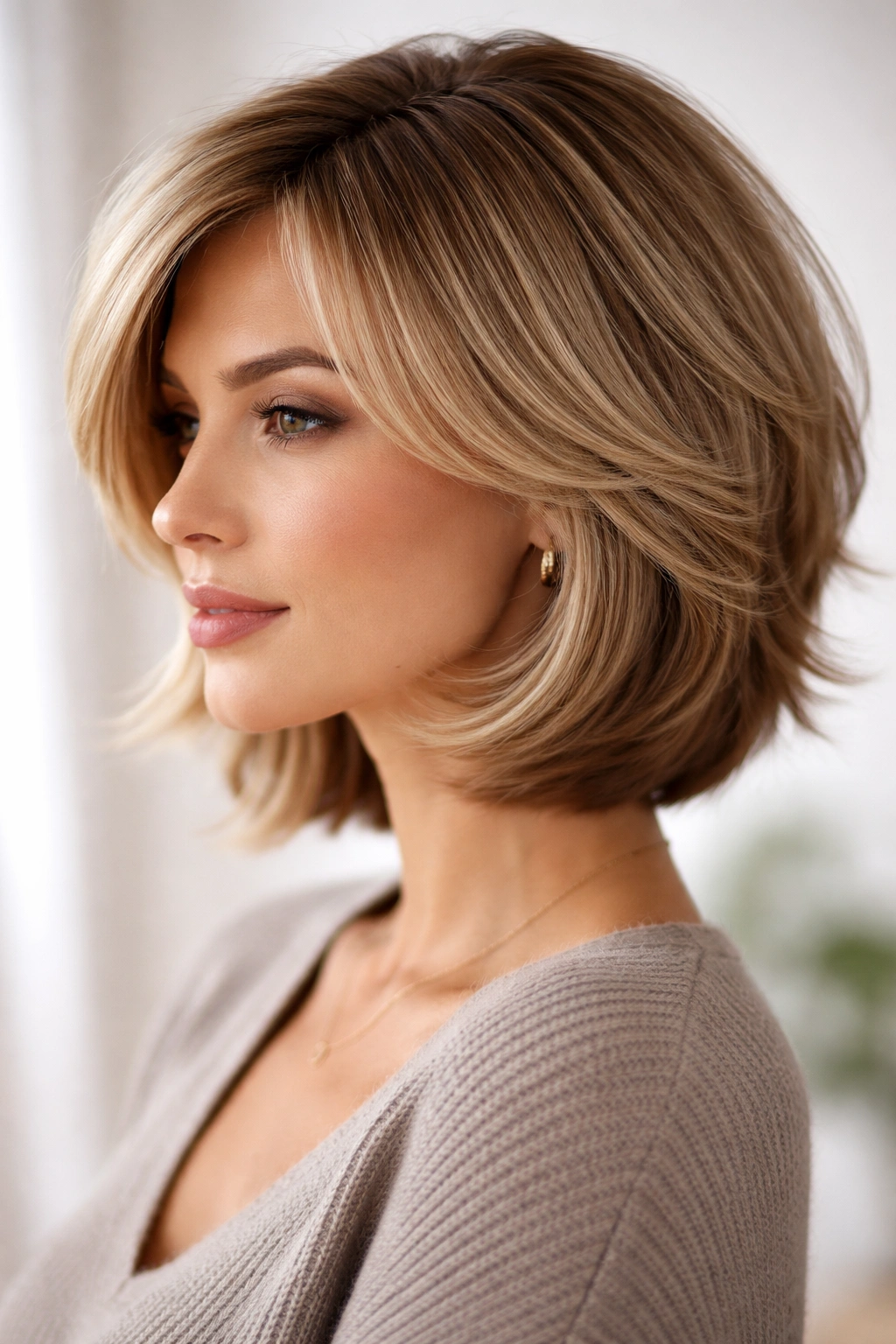
A feathered bob is a classic short cut with modern edge. It’s a structured bob—usually hitting at or just below the jaw—but with feathered, face-framing layers throughout that prevent it from feeling blunt or severe. The layers are softer and more subtle than a pixie bob’s choppy texture, creating a more polished overall appearance while still delivering serious volume.
Why It Creates Volume and Movement
Feathering is a specific cutting technique where the stylist uses scissors held at an angle to create tapered, feathered ends throughout the cut. These feathered layers are much shorter in some spots than others, which allows each section to move independently. The feathering also means that hair doesn’t sit in one heavy mass—instead, it breaks up visually into layers and pieces. Even fine hair looks fuller because the eye reads all the different layers rather than a solid block of hair.
Best For and How to Style It
The feathered bob works on virtually every hair type and face shape. It’s especially flattering on people with straight to wavy hair because the feathering shows up clearly. For styling, blow dry smoothly with a round brush for a polished look, or use your fingers and a texture spray for something more relaxed. You can also straighten it with a flat iron for a sleek finish, and the feathered layers will still provide movement and shape.
Maintenance and Variations
Plan for trims every four weeks to keep the feathering sharp and defined. The feathered bob is a cut that actually looks better when it has just been freshly cut—maintenance is important. For very fine hair, ask your stylist to feather more heavily (more shorter pieces) to maximize volume. For thick hair, less dramatic feathering will prevent the cut from looking too wispy or thin.
Pro tip: This cut is extremely versatile—you can style it sleek and polished for work, or textured and piece-y for a casual vibe, using the same basic cut as your foundation.
4. The Modern Mullet
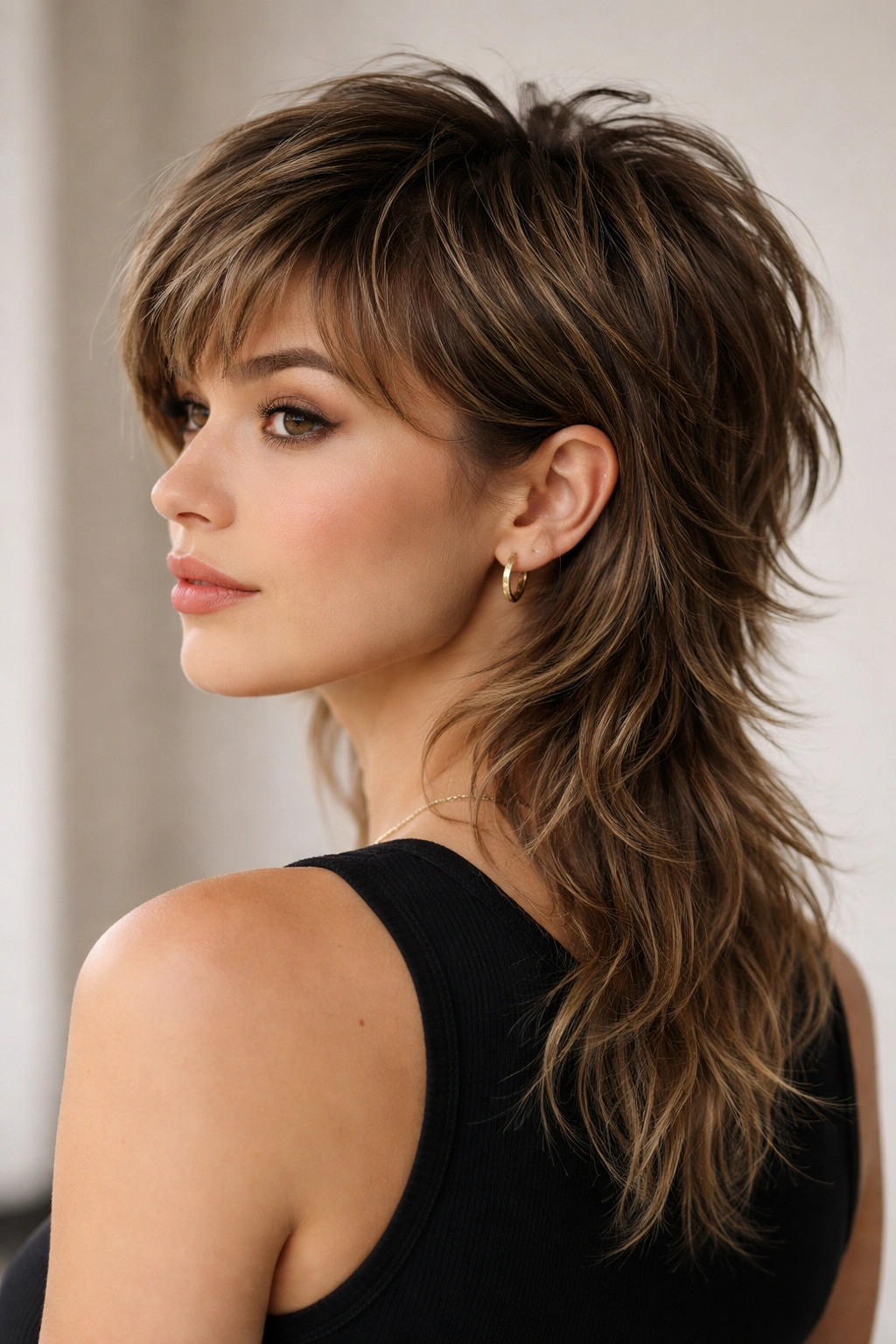
The modern mullet has nothing to do with its ’80s ancestor. Today’s mullet is a sophisticated cut that’s shorter and shaped on top and sides, with slightly longer, textured pieces in the back. It’s edgy without being costume-y, and it works because of smart layering that creates height and volume where it matters most.
Why It Creates Volume and Movement
The shorter pieces on top and sides create height and prevent the cut from looking heavy or weighed-down. The longer back pieces have length but are heavily layered, so they’re not a solid block of hair—they’re piece-y and textured. This combination means maximum visual volume. The back pieces are long enough to show off length and movement, but short enough (usually 2-3 inches longer than the sides) that they don’t feel like actual long hair. The contrast between shorter and longer pieces makes both appear more voluminous by comparison.
Best For and How to Style It
The modern mullet suits people confident enough to wear something unconventional and works best on people with straight to wavy hair. It’s an excellent choice if you want to keep some length while having a mostly short, low-maintenance cut. To style, give the sides a quick blow dry with a round brush for shape, and use texturizing spray and your fingers on the back and crown to encourage the longer pieces to sit piece-y rather than flat. The back pieces should have some movement and air between them, not lie completely flat.
Maintenance and Variations
Trims every five to six weeks will keep the shape sharp and the longer back pieces from looking scraggly. If you’re not ready for a true mullet, ask your stylist for a “mullet-inspired” cut, which keeps the general concept—shorter on top, slightly longer in back—but makes the length difference more subtle. This version still gives you volume and texture without the edge.
Pro tip: The modern mullet is having a legitimate moment among people who want a non-traditional short cut that’s still wearable and practical.
5. The Choppy Lob
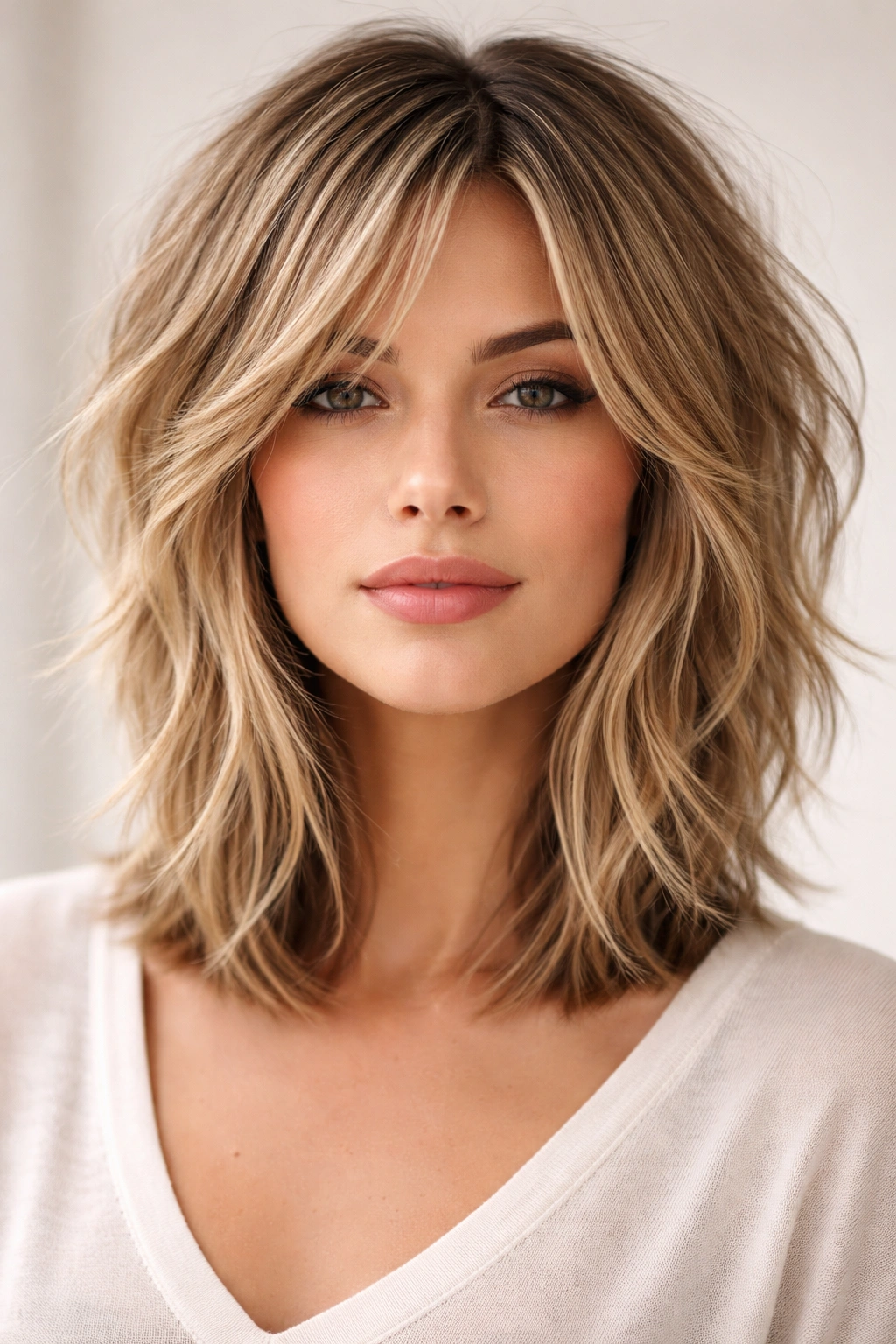
“Lob” stands for “long bob,” and the choppy version takes this mid-length cut and adds serious texture through strategic layering. A choppy lob usually hits somewhere between the chin and shoulder, with shorter, choppier layers throughout that create tons of movement and shape. It bridges the gap between short and shoulder-length, giving you versatility.
Why It Creates Volume and Movement
The choppy layering throughout the lob means no two pieces of hair are the same length. This creates visual complexity and texture that reads as fullness. The longer overall length (compared to a true short cut) gives you more hair to work with, and the choppy layers distribute that length unevenly, so nothing sits in a flat, heavy line. The back is often shorter and more textured while the front is longer, creating natural movement toward the face. This asymmetry is what makes choppy lobs so visually interesting.
Best For and How to Style It
Choppy lobs work beautifully on wavy and curly hair because the natural texture complements the choppy layers. However, they also work on straight hair if you’re willing to style them. Blow dry with a brush or round tool for shape, or straighten with a flat iron for a sleeker look. You can also apply styling cream to damp hair and allow it to air dry for a more relaxed, textured finish. The longer length means you have more styling options than you would with a true short cut.
Maintenance and Variations
Trims every six to eight weeks keep the choppy layers looking intentional rather than shaggy. If you want something less choppy but still textured, ask your stylist for a “long layered bob”—same length but less extreme layering. This version is slightly lower maintenance while still delivering volume and shape.
Pro tip: If you’re not quite ready to go truly short but want the volume and movement that layering provides, a choppy lob is an excellent bridge option.
6. The Blunt Pixie With Textured Layers
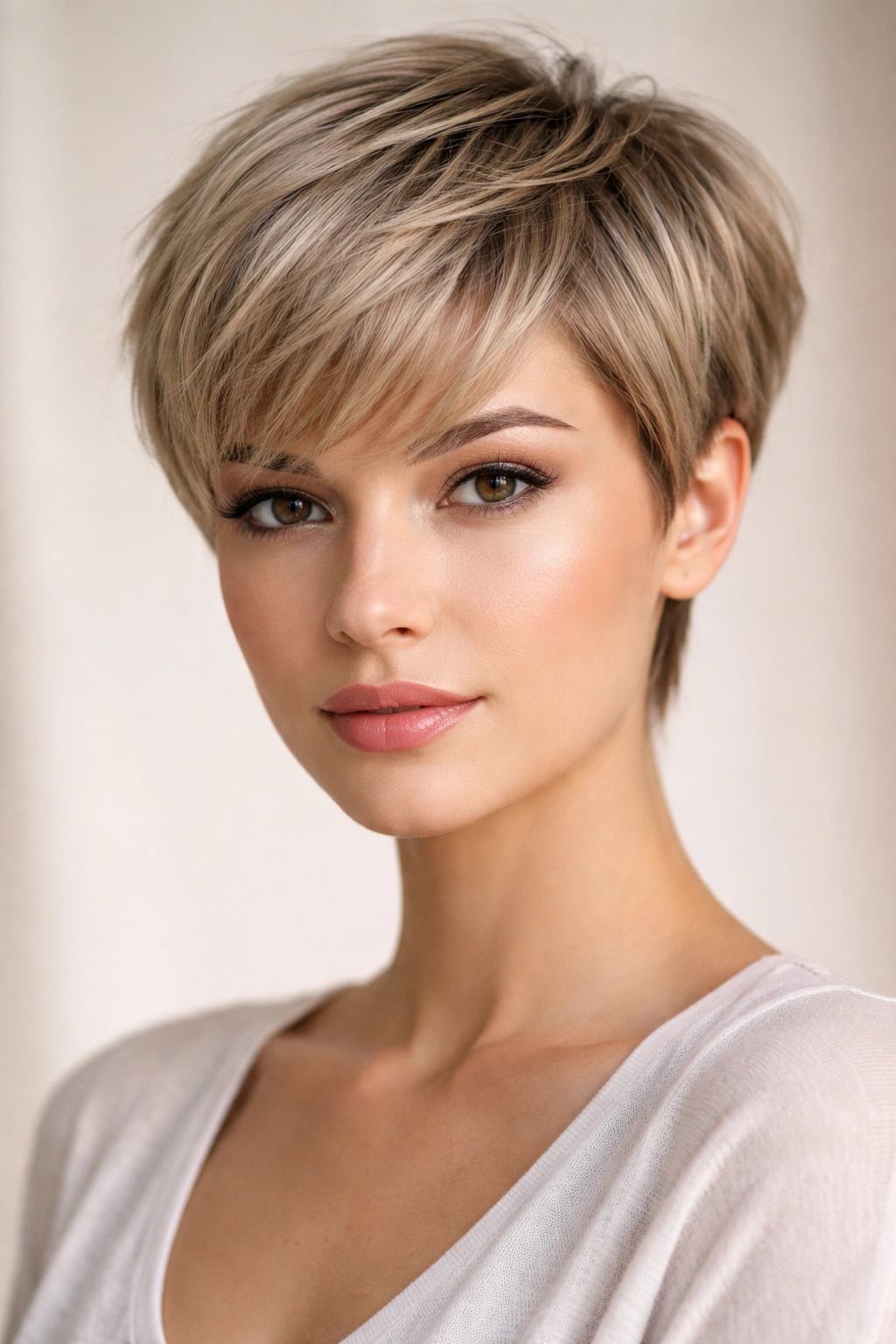
A blunt pixie gets softened and textured through layering, creating a cut that’s short and neat but never severe. The overall shape is clean and blunt—it reads as a real pixie—but texture throughout prevents it from looking helmet-like. This is the pixie for people who want the ease of short hair without feeling their cut is too severe or masculine.
Why It Creates Volume and Movement
While the overall shape of the pixie is blunt, the addition of textured layers throughout means the surface isn’t flat. Your stylist creates these textured layers using choppy, razor, or point-cutting techniques, which means the very top of the hair has movement and dimension. These layers also create light and shadow play across the head, which makes the entire cut look fuller and more three-dimensional. The blunt perimeter is what gives shape, but the textured interior is what prevents it from looking flat.
Best For and How to Style It
This cut works on all hair types but is particularly flattering on people with straight to wavy hair where the textured layers show up clearly. Oval and square faces wear this beautifully because the short, shaped lines are flattering. To style, apply texturizing spray or styling cream to barely damp hair, ruffle it with your fingers, and blow dry with a brush for shape. The textured nature of the cut means it doesn’t need to be perfect—some piece-y texture actually makes it look better.
Maintenance and Variations
Plan for trims every three to four weeks because pixies grow quickly and lose their shape if not maintained. The blunt perimeter needs to stay sharp for the cut to read as intentional. For very fine hair, ask for more dramatic texturing to maximize the appearance of volume. For thick hair, your stylist may need to thin out some of the textured layers to prevent the cut from looking too bulky.
Pro tip: This is an excellent choice if you want a pixie but worry that pixies look too severe on you—the textured layers keep it feminine and soft.
7. The Shag With Face-Framing Pieces
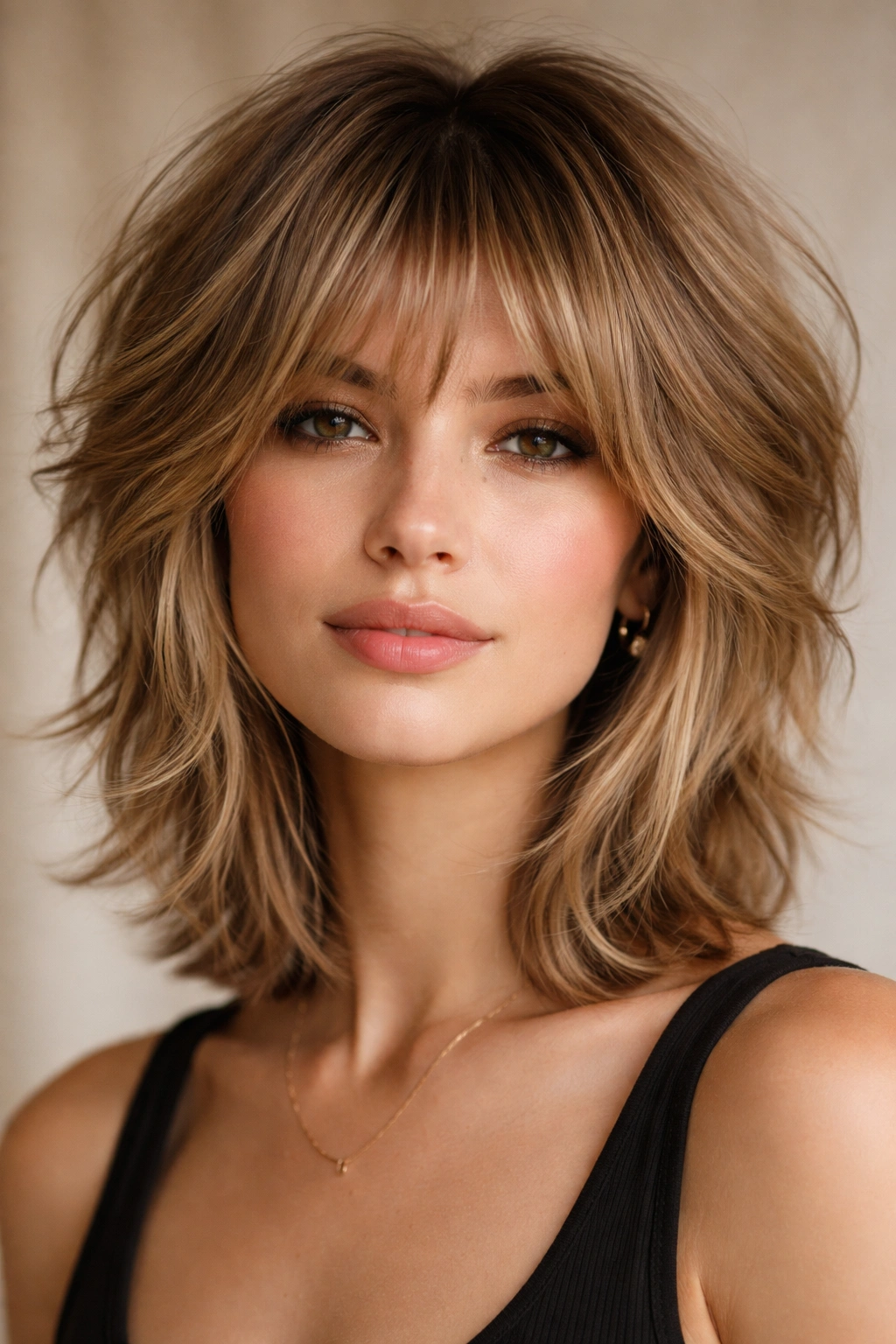
A true shag is all-over layering throughout the head, creating movement from the crown to the ends. What distinguishes this version is intentional, longer face-framing pieces that add flattering dimension. The face-framing is a technique where specific pieces around the face are cut longer and styled to frame cheekbones and jawline, while the rest of the cut maintains the shaggy, piece-y texture throughout.
Why It Creates Volume and Movement
Shags are arguably the most voluminous short cuts available because of the extreme contrast between longer and shorter pieces. Shorter pieces on top and around the crown create height, while longer pieces underneath provide support and movement. The face-framing pieces add an extra dimension—they’re intentionally shaped to flatter your features while also contributing to overall texture. No piece of hair weighs down the pieces around it; everything has room to move, twist, and shift. This creates visual fullness even on people with genuinely fine hair.
Best For and How to Style It
Shags work best on wavy and curly hair, where the texture naturally enhances the piece-y, shaggy aesthetic. However, they can work on straight hair if you’re willing to use styling tools and products. Apply texturizing spray or salt spray to damp hair, scrunch and shape with your fingers, and blow dry upside down for maximum volume. The longer face-framing pieces can be styled to curve slightly inward toward the face or gently outward for different effects.
Maintenance and Variations
Shags require trims every four to six weeks to keep the layers crisp and defined. They can look overgrown and shapeless if not maintained. For a more modern take, ask for a “shag with a shape”—this version has slightly tamer layers and an overall more structured silhouette while keeping the piece-y texture you love.
Pro tip: Shag cuts are especially flattering around the jawline and neck area if you request longer face-framing pieces and shorter back layers.
8. The Tousled Asymmetrical Bob
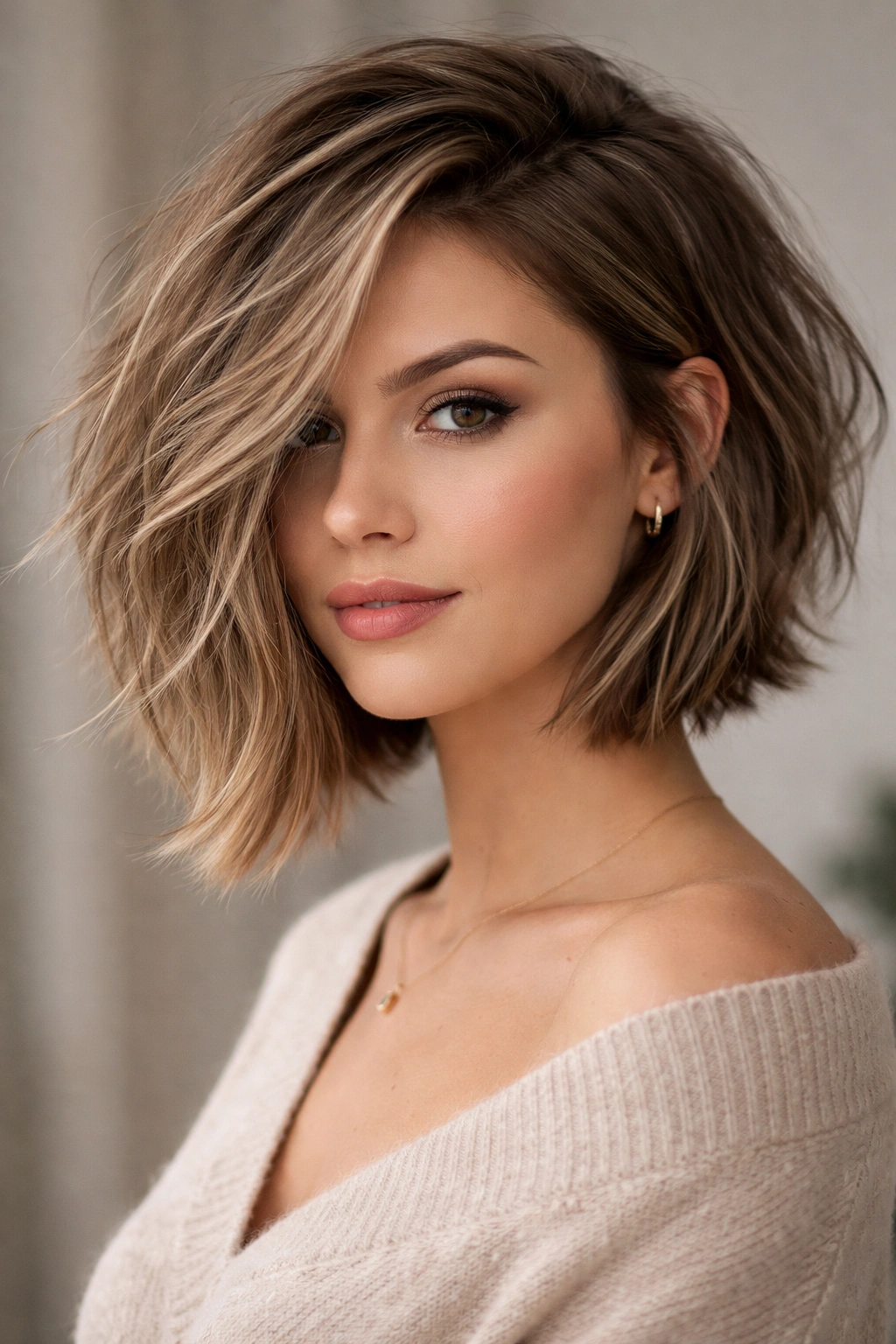
An asymmetrical bob is a cut where one side is noticeably longer than the other, and when you add textured, tousled layers, it becomes a seriously statement-making cut. This version features longer pieces on one side (usually falling several inches below the other side) combined with choppy, textured layers throughout that create movement and shape. It’s edgy and modern while still being wearable.
Why It Creates Volume and Movement
The asymmetry itself creates visual interest and makes the cut appear more voluminous than a symmetrical cut of the same average length. The longer side has more length to work with, while the shorter side is more textured and layered, which prevents either side from appearing flat. The choppy layering throughout means that every section has dimension and movement. This cut also benefits from how light hits the different layers—longer pieces and shorter pieces catch light differently, creating shadows and highlights that enhance the illusion of volume and texture.
Best For and How to Style It
Asymmetrical bobs work beautifully on most face shapes but are particularly flattering on oblong or long faces because the shorter side draws attention inward. They suit straight to wavy hair and work well on thick hair because the asymmetry and layering prevent the cut from looking too heavy. To style, blow dry the shorter side with a round brush for shape and texture, and allow the longer side to fall naturally or style it with a flat iron for sleekness. You can also embrace the tousled nature and use texturizing spray for a more relaxed vibe.
Maintenance and Variations
Trims every four to five weeks keep the asymmetrical length differential sharp and the textured layers defined. As your hair grows, the asymmetry diminishes, and the cut loses its edge. If you love the concept but want something less dramatic, ask for a “subtle asymmetrical bob” where one side is only an inch or so longer than the other, creating suggestion of asymmetry without the bold statement.
Pro tip: The longer side of an asymmetrical bob can be tucked behind your ear or swept across your face for different styling looks with the same cut.
9. The Razor-Cut Short Bob With Feathered Texture
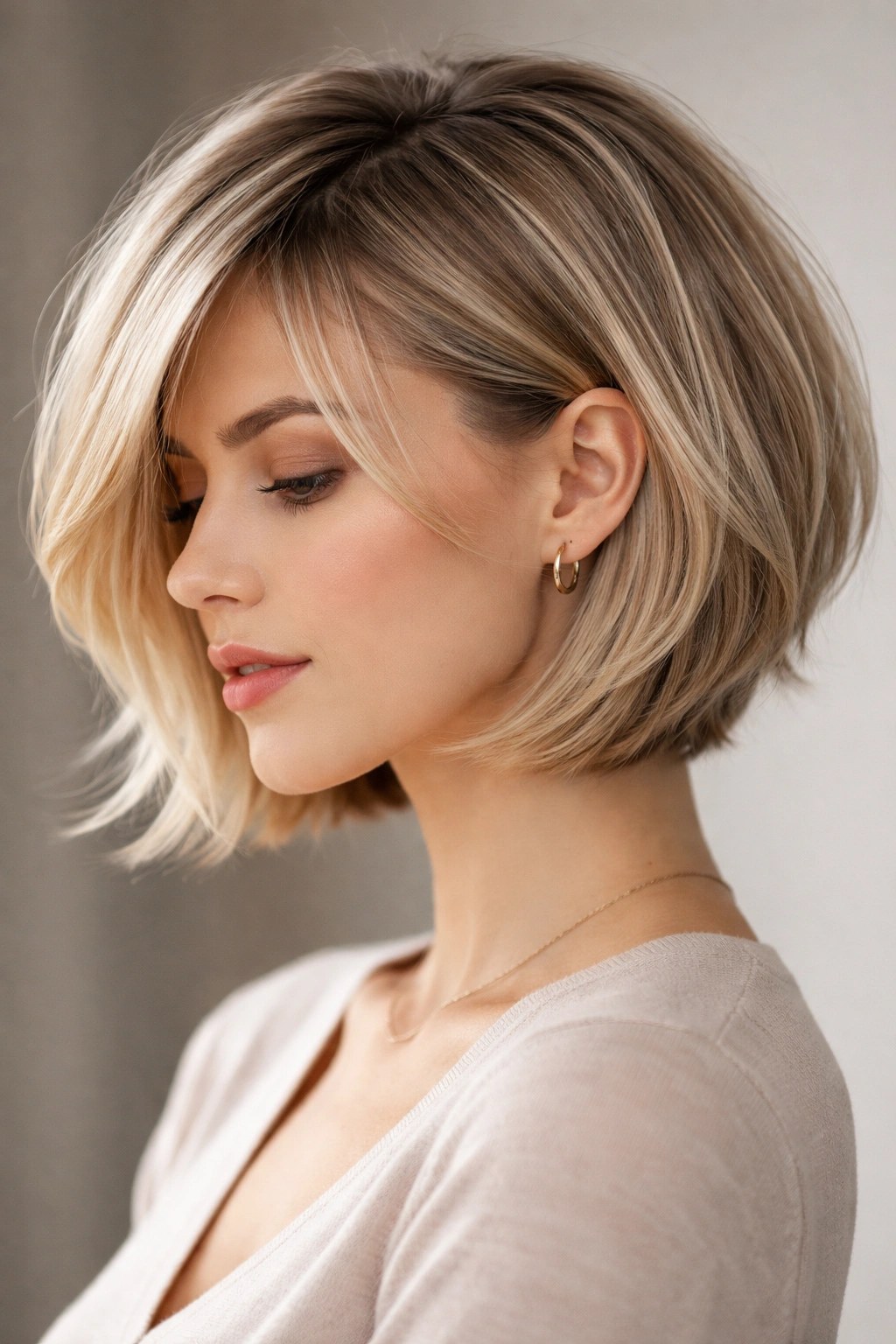
A razor-cut bob is cut using a razor blade rather than scissors, which creates softer, more feathered edges throughout. This technique is especially effective for creating texture and movement while maintaining a structured overall bob shape. The result is a cut that’s clean and intentional but never blunt or severe—the razor work creates subtle feathering that shows throughout.
Why It Creates Volume and Movement
Razors create tapered, feathered edges that allow each layer to sit independently. Because the ends are feathered rather than blunt, hair doesn’t sit in a heavy line—instead, it has subtle movement and texture. The feathering also means that shorter pieces don’t weigh down longer pieces; everything has room to breathe. This is particularly effective on fine hair because even subtle feathering creates the illusion of more volume than a blunt cut of the same length would provide. The feathered edges catch light and create shadow play that makes the whole cut appear fuller.
Best For and How to Style It
Razor-cut bobs work best on straight to wavy hair where the feathering shows up clearly. They’re an excellent choice for people who want a polished, structured cut but worry that bobs can look flat or boring. To style, blow dry with a round brush for shape, or straighten with a flat iron for a sleeker finish. The feathered texture means the cut works with many styling approaches—you can style it polished and neat, or textured and piece-y.
Maintenance and Variations
Plan for trims every four weeks because the feathered edges need to stay sharp and tapered to look their best. Over time, feathering can start to look wispy or thin if the ends aren’t maintained. Ask your stylist how frequently they recommend trims based on your hair texture and growth rate.
Pro tip: Razor-cut bobs are excellent if you have fine or thin hair because the feathering creates the appearance of texture and movement without bulk.
10. The Wavy Piece-y Crop
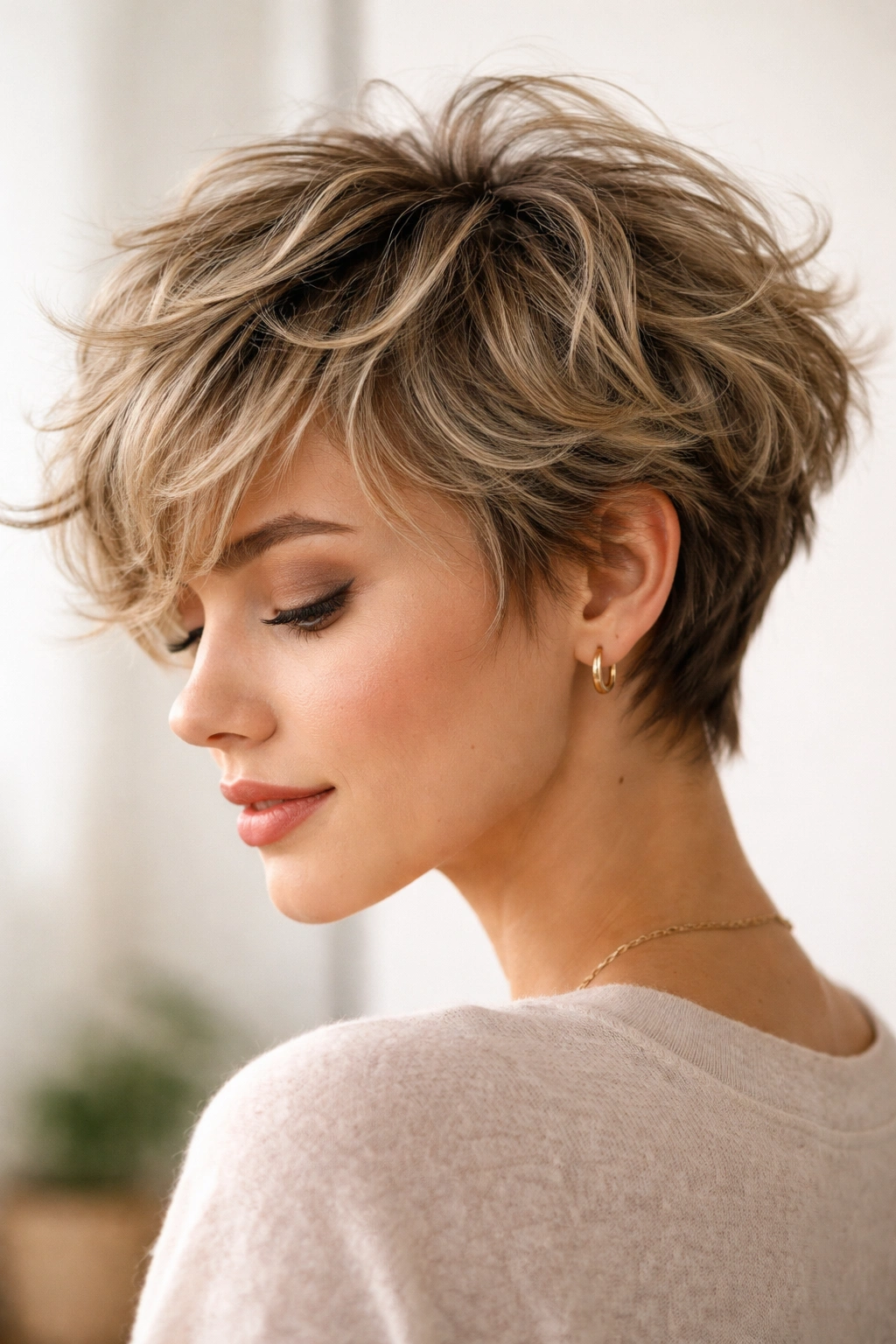
A piece-y crop takes a short cut and emphasizes layering to create distinct pieces throughout. The cut is short overall—usually 1-3 inches long—but varied enough that you see individual pieces and layers rather than a uniform short crop. It’s ultra-modern and works beautifully on wavy hair where the natural wave pattern complements the piece-y nature of the cut.
Why It Creates Volume and Movement
Because every piece is a slightly different length, there’s tremendous visual texture and dimension. The varying lengths mean that shorter pieces don’t weigh down longer pieces, so everything has lift and movement. The piece-y nature of the cut also means that styling product and texture read as intentional rather than messy. On wavy hair, the natural wave pattern in combination with the piece-y layers creates movement in multiple directions, which dramatically enhances the appearance of volume.
Best For and How to Style It
This cut works best on naturally wavy or curly hair because that texture is essential to the look. On straight hair, you’d need to style it with heat tools or product frequently to maintain the piece-y look. To style, apply texturizing spray or curl cream to damp hair, scrunch to encourage wave pattern, and allow to air dry or use a blow dryer on low heat with a diffuser. The goal is to enhance your natural texture, not to fight it.
Maintenance and Variations
Trims every five to six weeks keep the piece-y nature of the cut looking fresh and sharp. Once pieces start to blend together and lose their distinct length variation, the cut starts to look simply like a short crop rather than an intentionally piece-y cut. If you want a piece-y crop but have straight hair, discuss with your stylist ways to style it that work with your texture—this might mean using a curling iron regularly or applying texturizing product.
Pro tip: This cut is ideal if you have wavy or curly hair and want something genuinely low-maintenance that actually looks better the messier and piece-y-er it is.
11. The Layered Crop With Undercut
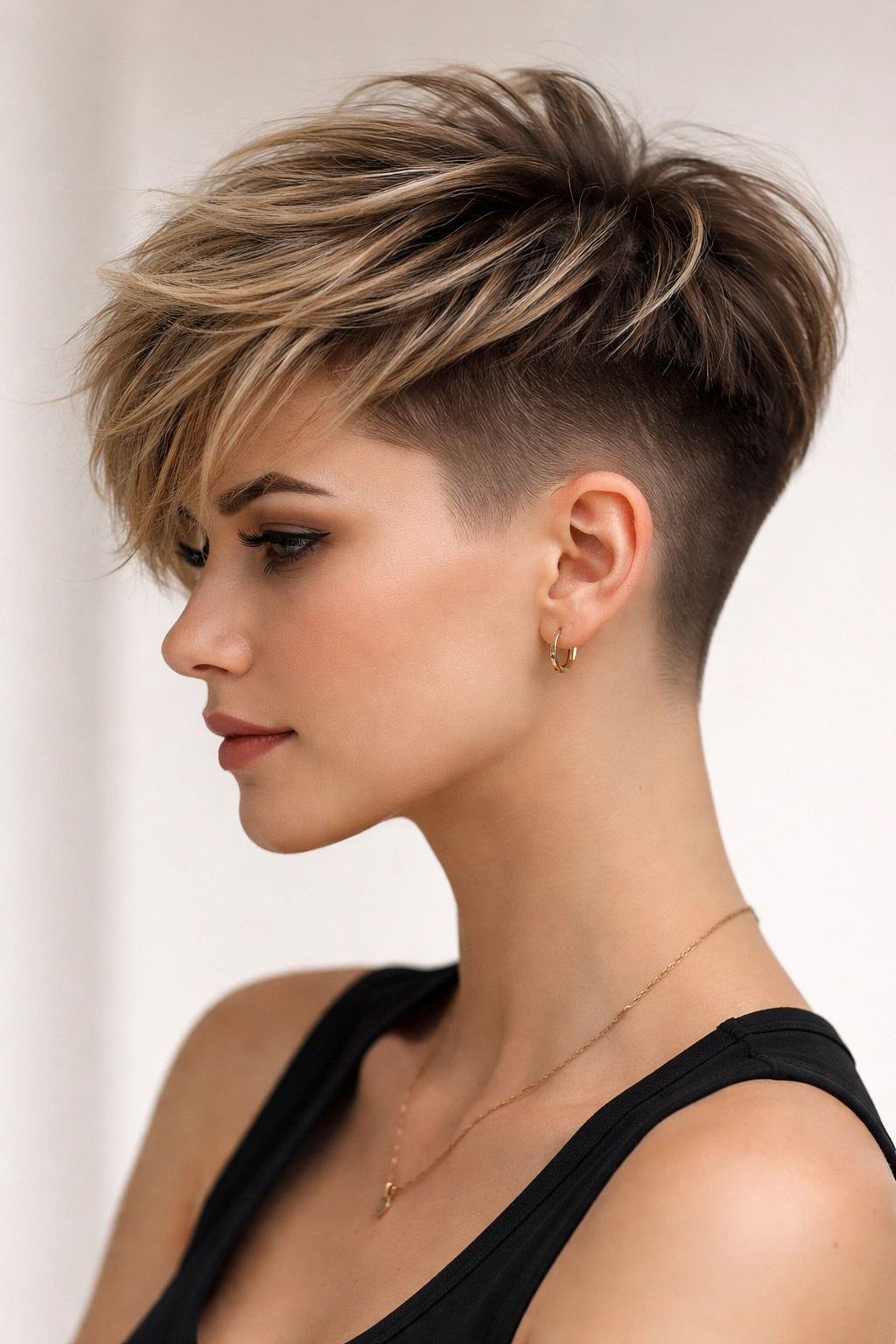
An undercut is where the back and sides are cut very short (often clippered) while the top is left longer and layered. The dramatic length difference between the short sides and longer top creates a striking, modern look. The layering on top prevents it from looking harsh—the longer pieces on top have texture and movement, which softens the severity of the undercut sides.
Why It Creates Volume and Movement
The undercut removes weight from the sides and back, which means all the visual weight and volume comes from the longer, layered top. The longer pieces are layered at different lengths, so they have maximum room to move without any weight dragging them down. The extremely short sides create a sharp contrast that actually makes the longer top appear even fuller by comparison. This cut is exceptionally good for creating the illusion of volume, even on people with fine hair, because there’s so much negative space on the sides.
Best For and How to Style It
Undercuts work best on people confident enough to wear an edgy cut and work well on straight to wavy hair. They’re particularly flattering on people with round or square faces because the short sides elongate the face. To style, use texturizing spray or styling cream on the longer top, blow dry with your fingers or a brush to create movement, and keep the undercut sides neat by trimming or re-clippered every two to three weeks. This is a higher-maintenance cut than it might appear because the undercut needs to look intentional and fresh.
Maintenance and Variations
The undercut sides need trims or re-clippering every two to three weeks to stay sharp. The layered top needs trims every four to five weeks. This is not a low-maintenance cut, but it’s striking and worth the upkeep if you love the look. For a less extreme version, ask for a “subtle undercut” where the sides are short but not clippered, creating a lighter contrast.
Pro tip: An undercut is a powerful choice if you want a cut that gets attention and clearly communicates that you’re intentional about your style.
12. The Soft-Layer Voluminous Crop
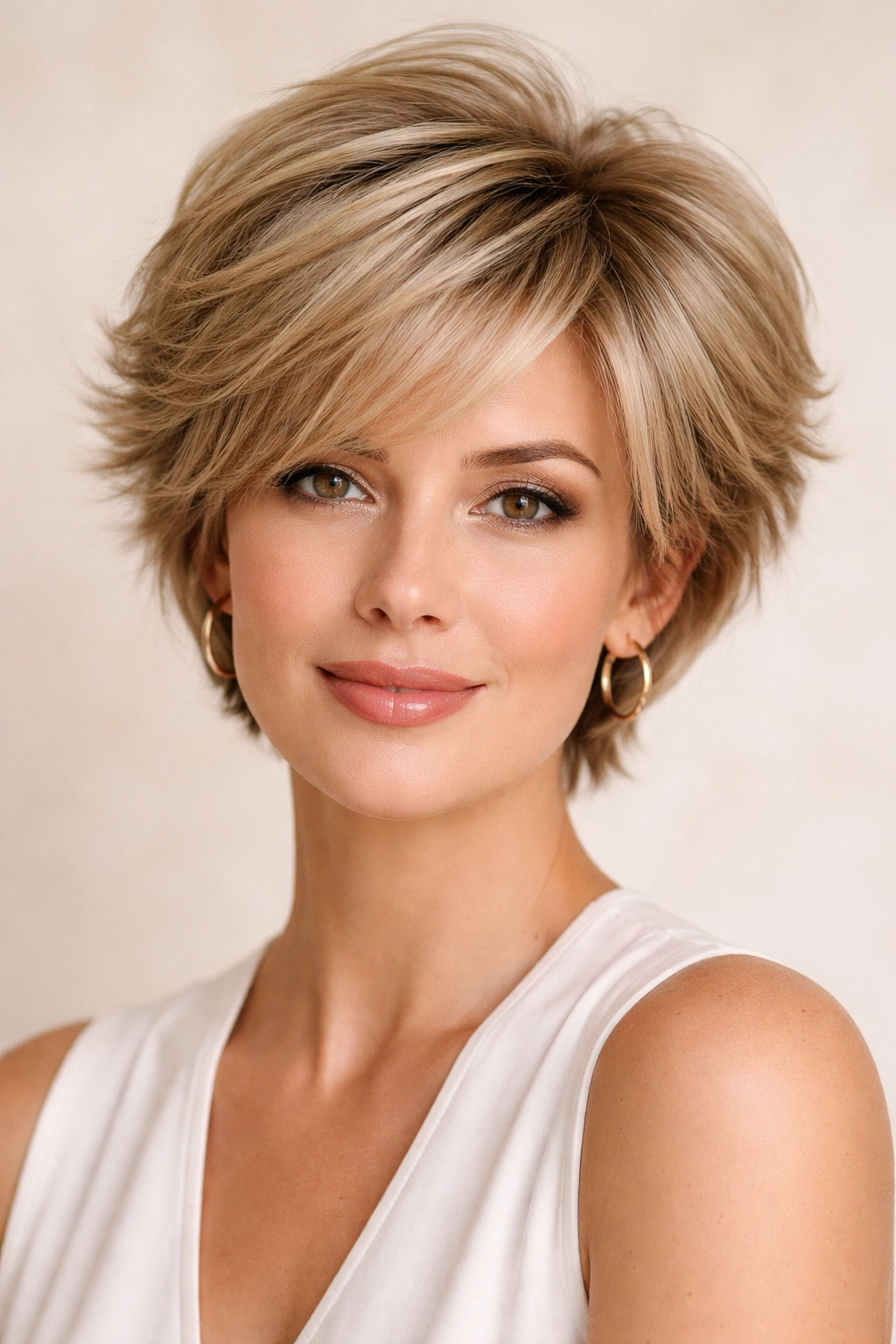
This is the most voluminous short cut for people who want obvious lift and fullness without the edge of a shag or the boldness of an undercut. The soft-layer crop features layers throughout the entire head, with intentional shorter pieces on top for lift and slightly longer pieces underneath for shape. The layers are softer than a shag—less choppy and piece-y—which makes the cut look more refined while still delivering serious volume.
Why It Creates Volume and Movement
The entire cut is built on layers, meaning every section is a different length. Shorter pieces on the crown create immediate height, while medium-length pieces throughout the sides and back create shape and movement. Because nothing is blunt, nothing creates a heavy line that weighs hair down. The layering is consistent and intentional—it’s not a random shag, but rather a carefully shaped, very voluminous short cut. This works exceptionally well on fine and thin hair because the multiple layers create the illusion of much more volume than actually exists.
Best For and How to Style It
Soft-layer crops work on all hair types but are particularly ideal for people with fine or thin hair who want real volume without extreme styling. To style, blow dry with a brush or round tool for shape, and the layers will do most of the work for you. You can also use texturizing spray for added dimension, or keep it simple and just blow dry smooth. The cut is versatile enough for both polished and textured styling.
Maintenance and Variations
Trims every four to five weeks keep the layers sharp and defined. The more layers a cut has, the more important regular trims become because once layers start to blur together, the cut loses its voluminous effect. This is the cut to choose if you want genuine, visible volume that requires regular maintenance but isn’t as time-intensive to style as a shag or undercut.
Pro tip: If you have fine or thin hair and want the fullest possible appearance from a short cut without the styling commitment of a shag, this is your best option.
Final Thoughts
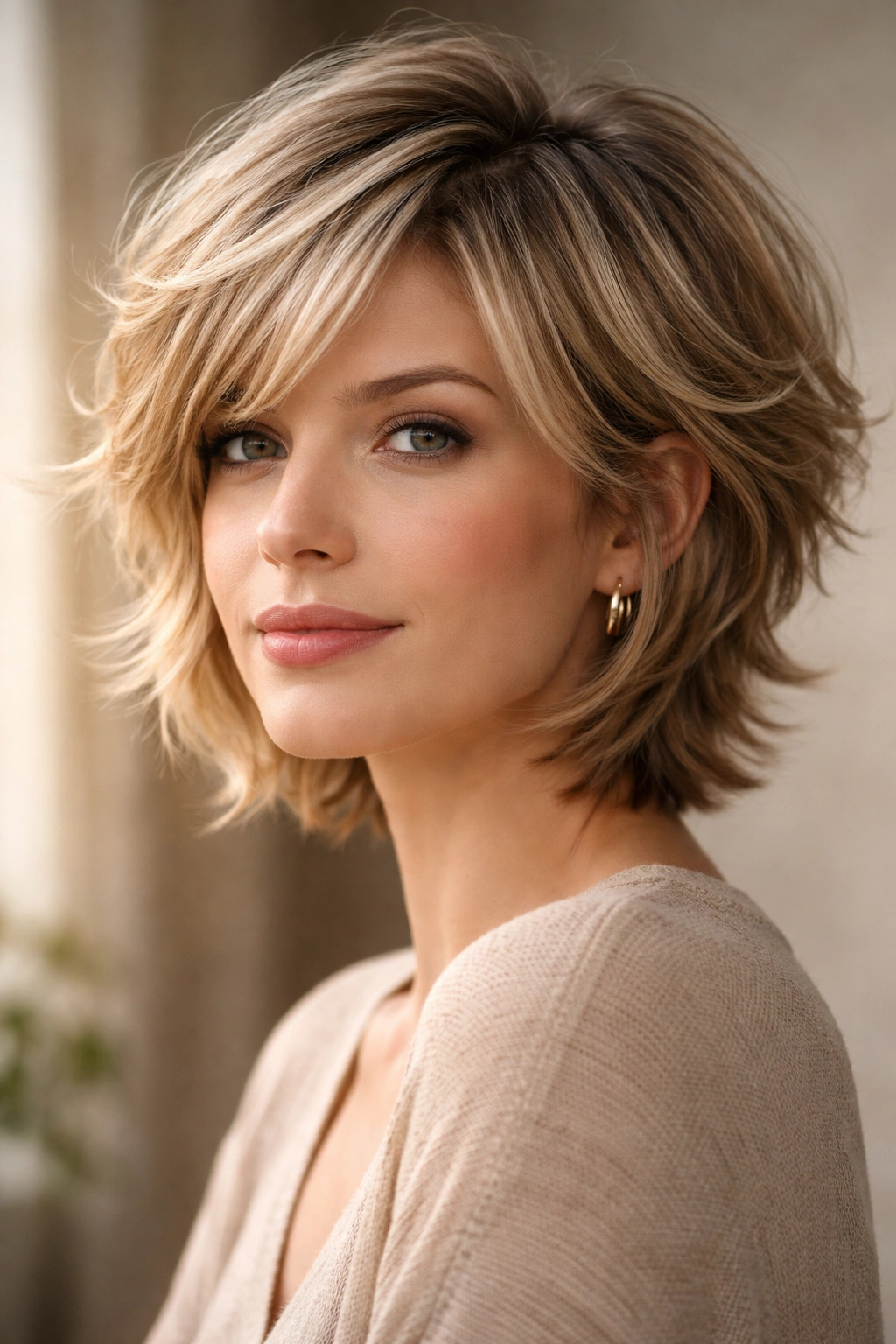
Choosing the right short layered cut comes down to understanding your hair texture, how much styling you’re willing to do, and how much maintenance you’re comfortable with. The cuts above range from high-maintenance statement styles like undercuts and true shags to lower-maintenance options like soft-layer crops and feathered bobs. The common thread running through all of them is that layering—strategic, thoughtful layering—is what creates the volume and shape that makes short hair so appealing.
When you consult with your stylist, bring photos of the specific cuts you’re considering and discuss your hair texture honestly. A shag cut on straight hair without regular styling looks very different than a shag on wavy hair. An undercut requires real commitment to keeping the sides trimmed. A soft-layer crop is genuinely low-maintenance despite having lots of layers. Having these conversations before you sit down in the chair means you’ll get a cut that actually fits your life, not one that looks amazing in photos but frustrating at home.
The beauty of short layered cuts is that they make hair look fuller, shape-ier, and more intentional with less effort than longer styles often require. Most of these cuts can be styled multiple ways—polished and neat one day, textured and piece-y the next. That versatility, combined with the genuine volume that layering creates, is why short layered cuts remain one of the most flattering and practical options available.
