



The bowl cut has made a striking comeback on women’s heads everywhere — but it’s almost unrecognizable compared to the 1990s version your mom might remember. Today’s interpretations are softer, more textured, and infinitely more flattering. Modern women are embracing versions that work with their face shape, hair texture, and personal style rather than forcing a one-size-fits-all silhouette. What makes these contemporary takes so appealing is the freedom to customize: you can add choppy layers, experiment with asymmetry, blend it with a shag, or keep it sleek and minimalist. The bowl cut has essentially evolved into a frame that celebrates individual personality while maintaining that distinctive, confidence-radiating vibe that originally made it iconic.
What’s driving this resurgence? Partly it’s the influence of fashion-forward celebrities and stylists who’ve proven the bowl cut works beautifully when you break some of the traditional rules. Partly it’s that Gen Z and younger millennial women grew up with access to diverse aesthetic inspiration — Y2K revival trends mixed with contemporary edge. And partly it’s just that a well-executed bowl cut is genuinely versatile. It photographs beautifully, requires a strong silhouette that feels empowering to wear, and creates an instant sense of editorial polish that other cuts struggle to match. The key to pulling off a modern bowl cut is understanding which variation aligns with your hair texture, lifestyle, and the specific vibe you’re going for.
1. The Blunt Choppy Bob
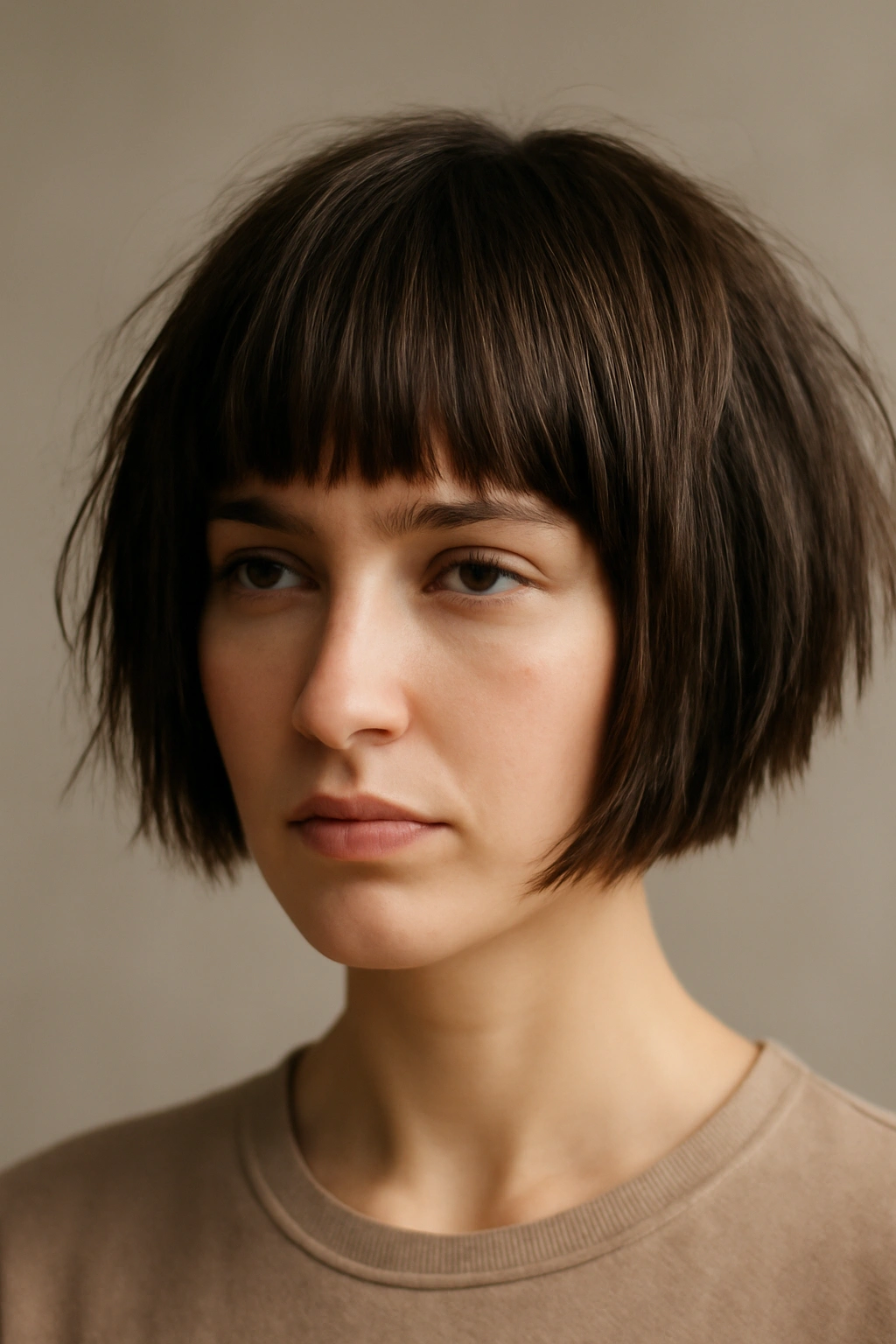
The blunt choppy bowl takes the original bowl concept and fractures it with deliberate, jagged texture throughout. Instead of one smooth, rounded line, this version has multiple layers of varying lengths that create movement and an almost undone quality. The perimeter still maintains that classic bowl-cut roundness, but internal choppy layers break up density and add dimension that feels contemporary rather than retro.
Why This Version Stands Out
The choppy texture transforms what could feel like a rigid shape into something that moves with your head and catches light in interesting ways. It’s forgiving on thick hair because those strategic cuts release bulk without requiring constant styling. Shorter women especially love this version because the choppy layers create vertical interest that elongates the overall silhouette. The cut reads modern and intentional rather than accidental, which is crucial for making a bold shape work.
What You Need to Know
- Works best on straight to wavy hair; very curly textures can read too wild without significant daily styling effort
- Requires a skilled stylist who understands how to space choppy layers so they enhance rather than thin out your hair
- The blunt ends create visible texture, so healthy hair with good shine is non-negotiable — damaged ends will look scraggly
- This cut needs touching up every 4-6 weeks to maintain the precision of those blunt lines
- Styling-wise, a texturizing spray and your fingers are honestly your best friends; avoid heavy products that flatten the texture
Real talk: This cut requires confidence because it’s so visible. Every choppy layer is right there, and there’s no hiding behind subtlety. If you commit to it, own it boldly. Pair it with clean skin and let the cut do the talking.
2. The Layered Modern Bowl
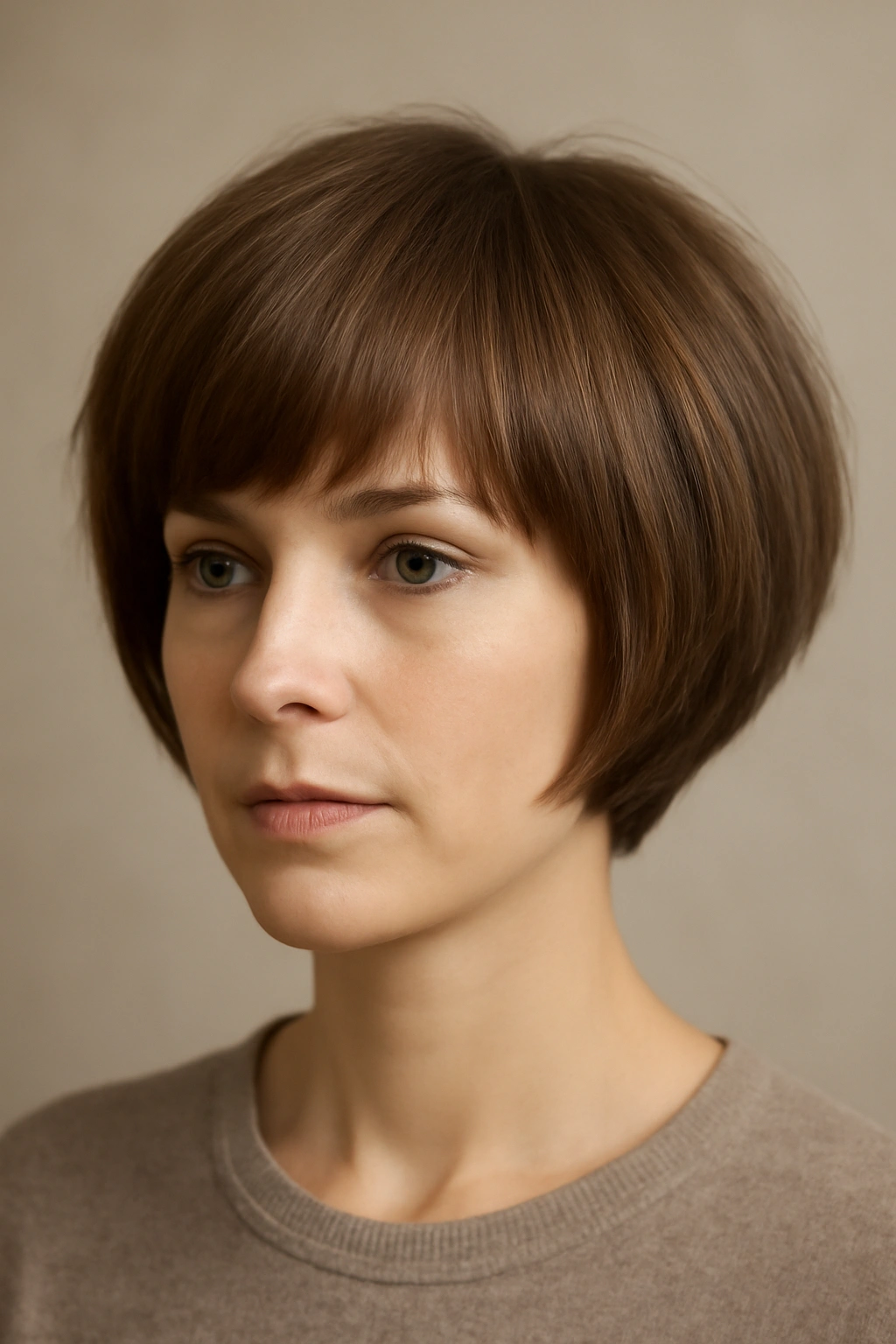
This version keeps the bowl shape recognizable but softens it significantly with seamless layers throughout. Rather than choppy, defined texture, the layers blend smoothly into each other, creating a rounded silhouette that feels less severe than traditional bowl cuts. The top maintains lift and shape, while layers underneath add movement without drawing too much attention to individual cuts.
How It Differs From Traditional Versions
The layered approach gives you the editorial impact of a bowl cut without the shock factor. It’s more forgiving of different hair types and face shapes because those blended layers adapt to your head’s natural contours. The cut works beautifully on fine to medium hair since the layers prevent weight buildup while still creating density at the perimeter. You get structure and polish without that severe, almost costume-like quality that traditional blunt bowls can sometimes have.
Styling and Maintenance Details
- Air-dry friendly if your hair has natural texture; straight hair typically needs blow-drying to maximize the shape
- Layers mean multiple growth patterns, so you’ll notice growth more quickly than with a blunt cut — plan for trims every 5-7 weeks
- This cut works on straight, wavy, and mildly curly hair; the key is that your stylist understands your hair’s natural movement pattern
- Volumizing mousse applied to damp roots before blow-drying is genuinely helpful for keeping the crown lifted
- The layers create built-in texture that photographs beautifully, especially in natural light
Worth knowing: This is the bowl cut for someone who wants the look but needs some practical flexibility. It’s a bridge between traditional bowl cuts and everyday wearability.
3. The Textured Curtain Bowl
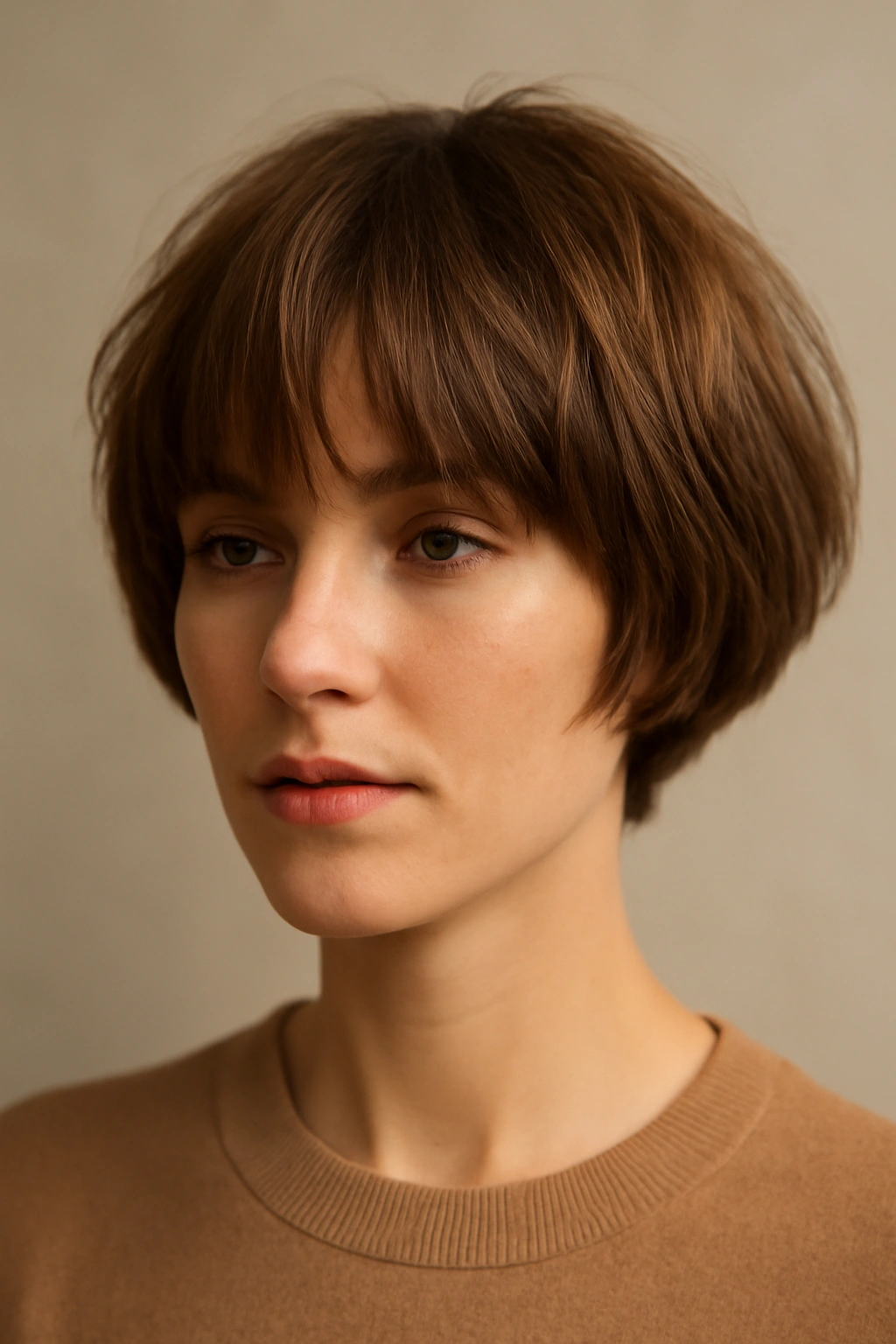
Imagine a bowl cut that exhales rather than holds its breath — that’s the textured curtain bowl. The overall shape is still round and contained, but the hair features soft, piecey texture throughout that creates a lived-in, approachable vibe. Some pieces fall slightly forward near the face, mimicking a subtle curtain effect, while the back and sides maintain that defining bowl roundness.
What Makes This Approach Work
The textured, piecey quality completely removes any severity from the bowl cut silhouette. It reads modern and intentional rather than retro or rigid. This version is exceptionally flattering on round faces because the texture and pieciness create visual interest and angles that a smoother bowl cut might not. The curtain-like movement near the face is gentler and more forgiving than a full blunt bowl, making this an excellent choice for someone hesitant about committing to the shape.
Practical Details and Styling Notes
- Requires strategic point-cutting or razoring to create that piecey texture; scissors alone won’t achieve the same effect
- Best suited to hair with some natural texture or wave; very straight hair may read limp unless you style with texture products
- The texture means product matters — a light texturizing cream or spray helps define those pieces without heaviness
- Fine or thinning hair can sometimes struggle with textured cuts, as individual pieces become too visible; discuss this with your stylist
- This cut actually improves as it grows out slightly because the layers start to create even more textured movement
Insider note: This is the bowl cut that feels effortless, which paradoxically requires some intentionality in how you style it. The texture is forgiving, but it also needs slightly more frequent touch-ups to maintain definition.
4. The Wispy Undercut Bowl
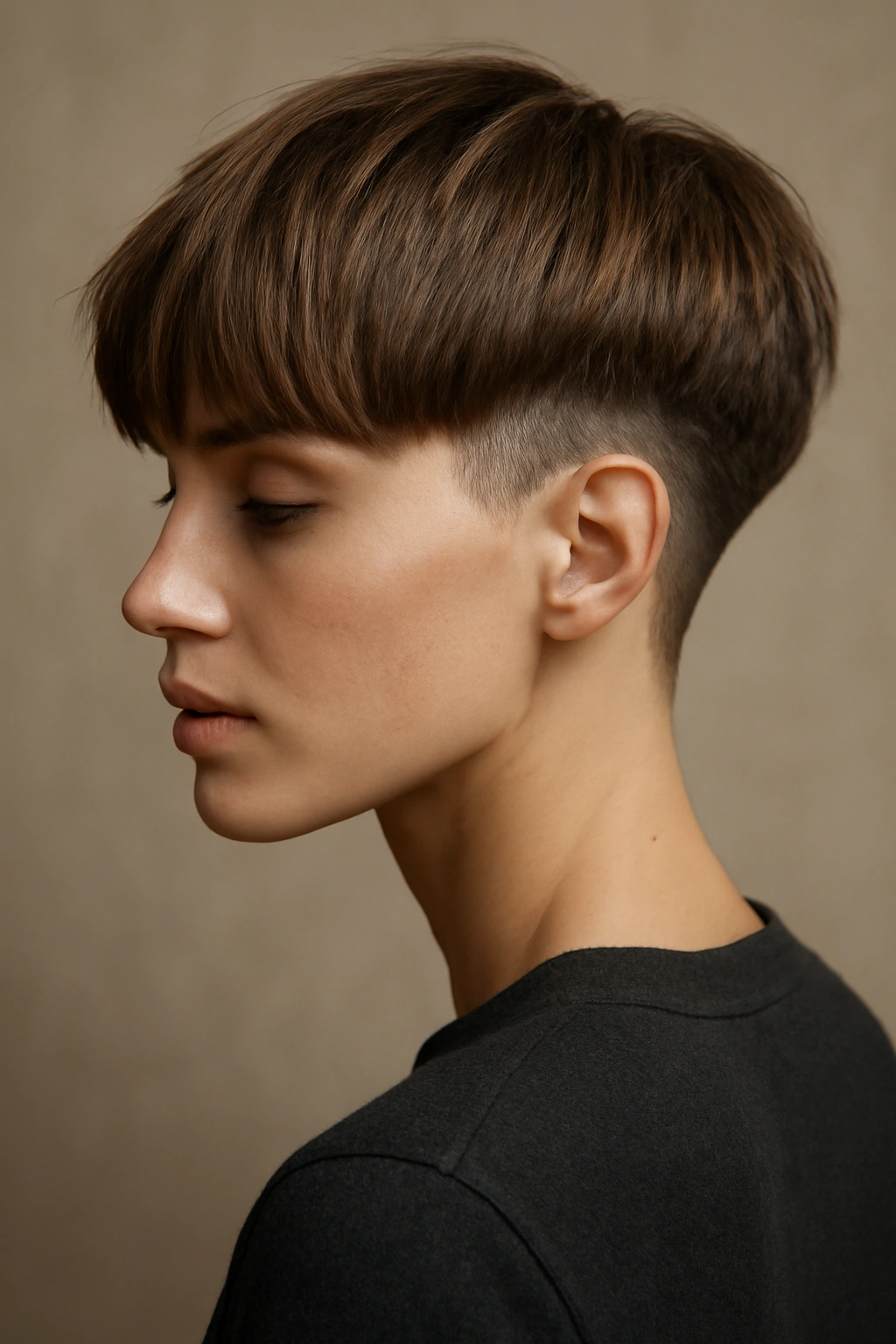
This version plays with dimension in an unexpected way — the top maintains a fuller bowl shape, while the sides and undercut are clipped much shorter, revealing an undercut underneath. It’s the bowl cut for someone who wants structure and edge simultaneously. The contrast between the fuller top and shorter sides creates visual drama and modern attitude that feels distinctly current.
Why Undercuts Elevate the Bowl
The undercut adds contemporary edge that stops this cut from reading retro or nostalgic. It’s bold enough to make a genuine fashion statement but still fundamentally a bowl cut at its core. For women with fine or thin hair, the undercut actually removes weight while maintaining the rounded silhouette on top where you want density. It’s also exceptionally practical if you have a long face shape, because the shorter sides prevent width loss while the fuller top creates balance.
Important Styling and Maintenance Considerations
- The undercut requires regular touch-ups every 3-4 weeks to avoid looking grown-out and messy — this isn’t a “low maintenance” cut
- Styling options expand dramatically: you can show off the undercut by wearing your hair up, or cover it by wearing hair down for a more subtle look
- Very short undercuts can read punk or edgy; longer undercuts (inch or two of length) feel more fashion-forward and less extreme
- This cut genuinely needs a skilled stylist who understands how to blend the longer top with the shorter undercut seamlessly
- The contrast between lengths means two different growth rates; you’ll need to think about maintenance strategically
Pro tip: If you’re unsure about committing to a visible undercut, ask your stylist to start with a slightly longer undercut that you can grow into confidence with. You can always go shorter at the next appointment.
5. The Shag Bowl Hybrid
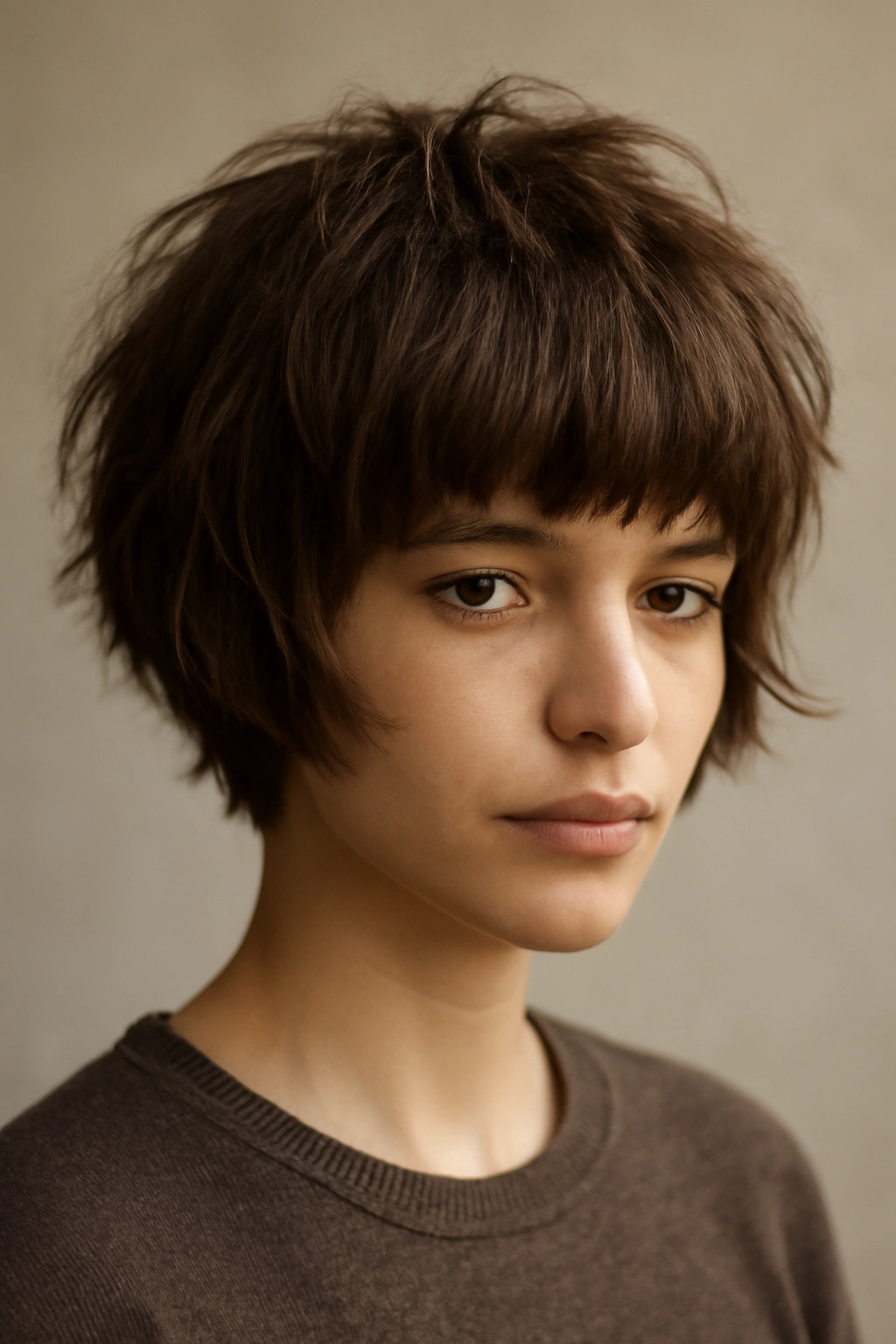
This is the bowl cut for someone who wants movement and textured layers but with the containing structure of a bowl. The hybrid mixes shag DNA (lots of choppy texture, feathered layers, volume at the crown) with bowl-cut DNA (rounded perimeter, structured silhouette). The result is a cut that feels energetic and lived-in rather than neat and controlled, while still maintaining a cohesive shape.
How This Blend Actually Works
The shag elements add dimension and movement that pure bowl cuts sometimes lack, especially for people with straight hair. The bowl structure prevents it from reading as a full shag, which keeps it more wearable for professional environments or anyone who wants a slightly more conservative silhouette. This hybrid is remarkably flattering on face shapes that might struggle with traditional bowl cuts — the layers and texture soften harsh lines while the overall shape still provides structure.
Texture and Styling Reality
- Works beautifully on wavy, textured, or curly hair; these hair types genuinely thrive with shag-layered cuts
- Requires styling effort to look intentional rather than just messy; texture sprays and light styling creams are essential
- The choppy layers mean frequent trims to keep the shape fresh — every 4-6 weeks is ideal for maintaining definition
- Fine or thin hair can sometimes read too sparse with aggressive shag layering; discuss proportions carefully with your stylist
- This cut actually encourages embracing your hair’s natural texture rather than fighting it, which feels liberating for many people
Worth knowing: This cut is for someone who genuinely enjoys styling their hair. If you’re looking for something you can air-dry and forget, this isn’t the one. But if you love experimenting with texture products and creating that perfect piecey finish, you’ll adore it.
6. The Sleek Minimalist Bowl
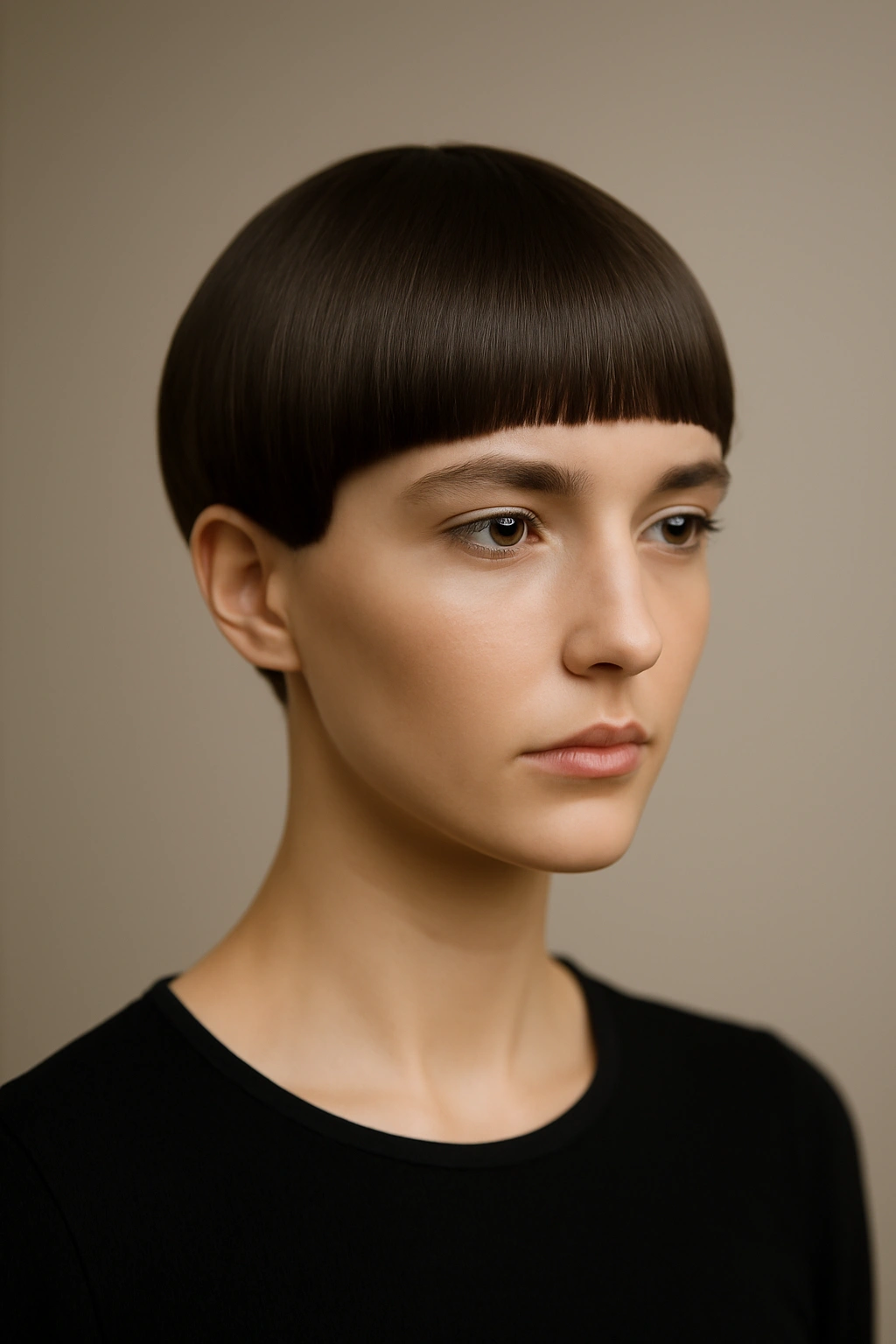
The opposite end of the spectrum from choppy or textured variations, the sleek minimalist bowl keeps lines clean and precise. The silhouette is smooth and controlled, with minimal internal layers. Everything is cut to complement the rounded shape rather than interrupt it. It reads polished, editorial, and almost architectural in how intentional the lines are. This version feels less Y2K revival and more contemporary high fashion.
Why Minimalism Feels Modern
There’s something exceptionally sophisticated about a clean, well-executed shape with no apology or softening. The sleek bowl cut reads expensive and intentional — like you’ve invested in a genuinely considered haircut rather than just following a trend. It’s also exceptionally flattering if you have a strong bone structure, because the clean lines emphasize cheekbones, jawlines, and facial symmetry without distraction. This version requires absolutely pristine hair condition since every detail is visible.
Maintenance and Styling Requirements
- Demands a stylist with serious technical skill — there’s nowhere to hide imperfect lines or uneven layers in a sleek cut
- Works best on straight to lightly wavy hair; very curly hair requires significant daily styling to maintain smoothness
- You’ll need professional blow-dry equipment and skill to achieve the sleek finish; this isn’t a wash-and-go cut
- Quality matters dramatically here — hair health, shine, and density are all prominently visible
- Trims every 4-5 weeks keep those clean lines from becoming blunt and heavy
- Styling products like smoothing serums, lightweight mousses, or gel keep the shape sharp throughout the day
Real talk: This is the bowl cut for someone who’s genuinely committed to hair care and maintenance. You can’t just roll out of bed and expect it to look good. But if you’re willing to invest the effort, the payoff in polish and sophistication is genuinely worthwhile.
7. The Side-Swept Asymmetrical Bowl
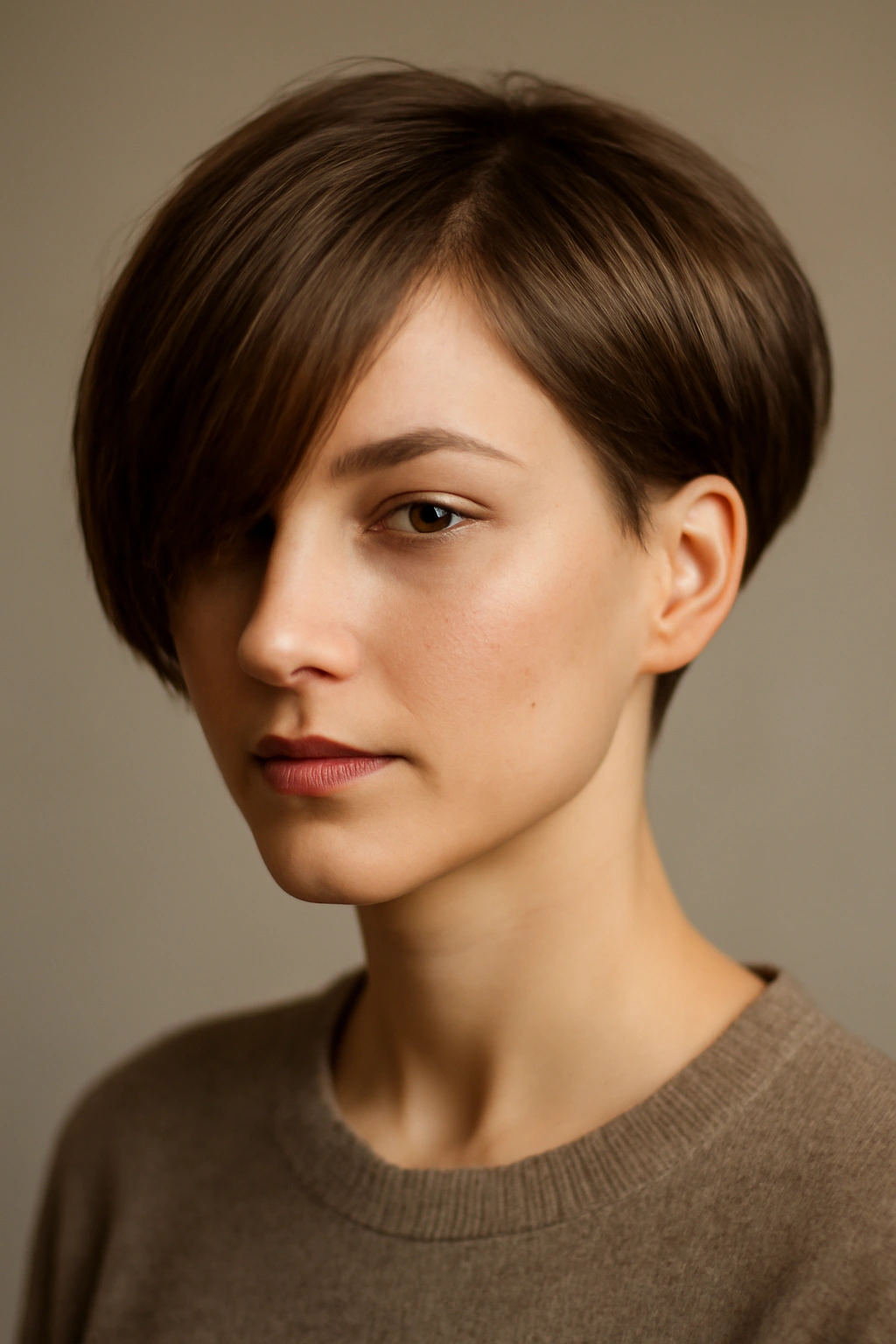
This version breaks the symmetry that defines traditional bowl cuts. One side is longer and sweeps across the face or tucks behind the ear, while the other side maintains shorter bowl-cut proportions. The asymmetry creates balance and flattery while the overall shape is still recognizably a bowl cut. It’s the version for someone who loves the cut but wants some of their personal preference expressed through asymmetry.
How Asymmetry Changes the Dynamic
Breaking symmetry makes this cut feel less stark and severe, especially for face shapes that struggle with traditional bowls. The sweeping side creates length and movement that elongates round faces, while the shorter side maintains the defining structure that makes the cut recognizable. Asymmetry also lets you customize the look slightly — you can wear it with the long side visible for a softer look, or tuck it behind your ear for something more structured.
Styling Flexibility and Practical Considerations
- Works on most hair types, though straight hair shows the asymmetry most dramatically and elegantly
- The swept side means some styling is necessary to maintain the asymmetrical effect — hair generally wants to fall evenly
- Requires a stylist who understands proportions; the asymmetry should feel intentional and balanced, not accidental or lopsided
- Growing out happens unevenly; you’ll need trims every 5-7 weeks to maintain the intentional asymmetrical shape
- This cut is incredibly photogenic because asymmetry creates visual interest and dynamism that symmetrical cuts sometimes lack
- If you have a side part naturally, this cut works beautifully with your hair’s existing preference
Insider note: Asymmetrical bowl cuts photograph especially well, making them a favorite among fashion and editorial circles. If you enjoy sharing photos of your haircut, this variation gives you consistently gorgeous angles.
8. The Feathered Soft Bowl
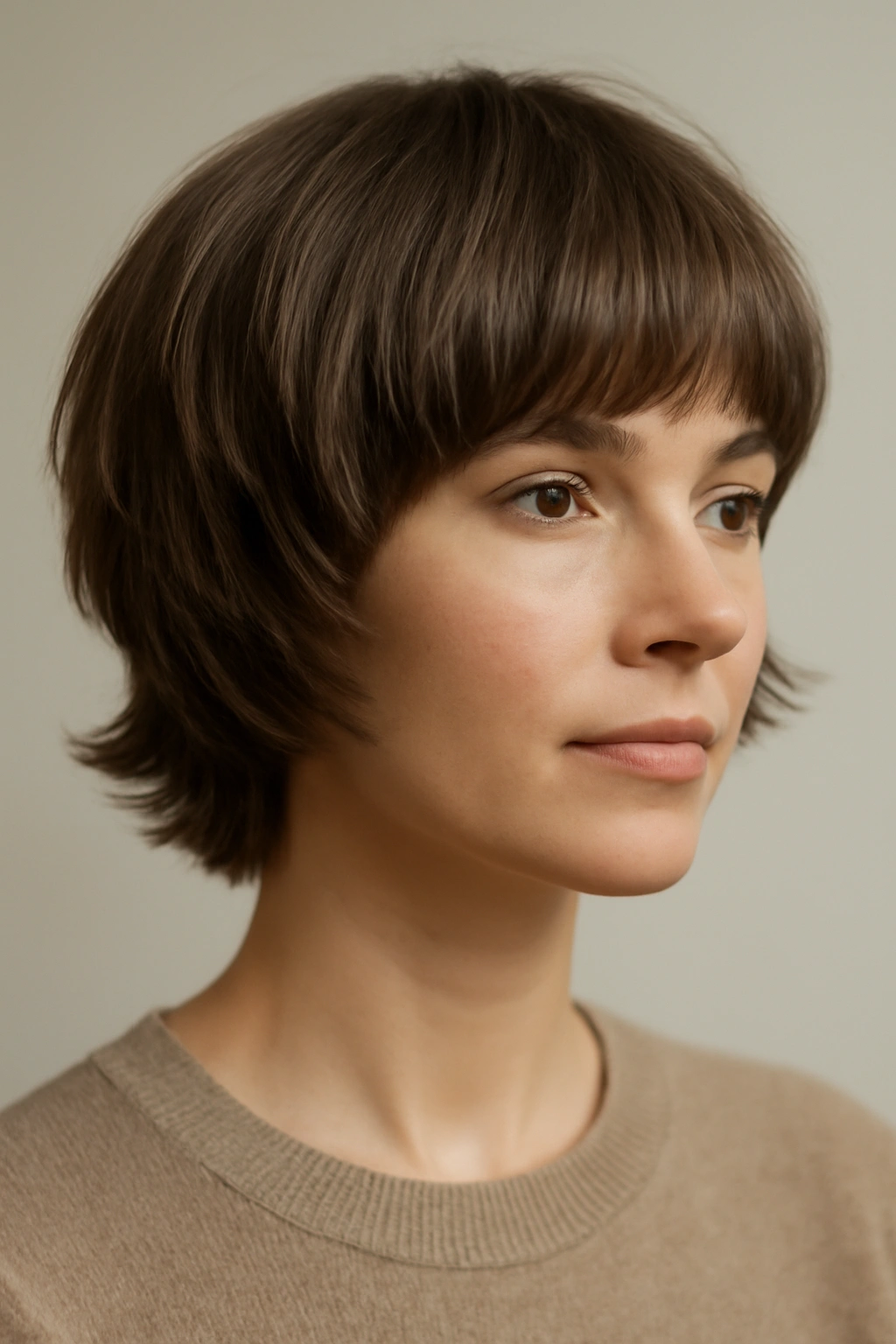
This version takes inspiration from feathered, 1970s-influenced hair while keeping the defining bowl-cut silhouette. Rather than blunt or choppy, the layers are feathered — meaning they curve and soften the perimeter instead of creating distinct texture lines. The overall effect is rounded and gentle, with movement that skims the face rather than cuts boldly across it. It’s retro inspiration filtered through a contemporary lens.
What Feathering Achieves
Feathering removes the severity that some people find intimidating about bowl cuts. The curved, flowing layers create softness that’s incredibly flattering on most face shapes, especially round or square faces that benefit from flowing lines. The feathered approach also works beautifully on different hair textures because the technique adapts to how your hair naturally moves. It reads romantic and effortless rather than edgy or architectural.
Styling and Hair Type Considerations
- Works exceptionally well on wavy or naturally textured hair; feathering enhances and defines existing waves
- Straight hair can achieve this look but requires blow-drying and light styling products to maintain the feathered movement
- Fine or medium hair thrives with feathering since it creates movement without requiring excessive density
- Requires a stylist who understands feathering technique specifically; it’s different from choppy or blunt layering
- Feathered cuts actually improve with a bit of growth before needing a trim, making them relatively low-maintenance
- Texturizing sprays and light styling creams enhance the feathered effect beautifully
Worth knowing: This is the bowl cut that feels the most romantic and the least severe. If you’ve been curious about the shape but nervous about how edgy it might feel, feathering is your gateway into the trend.
9. The Colored Accent Bowl
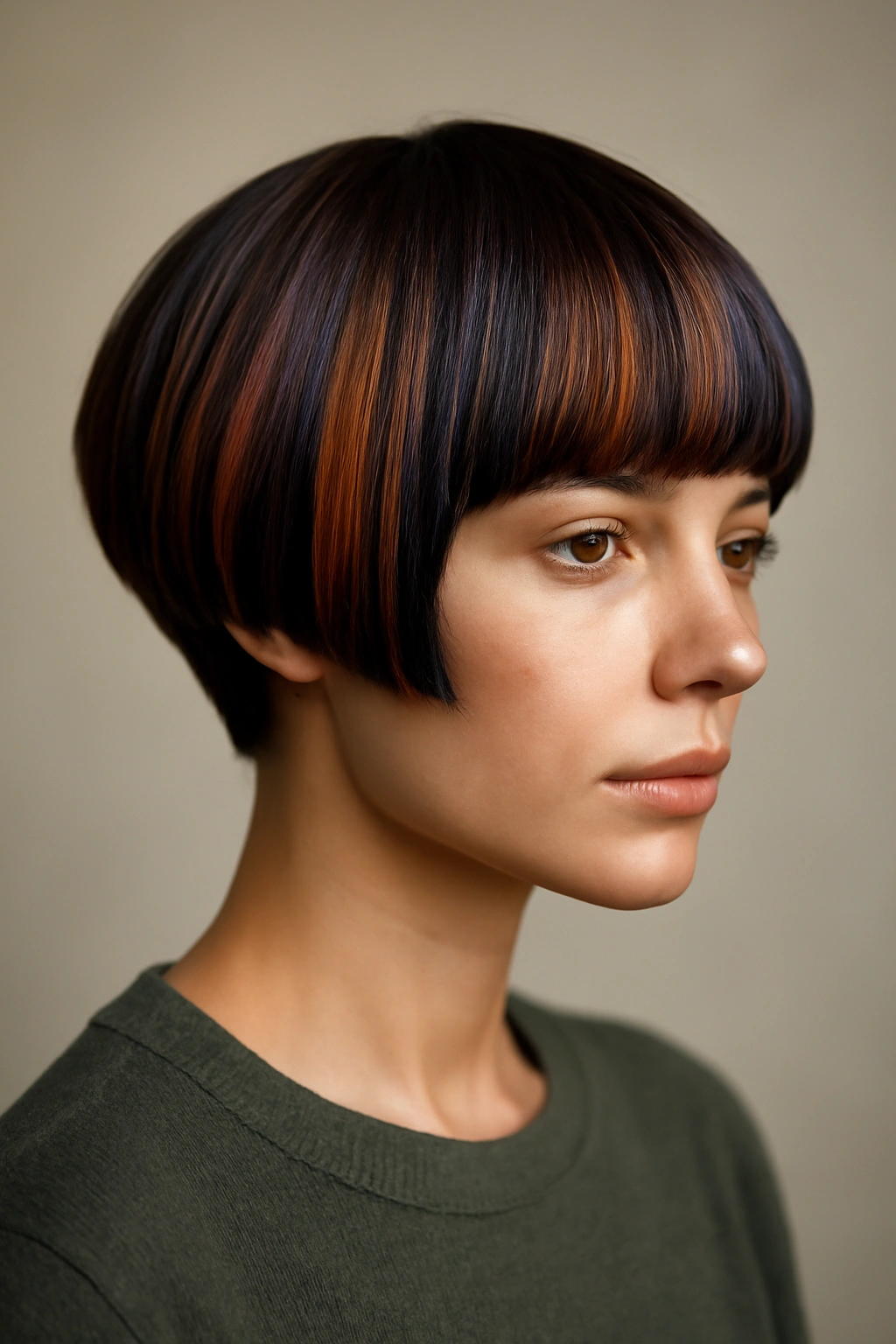
This version uses strategic color placement to elevate the bowl-cut silhouette. Whether it’s a subtle single-process color shift, dimensional balayage, or a bolder color blocked inside the layers, color adds visual interest and fashion-forward edge. The cut itself might be a standard bowl variation, but the color work transforms it into something undeniably contemporary and personalized.
How Color Amplifies the Shape
Strategic color can make bowl cuts photographs even more dramatically, adding visual dimension that plain color sometimes misses. An undercut bowl becomes even more striking with a color change on the exposed undercut. Choppy or feathered layers become more visually interesting when color plays up the texture and movement. Color is also how you personalize a cut that’s admittedly geometric — it’s your way of expressing personality through a structured silhouette.
Color Placement and Maintenance Reality
- Honey balayage or dimensional bronde tones integrate beautifully with rounded bowl silhouettes and photograph exceptionally well
- Color blocks inside choppy or layered sections create visual interest without the commitment of all-over color
- An undercut bowl becomes an opportunity for bolder color — many women opt for jewel tones, pastels, or even vivid colors on the undercut
- Colored bowl cuts require color maintenance every 6-8 weeks, on top of cut maintenance every 4-6 weeks
- Maintaining hair health is crucial when adding color; invest in color-safe products and possibly professional treatments
- Lighter placement colors (blonde, copper, rose gold) tend to photograph more dramatically than darker ones
Pro tip: If you’re considering color with your bowl cut, bring inspiration photos to your stylist showing specific color placement you’re drawn to. The combination of cut and color is how you make this shape uniquely yours.
10. The Curved Pixie-Bowl Blend
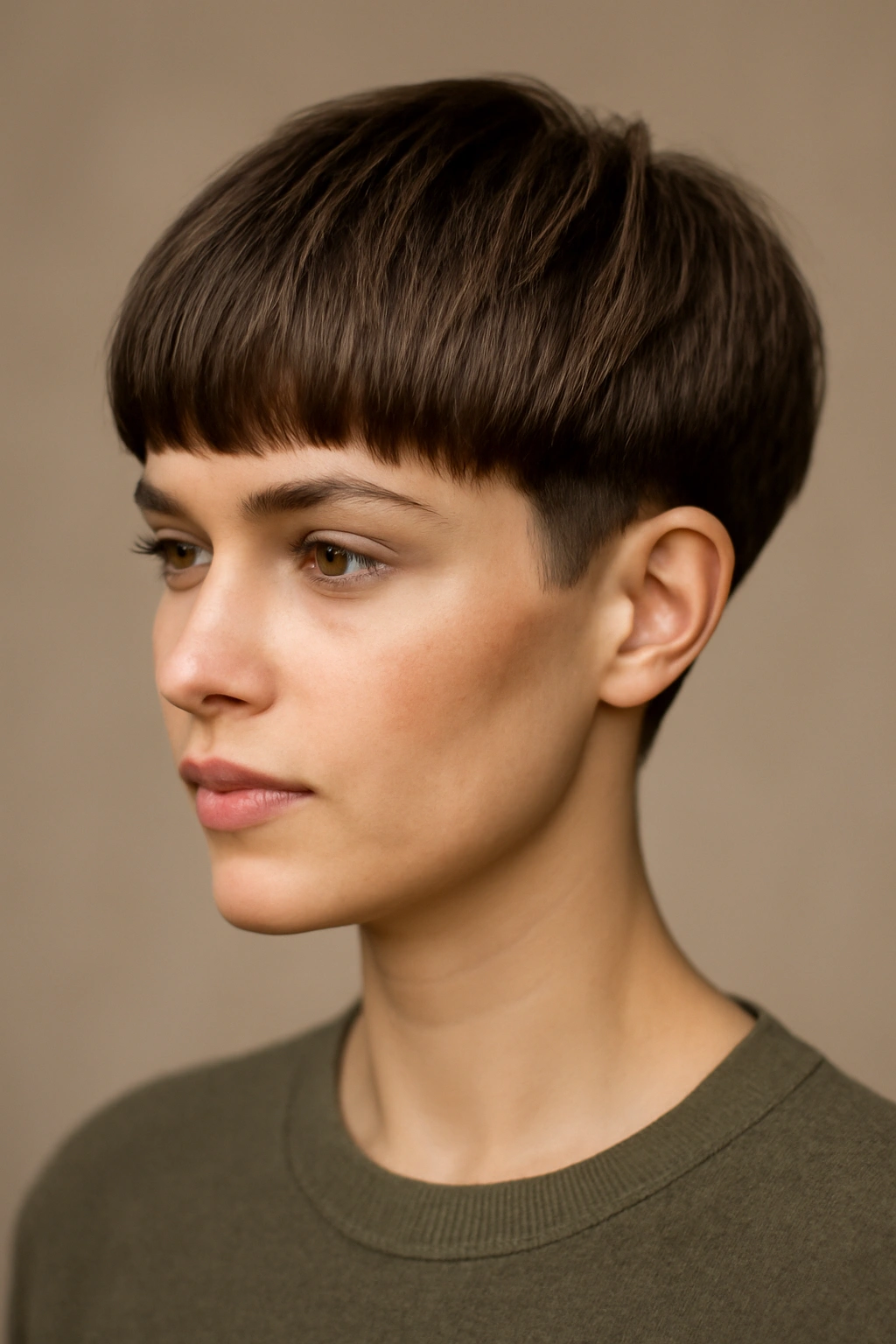
This is the cut for someone who loves the structure and edge of a pixie but wants a bit more length and roundness. The back and crown maintain more length than a traditional pixie, creating a rounded, bowl-like silhouette, while the sides and front are clipped short like a pixie. It’s essentially a pixie cut that grew into a bowl cut, or a bowl cut that borrowed edge from a pixie.
What This Hybrid Offers
The pixie-bowl blend gives you short, low-maintenance styling while maintaining the statement-making power of a structured silhouette. It’s bold and fashion-forward without being quite as dramatic as a full pixie. This cut works beautifully on people with heart-shaped or oval faces, and it’s exceptionally chic if you have good bone structure since short sides expose your face completely. It’s also one of the most practical versions if you genuinely want a low-maintenance cut.
Practicality and Styling Reality
- This is genuinely one of the lowest-maintenance versions; it air-dries relatively easily and looks good with minimal styling
- Works best on straight to slightly wavy hair; very curly hair requires significant styling to maintain the precise shape
- Requires trims every 3-4 weeks to keep the pixie proportions sharp and the bowl roundness defined
- You’ll need a stylist who understands how to blend the short sides with the longer top — the transition is crucial
- Styling options are limited compared to longer cuts, but that’s also its appeal if you want simplicity
- This cut requires confidence because it’s genuinely bold; there’s no hiding behind length
Real talk: This pixie-bowl blend is the cut you choose because you love short hair and structure, not because you’re trying to compromise between two preferences. It commits fully to both — that’s what makes it work.
Final Thoughts
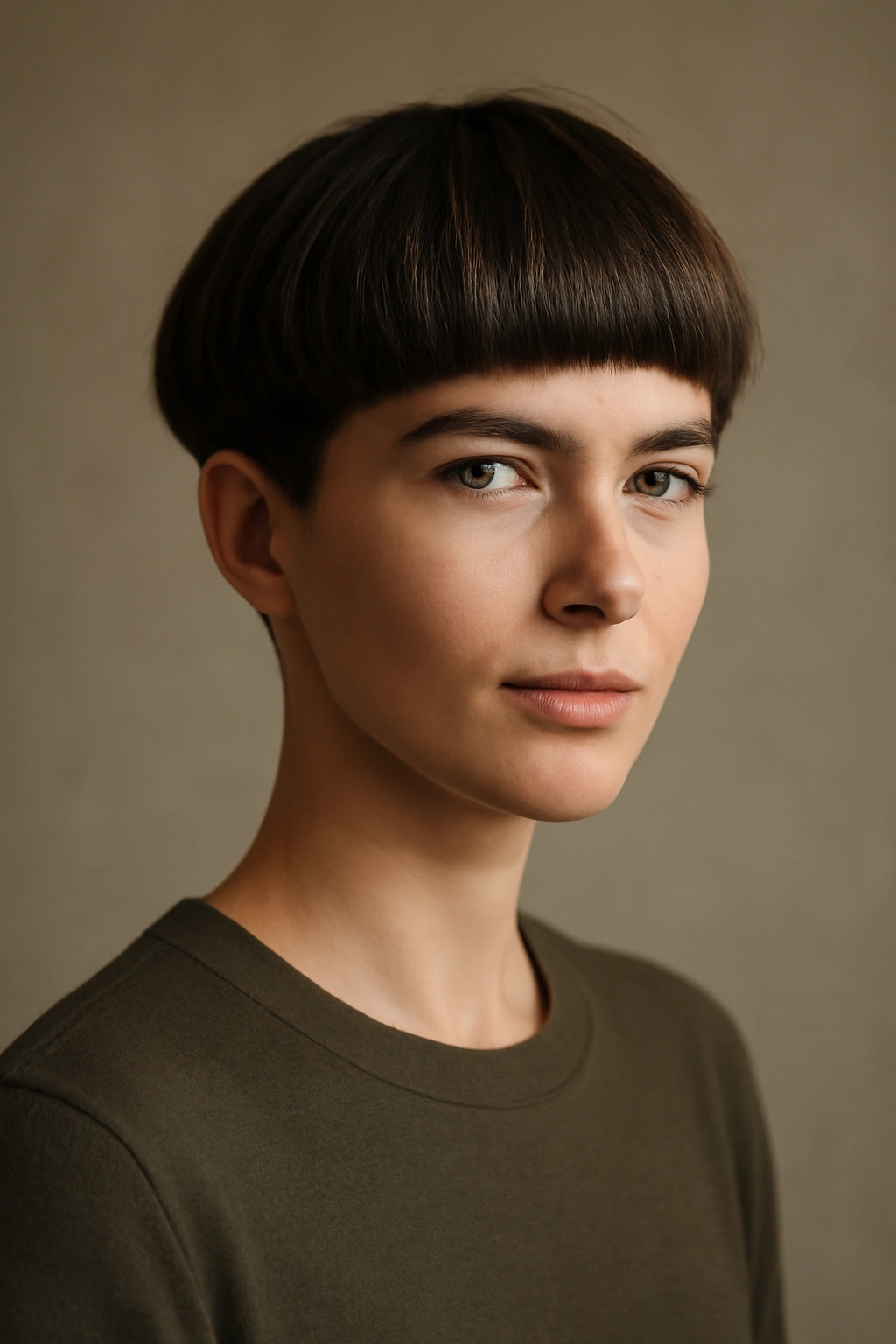
The modern bowl cut renaissance exists because contemporary stylists have figured out how to adapt this structured silhouette to different hair types, face shapes, and personal aesthetics. Whether you’re drawn to choppy texture, sleek minimalism, asymmetrical softness, or bold undercuts, there’s a version of the bowl cut that aligns with how you actually want to live your life and present yourself.
The most important thing is choosing a variation that genuinely excites you rather than one that simply looks good on Instagram. A bowl cut that matches your hair texture, requires maintenance you’re genuinely willing to commit to, and feels like an authentic expression of your style will look exponentially better than one you’ve chosen based on how it looks on someone else. Book a consultation with a stylist who has experience with modern bowl cuts, bring specific reference photos of the variation you’re drawn to, and have an honest conversation about maintenance expectations and how much styling effort you’re realistically willing to invest.
A well-executed modern bowl cut is one of those haircuts that genuinely changes how you feel about yourself. It’s confident, it’s editorial, and it signals that you’ve made a considered choice about how you present yourself to the world.
