



There’s something undeniably magnetic about a choppy pixie cut — that raw, intentional texture that says you’ve got confidence and you don’t need anyone’s permission to pull it off. Unlike the sleek, polished pixie cuts of decades past, today’s choppy pixies embrace imperfection as a design feature. They’re built on razor-cut layers that catch light differently at every angle, creating depth and movement that a blunt cut can never achieve. The texture isn’t an accident; it’s the whole point.
What makes choppy pixies so compelling right now is how they work with natural hair texture instead of fighting it. Curly-haired people can finally wear a short cut that celebrates their curl pattern rather than demanding a flat iron every morning. Straight-haired folks get instant visual interest and dimension without needing heat styling. And for anyone dealing with fine hair, the layering creates the illusion of fullness and volume that feels almost impossible to achieve any other way.
The beauty of a choppy pixie is its incredible versatility hidden beneath an edgy exterior. You can dress it up for formal events with some texture product and intentional styling, or throw it on backward after a shower and look effortlessly cool. It works across virtually every face shape when cut by someone who understands where to place the longer pieces and where to keep things tight. Whether you’re looking for something subtly textured or aggressively choppy, there’s a pixie variation in this collection that speaks to exactly who you are and how bold you want to go.
1. Disconnected Undercut Pixie
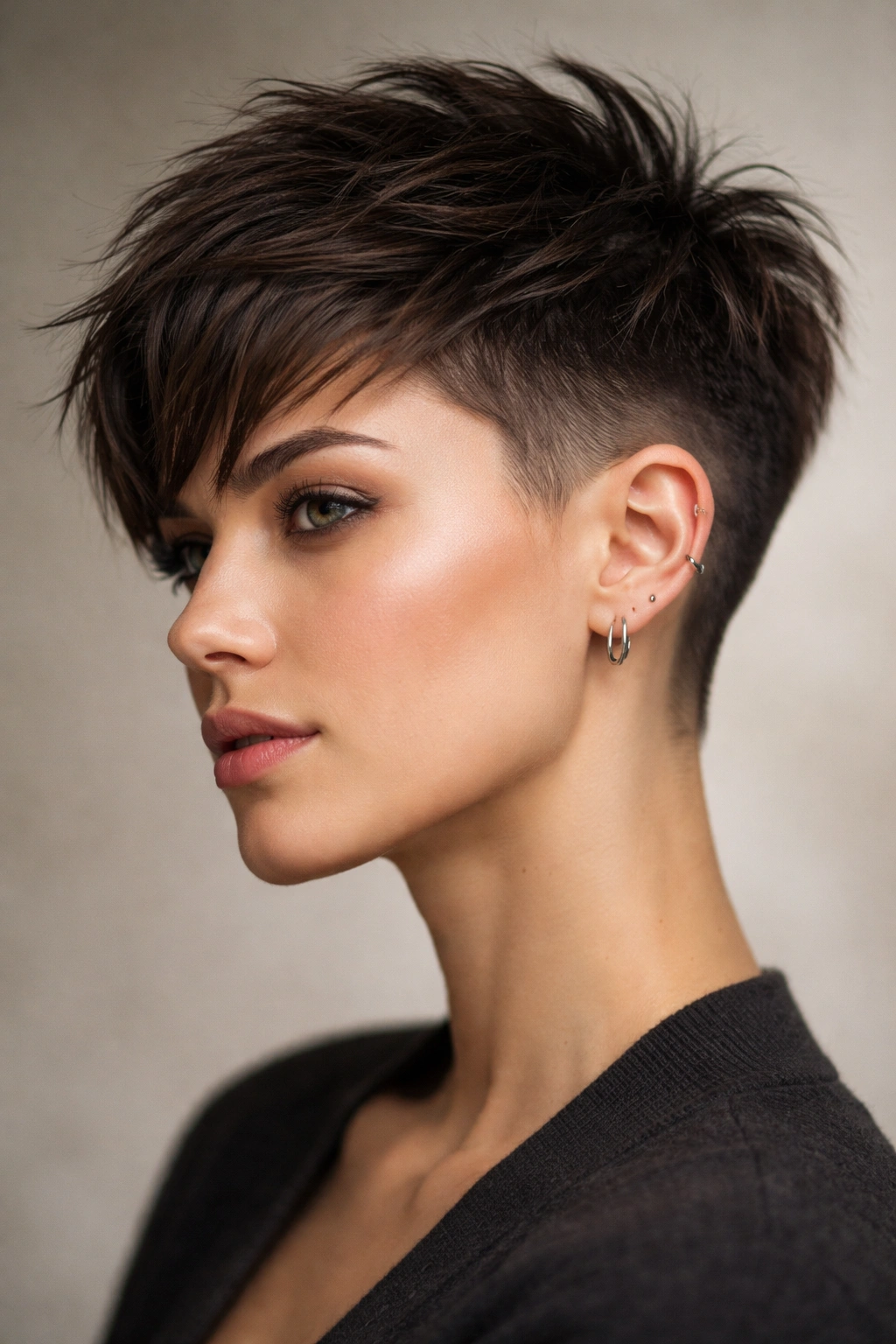
A disconnected undercut pixie creates visual drama by keeping the sides and back significantly shorter than the crown, with zero blending between the two lengths. The top typically sits anywhere from 2 to 3 inches long, while the undercut drops down to a clipper cut (usually a number 1 or 2 blade). This stark contrast immediately catches attention and gives off an intentionally rebellious vibe that reads as confident, artistic, and unapologetically bold.
What Makes It Stand Out
The disconnected undercut pixie works because it plays with negative space — the exposed scalp and short sides make the longer hair on top feel even more substantial and textured by comparison. The contrast actually makes the textured top look fuller and more dimensional than it would on a fully blended cut. This is especially powerful if you have an interestingly shaped head or interesting bone structure, because the undercut draws attention upward to your eyes and cheekbones rather than hiding the sides of your face.
Styling and Maintenance Tips
- Styling: Blow-dry the top sections with a round brush to create lift and texture, or let it air dry if you have naturally wavy hair. The short sides require almost no styling — just keeping them clean and shaped is the entire job.
- Length commitment: The disconnected look only stays intentional for about 3-4 weeks before the undercut starts growing enough to blend slightly with the top. You’ll need touch-ups every 2-3 weeks if you want to maintain that sharp contrast.
- Product choice: Matte texture products (clay, paste, or dry wax) work beautifully here because they emphasize the choppy nature of the top rather than smoothing it down.
2. Shaggy Pixie with Longer Fringe
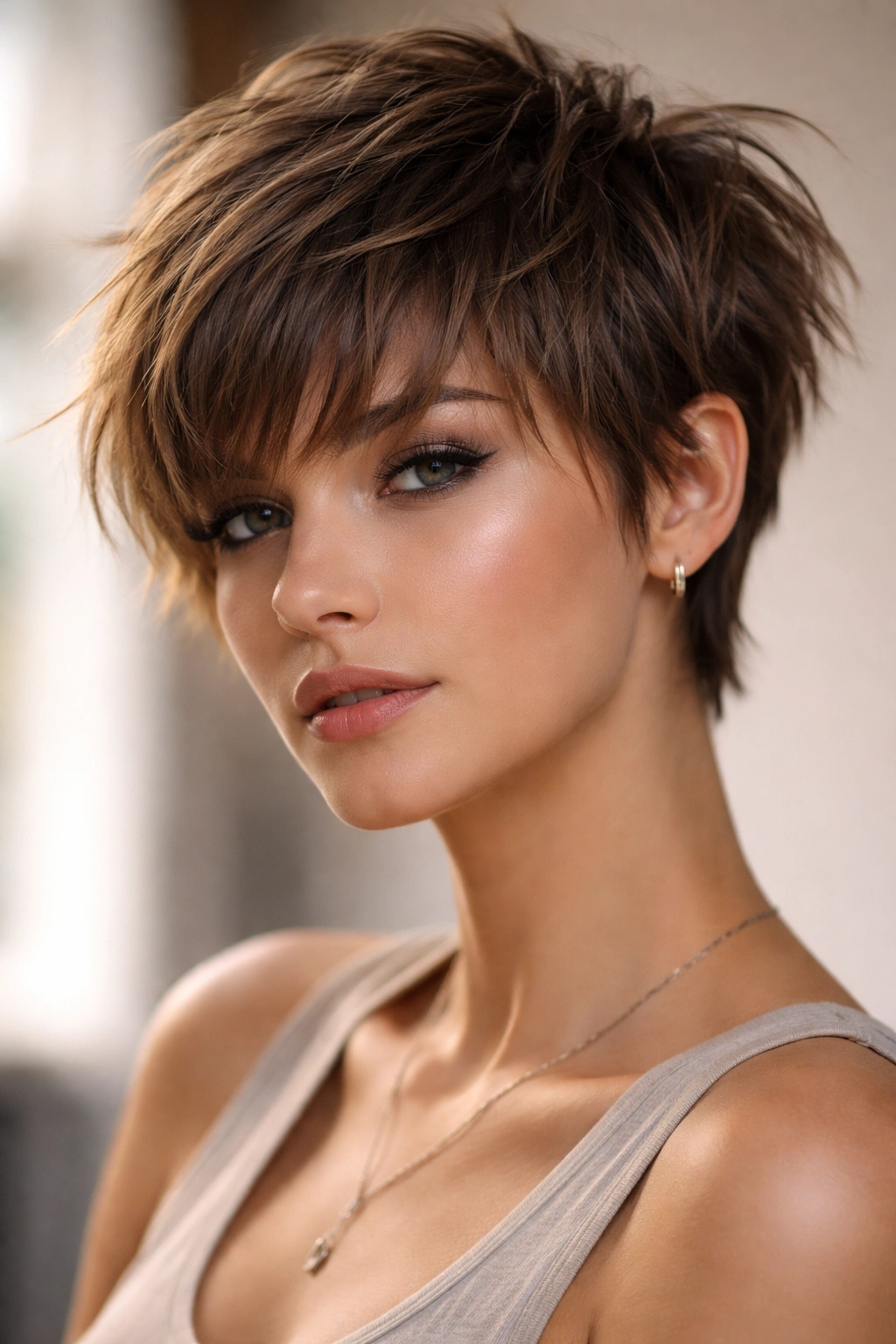
A shaggy pixie keeps more length throughout the entire cut — usually 2 to 3 inches across the crown and sides — but uses choppy, razor-cut layers to create that signature texture and movement. A longer fringe (the hair falling across the forehead) gets special attention, often sitting right at or slightly below the eyebrows. This creates a softer, less edgy version of the choppy pixie that still has serious personality without feeling quite as architectural as a disconnected cut.
What Makes It Stand Out
The longer fringe is the magic element here — it frames the face beautifully and gives you something to work with stylistically. You can sweep it to one side, piece it out dramatically, or tousle it upward with texture product depending on your mood and the occasion. The shag layers throughout catch light beautifully and create this almost feathered effect that’s incredibly flattering on round faces, square faces, and heart-shaped faces. The whole cut moves with you instead of sitting statically on your head.
Styling and Maintenance Tips
- Fringe care: The longer fringe will grow into your eyes faster than the rest of the cut, so be prepared for trims every 4-6 weeks if you want to keep it at the perfect length. You can always tuck it back during that in-between phase though.
- Texture technique: Use a texturizing spray or sea salt spray on damp hair, then scrunch and blow-dry to emphasize the shag layers. This creates a lived-in, deliberately tousled look.
- Face-framing: Ask your stylist to make sure the longer pieces around your face frame your cheekbones and jawline flatteringly — this isn’t a one-size-fits-all cut.
3. Spiky Textured Crown Pixie
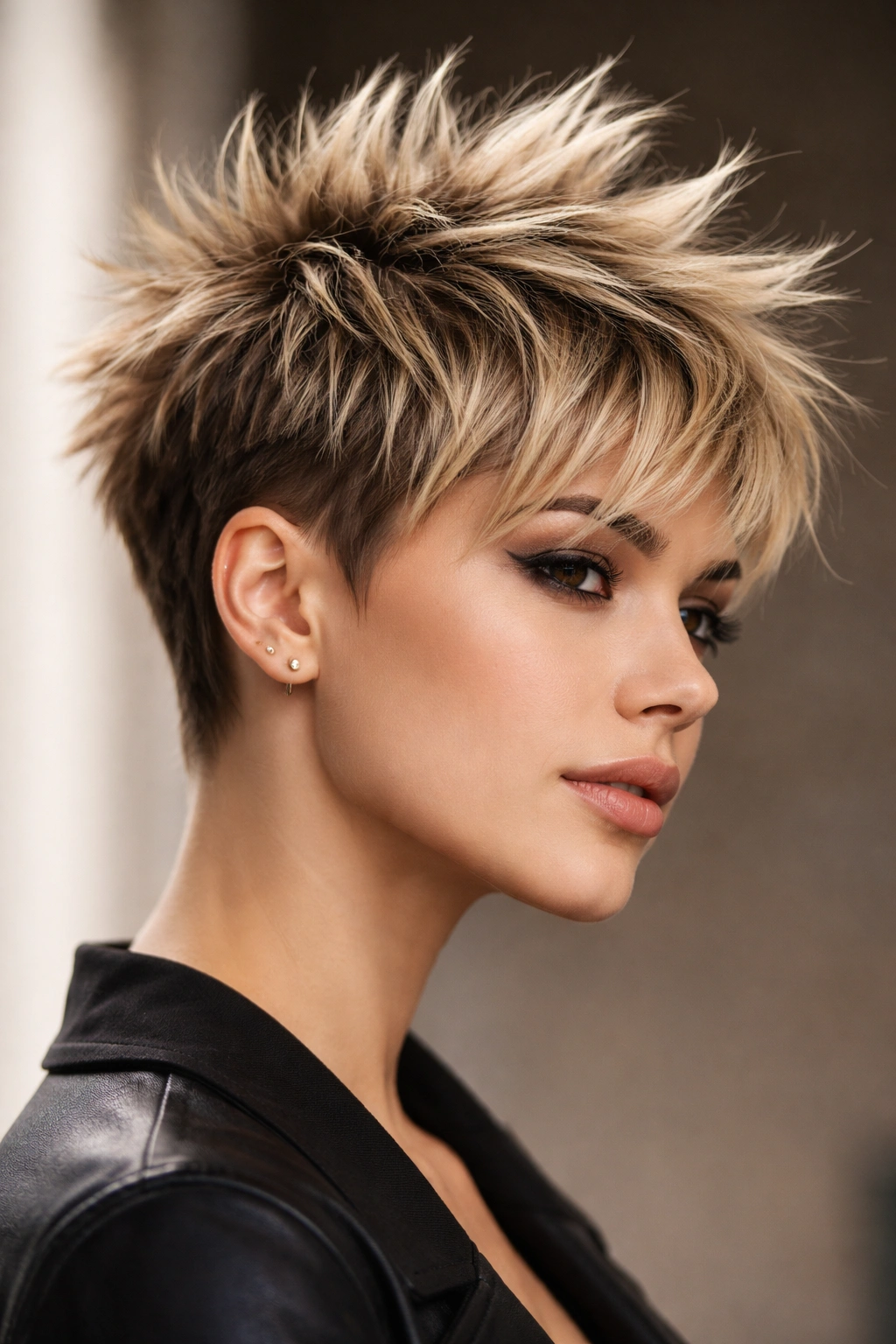
This style prioritizes maximum texture and movement at the crown by using short, closely-spaced razor layers that create almost spike-like pieces when styled upward. The sides stay relatively short but aren’t aggressively undercut, and the back tapers smoothly into the sides. The crown section (roughly 2 to 2.5 inches) gets all the layering focus, creating a cut that demands texturizing product and styling effort but rewards that effort with incredible dimension.
What Makes It Stand Out
The spiky crown naturally draws the eye upward, making it exceptionally flattering for longer face shapes and for anyone wanting to add visual interest to a round face. When styled with a matte texture product and finger-spiked upward, this cut reads as intentional, modern, and undeniably edgy. It’s the cut of someone who’s not interested in blending in. The technical precision required to cut all those layers at just the right angles and spacing is what separates a truly great spiky pixie from a shaggy disaster.
Styling and Maintenance Tips
- Product is non-negotiable: A good matte clay, paste, or texture powder is essential. Gel or traditional hair wax will make this look dated rather than modern. You’re after a matte, pieced-out look, not a shiny, sculpted one.
- Blow-drying matters: Blow-dry the crown sections upward using your fingers to direct the pieces where you want them. Let cooler air set the style so it holds longer throughout the day.
- Growth management: Plan for trims every 4-5 weeks, because the spiked effect flattens as it grows and the geometric precision is what makes this cut work.
4. Soft Choppy Pixie with Grown-Out Texture
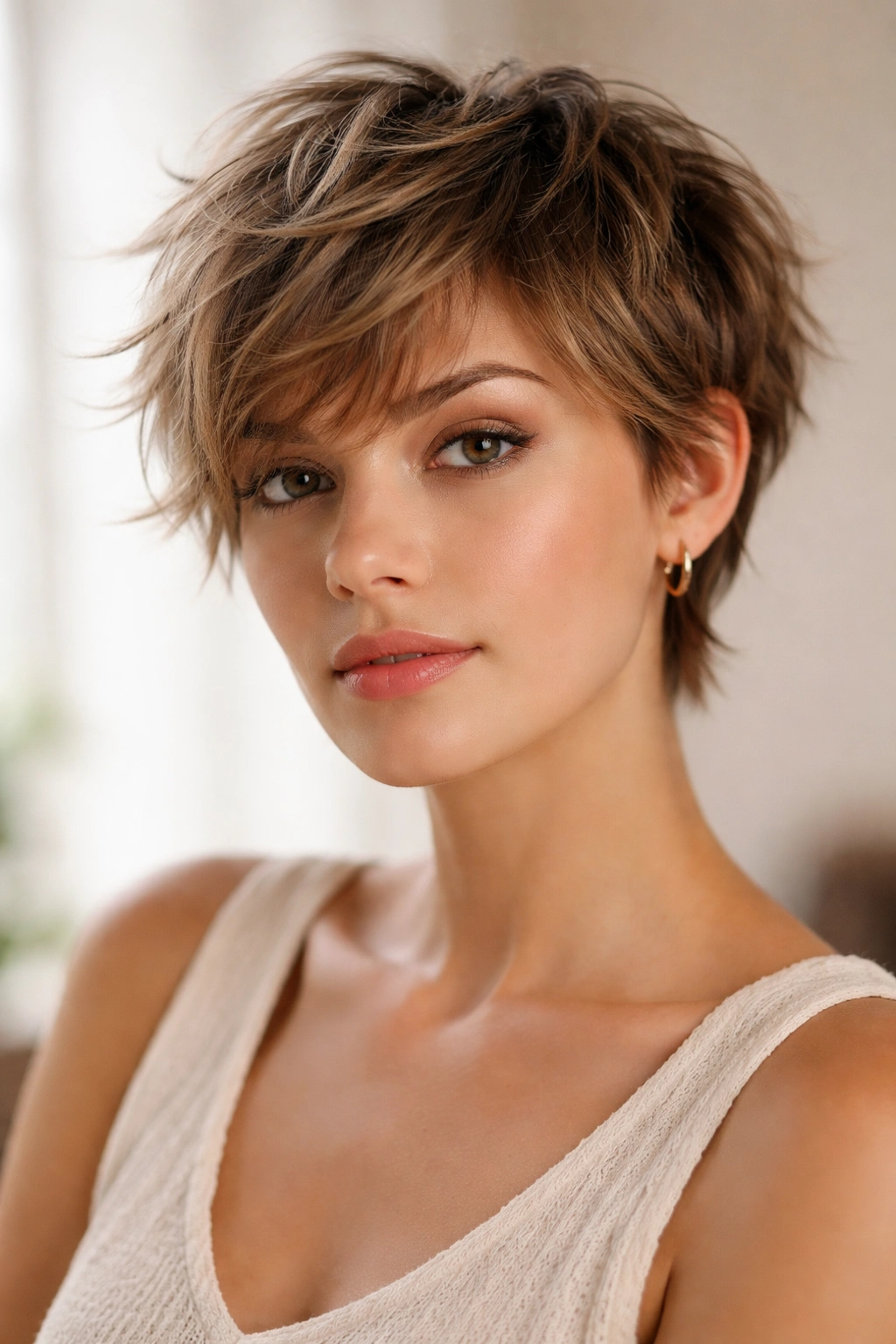
Sometimes the most elegant choppy pixie is one that looks slightly grown-out — like you’ve intentionally let it pass the peak of precision and leaned into a softer, more organic texture. This style maintains the fundamental choppy layers but lets them be longer (around 2.5 to 3.5 inches throughout) and slightly less aggressively cut. The result is a pixie that reads as textured and intentional rather than sharp and architectural.
What Makes It Stand Out
This version of the choppy pixie bridges the gap between a true pixie and a short bob, making it more approachable for people who aren’t sure about committing to something extremely short. The softer choppy layers move beautifully with your natural hair movement, and the overall effect is more romantic and less punk-rock than sharper pixie variations. It’s still undeniably a pixie cut, but one that whispers rather than shouts. This works exceptionally well for people with naturally wavy or curly hair, because the texture of your hair and the texture of the cut support each other.
Styling and Maintenance Tips
- Embrace your natural texture: This cut is designed to work with, not against, your hair’s natural movement. Avoid fighting your curl pattern or wave pattern with a flat iron.
- Light products: A lightweight texturizing spray or sea salt spray is all you need. Too much product weighs down the soft, intentional messiness that makes this cut special.
- Longer trim cycles: You can probably stretch to 6-8 weeks between cuts because the soft texture doesn’t require the same geometric precision as a sharp pixie. When the layers start looking too uniform, that’s when you know it’s time.
5. Asymmetrical Choppy Pixie
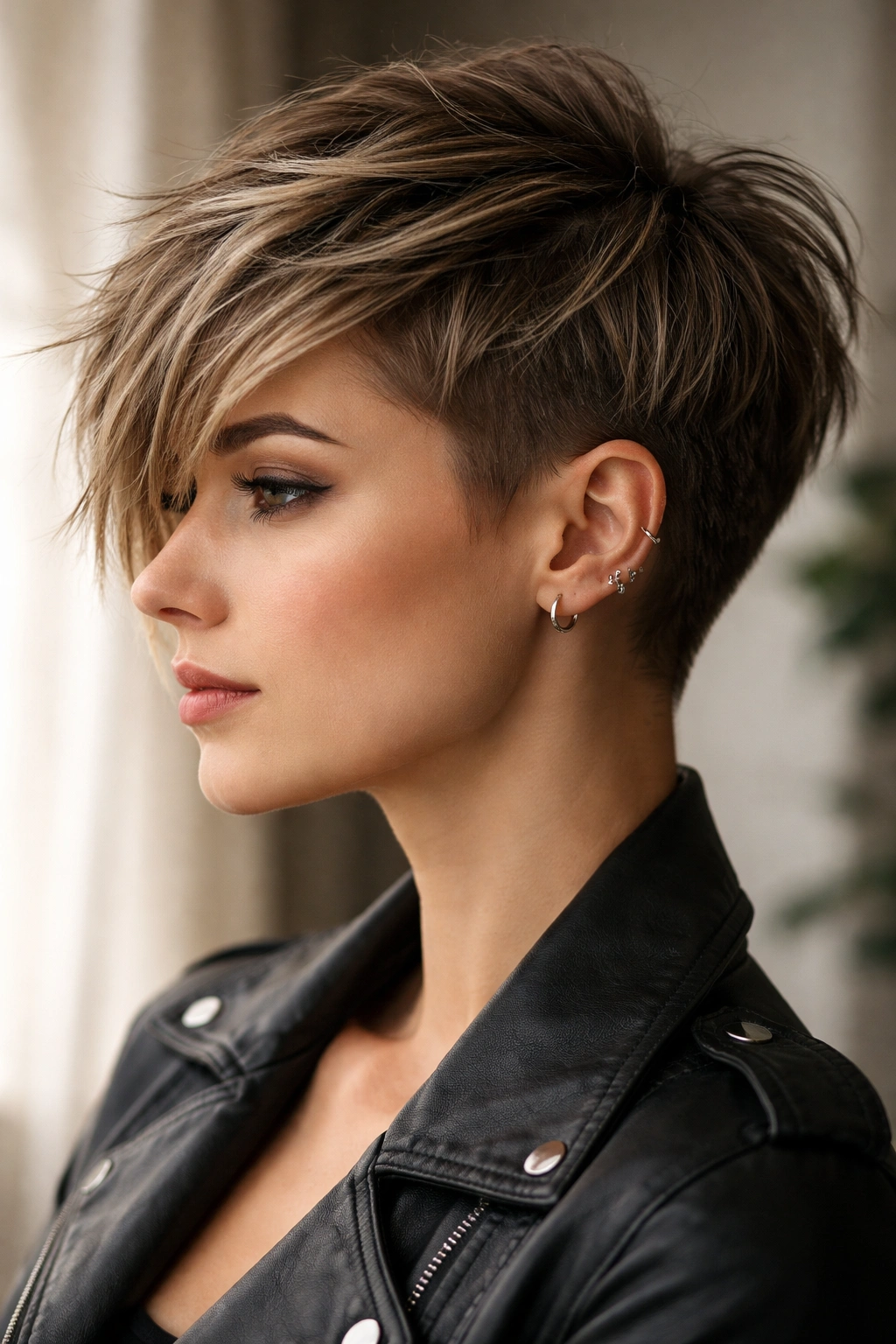
An asymmetrical pixie cut takes choppy texture and adds directional interest by keeping one side noticeably longer than the other. The longer side might fall past the ear or even chin length, while the shorter side hugs the head closely, sometimes with an undercut or clipper lines. This creates a cut that’s both visually striking and incredibly versatile — you can style the longer side to cover the shorter side or showcase it dramatically depending on your mood.
What Makes It Stand Out
The asymmetrical structure gives you styling flexibility that a symmetrical pixie doesn’t offer. On days when you want to look soft and approachable, you can sweep the longer side down and across. On days when you want to project confidence and edge, you can pin the longer side back or tuck it behind your ear, fully exposing the short side. The asymmetry also makes the cut look intentional and fashion-forward — this is the pixie choice of someone paying attention to their style, not someone defaulting to what’s easiest.
Styling and Maintenance Tips
- Managing two different lengths: The longer side will grow faster and look less intentional sooner, so plan for touch-ups every 4-6 weeks to keep the length difference intentional rather than accidental.
- Styling the longer side: Use a texture spray and blow-dry the longer section with a round brush to create waves or curls that catch light and add visual interest when it’s down.
- Side-parting importance: The way you part this cut and which direction you style the longer side completely changes how it reads. Ask your stylist about the best parting placement for your face shape.
6. Textured Taper Fade Pixie
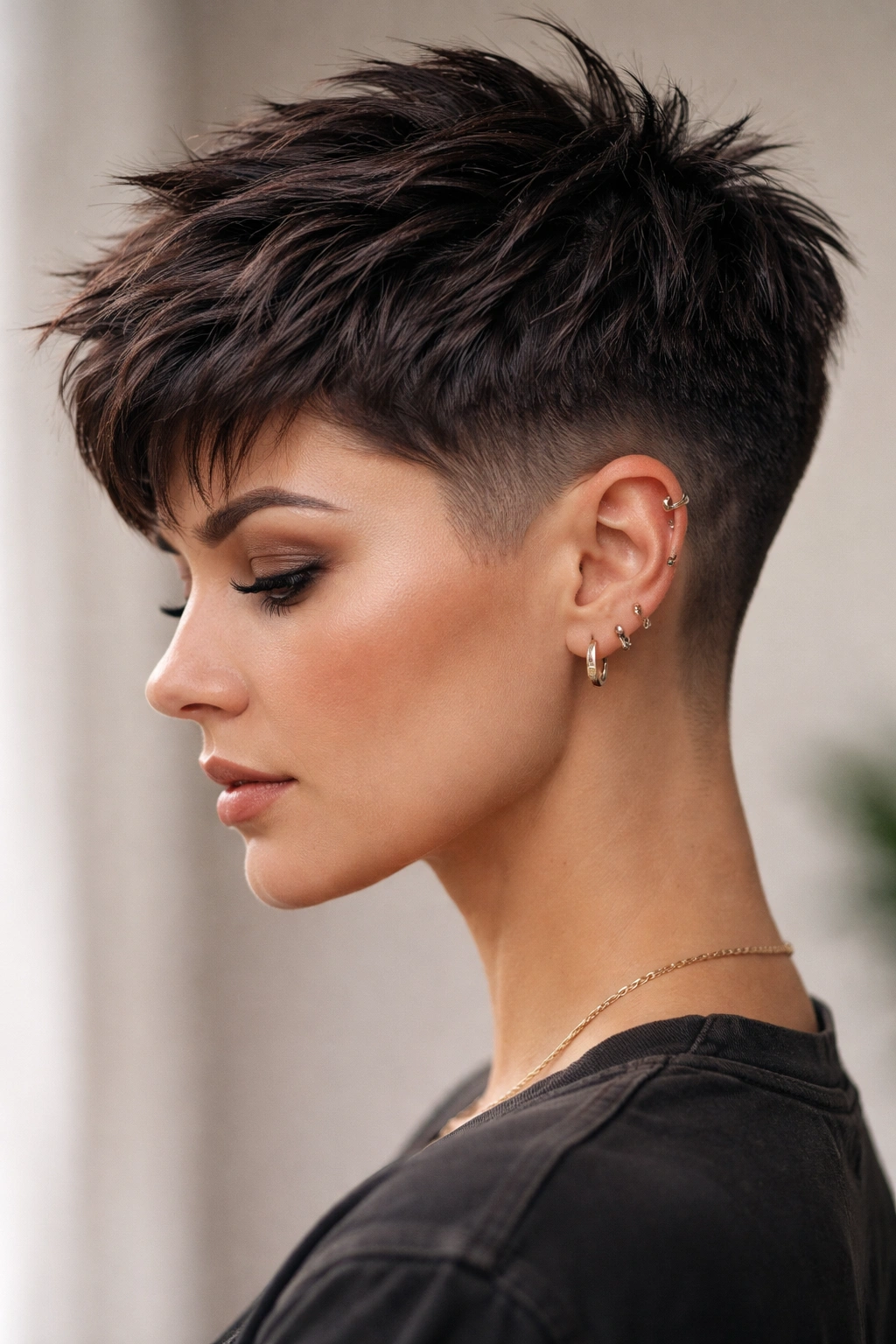
A taper fade pixie uses clipper lines (typically numbers 0.5 to 2) that gradually get longer as they move up the head, creating a smooth fade from nearly buzzed at the nape to fuller length at the crown. The crown section itself is still choppy and textured with razor layers, but the fade around the sides and back is the defining feature. This creates an incredibly clean, polished aesthetic that somehow manages to look both edgy and refined simultaneously.
What Makes It Stand Out
The taper fade is the most technically demanding choppy pixie cut to execute well, which is exactly why it looks so impressive when done right. The fade shows off excellent barbering skills and creates beautiful lines that frame your head and face shape with precision. If you have an interesting scalp pattern or moles, the exposed sides of a taper fade actually look beautiful rather than making you self-conscious. The contrast between the faded sides and the choppy, textured top creates visual drama that reads as intentionally styled rather than haphazardly grown out.
Styling and Maintenance Tips
- Fade maintenance: Plan for touch-ups every 3-4 weeks because as the undercut grows, the clean geometry of the fade softens and blends. If you love this cut, regular maintenance is non-negotiable.
- Crown texture styling: The faded sides mean all the visual interest comes from the textured crown, so invest in a good matte texture product and learn to style it deliberately. The sides should look clean and shaped, which means the top needs intentional styling to balance it out.
- Finding the right barber: Not every stylist is equally skilled at creating clean, geometric fades. This cut deserves someone who specializes in precision cutting and understands fade work.
7. Messy Texture Pixie for Wavy Hair
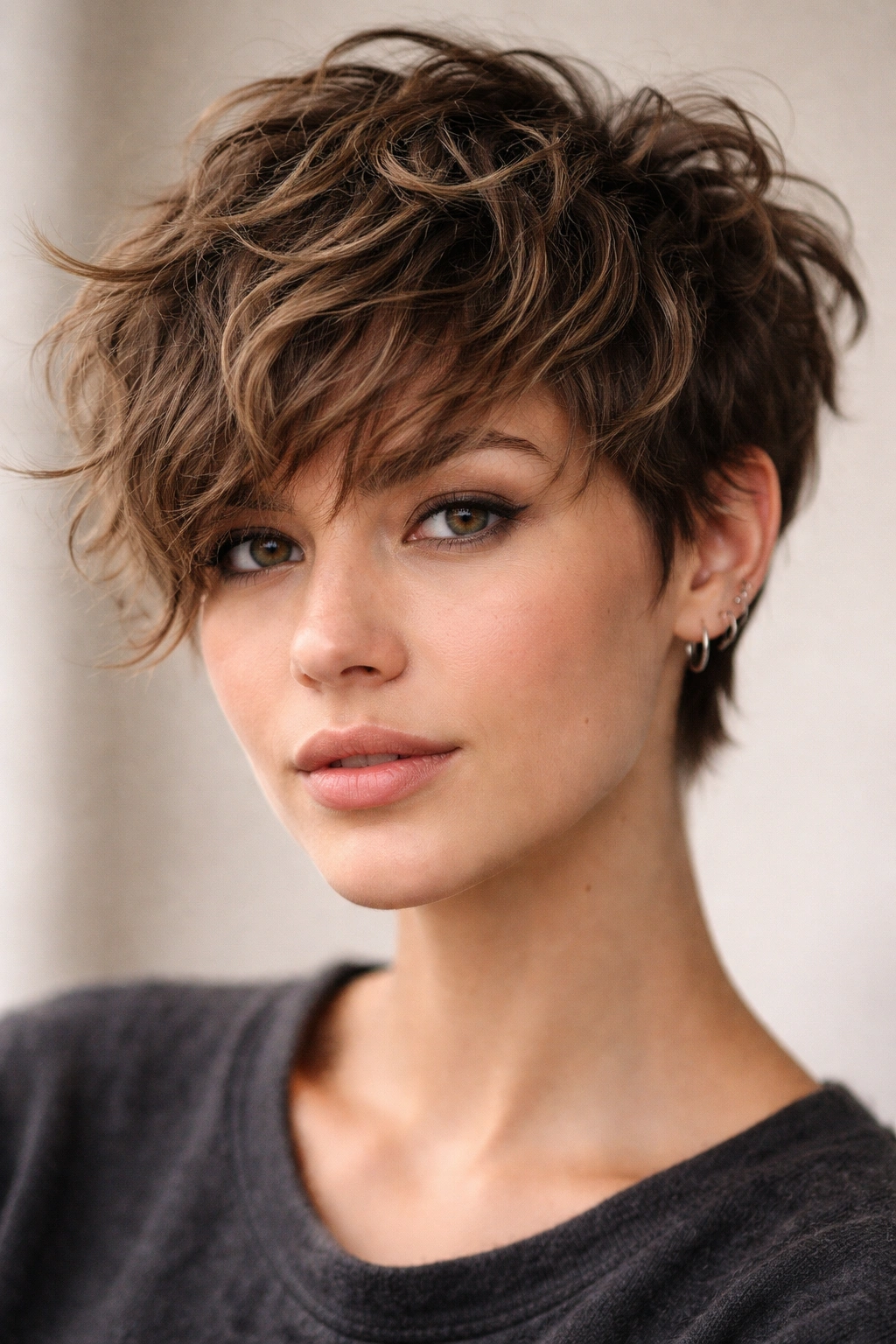
This choppy pixie is specifically designed to work with natural wave patterns rather than against them. It features longer choppy layers throughout (around 2.5 to 3 inches) that are cut at slightly different angles to encourage and emphasize your natural waves. The point is to create a cut where your hair’s natural texture is the entire styling strategy — no fighting, no smoothing, just letting your waves do what they want.
What Makes It Stand Out
If you have naturally wavy hair and you’ve been straightening it every single day just to maintain more traditional short cuts, this pixie is genuinely life-changing. The layers actually enhance your wave pattern and create more movement and dimension than your hair would have on its own. The “messy” quality isn’t lazy — it’s intentional and flattering. You get to wake up, add some styling product, and actually have effortlessly cool-looking hair rather than limp, flat hair. This cut celebrates your hair’s actual nature rather than forcing it into submission.
Styling and Maintenance Tips
- Product for waves: A texturizing spray applied to damp hair, plus a light leave-in conditioner or hair oil, is usually all you need. Avoid heavy products that weigh down your natural wave.
- Air-drying: Let your hair air dry whenever possible rather than blow-drying, because air drying preserves the natural wave pattern. If you need to speed things up, use a diffuser attachment.
- Trim scheduling: Plan for trims every 6-8 weeks. Since you’re working with your natural texture rather than against it, the cut doesn’t require the same geometric precision as other pixie variations, so it can go a bit longer between cuts.
8. Platinum Blonde Choppy Pixie with Dark Roots
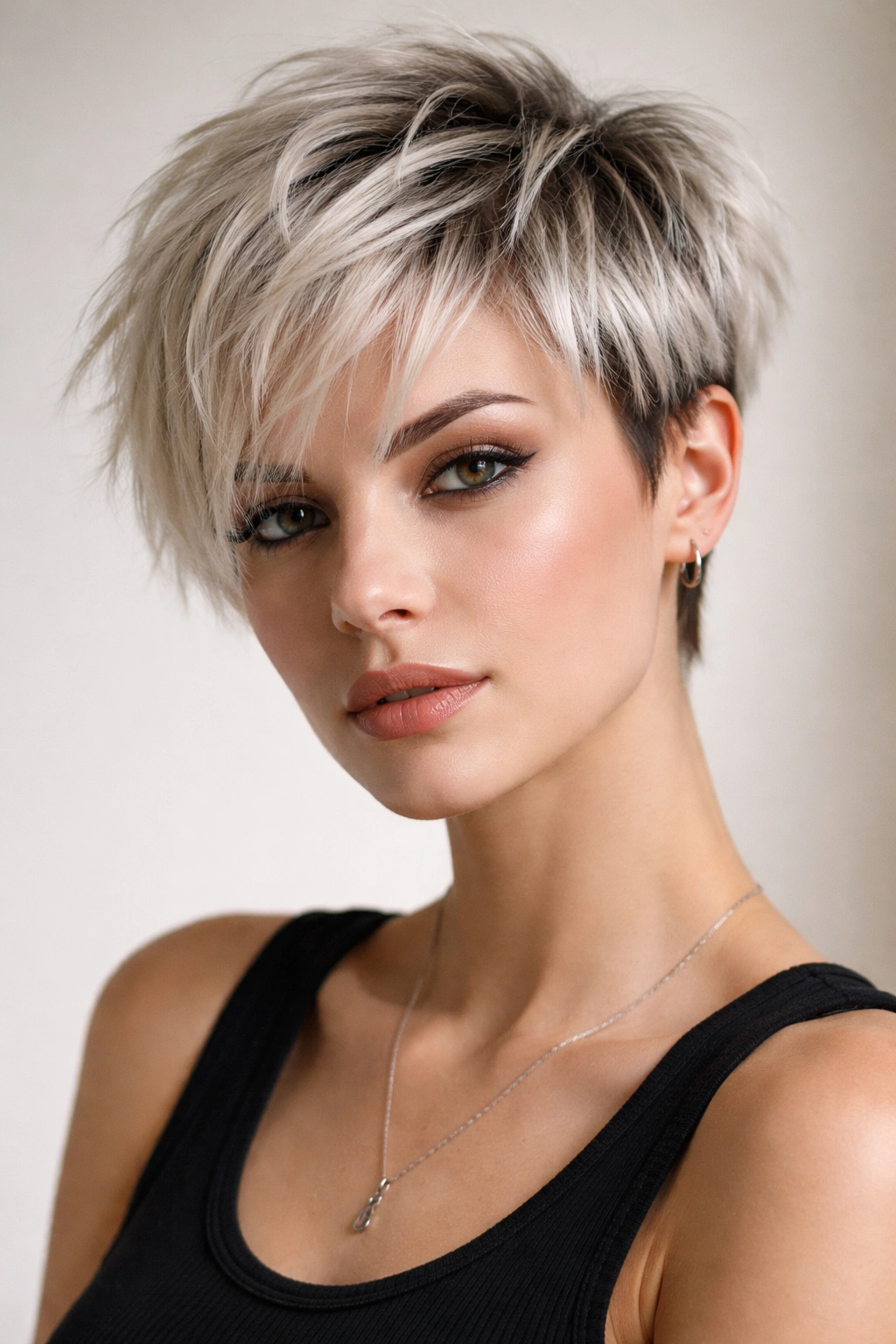
The visual impact of this cut comes from the combination of the choppy texture and a bold blonde color (especially platinum or ice blonde) with intentionally darker roots showing. The contrast between the dark roots and pale blonde mid-lengths and ends creates extra dimension and makes every choppy layer visually pop. The roots can be natural shadow from growing out, or they can be deliberately colored to create intentional contrast.
What Makes It Stand Out
Color and cut work together here in a way that elevates both. The choppy layers catch and reflect light differently at different angles, and the blonde color amplifies that effect. The dark roots add depth and prevent the blonde from looking flat or washed out. This combination reads as intentional, high-fashion, and edgy. You’ve thought about your look and executed it with confidence. The tonal contrast also adds visual softness to a pixie cut that might otherwise read as harsh, making it wearable for more people.
Styling and Maintenance Tips
- Color maintenance: Platinum blonde requires regular toning (every 4-6 weeks) to stay looking sharp and prevent it from turning brassy or yellow. This is a color commitment, not a wash-and-go situation.
- Root touch-ups: If you’re going for intentional dark roots, plan for color touch-ups every 8-10 weeks. The contrast loses its impact when the roots get too grown out.
- Texture product: Light-colored hair shows product residue more visibly than darker hair, so use matte texture products sparingly. A light texturizing spray is usually your best bet.
- Hair health: Platinum blonde can be tough on hair. Use a good color-safe shampoo and conditioner, and consider regular deep conditioning treatments to keep the texture looking healthy and not straw-like.
9. Choppy Pixie with Long Textured Bangs
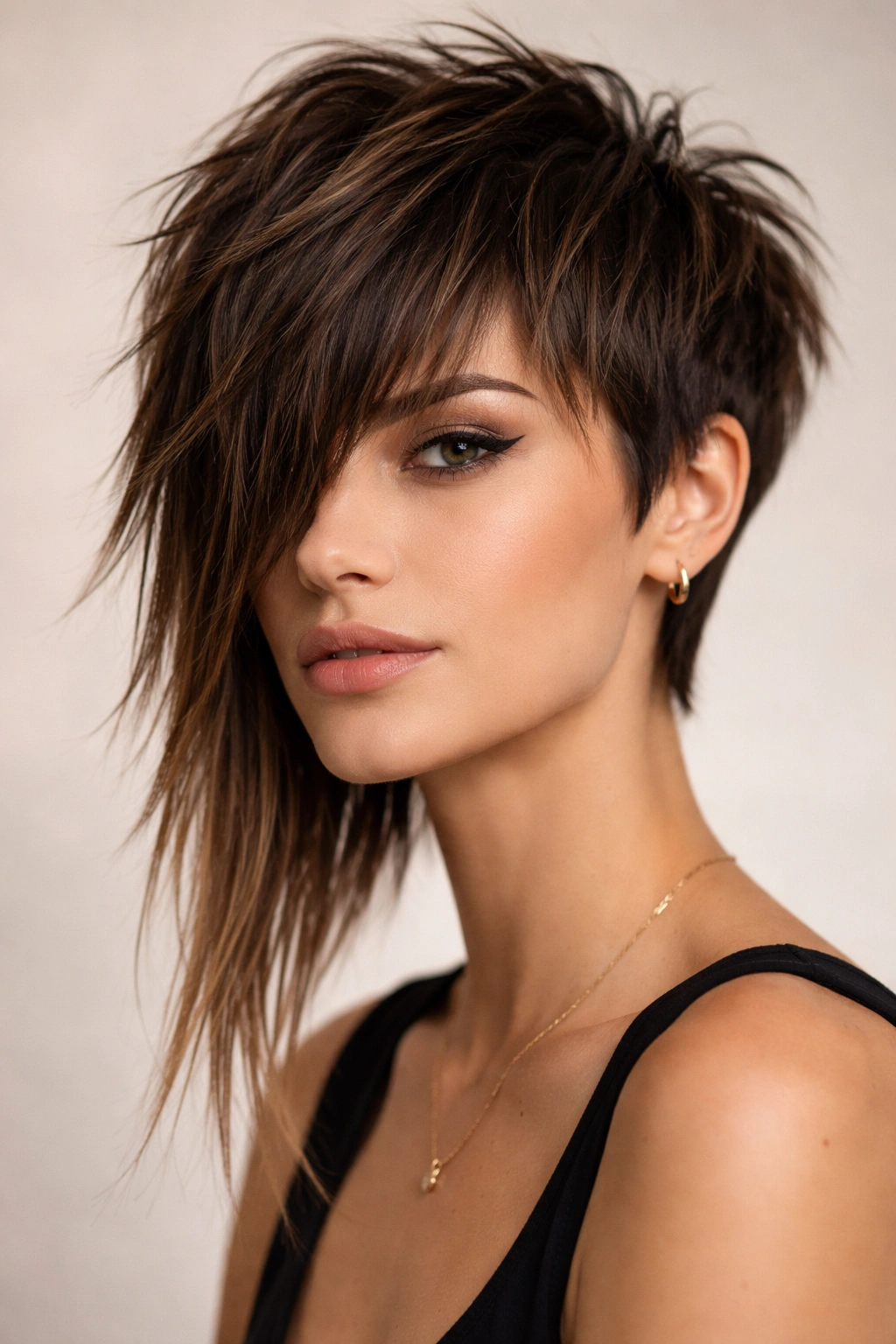
This variation keeps the crown and sides relatively short (around 2 inches) but extends the front sections into longer bangs that fall well past the cheekbones, sometimes all the way to chin length. These front bangs are choppy and razor-cut, often with disconnected layers that create dramatic movement. The result is a cut that reads as sophisticatedly edgy rather than aggressively short.
What Makes It Stand Out
The long bangs create a focal point and frame the face beautifully while the short back and sides keep the overall style feeling contemporary and sharp. This cut is incredibly flattering for people with larger foreheads, wide faces, or any face shape that benefits from framing and face-shortening lines. The long bangs also give you styling versatility — you can sweep them to one side, pin them back, or let them fall straight down depending on the occasion and your mood. You get the edgy pixie vibe without committing to extremely short hair on top.
Styling and Maintenance Tips
- Bang maintenance: The long bangs will need trims every 3-4 weeks to maintain their intentional length and prevent them from growing into your eyes awkwardly. This is one of the more maintenance-heavy pixie variations.
- Bang styling: Use a round brush and blow dryer to create soft waves in the bangs, or blow dry them straight for a sleeker look. The choppy texture means they style beautifully either way.
- Undercut option: Consider asking your stylist about an undercut for the sides and back, which creates maximum contrast with the long bangs and emphasizes their length.
10. Textured Pixie for Thick, Curly Hair
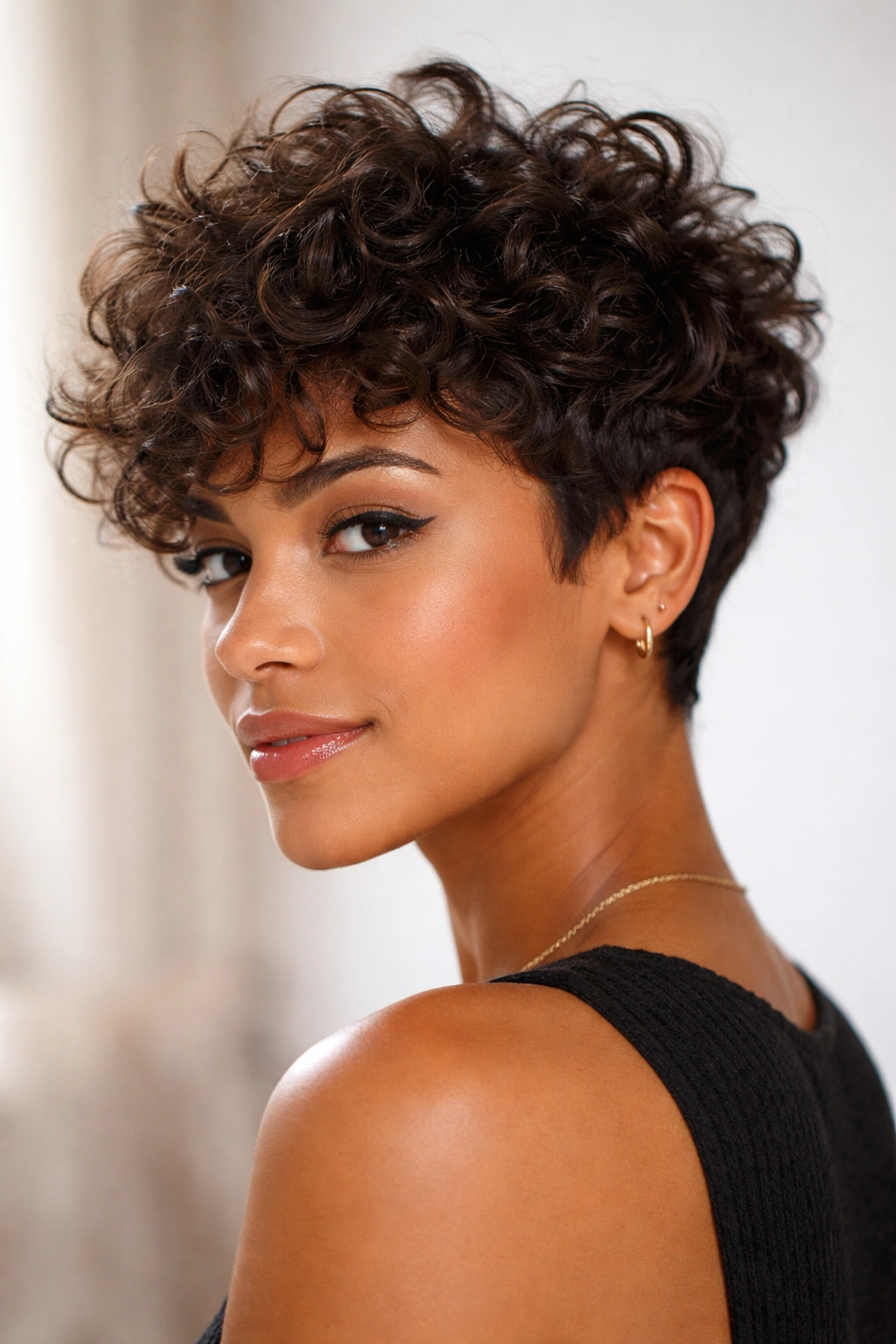
For people with genuinely thick, curly hair, a choppy pixie cut specifically designed to work with curl patterns is absolutely transformative. Rather than trying to fight the volume or smooth out the texture, this cut embraces it. The layers are cut close to the scalp to prevent the cut from looking too heavy, but they’re also intentionally short enough that your curls stack and bounce rather than flatten. The result is a cut where your natural texture is the entire style.
What Makes It Stand Out
Curly-haired people have been underserved by the pixie cut market for years — most pixie cuts just don’t look right on tight curls because they were designed with straight or wavy hair in mind. This variation finally gives curly-haired folks a way to wear a short cut that celebrates their curl pattern instead of demanding they blow-dry it straight every morning. The cut is usually slightly longer than pixie cuts for straight hair (maybe 2-3 inches at the crown) because curls shrink when they dry. When you style it with curl cream and let it air dry, you get a cut with natural bounce and dimension that straight-haired people usually need product and styling tools to achieve.
Styling and Maintenance Tips
- The curl cream and plop method: Apply curl cream to soaking wet hair, then use a t-shirt or microfiber towel to “plop” the water out (instead of rubbing with a regular towel, which breaks curls). Let your hair air dry or use a diffuser on low heat.
- Refresh between washes: On non-wash days, use a curl refresher spray and re-plop to bring back the shape and definition without having to wash your whole head.
- Trim scheduling: Plan for trims every 5-6 weeks. Curls grow faster than straight hair in terms of style shape, because growth happens at the root and curls shrink. Regular trims keep the shape intentional.
- Curl type matters: A stylist who understands your specific curl type (coily, tight curl, loose curl, etc.) will cut this much more effectively than a stylist used to straight hair. Find someone with actual curly-hair expertise.
11. Sharp Geometric Choppy Pixie
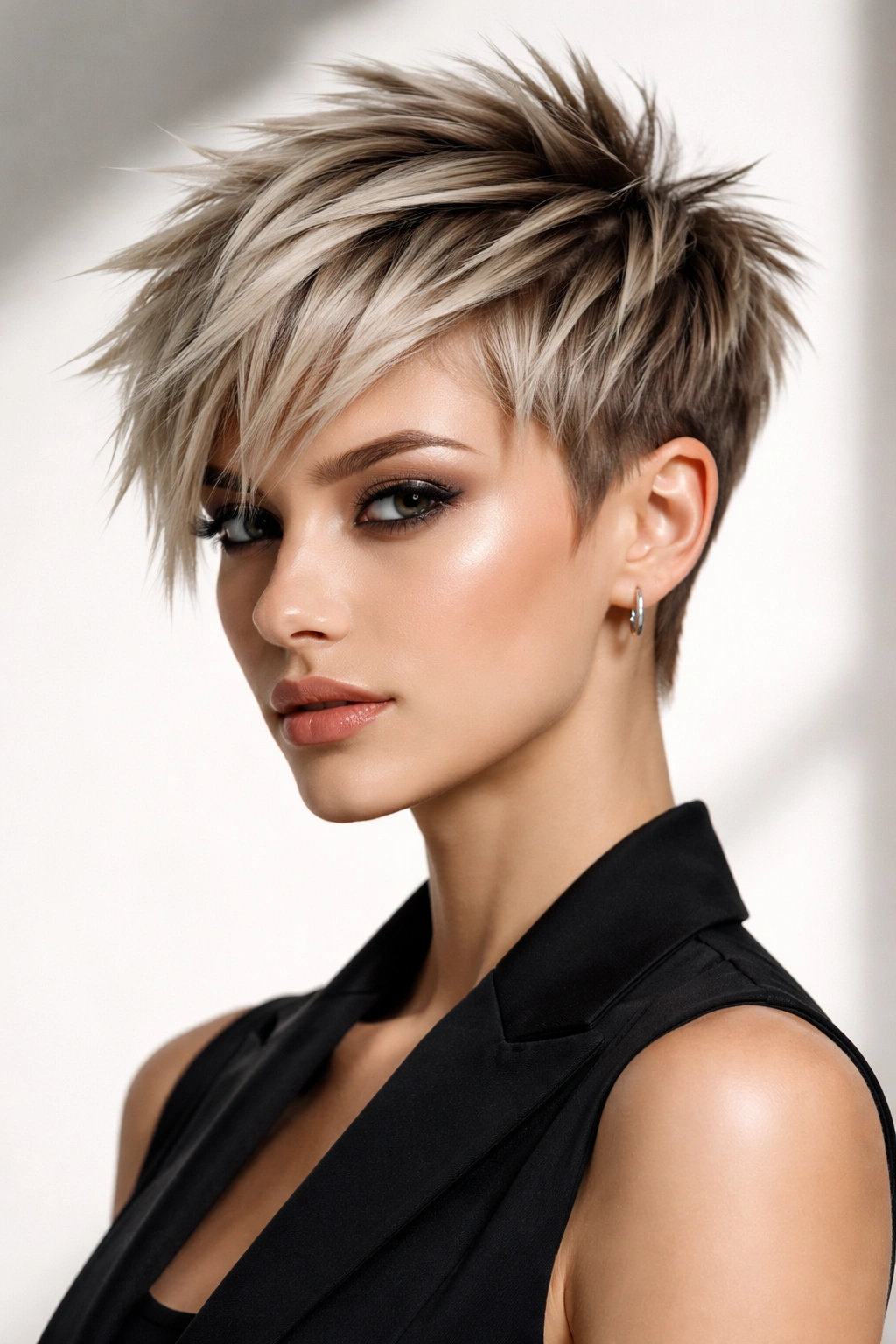
This is the most architectural version of the choppy pixie, where every layer is cut at very deliberate angles to create sharp lines and geometric precision. The choppy sections aren’t soft and feathered — they’re intentionally angular and cut at opposing angles so that each piece of hair sits distinctly, creating almost a crystalline effect when styled. The overall silhouette is clean and defined rather than soft and romantic.
What Makes It Stand Out
The geometric pixie reads as high-fashion and intentional in a way that softer choppy pixies don’t quite manage. This is the cut you see in editorial fashion photography and on people who are genuinely interested in fashion as a form of self-expression. The precision required to cut it well means it demands a skilled stylist, but when executed perfectly, it’s absolutely stunning. The cut works best on people with good bone structure because the sharp lines and angular silhouette draw attention to your face shape and features rather than softening or obscuring them.
Styling and Maintenance Tips
- Styling precision matters: Blow dry each section deliberately to create shape and direction. This isn’t a wash-and-go cut — it demands intentional styling with products and tools.
- Matte texture product: Use a strong-hold matte clay or paste to define each geometric section. You want every piece of hair visibly distinct, not blended or softened.
- Trim frequency: Every 3-4 weeks, because the geometric lines lose their impact as the hair grows and becomes less sharp. Precision cuts like this require regular maintenance to stay looking intentional.
- Professional cutting: This is not a cut to trust to an inexperienced stylist. Find someone who specializes in precision cutting and has a portfolio of geometric cuts you admire.
12. Choppy Pixie Cut with Shaved Design
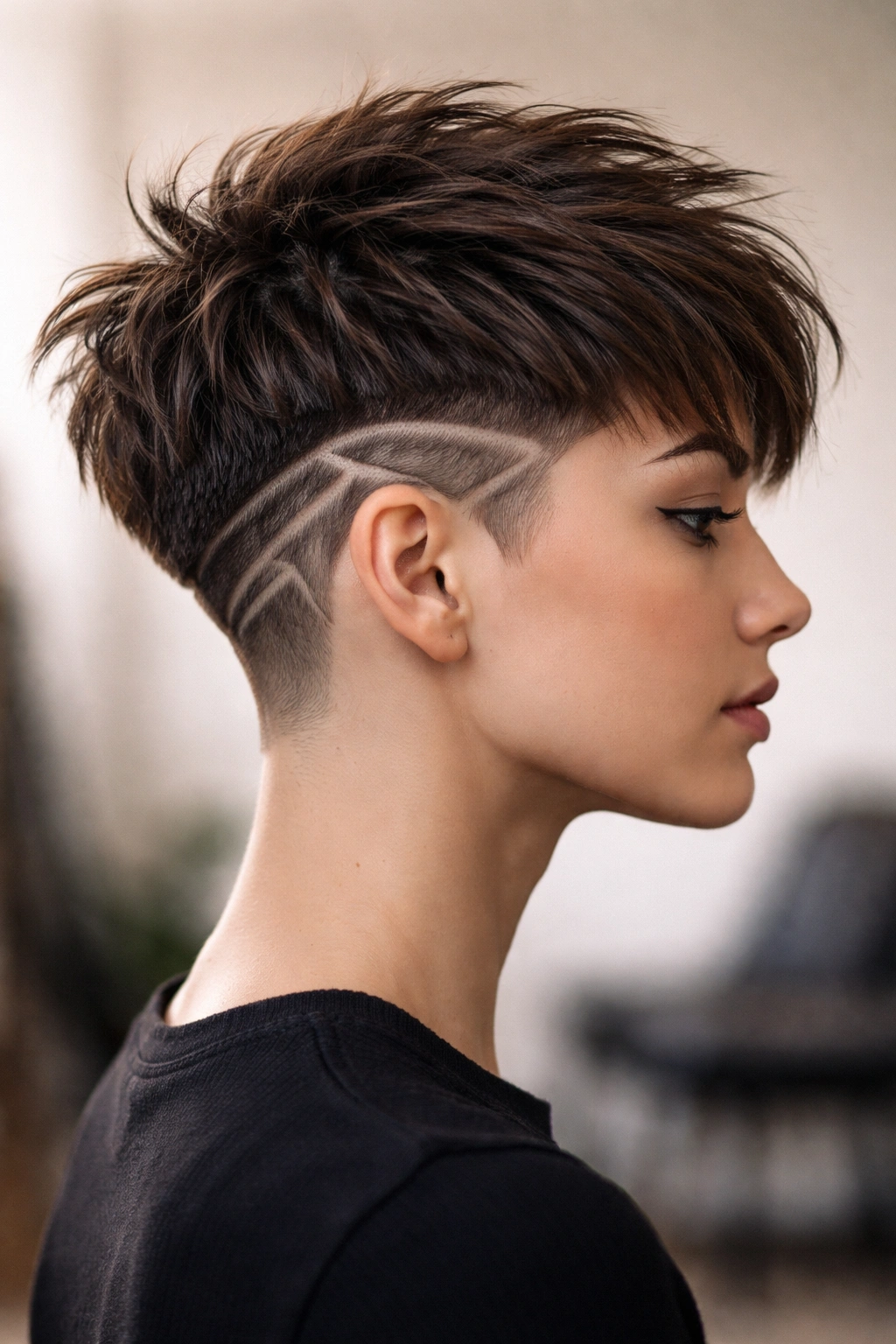
Some versions of the choppy pixie incorporate shaved designs into the undercut — geometric patterns, lines, or even figurative images buzzed into the sides or back. The chopped, textured top provides the main visual interest and style, while the shaved design adds an extra element of edginess and personal expression. This is a cut for people who aren’t interested in subtlety.
What Makes It Stand Out
The shaved design turns the pixie cut into genuine wearable art. You’ve committed to a specific aesthetic and you’re making that commitment visible. The design catches attention and starts conversations. The combination of choppy texture on top and geometric precision in the shaved design creates a compelling contrast. This cut broadcasts confidence and individuality — you’re not trying to blend in or play it safe.
Styling and Maintenance Tips
- Design maintenance: The shaved design will grow out relatively quickly (visible growth in 2-3 weeks), so plan for frequent touch-ups (every 2-3 weeks) if you want to keep the design crisp and defined.
- Design choice: Choose a design that genuinely speaks to you, because shaving it in makes a statement. Think carefully about whether this is a design you’ll love long-term or if you might get bored with it in a few months.
- Styling around the design: Keep the top clean and intentionally styled so the focus stays on both the textured crown and the shaved design, rather than looking unkempt.
- Hair growth considerations: As the whole cut grows out, the contrast between the shaved sides and growing textured top becomes less striking. Be prepared for more frequent full-cut trims (every 4-5 weeks) to maintain the overall proportions.
13. Two-Tone Choppy Pixie
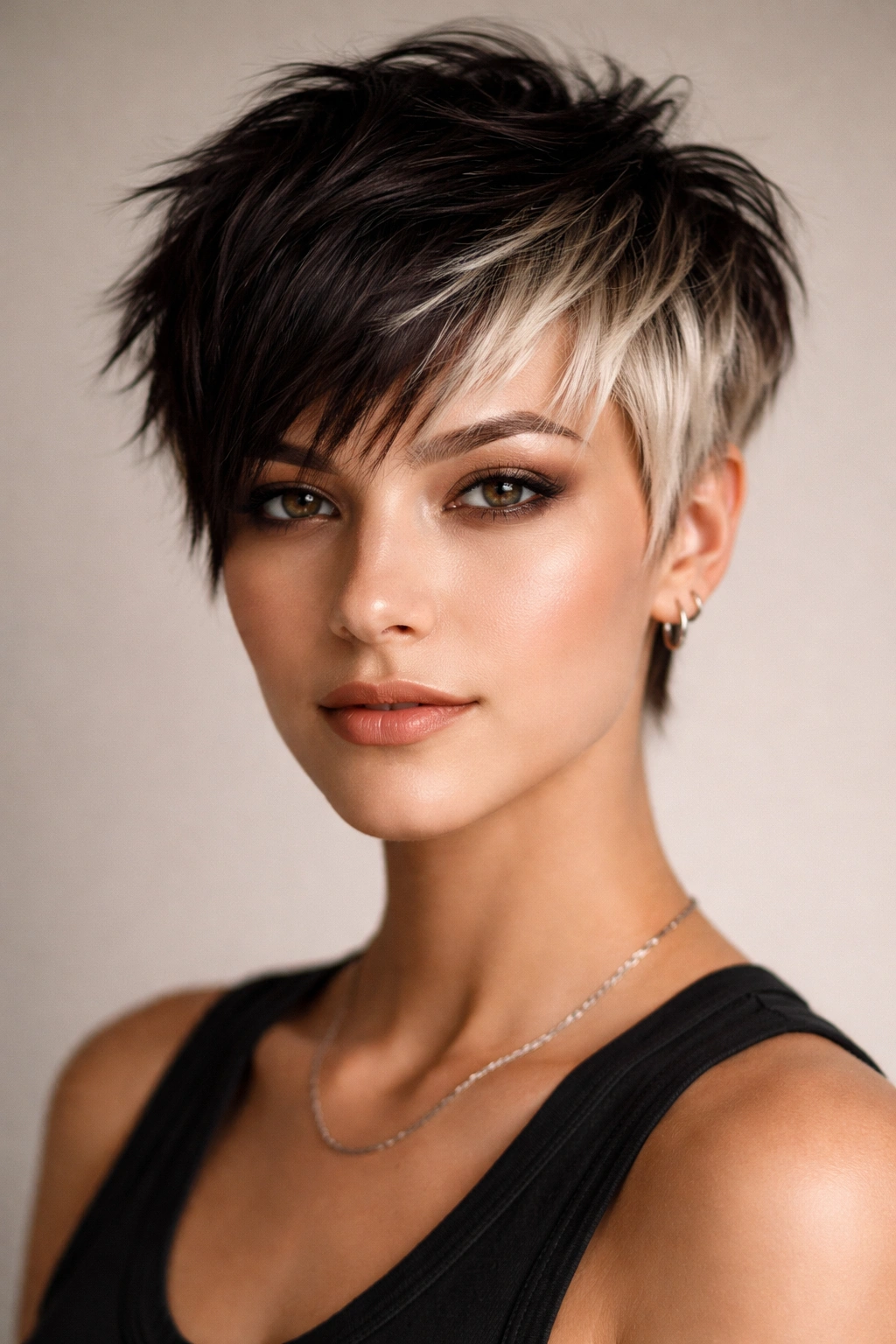
This variation uses two distinct colors (often contrasting colors like black and blonde, or burgundy and gold) applied to different sections of the cut. One color might be on the crown while a different color is on the sides, or colors might alternate in thick or thin stripes throughout. The choppy layers then allow each color to peek through and catch light differently depending on the angle and how you move.
What Makes It Stand Out
The color combination adds incredible visual dimension and movement to an already textured cut. Colors work together with the choppy layers to create a cut that looks completely different from different angles. This is the cut for people who love color and aren’t interested in a subtle, understated look. The two colors also allow for flexibility in your styling — depending on which color you emphasize through parting and styling, the cut can look completely different. It reads as fashion-forward, intentional, and impossible to ignore.
Styling and Maintenance Tips
- Color maintenance complexity: You’re maintaining two separate colors now, which means more frequent salon visits. Plan for touch-ups every 4-6 weeks minimum, possibly more frequently if you’ve chosen contrasting colors where the roots will show noticeably.
- Toning: Both colors will need toning (especially if either is a fun color like purple, pink, or blue) to maintain vibrancy. Budget for this as part of your regular maintenance.
- Styling to showcase colors: Use your parting and styling to emphasize how the colors interact. Sometimes you’ll want them equally visible, sometimes you’ll want to showcase one color more than the other depending on the occasion.
- Color-safe products: Use color-safe shampoo and conditioner exclusively, and consider reducing how frequently you wash your hair to extend color life between salon visits.
14. Choppy Pixie with Textured Undercut Design Lines
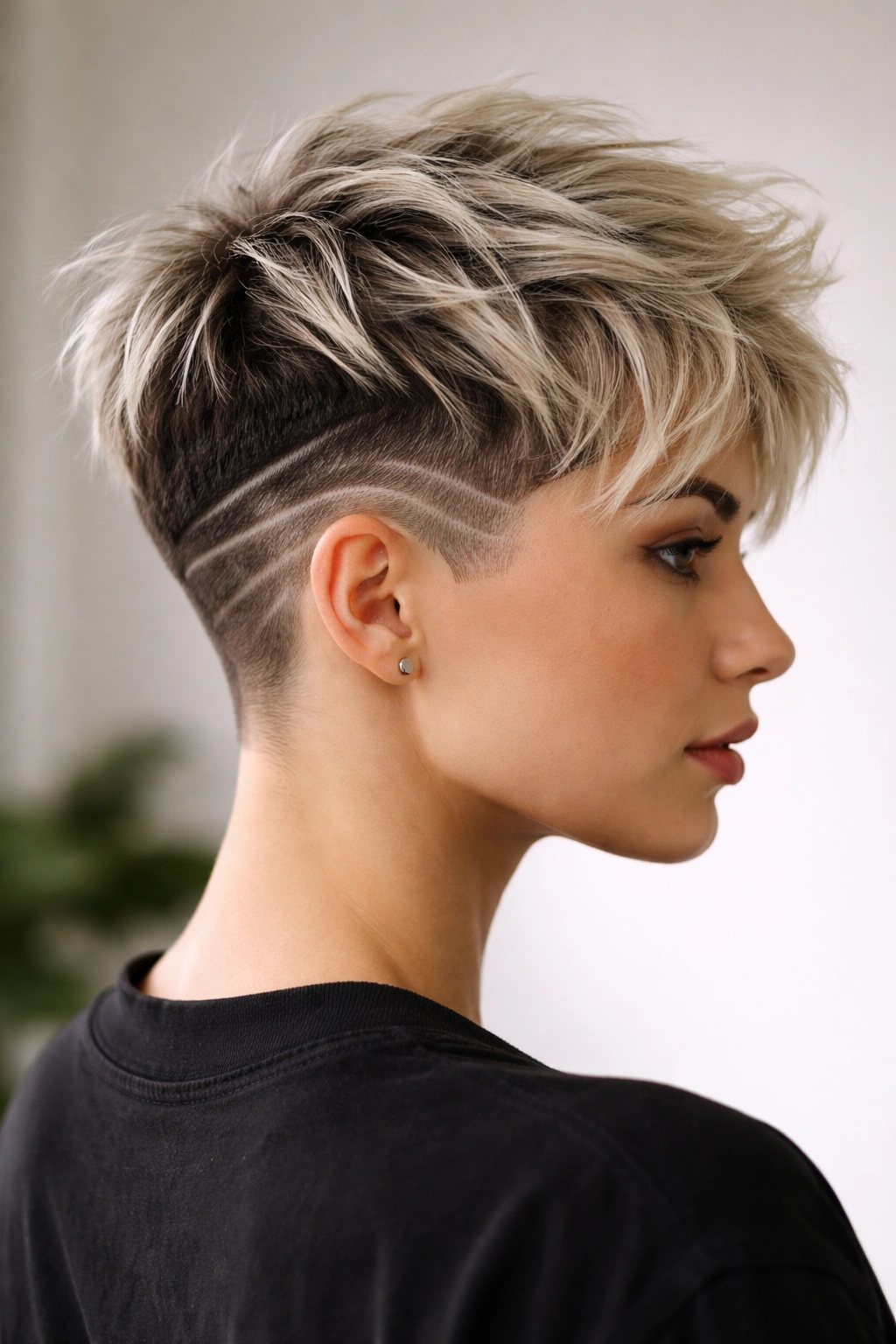
Similar to the shaved design pixie, but instead of random geometric patterns, this version features intentional design lines built into the undercut architecture. Instead of just clipping the sides and back short, the stylist creates visible lines — parallel lines, concentric circles, or other geometric patterns — using different clipper lengths. The result is visual complexity in the cut itself rather than just shaved images.
What Makes It Stand Out
The design lines add visual interest to the sides and back of the head, which means this cut looks interesting from every angle, not just from the front. The lines create visual motion and suggest intentionality and precision. When you combine textured design lines in the undercut with choppy, textured layers on top, you get a cut that’s layered with visual complexity. This works beautifully for people who like their style to be thoughtful and intentional without being aggressively punk-rock.
Styling and Maintenance Tips
- Line maintenance: The lines stay crisp and visible for about 3-4 weeks before they start to blur as the hair grows. Plan for regular touch-ups if you want to keep them sharp.
- Showing off the design: Style your hair off your face and consider styling the top back or to one side occasionally to showcase the undercut design. The design only matters if people can see it.
- Color option: Consider adding a semi-permanent color to the undercut (a different color from your crown) to make the design even more visually striking. The different color makes the lines pop.
15. Choppy Pixie with Long Wispy Layers
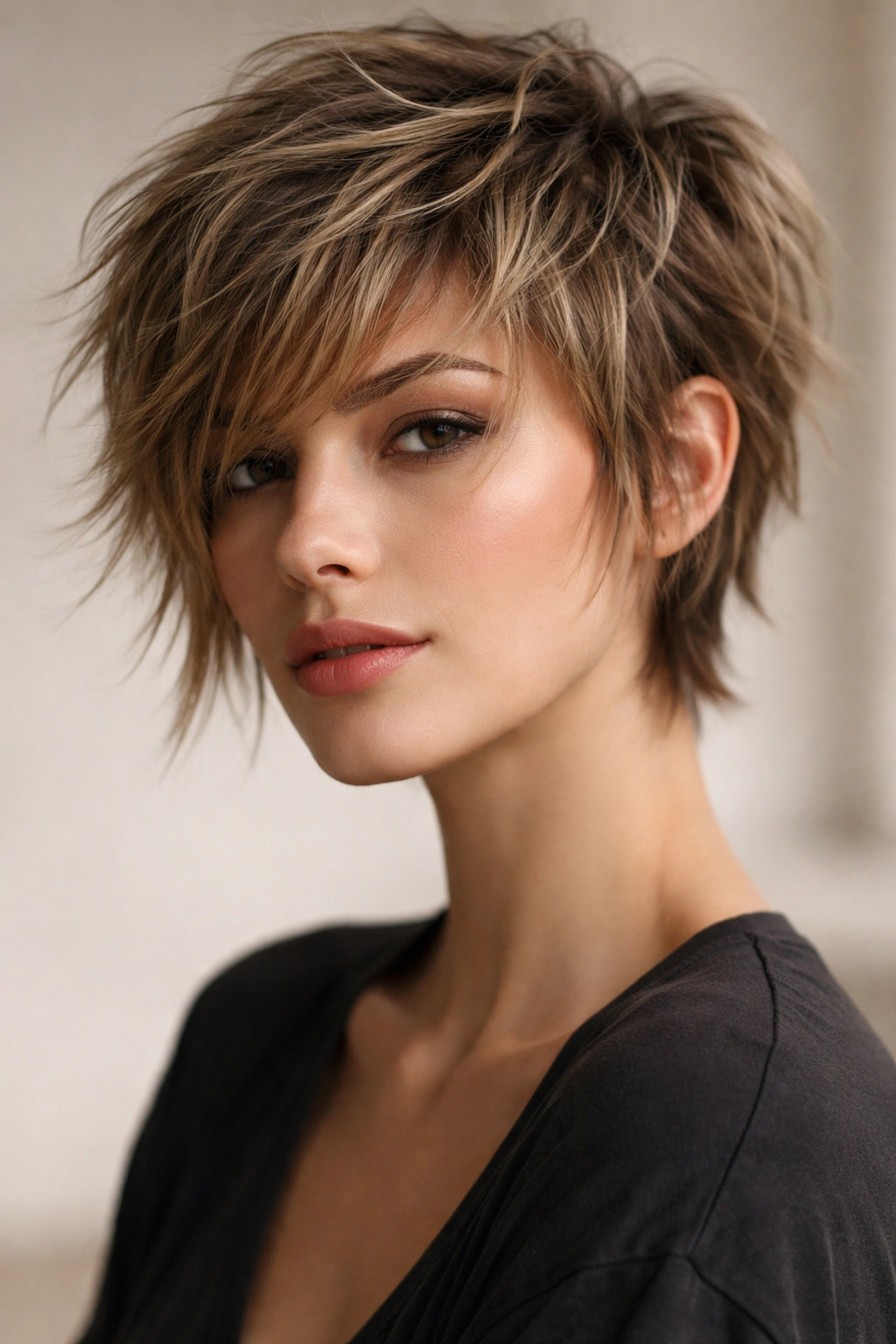
This final variation keeps the overall cut quite short (around 2 inches across most of the head) but incorporates some longer, wispy layers throughout that create movement and softness. These longer layers don’t form dramatic bangs — they’re integrated throughout the cut so that some pieces fall past the ears while most of the cut stays pixie-short. The effect is textured, dimensional, and more forgiving than a blunt pixie.
What Makes It Stand Out
The longer wispy layers soften the overall aesthetic of the pixie cut while maintaining its short, edgy structure. This is the choppy pixie for people who want edge without committing to an extremely severe look. The longer layers catch light beautifully and create movement that draws attention upward toward your face. This version is incredibly flattering on rectangular or longer face shapes, because the wispy layers add width and break up the vertical length of the face.
Styling and Maintenance Tips
- Styling the wisps: Use a round brush to create gentle waves in the longer layers, or let them dry naturally if your hair has a wave pattern. The wisps should look intentional but soft, not blunt.
- Texture product placement: Apply texture product primarily to the longer wispy sections to define them while keeping the short sections clean. You don’t want the whole cut looking equally textured and choppy.
- Growing-out grace: This cut transitions more gracefully than some pixie variations as it grows out, because the longer wispy layers don’t look quite as odd during that awkward in-between phase. You can probably stretch to 6-7 weeks between cuts.
- Face-framing focus: Ask your stylist to position the longer wisps strategically around your face to frame your best features and flatter your face shape.
Final Thoughts

Choosing a choppy pixie cut is less about picking a specific style and more about deciding how much edge and attitude you want your hair to communicate. The variations here range from subtly textured and wearable-anywhere (soft grown-out texture, messy waves) to deliberately provocative and fashion-forward (sharp geometric, shaved designs). The common thread running through all of them is that texture and movement are the entire point — this isn’t a cut designed to look polished and perfect, but rather intentional and full of personality.
The most important factor in getting a great choppy pixie isn’t just the cut itself but finding a stylist who understands choppy pixies specifically. Not every skilled stylist excels at this particular cut — you want someone who gets that texture is the design feature, who understands how to work with your specific hair type, and who can adapt the basic structure to flatter your face shape and features. Look at portfolios, ask around, and don’t be afraid to invest in someone who truly specializes in choppy pixies.
Once you’ve committed to the cut, you’ve committed to regular maintenance. Most choppy pixies require trims every 4-6 weeks to maintain their intentional shape and texture. That might sound high-maintenance, but when you consider that you’re getting rid of the daily styling routine required by longer hair, it often balances out. Many people with choppy pixies find they spend less time on their hair overall, even with the frequent trims — you’re just shifting the time from daily styling to regular salon visits. And honestly, regular salon appointments feel a lot better than forty-five minutes of blow-drying and flat-ironing.
