



Short spiky hairstyles have become a powerful statement for women over 50, and honestly, they’re having a major moment. There’s something undeniably bold and liberating about embracing a cut that says “I’m confident in who I am” — and the spiky texture trend plays perfectly into that energy. These aren’t the severe, angular cuts of years past; today’s short spiky styles for mature women balance edginess with sophistication, incorporating movement, softness, and intentional styling that flatters the face and complements graceful aging.
The beauty of a spiky short hairstyle at this stage of life is that it actually requires less maintenance than longer hair, while delivering maximum impact. You get the textural interest that draws attention to your features rather than weighing you down, the ease of quick morning styling, and the ability to showcase confidence through your choice of cut. Whether you’re drawn to a sharp, tailored look or a softer, more textured approach, there’s a spiky style that works with your face shape, hair texture, and personal style.
What makes these cuts work particularly well for women over 50 is the strategic placement of shorter layers and texture points. Stylists now understand that spiky doesn’t mean harsh — it means creating dimension through layering, choppy pieces, and intentional styling that can be polished one day and playful the next. The cuts below all offer that balance, whether you prefer a more refined aesthetic or something with genuine attitude.
1. The Textured Crop
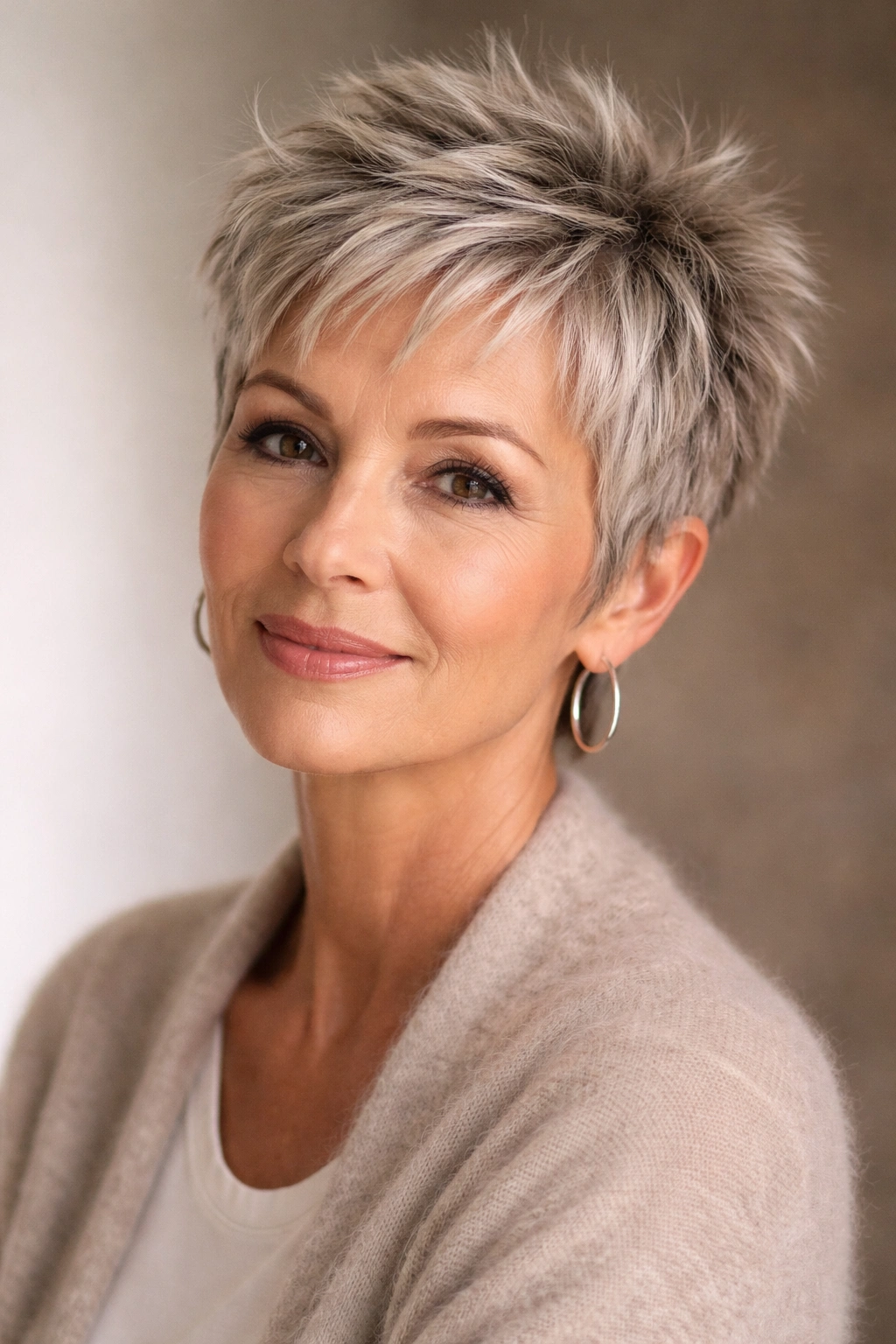
The textured crop is the foundation of modern spiky styling for mature women. This cut keeps overall length short — typically 1 to 2 inches on top — but uses varied layer lengths throughout to create natural texture and movement without requiring excessive styling product or technique.
Why It Works for Over 50
A textured crop complements the face beautifully because it shows off your features without drawing attention to areas you might want to downplay. The varied layers create dimension that can actually make hair look fuller and thicker, which addresses a concern many women face as they age. The cut also works with your natural hair growth pattern, so cowlicks and texture become features rather than flaws. You’re not fighting against your hair’s nature; you’re working with it.
Getting the Right Textured Crop
Find a stylist who understands the importance of point cutting and texture work. Show them photos of crops with natural-looking, piece-y texture — not overly blunt or severe. The best textured crops have slightly longer pieces in the front that can frame the face, with shorter pieces throughout the crown to create lift and movement. Ask your stylist to avoid making it look too uniform; variation is what makes this cut interesting.
Styling and Maintenance
- Use a texturizing paste or dry wax product on damp hair, working it through with your fingers rather than a comb
- The cut should work with your natural texture, so air-drying is often enough — no blow dryer required for most women
- Get trims every 4 to 6 weeks to maintain the shape and keep layers looking intentional
- This cut actually improves with a few days of product buildup, so it doesn’t need daily washing
Pro tip: A textured crop pairs beautifully with a few face-framing highlights or dimensional color, which can make the cut feel even more modern and fresh.
2. The Asymmetrical Pixie
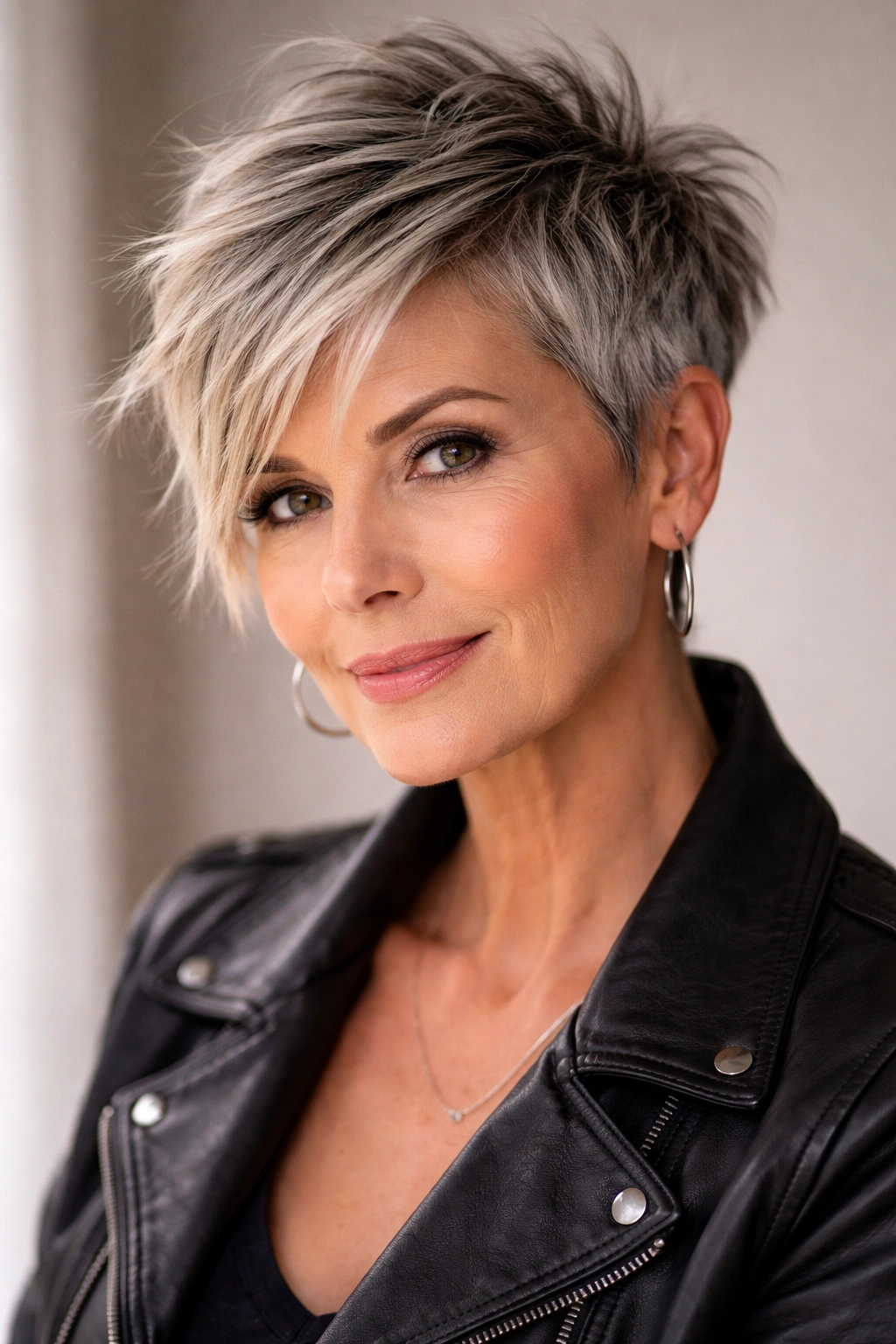
The asymmetrical pixie takes the classic pixie cut and adds modern edge by making one side shorter or longer than the other. This creates visual interest and movement while still maintaining the signature pixie’s ease of styling. The asymmetry can be subtle or dramatic depending on your confidence level and face shape.
Why It Works for Over 50
An asymmetrical cut is inherently flattering because it can be customized to complement your specific face shape. If you have a rounder face, longer length on one side can create a slimming effect. If you want to emphasize cheekbones or draw attention upward, the asymmetry does that naturally. The cut also photographs beautifully because the off-center styling creates more visual interest than a perfectly symmetrical cut would.
Customizing Your Asymmetrical Pixie
The key is working with your stylist to decide which direction serves your face best. Some women look better with the longer side toward the face; others prefer it swept away. Your hair texture matters too — if you have fine hair, asymmetry can be more subtle. If you have thicker or wavy hair, a more dramatic asymmetrical cut can be stunning. Discuss whether you want length on top for styling flexibility or a very close crop for minimal maintenance.
How to Style It
- On the longer side, you can create soft waves or texture using a small curling iron or texturizing product
- The shorter side can be kept smooth or left slightly tousled depending on the look you want
- Part the hair slightly off-center to emphasize the asymmetry
- A light pomade or styling cream works better than heavy products, which can flatten the cut
Worth knowing: An asymmetrical cut requires a stylist who can cut precisely and with intention. Bring multiple reference photos so they understand exactly where you want the asymmetry.
3. The Tapered Fade with Height
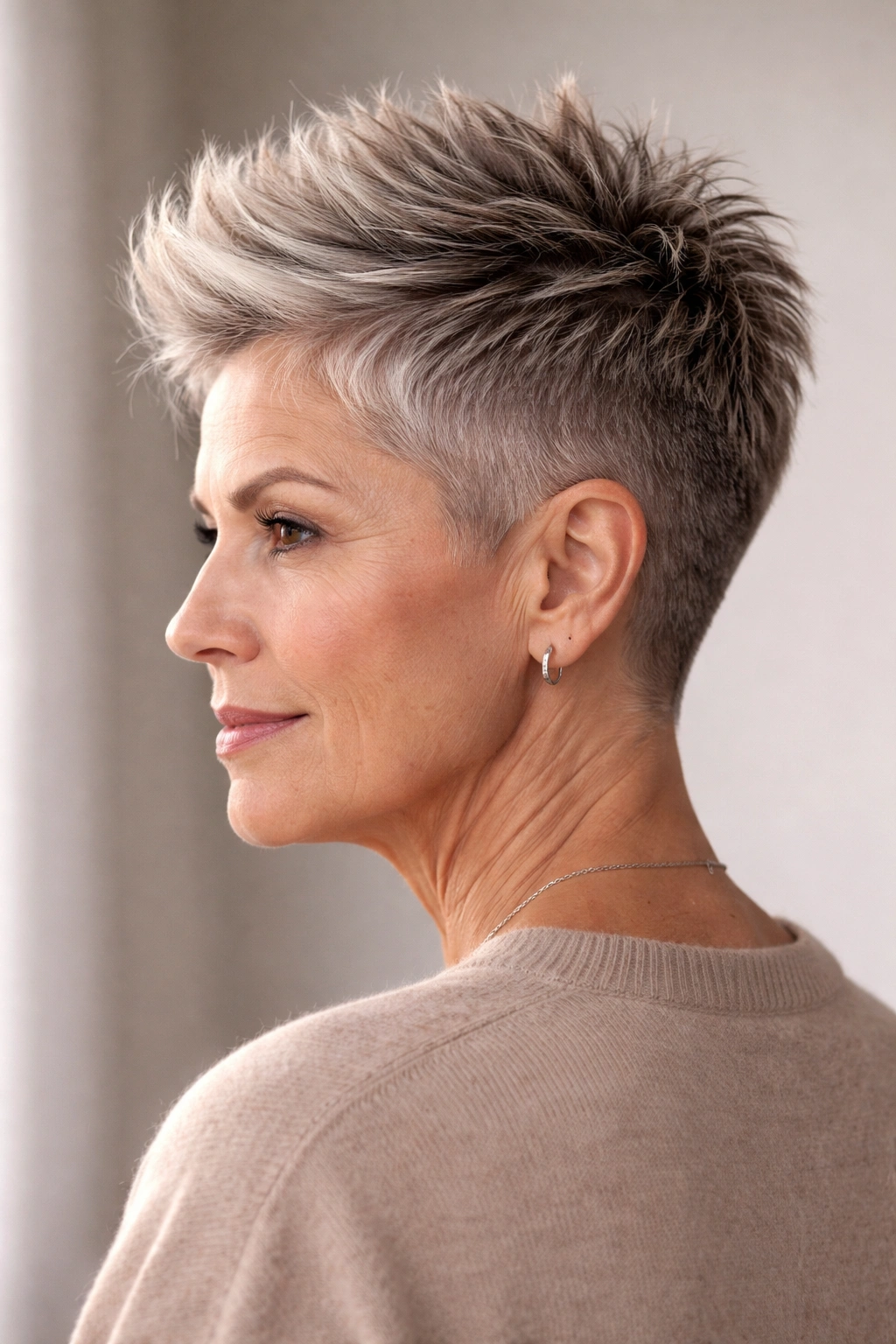
A tapered fade with height combines short, faded sides with more length on top, creating a modern silhouette that’s become increasingly popular for mature women. The fade gradually shortens the hair from the crown downward, while the top stays textured and piece-y for movement. It’s bold without being extreme.
Why It Works for Over 50
This cut creates exceptional lift and volume on top, which is particularly flattering if you’ve experienced any hair thinning or fine hair texture with aging. The contrast between the tapered sides and textured top is striking and contemporary-looking. The style also makes a statement about your confidence — it says you’re not afraid of a modern, fashion-forward approach to your appearance. For women with graying hair, this cut can make silver strands on the sides look intentional and chic rather than simply “growing out.”
Getting the Fade Right
Work with a stylist experienced in fade work; this is a cut that requires precision. Specify how short you want the sides to be — some women go very short (like a number 1 or 2 blade), while others prefer slightly more length. The fade should be smooth and gradual, not an abrupt line. On top, keep length that you can actually style — typically 2 to 3 inches — so you have texture and movement rather than just stubble on a small patch.
Daily Styling Tips
- Blow dry the top with a styling product to create texture and lift
- Textured paste, pomade, or sea salt spray all work well for defining the pieces on top
- The sides require minimal styling — the fade’s clean lines do the work for you
- This cut works beautifully swept back or to the side
Quick facts:
- Fades require regular trims (every 3 to 4 weeks) to keep the tapered effect looking intentional
- This cut pairs beautifully with face-framing color or highlights
- It works on all hair types but especially striking on thick or wavy hair
4. The Shaggy Crop
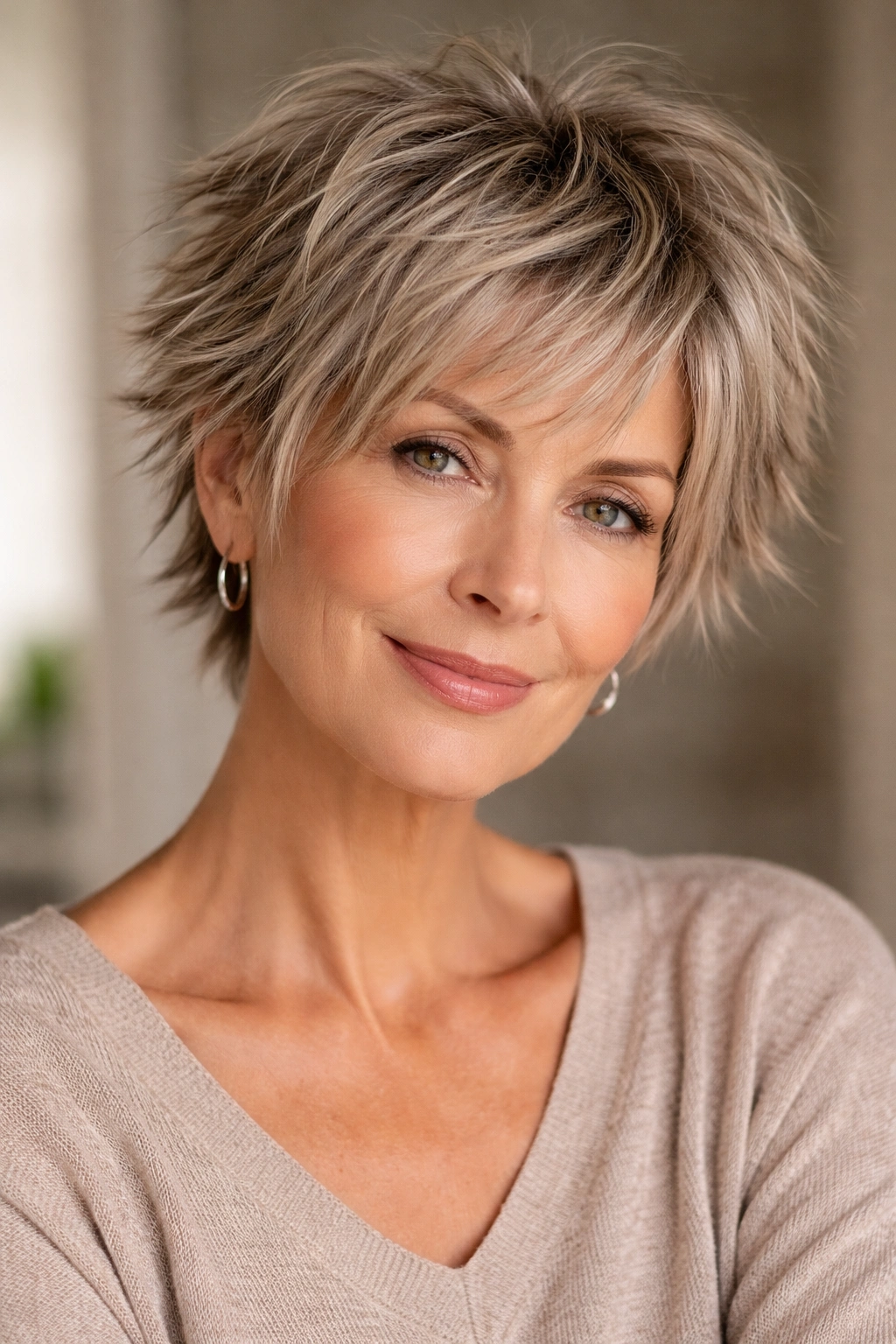
A shaggy crop brings the 1970s-inspired trend into modern territory by combining the ease of a short crop with intentional layers that create a deliberately undone, textured appearance. Unlike a smooth crop, the shaggy version celebrates choppy layers and feathered edges.
Why It Works for Over 50
The shaggy crop is forgiving because it’s designed to look slightly tousled and piece-y — this actually works in your favor as you age. The cut embraces natural texture rather than demanding precision, so it doesn’t highlight fine lines or aging concerns the way a blunt cut might. There’s an inherent softness to the shaggy approach that feels modern and artistic rather than trying-too-hard. Women often say this cut makes them feel like themselves — relaxed but intentional.
Creating the Perfect Shag
Ask your stylist for choppy layers throughout, with longer pieces in front that can frame the face. The key difference from a standard textured crop is more variation in layer length and more pronounced choppy edges. This is a great cut if you have naturally wavy or curly hair, because the texture enhances the shagginess. Even straight hair can work beautifully with a shag if the layers are cut correctly.
Styling a Shaggy Crop
- Embrace your natural texture — this cut isn’t designed to look perfectly smooth
- Use a texturizing product on damp or dry hair, scrunching it in with your fingers
- Air-drying often works perfectly; the cut’s design makes it look good slightly disheveled
- On days you want more polish, use a blow dryer with a diffuser for controlled texture
Insider note: A shaggy crop looks especially interesting with dimensional color — think rooted blonde, silver mixed with darker tones, or subtle highlights that catch the texture of the layers.
5. The Modern Undercut
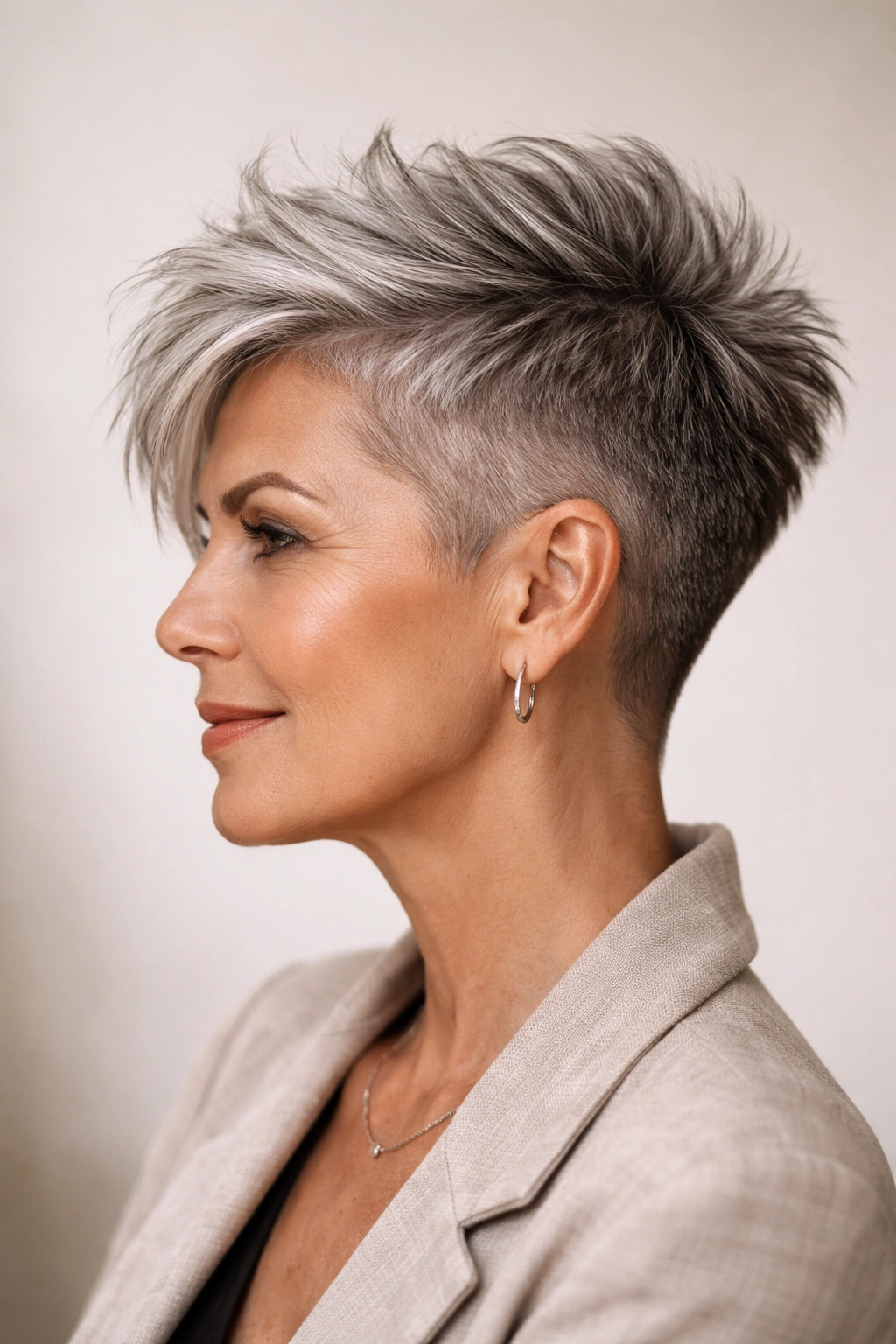
The modern undercut for women takes the bold undercut concept and refines it for a mature aesthetic. Underneath, the hair is closely cropped; on top, you maintain longer, textured length that can be styled up and over the undercut or swept to the side to reveal it.
Why It Works for Over 50
An undercut is a genuine style statement, and many women over 50 love it because it feels rebellious and intentional. If you’ve spent decades following conventional beauty rules, an undercut can feel like reclaiming agency over your appearance. Practically, it solves the problem of thick hair or volume at the nape — the undercut eliminates bulk while keeping attractive length and texture on top. It’s also incredibly versatile: you can cover it completely or show it off depending on your mood.
Choosing Your Undercut Design
The undercut can be subtle (just a small section at the nape) or dramatic (sides and back very close). Work with your stylist to determine what serves your lifestyle. If you attend formal events regularly, you might prefer a subtle undercut you can cover. If you want maximum style impact, a more visible undercut across the back and sides creates serious visual interest. The hair on top should be long enough to work with — at least 2 inches — so you have actual styling options.
Styling Options
- Sweep the top length over the undercut for a polished look
- Pin sections of top hair up to reveal the undercut in a geometric pattern
- Create texture on top using a curling iron or product while wearing the undercut visible or hidden
- The versatility is the real gift of this cut — you can look entirely different depending on how you style it
What to know:
- The undercut requires trims every 3 to 4 weeks to maintain clean lines
- Clipper work is precise — make sure your stylist has strong skills
- The visual impact is immediate and dramatic; be prepared for this to be a conversation starter
6. The Tousled Pixie Bob
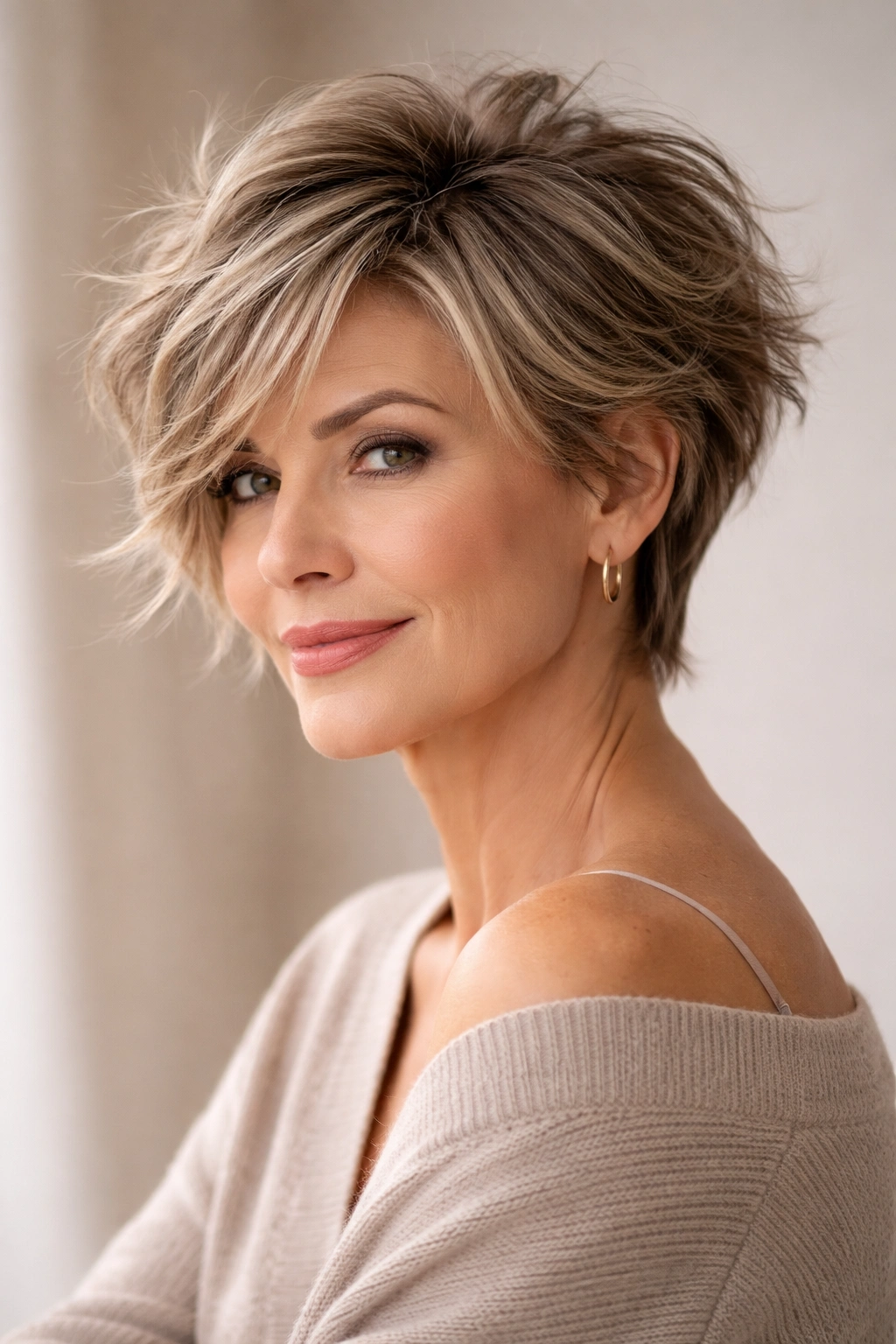
The tousled pixie bob is a hybrid of two classics, combining the short, easy-care nature of a pixie with slightly more length and texture for a softer, more romantic approach. It’s shorter than a typical bob but longer than a typical pixie, creating a sweet spot for many women.
Why It Works for Over 50
This cut offers the ease of a pixie — minimal styling required, quick drying time, low maintenance — but with more femininity and softness. The extra length on top and sides means you have more styling flexibility and options for expression. Pieces can frame the face gently, and the overall shape is flattering without feeling childish. It’s a cut that says “I’m confident and I don’t need hours at the mirror,” but it doesn’t sacrifice femininity or elegance.
Building Your Tousled Pixie Bob
Work with your stylist to determine the right length for your face shape — some women look better with length just to the jawline, while others prefer slightly shorter. Layers throughout create the tousled texture; avoid a blunt bob shape, which would read more severe. The back can be slightly shorter than the front, creating a subtle lift. Ask for choppy, piecey layers rather than smooth, blended ones.
Achieving That Effortless Look
- Apply a texturizing spray or mousse to damp hair
- Use a blow dryer with a round brush to create shape and movement
- Finish with a light texturizing product, working it through with your fingers
- The goal is controlled texture that looks naturally tousled, not artificially styled
Pro tip: This cut works beautifully with gray or silver hair because the choppy layers catch light in interesting ways, making the color feel more dimensional.
7. The Choppy Layers Cut
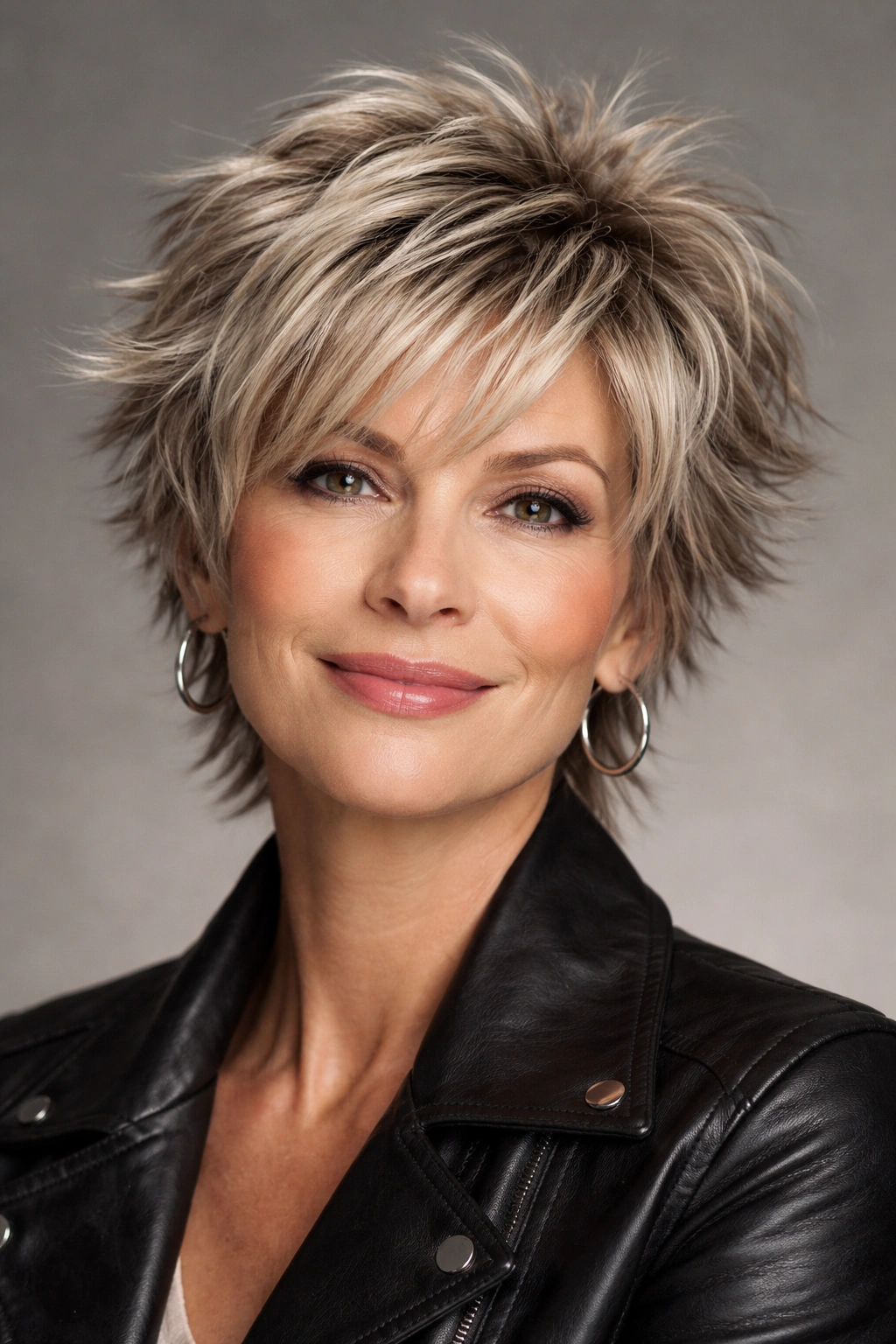
A choppy layers cut takes the concept of layering and pushes it further, creating pronounced, intentional choppiness throughout the entire cut. This isn’t subtle — each layer is clearly visible and contributes to an overall textured, modern appearance.
Why It Works for Over 50
Choppy layers create the illusion of fullness and movement, which is why this cut is beloved by women concerned about hair thinning or fine texture. The distinct layers also create visual interest that makes the overall style feel youthful and contemporary rather than matronly or dated. Each choppy piece catches light differently, creating dimension and shine. Because the cut embraces texture rather than trying to create smooth uniformity, it’s actually forgiving of hair that doesn’t cooperate with traditional styling.
Getting Choppy Layers Right
This is a cut that absolutely requires a skilled stylist — choppy layers can look fantastic or disastrous depending on how they’re executed. Bring photos of choppy layers you love, and discuss your hair texture and how much maintenance you’re willing to do. The layers should feel intentional and shaped, not randomly hacked. Discuss length — choppy layers can work on quite short hair or with more length, depending on your preference.
Styling Choppy Layers
- Layers often look their best slightly tousled, so embrace texture rather than fighting for smoothness
- A texturizing product applied to damp or dry hair enhances the layers
- Blow drying with a round brush can create more polish if you prefer a smoother day
- The layers create movement on their own, so you have less work to do than with a blunt cut
Quick facts:
- Regular trims every 4 to 6 weeks keep the choppy effect looking intentional
- This cut pairs beautifully with color, especially rooted or dimensional looks
- Choppy layers work on all hair types but especially striking on straight to wavy hair
8. The Disconnected Crop
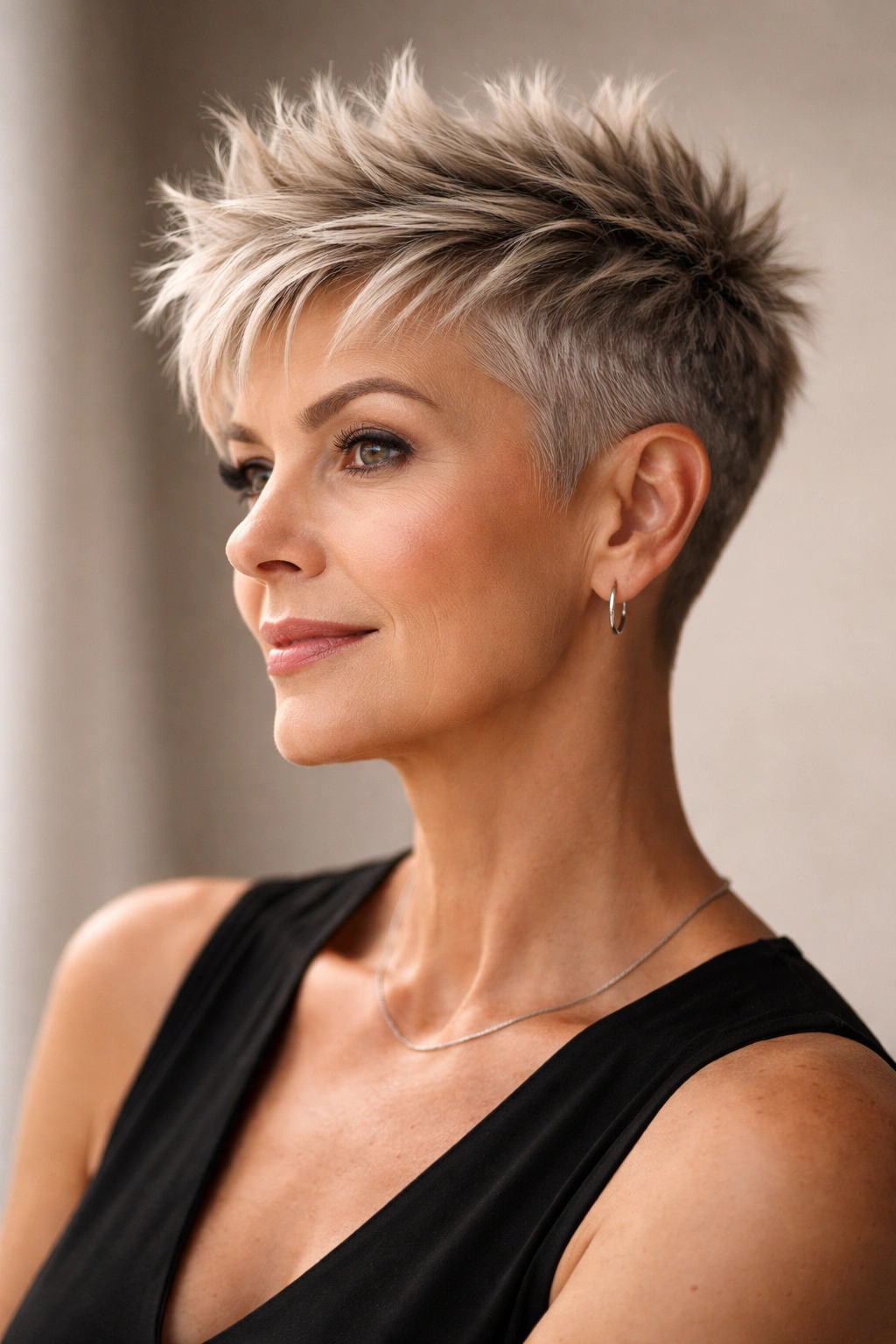
A disconnected crop features clearly distinct sections of different lengths, typically with a noticeably longer top and very short sides and back. The “disconnection” means there’s no smooth transition; the contrast is intentional and obvious.
Why It Works for Over 50
A disconnected crop is for women who want to make a genuine statement about their style and confidence. It’s modern, edgy, and undeniably bold. The visual contrast is striking and contemporary, reading as intentional fashion-forward choice rather than simply “short hair.” Practically, this cut solves problems with thick hair or unwanted volume — the close crop on sides and back is freeing. The top can be textured and styled, giving you creative control over how polished or playful you appear.
Making the Disconnection Work
The disconnect should be clean and clear — not a poorly executed fade that just looks uneven. Work with a stylist who understands this distinction. Discuss how dramatic you want the disconnect — some women prefer a subtle difference in length, while others want a very noticeable contrast. The longer top section should be textured and workable for styling, typically 2 to 3 inches minimum. Consider whether the disconnection will be visible in your lifestyle — if you need to look polished for professional settings, a subtle disconnect might work better than a dramatic one.
Styling and Confidence
- The top can be styled in multiple ways — textured and tousled, slicked back, swept to the side
- The contrast itself is the statement, so minimal product can still look intentional
- This cut benefits from low-maintenance styling; the disconnection means you’re not trying to blend or hide anything
- It’s ideal for women who enjoy experimenting with appearance and aren’t concerned with conventional aesthetics
Worth knowing: A disconnected crop will need trims every 3 to 4 weeks to maintain the clean lines and prevent the cut from looking grown-out and sloppy.
9. The Slicked-Back Spiky Look
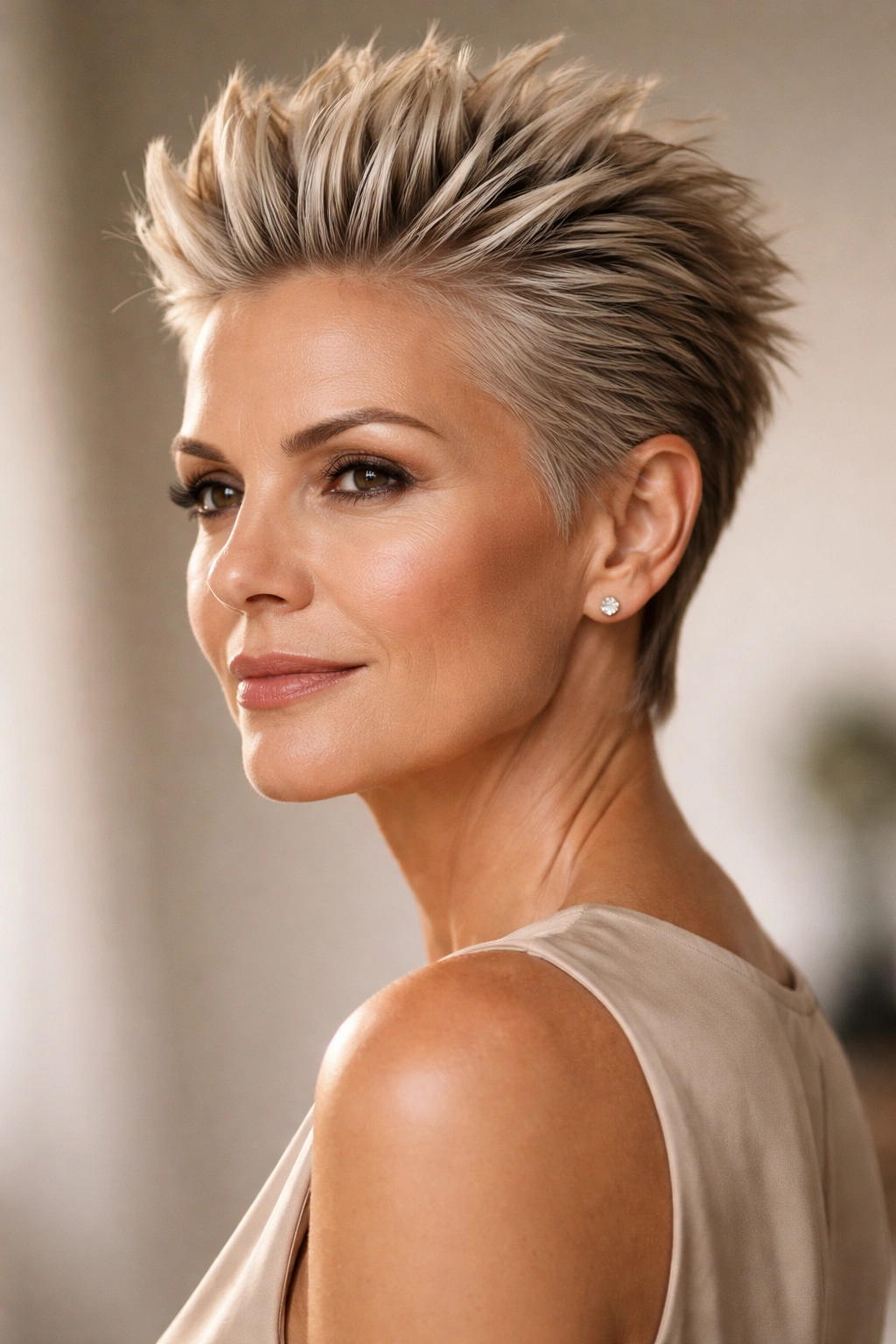
The slicked-back spiky look takes short, textured hair and styles it deliberately off the face by smoothing and securing it backward, creating a sleek, sculptural appearance that highlights facial features and bone structure.
Why It Works for Over 50
This styling approach is sophisticated and polished while still maintaining the texture and edge of spiky hair. Slicking hair back draws attention to your face, cheekbones, and features — which at any age requires confidence, but particularly at this stage, it reads as powerful and intentional. The look is versatile: it can be sleek and professional for work or events, or tousled and undone for casual days. It transforms your appearance without requiring a different cut.
Creating the Slicked-Back Effect
Start with a short, textured cut — this works with the tapered fade, textured crop, or choppy layers cut beautifully. Apply a smoothing serum or light pomade to damp hair, then use a comb or your fingers to sweep everything backward and away from the face. Blow dry while directing the hair back, or use a brush to create shape. The spiky texture is maintained; you’re just directing it strategically rather than leaving it tousled forward.
Occasions and Versatility
- This look works beautifully for professional settings, formal events, or any time you want to appear polished and put-together
- It pairs especially well with statement earrings or jewelry because your ears and neck are visible
- For casual days, you can achieve a similar look with less product for a more relaxed feel
- The same cut can be styled differently depending on where you’re going, giving you flexibility
Pro tip: A light volumizing powder applied to the roots before styling helps create lift and dimension while maintaining the slicked-back effect.
10. The Textured Fade
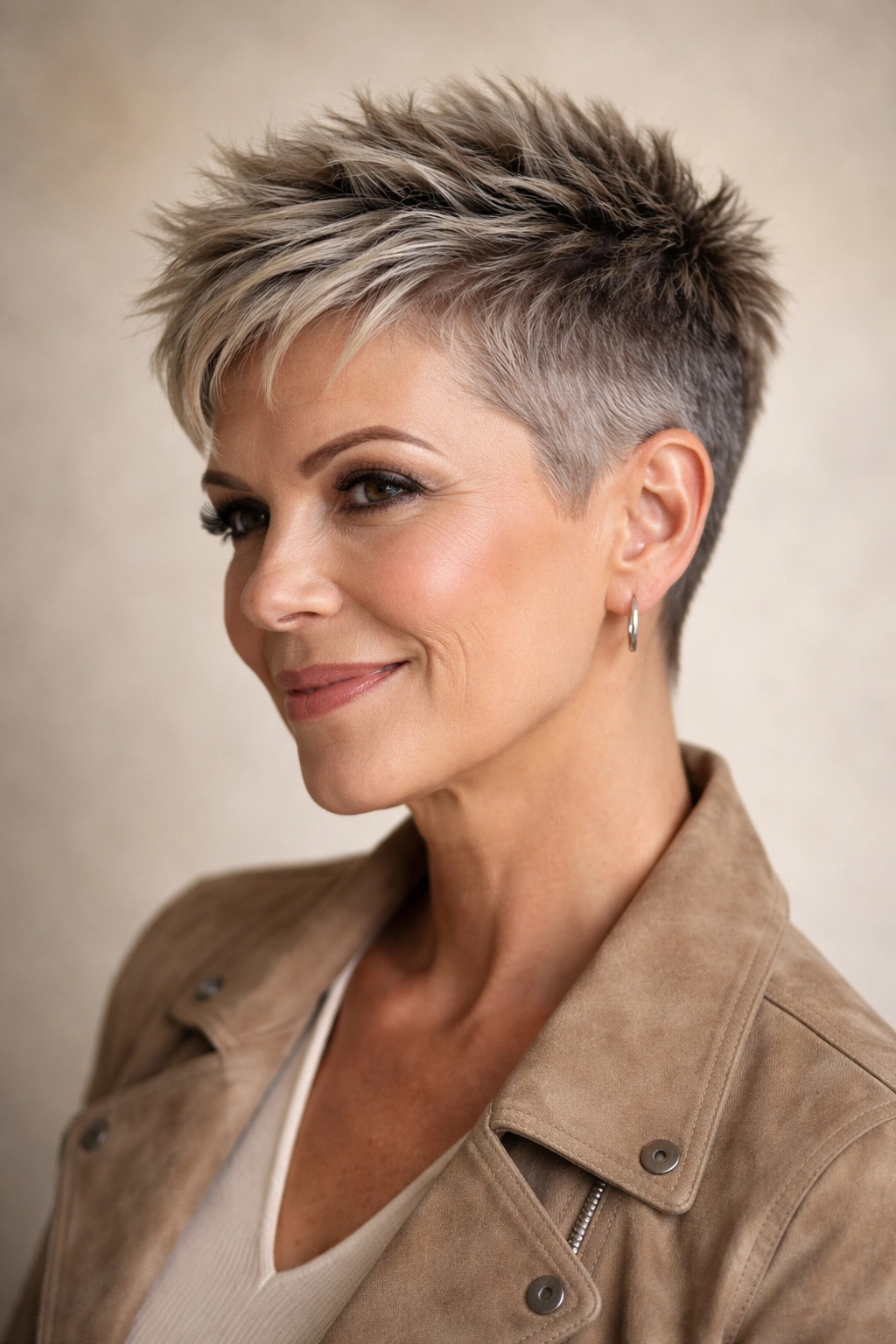
The textured fade is similar to the tapered fade with height but emphasizes texture throughout rather than just on top. The sides fade gradually shorter, but the overall cut maintains choppy, piece-y texture that prevents it from looking too close or severe.
Why It Works for Over 50
This cut is modern, flattering, and genuinely easy to maintain. The texture throughout prevents the cut from looking harsh, while the fade creates a clean, intentional silhouette. It works beautifully on all hair types and can be styled in multiple ways depending on your mood. The fade shows off your face shape without overwhelming features, and it reads as contemporary and confident without being extreme.
Building Your Textured Fade
Work with your stylist to determine fade length on the sides — you might go quite short or keep slightly more length depending on your preference. The overall top length should have enough texture to be interesting; ask for choppy, piece-y layers rather than a blunt top. The goal is a cut that looks intentional and shaped, not accidentally grown-out. This is a cut that absolutely requires a skilled stylist; discuss your hair texture, lifestyle, and styling preferences in detail.
Styling and Maintenance
- A texturizing product on damp or dry hair creates the right amount of texture and definition
- Blow-drying creates more polish; air-drying creates a more relaxed aesthetic
- This cut works beautifully swept back, tousled forward, or anywhere in between
- Trims every 3 to 4 weeks keep the fade looking intentional and the top texture fresh
Quick facts:
- This cut pairs beautifully with dimensional color or face-framing highlights
- It’s particularly striking on thick or wavy hair but works on all textures
- The textured fade is one of the most versatile short cuts available, offering styling flexibility without sacrificing the easy-care benefits of short hair
Final Thoughts
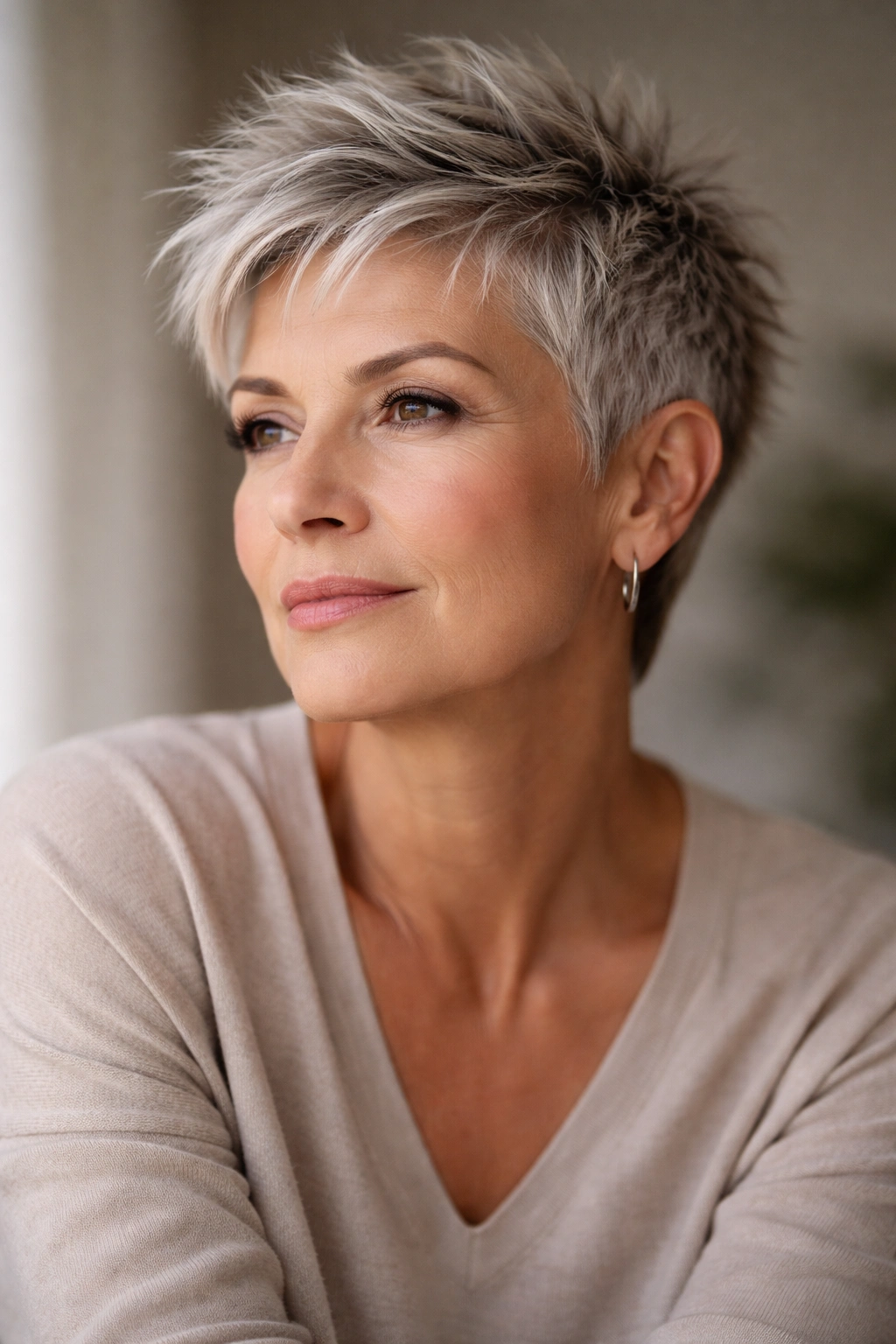
Choosing a short spiky hairstyle at this stage of your life is about more than just the cut itself — it’s about claiming a look that makes you feel confident, powerful, and authentically yourself. Each of these styles offers something different, whether you’re drawn to edgy disconnection, romantic texture, or polished sophistication.
The most important step is finding a stylist who understands both the technical side of cutting spiky texture and the aesthetic you’re after. Bring multiple reference photos, discuss your hair texture and how much maintenance you’re willing to do, and be honest about your lifestyle. A cut that requires blow-drying and product every day is a different commitment than one that air-dries beautifully, and both are perfectly valid — you just need to know which you’re choosing.
Don’t underestimate the power of color and styling alongside your cut. A short spiky style becomes even more striking when paired with dimensional color, whether that’s embracing silver, adding face-framing highlights, or going for a more dramatic shift. The way you style it day to day — tousled or slicked back, textured or smooth — gives you agency over your appearance and lets you express different versions of yourself throughout the week.
Most importantly, remember that a short spiky style is a choice that celebrates confidence, modernity, and refusing to shrink yourself into conventional ideas of how women over 50 should look. You’re not trying to look younger; you’re trying to look like the best, most genuine version of yourself. That’s what makes these cuts so powerful.
