



If you’ve scrolled through social media or sat in a salon chair lately, you’ve probably noticed something: more and more women are walking out with distinctly boyish, cropped short haircuts. These aren’t the soft, feminine short styles of the past. We’re talking sharp undercuts, textured pixies, choppy layers, and close-cropped fades that read bold, confident, and undeniably cool. The shift reflects something bigger—a growing comfort with androgynous aesthetics and a rejection of the idea that women’s hair needs to telegraph femininity in traditional ways.
What makes these cuts so magnetic right now? They’re incredibly freeing. Short hair means quick showers, minimal styling time, and a refreshing lightness most women haven’t experienced since childhood. They’re also undeniably chic—there’s something inherently modern about a sharp, well-maintained short cut that just works with minimal fuss. Beyond that, boyish short haircuts offer serious styling versatility. Depending on how you texture, style, and accessorize them, the same cut can read sophisticated and polished one day, edgy and rebellious the next.
The thing is, not every short haircut works the same way. A pixie cut is a completely different beast than an undercut, which is nothing like a textured crop. If you’re thinking about taking the leap into short hair territory, understanding the specific characteristics of each style matters tremendously. These cuts require different maintenance approaches, suit different face shapes, and create entirely different vibes. Below are twelve of the most-requested boyish short haircuts women are choosing right now—the ones that show up again and again in salon consultations and that look absolutely stunning when executed properly.
1. Classic Pixie Cut
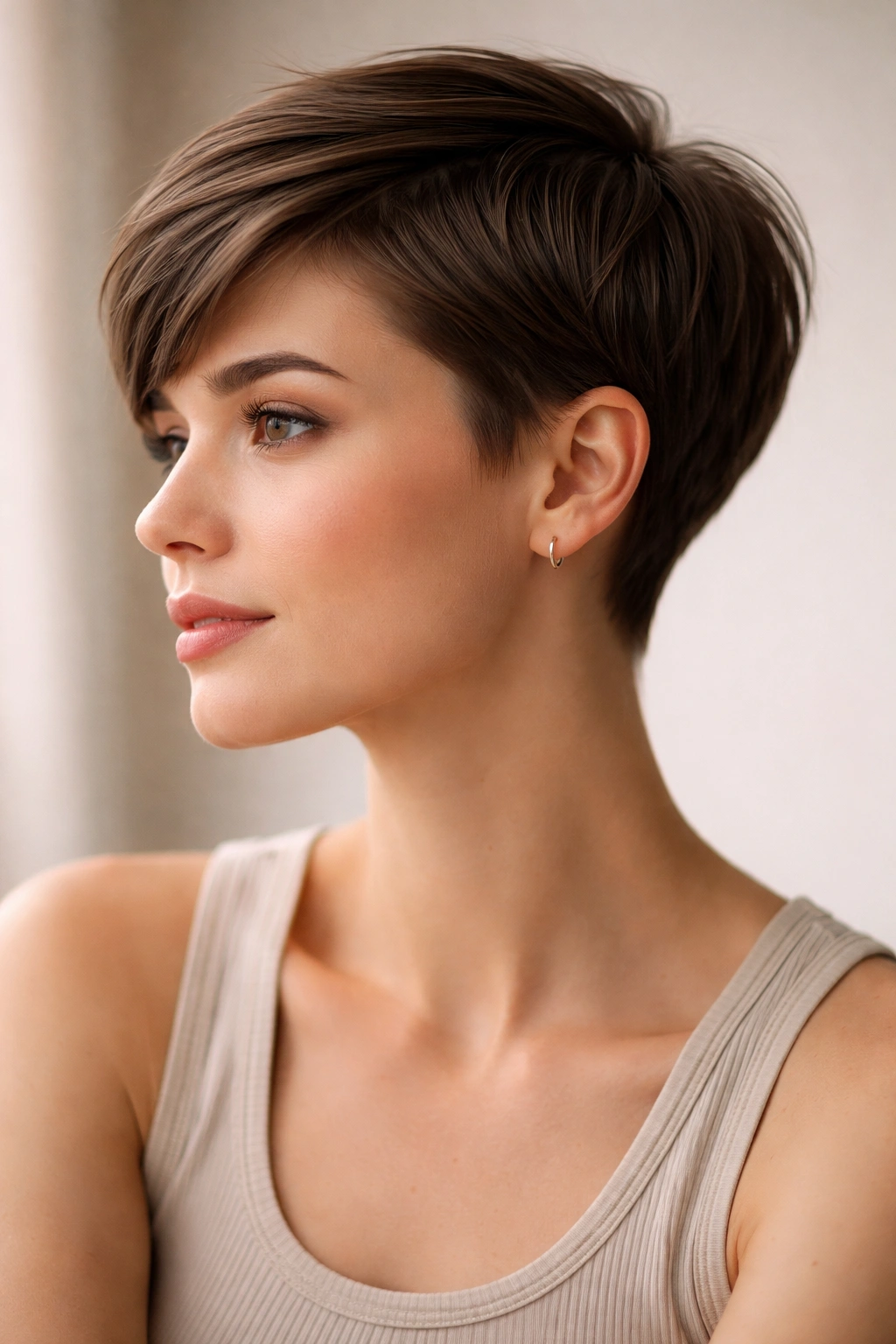
The pixie cut is the blueprint for short women’s haircuts. It’s tapered short on the sides and back while maintaining slightly more length on top—typically enough to style back, sweep to the side, or add texture. What makes it “classic” is the simplicity: no extreme undercuts, no radical asymmetry, just beautifully proportioned short hair that flatters most face shapes. Think Audrey Hepburn meets modern edge.
Why Women Love the Pixie Right Now
The pixie cut has made a major comeback because it’s sophisticated yet undeniably cool, and crucially, it works across vastly different age groups, professions, and personal styles. Pair it with a sharp blazer and you look boardroom-ready. Add some eyeliner and attitude and it reads punk. The cut itself is forgiving—small amounts of texture, a slightly grown-out undercut, or some messiness actually adds to the charm rather than looking unkempt. It’s the short haircut that feels least like a bold statement simply because it’s been around forever, yet on someone who’s never worn their hair short, it reads as incredibly brave.
How to Style and Maintain It
- Requires a trim every 4-6 weeks to maintain shape and clean lines, especially on the sides
- Can be styled sleek and polished with a lightweight pomade or cream, or messy and textured with sea salt spray and your fingers
- Short enough that heat styling is optional—air drying often works beautifully
- Pair with deep side parts, slicked-back tops, or tousled, piece-y texture depending on your mood
- Works exceptionally well with bangs if you want to add dimension or soften sharp features
Pro tip: If you’re nervous about going short, start with a pixie cut rather than something more extreme—it’s easier to grow out and maintains shape well even as it transitions to a longer style.
2. Undercut with Disconnected Sides
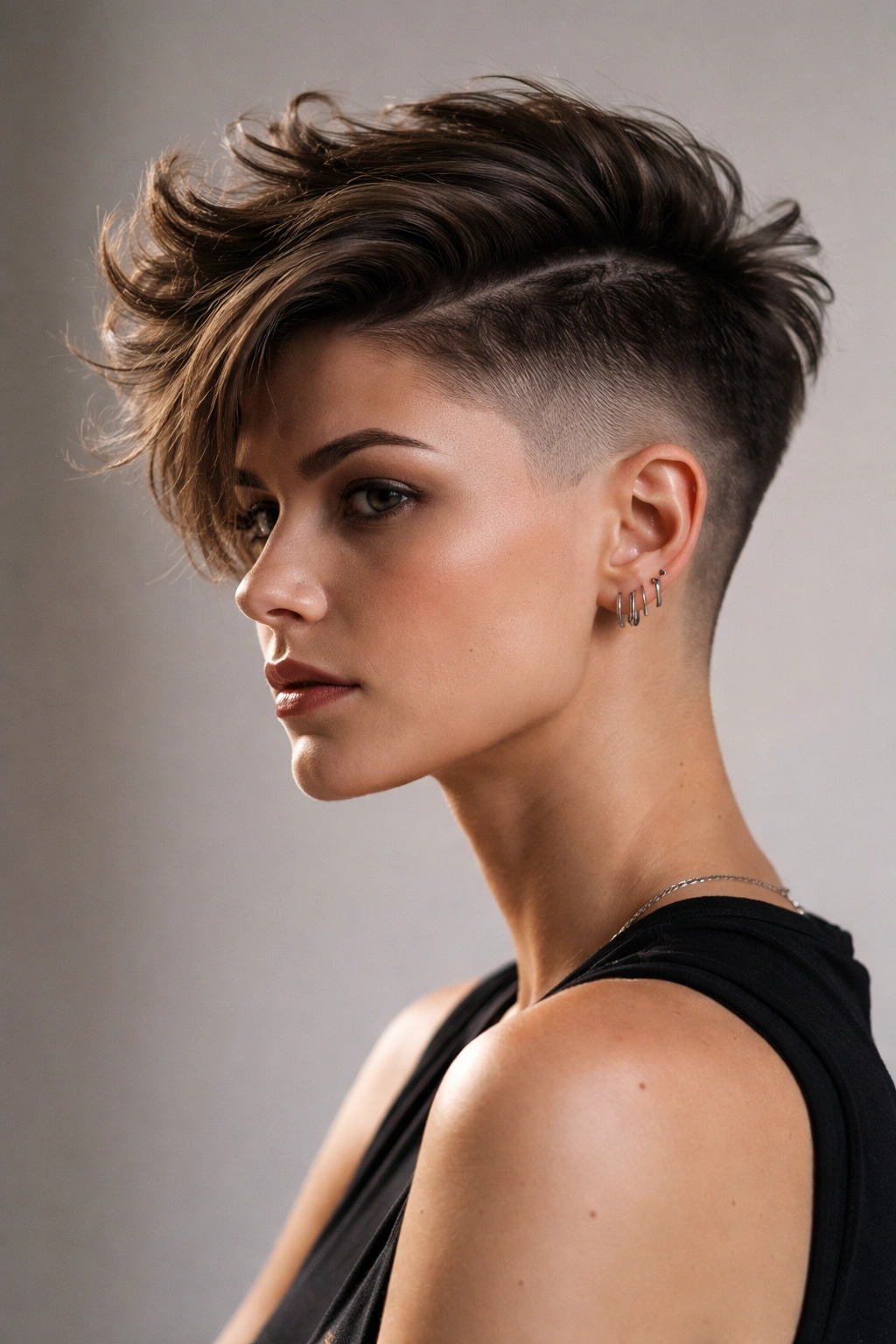
The disconnected undercut is where boyish short hair gets serious. This cut features dramatically shorter sides (often faded or buzzed to skin) that are completely separated from longer hair on top. That “disconnect”—the stark contrast between the length on the sides and the fuller top—creates visual drama and an unmistakably modern edge. The top is usually texturized and can be anywhere from 2 to 4 inches, giving you real styling flexibility.
The Appeal of Maximum Contrast
Women choose disconnected undercuts specifically because they want to make a statement. This is the cut that says you’re intentional, confident, and unbothered by conventions. The extreme contrast between the buzzed sides and fuller top creates an architectural quality—your head becomes almost sculptural. It’s also incredibly practical; you can change the vibe of the cut just by styling the top differently, while the sides stay low-maintenance for weeks. The cut reads masculine but the way women style it—with texture, intentional styling, jewelry, and attitude—makes it completely their own.
Maintenance and Styling Reality
- Buzzed or faded sides need a touch-up every 2-3 weeks to maintain that sharp, clean look
- Top needs trimming every 6-8 weeks to maintain texture and shape
- Styling options are extensive: slicked back with gel for polish, texturized and messy for edge, swept to one side for softer appeal
- Requires some level of styling commitment if you want it to look intentional; air-drying the top alone won’t usually cut it
- Pairs beautifully with tattoos, bold earrings, and confident attitude—it’s a cut that demands you own it
Worth knowing: The shorter and more faded the sides, the more regularly you’ll need to visit your stylist. If you want to extend the time between cuts, ask for a more gradual fade rather than a skin fade.
3. Textured Crop
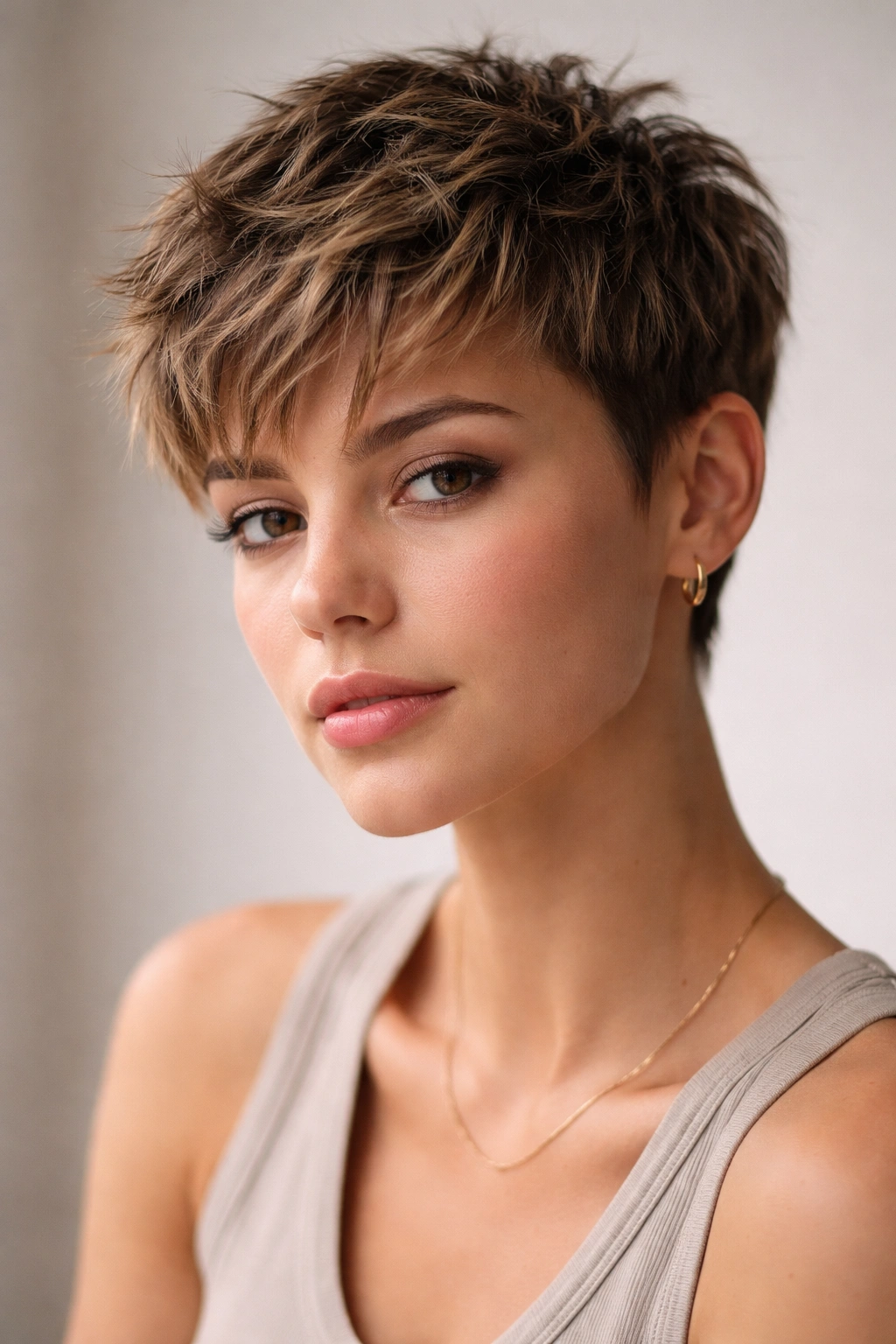
A textured crop is the Goldilocks of boyish short haircuts—short enough to read decisively masculine, but with enough length and texture that it doesn’t require the commitment of an undercut. The cut sits around 1.5 to 2.5 inches all over, with intentional texture throughout that creates a choppy, piece-y quality. It’s all about movement and dimension, not blunt lines. This is the cut you see on fashion models and cool-girl influencers constantly.
Why the Texture Changes Everything
The difference between a blunt, cropped cut and a textured one is everything. Texture makes the cut look intentional and modern rather than simply short. It adds movement, which means the cut photographs well and looks good from multiple angles. Textured crops also photograph differently than blunt cuts—they look more lived-in, more effortless, more authentically cool. This is partly why they’re so popular on people with editorial and fashion sensibilities; the cut looks good messy and slightly undone, which is the whole goal of modern styling.
Styling and Upkeep Breakdown
- Works beautifully with just sea salt spray and your fingers—actually looks better slightly undone than perfectly groomed
- Trims needed every 6-8 weeks to maintain texture and prevent the cut from looking shaggy
- Can be worn slicked back with pomade for a dressier look, or naturally textured for everyday ease
- Air drying works perfectly with the right product; blow-dry with your fingers through the hair for added texture and volume
- Suits most hair types, though finer hair benefits from texturizing at the cut itself, while thicker hair needs strategic thinning to avoid bulk
Insider note: Ask your stylist to use a razor or point-cutting technique rather than straight shears to create texture. It makes an enormous difference in how lived-in and cool the cut looks.
4. Choppy Layered Short Cut
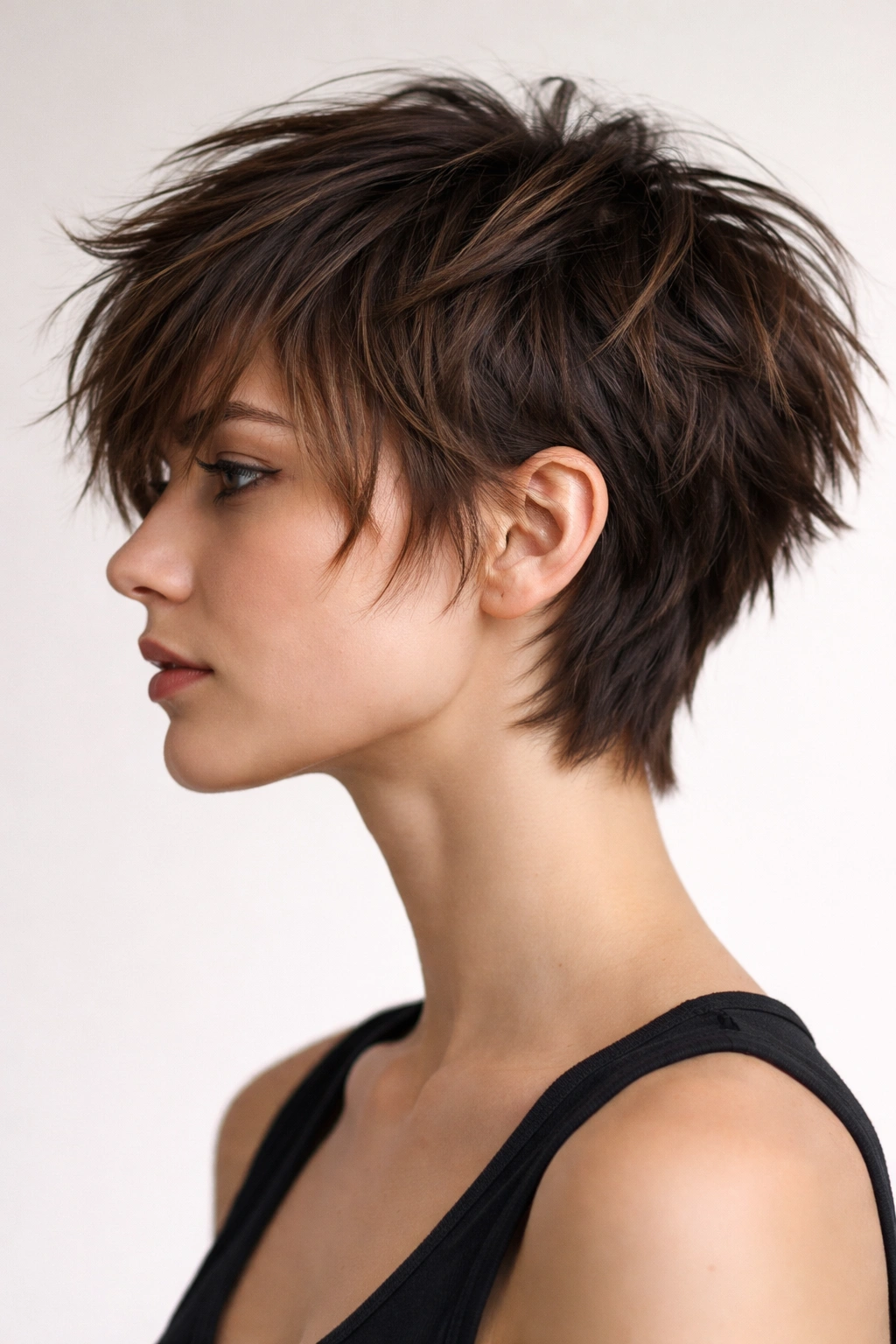
This cut brings back some of the rock-and-roll energy of 70s shag cuts but with a modern, editorial twist. Think multiple layers of varying lengths throughout, creating a choppy, piece-y silhouette that’s equal parts effortless and intentionally cool. The layers can be dramatic or subtle depending on your hair type and face shape, but the hallmark is movement—the cut creates dimension and texture throughout, not just on top. It’s boyish without being severe.
The Rock-and-Roll Revival
The choppy layered cut appeals to women who want short hair but aren’t ready for the severity of an undercut. Layers create the illusion of more volume while also adding movement and visual interest. The cut reads younger, edgier, and more fashion-forward than a simple crop or pixie, and it suits people who have a bit of creative, unconventional energy. It’s also surprisingly flattering on round faces because the choppy, vertical lines create a lengthening effect. Add some attitude and styling, and this cut absolutely commands attention.
Making Layers Work for Your Hair
- Trims every 6-8 weeks keep layers sharp; they can look shapeless surprisingly quickly if grown out
- Works spectacularly with texture products—sea salt spray, clay, or matte pomade enhance the piece-y quality
- Blow-drying with a round brush on medium heat can smooth it slightly for a more polished version, or air-dry for pure texture
- Fine hair needs careful layering to avoid looking thin or wispy; thicker hair can handle more dramatic layers
- Pairs beautifully with longer face shapes and can help soften angular features when layered strategically
Worth knowing: Choppy layers amplify texture in your hair. If you have thick or wavy hair, this cut will emphasize that—which is usually gorgeous, but it’s important to understand before committing.
5. French Crop
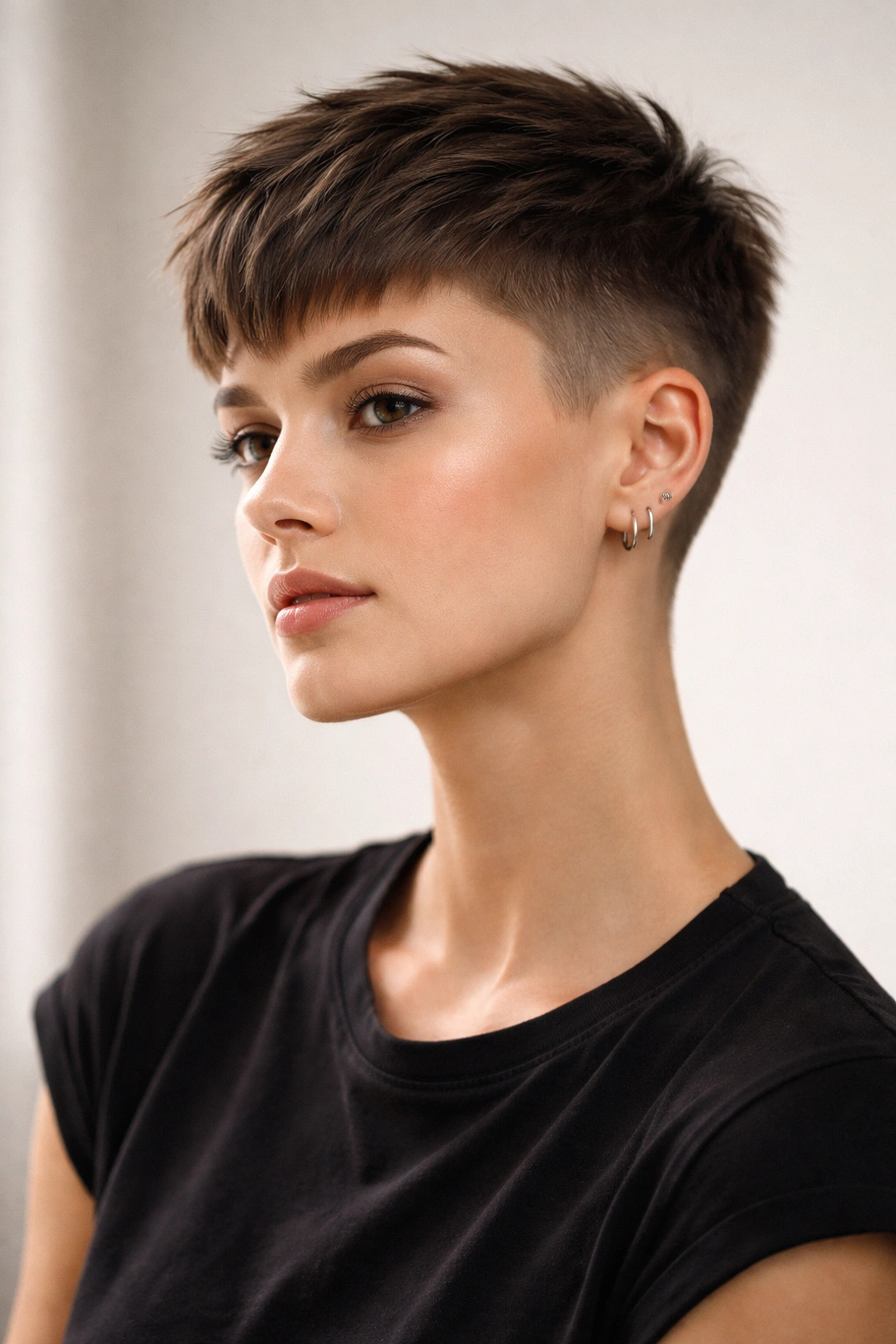
The French crop has become one of the most-requested cuts in the past few years, and rightfully so. It’s essentially a textured crop with a slightly longer, boxier front section that can be styled forward or swept back. The sides stay close and clean while the top is longer and fuller. It’s distinctly masculine but also remarkably versatile—style it messy and textured for cool-girl edge, or groom it with pomade and a side part for something more polished.
Why Every Woman’s Stylist Keeps Suggesting It
The French crop is perfect because it hits a sweet spot: it’s short and low-maintenance while still offering styling options. It works on multiple face shapes, looks good grown out slightly, and suits various personal aesthetics. The slightly longer front means you have just enough hair to play with—you can texture it, slick it, sweep it, or leave it messy. For women transitioning from longer hair, it often feels less drastic than a pixie while still delivering that short-hair freedom. It’s also incredibly photogenic; the shape and proportions just seem to work in pictures.
Styling Your French Crop
- Keep the front longer (1.5 to 2 inches) while the sides stay quite short for maximum contrast
- Trims every 6 weeks maintain shape; this cut is geometry-based and loses its appeal quickly if untrimmed
- Styling versatility: slick back with a strong-hold pomade for polish, texture with sea salt spray for casual edge, or air-dry for relaxed feel
- Blow-dry forward and tousle with your fingers for fullness, or blow-dry back for sleekness
- The longer front creates a flattering frame for the face; ensure your stylist isn’t cutting it too short
- Looks excellent with a deep side part, which is often the most flattering styling option for this cut
Pro tip: The front length is crucial—it should be long enough to sweep across or style back, but too long and it reads more like a regular short cut than a French crop. Talk to your stylist about the exact length before cutting.
6. Buzz Cut or Short Fade
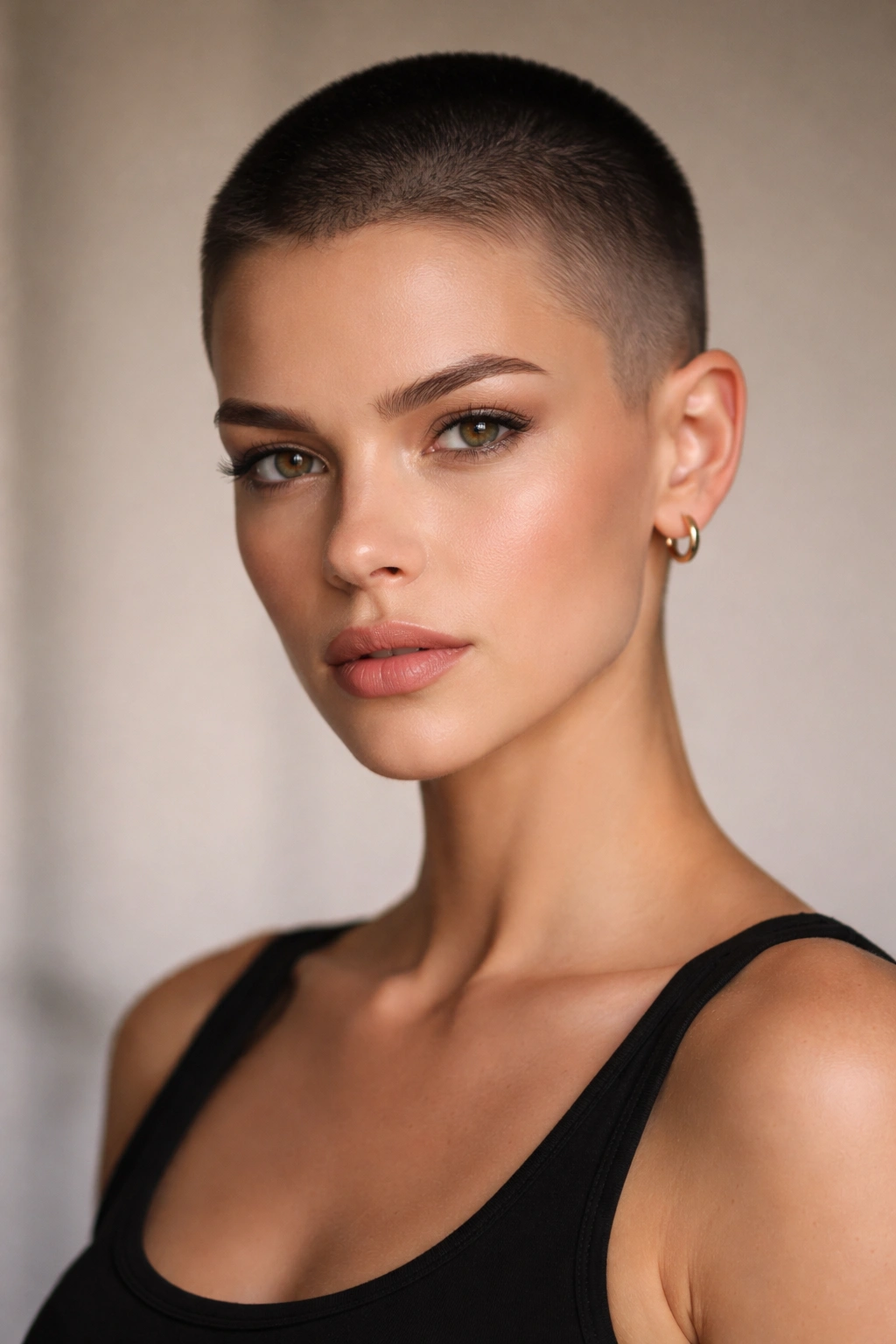
The buzz cut or very short fade represents the most minimal end of the spectrum—nearly the entire head is the same short length, typically under an inch. This is the cut that makes the biggest statement because there’s nowhere to hide; the cut is pure shape and confidence. Some women go for the flatop version (flat on top, faded sides), while others opt for a completely uniform buzz. Either way, it’s undeniably bold.
Embracing Maximum Minimalism
Women who choose buzz cuts or very short fades are often making a deliberate statement about rejecting feminine beauty conventions. It’s liberating—no bad hair days, no styling, pure simplicity. The cut also creates an almost meditative experience: your head feels light, your scalp gets air, and getting ready in the morning becomes shockingly fast. From a practical standpoint, it’s unbeatable. From an aesthetic standpoint, it requires either exceptional bone structure or serious confidence—or ideally, both. The cut also reads incredibly modern and cool when worn with the right attitude and styling choices elsewhere (jewelry, clothing, makeup).
The Reality of Maintaining a Buzz or Fade
- Trims needed every 2-3 weeks to maintain clean lines and prevent shaggy growth
- Can be styled sleek and uniform, or slightly textured on top if you ask for a bit more length (quarter inch)
- Low-maintenance doesn’t mean no-maintenance; buzzed or faded hair still needs regular trims
- Your scalp will need sunscreen—a shaved head gets sun exposure most people never experience
- Styling options are basically zero, so this cut works best for people who don’t want to think about hair at all
- Suits oval and oblong face shapes best; can be less flattering on very round faces unless the contrast with makeup or other styling is intentional
Worth knowing: If you’ve never had short hair, jumping directly to a buzz cut might feel shocking. A textured crop or French crop lets you experience short hair without the full commitment.
7. Asymmetrical Short Crop
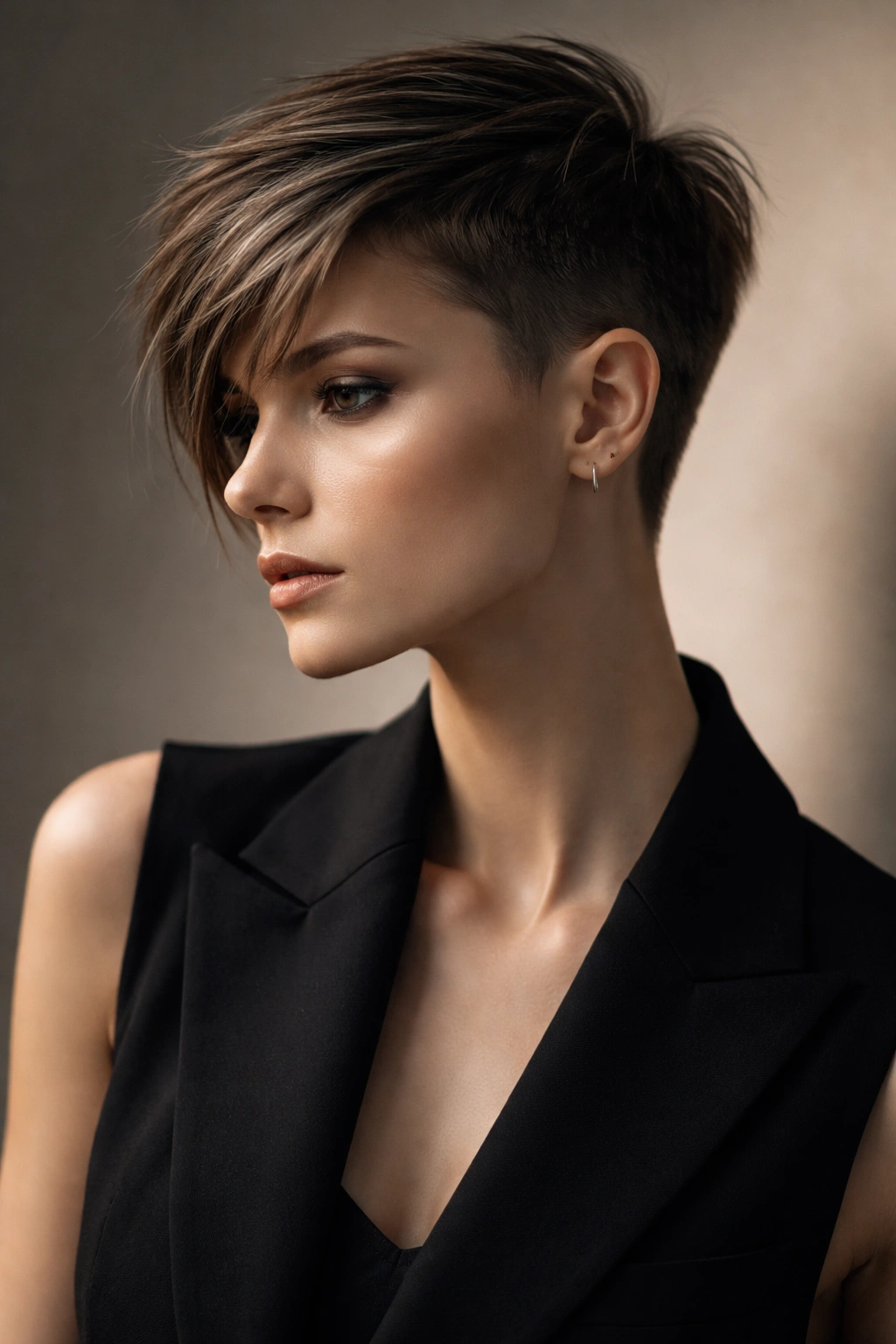
An asymmetrical cut features one side noticeably shorter or longer than the other. The sides might be different lengths, or the overall silhouette might be longer on one side and cropped on the other. It’s visually striking and reads intentionally creative—this is the cut chosen by people with genuine design sensibilities. When executed well, it’s absolutely stunning; executed poorly, it can look accidental.
The Intentionality of Asymmetry
Asymmetrical cuts signal that you’re purposeful and creative. The cut requires a skilled stylist who understands proportion and how the cut will photograph from different angles. It’s also incredibly flattering on people with angular features or strong bone structure—the asymmetry echoes the angles of the face in a sophisticated way. Some versions are more extreme (one side nearly shaved while the other is 2 inches), while others are more subtle. The extreme versions definitely read more editorial and fashion-forward; subtler asymmetry reads polished and modern.
Making Asymmetry Work
- Requires a highly skilled stylist; the proportions must be intentional and flattering
- Trims every 6 weeks keep the shape sharp; asymmetry loses its power when overgrown
- Styling depends on the specific cut: some asymmetrical cuts require intentional styling to show off the design, while others look cool slightly messy
- Works beautifully with a deep side part, which emphasizes the asymmetry
- Can be textured or sleek depending on your preference and the specific cut design
- Consider your daily confidence level; this cut reads bold and is absolutely a statement
Insider note: Asymmetrical cuts photograph better than they sometimes look in person due to how human eyes perceive spatial relationships. Trust the proportions your stylist creates; it will read more striking in photos and from certain angles than it might feel up close.
8. Side-Swept Pixie
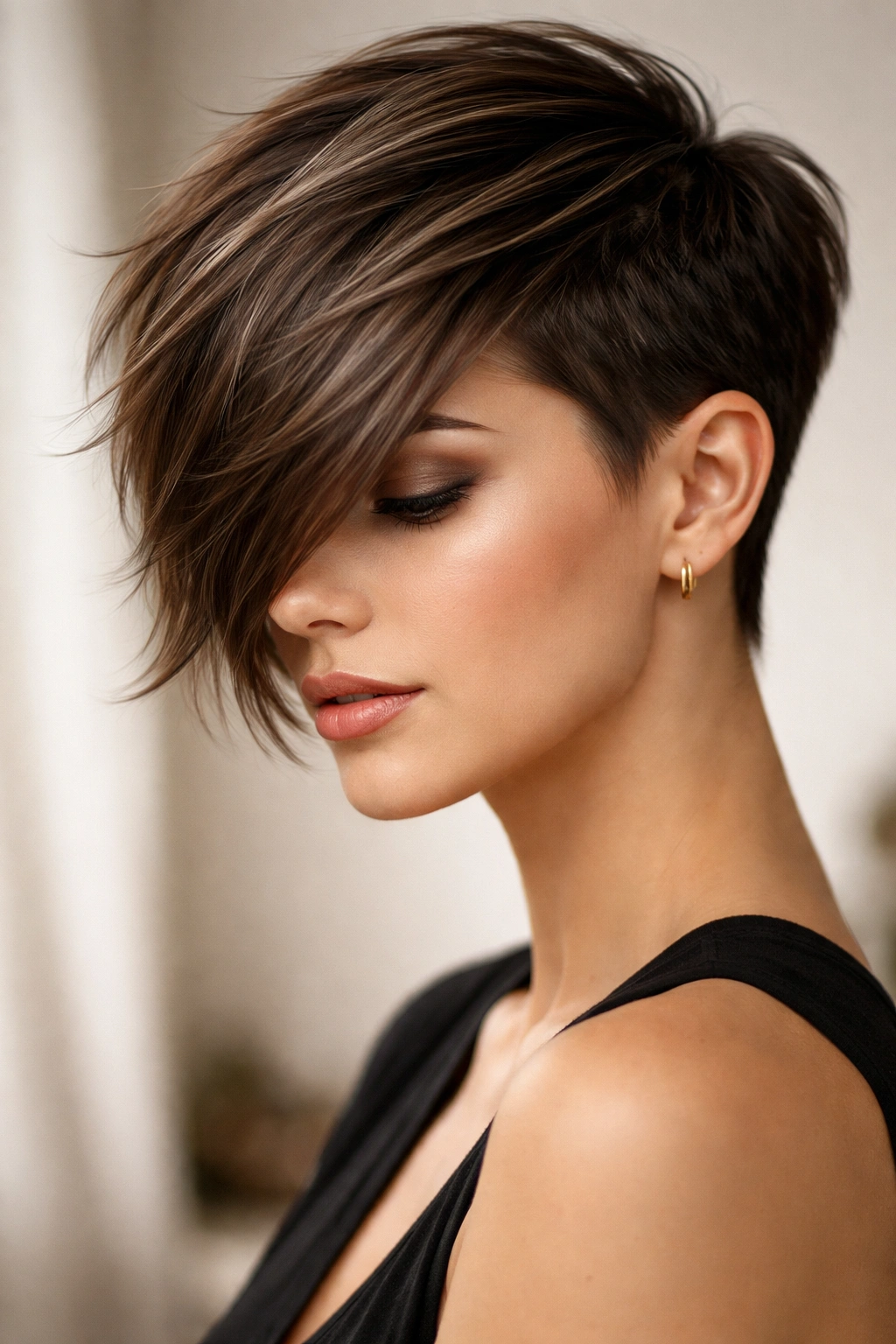
The side-swept pixie is a pixie cut with attitude and movement. Instead of the hair sitting evenly, there’s significantly longer hair on top that sweeps dramatically to one side, often covering one eye or cheekbone. The back and sides stay quite short, but the sweep creates movement, softness, and a touch of romantic edge. It’s less severe than a straight pixie while maintaining all the low-maintenance benefits of short hair.
Adding Movement to the Pixie
The side-swept version exists in that perfect middle ground—it’s undeniably short and modern, but the longer front creates a softening, flattering effect. This cut particularly suits people who love the idea of short hair but want something slightly less stark. The sweep can be styled intentionally or left to fall naturally; it works both ways. The long bangs create a frame for the face that’s incredibly flattering, especially for hiding or emphasizing specific features. It’s also more comfortable for people who are anxious about their ears or jawline being exposed, since the sweep provides some coverage.
Styling Your Side-Swept Pixie
- The longer front section needs regular trims (every 4-6 weeks) to maintain the sweep and prevent it from looking shaggy
- Blow-dry the front back and to the side while damp to set the sweep pattern
- Can be styled sleek with a smoothing product, or textured with sea salt spray
- The side part is natural with this cut; embrace it rather than fighting it
- Pairs beautifully with metallic or statement earrings, which get full visibility thanks to the exposed sides and back
- Works exceptionally well on oval, oblong, and heart-shaped faces
Pro tip: If you like the idea of a side-swept pixie but worry about commitment, ask your stylist to keep the back very short while letting the front sweep, so you can style it multiple ways as it grows out.
9. Slicked-Back Short Cut
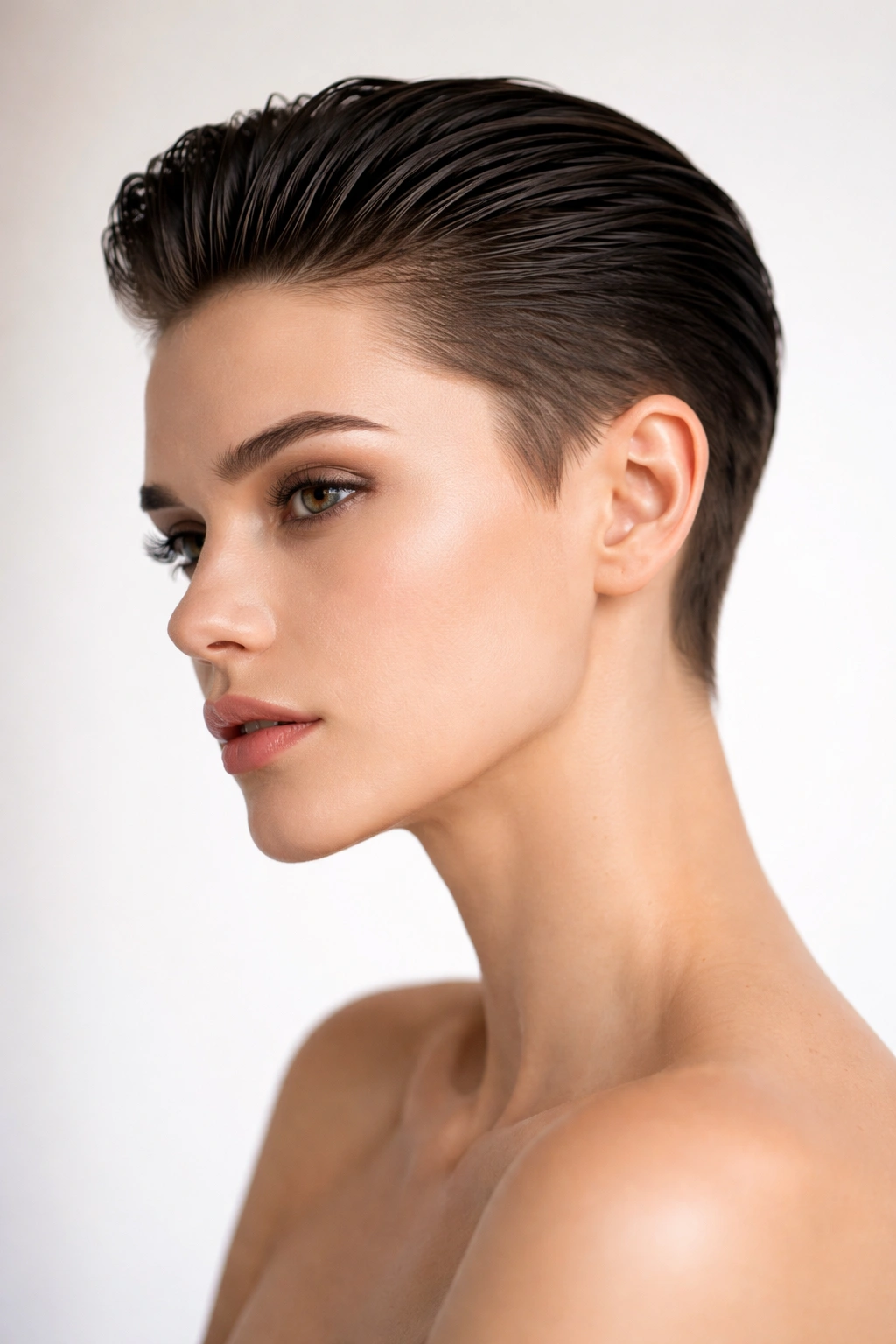
This cut is sleek, sculpted, and utterly chic. The hair is cut short all over—typically between half an inch and 1.5 inches—and then styled slicked back against the head with pomade or a strong-hold styling product. The result is incredibly polished and architectural. It shows off bone structure, the shape of your head, and your features with nothing to hide behind. This is the cut for people with confidence and the styling discipline to maintain it.
The Sophistication of Sleek Short Hair
A slicked-back short cut reads inherently sophisticated and modern. It’s androgynous but also somehow more powerful than other short cuts—there’s something about the exposed face and sculpted silhouette that commands attention. It suits people in creative industries, people with strong personalities, and people who love styling and aren’t afraid to show it. The cut also works beautifully as a contrast to statement makeup (red lipstick, bold eyeliner, dramatic eyeshadow) or jewelry. It’s the cut that says you’re intentional, groomed, and powerful.
Making Sleek Short Hair Work
- Requires a strong-hold pomade or grooming cream; regular mousse won’t cut it
- Daily styling is necessary—you can’t just wash and go with this cut
- Trims every 4-6 weeks maintain the shape and prevent the sides from looking fuzzy
- Works best on straight or wavy hair; very curly or coily hair requires significant smoothing products and blow-drying to maintain the slicked-back look
- Harsh overhead lighting and photography highlight the sleek styling, so it photographs beautifully
- Incredibly flattering on people with good bone structure, as nothing is hidden; less ideal for people who prefer some softness around the face
Worth knowing: This cut requires styling commitment. If you’re not willing to spend 5-10 minutes on styling every morning, choose a different cut.
10. Messy Textured Bob
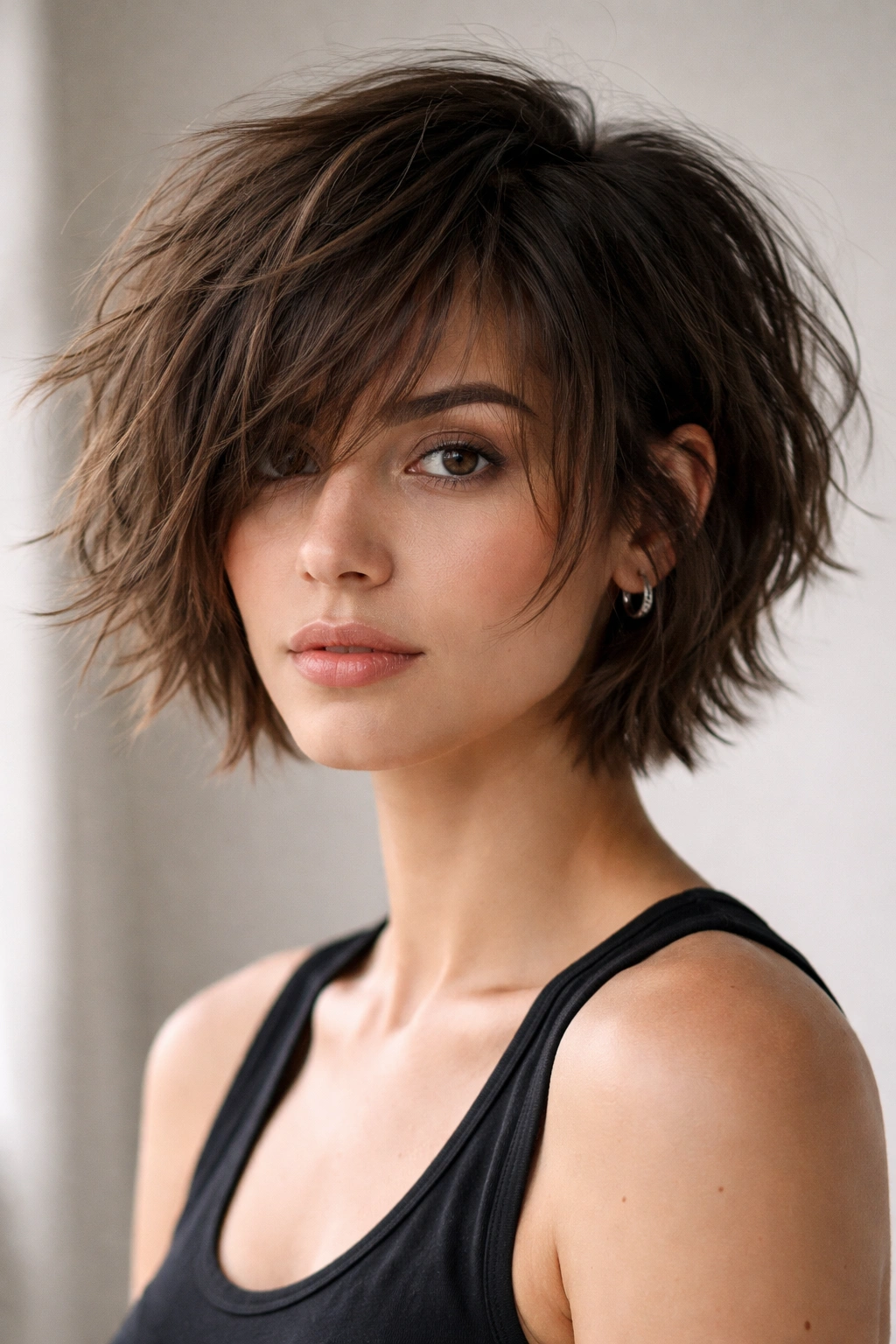
This is where boyish short hair meets Bob territory. The cut sits around 2 to 3 inches with heavy texture throughout, creating a deliberately undone, piece-y quality. It’s shaped but not polished—the appeal is the contrast between the cut being intentional and the styling being completely relaxed. It reads cool, creative, and effortlessly confident. This is the cut you see on cool-girl creatives and people in the arts.
Short Bob Energy
The messy textured bob gives you the practical benefits of short hair—quick wash, minimal styling—while maintaining some of the visual richness of slightly longer styles. The texture prevents it from looking blunt or severe. It’s also more forgiving than sleeker short cuts; messiness is literally the point. This cut works on multiple hair types and face shapes because the texture can be customized to what flatters you most. It’s playful but undeniably modern.
Achieving the Deliberately Undone Look
- Works beautifully with just sea salt spray and your fingers; that’s often the best styling approach
- Blow-dry with your fingers through the hair to encourage texture and movement
- Trims every 6-8 weeks keep the shape defined; regular styling is less important than maintaining the cut itself
- Can be slightly lengthened or shortened depending on your preference without losing the essence of the style
- Air-drying works perfectly and often looks better than blow-drying for this cut
- Pairs with minimalist, creative, or artistic aesthetics; this isn’t the cut for people who want to look polished and corporate
Pro tip: Ask your stylist to point-cut or razor-cut rather than use straight shears; it creates better texture and that deliberately undone quality that makes this cut special.
11. Angular Disconnected Cut
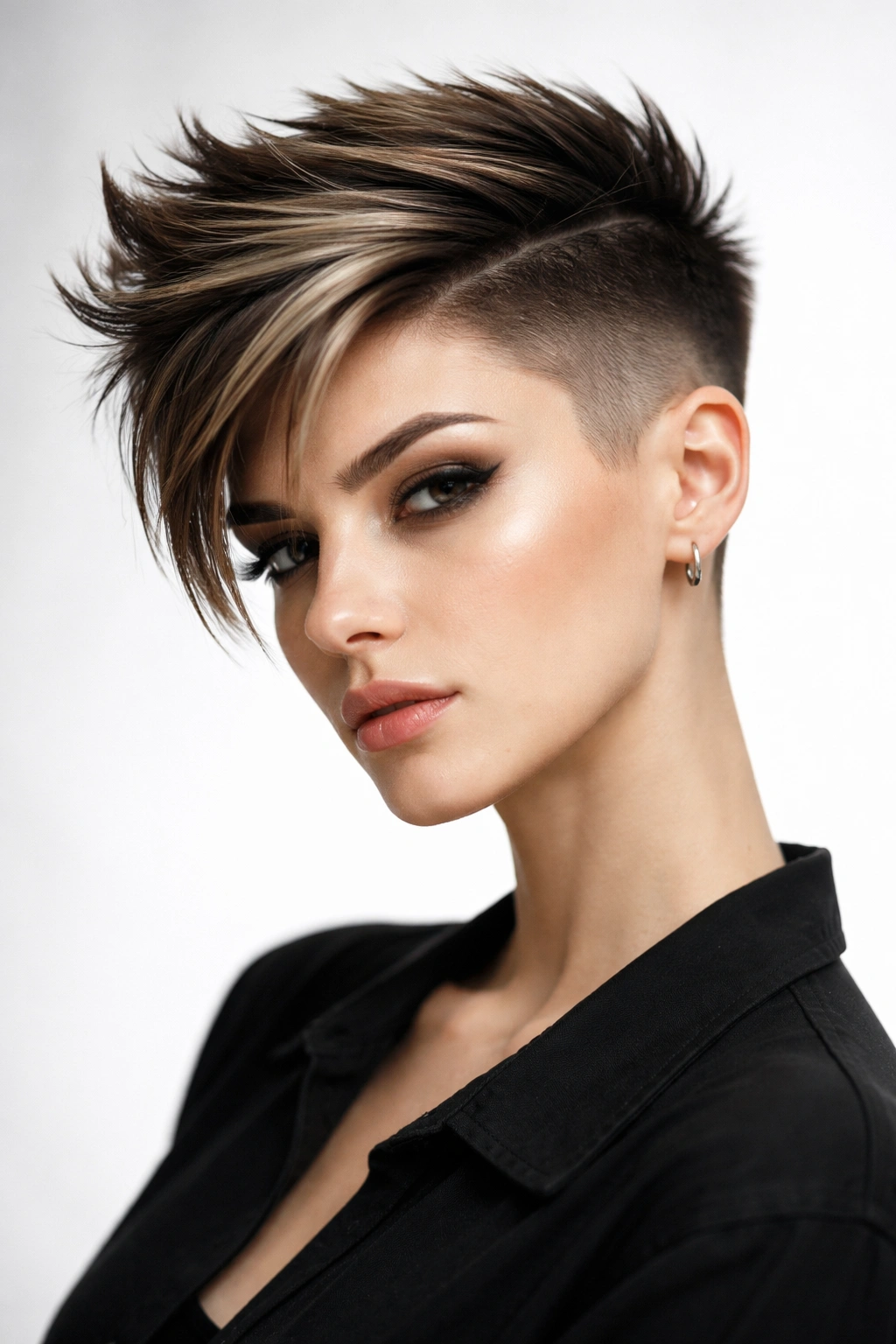
This cut is architecture with attitude. It features dramatic disconnection between the sides and top like an undercut, but with the top section being more angular and sculptural rather than simply long and textured. Think sharp, almost geometric lines throughout. The sides are typically faded or buzzed, and the top is cut with precise angles that can be styled in specific directions. It’s the cut for people who want short hair to make a visual statement.
Geometric Precision and Statement-Making
Angular disconnected cuts appeal to people with strong personal aesthetics and the styling discipline to maintain them. The cut is incredibly distinctive; you can’t mistake it for anything else. It photographs well, reads undeniably modern, and suits people in creative fields or those who simply love making bold aesthetic choices. The precision required means working with a stylist who has serious technical skills. This isn’t a cut you can get anywhere; you need someone who understands angles, proportion, and geometric design applied to hair.
Maintaining Angular Precision
- Requires a highly skilled stylist; poor execution reads amateur rather than intentional
- The sides need touch-ups every 2-3 weeks to maintain clean lines
- The top needs trimming every 6-8 weeks to keep angles sharp and defined
- Styling is typically intentional; you’re usually blowing this cut dry in a specific direction to show off the angles
- The angles are designed to be shown off, so styling commitment is part of the package
- Works best on people with the bone structure and confidence to pull off sharp, geometric lines
Worth knowing: The more angular and extreme the cut, the more it’s a statement. If you love it, great. If you’re uncertain, ask your stylist about a slightly softer version that’s still contemporary but less extreme.
12. Short Spiky Cut
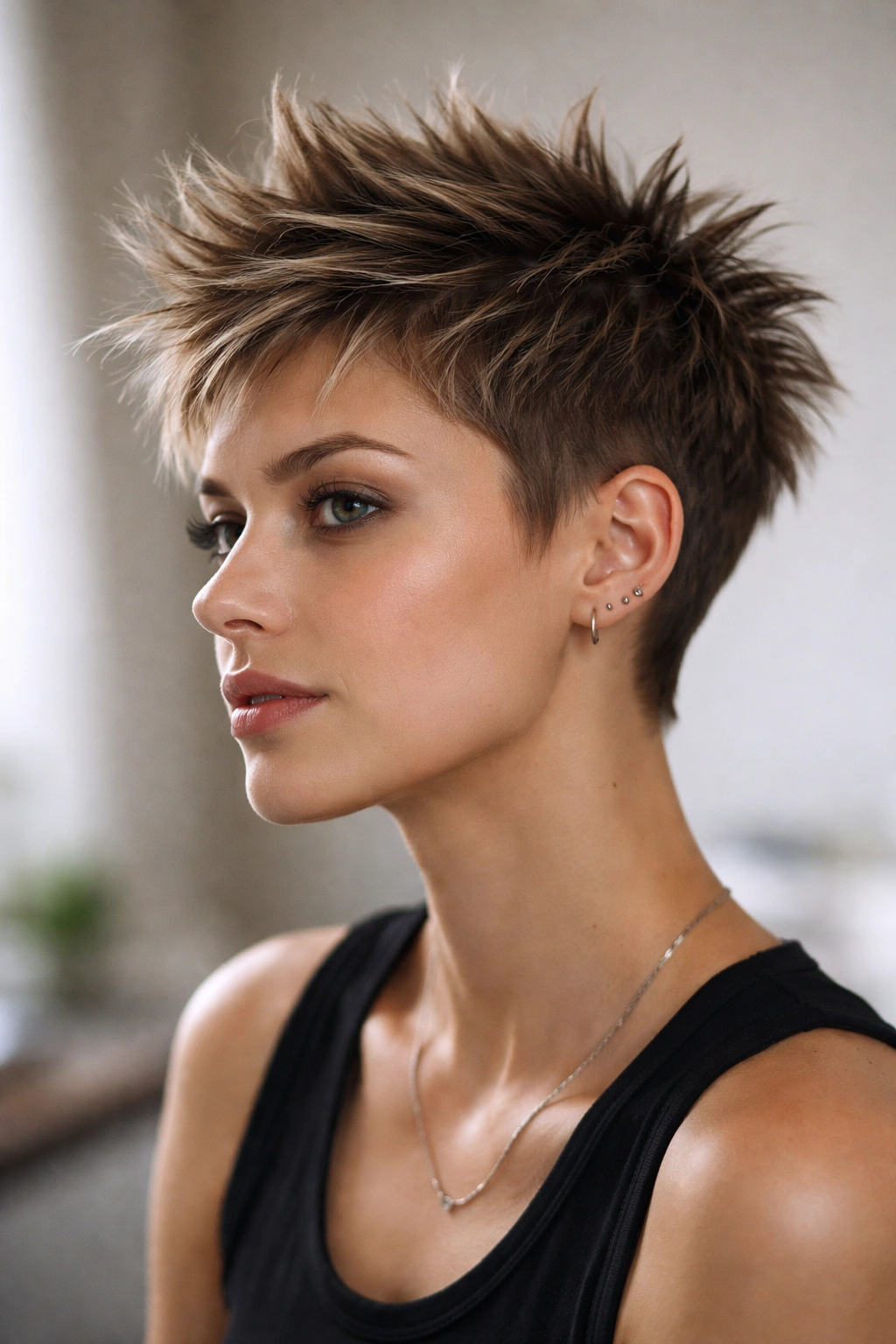
The spiky cut is the playful, younger-feeling end of the boyish short spectrum. Imagine a crop or pixie with extra texture designed specifically for standing up slightly, creating height and movement. It’s styled with a light texturizing product that encourages the hair to separate and spike slightly. It reads fun, youthful, and unbothered—like you woke up and looked this cool without trying. This is the cut for people who want short hair without the androgynous edge of more severe styles.
Youthful Energy and Movement
Spiky cuts work because they’re expressive and full of personality. The styling is literally the point—you’re not aiming for polish or sleekness, but for movement and dimension. This cut suits people who want short hair but don’t want to look like they’re making a political statement about femininity. It’s simply cool, youthful, and fun. It also photographs well because the texture catches light and creates visual interest from multiple angles. For people with naturally wavy or textured hair, this cut is particularly easy because your hair’s natural texture does half the work.
Creating and Maintaining Spiky Texture
- Blow-dry with your fingers through the hair to encourage natural separation and movement
- Use a lightweight texturizing spray, sea salt spray, or matte styling product to define the spikes without making them crunchy
- Trims every 6-8 weeks keep the cut looking intentional rather than grown out
- Works beautifully with textured, wavy, or naturally coily hair; straight hair requires more styling product to achieve the spiky effect
- Air-drying often works perfectly; this cut is designed to look good in its natural state
- Pairs with casual, youthful, creative aesthetics; less suited to corporate or formal settings
Insider note: The spiky cut is more forgiving than many short cuts because slight messiness and unevenness actually enhances the look. You can grow it out slightly and it still reads intentional.
Final Thoughts
The boyish short haircuts that women keep requesting reflect a major cultural shift toward more androgynous beauty standards and a rejection of the idea that women’s hair must signal femininity in traditional ways. These cuts offer genuine practical benefits—they’re quick to wash, low-maintenance, and incredibly freeing—but they’re also visually powerful and distinctly cool.
The cut that’s right for you depends on several factors: your hair texture, your face shape, your lifestyle, your styling discipline, and honestly, how much of a statement you want your hair to make. A pixie cut or French crop offers boyish edge with versatility and relative ease. An undercut or buzz cut goes all-in on minimalism and boldness. A textured crop or messy bob gives you short-hair benefits with a bit more softness. An asymmetrical or angular cut signals that you’re creative and intentional with design.
Whichever direction you go, the most important thing is working with a stylist who truly understands your vision and has the technical skills to execute it well. A great short cut is magical; a poorly executed short cut is harsh and unforgiving. Take time to show your stylist reference photos, ask questions about maintenance, and be honest about your styling commitment level. The most stunning short cut in the world isn’t worth it if you’re not willing to maintain it.
