



Finding a flattering hairstyle when you have a round face shape is all about understanding how different lines, proportions, and styling techniques can create visual balance. A round face is characterized by full cheeks, a wider jaw, and roughly equal width from forehead to chin — features many people have and often want to refine through strategic styling choices. The good news? There are plenty of gorgeous hairstyles that work beautifully with this face shape, and they don’t all follow the same formula. Rather than avoiding certain styles, it’s really about knowing which cuts, layers, lengths, and styling techniques add definition and create the illusion of a longer, more sculpted face.
The fundamental principle behind flattering hairstyles for round faces is creating height and angles where your face is already rounded. Horizontal lines tend to emphasize width, while vertical lines and movement draw the eye up and down, creating a lengthening effect. This means some of the most flattering styles feature layers that move away from the face, styling that adds volume on top, or angled cuts that create visual interest. The key is working with your natural face shape rather than against it — choosing styles that highlight what you love about your features while creating a more balanced overall silhouette.
Length matters less than you might think. Both long and short hair can flatter a round face, as long as the cut and styling are intentional. What truly makes the difference is how the hair interacts with your facial features — whether it creates movement that draws the eye vertically, whether it adds volume where it elongates rather than emphasizes fullness, and whether the overall style creates definition rather than softness all around. This guide covers 12 distinct hairstyles that work with round face shapes, each with specific techniques and styling methods that make them especially effective.
1. Long Layers with Face-Framing
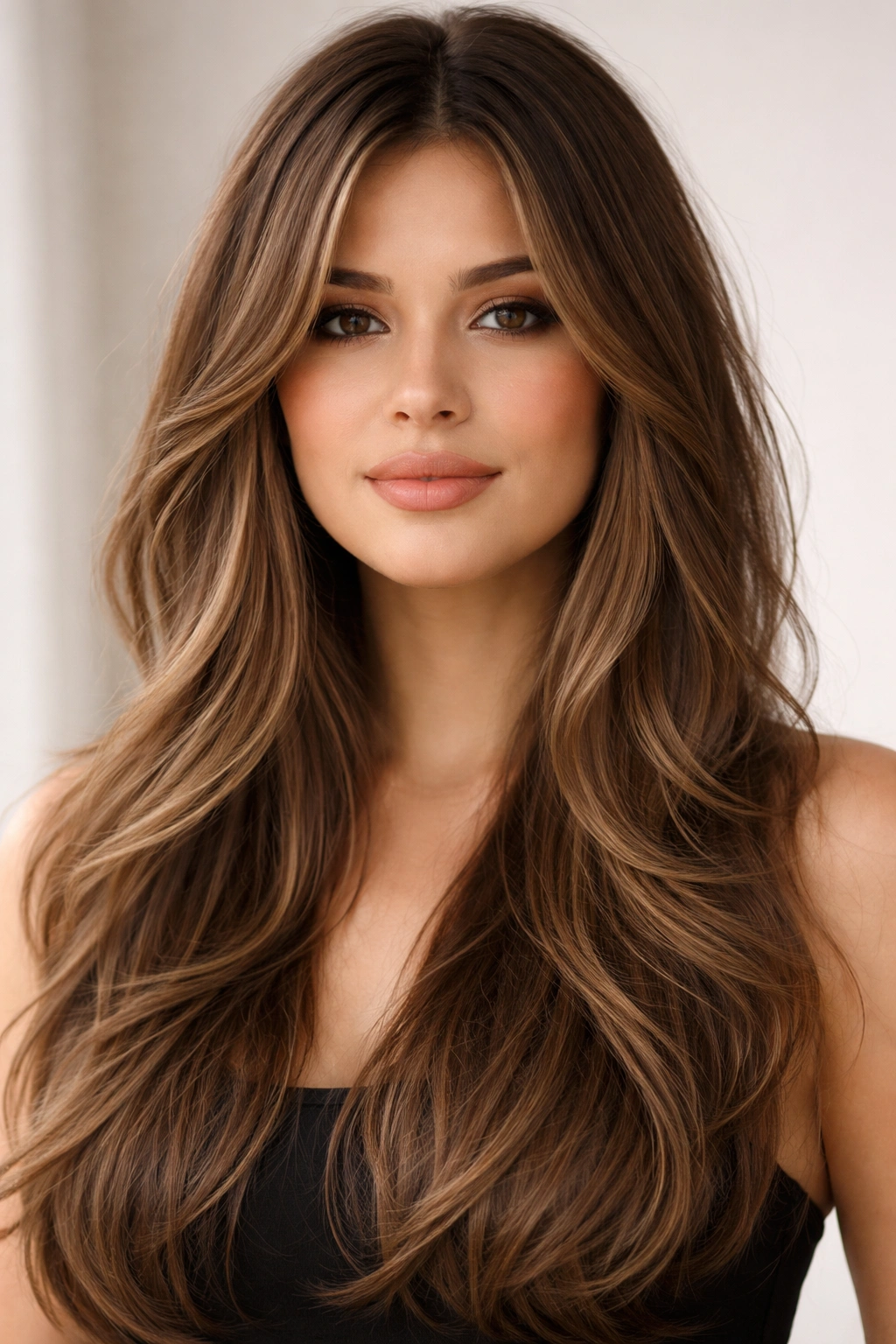
Long layered hair is one of the most versatile options for round faces because the movement and dimension instantly create vertical lines that counteract the face’s natural width. The key is asking your stylist for choppy, textured layers rather than blunt ones — the choppiness is what creates the all-important movement that draws the eye downward and breaks up horizontal lines.
How Layers Create the Elongating Effect
Long layers work because each layer creates a separate line and movement pattern, which forces the eye to travel vertically along the hair rather than horizontally across the face. When your stylist cuts choppy layers starting around the cheekbone area and continuing all the way down, those shorter pieces literally move away from your face, creating negative space that prevents the hairstyle from hugging your cheeks and emphasizing their fullness.
How to Style and Maintain
- Blow-dry with a large round brush, rotating the brush away from your face as you dry each section to encourage outward movement and volume
- Use a sea salt spray or texturizing mist before blow-drying to enhance the natural texture and make layers more pronounced
- Try sleeping with braids or using a curling iron to add gentle waves that increase the visual impact of the layers
- Schedule trims every 6-8 weeks to maintain the choppy texture and prevent layers from growing blunt at the ends
The styling approach is critical here — even slightly wavy layers look infinitely more flattering than stick-straight ones on a round face. The movement breaks up the face shape and prevents the hair from sitting flat against your cheeks.
2. Textured Curtain Bangs
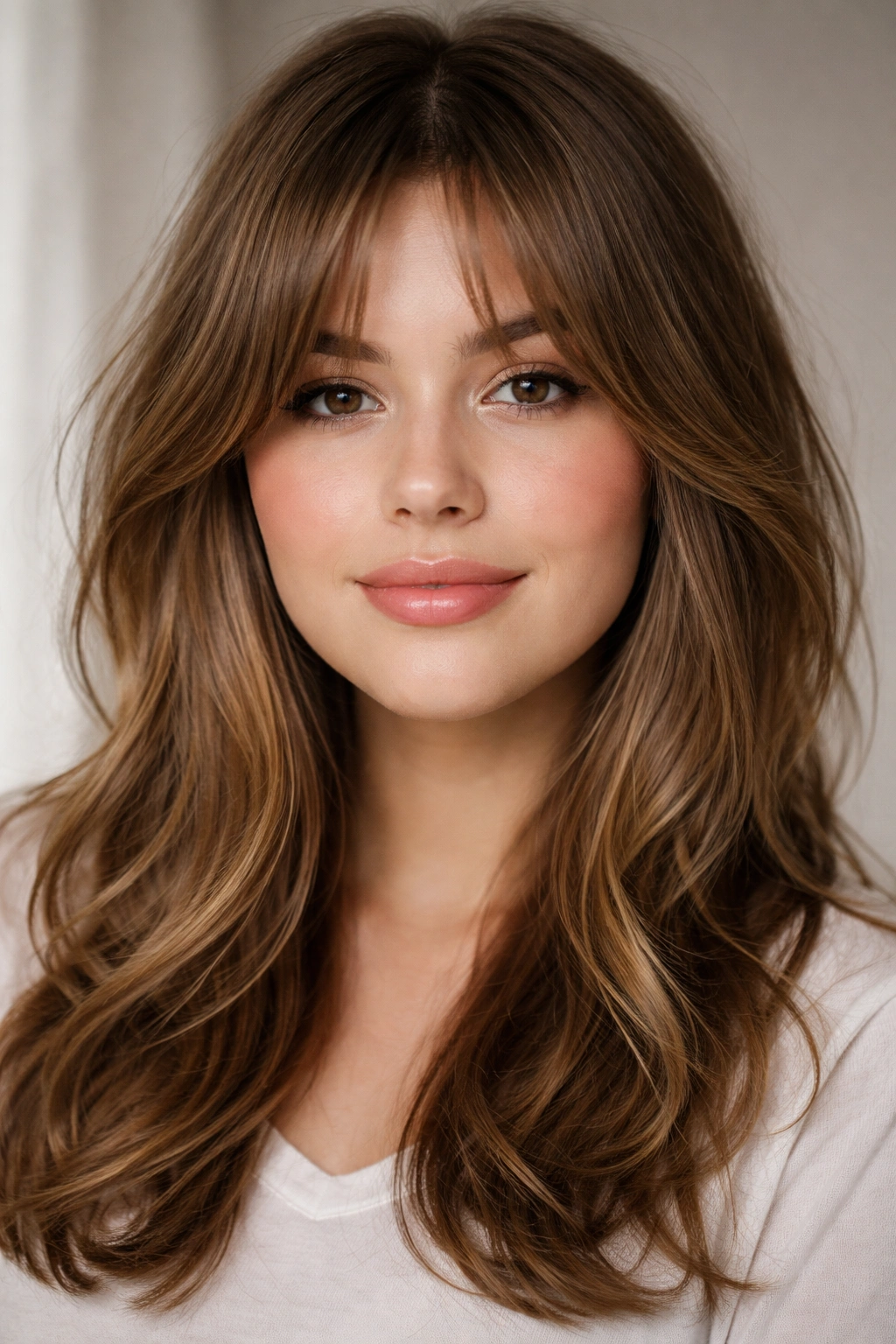
Curtain bangs sweep away from the face and create an immediate focal point at the center, which naturally draws attention away from the fullness of round cheeks. Unlike blunt bangs that sit heavy across the forehead and can make your face look wider, curtain bangs are parted down the middle and styled to frame either side of the face with movement and texture.
Why Curtain Bangs Work for Round Faces
The swept-away design creates vertical lines that run down the sides of your face, lengthening it visually. Curtain bangs also add an instant sense of sophistication and movement, and because they’re parted at the center, they draw the eye to the center of your face rather than emphasizing cheekbones. The texture — whether wavy, curly, or with subtle layers — matters because soft, moving bangs that don’t sit flat are far more flattering than heavy, blunt ones.
Styling Tips for Maximum Impact
- Blow-dry with a small round brush, brushing each side outward and slightly downward to encourage the sweep-away movement
- Use a light texturizing spray before blow-drying to prevent them from drying too flat or straight
- If your hair is naturally straight, use a curling iron or wand to add subtle waves to the bang area
- Curtain bangs paired with longer layers throughout the rest of your hair create maximum visual balance
This style works at virtually any hair length, but it’s especially stunning with medium to long hair where the bangs can create clear directional lines alongside longer layers.
3. Chin-Length Bob
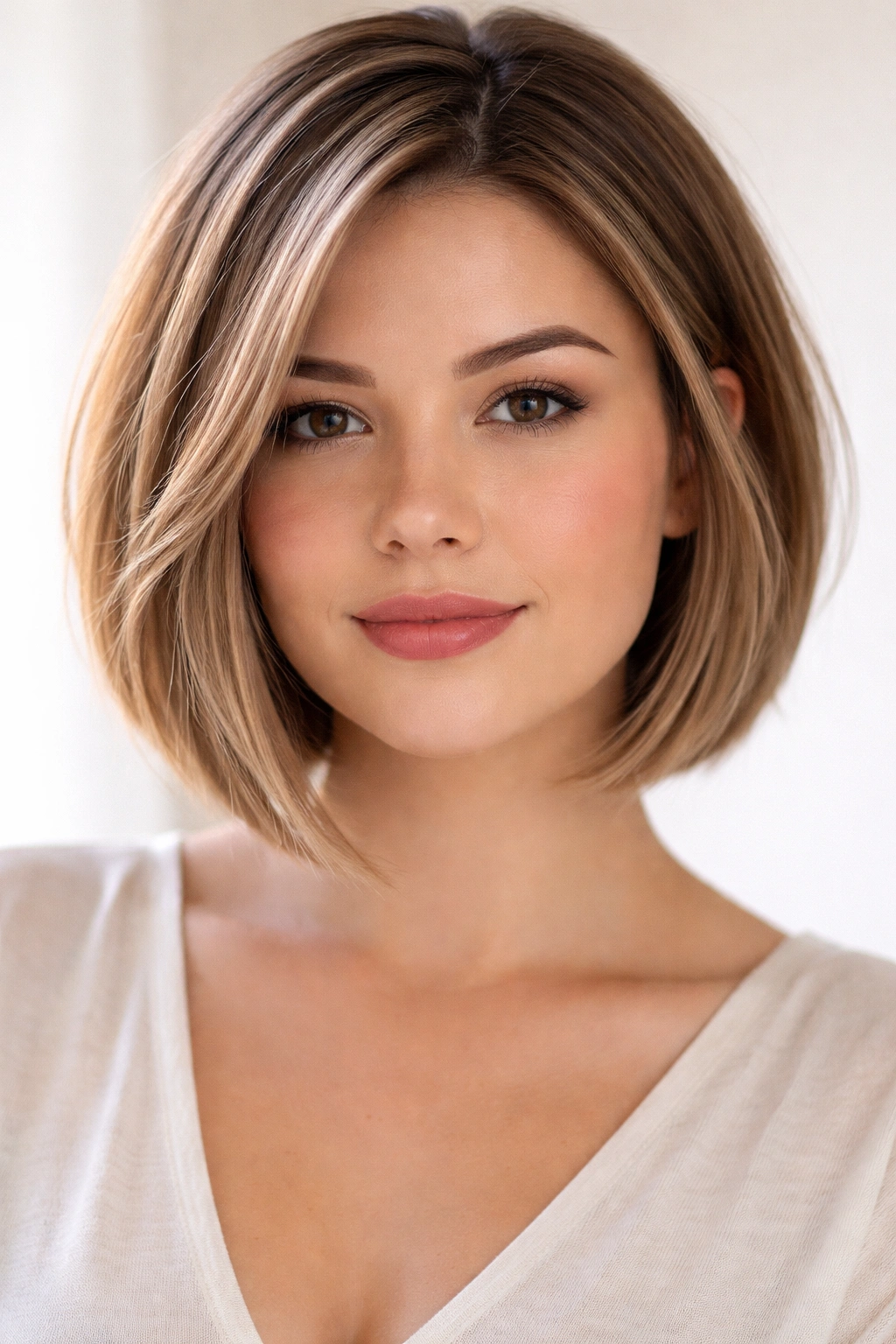
A chin-length bob — sometimes called a lob or long bob hybrid — can work beautifully on a round face when it’s cut with the right proportions and styling approach. The trick is preventing the bob from sitting in a way that emphasizes cheekbone width. An effective chin-length bob for round faces should have subtle layers that create movement and should ideally be cut slightly longer in the front, creating a subtle angle that elongates.
The Angled Cut That Flatters
A chin-length bob with longer front pieces creates an optical illusion that narrows the face by drawing the eye downward and creating vertical lines. The layers throughout prevent the style from sitting flat and heavy against your cheeks — they create texture and movement that breaks up horizontal lines. Styling is essential here; a sleek, blunt chin-length bob without any texture or angle can actually emphasize round-face characteristics.
Styling Approach for Best Results
- Blow-dry away from the face, using a round brush to turn ends under slightly or flip them outward
- Add texture with a curling iron or wand, creating soft waves rather than tight curls
- Use a lightweight styling cream or texture spray to enhance movement without weighing hair down
- A deep side part works better than a center part for this length and face shape
The chin-length bob is incredibly trendy and popular, but it truly shines on round faces when the stylist understands the importance of avoiding blunt, heavy lines.
4. Tousled Waves and Movement
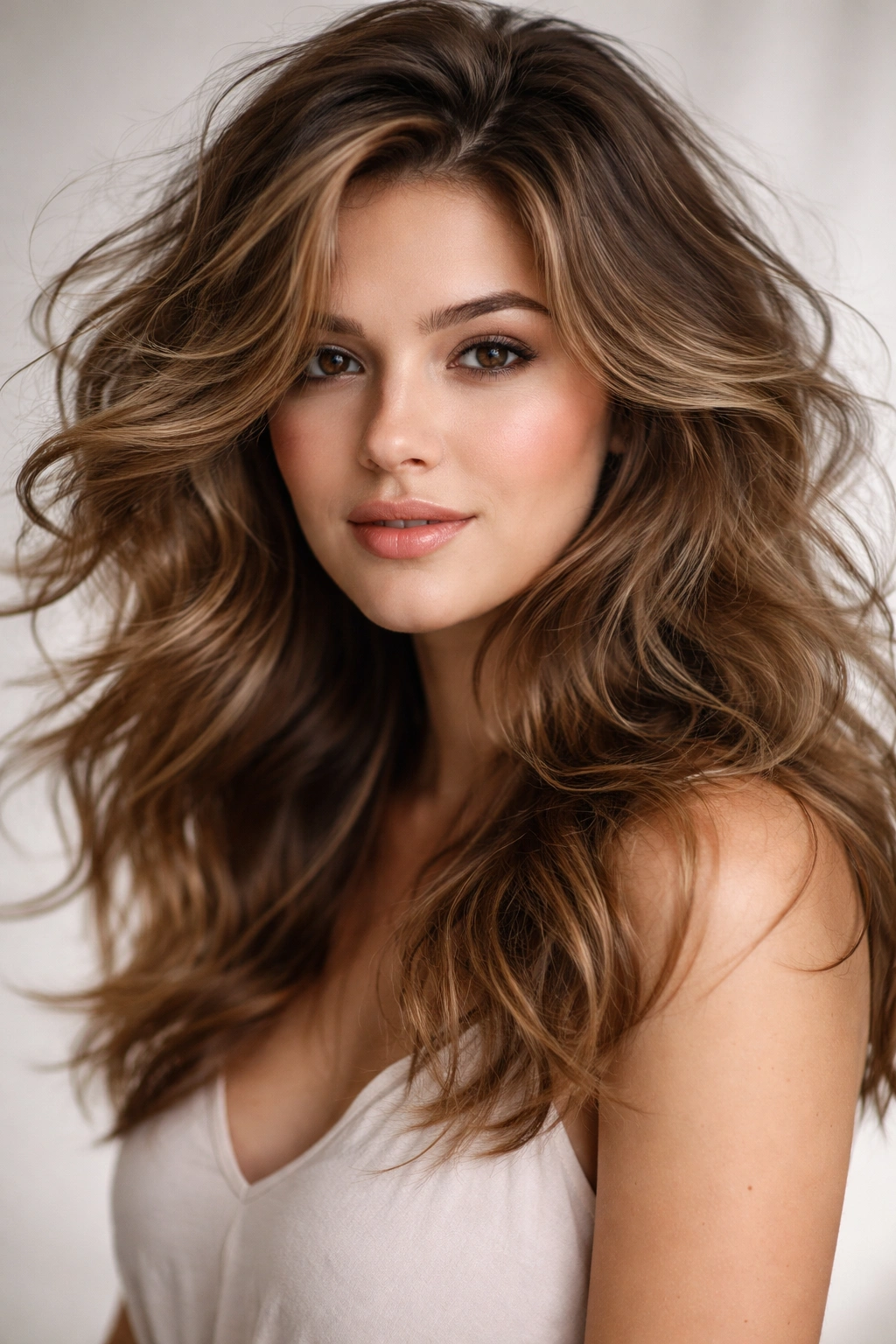
Waves and texture are secretly one of the best tools for flattering round faces because movement literally prevents hair from sitting flat and clinging to the contours of your face. When hair has visible texture — whether wavy, curly, or textured from a styling technique — it creates volume and dimension that makes the overall silhouette feel less round and more sculptural.
The Science Behind Why Waves Help
Tousled waves create what’s called “visual disruption” — your eye travels along the texture and movement of the waves rather than following the outline of your face shape. Waves also have the effect of making hair appear less dense and full at the cheeks, since the texture prevents the hair from laying flat against the skin. Combined with some volume on top and layers throughout, waves create a flattering style that works at multiple lengths.
Creating Waves That Last
- Use a large barrel curling iron or wand, curling sections loosely and in alternating directions for a tousled, non-uniform look
- Spray waves with a flexible hold spray before they fully cool to help them last longer
- Sleep in the waves the night before and refresh them with a curling iron if needed the next day
- A sea salt spray applied to damp hair before blow-drying increases natural texture and helps waves hold
Waves work whether your hair is short, medium, or long — the key is ensuring the texture is visible and bouncy rather than limp or barely-there.
5. High Volume Crown Styling
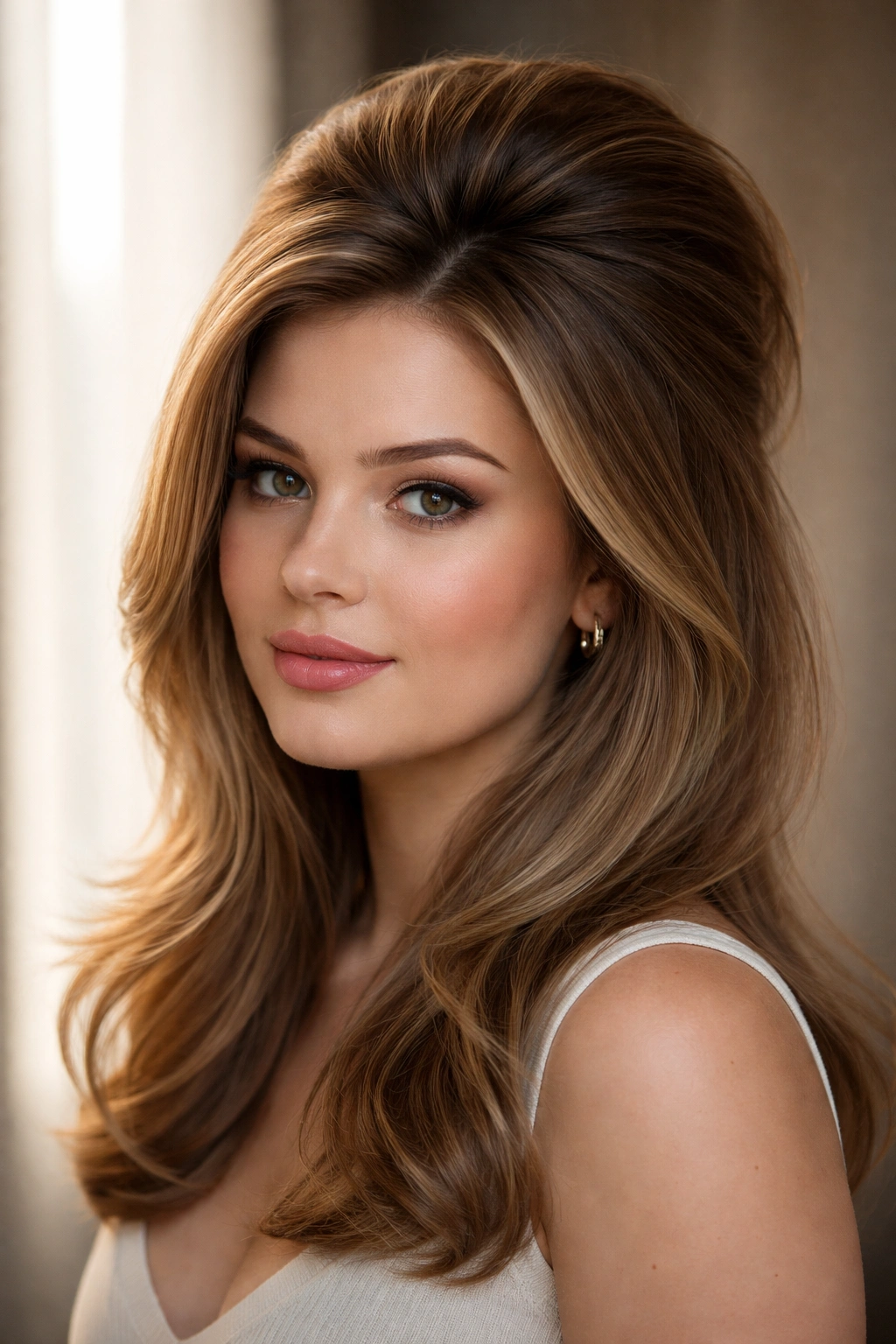
Creating height and volume at the crown is one of the most effective ways to visually lengthen a round face because the volume draws the eye upward and balances the face’s width. This doesn’t mean teasing your hair into an enormous pouf — it means strategic styling that creates volume where it’s most flattering while the sides remain relatively smooth.
Building Crown Volume Strategically
Volume at the crown elongates the face by shifting the visual center upward and creating a stronger vertical line. This is why techniques like blow-drying upward and backward, using volumizing products at the roots, and strategic styling make such a dramatic difference. The contrast between the lifted crown and the face below creates visual balance that a flat or sleek crown simply can’t achieve.
Techniques for Lasting Crown Volume
- Blow-dry hair upside down or use your brush to dry the crown area with an upward motion to set volume
- Use a volumizing mousse or spray at the roots while hair is damp
- Backcomb gently at the crown for added lift, then smooth the top layer over the backcombing
- A half-up style can create crown volume while keeping face-framing hair down
- Sleeping on the crown area loosely (avoiding tight braids or buns) helps maintain volume overnight
This approach works with virtually any hairstyle — bobs, long hair, medium length — as long as the styling prioritizes crown height over flatness.
6. Side-Swept Long Layers
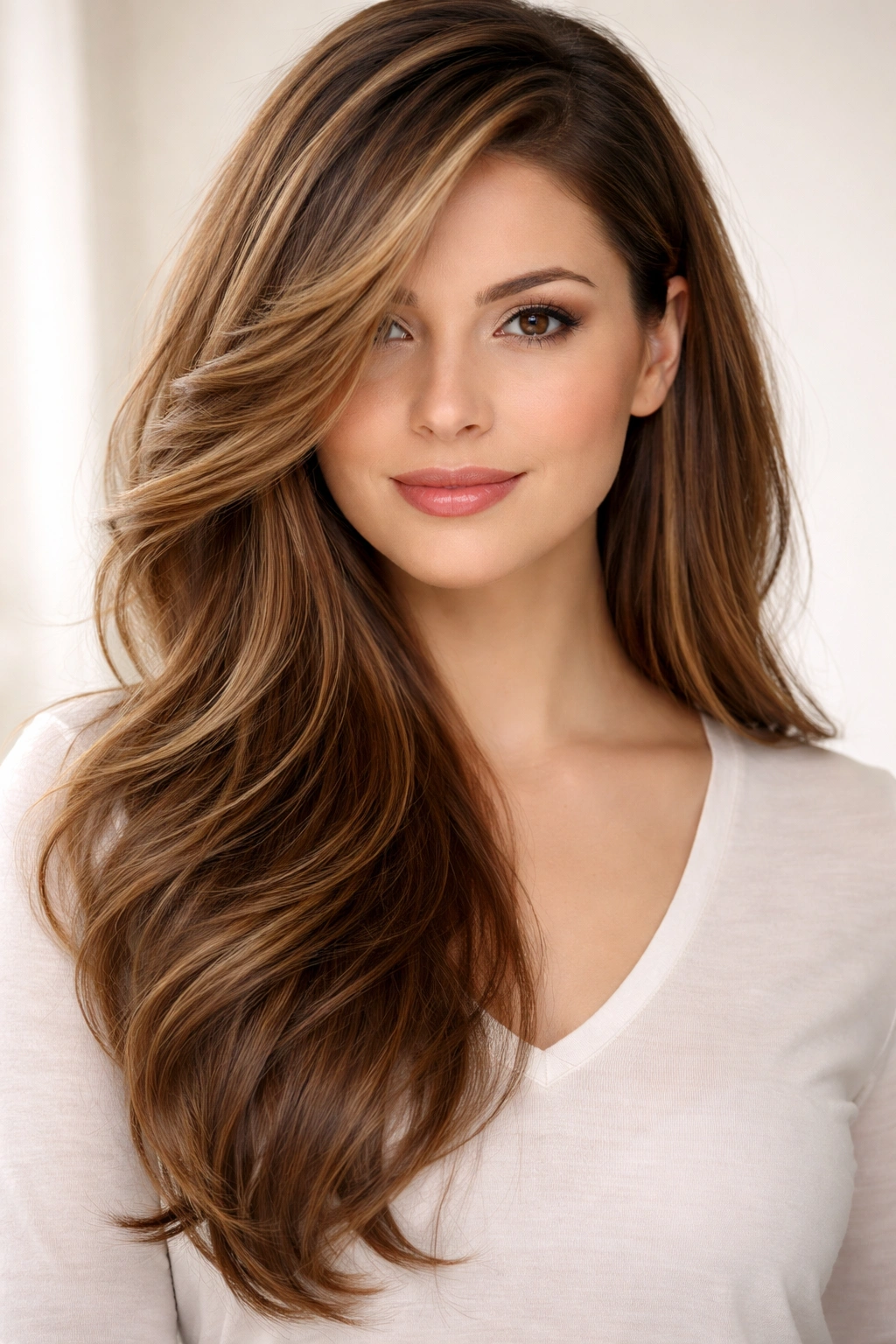
Long layered hair swept to one side combines several flattering elements: length, movement, and an asymmetrical pattern that breaks up face symmetry. A deep side part with long layers creates an immediate sense of height on one side while the longer length on the other creates vertical lines that elongate.
Why Side-Swept Styling Creates Definition
A deep side part automatically creates an asymmetrical appearance, which helps disguise the symmetrical roundness of a round face. The sweep pulls hair away from one side of the face entirely, creating negative space and definition on that side. Meanwhile, the layers underneath create movement and texture that prevents the hair from sitting heavy on the cheeks. This combination of asymmetry, negative space, and movement is especially powerful for balancing round face shapes.
Maintaining the Swept Look
- Blow-dry with the part already in place, using your brush to direct hair toward one side
- Use a smoothing serum or lightweight styling cream to help hair maintain the swept direction
- A side-swept look with waves or texture is more forgiving than sleek styling — texture helps it look intentional even if the sweep shifts slightly
- Curling hair on the side that’s swept up and away can create additional height and structure
This style pairs beautifully with any length from shoulder-length onward, and the styling flexibility means it works for both casual and polished occasions.
7. Pixie Cut with Textured Styling
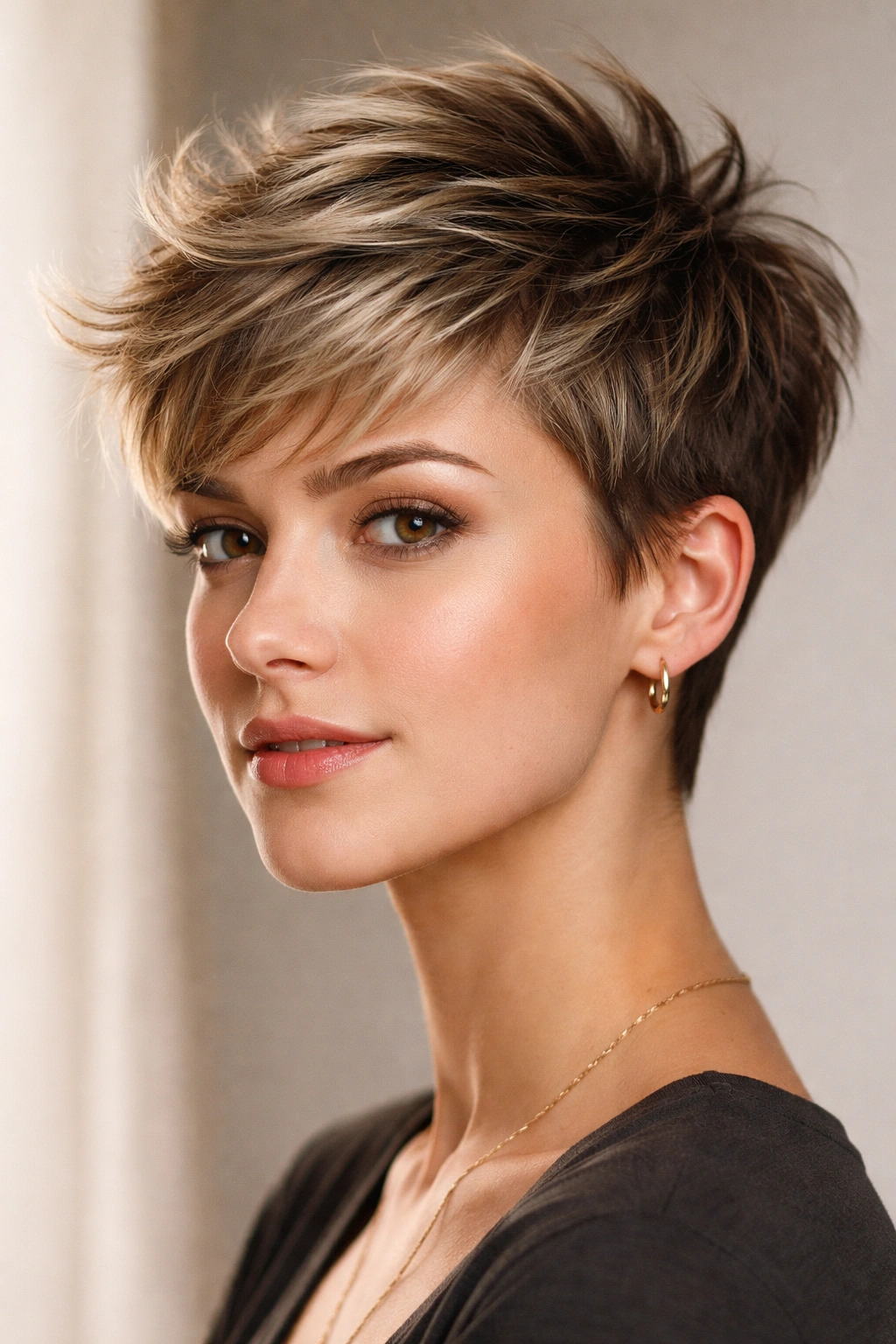
Short hair can absolutely flatter a round face when it’s cut and styled with intention. A pixie cut — very short on the sides and back with slightly more length on top — creates the exact proportion that works: height at the crown and movement that doesn’t sit flat against the face.
Why Short Hair Works (When It’s Right)
A pixie doesn’t work on round faces when it’s blunt and flat on top — that removes all the height needed to elongate. But a textured, tousled pixie with volume on top and styled with movement creates a completely different effect. The shortness on the sides removes bulk that might otherwise emphasize cheek fullness, while the longer, textured top creates height and interest. This is a bold choice, but it’s genuinely flattering when styled correctly.
Styling a Pixie for Maximum Flattery
- Use a blow dryer and round brush to direct hair upward and backward, creating height and movement
- Apply a texturizing spray or sea salt spray to damp hair before blow-drying for a tousled, lived-in look
- Avoid slicking it down or styling it too neatly — the texture and movement are what make it flattering
- A pixie with slightly longer pieces on top and shorter fade on the sides creates more dimension
- Getting trims every 3-4 weeks prevents the style from growing into an unflattering shape
This style is low-maintenance and makes a statement, though it requires confidence and regular styling to look intentional.
8. Half-Up Styles
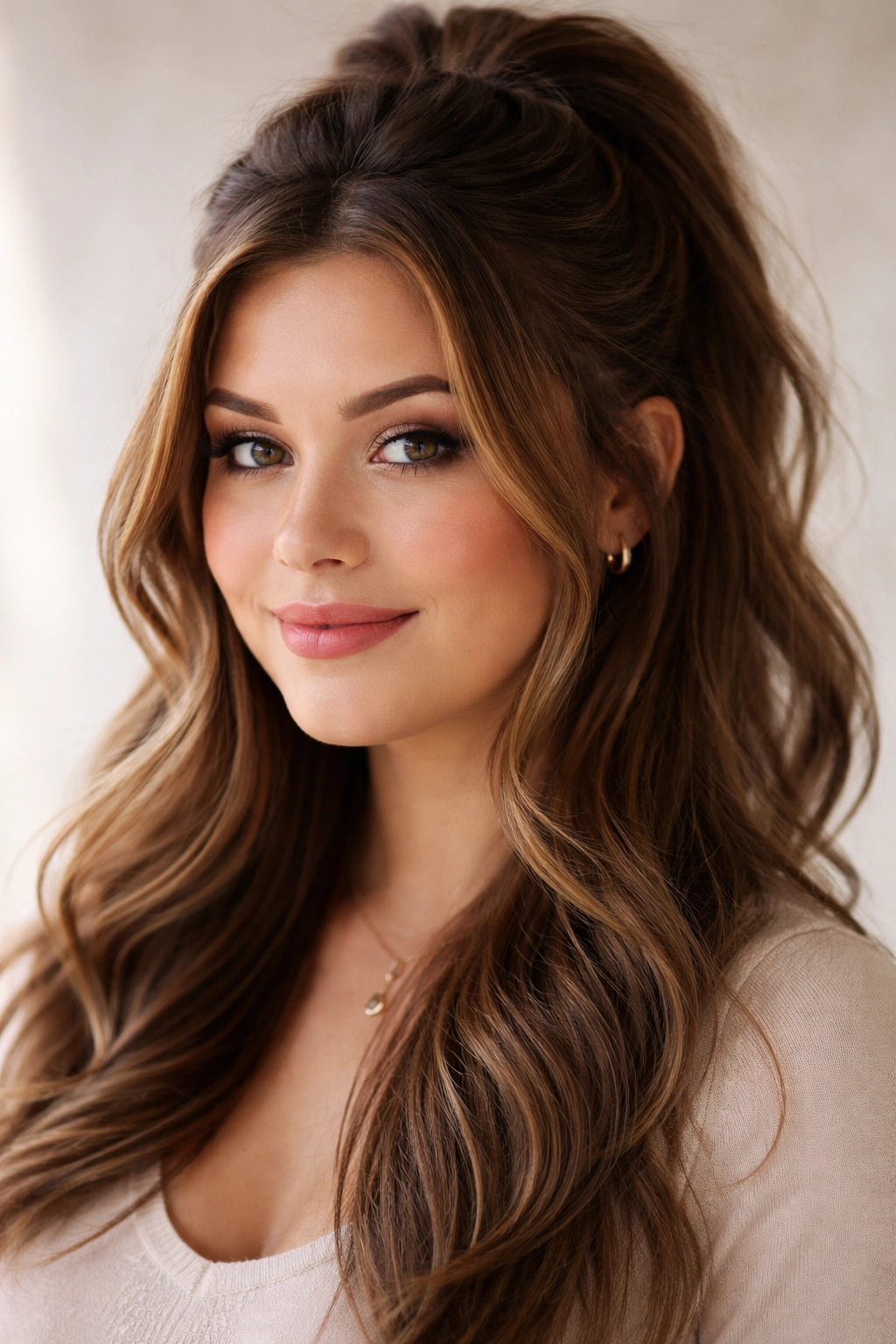
Half-up hairstyles are wonderfully flattering for round faces because they combine the best of both worlds: they add height at the crown while keeping face-framing hair down. The lifted portion creates vertical lines and draws the eye upward, while the lower portion can be styled with waves or texture that creates movement and prevents flatness.
How Half-Up Creates Balance
A half-up style instantly creates more facial definition by lifting hair off the crown and back, which opens up the face and creates height. The styling naturally prevents hair from sitting heavy against cheeks, reducing the appearance of fullness. At the same time, keeping the lower half of hair down prevents the style from looking too severe or emphasizing the roundness. It’s a genuinely smart styling choice that works across multiple hair lengths and hair types.
Versatile Half-Up Techniques
- Clip or tie a section from the crown area, leaving face-framing layers loose around the face
- Backcomb the lifted section for added height and texture
- Style the remaining hair in waves or loose curls to maximize movement
- A half-up style with a small braid woven through the lifted section adds interest and sophistication
- This works beautifully with both straight and curly hair, as long as there’s definition rather than flatness
The half-up style is infinitely adaptable — you can dress it up or keep it casual, and it works at multiple lengths from medium to long.
9. Sleek Straight with Side Part
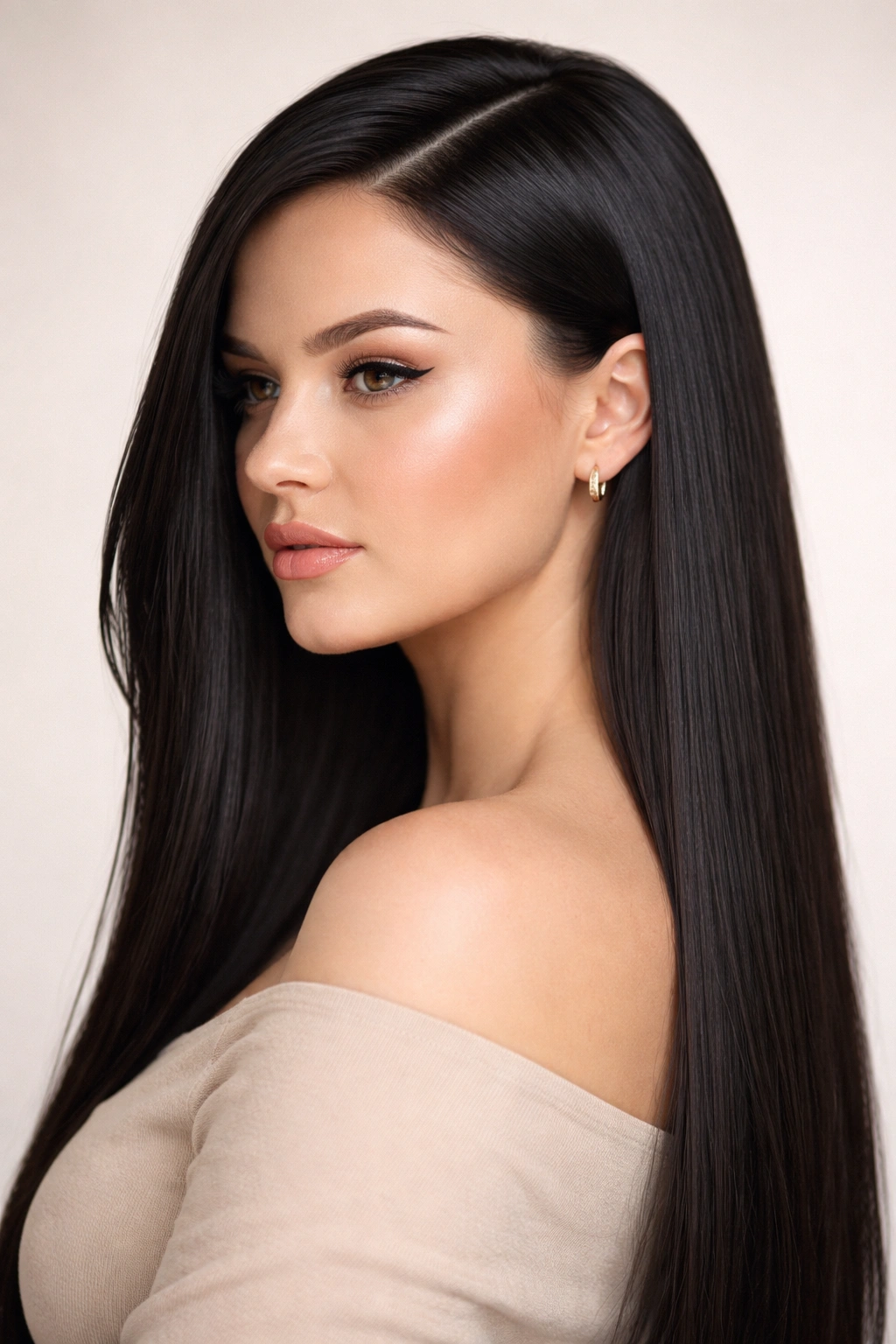
While movement and texture are generally the go-to for round faces, a strategic sleek straight style can work beautifully when combined with a deep side part and very specific proportions. The key is ensuring that sleek straight hair doesn’t sit flat against the cheeks and emphasize roundness — which is why the side part and length proportions are absolutely critical.
Making Sleek Straight Hair Work
A deep side part combined with sleek straight hair creates height on one side and reduces visual width by shifting the focal point to one side of the face. If you choose this approach, the hair should be long enough that it creates vertical lines rather than emphasizing cheekbone width. The sleekness prevents texture from breaking up the shape, so the proportions and styling direction become even more important.
Technique for Sleek Styling
- Blow-dry completely straight using a paddle brush and smoothing serum
- Create a deep side part, brushing the smaller side over and the larger side down and back
- A long length — past shoulder length — is essential when going sleek straight on a round face
- Avoid blunt ends; subtle layers prevent the straight hair from appearing too heavy
- Touch up with a flat iron if needed to maintain sleekness
This is a more polished, formal approach compared to textured styles, but it can work if all the proportions align correctly.
10. Voluminous Updo with Soft Face-Framing
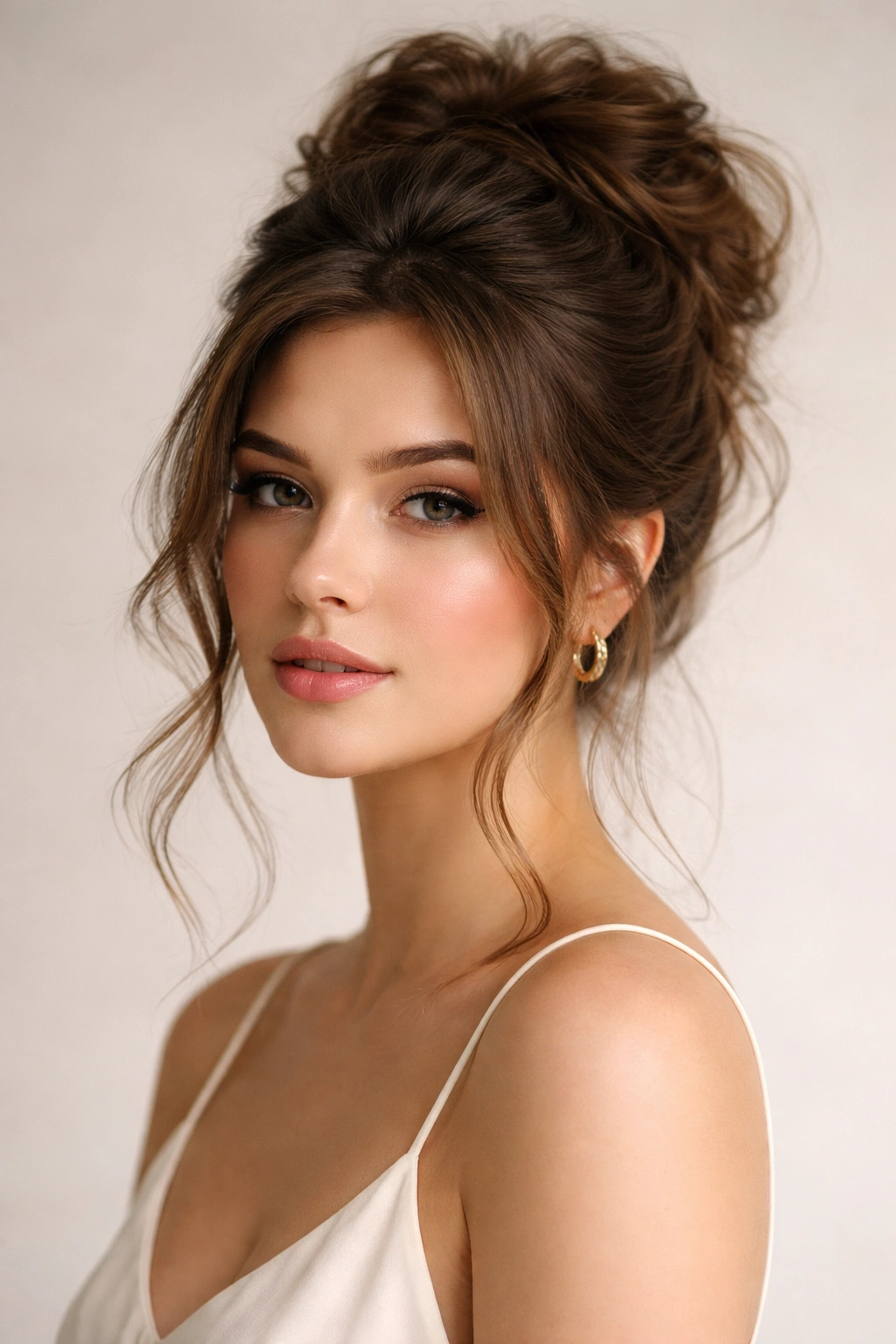
An updo can be incredibly flattering on a round face when it’s done with softness and strategic face-framing rather than a severe pulled-back style. A voluminous, textured updo with face-framing pieces creates height, removes hair from the face entirely, and allows you to create definition through strategic placement and texture.
Why Updos Can Flatter Round Faces
A severe updo pulled tightly back can actually emphasize facial roundness by removing all the hair that could otherwise create movement and visual interest. But a soft, voluminous updo changes the equation entirely. The height created at the crown elongates the face, the texture and looseness prevent severity, and thoughtfully-placed face-framing pieces create softness while still opening up the face. This is an especially great choice for special occasions or formal settings.
Creating a Flattering Updo
- Start with textured hair — add waves or texture before pinning if you have straight hair
- Tease gently at the crown to create height before arranging the updo
- Leave two or three small pieces unpin around the face, creating softness and dimension
- Use bobby pins to secure the updo while maintaining the loose, slightly undone appearance
- A low updo is often more flattering than one positioned very high on the crown
This approach works beautifully with medium to long hair and creates an instantly polished appearance.
11. Asymmetrical Bob
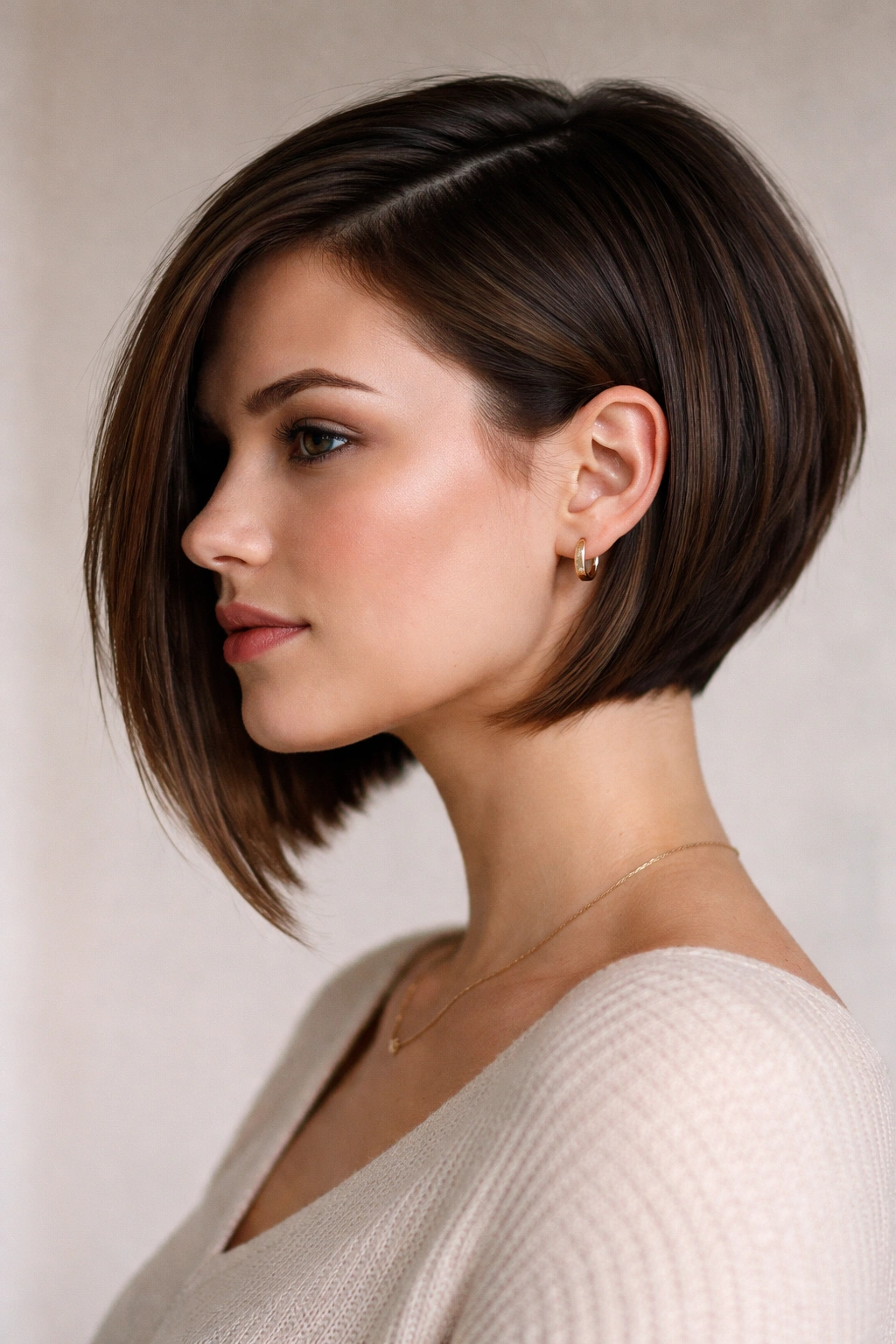
An asymmetrical bob — where one side is noticeably shorter than the other — creates immediate visual interest through an angled, uneven cut. This breaks up facial symmetry and prevents the style from sitting flat and emphasizing the roundness of the face shape.
The Asymmetry Advantage
An asymmetrical cut by definition creates height on one side and longer lines on the other, which disrupts the visual symmetry of a round face. This asymmetry immediately makes the face appear less round and more interesting. The geometric cut also prevents the style from being too soft or shapeless — it creates clear lines and intention, which naturally makes the face appear more defined.
Styling an Asymmetrical Bob
- Blow-dry the longer side with a slight wave or outward flip to enhance the asymmetry
- The shorter side can be styled sleekly or with slight texture depending on your preference
- A part placed slightly off-center emphasizes the asymmetrical cut
- Use a texturizing spray to prevent the cut from looking too blunt or severe
- Regular trims every 4-6 weeks maintain the integrity of the asymmetrical shape
This is a bold, fashion-forward choice that requires confidence and regular styling, but it’s genuinely flattering and eye-catching.
12. Angled Lob with Dimension
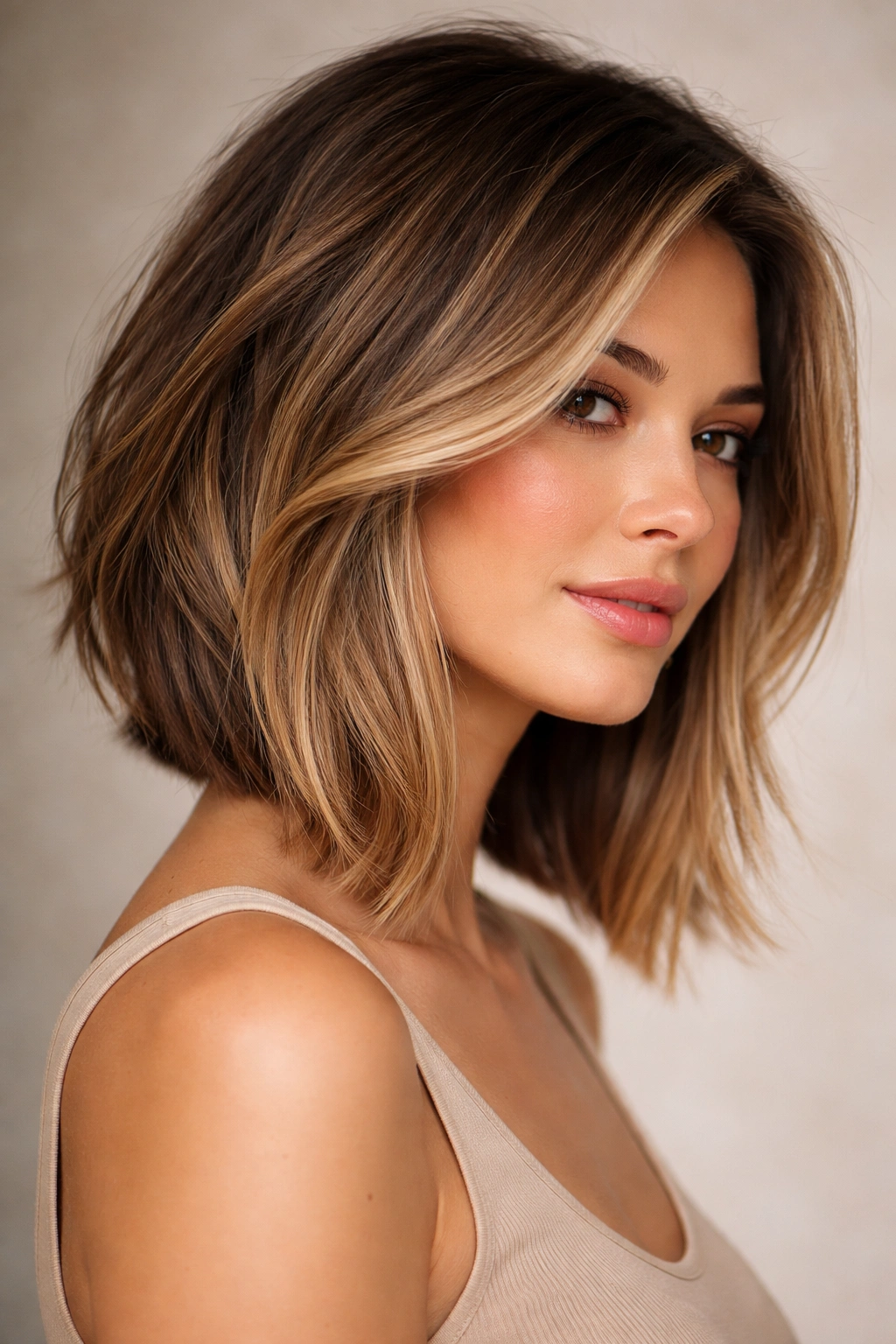
An angled lob — a lob is a longer bob, typically hitting mid-shoulder or longer — features longer front pieces and shorter back pieces, creating an angle that flatters round faces. The angle naturally creates vertical lines while the longer front pieces frame the face with movement.
How the Angle Creates Flattery
The key to an angled lob working on a round face is that the angle must be noticeable and intentional, not subtle. A significant angle from back to front (sometimes called a “grown-out pixie” when short, or an angled lob when longer) creates obvious vertical lines that lengthen the face visually. The dimension throughout prevents the style from sitting flat, and the longer pieces in front can be styled to frame the face beautifully.
Styling an Angled Lob Effectively
- Blow-dry with a round brush, brushing the longer front pieces away from the face
- Add texture with a curling iron or wand, curling the longer pieces outward and away
- A side part works beautifully with an angled lob, emphasizing the cut’s geometry
- Use a lightweight styling cream to enhance the texture without weighing hair down
- The angle naturally looks intentional with texture, so embrace waves and movement over sleekness
This style hits a sweet spot between the modern appeal of textured, longer hair and the flattering geometry needed for round faces.
Final Thoughts
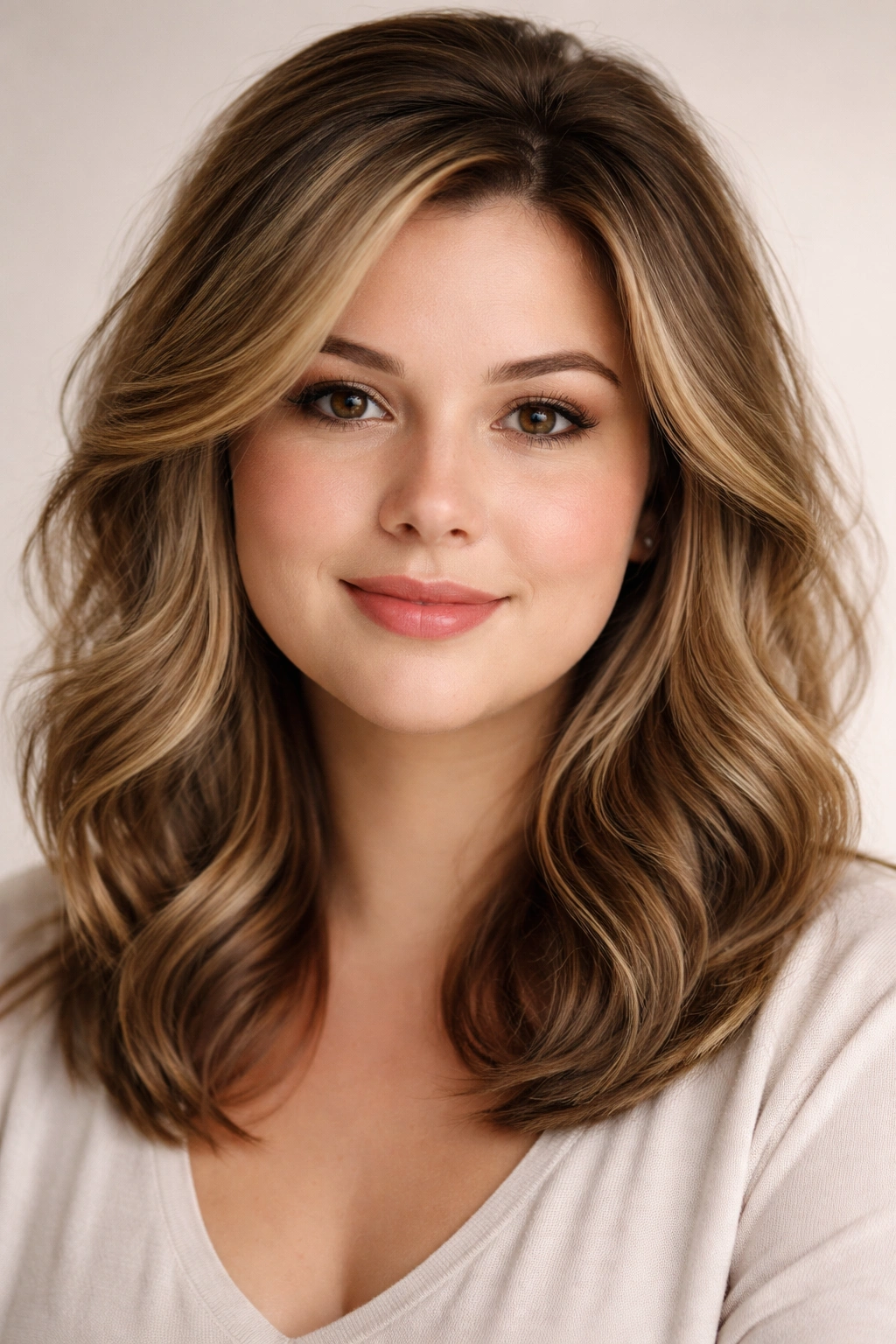
The most important principle for dressing a round face with the right hairstyle isn’t actually about following rigid rules — it’s about understanding the fundamental elements that create flattery: vertical lines, texture and movement, height at the crown, and asymmetry where possible. Every single style on this list incorporates one or more of these elements, which is why they work so well across different hair types and personal preferences.
Your face shape is just one factor in choosing a beautiful hairstyle. Your hair texture, density, and what feels right for your personality and lifestyle all matter enormously. The best approach is starting with a stylist who understands your face shape and can help you choose a cut that not only flatters your features but also works with your hair and your willingness to style it. A cut that requires 20 minutes of styling daily isn’t worth it if you prefer wash-and-go hair, while a style that needs minimal styling might feel too blah for someone who loves playing with their hair.
Armed with knowledge about which elements work best for your face shape, you can collaborate confidently with your stylist to create something that’s both genuinely flattering and authentically you. Whether you choose layers, angles, texture, or a combination of elements, the key is intentionality — choosing a style that works with your face shape rather than against it, so you feel confident and beautiful every single day.
