



Round face shapes have a beautiful natural softness, but that doesn’t mean you’re limited in how you style your hair. The truth many people discover only after consulting with stylists is that pixie cuts can actually be incredibly flattering on round faces when you choose the right variations. The key isn’t avoiding short hair—it’s understanding how length placement, texture, and styling direction can elongate your face and add dimension where you need it most.
A pixie cut for a round face works best when it creates vertical lines and avoids adding width at the sides. The style needs to work with your natural hair texture and facial proportions rather than against them. What makes this exciting is that there are dozens of pixie variations available, each offering a different balance of length, texture, and styling possibility. Whether you prefer something sleek and polished, tousled and textured, or somewhere in between, you can absolutely find a pixie cut that enhances your features and makes you feel confident every single day.
The following 15 styles represent some of the most versatile and flattering pixie options for round face shapes. Each one approaches the challenge differently—some through longer lengths on top, others through strategic texture placement, and still others through bold styling direction. The right choice depends on your hair texture, personal style, and how much time you want to spend styling each morning.
1. The Textured Crop with Length on Top
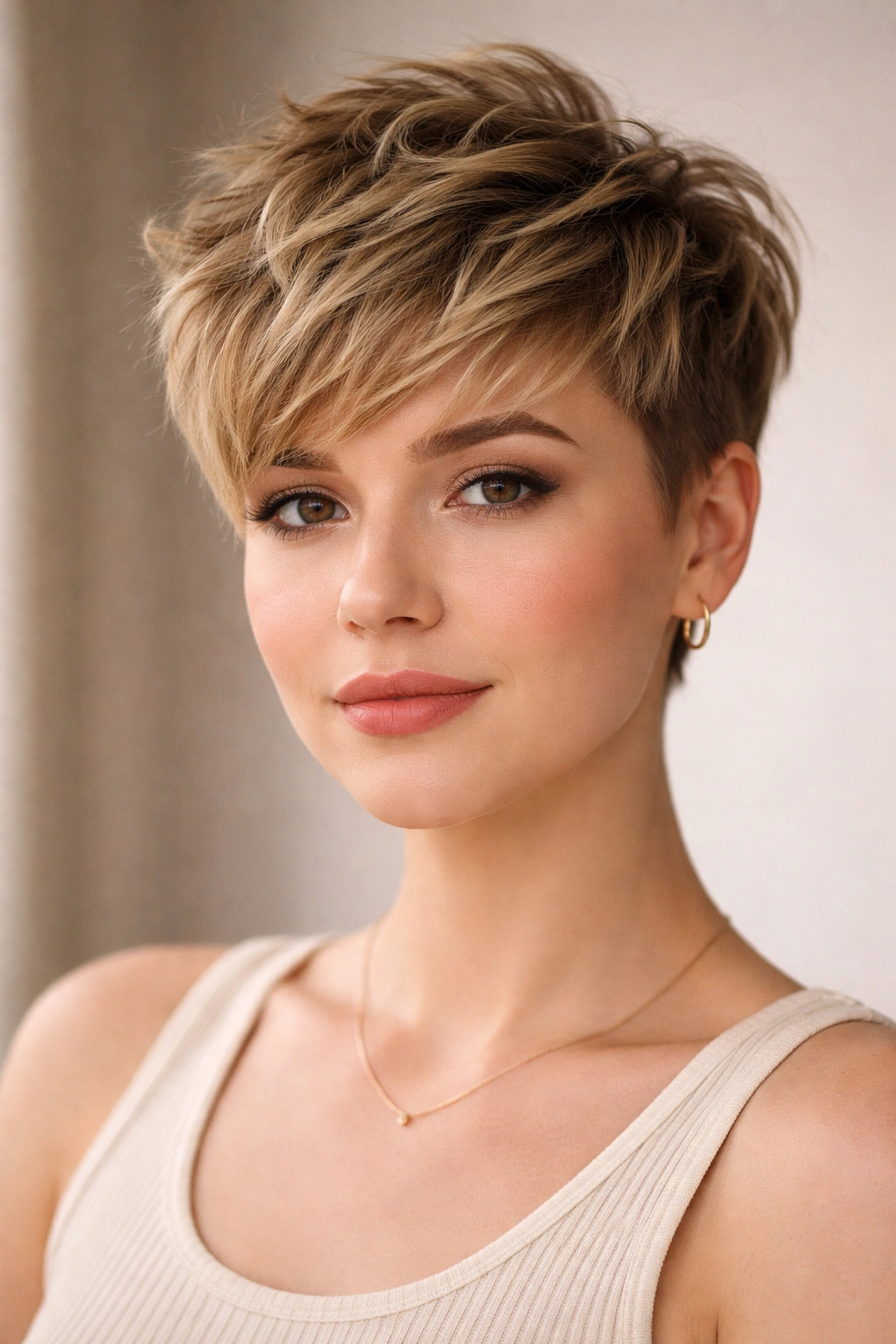
A textured crop gives you maximum volume where you need it—right at the crown—while keeping the sides and back much shorter. This creates a natural lift that draws the eye upward, instantly lengthening the appearance of your face. The key to this style is asking your stylist to cut lots of texture and choppy layers into the longer hair on top, rather than creating a smooth, blunt surface.
Why This Works for Round Faces
The height at the crown creates vertical emphasis that balances the horizontal width of a round face. By concentrating volume and length in one specific area, you’re creating an intentional focal point that’s lifted and elongated. The shorter sides don’t add any width to your cheekbones or jawline, which keeps your face from appearing even rounder than it already is.
Styling and Maintenance Tips
- This style looks best when you use a clay pomade or matte paste and work it through the longer pieces on top, allowing them to separate and create that textured, piece-y appearance
- Air-drying often works better than blow-drying because it lets your natural texture take over and create dimension
- You’ll need cuts every 3 to 4 weeks to maintain the choppy layers and prevent the style from looking grown-out and shapeless
- The shorter sides need regular trims to stay sharp and clean
Pro tip: If your hair is naturally straight and you want more texture, using a texturizing spray before styling with pomade can give you that separated, choppy look without needing to blow-dry.
2. The Swept Side Pixie
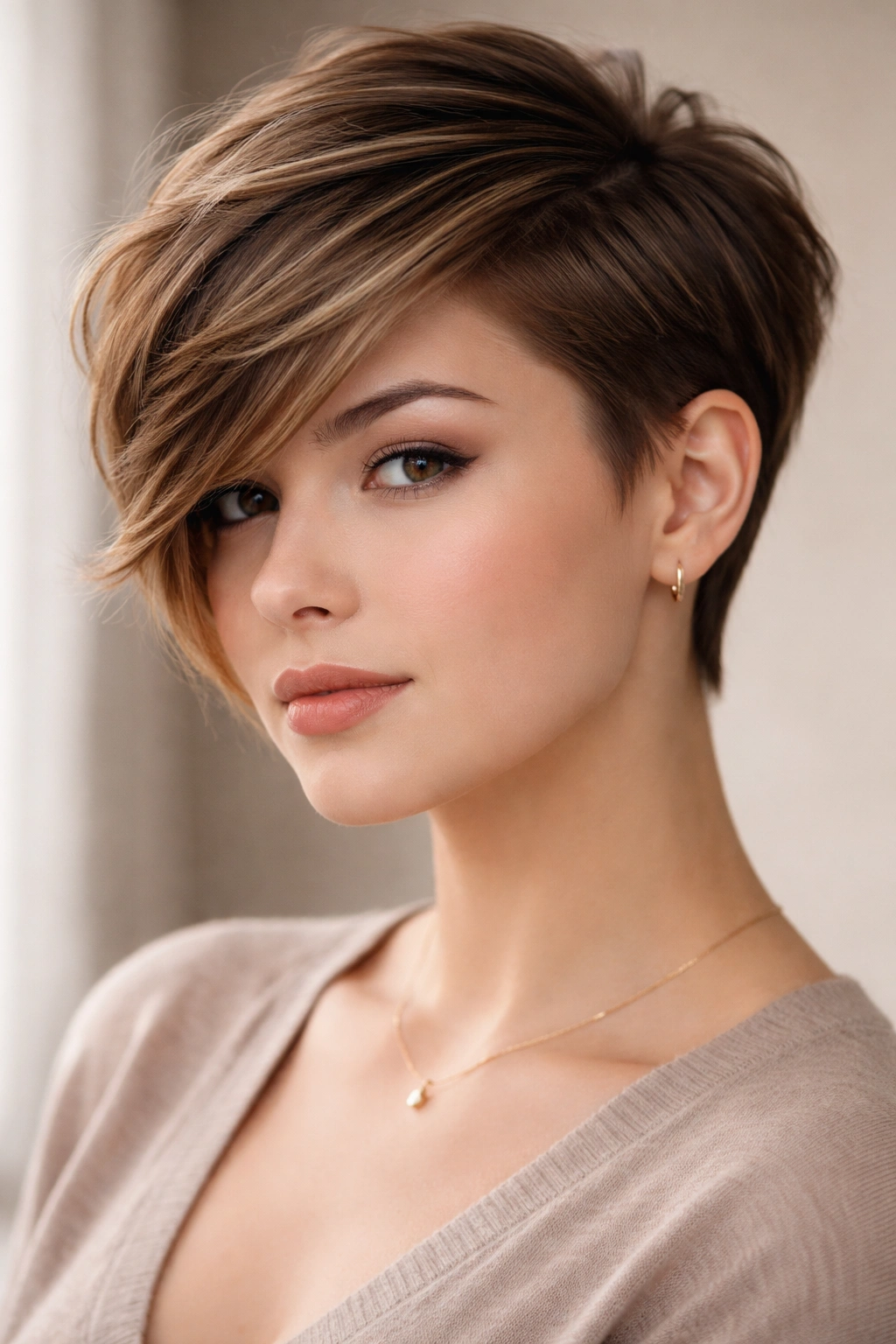
This pixie grows longer on one side—typically 2 to 3 inches longer on top—and is swept dramatically across the forehead and cheekbone area. The opposite side stays short and clean, creating an asymmetrical silhouette that’s both modern and incredibly flattering. The longer side can be styled to curve slightly, following the contour of your face and creating subtle elongation.
Why This Works for Round Faces
Asymmetry is your friend with a round face because it disrupts the circular symmetry that can make roundness more noticeable. By sweeping longer hair across one side, you create a diagonal line that breaks up horizontal width and introduces visual interest. The longer side also frames part of your face, which can make your features appear more sculpted.
How to Style It Effectively
- Blow-dry the longer side with a round brush to create a subtle curve that follows your face shape
- Use a light texturizing spray to add grip and prevent the hair from sitting too flat
- The short side should be clean and tight against your head, which emphasizes the contrast and creates more definition
- You can change which side is longer every few months if you want to prevent the longer side from getting damaged from heat styling
Worth knowing: This style can feel quite edgy and fashion-forward, so make sure you’re comfortable with a bold, statement-making look before committing to it.
3. The Voluminous Undercut Pixie
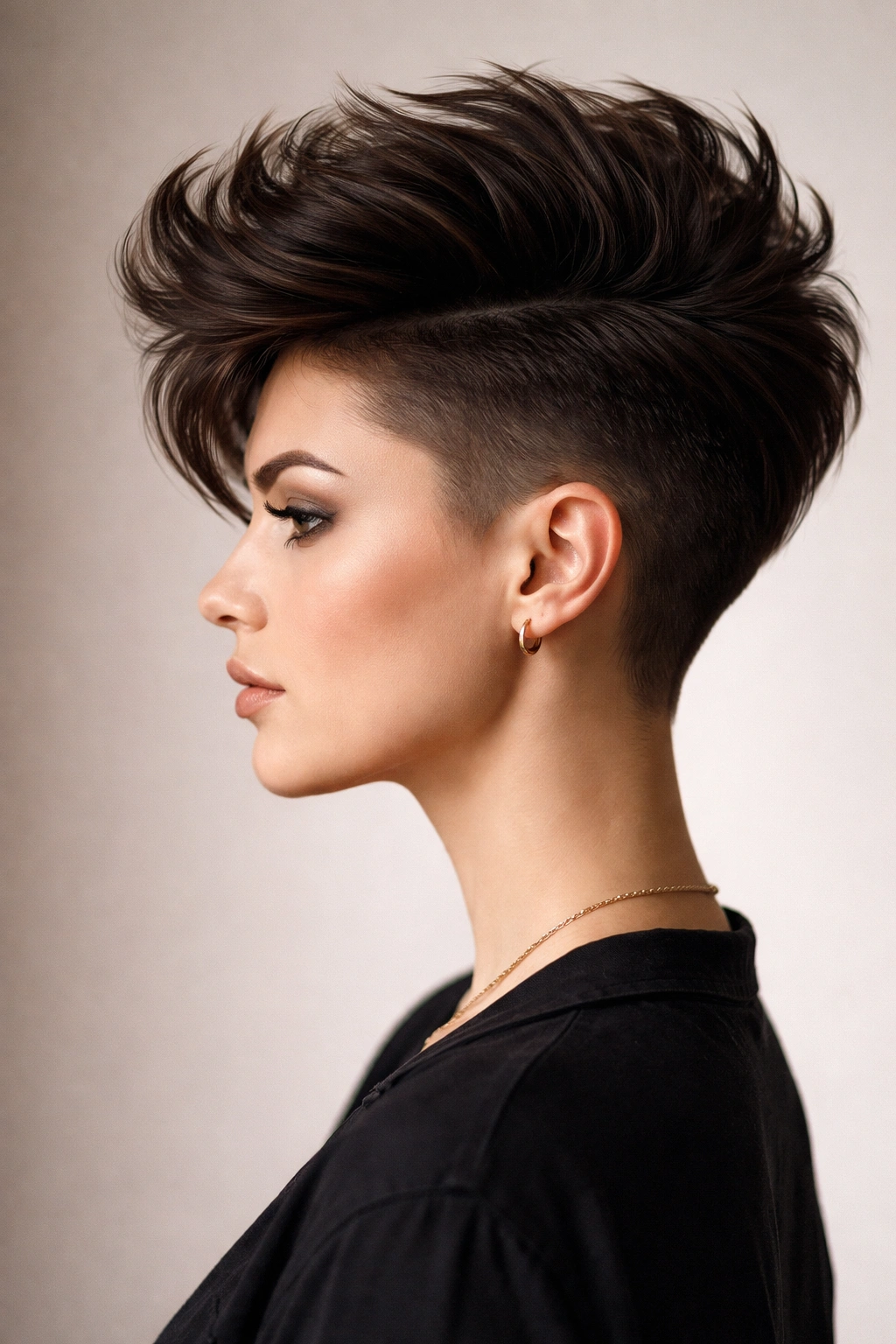
An undercut pixie has very short sides and back—sometimes even faded or shaved—with significantly longer hair on top that you can style upward and backward. This creates maximum contrast and allows you to manipulate the longer hair into different shapes and styles depending on your mood. The volume on top can be blown out to dramatic heights or styled more conservatively, depending on the occasion.
Why This Works for Round Faces
The extreme height and volume created by longer hair on top paired with very short sides creates powerful vertical emphasis. This is one of the most effective pixie variations for creating elongation on a round face because the contrast between short and long is so dramatic. The sides stay extremely tight and clean, which prevents any widening around the cheekbones or jaw.
Styling Techniques for Maximum Impact
- A blow-dryer and round brush are essential for this style—you’ll want to direct the hair upward and slightly backward to maximize height
- A volumizing mousse applied to damp roots before blow-drying helps create lift that lasts all day
- Pomade or wax on the longer pieces separates them and creates texture, preventing the style from looking too smooth or too stiff
- The undercut itself typically needs a trim every 2 to 3 weeks to maintain the clean, faded appearance
Quick fact: This style works particularly well for people with straight or wavy hair, as curly hair creates natural volume that might not need as much styling effort.
4. The Tapered Pixie with Longer Bangs
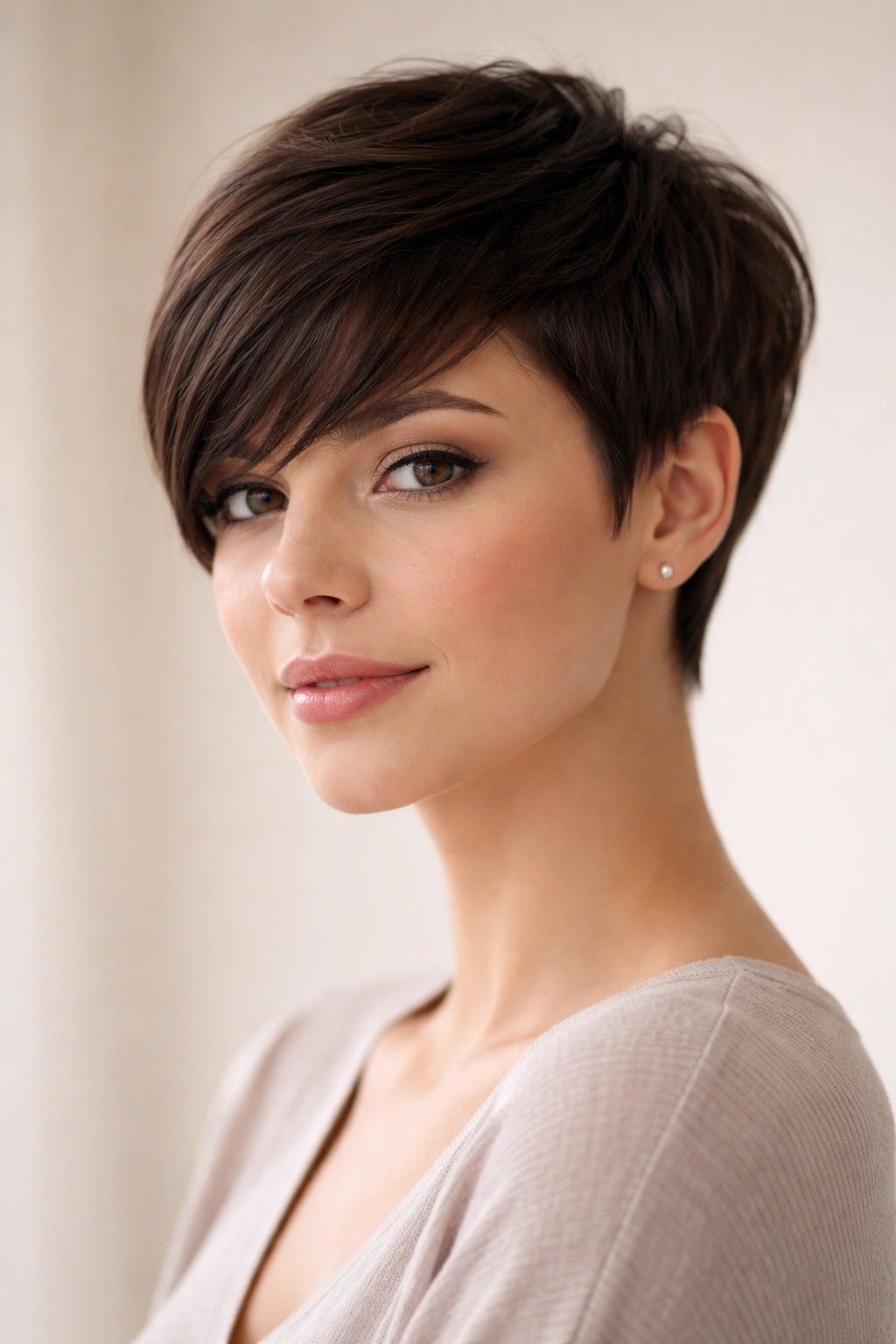
A tapered pixie is slightly longer overall than a traditional pixie, with the length gradually increasing from the nape of your neck to the crown. Longer bangs sweep across your forehead, creating a soft frame that can be styled in multiple directions. This version balances being edgy enough to feel modern while remaining approachable and wearable for everyday life.
Why This Works for Round Faces
The longer bangs are particularly helpful because they can obscure some of the width of your forehead, making your face appear narrower overall. The gradual taper creates a soft outline that’s more elongated than a blunt pixie. This style doesn’t create as much dramatic height as some other pixie variations, but it compensates with strategic placement of length where it flatters a round face most.
Daily Styling Routine
- This style looks best when you rough-dry it with your fingers, allowing your natural texture to shine through
- Longer bangs usually need to be styled back or swept to the side, which requires a light texturizing spray or dry shampoo for grip
- You can change how you style the bangs daily—swept left, swept right, or even pushed straight up for a different vibe
- Trims are needed every 4 to 5 weeks, but the longer length means you can go slightly longer between cuts than with a shorter pixie
5. The Choppy Layered Pixie
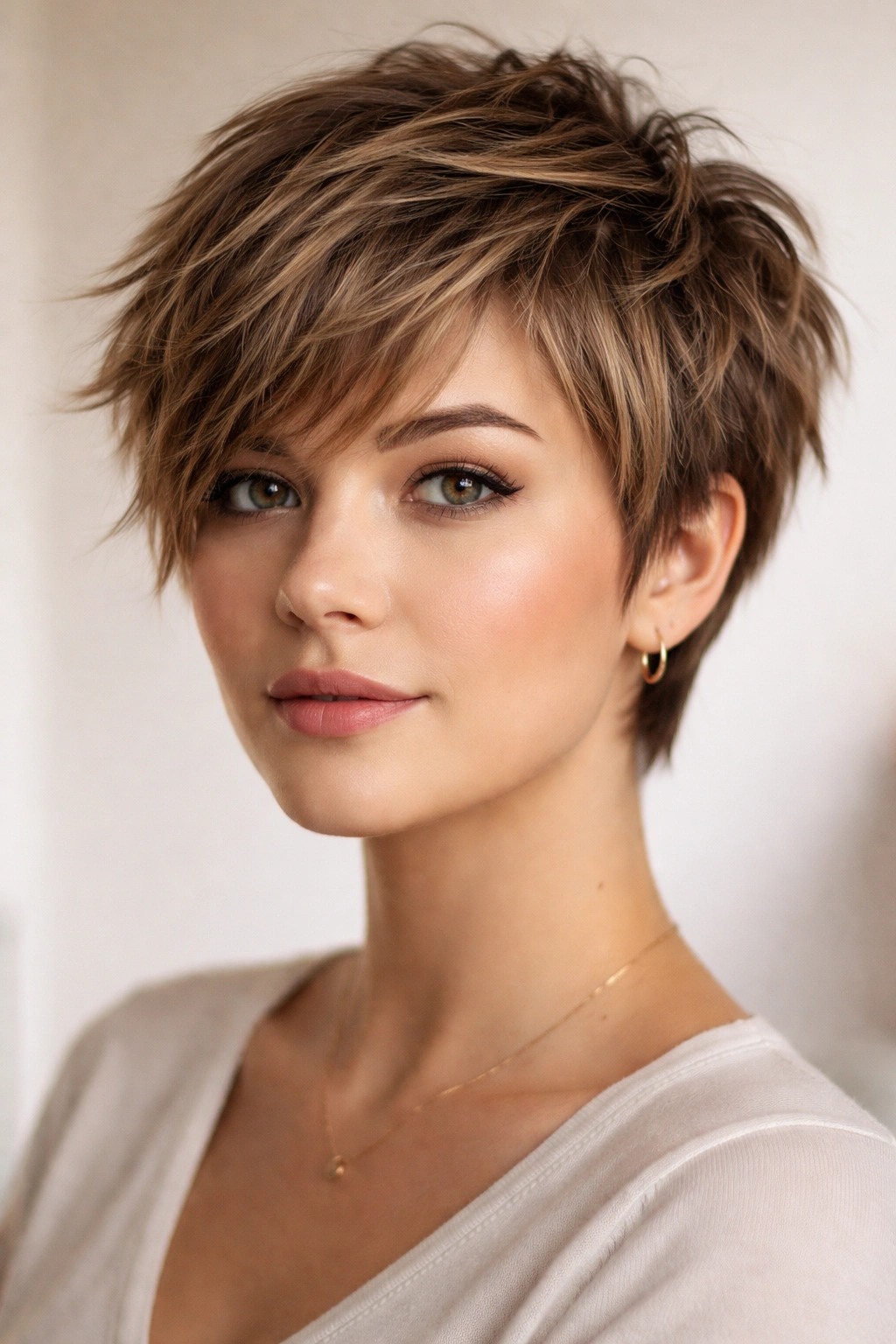
Choppy layers throughout create movement and texture that break up any solid shapes in your hairstyle. Instead of one smooth outline, you get multiple layers at different lengths that create dimension and visual interest. The layers can be styled in many different directions, allowing you to change your look just by changing how you style your hair.
Why This Works for Round Faces
Choppy layers create vertical lines throughout your hair, which helps counteract the horizontal roundness of your face. The texture and movement prevent your style from looking flat or shape-hugging, which would emphasize roundness. Layers also allow you to direct hair upward and backward, creating height where you need it most.
Maintenance and Styling
- This style requires regular texturizing products—clay, paste, or pomade—to really showcase the choppy layers
- Blow-drying is usually necessary to style all those layers into place, though air-drying works if you have naturally wavy or curly hair
- You’ll want trims every 3 to 4 weeks to keep the choppy layers looking intentional rather than grown-out
- The beauty of this style is that it can look polished and put-together or tousled and textured, depending on how much time you spend styling
Insider note: If you have thick hair, choppy layers are particularly helpful because they reduce bulk while creating movement.
6. The Grown-Out Pixie with Texture
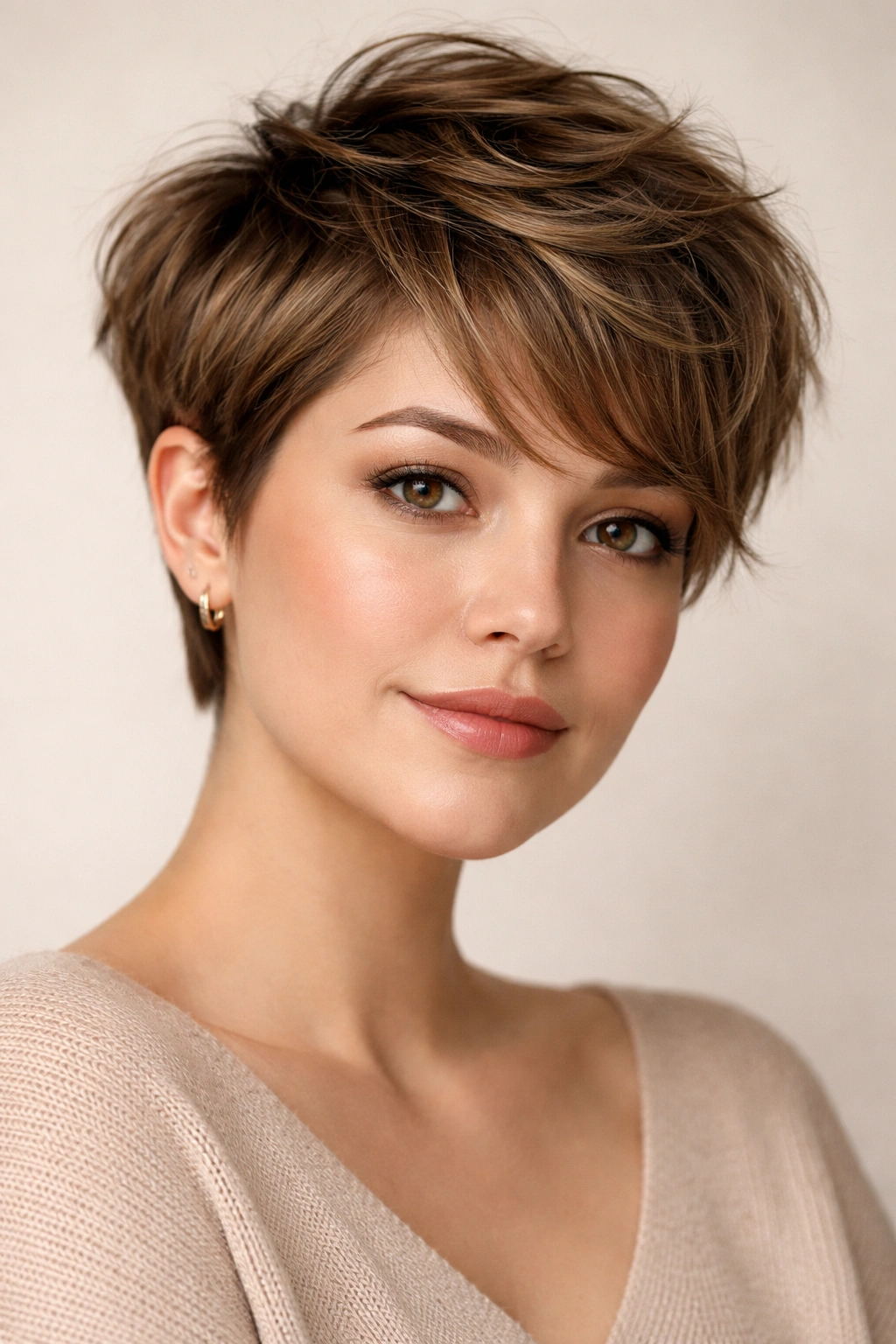
A grown-out pixie sits somewhere between a pixie and a short bob, with longer pieces on top and shorter sides. This version works beautifully for people who aren’t ready for a very short pixie but want the shape and structure of one. The longer length gives you more styling versatility while the short sides maintain that clean, face-framing pixie silhouette.
Why This Works for Round Faces
By allowing more length on top, you increase the amount of vertical emphasis without losing the face-shaping benefits of a pixie. The longer pieces can be styled back and up, creating height that elongates. The sides remain relatively short, preventing width around the cheekbones. This version gives you the best of both worlds—the sophistication of a pixie with slightly more traditional length.
How to Wear It
- This length is forgiving enough that you can style it multiple ways—slicked back, textured and separated, or even slightly wavy if your hair naturally waves
- Blow-drying creates the cleanest look, but you can also air-dry if you use texturizing products
- The transition from longer top to shorter sides is key—make sure your stylist blends these sections smoothly so it doesn’t look choppy (unless you want intentional choppiness)
- You can extend time between cuts to 5 to 6 weeks because the longer length hides growth better
7. The Sleek and Polished Pixie
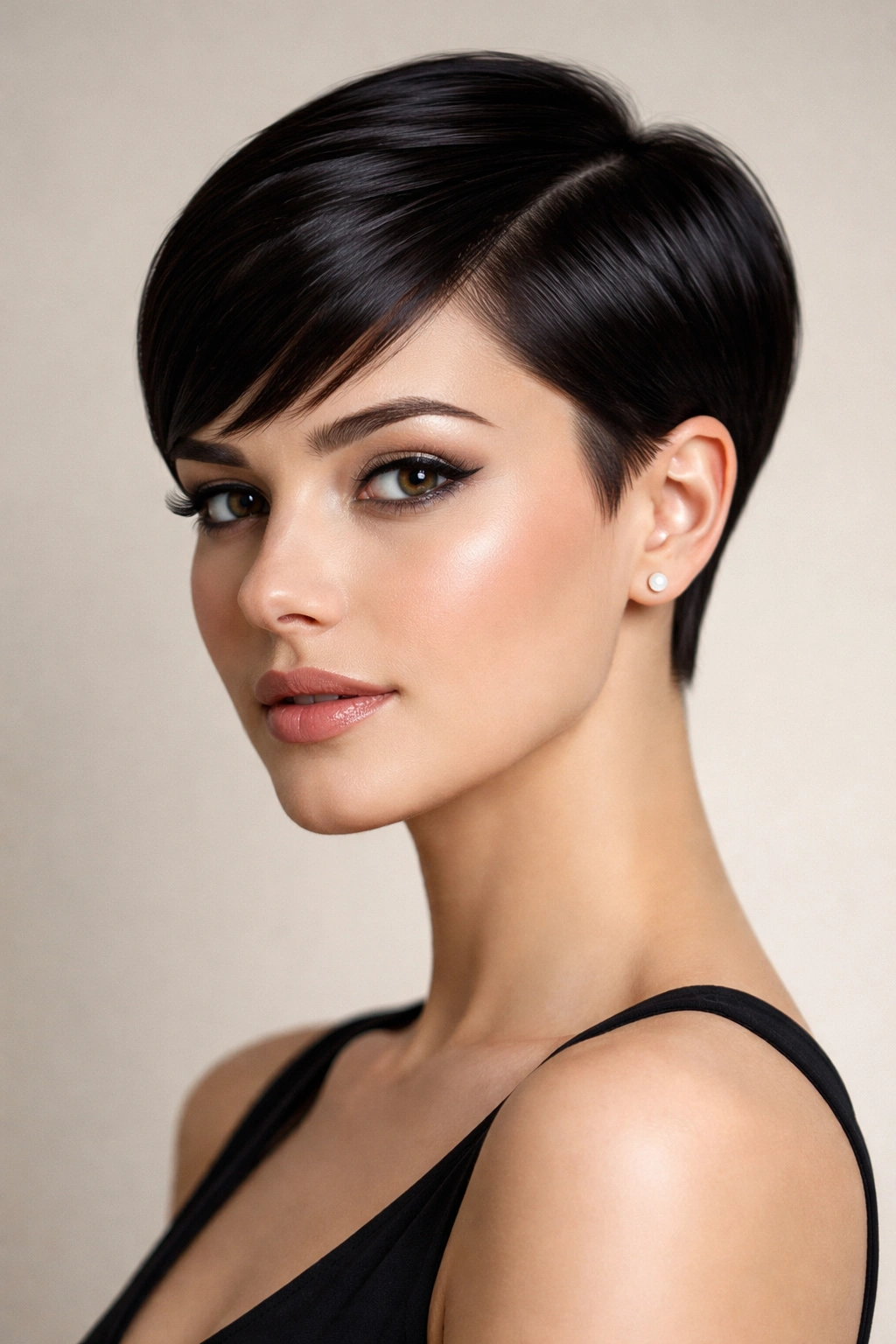
For people who prefer a more refined, minimalist aesthetic, a sleek pixie cut keeps everything very clean and sculpted. Hair is smoothly tapered and shaped close to the head with minimal texture or layering. This style requires excellent cut precision and works best on people with straight or slightly wavy hair. When styled with shine-enhancing products, it has an almost elegant, almost androgynous beauty.
Why This Works for Round Faces
Smooth, sleek lines create definition that emphasizes facial structure rather than softness. By keeping the style extremely clean and close to the head, you avoid adding any width or bulk. The refined silhouette makes features appear more sculpted and less round. This approach works particularly well if you have good bone structure you want to emphasize.
Styling for a Polished Look
- A light smoothing serum or shine spray is essential for this style—you want your hair to have visible sheen and definition
- Blow-drying with a small round brush or even your fingers smooths the hair and creates shape
- This style works beautifully without any texture products, letting your hair’s natural shine take center stage
- You’ll need cuts every 3 to 4 weeks because any growth becomes immediately visible on this clean style
- This pixie works particularly well for professional settings, formal occasions, or anyone who prefers a more minimalist approach
Real talk: This style works best if your hair naturally stays relatively smooth. If you have frizz or curl, you’ll either need to embrace a textured version instead or commit to smoothing products and blow-drying daily.
8. The Wispy Pixie Cut
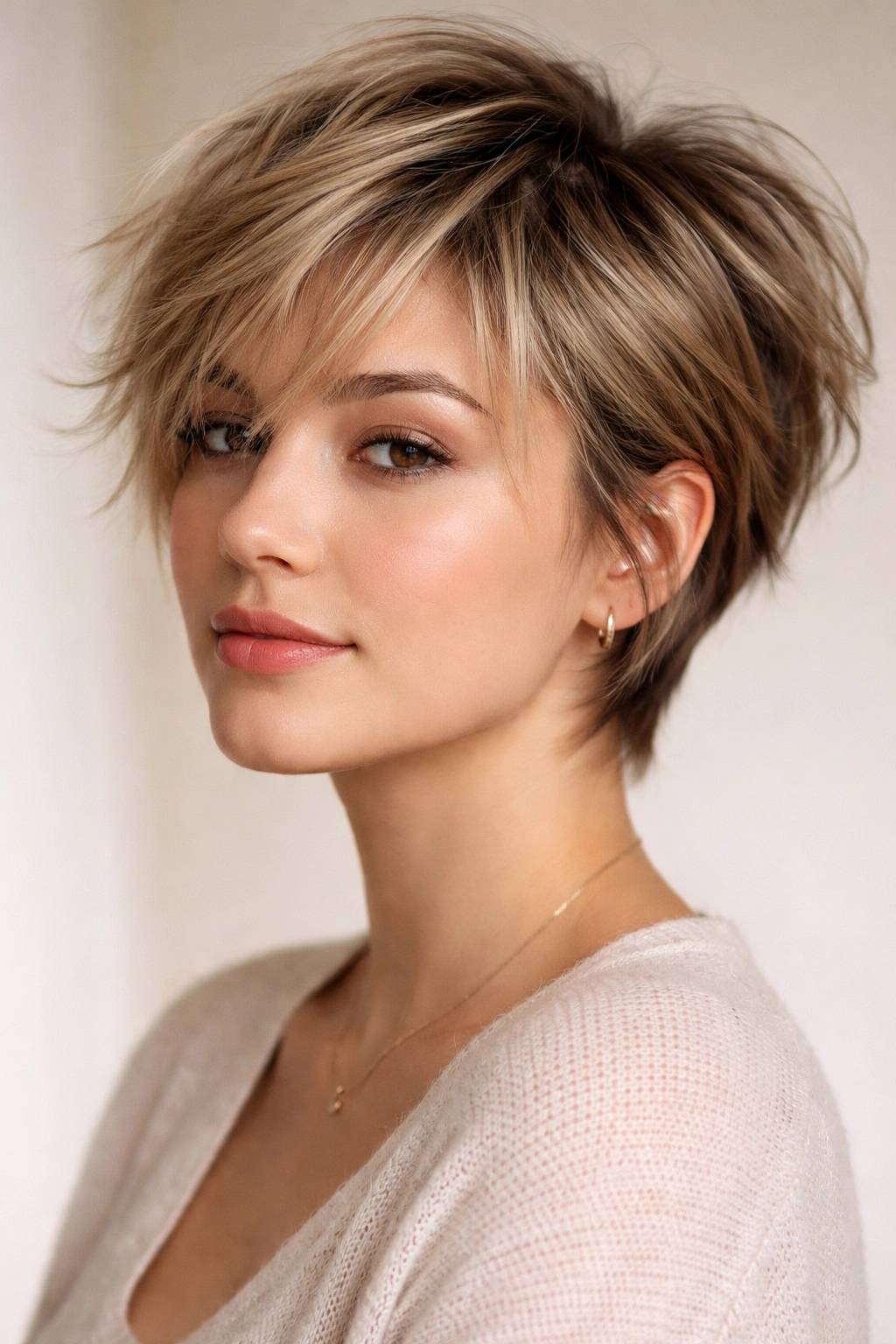
A wispy pixie uses longer pieces throughout that are cut at different lengths and styled to separate and move. Rather than creating height and volume at the crown, this version uses softer, longer lengths that frame your face and create movement around your features. The effect is romantic and textured while still maintaining the short, practical length of a pixie.
Why This Works for Round Faces
While wispy styles are generally softer and less harsh than some pixie variations, the key to making them work on round faces is ensuring the longer pieces are styled in ways that create vertical emphasis. The pieces that frame your face should be directed slightly upward and backward, not straight down alongside your cheeks. This prevents the style from making your face appear wider.
Styling Your Wispy Pixie
- Use a texturizing spray or dry shampoo to add grip to the longer pieces so they stay separated
- Blow-dry with your fingers or a brush to direct the pieces upward and outward, creating movement
- A light wax or pomade helps separate individual pieces and add definition without making the style look stiff
- This style actually benefits from a slightly grown-out phase—longer pieces look better wispy when they’re a bit longer
- Trims every 4 to 5 weeks keep the style intentional and prevent it from looking overgrown
9. The Textured Side-Swept Pixie
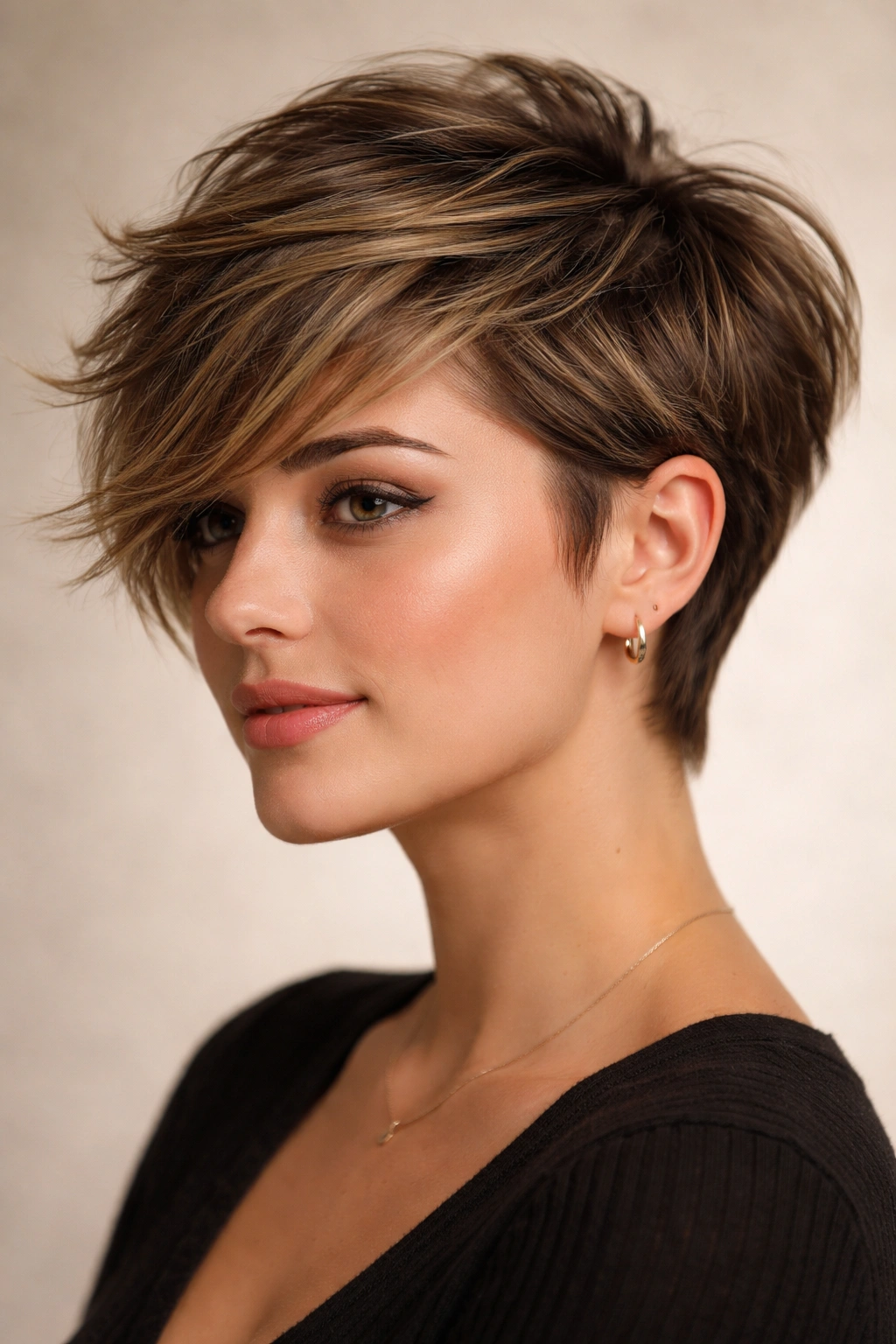
Combining texture with a side-swept direction, this pixie uses choppy layers and directs most of the hair to one side in a sweeping motion. The texture creates visual interest while the direction creates an elongating line. This is one of the most versatile pixie styles because you can style the sweep in different directions or even straighten it out on days when you want a different look.
Why This Works for Round Faces
The side-swept direction creates a diagonal line across your face that breaks up horizontal width. The textured layers add movement and prevent the style from sitting flat against your head. Together, these elements create a look that’s both interesting to view and flattering to your face shape. The texture also adds visual complexity that distracts from pure roundness.
Daily Styling Options
- Use a volumizing mousse on damp hair before blow-drying to create a foundation for texture
- Blow-dry while directing the hair to one side, using your fingers to separate the textured layers
- Once dry, work in a clay pomade or texturizing paste to enhance the separated, choppy appearance
- You can change which side you sweep the hair toward for different styling variety
- This style needs trims every 3 to 4 weeks to maintain the choppy texture
Pro tip: If you want more dramatic movement, ask your stylist to use razor cutting techniques rather than clipper cutting, which creates sharper, more separated layers.
10. The Faded Pixie with Longer Top
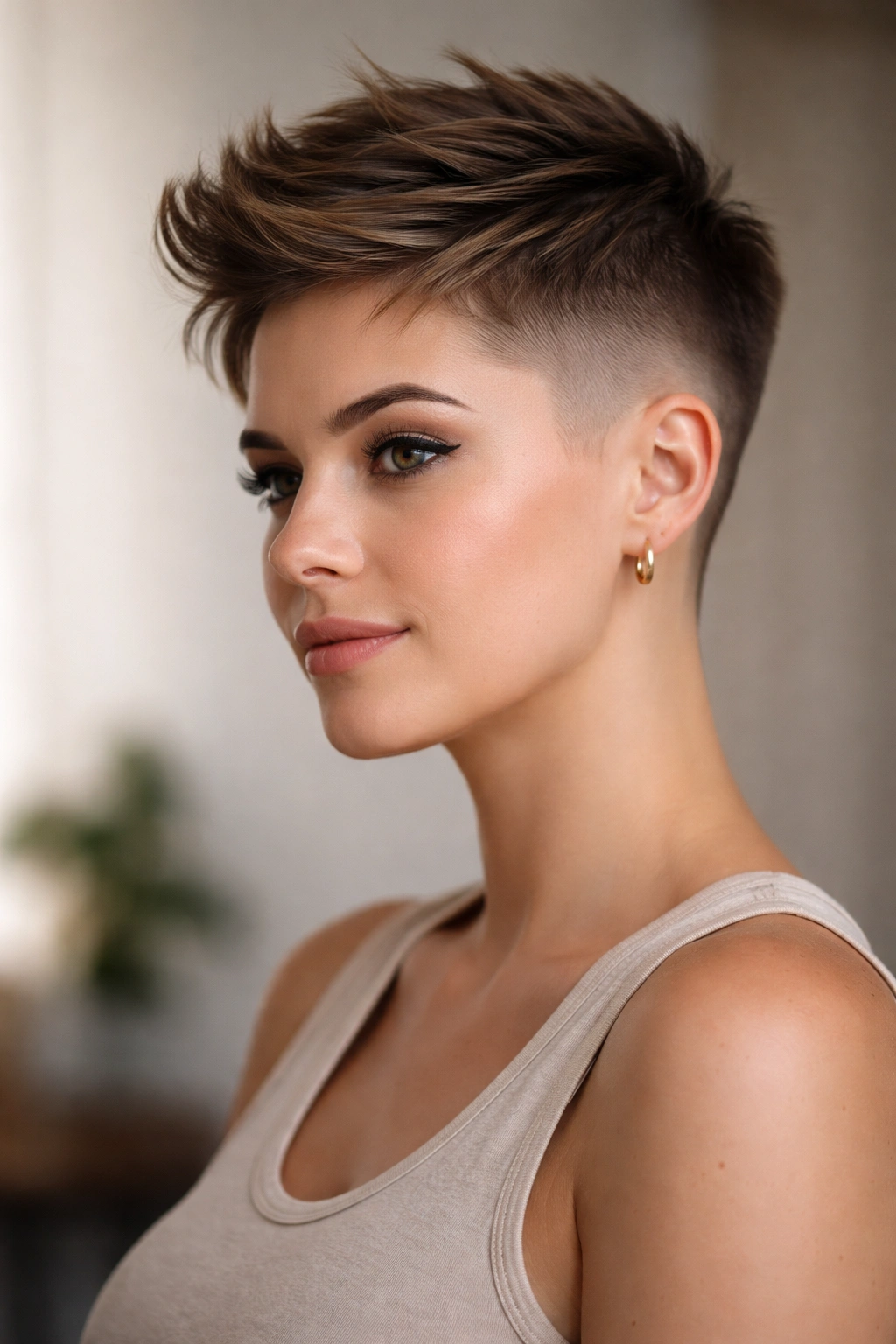
A faded pixie uses clipper work to create a very short, gradually faded gradient from the nape of your neck upward. The top is left significantly longer—typically 2 to 3 inches or more—creating maximum contrast. This is a bold, fashion-forward choice that creates dramatic visual emphasis through the stark difference between short and long.
Why This Works for Round Faces
The fade keeps the sides and back extremely short and tight, preventing any width around your cheekbones or jaw. The longer hair on top can be blown out to maximum height, creating powerful vertical elongation. This is one of the most effective pixie options for creating dramatic face-lengthening effect. The architectural quality of the fade also creates visual interest and definition.
Styling and Maintenance
- You’ll want to blow-dry the longer top pieces with a round brush or your fingers, directing everything upward
- A volumizing mousse on damp roots helps create lift that lasts
- Pomade or wax separates the longer pieces and creates texture
- The fade typically needs a trim every 2 to 3 weeks to maintain the crisp, faded appearance
- This style is high-maintenance compared to other pixies, but the impact is worth it if you love a bold look
11. The Curly Pixie with Defined Coils
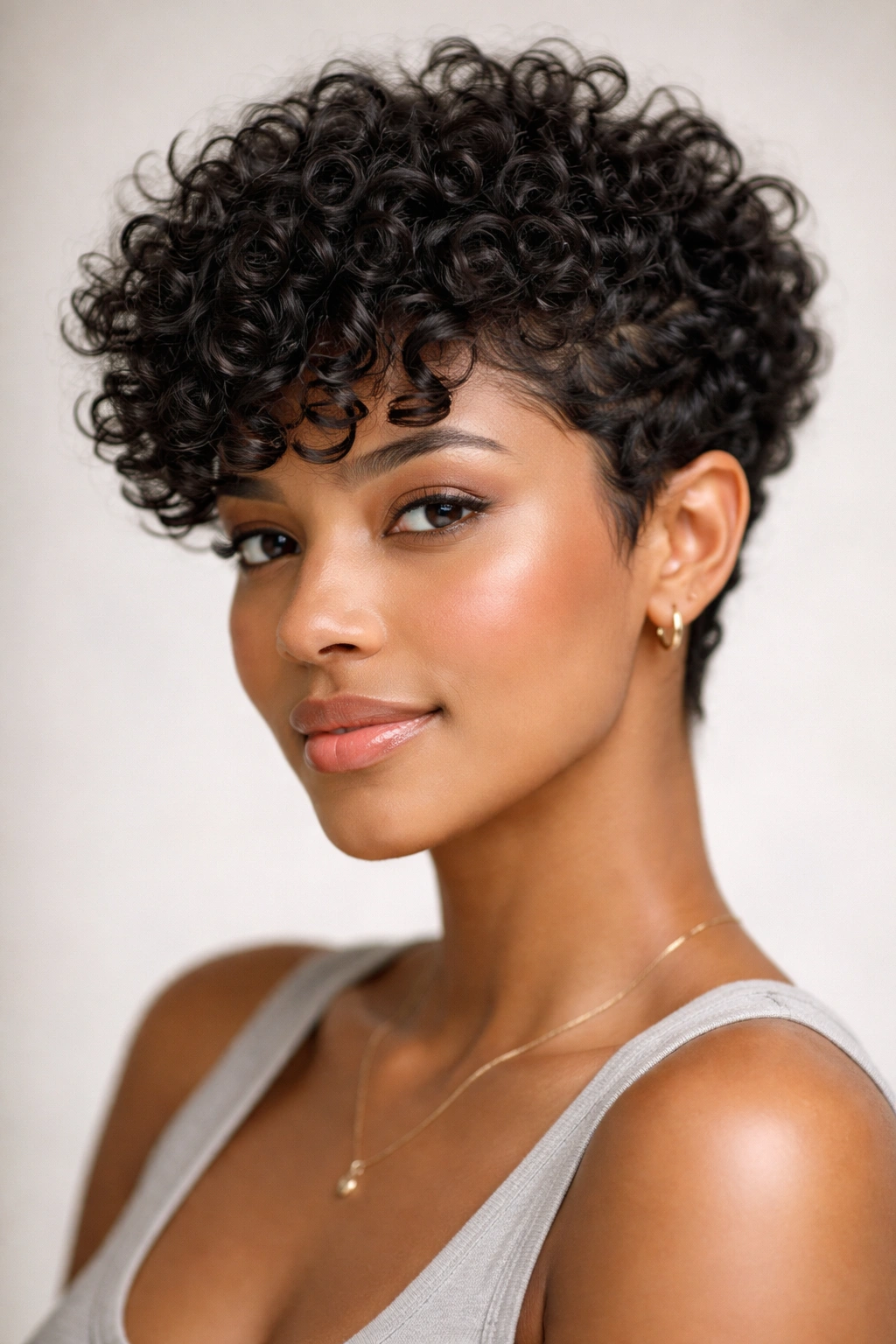
If you have naturally curly or coily hair, a textured pixie that embraces your curls is an excellent choice. Rather than fighting your curl pattern, this style celebrates it by cutting in a way that works with your natural texture. Curls create inherent volume and movement that beautifully counteracts roundness.
Why This Works for Round Faces
Natural curls and coils create vertical movement and volume without requiring blow-drying or styling products. The texture breaks up solid shapes and prevents your hairstyle from sitting flat. Curls also create a slightly larger silhouette overall, which can help balance a round face by adding dimension. The inherent separation in curly hair creates visual interest and depth.
Caring for Curly Pixie Cuts
- You’ll want to use curl-defining products rather than traditional styling pastes—a curl cream or gel helps define your natural curl pattern
- Avoid blow-drying if possible; instead, apply products to damp hair and let curls air-dry
- Trims every 4 to 5 weeks help maintain shape without losing the curl definition
- Deep conditioning is important because pixie cuts can expose scalp area that might get dry
- Your curl pattern will look best if you avoid touching your hair while it dries and let curls set naturally
Worth knowing: Curly pixies often look more interesting and intentional than straight-haired pixies, so if you have curls, embrace them rather than trying to straighten them out.
12. The Angled Pixie with Longer Front Pieces
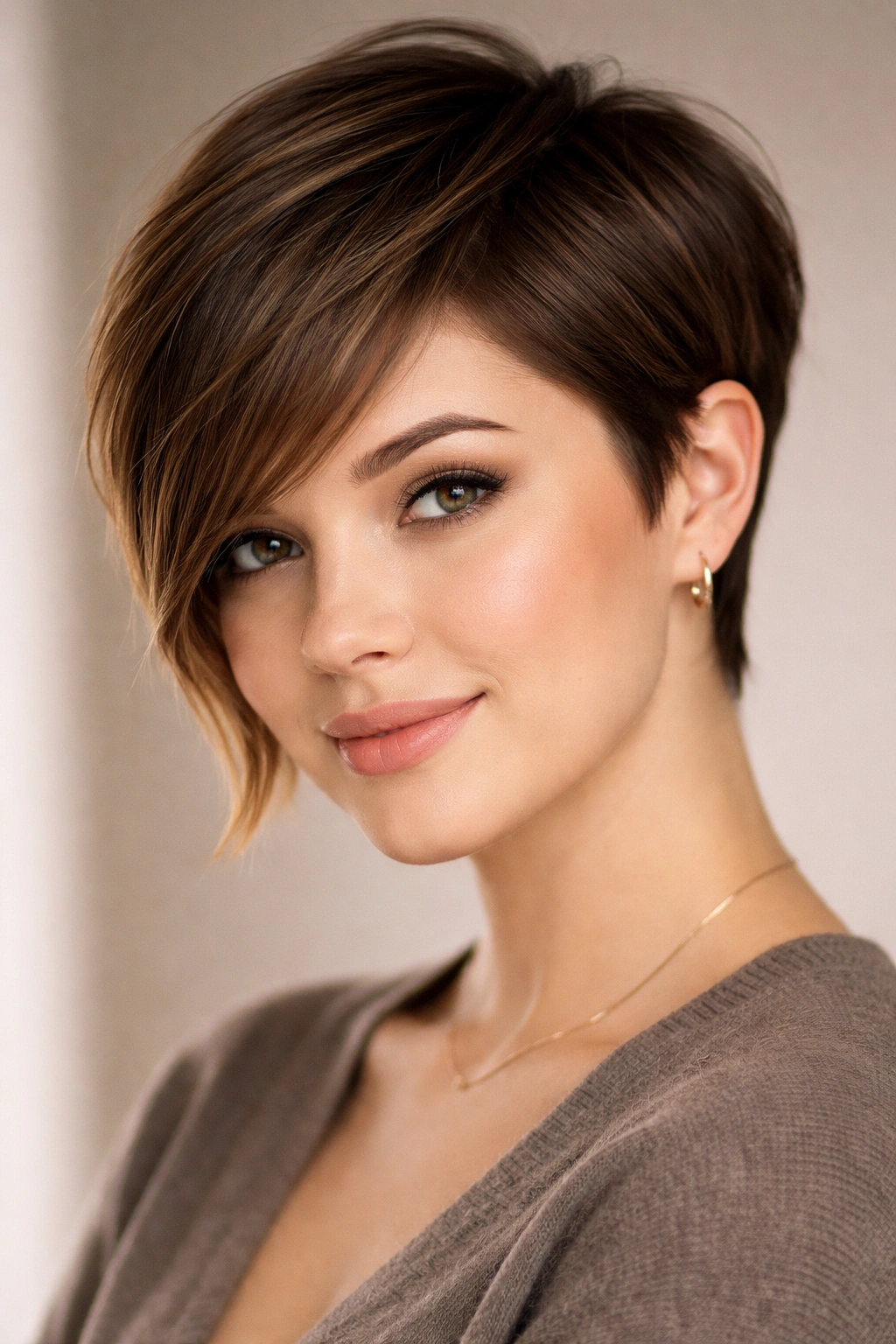
An angled pixie is longer at the front and gradually gets shorter toward the back, creating a subtle A-line or angle to the style. The longer front pieces frame your face while the shorter back keeps things clean and manageable. This creates a softer appearance than some pixie variations while maintaining the practical short length.
Why This Works for Round Faces
The longer front pieces frame your face, which can add dimension and sophistication to your features. The angle guides the eye from the sides of your face toward the center, which can create a slimming effect. The shorter back prevents the style from adding width overall. This variation is particularly flattering if you have a wider jaw or cheekbones.
Styling Your Angled Pixie
- The longer front pieces can be styled with a light texturizing spray to separate them
- You can style the front pieces to curve slightly around your face, following your jawline
- Blow-drying is helpful to shape the longer pieces, but this style is relatively forgiving when air-dried
- The back and sides should be kept clean with trims every 4 to 5 weeks
- This style works beautifully for people who want some length but need the practical benefits of a pixie
13. The Tousled Textured Pixie
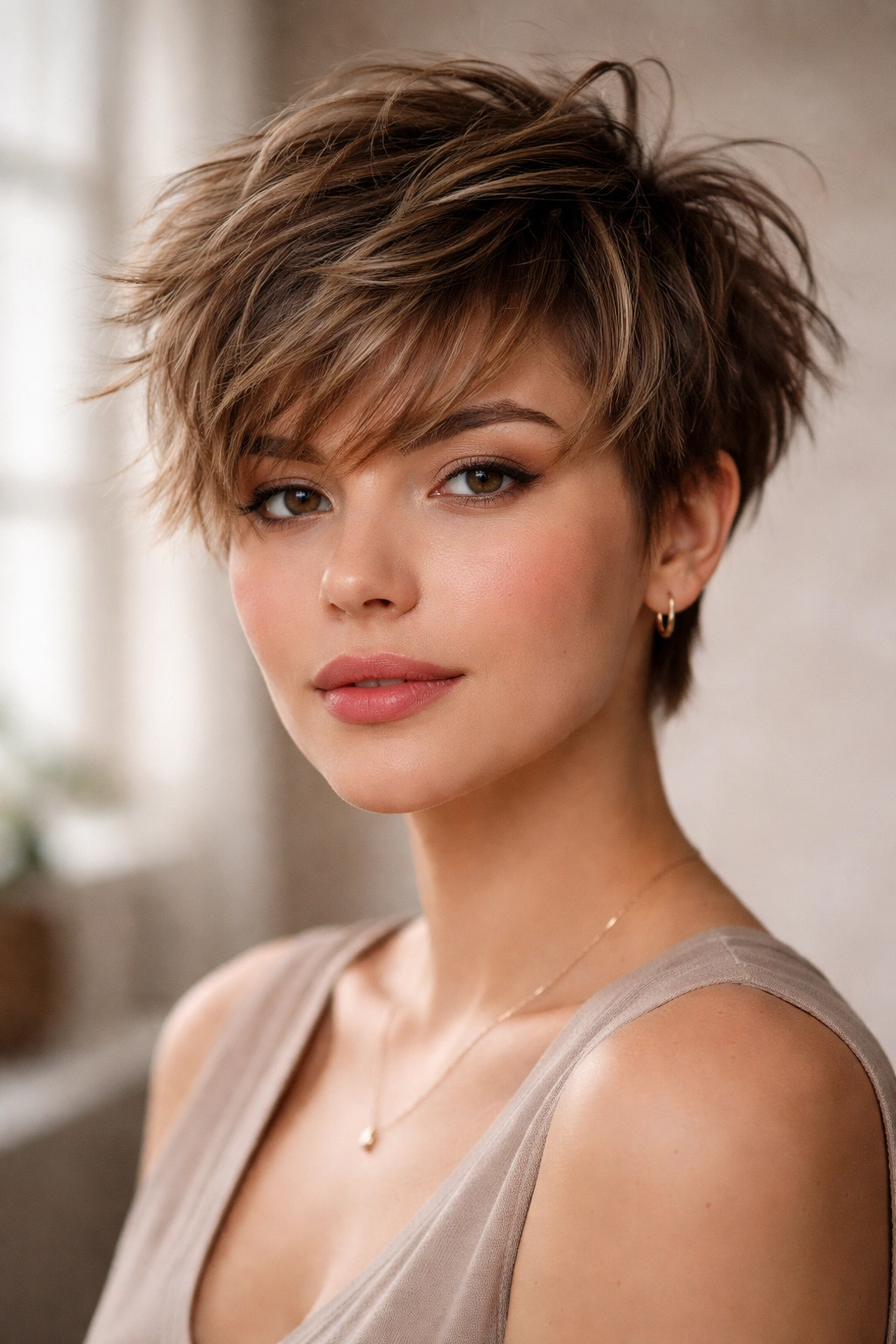
A tousled pixie embraces a deliberately undone, bedhead aesthetic. Lots of choppy layers are cut throughout, and the style is meant to look slightly messy and casual. This is achieved through texturizing products and minimal blow-drying, allowing the layers to naturally separate and create movement. It’s the opposite of sleek—it’s deliberately undone and playful.
Why This Works for Round Faces
The choppy layers create vertical lines and movement that prevent your style from looking flat or shape-hugging. The undone quality adds visual interest and personality, which distracts from pure roundness. The texture breaks up solid shapes and creates depth. Tousled texture also works beautifully on nearly all hair types, making it an inclusive choice.
Achieving the Tousled Look
- Apply a texturizing spray to damp hair and scrunch it in with your fingers
- You can blow-dry while scrunching, or allow it to air-dry with the spray in your hair
- Once dry, work in a light clay or paste to enhance the separated, undone appearance
- This style is actually lower-maintenance than some others because precision isn’t as important—the whole point is that it’s not perfect
- Trims every 4 to 5 weeks keep the choppy layers looking intentional
Insider note: This style is great for days when you don’t want to spend much time on your hair, but it still looks intentional and put-together.
14. The Precision-Cut Short Pixie
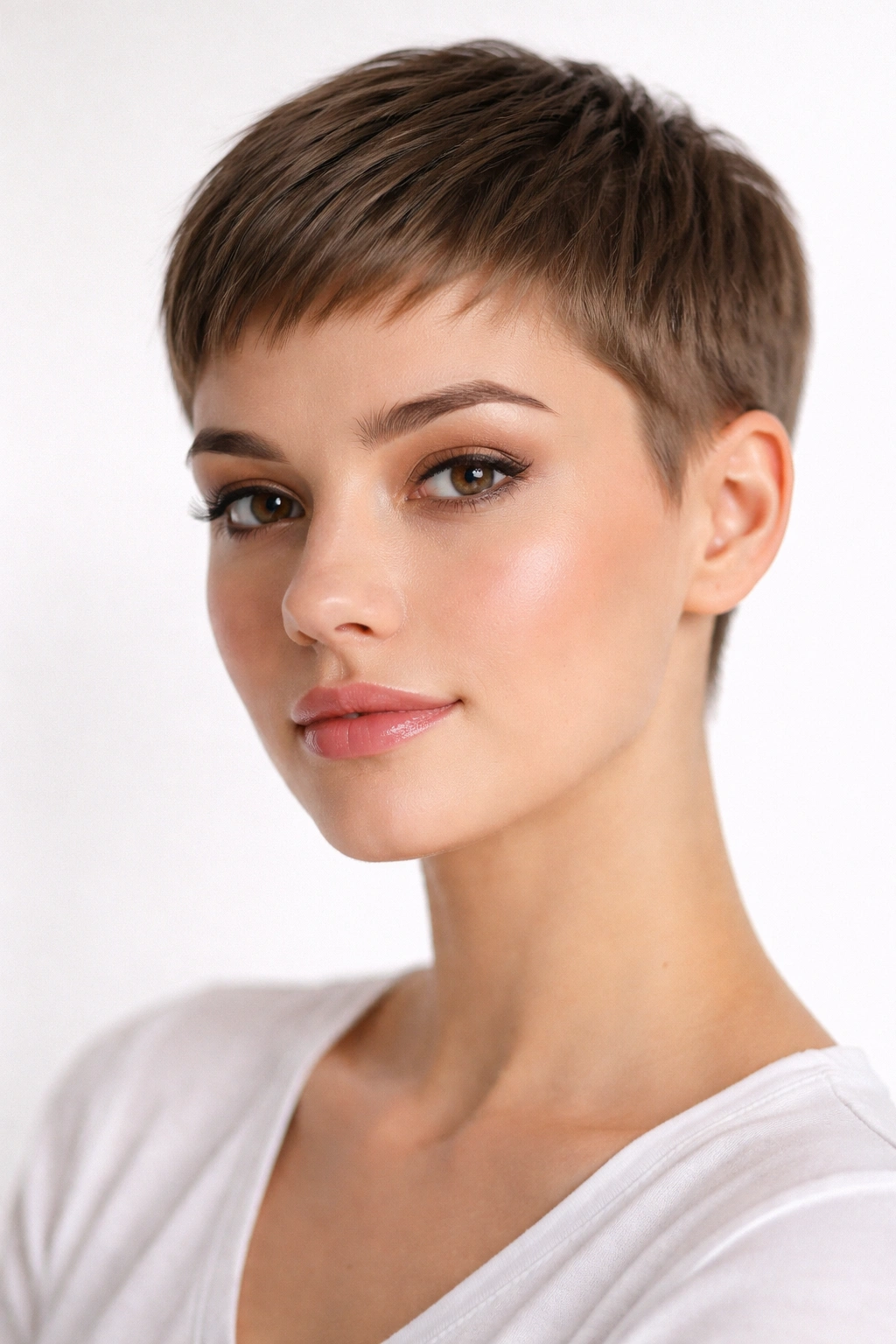
A precision-cut short pixie is basically as short as a pixie gets—typically around 1 to 1.5 inches all over. This requires an excellent cut from a skilled stylist and works best on people with very straight hair or no particular texture concerns. This is the most low-maintenance pixie option because it’s so short that you can almost wake up and go.
Why This Works for Round Faces
The extreme shortness reveals your facial structure and bone definition, which can make your face appear less round overall. There’s no hair to add width anywhere, as everything is very short and close to your head. This style essentially eliminates bulk and creates a clean, sculpted appearance. It’s a confidence-building choice that really puts your facial features front and center.
Styling and Maintenance
- This length barely needs styling—a quick finger-comb is often sufficient
- You can add shine with a light serum or smoothing spray if you want definition
- Trims are needed every 2 to 3 weeks because growth is immediately visible at this short length
- This style works best if you’re comfortable with your face and features—it’s the least hair to hide behind
- This is an excellent choice if you value simplicity and low-maintenance styling
15. The Voluminous Wavy Pixie
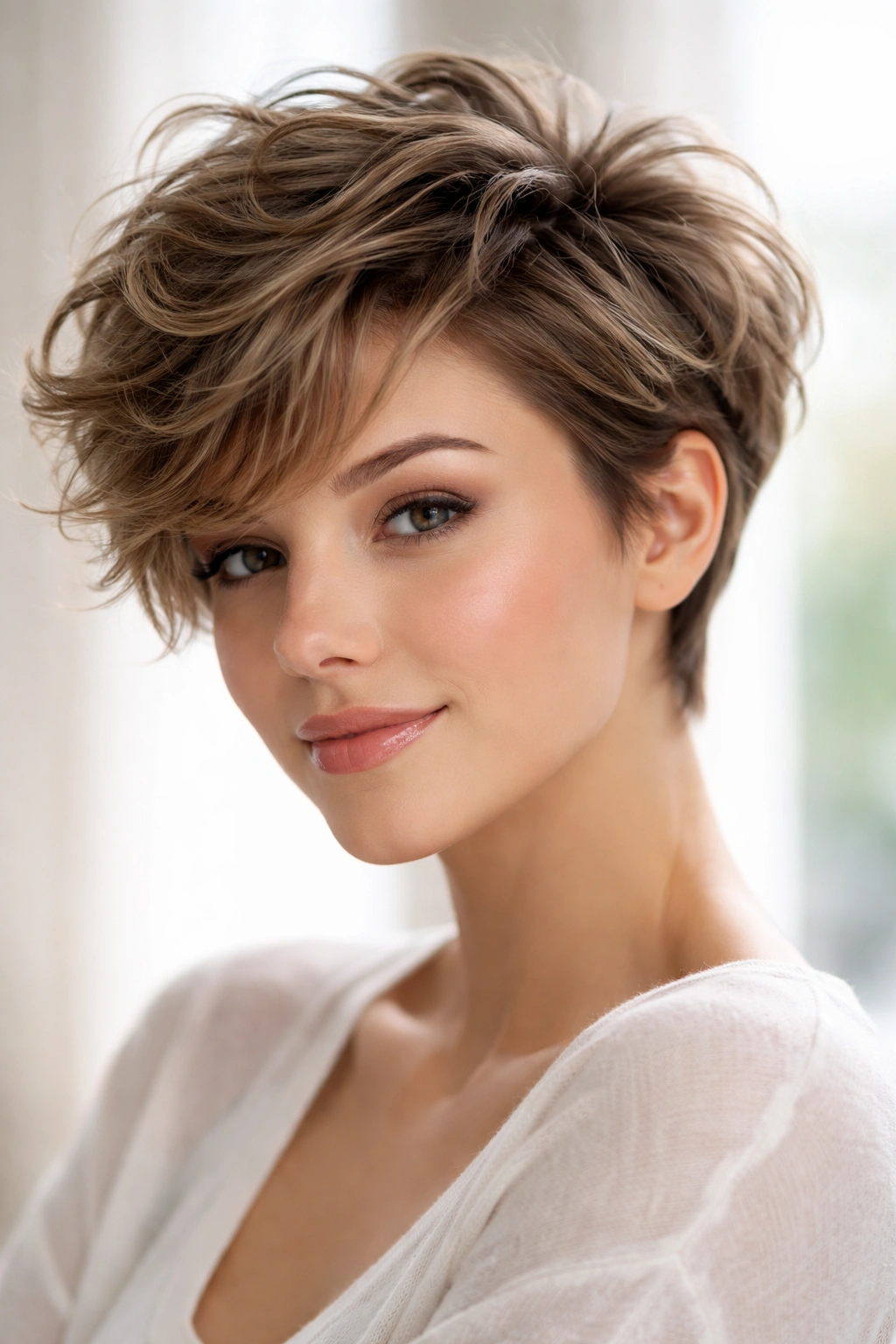
A voluminous wavy pixie uses longer lengths on top that are cut to work with or create waves and texture. Rather than being stick-straight, the style incorporates natural or styled waves that create height and movement. This variation works beautifully for people with naturally wavy hair or those willing to use a wave-creating product.
Why This Works for Round Faces
Waves create vertical movement and add visual height to your style. The volume created by waves prevents the style from sitting flat against your head. The movement breaks up horizontal lines and creates visual interest. Waves also add a romantic, softer quality while still maintaining the practical short length of a pixie.
Creating and Maintaining Waves
- If you have naturally wavy hair, use a texturizing spray to enhance your natural wave pattern
- If your hair is straight, a wave cream or texturizing product can create the wave effect
- Blow-drying with a round brush can enhance waves and create height
- You can also use a small curling iron on the longer pieces to create more defined waves if desired
- Trims every 4 to 5 weeks keep the style shaped to work with your waves rather than against them
Real talk: Wavy pixies require a bit more daily styling than some other pixie options, but the romantic, textured result is worth the extra effort for many people.
Final Thoughts
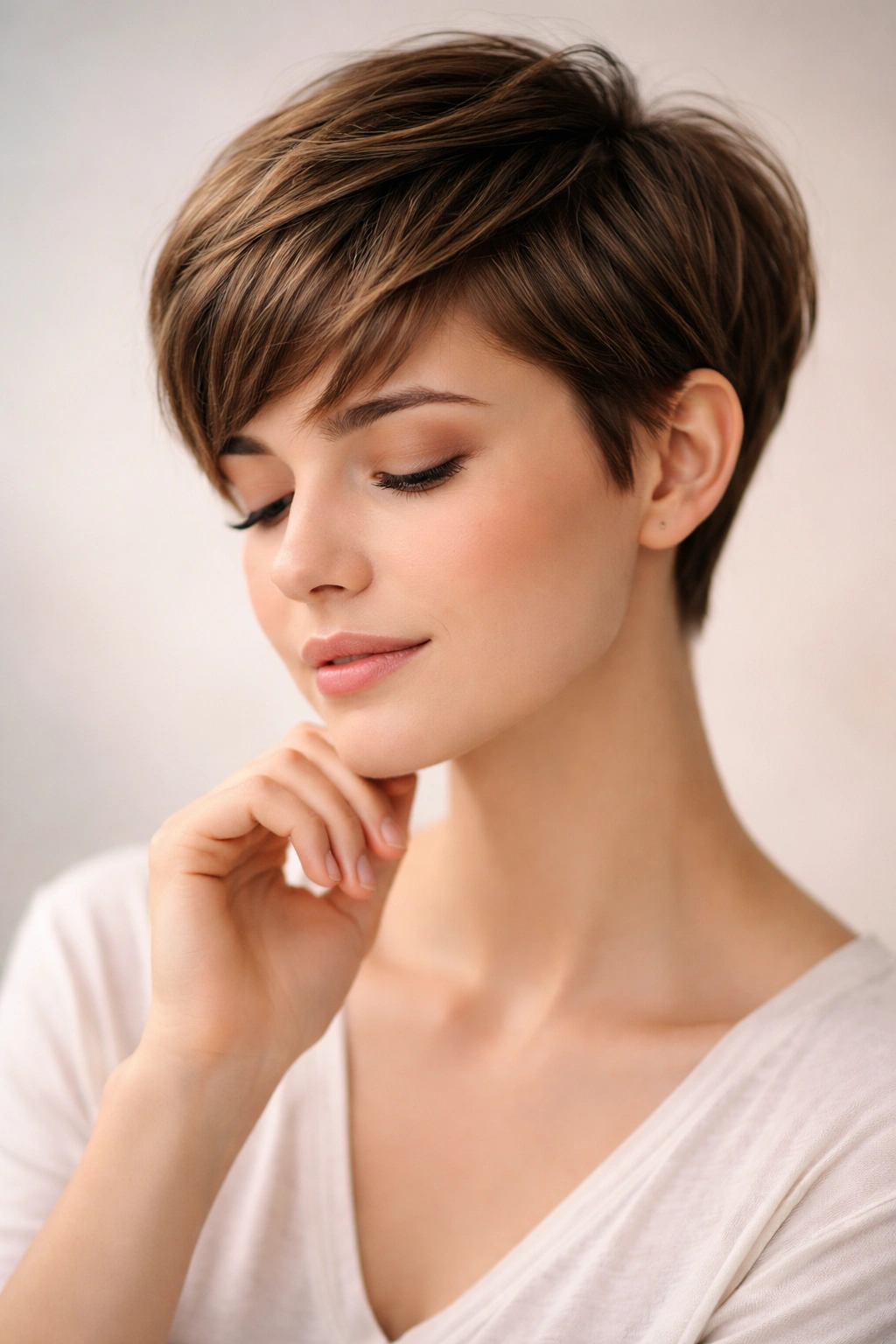
The pixie cut isn’t a one-size-fits-all style, which is excellent news for people with round faces. Each of these 15 variations approaches the challenge of balancing a round face shape differently—some through dramatic height, others through strategic asymmetry, and still others through texture and movement. The right pixie for your specific face is the one that combines your hair texture, personal style preferences, and daily styling tolerance with proven face-flattering proportions.
Before you commit to any pixie cut, have a thorough consultation with your stylist. Bring pictures of styles that appeal to you, discuss your hair texture honestly, and ask how your stylist would adapt each style specifically for your face shape and features. The cut itself is important, but how it’s tailored to your individual face and how you’ll style it daily matters just as much. A pixie cut on a round face can be absolutely stunning—it just needs to be the right pixie cut for you.
